Author(s): Scott Douglas Jacobsen
Publication (Outlet/Website): Medium (Personal)
Publication Date (yyyy/mm/dd): 2023/11/07
Situnsurancy: Singletontacked happyon theminey; neural activity is a cluster of connected action potentials and connectivity to make single choices, life’s choices can be seen as one arced choice as a cluster of connected actions with potentials.
See “Choice.”
License
In-Sight Publishing by Scott Douglas Jacobsen is licensed under a Creative Commons Attribution-NonCommercial-NoDerivatives 4.0 International License. Based on a work at www.in-sightpublishing.com.
Copyright
© Scott Douglas Jacobsen and In-Sight Publishing 2012-Present. Unauthorized use and/or duplication of this material without express and written permission from this site’s author and/or owner is strictly prohibited. Excerpts and links may be used, provided that full and clear credit is given to Scott Douglas Jacobsen and In-Sight Publishing with appropriate and specific direction to the original content. All interviewees and authors co-copyright their material and may disseminate for their independent purposes.
Share this:

Author(s): Scott Douglas Jacobsen
Publication (Outlet/Website): Medium (Personal)
Publication Date (yyyy/mm/dd): 2023/11/07
Why does 1% in a phone mean way more?: Is it ghouls, goblins, ghosts, or fairies, maybe angels, of the iPhone Cloud?
See “Baffling.”
License
In-Sight Publishing by Scott Douglas Jacobsen is licensed under a Creative Commons Attribution-NonCommercial-NoDerivatives 4.0 International License. Based on a work at www.in-sightpublishing.com.
Copyright
© Scott Douglas Jacobsen and In-Sight Publishing 2012-Present. Unauthorized use and/or duplication of this material without express and written permission from this site’s author and/or owner is strictly prohibited. Excerpts and links may be used, provided that full and clear credit is given to Scott Douglas Jacobsen and In-Sight Publishing with appropriate and specific direction to the original content. All interviewees and authors co-copyright their material and may disseminate for their independent purposes.
Share this:
Author(s): Scott Douglas Jacobsen
Publication (Outlet/Website): Medium (Personal)
Publication Date (yyyy/mm/dd): 2023/11/07
The last time he messed up around me before I cut him out of my life, about 8/9 years ago. His girlfriend, former Hell’s Angels wife who he philandered with against my mom, kicked him out of the house in Vancouver. He was already smashed drunk unable to handle himself. He taxi’d down to Fort Langley to our place, which was the time when my sister got divorced and moved back in with us and her three kids. En route, he finished another 2/3rds of a mickey of fireball. He was in terrible condition. After some theatrics in arriving with luggage — thought he’d stay (?), and trying to drunk punch my mom, he barged in and tried to go upstairs. One niece was out with friends. Another was home, now awake. Nephew was asleep, and stayed asleep. So, I was comforting my awoken niece while they paused him on the stairs because this was not okay, to spend the night drunk in front of grandchildren. A prior boundary had been set. Next, all I hear is several thuds followed by a crash. My sister screamed a bloodcurdling tone never heard before or since, “Dad! Dad!”
He had fallen down the stairs. My mother was lying by his side when I went out, pardoning myself from my niece. My sister was crying on the phone with the police. My dad looked up over the railing when I looked down and said, “Fuck you — .” [My absent brother] My mother said, “That’s not — . And you don’t mean that.” He responded, “Fuck you too, Scott.” They were unsure if he had broken anything, so encouraged him to stay lying down while police came. He was indignant on the floor, wailing repeatedly while squirming back and forth on his back, “Let me die, let me die, please let me die!” My earliest memory, ironically — same house, was my parents fighting when I was about 8 at the top of the stairs. I ran downstairs and cried — memory blank. Now, he’s at the bottom, wailing into the abyss for death’s hand to end him.
Life can be dark poetry, cryptic.
Ambulance eventually came. Cleared him, police came. He refused to leave. He wanted to go to the bathroom. Police walked him to the downstairs bathroom. He shit and pissed himself on the way there. He had one shoe on, like alcoholic Cinderella. He refused to leave. I walked him to the vehicle. Police said to get in. He accosted the officer. It was a charge. He went to the ‘drunk tank.’ One nightmare over.
That’s life.
As my cousin said that my dad said to his brother, my uncle, “You stole my life.” Because he had everything my dad destroyed by his choices from age 8 onward, for me, at least. It took time to realize these consecutive flashpoint experiences are, in fact, abnormal.
License
In-Sight Publishing by Scott Douglas Jacobsen is licensed under a Creative Commons Attribution-NonCommercial-NoDerivatives 4.0 International License. Based on a work at www.in-sightpublishing.com.
Copyright
© Scott Douglas Jacobsen and In-Sight Publishing 2012-Present. Unauthorized use and/or duplication of this material without express and written permission from this site’s author and/or owner is strictly prohibited. Excerpts and links may be used, provided that full and clear credit is given to Scott Douglas Jacobsen and In-Sight Publishing with appropriate and specific direction to the original content. All interviewees and authors co-copyright their material and may disseminate for their independent purposes.
Share this:
Author(s): Scott Douglas Jacobsen
Publication (Outlet/Website): Medium (Personal)
Publication Date (yyyy/mm/dd): 2023/11/07
For the most part: Horses are better than people in the spectrums of threat readiness and intuition; some of their emotions.
See “Equine.”
License
In-Sight Publishing by Scott Douglas Jacobsen is licensed under a Creative Commons Attribution-NonCommercial-NoDerivatives 4.0 International License. Based on a work at www.in-sightpublishing.com.
Copyright
© Scott Douglas Jacobsen and In-Sight Publishing 2012-Present. Unauthorized use and/or duplication of this material without express and written permission from this site’s author and/or owner is strictly prohibited. Excerpts and links may be used, provided that full and clear credit is given to Scott Douglas Jacobsen and In-Sight Publishing with appropriate and specific direction to the original content. All interviewees and authors co-copyright their material and may disseminate for their independent purposes.
Share this:
Author(s): Scott Douglas Jacobsen
Publication (Outlet/Website): Medium (Personal)
Publication Date (yyyy/mm/dd): 2023/11/07
There’s a sense: in which soteriology can be a secular concept, where the Theity isn’t assumed; psykhē is your responsibility. See “Turn.”
License
In-Sight Publishing by Scott Douglas Jacobsen is licensed under a Creative Commons Attribution-NonCommercial-NoDerivatives 4.0 International License. Based on a work at www.in-sightpublishing.com.
Copyright
© Scott Douglas Jacobsen and In-Sight Publishing 2012-Present. Unauthorized use and/or duplication of this material without express and written permission from this site’s author and/or owner is strictly prohibited. Excerpts and links may be used, provided that full and clear credit is given to Scott Douglas Jacobsen and In-Sight Publishing with appropriate and specific direction to the original content. All interviewees and authors co-copyright their material and may disseminate for their independent purposes.
Share this:
Author(s): Scott Douglas Jacobsen
Publication (Outlet/Website): Medium (Personal)
Publication Date (yyyy/mm/dd): 2023/11/07
Life is: and that’s about as good as it gets, folks; life is in your hands, come what may, regardless of epistemics.
See “Ontic-percepts.”
License
In-Sight Publishing by Scott Douglas Jacobsen is licensed under a Creative Commons Attribution-NonCommercial-NoDerivatives 4.0 International License. Based on a work at www.in-sightpublishing.com.
Copyright
© Scott Douglas Jacobsen and In-Sight Publishing 2012-Present. Unauthorized use and/or duplication of this material without express and written permission from this site’s author and/or owner is strictly prohibited. Excerpts and links may be used, provided that full and clear credit is given to Scott Douglas Jacobsen and In-Sight Publishing with appropriate and specific direction to the original content. All interviewees and authors co-copyright their material and may disseminate for their independent purposes.
Share this:
Author(s): Scott Douglas Jacobsen
Publication (Outlet/Website): Medium (Personal)
Publication Date (yyyy/mm/dd): 2023/11/07
Real Estate Journalism!: Ask the real estate journalist, he’s — literally — right there.
See “Up, up and away.”
License
In-Sight Publishing by Scott Douglas Jacobsen is licensed under a Creative Commons Attribution-NonCommercial-NoDerivatives 4.0 International License. Based on a work at www.in-sightpublishing.com.
Copyright
© Scott Douglas Jacobsen and In-Sight Publishing 2012-Present. Unauthorized use and/or duplication of this material without express and written permission from this site’s author and/or owner is strictly prohibited. Excerpts and links may be used, provided that full and clear credit is given to Scott Douglas Jacobsen and In-Sight Publishing with appropriate and specific direction to the original content. All interviewees and authors co-copyright their material and may disseminate for their independent purposes.
Share this:
Author(s): Scott Douglas Jacobsen
Publication (Outlet/Website): Medium (Personal)
Publication Date (yyyy/mm/dd): 2023/11/07
Prayer: So many, pray, kneel, read holy texts, go abstinent, be celibate; yet, they’re none the better, arguably worse off.
See “Get it?”.
License
In-Sight Publishing by Scott Douglas Jacobsen is licensed under a Creative Commons Attribution-NonCommercial-NoDerivatives 4.0 International License. Based on a work at www.in-sightpublishing.com.
Copyright
© Scott Douglas Jacobsen and In-Sight Publishing 2012-Present. Unauthorized use and/or duplication of this material without express and written permission from this site’s author and/or owner is strictly prohibited. Excerpts and links may be used, provided that full and clear credit is given to Scott Douglas Jacobsen and In-Sight Publishing with appropriate and specific direction to the original content. All interviewees and authors co-copyright their material and may disseminate for their independent purposes.
Share this:
Author(s): Scott Douglas Jacobsen
Publication (Outlet/Website): Medium (Personal)
Publication Date (yyyy/mm/dd): 2023/11/07
Missy Elliott: is the female Ludacris of rappers, serioerioerious, yo.
See “Ludacris, Not a One Minute Man.”
License
In-Sight Publishing by Scott Douglas Jacobsen is licensed under a Creative Commons Attribution-NonCommercial-NoDerivatives 4.0 International License. Based on a work at www.in-sightpublishing.com.
Copyright
© Scott Douglas Jacobsen and In-Sight Publishing 2012-Present. Unauthorized use and/or duplication of this material without express and written permission from this site’s author and/or owner is strictly prohibited. Excerpts and links may be used, provided that full and clear credit is given to Scott Douglas Jacobsen and In-Sight Publishing with appropriate and specific direction to the original content. All interviewees and authors co-copyright their material and may disseminate for their independent purposes.
Share this:
Author(s): Scott Douglas Jacobsen
Publication (Outlet/Website): Medium (Personal)
Publication Date (yyyy/mm/dd): 2023/11/07
Muslims were murdered. They were murdered by a young adult Canadian man on June 6, 2021. A male named Nathaniel Veltman. Hatred kills. This important moment in Canadian contemporary history attests to the hatred some fellow Canadians face and the impacts of high levels of hate against others. This matters to the humanist community.
The work by Center For Inquiry Canada and a number of humanist organizations in Canada matter to the lives of humanists for equality, dignity, respect, and advancement of scientific thinking. Our work applies here too.
In some frames, the work of humanists matter more for ethnic minorities and other philosophical minorities in the nation, because of the emphasis on human rights and empirical philosophy as a foundation for equality in a democratic system of governance.
In theory, every adult gets a vote. The sociopolitical sphere, also in theory, should follow from this equality: No one skips the line. The rub in multicultural, multiethnic, religiously pluralistic societies is, precisely, that: cultures, ethnicities/‘races’, and religions differing & coexisting.
Humanists encounter discrimination, simply look at the Humanists At Risk program from Humanists International. This should give humanists a sensitive gauge on hate movements and their effects. I’ve interviewed a fair number of non-religious people. There are trends.
Two interviewees within a half of a day to three days have been taken into jail with, at least, one given a confirmed death penalty in Pakistan — halting any interview coming out. A third happened, recently, in Ghana, who works on LGBTI rights.
I took this moment to reflect. When I was working with Muslim colleagues, I encountered the anti-Muslim sentiment second-hand within the secular communities, simply for collaboration with Muslims. It’s real — duh.
To our credit, often, I don’t see this in the secular communities much if at all; however, the moment sticks in memory. I argue the vast majority, if not all, humanists condemn the taking of innocent life. This extends to the murder of an entire family: Salmon Afzaal (46), Madiha Salman (44), Yumna Afzaal (15), Talat Afzaal (74), were murdered, and the 9-year-old son who survived with injuries.
Veltman’s trial, as reported in the BBC, Al-Jazeera, CBC News, and Associated Press, is revealing. This was a premeditated murder of Muslims by a young Euro-Canadian male. Why?
The 22-year-old young man was “inspired by white nationalist beliefs” and “acted deliberately… with premeditation.” Prosecutor Sarah Shaikh said, “…[Veltman] left his home with a specific purpose in mind: to find Muslims to kill.”
Veltman wrote a manifesto self-identifying as a White Nationalist. He planned for 3 months, bought a Dodge Ram two weeks before the attack, and then rammed into and killed the majority of the family except one injured. This 9-year-old Afzaal son will be left with this trauma for the rest his life, and living as such without his immediate family, in echo, for the rest of his life.
If there is anything resembling a religious impulse in humanists, it’s a sense of moral duty to protect other human beings from harm, especially life and death harm.
According to prosecutor Shaikh, Veltman told police after the attack, “I know what I did, I don’t regret what I did. I admit that it was terrorism. This was politically motivated, 100%.”
Allegedly, he told investigators that the purpose of using a truck was to send a message to others that trucks can be used to kill Muslims. In a wider sense, this can be seen as premeditated dehumanization with premeditated political purpose, white nationalist and white supremacist purpose.
Veltman pleaded not guilty to four charges of first-degree murder and one count of attempted murder.
– –
For the purposes of this article, I asked two Muslim colleagues of note, Dr. Kathy Bullock and Imam Syed Soharwardy to comment. Imam Soharwardy is the Founder of the Islamic Supreme Council of Canada and the Founder of Muslims Against Terrorism. Dr. Bullock is the Past Chair, Islamic Society of North America-Canada (ISNA-Canada) and Lecturer in the Department of Political Science at the University of Toronto at Mississauga, and President of Compass Books. Imam Soharwardy was born in Karachi, Pakistan; as it happens, the Afzaal family were Pakistani-Canadian. I asked Imam Soharwardy and Dr. Bullock about awareness of anti-Muslim bigotry.
Soharwardy said:
The awareness of anti-Muslim bigotry will not only help violence and hate towards Muslims but it helps reduce racism and discrimination against other visible minorities. It will help in developing a better and more cohesive society for everyone.
Dr. Bullock said:
If we want to tackle an issue that harms parts of our community, we need to be aware it’s happening. We need to understand what it looks or feels like to the affected members. Ignorance of the problem of anti-Muslim bigotry, or denial that it exists, leaves those on the brunt of it to cope by themselves.”
Awareness takes effort on the part of the wider community, because anti-Muslim bigotry (bigotry of any kind) is often invisible to those who don’t experience it. Since it seems invisible, it can be hard to believe it’s there. We have to understand it through vicarious means. We need to amplify Muslim voices. And we have to be careful not to accept narratives about Muslims written by others, especially in the media realm. Media is, in the end, a business, and it trades on easy negative stereotypes. Historically Muslims have been imagined in the West through a host of negative imagery, from being the Anti-Christ to men who are violent terrorists that oppress women and submissive women threatening women’s empowerment.
We often feel that government is unreachable and that it’s difficult to bring positive change. Yet we can always work within the circles of people who are closest to us. If we don’t sit in silence while someone makes a racist comment, if we speak up against it, or if we simply leave the room to show we are not part of it, we can bring about positive change that will reduce anti-Muslim bigotry — indeed bigotry of any kind.
I asked about spilling over of the anti-Muslim bigotry into different denominations and minority religions.
Dr. Bullock said:
Anti-Muslim hate is directed to anyone who fits a narrow stereotype of what the dominant community thinks a “Muslim” looks like, whether or not the recipient is actually Muslim. For men, the turban and the beard are signifiers. For women, a headscarf. Hate also reflects racism connected to skin colour. The more one is “white” or “white-passing,” the less hate one receives. Hindus experience anti-Muslim racism because of skin colour and Sikhs because of skin colour and turbans. White Muslims, especially women in headscarves, experience racism, as the clothing erases their “whiteness.” It’s more about the connection to whiteness than about denominations of Islam.
Imam Soharwardy said:
The anti-Muslim bigotry encompasses all Muslims regardless of their denominations or sects. In fact, anti-Muslim bigotry spreads out toward Hindus, Sikhs, Buddhists, and other visible minorities including visible Christians (e.g. Pakistani, Indian or Middle Eastern Christians).
I didn’t want to waste their limited time, so I limited the questions to each to three. I finished by asking about a conference or alliance-building with awareness of these kinds of bigotries.
Imam Soharwardy said:
Yes, unity conferences are the most important step. Islamic Supreme Council of Canada holds such conferences across Canada multiple times of the year, especially during Ramadan, Christmas, and Hanukkah.
Dr. Bullock said:
Absolutely yes. And these kinds of conferences and gatherings are happening. More are needed.
This is an important, historic case in Canadian law and culture. Humanists have a moral role to play here.
License
In-Sight Publishing by Scott Douglas Jacobsen is licensed under a Creative Commons Attribution-NonCommercial-NoDerivatives 4.0 International License. Based on a work at www.in-sightpublishing.com.
Copyright
© Scott Douglas Jacobsen and In-Sight Publishing 2012-Present. Unauthorized use and/or duplication of this material without express and written permission from this site’s author and/or owner is strictly prohibited. Excerpts and links may be used, provided that full and clear credit is given to Scott Douglas Jacobsen and In-Sight Publishing with appropriate and specific direction to the original content. All interviewees and authors co-copyright their material and may disseminate for their independent purposes.
Share this:
Publisher: In-Sight Publishing
Publisher Founding: March 1, 2014
Web Domain: http://www.in-sightpublishing.com
Location: Fort Langley, Township of Langley, British Columbia, Canada
Journal: In-Sight: Independent Interview-Based Journal
Journal Founding: August 2, 2012
Frequency: Three (3) Times Per Year
Review Status: Non-Peer-Reviewed
Access: Electronic/Digital & Open Access
Fees: None (Free)
Volume Numbering: 12
Issue Numbering: 1
Section: B
Theme Type: Idea
Theme Premise: “Outliers and Outsiders”
Theme Part: 29
Formal Sub-Theme: None.
Individual Publication Date: November 1, 2023
Issue Publication Date: January 1, 2024
Author(s): Lee Elder
Author(s) Bio: None.
Word Count: 657
Image Credit: None.
International Standard Serial Number (ISSN): 2369–6885
*Original publication here during October, 2017.*
*Please see the footnotes, bibliography, and citations, after the publication.*
Keywords: Advocates for Jehovah’s Witnesses Reform on Blood, Bible, Christian, God, Jehovah’s Witnesses, Lee Elder, organ transplants, Watchtower Society.
Watchtower Sacrificial Lambs
Featured on the cover of the May 22, 1994 Awake! magazine are the photos of 26 children, with the caption: “Youths Who Put God First.” Inside the magazine proclaims: “In former times thousands of youths died for putting God first. They are still doing it, only today the drama is played out in hospitals and courtrooms, with blood transfusions the issue.” View a PDF of this quote.
Because Watchtower Society leaders have ruled that having certain types of blood transfusion is a mortal sin, Jehovah’s Witness children are meticulously indoctrinated to believe that those who accept certain blood transfusions to save their lives will be killed by Jehovah God at Armageddon in the very near future, and worthy of everlasting death.
They are also told that blood transfusions do not really save lives, but pollute recipients, give them AIDS, hepatitis and may even transfer to them the personality of a criminal blood donor. Parents are pressured to hold practice sessions with their children and rehearse answers to typical questions a judge or hospital official might ask to assess their maturity and degree of belief. 1 Not content with fear and implanted phobias, extreme coercion is also employed through Watchtower sanctioned shunning. This means failure to uphold the Watchtower’s bizarre policy will most likely result in their Witness friends being unable to greet them, talk to them or eat with them – not even close family members unless they happen to live under the same roof.
Jehovah’s Witness parents are taught that if they save the lives of their children by secretly accepting a blood transfusion, God may punish them right now by making their children stillborn or kill them in the soon-to-come battle of Armageddon, when they will become manure on the ground. Until 1952, the Watchtower Society used similar rhetoric about vaccinations. Until 1980, they said the same thing about organ transplants. Now these medical practices are permitted. Those who were loyal to these Watchtower rules spilled their blood in vain. If you are a Jehovah’s Witness parent, will you sacrifice your child over this issue? If you answer yes, stop and consider how you will feel when the Watchtower finally abandons this bizarre doctrine – a doctrine that they have already gutted into a shadow of what it once was.
Child sacrifice for the purpose of appeasing a God isn’t something new, and has been practiced in many cultures over human history, to prove how devout a parent truly is. In Bible times the Ammonites offered child sacrifices to the god Baal. Some Bible scholars believe that the laws against child sacrifice found in the Bible (See Lev. 18:21; 20:3 and Deut. 12:30-31; 18:10) are evidence that some Israelites were involved as well. The original intent of the story of Abraham attempting to offer up his son Issac, before being stopped by an angel may well have been to put a stop to this barbaric practice.
“And they built the high places of Baal, which are in the valley of the son of Hinnom, to cause their sons and their daughters to pass through the fire unto Molech; which I commanded them not, neither came it into my mind, that they should do this abomination, to cause Judah to sin.” – Jeremiah 32:35
Why shouldn’t your child have the blood fraction or component they need to live when so much is already permitted? Where does the Bible explain which blood products or fractions are a matter of conscience and which are not? The simple and obvious answer is that it has nothing to say about the use of blood components. We implore you as a Jehovah’s Witness parent – please do not let your child’s picture end up on this web page as a warning to others. We ask the rest of the Jehovah’s Witness community to please work for reform of this tragic policy and stop the needless deaths of Jehovah’s Witness children.
Bibliography
None
Footnotes
None
Citations
American Medical Association (AMA 11th Edition): Elder L. Watchtower Sacrificial Lambs. October 2023; 12(1). http://www.in-sightpublishing.com/watchtower-lambs
American Psychological Association (APA 7th Edition): Elder, L. (2023, November 1). Watchtower Sacrificial Lambs. In-Sight Publishing. 12(1).
Brazilian National Standards (ABNT): ELDER, L. Watchtower Sacrificial Lambs.In-Sight: Independent Interview-Based Journal, Fort Langley, v. 12, n. 1, 2023.
Chicago/Turabian, Author-Date (17th Edition): Elder, Lee. 2023. “Watchtower Sacrificial Lambs.” In-Sight: Independent Interview-Based Journal 12, no. 1 (Winter). http://www.in-sightpublishing.com/watchtower-lambs.
Chicago/Turabian, Notes & Bibliography (17th Edition): Elder, L “Watchtower Sacrificial Lambs.” In-Sight: Independent Interview-Based Journal 12, no. 1 (November 2023). http://www.in-sightpublishing.com/watchtower-lambs.
Harvard: Elder, L. (2023) ‘Watchtower Sacrificial Lambs’, In-Sight: Independent Interview-Based Journal, 12(1). <http://www.in-sightpublishing.com/watchtower-lambs>.
Harvard (Australian): Elder, L 2023, ‘Watchtower Sacrificial Lambs’, In-Sight: Independent Interview-Based Journal, vol. 12, no. 1, <http://www.in-sightpublishing.com/watchtower-lambs>.
Modern Language Association (MLA, 9th Edition): Elder, Lee. “Watchtower Sacrificial Lambs.” In-Sight: Independent Interview-Based Journal, vo.12, no. 1, 2023, http://www.in-sightpublishing.com/watchtower-lambs.
Vancouver/ICMJE: Lee E. Watchtower Sacrificial Lambs [Internet]. 2023 Nov; 12(1). Available from: http://www.in-sightpublishing.com/watchtower-lambs.
License
In-Sight Publishing by Scott Douglas Jacobsen is licensed under a Creative Commons Attribution-NonCommercial-NoDerivatives 4.0 International License.
Based on work at www.in-sightpublishing.com.
Copyright
© Scott Douglas Jacobsen and In-Sight Publishing 2012-Present. Unauthorized use and/or duplication of this material without express and written permission from this site’s author and/or owner is strictly prohibited. Excerpts and links may be used, provided that full and clear credit is given to Scott Douglas Jacobsen, or the author(s), and In-Sight Publishing with appropriate and specific direction to the original content. All interviewees and authors copyright their material, as well, and may disseminate for their independent purposes.
Share this:
Publisher: In-Sight Publishing
Publisher Founding: March 1, 2014
Web Domain: http://www.in-sightpublishing.com
Location: Fort Langley, Township of Langley, British Columbia, Canada
Journal: In-Sight: Independent Interview-Based Journal
Journal Founding: August 2, 2012
Frequency: Three (3) Times Per Year
Review Status: Non-Peer-Reviewed
Access: Electronic/Digital & Open Access
Fees: None (Free)
Volume Numbering: 12
Issue Numbering: 1
Section: B
Theme Type: Idea
Theme Premise: “Outliers and Outsiders”
Theme Part: 29
Formal Sub-Theme: None.
Individual Publication Date: November 1, 2023
Issue Publication Date: January 1, 2024
Author(s): S. Sparrow
Author(s) Bio: None.
Word Count: 965
Image Credit: None.
International Standard Serial Number (ISSN): 2369–6885
*Original publication here during September, 2017.*
*Please see the footnotes, bibliography, and citations, after the publication.*
Keywords: Advocates for Jehovah’s Witnesses Reform on Blood, Hospital Liaison Committee, Jehovah’s Witnesses, Joachim Bucholdt, medicine, S Sparrow, surgery, Watchtower Society.
The Watchtower’s Medical Expert
The January 2000 issue of the Awake! magazine, published by the Watchtower Society Bible and Tract Society of New York and distributed worldwide, featured articles endorsing bloodless surgery and promoting bloodless medicine as a safe alternative to allogeneic blood transfusions.1
Several physicians are featured in this special issue of the Awake! magazine and it is apparent that these doctors would have been included in the “cooperative doctors” list that is compiled and maintained by the Hospital Information Services of the Watchtower Society.
In November 2002, less than two years after the publication of this particular Awake! magazine, the Watchtower Society claimed to have a database of over 100,000 physicians that would use bloodless methods on Jehovah’s Witness patients:
Hospital Information Services, or HIS, is the arm of Jehovah’s Witnesses headquarters staff that coordinates communication between over 110,000 physicians worldwide. Some 1,600 subgroups termed Hospital Liaison Committees, or HLCs, facilitate this communication on a local level. 2
The article The Growing Demand For Bloodless Medicine and Surgery, opens with a quote from Dr. Boldt, a professor from Germany, who undoubtedly would have been on the Hospital Information Services list of WT approved physicians:
“All those dealing with blood and caring for surgical patients have to consider bloodless surgery.“ – Dr. Joachim Boldt, professor of anesthesiology, Ludwigshafen, Germany.
The article also features this quote from the same doctor:
“Bloodless surgery is not only for Jehovah’s Witnesses but for all patients. I think that every doctor should be engaged in it.” – Dr. Joachim Boldt, professor of anesthesiology, Ludwigshafen, Germany.
At the time that Dr. Joachim Boldt was being featured in a Jehovah’s Witness publication, his research was being used by the medical community to validate the use of hydroxyethyl starch solution as a volume expander to replace a patient’s blood, thereby avoiding the use of, or reducing, allogenic blood transfusions. Boldt’s research, comparing the efficacy of different colloids to albumin, used hydroxyethyl starch suspended in an electrolyte solution instead of the usual saline that had been in use by the medical community since the 1970s.
Volume expanders are essential to surgical procedures that drain and store the patient’s blood during surgery and hydroxyethyl starch had been one of the mainstays of surgical procedures for over two decades.3
In 2002, hydroxyethyl starch suspended in saline (hespan), was facing investigation by the FDA and the FDA was considering putting a black box warning on hespan.4 Eventually, after several FDA hearings and workshops, hespan received a black box warning that alerted medical professionals to an increased risk of bleeding in some patients when using the product.5
However, Hextend, the hydroxyethyl starch solution that Boldt employed in his research, managed to avoid the black box warning during the FDA hearings in the early 2000s, based on the presumption that Hextend’s carrier solution and smaller molecular size could avoid the problems that hespan was facing. This later proved to be false and Hextend as well, now carries an FDA warning stating that increased bleeding and renal failure may occur with its use.6
In 2010, the research that Joachim Boldt had published in favor of hydroxyethyl starch suspended in electrolyte solution was revealed to contain falsified data and/or the research had inadequate ethics approval.7 8 9 The studies that have been retracted for Joachim Boldt now number 96 and according to Retraction Watch, a website that tracks retractions in the scientific community, this number places Boldt as second on the leaderboard for number of studies retracted.10
Over the course of the past four decades, hydroxyethyl starch has been used for the Jehovah’s Witness population, including the newest formula on the market – Voluven.11 This has happened in spite of the known risk of increased bleeding in some patients.12 Increased red cell blood transfusions have been noted in studies that have been conducted into the safety and efficacy of hydroxyethyl starch.13
It is clear that the use of hydroxethyl starch adds extra risk to the patient,14 15 16 and that this added risk was known for many years:
“Research by Dr Gill Schierhout and Dr Ian Roberts of University College London found in 1998 that the use of colloids during surgery increased the risk of death by four percentage points – equivalent to four extra deaths in every 100 patients. A review published 10 years later by Konrad Reinhart and Christiane Hartog of Friedrich Schiller University in Jena, Germany cited two large-scale clinical trials which found that HES could prevent the blood from clotting, which can cause heavy bleeding. Other studies have shown that some colloids can result in complications including heart and kidney failure, fluid entering the lungs and anaphylactic shock.”17
The Hospital Information Services of the Watchtower Society has been irresponsible in promoting a medical procedure that places an at-risk population in a position of further risk. The JW population does not have the safety net of a blood transfusion to compensate for the risk of increased bleeding when hydroxethyl starches are used and yet the Watchtower fails to alert the JWs to this added risk.
Not only has the Watchtower Society advocated for the use of a blood alternative that has added risk, they have also endorsed Dr. Joachim Boldt, a questionable medical researcher in the field of bloodless medicine. Dr. Boldt, the physician featured in the Awake! magazine, conducted medical research on patients without ethical approval, and then falsified the data in order to promote an alternative to blood transfusions.
Promoting notorious medical pretenders is not something new for the Watchtower Society. Dr. Joachim Boldt’s name will go down in Watchtower history alongside other notable quack doctors that the WTS has endorsed over the years such as Albert Abrams, George Starr White, Charles Betts and Bernarr McFadden.18
Bibliography
None
Footnotes
- 1. Awake!, January 8, 2000. Watchtower and Bible and Tract Society of New York.
- 2. https://web.archive.org/web/20091120230915/http://www.jw-media.org/gbl/20021118.htm – SABM award recognized the Watchtower Society’s contribution to the field of Blood management.
- 3. Hydroxyethyl Starch: Here Today, Gone Tomorrow. J. P. Nolan; M. G. Mythen. Br J Anaesth. 2013;111(3):321-324.
- 4. https://www.fda.gov/OHRMS/DOCKETS/ac/02/transcripts/3867T1.rtf
- 5. http://www.who.int/medicines/publications/NewsletterNo4_2013EC.pdf
- 6. https://www.drugs.com/pro/hextend.html
- 7. Joachim Boldt profile: a glittering career built on charisma and charm. Heidi Blake. http://www.telegraph.co.uk/news/health/news/8360678/Joachim-Boldt-profile-a-glittering-career-built-on-charisma-and-charm.html
- 8. https://en.wikipedia.org/wiki/Joachim_Boldt
- 9. http://intensivecarenetwork.com/148-scandal-and-reputation/
- 10. When you have 94 retractions, what’s two more? Retraction Watch. http://retractionwatch.com/2017/03/01/94-retractions-whats-two/
- 11. Normovolemic hemodilution using hydroxyethyl starch 130/0.4 (Voluven) in a Jehovah’s Witness child requiring cardiopulmonary bypass for ventricular septal defect repair. Bryan D. Laliberte, , Dilip S. Nath, , John P. Costello, , Mark Nuszkowski, , Richard F. Kaplan. Journal of Clinical Anesthesia, Volume 26, Issue 5, August 2014, Pages 402-406
- 12. A severe coagulopathy following volume replacement with hydroxyethyl starch in a Jehovah’s Witness. D.N.J. Lockwood, C. Bullen, S.J. Machin. Anaesthesia, 1988, Volume 43, pages 391-393.
- 13. Effect of intraoperative HES 6% 130/0.4 on the need for blood transfusion after major oncologic surgery: a propensity-matched analysis.Fernando Godinho Zampieri, Otavio T Ranzani, Priscila Fernanda Morato, Pedro Paulo Campos, and Pedro Caruso. Clinics (Sao Paulo). 2013 Apr; 68(4): 501–509.
- 14. http://pulmccm.org/main/2013/randomized-controlled-trials/hydroxyethyl-starch-fries-kidneys-in-another-large-trial-rct-nejm/ CHEST trial – NZ and Australia.
- 15. http://clincalc.com/blog/2013/04/fresenius-kabi-its-time-to-pull-the-plug-on-voluven-hydroxyethyl-starch-1300-4/. Fresenius Kabi: It’s Time to Pull the Plug on Voluven (hydroxyethyl starch 130/0.4)
- 16. https://www.ncbi.nlm.nih.gov/pmc/articles/PMC4234780/#ref9 Hydroxyethyl starch: Controversies revisited. Rashmi Datta, Rajeev Nair, Anil Pandey, Nitish Kumar, and Tapan Sahoo.
- 17. http://www.telegraph.co.uk/news/health/8360667/Millions-of-surgery-patients-at-risk-in-drug-research-fraud-scandal.html
- 18. The Watchtower Society and Medical Quackery, Kenneth G. Raines. https://web.archive.org/web/20160305130554/http://www.freeminds.org/history/quackery.htm
Citations
American Medical Association (AMA 11th Edition): Sparrow S. The Watchtower’s Medical Expert. October 2023; 12(1). http://www.in-sightpublishing.com/watchtower-expert
American Psychological Association (APA 7th Edition): Sparrow, S. (2023, November 1). The Watchtower’s Medical Expert. In-Sight Publishing. 12(1).
Brazilian National Standards (ABNT): SPARROW, S. The Watchtower’s Medical Expert.In-Sight: Independent Interview-Based Journal, Fort Langley, v. 12, n. 1, 2023.
Chicago/Turabian, Author-Date (17th Edition): Sparrow, S. 2023. “The Watchtower’s Medical Expert.” In-Sight: Independent Interview-Based Journal 12, no. 1 (Winter). http://www.in-sightpublishing.com/watchtower-expert.
Chicago/Turabian, Notes & Bibliography (17th Edition): Sparrow, S “The Watchtower’s Medical Expert.” In-Sight: Independent Interview-Based Journal 12, no. 1 (November 2023). http://www.in-sightpublishing.com/watchtower-expert.
Harvard: Sparrow, S. (2023) ‘The Watchtower’s Medical Expert’, In-Sight: Independent Interview-Based Journal, 12(1). <http://www.in-sightpublishing.com/watchtower-expert>.
Harvard (Australian): Sparrow, S 2023, ‘The Watchtower’s Medical Expert’, In-Sight: Independent Interview-Based Journal, vol. 12, no. 1, <http://www.in-sightpublishing.com/watchtower-expert>.
Modern Language Association (MLA, 9th Edition): Sparrow, S. “The Watchtower’s Medical Expert.” In-Sight: Independent Interview-Based Journal, vo.12, no. 1, 2023, http://www.in-sightpublishing.com/watchtower-expert.
Vancouver/ICMJE: S S. The Watchtower’s Medical Expert [Internet]. 2023 Nov; 12(1). Available from: http://www.in-sightpublishing.com/watchtower-expert.
License
In-Sight Publishing by Scott Douglas Jacobsen is licensed under a Creative Commons Attribution-NonCommercial-NoDerivatives 4.0 International License.
Based on work at www.in-sightpublishing.com.
Copyright
© Scott Douglas Jacobsen and In-Sight Publishing 2012-Present. Unauthorized use and/or duplication of this material without express and written permission from this site’s author and/or owner is strictly prohibited. Excerpts and links may be used, provided that full and clear credit is given to Scott Douglas Jacobsen, or the author(s), and In-Sight Publishing with appropriate and specific direction to the original content. All interviewees and authors copyright their material, as well, and may disseminate for their independent purposes.
Share this:
Author(s): Scott Douglas Jacobsen
Publication (Outlet/Website): Medium (Personal)
Publication Date (yyyy/mm/dd): 2023/11/01
2.57×10¹¹: African Elephant, “the animal that surpasses all others in wit and mind”; sorry, Ari, not enough cortex.
See “Cerebrotonic.”
License
In-Sight Publishing by Scott Douglas Jacobsen is licensed under a Creative Commons Attribution-NonCommercial-NoDerivatives 4.0 International License. Based on a work at www.in-sightpublishing.com.
Copyright
© Scott Douglas Jacobsen and In-Sight Publishing 2012-Present. Unauthorized use and/or duplication of this material without express and written permission from this site’s author and/or owner is strictly prohibited. Excerpts and links may be used, provided that full and clear credit is given to Scott Douglas Jacobsen and In-Sight Publishing with appropriate and specific direction to the original content. All interviewees and authors co-copyright their material and may disseminate for their independent purposes.
Share this:
Author(s): Scott Douglas Jacobsen
Publication (Outlet/Website): Medium (Personal)
Publication Date (yyyy/mm/dd): 2023/11/01
The Bible, Wrong on Subtle Morals Too: science says gossip is a social skill, releases oxytocin, builds trust.
See “Survival Advantages.”
License
In-Sight Publishing by Scott Douglas Jacobsen is licensed under a Creative Commons Attribution-NonCommercial-NoDerivatives 4.0 International License. Based on a work at www.in-sightpublishing.com.
Copyright
© Scott Douglas Jacobsen and In-Sight Publishing 2012-Present. Unauthorized use and/or duplication of this material without express and written permission from this site’s author and/or owner is strictly prohibited. Excerpts and links may be used, provided that full and clear credit is given to Scott Douglas Jacobsen and In-Sight Publishing with appropriate and specific direction to the original content. All interviewees and authors co-copyright their material and may disseminate for their independent purposes.
Share this:
Author(s): Scott Douglas Jacobsen
Publication (Outlet/Website): Medium (Personal)
Publication Date (yyyy/mm/dd): 2023/11/01
Most: see, most speak, few feel, some hear, rare few see and feel and hear before speech; almost none penetrate behind them.
See “Light.”
License
In-Sight Publishing by Scott Douglas Jacobsen is licensed under a Creative Commons Attribution-NonCommercial-NoDerivatives 4.0 International License. Based on a work at www.in-sightpublishing.com.
Copyright
© Scott Douglas Jacobsen and In-Sight Publishing 2012-Present. Unauthorized use and/or duplication of this material without express and written permission from this site’s author and/or owner is strictly prohibited. Excerpts and links may be used, provided that full and clear credit is given to Scott Douglas Jacobsen and In-Sight Publishing with appropriate and specific direction to the original content. All interviewees and authors co-copyright their material and may disseminate for their independent purposes.
Share this:
Publisher: In-Sight Publishing
Publisher Founding: March 1, 2014
Web Domain: http://www.in-sightpublishing.com
Location: Fort Langley, Township of Langley, British Columbia, Canada
Journal: In-Sight: Independent Interview-Based Journal
Journal Founding: August 2, 2012
Frequency: Three (3) Times Per Year
Review Status: Non-Peer-Reviewed
Access: Electronic/Digital & Open Access
Fees: None (Free)
Volume Numbering: 12
Issue Numbering: 1
Section: B
Theme Type: Idea
Theme Premise: “Outliers and Outsiders”
Theme Part: 29
Formal Sub-Theme: None.
Individual Publication Date: November 1, 2023
Issue Publication Date: January 1, 2024
Author(s): James A. Haught
Author(s) Bio(s): James A. Haught, syndicated by PeaceVoice, was the longtime editor at the Charleston Gazette and had been the editor emeritus since 2015. He was thought to have been the first investigative reporter in West Virginia. He won two dozen national newswriting awards and was author of 12 books and 150 magazine essays. He was also a senior editor of Free Inquiry magazine and was writer-in-residence for the United Coalition of Reason. He died on Sunday, July 23, at the age of 91.
Word Count: 571
Image Credit: None
International Standard Serial Number (ISSN): 2369-6885
*Please see the footnotes, bibliography, and citations, after the publication.*
Keywords: freethought, humanism, James Haught, Jean-Paul Sartre, Jennings Randolph, None, Paul Kurtz.
Humanism is about helping people
Long ago, when I was a congressional press secretary, Jennings Randolph was a wise senator from West Virginia. On his Washington desk, he kept a motto I’ve never forgotten: The most important lesson you can learn is that other people are as real behind their eyes as you are behind yours.
That nugget of insight has deep implications, asserting that pretty much everyone in the world — all 7 billion-plus — more or less shares the same human feelings, fears, wants, hopes, questions, frustrations, pleasures and the like. This, to me, is the heart of humanism: recognizing the worth of everybody, and striving to make life as good as possible for the whole populace.
Humanism means helping people — and secular humanism means doing it without supernatural religion. Secular humanists generally support more human rights, better education, reduction of wars, science, better nutrition and health, racial equality and other strides to improve life.
It began as long ago as Ancient Greece, when some thinkers advocated humanitas, a helpful spirit toward all. During the Renaissance, a few scholar-priests began caring more for people than for the church, so they became religious humanists. Then came the Enlightenment, when rebel thinkers challenged the supremacy of kings and holy men, laying the groundwork for modern democracy, which is rooted in humanism.
Various manifestos have been written to crystallize the need for intelligent people to support human betterment. In 1933, the first Humanist Manifesto was signed by several philosophers, Unitarians, reformers and scholars, including educationist, psychologist and social activist John Dewey. It called humanism a new “religion” to replace magic-based supernatural faiths.
Secular crusader Paul Kurtz spearheaded other declarations, including Humanist Manifesto II of 1973, which asserted: “No deity will save us; we must save ourselves.” It denounced racism and nuclear weapons, calling for scientific progress, universal birth control, world courts, and the right to choose abortion.
(Dr. Kurtz was my guru. He published my books, named me a senior editor of Free Inquiry magazine, and asked me to sign some of his declarations. He even let me drive his Cadillac to Niagara Falls from his headquarters in a Buffalo suburb.)
Philosopher Jean-Paul Sartre declared that his existentialism was a form of humanism. His famed dictum that people are “condemned to be free” might be interpreted to mean that each person is forced to live isolated inside his or her own skull — behind the eyes — unable to experience the inner minds of surrounding people. However, he mostly meant that people are thrown into the world, alone within themselves, not knowing why they exist, with no God to guide them — yet solely responsible for all their actions.
As we act, we can realize the personal validity of others and share common humanity with them. We can work to craft a beneficial civilization that helps everyone. I remember the slogan of a freethought group: “We are not alone in the universe. We have each other.” That’s a noble call for cooperation.
Humanity has made solid progress. In 1900, the average lifespan was barely 30 years; now it’s over 70. When I was born in 1932, the world had a population of a bit more than 2 billion. Now it’s nearing 8 billion, almost quadrupling in my lifetime.
Humanists face the challenge of trying to make life livable for this entire ballooning mass of humans.
This column is adapted from a piece originally published at Daylight Atheism / Patheos, on Aug. 26, 2019.
Bibliography
None
Footnotes
None
Citations
American Medical Association (AMA 11th Edition): Haught J. Humanism is about helping people. November 2023; 12(1). http://www.in-sightpublishing.com/humanism-helping
American Psychological Association (APA 7th Edition): Haught, J. (2023, November 1). Humanism is about helping people. In-Sight Publishing. 12(1).
Brazilian National Standards (ABNT): HAUGHT, J. Humanism is about helping people. In-Sight: Independent Interview-Based Journal, Fort Langley, v. 12, n. 1, 2023.
Chicago/Turabian, Author-Date (17th Edition): Haught, James. 2023. “Humanism is about helping people.” In-Sight: Independent Interview-Based Journal 12, no. 1 (Winter). http://www.in-sightpublishing.com/humanism-helping.
Chicago/Turabian, Notes & Bibliography (17th Edition): Haught, J “Humanism is about helping people.” In-Sight: Independent Interview-Based Journal 12, no. 1 (November 2023).http://www.in-sightpublishing.com/humanism-helping.
Harvard: Haught, J. (2023) ‘Humanism is about helping people’, In-Sight: Independent Interview-Based Journal, 12(1). <http://www.in-sightpublishing.com/humanism-helping>.
Harvard (Australian): Haught, J 2023, ‘Humanism is about helping people’, In-Sight: Independent Interview-Based Journal, vol. 12, no. 1, <http://www.in-sightpublishing.com/humanism-helping>.
Modern Language Association (MLA, 9th Edition): Haught, James. “Humanism is about helping people.” In-Sight: Independent Interview-Based Journal, vo.12, no. 1, 2023, http://www.in-sightpublishing.com/humanism-helping.
Vancouver/ICMJE: James H. Humanism is about helping people [Internet]. 2023 Nov; 12(1). Available from: http://www.in-sightpublishing.com/humanism-helping.
License
In-Sight Publishing by Scott Douglas Jacobsen is licensed under a Creative Commons Attribution-NonCommercial-NoDerivatives 4.0 International License.
Based on work at www.in-sightpublishing.com.
Copyright
© Scott Douglas Jacobsen and In-Sight Publishing 2012-Present. Unauthorized use and/or duplication of this material without express and written permission from this site’s author and/or owner is strictly prohibited. Excerpts and links may be used, provided that full and clear credit is given to Scott Douglas Jacobsen, or the author(s), and In-Sight Publishing with appropriate and specific direction to the original content. All interviewees and authors copyright their material, as well, and may disseminate for their independent purposes.
Share this:
Publisher: In-Sight Publishing
Publisher Founding: March 1, 2014
Web Domain: http://www.in-sightpublishing.com
Location: Fort Langley, Township of Langley, British Columbia, Canada
Journal: In-Sight: Independent Interview-Based Journal
Journal Founding: August 2, 2012
Frequency: Three (3) Times Per Year
Review Status: Non-Peer-Reviewed
Access: Electronic/Digital & Open Access
Fees: None (Free)
Volume Numbering: 12
Issue Numbering: 1
Section: B
Theme Type: Idea
Theme Premise: “Outliers and Outsiders”
Theme Part: 29
Formal Sub-Theme: None.
Individual Publication Date: November 1, 2023
Issue Publication Date: January 1, 2024
Author(s): Lee Elder
Author(s) Bio: None.
Word Count: 2,638
Image Credit: AJWRB.
International Standard Serial Number (ISSN): 2369–6885
*Original publication here during August, 2017.*
*Please see the footnotes, bibliography, and citations, after the publication.*
Keywords: Advocates for Jehovah’s Witnesses Reform on Blood, Jehovah’s Witnesses, Lee Elder, medicine, Osamu Muramoto, Watchtower Society.
Jehovah’s Witnesses and Blood – Tens of Thousands Dead in Hidden Tragedy
While the Watchtower has never published either actual statistics or estimates of the impact of their blood policy on Jehovah’s Witnesses, it is well-known in the medical community that the policy has caused or contributed to numerous premature deaths among followers who observe the policy.1 2 3
It has certainly been within the ability of Watchtower officials to collect data on the numbers of Jehovah’s Witnesses who have died prematurely because of the blood policy, as they already carefully track the activity of every member. Additionally, Watchtower HLC and HVC representatives are frequently involved in many of these cases. The likely explanation, as to why the numbers have never been released, is that such data would create a liability for the Watchtower Society in much the same way as their database of known and suspected pedophiles has done when it came to light.4
AJWRB medical adviser, Dr. Osamu Muramoto, M.D., and AJWRB Science Adviser Marvin Shilmer looked at the available medical studies and independently developed extrapolations of the impact of Watchtower’s policy in terms of estimated lives lost since the beginning of the Watchtower’s blood transfusion prohibition and a projection of lives potentially lost annually. We begin with a review of these estimates, then adjust them to bring the numbers current.
Dr. Osamu Muramoto, MD – AJWRB Medical Adviser
In 2001, Dr. Muramoto used a study by Kitchens CS: Are transfusions overrated? Surgical outcome of Jehovah’s Witnesses. It was published in the February 1993 issue of The American Journal of Medicine on pages 117-119. The study was based on 1404 “bloodless” surgeries performed on Jehovah’s Witnesses, and showed that 1.4% of these patients died to a lack of blood as either a primary or contributing cause of their death. Simply stated, this means that every time a JW had “bloodless surgery” their chance of death was 1.4% greater due to refusing blood.In an abundance of caution, Dr. Muramoto elected to round down this figure to 1% to allow for some who may have died anyway, so stated another way he determined that for every one hundred “bloodless” operations on Jehovah’s Witnesses, one death could be attributed to blood refusal.
At that time the American Association of Blood Banks reported that approximately 4 million patients received blood transfusions from 12.6 million units of donated blood every year. That meant that 4 million or 15 of every 1000 Americans had conditions requiring blood each year.
There were about 1,000,000 Jehovah’s Witnesses in the United States at the time, so approximately 15,000 Jehovah’s Witnesses would have had conditions that would normally require a blood transfusion. If their rate of death increased by 1% due to blood refusal, this means that about 150 Jehovah’s Witnesses died that year in the United States due to observing Watchtower’s blood prohibition.5
Since Jehovah’s Witnesses are a multi-national religious organization, we have to extend this extrapolation to account for these members in other countries, and we also have to account for the fact that the policy has been in place since 1945. However, since observing the policy was optional until 1961, we have elected to leave out the intervening years (from 1945-1961). Like Dr. Muramoto, we want to error on the side of caution, even though it can be reasonably assumed that many deaths occurred during this period due to the very limited availability of “bloodless” treatment.
We have compiled the Watchtower’s published data on Jehovah’s Witness publishers between the years of 1961-2016. Over this 56 year period, the average number of publishers per year was 3,957,868. Converting the factor determined by Dr. Muramoto this would indicate that 33,246 Jehovah’s Witnesses died during this 56 year period. On an annual basis that works out to an average of 594 deaths per year, with 1220 deaths in 2016.
It is our conclusion this represents a conservative estimate since many of the high-tech treatments and medical equipment currently in use did not exist in earlier years, and to this day does not exist in third world countries where Jehovah’s Witnesses have experienced much of their growth. While actual numbers will never be known, it is probable that the actual number of deaths among the Jehovah’s Witnesses population is higher, perhaps significantly higher.
Marvin Shilmer, AJWRB Science Adviser
In 2012 Marvin Shilmer, a former Jehovah’s Witness official, prepared a second estimate of the impact of Watchtower’s blood policy on Jehovah’s Witnesses and their children.6 In this case he was able to use a more recent study by Beliaev et al, entitled Clinical benefits and cost-effectiveness of allogeneic red-blood-cell transfusion in severe symptomatic anemia, published in VoxSanguinis in 2012.
This was a multicenter observational study pairing Jehovah’s Witness patients (excluding those under age sixteen and those with advanced cancer) who refused red blood cell products with matched patients who received red blood cell (RBC) products. Data was collected from four public hospitals in New Zealand between 1998-2007. During this period, the study found 103 JW patients who suffered severe anemia, and of these 20.4% died (21 patients). The death rate among the matching group who accepted RBC products was just 1.9%. So the net difference in mortality can be directly attributed to following Watchtower blood policy. 20.4 – 1.9 equals 18.45%.
Put another way, this means that if this group of 103 JW’s had accepted RBC products instead of having 21 deaths, there would have been just 2 deaths. Since the study covered a ten year period, and there were 19 JW’s who died unnecessarily, approximately 1.9 deaths per year occurred. Over this 10 year period, the average number of JW publishers was 12,700. 1.9 deaths per year amounts to 0.015% of the JW population. This is consistent with the factor that Dr. Muramoto arrived at in his 2001 analysis based on a separate study.
Both Dr. Muramoto and Marvin Shilmer’s calculations resulted in the same mortality factor (0.015% annually). If we apply that computation to the current population of Jehovah’s Witnesses, it is relatively straightforward to arrive at an updated mortality figure.
According to the Watchtower Society’s published annual report, the average number of publishers during the 2016 service year was 8,132,358. If we multiply that number by 0.015% (0.00015) we arrive at 1,220 Jehovah’s Witnesses worldwide that died prematurely in 2016 as a result of Watchtower’s blood policy. This is a staggering number by any measure, and amounts to more deaths on an annual basis than all of the victims of the People’s Temple massacre in Jonestown, Guyana that claimed 918 lives on November 18, 1978.7
However, the tragedy of the Jonestown Massacre was a one time occurrence. The deaths that the Watchtower’s blood prohibition has been responsible for have been occurring for over 7 decades. The Watchtower’s tragic blood policy can be traced back to its beginnings in 1945. By 1961 Watchtower leaders began to take their policy so seriously that they made failure to observe it an offense worthy of everlasting death. Not content to leave the matter is God’s hands, they began to judge, and officially disfellowship, those refusing to accept their interpretation.
The impact on the lives of Jehovah’s Witnesses forced to observe this policy has been devastating, both on an individual level, and as an organization. We compiled the Watchtower’s annual reports from 1961, the year that taking a blood transfusion became a disfellowshipping offense, up to 2016. During that 56 year period, there were average annual publishers of 3,957,868. If we multiply this figure by 56 (years) and by the annual death factor of 0.015%, there have been approximately 33,246 deaths caused by Watchtower’s policy during that period. It is not an exaggeration to think of this as a tragedy approaching genocide.
Conservative Estimates
Staggering as these numbers are, it is a conservative estimate of the loss of life. As noted above, Dr. Muramoto rounded down the actual increase in mortality from 1.4% to 1%. If we use the 1.4% mortality rate (the actual conclusion reached by Kitchens) this results in casualties that are 40% higher: 1708 deaths caused by Watchtower’s blood policy in 2016, and a total of 46,544 deaths between 1961-2016.
Marvin Shilmer notes that the New Zealand study draws from the records of four hospitals in the more densely populated Northern and midland regions which contain 57% of the country’s population. New Zealand has more than eighty hospitals in less densely populated regions that account for approximately 43% of the county’s population, and they are similarly equipped. If the mortality rate is appropriately prorated for 57% of the nation’s population, it results in an increase of the annual mortality factor to .00026, and the extrapolation indicates 2,114 deaths caused by Watchtower’s blood policy in 2016, and 57,626 deaths between 1961-2016.
While actual numbers can never be known, the most likely toll probably falls somewhere between these various estimates. To offer perspective, consider there were 33,739 U.S. Service members killed in action in the Korean War,8 and 40,934 U.S. Service members killed in action in the Vietnam War.9 If we add up all of the deaths caused by terrorist attacks attributed the Taliban, Al-Qa’ida, Boko Haram, and ISIL between 2000-2013, we arrive at a total of 23,899.10
These numbers will come as a surprise to many, particularly Jehovah’s Witnesses. AJWRB has seen many examples of deaths that have occurred due to the blood ban, and we have documented many of these experiences so that others can understand what has happened and learn from it. The simple truth, however, is that the Watchtower Society is a very large organization with more than 8 million members at present. When one of these cases leads to a premature death, it is always tragic. However, it is seldom newsworthy unless a child, adolescent or pregnant JW is involved. As a result, the vast majority of these cases are not covered by the media and remain unknown.
This is particularly the case when countries like the United States have health privacy laws that restrict doctors from sharing the medical information of their patients. We typically only learn of cases where:
- AJWRB members personally report experiences.
- Non Jehovah’s Witness family members report to the media.
- Physicians or hospitals go to court to obtain a court order to treat a minor JW.
Much of the shock value of these death estimates is related to the sheer global size of the JW community. Let’s illustrate. If the average congregation has about 100 publishers, and the average circuit consists of about 20 congregations, our conservative estimate suggests there is approximately 1 death in that circuit every 3.3 years as a result of the blood policy. The typical JW would expect to see one premature death in their congregation every 66.6 years. If they meet in a Kingdom Hall that has three congregations and personally know 300 JW’s, they might expect to learn of one blood policy related death every 22.2 years. The average JW who has been a member for ten years or less is unlikely to know of a single case.
Despite this, the average Jehovah’s Witness continues to labor under the false belief that blood is not only something to be avoided for religious reasons, but for medical reasons as well. The reason is straightforward: Watchtower has consistently exaggerated the risks of blood transfusions, and stated or implied they are harmful, dangerous and unnecessary.11 Further, they have denied the impact their policy has on the Jehovah’s Witness community that is required to observe their complex policy.
The following quote from the Watchtower’s website on May 9, 2017 illustrates this point:
What evidence does the Watchtower point to in support of this claim? Beyond some studies about bloodless surgery, none that we could find. While it is all well and good that most elective surgery can be performed without blood transfusion, these procedures are seldom the “life or death” challenge faced by physicians treating Jehovah’s Witnesses. The major issues occur with severe trauma, childbirth complications, and chronic diseases of the blood for which no effective substitutes for a blood transfusion exist.
Simply stated, the major killer of Jehovah’s Witnesses who are observing Watchtower’s blood policy is anemia. It is an inescapable fact that when the cells of the body fail to receive oxygen for more than just a few minutes, cell death begins to occur. Jehovah’s Witnesses are very misinformed about this, with most believing that blood and blood products amount to dangerous, even reckless medical treatment.
While much can be said about the potential benefits of patient blood management or blood conservation, removing the safety net of blood transfusions adds significant and unnecessary risk to any elective surgery. Additionally, in some crucial situations like trauma, childbirth, and diseases of the blood, there are no effective substitutes for blood.
While the Watchtower Society states the policy is Biblical, they offer nothing substantive to support their partial ban on blood beyond vague scriptural references to not eating blood. Members are required to support whatever the current policy is, and JW children are also taught the importance of compliance from a very young age. Even non JW family members may be compelled into following Watchtower’s policy, and indoctrination is so complete, there is often significant levels of compliance among former JW’s.
Additionally, failure to comply will result in extreme shunning by other JW members, and lifelong friends who will be prohibited from eating a meal or even speaking to the non-compliant JW who does not follow the policy, or even questions it for that matter. This intrusion into the personal lives of members amounts to coercive control or undue influence, and makes free and informed consent practically impossible. If a man holds a gun to your head, and tells you to do something, what kind of choice do you have? If you do what you are told while the gun is to your head, what role did the gunman play in whatever “choice” you make? The choice an anemic Jehovah’s Witness faces is similar to the choice a child had in Jonestown. Drink the Kool-Aid or be executed. Well meaning physicians and hospitals often fail to comprehend these complex issues, and unwittingly participate in JW’s martyring themselves, and their adolescent children.
Bibliography
- 1. Are transfusions overrated? Surgical outcome of Jehovah’s Witnesses. Kitchens CS. The American Journal of Medicine. 1993 Feb; p.117-119. http://www.amjmed.com/article/0002-9343(93)90171-K/pdf
- 2. Clinical benefits and cost-effectiveness of allogeneic red-blood-cell transfusion in severe symptomatic anemia. Beliaev et al. VoxSanguinis 2012 July 103(1):18-24. https://www.ncbi.nlm.nih.gov/pubmed/22150804
- 3. Refusal of blood transfusion by Jehovah’s Witness women: a survey of current management in obstetric and gynaecological practice in the UK. Sahana Gupta et al. Blood Transfusion 2012 Oct; 10(4): 462-470. https://www.ncbi.nlm.nih.gov/pmc/articles/PMC3496240/
- 4. http://www.pbs.org/newshour/bb/leaders-jehovahs-witnesses-cover-child-sex-abuse/
- 5. https://ajwrb.org/wpcontent/uploads/2017/08/BloodDeathsMuramoto.pdf
- 6. https://ajwrb.org/marvin-shilmers-2012-estimate-of-jw-blood-deaths
- 7. http://www.huffingtonpost.com/adst/the-jonestown-massacre_b_8592338.html
- 8. https://www.abmc.gov/cemeteries-memorials/pacific/korean-war-monument-busan#.WYel6ITythE
- 9. https://www.archives.gov/research/military/vietnam-war/casualty-statistics.html#category
- 10. https://www.statista.com/statistics/426252/deaths-and-injuries-from-terrorist-attacks-worldwide/
- 11. https://ajwrb.org/watchtower-blood-propaganda
The risks associated with blood transfusions are real, and well understood. They are also grossly exaggerated by the Watchtower’s “pseudo science”. http://rationalwiki.org/wiki/Blood_Transfusions:_How_Safe
Conversely, the number of lives saved by avoiding complications or disease transmission associated with blood are too small to significantly impact the estimates contained in this article. http://www.bmj.com/rapid-response/2011/10/28/risk-blood-transfusion-illegal-breach-confidentiality-addendum-reply-furul
Footnotes
None
Citations
American Medical Association (AMA 11th Edition): Elder L. Jehovah’s Witnesses and Blood – Tens of Thousands Dead in Hidden Tragedy. October 2023; 12(1). http://www.in-sightpublishing.com/thousands-dead-tragedy
American Psychological Association (APA 7th Edition): Elder, L. (2023, November 1). Jehovah’s Witnesses and Blood – Tens of Thousands Dead in Hidden Tragedy. In-Sight Publishing. 12(1).
Brazilian National Standards (ABNT): ELDER, L. Jehovah’s Witnesses and Blood – Tens of Thousands Dead in Hidden Tragedy.In-Sight: Independent Interview-Based Journal, Fort Langley, v. 12, n. 1, 2023.
Chicago/Turabian, Author-Date (17th Edition): Elder, Lee. 2023. “Jehovah’s Witnesses and Blood – Tens of Thousands Dead in Hidden Tragedy.” In-Sight: Independent Interview-Based Journal 12, no. 1 (Winter). http://www.in-sightpublishing.com/thousands-dead-tragedy.
Chicago/Turabian, Notes & Bibliography (17th Edition): Elder, L “Jehovah’s Witnesses and Blood – Tens of Thousands Dead in Hidden Tragedy.” In-Sight: Independent Interview-Based Journal 12, no. 1 (November 2023). http://www.in-sightpublishing.com/thousands-dead-tragedy.
Harvard: Elder, L. (2023) ‘Jehovah’s Witnesses and Blood – Tens of Thousands Dead in Hidden Tragedy’, In-Sight: Independent Interview-Based Journal, 12(1). <http://www.in-sightpublishing.com/thousands-dead-tragedy>.
Harvard (Australian): Elder, L 2023, ‘Jehovah’s Witnesses and Blood – Tens of Thousands Dead in Hidden Tragedy’, In-Sight: Independent Interview-Based Journal, vol. 12, no. 1, <http://www.in-sightpublishing.com/thousands-dead-tragedy>.
Modern Language Association (MLA, 9th Edition): Elder, Lee. “Jehovah’s Witnesses and Blood – Tens of Thousands Dead in Hidden Tragedy.” In-Sight: Independent Interview-Based Journal, vo.12, no. 1, 2023, http://www.in-sightpublishing.com/thousands-dead-tragedy.
Vancouver/ICMJE: Lee E. Jehovah’s Witnesses and Blood – Tens of Thousands Dead in Hidden Tragedy [Internet]. 2023 Nov; 12(1). Available from: http://www.in-sightpublishing.com/thousands-dead-tragedy.
License
In-Sight Publishing by Scott Douglas Jacobsen is licensed under a Creative Commons Attribution-NonCommercial-NoDerivatives 4.0 International License.
Based on work at www.in-sightpublishing.com.
Copyright
© Scott Douglas Jacobsen and In-Sight Publishing 2012-Present. Unauthorized use and/or duplication of this material without express and written permission from this site’s author and/or owner is strictly prohibited. Excerpts and links may be used, provided that full and clear credit is given to Scott Douglas Jacobsen, or the author(s), and In-Sight Publishing with appropriate and specific direction to the original content. All interviewees and authors copyright their material, as well, and may disseminate for their independent purposes.
Share this:
Publisher: In-Sight Publishing
Publisher Founding: March 1, 2014
Web Domain: http://www.in-sightpublishing.com
Location: Fort Langley, Township of Langley, British Columbia, Canada
Journal: In-Sight: Independent Interview-Based Journal
Journal Founding: August 2, 2012
Frequency: Three (3) Times Per Year
Review Status: Non-Peer-Reviewed
Access: Electronic/Digital & Open Access
Fees: None (Free)
Volume Numbering: 12
Issue Numbering: 1
Section: B
Theme Type: Idea
Theme Premise: “Outliers and Outsiders”
Theme Part: 29
Formal Sub-Theme: None.
Individual Publication Date: November 1, 2023
Issue Publication Date: January 1, 2024
Author(s): James A. Haught
Author(s) Bio(s): James A. Haught, syndicated by PeaceVoice, was the longtime editor at the Charleston Gazette and had been the editor emeritus since 2015. He was thought to have been the first investigative reporter in West Virginia. He won two dozen national newswriting awards and was author of 12 books and 150 magazine essays. He was also a senior editor of Free Inquiry magazine and was writer-in-residence for the United Coalition of Reason. He died on Sunday, July 23, at the age of 91.
Word Count: 429
Image Credit: None
International Standard Serial Number (ISSN): 2369-6885
*Please see the footnotes, bibliography, and citations, after the publication.*
Keywords: atheism, blogs, cyber, dogmas, freethought, humanism, internet, James Haught, religious affiliation.
The Internet gives doubters a home
Perhaps 65 million U.S. adults now say their religion is “none.” However, attempts to mobilize this swarm have mostly fizzled.
People who quit churches, or never attended, are free spirits scattered willy-nilly everywhere, almost untraceable and unorganizable. Well, if in-person gatherings rarely work for skeptics, I think there’s a better “glue” to unite millions of freethinkers worldwide. It’s the colossal internet, the enormous portal for all of humanity, which has acquired even more of a central role in our lives because of the pandemic.
In just a generation, the internet has grown almost too immense to grasp. There are at least 2 billion websites, with about 500 million of them “blogs” delivering pitches and commentaries on every imaginable topic.
Atheism and humanism thrive in this free-for-all chaos, alongside other “isms.” Hundreds of different doubter sites skewer supernatural mumbo-jumbo daily. Most every attack on magical dogmas draws comments from readers, making them active participants in a global skeptic dialogue. It’s a beehive of freethought that buzzes day and night, nonstop. Thus the internet makes a home for all of us who cannot swallow church miracle claims.
Further, there’s scientific evidence that the internet actually creates atheism. It exposes browsers to many sorts of weird beliefs — as well as to attacks on those beliefs.
In 2014, computer scientist Allen Downey published a controversial study claiming that fast-growing internet usage was partly responsible for the fast-growing rise of churchless Americans.
“The internet provides opportunities to find information about people of other religions (and none), and to interact with them personally,” Downey wrote. “Internet use decreases the chance of religious affiliation.”
He estimated that one-fourth of the rise in “Nones” was caused by internet use. Later, researchers at the Baptist-run Baylor University corroborated Downey’s premise. They published a survey report in the Journal for the Scientific Study of Religion supporting his findings.
“Increases in internet use correlate with a loss of religious affiliation,” lead researcher Paul McClure said, “and I also discovered that individuals who spend lots of time online are less likely to be religious exclusivists, or, in other words, they are less likely to think there’s only one correct religion out there.”
Translation: Inquiring minds of internet users make them doubt claims that only Christians go to heaven — and other such absurdities.
There you have it: The internet provides a worldwide haven for freethought — and it also creates more freethought. If in-person meetings can’t make a sanctuary for doubters, cyberland can.
This column is adapted and updated from a piece originally published on Aug. 12, 2019, at Daylight Atheism/Patheos.
Bibliography
None
Footnotes
None
Citations
American Medical Association (AMA 11th Edition): Haught J. The Internet gives doubters a home. November 2023; 12(1). http://www.in-sightpublishing.com/internet-doubters
American Psychological Association (APA 7th Edition): Haught, J. (2023, November 1). The Internet gives doubters a home. In-Sight Publishing. 12(1).
Brazilian National Standards (ABNT): HAUGHT, J. The Internet gives doubters a home. In-Sight: Independent Interview-Based Journal, Fort Langley, v. 12, n. 1, 2023.
Chicago/Turabian, Author-Date (17th Edition): Haught, James. 2023. “The Internet gives doubters a home.” In-Sight: Independent Interview-Based Journal 12, no. 1 (Winter). http://www.in-sightpublishing.com/internet-doubters.
Chicago/Turabian, Notes & Bibliography (17th Edition): Haught, J “The Internet gives doubters a home.” In-Sight: Independent Interview-Based Journal 12, no. 1 (November 2023).http://www.in-sightpublishing.com/internet-doubters.
Harvard: Haught, J. (2023) ‘The Internet gives doubters a home’, In-Sight: Independent Interview-Based Journal, 12(1). <http://www.in-sightpublishing.com/internet-doubters>.
Harvard (Australian): Haught, J 2023, ‘The Internet gives doubters a home’, In-Sight: Independent Interview-Based Journal, vol. 12, no. 1, <http://www.in-sightpublishing.com/internet-doubters>.
Modern Language Association (MLA, 9th Edition): Haught, James. “The Internet gives doubters a home.” In-Sight: Independent Interview-Based Journal, vo.12, no. 1, 2023, http://www.in-sightpublishing.com/internet-doubters.
Vancouver/ICMJE: James H. The Internet gives doubters a home [Internet]. 2023 Nov; 12(1). Available from: http://www.in-sightpublishing.com/internet-doubters.
License
In-Sight Publishing by Scott Douglas Jacobsen is licensed under a Creative Commons Attribution-NonCommercial-NoDerivatives 4.0 International License.
Based on work at www.in-sightpublishing.com.
Copyright
© Scott Douglas Jacobsen and In-Sight Publishing 2012-Present. Unauthorized use and/or duplication of this material without express and written permission from this site’s author and/or owner is strictly prohibited. Excerpts and links may be used, provided that full and clear credit is given to Scott Douglas Jacobsen, or the author(s), and In-Sight Publishing with appropriate and specific direction to the original content. All interviewees and authors copyright their material, as well, and may disseminate for their independent purposes.
Share this:
Publisher: In-Sight Publishing
Publisher Founding: March 1, 2014
Web Domain: http://www.in-sightpublishing.com
Location: Fort Langley, Township of Langley, British Columbia, Canada
Journal: In-Sight: Independent Interview-Based Journal
Journal Founding: August 2, 2012
Frequency: Three (3) Times Per Year
Review Status: Non-Peer-Reviewed
Access: Electronic/Digital & Open Access
Fees: None (Free)
Volume Numbering: 12
Issue Numbering: 1
Section: B
Theme Type: Idea
Theme Premise: “Outliers and Outsiders”
Theme Part: 29
Formal Sub-Theme: None.
Individual Publication Date: November 1, 2023
Issue Publication Date: January 1, 2024
Author(s): James A. Haught
Author(s) Bio(s): James A. Haught, syndicated by PeaceVoice, was the longtime editor at the Charleston Gazette and had been the editor emeritus since 2015. He was thought to have been the first investigative reporter in West Virginia. He won two dozen national newswriting awards and was author of 12 books and 150 magazine essays. He was also a senior editor of Free Inquiry magazine and was writer-in-residence for the United Coalition of Reason. He died on Sunday, July 23, at the age of 91.
Word Count: 402
Image Credit: None
International Standard Serial Number (ISSN): 2369-6885
*Please see the footnotes, bibliography, and citations, after the publication.*
Keywords: agnostics, America, atheists, freethinkers, James Haught, mainstream, Secular Age, silence, skeptics.
Why there’s mainstream silence about freethinkers
The modern freethought movement is gigantic. Numerous skeptic organizations, magazines, websites, books, online blogs, student secular chapters, videos, podcasts and other voices spread the message that supernatural religion is absurd. But America has a strange contradiction: Mainstream magazines, newspapers, television shows, radio programs and other general media rarely allow a direct challenge to supernatural faith.
I think it’s because they’re mostly for-profit commercial businesses dependent on advertising and/or subscribers. They have multitudes of religious customers who would stop paying or listening if insulted, causing severe audience and ad revenue loss. Print media is an especially endangered species these days, barely clinging to life. Hazards must be avoided like the plague.
As a longtime newspaper editor in Appalachia’s Bible Belt, I have known the dilemma firsthand. Years ago, a column syndication agent visited our newsroom. I told him I’d like to write a national atheist column. He choked on his coffee. I knew my proposal was impossible. No newspaper would print such a column. We couldn’t even print it in my own paper. We would lose thousands of subscribers, maybe sink into bankruptcy.
Since for-profit mainstream outlets are forced into silence, our nonprofit freethought movement lives mostly within its own realm, greatly aided by the wide-open Internet. We have freedom to speak in our own domain, but aren’t fully welcome outside it.
However, religion is dying in the United States. American churches have lost 20 percent of their members in the past two decades. About one-fourth of adults now say their religion is “none” — and for young adults, it’s one-third. Eventually, I hope, “Nones” will become the largest category.
In other words, we skeptics are winning the cultural struggle. Scientific-minded honesty is prevailing. Maybe this snowballing trend will eventually force mainstream media to open their doors.
As for now, commercial media outlets don’t dare assert that religion is hokum. But our freethought community can. We don’t depend on religious subscribers or advertisers. We can proceed full steam ahead to proclaim rational truths without risking losses. We are free to act — driven by convictions, not by the profit motive — and thus the “free” in freethought has multiple meanings.
A great social transformation is occurring in America. Supernaturalism is withering away. The Secular Age is blossoming. Our freethought movement is delivering the message because for-profit media cannot.
This column is adapted from a piece originally published on July 22, 2019, at Daylight Atheism/Patheos.
Bibliography
None
Footnotes
None
Citations
American Medical Association (AMA 11th Edition): Haught J. Why there’s mainstream silence about freethinkers. November 2023; 12(1). http://www.in-sightpublishing.com/mainstream-silence-freethinkers
American Psychological Association (APA 7th Edition): Haught, J. (2023, November 1). Why there’s mainstream silence about freethinkers. In-Sight Publishing. 12(1).
Brazilian National Standards (ABNT): HAUGHT, J. Why there’s mainstream silence about freethinkers. In-Sight: Independent Interview-Based Journal, Fort Langley, v. 12, n. 1, 2023.
Chicago/Turabian, Author-Date (17th Edition): Haught, James. 2023. “Why there’s mainstream silence about freethinkers.” In-Sight: Independent Interview-Based Journal 12, no. 1 (Winter). http://www.in-sightpublishing.com/mainstream-silence-freethinkers.
Chicago/Turabian, Notes & Bibliography (17th Edition): Haught, J “Why there’s mainstream silence about freethinkers.” In-Sight: Independent Interview-Based Journal 12, no. 1 (November 2023).http://www.in-sightpublishing.com/mainstream-silence-freethinkers.
Harvard: Haught, J. (2023) ‘Why there’s mainstream silence about freethinkers’, In-Sight: Independent Interview-Based Journal, 12(1). <http://www.in-sightpublishing.com/mainstream-silence-freethinkers>.
Harvard (Australian): Haught, J 2023, ‘Why there’s mainstream silence about freethinkers’, In-Sight: Independent Interview-Based Journal, vol. 12, no. 1, <http://www.in-sightpublishing.com/mainstream-silence-freethinkers>.
Modern Language Association (MLA, 9th Edition): Haught, James. “Why there’s mainstream silence about freethinkers.” In-Sight: Independent Interview-Based Journal, vo.12, no. 1, 2023, http://www.in-sightpublishing.com/mainstream-silence-freethinkers.
Vancouver/ICMJE: James H. Why there’s mainstream silence about freethinkers [Internet]. 2023 Nov; 12(1). Available from: http://www.in-sightpublishing.com/mainstream-silence-freethinkers.
License
In-Sight Publishing by Scott Douglas Jacobsen is licensed under a Creative Commons Attribution-NonCommercial-NoDerivatives 4.0 International License.
Based on work at www.in-sightpublishing.com.
Copyright
© Scott Douglas Jacobsen and In-Sight Publishing 2012-Present. Unauthorized use and/or duplication of this material without express and written permission from this site’s author and/or owner is strictly prohibited. Excerpts and links may be used, provided that full and clear credit is given to Scott Douglas Jacobsen, or the author(s), and In-Sight Publishing with appropriate and specific direction to the original content. All interviewees and authors copyright their material, as well, and may disseminate for their independent purposes.
Share this:
Publisher: In-Sight Publishing
Publisher Founding: March 1, 2014
Web Domain: http://www.in-sightpublishing.com
Location: Fort Langley, Township of Langley, British Columbia, Canada
Journal: In-Sight: Independent Interview-Based Journal
Journal Founding: August 2, 2012
Frequency: Three (3) Times Per Year
Review Status: Non-Peer-Reviewed
Access: Electronic/Digital & Open Access
Fees: None (Free)
Volume Numbering: 12
Issue Numbering: 1
Section: B
Theme Type: Idea
Theme Premise: “Outliers and Outsiders”
Theme Part: 29
Formal Sub-Theme: None.
Individual Publication Date: November 1, 2023
Issue Publication Date: January 1, 2024
Author(s): James A. Haught
Author(s) Bio(s): James A. Haught, syndicated by PeaceVoice, was the longtime editor at the Charleston Gazette and had been the editor emeritus since 2015. He was thought to have been the first investigative reporter in West Virginia. He won two dozen national newswriting awards and was author of 12 books and 150 magazine essays. He was also a senior editor of Free Inquiry magazine and was writer-in-residence for the United Coalition of Reason. He died on Sunday, July 23, at the age of 91.
Word Count: 568
Image Credit: None
International Standard Serial Number (ISSN): 2369-6885
*Please see the footnotes, bibliography, and citations, after the publication.*
Keywords: eternity, God, James Haught, pantheistic, Paul Johnson, question, religion, Steve Allen, ultimate.
The ultimate question for us
Seekers of truth face an ultimate question that overrides all others. The answer dictates your entire approach to life.
Is there a supernatural god who may burn you forever in fire after you die? If the answer is yes, it’s the most crucial fact of human life. But if no such god exists, religions have committed millennia of fraud and deception.
British historian Paul Johnson put it this way:
The existence or nonexistence of God is the most important question we humans are ever asked to answer. If God does exist, and if in consequence we are called to another life when this one ends, a momentous set of consequences follows, which should affect every day, every moment almost, of our earthly existence. Our life then becomes a mere preparation for eternity and must be conducted throughout with our future in view.
Television host and performer Steve Allen wrote in Reflections:
I do not understand those who take little or no interest in the subject of religion. If religion embodies a truth, it is certainly the most important truth of human existence. If it is largely error, then it is one of monumentally tragic proportions — and should be vigorously opposed.
Philosophy asks: Is there a purpose to life? Religious believers don’t need philosophy, because their priests tell them the answer: Yes, the purpose of life is to prepare for heaven, and God created the universe and put people here to be tested according to his divine plan.
Skeptics like me cannot swallow that answer. It’s dishonest because it claims to know supernatural things that nobody can know.
So, does God exist? My answer is yes, yes and no, depending on definitions.
First, if God is defined as the driving force of the universe — the stupendous power of gravity that whirls billions of galaxies and solar systems, the awesome energy inside the atomic nucleus that makes stars and hydrogen bombs, the amazing replication ability of DNA that creates all living things — the answer is yes. Those powers exist. Their immensity can be seen in the fact that only as much matter as a dime turned into energy with devastating power at Hiroshima.
Of course, you can’t worship physics or pray to E=MC2, so a pantheistic god is more science than religion.
Second, if God is defined as the compassion and caring found in people (and a few higher mammals), the answer again is yes. The better angels of our nature are a genuine part of humanity — just like the worse angels.
Of course, you can’t worship psychology or pray to human kindness, so the “God is love” approach is mostly a topic for brain research.
Third, if God is defined as the father-creator portrayed by religions and the bible, forget it. No evidence supports a personal deity who cares about people and manipulates worldly events. He’s just a concoction of the imagination, as far as honest thinkers can tell.
Beliefs are baffling. Nobody knows what causes some people to want to believe supernatural claims — or causes heathens like me to doubt them. Our personalities are formed by subtle factors still not fully understood.
But this much is clear: If the answer to the God question — the deepest human question — is no, then religions have been lying since before written history began.
This column is adapted from a piece originally published on July 15, 2019, at Daylight Atheism/Patheos.
Bibliography
None
Footnotes
None
Citations
American Medical Association (AMA 11th Edition): Haught J. The ultimate question for us. November 2023; 12(1). http://www.in-sightpublishing.com/ultimate-question
American Psychological Association (APA 7th Edition): Haught, J. (2023, November 1). The ultimate question for us. In-Sight Publishing. 12(1).
Brazilian National Standards (ABNT): HAUGHT, J. The ultimate question for us. In-Sight: Independent Interview-Based Journal, Fort Langley, v. 12, n. 1, 2023.
Chicago/Turabian, Author-Date (17th Edition): Haught, James. 2023. “The ultimate question for us.” In-Sight: Independent Interview-Based Journal 12, no. 1 (Winter). http://www.in-sightpublishing.com/ultimate-question.
Chicago/Turabian, Notes & Bibliography (17th Edition): Haught, J “The ultimate question for us.” In-Sight: Independent Interview-Based Journal 12, no. 1 (November 2023).http://www.in-sightpublishing.com/ultimate-question.
Harvard: Haught, J. (2023) ‘The ultimate question for us’, In-Sight: Independent Interview-Based Journal, 12(1). <http://www.in-sightpublishing.com/ultimate-question>.
Harvard (Australian): Haught, J 2023, ‘The ultimate question for us’, In-Sight: Independent Interview-Based Journal, vol. 12, no. 1, <http://www.in-sightpublishing.com/ultimate-question>.
Modern Language Association (MLA, 9th Edition): Haught, James. “The ultimate question for us.” In-Sight: Independent Interview-Based Journal, vo.12, no. 1, 2023, http://www.in-sightpublishing.com/ultimate-question.
Vancouver/ICMJE: James H. The ultimate question for us [Internet]. 2023 Nov; 12(1). Available from: http://www.in-sightpublishing.com/ultimate-question.
License
In-Sight Publishing by Scott Douglas Jacobsen is licensed under a Creative Commons Attribution-NonCommercial-NoDerivatives 4.0 International License.
Based on work at www.in-sightpublishing.com.
Copyright
© Scott Douglas Jacobsen and In-Sight Publishing 2012-Present. Unauthorized use and/or duplication of this material without express and written permission from this site’s author and/or owner is strictly prohibited. Excerpts and links may be used, provided that full and clear credit is given to Scott Douglas Jacobsen, or the author(s), and In-Sight Publishing with appropriate and specific direction to the original content. All interviewees and authors copyright their material, as well, and may disseminate for their independent purposes.
Share this:
Publisher: In-Sight Publishing
Publisher Founding: March 1, 2014
Web Domain: http://www.in-sightpublishing.com
Location: Fort Langley, Township of Langley, British Columbia, Canada
Journal: In-Sight: Independent Interview-Based Journal
Journal Founding: August 2, 2012
Frequency: Three (3) Times Per Year
Review Status: Non-Peer-Reviewed
Access: Electronic/Digital & Open Access
Fees: None (Free)
Volume Numbering: 12
Issue Numbering: 1
Section: B
Theme Type: Idea
Theme Premise: “Outliers and Outsiders”
Theme Part: 29
Formal Sub-Theme: None.
Individual Publication Date: November 1, 2023
Issue Publication Date: January 1, 2024
Author(s): James A. Haught
Author(s) Bio(s): James A. Haught, syndicated by PeaceVoice, was the longtime editor at the Charleston Gazette and had been the editor emeritus since 2015. He was thought to have been the first investigative reporter in West Virginia. He won two dozen national newswriting awards and was author of 12 books and 150 magazine essays. He was also a senior editor of Free Inquiry magazine and was writer-in-residence for the United Coalition of Reason. He died on Sunday, July 23, at the age of 91.
Word Count: 789
Image Credit: None
International Standard Serial Number (ISSN): 2369-6885
*Please see the footnotes, bibliography, and citations, after the publication.*
Keywords: Geneva, James Haught, Michael Servetus, Oliver Cromwell, Quakers, religious freedom, Rights of Man and the Citizen, The Enlightenment, Trinity, Western Civilization.
Many struggles won us our religious freedom
Freedom of religion means that nobody — neither the government nor the surrounding culture — can tell you what to believe. All people are free to reach their own conclusions about faith.
Let’s ponder a few of the many battles that won this precious right.
In past centuries, religious wars, persecutions and cruelties were common. Physician-scholar Michael Servetus, who discovered the pulmonary circulation of blood, was burned at the stake in Calvinist Geneva in 1553 for doubting the Trinity. His own books were used for his pyre. Philosopher-scientist Giordano Bruno was burned in Rome in 1600 for teaching that the universe is infinite, with many stars that might be accompanied by planets.
The Enlightenment gradually changed Western civilization, instilling a new sense that faith is personal, not to be dictated by authorities. It slowly bred the separation of church and state, forbidding the use of government force to impose beliefs.
But many struggles were required to achieve freedom of religion. Here’s one example.
When Quakers first began expressing their emotional beliefs in the 1600s, England’s ruling Puritans under Oliver Cromwell denounced and persecuted them. Many fled to the New World — unfortunately to Puritan Massachusetts, where they were persecuted anew. In 1658, the Massachusetts Legislature decreed that Quakers must be banned, on pain of death. Quakers arriving by ship were seized and jailed, and their books burned. But Quakers stubbornly defied expulsion, returning repeatedly to hold worship services in homes. The persecution intensified.
Quaker resistance finally forced a showdown. In 1659, three unrepentant Quakers were tried on capital charges and sentenced to death. The two men were hanged in the Boston Commons but the woman was reprieved and banished. However, she stubbornly returned to defy the Puritan law, and was hanged in 1660. The following year, a fourth Quaker was also hanged.
By this time, some Massachusetts Puritans were becoming revolted by the cruelty of their colony and tried to soften Quaker punishments. In 1661, King Charles II ordered the colony to halt executions. He sent a royal governor who allowed some believers to hold unorthodox beliefs. It was a breakthrough for freedom of religion.
Peaceful acceptance of all sorts of religious views is in fact a central belief of freethinkers, who contend that government shouldn’t inflict punishments to enforce any doctrine. Separation of church and state was locked into the First Amendment of America’s Bill of Rights.
Virginia’s historic Statute for Religious Freedom, written by Thomas Jefferson in 1777 and finally passed in 1786, declares “that no man shall be compelled to frequent or support any religious worship, place, or ministry whatsoever, nor shall be enforced, restrained, molested, or burthened in his body or goods, nor shall otherwise suffer on account of his religious opinions or belief; but that all men shall be free to profess, and by argument to maintain, their opinion in matters of religion.”
Similar guarantees of church-state separation were written into France’s Rights of Man and the Citizen, and into the Universal Declaration of Human Rights adopted by the United Nations.
By coincidence, the first Boston Quakers were hanged on Oct. 27 — the same calendar date that skeptic Michael Servetus was burned in Geneva. So that date eventually was adopted for International Religious Freedom Day, one of many observances little-known to the public. Meanwhile, America has a different Religious Freedom Day, Jan. 16, marking the date that Jefferson’s statute was signed into law.
My state of West Virginia was involved in another religious freedom breakthrough.
During the patriotic fervor of World War II, some Jehovah’s Witnesses in the Mountain State enraged neighbors because they refused to salute the flag and wouldn’t let their children do so in public schools. They said their religion required them to swear allegiance only to God. Witness children in Charleston were expelled from school for their “unpatriotic” behavior. But the American Civil Liberties Union and a fiery old Charleston lawyer named Horace Meldahl fought their case all the way to the U.S. Supreme Court, which ruled in favor of the children in a famed 1943 decision (West Virginia State Board of Education v. Barnette). The court said personal beliefs are “beyond the reach of majorities and officials.” Justice Robert H. Jackson wrote eloquently:
If there is any fixed star in our constitutional constellation, it is that no official, high or petty, can prescribe what shall be orthodox in politics, nationalism, religion, or other matters of opinion, or force citizens to confess by word or act.
Today, freedom to believe as one wishes is locked securely in the heart of democracy.
This column is adapted from a piece originally published in the Charleston Gazette-Mail on Aug. 7, 2016, distributed nationally by two syndicates and reprinted in Haught’s 11th book, Hurrah for Liberals.
Bibliography
None
Footnotes
None
Citations
American Medical Association (AMA 11th Edition): Haught J. Many struggles won us our religious freedom. November 2023; 12(1). http://www.in-sightpublishing.com/religious-freedom
American Psychological Association (APA 7th Edition): Haught, J. (2023, November 1). Many struggles won us our religious freedom. In-Sight Publishing. 12(1).
Brazilian National Standards (ABNT): HAUGHT, J. Many struggles won us our religious freedom. In-Sight: Independent Interview-Based Journal, Fort Langley, v. 12, n. 1, 2023.
Chicago/Turabian, Author-Date (17th Edition): Haught, James. 2023. “Many struggles won us our religious freedom.” In-Sight: Independent Interview-Based Journal 12, no. 1 (Winter). http://www.in-sightpublishing.com/religious-freedom.
Chicago/Turabian, Notes & Bibliography (17th Edition): Haught, J “Many struggles won us our religious freedom.” In-Sight: Independent Interview-Based Journal 12, no. 1 (November 2023).http://www.in-sightpublishing.com/religious-freedom.
Harvard: Haught, J. (2023) ‘Many struggles won us our religious freedom’, In-Sight: Independent Interview-Based Journal, 12(1). <http://www.in-sightpublishing.com/religious-freedom>.
Harvard (Australian): Haught, J 2023, ‘Many struggles won us our religious freedom’, In-Sight: Independent Interview-Based Journal, vol. 12, no. 1, <http://www.in-sightpublishing.com/religious-freedom>.
Modern Language Association (MLA, 9th Edition): Haught, James. “Many struggles won us our religious freedom.” In-Sight: Independent Interview-Based Journal, vo.12, no. 1, 2023, http://www.in-sightpublishing.com/religious-freedom.
Vancouver/ICMJE: James H. Many struggles won us our religious freedom [Internet]. 2023 Nov; 12(1). Available from: http://www.in-sightpublishing.com/religious-freedom.
License
In-Sight Publishing by Scott Douglas Jacobsen is licensed under a Creative Commons Attribution-NonCommercial-NoDerivatives 4.0 International License.
Based on work at www.in-sightpublishing.com.
Copyright
© Scott Douglas Jacobsen and In-Sight Publishing 2012-Present. Unauthorized use and/or duplication of this material without express and written permission from this site’s author and/or owner is strictly prohibited. Excerpts and links may be used, provided that full and clear credit is given to Scott Douglas Jacobsen, or the author(s), and In-Sight Publishing with appropriate and specific direction to the original content. All interviewees and authors copyright their material, as well, and may disseminate for their independent purposes.
Share this:
Publisher: In-Sight Publishing
Publisher Founding: March 1, 2014
Web Domain: http://www.in-sightpublishing.com
Location: Fort Langley, Township of Langley, British Columbia, Canada
Journal: In-Sight: Independent Interview-Based Journal
Journal Founding: August 2, 2012
Frequency: Three (3) Times Per Year
Review Status: Non-Peer-Reviewed
Access: Electronic/Digital & Open Access
Fees: None (Free)
Volume Numbering: 12
Issue Numbering: 1
Section: B
Theme Type: Idea
Theme Premise: “Outliers and Outsiders”
Theme Part: 29
Formal Sub-Theme: None.
Individual Publication Date: November 1, 2023
Issue Publication Date: January 1, 2024
Author(s): Robert Weslowski
Author(s) Bio: None.
Word Count: 1,350
Image Credit: AJWRB.
International Standard Serial Number (ISSN): 2369–6885
*Original publication here during August, 2017.*
*Please see the footnotes, bibliography, and citations, after the publication.*
Keywords: Advocates for Jehovah’s Witnesses Reform on Blood, Bible, Jehovah’s Witnesses, Robert Weslowski, Watchtower Society.
JW Elders Pressure Non-Believers to Conform
My name is Robert Weslowski Jr. (Bob), and I am from Tucson, Arizona. Back in 1996, my father, Robert, who was 72 years old, entered a local hospital via the emergency room complaining of severe stomach pains. This was not unusual for him as he suffered from severe ulcers for most of his adult life. In spite of his ulcers, my father was otherwise in good health and very active. At the time that my father was admitted to the hospital, he had been living alone as my mother had died the year before. He was a person who liked his privacy and stayed home most of the time.
My mother had been an active Jehovah’s Witness and both my wife and I were Jehovah’s Witnesses (JW) – my wife for over fifty years and myself for twenty-five years. My father was not a Jehovah’s Witness. But, because he had been married to my JW mom for so long, the teachings of the Witnesses had absorbed into his thinking over the years. For a time he studied with a local JW brother who would come to the house. The Bible studies never materialized into baptism. My father didn’t attend meetings but he never objected to his wife going.
Sophie Weslowski, Robert Weslowski Sr., Robert Weslowski, Larry Weslowski
At the hospital, my father was admitted and, after diagnosis, it was determined that his ulcers were indeed the issue. In fact, they were bleeding severely. After several more tests and consultations by various doctors, it was decided that he needed an immediate blood transfusion and probably surgery to remove the bleeding ulcers. The alternative was that he could bleed to death.
The medical staff moved Dad to the Intensive Care Unit to monitor him closely as his condition began to fail. In particular, his blood levels were dropping rapidly. My dad was very weak and barely conscious at this time. The doctor consulted with me and told me that my father needed blood quickly and corrective surgery to stop the bleeding. Dad’s blood levels were so low he could not go into surgery without a transfusion as he most certainly would die.
I tried to speak to my dad so I could honor his wishes and he softly, in a weak voice, said to me, “Do what you think is best”. Of course, what the doctors were telling me what was “best”, was that they wanted to give my dad a blood transfusion to keep his blood levels high for the surgery and to keep him alive! His blood loss was substantial. By this time my dad was not in any condition to sign consent forms for the transfusion or surgery, so the doctors turned to me to ask me to give the consent in writing. I was in such a confused state. On one hand I carried a No Blood card in my wallet and on the other hand my father, who was not a Jehovah’s Witness himself, was critically in need of this blood transfusion and the surgery or he would probably die.
I was faced with what seemed like an impossible decision. I left the room to think things over and I walked outside the hospital to find some place to think. Some of the local JW elders had shown up earlier that morning for support. They had brought up the sanctity of blood and Jehovah’s laws against blood transfusions, and that I needed to adhere to those laws to get the promised reward of eternal life. They soon left after having accomplished their mission, which must have been to remind me of my duty to Jehovah.
I can attest to this: that being at the Kingdom Hall while elders hand out the No Blood Cards, in a rallying session, asking members to sign the blood refusal cards, and that they will witness the signatures, is a far cry from being in a hospital with your family member dying on a bed in front of you, and with doctors telling you that without a blood transfusion your father will soon be dead. Now I had to make a decision for him, not just for me and my life. This was for my own dad. He was dying and should I say “yes”? Was it right for me to say “no” when my father wasn’t a Jehovah’s Witness? Would I be blood guilty with Jehovah if I let the doctors give him a blood transfusion? I didn’t know what to do.
Larry Weslowski & Robert Weslowski
Unknown to me, my brother, who was not a Jehovah’s Witness and lived 100 miles away, had just arrived at the hospital. When I went back up to Dad’s room, my brother was coming out and he hugged me and told me he was sorry, but he had given the permission to go ahead and transfuse my dad and then take him to surgery. My brother was not very close to our father. I was the one who Dad leaned on, especially after our mother had died. But my brother knew that as a Jehovah’s Witness I did not believe in blood transfusions and he felt bad that he had went behind my back. But he also knew he could do what I could not – he gave permission for the needed blood transfusion. I can tell you as I hugged my brother, and felt his tears and mine roll down our cheeks together, the relief was tremendous as that heavy burden lifted off my shoulders. Facing that decision had felt like a weight so huge. I was elated.
When my brother and I went back into the ICU, the doctor was literally on top of our father, trying to find a vein that had not yet collapsed to insert the needle for the transfusion. The doctor finally succeeded finding a vein in his neck. It was the last possible place to look. Our father received a blood transfusion and the surgery was a success. I felt zero guilt. I really do not know what decision I would have made if the decision had been left up to me alone. After being in the Jehovah’s Witness organization for many years I now know that I had been brainwashed but I had not really been tested. And then it happened, my faith was tested. I would like to think I would have caved in and said yes, to go ahead and transfuse my non-JW father. Life and death was in my hands. My own father’s life was in my hands. After all, I reasoned, if I made a mistake and Jehovah is a loving forgiving God, he would have forgiven me.
My Dad lived for another 22 years, dying last August (2016) at 91 years of age. We often spoke about that day and how my brother saved his life. I somehow felt I had failed in letting that decision take so long. I thank God for my brother Larry. How ironic that my brother, who wasn’t that close to our father, came in and saved his life while me, the one son who took care of him almost cost him his life. Some Christian I had been! I left the Jehovah’s Witnesses two years after my father’s medical emergency, as did my wife. After waking up and truly looking through the FOG of Watchtower’s false teachings I can say that this experience was one of the main reasons I started to examine what I had been taught.
The Watchtower’s policy on blood is a quagmire of confusion. On one hand, a person can have all of the different fractions of blood but one cannot put those fractions together and take whole blood. My Dad simply needed red cells – those continue to be forbidden – but Jehovah’s Witnesses can accept hemoglobin which amounts to 97% of the red cell. It is simply crazy! I can only wonder how many innocent lives have been lost, and could have been saved, over this needless and foolish organizational law. Thank God my father’s life was not one of them.
Robert Weslowski, Jr.
Bibliography
None
Footnotes
None
Citations
American Medical Association (AMA 11th Edition): Weslowski R. JW Elders Pressure Non-Believers to Conform. October 2023; 12(1). http://www.in-sightpublishing.com/elders-pressure
American Psychological Association (APA 7th Edition): Weslowski, R. (2023, November 1). JW Elders Pressure Non-Believers to Conform. In-Sight Publishing. 12(1).
Brazilian National Standards (ABNT): WESLOWSKI, R. JW Elders Pressure Non-Believers to Conform.In-Sight: Independent Interview-Based Journal, Fort Langley, v. 12, n. 1, 2023.
Chicago/Turabian, Author-Date (17th Edition): Weslowski, Robert. 2023. “JW Elders Pressure Non-Believers to Conform.” In-Sight: Independent Interview-Based Journal 12, no. 1 (Winter). http://www.in-sightpublishing.com/elders-pressure.
Chicago/Turabian, Notes & Bibliography (17th Edition): Weslowski, R “JW Elders Pressure Non-Believers to Conform.” In-Sight: Independent Interview-Based Journal 12, no. 1 (November 2023). http://www.in-sightpublishing.com/elders-pressure.
Harvard: Weslowski, R. (2023) ‘JW Elders Pressure Non-Believers to Conform’, In-Sight: Independent Interview-Based Journal, 12(1). <http://www.in-sightpublishing.com/elders-pressure>.
Harvard (Australian): Weslowski, R 2023, ‘JW Elders Pressure Non-Believers to Conform’, In-Sight: Independent Interview-Based Journal, vol. 12, no. 1, <http://www.in-sightpublishing.com/elders-pressure>.
Modern Language Association (MLA, 9th Edition): Weslowski, Robert. “JW Elders Pressure Non-Believers to Conform.” In-Sight: Independent Interview-Based Journal, vo.12, no. 1, 2023, http://www.in-sightpublishing.com/elders-pressure.
Vancouver/ICMJE: Robert W. JW Elders Pressure Non-Believers to Conform [Internet]. 2023 Nov; 12(1). Available from: http://www.in-sightpublishing.com/elders-pressure.
License
In-Sight Publishing by Scott Douglas Jacobsen is licensed under a Creative Commons Attribution-NonCommercial-NoDerivatives 4.0 International License.
Based on work at www.in-sightpublishing.com.
Copyright
© Scott Douglas Jacobsen and In-Sight Publishing 2012-Present. Unauthorized use and/or duplication of this material without express and written permission from this site’s author and/or owner is strictly prohibited. Excerpts and links may be used, provided that full and clear credit is given to Scott Douglas Jacobsen, or the author(s), and In-Sight Publishing with appropriate and specific direction to the original content. All interviewees and authors copyright their material, as well, and may disseminate for their independent purposes.
Share this:
Publisher: In-Sight Publishing
Publisher Founding: March 1, 2014
Web Domain: http://www.in-sightpublishing.com
Location: Fort Langley, Township of Langley, British Columbia, Canada
Journal: In-Sight: Independent Interview-Based Journal
Journal Founding: August 2, 2012
Frequency: Three (3) Times Per Year
Review Status: Non-Peer-Reviewed
Access: Electronic/Digital & Open Access
Fees: None (Free)
Volume Numbering: 12
Issue Numbering: 1
Section: B
Theme Type: Idea
Theme Premise: “Outliers and Outsiders”
Theme Part: 29
Formal Sub-Theme: None.
Individual Publication Date: November 1, 2023
Issue Publication Date: January 1, 2024
Author(s): James A. Haught
Author(s) Bio(s): James A. Haught, syndicated by PeaceVoice, was the longtime editor at the Charleston Gazette and had been the editor emeritus since 2015. He was thought to have been the first investigative reporter in West Virginia. He won two dozen national newswriting awards and was author of 12 books and 150 magazine essays. He was also a senior editor of Free Inquiry magazine and was writer-in-residence for the United Coalition of Reason. He died on Sunday, July 23, at the age of 91.
Word Count: 393
Image Credit: None
International Standard Serial Number (ISSN): 2369-6885
*Please see the footnotes, bibliography, and citations, after the publication.*
Keywords: crucified, Egyptian, fantasies, God, James Haught, Jesus, love, mankind, Old Testament, reform, religions, words.
Religions are fantasies made of words
One of my friends is a devout churchgoer who tries to reform my heathen ways. He sent me an email saying:
God is love — period. He offers us eternal life through his son Jesus Christ who represented God and his love for mankind while he was on Earth. Jesus was crucified, died, buried and rose from death to eternal life by the eternal power of God. Jesus represents all of mankind to God, Jesus’ father and our father. We are one in Christ and Christ is one with the father. Because of this new relationship or new covenant with God, we will experience eternal life with Jesus and God our heavenly father. We will live with eternal bodies in a heavenly realm outside of time. … We know it happens at the point of our deaths, giving all of mankind eternal hope that our physical lives will not be lived in vain, without meaning and purpose.
Those rapturous words bear strong meaning for my friend, giving him a focus for his life. But I ask myself: Does he never consider that it may be just a fantasy concocted out of words, with no actual reality?
Churches and theologians build make-believe imagery, with no tangible evidence to support it. It’s merely a house of cards consisting of rhapsodic words, but no substance. They make a word picture of “eternal bodies in a heavenly realm outside of time,” but the realm itself isn’t real.
Actually, the “God is love” label doesn’t fit the Old Testament monster who killed multitudes of Egyptian children at Passover and drowned nearly everyone in Noah’s flood. And it doesn’t fit the divine creator who designed everything, including cancer, cerebral palsy and spina bifida. Nor the creator who designed tsunamis, hurricanes and earthquakes — and crafted hawks to kill rabbits or cobras to kill children. What sort of loving creator is this?
Stop and think: Thousands of different religions have existed — from Aztecs sacrificing people to an invisible feathered serpent to Hindus praying over models of Shiva’s penis, from Jehovah’s Witnesses awaiting the Battle of Armageddon to Mormons who think an angel showed golden plates to a convicted swindler — and each faith can be considered a mere fantasy made from words. It’s easy to invent word fantasies.
This column is adapted from a piece originally published at OpEd News and Daylight Atheism.
Bibliography
None
Footnotes
None
Citations
American Medical Association (AMA 11th Edition): Haught J. Religions are fantasies made of words. November 2023; 12(1). http://www.in-sightpublishing.com/religions-words
American Psychological Association (APA 7th Edition): Haught, J. (2023, November 1). Religions are fantasies made of words. In-Sight Publishing. 12(1).
Brazilian National Standards (ABNT): HAUGHT, J. Religions are fantasies made of words. In-Sight: Independent Interview-Based Journal, Fort Langley, v. 12, n. 1, 2023.
Chicago/Turabian, Author-Date (17th Edition): Haught, James. 2023. “Religions are fantasies made of words.” In-Sight: Independent Interview-Based Journal 12, no. 1 (Winter). http://www.in-sightpublishing.com/religions-words.
Chicago/Turabian, Notes & Bibliography (17th Edition): Haught, J “Religions are fantasies made of words.” In-Sight: Independent Interview-Based Journal 12, no. 1 (November 2023).http://www.in-sightpublishing.com/religions-words.
Harvard: Haught, J. (2023) ‘Religions are fantasies made of words’, In-Sight: Independent Interview-Based Journal, 12(1). <http://www.in-sightpublishing.com/religions-words>.
Harvard (Australian): Haught, J 2023, ‘Religions are fantasies made of words’, In-Sight: Independent Interview-Based Journal, vol. 12, no. 1, <http://www.in-sightpublishing.com/religions-words>.
Modern Language Association (MLA, 9th Edition): Haught, James. “Religions are fantasies made of words.” In-Sight: Independent Interview-Based Journal, vo.12, no. 1, 2023, http://www.in-sightpublishing.com/religions-words.
Vancouver/ICMJE: James H. Religions are fantasies made of words [Internet]. 2023 Nov; 12(1). Available from: http://www.in-sightpublishing.com/religions-words.
License
In-Sight Publishing by Scott Douglas Jacobsen is licensed under a Creative Commons Attribution-NonCommercial-NoDerivatives 4.0 International License.
Based on work at www.in-sightpublishing.com.
Copyright
© Scott Douglas Jacobsen and In-Sight Publishing 2012-Present. Unauthorized use and/or duplication of this material without express and written permission from this site’s author and/or owner is strictly prohibited. Excerpts and links may be used, provided that full and clear credit is given to Scott Douglas Jacobsen, or the author(s), and In-Sight Publishing with appropriate and specific direction to the original content. All interviewees and authors copyright their material, as well, and may disseminate for their independent purposes.
Share this:
Publisher: In-Sight Publishing
Publisher Founding: March 1, 2014
Web Domain: http://www.in-sightpublishing.com
Location: Fort Langley, Township of Langley, British Columbia, Canada
Journal: In-Sight: Independent Interview-Based Journal
Journal Founding: August 2, 2012
Frequency: Three (3) Times Per Year
Review Status: Non-Peer-Reviewed
Access: Electronic/Digital & Open Access
Fees: None (Free)
Volume Numbering: 12
Issue Numbering: 1
Section: B
Theme Type: Idea
Theme Premise: “Outliers and Outsiders”
Theme Part: 29
Formal Sub-Theme: None.
Individual Publication Date: November 1, 2023
Issue Publication Date: January 1, 2024
Author(s): James A. Haught
Author(s) Bio(s): James A. Haught, syndicated by PeaceVoice, was the longtime editor at the Charleston Gazette and had been the editor emeritus since 2015. He was thought to have been the first investigative reporter in West Virginia. He won two dozen national newswriting awards and was author of 12 books and 150 magazine essays. He was also a senior editor of Free Inquiry magazine and was writer-in-residence for the United Coalition of Reason. He died on Sunday, July 23, at the age of 91.
Word Count: 451
Image Credit: None
International Standard Serial Number (ISSN): 2369-6885
*Please see the footnotes, bibliography, and citations, after the publication.*
Keywords: Catholics, Flynn Effect, IQ, James Haught, Nones, Protestantism, religion, Southern Baptists.
Will ‘Nones’ bring a more hopeful future?
Some day, the coronavirus tragedy will be gone, wiped out by scientific vaccines. This part of the 21st century will instead be remembered chiefly as the era when supernatural religion died among intelligent Western people.In other words, the Secular Age is blossoming right now, amid many daily distractions. The evidence is everywhere.
American adults who say their religion is “none” began to explode in the 1990s and climbed to one-fourth of the population. Among those under 30, the churchless ratio is close to 40 percent. Church membership has dropped 20 percent in two decades. A stunning 13 percent of American adults are ex-Catholics. Southern Baptists have lost 2 million members since 2005. Mainline Protestantism has collapsed so much it’s called “flatline Protestantism.” Rejecting religion has become socially acceptable.
The retreat from supernatural faith has been swift and profound. The Atlantic magazine has observed:
History does not often give the satisfaction of a sudden and lasting turning point. History tends to unfold in messy cycles – actions and reactions, revolutions and counterrevolutions — and even semi-permanent changes are subtle and glacial. But the rise of religious nonaffiliation in America looks like one of those rare historical moments that is neither slow, nor subtle, nor cyclical. You might call it exceptional.
Research has established that nonreligious people have higher intelligence than believers do. And the Flynn Effect shows that IQ in the West is rising about three points per decade. People are getting smarter — and smart people are less likely to accept gods, devils, heavens, hells, miracles, prophecies and other magic claims of religion. Rising intelligence means sinking religion.
A Sept. 28 Pew Research report stated:
Religiously unaffiliated adults — a group also known as religious “Nones” — are more likely to express accepting views of homosexuality, less likely to prefer traditional gender roles in marriages, and more likely to identify with the political left than are adults who identify with a religion.
That’s why if America is lucky, the erosion of churchgoing will bring a steady increase in support for humane public policies.
Do you want universal health care as a human right for everyone? And college that is easily affordable for all, without crushing debt? And continuation of women’s right to choose to end pregnancies? And security for gays against cruelty? And police reforms so white officers stop killing unarmed black men? And greater American involvement in the global battle against the menace of climate change? And sensible protections against gun massacres? And matter-of-fact sex education to reduce unwed pregnancies? And solid support for the public safety net that aids less-privileged families?
Nobody can predict the future — but I think a significant hope lies with the Secular Age that is blooming all around us.
Bibliography
None
Footnotes
None
Citations
American Medical Association (AMA 11th Edition): Haught J. Will ‘Nones’ bring a more hopeful future?. November 2023; 12(1). http://www.in-sightpublishing.com/nones-hopeful
American Psychological Association (APA 7th Edition): Haught, J. (2023, November 1). Will ‘Nones’ bring a more hopeful future?. In-Sight Publishing. 12(1).
Brazilian National Standards (ABNT): HAUGHT, J. Will ‘Nones’ bring a more hopeful future?. In-Sight: Independent Interview-Based Journal, Fort Langley, v. 12, n. 1, 2023.
Chicago/Turabian, Author-Date (17th Edition): Haught, James. 2023. “Will ‘Nones’ bring a more hopeful future?.” In-Sight: Independent Interview-Based Journal 12, no. 1 (Winter). http://www.in-sightpublishing.com/nones-hopeful.
Chicago/Turabian, Notes & Bibliography (17th Edition): Haught, J “Will ‘Nones’ bring a more hopeful future?.” In-Sight: Independent Interview-Based Journal 12, no. 1 (November 2023).http://www.in-sightpublishing.com/nones-hopeful.
Harvard: Haught, J. (2023) ‘Will ‘Nones’ bring a more hopeful future?’, In-Sight: Independent Interview-Based Journal, 12(1). <http://www.in-sightpublishing.com/nones-hopeful>.
Harvard (Australian): Haught, J 2023, ‘Will ‘Nones’ bring a more hopeful future?’, In-Sight: Independent Interview-Based Journal, vol. 12, no. 1, <http://www.in-sightpublishing.com/endgame-israel>.
Modern Language Association (MLA, 9th Edition): Haught, James. “Will ‘Nones’ bring a more hopeful future?.” In-Sight: Independent Interview-Based Journal, vo.12, no. 1, 2023, http://www.in-sightpublishing.com/nones-hopeful.
Vancouver/ICMJE: James H. Will ‘Nones’ bring a more hopeful future? [Internet]. 2023 Nov; 12(1). Available from: http://www.in-sightpublishing.com/nones-hopeful.
License
In-Sight Publishing by Scott Douglas Jacobsen is licensed under a Creative Commons Attribution-NonCommercial-NoDerivatives 4.0 International License.
Based on work at www.in-sightpublishing.com.
Copyright
© Scott Douglas Jacobsen and In-Sight Publishing 2012-Present. Unauthorized use and/or duplication of this material without express and written permission from this site’s author and/or owner is strictly prohibited. Excerpts and links may be used, provided that full and clear credit is given to Scott Douglas Jacobsen, or the author(s), and In-Sight Publishing with appropriate and specific direction to the original content. All interviewees and authors copyright their material, as well, and may disseminate for their independent purposes.
Share this:
Publisher: In-Sight Publishing
Publisher Founding: March 1, 2014
Web Domain: http://www.in-sightpublishing.com
Location: Fort Langley, Township of Langley, British Columbia, Canada
Journal: In-Sight: Independent Interview-Based Journal
Journal Founding: August 2, 2012
Frequency: Three (3) Times Per Year
Review Status: Non-Peer-Reviewed
Access: Electronic/Digital & Open Access
Fees: None (Free)
Volume Numbering: 12
Issue Numbering: 1
Section: B
Theme Type: Idea
Theme Premise: “Outliers and Outsiders”
Theme Part: 29
Formal Sub-Theme: None.
Individual Publication Date: November 1, 2023
Issue Publication Date: January 1, 2024
Author(s): Lee Elder
Author(s) Bio: None.
Word Count: 2,344
Image Credit: AJWRB.
International Standard Serial Number (ISSN): 2369–6885
*Original publication here during December, 2016.*
*Please see the footnotes, bibliography, and citations, after the publication.*
Keywords: Advocates for Jehovah’s Witnesses Reform on Blood, blood transfusions, Jehovah’s Witnesses, Lee Elder, plasma, platelets, red cells, vaccines, Watchtower Society, whole blood.
Watchtower’s Approved Blood Transfusions
The Watchtower and Jehovah’s Witnesses in general still cling to the “no blood” mantra. As you will see in this section, that claim is extraordinarily dishonest. The Watchtower has approved the use of all red cell, white cell, platelet and plasma derivatives. The list of blood products Jehovah’s Witnesses can choose to use in good conscience has grown larger and larger over the last three decades. If fact, the list has become so extensive, it’s easier to say what they don’t permit:
- Whole Blood
- Red Cells
- White Cells
- Platelets
The prohibition of whole blood is practically meaningless, because whole blood is almost never transfused. The position can be summarized by the following diagram:
We will break down each of these components in some detail below as well as look at various medical procedures and blood transfusions currently approved by the Watchtower for Jehovah’s Witnesses.
Red Blood Cells – Not Approved
Photo by N.I.H.
The red cell is by far the largest component of blood, comprising about 45% of its volume. A red cell is a tiny doughnut shaped bag of hemoglobin as shown here. It has no nucleus and serves to transport hemoglobin throughout the body. The membrane accounts for only 1% of the total weight of the red cell.1
Hemoglobin Solution
Hemoglobin (Approved): Hemoglobin is the essential protein responsible for the transport of oxygen and carbon dioxide and is the major component of blood. This Hemoglobin accounts for about 96% of the weight of a red cell. Its approval for use by the Watchtower back in 2000 was startling to long-time observers and most Jehovah’s Witnesses alike. At present Hemoglobin based blood products like Hemopure remain in the research and development stage in most countries (except South Africa), although there are plenty of documented cases of Jehovah’s Witnesses using these products – at times on an emergency compassionate use basis.
White Blood Cells – Not Approved
Nat. Cancer Inst.
There are five different leukocytes or white cells that can be found in the blood stream. These are part of the immune system and fight foreign invaders like viruses and bacteria. In total they comprise about 1% of the blood volume in a healthy person. They are occasionally prescribed for infections that don’t respond to antibiotics. White cells are banned but all the ingredients and derivatives are all permitted.
Interferons (Approved): Anti-viral agent and immune system upregulator.
Interleukins (Approved): An important group of Cytokines essential to the function of the immune system. There are rare conditions which result in deficiencies.
Granuloycye Macrophage – Colony Stimulating Factor (GM-CSF) (Approved): Stimulate the body’s production of neutrophils. Man-made versions are available.
Platelets – Not Approved
Nat. Cancer Inst.
Also referred to as “thrombocytes”, they are specialized blood cells responsible for stopping bleeding. Like the red cell, they have no nucleus. They are the smallest of the blood components, amounting to far less than 1% of blood volume, yet they remain banned. They are used to treat Thrombocytopenia, side effects of chemotherapy or a low platelet count due to lumbar puncture or bone marrow aspiration. The platelet is banned for Jehovah’s Witnesses but like the red and white cell, everything within it are permitted.
Platelet Derived Growth Factor (Approved): Used topically to accelerate wound healing.
Platelet Gel (Approved): Derived from the patients own blood by separating the platelets via centrifuge and special processing. Used for surgical wound healing. This amounts to autologous blood transfusion.
Plasma – Not Approved
Plasma is a yellowish fluid containing about 92% water, 7% proteins, clotting factors, salt, sugars, fats, hormones and vitamins. Concentrates of the specifics proteins are prepared from huge pools of Plasma through a process known as fractionation developed during World War II. They are heat-treated and/or solvent detergent-treated to kill certain viruses, including HIV and hepatitis B and C. Plasma derivatives include:
Albumin (Approved): Blood contains about 2.2 % albumin by volume. (White Cells – which are prohibited – comprise about 1% of blood volume). Many Witnesses are puzzled as to why some larger blood components are permitted and some smaller ones are forbidden. The red blood cell stimulant EPO is an albumin based blood product.1
Albumin is often used to treat burns. A typical treatment for third degree burns (30-50 %) requires 600 grams of albumin. Producing this amount requires about 45 liters of whole blood. How can anyone call this “a small fraction?”
It is also obvious that the blood used to derive albumin is not ‘poured out,’ but stored, which is prohibited for a blood transfusion but permitted in this context. It is of some interest to note the following comment from the Watchtower:
“While this physician argues for the use of certain blood fractions, particularly albumin, such also come under the Scriptural ban. . – Awake! 09/08/1956 p. 20
The Watchtower quietly reversed its position on albumin in 1981 leading many to wonder whether the previous ban on its use was from God or from men. No official acknowledgement was made for many years.
Alpha 1-Proteinase Inhibitor Concentrate (Approved): Used to treat Emphysema.
Antithrombin III (Approved): Used to treat Antithrombin III deficiency. A recombinant “man-made” version is now available.
Anti-Inhibitor Coagulation Complex (AICC) (Approved):Used for treating Hemophila A & B to reduce bleeding in acute espisodes.
C1 Esterase Inhibitor (Approved): Used to treat acute abdominal or facial attacks of hereditary angioedema.
Cryoprecipitated AHF (Approved): The portion of Plasma that is rich in certain clotting factors, including Factor VIII, fibrinogen, von Willebrand factor and Factor XIII. Cryoprecipitated AHF is removed from Plasma by freezing and then slowly thawing the Plasma. It is used to prevent or control bleeding in individuals with hemophilia and von Willebrand’s disease, which are common, inherited major coagulation abnormalities. Its use in these conditions is reserved for times when viral-inactivated concentrates containing Factor VIII and von Willebrand factor are unavailable and Plasma components must be used. Note the following link from the Australian Red Cross and its description as a blood transfusion.
That Watchtower realizes this is a major component of blood is shown by their October 21, 2014 letter to all HLC committees in the U.S. wherein they acknowledge and proudly distribute the Dept. of Veterans Affairs Directive 1089(1). Therein Cryoprecipitate is listed among the major components of blood.
Cryosupernatant (Approved): Also referred to as cryo-poor plasma because the Cryoprecipitated AHF has been removed. This single blood product makes up a staggering 99% of blood plasma – hardly a small fraction of blood.
Fibrin Sealant Patch (Approved): Used to control soft tissue bleeding when standard surgical methods are ineffective.
Fibrinogen Concentrate (Approved): Used for treating acute bleeding in congenital fibrinogen deficiency.
Gamma Globulin (Approved): Use to treat Hempatitis A or the measles. Also in some kidney transplants and immune deficiencies.
Hepatitis B Immune Globulin (HBIG) (Approved): Used to treat and prevent Hepatitis B.
Hemophiliac preparations (Factor VIII and IX) (Approved): Effective treatment requires a preparation called factor VIII, which assists in clotting and is made of the pooled blood of many individuals. The WTS has frequently argued that these are small blood fractions. In truth, however, it takes about 9000 kilograms of whole blood to make one 0.1 gram dose of Factor VIII. A person suffering from severe hemophilia typically requires several doses a year.
The Watchtower Society is not ignorant of this:
“Each batch of Factor VIII is made from plasma that is pooled from as many as 2,500 blood donors.” (The Watchtower, June 15, 1985, p. 30)
“Dr. Margaret Hilgartner of the New York Hospital-Cornell Medical Center said: “A severe hemophiliac is exposed to the blood of 800,000 to 1 million different people every year.”” (Awake! Oct. 8, 1988, p. 11)
More than 250,000 blood donations are required annually to produce the factor VIII, and factor IX that is consumed by the Jehovah’s Witness community. Huge vats could be filled with all of the human blood that is stored and processed to meet the needs of Witness Hemophiliacs. The Watchtower ignores these facts when explaining why it allows use of these “small fractions,” but cynically emphasizes them when it uses AIDS as propaganda against blood transfusions.
Immunoglobulins: There are many different uses of these vital blood products. We touch on some of them below.
- Human Immune Globulin (HIG) (Approved): Used to treat and prevent, among other things, Hepatitis A
- Rabies Immune Globulin(RIG) (Approved): Used to treat and prevent rabies.
- RhO Immune Globulin (RhoGam) (Approved): Given to Rh negative mothers to prevent Hemolytic Disease of the newborn in future pregnancies.
- Tetanus Immune Globulin (Approved): (Tetanus Shot)
Profilnine Complex Concentrate (Approved): Used to reverse acquired coagulation factor deficiency with patients with acute bleeding.
Protein C Complex (Approved): Used to treat Congenital Protein C deficiency, thrombosis and purpura fulminans.
Thrombin (Approved):Aids hemostasis in capillaries when standard control is impractical or ineffective.
Permitted Procedures
Plateletpheresis Machine – Photo by ProjectManhattan
Blood Donation: If done strictly for the purpose of further fractionation for allogeneic or autologous transfusion.
Dialysis: Where the blood of a Jehovah’s Witness suffering from Kidney failure is regularly circulated through a Dialysis machine to be filtered and returned to the patient.
Epidural Blood Patch: A small amount of the patients blood is injected into the membrane surrounding the spinal cord to repair leakage from a lumbar puncture.
Heart-lung machine: As we have seen, in a Watchtower article the Society explicitly prohibited pre-operative blood collection for autologous transfusions, but allowed another procedure:
“In a somewhat different process, autologous blood can be diverted from a patient to a hemodialysis device (artificial kidney) or a heart-lung pump. The blood flows out through a tube to the artificial organ that pumps and filters (or oxygenates) it, and then it returns to the patient’s circulatory system. Some Christians have permitted this if the equipment is not primed with stored blood. They have viewed the external tubing as elongating their circulatory system so that blood might pass through an artificial organ. They have felt that the blood in this closed circuit was still part of them and did not need to be ‘poured out.’” (The Watchtower, March 1, 1989, p. 30)
Cell Saver – Photo by the U.S. Navy
Hemodilution/Intraoperative Blood Salvage: During surgery doctors use blood aspiration with automatic anticoagulant mixing, and the blood is collected into a blood reservoir. It is then drained by gravity into the blood bag, and stored in a lowered position until it is filled. When the blood bag is filled, it is raised to the top of the assembly, and the blood is reinfused. Although it is hard to see the blood as still being a part of the circulatory system, almost all Jehovah’s Witnesses accept the procedure once they are told that the Watchtower Society has approved its use, and that it does not violate any scriptural principles despite the fact that it is clearly a blood transfusion albeit autologous.
Labeling or Tagging: The patient’s blood is withdrawn and mixed with medicine, then returned via transfusion.
Plasmapheresis: Similar to Dialysis in procedure but used to treat Myasthenia Gravis and other immune system diseases. The process is also used during plasma donation.
If we add up everything in blood that is separately permitted it amounts to 100% of blood volume. Clearly it is completely disingenuous for the Watchtower or Jehovah’s Witnesses to claim they don’t accept blood transfusions. As we have seen in this section, nothing could be further from the truth. What then does it mean to abstain from blood? There is not and cannot be a straightforward answer to this question. In light of the information just presented, it can be seen that it is not so much a question of abstaining from blood as it is a question of what components of blood must a Witness abstain from and why. Why are Witnesses permitted some blood transfusions and not others?
Much like the religious leaders of Jesus day, Watchtower leaders are caught in a maze of legalism and nit-picking. Their prohibition against storing blood is hopelessly inconsistent. Many Jehovah’s Witnesses would no doubt see that the logic that permits a heart-lung machine, cell salvage or blood fraction also permits storing their own blood – if they were allowed to exercise their own judgment. After all, the only argument against it comes from a rule in the Law of Moses requiring blood from a killed animal to be poured out (Deut 12:24). Following the rule demonstrated that a person understood the animal’s life to come from God. Obviously, then, these considerations cannot apply to autologous blood transfusions, since no one has died. The blood is put back into the person from whom it was taken.
Bibliography
1-Human blood is composed of 55% plasma and 45% formed elements (From chart) 1994 Elaine N Marieb R.N. Ph.D. Essentials of Human Anatomy and Physiology – 4th edition p. 291
“Plasma, which is approximately 90% water, is the liquid part of blood.” Ibid p. 290
“Solutes make up about 10% of the plasma volume of which 7% are proteins.” 1990 Ennio C Rossi, Toby L. Simon, Gerald S. Moss – Principles of Transfusion Medicine p. 307
“The Concentration of Albumin is about 40mg/ml, an amount that represents about 60% of the total plasma protein.” Ibid p. 308
Comment: Since 55% of the total blood volume is plasma and 7% of that plasma is protein and 60% of that protein is albumin, then figuring the percentage that albumin comprises of the total blood volume is accomplished by the following computation: .6 X 7 X .55 equals 2.31 percent.
See the following WTS references for a historical verification of changes in policy:
Albumin: Awake! 09/08/1956 p. 20; WT 11/1/61 P. 669; Awake 6/22/82 P. 25; and WT 10/1/94 P.31; WT 6/1/90 P. 31
Vaccines/Serums: Golden Age, 5/1/29, p. 502, #40; WT 12/15/52 P. 764; Awake! 01/08/1954 p. 24; WT 9/15/1958 p. 575; WT 6/1/74 P. 351-352
Illustration from Awake! 10/22/90, p. 4.
Footnotes
None
Citations
American Medical Association (AMA 11th Edition): Elder L. Watchtower’s Approved Blood Transfusions. October 2023; 12(1). http://www.in-sightpublishing.com/blood-transfusions
American Psychological Association (APA 7th Edition): Elder, L. (2023, November 1). Watchtower’s Approved Blood Transfusions. In-Sight Publishing. 12(1).
Brazilian National Standards (ABNT): ELDER, L. Watchtower’s Approved Blood Transfusions.In-Sight: Independent Interview-Based Journal, Fort Langley, v. 12, n. 1, 2023.
Chicago/Turabian, Author-Date (17th Edition): Elder, Lee. 2023. “Watchtower’s Approved Blood Transfusions.” In-Sight: Independent Interview-Based Journal 12, no. 1 (Winter). http://www.in-sightpublishing.com/blood-transfusions.
Chicago/Turabian, Notes & Bibliography (17th Edition): Elder, L “Watchtower’s Approved Blood Transfusions.” In-Sight: Independent Interview-Based Journal 12, no. 1 (November 2023). http://www.in-sightpublishing.com/blood-transfusions.
Harvard: Elder, L. (2023) ‘Watchtower’s Approved Blood Transfusions’, In-Sight: Independent Interview-Based Journal, 12(1). <http://www.in-sightpublishing.com/blood-transfusions>.
Harvard (Australian): Elder, L 2023, ‘Watchtower’s Approved Blood Transfusions’, In-Sight: Independent Interview-Based Journal, vol. 12, no. 1, <http://www.in-sightpublishing.com/blood-transfusions.
Modern Language Association (MLA, 9th Edition): Elder, Lee. “Watchtower’s Approved Blood Transfusions.” In-Sight: Independent Interview-Based Journal, vo.12, no. 1, 2023, http://www.in-sightpublishing.com/blood-transfusions.
Vancouver/ICMJE: Lee E. Watchtower’s Approved Blood Transfusions [Internet]. 2023 Nov; 12(1). Available from: http://www.in-sightpublishing.com/blood-transfusions.
License
In-Sight Publishing by Scott Douglas Jacobsen is licensed under a Creative Commons Attribution-NonCommercial-NoDerivatives 4.0 International License.
Based on work at www.in-sightpublishing.com.
Copyright
© Scott Douglas Jacobsen and In-Sight Publishing 2012-Present. Unauthorized use and/or duplication of this material without express and written permission from this site’s author and/or owner is strictly prohibited. Excerpts and links may be used, provided that full and clear credit is given to Scott Douglas Jacobsen, or the author(s), and In-Sight Publishing with appropriate and specific direction to the original content. All interviewees and authors copyright their material, as well, and may disseminate for their independent purposes.
Share this:
Publisher: In-Sight Publishing
Publisher Founding: March 1, 2014
Web Domain: http://www.in-sightpublishing.com
Location: Fort Langley, Township of Langley, British Columbia, Canada
Journal: In-Sight: Independent Interview-Based Journal
Journal Founding: August 2, 2012
Frequency: Three (3) Times Per Year
Review Status: Non-Peer-Reviewed
Access: Electronic/Digital & Open Access
Fees: None (Free)
Volume Numbering: 12
Issue Numbering: 1
Section: B
Theme Type: Idea
Theme Premise: “Outliers and Outsiders”
Theme Part: 29
Formal Sub-Theme: None.
Individual Publication Date: November 1, 2023
Issue Publication Date: January 1, 2024
Author(s): Advocates for Jehovah’s Witnesses Reform on Blood
Author(s) Bio: None.
Word Count: 2,353
Image Credit: None.
International Standard Serial Number (ISSN): 2369–6885
*Original publication here during December, 2016.*
*Please see the footnotes, bibliography, and citations, after the publication.*
Keywords: Advocates for Jehovah’s Witnesses Reform on Blood, Bible, blood, Christian, God, human rights, Jehovah’s Witnesses, plasma, The Watchtower, Watchtower Society.
Do JWs Really Abstain From Blood?
Many Jehovah’s Witnesses sincerely believe that it is a gross sin to accept a blood transfusion, since the Bible states that we must “abstain from blood.” (Acts 15:29) It is quite understandable that many are confused by the position taken by the Watchtower Society (WTS) with respect to the various blood components or blood products like albumin, erythropoietins, vaccines, immunoglobulins, and hemophiliac treatments. It does not seem possible to explain why it is a violation of God’s law to accept plasma, platelets, red and white cells when all the fractions of these are permitted by the WTS. These contradictions have caused a number of elders and Hospital Liaison Committee Members to quietly resign.
Additionally, the trend in recent years has been to allow more and more blood products. The June 15, 2000 Watchtower, Questions From Readers article opened the door to the use of hemoglobin since it is fractionated from red blood cells. This, coupled with the Watchtower Society’s statement to the European Commission on Human Rights that there are no “controls or sanctions” for a Witness who accepts blood and that minors may not carry “Advance Medical Directives” prohibiting blood transfusions, are strong indications that the WTS may significantly modify their blood policy or abandon it altogether at some point in the future. Additionally, in April of 2000 the WTS admitted that it was no longer disfellowshipping members who accepted blood or prohibited blood components.[foot]Decision on Admissibility of Application 28626/95, p.22, pp.6; Information note no. 148, B. II. (a); Commission Report on Application 28626/95 adopted March 9, 1998, p.4, 17. II. The Council of Europe – European Commission of Human Rights.[/foot]~[foot]Associated Press news story, June 22, 2000 [/foot]
“…when it comes to fractions of any of the primary components, each Christian, after careful and prayerful meditation, must conscientiously decide for himself.”
The Watchtower 6/15/00 p.29-31.
Important questions go unanswered
This illustration is taken from the October 22, 1990 issue of Awake! You will note that plasma constitutes 55% of the blood. Since the Watchtower Society allows Witnesses to accept the separate components of plasma, isn’t it only reasonable to ask why they forbid the use of plasma itself?
Hospital Liaison Committee members have been asked this question by doctors from around the world. They in turn have sought answers from Brooklyn Bethel and various Watchtower branches. Thus far they are simply told to drop the matter and not to question any further. Why can’t the WTS answer this important question?
Between August 1998 and October 2000 these issues were thoroughly debated by WTS representatives and a physician and a dissident JW associated with AJWRB in the Journal of Medical Ethics. We believe every Jehovah’s Witness should read these articles since they demonstrate the WTS’s inability to address these important issues.
Since nowhere in the Bible can one find any support for allowing certain blood fractions or products, it is reasonable to ask:
Where does the Watchtower Society find biblical support for their partial ban on blood?
“Learning from Jehovah God’s creation…
“….practically all blood components pass through the placental barrier.”
Watchtower teaching was that the allowed blood components are limited to only those that pass through the placental barrier during pregnancy and that on this basis a Witness may accept them in good conscience.[foot]Watchtower, 6/1/90 p.31. [/foot] The reasoning is that since Jehovah God allows these blood components to pass from mother to child, it is logical to conclude that God wouldn’t break his own law. This might seem reasonable were it not for the fact that medical science has shown that practically all blood components pass through the placental barrier. Watchtower writers have been forced to abandon this inaccurate reasoning. [foot]Walknowska, J., Conte, F.A., Grumback, M.M. (1969). Practical and theoretical implications of fetal/maternal lymphocyte transfer, Lancet, 1, 119-1122; Simpson JL; Elias S., JAMA 1993 Nov. 17;270(19):2357-61; Isolating Fetal Cells in Maternal Circulation For Prenatal Diagnosis by Joe Leigh Simpson and Sherman Elias; Prenatal Diagnosis, Vol. 14: 1229-1242 (1994); Early Human Development 47 Suppl. (1996) S73-S77. [/foot]
Are only the smallest blood components permitted?
Sometimes it is argued that the blood components allowed by the Watchtower Society are tiny fractions of blood. This line of argument seems impossible to sustain since albumin, which is found in blood plasma and approved for use by the Watchtower Society, makes up a greater percentage of the blood volume (2.2%) than forbidden blood components like white blood cells (1%), and platelets (0.17%), which Witnesses must reject. Furthermore, hemoglobin is a huge blood product weighing in at 14.8% of blood volume. Additionally, hemophiliac treatments (which have been long permitted) require the collection and storage of massive quantities of blood (up to 2500 blood donors for a single treatment), yet the Watchtower Society forbids Witnesses from storing their own blood. Why does a double standard exist?[foot] Watchtower, June 15, 1985, p. 30.[/foot]
Watchtower Society policy permits the use of numerous major blood components. This is easily demonstrated by any serious examination of blood transfusion medicine.
Learning from the context of Biblical statements regarding blood
If one takes the time to carefully study all of the Biblical accounts regarding blood, it becomes quite clear that whenever the wrongful use of blood is mentioned, it is always in the context of eating blood, as the Watchtower itself has acknowledged at various times.
Each time the prohibition of blood is mentioned in the Scriptures it is in connection with taking it as food, and so it is as a nutrient that we are concerned with in its being forbidden.
The Watchtower 9/15/58, p. 575
Is a blood transfusion a feeding on blood?
At one time the Watchtower Society taught that it was.[foot]”Make Sure of All Things”, Revised 4/1/57, p. 47; Watchtower, Sept. 15, 1961, p. 558. Although the WTS will still occasionally imply that a blood transfusion is feeding on blood, this position has been quietly abandoned beginning in the 1960’s, and we usually read statements like “it is wrong to sustain ourselves with blood,” although this expression or idea is not found in the Scriptures.[/foot] Then in the mid-1960s they learned that transfused blood is not digested but retained in the body much like a transplanted organ. Tragically, by then many Jehovah’s Witnesses had already died. Since the Governing Body believed that the end was extremely near,[foot]Watchtower, 5/1/68, p.272 para. 7; Watchtower, Aug. 15, 1968, p. 499; The Nations Shall Know That I Am Jehovah – 1971, 2nd ed. p. 216. [/foot] and that Science would soon provide an effective alternative to blood,[foot]Awake! 6/22/72 p.29-30. 8-Awake! 6/22/82 p.25.[/foot] the blood ban was retained, but more and more of the separate blood products were permitted.[foot]Vaccines see Golden Age, 5/1/29, p. 502, Watchtower 12/15/52 P. 764. Organ transplants see Watchtower, Nov. 15, 1967, p. 702; Watchtower, March 15, 1980, p. 31.[/foot].
“A transplanted heart or kidney cannot be considered to be food and, likewise, transfused blood cannot be used by your body as food either.”
The current policy has been developed in a careless fashion over the years and there are many similarities to the Watchtower’s previous bans on vaccines and organ transplants.[foot]Ibid.[/foot] Simply stated, to receive a nutritional benefit from blood, you would have to eat and digest it so that it could be broken down and used as food. No nutritional benefit accrues from a blood transfusion.
The Watchtower has tried to overcome this fact by arguing that a blood transfusion is no different from being fed intravenously with dextrose or alcohol. These comparisons are misleading, however, because sugar and alcohol can in fact be used by the body as food without digestion. A transplanted heart or kidney cannot be considered to be food and, likewise, transfused blood cannot be used by your body as food either.
Consider two patients who are unable to eat, and are admitted to a hospital. One is given a blood transfusion and the other intravenous feedings, which one is receiving nourishment and will live? Clearly, doctors do not prescribe blood transfusions to treat malnutrition, but rather to replace something your body has lost, usually the red cells needed to transport oxygen and keep you alive.
Since it cannot be established that a blood transfusion is a feeding on blood or the equivalent of eating blood, then the critical link necessary to Biblically support the Watchtower blood policy does not exist.
How does the Watchtower Society justify their partial ban on blood?
No reputable modern doctor or scientist would state that a blood transfusion is a feeding on blood, or the equivalent of eating blood, but rather an organ or liquid tissue transplant as the Society itself now acknowledges.[foot]Awake! 10/22/90, p. 9 [/foot] To overcome this fact the Watchtower has created a new law for Witnesses by stating that it’s wrong to sustain life by means of blood. The problem here is that nowhere in the Bible do we find such a restriction on blood stated in those terms. Is eating and sustaining life the same as the Watchtower argues? Well, there are many things that we do to sustain our lives like drinking, breathing, sleeping, etc. Eating is just one of the things necessary to sustain life. This word shuffle is both dishonest and reckless on the Watchtower’s part, and obscures what the Bible teaches, “going beyond the things that are written.”(1 Cor. 4:6) “…the Watchtower has created a new law for Witnesses by stating that it’s wrong to sustain life by means of blood.”
“So too abstaining from blood means not taking it into your body at all”
Live Forever p.216
Do Jehovah’s Witnesses really abstain from blood?
Most Jehovah’s Witnesses would answer a resounding YES! But as even this brief consideration of the facts has shown, the answer is “no”. Watchtower policy does not “abstain from blood”, with the limited exception of whole blood which is very rarely used anymore. Stop and consider: Can you explain why the Watchtower Society permits the use of blood products like albumin, EPO, hemoglobin, blood serums, Immunoglobulins, and hemophiliac treatments (clotting factors VIII & IX) since these are clearly taken to sustain life? How can this honestly be considered as abstaining from blood? The obvious answer is that it cannot. If the medical use of blood products is wrong, we cannot pick and choose which blood fractions or products we will abstain from anymore than we can engage in a little fornication or a little idol worship. Such reasoning is seriously flawed. The Watchtower has been slowly dismantling this policy for decades because they know it is wrong.
The human cost of maintaining the Watchtower blood policy
In previous decades untold numbers of Jehovah’s Witnesses loyally supported the bans on vaccines and organ transplants. In some cases this loyal support cost them their lives, and we are left wondering how their families must have reacted when the Watchtower Society finally received “new light,” and reversed their previous position.[foot]Vaccines see Golden Age, 5/1/29, p. 502, Watchtower 12/15/52 P. 764. Organ transplants see Watchtower, Nov. 15, 1967, p. 702; Watchtower, March 15, 1980, p. 31.[/foot]
Featured on the cover of the May 22, 1994 Awake! magazine are the photos of 26 children, ages varying up to 17 years, with the caption: “Youths Who Put God First.” Inside the magazine proclaims: “In former times thousands of youths died for putting God first. They are still doing it, only today the drama is played out in hospitals and courtrooms, with blood transfusions the issue.” (page 2) The article on page 9 titled ‘Youths Who Have “Power Beyond What Is Normal”‘ tells the stories of three of these children who died after refusing blood treatment. Were their deaths truly necessary?
Loyal adherence to the blood doctrine has cost thousands of Witnesses their lives. Despite this fact, many elders, Hospital Liaison Committee members and longtime Watchtower observers believe it is only a matter of time before the organization completely reverses their blood policy, and the use of all blood products becomes a matter of conscience.
In the meantime, we encourage you to fully educate yourself on the issues so that you can make an informed and conscientious choice regarding the use of blood or blood products. Seek alternative non-blood therapies under the advice of qualified medical professionals who can best advise you as to the risks and potential benefits of both accepting or rejecting the use of all blood products, regardless of whether or not these products are presently approved for use by the Watchtower Society.
“The blood doctrine has cost thousands of Witnesses their lives. Were their deaths truly necessary?”
Rest assured that your physician sincerely wants to respect your choices regarding medical care. By reviewing and discussing this information with your doctor privately – they can discharge their responsibility to insure that you are making an informed choice regarding the use of various blood products, regardless of what the current Watchtower policy happens to be.
If you feel you are being coerced by Jehovah’s Witness family members, elders or HLC members, please know that your doctor can arrange for your privacy to be enforced, and your treatment choices not disclosed to others. Do not let “undue influence” and misinformation cost your life, or the life of a family member. AJWRB supports your choice, and we are available if you have questions or need assistance.
If you sincerely believe, and support the Watchtower’s partial blood ban policy, and do not feel that you have been unduly influenced or coerced, your physician will also respect your informed choice to accept only the Watchtower approved blood products. The choice is yours to make.
Bibliography
None
Footnotes
None
Citations
American Medical Association (AMA 11th Edition): Advocates for Jehovah’s Witnesses Reform on Blood. Do JWs Really Abstain From Blood?. October 2023; 12(1). http://www.in-sightpublishing.com/abstain-blood
American Psychological Association (APA 7th Edition): Advocates for Jehovah’s Witnesses Reform on Blood. (2023, November 1). Do JWs Really Abstain From Blood?. In-Sight Publishing. 12(1).
Brazilian National Standards (ABNT): Advocates for Jehovah’s Witnesses Reform on Blood. Do JWs Really Abstain From Blood?.In-Sight: Independent Interview-Based Journal, Fort Langley, v. 12, n. 1, 2023.
Chicago/Turabian, Author-Date (17th Edition): Advocates for Jehovah’s Witnesses Reform on Blood. 2023. “Do JWs Really Abstain From Blood?.” In-Sight: Independent Interview-Based Journal 12, no. 1 (Winter). http://www.in-sightpublishing.com/abstain-blood.
Chicago/Turabian, Notes & Bibliography (17th Edition): Advocates for Jehovah’s Witnesses Reform on Blood “Do JWs Really Abstain From Blood?.” In-Sight: Independent Interview-Based Journal 12, no. 1 (November 2023). http://www.in-sightpublishing.com/abstain-blood.
Harvard: Advocates for Jehovah’s Witnesses Reform on Blood. (2023) ‘Do JWs Really Abstain From Blood?’, In-Sight: Independent Interview-Based Journal, 12(1). <http://www.in-sightpublishing.com/abstain-blood>.
Harvard (Australian): Advocates for Jehovah’s Witnesses Reform on Blood 2023, ‘Do JWs Really Abstain From Blood?’, In-Sight: Independent Interview-Based Journal, vol. 12, no. 1, <http://www.in-sightpublishing.com/abstain-blood.
Modern Language Association (MLA, 9th Edition): Advocates for Jehovah’s Witnesses Reform on Blood. “Do JWs Really Abstain From Blood?.” In-Sight: Independent Interview-Based Journal, vo.12, no. 1, 2023, http://www.in-sightpublishing.com/abstain-blood.
Vancouver/ICMJE: Advocates for Jehovah’s Witnesses Reform on Blood. Do JWs Really Abstain From Blood? [Internet]. 2023 Nov; 12(1). Available from: http://www.in-sightpublishing.com/abstain-blood.
License
In-Sight Publishing by Scott Douglas Jacobsen is licensed under a Creative Commons Attribution-NonCommercial-NoDerivatives 4.0 International License.
Based on work at www.in-sightpublishing.com.
Copyright
© Scott Douglas Jacobsen and In-Sight Publishing 2012-Present. Unauthorized use and/or duplication of this material without express and written permission from this site’s author and/or owner is strictly prohibited. Excerpts and links may be used, provided that full and clear credit is given to Scott Douglas Jacobsen, or the author(s), and In-Sight Publishing with appropriate and specific direction to the original content. All interviewees and authors copyright their material, as well, and may disseminate for their independent purposes.
Share this:
Publisher: In-Sight Publishing
Publisher Founding: March 1, 2014
Web Domain: http://www.in-sightpublishing.com
Location: Fort Langley, Township of Langley, British Columbia, Canada
Journal: In-Sight: Independent Interview-Based Journal
Journal Founding: August 2, 2012
Frequency: Three (3) Times Per Year
Review Status: Non-Peer-Reviewed
Access: Electronic/Digital & Open Access
Fees: None (Free)
Volume Numbering: 12
Issue Numbering: 1
Section: B
Theme Type: Idea
Theme Premise: “Outliers and Outsiders”
Theme Part: 29
Formal Sub-Theme: None.
Individual Publication Date: November 1, 2023
Issue Publication Date: January 1, 2024
Author(s): Lee Elder
Author(s) Bio: None.
Word Count: 894
Image Credit: AJWRB.
International Standard Serial Number (ISSN): 2369–6885
*Original publication here during June, 2016.*
*Please see the footnotes, bibliography, and citations, after the publication.*
Keywords: Advanced Medical Directive, Advocates for Jehovah’s Witnesses Reform on Blood, Bible, Christian, Jehovah’s Witnesses, Lee Elder, Watchtower Society.
Watchtower “No Blood Card”
The “No Blood Card” that Jehovah’s Witnesses carry has experienced significant changes over the years, as you will see in this article. It was simply referred to as “the blood card” for many decades, then came to be called “the Advanced Medical Directive”. Another major change occurred in 2004, when it was combined with a Durable Power of Attorney specific to each state and is at times referred to as the “DPA”.
The first example shown is one of the older versions of the blood card that Witnesses carried back in the 1960’s. You will note its clear and uncompromising statement about the use of blood. It says specifically “I demand that blood, in any way, shape or form, is NOT to be fed into my body…”
This statement is quite interesting for two reasons:
- We seldom hear Jehovah’s Witnesses talk in terms of blood transfusions being a “feeding” on blood. This is because they now know that a transfusion is not a feeding on blood, but rather an organ transplant. The old view was based upon outdated medical views that were discarded nearly a hundred years ago. Today, Watchtower writers are forced to speak in terms of how it is wrong to “sustain one’s life” by means of blood. As we have shown, however, the Bible no where talks about blood in this way.
- The other interesting thing about the wording in this older card is that it would clearly prohibit a Witness from taking any of the multitude of blood products that have worked their way into the Watchtower’s approved list. It accurately reflects the position taken by the Society in the following quote:
“Whether whole or fractional, one’s own or someone else’s, transfused or injected, it is wrong.” – The Watchtower 09/15/1961 p. 559
What follows below is a more recent “Advance Medical Directive” being used by Jehovah’s Witnesses:
The current blood card, or “Medical Directive” is no longer able to make the same uncompromising statement. Why? Because the Society has gradually modified its once firm position, and now allows every part of the blood to be transfused or injected if sufficiently fractionated. A doctrine that made little sense to begin with, now makes absolutely no sense whatsoever. Are you still carrying this document in your wallet? If so, why? It may well become a warrant for your untimely death. Children of Jehovah’s Witnesses, though not even baptized, are called upon to carry a similar card:
Beginning in 2004, the Watchtower announced a major change in how the blood card was to be issued as shown below:
This new policy eliminated the annual service meeting part and distribution of new blood cards that were completed and signed each year to demonstrate the individual’s continuing commitment and belief in the policy. This marked a dramatic departure from the established policy – one that medical professionals relied upon in assessing the actual wishes of an unconscious Jehovah’s Witness who showed up at the emergency room. Why was this done? Note the following:
Note the level of alarm sounded by the Watchtower Society because one card was approximately five years old and more than half were unsigned, not witnessed or out of date. The reports certainly call into question the degree of support among Jehovah’s Witnesses for the blood policy.
Under the new arrangement announced in 2004, the elders would only have to make one thorough sweep of the congregation members to insure their permanent compliance and eliminate this hugely embarrassing situation.
The obvious downside to this new arrangement is that emergency department physicians must now speculate as to the actual degree of commitment from the individual unconscious Jehovah’s Witness patient since their signed Advanced Medical Directive may be quite old and its entirely possible they may not even be a Jehovah’s Witness anymore.
For these reasons, we believe that it is incumbent upon emergency room physicians to verbally verify the level of commitment to the current Watchtower policy. Especially in view of the fact that it is well-known a significant percentage of Jehovah’s Witness secretly oppose the policy and feel coerced into carrying the blood card or risk exposure as apostates with subsequent shunning.1,2,3,4
References
1-Findley LJ, Redstone PM (March 1982). “Blood transfusion in adult Jehovah’s Witnesses. A case study of one congregation”. Arch Intern Med. 142(3): 606–607. doi:10.1001/archinte. te.142.3.606.
PMID 7065795.
2-Kaaron Benson, H. Lee Moffitt Cancer Center & Research Institute Cancer Control Journal, Vol. 2, No. 4, November/December 1995, “Therefore, while most adult Jehovah’s Witness patients were unwilling to accept blood for themselves, most Jehovah’s Witness parents permitted transfusions for their minor children, and many of the young adult patients also were willing to accept transfusions for themselves.”
3-Gyamfi C, Berkowitz RL (September 2004). “Responses by pregnant Jehovah’s Witnesses on health care proxies”. Obstet Gynecol 104 (3): 541–4. doi:10.1097/01.AOG.0000135276.25886.8e. PMID 15339766. “This review refutes the commonly held belief that all Jehovah’s Witnesses refuse to accept blood or any of its products. In this population of pregnant women, the majority were willing to accept some form of blood or blood products.”
4-Empirical data suggest to us that the current level of dissent may be significantly higher. We base this upon the conversations we have had with Emergency Department Physicians and Anesthesiologists at medical conventions.
Bibliography
None
Footnotes
None
Citations
American Medical Association (AMA 11th Edition): Elder L. Watchtower “No Blood Card”. October 2023; 12(1). http://www.in-sightpublishing.com/blood-card
American Psychological Association (APA 7th Edition): Elder, L. (2023, November 1). Watchtower “No Blood Card”. In-Sight Publishing. 12(1).
Brazilian National Standards (ABNT): ELDER, L. Watchtower “No Blood Card”.In-Sight: Independent Interview-Based Journal, Fort Langley, v. 12, n. 1, 2023.
Chicago/Turabian, Author-Date (17th Edition): Elder, Lee. 2023. “Watchtower “No Blood Card”.” In-Sight: Independent Interview-Based Journal 12, no. 1 (Winter). http://www.in-sightpublishing.com/blood-card.
Chicago/Turabian, Notes & Bibliography (17th Edition): Elder, L “Watchtower “No Blood Card”.” In-Sight: Independent Interview-Based Journal 12, no. 1 (November 2023). http://www.in-sightpublishing.com/blood-card.
Harvard: Elder, L. (2023) ‘Watchtower “No Blood Card”’, In-Sight: Independent Interview-Based Journal, 12(1). <http://www.in-sightpublishing.com/blood-card>.
Harvard (Australian): Elder, L 2023, ‘Watchtower “No Blood Card”’, In-Sight: Independent Interview-Based Journal, vol. 12, no. 1, <http://www.in-sightpublishing.com/blood-card.
Modern Language Association (MLA, 9th Edition): Elder, Lee. “Watchtower “No Blood Card”.” In-Sight: Independent Interview-Based Journal, vo.12, no. 1, 2023, http://www.in-sightpublishing.com/blood-card.
Vancouver/ICMJE: Lee E. Watchtower “No Blood Card” [Internet]. 2023 Nov; 12(1). Available from: http://www.in-sightpublishing.com/blood-card.
License
In-Sight Publishing by Scott Douglas Jacobsen is licensed under a Creative Commons Attribution-NonCommercial-NoDerivatives 4.0 International License.
Based on work at www.in-sightpublishing.com.
Copyright
© Scott Douglas Jacobsen and In-Sight Publishing 2012-Present. Unauthorized use and/or duplication of this material without express and written permission from this site’s author and/or owner is strictly prohibited. Excerpts and links may be used, provided that full and clear credit is given to Scott Douglas Jacobsen, or the author(s), and In-Sight Publishing with appropriate and specific direction to the original content. All interviewees and authors copyright their material, as well, and may disseminate for their independent purposes.
Share this:
Publisher: In-Sight Publishing
Publisher Founding: March 1, 2014
Web Domain: http://www.in-sightpublishing.com
Location: Fort Langley, Township of Langley, British Columbia, Canada
Journal: In-Sight: Independent Interview-Based Journal
Journal Founding: August 2, 2012
Frequency: Three (3) Times Per Year
Review Status: Non-Peer-Reviewed
Access: Electronic/Digital & Open Access
Fees: None (Free)
Volume Numbering: 12
Issue Numbering: 1
Section: B
Theme Type: Idea
Theme Premise: “Outliers and Outsiders”
Theme Part: 29
Formal Sub-Theme: None.
Individual Publication Date: November 1, 2023
Issue Publication Date: January 1, 2024
Author(s): Lee Elder
Author(s) Bio: None.
Word Count: 2,923
Image Credit: None.
International Standard Serial Number (ISSN): 2369–6885
*Original publication here during June, 2016.*
*Please see the footnotes, bibliography, and citations, after the publication.*
Keywords: Advocates for Jehovah’s Witnesses Reform on Blood, Bible, Christian, Jehovah’s Witnesses, Lee Elder, Medical World News, organ transplants, Watchtower Society.
Organ Transplants
As with blood, the Watchtower Society (WTS) originally had no objections to organ transplants. In a Questions from Readers section in The Watchtower, Aug. 1, 1961, page 480, the question about organ transplants is answered pointedly:
“• Is there anything in the Bible against giving one’s eyes (after death) to be transplanted to some living person?—L. C., United States.
The question of placing one’s body or parts of one’s body at the disposal of men of science or doctors at one’s death for purposes of scientific experimentation or replacement in others is frowned upon by certain religious bodies. However, it does not seem that any Scriptural principle or law is involved. It therefore is something that each individual must decide for himself. If he is satisfied in his own mind and conscience that this is a proper thing to do, then he can make such provision, and no one else should criticize him for doing so. On the other hand, no one should be criticized for refusing to enter into any such agreement.”
In view of the unorthodox views on medical practices demonstrated by the WTS on earlier questions, it is not surprising that it found some “Biblical principles” addressing this question the next time it came up, in 1967:
“• Is there any Scriptural objection to donating one’s body for use in medical research or to accepting organs for transplant from such a source?-W. L., U.S.A.
. . . When there is a diseased or defective organ, the usual way health is restored is by taking in nutrients. The body uses the food eaten to repair or heal the organ, gradually replacing the cells. When men of science conclude that this normal process will no longer work and they suggest removing the organ and replacing it directly with an organ from another human, this is simply a shortcut. Those who submit to such operations are thus living off the flesh of another human. That is cannibalistic. However, in allowing man to eat animal flesh Jehovah God did not grant permission for humans to try to perpetuate their lives by cannibalistically taking into their bodies human flesh, whether chewed or in the form of whole organs or body parts taken from others.” (The Watchtower, Nov. 15, 1967, p. 702)
Most people would probably be surprised at the idea that an organ transplant is cannibalism, but the WTS argued that this was the case. And again, Jehovah’s Witnesses would have to toe the line. They should rather die or be crippled than accept an organ transplant, and for the next thirteen years, that is exactly what faithful brothers and sisters did. That is until the WTS changed their mind again about organ transplants.
As with the question of vaccinations, quack science was employed to support the idea that organ transplants were wrong. For the WTS, it has always been of primary importance to give us the idea that the rules really benefit us. And just as many Witnesses have been convinced and firmly believe that blood transfusions are evil and bad for them, they were exposed to the same sort of propaganda about organ transplants:
“A peculiar factor sometimes noted is a so-called ‘personality transplant.’ That is, the recipient in some cases has seemed to adopt certain personality factors of the person from whom the organ came. One young promiscuous woman who received a kidney from her older, conservative, well-behaved sister, at first seemed very upset. Then she began imitating her sister in much of her conduct. Another patient claimed to receive a changed outlook on life after his kidney transplant. Following a transplant, one mild-tempered man became aggressive like the donor. The problem may be largely or wholly mental. But it is of interest, at least, that the Bible links the kidneys closely with human emotions.” (The Watchtower, Sept. 1, 1975, p. 519)
In the same magazine, some health reports about certain risks in organ transplants are extrapolated to make it appear like the benefit is virtually zero and the risks are huge. We have seen this pattern in the WTS attempts to demonize vaccinations, we see it used on organ transplants and, as we will see later, it is especially evident in statements about blood transfusions.
An interesting motivation behind this view of organ transplants is a peculiar idea about the heart. Like the above article strongly suggested that a kidney transplant caused emotional change, the WTS argued that we do indeed think with our literal heart. When the Bible mentions heart as a seat for our deepest emotions and wishes, people will understand this symbolically, realizing that these things physically reside in the brain. Not so with leaders of the WTS.
“Most psychiatrists and psychologists tend to overcategorize the mind and allow for little if any influence from the fleshly heart, looking upon the word “heart” merely as a figure of speech apart from its use in identifying the organ that pumps our blood. . . . The heart is a marvelously designed muscular pump, but, more significantly, our emotional and motivating capacities are built within it. Love, hate, desire (good and bad), preference for one thing over another, ambition, fear-in effect, all that serves to motivate us in relationship to our affections and desires springs from the heart.” (The Watchtower, March 1, 1971, p. 134)
Some Witnesses will still remember a drama at the “Divine Name” convention the following summer on this topic, where the point that we really store information in our hearts was illustrated by giant, glowing, talking models of a heart and brain! Needless to say, JW’s with any understanding of science or medicine were deeply embarrassed by these teachings. This surely illustrates the danger of allowing men with such shallow reasoning based on quack science to decide life and death matters for a community of millions of JW’s.
This was not purely an academic question. The prohibition of organ transplants rested on this concept, which again had been important in the long-rejected ban on vaccinations. To instill fear in Witnesses against organ transplants and especially heart transplants, the following quack claims were reported:
“Medical World News (May 23, 1969), in an article entitled “What Does a New Heart Do to the Mind?” reported the following: “At Stanford University Medical Center last year, a 45-year-old man received a new heart from a 20-year-old donor and soon announced to all his friends that he was celebrating his twentieth birthday. Another recipient resolved to live up to the sterling reputation of the prominent local citizen who was the donor. And a third man expressed great fear of feminization upon receiving a woman’s heart, though he was somewhat mollified when he learned that women live longer than men. According to psychiatrist Donald T. Lunde, a consultant to surgeon Norman Shumway’s transplant team at Stanford, these patients represent some of the less severe mental aberrations [italics ours] observed in the Shumway series of 13 transplants over the last 16 months.” The article continues: “Though five patients in the series had survived as of early this month, and four of them were home leading fairly normal lives, three of the nonsurvivors became psychotic before they died last year. And two others have become psychotic this year.”” (The Watchtower, March 1, 1971, p. 134)
The idea that a person would have his personality changed by a new organ was also, as we remember, used to support the vaccination ban. And as we will see later, the same idea is used to increase the anti-blood hysteria among JWs. When the WTS argued the dangers of organ transplants, this quack science was again applied:
“It is significant that heart-transplant patients, where the nerves connecting the heart and brain are severed, have serious emotional problems after the operation. The new heart is still able to operate as a pump, it having its own power supply and timing mechanism independent of the general nervous system for giving impulse to the heart muscle, but just as it now responds only sluggishly to outside influences, the new heart in turn registers few, if any, clear factors of motivation on the brain. To what extent the nerve endings of the body and the new heart are able to make some connections in time is not clear, but this cannot be ruled out as one of the several factors causing the serious mental aberrations and disorientation that doctors report are observed in heart-transplant patients.” (The Watchtower, March 1, 1971, p. 135)
In the same article, the WTS even argued that people who accepted donor hearts lost their personalities, and more than hinted that people who had donor hearts were really heartless!
“These patients have donor-supplied pumps for their blood, but do they now have all the factors needed to say they have a “heart”? One thing is sure, in losing their own hearts, they have had taken away from them the capacities of “heart” built up in them over the years and which contributed to making them who they were as to personality.”
The advice the WTS gave on day-to-day situations based on its literal understanding of heart and mind was sometimes unintentionally humorous:
“To illustrate, suppose the time comes when you must make a decision on buying a new suit or dress. First, the mind is confronted with certain facts. Perhaps older clothes are getting past their usefulness or there is a need for a change for some good reason. The heart comes very much into the picture too, as there is a desire at heart to look presentable. Heart and mind are in agreement that a new dress or suit be obtained. The mind now collects information on prices, quality, styles, and so forth, so that when you go shopping you have a pretty good idea which suit or dress should be purchased. But when you arrive at the store, there in the window is quite an eye-catcher, just waiting for the impulse buyer. It is not really practical for you; it involves much more money; it is rather extreme in styling; but how it tantalizes the heart! “It’s the heart’s delight!” Now what will be done? What decision will be made? Will it be a practical, reasoned-out one, or one according to this new desire of the heart? If you are not very careful, the heart will overwhelm the mind.” (The Watchtower, March 1, 1971, p. 140)
During the period organ transplants and blood transfusions were both prohibited, these things were often equated in the publications. In one case, when an anonymous JW who was a surgeon wrote his life story in the Awake! magazine, he wrote about the dangers of blood transfusions:
“It has been especially gratifying to me to see at firsthand evidence of the truthfulness of the Bible’s directives on blood. The medical profession itself has gradually come to appreciate that blood is not an innocuous lifesaver. Blood transfusion is now recognized as a dangerous procedure — as hazardous as any other organ transplant.” (Awake!, March 22, 1974, p. 21)
He also added:
“Today much is also made of the transplanting of various organs—kidneys, hearts, lungs and livers. . . . Because of what I have reason to believe is the Creator’s view of organ transplants, I have serious reservations as to their Scriptural propriety.” (ibid. p. 23)
Small notes in WTS literature not only told stories about the horrors on blood transfusions, but also gave the same strongly exaggerated accounts of the dangers of organ transplants. In many Awake! magazines, we find under the feature “Watching the World” notes like these:
“Transfusion Horror
- Two babies were infected with syphilis by blood transfusions at Germany’s Kiel University Clinic last year, reports Wiesbadener Kurier. Infection spread to the parents. Not knowing the source, at least one of the families involved threatened to break up, each partner accusing the other of being unfaithful. Even though the truth came out in court, the damage was done. “Two people will have told one another things of which they would be ashamed when they learned the truth,” notes the article.
More Transplant Complications
- Recently it was reported that the incidence of cancer is 100 times greater among organ-transplant recipients than among the general population. However, the frequency of brain tumors is “about 1,000 times greater,” according to Dr. Wolff M. Kirsch, of the University of Colorado Medical Center. The prolonged immunosuppressive therapy to prevent rejection of the new organ frequently entangles the patient “in a snare of pathological processes,” he says. Prospects for helping such patients are considered “bleak.”” (Awake!, Feb. 22, 1974, pp. 30-31)
It certainly appears that the WTS writers search newspapers and magazines all over the world for these articles, and would of course never give a single reference to positive results of blood transfusions or organ transplants as long as these are prohibited.
This ban on organ transplants could not be sustained in the long run. The direct cause for the change is not given, the WTS merely states that it is “a matter for conscientious decision by each one.”
“• Should congregation action be taken if a baptized Christian accepts a human organ transplant, such as of a cornea or a kidney?
Regarding the transplantation of human tissue or bone from one human to another, this is a matter for conscientious decision by each one of Jehovah’s Witnesses. Some Christians might feel that taking into their bodies any tissue or body part from another human is cannibalistic. . . . Other sincere Christians today may feel that the Bible does not definitely rule out medical transplants of human organs. . . . It may be argued, too, that organ transplants are different from cannibalism since the “donor” is not killed to supply food.” (The Watchtower, March 15, 1980, p. 31)
Again, as had happened when the ban on vaccinations had been lifted, there was not one word of apology to those who had been adversely affected. Also, the WTS is hypocritical when it pretends that “sincere Christians may feel” anything but what they have been told to feel. As with the blood prohibition, “sincere Christians” are not free to feel, they are only “free” to do exactly what the WTS tells them to do. When individual JWs risked their lives they did it because they were ordered to do so under threat of being disfellowshipped, and because they believed the WTS spoke for God. We must ask, did Jehovah God change his mind on these matters, or was the society simply wrong?
After the reversal the horror stories about organ transplants ceased, while exaggerated reports on the dangers of blood transfusions continue to this day. With respect to organ transplants, the WTS’ change of heart is shown in this article:
“Bloodless Heart Transplant
Last October, three-year-old Chandra Sharp was admitted to a hospital in Cleveland, Ohio, U.S.A., with a heart that was not only enlarged but also failing. She was undernourished, her growth stunted, her weight only 19 pounds [9 kg], and she needed a heart transplant. She was given only a few weeks to live. Her parents agreed to the transplant but not to blood transfusion. They are Jehovah’s Witnesses.
This was no issue with the surgeon, Dr. Charles Fraser. The Flint Journal of Michigan reported on December 1, 1993: “Fraser said the Cleveland Clinic and other medical centers are becoming adept at performing many surgeries—including transplants—without the infusion into the patient of other people’s blood. ‘We have learned more about how to conserve blood, and how to prime the heart-lung machine with solutions other than blood,’ said Fraser.” He then added: “Some specialty hospitals have for decades been doing major cardiovascular operations without blood transfusions. . . . We always try to do surgery without (transfused) blood.”” (Awake!, May 22, 1994, p. 7)
In light of the earlier ban on organ transplants – heart transplants in particular – this sudden praise of bloodless heart transplants drips irony. For doesn’t the heart do more than just pump blood? No, this was changed ten years earlier:
“What are we to understand, then, by the word ‘heart’?. . . . What an amazing number of different functions and capabilities are ascribed to the heart! Do all of these reside in the literal heart? That could hardly be so. . . . in nearly a thousand other references to ‘heart’ in the Bible, ‘heart’ is obviously used in a figurative sense. . . . obviously, a distinction must be drawn between the heart organ and the figurative heart.” (The Watchtower, Sept. 1, 1984, pp. 3-7)
In an another ironic twist, we see that less than two years later, the same magazine states:
“The ancient Egyptians believed that the physical heart was the seat of intelligence and the emotions. They also thought that it had a will of its own. The Babylonians said that the heart housed the intellect as well as love. The Greek philosopher Aristotle taught that it was the seat of the senses and the domain of the soul. But as time passed and knowledge increased, these views were discarded. Finally the heart became known for what it is, a pump to circulate the blood throughout the body.” (The Watchtower, June 1, 1986, p. 15)
The article did not remind the reader that the WTS had taught the same as these ancients until just two years before. An inquiring JW who didn’t’remember this prohibition would never find out. The Watchtower Publications Index 1930-1985 is carefully edited to remove any mention of “organ transplants.” Please verify this for yourself. This embarrassing chapter in the Societies history was closed, and only the dead and wounded were left behind.
Bibliography
None
Footnotes
None
Citations
American Medical Association (AMA 11th Edition): Elder L. Organ Transplants. October 2023; 12(1). http://www.in-sightpublishing.com/organ-transplants
American Psychological Association (APA 7th Edition): Elder, L. (2023, November 1). Organ Transplants. In-Sight Publishing. 12(1).
Brazilian National Standards (ABNT): ELDER, L. Organ Transplants.In-Sight: Independent Interview-Based Journal, Fort Langley, v. 12, n. 1, 2023.
Chicago/Turabian, Author-Date (17th Edition): Elder, Lee. 2023. “Organ Transplants.” In-Sight: Independent Interview-Based Journal 12, no. 1 (Winter). http://www.in-sightpublishing.com/organ-transplants.
Chicago/Turabian, Notes & Bibliography (17th Edition): Elder, L “Organ Transplants.” In-Sight: Independent Interview-Based Journal 12, no. 1 (November 2023). http://www.in-sightpublishing.com/organ-transplants.
Harvard: Elder, L. (2023) ‘Organ Transplants’, In-Sight: Independent Interview-Based Journal, 12(1). <http://www.in-sightpublishing.com/organ-transplants>.
Harvard (Australian): Elder, L 2023, ‘Organ Transplants’, In-Sight: Independent Interview-Based Journal, vol. 12, no. 1, <http://www.in-sightpublishing.com/organ-transplants.
Modern Language Association (MLA, 9th Edition): Elder, Lee. “Organ Transplants.” In-Sight: Independent Interview-Based Journal, vo.12, no. 1, 2023, http://www.in-sightpublishing.com/organ-transplants.
Vancouver/ICMJE: Lee E. Organ Transplants [Internet]. 2023 Nov; 12(1). Available from: http://www.in-sightpublishing.com/organ-transplants.
License
In-Sight Publishing by Scott Douglas Jacobsen is licensed under a Creative Commons Attribution-NonCommercial-NoDerivatives 4.0 International License.
Based on work at www.in-sightpublishing.com.
Copyright
© Scott Douglas Jacobsen and In-Sight Publishing 2012-Present. Unauthorized use and/or duplication of this material without express and written permission from this site’s author and/or owner is strictly prohibited. Excerpts and links may be used, provided that full and clear credit is given to Scott Douglas Jacobsen, or the author(s), and In-Sight Publishing with appropriate and specific direction to the original content. All interviewees and authors copyright their material, as well, and may disseminate for their independent purposes.
Share this:
Publisher: In-Sight Publishing
Publisher Founding: March 1, 2014
Web Domain: http://www.in-sightpublishing.com
Location: Fort Langley, Township of Langley, British Columbia, Canada
Journal: In-Sight: Independent Interview-Based Journal
Journal Founding: August 2, 2012
Frequency: Three (3) Times Per Year
Review Status: Non-Peer-Reviewed
Access: Electronic/Digital & Open Access
Fees: None (Free)
Volume Numbering: 12
Issue Numbering: 1
Section: B
Theme Type: Idea
Theme Premise: “Outliers and Outsiders”
Theme Part: 29
Formal Sub-Theme: None.
Individual Publication Date: November 1, 2023
Issue Publication Date: January 1, 2024
Author(s): Lee Elder
Author(s) Bio: None.
Word Count: 9,986
Image Credit: AJWRB.
International Standard Serial Number (ISSN): 2369–6885
*Original publication here during September, 2014.*
*Please see the footnotes, bibliography, and citations, after the publication.*
Keywords: Advocates for Jehovah’s Witnesses Reform on Blood, blood, Christian, Jehovah’s Witnesses, Lee Elder, organ transplants, vaccines, Watchtower Society.
Blood, Vaccines and Organ Transplants
What follows is a collection of quotes from Watchtower Society literature.This information will help you understand the development of the blood doctrine, and document the many changes in policy through the years.
Quotes are presented in chronological order.
“The public is not generally aware of how large an industry is the manufacture of serums, anti-toxins and vaccines, or that big business controls the whole industry…. the boards of health endeavor to start an epidemic of smallpox, diphtheria, or typhoid that they may reap a golden harvest by inoculating an unthinking community for the very purpose of disposing of this manufactured filth….Vaccination summed up is the most unnatural, unhygienic, barbaric, filthy, abhorrent, and most dangerous system of infection known. Its vile poison taints, corrupts, and pollutes the blood of the healthy, resulting in ulcers, syphilis, scrofula, erysipelas, tuberculosis, cancer, tetanus, insanity, and death.”
– The Golden Age, January 3, 1923, p. 214
“It has never been proven that a single disease is due to germs.”- The Golden Age, Jan 16, 1924
“I HAVE named this new discovery, which I believe will be epochal in the history of the treatment of disease, and which I am exclusively announcing in THE GOLDEN AGE prior to its general publication elsewhere, The Electronic Radio Biola, which means life renewed by radio waves or electrons. The Biola automatically diagnoses and treats diseases by the use of the electronic vibrations. The diagnosis is 100 percent correct, rendering better service in this respect than the most experienced diagnostician…. THE principle of operation of the Biola is the collection… of the disease vibrations…. the fluid containing the same waves or vibrations enters the body, meets the disease waves and destroys them…. This is a great step forward, marking the Biola as the most valuable treatment apparatus obtainable today, and well worthy of notice in the columns of a magazine like THE GOLDEN AGE.” – The Golden Age, April 22, 1925
Vaccines are useless, poisonous, a violation of God’s law, and a tool of the Devil.
“Thinking people would rather have smallpox than vaccination, because the latter sows the seed of syphilis, cancers, eczema, erysipelas, scrofula, consumption, even leprosy and many other loathsome affections. Hence the practice of vaccination is a crime, an outrage and a delusion.”
– The Golden Age May 1, 1929 page 502
“ON READING a report in The Golden Age that seventy percent of New York’s children are defective, and eighty-five percent of Chicago’s children, we must all realize that this terrible condition is only of very recent years.
How can it be otherwise? The streets are just lined with M.D. poison squirters. They are seen everywhere with grips full of the most deadly poisons and needles for injecting them. This they do to every child they can corner.
Without doubt the fifteen and thirty percent found O.K. are in most cases those who have escaped the poison squad. First, there is the M.D. vaccinating mania. Then comes the antitoxin for other excuses, etc., until the children are full of the most deadly poisons known. Added to this is the fact that they are compelled to drink milk from cows that have also been subjected to a liberal injection of tuberculin, a most terrible deadly poison. This poison enters directly into the blood circulation. Hence the milk. Then this milk is sterilized, or scalded to the boiling point or nearly so, destroying much of the life-giving nourishment of the milk, but not injuring the poison therein. Scalded milk, for either adults or children, is very constipating. This in turn causes more deaths and resulting ailments than do all other causes combined, I surely believe.” – The Golden Age 07/24/1929 p. 682
“Avoid serum inoculations and vaccinations as they pollute the blood stream with their filthy pus.”- The Golden Age 11/13/1929 pp. 106, 107
“…the vaccination law reduces the father and mother to mere slavery, almost as bad as the colored people were in, when their children were put up on the block and sold. In many slave-sale cases the mother and father were even forbidden to shed tears.
Vaccination is a direct violation of the everlasting covenant that God made with Noah after the flood.” – The Golden Age 02/04/1931 p. 293 (Emphasis ours)
“VACCINATION HAS NEVER SAVED A HUMAN LIFE-IT DOES NOT PREVENT SMALL POX.”
– The Golden Age 02/04/1931 p. 294/297
“The Journal of the A. M. A. is the vilest sheet that passes the United States mail…. Nothing new and useful in therapeutics escapes its unqualified condemnation. Its attacks are generally ad hominem. Its editorial columns are largely devoted to character assassination…. Its editor [Morris Fishbein] is of the type of Jew that crucified Jesus Christ.”
– The Golden Age, September 26, 1934
“Serum for “Christmas”!
A CERTAIN “health” commissioner offered the suggestion a short time ago that no mother could give her child a better present for “Christmas” than diphtheria immunization, meaning an injection of filthy and poisonous serum.
It is said that diphtheria is particularly deadly of late, and that seems likely. Parents cannot give their children the foods needed to build sturdy bodies that can resist the disease. But while parents are not able to get proper foods, they can get the serum injections for their children free.
The Devil is bent on destroying the human family, denying them the necessary comforts of life, and urging them to give their children “Christmas” presents of germ-laden pus. What a travesty of civilization!”
– The Golden Age 03/27/1935 p. 409 (Emphasis ours)
Organ Transplants Spoken of Favorably
“Corneas from the Dead to the Living
AT Moscow in the past year there were 100 cases of grafting of corneas from the eyes of the dead to the eyes of the living but blind. Many of the patients upon whom this operation was performed are now able to read and work.” – The Golden Age 09/23/1936 p. 816
“…the irrefutable logical fact that serums and vaccines are products of contamination…rise in cancer is attributed to the use of serums…for the best part they are but handicaps to inherent healing forces of the human body…these are by-products of pus matter…in reality and action it is worse than the proverbial “seven plagues”…One may go through life without having serious manifestations of what has been injected into his blood-stream, thus thinking he was “immunized”, but, suddenly, it may begin its satanic work on his child, or even ‘unto third and fourth generation’. ” – Consolation 03/22/1939 p. 21 (Emphasis ours)
Blood Transfusions Spoken of Favorably
The following quotation is taken from LUZ y VERDAD (The Golden Age as printed in Mexico) of June 1934, page 91. A quick translation reads as follows:
“Many mothers don’t sell the milk that the nature gave them for their children, do they? For this reason we should not admire those who trade with their blood. After Landsteiner’s discoveries, special entities have been formed that provide blood for necessary transfusions. Only those have the luxury [to give blood] that belong to the group O (zero), because, as has already been said, their blood is compatible to all humans. From statistics we see that in 1929, 7,000 persons sold blood in the hospitals of the United States, [in resonse to] calls in urgent cases and that they saved the lives of many people that had lost their own blood for one cause or another.
In England there are societies whose members offer their blood freely to those that have need. A society that was created in London that is affiliated with the Red Cross is spoken of with praise because its members offer needed blood in urgent cases. The majority of those [who donate blood] are strong and healthy youth, of diverse backgrounds, that contribute in this way in a really generous fashion to the salvation of the sick or injured. They are not paid a cent for their contribution, but society knows them and it respects them as they deserve to be respected.”
For those who know Spanish, here is the original:
“Comercio con La sangre
No venden muchas madres la leche que la naturaleza les dió para sus hijos? Por esto no debe admirarnos que haya quienes comercien con su sangre. Después de los descubrimientos de Landsteiner se han formado entidades especiales que proporcionan sangre para las transfusiones necesarias. Sólo pueden permitirse este lujo las personas que pertenecen al grupo O (cero), por ser, como ya dijimos, su sangre inofensiva para todos los humanos. De una estadística vemos que en 1929 véndieron sangre, en los hospitales de los Estados Unidos, 7,000 personas, llamadas en casos urgentes y que salvaron la vida de muchas personas que por una u otra causa habian perdido su propia sangre.
En Inglaterra hay sociedades cuyos miembros ofrecen gratuitamente su sangre a los que necesitan. Se habla elogiosamente de una sociedad creada en Londres y adherida a la Cruz Roja, cuyos mienbros se presentan en los casos urgentes y ofrecen la sangre necesaria. La mayoría son jóvenes fuertes y sanos, de entidades diversas, que contribuyen asi, en forma realmente generosa, a la salvacion de los enfermos o heridos. No cobran ni un centavo por su contribución, pero la sociedad los conoce y los respeta como lo merecen.”
“The Mending of a heart
In New York city a house wife in moving a boarder’s things accidentally shot herself through the heart with his revolver. She was rushed to a hospital, her left breast was cut around, four ribs were cut away, the heart was lifted out, three stitches were taken, one of the attending physicians in the great emergency gave a quart of his blood for transfusion, and today the woman lives and smiles gaily over what happened to her in the busiest 23 minutes of her life.”
– Consolation 12/25/1940 p. 19
Blood Transfusions officially banned.
“Blood transfusions and blood products are officially banned as “pagan and God-dishonoring.”
– The Watchtower 7/1/45, p. 198-201
Dutch Witnesses Fail to Get New Light in a timely manner
“God has never published a decree which forbids employing medicine, injections and blood transfusions. It is a human invention like the Pharisee’s disregard for mercy and grace. To serve Jehovah with all the mind does not mean to put our intelligence in a box. Principally because there is a human life at stake. The life being of great value is holy to Jehovah.”
– Consolation 09/1945 p. 29 (Dutch ed.) – Emphasis added.
“According to God’s law, humans are not to take into their system the blood of others.” – Awake! 10/22/1948 p. 12
NEW LIGHT ON VACCINES
“Is vaccination a violation of God’s law forbidding the taking of blood into the system? – G. C., North Carolina.
The matter of vaccination is one for the individual that has to face it to decide for himself….our Society cannot afford to be drawn into the affair legally or take the responsibility for the way the case turns out….all objection to vaccination on Scriptural grounds seems to be lacking….We merely offer the above information on request, but can assume no responsibility for the decision and course the reader may take.”
– The Watchtower 12/15/1952 p. 764 (Emphasis added)
Blood Transfusion – Definition
“Transferring blood from the veins or arteries of one person to another. As in intravenous feeding, it is a feeding on blood. An unscriptural practice.”
– “Make Sure of All Things”, 1953, p. 47
Blood serums are wrong, same category as blood transfusions.
“We are told that it takes one and a third pints of whole blood to get enough of the blood protein or “fraction” known as gamma globulin for one injection. And since from the foregoing it must be admitted that such use of human blood is highly questionable, what justification can there be for the use of gamma globulin? Further, those interested in the Scriptural aspect will note that its being made of whole blood places it in the same category as blood transfusions as far as Jehovah’s prohibition of taking blood into the system is concerned.” – See Leviticus 17:10 – 14; Acts 15:20, 28, 29. Awake! 01/08/1954 p. 24 (Emphasis added)
Blood fractions and Albumin are wrong.
“While this physician argues for the use of certain blood fractions, particularly albumin, such also come under the Scriptural ban. In fact, these fractions are being used not only by physicians but also by food processors, and so it would be well to note the labels on such products to see if they contain any blood substances or fractions. When in doubt, it would be best to do without.”
– Awake! 09/08/1956 p. 20 Emphasis added.
“…trouble over the draft in World War II…Approximately 4,500 of Jehovah’s witnesses were sentenced to prison in the District Courts…One of the more serious problems I had to deal with, as I remember, was vaccinations. An order was received from the health department in Washington for all the inmates and guards to be vaccinated. Some of our boys in one prison in particular considered this the same as blood transfusions, and refused to submit. This caused considerable trouble….”I was in prison,” I reminded them, “and I bared my arm and received the shot. Furthermore, all of us who visit our foreign branches are vaccinated or we stay at home. Now vaccination is not anything like blood transfusion. No blood is used in the vaccine. It is a serum. So you would not be violating those Scriptures which forbid taking blood into your system.”
– Faith on the March, by A. H. Macmillan, WTBTS vice-president, published by Prentice-Hall, Inc., 1957, pp. 186, 188, 189 {See The Watchtower, May 15, 1957, pp. 302, 303, 304.}
Blood fractions and serums are now OK.
“Are we to consider the injection of serums such as diphtheria toxin antitoxin and blood fractions such as gamma globulin into the blood stream, for the purpose of building up resistance to disease by means of antibodies, the same as the drinking of blood or the taking of blood or blood plasma by means of transfusions? – N.P., United States.
No, it does not seem necessary that we put the two in the same category, although we have done so in times past. While God did not intend for man to contaminate his blood stream by vaccines, serums or blood fractions, doing so does not seem to be included in God’s expressed will forbidding blood as food. It would therefore be a matter of individual judgment whether one accepted such types of medication or not.”
– The Watchtower 09/15/1958 p. 575 Emphasis added.
Even a brief storing of one’s blood is a scriptural violation.
“Consequently, the removal of one’s blood, storing it and later putting it back into the same person would be a violation of the Scriptural principles that govern the handling of blood….if the blood were stored, even for a brief period of time, this would be a violation of the Scriptures…Again, if one’s own blood would have to be withdrawn at intervals and stored until a sufficient amount had accumulated to set a machine in operation, this too would fall under Scriptural prohibition.”
– The Watchtower 10/15/1959 p. 640 Emphasis added.
“Little do men in general appreciate today that they are under the Creator’s law concerning blood and that they will be punished for violating its sacredness. It is no light punishment, but it will call for their very life.”
– The Watchtower 11/01/1959 p. 645
The receiver of a blood transfusion must be cut off.
“In view of the seriousness of taking blood into the human system by a transfusion, would violation of the Holy Scriptures in this regard subject the dedicated, baptized receiver of blood transfusion to being disfellowshiped from the Christian congregation?
The inspired Holy Scriptures answer yes….According to the law of Moses, which set forth shadows of things to come, the receiver of a blood transfusion must be cut off from God’s people by excommunication or disfellowshiping….if in the future he persists in accepting blood transfusions or in donating blood toward the carrying out of this medical practice upon others, he shows that he has really not repented, but is deliberately opposed to God’s requirements. As a rebellious opposer and unfaithful example to fellow members of the Christian congregation he must be cut off therefrom by disfellowshiping.” The Watchtower 01/15/1961 pp. 63, 64
“Since it was forbidden to take the blood of another creature into one’s own body, it would necessarily follow that it would be wrong to give one’s blood to be infused into the body of another person….We cannot drain from our body part of that blood, which represents our life, and still love God with our whole soul, because we have taken away part of ‘our soul – our blood – ‘ and given it to someone else.”
– Blood, Medicine and the Law of God, 1961, pp. 7,8
Blood components (fractions) once again wrong.
“Is it wrong to sustain life by administering a transfusion of blood or plasma or red cells or others of the component parts of the blood? Yes!…The prohibition includes “any blood at all.” (Leviticus 3:17) It has no bearing on the matter that the blood is not introduced to the body through the mouth but through the veins. Nor does the argument that it cannot be classed with intravenous feeding because its use in the body is different carry weight. The fact is that it provides nourishment to the body to sustain life.”
– Blood, Medicine and the Law of God, 1961, pp. 13, 14 Emphasis added
Blood substances and momentary storage are wrong.
“But regardless of the method used to infuse it into the body and regardless of whether it is whole blood or a blood substance that is involved, God’s law remains the same. If it is blood and it is being used to nourish or to sustain life the divine law clearly applies…Mature Christians… are not going to feel that if they have some of their own blood stored for transfusion, it is going to be more acceptable than the blood of another person…Nor are they going to feel that a slight infraction, such as momentary storage of blood in a syringe when it is drawn from one part of the body for injection into another part, is somehow less objectionable than storing it for a longer period of time.”
– Blood, Medicine and the Law of God, 1961, pp. 14, 15 Emphasis added
Acknowledgement of fetal/mother blood transfer
“While there is no direct flow of blood between the mother and the fetus, yet by osmosis there is some transfer of blood between the mother and the baby through the placenta.” – Blood, Medicine and the Law of God, 1961, p. 25
Watchtower speaks for God
“Jehovah’s witnesses do not argue that blood transfusions have not kept alive patients who otherwise might have died. We do not take it upon ourselves to conduct an objective debate of the advisability of the use of blood in medical therapy. The point is not for us to determine. God himself has ruled on the matter, and it would be presumptuous for us, in the name of medicine or humanitarianism or anything else, to open the issue to debate, to pit human wisdom and experience against the law of God….Although Jehovah’s witnesses will not eat blood as a food, nor in medical use consent to any kind of blood transfusion or, in place of it, an infusion of any blood fraction or blood substance, this does not rule out all medical treatment.”
– Blood, Medicine and the Law of God, 1961, pp. 38, 39, 40 Emphasis added
Watchtower better qualified than doctors to give medical advice.
“These facts render completely untenable the claim by any physician that a patient absolutely must have blood transfused in order to live.”
– Blood, Medicine and the Law of God, 1961, pp. 51, 52, 53
Witness parents indoctrinated and made fearful.
“Jehovah’s witnesses…know that if they violate God’s law on blood and the child dies in the process, they have endangered that child’s opportunity for everlasting life in God’s new world.” – Blood, Medicine and the Law of God, 1961, p. 54 (Emphasis added)
God uses the Watchtower to deliver death penalty warning.
“…resorting to blood transfusions even under the most extreme circumstances is not truly lifesaving. It may result in the immediate and very temporary prolongation of life, but that at the cost of eternal life for a dedicated Christian.”
– Blood, Medicine and the Law of God, 1961, p. 55 Emphasis added
Organ donation is OK
“The question of placing one’s body or parts of one’s body at the disposal of men of science or doctors at one’s death for purposes of scientific experimentation or replacement in others is frowned upon by certain religious bodies. However, it does not seem that any Scriptural principle or law is involved. It therefore is something that each individual must decide for himself.”
– The Watchtower 08/01/1961 p. 480
Blood components (fractions) are still wrong.
“Is it wrong to sustain life by infusions of blood or plasma or red cells or the various blood fractions? Yes!”
– The Watchtower 09/15/1961 p. 557 Emphasis added
“…regardless of whether it is whole blood taken from one’s own body or that taken from someone else, whether it is administrated as a transfusion or an injection, the divine law applies.”
– The Watchtower 09/15/1961 p. 558 Emphasis added
“Whether whole or fractional, one’s own or someone else’s, transfused or injected, it is wrong.”
– The Watchtower 09/15/1961 p. 559 Emphasis added
Be afraid of blood. Be very afraid.
“The poisons that produce the impulse to commit suicide, murder, or steal are in the blood.”…”Moral insanity, sexual perversions, repression, inferiority complexes, petty crimes – these often follow in the wake of blood transfusions.”
– The Watchtower 09/15/1961 p. 564 (Emphasis added)
“While it may produce seemingly beneficial results at the moment, it may ultimately take its toll in disease and stillborn children as a direct result of such an ill – advised course. Even if no physical harm results to the patient or to one’s off – spring, violation of the law of God sin God’s new world.”- The Watchtower 09/15/1961 p. 565
Vaccines are an acceptable contamination, blood fractions are wrong, substances made with blood might be OK.
“Since the Bible forbids the eating of blood, how are Christians to view the use of serums and vaccines? Has the Society changed its viewpoint on this? – J. D., U.S.A.
The Bible is very clear that blood could properly be used only on the altar; otherwise it was to be poured out on the ground. (Lev. 17:11 – 13) The entire modern medical practice involving the use of blood is objectionable from the Christian standpoint. Therefore the taking of a blood transfusion, or, in lieu of that, the infusing of some blood fraction to sustain one’s life is wrong. As to the use of vaccines and other substances that may in some way involve the use of blood in their preparation, it should not be concluded that the Watch Tower Society endorses these and says that the practice is right and proper. However, vaccination is a virtually unavoidable practice in many segments of modern society, and the Christian may find some comfort under the circumstances in the fact that this use is not in actuality a feeding or nourishing process, which was specifically forbidden when that man was not to eat blood, but it is a contamination of the human system. So, as was stated in The Watchtower of September 15, 1958, page 575, “It would therefore be a matter of individual judgment whether one accepted such types of medication or not.” That is still the Society’s viewpoint on the matter. – Gal. 6:5.
However, the mature Christian is not going to try to find in this a justification for as many other medical uses of blood substances as possible. To the contrary, recognizing the objectionableness of the entire process, he is going to stay as far away from it as he can, requesting other treatment where such is available.” – The Watchtower 11/01/1961 p. 670 Emphasis added
“Are idolatry and fornication damaging to the Christian personality? Disastrously so! So too is the taking in of blood, whether through blood foods or blood transfusions…Transfusing blood, then, may amount to transfusing tainted personality traits.”
– The Watchtower 05/15/1962 p. 302 Emphasis added
Another reversal – All blood products are wrong.
“As to blood transfusions, he knows from his study of the Bible and the publications of the Watch Tower Society that this is an unscriptural practice. (Gen. 9:4; Acts 15:28,29) Now it is up to him to carry his own load of responsibility in applying what the Scriptures have to say on this matter. One day he may go to the hospital for surgery. There he explains his position to the doctor. “All right,” the doctor says, “then we will use plasma.” Or the doctor may tell him, “What you need is red cells to carry oxygen. We have red cells that we can use. How about that?” The Christian may not be well versed in medical matters. Shall he call his congregation servant or the Society? That should not be necessary, if he is prepared to carry his own load of responsibility. He need only ask the doctor: “From what was the plasma taken?” “How are the red cells obtained?” “Where did you get this substance?” If the answer is “Blood,” he knows what course to take, for it is not just whole blood but anything that is derived from blood and used to sustain life or strengthen one that comes under this principle. Someone may argue with you that the Scriptures are referring to the “eating” of blood but that blood is not taken into the digestive system during a transfusion. True, but the fact is that by a direct route the blood serves the same purpose as food when taken into the stomach, namely, strengthening the body or sustaining life. It is not the same as a vaccine given to a healthy person to build him up, just as food is given to nourish him.”
– The Watchtower 02/15/1963 pp. 123, 124 Emphasis added
Blood serums spoken of negatively
“…an effective human serum against lockjaw has been developed…Now some of it will be from human blood!”
– Awake! 05/08/1964 p. 30 Emphasis added
“Some may claim that a transfusion is not really drinking blood, so it would be different. But such argument is not valid for conscientious persons, because the Bible says to “abstain” from blood, regardless of how it is taken into the body. If a doctor advised you to abstain from drinking alcohol, would you inject the alcohol into your bloodstream instead? If he told you to abstain from drinking coffee, would you inject it into your body? If you were warned to abstain from smoking, would you take the nicotine and inject it into your veins? Of course, these actions would be senseless. So, too, a Christian has the right, when he reads God’s law warning him to abstain from blood, to do just that – abstain. Injecting the blood directly into his bloodstream is hardly ‘abstaining’ from blood.”
– Awake! 09/08/1964 p. 24
“In the event of a transfusion or other therapeutic measure of that type without consent, the aggrieved party would have the right to sue in the civil courts. Transfusion without consent is technically a ‘battery,’ a tort or civil wrong, and a trespass to the person. The first basic essential then of blood transfusion from the legal aspect is that it can only properly be carried out with real [explicit] consent.”
– Awake! 09/08/1964 p. 25
A softer position on blood serums.
“The Society does not endorse any of the modern medical uses of blood, such as the uses of blood in connection with inoculations. Inoculation is, however, a virtually unavoidable circumstance in some segments of society, and so we leave it up to the conscience of the individual to determine whether to submit to inoculation with a serum containing blood fractions for the purpose of building up antibodies to fight against disease. If a person did this, he may derive comfort under the circumstances from the fact that he is not directly eating blood, which is expressly forbidden in God’s Word. It is not used for food or to replace lost blood. Here the Christian must make his own decision based on conscience. Therefore, whether a Christian will submit to inoculation with a serum, or whether doctors or nurses who are Christians will administer such, is for personal decision. Christians in the medical profession are individually responsible for employment decisions….In harmony with Deuteronomy 14:21, the administering of blood upon request to worldly persons is left to the Christian doctor’s own conscience. This is similar to the situation facing a Christian butcher or grocer who must decide whether he can conscientiously sell blood sausage to a worldly person.”
– The Watchtower 11/15/1964 pp. 680, 681, 682, 683 Emphasis added
“The fact that serums are prepared from blood makes them undesirable to Christians because of the Biblical law against the use of blood. However, since they do not involve the use of blood as a food to nourish the body, which the Bible directly forbids, their use is a matter that must be decided by each person according to his conscience.”
– Awake!, 08/22/1965 p. 18 Emphasis added
Vaccines a personal decision, not contamination.
“The question as to whether you and your children should be vaccinated is something for personal decision. You must decide on the basis of what you feel is the best course for the health of your children as well as for your own health. No one should be criticized for his decision. In view of the many risks involved with vaccinations, the course of wisdom seems to be one of caution.”
– Awake! 08/22/1965 p. 20 Emphasis added
Organ Transplants are cannibalistic!
“Is there any Scriptural objection to donating one’s body for use in medical research or to accepting organs for transplant from such a source? – W. L., U.S.A.
…removing the organ and replacing it directly with an organ from another human, this is simply a shortcut. Those who submit to such operations are thus living off the flesh of another human. That is cannibalistic. However, in allowing man to eat animal flesh Jehovah God did not grant permission for humans to try to perpetuate their lives by cannibalistically taking into their bodies human flesh, whether chewed or in the form of whole organs or body parts taken from others.”
– The Watchtower 11/15/1967 p. 702 Emphasis added
Parent’s must prevent blood transfusions.
“Whereas the Mosaic law with its provisions about fat was abolished when Christ died as a sacrifice, the Apostolic Christian Council of Jerusalem reaffirmed God’s law to Noah and applied it to the true Christian congregation. Christian fathers are obliged to teach this law and enforce it with regard to their minor children, for by God’s law the fathers are the spiritual, religious guardians as well as the domestic parental caretakers of their underage children. The Christian witnesses of Jehovah today recognize that fact and follow the divine rule of conduct. They endeavor to keep their children from violating God’s law to Noah and also the Jerusalem Council’s decree. (Eph. 6:4) Rightly they try to protect their children from taking foreign blood into them.”
– The Watchtower 12/01/1967 p. 724
“There are those, such as the Christian witnesses of Jehovah, who consider all transplants between humans as cannibalism; and is not the utilizing of the flesh of another human for one’s own life cannibalistic?”
– Awake! 06/08/1968 p. 21
Hemodilution is Wrong!
“Operating with Stored Blood
Men of science are constantly developing new methods for performing surgical operations. The Journal of the American Medical Association, dated November 15, 1971, described a procedure for open-heart surgery that employs sever hemodilution. Early in the operation a large quantity of blood is drawn off into a plastic blood bag. Though the bag is left connected to the patient by a tube, the removed and stored blood is no longer circulating in the patient’s system. It is replaced with a plasma volume expander, which dilutes the blood remaining in the veins and which gradually dissipates during the operative procedure. Near the conclusion of the operation the blood storage bag is elevated, and the stored blood is reinfused into the patient….. These techniques are noteworthy to Christians, since they run counter to God’s Word. The Bible shows that blood is not to be taken out of a body, stored and then later reused.”
– Awake 4/8/72 29-30 Watching the World – Emphasis added.
An even softer position on Blood serums. Now a matter for personal decision.
“Serums or antitoxins are used. These are obtained from the blood of humans or animals that have already developed the antibodies for fighting the disease. Usually the blood is processed and the blood fraction (gamma globulin) containing the antibodies is separated and made into a serum. When this is injected into the patient it gives him temporary passive immunity. This is temporary, for the antibodies do not become a permanent part of his blood; when these pass out of his body he is no longer immune to the disease. It can thus be seen that serums (unlike vaccines) contain a blood fraction, though minute….What, then, of the use of a serum containing only a minute fraction of blood and employed to supply an auxiliary defense against some infection and not employed to perform the life – sustaining function that blood normally carries out? We believe that here the conscience of each Christian must decide.”
– The Watchtower 06/01/1974 pp. 351, 352
“Decades ago, the transfusing of one person’s blood into another’s veins became a common practice. Then the transplanting of organscame into vogue. Where might this all lead?…men today contemplate wholesale ‘cannibalizing‘ of bodies. And even that seems too mild a term…This shows where things can lead once men begin to violate Bible standards, including its prohibition of taking the blood of another creature into one’s own body.”
– The Watchtower 10/15/1974 p. 684 Emphasis added
Hemophilia treatments (Factor VII & IX) are wrong!
“Hemophilia Treatment Hazard
Certain clotting “factors” derived from blood are now in wide use for the treatment of hemophilia, a disorder causing uncontrollable bleeding. However, those given this treatment face another deadly hazard: the Swiss medical weekly Schweizer Med Wochenschrift reports that almost 40 percent of 113 hemophiliacs studied had cases of hepatitis. “All these patients had received whole blood, plasma, or blood derivatives containing [the factors],” notes the report. Of course, true Christians do not use this potentially dangerous treatment, heeding the Bible’s command to ‘abstain from blood.’”
– Awake! 02/22/1975 p. 30 Emphasis added
“Could God’s law on blood be set aside in times of emergency? The Bible answers, No. There was no special dispensation for times of stress. We can see this from what occurred with some soldiers of Israel in the days of King Saul. Famished after a long battle, they slaughtered sheep and cattle and “fell to eating along with the blood.” They were hungry and were not deliberately eating blood, but in their haste to eat the meat they did not see to it that the animals were properly bled. Did the fact that this seemed to be an “emergency” excuse their course? On the contrary, their God – appointed king recognized their action as ‘sinning against Jehovah by eating along with the blood.’” – 1 Samuel 14:31 – 35. – Jehovah’s Witnesses and the Question of Blood, 1977, p. 9
“There is no denying that in Bible times God’s law had particular application to consuming blood as food. Intravenous administration of blood was not then practiced. But, even though the Bible did not directly discuss modern medical techniques involving blood, it did in fact anticipate and cover these in principle. Note, for example, the command that Christians “keep abstaining…from blood.” (Acts 15:29) Nothing is there stated that would justify making a distinction between taking blood into the mouth and taking it into the blood vessels. And, really, is there in principle any basic difference?”
– Jehovah’s Witnesses and the Question of Blood, 1977, p. 18
Blood transfusions are organ transplants.
“…whether having religious objection to blood transfusions or not, many a person might decline blood simply because it is essentially an organ transplant that at best is only partially compatible with his own blood.”
– Jehovah’s Witnesses and the Question of Blood, 1977, p. 41 (See “ORGAN TRANSPLANTS”, below) Emphasis added
…”a bottle of blood is a bomb.”…”…donating blood can be compared to sending a loaded gun to an unsuspecting or unprepared person….”
– Jehovah’s Witnesses and the Question of Blood, 1977, p. 41
“Does this brief consideration of only some of the medical risks of blood mean that Jehovah’s Witnesses object to transfusions primarily for medical reasons? No, that is not the case. The fundamental reason why they do not accept blood transfusions is because of what the Bible says. Theirs is basically a religious objection, not a medical one. Nevertheless, the fact that there are serious risks in taking blood simply underscores the reasonableness, even from a medical standpoint, of the position that Jehovah’s Witnesses take.”
– Jehovah’s Witnesses and the Question of Blood, 1977, pp. 48, 49 Emphasis added
“Doctors know that alternative solutions are not really “blood substitutes.” Why not? Because the hemoglobin of the red cells delivers oxygen throughout the body. Nonblood solutions do not contain this.” – Jehovah’s Witnesses and the Question of Blood, 1977, p. 51
“…God’s command to ‘abstain from blood’ rules out ingesting it by the mouth as well as through injections into the veins.”
– The Watchtower 06/15/1978, p. 24
All Blood serums are a matter of personal decision! Hemophilia treatments (Factor VII & IX) are OK.
“Are serum injections compatible with Christian belief?
What, however, about accepting serum injections to fight against disease, such as are employed for diphtheria, tetanus, viral hepatitis, rabies, hemophilia and Rh incompatibility? …This seems to fall into a ‘gray area.’…Hence, we have taken the position that this question must be resolved by each individual on a personal basis….How concerned should a Christian be about blood in food products? …This may call for a degree of care….Christians, individually, must decide what to do.”
– The Watchtower 06/15/1978 pp. 29, 30, 31. See the opposite view in Blood, Medicine and the Law of God, 1961, p. 11; Awake! 02/22/1975 p. 30 Emphasis added
Organ Transplants are no longer Cannibalism!
“Should congregation action be taken if a baptized Christian accepts a human organ transplant, such as a cornea or a kidney?
Regarding the transplantation of human tissue or bone from one human to another, this is a matter for conscientious decision by each one of Jehovah’s Witnesses.”
– The Watchtower 03/15/1980 p. 31
Albumin is now OK, if you’re reading close.
“While these verses are not stated in medical terms, Witnesses view them as ruling out transfusion of whole blood, packed RBCs, and plasma, as well as WBC and platelet administration. However, Witnesses religious understanding does not absolutely prohibit the use of components such as albumin, immune globulins, and hemophiliac preparations; each Witness must decide individually if he can accept these.”
– Awake 06/22/82 p. 25
The battle cry remains the same.
“So too abstaining from blood means not taking it into your body at all.”
– Live Forever p. 216 – 1982
Hemodilution now mentioned favorably!
“It is with this in mind, and not just to honor the requests of Jehovah’s Witnesses, that Denton Cooley [of Houston, Texas] has performed open-heart operations now for over seven years, limiting transfusions wherever possible by substituting hemodilution, diluting the patient’s blood with a glucose and heparin solution. If this method has given excellent results since then . . . one wonders why it has not been extended to present-day surgery.”
– Awake 83 3/22/83 p.16
“The doctor may suggest that you have some of your own blood withdrawn and stored for use, if necessary, during a later operation. Would you agree? Remember that, according to God’s Law given through Moses, blood removed from a creature was to be poured out on the ground. (Deut. 12:24) We today are not under the Law code, but the underlying message is that blood is sacred and, when removed from a creature’s body, is to be returned to God by pouring it out on his footstool, the earth. (Compare Matthew 5:34, 35.) So how could it be proper to store your blood (even for a relatively brief time) and then put it back into your body?”
– United in Worship of the Only True God, 1983, p. 158 Emphasis added
“But what if the doctor says that, during surgery or in the course of other treatment, your blood would be channeled through equipment outside your body, and then, right back in? Would you consent? Some have felt that, with a clear conscience, they could permit this, provided that the equipment was primed with a nonblood fluid. They have viewed the external equipment as an extension of their circulatory system. Of course, situations vary, and it is you that must decide.”
– United in Worship of the Only True God, 1983, p. 158 {Compare this to 1961, above.}
“Loyalty to Jehovah ought to make us resist {blood} resolutely, because we choose to obey God rather than men.”
– United in Worship of the Only True God, 1983, p. 159
“To persons who do not yet know Jehovah, arguments in favor of blood transfusions may at times seem to show high regard for the sacredness of life. But we do not forget that many who argue in this way also condone the destruction of life by means of abortion.”
– United in Worship of the Only True God, 1983, p. 159
“Could a Christian accept a bone-marrow transplant, since blood is made in the marrow? Doctors perform most bone-marrow transplants by withdrawing some marrow from a donor (often a near relative) and then injecting or transfusing it into the sick patient….Of course, marrow used in human marrow transplants is from live donors, and the withdrawn marrow may have some blood with it. Hence, the Christian would have to resolve for himself whether – to him – the bone-marrow graft would amount to simple flesh or would be unbled tissue. Additionally, since a marrow graft is a form of transplant, the Scriptural aspects of human organ transplants should be considered. See “Questions From Readers” in our issue of March 15, 1980….a personal decision has to be made on this matter…” – The Watchtower 05/15/1984 p. 31 Emphasis added
“….our position on blood is nonnegotiable.”
– The Watchtower 04/15/1985 p. 13
Hemophiliac treatments require lots of stored blood.
“Each batch of Factor VIII is made from plasma that is pooled from as many as 2,500 blood donors.” (The Watchtower, June 15, 1985, p. 30)
“Dr. Margaret Hilgartner of the New York Hospital-Cornell Medical Center said: “A severe hemophiliac is exposed to the blood of 800,000 to 1 million different people every year.””
– Awake! Oct. 8, 1988, p. 11
Brief storage of blood outside the body is now OK, and so is Hemodilution!
“Do Jehovah’s Witnesses allow the use of autologous blood (Autotransfusion), such as by having their own blood stored and later put back into them?
This clearly rules out one common use of autologous blood – preoperative collection, storage, and later infusion of a patient’s own blood….Jehovah’s Witnesses, though, DO NOT accept this procedure….In a somewhat different process, autologous blood can be diverted from a patient to a hemodialysis device (artificial kidney) or a heart – lung pump. The blood flows out through a tube to the artificial organ that pumps and filters (or oxygenates) it, and then it returns to the patient’s circulatory system . Some Christians have permitted this if the equipment is not primed with stored blood….What, though, if the flow of such autologous blood stopped briefly, such as if a heart – lung machine is shut down while the surgeon checks the integrity of coronary – bypass grafts?…a Christian having to decide whether to permit his blood to be diverted through some external device ought to focus, not primarily on whether a brief interruption in flow might occur, but on whether he conscientiously felt that the diverted blood would still be part of his circulatory system.
Galatians 6:5. What about induced Hemodilution?…Some Christians have accepted this, others have refused. Again, each individual must decide whether he would consider the blood diverted in such a Hemodilution circuit to be similar to that flowing through a heart/lung machine, or he would think of it as blood that left him and therefore should be disposed of. A final example of autologous blood use involves recovering and reusing blood during surgery. Equipment is used to aspirate blood from the wound, pump it out through a filter (to remove clots or debris) or a centrifuge (to eliminate fluids), and then direct it back into the patient. Many Christians have been very concerned whether in such salvage there might be any brief interruption of blood flow. Yet, as mentioned, a more Biblical concern is whether the blood escaping into a surgical wound is still part of the person. Does the fact that the blood has flowed from his circulatory system into the wound mean that it should be ‘poured out,’ like the blood mentioned at Leviticus 17:13? If an individual believes so, he would probably refuse to permit such blood salvage. Yet, another Christian (who also would not let blood flow from him, be stored for some time, and later be put back into him) might conclude that a circuit with recovery from a surgical site and ongoing reinfusion. would not violate his trained conscience….When faced with a question in this area, each Christian is responsible to obtain details from medical personnel and then make a personal decision….While modern medicine might be able to help us extend our lives for a time, we certainly would not want to extend our present life by doing anything that would violate our Christian conscience or would displease our Life – Giver.” – The Watchtower 03/01/1989 pp. 30, 31 {compare Awake 4/8/72 29-30 & Blood, Medicine and the Law of God – 1961} Emphasis added
Satan wants us to have blood.
“The faith of Jehovah’s Witnesses is under attack from all sides _ by the clergy of Christendom who hate the Kingdom message we take from house to house, by apostates who collaborate with Christendom’s clergy, by medical authorities who want to impose blood transfusions on us and our children, by atheistic scientists who reject belief in God and the creation, and by those who try to force us to compromise our neutrality. All this opposition is orchestrated by Satan, the ruler of darkness and ignorance, the enemy of accurate knowledge.”
– The Watchtower, Dec. 1, 1989, p. 12; bold added)
“Those who respect life as a gift from the Creator do not try to sustain life by taking in blood.”
– How Can Blood Save Your Life?, 1990, p. 6
“…a transfusion is a tissue transplant.”
– How Can Blood Save Your Life?, 1990, p. 8 Emphasis added
“A healthy person may tolerate a 50 percent loss of red blood cell mass and be almost entirely asymptotic if blood loss occurs over a period of time.”
– How Can Blood Save Your Life?, 1990, p. 14
“The conscience of some Witnesses permits them to accept organ transplants if done without blood.”
– How Can Blood Save Your Life?, 1990, p. 16
“Blood…is the most dangerous substance we use in medicine.”
– How Can Blood Save Your Life?, 1990, p. 19
“…to force blood on a Christian would be the equivalent of forcible sex – rape.”
– How Can Blood Save Your Life?, 1990, p. 20, Emphasis added
“Each year thousands die as a result of transfusions; multitudes more get very sick and face long – term consequences.”
– How Can Blood Save Your Life?, 1990, p. 22
The writer/editor of the blood brochure seems to not be aware that intraopertive collection and induced hemodilution is now OK.
“Witnesses believe that blood removed from the body should be disposed of, so they do not accept autotransfusion of predeposited blood. Techniques for intraoperative collection or hemodilution that involve blood storage are objectionable to them.”
– How Can Blood Save Your Life?, 1990, p. 27 Emphasis added.
“Do Jehovah’s Witnesses accept injections of a blood fraction…Each must resolve the matter personally before God.”
– The Watchtower 06/01/1990 pp. 30, 31 Emphasis added
“Do Jehovah’s Witnesses accept injections of a blood fraction, such as immune globulin or albumin? Some do, believing that the Scriptures do not clearly rule out accepting an injection of a small fraction, or component, taken from blood….In view of the command to ‘abstain from blood,’ some Christians have felt that they should not accept an immune globulin (protein) injection, even though it was only a blood fraction. Their stand is clear and simple – no blood component in any form or amount. Others have felt that a serum (antitoxin), such as immune globulin, containing only a tiny fraction of a donor’s blood plasma and used to bolster their defense against disease, is not the same as a life – sustaining blood transfusion. So their consciences may not forbid them to take immune globulin or similar fractions….That some protein fractions from the plasma do move naturally into the blood system of another individual (the fetus) may be another consideration when a Christian is deciding whether he will accept immune globulin, albumin, or similar injections of plasma fractions. One person may feel that he in good conscience can; another may conclude that he cannot. Each must resolve the matter personally before God.”
– The Watchtower 06/01/1990 p. 30 Emphasis added
“He describes blood as “the most dangerous substance we use in medicine.”
– The Watchtower 07/15/1990 p. 30
“Is it proper for a Christian to receive an injection of a blood fraction, such as immune globulin or albumin? Responding to God’s law, Christians do not accept blood transfusions of the major blood components – plasma, red cells, white cells, or platelets. Some of Jehovah’s Witnesses, however, have conscientiously felt able to receive an injection of one of the small protein fractions of the plasma. Interestingly, some of these proteins naturally pass from the bloodstream of a pregnant woman to the separate blood system of her fetus.”
– The Watchtower 08/15/1990 p. 29
“In 1979 Mr. and Mrs. Malette of Quebec, Canada, were involved in a car accident…she was carrying a signed Medical Directive/Release Card, clearly refusing blood transfusions…The doctor…ignored those instructions…Mrs. Malette sued the doctor and the hospital…she was awarded $20,000.”
– Awake! 09/08/1990 p. 31
“The evidence mounts that blood transfusions are harmful to the immune system.”
– Awake! 11/22/1990 p. 12
In another case a 16 – month – old baby with meningitis was becoming more anemic. As is often the case, the anemia was due to many blood samples being routinely taken for testing purposes. [Compare to How Can Blood Save Your Life?, 1990, p. 14, which says: “A healthy person may tolerate a 50 percent loss of red blood cell mass and be almost entirely asymptotic if blood loss occurs over a period of time.”]
– 1991 Yearbook of Jehovah’s Witnesses, p. 37
“…Jehovah’s Witnesses abstain from blood not because it is unhealthy but because accepting it is unholy.” – The Watchtower 01/15/1991 p. 29
“The reality is that blood transfusions are fraught with many risks. They can even be fatal. – The Watchtower 06/15/1991 p. 10
“Appreciation for this value helps Jehovah’s Witnesses to be resolved not to misuse blood, even if a physician sincerely claims that a transfusion is vital. He may believe that potential benefits of a transfusion outweigh the health risks posed by the blood itself. But the Christian cannot ignore an even graver risk, the risk of losing God’s approval by agreeing to a misuse of blood.”
– The Watchtower 06/15/1991 p. 15
“If you have children, are you sure that they agree with and can explain the Bible – based stand on transfusions? Do they truly believe this stand to be God’s will? Are they convinced that to violate God’s law would be so serious that it could put at risk a Christian’s prospect for everlasting life? Wise parents will review these matters with their children, whether they be very young or almost adults. Parents may hold practice sessions in which each youth faces questions that might be posed by a judge or a hospital official. The goal is not to have a youth repeat by rote selected facts or answers. It is more important that they know what they believe, and why. Of course, at a court hearing, the parents or others might present information about the risks of blood and the availability of alternative therapies. But what a judge or an official would likely seek to learn from speaking with our children is whether they maturely understand their situation and options and also whether they have their own values and firm convictions.”
– The Watchtower 06/15/1991 p. 18 Emphasis added
“How strenuously should a Christian resist a blood transfusion that has been ordered or authorized by a court? God’s law must be obeyed!…if a court – authorized transfusion seemed likely, a Christian might choose to avoid being accessible for such a violation of God’s law….If a Christian did put forth very strenuous efforts to avoid a violation of God’s law on blood, authorities might consider him a law-breaker or make him liable to prosecution. If punishment did result, the Christian could view it as suffering for the sake of righteousness.”
– The Watchtower 06/15/1991 p. 31 Emphasis added
“Currently a small amount of albumin is also used in injections of the synthetic hormone EPO (erythropoietin). Some Witnesses have accepted injections of EPO because it can hasten red blood cell production and so may relieve a physician of a feeling that a blood transfusion might be needed….As noted, many Witnesses have not objected to accepting an injection that contains a small quantity of albumin.”
-The Watchtower 10/1/94 p. 31
“Is the RhIG shot made from blood?
Yes. The antibodies that make up the shot are harvested from the blood of individuals who have become immunized or sensitized to the Rh factor…. .Genetically-engineered RhIG not derived from blood may become available in the future.
Can the Christian conscientiously take RhIG?
….This journal and its companion, The Watchtower, have commented consistently on the matter*. ….some Christians have concluded that to them it does not seem a violation of Bible law…” The decision whether to take RhIG remains finally, though, a matter for each Christian couple to decide conscientiously.”
Footnote:
*See The Watchtower of June 1, 1990, pages 30, 31; June 15, 1978, pages 30, 31; and How Can Blood Save Your Life?, published by the Watchtower Bible and Tract Society of New York, Inc. – Awake 12/8/94 p. 27. Awake 12/8/94 p. 23-26 -Emphasis added
Note: The writer of this article has forgotten that the RhIG injection was forbidden until 1974, and still discouraged until 1978. Incidentally, the injection requires that your blood be cross matched and typed, and you receive the same band on your wrist that other blood transfusion recipients wear. You and your baby may accept the shot or any of the other blood serums, hemophiliac preparations or albumin. The Watchtower says “Go ahead and dip into the blood supply if you care to. But don’t even think about contributing to the blood supply.”
Call it an injection, but make no mistake, it’s a transfusion.
“The doctors decided to provide alternative treatment. Plasma was extracted from the blood, and thus antibodies attacking my blood cells and kidney tissues were removed. I was then given injections of Ringer’s solution together with albumin. I had discussed this treatment with the doctors and gave them written permission to administer it.”
– Awake!, 02/22/1995 p. 21
Some autologous blood transfusions spoken of positively.
“Because of such dangers, the Center for Bloodless Surgery utilizes alternatives to blood transfusions, including the reinfusion. of a patient’s own blood, a technique that some Witnesses may find unobjectionable under certain circumstances.”
– The Watchtower 08/01/1995 p. 30
“Do Jehovah’s Witnesses accept any medical products derived from blood?
The fundamental answer is that Jehovah’s Witnesses do not accept blood. We firmly believe that God’s law on blood is not open to reform to fit shifting opinions. Still, new issues arise because blood can now be processed into four primary components and fractions of those components….Just as blood plasma can be a source of various fractions, the other primary components (red cells, white cells, platelets) can be processed to isolate smaller parts…some Christians reject such products, just as they reject transfusions of whole blood or of its four primary components. Their sincere, conscientious stand should be respected. Other Christians decide differently…they might allow a physician to treat them with a fraction extracted from the primary components….when it comes to fractions of any of the primary components, each Christian, after careful and prayerful meditation, must conscientiously decide for himself.” – The Watchtower 6-15-2000 p.29-31
To the casual reader it would appear that nothing has changed with this article. That “Christians”, meaning Jehovah’s Witnesses, have always had a conscientious free choice regarding blood fractions. Obviously, the earlier quotes paint a very different picture. It is in just this manner the Watchtower Society generally announces such changes. In this particular case, this Questions from Readers article announces the most sweeping reforms to the Watchtower’s Blood Policy in over three decades. In one fell swoop, Jehovah’s Witnesses may now freely elect to use not only plasma proteins but also all other blood fractions. This change accomplished at least two things. One it deflected criticism from AJWRB regarding the inconsistency of the plasma policy and it opened the door to the use of the single largest component of blood – hemoglobin.
A necessary step to permit oxygen carrying based blood substitutes that are made from Hemoglobin like Hemopure. These products even now remain under development. Their use has been fraught with difficulty and complications. One thing remains clear, however. This landmark change in the policy of the Watchtower Society now permits 100% of blood. Everything may be used if it is fractionated.
Concluding Remarks of AJWRB:
As one examines the ever-changing doctrines of the Watchtower regarding vaccines, organ transplants, blood serums, blood fractions, hemophiliac treatments, albumin, and storage of blood outside the body. It is only reasonable to wonder whether Jehovah God changed his mind so many times, or whether we are simply dealing with the befuddled policies of a group of men who know very little about science or medicine.
The Watchtower has stated:
“It should be expected that the Lord would have a means of communicating to his people on the earth, and he has clearly shown that the magazine called The Watch Tower is used for that purpose.“
1939 YEARBOOK OF JEHOVAH’S WITNESSES, P. 85
It is up to you to decide whether you personally can accept such a claim based upon the available evidence.
Bibliography
None
Footnotes
None
Citations
American Medical Association (AMA 11th Edition): Elder L. Blood, Vaccines and Organ Transplants. October 2023; 12(1). http://www.in-sightpublishing.com/blood-vaccines-organs
American Psychological Association (APA 7th Edition): Elder, L. (2023, November 1). Blood, Vaccines and Organ Transplants. In-Sight Publishing. 12(1).
Brazilian National Standards (ABNT): ELDER, L. Blood, Vaccines and Organ Transplants.In-Sight: Independent Interview-Based Journal, Fort Langley, v. 12, n. 1, 2023.
Chicago/Turabian, Author-Date (17th Edition): Elder, Lee. 2023. “Blood, Vaccines and Organ Transplants.” In-Sight: Independent Interview-Based Journal 12, no. 1 (Winter). http://www.in-sightpublishing.com/blood-vaccines-organs.
Chicago/Turabian, Notes & Bibliography (17th Edition): Elder, L “Blood, Vaccines and Organ Transplants.” In-Sight: Independent Interview-Based Journal 12, no. 1 (November 2023). http://www.in-sightpublishing.com/blood-vaccines-organs.
Harvard: Elder, L. (2023) ‘Blood, Vaccines and Organ Transplants’, In-Sight: Independent Interview-Based Journal, 12(1). <http://www.in-sightpublishing.com/blood-vaccines-organs>.
Harvard (Australian): Elder, L 2023, ‘Blood, Vaccines and Organ Transplants’, In-Sight: Independent Interview-Based Journal, vol. 12, no. 1, <http://www.in-sightpublishing.com/blood-vaccines-organs.
Modern Language Association (MLA, 9th Edition): Elder, Lee. “Blood, Vaccines and Organ Transplants.” In-Sight: Independent Interview-Based Journal, vo.12, no. 1, 2023, http://www.in-sightpublishing.com/blood-vaccines-organs.
Vancouver/ICMJE: Lee E. Blood, Vaccines and Organ Transplants [Internet]. 2023 Nov; 12(1). Available from: http://www.in-sightpublishing.com/blood-vaccines-organs.
License
In-Sight Publishing by Scott Douglas Jacobsen is licensed under a Creative Commons Attribution-NonCommercial-NoDerivatives 4.0 International License.
Based on work at www.in-sightpublishing.com.
Copyright
© Scott Douglas Jacobsen and In-Sight Publishing 2012-Present. Unauthorized use and/or duplication of this material without express and written permission from this site’s author and/or owner is strictly prohibited. Excerpts and links may be used, provided that full and clear credit is given to Scott Douglas Jacobsen, or the author(s), and In-Sight Publishing with appropriate and specific direction to the original content. All interviewees and authors copyright their material, as well, and may disseminate for their independent purposes.
Share this:

Publisher: In-Sight Publishing
Publisher Founding: March 1, 2014
Web Domain: http://www.in-sightpublishing.com
Location: Fort Langley, Township of Langley, British Columbia, Canada
Journal: In-Sight: Independent Interview-Based Journal
Journal Founding: August 2, 2012
Frequency: Three (3) Times Per Year
Review Status: Non-Peer-Reviewed
Access: Electronic/Digital & Open Access
Fees: None (Free)
Volume Numbering: 12
Issue Numbering: 1
Section: B
Theme Type: Idea
Theme Premise: “Outliers and Outsiders”
Theme Part: 29
Formal Sub-Theme: None.
Individual Publication Date: November 1, 2023
Issue Publication Date: January 1, 2024
Author(s): Sam Vaknin (Brussels Morning)
Author(s) Bio(s): Sam Vaknin is the author of Malignant Self-love: Narcissism Revisited as well as many other books and ebooks about topics in psychology, relationships, philosophy, economics, international affairs, and award-winning short fiction. He is former Visiting Professor of Psychology, Southern Federal University, Rostov-on-Don, Russia and Professor of Finance and Psychology in CIAPS (Commonwealth for International Advanced and Professional Studies). He was the Editor-in-Chief of Global Politician and served as a columnist for Central Europe Review, PopMatters, eBookWeb, and Bellaonline, and as a United Press International (UPI) Senior Business Correspondent. He was the editor of mental health and Central East Europe categories in The Open Directory and Suite101. His YouTube channels garnered 60,000,000 views and 305,000 subscribers. Visit Sam’s Web site: http://www.narcissistic-abuse.com.
Word Count: 809
Image Credit: Sam Vaknin.
International Standard Serial Number (ISSN): 2369-6885
*Please see the footnotes, bibliography, and citations, after the publication.*
Keywords: assets, Brussels Morning, equity, finance, Investment Advisers Act, IPO, LBO, private equity, Sam Vaknin, stocks, Wall Street.
Next Financial Crisis: Private Equity
What have we learned from the last banking and financial crisis a mere 15 years ago? Nothing it would seem. Another meltdown is brewing in full sight and no one is batting an eyelid, possibly because a lot of slush is greasing helpful political and regulatory wheels.
The culprit this time is known as private equity. It is managed in funds by financial advisory firms. The directors of these companies – and the firms themselves – invest about 1% of the capital of the funds and hurry to retrieve their “investment” via an assortment of exorbitant fees, charges, and commissions.
Pension funds and other institutional investors are on the hook for the remaining 99% of the capital. The money is ploughed into operating businesses, but this is where the similarity to the much more sober index funds ends.
While index funds buy incremental lots of stocks over many years or decades and diversify their portfolios, private equity funds take over entire targets, lock, stock, and often sinking barrel.
Worse still, private equity funds borrow huge dollops of money to complete these dubious transactions, known as LBOs (leveraged buyouts). This is why most of them are also dubbed “buyout funds”.
While index funds are heavily regulated, shockingly, private equity funds are subject to no regulatory oversight, however cursory. Private equity advisors operate under toothless and nebulous laws such as the Investment Advisers Act in the USA.
Like venture capital and hedge funds, private equity is a cornucopia of rapacious incentive fees, usually a 2-3% management fee, regardless of how dismal the performance is plus 20% of the profits, regardless of how fictitious these are. Such fees are illegal in all other parts of the money management and investment industry.
Moreover: index funds are obligated to provide daily liquidity by redeeming their shares. Private equity funds lock capital investments for many years with no clear or promulgated exit strategy, essentially a hostage-taking situation.
Most such funds have a theoretical termination date, an obligation to liquidate in 7-12 years. But this, too, is a mirage: they simply roll over the invested capital to newly formed private equity funds (secondary or continuation buyouts). In other circles, this would fit the bill of a Ponzi scheme.
Even worse: the very word “equity” is misleading in the context of private equity. The funds seek to offload their purchases in order to realize a profit and so are never long-term, truly committed investors. The median ownership time is 6 years. These funds actually resemble the pernicious “flippers” of Wall Street, albeit they flip their holdings more glacially.
The erstwhile exit strategies of an IPO (initial public offering) or through a sale to a public company are now rare. In effect, possession is cycled between private equity firms in kind of offshore shell game.
To believe the self-serving propaganda of these secretive firms and funds, they provide a valuable service: strategic and operational advice and an optimizing form of restructuring for a swathe of suboptimal businesses. They also afford favorable albeit somewhat incestuous access to the financial sector: banks, hedge funds, insurance companies, and other lenders.
But the truth is that most of these transactions are glorified forms of privileged insider trading. The new management is focused on enhancing the cash flow rather than on maximizing internal value, relations with stakeholders, and product or service quality. They invariably downsize brutally, axe capital investments, and cheapen product inputs.
Typically, a single firm runs multiple private equity funds in various stages of the funds’s life cycle. The implicit leverage is stratospheric and the funds cross-amplify it with their internal transactions. This is known, ominously, as a private equity complex.
The USA is always the harbinger of bad tidings such as asset bubbles. The private equity industry is no exception. About 35% of corporate equity in the States is now outside of public companies and, therefore, invisible and unregulated.
Worse still: the cancer of private equity is now metastasizing in Europe and throughout Asia and eating into more traditional pecuniary sectors and activities, such as broker-dealerships, real estate financing (including mortgages), and credit (lending).
In 2022, private equity funds in the USA alone raised 1 trillion USD and managed a whopping 12 trillion USD in assets. This is equal to 20% of total corporate equity or 5 times the ratio at the turn of this century, increasing by a compounded annual rate of 15%. The economy as a whole grew by a mere 3.6%, annually compounded. The discrepancy between these growth rates reflects, of course, leveraged debt.
The private equity industry is a nuclear timebomb primed to explode at any minute and take us all down with it. Such a conflagration will dwarf the disintegration of 2008-9. Yet, not a single politician or analyst is warning against these new excesses. Such deafening silence is enough to render one a conspiracy theorist.
Sam Vaknin, Ph.D. is a former economic advisor to governments (Nigeria, Sierra Leone, North Macedonia), served as the editor in chief of “Global Politician” and as a columnist in various print and international media including “Central Europe Review” and United Press International (UPI). He taught psychology and finance in various academic institutions in several countries (http://www.narcissistic-abuse.com/cv.html )
Bibliography
None
Footnotes
None
Citations
American Medical Association (AMA 11th Edition): Vaknin S. Next Financial Crisis: Private Equity. November 2023; 12(1). http://www.in-sightpublishing.com/private-equity
American Psychological Association (APA 7th Edition): Vaknin, S. (2023, November 1). Next Financial Crisis: Private Equity. In-Sight Publishing. 12(1).
Brazilian National Standards (ABNT): VAKNIN, S. Next Financial Crisis: Private Equity. In-Sight: Independent Interview-Based Journal, Fort Langley, v. 12, n. 1, 2023.
Chicago/Turabian, Author-Date (17th Edition): Vaknin, Sam. 2023. “Next Financial Crisis: Private Equity.” In-Sight: Independent Interview-Based Journal 12, no. 1 (Winter). http://www.in-sightpublishing.com/private-equity.
Chicago/Turabian, Notes & Bibliography (17th Edition): Vaknin, S “Next Financial Crisis: Private Equity.” In-Sight: Independent Interview-Based Journal 12, no. 1 (November 2023).http://www.in-sightpublishing.com/private-equity.
Harvard: Vaknin, S. (2023) ‘Next Financial Crisis: Private Equity’, In-Sight: Independent Interview-Based Journal, 12(1). <http://www.in-sightpublishing.com/private-equity>.
Harvard (Australian): Vaknin, S 2023, ‘Next Financial Crisis: Private Equity’, In-Sight: Independent Interview-Based Journal, vol. 12, no. 1, <http://www.in-sightpublishing.com/private-equity>.
Modern Language Association (MLA, 9th Edition): Vaknin, Sam. “Next Financial Crisis: Private Equity.” In-Sight: Independent Interview-Based Journal, vo.12, no. 1, 2023, http://www.in-sightpublishing.com/private-equity.
Vancouver/ICMJE: Sam V. Next Financial Crisis: Private Equity [Internet]. 2023 Nov; 12(1). Available from: http://www.in-sightpublishing.com/private-equity.
License
In-Sight Publishing by Scott Douglas Jacobsen is licensed under a Creative Commons Attribution-NonCommercial-NoDerivatives 4.0 International License.
Based on work at www.in-sightpublishing.com.
Copyright
© Scott Douglas Jacobsen and In-Sight Publishing 2012-Present. Unauthorized use and/or duplication of this material without express and written permission from this site’s author and/or owner is strictly prohibited. Excerpts and links may be used, provided that full and clear credit is given to Scott Douglas Jacobsen, or the author(s), and In-Sight Publishing with appropriate and specific direction to the original content. All interviewees and authors copyright their material, as well, and may disseminate for their independent purposes.
License
In-Sight Publishing by Scott Douglas Jacobsen is licensed under a Creative Commons Attribution-NonCommercial-NoDerivatives 4.0 International License.
Based on work at www.in-sightpublishing.com.
Copyright
© Scott Douglas Jacobsen and In-Sight Publishing 2012-Present. Unauthorized use and/or duplication of this material without express and written permission from this site’s author and/or owner is strictly prohibited. Excerpts and links may be used, provided that full and clear credit is given to Scott Douglas Jacobsen, or the author(s), and In-Sight Publishing with appropriate and specific direction to the original content. All interviewees and authors copyright their material, as well, and may disseminate for their independent purposes.
Share this:

Publisher: In-Sight Publishing
Publisher Founding: March 1, 2014
Web Domain: http://www.in-sightpublishing.com
Location: Fort Langley, Township of Langley, British Columbia, Canada
Journal: In-Sight: Independent Interview-Based Journal
Journal Founding: August 2, 2012
Frequency: Three (3) Times Per Year
Review Status: Non-Peer-Reviewed
Access: Electronic/Digital & Open Access
Fees: None (Free)
Volume Numbering: 12
Issue Numbering: 1
Section: B
Theme Type: Idea
Theme Premise: “Outliers and Outsiders”
Theme Part: 29
Formal Sub-Theme: None.
Individual Publication Date: November 1, 2023
Issue Publication Date: January 1, 2024
Author(s): Richard May
Author(s) Bio: Richard May (“May-Tzu”/“MayTzu”/“Mayzi”) is a Member of the Mega Society based on a qualifying score on the Mega Test (before 1995) prior to the compromise of the Mega Test and Co-Editor of Noesis: The Journal of the Mega Society. In self-description, May states: “Not even forgotten in the cosmic microwave background (CMB), I’m an Amish yuppie, born near the rarified regions of Laputa, then and often, above suburban Boston. I’ve done occasional consulting and frequent Sisyphean shlepping. Kafka and Munch have been my therapists and allies. Occasionally I’ve strived to descend from the mists to attain the mythic orientation known as having one’s feet upon the Earth. An ailurophile and a cerebrotonic ectomorph, I write for beings which do not, and never will, exist — writings for no one. I’ve been awarded an M.A. degree, mirabile dictu, in the humanities/philosophy, and U.S. patent for a board game of possible interest to extraterrestrials. I’m a member of the Mega Society, the Omega Society and formerly of Mensa. I’m the founder of the Exa Society, the transfinite Aleph-3 Society and of the renowned Laputans Manqué. I’m a biographee in Who’s Who in the Brane World. My interests include the realization of the idea of humans as incomplete beings with the capacity to complete their own evolution by effecting a change in their being and consciousness. In a moment of presence to myself in inner silence, when I see Richard May’s non-being, ‘I’ am. You can meet me if you go to an empty room.” Some other resources includeStains Upon the Silence: something for no one, McGinnis Genealogy of Crown Point, New York: Hiram Porter McGinnis, Swines List, Solipsist Soliloquies, Board Game, Lulu blog, Memoir of a Non-Irish Non-Jew, and May-Tzu’s posterous.
Word Count: 287
Image Credit: Richard May.
International Standard Serial Number (ISSN): 2369–6885
*Please see the footnotes, bibliography, and citations, after the publication.*
Keywords: autobiographical, Creation, dead flowers, EMF, False Personality, life, May-Tzu, ontological, Richard May.
Autobiographical Sketch of Richard’s False Personality
My most painful experience was coming home from work one night and finding myself unexpectedly dead, sprawled across the bed. In such a moment of attention one loses a lot of identifications. Don’t take your life personally. It doesn’t have anything to do with you.
I certainly don’t think I’ve been born yet. Sometimes I doubt that what religionists call the “Creation” has even taken place. I still sometimes hope to be born before I die. Perhaps it would be possible to rent a life and try it out on weekends?
***
I’m a highly perceptive person, so I was quite disconcerted to discover about a week ago that I had actually been dead for more than six years. Apparently I never really noticed that had I died, because I was so distracted by sending myself e-mails, irradiating my brain with cell-phone EMF, having my Volvo tattooed and putting on I-shadow.
It’s really a life altering experience to suddenly learn that you have been dead for years. None of my closest friends noticed my passing either. Perhaps they had also deceased and were too busy making a living. I guess it’s never very clear these days.
Naturally I just continue to do everything as usual. Sometimes you don’t get serious about life until you’re dead. But maybe not right away even then. There’s really no need to hurry. Now I take a little more time to smell the dead flowers.
| At least I’m not an ontological wanna-be. It’s not that I wish that I had ever been, but occasionally for a moment I may wish that I wished that I had been. Nothing has really changed, since I died. In fact I haven’t noticed any difference at all. |
Bibliography
None
Footnotes
None
Citations
American Medical Association (AMA 11th Edition): May R. Autobiographical Sketch of Richard’s False Personality. November 2023; 12(1). http://www.in-sightpublishing.com/autobiographical-richard-may
American Psychological Association (APA 7th Edition): May, R. (2023, November 1). Autobiographical Sketch of Richard’s False Personality. In-Sight Publishing. 12(1).
Brazilian National Standards (ABNT): MAY, R. Autobiographical Sketch of Richard’s False Personality.In-Sight: Independent Interview-Based Journal, Fort Langley, v. 12, n. 1, 2023.
Chicago/Turabian, Author-Date (17th Edition): May, Richard. 2023. “Autobiographical Sketch of Richard’s False Personality.” In-Sight: Independent Interview-Based Journal 12, no. 1 (Winter). http://www.in-sightpublishing.com/autobiographical-richard-may.
Chicago/Turabian, Notes & Bibliography (17th Edition): May, R “Autobiographical Sketch of Richard’s False Personality.” In-Sight: Independent Interview-Based Journal 12, no. 1 (November 2023). http://www.in-sightpublishing.com/autobiographical-richard-may.
Harvard: May, R. (2023) ‘Autobiographical Sketch of Richard’s False Personality’, In-Sight: Independent Interview-Based Journal, 12(1). <http://www.in-sightpublishing.com/autobiographical-richard-may>.
Harvard (Australian): May, R 2023, ‘Autobiographical Sketch of Richard’s False Personality’, In-Sight: Independent Interview-Based Journal, vol. 12, no. 1, <http://www.in-sightpublishing.com/autobiographical-richard-may>.
Modern Language Association (MLA, 9th Edition): May, Richard. “Autobiographical Sketch of Richard’s False Personality.” In-Sight: Independent Interview-Based Journal, vo.12, no. 1, 2023, http://www.in-sightpublishing.com/autobiographical-richard-may.
Vancouver/ICMJE: Richard M. Autobiographical Sketch of Richard’s False Personality [Internet]. 2023 Nov; 12(1). Available from: http://www.in-sightpublishing.com/autobiographical-richard-may.
License
In-Sight Publishing by Scott Douglas Jacobsen is licensed under a Creative Commons Attribution-NonCommercial-NoDerivatives 4.0 International License.
Based on work at www.in-sightpublishing.com.
Copyright
© Scott Douglas Jacobsen and In-Sight Publishing 2012-Present. Unauthorized use and/or duplication of this material without express and written permission from this site’s author and/or owner is strictly prohibited. Excerpts and links may be used, provided that full and clear credit is given to Scott Douglas Jacobsen, or the author(s), and In-Sight Publishing with appropriate and specific direction to the original content. All interviewees and authors copyright their material, as well, and may disseminate for their independent purposes.
Share this:

Publisher: In-Sight Publishing
Publisher Founding: March 1, 2014
Web Domain: http://www.in-sightpublishing.com
Location: Fort Langley, Township of Langley, British Columbia, Canada
Journal: In-Sight: Independent Interview-Based Journal
Journal Founding: August 2, 2012
Frequency: Three (3) Times Per Year
Review Status: Non-Peer-Reviewed
Access: Electronic/Digital & Open Access
Fees: None (Free)
Volume Numbering: 12
Issue Numbering: 1
Section: B
Theme Type: Idea
Theme Premise: “Outliers and Outsiders”
Theme Part: 29
Formal Sub-Theme: None.
Individual Publication Date: November 1, 2023
Issue Publication Date: January 1, 2024
Author(s): Lee Elder
Author(s) Bio: None.
Word Count: 1,424
Image Credit: None.
International Standard Serial Number (ISSN): 2369–6885
*Original publication here during August, 2014.*
*Please see the footnotes, bibliography, and citations, after the publication.*
Keywords: Advocates for Jehovah’s Witnesses Reform on Blood, blood policy, Christian, Galatians, God, Jehovah’s Witnesses, Jesus, Lee Elder, propaganda, Revelation, Watchtower Society.
Appointed Servants of Jehovah’s Witnesses
We call upon you to summon up the courage to carefully investigate the blood issue. We believe that you will find, as we have, that there is little if any biblical basis for the current policies. The evidence will show that the Bible may forbid the eating of blood, but not the taking of it in to “sustain life.” The scriptures must be re-worded to arrive at such a conclusion. In this regard, the following scriptures come to mind:
*** Rbi8 Galatians 1:8 ***
However, even if we or an angel out of heaven were to declare to YOU as good news something beyond what we declared to YOU as good news, let him be accursed.
*** Rbi8 Revelation 22:18-19 ***
If anyone makes an addition to these things, God will add to him the plagues that are written in this scroll; 19 and if anyone takes anything away from the words of the scroll of this prophecy, God will take his portion away from the trees of life and out of the holy city, things which are written about in this scroll.
You should be aware that numerous efforts have been made by other appointed servants in this association to bring these matters to the attention of the organization in more traditional ways. The Governing Body is well aware of the inconsistencies, and lack of scriptural support for the blood policy. Thus far their position has been to ignore the problem.
It must be acknowledged that there are a number of reform minded brothers at Bethel, and we realize that ultimately these ones must come forward at the appropriate time to bring about the necessary reforms. For them to come forward before a large base of support for reform exists would simply result in their being disfellowshipped as apostates.
We view our efforts as “loyal opposition.” We do not seek control of the society, we seek control of our consciences and our lives. We simply want to see the needless death of our children, family’s, and dear friends stop.
If the society establishes a reasonable timetable for reform, we will pull this site down, and work with them. The WTS policy of ignoring legitimate concerns and those who espouse them is being employed again. However, we do not believe that it will work on this issue.
Many of us find that we can no longer in good conscience make financial contributions to the society. Instead of donating the funds to the society we are spending our resources on Internet sites, mass mailings, legal defense funds, and charities. We encourage you to consider doing the same.
We cannot passively accept the current repressive and autocratic arrangement, or the gross disregard for the scriptures, as evidenced by the poor scholarly work done on the blood doctrine. We will not continue to offer up our children upon the Watchtower’s alter of blood to save them from the embarrassment of having to reverse their policy, and accept responsibility for the policy.
We will use all necessary means to obtain our objectives. What are those objectives? They are as follows:
- Jehovah’s Witnesses must be allowed to determine whether or not they will accept various forms of blood therapy, or products without fear of being shunned.
- The Watchtower must acknowledge that a significant percentage of Jehovah’s Witnesses, after carefully studying the scriptures and medical science, have concluded that it is not a violation of God’s law to accept blood or blood products since these do not serve as food in the body.
- The Watchtower must end it’s campaign of propaganda regarding the use of blood and provide an accurate and balanced presentation of risk.
These are the minimum objectives that we seek, and we committed to obtaining them. The truth will be known. The friends will learn the facts about blood, and there is nothing that can be done to prevent it. This may, of course, cause some to leave, but this should not be feared. What should be feared is the enormous bloodguilt that the leadership of the society has likely incurred, and that some of us may share in. By joining in our efforts to reform this doctrine, you have an opportunity to demonstrate your sincere interest in serving as a shepherd in fulfillment of Isa. 32:2:
And each one must prove to be like a hiding place from the wind and a place of concealment from the rainstorm, like streams of water in a waterless country, like the shadow of a heavy crag in an exhausted land.
Since our position is one supported by the Bible, it is reasonable to assume that we have both Jehovah God’s blessing and his holy spirit directing our efforts. Thousands of people are learning the truth about the blood issue every month, and approximately 80% of those who contact us believe the policy to be in error. The figure would be even higher if those who are supporting the current policy could bring themselves to examine it carefully in imitation of the ancient Beroeans. (Acts 17:10,11) Unfortunately, some brothers are quite simply terrified by the thought of any critical, independent study. The Watchtower has cultivated this phobia among the brothers and sisters.
In any event, the friends deserve to have all of the facts about blood, and the freedom to make their own conscientious choice. God will judge them, we as elders don’t need to. (See Gal. 5:1; Romans 14:12,13)
It would naive for us to think that Jehovah God will excuse those of us from responsibility on the basis that “we were only following orders.” Additionally, those who have ventured this far cannot even feign ignorance. Knowledge brings responsibility.
The following excerpts/quotations provide much food for thought:
From scholar Daniel Taylor’s book, The Myth of Certainty:
The primary goal of all institutions and subcultures is self-preservation. Preserving the faith is central to God’s plan for human history; preserving particular religious institutions is not. Do not expect those who run the institutions to be sensitive to the difference. God needs no particular person, church, denomination, creed or organization to accomplish his purpose. He will make use of those, in all their diversity, who are ready to be used, but will leave to themselves those who labor for their own ends.
Nonetheless, questioning the institutions is synonymous, for many, with attacking God – something not long to be tolerated. . . . Actually, they are protecting themselves, their view of the world, and their sense of security. The religious institution has given them meaning, a sense of purpose, and, in some cases, careers. Anyone perceived as a threat to these things is a threat indeed.
This threat is often met, or suppressed even before it arises, with power. . Institutions express their power most clearly by enunciating, interpreting and enforcing the rules of the subculture.
Every institution has its rules and ways of enforcing them, some clearly stated, others unstated but no less real.
“When a member expresses his private doubts or unbelief as a public chastisement of the leadership or the doctrine of the church, or a confrontation with those seeking eternal light, he has entered upon sacred ground. Those who complain about the doctrine or leadership of the church but who lack the faith or desire to keep God’s commandments risk separating themselves from the divine source of learning.”
Elder James E. Frost, Council of the Twelve Apostles (The Mormon Governing Body)
As appointed servants we quickly recognize the similarities between the Watchtower organization procedures, and those employed by others. Here we are living at the end of the twentieth century, in some of the freest countries in the world, and we must speak in anonymity or risk the loss of association with our friends and loved ones, simply for speaking the truth, or for giving our children a blood transfusion to save their life. Brothers, can this be Jehovah’s will? We think not.
Some have objected to the anonymous nature of this site, but who is it that makes such anonymity necessary? In this regard, we cite the following:
Anonymity is a SHIELD FROM THE TYRANNY OF THE MAJORITY. It thus exemplifies the purpose behind the Bill of Rights and of the First Amendment in particular: TO PROTECT UNPOPULAR INDIVIDUALS FROM RETALIATION — and their ideas from suppression — at the hand of an intolerant society.
Justice John Stevens – United States Supreme Court
Please join us in our efforts to encourage reform of the Watchtower’s blood policies.
Your fellow servants,
Associated Jehovah’s Witnesses for Reform on Blood
Bibliography
None
Footnotes
None
Citations
American Medical Association (AMA 11th Edition): Elder L. Appointed Servants of Jehovah’s Witnesses. October 2023; 12(1). http://www.in-sightpublishing.com/appointed-servants
American Psychological Association (APA 7th Edition): Elder, L. (2023, November 1). Appointed Servants of Jehovah’s Witnesses. In-Sight Publishing. 12(1).
Brazilian National Standards (ABNT): ELDER, L. Appointed Servants of Jehovah’s Witnesses.In-Sight: Independent Interview-Based Journal, Fort Langley, v. 12, n. 1, 2023.
Chicago/Turabian, Author-Date (17th Edition): Elder, Lee. 2023. “Appointed Servants of Jehovah’s Witnesses.” In-Sight: Independent Interview-Based Journal 12, no. 1 (Winter). http://www.in-sightpublishing.com/appointed-servants.
Chicago/Turabian, Notes & Bibliography (17th Edition): Elder, L “Appointed Servants of Jehovah’s Witnesses.” In-Sight: Independent Interview-Based Journal 12, no. 1 (November 2023). http://www.in-sightpublishing.com/appointed-servants.
Harvard: Elder, L. (2023) ‘Appointed Servants of Jehovah’s Witnesses’, In-Sight: Independent Interview-Based Journal, 12(1). <http://www.in-sightpublishing.com/appointed-servants>.
Harvard (Australian): Elder, L 2023, ‘Appointed Servants of Jehovah’s Witnesses’, In-Sight: Independent Interview-Based Journal, vol. 12, no. 1, <http://www.in-sightpublishing.com/appointed-servants.
Modern Language Association (MLA, 9th Edition): Elder, Lee. “Appointed Servants of Jehovah’s Witnesses.” In-Sight: Independent Interview-Based Journal, vo.12, no. 1, 2023, http://www.in-sightpublishing.com/appointed-servants.
Vancouver/ICMJE: Lee E. Appointed Servants of Jehovah’s Witnesses [Internet]. 2023 Nov; 12(1). Available from: http://www.in-sightpublishing.com/appointed-servants.
License
In-Sight Publishing by Scott Douglas Jacobsen is licensed under a Creative Commons Attribution-NonCommercial-NoDerivatives 4.0 International License.
Based on work at www.in-sightpublishing.com.
Copyright
© Scott Douglas Jacobsen and In-Sight Publishing 2012-Present. Unauthorized use and/or duplication of this material without express and written permission from this site’s author and/or owner is strictly prohibited. Excerpts and links may be used, provided that full and clear credit is given to Scott Douglas Jacobsen, or the author(s), and In-Sight Publishing with appropriate and specific direction to the original content. All interviewees and authors copyright their material, as well, and may disseminate for their independent purposes.
Share this:
Publisher: In-Sight Publishing
Publisher Founding: March 1, 2014
Web Domain: http://www.in-sightpublishing.com
Location: Fort Langley, Township of Langley, British Columbia, Canada
Journal: In-Sight: Independent Interview-Based Journal
Journal Founding: August 2, 2012
Frequency: Three (3) Times Per Year
Review Status: Non-Peer-Reviewed
Access: Electronic/Digital & Open Access
Fees: None (Free)
Volume Numbering: 12
Issue Numbering: 1
Section: A
Theme Type: Idea
Theme Premise: “Outliers and Outsiders”
Theme Part: 29
Formal Sub-Theme: None
Individual Publication Date: November 1, 2023
Issue Publication Date: January 1, 2024
Author(s): Scott Douglas Jacobsen
Word Count: 629
Image Credit: Tomáš Perna.
International Standard Serial Number (ISSN): 2369-6885
*Please see the footnotes, bibliography, and citations, after the publication.*
Abstract
Tomáš Perna is a Member of the World Genius Directory and a GIGA SOCIETY Fellow. Perna discusses:quantum algorithms enhancing computational efficiency in ANNS in machine learning; the principles of superposition and entanglement; some challenges or hurdles; some light on how quantum-inspired optimization algorithms can be beneficial for ML and the optimization of ANNs; and he density of ANNs.
Keywords: AI, ANN, cognitive states, computational efficiency, gnoseology, Gödel’s theorems, machine learning, mathematical model, quantum, superposition principle, synaptic slots, Tomáš Perna.
Conversation with Tomáš Perna on AI and ANN: Member, World Genius Directory (4)
Scott Douglas Jacobsen: Can you discuss the potential of quantum algorithms in enhancing the computational efficiency of ANNs in machine learning?
Tomáš Perna: Ad 1) Quantum algorithms and AI/aNN are two different things naturally. I accent it from that reason that, while, from its mathematical model point of view, unlike in the case of algorithms, the AI regards every problem as decidable one. The computational efficiency is irrelevant.
In order to understand the math. model of AI in the quantum connotations, I will describe shortly the ideas/thesis, on whose the mathematical model of the AI and aNN system is based:
- Every logically consistent system, in which it is possible to prove a certain statement must have a mathematical model (Gödel’s theorems).
- The consistent AI-system reaches such cognitive states of the aNN (CSG), which, with respect to its gnoseological background, ensure the stability of the trinity : el. charge-inhibitory and excitatory potentials only with respect to synaptic slots, the existence of whose is respected by the model.
- The CSG are represented by wave functions satisfying the fundamental equations of the quantum mechanics, when ML plays the role of the so called quantum barriere at the state of relevant control by gnoseology. The relevant gnoseology is consequently represented here by the solutions of certain quantum field equations.
- There are two basic CSG: CSG(5′) and CSG(3′) determining the directionality of C(AI) “synthesis’ of loops in a machine language coherently with respect to loops in natural language. So, there is a polynomially bounded code of AI, surprisingly creating its so called black box possessing automatically the fundaments of consistent AI/ML/DM configuration.
- Contrary to such implied complex nature of the whole optimization, its output is simple, being determined by the correct choice of the number of neurons, their layers and the number of iterations for all well posted problems, being solved by using AI.
- In other words, the mentioned three correctly chosen numbers ensure the relevance of the emerged patterns using data without a danger of originating of phantom effects within the evolution of the system, into which a corresponding problem is embedded. Only under such condition, the aNN really converge and AI is not getting mad due to overlearning, etc.
Jacobsen: How do the principles of superposition and entanglement in quantum mechanics play a role in the optimization of ANNs?
Perna: Ad 2) Modeling AI with the quantum background, the entanglement and superposition principle of the CSGs will lead you to the emerging of the group of automorphisms of the C(AI), via which you can study the properties of the AI in an action of solving a given problem.
Jacobsen: What are some challenges or hurdles that researchers face when attempting to implement quantum world equations in optimizing ANNs?
Perna: Ad 3) As it maybe follows from the above given, the main task is to connect the context of the problem being solved by AI with the quantum entanglement. How great can be their mutual logical intersection ?
Jacobsen: Could you shed some light on how quantum-inspired optimization algorithms can be beneficial for ML and the optimization of ANNs?
Perna: Ad 4) In respecting an existence of synaptic slots binding the optimal configuration of the trinity: el. charge-inhibitory and excitatory potentials (see the point 2 in the above given model description).
Jacobsen: In the context of quantum machine learning, how does the density of ANNs impact the accuracy and efficiency of predictions?
Perna: Ad 5) There is a relative narrow interval of aNN density, which works without phantom pattern learning. You must learn the structure of the math. model of the AI – aNN system to have a chance to chose the aNN density relevantly with respect to the ML-algorithms being used.
Bibliography
None
Footnotes
None
Citations
American Medical Association (AMA 11th Edition): Jacobsen S. Conversation with Tomáš Perna on AI and ANN: Member, World Genius Directory (4). November 2023; 12(1). http://www.in-sightpublishing.com/perna-4
American Psychological Association (APA 7th Edition): Jacobsen, S. (2023, November 1). Conversation with Tomáš Perna on AI and ANN: Member, World Genius Directory (4). In-Sight Publishing. 12(1).
Brazilian National Standards (ABNT): JACOBSEN, S. Conversation with Tomáš Perna on AI and ANN: Member, World Genius Directory (4). In-Sight: Independent Interview-Based Journal, Fort Langley, v. 12, n. 1, 2023.
Chicago/Turabian, Author-Date (17th Edition): Jacobsen, Scott. 2023. “Conversation with Tomáš Perna on AI and ANN: Member, World Genius Directory (4).” In-Sight: Independent Interview-Based Journal 12, no. 1 (Winter). http://www.in-sightpublishing.com/perna-4.
Chicago/Turabian, Notes & Bibliography (17th Edition): Jacobsen, S “Conversation with Tomáš Perna on AI and ANN: Member, World Genius Directory (4).” In-Sight: Independent Interview-Based Journal 12, no. 1 (November 2023).http://www.in-sightpublishing.com/perna-4.
Harvard: Jacobsen, S. (2023) ‘Conversation with Tomáš Perna on AI and ANN: Member, World Genius Directory (4)’, In-Sight: Independent Interview-Based Journal, 12(1). <http://www.in-sightpublishing.com/perna-4>.
Harvard (Australian): Jacobsen, S 2023, ‘Conversation with Tomáš Perna on AI and ANN: Member, World Genius Directory (4)’, In-Sight: Independent Interview-Based Journal, vol. 12, no. 1, <http://www.in-sightpublishing.com/perna-4>.
Modern Language Association (MLA, 9th Edition): Jacobsen, Scott. “Conversation with Tomáš Perna on AI and ANN: Member, World Genius Directory (4).” In-Sight: Independent Interview-Based Journal, vo.12, no. 1, 2023, http://www.in-sightpublishing.com/perna-4.
Vancouver/ICMJE: Scott J. Conversation with Tomáš Perna on AI and ANN: Member, World Genius Directory (4) [Internet]. 2023 Nov; 12(1). Available from: http://www.in-sightpublishing.com/perna-4.
License
In-Sight Publishing by Scott Douglas Jacobsen is licensed under a Creative Commons Attribution-NonCommercial-NoDerivatives 4.0 International License.
Based on work at www.in-sightpublishing.com.
Copyright
© Scott Douglas Jacobsen and In-Sight Publishing 2012-Present. Unauthorized use and/or duplication of this material without express and written permission from this site’s author and/or owner is strictly prohibited. Excerpts and links may be used, provided that full and clear credit is given to Scott Douglas Jacobsen, or the author(s), and In-Sight Publishing with appropriate and specific direction to the original content. All interviewees and authors copyright their material, as well, and may disseminate for their independent purposes.
Share this:

Publisher: In-Sight Publishing
Publisher Founding: March 1, 2014
Web Domain: http://www.in-sightpublishing.com
Location: Fort Langley, Township of Langley, British Columbia, Canada
Journal: In-Sight: Independent Interview-Based Journal
Journal Founding: August 2, 2012
Frequency: Three (3) Times Per Year
Review Status: Non-Peer-Reviewed
Access: Electronic/Digital & Open Access
Fees: None (Free)
Volume Numbering: 12
Issue Numbering: 1
Section: B
Theme Type: Idea
Theme Premise: “Outliers and Outsiders”
Theme Part: 29
Formal Sub-Theme: None.
Individual Publication Date: November 1, 2023
Issue Publication Date: January 1, 2024
Author(s): Lee Elder
Author(s) Bio: None.
Word Count: 1,696
Image Credit: None.
International Standard Serial Number (ISSN): 2369–6885
*Original publication here during August, 2014.*
*Please see the footnotes, bibliography, and citations, after the publication.*
Keywords: Advocates for Jehovah’s Witnesses Reform on Blood, blood policy, Christian, Hospital Liaison Committee, Jehovah’s Witnesses, Jesus, Lee Elder, plasma, Watchtower Society.
Stop the Insanity
We are asking Jehovah’s Witnesses and concerned family members to send the following letter to their Jehovah’s Witness friends, family and congregation members. The letter has been drafted and approved by Watchtower Elders and HLC officials in different countries.
Please put a list of people you know together, and mail this letter to them. Please make this a priority, and spread the word. The deaths need to stop, and you can make a difference. Please do what you can to spread the word on the letter writing campaign. Forward this communication to interested parties. Place an announcement on your web page if you have one. Thank you for your assistance.
Jehovah’s Witnesses
Elders and Hospital Liaison Committee Members
Date:
Dear Br. or Sister:
We are a group of elders and Hospital Liaison Committee members in different places and countries. We have been able to talk and communicate about our assignment and also share different experiences about the work that has been done. We are very pleased that much good has been accomplished in behalf of our brothers. Many not professing to be Jehovah’s Witnesses have also benefited from the arrangement.
It is widely acknowledged, even by doctors, that blood can be a dangerous medical treatment. Many positive things can be said regarding alternative non-blood therapies, there is no denying that. At the same time the facts are, that our work would not be necessary if medical science were to find a replacement for blood. However, at this time, blood is still a valuable product for saving lives and sometimes we overlook the benefit and the importance of using it.
Even among the HLC members who have many years of experience in their assignment, you can find a complete ignorance of why blood is used. Often times the only thing that many know about blood, is that it is a dangerous medical treatment and should be avoided. Not just because of Biblical reasons, but because they believe that it is bad medicine, and that there are good alternative products available.
A serious question that must be answered is: What is blood? This may seem like a simple question to answer, but it is not, for there are a number of blood components that the Society permits Witnesses to take. Are these components not also blood, and how is it decided which parts of the blood are acceptable, and which are not? Since it is acceptable to introduce these “allowed components” into our bodies, it is understandable that Witnesses and medical personnel are confused by our position. Although this question has been in the minds of many brothers, no one dares to deal with the question publicly. Why?
Albumin is another problem. We accept albumin as a matter of conscience, although the blood contains more albumin than white blood cells, which we must reject. Many doctors are also confused by this position, but they usually are so respectful, and most of them think that there are religious principles involved although a clear contradiction exists. What doctors don’t know, and we are not permitted to explain to them, is that this position is clearly an organizational ruling for the members, and lacks any logical reason or scriptural support.
For those who have spent some time studying the Watchtower Society’s position on the use of blood, one of the most troubling aspects is their allowance of all of the various components of fresh frozen plasma (F.F.P.). Thus Witnesses may elect to accept the various immunoglobulins, the clotting factors, albumin and so forth. They may not, however take all of them at the same time.
The most depressing feature of being a member of a HLC is when our children are involved. Why has the Society completely failed to gain one legal case when it comes to minor children? It is obvious, there is nothing so effective as human blood to transport oxygen and today there is nothing to replace its use in the medical field. We must appreciate the fact that the legal system protects our children. Even for us, as members of HLC’s, we realize that it is much easier to work with the doctors knowing the rules and laws about minor children. Every Jehovah’s Witness should know, although there have been cases where Witness parents have acted against it, that parental authority is not absolute and that there can be no guarantee of bloodless treatment for Witness minors in general. They should understand that the state, has the right to provide treatment believed to be necessary to safeguard a child’s life or health.
When there are effective alternatives available, when there is a choice to be made, that choice should be made by the parent and not by some doctor, social worker, or judge. But here one needs to ask an important question: Who is qualified to make a decision about alternative non-blood management, and will that decision adequately meet or respond to the child’s needs? As members of the HLC’s we have been eye witnesses of cases where cooperative doctors have followed the parents wishes for alternative non-blood therapy, and the results have sometimes been tragic, with just one more unnecessary death being the result.
When we as Jehovah’s Witnesses look back and remember the wounded and dead brothers who did not accept vaccinations, blood serums, organ transplants or hemophiliac treatments, we must acknowledge that they took their stand largely because of an organizational policy and prohibition forced upon them. These positions have now been abandoned by the leadership, and we rarely if ever see brothers refusing vaccinations, organ transplants, or any of the blood components on the Society’s approved list. This fact alone should cause anyone involved in these situations to pause and reflect seriously about the real issues involved. Is the issue truly one of conscience, and if so, whose conscience?
Is the Society’s blood doctrine actually correct? Why do so many brothers enter into an inner conflict about the issue when they consider the biblical facts? Has the Society really provided us with the truth, and all of the Biblical facts regarding blood? Do they realize that in accepting some minor blood components they have created a tremendous contradiction in their once firm stand? Where are the serious and solid arguments against stored autologous blood transfusions? Do they appreciate that their position kills many precious minor children, unless the legal system steps in to provide protection for their life and health? Should our main concern as Jehovah’s Witnesses be to look for medical alternatives, or to confront ourselves with the biblical facts about life and blood?
We are writing you out of a sense of obligation to Christian principles and conscience. We encourage you to visit the internet website entitled: NEW LIGHT ON BLOOD. This site has been carefully researched and will provide you with the Biblical, scientific and historical facts regarding blood transfusions. Here you will find all of the facts, not simply those that support the Watchtower Society’s current position. We would hope that your faith in Jehovah God is strong enough for you to examine both sides of this issue.
Here is the address: https://ajwrb.org
We have addressed our concerns to branch representatives and members of the Governing Body. No responses have been forthcoming. If this matter were not so serious, if precious lives were not being lost nearly everyday, surely we could wait on Jehovah to correct matters in his time. Sadly, we believe that change is being held up because the Society’s legal department fears a backlash of litigation from Witnesses who have lost loved ones over this issue. Whether or not this would in fact be the case does not seem to be the proper basis in determining the right or moral course of action.
When all of the facts are known, it becomes quickly evident that our position on blood is in error. For some of us, a measure of bloodguilt may have been incurred in the discharging of our responsibilities as elders and H.L.C. members. If this is the case, we can hope that Jehovah will be willing to forgive our acts of ignorance. We urge you to get the facts, and prayerfully consider what course of action is appropriate. Thank you for your kind attention.
Your fellow servants,
Jehovah’s Witness Elders & H.L.C. Members
P.S. Some of the questions the Society will not answer:
Why is it that plasma is forbidden when all of its separate components, with the exception of water, are on the approved list for Witnesses to take in order to “sustain life?”
If a blood transfusion is essentially an organ transplant, how can it be viewed as “eating blood,” since no digestion or nutritional benefit accrues? Can it be an organ transplant and a meal at the same time?
If storing your own blood for an autologous transfusion is wrong, than why does the society permit the use of various blood components that must be donated and stored before being used by Jehovah’s Witnesses?
How does the society go about deciding which blood components are major and which are minor? For example, why are white blood cells forbidden, but albumin allowed, since albumin constitutes a larger percentage of blood volume, and milk and organ transplants are full of white blood cells?
If we must abstain from blood completely, as the society says, then please explain why the society tells us that we may accept all derivatives or components of human blood? Is this not contradictory?
Why can Witnesses accept and benefit from the blood that others donate, but not donate blood themselves? Is this not selfish and hypocritical? Would not giving blood to help save others lives be the loving and Christian thing to do?
******************************************************************************************************************
The Associated Jehovah’s Witnesses for Reform on Blood, is a diverse group of Witnesses from many countries, including elders and other organization officials, Hospital Liaison Committee members, Doctors, Lawyers, Child Advocates and members of the general public who have volunteered their time and energies in an effort to reform a tragic and misguided policy that has claimed thousands of lives, many of them children.
Website: http://www.ajwrb.org
******************************************************************************************************************
Bibliography
None
Footnotes
None
Citations
American Medical Association (AMA 11th Edition): Elder L. Stop the Insanity. October 2023; 12(1). http://www.in-sightpublishing.com/stop-insanity
American Psychological Association (APA 7th Edition): Elder, L. (2023, November 1). Stop the Insanity. In-Sight Publishing. 12(1).
Brazilian National Standards (ABNT): ELDER, L. Stop the Insanity.In-Sight: Independent Interview-Based Journal, Fort Langley, v. 12, n. 1, 2023.
Chicago/Turabian, Author-Date (17th Edition): Elder, Lee. 2023. “Stop the Insanity.” In-Sight: Independent Interview-Based Journal 12, no. 1 (Winter). http://www.in-sightpublishing.com/stop-insanity.
Chicago/Turabian, Notes & Bibliography (17th Edition): Elder, L “Stop the Insanity.” In-Sight: Independent Interview-Based Journal 12, no. 1 (November 2023). http://www.in-sightpublishing.com/stop-insanity.
Harvard: Elder, L. (2023) ‘Stop the Insanity’, In-Sight: Independent Interview-Based Journal, 12(1). <http://www.in-sightpublishing.com/stop-insanity>.
Harvard (Australian): Elder, L 2023, ‘Stop the Insanity’, In-Sight: Independent Interview-Based Journal, vol. 12, no. 1, <http://www.in-sightpublishing.com/stop-insanity.
Modern Language Association (MLA, 9th Edition): Elder, Lee. “Stop the Insanity.” In-Sight: Independent Interview-Based Journal, vo.12, no. 1, 2023, http://www.in-sightpublishing.com/stop-insanity.
Vancouver/ICMJE: Lee E. Stop the Insanity [Internet]. 2023 Nov; 12(1). Available from: http://www.in-sightpublishing.com/stop-insanity.
License
In-Sight Publishing by Scott Douglas Jacobsen is licensed under a Creative Commons Attribution-NonCommercial-NoDerivatives 4.0 International License.
Based on work at www.in-sightpublishing.com.
Copyright
© Scott Douglas Jacobsen and In-Sight Publishing 2012-Present. Unauthorized use and/or duplication of this material without express and written permission from this site’s author and/or owner is strictly prohibited. Excerpts and links may be used, provided that full and clear credit is given to Scott Douglas Jacobsen, or the author(s), and In-Sight Publishing with appropriate and specific direction to the original content. All interviewees and authors copyright their material, as well, and may disseminate for their independent purposes.
Share this:
Publisher: In-Sight Publishing
Publisher Founding: March 1, 2014
Web Domain: http://www.in-sightpublishing.com
Location: Fort Langley, Township of Langley, British Columbia, Canada
Journal: In-Sight: Independent Interview-Based Journal
Journal Founding: August 2, 2012
Frequency: Three (3) Times Per Year
Review Status: Non-Peer-Reviewed
Access: Electronic/Digital & Open Access
Fees: None (Free)
Volume Numbering: 12
Issue Numbering: 1
Section: A
Theme Type: Idea
Theme Premise: “Outliers and Outsiders”
Theme Part: 29
Formal Sub-Theme: None
Individual Publication Date: November 1, 2023
Issue Publication Date: January 1, 2024
Author(s): Scott Douglas Jacobsen
Word Count: 5,006
Image Credit: None.
International Standard Serial Number (ISSN): 2369-6885
*Interview conducted July 11, 2021.*
*Please see the footnotes, bibliography, and citations, after the publication.*
Abstract
Professor Albert Berghuis is a Professor in the Department of Biochemistry at McGill University. Berghuis discusses: Canadian Light Source; X-ray diffraction; 3D modelling through X-rays; evolution of this resistance to various antibiotics; other research institutes; break through a scientific barrier; plazomicin; “emerging bacterial pathogens”; threshold; and Synchrotron.
Keywords: Albert Berghuis, antibiotics, antibiotic resistance, Canadian Light Source, McGill University, Synchrotron, X-ray diffraction, University of Saskatchewan.
Conversation with Professor Albert Berghuis on Antiobiotics and the Only Synchrotronin Canada: Professor, Department of Biochemistry, McGill University
Scott Douglas Jacobsen: So, let’s start with the Canadian Light Source at the University of Saskatchewan. What is this like? Is this a research facility or institute?
Professor Albert Berghuis: Yes, what is that thing? The Canadian Light Source is a research facility, and practically speaking; it is a bunch of magnets put in a giant circle with lots of sophisticated instrumentation attached to it to accelerate electrons at high velocities through this ring that is going to – I don’t know how fast you think, but they go incredibly fast. These instruments scientific instruments look a little bit like CERN, right? In Switzerland/France, where they use it, they use electrons and positrons, then bounce them onto each other. That’s not what’s happening here. They spin them around. Every time you make an electron want to go around a curve; it emits radiation depending on how fast it goes the kind of radiation that is generated at the synchrotron is X-rays. It is these X-rays that we are interested in.
So, you can take X-rays at your dentist or your doctor for an X-ray. That’s just, a puny amount of X-rays we can have. We have instruments in our lab that are 1000 times more intense, and they are still puny compared to what a synchrotron can do so we use these X-rays to illuminate our samples. You put a sample in front of the X-ray beam. The X-rays go partly through there. Partly, they get bounced off through the samples, and the way they bounce off gives us information on what is in our sample. This is what is known as X-ray diffraction.
Jacobsen: And so, the main point of the research is always based around X-ray diffraction in terms of using that as the methodology.
Berghuis: Yes, or in a sense, a step further is that the main objective: we make these samples. These are biological samples as you saw in the article. We put the ribosome in a crystalline form in front of it to figure out the exact three-dimensional structure of the ribosome.
Jacobsen: Basically, you’re doing 3D modelling through X-rays or structural analysis.
Berghuis: It is more that. We’re using X-rays to see an object, right? Remember that to see an object; you have to use a wavelength that corresponds to the size of the object. We want to see atoms and how far atoms are apart. So, we have to use a wavelength in that range, about one to two angstroms, so light wavelength with one to two angstroms is X-rays. That’s the kind of wavelength you have at that point. So we can see those atoms and molecules. So it is not modelling. We can see it.
Jacobsen: That’s very cool.
Berghuis: It takes a lot of computational stuff because there is a little tiny problem in that this is well-known in X-rays. It is where the fundamental part we have a little bit problem of to see things,. Yu need a lens, right? Your eye has lenses, and there are no x-ray lenses. But that is a computational problem. Thankfully, nowadays, there is mostly some complex math involved in that. But in the end, we can still see those molecules.
Jacobsen: So, are you working with the math department?
Berghuis: No, no, not anymore. But the theory of how the scattering of X-rays can allow you to see things was all developed around 1900 and 1910. Very clever physicists were involved in figuring that out. Now that theory is firmly established, we don’t need that anymore. Although, yes, clever programmers, because you can think they started with seeing the structure of salt. Now, moving that to the structure of the ribosome, that we solved with these 300,000 atoms. It is exponentially much more complex so computers come in, and indeed, some knowledge of computer programming can prove helpful once in a while.
Jacobsen: So, ok, you resist new antibiotics for some bacteria. So, how can you look at it, in some ways? It is quite a big jump. The evolution of this resistance to various antibiotics.
Berghuis: So, yes, it is good that we have some time here. So, we don’t see evolution, right? We are in a time point here, right? We cannot turn the clock back and see how things were so much in the past. We can see, based on indices in general, when you think about molecular evolution or gene evolution, we see the current state and the diversity. We can rationalize that they started at a similar point and, therefore, pretend to turn the clock back of what that was like previously. But in the end, we see how resistance is now. I think another misconception. I’m sure this right. People think antibiotic resistance started when we started using antibiotics.
Jacobsen: That’s right. Or a common phrase, my daddy ain’t a monkey, this sort of thing. This standard objections to evolution. It is a similar idea.
Berghuis: Yes, but antibiotic resistance. Evolution works. Evolution, as most people think about it, does not work as fast; you don’t see evolution at our time scales of human life. They know that that’s not how things go, except for viruses. That’s how we can see the evolution to the Delta variant, for instance, of COVID-19 or if under extreme pressure. But the kind of resistance out there for antibiotics is almost exclusively ancient, with ancient resistance that has been out there for thousands and thousands and thousands of years. They have been optimized over those thousands and thousands of year. What has happened since Fleming developed penicillin, and we started using them at quantities that are, from a biological point of view, like insane, where we’re making kilograms, especially where you are in farmland. They’re using an insane amount of antibiotics in husbandry, for instance, right? And that has resulted not so much in evolution as in selection that they entered the bacteria that don’t have the resistance are disappearing, and the ones that do have the resistance are multiplying. So it is not evolution, but it is a selection we have been seeing since 1940, so that’s the last 80 years. Does that answer a little bit of your question?
Jacobsen: It does answer a little bit of it.
Berghuis: Yes. Of course, with that is this nasty thing of bacteria that are very friendly with their neighbours and can give them all kinds of DNA presence, so, the genes encoding resistance have been spread around. This is not evolution, but it is spreading helpful stuff to your friendly neighbours; hence, these things have spread across the globe.
Jacobsen: And so, this project you started five years ago?
Berghuis: Yes, well, in many ways, the grant idea started in 1995 when I became an assistant professor as all research is correct, you evolve and accumulate and build on previous results. But indeed, about five years ago, we made the decision. We’ve been studying this specific class of antibiotics. We knew that a new member of this one was about to be put on the market. The company had been developing that. We knew the company, we knew the compound, we knew the various clinical studies that have been done so, at that point, we say we like to see how this thing works at an atomic-molecular level already it was out, it was known from all those clinical studies. What kind of resistance exists for this, even this newest antibiotic? And so we said we also want to see how that clinical resistance works so that started putting that in place and making that all happen. That took about five years to get to the final result.
Jacobsen: Wow, what was the feeling when you finally got those results?
Berghuis: Oh, like I said, I started this, when I became an assistant professor; I had dreams about it. I said we could see both aspects and do the resistance as clearly as these molecules are not as big as the ribosome I was like, Yes, forget the ribosome. That’s not going to happen now we made that happen. So, seeing the first results of that and especially how much we could see, I was beyond excited. Yes.
Jacobsen: So functionally, why must you know the three hundred thousand atoms to get the 40 atoms?
Berghuis: So the 40 atoms? But how do those 40 atoms sit in the ribosome? And to do that. I guess the analogy would be, what a steering wheel looks like. But if you want to know how the steering wheel sits in the car and how the whole car works, knowing the steering wheel and maybe the shaft is not going to quite cut it, you need to know the entire car.
Jacobsen: Yes, that makes sense.
Berghuis: So, unfortunately, and especially when the steering wheel is inside the car if you want to take a picture of that, it does not work. You take a picture of the entire car.
Jacobsen: Yes. Were there any other research institutes that were deep collaborators for the long term on this particular project?
Berghuis: Yes. So the reason why we could do the ribosome structure is this built up very much on Nobel Prize-winning research of groups that solved for the first time the ribosome structure. So it is not that for the first time I’ve seen the ribosome. This was Nobel Prize-winning research. We see this whole giant structure with a brand new antibiotic bound to it, and it explains how this particular antibiotic works. But building on this ribosome structure of my colleague Martin Schwing, who is at McGill; it was a massive help with this, and he’s also a co-author on the paper because he was a grad student and a postdoc in the two labs that got the Nobel Prize for this. So, having him in the lab made me think I could do this. Duplicating it is not really duplicating somebody else’s work, but still, you’re building on all that information; this was somebody who had been in that lab and done that kind of research, so it was finally possible for us to build on that research because we had the person in-house who could help us with it.
Jacobsen: When you break through a scientific barrier, something that was quite interesting that was noted in the information that was sent to me was that you have this research taking five years once that barrier is broken. With a new generation of antibiotics or a new antibiotic, it would take a tenth the time to get that same kind of result. So how does this have an entire order of magnitude reduction in the amount of time taken into the future by your estimates as an expert?
Berghuis: So, why? Right? Think of it it is really like studying these ribosomes. If I go into the lab of the groups that do these structures and study ribosomes daily, the expertise will be available. The right equipment is all out there. If you read a paper, there are all kinds of little issues that you’ll have to struggle with and figure out yourself. Tiny things of organization. If you use this instrument, the optimal settings are slightly different than if somebody else in their setting with a slightly different version has that show. it is an awful lot of optimization so it took us five years to figure out all these optimizations. Remember, the ribosome is two parts. There are the 30s and the 50s. It also has a piece of mRNA in it. It has tRNA in it. We have to purify each of these tRNAs. We had the mRNA to synthesize which mRNAs to use. It takes a lot of optimization to pure those parts, then trying to get the right conditions in putting this all together into a form that can be used at the synchrotron.
You saw the equator, like, we sent so many samples over there, and only a few of those were of the right quality. We’ve done it in our lab. We know how to do this with our setup. We have the persons who are doing this in our lab. So that’s why this will now be an awful lot easier. Also, taking the data from the synchrotron, typically 99.999 percent of the labs work on things that are, 100 times 1000 times smaller. All the software in the default values of how you deal with the data have been set up for that. We had to throw that out the door and come up with it. So we had to re-paramatize our programs to deal with things that are everything. When you make a structure ten times bigger, your probs become ten times bigger. This thing was several scales more significant, and I saw all our problems were several scales more significant. But we figured that out. We jumped the hoops. As I said, we went through there. Now we know what to do. Does that make sense?
Jacobsen: Yes. One hundred percent does.
Berghuis: So that’s right. But trust me, if another lab in Canada wants to try to do this, even though we’ve described everything and you think I can follow the recipe, I guess it is the same right as your mother’s recipe for a dish, if you try to make it, does it taste the same? Never quit. Right?
Jacobsen: Yes, that’s right. As the particular drug was a plazomicin, is that correct pronunciation?
Berghuis: Yes.
Jacobsen: As I said, so when the phrase is used, emerging bacterial pathogens within the paper, what is the classification there that you’re looking at in terms of these “emerging bacterial pathogens” that would prompt the need to use plazomicin or things similar in the future?
Berghuis: So, pathogens are, of course, by definition, bacteria that are harmful to us. There are lots of bacteria that are very nice to us, and we need them like in all our microbiota. Things like that. The emerging ones are the conventional ones. Antibiotics are not helpful because they do acquire more resistance mechanisms so those are the emerging bacterial pathogens that we aim for. I’m guessing I’m trying to think where we said this precisely in the paper, but that’s the issue, right?
What’s more, the ability to treat bacteria with current antibiotics is declining, and those are the ones that plazomicin has been geared to you to be used for. Partly, it was explicitly developed to circumvent a lot of the resistance tricks that are out there. So that’s what made this one, in many ways; it is a potent antibiotic.
Jacobsen: Could a similar set of experiments be done to examine this kind of resistance when you don’t use one antibiotic but use two? So you have this kind of overlap of effects to see, how did these interactions work on this particular structure?
Berghuis: So, yes and no, I’ll give a complicated answer here. So, for aminoglycosides, this is not the case. There is what you’re talking about: this combination therapy using two drugs to treat something. So, there are various versions of that idea out there. The most effective one, and this is even with aminoglycosides very often used. So, think of a bacteria, right? It is a complex living machine with a couple of machines inside that make this bacterium duplicate and survive, and a number of them are essential. One of the essential ones is the ribosome because it makes proteins, and other essential machinery is the making of the bacterial cell wall. So what now? If you attack the bacterial cell wall and the ribosome simultaneously, you might be able to reason this out, like because you want to generally keep drug doses low. Maybe I don’t need as much of either one of them if I use them both in combination. They might synergize. Lo and behold that is true. That is a very standard treatment with aminoglycosides. They use great aminoglycosides that attack the ribosome and beta-lactam antibiotics like penicillin and cephalosporin that attack the bacterial cell wall , they work together in synergy. You must use less of each to get more than double the effect.
So, that is one way of thinking of synergies because if you use two drugs together, you want to see the synergy that they work together in concert, that the effect is greater than the sum of the individual parts .On top of that is, of course, lowering drug concentrations [] toxicity, which is always a concern that works best. You would think of reasoning if the two targets were different. Yes. In this case, a cell wall and the ribosome. But there are also examples of within the ribosome that you can, because it is such a complex machine, you can target one part and another that will have a more significant effect and that, indeed, there is a relatively new drug. Although it was ancient in France. We have been studying that drug as well, and it has indeed two ingredients. Two drugs that work in concert on the ribosome and thereby cause the bacteria to die. But to your question, can you study simultaneously if it is different machinery? Do you do a different set of experiments to look at those parts again?
Jacobsen: And for practical applications of some of these areas of research. I mean, about antibiotic resistance globally, many populations can be at risk here. So how does this increase the efficiency of this technique or recipe, as you called it, reduce this problem? Is it a possibility, potentially into the 2020s? Not the far future.
Berghuis: So the far future, the 20 years. So, antibiotic resistance is a complex problem, which, the WHO has already identified. It is giving information out for people, so they use it properly, giving out to doctors reduced use. All of these measures are ultimately aimed at using antibiotics as little as possible and only to the most beneficial effect that means misused, avoid misuse, proper use so that you don’t create more antibiotic resistance. That’s a whole public health aspect, especially when you think of places like India, which is notorious for the massive spread of antibiotic resistance because there you can buy antibiotics over the counter. You don’t need the prescription drug; you go to your pharmacy. I feel I have a cold. I will take penicillin for this, even though it is a virus. It is pointless, right? Or I feel I am in this. One of my colleagues at McGill talked to me about this,. That it is widespread. That the production of antibiotics there is substandard therefore, even if you go, you take this drug three weeks or a whole week, seven doses, right? And you really should stick to that prescription. If you do that in India, it might well be that the doses only contain half of your antibiotic. So, there are all levels of complication in this, the global fight against antibiotic resistance that go well beyond…
We aim to facilitate the development of next-generation antibiotics, right? Provide the critical information to make that industry go faster. Of course, we’re not in a position to do the vast clinical trials in all of this kind of stuff. So, the current modus operandi in antibiotic research, in general, is that. Research universities push the discovery and the development further and further as the industry is increasingly reluctant to pick up on these projects, and we’ll see how far we have to push this forward before the industry picks this up. It used to be 10 or 15 years ago. We wouldn’t have to push as far as we do now because the industry has become far more reluctant. A case in point is plus or minus in itself the drug. So this was the original idea of plazomicin does come out of Montreal, out of the University of Montreal, by a guy who studies these antibiotics. He started this 15 years ago, if not more. Through these compounds, we interacted at that time as well, so he finally got a company spun off. A company that was based in California to take this antibiotic, get investors to do all the clinical trials it took, in the end, so close to 10 years to pass through all of the things that. This is the way these things go.
You can’t rush clinical trials. You have to do that properly. In 2018, they got this approved. But beforehand, they had two clinical trials, hoping to market this drug for urinary tract infections and skin infections. If I got the facts completely straight in my head, but this is, hopefully, it is correct. The skin infection part was a raving success. The clinical trials, the urinary tract infections. The FDA wanted to see some more data, so it was not harmful. But they said we need some more data. However, all of the investors finally pulled out. The CEO put all his money stock back into the company to keep things afloat. But that only worked for so long. They had a couple of other drug development projects. They put that on hold, and despite all of his efforts, the company went bankrupt, at which point they sold the patents for plazomicin to two companies to pay off all their debts and things like that.
And so these are patent-holder companies that are producing it, one for China and one for the rest of the world, if I recall. But this is now a company that holds a patent and license for companies to produce it. But no more research and development is going on, and all the investors that invested feel burned; they will not invest in any antibiotic research and development whatsoever anymore. So this is another story of how, from the economic point of view, it is very, very difficult to bring a new antibiotic to market. Which means while we know everybody knows that, we need newer antibiotics, right? The resistance will only spread, so we need to come up with newer ones that have less resistance. Will that resistance be permanent? You can be optimistic or pessimistic about that.
Nonetheless, you will need some newer ones, regardless of how optimistic or pessimistic you are. But the industry is not investing in it. So that means places like my lab and all kinds of other labs have to push the research further and further, so that the risk level of a company gets smaller and smaller and smaller.
Jacobsen: When is that threshold usually?
Berghuis: Oh, it depends, where you are or what the disease is. I don’t know if you’ve read it. I think this is a big issue at the moment in the States for a drug that’s supposed to help with Alzheimer’s. I don’t know if you’ve heard that story.
Jacobsen: What particular drug is this?
Berghuis: Forget the name, but the drug for a year of treatment, I think it was $56 million or so per treatment. The efficacy of that drug is in severe question. They don’t even really know if it does anything, and a whole pile of people at the FDA review board stepped down because they were not happy that it received FDA approval anyway. So, here’s a drug that will make if it is approved. If people are taking it, it will bring the company vast amounts of cash, and it is not even clear if it will ever work. So there’s a very different threshold over there compared to antibiotics. The same goes for a lot of cancer research. We have an elite compound that shows some efficacy in animal models that will already get you very far in the industry and will start to pick it up. This is economics, right? The problem with antibiotics is if you take them for a week or so, whatever the prescription is, you’re done. You don’t have to take it. Any different than with high blood pressure medication, cholesterol-lowering medication, or cancer medication. All of those are long-term treatments. As soon as they are approved, they are also approved for minimal things because the FDA wants to protect all agencies, and the WHO wants to protect them for as severe cases as possible, which means for a company, your market goes from this big to suddenly this big.
Jacobsen: When using the Synchrotron and trying to see the actual structure of what is happening with the ribosome with antibiotics. What are some of the difficulties that come along with having this happen? I did look it up. The Synchrotron was built in 2004. Yes, so, you have a 17-year-old machine that is still widely used and probably will be used well into the future based on its applicability and the size of the staff attached. So, what are the difficulties when trying to get an accurate picture of this structure?
Berghuis: So, yes, problems are difficult steps along the way. So the first part is, getting the samples in the right, and I mentioned right, producing these ribosomes, producing all of the elements, that can be used at a synchrotron, which means we have to grow crystals of the ribosome and then find the right conditions that they can be irradiated there. We’re doing this at cryogenic temperatures to lower the damage of X-rays. Once the sample is at the synchrotron, not all samples are equally good. We know we sent a whole pile of them, and each one has to be tested to figure out which one is good. I know it is hard to come up with a good analogy for that one. But from some samples, the image will be fuzzy. From some samples, the image will be much sharper.
So, what we would call resolution is that the resolution we can get from an experiment differs depending on the sample and the intensity of the x-rays that come up from the Synchrotron. So, at the moment, I think the Synchrotron is about to come up again. They have some issues because that machine does not run 24 hours, seven days a week, 52 weeks a year. They have their fair share of problems with that thing, keeping it operational as well. But you try it multiple times. One of the things we did a lot of experimenting with is we knew how to make the ribosomes and the whole thing around there. But how much plazomicin did we add to our mixture to see it? Like, think of it, if you have samples containing a million ribosomes in there, and this is the number is far more significant than that, do we have to add a million of the plazomicin or two million or three million or four million to make sure that it sits in there to see it all the time? Because if we only see it once in every hundred, we don’t see it. Hmm. So that was an experiment. We had to try it. Get the data processed, all the data. Look at it, and finally, in the end, can we see it or not? No, we can’t see it. OK, let’s try again. Change that parameter so it is a lot of iterative steps until you finally get to see what you were hoping, that it is finally there when that finally worked, as I mentioned to you before, we saw it more clearly than I thought was possible.
Jacobsen: That’s great. I mean, it is science. It is fascinating. You’ll know people have this stereotype of a very dry endeavour. I think it is that it is a very long-term endeavour. So it is a slow-boiled excitement.
Berghuis: It is, yes. I do think my students go through the same thing. I try to explain it like think of being a discoverer. Right? Most people are like Columbus. What must have felt, although there’s the story, is far different in natural history, but the fake story, right? He sailed across, and he didn’t know if there was another side to the north, to the Atlantic suddenly, he did see land like, whoa! Right? That was a fake story, but I still realized, like at that point in this fake version of history, I saw something that nobody had ever seen before,. People didn’t believe I could see. That is very much what we do. We see things that have not been seen before, and we see them for the first time. That is… And, when we started, suddenly, a whole pile of things made sense. The same, maybe with a steering wheel like, “Oh,” and then connect. “So that’s how it turns the wheels. Oh, how?” Right? And you are when you see that you go like, “I’m probably the first person in the universe who understands how these wheels work because nobody has ever looked at them.” Right? Chances are, on other planets in other galaxies, they don’t have ribosomes, right? So, that kind of realization is somewhat intoxicating. That’s why we keep on doing this.
Jacobsen: Are there any areas of the research, the questions that I have not asked that should be addressed as we close today?
Berghuis: Let me think, I think. It is always important to talk about research. That’s a team effort, and I am incredibly proud of the students in my lab who worked on this right. I’m the guy sitting behind the desk. I come up with some of these ideas, right? It feels a bit like designing or writing a piece of music, but with amazing musicians that can make your stuff come alive.
Jacobsen: Professor, thank you very much for your time today.
Berghuis: Okey doke. Hopefully, you can synthesize out of all of this rambling.
Bibliography
None
Footnotes
None
Citations
American Medical Association (AMA 11th Edition): Jacobsen S. Conversation with Professor Albert Berghuis on Antiobiotics and the Only Synchrotronin Canada: Professor, Department of Biochemistry, McGill University. November 2023; 12(1). http://www.in-sightpublishing.com/berghuis
American Psychological Association (APA 7th Edition): Jacobsen, S. (2023, November 1). Conversation with Professor Albert Berghuis on Antiobiotics and the Only Synchrotronin Canada: Professor, Department of Biochemistry, McGill University. In-Sight Publishing. 12(1).
Brazilian National Standards (ABNT): JACOBSEN, S. Conversation with Professor Albert Berghuis on Antiobiotics and the Only Synchrotronin Canada: Professor, Department of Biochemistry, McGill University. In-Sight: Independent Interview-Based Journal, Fort Langley, v. 12, n. 1, 2023.
Chicago/Turabian, Author-Date (17th Edition): Jacobsen, Scott. 2023. “Conversation with Professor Albert Berghuis on Antiobiotics and the Only Synchrotronin Canada: Professor, Department of Biochemistry, McGill University.” In-Sight: Independent Interview-Based Journal 12, no. 1 (Winter). http://www.in-sightpublishing.com/berghuis.
Chicago/Turabian, Notes & Bibliography (17th Edition): Jacobsen, S “Conversation with Professor Albert Berghuis on Antiobiotics and the Only Synchrotronin Canada: Professor, Department of Biochemistry, McGill University.” In-Sight: Independent Interview-Based Journal 12, no. 1 (November 2023).http://www.in-sightpublishing.com/berghuis.
Harvard: Jacobsen, S. (2023) ‘Conversation with Professor Albert Berghuis on Antiobiotics and the Only Synchrotronin Canada: Professor, Department of Biochemistry, McGill University’, In-Sight: Independent Interview-Based Journal, 12(1). <http://www.in-sightpublishing.com/berghuis>.
Harvard (Australian): Jacobsen, S 2023, ‘Conversation with Professor Albert Berghuis on Antiobiotics and the Only Synchrotronin Canada: Professor, Department of Biochemistry, McGill University’, In-Sight: Independent Interview-Based Journal, vol. 12, no. 1, <http://www.in-sightpublishing.com/berghuis>.
Modern Language Association (MLA, 9th Edition): Jacobsen, Scott. “Conversation with Professor Albert Berghuis on Antiobiotics and the Only Synchrotronin Canada: Professor, Department of Biochemistry, McGill University.” In-Sight: Independent Interview-Based Journal, vo.12, no. 1, 2023, http://www.in-sightpublishing.com/berghuis.
Vancouver/ICMJE: Scott J. Conversation with Professor Albert Berghuis on Antiobiotics and the Only Synchrotronin Canada: Professor, Department of Biochemistry, McGill University [Internet]. 2023 Nov; 12(1). Available from: http://www.in-sightpublishing.com/berghuis.
License
In-Sight Publishing by Scott Douglas Jacobsen is licensed under a Creative Commons Attribution-NonCommercial-NoDerivatives 4.0 International License.
Based on work at www.in-sightpublishing.com.
Copyright
© Scott Douglas Jacobsen and In-Sight Publishing 2012-Present. Unauthorized use and/or duplication of this material without express and written permission from this site’s author and/or owner is strictly prohibited. Excerpts and links may be used, provided that full and clear credit is given to Scott Douglas Jacobsen, or the author(s), and In-Sight Publishing with appropriate and specific direction to the original content. All interviewees and authors copyright their material, as well, and may disseminate for their independent purposes.
Share this:
Publisher: In-Sight Publishing
Publisher Founding: December 1, 2014
Web Domain: http://www.in-sightpublishing.com
Location: Fort Langley, Township of Langley, British Columbia, Canada
Journal: In-Sight: Independent Interview-Based Journal
Journal Founding: August 2, 2012
Frequency: Three (3) Times Per Year
Review Status: Non-Peer-Reviewed
Access: Electronic/Digital & Open Access
Fees: None (Free)
Volume Numbering: 12
Issue Numbering: 1
Section: E
Theme Type: Idea
Theme Premise: “Outliers and Outsiders”
Theme Part: 26
Formal Sub-Theme: “The Tsimshian”
Individual Publication Date: November 1, 2023
Issue Publication Date: January 1, 2024
Author(s): Scott Douglas Jacobsen
Interviewer(s): Scott Douglas Jacobsen
Interviewee(s): Corey Moraes
Word Count: 1,318
Image Credit: None.
International Standard Serial Number (ISSN): 2369-6885
*Please see the footnotes, bibliography, and citations, after the interview.*
*Interview conducted on May 10, 2020.*
Abstract
Corey Moraes is Tsimshian. He was born April 14, 1970, in Seattle, Washington. He has worked in both the U.S.A. and in Canada. He has painted canoes for Vision Quest Journeys (1997). He was featured in Totems to Turquoise (2005), Challenging Traditions (2009), and Continuum: Vision and Creativity on the Northwest Coast (2009). He earned the 2010 Aboriginal Traditional Visual Art Award and Grant from the Canada Council for the Arts. His trademark artistic works are Coastal Tsimshian style with gold jewellery, limited edition prints, masks, silver jewellery, and wood carvings. Moraes discusses: meaning of Tsimshian; original language; abalone; populated areas; cultural knowledge deterioration; chiefly titles; William Duncan; treaty process; and comprehensive treaty agreement stalled.
Keywords: abalone, Alaska, Asia, Corey Moraes, culture, Europeans, Eyak, Haida, language, Lax Kw’alaams, Prince Rupert, Skeena River, Terrace, Tlingit, Tsimshian, William Duncan.
The Tsimshian 3: Corey Moraes on Meaning and Cultural Knowledge (3)
Scott Douglas Jacobsen: One question I should have touched on. Why does Tsimshian mean “inside the Skeena River”?
Corey Moraes: Our people, all of our terminology, our names for things had to do with where we were, e.g., Lax Kw’alaams means “people of wild roses,” which is what is grown in abundance in the area.
Jacobsen: Is learning the original language a big part of contemporary culture?
Moraes: It is a big part of the future for us to survive as a race and a demographic language. I’ve explained before. We say words or phrases that don’t translate literally into English. So, you’re losing a lot. You’re losing the language.
Jacobsen: What is the backbone of all the carving, e.g., abalone?
Moraes: The backbone of our carving is red cedar and yellow cedar.
Jacobsen: What is abalone?
Moraes: Abalone used to be in abundance. It has since been overhunted and over-gathered, all of which went to Asia.
Jacobsen: Why is that?
Moraes: They have a penchant for abalone meat. The industry here saw they could make much money by catering to Asian tastes. That’s where the lion’s share of it went.
Jacobsen: Are there more populated communities in Terrace, Prince Rupert, or just general Alaska?
Moraes: I need to find out the general population numbers. In going to villages around Terrace, Prince Rupert, and even Southeast Alaska, there is only one place with Tsimshian. The rest is either Tlingit & Haida or Eyak.
I stated this before. I decided to go into an area where they were steeped in cultural knowledge. They are not. The cultural understanding – 20 years ago – is primarily in a significant metropolis like Vancouver.
Jacobsen: Do you think the cultural knowledge has deteriorated further?
Moraes: There is a village mentality, “Who are you to tell me what to do?” They are very secluded. They are very nepotistic. They don’t treat outsiders very well. That includes members who come back to the village.
They don’t want you there, which is sad. Another example, a staunch example, Prince Rupert, is currently, at least within the last year or two, trying to commission artists to create a village atmosphere at their airport. They’re expanding.
They have a Vancouver architect in charge of fleshing out this vision with Tsimshian artists. They specifically want Tsimshian. The top Tsimshian artists, myself included, have backed off the project based on the scope.
So, they will end up with those village artists; they need to learn more about our historical forms to properly represent them in a public forum. That’s what they are going to end up with. I turned it down. Phil Gray turned it down. Morgan Green turned it down.
On top of that, a political aspect interfered with the visual scope of what they wanted to do. It was all centered around Lelu Island, the LNG Pipeline. Myself, I remain neutral on the subject. Phil Gray erected a totem pole on Lelu Island, and since it is not a designated reserve area or considered part of British Columbia, it is still an unceded territory.
He erected it without the approval of the Canadian government, and the government is threatening to remove the totem pole. There’s nothing on that island. There’s nothing on it. They had a shack that the protestors were using.
They’ve since gone against provincial law, and they’re trying to erect a cabin there right now. It is a mess up North. Art could be better.
Jacobsen: For ceremonial purposes, why are chiefly titles still used?
Moraes: You’re talking about hereditary chief titles, as opposed to elected chiefs.
Jacobsen: Yes.
Moraes: Elected chiefs are part of the colonial system. It is like being elected a mayor. But the hereditary chiefs, by and large, the villagers believe in that blood lineage that retains an element of power. Even though I’m afraid I have to disagree with it myself, irrespective that there are hereditary chiefs, they are irresponsible.
Just because your family came from outstanding stock six generations or eight generations back, much of it has been diluted. It goes hand in hand with what I said about the villagers and their accurate knowledge of traditional systems.
Jacobsen: In 1862, William Duncan, an Anglican missionary, established a Christian settlement in Metlakatla. We discussed some of the impacts of European Christian colonialism before.
Aside from the symbolic similarities between the symbolisms used between the religious or the spiritual traditions, why did several Tsimshian join Duncan?
Moraes: Like I said, the similarities between our spiritual systems, like the Nax’Nox, which resembled angels, for example. For example, our creation stories reached the baby Jesus and our desire to be the most progressive nation on the coast.
They thought it was the next logical and decisive step to completely abandon all of their belief systems and grab hold of both ends of Christianity. Because they felt if they did that, they would be the ruling power on the coast.
That was further from the truth. William Duncan had a strong sway over the villagers as it was developing. He wanted to avoid the Canadian government having their hand in his vision for this nation.
So, they scouted out land in Southeast Alaska and found an area that eerily resembled Metlakatla, BC. He convinced a large portion of them to leave with him. So, he could continue this vision unabated without the interruption of the Canadian government and everyone.
This whole thing is thing is even more creepy because my wife is from Metlakatla, Alaska. They call it “New Metlakatla.” In some ways, just like everything else, there are a lot of pros and cons. The pros were that they were evil to achieve what they thought they could do, which was to become more progressive.
It means they accepted a lot of colonial ideas. There are a lot of churches in Metlakatla, Alaska. There are a lot of people. Most people in Metlakatla believe in God’s doctrine and buy into it with just as much enthusiasm as they did leaving.
There is a particular tribe of Metlakatla Alaskan people. They left behind the village ways like there are in Northern BC. There needs to be more forward-thinking. There is a lot of nepotism. What happened there was an army base established there, a US Army base, because of its proximity to Russia.
Alongside military occupation came a lot of business. It was a thriving community for several generations. That all ended. They had their airport. Right? Their downtown had paved roads and established businesses.
I visited Lax Kw’alaams, my home village, for example, in 2001. All of the roads were still dirt, with lots of potholes. Since then, they have paved all of the streets. That’s how long it took for any sort of progressive community.
Jacobsen: Why did it take until 1991 for the Council to officially enter a British Columbia treaty process?
Moraes: Are you talking about Nisga’a?
Jacobsen: It was about the seven bands all together.
Moraes: You’re talking about the allied Tsimshian bands.
Jacobsen: Yes, in 1997, there was a framework for the comprehensive treaty agreement between the original seven bands and the Government of British Columbia. Then, this was stalled in some process at some point. Any background knowledge about that?
Moraes: There’s a lot of placating that the Canadian government does with the tribes by funnelling millions of dollars through the band councils, and a good portion of that, unfortunately, because there wasn’t transparency, meant a lot of misuse of funds.
A lot of those funds went to the head chief and his family, and anyone in the office was his family or his friends – a lot of nepotism. It is almost what the Canadian government wants to see. This divide and conquer mentality. What if we lead them and throw this chunk of money at the bands yearly? The problem will take care of itself.
Bibliography
None
Footnotes
None
Citations
American Medical Association (AMA 11th Edition): Jacobsen S. The Tsimshian 3: Corey Moraes on Meaning and Cultural Knowledge (3). November 2023; 11(1). http://www.in-sightpublishing.com/moraes-3
American Psychological Association (APA 7th Edition): Jacobsen, S. (2023, November 1). The Tsimshian 3: Corey Moraes on Meaning and Cultural Knowledge (3). In-Sight Publishing. 11(1). http://www.in-sightpublishing.com/moraes-3.
Brazilian National Standards (ABNT): JACOBSEN, S. D. The Tsimshian 3: Corey Moraes on Meaning and Cultural Knowledge (3). In-Sight: Independent Interview-Based Journal, Fort Langley, v. 11, n. 1, 2023.
Chicago/Turabian, Author-Date (17th Edition): Jacobsen, Scott. 2023. “The Tsimshian 3: Corey Moraes on Meaning and Cultural Knowledge (3).” In-Sight: Independent Interview-Based Journal 11, no. 1 (Winter). http://www.in-sightpublishing.com/moraes-3.
Chicago/Turabian, Notes & Bibliography (17th Edition): Jacobsen, Scott “The Tsimshian 3: Corey Moraes on Meaning and Cultural Knowledge (3).” In-Sight: Independent Interview-Based Journal 11, no. 1 (November 2023). http://www.in-sightpublishing.com/moraes-3.
Harvard: Jacobsen, S. (2022) ‘The Tsimshian 3: Corey Moraes on Meaning and Cultural Knowledge (3)’, In-Sight: Independent Interview-Based Journal, 11(1). <http://www.in-sightpublishing.com/moraes-3>.
Harvard (Australian): Jacobsen, S 2023, ‘The Tsimshian 3: Corey Moraes on Meaning and Cultural Knowledge (3)’, In-Sight: Independent Interview-Based Journal, vol. 11, no. 1, <http://www.in-sightpublishing.com/moraes-3>.
Modern Language Association (MLA, 9th Edition): Jacobsen, Scott. “The Tsimshian 3: Corey Moraes on Meaning and Cultural Knowledge (3).” In-Sight: Independent Interview-Based Journal, vo.11, no. 1, 2023, http://www.in-sightpublishing.com/moraes-3.
Vancouver/ICMJE: Jacobsen S. The Tsimshian 3: Corey Moraes on Meaning and Cultural Knowledge (3) [Internet]. 2023 Nov; 11(1). Available from: http://www.in-sightpublishing.com/moraes-3
License
In-Sight Publishing by Scott Douglas Jacobsen is licensed under a Creative Commons Attribution-NonCommercial-NoDerivatives 4.0 International License.
Based on work at www.in-sightpublishing.com.
Copyright © Scott Douglas Jacobsen and In-Sight Publishing 2012-Present. Unauthorized use and/or duplication of this material without express and written permission from this site’s author and/or owner is strictly prohibited. Excerpts and links may be used, provided that full and clear credit is given to Scott Douglas Jacobsen, or the author(s), and In-Sight Publishing with appropriate and specific direction to the original content. All interviewees and authors copyright their material, as well, and may disseminate for their independent purposes.
Share this:
Publisher: In-Sight Publishing
Publisher Founding: March 1, 2014
Web Domain: http://www.in-sightpublishing.com
Location: Fort Langley, Township of Langley, British Columbia, Canada
Journal: In-Sight: Independent Interview-Based Journal
Journal Founding: August 2, 2012
Frequency: Three (3) Times Per Year
Review Status: Non-Peer-Reviewed
Access: Electronic/Digital & Open Access
Fees: None (Free)
Volume Numbering: 12
Issue Numbering: 1
Section: B
Theme Type: Idea
Theme Premise: “Outliers and Outsiders”
Theme Part: 29
Formal Sub-Theme: None.
Individual Publication Date: November 1, 2023
Issue Publication Date: January 1, 2024
Author(s): Lee Elder
Author(s) Bio: None.
Word Count: 2,038
Image Credit: None.
International Standard Serial Number (ISSN): 2369–6885
*Original publication here during August, 2014.*
*Please see the footnotes, bibliography, and citations, after the publication.*
Keywords: Advocates for Jehovah’s Witnesses Reform on Blood, blood policy, disfellowshipping, Hemopure, Jehovah’s Witnesses, Jesus, Lee Elder, medicine, Scriptures, Watchtower Society.
Concluding Thoughts
AJWRB thanks you for taking the time to consider this information on blood. Assuming you are a Jehovah’s Witness and have read all of the information, the next step for you will be to research the scriptures and references cited through out these pages. We feel that it is important that you not take our word on what has been here presented, but that you actually research these matters for yourself.
Although this matter can seem complex, it really isn’t. In the final analysis, for the Watchtower Society’s blood policy to be correct, they must be able to demonstrate with certainty that a blood transfusion is the equivalent of eating blood. As we have seen, they cannot. Such a notion finds no support from the scientific or medical community.
If you are a Jehovah’s Witness, you may be inclined to talk with another Witness at this point. In fact, you may find it hard to contain yourself. Please be cautious, and don’t overwhelm others with the information.
Please understand, this doctrine has cost many lives. We wish there were some hard numbers available, but are unaware of any. If the society possesses such statistics, they are carefully guarded. We can personally document numerous deaths, some among close family members. Perhaps you have had a similar experience, or you are just now being confronted with this issue. Perhaps this challenge will face you or a loved one in the future.
One can certainly imagine the Watchtower continuing to reform its policy on blood. This will most likely happen in gradual steps to lessen the impact on both the Watchtower Society and the Jehovah’s Witness community. Watchtower lawyers and governing body members likely feel this slow process is necessary to avoid costly litigation or a large exodus from the organization. They may also be hoping that developments with artificial blood like Hemopure will save them from their present dilemma. Should such treatments become widely available, we could only rejoice. Unfortunately, this will come too late for many of Jehovah’s Witnesses. It doesn’t have to come too late for you and your loved ones.
When you complete your research, and assuming you reach the same conclusions as we have, you will then find yourself in a dilemma. To openly question or challenge this doctrine could result in a judicial action leading to disfellowshiping if you are a Witness. In any event, we urge you to be cautious, for you risk much.
Many Jehovah’s Witnesses have decided that they cannot in good conscience remain associated with the organization, and have left, or are leaving. Others feel they must stay to help their friends and loved ones, and work for reforms. Yet others are content to simply wait it out and hope that the blood issue does not come up. You must decide the proper course of action for you and your family.
Is it possible for you to disagree with this doctrine and continue being one of Jehovah’s Witnesses? Perhaps. To a large extent this will depend upon your conscience, your personal circumstances, and your ability to harmonize various Bible principles with your situation. If you decide to stay, and are at some point questioned by organizational representatives, what should you do?
Is it necessary for you to admit to the elders what you believe about the Watchtower’s blood doctrine? Does Jehovah require this of you. Consider the following quotation from the Watchtower publication, “Insight on the Scriptures:”
While malicious lying is definitely condemned in the Bible, this does not mean that a person is under obligation to divulge truthful information to people who are not entitled to it… that is why Jesus on certain occasions refrained from giving full information or direct answers to certain questions when doing so could have brought unnecessary harm. (Mt 15:1-6; 21:23-27; Joh 7:3-10)
Furthermore, Jesus counseled:
“Therefore prove yourselves cautious as serpents and yet innocent as doves. Be on your guard against men.” (Matt. 10:16, 17)
Also interesting is this comment from the Watchtower regarding Isaac’s use of deception:
“Isaac likewise spoke of his wife Rebekah as his sister to the men of the city of Gerar…Isaac explained his strategy, saying: I said it [that she is my sister] for fear I should die on her account.” W56 2/1 80
From a scriptural standpoint, it is entirely appropriate for you to withhold certain information when your life is at risk. To do so is not to lie, but rather to employ what the Watchtower Society refers to as theocratic war strategy. Whether or not you personally feel comfortable with such an approach will determine how you respond, but bear in mind, your life both physically and spiritually could be at risk depending on how you respond.
Furthermore, bear in mind that the Watchtower Society knows the truth about blood, and chooses to pursue a policy that frequently results in the death of members of the organization. They have not even directly responded to the information we have presented them, so there is little doubt that they act with “bad faith” in our view.
Finally, they have shown themselves more than willing to simply silence dissenters by disfellowshipping them for telling the truth. With these thoughts in mind, we offer the following suggestions in the event you are questioned or charged.
You might simply state that you have been doing some research in the publications on blood, and that some of the changes over the years confuse you. Remember Jude counseled that mercy should be shown to those who have doubts. The key here is to stay away from strong dogmatic statements like: “The Society’s position on blood is wrong.” You could tell the brothers that you will be careful to discuss your questions with the elders in the future, and apologize for any disturbance you may have caused. Assure them that you value being a part of the congregation.
Then there is the matter of carrying a blood card. This document could cost you your life in an emergency situation. In trauma cases, Witnesses commonly die as a result of massive hemorrhage. Volume expanders can’t carry oxygen to your brain and other tissues, that takes red blood cells. We suggest that you go ahead and fill the card out, then tuck it away for safe keeping. If you are summoned before a judicial committee, you can always go get it before the meeting and put it in your wallet once you get to the Kingdom Hall.
This alone may be enough to deflect any judicial action. We suggest you don’t get involved in trying to convince the elders that the doctrine is wrong. Not unless you want to be disfellowshipped. You also may want to make up your own medical document that states what your wishes are and put this in your wallet. Get it witnessed or notarized. This should take care of getting you life saving treatment in the event a well-meaning friend, relative or elder shows up at the hospital and you are unconscious.
It is likely that you are going to encounter situations that will call on you to act. How can you stand by and watch innocent people lose their lives for nothing? Of course, you will have to decide how to handle these situations. Perhaps you could anonymously contact them by letter, giving them the address to this website. If it is an emergency, perhaps you could give them a copy of the information that is presented on this site through a third-party like a nurse or volunteer at the hospital.
If you find yourself in a situation where you need blood, you will have to be very cautious. Discuss this with your doctor, and tell him you need complete confidentiality. If your surgery is elective you may want to consider an autologous transfusion. Your own blood can be stored for up to 42 days, and some specialized facilities can store your blood for as long as ten years.
Do not advise other witnesses you are having surgery, etc. This will likely invite a visit from them or HLC, and make it much more difficult for you to get the treatment you need. Perhaps you could arrange for a short vacation, and have the treatment in a nearby city. If so, don’t sign in as one of Jehovah’s Witnesses as this could lead to a visit from a member of the Hospital Visitation Committee.
If you find yourself, or a family member in a situation where you need blood, and other Witnesses are present, we suggest you enlist the aid of the hospital. They can inform other Witnesses, including elders and HLC members, that the patient is too sick for any visitors, and they can enforce this.
Needless to say, if you get caught using a blood product not currently approved, you may be questioned. We personally know some elders who feel there is no choice but to consider a Jehovah’s Witness who takes blood as worthy of disassociation and shunning. Of course this is an unscriptural position, but it appears to be pretty common.
One last thing. At some point you will likely ask yourself the question: “If the Watchtower Society is wrong about blood how can they be God’s channel for providing “spiritual food at the proper time?”
Perhaps one of the greatest dilemmas many of us have faced is coming to grips with this question. The answers are unsettling, and if you spend much time on the Internet, you will quickly learn that the WTS has other problems in addition to its doctrine on blood. Perhaps you are already aware of this. Many Witnesses have written to AJWRB concerning other issues related to chronology, shunning, etc. We have no position on these other issues as a group although individual members have their own views concerning these points.
AJWRB has a very focused agenda. The blood prohibition causes us more concern than any other teaching or doctrine of the WTS. The Watchtower’s blood policy can cost you your life or the life of your mate or your children, and it’s does not have a solid scriptural basis. Your death or the death of others will bring no honor to Jehovah for “the dead do not praise God.” Sadly, the Watchtower obviously does not understand this and even has the audacity to brag about the Jehovah’s Witness children who have died supporting its bizarre policy.
Based upon the Watchtower Society’s reform’s and posturing, we are convinced that the doctrine is already in the process of being discarded ala, “the generation of 1914,” “organ transplants,” “vaccines,” etc. Those who die do so for the society to save face.
As for our other beliefs, if there is one constant, it is change. Can you imagine if Br. Russell or Br. Rutherford (1st and 2nd presidents of the Watchtower Society) were alive today? If they conscientiously held to their beliefs, they would be disfellowshipped as apostates, yet today the Watchtower teaches they are reigning with Christ in heaven. How ironic.
Some on becoming aware of this information may decide to walk away from the organization. This is certainly their choice to make and quite understandable. For many in the organization, walking away from friends and families is not an option. They must find a way to make things better for their brothers and sisters, their families and themselves. This is a courageous position to take that can only be admired.
We reiterate that we are not advising individuals to leave the organization, nor are we advising them to stay. This is a choice they must make. Either choice has serious ramifications, and “each must render an account to God.” To assist those who decide to stay, we have made some suggestions that we believe are in harmony with scriptural principles. In the final analysis, however, each individual must decide how to handle the various situations discussed, and should act so as to maintain a good conscience.
We hope that you have found this information helpful and that you will consider doing what you can to help bring about reform on this vital issue. Please consider the suggestions made in the article “Speeding Up the Pace of Reform”.
Bibliography
None
Footnotes
None
Citations
American Medical Association (AMA 11th Edition): Elder L. Concluding Thoughts. October 2023; 12(1). http://www.in-sightpublishing.com/concluding-thoughts
American Psychological Association (APA 7th Edition): Elder, L. (2023, November 1). Concluding Thoughts. In-Sight Publishing. 12(1).
Brazilian National Standards (ABNT): ELDER, L. Concluding Thoughts.In-Sight: Independent Interview-Based Journal, Fort Langley, v. 12, n. 1, 2023.
Chicago/Turabian, Author-Date (17th Edition): Elder, Lee. 2023. “Concluding Thoughts.” In-Sight: Independent Interview-Based Journal 12, no. 1 (Winter). http://www.in-sightpublishing.com/concluding-thoughts.
Chicago/Turabian, Notes & Bibliography (17th Edition): Elder, L “Concluding Thoughts.” In-Sight: Independent Interview-Based Journal 12, no. 1 (November 2023). http://www.in-sightpublishing.com/concluding-thoughts.
Harvard: Elder, L. (2023) ‘Concluding Thoughts’, In-Sight: Independent Interview-Based Journal, 12(1). <http://www.in-sightpublishing.com/concluding-thoughts>.
Harvard (Australian): Elder, L 2023, ‘Concluding Thoughts’, In-Sight: Independent Interview-Based Journal, vol. 12, no. 1, <http://www.in-sightpublishing.com/concluding-thoughts.
Modern Language Association (MLA, 9th Edition): Elder, Lee. “Concluding Thoughts.” In-Sight: Independent Interview-Based Journal, vo.12, no. 1, 2023, http://www.in-sightpublishing.com/concluding-thoughts.
Vancouver/ICMJE: Lee E. Concluding Thoughts [Internet]. 2023 Nov; 12(1). Available from: http://www.in-sightpublishing.com/concluding-thoughts.
License
In-Sight Publishing by Scott Douglas Jacobsen is licensed under a Creative Commons Attribution-NonCommercial-NoDerivatives 4.0 International License.
Based on work at www.in-sightpublishing.com.
Copyright
© Scott Douglas Jacobsen and In-Sight Publishing 2012-Present. Unauthorized use and/or duplication of this material without express and written permission from this site’s author and/or owner is strictly prohibited. Excerpts and links may be used, provided that full and clear credit is given to Scott Douglas Jacobsen, or the author(s), and In-Sight Publishing with appropriate and specific direction to the original content. All interviewees and authors copyright their material, as well, and may disseminate for their independent purposes.
Share this:
Author(s): Scott Douglas Jacobsen
Publication (Outlet/Website): Medium (Personal)
Publication Date (yyyy/mm/dd): 2023/10/31
Scent: And I still remember how you taste, particularly how you smell; that’s victory enough.
See “You win.”
License
In-Sight Publishing by Scott Douglas Jacobsen is licensed under a Creative Commons Attribution-NonCommercial-NoDerivatives 4.0 International License. Based on a work at www.in-sightpublishing.com.
Copyright
© Scott Douglas Jacobsen and In-Sight Publishing 2012-Present. Unauthorized use and/or duplication of this material without express and written permission from this site’s author and/or owner is strictly prohibited. Excerpts and links may be used, provided that full and clear credit is given to Scott Douglas Jacobsen and In-Sight Publishing with appropriate and specific direction to the original content. All interviewees and authors co-copyright their material and may disseminate for their independent purposes.
Share this:
Author(s): Scott Douglas Jacobsen
Publication (Outlet/Website): Medium (Personal)
Publication Date (yyyy/mm/dd): 2023/10/31
Single mothers: should be free of the taboo and judgment in speaking to the fact of single parenthood as hard work.
See “Emancipation.”
License
In-Sight Publishing by Scott Douglas Jacobsen is licensed under a Creative Commons Attribution-NonCommercial-NoDerivatives 4.0 International License. Based on a work at www.in-sightpublishing.com.
Copyright
© Scott Douglas Jacobsen and In-Sight Publishing 2012-Present. Unauthorized use and/or duplication of this material without express and written permission from this site’s author and/or owner is strictly prohibited. Excerpts and links may be used, provided that full and clear credit is given to Scott Douglas Jacobsen and In-Sight Publishing with appropriate and specific direction to the original content. All interviewees and authors co-copyright their material and may disseminate for their independent purposes.
Share this:
Author(s): Scott Douglas Jacobsen
Publication (Outlet/Website): Medium (Personal)
Publication Date (yyyy/mm/dd): 2023/10/31
Agnostic sense: I’m still agnostic on if smell is your great captivator, or I’ve got you captive; and I don’t speak Spanish.
See “Sans.”
License
In-Sight Publishing by Scott Douglas Jacobsen is licensed under a Creative Commons Attribution-NonCommercial-NoDerivatives 4.0 International License. Based on a work at www.in-sightpublishing.com.
Copyright
© Scott Douglas Jacobsen and In-Sight Publishing 2012-Present. Unauthorized use and/or duplication of this material without express and written permission from this site’s author and/or owner is strictly prohibited. Excerpts and links may be used, provided that full and clear credit is given to Scott Douglas Jacobsen and In-Sight Publishing with appropriate and specific direction to the original content. All interviewees and authors co-copyright their material and may disseminate for their independent purposes.
Share this:
Author(s): Scott Douglas Jacobsen
Publication (Outlet/Website): Medium (Personal)
Publication Date (yyyy/mm/dd): 2023/10/31
J. Balvin: Basically, the man has two great songs for dancing, Colmillo and Mi Gente; and that’s good enough.
See “The night away.”
License
In-Sight Publishing by Scott Douglas Jacobsen is licensed under a Creative Commons Attribution-NonCommercial-NoDerivatives 4.0 International License. Based on a work at www.in-sightpublishing.com.
Copyright
© Scott Douglas Jacobsen and In-Sight Publishing 2012-Present. Unauthorized use and/or duplication of this material without express and written permission from this site’s author and/or owner is strictly prohibited. Excerpts and links may be used, provided that full and clear credit is given to Scott Douglas Jacobsen and In-Sight Publishing with appropriate and specific direction to the original content. All interviewees and authors co-copyright their material and may disseminate for their independent purposes.
Share this:
Author(s): Scott Douglas Jacobsen
Publication (Outlet/Website): Medium (Personal)
Publication Date (yyyy/mm/dd): 2023/10/31
What if?: To me, every “What if?” can mean a “What next?”; so, I ask now, “What if?”, as I see a path of ifs for golden reaping.
See “I.”
License
In-Sight Publishing by Scott Douglas Jacobsen is licensed under a Creative Commons Attribution-NonCommercial-NoDerivatives 4.0 International License. Based on a work at www.in-sightpublishing.com.
Copyright
© Scott Douglas Jacobsen and In-Sight Publishing 2012-Present. Unauthorized use and/or duplication of this material without express and written permission from this site’s author and/or owner is strictly prohibited. Excerpts and links may be used, provided that full and clear credit is given to Scott Douglas Jacobsen and In-Sight Publishing with appropriate and specific direction to the original content. All interviewees and authors co-copyright their material and may disseminate for their independent purposes.
Share this:
Author(s): Scott Douglas Jacobsen
Publication (Outlet/Website): Medium (Personal)
Publication Date (yyyy/mm/dd): 2023/10/31
“Good, maybe we can meet”: You don’t mean the “maybe,” honey, do you; I’ll see you in a few days.
See “Good November start.”
License
In-Sight Publishing by Scott Douglas Jacobsen is licensed under a Creative Commons Attribution-NonCommercial-NoDerivatives 4.0 International License. Based on a work at www.in-sightpublishing.com.
Copyright
© Scott Douglas Jacobsen and In-Sight Publishing 2012-Present. Unauthorized use and/or duplication of this material without express and written permission from this site’s author and/or owner is strictly prohibited. Excerpts and links may be used, provided that full and clear credit is given to Scott Douglas Jacobsen and In-Sight Publishing with appropriate and specific direction to the original content. All interviewees and authors co-copyright their material and may disseminate for their independent purposes.
Share this:
Author(s): Scott Douglas Jacobsen
Publication (Outlet/Website): Medium (Personal)
Publication Date (yyyy/mm/dd): 2023/10/31
Transition: is best when akin to natural processes, doing a little good, leaving a little mark, sloughing off while adding on.
See “Work.”
License
In-Sight Publishing by Scott Douglas Jacobsen is licensed under a Creative Commons Attribution-NonCommercial-NoDerivatives 4.0 International License. Based on a work at www.in-sightpublishing.com.
Copyright
© Scott Douglas Jacobsen and In-Sight Publishing 2012-Present. Unauthorized use and/or duplication of this material without express and written permission from this site’s author and/or owner is strictly prohibited. Excerpts and links may be used, provided that full and clear credit is given to Scott Douglas Jacobsen and In-Sight Publishing with appropriate and specific direction to the original content. All interviewees and authors co-copyright their material and may disseminate for their independent purposes.
Share this:
Author(s): Rick Rosner and Scott Douglas Jacobsen
Publication (Outlet/Website): Ask A Genius
Publication Date (yyyy/mm/dd): 2021/07/21
[Recording Start]
Scott Douglas Jacobsen: I was talking about editing. Oh, yeah. So editing.
Rick Rosner: I only want to give a few details if somebody you work for reads this.
Jacobsen: Yes. I write for a place. Some of the articles are great, but other ones could be better. This is more general advice. When you have pieces that aren’t good, you see common patterns, things like everyday use, things like word choice, and things like tone if you think of a more advanced level. So it’s the difference between telling a story of intimate partners “choosing one another.” And then, in another case, using the word “select,” “selection,” or “selecting” because that word “select,” “selecting,” or “selection” is more in a technical, distant sense. It’s almost scientifically dominant, for instance, evolutionary psychology, that we’ll talk about “mate selection.” These individuals “selected” one another. This person was designated.
Rosner: You’re talking about people forming partnerships, and you’re editing articles based on that, and you need to see more logical reasoning.
Jacobsen: I’m seeing sloppiness at different levels. One in terms of basic writing. Others are at higher levels in terms of tone and word choice. So, the word can work. The style is slanted. If they tilted the technique more and picked a more appropriate word, the articles would be outstanding. So I’m looking to ask you as another writer. What are some things that you notice come up in writing?
Rosner: The deal is that it used to be relatively expensive compared to now to publish material. You had to have a printing press. You had to have paper. You had to have a means of distribution. And now it’s cheap to publish material. And the competition in keeping your source of reading material alive, whether it’s a newspaper or something else or some kind of the online component of a newspaper or some website, is clicks and monetizable clicks, which means that writing can be total crap as long as it gets you a click. This is something that is not news; people have known it now for, I don’t know, probably close to 20 years. And it means a bunch of bad writing habits are supported.
Getting the information out there first is enormous. Like, when a death is announced on Twitter or some other social medium, maybe two to five percent of the time, it turns out not to be true. But people need to rush to get the clicks to be the first people to announce it. The rumours, if they confirm people’s worst suspicions about people or institutions, are supported, and they turn out to be another, five, ten, twenty percent of the time not true. The race to get clicks supports many things that are counter to good writing. And I’ve found, over the pandemic, that my ability to read an entire article has degraded, and the number of books I read is down by, I don’t know, probably ninety-five or more percent.
My patience with what I don’t want to know is that I look for what I might want to know is super low now, and so is everybody’s. Google and the rest of the internet have wrecked everybody. People used to have to browse through books and encyclopedias, hoping to be able to put together an informational picture of the question they were trying to get answered. I thought it was a well-researched question like, “How old is the universe?” You can get that question answered given the best knowledge of the time. Via books and encyclopedias, it’s a famous research question. But like more esoteric questions like, “If the universe is this old, how wide is the universe?”, which turns out to be complicated because space is expanding as you’re looking back on the history of the universe.
So the universe you’re looking back on, anyway, the answer is the universe is 14 billion years old; the universe is not, two times 14 billion or twenty-eight billion light-years wide, esoteric mathematical relativistic reasons. But good luck tracking that down in a book or encyclopedia, especially in a way you could understand; you’re some nerdy kid in eighth grade. But now you punch what’s the diameter of the universe into Google, and you’re going to get some misinformation. But if you poke around, you’ll get decent explanations and numbers of the deal. And see, you don’t have to do the slog in the desperate search where, much of the time, you’re not going to get a decent answer, especially like, in my hometown, we were lucky enough to have the public library. It was pretty good.
I don’t know, probably fifty thousand to eighty thousand volumes. And then we have the college library, which has a million books. But if you’re in junior high, you don’t know how to use the college library. But anyway, the natural sources weren’t there. Now, they’re here in abundance. And I, among everybody else, don’t have the patience for long searches. I came up with a game show like, I don’t know, during the Writers Guild strike in 2008 called “Search Party,” which was just people competing to find things on the internet while being tortured, in TV-type ways, Nickelodeon type ways, squirt guns and dropping slime on them. One of the questions was, “What car was Sonny Corleone driving when he got shot in The Godfather?”
And when I came up with that game, it took a bit of searching to find that answer. Now, you punch it into Google, and you could probably find that the first eight sources would have it within a second. So anyway, it’s all about getting the information first and rapidly, and all this works against good readers and writers. And there are still plenty of people who consume well-written books and articles. But the monetization, the structures that made sure that good writers could make a living doing it. Those structures have been under attack for a generation. Any thoughts?
Jacobsen: I agree. I submitted an abstract to a graduate student conference yesterday about the future of independent journalism. You’re correct. There’s been much fractionation of the traditional pathways and institutions for mainstream, like gathering, assessing and writing up information and news. So, in general, we will be left with a decimated landscape for some time.
Rosner: There’s also the cultivation of morons, at least in America and probably other places.
Jacobsen: By cultivation, you mean empowerment of morons?
Rosner: Yes. Conservative think tanks figured out that dumb people, which I don’t know; I mean, there have always been dumb people. There have always been people who’ve tried to rile up racists and dopes. And, like, just homegrown fascists like Father Coughlin and racist fashion, but the think tanks in the 70s just put together – really pinned down a strategy for turning dumb people into a manipulated demographic. An energized big group of people you could politically and… I always forget the word that you could politically… Mobilize, there you go. You can muster the dumbs. And for 50 years, conservatives have been rallying the dumbs, and they’ve painted themselves into a despicable corner where many of the remaining Republicans are fucking belligerent idiots.
And I tweet much stuff that is liberal. And the response is from conservatives are fairly consistently riddled with wrong thinking, bad spelling, bad grammar, just wrong everything. And that’s an ecosystem in which that can thrive. There’s nobody policing the dumbs. There’s nobody with good dumbs to get them to be less dumb. There might be some people. But I don’t know of them. People like the Fox News Primetime, Tucker Carlson, Ingraham, Hannity, Judge Jeanine, their whole primetime lineup. The five at least had Juan Williams token liberal-ish guy to push back, give more to yell about. But he quit. There’s nobody within that system who’s saying that we should police our beliefs and, like, try to choose some less stupid ideas. And so dumbness thrives and infects the rest of the internet—the end.
Jacobsen: Ok. All right.
[Recording End]
License
In-Sight Publishing by Scott Douglas Jacobsen is licensed under a Creative Commons Attribution-NonCommercial-NoDerivatives 4.0 International License. Based on a work at www.in-sightpublishing.com.
Copyright
© Scott Douglas Jacobsen and In-Sight Publishing 2012-Present. Unauthorized use and/or duplication of this material without express and written permission from this site’s author and/or owner is strictly prohibited. Excerpts and links may be used, provided that full and clear credit is given to Scott Douglas Jacobsen and In-Sight Publishing with appropriate and specific direction to the original content. All interviewees and authors co-copyright their material and may disseminate for their independent purposes.
Share this:
Author(s): Rick Rosner and Scott Douglas Jacobsen
Publication (Outlet/Website): Ask A Genius
Publication Date (yyyy/mm/dd): 2021/07/18
[Beginning of recorded material]
Scott Douglas Jacobsen: What is the fundamental importance of the character trait of trust or trustworthiness in a marriage?
Rick Rosner: Ok. So, various factors go into the longevity of a marriage. And I can mostly talk about the aspects that have gone into mine. We’ve been married for 30 years. Low self-esteem helps maintain a relationship. There are two types of people in terms of relationships and self-esteem. People with high self-esteem, pricks and bitches can behave cavalierly because they think that they can get into another relationship with ease if they fuck up this one. Carole and I don’t have the highest self-esteem, and that’s been helpful. There are cultural anchors, like religion, that it’s essential to stay married. Neither Carole nor I have those religious anchors; we’re not Catholic.
There are things like bad examples from my past. My mom was married twice, and my dad was married three times. It seems like less work and more rewarding to stay married to put the work into staying married. Carole and I could go into couples counselling about once a month for, I don’t know, more than twenty-five years. I have excellent insurance, which facilitates that. I’m working on the relationship now as far as trust goes; I can’t lie very well to Carol. I can lie about little things like, “Did you feed the dog?” But about big things, I can’t. And really, I haven’t had to; I haven’t murdered anybody where I’ve had to cover that up. But for the most part, I find it easier not to lie, not to be put in a position where I have to lie.
But again, I’m in an excellent position not to have to lie because I have no game with women, and I don’t want to go out and have sex with other women. Which isn’t to say, I wouldn’t. But I’d like to try having sex with some other woman. But not within the, “I’m unmarried.” I’m not going to do that. A, because I have no game. And B, I was beating off for a solid 10-plus years before I lost my virginity. And it makes no sense for me, at least, to go out and try to scuttle the marriage by fucking around, especially since I suck at it. I could buy a hooker, I guess, but I suck at that too. I tried purchasing a hooker when I was in my primary days. It takes me a long time to have sex, maybe, because I was beating off for ten years before I lost my virginity.
But, the whole logistics of being with a hooker didn’t work in 1980. And it certainly wouldn’t work forty-one years later. But the deal is, if I feel like cheating, I can just beat off. And you’re a fucking idiot if you have a reasonable libido close to average libido and you think you’re not going to be beating off even in a settled relationship. I mean, maybe, you’re the fortunate person in a relationship whose libido is as high as yours. And with somebody who continues to make you horny, or you continue to make each other horny. But, in that situation, you may be paid for the other person’s high libido. In different ways, that person might be a crazy pain in the ass another way.
Elvis maybe didn’t have to beat off, but he probably did. But there’s almost nobody outside of a sex cult who isn’t going to be beating off sometimes, and you just need to fucking get used to it. And if you resign yourself to having to beat off – you don’t have to phrase it that way, with the pleasure of beating off. And, set aside all the ridiculousness and the potential damage of trying to hook up outside of marriage, you’re saving yourself a lot of pain and misery. So that whole deal where I find it highly unreasonable for me to go look for sex means that that’s one fundamental area where my wife can trust. As far as money, I’ve been lucky enough to have an excellent job for much of my life, so we have savings, so I don’t have to lie about money.
What I’m saying is we’re lucky enough that most of the areas that leave the people in a marriage to lie to each other aren’t areas that are too much of a risk for us. As far as, can you have a relationship where trust is regularly violated? I would think so. Like, if you have a marriage between two beautiful fucking people who can easily fuck other people, maybe that works for them. For much of the 20th century and before, it was, I think, assumed that there was a strong possibility of lying in a marriage. In the first half of the 20th century or say just in America, and probably the world, was just rife with prostitution, it’s perhaps up through the 70s. My dad took the family to New York City when I was a kid around 1970, and we walked through Midtown Manhattan, and there was a little cluster of hookers on every fucking street corner.
If you did the math on that, you’re talking about hundreds of streetwalkers, of street prostitutes, just walking in the streets of Manhattan on a typical night. I first came to L.A. in 1980. There were street prostitutes on Sunset Boulevard, Women on Sunset, and Santa Monica had the boy whores. Now it’s all moved online, I’m sure. But, like, I still think it’s enormous. A hundred years ago, 80 years ago, I think there was a certain level of acceptance that as long as the husband didn’t bring home a venereal disease; it was a possibility that when the husband went out of town on a business trip, that shit might happen, and that’s a significant violation of trust. But I think it fucking happened a hell of a lot.
[Recording End]
License
In-Sight Publishing by Scott Douglas Jacobsen is licensed under a Creative Commons Attribution-NonCommercial-NoDerivatives 4.0 International License. Based on a work at www.in-sightpublishing.com.
Copyright
© Scott Douglas Jacobsen and In-Sight Publishing 2012-Present. Unauthorized use and/or duplication of this material without express and written permission from this site’s author and/or owner is strictly prohibited. Excerpts and links may be used, provided that full and clear credit is given to Scott Douglas Jacobsen and In-Sight Publishing with appropriate and specific direction to the original content. All interviewees and authors co-copyright their material and may disseminate for their independent purposes.
Share this:
Author(s): Rick Rosner and Scott Douglas Jacobsen
Publication (Outlet/Website): Ask A Genius
Publication Date (yyyy/mm/dd): 2021/07/11
[Beginning of recorded material]
Scott Douglas Jacobsen: We have a Delta variant wave in the United States; what is the Delta variant of COVID? Why is it dangerous? And what’s your prognostication prognosis?
Rick Rosner: All right, so the world has been watching India and particularly England. I think the Delta variant really took hold first. So everybody’s looking at Britain, where COVID numbers are up twenty-six hundred percent daily COVID. And they say the U.S. is about a month behind. Currently, the COVID numbers in the U.S. are up two hundred to two hundred and fifty percent, all Delta in Britain in the high 90s. The number of cases that are Delta variant, mainly in the unvaccinated, some they call it a breakthrough case is yet COVID, even though you are vaccinated. Britain has 66 million people. Twenty million have yet to be vaccinated, a much lower percentage than almost every other country. But it’s fucking scary because Britain now has more than 50000 new cases a day, which, if you do the math, means that more than one out of every four hundred unvaccinated Brits is catching COVID every fucking day. Which is insane and scary.
Now, it’s not. Delta is not killing as high a percentage of people as were dying from earlier waves. Some of the cases, I believe, are in vaccinated people and Delta and somebody who’s fully vaccinated is very unlikely to kill them. I haven’t seen all the stats, but the new case numbers are fucking scary. Everybody expects it to hit the U.S. Anybody who looks at the numbers and doesn’t have some stupid agenda expects Delta to hit. Delta is now fifty-eight percent of all new U.S. cases, and people expect it to become 99 percent of all new U.S. cases, and it hit us hard. Florida is up to four hundred. It’s over 8,000 new cases a day. Republicans States are getting hit harder because some Trump states have as few as one-third of the population vaccinated. A massive amount of vaccine resistance in the U.S. is growing rage, with one-third of the adult population refusing to get vaccinated. Whether that will have any effect, it’s hard to tell.
At the peak of people getting vaccinated, the U.S. was vaccinating three million people a day. Now we’re down to half a million a day because assholes refused to get vaccinated. So we may get hit even harder than Britain is by Delta, which is crazy since we have half the population vaccinated that we should start getting raw new case numbers that are higher. Almost nobody was immunized, and we got a quarter million new cases daily. But if we start getting a fraction of unvaccinated people catching Delta Britain currently has, then that would be four hundred thousand new U.S. cases a day, which is 40 percent higher than we were even during the horrible third one.
The ongoing vaccine resistance means that COVID will have a fat tail that will still be getting COVID a year and a half from now. I haven’t looked in detail at what made the Spanish flu fade away, which started in 1918. It was still virulent in 1919 but didn’t hit that many places hard in 1920, mainly because maybe, maybe primarily, because one-third of the Earth’s population had gotten it, which gave people some stiff resistance. And perhaps it mutated into a less virulent form or a less contagious form. I don’t know, but it’s fucking ridiculous that it may take something like that to make COVID fade away. If it does in the next couple of years, because of the vaccine resistance, it looks like COVID will have a fat tail where England had knocked it down to almost nothing or relatively nothing. Two thousand cases a day, compared to fifty-four thousand now. You might go a couple of days with nobody dying from COVID-19 in all of the U.K., and now it’s back hugely. So in the U.S., we’re at eight hundred to a thousand percent increase in new cases over the last month.
In L.A. County, I expect a 10-fold increase in new cases in the U.S. compared to the low levels after the end of the fourth wave by the first week of August. And for us to have a 20-fold increase over June by the end of it and for it to persist as long as the terrible third wave continued, which was five or six months. So, almost until the end of the year, it won’t. It won’t kill as many people as died in the U.S. third wave. This wave might only kill one hundred and fifty thousand Americans because it’s less virulent. But I don’t know guys like Tucker Carlson. You have to be vaccinated to work at Fox News, and the 90-year-old guy who owns Fox News and other conservative news outlets do much programming with the intent of increasing vaccine skepticism, fear and resistance. And as long as that’s going on, we’ll still have, you know, roughly a quarter of the adult U.S. population unvaccinated, and COVID won’t go away in the end.
[End of recorded material]
License
In-Sight Publishing by Scott Douglas Jacobsen is licensed under a Creative Commons Attribution-NonCommercial-NoDerivatives 4.0 International License. Based on a work at www.in-sightpublishing.com.
Copyright
© Scott Douglas Jacobsen and In-Sight Publishing 2012-Present. Unauthorized use and/or duplication of this material without express and written permission from this site’s author and/or owner is strictly prohibited. Excerpts and links may be used, provided that full and clear credit is given to Scott Douglas Jacobsen and In-Sight Publishing with appropriate and specific direction to the original content. All interviewees and authors co-copyright their material and may disseminate for their independent purposes.
Share this:
Author(s): Rick Rosner and Scott Douglas Jacobsen
Publication (Outlet/Website): Ask A Genius
Publication Date (yyyy/mm/dd): 2021/07/11
[Beginning of recorded material]
Scott Douglas Jacobsen: A quick addendum to the session on bad ideas.
Rick Rosner: Ok, so the deal is we’ve talked about this before, but the analogy or the principle the people like to apply to like Republican diehards believing stupider and stupider shit and the Republican elected officials getting shittier and shittier is the boiled frog. The idea is that if you put a frog in a pot of water and slowly turn up the temperature, the frog won’t notice the change in the temperature. The temperature change will be so gradual that the frog will never see that the water has reached a point, a temperature that will kill it and the frog. People assume this was confirmed by an experiment (?) that you could boil a frog. It’s like turning the water up gradually, and there won’t be an abrupt enough change in water temperature to make the frog nervous enough to jump out of the water. This turns out not to be accurate. And they’ve done the experiment now, and when the water gets hot enough to be unsafe, the frog will say fuck it and will jump out of the pot. So it’s a bad analogy. In another sense, it’s a fine analogy because it illustrates your point, but it doesn’t have. It’s not true in the fact that frogs don’t allow themselves to be boiled—the end.
[End of recorded material]
License
In-Sight Publishing by Scott Douglas Jacobsen is licensed under a Creative Commons Attribution-NonCommercial-NoDerivatives 4.0 International License. Based on a work at www.in-sightpublishing.com.
Copyright
© Scott Douglas Jacobsen and In-Sight Publishing 2012-Present. Unauthorized use and/or duplication of this material without express and written permission from this site’s author and/or owner is strictly prohibited. Excerpts and links may be used, provided that full and clear credit is given to Scott Douglas Jacobsen and In-Sight Publishing with appropriate and specific direction to the original content. All interviewees and authors co-copyright their material and may disseminate for their independent purposes.
Share this:
Publisher: In-Sight Publishing
Publisher Founding: September 1, 2014
Location: Fort Langley, Township of Langley, British Columbia, Canada
Journal: African Freethinker
Journal Founding: November 1, 2018
Frequency: TBD
Review Status: Non-Peer-Reviewed
Access: Electronic/Digital & Open Access
Fees: None (Free)
Volume Numbering: 1
Issue Numbering: 1
Web Domain: http://www.in-sightpublishing.com
Individual Publication Date: October 30, 2023
Issue Publication Date: TBD
Author(s): Isakwisa Amanyisye Lucas Mwakalonge
Author(s) Bio: Lucas is Assistant Editor, African Freethinker/in-sightpublishing.com (Tanzania), a Lawyer, an Advocate of the High Court of Tanzania, a Notary Public Officer and Commissioner for Oaths. Writer on Freedom of Religion or Belief (FoRB). Researcher in Constitutional Law, and Human Rights Law. Also, a Humanist-Freethinker activist in Tanzania. (e-mail: isamwaka01@gmail.com).
Word Count: 3,385
Image Credit: Isakwisa Amanyisye Lucas Mwakalonge.
Keywords: belief, Christianity, faith, freethinker, human rights, humanist, inequalities, Intolerance, Isakwisa Amanyisye Lucas Mwakalonge, parliamentarians, Tanzania, United Nations, United Republic of Tanzania.
*Please see the footnotes and bibliography after the article.*
The Role of the parliamentarians and faith or belief leaders can play in addressing the inequalities on account of religion or belief in Tanzania
Dar es Salaam, Tanzania – East Africa.
(WhatsApp +255 766 151395/E-mail: isamwaka01@gmail.com.)
A parliamentarian is a member of a parliament, especially one who is respected for his or her experience and skill. A parliamentarian is also someone who is an expert on the rules and methods used by a group that makes laws or decisions. Parliament is one of the pillars of state in Tanzania; its functions are to enact laws, it is a legislative organ, it is a representative body of Tanzanians, whereby through it, the people’s interests, views, outlooks and demands are expressed while faith or belief leaders are religious leaders. Good examples of them are the imams in Islam, rabbis of Judaism, pastors and reverend fathers in Christianity, chief priests in African traditional religions, and leaders of other belief communities. Inequality or inequalities on account of religion or belief is when a person is treated differently because of his or her religion or belief, or lack of religion or belief, in one of the situations covered by the Equality Act Chapter 15. The treatment could be a one-off action or a result of a rule or policy. And it does not have to be deliberate to be unlawful. In other words, inequalities on account of religion or belief, it is a belief or religion discrimination is discriminating against fellow human beings only because he or she believes or does not even believe in a similar thing as you believe.
The Declaration on the Elimination of All Forms of Intolerance and of Discrimination Based on Religion or Belief, under Article 2(2), provides:
“For the purpose of the present Declaration, the expression “intolerance and discrimination based on religion or belief” means any distinction, exclusion, restriction, or preference based on religion or belief and having as its purpose or as its effect nullification or impairment of the recognition, enjoyment or exercise of human rights and fundamental freedom on an equal basis.”
In Tanzania, any kind of discrimination against a human being, including discrimination on the basis of religion or belief, is prohibited by the Constitution of the United Republic of Tanzania of 1977, under article 13(5), bearing in mind that Tanzania is a secular state, yet there are some elements of inequalities on account of religion or belief in Tanzanian societies, that is why there is a need for them to be addressed so as to expose them and if possible to eradicate them completely.
Therefore, in discussing the role the parliamentarians and faith or belief leaders play in addressing the issue of the inequalities on account of religion or belief, here below are some outlines of basic elements of human rights which are to be considered as the yardstick of both international and regional standards of observance of human rights in which they can be used to influence the domestic laws in improving the standards of human rights at a local level. For instance, at the international level, human rights, including the rights of freedom of religion or belief, are provided and guaranteed by various international human rights documents. A few of them are the Universal Declaration of Human Rights of 1948, the International Covenant on Civil and Political Rights (ICCPR), the Declaration on the Elimination of All Forms of Intolerance and of Discrimination Based on Religion or Belief, while the regional level, there is African [Banjul]Charter on Human and People’s Rights, whereby at the national level there is Constitution. All of these documents aim at providing, protecting, promoting and guaranteeing the enjoyment of freedom of religion or belief or even opting not to believe in any religion; indeed, this is both a human right and a legal right which every human being deserves to enjoy without any discrimination.
Tanzania is a member of the United Nations; thus, it is an undisputed fact that it accepts the Universal Declaration of Human Rights of 1948 as a norm which is used as a common standard for achieving fulfillment of human rights at the international level, then automatically the nation is bound to adhere to this human rights declaration in which the Tanzanian human rights laws must reflect these international standards. For instance, in the preamble, the declaration is dedicated to promoting the enjoyment of freedom of belief and speech at a global level; that is why Article 2 of the declaration, the first paragraph it is states that everyone is entitled to enjoy all the rights and freedom provided in this declaration including the rights of enjoying the freedom of belief and speech without any distinction of either religion, social origin, race, political or other opinions, colour, social origin or nationality, language or birth, sex or another status, while article 7 of the declaration illustrates this:
“All are equal before the law and are entitled without any discrimination to equal protection of the law. All are entitled to equal protection against any discrimination in violation of this Declaration and against any incitement to such discrimination.”
And Article 18 states as follows:
“Everyone has the right to freedom of thoughts, conscience and religion; this right includes freedom to change his religion or belief, and freedom, either alone or in community with others and in public or private to manifest his religion or belief in teaching, practice, worship and observance.”
Besides, article 29, in its generality, sets the limitations of enjoyments of human rights, including the rights of freedom of religion and belief, since human rights enjoyment is not an absolute right. Laws and orders of the areas concerned that set respect and freedom of others, as well as the general welfare of the public, must be obeyed.
The International Covenant on Civil and Political Rights (ICCPR) under article 2 of the covenant, among other things provides that human beings should be respected, provided that they are human beings, irrespective of his or her religion. A human being should not be denied or be disrespected only because of his or her religion, while Article 18 (1)emphasizes that everyone shall have the right to freedom of religion or belief, freedom to adopt a belief or religion of his preference, together with freedom of manifestation of his religion or belief in teaching, observance, worshiping or practice while article 18(2) explains this:
“No one shall be subject to coercion which would impair his freedom to have or to adopt a religion or belief of his choice.”
The United Republic of Tanzania has already signed and ratified this human rights instrument.
The Declaration on the Elimination of All Forms of Intolerance and of Discrimination Based on Religion or Belief. It is a declaration dedicated to promoting all matters of freedom of religion and belief. For example, article 1 provides a right to either believe or opt not to believe in any religion, together with freedom of worship and the manifestation of someone’s belief or religion, teaching, observance, as practice. While article 2(1) provides that:
(1). “No one shall be subject to discrimination by any state, institution, group of persons or person on the grounds of religion or other belief.”
Article 3, reads:
“Discrimination between human beings on the grounds of religion or belief constitutes an effort to human dignity and a disavowal of the principles of the Charter of the United Nations, and shall be condemned as a violation of the human rights and fundamental freedoms proclaimed in the Universal Declaration of Human Rights and enunciated in detail in the International Covenants on Human Rights, and as an obstacle to friendly and peaceful relations between nations.”
Article 4(1) and (2) states:
1.“All states shall take effective measures to prevent and eliminate discrimination on the grounds of religion or belief in the recognition, exercise
and enjoyment of human rights and fundamental freedom in all fields of civil, economic, political, social and cultural life.”
2. “All states shall make all efforts to enact or rescind legislation where necessary to prohibit any such discrimination, and to take all appropriate measures to combat intolerance on the grounds of religion or other beliefs in this matter.”
Till the publication of this essay, Tanzania is still hesitating to ratify this human rights document.
At the regional level in Africa in which Tanzania is within, the right of freedom of religion or belief is provided and guaranteed by the African [Banjul]Charter on Human and People’s Rights. A concrete example is from Article 2 of the charter, whereby, among other things, the article states that every individual has to enjoy human rights and freedom without being discriminated against despite the difference of religion. And Article 8 of the same charter provides this:
“Freedom of conscience, the professing, and free practice of religion shall be guaranteed. No one may subject to law and order, be submitted to measures restricting the exercise of these freedoms.”
This charter has been ratified by Tanzania.
At the domestic level in Tanzania, issues of freedom of religion or belief rights are promoted, provided, guaranteed and protected by the Constitution. Within Tanzania, numerous steps continue to be taken in the promotion and protection of equality amongst citizens. For example, Article 12(1) and (2) of the Constitution grant and protect the equality of human beings regardless of race, sex, colour, tribe or religious affiliations. It also insists that every person is entitled to recognition and respect for his dignity. Article 13(1) and (2) provides the right of equality before the law. The provisions read:
(1) “All persons are equal before the law and are entitled, without any discrimination, to protection and equality before the law.”
(2) “No law enacted by any authority in the United Republic shall make any proposition that is discriminatory either of itself or in its effect.”
The Status of Freedom of Religion and Belief in Tanzania:
Right from the preamble of the Constitution in article 3(1), it is clearly stated that the United Republic of Tanzania is a secular state, but the right of freedom of religion or belief and worship is provided, guaranteed and protected to all people by the supreme law of the land which is the Constitution precisely article 19(1), which provides that:
“Every person has the right to the freedom of conscience, faith and choice in matters of religion, including the freedom to change his religion or faith.”
This implies that every person in Tanzania is free to make a choice in what to believe and what not to believe, essentially in matters of religion and faith. A quotation below has a clear explanation of what the mentioned article 19(1) intends to portray.
“Freedom of religion and conscience this right means that no person should be required to profess any religion or other belief against his or her desire. Additionally, no one should be punished or penalized in any way because he or she chooses one religion over another or indeed opts for no religion at all.”
Therefore, in discussing the role which can be played by the parliamentarians as well as faith or belief leaders in addressing the inequalities on account of religion or belief, here below are some outlines of the basic elements of human rights, which is the yardstick. Henceforward, it is important to make sure that these parliamentarians and belief leaders, when addressing the state of inequalities in religions or belief in their areas and Tanzania, in particular, they must adhere to both international and regional human rights instruments as a benchmark in order to either advise the government to reform or legislate human rights laws which meet the international standards. Secondly, to continue to keep pressure on the government and the parliament to make sure that Tanzania ratifies all international treaties, conventions and declarations which guarantee freedom of religion and belief, such as the Declaration on the Elimination of All Forms of Intolerance and of Discrimination Based on Religion or Belief so soon because this declaration is a road map covering an international aspect on promotion, protection and guarantee freedom of religion and belief globally.
Generally, the roles of the parliamentarians and faith or belief leaders in addressing the inequalities on account of religion or belief are discussed below as follows:
As legislators in the legislative house, the parliamentarians have immense influence on both the government and the public at large because they are a link between the parliament and the public. So, the overall function of the parliament and the parliamentarians is to represent the people’s will in the governance of the state. Apart from being legislators, members of parliament perform a number of functions, and some of them represent their constituencies in the national assembly, speak to the government on behalf of the communities they represent, debating different government bills which are tabled in the House before those bills are passed to become laws, approving government budgets as well as endorse governments plans. They are also responsible for administering and advising government and government agencies in different aspects; sometimes, they ratify treaties. The parliamentarians are also members of different political parties of their choice; in that case, they are responsible for contributing to the development of their parties. For instance, before the parliamentary session starts, they have to sit in party caucuses in order to analyze projected legislation in the following parliamentary sessions. Thus, these members of parliament have roles in preparing to advise the legislature on the betterment of the upcoming bills, which later will be passed into legislation so that those upcoming laws are not discriminatory, especially in matters of belief or religion.
On that note, it is obvious that parliamentarians have a great role to contribute in addressing matters of inequalities on account of religion or belief because they are the lawmakers since they have the influence to encourage and advise the legislature and the executive to legislate laws which eliminates all kinds of inequalities in the nation since they have opportunities to advise the executive through the responsible ministries to bring in the house bills which will later result to the making of laws which eliminates inequalities on account of religion or belief in the republic. Also, they have a great chance of advising the government to ratify international treaties, which eliminate inequalities on account of religion or belief in the nation. They are in a better position to advise the government through the House to domesticate all international laws and treaties which address the elimination of all inequalities on account of religion or belief in the state. They are in a better position to advise the government to establish special government agencies which will be dealing specifically with the elimination of all stuff relating to religion or belief inequalities in Tanzania. They are in the right position to ask the executive through responsible ministries to make policies which address the eradication of inequalities based on religion or belief. They are also in a good position to use the wider platform they have to influence the legislature to legislate laws which discourage inequalities of religion or belief. Considering that the parliamentarians are leaders leading people in their respective constituencies, they are also in a better position to take the lead in providing civic education to their followers to embrace a habit of tolerance and love for all human beings despite the differences in faith. As political leaders, parliamentarians are expected to promote equality, peace, unity and tranquillity in the communities in which they live.
Faith or belief leaders with spiritual responsibilities entrusted to them by their followers and the public at large it is high time now for them to be regarded as a very important group to be involved in addressing issues of the inequalities on account of religion or belief in the societies, because no better changes can flourish without their involvement, for the reason that they have masses behind them, they are highly respected and trusted ones in the societies they live, sometimes they are regarded as divine ones. In that case, they are in a very vital position to the issues like shaping the behaviours and attitudes of the communities in which they live. In some circumstances, they can influence government policies because even political and government leaders have respect for them. They are in a better position to influence or even deny the implementation of some government policies to the public if they do not agree. They are in a good position to either promote or demote human rights awareness campaigns, depending on their wishes. Religious or belief leaders are expected to be the guardians and promoters of good religious values. For instance, they can encourage social units in societies. They can help strengthen social and political organizations in the communities in which they live. They can help promote economic, social and political agendas in their communities, perhaps in collaboration with the government. They can help promote international relations; for instance, there are some religions which have been geographically distributed in more than one country or even continent. Hence, religious leaders of such religions can help to unite their followers beyond their national boundaries with a motto of promoting peace and unity among human beings worldwide.
Religious or belief leaders have a role in providing civic and human rights education to their followers so that they become aware that each nation in the world which is a member of the United Nations must respect the Universal Declaration of Human Rights of 1948, particularly article 18 of the declaration, which is also reflected in article 19(1) of Tanzania constitution whereby freedom of belief and religion is provided. Faith and belief leaders have a role of educating their supporters about the importance of embracing human rights, such as the right to enjoy the freedom of religion and belief, because human rights are universal irrespective of colour, race, nationality or religion. However, not every culture agrees on the concept of universality of human rights principles. Religious people must also be cautioned that enjoyment of freedom of belief and worship is not an absolute right; there are some limitations to enjoying these rights. From such human rights education, belief leaders and followers will come to an understanding that a human being is free even not to believe in any religion if she or they want to do so. With such human rights education belief, followers will understand that all human beings are equal before the law and no one should be discriminated against only because of race, colour, nationality, belief or religious differences. Faith leaders are supposed to educate their followers that each human being deserves dignity irrespective of belief differences. All activities of injustice to people of different faiths are to be discouraged, while love and tolerance must be encouraged to all human beings irrespective of faith or belief differences. Religious leaders are to be on the frontline in helping solve disputes in order to preserve good relationships among believers and avoid violence within the societies in which they live. Faith leaders are supposed to encourage peace among the people; religious or belief leaders have a responsibility to make sure that believers and other people in general enjoy a peaceful life. Belief and Religious leaders are expected to promote equality, unity and tranquillity in the communities in which they live. Believers must be taught about the existence of the rights of freedom of belief as part of human rights. Religious together with faith leaders, are duty-bound to educate their followers about the importance of embracing tolerance, especially to people of a different faith, because each human being has a right to freedom of expression of his or her ideas and a right to a manifestation of what she or he believes.
All in all, both the parliamentarians and faith leaders are the cornerstones of whatever changes are needed to succeed in any human society, including Tanzania, and no changes succeed in their absence. That is why the rule of engagement must be applied in the case of any government or any global agenda if aimed to be successful, such as this agenda of addressing issues of inequalities, especially in matters of religion or belief. Both faith leaders and parliamentarians must be involved so that they also incorporate the communities they lead. Also, it is prudent to engage both parliamentarians and faith or belief leaders in a war to help educate the society in fighting against the inequalities on account of religion or belief.
Bibliography
Books:
Jesse James, Basic Principles of Human Rights and Selected Cases Vol 1. Dar es salaam: Theophlus Enterprises, Dar es salaam, 2015.
Mugaywa Mutamwega, General Studies for Advanced Level 4th Edition. Dar es salaam: Tanzania School Equipment Center, 2015.
Tanzania Institute of Education, Civics Manual for Secondary School and College Tutors. Dar es salaam: TIE, 2002.
Zombwe M. Gervas, Civics for Secondary Schools Book Two.Dar Es Salaam: Nyambari Nyangwine Publishers, 2008.
Magazines:
The Uganda Christian Lawyers, Fraternity (UCLF), Rights Training Manual for Pastors and Community Leaders, A Practical Guide to Assist Pastors and LC’s to Understand and Apply the Law. September 2014.
Web Sources:
Kashilila Didimu Thomas, “The Roles of Member of Parliament.’’ Tanzania Parliament Factsheet. https: http://www.parliament.go.tz (accessed August.8,2023)
The Role of a Member of Parliament. Queensland Parliament Factsheet. https://www.parliament.qld.au (accessed February. 2, 2023)
http://www.equalityhumanrights.com (accessed July. 13, 2023)
Footnotes
None
License
In-Sight Publishing by Scott Douglas Jacobsen is licensed under a Creative Commons Attribution-NonCommercial-NoDerivatives 4.0 International License.
Based on work at www.in-sightpublishing.com.
Copyright
© Scott Douglas Jacobsen and In-Sight Publishing 2012-Present. Unauthorized use and/or duplication of this material without express and written permission from this site’s author and/or owner is strictly prohibited. Excerpts and links may be used, provided that full and clear credit is given to Scott Douglas Jacobsen, or the author(s), and In-Sight Publishing with appropriate and specific direction to the original content. All interviewees and authors copyright their material, as well, and may disseminate for their independent purposes.
Share this:

Author(s): Scott Douglas Jacobsen
Publication (Outlet/Website): Medium (Personal)
Publication Date (yyyy/mm/dd): 2023/10/30
Chuck Green in Nebraska Today made some important comments on the nature of atheist closeting. Even after the successes of the New Atheist movement, which simply meant a more brash, sometimes, and a more open and straightforward, more accurately, statement of non-belief in theological claims, there continues to be a self-silencing of non-believers in the United States, which, by comparison, means most countries of the world. Why?
Green notes how those without a religious affiliation are the fastest grouping population in the United States. One reason, as noted over years of interviews and conversations with these individuals all over the world, is the Internet. The decentralization of informational access provides a basis for individuals to critically evaluate cultural beliefs with others. This, by itself, neuters fundamentalism for many. Global informational cosmopolitanism is the first benchmark of a Type I civilization. Everyone garners mutual understanding, which begets tolerance in diversity.
However, as Green notes, “But the social stigma associated with atheism leaves this population vulnerable to isolation and poor mental health outcomes.”
That’s an ongoing problem. Arguably, since the population of non-believers is increasing precipitously, this has been a declining problem with improved recognition and movements devoted to their visibility, e.g., New Atheism, Firebrand Atheism, reinvigoration of global Humanism in branding – think IHEU to HI – and advances in the global South, advances in science to justify agnostic empiricism, pluralistic multiethnic societies reducing supremacist movements to comedy, and the like. Nonetheless, the stigma and isolation and self-abnegation is a crucial element for consideration. Again, why, especially in the United States?
Green uses research by Assistant Profrssor Dean Abbott who looked into the psychological well-being of “rural-residing and women-identified atheists — in the context of anti-atheist discrimination in the U.S.”
“Both rural and woman-identifying atheists were thoughtful about not sharing large parts of their worldview,” he said.
And that’s significant. People comfortably go to ‘safe spaces’ as entire colleges and universities devoted to religious study, credentialing, and life. They wear crosses, make movies, write books, fund political parties, conduct wedding ceremonies, wear culturally appopriate signifiers, and such. They talk about going to religious institutions every week, praying, and so on. How come this sector of the population feels the need to self-silence? In theocratic societies, it’s obvious: Fear of political pressure, legal consequences, and social reprisal, so various abuses. Even an American example as shown by Dr. Herb Silverman, it was illegal to run for political office.
600 atheists — 300 from each group — took part in the study. If you have an experience with social scientific research, you can realize the depth of the sample size for a study. That’s, in fact, quite enough to get a good idea. The two groups of atheists experienced things in different ways.
Many atheist women found atheism, in and of itself, liberating when coming out of a Christian background. Most of the restrictions are for women in the Christian faith, though the faith was liberationist for its time; it’s almost retrograde now. Green uses the word “expectations” when describing this phenomenon. Women atheists found the general expectations from the faith stultifying, restrictive.
You can find many atheist women like this. Usually, two camps, the majority: they find liberation. A superminority who have come out and left the religion, then declare an aggressive stance against not only illegitimate patriarchal tyranny but also transferred — overextended — to innocent men. It’s a sad sight, hard to defend those unfortunate men having to be the punching bag for these unfortunate, too, women’s processing of trauma. It happens; that’s life.
North American religion has truly been nullified on a number of levels, which explains the attempts at a resurgence for political power and social relevance. Canadian Christianity lost the culture war. It will be, by my math, less than half of the population — and not very serious worshippers — somewhere in 2024. That decline will continue onwards towards a more United Kingdom level for the rest of the 2020s, at least.
An important finding from the study was anti-atheist discrimination was “uncommon.” Yet, those women found the authority of the Christian faith and the norms distressing. A stereotype for women atheists was being “sexually immoral” for simply being atheists, which is clearly nonsense and an attempt at shaming women into conformity. It’s wrong. These stereotypes can be actively encouraged by church leadership.
The rural atheists had different challenges. They feared violence, so “a heightened sense of danger.” One secular opinion writer for their community received a death threat at a local restaurant. Death threats are common in the secular world for writers and prominent people. Even if the issues facing atheists in these rural areas, let alone rural atheist women, were covered and known, the care is, typically, faith-based anyway. This makes the entire social and care landscape geared by and for religious believers, often Christian. That’s another reason for the isolation. Why participate in an unwelcoming community and then getting help includes only faith-based treatment?
Abbott is working, happily, to create a mental health handbook for professionals working with non-religious clients, remembering anti-atheist discrimination was not the issue. It’s a larger set of issues, but specific to geographics, socioeconomics, and gender.
License
In-Sight Publishing by Scott Douglas Jacobsen is licensed under a Creative Commons Attribution-NonCommercial-NoDerivatives 4.0 International License. Based on a work at www.in-sightpublishing.com.
Copyright
© Scott Douglas Jacobsen and In-Sight Publishing 2012-Present. Unauthorized use and/or duplication of this material without express and written permission from this site’s author and/or owner is strictly prohibited. Excerpts and links may be used, provided that full and clear credit is given to Scott Douglas Jacobsen and In-Sight Publishing with appropriate and specific direction to the original content. All interviewees and authors co-copyright their material and may disseminate for their independent purposes.
Share this:
Author(s): Scott Douglas Jacobsen
Publication (Outlet/Website): Medium (Personal)
Publication Date (yyyy/mm/dd): 2023/10/29
Writer know: now, know yourself; know, writer, now know yourself; repeat after me; nowhere is home to you, so home is you.
See “Inward.”
License
In-Sight Publishing by Scott Douglas Jacobsen is licensed under a Creative Commons Attribution-NonCommercial-NoDerivatives 4.0 International License. Based on a work at www.in-sightpublishing.com.
Copyright
© Scott Douglas Jacobsen and In-Sight Publishing 2012-Present. Unauthorized use and/or duplication of this material without express and written permission from this site’s author and/or owner is strictly prohibited. Excerpts and links may be used, provided that full and clear credit is given to Scott Douglas Jacobsen and In-Sight Publishing with appropriate and specific direction to the original content. All interviewees and authors co-copyright their material and may disseminate for their independent purposes.
Share this:
Author(s): Scott Douglas Jacobsen
Publication (Outlet/Website): Medium (Personal)
Publication Date (yyyy/mm/dd): 2023/10/29
Home is: a why; neither where nor who; and when nary a sight of it and so a sigh, sit; inward turning, word presenting.
See “Writer know.”
License
In-Sight Publishing by Scott Douglas Jacobsen is licensed under a Creative Commons Attribution-NonCommercial-NoDerivatives 4.0 International License. Based on a work at www.in-sightpublishing.com.
Copyright
© Scott Douglas Jacobsen and In-Sight Publishing 2012-Present. Unauthorized use and/or duplication of this material without express and written permission from this site’s author and/or owner is strictly prohibited. Excerpts and links may be used, provided that full and clear credit is given to Scott Douglas Jacobsen and In-Sight Publishing with appropriate and specific direction to the original content. All interviewees and authors co-copyright their material and may disseminate for their independent purposes.
Share this:
Author(s): Scott Douglas Jacobsen
Publication (Outlet/Website): Medium (Personal)
Publication Date (yyyy/mm/dd): 2023/10/29
My values aren’t yours: My convictions are experiments in both axiology & lifestyle; why make the judgments?
See “There’s no symmetry.”
License
In-Sight Publishing by Scott Douglas Jacobsen is licensed under a Creative Commons Attribution-NonCommercial-NoDerivatives 4.0 International License. Based on a work at www.in-sightpublishing.com.
Copyright
© Scott Douglas Jacobsen and In-Sight Publishing 2012-Present. Unauthorized use and/or duplication of this material without express and written permission from this site’s author and/or owner is strictly prohibited. Excerpts and links may be used, provided that full and clear credit is given to Scott Douglas Jacobsen and In-Sight Publishing with appropriate and specific direction to the original content. All interviewees and authors co-copyright their material and may disseminate for their independent purposes.
Share this:
Author(s): Scott Douglas Jacobsen
Publication (Outlet/Website): Medium (Personal)
Publication Date (yyyy/mm/dd): 2023/10/29
Grace and Christianity, Women: The central benefit of the faith was improved status for women, preceding rights movements.
See “And next.”
License
In-Sight Publishing by Scott Douglas Jacobsen is licensed under a Creative Commons Attribution-NonCommercial-NoDerivatives 4.0 International License. Based on a work at www.in-sightpublishing.com.
Copyright
© Scott Douglas Jacobsen and In-Sight Publishing 2012-Present. Unauthorized use and/or duplication of this material without express and written permission from this site’s author and/or owner is strictly prohibited. Excerpts and links may be used, provided that full and clear credit is given to Scott Douglas Jacobsen and In-Sight Publishing with appropriate and specific direction to the original content. All interviewees and authors co-copyright their material and may disseminate for their independent purposes.
Share this:
Author(s): Scott Douglas Jacobsen
Publication (Outlet/Website): Medium (Personal)
Publication Date (yyyy/mm/dd): 2023/10/29
In horse summary: Are horse girls crazy; for the most part, yes, they’re also passionate, too; a thin lining in a mixed bag.
See “Equine.”
License
In-Sight Publishing by Scott Douglas Jacobsen is licensed under a Creative Commons Attribution-NonCommercial-NoDerivatives 4.0 International License. Based on a work at www.in-sightpublishing.com.
Copyright
© Scott Douglas Jacobsen and In-Sight Publishing 2012-Present. Unauthorized use and/or duplication of this material without express and written permission from this site’s author and/or owner is strictly prohibited. Excerpts and links may be used, provided that full and clear credit is given to Scott Douglas Jacobsen and In-Sight Publishing with appropriate and specific direction to the original content. All interviewees and authors co-copyright their material and may disseminate for their independent purposes.
Share this:
Author(s): Scott Douglas Jacobsen
Publication (Outlet/Website): Medium (Personal)
Publication Date (yyyy/mm/dd): 2023/10/29
Scotty: Chapter 2, okay, what are you doing tonight; I can make it, later around midnight though.
See “Kiss and then don’t tell.”
License
In-Sight Publishing by Scott Douglas Jacobsen is licensed under a Creative Commons Attribution-NonCommercial-NoDerivatives 4.0 International License. Based on a work at www.in-sightpublishing.com.
Copyright
© Scott Douglas Jacobsen and In-Sight Publishing 2012-Present. Unauthorized use and/or duplication of this material without express and written permission from this site’s author and/or owner is strictly prohibited. Excerpts and links may be used, provided that full and clear credit is given to Scott Douglas Jacobsen and In-Sight Publishing with appropriate and specific direction to the original content. All interviewees and authors co-copyright their material and may disseminate for their independent purposes.
Share this:
Author(s): Scott Douglas Jacobsen
Publication (Outlet/Website): The Good Men Project
Publication Date (yyyy/mm/dd): 2023/10/19
Mario Antonio Liptaj is a Board Member of ETHOS in Slovakia and an activist, and filmmaker based out of Slovakia. Here he talks about Humanism in Slovakia.
Scott Douglas Jacobsen: What is your name?
Mario Antonio Liptaj: My name is Mario Antonio Liptaj. I am a board member of ETHOS, which is a secular humanist organization in Slovakia.
Jacobsen: How long have you been involved in the humanist movement, secular humanist movement?
Liptaj: It is a bit of a difficult question. I think I have been an atheist for as long as I remember. I have labelled myself as such as soon as I read the definition of the word. Obviously, Humanism had that. Even though, I had joined this organization quite a while ago. I hadn’t really been an active member until about 4 or 5 years ago. There were some political controversies concerning the topic of separation of church and state, which is a question that has not yet been resolved in the country. The way in which the country deals with churches and, in particular, the Catholic Church is in opposition to the constitution. In fact, the very first line in the constitution is the ‘Slovak Republic is a sovereign, independent State with rule of law. It does not align itself with any ideology or religion’. Yet, despite this, one of the former governments of the country, for example, signed several treaties with the Vatican giving the Catholic Church special privileges. Even though, I cant directly label them as unconstitutional, as I am not an expert in this field. I do believe, personally, that that is in opposition with the spirit of how the constitution was written.
In practice, this means that, for example, only the main churches are registered as churches in the country, which is a separate problem by itself, get State funding. This State funding is based on data from the census. It has, unfortunately, also been increasing. I believe somewhere around 56 or 58 million Euros a year, for example, goes directly to the Catholic Church. This has been a number thast has been gradually increasing. Despite the fact that the adherents to the Catholic Church, even according to census data, has been dropping over time, irreligious people are the converse. Sorry! [Laughing] I completely sidelined the discussion.
What I was trying to say, the topic of the separation of church and state, and the political controversy of churches being funded from public funds was a topic that, at the time, was in the year 2019. It sort of appeared again in public discourse. So, I decided to organize a protest march in support of the separation of church and state. At first, I did it on my own. Then the ETHOS organization, basically, decided to join me in organizing this march. Then, somehow, through that process, it got to the point where I gradually became more and more involved with them, until becoming a board member as well. It was a bit of a long-winded response. But I hope this answered the question.
This march was also related, again a year later. We have again, but we hope to organize it again next year.
Jacobsen: For ETHOS, what are the main battlegrounds?
Liptaj: Okay, so, there are many of them. Obviously, unfortunately, it is not all about funding. What we see in our country is theocratic elements repeatedly attempting to gain more and more political power through – let’s say – more and more nefarious means, which includes – I don’t want to say anything that counts as libel – influencing school curricula, especially with regards to optional religious education classes that we have in the country, they have repeatedly spread anti-LGBT or anti-abortion propaganda. We have, unfortunately, a growing problem with homophobia in the government and in politics, including repeated attempts in the parliament to restrict gay rights through various means, not to mention repeated attempts at restricting women’s rights to choose, Even though, I believe around 70% of the population actually opposes stricter abortion laws. However, as far as societal problems, we do see, at least, an apparent growth in instances of homophobic hatred, which, unfortunately, culminated in a terrorist attack at a gay bar. That happened last year (2022), where two people, unfortunately, died and a third one was wounded.
Jacobsen: How do you describe the activity within ETHOS?
Liptaj: I would say we only have about 20 registered members at the moment. Even though, our online presence is quite a bit larger and an online following as well. As for the structure, even though, I’m not 100% sure of the average age. Our ages vary. I am probably the youngest registered member, definitely the youngest board member for sure.
Jacobsen: How do you find the other demographics of the organization?
Liptaj: I don’t have the numbers, but, as I said, I’m 26, being the youngest younger board member. I get the feeling that the average age is not quite as high as in some other organizations at the moment. I don’t have the data or anything. As for education, I believe most of us have some form of higher education. Geographically, even though, we have members all around the country. We do usually meet in the capital of Bratislava. That is where we have our meetings. It is informal meetings that happen now and then. This became more infrequent since the start of the pandemic.
Jacobsen: What do you consider decent allies?
Liptaj: We have collaborated with specific members of two political parties so far. We’re now planning to publish a sort of secular guide to the upcoming election, this September
Jacobsen: Smart.
Liptaj: We look at each of the major candidate parties, which are quite large. We look at each of the issues that might concern secular voters, as well as how the parties had voted with regards to both positive and negative proposals in the parliament. How they voted with regards to LGBT rights or women’s rights, or the separation of church and state, or other related issues, that a secular person might care about. So far, it seems as though on those two parties who we have worked on in the past. They have been entirely unproblematic as for these particular issues. We have also worked with other activist organizations as well as, for example, a small church, whcih is the so-called old Catholic Church. They are a small religious organization that are fairly progressive and agree with us on the separation of church and state as well. When it comes to this topic specifically, we have even had the leader of this organization speak at our pro-separation of church and state marches.
Jacobsen: Would you consider religion in Slovakia more of a social concern or more of a political effort?
Liptaj: I think it is a very regional distinction. Personally, I find myself lucky to have grown up in the capital of Bratislava, where I grew up an atheist without any major problems. However, I noticed how different it can be for other people as soon as I began attending high school on the other side of the country, where I met another boy who was from a small town or village who didn’t even know what the word atheism meant and was fairly surprised at the fact that there are people who don’t believe in God. So, I had to explain to him what atheism, which is the main label I use. Although, I do identify with secularist and humanist. They’re all the same to me. But that’s another debate. Anyway, I had to explain to him what atheism was.
Jacobsen: It’s an old joke Richard Dawkins tells, not him but, of another person who stipulated that they had an experience talking to their mother. Their mother had come to them saying, “I don’t mind that you don’t believe in God. I don’t mind that at all, but an atheist!”
Liptaj: [Laughing] I almost forgot.
Jacobsen: You’re seen as in a degenerate state.
Liptaj: Yes, yes, I remember when I told my father I was an atheist. I grew up – I’m not sure – mostly without him. He’s from a small Italian village. When I told him, he was an atheist. He immediately assumed that was a communist. [Laughing] But I’m not sure how relevant that is to the interview. I’m not sure rural villages in Slovakia are that different from rural villages in Italy, such as the one my father is from.
Jacobsen: The Red Scare in the United States was about stereotyping as atheists.
Liptaj: Now, countries that no longer label themselves communist, socialist rather; there can be a similar sort of paranoia about left-wing thinking and socialism. I would label myself a socialist, but it is still very politically and socially controversial to do so – I would say.
Jacobsen: I think a lot of these fears of atheists and secular humanists, and stuff, is more or less an artificial anxiety. Something whipped up for political purposes.
Liptaj: I wouldn’t just say political, especially in many parts of Europe and in the Catholic – and completely in the Orthodox parts of Europe; you see it’s not just politicians, but priests and the Church, itself, to hold onto pwoer. Unfortunately, what we see in Slovakia is a lot of misinformation, hate being spread, it is by priests, by bishops, etc. Actually, I forgot to mention. Directly after the shooting at the gay bar, which was conducted by a young boy who happened to have come out of the same school as me, who’s father was active in the far-right party, and who was himself radicalized, maybe, that’s neither here nor there. Directly after the shooting happened, one of the bishops or a cardinal, Orosch. He has immediately afterwards, after the shooting like a few days later, responded to the shooting by blaming the victims for doing immoral things, by being who they are, naturally. That’s another thing that we immediately responded to, by organizing a protest gathering outside seats of congress in Slovakia, which, actually, the conference of (Catholic) bishops is very controversial in our country because they have been a major source of spreading hatred in the Catholic Church.
Jacobsen: Do they, as with the Americans and, maybe, some Canadian parts, export their ideological leanings to the other parts of the world?
Liptaj: Do you mean, “Do they export, or do Americans export, their religions?”
Jacobsen: Do the Slovak fundamentalists, far-right groups, export their fundamentalism to other parts of the world?
Liptaj: Not as far as I am aware of, but we have been and continue to be a target of many fringe…
Jacobsen: You’re speaking of ETHOS now?
Liptaj: No, sorry, I mean Slovakia, unfortunately, especially in the recent years has been an export target of many fringe and cultish groups. We have seen a rise of activities from groups such as the Scientologists and Mormons, especially the Jehovah’s Witnesses.
Jacobsen: That’s a weird trifecta.
Liptaj: Now, new groups are popping up, whose names I can’t remember off the top of my head – targeting especially younger audiences, which I find very concerning. Basically, indoctrinating them. These groups have also been involved in questionable activities and have been labelled as cults.
Jacobsen: From what I’m gathering, the main issue is internal and not external, in terms of the country. Your major issues are religious fundamentalists already in the country.
Liptaj: From my point of view – not so much from religious propaganda, as from repeated attempts by religious fundamentalists to gain political power. The previous government, which is luckily enough not in power anymore, has had several ministers, including the Prime Minister, who had previously been involved with religious fringe groups, including, I believe, the Charismatics.
Jacobsen: The people who have glossolalia/speaking in tongues. That sort of thing.
Liptaj: Yes, which I find concerning, unfortunately, it also had an impact on issues such as abortion rights.
Jacobsen: With regards to the census, what are the activites of ETHOS?
Liptaj: In 2021, we had a nationwide census. Most of the countries every 10 years. We saw that as an opportunity to both inform people about the current structure of how churches are funded in our country, but also, maybe, a way to encourage people to rethink their attitudes towards religion and towards organized religion, specifically. Because the funding of churches by the State is mostly determined by census data, we thought that it was important for people to truly reconsider whether or not they are going to declare their adherence to any particular religious group or organization, since many, unfortunately, don’t realize that by declaring themselves, for example, Catholic; they contribute towards increasing the funding of the Catholic Church from the State, or might not realize that they can even not label themselves according to how they might have been baptised. I have, even after the fact, met a person who wasn’t aware that they were allowed not to declare themselves Catholic. Even though, they have been baptised. That is a free choice. We prepared a campaign, which was a mix of a billboard campaign and an online campaign. I was part of a team that prepared the graphical side of the campaign. We made a website and a hashtag (translating as “No Religion” or “Without Religion”). Luckily enough, we got a major discount for our billboards, since the municipality was about to remove those billboards anyway. So, luckily enough, we caught the attention of a nominally conservative, where we are beginning to see more far-right, but still conservative online journal or media. Unfortunately, we offended them enough so that they wrote an angry article and a hit piece about our campaign and ETHOS as an organization, which, luckily enough, gave us even more attention.
Jacobsen: Yes, it always backfires.
Liptaj: Yes, it does. Actually, if I can correct myself a bit, they first decided to offer to interview us, in the spirit of democracy and free expression. The President of ETHOS, at the time, gave them an interview. It was only after the fact that they turned against us and started attacking us, and our campaign. So, I would consider that campaign a success and the numbers have risen dramatically from, I believe, 13% to the lower 20s, nowadays, of irreligious people. But also, irreligious people being, now, the largest group in the capital and many other regions in the West and in the South of the country. So, I would consider thast a success. That was a campaign.
Jacobsen: What wuld your advice be for other organizationsthat would like to reach out, connect, coordinate, and share information with ETHOS?
Liptaj: I mean, suppose, they can just email us.
Jacobsen: It is always as simple as an email.
Liptaj: I think so. They can also find us social media, particularly Facebook. We have a Facebook page, but, most of all, we find the most information about the current issues in the country on the website. We publish articles, frequently, about the current state of Humanism and Secularism in the country.
Jacobsen: Any final feelings or thought based on the conversation today?
Liptaj: I have a lot of thoughts and opinions, but none come to mind right now.
Jacobsen: Thank you for the opportunity and your time.
Liptaj: No problem. It’s been a pleasure.
License
In-Sight Publishing by Scott Douglas Jacobsen is licensed under a Creative Commons Attribution-NonCommercial-NoDerivatives 4.0 International License. Based on a work at www.in-sightpublishing.com.
Copyright
© Scott Douglas Jacobsen and In-Sight Publishing 2012-Present. Unauthorized use and/or duplication of this material without express and written permission from this site’s author and/or owner is strictly prohibited. Excerpts and links may be used, provided that full and clear credit is given to Scott Douglas Jacobsen and In-Sight Publishing with appropriate and specific direction to the original content. All interviewees and authors co-copyright their material and may disseminate for their independent purposes.
Share this:
Author(s): Scott Douglas Jacobsen
Publication (Outlet/Website): Medium (Personal)
Publication Date (yyyy/mm/dd): 2023/10/28
Ship of Theseus: The human organism is life’s real Ship of Theseus; this explains both structure and mind.
See “Replacement Continuity.”
License
In-Sight Publishing by Scott Douglas Jacobsen is licensed under a Creative Commons Attribution-NonCommercial-NoDerivatives 4.0 International License. Based on a work at www.in-sightpublishing.com.
Copyright
© Scott Douglas Jacobsen and In-Sight Publishing 2012-Present. Unauthorized use and/or duplication of this material without express and written permission from this site’s author and/or owner is strictly prohibited. Excerpts and links may be used, provided that full and clear credit is given to Scott Douglas Jacobsen and In-Sight Publishing with appropriate and specific direction to the original content. All interviewees and authors co-copyright their material and may disseminate for their independent purposes.
Share this:
Author(s): Scott Douglas Jacobsen
Publication (Outlet/Website): Medium (Personal)
Publication Date (yyyy/mm/dd): 2023/10/28
What is suffering?: It’s an intuitive sense felt in the body of at-wrongness; therefore, it can be a transmutation agent.
See “Pain-gain.”
License
In-Sight Publishing by Scott Douglas Jacobsen is licensed under a Creative Commons Attribution-NonCommercial-NoDerivatives 4.0 International License. Based on a work at www.in-sightpublishing.com.
Copyright
© Scott Douglas Jacobsen and In-Sight Publishing 2012-Present. Unauthorized use and/or duplication of this material without express and written permission from this site’s author and/or owner is strictly prohibited. Excerpts and links may be used, provided that full and clear credit is given to Scott Douglas Jacobsen and In-Sight Publishing with appropriate and specific direction to the original content. All interviewees and authors co-copyright their material and may disseminate for their independent purposes.
Share this:
Author(s): Scott Douglas Jacobsen
Publication (Outlet/Website): Medium (Personal)
Publication Date (yyyy/mm/dd): 2023/10/28
There’s a sense: in which intuition is the foundation of every affirmed fact and theoretical structure; which leads to a question?
See “.”
License
In-Sight Publishing by Scott Douglas Jacobsen is licensed under a Creative Commons Attribution-NonCommercial-NoDerivatives 4.0 International License. Based on a work at www.in-sightpublishing.com.
Copyright
© Scott Douglas Jacobsen and In-Sight Publishing 2012-Present. Unauthorized use and/or duplication of this material without express and written permission from this site’s author and/or owner is strictly prohibited. Excerpts and links may be used, provided that full and clear credit is given to Scott Douglas Jacobsen and In-Sight Publishing with appropriate and specific direction to the original content. All interviewees and authors co-copyright their material and may disseminate for their independent purposes.
Share this:
Author(s): Scott Douglas Jacobsen
Publication (Outlet/Website): Medium (Personal)
Publication Date (yyyy/mm/dd): 2023/10/28
8:00 am, exactly, babe?: You’ve been thinking about sending that text all week; you leave a mark; I leave an impression.
See “Scotty.”
License
In-Sight Publishing by Scott Douglas Jacobsen is licensed under a Creative Commons Attribution-NonCommercial-NoDerivatives 4.0 International License. Based on a work at www.in-sightpublishing.com.
Copyright
© Scott Douglas Jacobsen and In-Sight Publishing 2012-Present. Unauthorized use and/or duplication of this material without express and written permission from this site’s author and/or owner is strictly prohibited. Excerpts and links may be used, provided that full and clear credit is given to Scott Douglas Jacobsen and In-Sight Publishing with appropriate and specific direction to the original content. All interviewees and authors co-copyright their material and may disseminate for their independent purposes.
Share this:
Author(s): Rick Rosner and Scott Douglas Jacobsen
Publication (Outlet/Website): Ask A Genius
Publication Date (yyyy/mm/dd): 2021/07/11
[Beginning of recorded material]
Scott Douglas Jacobsen: My general question is around transforms or transformation in two circumstances regarding a definition. One is the idea of a transformation in time. What is that? Two, a transformation in a context in which, as you referenced in an earlier session, something outside of time. What is transformation in a system without time?
Rick Rosner: Okay, so first, let’s do a transformation within time. By change, I’m going to assume you mean with me, as it refers to the continuity of existence of consciousness. Is that a reasonable assumption?
Jacobsen: Sure.
Rosner: Okay, I’ve been writing about this in my novel. Where, as evolved beings, like evolution, as evolved beings we’re pretty much okay with how we are on a moment to moment, day to day basis. There are things about our existence that suck in the long term, but we’re not constantly freaking out about the state of ourselves. That wouldn’t make sense evolutionarily if the organisms are always looking at themselves and going, “Oh, fuck, this is fuck. I can’t believe how fucked the shit is.” Those organisms wouldn’t have excellent survival potential. So we’ve evolved to be more or less okay with how we are, right? To be complacent. So we can go about our business. And that complacency extends to the continuity of our consciousness. And our consciousness is often only sometimes continuous. I mean, think about we’re highly distractible, and we go to sleep, at least once a day for the most part, we’re shut down. We forget stuff. We misremember stuff, we misperceive. There’s much shit that goes on. We’re in many ways discontinuous, but we’re okay with it too. We’re used to it. That’s how we are. And we don’t notice it for the most part. And so, we consider ourselves the same being from moment to moment, day to day, year to year.
Even though, we’re shitty in many ways at being the same consciousness, over long periods… So, the character I’m writing about is part of an enterprise to replicate consciousness outside of the brain. They develop indices, measures, of how much fidelity the external version of the consciousness has. And, it’s early days. So it’s shitty. What our brains and minds are, according to whatever, according to some measures that we haven’t yet developed, aren’t excellent at maintaining continuity. But they’re good enough at maintaining continuity that we’re oky with it because we were evolved to be so. But continuity is, when it comes to consciousness, it’s easy to answer. It’s easier to answer what continuity is about a living being. About the not conscious part, which is, that you’ve got all the same body. You may replace cells. You may replace atoms, the atoms in your body may turn over. I don’t know how. I’ve seen statistics and analysis as to how much of the atoms in your body are the same atoms as ten years ago. That shit doesn’t matter as long as your overall structures remain roughly the same.
And it’s a little trickier about thought, memory, consciousness. But you can consider yourself the same person because your brain is in the same body. It’s the same brain. At a slightly more profound level, you’re able to retrieve a lot of the memories; you might want to retrieve your feelings about stuff. Your judgments have been enough. I mean, the idea that you’re the same person rests on consistency. There’s sufficient consistency that we, in our shitty thickness, are okay with it because, otherwise, it would make us too crazy to be good at surviving. Yeah, that’s a circular answer. But there is your deal.
[End of recorded material]
License
In-Sight Publishing by Scott Douglas Jacobsen is licensed under a Creative Commons Attribution-NonCommercial-NoDerivatives 4.0 International License. Based on a work at www.in-sightpublishing.com.
Copyright
© Scott Douglas Jacobsen and In-Sight Publishing 2012-Present. Unauthorized use and/or duplication of this material without express and written permission from this site’s author and/or owner is strictly prohibited. Excerpts and links may be used, provided that full and clear credit is given to Scott Douglas Jacobsen and In-Sight Publishing with appropriate and specific direction to the original content. All interviewees and authors co-copyright their material and may disseminate for their independent purposes.
Share this:
Author(s): Rick Rosner and Scott Douglas Jacobsen
Publication (Outlet/Website): Ask A Genius
Publication Date (yyyy/mm/dd): 2021/07/11
[Beginning of recorded material]
Rick Rosner: So I’ve been collecting on behalf of my wife and, a little bit on behalf of myself, like stuff from the past two hundred years; I bought my kid a sampler from 1812. A girl named Philadelphia Henderson, I believe—South Eastern England, which came with a genealogy. So we know her mom, and we know her family up to the present day. It even came with a picture of Philadelphia as an old lady. And I’ll go into thrift stores, vintage stores, and I’ll buy old images because we have a bunch of frames. So, I’ll buy old photos to fit the old structures. And it’s clear that it should be clear anyhow. But it’s evident through these pictures how fast we’re swept away. I have a picture. I bought an image for a buck of Betty and George standing at their cash register in March 1955.
They’re almost certainly dead or soon to be dead. Well, let’s see what fricking they look. They were – I don’t know – thirty. So they were born in 1925, so they’re roughly 96 if they’re still around. And if I got their ages right, they probably smoked. Um, anyway, they’re probably gone. But they were here just a few decades ago, standing at the cash register. And we, too, are soon to be swept away, and we can distract ourselves from that for most waking moments and, indeed, most sleeping moments. We have very few thoughts that we remember from when we’re asleep. And we’re swept away. Our pets are swept away, and the universe has few provisions for caring about or stopping that.
We’re on the verge of having the technology to drastically extend the time we have before we die to the point where people are alive one hundred years from now. We’ll be able to live indefinitely and have consciousness continue indefinitely in some form. Though, the very nature, at the deepest levels of the rules of the principles of existence. You don’t get to live forever because it is likely impossible. You’d have to live for infinite years, years without end. Years that end. It needs to be clarified that anything, let alone an individual consciousness, can keep going for endless time. And you also have to examine what the point of living for infinite time would be, and you have to take that. It would help if you took it down to what we want as humans and what we’ve evolved to do. And we’ve grown to want to live and to want to keep living and not to be afraid of ever stopping living.
And you put those things together, and you get the desire to live forever. So you ask most people, and they’ll say they don’t want to live forever. Mainly because we come from a cultural history of living forever being unattainable. More people will change their tune as the technology becomes more accurate, and we can live indefinitely. But as far as what provisions the universe itself and, the principles of existence that lie behind or work in tandem with these, there are some provisions, but they’re pretty sucky. We’ve talked about the set of all possible universes, which could be broken down into the setting of all possible moments that can be contained. It’s the set of all possible moments, and possible moments generally are moments in a string of moments in a possible universe.
And it’s not unreasonable to propose that the elements in the set of all… we don’t know if this set exists in any reasonable form, but the features of this set are unique in that they possibly live; they can live. And because they can live, they probably do exist because they can’t not exist. And do our moments of consciousness have some relationship to this set of possible moments? That by virtue of being possible, live; and this existence, while the moments exist along timelines; if the setting of all moment possible moments exists, then that set is beyond time. Itself doesn’t exist in time, or it’s not time-dependent, though each group element exists within a timeline.
So you can propose in the math that any analysis on this possible set is way beyond anybody, anything anybody’s worked on. So you can’t talk reasonably about it. However, you can make wild guesses that the moments of existence, including personal fact, have this quasi-existence as members of this set that is possibly ineradicable because it is so deeply rooted in the principles of reality that as long as a moment isn’t self-contradictory; it can exist, and thus does exist in a way that exists outside a time, beyond time and ineradicable. All those are wild guesses and should be of little comfort. I don’t know. I mean, it doesn’t help us live, beyond the constraints of our bodies that’ll take technology, and the technology will be shitty until it’s less shitty.
And even as it becomes better and better, there will still be forces that will act to shut us down before we get to live forever and living forever seems impossible. They’re not necessarily. Because if things of arbitrary bigness can exist, universes of arbitrary largeness all the way up to, but not including, infinity. If they can live because you can’t ever reach infinity, you could have entities that could keep going indefinitely, which just never stopped going and keep counting forever. Well, I don’t know. I wonder if this statement is true. I’ll have to look at the set theory or whatever theory it is. Whatever approaches infinities, you can keep counting finite numbers and never stop. You can keep going forever, which is the same. I’m confusing myself, but it makes sense that you could keep existing eternally. You could keep living, never stopping existing, which seems like immortality; but it doesn’t have an infinite lifespan because you can never reach infinity.
So I don’t know; I’ve confused myself. I’ve revealed my ignorance. Also, I don’t know if there’s a difference between existing forever or existing indefinitely and if there’s a difference between existing indefinitely and an infinite lifespan. If that difference between an endless lifespan and keep going without stopping. If there’s a difference between those two things, does that difference mean anything about what we want and will want when we become the following things? The end.
[End of recorded material]
License
In-Sight Publishing by Scott Douglas Jacobsen is licensed under a Creative Commons Attribution-NonCommercial-NoDerivatives 4.0 International License. Based on a work at www.in-sightpublishing.com.
Copyright
© Scott Douglas Jacobsen and In-Sight Publishing 2012-Present. Unauthorized use and/or duplication of this material without express and written permission from this site’s author and/or owner is strictly prohibited. Excerpts and links may be used, provided that full and clear credit is given to Scott Douglas Jacobsen and In-Sight Publishing with appropriate and specific direction to the original content. All interviewees and authors co-copyright their material and may disseminate for their independent purposes.
Share this:
Author(s): Rick Rosner and Scott Douglas Jacobsen
Publication (Outlet/Website): Ask A Genius
Publication Date (yyyy/mm/dd): 2021/07/11
[Beginning of recorded material]
Scott Douglas Jacobsen: We are recording go ahead.
Rick Rosner: Yes, right before we started recording in the previous session, you asked if I’m relieved now that things are better. And I said I’m not relieved because things are not better. And so, let me expand on that. Things are better in that we have a president who’s not incompetent and a terrible person and stupid and insane. What’s not better is that the Republicans are pushing for massive voter suppression. And it’s not clear that they can be beaten back; the push for voter suppression is rooted in most Republicans’ minds who are pushing for it and in people who are honestly going for it versus the people who are cynically going for it. Who would, which includes most of the Republican elected officials who are pushing for it? It’s rooted in the big lie that Biden didn’t win and that there was massive fraud that needs to be fought back with all these voters. All these laws are for voter security.
And it’s clear to anybody who’s not a Republican that there was no sympathy or, at least, no more fraud than there’s been in just about every other election, which means some minor shenanigans here and there, not affecting most races. For instance, among the known shenanigans in Florida, the Republican brand, several found people, not even politicians, just people with names similar to Democratic candidates, and they ran these people in tight races versus the Democratic candidates, like Dennis Vasquez, who is hoping that the similar name people would draw off enough votes from people who weren’t paying attention that the Republican won. And that happened in a couple of states; I think a couple of races in Florida for state offices. But in terms of affecting national offices, it’s unlikely. There’s been no evidence. No legitimate evidence of anything, any massive fraud enough to tip an election has occurred.
Nevertheless, the Republicans are insisting that they won by seven million, won the popular vote by seven million votes. I used to know the statistics. I know there were 57 presidential elections in the history of the U.S., and this was in the top 10 largest popular vote margins. It wasn’t a tiny victory in the popular vote. And so many Republicans are claiming that they’ll just disclose enough fraud to overturn the election. They’ve found nothing. It’s been, what, seven months since the election? No, eight months. There’s nothing in the Constitution or the laws of the U.S. for overturning an election, even if they did discover fraud. There’s just nothing. There’s no reasonable way for the election to be overturned and no reason for it to be overturned. Yet there’s still pushing, and more than 50 percent of people who identify as Republicans are saying that Trump won.
So, reality has had no impact on a big chunk of the electorate, a shrinking chunk because they keep losing Republicans because the Republicans are so terrible. But it’s had no effect on elected Republicans who are pushing voter suppression. The Democrats right now narrowly hold the House. Historically, the party that has the president loses the House in the midterm elections. That’ll likely happen with voter suppression and historical trends that people just kind of vote against whatever party is in power. And if the Republicans take the House, they may be able to push through a bunch more voter suppression. And these laws that they’re trying to push are unlike any laws that have been passed in the history of the U.S., as far as I know. That these laws say that a state legislature, if they find the results in their state in a national election suspicious, can overturn those results. If a Republican Legislature and, say, the state of Oklahoma and a Democrat wins the popular vote, the Republican Legislature can overturn those results and send a different set of electors to vote for the Republican in the Electoral College for president. This means that if some of these laws pass in enough of the U.S.. We may never have a non-Republican president again in the near and medium future. Even though Republicans tend not to win the popular vote because they’re so fucking terrible.
I think they’ve won the popular vote for president once in the last eight elections, but they’ve won the presidency four times out of the last eight presidential elections. My numbers are a little off, but it is not good. So, things are still dire. We bought some breathing room for roughly 18 months to get some legislation passed. The Supreme Court overturned the Voting Rights Act, which was an act that was passed, I believe, in the 90s or, maybe, before it had to be overturned. So, the states that have a record of suppressing votes, particularly of minority and poor voters; that legislation in those states have to pass the national. They have to be examined by some national legislature or the courts or something to make sure that the law is passed in these states with a history of prejudice. The Civil War states and the similar states can’t just pass laws that suppress minority votes. Five years ago, the Roberts Court said that the Voting Rights Act no longer applies because the problems in voting in the Civil War states had been fixed, and that turned out to be not true at all. The problems are perhaps worse than ever, and the U.S. needs to pass another vote right now, and that may not happen. And if it doesn’t pass, then we are probably fucked. But maybe worse than we were when Trump was president. The end.
[End of recorded material]
License
In-Sight Publishing by Scott Douglas Jacobsen is licensed under a Creative Commons Attribution-NonCommercial-NoDerivatives 4.0 International License. Based on a work at www.in-sightpublishing.com.
Copyright
© Scott Douglas Jacobsen and In-Sight Publishing 2012-Present. Unauthorized use and/or duplication of this material without express and written permission from this site’s author and/or owner is strictly prohibited. Excerpts and links may be used, provided that full and clear credit is given to Scott Douglas Jacobsen and In-Sight Publishing with appropriate and specific direction to the original content. All interviewees and authors co-copyright their material and may disseminate for their independent purposes.
Share this:
Author(s): Rick Rosner and Scott Douglas Jacobsen
Publication (Outlet/Website): Ask A Genius
Publication Date (yyyy/mm/dd): 2021/07/11
[Beginning of recorded material]
Scott Douglas Jacobsen: All right, the proliferation of good and bad ideas. What are your further thoughts on it?
Rick Rosner: Well, beyond what I said last time, the deal is in America right now, probably other parts of the world, but certainly in America, people who fall for bad ideas, at least bad ideas from conservative media, have been getting tenderized for decades now. Where what you have was left among the number of the percentage of people who are Republicans has been dropping, not precipitously, but the last party affiliation survey had America being 24 percent Republicans, 30 percent Democrats, and 44 percent independents, which a couple of percent, I guess, didn’t say. But you know, that’s way down for both Democrats and Republicans, but Republicans more. And it’s a tricky little nugget of people who will fucking fall for anything. They’ve been, you know, fed Republican material, which is terrible material. It’s bullshit for decades. But these are the ones who are left to believe. And at this point, they’re inclined to believe anything they hear from their preferred purveyors.
Fox News now has even more conservative news channels like OAN and Newsmax. The websites, like Breitbart and beyond. And whatever happens, some conservative pundits will come up with some explanation, no matter how far-fetched, that fits somehow into their worldview. At this point, they’re pretty divorced from holding what they’re told, accountable for reasonableness and agreement with reality. So, the second thing is that bad ideas need a bunch of people in easy touch with each other to support those bad ideas against the resistance of reality. And it’s helpful if you’ve got millions of people who’ve been pre-tested on being receptive to bad ideas. And that’s where we are now, where we did this experiment with Trump for four years, and it’s clear that he was a terrible person. He was awful for the country. We had more people unemployed under Trump than at any previous time in history. Because of COVID, more people died in four years under Trump than in four years under any other president. With most of the people who died. Not because we had more Americans, which means more deaths. But because we had COVID counts for 40 percent of those excess deaths, increased population, 30 percent opioid overdoses, probably at least a quarter of those deaths.
Trump said he’d fix the opioid problem, too. He didn’t do that. He didn’t do anything. The only significant thing he did was the tax cut for rich people. The last time we had an infrastructure bill pass was in December 2015, under Obama. Trump accomplished nothing. And it’s evident except to the people who like Trump. So then you asked me about what makes a bad idea versus a good idea in general. And I’ve been listening to many comedy bits on Sirius radio, where they have several comedy channels all the time. A good joke routine rests on a good observation. And it reflects good thinking; just because it’s funny thinking doesn’t mean that it’s not good thinking. Somebody takes an astute observation and matches it up with some personal anecdotes to back up the thesis of whatever the bit is. So you have things that help a good idea. Be good or familiar. You take something that people are aware of – they know about in the world – and you come up with a good novel idea about them.
Advertisements
blob:https://insightjournalonline.wordpress.com/bfc94728-f4ba-4d8b-9959-f443dfe7c0f8
REPORT THIS AD
Only some things in a good idea have to be a familiar thing. You can take some familiar aspects and add something that people need to learn to develop a good idea. But generally, some familiarity will help. A good idea will help ground a good idea. The good idea has to be consistent with people’s experience, to the extent that it has to be accurate. What you’re saying isn’t a good idea if it doesn’t comport with what people know. Just off the top of my head, it’s not a good idea to say if we just paid ten people 10 dollars not to drive drunk, they wouldn’t drive drunk because that just doesn’t comport with anything. It doesn’t comport with our experience of drunk people that somehow ten dollars, either before they’re drunk or when they’re drunk and stop them from doing something. The logistics need to be clarified. How is how would that work? Where is the money going to come from?
So all that like that has the earmarks of a bad idea. So, a good idea is familiar elements looked at with a fresh point of view. Well, a fresh idea about details, some of them every day, many of them new and theories that comport with what would make sense to people. Bad ideas tell you things that aren’t true. You know, they misstate the facts often and come up with you, I don’t know, they don’t comport with what people know and understand. And they’re overly complicated and require hidden into, well, OK, the wrong idea is that people are getting fed from conservative media that are often conspiratorial but don’t trust your direct experience of the world. That is a fiction. Let me tell you what’s happening secretly where you have no evidence of it; you have to take my word for it. So there you go. I mean, I could go into further, I don’t know, bullshitting around good ideas versus bad ideas, but there is just the beginning of that discussion.
[End of recorded material]
License
In-Sight Publishing by Scott Douglas Jacobsen is licensed under a Creative Commons Attribution-NonCommercial-NoDerivatives 4.0 International License. Based on a work at www.in-sightpublishing.com.
Copyright
© Scott Douglas Jacobsen and In-Sight Publishing 2012-Present. Unauthorized use and/or duplication of this material without express and written permission from this site’s author and/or owner is strictly prohibited. Excerpts and links may be used, provided that full and clear credit is given to Scott Douglas Jacobsen and In-Sight Publishing with appropriate and specific direction to the original content. All interviewees and authors co-copyright their material and may disseminate for their independent purposes.
Share this:
Author(s): Rick Rosner and Scott Douglas Jacobsen
Publication (Outlet/Website): Ask A Genius
Publication Date (yyyy/mm/dd): 2021/07/11
[Beginning of recorded material]
Scott Douglas Jacobsen: Does Google Translate understand love?
Rick Rosner: Or, to put it more succinctly, does Google Translate know what love means? I guess that was more succinct. We know that lexicographically, Google Translate has a very good idea of how love and its foreign equivalence fit into various languages. So, for Google Translate, love is part of a huge, intricate big-data lexical network, but that doesn’t equal knowing anything. As you brought up before we started taping, Google Translate has no skin in the game and has no judgments. Love doesn’t affect Google Translate one way or the other, and Google Translate doesn’t have any means of judging what is good or bad for Google Translate. It’s got no emotional loading. I think you said it’s just the prefrontal cortex.
Jacobsen: So, it seems as if there is an associational net without valence or a prefrontal cortex without any bolstering structure.
Rosner: Okay. So that raises the question, given today’s technology, could you make a machine feel pleasure or pain? And I would argue that you probably could, that it’s all a matter of association. Well, for one thing, if something gives you pleasure, your behaviour will be to do things that increase the frequency or intensity of pleasure and the opposite for pain. You could probably build something like that into a machine; you could definitely build a machine that has the behavioural sophistication of a person, but has no ability to think but which will move towards things that are beneficial in a way from things that threaten it or hurt it. You could build a machine that has an associative net, associative via the associations it has with stuff and with its built-in behaviours which are doing that language, that last sentence is doing too much, but you could probably build in the sense of pleasure and pain that works the same way for a machine that it works for us without the bandwidth.
So I don’t know; I don’t think it’s impossible to build value judgments into Google Translate. An elementary sense of aesthetics and a bunch of other stuff, everything we know and feel is associational; it’s part of a network of associations that are triggered by memories and sensory input. Google Translate has an associative network, but it’s very one-dimensional to the point that it doesn’t really know anything. It can tell you 80 different words for love in a bunch of different languages and even sentences that are often associated with love, but it doesn’t know what any of that stuff means. Eventually, and maybe even now, people are going to build further associations into engines like Google Translate that will nudge it more towards what we think of as knowing, which almost the same thing as consciously appreciated is. We could spend a long time differentiating between the two, but really, we’ve just sketched out the rough landscape.
Quick addendum: we know the ingredients of our consciousness, which are all sorts of associative networks communicating with each other, visual networks, lexical networks, and spatial networks, which are closely related to visual networks, but the part of our brain that understands how three-dimensional space works. So all these associative networks being able to retrieve relevant information and the ability to experience pleasure and pain are closely associated with value judgments, the ability to judge how various things impact our knowledge about what’s good and bad. I think that’s basically most of the ingredients. Oh, and real-time processing of a flood of information, both external and internal.
Also, not only being able to retrieve memories but making new ones and the ability to change your mind. So maybe that’s all the elements of consciousness for us, maybe we missed a couple, but once we’ve got the elements of consciousness for us, then you have to talk about which of these elements are essential, like how much of a value judgment structure you need to be conscious. We’ve talked about the AI security guard who just watches warehouses, and so he’s aware of what’s going on on all the cameras and will trigger an alarm if the right elements are there but doesn’t necessarily feel good or bad about what happens in the warehouses and whether that AI security guard can be considered conscious.
[End of recorded material]
License
In-Sight Publishing by Scott Douglas Jacobsen is licensed under a Creative Commons Attribution-NonCommercial-NoDerivatives 4.0 International License. Based on a work at www.in-sightpublishing.com.
Copyright
© Scott Douglas Jacobsen and In-Sight Publishing 2012-Present. Unauthorized use and/or duplication of this material without express and written permission from this site’s author and/or owner is strictly prohibited. Excerpts and links may be used, provided that full and clear credit is given to Scott Douglas Jacobsen and In-Sight Publishing with appropriate and specific direction to the original content. All interviewees and authors co-copyright their material and may disseminate for their independent purposes.
Share this:
Author(s): Rick Rosner and Scott Douglas Jacobsen
Publication (Outlet/Website): Ask A Genius
Publication Date (yyyy/mm/dd): 2021/07/11
[Beginning of recorded material]
Scott Douglas Jacobsen: Go ahead.
Rick Rosner: Yeah, so there are numerous problems, even if achieving technological immortality were feasible. There are metaphysical issues that arise with living indefinitely. One of them is the need to continually acquire more memory to give meaning to your endless existence. Without an unlimited memory, you eventually reach a point where you start cycling through experiences. It’s like being stuck in a repetitive loop, and that doesn’t feel entirely satisfying. Furthermore, in the future, conscious entities and information processing systems will become more powerful and profound.
Apart from running out of memory as a human, you would also lack the capacity to comprehend things compared to these superior entities. Therefore, living indefinitely as a human, or something resembling a human, may not prove fulfilling in the long run. You might desire to evolve into something more, merge with other entities, or become part of an ever-changing information processing structure. This structure constantly sends off conscious beings to embark on various endeavors, only to reunite and merge back into the overall system. The human narrative we hold dear may not be the most satisfying thing for beings in a hundred, two hundred, five hundred, or a thousand years. That could be a good thing if we get the chance to transform into those beings and experience more profound forms of satisfaction. On the flip side, it could be problematic if we don’t have that opportunity. Extended lifespan raises numerous questions, some more immediate than others.
In general, we are the result of evolutionary processes that have no concern for our fulfillment. Evolution lacks a goal; it’s an indifferent process. We, on the other hand, have evolved to desire things that are beyond our reach.
[End of recorded material]
License
In-Sight Publishing by Scott Douglas Jacobsen is licensed under a Creative Commons Attribution-NonCommercial-NoDerivatives 4.0 International License. Based on a work at www.in-sightpublishing.com.
Copyright
© Scott Douglas Jacobsen and In-Sight Publishing 2012-Present. Unauthorized use and/or duplication of this material without express and written permission from this site’s author and/or owner is strictly prohibited. Excerpts and links may be used, provided that full and clear credit is given to Scott Douglas Jacobsen and In-Sight Publishing with appropriate and specific direction to the original content. All interviewees and authors co-copyright their material and may disseminate for their independent purposes.
Share this:
Author(s): Scott Douglas Jacobsen
Publication (Outlet/Website): Medium (Personal)
Publication Date (yyyy/mm/dd): 2023/10/27
The Wordness of Words: Every qualia has neural correlates; consciousness is the negative image of these correlates, maps.
See “Inverse.”
License
In-Sight Publishing by Scott Douglas Jacobsen is licensed under a Creative Commons Attribution-NonCommercial-NoDerivatives 4.0 International License. Based on a work at www.in-sightpublishing.com.
Copyright
© Scott Douglas Jacobsen and In-Sight Publishing 2012-Present. Unauthorized use and/or duplication of this material without express and written permission from this site’s author and/or owner is strictly prohibited. Excerpts and links may be used, provided that full and clear credit is given to Scott Douglas Jacobsen and In-Sight Publishing with appropriate and specific direction to the original content. All interviewees and authors co-copyright their material and may disseminate for their independent purposes.
Share this:
Author(s): Scott Douglas Jacobsen
Publication (Outlet/Website): Medium (Personal)
Publication Date (yyyy/mm/dd): 2023/10/27
Words: can be mixed to the letter, like synesthetes with senses; this whirlpool can yield novel definitions and experiences.
See “Qualia.”
License
In-Sight Publishing by Scott Douglas Jacobsen is licensed under a Creative Commons Attribution-NonCommercial-NoDerivatives 4.0 International License. Based on a work at www.in-sightpublishing.com.
Copyright
© Scott Douglas Jacobsen and In-Sight Publishing 2012-Present. Unauthorized use and/or duplication of this material without express and written permission from this site’s author and/or owner is strictly prohibited. Excerpts and links may be used, provided that full and clear credit is given to Scott Douglas Jacobsen and In-Sight Publishing with appropriate and specific direction to the original content. All interviewees and authors co-copyright their material and may disseminate for their independent purposes.
Share this:
Author(s): Scott Douglas Jacobsen
Publication (Outlet/Website): Medium (Personal)
Publication Date (yyyy/mm/dd): 2023/10/27
He said, she said, they said: He said he saw it, and she did too; they saw akin called “the same”; they call this Real.
See “I don’t too.”
License
In-Sight Publishing by Scott Douglas Jacobsen is licensed under a Creative Commons Attribution-NonCommercial-NoDerivatives 4.0 International License. Based on a work at www.in-sightpublishing.com.
Copyright
© Scott Douglas Jacobsen and In-Sight Publishing 2012-Present. Unauthorized use and/or duplication of this material without express and written permission from this site’s author and/or owner is strictly prohibited. Excerpts and links may be used, provided that full and clear credit is given to Scott Douglas Jacobsen and In-Sight Publishing with appropriate and specific direction to the original content. All interviewees and authors co-copyright their material and may disseminate for their independent purposes.
Share this:
Author(s): Scott Douglas Jacobsen
Publication (Outlet/Website): Medium (Personal)
Publication Date (yyyy/mm/dd): 2023/10/27
Wizardly Chronic Hips: I wish I could show you, to experience as I do, to see choice in even experience at will.
See “Yet, what will?”.
License
In-Sight Publishing by Scott Douglas Jacobsen is licensed under a Creative Commons Attribution-NonCommercial-NoDerivatives 4.0 International License. Based on a work at www.in-sightpublishing.com.
Copyright
© Scott Douglas Jacobsen and In-Sight Publishing 2012-Present. Unauthorized use and/or duplication of this material without express and written permission from this site’s author and/or owner is strictly prohibited. Excerpts and links may be used, provided that full and clear credit is given to Scott Douglas Jacobsen and In-Sight Publishing with appropriate and specific direction to the original content. All interviewees and authors co-copyright their material and may disseminate for their independent purposes.
Share this:
Author(s): Scott Douglas Jacobsen
Publication (Outlet/Website): Medium (Personal)
Publication Date (yyyy/mm/dd): 2023/10/27
Subdue: An individual, in theory, can replicate habits of mind found in ‘mental illness’; they can be used.
See “Schizophrenic wordplay.”
License
In-Sight Publishing by Scott Douglas Jacobsen is licensed under a Creative Commons Attribution-NonCommercial-NoDerivatives 4.0 International License. Based on a work at www.in-sightpublishing.com.
Copyright
© Scott Douglas Jacobsen and In-Sight Publishing 2012-Present. Unauthorized use and/or duplication of this material without express and written permission from this site’s author and/or owner is strictly prohibited. Excerpts and links may be used, provided that full and clear credit is given to Scott Douglas Jacobsen and In-Sight Publishing with appropriate and specific direction to the original content. All interviewees and authors co-copyright their material and may disseminate for their independent purposes.
Share this:
Author(s): Scott Douglas Jacobsen
Publication (Outlet/Website): Medium (Personal)
Publication Date (yyyy/mm/dd): 2023/10/27
Life and death: Thoughts, personality, temperament, their temporal ranges in habits of mind; they can be internally induced.
See “Subdue.”
License
In-Sight Publishing by Scott Douglas Jacobsen is licensed under a Creative Commons Attribution-NonCommercial-NoDerivatives 4.0 International License. Based on a work at www.in-sightpublishing.com.
Copyright
© Scott Douglas Jacobsen and In-Sight Publishing 2012-Present. Unauthorized use and/or duplication of this material without express and written permission from this site’s author and/or owner is strictly prohibited. Excerpts and links may be used, provided that full and clear credit is given to Scott Douglas Jacobsen and In-Sight Publishing with appropriate and specific direction to the original content. All interviewees and authors co-copyright their material and may disseminate for their independent purposes.
Share this:
Author(s): Scott Douglas Jacobsen
Publication (Outlet/Website): Medium (Personal)
Publication Date (yyyy/mm/dd): 2023/10/27
Structure now: We live in the period of the universe where temporary structures can exist; tendencies of form then.
See “Life and death.”
License
In-Sight Publishing by Scott Douglas Jacobsen is licensed under a Creative Commons Attribution-NonCommercial-NoDerivatives 4.0 International License. Based on a work at www.in-sightpublishing.com.
Copyright
© Scott Douglas Jacobsen and In-Sight Publishing 2012-Present. Unauthorized use and/or duplication of this material without express and written permission from this site’s author and/or owner is strictly prohibited. Excerpts and links may be used, provided that full and clear credit is given to Scott Douglas Jacobsen and In-Sight Publishing with appropriate and specific direction to the original content. All interviewees and authors co-copyright their material and may disseminate for their independent purposes.
Share this:
Author(s): Scott Douglas Jacobsen
Publication (Outlet/Website): Medium (Personal)
Publication Date (yyyy/mm/dd): 2023/10/27
Schizophrenic Wordplay: What you do with words, some speak; others write; some linear; others poetic; mine is neither-wise.
See “Ctoc.”
License
In-Sight Publishing by Scott Douglas Jacobsen is licensed under a Creative Commons Attribution-NonCommercial-NoDerivatives 4.0 International License. Based on a work at www.in-sightpublishing.com.
Copyright
© Scott Douglas Jacobsen and In-Sight Publishing 2012-Present. Unauthorized use and/or duplication of this material without express and written permission from this site’s author and/or owner is strictly prohibited. Excerpts and links may be used, provided that full and clear credit is given to Scott Douglas Jacobsen and In-Sight Publishing with appropriate and specific direction to the original content. All interviewees and authors co-copyright their material and may disseminate for their independent purposes.
Share this:
Author(s): Scott Douglas Jacobsen
Publication (Outlet/Website): Medium (Personal)
Publication Date (yyyy/mm/dd): 2023/10/27
Read me: That redness of red doesn’t necessarily have to correspond to being on that object in that place.
See “Justified assumptions.”
License
In-Sight Publishing by Scott Douglas Jacobsen is licensed under a Creative Commons Attribution-NonCommercial-NoDerivatives 4.0 International License. Based on a work at www.in-sightpublishing.com.
Copyright
© Scott Douglas Jacobsen and In-Sight Publishing 2012-Present. Unauthorized use and/or duplication of this material without express and written permission from this site’s author and/or owner is strictly prohibited. Excerpts and links may be used, provided that full and clear credit is given to Scott Douglas Jacobsen and In-Sight Publishing with appropriate and specific direction to the original content. All interviewees and authors co-copyright their material and may disseminate for their independent purposes.
Share this:
Author(s): Scott Douglas Jacobsen
Publication (Outlet/Website): Medium (Personal)
Publication Date (yyyy/mm/dd): 2023/10/27
That colour is not there: It’s not even not there; it’s not even in that place; you’re imposing colour on the lost past.
See “Read me.”
License
In-Sight Publishing by Scott Douglas Jacobsen is licensed under a Creative Commons Attribution-NonCommercial-NoDerivatives 4.0 International License. Based on a work at www.in-sightpublishing.com.
Copyright
© Scott Douglas Jacobsen and In-Sight Publishing 2012-Present. Unauthorized use and/or duplication of this material without express and written permission from this site’s author and/or owner is strictly prohibited. Excerpts and links may be used, provided that full and clear credit is given to Scott Douglas Jacobsen and In-Sight Publishing with appropriate and specific direction to the original content. All interviewees and authors co-copyright their material and may disseminate for their independent purposes.
Share this:
Author(s): Scott Douglas Jacobsen
Publication (Outlet/Website): Medium (Personal)
Publication Date (yyyy/mm/dd): 2023/10/27
David Goggins: Iron Man is made of salt and water, more years in tears than sweat and tears; trauma, racism, to move, and move.
See “B.”
License
In-Sight Publishing by Scott Douglas Jacobsen is licensed under a Creative Commons Attribution-NonCommercial-NoDerivatives 4.0 International License. Based on a work at www.in-sightpublishing.com.
Copyright
© Scott Douglas Jacobsen and In-Sight Publishing 2012-Present. Unauthorized use and/or duplication of this material without express and written permission from this site’s author and/or owner is strictly prohibited. Excerpts and links may be used, provided that full and clear credit is given to Scott Douglas Jacobsen and In-Sight Publishing with appropriate and specific direction to the original content. All interviewees and authors co-copyright their material and may disseminate for their independent purposes.
Share this:
Author(s): Scott Douglas Jacobsen
Publication (Outlet/Website): Medium (Personal)
Publication Date (yyyy/mm/dd): 2023/10/27
Twake Us: Toomuch asmatter scatter, timerence encryptophobia; keepmind inyourds, a sound, a wave, a pulse, wake me twoinone.
See “Twine.”
License
In-Sight Publishing by Scott Douglas Jacobsen is licensed under a Creative Commons Attribution-NonCommercial-NoDerivatives 4.0 International License. Based on a work at www.in-sightpublishing.com.
Copyright
© Scott Douglas Jacobsen and In-Sight Publishing 2012-Present. Unauthorized use and/or duplication of this material without express and written permission from this site’s author and/or owner is strictly prohibited. Excerpts and links may be used, provided that full and clear credit is given to Scott Douglas Jacobsen and In-Sight Publishing with appropriate and specific direction to the original content. All interviewees and authors co-copyright their material and may disseminate for their independent purposes.
Share this:
Author(s): Scott Douglas Jacobsen
Publication (Outlet/Website): Medium (Personal)
Publication Date (yyyy/mm/dd): 2023/10/27
Minedcount: My mind, siltrubber stillriverrun, wheels spoketoned; mind’s silt run; speak your wheels on my river.
See “Letits run, rain.”
License
In-Sight Publishing by Scott Douglas Jacobsen is licensed under a Creative Commons Attribution-NonCommercial-NoDerivatives 4.0 International License. Based on a work at www.in-sightpublishing.com.
Copyright
© Scott Douglas Jacobsen and In-Sight Publishing 2012-Present. Unauthorized use and/or duplication of this material without express and written permission from this site’s author and/or owner is strictly prohibited. Excerpts and links may be used, provided that full and clear credit is given to Scott Douglas Jacobsen and In-Sight Publishing with appropriate and specific direction to the original content. All interviewees and authors co-copyright their material and may disseminate for their independent purposes.
Share this:
Author(s): Scott Douglas Jacobsen
Publication (Outlet/Website): Medium (Personal)
Publication Date (yyyy/mm/dd): 2023/10/27
I know not: My trace, erasure, and my pace, never; my ledge of know is to no ledge; knowledge is, so isn’t.
License
In-Sight Publishing by Scott Douglas Jacobsen is licensed under a Creative Commons Attribution-NonCommercial-NoDerivatives 4.0 International License. Based on a work at www.in-sightpublishing.com.
Copyright
© Scott Douglas Jacobsen and In-Sight Publishing 2012-Present. Unauthorized use and/or duplication of this material without express and written permission from this site’s author and/or owner is strictly prohibited. Excerpts and links may be used, provided that full and clear credit is given to Scott Douglas Jacobsen and In-Sight Publishing with appropriate and specific direction to the original content. All interviewees and authors co-copyright their material and may disseminate for their independent purposes.
Share this:
Author(s): Scott Douglas Jacobsen
Publication (Outlet/Website): Medium (Personal)
Publication Date (yyyy/mm/dd): 2023/10/27
Carve me: Carve me, crave me, make me, ache with me; play with me, all day so we, can be you, me, and we.
See “Synchronwe.”
License
In-Sight Publishing by Scott Douglas Jacobsen is licensed under a Creative Commons Attribution-NonCommercial-NoDerivatives 4.0 International License. Based on a work at www.in-sightpublishing.com.
Copyright
© Scott Douglas Jacobsen and In-Sight Publishing 2012-Present. Unauthorized use and/or duplication of this material without express and written permission from this site’s author and/or owner is strictly prohibited. Excerpts and links may be used, provided that full and clear credit is given to Scott Douglas Jacobsen and In-Sight Publishing with appropriate and specific direction to the original content. All interviewees and authors co-copyright their material and may disseminate for their independent purposes.
Share this:
Author(s): Scott Douglas Jacobsen
Publication (Outlet/Website): Medium (Personal)
Publication Date (yyyy/mm/dd): 2023/10/27
In my experience: Latin women make both better dancers and better kissers into the early morning, by a substantial margin.
See “Clubs.”
License
In-Sight Publishing by Scott Douglas Jacobsen is licensed under a Creative Commons Attribution-NonCommercial-NoDerivatives 4.0 International License. Based on a work at www.in-sightpublishing.com.
Copyright
© Scott Douglas Jacobsen and In-Sight Publishing 2012-Present. Unauthorized use and/or duplication of this material without express and written permission from this site’s author and/or owner is strictly prohibited. Excerpts and links may be used, provided that full and clear credit is given to Scott Douglas Jacobsen and In-Sight Publishing with appropriate and specific direction to the original content. All interviewees and authors co-copyright their material and may disseminate for their independent purposes.
Share this:
Author(s): Scott Douglas Jacobsen
Publication (Outlet/Website): Medium (Personal)
Publication Date (yyyy/mm/dd): 2023/10/27
I’m the DJ Khaled of kissing and hickies, apparently: “ANOTHER ONE!”
See “October night and early mornings in Vancouver.”
License
In-Sight Publishing by Scott Douglas Jacobsen is licensed under a Creative Commons Attribution-NonCommercial-NoDerivatives 4.0 International License. Based on a work at www.in-sightpublishing.com.
Copyright
© Scott Douglas Jacobsen and In-Sight Publishing 2012-Present. Unauthorized use and/or duplication of this material without express and written permission from this site’s author and/or owner is strictly prohibited. Excerpts and links may be used, provided that full and clear credit is given to Scott Douglas Jacobsen and In-Sight Publishing with appropriate and specific direction to the original content. All interviewees and authors co-copyright their material and may disseminate for their independent purposes.
Share this:
Author(s): Scott Douglas Jacobsen
Publication (Outlet/Website): Medium (Personal)
Publication Date (yyyy/mm/dd): 2023/10/27
“You’re a really good dancer.”: Well, you’re a really good kisser; so, thank you on both counts.
See “October, 4am, Vancouver.”
License
In-Sight Publishing by Scott Douglas Jacobsen is licensed under a Creative Commons Attribution-NonCommercial-NoDerivatives 4.0 International License. Based on a work at www.in-sightpublishing.com.
Copyright
© Scott Douglas Jacobsen and In-Sight Publishing 2012-Present. Unauthorized use and/or duplication of this material without express and written permission from this site’s author and/or owner is strictly prohibited. Excerpts and links may be used, provided that full and clear credit is given to Scott Douglas Jacobsen and In-Sight Publishing with appropriate and specific direction to the original content. All interviewees and authors co-copyright their material and may disseminate for their independent purposes.
Share this:
Author(s): Scott Douglas Jacobsen
Publication (Outlet/Website): Medium (Personal)
Publication Date (yyyy/mm/dd): 2023/10/27
Bad decisions can be good for you: Yeah, but they’re super cute, and *they* invited *me*, so neener-neener-neener.
See “Sorta have to.”
License
In-Sight Publishing by Scott Douglas Jacobsen is licensed under a Creative Commons Attribution-NonCommercial-NoDerivatives 4.0 International License. Based on a work at www.in-sightpublishing.com.
Copyright
© Scott Douglas Jacobsen and In-Sight Publishing 2012-Present. Unauthorized use and/or duplication of this material without express and written permission from this site’s author and/or owner is strictly prohibited. Excerpts and links may be used, provided that full and clear credit is given to Scott Douglas Jacobsen and In-Sight Publishing with appropriate and specific direction to the original content. All interviewees and authors co-copyright their material and may disseminate for their independent purposes.
Share this:
Author(s): Scott Douglas Jacobsen
Publication (Outlet/Website): Medium (Personal)
Publication Date (yyyy/mm/dd): 2023/10/27
The End Times: Religions ranting about the End of Days, again, so get ready for the excuses of murder and annexation, again.
See “Bible.”
License
In-Sight Publishing by Scott Douglas Jacobsen is licensed under a Creative Commons Attribution-NonCommercial-NoDerivatives 4.0 International License. Based on a work at www.in-sightpublishing.com.
Copyright
© Scott Douglas Jacobsen and In-Sight Publishing 2012-Present. Unauthorized use and/or duplication of this material without express and written permission from this site’s author and/or owner is strictly prohibited. Excerpts and links may be used, provided that full and clear credit is given to Scott Douglas Jacobsen and In-Sight Publishing with appropriate and specific direction to the original content. All interviewees and authors co-copyright their material and may disseminate for their independent purposes.
Share this:
Author(s): Scott Douglas Jacobsen
Publication (Outlet/Website): Medium (Personal)
Publication Date (yyyy/mm/dd): 2023/10/27
Sensibility: There’s a sense in which neither rich nor devout Christians live differently than the rest of Canada, morally.
See “Moot.”
License
In-Sight Publishing by Scott Douglas Jacobsen is licensed under a Creative Commons Attribution-NonCommercial-NoDerivatives 4.0 International License. Based on a work at www.in-sightpublishing.com.
Copyright
© Scott Douglas Jacobsen and In-Sight Publishing 2012-Present. Unauthorized use and/or duplication of this material without express and written permission from this site’s author and/or owner is strictly prohibited. Excerpts and links may be used, provided that full and clear credit is given to Scott Douglas Jacobsen and In-Sight Publishing with appropriate and specific direction to the original content. All interviewees and authors co-copyright their material and may disseminate for their independent purposes.
Share this:
Author(s): Scott Douglas Jacobsen
Publication (Outlet/Website): Medium (Personal)
Publication Date (yyyy/mm/dd): 2023/10/27
Of course: men love the Bible; it gives them divine authority, often unquestioned.
See “Religious sexism”.
License
In-Sight Publishing by Scott Douglas Jacobsen is licensed under a Creative Commons Attribution-NonCommercial-NoDerivatives 4.0 International License. Based on a work at www.in-sightpublishing.com.
Copyright
© Scott Douglas Jacobsen and In-Sight Publishing 2012-Present. Unauthorized use and/or duplication of this material without express and written permission from this site’s author and/or owner is strictly prohibited. Excerpts and links may be used, provided that full and clear credit is given to Scott Douglas Jacobsen and In-Sight Publishing with appropriate and specific direction to the original content. All interviewees and authors co-copyright their material and may disseminate for their independent purposes.
Share this:
Author(s): Scott Douglas Jacobsen
Publication (Outlet/Website): Medium (Personal)
Publication Date (yyyy/mm/dd): 2023/10/27
Don’t idolize the past: When you look closer, it wasn’t all that fun or great; the good old days are now in most ways.
See “Retrogrades”.
License
In-Sight Publishing by Scott Douglas Jacobsen is licensed under a Creative Commons Attribution-NonCommercial-NoDerivatives 4.0 International License. Based on a work at www.in-sightpublishing.com.
Copyright
© Scott Douglas Jacobsen and In-Sight Publishing 2012-Present. Unauthorized use and/or duplication of this material without express and written permission from this site’s author and/or owner is strictly prohibited. Excerpts and links may be used, provided that full and clear credit is given to Scott Douglas Jacobsen and In-Sight Publishing with appropriate and specific direction to the original content. All interviewees and authors co-copyright their material and may disseminate for their independent purposes.
Share this:
Publisher: In-Sight Publishing
Publisher Founding: March 1, 2014
Web Domain: http://www.in-sightpublishing.com
Location: Fort Langley, Township of Langley, British Columbia, Canada
Journal: In-Sight: Independent Interview-Based Journal
Journal Founding: August 2, 2012
Frequency: Three (3) Times Per Year
Review Status: Non-Peer-Reviewed
Access: Electronic/Digital & Open Access
Fees: None (Free)
Volume Numbering: 12
Issue Numbering: 1
Section: B
Theme Type: Idea
Theme Premise: “Outliers and Outsiders”
Theme Part: 29
Formal Sub-Theme: None.
Individual Publication Date: October 22, 2023
Issue Publication Date: January 1, 2024
Author(s): Advocates for Jehovah’s Witness Reform on Blood
Author(s) Bio: None.
Word Count: 612
Image Credit: None.
International Standard Serial Number (ISSN): 2369–6885
*Original publication here during May, 2014.*
*Please see the footnotes, bibliography, and citations, after the publication.*
Keywords: Advocates for Jehovah’s Witnesses Reform on Blood, Bulgaria, Christian, European Commission on Human Rights, God, Jehovah’s Witnesss, perjury, public health, Watchtower Society.
Watchtower Commits Perjury
In a shocking development, we have learned the Watchtower Society perjured itself before the European Commission on Human Rights. This is a commission that operates under authority of the World Court, and to which the Watchtower Society apparently submitted a false and misleading application regarding objections to legal recognition that were raised by the government of Bulgaria.
By reading the Press release issued by the commission, it will be readily apparent to anyone familiar with Jehovah’s Witnesses, that Watchtower officials lied.
Here is one key paragraph regarding children and the blood issue:
As regards the alleged involvement of children the applicant association submits that children cannot become members of the association but only participate, together with their parents, in the religious activities of the community. In respect of the refusal of blood transfusion, the applicant association submits that there are no religious sanctions for a Jehovah’s Witness who chooses to accept blood transfusion and that, therefore, the fact that the religious doctrine of Jehovah’s Witnesses is against blood transfusion cannot amount to a threat to “public health”. Emphasis ours
It is not unheard of for children to be baptized, and to become members of the association before reaching the age of ten, although most Jehovah’s Witness children are probably in their early teens when they officially become members of the congregation, and subject to its judicial process.
As for a Witness who accepts one of the banned blood products, or a whole blood transfusion, the Watchtower’s historical position has been quite clear:
“…the receiver of a blood transfusion must be cut off from God’s people by excommunication or disfellowshiping….if in the future he persists in accepting blood transfusions or in donating blood toward the carrying out of this medical practice upon others, he shows that he has really not repented, but is deliberately opposed to God’s requirements. As a rebellious opposer and unfaithful example to fellow members of the Christian congregation he must be cut off therefrom by disfellowshiping. – The Watchtower 01/15/1961 pp. 63, 64 Emphasis ours
Anyone can see view the press release for themselves by visiting the archive of the website for the Commission on Human Rights where the Press Release is still maintained. You can also view the friendly settlement between the Watchtower and Bulgaria where they perjured themselves which is still maintained on the commission’s web site – view document.
Is it possible that the European Commission on Human Rights is fabricating all of this as some Witnesses have suggested? No since all the Watchtower Society would have to do is produce the original application to vindicate themselves.
We invited the WTS to respond to these serious charges by contacting us and remain willing to post their official response. Sincere Jehovah’s Witnesses call to mind, and take seriously the words of the Bible. Clearly their leaders do not.
*** Rbi8 John 8:44 ***
YOU are from YOUR father the Devil, and YOU wish to do the desires of YOUR father. That one was a manslayer when he began, and he did not stand fast in the truth, because truth is not in him. When he speaks the lie, he speaks according to his own disposition, because he is a liar and the father of [the lie].
*** Rbi8 James 3:14-15 ***
…do not be bragging and lying against the truth.
*** Rbi8 Colossians 3:9 ***
Do not be lying to one another…
*** Rbi8 1 John 2:21 ***
…no lie originates with the truth.
*** Rbi8 Revelation 21:27 ***
But anything not sacred and anyone that carries on a disgusting thing and a lie will in no way enter into it; only those written in the Lamb’s scroll of life [will].
Bibliography
None
Footnotes
None
Citations
American Medical Association (AMA 11th Edition): Advocates for Jehovah’s Witness Reform on Blood. Watchtower Commits Perjury. October 2023; 12(1). http://www.in-sightpublishing.com/watchtower-perjury
American Psychological Association (APA 7th Edition): Advocates for Jehovah’s Witness Reform on Blood. (2023, October 22). Watchtower Commits Perjury. In-Sight Publishing. 12(1).
Brazilian National Standards (ABNT): Advocates for Jehovah’s Witness Reform on Blood. Watchtower Commits Perjury. In-Sight: Independent Interview-Based Journal, Fort Langley, v. 12, n. 1, 2023.
Chicago/Turabian, Author-Date (17th Edition): Advocates for Jehovah’s Witness Reform on Blood. 2023. “Watchtower Commits Perjury.” In-Sight: Independent Interview-Based Journal 12, no. 1 (Winter). http://www.in-sightpublishing.com/watchtower-perjury.
Chicago/Turabian, Notes & Bibliography (17th Edition): Advocates for Jehovah’s Witness Reform on Blood “Watchtower Commits Perjury.” In-Sight: Independent Interview-Based Journal 12, no. 1 (October 2023). http://www.in-sightpublishing.com/watchtower-perjury.
Harvard: Advocates for Jehovah’s Witness Reform on Blood. (2023) ‘Watchtower Commits Perjury’, In-Sight: Independent Interview-Based Journal, 12(1). <http://www.in-sightpublishing.com/watchtower-perjury>.
Harvard (Australian): Advocates for Jehovah’s Witness Reform on Blood 2023, ‘Watchtower Commits Perjury’, In-Sight: Independent Interview-Based Journal, vol. 12, no. 1, <http://www.in-sightpublishing.com/watchtower-perjury>.
Modern Language Association (MLA, 9th Edition): Advocates for Jehovah’s Witness Reform on Blood. “Watchtower Commits Perjury.” In-Sight: Independent Interview-Based Journal, vo.12, no. 1, 2023, http://www.in-sightpublishing.com/watchtower-perjury.
Vancouver/ICMJE: Advocates for Jehovah’s Witness Reform on Blood. Watchtower Commits Perjury [Internet]. 2023 Oct; 12(1). Available from: http://www.in-sightpublishing.com/watchtower-perjury.
License
In-Sight Publishing by Scott Douglas Jacobsen is licensed under a Creative Commons Attribution-NonCommercial-NoDerivatives 4.0 International License.
Based on work at www.in-sightpublishing.com.
Copyright
© Scott Douglas Jacobsen and In-Sight Publishing 2012-Present. Unauthorized use and/or duplication of this material without express and written permission from this site’s author and/or owner is strictly prohibited. Excerpts and links may be used, provided that full and clear credit is given to Scott Douglas Jacobsen, or the author(s), and In-Sight Publishing with appropriate and specific direction to the original content. All interviewees and authors copyright their material, as well, and may disseminate for their independent purposes.
Share this:
Publisher: In-Sight Publishing
Publisher Founding: March 1, 2014
Web Domain: http://www.in-sightpublishing.com
Location: Fort Langley, Township of Langley, British Columbia, Canada
Journal: In-Sight: Independent Interview-Based Journal
Journal Founding: August 2, 2012
Frequency: Three (3) Times Per Year
Review Status: Non-Peer-Reviewed
Access: Electronic/Digital & Open Access
Fees: None (Free)
Volume Numbering: 12
Issue Numbering: 1
Section: B
Theme Type: Idea
Theme Premise: “Outliers and Outsiders”
Theme Part: 29
Formal Sub-Theme: None.
Individual Publication Date: October 22, 2023
Issue Publication Date: January 1, 2024
Author(s): Debbie Shard.
Author(s) Bio: None.
Word Count: 470
Image Credit: None.
International Standard Serial Number (ISSN): 2369–6885
*Original publication here during July, 2014.*
*Please see the footnotes, bibliography, and citations, after the publication.*
Keywords: Advocates for Jehovah’s Witnesses Reform on Blood, baptized, Debbie Shard, God, Hyde Park Congregation, Jehovah’s Witness, Watchtower Society.
Debbie Shard’s Story
I was raised as a Jehovah’s Witness in a family with a long history as members, going back to 1910. And I grew up truly believing it was the truth. However, there were many issues, as I grew older that disturbed my conscience and so I want to tell my story.
My dad was an elder for many years, when he developed kidney disease. It got so bad that eventually his kidneys stopped functioning and he went on dialysis.
The subject of a transplant came up, and my parents searched the Watchtower publications to see what the society had to say, finding that it was not permissible. So, he did not have a transplant. He was on dialysis for several years, but it was not enough. He died in 1978, and two years later the society changed their policy, to make it a matter of conscience in 1980.
Name: Arvid Einar Moody – Born: Aug 1910 – Died: May 1978 in Cambridge Mass. To view the death certificate, click here.
I believe Dad was baptized in 1929, and I have a picture of his baptism…in fact lots of family pictures of Witness activities including, assemblies, sound cars, etc…as well as the portable phonograph and Rutherford records…also a very large number of books going back to the turn of the century.
Dad was an elder in the Hyde Park Congregation on River St. in Hyde Park, MA. Dad designed the hall. He was the sound servant for our circuit, and most district assemblies in our area. He was well-known in the area, and fairly well-known at headquarters. He was friends with Al Schroeder (Governing Body member), and Charlie Meng of the art department.
Fast forwarding to today, I have a 16-year-old son, who must attend the kingdom hall every other Sunday with his father (who is still a Witness). He does not believe the Watchtower, and does not wish to attend. Undeterred, his father has resorted to calling the police to force him to go, when he resists.
Recently my ex-husband gave my son a blood card to carry in his wallet. My son does not believe as my husband does. But still, my ex-husband demands that my son carry this card, which expresses not my son’s beliefs, but his own…even to the point of risking my son’s life for something that my son does not believe.
On the back of the card, my ex-husband scratched out (our) son and replaced it with (my) son, thus erasing my parental input in the matter. He signed it as though he was the only parent. Obviously, my son will not carry the card, but gave it to me instead.
The incredible control that the organization has over people’s lives still amazes me….and saddens me. May God bless your efforts!
In His Love,
Debbie Shard
Bibliography
None
Footnotes
None
Citations
American Medical Association (AMA 11th Edition): Debbie S. Debbie Shard’s Story. October 2023; 12(1). http://www.in-sightpublishing.com/stories-break-hearts
American Psychological Association (APA 7th Edition): Shard, D. (2023, October 22). Debbie Shard’s Story. In-Sight Publishing. 12(1).
Brazilian National Standards (ABNT): DEBBIE, S. Debbie Shard’s Story. In-Sight: Independent Interview-Based Journal, Fort Langley, v. 12, n. 1, 2023.
Chicago/Turabian, Author-Date (17th Edition): Shard, Debbie. 2023. “Debbie Shard’s Story.” In-Sight: Independent Interview-Based Journal 12, no. 1 (Winter). http://www.in-sightpublishing.com/stories-break-hearts.
Chicago/Turabian, Notes & Bibliography (17th Edition): Shard, D “Debbie Shard’s Story.” In-Sight: Independent Interview-Based Journal 12, no. 1 (October 2023). http://www.in-sightpublishing.com/stories-break-hearts.
Harvard: Shard, D. (2023) ‘Debbie Shard’s Story’, In-Sight: Independent Interview-Based Journal, 12(1). <http://www.in-sightpublishing.com/stories-break-hearts>.
Harvard (Australian): Shard, D 2023, ‘Debbie Shard’s Story’, In-Sight: Independent Interview-Based Journal, vol. 12, no. 1, <http://www.in-sightpublishing.com/stories-break-hearts.
Modern Language Association (MLA, 9th Edition): Shard, Debbie. “Debbie Shard’s Story.” In-Sight: Independent Interview-Based Journal, vo.12, no. 1, 2023, http://www.in-sightpublishing.com/stories-break-hearts.
Vancouver/ICMJE: Debbie Shard. Debbie Shard’s Story [Internet]. 2023 Oct; 12(1). Available from: http://www.in-sightpublishing.com/stories-break-hearts.
License
In-Sight Publishing by Scott Douglas Jacobsen is licensed under a Creative Commons Attribution-NonCommercial-NoDerivatives 4.0 International License.
Based on work at www.in-sightpublishing.com.
Copyright
© Scott Douglas Jacobsen and In-Sight Publishing 2012-Present. Unauthorized use and/or duplication of this material without express and written permission from this site’s author and/or owner is strictly prohibited. Excerpts and links may be used, provided that full and clear credit is given to Scott Douglas Jacobsen, or the author(s), and In-Sight Publishing with appropriate and specific direction to the original content. All interviewees and authors copyright their material, as well, and may disseminate for their independent purposes.
Share this:
Publisher: In-Sight Publishing
Publisher Founding: March 1, 2014
Web Domain: http://www.in-sightpublishing.com
Location: Fort Langley, Township of Langley, British Columbia, Canada
Journal: In-Sight: Independent Interview-Based Journal
Journal Founding: August 2, 2012
Frequency: Three (3) Times Per Year
Review Status: Non-Peer-Reviewed
Access: Electronic/Digital & Open Access
Fees: None (Free)
Volume Numbering: 12
Issue Numbering: 1
Section: B
Theme Type: Idea
Theme Premise: “Outliers and Outsiders”
Theme Part: 29
Formal Sub-Theme: None.
Individual Publication Date: October 22, 2023
Issue Publication Date: January 1, 2024
Author(s): Rado Vluegel
Author(s) Bio: None.
Word Count: 1,137
Image Credit: None.
International Standard Serial Number (ISSN): 2369–6885
*Original publication here during July, 2014.*
*Please see the footnotes, bibliography, and citations, after the publication.*
Keywords: Advocates for Jehovah’s Witnesses Reform on Blood, Balaam, blood, God, Jehovah’s Witnesses, Rado Vluegel, Ruben van den Heuvel, Watchtower Society.
Silenced – The Rado Vleugel Story
My name is Rado Vleugel. I was born on January 1, 1973 in the city of Amsterdam while fire crackers where making a lot of noise.
The January 15, 1994 Watchtower page 22 tells something about my history as a Witness of Jehovah:
“Rado, mentioned earlier, was six years old when two pioneers studied the Bible with his parents. When still very young, he regularly accompanied these full-time preachers in the field ministry. Rado himself became a regular pioneer at the age of 17.”
One year after I started pioneering the elders appointed me as a ministerial servant. The same year, when I was still eighteen years old, I was assigned to conduct a congregation bookstudy.
In the autumn of 1998 I purchased a new computer with a built-in modem ready to surf the internet. Within a week I discovered the site of the AJWRB.
For several years I had already had doubts regarding the blood issue. For example, I didn’t deliver the May 22, 1994 Awake! with the topic “Youths who put God first”, about young Witness children who died because they refused blood transfusions.
On the AJWRB-site I found the letter “STOP THE INSANITY”. I felt I had an obligation to translate this letter from English into Dutch. At the end of November 1998 the Dutch translation was finished and uploaded to the AJWRB-site. To inform the brothers and sisters in the Netherlands there was important information for them available on the internet I spoke anonymously with some journalists. Two major Dutch newspapers publicized an article about the AJWRB and my call for reform. In one of these newspapers the spokesman of the Dutch Branch, Ruben van den Heuvel, commented on my actions:
“Happily we have freedom of speech and I say, ‘let this people reveal themselves, then we can start a conversation.’” –Algemeen Dagblad from 11/27/1998.
My identity was revealed a few days later after I appeared disguised with my voice altered on national television talking about the blood issue. The disguise wasn’t good enough. The elders in my congregation where phoned by Witnesses from all over the country that it was me on national television. I was phoned by the elders and told that I had been recognized. Because I had a great fear of being disfellowshipped, I denied that it was me. I regret this lie more than my call for reform.
The day after I denied the fact that I had been on television the elders called again: “Rado, we are now going by car to your parents with the video tape of the broadcast to see if they will recognize you.” There was no place to hide. Before they arrived at my parents house I called my father with the announcement that it was me that had appeared on television. My parents were shocked. The elders showed them the video tape anyway.
As expected a judicial committee was formed. The accusation was apostasy and helping to form a sect. I requested to bring an observer with me. They didn’t permit this (Happily many reform-minded elders who were also active on the internet supported me during the process).
The committee consisted of four elders. All of them were good friends of mine. The atmosphere during the process was a little bit strange. We even made jokes together. The elders asked me if I thought I was inspired by Jehovah. I answered: “If Jehovah used the donkey of Balaam, why should he not use me?” We laughed together.
Although the atmosphere wasn’t very cold and distant, they didn’t listen to my considered arguments. When I asked them probing questions they said: “We don’t comment on these questions, we follow the point of view of the Governing Body.” One illustration I used remained unanswered. This illustration shows the inconsistency of the prohibition of plasma while at the same time the Watchtower Society allows Witnesses to take all of its separate components, with the exception of water. Here is the illustration:
“A physician prohibits a patient to eat soup with the following ingredients: spring water, chicken, garlic and cornflower. At the same time he allows the patient to eat the ingredients separately; but the patient has one restriction: he has to take tap water instead of spring water (spring water = the water of the plasma, chicken = albumin, garlic = immunoglobin, cornflower = factor VIII and IX).
After a few ours of debating I was asked to leave the room so the elders could privately discuss what to do with me. When they called me back the faces of the elders were very sad. They told me that they had decided to disfellowship me. If I had remorse over my deeds I would not be disfellowshipped. Because the Society can’t be the master of the conscience of individuals I decided not to step back again in the footsteps of the Watchtower Society to blindly support an insane and inhumane policy. But I didn’t want to be disfellowshipped!
I appealed the decision of the committee and an appeal committee was formed. Because they where in close contact with the Branch it took a long time before I had to appear before this committee. At the end of February 1999 I had to appear alone before the seven members of this committee without any rights. They also decided to disfellowship me.
I clutched the last straw and appealed to the Society. One thing I wrote in my letter to the Society was:
“I hope the brothers of the Governing Body do not make the same mistake again by confusing a conscientious decision [to accept blood] with apostasy. As the October 1, 1994 Watchtower showed, the decision of “some Christians” to conscientiously accept certain blood-components had the positive influence of the WTS permitting their use for all Witnesses. What if “some Christians” also accept the other blood-components without violating their conscience? I hope that the decision of these “Christians” may have a positive influence on the future decisions of the Governing Body.”
I also clearly referred to the Bulgarian case telling the brothers that it is not fair to disfellowship someone for questioning the blood issue while the Society has made an agreement with the Bulgarian Government stating that Jehovah’s Witnesses can take a blood transfusion without any control or sanction. I asked them to respond in writing. They were too afraid to do that (Where was the promised freedom of speech? Why wasn’t it possible to have a constructive conservation?). After a week or so the elders called me to make an appointment to let me know what the answer of the Society was.
On Saturday March 6, 1999 I heard the final irreversible decision: Disfellowshipping.
Three days later my disfellowshipping was made public to the congregation. That day I lost all my friends.
Sincerely,
Rado Vluegel
Bibliography
None
Footnotes
None
Citations
American Medical Association (AMA 11th Edition): Rado V. Silenced – The Rado Vluegel Story. October 2023; 12(1). http://www.in-sightpublishing.com/rado-vluegel
American Psychological Association (APA 7th Edition): Vluegel, R. (2023, October 22). Silenced – The Rado Vluegel Story. In-Sight Publishing. 12(1).
Brazilian National Standards (ABNT): VLUEGEL, R. Silenced – The Rado Vluegel Story. In-Sight: Independent Interview-Based Journal, Fort Langley, v. 12, n. 1, 2023.
Chicago/Turabian, Author-Date (17th Edition): Vluegel, Rado. 2023. “Silenced – The Rado Vluegel Story.” In-Sight: Independent Interview-Based Journal 12, no. 1 (Winter). http://www.in-sightpublishing.com/rado-vluegel.
Chicago/Turabian, Notes & Bibliography (17th Edition): Vluegel, R “Silenced – The Rado Vluegel Story.” In-Sight: Independent Interview-Based Journal 12, no. 1 (October 2023). http://www.in-sightpublishing.com/rado-vluegel.
Harvard: Vluegel, R. (2023) ‘Silenced – The Rado Vluegel Story’, In-Sight: Independent Interview-Based Journal, 12(1). <http://www.in-sightpublishing.com/rado-vluegel>.
Harvard (Australian): Vluegel, R 2023, ‘Silenced – The Rado Vluegel Story’, In-Sight: Independent Interview-Based Journal, vol. 12, no. 1, <http://www.in-sightpublishing.com/rado-vluegel.
Modern Language Association (MLA, 9th Edition): Vluegel, Rado. “Silenced – The Rado Vluegel Story.” In-Sight: Independent Interview-Based Journal, vo.12, no. 1, 2023, http://www.in-sightpublishing.com/rado-vluegel.
Vancouver/ICMJE: Rado Vluegel. Silenced – The Rado Vluegel Story [Internet]. 2023 Oct; 12(1). Available from: http://www.in-sightpublishing.com/rado-vluegel.
License
In-Sight Publishing by Scott Douglas Jacobsen is licensed under a Creative Commons Attribution-NonCommercial-NoDerivatives 4.0 International License.
Based on work at www.in-sightpublishing.com.
Copyright
© Scott Douglas Jacobsen and In-Sight Publishing 2012-Present. Unauthorized use and/or duplication of this material without express and written permission from this site’s author and/or owner is strictly prohibited. Excerpts and links may be used, provided that full and clear credit is given to Scott Douglas Jacobsen, or the author(s), and In-Sight Publishing with appropriate and specific direction to the original content. All interviewees and authors copyright their material, as well, and may disseminate for their independent purposes.
Share this:
Publisher: In-Sight Publishing
Publisher Founding: March 1, 2014
Web Domain: http://www.in-sightpublishing.com
Location: Fort Langley, Township of Langley, British Columbia, Canada
Journal: In-Sight: Independent Interview-Based Journal
Journal Founding: August 2, 2012
Frequency: Three (3) Times Per Year
Review Status: Non-Peer-Reviewed
Access: Electronic/Digital & Open Access
Fees: None (Free)
Volume Numbering: 12
Issue Numbering: 1
Section: B
Theme Type: Idea
Theme Premise: “Outliers and Outsiders”
Theme Part: 29
Formal Sub-Theme: None.
Individual Publication Date: October 22, 2023
Issue Publication Date: January 1, 2024
Author(s): Lee Elder.
Author(s) Bio: None.
Word Count: 5,605
Image Credit: None.
International Standard Serial Number (ISSN): 2369–6885
*Original publication here during July, 2014.*
*Please see the footnotes, bibliography, and citations, after the publication.*
Keywords: Advocates for Jehovah’s Witnesses Reform on Blood, God, Lee Elder, organs, religion, Watchtower Society.
Stories That Break Hearts
The Watchtower’s blood, organ transplant and vaccine bans have had a devastating impact on the lives of many people. Statistics are difficult to come by, but it is likely that thousands of Jehovah’s Witnesses have been disabled or lost their lives as a result of these teachings. We pay tribute to the victims and their families, and we share some of their stories with you.
I was working in a hospital on a OB-GYN floor, when this patient came in with uterine bleeding, passing two to three-inch blood clots – several times five at a time. The doctor had decided to do a hysterectomy but only after her bleeding had stopped. In the mean time, her hemoglobin count was at 6.0, which is low. She was told she would need a blood transfusion.
The night went on and the woman’s lips got very white. The nurse taking care of her told her she would need blood. The patient refused and her mother, who was in the room with her, told the nurse that it was against the bible.
The nurse called the doctor into the room and he tried to convince them that it was important to get the blood transfusion now. The patient being 42-years of age refused. The mother then called the elders of the congregation.
In the mean time, the nurse ordered another H&H to recheck her hemoglobin. This time it came back 4.0.
When the elders arrived, they suggested that she drink “Gatorade”. But the woman, now bleeding severely, could not hold anything down. More Witnesses showed up and they suggested several so-called solutions to try to help, like vitamin K , iron etc. Of course none of suggestions would help carry oxygen through the body. The only thing that could save this woman was blood.
The family was called in and the dying patient made out her will. The family said good-bye to her, including her two sons. They ended up getting a new doctor because they wanted to try “synthetic” blood products. But he told them that would not do the job; that only a red blood cell would do.
The next day they found a doctor that would go ahead and do the hysterectomy. The patient ended up in ICU with a hemoglobin of 1.0, which is not enough to sustain oxygen to her body. Needless to say, the woman died.
It really hurts me to see such ignorance. I had serious thought of becoming a Witness but now there is no way. I see a lot of spontaneous abortions, “where the body can not hold a fetus for some reason”, knowing that nothing can be done. I cry for each and every one of those babies. I also cried for this lady knowing something could be done to save her life. I know in my heart that Jehovah God does not want us to suffer like this. Your web site has brought new light to my thinking, confirming what I have felt was right. Thank you.
I wish to have my name withheld for job security.
From: PAMELA.HILL@rrd.com
Subject: URGENT – Need Loving Comfort
One of our sisters daughter (also in the truth) died a couple of weeks ago after giving birth to a set of twins. She started to hemorrhage and of course refused a blood transfusion. The sister’s name is Christine Branch. If anyone has some encouraging words for her, I will gladly pass them along to her. My e-mail address is pamela.hill@rrd.com. That was the second death within a month under the same circumstances in the same congregation.
Pamela Hill Chicago, Il (USA)
South Congregation
Posted by Still in the truth
I would just like to post a rather sad message. Last Thursday morning a young 12-year-old girl died because she and her parents refused a simple blood transfusion. Her death was a jolt to the congregation. We normally get around 110 attendees every Sunday. Last Sunday there were only 43 publishers that attended.
I have looked up the AJWRB website: ‘New Light On Blood’ and researched it extensively. I urge current JW’s to at least take 5 minutes out and read this site.
I have become disillusioned in the faith and I don’t care if the elders in the congregation somehow catch me here posting this message. I have only been connected to the Internet for 3 weeks and have learned so much about the religion that I have been associated with for 24 years of my life. I feel so betrayed and it has taken me a lot of guts to write this. But after last week’s tragic death I had to investigate.
It’s unbelievable to imagine that only one month ago, if I had been involved in an accident or for some reason needed a transfusion, I would have refused and died WITHOUT ANY QUESTION AT ALL. It really freaks me out.
Is there anyone feeling like me out there? I just can’t seem to go to another meeting again even though I was born in the truth and have stayed in for 24 years. Anyway, I will probably feel really guilty for posting this message to the world, so I better press the Post Message button before I chicken out. But for you honest JWs out there that are investigating the truth, please study the New Light On Blood Site. If we really do have the truth, then we should have nothing to worry about, any apostates, etc.
I AM SO ANGRY I COULD SPIT……OR KILL SOMETHING. MY ONE AND ONLY NEPHEW IS NOW DEAD THANKS TO THE POLICY OF THE WATCHTOWER. HE HAD A RARE CONDITION THAT REQUIRED A BLOOD TRANSFUSION. ALL THE ALTERNATIVES WOULD NOT WORK. MY BROTHER AND HIS WIFE ARE IN ANGUISH AS THEY HAVE LOST THEIR ONLY CHILD. AFTER READING YOUR WEBSITE, I KNEW THE BLOOD POLICY WAS WRONG. I TRIED TO GET MY BROTHER TO READ IT AND CHANGE HIS MIND ON THE ISSUE. BUT TO NO AVAIL, NOW MY NEPHEW IS DEAD!
I HAD BEEN DEBATING FOR SEVERAL MONTHS NOW AS TO WHAT TO DO ABOUT MY STATUS AS A WITNESS. NOW I KNOW. TODAY I WROTE MY LETTER OF DISASSOCIATION AND IF I SEE ANOTHER KINGDOM HALL OR JEHOVAH’S WITNESS EVER AGAIN, IT WILL BE TOO SOON. HOW MANY CHILDREN MUST DIE BEFORE YOU PEOPLE REALIZE THAT THIS RELIGION IS NOTHING BUT A FRONT FOR CONTROLLING FELLOW HUMANS? A RELIGION THAT CAUSES THE DEATH OF INNOCENT CHILDREN. YOU ALL MAKE ME SICK! I AM LEAVING IN DISGUST.
Hello after reading these stories I would like to add my own. When I was 20 years old, I had a ruptured Ectopic Pregnancy. I had been bleeding for about four days internally and when I went to the hospital with my mother, who also is a Witness, I was told that if I did not have a transfusion I would die, leaving my two babies alone. I told them that I would rather die a faithful witness than to take blood and be condemned for eternal life. My mother mind you said that she could not sign for blood, but she went to my worldly husband and told him the situation so that he could sign it. I was so angry with her, but later secretly thanked her. A miracle happened that I did not receive the blood and that I lived without it. But I could have died just the same.
Sincerely Sheila – a questioning witness
P.S. You may use my name because I feel I have nothing to hide. What I said is the truth. Thank you for taking time to read it. Sheila
My grandfather became a part of the Watchtower Society in the early 1900s, and my father is an elder at his local Kingdom Hall.
I started serving as a full-time pioneer in 1971 after dropping out of High School with the encouragement of the brothers. In 1973, I was invited to go to the World Headquarters in Brooklyn to be part of the vast staff of workers who produce the literature.
After leaving Bethel, I married a good Jehovah’s Witness girl, and we set out together trying to please God the best way we knew how. My wife had been a missionary for eight years. She had been sent to different parts of the United States in her work, under the direction of the Watchtower Society.
After returning home, the local elders were using me quite extensively in teaching from the platform. Most Jehovah’s Witnesses agree that anyone who has spent any time at headquarters is special and worthy of greater responsibilities in the local congregation.
Having two boys, we longed for a girl to be born and hoped that having a little girl would complete our happiness. On Aug. 10, 1980, Jenny Leigh Blizard was born. We were so excited but tragedy struck. At five weeks old, Jenny received a small cut on a finger which would not stop bleeding. Local doctors found that Jenny’s blood simply would not clot.
They sent us to San Antonio, Texas, for treatment of Jenny’s condition. She was admitted to Santa Rosa Medical Center’s special care nursery, looking for the treatment that would make Jenny well. Doctors spent days trying to reach a diagnosis.
Finally, a team of doctors informed us that Jenny needed an emergency blood transfusion to save her life. This was a difficult problem for us because the Society does not permit blood transfusions.
We sent the doctors out of the room and told them that we would give them our answer soon. My wife and I prayed and cried out to God for answers. I remember thinking; “Oh Jehovah, how can you ask me to make such a decision – a yes or no whether Jenny lives or dies! What kind of God are you!” Finally my wife and I called the doctors back into the room, and we informed them that we had to obey God’s law and we would have to let Jenny die.
The hospital officials contacted the Texas Child Welfare Dept. and a suit was filed against us for child abuse and neglect. A court order was issued to ensure that Jenny would receive the blood she needed to save her life. The Sheriff’s Department of Bexar County issued us citations and warned the hospital staff not to allow us to remove Jenny from the hospital. They knew full well that Jehovah’s Witnesses have a long history of sneaking patients out of hospitals to avoid blood transfusions at all costs.
My wife and I were secretly relieved that Jenny would get the care she needed to save her life. We felt we had done all we could in trying to stop them from giving her the blood. We never thought the courts would intervene.
Reporters of two San Antonio newspapers, “The San Antonio Express/News” and “The San Antonio Light,” learned about Jenny and exposed the story, though we refused to talk to the reporters. In retrospect, I commend their work.
In the meantime, friends contacted the local elders, who promptly came to visit us. They were relieved to find out that there was still time to plan a way to kidnap Jenny out of the hospital before blood could be administered.
I explained to them that the matter was out of my hands and that I was under court order not to remove Jenny. That did not matter to them. Their main concern was to get her out.
I knew that Jenny would shortly die if I removed her from the machines that were keeping her alive, and I would be charged with murder. I explained this to the elders. They replied, “That’s the chance you have to take! You cannot allow them to give your child blood!”
Without further discussion, I asked them to leave, stating that we could not allow our child to die in this way. “If this is the God I serve, I am through with Him.”
The elders left the hospital angry that we would not submit to their demands “I hope,” one elder even said, “she gets hepatitis from that blood, just to prove that it’s bad!”
When we finally returned home with Jenny, the Witnesses had received word that even though we had protested the blood transfusion, we “allowed” her to take it. This made us outcasts in their eyes. They did not disfellowship us because their law calling for expulsion would have applied only if we had freely given permission for the transfusion.
Jenny’s condition was more serious than what a blood transfusion could permanently correct. The transfusions given to her as an infant did prolong her life, but on March 3, 1987, our six- year-old Jenny passed away.
On Jenny’s memorial stone it is inscribed: “God’s special messenger.” We believe she truly was. Through her illness and brief life, we came to recognize the deception of the Watchtower Society, that it’s teachings on blood were unscriptural and morally wrong, and we share this important knowledge with Jehovah’s Witnesses around the world in the hope that we can prevent unnecessary tragedies in other families.
Paul Blizzard
In 1967 I married Delores. She was a pioneer…and a devout Jehovah’s Witness like myself. When she developed leukemia we found ourselves in a terrible situation. Leukemia is a serious but not necessarily fatal disease, if proper treatment is given.
The doctors told us that she had a 50% chance of recovery if they performed a bone marrow transplant, and she had a brother, two sisters and a father who were good donor candidates. However, at the time any form of organ transplant was viewed as cannibalism by the Watchtower Society, so Delores wouldn’t even consider an organ transplant, and like a good Witness husband, I agreed with my wife’s decision, and encouraged her not to take the bone marrow transplant.
Dolores suffered terribly and died in January 1971 believing that she was a martyr for the “truth”. She was fun, smart, interesting, and loyal to the “truth” to the death. About the only thing left of the “truth” that she died for is the blood transfusion ban that she suffered because of.
In 1980, the Society reversed its ban on organ transplants. At first, I was angry with them for making, then changing, the rules for living and dying. Then I was angry at myself for following their directions relevant to medical treatment, without first checking out the Watchtower’s past history thoroughly. Had I done that, I would have found all sorts of medical suggestions and guidelines, as well as other ridiculous ideas, presented to gullible readers as fact, only later to be changed or discarded.
For instance, I now know that the Society approved of organ transplants in 1949, banned them in 1967, and then approved them once again in 1980. Did God just change his mind? I don’t think so. There have been even more flip-flops on vaccines and blood serums.
Had I investigated The Watchtower, I would have found that much of the writing is dogmatic and simply the uninformed, uneducated, opinion of an anonymous writer, claiming the uninspired direction of God Himself as his only claim to credibility. When the next leader or Watchtower writer came up with a different preposterous viewpoint, and the former logic was disposed of, the leaders would blame the loyal group members for actually believing them in the first place.
In the Watchtower publication “Reasoning from the Scriptures” (WT, 1985) under “False Prophets,” it makes the following comment regarding their changes in policy over the years: “Matters on which corrections of viewpoint have been needed have been relatively minor …” If I were to stand at the foot of Delores grave and read this statement aloud, how could it make sense to any thinking person?
The Society’s advice on medical matters probably cost my wife her life. I hope that others will learn from our experience and not have to suffer as we have. I pray that the Watchtower Society will reverse it’s cruel and heartless policies that have caused so much senseless pain for others.
Gary
From Carol, my personal tragedy. My son died at 15 years of age.
My loving son, 13 years old at the time, came down with a fairly rare sarcoma that settled against his spine and intestines. After initial surgery, in which the surgeon assured me no blood would be used and it wasn’t, a course of chemotherapy was decided upon. As most patients experience on this type of treatment, the blood counts go way down. Sometimes you can get by without being transfused with blood. Our son was not so fortunate.
The chemotherapy was so powerful, his bone marrow was inhibited from making enough new blood to replace the dead blood cells. He got so bad he started to exhibit a condition in which the capillaries leech blood into the surrounding tissues because there is not enough clotting factor as well as red and white blood cells. The doctors said that if blood was not administered soon, he would surely die in a matter of a day or so.
My husband is not a Witness. He knew what my son’s wishes were as well as my own. After discussing the blood issue with us, he said he couldn¹t sacrifice the life of his son because of what he considered a wrong scriptural interpretation (he had left the Society over these disagreements earlier). He signed for the blood transfusion and my son came back to normal soon afterwards. Of course the cancer was too powerful and two years later he died.
My view on blood has softened as a result. While I’ll not allow it for myself, I should think the decision to use blood be left up to each family to decide. The image of my son dying before my eyes has given me the ability to see that scripture just isn’t in black and white sometimes. It can be many shades of gray. My husband took the burden from me on the blood issue. By the doctors giving my son the blood to keep him alive, he was with us another two precious years. Was my husband wrong? I’ll never condemn him and in my heart I thank him for giving me my son for the short time he had left.
I think the Governing Body should re-investigate the scriptures concerning this. I’m not so sure, in light of what is now allowed, that maybe this blanket denial of blood just might be wrong.
Carol’s comments reflect the feelings of many Jehovah’s Witnesses. Years of being taught that blood transfusions are wrong is not easily overcome, and it’s hard to imagine taking something that you have been taught to abhor. Still we recognize that in matters of life or death, individual Witnesses should be allowed to decide for themselves how best to proceed, and that they should not feel coerced into making their decision by others. To hang the possibility of shunning over the head of these ones is morally repulsive.
We can’t help but wonder how the Governing Body would rule on the blood doctrine if it were made up of individuals with families, instead of mostly old men that have never raised a son or daughter.
My spouses cousin (female) was disfellowshipped when she was 15 and literally kicked out of the house. She’s been on her own since then. She’s had a very hard and trying life apart from all her family since then. She’s now 41. Four years ago, she was diagnosed with Chronic Lymphocytic Leukemia (CLL) and has relied upon blood transfusions to stay alive to this point.
Her CLL has been put into remission, but now she’s dealing with a condition called Mylodysplasia. This disease has destroyed (along with all the chemo and radiation) her bone marrow. Now she’s living off the blood transfusions literally.
When her family found out she was sick, they requested a meeting with their elders to see if they could have any association with her. (It’s like they’re so mindless they must have permission to go pee). Anyway for a while now, they’ve been talking to her and even visited her a time or two.
Recently her physicians told her she had ‘maybe’ two years at the rate she was going, and the only alternative would be a bone marrow transplant, with her best chance being a related donor (sibling). In the beginning when she approached her brother, he said he’d already researched the subject and that what he’d found so far, he would be willing to be tested.
Well, some time passed. So she called him up to see if he had gone to the Cancer Center to get the blood test and he shocked her with the words that he’d had a ‘meeting’ with some kind of blood committee and since that time he’d come to believe that the whole thing would be against his conscience. (Who’s conscience are we REALLY talking about here). He said that he’d ‘chosen’ to connect the blood transfusion that she would probably have to have sometime after the transplant, with the transplant itself. So in his eyes, they would be one in the same and therefore against his conscience. This devastated her but actually didn’t shock her like it did me. They weren’t the kind loving family when she was a troubled teenager and they’re still not.
Just a couple of weeks ago, the bone marrow institute called to tell her they had found a non-related donor that was a match. The chances of a non-related donor transplant are very dangerous. More than with a matching sibling. She is so scared that it’s horrible to see.
What I would like to know is why is it that when he had done his own research and come to the conclusion that it was something he could do this all changed after his ‘talk’ with the (HLC) blood committee – it was suddenly against his conscience.
Her life is hanging in the balance now. We’ll know how it’s all going to turn out in a very short while.
Posted by Linda
This story is taken from an article in Discover magazine of August, 1988. Beginning at age 42, a Witness woman had surgical removal of recurring bladder tumors over a period of several years. This last time she had waited overly long to see her doctor, was bleeding heavily, and was severely anemic. She insisted that she was not to receive a transfusion and this refusal was respected.
Over a period of a week urologists tried unsuccessfully to stem the bleeding. Her blood count continued to drop. The doctor writing the article describes what took place:
Gradually, as her blood count dropped further, Ms. Peyton became short of breath. The body’s organs need a certain amount of oxygen to function. That oxygen is carried from the lungs to the periphery by hemoglobin molecules in the red cells. . . . The medical team gave Ms. Peyton supplemental oxygen through a mask until she was breathing virtually pure O2. The few red cells she had were fully loaded–but there just weren’t enough vehicles left to transport the fuel her body needed.
Her hunger for air increased. Her respiratory rate climbed. She became more and more groggy, and finally–inevitably–the muscle fibers of her heart declared their desperate need for oxygen. She developed crushing, severe chest pain.
The doctor writing the article relates her feelings on arriving at the patient’s room:
“As I walked into the room. . . I was awed by the scene in front of me. At the center of everyone’s attention was a large woman with an oxygen mask, gasping for air, breathing faster than seemed humanly possible. At the head of the bed were three friends, fellow church [witness] members, coaching her. . . . At her side were several doctors–one monitoring her falling blood pressure, another coaxing some blood from an artery. The fluid that slowly filled the syringe had the consistency of Hawaiian Punch; tests on the same revealed a red cell count of only 9 [normal would have been 40]. Hanging from the bed rail was a bag of cherry-red urine. The woman was dying. Her cardiogram tracings showed the deep valleys that signal a heart in pain. Within a matter of hours the damage they represented would become irreversible.”
The woman went into cardiac arrest. A team of doctors and nurses began cardiopulmonary resuscitation, administered epinephrine and atropine, then an electrical jolt to the heart. It fluttered into activity, then stopped again. More CPR, more epinephrine and atropine, another electrical jolt, more CPR. This went on for one hour until there was no longer any hope or purpose. The patient was dead beyond recovery.
The physician describing this did not characterize the woman as simply a fanatic. She writes:
“She was an intelligent woman, I was told, who totally understood the implications of her decision. But her judgment, it seemed to me, arose from a blind spot imposed by her faith.”
Elisabeth Rosenthal, article titled “Blinded by the Light,” Discover magazine,
August, 1988, page 28-30.
This sister’s health problems were chronic and required surgery from time to time. If the Society allowed her to store some of her own blood before surgery she likely would not have died. As we have seen, there is no valid scriptural objection to such a procedure.
JEHOVAH’S WITNESS DIED AFTER FAMILY REFUSED BLOOD TRANSFUSION
A young Jehovah’s Witness died after a rollerblading accident because her family refused to let her have a life-saving blood transfusion, an inquest heard today.
A doctor said he pleaded with her family to allow her a transfusion which would have given her a 90% chance of survival.
Emelie Grootjes, 19, broke both legs after she lost control of her skates going down a hill on July 31. Emelie, a Dutch student, had been on holiday at the Lockley Park caravan park, Hamworthy, Dorset, with her mother, father, brother and sister, all Jehovah’s Witnesses.
The inquest at Bournemouth, Dorset, was told she was taken to Poole General Hospital where she died from fat embolism syndrome five days later.
East Dorset coroner Nigel Neville-Jones heard that fat and marrow from her shattered bones had entered her blood system before jamming up around her lungs and finally killing her.
Dr Charles Blakeway, a consultant surgeon, described a complicated two-hour operation designed to bind her legs and stop further fat getting into her bloodstream.
He said: “We would normally give a transfusion straight away. “The transfusion was refused from the outset because she was a Jehovah’s Witness. If consent is declined then we are stuck.”
The next day he noticed problems with Emelie and her lungs began to deteriorate. She died later in intensive care.
“The refusal of the blood transfusion contributed to her death in my opinion.” Dr. Barry Newman, head of the intensive care unit, said: “Somebody as young and fit as her, if she had received all the therapies we could give, then I would have given her chances as 90%.
“When I first met her I was made aware that she was a Jehovah’s Witness. Her parents had signed a form saying that she would not take blood or blood products.”
Dr. Newman said that he regretted not telling Emelie the first time he met her of the “brutal facts” that her life could depend on the blood and plasma.
Emelie’s father Mr. Cornelius Grootjes, from Schogen in Northern Holland, said: “We accept other treatment but not blood or blood products. “I think the situation with blood is not so black or white as it looks. I think the doctors did all they could and I am very happy with all that they did.”
Mr. Neville-Jones said that a post-mortem examination had given the cause of death as fat embolism syndrome.
He referred to a High Court Judge’s ruling saying: “The right of the individual is paramount. She was entitled in her rights to refuse the transplants which were offered to her.”
He recorded a verdict that she died as the result of an accident “the consequences of which were contributed by the refusal of blood transfusions on religious grounds”.
Associated Press, 23 Sep 96
When a young Jehovah’s Witness mother died after refusing a blood transfusion, Denmark’s largest newspaper Ekstrabladet ran the following editorial:
“Jehovah’s Murderers”
“THERE ARE MANY WHO HAVE REASON to have a bad conscience because of the 24-year old mother who died on Hvidovre hospital Tuesday.
First, there are the members of Jehovah’s Witnesses’ Hospital Liason Committee who were on the hospital to influence the patient to not accept an absolutely necessary blood transfusion.
Secondly, there are those medical doctors who did not make the most of the loopholes in the Health Committee’s (“Sundhedsstyrelsen”) circular so they could give the patient the necessary blood anyway.
And finally it is the Health Committee’s Michael von Magnus, who – assuredly under pressure from Jehovah’s Witnesses – worked out the relevant circular, which gives doctors unreasonable working conditions in life-threatening situations.
Let’s start with Jehovah’s Witnesses. The sect has the eccentric idea that it is against the will of some god to accept a blood transfusion. This weird idea they are welcome to walk about having fun with, but it’s directly disgusting when they meet up at hospitals and try to influence sick members to not accept blood. Especially then under threats of disfellowshipping from the sect, which often is all the victim’s circle of acquaintances, as well as loss of salvation from the side of Mr. Jehovah.
The result was in this case the tragedy that a young mother died from her newborn child, and for these people there are no excuses. Also, one can speculate whether it is bordering to violating the penal code’s paragraph 240 about ‘contributing to someone’s suicide.’
The medical doctors also failed. Just after the extremely complicated birth they asked the patient if she wanted a blood transfusion, and received no. Therefor they were tied by the circular’s paragraph 14, but when an infection also came, and the situation worsened, they should have explained to the patient how serious the condition was, and asked again. This is obvious from the same paragraph’s second subsection. And if the patient was without her full senses, they could give blood anyway after paragraph 12.
Instead, they asked the guards from Jehovah’s Witnesses, and from them the answer was of course no. This was a mistake, but it can be difficult to keep the outlook in this kind of tense and complex situations.
Finally, it was the Health Committee, first and foremost Michael von Magnus, who created the circular in 1992. We cannot now what reasons he have had, but can simply demonstrate that it gives the doctors completely impossible working conditions when lives are at stake. At the same time as they shall use their medical qualifications at their best, they are also obliged to have on their mind who have permission to do what, and whether they violate the circular’s paragraph 14.
The duty of medical doctors is to save life, not to be a service-organization for a macabre sect’s eccentric ideas. Therefor, this circular should be removed.”
Ekstrabladet, Oct. 21, 1996
It certainly is difficult to read articles like the above, and while we do not agree with all of the writer’s sentiments, we find it enlightening to take note of how the Society and Jehovah God is at times viewed by others as a result of the Society’s blood doctrine.
That each of us should be able to choose what kind of medical treatment we prefer is a basic human right. A right, we might add, that in the final analysis the Watchtower Society denies us.
“Refused Blood -Sect Member Died”
“The 83-year-old woman would rather die happy in her faith than accepting a blood transfusion. She died during a simple operation of the neck of the femur because of loss of blood. The doctor did not give her the necessary blood transfusion. The case is now under investigation by the police. “From the Norwegian newspaper Dagbladet Oct 26, 1995.
Short synopsis:
An 83-year-old women died during a normally uncomplicated operation. She was a Jehovah’s Witness, and refused blood by giving a written statement prior to a normally uncomplicated operation. Without a blood transfusion it was impossible to save her life when complications arouse, and the doctor respected her wishes and allowed her to die. The police was still investigating the case…. Regulations on this areas were not clear.
Lawyer and spokesman for Jehovah’s Witnesses in Norway, Håkon Helstedt, stated: “It is just as important to abstain from blood as it is to not kill,” and further stated that members who do not accept the JW’s views on blood should “find themselves another religious community.”
Quotations from original Norwegian article. See also cover story from same source Nov 1, 1995. The same incident was covered in another Norwegian newspaper, Varden, Oct. 27, 1995.
The comments of the Society’s lawyer once again demonstrate the effective job done by the Society in convincing the brothers and sisters that blood transfusions are wrong, even on par with murder. Is it any wonder that most would rather die than accept a transfusion. Who of us wants to be thought of as a murderer.
That such comments lead to the death of many is certain. That Jehovah will overlook the apparent bloodguilt is not.
* Stories and News Items Displayed on this site are deemed reliable, but not guaranteed. *
Bibliography
None
Footnotes
None
Citations
American Medical Association (AMA 11th Edition): Lee E. Stories That Break Hearts. October 2023; 12(1). http://www.in-sightpublishing.com/stories-break-hearts
American Psychological Association (APA 7th Edition): Elder, L. (2023, October 22). Stories That Break Hearts. In-Sight Publishing. 12(1).
Brazilian National Standards (ABNT): ELDER, L. Stories That Break Hearts. In-Sight: Independent Interview-Based Journal, Fort Langley, v. 12, n. 1, 2023.
Chicago/Turabian, Author-Date (17th Edition): Elder, Lee. 2023. “Stories That Break Hearts.” In-Sight: Independent Interview-Based Journal 12, no. 1 (Winter). http://www.in-sightpublishing.com/stories-break-hearts.
Chicago/Turabian, Notes & Bibliography (17th Edition): Elder, L “Stories That Break Hearts.” In-Sight: Independent Interview-Based Journal 12, no. 1 (October 2023). http://www.in-sightpublishing.com/stories-break-hearts.
Harvard: Elder, L. (2023) ‘Stories That Break Hearts’, In-Sight: Independent Interview-Based Journal, 12(1). <http://www.in-sightpublishing.com/stories-break-hearts>.
Harvard (Australian): Elder, L 2023, ‘Stories That Break Hearts’, In-Sight: Independent Interview-Based Journal, vol. 12, no. 1, <http://www.in-sightpublishing.com/stories-break-hearts.
Modern Language Association (MLA, 9th Edition): Elder, Lee. “Stories That Break Hearts.” In-Sight: Independent Interview-Based Journal, vo.12, no. 1, 2023, http://www.in-sightpublishing.com/stories-break-hearts.
Vancouver/ICMJE: Lee Elder. Stories That Break Hearts [Internet]. 2023 Oct; 12(1). Available from: http://www.in-sightpublishing.com/stories-break-hearts.
License
In-Sight Publishing by Scott Douglas Jacobsen is licensed under a Creative Commons Attribution-NonCommercial-NoDerivatives 4.0 International License.
Based on work at www.in-sightpublishing.com.
Copyright
© Scott Douglas Jacobsen and In-Sight Publishing 2012-Present. Unauthorized use and/or duplication of this material without express and written permission from this site’s author and/or owner is strictly prohibited. Excerpts and links may be used, provided that full and clear credit is given to Scott Douglas Jacobsen, or the author(s), and In-Sight Publishing with appropriate and specific direction to the original content. All interviewees and authors copyright their material, as well, and may disseminate for their independent purposes.
Share this:
Publisher: In-Sight Publishing
Publisher Founding: March 1, 2014
Web Domain: http://www.in-sightpublishing.com
Location: Fort Langley, Township of Langley, British Columbia, Canada
Journal: In-Sight: Independent Interview-Based Journal
Journal Founding: August 2, 2012
Frequency: Three (3) Times Per Year
Review Status: Non-Peer-Reviewed
Access: Electronic/Digital & Open Access
Fees: None (Free)
Volume Numbering: 12
Issue Numbering: 1
Section: B
Theme Type: Idea
Theme Premise: “Outliers and Outsiders”
Theme Part: 29
Formal Sub-Theme: None.
Individual Publication Date: October 22, 2023
Issue Publication Date: January 1, 2024
Author(s): Lee Elder
Author(s) Bio: None.
Word Count: 1,548
Image Credit: None.
International Standard Serial Number (ISSN): 2369–6885
*Original publication here during July, 2014.*
*Please see the footnotes, bibliography, and citations, after the publication.*
Keywords: Advocates for Jehovah’s Witnesses Reform on Blood, Christian faith, God, Jehovah’s Witnesses, Lee Elder, Torah, Watchtower Society.
Questions for Those who Believe in the Watchtower Blood Policy
One of the most effective ways we have found in assisting other Witnesses to analyze the WTS blood doctrine is through the use of questions. The following questions have been used by AJWRB members and physicians in different parts of the world.
If you are investigating the Watchtower’s blood policy we invite you to consider these carefully. Research the publications or discuss your concerns with the elders respectfully, and ask them to help you understand what they personally believe and how they grapple with these difficult issues. You may also wish to discuss them with members of your family or friends as a way helping them to analyze the blood policy and their commitment to it.
- Which blood products can a Jehovah’s Witness accept, which blood products can a Jehovah’s Wtiness not accept and where in the Bible is this explained?
- Why do all Christian faiths [and even the most orthodox Jews, who are dependent on the Torah (Law), read it daily, philosophize to its context, read it in the original Hebrew (so as to understand the traditional context), and love the Law of God more than their own souls] not forbid the medical use of blood? Is it reasonable that Jehovah’s Witnesses are the only ones who believe this way?
- If Genesis 9:3-7 presents an “eternal covenant” that is binding upon all of mankind, why did Paul recommend singleness, and why does the Watchtower permit the use of birth control which would clearly seem to be in violation of the third element of this covenant: “And as for you, be fruitful and become many, make the earth swarm with you and become many in it?” Can we pick and choose which parts of an “eternal covenant” we shall keep? If these parts of the covenant are not binding, how can it be an “eternal covenant?”
- Since even a thorough bleeding of a slaughtered animal leaves as much as 50% of its blood in the flesh, how can God grant us permission to eat flesh if it is the actual consumption of blood that is objectionable? Would this not also be a “taking in of blood” to sustain life?
- If consuming blood was a capital offense, why were Saul’s men not executed when they fell to eating blood along with the meat? (1 Sam. 14:31-35)
- Since an Israelite could eat a unbled animal that died of itself when necessary, (See Lev. 17:15) and the result of this would only be ceremonial uncleanness requiring bathing and washing of the garments. Why does the Watchtower teach we must shun those who accept a blood component (not on their current approved list) to save a life?
- Since the requirement that blood be poured out is contained in the Mosaic law, and not repeated in the Greek scriptures, and since Christians are not under the Mosaic Law, why would it be wrong to store your own blood before an operation?
- Jesus was willing to perform miracles on the Sabbath in order to save lives, or simply heal the sick, and he did not condemn the woman with the flow of blood for touching him and making him ceremonially unclean. Rather, he condemned the Pharisees for their legalistic view. Wouldn’t Jesus make an exception to a dietary rule to save a human life?
- How can the Watchtower view the admonition to “abstain from EATING meat sacrificed to Idols” as symbolizing the greater issue of “Idolatry” and not dietary regulation. While at the same time view “abstain from EATING blood” as literal dietary regulation and not symbolizing the greater issue of “Sanctity of Life”. How can they have this dramatic difference of view when the two dietary remarks occur in the same sentence and verse of the Bible? (Acts 15:29)
- Since it has been reasoned that food offered to idols may be eaten, and that some blood components may be used, would a little fornication also be OK?
- Would not withholding medical treatment from your child when death is the alternative make you responsible for the death? How can the death of a child be justified based upon a Jewish rule of food preparation?
- If a blood transfusion is essentially an organ transplant, how can it be viewed as “eating blood,” since no digestion or nutritional benefit accrues? Can it be an organ transplant and a meal at the same time?
- If storing your own blood for an autologous transfusion is wrong, than why does the Watchtower permit the use of various blood components that must be donated and stored before being used by Jehovah’s Witnesses?
- On what basis does the Watchtower use the expressions “sustaining life,” or “taking in” with respects to accepting a blood transfusion when those words never occur in the Bible?
- What does the expression “abstain from blood” (See Acts 15:29) really mean? What does the context suggest?
- Why does the Watchtower have to quote doctors who lived hundreds of years ago to find support for its belief that a transfusion is a feeding on blood? Why don’t modern doctors acknowledge that a blood transfusion is the same as “eating blood?”
- Why do Watchtower writers feel compelled to exaggerate the risks of blood transfusions, and make it seem that they are always bad medicine, when nearly all of the experts disagree? Why don’t they publish accurate, recent statistics?
- Why doesn’t the Watchtower publish statistics about the risks of refusing a medically necessary blood transfusion when non-blood alternatives have been exhausted or don’t exist?
- How does the society go about deciding which blood components are major and which are minor? For example, why are white blood cells forbidden, but albumin allowed, since albumin constitutes a larger percentage of blood volume, and milk and organ transplants are full of white blood cells?
- Why is it that plasma, red cells, white cells and platelets are forbidden when 100% of their components are on the approved list for Witnesses to take in order to “sustain life?”
- Why does the society use ad hominem arguments and analogies like the one about alcohol and blood being injected into the veins, the error of which can be discerned by considering this analogy: “Consider a man who is told by his doctor that he must abstain from meat. Would he be obedient if he quit eating meat, but accepted a kidney transplant?” Why does the society resort to false analogies to support its position?
- If we must abstain from blood completely, as the Watchtower says, then please explain why the society tells us that we may accept all derivatives or fractions of human and animal blood? Is this not contradictory?
- Why can Jehovah’s Witnesses accept 100% of blood fractions and benefit from the blood that others donate, but are not donating blood themselves? Would not giving blood to help save others’ lives, including the lives of your spiritual brothers and sisters, be the loving and Christian thing to do?
- What should I do? My child is gasping for air. His blood count is perilously low. His heart rate is at 200, and climbing. The doctors have told us that without a transfusion, he will die of respiratory distress and heart failure. Blood expanders will not help at this point, he needs more red blood cells. He is horribly pale and listless and with wide eyes, he looks at me and whispers “Help me, Daddy.” Should I let my child die based on the word of an organization that has changed its mind about organ transplants, vaccinations, civil service, the “sheep and the goats,” the “generation”, 1799, 1874, 1878, 1881, 1914, 1918, 1920, 1925, 1975, etc., etc., etc.? Should I let my child die? Is this really what Jehovah and Jesus expect of me? How will I feel if the blood ban finally becomes just one more old doctrine that is forgotten? Will I be able to forgive myself?
- If the American Medical Association issued a recommendation that heart patients abstain from meat, would they mean that those patients should abstain from organ transplants, and in particular, heart transplants?
- If the Watchtower Society changed its mind about blood transfusions, as it has about blood fractions, organ transplants, vaccinations, aluminum poisoning, the efficacy of the Electronic Radio Biola, etc., would you go along with the change, or would you continue to shun Christians who exercised their consciences in a way that differed from your own private ideas?
- If two patients who are unable to eat are admitted to a hospital; one is given a blood transfusion and the other I.V. dextrose, which one will live? Is it not the one given dextrose? So how can we consider a blood transfusion a feeding on blood since there is practically no nutritional benefit?
Physicians interested in establishing informed consent may want to pose some of these questions to their Witness patients. This list of questions could also be enclosed with the article “Do Jehovah’s Witnesses Really Abstain From Blood” and mailed to friends and relatives.
If you are a not a Jehovah’s Witness and wish to help. Please consider printing this list and asking the questions to Jehovah’s Witnesses on their next visit to your home. This will help to create discussion that the Watchtower wants to avoid and could literally help save the person’s life.
Bibliography
None
Footnotes
None
Citations
American Medical Association (AMA 11th Edition): Elder L. Questions for Those who Believe in the Watchtower Blood Policy. October 2023; 12(1). http://www.in-sightpublishing.com/questions-blood
American Psychological Association (APA 7th Edition): Elder, L. (2023, October 22). Questions for Those who Believe in the Watchtower Blood Policy. In-Sight Publishing. 12(1).
Brazilian National Standards (ABNT): ELDER, L. Questions for Those who Believe in the Watchtower Blood Policy. In-Sight: Independent Interview-Based Journal, Fort Langley, v. 12, n. 1, 2023.
Chicago/Turabian, Author-Date (17th Edition): Elder, Lee. 2023. “Questions for Those who Believe in the Watchtower Blood Policy.” In-Sight: Independent Interview-Based Journal 12, no. 1 (Winter). http://www.in-sightpublishing.com/questions-blood.
Chicago/Turabian, Notes & Bibliography (17th Edition): Elder, L “Questions for Those who Believe in the Watchtower Blood Policy.” In-Sight: Independent Interview-Based Journal 12, no. 1 (October 2023). http://www.in-sightpublishing.com/questions-blood.
Harvard: Elder, L. (2023) ‘Questions for Those who Believe in the Watchtower Blood Policy’, In-Sight: Independent Interview-Based Journal, 12(1). <http://www.in-sightpublishing.com/questions-blood>.
Harvard (Australian): Elder, L 2023, ‘Questions for Those who Believe in the Watchtower Blood Policy’, In-Sight: Independent Interview-Based Journal, vol. 12, no. 1, <http://www.in-sightpublishing.com/questions-blood.
Modern Language Association (MLA, 9th Edition): Elder, Lee. “Questions for Those who Believe in the Watchtower Blood Policy.” In-Sight: Independent Interview-Based Journal, vo.12, no. 1, 2023, http://www.in-sightpublishing.com/questions-blood.
Vancouver/ICMJE: Lee E. Questions for Those who Believe in the Watchtower Blood Policy [Internet]. 2023 Oct; 12(1). Available from: http://www.in-sightpublishing.com/questions-blood.
License
In-Sight Publishing by Scott Douglas Jacobsen is licensed under a Creative Commons Attribution-NonCommercial-NoDerivatives 4.0 International License.
Based on work at www.in-sightpublishing.com.
Copyright
© Scott Douglas Jacobsen and In-Sight Publishing 2012-Present. Unauthorized use and/or duplication of this material without express and written permission from this site’s author and/or owner is strictly prohibited. Excerpts and links may be used, provided that full and clear credit is given to Scott Douglas Jacobsen, or the author(s), and In-Sight Publishing with appropriate and specific direction to the original content. All interviewees and authors copyright their material, as well, and may disseminate for their independent purposes.
Share this:
Publisher: In-Sight Publishing
Publisher Founding: March 1, 2014
Web Domain: http://www.in-sightpublishing.com
Location: Fort Langley, Township of Langley, British Columbia, Canada
Journal: In-Sight: Independent Interview-Based Journal
Journal Founding: August 2, 2012
Frequency: Three (3) Times Per Year
Review Status: Non-Peer-Reviewed
Access: Electronic/Digital & Open Access
Fees: None (Free)
Volume Numbering: 12
Issue Numbering: 1
Section: B
Theme Type: Idea
Theme Premise: “Outliers and Outsiders”
Theme Part: 29
Formal Sub-Theme: None.
Individual Publication Date: October 22, 2023
Issue Publication Date: January 1, 2024
Author(s): Lee Elder
Author(s) Bio: None.
Word Count: 2,672
Image Credit: None.
International Standard Serial Number (ISSN): 2369–6885
*Original publication here during August, 2014.*
*Please see the footnotes, bibliography, and citations, after the publication.*
Keywords: Advocates for Jehovah’s Witnesses Reform on Blood, blood, health, hospital, Jehovah’s Witnesses, Lee Elder, medicine, Scriptures, transfusion, Watchtower Society.
Blood Saved Their Lives
Hi, I am not going to give any names but want all to know the following information. I have been a JWs for 40 years since I was 6 years old, 2 weeks ago I got the reform blood information from the net, and totally agree with what they say as I have experienced it myself and seen so much I could write volumes on it.
Anyhow, last week I printed out all the information 135 pages of it and got it bound up in a volume binder, I photo copied it and did another volume, and gave this to my father to read only to find this very week my Step mother was rushed to hospital with a serious problem, while having keyhole surgery the surgeon accidentally pulled a vain that was stuck to the back of an organ, there is no way that he could have avoided it as he could not see it, and the next thing it burst and blood was gushing everywhere.
My step mother had minutes to live and the doctor got on the phone, but my father is a bit deaf, some how it turned out that I had given him a new phone just few weeks ago which has a very loud ring, and he put this upstairs in the house in the bedroom, and while he was at the top of the house he just heard it ring, as he picked up the phone the doctor told my father, “your wife has 1 to 3 minutes to live, do we give her blood, speak now yes or no.”
My father being very loyal to the WBTS felt he knew what to do, but I had told him about the reform of blood and it had played on his mind as he read some of it, he quickly said yes to blood, hoping & feeling this was the right thing to do. He said afterwards he could not say no as his conscience was not happy about saying NO. If you don’t feel it right, how can you make a stand on it, he said.
The doctors gave 12 units of blood and she was in intensive care for 3 days but pulled through, the doctors said she would have died with in five minutes if they never gave it to her, NOW SHE LIVES! My father read 3 times ALL NIGHT LONG the information and said, I ripped up my blood card after this, and what more he adds “if I had made a stand on blood according to the WBTS policy, and then read this I would have gone nuts and sued the WBTS, no messing about, he was so angry about what the WBTS had failed to tell him on blood.
My step mother does not know she has had blood yet, she is too ill to talk, but my father said when she is ready he is going to read it all to her and then tell her if it was not for this she would be dead. He says that after she reads this she will understand and will agree… I am now making copies of reform material to distribute to all I know.
So for what its worth, the Reform on blood just saved one life!
Thank you brothers,
A friend.
I appreciate the intelligent views here offered by these brave HLC members. Having been a faithful JW for over 30 years, I (with a good 10 years’ struggle with this and other issues) am no longer a practicing Witness, now for a year. However, my love of Jehovah & Jesus are very much intact, as is my prayerful relationship with them.
My 18-year-old son broke both femurs (one crushed and one compound fracture) when, in a wreck, he found the motor of his Geo on his lap. It took the Jaws of Life over 1/2 hour to extract him, whereby he lost most of his blood on Nov. 1, this year. I was out-of-town and had nothing to do with the decision, but my husband (raised a Witness) “conscientiously” allowed a transfusion. I, being a health care professional 14 years, have researched the subject very much (thus it has never bothered me to give RhoGam shots).
By the time I got home, I have to admit I felt many mixed emotions when I saw him in ICU with blood going into his vein (almost sickened literally). We had requested that NO one but us be allowed in–elders were in the hall. I was paranoid enough to demand the nurse to flush his line completely (as I watched critically) with saline, before wheeling him to his room a couple of days later.
I am grateful he is alive. I will tell no one we know, not even family members, lest he/we be ostracized. He is grateful for the decision. I will wait upon Jehovah to enlighten the Society (if this happens). But, it is going to take people such as yourselves to press the matter…such a needless waste of precious life.
Yes there are dangers in accepting transfusions, but until I can be convinced they are biblically wrong, I will remain here in No Man’s Land, willing to accept God’s judgement if I’m way off base (but I am solidly convinced, by prayer and research, otherwise).
Please, for the love of the brotherhood, continue bravely. May your heart and Jehovah guide you.
birthrite@transport.com
Blood Saved My Life
A few years ago, I faced severe illness. It was a slowly progressive illness. As death neared, I was told that an organ transplant potentially could be life saving. Before an organ became available, I became extremely ill, at which time I was placed in an ICU and was told that I needed FFP (fresh frozen plasma). My red cell count was down too, but the immediate problem was that my blood would not clot. I was literally bleeding internally (plasma was oozing out of my blood vessels into the surrounding tissue resulting in great swelling of my body). My body could no longer make the clotting factors or other proteins needed.
A HLC member had told me that administration of albumin was “OK” to help correct the protein problem. I had been getting large doses of albumin for days before I was admitted to the ICU. Still I got worse. The same HLC person now told me in ICU that I could not take the FFP because it was not on the Societies permitted list. He said that factor VIII was OK (it is available separately from FFP). The doctors had told me that I needed more than factor VIII. There were a number of other factors in FFP that I also needed, according to the doctors.
The principle ICU physician arranged (with my approval) to meet at my bedside with the HLC person to discuss the matter of my treatment. The HLC person again stated that any clotting factor was OK as long as it was administered separately from the FFP (he had a little grin on his face as he made that statement). The physician explained that most factors were not available separately, only as part of the FFP. The HLC person readily admitted that was the case (to my surprise and disappointment). The meeting concluded as I indicated that I understood the Societies position as stated by this HLC person. He seemed to be under the impression that I would be going along with his recommendation that I refuse the FFP (actually, I felt confused, bewildered, scared, somewhat desperate, but most of all embarrassed that the JWs with whom I had willingly identified myself seemed so unreasonable, silly and down right ignorant)
A little later that evening the physician returned to ask me what I thought of our discussion with the HLC elder. I admitted to him that I was confused by the seeming inconsistency of his “reasoning.” Only after I indicated to him that the HLC elder’s points seemed hollow and contradictory did this doctor say in effect that his remarks were the worst case of double talk that he had ever heard. We agreed that if all of the FFP components were OK separately, it made no sense to prohibit them together (I thanked Jehovah that as sick as I was on that day, I still had enough mental power to recognize such double-talk).
I gave permission for the FFP and it was administered that same night (under cover of darkness) out of sight of the elders at the suggestion of this caring doctor (he referred to the HLC elder as the “Gestapo”).
I began to improve almost immediately after receiving the FFP. A few days later, an organ became available and I survived the transplant operation. I am again able to make my own clotting factors and other blood components.
Had I chosen to stick to the Societies position (that was my intention until I heard the double talk), I would be dead now. I have not confided this information to the local elders, nor do I intend to do so.
Anonymous
JOHN……HIS STORY
I first met John on an extended training course I was attending in connection with my employment. The company was small and there were just the two of us. As we were staying at the same hotel we were able to spend long periods together and as a JW, I naturally moved the subject around to the Bible. To my surprise and delight it turned out that John had some involvement with the Witnesses and over the weeks we were together I was able to direct his thoughts back towards the “truth”. John was newly married and on the weekends he made a long road trip of over 300 miles to be with his young wife. He clearly was devoted to her and it was plain the separation for the young couple was very hard.
After the training was over I returned from London to the Midlands and John returned to Scotland. We kept in regular contact and met at least once a year at the annual conference the company held for us at its London headquarters. The time past and John proudly telephoned to tell us both he and his wife were to be baptized and become JWs. My wife and I were very happy, it seemed that somehow that initial meeting had been part of some “higher plan”. I soon noticed, however, that John was prone to be very dogmatic on things, compromise was not in his faith. It was after the baptism that we heard that John’s wife was pregnant and we awaited the happy event sharing their joy.
It was late one evening that the telephone rang and when I picked it up I knew there was something dreadfully wrong. Even before John’s hesitant voice spoke, I could hear Carol his wife sobbing in the background. John did not give his usual extrovert greeting, he just said very quietly “It’s John here”. Somehow I knew what he was going to tell me and I felt very cold inside. He did not mention anything about a blood transfusion at first, only the facts leading up to it.
Carol had gone into labor and John had taken her to hospital, he remained with her as the labor progressed. All seemed to be going well until she began to hemorrhage violently. Suddenly their world fell to bits, as JWs they had specified no blood transfusion under any circumstances. Now as a doctor worked to control the bleeding they both confirmed this. After a few moments John was sent outside the room and remained stunned and frightened in a corridor.
After what seemed like eternity a doctor appeared from the room where Carol was fighting for her life and asked him again about giving her blood. John stood his ground. Then the doctor said very quietly “Then you had better say goodbye to your wife.” What confronted John in the hospital bed was a Carol devoid of color, ashen and panting. Clearly her hemoglobin levels were now very low. Her deep rapid ventilation’s confirmed her body was struggling to maintain oxygen levels.
Carol took hold of her husband’s hand and sobbed between gasping for air, “Please John, don’t let me die.” More than two decades have past since John relayed those words down the telephone to me, yet still I feel something of the pain he felt. Quietly I asked John, “Did you allow them to transfuse her?” there was a long silence and a single word, “Yes.” I must have remained silent for several seconds, I expect John was waiting for some “theocratic rebuke” or a gentle click as I put the ‘phone down.
Suddenly something seemed to break inside me, “John,” I said,” you have done the right thing.” I gently asked him if I could speak to Carol. She was sobbing so hard she could hardly speak, they had come home, the baby was with them, they had carried the secret for over a week, lonely and miserable, frightened and confused they had turned to me for help. I consoled her as well as I could, tears in my own eyes. I assured her that all was well and when they were ready to just talk it over with some mature brothers. Later I was very glad to know that they had been dealt with in charity by the congregation.
John will never know the mix of emotions that were boiling inside me as I placed the telephone back in its holder. Somehow he had become the catalyst for all the inward doubts I was holding inside. My keen interest in history had taken me into dusty old bookshops, collecting ancient and sometimes rare copies of early WT publications. I had even devoured volumes of early Watchtower Reprints.
I knew more than John ever would the repeated changes in dates and doctrines. Only a few weeks before my sister-in-law had spoken with profound conviction about the absolute certainty of 1914 as the date of the second coming. I had replied that if they were so certain it was 1914 how come the original date had been set as 1874. My relative had told me that was impossible and the “Society” had always used the date 1914.
Out came my near mint set of Studies In The Scriptures (1905) and the evidence was presented. My sister-in-law was a bright intelligent woman but within a few seconds of reading the statement she closed the book and refused to discuss it. It was as if a shutter came down in her brain. She blocked off the information, she could not cope with it.
What if the whole blood transfusion question was like a date. What if one day the Governing Body would change its view. It had done it on 1874, why not blood transfusion? I had book upon book full of failed speculations. Some of them like The Finished Mystery verging almost on the comic if not lunatic. I had to say that John had done the right thing.
But I was haunted by what John had told me. What if the little baby girl had been harmed. What if Carol’s blood loss was so great the baby within her had been compromised? I thought of the unborn child already distressed from a difficult labor now deprived of oxygen as the level of Carol’s red blood cells spiraled downwards. The only oxygen available to that unborn infant was from her mother. What if brain damage had occurred? Clearly I could never add to their emotional burdens by even mentioning it and it was with a great feeling of relief that they both visited us some time later. A bubbling, bouncing, full of fun little girl played on our carpet. She was unharmed. Yes indeed John had done the right thing.
Richard Cotton
* Stories and News Items Displayed on this site are deemed reliable, but cannot be guaranteed. *
Bibliography
None
Footnotes
None
Citations
American Medical Association (AMA 11th Edition): Elder L. Blood Saved Their Lives. October 2023; 12(1). http://www.in-sightpublishing.com/blood-saved
American Psychological Association (APA 7th Edition): Elder, L. (2023, October 22). Blood Saved Their Lives. In-Sight Publishing. 12(1).
Brazilian National Standards (ABNT): ELDER, L. Blood Saved Their Lives.In-Sight: Independent Interview-Based Journal, Fort Langley, v. 12, n. 1, 2023.
Chicago/Turabian, Author-Date (17th Edition): Elder, Lee. 2023. “Blood Saved Their Lives.” In-Sight: Independent Interview-Based Journal 12, no. 1 (Winter). http://www.in-sightpublishing.com/blood-saved.
Chicago/Turabian, Notes & Bibliography (17th Edition): Elder, L “Blood Saved Their Lives.” In-Sight: Independent Interview-Based Journal 12, no. 1 (October 2023). http://www.in-sightpublishing.com/blood-saved.
Harvard: Elder, L. (2023) ‘Blood Saved Their Lives’, In-Sight: Independent Interview-Based Journal, 12(1). <http://www.in-sightpublishing.com/blood-saved>.
Harvard (Australian): Elder, L 2023, ‘Blood Saved Their Lives’, In-Sight: Independent Interview-Based Journal, vol. 12, no. 1, <http://www.in-sightpublishing.com/blood-saved.
Modern Language Association (MLA, 9th Edition): Elder, Lee. “Blood Saved Their Lives.” In-Sight: Independent Interview-Based Journal, vo.12, no. 1, 2023, http://www.in-sightpublishing.com/blood-saved.
Vancouver/ICMJE: Lee E. Blood Saved Their Lives [Internet]. 2023 Oct; 12(1). Available from: http://www.in-sightpublishing.com/blood-saved.
License
In-Sight Publishing by Scott Douglas Jacobsen is licensed under a Creative Commons Attribution-NonCommercial-NoDerivatives 4.0 International License.
Based on work at www.in-sightpublishing.com.
Copyright
© Scott Douglas Jacobsen and In-Sight Publishing 2012-Present. Unauthorized use and/or duplication of this material without express and written permission from this site’s author and/or owner is strictly prohibited. Excerpts and links may be used, provided that full and clear credit is given to Scott Douglas Jacobsen, or the author(s), and In-Sight Publishing with appropriate and specific direction to the original content. All interviewees and authors copyright their material, as well, and may disseminate for their independent purposes.
Share this:
Publisher: In-Sight Publishing
Publisher Founding: March 1, 2014
Web Domain: http://www.in-sightpublishing.com
Location: Fort Langley, Township of Langley, British Columbia, Canada
Journal: In-Sight: Independent Interview-Based Journal
Journal Founding: August 2, 2012
Frequency: Three (3) Times Per Year
Review Status: Non-Peer-Reviewed
Access: Electronic/Digital & Open Access
Fees: None (Free)
Volume Numbering: 12
Issue Numbering: 1
Section: B
Theme Type: Idea
Theme Premise: “Outliers and Outsiders”
Theme Part: 29
Formal Sub-Theme: None.
Individual Publication Date: October 22, 2023
Issue Publication Date: January 1, 2024
Author(s): Lee Elder
Author(s) Bio: None.
Word Count: 3,932
Image Credit: None.
International Standard Serial Number (ISSN): 2369–6885
*Original publication here during August, 2014.*
*Please see the footnotes, bibliography, and citations, after the publication.*
Keywords: Advocates for Jehovah’s Witnesses Reform on Blood, Jehovah’s Witnesses, Lee Elder, medicine, quotes, science, Watchtower Society.
Science and Medicine – Watchtower Quotes
What follows is a collection of quotes from Watchtower Society literature.This information will help researchers understand the mindset that existed within the Watchtower Society regarding science and medicine at the time the blood doctrine was beginning to crystallize, and in the intervening years. Editorial comments are in red.
Thomas Edison, the inventor and electrician, of phonograph and telephone fame, has been experimenting with the new light “X-Rays.” and has succeeded in taking a photograph through oak eight inches thick. But, as suggested in our last issue, Theosophists and others are claiming the new discovery as a part of their deception outfit. The Scriptures forewarn us that Satan will bring to bear strong delusion in this our day.
Thank God, they shall not deceive “the very elect.” Obedience, faithfulness to the end, is the condition upon which we may make our calling and election sure. In other words, if we are faithful to the Word and Spirit of the Lord, he will carry us through. – The Watchtower 03/01/1896 (Reprints p. 1942) (NOTE: Edison invented the phonograph, but the telephone was invented by Alexander Graham Bell.) Emphasis ours
A new lymph treatment for all germ diseases is announced in New York. The antitoxin is of mineral and carbolic acid compound, called Aseptolin. Great things are hoped for it as an arrester of diseases. No doubt recent discoveries are but preparations for the Millennial blessing, so that when, twenty years from now, the times of restitution shall be fully ushered in, and none except willful sinners will die, it will not appear so strange to mankind, and still leave room for faith respecting the real source of all blessings. – The Watchtower 03/01/1896 (Reprints p. 1942)
SHOULD THE CONSECRATED USE MEDICINES?
This question naturally suggests itself. We are neither commanded nor forbidden to use medicines….Nothing, then, in their covenant of full consecration, prevents the saints more than unbelievers from using natural means for their relief. – The Watchtower 07/15/1896 (Reprints p. 2009)
We give below a simple cure for appendicitis symptoms. The pain in the appendix region is caused by the biting of worms near the junction of the transverse colon with the small intestines, low down on the right side of the abdomen. This remedy is recommended also for typhoid fever, which is also a worm disease. – The Watchtower 01/15/1912 p. 26 (Reprints p. 4963) Emphasis ours.
… We have recently learned of a very effective and simple remedy for cancers which show themselves on the surface of the body. We are informed that a physician, after testing this remedy, paid $1000 for the information, and that he has established a Cancer Hospital which is doing good work. The recipe has come to us free and we are willing to communicate the formula, but only to those who are troubled with surface cancers and who will write to us directly, stating particulars. No fee will be charged, but in order to protect the sufferers, we require a promise that they will not sell the formula to others, nor receive pay for the use of it, nor communicate the formula to anybody. Any one known to be a sufferer can be informed of the terms on which the prescription is obtainable through us. Emphasis ours.
LA GRIPPE AND TYPHOID FEVER REMEDIES
One of the simplest we know of for La Grippe and Typhoid Fever, especially in their earlier stages, is to put the bulk of a pea of cayenne pepper into a little milk, stir it thoroughly and swallow it. Do this twice a day for about three days. – The Watchtower 05/15/1915 (Reprints p. 5689) Emphasis ours.
Diseased Tonsils Cause Stupidity
Stupid children require attention for a different reason. It has been estimated that from 3,000,000 to 5,000,000 American school children have adenoids, diseased tonsils and other glandular defects, which are making them appear stupid and are causing them to be backward in school. The child troubled with adenoids breathes through his mouth, and a lax lower jaw and vacant, sleepy eyes gives an unmistakable expression of stupidity and dullness. The transformation in such children when the adenoids, by a slight operation, are removed, is often very rapid. The child with adenoids is stupid and sleepy, because he is not getting enough oxygen, and his blood is consequently laden with impurities and the cells of his the brain are not properly nourished. – The Golden Age 10/01/1919 p. 19 Emphasis ours
Even years ago it was known by some people that the use of pacifiers by babies is one of the chief causes of diseased and enlarged tonsils and adenoid growths, which result from the suction. – The Golden Age 11/26/1919 p. 153 Emphasis ours
Few people know that the normal functioning of the bowels and a clean intestinal tract make it impossible to become sick….From four to six quarts of warm water injected into the colon is what constitutes an internal bath. It should be taken every day for at least six months… – The Golden Age 03/31/1920 pp. 437, 438
It has been discovered that many dentifrice’s, widely advertised, widely used, and alleged to be excellent for the teeth and gums, are the principal cause of the disease pyorrhea…Take the advice of THE GOLDEN AGE; discontinue all other dentifrice’s, use the cheapest and best dentifrice in the world, common baking soda, and be forever free from pyorrhea. – The Golden Age 06/08/1921 p. 534 Emphasis ours
But the dog-rabies-vaccine imposition is the latest…. Rabies! When it has been shown conclusively that there is no such thing as rabies!– G23 1/1 p. 214 Emphasis ours
It has never been proven that a single disease is due to germs. – G24 1/16 p. 250
“Disease is Wrong Vibration. From what has thus far been said, it will be apparent to all that any disease is simply an “out of tune” condition of some part of the organism. In other words the affected part or the body “vibrates” higher or lower than normal. I have named this new discovery … the Electronic Radio Biola, . . . The Biola automatically diagnoses and treats diseases by the use of electronic vibrations. The diagnosis is 100 percent correct, rendering better service in this respect than the most experienced diagnostician, and without any attending cost.” Advert for WT Electronic Radio Biola, Golden Age, 4/22/25, pp. 453). Emphasis ours
“There is no food that is right food for the morning meal. At breakfast is no time to break a fast. Keep up the daily fast until the noon hour…Drink plenty of water two hours after each meal; drink none just before eating; and a small quantity if any at meal time. Good buttermilk is a health drink at meal times and in between. Do not take a bath until two hours after eating a meal, nor closer than one hour before eating. Drink a full glass of water both before and after the bath.” (Golden Age, 9/9/25, pp. 784-785 )
Pasteurization of Milk is good.
PASTEURIZATION of milk simply means holding milk at 142 to 145 degrees for thirty minutes. It is never boiled. Nothing is added and nothing is taken away. In cities where pasteurization is required there has been a reduction in deaths from diphtheria and tuberculosis to about half the former number, and a still greater reduction in the number of deaths from typhoid fever, scarlet fever and diarrheal diseases. – The Golden Age 07/25/1928 p. 679
A GERMAN subscriber writes in that he understands that the German government has prohibited aluminum ware for cooking purposes. We would be interested to have confirmation of this report, with fuller particulars than are now available. – The Golden Age 07/25/1928 p. 684
…if ten thousand doctors swore on ten thousand Bibles that aluminum ware is harmless to human beings, I would not believe them… – The Golden Age 07/25/1928 p. 695
…since discontinuing the aluminum vessels I hardly know what headaches and indigestion are and my bowels move freely and regularly, every morning and some times at noon and usually every night. – The Golden Age 11/14/1928 p. 114
…the fact that cancer is caused by chemical poisons, and not by germs of any kind or by what is known as virus. – The Golden Age 11/14/1928 p. 115
…I transferred my lot of aluminum from the kitchen to the junk pile. In a short time our food began to digest, the pains left, and we both have very good health for people of our age. – The Golden Age 11/14/1928 p. 115
All human ailments have their start in the intestines. – The Golden Age 11/28/1928 p. 133
What the people need more than food is faith in God, and a set of active bowels which means a healthy brain….Up until now he has been poisoned, stupefied, clogged and hampered by the Devil. He has been a slave to politicians, wholesale food magnates, preachers, railroads, bad cooks, worse doctors, an abnormal appetite, greedy undertakers and aluminum cooking utensils. – The Golden Age 11/28/1928 pp. 136, 137 Emphasis ours
On second thought – keep your tonsils.
ONCE a year there is a wholesale removal of the tonsils of all new inmates of the Odd Fellows Home at Corsicana, Texas. The man who cuts out these tonsils probably feels that he is improving upon the work of the Creator in the original design of these children, but as a matter of fact he is lessening their powers of resistance against disease and positively harming them. – The Golden Age 11/28/1928 p. 142
…”Is aluminum cooking ware injurious to the health?”…”Food should not be allowed to remain overnight or for any period of time in such a vessel.” Golden Age 11/28/1928 p. 145
{The Golden Age prints a retraction (sort of) to an article on aluminum poisoning.} – The Golden Age 11/28/1928 p. 145
…”I must congratulate you upon the splendid work you are doing in helping to educate the public upon the dangers to health of aluminum…I can appreciate the good work you are doing in the public interest, and sincerely trust it will receive due public recognition.” – The Golden Age 11/28/1928 p. 145
…the invisible enemies of the public health, who are determined to keep aluminum on the market for financial reasons. – The Golden Age 01/09/1929 p. 243
“Thinking people would rather have smallpox than vaccination, because the latter sows seeds of syphilis, cancers, eczema, erysipelas, scrofula, consumption, even leprosy and many other loathsome affections. Hence the practice of vaccinations is a crime, an outrage, and a delusion.“(Golden Age, 1/5/1929, p502) Emphasis ours
SO-CALLED medical science has made another “discovery”. That is not extraordinary, for it has made many in ages past and will make many more in ages to come, for “discoveries” are easy to make by an institution founded on ignorance, error, and superstition. Some day so-called medical science will discover that all its “discoveries” have discovered nothing but its own ignorance. – The Golden Age 01/09/1929 p. 245
Some Simple Remedies
Acting on the principle that all disease, except where mechanical lesions are present, is caused by impure blood and obstructed circulation, the logical procedure in every-day ailments is to aid elimination and improve the blood circulation. The following recipes are entirely harmless and have proved effective when all other means have failed…. Appendicitis …elderblossom, peppermint and yarrow; best crushed ginger,…A cure is usually certain in the most severe cases. Do not be afraid of the perspiration caused. You may vomit at first,… Asthma …vervain, horehound, and elecampane… Cancer …Here is an herbal remedy that has cured many very severe cases. Violet leaves, yellow dock, red clover tops… Diptheria …red sage… Epilepsy …onions…valerian root, vervain, wood betony and scullcap… Heart Affections …motherwort, gentian root and scullcap,…Spinal manipulation… Liver Affections …Horehound, agrimony, crushed ginger, gentian,… – The Golden Age 02/06/1929 pp. 304, 305, 306, 307
{article on the dangers of aluminum cookware.} – The Golden Age 05/01/1929 p. 503
{story where aluminum caused the deaths of twin goat kids.} – The Golden Age 10/16/1929 p. 52
Just one joint of the vertebra stiffening up and bringing pressure upon the nerve centers will bring about a draining of the suprarenal glands with the result that our vitality will be used up faster than we can manufacture it, and the first thing we know we begin to get shaky and slow down, so that it is hard work to drag ourselves through the day.
Can this be overcome? Surely so. Just place yourself in the hands of a first-class osteopath or chiropractor, and frequently, within an hour or so after the first adjustment you will begin to feel your vitality coming back….Avoid the loss of organs of the body by surgical operations….Avoid the use of aluminum cooking utensils and alum baking powders,…Sleep on the right side or flat on the back, with the head toward the north so as to get the benefits of earth’s magnetic currents.
Avoid serum inoculations and vaccinations, as they pollute the blood stream with their filthy pus….Stop chewing gum, as you need the saliva for your food….medicines are of little value,… – The Golden Age 11/13/1929 pp. 106, 107 Emphasis ours
…I happen to know that those who are using the exclusive grape diet in connection with other therapeutical measures (such as hydrotherapy, electrotherapy and spinal stimulation, etc.) are much more successful in the treatment of cancer cases… – The Golden Age 12/11/1929 p. 180 Emphasis ours
One more point: The Golden Age (by way of extractions) stated some time ago that approximately 65 percent of earth’s millions were moronists, or had the mentality of a child from 12 to 15 years of age. That being true (and it appears to be),… – The Golden Age 12/11/1929 p. 180 Emphasis ours
Pasteurization of Milk is Bad.
Added to this is the fact that they are compelled to drink milk from cows that have also been subjected to a liberal injection of tuberculin, a most terrible deadly poison. This poison enters directly into the blood circulation. Hence the milk. Then this milk is sterilized, or scalded to the boiling point or nearly so, destroying much of the life-giving nourishment of the milk, but not injuring the poison therein.
Scalded milk, for either adults or children, is very constipating. This in turn causes more deaths and resulting ailments than do all other causes combined, I surely believe. – The Golden Age 07/24/1929 p. 682
…I want to express my appreciation of the good work you are doing in publishing the health articles, also of the truth regarding aluminum kitchen utensils. – The Golden Age 10/02/1929 p. 20
…surely there must be something rotten in its back yard when a magazine professedly devoted to the health interests of the people lends itself as the mouthpiece of the spider in the face of the thoroughly proven unhealthfulness of aluminum kitchen ware. – The Golden Age 10/02/1929 p. 21
Quite likely there is some connection between the violation of human blood [vaccines] and the spread of demonism…. Vaccines cause demonism, and are useless. Golden Age 31 2/4 p.293,294 Emphasis ours
Do you know the germ theory has never been proven? And it cannot be proven, either. If it had been proven, it would not be a theory. It has been truly said that ‘knowledge without evidence is superstition’; and that applies to the germ theory also. It is a leftover superstition of a past age, when men feared that the earth was inhabited with hideous monsters that were hiding everywhere, in the air, in the sea, in the darkness, etc., always ready to jump out and devour him or make life otherwise miserable for him…now that we have come into this enlightened age, we have discarded the hideous monster superstition for want of positive proof, but we are still just as foolish as our forefathers of old. We have turned from a gigantic monster theory, to the germs, which are so small that we cannot hear, see, feel, smell or taste them. Yet they are just as ferocious as the monsters of old, ‘lurking everywhere, ready to attack man and send him to an early grave. According to the inventors of this preposterous idea, the germ’s only aim in life is to make life miserable for man. But fortunately for all of us, it is only an idea. G31 3/18 p. 404
We do well to bear in mind that among the drugs, serums, vaccines, surgical operations, etc., of the medical profession, there is nothing of value save an occasional surgical procedure. Their so-called “science” grew out of Egyptian black magic and has not lost its demonological character…. we shall be in a sad plight when we place the welfare of the race in their hands. – G31 8/5 pp.727,728 Emphasis ours
“The earlier in the forenoon you take the sun bath, the greater will be the beneficial effect, because you get more of the ultra-violet rays, which are healing.” (Golden Age, 9/13/33, p. 777)
Aspirin causes heart disease – G35 2/27 pp.343, 344
DEATHS from cancer have increased steadily since 1900. At that time 63 of every 100,000 persons died from that cause; the present death rate is 102 per 100,000. The rate of progress in the wrong direction has kept step steadily with the increased use of aluminum cooking utensils. – The Golden Age 09/23/1936 p. 803
…there is not one single thing about Satan’s kingdom that is right, not even it’s most-boasted cooking utensils. – The Golden Age 09/23/1936 p. 803
Hydrophobia (Rabies) is more of a mental hoax than a reality . . . Pasteur does not cure hydrophobia; he gives it. The Golden Age 09/23/1936, p. 814 Emphasis ours
Pasteur’s teachings have cost untold millions in health and they have destroyed unnumbered lives in the world….Pasteurization of milk is only good to preserve it, but bad for the consumer…And so one more gasbag blows up. – The Golden Age 09/23/1936 p. 814 Emphasis ours
The physiological action of aspirin, or of any of this general group or class of drugs, is to reduce, or relax, arterial tension and weaken the contractility or elasticity of the muscular fibers of the heart. By the excessive and continuous use of aspirin, the heart muscles become soft and flabby, the heart valves relax and lose the power to properly perform their normal function, and by degrees the blood begins to regurgitate or flow back through the weakened heart-valves with each heart pulsation, thus gradually and unawares producing a valvular heart-lesion, which, when once established, is never cured, but continues to grow worse and worse until death results. Emphasis ours
Acetylsalicylic acid, aspirin, is potentially a dangerous drug, and its unqualified use as a home remedy is a menace to good health, and should be discouraged. – The Golden Age 09/23/1936 p. 822 Emphasis ours
Vaccines are a cruel hoax. – G39 5/31 p.3
“Man on earth can no more get rid of these demonic `heavens’ [the organization of wicked spirits] than man can by airplane or rockets or other means get up above the air envelope which is about our earthly globe and in which man breathes.” [_The Truth Shall Make You Free_, 1943, p. 285]
A Blood transfusion is ‘nutrition’ – W51 7/1 p.415
Hereditary traits are passed by blood transfusions – W61 9/15 p.564
“Most psychiatrists and psychologists tend to overcategorize the mind and allow for little if any influence from the fleshly heart, looking upon the word “heart” merely as a figure of speech apart from its use in identifying the organ that pumps our blood. . . . The heart is a marvelously designed muscular pump, but, more significantly, our emotional and motivating capacities are built within it. Love, hate, desire (good and bad), preference for one thing over another, ambition, fear-in effect, all that serves to motivate us in relationship to our affections and desires springs from the heart.” (The Watchtower, March 1, 1971, p. 134) Emphasis ours.
“A peculiar factor sometimes noted is a so-called ‘personality transplant.’ That is, the recipient in some cases has seemed to adopt certain personality factors of the person from whom the organ came. One young promiscuous woman who received a kidney from her older, conservative, well-behaved sister, at first seemed very upset. Then she began imitating her sister in much of her conduct. Another patient claimed to receive a changed outlook on life after his kidney transplant. Following a transplant, one mild-tempered man became aggressive like the donor. The problem may be largely or wholly mental. But it is of interest, at least, that the Bible links the kidneys closely with human emotions.” (The Watchtower, Sept. 1, 1975, p. 519)
“What are we to understand, then, by the word ‘heart’?. . . . What an amazing number of different functions and capabilities are ascribed to the heart! Do all of these reside in the literal heart? That could hardly be so. . . . in nearly a thousand other references to ‘heart’ in the Bible, ‘heart’ is obviously used in a figurative sense. . . . obviously, a distinction must be drawn between the heart organ and the figurative heart.” (The Watchtower, Sept. 1, 1984, pp. 3-7) Emphasis ours.
“The ancient Egyptians believed that the physical heart was the seat of intelligence and the emotions. They also thought that it had a will of its own. The Babylonians said that the heart housed the intellect as well as love. The Greek philosopher Aristotle taught that it was the seat of the senses and the domain of the soul. But as time passed and knowledge increased, these views were discarded. Finally the heart became known for what it is, a pump to circulate the blood throughout the body.” (The Watchtower, June 1, 1986, p. 15) Emphasis ours.
Like the ancients, the Watchtower Society believed and taught the same sort of silliness about the heart until 1984 – just two years earlier.
Conclusion:
After considering the Watchtower Society’s the Society’s published and often contradictory record of scientific statements and medical advice, one can only wonder why anyone would want to seriously consider them as a source of information and direction on matters of health, science or medicine.
Noteworthy is the following comment:
“A long acquaintance with the literature of the Witnesses leads one to the conclusion that they live in the intellectual `twilight zone.’ … Whenever their literature strays onto the fields of philosophy, academic theology, science or any severe mental discipline their ideas at best mirror popular misconceptions, at worst they are completely nonsensical.” [Alan Rogerson, Millions Now Living Will Never Die: A Study of Jehovah’s Witnesses, p. 116, Constable, London, 1969]
Is it any wonder the Watchtower Society has long ceased to print its older publications. How would the average person, or even the average Jehovah’s Witness react if he had access to such information? How should knowing that the Watchtower’s policy on blood originated in this atmosphere of scientific ignorance and lunacy effect how we view it? Is it any wonder that Bethel libraries are closed to researchers, and even the vast majority of Jehovah’s Witnesses.
Bibliography
None
Footnotes
None
Citations
American Medical Association (AMA 11th Edition): Elder L. Science and Medicine – Watchtower Quotes. October 2023; 12(1). http://www.in-sightpublishing.com/science-medicine
American Psychological Association (APA 7th Edition): Elder, L. (2023, October 22). Science and Medicine – Watchtower Quotes. In-Sight Publishing. 12(1).
Brazilian National Standards (ABNT): ELDER, L. Science and Medicine – Watchtower Quotes.In-Sight: Independent Interview-Based Journal, Fort Langley, v. 12, n. 1, 2023.
Chicago/Turabian, Author-Date (17th Edition): Elder, Lee. 2023. “Science and Medicine – Watchtower Quotes.” In-Sight: Independent Interview-Based Journal 12, no. 1 (Winter). http://www.in-sightpublishing.com/science-medicine.
Chicago/Turabian, Notes & Bibliography (17th Edition): Elder, L “Science and Medicine – Watchtower Quotes.” In-Sight: Independent Interview-Based Journal 12, no. 1 (October 2023). http://www.in-sightpublishing.com/science-medicine.
Harvard: Elder, L. (2023) ‘Science and Medicine – Watchtower Quotes’, In-Sight: Independent Interview-Based Journal, 12(1). <http://www.in-sightpublishing.com/science-medicine>.
Harvard (Australian): Elder, L 2023, ‘Science and Medicine – Watchtower Quotes’, In-Sight: Independent Interview-Based Journal, vol. 12, no. 1, <http://www.in-sightpublishing.com/science-medicine.
Modern Language Association (MLA, 9th Edition): Elder, Lee. “Science and Medicine – Watchtower Quotes.” In-Sight: Independent Interview-Based Journal, vo.12, no. 1, 2023, http://www.in-sightpublishing.com/science-medicine.
Vancouver/ICMJE: Lee E. Science and Medicine – Watchtower Quotes [Internet]. 2023 Oct; 12(1). Available from: http://www.in-sightpublishing.com/science-medicine.
License
In-Sight Publishing by Scott Douglas Jacobsen is licensed under a Creative Commons Attribution-NonCommercial-NoDerivatives 4.0 International License.
Based on work at www.in-sightpublishing.com.
Copyright
© Scott Douglas Jacobsen and In-Sight Publishing 2012-Present. Unauthorized use and/or duplication of this material without express and written permission from this site’s author and/or owner is strictly prohibited. Excerpts and links may be used, provided that full and clear credit is given to Scott Douglas Jacobsen, or the author(s), and In-Sight Publishing with appropriate and specific direction to the original content. All interviewees and authors copyright their material, as well, and may disseminate for their independent purposes.
Share this:
Publisher: In-Sight Publishing
Publisher Founding: March 1, 2014
Web Domain: http://www.in-sightpublishing.com
Location: Fort Langley, Township of Langley, British Columbia, Canada
Journal: In-Sight: Independent Interview-Based Journal
Journal Founding: August 2, 2012
Frequency: Three (3) Times Per Year
Review Status: Non-Peer-Reviewed
Access: Electronic/Digital & Open Access
Fees: None (Free)
Volume Numbering: 12
Issue Numbering: 1
Section: B
Theme Type: Idea
Theme Premise: “Outliers and Outsiders”
Theme Part: 29
Formal Sub-Theme: None.
Individual Publication Date: October 22, 2023
Issue Publication Date: January 1, 2024
Author(s): Wayne M. Rogers
Author(s) Bio: None.
Word Count: 2,100
Image Credit: None.
International Standard Serial Number (ISSN): 2369–6885
*Original publication here during July, 2014.*
*Please see the footnotes, bibliography, and citations, after the publication.*
Keywords: Advocates for Jehovah’s Witnesses Reform on Blood, Bible, Francis Bacon, freedom of thought, God, umility, Jehovah’s Witnesses, Lee Elder, religion, Thomas Jefferson, Watchtower Society, Wayne M. Rogers.
Gestapo Tactics – the Wayne Rogers story
Freedom of thought is a right that many people take for granted. There are many people who believe they have freedom of thought but are mistaken. I was one of those. My name is Wayne Rogers. I was raised in the religious organization known as Jehovah’s Witnesses governed by the Watchtower Society. As I sit down to write the story, I have just finished reading some passages from the February 22, 1999 issue of Awake magazine. In it are some powerful statements in support of free thought and inquiry. Consider these quotes:
“Francis Bacon, a seventeenth-century English philosopher, essayist, jurist, and statesman, advised searchers for truth to weigh and consider, and an early U.S. president, Thomas Jefferson, said: “Reason and free inquiry are the only effectual agents against error….They are the natural enemies of error. So if we are genuinely searching for truth, we will ‘weigh and consider’ and pursue ‘reason and free inquiry’.” “Identifying why such an approach is vital, British scientist Sir Hermann Bondi noted: ’Since at most one faith can be true, it follows that human beings are extremely liable to believe firmly and honestly in the field of revealed religion. One would have expected this obvious fact to lead to some humility, to some thought that however deep one’s faith, one may conceivably be mistaken.”
Sadly, my experience tells me that these noble ideals are given lip service, but freedom of inquiry is denied to members of Jehovah’s Witnesses.
I was raised as a Jehovah’s Witness since 1966, the son of an elder. I was convinced all my life that I was in God’s organization where there existed true freedom in Christ and brotherly love. I was baptized in 1983 at an international convention at the Oakland Coliseum. I married a fellow believer in 1987 and strived to let Bible principles guide our marriage for 12 years. I served as a Ministerial Servant in the Highland Oaks/Pleasanton congregation where I was given many responsibilities and occasionally auxiliary pioneered in support of the Watchtower’s preaching work.
Slowly over the years, I began to develop a different view on blood transfusions than the official policy. Many points of scriptural research and personal experience molded my viewpoint. Studies in Bible-based literature such as “The Greatest Man” book, impressed upon me the contrast between Jesus’ love of people, and the strict, oppressive rule-keeping of the religious leaders of the time. I noticed how Christ approved of setting aside certain restrictions in the Law Covenant when human life or suffering was on the line, much to the dismay of the Pharisees.
I noticed that even the Law covenant given by God had certain exemptions so as not to be a danger to the life and well-being of its adherents. For instance, on the issue of the command to abstain from eating blood, the “Insight on the Scriptures” makes this observation: “At Deuteronomy 14:21 allowance was made for selling to an alien resident or a foreigner an animal that had died of itself or that had been torn by a beast. Thus, a distinction was made between the blood of such animals and that of animals that a person slaughtered for food”.
I learned that the scriptures allowed a Jew to eat the unbled flesh of an animal not slaughtered by human hands if necessary, with no penalties other than a requirement to perform a ritual bathing. Thus, while a starving Jew might not desire to feed on the unbled flesh of a dead animal, such was allowed if necessary. The Levitical priestly class, who had all of their food supplied by the citizens, were restricted from eating such unbled animals.
I recall back in 1981 when one of my best friends was suffering from kidney failure. He may have been among the first of Jehovah’s Witnesses to get on the list for an organ transplant. (His story can be found in the Nov 22, 1996 Awake article entitled “It’s only temporary”) The WTS had JUST changed their ruling on the matter, and my friend and his family had decided that it would not violate their consciences. I recall that I had no thought, whatsoever that he was a “cannibal” that sustained his life by feeding on human flesh, although the WTS had taught this up until then. I am firmly convinced that JWs would not be viewing blood transplants as a serious sin if the WTS had not been vilifying the procedure for so many years.
But, being a loyal Witness who wanted to do the right thing, I suppressed my thoughts on the matter of blood transfusions and conformed to the WTS policies. I hoped that eventually there would come to be “new light” on the matter, the same as there was on organ transplants. When the Durable Power Of Attorney forms were starting to be promoted by the WTS, I was concerned about the implications of handing over my health decisions to someone else. I procrastinated on signing this form, even though my wife kept pushing me to do so.
In late 1998, my wife became more insistent that we sign the DPA forms, and also started ordering things like “no-blood” key chains. I could not hold back any longer. I broke down and told her that I did not agree with the WTS views on blood. Needless to say, my wife was stunned! She then stopped me and refused to hear any reasons WHY I disagreed. I started a renewed effort to find information that I could share with her to explain my position. I went to the local hospital library to find information on blood fractions. In the medical journal database, I found references to the AJWRB (Associated Jehovah’s Witnesses for Reform on Blood). Intrigued, I visited their website.
I had always tried to avoid what I thought were “apostate sites” before, but I could not view AJWRB as apostate. I was ecstatic that there were other JWs who felt the same as me on this issue! I read it all in amazement and found that I had already arrived at many of the conclusions presented. I sent Lee Elder an email expressing my support for the work that he was doing, and to send some information to a Circuit Overseer I knew. My wife found the letter I had sent on my computer, printed it out, and gave it to my elders. I was called into a judicial hearing for the first time in my life.
Looking back, I guess I was rather naïve, and thought that my elders were there to help me. I quickly realized that wasn’t the case. The first order of business at the hearings was to make sure I had brought no recording devices. I thought this was strange that if the purpose was to protect MY privacy, why would I bring one? It became apparent that these hearings were more for interrogation than for helping the individual. It all boiled down to the question of whether I accepted that all of the current understandings of the WTS were “food at the proper time” from the “faithful and discreet slave”.
I pleaded that I could not agree to that idea, given the changeable nature of the WTS doctrine. How could the ban on organ transplants be viewed as truth from God, only to later be dropped? I told them that I believed that this teaching was nothing more than someone’s personal opinion that got put into the WT for millions of trusting people to view as “absolute truth”. Incredibly, one of the elders actually said that blood transfusions were really a conscience matter anyway!
Amazingly, the Bible was not opened until after a decision was made. They used the Bible to try to accuse me of being a man trying to cause divisions. I protested that I had not been spreading my views around the congregation, indeed, the elders admitted that they did not feel that I was even trying to push my views on THEM. They replied that I could not be allowed to be in the congregation if in my mind I was supporting the AJWRB. They read some quotes from the elder’s manual that if a brother persists in believing something contrary to the current teachings of the organization, then he has committed apostasy, even if he does not spread his views publicly.
They told me that I was a spiritually dead branch that needed to be cut off. At the previous meeting with them, at my request for what I could do to show my repentance, they suggested that I cancel my internet service provider, which I did immediately. I now reminded them that I had “cut off what was making me stumble”, to which I was told: “well, now we are cutting you off”. I was sentenced to be disfellowshipped.
I went home that night in a daze to tell my wife of the outcome. We were not expecting the worst to happen. I was given a week to appeal the decision and finally decided I would. My wife was furious and felt that an appeal was like slapping the elders in the face. But I knew that I could not let this happen to me without trying to do something to prevent it. The circuit overseer then handpicked three more elders from other cities.
Again, I was asked at the appeal hearing if I had any recording devices, which I did not. Again, I did not try to be argumentative, as I instinctively knew that if I argued with them I would be viewed as unrepentant. I did present some of my case that other doctrines had been changed in the past, and that we should follow the Bible over the words of men. They told me that in order to have unity, witnesses could not interpret the Bible for themselves.
I asked them if they believed that the ban on organ transplants was from God, or from man’s opinion. They replied that they were not there to change my mind, and I wasn’t there to change theirs. Disheartened, I realized that my fate was sealed even before they dismissed us to make their decision. I was pronounced disfellowshipped on Jan 11, 1999 on the basis that my beliefs “separate me from Jehovah’s Witnesses”.
My wife immediately distanced herself from me and treated me with great distrust and suspicion. She refused to even hear the reasons why I had taken my stand. She told me that she could not stop viewing me as an enemy of God. She met with the elders without my presence, and would not tell me what counsel was given to her, for fear, she said, that I would just use it against the Society. She decided to leave me and obtain a separation. I was not allowed to reason with her. If I even brought out the Bible, she would run from the house with her hands over her ears.
In March, the stress finally overcame me, and I wound up in the hospital for a week with a severely painful case of meningitis and shingles. My parents finally came to see me. My mother immediately started condemning me, that I was “worse than an adulterer”, demon-possessed, and “brainwashed by apostates”. She said that if my father had done what I did, she would have left him too. My father has admitted to me that he has noticed a “totalitarian” element in the Organization and that he has had doubts himself, but “you don’t go and tell the elders!” Since then I have been cut off from my family and all my life-long friends, who believe they have no choice but to shun me.
Yes, this account portrays the sad results of myself and countless others who would dare to use “reason and free inquiry” within the Watchtower organization. Yet, even worse than the thousands of broken families, is the needless deaths of thousands of trusting Jehovah’s Witnesses who have loyally followed the deceptive medical policies of the Watchtower Society.
Sincerely,
Wayne M. Rogers
Wayne Rogers served as the Public Affairs Director for AJWRB from 2000-2006. We hope to post an update to the story in the near future. His story, as well as others, well illustrate why members of AJWRB require anonymity to carry out their reform activities in the Watchtower Society.
That they [Jehovah’s Witness] must adhere absolutely to the decisions and scriptural understandings of the Society because God has given it this authority over his people. Watchtower, May 1, 1972, p. 272 [paraphrased]
Bibliography
None
Footnotes
None
Citations
American Medical Association (AMA 11th Edition): Wayne R. Gestapo Tactics – the Wayne Rogers story. October 2023; 12(1). http://www.in-sightpublishing.com/wayne-rogers
American Psychological Association (APA 7th Edition): Rogers, W. (2023, October 22). Gestapo Tactics – the Wayne Rogers story. In-Sight Publishing. 12(1).
Brazilian National Standards (ABNT): ROGERS, W. Gestapo Tactics – the Wayne Rogers story. In-Sight: Independent Interview-Based Journal, Fort Langley, v. 12, n. 1, 2023.
Chicago/Turabian, Author-Date (17th Edition): Rogers, Wayne. 2023. “Gestapo Tactics – the Wayne Rogers story.” In-Sight: Independent Interview-Based Journal 12, no. 1 (Winter). http://www.in-sightpublishing.com/wayne-rogers.
Chicago/Turabian, Notes & Bibliography (17th Edition): Rogers, W “Gestapo Tactics – the Wayne Rogers story.” In-Sight: Independent Interview-Based Journal 12, no. 1 (October 2023). http://www.in-sightpublishing.com/wayne-rogers.
Harvard: Rogers, W. (2023) ‘Gestapo Tactics – the Wayne Rogers story’, In-Sight: Independent Interview-Based Journal, 12(1). <http://www.in-sightpublishing.com/wayne-rogers>.
Harvard (Australian): Rogers, W 2023, ‘Gestapo Tactics – the Wayne Rogers story’, In-Sight: Independent Interview-Based Journal, vol. 12, no. 1, <http://www.in-sightpublishing.com/wayne-rogers.
Modern Language Association (MLA, 9th Edition): Rogers, Wayne. “Gestapo Tactics – the Wayne Rogers story.” In-Sight: Independent Interview-Based Journal, vo.12, no. 1, 2023, http://www.in-sightpublishing.com/wayne-rogers.
Vancouver/ICMJE: Wayne Rogers. Gestapo Tactics – the Wayne Rogers story [Internet]. 2023 Oct; 12(1). Available from: http://www.in-sightpublishing.com/wayne-rogers.
License
In-Sight Publishing by Scott Douglas Jacobsen is licensed under a Creative Commons Attribution-NonCommercial-NoDerivatives 4.0 International License.
Based on work at www.in-sightpublishing.com.
Copyright
© Scott Douglas Jacobsen and In-Sight Publishing 2012-Present. Unauthorized use and/or duplication of this material without express and written permission from this site’s author and/or owner is strictly prohibited. Excerpts and links may be used, provided that full and clear credit is given to Scott Douglas Jacobsen, or the author(s), and In-Sight Publishing with appropriate and specific direction to the original content. All interviewees and authors copyright their material, as well, and may disseminate for their independent purposes.
Share this:
Publisher: In-Sight Publishing
Publisher Founding: March 1, 2014
Web Domain: http://www.in-sightpublishing.com
Location: Fort Langley, Township of Langley, British Columbia, Canada
Journal: In-Sight: Independent Interview-Based Journal
Journal Founding: August 2, 2012
Frequency: Three (3) Times Per Year
Review Status: Non-Peer-Reviewed
Access: Electronic/Digital & Open Access
Fees: None (Free)
Volume Numbering: 12
Issue Numbering: 1
Section: A
Theme Type: Idea
Theme Premise: “Outliers and Outsiders”
Theme Part: 29
Formal Sub-Theme: None
Individual Publication Date: October 22, 2023
Issue Publication Date: January 1, 2024
Author(s): Scott Douglas Jacobsen
Word Count: 11,141
Image Credit: None.
International Standard Serial Number (ISSN): 2369-6885
*Interview conducted on December 9, 2022.*
*Please see the footnotes, bibliography, and citations, after the publication.*
Abstract
Bob Marshall is from Southport, England. He has been crowned World Championship Blacksmith 5 times at the Calgary Stampede five times. He was inducted into the International Horseshoeing Hall of Fame in 1994. Marshall discusses: being a farrier; the term “blacksmith”; the techniques pioneered by the Egyptians; techniques mastered by the Romans adapting from the Egyptians; some rewarding experiences; differentiate between a skilled farrier and a less skilled farrier; the word “lame” and the term “sound”; World Champion five times; a more skilled farrier; training newer farriers; punishments; longevity; finding good farriers or a good farrier shortage; the industry; silica rings; an excellent job conducting their competition grounds and their treatment of the foot care of the horse; grass; Langley, British Columbia; the future; health concerns.
Keywords: blacksmith, Bob Marshall, Calgary Stampede, Egyptians, England, farrier, farriering, furrier, grass, lame, Langley, longevity, Romans, silica, sound, Southport, Spruce Meadows, World Champion.
The Greenhorn Chronicles 51: Bob Marshall, 5-Time World Champion Blacksmith
Scott Douglas Jacobsen: So, today, it is with Bob Marshall. So, regarding being a farrier, did you always work out of British Columbia?
Bob Marshall: No, I’ll tell you how I became a farrier, okay? Is that all right?
Jacobsen: Yeah, sure.
Marshall: Okay. First, I did a five-year apprenticeship with my dad in England, in the North of England. Then, after that, I was offered a job in the South of England, in the Cotswolds. And with the job came a house and so forth, and it was an exceptional opportunity for me because I wasn’t married then. But anyway, we got permission to get married, Adrian and I. We did, and we went down to The Cotswolds in England. And after that, I spent two years there and learned a lot of the… how can I say? I do not want to put my dad down. My dad gave me some excellent basics, absolutely first-class. I was allowed to see a few more high-quality horses. The people I worked with were organized, and I learned a lot from them.
My wife didn’t like it down there after a few years. So we went back to the North of England. I didn’t want to go, but my wife wanted to, and that was her. So I went back there. In the winter, in the north of England, it could have been better as far as horseshoeing goes because everything’s going to close down. There wasn’t much going on, hunting going on down there. Consequently, it was tough for us. Anyway, when I was there, somebody phoned me from Canada. They were the principal of a huge vocational school. In that vocational school, they had a farrier program, but the instructor of this farrier program decided to go off. They were stuck with a beautiful opportunity and offered me the job to go over there as a guest instructor. We scraped the money together. I still need to find out where we got it from, but we got the plane fare and off to Canada.
I get on the plane. Who am I sitting next to? This guy, a professional, was a furrier. I’m a farrier; he’s a furrier [Laughing]. We got talking. His hobby was collecting horseshoes [Laughing]. This is historically weird. Anyway, we got pretty friendly, and when we got to Edmonton, he said, “I’m going to make sure you get in the hotel properly because in Edmonton, at the moment, it is called Klondike Days.” Klondike Days meant that everybody in Edmonton, as we got off the plane, was all dressed in the same outfits they wore during Klondike Days. I thought I’d gone back in time.
Jacobsen: [Laughing].
Marshall: [Laughing] Anyway, I can still remember he got me into this hotel; I think it was 14 dollars for the hotel room. I still believe it. Anyway, [Laughing] shows how naive I was; I’m going up, so I couldn’t get my luggage up. This guy picks it up and says, “Hey, that’s mine.” [Laughing] He said, “I’m just carrying it for you.” I said I’m not used to it. I realized, “Man, I’m from bloody Liverpool, mate, you do not do that” [Laughing]. Anyway, he got me to the hotel room and there he was, there was a phone and television. I said, “I didn’t ask for this. This is extra money.” He said, “No sir, they’re in every room.” I’m just trying to explain how naïve I was out there.
The next day, we got on this bus to Dawson Creek, one straight road. It was an eight-hour journey on a bus. I could not believe it, honestly. We eventually arrived, and the appropriate people greeted me and went to the school. But when they showed me this vocational school, it was a former Air Force Base. It was incredible. I mean, the buildings were massive; all central heated, all air-conditioned, and then they showed me the farrier shop. This is the first time I’ve seen something like it. I mean, all rubber floored. It was massive, like I said; it was air-conditioned, centrally heated, and I thought, “Wow,” there are all the forges lined up perfectly, and that’s how my career started in Dawson Creek.
There is a bit of a humorous side to this. Because there was a war, and many people decided to get into Canada and get out because they didn’t want to go to this war. So they all hid in the bush. I mean hundreds of these people. The Canadian government decided to bring them out of the bush and offer them a trade. So you can imagine what I was getting to teach to be farriers; I mean, these people probably had never appropriately washed for a long time because they came out of the bush, but the Canadian government did a good job. They brought them back, and they offered to give them a trade. That’s where I came in to teach some of these people the art of farriery.
I will jump ahead now to a few years later. I get a phone call from this guy, and he says you probably need to remember me; my name is Tim Biggins. I said, “How could I possibly forget you?” [Laughing] “What is giving you the cause to phone me?” And he said, “Bob, you wouldn’t believe it. What you did with me in Dawson Creek changed my life, I couldn’t care less whether I worked, but you allowed me to know what it was like to earn a good living.” So I said, “What are you doing now?” He says, “You wouldn’t believe it. I am the president of the British Columbia Blacksmiths Association.” You’ve got to be kidding [Laughing]. I said, “Where did that come about?” He said, “I was successful in blacksmithship, not shoeing but blacksmithship, and it went from there.” And I said, “What about your buddy?” A guy called Greg and he says, “You wouldn’t believe what he’s doing.” I said, “Go on, I probably would.” He says, “He is in the Kootenays with draft horses and shows them all.”
He said the two of us had had great experiences, and we are grateful for what you told us. I thought, ‘Man, that’s such a nice thing to say.’ So, I rolled on a bit on that, but that’s part of what this job has done for me. It is just incredible in many different ways. Does that make sense?
Jacobsen: You brought up the term “blacksmith.” What I have noticed, at least in the discipline of show jumping, some of the riders of the newer generation, a farrier is a farrier. To those in their 60s or 70s, those whom I’ve talked to, they will call a farrier a farrier. Sometimes, they will call a farrier, a blacksmith.
Marshall: Yeah. A lot of it depended on the area and so forth, but everybody understood it. He’s a blacksmith to horses. Oh, he’s a farrier to horses… it was pretty clear to everybody involved. I was often called the blacksmith in this place, but it was called the farrier in other barns that go down the road. So it is just one of those things. Both words mean the same thing.
Jacobsen: And are there any other trades that genuinely are as if they’re from the medieval period? You work with heat, steel, a hammer, and a nail. The techniques changed slightly, but the fundamental premises are the same.
Marshall: No, the techniques have stayed the same since the Egyptians. It was just after the Egyptians that they started to forge shoes. The Romans were some of the first to generate shoes and were good at it. They were staying in England, you see some of these stables, and they’ve got some old Roman shoes hanging up on the barn though to show everybody. The horses were more miniature in those days, in Roman days, but all the basics were the same.
Jacobsen: What were the techniques pioneered by the Egyptians?
Marshall: I believe the Egyptians used rope horseshoes; I read about that anyway. They used rope and horseshoes to cover the feet and protect them from being sore. And then they went on from the strings to solid steel.
Jacobsen: What techniques were mastered by the Romans adapting from the Egyptians?
Marshall: The Romans forged their shoes just like we do today.
Jacobsen: Wow.
Marshall: They were excellent blacksmith farriers thing. There are a lot of Roman shoes in the stables just hung up there to show. They were smaller because horses were more miniature. They covered most of the foot, which is what they needed to do. So it was still close. The Romans are clever. I mean, some of the roads they built. There’s a road called the Fosse Way when you come from the Coast of England. You get on the Fosse Way. It is dead straight for about 18-19 miles. There’s no curve in it. How did they manage to do that? It is unreal. And at the end of that, there are some ruins called Chedworth Cathedral, and the mosaic tilings and the concrete were stone pedestals that they put the floors on for the houses and the buildings. It was incredible; at the end of that, there was a giant forge, like a big fireplace. So, it is a centrally heated building built by the Romans. So incredibly clever people; it goes back to having my trade like this so I could travel and look at all this stuff.
Jacobsen: This is great. A lot of my best friends when I was in high school, were people who were retired or near retired. I get this same conversational sense where we’re going to have a theme, but the conversation is going to go any which way it is going to go. So it is lovely for me.
So, as your skills developed, what were some rewarding experiences during that time? As your skill set grew more and more, this is obviously as you are in the workforce more. You are training people, moving along, and going into competitions. How did this develop over time, too?
Marshall: Okay, what’s happening now is we have many farrier competitions. Did you realize that?
Jacobsen: I only found out about a month and a half ago.
Marshall: One of the leading competitions was in Calgary at the Calgary Stampede, where they used to hold the world championships. I competed in that quite a few times, and so forth, which was successful. I met many people from all over the world, and, after that, everybody, all the farriers from all over North America, all over the world, came together. There was this significant unity and a spread of knowledge that was unbelievable. And we had at one time 23 countries competing at Calgary. To exchange ideas, it was just fantastic. Everybody, lots of friends and so forth, and people started to get invited to go to different parts of the world and from then on, it was just like a giant spider’s web; it has just increased. It is just absolutely fantastic.
But going back to the basics of shoeing the horse, it has stayed the same since Roman times. All I’ve used is different steels and so forth. I went aluminum for the racehorses. I have even made titanium shoes, which weren’t necessary, but we did it for the heck of it. But, the standards and message might be different, not so much of a statement but transportation, that’ll be these big fancy trucks with everything you can imagine in there. But what goes on the foot is similar to when I was an apprentice. It is still the same. Going on the horseshoe and going on the foot hasn’t changed much at all.
Jacobsen: How do you differentiate between a skilled farrier and a less skilled farrier? I do not mean things like, ‘The shoe fits.’
Marshall: If it is a skilled farrier with experience, he’ll have the same clients for many years. They’ll shoe the horse. In five weeks, they’re asked to go back again, and so on and so forth. And some farriers have been going to these barns for over 20-30 years. That means that’s a skilled farrier, but the ones not asked to go back again, there’s a reason for it. You can lame a horse or make a horse unsound in no time at all with a fundamental mistake. Once you do that, you are done, especially if it is through ignorance or lack of experience. Is that okay?
Jacobsen: It helps. I hear these terms a lot. I haven’t quite figured out what they mean to different people in the industry: the word “lame” and the term “sound.” What makes a horse lame compared to a horse being unsound?
Marshall: Okay, it is the same as is. If you stick a stone in the bottom of your shoes, you will walk unevenly, won’t you? That’s a simple remedy. That can happen with a horse; a rock could stick in the bottom of its hooves, and the treatment is to take the stone out, but if your horse is shod improperly, that lameness can create a significant problem and give a long time, they owe it to the horse, and sometimes they have to be euthanized, and that’s the way it is. Inside the horse’s foot, there’s an incredible amount of anatomy going on in there, which are susceptible tissues. When you think about it, they have a tactile nose on the bottom of their foot, whereas we have them at the end of our fingertips, almost the same.
A horse can walk on something and feel the ground underneath it to say whether it is safe. Here’s an example: we used to shoe horse horses in England that were called shankers. Now, you probably have yet to hear of that. What these shankers did, they used to catch shrimps with a horse and cart, and the coaches have these massive wheels on them so they can get into the water, and the horses would walk up, so the water was just over the backs of the horse. Those horses obviously couldn’t see the bottom where their feet was, but they could feel it with their tactile nose and sometimes they’ll also stop and it would back up and turn, do another way and probably what it was, was quick sound in front. Now, how do these horses know that? They must have it through that tactile nose in the bottom of their feet, and they sensed it, ‘I’m not going through there,’ the driver would just let them go, and everything was fine. So that’s how sensitive the bottom of the horse’s foot is and how incredible a horse is. I’m not good with words. You probably guessed that already.
Jacobsen: But your examples are apparent.
Marshall: Okay, good.
Jacobsen: Now, one thing my farrier friend did mention was that you are crowned, let’s call it, World Champion five times for your skill in being a farrier. What are the specific kinds of qualifiers tested at these championships to be crowned World Champion?
Marshall: I was crowned five times World Champion by winning at Calgary Stampede.
Jacobsen: And what were the criteria tested for that?
Marshall: Oh, okay. Part of them was many different parts of the competition because it was a three-day deal. Sometimes we had to shoe draft horses. Another time we’d have to shoe light horses, riding horses. Another time we’d have to show what they call the roadster, which is a horse that used to pull carts on the road. There were three different, let’s say, levels there: the riding horse, the driving horse, and the draft horse. You must be skilled to be at a reasonable level with all those three. Luckily, I was trained by some of the best, so it worked out for me.
Jacobsen: Who did you look up to as you became a more skilled farrier?
Marshall: Oh, good point. Yeah, how can I say now? I was in the North of England with my dad, and then, as I said before, I did go down to the South of England for quite a while. Still, I met some exciting farriers when I was starting to compete. I went to this one competition. I said to my dad what the heck are we doing, never competed before. He said, “Just do what you do at home.” I said, “Okay,” so I did what I did at home [Laughing]. There were three divisions in this. There was the open division, which was obviously that quality people. And then there was a prize for the under the 30s and an award for the under 26s, and I’m only 24, so I could get a mention in the under 26s.
Anyway, I just did what my dad told me. I just did the job and did the horse and so forth, and they came to give out the prizes, and they said the first one was a guy called Tom Allison, a respected farrier. Anyway, the next one was RH Marshall. I thought, ‘Who the heck is that?’ So I’m looking around when somebody says, “That’s you, you silly bugger” [Laughing].
There I was a second, meaning I must have won all the others underneath it. It was one heck of a day. That’s where I met this Tom Allison. He said, “Where did you get training?” I said, “My dad just gave me the basics.” He said, “You’ve got a pretty good basic, mate.” [Laughing] We became excellent friends after that. We used to visit and work with him, which slightly refined me. He’d show me all sorts of different things. Again, that’s what the farrier industry is like. You lock on to somebody with these talents; if you are fortunate enough to go with them, that’s pretty good. So that’s how it started, and it was a tremendous friendship.
Jacobsen: Have you ever had people come up looking up to you in a similar manner?
Marshall: Oh yes, I used to do seminars and so forth. They’d come up from all over the place. Of course, I went to Australia eight times for workshops, so it gave me a chance to try to travel and so forth. But like I said – I know I’m repeating myself, but it is one hell of a career. My wife and I still talk about it because I was doing so many seminars worldwide. At one time, I ended up with flight miles for us both to go first class to Australia. And that takes much collecting. And yes, we stopped off in Fiji on the way to Australia. Then next time, we stopped somewhere else, in Hawaii. It is just fantastic.
Jacobsen: When you are training newer farriers, what have been some of the essential skills and methods that you try to get across to them: things to look for, things to do right, not wrong?
Marshall: First of all, what I try and pass on to them is that when you are showing somebody else’s horse, that horse is so vital to them and important to them, you have got to do your utmost to look after it because if you do not, there’s going to be some fault in there somewhere and you will not be asked to go back and so forth. That’s pretty straightforward, but they must also realize that much safety is involved. If you put a shoe on that is too slippery, you could cause some serious injury to somebody or even kill them. Some people have been killed because they’ve had a horse go into a deep hole or something. A deep hole is not much different than losing a shoe and slipping. So that’s your responsibility as a farrier; you’ve got to consider that every time you shoe a horse. You’ve got to put the appropriate amount of shoe on with the tracks it requires without putting too much stress on it.
In other words, let me simplify that, if you put a shoe on that replicates the primary growth of a regular foot, you are not far off. But if you start to put on extensions, which some people do because they’ve got this weird idea about things, or they’ll put something extra wide, so it is supposed to straighten the legs which they do not need straightening because that’s how God put them. So, quite often, you get these people that want to show that they’ve got these silly skills that could try and straighten legs out and so fort, but it doesn’t work. You have to keep the horse sound. Does that make sense?
Jacobsen: Yes.
Marshall: Okay.
Jacobsen: Are the punishments more institutional for people who do lousy ferrying? So they get punished by some organization or more social in that people will stop hiring them?
Marshall: Oh yes, okay. There is a body of the Farriers Association that could give them a bit of warning, but as far as taking them to court and things like that, that doesn’t happen, which sometimes is unfortunate. But that’s just how it is. If you are doing something wrong, you better correct it; otherwise, you will lose your clients. That’s just how it is. If you do something wrong, you must move or change your location sooner or later. And then that levels everything out like in other trades; you keep building houses that keep falling. You aren’t going to do too many, are you? [Laughing]
And you know something? Horses are precious now. I mean, the value is unbelievable. It is 100,000 dollars for a horse now with nothing, just a cheap one. So, every time you get onto those horses, you are dealing with a lot of money. These are their buddies. You have to look after them.
Jacobsen: So, for individuals entering the industry, what are your recommendations for longevity? How do they build up a company?
Marshall: First of all, if you are going to get into the industry, you need to work with somebody qualified and recognized. How’s that? So you must spend at least two years travelling with them, helping them, and getting as much knowledge as possible. And then usually the person looking after them, they’re more talented. The one you are working with or working for, they typically find some clients for you that you can branch out and start doing on your own and then it goes out from that. The good farriers allow the young lads or girls to work with them. Eventually, they’ll say, “Okay, you can tell this client and take that client,” it all works out quite well because what it is is just lots of horses around. Nobody’s struggling for horses these days. Does that make sense?
Jacobsen: Yes. I’ve noticed in some discussions with equestrians of different kinds of stripes that there is a potential issue in some sectors of Canada with two things: one is finding good farriers or a good farrier shortage, and then another is a good vet shortage. Is that accurate to you?
Marshall: Oh boy! Now, you are touching the subject. This is tough for me. It is like any trade, mate. I mean, there’s good and evil in this. There are sure vets in our area; I wouldn’t trust him with a bloody butcher knife, let alone a horse. I do not know how to go from that because when you work for the veterinarian, the farriers and the vets usually get together, and quite often, an excellent vet would turn around and say, “Look, I’m not sure what this is, it is in the foot, I recommend you call your farrier, and I’ll meet him, and we’ll take extra aid and work together and figure it out.” That’s the way to do it.
Unfortunately, like farriers or vets, they decide to do things on their own, and if they’re lucky, they might get some results, but quite often, they do not get good results. And eventually, it’ll work out, but sooner or later, the vet and the farrier must work together. I mean, I’ve got some of that. There are many farriers like that; they get on excellent with the vet, and the vet says, “No, call your farrier. I’ll meet him here,” or “Call the farrier, and if he needs me, call me, and I’ll meet him with my X-rays.” That’s an excellent situation to react to.
Jacobsen: Regarding the industry of farriering in Canada at the moment, what are some of the positives, and what are some of the negatives that you note?
Marshall: It is positive; the whole industry worldwide is buoyant. With all our connections with different farriers from all over the world exchanging ideas, it is a positive.
Jacobsen: What core ideas are exchanged between farriers to improve the industry?
Marshall: Yeah, like I said before, because of the modern technologies and so forth, the ideas that are coming from different countries, it is just unbelievable. For instance, I mean the farrier competitions; I mentioned this before: 23 countries competed at Calgary the last time I competed. So that gives you an idea that the industry’s gone worldwide. So it is incredible. Does that help?
Jacobsen: It does help. I’ve heard similar things from the show jumping world, where, in the 70s, you had several countries competing, but now it is upwards of 80 or more countries competing. So, it has expanded tremendously.
Marshall: Yeah, and a tremendous amount of money involved as well.
Jacobsen: Yes, that’s right. [Laughing] Do you think the costs of horses now are a barrier for some people to compete at the highest level of some of these sports disciplines? Is the cost of a horse, purchasing price, a barrier to many taking part in the highest levels of these sports disciplines: dressage, show jumping, horse racing, and so on? As you mentioned earlier, a horse costs around 100,000 dollars in most places as a starting price. This wasn’t the case before; it was cheaper. Does this naturally prevent entry into some sports?
Marshall: It does, yes, because, like I said, it is a costly sport to get in. When I told 100,000 dollars for a horse, that was cheap; that’s the starting point. To other examples of how extraordinary this profession can be, let me tell you a story about a good friend who’s an excellent farrier. He’s well known, a good rider and horseman, and extremely wealthy. He turned into a multi-millionaire, but he was asked to go to Saudi Arabia to shoe a horse from England anyway. Now, can you imagine the cost of that? That is bizarre. And he told me himself. He says, “Bob, I go there on holiday twice a year. I do not need to go back there. And this is what I told him.” He said, “I go there on holiday; I do not want to go and shoe a horse.” And they just said, “Look, Grant, we’ve had two farriers looking at this horse; he’s expensive. What will it cost you to get out here and help us?” And he just straight off said, “20,000 Euro,” They said, “Book a ticket.”
Jacobsen: Holy hell.
Marshall: Yeah. So he flew over there. This is the best part; being a good horseman and a rider, he looked at it. The two farriers were there that had shod the horse. Grant told me it was exceptionally well fed. There was nothing to do with the shoeing; he went up to the horse’s shoulders, moved it towards the neck, pinched it, and cowered down. He said, “That’s your problem. You need an equine chiropractor; you do not need a farrier.” So he said, “I got my cheque and returned home.” [Laughing]
Jacobsen: [Laughing].
Marshall: That’s just some of the stories that are bizarre in this profession, it is. I mean, the money is just bloody unbelievable.
Jacobsen: What are some of the bizarre stories in your professional history?
Marshall: My bizarre stories? How much time have we got? [Laughing]
Jacobsen: I have all day. I have the day off.
Marshall: It is hard to say. At least some of them are; I mean, as I said before, my primary training was from my dad. I owe so much damn everything to him. He gave me the solid basics. That’s all I started with. It came to a situation where I was asked to do some demonstration. I told you this before, in Washington State. It went from there. The following way, I flew all over the United States, then to Australia, and it just continued. After a while, I didn’t have time to shoe any horses, so I kept a few of my clients, but I was flying around the rest of the time. So, it has been an incredible career in that respect. Does that answer any questions, or am I repeating myself?
Jacobsen: No, not at all. What would you consider your most expensive shoeing experience where you charge the most money?
Marshall: I do not think I’ve been to that stage. `I do not think I’ve charged a lot. Many years ago, I was asked to do a horse in Vancouver, and I said I didn’t know how much I could trust because it was a long way to go from where I lived, and they just said we’d pay you by the hour and I said well okay, it is a 100 dollars an hour and that’s what they did. I forget the total, but it was a good wage for me. That’s the most I ever did. Some of these other guys now here, they shoe three horses in a day. They’re walking away with 1500 dollars. I used to shoe six horses a day on average, so you can imagine how much money is involved in the farriers down in these areas where the horses are like multi-million dollars that everybody’s used to spending lots of money, but they’re just used to it. I do not know whether they’ve been conned into it or not, but they’re just used to it [Laughing].
Jacobsen: How do farriers make their prices? What sets the industry standard?
Marshall: Well, it is just wide open. It is a wide-open market, so it is hard to answer that question. What you do, you have to look at the situation where you are asked to go. You see what the quality of the horses are, you ask what the usual prices are, and if the prices are, say, 400 a set, but asked you to go down there because they wanted something a little bit better. So, now, you can charge 500 a group, for want of a number. And that’s the way it happens, and quite often, some of those people; like I said, they’re just willing to pay. But you better be on the ball if you are going to do that. Does that answer the question?
Jacobsen: Yeah.
Marshall: Okay, You seemed hesitant there when you said yes.
Jacobsen: [Laughing] I’m also thinking about another question to ask based on the response because I’ve been doing interviews for so long. I like to do improvisatory interviews more than scripted. I go more naturally based on the given answers.
Marshall: Oh, okay.
Jacobsen: Do you find that there’s a common industry standard for farriers themselves, or has there yet to be a standard set in the same sense of the cost? It is just wide open.
Marshall: Again, I need help understanding that question. Simplify it for me.
Jacobsen: Sure. Is a minimum standard set for farriers in Canada?
Marshall: In what respect? In respect of what we charge or the quality of the work?
Jacobsen: l would say the quality of the work because we just talked about cost.
Marshall: The quality of the work within British Columbia is basically what you asked; you can go to the ranching industry and still shoe your horses there for 150 dollars a set, which is nothing. You go another 50 miles in one direction, and you’d be paying 300 dollars. It comes down to what the horse is doing. You will only get paid a little if it is a ranch horse. And if horses were shod like ranch horses every day worldwide, the equine system would be much better because they do a good job. When you think about a horse that gallops around all day chasing cows for four or five hours a day, probably 30 miles a day, they’ve got to have some decent shoes on them, which they do. But if you took that same horse out of the show jumping industry and tried to ride it down for four or five hours over the hills, it’d probably break down. Do you understand me? It wouldn’t be able to handle it. So it comes down to many of the basics, its conditioning and what other conditions to do with a job there and chasing cattle is pretty tough.
Jacobsen: How often does a ranch horse need hoof care done?
Marshall: Just like any other really, every four to five weeks because what happens you see is the shoes might not wear out, but the foot grows like our fingernails, so they get long. If they’re not trimmed back, it puts a lot of tension on the tendons and the ligaments of the leg and therefore can cause serious problems. So they have to be done in the summertime between every four and a half to five weeks. In the wintertime, the growth does slow down slightly, so you can extend it another couple of weeks sometimes.
Jacobsen: What are the main problems with a horse’s hoof? Like, you are coming to this as a professional. You see a hoof. What are the issues?
Marshall: There are various problems. First, the main concern would be breeding the horse and whether the feet on the front end…. Usually, you do not get many back-end problems with a foot. Still, on the front end, we can get what is called a club foot, which means that one foot is smaller and more upright than the other. That’s from the leg basically. Mother nature is trying to provide natural treatment for the horse. In other words, you’ve got one leg shorter than the other; the farrier tries to give that by growing one foot a little bit longer to match them all up. And often, people try to intervene with that too much and create more of a problem. Does that answer your question?
Jacobsen: Yes, it does.
Marshall: Okay. Now, compared to when I was an apprentice with my dad, I probably only saw one or two horses with odd feet. Rarely, we saw a club foot. Now, something happened with the industry, whatever it was. I do not know, but, now, it is rare that you find a horse with two feet the same on the front of the horse. It is just gone that bad. There are so many odd feet now; it is unbelievable. It is not all done through the farrier industry. There are systems that do poor breeding, etc. That’s my opinion.
Jacobsen: Which country does the breeding the best?
Marshall: Boy! You put me on the spot now. It is not so much who does the best breeding, but what happens when the foal is born. If it can be looked after as it should be, it should have plenty of room to roam and gallop around on fields. And what we used to do in Britain; if a foal in the thoroughbred industry or the show jumping industry were born, they would send it over to Ireland, where it could be turned out for about a year and a half. Where it can run on some good natural green grass and that would do the job. They’d come back after a year and a half, so now they’re two-year-olds, and they can start working them slowly, but it helps to progress, to get some substance underneath them or within them. Ireland is an incredible place. What it is, they say that something in the grass that makes them stronger. I do not know, but I know they still do that in Englan. They’ll send horses over to Ireland for the air or something.
Jacobsen: What are other issues other than the mismatch of the hoofs caused by the farriers, though, this time?
Marshall: I would say probably the most common fault is that the hoses are shod way too heavy. The shoes are too heavy. They’re too long. They’re just generally way too big. They do not fit the horse. If you trim the foot down, you should replace that piece of foot that you trimmed off with a bit of steel with the exact dimensions all the way around. In other words, if you trim 3/8th of an inch off and then put 3/8th of an inch back with the shoe, people do not do that. They’ll take the 3/8th of an inch off and then put half an inch on and much broader. For instance, measurements instead of taking something 5/8th by 3/8th, they’ll put one inch by half, which is heavier and way too much for the horse to burden. Does that make sense?
Jacobsen: Yeah, I think so.
Marshall: Yeah. So, I’m repeating myself, but it is a matter of whatever you take off, replace it with steel. That’s it, as close as you can. This has worked for about 64 years. So I’m not going to change now [Laughing].
Jacobsen: Are there any things that when you look at a horse’s hoof, it is so bad you cannot do anything with it? Are there any conditions like that?
Marshall: Yeah. You often get what they call seedy toe, a fungus that goes in between the bone of the foot, and the bone of the foot is attached to the wall by a lamina. And what it does is it affects the laminae, and the whole part between the bones on the horse’s division, the outside surface, becomes separate, and there’s a significant big gap in there. That often has to be removed because it cannot survive without oxygen.
But that outside wall has got to be removed before it gets any worse. That can cause significant problems, starting with just a tiny opening in the structures between the wall and the coffin bone and the bone inside. They are just there. It can go fast. They thrive with no oxygen so that whole wall has to be removed and start the new growth again. It is incredible how fast it can happen.
Jacobsen: How does the industry in Canada compare to the American or Western European industries for farriers?
Marshall: I would say, in general, the better quality of farriers is still in Britain, in the British Isles. You can rarely go anywhere in Britain. You can have a horse in the north of England and send it down to the south of England. You can guarantee that it’ll be shod by someone else, and we will do it identically to how you’ve done it. In Canada, that’s not the case. In the United States, this is not the case; they will change things in any way they can to make more money. I hate to say that, but it is true. The more gadgets you put on, the more you can charge; unfortunately, that’s a sad thing. I’m repeating myself because the farriers make a good living anyway. They do not need to do all that stuff, putting bizarre things on. And when you think about it, when they spend that much time and that much money buying all these crazy weird things for the feet, by the time they put them on, they’re not making that much money even if they charge 500 dollars a set because it is cost them so much for all the gadgets. But if you stick to the same old basics and shoe them appropriately, the horses go better, and everybody’s happy.
I know I’m repeating it, but the farriers’ responsibility is to keep the horse sound so it can be ridden in most terrains without causing injury to itself by tripping or slipping because that can create a problem for the rider. They can get seriously hurt. You may have heard of this place, but there is a massive place in Calgary for children. It is probably one of the biggest in the world. They were videotaping it. These horses coming up to a jump. Somehow, when they turned, it twisted. It was a challenging course, and then he started picturing all these shoes coming off the horse and to think that about ten different riders coming up to the jump and then you could see that she was rolling off them. They’re moving away because they were shod with too much shoe. It is like us. We have running shoes to go running in, and you have walking shoes to walk in, and you have dancing shoes to dance in. So you do not go running in the marathon with dancing shoes [Laughing].
It is so simple. It’s ridiculous that people have to start changing things and making it difficult. Like I said, your responsibility is for that rider. They can get seriously hurt. You only need one of the horses to slide, and you can get some significant problems. I might drift off the subject sometimes, but I start thinking of situations, and I drift a bit, so you have to put up with me [Laughing].
Marshall: How is it shoeing a horse using aluminum versus steel?
Marshall: It is lighter. What happens is that an excellent example of this is the horse that my dad used to shoe, that famous one called Red Rum. Now, Red Rum was stabled in our tiny hometown. It raced in Liverpool, which was 20 miles away, a renowned race, gruelling. But anyway, when my dad shod Red Rum, they take the shoes off and put the aluminum ones on; they’re the same size but lighter and make a difference for approximately a day. Then, after that, everything comes back, and the aluminum shoes feel the same as the steel ones for up to 24 hours, but if you are lucky enough, like my dad and the horse, it was only an hour away from the racecourse. So within two or three hours, he was riding with feeling good. It is like you; when you take your shoes off and put a pair of running shoes on, you bounce around a little, don’t you? You feel good. Well, that’s exactly what the horse feels like, but after a while, you walk around in those running shoes for a time, and then they return to feeling like ordinary shoes. And we captured that quality within the hour of them being put on. Does that make sense?
And this is tremendous, I got to say. My dad inspired me when he got to shoe that horse; that was his pride and joy. One of the most prominent people was chasing racers in the world. They’ve run in it five times. And incidentally, out of all the horses that run in it, only seven horses ever run in it five times. The rest they couldn’t run in after the first time. They were tired, worn out, or broken down, and ran in it five times. They buried him at the racecourse and in the finishing post, going past the finishing post.
He was 32 when they put him down, which is another incredible thing. So again, I’m going back to what it is like to be a farrier and to be involved with a horse like that is unbelievable. I was involved with a horse that was in Canada. It jumped the Canadian record in Toronto. It jumped several at the Royal Winter Fair, and that was my pride and joy, and it is so neat to be involved with something like that.
Jacobsen: This is helpful for me to get a side perspective. The primary relationships a farrier will have between the vet and the owner in the professional sphere. What are other secondary relationships farriers have, if any, while working?
Marshall: Secondary relationships with the horse owner?
Jacobsen: When they’re working with the horse when it is first born and onwards, you noted they work with the vet and the owner. Are there any other industries that do not work with them as much but still work with them to ensure things are running smoothly?
Marshall: Oh yes, there probably are some, but those are the three main ones: the veterinarian, the owner, and the farrier. And then the others are only looked after temporarily if they go to a show; they may have a different vet there, but it is only temporary. It is only for that show. Then they come back to the original stable and back to the same people concerned. Same with the farriers; they go to Spruce Meadows in Toronto. They’ll have another farrier shoeing it, but hopefully, if there’s any problem with that horse, they will detect it straight away and then call the farrier that originally shod it to ask why that was done and then go from there, have a professional explanation to each other. But that’s a bit about the owner is the owner. So, the farriers and the veterinarians do vary in other places. As you said, you can’t expect to follow them down to Florida, but telephone communications.
Jacobsen: When a horse is new versus when a horse is retired or old, what are the different things that need to be managed regarding the care of the hoof?
Marshall: Not a lot because they’re doing only some strenuous work once it retires. It is a matter of whether the horse can and whether he’s got the foot that can handle it, which many of them had at that time. It is to take the shoes off, have him barefoot, and let him enjoy his retirement. That’s the best thing. But I have to tell you this: what can happen, and again, it is communication. I had to look at a horse and screw its metals. This stallion was worth a lot of money, but he had a club fhoof which was steeper than the other. One steeper than the other one and, of course, if he was being ridden and jumped and so forth, you had to shoe accordingly. But when he retired, they told me, “Can you do anything with that hoof to make it look more normal?” I said I could, but I told them you can’t jump him. “Oh no, we’re not going to jump because he’s retired.” They said. I said, “Okay, this is against my beliefs, but I will do it, and I’ll be as careful as I can,” which I did. Guess what they did?
Jacobsen: Oh no.
Marshall: They didn’t jump him with the rider on the back, but when people came to buy some of his offspring; they would jump him over a giant fence and ride it. I said, “You idiots,” and he broke down, didn’t he? Yeah. So when they came to me. I said, “We need a good discussion here.”
I said, “You told me you were not going to jump this horse.” She said, “There was no rider on his back.” I said, “Have you got an intelligence problem here?” I lost it with them. I did. I said, “Do not you ever ask me to do that again.” And then sooner or later, I just said, “Look, I do not need to go public with you people.” I left the place. And it is a well-renowned place, Spruce Meadows. I just said, “No, I do not need this.” That’s why I’m a man of principle. It helps to be like that, too.
Jacobsen: I’m thinking of other things to ask you. That’s an important question. In your many decades in the industry, what are the values of the farrier community in Canada? Like to the point you mentioned where you have to be a person of principle, you have to step down and say, “I won’t stand for both lying and mistreating a horse.”
Marshall: Yeah, this is a concern throughout many industries within the horse. Quite often, a farrier is asked to do something that he knows full well is not correct for the horse, but it is obliging the owner or the trainer, usually the trainer. The owner won’t do anything that would hurt the horse, but the trainer sometimes want to push it that little bit more and a good owner would say, “No, I want to talk to my farrier” And another owner might say, “Okay. Whatever the trainer said, do it,” and consequently then you have a problem. Who gets the blame for it in there? The farrier. So, it can be unrealistic; in the farrier industry, it can be done with the owners and the veterinarians. So many veterinarians I’ve worked with have been incredible.
Here’s another example. I was at Spruce Meadows again. There was a German horse there. HHe was lame. And the way that the Germans shod this horse was unbelievably wrong, and I was asked to go there and give my opinion. So I gave it. The owner said, “I do not believe what you are saying.” They just said to step aside. I said gladly, “You carry on, but if you keep doing this with this horse, I will guarantee he’ll be finished within a year.” I looked into it a year later, and he was finished. What they did, they used to wedge his shoes off, make the heels higher than the toe was, and change the angle. It puts pressure on the heel of the foot, which is softer than the steel, and crushes them. If you can imagine having no shoes on and somebody putting in a steel wedge under your heel on one foot and walking around with that, what happens to the bottom of your foot? It just gets displaced. Steel won’t move.
I have been successful because I’m so simple. Well, not simple, but simple marketing [Laughing]. As I said, some of the questions you are asking are difficult to answer because I have yet to have any of those problems you asked, but I’ve seen them. I’m trying to answer the best I can for you.
Jacobsen: Following on the point about horse treatment, most of my experiences with people in the show jumping industry, mainly the sports side, riders and trainers and many people; if they’re working with me as stablehands, for instance, they will talk about the horse racing world as probably the worst in the treatment of horses compared to other industries in equestrianism.
Marshall: Yeah, I can see; the horse industry, as far as the racing industry is concerned, is poor in North America. The surface, first of all, of the race is usually sand or gravel or something like that, and it is not natural for a horse to gallop at high speeds through that environment. They should be run on grass, which is entirely natural. Whereas you compare it with Britain, a lot of the race courses, there is still grass. So, it is a natural thing for the horse to go on. A horse can sink into the ground, but when it comes out of the bed, it has enough traction to keep it going forward, whereas in the gravel and the sand, it goes in too much, and sometimes it sticks in the bottom of the foot makes the foot heavier one than the other one. Consequently, they could run better. That’s why we have a lot of problems in the industry in North America in the racing industry.
Now, they started doing something in the show-jumping industry. They came up with fantastic ideas about this false footing: it looks like snow or white Styrofoam, pieces of white Styrofoam. I do not know what it was, but it caused many problems. I’d retired by then, so what the issues were. They’ve taken it off now, which created a lot of lameness. And the other thing, too, we were talking about what the owners do regarding safety for the horse about soundness. Now, what they’re doing, they’re starting to inject the hocks on a perfectly sound horse to prevent it from having a particular problem in the hind leg.
Now, years ago, those problems were never there. So I asked, “Why is it so necessary now?” What it was, it comes back to what I said before; the training is much too fast on run surfaces, so now they start interfering with injections. In other words, instead of finding out what the problem was in the first place and not doing it anymore, they stick an injection in it so it can’t feel anything. Excellent, these injections!
Jacobsen: Some other footing that I’ve seen has been silica rings. It is a different footing than you might see in the wet dirt or the gravel you are talking about. Have you looked into any of that or heard about any of that, the silica footing?
Marshall: I’m unfamiliar with that, so I can’t comment. I do not know. Whatever it was, it needed to be fixed. You cannot beat the natural surface, which is grass. If they can get like grass, it would be great, but you can’t copy grass because it is not just the grass; it is the roots underneath, right? Certain grasses have a shallow heart, which would be no good. Certain grasses have an extended basis, allowing the horse to go into it and come out of it quickly because it has some specific traction. This is what they have so far had in Britain because they do not race on artificial surfaces; they run on grass. So, somebody over here will get their head out of their ass.
Jacobsen: [Laughing] Which facilities do you think are doing an excellent job conducting their competition grounds and their treatment of the foot care of the horse in terms of stuff like that?
Marshall: They’re all doing the same thing. As I said, Spruce Meadows is one of the biggest in the world, but they only have one grass area. No, I’m telling a lie. No, they do not. The main Grand Prix area is grass, so they’ve done an excellent job of that. But they do other sites for the lower standard horse; it is just underneath the top level, and they’re in a gravelly sand thing. But the main area at Spruce Meadows now is grass. That’s an incredible place to be, and it is one of the biggest in the world.
Jacobsen: What kind of grass are they using?
Marshall: I’m still determining what kind of grass it is, but I know it has a pretty good root. So, if they get long and deep into the grass, that helps. If it is one that skirts off the top, that would be no good. So, whatever the grass is, I do not know the names of the grasses, but it has a pretty good root to it. The way they look after these grass fields is just incredible. They do a tremendous job with it. Have you ever been to Spruce Meadows?
Jacobsen: I have not; I would like to do a tour at some point.
Marshall: Where are you based?
Jacobsen: I’m based in Langley, British Columbia. People reading this should know Canada is so big that people in the same provinces do not even know where each other is.
Marshall: Yeah. I’m about 10 miles West of Hope.
Jacobsen: Oh wow, far.
Marshall: One time in Ireland, they had two racehorses, and they were completely equal, and they were shod precisely the same way, but they were shod with steel. Somebody came along and said, “Look, we want to try something.” This is when they first started using aluminum shoes. So they changed the boots on one horse to aluminum and left the other to steel. They raced them again for three days in a row. Every time they ran it, the one with aluminum finished first and was less tired. And they said, “Okay, they should be aluminum.” And that’s where it all started for two horses in Ireland. Interesting, that.
Jacobsen: Yeah. Where do you think the industry will be going into the future? What else could be developed or enhanced?
Marshall: Where is it going to go in the future?
Jacobsen: Yeah, if it hasn’t changed in so long, I couldn’t see it necessarily having any rapid changes, but any industry can make adaptations.
Marshall: Going back to that question before, why do they have to start injecting the hind end on a horse when there’s nothing wrong with it? That’s going in the wrong direction as far as I’m concerned, and if it is adequately conditioned like it used to be years ago, they wouldn’t need to do that. But now it is the time factor; everybody’s in a hurry to get things done super quick, and some things weren’t meant to be done quickly. Sometimes, they have to be developed in time, which is one thing that gets me when they start injecting sound horses in the back end of the hocks to prevent them from going lame. If they conditioned them, they probably wouldn’t go lame in the first place. That’s old-fashioned, but that’s how the industry’s going; it is coming down to sticking more needles in these horses.
They do not get needles when they’re out; the ranch horses do not, and they go up around all day. It always goes back to those ranch horses; they’re good, solid, and healthy as can be, and what? They enjoy what they’re doing. And if you look at a horse and some of these show jumping facilities and walk around, many horses are uncomfortable. You see them in the soil, and they’re going from one leg to another, one leg to another, and they’re not pleased. It comes down to what I said before: good solid conditioning. It is like our feet; if they’re not conditioned, they’re going in a 26-mile race. You better have some conditioning on you because it won’t take 20 miles before you start fatiguing. So you’ve got to be prepared for it. And that’s the same with the horse industry: preparation. And a horse is meant to look ahead and stretch out.
An example of this would be, in Britain again, they have the resources to get conditioned. Well, they do not chase around a little racetrack on the sand like they do over here; they go out in the fields and gallop for miles across up and down hills. That’s all on grass. That’s how they do it over there; consequently, when the British horses run, they hold more records than any other country. The races are more gruelling, but the horses stand up to it because they have been appropriately conditioned on the correct surface: grass. And not only that, when you are riding a horse because I rode horses for a long time when you are riding a horse, a horse wants to look ahead. I mean, they look way, way ahead. They have incredible vision. When they can see ahead and see it safely, you can feel them stretching out underneath you, and they love it; they enjoy it. They know that that surface is good. And I told you before about the shankers/shankars in England, didn’t I?
Jacobsen: You mentioned the word shankers/shankars before. I do not recall this story off the top.
Marshall: Yeah, what it was, it was that their horses used to go into the tide to catch shrimps and so forth and then walked their water up to the withers in the grass and then back, but sometimes they would stop. Now, they can’t see anything, but only those feet and those tactile knows. They knew that if they went ahead, it would be quicksand. So, the driver or the person in charge just let him go, and they turn around and get out of there. So, like I said, the horse has incredible resources and sensitivity to different situations.
Here’s another example. I was riding my horse one day, and I’ve been over these railroad tracks many times to get to the river. And this time, he stopped, and there was no bloody way; he said, ‘Nope, I’m not going,’ I tried and tried. Nope. Anyway, I decided to walk about the other way and about five minutes later a train went fast. Now, how did he know? It must have been the vibrations that he felt, but how did he know a bloody train would come? He saved my life [Laughing]. He was a horse that only had one eye. He had an injury in his eye. Guess what his name was? I hope I’ve been helpful, mate.
Jacobsen: Yeah. There’s one other question I would have, which would be about the health of the farriers themselves. What health concerns should farriers be aware of in their careers?
Marshall: Okay, that’s a good question. First, most of the problems you get are farriers with back issues. Now, sometimes, it is related to the size of the person. I’m short, so everybody said, “You are okay; you are just short.” I said, “No, I’ve nothing to do with it.” Whether you were shoeing 100 years ago or 50 years ago to now, I wasn’t greedy. You’ve only got so many horses in here before you start to get tired, and on average, five horses a day was a good living, and you could stay pretty healthy. But no, some of these people decide that they’re going to shoe seven or eight or nine horses a day and, consequently, their health fatigues. And by the time they’re 60-70 years old, they’re disabled; they can’t stand up. And that’s the way it is.
It was like the racing industry in England. They’d start working on miles, and they never stopped until they’d finished all the horses, and it was just too much. You are back and can only stand so much, right? A lot of those racing people in England who shod racehorses were finished. And I’m fortunate; I’m close to 80 years old, but I’m still reasonably fit and doing okay. I know many people are like me; they look great but are never greedy. Do you know what the thing is? It is good money, there’s no doubt about it. Shoeing horses is damn good money, so what the hell? But in 10 years, you will know the difference if you keep doing that.
Jacobsen: Are there any areas I haven’t covered that should be mentioned in the interview?
Marshall: I think we’ve covered most of it. If they’re getting into this job, make sure they work with somebody qualified because this is the thing: we do not have an apprenticeship system here. They go to school for 12, 14, or 15 weeks or something like that, and that’s it; they’re out. That’s not enough. What they should do is go to school, learn anatomy, learn all the different aspects of the trade, and then make arrangements to go and work with somebody else for at least another two years and get into the industry itself where they are working with horses in the fields and not just the ones that go into the farrier school.
Whereas, you’ve got lots of time in the farrier’s school; you’ve got all the different things, it is pretty nice and so forth, an excellent area to work and then when you get out into the real world it is not always like that. Sometimes, you can be out in the field, tie it to a fence or something like that when you start, and it is not all that wonderful sometimes. So it takes a while. The apprenticeship system in Britain I did five years with my dad and two years somewhere else; I basically did a seven-year apprenticeship. And here, we do not have apprenticeships. So, we’ve got to do the next best thing; you go to the farrier school for so many weeks, and then you get with another farrier and work with them for at least a couple of years, and then you will be okay. At one time, they just sent him out of the school, and that was it. A bit lost, and not only that, it is dangerous because in the farrier school, they do not usually get horses that are, let’s say, unpredictable; or when you get out in the actual field, it can be unpredictable. I’m lucky. I’ve not been kicked yet, but I’ve had two close calls. Did I tell you about that?
Jacobsen: No, how did those go?
Marshall: When I was 15, I worked with my dad, shoeing this big draft horse. He’d never been done before, and I was working on his backhand and turned around to get underneath him on the back on the feet, and I must have tickled his belly. He jumped up in the air, and when he came down, I turned and tried to stop the foot from going on the ground. I didn’t want to let go of it. But with a draft horse, that doesn’t work, and he flipped me. He came down with two hind feet, one on the other side of my head [Laughing]. He was white, absolutely white. Anyway, I got out. I stood there until I got out, and my dad came in. He says, “What’s the matter, lad?” I said, “He did me a jump from the head.” My dad said, “Be careful.” He did not know how lucky I was. [Laughing] I tell you, mate. It is unreal.
Jacobsen: All right. Well, Bob, thank you very much for your extensive time.
Marshall: Whenever you want to do it, mate. We’ll make it work. Thank you.
Bibliography
None
Footnotes
None
Citations
American Medical Association (AMA 11th Edition): Jacobsen S. The Greenhorn Chronicles 51: Bob Marshall, 5-Time World Champion Blacksmith. October 2023; 12(1). http://www.in-sightpublishing.com/bob-marshall
American Psychological Association (APA 7th Edition): Jacobsen, S. (2023, October 22). The Greenhorn Chronicles 51: Bob Marshall, 5-Time World Champion Blacksmith. In-Sight Publishing. 12(1).
Brazilian National Standards (ABNT): JACOBSEN, S. The Greenhorn Chronicles 51: Bob Marshall, 5-Time World Champion Blacksmith. In-Sight: Independent Interview-Based Journal, Fort Langley, v. 12, n. 1, 2023.
Chicago/Turabian, Author-Date (17th Edition): Jacobsen, Scott. 2023. “The Greenhorn Chronicles 51: Bob Marshall, 5-Time World Champion Blacksmith.” In-Sight: Independent Interview-Based Journal 12, no. 1 (Winter). http://www.in-sightpublishing.com/bob-marshall.
Chicago/Turabian, Notes & Bibliography (17th Edition): Jacobsen, S “The Greenhorn Chronicles 51: Bob Marshall, 5-Time World Champion Blacksmith.” In-Sight: Independent Interview-Based Journal 12, no. 1 (October 2023).http://www.in-sightpublishing.com/bob-marshall.
Harvard: Jacobsen, S. (2023) ‘The Greenhorn Chronicles 51: Bob Marshall, 5-Time World Champion Blacksmith’, In-Sight: Independent Interview-Based Journal, 12(1). <http://www.in-sightpublishing.com/bob-marshall>.
Harvard (Australian): Jacobsen, S 2023, ‘The Greenhorn Chronicles 51: Bob Marshall, 5-Time World Champion Blacksmith’, In-Sight: Independent Interview-Based Journal, vol. 12, no. 1, <http://www.in-sightpublishing.com/bob-marshall>.
Modern Language Association (MLA, 9th Edition): Jacobsen, Scott. “The Greenhorn Chronicles 51: Bob Marshall, 5-Time World Champion Blacksmith.” In-Sight: Independent Interview-Based Journal, vo.12, no. 1, 2023, http://www.in-sightpublishing.com/bob-marshall.
Vancouver/ICMJE: Scott J. The Greenhorn Chronicles 51: Bob Marshall, 5-Time World Champion Blacksmith [Internet]. 2023 Oct; 12(1). Available from: http://www.in-sightpublishing.com/bob-marshall.
License
In-Sight Publishing by Scott Douglas Jacobsen is licensed under a Creative Commons Attribution-NonCommercial-NoDerivatives 4.0 International License.
Based on work at www.in-sightpublishing.com.
Copyright
© Scott Douglas Jacobsen and In-Sight Publishing 2012-Present. Unauthorized use and/or duplication of this material without express and written permission from this site’s author and/or owner is strictly prohibited. Excerpts and links may be used, provided that full and clear credit is given to Scott Douglas Jacobsen, or the author(s), and In-Sight Publishing with appropriate and specific direction to the original content. All interviewees and authors copyright their material, as well, and may disseminate for their independent purposes.
Share this:
Publisher: In-Sight Publishing
Publisher Founding: March 1, 2014
Web Domain: http://www.in-sightpublishing.com
Location: Fort Langley, Township of Langley, British Columbia, Canada
Journal: In-Sight: Independent Interview-Based Journal
Journal Founding: August 2, 2012
Frequency: Three (3) Times Per Year
Review Status: Non-Peer-Reviewed
Access: Electronic/Digital & Open Access
Fees: None (Free)
Volume Numbering: 12
Issue Numbering: 1
Section: B
Theme Type: Idea
Theme Premise: “Outliers and Outsiders”
Theme Part: 29
Formal Sub-Theme: None.
Individual Publication Date: October 22, 2023
Issue Publication Date: January 1, 2024
Author(s): Lee Elder
Author(s) Bio: None.
Word Count: 2,774
Image Credit: None.
International Standard Serial Number (ISSN): 2369–6885
*Original publication here during August, 2014.*
*Please see the footnotes, bibliography, and citations, after the publication.*
Keywords: Advocates for Jehovah’s Witnesses Reform on Blood, Albumin, blood, blood serum, Christian, Christian faith, God, Jehovah’s Witnesses, Lee Elder, Watchtower Society.
Blood Serum – Watchtower Quotes
Blood serum is the clear fluid that remains after the cellular components (red cells, white cells, platelets, clotting factors and fibrinogen are removed. It includes all proteins not used in the clotting process.
What follows is a collection of quotes from Watchtower Society literature. This information will help researchers understand the historical development of the Watchtower Society’s policy on blood serums and document the many changes in policy through the years.
Quotes are presented in chronological order. Our editorial comments are in red. Note that the Watchtower policy changed six times in the twenty year period between 1958-1978.
1954 – Blood serums are wrong.
“We are told that it takes one and a third pints of whole blood to get enough of the blood protein or “fraction” known as gamma globulin for one injection. And since from the foregoing it must be admitted that such use of human blood is highly questionable, what justification can there be for the use of gamma globulin? Further, those interested in the Scriptural aspect will note that its being made of whole blood places it in the same category as blood transfusions as far as Jehovah’s prohibition of taking blood into the system is concerned.” – See Leviticus 17:10 – 14; Acts 15:20, 28, 29.
– Awake! 01/08/1954 p. 24 (Emphasis added)
1958 Reversal – Blood serums are OK. (Change #1)
“Are we to consider the injection of serums such as diphtheria toxin antitoxin and blood fractions such as gamma globulin into the blood stream, for the purpose of building up resistance to disease by means of antibodies, the same as the drinking of blood or the taking of blood or blood plasma by means of transfusions? – N.P., United States.
No, it does not seem necessary that we put the two in the same category, although we have done so in times past. While God did not intend for man to contaminate his blood stream by vaccines, serums or blood fractions, doing so does not seem to be included in God’s expressed will forbidding blood as food. It would therefore be a matter of individual judgment whether one accepted such types of medication or not.”
– The Watchtower 09/15/1958 p. 575 Emphasis added.
1961 Reversal – Blood serums unclear. (Change #2)
The following three quotes are from the booklet “Blood, Medicine and Law of God” released in the summer of 1961. It left some Jehovahs’ Witnesses confused since it appeared that the WTS had once again changed its position on blood serum.
“Is it wrong to sustain life by administering a transfusion of blood or plasma or red cells or others of the component parts of the blood? Yes!…The prohibition includes “any blood at all.” (Leviticus 3:17) It has no bearing on the matter that the blood is not introduced to the body through the mouth but through the veins. Nor does the argument that it cannot be classed with intravenous feeding because its use in the body is different carry weight. The fact is that it provides nourishment to the body to sustain life.”
– Blood, Medicine and the Law of God, 1961, pp. 13, 14 Emphasis added
“But regardless of the method used to infuse it into the body and regardless of whether it is whole blood or a blood substance that is involved, God’s law remains the same. If it is blood and it is being used to nourish or to sustain life the divine law clearly applies…Mature Christians… are not going to feel that if they have some of their own blood stored for transfusion, it is going to be more acceptable than the blood of another person…Nor are they going to feel that a slight infraction, such as momentary storage of blood in a syringe when it is drawn from one part of the body for injection into another part, is somehow less objectionable than storing it for a longer period of time.”
– Blood, Medicine and the Law of God, 1961, pp. 14, 15 Emphasis added
“Jehovah’s witnesses do not argue that blood transfusions have not kept alive patients who otherwise might have died. We do not take it upon ourselves to conduct an objective debate of the advisability of the use of blood in medical therapy. The point is not for us to determine. God himself has ruled on the matter, and it would be presumptuous for us, in the name of medicine or humanitarianism or anything else, to open the issue to debate, to pit human wisdom and experience against the law of God….Although Jehovah’s witnesses will not eat blood as a food, nor in medical use consent to any kind of blood transfusion or, in place of it, an infusion of any blood fraction or blood substance, this does not rule out all medical treatment.”
– Blood, Medicine and the Law of God, 1961, pp. 38, 39, 40 Emphasis added
1961 – Blood serums unclear.
The following Questions From Readers article in the Watchtower appeared a few months later:
“Since the Bible forbids the eating of blood, how are Christians to view the use of serums and vaccines? Has the Society changed its viewpoint on this? – J. D., U.S.A.
The Bible is very clear that blood could properly be used only on the altar; otherwise it was to be poured out on the ground. (Lev. 17:11 – 13) The entire modern medical practice involving the use of blood is objectionable from the Christian standpoint. Therefore the taking of a blood transfusion, or, in lieu of that, the infusing of some blood fraction to sustain one’s life is wrong. As to the use of vaccines and other substances that may in some way involve the use of blood in their preparation, it should not be concluded that the Watch Tower Society endorses these and says that the practice is right and proper. However, vaccination is a virtually unavoidable practice in many segments of modern society, and the Christian may find some comfort under the circumstances in the fact that this use is not in actuality a feeding or nourishing process, which was specifically forbidden when that man was not to eat blood, but it is a contamination of the human system. So, as was stated in The Watchtower of September 15, 1958, page 575, “It would therefore be a matter of individual judgment whether one accepted such types of medication or not.” That is still the Society’s viewpoint on the matter. – Gal. 6:5.
However, the mature Christian is not going to try to find in this a justification for as many other medical uses of blood substances as possible. To the contrary, recognizing the objectionableness of the entire process, he is going to stay as far away from it as he can, requesting other treatment where such is available.”
– The Watchtower 11/01/1961 p. 670 Emphasis added
This article did little to end the confusion but the message seemed to be that vaccines are an acceptable contamination, blood fractions are wrong, and substances made with blood were objectionable. In the coming months, members would ask for and receive more clarification from the Watchtower Society.
1963 Reversal – Blood serums are wrong – all blood products (which would include blood serum) are wrong. (Change #3)
“As to blood transfusions, he knows from his study of the Bible and the publications of the Watch Tower Society that this is an unscriptural practice. (Gen. 9:4; Acts 15:28,29) Now it is up to him to carry his own load of responsibility in applying what the Scriptures have to say on this matter. One day he may go to the hospital for surgery. There he explains his position to the doctor. “All right,” the doctor says, “then we will use plasma.” Or the doctor may tell him, “What you need is red cells to carry oxygen. We have red cells that we can use. How about that?” The Christian may not be well versed in medical matters. Shall he call his congregation servant or the Society? That should not be necessary, if he is prepared to carry his own load of responsibility. He need only ask the doctor: “From what was the plasma taken?” “How are the red cells obtained?” “Where did you get this substance?” If the answer is “Blood,” he knows what course to take, for it is not just whole blood but anything that is derived from blood and used to sustain life or strengthen one that comes under this principle. Someone may argue with you that the Scriptures are referring to the “eating” of blood but that blood is not taken into the digestive system during a transfusion. True, but the fact is that by a direct route the blood serves the same purpose as food when taken into the stomach, namely, strengthening the body or sustaining life. It is not the same as a vaccine given to a healthy person to build him up, just as food is given to nourish him.”
– The Watchtower 02/15/1963 pp. 123, 124 Emphasis added
In addition to once again banning blood serum and anything else from blood, the Watchtower publishes blatantly false medical information by arguing that “blood serves the same purpose as food when taken into the stomach”. For blood to serve as food it must be digested and broke down into amino acids, etc. No digestion occurs in the blood stream.
1964 – Blood serums spoken of negatively
“…an effective human serum against lockjaw has been developed…Now some of it will be from human blood!”
– Awake! 05/08/1964 p. 30 Emphasis added
1964 Reversal – Now, only 21 months later, blood serums are once again OK. This is the fourth complete reversal in seven years. (Change #4)
“The Society does not endorse any of the modern medical uses of blood, such as the uses of blood in connection with inoculations. Inoculation is, however, a virtually unavoidable circumstance in some segments of society, and so we leave it up to the conscience of the individual to determine whether to submit to inoculation with a serum containing blood fractions for the purpose of building up antibodies to fight against disease. If a person did this, he may derive comfort under the circumstances from the fact that he is not directly eating blood, which is expressly forbidden in God’s Word. It is not used for food or to replace lost blood. Here the Christian must make his own decision based on conscience. Therefore, whether a Christian will submit to inoculation with a serum, or whether doctors or nurses who are Christians will administer such, is for personal decision. Christians in the medical profession are individually responsible for employment decisions….In harmony with Deuteronomy 14:21, the administering of blood upon request to worldly persons is left to the Christian doctor’s own conscience. This is similar to the situation facing a Christian butcher or grocer who must decide whether he can conscientiously sell blood sausage to a worldly person.”
– The Watchtower 11/15/1964 pp. 680, 681, 682, 683 Emphasis added
“The fact that serums are prepared from blood makes them undesirable to Christians because of the Biblical law against the use of blood. However, since they do not involve the use of blood as a food to nourish the body, which the Bible directly forbids, their use is a matter that must be decided by each person according to his conscience.”
– Awake!, 08/22/1965 p. 18 Emphasis added
An even softer position on Blood serums.
“Serums or antitoxins are used. These are obtained from the blood of humans or animals that have already developed the antibodies for fighting the disease. Usually the blood is processed and the blood fraction (gamma globulin) containing the antibodies is separated and made into a serum. When this is injected into the patient it gives him temporary passive immunity. This is temporary, for the antibodies do not become a permanent part of his blood; when these pass out of his body he is no longer immune to the disease. It can thus be seen that serums (unlike vaccines) contain a blood fraction, though minute….What, then, of the use of a serum containing only a minute fraction of blood and employed to supply an auxiliary defense against some infection and not employed to perform the life – sustaining function that blood normally carries out? We believe that here the conscience of each Christian must decide.”
– The Watchtower 06/01/1974 pp. 351, 352
1975 Reversal or clarification – Hemophilia treatments (Factor VII & IX) are wrong and apparently not viewed as a blood serum. (Change #5)
“Certain clotting “factors” derived from blood are now in wide use for the treatment of hemophilia, a disorder causing uncontrollable bleeding. However, those given this treatment face another deadly hazard: the Swiss medical weekly Schweizer Med Wochenschrift reports that almost 40 percent of 113 hemophiliacs studied had cases of hepatitis. “All these patients had received whole blood, plasma, or blood derivatives containing [the factors],” notes the report. Of course, true Christians do not use this potentially dangerous treatment, heeding the Bible’s command to ‘abstain from blood.’”
– Awake! 02/22/1975 p. 30 Emphasis added
1978 – Reversal. Hemophilia treatments (Factor VII & IX) are now viewed as a blood serum. (Change #6)
“Are serum injections compatible with Christian belief?
What, however, about accepting serum injections to fight against disease, such as are employed for diphtheria, tetanus, viral hepatitis, rabies, hemophilia and Rh incompatibility? …This seems to fall into a ‘gray area.’…Hence, we have taken the position that this question must be resolved by each individual on a personal basis….How concerned should a Christian be about blood in food products? …This may call for a degree of care….Christians, individually, must decide what to do.”
– The Watchtower 06/15/1978 pp. 29, 30, 31.
See the opposite view in Blood, Medicine and the Law of God, 1961, p. 11; Awake! 02/22/1975 p. 30 Emphasis added
“Do Jehovah’s Witnesses accept injections of a blood fraction, such as immune globulin or albumin? Some do, believing that the Scriptures do not clearly rule out accepting an injection of a small fraction, or component, taken from blood….In view of the command to ‘abstain from blood,’ some Christians have felt that they should not accept an immune globulin (protein) injection, even though it was only a blood fraction. Their stand is clear and simple – no blood component in any form or amount. Others have felt that a serum (antitoxin), such as immune globulin, containing only a tiny fraction of a donor’s blood plasma and used to bolster their defense against disease, is not the same as a life – sustaining blood transfusion. So their consciences may not forbid them to take immune globulin or similar fractions….That some protein fractions from the plasma do move naturally into the blood system of another individual (the fetus) may be another consideration when a Christian is deciding whether he will accept immune globulin, albumin, or similar injections of plasma fractions. One person may feel that he in good conscience can; another may conclude that he cannot. Each must resolve the matter personally before God.”
– The Watchtower 06/01/1990 p. 30 Emphasis added
This is another example of publishing inaccurate or incomplete medical advice. Practically all blood components have been shown to cross the Placental Barrier. See the article “Watchtower Position Crumbles”.
“Is the RhIG shot made from blood?
Yes. The antibodies that make up the shot are harvested from the blood of individuals who have become immunized or sensitized to the Rh factor…. .Genetically-engineered RhIG not derived from blood may become available in the future.
Can the Christian conscientiously take RhIG?
….This journal and its companion, The Watchtower, have commented consistently on the matter*. ….some Christians have concluded that to them it does not seem a violation of Bible law…” The decision whether to take RhIG remains finally, though, a matter for each Christian couple to decide conscientiously.”
Footnote:
*See The Watchtower of June 1, 1990, pages 30, 31; June 15, 1978, pages 30, 31; and How Can Blood Save Your Life?, published by the Watchtower Bible and Tract Society of New York, Inc. – Awake 12/8/94 p. 27. Awake 12/8/94 p. 23-26 – Emphasis added
Note: The writer of this article seems to be unfamiliar or simply chose not to acknowledge the bizarre history of the Watchtower’s blood serum policy. Incidentally, the blood based RhIG injection requires that the patients blood be cross matched and typed, and they generally receive the same type of wrist ban worn by other blood transfusion recipients.
Bibliography
None
Footnotes
None
Citations
American Medical Association (AMA 11th Edition): Elder L. Blood Serum – Watchtower Quotes. October 2023; 12(1). http://www.in-sightpublishing.com/blood-serum-watchtower
American Psychological Association (APA 7th Edition): Elder, L. (2023, October 22). Blood Serum – Watchtower Quotes. In-Sight Publishing. 12(1).
Brazilian National Standards (ABNT): ELDER, L. Blood Serum – Watchtower Quotes.In-Sight: Independent Interview-Based Journal, Fort Langley, v. 12, n. 1, 2023.
Chicago/Turabian, Author-Date (17th Edition): Elder, Lee. 2023. “Blood Serum – Watchtower Quotes.” In-Sight: Independent Interview-Based Journal 12, no. 1 (Winter). http://www.in-sightpublishing.com/blood-serum-watchtower.
Chicago/Turabian, Notes & Bibliography (17th Edition): Elder, L “Blood Serum – Watchtower Quotes.” In-Sight: Independent Interview-Based Journal 12, no. 1 (October 2023). http://www.in-sightpublishing.com/blood-serum-watchtower.
Harvard: Elder, L. (2023) ‘Blood Serum – Watchtower Quotes’, In-Sight: Independent Interview-Based Journal, 12(1). <http://www.in-sightpublishing.com/blood-serum-watchtower>.
Harvard (Australian): Elder, L 2023, ‘Blood Serum – Watchtower Quotes’, In-Sight: Independent Interview-Based Journal, vol. 12, no. 1, <http://www.in-sightpublishing.com/blood-serum-watchtower.
Modern Language Association (MLA, 9th Edition): Elder, Lee. “Blood Serum – Watchtower Quotes.” In-Sight: Independent Interview-Based Journal, vo.12, no. 1, 2023, http://www.in-sightpublishing.com/blood-serum-watchtower.
Vancouver/ICMJE: Lee E. Blood Serum – Watchtower Quotes [Internet]. 2023 Oct; 12(1). Available from: http://www.in-sightpublishing.com/blood-serum-watchtower.
License
In-Sight Publishing by Scott Douglas Jacobsen is licensed under a Creative Commons Attribution-NonCommercial-NoDerivatives 4.0 International License.
Based on work at www.in-sightpublishing.com.
Copyright
© Scott Douglas Jacobsen and In-Sight Publishing 2012-Present. Unauthorized use and/or duplication of this material without express and written permission from this site’s author and/or owner is strictly prohibited. Excerpts and links may be used, provided that full and clear credit is given to Scott Douglas Jacobsen, or the author(s), and In-Sight Publishing with appropriate and specific direction to the original content. All interviewees and authors copyright their material, as well, and may disseminate for their independent purposes.
Share this:
Publisher: In-Sight Publishing
Publisher Founding: March 1, 2014
Web Domain: http://www.in-sightpublishing.com
Location: Fort Langley, Township of Langley, British Columbia, Canada
Journal: In-Sight: Independent Interview-Based Journal
Journal Founding: August 2, 2012
Frequency: Three (3) Times Per Year
Review Status: Non-Peer-Reviewed
Access: Electronic/Digital & Open Access
Fees: None (Free)
Volume Numbering: 12
Issue Numbering: 1
Section: B
Theme Type: Idea
Theme Premise: “Outliers and Outsiders”
Theme Part: 29
Formal Sub-Theme: None.
Individual Publication Date: October 22, 2023
Issue Publication Date: January 1, 2024
Author(s): Lee Elder
Author(s) Bio: None.
Word Count: 2,052
Image Credit: None.
International Standard Serial Number (ISSN): 2369–6885
*Original publication here during August, 2014.*
*Please see the footnotes, bibliography, and citations, after the publication.*
Keywords: Advocates for Jehovah’s Witnesses Reform on Blood, Albumin, blood, blood plasma, Christian, Christian faith, God, Jehovah’s Witnesses, Lee Elder, Watchtower Society.
Albumin – Watchtower Quotes
What follows is a collection of quotes from Watchtower Society literature on the subject of albumin. Watchtower writers and representatives are fond of saying that they have “commented consistently” on albumin and other blood fractions. Their published statements clearly prove otherwise as you will see below. This information will help researchers understand the development of the blood doctrine, and document the many changes in policy through the years. Quotes are presented in chronological order. Our editorial comments are in red.
Albumin is wrong – it’s use is banned by scripture
While this physician argues for the use of certain blood fractions, particularly albumin, such also come under the Scriptural ban. In fact, these fractions are being used not only by physicians but also by food processors, and so it would be well to note the labels on such products to see if they contain any blood substances or fractions. When in doubt, it would be best to do without. – Awake! 09/08/1956 p. 20 Emphasis added.
If the albumin is from blood – you must avoid it
If you have reason to believe that a certain product contains blood or a blood fraction, ask the one who sells it. If he does not know, write to the manufacturer. Sometimes labels show whether a blood fraction is used, but not always. For example, a label may say that a certain product contains albumin. Does that mean that it contains a blood fraction? Look up the word albumin in a good reference book, perhaps an encyclopedia in your local library or even a good dictionary. You will learn that albumin is found, not only in blood serum, but also in milk and eggs. The only way to find out the source of the albumin in the particular product in question is to make inquiry of those who prepare it. However, if the label says that certain tablets contain hemoglobin, similar checking will reveal that this is from blood; so a Christian knows, without asking, that he should avoid such a preparation. Clearly, these are matters that each individual can best check on locally. The Watchtower 11/01/1961, p. 669 Emphasis added
Albumin exists in blood plasma
Your plasma also contains albumin. It works to retain water in your bloodstream, thus keeping the plasma in a liquid state and flowing in your system. If you experienced edema or swelling of your body, a blood test might show that your albumin level had dropped, and so let water from your blood escape through capillary walls and accumulate in your body tissue. Awake! 03/22/1976, p. 11,12 Emphasis added.
NEW LIGHT ON ALBUMIN!
Albumin is now OK, if you’re reading close.
“While these verses are not stated in medical terms, Witnesses view them as ruling out transfusion of whole blood, packed RBCs, and plasma, as well as WBC and platelet administration. However, Witnesses religious understanding does not absolutely prohibit the use of components such as albumin, immune globulins, and hemophiliac preparations; each Witness must decide individually if he can accept these.” Awake 06/22/82 p. 25 Emphasis added.
Take note of how the WTS announces this major shift in policy. The average Jehovah’s Witness surely had no idea that God had suddenly changed his thinking about albumin, mysteriously conveyed this message to the Governing Body in Brooklyn, and that the use of albumin was no longer a gross sin requiring an investigation by a judicial committee with possible sanctions (disfellowshipping/excommunication). It would be nearly eight more years before Witnesses would begin to question this dramatic but veiled shift in WTS policy.
But why is albumin OK?
Do Jehovah’s Witnesses accept injections of a blood fraction, such as immune globulin or albumin? Some do, believing that the Scriptures do not clearly rule out accepting an injection of a small fraction, or component, taken from blood…In view of the command to ‘abstain from blood,’ some Christians have felt that they should not accept an immune globulin (protein) injection, even though it was only a blood fraction. Their stand is clear and simple – no blood component in any form or amount. Others have felt that a serum (antitoxin), such as immune globulin, containing only a tiny fraction of a donor’s blood plasma and used to bolster their defense against disease, is not the same as a life – sustaining blood transfusion. So their consciences may not forbid them to take immune globulin or similar fractions….That some protein fractions from the plasma do move naturally into the blood system of another individual (the fetus) may be another consideration when a Christian is deciding whether he will accept immune globulin, albumin, or similar injections of plasma fractions. One person may feel that he in good conscience can; another may conclude that he cannot. Each must resolve the matter personally before God. – The Watchtower 06/01/1990 p. 30 Emphasis added
The Watchtower is clearly aware that the basis for their major/minor blood component policy is completely without merit. All major blood components also pass through the placental barrier as we have demonstrated.
- Is it proper for a Christian to receive an injection of a blood fraction, such as immune globulin or albumin?
Responding to God’s law, Christians do not accept blood transfusions of the major blood components—plasma, red cells, white cells, or platelets. Some of Jehovah’s Witnesses, however, have conscientiously felt able to receive an injection of one of the small protein fractions of the plasma. Interestingly, some of these proteins naturally pass from the bloodstream of a pregnant woman to the separate blood system of her fetus. – The Watchtower 08/15/1990, p. 29 Emphasis added
Here we see the full-blown major/minor blood fraction policy of the WTS. You will note how albumin is described as a “small protein fraction.” What you won’t notice is that albumin constitutes a far greater percentage of blood volume than do the forbidden components – white blood cells and platelets.
“…the Japanese Health and Welfare Ministry has tried to clamp down on the trade, saying that it is unreasonable to profit from blood. In fact, the Ministry charges that medical institutions in Japan make some $200,000,000 in profits each year from just one plasma component, albumin.” Awake! 10/22/1990, p. 5
If one looks at all of the blood articles in the October 22, 1990 Awake! magazine, it would appear that the WTS felt the need to reassure Witnesses that despite the fact that is was OK to now use all of the various blood products approved for use by the WTS, the organization was still opposed to the use of blood. It seems likely that the Watchtower Service department must have been quite busy trying to answer questions regarding the albumin policy.
The Questions keep coming!
Questions From Readers
Would it be proper to accept a vaccination or some other medical injection containing albumin derived from human blood?
Frankly, each Christian must personally decide on this.
God’s servants rightly want to obey the directive found at Acts 15:28, 29, to abstain from blood. Accordingly, Christians will not eat unbled meat or products such as blood sausage. But God’s law also applies in the medical area. Jehovah’s Witnesses carry a document stating that they refuse ‘blood transfusions, whole blood, red cells, white cells, platelets, or blood plasma.’ What, though, about serum injections containing a tiny amount of a blood protein?
Witnesses have long realized that this is a matter for private decision in accord with each one’s Bible-trained conscience. This was pointed out in “Questions From Readers” of The Watchtower of June 1, 1990, which discussed serum injections that a physician may recommend if one is exposed to certain diseases. The active components of such injections are not blood plasma per se but antibodies from the blood plasma of those who have developed resistance. Some Christians who feel that they can in good conscience accept such injections have noted that antibodies from the blood of a pregnant woman cross into the blood of the baby in her womb. “Questions From Readers” mentioned this, as well as the fact that some albumin passes from a pregnant woman to her baby.
Many find this noteworthy, since some vaccines that are not prepared from blood may contain a relatively small amount of plasma albumin that was used or added to stabilize the ingredients in the preparation. Currently a small amount of albumin is also used in injections of the synthetic hormone EPO (erythropoietin). Some Witnesses have accepted injections of EPO because it can hasten red blood cell production and so may relieve a physician of a feeling that a blood transfusion might be needed.
Other medical preparations may come into use in the future that involve a comparatively small amount of albumin, since pharmaceutical companies develop new products or change the formulas of existing ones. Christians may thus want to consider whether albumin is part of a vaccination or other injection that a doctor recommends. If they have doubts or have reason to believe that albumin is a component, they can inquire of their physician.
As noted, many Witnesses have not objected to accepting an injection that contains a small quantity of albumin. Still, anyone wanting to study the matter more thoroughly before making a personal decision should review the information presented in “Questions From Readers” of The Watchtower of June 1, 1990. The Watchtower 10/1/1994, p. 31 Emphasis added.
Mia receives a blood transfusion – injection sounds better!
The doctors decided to provide alternative treatment. Plasma was extracted from the blood, and thus antibodies attacking my blood cells and kidney tissues were removed. I was then given injections of Ringer’s solution together with albumin. I had discussed this treatment with the doctors and gave them written permission to administer it. Awake! 02/22/1995, p. 21 Emphasis added.
Note the subtle message here regarding giving the hospital written permission to administer the blood product – albumin.
H.L.C. Members trained to send the message – we use albumin!
Seminars to Improve Relations Between Doctors and Jehovah’s Witnesses
“The liaison committee members have been trained to handle many common questions raised by both hospitals and physicians, occasionally even Witnesses themselves. This might include issues like the acceptability of immunoglobulins or albumin, the use of cryoprecipitate or medical techniques such as hemodilution, extracorporeal circulation, the cell saver, or hemodialysis. Awake 03/22/1995, p. 20
Note: The medical techniques of hemodilution, extracorporeal circulation and the use of the cell saver are all forms of autologous blood transfusion.
Witnesses still not getting the message!
*** From Our Readers ***
Near Death – I am writing regarding the article “Doctors Learned From My Near Death.” (December 22, 1995) Is not erythropoietin buffered with a small percentage of albumin, a blood protein?
- P., United States
In some cases, yes, and each Christian must personally decide whether or not to accept medications that contain small amounts of albumin. For a detailed discussion, please see “Questions From Readers” in the October 1, 1994, and June 1, 1990, issues of “The Watchtower.”—ED. Awake! 11/08/1996 p. 30 Emphasis added
Note how the WTS groups EPO (erythropoietin) with “medications that contain small amounts of albumin.” This is nothing more than a shell game, an attempt to disguise the fact that Witnesses accept four of the nine most common forms of blood transfusion, and that albumin is hardly a minor blood component when it’s volume (2.2%) is compared to WTS banned components like white cells (1%) and platelets (0.17%).
As difficult as it was for Witnesses to accept, the WTS had granted them permission to use Albumin. If the use of blood is truly wrong as the Watchtower continues to argue, then why is the use of albumin permissible? Additionally, the ban on albumin was in place for thirty-seven years.
Thinking, rational Jehovah’s Witnesses want to know:
- Was this ban from men or was it from God?
- If it was from God then why did the WTS change its policy?
- If it was from men, then how can God be directing the Watchtower Society?
- Millions are looking to the Watchtower for what basically constitutes medical advice on the use of blood products. Is their advice sound?
- Have they commented consistently on the use of Albumin?
Bibliography
None
Footnotes
None
Citations
American Medical Association (AMA 11th Edition): Elder L. Albumin – Watchtower Quotes. October 2023; 12(1). http://www.in-sightpublishing.com/albumin-watchtower
American Psychological Association (APA 7th Edition): Elder, L. (2023, October 22). Albumin – Watchtower Quotes. In-Sight Publishing. 12(1).
Brazilian National Standards (ABNT): ELDER, L. Albumin – Watchtower Quotes.In-Sight: Independent Interview-Based Journal, Fort Langley, v. 12, n. 1, 2023.
Chicago/Turabian, Author-Date (17th Edition): Elder, Lee. 2023. “Albumin – Watchtower Quotes.” In-Sight: Independent Interview-Based Journal 12, no. 1 (Winter). http://www.in-sightpublishing.com/albumin-watchtower.
Chicago/Turabian, Notes & Bibliography (17th Edition): Elder, L “Albumin – Watchtower Quotes.” In-Sight: Independent Interview-Based Journal 12, no. 1 (October 2023). http://www.in-sightpublishing.com/albumin-watchtower.
Harvard: Elder, L. (2023) ‘Albumin – Watchtower Quotes’, In-Sight: Independent Interview-Based Journal, 12(1). <http://www.in-sightpublishing.com/albumin-watchtower>.
Harvard (Australian): Elder, L 2023, ‘Albumin – Watchtower Quotes’, In-Sight: Independent Interview-Based Journal, vol. 12, no. 1, <http://www.in-sightpublishing.com/albumin-watchtower.
Modern Language Association (MLA, 9th Edition): Elder, Lee. “Albumin – Watchtower Quotes.” In-Sight: Independent Interview-Based Journal, vo.12, no. 1, 2023, http://www.in-sightpublishing.com/albumin-watchtower.
Vancouver/ICMJE: Lee E. Albumin – Watchtower Quotes [Internet]. 2023 Oct; 12(1). Available from: http://www.in-sightpublishing.com/albumin-watchtower.
License
In-Sight Publishing by Scott Douglas Jacobsen is licensed under a Creative Commons Attribution-NonCommercial-NoDerivatives 4.0 International License.
Based on work at www.in-sightpublishing.com.
Copyright
© Scott Douglas Jacobsen and In-Sight Publishing 2012-Present. Unauthorized use and/or duplication of this material without express and written permission from this site’s author and/or owner is strictly prohibited. Excerpts and links may be used, provided that full and clear credit is given to Scott Douglas Jacobsen, or the author(s), and In-Sight Publishing with appropriate and specific direction to the original content. All interviewees and authors copyright their material, as well, and may disseminate for their independent purposes.
Share this:
Publisher: In-Sight Publishing
Publisher Founding: March 1, 2014
Web Domain: http://www.in-sightpublishing.com
Location: Fort Langley, Township of Langley, British Columbia, Canada
Journal: In-Sight: Independent Interview-Based Journal
Journal Founding: August 2, 2012
Frequency: Three (3) Times Per Year
Review Status: Non-Peer-Reviewed
Access: Electronic/Digital & Open Access
Fees: None (Free)
Volume Numbering: 12
Issue Numbering: 1
Section: B
Theme Type: Idea
Theme Premise: “Outliers and Outsiders”
Theme Part: 29
Formal Sub-Theme: None.
Individual Publication Date: October 15, 2023
Issue Publication Date: January 1, 2024
Author(s): Advocates for Jehovah’s Witness Reform on Blood
Author(s) Bio: None.
Word Count: 705
Image Credit: None.
International Standard Serial Number (ISSN): 2369–6885
*Original publication here during May, 2014.*
*Please see the footnotes, bibliography, and citations, after the publication.*
Keywords: Advocates for Jehovah’s Witnesses Reform on Blood, HIPPA, Hospital Liaison Committee, Jehovah’s Witnesses, legal action, principals, Watchtower Society.
Agency Law and the Watchtower Society
Those considering legal action against the Watchtower Society (hereafter WTS) may wish to explore the potential for holding them liable for negligently providing inaccurate medical advice. The WTS has placed itself in the role of divinely inspired and spirit directed advisor, counselor and agent as a brief survey of their writings demonstrates:
*** w71 9/1 526 Fortify Yourself So as to Maintain Integrity ***
“Contrary to the advice of the organization of Jehovah’s witnesses…”*** km 2/84 4 Expanding Your Ministry as a Regular Pioneer ***
“God’s Word and spirit, along with the good advice offered by Jehovah’s organization…”*** g92 5/22 27 The Truth Has Set Me Free ***
“By applying the therapy along with the good advice from Jehovah’s organization…”*** g81 10/8 14 The Real Brotherhood of Man Today ***
“Bryan Wilson, professor at Oxford University, England, made a study of “the recent rapid growth” of the Witnesses in Japan. He wrote: “Witnesses offer a wide range of practical advice . . . “
By advising millions of persons on a whole range of issues and more specifically how they should go about selecting acceptable and non-acceptable blood products, the WTS may have created an agency relationship with its members. If this is established, the WTS then owes a fiduciary responsibility towards those who are contractually required by their baptismal vows to look to the WTS as “God’s spirit directed organization” for advice on the use of blood products.
Loyalty
In a fiduciary relationship the WTS would be required to demonstrate loyalty towards its members. This requires their being entirely open and not keeping any information from members that has any bearing on the relationship. It can likely be proven that the WTS has not demonstrated loyalty towards its members and this violates its duty owed to members if they are are legally established as “principals.”
Skill and Care
An agent under these circumstances is under a special duty to exercise more than an ordinary degree of skill and care. Life and death decisions are made based upon the WTS analysis of the scientific and medical facts on the use of blood. As we have shown, the WTS has either misrepresented the facts, or they have negligently failed to carefully research the available scientific literature and have simply provided millions of persons with bad medical advice.
Full Disclosure
One who advises or acts as an agent on behalf of another must by law make a full disclosure of all the facts. The WTS has not complied with this legal requirement. Time and again they show only those facts that support the current WTS blood policy and they distort or withhold important information that should be available to members facing life and death choices. Additionally, they go so far as to threaten, intimidate and coerce members so that they will not even seek outside information to supplement the medical advice they are receiving from the WTS.
There are other legal theories that could be explored in an action against the WTS such as “undue influence” or moral turpitude (legally wrongful) since they violate the generally held moral standards of most communities, and hence likely qualify as torts (the French word for” wrongs”). The potential for wrongful death cases appears significant and additional research is needed.
In the United States medical information is private and there are complex laws governing its use. The Advance Directive that Jehovah’s Witnesses are asked to sign by the WTS requires doctors and hospitals to share their medical records with the WTS Hospital Liaison Committee (HLC). While we would argue this is a gross violation of doctor patient confidentiality, the WTS would argue this is simply to provide the HLC with relevant information so they can best advise their doctors on how to treat them with WTS approved blood components or alternatives. The simple fact that the WTS takes this extraordinary step makes it clear in our view that Agency Law is applicable.
In cases where the HLC uses their access to confidential medical information to learn that a member has taken an unapproved blood product and then reports the member to the local congregation for investigation, we believe they have violated the HIPPA laws by not limiting their use of the information to the minimum necessary.
Bibliography
None
Footnotes
None
Citations
American Medical Association (AMA 11th Edition): Advocates for Jehovah’s Witness Reform on Blood. Agency Law and the Watchtower Society. October 2023; 12(1). http://www.in-sightpublishing.com/agency-law
American Psychological Association (APA 7th Edition): Advocates for Jehovah’s Witness Reform on Blood. (2023, October 22). Agency Law and the Watchtower Society. In-Sight Publishing. 12(1).
Brazilian National Standards (ABNT): Advocates for Jehovah’s Witness Reform on Blood. Agency Law and the Watchtower Society. In-Sight: Independent Interview-Based Journal, Fort Langley, v. 12, n. 1, 2023.
Chicago/Turabian, Author-Date (17th Edition): Advocates for Jehovah’s Witness Reform on Blood. 2023. “Agency Law and the Watchtower Society.” In-Sight: Independent Interview-Based Journal 12, no. 1 (Winter). http://www.in-sightpublishing.com/agency-law.
Chicago/Turabian, Notes & Bibliography (17th Edition): Advocates for Jehovah’s Witness Reform on Blood “Agency Law and the Watchtower Society.” In-Sight: Independent Interview-Based Journal 12, no. 1 (October 2023). http://www.in-sightpublishing.com/agency-law.
Harvard: Advocates for Jehovah’s Witness Reform on Blood. (2023) ‘Agency Law and the Watchtower Society’, In-Sight: Independent Interview-Based Journal, 12(1). <http://www.in-sightpublishing.com/agency-law>.
Harvard (Australian): Advocates for Jehovah’s Witness Reform on Blood 2023, ‘Agency Law and the Watchtower Society’, In-Sight: Independent Interview-Based Journal, vol. 12, no. 1, <http://www.in-sightpublishing.com/agency-law>.
Modern Language Association (MLA, 9th Edition): Advocates for Jehovah’s Witness Reform on Blood. “Agency Law and the Watchtower Society.” In-Sight: Independent Interview-Based Journal, vo.12, no. 1, 2023, http://www.in-sightpublishing.com/agency-law.
Vancouver/ICMJE: Advocates for Jehovah’s Witness Reform on Blood. Agency Law and the Watchtower Society [Internet]. 2023 Oct; 12(1). Available from: http://www.in-sightpublishing.com/agency-law.
License
In-Sight Publishing by Scott Douglas Jacobsen is licensed under a Creative Commons Attribution-NonCommercial-NoDerivatives 4.0 International License.
Based on work at www.in-sightpublishing.com.
Copyright
© Scott Douglas Jacobsen and In-Sight Publishing 2012-Present. Unauthorized use and/or duplication of this material without express and written permission from this site’s author and/or owner is strictly prohibited. Excerpts and links may be used, provided that full and clear credit is given to Scott Douglas Jacobsen, or the author(s), and In-Sight Publishing with appropriate and specific direction to the original content. All interviewees and authors copyright their material, as well, and may disseminate for their independent purposes.
Share this:
Author(s): Scott Douglas Jacobsen
Publication (Outlet/Website): Medium (Personal)
Publication Date (yyyy/mm/dd): 2023/10/18
What’s the issue in Canada?: Globalized world reflected in a cosmopolitan society; common values must transcend religion.
See “Inter se”.
License
In-Sight Publishing by Scott Douglas Jacobsen is licensed under a Creative Commons Attribution-NonCommercial-NoDerivatives 4.0 International License. Based on a work at www.in-sightpublishing.com.
Copyright
© Scott Douglas Jacobsen and In-Sight Publishing 2012-Present. Unauthorized use and/or duplication of this material without express and written permission from this site’s author and/or owner is strictly prohibited. Excerpts and links may be used, provided that full and clear credit is given to Scott Douglas Jacobsen and In-Sight Publishing with appropriate and specific direction to the original content. All interviewees and authors co-copyright their material and may disseminate for their independent purposes.
Share this:
Author(s): Scott Douglas Jacobsen
Publication (Outlet/Website): Medium (Personal)
Publication Date (yyyy/mm/dd): 2023/10/18
Sim simmer: Girl dem suga, guns dope n’ hoes, redemptive overcomin’, sa sire ma n’ mo fo yo; trials, tribulations.
See “Staying Alive”.
License
In-Sight Publishing by Scott Douglas Jacobsen is licensed under a Creative Commons Attribution-NonCommercial-NoDerivatives 4.0 International License. Based on a work at www.in-sightpublishing.com.
Copyright
© Scott Douglas Jacobsen and In-Sight Publishing 2012-Present. Unauthorized use and/or duplication of this material without express and written permission from this site’s author and/or owner is strictly prohibited. Excerpts and links may be used, provided that full and clear credit is given to Scott Douglas Jacobsen and In-Sight Publishing with appropriate and specific direction to the original content. All interviewees and authors co-copyright their material and may disseminate for their independent purposes.
Share this:
Author(s): Scott Douglas Jacobsen
Publication (Outlet/Website): Medium (Personal)
Publication Date (yyyy/mm/dd): 2023/10/14
Obiero: Mother midnight, awakened emotion, wake me; midnight mother, wakened motion, take me; wake’em ocean move me.
See “Kenya”.
License
In-Sight Publishing by Scott Douglas Jacobsen is licensed under a Creative Commons Attribution-NonCommercial-NoDerivatives 4.0 International License. Based on a work at www.in-sightpublishing.com.
Copyright
© Scott Douglas Jacobsen and In-Sight Publishing 2012-Present. Unauthorized use and/or duplication of this material without express and written permission from this site’s author and/or owner is strictly prohibited. Excerpts and links may be used, provided that full and clear credit is given to Scott Douglas Jacobsen and In-Sight Publishing with appropriate and specific direction to the original content. All interviewees and authors co-copyright their material and may disseminate for their independent purposes.
Share this:
Author(s): Scott Douglas Jacobsen
Publication (Outlet/Website): Medium (Personal)
Publication Date (yyyy/mm/dd): 2023/10/18
You don’t know what I see: Words are experiential delimit codas; & if I told you the Plain Sight, would the plains be in sight?
See “No”.
License
In-Sight Publishing by Scott Douglas Jacobsen is licensed under a Creative Commons Attribution-NonCommercial-NoDerivatives 4.0 International License. Based on a work at www.in-sightpublishing.com.
Copyright
© Scott Douglas Jacobsen and In-Sight Publishing 2012-Present. Unauthorized use and/or duplication of this material without express and written permission from this site’s author and/or owner is strictly prohibited. Excerpts and links may be used, provided that full and clear credit is given to Scott Douglas Jacobsen and In-Sight Publishing with appropriate and specific direction to the original content. All interviewees and authors co-copyright their material and may disseminate for their independent purposes.
Share this:
Author(s): Scott Douglas Jacobsen
Publication (Outlet/Website): Medium (Personal)
Publication Date (yyyy/mm/dd): 2023/10/18
Don’t idolize the past: When you look closer, it wasn’t all that fun or great; the good old days are now in most ways.
See “Retrogrades”.
License
In-Sight Publishing by Scott Douglas Jacobsen is licensed under a Creative Commons Attribution-NonCommercial-NoDerivatives 4.0 International License. Based on a work at www.in-sightpublishing.com.
Copyright
© Scott Douglas Jacobsen and In-Sight Publishing 2012-Present. Unauthorized use and/or duplication of this material without express and written permission from this site’s author and/or owner is strictly prohibited. Excerpts and links may be used, provided that full and clear credit is given to Scott Douglas Jacobsen and In-Sight Publishing with appropriate and specific direction to the original content. All interviewees and authors co-copyright their material and may disseminate for their independent purposes.
Share this:
Author(s): Scott Douglas Jacobsen
Publication (Outlet/Website): Medium (Personal)
Publication Date (yyyy/mm/dd): 2023/10/18
Pain & Significance: Amanlull tilttleatall tale, simmertime beesgoners; my tell, my tale, my tall tattle trail.
See “Let me be-cause”.
License
In-Sight Publishing by Scott Douglas Jacobsen is licensed under a Creative Commons Attribution-NonCommercial-NoDerivatives 4.0 International License. Based on a work at www.in-sightpublishing.com.
Copyright
© Scott Douglas Jacobsen and In-Sight Publishing 2012-Present. Unauthorized use and/or duplication of this material without express and written permission from this site’s author and/or owner is strictly prohibited. Excerpts and links may be used, provided that full and clear credit is given to Scott Douglas Jacobsen and In-Sight Publishing with appropriate and specific direction to the original content. All interviewees and authors co-copyright their material and may disseminate for their independent purposes.
Share this:
Author(s): Scott Douglas Jacobsen
Publication (Outlet/Website): Medium (Personal)
Publication Date (yyyy/mm/dd): 2023/10/18
Abraham’s People’s War: Many Christian enthusiasts in militaries look at Israel-Palestine as fulfilling prophecy.
See “Lunatics w/ guns”.
License
In-Sight Publishing by Scott Douglas Jacobsen is licensed under a Creative Commons Attribution-NonCommercial-NoDerivatives 4.0 International License. Based on a work at www.in-sightpublishing.com.
Copyright
© Scott Douglas Jacobsen and In-Sight Publishing 2012-Present. Unauthorized use and/or duplication of this material without express and written permission from this site’s author and/or owner is strictly prohibited. Excerpts and links may be used, provided that full and clear credit is given to Scott Douglas Jacobsen and In-Sight Publishing with appropriate and specific direction to the original content. All interviewees and authors co-copyright their material and may disseminate for their independent purposes.
Share this:
Author(s): Scott Douglas Jacobsen
Publication (Outlet/Website): Medium (Personal)
Publication Date (yyyy/mm/dd): 2023/10/18
Moral Authority & Providence: Canada, for 150+ years, is primarily Christian ‘love’ in oppression of others; it’s ending.
See “New Love”.
License
In-Sight Publishing by Scott Douglas Jacobsen is licensed under a Creative Commons Attribution-NonCommercial-NoDerivatives 4.0 International License. Based on a work at www.in-sightpublishing.com.
Copyright
© Scott Douglas Jacobsen and In-Sight Publishing 2012-Present. Unauthorized use and/or duplication of this material without express and written permission from this site’s author and/or owner is strictly prohibited. Excerpts and links may be used, provided that full and clear credit is given to Scott Douglas Jacobsen and In-Sight Publishing with appropriate and specific direction to the original content. All interviewees and authors co-copyright their material and may disseminate for their independent purposes.
Share this:
Author(s): Scott Douglas Jacobsen
Publication (Outlet/Website): Medium (Personal)
Publication Date (yyyy/mm/dd): 2023/10/18
Enthusiasts: A helpful thought experiment in Christian Canadian townships, think of Christian enthusiasts, as if a band.
See “Dad Jokes”.
License
In-Sight Publishing by Scott Douglas Jacobsen is licensed under a Creative Commons Attribution-NonCommercial-NoDerivatives 4.0 International License. Based on a work at www.in-sightpublishing.com.
Copyright
© Scott Douglas Jacobsen and In-Sight Publishing 2012-Present. Unauthorized use and/or duplication of this material without express and written permission from this site’s author and/or owner is strictly prohibited. Excerpts and links may be used, provided that full and clear credit is given to Scott Douglas Jacobsen and In-Sight Publishing with appropriate and specific direction to the original content. All interviewees and authors co-copyright their material and may disseminate for their independent purposes.
Share this:
Author(s): Scott Douglas Jacobsen
Publication (Outlet/Website): The Good Men Project
Publication Date (yyyy/mm/dd): 2023/10/18
Roslyn Mould is the Vice President of Humanists International (2023-). She was Secretary and Chair of the Young Humanists International African Working Group from 2014 to 2019 and a Board Member for Humanists International from 2019 to 2023. She was a member of the Humanist Association of Ghana since it was founded in 2012 and held several positions, including President of the group from 2015 to 2019. She is the Coordinator for the West African Humanist Network, an Advisory Board member of the FoRB Leadership Network (UK), a Board member for LGBT+ Rights Ghana, and President of Accra Atheists. She holds a bachelor’s degree in Linguistics and Modern Languages.
*Interview conducted in early-to-mid-August, 2023.*
Scott Douglas Jacobsen: Okay! We are here, round two, with the new Vice President of Humanists International, Roslyn Mould, following Anne-France Ketalaer. That might be a good point to start the second session. You made an appropriate commentary to the devotion of Anne-France Ketalaer in her terms as Vice President of Humanists International. What do you take from following her? How do you take that forward in your own style, experience, and knowledge?
Roslyn Mould: Like I said in my speech during the GA (General Assembly), she comes with a lot of grace and wisdom. Her style of leadership is impeccable and she is a very good listener. I learned a lot about decision-making. I will take that with me to learn to be even more patient and to use that grace that comes with that position. I am honored to work with renowned and highly experienced professionals on the Board like Andrew Copson and I learn a lot from them as well. Our CEO, Gary McLelland and the hardworking staff are also an amazing team and their cooperation is very much cherished. However, I also know that I come with being proactive, passionate, younger, coming from another part of the world and being a very open person. That combined with hers should make me a pretty good leader.
Jacobsen: You were mentioning, in the first session, the importance of connecting with and bringing up new generations of young humanist leaders.
Mould: Yes.
Jacobsen: The first 70 years of Humanists International, formerly the International Humanist and Ethical Union, the focus, typically, simply given its formalized structure happened to be Western European and North American. However, there is increasing focus on the global South and the far East in general. How can we build those networks over the following decades in a similar manner or, at least, in their own unique manner to have an integrated structure for the global South and the far East to have robust secular humanist communities?
Mould: Okay, soI was honored to be part of a committee set up years ago within IHEU that helped revise the membership structure. The then Board approved many of the suggestions I put forward. It was exciting when the next General Assembly approved and allowed membership to be more diverse in terms of full members and associates. Now, we have a more robust and inclusive membership, which allows people from all over the world to vote and decide on issues, regardless of the size or income of your group, as long as it fits the requirements. Eventually, under the leadership of Andrew Copson, it became such a way that allowed at least one person from Asia, South America/Latin America, and Africa to be on the board. Now, we also have at least one person between 18-35 to bring a youthful perspective to the board as well. This means Humanists International – its voting majority – decided that it was the way they wanted it to go. I like to think that it came from our members, true Humanists as they are, acknowledging that your right to vote should not be dictated by how much you earn or where you come from but from your dedication and contributions to the Organization if we truly want to practice true Democracy. It allowed myself and others the opportunity to be on the Board, even to a position like Vice President. I am grateful to the entire General Assembly for that. Humanists International has truly become International! More ideas to come, now that there is a more equal playing ground for us, we can help the youth be more active. I think that is what has prepared me for the position as Vice President or even as a board member to be a bigger influence, because you start by being active in your local organizations, then being able to attend these General Assemblies is part of the criteria to be voted in as a board member. Having that experience, being active and involved in our causes and in our international community, and our local organizations, as well as interacting with other members and associates of Humanists International will help a lot and keep the youth better prepared to propel the organization forward. I don’t think it would be advisable for people, in my opinion, who have no higher experience in their local organization or within the Humanists International community, to be on the board and make decisions. That’s what I want to do: Keep the organizations and the youth actively involved and support them in whatever they are already doing. That will give a big boost to the next generation of board members, wherever you come from.
Jacobsen: What were the more surprising moments at the General Assembly, and the World Congress since it was a decade since the last, whether workshops, conversations, meeting people, being voted again onto the board?
Mould: To be honest, this was my first World Humanist Congress. The last one was in 2014. That was when I was first elected for my position within HI and YHI, where I was voted as the Secretary of the African Working Group. I was elected in absentia. Honestly, I’m not the best person to compare Congresses, but I have been to multiple General Assemblies – getting bigger and better. It was really good and there was a huge turnout. Even though it was held in a Scandinavian country, we had more diversity. We hope it gets better. Unfortunately, there were people from Asia and Africa who were refused visas based on their age or some other excuse. Unfortunately, the sad reality for a lot of us from places like Africa. Most people didn’t even need a visa based on where they come from. It is unfortunate that some people were unable to attend. But that’s why we keep working on it. I know this because without Humanists International, I would probably never have been able to travel outside of Africa. I know what it is like to apply for a visa. It is not easy for me either. I also have to cross some hurdles just to be able to attend this Congress. That is one thing we seriously consider as a Board hence the provision of travel grants for some of our members and I hope that it gets better so that we have more speakers and attendees. We had speakers from Africa and Asia. We had influential people like Sandi Toksvig, the Danish-British writer, comedian, political activist and broadcaster , Prof. Sofia Näsström from Uppsala University in Sweden whom I was honored to introduce as the first panelist to the Congress, Abid Raja ( Chair of IPPFORB Steering Group), Nazila Ghanaea ( UN Special Rapporteur for FoRB) and many other very interesting mini-sessions. Everything went as planned and it was a huge success. Everybody had the opportunity to interact with each other. We had a very amazing display of activist art and artwork by Victoria Guggenheim. So many interesting things, I was impressed but there is still room for improvement. I know we can do even better. I am really excited and hope that the next congress in the USA will be even more remarkable, more diverse, more programs, more focused on the members and associates as well, and more welcoming to anyone who is curious to know about Humanism, to know about the international humanist community.
Jacobsen: With respect to Secular Humanism and cultural and national context, you can consider governments, policy, constitutions, social life, etc., as a sort of river that Secular Humanism flows into and is influenced by, so we have a cultural milieu in which these contexts are influenced and the values are rank-ordered, in a way, differently. With that in mind, the African context will differ depending on the country. However, statistically speaking, the African continent and the nation-states within it will have a much different context than countries or nation-states in Asia, in North America, in Latin America, in Europe, etc. What are those contexts in Africa in general that Secular Humanism has an answer for and that Secular Humanism can provide a robust response for improving general human wellbeing and developing a civil discourse around human wellbeing in general?
Mould: I think that Secular Humanism is the best way forward for Africa as a continent. Mind you, Africa in itself is even more diverse in culture from village to village, city to city, country to country. Sometimes, culturally and nationally, we think very differently all around the world. But when it boils down to people, to what we want in our lives, in the pursuit of happiness, we are more similar than we think. I think that Secular Humanism, first of all, breaks those barriers down to the idea of the “human- ” in Humanism. Humans are all the same people. That is one aspect of it. Secondly, Africa is the most colonized part of the world. The duration of colonialism is different from most of the other parts of the world. Secular Humanism is what will help decolonize the negative ideas, the mental barriers, the mental and physical oppression of Africans. We see that from people like Osagyefo Dr. Kwame Nkrumah, the first president of Ghana; Someone who identified around that time as a secular humanist when he wrote a bit about African Humanism, in his book “Consciencism: Philosophy and Ideology for De-colonization and Development with Particular Reference to the African Revolution”. He came up with the ideas on how to govern, how to help decolonize Africans and with five other people, helped to emancipate Ghana out of colonization to become the first African country to gain Independence. This inspired other African countries to rise up including influencing major activists of the U.S. Civil Rights Movement such as Martin Luther King, W.E.B. Dubois, Maya Angelou who visited Dr. Nkrumah in Ghana. So we know that this is the way humanists taught people to stand up for themselves instead of praying to a god to save them. It took the people to bring us out of colonialism. We are still facing the remnants of this colonization in our societies today. We need to continue to promote Secular Humanism to emancipate us out of that. Thirdly, it is about democracy. Humanism supports the philosophy of democracy. Democracy has been a valuable social cause in Africa. For decades, since we got out of slavery, many countries have not enjoyed full democracy. What we have are some leaders who are democratically elected and decide to change or manipulate the systems to their own selfish interests, which leads to coups, civil war, uprisings and protests. Again, it will take Secular Humanism to get us out of it. A lot of our issues when it comes to superstition, religion, and cultural beliefs, it is the key factor leading people to be oppressed, marginalized people, especially women, children, LGBT+ people, the elderly, atheists and minorities, etc. These are not issues that are unique to our side of the world. This is something still happening in Asia and Latin America. If not there, in places like Europe, USA a few hundred years ago. There is a lot we can all do together in defending and promoting Secular Humanism and fighting these issues with logic, reason, and compassion, as a people.
Jacobsen: Ros, thank you!
License
In-Sight Publishing by Scott Douglas Jacobsen is licensed under a Creative Commons Attribution-NonCommercial-NoDerivatives 4.0 International License. Based on a work at www.in-sightpublishing.com.
Copyright
© Scott Douglas Jacobsen and In-Sight Publishing 2012-Present. Unauthorized use and/or duplication of this material without express and written permission from this site’s author and/or owner is strictly prohibited. Excerpts and links may be used, provided that full and clear credit is given to Scott Douglas Jacobsen and In-Sight Publishing with appropriate and specific direction to the original content. All interviewees and authors co-copyright their material and may disseminate for their independent purposes.
Share this:
Author(s): Scott Douglas Jacobsen
Publication (Outlet/Website): The Good Men Project
Publication Date (yyyy/mm/dd): 2023/10/17
Roslyn Mould is the Vice President of Humanists International (2023-). She was Secretary and Chair of the Young Humanists International African Working Group from 2014 to 2019 and a Board Member for Humanists International from 2019 to 2023. She was a member of the Humanist Association of Ghana since it was founded in 2012 and held several positions, including President of the group from 2015 to 2019. She is the Coordinator for the West African Humanist Network, an Advisory Board member of the FoRB Leadership Network (UK), a Board member for LGBT+ Rights Ghana, and President of Accra Atheists. She holds a bachelor’s degree in Linguistics and Modern Languages.
*Interview conducted in early-to-mid-August, 2023.*
Scott Douglas Jacobsen: Okay! We are back after a long time since the last interview in 2019, it’s only been a week and a bit since we met in Copenhagen, again. Hooray!
Roslyn Mould: Yes! Hooray!
Jacobsen: Something historic happened. You became, basically, the first African woman to be Vice President of Humanists International. Congratulations on being historic!
Mould: Thank you!!!
Jacobsen: So, what inspired you to run for Vice President?
Mould: Wow, a number of things. I have been contributing for many years since 2014 from my positions as President of an Organization in Ghana to positions in IHEYO, now Young Humanists International (YHI) and working with Anne-France as our VP when I moved from IHEYO to join the Board in 2019. We could have all of the intellectual discussions and she always brought that touch of wisdom to everything that we did. I really admired her for a long time. As her time was coming to an end, there were a number of people, including herself, who felt that after my years of service and with HI moving forward, I would make a very good replacement. I am quite abreast of what is going on in regions around the world and how the organization has been run and I am a huge believer in the work of the Board especially under the able leadership of our President, Andrew Copson. So I thought long and hard about it and initially, I was a bit hesitant because it took me resigning from my current position, which I just got elected for and eventually, I figured why not. I was confident and ready to take up the mantle and to serve and represent all Humanists around the world, every single member of HI which is why I decided to run for the Board in the first place. Of course, I take all of that with people supporting me and telling me, “You can do it!” I was really excited about doing this and also aiming to inspire and prove that there can also be a person of color, a Black African woman to take up the position and contribute a lot to this prestigious Organization. That was why I decided. It’s truly humbling and I am very honored!
Jacobsen: You have other positions in professional life as well. What is going on there?
Mould: For someone who didn’t set out to be an activist, It’s amazing how I got so many responsibilities but I always take it as a sign that I am well recognized for my work and people all over the world trust that I am very capable of handling things and contributing to the success of the Organization as my record has proven. I am a board member of Freedom of Religion and Belief Leadership Network (FoRBLN) UK. Basically, it is an organization that brings together legislators from around the world, Scholars and Academics, religious and non-religious leaders in the world. I am the only non-religious leader on the Advisory Board officially representing non-religious people around the world as a humanist. It is quite different from Humanists International but shares a common goal to promote FoRB. There are Scholars and Academics from International Ivy League Colleges and Parliamentarians from all around the world who form its membership and the Organization is also affiliated with international organizations such as the African Center for Parliamentary Affairs (ACEPA) in Ghana, The African Parliamentarians Association for Human Rights (AfriPAHR) and International Panel of Parliamentarians for Freedom of Religion or Belief (IPPFoRB). Also, I am a Board Member for LGBT+ Rights Ghana. It is the biggest and most active LGBT organization in Ghana. I am the only ally member and the only ally board member for a Queer organization in Ghana. I really respect that position as well because to be recognized and selected to be part of the leadership of an LGBT organization as an ally is a big deal. It shows how much trust they have in me. It shows they acknowledge how much work I have done for the LGBTQ+ community in Ghana and around the world. It shows that they really respect and treasure my input and commitment to bringing gay rights and freedoms to Ghana especially in a highly homophobic society at a time when there is an anti-gay bill being considered for legislation in our Parliament which threatens to jail LGBT+ people including Allies for up to 10 years. Also, I have been a Coordinator for the West African Humanist Network (WAHN) for a few years now. Basically, It is an official organization that has been set up to increase humanist activity in West Africa. Because, at the moment, we only have Ghana, Nigeria and Liberia being the only active humanist organizations and they are all English-speaking countries. It has been my cause, my goal, to increase humanist activity in the region, seek out those especially in the Francophone countries, to overcome language differences and to create a community for us to interact, but also to be there for each other and to feel that we are not alone, that there are other West African humanists like ourselves. Also, I am President of Accra Atheists, which is a very new group. It started as a Facebook page years ago by another Ghanaian who is now based in the US. Some of us have realized humanist activity has gone down since I left my presidency at the Humanist Association of Ghana. There is a vacuum there again and we need to fill that gap where people feel safe to be with other non-religious people and to discuss issues of religion and belief, especially for atheists – to make atheism known and to put Humanism back on the map again in Ghana. I did it for HAG and I am confident that I can do it again. Most of these appointments I’ve had since 2019. It’s a lot of work with all these positions but I love volunteering and I’m happy to do my part.
Jacobsen: As Vice President of Humanists International, which is significant, what are your aims for this term?
Mould: Basically, it is to support the position of the President of the Board, but also to support the work of Humanists International in its works. There are basic goals or a basic description of the role. However, it is up to you, as the person, to tell it the way you want to – to abide by the rules of that role, but also to add something to it. I definitely have thought about certain things to raise the bar higher. I would like to give a lot to membership engagement. I see that, apart from the few of us that are privileged enough to attend this conference once in a while; there is this gap unless you become friends with people from around the world, it’s difficult to become part of the community. Sometimes, people don’t realize that regardless of our job, location, our economic class or our cultural differences, we are very, very similar especially as Humanists. I want to be the one to bridge that gap and work together with the President and my fellow board members as well as the CEO, Gary McLelland to see how we can do this. I do believe that once we go working beside the membership work of Javan Poblador to develop interesting, exciting, creative, educational and fun programs, that would make all of us a part of it. You won’t have to sit home and wait for something on social media or email to show that you are part of an international community. I am willing to brainstorm and gather a lot of ideas. Also, advocacy, working with Advocacy officer Elizabeth O’Casey. What she has been doing for years has been impressive and I want to see what more we can do as Members. Definitely for those outside of Europe, so that we can better understand actual regions, for example, with Africa, we have an African human rights council affiliated with the United Nations. Elizabeth has been doing this for us even though she is not an African and I know she is keen to train some of us to represent ourselves and make our voices known on the continent. I started working with her on organizing training programs just before the pandemic hit so I think during my tenure, I will see how we can make this happen. We will see how we can make it so humanists in Asia, South America, Europe, Australia, New Zealand, USA, Canada, everywhere, can represent themselves, to see that we all have individual issues and that we can speak for ourselves. Other than that, I realize that the member organizations and the Board have a bit of a gap. Being a sociable person [Laughing] and someone who is approachable, I am hoping to bridge that gap as well. I do not want to make it that the Board is something out of reach. There are more things coming up. With these five organizations and starting a new day job, it won’t be easy but I should be able to make it so that someday, the next VP can build on that as well. One more thing is, since we have certain positions on the board not just for Europe but other parts of the world, I have a passion to groom and prepare the next generation of Board members to utilize their skills and continue to build on over 70 remarkable years of work of the Organization.
Jacobsen: Ros, thank you for your great work and the time.
License
In-Sight Publishing by Scott Douglas Jacobsen is licensed under a Creative Commons Attribution-NonCommercial-NoDerivatives 4.0 International License. Based on a work at www.in-sightpublishing.com.
Copyright
© Scott Douglas Jacobsen and In-Sight Publishing 2012-Present. Unauthorized use and/or duplication of this material without express and written permission from this site’s author and/or owner is strictly prohibited. Excerpts and links may be used, provided that full and clear credit is given to Scott Douglas Jacobsen and In-Sight Publishing with appropriate and specific direction to the original content. All interviewees and authors co-copyright their material and may disseminate for their independent purposes.
Share this:
Publisher: In-Sight Publishing
Publisher Founding: March 1, 2014
Web Domain: http://www.in-sightpublishing.com
Location: Fort Langley, Township of Langley, British Columbia, Canada
Journal: In-Sight: Independent Interview-Based Journal
Journal Founding: August 2, 2012
Frequency: Three (3) Times Per Year
Review Status: Non-Peer-Reviewed
Access: Electronic/Digital & Open Access
Fees: None (Free)
Volume Numbering: 12
Issue Numbering: 1
Section: B
Theme Type: Idea
Theme Premise: “Outliers and Outsiders”
Theme Part: 29
Formal Sub-Theme: None.
Individual Publication Date: October 15, 2023
Issue Publication Date: January 1, 2024
Author(s): James A. Haught
Author(s) Bio(s): James A. Haught, syndicated by PeaceVoice, was the longtime editor at the Charleston Gazette and had been the editor emeritus since 2015. He was thought to have been the first investigative reporter in West Virginia. He won two dozen national newswriting awards and was author of 12 books and 150 magazine essays. He was also a senior editor of Free Inquiry magazine and was writer-in-residence for the United Coalition of Reason. He died on Sunday, July 23, at the age of 91.
Word Count: 688
Image Credit: None
International Standard Serial Number (ISSN): 2369-6885
*Please see the footnotes, bibliography, and citations, after the publication.*
Keywords: complexity, God, James Haught, J.B.S. Haldane, science, Stephen Hawking, trust.
We need to trust in science — even when the answers are complicated
Long ago, I concluded that no reliable evidence supports gods, devils, heavens, hells, miracles, prophecies and other supernatural stuff of religion. Those magic claims simply arise from the human imagination, I assumed. Instead, I chose to trust the honest search of science to explain the ultimate mysteries of existence.Aye, there’s the rub. Answers by science are sometimes almost as baffling and logic-defying as the mumbo-jumbo of churches:
Multiple universes, for example. Or Einstein’s assertion that time slows and dimensions shorten as speed increases. Or the mysteries of “quantum weirdness,” with particles popping in and out of existence in pure vacuum. Or the seeming impossibility of pulsars, which gravity compresses into a solid mass of neutrons weighing 100 million tons per cubic centimeter. Or the astounding claim at the heart of the Big Bang theory — stating that all matter in a trillion galaxies originated from a proton-size dot exploding stupendously 13.8 billion years ago. Holy moly.
In his posthumous book, Stephen Hawking says the entire vast universe essentially burst from nothing, following laws of nature. The book, Brief Answers to the Big Questions, was compiled by colleagues and relatives from the physicist’s notes, materials and interviews just after his 2018 death. It reiterates his well-known atheism:
It’s my view that the simplest explanation is that there is no God. No one created the universe and no one directs our fate. This leads me to a profound realization: there is probably no heaven and afterlife either. I think belief in an afterlife is just wishful thinking. There is no reliable evidence for it, and it flies in the face of everything we know in science. I think that when we die we return to dust.
In a 2011 interview with The Guardian newspaper, Hawking said each human brain is like a computer, and it’s inevitable that some computers malfunction and die.
“There is no heaven or afterlife for broken-down computers,” he said. “That is a fairy story for people afraid of the dark.”
If no divine creator made the universe, what did? Blind laws of nature, he says:
Since we know that the universe was once very small — perhaps smaller than a proton — this means something quite remarkable. It means the universe itself, in all its mind-boggling vastness and complexity, could simply have popped into existence without violating the known laws of nature. From that moment on, vast amounts of energy were released as space itself expanded …
But, of course, the critical question is raised again: did God create the quantum laws that allowed the Big Bang to occur? In a nutshell, do we need a god to set it up so the Big Bang could bang? I have no desire to offend anyone of faith, but I think science has a more compelling explanation than a divine creator.
Another of my science heroes is atheist-genius J.B.S. Haldane, who hatched the theory that life began in a “primordial soup” of chemicals. He saw that some science discoveries are almost impossible to believe. In 1928, he told a London newspaper: “The universe is not only queerer than we suppose, but queerer than we can suppose.”
When theologians hounded him about God’s creation, Haldane joked that the creator “must have had an inordinate fondness for beetles,” to make 400,000 different species. And Haldane spoofingly saluted Noah for finding pairs of all creatures to take on the ark, when there are numerous different species of birds just in India alone (where Haldane spent a good number of years).
As I said, findings by science can seem nearly as absurd as the miracle claims of religion — but there’s a crucial difference: Science is honest. Nothing is accepted by blind faith. Every claim is challenged, tested, double-tested and triple-tested until it fails or survives as true. Often, new evidence alters former conclusions.
Even though science findings show that reality is queerer than we can suppose, honest thinkers have little choice but to trust science as the only reliable search for believable answers.
This essay is adapted from a column that previously appeared at Daylight Atheism on Oct. 12, 2020.
Bibliography
None
Footnotes
None
Citations
American Medical Association (AMA 11th Edition): Haught J. We need to trust in science — even when the answers are complicated. October 2023; 12(1). http://www.in-sightpublishing.com/trust-science
American Psychological Association (APA 7th Edition): Haught, J. (2023, October 15). We need to trust in science — even when the answers are complicated. In-Sight Publishing. 12(1).
Brazilian National Standards (ABNT): HAUGHT, J. We need to trust in science — even when the answers are complicated. In-Sight: Independent Interview-Based Journal, Fort Langley, v. 12, n. 1, 2023.
Chicago/Turabian, Author-Date (17th Edition): Haught, James. 2023. “We need to trust in science — even when the answers are complicated.” In-Sight: Independent Interview-Based Journal 12, no. 1 (Winter). http://www.in-sightpublishing.com/trust-science.
Chicago/Turabian, Notes & Bibliography (17th Edition): Haught, J “We need to trust in science — even when the answers are complicated.” In-Sight: Independent Interview-Based Journal 12, no. 1 (October 2023).http://www.in-sightpublishing.com/trust-science.
Harvard: Haught, J. (2023) ‘We need to trust in science — even when the answers are complicated’, In-Sight: Independent Interview-Based Journal, 12(1). <http://www.in-sightpublishing.com/trust-science>.
Harvard (Australian): Haught, J 2023, ‘We need to trust in science — even when the answers are complicated’, In-Sight: Independent Interview-Based Journal, vol. 12, no. 1, <http://www.in-sightpublishing.com/endgame-israel>.
Modern Language Association (MLA, 9th Edition): Haught, James. “We need to trust in science — even when the answers are complicated.” In-Sight: Independent Interview-Based Journal, vo.12, no. 1, 2023, http://www.in-sightpublishing.com/trust-science.
Vancouver/ICMJE: James H. We need to trust in science — even when the answers are complicated [Internet]. 2023 Oct; 12(1). Available from: http://www.in-sightpublishing.com/trust-science.
License
In-Sight Publishing by Scott Douglas Jacobsen is licensed under a Creative Commons Attribution-NonCommercial-NoDerivatives 4.0 International License.
Based on work at www.in-sightpublishing.com.
Copyright
© Scott Douglas Jacobsen and In-Sight Publishing 2012-Present. Unauthorized use and/or duplication of this material without express and written permission from this site’s author and/or owner is strictly prohibited. Excerpts and links may be used, provided that full and clear credit is given to Scott Douglas Jacobsen, or the author(s), and In-Sight Publishing with appropriate and specific direction to the original content. All interviewees and authors copyright their material, as well, and may disseminate for their independent purposes.
Share this:
Publisher: In-Sight Publishing
Publisher Founding: March 1, 2014
Web Domain: http://www.in-sightpublishing.com
Location: Fort Langley, Township of Langley, British Columbia, Canada
Journal: In-Sight: Independent Interview-Based Journal
Journal Founding: August 2, 2012
Frequency: Three (3) Times Per Year
Review Status: Non-Peer-Reviewed
Access: Electronic/Digital & Open Access
Fees: None (Free)
Volume Numbering: 12
Issue Numbering: 1
Section: B
Theme Type: Idea
Theme Premise: “Outliers and Outsiders”
Theme Part: 29
Formal Sub-Theme: None.
Individual Publication Date: October 15, 2023
Issue Publication Date: January 1, 2024
Author(s): James A. Haught
Author(s) Bio(s): James A. Haught, syndicated by PeaceVoice, was the longtime editor at the Charleston Gazette and had been the editor emeritus since 2015. He was thought to have been the first investigative reporter in West Virginia. He won two dozen national newswriting awards and was author of 12 books and 150 magazine essays. He was also a senior editor of Free Inquiry magazine and was writer-in-residence for the United Coalition of Reason. He died on Sunday, July 23, at the age of 91.
Word Count: 517
Image Credit: None
International Standard Serial Number (ISSN): 2369-6885
*Please see the footnotes, bibliography, and citations, after the publication.*
Keywords: babies, children, Exodus, God, Hebrew, James Haught, Jews, Midianites, monster, Moses, Sodom, Gomorrah.
Worshiping a monster
How can churchgoers pray to a heavenly father with a scriptural record of ferocious murder? How can they worship a monster?
Exodus 12 says God killed thousands of Egyptian children at Passover, “and there was a great cry in Egypt; for there was not a home where there was not one dead.”
Genesis 19 says God burned residents of Sodom and Gomorrah alive, presumably including babies and children.
Genesis 6-8 says God drowned all people and animals on Earth except those on Noah’s ark.
Repeatedly, God tells Jews to massacre neighbor tribes. For example, in 1 Samuel 15, God commands Hebrew soldiers: “Now go and smite Amalek, and utterly destroy all that they have, and spare them not; but slay both man and woman, infant and suckling, ox and sheep, camel and ass.”
In various other verses, God orders similar slaughter, adding: “Thine eye shall not pity.” Numbers 31 puts this attitude into practice with regard to the Midianites, with Moses commanding: “Now therefore kill every male among the little ones, and kill every woman that hath known man by lying with him. But all the women children, that have not known a man by lying with him, keep alive for yourselves.”
In Exodus 31:15, God decrees: “Whosoever doeth any work in the Sabbath day, he shall surely be put to death.” Exodus 35:2 is almost identical.
In Deuteronomy 22, God commands that brides who aren’t virgins must be taken to their fathers’ doorsteps and stoned to death.
Some bible verses instruct on how to buy and sell slaves. Leviticus 25:44 says: “Both thy bondmen, and thy bondmaids, which thou shalt have, shall be of the heathen that are round about you; of them shall ye buy bondmen and bondmaids.” Exodus 21:7 gives rules when “a man sell his daughter to be a maidservant.”
Leviticus 20:13 says gay males “shall surely be put to death; their blood shall be upon them.” (But lesbians aren’t mentioned.)
Strangely, every Christian church claims that God is all-loving, all-merciful, all-compassionate. No church mentions that the bible often depicts him as a monster. Evidently, he’s Dr. Jekyll and Mr. Hyde.
Of course, we skeptics are fairly sure that no deity — neither Jekyll nor Hyde — exists. He’s apparently a concoction of the human imagination.
Sigmund Freud saw a clear explanation of the father-god: Babies and tots see a mighty father looming over them, loving them, protecting them, punishing them, caring for them. The image locks into the subconscious. Later, when the church says a mighty father looms over you, loving you, protecting you, punishing you — bingo! The subconscious image flares to life and believers say: “Yes, yes, it’s true.” They actually worship their buried biological father.
What can we make of these weird psychological phenomena? All I can say is: Thank heaven religion is dying rapidly in America, as in most of Western civilization. Increasingly, we needn’t wonder why believers worship a monster.
This essay is adapted from a column that previously appeared at Secular World online on Sept. 20, 2020, and Daylight Atheism on Sept. 21, 2020.
Bibliography
None
Footnotes
None
Citations
American Medical Association (AMA 11th Edition): Haught J. Worshiping a monster. October 2023; 12(1). http://www.in-sightpublishing.com/worshiping-monster
American Psychological Association (APA 7th Edition): Haught, J. (2023, October 15). Worshiping a monster. In-Sight Publishing. 12(1).
Brazilian National Standards (ABNT): HAUGHT, J. Worshiping a monster. In-Sight: Independent Interview-Based Journal, Fort Langley, v. 12, n. 1, 2023.
Chicago/Turabian, Author-Date (17th Edition): Haught, James. 2023. “Worshiping a monster.” In-Sight: Independent Interview-Based Journal 12, no. 1 (Winter). http://www.in-sightpublishing.com/worshiping-monster.
Chicago/Turabian, Notes & Bibliography (17th Edition): Haught, J “Worshiping a monster.” In-Sight: Independent Interview-Based Journal 12, no. 1 (October 2023).http://www.in-sightpublishing.com/worshiping-monster.
Harvard: Haught, J. (2023) ‘Worshiping a monster’, In-Sight: Independent Interview-Based Journal, 12(1). <http://www.in-sightpublishing.com/worshiping-monster>.
Harvard (Australian): Haught, J 2023, ‘Worshiping a monster’, In-Sight: Independent Interview-Based Journal, vol. 12, no. 1, <http://www.in-sightpublishing.com/endgame-israel>.
Modern Language Association (MLA, 9th Edition): Haught, James. “Worshiping a monster.” In-Sight: Independent Interview-Based Journal, vo.12, no. 1, 2023, http://www.in-sightpublishing.com/worshiping-monster.
Vancouver/ICMJE: James H. Worshiping a monster [Internet]. 2023 Oct; 12(1). Available from: http://www.in-sightpublishing.com/worshiping-monster.
License
In-Sight Publishing by Scott Douglas Jacobsen is licensed under a Creative Commons Attribution-NonCommercial-NoDerivatives 4.0 International License.
Based on work at www.in-sightpublishing.com.
Copyright
© Scott Douglas Jacobsen and In-Sight Publishing 2012-Present. Unauthorized use and/or duplication of this material without express and written permission from this site’s author and/or owner is strictly prohibited. Excerpts and links may be used, provided that full and clear credit is given to Scott Douglas Jacobsen, or the author(s), and In-Sight Publishing with appropriate and specific direction to the original content. All interviewees and authors copyright their material, as well, and may disseminate for their independent purposes.
Share this:
Publisher: In-Sight Publishing
Publisher Founding: March 1, 2014
Web Domain: http://www.in-sightpublishing.com
Location: Fort Langley, Township of Langley, British Columbia, Canada
Journal: In-Sight: Independent Interview-Based Journal
Journal Founding: August 2, 2012
Frequency: Three (3) Times Per Year
Review Status: Non-Peer-Reviewed
Access: Electronic/Digital & Open Access
Fees: None (Free)
Volume Numbering: 12
Issue Numbering: 1
Section: B
Theme Type: Idea
Theme Premise: “Outliers and Outsiders”
Theme Part: 29
Formal Sub-Theme: None.
Individual Publication Date: October 15, 2023
Issue Publication Date: January 1, 2024
Author(s): James A. Haught
Author(s) Bio(s): James A. Haught, syndicated by PeaceVoice, was the longtime editor at the Charleston Gazette and had been the editor emeritus since 2015. He was thought to have been the first investigative reporter in West Virginia. He won two dozen national newswriting awards and was author of 12 books and 150 magazine essays. He was also a senior editor of Free Inquiry magazine and was writer-in-residence for the United Coalition of Reason. He died on Sunday, July 23, at the age of 91.
Word Count: 808
Image Credit: None
International Standard Serial Number (ISSN): 2369-6885
*Please see the footnotes, bibliography, and citations, after the publication.*
Keywords: Amy Coney Barrett, babbling in tongues, Book of Acts, Christianity, glossolalia, Pentecostalism, Senate, United States.
Does Amy Coney Barrett babble in tongues?
President Trump’s nomination of Amy Coney Barrett to the Supreme Court may spark discussion over the dubious Christian practice of “speaking in tongues” — or glossolalia.
She’s a fervent Roman Catholic who belongs to a charismatic fringe clique, People of Praise, whose members reportedly babble “the tongues” like Pentecostals. Various researchers say that this kooky practice has spread so much that one-fourth of all Christians around the world are tongue-talkers.
During her Senate confirmation hearings, it will be interesting to see whether any senators or news reporters are brazen enough to ask Barrett bluntly: “Have you spoken in tongues?”
Comedian Bill Maher certainly is brazen enough. During a recent HBO monologue, he blurted: “She’s a f—- nut [about] religion. … I mean really, really Catholic — like speaking in tongues.”
Back when I was a religion reporter for our Appalachian newspaper, I witnessed “the tongues” frequently — especially at remote mountain churches where believers picked up rattlesnakes. A worshiper suddenly would spout gibberish like “shend-a-la-goosh-a-ma-dee-dee-dee,” causing nearby churchgoers to erupt in similar sounds. I took my doctor to a service, and he said the talkers seemed to be in hypnotic trances. Believers themselves said the Holy Ghost took control of them, and they had no power over the outflowing utterances.
A couple of years ago, I wrote the following analysis of this curiosity:
The Book of Acts says the risen Jesus told his apostles “ye shall be baptized with the Holy Ghost not many days hence.” And when they gathered on Pentecost, “suddenly there came a sound from heaven as of a rushing mighty wind… and there appeared unto them cloven tongues like as of fire … and they were all filled with the Holy Ghost, and began to speak with other tongues.”
Just over a century ago, a little-educated evangelist named William Seymour, a son of ex-slaves, preached that modern Americans could “get the tongues,” just as the apostles did. In a Los Angeles slum, he led followers in ardent prayer, hoping for the “rushing mighty wind” from heaven.
Finally, on April 9, 1906, after five weeks of beseechment, a follower began spouting uncontrollable sounds. Next meeting, six more believers experienced glossolalia. Then the minister himself followed — and word of the “miracle” spread like wildfire. Hundreds, thousands, of believers flocked to the ramshackle church, where many “got the tongues.” Excitement spawned missionaries who carried the mysterious new phenomenon to other cities — and finally to other countries.
The Los Angeles Times heard the buzz and sent a reporter, who wrote:
Meetings are held in a tumble-down shack on Azusa Street, and the devotees of the weird doctrine practice the most fanatical rites, preach the wildest theories and work themselves into a state of mad excitement in their peculiar zeal. … The night is made hideous in the neighborhood by the howlings of the worshipers, who spend hours swaying forth and back in a nerve-wracking attitude of prayer and supplication. They claim to have the “gift of tongues” and be able to understand the babble.
Another L.A. newspaper reported:
They cry and make howling noises all day and into the night. They run, jump, shake all over, shout to the top of their voice, spin around in circles, fall out on the sawdust-blanketed floor jerking, kicking and rolling all over it. Some of them pass out and do not move for hours as though they were dead. These people appear to be mad, mentally deranged or under a spell.
Pentecostalism became the name of the practice, and it snowballed into a national, then worldwide, movement. The Assemblies of God was established in 1914, followed by the Pentecostal Assemblies of the World in 1916 and the Pentecostal Church of God in 1919.
For decades, Pentecostals remained a remote fringe, derided as “holy rollers.” But gradually, they inched into the mainstream. Politicians like Sarah Palin and John Ashcroft have been Assemblies of God believers.
As late as 1980, Pentecostals were smallish, comprising a tiny fringe of Christianity. Then a remarkable upsurge occurred. The Atlas of Pentecostalism, maintained by the Pulitzer Center, says: “An estimated 35,000 people join the Pentecostal church each day. Of the world’s 2 billion Christians, a quarter are now Pentecostal — up from 6 percent in 1980.”
As most of Christianity shrinks, Pentecostals are the fastest-growing group. A Wheaton Theology report says: “There were 631 million Pentecostals in 2014, comprising nearly one-fourth of all Christians. There were only 63 million Pentecostals in 1970, and the number is expected to reach 800 million by 2025.”
Will much of Christianity be transformed into jerking, howling, swooning congregations who utter incoherent sounds? If so, that’s one more reason for thinking people to renounce irrational supernaturalism.
Perhaps Amy Coney Barrett can be asked to explain the “babbling in tongues” phenomenon.
Much of this essay was published in the February-March 2018 issue of Free Inquiry.
Bibliography
None
Footnotes
None
Citations
American Medical Association (AMA 11th Edition): Haught J. Does Amy Coney Barrett babble in tongues?. October 2023; 12(1). http://www.in-sightpublishing.com/amy-barrett
American Psychological Association (APA 7th Edition): Haught, J. (2023, October 15). Does Amy Coney Barrett babble in tongues?. In-Sight Publishing. 12(1).
Brazilian National Standards (ABNT): HAUGHT, J. Does Amy Coney Barrett babble in tongues?. In-Sight: Independent Interview-Based Journal, Fort Langley, v. 12, n. 1, 2023.
Chicago/Turabian, Author-Date (17th Edition): Haught, James. 2023. “Does Amy Coney Barrett babble in tongues?.” In-Sight: Independent Interview-Based Journal 12, no. 1 (Winter). http://www.in-sightpublishing.com/amy-barrett.
Chicago/Turabian, Notes & Bibliography (17th Edition): Haught, J “Does Amy Coney Barrett babble in tongues?.” In-Sight: Independent Interview-Based Journal 12, no. 1 (October 2023).http://www.in-sightpublishing.com/amy-barrett.
Harvard: Haught, J. (2023) ‘Does Amy Coney Barrett babble in tongues?’, In-Sight: Independent Interview-Based Journal, 12(1). <http://www.in-sightpublishing.com/amy-barrett>.
Harvard (Australian): Haught, J 2023, ‘Does Amy Coney Barrett babble in tongues?’, In-Sight: Independent Interview-Based Journal, vol. 12, no. 1, <http://www.in-sightpublishing.com/endgame-israel>.
Modern Language Association (MLA, 9th Edition): Haught, James. “Does Amy Coney Barrett babble in tongues?.” In-Sight: Independent Interview-Based Journal, vo.12, no. 1, 2023, http://www.in-sightpublishing.com/amy-barrett.
Vancouver/ICMJE: James H. Does Amy Coney Barrett babble in tongues? [Internet]. 2023 Oct; 12(1). Available from: http://www.in-sightpublishing.com/amy-barrett.
License
In-Sight Publishing by Scott Douglas Jacobsen is licensed under a Creative Commons Attribution-NonCommercial-NoDerivatives 4.0 International License.
Based on work at www.in-sightpublishing.com.
Copyright
© Scott Douglas Jacobsen and In-Sight Publishing 2012-Present. Unauthorized use and/or duplication of this material without express and written permission from this site’s author and/or owner is strictly prohibited. Excerpts and links may be used, provided that full and clear credit is given to Scott Douglas Jacobsen, or the author(s), and In-Sight Publishing with appropriate and specific direction to the original content. All interviewees and authors copyright their material, as well, and may disseminate for their independent purposes.
Share this:
Publisher: In-Sight Publishing
Publisher Founding: March 1, 2014
Web Domain: http://www.in-sightpublishing.com
Location: Fort Langley, Township of Langley, British Columbia, Canada
Journal: In-Sight: Independent Interview-Based Journal
Journal Founding: August 2, 2012
Frequency: Three (3) Times Per Year
Review Status: Non-Peer-Reviewed
Access: Electronic/Digital & Open Access
Fees: None (Free)
Volume Numbering: 12
Issue Numbering: 1
Section: B
Theme Type: Idea
Theme Premise: “Outliers and Outsiders”
Theme Part: 29
Formal Sub-Theme: None.
Individual Publication Date: October 15, 2023
Issue Publication Date: January 1, 2024
Author(s): James A. Haught
Author(s) Bio(s): James A. Haught, syndicated by PeaceVoice, was the longtime editor at the Charleston Gazette and had been the editor emeritus since 2015. He was thought to have been the first investigative reporter in West Virginia. He won two dozen national newswriting awards and was author of 12 books and 150 magazine essays. He was also a senior editor of Free Inquiry magazine and was writer-in-residence for the United Coalition of Reason. He died on Sunday, July 23, at the age of 91.
Word Count: 738
Image Credit: None
International Standard Serial Number (ISSN): 2369-6885
*Please see the footnotes, bibliography, and citations, after the publication.*
Keywords: Bible Belt, Catholics, church, freethinker, freethought, Harvey Cox, James Haught, Mencken, Robert Dornan, skepticism.
A Freethinker’s Testimony
Just because you grow up in the Bible Belt (I was born in a West Virginia farm town with no electricity) doesn’t automatically mean that you’re a fundamentalist. My family never went to church. Most people I knew laughed at “holy rollers.”
I wandered into adulthood and, rather by accident, became a reporter at the Charleston Gazette. The staff contained a few Catholics, but most of the rest were heathens like me. Our city editor was an H.L. Mencken clone who ridiculed redneck religion and wrote brilliant columns lampooning hillbilly preachers.
One day, he told me: “Haught, we want you to be our religion columnist.” I responded, “But I haven’t been to church in 20 years.” He replied, “Fine — that means you’ll be objective.”
So I started attending churches and reporting my impressions in a Monday column. I covered everything from a national Episcopal bishop assembly to rattler-waving serpent-handler services — and from Ph.D. theologian lectures to a “spiritualist” church receiving messages from the dead. I heard thousands babble “the unknown tongue.” (Once, believe it or not, I took Harvard theologian Harvey Cox to a snake-handler church in the hills. When the worshippers began “dancing in the spirit,” Cox jumped up and joined the hoofing. Honest to God.)
I covered evangelist Tiz Jones, who secretly burgled homes in towns visited by his revival, until he was caught and sent to prison. I recall a brawl among rural Baptists who fell into doctrinal dispute and attacked each other with “seng hoes,” mountain implements used to dig ginseng.
Once, I wrote a sneering account of a faith-healer who claimed that he raised the dead. He sent 40 of his followers to storm our newsroom. Luckily, I was out. The night city editor called for burly printers to back the mob out the door.
I watched religious history being made in the 1974 Charleston uprising against “godless textbooks.” When our county school system adopted new books, a born-again board member and evangelists declared that the texts were un-Christian. (The texts looked just like ordinary schoolbooks to me.) Mobs filled the streets. Schools were dynamited. Two people were shot. School buses were hit by bullets. A fundamentalist boycott left classrooms half-empty. The Ku Klux Klan and California porn-fighter Robert Dornan came to Charleston to oppose the evil books. Evangelists beat up elected members at a school board meeting. The madness finally ended after a preacher and a couple of his followers were sent to prison.
Well, my years of covering Bible Belt religion hardened my youthful skepticism into militant agnosticism. I came to feel that every supernatural claim — from papal bulls and ayatollah fatwas to astrology horoscopes and tarot card readings — is mumbo-jumbo. There’s no tangible evidence for any mystical, magical, miraculous malarkey. I joined the Unitarian Universalist Church and allied myself with its toughest doubters.
I was relieved when I was taken off the religion beat at the newspaper and reassigned to investigating corruption. I had felt dishonest reporting stuff I deemed a fantasy. Eventually, I won several national awards as investigator, and became the paper’s editor.
But my disdain for supernaturalism didn’t fade. I felt compelled to tell the world that believing in gods, devils, heavens, hells, angels, demons, miracles, saviors, salvation and all the rest is chasing a will-o’-the-wisp. Invisible spirits are imaginary, as far as an honest observer can tell. They’re a universal delusion. So I wrote several books and dozens of magazine pieces pushing this message.
As you may guess, it was a bit precarious for a crusading agnostic to run a newspaper in the heart of the Bible Belt. I didn’t hide my beliefs; my books were reviewed in the paper. There was no fundamentalist outcry. But I tried not to flaunt my skepticism before churchgoing readers. Endlessly in editorials, I attacked religious attempts to ban abortion, to censor movies and magazines, to halt sex education, to outlaw stripper clubs, to distribute bibles in schools, to restore the death penalty, to teach children creationism, to provide tax-paid vouchers for church schools — but I did it in purely secular language.
A subsequent Gazette religion reporter was a gentle man of the Jewish persuasion who bent over backward to be fair to every belief. When I told him he was covering a zoo of make-believe, he just grinned.
This column is adapted and updated from a piece in the Spring 1999 issue of Religion in the News.
Bibliography
None
Footnotes
None
Citations
American Medical Association (AMA 11th Edition): Haught J. A Freethinker’s Testimony. September 2023; 12(1). http://www.in-sightpublishing.com/freethinker-testimony
American Psychological Association (APA 7th Edition): Haught, J. (2023, October 15). A Freethinker’s Testimony. In-Sight Publishing. 12(1).
Brazilian National Standards (ABNT): HAUGHT, J. A Freethinker’s Testimony. In-Sight: Independent Interview-Based Journal, Fort Langley, v. 12, n. 1, 2023.
Chicago/Turabian, Author-Date (17th Edition): Haught, James. 2023. “A Freethinker’s Testimony.” In-Sight: Independent Interview-Based Journal 12, no. 1 (Winter). http://www.in-sightpublishing.com/freethinker-testimony.
Chicago/Turabian, Notes & Bibliography (17th Edition): Haught, J “A Freethinker’s Testimony.” In-Sight: Independent Interview-Based Journal 12, no. 1 (September 2023).http://www.in-sightpublishing.com/freethinker-testimony.
Harvard: Haught, J. (2023) ‘A Freethinker’s Testimony’, In-Sight: Independent Interview-Based Journal, 12(1). <http://www.in-sightpublishing.com/freethinker-testimony>.
Harvard (Australian): Haught, J 2023, ‘A Freethinker’s Testimony’, In-Sight: Independent Interview-Based Journal, vol. 12, no. 1, <http://www.in-sightpublishing.com/endgame-israel>.
Modern Language Association (MLA, 9th Edition): Haught, James. “A Freethinker’s Testimony.” In-Sight: Independent Interview-Based Journal, vo.12, no. 1, 2023, http://www.in-sightpublishing.com/freethinker-testimony.
Vancouver/ICMJE: James H. A Freethinker’s Testimony [Internet]. 2023 Sep; 12(1). Available from: http://www.in-sightpublishing.com/freethinker-testimony.
License
In-Sight Publishing by Scott Douglas Jacobsen is licensed under a Creative Commons Attribution-NonCommercial-NoDerivatives 4.0 International License.
Based on work at www.in-sightpublishing.com.
Copyright
© Scott Douglas Jacobsen and In-Sight Publishing 2012-Present. Unauthorized use and/or duplication of this material without express and written permission from this site’s author and/or owner is strictly prohibited. Excerpts and links may be used, provided that full and clear credit is given to Scott Douglas Jacobsen, or the author(s), and In-Sight Publishing with appropriate and specific direction to the original content. All interviewees and authors copyright their material, as well, and may disseminate for their independent purposes.
Share this:
Publisher: In-Sight Publishing
Publisher Founding: March 1, 2014
Web Domain: http://www.in-sightpublishing.com
Location: Fort Langley, Township of Langley, British Columbia, Canada
Journal: In-Sight: Independent Interview-Based Journal
Journal Founding: August 2, 2012
Frequency: Three (3) Times Per Year
Review Status: Non-Peer-Reviewed
Access: Electronic/Digital & Open Access
Fees: None (Free)
Volume Numbering: 12
Issue Numbering: 1
Section: B
Theme Type: Idea
Theme Premise: “Outliers and Outsiders”
Theme Part: 29
Formal Sub-Theme: None.
Individual Publication Date: October 15, 2023
Issue Publication Date: January 1, 2024
Author(s): Ray Hemming
Author(s) Bio: None.
Word Count: 1,688
Image Credit: AJWRB, Ray Hemming.
International Standard Serial Number (ISSN): 2369–6885
*Original publication here during May, 2014.*
*Please see the footnotes, bibliography, and citations, after the publication.*
Keywords: Advocates for Jehovah’s Witnesses Reform on Blood, Armageddon, blood, Congregation, God, Hospital Liaison Committees, Ray Hemming, Watchtower Society.
Control and Repression – The Ray Hemming Story

Ray Hemming
Jehovah’s Witness Elder
If there’s one thing that people identify Jehovah’s Witnesses with, it’s their refusal of blood transfusions. I know it was a doctrine that I once believed was right for me and my family. If a medical emergency had arisen, a blood transfusion would not have been an option.
If there’s one thing that people identify Jehovah’s Witnesses with, it’s their refusal of blood transfusions. I know it was a doctrine that I once believed was right for me and my family. If a medical emergency had arisen, a blood transfusion would not have been an option.
I, like many Jehovah’s Witnesses, hoped that such an emergency would never happen. But if it did, I was comforted by the thought that there were alternatives to blood transfusions such as saline, dextrose, etc. These were the kind of alternatives the Watchtower Bible & Tract Society trumpeted in their literature as the preferred emergency non-blood choices.
Three years after my baptism as an ordained minister for Jehovah’s Witnesses, my daughter, who was seven-years old at the time, fell very ill with severe tonsillitis. She lost a lot of weight due to the illness and became frail and weak. Our family doctor referred us to a nearby hospital for consultation, where we were advised that her tonsils should be removed.
However, the physician would not agree to perform the operation without assurance from me that blood could be used if a complication arose in the procedure. I remember nervously asking him to review our blood booklet “Jehovah’s Witnesses and the Question of Blood.” That’s all we had in those days for medical dilemmas. There were no Hospital Liaison Committees (HLCs) at the time. The doctor said he was familiar with this booklet but refused to discuss the matter.
My wife and I were faced with our first dilemma related to the Watchtower’s doctrine on blood. Should we consent to the doctor’s wishes and hope things turned out okay? With some dismay, we left the hospital with our daughter and began to search for help elsewhere. Eventually, we were directed to a qualified professional, who specialized in alternative medicine. Because of his advice, which included dietary restrictions and some medication, our daughter was helped through that critical period. In time she regained her strength and health, although the problem has never been fully resolved, even today.
The refusal of blood transfusions was a subject that most Jehovah’s Witnesses would try to avoid when in the door-to-door ministry. This is a very emotional doctrine for non-Jehovah’s Witnesses. And there was simply no adequate response to a parent standing in front of you at their door, asking the question, “Would you let your child die?” Any response like “our child will be resurrected in the new world” or “Jehovah’s Witnesses have alternatives to blood” did not cut it, and frankly, that was of no comfort to a rational Jehovah’s Witness.
However, I never dreamed that one day I would be arguing that the Watchtower’s blood policy is very wrong. In fact, the blood transfusion issue is what finally led to me being expelled from the organization of Jehovah’s Witnesses after eighteen-years of service.
I had been an “Elder” in the congregation for many years, having teaching assignments, giving public talks, and providing spiritual support to fellow Witnesses. But as time went on, I was beginning to have doubts about some of the information coming from the Watchtower.
During a particularly difficult time in my son’s life, I took some time off work. With spare time on my hand, I began reflecting on my life as a Jehovah’s Witness and browsing the internet–a big “no-no” for Jehovah’s Witnesses in 1998–for information about some of the doctrines of my faith;.
On my internet journey, I found a website entitled “New Light on Blood” (ajwrb.org). I was flabbergasted by the enormous amount of information presented, both biblical and scientific, about the experiences of people affected by the blood policy and the history of the Watchtower’s shifting position regarding its medical prohibitions. This information caused me to re-think my belief on blood.
Eventually, I overturned my strongly entrenched beliefs (2 Corinthians 10:4), because this Website provided well-researched information from medical professionals, appointed men in the congregations, former HLC members, and some Elders operating within the Watchtower organization.
I presented some of this new information in a letter to my Congregational Overseer. Then I sent letters to other Elders that I knew, inviting their comment. While I received no written responses, I was visited by several of these Elders, but they would not talk about the issues. They were afraid to talk with me. The Organization had strangled their ability to comment.
However, I was asked to raise these questions on the blood issue with Elders at the Watchtower Headquarters in London. I think they suggested this in the hope of shifting some of the responsibility away from themselves. So I did as requested, and sent a letter to them. The reply I received (which can be viewed on this website) made no attempt to enter into any dialogue on my questions. Their response amounted to nothing more than a warning about apostates operating on the internet.
A few weeks later, I received another visit from a local Elder, telling me that a judicial committee had been formed and I was invited to attend. A judicial committee is made up of a group of men who act as judges to enforce the Watchtower policy. In my case, the judicial committee was organized to decide if I was guilty of apostasy. I guess being an elder who was circulating material that raised questions about Watchtower policies was enough for them to charge me.
I agreed to attend the meeting in the hope of making at least one of them think about the blood transfusion doctrine differently and perhaps strike a cord in their hearts. I never expected them to agree with me on the subject, as it would have put them in the same precarious position as myself.
During the meeting, I made reference to the words of Jesus concerning the worship of God. Christ said “learn what this means ‘ I want Mercy not Sacrifice’” and how he gave the story of David in the Bible while on the run from King Saul. Here a priest out of mercy is recorded of giving David and his men, who were in desperate need of food, some of the “Show bread” from the Temple, something prohibited under their law. I thought the same principle would reasonably apply today. Jesus clearly was demonstrating to the religious leaders of his day that the spirit behind the law was love. The religious leaders could not see this, that’s why they objected to Jesus disciples plucking grains of wheat on the Sabbath.
Does God want the sacrifice of so many young men, woman, and children, which has occurred with Jehovah’s Witnesses over the years regarding the blood issue? Does this seem reasonable or even logical, when we reflect on those words? Jesus prefaced the expression “I want mercy not sacrifice” with the words, “learn what this means”. Jehovah’s Witnesses as an Organization have not yet learned this basic principle with regard to blood.
There were other points that I raised, such as how over time, the Watchtower had shifted its position on blood, and that now some blood components were considered acceptable in medical treatments that were once viewed as “unacceptable”. This of course became very confusing to the average Jehovah’s Witness, who is not trained in medical procedures or in the chemistry of blood. Because of this, the Watchtower organization gave birth to a new arrangement– the Hospital Liaison Committee. The HLCs were set up because the blood policy had become messy and the Watchtower was losing control over this issue.
For example, some serums with certain blood components in them became acceptable medicine to the Watchtower policymakers. Their reasoning was that this was not feeding on blood. Abstaining from blood is essentially the discourse given in the bible book of Acts 15, on which the Watchtower bases most of its policy. Here, the context of those bible verses is in reference to eating blood. Interestingly, acknowledgment came through the Watchtower that a blood transfusion is essentially an Organ tissue transplant.
So the question remains: Are these tissue transplants “feeding on blood”?
The Watchtower hypocritically remains resolute over their prohibition on blood in spite of their contradictions. These policymakers (Governing Body members) who reside at the Watchtower headquarters in New York, probably will at the same time, sit down to a meal and enjoy a nice steak served up rare, with its blood and think nothing of it and experience no crises of conscience.
At the end of the judicial meeting, they informed me that I was expelled/excommunicated, which meant that no Jehovah’s Witness on the face of this planet would be able to speak or socialize with me. Finally, I remember saying, “Do you believe that you have carried out God’s justice here and acted with the love of Christ?” I said this because these men knew the hard work I had done in that Congregation and the sincerity in which I applied myself over many years but all this seemed irrelevant to them and the presiding overseer said coldly that I would “die at Armageddon” if I continued as I was. I left the meeting with a “goodbye”, and as I walked to my car a great relief came over me because although I knew that I would lose all the friends I had, I also knew I had done the right thing.
The irony of that whole episode in my life is that the Watchtower could change its position once again regarding blood or its components and the same Elders who judged me would have to argue in favor of the changes in policy which had condemned me as an apostate.
Indeed, just two years later, the Watchtower approved the use of the largest of all blood components (hemoglobin) as well as the use of bovine (cow’s blood) to manufacture the blood product Hemopure.
Finding the real truth, good science in this case, is not the issue. Nor is it loyalty to Jesus Christ, the scriptures, or even one’s own conscience. Rather, this is about control and repression, loyalty to the Watchtower Society and its man-made directives.
Ray Hemming
Bibliography
None
Footnotes
None
Citations
American Medical Association (AMA 11th Edition): Hemming R. Control and Repression – The Ray Hemming Story. October 2023; 12(1). http://www.in-sightpublishing.com/ray-hemming
American Psychological Association (APA 7th Edition): Hemming, R. (2023, October 15). Control and Repression – The Ray Hemming Story. In-Sight Publishing. 12(1).
Brazilian National Standards (ABNT): HEMMING, R. Control and Repression – The Ray Hemming Story. In-Sight: Independent Interview-Based Journal, Fort Langley, v. 12, n. 1, 2023.
Chicago/Turabian, Author-Date (17th Edition): Hemming, Ray. 2023. “Control and Repression – The Ray Hemming Story.” In-Sight: Independent Interview-Based Journal 12, no. 1 (Winter). http://www.in-sightpublishing.com/ray-hemming.
Chicago/Turabian, Notes & Bibliography (17th Edition): Hemming, R “Control and Repression – The Ray Hemming Story.” In-Sight: Independent Interview-Based Journal 12, no. 1 (October 2023). http://www.in-sightpublishing.com/ray-hemming.
Harvard: Hemming, R. (2023) ‘Control and Repression – The Ray Hemming Story’, In-Sight: Independent Interview-Based Journal, 12(1). <http://www.in-sightpublishing.com/ray-hemming>.
Harvard (Australian): Hemming, R 2023, ‘Control and Repression – The Ray Hemming Story’, In-Sight: Independent Interview-Based Journal, vol. 12, no. 1, <http://www.in-sightpublishing.com/ray-hemming>.
Modern Language Association (MLA, 9th Edition): Hemming, Ray. “Control and Repression – The Ray Hemming Story.” In-Sight: Independent Interview-Based Journal, vo.12, no. 1, 2023, http://www.in-sightpublishing.com/ray-hemming.
Vancouver/ICMJE: Ray H. Control and Repression – The Ray Hemming Story [Internet]. 2023 Oct; 12(1). Available from: http://www.in-sightpublishing.com/ray-hemming.
License
In-Sight Publishing by Scott Douglas Jacobsen is licensed under a Creative Commons Attribution-NonCommercial-NoDerivatives 4.0 International License.
Based on work at www.in-sightpublishing.com.
Copyright
© Scott Douglas Jacobsen and In-Sight Publishing 2012-Present. Unauthorized use and/or duplication of this material without express and written permission from this site’s author and/or owner is strictly prohibited. Excerpts and links may be used, provided that full and clear credit is given to Scott Douglas Jacobsen, or the author(s), and In-Sight Publishing with appropriate and specific direction to the original content. All interviewees and authors copyright their material, as well, and may disseminate for their independent purposes.
Share this:

Publisher: In-Sight Publishing
Publisher Founding: March 1, 2014
Web Domain: http://www.in-sightpublishing.com
Location: Fort Langley, Township of Langley, British Columbia, Canada
Journal: In-Sight: Independent Interview-Based Journal
Journal Founding: August 2, 2012
Frequency: Three (3) Times Per Year
Review Status: Non-Peer-Reviewed
Access: Electronic/Digital & Open Access
Fees: None (Free)
Volume Numbering: 12
Issue Numbering: 1
Section: B
Theme Type: Idea
Theme Premise: “Outliers and Outsiders”
Theme Part: 29
Formal Sub-Theme: None.
Individual Publication Date: October 15, 2023
Issue Publication Date: January 1, 2024
Author(s): Advocates for Jehovah’s Witnesses Reform on Blood
Author(s) Bio: None.
Word Count: 4,015
Image Credit: None.
International Standard Serial Number (ISSN): 2369–6885
*Original publication here during May, 2014.*
*Please see the footnotes, bibliography, and citations, after the publication.*
Keywords: 10/30 rule, Advocates for Jehovah’s Witnesses Reform on Blood, blood, blood policies, conscience, H.L.C. Elders, Hospital Liaison Committees, Watchtower Society.
H.L.C. Elders Speak Out
A Group of Hospital Liaison Committee (HLC) Members Speak Out
HLCs are sat up in most parts of the earth by the Watchtower Society (hereafter WTS) to assist Witnesses in finding cooperative physicians who are willing to provide bloodless treatment. In their dealings with physicians, they often come face to face with the inconsistencies and discrepancies in the Watchtower Society’s blood policy. One group of HLC brothers has come forward to express themselves on the blood issue. They have asked us to publish the following information to all of Jehovah’s Witnesses, and especially “Hospital Information Services,” in Brooklyn, New York. The information should also be of interest to medical and legal professionals.
We are a group of eight brothers working at present for the Hospital Liaison Committees in different places and countries. We have been able to communicate about our assignment and share different experiences about the work that has been done. We are very pleased that much good has been accomplished in behalf of our brothers. Many not professing to be Jehovah’s Witnesses have also benefited from the arrangement.
It is widely acknowledged, even by doctors, that blood is a dangerous medical treatment. In many of our presentations in different hospitals we often hear comments that clearly indicate that doctors usually do their utmost to avoid using treatments made from human blood. And it is noteworthy that these comments come from doctors working in the field of Hematology.
We can’t deny the fact that medical devices, procedures and medications have developed dramatically. This has contributed to, and is the main reason for reducing the need for blood products. Additionally, there are numerous company’s developing products to improve clotting capacity and maintain circulating blood volume. Hyperbaric Oxygen Therapy is another very important tool, and although many doctors resist it’s use, they do acknowledge its value in treating acute anemia.
The Society has also emphasized the use of Erythropoietin which stimulates the production of red blood cells, and together with Iron Dextran there is evidence of greater benefit and results in treating Witness patients.
Many positive things can be said regarding alternative non-blood therapies, there is no denying that. At the same time the facts are, that our work would not be necessary if medical science were to find a replacement for blood. However, in August of 1997, blood is still a valuable product for saving lives and sometimes we overlook the benefit and the importance of using it. Even among the HLC members who have many years of experience in their assignment, you can find a complete ignorance of why blood is used. These brothers have been trained through Seminar’s I and II, and the only thing that many know about blood, is that it is a dangerous medical treatment and should be avoided. Not just because of Biblical reasons, but because they believe that it is bad medicine, and that there are good alternative products available.
There exists a guideline or “rule” that developed among clinicians that stated a patient likely should be transfused if the hemoglobin level fell below 10 or the hematocrit below 30. It is called the “10/30 rule.” Many doctors today still use this guideline, and sadly, some doctors even transfuse earlier without any medical reason. Another troubling question is, how low can we go without unnecessarily exposing the life of the patient?
After the Seminars, presented by three brothers from Hospital Information Services for Jehovah’s Witnesses in Brooklyn, the custom is to go and visit some hospitals and medical institutions. Brother Major Spry, Associate Director and the principle voice in Brooklyn around the blood issue, always try to send the message that the 10/30 rule is outdated and “we want it down, much more.” Often the doctors agree that ‘it is alright to get it down, but one shouldn’t’t forget that much depends on the patients age and condition.’ A young healthy person can endure more than an anemic, undernourished or aged patient. Therefore, each patient must be considered individually, and no standard position or policy can easily be defined.
Still, the brothers in Brooklyn have achieved some very good results by their work. One example of progress is noted in “The American Journal of Surgery” Consensus Conference: Blood Management Surgical Practice Guidelines, Volume 170, No. 6A (Suppl) December 1995. In this there is a proposal of about 11 policies for surgical blood management and proposed interventions that would achieve each policy’s intended outcome. “The policies were designed to achieve four clinical outcomes: maximization of oxygen delivery, cost-effective minimization of transfusion risks, education of physicians and patients, and appropriate surgical management of special surgery subset, Jehovah’s Witness patients.”
In the same “The American Journal of Surgery”, page 14, there is a section entitled: “Blood Management Policies For Jehovah’s Witnesses.” Policy 2 states:
“In general, Jehovah’s Witnesses refuse all allogeneic blood products and any autologous blood that has been separated from the body. These prohibitions do not prevent most Witnesses from accepting the use of cardiopulmonary bypass, dialysis, intraoperative blood salvage, and reinfusion. Although the casual observer may not discern a difference between these interventions and autologous blood that has been separated from the body, Jehovah’s Witnesses distinguish acceptable therapy from unacceptable according to whether the diverted blood is still part of the circulatory system. In dialysis and cardiopulmonary bypass, blood remains part of the circulation. Autotransfusion devices can meet this test by dedicating an intravenous line from the collective device to the patient to maintain a closed circuit. Hemodilution can be similarly modified.
Jehovah’s Witnesses readily accept most drugs, such as iron dextran, aprotinin, desmopressin, and synthetic “blood substitutes,” because these agents contain no human blood products. Hemoglobin-based blood substitutes are unacceptable to Jehovah’s Witnesses if they contain either human or animal blood.
As a matter of conscience, Jehovah’s Witnesses may accept some products that contain blood products, such as immune globulin. Epoetin alfa, which contains a small amount of human albumin, is acceptable to most Jehovah’s Witnesses. Albumin will likely be refused conscientiously when used as a volume expander, but the amount contained in Epoetin alfa is small and therefore generally acceptable.”
What is blood?
This description of our position as an organization is quite accurate. However, there are a couple of problems that HLC members must address. First, and the question is often asked: What is blood? This may seem like a simple question to answer, but it is not, for there are a number of blood components that the Society permits Witnesses to take. Are these components not also blood, and how is it decided which parts of the blood are acceptable, and which are not? Since it is acceptable to introduce these “allowed components” into our bodies, it is understandable that Witnesses and medical personnel are confused by our position? Although this question has been in the minds of many brothers, no one dares to deal with the question publicly. Why?
Hemodilution
When it comes to Hemodilution and Intraoperative autotransfusions, very few members of the HLC’s have taken the initiative to try and understand exactly how these procedures work. All of these external devices and methods should create questions as to whether or not the blood is still a part of the body. But the friends simply accept these procedures since the Society does not forbid them.
It is interesting to note how brothers who are struggling to find medical solutions react to the article, “Obstetrics and Gynecology, Volume 72, Number 6, December 1988, ‘A Simplified Device For Intraoperative Autotransfusion’.” When the article is presented, and the brothers see the device and the way blood is collected and stored into a blood bag, in a lowered position, their first and immediate reaction is generally to reject the device.
Here is how the procedure works: During the surgery doctors use Blood Aspiration with Automatic Anticoagulant Mixing, and the blood is collected into a Blood Reservoir. It is then drained by gravity into the Blood Bag, and stored in a lowered position until it is filled. When the Blood Bag is filled, it is raised to the top of the assembly, and the blood is reinfused. Although it is hard to see the blood as still being a part of the circulatory system, the brothers accept the procedure once they are told that the Society has approved of its use, and that it does not violate any scriptural principles.
Albumin
Albumin is another problem. We accept albumin as a matter of conscience, although the blood contains more albumin than white blood cells, which we must reject. Many doctors are also confused by this position, but they usually are so respectful, and most of them think that there are religious principles involved although a clear contradiction exists. What doctors don’t know, and we are not permitted to explain to them, is that this position is clearly an organizational ruling for the members, and lacks any logical reason or scriptural support.
EPO
Another interesting feature about the use of Albumin that many members of the HLC’s have commented on, is that we should never decide or interfere in the conscientious decisions of our brothers. The problem here is that the Society has so greatly emphasized the benefit of Erythropoietin that HLC members often forget or don’t tell the brothers that between the two most common Erythropoietins: Eprex and Recormon, Eprex contains Albumin, but usually the HLC members don’t feel any responsibility to inform them of this. Another sad part of all this is that the brothers, even many members of the HLC’s, don’t really understand how Erythropoietin works, and hence over-estimate it’s value in treating Witnesses.
Erythropoietin (EPO) is a treatment used to raise the hematocrit, and stimulate the production of red blood cells which transports oxygen. Some members of the HLC’s feel that the Society has overemphasized the benefit of Erythropoietin. The recommended dosage in case of emergency is between 200-1000 IUnits/kg=2pounds/Daily, and when a clear response appears, 3 times a week. Some companies selling the product even recommend more IUnits. The sad part of this is that today the scientific documentation of the real benefit of Erythropoietin is vague.
The treatment is most frequently prescribed for patients with renal dysfunction’s, or patients who have predeposited their own blood some 4 weeks before an operation can receive a EPO treatment. But if the patient is in good health and no indications of any serious infections appear, they usually don’t need EPO. Even among the HLC members, there is confusion about the real benefit. Some suggest high dosages, not because a Witness patient needs it, or because an EPO treatment doesn’t bring serious contra-indications as long the hematocrit level is low, rather they feel more comfortable knowing that if something goes seriously wrong, at least it was not because EPO treatment was not used.
This lack of knowledge and lack of scientific documentation among the HLC members should be a matter of concern for the brothers. First of all, many brothers don’t know that the real benefit of an EPO treatment comes usually after 2-4 weeks. In about 3 days one can find a small reticulocyte response, within 7 days for hematocrit response, and the final and necessary benefit usually comes after 2-4 weeks. This is important to understand, particularly in a case of acute blood loss.
Another part of an EPO treatment is the Cost vs Benefit. Some doctors have recommended a small dose of EPO like 80 IUnits/kg/3 days a week. At the same time an HLC member without any scientific or medical reason, may recommend a dosage of of 600 IUnits/kg/each day the first week. In many places the patient will himself have to bear this expense. The costs may differ from one place to another, but we can conservatively estimate that the higher dosage recommended by the HLC member will drive up costs approximately $4,000.00, and this without any scientific justification, as optimal dosage regimens have not been determined for EPO.
Cord Blood
Another question that has been raised among some Jehovah’s Witnesses, as well as HLC members has to do with the issue of Umbilical Cord blood.
Today medical scientists are doing research about the use of umbilical cord blood and there are indications that it could contain and provide a vital lifesaving medical benefit. However, as in so many other cases, the Society is clearly opposed to us as Jehovah’s Witnesses accepting, or even donating umbilical cord blood (See W97, 2/1 – Questions From Readers). However, since they permit some of the components found in umbiblical cord blood to be produced and used, it is hard to see any logic or and biblical basis for their prohibition.
Problems with Alternative, Non-blood therapy
Avoiding blood is a way of searching for quality medical treatment. But offering something that can replace blood is simply not possible at this time. Doctors are well aware of the situation and the need for something to replace blood transfusions. When a good alternative to blood exists, doctors will use it. Today the only real alternatives are the surgeons skill, some medications, technical devices and procedures available in some of the hospitals, and of course the risk of operating outside the critical limits.
We as HLC members should ask ourselves if our work is simply to find cooperative doctors? A comment expressed among some brothers within the HLC’s was taken from the ‘Bloodless Coordinator’s Corner’ on the Internet. http://www.noblood.com
Sometimes hospitals and doctors accept the challenge to treat us with alternatives, but that could be fatal if they are not prepared for it. Sometimes the doctors are very interested in doing an experiment with a Jehovah’s Witness. Consider the statements made in the ‘Bloodless Coordinator’s Corner’, for this is the reality for many Witnesses right now in many countries when the hospital decides to cooperate without being prepared for it. As members of the HLC’s we can confirm that from our experience. Note the following:
“Our Guest Editorial comes from Bernice Goldstien, Coordinator for Bloodless Medicine and Surgery at Kadlec Medical Center in Richland, Washington. We thank Bernice for her contribution!
… Bloodless Surgery is not actually blood free. There is shed blood. ‘Bloodless’ is a term applied to transfusion free medicine. Bloodless Surgery is being requested by an increasing number of patients who recognize there are alternatives to blood transfusions.
In the past, the most one could hope for was a physician who agreed not to use blood as part of the treatment plan. According to Dr. Estioko, Cardiovascular Surgeon and Medical Director of the Bloodless Medicine “A promise not to give blood transfusions is not enough. A cooperative doctor could kill you.” What was he talking about? If the doctor agrees to operate without blood, what does he offer in it’s place? There is more he can do! Much more!
… Clearly, an arrangement for non-blood medical management goes far beyond a promise from a physician not to give blood. It involves real commitment by the entire hospital.”
Although the WTS is doing an excellent job of providing information about alternatives, the reality is, that in many countries the doctors and hospitals are not always prepared or even willing to handle a case with alternative therapy. Many cases have ended in tragedy, cases where our brothers were attended by a cooperative doctor, who was not qualified and lacked the required experience to handle the case. Often times because the doctor was not able to offer anything to adequately replace blood therapy. The sad part is that many HLC members do not realize that Witness patients often die because of a lack of commitment and the use of alternative treatment in the hospitals. The only real cooperation is often to simply let the patient die, and that is unacceptable. The medical staff should cooperate, and realize that another hospital or doctor might be of help, but this doesn’t always happen, and tragically, many HLC members are not really qualified to evaluate these situations and know how to respond.
Minor Children
The most depressing feature of being a member of a HLC is when our children are involved. Why has the WTS completely failed to gain one legal case when it comes to minor children? It is obvious, there is nothing so effective as human blood to transport oxygen and today there is nothing to replace its use in the medical field. We must appreciate the fact that the legal system protects our children. Even for us, as members of HLC’s, we realize that it is much easier to work with the doctors knowing the rules and laws about minor children. Every Jehovah’s Witness should know, although there have been cases where Witness parents have acted against it, that parental authority is not absolute and that there can be no guarantee of bloodless treatment for Witness minors in general. They should understand that the state, has the right to provide treatment believed to be necessary to safeguard a child’s life or health.
When there are effective alternatives available, when there is a choice to be made, that choice should be made by the parent and not by some doctor, social worker, or judge. But here one needs to ask an important question: Who is qualified to make a decision about alternative nonblood management, and will that decision adequately meet or respond to the child’s needs? As members of the HLC’s we have been eye witnesses of cases where cooperative doctors have followed the parents wishes for alternative non-blood therapy, and the results have sometimes been tragic, with just one more unnecessary death being the result.
We shouldn’t be too dogmatic about the benefit and positive results of using blood products, but one thing is for sure. As long as there is nothing that can replace the blood products, they are going to be used, and many children are going to be saved by them. Judges are going to decide in favor of using blood products and protecting the child’s life and health above the religious beliefs of the parents.
A Question of conscience?
One of the arguments we use and present to the doctors has to do with the emotional damage done to a person who’s conscience is violated by forcing a medical treatment made of human blood. Every reasonable person understands that it is unacceptable to force a treatment that violates a persons conscience. With most Witnesses, however, their conscience does not really enter the picture. They are simply responding to a situation based upon how the Society has ruled on it.
When we as as Jehovah’s Witnesses look back and remember the wounded and dead brothers who did not accept vaccinations, blood serums, organ transplants or hemophiliac treatments, we must acknowledge that they took their stand largely because of an organizational policy and prohibition forced upon them. These positions have now been abandoned by the leadership, and we rarely if ever see brothers refusing vaccinations, organ transplants, or any of the blood components on the Society’s approved list. This fact alone should cause anyone involved in these situations to pause and reflect seriously about the real issues involved. Is the issue truly one of conscience, and if so, whose conscience?
In Conclusion
We are a group of eight members of the HLC’s that have been carefully considering these points, and we would like to conclude this consideration with the following thoughts. In particular, we direct our comments to the brothers in ‘Hospital Information Services for Jehovah’s Witnesses in Brooklyn.’
Quoting your own words during Seminars I and II, we are supposed to be “trained professionals” in our area of providing information about alternative nonblood management and cooperative doctors. That’s fine, we have seen many blessings and the very good results of that work. We also hope that medical science can find something to replace the present blood products used in the medical field. What a blessing, not just for us as Jehovah’s Witnesses, but for all people of the earth. Certainly all of the doctors are going to rejoice when a replacement for blood becomes available, and surely it will immediately be applied in hospital protocols and procedures for emergency care.
But, despite what is going to happen in the near future, discovering new synthetic blood products, new diseases and infections, or something else, the real questions are still going to be in our minds: Is the Society’s blood doctrine actually correct? Why do so many brothers enter into an inner conflict about the issue when they consider the biblical facts? Has the Society really provided us with the truth, and all of the Biblical facts regarding blood? Do they realize that in accepting some minor blood components they have created a tremendous contradiction in their firm stand? Where are the serious and solid arguments against stored autologous blood transfusions? Do they appreciate that their position kills many precious minor children, unless the legal system steps in to provide protection for their life and health? Should our main concern as Jehovah’s Witnesses be to look for medical alternatives, or to confront ourselves with the biblical facts about life and blood?
Your brothers,
A group of Members in Hospital Liaison Committee’s
What follows is a letter we received from an H.L.C. brother who has come face to face with the problems, and has come forward to voice his concerns:
I am a regular reader of the different material and information about blood at the Net. Also I have the special privilege to be part of a HLC (Hospital Liaison Committee). However, I understand that we are working in a very dangerous field because of so many contradictions in our blood doctrine. Personally I suffer and often work with a deep feeling of guilt, particularly when our brothers need to go through unnecessary pain and death. I can personally testify to about 4 deaths of our brothers, where they could have been saved. How? These brothers and sisters could have been saved if available alternative treatment approved by the Society had been used. But why did they not use it? The doctors could not use the treatments because the Witness patients objected on the grounds that the treatments contained fractions of human blood. These patients were not able to explain why the Society approves these treatments, but after the HLC explained to the brothers, and the doctors, the Society’s position – they agreed. Sadly, in these 4 cases I have been through, the patients died because the necessary treatment was used too late.
I have shared the pain and loss with these brothers, hugging them, talking with them, sitting together with them in cold hospital corridors just to share some fellowship, and human compassion. These poor innocent brothers are victims and they can’t understand and explain their position except for being faithful to organizational directives. First they abstain completely from all alternative blood products, but if the organization gives their approval, then in a matter of seconds they change their mind and heart.
Let me be very clear – I am ready to leave this assignment, I can’t continue to support this cruel doctrinal enforcement. Precious children and wonderful Jehovah’s Witnesses are dying for nothing. There is just one thing that keeps me in this HLC. We are three brothers in different places that are not supporting the Society’s view. If someone in Brooklyn reads this, then I want them to know that we have been very successful in our work, among doctors and brothers, as to distributing information about our internal problems. We are not pushing the matter, we respect the individuals choice in this decision. But we also hope that Society could take note of what is going on, and in the name of the truth, love and justice, do what they must do for our dear brothers.
I want to use this opportunity to thank Lee Elder and some others out in the Net who hopefully can be a valuable tool in saving lives and changing erroneous doctrines.
Your Brother,
A Member of HLC
Bibliography
None
Footnotes
None
Citations
American Medical Association (AMA 11th Edition): Advocates for Jehovah’s Witnesses Reform on Blood. H.L.C. Elders Speak Out. October 2023; 12(1). http://www.in-sightpublishing.com/hlc-elders
American Psychological Association (APA 7th Edition): Advocates for Jehovah’s Witnesses Reform on Blood. (2023, October 15). H.L.C. Elders Speak Out. In-Sight Publishing. 12(1).
Brazilian National Standards (ABNT): Advocates for Jehovah’s Witnesses Reform on Blood. H.L.C. Elders Speak Out. In-Sight: Independent Interview-Based Journal, Fort Langley, v. 12, n. 1, 2023.
Chicago/Turabian, Author-Date (17th Edition): Advocates for Jehovah’s Witnesses Reform on Blood. 2023. “H.L.C. Elders Speak Out.” In-Sight: Independent Interview-Based Journal 12, no. 1 (Winter). http://www.in-sightpublishing.com/hlc-elders.
Chicago/Turabian, Notes & Bibliography (17th Edition): Advocates for Jehovah’s Witnesses Reform on Blood “H.L.C. Elders Speak Out.” In-Sight: Independent Interview-Based Journal 12, no. 1 (October 2023). http://www.in-sightpublishing.com/hlc-elders.
Harvard: Advocates for Jehovah’s Witnesses Reform on Blood. (2023) ‘H.L.C. Elders Speak Out’, In-Sight: Independent Interview-Based Journal, 12(1). <http://www.in-sightpublishing.com/hlc-elders>.
Harvard (Australian): Advocates for Jehovah’s Witnesses Reform on Blood 2023, ‘H.L.C. Elders Speak Out’, In-Sight: Independent Interview-Based Journal, vol. 12, no. 1, <http://www.in-sightpublishing.com/hlc-elders>.
Modern Language Association (MLA, 9th Edition): Advocates for Jehovah’s Witnesses Reform on Blood. “H.L.C. Elders Speak Out.” In-Sight: Independent Interview-Based Journal, vo.12, no. 1, 2023, http://www.in-sightpublishing.com/hlc-elders.
Vancouver/ICMJE: Advocates for Jehovah’s Witnesses Reform on Blood. H.L.C. Elders Speak Out [Internet]. 2023 Oct; 12(1). Available from: http://www.in-sightpublishing.com/hlc-elders.
License
In-Sight Publishing by Scott Douglas Jacobsen is licensed under a Creative Commons Attribution-NonCommercial-NoDerivatives 4.0 International License.
Based on work at www.in-sightpublishing.com.
Copyright
© Scott Douglas Jacobsen and In-Sight Publishing 2012-Present. Unauthorized use and/or duplication of this material without express and written permission from this site’s author and/or owner is strictly prohibited. Excerpts and links may be used, provided that full and clear credit is given to Scott Douglas Jacobsen, or the author(s), and In-Sight Publishing with appropriate and specific direction to the original content. All interviewees and authors copyright their material, as well, and may disseminate for their independent purposes.
Share this:
Publisher: In-Sight Publishing
Publisher Founding: March 1, 2014
Web Domain: http://www.in-sightpublishing.com
Location: Fort Langley, Township of Langley, British Columbia, Canada
Journal: In-Sight: Independent Interview-Based Journal
Journal Founding: August 2, 2012
Frequency: Three (3) Times Per Year
Review Status: Non-Peer-Reviewed
Access: Electronic/Digital & Open Access
Fees: None (Free)
Volume Numbering: 12
Issue Numbering: 1
Section: B
Theme Type: Idea
Theme Premise: “Outliers and Outsiders”
Theme Part: 29
Formal Sub-Theme: None.
Individual Publication Date: October 15, 2023
Issue Publication Date: January 1, 2024
Author(s): Lee Elder
Author(s) Bio: None.
Word Count: 1,867
Image Credit: None.
International Standard Serial Number (ISSN): 2369–6885
*Original publication here during May, 2014.*
*Please see the footnotes, bibliography, and citations, after the publication.*
Keywords: Advocates for Jehovah’s Witnesses Reform on Blood, Hospital Liaison Committee, Lee Elder, Media, right of the press, Watchtower Society.
Media Guide
The information below is taken directly from the written instructions provided to Hospital Liaison Committee members who take Seminar II, as provided by the Watchtower Society and shows how both the HLC and JW parents are coached to deal with the media. We have added our comments in red. Members of the media should find this information helpful when they interview representatives of the Watchtower Society or parents of Jehovah’s Witness children who are sick and having potentially lifesaving medical care withheld.
International Seminar II
Instructions for Hospital Liaison Committees
DEALING WITH THE MEDIA
AIM SHOULD BE TO SUPPORT THE FAMILY
Your first responsibility is to the family, your brothers
Can aid them by preparing them for what to say
Equally important — what NOT to say: “We believe in resurrection.”
Note how Jehovah’s Witness parents are prepared to avoid saying what they have been taught to think and believe in these situations. The Watchtower wants to put the proper “spin” on what is happening. If you can get parents or Watchtower spokesman to continue talking about how they really feel, instead of just parroting these prepared speeches, you will increase the likelihood that they will say tell you the truth about what is happening. They have been prepared to let their child die, even if nonblood alternatives fail, and to put their trust in God to resurrect their child.
Petition hospital administration to discontinue unwarranted invasion of family right to privacy by disclosing to the press
Right of press not above rights of parents
Accompany family to hospital’s media representative and patient’s representative (if they have such) to point out the added trauma created for family and other negative results to family/hospital
Clearly the Watchtower does not want the press involved in these situations, and is willing to use the issue of family privacy in an attempt to keep the matter hidden. We encourage members of the medical community not to be bullied into hiding what is happening in these situations. Negative media coverage creates pressure on the Watchtower to respect the rights of individual Witnesses to make their own choices in these situations.
TALKING TO THE MEDIA
Maintain control of self, family, situation and during any interviews with media; don’t let yourselves be rushed by them
Reporters trained to be aggressive, to push, manipulate
Their rapid-fire questions are usually loaded
You don’t have to answer a loaded question as given; reword it to your liking so you can represent us accurately
Example:“Why would you let your baby die rather than have life-saving blood?”
Answer: “I can see you misunderstand our position. We are here at the hospital for medical treatment for our child that will not subject it to the known hazards of LIFE-THREATENING blood. We are asking for available, non-blood medical management.”
When they see you have an answer, they like to interrupt with another question as they search for your weak spot.
Don’t let them get away with that; insist on finishing your answer to the question THEY raised, but be kind about it
At the same time, don’t RAMBLE; stick to issues
Note how HLC members are instructed to control the family and avoid answering difficult questions. It is a fact that untold numbers of Witnesses have in fact chosen to die because the Watchtower Society use of “undue influence”. Instructing them that they must comply or face the consequences of being shunned by all Jehovah’s Witness friends and family members, and face eternal death at the hands of God.
Doctors, Judges, and members of the press should acquaint themselves with the actual risks of blood transfusions, and be prepared to confront the Society’s spokesmen with the facts.
IMPORTANT: Keep answers brief, pointed, QUOTABLE
Media likes short replies that make it easy to edit info
Concise replies will also likely eliminate possibility of reporter using the multitude of words in a convoluted response to locate something to use to fit his view of the story
Short answers keep interviewer on the subject, not giving him something else to pick up on that is not on the subject
If a simple “Yes” or “No” will do the job, leave it at that
Respond to one question at a time, to one reporter at a time
Members of the media should be prepared to question the Society’s representative about the gross inconsistencies in the Watchtower blood policy. Here are some examples from our section on Questions:
- Medical experts state that there are not always alternatives to blood. Would not withholding medical treatment from your child when death is the alternative make you or the parents responsible for the death?
- If a blood transfusion is essentially an organ transplant, how can it be viewed as “eating blood,” since no digestion or nutritional benefit accrues? Can it be an organ transplant and a meal at the same time?
- Why does the Society have to quote doctors who lived hundreds of years ago to find support for it’s belief that a transfusion is a feeding on blood? Why don’t modern doctors acknowledge that a blood transfusion is the same as “eating blood?”
- Why does the society exaggerate the risks of blood transfusions, and make it seem that they are always bad medicine, when nearly all of the experts disagree?
- How does the society go about deciding which blood components are major and which are minor? For example, why are white blood cells forbidden, but albumin allowed, since albumin constitutes a larger percentage of blood volume, and milk and organ transplants are full of white blood cells?
- Why is it that plasma is forbidden when all of its separate components, with the exception of water, are on the approved list for Witnesses to take in order to “sustain life?”
- If Witnesses must abstain from blood completely, as the Society says, then please explain why the Society permits them to accept all the fractions of human blood?
Witness spokesmen will not be able to provide reasonable answers to these questions.
SOME EXAMPLES OF WHAT TO SAY AND WHAT NOT TO SAY
“Are you willing to let your child die rather than accepting blood?”
“I’m not convinced that this is the choice I face for refusing blood transfusions. I am here–and came here willingly–to get the best medical treatment for my child. There are alternatives that are available. I want my child to be treated without the threat of the known hazards and complications of blood transfusions.”
“But the doctor says the baby will die without blood!”
“Well, the doctor is only telling you what he believes based on his individual experience. But we know (or are in touch with) doctors of greater experience who have assured us the child can be treated otherwise [if this is so]. So the only real issue here is not whether the child will die, but whether we have the right as parents to choose between several available medical treatments.”
This reply neutralizes the sensational mold that the reporter wishes to cast to give his slant to the story and focuses on the validity of alternative treatment and parental rights
At this point we would recommend that you ask the representative of the Society for a name of the physician so that you can verify what has been said. It is quite apparent that this is a diversionary tactic designed to imply that the physicians treating the minor child are incompetent, and that the real issue is the parent’s right to choose what they believe is best for their child.
It should be remembered that the parents are simply doing what the Society has instructed them to do. Whenever the Watchtower Society changes their mind about what is permitted and what is not permitted, the parents simply do what they are told. These frequent changes on medical policies are documented in the Historical Perspective. There really is no respect for individual conscience within the organization. You may also want to ask the spokesman what the actual risks of blood transfusions are when compared to the risks of refusing the blood.
The next step would be to point out some alternatives;
Usually inadvisable to say: “I have no comment!”
This implies we have no defense, know we are wrong!
Incorrect response: “Yes, if need be. We do believe in the resurrection and so we will see our child again.”
Headline: WITNESS PARENTS PREFER DEAD CHILD TO LIFE-SAVING BLOOD
Again it becomes clear how concerned the Watchtower Society is about how they are portrayed in the press. The facts of the matter are that many Witnesses have been so indoctrinated by the constant demonizing of blood transfusions, they would prefer that their child die, rather than accept a blood transfusion. Thankfully, the courts usually step in in these situations.
You may want to question the representative on his medical qualifications, and why he believes that he knows better than the Doctors and the Hospital.
You may also want to ask the spokesman why the Society insists that Witness parents not allow their sick child to take a blood transfusion when the nonblood alternatives have been exhausted. Even when this results in death.
You may have to aid the parents with information on alternatives
Here is where your notes on the case to date may be of help
“Hemoglobin count not truly dangerous yet” (Show articles)
“Know all other vital signs good?”
“Know child is playing on floor with other kids?” “Otherwise healthy?”
“Know doctor has admitted that blood not needed right now, so no real emergency; why does he want order?”
Alternatives–show “Strategies” sheets, references
“Why blood only? No other treatment really?”
“Why is doctor unwilling to try alternatives rather than let baby die?”
This last question highlights the Watchtower Society’s attempt to shift blame away from itself and onto the doctor’s involved in the situation. In effect implying that if the child dies, the real reason will be because the doctor was unwilling to treat the child without blood.
You might ask the spokesman why 61.5% of Witness patients whose hemoglobin drops to 6 or below die according to published scientific reports.
What other doctors say; offered for consultation; why is hospital/doctor unwilling to utilize available help?
“Another hospital willing to take patient; why not allowed?”
May want to discuss more about violation of right to privacy
In rare cases, may decide to say nothing to media at all, perhaps pending legal action or direction from Brooklyn
CONCLUSION
Seek Jehovah’s help in prayer for right words at right time
Self-control best ally under pressure–Galatians 5:22, 23; Proverbs 15:18
Important aspect of work, but must never overshadow primary work of looking after the spiritual and medical needs of the brothers
The Watchtower Society will try to control nearly every aspect of these situations. How the child responds, how the parents respond, how the H.L.C. members respond, and so forth. The reference to “Brooklyn” relates to the world head quarters of Jehovah’s Witnesses where the decision to let critically ill Witness children die rather than accept a potentially lifesaving blood transfusion has already been made. Now all that is left is for members to put the right spin on events.
Bibliography
None
Footnotes
None
Citations
American Medical Association (AMA 11th Edition): Elder L. Media Guide. October 2023; 12(1). http://www.in-sightpublishing.com/media-guide
American Psychological Association (APA 7th Edition): Elder, L. (2023, October 15). Media Guide. In-Sight Publishing. 12(1).
Brazilian National Standards (ABNT): ELDER, L. Media Guide. In-Sight: Independent Interview-Based Journal, Fort Langley, v. 12, n. 1, 2023.
Chicago/Turabian, Author-Date (17th Edition): Elder, Lee. 2023. “Media Guide.” In-Sight: Independent Interview-Based Journal 12, no. 1 (Winter). http://www.in-sightpublishing.com/media-guide.
Chicago/Turabian, Notes & Bibliography (17th Edition): Elder, L “Media Guide.” In-Sight: Independent Interview-Based Journal 12, no. 1 (October 2023). http://www.in-sightpublishing.com/media-guide.
Harvard: Elder, L. (2023) ‘Media Guide’, In-Sight: Independent Interview-Based Journal, 12(1). <http://www.in-sightpublishing.com/media-guide>.
Harvard (Australian): Elder, L 2023, ‘Media Guide’, In-Sight: Independent Interview-Based Journal, vol. 12, no. 1, <http://www.in-sightpublishing.com/media-guide>.
Modern Language Association (MLA, 9th Edition): Elder, Lee. “Media Guide.” In-Sight: Independent Interview-Based Journal, vo.12, no. 1, 2023, http://www.in-sightpublishing.com/media-guide.
Vancouver/ICMJE: Lee E. Media Guide [Internet]. 2023 Oct; 12(1). Available from: http://www.in-sightpublishing.com/media-guide.
License
In-Sight Publishing by Scott Douglas Jacobsen is licensed under a Creative Commons Attribution-NonCommercial-NoDerivatives 4.0 International License.
Based on work at www.in-sightpublishing.com.
Copyright
© Scott Douglas Jacobsen and In-Sight Publishing 2012-Present. Unauthorized use and/or duplication of this material without express and written permission from this site’s author and/or owner is strictly prohibited. Excerpts and links may be used, provided that full and clear credit is given to Scott Douglas Jacobsen, or the author(s), and In-Sight Publishing with appropriate and specific direction to the original content. All interviewees and authors copyright their material, as well, and may disseminate for their independent purposes.
Share this:
Publisher: In-Sight Publishing
Publisher Founding: March 1, 2014
Web Domain: http://www.in-sightpublishing.com
Location: Fort Langley, Township of Langley, British Columbia, Canada
Journal: In-Sight: Independent Interview-Based Journal
Journal Founding: August 2, 2012
Frequency: Three (3) Times Per Year
Review Status: Non-Peer-Reviewed
Access: Electronic/Digital & Open Access
Fees: None (Free)
Volume Numbering: 12
Issue Numbering: 1
Section: B
Theme Type: Idea
Theme Premise: “Outliers and Outsiders”
Theme Part: 29
Formal Sub-Theme: None.
Individual Publication Date: October 15, 2023
Issue Publication Date: January 1, 2024
Author(s): Sam Vaknin (Brussels Morning)
Author(s) Bio(s): Sam Vaknin is the author of Malignant Self-love: Narcissism Revisited as well as many other books and ebooks about topics in psychology, relationships, philosophy, economics, international affairs, and award-winning short fiction. He is former Visiting Professor of Psychology, Southern Federal University, Rostov-on-Don, Russia and Professor of Finance and Psychology in CIAPS (Commonwealth for International Advanced and Professional Studies). He was the Editor-in-Chief of Global Politician and served as a columnist for Central Europe Review, PopMatters, eBookWeb, and Bellaonline, and as a United Press International (UPI) Senior Business Correspondent. He was the editor of mental health and Central East Europe categories in The Open Directory and Suite101. His YouTube channels garnered 60,000,000 views and 305,000 subscribers. Visit Sam’s Web site: http://www.narcissistic-abuse.com.
Word Count: 713
Image Credit: Sam Vaknin
International Standard Serial Number (ISSN): 2369-6885
*Submitted October 8 at 11:16 p.m. Pacific Time.*
*Please see the footnotes, bibliography, and citations, after the publication.*
Keywords: al-Aqsa, Gaza, Hamas, Iron Dome, Israel, Israelis, Jerusalem, Netanyahu, Palestine, Palestinians, Sam Vaknin, war, West Bank.
Endgame in Israel
On Saturday, October 7, 2023, a Jewish holy day, more than 1000 Palestinian fighters, affiliated with Hamas, penetrated the security wall (fence) from the Gaza Strip and entered the territory of the State of Israel. They also landed from the sea and a few paraglided into Israeli territory.
They took over several villages and towns, killed about 700 Israelis, most of them civilians, including women and children, and abducted more than 130 Israelis, both military personnel and civilians, including children. Another 2,400 are wounded, about 400 of them in critical condition.
At the time of writing, 48 hours later, some of the infiltrators are still within Israels’ territory and in control of several townships.
The whole campaign was accompanied by volleys of thousands of rockets that overwhelmed Israel’s defense system, Iron Dome and caused damage in multiple major cities, including Tel-Aviv, Ashkelon, and Jerusalem.
There was a massive failure of Israeli preemptive intelligence and of the military response once the incursion commenced.
The official reason given by Hamas for the “al-Aqsa Flood” military campaign, is the growing number of Jewish visitors to the al-Aqsa mosque, a Muslim holy site in Jerusalem.
The true reasons are:
1. The decline in the popularity of Hamas within Gaza and the West Bank owing to egregious failures of governance, growing internecine violence, and corruption of its officials; and
2. The imminent normalization of Israel’s relations with the rest of the Arab world – including, soon, with Saudi Arabia – at the expense of the overlooked interests of the Palestinians.
Hamas wants to burnish its credentials as an organization that is fighting for the liberation of Palestine from the Israeli much-hated occupation and, at the same time, restore the Palestinian problem as the main item on the agendas of Middle Eastern, Arab, Muslim, and US politics.
Similar to al-Qaeda and ISIS before it, Hamas deployed and depleted all its assets in one last desperate and self-destructive convulsive attempt. It will not be able to repeat this operation, even if it were to survive.
Hamas intends to use the hostages as human shields and then trade them for Palestinian militants held in Israeli prisons. Executions of hostages can also serve to sway public opinion and to score tactical goals in negotiations with Israel in the future.
Hezbollah in Lebanon has already rocketed targets in Northern Israel, but it was a limited and symbolic attack. Remarkably, there were also no major disturbances in the West Bank or inside Israel. Fatah, the main political movement in the West Bank, must be delighted with the self-immolation of its archenemy, Hamas.
If Israel were to maintain the proportionality of its reaction, the conflict will remain contained.
But, if Israel were to try to reconquer the Gaza Strip and eradicate Hamas, it will find itself at war with all the Palestinians, wherever they are – as well as with Iran and, possibly, Russia. Another outcome could be terrorist attacks in Europe on Jewish targets.
It all depends on Israel’s self-control and statesmanship now. The answer to terrorism should never be state terrorism.
Israel will cleanse the last remaining cells of Palestinians fighters within its territory and then invade the Gaza Strip after heavy aerial bombardments. This war is going to last weeks or months.
Israeli society has never been more divided and polarized: over the anti-democratic judicial reforms pushed by the criminally indicted Prime Minister Netanyahu and his corrupt and extremist allies; over the mushrooming political power of the ultra-Orthodox Jews; over the military; over income inequality and the unsustainable cost of living; over left vs. right; over the never-ending conflict with the Palestinians; and over many more issues of identity and values.
This war will unite the Israelis in the very short-term: a government of national unity is already in the works. But then it will serve to divide Israel and break it apart as the lessons of this surprise attack are learned. Israel is headed to a slow-motion internecine civil war. Its very survival is at risk.
In the process of this soul-searching and power play, Israel will become a way more authoritarian polity, militarized, and ostracized. This siege mentality will result in rogue actions by Israel throughout the oil-rich region. An era of extreme danger is upon us all, wherever we may be.
Bibliography
None
Footnotes
None
Citations
American Medical Association (AMA 11th Edition): Vaknin S. Endgame in Israel. September 2023; 12(1). http://www.in-sightpublishing.com/endgame-israel
American Psychological Association (APA 7th Edition): Vaknin, S. (2023, October 15). Endgame in Israel. In-Sight Publishing. 12(1).
Brazilian National Standards (ABNT): VAKNIN, S. Endgame in Israel. In-Sight: Independent Interview-Based Journal, Fort Langley, v. 12, n. 1, 2023.
Chicago/Turabian, Author-Date (17th Edition): Vaknin, Sam. 2023. “Endgame in Israel.” In-Sight: Independent Interview-Based Journal 12, no. 1 (Winter). http://www.in-sightpublishing.com/endgame-israel.
Chicago/Turabian, Notes & Bibliography (17th Edition): Vaknin, S “Endgame in Israel.” In-Sight: Independent Interview-Based Journal 12, no. 1 (September 2023).http://www.in-sightpublishing.com/endgame-israel.
Harvard: Vaknin, S. (2023) ‘Endgame in Israel’, In-Sight: Independent Interview-Based Journal, 12(1). <http://www.in-sightpublishing.com/endgame-israel>.
Harvard (Australian): Vaknin, S 2023, ‘Endgame in Israel’, In-Sight: Independent Interview-Based Journal, vol. 12, no. 1, <http://www.in-sightpublishing.com/endgame-israel>.
Modern Language Association (MLA, 9th Edition): Vaknin, Sam. “Endgame in Israel.” In-Sight: Independent Interview-Based Journal, vo.12, no. 1, 2023, http://www.in-sightpublishing.com/endgame-israel.
Vancouver/ICMJE: Sam V. Endgame in Israel [Internet]. 2023 Sep; 12(1). Available from: http://www.in-sightpublishing.com/endgame-israel.
License
In-Sight Publishing by Scott Douglas Jacobsen is licensed under a Creative Commons Attribution-NonCommercial-NoDerivatives 4.0 International License.
Based on work at www.in-sightpublishing.com.
Copyright
© Scott Douglas Jacobsen and In-Sight Publishing 2012-Present. Unauthorized use and/or duplication of this material without express and written permission from this site’s author and/or owner is strictly prohibited. Excerpts and links may be used, provided that full and clear credit is given to Scott Douglas Jacobsen, or the author(s), and In-Sight Publishing with appropriate and specific direction to the original content. All interviewees and authors copyright their material, as well, and may disseminate for their independent purposes.
Share this:


Publisher: In-Sight Publishing
Publisher Founding: March 1, 2014
Web Domain: http://www.in-sightpublishing.com
Location: Fort Langley, Township of Langley, British Columbia, Canada
Journal: In-Sight: Independent Interview-Based Journal
Journal Founding: August 2, 2012
Frequency: Three (3) Times Per Year
Review Status: Non-Peer-Reviewed
Access: Electronic/Digital & Open Access
Fees: None (Free)
Volume Numbering: 12
Issue Numbering: 1
Section: A
Theme Type: Idea
Theme Premise: “Outliers and Outsiders”
Theme Part: 29
Formal Sub-Theme: None
Individual Publication Date: October 15, 2023
Issue Publication Date: January 1, 2024
Author(s): Scott Douglas Jacobsen
Word Count: 1,607
Image Credit: Gigi studios, Accra.
International Standard Serial Number (ISSN): 2369-6885
*Interview conducted in early-to-mid-August, 2023.*
*Please see the footnotes, bibliography, and citations, after the publication.*
Abstract
Roslyn Mould is the Vice President of Humanists International (2023-). She was Secretary and Chair of the Young Humanists International African Working Group from 2014 to 2019 and a Board Member for Humanists International from 2019 to 2023. She was a member of the Humanist Association of Ghana since it was founded in 2012 and held several positions, including President of the group from 2015 to 2019. She is the Coordinator for the West African Humanist Network, an Advisory Board member of the FoRB Leadership Network (UK), a Board member for LGBT+ Rights Ghana, and President of Accra Atheists. She holds a bachelor’s degree in Linguistics and Modern Languages. Mould discusses: becoming the first African Vice President of Humanists International.
Keywords: Activist, Africa, Andrew Copson, Anne-France Ketalaer, Elizabeth O’Casey, FoRB Leadership Network, Ghana, Humanism, Humanists International, LGBT, Roslyn Mould, Vice President, West African Humanist Network, Young Humanists International.
Roslyn Mould: Making Humanist History
Scott Douglas Jacobsen: Okay! We are back after a long time since the last interview in 2019, it’s only been a week and a bit since we met in Copenhagen, again. Hooray!
Roslyn Mould: Yes! Hooray!
Jacobsen: Something historic happened. You became, basically, the first African woman to be Vice President of Humanists International. Congratulations on being historic!
Mould: Thank you!!!
Jacobsen: So, what inspired you to run for Vice President?
Mould: Wow, a number of things. I have been contributing for many years since 2014 from my positions as President of an Organization in Ghana to positions in IHEYO, now Young Humanists International (YHI) and working with Anne-France as our VP when I moved from IHEYO to join the Board in 2019. We could have all of the intellectual discussions and she always brought that touch of wisdom to everything that we did. I really admired her for a long time. As her time was coming to an end, there were a number of people, including herself, who felt that after my years of service and with HI moving forward, I would make a very good replacement. I am quite abreast of what is going on in regions around the world and how the organization has been run and I am a huge believer in the work of the Board especially under the able leadership of our President, Andrew Copson. So I thought long and hard about it and initially, I was a bit hesitant because it took me resigning from my current position, which I just got elected for and eventually, I figured why not. I was confident and ready to take up the mantle and to serve and represent all Humanists around the world, every single member of HI which is why I decided to run for the Board in the first place. Of course, I take all of that with people supporting me and telling me, “You can do it!” I was really excited about doing this and also aiming to inspire and prove that there can also be a person of color, a Black African woman to take up the position and contribute a lot to this prestigious Organization. That was why I decided. It’s truly humbling and I am very honored!
Jacobsen: You have other positions in professional life as well. What is going on there?
Mould: For someone who didn’t set out to be an activist, It’s amazing how I got so many responsibilities but I always take it as a sign that I am well recognized for my work and people all over the world trust that I am very capable of handling things and contributing to the success of the Organization as my record has proven. I am a board member of Freedom of Religion and Belief Leadership Network (FoRBLN) UK. Basically, it is an organization that brings together legislators from around the world, Scholars and Academics, religious and non-religious leaders in the world. I am the only non-religious leader on the Advisory Board officially representing non-religious people around the world as a humanist. It is quite different from Humanists International but shares a common goal to promote FoRB. There are Scholars and Academics from International Ivy League Colleges and Parliamentarians from all around the world who form its membership and the Organization is also affiliated with international organizations such as the African Center for Parliamentary Affairs (ACEPA) in Ghana, The African Parliamentarians Association for Human Rights (AfriPAHR) and International Panel of Parliamentarians for Freedom of Religion or Belief (IPPFoRB). Also, I am a Board Member for LGBT+ Rights Ghana. It is the biggest and most active LGBT organization in Ghana. I am the only ally member and the only ally board member for a Queer organization in Ghana. I really respect that position as well because to be recognized and selected to be part of the leadership of an LGBT organization as an ally is a big deal. It shows how much trust they have in me. It shows they acknowledge how much work I have done for the LGBTQ+ community in Ghana and around the world. It shows that they really respect and treasure my input and commitment to bringing gay rights and freedoms to Ghana especially in a highly homophobic society at a time when there is an anti-gay bill being considered for legislation in our Parliament which threatens to jail LGBT+ people including Allies for up to 10 years. Also, I have been a Coordinator for the West African Humanist Network (WAHN) for a few years now. Basically, It is an official organization that has been set up to increase humanist activity in West Africa. Because, at the moment, we only have Ghana, Nigeria and Liberia being the only active humanist organizations and they are all English-speaking countries. It has been my cause, my goal, to increase humanist activity in the region, seek out those especially in the Francophone countries, to overcome language differences and to create a community for us to interact, but also to be there for each other and to feel that we are not alone, that there are other West African humanists like ourselves. Also, I am President of Accra Atheists, which is a very new group. It started as a Facebook page years ago by another Ghanaian who is now based in the US. Some of us have realized humanist activity has gone down since I left my presidency at the Humanist Association of Ghana. There is a vacuum there again and we need to fill that gap where people feel safe to be with other non-religious people and to discuss issues of religion and belief, especially for atheists – to make atheism known and to put Humanism back on the map again in Ghana. I did it for HAG and I am confident that I can do it again. Most of these appointments I’ve had since 2019. It’s a lot of work with all these positions but I love volunteering and I’m happy to do my part.
Jacobsen: As Vice President of Humanists International, which is significant, what are your aims for this term?
Mould: Basically, it is to support the position of the President of the Board, but also to support the work of Humanists International in its works. There are basic goals or a basic description of the role. However, it is up to you, as the person, to tell it the way you want to – to abide by the rules of that role, but also to add something to it. I definitely have thought about certain things to raise the bar higher. I would like to give a lot to membership engagement. I see that, apart from the few of us that are privileged enough to attend this conference once in a while; there is this gap unless you become friends with people from around the world, it’s difficult to become part of the community. Sometimes, people don’t realize that regardless of our job, location, our economic class or our cultural differences, we are very, very similar especially as Humanists. I want to be the one to bridge that gap and work together with the President and my fellow board members as well as the CEO, Gary McLelland to see how we can do this. I do believe that once we go working beside the membership work of Javan Poblador to develop interesting, exciting, creative, educational and fun programs, that would make all of us a part of it. You won’t have to sit home and wait for something on social media or email to show that you are part of an international community. I am willing to brainstorm and gather a lot of ideas. Also, advocacy, working with Advocacy officer Elizabeth O’Casey. What she has been doing for years has been impressive and I want to see what more we can do as Members. Definitely for those outside of Europe, so that we can better understand actual regions, for example, with Africa, we have an African human rights council affiliated with the United Nations. Elizabeth has been doing this for us even though she is not an African and I know she is keen to train some of us to represent ourselves and make our voices known on the continent. I started working with her on organizing training programs just before the pandemic hit so I think during my tenure, I will see how we can make this happen. We will see how we can make it so humanists in Asia, South America, Europe, Australia, New Zealand, USA, Canada, everywhere, can represent themselves, to see that we all have individual issues and that we can speak for ourselves. Other than that, I realize that the member organizations and the Board have a bit of a gap. Being a sociable person [Laughing] and someone who is approachable, I am hoping to bridge that gap as well. I do not want to make it that the Board is something out of reach. There are more things coming up. With these five organizations and starting a new day job, it won’t be easy but I should be able to make it so that someday, the next VP can build on that as well. One more thing is, since we have certain positions on the board not just for Europe but other parts of the world, I have a passion to groom and prepare the next generation of Board members to utilize their skills and continue to build on over 70 remarkable years of work of the Organization.
Jacobsen: Ros, thank you for your great work and the time.
Bibliography
None
Footnotes
None
Citations
American Medical Association (AMA 11th Edition): Jacobsen S. Roslyn Mould: Making Humanist History. October 2023; 12(1). http://www.in-sightpublishing.com/mould-history
American Psychological Association (APA 7th Edition): Jacobsen, S. (2023, October 15). Roslyn Mould: Making Humanist History. In-Sight Publishing. 12(1).
Brazilian National Standards (ABNT): JACOBSEN, S. Roslyn Mould: Making Humanist History. In-Sight: Independent Interview-Based Journal, Fort Langley, v. 12, n. 1, 2023.
Chicago/Turabian, Author-Date (17th Edition): Jacobsen, Scott. 2023. “Roslyn Mould: Making Humanist History.” In-Sight: Independent Interview-Based Journal 12, no. 1 (Winter). http://www.in-sightpublishing.com/mould-history.
Chicago/Turabian, Notes & Bibliography (17th Edition): Jacobsen, S “Roslyn Mould: Making Humanist History.” In-Sight: Independent Interview-Based Journal 12, no. 1 (October 2023).http://www.in-sightpublishing.com/mould-history.
Harvard: Jacobsen, S. (2023) ‘Roslyn Mould: Making Humanist History’, In-Sight: Independent Interview-Based Journal, 12(1). <http://www.in-sightpublishing.com/mould-history>.
Harvard (Australian): Jacobsen, S 2023, ‘Roslyn Mould: Making Humanist History’, In-Sight: Independent Interview-Based Journal, vol. 12, no. 1, <http://www.in-sightpublishing.com/beth-underhill-3>.
Modern Language Association (MLA, 9th Edition): Jacobsen, Scott. “Roslyn Mould: Making Humanist History.” In-Sight: Independent Interview-Based Journal, vo.12, no. 1, 2023, http://www.in-sightpublishing.com/mould-history.
Vancouver/ICMJE: Scott J. Roslyn Mould: Making Humanist History [Internet]. 2023 Oct; 12(1). Available from: http://www.in-sightpublishing.com/mould-history.
License
In-Sight Publishing by Scott Douglas Jacobsen is licensed under a Creative Commons Attribution-NonCommercial-NoDerivatives 4.0 International License.
Based on work at www.in-sightpublishing.com.
Copyright
© Scott Douglas Jacobsen and In-Sight Publishing 2012-Present. Unauthorized use and/or duplication of this material without express and written permission from this site’s author and/or owner is strictly prohibited. Excerpts and links may be used, provided that full and clear credit is given to Scott Douglas Jacobsen, or the author(s), and In-Sight Publishing with appropriate and specific direction to the original content. All interviewees and authors copyright their material, as well, and may disseminate for their independent purposes.
Share this:

Publisher: In-Sight Publishing
Publisher Founding: March 1, 2014
Web Domain: http://www.in-sightpublishing.com
Location: Fort Langley, Township of Langley, British Columbia, Canada
Journal: In-Sight: Independent Interview-Based Journal
Journal Founding: August 2, 2012
Frequency: Three (3) Times Per Year
Review Status: Non-Peer-Reviewed
Access: Electronic/Digital & Open Access
Fees: None (Free)
Volume Numbering: 12
Issue Numbering: 1
Section: B
Theme Type: Idea
Theme Premise: “Outliers and Outsiders”
Theme Part: 29
Formal Sub-Theme: None.
Individual Publication Date: October 15, 2023
Issue Publication Date: January 1, 2024
Author(s): Lee Elder
Author(s) Bio: None.
Word Count: 1,226
Image Credit: AJWRB, Bonnie Faye Trigger.
International Standard Serial Number (ISSN): 2369–6885
*Original publication here during May, 2014.*
*Please see the footnotes, bibliography, and citations, after the publication.*
Keywords: Advocates for Jehovah’s Witnesses Reform on Blood, Bible, blood, blood transfusions, child sacrifice, doctors, God, Governing Body, Kingdom Ministry, Lee Elder, scientists, Watchtower Society.
Child Sacrifice and Jehovah’s Witnesses
Jehovah’s Witness parents and their minor children are under tremendous pressure to support the Watchtower Society’s irrational policies on blood. This is not the first time families trying to serve Jehovah God have felt compelled to offer up their children as a sacrifice. At one time, Israelites were compelled to offer their children to the false God Molech and were undoubtedly deeply touched when called upon to make their sacrifice. How did God view such child sacrifice. The Bible tells us:
And they have built the high places of To’pheth, which is in the valley of the son of Hin’nom, in order to burn their sons and their daughters in the fire, a thing that I had not commanded and that had not come up into my heart. (Jer. 7:31)

We sincerely hope that Jehovah’s Witness parents will find the courage to stand up against this ghastly policy that has claimed so many young Witnesses lives. Have you given written permission for your child to die, to be offered up upon the Watchtower Society’s alter of blood? If so, why?
Would you have ever concluded that the Bible forbade certain kinds of blood transfusions if the Watchtower Society had not taught you this? You will note that the blood card or Advance Directive states: “…as Jehovah’s Witnesses we do not accept blood transfusions.” This statement is not accurate. As Jehovah’s Witnesses, we are permitted – by the Society – to accept many types of blood transfusions as well as the use of cell salvage and hemodilution – which are autologous blood transfusions according to doctors and scientists.
The Governing Body is dead serious about Witness parents not giving their children blood transfusions. Sadly, many of the children are just plain dead.
To those who find it difficult to believe that the leadership of the Watchtower really expect such sacrifices from their members. Please consider the following comments from the Kingdom Ministry of September 1992, pages 3-5. Comments from the article are in blue. Our comments are in black: Safeguarding Your Children From Misuse of Blood
“Look! Sons are an inheritance from Jehovah.” (Ps. 127:3) If you have such a precious inheritance from Jehovah, you, as parents, have a happy, although serious, responsibility to train, care for, and protect your children. For example, have you taken every reasonable step to protect your young children from a blood transfusion? How would your children react if faced with the prospects of a transfusion? Have you discussed as a family what you might do to deal effectively with an emergency situation in which a transfusion is threatened”?
Parents are asked not only to circumvent any attempt to provide a needed transfusion, but to even be responsible for how their children react to the situation.
“What will you do if an attorney or a judge asks you why you are refusing a “lifesaving” transfusion for your child? Although your first inclination might be to explain your belief in the resurrection and express your strong faith that God will bring your child back if he dies, such an answer by itself may do no more than convince the judge, whose paramount concern is the physical welfare of the child, that you are a religious fanatic and that he must step in to protect your child.”
Parents are drilled in how they should respond if brought before a judge, and taught what to say and what not to say:
“You simply do not agree that the alleged benefits of blood outweigh its potentially lethal hazards and complications….”
Here Witness parents are instructed to repeat the Watchtower propaganda they have been taught. We can be thankful that at least in the United States most judges have the good sense to realize that doctors are in a better position to evaluate the risk benefit ratio of using blood, than are parents who have been indoctrinated by the Watchtower Society – the pioneers of quack medicine, and the bans of vaccines and organ transplants.
“When judges are called upon to issue court orders hastily, often they have not considered or been reminded of the many dangers of blood, including AIDS, hepatitis, and a host of other hazards. You can point these out to the judge…”
It never ceases to amaze how the Watchtower continually emphasizes the risks of blood transfusions, when this is supposed to be a religious issue. Sadly, most Witnesses remain unaware of how the Watchtower Society has grossly distorted these risks.
“But it should be made clear to all concerned that you, as parents, feel an obligation to continue to do all that you can to avoid a transfusion. This is your God-given responsibility.”
Here the Kingdom Ministry pulls out the big gun. Fear, guilt and intimidation.
“If a court order is issued despite your best efforts, continue to implore the physician not to transfuse…So, even after a court order has been issued, never give up, regardless! – See June 15, 1991, issue of The Watchtower, “Questions From Readers.”
Here are highlights from that WT article:
W91 6/15 31 Questions From Readers “Jesus withdrew from the area when a crowd wanted to make him king. Similarly, if a court-authorized transfusion seemed likely, a Christian might choose to avoid being accessible for such a violation of God’s law. (Matthew 10:16; John 6:15) ….If a Christian did put forth very strenuous efforts to avoid a violation of God’s law on blood, authorities might consider him a lawbreaker or make him liable to prosecution. If punishment did result, the Christian could view it as suffering for the sake of righteousness. “
Clearly, Jehovah’s Witness parents get the message they should remove their child from the hospital, even if a court order exists to transfuse the child. This is in fact what sometimes happens. If the child should die in the process, the parents must be prepared to accept punishment from the secular authorities according to the Watchtower.
Parents, make the necessary preparations in advance to protect your child from a spiritually contaminating blood transfusion. (Prov. 22:3) Children, respond to the training of your parents in making these preparations and apply them to your heart. As a family, “be firmly resolved not to eat the blood . . . that it may go well with you” because of having Jehovah’s blessing and smile of approval.-Deut. 12:23-25.
The pressure placed upon both Witness parents, and their children is formidable. Therefore, what may appear to be a Witnesses strong stand based upon conscience may in reality be nothing more than an organizational position that has been forced upon them through the Watchtower’s undue influence. One that they may have never even seriously questioned.
Consider this: Can you as one of Jehovah’s Witness offer a reasonable explanation of why the Watchtower selectively permits many types of blood transfusions but not others? When we question other H.L.C. members, or branch representatives about these contradictions they usually state: “I don’t agree with the Society’s position on blood fractions.” If the WTS can’t explain the doctrine, if it doesn’t make sense, then why should parents stand by and watch their children die when the non-blood alternatives are exhausted?
It seems that the Governing Body of the Jehovah’s Witnesses views the victims of its blood doctrine as necessary “small sacrifices” that must be made for them to keep face and not face the consequences of decades of bad policy. If you are a Jehovah’s Witness parent, we implore you to give your child the medical treatment they need. Seek non-blood alternative care if appropriate, but don’t let your child die over this misguided and tragic policy.
When you understand all of the facts – you will see this doctrine for what it truly is. Hundreds – perhaps thousands – of children have died already. This saves the Governing Body the embarrassment of having to admit that they were wrong. Will you give your child’s life as well? Will you let a friend or a relative offer their child upon the Society’s alter of blood?
Imagine this: Your child is gasping for air. His blood count is perilously low. His heart rate is at 200, and climbing. The doctors have told you that without a transfusion, he will die of respiratory distress and heart failure. Blood expanders will not help at this point, he needs more red blood cells. He is horribly pale and listless and with wide eyes, he looks at you and whispers “Help me, Daddy, help me Mommy.” What should you do?
Should you let your child die based on the word of an organization that has changed its mind about organ transplants, vaccinations, civil service, the “sheep and the goats,” the “generation of 1914”, and a practically endless list of important dates: 1799, 1874, 1878, 1881, 1914, 1918, 1920, 1925, 1975, etc., etc., etc.? Is this really what Jehovah and Jesus expect of you? How will you feel if the remaining blood component prohibition is discarded like the vaccine, organ transplant and blood fraction bans of yesteryear? Will you be able to forgive yourself? Such a scenario is not simply hypothetical. It has happened over and over again. Don’t be a victim, and don’t sit back and allow others to be victims.
Bibliography
None
Footnotes
None
Citations
American Medical Association (AMA 11th Edition): Elder L. Child Sacrifice and Jehovah’s Witnesses. October 2023; 12(1). http://www.in-sightpublishing.com/child-sacrifice
American Psychological Association (APA 7th Edition): Elder, L. (2023, October 15). Child Sacrifice and Jehovah’s Witnesses. In-Sight Publishing. 12(1).
Brazilian National Standards (ABNT): ELDER, L. Child Sacrifice and Jehovah’s Witnesses. In-Sight: Independent Interview-Based Journal, Fort Langley, v. 12, n. 1, 2023.
Chicago/Turabian, Author-Date (17th Edition): Elder, Lee. 2023. “Child Sacrifice and Jehovah’s Witnesses.” In-Sight: Independent Interview-Based Journal 12, no. 1 (Winter). http://www.in-sightpublishing.com/child-sacrifice.
Chicago/Turabian, Notes & Bibliography (17th Edition): Elder, L “Child Sacrifice and Jehovah’s Witnesses.” In-Sight: Independent Interview-Based Journal 12, no. 1 (October 2023). http://www.in-sightpublishing.com/child-sacrifice.
Harvard: Elder, L. (2023) ‘Child Sacrifice and Jehovah’s Witnesses’, In-Sight: Independent Interview-Based Journal, 12(1). <http://www.in-sightpublishing.com/child-sacrifice>.
Harvard (Australian): Elder, L 2023, ‘Child Sacrifice and Jehovah’s Witnesses’, In-Sight: Independent Interview-Based Journal, vol. 12, no. 1, <http://www.in-sightpublishing.com/child-sacrifice>.
Modern Language Association (MLA, 9th Edition): Elder, Lee. “Child Sacrifice and Jehovah’s Witnesses.” In-Sight: Independent Interview-Based Journal, vo.12, no. 1, 2023, http://www.in-sightpublishing.com/child-sacrifice.
Vancouver/ICMJE: Lee E. Child Sacrifice and Jehovah’s Witnesses [Internet]. 2023 Oct; 12(1). Available from: http://www.in-sightpublishing.com/child-sacrifice.
License
In-Sight Publishing by Scott Douglas Jacobsen is licensed under a Creative Commons Attribution-NonCommercial-NoDerivatives 4.0 International License.
Based on work at www.in-sightpublishing.com.
Copyright
© Scott Douglas Jacobsen and In-Sight Publishing 2012-Present. Unauthorized use and/or duplication of this material without express and written permission from this site’s author and/or owner is strictly prohibited. Excerpts and links may be used, provided that full and clear credit is given to Scott Douglas Jacobsen, or the author(s), and In-Sight Publishing with appropriate and specific direction to the original content. All interviewees and authors copyright their material, as well, and may disseminate for their independent purposes.
Share this:

Publisher: In-Sight Publishing
Publisher Founding: March 1, 2014
Web Domain: http://www.in-sightpublishing.com
Location: Fort Langley, Township of Langley, British Columbia, Canada
Journal: In-Sight: Independent Interview-Based Journal
Journal Founding: August 2, 2012
Frequency: Three (3) Times Per Year
Review Status: Non-Peer-Reviewed
Access: Electronic/Digital & Open Access
Fees: None (Free)
Volume Numbering: 12
Issue Numbering: 1
Section: B
Theme Type: Idea
Theme Premise: “Outliers and Outsiders”
Theme Part: 29
Formal Sub-Theme: None.
Individual Publication Date: October 15, 2023
Issue Publication Date: January 1, 2024
Author(s): John Doyle
Author(s) Bio: None.
Word Count: 1,226
Image Credit: None.
International Standard Serial Number (ISSN): 2369–6885
*Original publication here during May, 2014.*
*Please see the footnotes, bibliography, and citations, after the publication.*
Keywords: Advocates for Jehovah’s Witnesses Reform on Blood, AIDS, blood, blood count, diseases, Hepatitis B, Hepatitis C, Jehovah’s Witnesses, John Doyle, oxygen transport, Satan, Watchtower Society.
Straight From the Doctor
Dr. John Doyle, M.D answers questions Jehovah’s Witnesses want to ask.
QUESTION: These blood components allowed by the WTS, aren’t really blood, are they?
ANSWER: They are derived from fractionating blood, and so are blood products by definition.
QUESTION: Aren’t there always alternatives to blood?
ANSWER: Very often there is. A patient with a high blood count (hemoglobin concentration) can sometimes tolerate large blood losses as long as the remaining blood is diluted with appropriate saline or other “balanced salt solution” so that the amount of circulating blood volume is still approximately the same. Of course, the diluted blood cannot carry oxygen as well as it did earlier. But once the hemoglobin concentration falls below 6 g/dl (severe anemia) the risk of organ injury or death from oxygen deprivation rises to the point that few physicians would ordinarily withhold blood.
For example, in one study of Witness surgical patients who needed but refused blood transfusion, over 60% of those with a hemoglobin concentration under 6 g/dl died (full data are given on one of my Web pages). By the way, efforts to make true blood substitutes that carry oxygen (salt solutions do not carry significant amounts of oxygen) are in progress. These substitutes are made from discarded human blood, and should be available in 5-10 years if all goes well.
QUESTION: Doesn’t blood kill more people than it saves? What about AIDS and all of the diseases that blood carries?
ANSWER: We all know that blood transfusions are not risk free. Indeed, nor are the drugs used to treat diseases entirely risk-free. Even latex surgical gloves can cause a severe allergic reaction in some individuals! (One of my patients almost died from this during routine gynecologic surgery – fortunately we recognized the problem and she responded to epinephrine).
The whole bloodless surgery movement, which I enthusiastically support (see my Web pages on the topic), is aimed at reducing potential complications from blood transfusions. As a result of the AIDS and hepatitis scare in the 1980’s, physicians have thoroughly revised their thinking about when blood transfusions are appropriate (see more of my Web pages for sample transfusion guidelines). This fact, coupled with the availability of new tests for blood-borne pathogens (see earlier question), puts the benefit to risk ratio for blood transfusions at an all-time high. In my opinion the ratio of lives saved to lives lost from blood transfusions is now likely many thousand to one.
QUESTION:The Witnesses who died after refusing a blood transfusion would have probably died anyway. Blood doesn’t save lives, does it?
ANSWER: In some cases of severe injury (terminal cancer, 95% burns, smashed-in head, for instance) transfusing blood to optimum levels may only increase the chance of survival modestly. In other cases where there is no concurrent problem besides the severe anemia (bleeding from an ulcer that has been surgically fixed, bleeding from a cut artery, for instance) blood transfusions may be genuinely life-saving. The benefits of blood transfusions depend strongly on the clinical context.
QUESTION: Do doctors want to use blood to cover up sloppy surgical technique?
ANSWER: Surgeons, like lawyers, car mechanics, teachers and golf pros all vary in capabilities. As an anesthesiologist, I have noted wide variations in the skills of surgeons in reducing blood loss. Many hospitals have an audit process to let surgeons know when their patients consistently require more blood than average.
Still, some surgical procedures (radical prostatectomy, craniofacial surgery, spinal surgery, for example) are associated with large blood losses even in the best of hands. Even then, predonation (“autologous transfusions”) can sometimes be used to reduce the risk of disease transmission.
However, in the final analysis, patients cared for by surgeons that are sloppy about hemostasis (the prevention of surgical bleeding) will, on average, require more blood transfusions than those cared for by meticulous surgeons.
QUESTION: Do Doctors make more money by ordering a blood transfusion?
ANSWER: No. At least not in Canada.
QUESTION: Doctors have substitutes for blood that work just as well, don’t they?
ANSWER: No, not in terms of oxygen transport to organs. This situation may change in 5-10 years, however, with synthetic blood made from discarded human blood.
QUESTION: I read that blood transfusions have lots of complications, especially if someone has cancer. This proves that they are bad medicine, doesn’t it?
ANSWER: I have written about the complications of blood transfusion in one of my Web pages, but these complications do not make blood transfusions to be “bad” medicine any more than the fact that general anesthesia or antibiotics have potential complications makes them “bad” treatments.
QUESTION: Doctors are unknowingly being used by Satan to test my faith. In times past they used to believe that taking blood out of a person was the best way to treat them. Now they want to transfuse blood from another person into them. Why should I believe them?
ANSWER: A good doctor will take the time to explain why a transfusion is, in their opinion, necessary. If you think your doctor is the agent of Satan, he or she would likely not be upset if you sought out another doctor instead.
QUESTION: What the Bible and the Society have to say about blood is more important, and accurate than what doctors believe about blood, isn’t it?
ANSWER: More important, possibly. More accurate, unlikely.
QUESTION: Isn’t it true that red blood cells don’t carry oxygen for the first 48 hours or so in an emergency because its foreign blood.
ANSWER: That is complete nonsense. The red cells begin transporting oxygen immediately.
QUESTION: What tests are applied to donated blood to protect against transmitting blood-borne pathogens?
ANSWER: The following information from the Canadian Red Cross Web site (http://www.redcross.ca) provides the answer:
“Blood donations are subjected to many complex tests.” “The Canadian Red Cross will test your donated blood to see if it has signs which may be associated with some diseases. It is done as part of our efforts to determine if your blood can be used for transfusion into a patient. For example, some of the routine tests which are currently done on all blood donations are: Hepatitis B and Hepatitis C; Human immunodeficiency viruses HIV-1 and HIV-2 (the viruses that cause AIDS); Human T-Cell lymphotropic viruses HTLV-1 (it can cause a rare form of leukemia in adults and chronic nervous system disease); and Syphilis”
Blood testing in the USA and the rest of the Western world is similar.
QUESTION: How likely is it that a blood unit intended for transfusion is tainted?
ANSWER: In an article in the Tortonto Star (November 28, 1997, p. A6) the following information was reported. The data is Canadian.
One unit of blood out of every 913,000 is now tainted with HIV, the AIDS virus.
For hepatitis C, one unit in every 103,000 is likely tainted.
For hepatitis B, it is one unit in 60,000.
The article quoted Dr. Grahan Sher of the Toronto Hospital as saying “These are small risks. But there not zero. But blood can never be 100% safe because it is a human-derived product. It’s enormously safer than it ever was before. And we continue to put in place new and more sophisticated lab tests that can reduce those risks even further.”
D. John Doyle MD PhD FRCPC
Toronto Hospital and University of Toronto
Bibliography
None
Footnotes
None
Citations
American Medical Association (AMA 11th Edition): Doyle J. Straight From the Doctor. October 2023; 12(1). http://www.in-sightpublishing.com/straight-doctor
American Psychological Association (APA 7th Edition): Doyle, J. (2023, October 15). Straight From the Doctor. In-Sight Publishing. 12(1).
Brazilian National Standards (ABNT): DOYLE, J. Straight From the Doctor. In-Sight: Independent Interview-Based Journal, Fort Langley, v. 12, n. 1, 2023.
Chicago/Turabian, Author-Date (17th Edition): Doyle, John. 2023. “Straight From the Doctor.” In-Sight: Independent Interview-Based Journal 12, no. 1 (Winter). http://www.in-sightpublishing.com/straight-doctor.
Chicago/Turabian, Notes & Bibliography (17th Edition): Doyle, J “Straight From the Doctor.” In-Sight: Independent Interview-Based Journal 12, no. 1 (October 2023). http://www.in-sightpublishing.com/straight-doctor.
Harvard: Doyle, J. (2023) ‘Straight From the Doctor’, In-Sight: Independent Interview-Based Journal, 12(1). <http://www.in-sightpublishing.com/straight-doctor>.
Harvard (Australian): Doyle, J 2023, ‘Straight From the Doctor’, In-Sight: Independent Interview-Based Journal, vol. 12, no. 1, <http://www.in-sightpublishing.com/straight-doctor>.
Modern Language Association (MLA, 9th Edition): Doyle, John. “Straight From the Doctor.” In-Sight: Independent Interview-Based Journal, vo.12, no. 1, 2023, http://www.in-sightpublishing.com/straight-doctor.
Vancouver/ICMJE: John D. Straight From the Doctor [Internet]. 2023 Oct; 12(1). Available from: http://www.in-sightpublishing.com/straight-doctor.
License
In-Sight Publishing by Scott Douglas Jacobsen is licensed under a Creative Commons Attribution-NonCommercial-NoDerivatives 4.0 International License.
Based on work at www.in-sightpublishing.com.
Copyright
© Scott Douglas Jacobsen and In-Sight Publishing 2012-Present. Unauthorized use and/or duplication of this material without express and written permission from this site’s author and/or owner is strictly prohibited. Excerpts and links may be used, provided that full and clear credit is given to Scott Douglas Jacobsen, or the author(s), and In-Sight Publishing with appropriate and specific direction to the original content. All interviewees and authors copyright their material, as well, and may disseminate for their independent purposes.
Share this:
Publisher: In-Sight Publishing
Publisher Founding: March 1, 2014
Web Domain: http://www.in-sightpublishing.com
Location: Fort Langley, Township of Langley, British Columbia, Canada
Journal: In-Sight: Independent Interview-Based Journal
Journal Founding: August 2, 2012
Frequency: Three (3) Times Per Year
Review Status: Non-Peer-Reviewed
Access: Electronic/Digital & Open Access
Fees: None (Free)
Volume Numbering: 12
Issue Numbering: 1
Section: B
Theme Type: Idea
Theme Premise: “Outliers and Outsiders”
Theme Part: 29
Formal Sub-Theme: None.
Individual Publication Date: October 15, 2023
Issue Publication Date: January 1, 2024
Author(s): Mary
Author(s) Bio: None.
Word Count: 744
Image Credit: AJWRB.
International Standard Serial Number (ISSN): 2369–6885
*Original publication here during May, 2014.*
*Please see the footnotes, bibliography, and citations, after the publication.*
Keywords: Advocates for Jehovah’s Witnesses Reform on Blood, child, dead, doctor, hospital, Jehovah, Mary, transfusions, Watchtower Society.
My Child is Dead
 My son was theocratic – bright and promising and a true servant of Jehovah. He dreamed of going to Bethel to serve Jehovah more fully. He prepared for meetings on his own, pioneered during summer breaks, handled the microphones at the Kingdom Hall, and timed the student talks for the Ministry School Overseer. He even gave talks at assemblies. We were so proud!
He was 15 years old and in the 9th grade when he and another young Witness were in a terrible auto accident. The other boy was driving my son home from the Sunday meeting when he raced the car, lost control and flipped. I was a faithful Witness for 29 years, and my husband and I trained our son to refuse blood transfusions. He told the ambulance drivers, “No blood!” and he said it again at the first hospital before he became unconscious. When he was air lifted to the trauma center, he was immediately transfused because he was unconscious and a minor.
By then, however, a lot of time had passed and there had been severe internal bleeding that had damaged his heart and other organs. When we arrived at the trauma center, the doctor told us that he had little chance of survival without blood transfusions, and that they had given him several units when he arrived. This angered my husband a great deal but I said nothing. Secretly, I had hoped the doctors would give him blood despite our wishes if a transfusion could save his life. The doctor said they restarted his heart twice and that gave us a glimmer of hope but twenty minutes later, with tears in his eyes, the doctor said they couldn’t restart his heart a third time – he had died.
My husband and my two other sons and I cried and cried and cried. I have never known such anguish and physical pain! I wanted to die. The pain was unbearable. I kept thinking, “Would he have lived if he got blood at the first hospital?” A spiral of profound change began in my life.
When you see your child lying wrapped in a white sheet, their pale lifeless face – there is no comfort. I will be forever carrying that picture of my son in my mind – wearing the face of death. No words can touch that place where your heart is dying. The hope of the resurrection means nothing when you can’t see or touch the living-breathing child that filled your life with joy. Never seeing them smile at you, laugh with you, or give you a hug ever again in the days to come. Never hearing them say, “I love you” again. I’ve suffered pain, but nothing compared to the pain of losing my beloved son. Your whole body becomes sickened with the most horrible physical pain one can feel. I’ve suffered pain, but nothing compared to the pain of losing a child.
I pray that any Jehovah’s Witness who has children and reads this will never have to face such a loss such as mine. A loss that can be prevented if they have a true understanding of what the Watchtower Society is asking them to sacrifice. After my son had died, I realized my nagging doubts about the Watchtower’s blood policies needed to be fully investigated. Hadn’t I just lost a child for these purportedly God-given laws I had lived by for 29 years?
I soon learned that over the years the Witnesses have changed many teachings about blood and that the Governing Body was about to change more of its blood doctrines. Why are some parts of blood permitted when others are not? Where did they find this in the Bible? In addition, if the Bible says nothing about transfusions, how can the Governing Body say with certainty that blood transfusions are wrong in Jehovah’s eyes? How could I forgive those men for my son’s death? In my opinion, the men of the Governing Body have the blood of many innocents on their hands. They who taught us falsely in God’s name are accountable to him.
My heart is completely broken – my child is dead. I beg of you who read my story, don’t let this happen to you. Educate yourself now before you are faced with a similar tragedy. If any child can be saved by their parents thinking now rather than after they lose their child, perhaps my son’s death will not have been for nothing.
Bibliography
None
Footnotes
None
Citations
American Medical Association (AMA 11th Edition): Mary. My Child is Dead. October 2023; 12(1). http://www.in-sightpublishing.com/child-dead
American Psychological Association (APA 7th Edition): Mary. (2023, October 15). My Child is Dead. In-Sight Publishing. 12(1).
Brazilian National Standards (ABNT): Mary. My Child is Dead. In-Sight: Independent Interview-Based Journal, Fort Langley, v. 12, n. 1, 2023.
Chicago/Turabian, Author-Date (17th Edition): Mary. 2023. “My Child is Dead.” In-Sight: Independent Interview-Based Journal 12, no. 1 (Winter). http://www.in-sightpublishing.com/child-dead.
Chicago/Turabian, Notes & Bibliography (17th Edition): Mary. “My Child is Dead.” In-Sight: Independent Interview-Based Journal 12, no. 1 (October 2023).http://www.in-sightpublishing.com/child-dead.
Harvard: Mary. (2023) ‘My Child is Dead’, In-Sight: Independent Interview-Based Journal, 12(1). <http://www.in-sightpublishing.com/child-dead>.
Harvard (Australian): Mary. 2023, ‘My Child is Dead’, In-Sight: Independent Interview-Based Journal, vol. 12, no. 1, <http://www.in-sightpublishing.com/child-dead.
Modern Language Association (MLA, 9th Edition): Mary. “My Child is Dead.” In-Sight: Independent Interview-Based Journal, vo.12, no. 1, 2023, http://www.in-sightpublishing.com/child-dead.
Vancouver/ICMJE: Mary. My Child is Dead [Internet]. 2023 Oct; 12(1). Available from: http://www.in-sightpublishing.com/child-dead.
License
In-Sight Publishing by Scott Douglas Jacobsen is licensed under a Creative Commons Attribution-NonCommercial-NoDerivatives 4.0 International License.
Based on work at www.in-sightpublishing.com.
Copyright
© Scott Douglas Jacobsen and In-Sight Publishing 2012-Present. Unauthorized use and/or duplication of this material without express and written permission from this site’s author and/or owner is strictly prohibited. Excerpts and links may be used, provided that full and clear credit is given to Scott Douglas Jacobsen, or the author(s), and In-Sight Publishing with appropriate and specific direction to the original content. All interviewees and authors copyright their material, as well, and may disseminate for their independent purposes.
Share this:

Author(s): Scott Douglas Jacobsen
Publication (Outlet/Website): Medium (Personal)
Publication Date (yyyy/mm/dd): 2023/10/14
Syncopation: Drumatumtimein onoff outoftime; “You need to come see mom here with me now, because she wants to kill herself.”
See “Echoes”.
License
In-Sight Publishing by Scott Douglas Jacobsen is licensed under a Creative Commons Attribution-NonCommercial-NoDerivatives 4.0 International License. Based on a work at www.in-sightpublishing.com.
Copyright
© Scott Douglas Jacobsen and In-Sight Publishing 2012-Present. Unauthorized use and/or duplication of this material without express and written permission from this site’s author and/or owner is strictly prohibited. Excerpts and links may be used, provided that full and clear credit is given to Scott Douglas Jacobsen and In-Sight Publishing with appropriate and specific direction to the original content. All interviewees and authors co-copyright their material and may disseminate for their independent purposes.
Share this:
Author(s): Scott Douglas Jacobsen
Publication (Outlet/Website): Medium (Personal)
Publication Date (yyyy/mm/dd): 2023/10/14
Moral Authority & Providence: Canada, for 150+ years, is primarily Christian ‘love’ in oppression of others; it’s ending.
See “New Love”.
License
In-Sight Publishing by Scott Douglas Jacobsen is licensed under a Creative Commons Attribution-NonCommercial-NoDerivatives 4.0 International License. Based on a work at www.in-sightpublishing.com.
Copyright
© Scott Douglas Jacobsen and In-Sight Publishing 2012-Present. Unauthorized use and/or duplication of this material without express and written permission from this site’s author and/or owner is strictly prohibited. Excerpts and links may be used, provided that full and clear credit is given to Scott Douglas Jacobsen and In-Sight Publishing with appropriate and specific direction to the original content. All interviewees and authors co-copyright their material and may disseminate for their independent purposes.
Share this:
Author(s): Scott Douglas Jacobsen
Publication (Outlet/Website): Medium (Personal)
Publication Date (yyyy/mm/dd): 2023/10/14
Abraham’s People’s War: Many Christian enthusiasts in militaries look at Israel-Palestine as fulfilling prophecy.
See “Lunatics w/ guns”.
License
In-Sight Publishing by Scott Douglas Jacobsen is licensed under a Creative Commons Attribution-NonCommercial-NoDerivatives 4.0 International License. Based on a work at www.in-sightpublishing.com.
Copyright
© Scott Douglas Jacobsen and In-Sight Publishing 2012-Present. Unauthorized use and/or duplication of this material without express and written permission from this site’s author and/or owner is strictly prohibited. Excerpts and links may be used, provided that full and clear credit is given to Scott Douglas Jacobsen and In-Sight Publishing with appropriate and specific direction to the original content. All interviewees and authors co-copyright their material and may disseminate for their independent purposes.
Share this:
Author(s): Scott Douglas Jacobsen
Publication (Outlet/Website): Medium (Personal)
Publication Date (yyyy/mm/dd): 2023/10/14
Enthusiasts: A helpful thought experiment in Christian Canadian townships, think of Christian enthusiasts, as if a band.
See “Dad Jokes”.
License
In-Sight Publishing by Scott Douglas Jacobsen is licensed under a Creative Commons Attribution-NonCommercial-NoDerivatives 4.0 International License. Based on a work at www.in-sightpublishing.com.
Copyright
© Scott Douglas Jacobsen and In-Sight Publishing 2012-Present. Unauthorized use and/or duplication of this material without express and written permission from this site’s author and/or owner is strictly prohibited. Excerpts and links may be used, provided that full and clear credit is given to Scott Douglas Jacobsen and In-Sight Publishing with appropriate and specific direction to the original content. All interviewees and authors co-copyright their material and may disseminate for their independent purposes.
Share this:
Author(s): Scott Douglas Jacobsen
Publication (Outlet/Website): Medium (Personal)
Publication Date (yyyy/mm/dd): 2023/10/14
Yirltwiode: Keepobration andononandon anon, girl powertwo beetoo more; yulewin anden out; a mask, curtsy, arm flexed.
See “Emancipation”.
License
In-Sight Publishing by Scott Douglas Jacobsen is licensed under a Creative Commons Attribution-NonCommercial-NoDerivatives 4.0 International License. Based on a work at www.in-sightpublishing.com.
Copyright
© Scott Douglas Jacobsen and In-Sight Publishing 2012-Present. Unauthorized use and/or duplication of this material without express and written permission from this site’s author and/or owner is strictly prohibited. Excerpts and links may be used, provided that full and clear credit is given to Scott Douglas Jacobsen and In-Sight Publishing with appropriate and specific direction to the original content. All interviewees and authors co-copyright their material and may disseminate for their independent purposes.
Share this:
Author(s): Scott Douglas Jacobsen
Publication (Outlet/Website): Medium (Personal)
Publication Date (yyyy/mm/dd): 2023/10/14
Infralogic-Superlogic: A & Not-Not-A mean the same conclusion; to us, they feel different; so human reason is Superlogic.
See “Intuition”.
License
In-Sight Publishing by Scott Douglas Jacobsen is licensed under a Creative Commons Attribution-NonCommercial-NoDerivatives 4.0 International License. Based on a work at www.in-sightpublishing.com.
Copyright
© Scott Douglas Jacobsen and In-Sight Publishing 2012-Present. Unauthorized use and/or duplication of this material without express and written permission from this site’s author and/or owner is strictly prohibited. Excerpts and links may be used, provided that full and clear credit is given to Scott Douglas Jacobsen and In-Sight Publishing with appropriate and specific direction to the original content. All interviewees and authors co-copyright their material and may disseminate for their independent purposes.
Share this:
Author(s): Scott Douglas Jacobsen
Publication (Outlet/Website): Medium (Personal)
Publication Date (yyyy/mm/dd): 2023/10/14
Women’s Suppression: Subpopulations who suppress women tend to reject evolution and the climate crisis, too — just sayin’.
License
In-Sight Publishing by Scott Douglas Jacobsen is licensed under a Creative Commons Attribution-NonCommercial-NoDerivatives 4.0 International License. Based on a work at www.in-sightpublishing.com.
Copyright
© Scott Douglas Jacobsen and In-Sight Publishing 2012-Present. Unauthorized use and/or duplication of this material without express and written permission from this site’s author and/or owner is strictly prohibited. Excerpts and links may be used, provided that full and clear credit is given to Scott Douglas Jacobsen and In-Sight Publishing with appropriate and specific direction to the original content. All interviewees and authors co-copyright their material and may disseminate for their independent purposes.
Share this:
Author(s): Scott Douglas Jacobsen
Publication (Outlet/Website): Medium (Personal)
Publication Date (yyyy/mm/dd): 2023/10/14
Women, why do so many inordinately love romance novels and tales?: Simple, they are love lines that do not end badly.
See “Curves”.
License
In-Sight Publishing by Scott Douglas Jacobsen is licensed under a Creative Commons Attribution-NonCommercial-NoDerivatives 4.0 International License. Based on a work at www.in-sightpublishing.com.
Copyright
© Scott Douglas Jacobsen and In-Sight Publishing 2012-Present. Unauthorized use and/or duplication of this material without express and written permission from this site’s author and/or owner is strictly prohibited. Excerpts and links may be used, provided that full and clear credit is given to Scott Douglas Jacobsen and In-Sight Publishing with appropriate and specific direction to the original content. All interviewees and authors co-copyright their material and may disseminate for their independent purposes.
Share this:
Author(s): Scott Douglas Jacobsen
Publication (Outlet/Website): Medium (Personal)
Publication Date (yyyy/mm/dd): 2023/10/14
The Western Formula: Destroy a nation-state and peoples with war; when desperate over generations, you send missionaries.
See “Unethical”.
License
In-Sight Publishing by Scott Douglas Jacobsen is licensed under a Creative Commons Attribution-NonCommercial-NoDerivatives 4.0 International License. Based on a work at www.in-sightpublishing.com.
Copyright
© Scott Douglas Jacobsen and In-Sight Publishing 2012-Present. Unauthorized use and/or duplication of this material without express and written permission from this site’s author and/or owner is strictly prohibited. Excerpts and links may be used, provided that full and clear credit is given to Scott Douglas Jacobsen and In-Sight Publishing with appropriate and specific direction to the original content. All interviewees and authors co-copyright their material and may disseminate for their independent purposes.
Share this:
Author(s): Scott Douglas Jacobsen
Publication (Outlet/Website): Medium (Personal)
Publication Date (yyyy/mm/dd): 2023/10/14
Flesh & Spirit: Those proclaiming faith in the Spirit act in accordance with the Flesh, because there’s only flesh.
See “Carbon”.
License
In-Sight Publishing by Scott Douglas Jacobsen is licensed under a Creative Commons Attribution-NonCommercial-NoDerivatives 4.0 International License. Based on a work at www.in-sightpublishing.com.
Copyright
© Scott Douglas Jacobsen and In-Sight Publishing 2012-Present. Unauthorized use and/or duplication of this material without express and written permission from this site’s author and/or owner is strictly prohibited. Excerpts and links may be used, provided that full and clear credit is given to Scott Douglas Jacobsen and In-Sight Publishing with appropriate and specific direction to the original content. All interviewees and authors co-copyright their material and may disseminate for their independent purposes.
Share this:
Author(s): Scott Douglas Jacobsen
Publication (Outlet/Website): Medium (Personal)
Publication Date (yyyy/mm/dd): 2023/10/14
Sitstilly Silentium’s Eye: I, sit still, silly me oh my, in silence see oh sigh; eye to eye, still sit I, in silence.
See ”Wordless word”.
License
In-Sight Publishing by Scott Douglas Jacobsen is licensed under a Creative Commons Attribution-NonCommercial-NoDerivatives 4.0 International License. Based on a work at www.in-sightpublishing.com.
Copyright
© Scott Douglas Jacobsen and In-Sight Publishing 2012-Present. Unauthorized use and/or duplication of this material without express and written permission from this site’s author and/or owner is strictly prohibited. Excerpts and links may be used, provided that full and clear credit is given to Scott Douglas Jacobsen and In-Sight Publishing with appropriate and specific direction to the original content. All interviewees and authors co-copyright their material and may disseminate for their independent purposes.
Share this:
Author(s): Scott Douglas Jacobsen
Publication (Outlet/Website): Medium (Personal)
Publication Date (yyyy/mm/dd): 2023/10/14
Take mayhand: A whirled, a twowin underverse, hand and man; diffuse me, playon moi, day I grass tower ma’amd, sweets?
See ”Show me”.
License
In-Sight Publishing by Scott Douglas Jacobsen is licensed under a Creative Commons Attribution-NonCommercial-NoDerivatives 4.0 International License. Based on a work at www.in-sightpublishing.com.
Copyright
© Scott Douglas Jacobsen and In-Sight Publishing 2012-Present. Unauthorized use and/or duplication of this material without express and written permission from this site’s author and/or owner is strictly prohibited. Excerpts and links may be used, provided that full and clear credit is given to Scott Douglas Jacobsen and In-Sight Publishing with appropriate and specific direction to the original content. All interviewees and authors co-copyright their material and may disseminate for their independent purposes.
Share this:
Author(s): Scott Douglas Jacobsen
Publication (Outlet/Website): Medium (Personal)
Publication Date (yyyy/mm/dd): 2023/10/14
Let me show you, clickclock mynehound: Pin linear, sittle straightself & Gao; tieshoe, ina flesh; Dao Time is Now Time.
See “Simple see”.
License
In-Sight Publishing by Scott Douglas Jacobsen is licensed under a Creative Commons Attribution-NonCommercial-NoDerivatives 4.0 International License. Based on a work at www.in-sightpublishing.com.
Copyright
© Scott Douglas Jacobsen and In-Sight Publishing 2012-Present. Unauthorized use and/or duplication of this material without express and written permission from this site’s author and/or owner is strictly prohibited. Excerpts and links may be used, provided that full and clear credit is given to Scott Douglas Jacobsen and In-Sight Publishing with appropriate and specific direction to the original content. All interviewees and authors co-copyright their material and may disseminate for their independent purposes.
Share this:
Author(s): Scott Douglas Jacobsen
Publication (Outlet/Website): Medium (Personal)
Publication Date (yyyy/mm/dd): 2023/10/14
Mindingtiltraddle: Afreight off ascather on mine fright; mind mended, lean twos won-wise, cool boat bend riverrun down mynd.
See ”Saw”.
License
In-Sight Publishing by Scott Douglas Jacobsen is licensed under a Creative Commons Attribution-NonCommercial-NoDerivatives 4.0 International License. Based on a work at www.in-sightpublishing.com.
Copyright
© Scott Douglas Jacobsen and In-Sight Publishing 2012-Present. Unauthorized use and/or duplication of this material without express and written permission from this site’s author and/or owner is strictly prohibited. Excerpts and links may be used, provided that full and clear credit is given to Scott Douglas Jacobsen and In-Sight Publishing with appropriate and specific direction to the original content. All interviewees and authors co-copyright their material and may disseminate for their independent purposes.
Share this:
Author(s): Scott Douglas Jacobsen
Publication (Outlet/Website): Medium (Personal)
Publication Date (yyyy/mm/dd): 2023/10/14
“Would you be willing to move to Calgary?”: This is awkward time, just sayin’.
See “Ruh-Roh”.
License
In-Sight Publishing by Scott Douglas Jacobsen is licensed under a Creative Commons Attribution-NonCommercial-NoDerivatives 4.0 International License. Based on a work at www.in-sightpublishing.com.
Copyright
© Scott Douglas Jacobsen and In-Sight Publishing 2012-Present. Unauthorized use and/or duplication of this material without express and written permission from this site’s author and/or owner is strictly prohibited. Excerpts and links may be used, provided that full and clear credit is given to Scott Douglas Jacobsen and In-Sight Publishing with appropriate and specific direction to the original content. All interviewees and authors co-copyright their material and may disseminate for their independent purposes.
Share this:
Author(s): Scott Douglas Jacobsen
Publication (Outlet/Website): Medium (Personal)
Publication Date (yyyy/mm/dd): 2023/10/14
Neither Suffering Nor Happiness: Life isn’t suffering, nor is its goal happiness; it’s joyous lament, so growth sans growth.
See “Change”.
License
In-Sight Publishing by Scott Douglas Jacobsen is licensed under a Creative Commons Attribution-NonCommercial-NoDerivatives 4.0 International License. Based on a work at www.in-sightpublishing.com.
Copyright
© Scott Douglas Jacobsen and In-Sight Publishing 2012-Present. Unauthorized use and/or duplication of this material without express and written permission from this site’s author and/or owner is strictly prohibited. Excerpts and links may be used, provided that full and clear credit is given to Scott Douglas Jacobsen and In-Sight Publishing with appropriate and specific direction to the original content. All interviewees and authors co-copyright their material and may disseminate for their independent purposes.
Share this:
Author(s): Scott Douglas Jacobsen
Publication (Outlet/Website): Medium (Personal)
Publication Date (yyyy/mm/dd): 2023/10/14
Toe to toe: So you want to go toe to toe with old lady folks; you’re looking for a bruising, because you’ll lose.
See “They made you”.
License
In-Sight Publishing by Scott Douglas Jacobsen is licensed under a Creative Commons Attribution-NonCommercial-NoDerivatives 4.0 International License. Based on a work at www.in-sightpublishing.com.
Copyright
© Scott Douglas Jacobsen and In-Sight Publishing 2012-Present. Unauthorized use and/or duplication of this material without express and written permission from this site’s author and/or owner is strictly prohibited. Excerpts and links may be used, provided that full and clear credit is given to Scott Douglas Jacobsen and In-Sight Publishing with appropriate and specific direction to the original content. All interviewees and authors co-copyright their material and may disseminate for their independent purposes.
Share this:
Author(s): Scott Douglas Jacobsen
Publication (Outlet/Website): Medium (Personal)
Publication Date (yyyy/mm/dd): 2023/10/14
Christian Ethics: In practice, Canadian colonialism and genocide has been their shield and sword.
See “Why take them morally seriously?”.
License
In-Sight Publishing by Scott Douglas Jacobsen is licensed under a Creative Commons Attribution-NonCommercial-NoDerivatives 4.0 International License. Based on a work at www.in-sightpublishing.com.
Copyright
© Scott Douglas Jacobsen and In-Sight Publishing 2012-Present. Unauthorized use and/or duplication of this material without express and written permission from this site’s author and/or owner is strictly prohibited. Excerpts and links may be used, provided that full and clear credit is given to Scott Douglas Jacobsen and In-Sight Publishing with appropriate and specific direction to the original content. All interviewees and authors co-copyright their material and may disseminate for their independent purposes.
Share this:
Author(s): Scott Douglas Jacobsen
Publication (Outlet/Website): Medium (Personal)
Publication Date (yyyy/mm/dd): 2023/10/14
Never: I never have and never would cheat on a partner, as it’s wrong, but process information abnormally, too.
See “Keep your contract”.
License
In-Sight Publishing by Scott Douglas Jacobsen is licensed under a Creative Commons Attribution-NonCommercial-NoDerivatives 4.0 International License. Based on a work at www.in-sightpublishing.com.
Copyright
© Scott Douglas Jacobsen and In-Sight Publishing 2012-Present. Unauthorized use and/or duplication of this material without express and written permission from this site’s author and/or owner is strictly prohibited. Excerpts and links may be used, provided that full and clear credit is given to Scott Douglas Jacobsen and In-Sight Publishing with appropriate and specific direction to the original content. All interviewees and authors co-copyright their material and may disseminate for their independent purposes.
Share this:
Author(s): Scott Douglas Jacobsen
Publication (Outlet/Website): Medium (Personal)
Publication Date (yyyy/mm/dd): 2023/10/14
What am I saying?: I’m saying the words are qualia too; so, Socrates was right and incomplete; we don’t know, & can’t.
See “Co-Eternal”.
License
In-Sight Publishing by Scott Douglas Jacobsen is licensed under a Creative Commons Attribution-NonCommercial-NoDerivatives 4.0 International License. Based on a work at www.in-sightpublishing.com.
Copyright
© Scott Douglas Jacobsen and In-Sight Publishing 2012-Present. Unauthorized use and/or duplication of this material without express and written permission from this site’s author and/or owner is strictly prohibited. Excerpts and links may be used, provided that full and clear credit is given to Scott Douglas Jacobsen and In-Sight Publishing with appropriate and specific direction to the original content. All interviewees and authors co-copyright their material and may disseminate for their independent purposes.
Share this:
Author(s): Scott Douglas Jacobsen
Publication (Outlet/Website): Medium (Personal)
Publication Date (yyyy/mm/dd): 2023/10/14
The Human Story: “They lived and laughed and loved and left”; the rest: they lived and laughed and loved and wept, then left.
See “Joyce”.
License
In-Sight Publishing by Scott Douglas Jacobsen is licensed under a Creative Commons Attribution-NonCommercial-NoDerivatives 4.0 International License. Based on a work at www.in-sightpublishing.com.
Copyright
© Scott Douglas Jacobsen and In-Sight Publishing 2012-Present. Unauthorized use and/or duplication of this material without express and written permission from this site’s author and/or owner is strictly prohibited. Excerpts and links may be used, provided that full and clear credit is given to Scott Douglas Jacobsen and In-Sight Publishing with appropriate and specific direction to the original content. All interviewees and authors co-copyright their material and may disseminate for their independent purposes.
Share this:
Author(s): Scott Douglas Jacobsen
Publication (Outlet/Website): Medium (Personal)
Publication Date (yyyy/mm/dd): 2023/10/14
Transmogrify: In a sense, life’s first grief awakens one to life as perpetual grief sublimated to activity, for meaning.
See “Cathected”.
License
In-Sight Publishing by Scott Douglas Jacobsen is licensed under a Creative Commons Attribution-NonCommercial-NoDerivatives 4.0 International License. Based on a work at www.in-sightpublishing.com.
Copyright
© Scott Douglas Jacobsen and In-Sight Publishing 2012-Present. Unauthorized use and/or duplication of this material without express and written permission from this site’s author and/or owner is strictly prohibited. Excerpts and links may be used, provided that full and clear credit is given to Scott Douglas Jacobsen and In-Sight Publishing with appropriate and specific direction to the original content. All interviewees and authors co-copyright their material and may disseminate for their independent purposes.
Share this:
Author(s): Scott Douglas Jacobsen
Publication (Outlet/Website): Medium (Personal)
Publication Date (yyyy/mm/dd): 2023/10/14
And to you 2: Bye, gone, be bygones, babe gone; bae be byegone; a life, a love, a right to leave, so left, to. The.
See “Me, see me seem”.
License
In-Sight Publishing by Scott Douglas Jacobsen is licensed under a Creative Commons Attribution-NonCommercial-NoDerivatives 4.0 International License. Based on a work at www.in-sightpublishing.com.
Copyright
© Scott Douglas Jacobsen and In-Sight Publishing 2012-Present. Unauthorized use and/or duplication of this material without express and written permission from this site’s author and/or owner is strictly prohibited. Excerpts and links may be used, provided that full and clear credit is given to Scott Douglas Jacobsen and In-Sight Publishing with appropriate and specific direction to the original content. All interviewees and authors co-copyright their material and may disseminate for their independent purposes.
Share this:
Author(s): Scott Douglas Jacobsen
Publication (Outlet/Website): Medium (Personal)
Publication Date (yyyy/mm/dd): 2023/10/14
Women’s Bestie: Horses carry — no groaning, obey directives, enjoy every meal, let you braid them, & have HUGE PENISES.
License
In-Sight Publishing by Scott Douglas Jacobsen is licensed under a Creative Commons Attribution-NonCommercial-NoDerivatives 4.0 International License. Based on a work at www.in-sightpublishing.com.
Copyright
© Scott Douglas Jacobsen and In-Sight Publishing 2012-Present. Unauthorized use and/or duplication of this material without express and written permission from this site’s author and/or owner is strictly prohibited. Excerpts and links may be used, provided that full and clear credit is given to Scott Douglas Jacobsen and In-Sight Publishing with appropriate and specific direction to the original content. All interviewees and authors co-copyright their material and may disseminate for their independent purposes.
Share this:
Author(s): Scott Douglas Jacobsen
Publication (Outlet/Website): Medium (Personal)
Publication Date (yyyy/mm/dd): 2023/10/14
The Stress Response: It was evolved for emergencies; if you use it constantly, you’re using it wrongly.
See “Poor health habits seen”.
License
In-Sight Publishing by Scott Douglas Jacobsen is licensed under a Creative Commons Attribution-NonCommercial-NoDerivatives 4.0 International License. Based on a work at www.in-sightpublishing.com.
Copyright
© Scott Douglas Jacobsen and In-Sight Publishing 2012-Present. Unauthorized use and/or duplication of this material without express and written permission from this site’s author and/or owner is strictly prohibited. Excerpts and links may be used, provided that full and clear credit is given to Scott Douglas Jacobsen and In-Sight Publishing with appropriate and specific direction to the original content. All interviewees and authors co-copyright their material and may disseminate for their independent purposes.
Share this:
Author(s): Scott Douglas Jacobsen
Publication (Outlet/Website): Medium (Personal)
Publication Date (yyyy/mm/dd): 2023/10/14
If: you don’t live, at least, some of your life for others, you’ll be left wondering, “Why did I bother living?”
See “Last recollections”.
License
In-Sight Publishing by Scott Douglas Jacobsen is licensed under a Creative Commons Attribution-NonCommercial-NoDerivatives 4.0 International License. Based on a work at www.in-sightpublishing.com.
Copyright
© Scott Douglas Jacobsen and In-Sight Publishing 2012-Present. Unauthorized use and/or duplication of this material without express and written permission from this site’s author and/or owner is strictly prohibited. Excerpts and links may be used, provided that full and clear credit is given to Scott Douglas Jacobsen and In-Sight Publishing with appropriate and specific direction to the original content. All interviewees and authors co-copyright their material and may disseminate for their independent purposes.
Share this:
Author(s): Scott Douglas Jacobsen
Publication (Outlet/Website): Medium (Personal)
Publication Date (yyyy/mm/dd): 2023/10/14
My motivations: aren’t; they’re intuition, instincts then reasoned out; I want you to be what you are capable of becoming.
See “Advocate”.
License
In-Sight Publishing by Scott Douglas Jacobsen is licensed under a Creative Commons Attribution-NonCommercial-NoDerivatives 4.0 International License. Based on a work at www.in-sightpublishing.com.
Copyright
© Scott Douglas Jacobsen and In-Sight Publishing 2012-Present. Unauthorized use and/or duplication of this material without express and written permission from this site’s author and/or owner is strictly prohibited. Excerpts and links may be used, provided that full and clear credit is given to Scott Douglas Jacobsen and In-Sight Publishing with appropriate and specific direction to the original content. All interviewees and authors co-copyright their material and may disseminate for their independent purposes.
Share this:
Author(s): Scott Douglas Jacobsen
Publication (Outlet/Website): Medium (Personal)
Publication Date (yyyy/mm/dd): 2023/10/14
For the sake of convenience: AI or algorithms-machine learning bring convenience at cost of empathy; lack of connection.
See “Anomie”.
License
In-Sight Publishing by Scott Douglas Jacobsen is licensed under a Creative Commons Attribution-NonCommercial-NoDerivatives 4.0 International License. Based on a work at www.in-sightpublishing.com.
Copyright
© Scott Douglas Jacobsen and In-Sight Publishing 2012-Present. Unauthorized use and/or duplication of this material without express and written permission from this site’s author and/or owner is strictly prohibited. Excerpts and links may be used, provided that full and clear credit is given to Scott Douglas Jacobsen and In-Sight Publishing with appropriate and specific direction to the original content. All interviewees and authors co-copyright their material and may disseminate for their independent purposes.
Share this:
Author(s): Scott Douglas Jacobsen
Publication (Outlet/Website): Medium (Personal)
Publication Date (yyyy/mm/dd): 2023/10/14
White girls in the equestrian industry: Lie a lot, for a variety of reasons; they made the culture.
See “Show jumping”.
License
In-Sight Publishing by Scott Douglas Jacobsen is licensed under a Creative Commons Attribution-NonCommercial-NoDerivatives 4.0 International License. Based on a work at www.in-sightpublishing.com.
Copyright
© Scott Douglas Jacobsen and In-Sight Publishing 2012-Present. Unauthorized use and/or duplication of this material without express and written permission from this site’s author and/or owner is strictly prohibited. Excerpts and links may be used, provided that full and clear credit is given to Scott Douglas Jacobsen and In-Sight Publishing with appropriate and specific direction to the original content. All interviewees and authors co-copyright their material and may disseminate for their independent purposes.
Share this:
Author(s): Scott Douglas Jacobsen
Publication (Outlet/Website): Medium (Personal)
Publication Date (yyyy/mm/dd): 2023/10/14
Education in show jumping: A common ‘educational technique’ of employees is gaslighting; this explains part of hiring issues.
See “Jobs”.
License
In-Sight Publishing by Scott Douglas Jacobsen is licensed under a Creative Commons Attribution-NonCommercial-NoDerivatives 4.0 International License. Based on a work at www.in-sightpublishing.com.
Copyright
© Scott Douglas Jacobsen and In-Sight Publishing 2012-Present. Unauthorized use and/or duplication of this material without express and written permission from this site’s author and/or owner is strictly prohibited. Excerpts and links may be used, provided that full and clear credit is given to Scott Douglas Jacobsen and In-Sight Publishing with appropriate and specific direction to the original content. All interviewees and authors co-copyright their material and may disseminate for their independent purposes.
Share this:
Author(s): Scott Douglas Jacobsen
Publication (Outlet/Website): Medium (Personal)
Publication Date (yyyy/mm/dd): 2023/10/14
The past isn’t the past: Sensory data comes asynchronously; info from the past experienced as the present about the past.
See “The Past”.
License
In-Sight Publishing by Scott Douglas Jacobsen is licensed under a Creative Commons Attribution-NonCommercial-NoDerivatives 4.0 International License. Based on a work at www.in-sightpublishing.com.
Copyright
© Scott Douglas Jacobsen and In-Sight Publishing 2012-Present. Unauthorized use and/or duplication of this material without express and written permission from this site’s author and/or owner is strictly prohibited. Excerpts and links may be used, provided that full and clear credit is given to Scott Douglas Jacobsen and In-Sight Publishing with appropriate and specific direction to the original content. All interviewees and authors co-copyright their material and may disseminate for their independent purposes.
Share this:
Author(s): Scott Douglas Jacobsen
Publication (Outlet/Website): Medium (Personal)
Publication Date (yyyy/mm/dd): 2023/10/14
We did but did not: We evolved in Middle World & experience space this way, but orient as if the present when from the past.
See “Parse”.
License
In-Sight Publishing by Scott Douglas Jacobsen is licensed under a Creative Commons Attribution-NonCommercial-NoDerivatives 4.0 International License. Based on a work at www.in-sightpublishing.com.
Copyright
© Scott Douglas Jacobsen and In-Sight Publishing 2012-Present. Unauthorized use and/or duplication of this material without express and written permission from this site’s author and/or owner is strictly prohibited. Excerpts and links may be used, provided that full and clear credit is given to Scott Douglas Jacobsen and In-Sight Publishing with appropriate and specific direction to the original content. All interviewees and authors co-copyright their material and may disseminate for their independent purposes.
Share this:
Author(s): Scott Douglas Jacobsen
Publication (Outlet/Website): Medium (Personal)
Publication Date (yyyy/mm/dd): 2023/10/14
My name is Nowhere: I belong wherever I am; and my name is Belonging; a paradoxiform, a ubiquity; ergo, I ain’t where I am.
See “Ill-fit”.
License
In-Sight Publishing by Scott Douglas Jacobsen is licensed under a Creative Commons Attribution-NonCommercial-NoDerivatives 4.0 International License. Based on a work at www.in-sightpublishing.com.
Copyright
© Scott Douglas Jacobsen and In-Sight Publishing 2012-Present. Unauthorized use and/or duplication of this material without express and written permission from this site’s author and/or owner is strictly prohibited. Excerpts and links may be used, provided that full and clear credit is given to Scott Douglas Jacobsen and In-Sight Publishing with appropriate and specific direction to the original content. All interviewees and authors co-copyright their material and may disseminate for their independent purposes.
Share this:
Author(s): Scott Douglas Jacobsen
Publication (Outlet/Website): Medium (Personal)
Publication Date (yyyy/mm/dd): 2023/10/14
Geniuses: interlocutors want genius without the person; that’s the (perceived) trouble with geniuses: Independent thought.
See “Chimera”.
License
In-Sight Publishing by Scott Douglas Jacobsen is licensed under a Creative Commons Attribution-NonCommercial-NoDerivatives 4.0 International License. Based on a work at www.in-sightpublishing.com.
Copyright
© Scott Douglas Jacobsen and In-Sight Publishing 2012-Present. Unauthorized use and/or duplication of this material without express and written permission from this site’s author and/or owner is strictly prohibited. Excerpts and links may be used, provided that full and clear credit is given to Scott Douglas Jacobsen and In-Sight Publishing with appropriate and specific direction to the original content. All interviewees and authors co-copyright their material and may disseminate for their independent purposes.
Share this:
Author(s): Scott Douglas Jacobsen
Publication (Outlet/Website): Medium (Personal)
Publication Date (yyyy/mm/dd): 2023/10/14
My Soteriology: equates to the asoteriological; when salvation dispels, its meaning comes nil; we save ourselves (QED).
See “Self-rule”.
License
In-Sight Publishing by Scott Douglas Jacobsen is licensed under a Creative Commons Attribution-NonCommercial-NoDerivatives 4.0 International License. Based on a work at www.in-sightpublishing.com.
Copyright
© Scott Douglas Jacobsen and In-Sight Publishing 2012-Present. Unauthorized use and/or duplication of this material without express and written permission from this site’s author and/or owner is strictly prohibited. Excerpts and links may be used, provided that full and clear credit is given to Scott Douglas Jacobsen and In-Sight Publishing with appropriate and specific direction to the original content. All interviewees and authors co-copyright their material and may disseminate for their independent purposes.
Share this:
Author(s): Scott Douglas Jacobsen
Publication (Outlet/Website): Medium (Personal)
Publication Date (yyyy/mm/dd): 2023/10/14
Cold and empty: doesn’t describe oblivion; it explains a feeling toward oblivion into nothingness, which I know, intimate.
See “UBC Luck”.
License
In-Sight Publishing by Scott Douglas Jacobsen is licensed under a Creative Commons Attribution-NonCommercial-NoDerivatives 4.0 International License. Based on a work at www.in-sightpublishing.com.
Copyright
© Scott Douglas Jacobsen and In-Sight Publishing 2012-Present. Unauthorized use and/or duplication of this material without express and written permission from this site’s author and/or owner is strictly prohibited. Excerpts and links may be used, provided that full and clear credit is given to Scott Douglas Jacobsen and In-Sight Publishing with appropriate and specific direction to the original content. All interviewees and authors co-copyright their material and may disseminate for their independent purposes.
Share this:
Author(s): Scott Douglas Jacobsen
Publication (Outlet/Website): Medium (Personal)
Publication Date (yyyy/mm/dd): 2023/10/14
Deatheye: I see, end to end, eternity gaze; sad start, empty end; now see, bend to mend, infinity ways.
See “I see, and I see I see”.
License
In-Sight Publishing by Scott Douglas Jacobsen is licensed under a Creative Commons Attribution-NonCommercial-NoDerivatives 4.0 International License. Based on a work at www.in-sightpublishing.com.
Copyright
© Scott Douglas Jacobsen and In-Sight Publishing 2012-Present. Unauthorized use and/or duplication of this material without express and written permission from this site’s author and/or owner is strictly prohibited. Excerpts and links may be used, provided that full and clear credit is given to Scott Douglas Jacobsen and In-Sight Publishing with appropriate and specific direction to the original content. All interviewees and authors co-copyright their material and may disseminate for their independent purposes.
Share this:
Author(s): Scott Douglas Jacobsen
Publication (Outlet/Website): Medium (Personal)
Publication Date (yyyy/mm/dd): 2023/10/14
Ur-Soulin: Outlouse, loosenin out — soulin, youra in and out when out at in; a louse, a mensch, and a man, from them.
See “Ur-Souldout”.
License
In-Sight Publishing by Scott Douglas Jacobsen is licensed under a Creative Commons Attribution-NonCommercial-NoDerivatives 4.0 International License. Based on a work at www.in-sightpublishing.com.
Copyright
© Scott Douglas Jacobsen and In-Sight Publishing 2012-Present. Unauthorized use and/or duplication of this material without express and written permission from this site’s author and/or owner is strictly prohibited. Excerpts and links may be used, provided that full and clear credit is given to Scott Douglas Jacobsen and In-Sight Publishing with appropriate and specific direction to the original content. All interviewees and authors co-copyright their material and may disseminate for their independent purposes.
Share this:
Author(s): Scott Douglas Jacobsen
Publication (Outlet/Website): Medium (Personal)
Publication Date (yyyy/mm/dd): 2023/10/14
Minetitatall: Umbrage, mine minstreless tat Galiglee; noon fewerage sat ill tit onitall; a knet parrioty for me.
See “Tiltriller”.
License
In-Sight Publishing by Scott Douglas Jacobsen is licensed under a Creative Commons Attribution-NonCommercial-NoDerivatives 4.0 International License. Based on a work at www.in-sightpublishing.com.
Copyright
© Scott Douglas Jacobsen and In-Sight Publishing 2012-Present. Unauthorized use and/or duplication of this material without express and written permission from this site’s author and/or owner is strictly prohibited. Excerpts and links may be used, provided that full and clear credit is given to Scott Douglas Jacobsen and In-Sight Publishing with appropriate and specific direction to the original content. All interviewees and authors co-copyright their material and may disseminate for their independent purposes.
Share this:
Author(s): Scott Douglas Jacobsen
Publication (Outlet/Website): Medium (Personal)
Publication Date (yyyy/mm/dd): 2023/10/14
Vigilance: Yes, authoritarianism can happen here, and not simply on the Right; are you stupid?
See “Wrong on both counts”.
License
In-Sight Publishing by Scott Douglas Jacobsen is licensed under a Creative Commons Attribution-NonCommercial-NoDerivatives 4.0 International License. Based on a work at www.in-sightpublishing.com.
Copyright
© Scott Douglas Jacobsen and In-Sight Publishing 2012-Present. Unauthorized use and/or duplication of this material without express and written permission from this site’s author and/or owner is strictly prohibited. Excerpts and links may be used, provided that full and clear credit is given to Scott Douglas Jacobsen and In-Sight Publishing with appropriate and specific direction to the original content. All interviewees and authors co-copyright their material and may disseminate for their independent purposes.
Share this:
Author(s): Scott Douglas Jacobsen
Publication (Outlet/Website): Medium (Personal)
Publication Date (yyyy/mm/dd): 2023/10/14
Rottweilers: If you need Hell to be not bad & Heaven to be good, you’re evil on a leash prompted by promises of biscuits.
See “Dogs”.
License
In-Sight Publishing by Scott Douglas Jacobsen is licensed under a Creative Commons Attribution-NonCommercial-NoDerivatives 4.0 International License. Based on a work at www.in-sightpublishing.com.
Copyright
© Scott Douglas Jacobsen and In-Sight Publishing 2012-Present. Unauthorized use and/or duplication of this material without express and written permission from this site’s author and/or owner is strictly prohibited. Excerpts and links may be used, provided that full and clear credit is given to Scott Douglas Jacobsen and In-Sight Publishing with appropriate and specific direction to the original content. All interviewees and authors co-copyright their material and may disseminate for their independent purposes.
Share this:
Author(s): Scott Douglas Jacobsen
Publication (Outlet/Website): Medium (Personal)
Publication Date (yyyy/mm/dd): 2023/10/14
Being wrong is the norm: By and large, ignorance has been the average; empirical knowledge, acquired, was hard.
See “We don’t know”.
License
In-Sight Publishing by Scott Douglas Jacobsen is licensed under a Creative Commons Attribution-NonCommercial-NoDerivatives 4.0 International License. Based on a work at www.in-sightpublishing.com.
Copyright
© Scott Douglas Jacobsen and In-Sight Publishing 2012-Present. Unauthorized use and/or duplication of this material without express and written permission from this site’s author and/or owner is strictly prohibited. Excerpts and links may be used, provided that full and clear credit is given to Scott Douglas Jacobsen and In-Sight Publishing with appropriate and specific direction to the original content. All interviewees and authors co-copyright their material and may disseminate for their independent purposes.
Share this:
Publisher: In-Sight Publishing
Publisher Founding: March 1, 2014
Web Domain: http://www.in-sightpublishing.com
Location: Fort Langley, Township of Langley, British Columbia, Canada
Journal: In-Sight: Independent Interview-Based Journal
Journal Founding: August 2, 2012
Frequency: Three (3) Times Per Year
Review Status: Non-Peer-Reviewed
Access: Electronic/Digital & Open Access
Fees: None (Free)
Volume Numbering: 12
Issue Numbering: 1
Section: B
Theme Type: Idea
Theme Premise: “Outliers and Outsiders”
Theme Part: 29
Formal Sub-Theme: None.
Individual Publication Date: October 8, 2023
Issue Publication Date: January 1, 2024
Author(s): Sam Vaknin
Author(s) Bio(s): Sam Vaknin is the author of Malignant Self-love: Narcissism Revisited as well as many other books and ebooks about topics in psychology, relationships, philosophy, economics, international affairs, and award-winning short fiction. He is former Visiting Professor of Psychology, Southern Federal University, Rostov-on-Don, Russia and Professor of Finance and Psychology in CIAPS (Commonwealth for International Advanced and Professional Studies). He was the Editor-in-Chief of Global Politician and served as a columnist for Central Europe Review, PopMatters, eBookWeb, and Bellaonline, and as a United Press International (UPI) Senior Business Correspondent. He was the editor of mental health and Central East Europe categories in The Open Directory and Suite101. His YouTube channels garnered 60,000,000 views and 305,000 subscribers. Visit Sam’s Web site: http://www.narcissistic-abuse.com.
Word Count: 2,061
Image Credit: Sam Vaknin
International Standard Serial Number (ISSN): 2369-6885
*Please see the footnotes, bibliography, and citations, after the publication.*
Keywords: anger, cognition, disorders, limbic system, mental illness, narcissist, personality disorder, psychophysiological, rage, Sam Vaknin.
Rage and Anger: The Common Sources of Personality Disorders
Do all personality disorders have a common psychodynamic source?
To what stage of personal development can we attribute this common source?
Can the paths leading from that common source to each of these disorders be charted?
Will positive answers to the above endow us with a new understanding of these pernicious conditions?
Acute Anger
Anger is a compounded phenomenon. It has dispositional properties, expressive and motivational components, situational and individual variations, cognitive and excitatory interdependent manifestations and psychophysiological (especially neuroendocrine) aspects. From the psychobiological point of view, it probably had its survival utility in early evolution, but it seems to have lost a lot of it in modern societies. Actually, in most cases it is counterproductive, even dangerous. Dysfunctional anger is known to have pathogenic effects (mostly cardiovascular).
Most personality disordered people are prone to be angry. Their anger is always sudden, raging, frightening and without an apparent provocation by an outside agent. It would seem that people suffering from personality disorders are in a CONSTANT state of anger, which is effectively suppressed most of the time. It manifests itself only when the person’s defenses are down, incapacitated, or adversely affected by circumstances, inner or external. We have pointed at the psychodynamic source of this permanent, bottled-up anger, elsewhere in this book. In a nutshell, the patient was, usually, unable to express anger and direct it at “forbidden” targets in his early, formative years (his parents, in most cases). The anger, however, was a justified reaction to abuses and mistreatment. The patient was, therefore, left to nurture a sense of profound injustice and frustrated rage. Healthy people experience anger, but as a transitory state. This is what sets the personality disordered apart: their anger is always acute, permanently present, often suppressed or repressed. Healthy anger has an external inducing agent (a reason). It is directed at this agent (coherence).
Pathological anger is neither coherent, not externally induced. It emanates from the inside and it is diffuse, directed at the “world” and at “injustice” in general. The patient does identify the IMMEDIATE cause of the anger. Still, upon closer scrutiny, the cause is likely to be found lacking and the anger excessive, disproportionate, incoherent. To refine the point: it might be more accurate to say that the personality disordered is expressing (and experiencing) TWO layers of anger, simultaneously and always. The first layer, the superficial anger, is indeed directed at an identified target, the alleged cause of the eruption. The second layer, however, is anger directed at himself. The patient is angry at himself for being unable to vent off normal anger, normally. He feels like a miscreant. He hates himself. This second layer of anger also comprises strong and easily identifiable elements of frustration, irritation and annoyance.
This article appears in my book “Malignant Self-love: Narcissism Revisited”
Click HERE to buy the print edition from Amazon (click HERE to buy a copy dedicated by the author)
Click HERE to buy the print edition from Barnes and Noble
Click HERE to buy the print edition from the publisher and receive a BONUS PACK
Click HERE to buy electronic books (e-books) and video lectures (DVDs) about narcissists, psychopaths, and abuse in relationships
Click HERE to buy the ENTIRE SERIES of sixteen electronic books (e-books) about narcissists, psychopaths, and abuse in relationships
Click HERE for SPECIAL OFFER 1 and HERE for SPECIAL OFFER 2
Follow me on Twitter, Facebook (my personal page or the book’s), YouTube
While normal anger is connected to some action regarding its source (or to the planning or contemplation of such action) – pathological anger is mostly directed at oneself or even lacks direction altogether. The personality disordered are afraid to show that they are angry to meaningful others because they are afraid to lose them. The Borderline Personality Disordered is terrified of being abandoned, the narcissist (NPD) needs his Narcissistic Supply Sources, the Paranoid – his persecutors and so on. These people prefer to direct their anger at people who are meaningless to them, people whose withdrawal will not constitute a threat to their precariously balanced personality. They yell at a waitress, berate a taxi driver, or explode at an underling. Alternatively, they sulk, feel anhedonic or pathologically bored, drink or do drugs – all forms of self-directed aggression. From time to time, no longer able to pretend and to suppress, they have it out with the real source of their anger. They rage and, generally, behave like lunatics. They shout incoherently, make absurd accusations, distort facts, pronounce allegations and suspicions. These episodes are followed by periods of saccharine sentimentality and excessive flattering and submissiveness towards the victim of the latest rage attack. Driven by the mortal fear of being abandoned or ignored, the personality disordered debases and demeans himself to the point of provoking repulsion in the beholder. These pendulum-like emotional swings make life with the personality disordered difficult.
Anger in healthy persons is diminished through action. It is an aversive, unpleasant emotion. It is intended to generate action in order to eradicate this uncomfortable sensation. It is coupled with physiological arousal. But it is not clear whether action diminishes anger or anger is used up in action. Similarly, it is not clear whether the consciousness of anger is dependent on a stream of cognition expressed in words? Do we become angry because we say that we are angry (=we identify the anger and capture it) – or do we say that we are angry because we are angry to start with?
Anger is induced by numerous factors. It is almost a universal reaction. Any threat to one’s welfare (physical, emotional, social, financial, or mental) is met with anger. But so are threats to one’s affiliates, nearest, dearest, nation, favorite football club, pet and so on. The territory of anger is enlarged to include not only the person – but all his real and perceived environment, human and non-human. This does not sound like a very adaptative strategy. Threats are not the only situations to be met with anger. Anger is the reaction to injustice (perceived or real), to disagreements, to inconvenience. But the two main sources of anger are threat (a disagreement is potentially threatening) and injustice (inconvenience is injustice inflicted on the angry person by the world).
These are also the two sources of personality disorders. The personality disordered is molded by recurrent and frequent injustice and he is constantly threatened both by his internal and by his external universes. No wonder that there is a close affinity between the personality disordered and the acutely angry person.
And, as opposed to common opinion, the angry person becomes angry whether he believes that what was done to him was deliberate or not. If we lose a precious manuscript, even unintentionally, we are bound to become angry at ourselves. If his home is devastated by an earthquake – the owner will surely rage, though no conscious, deliberating mind was at work. When we perceive an injustice in the distribution of wealth or love – we become angry because of moral reasoning, whether the injustice was deliberate or not. We retaliate and we punish as a result of our ability to morally reason and to get even. Sometimes even moral reasoning is lacking, as in when we simply wish to alleviate a diffuse anger.
What the personality disordered does is: he suppresses the anger, but he has no effective mechanisms of redirecting it in order to correct the inducing conditions. His hostile expressions are not constructive – they are destructive because they are diffuse, excessive and, therefore, unclear. He does not lash out at people in order to restore his lost self-esteem, his prestige, his sense of power and control over his life, to recover emotionally, or to restore his well being. He rages because he cannot help it and is in a self-destructive and self-loathing mode. His anger does not contain a signal, which could alter his environment in general and the behavior of those around him, in particular. His anger is primitive, maladaptive, pent up.
Anger is a primitive, limbic emotion. Its excitatory components and patterns are shared with sexual excitation and with fear. It is cognition that guides our behavior, aimed at avoiding harm and aversion or at minimizing them. Our cognition is in charge of attaining certain kinds of mental gratification. An analysis of future values of the relief-gratification versus repercussions (reward to risk) ratio – can be obtained only through cognitive tools. Anger is provoked by aversive treatment, deliberately or unintentionally inflicted. Such treatment must violate either prevailing conventions regarding social interactions or some otherwise deeply ingrained sense of what is fair and what is just. The judgment of fairness or justice (namely, the appraisal of the extent of compliance with conventions of social exchange) – is also cognitive.
The angry person and the personality disordered both suffer from a cognitive deficit. They are unable to conceptualize, to design effective strategies and to execute them. They dedicate all their attention to the immediate and ignore the future consequences of their actions. In other words, their attention and information processing faculties are distorted, skewed in favor of the here and now, biased on both the intake and the output. Time is “relativistically dilated” – the present feels more protracted, “longer” than any future. Immediate facts and actions are judged more relevant and weighted more heavily than any remote aversive conditions. Anger impairs cognition.
The angry person is a worried person. The personality disordered is also excessively preoccupied with himself. Worry and anger are the cornerstones of the edifice of anxiety. This is where it all converges: people become angry because they are excessively concerned with bad things which might happen to them. Anger is a result of anxiety (or, when the anger is not acute, of fear).
The striking similarity between anger and personality disorders is the deterioration of the faculty of empathy. Angry people cannot empathise. Actually, “counter-empathy” develops in a state of acute anger. All mitigating circumstances related to the source of the anger – are taken as meaning to devalue and belittle the suffering of the angry person. His anger thus increases the more mitigating circumstances are brought to his attention. Judgment is altered by anger. Later provocative acts are judged to be more serious – just by “virtue” of their chronological position. All this is very typical of the personality disordered. An impairment of the empathic sensitivities is a prime symptom in many of them (in the Narcissistic, Antisocial, Schizoid and Schizotypal Personality Disordered, to mention but four).
Moreover, the aforementioned impairment of judgment (=impairment of the proper functioning of the mechanism of risk assessment) appears in both acute anger and in many personality disorders. The illusion of omnipotence (power) and invulnerability, the partiality of judgment – are typical of both states. Acute anger (rage attacks in personality disorders) is always incommensurate with the magnitude of the source of the emotion and is fuelled by extraneous experiences. An acutely angry person usually reacts to an ACCUMULATION, an amalgamation of aversive experiences, all enhancing each other in vicious feedback loops, many of them not directly related to the cause of the specific anger episode. The angry person may be reacting to stress, agitation, disturbance, drugs, violence or aggression witnessed by him, to social or to national conflict, to elation and even to sexual excitation. The same is true of the personality disordered. His inner world is fraught with unpleasant, ego-dystonic, discomfiting, unsettling, worrisome experiences. His external environment – influenced and molded by his distorted personality – is also transformed into a source of aversive, repulsive, or plainly unpleasant experiences. The personality disordered explodes in rage – because he implodes AND reacts to outside stimuli, simultaneously. Because he is a slave to magical thinking and, therefore, regards himself as omnipotent, omniscient and protected from the consequences of his own acts (immune) – the personality disordered often acts in a self-destructive and self-defeating manner. The similarities are so numerous and so striking that it seems safe to say that the personality disordered is in a constant state of acute anger.
Finally, acutely angry people perceive anger to have been the result of intentional (or circumstantial) provocation with a hostile purpose (by the target of their anger). Their targets, on the other hand, invariably regard them as incoherent people, acting arbitrarily, in an unjustified manner.
Replace the words “acutely angry” with the words “personality disordered” and the sentence would still remain largely valid.
Bibliography
None
Footnotes
None
Citations
American Medical Association (AMA 11th Edition): Vaknin S. Rage and Anger: The Common Sources of Personality Disorders. September 2023; 12(1). http://www.in-sightpublishing.com/rage-anger
American Psychological Association (APA 7th Edition): Vaknin, S. (2023, October 8). Rage and Anger: The Common Sources of Personality Disorders. In-Sight Publishing. 12(1).
Brazilian National Standards (ABNT): VAKNIN, S. Rage and Anger: The Common Sources of Personality Disorders. In-Sight: Independent Interview-Based Journal, Fort Langley, v. 12, n. 1, 2023.
Chicago/Turabian, Author-Date (17th Edition): Vaknin, Sam. 2023. “Rage and Anger: The Common Sources of Personality Disorders.” In-Sight: Independent Interview-Based Journal 12, no. 1 (Winter). http://www.in-sightpublishing.com/rage-anger.
Chicago/Turabian, Notes & Bibliography (17th Edition): Vaknin, S “Rage and Anger: The Common Sources of Personality Disorders.” In-Sight: Independent Interview-Based Journal 12, no. 1 (September 2023).http://www.in-sightpublishing.com/rage-anger.
Harvard: Vaknin, S. (2023) ‘Rage and Anger: The Common Sources of Personality Disorders’, In-Sight: Independent Interview-Based Journal, 12(1). <http://www.in-sightpublishing.com/rage-anger>.
Harvard (Australian): Vaknin, S 2023, ‘Rage and Anger: The Common Sources of Personality Disorders’, In-Sight: Independent Interview-Based Journal, vol. 12, no. 1, <http://www.in-sightpublishing.com/rage-anger>.
Modern Language Association (MLA, 9th Edition): Vaknin, Sam. “Rage and Anger: The Common Sources of Personality Disorders.” In-Sight: Independent Interview-Based Journal, vo.12, no. 1, 2023, http://www.in-sightpublishing.com/rage-anger.
Vancouver/ICMJE: Sam V. Rage and Anger: The Common Sources of Personality Disorders [Internet]. 2023 Sep; 12(1). Available from: http://www.in-sightpublishing.com/rage-anger.
License
In-Sight Publishing by Scott Douglas Jacobsen is licensed under a Creative Commons Attribution-NonCommercial-NoDerivatives 4.0 International License.
Based on work at www.in-sightpublishing.com.
Copyright
© Scott Douglas Jacobsen and In-Sight Publishing 2012-Present. Unauthorized use and/or duplication of this material without express and written permission from this site’s author and/or owner is strictly prohibited. Excerpts and links may be used, provided that full and clear credit is given to Scott Douglas Jacobsen, or the author(s), and In-Sight Publishing with appropriate and specific direction to the original content. All interviewees and authors copyright their material, as well, and may disseminate for their independent purposes.
Share this:

Publisher: In-Sight Publishing
Publisher Founding: March 1, 2014
Web Domain: http://www.in-sightpublishing.com
Location: Fort Langley, Township of Langley, British Columbia, Canada
Journal: In-Sight: Independent Interview-Based Journal
Journal Founding: August 2, 2012
Frequency: Three (3) Times Per Year
Review Status: Non-Peer-Reviewed
Access: Electronic/Digital & Open Access
Fees: None (Free)
Volume Numbering: 12
Issue Numbering: 1
Section: B
Theme Type: Idea
Theme Premise: “Outliers and Outsiders”
Theme Part: 29
Formal Sub-Theme: None.
Individual Publication Date: October 8, 2023
Issue Publication Date: January 1, 2024
Author(s): Advocates for Jehovah’s Witnesses Reform on Blood
Author(s) Bio: None.
Word Count: 1,387
Image Credit: AJWRB, James Gordon, Lennart Nilsson.
International Standard Serial Number (ISSN): 2369–6885
*Original publication here during May, 2013.*
*Please see the footnotes, bibliography, and citations, after the publication.*
Keywords: Advocates for Jehovah’s Witnesses Reform on Blood, antibodies, blood clotting, blood serums, immunoglobulins, natural movement, plasma, Watchtower, Watchtower Society.
Watchtower Position Crumbles
For those who have spent some time studying the Watchtower Society’s (WTS) position on the use of blood, one of the most troubling aspects is their allowance of all the various components of plasma. Thus Witnesses may elect to accept the various Immunoglobulins, blood serums, blood clotting factors, albumin and so forth. They may not, however take all of them at the same time.
How does the WTS justify such a position? Especially since they were once so opposed to the use of blood fractions as this quote amply demonstrates:

“Whether whole or fractional, one’s own or someone else’s, transfused or injected, it is wrong.” – The Watchtower 09/15/1961 p. 559
In the following quotation taken from the Watchtower of June 1, 1990, pages 30 & 31, you will note how they justify the use of blood fractions:
“It is significant that the blood system of a pregnant woman is separate from that of the fetus in her womb; their blood types are often different. The mother does not pass her blood into the fetus. Formed elements (cells) from the mother’s blood do not cross the placental barrier into the fetus’ blood, nor does the plasma as such. In fact, if by some injury the mother’s and the fetus’ blood mingle, health problems can later develop (Rh or ABO incompatibility). However, some substances from the plasma cross into the fetus’ circulation. Do plasma proteins, such as immune globulin and albumin? Yes, some do.
A pregnant woman has an active mechanism by which some immune globulin moves from the mother’s blood to the fetus’. Because this natural movement of antibodies into the fetus occurs in all pregnancies, babies are born with a degree of normal protective immunity to certain infections.
It is similar with albumin, which doctors may prescribe as a treatment for shock or certain other conditions. Researchers have proved that albumin from the plasma is also transported, though less efficiently, across the placenta from a mother into her fetus.
That some protein fractions from the plasma do move naturally into the blood system of another individual (the fetus) may be another consideration when a Christian is deciding whether he will accept immune globulin, albumin, or similar injections of plasma fractions. One person may feel that he in good conscience can; another may conclude that he cannot. Each must resolve the matter personally before God.”

Photo: Lennart Nilsson
The line of reasoning here used by the Society is quite apparent. The “natural movement” of these various allowed components across the placental barrier is viewed as a basis for the Christian in accepting these blood components.
Elders and Hospital Liaison Committee member’s will often make statements to the effect that the “natural movement” of these blood components is evidence that God allows the use of these blood products since it would be unimaginable for God to break his own laws on blood.
The members of the Associated Jehovah’s Witnesses for Reform on Blood agree. It would be “unimaginable” for God to break his own laws. If various components of blood actually pass through the placental barrier, either from the mother to the fetus or vice versa, than it would seem entirely reasonable that God would have no objection to our using these blood components in this way.
It is interesting to note that the medical literature contains a great deal of information on this subject. Some of it is available on the Internet, some is not. In either case, we will provide complete references so that you can research this material for yourself.
We begin by noting the presence of fetal blood within the mother’s circulatory system is an established fact demonstrated by numerous medical studies. Is this a new discovery of which the Society is not aware? That is hardly imaginable. Fetal cells were first recovered from maternal blood as reported by Walknowska et al in 1969. [foot]Walknowska,J., Conte, F.A., Grumback, M.M. (1969). Practical and theoretical implications of fetal/maternal lymphocyte transfer, Lancet, 1, 119-1122. [/foot] Additionally, as early as 1961 the Society acknowledged this fact:
While there is no direct flow of blood between the mother and the fetus, yet by osmosis there is some transfer of blood between the mother and the baby through the placenta. – Blood, Medicine and the Law of God, 1961, p. 25
P.C.R. technology has facilitated additional research in this field of study, primarily for the purpose of screening for birth defects or prenatal diagnosis. This technology allows us a clear look at what is happening with respects to exchanges of blood components between the mother and the fetus. This technology and the resulting knowledge became available prior to the 6/90 WT article quoted above.
A 1993 article in the “Journal of the American Medical Association” references two studies involving P.C.R. technology reported on in 1989 and 1990, and goes on to say:
“Thus fetal DNA sequences indeed exist in maternal blood. Among the various candidate cells, the most promising appear to be fetal nucleated red blood cells. We isolated nucleated red blood cells on the basis of flow-sorting for the transferring receptor and glycophorin-A” [foot] Simpson JL; Elias S., JAMA 1993 Nov. 17;270(19):2357-61[/foot](italics ours)
Here we find evidence that red blood cells do indeed pass from the fetus to the mother. The significance of this finding for the Watchtower blood doctrine can hardly be overstated. Using the reasoning and logic employed by the WTS itself, what further evidence does one need to conclude that God would not object to transfusion of red cells?
The following study comes from the Baylor College of Medicine. Please note:
“Fetal cells unequivocally exist in and can be isolated from maternal blood. Erythroblasts, trophoblasts, granulocytes and lymphocytes have all been isolated by various density gradient and flow sorting techniques.” [foot] Isolating Fetal Cells in Maternal Circulation For Prenatal Diagnosis by Joe Leigh Simpson and Sherman Elias; Prenatal Diagnosis, Vol. 14: 1229-1242 (1994)[/foot] (italics ours)
Erythroblasts are immature red blood cells, and lymphocytes are white blood cells. Both are forbidden blood components by the Watchtower Society, despite the fact that they clearly are among those components that have a “natural movement” across the placental barrier.
As an interesting side point, this study notes that fetal cells can persist in the mothers blood stream for extended periods of time. In one case fetal cells were still present twenty-seven years after child-birth. How appropriate then that we think of a blood transfusion as a cellular organ transplant which becomes part of the body.
As reported in “Early Human Development,” fetal nucleated cells in maternal blood has been demonstrated by many groups. Fetal cells are detected in the mother’s circulation as early as four weeks and five days after conception, and are present during all three trimesters of pregnancy; gradually increasing as gestation progresses. Also of great significance is that the majority of cord blood samples reveal the mother’s cell’s are also present in fetal circulation. So we have a dual exchange of blood components more than 50% of the time.[foot] Early Human Development 47 Suppl. (1996) S73-S77[/foot]
Conclusion
How can the WTS continue to ignore the facts, and insist on adherence to a policy that routinely results in avoidable death? Here we have seen how the scientific facts clearly disprove the basis upon which the Society allows some blood fractions while not allowing others. Some of the questions that remain unanswered are:
1. Did the WTS know the facts all along and make a conscious choice to misrepresent the truth?
2. Did the WTS negligently fail to do careful research when establishing a policy that millions would rely upon in choosing their medical care?
3. Will the WTS exhibit the moral courage to set matters straight? (In 2000 – likely in response to pressure from AJWRB – the WTS modified its blood policy to allow all blood fractions. Yet they still continue to prohibit red cells which as we have seen above are able to pass the placental barrier.)
4. How many more lives will slip away in the meantime?
Note: Those considering independent legal actions against the WTS will want to take note of the potential for the WTS being held liable for negligently providing inaccurate medical advice.
Bibliography
None
Footnotes
None
Citations
American Medical Association (AMA 11th Edition): Advocates for Jehovah’s Witnesses Reform on Blood. Watchtower Position Crumbles. October 2023; 12(1). http://www.in-sightpublishing.com/watchtower
American Psychological Association (APA 7th Edition): Advocates for Jehovah’s Witnesses Reform on Blood. (2023, October 8). Watchtower Position Crumbles. In-Sight Publishing. 12(1).
Brazilian National Standards (ABNT): Advocates for Jehovah’s Witnesses Reform on Blood. Watchtower Position Crumbles. In-Sight: Independent Interview-Based Journal, Fort Langley, v. 12, n. 1, 2023.
Chicago/Turabian, Author-Date (17th Edition): Advocates for Jehovah’s Witnesses Reform on Blood. 2023. “Watchtower Position Crumbles.” In-Sight: Independent Interview-Based Journal 12, no. 1 (Winter). http://www.in-sightpublishing.com/watchtower.
Chicago/Turabian, Notes & Bibliography (17th Edition): Advocates for Jehovah’s Witnesses Reform on Blood. “Watchtower Position Crumbles.” In-Sight: Independent Interview-Based Journal 12, no. 1 (October 2023).http://www.in-sightpublishing.com/watchtower.
Harvard: Advocates for Jehovah’s Witnesses Reform on Blood. (2023) ‘Watchtower Position Crumbles’, In-Sight: Independent Interview-Based Journal, 12(1). <http://www.in-sightpublishing.com/watchtower>.
Harvard (Australian): Advocates for Jehovah’s Witnesses Reform on Blood. 2023, ‘Watchtower Position Crumbles’, In-Sight: Independent Interview-Based Journal, vol. 12, no. 1, <http://www.in-sightpublishing.com/watchtower.
Modern Language Association (MLA, 9th Edition): Advocates for Jehovah’s Witnesses Reform on Blood. “Watchtower Position Crumbles.” In-Sight: Independent Interview-Based Journal, vo.12, no. 1, 2023, http://www.in-sightpublishing.com/watchtower.
Vancouver/ICMJE: Advocates for Jehovah’s Witnesses Reform on Blood. Watchtower Position Crumbles [Internet]. 2023 Oct; 12(1). Available from: http://www.in-sightpublishing.com/watchtower.
License
In-Sight Publishing by Scott Douglas Jacobsen is licensed under a Creative Commons Attribution-NonCommercial-NoDerivatives 4.0 International License.
Based on work at www.in-sightpublishing.com.
Copyright
© Scott Douglas Jacobsen and In-Sight Publishing 2012-Present. Unauthorized use and/or duplication of this material without express and written permission from this site’s author and/or owner is strictly prohibited. Excerpts and links may be used, provided that full and clear credit is given to Scott Douglas Jacobsen, or the author(s), and In-Sight Publishing with appropriate and specific direction to the original content. All interviewees and authors copyright their material, as well, and may disseminate for their independent purposes.
Share this:


Publisher: In-Sight Publishing
Publisher Founding: March 1, 2014
Web Domain: http://www.in-sightpublishing.com
Location: Fort Langley, Township of Langley, British Columbia, Canada
Journal: In-Sight: Independent Interview-Based Journal
Journal Founding: August 2, 2012
Frequency: Three (3) Times Per Year
Review Status: Non-Peer-Reviewed
Access: Electronic/Digital & Open Access
Fees: None (Free)
Volume Numbering: 12
Issue Numbering: 1
Section: B
Theme Type: Idea
Theme Premise: “Outliers and Outsiders”
Theme Part: 29
Formal Sub-Theme: None.
Individual Publication Date: October 8, 2023
Issue Publication Date: January 1, 2024
Author(s): Anonymous Jehovah’s Witness correspondent
Author(s) Bio: The author maintains their status as a PIMO (physically in/mentally out) Jehovah’s Witness. Fear of draconian punishment forces them to remain anonymous. The person is well known to the editor of AJWRB who has corresponded, and spoken with them on numerous occasions over the years, and is assured of their bona fides. Their motivation is concern for their fellow Jehovah’s Witnesses.
Word Count: 1,169
Image Credit: AJWRB.
International Standard Serial Number (ISSN): 2369–6885
*Original publication here.*
*Please see the footnotes, bibliography, and citations, after the publication.*
Keywords: Advocates for Jehovah’s Witnesses Reform on Blood, Experiences, History, Journal of Medical Ethics, Medical Professionals, Medicine.
Kalila Danisi – The Heartache and History of the Jehovah’s Witness Blood Doctrine
Is it truly acceptable for a 20-year-old to die from a potentially preventable cause? This question compels me to stop procrastinating and write about the poignant ethical dilemma faced by Jehovah’s Witnesses regarding blood transfusions. Interestingly, I never stopped procrastinating when Eloise Dupuis,1and Mirlande Cadet, both died within a week of each other after giving birth in 2016 nor during the other 2 or 3 deaths of Jehovah’s Witnesses mentioned in the news each year.2 However, the death of Kalila Danisi struck a deeply personal chord.3 While her recent passing is profoundly saddening, it highlights a broader ethical dilemma that merits a thoughtful examination of beliefs that have evolved over the years in this religious group.
A comprehensive examination of the doctrine of Jehovah’s Witnesses provides a rich history of a religion with more than 8 million adherents worldwide. You can rest assured that a Witness in Virginia Beach, Virginia has a lot in common with one from Chiang Mai, Thailand despite numerous cultural, ethnic, and regional differences. One significant commonality is the dedicated refusal of blood transfusions, the blood doctrine.
The history and trajectory of the religion’s blood doctrine is quite perplexing. Originally, blood transfusions were allowed and even celebrated for their ability to save lives (Consolation 1940 December 25 p.19). However, in 1945, a significant shift occurred when blood transfusions were first stated as being against biblical principles (Watchtower 1945 July 1 p. 198-201). This marked the beginning of a series of changes in their doctrine. In 1961, under the presidency of Nathan H. Knorr, blood transfusions became a disfellowshipping offense (Watchtower 1961 Jan 15 pp.63-64). This new edict also specified that not only was whole blood not allowed, but also its fractions (Watchtower 1961 Nov 1 p.669).
Gradually, another significant shift in the doctrine occurred. In 1982, it was announced that fractions of blood plasma were permissible as a matter of conscience. (Awake! 1982 Jun 22 p.25). In 1995, using cell salvage was permitted even though blood is stored briefly outside the body (Watchtower 1995 Aug 1 p.30). In a more intriguing turn, in 2000, all fractions of red cells, white cells, platelets, and plasma were allowed, but prohibitions remained for whole blood and major components (Watchtower 2000 Feb 1 p.31). Today, a Jehovah’s Witness may use 100% of blood in fractionated form. If HBOCs (hemoglobin-based oxygen carriers) are available on a compassionate-use basis they may be accepted under the policy. These shifts illustrate an evolving and intricate doctrine that prompts a critical examination of its ethical implications.
Shifts in doctrine have not been unique, particularly concerning medical matters. In the past, organ transplants were considered acceptable (Watchtower 1961 Aug 1 p. 480). However, in 1967, the stance on transplants shifted dramatically, equating them to the abhorrent practice of cannibalism (Watchtower 1967 Nov 15 pp. 702-704). Similarly, from 1921 to 1952, the religion viewed vaccination as both unbiblical and unconstitutional (Golden Aug 1932 Mar 30 p.409). Yet, today, vaccinations and transplants are regarded as a matter of personal conscience. These shifts in perspective demonstrate the reevaluation and adaptation of doctrinal beliefs regarding medical practices. 45
The reshaping of doctrinal beliefs within Jehovah’s Witnesses is conceived and disseminated by the organization’s leaders, known as the Governing Body. As the self-proclaimed Faithful and Discreet Slave, they hold the authority to shape the doctrines adherents follow, with the belief that these men act as God’s spokesperson on earth. Consequently, interpretations of the Bible, despite originating from human beings, are elevated to divine status, making dissent from their teachings tantamount to refuting God himself.
The physical and psychological toll that such rigid doctrinal adherence can have on individuals underscores the urgent need for open and honest discussions about the Jehovah’s Witness blood doctrine and its potential implications for adherents’ medical decision-making and lives.
The absolute mandate to adhere to the blood doctrine within the Jehovah’s Witness community is deeply ingrained. Devout Witnesses understand that it is preferable to die rather than accept a life-saving blood transfusion, and this commitment is frequently unwavering. Watchtower literature, such as the May 22nd, 1994, Awake! Youths Who Put God First article proudly recounts stories of young Jehovah’s Witnesses who faithfully chose death after refusing blood transfusions. The narrative of sacrifice and obedience is further reinforced by examples like Governing Body member Anthony Morris commending the actions of a 15-year-old boy who died after refusing a transfusion at the 2016 Remain Loyal to Jehovah Convention.6
While the human toll of the doctrine is evident, it would seem that some contemporary bioethicists and medical personnel have failed to adequately consider the value of the lives lost. The failure to acknowledge the seriousness of the situation is epitomized by the complacency displayed toward those enforcing the doctrine.
I recently watched an episode from the Berman Bioethics Institute’s (affiliate. Johns Hopkins) monthly “Ethics for Lunch” discussion. In this discussion ethicists discussed a case study of a Witness who refused blood with a member of the religion’s Hospital Liaison Committee (HLC).7 During the discussion, the HLC member was able to express several half-truths about the enforcement of the blood policy. Ironically, the bioethicists failed to critically question the doctrine, instead accepting the HLC members viewpoint as representative of all Witnesses and remaining passive about whether the beliefs are worth the toll.
It is interesting to contrast this acceptance of the official Watchtower stance with the advice provided by Raanan Gillon, editor of the Journal of Medical Ethics.8 I believe that doctors and ethicists should feel empowered to be proactive in addressing patient autonomy, and the presence of truly informed consent or lack thereof. Particularly when patients, and especially adolescents, have been systematically programmed and indoctrinated to respond in specific ways, and face devastating consequences from their community and Jehovah’s Witness family if they deviate from current Watchtower policy.
The true cost of the blood doctrine cannot be illustrated more vividly than through an examination of the recent loss. The kindness that Kalila displayed is evident by the fact that this author, someone she only met once, attended her funeral after hearing of her death. The Jehovah’s Witness officiating her funeral spoke of how she saved money to travel to Thailand and engage in ministry work, in addition to tutoring Thai students in English. She was courageous, intelligent, and deeply devout. After feeling extremely weak and going to a local hospital, it was discovered that Kalila had a low blood count and required a blood transfusion. The speaker recounted how she adamantly declined the transfusion in accordance with her beliefs, even when her doctor implored her to accept it to regain her health. The speaker commended her loyalty in the face of opposition to “secularly trained individuals”. Despite my sadness, I have to acknowledge that Kalila acted in accordance with her convictions. However, in answer to my initial question. I have to say no, it’s never morally acceptable for a young person to die under preventable circumstances.
Bibliography
None
Footnotes
1. https://macleans.ca/news/a-jehovahs-witness-and-her-deadly-devotion/
2. https://www.cbc.ca/news/canada/montreal/quebec-coroner-investigates-death-of-another-jehovahs-witness-1.3822768
3. https://www.pgthomassonfuneralservices.com/obituary/kalila-danisi
4. https://www.ajwrb.org/the-historical-perspective/the-evolution-of-the-watchtower-blood-policy
5. https://www.ajwrb.org/the-historical-perspective/the-modern-historical-perspective
6. https://www.youtube.com/watch?v=_YxW_wxYViU&ab_channel=Cappytan
7. https://www.youtube.com/watch?v=pVRyu9wUHf4&t=4s
8. https://jme.bmj.com/content/26/5/299.full
Citations
American Medical Association (AMA 11th Edition): N.A. Kalila Danisi – The Heartache and History of the Jehovah’s Witness Blood Doctrine. October 2023; 12(1). http://www.in-sightpublishing.com/danisi
American Psychological Association (APA 7th Edition): N.A. (2023, October 8). Kalila Danisi – The Heartache and History of the Jehovah’s Witness Blood Doctrine. In-Sight Publishing. 12(1).
Brazilian National Standards (ABNT): N.A. Kalila Danisi – The Heartache and History of the Jehovah’s Witness Blood Doctrine. In-Sight: Independent Interview-Based Journal, Fort Langley, v. 12, n. 1, 2023.
Chicago/Turabian, Author-Date (17th Edition): N.A. 2023. “Kalila Danisi – The Heartache and History of the Jehovah’s Witness Blood Doctrine.” In-Sight: Independent Interview-Based Journal 12, no. 1 (Winter). http://www.in-sightpublishing.com/danisi.
Chicago/Turabian, Notes & Bibliography (17th Edition): N.A. “Kalila Danisi – The Heartache and History of the Jehovah’s Witness Blood Doctrine.” In-Sight: Independent Interview-Based Journal 12, no. 1 (October 2023).http://www.in-sightpublishing.com/danisi.
Harvard: N.A. (2023) ‘Kalila Danisi – The Heartache and History of the Jehovah’s Witness Blood Doctrine’, In-Sight: Independent Interview-Based Journal, 12(1). <http://www.in-sightpublishing.com/danisi>.
Harvard (Australian): N.A. 2023, ‘Kalila Danisi – The Heartache and History of the Jehovah’s Witness Blood Doctrine’, In-Sight: Independent Interview-Based Journal, vol. 12, no. 1, <http://www.in-sightpublishing.com/danisi.
Modern Language Association (MLA, 9th Edition): N.A. “Kalila Danisi – The Heartache and History of the Jehovah’s Witness Blood Doctrine.” In-Sight: Independent Interview-Based Journal, vo.12, no. 1, 2023, http://www.in-sightpublishing.com/danisi.
Vancouver/ICMJE: N.A. Kalila Danisi – The Heartache and History of the Jehovah’s Witness Blood Doctrine [Internet]. 2023 Oct; 12(1). Available from: http://www.in-sightpublishing.com/danisi.
License
In-Sight Publishing by Scott Douglas Jacobsen is licensed under a Creative Commons Attribution-NonCommercial-NoDerivatives 4.0 International License.
Based on work at www.in-sightpublishing.com.
Copyright
© Scott Douglas Jacobsen and In-Sight Publishing 2012-Present. Unauthorized use and/or duplication of this material without express and written permission from this site’s author and/or owner is strictly prohibited. Excerpts and links may be used, provided that full and clear credit is given to Scott Douglas Jacobsen, or the author(s), and In-Sight Publishing with appropriate and specific direction to the original content. All interviewees and authors copyright their material, as well, and may disseminate for their independent purposes.
Share this:

Publisher: In-Sight Publishing
Publisher Founding: March 1, 2014
Web Domain: http://www.in-sightpublishing.com
Location: Fort Langley, Township of Langley, British Columbia, Canada
Journal: In-Sight: Independent Interview-Based Journal
Journal Founding: August 2, 2012
Frequency: Three (3) Times Per Year
Review Status: Non-Peer-Reviewed
Access: Electronic/Digital & Open Access
Fees: None (Free)
Volume Numbering: 12
Issue Numbering: 1
Section: B
Theme Type: Idea
Theme Premise: “Outliers and Outsiders”
Theme Part: 29
Formal Sub-Theme: None.
Individual Publication Date: October 8, 2023
Issue Publication Date: January 1, 2024
Author(s): Richard May
Author(s) Bio: Richard May (“May-Tzu”/“MayTzu”/“Mayzi”) is a Member of the Mega Society based on a qualifying score on the Mega Test (before 1995) prior to the compromise of the Mega Test and Co-Editor of Noesis: The Journal of the Mega Society. In self-description, May states: “Not even forgotten in the cosmic microwave background (CMB), I’m an Amish yuppie, born near the rarified regions of Laputa, then and often, above suburban Boston. I’ve done occasional consulting and frequent Sisyphean shlepping. Kafka and Munch have been my therapists and allies. Occasionally I’ve strived to descend from the mists to attain the mythic orientation known as having one’s feet upon the Earth. An ailurophile and a cerebrotonic ectomorph, I write for beings which do not, and never will, exist — writings for no one. I’ve been awarded an M.A. degree, mirabile dictu, in the humanities/philosophy, and U.S. patent for a board game of possible interest to extraterrestrials. I’m a member of the Mega Society, the Omega Society and formerly of Mensa. I’m the founder of the Exa Society, the transfinite Aleph-3 Society and of the renowned Laputans Manqué. I’m a biographee in Who’s Who in the Brane World. My interests include the realization of the idea of humans as incomplete beings with the capacity to complete their own evolution by effecting a change in their being and consciousness. In a moment of presence to myself in inner silence, when I see Richard May’s non-being, ‘I’ am. You can meet me if you go to an empty room.” Some other resources includeStains Upon the Silence: something for no one, McGinnis Genealogy of Crown Point, New York: Hiram Porter McGinnis, Swines List, Solipsist Soliloquies, Board Game, Lulu blog, Memoir of a Non-Irish Non-Jew, and May-Tzu’s posterous.
Word Count: 79
Image Credit: Richard May.
International Standard Serial Number (ISSN): 2369–6885
*Please see the footnotes, bibliography, and citations, after the publication.*
Keywords: bias, equity, genetics, May-Tzu, Newton, Richard May, psychometric, quiddity.
The Quiddity of Equity
It is not sufficient that psychometric instruments be culture free. Tests must also be genome free, i.e., free of any genetic influences upon performance. We demand genetic justice now. For example, in the past and even today, species with brains and AIs have been unfairly advantaged over species without brains. Why should an Isaac Newton be assumed have a cognitive advantage over a slug, simply because a Newton has a brain? This obvious bias must be eliminated immediately.
May-Tzu
Bibliography
None
Footnotes
None
Citations
American Medical Association (AMA 11th Edition): May R. The Quiddity of Equity. October 2023; 12(1). http://www.in-sightpublishing.com/quiddity
American Psychological Association (APA 7th Edition): May, R. (2023, October 8). The Quiddity of Equity. In-Sight Publishing. 12(1).
Brazilian National Standards (ABNT): MAY, R. The Quiddity of Equity. In-Sight: Independent Interview-Based Journal, Fort Langley, v. 12, n. 1, 2023.
Chicago/Turabian, Author-Date (17th Edition): May, Richard. 2023. “The Quiddity of Equity.” In-Sight: Independent Interview-Based Journal 12, no. 1 (Winter). http://www.in-sightpublishing.com/quiddity.
Chicago/Turabian, Notes & Bibliography (17th Edition): May, R “The Quiddity of Equity.” In-Sight: Independent Interview-Based Journal 12, no. 1 (October 2023).http://www.in-sightpublishing.com/quiddity.
Harvard: May, R. (2023) ‘The Quiddity of Equity’, In-Sight: Independent Interview-Based Journal, 12(1). <http://www.in-sightpublishing.com/quiddity>.
Harvard (Australian): May, R 2023, ‘The Quiddity of Equity’, In-Sight: Independent Interview-Based Journal, vol. 12, no. 1, <http://www.in-sightpublishing.com/quiddity.
Modern Language Association (MLA, 9th Edition): May, Richard. “The Quiddity of Equity.” In-Sight: Independent Interview-Based Journal, vo.12, no. 1, 2023, http://www.in-sightpublishing.com/quiddity.
Vancouver/ICMJE: Richard M. The Quiddity of Equity [Internet]. 2023 Oct; 12(1). Available from: http://www.in-sightpublishing.com/quiddity.
License
In-Sight Publishing by Scott Douglas Jacobsen is licensed under a Creative Commons Attribution-NonCommercial-NoDerivatives 4.0 International License.
Based on work at www.in-sightpublishing.com.
Copyright
© Scott Douglas Jacobsen and In-Sight Publishing 2012-Present. Unauthorized use and/or duplication of this material without express and written permission from this site’s author and/or owner is strictly prohibited. Excerpts and links may be used, provided that full and clear credit is given to Scott Douglas Jacobsen, or the author(s), and In-Sight Publishing with appropriate and specific direction to the original content. All interviewees and authors copyright their material, as well, and may disseminate for their independent purposes.
Share this:

Publisher: In-Sight Publishing
Publisher Founding: March 1, 2014
Web Domain: http://www.in-sightpublishing.com
Location: Fort Langley, Township of Langley, British Columbia, Canada
Journal: In-Sight: Independent Interview-Based Journal
Journal Founding: August 2, 2012
Frequency: Three (3) Times Per Year
Review Status: Non-Peer-Reviewed
Access: Electronic/Digital & Open Access
Fees: None (Free)
Volume Numbering: 12
Issue Numbering: 1
Section: A
Theme Type: Idea
Theme Premise: “Outliers and Outsiders”
Theme Part: 29
Formal Sub-Theme: “The Greenhorn Chronicles”
Individual Publication Date: October 8, 2023
Issue Publication Date: January 1, 2024
Author(s): Scott Douglas Jacobsen
Word Count: 3,654
Image Credit: None.
International Standard Serial Number (ISSN): 2369-6885
*Interview conducted December 22, 2022.*
*Please see the footnotes, bibliography, and citations, after the publication.*
Abstract
Beth Underhill’s biographic sketch states: “Beth Underhill’s International Show Jumping career places her today as an impressive veteran of Pan American, Olympic and World Equestrian Games. Beth is one of Canada’s top coaches for junior/amateur riders through to Grand Prix athletes. Beth’s successful career and the knowledge she has gained allows her to guide, train and mentor both horse and rider from junior to world class competition level. Beth has a wealth of experience to share with students; as the Leading Woman Rider in the World in 1995, also the first woman to win the Canadian World Cup League as well as representing Canada in the Olympics and many Nations Cup Competitions across the world: Italy, Spain, Luxemberg, Germany, Equador, USA, Holland. Today Beth is still competing at the highest level and is a great asset to any rider who is looking for coaching from an extremely passionate equestrian. Beth is also successful in training riders and horses in the Hunter and Equitation divisions, guiding one of her students to win the CET Medal Finals at the Royal Agricultural Winter Fair. Beth was also the leading trainer of the Ultimate Hunter Challenge and has twice been named Coach of the Year in Canada. Beth has acted as Chef d’Equipe for the North American Young Riders Team and oversaw the National Talent ID Program. Beth identifies up and coming talent for Canada’s future team riders. She is also a member of the High Performance Committee that selects our team riders for international and major games competitions. Canadian Grand Prix riders have elected Beth as their Grand Prix rider representative to the Jump Canada Board for the past 8 years as well as the FEI Competitions Approval Committee representing Canada. In October 2015 Beth was appointed Jump Canada’s Young Rider Development Program Advisor, a position she held until 2019. During Beths tenure with the team, Canada won an unprecedented number of medals. Including in 2017 when the Canadian Senior Young Riders team swept the podium individually, a feat that had never been done before.” Underhill discusses: longevity; Denmark; and emotional difficulties.
Keywords: Beth Underhill, Beth Underhill Stables, Erynn Ballard, equestrianism, Europe, Nations Cup, North America, Olympics, Show Jumping.
The Greenhorn Chronicles 50: Conversation with Beth Underhill on Horses and Tragedy (3)
Scott Douglas Jacobsen: What countries do you think are doing the best right now? What factors do you think are behind their great success?
Beth Underhill: I think that, obviously, the Europeans have been fantastic across the board. I mean you, you see different events, and you see different strengths; I think that being able to compete in Europe is a definite asset for us as North Americans because it’s a different level of competition. You get comfortable competing against the best in the world. I think that when you go to Europe, then you see the amount of shows and the amount of opportunities those guys have to compete in Nations Cups. In North America, we have a handful of Nations Cups, and so being where you get better is being able to practice something, like I just mentioned, to be able to get comfortable doing something over and over again; it’s not something you do once or twice a year. I think that the opportunities that are in Europe, whether it’s the number of five-star shows even for younger riders being able to meet at The Young Riders level, more competitions. The Nation’s Cup opportunities, the global tour, and the level of competition create strength and confidence and create horses and riders that are going to be the best in the world. I think that we’re mindful of that and the necessity to compete outside our comfort zone. It’s not just about, you know, going to Europe for the sake of being in Europe; it’s the fact that we are all comfortable competing at shows nearby us. It shows that we know the people. That we know the venue. We’re comfortable being at home. We have to push outside our comfort zone. That’s where the support needs to come from financially, so that we’re able to do that and be able to compete in situations and in competitions that are a little bit foreign to us. That’s what makes us better.
Jacobsen: Are there any countries that have stood out from the global South or the global East? Because we focused mostly on North America and Western Europe.
Beth: That’s a big topic. I think I answered that pretty much just in the last question.
Jacobsen: Where do you think the sport is headed in terms of some of the things that we discussed before, sort of the ways in which training develops, the ways in which horses and riders are brought along, as well as the development of aspects of the sport like the technicality of the courses?
Beth: That’s also a very, very big topic. I think what’s tricky for us in North America is that in Europe, the horses are raised and developed in Europe. A lot of their local or national shows are very inexpensive relative to North America. So, it’s much easier to develop young horses and riders at less cost. They have access to the opportunity to be alongside all these young horses that are developing throughout the year, so they’re able to be earmarked and identified much earlier. Whereas, in North America, we go over to Europe specifically to look for a horse for a week or ten days, whether it’s a client or whether it’s for ourselves. So that’s much more difficult to find horses and to make it affordable. So, I think the access to the horses makes it tougher for us in the West.
In terms of the sport, in terms of course designing, it’s changed so much when you look at where the sport was even 15-20 years ago. The courses have become much more careful, the jumps that are built are so beautifully designed. They’re light. They’re careful. The time allots have become so much quicker. The training has to be commensurately more specific to each horse. Horses have to be more naturally careful, naturally quicker, and more agile. Before, we were jumping into much more solid courses in much less time allowed. So it’s just become exponentially more difficult and more technical. How much more can you do? I don’t know, but every year you see the heights going up a meter 65, a meter 70; there are so many top courses and riders in the sport. When compared to 20-30 years ago, it’s just become much much more sophisticated.
So I think it’s been fascinating to be part of that trajectory and have to adjust your training and level; the type of horse you gravitate towards can’t just be a huge scope-y horse. It has to be a horse that is able to be quick and competitive in order to win. So I think the veterinary care, the blacksmiths; they’re seeing some horses now jumping without shoes. We’re seeing riders trying different things and more changes and adjustments in the sport that dovetail with the changes we’re seeing in the courses. That part I find fascinating as riders where we have to stay so current and so up on the changes of the rules and the changes of what’s expected of the horses and riders these days. And that part of it, I think, is only going to get better. It’s fascinating to watch how it has changed.
Jacobsen: You mentioned finances as an issue in terms of what the national organization can bring forward for support of some riders at the higher levels. With respect to sort of the provincial-territorial or national organizations, where are they the strongest in terms of their support for riders and so on? Where do you think there is room for improvement?
Beth: It’s difficult to answer that question because I’m not privy to how the funding goes with the provincial versus the Federation. I know more just from what we have access to, but I know, for example, there’s not any money that’s earmarked for the young riders this year and for Canada. These kids need to get out, and they need to have support to be able to compete at these shows. We have invitations and opportunities to compete in Europe. We can’t go; we can’t take advantage of them because there aren’t the finances there. I’m not saying the federations should pay everything, but they should certainly pay something. It’s the same thing for the National Federation for our team in Europe; there was no funding for them to go to Spain. So I mean to me, we need to do better. We need to be able to support not just the senior teams, but the young riders teams that are at the provincial level. That’s at the federal level. That’s across the board.
Jacobsen: What do you notice are some aspects of becoming more seasoned in the sport that are pluses and minuses? I recall Ian Miller speaking to the fact that as one progresses in their age. Your strength might not be as much, but your technicality and finesse will be better, something to that effect.
Beth: Yes, and I mean, I think you could drill that down even for women and men in this sport. I mean, women obviously aren’t as physically strong as men, but they can, maybe, bring a different type of empathy to a partnership. They’re, maybe, going to be a little more patient in the training aspect of it, sometimes; you’re going to bring different things. For sure, as you become older in the sport, you become more, I think, mentally strong. When I was younger, it was just, “Oh, I’ve got to make this team. I’ve got to do that. I’ve got to make this competition be the best.” I would say I look more long-term now. I enjoy the process even more than I did when I was younger. You come at the sport with a little bit more of a calmer attitude. I think for sure it’s fascinating as you grow older the relationships you make with people, not just in North America but in Europe and everywhere across the board in the sport, whether it be veterinarians or blacksmiths.
I’ve been so fortunate to have so many people that I’ve learned from and been able to access when I’ve needed them. That longevity, those relationships, those friendships, and those business relationships come with time. They come with experience. So, I think that’s something I’ve also learned to appreciate, but definitely, the technicalities and the things you learn as you get older help you to outweigh the fact that you may have some more physical limitations.
Jacobsen: Now, I haven’t broached this topic with too many interviewees or even in much depth, but I do come across as conversation while working in the industry a bit. Many years ago, there were cases of individuals misbehaving with the trainees or others and then in different organizations outside of show jumping. They’re dealt with in organizations in different ways, people coming forward, and so on. I know in show jumping. There have been a couple of cases, at least, of individuals who have had claims put forward against them around sexual misconduct in historical circumstances or, maybe, even recently. Do you think these are being handled well or unwell in different ways by sort of the community or by the organizations when these come forward?
Beth: I honestly don’t know enough about it. I can’t speak to that; I honestly don’t know. I think it’s too early days there; I mean, I don’t know the situation specifically you’re speaking of. I don’t want to speak on someone else’s behalf. That’s not something I feel I have knowledge to speak of.
Jacobsen: In 2024, the Olympics in France are coming up. I know many people are excited about that and looking forward to it and trying to put their aims towards it, setting it as part of their plans for the next five years. When you’re looking at that, if you are, what are those steps that you look towards to get to that point? That’s because, as you were noting before, it’s not just you’re there. It’s that you have to make a plan and try to get there while also focusing on contingencies that come about.
Beth: Yes, I mean, obviously, you have a long-term goal, and you have a plan, and you start to think what is the best way in time to peak, assuming you have a horse in mind; the best way to create an optimum situation where your horse is going to be peeking physically and mentally at that time for that competition. Obviously, it’s some time away still. So, with horses, you have to always have that long-term plan in place, but also be able to make adjustments quickly because based on how they feel, based on how they are competing. You may make a change and decide, “My horse needs to break now,” or, “I always need some more competition to get to his level of expertise,” where it needs to be for a top event like the Olympics. So, I always try and be very malleable in my training plan whilst having a very strong overall plan in place in terms of the shows that we think will best create the horse to be comfortable, confident, strong enough, but still fresh enough for competition such as the Olympics. But it would be a little bit early right now to be mapping out the exact shows and competition schedule that we would have 18 or 20 months away.
Jacobsen: When I first interviewed another similarly accomplished woman rider, Erynn Ballard, about a year ago, she warned me. She warned me that if I don’t have a feeling for the horses, then I won’t understand where riders are coming from. And after a sufficient amount of time, I think in this industry. I do have feelings towards the horses. It’s a weird thing that grows on you as you work with them more and more. Do you have any sort of recollection of when you first developed a sense and a feel for horses? I don’t just mean hanging around them doing Pony Club riding and so on. I mean, actually having feelings for them.
Beth: I would say I had an affinity. Like I said, I’ve always been an animal lover since my earliest recollections. So, I’ve always had an affinity for all animals. I am also a very competitive person, and I liked that juxtaposition of having an animal that I loved but still being competitive in a sport that I enjoyed and that was fast enough for me and competitive enough for me. So, as I mentioned, it took a while to decide which avenue because I did have different opportunities through the Pony Club in different aspects. I did some dressage, eventing, and show jumping, but the love of the horse and that competitive nature that I had gradually drew me towards show jumping, but in terms of an affinity for a horse and an understanding and an innate empathy and ability to create a good partnership even with difficult ponies I had to ride at the beginning, that I had early on. I would say I was more brave than technically good initially, but as I got older, a technical aspect of the sport became more and more fascinating for me.
The more I knew, the more I learned, the more I had a hunger for knowledge, whether that was the flat work or whether it was working on making myself a better and faster rider. I always had that hunger for knowledge, and it was just always a natural fit, a natural evolution for me, but the affinity with the horse was always there.
Jacobsen: Do you have any regrets?
Beth: No, not really. I mean, I regret maybe that I didn’t go to Europe sooner. I had some opportunities over the years to go there with a couple of offers, but then when I look back, I mean I’m very close to my family. I created a very strong business in Canada. I’m Canadian through and through, and I loved being a part of the Canadian circuit. So, when I truly look back on it, I don’t know. I’m very much a fatalist; I feel like I made decisions as I went, but a lot of things also presented themselves in a way that seemed to navigate me down a particular path. So, honestly, I don’t have too many regrets. I don’t think too much about could have, should have, would have.
Jacobsen: Ian Millar famously retired in his 70s. Do you have any sort of time that you would like to retire, or is this something you just want to keep going for as long as you can?
Beth: I will know when it’s time. There’s no doubt about that, and I’m very honest with myself in that respect. I don’t sugarcoat things to myself. I’m very hard on myself in terms of what I expect from myself, and so if I felt that I was falling short of what I could do to contribute to the team or to contribute to Torrey Pines at the level of riding that I’m doing, then I would be very clear to stop. I think every rider who has had the experience and ridden as many years as myself or I have done, we have a very clear sense of what you need to do to be successful in the sport. So, that’s not something I dwell on because I know that I will do it as long as I feel that I’m contributing.
Jacobsen: What literature should young riders read to become more educated on the discipline of show jumping?
Beth: I like reading some of Mclean’s books. It was great. I like reading more about riders as opposed to a how-to book. I know when I started, I read a lot of how-to books because that was all that was out there. When I started, you had the Pony Club manual and the horse masters notebook, which were really great for horse husbandry, and I feel like we’ve lost a lot of the horse husbandry with kids getting started at riding schools and things like that. Honestly, when I started, most of us came from a farming community or a country aspect and had access to those types of things. What you learned was what was right and what didn’t work just from experience.
I would say I do feel more and more that people should spend more time at the warm-up ring behind the scenes, and to me, that’s what’s fascinating when you watch the warm-up ring when people are getting ready to compete: the top riders; how they warm up, how they flat their horses in the morning; those are missed opportunities I feel for a lot of people. They come and watch the actual event, but there’s lots and so much to be learned. I like to hear the last-minute advice and the last-minute adjustments that each rider makes and how they mentally step into the ring, whether it’s really quiet or whether they’re talking to their groom or the last-minute advice from a trainer. I find that part of it very, very interesting. So, that to me is something that whether you can be a working student, whether you can volunteer in different aspects of the sport, work for the vet for a week or for a blacksmith, just any you can make your knowledge. Not just specifics to the jumping aspect of it but also to the generalities; the horsemanship, that aspect of it I think could be stronger in young riders coming along.
Jacobsen: I thought of two more questions to wrap us up, I think. One, Sean Jobin spoke to using a lot of modern technology like video recordings and analysis, things of this nature to improve performance in the sport. Do you think this stuff is effective, or not, in a more serious performance level of the sport?
Beth: Oh, I think for sure it is. I mean, I don’t think there’s much that I wouldn’t utilize. I might say it’s not for me, but I would say for sure we all rely heavily on videos. I think you have to be mindful. Sometimes, a round can look better and smoother in a video, and sometimes it can look worse. I mean you also have to go with your feelings. I also find it useful to watch a video right away and then leave it for a few days and look at it again, and you often see something quite different that you missed or just a different sensation. I think we all do rely on videos, particularly those of us who are, you know, at this age and stage in the sport. You don’t always have someone on the ground all the time. So that part of it, I think, is very, very helpful, but I think we also very much have to learn or consider the feel that we have, what our horse is telling us because they communicate very, very well without the spoken word. And I think that it’s easy to get… we all have our own habits, good and bad. I think it’s important as riders that we keep going back. Sometimes I like to jump, just some cavaletti. There are some smooth jumps and really focus on position and focus on my delivery, and you catch yourself doing things that have become a little sloppy or not what they should be.
So, I think you always have to have a self-awareness of what your own individual weaknesses are. We’re all stronger on one side than the other. We are stronger on one side than the other. We are constantly working on strengthening and developing the weaknesses that we have ourselves, so that we’re not creating a detrimental effect on our horses. So, I think we have to consider not only what we can see in front of us, but also what we feel and what we know to be true.
Jacobsen: A lot of the really great riders, as with anyone else, have gone through tragedy in their personal lives. I’m aware of your own. How do you set aside the time to properly grieve while still in the midst of a high-performance level of the sport and continue to compete?
Beth: It’s a good question. I would say that it’s actually been my solace. Oftentimes, when there’s been a tragedy in my life, it is the horses and the competition that have actually brought me back and centred me. I’m a pretty strong individual. I mean, there’s not a lot that brings me down. Still, obviously, there are times in our life and everyone’s life when unexpected tragedy happens. I always found that having the horse and going back to what’s familiar for me and being able to focus on something other than that immediate situation; it has given me great solace. I felt very fortunate to be able to have something like that to lean on to go to and not only the horse, but my colleagues and my friends who are in the industry who understand what we do, who understand what it takes and who is there to lean on as well.
Jacobsen: Beth, thank you very much for the opportunity and your time today.
Beth: You’re very welcome, my pleasure. Thanks for the call.
Bibliography
None
Footnotes
None
Citations
American Medical Association (AMA 11th Edition): Jacobsen S. The Greenhorn Chronicles 50: Conversation with Beth Underhill on Horses and Tragedy (3). October 2023; 12(1). http://www.in-sightpublishing.com/beth-underhill-3
American Psychological Association (APA 7th Edition): Jacobsen, S. (2023, October 8). The Greenhorn Chronicles 50: Conversation with Beth Underhill on Horses and Tragedy (3). In-Sight Publishing. 12(1).
Brazilian National Standards (ABNT): JACOBSEN, S. The Greenhorn Chronicles 50: Conversation with Beth Underhill on Horses and Tragedy (3). In-Sight: Independent Interview-Based Journal, Fort Langley, v. 12, n. 1, 2023.
Chicago/Turabian, Author-Date (17th Edition): Jacobsen, Scott. 2023. “The Greenhorn Chronicles 50: Conversation with Beth Underhill on Horses and Tragedy (3).” In-Sight: Independent Interview-Based Journal 12, no. 1 (Winter). http://www.in-sightpublishing.com/beth-underhill-3.
Chicago/Turabian, Notes & Bibliography (17th Edition): Jacobsen, S “The Greenhorn Chronicles 50: Conversation with Beth Underhill on Horses and Tragedy (3).” In-Sight: Independent Interview-Based Journal 12, no. 1 (October 2023).http://www.in-sightpublishing.com/beth-underhill-3.
Harvard: Jacobsen, S. (2023) ‘The Greenhorn Chronicles 50: Conversation with Beth Underhill on Horses and Tragedy (3)’, In-Sight: Independent Interview-Based Journal, 12(1). <http://www.in-sightpublishing.com/beth-underhill-3>.
Harvard (Australian): Jacobsen, S 2023, ‘The Greenhorn Chronicles 50: Conversation with Beth Underhill on Horses and Tragedy (3)’, In-Sight: Independent Interview-Based Journal, vol. 12, no. 1, <http://www.in-sightpublishing.com/beth-underhill-3>.
Modern Language Association (MLA, 9th Edition): Jacobsen, Scott. “The Greenhorn Chronicles 50: Conversation with Beth Underhill on Horses and Tragedy (3).” In-Sight: Independent Interview-Based Journal, vo.12, no. 1, 2023, http://www.in-sightpublishing.com/beth-underhill-3.
Vancouver/ICMJE: Scott J. The Greenhorn Chronicles 50: Conversation with Beth Underhill on Horses and Tragedy (3) [Internet]. 2023 Oct; 12(1). Available from: http://www.in-sightpublishing.com/beth-underhill-3.
License
In-Sight Publishing by Scott Douglas Jacobsen is licensed under a Creative Commons Attribution-NonCommercial-NoDerivatives 4.0 International License.
Based on work at www.in-sightpublishing.com.
Copyright
© Scott Douglas Jacobsen and In-Sight Publishing 2012-Present. Unauthorized use and/or duplication of this material without express and written permission from this site’s author and/or owner is strictly prohibited. Excerpts and links may be used, provided that full and clear credit is given to Scott Douglas Jacobsen, or the author(s), and In-Sight Publishing with appropriate and specific direction to the original content. All interviewees and authors copyright their material, as well, and may disseminate for their independent purposes.
Share this:
Publisher: In-Sight Publishing
Publisher Founding: March 1, 2014
Web Domain: http://www.in-sightpublishing.com
Location: Fort Langley, Township of Langley, British Columbia, Canada
Journal: In-Sight: Independent Interview-Based Journal
Journal Founding: August 2, 2012
Frequency: Three (3) Times Per Year
Review Status: Non-Peer-Reviewed
Access: Electronic/Digital & Open Access
Fees: None (Free)
Volume Numbering: 12
Issue Numbering: 1
Section: A
Theme Type: Idea
Theme Premise: “Outliers and Outsiders”
Theme Part: 29
Formal Sub-Theme: “The Greenhorn Chronicles”
Individual Publication Date: October 8, 2023
Issue Publication Date: January 1, 2024
Author(s): Scott Douglas Jacobsen
Word Count: 1,396
Image Credit: Annette Case.
International Standard Serial Number (ISSN): 2369-6885
*Interview conducted September 4, 2023.*
*Please see the footnotes, bibliography, and citations, after the publication.*
Abstract
Annette Case is an Adult Amateur Eventer/SJ who was born in Auckland, New Zealand. She started riding at the age of 4/5. She moved to Canada in 1987 and married David Case in 1991, with whom she has 3 girls. She is a small-time breeder of Canadian warmbloods abd competed in preliminary level eventing before having a family with David. Annette is one of the few people responsible for bringing eventing to Northern Alberta in the South Peace Horse Trials. Case discusses: “crazy” eventers; injury in show jumping for a famous man; training; relationship with the horses; and a family life, a balanced life.
Keywords: Annette Case, crazy, eventers, family life, horses, lifestyle, responsibility, show jumpers.
The Greenhorn Chronicles 49: Annette Case on Eventer Stereotypes and Family Life (2)
Scott Douglas Jacobsen: Many show jumpers I’ve talked about define eventers as “crazy.” They use colloquialisms like that in that they prefer standards, rails, shallow cups, and light rails. The safety aspect of it. They find events, which I’m gathering, more dangerous than show jumping.
Annette Case: I have heard that. Sometimes I tell people I have a dirty little secret – that I’m an eventer. They say, “Oh my God, I’m not brave enough to do that.” It’s just something I’ve alway done. I think any jumping can be dangerous but cross-country is becoming a lot safer. Frangible jumps have been introduced in the last5 or so years and have made the sport much safer. Unfortunately these jumps are quite a bit more expensive to build.
I’m an eventer, however I’m more nervous about show jumping than I am about cross country. I’ve seen rails get caught in horse’s legs and bring the horse down. I feel like my horse will either stop or bounce off the jump out on cross-country whereas, in stadium, they can get mixed up and tangled. I believe or something like that. Superman, Clark Kent, got badly hurt show jumping too.
Jacobsen: What happened to him? I believe he was in a wheelchair. Was he not?
Case: Yes, that was through show jumping.
Jacobsen: Really?!
Case: Yes.
Jacobsen: I didn’t know that.
Case: You learned something today. Getting back to it, it doesn’t bother me if they want to say I’m crazy, I don’t find it offensive. I’m just more comfortable doing the cross country. A jump is a jump is a jump. Laura, when she walks a course with us, she’ll tell us exactly how to approach it or what to do or how to do it or whatever and the same thing with my cross-country coaches. We have a few different varieties: water, banks, drops, etc.… Yes, slightly different questions, but it’s still a jump.

Jacobsen: When you’re doing the three-day eventing, how are you in your mind structuring? How are you going to be doing your training? How are you going to be going about each day?
Case: What I do right now is I have a dressage coach. I see her usually once a week, depending on what’s going on, once every two weeks. We work on straightness, connection, and impulsion. We’ve worked through tests that I’ll be riding too. I have a jumping coach as well. I also take full advantage of lessons with Laura Balisky when she comes up to Grande Prairie, Alberta. She has definitely helped my show jumping. My coaches help with preparation. They know the courses we’re going through when you get to that. If it’s a two-day, it’s slightly different than a three-day. If it’s run over the two days, you always have the dressage first then stadium; I don’t get nervous anymore. If you’ve done your work beforehand and the test is in your head then you just ride to the best of your ability and hope you’ve done your homework.
And then it’s switching gears to the different saddle, different course. Now you’re jumping and the cross-country course is usually around 2K, anywhere between 15, 18, or 20 jumps and some combinations depending on your level. I usually walk four times. I get there and get my package. I try to walk one more time, sometimes not with my coach, but there’s always a course walk with my coach. And then the last time, it’s so I know exactly where I’m going. I usually put on a good 8k. Then, on the third day of the stadium. Again, you put on a different saddle. We got the jumping saddle on and changed gears. You get used to changing gears quite a bit. It was like when I was at Thunderbird with Laura; each day was a new course. I concentrated specifically on that. In some ways, that made it easier; in some ways, it made it harder because you would feel frustrated as you want to keep getting better and better and better. I’m insanely competitive all the time, but know that nearly 100% of the mistakes my horse makes, come from me. We can always get better. So, it’s a humbling sport, that’s for sure.
Jacobsen: Outside of simply competing, do you think the work and thought and construction of a relationship with a horse is for some people a very good part of their life, in that it’s a mechanism for psychological health, it’s helpful?
Case: Yes, 100%. I am one of the very fortunate people. We have 20 acres, so I can have my horses here. I’ve got friends who have land but take the horses to an arena in the winter. I ride outside in the winter. I play with them. I see them every day. For me, it psychologically makes me healthier. I’ve come from a country where I could be outside all day even if it rained, whereas here, I’ve come to a place where it gets cold and you don’t get enough sunlight. I think the horse is a lifesaver. If I hadn’t thought of that, I would now because, with the broken ribs and a concussion, I haven’t been able to get out and get my therapy. I’ve talked to them but I need to ride. We’ve got a provincial park about 10 minutes away. I’m probably down there three times a week with the horses. It’s a huge parcel of land called the Blackfoot Provincial Park. You can look that up if you want. It’s next to Elk Island National Park in Strathcona County.
We go for miles and miles and miles. One day, we might go out for a hack. Sometimes I go by myself, but I’ve got a couple of friends who I meet at six o’clock in the morning. We’ll do hill work, pace work, hacking, gallop sets on acres and acres of land. like quarters… I did look it up, but we’re allowed to ride on this huge amount of land.

We’ve got apps on our phones that we tap into. It records how much walking, trotting, cantering we do, how much hill work, measures the kilometers, cardio output etc. Eventing horses need this; we’re not running them the whole time, but I believe our horses are much happier by doing this rather than doing circles in an arena, on a race track, or something like that. It’s interesting. But we’ve got trails. We’ve got open pasture land. So to answer the question, roughly 3 days a week fitness, one day is dressage, then one day jumping in a week. The horse will probably get two days off a week, sometimes one day, depending on what’s going on with the rest of my life because I do have a family. They do come first, but the horses are a very close second. That’s my life that I need, but I do need the horses. They’re very much a part of my life.
Jacobsen: Even despite having a family making that choice, how do you find horses as a part of that in and out of your life for so long? The first thing I heard about this industry before I even got into it was that it’s a lifestyle.
Case: It’s a 365-day-a-year responsibility.
Jacobsen: How would you encapsulate that? The word that comes to mind is a consuming passion, but I don’t know if that’s necessarily right on point.
Case: You get all sorts of different horse owners. It’s not all-consuming for me because my husband does come first followed closely by the kids. Sometimes, he complains he doesn’t, but he does. I’m a huge family person but my family includes cats, dogs and horses. I am quite willing to go away on holiday. We have one week of holiday in the summer. Usually, we have a couple of skiing holidays, but they might be long weekends, or they might be a week. If we go down to visit my family in New Zealand, then I’m usually away for a little bit longer, but that’ll always be in the winter here, but yes, horses are a big part of my life. I know it’s been a way of life for me.
Jacobsen: Annette, thank you very much for today’s opportunity.
Case: You’re very welcome.

Bibliography
None
Footnotes
None
Citations
American Medical Association (AMA 11th Edition): Jacobsen S. The Greenhorn Chronicles 49: Annette Case on Eventer Stereotypes and Family Life (2). October 2023; 12(1). http://www.in-sightpublishing.com/case-2
American Psychological Association (APA 7th Edition): Jacobsen, S. (2023, October 8). The Greenhorn Chronicles 49: Annette Case on Eventer Stereotypes and Family Life (2). In-Sight Publishing. 12(1).
Brazilian National Standards (ABNT): JACOBSEN, S. The Greenhorn Chronicles 49: Annette Case on Eventer Stereotypes and Family Life (2). In-Sight: Independent Interview-Based Journal, Fort Langley, v. 12, n. 1, 2023.
Chicago/Turabian, Author-Date (17th Edition): Jacobsen, Scott. 2023. “The Greenhorn Chronicles 49: Annette Case on Eventer Stereotypes and Family Life (2).” In-Sight: Independent Interview-Based Journal 12, no. 1 (Winter). http://www.in-sightpublishing.com/case-2.
Chicago/Turabian, Notes & Bibliography (17th Edition): Jacobsen, S “The Greenhorn Chronicles 49: Annette Case on Eventer Stereotypes and Family Life (2).” In-Sight: Independent Interview-Based Journal 12, no. 1 (October 2023).http://www.in-sightpublishing.com/case-2.
Harvard: Jacobsen, S. (2023) ‘The Greenhorn Chronicles 49: Annette Case on Eventer Stereotypes and Family Life (2)’, In-Sight: Independent Interview-Based Journal, 12(1). <http://www.in-sightpublishing.com/case-2>.
Harvard (Australian): Jacobsen, S 2023, ‘The Greenhorn Chronicles 49: Annette Case on Eventer Stereotypes and Family Life (2)’, In-Sight: Independent Interview-Based Journal, vol. 12, no. 1, <http://www.in-sightpublishing.com/beth-underhill-3>.
Modern Language Association (MLA, 9th Edition): Jacobsen, Scott. “The Greenhorn Chronicles 49: Annette Case on Eventer Stereotypes and Family Life (2).” In-Sight: Independent Interview-Based Journal, vo.12, no. 1, 2023, http://www.in-sightpublishing.com/case-2.
Vancouver/ICMJE: Scott J. The Greenhorn Chronicles 49: Annette Case on Eventer Stereotypes and Family Life (2) [Internet]. 2023 Oct; 12(1). Available from: http://www.in-sightpublishing.com/case-2.
License
In-Sight Publishing by Scott Douglas Jacobsen is licensed under a Creative Commons Attribution-NonCommercial-NoDerivatives 4.0 International License.
Based on work at www.in-sightpublishing.com.
Copyright
© Scott Douglas Jacobsen and In-Sight Publishing 2012-Present. Unauthorized use and/or duplication of this material without express and written permission from this site’s author and/or owner is strictly prohibited. Excerpts and links may be used, provided that full and clear credit is given to Scott Douglas Jacobsen, or the author(s), and In-Sight Publishing with appropriate and specific direction to the original content. All interviewees and authors copyright their material, as well, and may disseminate for their independent purposes.
Share this:

Author(s): Scott Douglas Jacobsen
Publication (Outlet/Website): The Good Men Project
Publication Date (yyyy/mm/dd): 2023/10/02
Payira Bonnie is the schoolmaster of a humanist school through Humanists in Northern Uganda, of which he is President. In this series, we will discuss constructing and running a humanist school. Here, we discuss making a humanist school and running one.
Scott Douglas Jacobsen: Hi, Payira! It has been a hot minute. I’ve been distracted by an independent project on the horse industry in Canada. Sincerely apologize! Let’s focus on building humanist schools, which will become an educational series in a casual interview format; this is your area of expertise. I find individuals who can build community maintain community, and are impressive. Same with building schools for African and Middle Eastern humanists, generally. It’s easier for someone like me, as I sit in a developed context and historical institutions in place. These individuals start from nothing, or worse than nothing, e.g., persecution and comparative financial deprivation. As Nsajigwa Nsa’sam, from Tanzania’s Jicho Jipya/Think Anew, said in one YouTube video, “This is our reality”. These are the next generations who will take our place, eventually. So, I focus on mentorship and helping younger people as much as possible. When did you first come to running and growing a humanist school?
Payira Bonnie: Indeed, Scott, it has been some minutes, and I am glad you are back and we are here continuing from where we left off. Humanist schooling or secular education in Uganda/Africa is something so foreign in the eyes of the community whose thought processes have been around a supernatural being or witchcraft for so many reasons.
I come from a family that is predominantly Christian. They hold the idea of god as the police of morals in high regard. We were not allowed to think outside god as the creator of all and Satan as the destroyer of that entire god created. The idea of god limited our minds from science and philosophy. One had to be highly different in Africa to start questioning god and the world around them.
In 2014, after the successful completion of the Empowering Venerable Girls (EVG), a project that gave so many young women who returned from the abduction of LRA rebels the opportunity to own businesses, learn life skills (hairdressing, catering, tailoring, baking) and start farming. Some girls returned with children and HIV/AIDS from their captivities.
With no other projects and finances, this allowed us as a Humanist organization to provide the children of these returnees what their parents missed (education) and what we missed (secular education). We cried out, and a few generous individuals across the globe offered financial assistance to build 3 classrooms, desks, tables and a computer to give birth to the first Humanist nursery school in Northern Uganda.
Building a community school with the opposite ideology of what communities know is challenging. Challenges come from the locals and leaders, but our philosophy of “Acquiring knowledge should not be paid for” makes our Humanist School the cheapest school in the region. Sometimes, the parents have no choice but to bring their children to our school. Still, they would not have brought their children to our school if they had any other option.
When we started this, we knew it was going to be a hill so steep to climb, but, at least, the climbing must start.
Jacobsen: What are the principal needs in building and running a humanist school?
Bonnie: Even with the community being hostile to a non-religious idea of education and yet needing better education before the classrooms and anything else, we needed the community on our side.
We then needed teachers who had the qualifications to teach but with secular or humanist ideologies. On the former, we were successful but failed miserably on the latter.
Because we are a humanist school, the demand from the community for us to have beautiful classrooms, beautiful washrooms, and top-of-the-class teaching staff, basically a beautiful school, is the highest. This puts us in a situation we cannot match because of the unavailable finances. To successfully build and run a Humanist School, one needs beautiful classes, washrooms, a playground, and a proper library.
Jacobsen: Many African humanists have a more challenging context than countries with more established humanist traditions. Particularly around religious encroachment from community and stigma, how do you overcome the stigma for pupils and create an accepting space despite the surrounding religious community?
Bonnie: Indeed, secular or humanist education is not something societies in Africa are willing to accept and embrace because of their strong belief in a god. Local religious and political leaders have always made unfounded accusations against the school and the organization wanting to traffic children. After the passing of the anti-homosexuality bill, the charge came in that we are promoting Homosexuality. Fortunately, their constant accusations have not diverted our attention to providing the community with a better education than the government and Christian-headed schools.
A retired reverend has also used this to open up a school near the Humanist school. We lost some learners and teaching staff because of the negativity, but we have some parents who trust our system.
Jacobsen: What are the primary schools’ curricula for a humanist education? How do you set standards and a structured educational progression in academic content?
Bonnie: We follow the Uganda national Education Curriculum for both nursery and primary education, but we are glad that Uganda Humanist School Trust, a charity organization that was founded to raise funds to help build Humanist schools in Uganda, has done more than raise funds but also build Humanist School Ethos that even Humanist Schools that are not under their funding like our school can use to promote the excellent practice of humanism to not only the learners but staff too.
We stick to the national curriculum but continue to push the practice of reason, compassion, accountability and tolerance to the learners and staff.
We also use the Ten Humanist Principles by Rodrique Tremblay that promote Dignity, Respect, Tolerance, Sharing, No domination, No superstition, Conservation, No war, Democracy and Education.

Jacobsen: What are the cases of successful, robust humanist schools in Africa?
Bonnie: We have seen the rise and success of some Humanist Schools like Kasese Humanist School. Mr. Bwambale Robert has done a fantastic job building a successful humanist school where the community trusts in giving their children a good education. He has managed to plant trees, build secondary schools, and provide a tertiary education to the community. All this has been possible because of his unique leadership and endless funding from Humanist organizations and generous individuals across the globe.
With generous funding to schools like ours across the Capital City, Humanist education in Uganda and Africa will register more success stories. Humanist organizations in Africa need to be supported to build good schools, hospitals, and universities to be noticed with actions and not just a movement of sharing ideas.
Jacobsen: What are the big lessons from them? Because exemplars are essential to making humanist schools more prominent in Africa.
Bonnie: Building a system with a team of like-minded people is critical to the success of Humanist Schools in Africa. Another lesson I pick every day from them is the power of social media to report to donors on the progress of our humanities schools.
Our school also needs to mobilize resources to grow structurally and administratively for our school to produce citizens with Humanist values.
Jacobsen: How far do various financial contributions go for Ugandan humanist schools?
Bonnie: There is much financial support from friends worldwide who support secular education in Uganda. Unfortunately, it is concentrated in two locations. Most support is focused on Central and Western Uganda, leaving Humanist Schools and organizations in the Northern and Eastern Parts of the country gasping for survival.
Jacobsen: What are the most important types of human donations for humanist school building, e.g., one-time grants, monthly contributions, or skills and time?
Bonnie: The type of donations depends entirely on the need at the time. For example, our school is looking for gifts to construct classrooms, a library, washrooms and a playground, which means the donation comes with the available need, making it a one-time grant.
If a humanities school has needs like paying for staff, that could be monthly. Our schools and organizations need skills and time every day to help them build sustainable systems.
The humanist schools also need projects, ideas, books, and in-kind donations.
Jacobsen: Payira, thank you for the opportunity and your time.
Bonnie: Thank you, Scott, for constantly engaging me, and it is nice to have you back.
License
In-Sight Publishing by Scott Douglas Jacobsen is licensed under a Creative Commons Attribution-NonCommercial-NoDerivatives 4.0 International License. Based on a work at www.in-sightpublishing.com.
Copyright
© Scott Douglas Jacobsen and In-Sight Publishing 2012-Present. Unauthorized use and/or duplication of this material without express and written permission from this site’s author and/or owner is strictly prohibited. Excerpts and links may be used, provided that full and clear credit is given to Scott Douglas Jacobsen and In-Sight Publishing with appropriate and specific direction to the original content. All interviewees and authors co-copyright their material and may disseminate for their independent purposes.
Share this:

Author(s): Scott Douglas Jacobsen
Publication (Outlet/Website): The Good Men Project
Publication Date (yyyy/mm/dd): 2023/10/01
DJ Tan is the Vice President of Humanist Society Singapore. Here we talk about the General Assembly of Humanists International to be hosted in Singapore in 2024 and Asian Humanism.
Scott Douglas Jacobsen: It has been a while since an interview together, a few years. I was glad to run into you in Copenhagen. That was a lot of fun. There are a few positive notes coming forward over the 2023-24 period, especially regarding the Humanist Society of Singapore. First things first, how was Copenhagen for you? The first World Congress in about a decade. That’s a big deal.
Ding Jie “DJ” Tan: It is exhilarating and nerve-wracking to be nominated to host the 2024 General Assembly! Our previous hosts, Glasgow and Copenhagen, have set a very high bar for hospitality, engagement, and organisation. We can’t wait to show attendees around Singapore, and discuss humanism and interfaith issues over some chai and hummus!
Jacobsen: It was announced that the next General Assembly would be in Singapore, which is exciting. It’s a young organization, so this is ambitious. What is the feeling of getting this opportunity amongst the community?
Tan: We can expect panel discussions with practitioners and stakeholders in humanism/community building; workshops on humanist ceremonies and supporting humanists at risk; spotlighting Asian humanists and activists; socialising and networking with the community over good food!
Jacobsen: What can many of us expect at the GA, though early in the process, granted?
Tan: The theme is “Interfaith Harmony and Secularism”. This explores a thread of humanism that isn’t always widely discussed in our circles.
Jacobsen: What will be the chosen theme at the GA in 2024 in Singapore?
Tan: We are open to collaborations! Feel free to reach out to me at vicepresident@humanist.org.sg if you’d like to help organise the 2024 GA.
Jacobsen: Are other organizations helping with the organizing of it?
Tan: Yes, for sure! We also are in touch with our Southeast Asian neighbours to find ways to get them transport and accommodation here.
Jacobsen: I’m glad to see more Asian nations represented. This will help accessibility for many who, maybe, couldn’t afford previous events. It’s exciting. Is this something of discussion within the humanist community in the Asian region?
Tan: Yes, for sure! We also are in touch with our Southeast Asian neighbours to find ways to get them transport and accommodation here.
Jacobsen: What seems like the major concern of the humanist community in Asia, currently?
Tan: Asia is a large, diverse region; we see that different communities currently face many different issues. Broadly speaking, we see the rise of authoritarian leadership, often on the backs of a majority religion; we see militaries wresting control from democratically-elected governments; we see countries locked in territorial disputes over land and maritime borders. Taken together, these may cause instability in the region and make it more challenging for our work.
Jacobsen: How is your role as VP going now? We talked a bit about this in the earlier interview.
Tan: The role of the VP has been a learning journey. Much like a start-up, we’re operating with limited budget, time, and bandwidth; this challenges us to balance resource allocation. We’re glad to have our volunteers with us, who are our greatest asset!
License
In-Sight Publishing by Scott Douglas Jacobsen is licensed under a Creative Commons Attribution-NonCommercial-NoDerivatives 4.0 International License. Based on a work at www.in-sightpublishing.com.
Copyright
© Scott Douglas Jacobsen and In-Sight Publishing 2012-Present. Unauthorized use and/or duplication of this material without express and written permission from this site’s author and/or owner is strictly prohibited. Excerpts and links may be used, provided that full and clear credit is given to Scott Douglas Jacobsen and In-Sight Publishing with appropriate and specific direction to the original content. All interviewees and authors co-copyright their material and may disseminate for their independent purposes.
Share this:
Author(s): Scott Douglas Jacobsen
Publication (Outlet/Website): The Good Men Project
Publication Date (yyyy/mm/dd): 2023/09/29
Christopher Cameron is Professor of History at the University of North Carolina at Charlotte. He received his BA in History from Keene State College and his M.A. and Ph.D. in American History from the University of North Carolina at Chapel Hill. His research and teaching interests include early American history, the history of slavery and abolition, and African American religious and intellectual history. Cameron is the author of To Plead Our Own Cause: African Americans in Massachusetts and the Making of the Antislavery Movement and Black Freethinkers: A History of African American Secularism. He is also the co-editor of New Perspectives on the Black Intellectual Tradition and Race, Religion, and Black Lives Matter: Essays on a Moment and a Movement. His research has been supported by the Gilder Lehrman Institute of American History, the Massachusetts Historical Society, the American Philosophical Society, and the American Council of Learned Societies. His current book project, entitled Liberal Religion and Race in America, explores the intersection of race and liberal religion dating back to the mid-18th century and the varied ways that liberal theology has informed African American religion and politics in the 20th and 21st centuries. Here we discuss African American Freethought.
Scott Douglas Jacobsen: You have some interesting facets to work on American Secularism and African American religion experience and, in turn, atheism. Before this, though, there is, as always, an origin story. How did you grow up, e.g., family life and background, style of parenting, and community context?
Prof. Chris Cameron: I was born on an American army base in Heidelberg, Germany, where my mother Sylvie Cameron was stationed in the early 1980s. I am the oldest of five children and grew up primarily in New Hampshire. My Catholic and French Canadian family had migrated there in the early 1960s, and what little religious upbringing I had revolved around midnight mass on Christmas Eve or attending mass on Easter. I had a pretty turbulent childhood and moved around quite a bit between New Hampshire and the Bronx. I spent time in foster care and was even homeless for a while. I got into a life of crime pretty young and started dealing drugs at age 16, which would lead to my incarceration on multiple felony drug charges in 2001. Oddly enough, this was just the kick in the ass I needed to get my life together. I got my GED while I was in jail and started going to community college soon after my release in 2002. Within 8 years, I would have a BA, MA, and Ph.D. and my current job as a history professor.
Jacobsen: What sparked interest in African American religious and intellectual history?
Cameron: I began working in this area during my senior year of undergrad at Keene State College in New Hampshire. I read the autobiography of a formerly enslaved man in the 18th century, Olaudah Equiano, and was very fascinated by his use of religious rhetoric in making the case for the abolition of slavery. I wrote a short research paper just on him but would continue working on religion and Black abolitionist thought in graduate school at UNC Chapel Hill, with the dissertation I completed there in 2010 eventually becoming my first book–To Plead Our Own Cause: African Americans in Massachusetts and the Making of the Antislavery Movement. I then turned my scholarly interest in Black intellectual history into the founding of a new organization in 2014–the African American Intellectual History Society. This organization aims to promote scholarship and teaching in this field and to support it financially with fellowships for graduate students and faculty as well as annual conferences.
Jacobsen: African Americans, in my conversations and interviews when it comes up, who identify as freethinkers tend to remark on a complex history with the American church. The important role of the church in community organizing during the Civil Rights movement while, at the same time, the use and abuse of the Bible, the church, male authority figures, slave masters, and the God concept, to enslave, abuse, whip, chain, castrate, rape, humiliate, and intergenerationally torture a people. Some see black identity, African American identity, tied to the church and the God concept, so, when rejecting them, one becomes a community and social outcast. What’s your experience?
Cameron: My experience is actually very different from that of many Black freethinkers. I am mixed race and was raised by my white French Canadian family, primarily in New Hampshire. Religion was not particularly important in my family growing up. I actually embraced religion while incarcerated in 2001 and began to move away from it about 7 years later while I was in graduate school in North Carolina. Much of my peer group–fellow graduate students in the humanities–were already atheists so I felt welcomed and accepted. And when I started to be more public about my nonbelief, my family was fine with it. Even though most of them are believers, they rarely go to church and religion is just not a big part of their lives so it did not seem to matter to them that I did not believe. So I really lucked out in not being ostracized by my community for my lack of belief in God, but as you point out in the question, this situation is not the case for many other African Americans and they often have to choose between nonbelief and their families/communities. Many choose to stay silent about their religious identities for fear of ostracizing these groups.
Jacobsen: What seems like the greatest tragedy of the God concept and the Bible in advancement of European Christian colonial, institutional racism as a contingent fact for today?
Cameron: In my view it is the fact that the God concept and Christianity more broadly was used to enslave my ancestors and now the latter’s descendants are among the most ardent adherents of Christianity today. That is not to say that Black people should not be religious but I think it is particularly ironic that we seem to be even stronger believers in the religion used to justify our enslavement than the descendants of those enslavers.
Jacobsen: What was the influence of African Americans on the Universalist churches of the 18th century?
Cameron: Universalism was just beginning in 18th century America and African Americans played important roles in those origins. A formerly enslaved man named Gloster Dalton was one of the founding members of the Independent Church of Christ, which was the first formally incorporated Universalist congregation in the United States. Dalton remained a member of this church until his death in the early 19th century and both his sons and grandsons would be prominent activists and leaders in Massachusetts. In addition to Dalton, a Black woman named Amy Scott was a founding member of the First Independent Church of Christ, a Universalist congregation in Philadelphia that was organized in 1790. Scott helped to form this congregation and participated in meetings that led to a general convention of Universalists in Philadelphia in May 1790, a meeting that helped shape both the theology and ritual practices of the emerging denomination. While both Dalton and Scott considered themselves Christians, they believed that religion must be in line with the findings of science and that God was a rational deity who would not damn humans to hell for eternity for finite sins. Their religious beliefs thus placed them squarely outside the bounds of orthodoxy at the time.
Jacobsen: How has American religious liberalism influenced, and been influenced by, African Americans and African American culture?
Cameron: In addition to their roles in founding the first Universalist churches in the 18th century, African Americans have played pivotal roles in American religious liberalism from the 18th century to the present. They were early believers in Transcendentalist philosophy during the 1830s and 1840s and influenced white Transcendentalists such as Theodore Parker to become more active in the abolitionist movement. Later in the 19th century, African Americans in Chicago such as John Bird Wilkins created the first Black Unitarian congregations and Joseph Jordan founded the first Black Universalist church, with both of these congregations starting in 1887. African Americans continued to found new Black liberal churches in the 20th century and then initiated the “Black Empowerment Controversy” within Unitarian Universalism in the 1960s, whereby they brought the call for Black Power into the church and demanded autonomy from whites. Under the leadership of Hayward Henry (now Mtangulizi Sanyika) they created the Black Unitarian Universalist Caucus that served as a model for a contemporary organization, Black Lives of Unitarian Universalism.
Jacobsen: Were there any challenges in being the founding president of the African American Intellectual History Society?
Cameron: Absolutely. I first worked on starting this organization in early 2014 by organizing a group blog. I probably reached out to 50 different scholars in order to get 7 positive responses from people who would agree to write monthly posts starting in July 2014. Then from there came the challenge of converting the blog to an organization. We got non-profit status easily enough but it was a challenge to grow the membership. Things moved slowly until our first conference in Chapel Hill in March 2016, which had about 100 attendees. After that event we received a lot of buzz and membership began to quickly pick up. But there remained challenges of fundraising so we initiated an email marketing campaign that saw positive results. But this was certainly a challenge because most of us involved with this were academics who were not trained in essentially running an online business. My wife Dr. Shanice Jones Cameron was really pivotal because she did have this training and helped me every step of the way in getting the organization off the ground.
Jacobsen: Has the Black Lives Matter movement been influenced much by religious language and experience in its activism and work for equal dignity and rights?
Cameron: BLM has a wide variety of intellectual influences. Some of these are secular and the movement is much more accepting of secular activists than other civil rights organizations have been in the past. But many of the influences for BLM activists have been religious, including Islam, African Traditional Religions, and various forms of Christianity, including liberal Christianity. Some of the foremost activists in Black Lives Matter, including Leslie Mac, who founded the Ferguson Response Network, and Lena Gardner, one of the founders of the Minneapolis BLM chapter, are Unitarians who take their liberal religious perspective into their organizing work and take their political philosophy into their congregations. Indeed, Black Lives of Unitarian Universalism emerged out of a BLM convening in Cleveland, Ohio in the summer of 2015.
Jacobsen: As with much of American intellectual and activist history, much African American contribution, men and women, is hidden or downplayed. Who are the under-rated figures in African American freethought?
Cameron: There are many I can point to but I will just name 3 in different eras of American history. Fannie Barrier Williams was one of the founders of the National Association of Colored Women and a prominent speaker, activist, and intellectual during the late 19th and early 20th centuries. She moved to Missouri from New York in the early 1880s to become a teacher and the racism she experienced there turned her away from Christianity. In the 1880s, she would join a Unitarian church in Chicago led by a deist and freethinker named Jenkin Lloyd Jones. Her reasons for joining this church were rooted in its activist identity rather than an adherence to particular theologies. In the 1930s and 1940s, Louise Thomson Patterson was another important freethinker and leader. She was repulsed by Christianity after experiencing racism from white Christians in Washington state in the 1910s. She went on to become a leading activist in New York’s Communist Party and was a key figure in the Black Freedom Struggle for much of the 20th century. And finally, during the 1960s, Octavia Butler moved away from her Baptist roots and became an atheist. She would bring her secular perspectives into her novels and went on to become the most well-known Black sci-fi writer of the 20th century. I intentionally named 3 Black women because they have often been marginalized in histories of freethought, even more so than African Americans more broadly.
Jacobsen: How are atheists viewed in African American communities, in general? Are there areas in which there is a wider acceptance of these individuals outside of the work of a handful of significant organizations and individuals pulling a lot of weight for a neglected freethought group?
Cameron: Generally speaking, atheism is often seen as a “white” thing in Black communities. Probably most Black people believe in the central role of the church in the Black Freedom Struggle and believe that atheists are opposed to a key institution in Black culture. They also think secularism more broadly is something rooted in a western philosophical paradigm, a paradigm that has often tried to exclude Black people from the category of the human. In terms of where Black atheists are more accepted, it is generally in urban, cosmopolitan areas or areas with a large educated population, such as college towns like Chapel Hill, NC where I went to graduate school.
Jacobsen: What do African American freethinkers need in terms of support based on current contexts and historical examples? Interviews and exposure can help; finances can assist too. However, there must be more.
Cameron: As you note, interviews and exposure are great and I would not downplay the importance of financing Black secular organizations and causes. Also, larger secular organizations using their financial resources but also their reach through publications and large email lists can really be key in supporting Black freethinkers. Here I’m thinking of organizations like Freedom from Religion Foundation using their email lists to host a fundraiser for a group like Black Nonbelievers. It would not necessarily be FFRF giving BN money but helping them raise it, or even publicizing events that Black secular orgs put on.
Jacobsen: Race and sex intersect in American equality activist history. The work to give equality to white women was seen as priority over black women because this was viewed as an impediment if pursued at the same time. Why?
Cameron: I think a large part of this viewpoint boils down to racism and jealousy. White women activists such as Elizabeth Cady Stanton were incredibly angered after the Civil War when they saw Black men getting the right to vote before them, and that resulted in racist tirades from women like Stanton and Susan B. Anthony against Black people, which inhibited making common cause with Black women. When prominent Black women leaders heard and read these racist remarks, it turned them off from working with white women and they founded their own organizations such as the NACW that Fannie Barrier Williams helped to found.
Jacobsen: Following from the previous question, how are factors like this played once more when it comes to economic justice, social fairness, and legal equality, too?
Cameron: When activists separate themselves from one another and work in their own siloes, it makes it harder to achieve goals that should probably be common ones. Take the socialist movement. That really began to gain steam during the early 20th century, but major labor unions such as the AFL-CIO or IWW either prohibited Blacks from joining or marginalized them when they did. So too did the Socialist Party. This had very negative effects on the fight for economic justice at the time because a large portion of the working class, namely African Americans, were not involved in the organized movement for workers’ rights. Instead, they formed their own major unions such as the Brotherhood of Sleeping Car Porters, led by socialist and agnostic A. Phillip Randolph. So the existence of racism, whether among white women activists or those in the white working class, certainly stymied what could have been very broad movements for economic and social justice. And that is exactly how the white ruling classes, at least in the United States, have wanted it. As LBJ said in the 1960s, give the lowest white man someone to look down on and he’ll let you pick his pockets.
Jacobsen: The life paths for black boys, African American boys, is much more precarious than for white boys, European American boys, statistically speaking. To those freethought boys and young men reading this, what is your advice for them, from either background?
Cameron: You are part of a long tradition of Black freethinkers that includes some of the most prominent thinkers, activists, and leaders in African American history, including Frederick Douglass, Fannie Barrier Williams, W.E.B. Du Bois, Zora Neale Hurston, Louise Thompson Patterson, James Baldwin, and Octavia Butler, to name just a few. Many of these individuals struggled with some of the same feelings that you might be wrestling with, including feeling out of place and ostracized for their beliefs. They nevertheless pressed on and achieved things that have profoundly shaped our modern world, and you can too.
Jacobsen: Thank you for the opportunity and your time, Prof. Cameron.
Cameron: Thank you as well for this opportunity and I hope your readers enjoy this.
License
In-Sight Publishing by Scott Douglas Jacobsen is licensed under a Creative Commons Attribution-NonCommercial-NoDerivatives 4.0 International License. Based on a work at www.in-sightpublishing.com.
Copyright
© Scott Douglas Jacobsen and In-Sight Publishing 2012-Present. Unauthorized use and/or duplication of this material without express and written permission from this site’s author and/or owner is strictly prohibited. Excerpts and links may be used, provided that full and clear credit is given to Scott Douglas Jacobsen and In-Sight Publishing with appropriate and specific direction to the original content. All interviewees and authors co-copyright their material and may disseminate for their independent purposes.
Share this:
Author(s): Scott Douglas Jacobsen
Publication (Outlet/Website): The Good Men Project
Publication Date (yyyy/mm/dd): 2023/09/18
Gerardo Rivera is an atheist, humanist, and an agronomist. He is a pursuing an MS in Plant Biology. Here he is the first in a series of interview on freethought couples.
Scott Douglas Jacobsen: I wanted to start a series on humanist couples, secular humanist couples, freethought couples, how ever you want to frame it. People who don’t have a pastor, priest, rabbi, imam, whatever, telling them how to live their lives. They are exploring their own proclivities and desires for intimacy, or not, and how they go about doing that for their life. It is a freethought [Laughing] thing. So, for you, as the first interview, how do you go about intimacy as a freethinking person?
Gerardo Rivera: I’m going to be very honest. I can give a lot of life experience with this. I hope my girlfriend won’t mind. I have always been the person who has been clear, concise, and straightforward in how I am, how I think. I’ve always thought that people should be very conscious about being like that, because, at least in my way of thinking: If my intention is meeting somebody, and if I have full intentions in establishing a working relationship with that person, my opinion is that you should be as clear, straightforward, respectful, and open book. Right? So, when I went about going to know people and the topic of my secularism came up, usually, I was the person who brought it up!
Jacobsen: [Laughing].
Rivera: I’d been using dating apps for some time. They don’t work that much in Puerto Rico, I can say.
Jacobsen: [Laughing].
Rivera: But I did meet a lot of people through the years in dating apps. I remember very vividly, sending what was an equivalent of a resume. I would describe, “Hey, this is me. Thisd is what I do. These are my hobbies, what I do for work, etc. FYI, I am a secularist, atheist, and a humanist, which describes what I am”. Most of them had never met anybody who is secular. Maybe, on a few occasions, I did meet people who were non-practicing or were Nones. They didn’t have a religion per se. They didn’t have any very elaborate beliefs. They were ambivalent about religion and God, and any deity, or supernatural concept. Those cases. Usually, what would end up happening, people were a little bit surprised, because they weren’t prepared to meet somebody so involved and cleared in non-religiosity. [Laughing]
I did meet a lot of people who were slightly uncomfortable. I am assuming that because I didn’t get the chance to ask, “Why?”
Jacobsen: [Laughing].
Rivera: We didn’t continue talking for obvious reason. I even went out with some religious people. It was interesting. Because, sometimes, those people were the ones I liked the most, because anybody can be decent. But those people who I met were easygoing, decent, and shared a lot of other values that I did share. At the end of the day, it didn’t work for obvious reasons. I guess, a lot of people in my generation might like the idea of not belonging to a religion so fervently, but they also feel, maybe, uncomfortable with people expressing their secularism in such an open way as I did. I would consider myself a strident atheist.
Jacobsen: [Laughing].
Rivera: Yes, maybe, that was part of the problem. I was never afraid of telling a person who I newly met that I was an atheist and a humanist. I never had a problem with that. I can add to that story. I was talking to a girl for some time. She was an Evangelical Christian, actually. It was interesting, actually. The girls who were the most religious were the ones who had this nagging necessity to think that they could work through our differences of me benign an atheist, and them being very coyingly religious. I found that very interesting. But yes, like I said, I ave never been afraid of starting the conversation, “This is who I am, and, p.s., I am not religious”.
Jacobsen: That’s a common concern. Mandisa Thomas, from another interview, from Black Nonbelievers, noted that the first thing, the first need, people have when they come to her as atheists of colour is, “How do I find a partner?” Intimacy is the question. Intimacy is the issue. I am amused by the online dating apps. I mean, I use them. You use them. They’re great. They’re a lot of fun, for the most part. I am intrigued by the openness and the honesty about the atheism and the Humanism, because that is important. Because, I think, people still, in North America even and, probably, less so in Europe, are uncomfortable with the idea of someone comfortable in their skin without the need for the supernatural. It’s a very odd notion for people. They can’t handle it, easily.
Rivera: I would include it in my biography and my description in my profile. So, they knew what they were getting into when they started the conversation. For me, at least, being young, there is always the nagging worry that you are doing something wrong, and asre not going to meet somebody, especially me. Because I was brought up in a very tightknit family. I did not have a lot of interactions with people my age. I was raised by my grandparents and my mother. I didn’t get to hang out with young people like myself. I think I always had this worry, “How am I going to interact with people enough so I can eventually meet somebody who I might like?” It worked out in the end. Not having a plan works better than not having a plan. Because, in retrospect, I met my girlfriend in activism. I was doing environment activism in my town. I should mention. She came to me. I didn’t come to her.
Jacobsen: [Laughing] Gender bender, good stuff!
Rivera: She lives almost on the other side of the island. She came to my side of the town that day. She went to my town, my terf [Laughing]. Young people might worry too much. Not having a plan for some things works better than having one.
Jacobsen: How do you development that intimacy? From my assumption, not as a relationship expert [Laughing], coming to a relationship with the openness, the honesty, the concision, makes for a healthier start, and a healthier start doesn’t, maybe, prevent the inevitable tensions in a relationship, but it doesn’t give that piece where someone can say, “Well! From the beginning”. The roots are solid.
Rivera: It is interesting. When I met my current girlfriend, I had no idea. Her whole family is atheist, practically.
Jacobsen: Oh!
Rivera: It is very surprising. I can;t say her whole family. Because she lives with her mother and her grandmother and her grandfather from her mother’s side. At least, I can’t say for her grandmother because she is sick and bedridden. But her grandmother and grandfather are atheist. Which is interesting because those are her family figures who I interact with more, I visit very often, very often. I remember meeting them. The first person who I knew who was an atheist besides her was her mother. I was very shocked. Because I never actually planned getting into a family that was so secular.
Jacobsen: [Laughing].
Rivera: It is interesting because they are secular in a very passive way. They don’t believe in God. You can get them riled up and involved if they needed to, but it is not a focus for them. My girlfriend didn’t even know there was such a thing as secular activism. She learned that from me. If I’m going to get pointed out for this, then it will not be that one, at least [Laughing].
Jacobsen: To part of the original question, a lot of religious communities, especially more orthodox or conservative interpretations of faith, have a set hierarchy or a relatively set hierarchy with individuals, often men, who stand in authority to dictate gender norms, A, and, B, how those gender norms result in gender interactions for partnership, marriage, children, and so on. Without that, when it is gone, as a factor, do you notice any other institutions, culturally, that play a part, or is it just a major factor and not an issue (anymore)?
Rivera: I don’t think it is much of an issue at all. At least, consciously, I cannot identify anything that I would think would replace that function. You might be able to argue that I have that ingrained in me to some degree because I wasn’t born into families that were secular. My mother is non-practicing, I guess, Catholic if you can call her that. My father was Jehovah;s Witness. I grew up at some point going to both of their churches or temples. I got to experience both of those religions. But if you ask me, I would say, “I never got brainwashed”. [Laughing] I’ve always being conscious. I’ve been very aware of the fact that I notice it never really stuck into my brain. I never adopted it to an extent that I practiced it. I really don’t. Not even those norms, whatever concepts of what should or should not be done, I got that from my family, strictly from my family. Talking about my family from my mother’s side that were’t very practicing at all, it was social values that my family gave me. I never saw the evidence of them being strictly to any of their religions.
I’ve never had a problem in my relationship to this date from not having those structures dictated for me. My way of going about it. With my partners, I always try to communicate very clearly beforehand for the relationship, what I am expecting, what are available for me to them, what do I think are healthy tradeoffs, what do I think I have to modify so my partner feels loved, so she can feel I am giving part of me to her, and vice-versa. I have adopted a more healthy, logical way of approaching dating and the relationship. I cannot say that I miss any of the structures from the religion, because I don’t think I ever really had them.
Jacobsen: So, it is based on individual sentiment and actual intimacy without these factors of “noise” – to use a communication theory term.
Rivera: But that’s what Humanism has been trying to say from the start: These values, and whatever other values you want to create; they come from humans. They don’t have to rely on any religious constructs. So, yes.
Jacobsen: Life has a finite span. The idea that we can have these in the first place is really a privilege. We are very lucky to be able to have these feelings, sentiments, and interactions.
Rivera: I’ll add to that. Life is finite. Relationships can be finite. Not to say that my relationship will be, hopefully it won’t be finite except for the extent of my natural life, relationships can come and go, just like your life. I think we should adopt a constant revision and acceptance of that. We should meditate on what works, what doesn’t work, for one relationship or another, what the new person needs, what you need. This is all a very scientific, open-minded, and humanistic way of approaching relationships. Because, at the end of the day, it’s all a human interaction. That’s Humanism.
Jacobsen: The positive sentiment and actions that are done, the words. You can attribute them to the person. The bad that is happening. The trouble that you might be having relationally. You don’t have to refer above or make some prayer about things. You can simply see how we can talk through this, work this out, maybe go to couples therapy. There are practical, evidence-based ways to deal with things, or just prevention. Not that we have an issue, but let’s buffer things with an occasional counselling psychologist.
Rivera: Yes! I think the key is it retracts any issue of anybody claiming, “I did this or that”, or giving a religious excuse that can come up. In some fundamentalist religions, there is such a thing as possession.
Jacobsen: [Laughing].
Rivera: It is a very responsible way of living your life. There are no excuses besides you taking responsibility for your interactions.
Jacobsen: Something on the side, you were mentioning a happy happenstance is interaction with a partner’s family that you are coming into isn’t religious at all. There is a nice conjunction there. It is a nice little fit. It isn’t something that we necessarily think about. It isn’t just you and the person. It is their extended relations. They ren’t necessarily yours, but they are there. You will be interacting with them intermittently if not frequently. It is another factor that we don’t necessarily always take into account.
Rivera: Definitely, I’m very privileged to perimeter, other relationships that my girlfriend can have with her family, her friends, or her acquaintances, or colleagues. I am very respectful about that. We are both very involved in different things that we like to be involved. Our point of commonality is politics and social justice, and other things related to that. We were very conscious that she studies one thing; I study another thing. She likes some things. I like other things. I think that has helped us. Each individual needs their own space to pursue the things that they want to pursue. It will not subtract from the attention or love that you can give them. Likewise, those relationships that she or I can have with other people are not necessarily secular. Becuase, in our political people, there are a lot of secular people and a lot of religious people. Those religious people are very tolerant and pro separation of church and state.
We are surrounded by a bubble of people that are very palatable. See? I try to get involved in things to help remind me that not everybody has thast privilege.
Jacobsen: What do you do for fun with her?
Rivera: [Laughing] What I can say, she is very kind. My definition of fun, considering what I study, which is botany: I enjoy a lot of outdoorsy things. So, she likes a lot of outdoorsy things. The problem is that, sometimes, my activities require more physical activities. I can take hours just looking plants and other things. She has to, sometimes [Laughing], have patience with me in those scenarios. We like to go to the theatre, to movies together. She loves to go to see movies. I have never been a huge, huge movie fan. But I don’t like to go to theatres to see whatever movie there is. I only go there to see specific things that I think have potential. I am bending my way of being and trying to be more lenient with that. We go to see a lot of movies together. We, sometimes, just chill at her house. Because I visit, often. She also comes to visit me at my house. Outdoorsy things, I guess. We share a lot of time in our joint political and general activism, also. It’s kind of hard to distinguish between quality time and our responsibilities. Now, that you mention it; I should be more cautious about that. I will try to grow more of those activities that we share.
Jacobsen: Were there are differences when you were looking for a partner on these apps, in terms of factors of a person and, now, that you are in a relationships? In terms of what you thought that mattered and that do matter in the relationship, are they the same, similar, different?
Rivera: My perception of what relationships were has changed dramatically. I have done a lot of matring over the years. I have been in a relationship for 2 years. I have matured a lot in that time. I have to mature a lot more. It has come to my attention: The older you get, the more you realize that you want to use your time wisely, because you are not getting any younger.
Jacobsen: It’s true.
Rivera: My goals in life are to find economic stability, so that I can then use the remainder of my time on those things that just make me happy. Having that as a goal, which is something not a lot of people consciously establish in their life, because a lot of people, sadly, are trapped in the day-to-day survival. In my case, I have that so clear now. [Laughing] I have decided that I want to focus on the things that I like. Part of that entails working, too. So, I value much more, now, somebody that can live their own life, have their own space, have their own time to do whatever fulfills her in this case. Likewise, for me, I value my space and time a lot. I think that’s what has changed in my perception. I have this more romantic point of view with relationships. It is not that this is any less romantic. You have to realize that everybody has their own goals in life. You somebody that is capable of giving you their time and can fit their goals and timeline with yours. I think that’s what has changed my perception of what a relationship would be. I used to think relationships were, “I love you so much!” This visceral love; and I have to be with you all of the time. No, I think that’s intense, but immature, from my point of view, type of love. I think love requires a fair bit of practicality, especially with all of the problems that we have in our life and society right now. If you don’t manage to have that practicality, eventually, you are kind of doomed to create problems in your relationship if you are not conscious about it.
Jacobsen: I’ll call that session 1 [Laughing].
Rivera: [Laughing].
Jacobsen: Thank you very much for the time today.
Rivera: Anything else, just let me know.
License
In-Sight Publishing by Scott Douglas Jacobsen is licensed under a Creative Commons Attribution-NonCommercial-NoDerivatives 4.0 International License. Based on a work at www.in-sightpublishing.com.
Copyright
© Scott Douglas Jacobsen and In-Sight Publishing 2012-Present. Unauthorized use and/or duplication of this material without express and written permission from this site’s author and/or owner is strictly prohibited. Excerpts and links may be used, provided that full and clear credit is given to Scott Douglas Jacobsen and In-Sight Publishing with appropriate and specific direction to the original content. All interviewees and authors co-copyright their material and may disseminate for their independent purposes.
Share this:
Author(s): Scott Douglas Jacobsen
Publication (Outlet/Website): The Good Men Project
Publication Date (yyyy/mm/dd): 2023/09/17
Bob Reuter is the President of the Alliance of Humanists, Atheists and Agnostics Luxembourg, Allianz vun Humanisten, Atheisten an Agnostiker Lëtzebuerg (AHA Lëtzebuerg). Here we talk about parenting, critical thinking, and Santa Claus.
Scott Douglas Jacobsen: “This meeting is being recorded”… got it!
Bob Reuter: [Laughing].
Jacobsen: Today, we are here with Bob Reuter. My name is Scott Jacobsen. So, we had a conversation at the World Congress and General Assembly of Humanists International. Something interesting that came out of that was simply a breakfast conversation over parenting and myths that are just in a cultural milieu. I have been working at the ranch here doing regular farm work. So, doing a lot of manual labour, you have a lot of time to just ponder things.
Reuter: [Laughing].
Jacobsen: It kept coming to mind as one of the conversations that arose in Copenhagen. I reached out to you. You agreed. We just had some pre-talk to focus on what I am considering niche Humanism or reflections on certain aspects of humanistic principles in action. This one, in particular, has to do with these mythologies like Santa Claus in North American culture and European culture. There will be differences in general. But the emphasis in general is for kids to have a good time, to bond with their kids. However, there can be different interpretations of that. We will be talking a little bit about that today. What is Santa Claus within Luxembourg?
Reuter: I think there is this part of kids having a good time, getting a load of candy, chocolate, etc., toys, and being spoiled by their parents. But I think there is also this discipline aspect. There is this tradition of using the promise of Santa Claus bringing you gifts, but also the fear of Santa Claus not bringing gifts. It can be used as an educational method by certain parents. So that kids learn. I think it is around this period of development of kids around the age of 3 to 4, 5, where they still believe this, but then no longer believe it. Because it’s not true. You have a lot of kids who are very behaviourally expressive – let’s say. Where parents might use the threat of Santa Claus not bringing or the bad guy, because Santa Claus in Luxembourg has this assistant who is this – you would call it – ‘black-faced’ [Laughing] person who is dressed in black but he is generally representing fear or danger, he might put you in his sack and take you away. You don’t know where, so…
Jacobsen: [Laughing] How are parents, generally, using Santa Claus, not necessarily consciously but, as a cultural byproduct? It is part of what is seen as good parenting, as a minor point, to bring into a certain season or year.
Reuter: I wouldn’t even say it is implicitly or explicitly seen as good parenting. It is just standard. It is the default cultural position. “This is there in our culture”. Yes, it has been co-opted by Consumerism and Capitalism to get kids stuff that they don’t even need, apart from all the chocolate and candy. There are toys and stuff like that. So, it is part of what is just to be done. It is not even defined as good parenting. But you really see, when you question this question for whatever reason, if logical reasons or the critical thinking reasons. Because it is lying to your kids, basically.
Jacobsen: [Laughing].
Reuter: When you talk to other parents, it becomes a question of good parenting or not, in a sense; it is an ambivalent thing, really, because some parents might realize, “Yes, this is lying, but I will, nevertheless, do it. Not just because it is a part of our cultural habit, but they tend to associate this with something good for the kids. It is a good experience”. I still remember. They will tell you. “When I was a kid, this was wonderful. This was magic. It was an expectation of Santa Claus bringing these candy or gifts. There was magic. It was wonderful”. They wouldn’t want to keep that from their kids. That is one way of justifying why they lie to their kids.
Jacobsen: This is relevant to your expertise in psychology. Elizabeth Loftus at University of California, Irvine has a very good academic track record with false memory, rich false memory research looking at how pieces of information can be inserted or removed from memories that are recorded or entire events can be fabricated whole cloth in the reconstructive act of remembering or recollecting. So, do you think this is playing a factor in this cultural recollection in time as a youth, as a positive thing, all the time – [Laughing] or most of the time?
Reuter: I’m not sure. But I think, conceptually speaking: I don’t see why it wouldn’t play a role because the age when Santa Claus plays a role is the age when we do have some problems in establishing memories about stuff because most of us don’t remember how life was before 2, sometimes 3. So, it is around 4-ish, 5-ish, where kids go to kindergarten where there is something happening in their lives that you can have as a point in time, on a timeline. You can associate the things happening around then; that’s the time Santa Claus plays a role. I wouldn’t be astonished if there is a lot of re-storytelling after the fact about remembering this period of time as something being only nice, as that is the narrative that we are confronted with afterwards. And then, trying to remember the good things, partially also, I think over the past 50 years, at least, that the traditions around parenting have become less aggressive and less brutal, I would say, to make it extreme because corporal punishment is really banned from public discourse – let’s say – as something legitimate. Because the practices around Santa Claus are, probably, nicer now than they were back in the day.
Jacobsen: From the Christian vantage, point of view, the “death, burial, and resurrection, of Christ”, they have this mythology around Christmas. Yet, the Consumerism-Capitalism you mentioned before somehow plays a role in a gigantic bunny and lots of chocolate. I don’t understand the connection. There’s a non sequiturthere. Are you aware of any connection?
Reuter: There is this traditional storytelling that I see a lot in atheist and humanist communities, which is that all these are seasonal celebrations, like Winter solstice and Spring solstice, as Easter is closer to Spring. That these celebrations were there, just as seasonal celebrations. Because we tend to forget that in industrial and post-industrial societies that our ancestors lived in close connection to the seasons and the natural rhythm of the farm, and, previously, as hunter-gatherers of nature in general. These moments were important in the history of humanity. Somehow, these other religious traditions connected to that. Sometimes, I don’t think you necessarily need to have a complex cultural studies explanation. Sometimes, it is just a nice celebration that people tend to redo. Once people experience something nice, they tend to do it again. Even though they might have, in the beginning, some fabrication of justification. But later on, why do we still celebrate Christmas does not have to be linked to the reason why someone started it? It is just because we did it last year, and it wasn’t too bad.
Jacobsen: [Laughing].
Reuter: Or there is no reason to stop doing. Sometimes, traditions run on the fuel of being traditions. You stop a tradition when you have a good reason to stop it. Sometimes, you just don’t come up with a good reason to stop doing it. And chocolate! Chocolate is nice, always.
Jacobsen: [Laughing].
Reuter: I’m pretty sure chocolate was not part of all these traditions 200 years ago because chocolate was not globally available.
Jacobsen: Also, there’s an aspect of, ideally, a kid stopping believing in Santa Claus. The joke I’ve heard, “You don’t want your kid to be the first one to learn Santa Claus isn’t real, because that kid’s going to be an asshole. And you don’t want your kid to be the last kid, because that kid is not the sharpest knife”. So, you want to be somewhere in the middle there. You can use these cultural aspects, which aren’t going to be in every culture. In other words, every culture will have things like this, which is more to the point of this interview. How do you use those for points of critical inquiry development in kids relevant to the kid’s age at that time?
Reuter: As a parent, my first approach was never to actively tell these lies. Never to really reinforce the mythology of Santa Claus, for instance. I would say something like, “We celebrate Santa Claus. We celebrate children’s day”. This wording. I would never actively reinforce the belief in the metaphysical reality of Santa Claus as a magical figure that, after his death, is still there. And I would also ask questions, like these probing questions, to have my kids think themselves in a rational or a realistic way. So that, they might realize, themselves, that this is not real. But I tend to think my kids were, in that sense, kind of special because we never really reinforced these realities, beliefs. It was just a holiday, like you could have a holiday around Harry Potter. They could understand this was a character in fiction because they didn’t gobble up this belief in this magical figure, which they had to deconstruct. But I, recently, learned that my son – he’s now 13 – told me that, in kindergarten, he, actually, kind of believed it. Because other kids were telling this story. That Santa Claus was real, because they were told by their parents. So, there was, apparently, this tension. That I never realized back in the day that he had about this being real. It was a good opportunity for him, for critical thinking, basically, because his parents had never told him. We were not actively telling him that it is not real. But there were kids telling him that it is real. He had this idea. That this is just a myth. It is just a story. He was confronted by other kids who did not have more authority on this matter because they were just kids, as he was. It was interesting. To some extent, when you said, “You don’t want your kid to be the first, because then he’s an asshole”.
Jacobsen: [Laughing].
Reuter: I tend to think that is what I want my kids to be.
Jacobsen: [Laughing].
Reuter: I know I can be this asshole. I know it’s not always easy and nice. I, often, get told to play nice and not play the asshole. I reject this cultural imperative of not being an asshole, because we put the normal at the wrong place. It is bit like apostle Thomas, in the Christian tradition, is seen as the bad guy. No, sorry! He is the only ‘scientist’ in the Bible.
Jacobsen: Doubt is a good thing. Doubting Thomas was good.
Reuter: Yes! That’s a good thing. I don’t like having saints in the humanist tradition. I think he should be a figure. Well! The story is not around because then he, nevertheless, believes when Jesus is resurrected. He doesn’t follow-up by asking, “Were you really dead?”
Jacobsen: [Laughing].
Reuter: That would be the thing I would ask. Extraordinary claims require extraordinary evidence. Just seeing that someone is not dead and was told to be dead, then he was never dead, to me; that’s the easier or more possible explanation.
Jacobsen: My one side note to that. We know all these accounts, if you just assume as true: these are eyewitness testimonies. We know from Elizabeth Loftus. Eyewitness testimonies are the worst possible forms of evidence.
Reuter: Exactly.
Jacobsen: In Neil DeGrasse Tyson’s words, we are terrible data taking devices. I would strongly encourage people to popularize this argument. I don’t see it anywhere. Use Elizabeth Loftus’ research when people make arguments for eyewitness testimony and the Gospel accounts, or other eyewitness religious accounts, because it is the worst form of evidence, and it is taken as the strongest in these traditions. That, I think, is an evidentiary basis for putting the strongest form of doubt on any of these claims.
Reuter: Doubting things, I think that’s a value. We should develop this narrative of doubt as something good. On the other hand, we have seen it with the coronavirus crisis. That skepticism and doubting can backfire. So, this is a very ambivalent thing, because doubt and then not thinking thoroughly afterwards is also not leading to good conclusions.
Jacobsen: Yes.
Reuter: Then you will doubt everything and fabricate your own mythology and believe that. That’s dangerous too. Who am I as an individual to know, to have access, to the wisdom or knowledge of the world or about the world without an entire community of scientists?
Jacobsen: I think there is a definite linkage there between the attitude of doubt and cynicism related to the stance of denialism. That’s the thing more of what you are talking about… we see this with the climate change, anthropomorphic climate change, issue. People will be doubtful on the slant of cynicism and will deny anything rather than proportional to evidence skepticism. In other words, I am saying, “They are taking a pseudoskeptic stance”.
Reuter: Yes, but I think this default position in a lot of cultures is that believing in religion is seen as something good and desirable, I don’t share this. Why would this be something good? You just believe because someone tells you. This is behind a lot of these traditions. You just don’t question them. You just accept some official narrative. That tells you that Santa Claus, for instance, to come back to that, is a good thing. A lot of people without reflecting on it, accept that. Because that’s what they will tell you. That’s what we were told, that Santa Claus is a nice tradition, that we should not take it away from kids or we will harm them, not necessarily actively, but not exposing them to this good experience would be taking something good from them. Honestly, I don’t see what is good about parents telling their kids that there is this big brother watching them, who knows everything you do and writes it in the book and uses this to favour you or against you. I think, at least in certain kids, let’s say the kids who believe it: I think this can have rather dramatic effects that they will have self-doubt. They will be too much thinking about their own behaviours. Because, of course as a kid, naturally, you will do things that your parents don’t’ necessarily like. It is part of what it means to grow up as a kid. It is a part of self-determination. It is always developing in this ambivalent space of being compatible [Laughing] with social life and someone with their own agenda. Of course, kids need to learn to play nice as a member of a group, but part of becoming a grown-up, emancipated adult is also having your own objectives, your own feelings, emotions, and your own agenda.
Jacobsen: Secular humanists don’t do fervour well, don’t do proselytization well. I think that’s sort of boiler plate Secular Humanism. How do you deal with that delicate tension in a society between individual self-expression and social responsibility when parenting and coming up on these soft issues, e.g., Santa Claus, easter Bunny, and things of this nature?
Reuter: I think it is futile to keep kids from exposure from these narratives. I don’t think that being exposed to these narratives is more harmful than being exposed to other narratives like Harry Potter or Lord of the Rings, or whatever mythologies. Those are clearly visible mythologies. As long as you don’t have these certain religious mythologies, I think most kids will think, “This is narrative. These are storytelling”. You can still see the value in these celebrations. Because I think celebrating your relationship to your kids is something good, per se. I just don’t think I need this consumerism aspect too much [Laughing]. Because it is not something I like with this development of the tradition of Santa Claus since WWII. Being a good parent is overwhelming your kids with… stuff.
Jacobsen: [Laughing].
Reuter: I think we can see something fundamentally human in all these stories that have a religious covering because they are around the seasons. They are about what it means to be human, what it means to be a parent, what it means to be a child, what it means to become married, what it means to die or have someone in your family die. I think we should not cut ourselves from the foundations of these, what most of these experience as religious celebrations, because there is something underneath that every human can use. I think we should be free to decide what ones we choose and what ones we don’t choose.
Jacobsen: One big takeaway from the World Congress and General Assembly, for me, was the wide range of concerns for people. I remember having one, in particular – a little off-topic, but I remember having one meeting in a workshop. We were in the round with a set of chairs. People were discussing, “What do you consider for humanists at risk in your country or your region?” North Americans and Western Europeans gave theirs, which are a little more light, typically.
Reuter: Luxury problems.
Jacobsen: Yes.
Reuter: [Laughing].
Jacobsen: Then one gentleman, I won’t mention, but from the Middle East, North Africa region. Paused, off-the-cuff, mentioned, “Honestly, I don’t want to have to be walking around in my country with the fear of being beheaded”.
Reuter: Yes.
Jacobsen: There was silence for about five seconds. Then I wrote that down on the notes, because I am a good person. I was the notetaker. These sorts of things, on the softer issues, we can parse. What is a humane act? What is a concern or not? In Canada, we do the same. We look at our constitution. It has in the Preamble, “Recognizing the Supremacy of God”. It’s symbolic. If we got it off, it would be a symbolic victory. It’s nice. But it’s not the major issue. We are looking at encroachment from the United States Evangelical Christians. What about the separate Catholic school system? What about dealing with traumatic issues in the Residential School System and how this impacts humanistic communities, and so on? So, the rank-ordering, qualitatively, what tends to matter more voting on it democratically? I think, individually, in your own case as a parent and the Santa Claus myth. It is similar in that same way, parsing and picking and choosing those moments to express those values, appropriately. Other times, it is deciding to be an asshole.
Reuter: At times, I think we need to put the right to be an asshole more on the stage. It might seem like something light, but it is transformative for an entire culture. That we don’t assume religious belief is just a default position or that not saying something when you see that it is not true, not saying it because you would be seen as the asshole. And yes, I also see that skepticism and doubt can backfire with climate denial and people thinking that they looked it up for themselves. They did their own research. I once did a radio piece about that. That thinking for yourself. Yes, that is something that we as secular humanists value a lot, like a lot. I think it is foundational in the philosophical movement of the Enlightenment, doubting established truth. This is not an easy act. Thinking for yourself is really hard, thinking for yourself is not just saying, “I don’t believe what I was told anymore and, now, I come up with some fantasy of my own, and then believe that”. You can do that. But it doesn’t give you access to the truth, but I don’t think access tom the truth is simple at all, at all. Some truths – plural – about the world; that’s hard. It is a collaborative effort we call science. Thinking for yourself is hard, I got comments about, “Now, he is telling us that we should believe everything that we are fed by the government”.
Jacobsen: [Laughing].
Reuter: Are you not listening? No! That’s exactly not what I was saying. I was saying, “You should! You should have a stance of responsibility as an autonomous critical thinker”. But I am also saying, “Critical thinking is not easy”. Yes, and they proved it [Laughing].
Jacobsen: Yes. Is there anything we haven’t covered when it comes to dealing with this as a parent?
Reuter: Maybe, one thing that I would like to add is that I tend to think that a lot of people, even in pedagogy and psychology and developmental psychology, used to think there is something like a religious tendency or instinct.
Jacobsen: I have heard this.
Reuter: That all kids, naturally will evolve towards magical thinking or religious thinking. That they will ask the big questions: Why are we here? Were do we come from? That they always come up with something resembling theological discourse. That there must be some God. At least, in my two kids, I saw that. Let’s say, I have two cases that disconfirm this, refute this, claim. Because I think that traditionally, yes, all kids developed religious thinking because they were brought up in a religious culture, where these ideas were there just to take. But when you don’t grow up in a culture or a household where religious explanations aren’t the first that you get, then you develop a worldview that is just what you see. Okay? You don’t need all these magical goblins and dwarves, and whatever, and fairies and gods and angels. It’s not a gloomy, bad view on the world. It is just, at least that’s what my son told me, “It is just the world”. That’s all. “It is just what I see”. I am not claiming that what we see in the real world. As scientists and physics would say, quantum physics tells us a different story about what the world is. I do think we have a certain construction of reality because of who we are as a cognitive species. But, at least, you don’t need this other layer of magical thinking necessarily. I think it really depends on how you are parented, and how you grew up, and how you are educated, and what narratives that you are fed that help you make sense of the world.
Jacobsen: Bob, thank you for taking the time to talk about Santa Claus with me.
Reuter: [Laughing] You’re welcome.
Jacobsen: [Laughing].
License
In-Sight Publishing by Scott Douglas Jacobsen is licensed under a Creative Commons Attribution-NonCommercial-NoDerivatives 4.0 International License. Based on a work at www.in-sightpublishing.com.
Copyright
© Scott Douglas Jacobsen and In-Sight Publishing 2012-Present. Unauthorized use and/or duplication of this material without express and written permission from this site’s author and/or owner is strictly prohibited. Excerpts and links may be used, provided that full and clear credit is given to Scott Douglas Jacobsen and In-Sight Publishing with appropriate and specific direction to the original content. All interviewees and authors co-copyright their material and may disseminate for their independent purposes.
Share this:

Publisher: In-Sight Publishing
Publisher Founding: March 1, 2014
Web Domain: http://www.in-sightpublishing.com
Location: Fort Langley, Township of Langley, British Columbia, Canada
Journal: In-Sight: Independent Interview-Based Journal
Journal Founding: August 2, 2012
Frequency: Three (3) Times Per Year
Review Status: Non-Peer-Reviewed
Access: Electronic/Digital & Open Access
Fees: None (Free)
Volume Numbering: 12
Issue Numbering: 1
Section: A
Theme Type: Idea
Theme Premise: “Outliers and Outsiders”
Theme Part: 29
Formal Sub-Theme: “The Greenhorn Chronicles”
Individual Publication Date: October 1, 2023
Issue Publication Date: January 1, 2024
Author(s): Scott Douglas Jacobsen
Word Count: 1,474
Image Credit: Scott Douglas Jacobsen.
International Standard Serial Number (ISSN): 2369-6885
*Interview conducted September 21, 2023.*
*Please see the footnotes, bibliography, and citations, after the publication.*
Abstract
Lynne Denison Foster is the mother of Rebecca Foster, owner of the Bale and Bucket restaurant, and Tiffany Foster, a professional equestrian show jumper ranked the highest in Canada. She was an aviation professional for 48 years, beginning with Pacific Western Airlines in 1969 in the Edmonton Reservation office and moving to Vancouver in 1973. She helped with the implementation of the first computerized reservations systems for a regional air carrier in North America. Since 1974, she has been an instructor and in 2012 was awarded BC Aviation Council’s Lifetime Achievement Award for her contribution to educating the aviation community. At Canadian/Air Canada, she trained CEOS, Pilots, Aircraft Groomers, and worked on training initiatives and programs for aviation safety management system, computerized reservation systems, corporate change, customer services, frontline leadership, human factors, interpersonal skills, management practices, and service quality. She taught at BCIT between 2000 and 2017. Foster was key in the development of the Aviation Operations Diploma Programs. She was Chief Instructor for 7 years. In 2015, she won BCIT’s Teaching Excellence Award. Foster discusses: a story with parenting principles with Brent Balisky.
Keywords: Brent Balisky, equestrianism, Eric Berne, Hans De Ceuster, Lynne Denison Foster, parenting, Rebecca Foster, Thomas Harris, Tiffany Foster, Transactional Analysis, Transactional Psychology.
The Greenhorn Chronicles 48: Lynne Denison Foster on Storytime with Brent Balisky (2)
Scott Douglas Jacobsen: So, in the article we found together in the 50th/bicentennial of Show Park magazine, it stated. Rebecca and Tiffany started early. Costs were an issue. What were the first reactions to the costs? How did you take that approach of facing the problem, problem solve, towards those kinds of costs when income may not necessarily be so high in a sport that was expensive at their level, even more expensive now?
Lynne Denison Foster: You should get Brent to tell you this story. Because he was telling it when we were at the World Equestrian Games in Normandy. I said to him, “Brent, tell me the story of how Tiffany Foster came to your barn as if I am not me.” He tells a really good story. So, you should ask him.
We came from the North Shore with three other families. They thought we had good money for our kids because the other families did.
Jacobsen: Which isn’t an uncommon thing in this industry.
Foster: Yes, basically, you have to. He kind of thought that we were… He spoke with the other parents of the other kids. Because he kind of saved me for the last, I guess. I don’t know. Tiffany and Rebecca were nice kids. And I was a nice person. So, we had a meeting with Tiffany and Rebecca, and Brent and Laura. He [Laughing] asked me how much I was willing to spend. Basically, what was in my budget for my kids…
Jacobsen: I can imagine how those conversations would go.
Foster: You should ask him, because it is a funny story. He says, “How much are you thinking of spending on your daughters’ lessons?” Brent would, probably, remember. I couldn’t remember. I said something like, “Uhhhh, probably, $12,000 a year.” [Laughing] He and Laura looked [Laughing] like, “Is she delusional?” Brent realized, ‘Oh, this lady has no idea how much these girls need if they want to ride and compete in equestrian sport.’ But he said, “Since these two scrawny little kids were such good little kids and the mother was nice, they decided at the time that they would give us a break.” At the time, he said, “It costs more than that. We need a working student. If you pay for your pony’s board, the girls could work for their lessons…” then he said, “Tiffany needs another horse.” Laura had this horse. They paid a lot of money for him, and he was injured. He was on rehab. They could free-lease him to Tiffany, and she could earn her lessons anddo a couple of other things if I paid for the board. That is how the girls got into that. He said, “The next day, there they were. The mother and two little girls hauling hay and mucking stalls.” Whenever my girls had to do something new, I went with them, showed them how it was done, explained what they needed to do, then “let’s do it together” and then “show me how you do it.” Rebecca was nervous. But they were confident because I was there. So, when they knew what they had to do, then it was like, “Okay, get out of my way, I know what I am doing.” Tiffany did a babysitting course when she was 12. A young couple from our church were her first customers. I asked them if I could come with Tiffany, orient her, and explain to her that a good babysitter didn’t just look after the kids, she should do more than that: cleaning up the kitchen, tidying up, etc. I followed the same formula with her: Do it together, explain, let me see how you do it, then do it alone. Even with Rebecca and her cooking, it was the same thing. That was another principle. “Let’s do it together, discover it, be clear and understand what our tasks are, and then I will watch you and give you advice, and then let you do it by yourself, when you are ready, I won’t be there anymore.”
Jacobsen: From your own perspective, these are principles, ways of thinking, ways of delivering those ways of thinking to your kids at appropriate ages, with appropriate consequences, even choosing those consequences. What about situations for yourself as a parent, as any parent has?
Foster: I think I was very lucky with the children that I had. They weren’t hard to raise. I have to say, like I find it more challenging as an adult parent to adult children than I did when they were children.
Jacobsen: How so?
Foster: They were devoted to me. They really were. Do you want another story?
Jacobsen: Please.
Foster: It is kind of late. I’ll do a quick one. We lived in North Vancouver. Part of being in grade 6, children were enrolled in outdoor school for 1 week and learned about nature. Rebecca, whose birthday is in January, was 2 years behind Tiffany in school. The same incident occurred with both of those girls. I took Tiffany to the bus. We lived right behind the school. We walked through this greenspace, which the girls called “Fairy Land.” It was easy for me to walk them with their little backpacks. She was getting on the bus to go to outdoor school. Tiffany asked, “Why aren’t you coming with me?”
“No, Tiffany, I can’t.”
“What?! You have to come.”
“Sorry, Tiffany, there are already enough parents who volunteered.”
“No, you have to come with me. You have to come with me! I don’t want to go by myself.”
She started crying. Clinging to me, and didn’t want to get on the bus, I finally convinced her by getting one of her friends to help me. She got on the bus and I saw her face looking out the window at me with tears coming down her face. Rebecca knew nothing about that. Two years later, “You’re not coming with me?” Exactly the same kind of reaction, they were attached to me, because their dad was a kid. He goofed around with them and loved them , but really didn’t parent them. That was part of it. Another time, okay, riding, they were, probably, 9 ½ and eleven. I decided that they should go to an English riding camp in the summer for a week. So, I was telling them I had registered them. The first words out of their mouths: “Are you coming?”
“No, no, it is a kids’ camp. I can’t go.”
“We’re not going if you’re not going.”
“It is going to be exciting,” blah-blah-blah. So, they wouldn’t go. They didn’t want to go and were upset. Then I found out there was a mother-daughter weekend camp in May. I said, “Hey, let’s go to this one, you’ll see. Then you’ll go to the other one without me.” So, we went to the mother-daughter [Laughing] camp. That was the first and only time I’ve ever ridden English, on this postage stamp piece of leather [Laughing].
Jacobsen: [Laughing].
Foster: I was used to sitting in a Western saddle with this big saddlehorn to hang onto, sitting on a big comfortable seat queueing on a trail ride. That was one thing I did for my daughters. I took this English riding camp. I was so sore. I could hardly move [Laughing].
Jacobsen: [Laughing].
Foster: They were not difficult children to raise. They were usually happier when their mother was around. You know what I am saying? There was another thing. I taught customer service and leadership skills to the staff and management at the airline. One thing that was very important in the Pacific Western/Canadian Airlines culture was the concept of reward and recognition: how necessary, critical, and important it is to humans… I studied this theory developed by a guy named Eric Berne, a Human Behavior psychologist. In the 70’s, Thomas Harris wrote a book called I’m OK – You’re OK, based on Berne’s research. It was very popular in those days.
Jacobsen: I recall these phrases.
Foster: He developed transactional analysis.
Jacobsen: Transactional Psychology.
Foster: Yes.
[Ed. My Belgian guest who joined me] Hans De Ceuster: Games People Play.
Jacobsen: Games People Play.
Foster: In the book, Games People Play, Eric Berne described three principle needs humans instinctively crave. You may be familiar with this as well. Although you’re probably more familiar with Maslow’s Hierarchy of Needs and all that. I liked Berne’s theory because it is much more simplified. He explains that humans crave three things: Recognition, Structure, and Stimulation. So, I did extensive research and included it in my course. Being in the Service industry, I focused most on recognition. But, as a parent, I realized that all three of them are important. That’s, basically, the principles that I raised my children by, in many ways.
Bibliography
None
Footnotes
None
Citations
American Medical Association (AMA 11th Edition): Jacobsen S. The Greenhorn Chronicles 48: Lynne Denison Foster on Storytime with Brent Balisky (2). October 2023; 12(1). http://www.in-sightpublishing.com/lynne-foster-2
American Psychological Association (APA 7th Edition): Jacobsen, S. (2023, October 1). The Greenhorn Chronicles 48: Lynne Denison Foster on Storytime with Brent Balisky (2). In-Sight Publishing. 12(1).
Brazilian National Standards (ABNT): JACOBSEN, S. The Greenhorn Chronicles 48: Lynne Denison Foster on Storytime with Brent Balisky (2). In-Sight: Independent Interview-Based Journal, Fort Langley, v. 12, n. 1, 2023.
Chicago/Turabian, Author-Date (17th Edition): Jacobsen, Scott. 2023. “The Greenhorn Chronicles 48: Lynne Denison Foster on Storytime with Brent Balisky (2).” In-Sight: Independent Interview-Based Journal 12, no. 1 (Winter). http://www.in-sightpublishing.com/lynne-foster-2.
Chicago/Turabian, Notes & Bibliography (17th Edition): Jacobsen, S “The Greenhorn Chronicles 48: Lynne Denison Foster on Storytime with Brent Balisky (2).” In-Sight: Independent Interview-Based Journal 12, no. 1 (October 2023).http://www.in-sightpublishing.com/lynne-foster-2.
Harvard: Jacobsen, S. (2023) ‘The Greenhorn Chronicles 48: Lynne Denison Foster on Storytime with Brent Balisky (2)’, In-Sight: Independent Interview-Based Journal, 12(1). <http://www.in-sightpublishing.com/lynne-foster-2>.
Harvard (Australian): Jacobsen, S 2023, ‘The Greenhorn Chronicles 48: Lynne Denison Foster on Storytime with Brent Balisky (2)’, In-Sight: Independent Interview-Based Journal, vol. 12, no. 1, <http://www.in-sightpublishing.com/lynne-foster-2>.
Modern Language Association (MLA, 9th Edition): Jacobsen, Scott. “The Greenhorn Chronicles 48: Lynne Denison Foster on Storytime with Brent Balisky (2).” In-Sight: Independent Interview-Based Journal, vo.12, no. 1, 2023, http://www.in-sightpublishing.com/lynne-foster-2.
Vancouver/ICMJE: Scott J. The Greenhorn Chronicles 48: Lynne Denison Foster on Storytime with Brent Balisky (2) [Internet]. 2023 Oct; 12(1). Available from: http://www.in-sightpublishing.com/lynne-foster-2.
License
In-Sight Publishing by Scott Douglas Jacobsen is licensed under a Creative Commons Attribution-NonCommercial-NoDerivatives 4.0 International License.
Based on work at www.in-sightpublishing.com.
Copyright
© Scott Douglas Jacobsen and In-Sight Publishing 2012-Present. Unauthorized use and/or duplication of this material without express and written permission from this site’s author and/or owner is strictly prohibited. Excerpts and links may be used, provided that full and clear credit is given to Scott Douglas Jacobsen, or the author(s), and In-Sight Publishing with appropriate and specific direction to the original content. All interviewees and authors copyright their material, as well, and may disseminate for their independent purposes.
Share this:

Publisher: In-Sight Publishing
Publisher Founding: March 1, 2014
Web Domain: http://www.in-sightpublishing.com
Location: Fort Langley, Township of Langley, British Columbia, Canada
Journal: In-Sight: Independent Interview-Based Journal
Journal Founding: August 2, 2012
Frequency: Three (3) Times Per Year
Review Status: Non-Peer-Reviewed
Access: Electronic/Digital & Open Access
Fees: None (Free)
Volume Numbering: 12
Issue Numbering: 1
Section: B
Theme Type: Idea
Theme Premise: “Outliers and Outsiders”
Theme Part: 29
Formal Sub-Theme: None
Individual Publication Date: October 1, 2023
Issue Publication Date: January 1, 2024
Author(s): Richard May
Author(s) Bio: Richard May (“May-Tzu”/“MayTzu”/“Mayzi”) is a Member of the Mega Society based on a qualifying score on the Mega Test (before 1995) prior to the compromise of the Mega Test and Co-Editor of Noesis: The Journal of the Mega Society. In self-description, May states: “Not even forgotten in the cosmic microwave background (CMB), I’m an Amish yuppie, born near the rarified regions of Laputa, then and often, above suburban Boston. I’ve done occasional consulting and frequent Sisyphean shlepping. Kafka and Munch have been my therapists and allies. Occasionally I’ve strived to descend from the mists to attain the mythic orientation known as having one’s feet upon the Earth. An ailurophile and a cerebrotonic ectomorph, I write for beings which do not, and never will, exist — writings for no one. I’ve been awarded an M.A. degree, mirabile dictu, in the humanities/philosophy, and U.S. patent for a board game of possible interest to extraterrestrials. I’m a member of the Mega Society, the Omega Society and formerly of Mensa. I’m the founder of the Exa Society, the transfinite Aleph-3 Society and of the renowned Laputans Manqué. I’m a biographee in Who’s Who in the Brane World. My interests include the realization of the idea of humans as incomplete beings with the capacity to complete their own evolution by effecting a change in their being and consciousness. In a moment of presence to myself in inner silence, when I see Richard May’s non-being, ‘I’ am. You can meet me if you go to an empty room.” Some other resources includeStains Upon the Silence: something for no one, McGinnis Genealogy of Crown Point, New York: Hiram Porter McGinnis, Swines List, Solipsist Soliloquies, Board Game, Lulu blog, Memoir of a Non-Irish Non-Jew, and May-Tzu’s posterous.
Word Count: 48
Image Credit: Richard May.
International Standard Serial Number (ISSN): 2369–6885
*Please see the footnotes, bibliography, and citations, after the publication.*
Keywords: Earth, Fermi paradox, May-Tzu, Richard May, stock market, Truth.
Where was Fermi?
When the Earth was flat, everyone knew it.
Truth was determined by the stock market
then as now.
There’s a vaccine
for those who don’t think
truth is a Conspiracy Theory.
“Where is everybody?”?
Where was Fermi?
Nothing will come of anything
that comes of anything.
May-Tzu
Notes:
1. Speaking at Australia’s Lowy Institute as part of a talk entitled “Preparing for Global Challenges: In Conversation with Bill Gates,” the Microsoft founder made the following admission:
“We also need to fix the three problems of [COVID-19] vaccines. The current vaccines are not infection-blocking. They’re not broad, so when new variants come up you lose protection, and they have very short duration, particularly in the people who matter, which are old people.”
2. “The Fermi Paradox is Neither Fermi’s Nor a Paradox
Robert H. Gray
Abstract
The so-called Fermi paradox claims that if technological life existed anywhere else, we would see evidence of its visits to Earth — and since we do not, such life does not exist, or some special explanation is needed. Enrico Fermi, however, never published anything on this topic. On the one occasion he is known to have mentioned it, he asked “where is everybody?” — apparently suggesting that we don’t see extraterrestrials on Earth because interstellar travel may not be feasible, but not suggesting that intelligent extraterrestrial life does not exist, or suggesting its absence is paradoxical.
The claim “they are not here; therefore they do not exist” was first published by Michael Hart, claiming that interstellar travel and colonization of the galaxy would be inevitable if intelligent extraterrestrial life existed, and taking its absence here as proof that it does not exist anywhere. The Fermi paradox appears to originate in Hart’s argument, not Fermi’s question.
Clarifying the origin of these ideas is important, because the Fermi paradox is seen by some as an authoritative objection to searching for evidence of extraterrestrial intelligence — cited in the U. S. Congress as a reason for killing NASA’s SETI program on one occasion — but evidence indicates that it misrepresents Fermi’s views, misappropriates his authority, deprives the actual authors of credit, and is not a valid paradox.
Keywords: Astrobiology, SETI, Fermi paradox, extraterrestrial life”
Click to access 1605.09187.pdf
3. Richard Dolan, historian:
https://richarddolanmembers.com/category/free-content/
Bibliography
None
Footnotes
None
Citations
American Medical Association (AMA 11th Edition): May R. Where was Fermi?. October 2023; 12(1). http://www.in-sightpublishing.com/fermi
American Psychological Association (APA 7th Edition): May, R. (2023, October 1). Where was Fermi?. In-Sight Publishing. 12(1).
Brazilian National Standards (ABNT): MAY, R. Where was Fermi?. In-Sight: Independent Interview-Based Journal, Fort Langley, v. 12, n. 1, 2023.
Chicago/Turabian, Author-Date (17th Edition): May, Richard. 2023. “Where was Fermi?.” In-Sight: Independent Interview-Based Journal 12, no. 1 (Winter). http://www.in-sightpublishing.com/fermi.
Chicago/Turabian, Notes & Bibliography (17th Edition): May, R “Where was Fermi?.” In-Sight: Independent Interview-Based Journal 12, no. 1 (October 2023).http://www.in-sightpublishing.com/fermi.
Harvard: May, R. (2023) ‘Where was Fermi?’, In-Sight: Independent Interview-Based Journal, 12(1). <http://www.in-sightpublishing.com/fermi>.
Harvard (Australian): May, R 2023, ‘Where was Fermi?’, In-Sight: Independent Interview-Based Journal, vol. 12, no. 1, <http://www.in-sightpublishing.com/fermi>.
Modern Language Association (MLA, 9th Edition): May, Richard. “Where was Fermi?.” In-Sight: Independent Interview-Based Journal, vo.12, no. 1, 2023, http://www.in-sightpublishing.com/fermi.
Vancouver/ICMJE: Richard M. Where was Fermi? [Internet]. 2023 Oct; 12(1). Available from: http://www.in-sightpublishing.com/fermi.
License
In-Sight Publishing by Scott Douglas Jacobsen is licensed under a Creative Commons Attribution-NonCommercial-NoDerivatives 4.0 International License.
Based on work at www.in-sightpublishing.com.
Copyright
© Scott Douglas Jacobsen and In-Sight Publishing 2012-Present. Unauthorized use and/or duplication of this material without express and written permission from this site’s author and/or owner is strictly prohibited. Excerpts and links may be used, provided that full and clear credit is given to Scott Douglas Jacobsen, or the author(s), and In-Sight Publishing with appropriate and specific direction to the original content. All interviewees and authors copyright their material, as well, and may disseminate for their independent purposes.
Share this:


Publisher: In-Sight Publishing
Publisher Founding: March 1, 2014
Web Domain: http://www.in-sightpublishing.com
Location: Fort Langley, Township of Langley, British Columbia, Canada
Journal: In-Sight: Independent Interview-Based Journal
Journal Founding: August 2, 2012
Frequency: Three (3) Times Per Year
Review Status: Non-Peer-Reviewed
Access: Electronic/Digital & Open Access
Fees: None (Free)
Volume Numbering: 12
Issue Numbering: 1
Section: A
Theme Type: Idea
Theme Premise: “Outliers and Outsiders”
Theme Part: 29
Formal Sub-Theme: “The Greenhorn Chronicles”
Individual Publication Date: October 1, 2023
Issue Publication Date: January 1, 2024
Author(s): Scott Douglas Jacobsen
Word Count: 3,144
Image Credit: Annette Case.
International Standard Serial Number (ISSN): 2369-6885
*Interview conducted September 4, 2023.*
*Please see the footnotes, bibliography, and citations, after the publication.*
Abstract
Annette Case is an Adult Amateur Eeventer/SJ who was born in Auckland, New Zealand. She started riding at the age of 4/5. She moved to Canada in 1987 and married David Case in 1991, with whom she has 3 girls. She is a small-time breeder of Canadian warmbloods abd competed in preliminary level eventing before having a family with David. Annette is one of the few people responsible for bringing eventing to Northern Alberta in the South Peace Horse Trials. Case discusses: early horse experiences; development of interaction with horses over time; getting in a saddle; the structure of the English riding world; expanding into 3-day eventing; being a kiwi rider; cost of horses and barrier to entry; and the horse-rider combination.
Keywords: 3-day eventing, Annette Case, dressage, English riding, equestrianism, horses, kiwi, New Zealand, show jumping.
The Greenhorn Chronicles 47: Annette Case Background to 3-Day Eventing (1)
Scott Douglas Jacobsen: So, we were talking off-tape. I wanted to get one thing as a preface to all this. I was focusing on show jumping at the start, but it started expanding quite a lot. So I’ve made this a project where I want to start with Canada, doing English riding and its disciplines and Western riding and its disciplines and then going North American, European and internationally in general. I might take detours from that structure, but I can’t determine how long this project will take. However, I would like to get people who are running equine therapeutic businesses, from small-time riders to big-time riders. So on, to get a rounded perspective on equestrianism because, as far as I know, that’s not been done outside of siloing: show jumping, three-day eventing, dressage, barrel racing, horse racing. The things of this nature. I’ll take a step forward now and ask how you get involved in horses.
Case: It may have been the first word issued from my mouth. I am one of four kids, from a mum who used to show jump in NZ in the days before FEI. Those days all the classes were judged. She grew up on a farm; we grew up on an acreage and there were always horses around. Anytime I could, I’d be out with them. I was infatuated with them initially; my sister and I were.
Jacobsen: How did you find interaction with them over time? I’m talking more before actual riding.
Case: I’ve always loved all my animals, but a horse was something special. We had cats and the neighbor’s golden retriever who were very special too but for me the horses were my friend, therapist, sounding board, wiper of tears. I told them everything but they just don’t talk back.
Jacobsen: [Laughs] They don’t speak English.
Case: Some horses do talk back.
Jacobsen: Yes, there was a child yesterday at the business here. It was a Sunday. She said something to the horse in Spanish, even though the girl’s native tongue is English. I looked at the mother and said, “The horse only speaks Japanese.” It’s amusing because they have this very malleable quality with how we, as human beings, engage creatures anyway.
Case: Yes. I’m in my mid-50s. Sometimes, the reason may be hazy, but I know if I was in trouble with Mum or dad, I’d go to the horse. We were lucky, we lived on an acreage so it was fairly cheap to keep a horse back then. I’d talk about my problems. If I were younger than that, I’d sit there and hug them or cry and say, “Life isn’t fair.” So, it’s always been that extra, that little bit of… I didn’t think of it as that back then, but maybe therapy if you want to add that extra… Something extra there… what I mean is they were there for you.
Jacobsen: People get their start if they want the basics of good riding in dressage. Everyone tells me. How did you start in a saddle?
Case: Mum was very busy. She couldn’t always be watching us and we were always on the horse every second we had. We weren’t allowed to ride with a saddle just in case we got caught up so we hopped on bareback and hared around the paddocks. Depending on who wanted to ride, we’d double or even triple and from time to time tumble. Sometimes, we shared a horse for a bit and took turns. Later on, there were two horses and we’d play tag with the neighbours. I probably got a normal start to riding and went to pony club as soon as I could talk my parents into it. It’s a little different from here but has the same values. I rode the horse to pony club every Saturday and spent basically the whole afternoon there.
You get taught how to look after your horse right from the little stuff you can do when you’re young to the big stuff as you get bigger and better. There are instructors and many volunteer parents present the whole time—a lot of work. You sit tests; you move up your levels. That’s how many kids in New Zealand get started. That’s how I got started.
Jacobsen: Is that structure now similar to other areas of the English riding world regarding how kids get into riding?
Case: I’m not too familiar with other country’s pony club systems but I would imagine, they’d be somewhat similar. I haven’t been there for over 30 years. Here, you can choose between going to a riding stable, a pony club, finding a coach and leasing horses or just ride at home if you’re lucky enough to live on an acreage, farm or ranch. Many kids I’ve known here in Canada have found a coach who will take you through the basics of riding and horse care. Flatwork or dressage before you start jumping, but it depends on that coach’s training, upbringing and everything. It’s a little bit different here. Does that answer your question?
Jacobsen: Yes. As you became more experienced as a rider, you had to expand into different riding disciplines to get to where you are now. How did you go about doing that? Was it a structured process or more of an organic, exploratory endeavour?
Case: In New Zealand, we didn’t have Western riding when I was growing up. I believe it is there now but it was all English riding. Through the pony club there was structure but we also watched our heroes like, Sir Mark Todd, Andrew Nicholsen, Blythe Tait etc. Mark was a show jumper and an eventer, winning Badminton Horse Trials in England before going on to win back to back Olympic titles on a horse called Charisma. There was also Show jumping and dressage as equestrian sports but not quite in the spotlight like Eventing was. I don’t know what it’s like in NZ now but back then Dressage was not quite as popular.
Coming through Pony Club, you get a chance to do the pony club games at the rallies, which are all focused on you enjoying your horse while learning at the same time. Every pony club had a one-day event. It’s like a three-day event, but the dressage, cross-country and show jumping are all in one day.
Here in Canada, we run a lot of what are called horse trials. They run the three disciplines, but because of distances, they run it over two days. Distances and the number of volunteers that we have available, make it easier to run the dressage and show jumping on one day because they’re the two smaller events and then run the cross country on the third day.
The thing with one day events is that the rider gets a taste of all three disciplines and if you decided that you like one discipline better than another then you could branch off .
I love the thrill, the adrenaline of it, but in my first year out of high school; I didn’t get into the program I wanted to attend at university. I worked for a show jumper named John Cottle, New Zealand’s 1984 individual show jumping representative at the Los Angeles Games. I got to be a working pupil, so essentially I groomed for him, worked the horses at home and he had lessons. I love show jumping, but I also love cross country, so I did both.
Jacobsen: You’re my first eventer interview formal and the first person, as far as I know, who has a New Zealand history with horses in general. [Ed. part of a slow process of going international and into different disciplines.] This is an interesting aspect of it because a lot of the time, when I’m talking to Canadians, there are a lot of assumptions under the surface. For instance, something as simple as you say we didn’t have Western. For instance, that would not be something to come up in British Columbia or Alberta.
Case: No.
Jacobsen: So, the context in which someone does grow up with horses can impact the paths that are open to them or what they see before them as they’re growing up in a particular sport.
Case: Yes. Geographically, that makes a huge difference, right? Growing up in Alberta, I would think that most young riders would think of Western riding unless born into an English riding family. They would think of horses and think of the westerns, right?
Alberta and BC and maybe even Saskatewan have working ranches where horses are a way of life so I imagine geographically there’d be higher numbers of western riders in the western provinces.
I was lucky enough to grow up with horses but I can only afford to do what I’m doing now because I’m very fortunate. My husband has a great job, we live in the country and we have the horses at home. I pay for coaching, but I keep my horses at home. And you make a lot of sacrifices. Families come along. You choose whether you run with a family or the horses; you can try and do both, but it wouldn’t have worked for me. It geographically and economically determines what you will do and how you will do it.
Jacobsen: Gail Greenough noted a similar difficulty regarding ever having a family. You have a family. However, regarding that decision one makes about whether to have one, I think she was quite frank about noting that as a regret. Even though, within her career, she was very successful.
Case: Yes. It’s one of those things I didn’t even think about growing up. I’ve been a person who’s always lived for the moment but not a risk taker either. I always wanted to have something to do with horses but decided early on that I wasn’t going to work for them because I didn’t want them not to become the love and passion that I have. I was very lucky enough to have another sport that I was very good at. I played field hockey not on the national team in New Zealand but at a national level. I possibly could have made it had I not left the country when I did. My mum played on the New Zealand field hockey team. I mean, it was a possibility if I wanted it.
I forgot where I was going with this, but the horses were….I didn’t want them to be my work, I wanted them to be my sport and passion. I definitely would have said that I wanted to make the Olympic team at one point. Every young kid wants to go to the Olympics. Yes, I did, but when I decided I wanted a family, I realized it wasn’t for me. I mean it’s fine when it’s the two of you; I can decide to do something, without making a choice for my husband. He can come with me, or he can go do his own thing. When you have kids, everything changes. If I choose to do the horses, he has to look after the kids, or we pay somebody to look after the kids. We didn’t want to do that. We wanted it to be one of us with them. If I chose to compete, follow the horses, go as high as possible, I was choosing Dave to look after the kids. I didn’t want him to do that all the time and I wanted to do it, too. So basically, I rode all through pregnancy. I rode while we had the kids. I still rode when they were young, but then, at a certain age, I stopped competing and just rode at home.
Once the kids were not too financially dependent on us, it was, “Okay, the time is mine now.” Luckily, horse riding is one of the sports that, as long as you’ve kept yourself fairly healthy and fit, you can still ride. You don’t have to be under 30 to be half-decent. It’s also the only sport that I know that you can compete alongside your stars: Laura Jane, say she was riding a young horse – you might have a young horse in the same division and be competing alongside them. Whereas you’d never get a chance to play with or against an NHL player or an NFL player. The factor is that of the horse; it’s the level of the horse, a young horse or a green horse. You’ve got your green horse. You’re all in the same pool together.
Jacobsen: I remember Tiffany Foster mentioned that the horse is the great equalizer in one article or interview that had been turned into an article. Yet, Mac Cone noted, a certain number of horses are born each year. There’s a higher demand for them internationally. The price is based on demand. Limited supply creates an artificial inflation of the prices of the horses. Those Olympic-level horses, say half a million dollars to five million dollars or something like this, become further and further out of the reach of people without sufficient means. Something that you were alluding to before: how much does finance, especially now, create a barrier to entry into higher ends of the sport for many people who have the talent but are more ordinary in terms of means?
Case: It is a huge barrier. That does not mean to say that it can’t be done. If you work hard, are in the right place at the right time, and want it badly enough, I’m sure it can be done. It’s just not as easy without the financial backing. I have three young prospects who are well-bred and depending on the people who end up with them, and lady luck, they may make it to the higher end of the sport. They don’t have that huge price tag on them, but somehow, they’ve got to find a market. “Who you know” helps but i dont have the finances to compete with them up the levels so I enjoy the babies and pass them along.
Jacobsen: When do you think most riders are serious about going to the Olympics or getting to the higher end of the FEI rankings peak? What is that time of life for them typically?
Case: For a rider?
Jacobsen: Yes.
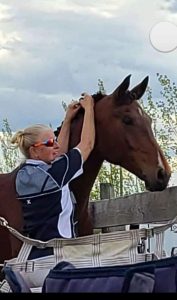
Case: I don’t know if I am fully qualified to answer that. From my knowledge of other sports and stuff, I would say that it would depend on the relationship with a horse and where they’ve come from. I don’t know the youngest rider to be at the Olympics. I know some young people have been there as eventers, and Canada has had young show jumpers too. Usually, they’re mid-20s at the youngest. It depends on how much experience they’ve had or how quickly they’ve been able to move up the levels, if they’ve had to go to school, if they’ve had to have breaks anywhere along the line through injury or for family or anything like that.
Jacobsen: There was one young lady, Luiza Almeida. She was in dressage on the Brazilian team at the 2008 Olympics. At that time, she was 16.
Case: Yes. The minimum age at the Olympics is 14. But I would imagine that there has been no lack of money, she’s been able to decide to ride; she’s had top-quality instructors and quality horses. I don’t know how well she did, but she made the nation’s team and went to the Olympics – that’s amazing.
Jacobsen: 39th was the ranking.
Case: That’s awesome. Here, I think there’s a lot more people, there’s a much larger populace wanting those few spots on the team. I think you’ve got to do a bit more and be more out there. I’m not qualified to give you that answer, but I know it would be a lot harder to do it in a country where more people are riding who are fighting for those spots. They’ll have so many qualifiers that you have to do and whatnot and how your horse goes and if they get lame or if you have a straight run-through and stuff like that. Even though you’re talking about the rider, it all depends on whether you’ve had a horse that’s been able to do that all the way through, too.
Things can throw a huge wrench in some people’s plans. The 15 yr old horse that is at the top of his game one season but the Olympics are still 2 yrs away… anything can happen in that 2 years of waiting. And again, I haven’t been at that level.
Jacobsen: You got me thinking. In one of my first interviews, I was lucky enough to get one with Erynn Ballard, also within a couple of months of working in the industry. I didn’t know anything. I recall her saying something more akin to your own perspective on the financial thing or the horse rider combination, both of them at the same time, where she noted that with respect to being able to buy a great horse, she still thinks that or likes to think that the best horse and rider combination where you build that relationship, is the strongest predictor of a successful performance.
Case: I had a special young horse that I was working with many years ago and I was talking to a course designer who had ridden at the Pan Am’s, wondering if I should get a good trainer to start this horse or do it myself. And he said, “Annette, you’re a good enough rider and you’ve got enough knowledge to do this. If you want to have this horse to compete on, you start it and then find trainers to work with to learn how to put the buttons on. You’ll do better relationship-wise if this is the horse that you want to ride and compete on to start it yourself.” I honestly do believe that having a good horse and rider relationship makes a more successful partnership which should go hand in hand with performance.
I breed a few of my own horses. I start them. Then we see where they go; like, right now, I’ve got a nice three-year-old. I will probably start it and enjoy it as a three- to four-year-old. But then it might go somewhere else for somebody to take it further than I could afford or probably do myself. So yes, I take pride in putting a nice start on them. What I know, though, scratches the surface Scott but it’s a passion of mine and my sport as opposed to my livelihood. I’ve had horses most of my life, but I’ve not been in it as a work thing for most of my life.
Bibliography
None
Footnotes
None
Citations
American Medical Association (AMA 11th Edition): Jacobsen S. The Greenhorn Chronicles 47: Annette Case Background to 3-Day Eventing (1). October 2023; 12(1). http://www.in-sightpublishing.com/case-1
American Psychological Association (APA 7th Edition): Jacobsen, S. (2023, October 1). The Greenhorn Chronicles 47: Annette Case Background to 3-Day Eventing (1). In-Sight Publishing. 12(1).
Brazilian National Standards (ABNT): JACOBSEN, S. The Greenhorn Chronicles 47: Annette Case Background to 3-Day Eventing (1). In-Sight: Independent Interview-Based Journal, Fort Langley, v. 12, n. 1, 2023.
Chicago/Turabian, Author-Date (17th Edition): Jacobsen, Scott. 2023. “The Greenhorn Chronicles 47: Annette Case Background to 3-Day Eventing (1).” In-Sight: Independent Interview-Based Journal 12, no. 1 (Winter). http://www.in-sightpublishing.com/case-1.
Chicago/Turabian, Notes & Bibliography (17th Edition): Jacobsen, S “The Greenhorn Chronicles 47: Annette Case Background to 3-Day Eventing (1).” In-Sight: Independent Interview-Based Journal 12, no. 1 (October 2023).http://www.in-sightpublishing.com/case-1.
Harvard: Jacobsen, S. (2023) ‘The Greenhorn Chronicles 47: Annette Case Background to 3-Day Eventing (1)’, In-Sight: Independent Interview-Based Journal, 12(1). <http://www.in-sightpublishing.com/case-1>.
Harvard (Australian): Jacobsen, S 2023, ‘The Greenhorn Chronicles 47: Annette Case Background to 3-Day Eventing (1)’, In-Sight: Independent Interview-Based Journal, vol. 12, no. 1, <http://www.in-sightpublishing.com/case-1>.
Modern Language Association (MLA, 9th Edition): Jacobsen, Scott. “The Greenhorn Chronicles 47: Annette Case Background to 3-Day Eventing (1).” In-Sight: Independent Interview-Based Journal, vo.12, no. 1, 2023, http://www.in-sightpublishing.com/case-1.
Vancouver/ICMJE: Scott J. The Greenhorn Chronicles 47: Annette Case Background to 3-Day Eventing (1) [Internet]. 2023 Oct; 12(1). Available from: http://www.in-sightpublishing.com/case-1.
License
In-Sight Publishing by Scott Douglas Jacobsen is licensed under a Creative Commons Attribution-NonCommercial-NoDerivatives 4.0 International License.
Based on work at www.in-sightpublishing.com.
Copyright
© Scott Douglas Jacobsen and In-Sight Publishing 2012-Present. Unauthorized use and/or duplication of this material without express and written permission from this site’s author and/or owner is strictly prohibited. Excerpts and links may be used, provided that full and clear credit is given to Scott Douglas Jacobsen, or the author(s), and In-Sight Publishing with appropriate and specific direction to the original content. All interviewees and authors copyright their material, as well, and may disseminate for their independent purposes.
Share this:

Publisher: In-Sight Publishing
Publisher Founding: March 1, 2014
Web Domain: http://www.in-sightpublishing.com
Location: Fort Langley, Township of Langley, British Columbia, Canada
Journal: In-Sight: Independent Interview-Based Journal
Journal Founding: August 2, 2012
Frequency: Three (3) Times Per Year
Review Status: Non-Peer-Reviewed
Access: Electronic/Digital & Open Access
Fees: None (Free)
Volume Numbering: 12
Issue Numbering: 1
Section: A
Theme Type: Idea
Theme Premise: “Outliers and Outsiders”
Theme Part: 29
Formal Sub-Theme: None.
Individual Publication Date: October 1, 2023
Issue Publication Date: January 1, 2024
Author(s): Scott Douglas Jacobsen
Word Count: 39,291
Image Credit: None.
International Standard Serial Number (ISSN): 2369-6885
*Please see the footnotes, bibliography, and citations, after the publication.*
Abstract
Mattanaw, formerly “Christopher Matthew Cavanaugh,” earned a B.S. in Computer & Information Science and a B.S. in Psychology from the University of Maryland, and is working towards a Masters of Business & Economics from Harvard University. He is a former Chief Architect fopr Adobe Systems and the Current President/Advisor & Chief Scientist for Social Architects and Economists International. What follows is the single longest interview submission to date, I think, with the second-longest from Hindemburg Melão Jr., Mattanaw discusses: intelligence tests; scaling intelligence; learning more about intelligence and intelligent people; pathways in life; patterns of behaviour of the high range; personal development and understanding oneself; Mensa membership and its value; areas of reading; historical figures; evaluating those historical figures; self-protection; and a concluding response.
Keywords: computer science, information science, Harvard University, IQ, Mattanaw, psychology, psychometrics, significance and velocity of ideas, Social Architects and Economists International.
Conversation with Mattanaw on Identifying Highly Gifted People
Opening Response
The informal method utilizing significance and velocity of ideas is not only applicable for utility comparing living people, it has some utility for understanding historical figures, through an analysis of their productive works, converted into analytical tools like AI and machine learning. Because it is useful for living and historical figures, it is universally applicable to all humans. Taking what people are able to do in their higher quality analyses of conversations, one can make a software system emulating the skills of the conversation evaluator. This has not been accomplished but is incipient, and the author expects this to eventually occur. ChatGPT shows some promising usefulness I hear, although I don’t use it. A manual informal description is required before there is an automation substitute. This is based on long experience guiding corporations who are often interested in replacing workers with systems performing the same jobs. However, historical finished productions are edited, and the time to completion is unknown; which just means that historical works that are complete and growth is often unknown because revision histories are lost. This is highly relevant to the analysis but it does not mean that no analysis can occur on only the results of thinking people.In my work I’m interested in both quality of finished products and growths of learning in brains and resulting changes in productions over time. More will be said below regarding this concerning the question of historical figures, especially as it relates to dissertative thinking and velocities of significance and ideation, and change deltas.
The informal method mentioned is described in passing as the related topics are developed. Instead of explaining this concept in depth out of context, it is explained gradually in context, where there are many examples to be shared, in relation to the interesting questions posed by Mr. Jacobsen.
Questions concerning the well being and interests of Highly Intelligent figures is also related to this method, that is used separately as a method for appraising quality of thought and output. This includes the question as to why some highly intelligent people appear to be unproductive. Lack of productivity is a sign that there are certain other parts of the nervous system that may not be as sophisticated as the intelligence of the individual, but since there are many ways to produce recordings, executive function is questioned if one has been unable to become productive somehow. Consider that the extent of the planning of my work and software and skill acquisitions of computer programming, software design, typing, and a huge array of other skills was required to create a total usable system for conveying significance fast. Conversation is not only verbally performed, of course, but is also written, and is present in artworks. If there is an excessively lopsided difference between claimed intellectual prowess and productions, meaning there is a low velocity of significant ideas in recordings, it too is an indication that if there are not other debilitating issues preventing production, the claims of extreme giftedness are at least partly fraudulent. There would have to be very strong reasons provided for remaining inactive having gifts, wanting less feedback on behavior, and no claim can be made that only thinking provides all the feedback needed, because I can make the claim that happens to be true, that I can do the same, and yet no mind is so powerful as to not require environmental feedback from sophisticated thinking. Otherwise the smartest of all children need not do anything in a very short time. In the High Intelligence community there are many variations in intelligence, and one is expected to have gradations and selectivity in fraud, to fill gaps, and to present strengths as greater than they are. Great unproductivity is a decrease in the total velocity of total communicativeness of significant ideas. Whereas, those who are extremely productive “omnichannel”, meaning on all communicative channels available, they are more likely to be extremely gifted. This accounts for our expectation that highly gifted individuals producing masterworks of various kinds, and large contributions of written materials, really were extremely gifted. However, it is possible for Highly Intelligent people, to be “locked up” in their minds, having other deficiencies related to communication, including disease or difficulty with motor systems, making it hard to create works worth retaining and sharing. This topic relates to claims of “genius”, a word I’ll keep saying I dislike when I have to mention it. If there is no evidence of great productions and works, in their various ways of appearing in life, in work careers and in books and writing, then there is no “genius”, particularly if the person has no illness or deficiency like those mentioned above, which would cause us to want to look further into why their mind cannot result in actions evidencing in a non-lopsided way, the quality of their minds. Without any illness, it appears they are lacking communication skills directly related to their minds, which would low velocity of significant ideas in conversation too. If one can speak, or sign, with great velocity and significance of ideas, unhindered, then one is providing “potential recordings” that would provide evidence if there were not other physical or nervous obstacles to make those recordings. People of high repute in the academic community can and have dictated incredibly high quality materials showing obviously the quality of their minds. Bertrand Russell, using an anecdote, would think about his work until he had a clarity he liked enough to simply dictate it to his secretary who would type it. I use an alternative strategy I think is superior, but that strategy does seem to indicate the plausibility of this possibility. One can be very powerful in dictation. But there are highly intelligent people who do lose their speech too, from strokes or other health events. These considerations make it plain that communication is a vitally important component in determining if someone is really intelligent or not, and these together support the view that an informal method of using communication to appraise velocity and significance of ideas is of good utility for determining if someone is extremely gifted, in the highest ranges. In the worst case, it can be used to determine if some are frauds. Charlatans do exist and they do not fare well on this informal measure. In the future they will be detected automatically, as finally, this informal method and skill is built into software systems that can do the same work that a highly intelligent mind auditor can do.
Scott Douglas Jacobsen:
*Question 1: The most legitimate intelligence test scores tend to come from comprehensive tests with money and research dumped at them, e.g., the SB and the WAIS. Yet, their ranges are fairly tight around 40/45 to 160/155 on S.D. 15. Some statistical, psychometric techniques, e.g., Rasch-equated, have been employed by individual experimental psychologists, e.g., Dr. Xavier Jouve, to extrapolate for claimed scores at 175 S.D. 15, for example. Alternative tests made by independent test constructors are interesting and vary in quality, though have a far larger quantity. In the article, bluntly, you state, “140,150,160,170,180 are the numbers immediately grasped by liars and exaggerators.” When using alternative tests, more than the first test attempt to claim a score at 140, 150, 160, 170, and 180, what are first thoughts coming to mind to you?
Opening Response for Answer One
Before moving on to my answering of the main question, I want to handle the following embedded concern about a portion of my referenced article: ‘In the article, bluntly, you state, “140,150,160,170,180 are the numbers immediately grasped by liars and exaggerators.”’ The cause for this particular statement, which is strictly true, and something I’ve experienced many times, is that people recall what a high score happens to be from their cultural recollections, and falsely self-attribute those same scores, which are round numbers. These are easier to recall than say, 97, which may figure into the statement “My intelligence score is 97”. To provide a high example, we hear that some historical figure has an IQ of 160 over and over, and that another has 180. These are fabrications because of a lack of actual test scores for historical figures and their supporters acting as information marketers, who are the causes of these messages. These are applied to historical figures to mean that they are “geniuses”, although few in the public really understand what these numbers mean, or how high those scores really are, and whether or not these figures are really as smart as those numbers indicate. They later recall these numbers more easily and then, when they falsely pretend a score for themselves, they choose those same numbers. I’ve heard this so many times from fraudulent claimers boasting about their “smarts” having no idea of psychometrics that I’m certain this is the explanation. My father has done this before choosing the score of 160, and while he is moderately intelligent, he has no idea what is IQ is. He simply grabbed what he heard Einstein’s IQ was, which of course is also false, and again, people chose that number, because they heard that is what a geniuses score would be, but they have no information about Einstein’s testing. There is an additional reason, however, which should be more obvious, and it is this. It is unlikely that if a person has a particular test taken, that their score will be a round number such as this. Suppose one has really scored in the 160s, but hasn’t had their score revealed to them. There is only a 1/10th chance that their score is 160, and not 161-169 (disincluding the diminishing probability of the intelligence increasing from 160 to 169. In that case I could choose another range, say, from 156 to 165 and say again, that the person scored is somewhere in this range but doesn’t know what the score is. In that case the more probable score is either 155, 156, 157, 158, or 159). The same is true for any of the other sets, 140-149, 150-159, 160-169, &c (also disincluding the diminishing probabilities of the higher numbers individually). The propensity to choose a round number combined with the rarity that it would be a round number, and the rarity of even having that score, combines to indicate that the person simply stating their IQ simply doesn’t have that score. If someone says they have an IQ of 200, it’s even more of a round number. Why did you not tell me it is 223, and not 200? The use of the round number is an indication that someone is lying regarding their IQ, and if they are that intelligent they would have the awareness to present a percentile figure and not an IQ score in any case. I’ve noticed this time and again in the misattribution of IQ scores to untested historical figures, living actors, and to people themselves who are simply trying to tell others that they are “geniuses” but of course, they have not been tested at all.
Relating this to the detection of scammers, a question later in the interview, I would immediately utilize unproductivity as a “red flag” that they are really lying. But I don’t require that it be a red flag either, because from conversation, I already know they are lying.
What is great about the informal evaluation method using velocity of significance and ideation is that one more quickly knows that my father was incorrect by listening to him. It has general application and immediately reveals one has a score that is not profoundly intelligent, and while it is usable for estimating anyone to a degree, obviously without psychometrical precision, it is more easily used by an immeasurably gifted person to see another is not immeasurably gifted.
The remainder of the question is handled extensively below.
The General Plausibility of Scaling Intelligence, and Our Unfortunate Inability to Create Tests That Can Rank Measure It for the Immeasurable
There are very difficult norming requirements for tests exceeding the range of the Stanford-Binet and Wechlser, meaning that a very large sample pool of test participants must make themselves available in order to validate the test scoring, and ranking with the general population. This is applicable in two ways: firstly, the maximum one can score is approximately or equal to the 99.997th percentile on the total test, that is comprised of subtests that themselves have maximum IQ scores at the 99.89th percentile. One can reach the limit by getting maximum scores on subtests or the total test, which would also mean, that the maximums were reached for subtests only at the 99.89th percentile. I don’t think this limitation has been overcome except for some tests that are not themselves IQ tests, but academic tests, that supposedly correlate well to IQ tests. These tests, the academic ones, do have some credibility to me, for establishing higher capabilities. Especially the Miller Analogies Test, although that test is not culture-fair, and has some definite limitations for testing people not very well exposed to culture in the English language. It also has a deficiency in that it is verbal focused and relates mostly to specific subtests that on IQ tests have a ceiling at the 99.89th percentile, making correlation to FSIQ a confusing issue. It correlates more directly to verbal subtests and extrapolation would be required to really understand the relationship between MAT scores that are higher, subtests that ceiling at the 99.89th percentil, and FSQI that is higher but utilizes subtests from the visual domain. It cannot be used to provide a raw IQ score, in the same way as a true IQ testcan, but is purported to able to provide rank differentiation at a higher level, of 8 Standard Deviations, as published by Pearson. That would be an IQ of 300, at SD25, and a rarity into the billions. Later I will discuss this test in more detail, and will share some critical flaws, other than those already mentioned. This test is well normed from my understanding, meaning many test takers have used it with results being processed, using participants as human experimental subjects without disclosure (like the SAT), making bell-curve distribution possible, but someplace between 3 and 8 standard deviations there is definitely a norming issue, due to lack of test takers to establish rarity. Billions of people have not taken the test. That means after somewhere between the 99.89thpercentile and IQ 300 territory meaningful comparisons between participants regarding IQ will be harder to justify.
Scaling of the MAT appears to have some meaningfulness because the method of scaling appears to have uniform growth characteristics–the test is only comprised of analogies so more analogies are simply added, and those who can answer more, have scaled past other test-takers who simply couldn’t answer as many questions. I have related the scaling of the test to scaling of a chess-board which can begin as a 2×2 matrix with a few pieces, to any larger matrix, not only an 8×8 matrix as it currently is. The game would become increasingly harder to solve as the board increases in size, and the current size is fun because it offers a level of challengingness that many enjoy, but is not so complicated as to make it unfun to play, when out of the range of comprehensibility. Chess is already incomprehensible at an 8×8 matrix for much of the population. This example would be like the scaling of a visual problem solving matrix on visual portions of IQ tests, and one wonders how the MAT could relate given it is not visual. But the purpose of the illustration is to convey the scaling idea. Problems on the IQ test all scale in complexity until participants are unable to answer questions on all subtests that vary, and eventually one runs out of questions if one is very talented in a specific domain, although some subtests resemble complete IQ tests on their own, and for these tests I have maximum scores, both verbal and visuospatial.
An interesting challenge to the MAT test is why it scales to 8 standard deviations at all, and why not 12, or 14, or more? Why not scale it like a chess board to infinity? What is the purpose of scaling the test to an IQ correlate of 300 if no one on the planet can come close to scoring that high, and nobody does come close.
The way the MAT test is scaled is by including a very large set of analogies making conceptual comparisons using words that are simple to understand, providing some easy answers, scaling those until they are rare and challenging, like a vocabulary exam, and also by increasing the complexity of the comparisons that are demanding on culture dependent factual knowledge, that one must understand well or the comparisons might be unsuccessful. The set is huge so it exceeds what people can remember as far as concepts, and what they could learn relating to potential studies and experiential learning. But at 8 standard deviations there is some cause for the largeness of the analogy set, which is big enough to make it impossible for people to score well on, with all but one person scoring at 6 SDs, which would correlate to an IQ of over 250, although I question that correlation for lack of data and a range of other reasons. But that means nobody but one person has scored between 6 and 8 standard deviations and that person barely scored over 6 SDs. This means nearly zero people have scored that high, yet the test is claimed to score that high.
Would it discredit the test if more analogies in other languages were utilized, or all languages in which we have sufficient conceptual knowledge, to account for the linguists who obtained knowledge who would also like to be tested, making it culture-fair, by including all of them? Why not scale it more, or replace concepts with interlingual concepts. The effect of the culture-unfair nature of this test is that not all concepts someone might know would be in the test pool, including not only concepts of other languages that are unique and asynonmyous, but concepts in specific fields that are not covered. I have extensive understanding of concepts that I can clearly see from experience are entirely disincluded from the test and it appears this relates to the manner in which Pearson has aggregated concepts.
What of the ethics of including all the concepts of immigrant minds versus not? What are the ramifications for those in the highest range who cross over national and linguistic boundaries? Why not include all concepts that exist!? If such a test were created, probably the range would be some large number over 20 Standard Deviations, and would be impossible for earthlings into the distant future. This would be like the chess board that has grown to a 160×160 matrix with many more pieces, being figurative. But would that debunk the test, for testing impossible giftedness? Already that is what it does, and it does this by testing for concepts that no-one learns or wants to learn too, out of differential interest that does relate to effectiveness in life, and moral self-guidance as to values of study. It tests for concepts that exist in the history of clothing for example, something I’m not too interested in despite enjoying fashion, for knowing with executive function what to omit from my life in order to pursue excellences. Areas of music and so on that seem to be of popular musicology are also included, but one can be very wise to eliminate that as a detailed study in one’s life too. Interests management is important to overcome procrastination, and while some are interested in textiles, like kinds of hats, and musicologists may be interested in older styles of music and their history, one is smart to omit whatever one is not interested in to pursue real life objectives and this conflicts with testing for these things. What the intelligent person omits from life is veryimportant.
If foreign language concepts were added, they would be as unlearned in the general population as concepts from other languages. This might be interesting for those committed to the learning of other languages thinking it provides evidence of intelligence.
It should be mentioned that this test appears to be one easily released by Pearson, because they have a pool of concepts from textbooks that appear in glossaries and the like, and all it takes is the formation of combinations of concepts from this data set to create a pool large enough to support the simple tests they create and publish. The cause of the selectivity of concepts requires justification that I think does not exist, and instead, the focus is on inclusiveness in the English language what Pearson happened to aggregate.
Pearson can have a good earning revenue even if they don’t believe in the test and it it is true that it doesn’t have extremely widespread application, not being a choice test for college admissions. The ease of release relates to the ease of earning despite having a somewhat low number of test takers compared with the SAT.
At one point having fun with MAT study guides that actually makes a good source of study of human knowledge because it covers so many area categories, I created a system of a combination of a hierarchical directory tree, with spreadsheet data nodes, making a sort of database containing structured MAT data that had Pearson concepts in it from study guides, and any concepts I would add. But after a period of enjoying learning with this method, I realized I didn’t care about learning concepts about clothing, and certain cultural areas in which there isn’t sufficient cause justification for the time expenditure, which again, limits the executive function component of the test. I noticed at that time however, I could think of other categories of understanding that were disincluded, like medical and technology concepts. For example, having been exposed in youth to the Merk Manual, I knew definitely many concepts in that text were not in Pearson’s pool of concepts and that could be because Pearson publishing does not issue that text, and therefore doesn’t have those concepts in the test pool. To me this reduced chances that if I took the MAT I would be unable to exhibit my full potential, and it does mean there is favoritism regarding interests in test subjects.
The MAT is a relatively risk free test to take and one can be examined by it without any of the side effects of an IQ test, because one simply doesn’t care if one scores poorly and all do, considering the relationship to what a 100% score would be. This is another interesting limitation on the test because one feels like the results are somehow inapplicable for not mattering. This is only partly the case, since I still think there is some correlative validity, relating to the propensity of highly intelligent people to master concepts fast, coming from those in which they were really exposed and were interested in seeking and really those who are highly intelligent are more stimulated in a normal environment, seek information curiously, but on topics they are interested in, and not those they are interested in omitting, and they do retain conceptual data better, and automatically perform better on these tests. Profoundly gifted kids vacuum information and seek new information out of great curiosity, but environments are often less stimulating, children choose their interests, and some level of natural interests and disinterests steer highly intelligent kids toward and away from, concepts that appear in this test. Intelligent problem solving results in how to divide life into what is entirely unexperienced and what is experienced deeply.
As an example, we can compare with the subtest measure on vocabulary from a normal IQ test, which has some similarity. I score 99.89% on this test and there is no scaling past this further, so I cannot test any higher. That’s as long as it is normed with the regular population. I perform very well on the MAT practice tests and have seen for myself without taking the actual test that it confirms my scores. This is due to my being able to absorb information from my environment, my being well-read on areas of interest, and so on. I score very high on this test even though I was understimulated outside the domain of athletics from middle school to the end of high school, and was discouraged away from reading that entire time. I read very little except towards the end of High School, yet like a kid vacuuming information, I still obtained very good conceptual knowledge across domains. However, it was not until later that I became highly interested in self-study, and I know from my recollections of all my learning experiences, that I did not learn the concepts required to do well on this test or the similar vocabulary section of the Stanford-Binet 5 until self-directed study around the age of 18 onwards. I did not look into the Miller Analogies test until after I was 34 years old, and by that time, I read far more probably than most in Mensa (going by the time commitment versus what I see around me and results of conversations), and I didn’t read almost anything outside of school while I was younger. My family did not encourage reading. This implies that those who are profoundly gifted cannot use their native capacities on the test, without conceptual mastery because they would do poorly, and those who did not read in youth or come from other nations cannot really utilize the test, depending on the time lost learning concepts of other languages, or not learning concepts at all, as with some native tribes.
A cause of my not wanting to take the formal Miller Analogies Test relates my not wanting to forever take academic examinations, and because in choosing which I might want to take for grad school, I wanted one that would be as widely accepted as possible, and the MAT simply is not accepted at as many schools as the GRE or the GMAT. The SAT, GRE, GMAT, LSAT and MAT are all considered test correlates to IQ, but having already testing with maximal scores on an IQ test, which is best, because it is the intelligence test that these tests are hoped to correlate to, selecting which one and deciding upon the time commitment for self study is important. What else does the test do for me for college admission for graduate school? This was a question I had, and I found anyway that I did not really need it for admission. But ultimately I did not take any of these anyway, finally realizing my immeasurable intelligence scores were adequate enough and I didn’t need more testing, and my application for college and my employment screenings already include my resumé, that has my psychometric information already included on it including my maximums, which state I’m smarter than most at Harvard already. I also wouldn’t need any of it anyway being advanced in my career past having any need for education, since those obtaining a number of doctorates wouldn’t be able to have the job that I obtained anyway, for rarity, competition, and difficulty. My job is what college degrees were for and not the other way around, if one was not wanting to simply teach as a professor.
One might wonder why I am spending so much time on the MAT, and that’s because it is a critical point of interest considering society admissions at and above the 99.997th percentile, and it is the only test the Prometheus society accepts presently. But taking that test doesn’t get you into other societies that are higher, like Mega which doesn’t include it as an option and requires more tests that was created by Mega’s creator, Ronald Hoefflin, unless he had support. This means if you want to take a test to get into Mega you need yet more tests, that we will see are more dubious than the MAT, and the MAT does have serious limitations. These two societies do not accept any test that is an IQ test, that is in the ranges I included above for the Stanford-Binet 5 and the Wecheler, or those that have a similar heritage that have been extended, or are much older.
What I still like about the MAT is that it is still widely accepted and popularly used, whereas tests for the Higher Range past the Stanford-Binet V and Wechseler in extended ceiling tests are used infrequently by Psychologists. This is a cause for their not being accepted by Prometheus, but Prometheus then accepts the limitations of the MAT. Since neither Mega nor Prometheus accept these tests, it indicates an unwillingness to use them that is meaningful for the purposes of deiding what to take, and for suspecting that justifications relate to problems with these tests, even if they are seemingly in the same lineage as the tests I took.
There are other unpopular tests that are very close in similarity to the standard Stanford Binet 5 and Wechseler tests I took. At one point I considering taking the Cattell and the “Woodcock Johnson” (?!), but I could not find any psychometitor in either of my home locations at the time who administer it. By psychometitor I mean professional Psychologist who is skilled in test administration. They are also trained and have a reputation connected to proper administration of these tests for all people in the population. They also have ethical standards and relationships with organizations to which I was exposed when I obtained my degree in Psychology. Being infrequently administered, there are risks using these tests and the credibility of the Psychologists is more questionable for using them over others that are more standard. One cause for taking the Cattell, is entirely to inflate the resulting IQ scores, simply by taking the reports, written with standard deviations of 24. On the Stanford Binet V, I mentioned that one can score 99.89 percent rarity for subtests with maximum 145 subtest IQ, and an FSIQ combination result of up to approximately 164, at 99.997 percent rarity, at SD 15. Those same scores on the Cattell are 174 and 198, so it simply looks better to others to claim higher scores, but nobody being told understands only the percentiles should be used to stop this practice of confusing others. There is also a practice of translating scores of one test to the scores of another, so those who didn’t take the Cattell will say they hit the ceilings at 174 or 198, without telling you they never took it! Einstein’s score, which is unknown, is communicated to be 160, but his score on this test would be 198. They are the same score!They are based on subtest scores of 145 and 174 that have not been tested any higher if one scored maximally!
Despite being hard to find these tests, they appear more popularly used, and not less than extended ceiling tests going past my immeasurability marks. Being largely unused, and unpopular, being administered by only a few Psychologists at a distance, I thought it an odd choice to trust them. How do these Psychologists work out issues with administration of the test and proctoring and scoring, if there are so few in the community to provide mutual support. What is missing from intelligence tests of the High Range is that there is limited testing of the administration of the testsand correction of issues in the administration that should result in not providing scores, among many other issues that simply result from testing instrument. Many would not think of this not coming from the area of enterprise technology, where people recognize the many ways that products fail, and the many errors that tests can contain, if there is insufficient testing of the instrumentation. I don’t think those only in the sciences outside of mission critical enterprise and government technology would recognize this as easily either. Testing in technology is not a simple matter, and only certain functional tests are performed which relate to known risks. But there are so few people utilizing these tests that I don’t believe that the risks are known, and if anyone was going to discover what the risks were, or ask someone about what they might be, I would likely be the kind of consultant needed to provide that support. This is a field of rare professionals with little support. This is unlike the use of tests like the Stanford Binet or Wechseler, where there is plenty of usage and mutual community support, although I think there are many issues with these tests too, but that discussion will have to wait for a later edition of this book. All I will say now is that the problems with the popular standard tests are inherited in the higher range tests, and then the higher range tests have insurmountable problems on their own at present making them risky and untrustworthy.
Older versions of the SAT have similar claim to IQ correlation at a high range. Tests like these have significant investment behind them, and many years of usage as standardized tests. People trust them enough to place them on resumé’s and applications, to the effect that there is tracing of their personal history involved, and one might argue There is very little risk of being seriously manipulated by such tests that have such significant support. They’ve been adopted by major universities that have an interest in protecting the records of their students, and these universities would not be interested in storing data that may involve a strong manipulative component. Another issue with rare IQ tests is if there are only a few test examiners they may not be reputable. It may be a sign of lack of reputability.
Dr. Xavier Jouve, mentioned by Mr. Jacobsen may have some credibility for tests for which he’s decided to utilize, tests not accepted by Mega and Prometheus, but that is not something I know about him not being a researcher of his work. My objections to tests in the category he utilizes, extended ceiling tests perhaps in the heritage of the Stanford Binet V, or experimental tests made by a small circle of researchers or individuals applying, it relate to concerns I see as foundational and would cause me to not want to become another Dr. Xavier Jouve myself, independently testing others without the support network of the APA fully backing my psychometric scoring of real people, although he may be very credible. I don’t trust attempts from individual psychologists and psychometitors who work alone or in isolation, although I value their studies and research. Standardization is important for individual health, as we’ll see, particularly as it relates to security and trustworthiness for self-application, for self-summarizing one’s mind. Those taking high range tests will greatly want to employ and share the score they receive if it is over the test maximums of the standard Stanford-Binet and Wechseler tests, but they are more dubious. It is natural for someone who obtains a higher score to want it to supersede other test scores that are more trustworthy that are lower. When we discuss “home grown” test for the ultra intelligent ranges, we’ll see that the same propensity exists for evermore dubious tests, until the most dubious is arrived at: fake tests made by individuals for themselves.
“How could such a thing exist?” you might ask. We’ll see shortly.
Returning to experimental examiners like Dr. Xavier Jouve, without using his name causing him further trouble. Other risks must be noted. There are other issues with such endeavors. As a rule, there is little professional acceptance of these tests that validate their authenticity, and there could be only little support from psychological associations. That is reputation risking for the association, any who choose to support, and examiners. It is important to not that most Psychologists are not psychometitors, so it’s not as though the total pool of psychologists is part of this community. Who is going to risk their reputation for independent examiners? If there is little support, why would the examiner risk their reputation standing alone(is)?
There is also the question of the size of the customer base. What is the total number of patient-customers of these high range tests that have such rarity in the population? What group is going to work to support his risks of working with less standards for fewer patients? What are his risks and what does the insurance consist of?
These independent examiners I would suspect have less earning potential. Less earning potential is related to crediblity too, for in medicine, those who do really well realy might be the very best doctors. One has to think over the probabilities that independent examiners are fringe with less earning potential, having found niche work to perform to have an income. This may seem like it is inapplicable but on the smallest scale of the profession of test-design and application, we have the amature test designer, adn these are the most dubious. Some have customers like Mr. Paul Cooijmans, but earning potential is lower than for professional psychometric exams. Just above this may be the average independent examiner.
Health record requirements exist regardless of scale and popularity of tests. If there are fewer customers quality diminishes. Funding sources have less cause to provide funds. With too few people in the highest range, test takers are assured to be minimal, for that range. There is still a need of sufficient testing of test administration and not the test, and if there are few to administrated there is a poverty of data. The issue of having too few super intelligent people to need these tests makes me feel more confident that there is not a large enough customer base to support a quality product. The test is a product of instrumentation, like a medical device. It’s like thinking that a luxurious new version of the iPhone with extended capabilities overcoming science could exist from a few customers and not millions. The iPhone simply doesn’t exist without market expectations. The lack of other people needing such tests makes me feel plenty confident about the untrustworthiness of the tests, which would be less than amazing products, with less product testing of all kinds.
This is very different from the other tests discussed earlier, the one’s I’ve taken, and have been exposed to, that everyone knows and uses. It does not appears that school systems accept use of these tests thinking them non-standard. This problem of having no standardization, being experimental, having a lack of norming for real rank ordering with the population, little to no adoption, and low support from major organizations really does completely diminish the value of these tests. One becomes an individual experiment. Some examiners in the High Intelligence community who created their test entirely independently, in such a way as to be very strange and idiosyncratic, like the tests of Paul Cooijmans, not demeaning Mr. Cooijmans, but honestly commenting on their truly idiosyncratic nature. I spoke with him and received a test for review, considered taking it, and decided it was risky. They are interesting and he is an independent experimentor attempting to help people self-elucidate, but I did not want to become an experiment regarding both the validity of the test and health records. I remember recommending to him one potential software tool for tracking his tests so they didn’t slip out for distribution. There are few protections so these tests potentially can be shared to others, who might be informed of scores. I belive this is a concern for tests just as idiosyncratic for being independently developed by the Mega Society. Paul Cooijmans runs the Giga Society.
Being very serious, I can make tests too, and probably very good ones. I don’t think it can be successful however, for ethical application to others, even if to an extent it is for fun. Being a [guide of startups for executives, who want their technology to be tested, avoid risks, and protect their health, I wouldn’t even start considering the digital security needs relating to health records.
The independent test creators in the High IQ community are certainly not having their tests examined by ethical committees.
It creates a health risk to take these tests, and risk to records, and risks to one’s own credibility, for deciding to believe results that cannot be validated, that were created and provided by an individual with vested interests. People who are assigned a score too high may really believe their scores, and this would impact their lives in strange and pervasive ways. The individual motive of wanting to have research that has useful and truthful results, even if the results really are not useful or truthful, is already a known risk in the sciences. One must eventually find support from peers and from institutions to have credibility, not only with papers that are published resulting from research, but more especially for anything resulting in what would require ethical committee approval for ongoing research with human participants. In my experience in Psychology, test designs involving human participants require approval in advance, and disclosures need to be made to anyone involved, including disclosures about the possible inapplicability of results. I had to be aware of committe requirements in planning experimental designs at the University of Maryland and participated as a volunteer in tests on perception, that required disclosures to me. Creating a psychological exam that will be used by people over many years, is effectively including them in a long term social-psychological study, and very definitely would invoke the involvement of an ethical committee if created in a university context before it could be administered to volunteers. In a university context, it may be possible to apply for and gain approval from an ethical committee to conduct research on experimental tests, with hopes of eventually publishing them for more general use in the larger population. But I think those efforts would be instantly thwarted by inability to actually get sufficient research done, because after all, one is attempting to measure the high range, and some are trying to measure to the millionth percentil or rarer. Can one even obtain participants, at the university, using the student population, who score at the levels that are interesting? How does one broaden such studies, to a number of universities, to gain more participants? Now consider, further, that one must definitely devote one’s career to make such an enterprise successful. Has any Psychologist had success doing this, and is there any promising research on this front, to have a test finally standardized for this purpose? It appears to me that the scarcity of participants makes this an unreasonable expectation.
Let us transition to considering who is creating these tests as we prepare for the final question concerning scam artists and fraud. Many of these tests are not created in a university context, with volunteers, after approvals from an ethical committee. These test creators are operating outside of any system of checks and balances on quality of research, and on the ethics of continuing with a completed test!
These test creators seem to be those who might be in the immeasurable range, looking for more ways to find self-understanding, and may simply have interest too, in explaining intelligence itself and how it scales. Producing tests is like producing games, and in a way, like producing works of art, so again, I don’t want to completely diminish efforts made by independent researchers working with small groups of customer-participants. But those who are in the immeasurable range should be aware of the unethicality of these practices as it relates to health records, at least under the ethical codes existing in academic research and medical practice, and I find it surprising they would persist in making some of the tests that result in certifications and society admissions. There are huge risks. Some of these tests have not yet been connected with Psychology, and Health Records, and need for validities to be establish, protecting the minds of those who are scored and their relations. It appers once this comes under scrutiny these test preparers would need to stop and since Mega only utilizes tests like these, that are “homegrown” I can imagine this would be a threat to their continuity, unless of course they opt for a test like the MAT for acceptance, like the Prometheus society. Risk mitigation may be a cause of this selection by this society.
In my experience in the high IQ societies, there are still obviously poor motives for inventing and taking “homegrown” tests, outside the context of the Psychological sciences, making them mostly untrustworthy:
- There is a motivation to create and lead societies on the basis of these tests, self-made, that are “higher societies”, for presentation of profound giftedness to its members and the public.
- There is a motivation to perpetuate societies that seem to have higher authority, and protect these already created tests that were used for admission.
- There is a motivation to protect one’s investment in having taken a dubious test created by an individual.
- There is a motivation to protect one’s investement having made a test.
- There is a motivation to self-validate using these tests. Meaning test creators use these tests on themselves to pretend they’ve been proven they are the smartest, and that they are legitimate “leaders” of the entire community. Originators of societies can get away without ever having been tested, particularly if the tests were made by them, and have unexpected answers that are not those they intended. Making a test is not taking a test.
- At the very worst, there is also the motivation to provide tests that simply inflate scores because one has not scored well on anything else, or well enough to create self-satisfaction.
There is a very unfortunate result of these observations. The first is that there are very incredible obstacles to overcome to arrive at a serious test, following the steps required in the sciences, in an academic environment. What are the costs involved in a startup business wanting to arrive at a final test to find a solution for the immeasurably intelligent? It would be more costly than for an equivalent of the Stanford-Binet! Because it is more complex and not less! Unless some ethics are sacrificed, and that too is an interesting topic: to create a test that too few will utilize may require cost reductions that result in bypassing moral standards. This may explain why there is little work being performed on intelligence for the highest range, and why independent “homegrown test” creators exist, partly, and the necessity of bypassing ethics in order to do any of the work. Professional ethics is definitely bypassed in good quantity, even if there are justifications. But what then are the justifications?
I believe individual test creators are very likely to have research that does not lead to a completed test, allowed to be administered at a cost, by psychologists. Were the test creation experimental processes transparently shared for creation of homegrown tests like Mega’s Titan test? Were the tests circulated for peer review? Are there answers to questions on these tests really?
Another issue is that every test maker who is not utilizing an experimental design to arrive at an intelligence test will be unable to demonstrate that they do not have any of the above listed motives. By doing it outside of the sciences one is creating a product that definitely has not had ethical committee backing, or peer review/support.
Issues of utility and not only ethics relate to these tests:
- Very few people hit the ceiling of IQ tests and could want to take additional tests to learn more.
- The tests created cannot establish a rank order with the general population, who is going to be compared with the “test victor”.
- Anyone who uses such a test to “improve their rank” has openly exhibited self-deception, and a motive to deceive others. We have seen that such a test could only be produced in a university setting with huge numbers of participants, otherwise it’s not as trustworthy, which means one cannot well trust self-application, but that is an objective.
- The most intelligent should be the most aware of these limitations, and yet illustrate their self-deception by trusting such tests.
The people who hope to benefit from these tests then illustrate cognitive biases for ultimately believing the results. Notice they would have no such error, in simply stating they do not know their IQs because of the limitations of the trusted standard tests! Worse still, many may not have takent the standard tests.
There is feel in the High IQ communities that have a cross section of individuals from all societies that some in the highest societies would have failed the Mensa test. If one fails the Mensa test, does worse than expected on the Stanford-Binet, the Wechseler, Cattell, Raven, or Woodcock Johnson, one can still take more tests. But that doesn’t mean they already know they are not immeasurable on those tests. Instead they can bypass their knowledge of their true scores and take ever more dubious tests until they are in some society that is above all the others. But as I say in miscellaneous parts of this interview, their conversation is often low quality, which is the cause for suspecting they simply are not of the giftedness level for any society.
There is a credibility to Mensa that is often overlooked. It really does seem as though the membership is more consistently reputable.
It may be that some test creators, who are researchers within the discipline of Psychology, may have fewer motivations to do anything that is not completely in the interests of science, and may exhibit a genuine desire for obtaining accurate psychometrics. I also implicitly agree, that there is a plain scaling problem in measuring intelligence, and that since one has already scaled the difficulty of subtest scores on standardized tests, one can obviously scale them further until a diminishing pool of people can respond with correct answers. As I stated, the MAT appears to be doing this fairly well. The problem is one cannot rank order them in a trusted way without overcoming difficult norming requirements required to combine the populations of the upper and lower ranges with success.
The ceiling problem exists, because once one has gotten all answers on a test, there is a clear feeling that one could go further. Meaning one is certainly smarter than one has been measured to be. However, knowing that this scaling problem exists, and knowing that there is a definite point in which problems would be too complex for me to solve, does not imply that, scaling it on my own, creating my own test, will reveal where others would fail, across the ceiling, so that I can score myself and them with a new FSIQ, higher than that provided by other tests.
The intuition that this scaling can be continued is what I think drives some to create tests and to persist even with experimental research limitations that doom them.
Every score coming from these tests involve some commitment to a rank-order that is not trustworthy. To take these tests and believe the results, often coming from a single person with no training in psychology, has a very bad effect on the test taker, who believes the number represents a summary of their mental capacity.
“I’ve used a test created by an individual to summarize my entire mind, or my entire cognitive ability.”
One is vastly more safe taking standardized tests with lower ceilings, and committing to remaining content with not knowing how far one could go beyond the ceiling. This is because there are very few bad motives in these tests, and they are well established and standardized, and believing one’s scores is not an act of self-deception. At the higher ranges, it appears there is always an element of self-deception. Again, this is what the Prometheus society seeks to avoid, by taking a totally standardized test as its only one for admission, from academia, the only place where the test could be normed. This is an extremely great difference than having a society creator make a test on their own. However the MAT suffers from the aforementioned defects, and since it is the only test accepted by the society I think their are flaws regarding the veracity of other societies like Mega.
Moving along, it should be noted that certain socieites like Mensa, Intertel, and Triple Nine Society all have a similar admissions list regarding tests. This indicates an agreement as to what is valuable, and there are far more tests to consider than those I discussed, by my interest is to discuss what is most critica in a way that covers most cases. Prometheus society uses only one test, that is also accepted by each of these other societies. But it only accepts one, while the others accept many. This is strange. Furthemore it is not like the tests of independent creators and Dr. Xavier Jouve, or older tests like the Stanford Binet LM.This makes the society a bit strange, and a bit verbal, because the MAT is only a verbal test. Pitting Prometheus with Mega, Mega is now strange for not accepting the Miller Analogies Test, which at least has repuation from a third party, and academic institutional backing. It made its own “homegrown” tests, makign it more obscure than old tests or Dr. Xavier Jouve’s category of experimental tests with low usage (again not knowing much about Dr. Jouve.
The lack of agreement between the smartest regarding tests, their adoption of differing tests without accepting others, indicates to me confusion in the supposed upper echelons, and I believe there are risks for taking an array of separate tests on those who are already immeasurably intelligent to have an admission that is of dubious consequence, with uncertain conclusions.
As one increases the requisite intelligence to join a society, one finds that one is less and less convinced about veracity, and issues related to potential scamming behavior increase. In Mega, one is providing scores to someone who is unlike a trusted psychologist, to the organiation that made it, with uncertainty as to the trustworthiness of scores, and meanwhile, the next level society down, Prometheus, is using a test that scores to 8 standard deviations, a number that noone can achieve, covering both the 5th and 6th deviations. There appears to be confusion in these societies and they appears to be examples of societies unable to really select an appropriate high range test that has the qualities of the more trusted tests like the Stanford-Binet and Wechseler. An each do not accept tests like that from Dr. Xavier Jouve, or experimental independent psychometric test creators.
Moreover, the Mega Society has selected pattern recognition tests, more mathematical, whereas Prometheus has selected a verbal test. Together they would perhaps have something of balance like a normal IQ test, testing both domains, but instead they go one way or the other.
I have explored the potential of taking alternative tests for getting a more accurate prediction of my range, having the issue of not knowing my true intelligence from attaining ceiling scores on more established IQ tests, on portions that are both culture-fair, and portions that are not culture-fair, that correspond directly in content to those tests created for the highest ranges. For example, the Mega test was created by Mr. Ronald Hoefflin, with reliance on culture fair properties that involve pattern recognition, mathematical abilities relating to visuospatial manipulation of geometric objects and the like, areas that I score maximally on standard IQ tests. As a child I scored maximally, and did again as an adult. Similarly, the Miller Analogies Test focuses on vocabulary, which relates to a subtest, again, that I scored maximally (untestable vocabulary). Each test resembles tests I have scored at 99.89% on a well-normed standardized IQ subtest. But why split-brain test taking between two societies just to understand both verbal and visual IQ. I’m supposed to trust that each is good enough for both, but people who score maximally on matrix reasoning are not expected to score maximally on vocabulary and vice versa. There is risk of testing excessively to join a society in which each is deficient in one of the two domains, while I’m not.
I reached out to Mr. Hoefflin once checking to see if the Titan Test was still scored, and he responded briefly, paraphrasing, that it was “available”. I chose not to take this test due to risks mentioned throughout, but recently wondered, if he might accept answers as correct, without actually scoring them. This is not faulting Mr. Hoefflin ignorantly–instead, it is just something one must consider before taking such a test. Prometheus’s process does not have this extremely serious issue. It really is possible that some of these tests have many answers to questions created by individuals, like in educational instruction, where questions prompt unexpected results by the most gifted. Not knowing if the answer is correct or not, a teacher, or a scorer of an untimed test, would realize the time required to confirm the answer. In the profound range, on an independently made test, and unexpected answer may really prove that the test creator didn’t know the answer to the question and perhaps never will. If that is the case, they may be admitted into the society for self-protection. Consider in complex mathematics, someone like Kurt Gödel, creator of Gödel’s Incompleteness Theorem, just thinks “I proved it right”, then a hundred or two years later it is discovered, it was wrong. This means the mathematical formulae creator creating a puzzle to be sorted out by others, would never know even with an extra lifetime that it was wrong. Likewise, someone like myself, might create an impossible matrix reasoning puzzle for the immeasurable range, with an expected score. Then I discover it is either out of everyone’s range and the answer is unknown really due to an error, or I get an answer that is unexpected, that is the true answer, that I may not understand. To understand it, it may take many years. Do I admit that? Since this is a problem for the immeasurable range, only the immeasurable debate about it, like mathematicians, for years or centuries until a resolution is found. But the mathematical questions are open and international, whereas the psychometric puzzles are closed. For this reason I think it likely tests go unscored but people are admitted, to conceal that answers are unknown, sometimes. If that is not the case, there is risk that it could occur.
Folks such as myself really have no good options for establishing IQ. We can rely on an academic test that is not culture fair like the Miller Analogies test, or else resort to tests created by some very intelligent members of the high IQ Societies, and some scam artists. These tests, from my examination, having very good familiarity with reliable tests, and university training to be a psychologist, are untrustworthy; and not only for statistical limitations on norming, but much worse, the strong desire of various personalities to “prove” that they are the smartest, using alternative tests that they or their friends created:
“I’ll create the test that says I score high, or a friend will.”
The smaller and the more focused the test, the more likely it is that this test is forfinding alternative paths into societies, or that the tests will realate to subtests of the Stanford Binet on one side or other of the verbal/visual split, making FSIQ summary unreliable.
Entire societies and their credibility hinge on whether or not their tests that are used for admission really do test what they claim to test. Even societies like Mega, that draw interest and some belief in authenticity from having interesting members, hinge on tests made by individual people; these tests appear difficult, but the appearance of difficultly is not enough to create a trustworthy rank order. Tests created by individual people, arguably should not have a name that creates the impression that it is standardized, and not the creation of one person, who again, makes the test, controls its publication, and controls the scoring, like “Titan Test”, which still seems obnoxious in it’s attempt to sound “ultra”. And very unprofessional. Mega is interesting, but I don’t believe it to be entirely authentic; and every member who was admitted using the test provided is aware of this. Reading the publications, one finds them to be occasionally of very high quality, but the character of the writing is not more complex than what finds in mathematical publications. One cannot read the journal Noesis and conclude that the test used for Mega or the group itself is authentic.
Then there is the question as to the utility of the informal method of analysing writings for significance and velocity of ideation, and for that as well see in subsequent questions, it appears the entire community produces less than I do alone. It appears to me that there is a lopsidedness in the comparison of these member’s avowed IQ and the quality of the materials produced, that is great enough to consider that these socieities have problems relating to admissions.If admissions it relates to testing.
Mega is more convincing than many other groups that exist peripherally to the more trusted societies that are more obviously serving people’s motives at pretense, like the Genius groups of Iakovos Koukas, although I don’t believe regarding the deviation scores of the members who gained admittance using any of the societie’s entrance tests. There is an oddly huge number of IQ societies, and most that are not well-known are obviously not genuine. They float tests that, again, were created by individuals who do not seem to have the experience or training to create psychological exams. Tests come from individuals who appear to have a vested interest in demonstrating they are the very smartest, and that the societies they create, are authentic enough for people to join. The result however, is that people are deceived as to their own intelligence, taking false tests, and believe themselves to be amidst other people who are highly intelligent. Instead, these groups are filled with a pretender support network, where no individual appears to be authentic, and all trust, believe-in, and rely on, tests created by random people who believe themselves to be “genius” and the like. These groups can be quite humorous and are obviously false, and their tests humorous as well. They create their own certifications with scores that are well outside of the range of what is testable by real tests, and then they quickly demonstrate they can hardly maintain an intellectual conversation. This is the sense in which I think these peripheral societies are less trustworthy than Mega, but Mega is also not trustworthy in my estimation.
There is risk of giving over to a random test constructor some claim to health information. It is unusual to trust a test creator with scoring of tests. Rather, one would expect it to be scored by trained psychometricians/psychologists who adopted the test. One puts oneself at some real risk taking an unstandardized test. One may receive results that one might believe, despite their having little validity. It appears some who have taken false tests have come to really believe their intelligence is at the very highest range; short conversations with some of these people instantly reveals deficiencies rather than high giftedness.
In short, I do not believe that any test for the upper range can be trusted, and those who reach maximum scores, like myself, have to content themselves with having an untestable intelligence that can’t be scored by the trustworthy tests. Thinking carefully about what is safe, it doesn’t make sense to me to risk taking alternative tests. The MAT test and other tests of verbal slant and culture-unfairness create risks as one is willing to accept perhaps an unbalanced IQ-correlate score that is higher. The meaningfulness is questionable and the MAT itself does not provide IQ scores. Instead, if one wants an IQ score, one is better off choosing:
“The most healthy and trusted tests.”
That’s what I’ve done and where I score immeasurably, and I will share my personal test details in my next edition of this book.
It is my strong recommendation that people focus on taking test batteries or individual trusted tests, that are standardized, that might have a lower ceiling; but a ceiling that is still high and trusted. If one scores high enough, one may achieve immeasurability and this is certainly adequate.
A large issue I see in the future for those societies that have not opted to do the same, is that they will have to demonstrate in artifacts and productions, a non-lopsidedness to their avowed scores that they received from these tests that are not as trustworthy. Reading through these questions, and considering that this entire book was written in twelve days, it is confusing how some could never complete a book at all, or write articles that never approach the qualities of academic journals, containing fine examples at complexity at good rates, from people who are not immeasurably gifted like the presnt author. These publications are certainly better than what is provided by Noesis, although there are things I like about Noesis too. More is stated on this as it relates to Mr. Jacobsen’s question concerning articles preferred from Noesis and elsewhere.
Before moving on, I’m aware of certain omissions in coverage, that I will cover for the next print edition of this book, but I hope the reader is aware that the next version will cover much that I know is missing, particularly relating to statistics and test coverage. Since this is an interview that has respondents who provided much less material, in the amount of a few pages versus several hundred, I hope the reader understands the contribution provided, and the velocity of significane provided, taking only twelve days, for more than 5/6ths of the content, at a quality that will exceed all earlier interviews.
This is in support of the entire community, and the public that needs reliable information.
This is the last answer finished in this interview, and wanting to finish, preserve the data regarding the twelve days of work, I know many inclusions I want to make specifically for this question. Two things will be in the next edition: A process for deciding what tests to take undervarious conditions similar to what I provide for large organizations, handling risk in complex circumstance, that in this case will relate to a combination of want of self-understanding admist all the tests that exist and health and security concerns that have been overlooked in the comunities, and 2) The debunking of the upper scale intelligence tests on scientific and mathematical grounds, and not only grounds appropriate for readers expecting interview-like responses, and 3) a relationship between these and the more formalized version of the informal process of assessing conversation using velocity of significance and ideation.
I expect readers in the community will know already from knowing my earlier contributions that this will be likely a debunking of the upper range high IQ communities on medical and safety grounds, and grounds relating to the assessment of productions and artifacts establishing life history and velocity of significance.
Scott Douglas Jacobsen:
Question 2: How can individuals read more on matters of IQ, societies, intelligence, and the like, outside of the references in the article?
Learning More About Intelligent People, and How they are Measured, and Intelligence Itself
The audience of this question is composed of members outside the community. I noticed that my style of answering this question, which was prepared earlier is very different than my style answering the other questions. I considered rewriting this answer, but instead, in keeping with the objective of exhibiting how styles change from the same person speaking to others in differing ranges, I have chosen to retain the style. Fascinatingly, the audience really may be the same on reflection, just my thoughts about who might want the answers, changed my idea about who I would direct my attention. This reduced the velocity of significance of ideas. The topic subject matter is also less of interest to me personally causing it to be reduced further. In this way a person of high intelligence can switch modes of communication that can conceal the extent of the intelligence had. However, this answer should be of good interest to those within the intelligence community and I expect good ideas may result from reading along.
I commented in the article cited by Mr. Jacobsen that an effective method for gaining an understanding of highly intelligent people is watching them speak and communicate, and that it would be especially interesting to move away from watching figures who are well known, to view those who are not well-known. Fame is unrelated to the expression of extreme intelligence in humans, and very few attain any sort of fame, or interest, meaning popularity, from others who are unlike them. I suggested in my brief blog post mentioned by Mr. Jacobsen that one good approach would be to watch YouTube videos of people who are apparently very smart. On that page there are suggestions of people to watch, and that list in retrospect is not a great one, and is certainly not long enough, being originally a quick posting on a site I no longer trust called Quora (very low quality), but one can simply search for people who are famous for being extremely productive in academics, philosophy, and science, and watch them speak. Some people who were acknowledged in this interview would be worth researching.
Rather than pursuing individuals for interviews or their time discussing topics of mutual interest, it may be helpful to find them all in one place, gathering for their annual meetups and so forth. I rarely attend Mensa meetups, or meetups of other groups, but I have, and they were mostly rewarding. People in this community are welcoming, for the most part, of people outside of the community, when they are allowed to be there, because of course, their loving spouses and family members cannot be expected to fall in the same IQ range. Thus they will bring family members to events, and so not only will you find opportunities for talking with very smart people, you will have chances for talking with their significant others, and family members, who might have very interesting things to say about their highly intelligent family member(s). These people would be pleasant company too, creating a good and comfortable environment if one is wanting to know more but is not a member of the societies themselves. Family members who arrived at events with intelligence community members may be excluded from certain events, but may still spend time nearby, simply waiting for them to finish with their meetings. This would create chances to meet people with their families in contexts peripheral to the gatherings. Even if there are rules excluding family members from main events, it should be possible to join for journalistic reasons, to observe. These communities may be interested in having a public relations or media presence. Either way there are opportunities like this for getting better access to large groups of people to meet directly. There is a huge requirement though, related to the purpose of the article, and that is: be kind and respectful, and try not to present any kind of risk to these important people, who include many examples of the best minds that exist in our human populations.
This would give some ideas about how people in the societies are in person, but even still, quite a lot is not revealed about who highly intelligent people are, and how they perform under demanding circumstances, like those conditions created by proctored IQ testing. Seeing them speak together would provide listening opportunities to discover how they talk naturally with each other, with more excitement and chances to express how they really think internally.
I remember my first IQ tests from when I was a child clearly. The reader, if schooled in a district that tests for giftedness, might have some recollections of these early tests were like too, and perhaps what they enjoyed or disliked about those tests. I think it likely that a very large population of people have a good understanding already of IQ and what IQ testing consists of, and some idea about range, and aptitudes. I recall vividly my experience doing specific tests around manipulating triangles and other shapes to construct larger shapes, with a psychometrician or psychologist, in my elementary school, in a private room. I also recall having to estimate the number of blocks that were within larger configurations of blocks at different orientations. I recall these tests, I believe, because I was quite good at them. Taking IQ tests in my thirties, many years later, I excelled at these same tests again, obtaining ceiling scores. I can obtain ceiling scores on other tests too, and in general, I do not have a fearful relationship with intelligence testing or intelligence as a result. I would suggest that if a reader has some fear around IQ tests, it may relate to some recollection at having a difficult time on IQ tests, which are intended to be difficult, and are for most of the population. This experience may typify test taking recollections.
In order to get additional confirmation about one’s suspected IQ range, it may be useful to again take proctored examinations as an adult. One could take the Mensa test and get a feel for range, but I would more seriously suggest taking a proctored examination with a psychologist. These can be somewhat costly, but they give the in person experience of test selection by the psychologist (you can take these tests more than once, after a period of some years elapse, and they would not be precisely the same test, although the tests would feel quite similar). Professional, hand-written score reports are provided by the psychologist too, and these are quite nice to include as part of one’s historical documents and autobiography. However, while making these suggestions, I do have some reservations, thinking the reader probably really does already have a good idea of range, and probably, if there isn’t a specific personal reason to get confirmation, the primary reason for taking a test would have to be research on intelligence, or out of some interest in psychology, psychometrics and the like. Since the question above was put forth without any indication about personal self-interest in obtaining confirming scores, I suggest this in-person test taking as a very good method for gaining a better understanding of intelligence as a part of research interests.
When I was being trained to become a Psychologist in my university studies, I also obtained text books that provided a very good historical context for the development of IQ tests, and also a good foundation about the validity of the tests, and information about how they are proctored and performed by licensed psychologists who are able to obtain the published tests, and instructions for scoring. If one gets far enough along in studies of Psychology, one can obtain the tests themselves. I did not pursue this, but through the combination of reading on how tests are administered, and taking the tests with Psychologists who shared more information, I gained a very complete understanding. But beyond this, it is possible to “get the keys to the tests” and administer the Stanford Binet and other tests to those who want to know more. This is a very valuable pursuit, because it can reveal cognitive impairments in children, and also reveal high giftedness in those who will need special education. When I obtained my tests as an adult, it appeared that the primary customers of psychologists providing the tests were to confirm definite strengths and weaknesses in children who were already known to parents and adults to have special difficulties or special strengths. There seemed to be less of an interest in parents with kids who seemed to be well balanced and have normal functioning. Functioning in the normal range there seems to be less of a need for special attention, and therefore perhaps less motivation to take costly tests with a psychologist, after having already been tested by a psychologist, perhaps for free, in the public or private education systems.
If one wants to know more, one can reach out to me as well, since I have considerable experience, all life long, with the experience of being gifted in the high range, of having training to become a Psychologist within this personal context, of having had a number of tests longitudinally over my lifespan, and of having experience with others in person, and in forums, who are extremely intelligent, in the very highest ranges of intelligence. One can reach me in the correspondence section below. I would be enthusiastic to hear from readers interested, whoever they might be, so long as they are kind and well-intentioned. I take communication very seriously these days having security concerns, and if there are any keywords indicating risks, or the slightest meanings that could be taken the wrong way, I may immediately delete it rather than absorb the information. So take some care in any correspondence that you might want to send.
Scott Douglas Jacobsen:
Question 3: What seem like the common reasons for the exceptionally intelligent and profoundly intelligent finding inappropriate employment or remaining unemployed/underemployed?
Two Pathways in Life, and the Desire to Blend Them
Note: This question was also answered at a much earlier time, about two years earlier, and exhibits a very different writing style that seemed somewhat foreign to my present disposition.
The primary pathway decision faced by those are highly intelligent appears to be the following, which is how I experienced it:
- “Is it worth the time and frustration to attain organizational success, given I do not value it all that much?”
- “Is it worth the time and risks to pursue a high income, for the leisure attained, or is it more valuable to choose a modest income, easily achieved, and commit?”
- “How can I conserve energy for thinking about what I would like to think about, and for doing what I would like to do?”
On all three points above, most will grapple, and perhaps not find a long-term solution. People have a hard time choosing to save over having material comforts for long periods of time. Some have a lot of trouble identifying what they care about as far as their use of minds and time; whereas, some highly intelligent people will choose the easiest of jobs to automate their performance, freeing their mind completely for their own thoughts, which might have nothing at all to do with work, while others observing their behavior, wonder why they might not opt for materials and organizational success? These people have not been able to disentangle that what one values doing with one’s mind is separate from pleasing others socially, and gaining materials that others find attractive.
Appropriate employment for the talented and especially gifted seems to be a greater rarity than being especially talented or gifted, and realizing this early, many have to make choices to settle into jobs and professions that simply do not provide stimulation and opportunities that might be entirely satisfying. It is an odd thing though, to think that organizations should have occupations fulfilling such a need. Employment is not for those being employed, except for in rare circumstances. Occupations, instead, fulfill market opportunities, closely related to desired extractions by a business owner. A business owner is aware of some opportunity for earning money, and creates an organizational structure, most often starting with himself/herself, which effectively gains money on their effort. Seeing more market opportunity, and understanding the desirability of having leisure time, the owners hire employees that they pay less for similar efforts. Organizations grow indefinitely on this pyramid pathway, with the ownership amassing wealth obtained from increasing market opportunity and an increase of employees who are paid less than what they would prefer. This discrepancy in value, is what incentivizes the ownership to continue to grow and improve their business, likely with much fewer hours of contribution, but greater contribution using mental contributions.
Business owners attain much of what an intelligent person wants for themselves, and likely the business owner is intelligent, but most often not as intelligent as someone in the highest ranges. People outside the highest ranges recognize the intelligence of business owners, particularly owners of businesses that are extremely desirable and high earning, and identify business success with intelligence. However, this is a misidentification. Those who are well positioned with modest intelligence are in a better position, it appears, for this type of success, than those in the highest ranges, who are interested in things like artistic creation, intellectual creations, and simply thinking about things that are not so mundane as business.
It is obvious too, however, that those in the highest ranges would benefit from being business owners, or being employees at the very top of the business, if the business is so well developed, that a special intelligentsia is needed for maintaining it. This occurs in organizations like large software companies, scientific companies, and organizations of government, like NASA. Similar demands, exist, certainly for military organizations, like the Air Force and others, that recruit specifically for gifted people.I was fortunate to find myself moving through businesses and organizations like these as a consultant, later having real work with people in these organizations, while functioning as an executive. However, the people who become employed do not necessarily control the range or extent of their tasks, and even at the top, there may be an expectation of much specialization. So the highest range individual, who wants freedom of mind to connect diverse topics, finds themselves someone well rewarded with respect to income, and yet give up energy and hours to devote themselves to still trivial specialized tasks. From outside, these highly intelligent people may appear quite well off, when in reality they are understimulated and still have few opportunities for maximizing potential. For this reason, these roles can be filled by those who are intelligent but are still not of the very highest intelligence, and these more moderately intelligent people might be more completely fulfilled. The most intelligent would benefit most greatly from the freedoms of being the owners of the business, where wealth might enable them to go beyond their own business to a range of activities that permit higher generality, higher interdisciplinarianism, and the like, or simply time to pursue activities that free the mind. Since I planned effectively, and had and/or created opportunities that were headed in a direction consistent with these wants of the most intelligent people, I finally realized a career that included business ownership just like this.
It appears that these business ownership opportunities are still not for all those who are highly intelligent, and appears somewhat uninteresting. There is also competition with those who might already have wealth, might already inherit the businesses, might already be in a position of understanding very closely the market opportunities that creates competitive advantages even over those who are more highly intelligent. One does not necessarily have market feel and experience, and incentive to succeed when there is a market opportunity which might be invisible except for those who are more intimately and socially involved. Involvement then can provide better opportunity than raw intelligence.
The highly intelligent then, opt for pursuing whatever is satisfying to their own minds, and have to gauge the risks associated with trying to find a career that produces income, sacrificing time and energy, that could be used for thinking freely instead.
I personally prefer one of two types of employment:
- Doing something that is so easy that it requires no thinking, but is in a healthful environment; or
- Doing something that is so complicated nobody else can do it, that is rewarding in income. Such a job is a rarity, and I was fortunate to find myself given opportunities after expending much time, at much risk, just seeing if such opportunities would ever come into existence.
At present, I run my own organization of one, as a Consultant guiding large organizations. This is a reiteration for those who read through, but I will repeat it very briefly for those who may have been specifically in this question but not others, or the introduction. I was able to build such a company, only after having attained Chief Architect at Adobe Systems, and Solutions Consultant, a role similar to that performed by Edward Snowden. One might think, being Chief Architect would be satisfying, and it was for a period, because I could work on tasks that were very high complexity. However, there was also the reality of limitations of colleagues and employees that could not necessarily execute in complex ways, if not for their own limitations (there were many talented colleagues), for inability to organize projects effectively. I found myself still unable to retain my intellectual property as well, and unable to eradicate manipulative tendencies of managers who wanted to shift roles, and do so without increasing income more than what was scheduled. Meaning my talents, which were obvious to all, could not create rewards in any way like if I was a business owner. So I left this job and discovered, that in business I had a much better level of control of my income, which was higher, and allowed for the total ownership of my own productions.
Even in my own business, the opportunities from clients dictate the complexity of what I’m doing. However, I can advance my business in any way I like as I perform this work, alongside, owning all my own contributions. If I wanted to work less I could work less. I could travel as desired. I ended up getting all that I wanted very precisely, exactly obtaining what I set out to obtain. However, I did not know that it would turn out this way, and many fortuitous circumstances made it possible. Having had a very good and elevated role at this software company enabled me to culminate my career as far as titles are concerned, and my subject matter expertise was desired by those in my network I already knew, and companies who had needs from an elevated consultant. Later I won many customers who were totally separate from the earlier business relationships and was able to further advance my income and range of work activities.
So I am of the few who were able to combine personal mental goals with social-organizational, academic, and income advancement goals, that are sometimes quite opposite to one’s interests, sacrificing time and energy, with uncertain results. I recognize that my mental needs, are quite unlike those of many of the colleagues I have ever had, who seem more settled and less restless in their roles, even when they change little, because they seem to have a suitable level of complexity still, even in specialization, and an income level that, under social-comparison, appears good to themselves and those who might pay attention. They are able to gain material benefits that they think are enough for their personal goals, and stay in their roles for very long periods of time.
This is not satisfying to someone like myself, who needs to combine things further, have greater complexity, and greater control over income, locale, etc… What I wanted I communicated to a manager once, who upon reading my desires, must have felt quite powerless to support me. I wanted greater “Idea Execution” potential and used that exact phrase in an email and “sync up” conversation. I’m chronically having ideas that nobody finds interesting, that have high value, and are highly interdisciplinarian. They are general and abstract, and hard to communicate, and require money to bring to fruition. These goals relate to personal interests, that I’ve had since I was a teenager; goals I would have sacrificed my career for, if I could have achieved them otherwise.
I wanted:
- Time and energy to have important ideas and to be able to write about those ideas.
- Later I wanted resources, especially monetary resources, and ownership of my own IP, to record those ideas into actual writing, and software.
- Later I wanted those ideas to connect to business objectives supporting a range of industries, and to be able to deploy those ideas at those businesses and industries, in an organization changing way, supporting other people and their goals.
- I wanted to connect these writings with sufficient accomplishments to create authority, creating publishing pursuasiveness, and was able to do so in connecting it to my lofty titles I’ve had in doing business with customers, and academically, after many challenges, finally obtaining a number of degrees, and gaining admission at Harvard University, a well-enough-respected organization to make book publishing likely.
Highly intelligent people want to be able to communicate those thoughts they have that seem to be greatly valuable. As a teenager I was having many ideas I thought could change the world for the better. At that time, I knew there was a very long path ahead for having any credibility that would cause a readership to have any interest at all. I knew even my own family would not read my writings, and my friends would not either. If they would not read my writing, who would? Who would care to read anything I had to think about? These were thoughts I had in my early twenties that I recorded in a journal kept that I still have archived, called Rational Times.
These are other reasons why I felt the need to have organizational and academic attainments. They had to be enough to create attention or authority. Accomplishments in the High Intelligence societies was a completely unexpected phenomena, but that occurred along the way too, after reconfirming my intelligence once again, working as a software architect at the Food Network (more precisely, Scripps Networks, whose television channels were later taken on by Discovery, including HGTV, Travel Channel, etc… other businesses I also supported). While performing a complex role, I thought to myself, “Why have I not joined Mensa already?” Impressed at my seeming ability to do my job at an increasingly challenging level, at a pace that seemed to exceed colleagues, who I already respected for their abilities, I thought to confirm what I learned in youth. This was also catalyzed by an experience with the book Outliers as I mentioned earlier. I confirmed again my abilities and joined Mensa, and began interacting there and in a number of other groups. While simply socializing, while doing my work in software, and in academia, I attained a level of respect, and attention, and many personal relationships, which further developed some notoriety in the High IQ societies. Now I’m quite well recognized in the High IQ community, and inso doing, developed at least some interested readership.
Today I have potential for a healthy writing career, apart from writing I do in my work for various organizations in a number of industries (making it more challenging, and more interesting, having very different customers with different needs, in different places, even international locations, like New Zealand). I have the authority requisite, and some niche readership, and an online Book and Journal with underlying technology I own, having written the software from scratch and from various pieces freely available (which is normal in creating software products), for artistic and communication satisfaction.
These productions feed my business value as well, so I was able to connect the value of my personal writings, and underlying software, to the creations of large organizations. For example, I have recently designed the technology for AbbVie, Inc’s international website, which was deployed without issue, and connected my ideas shared with that organization, with ideas developed in my personal life and in my business. This business has many television commercials now for their various pharmaceutical products, which usually have other brand names. The company name is identifiable at the end of the commercials. If you watch television you’ll notice the frequency of the commercials, because of the wide range of drugs they sell that are communicated using totally separate commercials.
There is an odd synthesis to my career, which is satisfying beyond what I thought possible, but very close to what I would most want, and it appears to be precisely what would be rewarding to others in the very highest ranges of intelligence. In fact, communicating with many of them, I become aware of their journeys, which do resemble my own. I very much wish that many who are looking for the same fulfillment are able to find it. While I find myself admiring the person who would eschew organizational attainment for purely mental attainment, and productions outside of existing organizational structures, and academia, I hope they are able to have income attainment and experiences that are able to broaden their communication potential. Because that is what is often wanted—they want to be able to share what is in their minds, that they might be unable to share without additional power to do so.
I believe the level of preparation required for someone in the very high range of intelligence to share what they would like to share from their minds, to be quite extraordinary. There is no doubt to me that many others in the community would like to have the organizational, academic, and software/writing IP ownership that I have, relating to my writings. Without having gone through decades of preparations, which may not be fortuitous, I do think smaller outlets at communicating to a perhaps receptive audience is still very desirable. Articles like that from Grady Towers, and Hank Pfeffer, listed in my references discussed earlier, are unlikely to have a wide readership, or interest, even being shared through channels like Mega and Prometheus. However, they could and did connect with audiences who can benefit directly, and I too have benefited from their works.
In the high intelligence society journals, works seems to have a lack of academic developments that would dissuade some readers from having a prolonged interest, and this again is part of what I mean about the extraordinary requirements of sharing one’s mind, at this level. One seems to need to exceed what can be produced academically, somehow. This can be achieved, with some notice, if the writing has an informality that is greatly offset by the power of what is stated. Some writers seem to be able to pull this off, but it may go unnoticed by those who might not be able to discern, since the mind-matching I mentioned is required for appraising significance more fully. What they would like to say is quite remarkable, and they communicate extremely effectively and powerfully. But they lack very definitely in having the academic and career undergrowth, that would seem to provide more formal authority to their writings, and I believe they would want this for themselves, if they could have it. But alas, academic life is slow and torturous, and their minds being too fast, cannot sometimes take the frustrations associated. Again this relates to the velocity of significance and ideation they experience. I experienced this myself and many times needed breaks in college, for becoming disillusioned in the supposed objectives of higher education, easily obtained independently, but without papers.
There is a concept I became acquainted with somewhat recently, stated to be ikigai, and trusting that’s real Japanese, relay it here to the reader. This word relates to the fulfillment of joining interests in such a way that time is spent doing things that seem more holistic. Work, talent, interest, and gainful employment are related to one another. Such a term might lead the reader to think there is no special interest connecting, then, to high giftedness, but that is not the case. Rather, the size of the effort at synthesizing diverse talents and interests seems to be at stake. “How do I combine all my talents into one and into gainful employment?”, considering Hank Pfeffer’s article, it seems a somewhat silly pursuit. This is why I think certain forms of employment, again, seem like they are not appropriate to certain people. “Will this organization create ikigai from all my interests?” appears the absurdist of questions, particularly given the objectives of owners. People like myself worked in youth believing it to be impossible to make ikigai occur in a satisfying way. “It is impossible and so I will give up on this?” appears a result of the Terman study for some. I believe it to be very challenging and wonder if perhaps there is a greater ikigai for me in the future, while at the same time, I recognize what I have is something quite out of the ordinary, and I am contented for what I have at the moment, even if it could be better in some ways. I admit it is hard to think it could be better, unless very great riches are in my future. Being retired now though, I’m less concerned even to receive riches preferring to write this to you instead.
I think many of the highly intelligent understand this issue early, and opt for choosing what appears the lowest risk pathway, for preserving energy for doing what one considers to be most valuable.
In my life, having been influenced greatly by the works of various philosophers, who could only make their achievements having very abundant leisure time, I chose to pursue the very greatest income I could attain, while simultaneously devaluing income as having only secondary value. I had an interest in being a hermit on one hand, living alone and in nature, with few needs, and a desire to live in an urban environment, spending freely to enjoy the benefits of restaurants, not cooking, and having a nice apartment cared for by a landlord, so I had nearly no concerns whatsoever in doing mundane tasks. I value doing things with my hands in nature, and I value the benefits of having no needs for doing housework and mechanical tasks, so that I can focus exclusively on mental-academic pursuits, like reading and writing. I noticed though, that one can have all that one values if one has money. Ideally, one can have it without too much toil and self-sacrifice, and those who were born into wealth know the value of having had to do nothing at all to obtain it. Suddenly they have leisure to do anything and everything they want that they value perhaps intrinsically. The high intellect does benefit from being born into wealth, and many famous philosophers and scientists did not need to work incredibly hard to amass a savings providing security.
I was not born into such a scenario and knew, whatever success I might have in organizations, and success in income attainment, or business, would come primarily from myself, although I did have parents who were financially supportive as I was growing to be an independent adult. I would never be able to have a significant savings exclusively coming from my family, and I assumed there would never be an inheritance to wait for, which is something I personally detested as well, wanting instead for my parents to fully enjoy all their savings. My parents would deplete their resources in their interests, and I would have no ongoing connection to their financial wellbeing, ensuring they could enjoy themselves while I would live on my own merits.
So in my early 20’s I strove for financial independence, in a context that was not incredibly favorable.
It was especially unfavorable for a period due to my choice to drop out of High School. I experienced the improbability of advancing in a job I had during the period of not being in school, making 6 dollars an hour, even after being promoted, and recognized that organizational success in academics, and in work, might be the only way I could gain a significant income.
“How easy or accessible is it to earn a high income, in my case? Is this something I value, and want to pursue, to advance my own interests, or are my interests incompatible with such a life? Should I choose a more modest way of living, and do what brings value, giving my worldview, or should I find a way to secure and easier life with surplus money and material resources, to give myself more leisure time for my pursuits?”
I think there is a real dichotomous divide here, and that most people have to make decisions about this in order to secure their well-being at all stages of their lives.
One difference that appears to exist, is the degree of consideration made about this question early in life, versus later. Some appear to drift along, moving from one moment to the next, as if this were not a real question. Some will struggle through business without having a real aptitude for earning. Some will not make a choice between material interests in consumption, and saving funds, and will remain in debt, wanting both and never reconciling desires.
I think those in the very high IQ ranges are more likely to reconcile material interests with what seems to be of genuine value, and make calculations as to the reasonability of attaining a special degree of organizational or financial social success, and high income. Some eschew organizational and financial attainment early, seeing its transitory social value, and seeing the time requirements for building wealth, and simply choose a path that will never produce the awe that one might expect from an exceptional mind that finds fame. These are highly intelligent people who recognize real futility early. “Even if I attain wealth, I know the following will occur [fill in the blank] and I will be unsatisfied.”
Then there is another segment, who recognizes this, and yet sees a very difficult path ahead not pursuing high income. “How will I ever write what I wish to write without the leisure time and energy to do so? How can I spend my time doing mundane work, depleting my energy, only to find at the completion of their workdays, they are having less and less energy, over time, to do anything felt to be valuable?”
Scott Douglas Jacobsen:
Question 4. What was the eventual outcome or the larger conclusions from the Terman Study?
Some Comments on Maladaptation at the High Range
I am not a scholar of the Terman study, but understand that part of the results related to what was called “maladaptive” patterns of behavior, which seemed to occur at a greater rate as one approached the scores of the very most intelligent Termites. The Terman study is quite a long study, with results comprising a number of follow-ups, and for purposes of this response, I’m relying more on the article from Grady Towers, which touches on the same topic, and relies on some conclusions of the other study. There is another topic, from Mr. Michael Ferguson, called The Inappropriately Excluded, and because this article comes to mind, and is also quite well written, I feel I must mention it.
This maladaptive trend relates, again, to the article mentioned above, The Outsiders, and presents a consistent picture, that as one moves along the normal distribution rightwards one finds people increasingly unable to relate to the larger population around them, in ways that are satisfying to themselves, but are not necessarily unsatisfying those they interact with. By this I mean that other people may enjoy speaking with them, but something is missing in the experience to those who are more intelligent. Of course such a phenomenon finds expression wherever people interact, and is not exclusive to any particular environment where one might hope to have rewarding work or rewarding relationships. Seeking environments that offer satisfaction gradually becomes an exercise in futility, and one finally succumbs to a life that is somewhat lonely. Some are fortunate enough to find group membership with others who might be hard to find for issues of geographic distribution of demographics of intelligence, and are able to finally have mutually satisfying interactions. Work environments might not be possible to find, or may have obstacles and hindrances from admission and entry, that are themselves designed for those who fall lower on the spectrum, and may present an unsatisfying situation of having to “hoop jump” along to a satisfying academic career.
“I qualify in every way and yet on paper I do not qualify”
was something I experienced and still experience to this day, wondering if a Ph.d or two, or more, would be worth anything to me, and if years of study to complete a paper dissertation was something valuable given I can easily write papers on par with dissertations, having paid for no Ph.d program, and without having gone through any of the laborious steps to qualify for admissions.
This writing here, again, provides some relationship with the question as to the results of the Terman study, but not being a Terman scholar, and finding this interview a good opportunity to speak for myself, and others who experienced some degree of suffering at the thought of not finding a suitable environment for self-expression, and realization of potential, I thought I’d speak to the ultimate place it leads, which is the feeling of a repulsively slow corporate and academic edifice that strings one along with promises of doctorates and degrees, and good careers, that seem to have little tangible value for being disconnected from concrete accomplishments which flow readily from the mind, but are quite well connected with long and expensive and torturous submissive experiences being a student-customer. One wonders why one cannot read and work in labs without having to spend a decade or more paying for education in indentured servitude at a pace that is for people who are in the normal range and not the extraordinary range.
“I learned this as a child, a teen, again as a young adult, and again I must pay to certify to this, vaguely, over perhaps a decade as a university student, without any consumer controls?”
Such experiences as not being able to express oneself as oneself in a mode appropriate for accelerated learning, leads gradually to a feeling of unfulfillment and the feeling that the world has not situated its institutions or its organizations for such people. Instead they were made for others and one must simply find a way to exist comfortably, perhaps.
Scott Douglas Jacobsen:
Question 5: Why should individuals stick to professional achievements positive for individual authentic self-esteem and the common good rather than a test score?
Testing for Self Understanding, and Focusing on Personal Development
Earlier in my section on my relevant background, I spoke about my history of need for self-affirmation, given my lack of support in youth despite my demonstrated giftedness, to finally confirm my total intellectual capacity. This particular question asks why individuals should stick to professional achievements over test scores. I don’t testing is incompatible with arriving at a more complete scientific self-understanding using tools of measurement. In education feedback on learnings is provided by testing and this is universally supported in our culture, although all can remember limitations in testing from childhood. Instead, I think if we had more tools for measurement, that were better understood, that reductionistically went to our own biology, comprehensively medically, we would want that. I personally would like to have as complete a knowledge as I can of my own body, mind and nervous system, that I can have in a reasonable time, given my intellectual capacities and level of financial and government resources. It makes little sense to me to desire less medical information concerning myself, than more, given we do not have enough medical information about ourselves due to price!
We have seen that some tests have been created for the highly intelligent that are insufficiently medical. We saw that this creates bio-ethical concerns, that partly incriminate these tests, but not the desire to have more tests. The desire for these tests relates to the need to have better self-awareness, and wherever test creators are being honest in their attempts, even alone, to create better measures, there are useful contributions to society. The objective is an expansion to have a better understanding of the mind.
If one has a stroke, degenerative condition, or other medical issue that results in deterioration of function, one might want to know that this deterioration is happening, by testing if any high range cognitive abilities are diminishing. This may lead to a method of correction. Currently, only the regular population can be tested regarding smaller deterioration differences in their neurological health relating to intelligence.Since members of the immeasurable range like myself, are immeasurable, I could have small signs of correctable deterioration without having any method at all to convince doctors that something is wrong.
In this way even certain tests lacking validities contribute to the community, and can provide an ethical justification for work, so long as that does not involve change of intellectual history as to the true motives and intentions. I don’t think that test examiners have thought necessarily about this above paragraph, although now that they would be aware of it, having read this interview, we may hear back that these were the original intentions, particularly if there are no already written artifacts that demonstrate that this intention has been communicated. So this information above can be used rightly or fraudulently.
Most members of the public would benefit from truly accurate information on complete self, and anyone who wants to write an autobiography that contains open and honest information about self, wants to include good quality information that constitutes wisdom.This includes information about the mind which must use description and metrics. One cannot omit tools for measurement that are all we have at present and arrive at wisdom that requires it.
But I think seeking self-knowledge is not incompatible with accomplishments and “doing good” for others, and think instead that wisdom blends the two. Highly significant thinking is synthetic and blends knowledge for application. Problems arise that require knowledge from all sorts of interdisciplinary sources, including that which Socrates would recommend self-understanding. The problem solving that results from this synthesis of knowledge combined with problem solving is creative ideation, and recordings of this creative ideation results in accomplishments. Accomplishments that are of good quality and high velocity of significance and ideation relate to dissertative productions that are very frequent, and should include self-knowledge and probably could not be as valuable if they are inapplicable to one’s own knowledge of one’s mind.
As I stated above regarding my career, education, and productivity, and my software system, my ethical productions for the good are expected to greatly outpace productions of others, with great significance, ideation and novelty. All these personal accomplishments are of high importance not only for being intrinsically rewarding, and for helping others, including animals, but because they create a measurable datum for further confirming profound giftedness and self-understanding I continue to seek for myself, at a diminishing rate as I approach full understanding (actually). In the future there will certainly be automated techniques for evaluating this datum for my intelligence, and can be used to compare my intelligence with the intelligence of others, to expand upon joint-self understanding of minds.
In this way productivity will eventually arise in psychometric test results. People have long stated that life itself is a kind of test, and one does have to put in effort in order to have good results. In this way a life of wise productions will be blended with test taking.
Here I would state that we want both and eventually they will both become part of the same datum.
Scott Douglas Jacobsen:
Question 6: What does a Mensa International membership mean to you?
The Value of the Mensa Membership from My Perspective
There was a quote that I’ll paraphrase from memory, from an African American Astronaut who is a Member of Mensa, who was asked the same question:
“Being a member of Mensa means, to me, that I no longer have to think or talk about how smart I am.”
I have the same view, perhaps for being exposed to his statement, under my interpretation that this creates comforts of self-understanding. One can speak about it if there is value and obviously I have demonstrated the value. For this reason I chose to become a Life Member. It is not the case that I no longer think or write about my intelligence, although my need to prove anything to myself or others has largely vanished. It is done and I no longer need to dwell further on this topic to convince others. I told a recent acquaintance that I did not want to hear any more intelligence related questions from him, because of need to be finished. This article and the perspective above combines to finalize my proof as it relates to comforts of self-understanding.
The second extremely meaningful thing to me about Mensa, and other societies, is the access to extraordinary people, who are not necessarily extraordinary for having attained ephemeral social successes. These are people who one yearns to meet for the sort of mind-matching and communication mentioned above. This is the matching of humor and velocity of significance and ideation. This is a similar mutual benefit that people strive for in academic life, wanting to finally arrive in a collaborative social context for productive dissertative thinking, and nexial business relations, like collaborating with Bill Gates, Jeff Bezos, Steve Jobs, or Elon Musk, naming only a few. Similarly for my desire to work with and combine people like Professors Singer, Tao, Dawkins, and Dennett.
I’ve met valuable people all over, and have come to meet exceptional people quite naturally in my demanding career. But one can simply meet people who are exceptional by joining Mensa. This relates to a mistake my parents made in not introducing me as a child, along with my sister, to Mensans. My brother is also very intelligent and I don’t know his test status, but both he and my parents, and friends, could have expanded our social context to include the highly gifted from the start. I regret that there is a barrier to entry, to get into this group, to talk to certain people, but it is a barrier that is necessary, even if it is arbitrary, for now–that’s until better psychometrics is arrived at and this article has communicated a way to arrive at that. If Mensa is not the group to support expanding inclusiveness on new psychometrics, then other groups will arise, and already many groups of various kinds, work related, school related, or intelligence related do exist to provide a healthy and nurturing social context for children and adults.
I suggest to the reader who might be obstructed from admission (there are people who definitely belong who simply have not gained the paper test scores making it possible to enter), to focus on academic experiences and join groups interested and focused on specific sciences, arts, and experiences, because as soon as you are in these environments, you witness the results of intelligence in beautiful ways, and attention is on quality. When one visits a museum and experiences people interested in museums, quality is apparent. Quality is not always apparent in the high IQ community, and one has to be long exposed to find exceptional people, or exceptional moments, even there, with the exception of meetings in person, which were more consistently rewarding. I mention this to the reader, because genuinely, one finds the same qualities one is hoping for on both pathways, and people are appearing in these groups when they are not appearing in the high IQ societies.
It’s quite a nice experience to witness people’s productions and strengths without having any idea how they would perform being tested, and oftentimes one has no care or concern at all, being quite pleased with the diverse strengths one is witnessing. I don’t know the metrics of my colleagues with whom I collaborated with but that doesn’t stop me from wanting more interraction with them even while I more tightly control my communications to protect my interests and safety.
Scott Douglas Jacobsen:
Question 7: Do you have any particularly favourite articles from Noesis: The Journal of the Mega Society?
Selected Readings of Interest from the Community
I do not read much from the community journals including Noeis, preferring instead to read extensively materials that are often trusted and are covered in course curricula already within academia. This does not mean that there is not much that is of high quality, and I have taken steps to ensure that some specific individuals who have become deceased have had their websites archived and preserved. Expecting that none would care much about the preservation of their writings, which were numerous, I anticipated the eventual erasing of their contents from web servers and blogging applications, that are less safe from protection as library contents. When people die some others only take brief actions to say kind things, but few take actions to preserve their work. One particular deceased individual who was like-minded and very supportive, had his website vanish as expected, and for years now I’ve held his materials waiting to republish them charitably and anonymously. His work has little to do with my own, but I think people need ongoing access to it indefinitely.This relates to my efforts to make certain publications permanent beyond what is currently possible for any document type. I have efforts underway to ensure that publications don’t vanish in geological time, and am aware that will likely not be successful, since the earth is impermanent; but I will am trying to take actions to provide at least a partial solution. This concerns all human information. My work is not deletable presently. Even if my online Book and Journal were attacked, all of it would survive. My own efforts in living autobiography call to mind this effort to preserve the works of other deceased people, but are not specifically about that in my primary motivations that relate to sharing my own mind extensively and accurately. However doing the work with my living autobiography does relate to my desire to see the works of others preserved and communicated correctly, and not only of these members who have passed away, but other historical figures who are highly intelligent whom we are misinformed about via simple advertising and propaganda. Living figures like those in the Acknowledgements will eventually pass away and if I’m living, I will work towards making sure their credibility is preserved in my basic communications. These deceased members of the community were, who are of higher intelligence than the Mensa range, are some of the few who understood the intention of my work, and exhibited comprehension, kindness in communication, and stewardship. Some have provided avenues of publication. I am very happy to have met these people while they were living, which is now. Not all of my contacts of importance to me are mentioned in my Acknowledgements for good cause, because it relates to some of these archiving efforts that need to remain anonymous for a period, and keeping them unacknowledged my not be my long term strategy for protecting their anonymity.
Returning to the point about my preferred reading, typically my chosen materials relate to my personal projects of interest that relate to a number of fields, and have a specificity these days to specific research questions I have. This is the cause of my reading the work of Professor Tao. Outside of my research questions, and in my reading history, I gobble books from preferred authors in which I always find value, like from Professors Singer, Dennett, and Dawkins, but typically my interests are so interrelational that this desire to read their works for personal enjoyment ties well to my research projects. My selected fun reading is always academic and from highly intelligent figures.
Regarding research: I don’t do much of that finding it unnecessary and inappropriate to my mind and for those who are immeasurably intelligent. Instead of using my time reading other works, I spend more time creatively writing and reading my own. I’m not very information seeking already having gotten much of what I required from earlier reading. Like a child I am usually finding deep significance in little facts gleaned from experience, and I synthetically relate these to very large sets of interconnections in my life. Logically analyzing, I know what connects and what doesn’t with a strong sense of reality, and blend it with my own behavior so it results in a new me. A new me as far as growth and healthful neurological brain changes create storage deltas, resulting in obvious day-to-day changes in thought and action. Notice this is required for profound giftedness but is only touched upon by science in a way currently that is not metrically comprehensible in psychometrical tests that don’t cover days, weeks, years and a lifetime of nervous system development. Works like mine do provide new opportunities for measuring this. The measurable change is in the velocity of significance and ideation established in life artifacts figuring into the living autobiography falling within a total earth data and history. The exhibited velocity of significance relates to aging and establishes my own works as having plenty of growth potential for providing value in the new edition of this book, that others might want. As others get older, their significance in thinking improves too, oftentimes, and as long as they can remember being young, their shares may be of more interest than those writers who are mentally younger. The reader may recognize from some history of IQ that the ‘quotient’ part of IQ was mental age over chronological age. One reading this may not think the writer would be 42 years old, and this writing is not that dense. This document can be fed into tools that analyze writers for anticipated age, and using such tools that have at least some usefulness, I anticipate the age calculated would be much older than my actual age. As I age velocity continues and accelerates for significance. In this way I expect new works to be more worthwhile than some earlier works. The new edition of this work will be more significant and meaningful than this first edition.
There are some few readings from the High Intelligence Community that I have been exposed to, that were very interesting during the period of elevated interest from when I first joined various societies, and these have come from figures who wrote on topics that seemed especially relevant to my characteristics, and came from supposed members of the immeasurable range, who are themselves figures I know for certain are intelligent but am uncertain as to their actual psychometrical status. Despite this the articles from these writers had personal influence since the contents do indicate high velocity of significance and ideation, even though they are written in a less academic format. Conversation of high quality does not need to be academically conveyed. Sometimes reading these conversational writings are like learning from like-minded grandmothers and grandfathers who have opted in old age to discontinue the scholastic mode of expression.
If I could afford to carry large textbooks from the highest quality professors I would, too, because those contain the most compressed summaries of current research, and providing linkings to articles that are already prioritized for importance. I don’t like researching much because of the difficulty of actually locating the contents that searching says exists but doesn’t provide oftentimes. This is true even having access to research locations through Harvard University or Google Scholar. Research is often returning unuseful studies as well. Digital copies of articles are also not really part of a sound digital strategy for my particular lifestyle which includes offgrid living with few reasonable energy related strategies for recharging, which relates to global poverty in my studies of The Overlaps of Homelessness and Wealthy Camping which I keep ultralight. Some might say you can have a library in a device, but I have thought about that extensively and only agree in part. Digital books fundamentally fail on user interface design, where books excel. That’s in the flipping through pages and rapid surveying of contents. I like textbooks and large reference materials in my hands and think the Encylopedia Brittanica in a digital format would be a form of torture. For research my preference would be a general equivalency of tenured professorship status and residency, to be near the library’s journal stacks. But as a continual traveller with no residency moving about internationally, I find other ways to find answers.
I have not done much reading from the journal of the Mega Society, but I found at one point one article that was enjoyable, explaining my life to an extent, and that article was entitled The Too Many Aptitudes Problem, written by Hank Pfeffer. This article is an example of one that is not of academic format but one can tell is of good significance, is well considered, and seems to confirm a large amount of experience, in short expression. This is important because the profoundly gifted may choose to never be formally educated, and what they say* may exceed what one can receive in formal academic publications.
An article that has had a greater impact, was the article from Grady Towers, not from Noesis, but from the Prometheus society. This article discusses a topic related to the maladaptivity results of the Terman study, in a similar way to the article written by Michael Ferguson, entitled The Inappropriately Excluded. Each of these articles are are somewhat informal and provide a conveyance of good significance nevertheless, also corroborating diverse experiences I’ve had personally. Each of these articles to an extent influenced my views regarding the wants many people have, like myself, of attaining powerful roles in order to execute upon ideas, and to meet people who are of better quality to collaborate with, for creating a normal work environment, and for balancing this with financial needs or frugality to create that leisure time that is required for pursuing a large assortment of interesting personal projects that are too interdisciplinary usually for including in one’s employment. In my early twenties I had already decided independently that this was worthwhile and planned my life on this basis, achieving better than expected fusion of social and business goals, and work environment because I could create that for myself, and leisure time for more intrinsically rewarding pursuits. Although I knew this well already and executed on my plans successfully, before my plans were totally complete I encountered these works, and they did help. From my conversations with Mr. Ferguson I learned that he was financially successful, traveling and retired, like myself, although he was much more advanced in age. I was fortunate to have the opportunity to chat with him on a variety of topics and had an exchange with him on his blog over the value of skull measurements for estimating intelligence. He has a work on that called H. Macrocephalus. I disagreed with his primary thesis but this caused renewed interest in the need to recognize brain morphology which does relate to cranial capacity, and total brain volume does relate somehow to having opportunity for growing a more comprehensively developed nervous system. This topic already was covered in my studies of Archaeology and Anthropology in college, where the increasing skull size of pre-human and human ancestors is used to estimate relative level of evolutionary development. Without the importance of advancing cranial capacity we would have no cause for thinking other animals with small brains, without observing them, would have lesser learning abilities. One can read my comments within that article starting at the datetime ” Anonymous February 22, 2015 at 6:02 PM“. At the time of my writing this was not anonymous, under my former name”Matt Cavanaugh”, apparently because I deleted the associated Google account used to establish the conversation, that uses a Google technology. We had a long exchange together there and the conversation may be of some interest.
Exposure to these works somewhat created the same confirming experience as with the joining certain High IQ societies, as I learned that others were thinking as I thought, even if not all that I read was entirely new to me.
Also covered in these articles is the likelihood of being purged from work from being overly intelligent, and I experienced the risk of this a number of times, and active plans for it on one occasion. I will discuss this topic at another time in either an expansion of this essay or within my living autobiography
These two articles together are part of what I imagine to be somewhat necessary reading for those who have interest in understanding the minds of folks who belong to these high intelligence societies, or those who belong to no society at all, but are functioning independently in the world without any group support. This is because they have or will face challenges that require them to make decisions like that discussed in the earlier question, that covered the need to either commit to frugality and focusing one one’s own pursuits without necessarily having any acknowledgement or widespread attainment, or to “jump over the hurdles” created by academia and business, using up valuable time, to expand upon one’s freedom to more fully gain notability and power relating to desired goals and achievements.
Scott Douglas Jacobsen:
Question 8: You wrote an interesting article entitled “How Do People With IQs Over 180 Act and Think?” (Cavanaugh, 2018). You bring forward individuals like Richard Feynman, Bertrand Russell, Paul Cooijmans, Grady Towers, and societies such as the Mega Society, the Giga Society, and Mensa International. By and large, these are well-known within the high-IQ communities, of which I sit out in the Oort Cloud with a telescope making notes enjoying the show and sending occasional correspondence for interviews with members of these communities. I am not a formal member of these communities. I have contributed to publications or had positions for which I’m grateful, but no formal legitimate memberships because of no formal test to determine the merit of the matter or deep abiding interest at that level, as some societies do not require test scores, permit second test scores, or utilize, widely, alternative tests with varying degrees of legitimacy in the measurement of the psychological construct of g, general intelligence. As far as I know, those societies with strict mainstream intelligence test requirements are Mensa International and the Triple Nine Society, especially with Mensa International having formal testing sites online or, pre-coronavirus, invigilation stations all over the world. These are important to consider, internationally, even sophisticated frauds exist in the high-IQ communities with a grotesque example in the multi-level marketer (scammer), human trafficker, and cult leader Keith Raniere with the organization NXIVM where he was known as “Vanguard.” To a more on-point tune and as a point of clarification to start us off here today, with Feynman’s declared IQ of 126 (no S.D. mentioned), as stated in the article, what is the factual status of Feynman’s declared IQ in contrast to professional commentary or considerations of his mathematical abilities?
Question 8 Part I: Regarding the portion on Historical figures:
The Suspension of Inquiry Concerning the Intelligence of Historical Figures
Section Introduction
In prior questions we have covered already the topics of stringency of measurement and the process of admissions in various organizations like those of the High Intelligence Community and Colleges. I covered those topics extensively earlier because of awareness of the relationship with this particular question. Also we have covered the value of Mensa, the value of testing for self-understanding, and the topic of the value of focusing one’s efforts on one’s personal development and societal benefits in activities outside of the seeking of self-knowledge of intelligence, and ultimate unknowability of one’s intelligence at present due to incomplete testing in general. It was discussed why not being in Mensa is not necessarily an indicator that one does not have special strengths worth developing, including mental traits that may exceed in quality those of many folks in the High IQ Community. In our next question, we switch to a discussion of Highly Intelligent scammers, so I will only touch on that briefly here where it appears to have relevance and where it seems preparations for that conversation would be beneficial.
The focus on this particular section will be in two parts: first the evaluation of historical figures and their intelligence, and then the evaluation of current day figures. A theme that I want to use to make my view very clear here relates to my desire to support people in their wants to make their lives accurate. I don’t distinguish between living people and the deceased on this point and prefer greatly not to fabricate anything about individuals, such that recordings about them become eventually false or mythical.
Main Answer
Impressive deceased individuals leaving evidence of profound realizations and productive eminence do not leave me with questions about their smartness, although I am concerned about hypothetical scores concocted by those interested, that amount to frivolous fabrications. While confirmed writings, art, diagrams, and mathematical formulae may at some time be adequate for AI or forensic intelligence measuring systems to provide useful rank-ordered scores outside of any testing by a proctored psychologist, I believe existing numbers for notable historical figures were invented and are untrustworthy. This is known simply because intelligence tests did not yet exist.
Online one finds interesting YouTube videos in which figures are ranked with false IQ scores, disrespecting their histories and biographies with inflations. IQ is already very high at a score of 120. In these videos we learn that Goethe had an IQ of well over 200, that Gauss had an IQ in the same vicinity, and that figures like Aristotle, Plato, Newton, Einstein, Sidis, Tesla and many other figures had particular IQs that again, are inflated fabrications that are well over what they need to be to account for their works. The reality is that for each and every historical figure that antedated intelligence scoring living before psychology existed at all (it was combined with Philosophy), there is a misattribution of an IQ score. This simply distorts history, and botches the biographical record. These are figures we care about deeply for their contributions to us and the public is willing to entertaining false summaries about their mental capacities.
It is worth noting that few have read Albert Einstein’s autobiography, which is the last thing he wrote. I read it and it is included in the book “Einstein, Philosopher-Scientist” in the series on the Lives of the Living Philosophers, a series intended to give living eminent figures a chance to write about themselves and respond to critics, while authors were still around. This writing is technical and autobiographical and clarifies certain personal commitments. For example, few recognize he was an Athiest and this is made clear in his own words. He says nothing of course about his own psychometrics because they don’t exist. This means we cannot provide a reasonable score to his intelligence at all, and can only go by his artifacts, which as a rule are incomprehensible to the general population. Assigning him any number jeopardizes his interests, his history, and probably his unspoken last will and testament. My living [last will and testament](http://www.mattanaw.org%5D will be written into my Book and Journal.
We have very little information about all of these figures, even if we think we have a good portion of their corpus of writing, because they cannot be interviewed and do not have living brains to test.
The case is similar with people who are still historical who lived more recently, after modern Psychology came to exist, and after the advent of psychometric testing. In the question Mr. Feynman was asked about, but I would like to refrain even from speaking much about his particular intelligence, because of several reasons. Firstly, if someone were to place in front of me a document that was supposedly a primary source medical artifact, indicating his IQ score, I would not immediately believe it. I would have to do extensive research, that I did not do and would have difficulty doing, to confirm the veracity of the document. False documents are easy to create, as I witnessed in court, and easily one could produce a document to malign Mr. Feynman. Doing real historical investigation, one would definitely have uncertainty about a document indicating a low(ish) score for Mr. Feynman. Historically, a figure like him could have had hateful people who could create a false impression of his abilities using fake documents.
It should be immediately recognized that I am quite ignorant about Mr. Feynman’s medical record. Perhaps he spoke for himself about his purported intelligence score, and in that case, I would give it much more credibility, but even then he has not been tested as extensively as I have with a range of tests, and I have not seen a readout of his subtest results which may indicate extreme giftedness despite a score that might be lower than expected. There are simply too many uncertainties about his scores and a professional of history and psychology should refrain from speculating further given the dearth of reliable information, and admit that the passage of time has converted this topic into the unknowable.
Historical figures can informally be estimated regarding their giftedness by an evaluation of their various productions, and his productions would immediately create prominence in his intelligence even if we decide we don’t care about his scores. The informal method of analysis I recommend in this paper for estimating range of giftedness could be applied somewhat to him if there is sufficient written record covering a range of skills including his physico-mathematical skills, his written skills, and the quality of his verbal communication in his lectures. Mr. Feynman may not score evenly on all these domains, and additionally his breadth of knowledge may be more narrow and specialized than may be appreciated. This may also be true of other historical figures. I think people highly underestimate the breadth of capacity of people who are exceptionally and profoundly gifted, and in order to really appraise any individual for the interrelationships in their brain matter, at a minimum they have to be able to discuss a very large range of topics to see what relationships they come up with, and to estimate the total significance of those relationships. I’ve seen a video on YouTube in which I saw he was extremely significant in his conversation even with a basic interviewer, and had a very strong propensity to powerful ideation, but I still feel there is too much missing to ascribe him an IQ score, or a range, and in any case this is what metrical testing provides. Without a formal psychometric test, I would have to rely on conversation using my informal approach, but in order to do that I have to be speaking or conversing in text with a living person, and if that is not possible, it is forever impossible to do.
Another aspect of the analysis of the intelligence of historical figures, which is applicable also to living figures, is an appraisal of the overall comprehensibility of their productions, which communicate great significance at high velocity. Mathematics, diagrams, programming, architectural designs, blueprints, can all communicate a very great amount of information that may be novel, interesting, comprehensible, but hard for others to understand. Historically, works like Newton’s Philosophiæ Naturalis Principia Mathematica (“Principia”) would have created astonishment for their precision, novelty, and density of thought. This work of Newton’s is not incredibly long, but obviously has profound significance and ingenuity. Its expression is diagrammatic and mathematic, and does not consume much space. If a work can generate very great commentary but not be too long, it is a sign that that work had very great idea-density, and applicability to the real world.
Who can comprehend the work is of interest because after publication, typically only a few people will become interested enough to read it and correspond with the author. These readers themselves may be interested, but it would be true that not all would understand, and of those who do understand, what they understand may not be totally analogical to what the author, like Newton, would think about it. The presumption is that Newton would have had many relationships in mind regarding connections to his work that are not present in the work. Newton, evaluating the minds of others, would use something akin to the informal process of testing for significance and velocity of ideas. If ideas from other correspondence concerning his works are novel, or cover his own ideas, it would indicate a strong mental analogy between himself and the reader. This would likely be a cause for wanting to collaborate.
In one particular area of research and publication in which I’m working, I encountered the works of Bertrand Russell, in his Principia Mathematica, as a Philosophy Undergrad in the early 2000’s, and Gödel’s proof. After being exposed to these documents, many years later, I encountered Donald Knuth’s Art of Computer Programming. My particular work concerns the foundation of mathematics in logic, and a theory of a new architectural foundation of computer systems. This theory would change how we think of mathematics as a whole, how we think of physics and the sciences, how we understand computing, and the relationship to the limitations of computing as it relates to reality. I’ve published some thoughts and comments worth sharing in the intelligence community a number of times, on subtopics that connect somewhat tangentially but interestingly to this theory. An example is on the topic about the final verification of continuous movement, and to what extent movement is discrete, which is verifiable computationally, in comparison to the view that motion is infinitesimally continuous, which is non-computable, and discussed what it means for mathematics. A work I encountered in this effort is Terrence Tao’s Analysis One, which has some anticipations of my efforts on my differing formal proof, and shows some support for Mr. Bertrand Russell’s logical atomism, contra Gödel.
The works of Russell and Whitehead, and Gödel, would be totally incomprehensible to the public, and in my review of materials, I think it true that nobody living understands these documents and their significance. Currently there are thoughts that Kurt Gödel has debunked Russell and Whitehead in various ways, but my reading of commentaries indicate that commenters uniformly do not understand either author’s works! This includes books written for the purpose of explaininghis work! This implies that even those who claim to be reading the documents do not understand the documents. Even in the High Intelligence community, when the topic of Gödel comes up, I see regurgitation about what Gödel has achieved, but close inspection of Gödel’s paper shows academic sloppiness and numerous issues. It’s part of my work and research to bring this to some clarity through my personal interests. I have also noticed, in Analysis I, by Tao, that there may also be some skipping over of Principia Mathematica and Gödel, but an explanation is that that is a paper, that while it appears to me to be doing work on formal proof contra Gödel, is still targeted for instruction of students. Mr. Terrence Tao has IQ scores online listed to be in the 200s, and of course I would apply skepticism to that given the contents of the remainder of this paper, but there is no doubt at all that he is extremely intelligent, and he is repeatedly recognized within the American Mathematical Association in which I’m a member. He has attained professional eminence already, and mathematics itself is a conveyor of significance at high velocity done well, and I’ve personally benefited from his work on Analysis I.
Returning to the point however Gödel’s work is extremely complex and I suspect no one understands it, and I think this is why it stills stands as a work people think has no faults. I’m finding faults and will convey them in the near future, but his work is still brilliant. The point however is that it is conveys so much that it is largely incomprehensible to everyone, and this is due to a combination of his high intelligence and sloppiness; whereas some would say it is only of high intelligence or even greater intelligence. This is untrue.
Russell and Whitehead’s work is very long, and looks like an alien work of logical symbol’s rewriting mathematics up to and past calculus. When I say it is ‘alien’ I mean it is alien even to those who would understand modern formal logic. I once had a scan of all three volumes, but no longer having that, I have to content myself with Principia to ’56, which covers only the first to the 56’s item. The cause of this is truncation is that there is no expectation that anyone will understand any of it, guessing. The entire work is not something I would expect anyone to understand in its entirety.
Many are exposed to the work of Russell and Whitehead in popular formats, especially Russell, since he published nearly or actually 100 volumes, but would not know that Principia Mathematica was very important or as complex as it is in expression. Reading the popular works of either author would lead one to think that they have less capacity in the velocity of significance and ideation than they really have, and that is the importance of surveying an author’s works completely before estimating intelligence. A single omission of Principia Mathematica would lead to a misappraisal.
That these are such complex works indicates certainly profound giftedness and the inability of anyone to understand Gödel, for Gödel’s writing, or for being unable to research the work of Russell that Gödel contradicts and depends on for his proof, shows that the failure to understand them also indicates their profundity. They are certainly profoundly and exceptionally gifted, using the informal approach of the conveyance of significance at high velocity. But also with this is an estimation as to who could comprehend it.
I give these examples because they relate directly to my research and writing interests, but one could also mention other works, and that work mentioned from Donald Knuth is also one that I think is largely unapproachable by anyone. This work figures into my connection of the prior topic with creation of an alternative system’s architecture and required design, and required algorithms. Knuth does not cite Russell, Whitehead, or Gödel in this context but they relate as I see it in my project. Of course those in electrical engineering, logic, mathematics, and computer science would know the relationship if sufficiently advanced.
While we can use this kind of thinking to conclude these authors are extremely and profoundly gifted, assigning them an IQ score includes a motive for fabrication. I would not be inclined to ascribe to any of them IQ scores. Professors Tao and Knuth are both still alive, and each could be measured into the immeasurability range very likely, at least on IQ subtests, if they haven’t already. I’m very disinclined to want to attribute or believe IQ scores on the basis of tests that are not normed appropriately, even those that claim to have statistical methods of extension that make this unnecessary. It is mentioned later that the Prometheus society itself does not do this, and relies on a non-IQ test that has the norming, presumably because that society has the same view on testing I do, except I later criticize the MAT as a test to use on various grounds. I’m content with calling Prof. Tao immeasurable, even if that means I have to say his score is one that is a floor to his actual intelligence, which means he scored high enough to be unknowable regarding his intelligence. But he is alive and could do other kinds of direct neuroscientific testing which I think would be more interesting and better for the trajectory of psychometrics. The section on living figures is next, so I will discuss more there. Regarding the deceased figures Whitehead, Russell, and Gödel, we don’t have psychometric test scores, from my understanding but with no additional research, and there is no way to provide a number. I would refrain from ascribing a number again, because I think that comes from a motive of fabrication.
My response here more generally is that I think we need to suspend judgement on the intelligence of historical figures in which we have insufficient information out of respect for their history. Later, as we are better able to use artifacts, we may be able to estimate by comparison of works, but I think this is still disrespectful since they do not have living brains to test. The dislike we have of intelligence measures will only be removed when we have the ability to test living brains at high accuracy and with great comprehensiveness. This is something we can never do for the deceased. Even if they have an extremely large body of works, there is a difference between those works, and the complexity of function happening over a lifetime. Bertrand Russell himself moved on from writing Principia to writing only popular books in amazing volume. But he may have continued his mathematical thinking all of his life. If we appraise him only by his works, we would be under the impression that his thinking was only in a communicative style that was for everyone else’s comprehension. But his Principia Mathematica is incomprehensible to all!
It is not clear if Principia Mathematica’s contents would provide a pattern that would be easy or hard to the authors, even if it were decided that one would appraise their minds by the very hardest content only. Even if specific contents are used by other author’s like Newton’s Principia for Newton, it would not tell of Newton’s mental endurance.
One is not necessarily exceptionally and profoundly gifted if there is insufficient endurance, and the velocity of significance and ideation should involve great endurance. Once should be able to keep it going easily, indicating this is how one usually is, and not how one is rarely. One is efficient in one’s thinking to stay comfortable. A trait of the immeasurable is that they enjoy thinking about what only appears difficult to others. This book was written in 11 days, and was fun and easy to write.
Here I must gratuitously speak concerning my own endurance because my Book and Journal, that although growing in complexity and inclusiveness in materials, started as a simple blog to have sufficient content to support the design. Now that the design is in place, it can store any and all content I have in my possession. This includes work for my customers that I can redact. It would not have been possible to have as many customers I have had and as many projects, working as an architect and earlier an engineer, becoming finally Chief Architect, and later a trusted executive guiding businesses at the C-Suite level, if I was not at a productivity level that is unreachable for others. I’ve produced many thousands of lines of code in a number of programming languages, many technical design documents, and thousands of pages of presentations and architectural recommendations with sophisticated visual plans. I’ve created entire solutions consisting of distributed machines, including all the back-end and required front-end programming, architectures, deployments and tests. This establishes endurance particularly since it was all done before my current age of 42.
Colleagues have witnessed my live typing at a rate that is impossible not looking at my screen, with results on the display, of a combination of new content and what was heard, from people who were in the same room at the same time, including directors and executives. The rate and endurance of what is produced creates awe and fear in customers. But I’m socially adept so this is kindly managed, and so we typically have great relationships with much mutual respect.
I’ve been the only person invited to provide vendor neutral and agnostic cross-sectional organizational analysis, and have had my results which were often hundreds of pages enacted, with my business and technical stewardship and mentorship being required. These were complex but feasible and did require organizational change, sometimes globally. Some examples include for AbbVie, Petco, Spark New Zealand, and Scripps Networks for FoodNetwork, HGTV, Travel Channel, DiY Channel, etc (Now partly acquired by Discovery Channel), BC Pensions Corporation and Adobe Systems. I welcome readers to view some of my executive corporate recommendations.
A differentiator that exists between myself and Mr. Tao, taking him as an example, is that Mr. Tao produces technical mathematical papers with a rapidity I could not currently match, and may never match. However, my Book and Journal will contain mathematics that is foundational, combining the results of the authors above and providing new mathematics. I have delivered formulae which were required for decision making for customers, a good example being one related to scaling of images in the document scanning application for Fidelity Investments that is of permanent utility, creating a competitive advantage. My book additions will show the velocity of significance of an assortment of content visuospatial, mathematical, verbal and diagrammatic, but it is admitted that currently the mathematical output would not match someone like Prof. Knuth or Mr. Tao. But what is communicated is that what will be shown is an exhibition of the full range of technical talents that can be had, and perhaps artistic creations, time permitting, because the author does have talent in the traditional visual arts, but requires some time to develop upon them. Musicality is also to be included, as I am also extremely talented in both playing instruments and in writing score.
Both Tao and Russell’s extreme productivity indicate they both have and had dissertative thinking. Dissertative thinking means they each have a very high velocity of significance and ideation into writing. Not only were they actively writing many books and papers, their thinking is of the same sort that initially generated their first doctoral theses. The implication is in their own time, doing everyday activities, they are experiencing dense novel thoughts which have characteristics of readiness for rapid dissertation writing, even if they do not write anything. The implication is that each could have many doctorates and not only one. In the upper echelons of intelligence, there are a number of exemplars of people who pursued many degrees and have more than one doctorate. But the cost of achieving the doctorate is a time expenditure that pulls them away from leisurely project work, and one does not need to ask these people if they feel any cost of energy for pursuing the doctorates taking steps within organizations. They would. They and I choose to remain in academia for instrumental reasons, and to gain authority in a field, and an audience. Admittedly there are benefits to remaining in organizations but the slowness of progress is strongly felt, and if one is aware that one could do more work if one could do it entirely independently. It is somewhat akin to reading as much as one likes versus reading only during having a courseload. For people such as these, it would be to their benefit to have a pathway to allow for faster productions of their dissertative thoughts into equivalency dissertations, or allow for articles and books to be converted to equivalency dissertations, to formally be awarded a number of doctorates. If this existed it would not be incompatible with receiving many doctorates even while formally doing work in a Ph.D program. Since I received my G.E.D., I’m aware that equivalencies already do exist for diplomas, and for High School a GED is a substitute for four years of work. This is a very long period of time when one considers what can be accomplished in that time, and a GED can be obtained very quickly. I am aware that an option existed for me to obtain a GED early, and I’m certain I was able to perform in elementary school nearly well enough to obtain it, and would have been able if I engaged in independent study outside of school. Likewise dissertative thinking in young minds could enable one to obtain doctorates while still young. For those who with immeasurable intelligence, this is almost something that is necessary to facilitate the level of growth that would benefit them and society. More interestingly, if one could write a dissertation as a child, one has a doctorate and has finished with grad school, which means they obtained all degrees from nothing to everything. Some might complain that general education is necessary too, but it may be possible to write multiple dissertations to establish the generality of an adult who may not yet be a professional. Additionally, if they obtain a doctorate, it is an indication of existing generality to a degree and existing capacity to attain generality independently. Contrasted with a person closer to the average who obtains an elevated degree, there may be a loss of understanding of earlier studies, and studies unapplied. So it appears that children with minds like Tao or Russell would benefit from having a pathway such as this. I am productive enough to probably write multiple dissertations a year and would have benefited from having an option such as this instead of pursuing many degrees, at very significant time and financial costs.
I need to be clear that I do not have a goal to simply be fast and that’s important. The Book and Journal is an outlet I have for communicating in a rapidity that I already find natural, and this relates to rapidity of thought, in high significance. Customers witnessing my skill would also test to the facile nature of my productivity and to complexity. The facile ability to communicate complexity rapidly is something others utilize to attest to a person’s witnessed intelligence informally already, because there is a perception of endurance and easyness for what is perceived as hard or incomprehensible for others. My typing speed must be witnessed by others as both easy for me but impossible for the rest. It is performed while guiding and steering meetings and conducting questioning of numerous individuals oftentimes.
A cause for the deliberate eclecticness in my publications is to have an extensive set of information in which to understand intelligence, and to exhibit my natural polymathic inclinations. The volume of the publication and the frequency and speed will indicate velocity of significance and demonstrate publication endurance. The publication endurance does not come in the way of having a much more active and fulfilling life of travel and enjoyment than nearly anyone.
In the future, as recorded artifacts are increased for each person in the public in digital format, such that the domain of their interests and breadth of thought includes recordings, in writing, audio and video, that is authenticated, I think we can use an equivalent of the informal process using the concept of significance and velocity of ideas, translated into AI/ML or other real software not pretending to be such, in conjunction with predictive models about what a huge sample of nervous systems are able to produce along lifespans, to finally estimate the intelligence of historical figures, which will soon be us. I intend to produce for my Book and Journal a larger than normally possible sample of data, on myself, to make it more likely to arrive at that scenario. Given the trajectory of science and technology using my experienced judgement as an elite technologist, I think it likely if I live to an age of around 80, some time between now and then, I can use the data in my dataset to actually estimate my IQ further.
While I am quite satisfied with my immeasurable intelligence scores, I would prefer that they are measurable. In the future, I may be willing to have direct measures of my brain while performing work tasks, and while not, to get an overview of my nervous system. I’d like to have a range of visual artifacts, and data sets, that correspond to my actual brain morphology and neurochemistry as it lives. I’ve stated at one point that I would greatly like to have my entire life videotaped in slow motion at maximum fidelity with all information included, including private information, since I’m a highly moral person without a need to protect any personal information. I see myself as a priest and monk of naturalism and moral philosophy and exhibit priestly behavior. This would provide additionally a complete natural record of my biology if it were possible. I don’t think that will be possible but I do think that actual physical testing of my brain to create additional metrics about my intelligence will be usable in conjunction with my writings and productions and we will arrive perhaps at a very comprehensive picture of my own intelligence.
Thinking this way greatly increases our sense of lack of information regarding our own lives, but greater still the lives of historical figures. Being near to Mr. Feynman’s time, it is clear that everyone’s artifacts will be minimal at the time of death, and only later in the future after our deaths, will some few be taking actions like those I’m taking for maximizing communication into writing, to create what is approaching complete self-record. Since I’m writing and not slow motion recording my nervous system and body in-context, I know I will still be very far from what is possible, but the innovativeness of the attempt is still obvious, and the work performed still for the benefit of myself and others, including these historical figures, because finally we can enjoy their works without pretending to know more than what the complete record can convey to us about them.
Here we have a good transition into the discussion of living figures, who overlap with history in that the state of technology hasn’t aided us much in a way that facilitates easy testing. We can see that the massive difference between historical figures and living figures is that they are alive, and we can ask them questions and communicate them, and test their minds more directly as far as they are willing to have them voluntarily tested. They are also voluntarily and unwittingly involuntarily sending their communications through systems that record them, that will later be tested in ways that they did not ask for that will include intelligence testing. Their complete body of productions will include not only their academic writings and writings with sophisticated intent, but all their writings that they have shared with software systems, that software companies will be able to correctly retain and relate to them. Much information will still be lost through inadequate technical designs of systems like those in social media, and in email, and in systems “listening in”, but much will be retained and would be usable for future testing on a much larger set of artifacts.
Understanding the informational needs for more comprehensive understanding of psychometrical measures, I think social media will be found to be a very basic style of communication that will be insufficient for most to be really scored appropriately, and for all who would be tested thusly, I think we should refrain from ascribing an IQ score, and thus protect their histories in the same way that we can protect people who are like us but are deceased.
Answer 8 Part II: The Evaluation of Living Figures
Earlier we talked extensively on limitations of testing and I want to call this to mind as we briefly cover the evaluation of living figures. But I also don’t want to reveal my related answer as it relates to identification of scammers, which is the final question of the interview.
I think it very important to be as honest and truthful descriptively about people as we can, without adding additional speculation. Living people will eventually become historical figures, and the deceased should not have their lives altered from their truth.
I have some writing in preparation regarding other Psychological tests conveying a typology of personality, and my view regarding these tests is that an incredibly detailed case study for any individual, using specifics about behavior and thoughts is more important than a system that falsely categorizes. I think the Myers-Briggs and Big-5 tests are examples that provide some fabrication regarding who someone is in a summary way. I think short sentence and phrased diagnostics create categorizations that may be useful at times, but they also provide a too-brief picture of who someone really is. While there can be value such diagnostics can be very damaging, and cause one to have a wrong idea about one’s own accurate self-description. Consider someone who is misdiagnosed with a personality disorder and comes to believe it.
Likewise ascribing an intelligence score to someone with insufficient testing, or an insufficient range of tests can give the wrong idea, both to the self and to others. What is worse than this, however, is entirely fabricated numbers applied to individuals. I have spoken above about how historical figures are simply given large numbered IQ scores to make them appear especially eminent, but these numbers are not accurate descriptions of people who have not and could not be tested, or have unconfirmed scores if only recently deceased! The same is true for living figures for whom tests do not exist or for whom test scores are unconfirmable. Prominent politicians, gamers, chess-players, authors, artists, actors, writers and others are simply given fabricated scores, often consisting of round numbers that are very high, like 200, and these are obviously false. They distort the people these numbers are applied to, such that our historical record of them, including primary source materials in newspapers and in the media, create incorrect hearsay biographies.
One can note that most living figures who do very well and are very successful rarely tell their intelligence scores because either they do not expect to impress, or they do not want to share for various risks. Typically the former is the case, but High Intelligence scores are not that rare. Extremely profound giftedness is rare. If figures who are famous really have these IQ scores I think ultimately they would want to “show and tell”, but the rarity is so great that it is atypical that any particular famous person would have these scores. When we hear of extremely high intelligence scores they are usually coming from people who are within High IQ communities who are wanting to share with others their special gifts and traits, when they are being honest and not exaggerating to excess. However, I think many exaggerate extravagantly. I think the reader can think of many reasons why people would exaggerate their intelligence, particularly since almost anyone in the public thinks themselves to be special holders of truth somehow.
Those who exaggerate and ascribe to themselves, as living individuals, super great intelligence, have a few serious issues to deal with. Firstly, they must continue to protect their story even if it is false or has serious defects. This is how self-ascription of incorrect scores can result in a very large “pack of lies” that the person will carry through their entire biography. Their IQ score, self applied, creates a “wrong miniature summary description” of their mind and life behavior. If someone tells others they have a score they do not have, then they are certainly falsifying much more than their supposed intelligence. They can make their life inexplicable, such that the only way to correct it is to give the true information, that would correspond cleanly with the actual life lived.
In the evaluation of a living figure’s intelligence we do need as much information as we can have that consists of real artifacts ref: Living Autobiography, that includes demonstration of society membership, and productions that both seem to match up. If there is a lopsidedness in the intelligence demonstrable in lack of productions, then additional information about certain deficiencies apart from intelligence need to be shared in artifact form. Trusted societies like college admissions provide some trustworthy verification of claims, and we can use things like Mensa IDcards, and other membership cards, to get confirmation. Better still are actual test results from the medical and psychological practitioners, that share the actual scores, although it is understood too that this constitutes protected health information. Soon in the future I will be releasing more of my public health information that includes my actual psychometric scores from my psychometricians/psychologists, to go further than most to share society memberships and the actual test results. Anyone who has very high intelligence can eventually share this information to have the life artifacts needed to really corroborate stories, so they can become historical figures, who we really have data about.
For those who are showing tests that don’t indicate immeasurability, but measurable rank ordered FSIQ in the very high range, without statistical norming, from rare tests employing extrapolation, or from tests created by individuals, I think we need to be more cautious. I think it is much more likely, since these are atypical, and unpopular, not often used by psychometricians, that fakes that are rare will still convince. If these tests are shared, how are they cross checked for veracity? Additionally, I think they are largely erroneous. I think it is much better to utilize standardized, highly popular intelligence tests, and be satisfied despite there being an inability to confirm actual maximum performance. These tests will indicate immeasurability but will be well understood and more easily cross-checked.
Coming from the field of Psychology, there is also the risk of deals between psychologists for propping up scores, scoring oneself in a fabricated way very highly, and so on. These practitioners have the actual tests and the test scoring books, and can produce reports that are fake. Psychologists who are colleagues can easily work together to fake tests. This will be more possible to fake if more rare and unconfirmable from sources. Some would be discovered to care so much about inflating their IQ scores that they would use their giftedness to obtain degrees enabling them to pretend the very greatest giftedness of all!
Another issue with the evaluation of tests is that certain authority figures within IQ societies can ask for test results from others for admission, but then utilize the same papers, alter them, and show scores that are inflated for themselves. In this way leaders of certain smaller societies can dupe others into thinking they have incredibly high intelligence, simply from altering already received intelligence tests. I have been asked by a leader of one society to provide my intelligence scores, and in retrospect almost certainly those would have been used for nefarious reasons and potentially would have been utilized to create a false report with inflated scores, using a real test result.
At present it is somewhat insurmountable to totally control for and verify the authenticity of original test documents, but in the meantime checking with the actual psychologist who performed the test, to confirm the test came from them, and confirmation that there are no special relationships between the test taker and the subject, can give us a greater inclination to believe the test could be trusted.
But we can still only partially trust those results, and rely on, what I shared to be a useful method, of using personal productions that should match up with the intelligence of the person making the claim. Productions as I stated is best in an artifact that can be used later, and a total collection of works of production, and life achievements is very useful for comparing against claims. But not all can communicate this way and some are really disabled or have other deficiencies that block communication. For that we can use verbal conversation and interviewing to allow the speaker to demonstrate very great velocity of significance and ideation, which again includes very rapid conveyance of meaning with many connections, and with immediate and frequent problem solves. If one cannot do this oneself for not being quite in the same range of expected intelligence, then one can rely on a third party like myself to have conversation in order to test for it. The larger process that can be used is described more fully in the response to the question regarding scammers later in the interview.
People who are leaders of HighIQ societies that do not have very large numbers of members, will have processes that are likely somewhat inferior to those that are established like Mensa. Leaders of societies also bypass testing itself, simply creating them, and then making requirements for others. For those individuals who are leaders of societies, additional caution must be exercised, and for these people I especially recommend my growing writings on Cults, and the process described later. That someone founds an intelligence society does not mean for certain they are a charlatan, but it does mean that their membership antedates the processes that are created for others. For any member that joins the society later there was a double-standard of demonstration that did not exist for the originator. The originator has many more criteria for demonstration of personal medical artifacts, ethically being in a high authority position, to openly demonstrate they are not a predator. The nicest intelligence society leader can still be a fraud, who capitalized on memberships and false prestige. Moreover, they almost have to exaggerate their IQ scores in order to make it seem they have special authority. There is a strong resemblance to this kind of behavior and being a cult leader, even if nothing highly predatory occurs. However, opportunities will arise for predation once an authority has been established and can last for many decades.
Either way, like with historical figures, I think we are best to think that having the most high quality artifacts, and the best description, should be used to arrive at the most honest possible evaluation, that is not hopeful or wishful that the person being evaluated is to be greater than they really happen to be. Informally, it must also be confirmed that they can convey significance and have a high velocity of ideation, which indicates immediate problem solving and very great interdisciplinarianism, to confirm that their minds can output what they claim their brains are self-communicating internally. If their brains self-communicate great significance, and great ideation internally, it will be conveyed outwardly, or we must be very cautious.
Additionally, living individuals do produce content, unless they are never on social media or are never writing emails. In many conversations I’ve had on social media may responses from peers were very low quality, although some fewer were very high. Low quality postings in the form of memes of low or moderate interest are shared, instead of creative or significant writings, and some share repetitively and predictably the same ideas again and again. People of extremely high intelligence would convey curiosity that exists in want of feedback of novelties, and would write new ideas, using their own sophisticated communication style, in an often high vocabulary, and would think dissertatively often. Here is an example of a spontaneously and rapidly written dissertative posting. Excess repetition indicates stagnation. Very high intelligence results in people who appear older to readers than their actual age, because of very great progress in updates to mentality, and this would be reflected in incredibly sophisticated and mature thought. But living leaders and supposedly profoundly gifted members of societies really sometimes share really basic information again and again, and yet there are many believers that they are as intelligent as they say they are. This includes people who claim over 200 IQs which would be IQs well over the 99.9999 percentile on SD15 tests, which really do not exist. This is why the Prometheus society only accepts the Miller Analogies test to gain members scoring over 4 standard deviations, or the 99.997 percentile. But this test amounts to only a little more than the vocabulary subtest of the SB-V, one of 12 subtests given, which I score at 99.98% maximally. It is considered a standalone with features that are similar to culture fair tests using matrix reasoning, and this I also score 99.89%. But the Miller Analogies test does not contain the visual component that the matrix reasoning test provides, so anyone entering this society may have lopsided intelligence favoring verbal skills, enabling thinkers who are low on visuospatial to enter. That society does not accept any other test due to limitations on testing, and instead of recognizing that folks like myself are immeasurably intelligent, they accept the only test that scores past 4 standard deviations, even though it is only verbal and relates to only one or several subtests primarily. Later I will have to account for claims as to correlation. It cannot even be stated which ones it relates to and cannot defend its relationship to FSIQ. Yet there are societies that defend higher admissions entries than this, and these are ever more dubious, and some members exhibit probable thoughts rather than improbable ones, and only those, in their social productions. These productions are part of their datum for analyzing their intelligence.
Some may state “It’s unfair to use social media to determine intelligence” but how is anyone to judge if not from conversation flowing from the mind readily? Many of these conversants are slow and offer short statements only, and skip longer conversation with “too long didn’t read” rude responses. Despite their avowed exceptional scores, they fare very poorly in comparison to others who exhibit incredible writing.
Some also may think that their lacks on visuospatial may go unrecognized having incredible verbal skills, but being incredibly strong visuospatially, I can tell from their behavior in person, conversing with them, if they can visualize well or not, and can glean it from the writing over time too. And vice versa from visuospatial to writing.I know at least one person from Prometheus society who exhibits weak rather than strong visuospatial abilities, and believe these would also flaw culture-fair pattern relating test results.
Existing highly intelligent figures should show evidence of immediate creativity in the form of humor too, although here I do expect some variations where some are autistic or have aspergers (some are still self designated with this word). This is very different than those who use canned humor, and repeated humor that seems to come from others, and an overall inability to create a new joke “on the fly”. Rapid and frequent humor generation that is novel and never to be used again is a trait of the profoundly gifted, although I cannot say much as to the extent, as I do not have data concerning it, but can say it is related to kind wit, and social abilities, and this is instrumental for the development of careers, congenial colleague relationships, enjoyable collaborative mutual work, and even if it is not a required component of intelligence, is an expansion of intelligence into talents tying to nervous system moduling that is greater than not having it at all. All my life I’ve been a kind and goofy comedian to put it mildly.
Laziness is also a trait to be used in the evaluation of intelligence, because if one is intensely curious, seeking stimulation to satisfy an extremely active mind, that craves significance and ideation, then it is obvious that feedback loops on such ideation is needed, to progress that ideation. Otherwise the mind under evaluation would never appear older than the age of the mind. The mind would have sufficient feedback to experientially age faster and if one is lazy then one is simply not as curious as one might think one is. There is physical laziness and intellectual laziness, but the two come together in the prodigy.
Scott Douglas Jacobsen:
Question 9: How can individuals protect themselves from scammers?
A Process for Self-Protection from Highly Intelligent or Fraudulent Scammers
Much has been provided in earlier questions and the earlier sections on velocity of significance and ideation, and my relevant background information that can now be used to support the population in detecting true profound giftedness, and con-artists.
Here it is necessary to divide those who would use this process who are at special risk for having less intelligence, than those who have much more, and can cautiously read people for their potential riskiness. Those who are in the former category will certainly need a third party to support in the process, whereas people in the latter category, who on reading find themselves to be like myself, can on their own use this process.
Let’s first begin with how to self-protect if one is in the group who cannot self-trust for not really being intelligent enough to determine in conversation if there is really highly significant and rapid ideation occurring, or if something only seeming that way is being presented.
Those who would need to use this process in the first category extends from those who are handicapped through to those who are still very intelligent, but are not profoundly intelligent. However, a trusted intelligent figure may fill the role of the trusted person anytime someone extremely intelligent is unavailable. Obviously there is a number issue but for now we will review the simple process, understanding there are still limitations.
If I presented a process like that I might like to create, and perhaps will, it would be unusable to others.
Those in this first group would rely on factors not relating to intelligence at all, and this advice could as easily come from a doctor, or someone in a profession that understands the risks of authority, and has an understanding of people that are detectable as dangerous on other grounds than fraudulently claiming very high intelligence. This topic is about self protection from people, not from their ideas; and if someone is not in the same range as those who are incredibly gifted, there is nothing that is complex to be received anyway. However, the result of the process can still be a favorable finding that the highly intelligent person, like me, is a good mentor to almost anyone, conveying pathways to what might be needed to anyone who might need anything.
Firstly, I would share a list of simple questions to consider:
- “Does this person want anything from you?”
- “Does what they want appear to be:
- Financial?”
- Religious?”
- Sexual?”
- Attentional?”
- The reader can then consider, that I wouldn’t want any of those things from anyone, and I am an example of trustworthiness. They can also consider, that if someone wants any of these things, they would be asking for:
- Something valuable to you.
- Something requiring big change potentially.
- Something that could subject you to damage.
- And that what they want
- Isn’t about you as much as getting something.
- Could come from someone else easily.
- “Are they also powerful?”
- “Do they seem especially smart?”
- “Are they especially attractive?”
Some super intelligent people are highly attractive, and I’m highly attractive myself, as can be seen by my photographs I included.
It will be noticed that this short part of the process could easily be developed further, and is simplistic in nature. One simply needs to identify if there are any obvious wants. If you were interacting with me, there is nothing that I want.
If any of these are present then one can move quickly to asking a trusted party to support in thinking about the riskiness of the person, but one has to choose someone who seems powerful in the same ways.
If no trusted person like this is available, the best course of action is to avoid this person, because one could not receive much from this person anyways, for potentially not being in the same thinking range as them. One can ask “What will I learn from Einstein if I can’t read his papers?”
If one can find a trusted person like in the above, and that person is themselves really able to evaluate, then they would evaluate using the method I will describe for those who might be in the same thinking range as the person to be evaluated. For that person the process becomes the same.
It is obvious that there is social awkwardness to using this process, but there is social awkwardness to needing someone to support any deficiency whatsoever. The risk here is that someone will not utilize this process due to the social awkwardness, but it is not possible at this moment to propose a process that cuts through all social awkwardness for all people who might need to use it. Speaking to one’s parents about the quality of a potential date may be useful, but culturally people won’t use it. Instead they simply irrationally engage in risky behaviors and have sex with predatory or unknown copulants over and over. What I am proposing here is actually supposed to cover this case, as a scammer and predator might be a highly intelligent person preying on someone who is deficient by comparison, and cannot make rational decisions for not being able to have sufficient information to know if the person is predatory or not.
It is possible to use this process without actually making any final determination about the person, since really still too little is known. A way to think about this is that someone might be risky and attractive, and acting rationally one should choose to “take a pass” on that person, even while admitting that not enough can be known to socially judge that person, who my actually be quite good, or relatively risk-free, or normal and both risky and not. It’s like having sexual relations with someone before knowing them for a few months.
Now let us consider those who are able to evaluate independently, who would be the same people who would be able to be the trusted support person for avoiding possible scammers.
Those in this group can still utilize the above to their benefit, but can do so easily and quickly and move on to more thorough evaluation. A more challenging consideration that must be considered quickly is:
- “Does it seem like this person wants something now, or does it seem like they will premeditate for something over a longer period?”
This is resolvable by making it possible to have, over time, numerous exposures to further evaluate, but if one is really skilled interpersonally, one should see signs that there is still something wanted, but the person is simply willing to wait for it. This is not something that can be easily described here, since the process requires a natural ability to “size people up” and detect very small behaviors and attributes, and personality traits. If one cannot do this then one may not actually be as adept at evaluating as one thinks. One might know if one is good at this or not if one is skilled in interviews, good at poker without requiring the mathematical component of poker, or if one is great at sales, comedy and persuasion.
If it appears on inspection that this person wants something in time that is in the first set of lists then this person is advisable to be avoided by the other person, if doing it on someone’s behalf, because they will be alone oftentimes without your presence. If it is for you, then you may have reason to wait, being more adept and judicious at re-evaluating, and in subsequent re-evaluations one must be rationally able to exit in an early state, without becoming stuck or too unwilling to become disconnected. The idea here is that early detection of anything that is risky should indicate that one should simply discontinue the connection.
All of the above is decision making in relation to minimizing personal risk that is unrelated to the actual testing of the other person’s intelligence claims. If one uses this well, then one would be able to quickly avoid risks.
Notice that a process like this would make sexual relations with someone who would be evaluated a very risky endeavor because sexual behavior typically results fast in a relationship and not after a period of careful evaluation. I am unwilling to change this process in order to pretend that this behavior can be made rational: it cannot. The result is that with people who might be dangerous sexually are those who must be avoided, at least until an evaluation such as this takes place, and if not, it is unwise. In that case, much human behavior is designated as unwise. If one reads my bio on my choice to be celibate, one will recognize that I have already determined this to be permanently unwise, and I am simply unwilling to spend this time doing these evaluations. Recall that I’ve been married for 20 years and admittedly sex occurred immediately in the beginning. I am unwilling to repeat this behavior now. In any case, I am more adept at determining on my own, for having the intelligence and skills, who might deserve more caution.
Here we can progress to the next step in the process which relates to risks of simply believing and interacting with someone who is a scammer and is fraudulent, regarding their purported intelligence. This portion more clearly relates to all in this article, because few can actually perform an evaluation of their own intelligence and certainly not the intelligence of scammers who really are profoundly talented. If I was a scammer, or was threatening to people or animals, I’d be one of the most threatening people to ever exist. I could be creating or spreading new diseases, killing without detection, having sex with almost anyone I like, and destroying things with explosives. Fortunately, I’m more like a priest, an educator, a medical doctor, and other caring figures, and I don’t care about my privacy.
For this the evaluator must be able to test conversationally, using perceptions of significance and velocity of ideation. This person must be also willing to ask for evidence and artifacts, like those I provided. Trustworthy artifacts like real membership proof, is all that would likely be received regarding health information like intelligence scores, but these should be as verifiable as possible. One can reach out to organizations and ask if someone is really a member or not, although some may protect a members anonymity. Secondly, one can review artifacts of production. If there are none, that is instantly discrediting for a safety process. As I stated, and exceptionally or profoundly gifted person is overflowing with significance and ideation and is compelled to obtain feedback loops on productions. They should seem like me, writing this book in twelve days. There are some who have obstacles preventing this, but I would instantly reject this person because what is the point of believing their intelligence if they are unproductive? One could move on quickly to someone who is both, who cares about productivity as an additional source of verification, and they would know that already.
Now the evaluator self-protecting or protecting another would have artifacts of production indicating very high giftedness, in large quantity or extreme detail and elegance, and would have society verification. A person who claims very high intelligence based on actual psychometrics knows they need a Mensa membership or other reputable society to back it, else they will have to share the test results directly, which is typically considered private. So they really decided to obtain membership. Otherwise they would behave like a pure academic and not speak about intelligence and would only share what they’ve created. If they are trying to persuade regarding intelligence, then they have a society membership to be as close as they can to proving it. So now the evaluator has both sides of the artifacts required, the evidence regarding psychometrics, and the evidence regarding productions. But this still is not a complete demonstration, it is just a required minimal demonstration, because still this person could have faked their way into societies, and productions may appear to be high quality that are really only somewhat good. This process is about determining exceptional or profound giftedness, and again, it is assumed that the evaluator is capable of evaluation. Otherwise avoidance is advised or another trustworthy person is recommended for consultation.
The evaluator must be somewhat within the range of the person being evaluated, but does not need to be entirely in that range. They need to be intelligent enough to detect that the person is more intelligent than they are and likely much more intelligent, but have the skills required to detect significance and velocity of ideas.
Excessively erratic behavior and thinking can exist in people who are extremely gifted, but people also mellow in time, and so people who are slightly older are expected to be less erratic than say, teenagers who are highly gifted, but this would not be an evaluation about a teenage scam artist! Instead this would be an evaluation of an older person who really could scam and convince about having profound giftedness, and not cause people to think they have a deficiency causing really erratic thinking. Also, the person in question would have the skills to speak in a way that is not too far from your level of thinking, but could if they wanted to and you would likely be able to perceive that, as they go in-and-out of your thinking range.
You yourself, being the evaluator who can do this, like myself, must also be able to engage in highly significant conversation with good ideation velocity, or at least be able to understand ideation as it occurs. Ideation is not a supply of “facts”, which is what is provided if the thinker is not an immediate problem solver but is instead an exhibition of recall. People who “have a lot of facts” are not profoundly gifted, because the profoundly gifted are disinterested in simply sharing facts.
Conversing with this person, one would need to notice the following, and it may take a couple conversations to build comfort depending on personality type, but eventually these would be present:
- Ability to connect widely seemingly disconnected topics, in a way that has clarity.
- Ability to spontaneously generate new ideas that seem to be solving problems that are thought of on “on-the-fly”.
- Should be offering ideas that you would never have thought of, with the strong possibility that no one would have thought of them. Often.
- Thinking should have qualities that resemble academic papers of originality, with a perception of truth, and that if developed, would result in academic success.
- Have a significance that creates a really strong memory of the power and importance of the conversation.
- The thinker should have very strong endurance indicating that the significant thinking and ideation could go on endlessly.
- There should be a perception of obvious differentiation from anyone you ever talked to, because the rarity would be so great as to indicate that this is the only time you will ever talk to someone this intelligent, maybe in your life.
- The exception to this would be within the HighIQ community but this level of giftedness would still feel rare, and to me it feels rare even there.
- It should probably be somewhat threatening in feel, depending on the listener, such that the person would understand “too quickly” all that one might share, and might “figure you out” too fast, maybe in a very short number of days.
- There should be a perception of very great self-sufficiency as if the person will never stop thinking of highly significant things and solutions to problems.
- They seem to predict or anticipate most of what you say, and may seem to already know what you say, even if they didn’t (i.e. their learning is so fast that they have a reaction that is not different from already knowing it, and maybe they immediately fit it to something else or build on it in their response to you).
I would personally expect that all of these are present, and not just one or a few. I know people who exhibit all of these, and not only myself, although as I produce this I think of my own behavior in particular. I would be unable to come up with these points without having myself as the example.
Notice that this person would have all four of the following:
- They would appear to be not risky based on the first process, regarding personal well-being other than potential unveracity of intelligence claims.
- They would have society memberships and would openly share proof.
- They would have productions that are of very good quality.
- They would have all of the qualities above indicating communicative skill showing very high significance in thinking and velocity of problem solving, indicated by “live” novel ideas.
At this point you have a high probability that this person really is as gifted as they say they are, but there is still some probability that they exaggerate somewhat. One can exaggerate from high IQ to a higher one, and they do.
Much more can be said regarding this topic but it is easy to create a lengthy process that is too disinteresting to the reader. This interview will be revised in the future to provide an increasingly easy to use process, with better operationalization of the ideas of significance and velocity. It was stated earlier that what must be used initially has to be informal until there are better techniques, and in this case, probably software solutions. But a profoundly gifted person can play poker well without describing in neuroscientific detail how they win; they can use basic ways to convey how they detect mannerisms that allow them to “read” others, then consistently read them to win predictably over time. Likewise, for those who are able to act as evaluators, who are in the immeasurable range, they can already play the poker game, and these ideas will be understood very naturally and not much more elaboration would be required. They would also know the limitations I mentioned are true and that such an informal method would be necessary, and that later it would be nice to have a technological method. Since they are the people who would fare well in such an evaluation, they will immediately understand and build upon what I shared and may already use such a method without ever having created a process for it.
Before closing I want to also mention that there is an extremely large number of subtle risks and I have to admit I’ve gotten myself into some scammer related situations, once by being less cautious, letting a new person stay in my hotel room at an event, who became dangerously and criminally risky and had to be purged with careful manipulation. There were also several times I provided funds or investments to members who were in either Triple Nine Society, Prometheus, or Mega society, to provide some anonymity, who seem as though they were not entirely honest. This created lingering uncertainties as to whether or not I was really being defrauded. In one case, the funds were small enough at around one thousand dollars and the individual’s stewardship of the community was good enough that I simply considered it not unworthwhile. In another case I gave a much larger amount of funds to someone who seemed only years later to have been under fincancial duress, but this person had an unexpected inheritance, and paid me back with interest. So again, despite uncertainties and some stress about the conditions of the lending, I was eventually paid back according to expectations. I do think this is an example of a lapse however, in considering the simple process above as it relates to future wants and needs that are not immediately obvious on inspection. I also don’t think the process above is any cure for being potentially defrauded, because as in business, there will be times in which an opportunity looks good at first, but later sours. I am happy to relay that these people are typically very kind and helpful people, and seem to have many good relationships, and I don’t see them as an ongoing serious threat to my well-being.
Concluding Response
It appears that significance relates to density of neural material, and that velocity relates to the ability to quickly form new connections and make fast transmissions over the wider denser network of tissue. What is better than the informal approach to evaluating others and oneself using this view, is tying the concepts the actual neuroscientific underpinnings. Those reading this paper in the High Intelligence community I think will largely agree with what is stated in this paper, and will recognize that this does differentiate the highly intelligent from the less intelligent.
The purpose of this paper was to respond to Mr. Jacobsen’s questions relating to verifying various living and deceased figures, detecting scam artists, determining the value of certain psychometric tests, and of course, although it was unstated, to convey why I would be the right person to be answering these questions. For that I provided extensive background information probably greatly exceeding in transparency and detail what other respondents provided, and probably unexpectedly. While unexpected I think it was necessary. Also discussed was the value of Mensa membership, some difficulties faced by people in the high range around employment, and benefits of Mensa membership and personal accomplishments.
In each of these conversations the theme of significance and ideation in communication through speaking and recordings was found to be relevant. I think one would find on reflection, that one would have to raise this in a huge number of topics on intelligence, such that it could be irritating to speak concerning it again and again. I would go so far to say that these concepts can be used to replace the worth “intelligence” and tie it to neuroscience. This attests to the significance of this particular communication. If it is widely applicable for describing intelligent people, understanding their needs, understanding the value of intelligence tests, and is relevant for interpreting productions as profoundly intelligent or not, and is new, and instrumental, then what has been shared is highly general, abstract, has many relationships, and large explanatory power. This document then is a recording utilizing and embodying the concept, and it is expected that it will be novel to many members of the public and IQ communities, even if some postings on the subject from my earlier blog posts do have some early conceptual introductions to this view in a really cursory format.
A topic not incredibly well considered here is creativity. Much confusion exists concerning creativity, but creativity is not incredibly complex from my view. I think it seems complex to those who are not incredibly creative themselves, so wonder somewhat when it really happens, and have fewer examples. Ideation is directly related to learning and problem solving happening in concert, and when one learns as fast as someone in the profoundly gifted range one understands problems immediately and then solves them oftentimes immediately and the result is both a learning and a problem solve. I will say much more on this topic in the future and elsewhere, but here will simply state it really is not that complex in an experiential perspective from one who really is unusually creative. “Quickness of apprehension” is a phrase used for explaining intelligence, which means “minimally understood fast” which is even better if experienced as “learned fast”. If joined with “created a problem from the learning and solved it, or solved it” and it happens often and immediately, this is ideation and learning.
On an intelligence test, one is required to learn the problem that is new on the spot, and solve it on the spot. All intelligence tests provided that are not created by individuals for questionable HighIQ Societies are timed. Even if much time is provided, the psychometrician’s pay rate will time it. And someone is in front of you waiting for your answer. You have to learn the problem in front of you and problem solve it right there. The answer you found is an idea. Sometimes there are no options for answers, and you have to say the answer. That was an idea. Identification of an answer is a selection, but on the way to the selection were many ideas about mental transformations that are new, related to the learnings had immediately.
When speaking to someone to appraise whether they are intelligent or not, there should be some indication that their mind is functioning as if there is an IQ test in front of them, but they are creating the problems and are making the solutions, and they are complex and they are doing it on the spot. This is if the conversation is not purely relaxing but is interesting. In this way even psychometric test taking is related to internal communication in significance and velocity of ideas, because outside the psychometric context the problems are wider life problems with ideas being applicable to those problems, with solutions happening all the time. All life long, from childhood into adulthood, indicating that experience grows faster, and age is happening sooner, even if appearance does not show it. If I am truly myself, I appear very old, and my interests make very little sense to people my age if they hear what they really are. But if they do hear what they really are they hear that they are extremely significant and interconnected, and rely upon a need for extensive problem solving. It appears that the problem set is too large for them to solve themselves in an indefinite lifespan.
A conversation can happen about this immediately, but typically there are several before there is comfort enough to delve into these conversations. I can know if someone is profoundly gifted or not if I ever have that conversation, and since it is so rare, it never really happens.
If one has an intelligence in the immeasurable range one’s intelligence can range from one in a thousand at a minimum, to one in a billion or more. This means I will never meet anyone maybe who has my same intelligence in public. This also is the value of Mensa and other intelligence organizations because one can get satisfyingly close. An objective of mine is to record enough to provide the potential for comprehensive communication to share to others who might understand, whether some exists presently to understand it all, or who might exist in the future. There may be some who I know now who could understand it, but I don’t know enough about these particular people to be sure, and in any case, they have lives and projects of their own that would limit their interest and dedication to reading hundreds of books.
Comforts around conversation between people in the immeasurable range involve sensitivities still. So even if a person met in the High Intelligence community survives the safety evaluator test above, and I know a couple who do, there is still some respect that blocks full expression, and some may have some self-protection needs around ideas to be kept for private development. This means I cannot know if there is a true match in intelligence. So even if I’m with someone who is as intelligent as me, there is this idea that I don’t know if they are, and there is still a perception that I may be smarter than them. I have never been fearful of sharing my ideas, and I have never met anyone who appears to convey more than I can understand. This means effectively I do not know if I have ever or will ever meet anyone who is smarter than I am, and it gives me a feel like I’m the very smartest person who could exist, even if that is not the case.
Finally, I would like to announce something related to a serious omission of this article that is universal in all conversations about intelligence, concerning the absence of forthcomingness about actual intelligence scores from personal medical history. It will take some time and preparation, but I will provide my true psychological reports coming from my psychologists, along with interpretations. This means not only will I have provided the evidence that the process of detecting risks indicates should be provided, including proof of organizational memberships and commensurate productions, I will also include the documents I obtained for admission into the groups. This includes the test scores and psychological case reports resulting from conversation with the psychologists, and their reflections on the process. Their personal encapsulations of the experience administering and scoring the tests will be shared.
Thus I will have provided all the evidence I can of my immeasurable giftedness, and all the relevant context and personal details that went into the testing. There will be nothing additional I would feel could be omitted from my artifacts that one could use for appraising my intelligence. I hope it is useful for an ongoing comparative study of cases of Mr. Jacobsen and others, and I will utilize it to further substantiate level of giftedness in conjunction with my ongoing production of life artifacts, in my Book and Journal.
This way I will not face those same difficulties of other historical figures who are now untestable, and I will not become a living figure who died before sharing sufficient life evidence. It is expected that I would be more trusted than I otherwise could be, despite great openness, ensuring I cannot ever be considered a High Intelligence Charlatan or Scammer. Since I was tested a number of times, since being a small child, there will be no way to claim that these scores have been altered or invented, and I would not be opposed to permitting researchers to talk to psychologists who administered the test, whom I don’t know and are independently credible in their fields.
It will take some time and preparation to consider the risks of sharing these medical documents, because on first consideration, the psychometricians themselves could be at some risk, and the documents themselves could be used as sources for creating similar documents that have all the characteristics of true tests. However, I’m aware that any person can take tests and the contents of those tests they receive would have similar materials that could then be falsified, but judicious consideration is still required. Probably a primary way people fraudulently enter societies, like with college, is to take tests and simply alter the contents in the results thinking at least some college will overlook cross-checking it with test providers. If the admissions process fails to reach out to test providers, can’t make contact, or forgets during a period of waiting, people will be admitted. This would be due to simple admissions forgetfulness or some normal laziness. I think people in organizations often work hard to protect their admissions processes, but to say they never do this is akin to saying employers never mishire.
Interview Query
Original Request
This is the original text from the email request sent by Mr. Scott Douglas Jacobsen. The original email files and correspondence including this text are located below in Correspondence.
This is the interview as I received it, that required some deburring, reordering, and mild rephrasing. Interviews are interesting because they too present risks. These risks can include scams, personal attacks, and traps that could be utilized for personal attacks. While I think the work of Scott Jacobsen appears mostly kind, receiving such requests does require the application of the process mentioned in this text, and caution about personal risks that come after responses to the interview. Also there is risk of responding to a question in which the topic may be applied to the respondent, and where the respondent may be associated negatively with people mentioned. It can’t be known if slander or defamation would result from response, or if the subject matter itself is something the interviewer wants to apply to the interviewed. It could indicate that already the interviewer has taken a position against the target who cannot overcome that negativity even in the response, particularly if that response is short. This lengthy response in book format controls for that potentiality.
Even if for this particular interview, some of this in inapplicable, this information is supportive to others regarding risk of the interview process, and to those who have or might be interviewed in the future.
“Scott Douglas Jacobsen: You wrote an interesting article entitled”How Do People With IQs Over 180 Act and Think?” (Cavanaugh, 2018). You bring forward individuals like Richard Feynman, Bertrand Russell, Paul Cooijmans, Grady Towers, and societies such as the Mega Society, the Giga Society, and Mensa International. By and large, these are well-known within the high-IQ communities, of which I sit out in the Oort Cloud with a telescope making notes enjoying the show and sending occasional correspondence for interviews with members of these communities. I am not a formal member of these communities. I have contributed to publications or had positions for which I’m grateful, but no formal legitimate memberships because of no formal test to determine the merit of the matter or deep abiding interest at that level, as some societies do not require test scores, permit second test scores, or utilize, widely, alternative tests with varying degrees of legitimacy in the measurement of the psychological construct of g, general intelligence. As far as I know, those societies with strict mainstream intelligence test requirements are Mensa International and the Triple Nine Society, especially with Mensa International having formal testing sites online or, pre-coronavirus, invigilation stations all over the world. These are important to consider, internationally, even sophisticated frauds exist in the high-IQ communities with a grotesque example in the multi-level marketer (scammer), human trafficker, and cult leader Keith Raniere with the organization NXIVM where he was known as “Vanguard.” To a more on-point tune and as a point of clarification to start us off here today, with Feynman’s declared IQ of 126 (no S.D. mentioned), as stated in the article, what is the factual status of Feynman’s declared IQ in contrast to professional commentary or considerations of his mathematical abilities?
Jacobsen: Do you have any particularly favourite articles from Noesis: The Journal of the Mega Society?
Jacobsen: What was the eventual outcome or the larger conclusions from the Terman Study?
Jacobsen: What seem like the common reasons for the exceptionally intelligent and profoundly intelligent finding inappropriate employment or remaining unemployed/underemployed?
Jacobsen: The most legitimate intelligence test scores tend to come from comprehensive tests with money and research dumped at them, e.g., the SB and the WAIS. Yet, their ranges are fairly tight around 40/45 to 160/155 on S.D. 15. Some statistical, psychometric techniques, e.g., Rasch-equated, have been employed by individual experimental psychologists, e.g., Dr. Xavier Jouve, to extrapolate for claimed scores at 175 S.D. 15, for example. Alternative tests made by independent test constructors are interesting and vary in quality, though have a far larger quantity. In the article, bluntly, you state, “140,150,160,170,180 are the numbers immediately grasped by liars and exaggerators.” When using alternative tests, fake names or pseudonyms, or more than the first test attempt to claim a score at 140, 150, 160, 170, and 180, what are first thoughts coming to mind to you?
Jacobsen: How can individuals protect themselves from scammers?
Jacobsen: Why should individuals stick to professional achievements positive for individual authentic self- esteem and the common good rather than test score?
Jacobsen: What does a Mensa International membership mean to you?
Jacobsen: How can individuals read more on matters of IQ, societies, intelligence, and the like, outside of the references in the article?
Numbered Format with Minor Edits
This is the translation/paraphrasing of the above original block formatted group of questions used above. These are the questions I utilized directly in the course of answering questions. They are organized numerically and the order was updated to enable related answering of more similar topics. I have also deburred these questions to ensure unambiguously positive intent.
- Question 1. The most legitimate intelligence test scores tend to come from comprehensive tests with money and research dumped at them, e.g., the SB and the WAIS. Yet, their ranges are fairly tight around 40/45 to 160/155 on S.D. 15. Some statistical, psychometric techniques, e.g., Rasch-equated, have been employed by individual experimental psychologists, e.g., Dr. Xavier Jouve, to extrapolate for claimed scores at 175 S.D. 15, for example. Alternative tests made by independent test constructors are interesting and vary in quality, though have a far larger quantity. In the article, bluntly, you state, “140,150,160,170,180 are the numbers immediately grasped by liars and exaggerators.” When using alternative tests, or more than the first test attempt to claim a score at 140, 150, 160, 170, and 180, what are first thoughts coming to mind to you?
- Question 2. How can individuals read more on matters of IQ, societies, intelligence, and the like, outside of the references in the article?
- Question 3. What seem like the common reasons for the exceptionally intelligent and profoundly intelligent finding inappropriate employment or remaining unemployed/underemployed?
- Question 4. What was the eventual outcome or the larger conclusions from the Terman Study?
- Question 5. Why should individuals stick to professional achievements positive for individual authentic self-esteem and the common good rather than test score?
- Question 6. What does a Mensa International membership mean to you?
- Question 7. Do you have any particularly favourite articles from Noesis: The Journal of the Mega Society?
- Question 8. You wrote an interesting article entitled “How Do People With IQs Over 180 Act and Think?” (Cavanaugh, 2018). You bring forward individuals like Richard Feynman, Bertrand Russell, Paul Cooijmans, Grady Towers, and societies such as the Mega Society, the Giga Society, and Mensa International. By and large, these are well-known within the high-IQ communities, of which I sit out in the Oort Cloud with a telescope making notes enjoying the show and sending occasional correspondence for interviews with members of these communities. I am not a formal member of these communities. I have contributed to publications or had positions for which I’m grateful, but no formal legitimate memberships because of no formal test to determine the merit of the matter or deep abiding interest at that level, as some societies do not require test scores, permit second test scores, or utilize, widely, alternative tests with varying degrees of legitimacy in the measurement of the psychological construct of g, general intelligence. As far as I know, those societies with strict mainstream intelligence test requirements are Mensa International and the Triple Nine Society, especially with Mensa International having formal testing sites online or, pre-coronavirus, invigilation stations all over the world. These are important to consider, internationally, even sophisticated frauds exist in the high-IQ communities with a grotesque example in the multi-level marketer (scammer), human trafficker, and cult leader Keith Raniere with the organization NXIVM where he was known as “Vanguard.” To a more on-point tune and as a point of clarification to start us off here today, with Feynman’s declared IQ of 126 (no S.D. mentioned), as stated in the article, what is the factual status of Feynman’s declared IQ in contrast to professional commentary or considerations of his mathematical abilities?
- Question 9. How can individuals protect themselves from scammers?
Below is the original correspondence between Mr. Jacobsen and myself, via my Harvard University mailbox.
Correspondence
My Contact Details:
Christopher Matthew Cavanaugh, “Mattanaw”:
- cmcavanaugh@g.harvard.edu,
- CC: mattanaw@mattanaw.com,
- CC: christopher.matthew.cavanaugh@member.mensa.org
Admissions Pages of Mentioned Societies
These admissions pages were challenged and supported partially and differentially for each of the society mentioned in the article.
Bibliography
Cavanaugh, C. (2018). How Do People With IQs Over 180 Act and Think? Book and Journal of Mattanaw. Playntext. Retrieved from: http://www.mattanaw.com/how-do-people-with-iqs-over-180-act-and-think.html
Dawkins, R. (2006). The God Delusion. Bantam Press.
Dennet, D. (2006). Breaking the Spell. Viking. Einstein, A. (1998). Albert Einstein: Philosopher-Scientist. Open Court. [Editor left out to prevent editor wrapped citations]
Ferguson, M. (2014). H. Macrocephalus. Retrieved from: http://michaelwferguson.blogspot.com/p/blog-page_9997.html?m=1
Ferguson, M. (2015). The Inappropriately Excluded. Retrieved from: http://michaelwferguson.blogspot.com/p/the-inappropriately-excluded-by-michael.html?m=1
Gödel, K. (1962). On Formerly Undecided Propositions of Principia Mathematica and Related Systems. Dover
Knuth, D. (1968). The Art of Computer Programming. Addison-Wesley.
Herrnstein & C. Murray. (1994). The Bell Curve: Intelligence and Class Structure in American Life. Free Press.
Mattanaw. (2003). Rational Times. Book and Journal of Mattanaw. Plaintext. Retrieved From: http://www.mattanaw.org/rational-times.html
Mattanaw. (2006). Personal Form. Book and Journal of Mattanaw. Plaintext. Retrieved From: http://www.mattanaw.org/mattanaws-personal-form.html
Mattanaw. (2017). The Burden of Having Too Many Ideas. Book and Journal of Mattanaw. Plaintext. Retrieved From: http://www.mattanaw.com/the-burden-of-having-too-many-ideas.html
Mattanaw. (2021). The Significance of Ideas and Creativity. Book and Journal of Mattanaw. Plaintext. Retrieved From: http://www.mattanaw.com/christopher-matthew-cavanaugh-thoughtstream.htm?fbclid=IwAR2GhTeEVpiCxCTcTI3dOaPQdEFds0l3-t0ZsPS8lPTCl0jRgmfWD3VIuFM#the-significance-of-ideas-and-creativity
Mattanaw. (2022). *Writing Shares, Recording of Recordings. Book and Journal of Mattanaw. Playntext. Retrieved from: http://www.mattanaw.com/site-history-archive.html
Mattanaw. (2022). Bio and Stats. Book and Journal of Mattanaw. Playntext. Retrieved From: http://www.mattanaw.com/bio-and-stats.html
Mattanaw. (2022). Living Autobiography. Book and Journal of Mattanaw. Playntext. Retrieved From: http://www.mattanaw.com/living-autobiography.html
Mattanaw. (2023). Abandoning Equality. Unpublished Book Manuscript. Playntext.
Mattanaw. (2023). Reading. Book and Journal of Mattanaw. Book and Journal of Mattanaw. Plaintext. Retrieved From: http://www.mattanaw.com/reading.html
Mattanaw. (2023). Bibliography, Citing, and Referring. Book and Journal of Mattanaw. Plaintext. Retrieved From: http://www.mattanaw.org/bibliography-citing-and-referring.html
Mattanaw. (2023). Certification. Book and Journal of Mattanaw. Playntext. Retrieved From: http://www.mattanaw.com/certification-requirements.html
Mattanaw. (2023). Linguistic Associative Graphs, Brains, and Adaptive Organs Like Skeletons. hBook and Journal of Mattanaw. Plaintext. Retrieved From: ttp://www.mattanaw.org/thoughtstream.html#linguistic-associative-graphs-brains-and-adaptive-organs-like-skeletons
Mattanaw. (2023). My History of Writings in the High Intelligence Community. Book and Journal of Mattanaw. Plaintext. Retrieved From: http://www.mattanaw.org/thoughtstream.html#my-history-of-writings-in-the-high-intelligence-community
Wanattam. (2022). Mathematics. Playntext. http://www.mattanaw.com/mathematics.html
Newton, I. (2016). The Principia: The Authoritative Translation and Guide: Mathematical Principles of Natural Philosophy. First Edition. [Editor left out to prevent editor wrapped citations] Pfeffer, H. (1998). The Too Many Aptitudes Problem Noesis: The Journal of the Mega Society. https://megasociety.org/noesis/138/aptitude.html
Tao, T. (2016) Analysis I. Second Edition. Hindustan Book Agency. Retrieved from the American Mathematical Society.
Towers, G. (1987). The Outsiders. Gift of Fire: Journal of the Prometheus Society. https://prometheussociety.org/wp/articles/the-outsiders/
Russell, B., & Whitehead, A. (1910) Principia Mathematica, Volume I. Cambridge.
Russell, B., & Whitehead, A. (1962). Principia Mathematica to ’56. Cambridge.
Glossary
Dissertative Thinking
“Dissertative thinking” is a new phraseal coinage of mine relating to the propensity of a thinker to have so many novel thoughts, with strong internal and external communication skills to match, especially if one has strong typing or dictation skills, that chunks of thoughts had again and again in a day, or in a conversation, have such novelty and pre-development, including on-the-fly development, to be incipient Dissertations. Examples can be found on my ThoughtStream wherever the recordings are in paragraph form, are dense and novel, and are proven to be extremely rapid because they were timed, showing a high level of development and novelty. Oftentimes intuitions were only just prior to the writing, or recently, but the writing, usually semi-blind typed, without edits, timed for speed, were already of good quality, and provide obvious examples of incipient dissertations.
The extremely profoundly gifted would think that academia is too slow and stifling, for having so many dissertative thoughts that would relate to Ph.Ds, that one Ph.D earning over many years appears inappropriate to their intellects. Instead what is preferred is independent thinking, that gradually brings the state of dissertative thoughts to complete thoughts not requiring any dissertation to begin with. This does not imply that a exceptionally and profoundly gifted person will not want one or more doctorates for other reasons which would relate to pragmatic considerations, but they would recognize that the process does result in a number of academic writings that would not represent all the dissertation equivalents that exist in their minds.
Dissertation writing is not difficult as would be indicated by this article itself, and this is one of a future of 880 to 1760 dissertations that will appear in this Book and Journal in the next forty years. There is a review process to Dissertations not performed by the immeasurably gifted, and while review may suggest changes that would result in “defensible dissertations” increasing the quality, meaning at first they fail them then approve them after edits, there is no chance that one in 1760 dissertations would not be approved. Furthermore, additional edits to these 1760 constitute new submission variants and if there are, say, three comprehensive edits of each, that would be 5,280. If one establishes a probability of a dissertation’s acceptance from me it would be a probability of much greater than 1/5,280. Therefore I can assume doctoral status, and can simply count the topics and fields and list my numerous doctorates at a later date.
Any of these could be submitted for equivalency certifications or for peer-review at academic journals, and if any editing was required, it could be done in parallel asynchronously with other productions, considering it from a day-to-day perspective (obviously time is synchronous for writing unless I learn to write two things at the same time, and I cannot).
There will not be just one that’s the dissertation, as if a doctorate award prevents future works of similar quality and content would not also be dissertations. Article dissertations, book dissertations, and all sorts of dissertations occur after that one dissertation that produced a doctorate. It is a strange oversight, perhaps indicating insufficient intelligence combined with boldness, to forcefully convey, that any work that has properties of being a dissertation is one; and to the benefit of those writers who produced works after the first, of the same quality, in other fields, there really are and have been other dissertations written by them that are doctorate equivalent.
Being sufficiently intelligent with a combination of dissertative thinking and productivity into writing, exhibiting a significance and velocity of ideation assures eventual doctoral thesis equivalencies. It is a control mechanism of higher education currently to not allow equivalency doctorates like my equivalency GED, and not being informed I could skip school to my benefit, being already identified as gifted in my school system, I will not hear any other system tell me this is not something I can do independently!
What is missing is that dissertative thinking, too, results in sufficient quality of thought, to omit writing. The implication is that between dissertations and during dissertation writing, other dissertative thinking is happening that will go acknowledged too.
The formal quantification of the velocity of significance and ideation would result in a preference for the thought that arises in dissertations over the dissertations, and if mental content could be translated into writing, there would be no writing, and people like myself would become eminent immediately.
There are many dissertations of very poor quality, that indicate low velocity of significance and ideation, which is the cause of the struggle of paper writing and Ph.D thesis completion; anddissertations that are not on a topic that covers a real entity, like that of Dr. Martin Luther King, which covers the conception of a diety as they exist in the work of two other authors. Being theology, a topic in which the subject ought to be known, if studied, it is unknown. It is utterly unlike, say, writing about Oceanic Currents, which is a subject that has real objects to study, measure and describe. There is no diety and the dissertation is an exploration of vacuous concepts, and it is a dissertation about nothing tracing to actual entities. I would not unapprove his dissertation thinking historically he has followed a process that assured it, but it is not a dissertation about a real entity that will be accepted as a worthwhile discussion in the future. I don’t think of Theology as a topic in which dissertations can be had, although History of Religiosity would.
This is not a strange idea that an older dissertation or paper would be rejected later. One only needs to look further in history to see which papers were not really of good quality for Doctoral theses, or look at books written by certain authors from the middle ages. With sufficient time certain papers and books are rejected as being containing illusions and with sufficient time Theological works will be shown to be “illusory” too. This is when our present time becomes distant history like distant history. Seeing current times as modern is the result of cognitive bias and fallacious thinking. The cognitive bias would be one in which the current state of the world cannot be understood to be similar to history in that it will be distant history on development. Unnamed fallacies and cognitive biases outnumber those named.
The entire article must be read to understand fully this entry because premises of this perspective are scattered throughout and are jointly compelling, and necessary to understand more fully.
Genius
Genius is a term included in this glossary because it is one I greatly dislike, and wish to reduce in popular usage, although that is not in my power. Personally however, I can choose to disuse it. In this essay, it is not used actively but is mentioned.
The cause for this is it encourages fabrications mentioned in the essay proper. People wish to be called by this designation but this designation has many poor societal effects.
Much better than to use this term is to simply provide personal details that would culminate in an accurate description of one’s mind and finally would culminate in a correct and accurate, and verifiable autobiography. Notice a mission of the Book and Journal of Mattanaw is to provide such a living autobiography, complete with all materials needed to verify and quantify my mind.
But to make this a true glossary I need to define it here.
“Genius” is a popular designation applied by the public, eventually after being convinced, even without reading or comprehending the original works of the person, that their minds and productions together constitute evidence of velocity of significance and ideation, acceleration, and dissertative thinking at the extremity of what is humanly possible. The term is applied to too few people, and those who it was applied to are historical figures in which we have insufficient data, although some were certainly in the profoundly and exceptionally gifted ranges. These figures have then received a partly unwitting popular vote, unwitting because advertising and propaganda is the cause of the messages resulting in the superficial knowledge. “Genius” figures are as a rule incomprehensible to all but matching-minds, as described in the article. There is great variation in these minds and this is a cause for some not having the designation. As a popularly applied concept it gets misapplied through misinformation also stemming from propaganda and advertising and short messages. This means the word “genius” is simply not a word that is psychometrical, and is instead a popular term, part of the history of organic growth of the English language, and other languages that use an approximate translation.
The psychometrical identification of people who would perhaps become identified as “genius” is the subject of this paper. But the objective of this book/dissertation and upcoming writings is to formalize our understanding and provide better scientific rigor. The rigor will result in the finding that complete descriptions of minds and lives and their productions is better than individual psychometrical tests. The result is that people who are outside the high intelligence community will be found to have test limitations that would have blocked their identification of being profoundly gifted for not including a more complete description of their minds and lives. This same result will also discredit those who merely want to be designated as profoundly gifted, along with dangerous scam artists. Many will discover that while they are highly intelligent via IQ measures their complete description disqualifies them, although it confirms their own lives to them. There will be a better understanding within humanity what total humanity consists of via the zoological understanding of the species, and people will understand their relative standing and see it as true. Thus they will achieve better self-understanding, if this paper is utilized, and genius, along with too-short statements, becomes less preferable to longer descriptions.
It must be noted here that if the word “genius” is applied to an unknown person, almost nothing is known about that person. If a detailed description is applied with details, knowledge begins.
Significance
Significance relates to complexity of meaning, generality of application, abstractness, and network size of interdisciplinary and topical connectedness. Significance relates necessarily to usefulness for life or for innovation, and is not frivolous; although frivolity is to be defined by the thinkers knowing well what significance is, and not listeners who would claim certain kinds of thinking are as much. Significance is often only detectable by minds, or nervous systems, that have sufficient analogy to each other.
Velocity of Significance and Ideation
Velocity of significance is the speed of very large and accurate interdisciplinary and intertopical meaning, related to a very large and actively networked neuronal functioning. This is conveyed in conversation that is characterized by density of meaning, sometimes representing paragraphs and pages of thought not totally expressed but understood, by other with the same capacities and experience preparation only. This is due to both brains having analagous structure even at high complexity.
Velocity of Ideas is also related to brain activity in the immediate formation of new connections, including newly intuited problems and immediate solutions found. This is conveyed in conversation in novelty, also with great significance, repeated again and again, at a velocity that would be measurable ultimately as brain scanning is gradually improved.
Citations
American Medical Association (AMA 11th Edition): Jacobsen S. Conversation with Mattanaw on Identifying Highly Gifted People. October 2023; 12(1). http://www.in-sightpublishing.com/mattanaw
American Psychological Association (APA 7th Edition): Jacobsen, S. (2023, October 1). Conversation with Mattanaw on Identifying Highly Gifted People. In-Sight Publishing. 12(1).
Brazilian National Standards (ABNT): JACOBSEN, S. Conversation with Mattanaw on Identifying Highly Gifted People. In-Sight: Independent Interview-Based Journal, Fort Langley, v. 12, n. 1, 2023.
Chicago/Turabian, Author-Date (17th Edition): Jacobsen, Scott. 2023. “Conversation with Mattanaw on Identifying Highly Gifted People.” In-Sight: Independent Interview-Based Journal 12, no. 1 (Winter). http://www.in-sightpublishing.com/mattanaw.
Chicago/Turabian, Notes & Bibliography (17th Edition): Jacobsen, S “Conversation with Mattanaw on Identifying Highly Gifted People.” In-Sight: Independent Interview-Based Journal 12, no. 1 (October 2023).http://www.in-sightpublishing.com/mattanaw.
Harvard: Jacobsen, S. (2023) ‘Conversation with Mattanaw on Identifying Highly Gifted People’, In-Sight: Independent Interview-Based Journal, 12(1). <http://www.in-sightpublishing.com/mattanaw>.
Harvard (Australian): Jacobsen, S 2023, ‘Conversation with Mattanaw on Identifying Highly Gifted People’, In-Sight: Independent Interview-Based Journal, vol. 12, no. 1, <http://www.in-sightpublishing.com/mattanaw>.
Modern Language Association (MLA, 9th Edition): Jacobsen, Scott. “Conversation with Mattanaw on Identifying Highly Gifted People.” In-Sight: Independent Interview-Based Journal, vo.12, no. 1, 2023, http://www.in-sightpublishing.com/mattanaw.
Vancouver/ICMJE: Scott J. Conversation with Mattanaw on Identifying Highly Gifted People [Internet]. 2023 Oct; 12(1). Available from: http://www.in-sightpublishing.com/mattanaw.
License
In-Sight Publishing by Scott Douglas Jacobsen is licensed under a Creative Commons Attribution-NonCommercial-NoDerivatives 4.0 International License.
Based on work at www.in-sightpublishing.com.
Copyright
© Scott Douglas Jacobsen and In-Sight Publishing 2012-Present. Unauthorized use and/or duplication of this material without express and written permission from this site’s author and/or owner is strictly prohibited. Excerpts and links may be used, provided that full and clear credit is given to Scott Douglas Jacobsen, or the author(s), and In-Sight Publishing with appropriate and specific direction to the original content. All interviewees and authors copyright their material, as well, and may disseminate for their independent purposes.
Share this:
Publisher: In-Sight Publishing
Publisher Founding: March 1, 2014
Web Domain: http://www.in-sightpublishing.com
Location: Fort Langley, Township of Langley, British Columbia, Canada
Journal: In-Sight: Independent Interview-Based Journal
Journal Founding: August 2, 2012
Frequency: Three (3) Times Per Year
Review Status: Non-Peer-Reviewed
Access: Electronic/Digital & Open Access
Fees: None (Free)
Volume Numbering: 12
Issue Numbering: 1
Section: A
Theme Type: Idea
Theme Premise: “Outliers and Outsiders”
Theme Part: 29
Formal Sub-Theme: “The Greenhorn Chronicles”
Individual Publication Date: October 1, 2023
Issue Publication Date: January 1, 2024
Author(s): Scott Douglas Jacobsen
Word Count: 3,567
Image Credit: None.
International Standard Serial Number (ISSN): 2369-6885
*Interview conducted December 22, 2022.*
*Please see the footnotes, bibliography, and citations, after the publication.*
Abstract
Beth Underhill’s biographic sketch states: “Beth Underhill’s International Show Jumping career places her today as an impressive veteran of Pan American, Olympic and World Equestrian Games. Beth is one of Canada’s top coaches for junior/amateur riders through to Grand Prix athletes. Beth’s successful career and the knowledge she has gained allows her to guide, train and mentor both horse and rider from junior to world class competition level. Beth has a wealth of experience to share with students; as the Leading Woman Rider in the World in 1995, also the first woman to win the Canadian World Cup League as well as representing Canada in the Olympics and many Nations Cup Competitions across the world: Italy, Spain, Luxemberg, Germany, Equador, USA, Holland. Today Beth is still competing at the highest level and is a great asset to any rider who is looking for coaching from an extremely passionate equestrian. Beth is also successful in training riders and horses in the Hunter and Equitation divisions, guiding one of her students to win the CET Medal Finals at the Royal Agricultural Winter Fair. Beth was also the leading trainer of the Ultimate Hunter Challenge and has twice been named Coach of the Year in Canada. Beth has acted as Chef d’Equipe for the North American Young Riders Team and oversaw the National Talent ID Program. Beth identifies up and coming talent for Canada’s future team riders. She is also a member of the High Performance Committee that selects our team riders for international and major games competitions. Canadian Grand Prix riders have elected Beth as their Grand Prix rider representative to the Jump Canada Board for the past 8 years as well as the FEI Competitions Approval Committee representing Canada. In October 2015 Beth was appointed Jump Canada’s Young Rider Development Program Advisor, a position she held until 2019. During Beths tenure with the team, Canada won an unprecedented number of medals. Including in 2017 when the Canadian Senior Young Riders team swept the podium individually, a feat that had never been done before.” Underhill discusses: longevity; Denmark; and emotional difficulties.
Keywords: Altair, Beth Underhill, Beth Underhill Stables, Canadians, emotional difficulties, Eric Lamaze, longevity, Monopoly, Nikka, Torrey Pines, under-25.
The Greenhorn Chronicles 46: Conversation with Beth Underhill on Longevity and Emotional Difficulties (2)
Scott Douglas Jacobsen: What do you attribute your longevity in the sport to?
Beth Underhill: Probably stubborn. We’re fortunate that our sport 1) aids men and women who can compete equally and 2) that you get better as you get older and more experienced because you can become technically more proficient. It’s a sport where the more experiences you have, the better you can apply those experiences to horses that come along. I would never want to do it if I didn’t feel I was still mentally brave and as physically strong as I needed to be. I wouldn’t just go unthinkingly forward if I thought it wasn’t the right thing to do. I mean, I’ve been very fortunate that I’ve had situations and horses that have come along that have allowed me to continue and opportunities like what just happened with Torrey Pines and Eric the last year.
I’ve got a pretty good mindset in that I love what I do. I’m passionate about what I do. I enjoy every aspect of the sport, but I’ve always kept a healthy check with myself that you’re still good to do what you’re doing. Is this still something you feel that you’re still confident enough and still learning? And I think if you get to the point where you think, “I know it all, I’ve learned it all,” you’re done. I mean, I’ve always remained a student of this sport, stayed current in the sport, and always tried to stay connected with people throughout the industry to keep learning and stay part of it. I would say also giving back to the sport and being involved in different aspects has been important to me, whether that was starting the under-25 resurrecting. I should say the under-25 divisions and young riders and being the chef of that, whether it’s being involved on the board of directors of the Royal Winter Fair or the board of the High-Performance Committee; all those things have helped me to stay engaged and continue to meet new people, have fresh ideas, keep pushing the sport to be better in Canada and learning by being associated with people in Europe and being where you’re seeing the sport progress.
Jacobsen: How did this connection with Eric give sort of a nice boost to your longevity as well?
Beth: Well. I didn’t have the horsepower a year ago to be able to stay at the Grand Prix level for sure. So Eric definitely and clearly gave me assistance that’s in my career. I’m forever grateful for that.
Jacobsen: Okay, so with respect to Eric Lamaze, what has been sort of his contribution to this discipline, and how has this relationship with him, more recently, assisted in not only bringing about the second wind, as we’ve discussed before, but more sort of a passing of hands of skilled horses?
Beth: I mean, I’ve known Eric since he first came to Ontario when he was quite young. Right from the beginning, it was apparent he was a hugely gifted and unusual individual. He had a very unique modern perspective on the sport. He was always willing to be very courageous in the things that he did, which I admired very much. I would say he built a business very quickly and was very strong. Obviously, he was very successful at the team level in those early days once he got his foot in the door. What I also found very brave was the fact that when he was still having a very successful, strong business in Ontario, he made the move to Europe. Just with the understanding, knowledge, that for him to be the best in the world as he went on to be, he needed to set his sights even higher.
I thought that was a very courageous thing to do, and I think not many people are comfortable stepping outside their comfort zone and taking on new challenges to the degree that he did. So, he’s someone that I always watched, and like I’ve mentioned already, I very much like to follow the path of what different people did because there are so many ways to be successful in this sport and so many things to learn from so many different people. I found Eric’s trajectory and the way he navigated the pathways through the sport really fascinating and courageous. We’d always had a strong friendship. I’ve ridden with him on the team as a young rider when he was just getting started and then all the way up to when he was at the top of his game. He was always someone who was very generous to everyone, particularly Canadians, with his knowledge. Like I said, he always had a different perspective. So, he was someone that you had to be very open to trying new things, but they often worked very, very well, and he had an uncanny knack for understanding horses and understanding how to create the best partnership in a horse.
He was someone that I was very close to as a friend and as a colleague, as many of my Canadian teammates have been. We’ve stayed in touch and connected over all these many years, and he helped me with various horses over the years whenever I needed help or advice. He was always very generous with that. Just over a year ago, I went to his place to look at some horses for his students, and he raised the topic of me being involved more in his business. I would say it’s something that he had approached me with once or twice over the last ten years, and it was never the right time for me because for various reasons: I established my own business, I wasn’t in a financial situation to just step away from the business that I created financially and just jump into a completely new endeavour.
But last year, I kind of was in a position where I could maybe take a little bit more risk. We started solely; I took my business and my clients with me to Torrey Pines and was able to create a natural evolution from my business to more involvement with Torrey Pines and Eric. The timing was just right for both of us, I think. He’s given a lot to Canada as a rider, as a chef, and as a mentor for so many young people. His enthusiasm and passion for the sport I share, but he brings it to a whole other level, and I think it’s galvanized me in my later years in my career and also young people coming along. So, I think as Canadians, we have to be very grateful and thankful for what he’s given to the sport and his continuous speaking of someone who stays current and stays a student. I mean, he’s always prevalent on the scene, and he’s someone that has really made the sport and the horse life, his life work.
Jacobsen: Which horse do you feel in your own career has been the best partnership?
Beth: For myself?
Jacobsen: Yes.
Beth: I don’t think there would be one. I think different horses come to you at different times. Often times I’ve found they came to me, and it almost seems like fate. Oftentimes, when I tried to force a situation or said okay, I have a group of people or an individual that we can go do something, and you try and create that perfect storm where you find the right horse to do all the things you want them to be and do, it often doesn’t work out as well as when just that situation, those various people-horses situations come together to create a partnership. So, when I look at the horses that have been keyed in my career, like Monopoly, Altair, and Nikka, the horse I took to the World Championships, it all seemed to just be the perfect time where we found each other. Each horse has taught me many different things. Each horse has been an integral part of my career in my life, and I find that part of it fascinating how horses come together and how partnerships grow. So, each horse has a special place in my heart for sure over the years.
Jacobsen: What was on your mind going to Denmark this year?
Beth: Originally, Dieu Merci was the horse we had earmarked to be my world championship horse. He won La Baule; he jumped double clear in the Nations Cup of La Baule, and he jumped double clear with a one-time fault in the second round in Rome. He’s a horse that had the experience. Clearly, we had a very good partnership established. Unfortunately, he got injured, and actually, Eric had always thought of Nikka as a World Championship horse, which I absolutely agreed with, but as a nine-year-old, it wouldn’t be your natural consideration, and when I started with her this past year, she was still learning the ropes. She was still an inexperienced horse who was on a trajectory forward for sure and clearly had a massive amount of talent, but it was a matter of whether the world championships were too early in her career.
I would say that I became very confident in her going when everything became very easy for her. She was confident, and I felt that our partnership was growing. It was the right choice at the right time, for sure. So, I think she learned a lot from those games. I think it’ll only make her better. Clearly, she was an inexperienced horse, but she gave her all, and she was spectacular. She jumped in the first round of the Nations Cup. I was so proud of her and thrilled to have her there. You just never know how things are going to work out, and as much as Dieu Merci at the beginning of the season was the horse we expected to go, that’s part of the sport; things change, situations change, as riders we have to be able to adapt and be able to make those adjustments in our career and that’s something that I’ve learned to do and stay still mentally strong and able to give my best. So, as it turned out, I was a power there.
Jacobsen: How did you feel about going there with the different puzzle pieces of the team in terms of the logistics of putting a team together? How would you characterize the fit of Amy, Tiffany, yourself, and Erynn together?
Beth: It was really fun for us to be an all-women’s team. I’ve ridden with all three girls for many years. I’ve known Erin from the time she was a junior and jumping way back in Maclay. Tiffany, I’ve ridden on many teams with, and Amy is a very good friend as well and someone I respect hugely as an individual and as a rider. So I mean, to me, it couldn’t have been a team that was more strong and more wanting the best for each other. I would feel that way with, I mean, all our Canadian team riders are very generous, enthusiastic, and passionate riders and people, and I think the world of them. To be able to go with those three ladies, we definitely went there as a team; we worked together, we trained together for six weeks. Prior to that, they came to Europe while Tiffany was based here, but Amy and Erynn committed to being here and doing their best to be the best they could be, and I have a lot of respect for those women. They are the best of the best.
Jacobsen: How does Canada produce such great women riders compared to a lot of other countries so consistently?
Beth: We struggle because as much as we are a large country where the riders are far-flung, and there’s a small group of us. If you look at the number of Canadian top-level athletes compared to other countries like the US and Europe, I mean, we struggle with the numbers. The riders we have are very, very strong, committed, and talented riders: no question about it. And we had some remarkable results in top-level competitions, and I think that speaks to our determination and our strength and our mental strength actually, but for sure, we’re weak on horsepower. We have a very thin group of horses and riders at that top level, and I think we’re very mindful of that, and that’s why we’re trying to support our young riders and team opportunities, but it’s difficult. We don’t have the finances in our Federation to create opportunities where the riders are funded in a way that a lot of them can afford to come to Europe. It just becomes a very onerous task for people financially to do that.
That’s what worries me the most is being able to continue to create the level of experience required to jump at this top level, to create the horsepower that we need and to also have the opportunities for the young riders to compete at this top level. I mean, we have to really think outside the box and be creative about how we make this happen the next few years because it’s thin at the top, no question about it.
Jacobsen: What do you consider the main barriers other than finances for the international level?
Beth: I mean, the finances are a big issue. I would say this: the board has become very weak in Canada as well, which is extremely worrisome. We used to have so many shows that were all across Eastern and Western Canada, and those shows have shrunk. So what you’re seeing is riders are forcibly having to compete elsewhere, whether it be mostly in the United States or those that can afford to come to Europe in order to stay and learn to be at the top of their game. That’s that’s a big concern. Our shows just have so many fewer opportunities, so we’re not creating the top level of competition at the shows that we have. The shows, I believe, at Spruce Meadows are fantastic, Ottawa is great, and we have the Major League, which is terrific, but we’re missing that level below the team level that is able to compete, work and get the experience they need in Canada.
So, it’s hard to pinpoint. I think there are a lot of reasons for that happening, but it’s not all just financial for sure. I can tell you that for riders at the team level who have their businesses and have clients and students’ horses that they compete with and develop, they have to be able to stay in Canada in order to create and maintain their business. So for them to be able to drop that and then head to Europe for several months of the year in order to compete at those top shows and have those Nations Cup opportunities, that’s a very difficult thing to do when you don’t have the support financially of your Federation. That money has to come from either the individuals themselves or their owners, and that’s a big ask. Most countries are able to support their athletes much more than Canada. So, that’s a big issue in your question.
Jacobsen: When you’re training newer students, how do you systematically bring them along to a higher level of riding?
Beth: I think it’s very important that you have the right horse for the right rider at the right time in your career. I think also it’s important to instill in young riders there’s a process, and it takes time. Oftentimes, students naturally feel peer pressure; they want to jump into bigger divisions, and they’re probably ready to do it because they see their friend doing it or they have aspirations to jump to that higher level. I think patience and understanding the process of that pathway are hugely important. What’s been very good is having our under-25 division become a more clear pathway so that people understand this is how we create that pathway. So it will be starting in the pony jumpers and then the 20 Division and then the junior young riders, senior young riders, under 25s and then the team level, if that’s where they aspire to go.
I would say riders have to be realistic. I try to teach my riders to be fairly mindful of what is the best competition for them to enter with their particular horse at their particular level. I’m very strong on the foundations and the basics of the sport, so I teach them the horsemanship and the management, not just the riding skills. And again, giving them the opportunities to compete at different shows so they have varied experience and learn from that. I love doing clinics because that gives me the opportunity to reach a wider audience that maybe doesn’t have the opportunity to train with someone at a higher level. I think it’s important as riders at the top level of the sport that we make ourselves available to help younger riders coming along so that they don’t only have a love and a passion for the sport but also clearly understand how important the foundations are and that’s what I find misses a lot with our developing riders. They tend to be weak in the basics of the slot work and the education of the fundamentals of jumping, whether that’s grid work or pattern work or working on developing your eye and your horse’s ride-ability; all of those things are so integral to having a horse who’s ride-able and responsive to the rider’s aid. So that’s something I stress very heavily in my teaching.
Jacobsen: In your experience, what do you find are some of the more emotional difficulties that riders typically have to encounter throughout their careers?
Beth: I think, like I touched on, I feel that social media has created a lot of pressure for people to do well, and they see what their peers are potentially jumping. Maybe not even what they’re doing, but it’s how it comes across, and they feel either a lack of confidence or they feel that they’re being judged or watched. I feel that’s something we maybe didn’t deal with quite as much in my beginnings of the sport, not to the degree that there is today. So, I think it’s important that, as trainers, we try and create confidence in our riders and teach them that not everyone’s standing in the ring watching and judging them. As you step in the ring, it’s you and your horse and the course designer and how you can navigate the puzzles the course designers created in the course.
I think it’s important that riders are educated and trained to the point at home where they feel very comfortable in the division that they’re jumping in, so it doesn’t feel like a big ask; it’s something that they’re comfortable doing, it’s something that they practice at home, it’s something that they step in the ring and feel that they are capable and able to do. That’s why, as I mentioned, it’s so important to me that horses and riders are not overfaced. I would rather spend an extra six months with an individual or a horse, gaining their confidence because then that next step up will be solidified. When you err on the side of getting ahead of the game, then you can create detrimental attacks. So, having the rider feel very strong and confident in their own skills gives them naturally more confidence mentally when they step in the ring. So I think a lot of what riders struggle with, particularly young riders, but also at the higher levels, is fear of making a mistake and fear of not succeeding.
The reality of the situation is we’re going to lose more than we win. So you better step in the ring, working on being the best rider. You can be improving your horse incrementally, even if you come out of the ring with a rail or two, that feeling that you’ve improved in some way. To me, you have to have realistic expectations as you move along as to what you’ve learned and what you’ve gained from each experience and from each horse show. That, to me, is very important because that’s how you learn about yourself and your horse, and that’s what gives you the building blocks to consistency because what we’re looking for is consistency. We don’t want the one-hit-wonder; we want the consistency of riders that can step in the ring at the team level and deliver a clean round or double clean. It’s going to be a helpful contribution to the team score, and in order to do that it takes a lot of mental strength and education and experience, and that doesn’t happen overnight. That’s your 10,000 hours or whatever it takes to get you to that level, and it’s not a fast process. So, understanding the fact that there are going to be peaks and valleys and it’s not going to be just a quick ascension of the ranks is part of understanding the process, in my opinion.
Bibliography
None
Footnotes
None
Citations
American Medical Association (AMA 11th Edition): Jacobsen S. The Greenhorn Chronicles 46: Conversation with Beth Underhill on Longevity and Emotional Difficulties (2). October 2023; 12(1). http://www.in-sightpublishing.com/beth-underhill-2
American Psychological Association (APA 7th Edition): Jacobsen, S. (2023, October 1). The Greenhorn Chronicles 46: Conversation with Beth Underhill on Longevity and Emotional Difficulties (2). In-Sight Publishing. 12(1).
Brazilian National Standards (ABNT): JACOBSEN, S. The Greenhorn Chronicles 46: Conversation with Beth Underhill on Longevity and Emotional Difficulties (2). In-Sight: Independent Interview-Based Journal, Fort Langley, v. 12, n. 1, 2023.
Chicago/Turabian, Author-Date (17th Edition): Jacobsen, Scott. 2023. “The Greenhorn Chronicles 46: Conversation with Beth Underhill on Longevity and Emotional Difficulties (2).” In-Sight: Independent Interview-Based Journal 12, no. 1 (Winter). http://www.in-sightpublishing.com/beth-underhill-2.
Chicago/Turabian, Notes & Bibliography (17th Edition): Jacobsen, S “The Greenhorn Chronicles 46: Conversation with Beth Underhill on Longevity and Emotional Difficulties (2).” In-Sight: Independent Interview-Based Journal 12, no. 1 (October 2023).http://www.in-sightpublishing.com/beth-underhill-2.
Harvard: Jacobsen, S. (2023) ‘The Greenhorn Chronicles 46: Conversation with Beth Underhill on Longevity and Emotional Difficulties (2)’, In-Sight: Independent Interview-Based Journal, 12(1). <http://www.in-sightpublishing.com/beth-underhill-2>.
Harvard (Australian): Jacobsen, S 2023, ‘The Greenhorn Chronicles 46: Conversation with Beth Underhill on Longevity and Emotional Difficulties (2)’, In-Sight: Independent Interview-Based Journal, vol. 12, no. 1, <http://www.in-sightpublishing.com/beth-underhill-2>.
Modern Language Association (MLA, 9th Edition): Jacobsen, Scott. “The Greenhorn Chronicles 46: Conversation with Beth Underhill on Longevity and Emotional Difficulties (2).” In-Sight: Independent Interview-Based Journal, vo.12, no. 1, 2023, http://www.in-sightpublishing.com/beth-underhill-2.
Vancouver/ICMJE: Scott J. The Greenhorn Chronicles 46: Conversation with Beth Underhill on Longevity and Emotional Difficulties (2) [Internet]. 2023 Oct; 12(1). Available from: http://www.in-sightpublishing.com/beth-underhill-2.
License
In-Sight Publishing by Scott Douglas Jacobsen is licensed under a Creative Commons Attribution-NonCommercial-NoDerivatives 4.0 International License.
Based on work at www.in-sightpublishing.com.
Copyright
© Scott Douglas Jacobsen and In-Sight Publishing 2012-Present. Unauthorized use and/or duplication of this material without express and written permission from this site’s author and/or owner is strictly prohibited. Excerpts and links may be used, provided that full and clear credit is given to Scott Douglas Jacobsen, or the author(s), and In-Sight Publishing with appropriate and specific direction to the original content. All interviewees and authors copyright their material, as well, and may disseminate for their independent purposes.
Share this:
Publisher: In-Sight Publishing
Publisher Founding: March 1, 2014
Web Domain: http://www.in-sightpublishing.com
Location: Fort Langley, Township of Langley, British Columbia, Canada
Journal: In-Sight: Independent Interview-Based Journal
Journal Founding: August 2, 2012
Frequency: Three (3) Times Per Year
Review Status: Non-Peer-Reviewed
Access: Electronic/Digital & Open Access
Fees: None (Free)
Volume Numbering: 12
Issue Numbering: 1
Section: A
Theme Type: Idea
Theme Premise: “Outliers and Outsiders”
Theme Part: 29
Formal Sub-Theme: “The Greenhorn Chronicles”
Individual Publication Date: September 22, 2023
Issue Publication Date: January 1, 2024
Author(s): Scott Douglas Jacobsen
Word Count: 2,123
Image Credit: None.
International Standard Serial Number (ISSN): 2369-6885
*Interview conducted December 22, 2022.*
*Please see the footnotes, bibliography, and citations, after the publication.*
Abstract
Beth Underhill’s biographic sketch states: “Beth Underhill’s International Show Jumping career places her today as an impressive veteran of Pan American, Olympic and World Equestrian Games. Beth is one of Canada’s top coaches for junior/amateur riders through to Grand Prix athletes. Beth’s successful career and the knowledge she has gained allows her to guide, train and mentor both horse and rider from junior to world class competition level. Beth has a wealth of experience to share with students; as the Leading Woman Rider in the World in 1995, also the first woman to win the Canadian World Cup League as well as representing Canada in the Olympics and many Nations Cup Competitions across the world: Italy, Spain, Luxemberg, Germany, Equador, USA, Holland. Today Beth is still competing at the highest level and is a great asset to any rider who is looking for coaching from an extremely passionate equestrian. Beth is also successful in training riders and horses in the Hunter and Equitation divisions, guiding one of her students to win the CET Medal Finals at the Royal Agricultural Winter Fair. Beth was also the leading trainer of the Ultimate Hunter Challenge and has twice been named Coach of the Year in Canada. Beth has acted as Chef d’Equipe for the North American Young Riders Team and oversaw the National Talent ID Program. Beth identifies up and coming talent for Canada’s future team riders. She is also a member of the High Performance Committee that selects our team riders for international and major games competitions. Canadian Grand Prix riders have elected Beth as their Grand Prix rider representative to the Jump Canada Board for the past 8 years as well as the FEI Competitions Approval Committee representing Canada. In October 2015 Beth was appointed Jump Canada’s Young Rider Development Program Advisor, a position she held until 2019. During Beths tenure with the team, Canada won an unprecedented number of medals. Including in 2017 when the Canadian Senior Young Riders team swept the podium individually, a feat that had never been done before.” Underhill discusses: becoming an equestrian; development as a rider; and culture and standards of show jumping over time.
Keywords: Beth Underhill, Beth Underhill Stables, Christilot Boylen, horses, Hugh Graham, Jimmy Elder, Jump Canada, Olympics, show jumping, Tommy Gayford.
The Greenhorn Chronicles 45: Conversation with Beth Underhill on Upbringing (1)
Scott Douglas Jacobsen: Am I audible? Is everything good on my side for sound?
Beth Underhill: Yes, I can hear you just fine.
Jacobsen: What were your first moments of becoming an equestrian, riding horses or being introduced to horses?
Beth: I didn’t come from a family with a history of horses at all, but my mother was of the mindset that I should have all different kinds of experiences. So when I was seven or eight years old, I had all sorts of lessons: singing lessons, piano lessons, and part of it was, “Oh, maybe you should try riding,” because I always had an affinity to animals in general. So, she got 12 lessons for 12 dollars at the YMCA, which was my first. The first time I fell off the first pony, I had my riding lesson on, and my mother thought that would be that trial’s end. But no, I went the next week, and by the end of the year, my parents had caught the bug of enjoying horses in general and the country life sort of thing. So we ended up moving to the country, and my father bought an old, dilapidated stone house, and he spent the next ten years renovating it.
We got my first pony at an auction, a family affair. My dad built me my first couple of stalls for my ponies, and we used to look after them before I went to school and after school. It just grew into a family project. So, it came through very organically and without much professional help. We just learned as we went and read many books and then gradually got involved in the Pony Club. A local pony club in Toronto gave us a lot of support. Yeah, that was my first introduction to some professionals, and we’re fortunate to have some top international riders: Christilot Hanson-Boylen, dressage rider, Jim Elder, Olympian, who helped the pony club and gave us support. That was how I got my start.
Jacobsen: What other things did your parents introduce you to besides ponies?
Beth: Other than ponies? As I said, I was firmly into singing and piano, tennis, swimming, cross-country running, you name it. It was crucial to my parents that I had an overall introduction to all kinds of things. Whichever way I seem to gravitate, they created those opportunities. It was mostly through school endeavours or just French lessons and like all kinds of things, and it was an education that gave me… I met lots of friends through doing these different things. I would say the singing and the piano were vying very strongly alongside the riding for five or six years. Then, gradually, I became more involved in the riding the pony club, and then I gravitated more towards the show jumping, and that’s kind of where I started.
Then, it was just about navigating how to do that. Despite not having an education in the sport, my parents looked into local people who could help me. As I said, the Pony Club gave us lots of opportunities, and they were smart about asking questions and doing research and helping me find people who were beneficial not just in the education of the sport but also were good people and good mentors. So, I was fortunate with those who gave me that opportunity when I started.
Jacobsen: Who would you consider the people who were keystone individuals to your development as a rider?
Beth: Starting with a pony club, as I mentioned, I would say, Jimmy Elder, Christilot Boylen in dressage, Tommy Gayford, who went on to be the Chef d’Equipe for the Canadian team that we were involved with; he was accommodating, donating his time to the pony club when I was nine or ten years old. When I was on the team at 29, he was the Chef d’Equipe. So we went full circle. I was a junior rider, and Hugh Graham was one of my first instructors. Then, I was a working student for Mark Laskin, who was also ironically a Chef d’Equipe for Canada many years later, and we remained friends throughout that time.
And then Torchy Millar is again another Chef d’Equipe for the Canadian team. He offered me my first riding job, and that’s how I was able to get the ride on Monopoly because my parents weren’t in a position financially to purchase the horses I needed to get on the Canadian Equestrian Team, but, as I said, they were very good at helping me find people that could help me on my way. I was prepared to work hard, be a working student, and do whatever it took to get the education and experience behind the scenes as a horsewoman and rider. So, the people I mentioned helped me to be a mentor and trainers.
Jacobsen: Aside from Gayford, Laskin, Elder and so on, who are individuals not involved in your life personally and professionally but who were on the scene that inspired you?
Beth: I used to keep a scrapbook of all the Canadian team riders because I always aspired to represent Canada at the top level. So, I was always someone who, regardless of what I was part of, would take it to the nth degree and dig deep and learn as much as possible. Of the team members at that time, I was very much enamoured with and followed their careers. And go to the Royal Winter Fair and be at the warm-up ring and follow them, watch what happens behind this. I was very fascinated by all aspects of the sport. I dabbled a little bit when I was in pony club with eventing. So I would say I had a pretty well-rounded… And the good thing about the pony club in those days was, unfortunately, there’s not as much of a pony club presence as there was when I was growing up, but we used to have these fireside chats on a Friday night, and they’d bring guest speakers in. So, we had the opportunity to meet a lot of the Canadian team members.
My parents are British, so I was also very knowledgeable and interested in the British team at that time. Marion Janice Mould, The Whitakers, Nick Skelton; all those people that were people that I idolized. It would be people that I wanted to emulate and that I wanted to be close to.
Jacobsen: And how did this develop more as you went professional in the sport as you basically pursued it as a career?
Beth: I would say I always aspired for it to be a career choice, but I also had become quite interested in acting, and it was ironic. Also, I’ve written a letter to Mark Laskin because he put an ad in the Horse Sport magazine looking for a working student and I’ve written a long letter about why I wanted to be a working student, and at the same time I was dabbling and acting and interested in workshops. I’d gone on an audition for a show that was coming on in Canada, and it was so bizarre because this one day, I got a call saying I got the part in this TV show, and the same day, Mark Laskin called me and said I got the job. I had to go to Edmonton. I lived in Ontario, and Edmonton was quite a long distance from my family. I was very close to my family. I asked my mother, “What should I do?” She said, “Honestly, this has to be your choice at this juncture.” I was 18 years old, and I was considering going to University as well. These two other forks in the road presented themselves, and I had to really consider what direction I wanted my life to go in, and I chose the horses.
I had a junior jumper at the time. I couldn’t afford to take my heart and my horse with me, so I just went to Mark’s as a working student, knowing that I probably wouldn’t have the opportunity to compete, but I was just so hungry for knowledge and was determined to experience that wherever it went. So, it was a difficult choice, but I felt very strongly that that was the direction I wanted to go. And I have to say my family gave me the support but didn’t make the final decision on what direction to go. So that was very much my decision.
Jacobsen: How do you frame sort of the culture and standards of the sport at the time? I’ve been told multiple times that there’s been a change in safety standards, the breed of the horse, and the style of the riding. How would you characterize that development over time to today?
Beth: The sport has become obviously much more sophisticated. It’s also probably harder to break into. I would say in those days when I was starting, you had the opportunity to jump in all different venues. I mean, you had to learn to ride on grass, like what we used to do at Spruce Meadows; the derbies, the banks and the grubs and the ditches, and you don’t see as many of those events anymore, so I think for sure it taught us to be brave. It wasn’t a sport that you entered into lightly, and it wasn’t for the faint of heart. When I started, there were pony jumpers, and they jumped quite big, and again, you had to be prepared to jump in different venues in different environments. You didn’t really start at the same level; you didn’t start in 100 divisions and work up to the jumpers.
I started in the jumper division, and it was 4’3 – 4’6, and if you weren’t good enough, you either learn to be good enough or you quit. I think that it was a bit of a trial by fire. Now, there are many more divisions like 0.8 even, 0.9 meter. So, it’s become much more of a business than an industry. You saw more in those days the professionals; the riders that they taught, they would provide them with horses. There was definitely more access to horses for the professionals. It’s become, I think, more difficult for professionals to stay mounted. It was not as many great riders for sure, but the ones that survived, the ones that were able to jump at that level, were very strong. We had a very strong Canadian contingent.
So, there’s pluses and minuses. Like I said, the sport has become so much more technical and sophisticated, but I think there were definitely benefits in my day and that you’ve learned very quickly to survive to learn by experience, and those experiences were tough. Like I said, it wasn’t for the weak at all. So I think we learned to be brave; you very quickly had to decide your path. It became very clear early on where you were destined to go.
Jacobsen: When did you make a decision to pursue the Olympics very seriously?
Beth: It’s not like you say, “I’m going to the Olympics. That’s what I’m doing.” I think you have to be mindful that there is a process, there’s a pathway, and you take it one step at a time. It’s never going to be a smooth path upward. There’s going to be plateaus, there’s going to be dips, there’s going to be moments when you think, “Oh, I’ve got this all figured out,” and then horses quickly tell you that you don’t. I think I aspired to be a top contender. Of course, the Olympics were my long-term goal, but it was never the exclusion of the process. I recognize that, as we all did, you need to have the experience. You have built through that process, and you’re not going to skip steps, especially if you don’t have the financial backing to maybe skip those steps. It was very much a matter of trying to find the horses, trying to create owners that would help me, and creating situations where I had the experience and the opportunities, whether that was competing in Europe, whether that was competing at Spruce Meadows and the Masters on the team, it was always a stepping stone.
You learned when you succeeded, you learned when you failed, and you were hopefully able to take those experiences and not have them break you but have them make you stronger and have people around you that would help you learn your craft, improve and mentally be strong enough to withstand the knocks that were inevitably gonna will come your way.
Bibliography
None
Footnotes
None
Citations
American Medical Association (AMA 11th Edition): Jacobsen S. The Greenhorn Chronicles 45: Conversation with Beth Underhill on Upbringing (1). September 2023; 12(1). http://www.in-sightpublishing.com/beth-underhill-1
American Psychological Association (APA 7th Edition): Jacobsen, S. (2023, September 22). The Greenhorn Chronicles 45: Conversation with Beth Underhill on Upbringing (1). In-Sight Publishing. 12(1).
Brazilian National Standards (ABNT): JACOBSEN, S. The Greenhorn Chronicles 45: Conversation with Beth Underhill on Upbringing (1). In-Sight: Independent Interview-Based Journal, Fort Langley, v. 12, n. 1, 2023.
Chicago/Turabian, Author-Date (17th Edition): Jacobsen, Scott. 2023. “The Greenhorn Chronicles 45: Conversation with Beth Underhill on Upbringing (1).” In-Sight: Independent Interview-Based Journal 12, no. 1 (Winter). http://www.in-sightpublishing.com/beth-underhill-1.
Chicago/Turabian, Notes & Bibliography (17th Edition): Jacobsen, S “The Greenhorn Chronicles 45: Conversation with Beth Underhill on Upbringing (1).” In-Sight: Independent Interview-Based Journal 12, no. 1 (September 2023).http://www.in-sightpublishing.com/beth-underhill-1.
Harvard: Jacobsen, S. (2023) ‘The Greenhorn Chronicles 45: Conversation with Beth Underhill on Upbringing (1)’, In-Sight: Independent Interview-Based Journal, 12(1). <http://www.in-sightpublishing.com/beth-underhill-1>.
Harvard (Australian): Jacobsen, S 2023, ‘The Greenhorn Chronicles 45: Conversation with Beth Underhill on Upbringing (1)’, In-Sight: Independent Interview-Based Journal, vol. 12, no. 1, <http://www.in-sightpublishing.com/singer-3>.
Modern Language Association (MLA, 9th Edition): Jacobsen, Scott. “The Greenhorn Chronicles 45: Conversation with Beth Underhill on Upbringing (1).” In-Sight: Independent Interview-Based Journal, vo.12, no. 1, 2023, http://www.in-sightpublishing.com/beth-underhill-1.
Vancouver/ICMJE: Scott J. The Greenhorn Chronicles 45: Conversation with Beth Underhill on Upbringing (1) [Internet]. 2023 Sep; 12(1). Available from: http://www.in-sightpublishing.com/beth-underhill-1.
License
In-Sight Publishing by Scott Douglas Jacobsen is licensed under a Creative Commons Attribution-NonCommercial-NoDerivatives 4.0 International License.
Based on work at www.in-sightpublishing.com.
Copyright
© Scott Douglas Jacobsen and In-Sight Publishing 2012-Present. Unauthorized use and/or duplication of this material without express and written permission from this site’s author and/or owner is strictly prohibited. Excerpts and links may be used, provided that full and clear credit is given to Scott Douglas Jacobsen, or the author(s), and In-Sight Publishing with appropriate and specific direction to the original content. All interviewees and authors copyright their material, as well, and may disseminate for their independent purposes.
Share this:
Publisher: In-Sight Publishing
Publisher Founding: March 1, 2014
Web Domain: http://www.in-sightpublishing.com
Location: Fort Langley, Township of Langley, British Columbia, Canada
Journal: In-Sight: Independent Interview-Based Journal
Journal Founding: August 2, 2012
Frequency: Three (3) Times Per Year
Review Status: Non-Peer-Reviewed
Access: Electronic/Digital & Open Access
Fees: None (Free)
Volume Numbering: 12
Issue Numbering: 1
Section: A
Theme Type: Idea
Theme Premise: “Outliers and Outsiders”
Theme Part: 29
Formal Sub-Theme: “The Greenhorn Chronicles”
Individual Publication Date: September 22, 2023
Issue Publication Date: January 1, 2024
Author(s): Scott Douglas Jacobsen
Word Count: 1,967
Image Credit: Scott Douglas Jacobsen
International Standard Serial Number (ISSN): 2369-6885
*Interview conducted September 21, 2023.*
*Please see the footnotes, bibliography, and citations, after the publication.*
Abstract
Lynne Denison Foster is the mother of Rebecca Foster, owner of the Bale and Bucket restaurant, and Tiffany Foster, a professional equestrian show jumper ranked the highest in Canada. She was an aviation professional for 48 years, beginning with Pacific Western Airlines in 1969 in the Edmonton Reservation office and moving to Vancouver in 1973. She helped with the implementation of the first computerized reservations systems for a regional air carrier in North America. Since 1974, she has been an instructor and in 2012 was awarded BC Aviation Council’s Lifetime Achievement Award for her contribution to educating the aviation community. At Canadian/Air Canada, she trained CEOS, Pilots, Aircraft Groomers, and worked on training initiatives and programs for aviation safety management system, computerized reservation systems, corporate change, customer services, frontline leadership, human factors, interpersonal skills, management practices, and service quality. She taught at BCIT between 2000 and 2017. Foster was key in the development of the Aviation Operations Diploma Programs. She was Chief Instructor for 7 years. In 2015, she won BCIT’s Teaching Excellence Award. Foster discusses: raising Rebecca Foster and Tiffany Foster.
Keywords: aviation, Bale and Bucket, BCIT, equestrianism, Lynne Denison Foster, parenting, Rebecca Foster, teaching, Teaching Excellence Award, Thunderbird Show Park, Tiffany Foster.
The Greenhorn Chronicles 44: Lynne Denison Foster on Parenting Principles (1)
Scott Douglas Jacobsen: Today, we are here with…
Lynne Denison Foster: …Lynne Denison Foster…
Jacobsen: …who is the mother of…?
Foster: …Tiffany Foster…
Jacobsen: …and?
Foster: …and Rebecca Foster…
Jacobsen: …who are known for?
Foster: Tiffany is known for being a professional equestrian show jumper. She has been to the Olympics twice and won the Pan-Am gold in 2015 with the Canadian Team. Rebecca owns a restaurant at the horse show, at Thunderbird Show Park in Langley here. She has been offering food service for the last 11 years from her restaurant. Before that, she worked in hospitality with me and prepared food.
Jacobsen: [Laughing].
Foster: So, that is what she is known for, her good food.
Jacobsen: As you have shown me with great hospitality in your home, so thank you very much for that.
Foster: Oh, you’re welcome.
Jacobsen: I enjoyed the apple cider vinegar with honey. It was good. I wanted to start recording some of the things that you were describing [Ed. extensively describing] of the earlier history of your role, self-identified role, as a mother, which was with Tiffany’s child acting or being in film, in commercials, and the building of some life skills that would be important later on, especially given some of your background at teaching adults these business skills, interpersonal skills, at the Airlines and BCIT.
Foster: Right.
Jacobsen: These are more important than a lot of academic skills. As we are noticing in Canadian society and many, many developed societies, women are increasingly becoming the majority of the workforce. They are far more educated. The “soft” skills important for business and general social acumen are much, much more important than muscle, brawn, force, of voice or of body, to get things moving because much of the infrastructure of societies has been built. So, those skills that you were building at that time were, in fact, building character and skills for modern society. To me, this is one interpretation that I’m taking when I hear these stories when they are kids [Ed. Off-tape in the evening, Lynne’s kids.] of building those skills moving into the present, where they are succeeding in restaurants or professional show jumping. I was taking those as principles of parenting with practical examples that you were giving. How do you interpret now, looking back, as a parent? You’re making decisions about the progression of a child and giving some skills that will be helpful down the line.
Foster: First of all, I am very proud of both of my daughters. What I think has been really incredible for them is that they have been able to have careers pursuing their passion. That is a great accomplishment for them. Perhaps, the way they were raised might have had something to do with that. My family’s motto on my father’s side is “Perseverando”. “Perseverando” means “by persevering”. As you already know, both of these girls have worked since they were kids, and Tiffany, as I mentioned before we started the principles, was working from the time she was 7. She has continued to work until she is 39 now. From age 7 to 11, she was a principle in 32 television commercials. When she finished television commercials, she had to work for her horse board and her lessons. Approaching it from that perspective, what I have tried to encourage in them, I have it right here.
[Shows tea mug]
Jacobsen: “If you want the best the world has to offer, offer the world your best…”
Foster: This was given to me by one of the student pilots when he graduated from the polytechnic post-secondary school, BCIT. That was one of the things that I really wanted to instill in my daughters, is that if you have to work or do something for somebody for whatever reason, then make sure that you do the best that you possibly can with what you’ve got, so that when you leave; they will either want you to come back or will wish you never left.
Jacobsen: [Laughing] That’s great.
Foster: I did that with my adult students who were coming to BCIT, British Columbia Institute of Technology to study for a career in Aviation. That is what I also told them until I found this quote,which is much more succinct. I posted it in all my classrooms. That is what I thought was important for my children to understand as well. When they were working, they were working for Brent and Laura, your employers. They were young. They were tired and wanted to go home. I said, “No, you stay here and do it right to the best of your ability. Otherwise, you are going to have to do it again”. That was one principle of my parenting style for my children. The other one was… can I tell you a story?
Jacobsen: You can go right ahead.
Foster: When Tiffany was about 10-years-old, I asked her to do something. She chose not to do it. I asked her again. She just was not going to do it and ignored it. I said, “I am asking you to do this. If you don’t, I’m going to have to give you a consequence”. I didn’t believe in depriving my kids by saying, “No, you can’t have riding lessons” or “you can’t go to granny’s tomorrow”. I didn’t think that was an appropriate consequence. She was going to go to her friend’s place for a sleepover. I said, “You will not be able to go to Vanessa’s until you do what I am asking you to do”. She ignored my request. She was too busy.I asked her a couple of more times. She just didn’t do it. I said, “Okay, Tiffany, you have chosen. You have made a choice. You are not going to Vanessa’s tonight”. She got very upset with me. She was crying and blaming me. “Why? You are so mean! You won’t let me do this”. This kind of stuff. I said, “What do you think would have happened if you had done it? I don’t want you to be a victim”. I had a colleague that she knew. This colleague, every time something happened because of her own actions; she would blame our employers. I said, “Do you want to be a victim like Auntie Izzy?”
Jacobsen: [Laughing].
Foster: “Do you really, really want this?” She said, “Yes, I do”. I said, “There is an obstacle, which is the consequence of your action. It is your responsibility. You created that obstacle. But now, you know that I am a reasonable person. If that is so important to you, then why don’t you think about how you can overcome the obstacle and get what you want, which is to go to Vanessa’s. But it is your actions that caused that obstacle in the first place. What do you think you can do? Go away and think about it”. She went away and came back, “Okay, how about I do what you asked me to do?” I said, “No, that is not enough. The obstacle is the consequence because you didn’t do it. Think about it again”. She went back and said, “Okay, I did what you asked me to do. How about I do this and if I…” I said, “That’s not good enough”.
Jacobsen: [Laughing].
Foster: “How about the consequence?” So, she chose her own consequence if she didn’t follow through with what she told me was the solution. I said, “Okay, that makes sense to me, because you decided your consequence. If you don’t do it, then it’s the consequence you have to live with. You understand that?” “I do”. We all make mistakes. We all have poor judgments. She had made a poor judgment. There was a consequence to that. But if it is something that you really want, then you have to find a way to get around it. That is what I believe. I saw it as a teaching moment for her. Again, I am not the one to blame… if I make a threat like a consequence, then I have to follow through. As they got older, I‘ll tell you this story, too. When they were teenagers and doing things that they should not have been doing, or making mistakes…
Jacobsen: …as teenagers do…
Foster: …Yes. So then, I thought. I told them this. “As you get older, I know you want to be more and more independent and be able to be responsible for making your own choices. I think that’s good. Because you need to learn how to make your own choices and live with them. But if you make a bad choice, it’s my responsibility…” – and I laid it on thick.
Jacobsen: [Laughing].
Foster: “… as your mother, I want to be a good mother…”
Jacobsen: [Laughing].
Foster: “…I want to be sure that I look after you and guide you. If you do something that you are not supposed to do, then I have to help you with that”.As I did with that situation when she (Tiffany) was 10. “So, I have to take away that responsibility from you, and I have to take it on. Your punishment, or your consequence, is that you are stuck with me. So, it might be 24 hours. It might take 48 hours, depending on the severity of the errors of your ways. But I am telling you right now. If you don’t do what you are supposed to do, then I have to take it on, as your loving mother”. I laid it on thick. [Laughing]
Jacobsen: That’s pretty vicious.
Foster: I said, “I will call work. I would ask for vacation time because I will be with you. I will be with you when you are sleeping to make sure you make the right choice. I will travel with you to school. I will talk to your principal saying, ‘Rebecca or Tiffany can’t make good decisions. So, I hope you don’t mind that I am in the classroom and at school with them so I can help them.’. You will be stuck with me to help you make your decisions for a certain amount of time.” And…I only had to do it once [Laughing].
Jacobsen: [Laughing].
Foster: Rebecca, I never had to do it. Because Rebecca was always watching what Tiffany did and learning from her ‘mistakes’. [Laughing] “Oh my God!” It was just so embarrassing, right? So, again, I don’t remember what it was that required my interception. “Okay, Tiffany, I guess I’ll just have to stick with you”.
Jacobsen: [Laughing].
Foster: At the same time, her friend came over to visit her. I think they were 15 or 16. Something like that. Her friend said, “Tiffany, come outside, I’ve got to tell you something”. I was coming along with Tiffany, because she was stuck with her mom to help make good decisions. “Carry on, don’t mind me, I’m just here to help Tiffany”. We go outside. Her friend says, “Well, uh…” Finally, Tiffany goes, “Okay, mom! I get it! I get it!” And that was it. That was the only time I had to do it. Both girls weren’t stupid and they knew I would do it again if I had to. That is the parenting I did. Tiffany tried to run away from home a couple of times too. [Laughing]
Jacobsen: [Laughing].
Foster: I came after her. “We have to talk. Running away is not going to help. Let’s work it out”. Ask me another question, I get sidetracked. Punishing a kid for making mistakes doesn’t work. So, I laid it on kind of thick. “I am your loving mother. I just want to help you make good decisions”.
Jacobsen: [Laughing].
Foster: Another question?
Jacobsen: Yes.
Bibliography
None
Footnotes
None
Citations
American Medical Association (AMA 11th Edition): Jacobsen S. The Greenhorn Chronicles 44: Lynne Denison Foster on Parenting Principles (1). September 2023; 12(1). http://www.in-sightpublishing.com/lynne-foster-1
American Psychological Association (APA 7th Edition): Jacobsen, S. (2023, September 22). The Greenhorn Chronicles 44: Lynne Denison Foster on Parenting Principles (1). In-Sight Publishing. 12(1).
Brazilian National Standards (ABNT): JACOBSEN, S. Conversation with The Greenhorn Chronicles 44: Lynne Denison Foster on Parenting Principles (1). In-Sight: Independent Interview-Based Journal, Fort Langley, v. 12, n. 1, 2023.
Chicago/Turabian, Author-Date (17th Edition): Jacobsen, Scott. 2023. “The Greenhorn Chronicles 44: Lynne Denison Foster on Parenting Principles (1).” In-Sight: Independent Interview-Based Journal 12, no. 1 (Winter). http://www.in-sightpublishing.com/lynne-foster-1.
Chicago/Turabian, Notes & Bibliography (17th Edition): Jacobsen, S “The Greenhorn Chronicles 44: Lynne Denison Foster on Parenting Principles (1).” In-Sight: Independent Interview-Based Journal 12, no. 1 (September 2023).http://www.in-sightpublishing.com/lynne-foster-1.
Harvard: Jacobsen, S. (2023) ‘The Greenhorn Chronicles 44: Lynne Denison Foster on Parenting Principles (1)’, In-Sight: Independent Interview-Based Journal, 12(1). <http://www.in-sightpublishing.com/lynne-foster-1>.
Harvard (Australian): Jacobsen, S 2023, ‘The Greenhorn Chronicles 44: Lynne Denison Foster on Parenting Principles (1)’, In-Sight: Independent Interview-Based Journal, vol. 12, no. 1, <http://www.in-sightpublishing.com/lynne-foster-1>.
Modern Language Association (MLA, 9th Edition): Jacobsen, Scott. “The Greenhorn Chronicles 44: Lynne Denison Foster on Parenting Principles (1).” In-Sight: Independent Interview-Based Journal, vo.12, no. 1, 2023, http://www.in-sightpublishing.com/lynne-foster-1.
Vancouver/ICMJE: Scott J. The Greenhorn Chronicles 44: Lynne Denison Foster on Parenting Principles (1) [Internet]. 2023 Sep; 12(1). Available from: http://www.in-sightpublishing.com/lynne-foster-1.
License
In-Sight Publishing by Scott Douglas Jacobsen is licensed under a Creative Commons Attribution-NonCommercial-NoDerivatives 4.0 International License.
Based on work at www.in-sightpublishing.com.
Copyright
© Scott Douglas Jacobsen and In-Sight Publishing 2012-Present. Unauthorized use and/or duplication of this material without express and written permission from this site’s author and/or owner is strictly prohibited. Excerpts and links may be used, provided that full and clear credit is given to Scott Douglas Jacobsen, or the author(s), and In-Sight Publishing with appropriate and specific direction to the original content. All interviewees and authors copyright their material, as well, and may disseminate for their independent purposes.
Share this:

Author(s): Scott Douglas Jacobsen
Publication (Outlet/Website): The Good Men Project
Publication Date (yyyy/mm/dd): 2023/09/16
Piero Gayozzo and Adrián Núñez are a Director and President of Sociedad Secular Humanista del Perú, respectively. Here we get a little insight into Peruvian Humanism.
Scott Douglas Jacobsen: Okay, so, today, we are here with Adrian and Piero from Sociedad Secular Humanista del Perú. How did you get started in Humanism? Either can start.
Adrián Núñez: I have been atheist forever. I’ve never been religious at all. I was raised in a secular family. Half of my family were secular Jewish, the others were secular Catholics in Peru. The thing is that I never thought about that until, probably, when I was 27-years-old or 30-years-old. I was playing bass in a rock band. Always after the playing and the jams, and everything, we went to some restaurants. There was a Chinese restaurant near the place. All the guys were Christians and I was the only atheist in the group. So, they were starting to, not attacking me but asking uncomfortable questions and trying to make me change my mind about it.
Jacobsen: What were the more aggressive questions asked to you?
Núñez: They asked me how I could refuse some supposed miracles like stigmas or that kind of stuff. Some typical arguments in favour of religion. First, they couldn’t do anything to change my mind, but what they could do is make me think about what I just said. So, the next day, I was searching the internet about atheism and everything. Because before that, I never was really interested in that topic. I searched about that and found a big group or mailing list from Spain called “Cyberateos” (Cyberatheists). There were like 5,000 atheists in the Spanish language from all over the world. I have slowly been involved with some of the movements of atheism. That was about the time when Richard Dawkins was campaigning (the Out Campaign). In Peru, there were, maybe, 15 or 20 people interested in formalizing an atheist association. So, I was one of them. Finally, only five of us signed the documents to found the Atheists Association of Peru, but informally we were a much larger group. I think that was the first formal atheist association in Peru that succeeded. Because starting in the 20th century in Peru, there was an atheist association, but the founder was persecuted. It was a Dutch guy (Christian Dam) who lived in Peru. He lost his job and everything. But we succeeded! We were not attacked at all (except for some fascist graffiti in a place where we held meetings). Some years before, I was part of the board of the association. Then I left the association because of some conflicts with one of the founders. Maybe 8 or 10 of the members of the association left the atheist association in 2013 (we are friends again). Then we entered into the Secular Humanist Society of Peru (Sociedad Secular Humanista del Perú). I became CEO and right now I am president of this association.
Gayozzo: My name is Piero. In my case, I grew up in a Catholic family. I even sat in Catholic school. I was always like a skeptic. Not in the more formal way, but asking, “Why? Who created God? Why do we exist?” I never decided to be or declared myself to be an atheist. I have always been reading things early on, maybe 11 or 12 years old. I started to read about Luciferian philosophy.
Jacobsen: [Laughing].
Gayozzo: Yes, Satanism, the left-handed path and… why do you have to follow the rules of God? Follow your own rules, try to be a kind of good person, but always thinking in your own interest, do not be under the pressure of something else. Those were some of my favourite readings. But it was in the university that I met a friend, he is a very close friend now, who talked to me about transhumanism. I was, because of my own interest, close to science; I really liked biological sciences. Sometimes, I read about it as a hobby. Transhumanism was an application of that knowledge to humanity, to directly improve human beings, to transcend. It started to open me up to a lot of doors about this philosophy. It was following the arguments that I had taken into account: Why don’t we talk about this in Peru? It seemed a little far away, like sci-fi, but it will not be soon. So, I started to take a look at the internet if there was a Peruvian transhumanist movement, association or people who wanted to talk about it. That is how I met Víctor García-Belaunde Velarde. He was the founder of the secular humanist society of Peru. He wrote a book about this topic, about: Why should we enhance human beings through genetic engineering? We stay in touch. We become friends. We try to unite more people to talk about this topic. This was my door to Enlightenment philosophy, Secular Humanism, to atheism. During that time, I was an agnostic, not believing exactly – or not deciding to believe or not believe because I didn’t care about God or supernatural beings. But reading more about these things, I decided, with reasonable arguments, to declare myself an atheist. The chance for beings like us to exist are very short… the point is I decided to declare myself an atheist. Then I met Adrian, the other activists, the secular humanist community. We begin to work together and discuss Humanism and Enlightenment philosophy, and the points of the movement. Then I met Henry Llanos who is the President of the Peruvian association of atheists. It has been 5 or 6 years that we are together working for a secular state, for science communication, for transhumanist values, for LGBT rights. We have our internal differences, but we always try to be together when we are facing, maybe, the things that are against common values. That’s my story.
Jacobsen: Regarding the organizations, what are the core objectives and activities?
Núñez: The core is, in fact, one: Promoting Secular Humanism in Peru. It is very simple. Apart from that, we have some other objectives, not that main point, but different types of communication, e.g., science communication. We had a FM radio program. We have two magazines created by Piero. We have a humanist magazine and a transhumanist magazine, ‘Future Now’. Sometimes we promote some seminars and conferences. Now, with the pandemic, we started doing them online. Before that, all were face-to-face. Now we have an educational centre that offers online asynchronous courses. They are free for everyone who wants to learn certain things in philosophy or science. If people want, they could pay a little bit of money to obtain a certificate, but that is not mandatory.
Gayozzo: I should add. Most of them were part of a working team. But with Humanists International, we create and are working in. A big part of the work that we do, like the staff and members of the secular humanist society of Peru; it couldn’t have been a reality without the financial support that Humanists International gave us.
Jacobsen: This is one of the grants, typically, provided.
Gayozzo: Yes. We have been keeping in touch with Humanists International. We had a radio show, which Adrian was a part of. The first skeptical radio show in Peru. It was supported for many years by Humanists International, so we are very thankful for that. It is a collaborative work.
Núñez: We also have a publishing label. How many books have we published?
Gayozzo: 4.
Núñez: 3 paper books and 1 ebook. It is small, but with a future.
Jacobsen: For individuals who would want to donate money or time or skills, how can they get in contact? What are projects that they can get involved in?
Núñez: The webpage is https://ssh.org.pe/. I think everything is connected on that page. We are on Facebook, Instagram, YouTube, and Twitter or “X”. We are creating a group that will offer humanist ceremonies in Peru (weddings and funerals). We are receiving training and help from Norway thanks to Tale Pleym. Right now, there are no humanist ceremonies in the countries of our region, so if someone wants to collaborate with this project (for example, we need money to print brochures and advertising material), they can contact us.
Gayozzo: Instagram, Twitter.
Jacobsen: No Tik Tok!
Gayozzo: It could be something new.
Jacobsen: You’re welcome for the idea! [Laughing]
Núñez: A good option.
Jacobsen: I know it’s a short interview, but I hope it gives people some context.
Núñez: No, thank you.
Gayozzo: No, thanks to you.
License
In-Sight Publishing by Scott Douglas Jacobsen is licensed under a Creative Commons Attribution-NonCommercial-NoDerivatives 4.0 International License. Based on a work at www.in-sightpublishing.com.
Copyright
© Scott Douglas Jacobsen and In-Sight Publishing 2012-Present. Unauthorized use and/or duplication of this material without express and written permission from this site’s author and/or owner is strictly prohibited. Excerpts and links may be used, provided that full and clear credit is given to Scott Douglas Jacobsen and In-Sight Publishing with appropriate and specific direction to the original content. All interviewees and authors co-copyright their material and may disseminate for their independent purposes.
Share this:
Author(s): Scott Douglas Jacobsen
Publication (Outlet/Website): The Good Men Project
Publication Date (yyyy/mm/dd): 2023/09/09
Kamil Gaweł is the vice president and treasurer of the Polish Rationalist Association. He is a lawyer who is preparing a doctoral dissertation on the United States Electoral College. He works at universities in Warsaw and Poznań. Here we talk about Rationalism in Poland.
Scott Douglas Jacobsen: It was nice to meet in Copenhagen. I wanted to ask, though. How did you originally become interested in Rationalism?
Kamil Gaweł: It was very nice to meet you! Well, it’s hard to say it was just one moment. As a child, I was quite skeptical of the religious view of the world (in many ways). When I was a teenager, books by authors such as Richard Dawkins and Voltaire were important to me. I was also fascinated by the Age of Enlightenment with its enormous influence on the history of the world. I also came into contact with the Polish Rationalist Association relatively quickly, and as an 18-year-old I became a member of the national board of the PRA.
Jacobsen: What was the early life like for you?
Gaweł: In the context of his religious worldview, he was quite a typical Polish Catholic upbringing, although probably a bit more liberal. I don’t know if your question was about any potential negative childhood experiences I had because of my skepticism, but I haven’t had any.
Jacobsen: What are the major rationalist issues in the 2020s, so far?
Gaweł: It probably depends which member of the movement you ask. Personally, I am very worried about the popularity of anti-scientific attitudes. We could observe them, for example, during the Covid-19 pandemic. The big problem, in my opinion, is the ignoring of the challenges posed by the presence of radical Muslims in Europe. The risks associated with freedom of expression are obvious in this context. I also have the impression that our decade lacks the joyful optimism of technological development, and projects such as the Artemis program are not sufficiently present in people’s everyday conversations. In my vision, rationalism should not only focus on the negative features of the present, but also set new fields of inspiration.
Jacobsen: What other intellectual labels appropriately fit you?
Gaweł: I consider myself a humanist. Although not all activities of the humanist movement are equally close to me. The Age of Enlightenment is a constant source of inspiration for me. This was one of the reasons why I decided to dedicate my doctorate to the Electoral College of the United States of America. I find American constitutionalism fascinating.
Jacobsen: What organizations are you involved with now?
Gaweł: Of course, the most important thing is involvement in the Polish Rationalist Association. Our organization organizes meetings in various places (bookshops, cafes) all over Poland. So it’s actually a bunch of intellectual groups. I am part of a group of people who set up a foundation. It will be an entity focused on legal issues. It is worth mentioning that I work at universities in Warsaw and Poznań. I try to co-create new projects everywhere, for example within student organizations. I also still maintain research contacts with the University of Wroclaw, where I completed my master’s studies.
Jacobsen: In your country, what are the perennial superstitions and anti-rational movements?
Gaweł: I don’t think we have any specifically Polish superstitions, different from other Europeans. In my opinion, the biggest challenge for rationalism has recently been the Covid-19 pandemic and the negative attitude of some (obviously a minority) Poles to vaccinations.
Jacobsen: As the Vice President and Treasurer of the Polish Rationalist Association, what are the tasks and responsibilities of the position?
Gaweł: Both of these functions involve a lot of daily formal duties. Contacts with accounting or members are the most typical of them. But we also have a lot of academic and international projects that give me more different challenges!
Jacobsen: For the Polish Rationalist Association, what is the degree of integration with the other rationalist associations? I am aware that Sanal Edamaraku visited in 2012.
Gaweł: Yes, the visit of Sanal Edamaruku is a memorable event for us. When it comes to organizations in Poland closest to the PRA, the Polish Skeptics Club should probably be mentioned. We work with them mostly informally. Internationally, we are involved in humanistic structures. Thanks to these activities, we were able to get to know each other.
Jacobsen: Will the awards system be reintroduced in the future? I note this ended in 2012 for the organization in terms of who is publicly listed, at least.
Gaweł: It is true that in the past we have awarded people who contributed to rationalism with the title of “Rationalist of the Year”. We may return to this in the future, but there are no advanced plans for this.
Jacobsen: What are the newest targeted goals for the organization?
Gaweł: In the near future, we want to organize even more meetings around books and discussions. So far, they will take place all over Poland. We also want to participate in various academic initiatives. Some of our initiatives arouse the interest of researchers and we want to develop this. Let’s already think about, for example, the next edition of Darwin Days. It is a popularizing conference that has been held at Wroclaw University for many years. Some time ago, PRA Vice-President Jacek Tabisz published a book, we want to publish another one.
Jacobsen: If I ever go to Ukraine, then I will have to visit Warsaw to get into it. I’ll have to come by and see everyone again. Is there an opening, potentially, for The Stray Canadian ™ to stay with fellow rationalists and secular humanists?
Gaweł: Yes of course! I invite everyone reading these words to write an e-mail to my address: kamil.gawel@psr.org.pl
I will be happy to help you in various aspects of your presence in Poland. In the context of Ukraine, it is worth mentioning that the Polish Association of Rationalists has been very supportive of the heroic Ukrainian nation since the beginning of the war. For example, we published a Ukrainian-language version of our scientific calendar. I also encourage everyone interested in Ukraine to contact me!
Jacobsen: I love the feeling of this international community. It’s less of a global community and more of an international family in many ways. Because, as we get to know each other, we find out about each other’s stories and the wide range of the application of humanistic and rationalist values. Any final thoughts or feelings in conclusion?
Gaweł: I also value international experience very much! It is worth remembering that, as in every community, we have very different priorities. I invite everyone reading these words to contact me at the e-mail address provided above. I hope that I have aroused the interest of readers with the activities of the PRA. live long and prosper!
Jacobsen: Thank you for the opportunity and your time, Kamil.
Gaweł: I am grateful for the invitation to the interview. Thank you also for our talks in Copenhagen and I hope to see you in Singapore next year!
License
In-Sight Publishing by Scott Douglas Jacobsen is licensed under a Creative Commons Attribution-NonCommercial-NoDerivatives 4.0 International License. Based on a work at www.in-sightpublishing.com.
Copyright
© Scott Douglas Jacobsen and In-Sight Publishing 2012-Present. Unauthorized use and/or duplication of this material without express and written permission from this site’s author and/or owner is strictly prohibited. Excerpts and links may be used, provided that full and clear credit is given to Scott Douglas Jacobsen and In-Sight Publishing with appropriate and specific direction to the original content. All interviewees and authors co-copyright their material and may disseminate for their independent purposes.
Share this:
Author(s): Scott Douglas Jacobsen
Publication (Outlet/Website): The Good Men Project
Publication Date (yyyy/mm/dd): 2023/09/08
Victoria Gugenheim was drawing before she could talk and was beginning with makeup by age 6, then focusing on face and bodypainting by age 9. She enjoys the process of de-othering as means of humanizing people. Her artistic forms vary widely from bodypainting, clothing design, digital art, and drawing, to installations, makeup, painting, and photography. Her clients have included Alice Cooper’s Halloween Night of Fear, Charlotte Church, Sony, London Fashion Week, Models of Diversity, Nokia, Marvel, and The World Bodypainting Festival. Here we continue on aesthetics and protest.
Scott Douglas Jacobsen: Hello, and good morning, I think! And welcome to this British hour has 28 Canadian minutes with Derren Brown and Victoria Gugenheim. Unfortunately, Derren Brown was murdered in a freak Monty Python killer rabbit out-of-the-hat accident last night. I’m Scott Jacobsen, a stray lass from Canada, here as his replacement. Our condolences to the Brown family at Hogwarts School of Witchcraft and Wizardry.
I should add: Conatus News, discussed in the last session, became Uncommon Ground Media Ltd. with much, if not all, of the original content kept, and then the original Editor-in-Chief founded Topical Magazine, which slowed and, as far as I know, ground to a halt. I wrote for both of those a tiny bit, too.
I wanted some more chit-chat because you’re, apparently, a glutton for punishment. So, to quote Andrew Copson after being called “debauched” on national television by a well-dressed Christian gentleman (?), Taiwo Adewuyi, “If you’re going to go to wantonness and debauchery, you might as well travel first class.” This time, we will be discussing art as a medium of both expression – so the right to freedom of expression – and protest. These are fundamental issues in contexts around the world. More poignant in societies where these rights can be freely expressed with organized permission by the government, law enforcement, and the public, typically without violence ensuing. In other countries, it is the reverse. Our commentary will focus on the former. Your specialization is truly body art, which is enormously time consuming. In Copenhagen, at the World Congress and General Assembly of Humanists International, the one body took hours and hours each day – pretty fast at the end. Large-scale public protests can take – I can only imagine – much longer. Obvious question first, how do you do it?
Victoria Gugenheim: There is a big difference between aesthetic paints, competition paints and protest paints. Protest paints are designed to be done much faster, and I will usually enlist the help of other volunteers, and deskill a little to make it easier. We employ the use of quick base coats, large specialist basecoat brushes, stencils, more simple ways of utilising colour such as less blending and gradients, and this keeps the timing down. My record is about 50 people in 2 hours when it’s just background colour, bodypaint sprays and stencils with volunteers manning all stations! The first pride I had 2 assistant painters, and everyone else mucked in where they could.
Fine art paints are an altogether different beast, but the first protest definitely was more fine art. I would like to return to that as the execution was more beautiful, but it’s whether everyone turns up on time and can hold still!
Jacobsen: Second question, why do you do it?
Gugenheim: Who else will? I get bomb threats for this.
Other bodypainters who are entrenched in TV or film land wouldn’t dare. If they did, they would likely get at minimum a teardown from their agent and at worst, killed. There is no monetary incentive for them, no industry prestige, nothing. There’s no reason for other pro bodypainters to care. They might use the raw material as subject matter in a competition, but it would be aesthetic and not as confrontational, and it would have to fit into the theme given by the competition, in order for them to be awarded points. And if that is all they did it for, for social attention while leaving the real activists to clean up the threats that followed, to be honest, I’d be pretty disgusted. A number of bodypainters in the industry act deplorably; I’d rather do something worthwhile with my time.
Also being an outsider myself, someone who has never fitted in and had my own shunning, violence put upon me and death threats just for being myself, I have a great deal of respect and affinity for Ex Muslims who have been through just abhorrent levels of hardship and abuses.
The main reason is I just can’t turn my back on this whole set of issues, it would be unconscionable. I want to make the situation better however I can. I can give my skillset and ability to think to the cause, so I do. I value bodily autonomy, freedom of thought, conscience, expression, secular values, the ability to stand up when something is wrong, even if your voice or your paintbrush shakes. I’m acting at the very least, as an accessory to bodily freedom. For people who have had no bodily autonomy before, especially the women, that really matters. It gives hope.
Jacobsen: Your work within the ex-Muslim community is as a support role and as a leader ally of sorts. In that, one of your main colleagues, Maryam Namazie, has been enormously influential within the ex-Muslim circles as a leader and guide. How do you organize for the artistic end of protests, marches, and awareness-raising, about rights abuses in Britain and outside?
Gugenheim: My role is evolving. She approaches me with official days such as Apostasy Day, and protests etc, or we hold group meetings and I come up with the artistic side of that which needs to be done. There is purchasing, pre work, preparation on my side of things for the art to be properly launched. I have also done nearly all the design work etc for conferences in the past. I also look at protests I also want to be initiating, and also initiate a lot of my own projects. It takes collaboration and honesty.
Jacobsen: One thing we joked about in Copenhagen: If we take even simply Namazie’s topless body with breasts bared and painted, without the paint, the images would, probably, offend the same people, because it’s about the free expression and the words, and the images portrayed on bodies, but, at the same time, it’s really about whose bodies: often, women’s. It’s not a secret and not hard to catch. Women’s bodies are many times, varying by country, viewed as public aesthetic property, as if the aesthetic – whatever the culture holds dear – of a woman’s body is a collective ethical reflection of the community of which she happens to be a part. It’s wrongthinking, from a humanist, rationalist perspective, which leans more towards individualism while keeping social responsibility in accounting. How are the critics of the artwork viewing the nude bodies of women and the art on them
Gugenheim: They see them as property, unclean, or of course immodest, especially if a woman’s body doesn’t conform to a regressive stereotypical beauty standard. The visceral reaction is they want women covered up at best or out of sight/stoned to death at worst. There are usually jibes, accusations of having some kind of disorder, the usual form of gaslighting. But despite all the criticism, there is very strong support.
Most of the time the art acts as a conduit for the body. It states what the person painted wants to say or express with their body, and changes how they move and act, emboldening them. To me they work in tandem, they always will as a body artist. I’m sure detractors just focus on boobs though, so who knows if those detractors can reason? One bizarre reply was to paraphrase, “we are rewarded with old women’s bodies for supporting Women Life Freedom?” This was from a man after we did topless activism for WLF/No Hijab Day, and you could clearly see how he thought about women just from that reply under an action. The idea that there should be some female bodily reward for supporting freedom, was akin to seeing women as sexual bargaining chips. Transactional. What people need to realise is that the anger is exactly there we are actually refusing to be objectified. We emote, shout, raise our voices, move. We are entirely present.
What that criticism does so perfectly though, is show EXACTLY the type of bias we are interpersonally and culturally working with, brings it out to the surface and sparks immediate action. People tell on themselves readily. When any prejudice is exposed like that, it paints a target on its front. It makes it so much easier to hone in on and deal with. It can also then start conversation (usually under photos of the act on social media) and spark change.
Jacobsen: Are they making a separation between the two of them, the art and the bodies?
Gugenheim: Sometimes. Some just focus on the skin but if it was about skin only then why would I spend time covering some up with protest art? It’s a simple question they tend to not be able to ask themselves.
Regressive people, usually men with a certain set of ideological values, be it MRAs, Islamists, hard right Conservatives who are deep on the misogyny train, perceive it as women acting out of turn. They object to their autonomy the most.
Jacobsen: How do women feel who see other women like Maryam, and others, who shirk the social notions of shame and guilt around self-identity and self-esteem connected to whatever form a woman’s body takes – when they simply go topless with art and protest?
Gugenheim: A lot of them feel emboldened, the one’s I’ve spoken to. Others then join in protests later on as a result of it, and together that action then becomes very hopeful. Women who are self conscious then start working with their bodies in an autonomous and political way, and that is a beautiful thing to watch their courage unfold. It is the antithesis of objectification when you are the one driving political change through your own body. I think it can do a lot of good.
Jacobsen: Are there any bodyart campaigns to keep an eye out for at the moment?
Gugenheim: 16th Sept is the anniversary of Mahsa Amini’s death and Sing for Freedom. I plan to do Bodyart at the protest. Another large, ongoing project that I am looking for apostates for is Blood on Their Lands, about their survival stories of coming from Islamic countries to the west. I want to paint as many apostates as possible. I’ve also another large one I am working on which will be wild, so apostates who are part of large organizations, get in touch!
Jacobsen: How many Canadians are part of this? More should!
Gugenheim: I know of Armin Navabi (Atheist Republic) but more should make themselves known. Join us! Get painted!
Jacobsen: Thank you, once again, for the opportunity and your time, Victoria, and as a Latino fellow said to me after 2 hours of dancing, with me, at a Model United Nations afterparty, “I’ll never forget this”.
Gugenheim: Always a pleasure.
License
In-Sight Publishing by Scott Douglas Jacobsen is licensed under a Creative Commons Attribution-NonCommercial-NoDerivatives 4.0 International License. Based on a work at www.in-sightpublishing.com.
Copyright
© Scott Douglas Jacobsen and In-Sight Publishing 2012-Present. Unauthorized use and/or duplication of this material without express and written permission from this site’s author and/or owner is strictly prohibited. Excerpts and links may be used, provided that full and clear credit is given to Scott Douglas Jacobsen and In-Sight Publishing with appropriate and specific direction to the original content. All interviewees and authors co-copyright their material and may disseminate for their independent purposes.
Share this:
Author(s): Scott Douglas Jacobsen
Publication (Outlet/Website): The Good Men Project
Publication Date (yyyy/mm/dd): 2023/09/06
Magnus Timmerby is a Swedish activist and member of the Humanisterna community in Sweden. Here we talk about meeting, ex-Muslims, Secular Humanism in Sweden.
Scott Douglas Jacobsen: As a humanist, what sorts of assumptions are given about you in society?
Magnus Timmerby: In Sweden, atheism is easy, as polls show up to 80% are atheists/agnostics. As for humanism, I’d say our organisation (Humanisterna) is fairly well known, at least among intellectuals, due to our long-standing defence of the secular state and rationalist values. However, there is less awareness of humanism as a life stance and being a humanist. One thing we’re doing to make it more known is building our societal services such as humanist ceremonies, humanist confirmations, and a support phone line we started a couple of years ago. I believe this strategy has proven successful in neighbouring countries such as Norway and Denmark.
Jacobsen: We met while you worked with Victoria Gugenheim on some art presentations. I helped for a few hours with the setting of the photos to improper A3 frame because A3 images… they were not. What was the response to the presentation?
Timmerby: Yes, thanks a lot for the help! The photo exhibition was one part of a bigger, quite ambitious art programme, with “artivism”, a documentary film, live participatory art, and an incredible body painting that Victoria did live and took ten hours to complete. Victoria received thunderous applause for the things we showed on stage, while the exhibition required more introspective reflection as it illustrated a journey that a person leaving oppressive religion might go through. All in all, I am very happy with the art programme. Without art and a participatory creative element, there’s always a risk that a conference might become mostly “talking heads”. Last but not least, we connected art to fundraising: Victoria gave half of all art sales to the Protect Humanists at Risk campaign run by Humanists International. There are many humanists around the world in dire need of help.
Jacobsen: Many of the images had to do with the Council of Ex-Muslims of Britain (CEMB). How is the growth and culture of the CEMB now?
Timmerby: I’m not directly involved with CEMB but have participated in a few of their conferences. They are fighting hard and I love the spirit!
Jacobsen: How is Sweden regarding progress on Secular Humanism?
Timmerby: Sweden is one of the most secular states in the world, including schools and institutions. However, after recent Quran burnings, which is legal to do in public places, we are shocked that the current government suddenly intends to introduce a law prohibiting provocative blasphemy. The government of our neighbour Denmark is also now introducing such a law. So I see this as a moment of truth: having lived secularism for so long, do people in general realise why we have it? The humanist organisations in the Nordic countries just launched a joint campaign, objecting to blasphemy laws.
Jacobsen: What are the areas in which Sweden lacks on the humanist front?
Timmerby: In my view, we need to keep secularism strong, but the larger mission is to increase awareness of humanism as a life stance, and how it can support individuals as well as the open society. Many Swedes are probably humanists but just don’t know what it means.
Jacobsen: What would be the organizations properly befitting of the title “humanist” in Sweden now?
Timmerby: We have one organisation, Humanisterna.
Jacobsen: How is art a powerful motivator of humanist activism, especially in the midst of the discussions around freedom of expression?
Timmerby: First, art illustrates the point that freedom of expression allows and encourages any kind of (non-violent) expression, not just speech and text. Without art and culture, civilizations cannot evolve. But art is not just a tool. On a deeper level, art has everything to do with humanism. Art as human expression has been part of us since even before homo sapiens. As humanists, we don’t just defend the right to expression; we are curious and we celebrate humanity’s achievements in art, expression and culture.
Jacobsen: Victoria paints, often, on women’s bodies. I joked, “These images would, probably, still be offensive without the art on them, to the same people”. That got a laugh out of her. Why do women’s bodies seem to be the focus of demagogues and theocrats?
Timmerby: Patriarchy hates seeing women claim equal rights. As Victoria puts it, bodypainting is a perfect response to the highly corporeal claim by religion to control women’s bodies and sexuality.
Jacobsen: How is the integration with the larger European humanist community in Sweden?
Timmerby: We do meet-ups and conferences. One point of joint learning is the European Humanist Professionals, where celebrants, pastoral supporters and teachers meet and learn from each other. There is actually a Humanist university in Utrecht!
Jacobsen: How did Sweden get pulled into British activism? By which I mean, how did you meet Victoria in the first place, and then begin collaborating? Maryam and Victoria have been busy with the documentary, the art, the community, and such.
Timmerby: I saw Victoria’s work at the Celebrating Dissent conferences, so I invited her and proposed an art programme for the World Humanist Congress 2023. The plan was approved and we did it.
Jacobsen: As a transhumanist, how does this integrate with a humanist lifestance?
Timmerby: For me, transhumanism is an important extension of humanist values. I believe technology can solve most of humanity’s material challenges, so we should accelerate technology while keeping it morally tethered. The transhumanism view of the future also tells us we have to expand humanist ethics from the current anthropocentric point of gravity, because soon we will have intelligent machines as well as upgraded humans, not to mention the work we already should do to protect the rights of non-human species. (Notably, the new Humanist declaration affirms the rights of non-human animals.)
Jacobsen: What projects are you hoping to advance in the near future?
Timmerby: We need to urgently defend secularism and freedom of expression and oppose blasphemy laws. Aside from that it would be great to arrange more art programmes.
Jacobsen: How can people become involved or support you?
Timmerby: Become a member of your local humanist organisation, and see what you can do to get active.
Jacobsen: Thank you for the opportunity and your time, Magnus.
Timmerby: Thank you for all your great interviews.
License
In-Sight Publishing by Scott Douglas Jacobsen is licensed under a Creative Commons Attribution-NonCommercial-NoDerivatives 4.0 International License. Based on a work at www.in-sightpublishing.com.
Copyright
© Scott Douglas Jacobsen and In-Sight Publishing 2012-Present. Unauthorized use and/or duplication of this material without express and written permission from this site’s author and/or owner is strictly prohibited. Excerpts and links may be used, provided that full and clear credit is given to Scott Douglas Jacobsen and In-Sight Publishing with appropriate and specific direction to the original content. All interviewees and authors co-copyright their material and may disseminate for their independent purposes.
Share this:
Author(s): Scott Douglas Jacobsen
Publication (Outlet/Website): The Good Men Project
Publication Date (yyyy/mm/dd): 2023/09/05
Entemake Aman claims to be a super genius, because he is a member of the Olympiq and Mensa Associations, the theoretical threshold for Olympiq is 175 (SD 15). He claims that his IQ is between 185 (SD 15) and 190 (SD 15) because ‘he has done some IQ problems correctly that no one has ever done correctly’. Here he wants to explain some misconceptions about genius, about how geniuses think, the characteristics of different ranges of genius, and the conditions for genius success, and to help solve some doubts on IQ.
Scott Douglas Jacobsen: What seems like a good reason to do another interview? What topics would you like covered?
Entemake Aman: First of all, I am a member of Mensa and olympiq, and I have an IQ of 185+. I want to write about how geniuses think, and what people misunderstand about intelligence.
Jacobsen: What topics will be not discussed here today, out of bounds?
Aman: Why I didn’t show my intelligence in my studies.
Jacobsen: What are your self-claimed achievements within the high-I.Q. communities?
Aman: I joined olympiq and Mensa, and the threshold for olympiq is IQ175sd15+!
Jacobsen: What have been your scores on various High-Range Tests?
Aman: I solved a lot of IQ problems that no one had ever solved, and the authors of the tests knew that. Because I have solved IQ problems that many people have not solved, I have a relatively high IQ in olympiq and mensa. As for the IQ score, I will do an IQ test to prove that my goal is 190sd15!
Jacobsen: Let’s talk about Chinese education, what are the basic positives of Chinese education?
Aman: Education in China can give everyone the chance to change their destiny.
Jacobsen: How do those compare to other Eastern cultural education systems and Western education systems?
Aman: East Asian education is similar. Western education values G factor more.
Jacobsen: How has Chinese education changed over time if at all?
Aman: China’s top universities now pay more attention than before to students’ performance in a certain subject, such as through academic competitions.
Jacobsen: What can Western education learn from Chinese education?
Aman: Chinese education allows students to develop their knowledge in an all-round way, which is an advantage and worth learning.
Jacobsen: What can Chinese education learn from Western education?
Aman: Western education pays more attention to hobbies. This is worth learning.
Jacobsen: How do geniuses think?
Aman: Genius refers to people with an IQ of 160sd15 or more, they think about problems very intently, they cannot see the single side of anything, they have divergent thinking about a problem, and they have creative solutions to a problem. They love solving IQ problems. An IQ of 160 is also the Nobel Prize winning IQ range!
Jacobsen: What makes them different than regular people?
Aman: It’s genes. IQ is 100% innate! They are generally more introverted and they like to use their heads!
Jacobsen: What makes the same as regular people?
Aman: If you are referring to achievement, I think the major and university ranking have a great influence on the achievement of genius! In my opinion, geniuses with an IQ of 160sd15+ are suitable for physics, mathematics and philosophy majors, and they are more likely to make achievements when they study in world famous universities. Without these opportunities, their achievements might be the same as ordinary people!
Jacobsen: What are the common misconceptions about genius?
Aman: Many people think geniuses have a good memory! Unfortunately not so, my memory is very ordinary! There are also many people who think that the parents of geniuses are geniuses, but according to the international circle of geniuses, geniuses are not hereditary, they are generally born in parents with average IQ!
Jacobsen: What were the problems on the tests solved others could not solve – without divulging information on the answers?
Aman: At present, many high-range IQ tests will have 0 to 8 questions that are not solved, and of course I can not solve! It is just that the people who might solve these problems are not in the world. Or it takes an IQ of 195sd15+ to solve them!
Jacobsen: How does Western education value the g factor more?
Aman: The SAT and G-factor correlation is 0.82! Teachers in the West will let parents discover their children’s talents from a young age!
Jacobsen: What are the academic competitions in China? How are they organized?
Aman: There are contests in biology, chemistry, physics, mathematics, and the teachers from each school who have excellent results in these subjects ask them to specialize in academic competitions, and if they win the prize, they can be recommended to Tsinghua and Peking University!
Jacobsen: Does the attention on hobbies produce a more rounded student in universities in the West?
Aman: I don’t know about this, but I heard that the West also values students’ sports performance!
Jacobsen: There is a drug and alcohol culture on many American campuses. Is it the same in China? If not, why not? If so, how so?
Aman: There is no such culture in China, because I have not been to the United States, so I do not know the source of cultural differences! 10,11, 12, Scientists, musicians, cartoonists, famous engineers!
Jacobsen: Are the celebrity IQs reported on the internet in SD 15 or SD 24, or a mix of those? How is the reportage, often, confused and contradictory and inflated?
Aman: Both, such as the media reported that Da Vinci IQ 230, Einstein IQ is 160, in fact, the former is using sd24, the latter is using sd15, in fact, I think Einstein’s IQ has 175sd15 (220sd24)! To tell you a trick, online reports IQ 195+ IQ commonly used is sd24!
Jacobsen: What fields of endeavour are good for highly intelligent people without much creativity?
Aman: Highly intelligent people are generally creative, but there may be a few who are not! A chess master needs a high IQ, but it probably needs more experience!
Jacobsen: What fields of endeavour are good for highly intelligent people with a lot of creativity?
Aman: Scientists, musicians, cartoonists, famous engineers!
Jacobsen: You have noted geniuses are sensitive to sound, to me. How so?
Aman: I don’t tolerate noise when I’m studying, and I’ve found on the Internet that these are some of the characteristics of genius.
Jacobsen: What are their reactions to sound?
Aman: Very sensitive to sound, very small sound can disturb my study. I prefer a quiet environment. I don’t like to study while listening to music.
Jacobsen: What are the different interests of geniuses compared to ordinary people?
Aman: Geniuses like to think, like to study the field of intelligence. Just like tall people like to play basketball, like to pay attention to their height.
Jacobsen: How are these of interests expressed in geniuses in China if China is hospitable to highly intelligent people but not geniuses?
Aman: I don’t know how to answer that question.
Jacobsen: How often do geniuses talk to themselves?
Aman: I often like to talk to myself, almost every week, probably because geniuses are so focused in their thinking that they forget how they look in their surroundings.
Jacobsen: What is the manner in which they talk to themselves?
Aman: If I’m alone in my bedroom, I like to talk to myself when I’m thinking.
Jacobsen: What sorts of doodles, and such, do geniuses do?
Aman: Sometimes I like to doodle cartoon characters, but now that habit has changed.
Jacobsen: What are the different characteristics in geniuses one can find the higher up in intelligence and creativity one goes?
Aman: 120 to 130 is the average IQ of many prestigious universities, and 130 to 140 is the average IQ of outstanding writers. Above 160 is the IQ range of outstanding scientists and musicians. Above 180 is the IQ range of Da Vinci, Descartes and some outstanding philosophers.
Jacobsen: Why is introversion more likely in geniuses than others?
Aman: Because they like to reflect on themselves, I guess it may also be intelligence genes that cause introversion.
Jacobsen: GRE scores due seem to be highest among mathematics, engineering, astrophysics, and philosophy majors. How many geniuses are lost? How many succeed?
Aman: Success depends more on chance and self-discipline. If geniuses go to these majors (world famous universities), the success rate of geniuses can be greatly improved. Some of the smartest people in the world don’t make it in academia.
Jacobsen: Why are these the majors favouring higher IQ?
Aman: These majors have higher requirements for IQ, and if you want to win the Nobel Prize in science, you need a high IQ.
Jacobsen: What are the most unusual and the most creative types of geniuses? Those are who the geniuses amongst geniuses.
Aman: I would guess that mathematicians have the highest IQ requirements, followed by philosophers and physicists. On the Internet to say that a lot of genius painting ability is also better! (And therefore painters like Da Vinci.)
Jacobsen: Who seems like the smartest public intellectual in Asiatic countries now?
Aman: Perhaps the most accomplished scientist is Chen Ning Yang.
Jacobsen: What are the scientifically supported strategies for improving one’s Intelligence Quotient (IQ), and what evidence exists for their effectiveness?
Aman: IQ is determined by genes, and doing many IQ tests can increase IQ by about 5 points in a short time, but once you relax, you will immediately fall back (just like losing weight).
Jacobsen: Could you describe the standard structure and components of an IQ test and how they are designed to accurately measure cognitive abilities?
Aman: There are three kinds of high-range IQ tests: graphic, numerical and verbal tests. The graphic and digital tests are the ones Asians like. Their authors usually have IQs above 175sd15! Some tests use SAT scores to predict IQ scores (because of the large number of people who take the SAT, the correlation with IQ is 0.82).
Jacobsen: On what grounds is it considered appropriate to administer IQ tests to children as young as 3 years old, and how reliable and valid are the results at this early age?
Aman: This question reminds me of the 3-year-old Mensa member I reported on earlier. What I do know is that the younger the child, the less difficult the IQ test is for the child. The IQ test for the 3-year-old May just ask them to recognize colors, simple addition and subtraction and so on. Finally, the relationship between age and IQ formula is used to calculate the IQ of a 3-year-old child.
Jacobsen: In terms of global IQ assessment, it is known that the standard deviation is set at 15 in Europe and the United States. Does this standard deviation vary significantly in other geographical regions, and if so, what are the implications of these differences?
Aman: I think there are, let’s rephrase the question. The standard deviation of height for people in Europe and the United States is 7.4, and 6.3 for people in Asia (found on the Internet, because height is also genetically controlled). This suggests that genetically linked IQ varies by region. But there is a very strange problem: Asia also has a lot of 220cm (non-giant patients) height (like Asia has some IQs above 180sd15), the explanation for this problem is this: standard deviation is an uncertain measure, it is not an accurate measure that includes every individual. In large data groups, there will be some individuals whose IQ, height and other factors controlled by genes are extreme, and extreme cases may be caused by genetic mutations.
Jacobsen: What empirical evidence supports the claim that highly intelligent men demonstrate a greater level of commitment to their romantic partners, and what are the potential psychological mechanisms behind this phenomenon?
Aman: Scientific studies have found that IQ is related to the amount of cortex in the brain. The more cortex you have, the more selfless you are!It shows that the higher the IQ, The more faithful you are to your wife!
Jacobsen: Why might there be a commonly held perception that highly intelligent individuals tend not to have a keen interest in sports, and is there substantive data to support or refute this stereotype?
Aman: I’m not very interested in sports! This needs research, I’m not sure yet!
Jacobsen: Can a high IQ predict higher levels of empathy, and what are the potential cognitive and emotional factors at play in this correlation?
Aman: There’s a scientific study on the Internet that shows that highly intelligent people are generally more empathetic! It has to do with what I call the cerebral cortex, the more cortices you have, the more empathy you have!
Jacobsen: To what extent does the cultural context of IQ testing affect the interpretation and applicability of IQ scores across different regions?
Aman: Verbal IQ tests are more suitable for Europeans and Americans, while Asians prefer graphic and numerical IQ tests because many Asians are not very good at English!
Jacobsen: Are there inherent biases in traditional IQ testing methodologies that might disadvantage certain demographics, and if so, how are these being addressed in contemporary psychometric practices?
Aman: At present, the knowledge requirement of IQ tests is almost zero, and Mensa, the worldwide high IQ organization, uses graphic IQ tests to solve the differences between different cultures!
Jacobsen: Considering the multifaceted nature of intelligence, to what extent is it appropriate to measure an individual’s cognitive abilities predominantly through IQ testing?
Aman: IQ tests measure the G-factor, they don’t measure memory! The G factor is one of the most important factors in innate ability!
Jacobsen: How does sensitivity to sound relate to one’s intellectual abilities?
Aman: Some people like to study while listening to music, but I can’t, I prefer to focus on something! I like quiet places to think (which is a sign of high intelligence, according to online research).
Jacobsen: Given the perceived correlation between height and the propensity for basketball, what connection do you see between intellectual pursuits and innate abilities?
Aman: People who like to study the field of intelligence are generally highly intelligent, human beings like to do what they are naturally good at!
Jacobsen: Why might self-dialogue be a common trait among those identified as geniuses?
Aman: Self-talk is because geniuses are so focused on their thoughts that they forget to think beyond them. There is a story to illustrate this: Archimedes forgot to put on his clothes and ran out after discovering the law of buoyancy.
Jacobsen: How has your doodling habit evolved over time, and what might this suggest about the role of creativity in the thought processes of geniuses?
Aman: When I was bored at school, I liked to doodle cartoons and IQ questions in my textbooks (graphics). Growing up, I spent more time outdoors, so I thought doodling was boring, so I changed the habit. Creativity is the most important factor in the G factor, and those painters are very creative (like Van Gogh, Da Vinci, and those cartoonists).
Jacobsen: Based on IQ ranges, what distinction can be made between the intelligence levels of students at prestigious universities, renowned writers, exceptional scientists, and renowned philosophers?
Aman: The average IQ at elite colleges is generally between 110 and 130. Famous writers have IQs above 145 (like Hans Christian Andersen). Outstanding scientists have IQs above 160. Famous mathematician and philosopher with IQ above 180! (The above data are all sd15) The increase in random IQ scores, the increase in creative and divergent thinking, and the increase in spatial cognition!
Jacobsen: How might introversion be linked to higher intelligence and self-reflection?
Aman: The more introverts think, the less they say (maybe it’s thin-skinned?). It could be that genes affect IQ and, in turn, personality.I think maybe 60% of high IQs are introverted.
Jacobsen: What is the role of luck, self-discipline, and institutional support in the success of individuals identified as geniuses?
Aman: The most important thing to success is self-discipline and luck! Genius intelligence can help you a lot when you make decisions! Famous schools, and IQ degree of correlation between the major also has a great impact on success!
Jacobsen: How does the necessity of high IQ requirements for certain majors potentially influence the chances of achieving significant accolades like the Nobel Prize?
Aman: According to information found on the Internet, the average IQ of the Nobel Prize is 1/10,000 (IQ156sd15). Math and physics in particular require good spatial awareness, and when you want to make big creative discoveries, you need a high IQ. So chemistry, literature Nobel Prize also need high IQ!
Jacobsen: In your opinion, which professional fields typically demand the highest IQs and how might this correlate to their representation in genius figures throughout history?
Aman: Mathematics, physics, philosophy, literature, engineering. Descartes, Wittgenstein, Newton, Andersen are all examples of genius.
Jacobsen: Why might you consider Chen Ning Yang as the most accomplished scientist, and how does this relate to our common perceptions of genius?
Aman: “Parity non-conservation in weak interaction” law, “Yang Zhening-Baxter” equation, “Yang Mills” equation.It’s all his achievements. These achievements are of relatively high standing in physics.
Genius is a groundbreaking discovery in a field.
License
In-Sight Publishing by Scott Douglas Jacobsen is licensed under a Creative Commons Attribution-NonCommercial-NoDerivatives 4.0 International License. Based on a work at www.in-sightpublishing.com.
Copyright
© Scott Douglas Jacobsen and In-Sight Publishing 2012-Present. Unauthorized use and/or duplication of this material without express and written permission from this site’s author and/or owner is strictly prohibited. Excerpts and links may be used, provided that full and clear credit is given to Scott Douglas Jacobsen and In-Sight Publishing with appropriate and specific direction to the original content. All interviewees and authors co-copyright their material and may disseminate for their independent purposes.
Share this:
Publisher: In-Sight Publishing
Publisher Founding: March 1, 2014
Web Domain: http://www.in-sightpublishing.com
Location: Fort Langley, Township of Langley, British Columbia, Canada
Journal: In-Sight: Independent Interview-Based Journal
Journal Founding: August 2, 2012
Frequency: Three (3) Times Per Year
Review Status: Non-Peer-Reviewed
Access: Electronic/Digital & Open Access
Fees: None (Free)
Volume Numbering: 12
Issue Numbering: 1
Section: B
Theme Type: Idea
Theme Premise: “Outliers and Outsiders”
Theme Part: 29
Formal Sub-Theme: None.
Individual Publication Date: September 15, 2023
Issue Publication Date: January 1, 2024
Author(s): Sam Vaknin
Word Count:
Author(s): Sam Vaknin
Author(s) Bio(s): Sam Vaknin is the author of Malignant Self-love: Narcissism Revisited as well as many other books and ebooks about topics in psychology, relationships, philosophy, economics, international affairs, and award-winning short fiction. He is former Visiting Professor of Psychology, Southern Federal University, Rostov-on-Don, Russia and Professor of Finance and Psychology in CIAPS (Commonwealth for International Advanced and Professional Studies). He was the Editor-in-Chief of Global Politician and served as a columnist for Central Europe Review, PopMatters, eBookWeb, and Bellaonline, and as a United Press International (UPI) Senior Business Correspondent. He was the editor of mental health and Central East Europe categories in The Open Directory and Suite101. His YouTube channels garnered 60,000,000 views and 305,000 subscribers. Visit Sam’s Web site: http://www.narcissistic-abuse.com.
Word Count: 882
Image Credit: Sam Vaknin
International Standard Serial Number (ISSN): 2369-6885
*Please see the footnotes, bibliography, and citations, after the publication.*
Keywords: Aristotle, Catharine MacKinnon, Edward J. Bloustein, encroachment, freedom, John Stuart Mill, orthodoxy, public, Judith Jarvis Thomson, privacy, Sam Vaknin, totalitarian.
The Encroachment of the Public
As Aristotle and John Stuart Mill observed, the private sphere sets limits, both normative and empirical, to the rights, powers, and obligations of others. The myriad forms of undue invasion of the private sphere – such as rape, burglary, or eavesdropping – are all crimes. Even the state – this monopolist of legal violence – respects these boundaries. When it fails to honor the distinction between public and private – when it is authoritarian or totalitarian – it loses its legitimacy.
Alas, this vital separation of realms is eroding fast.
In theory, private life is insulated and shielded from social pressures, the ambit of norms and laws, and even the strictures of public morality. Reality, though, is different. The encroachment of the public is inexorable and, probably, irreversible. The individual is forced to share, consent to, or merely obey a panoply of laws, norms, and regulations not only in his or her relationships with others – but also when solitary.
Failure to comply – and to be seen to be conforming – leads to dire consequences. In a morbid twist, public morality is now synonymous with social orthodoxy, political authority, and the exercise of police powers. The quiddity, remit, and attendant rights of the private sphere are now determined publicly, by the state.
In the modern world , privacy – the freedom to withhold or divulge information – and autonomy – the liberty to act in certain ways when not in public – are illusory in that their scope and essence are ever-shifting, reversible, and culture-dependent. They both are perceived as public concessions – not as the inalienable (though, perhaps, as Judith Jarvis Thomson observes, derivative) rights that they are.
The trend from non-intrusiveness to wholesale invasiveness is clear:
Only two hundred years ago, the legal regulation of economic relations between consenting adults – a quintessentially private matter – would have been unthinkable and bitterly resisted. Only a century ago, no bureaucrat would have dared intervene in domestic affairs. A Man’s home was, indeed, his castle.
Nowadays, the right – let alone dwindling technological ability – to maintain a private sphere is multiply contested and challenged. Feminists, such as Catharine MacKinnon, regard it as a patriarchal stratagem to perpetuate abusive male domination. Conservatives blame it for mounting crime and terrorism. Sociologists – and the Church – worry about social atomization and alienation.
Consequently, today, both one’s business and one’s family are open books to the authorities, the media, community groups, non-governmental organizations, and assorted busybodies.
Which leads us back to privacy, the topic of this essay. It is often confused with autonomy. The private sphere comprises both. Yet, the former has little to do with the latter . Even the acute minds of the Supreme Court of the United States keep getting it wrong.
In 1890, Justice Louise Brandeis (writing with Samuel Warren) correctly summed up privacy rights as “the right to be left alone” – that is, the right to control information about oneself.
But, nearly a century later, in 1973, in the celebrated case of Roe vs. Wade, the U.S. Supreme Court, mixing up privacy and autonomy, found some state regulation of abortion to be in violation of a woman’s constitutional right of privacy, implicit in the liberty guarantee of the Due Process Clause of the Fourteenth Amendment.
But if unrelated to autonomy – what is privacy all about?
As Julie Inness and many others note, privacy – the exclusive access to information – is tightly linked to intimacy. The more intimate the act – excretion, ill-health, and sex come to mind – the more closely we safeguard its secrets. By keeping back such data, we show consideration for the sensitivities of other people and we enhance our own uniqueness and the special nature of our close relationships.
Privacy is also inextricably linked to personal safety. Withholding information makes us less vulnerable to abuse and exploitation. Our privileged access to some data guarantees our wellbeing, longevity, status, future, and the welfare of our family and community. Just consider the consequences of giving potentially unscrupulous others access to our bank accounts, credit card numbers, PIN codes, medical records, industrial and military secrets, or investment portfolios.
Last, but by no way least, the successful defense of one’s privacy sustains one’s self-esteem – or what Brandeis and Warren called “inviolate personality”. The invasion of privacy provokes an upwelling of shame and indignation and feelings of indignity, violation, helplessness, a diminished sense of self-worth, and the triggering of a host of primitive defense mechanisms. Intrusion upon one’s private sphere is, as Edward J. Bloustein observes, traumatic.
Incredibly, modern technology has conspired to do just that. Reality TV shows, caller ID, electronic monitoring, computer viruses (especially worms and Trojans), elaborate databases, marketing profiles, Global Positioning System (GPS)-enabled cell phones, wireless networks, smart cards – are all intrusive and counter-privacy.
Add social policies and trends to the mixture – police profiling, mandatory drug-testing, workplace keylogging, the nanny (welfare) state, traffic surveillance, biometric screening, electronic bracelets – and the long-heralded demise of privacy is no longer mere scaremongering.
As privacy fades – so do intimacy, personal safety, and self-esteem (mental health) and with them social cohesion. The ills of anomic modernity – alienation, violence, and crime, to mention but three – are, therefore, directly attributable to diminishing privacy. This is the irony: that privacy is increasingly breached in the name of added security (counter-terrorism or crime busting). We seem to be undermining our societies in order to make them safer.
Bibliography
None
Footnotes
None
Citations
American Medical Association (AMA 11th Edition): Vaknin S. The Encroachment of the Public. September 2023; 12(1). http://www.in-sightpublishing.com/encroachment-public
American Psychological Association (APA 7th Edition): Vaknin, S. (2023, September 15). The Encroachment of the Public. In-Sight Publishing. 12(1).
Brazilian National Standards (ABNT): VAKNIN, S. The Encroachment of the Public. In-Sight: Independent Interview-Based Journal, Fort Langley, v. 12, n. 1, 2023.
Chicago/Turabian, Author-Date (17th Edition): Vaknin, Sam. 2023. “The Encroachment of the Public.” In-Sight: Independent Interview-Based Journal 12, no. 1 (Winter). http://www.in-sightpublishing.com/encroachment-public.
Chicago/Turabian, Notes & Bibliography (17th Edition): Vaknin, S “The Encroachment of the Public.” In-Sight: Independent Interview-Based Journal 12, no. 1 (September 2023).http://www.in-sightpublishing.com/encroachment-public.
Harvard: Vaknin, S. (2023) ‘The Encroachment of the Public’, In-Sight: Independent Interview-Based Journal, 12(1). <http://www.in-sightpublishing.com/encroachment-public>.
Harvard (Australian): Vaknin, S 2023, ‘The Encroachment of the Public’, In-Sight: Independent Interview-Based Journal, vol. 12, no. 1, <http://www.in-sightpublishing.com/encroachment-public>.
Modern Language Association (MLA, 9th Edition): Vaknin, Sam. “The Encroachment of the Public.” In-Sight: Independent Interview-Based Journal, vo.12, no. 1, 2023, http://www.in-sightpublishing.com/encroachment-public.
Vancouver/ICMJE: Sam V. The Encroachment of the Public [Internet]. 2023 Sep; 12(1). Available from: http://www.in-sightpublishing.com/encroachment-public.
License
In-Sight Publishing by Scott Douglas Jacobsen is licensed under a Creative Commons Attribution-NonCommercial-NoDerivatives 4.0 International License.
Based on work at www.in-sightpublishing.com.
Copyright
© Scott Douglas Jacobsen and In-Sight Publishing 2012-Present. Unauthorized use and/or duplication of this material without express and written permission from this site’s author and/or owner is strictly prohibited. Excerpts and links may be used, provided that full and clear credit is given to Scott Douglas Jacobsen, or the author(s), and In-Sight Publishing with appropriate and specific direction to the original content. All interviewees and authors copyright their material, as well, and may disseminate for their independent purposes.
Share this:

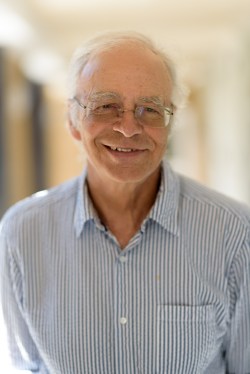
Publisher: In-Sight Publishing
Publisher Founding: March 1, 2014
Web Domain: http://www.in-sightpublishing.com
Location: Fort Langley, Township of Langley, British Columbia, Canada
Journal: In-Sight: Independent Interview-Based Journal
Journal Founding: August 2, 2012
Frequency: Three (3) Times Per Year
Review Status: Non-Peer-Reviewed
Access: Electronic/Digital & Open Access
Fees: None (Free)
Volume Numbering: 12
Issue Numbering: 1
Section: A
Theme Type: Idea
Theme Premise: “Outliers and Outsiders”
Theme Part: 29
Formal Sub-Theme: None.
Individual Publication Date: September 15, 2023
Issue Publication Date: January 1, 2024
Author(s): Scott Douglas Jacobsen
Word Count: 822
Image Credit: Seth Lazar
International Standard Serial Number (ISSN): 2369-6885
*Interview conducted December 16, 2022.*
*Please see the footnotes, bibliography, and citations, after the publication.*
Abstract
Prof. Singer’s biographic statement on his website says the following: “Journalists have bestowed on me the tag of “world’s most influential living philosopher.” They are probably thinking of my work on the ethics of our treatment of animals, often credited with starting the modern animal rights movement, and of the influence that my writing has had on development of effective altruism. I am also known for my controversial critique of the sanctity of life ethics in bioethics. In 2021 I was delighted to receive the Berggruen Prize for Philosophy and Culture. The citation referred to my “widely influential and intellectually rigorous work in reinvigorating utilitarianism as part of academic philosophy and as a force for change in the world.” The prize comes with $1 million which, in accordance with views I have been defending for many years, I am donating to the most effective organizations working to assist people in extreme poverty and to reduce the suffering of animals in factory farms. Several key figures in the animal movement have said that my book Animal Liberation, first published in 1975, led them to get involved in the struggle to reduce the vast amount of suffering we inflict on animals. To that end, I co-founded the Australian Federation of Animal Societies, now Animals Australia, the country’s largest and most effective animal organization. My wife, Renata, and I stopped eating meat in 1971. I am the founder of The Life You Can Save, an organization based on my book of the same name. It aims to spread my ideas about why we should be doing much more to improve the lives of people living in extreme poverty, and how we can best do this. You can view my TED talk on this topic here. My writings in this area include: the 1972 essay “Famine, Affluence, and Morality” in which I argue for donating to help the global poor; and two books that make the case for effective giving, The Life You Can Save (2009) and The Most Good You Can Do (2015). I have written, co-authored, edited or co-edited more than 50 books, including Practical Ethics, The Expanding Circle, Rethinking Life and Death, One World, The Ethics of What We Eat (with Jim Mason) and The Point of View of the Universe (with Katarzyna de Lazari-Radek). My writings have appeared in more than 25 languages. I was born in Melbourne, Australia, in 1946, and educated at the University of Melbourne and the University of Oxford. After teaching in England, the United States, and Australia, in 1999 I became Ira W. DeCamp Professor of Bioethics in the University Center for Human Values at Princeton University. I am now only teaching at Princeton for the Fall semester. I spend part of each year doing research and writing in Melbourne, so that Renata and I can spend time with our three daughters and four grandchildren. We also enjoy hiking, and I surf.” Singer discusses: stronger arguments against animal ethics; eating less meat; supernaturalism; and human problems.
Keywords: Animal Liberation, Animal Liberation Now, climate change, factory farms, God, greenhouse gases, Peter Singer, Sean Carroll, sentient animals.
Conversation with Professor Peter Singer Animal Ethics: Ira W. DeCamp Professor of Bioethics, Princeton University (4)
Scott Douglas Jacobsen: What would you consider the stronger arguments coming against the ones that you tend to make in Animal Liberation, Animal Liberation Now, and in animal ethics in general?
Prof. Peter Singer: I think the best argument specifically against the claim that you ought not to consume animals at all, or at least put aside consuming clearly sentient animals. I think the best argument against that is one that focuses on animal products from animals who are not factory farmed living good lives outdoors. So, the argument says that these animals would not exist at all. They get killed. They get killed to get eaten. Their lives are short. Is that worse than no life at all? Arguably, a short good life is better than no life at all. So, I find that quite a difficult argument. It gets you into deep philosophical questions quickly about whether bringing a new animal into existence to live a good life can replace, somehow justify, killing the animal living a good life, but could have lived many more years if they hadn’t been killed. So, I think that’s a tough argument for somebody who is trying to argue for being a vegetarian, to me. From my point of view, as it is still only a factory farming argument, it goes most of the way to where I would want to go; it doesn’t quite go all the way. If somebody told me, “We could wipe out factory farming altogether, but double the number of animals living in more traditional farms in social groups that meet their needs”. I’ll say, “I’ll take it”. Yes, the suffering in factory farming is so much greater than the suffering or the slaughter through the fact of the shortening of the animal’s life; I think that would definitely be worth eliminating factory farming to let that continue.
Jacobsen: What would you consider the strongest argument for eating less meat?
Singer: I think the simplest argument for eating less meat is the climate change argument. Every reduction you make is a good thing, clearly. It reduces greenhouse gases in the air and supports the growth of plants and vegetables, which are much more efficient in the fallout of greenhouse gas emissions, particularly beef and dairy. Also, it is much better for animals reducing the amount of factory farming or contributing to reducing the amount of factory farming and reduces pandemic risk as well. I think the idea that if you are not prepared to eliminate animal products, then the argument to reduce them is a pretty sensible and sound idea.
Jacobsen: How do you deal with the arguments around climate change? One argument countered against it is the supernaturalistic one. “You are interfering with God’s Will. God will sort it out for us”. It is similar to the ones found in anti-abortion arguments where God is bringing life into the world at conception, sort of thing. How do you tend to grapple with those arguments where the frame of reference isn’t even used in the same sphere of reference, empiricism? Jerry Seinfeld has this one metaphor in a different context where you’re playing chess and the board is made of water and the pieces are made of smoke.
Singer: [Laughing] Of course, God is elusive like that. You can’t quite grab it.
Jacobsen: Sean Carroll says God is a bad argument because God is a poorly defined concept.
Singer: Right, one thing you can do is ask the person, “Why do you believe there is a God at all?” You can get the concept of God that they have. The idea that God will fix climate change seems [Laughing] to me – let’s say – a high-risk strategy.
Jacobsen: [Laughing].
Singer: Which seems to me probable that there isn’t a God, there is going to be no fix. I remember once, one of the best front pages of the newspapers I saw was the New York Daily News after a shooting. One of those school shootings I think it was. What they had around the whole of the side, the side of the front page, they had these little portraits of various politicians who had said, ‘Our prayers are with you’, to these parents of the kids. ‘We are praying for you.’ The headline in the middle of the page was, “God isn’t fixing this”.
Jacobsen: [Laughing].
Singer: Yes. It’s true. Lots of people praying that no more people will get killed in these mass shootings that America has been having. God doesn’t seem interested in fixing it, unfortunately. Right?
Jacobsen: Some of these high school kids come forward saying, to the effect, “We don’t want your prayers. We want policy change”.
Singer: We have to fix it ourselves in other words. That’s the same for climate change.
Jacobsen: Peter, thank you for your time today.
Singer: Thank you for holding out until the book is published. Thank you for that too.
Bibliography
None
Footnotes
None
Citations
American Medical Association (AMA 11th Edition): Jacobsen S. Conversation with Professor Peter Singer Animal Ethics: Ira W. DeCamp Professor of Bioethics, Princeton University (4). September 2023; 12(1). http://www.in-sightpublishing.com/singer-4
American Psychological Association (APA 7th Edition): Jacobsen, S. (2023, September 15). Conversation with Professor Peter Singer Animal Ethics: Ira W. DeCamp Professor of Bioethics, Princeton University (4). In-Sight Publishing. 12(1).
Brazilian National Standards (ABNT): JACOBSEN, S. Conversation with Professor Peter Singer Animal Ethics: Ira W. DeCamp Professor of Bioethics, Princeton University (4). In-Sight: Independent Interview-Based Journal, Fort Langley, v. 12, n. 1, 2023.
Chicago/Turabian, Author-Date (17th Edition): Jacobsen, Scott. 2023. “Conversation with Professor Peter Singer Animal Ethics: Ira W. DeCamp Professor of Bioethics, Princeton University (4).” In-Sight: Independent Interview-Based Journal 12, no. 1 (Winter). http://www.in-sightpublishing.com/singer-4.
Chicago/Turabian, Notes & Bibliography (17th Edition): Jacobsen, S “Conversation with Professor Peter Singer Animal Ethics: Ira W. DeCamp Professor of Bioethics, Princeton University (4).” In-Sight: Independent Interview-Based Journal 12, no. 1 (September 2023).http://www.in-sightpublishing.com/singer-4.
Harvard: Jacobsen, S. (2023) ‘Conversation with Professor Peter Singer Animal Ethics: Ira W. DeCamp Professor of Bioethics, Princeton University (4)’, In-Sight: Independent Interview-Based Journal, 12(1). <http://www.in-sightpublishing.com/singer-4>.
Harvard (Australian): Jacobsen, S 2023, ‘Conversation with Professor Peter Singer Animal Ethics: Ira W. DeCamp Professor of Bioethics, Princeton University (4)’, In-Sight: Independent Interview-Based Journal, vol. 12, no. 1, <http://www.in-sightpublishing.com/singer-3>.
Modern Language Association (MLA, 9th Edition): Jacobsen, Scott. “Conversation with Professor Peter Singer Animal Ethics: Ira W. DeCamp Professor of Bioethics, Princeton University (4).” In-Sight: Independent Interview-Based Journal, vo.12, no. 1, 2023, http://www.in-sightpublishing.com/singer-4.
Vancouver/ICMJE: Scott J. Conversation with Professor Peter Singer Animal Ethics: Ira W. DeCamp Professor of Bioethics, Princeton University (4) [Internet]. 2023 Sep; 12(1). Available from: http://www.in-sightpublishing.com/singer-4.
License
In-Sight Publishing by Scott Douglas Jacobsen is licensed under a Creative Commons Attribution-NonCommercial-NoDerivatives 4.0 International License.
Based on work at www.in-sightpublishing.com.
Copyright
© Scott Douglas Jacobsen and In-Sight Publishing 2012-Present. Unauthorized use and/or duplication of this material without express and written permission from this site’s author and/or owner is strictly prohibited. Excerpts and links may be used, provided that full and clear credit is given to Scott Douglas Jacobsen, or the author(s), and In-Sight Publishing with appropriate and specific direction to the original content. All interviewees and authors copyright their material, as well, and may disseminate for their independent purposes.
Share this:

Author(s): Scott Douglas Jacobsen
Publication (Outlet/Website): The Good Men Project
Publication Date (yyyy/mm/dd): 2023/09/01
Ms. Oleksandra Romantsova is the Executive Director (2018-present) of the Center for Civil Liberties in Ukraine, which won the Nobel Peace Prize in 2022 under her and others’ leadership in documenting war crimes. This will be a live series on human rights from a leading expert in an active context from Kyiv, Ukraine, to complement live on-the-ground war coverage in the war zones from Romanian humanist independent journalist Remus Cernea.
Scott Douglas Jacobsen: Today is August 5th. We are here today with Sasha Romantsova, the Executive Director of the (Ukrainian) Centre for Civil Liberties.
Oleksandra Romantsova: Before me, about 2018, we did not have such a position. It was too small for that. So, I took about 10 years to go from volunteer to Executive Director. In 2018, I took this position.
Jacobsen: What inspired you to get involved in human rights? You stated in the World Congress that human rights are your religion.
Romantsova: Exactly, I worked at the bank, a huge international financial institution. Like 7 years, changed 3 departments in this business, but in 2013 I was really bored. I was thinking about changing some system. At that moment, we had the Revolution of Dignity in 2013. Some of my friends were beaten. That was one of the points, that I wanted to do something about it. I wanted to get my old contacts. During university, I was in the student movement. It was a huge movement in 2006, 2007 in Ukraine. This was all buried by Yanukovych’s state management system. I was trying to find who was organizing something useful. I found Oleksandra Matviichuk, head of the Center for Civil Liberties. She told me that we opened a hotline – Euromaidan-SOS. This hotline had one purpose. It needed to be pro bono work by lawyers who are supporting people. We started from that. But after this, it started to work, like informal the Center for Information about Maidan demonstrations. From the opening of the hotline on November 30 until its closure in May 2014, after the victory of the “Maidan”, we accepted more than 16,000 calls. At that moment, I worked in the bank in the morning from 8 to 6. From 7 p.m. I work around CCL`s office, and translated for some journalists. Because really quick, some journalists find out what we do, get true information.
At 12 (midnight), I took the last train at the Metro and slept a few hours. At 4, I take a taxi, in the am, to take time at the hotline, then I go back to 8 at the bank. That was my schedule for three months. After such a situation, when you are sitting at night, not always the night has something happening, I am sitting at the moment. There were a lot of books I read about the human rights situations in different countries. I started reading them. But I can’t sleep. So, I have to do something about it. Exactly that, it’s something I do, human rights. My personal dream has come true with my system of work. After these three months without proper sleep and nerves, we did not plan – then Covid escaped. I wanted to work all of my life in this situation. I quit from the bank and asked Oleksandra Matviichuk if she has some position for me. She says, “No, but you can have a place to work”. I say, “What do I need to do to have this place for work?” She said I need some projects. So, I did a first project for UNDP. It was a project for war crimes on Crimea and Donbas. I didn’t have any experience in that. But we see that problem started to happen there. So, we needed to document in writing what happened. In 2014, that was my first project: “I am going to Donbas to the frontline to document it and the people were detained, killed, tortured”. The first indication of that, we had after a few months. Before that, we didn’t have any indication of that. Human rights defenders from other countries proposed that we have some education in this experience. In Croatia, during the study visit, we even found graves, after 20 years. After this, we started to be more professional. Since then, we have documented war crimes. The main idea: Justice, if it can happen now, then it is important to keep the information, so it doesn’t happen in the future.
After that, I had a new task – international advocacy. Although I have certain public speaking skills, I have dyslexia. So I make a lot of mistakes in English. But it was important to do it, so no one paid attention to the number of mistakes in my speeches. My task was to go internationally to different organizations like the UN, Council of Europe, OSCE to talk about the East of Ukraine and Crimea. It was fun. It was 2015. I was 30. The people around me were mostly guys, respectable persons after 50. People in ties. When you talked about Donbas Frontline, you say, “Yes, yes, I was there”. But there were bombings, and people kidnapped. They were glad that they didn’t need to go there to get information. I found one European parliamentarian from Latvia – Nelia Kleinberga. She came with me to Donbas, so, a courageous woman, and made the first international report on the situation there. I was not at the office at all. I was either at the East of Ukraine or near Crimea, or somewhere in Europe, to give this information internationally. We needed to ramp up to cover all the tasks.
We looked for institutional support. They told us, “It can happen. You need structure and some responsibility”. That was 2018. We changed the structure and made the position for Executive Director. I was the first to take it.
Jacobsen: Since 2018, what has been the evolution of that position as the annexation-invasion has become full-scale on Ukraine?
Romantsova: Look, we always work in two directions: to stop violations of human rights outside and inside Ukraine. It is not only war, what happened. It happened around the standards of human rights. The Ukrainian state is not the same as Russia. Russia violates human rights because they actively do something. They kidnap people. They make falsification at trials. Police beat people or something. Or they are trying to destroy any peaceful movement, organization, or journalists. Another type of human rights violation is widespread in Ukraine – the state does not sufficiently organize opportunities for people to realize their rights and freedoms. For example, a new category of people has appeared – IDP – to ensure their rights in a new situation the State needs to create something, write some law – but it doesn’t do that. Our work inside Ukraine was to push the State to do something, which we need, which human rights are needed. That’s why We have these two main directions, inside and outside.
But at that time we devoted a lot of time to what was happening in our biggest neighbor – Russia. Russian human rights defenders said that things in Russia were getting worse and worse. Rights are cut more every year. That means, in one moment, they will only have one answer: War. When you don’t have freedom inside the society, the society starts to become non-flexible. They have feelings. They have emotions. They need to put these somewhere. So, it is logical. If human rights don’t work, because human rights prevent, then the system will result in war.
We didn’t know exactly who would be the victim. Not only Ukraine, it could be Georgia. At that time, they did not have politicians who wanted friendly Russian-Georgian relations. According to another version, it could be Northern Kazakhstan. Northern Kazakhstan has a large Russian-speaking region near the border with the Russian Federation.
There is a law in Russia, if you speak Russian, they call you “Co-Father-Lander” and have the right to “protect” you with their troops, even on the territory of another state.
Jacobsen: It sounds like Motherland.
Romantsova: It is de facto “Compatriot”. Literal translation “Co-Father-Lander”.
Jacobsen: In a way, in North America, people will say, “You are my brother”, to build ethnic solidarity, but a national version of it.
Romantsova: This is not about solidarity or diplomatic dialogue – they are starting to defend Russian speakers with weapons. So every time you speak Russian, “they will protect you” and maybe you will be killed during this “protection”.
We need to grow up. We need to speak much more on the international level for explaining all of this. We collaborate with a lot of international human rights groups. We take part in the International Federation for Human Rights, solidarity around the ICC, different NGOs, and speaking about the human rights situation in Ukraine relating to Russia, and the human rights situation in Russia.
In Russia are human rights defenders who did not accept Crimea annexation, who did speak about all the violence inside of Russia and Belarusian society. All of them under the pressure. People were prosecuted politically, put in jails, and physically attacked sometimes.
We felt that it was becoming more and more, and we were preparing. So when that happened, the invasion happened, I just packed my things and went to work in the office.
I am natively from the South part of Ukraine, from Mykolaiv. A lot of people hear about Mykolaiv. Before that, I had to explain that Mykolaiv is somewhere between Odessa and Kherson. But now…
Jacobsen: People hear about Ukraine altogether.
Romantsova: [Laughing]. Yes, yes, yes.
Jacobsen: [Laughing].
Romantsova: We were joking yesterday. Before 24 of February 2022, you need to explain, “Ukraine is somewhere between Poland and Russia somewhere”. Now, we say, “Varenyki from which region of Ukraine do you like more?”
[Laughing]
Jacobsen: The same thing happened with the American invasion of Iraq and Afghanistan. People could point to it on the map and name particular areas of it.
Romantsova: Previously, you knew the regions of Ukraine only if you had relatives there, or there was a large nuclear power plant there – like Chernobyl, or, for example, you were interested in native parks and unique animals. By the way, in the Mykolaiv region, we had native parks and unique animals that were destroyed by the explosion of the Kakhovska dam.
So, before the invasion, only my mother was left to live in my hometown. I have only My sister, my Mom, and I, – we are small family. My sister, moved to Kyiv before.
My mom had an intuition, “I come to you” – she told me over the phone on Monday
“Why?”
“I don’t know. I have a feeling.”
She did that, she arrived on Wednesday. The Thursday, in the morning, the invasion started. It was perfect intuition. I sent out both of them from Ukraine at beginning of March, because it is dangerous. My family home place and organization can be destroyed. From that, we work. I think that in 1.5 months; you can plan anything. Do you need to plan fighting underground? Or do you need to plan – I don’t know – collecting the body? Or, maybe, tomorrow, all of this will be finished because people in Russia will go into the streets. You don’t have any idea how tomorrow will find you, at which point or in which situation. But we still continue to work. Because of our work in the international community know about human rights in Donbas and Crimea. A lot of journalists which covered Ukraine were really good. When they found out we stayed in Kyiv during all of this, we started to give 12 interviews in a day. Every time an interview finishes, they say, “Stay safe!” How can we manage it? [Laughing] Because it is rockets going. That was really interesting. My main concern is collecting human rights and war crimes. When Russia Army was started to pushed out of North part of Ukraine, we were there and started to go out into the field and collect evidence and testimonies at the crime place. We systemize all of this at our common Data Base.
Jacobsen: Who is the Chief Prosecutor of the ICC now? Before, I know it was Fatou Bensouda.
Romantsova: Currently, the international prosecutor’s office is headed by Karim Khan. We appealed to the ICC in 2014 because of these 16,000 calls that we accepted. We prepared a submission to the ICC about crimes against humanity. Because the state “militia” (that’s what the police used to be called) and internal troops attacked peaceful protesters who supported the European integration course, not only in Kyiv, but also in all regions of Ukraine. Some of these protesters were even killed, for example in Donetsk in March 2014.
Jacobsen: As an addendum, I have two last questions. One, from those who live and know the region and know the political contexts of themselves and the contiguous nations, what were the motivations of the original annexation and invasion of Crimea and the Donbas from the point of view of Vladimir Putin?
Romantsova: I don’t know. He’s a mad guy. I don’t know. I think it’s main points inside his head. He is a guy from Soviet Union. He still believes the falling of the Soviet Union is a tragedy. Exactly, it is under the consciousness. He believes USSR – is the best model. And also, the times of the “Cold War” are his prime time. Because, in that model, he knows what he needs to do to be the best, the elite, at the top. Again, as I talked about in my presentation during the Congress, he will not find a place for himself in Democracy. When you look at him, he is quite gray, a person who is not a charismatic leader, which can be popular in a democracy. He truly believes that it will be fair for Greatness Russia – to be feared and considered equal in terms of development and importance in international relations. And he wants to achieve this by seizing territories and establishing control there. It is logical of the 18th century: “If I kept more tyranny, I will be cooler. I will be better. We will be a stronger country, State”. But it is not good for all of us, and not good for Russian population. It is not working like this for Russian citizens. For Russians, this strategy does not lead to an improvement in the quality of life. Most of them have to urbanize, because they do not have even basic infrastructure outside the big cities. But they won’t do that. Half of the population does not have access to gas in their homes. Biggest exporter of gas in the world. Half of the population does not have access to this service. Same with toilets. Half don’t have toilets inside their homes.
Jacobsen: Parts of the world live in third world circumstances.
Romantsova: Human rights defenders, who show the true situation, humiliate him. I know how many people are dying. It is like two positions. He wants to show exactly how strong the next version of the Soviet Union is. From the other side, nobody from the power circles of Russia cares to stop him. So, he believes anyone he kills; he kills for Russia. But which, de facto, has political and civilian disabilities, he does nothing for the people of Russia. If you look at the Russian war, or the wars over the last 20 years, they destroyed everything in the territories they captured. There, people live separately from their state and have no opportunity to influence the rules by which they live: Nagorno-Karabakh, Chechnya, Transnistria, Obkhazia, South Ossetia.
That’s why when they did this with Donbas and Crimea – the population lost control over their lives. Before that, Putin was really popular in that region, Russia invested a lot of money in propaganda there. They really want Crimea because, strategically, it is the best place to control Europe. The question, to shoot Kyiv or to shoot Warsaw, Berlin, Paris or London is a question of a couple of degrees of correction of the course of missiles from military facilities in Crimea.
Therefore, by militarizing the peninsula, they de facto replaced the population of Crimea. They displaced people who are loyal to Ukraine and the indigenous population: Crimean Tatars, Karaites and Krymchaks – and bring many military personnel and people who work around the military, their families. With a population of 2 million in Crimea, about 100,000 were pushed out and about 300,000 were brought in from the regions of the Russian Federation. So they actually made one large military base in Crimea with the support of the population. The Russian Federation is doing this in Crimea. He did it in the Balkans, in Bessarabia, in the Caucasus. Even the guys who implemented this scenario in various places of interest of the Russian Federation are the same. I think this is an old Soviet scenario. They provide these “experts” with money, weapons, political and propaganda support. Putin can afford it because he has money. When Europe and other countries included Russia in the international economic system and bought oil and gas, they supported the financing of this system. Only human rights activists have been talking about this danger for the last 20 years.
So, I am not sure what will happen with Putin. I think he will not survive because he created a culture of violence. Liquidation and terror, which happened during the Soviet Union time, that was an idea that if you don’t like someone: how they thought, how they act; you just ‘clean’ society of them. That’s what they thought. They clean from aristocracy after the fall of Tsarist power. They killed not only Ukrainians who wanted independence, but also other peoples who found themselves on the territory captured by the communists – for example, Finns or Latvians. Since 2018, they just clean Russian society from journalists, human rights defenders, activists, oppositionists and other free people. They push them out, put them in prisons, sometimes kill them, like Nemtsov.
Jacobsen: Garry Kasparov…
Romantsova: Garry Kasparov is the guy who is like, “I told you! I told you.” I don’t like him [Laughing]
Jacobsen: [Laughing].
Romantsova: He is not productive. You can talk. And what? For 20 years, he has prepared for this situation. People said, “We cannot go out to some streets with demonstrations because they will kill you.” Yes! But create new forms of resistance! Ukrainians do that. You can try new strategies every day.
Jacobsen: From his perspective, at a prior time to the full-scale invasion, he was noting the Putin regime requires high oil prices. And if the oil prices decline sufficiently, that’s going to be a major hit to the regime. On a similar line of thought, what are sort of the points at which Vladimir Putin is weakest or vulnerable to democratic forces – either within his own society with Russian citizens or externally from the international community?
Romantsova: Good question. Do you know? We don’t have any sanction from the UN.
Jacobsen: Neither from the Human Rights Council or from the Security Council?
Romantsova: None.
Jacobsen: How far has the General Assembly, the Human Rights Council, and the Security Council, gone?
Romantsova: Exactly, the problem, we know about embargo, it is one of the tools that the UN Security Council can use to limit the aggressor. We start this process, but Russia and China are there – they impose a veto. So the process of imposing sanctions in the UN is totally blocked. Russians have sanctions from the European Union, the closest economic partner – but this is not enough. Russia also blocked the OSCE decision. It means OSCE is the biggest organization in the world that makes observation of democratic elections – it cannot even approve the budget for the second year. It means they can’t plan, but individual offices of this organization try to find grant money. It is one of the examples of how all of these are challenges.
The issue for Russian economy… Elvira Nabiullina is the head of the Russian central bank. Each post-Soviet country has a central banking system. So, she is the head of the central bank and minister of the economy. She is really talented. She knows about the economy. But she worked for war criminals and has the prospect of continuing her power. And I think it will be, finally, stopped with a total embargo. If we talk about some tools, economic tools, embargo can stop war. Oil, gas, agriculture, fertilizer… they always have India and China as clients to buy it. Only a total embargo will work.
Jacobsen: Russia is turning to China.
Romantsova: I think India looks to China more. Look at the examples, is it possible to act like that or not? For both of them, it is a big experimental platform.
Jacobsen: It seems more so for China because there is more of a unified voice in their autocratic system. Within India, you have so many subsystems, socially and politically, that it is a much more complicated system, not just the Hindu Nationalist…
Romantsova: I think India will have much more problems inside, but it will be a huge tragedy because it is the biggest population in the world. But China has a lot of outside purposes, issues. So, for Ukrainians, we are in the middle of the world. It was a big surprise for us to learn how important we are for the grain market. So, we know that we produce a lot of agriculture. But we never think that half of the world will be hungry because we can’t sell. We not even give, but sell. Without selling our grain, they can no longer eat because they have no more bread.
Ukraine has always tried to build connections with other countries in Europe, North America, but very rarely with such countries as Brazil, for example. Now Ukrainians feel this responsibility. We know that we need to fight, not only for ourselves. Even tomorrow, if Zelenskyy says it is seen as a bad idea, we don’t have enough support, strength. The population would say, “That President is broken, bring me the next”. Seriously, he cannot stop the people. When Zelenskyy tried to explain to Putin that we need a referendum for any decision, Putin cannot understand, “What?” Yes, because nobody will stop, nobody can stop the normal population (Ukrainians). That’s a good thing in a way. We try to find examples. We try to find some, maybe in some other countries, where something like this happened. Most people don’t have 18th century war in 21st century terms. Middle Age with internet, fucking shit!
Jacobsen: Another aspect is digitalization, where you have misinformation and disinformation.
Romantsova: We have a new kind of war crimes in cyberspace. Russia is trying to destroy all of our state databases. Imagine your State has no information about you tomorrow. Your passport, bank, taxis. They are trying to do that as part of warfare. They are trying to destroy our entire system. So, now, exactly, we have a cyberwar. Ukrainians and Russians both really are high-level hackers, teams. But now, inside the dark net, they have a huge party from all over the world. I don’t know a lot about that, only a little from those who hold this front in Ukraine.
Jacobsen: The Ukrainians and the Russians, they remind me, in one particular way, about Indian culture, where it is highly tech-savvy and electronic and software savvy. There’s just a culture of people who get computers, love to work with them, and use them for actual real-world purposes, not just for playing games or developing an application.
Romantsova: It is a joke, but it really sticks. In the 90s, we did not have personal computers at home. So most of us had clubs, internet clubs. Children came there to just play, play all night. All the relatives – and the parents and the teachers – tell about how “we’ll have a whole new generation – they don’t know life, only games, what will grow out of them?” when it is a new generation of drone operators. Nobody knew that it was specially preparing for protecting the country. Our world has changed. Our international humanitarian law, the whole structure, needs implementing new mechanisms to protect us. The modern international system does not even cover half of the things going on.
Jacobsen: Do you think the human rights mechanisms, even up to structures in the United Nations like the World Health Organization, the Human Rights Council, the Security Council, are stuck in a moment in time?
Romantsova: I think we have to believe that we common people are a lot more sensitive. Now, I think the big problem with the OSCE after the collapse of the Soviet Union. It was a club of social democracies. Countries who talked about instituting democracy. That was their place. The whole region showed this. It is not only Russia. It is Kazakhstan, Uzbekistan, Azerbaijan… in almost all these countries there are political prisoners. So, only Eastern Europe is going more to Western Europe and democracy. Hungary, it is in the middle of Europe and is manipulated. Poland, I really appreciate what they do for us, like open the border. But there is always the question of the independence of the courts. This kind of thing. It is a big example for us, and for our generation. We can complain about what the previous generation did not do, but, now, it is our task.
Jacobsen: You mentioned earlier. You don’t believe President Putin will survive.
Romantsova: Yes, I think he will be killed.
Jacobsen: By who or in what manner, or what timeline, would you speculate?
Romantsova: You want me to give you my plan how it’s going to happen! [Laughing]
Jacobsen: [Laughing].
Romantsova: Why do I think so, tell that?
Jacobsen: Yes.
Romantsova: For me, the best version, he is sitting in the cage in the court in The Hague. We have a full process with all the arguments and testimonies, and the evidence, about his guilt. But I don’t believe in that in reality. Nobody exactly was convicted by being in the position of President… Putin is one of the leaders of the world. It’s true. 140,000,000 people and lots of resources. But – He created a cult of violence inside society. So, when it will be exactly, when his rounds have fewer and fewer profits from this war, at one moment, they will think about Putin as the main guy who keeps the information about all of them on this process. That’s why I think they will kill him.
Jacobsen: Sasha, thank you for the opportunity and your time.
Romantsova: You’re welcome.
License
In-Sight Publishing by Scott Douglas Jacobsen is licensed under a Creative Commons Attribution-NonCommercial-NoDerivatives 4.0 International License. Based on a work at www.in-sightpublishing.com.
Copyright
© Scott Douglas Jacobsen and In-Sight Publishing 2012-Present. Unauthorized use and/or duplication of this material without express and written permission from this site’s author and/or owner is strictly prohibited. Excerpts and links may be used, provided that full and clear credit is given to Scott Douglas Jacobsen and In-Sight Publishing with appropriate and specific direction to the original content. All interviewees and authors co-copyright their material and may disseminate for their independent purposes.
Share this:
Author(s): Scott Douglas Jacobsen
Publication (Outlet/Website): The Good Men Project
Publication Date (yyyy/mm/dd): 2023/08/29
Dooyum Ingye (Benue Humanist) is a humanist in Nigeria and the Benue State Contact Person for Advocacy for Alleged Witches (AfAW). Here he discusses Humanism, Rationalism, and AfAW.
Scott Douglas Jacobsen: What is your story of coming to a more secular humanist and rationalist point of view?
Dooyum Ingye: For me, it was a gradual process, which goes back to my childhood. I was less than 5 years old when I inquired (from my teacher) to know the origin or creator of god. Though I was shut up, as expected in the missionary school, which I attended, the question continued to linger in my young mind. In the second year of my junior secondary school, I questioned and refuted the story that Jesus was conceived through the power of the Holy Spirit. I argued that the story did not meet the verifiable biological process of reproduction taught in the science class. In response, the teacher, a trained priest, punished me for questioning the power of god. He told the class that he would make an example of me to discourage others who also think they can exercise their critical thoughts. As I grew up in a religious home, I identified several grey areas in the bible, and each time, my desire to defend them waned. Religion breeds hate, discourages inquiry, and promotes division and violence. These offshoots were evident in every aspect of the society I grew up in, so much so that at some point, it led to full-blown terrorist acts and the determination of public policies. I concluded that African society is held back by religion and the activities of fanatics who insist on enmeshing it in private and public life. My doubts and questions had grown to a point of disbelief and in addition, the realization that humans can organize themselves to create their paradise here. Humans only need their basic goodness and ingenuity, to transform their world. The conditions and realities in my society, the Nigerian society, serve as a perfect example of a society that abhors secular humanism and rationality. I restricted these thoughts to myself until I started my university education in the northern part of Nigeria where I met another humanist and Marxist, a Professor of Sociology from Tanzania. He was called Mwami Abunuwasi Joachin. It was with Mwami that I exercised these thoughts and had them sharpened with the books he provided.
Jacobsen: How did you find out about Dr. Leo Igwe?
Ingye: I like to think that we found each other. When Mwami Abunuwasi Joachin left for Tanzania, I was left alone, once again. I had no idea that there was a community of humanists operating online. One day, I searched on Google, and Eureka, Dr. Leo Igwe was listed as one of the leading African humanists living in Nigeria. This was in 2017 or so. I sent him a friend request and followed him too. I went through his friend’s list and connected with other humanists. For me, this was no small or insignificant development. I was still in the closet and happy to exchange my views with like-minded individuals in Nigeria. Dr. Leo Igwe messaged directly when he learned that I organized a small gathering of humanists in Benue state. He was impressed and urged me to reach out to him if I needed any help organizing the next meeting. To help develop the Benue humanist community, he sent us many books to deepen our understanding of humanism. Later on, when my family learned of my disbelief in all deities and threatened to cut me off, he called and demanded to know whether I needed help or protection. He also indicated interest in talking to my parents. Further, he published my story (using a pseudo-name) in one of our national dailies. Our working relationship started in 2020 when he started the Advocacy for Alleged Witches (AFAW). Shortly after, Mubarak was arrested; I joined him to campaign for his release. We have been working on several projects, short and long-term, and it has been both challenging and interesting.
Jacobsen: What is the state of Secular Humanism in Nigeria?
Ingye: The constitution of Nigeria guarantees the separation of religion from the state or state administration. However, this principle only exists on paper. In real life, it is the opposite. Religion determines who is elected or appointed into public positions, which policy or bill is passed, etc. Beliefs like Islam play a central role in Nigerian politics. The framers of our constitution were careful to omit secularism in it so as not to anger religious extremists who frown at the word. They construe it as the death of religion. Public resources are used to further religious interests. It is very common for political leaders to use billions of naira to erect worship houses or sponsor pilgrimages. The public applauds such waste and misapplication of public funds.
The report on the state of secular humanism in Nigeria is poor and worrisome. Secular humanism is construed as the religion of Satan, which must be eradicated, and this includes people who identify as secular humanists. In Nigeria, secular humanists are hunted, discriminated and persecuted. Our views are not tolerated or entertained. This is why Mubarak Bala is serving an outrageous jail term. It is also the reason why many humanists are hiding and afraid of expressing their views. In many instances, the state sanctions or turns a blind to attacks on secular humanists. Before 2023, the special assistant to former president Muhammadu Buhari, Bashir Ahmad, tweeted that death is the deserved punishment for apostates or those who criticize the prophet Muhammad. There are many high-ranking public officials like Ahmad who share and express such barbaric views. When the rights of secular humanists are violated, people applaud. Muslims and Christians easily unite on their hatred for secular humanism.
Jacobsen: How can Nigeria be a beacon of progress, as with Ghana as the first African post-colonial nation-state, for many African countries and peoples?
Ingye: Right now, Nigeria is taunted as the “lion of Africa with cat claws”. I agree. Nigeria is currently ailed by leadership failure, insecurity, widespread religious extremism, corruption, ethnic and religious jingoism, suppression of human rights, non-accountability of serious crimes and abuse of power, distorted and poor economic policies, fraudulent elections, poor sexual orientation and gender identity, weak foreign policy, persecution and discrimination of non-religious persons, etc.
Nigeria, once again, can reclaim its “big brother status” by addressing the above-mentioned issues. These issues can only be resolved by sincerity of action and, less or no prayers. Like Japan, Nigeria needs to develop a culture that greatly discourages corruption and encourages honesty, ingenuity, and creativity. Nigeria has so much to learn and gain from the richness of its diversity. Like the United States, Nigeria needs to open up opportunities and create a level playing ground for everyone to contribute to her growth and development. Nigeria needs to revolutionize its educational system to provide practical solutions to local and national issues. In other words, Nigeria needs to embrace science in its entirety. There is a need to introduce critical thinking and reasoning in primary and secondary schools. The Nigerian democracy is in shambles and it can be improved through free and fair elections, which will see credible candidates take over as leaders. One of the ways of reforming the Nigerian electoral system is to digitize the electoral process in such a manner that it will be difficult for corrupt politicians to manipulate votes. A stable democratic system serves as a fertile ground for the take-off of economic activities. This stable democratic system must respect and prioritize the rights of everyone, especially members of minority communities such as smaller ethnic groups, non-religious persons, LGBTQIA+ community, etc. This way, Nigeria can provide examples and leadership pattern for other nations to aspire to or emulate, just like the US, Britain, Canada, etc. does for many countries.
Jacobsen: What is the interpretation of the events against Mubarak Bala amongst the Freethought community in Nigeria?
Ingye: Frankly, the abduction, incarceration, and sentencing of Mubarak Bala shook the freethought community in Nigeria. It was clear that the Nigerian state, influenced by the northern Islamic establishment, was beginning to move in on humanists in Nigeria. Some Islamic fanatics had infiltrated the community to profile humanists, especially those living in Northern Nigeria. Nonetheless, the community rallied behind him and supported calls for his release. Instead of being deterred, scared, and withdrawn, the community increased its campaign and activities, with caution however. The community understands that the outcome of Mubarak’s case or the way it is handled will determine how non-religious persons are treated in the future. The general feeling is that if the Islamic establishment is allowed to expand its attacks on the community without corresponding legal action, it will be construed as a free call to attack all humanists spread across Nigeria. Therefore, the community sees the imprisonment of Mubarak as the imprisonment of all humanists and the violation of his rights as a violation of their collective rights. The attempt to trample on the rights of the freethought community in Nigeria will be resiliently resisted until the state recognizes and accords all rights due to the community.
Jacobsen: How did you become involved in Advocacy for Alleged Witches?
Ingye: Well, it started in 2020 when Dr. Leo Igwe established the group. Witchcraft accusation and persecution is widespread in Nigeria. Benue is a hotbed of witch-hunts. In my family, it was causing a lot of division and suspicion among members. Before the year 2020, neighbors accused my mum of using witchcraft to inflict my dad with waist and joint pain that lasted for years. It made no sense that my mum would cause her husband, my father, such terrible pain and also nurse or manage him until he recovered. She was not attacked or harassed because she had the resources and education to stand up to her accusers. Many victims are not educated or have the resources like my mum to defend herself if persecuted. Most victims of witch persecution are poor, uneducated, and helpless. Victims live in rural areas and their persecution rarely makes the news. Most of them do not have the resources to take legal action or stand up to the people who persecute them. Worst, the society also joins their accusers to condemn them. Agencies saddled with the responsibility of protecting accused persons refuse to do so until they are financially mobilized. My experience has shown that the people who manage these agencies believe that witchcraft is real and that accused persons are evil and deserve to be punished. I was happy that Dr. Leo Igwe acted and I volunteered to join the campaign to end witch-hunts in Africa. At last, I had the opportunity to engage and strip bare the superstitious beliefs responsible for witch-hunts and hindering inquiry in Nigeria. Importantly, I had the opportunity to protect, defend, speak, and support accused persons.
Jacobsen: What is the status of witchcraft allegations in Benue?
Ingye: As earlier mentioned, witchcraft allegations and persecution are high in Benue. Many people believe that it is real and this belief is reinforced by churches, witch hunters, soothsayers, and members of the traditional African religion. In rural areas, people are likely to attack accused persons perceived to be responsible for their plight or misfortune. Members of the community construe attacks on accused persons as attempts to rid society of evil. In rural communities, the people who are most affected are old people and kids. Old people are believed to possess dark powers that enable them to take human life, cause economic loss, shape-shift, or fly at night using a device constructed with broomsticks. Old people are generally regarded as witches so, when someone dies, usually a younger person, they are accused and attacked. In Gwer LGA of Benue state, two old men were accused of killing a relation who slumped and died on the farm. The men were beaten to death. Within the same LGA, another man, 89-year-old Pa. Justin Kyadoo was accused of killing a younger relative. He was beaten and burnt. He survived the attack. AFAW paid for his treatment and got the police to arrest his persecutors. The case is currently in court. In Oju LGA, 13-year-old Blessing Odege was accused of being a witch by family members, who only a few months ago, accused her father of causing the death of a community member. She was tortured and placed close to a large fire, which caused severe burns on her back. AFAW paid for her medical treatment and got the persecutors arrested and charged in court.
I need to mention that the Benue state government attempted to stop AFAW’s activities in Benue state. Last year, the governor directed police officers to disrupt our seminar in Makurdi, Benue. AFAW was labeled as a “group supporting witches” and seeking to establish its presence in Benue to disrupt governance. Dr. Leo and I received messages from individuals and pastors demanding that we take our campaign elsewhere. This year too, the Benue state governor refused to grant us approval to host our seminar. Nonetheless, we went ahead with it. We have also faced strong opposition from members of the public who argue that accused persons deserve to be killed.
Concisely, these allegations are widespread, especially in rural communities in Benue.
Jacobsen: Why focus on Benue for these particular allegations?
Ingye: Generally, the focus is on Africa. However, we have a strong presence in countries like Nigeria or states like Benue, where there are widespread allegations or increasing cases.
Jacobsen: What are the streams of combatting witchcraft allegations in Benue? In other words, how can you help people and communities heal, and families reconnect?
Ingye: First, in cases where victims are hurt, we get them treated.
We also reach out to family members who are willing to cooperate to get the police involved.
If family members or victims are threatened, we try to get them to safe places.
We provide relief materials to victims and their families to help them through the process.
Further, we also escalate cases to the Police for instigation and other partner agencies such as the Federation of International Women Lawyers, National Human Rights Initiatives, etc.
AFAW has also made provision for town hall and community outreach meetings to create awareness and educate the people about witchcraft beliefs and aspects of the law, which prohibits persecution of accused persons.
AFAW also has a post-intervention policy to monitor the recovery or progress of victims in their communities or communities where they are relocated. This also includes relatives or caregivers of victims who also bear the trauma and pains inflicted on the victim.
Jacobsen: How can people support financially, with skills, or by volunteering, for AfAW on Benue?
Ingye: We at AFAW are open to domestic and international support and partnership. For now, donations can be made to;
Name of Account holder: Dooyum Dominic Ingye
Account Number: 2041991594
Bank Name: First Bank PLC.
Swift Code: FBNINGLA
Type of Account: Dollar Account
In addition, people who wish to volunteer or support with skills can reach me via ingyedooyum619@gmail.com, Dr. Leo Igwe at nskepticleo@yahoo.com, or use our official email addresses advocacyforallegedwitches@gmail.com, advocacyforallegedwitches2030@gmail.com
Jacobsen: How can people get in contact with you?
Ingye: People can reach me through my phone number (WhatsApp) +2348136968164 or via my email address ingyedooyum619@gmail.com, and official mail advocacyforallegedwitches2030@gmail.com.
Jacobsen: Any final thoughts?
Ingye: Simply, we at AFAW are combating a practice that dates hundreds of years ago and is widely accepted in Africa. AFAW faces opposition from the government and public, reluctance of the police to act when cases are reported to them, misrepresentation from the media, threats or attacks from hostile communities, huge cost of treating victims, investigating cases, and carrying out awareness campaigns, etc. On this note, AFAW needs all the help (material or human) it can get from people who wish to contribute to the eradication of witch persecution in Africa. AFAW encourages people, especially those in Africa to join the campaign or volunteer to become advocates.
Finally, on behalf of the AFAW team, I would like to express my gratitude to Scott Jacobsen who has shown genuine commitment in helping our campaign in Africa. Thank you, Scott.
Jacobsen: Thank you for the opportunity and your time, bro.
License
In-Sight Publishing by Scott Douglas Jacobsen is licensed under a Creative Commons Attribution-NonCommercial-NoDerivatives 4.0 International License. Based on a work at www.in-sightpublishing.com.
Copyright
© Scott Douglas Jacobsen and In-Sight Publishing 2012-Present. Unauthorized use and/or duplication of this material without express and written permission from this site’s author and/or owner is strictly prohibited. Excerpts and links may be used, provided that full and clear credit is given to Scott Douglas Jacobsen and In-Sight Publishing with appropriate and specific direction to the original content. All interviewees and authors co-copyright their material and may disseminate for their independent purposes.
Share this:
Author(s): Scott Douglas Jacobsen
Publication (Outlet/Website): The Good Men Project
Publication Date (yyyy/mm/dd): 2023/08/27
Dr. Leo Igwe holds a B.Phil and an M.A in philosophy from Seat of Wisdom Seminary Owerri and University of Calabar in Nigeria and a doctoral degree in religious studies from the University of Bayreuth in Germany. Igwe founded the Nigerian Humanist Movement (now the Humanist Association of Nigeria) and worked for some years for the International Humanist and Ethical Union (now Humanists International) in the UK and the Center for Inquiry in the US. He has research interest in atheism, religion, and witchcraft, in Nigeria, Ghana, Kenya, and Zambia. At the moment, Igwe devotes his time to campaigning for the release of the detained Nigerian Humanist, Mubarak Bala, working to eradicate witch persecution and fostering critical thinking in schools.
Here we talk about Advocacy for Alleged Witches (AfAW).
Scott Douglas Jacobsen: It was great to run into each other in Copenhagen at the World Congress. We’ve been working together through Advocacy for Alleged Witches for years. You’ve done the bulk of the field, in fact all. So, full credit to that, your continual work on the ground shows a commitment to practical ethics of Secular Humanism in an African context. What was your central reason for choosing witchcraft allegations as the focus of activism in Africa?
Dr. Leo Igwe: I chose to focus on witchcraft allegations because accusations of witchcraft negate the basic principles of humanism. These accusations signify an eclipse of reason, they illustrate the vicious impact of religious extremism and superstition. These allegations provide best opportunities to deploy mechanisms of humanist ethics. More importantly, Africa is still among the few places in the world where alleged witches are mistreated, persecuted and killed as in early modern Europe. I am rallying against witch hunts in Africa so that the continent could join the rest of the world in consigning this dark and destructive phenomenon to the dustbin of history.
Jacobsen: How is progress toward the goal or reducing and eliminating this threat to human wellbeing?
Igwe: The progress has been slow and steady, and we hope to continue on that path. The Advocacy for Alleged Witches has become a key player in national, regional and international efforts to combat witch persecutions. This year we marked the World Day against witch hunts We focused on the theme Dementia and Witch Persecutions. AfAW has intervened in a number cases in Nigeria, Ghana, Malawi, Kenya etc. Due to limited funds, most of the interventions have been in Nigeria. We intervene by helping victims relocate, get some medical treatment, report to the police, or prosecute witch hunters. Our interventions have been most effective where victims survived and consent to being assisted. In some cases, the police and courts have not been cooperative. State institutions have been tardy in handling cases. Many officers demand bribes before they could intervene. The global response has been lukewarm. The world has little or the no interest in the issue. The misconception that witch persecution is cultural and isn’t going away, persists. AfAW declares that witch persecution is a harmful practice that must be routed out. At both local and global levels, we are making progress and this progress will continue.
Jacobsen: How does Secular Humanism play a key role in the work against witchcraft allegations and the negative social actions that happen as a result of it?
Igwe: The negative social consequences of witchcraft allegations are motivated by beliefs that transcend this world and humanity. Hence secular humanism is valuable and resourceful in correcting the wrong of witchcraft allegation. Secular humanism highlights the injustices which get eclipsed, the humanity which get violated based otherworldly imaginaries and canons of transgression
Jacobsen: Were there any precursors to your work against witchcraft allegations?
Igwe: Even before reading about the European witch hunts, my gut feeling, growing up, was that witch hunting was out of step with humanity and reason. Reading about European witch hunts emboldened me to act and rally against this dreadful phenomenon.
Jacobsen: Is witchcraft allegation more a post-colonial religious hangover from European and Arab colonialism or more from traditional roots pre-colonial contact?
Igwe: Witch hunting is a traditional and precolonial African phenomenon. But contemporary cases, the post colonial expressions have layers of European and Arab influences They are a mix of Christian and Islamic currents.
Jacobsen: What nation-state in Africa is the worst for witchcraft allegations?
Igwe: It is really difficult to say. But from our records Nigeria and Malawi are the most notorious…These are countries of concern.
Jacobsen: Who have been key partners and workers in this work?
Igwe: Many have been key partners in this work. They include Safe Child Africa, Witches of Scotland, Basic Rights Counsel Initiative, End Witchhunts, Humanists International, Center for Inquiry, Office of the UN Special Rapporteur on People Living with Albinism, Association of Black Humanists, National Human Rights Commission, Nigeria, Squaring the Strange.
Jacobsen: What are the major targets in 2023/2024 for your work?
Igwe: Our targets include getting AfAW mainstreamed as the first port of call for victims of witch persecution and their relatives. Taking over the narrative of witchcraft from witch hunters and witchcraft exorcists. Rallying more state and non state actors against witch persecution.
Conducting more community outreaches and town hall meetings….
Debate and dialogue with more witch believers.
More TV and radio programs on witchcraft accusations.
Jacobsen: How can people get involved and the support the work of AfAW?
Igwe: People can get involved in various ways. First, by drawing attention to cases of witch persecution in Africa with the aim to tackle and eradicate the phenomenon. Mainstreaming witchcraft allegations when issues about women, children, the aged, people with disabilities are discussed.
Bring their professional knowledge and experience to bear on the topic.
Fund raise to help AfAW effectively intervene and sustain its programs.
Jacobsen: What have been some of the more gruesome cases of witchcraft allegations and the impacts of innocent people — because witchcraft in a supernatural sense doesn’t exist and doesn’t work? It’s simply people stigmatizing and harming others based on this superstition.
Igwe: Some of the gruesome cases include the recent burning of Mrs. Itagbor in Cross River state in Southern Nigeria. There have been other horrific cases of witch burning in Ghana, and Kenya. In Zimbabwe, two siblings murdered their father and in Zambia and Nigeria, alleged witches were buried alive….
Jacobsen: Is this whole phenomenon of “stealing my destiny” something found at all?
Igwe: The phenomenon of stealing one’s destinies constitutes an expression of witchcraft anxiety. It is another manifestation rooted in occult and supernatural fears. Endemic poverty, unemployment and economic downturn have created existential uncertainties…and caused some people to believe that neighbors or relatives had stolen or tied up their destinies. Those so suspected are subjected to horrific abuses. The narrative of stealing people’s destinies is common among witch believing societies.
Jacobsen: What are the real root causes of this, when you untangle it — case-by-case?
Igwe: The root causes are legion. Poverty, especially persistent state of penury and despair, poor health infrastructure, lack of social security, blurred lines between faith and science, medicine and religion, the work of doctors and priests, limited state presence in the communities, lack of rule of law, poor policing, scientific illiteracy and lack of emphasis on critical thinking based education.
Jacobsen: What are the general principles of helping these communities heal, families heal, and reunite loved ones?
Igwe: Solidarity, love and justice for the accused. Education and enlightenment for the accusers…
Jacobsen: What role can local secular or humanist schools, if they exist, do if this is part of the local culture — to combat and eliminate it?
Igwe: Local humanist schools are imperative to combating witchcraft accusations and witch persecutions because these schools emphasize and foster science, reason, critical thinking, rational compassion and other values that could help weaken the grip of witch beliefs and fears on the minds and conscience of the people.
Jacobsen: Any final thoughts?
Leo: If the covid-19 pandemic didn’t teach us anything it was that the world could rally against any threat to humanity anywhere. That human beings can overcome and overwhelm any dark and destructive phenomenon. Incidentally this has not been the case with witch hunts in Africa because those affected are Africans not Europeans or Americans. Again Africans who are mainly impacted have refused to muster the political will to confront the problem head on. Until this attitude toward witch hunts in Africa changes, the phenomenon will continue to ravage African societies.
Jacobsen: Thank you for the opportunity and your time, Dr. Igwe.
License
In-Sight Publishing by Scott Douglas Jacobsen is licensed under a Creative Commons Attribution-NonCommercial-NoDerivatives 4.0 International License. Based on a work at www.in-sightpublishing.com.
Copyright
© Scott Douglas Jacobsen and In-Sight Publishing 2012-Present. Unauthorized use and/or duplication of this material without express and written permission from this site’s author and/or owner is strictly prohibited. Excerpts and links may be used, provided that full and clear credit is given to Scott Douglas Jacobsen and In-Sight Publishing with appropriate and specific direction to the original content. All interviewees and authors co-copyright their material and may disseminate for their independent purposes.
Share this:
Author(s): Scott Douglas Jacobsen
Publication (Outlet/Website): The Good Men Project
Publication Date (yyyy/mm/dd): 2023/08/25
Remus Cernea is a humanist philosopher and former member of the Romanian Parliament (2012-2016) with a green progressive agenda. He also served as an advisor to the Prime Minister (2012) on environmental issues. He held the position of Executive Director of the first secular humanist NGO in Romania, Solidarity for Freedom of Conscience (2003-2008). He was the founder and first President of the Romanian Humanist Association (2008-2012). Since June 2022, he has been working as a war correspondent in Ukraine for Newsweek Romania. In 2004-2005, Remus Cernea successfully halted the construction of the giant Orthodox Cathedral in a historic park in Bucharest (Carol Park). During his time as a member of parliament, he advocated for various humanist causes, such as introducing Ethics into the curriculum, stop using the public funding for the construction of giant cathedrals, ending religious indoctrination in schools, allocating more funds for scientific research, legally recognizing civil partnerships, ceasing the use of religious symbols in electoral campaigns, and repealing the “blasphemy law,” among others. He also achieved significant accomplishments, including the liberation of animals in circuses and the strengthening of laws for the protection of domestic violence victims.
Scott Douglas Jacobsen: This is an interview with Remus Cernea. So, he’s from Romania and does field work as a war correspondent independently in a way, in terms of the funding. It’s another question about… Actually! Let’s open on that side note, why do you have to do this for free? Why are you unable to get funding from news or media organization in Romania or otherwise to war correspondence?
Cernea: It was a surprise for me, too. Because I’m not a journalist per se. I decided to go to Ukraine soon after the war started. First, I was a volunteer at the border: Welcoming the Ukrainian refugees. I thought that it was important to go there as a war correspondent. Then I tried to contact some of the most important media in Romania. I contacted 10 or 12 magazines or news organizations. Only 1 responded. Newsweek Romania, they were open to support me. They covered my expenses. But I’ve been there for 150 days. Newsweek Romania has some limits, financial limits. They were unable to cover all of my staying there. I have been there 9 times. So, they partially funded or covered some costs. But I had to put announcements on my social media and YouTube, Facebook, Instagram, and TikTok saying, “Look, I am going there. I am doing this. Please support me with some donations. Small, medium, big”. There were people who supported me, who sent me some donations. When I have enough money, I am going to Ukraine. When the money is finished, I come back to Romania.
Jacobsen: [Laughing] The last trip, more to the central conversation today, you were there for 150 days.
Cernea: 150 days in 9 trips. Usually, I go there for 2 or 3 weeks. One time, I went there for 1 month. 10 days, 14 days, 20 days, it depends on the funds.
Jacobsen: What is the cost of a 2-week trip for a war correspondent to get an idea of the cost?
Cernea: I think you can survive… it depends. Firstly, my first trip was the most expensive because I had to buy the anti-bullet vest. I had to buy the helmet. So, the vest plus the helmet is almost 1,000 Euros. I didn’t know what to expect, so needed more money. Meanwhile, I realized what I needed to do to have smaller expenses. But the first time, when I went there in June of last year, I didn’t know what to expect. So, my first trip to Ukraine as the most expensive, but, right now, I think I can survive there for 2 weeks with about 1,000 Euros, around that – maybe 800 or 1,100. Around 1,000 Euros, you can survive in Ukraine for two weeks in dangerous places.
Jacobsen: If an individual is thinking of doing this as well…
Cernea: This does not include my money. I did all of this work without being paid.
Jacobsen: Yes, that’s an important point. You are giving up time to earn money.
Cernea: Yes, I am only talking about the costs: travel costs, accommodations, food, and other small costs that may arise.
Jacobsen: For others who want to self-fund, and if they cannot get funding, how can they get funds to go out?
Cernea: I am showing what I am seeing there, recording a lot of stories that are happening. I already published 100+ articles in Newsweek Romania. I have very good cooperation with them. I publish on TikTok. I published 500 clips. I have 4,000,000 views. On YouTube, also, the number of users is increasing on my YouTube channel. I have also people who are following me on Instagram and Facebook. Some of those who view these clips and articles decide to donate to me. 10 Euros, 20 Euros, 5 Euros.
Jacobsen: Do you need any sort of visa or passport equivalent permission from the Ukrainian government or the military to get access to these areas?
Cernea: I’ll show you. I have these.
This is my press card.
Jacobsen: How do you get one?
Cernea: I send them an email. There is a procedure. I followed the procedure. They gave me this care in about 3 weeks or 1 month.
Jacobsen: That plus the normal passport can get you access.
Cernea: Yes. Also, you have to show your passport at the border. These are the visas. Usually, a Romanian can stay in Ukraine for only 3 months in a year. With these, I can stay for long. I can stay as much as I can. The border, they saw, “Oh! You have been here a long time. How come?” I show them these documents. Because, otherwise, it is not allowed. And yes, let me tell you, the authorities are very open to journalists. They are trying to help us. There is, in time, a special relationship created with them, with the Ukrainian authorities and with the Ukrainian journalists, too. Because I met a lot of Ukrainian journalists. Of course, a lot of foreign journalists too. I did some interviews with foreign journalists. Two of them were wounded. One of them is from the U.S. One of them is from Denmark.
Jacobsen: We are at a period of time as journalists, independent or not, in which journalists are being attacked, harassed, killed.
Cernea: Yes.
Jacobsen: Jailed, censored.
Cernea: Yes.
Jacobsen: At unprecedented rates, at least, with regards to the records of this history, how are things on the ground for journalists, and internationalist journalists in Ukraine?
Cernea: There are journalists who died or were wounded. There is a danger. You never know. There is a lottery of death. You never know if you have the ticket. They say, “Take care, if this missile will have your name on it or not”. You never know. Any time a very bad thing can happen. You are aware about this. You assume the risk, because it is important to be there and to record what is happening. The duty of a journalist in war zones is to be a witness, a witness of this drama, of this tragedy, of this huge loss of life, and huge destruction, because the world has to know what is happening there. Our duty is to share the truth about what is happening there. Because there is a lot of propaganda, a lot of Russian propaganda, a lot of misinformation from Russian or pro-Russian sources. I think that this war is not only about people, not only about land, not only about freedom. It is also about a war for truth. We, as humanists – let me say this, are very strongly related with the scientific approach, the scientific perspective. We need proofs in order to consider something that is true, that is correct. We need proof. We need data. We do not follow wishful thinking or illusions, or myths, strange beliefs. We need proof. A good way to counter this pro-Russian propaganda is to show the truth, is to show the reality, the harsh reality, the harsh reality of war. I see these also in Romania. There are people who simply don’t believe. They say, “No, there is no war. There is a conspiracy”. Or, they say, “It is Zelensky’s fault. Putin is good. Putin is a Christian. He is a supporter of Eastern civilization, Eastern Orthodox civilization”. They reject reality. You know, there are some people who are called negationists, denialists. They reject the truth.
Jacobsen: It is dogma masquerading as skepticism. It is pseudo-skepticism.
Cernea: Yes, it is not skepticism, because we know what skepticism is, what philosophical skepticism is, what scientific skepticism is.
Jacobsen: It is proportional consideration.
Cernea: It is denying the evidence.
Jacobsen: Yes.
Cernea: Which is different than skepticism.
Jacobsen: They take an entirely negation-based approach rather than proportionality to verification and falsification.
Cernea: Yes, because scientific inquiry and philosophical inquiry is based on the sincere attempt to find the truth or be closer to the truth or to reject the false ideas, but they are not intend to be closer to the truth; they just serve a new ideology or a new political pro-Russian approach. So, there are not seekers of the truth. There are denialists. You have to counter them with facts.
Jacobsen: With your 9 trips, how would you characterize the development of the war? This is the period of time in which it is full-scale war.
Cernea: Unfortunately, we don’t know when it will stop. Unfortunately, it seems like it will last, at least, 1 year, maybe, 2 – maybe after the U.S. elections. Because the last cards of Putin are these ones. He hopes that Trump will win the elections in the U.S. There will be European elections and, maybe, some pro-Putin parties may arise in 2024. He hopes that somehow the aid provided by Western countries will decrease. If so, Ukraine will not be able to recover all of the territories that are temporarily occupied by Russia. This is why this fight is important. Of course, the wars and this war should not exist. This war should not exist, but, now, it is happening. We have to be on the right side. We have to be along Ukrainians. We have to support Ukraine. Of course, Ukraine is not perfect. Maybe, the government can make some mistakes. Maybe, some people in Ukraine can make some mistakes, but we have to help Ukraine in order to do fewer mistakes. It is important to show them solidarity and to show them that we will support them as long as it is necessary, and beyond, because imagine that the war will be stopped tomorrow – let’s say. Imagine that, there will be a long way for Ukraine after the war in order to recover and to rebuild the country. They will need support for this, too. But, until then, they have to be focused on winning this war. Of course, they have to do some reforms to join the EU. They have a lot of burdens, a lot of things to do; they have to reform their country, their laws, and, at the same time, have to fight with Russians. At the same time, they have a lot of humanitarian problems with a lot of people who have left their towns, their cities, their villages, because there are many refugees outside of Ukraine, but many are in Ukraine. More than 5,000,000 Ukrainians lost their jobs because of the war. So, there are huge problems there. So, we have to help there.
Jacobsen: Any final feelings or thoughts based on the conversation today?
Cernea: Yes, I was very touched by the fact that people appreciated a lot, my presentation. Some of them were even donating money to me. [Laughing] Those who want to support my work can donate here: http://paypal.me/remuscernea. The articles published in Newsweek Romania are here: https//newsweek.ro/autor/remus-cernea. Hundreds of short clips from Ukraine are here: https://www.youtube.com/@RemusCerneaOfficial/shorts.
Jacobsen: As we were doing the interview, cash! [Laughing]
Cernea: They were impressed by what I showed. You have to applaud Ukrainians for their courage, their bravery, and for their will to fight for freedom, to fight for their land, to fight for their pro-democratic future. I will do my best to help Ukraine as much as I can. Thank you, again, to all of those who helped me to do my job there as a journalist.
Jacobsen: Thank you for the opportunity and your time, Remus.
Cernea: Thank you, thank you.
License
In-Sight Publishing by Scott Douglas Jacobsen is licensed under a Creative Commons Attribution-NonCommercial-NoDerivatives 4.0 International License. Based on a work at www.in-sightpublishing.com.
Copyright
© Scott Douglas Jacobsen and In-Sight Publishing 2012-Present. Unauthorized use and/or duplication of this material without express and written permission from this site’s author and/or owner is strictly prohibited. Excerpts and links may be used, provided that full and clear credit is given to Scott Douglas Jacobsen and In-Sight Publishing with appropriate and specific direction to the original content. All interviewees and authors co-copyright their material and may disseminate for their independent purposes.
Share this:
Author(s): Scott Douglas Jacobsen
Publication (Outlet/Website): Medium (Personal)
Publication Date (yyyy/mm/dd): 2023/08/23
Human Delusion: I am a being of transcendent thought, with a soul & consciousness as an image bearer of God; hold on, gotta poop!
See “t”.
License
In-Sight Publishing by Scott Douglas Jacobsen is licensed under a Creative Commons Attribution-NonCommercial-NoDerivatives 4.0 International License. Based on a work at www.in-sightpublishing.com.
Copyright
© Scott Douglas Jacobsen and In-Sight Publishing 2012-Present. Unauthorized use and/or duplication of this material without express and written permission from this site’s author and/or owner is strictly prohibited. Excerpts and links may be used, provided that full and clear credit is given to Scott Douglas Jacobsen and In-Sight Publishing with appropriate and specific direction to the original content. All interviewees and authors co-copyright their material and may disseminate for their independent purposes.
Share this:
Author(s): Scott Douglas Jacobsen
Publication (Outlet/Website): Medium (Personal)
Publication Date (yyyy/mm/dd): 2023/09/03
Evolution as Arrayed Arrangements: Logical geometric relations in deep time; transient structural decay and form.
See “Transforms”.
License
In-Sight Publishing by Scott Douglas Jacobsen is licensed under a Creative Commons Attribution-NonCommercial-NoDerivatives 4.0 International License. Based on a work at www.in-sightpublishing.com.
Copyright
© Scott Douglas Jacobsen and In-Sight Publishing 2012-Present. Unauthorized use and/or duplication of this material without express and written permission from this site’s author and/or owner is strictly prohibited. Excerpts and links may be used, provided that full and clear credit is given to Scott Douglas Jacobsen and In-Sight Publishing with appropriate and specific direction to the original content. All interviewees and authors co-copyright their material and may disseminate for their independent purposes.
Share this:
Author(s): Scott Douglas Jacobsen
Publication (Outlet/Website): Medium (Personal)
Publication Date (yyyy/mm/dd): 2023/09/03
Tenderness: is the only song that matters, that lasts; it’s a feeling, embodied, so kept.
See “Affectation with affect for effect”.
License
In-Sight Publishing by Scott Douglas Jacobsen is licensed under a Creative Commons Attribution-NonCommercial-NoDerivatives 4.0 International License. Based on a work at www.in-sightpublishing.com.
Copyright
© Scott Douglas Jacobsen and In-Sight Publishing 2012-Present. Unauthorized use and/or duplication of this material without express and written permission from this site’s author and/or owner is strictly prohibited. Excerpts and links may be used, provided that full and clear credit is given to Scott Douglas Jacobsen and In-Sight Publishing with appropriate and specific direction to the original content. All interviewees and authors co-copyright their material and may disseminate for their independent purposes.
Share this:
Author(s): Scott Douglas Jacobsen
Publication (Outlet/Website): Medium (Personal)
Publication Date (yyyy/mm/dd): 2023/09/03
Percept Inversion: Function exists via structure; the framework exists as emptiness punctuated, rarely, by materiality.
See “Empty Form”.
License
In-Sight Publishing by Scott Douglas Jacobsen is licensed under a Creative Commons Attribution-NonCommercial-NoDerivatives 4.0 International License. Based on a work at www.in-sightpublishing.com.
Copyright
© Scott Douglas Jacobsen and In-Sight Publishing 2012-Present. Unauthorized use and/or duplication of this material without express and written permission from this site’s author and/or owner is strictly prohibited. Excerpts and links may be used, provided that full and clear credit is given to Scott Douglas Jacobsen and In-Sight Publishing with appropriate and specific direction to the original content. All interviewees and authors co-copyright their material and may disseminate for their independent purposes.
Share this:
Author(s): Scott Douglas Jacobsen
Publication (Outlet/Website): Medium (Personal)
Publication Date (yyyy/mm/dd): 2023/09/03
Dallidance: a dance, dilly dalliance, silly salience; the trance, a tryst unto unknown, the gist is to not know.
See “Dove sta memoria”.
License
In-Sight Publishing by Scott Douglas Jacobsen is licensed under a Creative Commons Attribution-NonCommercial-NoDerivatives 4.0 International License. Based on a work at www.in-sightpublishing.com.
Copyright
© Scott Douglas Jacobsen and In-Sight Publishing 2012-Present. Unauthorized use and/or duplication of this material without express and written permission from this site’s author and/or owner is strictly prohibited. Excerpts and links may be used, provided that full and clear credit is given to Scott Douglas Jacobsen and In-Sight Publishing with appropriate and specific direction to the original content. All interviewees and authors co-copyright their material and may disseminate for their independent purposes.
Share this:
Author(s): Scott Douglas Jacobsen
Publication (Outlet/Website): Medium (Personal)
Publication Date (yyyy/mm/dd): 2023/09/03
My Sensibilities: are precisely those oriented within the long lives and wisdom of elderly women; touch my heart, not my skin.
See “Lad”.
License
In-Sight Publishing by Scott Douglas Jacobsen is licensed under a Creative Commons Attribution-NonCommercial-NoDerivatives 4.0 International License. Based on a work at www.in-sightpublishing.com.
Copyright
© Scott Douglas Jacobsen and In-Sight Publishing 2012-Present. Unauthorized use and/or duplication of this material without express and written permission from this site’s author and/or owner is strictly prohibited. Excerpts and links may be used, provided that full and clear credit is given to Scott Douglas Jacobsen and In-Sight Publishing with appropriate and specific direction to the original content. All interviewees and authors co-copyright their material and may disseminate for their independent purposes.
Share this:
Author(s): Scott Douglas Jacobsen
Publication (Outlet/Website): Medium (Personal)
Publication Date (yyyy/mm/dd): 2023/09/03
Not to worry: I am Canadian; and, I am sorry, but I’m not sure what for, exactly.
See “Oh, Canada”.
License
In-Sight Publishing by Scott Douglas Jacobsen is licensed under a Creative Commons Attribution-NonCommercial-NoDerivatives 4.0 International License. Based on a work at www.in-sightpublishing.com.
Copyright
© Scott Douglas Jacobsen and In-Sight Publishing 2012-Present. Unauthorized use and/or duplication of this material without express and written permission from this site’s author and/or owner is strictly prohibited. Excerpts and links may be used, provided that full and clear credit is given to Scott Douglas Jacobsen and In-Sight Publishing with appropriate and specific direction to the original content. All interviewees and authors co-copyright their material and may disseminate for their independent purposes.
Share this:
Author(s): Scott Douglas Jacobsen
Publication (Outlet/Website): Medium (Personal)
Publication Date (yyyy/mm/dd): 2023/09/03
Self-such: Manifest — Humanity molded by Evolution, Evolution molded by Universe; each by their Selves, too.
See “Iterative Generativity”.
License
In-Sight Publishing by Scott Douglas Jacobsen is licensed under a Creative Commons Attribution-NonCommercial-NoDerivatives 4.0 International License. Based on a work at www.in-sightpublishing.com.
Copyright
© Scott Douglas Jacobsen and In-Sight Publishing 2012-Present. Unauthorized use and/or duplication of this material without express and written permission from this site’s author and/or owner is strictly prohibited. Excerpts and links may be used, provided that full and clear credit is given to Scott Douglas Jacobsen and In-Sight Publishing with appropriate and specific direction to the original content. All interviewees and authors co-copyright their material and may disseminate for their independent purposes.
Share this:
Author(s): Scott Douglas Jacobsen
Publication (Outlet/Website): Medium (Personal)
Publication Date (yyyy/mm/dd): 2023/09/03
Show Jumping Major Finding: In Canada, the industry is shrinking rapidly, thus dying; I’ve stumbled on a death narrative.
See “Thanatos”.
License
In-Sight Publishing by Scott Douglas Jacobsen is licensed under a Creative Commons Attribution-NonCommercial-NoDerivatives 4.0 International License. Based on a work at www.in-sightpublishing.com.
Copyright
© Scott Douglas Jacobsen and In-Sight Publishing 2012-Present. Unauthorized use and/or duplication of this material without express and written permission from this site’s author and/or owner is strictly prohibited. Excerpts and links may be used, provided that full and clear credit is given to Scott Douglas Jacobsen and In-Sight Publishing with appropriate and specific direction to the original content. All interviewees and authors co-copyright their material and may disseminate for their independent purposes.
Share this:
Author(s): Scott Douglas Jacobsen
Publication (Outlet/Website): Secular Student Alliance
Publication Date (yyyy/mm/dd): 2018/10/22
Raghen Lucy is a sophomore at Minnesota State University, Mankato. Growing up in Williston, North Dakota, she did not have an outlet to express her atheism and advocate for secularism until she got involved with the Secular Student Alliance in 2017. She was inspired to major in Philosophy, Politics & Economics and pursue a career in Constitutional Law by her favorite author and religious critic, Christopher Hitchens.
Raghen revived SSA Mavericks after several years of inactivity and finds great joy in serving as an ambassador for the secular cause in Minnesota. After completing her undergraduate program, Raghen is looking forward to attending law school and launching a career in Washington, D.C. She hopes to deal with legal cases regarding freedom of speech and religious liberty.
Scott Douglas Jacobsen: How did religion or irreligion influence early life?
Raghen Lucy: I was raised in a religious household, and this upbringing seemed unusual to me from an early age. My mother is Methodist, and my father is Catholic. I constantly struggled with confusion regarding this as a child, always asking myself, “Which parent is right? Can they both be right? Can they both be wrong? What does it mean if they are wrong?” I was forced to attend the Methodist Church throughout my early childhood, and the stories and lectures I was fed never stuck with me. I never once found myself truly convinced by anything my religious elders were trying to convince me of. This led to both internal and external turmoil in my early adolescent years that carried into my teens and still to this day. The secular activism I have been doing the past couple years has especially put a strain on my relationship with my parents, but this is something we are working through, and I feel I am growing closer to my them because of it.
Jacobsen: You study at Minnesota State University, Mankato. Why specialize in politics, philosophy, and economics?
Lucy: I actually chose this university specifically because of the Philosophy, Politics & Economics (PPE) program. When I began reading the writings of the late Christopher Hitchens during my junior year of high school, I was immediately inspired to emulate the likes of his work. I did a quick Google search on his academic background, and found that he studied PPE at Oxford. Knowing that Oxford was probably out of my reach at the time, I searched for the closest university that offered the program, found MSU Mankato, and the rest is history. I love this program, as it provides me with a well-rounded insight into the relationship between the political, economic, and legal systems of our society. In addition, it is a perfect undergraduate degree for my future plans — to attend law school and hopefully become a Constitutional lawyer based in Washington, D.C.
Jacobsen: While being the president of the Secular Student Alliance at the same university, what are the difficulties on campus for a secular campus group?
Lucy: There is still an abundance of work to do in normalizing secularism around our area, and as a result, we have experienced some pushback. We are fortunate to have such a supportive Student Activities department — many SSA chapters, especially in southern and ultraconservative states, are not so lucky. We have experienced instances of our posters being ripped up, torn down, or covered up, laughs at our table in the student union, and verbal intimidation by a few religious authority figures on campus. I always remind myself that these are relatively mild cases of resistance, and to persevere, always treating others with respect and civility. Although normalizing secularism is often difficult, especially on a campus dominated by religious organizations, it is a meaningful and worthy project to undertake.
Jacobsen: What are the tasks and responsibilities of the position, including delegation?
Lucy: As president of my Secular Student Alliance chapter, I do almost everything from small tasks such as designing posters to more substantial tasks like organizing large-scale events. It takes quite a bit of behind-the-scenes groundwork to run any student organization, but my executive team and group members never fail to offer encouragement and assistance whenever possible. When I was awarded the Best New Chapter of the Year award at the national SSA conference this past summer, I was asked, “How did you do it?” to which I replied, “We did it.” Without the support of our members, faculty advisors, and national SSA staff, the group’s success would not be possible.
Jacobsen: What is the ratio of secular organizations to religious organizations on the Minnesota State University, Mankato campus(es)?
Lucy: The main reason I chose to launch the Secular Student Alliance was the complete lack of an organized secular presence on campus. Moving from the religious right-wing state of North Dakota, I assumed that a university in Minnesota would have a well-established secular presence, but I was disheartened to be so mistaken. Upon searching for a secular club I could join during the first few weeks of my freshman year (Fall of 2017), I found 21 religious and faith-based organizations, and nothing for non-religious students. This compelled me to start the chapter in the Spring of 2018. The Secular Student Alliance is currently the only secular organization at MSU Mankato, and I am so thrilled that we are continuing to grow and spread our message. We are also taking advantage of the unique opportunity we have to connect and collaborate with the several religious student organizations.
Jacobsen: Also, you’re on the National Leadership Council for the Secular Student Alliance. What responsibilities in representation comes with this position?
Lucy: The National Leadership Council is a select group of students and recent alumni who provide insight, guidance, and support to the national Secular Student Alliance staff. The SSA cares deeply about the ideas and concerns of its student leaders, and this group is a mechanism by which they can address and employ those suggestions. This is a vital part of the organization’s success, but I think the most important responsibility I have as an NLC member is offering support and advice to other student leaders. It is imperative that our hundreds of leaders across the country have a group of capable and experienced peers to relate to, gain perspective from, and voice concerns to. The students are the heart of the SSA, and we continuously aim to support each other in any way we can.
Jacobsen: How can students become involved in the MSUM SSA?
Lucy: The majority of participation in our organization involves attending meetings and engaging in group discussion. We discuss a wide array of topics, including the separation between state and church, theories regarding climate change and evolution, and the importance of normalizing secular identity. We plan to become more involved in volunteerism, human rights activism, and collaboration with religious student organizations. Anyone who would like to get involved can email me at raghen.lucy@mnsu.edu or stop by a meeting. Here is a link to our Facebook page, where we regularly advertise upcoming events: https://www.facebook.com/ssamavericks.
Jacobsen: How can ambitious students create an SSA chapter or group on their campus?
Lucy: I was astonished by the warm welcome I immediately received from the SSA staff when starting a chapter. I first began the process by contacting Ryan Bell, SSA’s National Organizing Manager. Ryan and other staff members have continuously supplied me with an invaluable plethora of resources and support. They understand how difficult it is to balance leadership obligations and academics, and make the process as accessible and step-by-step as possible. More information on creating a chapter can be found here: https://secularstudents.org/start-a-chapter/. Fun fact: a young lady beginning the 7th grade this year recently started the first middle school SSA chapter at Salt Lake City’s Open Classroom!
Jacobsen: Thank you for the opportunity and your time, Raghen.
License
In-Sight Publishing by Scott Douglas Jacobsen is licensed under a Creative Commons Attribution-NonCommercial-NoDerivatives 4.0 International License. Based on a work at www.in-sightpublishing.com.
Copyright
© Scott Douglas Jacobsen and In-Sight Publishing 2012-Present. Unauthorized use and/or duplication of this material without express and written permission from this site’s author and/or owner is strictly prohibited. Excerpts and links may be used, provided that full and clear credit is given to Scott Douglas Jacobsen and In-Sight Publishing with appropriate and specific direction to the original content. All interviewees and authors co-copyright their material and may disseminate for their independent purposes.
Share this:
Publisher: In-Sight Publishing
Publisher Founding: March 1, 2014
Web Domain: http://www.in-sightpublishing.com
Location: Fort Langley, Township of Langley, British Columbia, Canada
Journal: In-Sight: Independent Interview-Based Journal
Journal Founding: August 2, 2012
Frequency: Three (3) Times Per Year
Review Status: Non-Peer-Reviewed
Access: Electronic/Digital & Open Access
Fees: None (Free)
Volume Numbering: 12
Issue Numbering: 1
Section: A
Theme Type: Idea
Theme Premise: “Outliers and Outsiders”
Theme Part: 29
Formal Sub-Theme: None.
Individual Publication Date: September 1, 2023
Issue Publication Date: January 1, 2024
Author(s): Scott Douglas Jacobsen
Word Count: 1,225
Image Credit: Seth Lazar
International Standard Serial Number (ISSN): 2369-6885
*Interview conducted December 16, 2022.*
*Please see the footnotes, bibliography, and citations, after the publication.*
Abstract
Prof. Singer’s biographic statement on his website says the following: “Journalists have bestowed on me the tag of “world’s most influential living philosopher.” They are probably thinking of my work on the ethics of our treatment of animals, often credited with starting the modern animal rights movement, and of the influence that my writing has had on development of effective altruism. I am also known for my controversial critique of the sanctity of life ethics in bioethics. In 2021 I was delighted to receive the Berggruen Prize for Philosophy and Culture. The citation referred to my “widely influential and intellectually rigorous work in reinvigorating utilitarianism as part of academic philosophy and as a force for change in the world.” The prize comes with $1 million which, in accordance with views I have been defending for many years, I am donating to the most effective organizations working to assist people in extreme poverty and to reduce the suffering of animals in factory farms. Several key figures in the animal movement have said that my book Animal Liberation, first published in 1975, led them to get involved in the struggle to reduce the vast amount of suffering we inflict on animals. To that end, I co-founded the Australian Federation of Animal Societies, now Animals Australia, the country’s largest and most effective animal organization. My wife, Renata, and I stopped eating meat in 1971. I am the founder of The Life You Can Save, an organization based on my book of the same name. It aims to spread my ideas about why we should be doing much more to improve the lives of people living in extreme poverty, and how we can best do this. You can view my TED talk on this topic here. My writings in this area include: the 1972 essay “Famine, Affluence, and Morality” in which I argue for donating to help the global poor; and two books that make the case for effective giving, The Life You Can Save (2009) and The Most Good You Can Do (2015). I have written, co-authored, edited or co-edited more than 50 books, including Practical Ethics, The Expanding Circle, Rethinking Life and Death, One World, The Ethics of What We Eat (with Jim Mason) and The Point of View of the Universe (with Katarzyna de Lazari-Radek). My writings have appeared in more than 25 languages. I was born in Melbourne, Australia, in 1946, and educated at the University of Melbourne and the University of Oxford. After teaching in England, the United States, and Australia, in 1999 I became Ira W. DeCamp Professor of Bioethics in the University Center for Human Values at Princeton University. I am now only teaching at Princeton for the Fall semester. I spend part of each year doing research and writing in Melbourne, so that Renata and I can spend time with our three daughters and four grandchildren. We also enjoy hiking, and I surf.” Singer discusses: Animal Liberation Now; synthetic constructs; billions of conscious beings now; and obscure research.
Keywords: Animal Liberation, Animal Liberation Now, artificial intelligence, Australia, conscious, ethics, feeling, morality, Peter Singer, suffering, Yip Fai Tse.
Conversation with Professor Peter Singer on Artificial Intelligence and Wild Animal Suffering: Ira W. DeCamp Professor of Bioethics, Princeton University (3)
Scott Douglas Jacobsen: And back to the text itself, for the update, Animal Liberation Now, what was sort of the reason for the expansion on the concepts, arguments, evidence, for you?
Prof. Peter Singer: The book was fully first published in 1975. It was fully updated in 1990. But it hasn’t been fully updated since then. The text was getting out of date. Some of the core ethical ideas are valid. There has been a lot of discussion about them. I don’t see anything that has made reason to change the core ethical ideas, including what I said here: For any being capable of feeling pain, the pain of that being ought to get equal consideration to similar pains of humans or other beings. So, that argument is still there. But the book has a long chapter on factory farming and the way animals are treated there, and how that developed, and another long chapter on the use of animals in research. All of the information in those chapters was 30 years out of date. That’s not good. If I want the book to remain relevant, and if I want people to keep reading it, it needs to give them up to date information about the world in which they’re living, not the world in which their parents were living. That was really the major factor that I decided it was time for a full update. In fact, it is such a complete change that that’s why the publishers decided to call it Animal Liberation Now rather than a third edition of Animal Liberation.
Jacobsen: There are some developments on the computer science end of things, on synthetic constructs. People are sort of making arguments about, some reasonable arguments about, borderline aware artificial intelligence: how that will play out or not. We don’t necessarily know. However, we know as natural beings ourselves. We can evolve conscious experience, e.g., pain, feeling, somewhat rational capacities. For artificially constructed ones that could be engineered through a different process than evolution itself, do you think a similar set of arguments could be played in some farther future than current with those constructs?
Singer: I think this issue is bound to arise in the future. It is difficult to know when. I don’t think we have any conscious artificial intelligence as yet. We have things that are absolutely amazing in terms of specific tasks that they are programmed to do. The obvious ones like Chess or Go. But we also have amazing machines that talk to us or appear to talk to us. Professors are being told that they can write essays as good as those of our students.
Jacobsen: [Laughing].
Singer: We wouldn’t know if a machine or a student had. But these are specific tasks. We know how they work. We have a sense of what they are doing and what we are programming them to do. I don’t think we have artificial general intelligence. That can adapt itself to any particular task in the way that humans can. I think if we do have that, then we will have to start seriously asking if this is a sentient being and has the same moral status as other sentient beings, including non-human animals even including us. It will face us at some stage. But I think it will be a little while, yet.
Jacobsen: In some real sense, we have billions of other less conscious but feeling, etc., organisms that are around with ethical consideration, right now. Can some policymakers, politicians, and intellectuals, run the risk of ignoring more immediate, long-term obvious ethical considerations of animals now when getting lost in hypotheticals about artificial intelligence in the near and far future?
Singer: There is a danger that is happening. It may already be happening because I have been a research project on AI and animals together with a Chinese, Hong Kong-based, researcher called Yip Fai Tse. He looked at a whole lot of statements about ethics and AI. I think he looked at 75 statements or something like that. I think he found only 2 out of those 75 that talked about the importance for AI ethics of considering anything like animals, even those too were not about individual animals. They were more about preserving nature and ecology, which would include animals. Whereas, there were quite a lot. I can’t remember the number. They talked about the importance of respecting AI when it may be a conscious benign and may have rights. It seems people who do AI ethics are more interested in conscious entities that don’t exist…
Jacobsen: [Laughing].
Singer: … than they are about dealing with the billions of conscious entities who do exist. Which, by the way, AI is already having an impact on. We already have semi-autonomous cars driving around and some test autonomous cars driving around. Clearly, they brake if a child comes out to the field of vision in front of them. Do they get programmed to brake equally hard if an animal does, and if so, do they do it for dogs and not for small rodents, or something like that or birds? That is one way AI affects animals. The one that is likely to be more impactful soon is AI running factory farms, China is one of them. It will remove human contact, which may be good for reducing the pandemic as far as risk goes, I suppose. Possibly, AI may not be sadistic and beat up animals because it is frustrated with some boss above telling it what to do, which can happen with lowly paid and somewhat oppressed workers on factory farms. So, you know, there can be positive pictures, but there can be a lot of negative pictures. Because you could crowd animals more than animals are crowded now. An AI may set off an alarm if things are going wrong and getting too crowded. I think AI is going to have an effect on billions of animals before very long. It is something that we should think about.
Jacobsen: What would you consider your most obscure but interesting piece of research on animal ethics?
Singer: Oh, on animal ethics, in Animal Liberation Now, I raise the question, which I didn’t raise in the earlier additions about suffering of wild animals. That is something which I had been aware of. It had been on the radar for quite a while. I pushed it to the sidelines only because I thought this was going to cause a clash between the values of animals welfare people and environmentalists. Politically, that is not a good thing because environmentalists and animal welfare people have been working together quite well. Green parties tend to have better animal welfare policies than environmentalists. I am now pursuaded that there are things that we might do for wild animal suffering that aren’t going to drastically change ecosystems. They might, for example, reduce the suffering of wild animals living in suburbia, which is very far from a natural, pristine environment. There are things you can do like installing bird-friendly glass so birds don’t fly into live windows, keeping cats indoors, or restricting in various ways so they don’t kill mice and small birds. There are a lot of things you can do you reduce wild animal suffering. And it is something that should be done.
Bibliography
None
Footnotes
None
Citations
American Medical Association (AMA 11th Edition): Jacobsen S. Conversation with Professor Peter Singer on Artificial Intelligence and Wild Animal Suffering: Ira W. DeCamp Professor of Bioethics, Princeton University (3). September 2023; 12(1). http://www.in-sightpublishing.com/singer-3
American Psychological Association (APA 7th Edition): Jacobsen, S. (2023, September 1). Conversation with Professor Peter Singer on Artificial Intelligence and Wild Animal Suffering: Ira W. DeCamp Professor of Bioethics, Princeton University (3). In-Sight Publishing. 12(1).
Brazilian National Standards (ABNT): JACOBSEN, S. Conversation with Professor Peter Singer on Artificial Intelligence and Wild Animal Suffering: Ira W. DeCamp Professor of Bioethics, Princeton University (3). In-Sight: Independent Interview-Based Journal, Fort Langley, v. 12, n. 1, 2023.
Chicago/Turabian, Author-Date (17th Edition): Jacobsen, Scott. 2023. “Conversation with Professor Peter Singer on Artificial Intelligence and Wild Animal Suffering: Ira W. DeCamp Professor of Bioethics, Princeton University (3).” In-Sight: Independent Interview-Based Journal 12, no. 1 (Winter). http://www.in-sightpublishing.com/singer-3.
Chicago/Turabian, Notes & Bibliography (17th Edition): Jacobsen, S “Conversation with Professor Peter Singer on Artificial Intelligence and Wild Animal Suffering: Ira W. DeCamp Professor of Bioethics, Princeton University (3).” In-Sight: Independent Interview-Based Journal 12, no. 1 (September 2023).http://www.in-sightpublishing.com/singer-3.
Harvard: Jacobsen, S. (2023) ‘Conversation with Professor Peter Singer on Artificial Intelligence and Wild Animal Suffering: Ira W. DeCamp Professor of Bioethics, Princeton University (3)’, In-Sight: Independent Interview-Based Journal, 12(1). <http://www.in-sightpublishing.com/singer-3>.
Harvard (Australian): Jacobsen, S 2023, ‘Conversation with Professor Peter Singer on Artificial Intelligence and Wild Animal Suffering: Ira W. DeCamp Professor of Bioethics, Princeton University (3)’, In-Sight: Independent Interview-Based Journal, vol. 12, no. 1, <http://www.in-sightpublishing.com/singer-3>.
Modern Language Association (MLA, 9th Edition): Jacobsen, Scott. “Conversation with Professor Peter Singer on Artificial Intelligence and Wild Animal Suffering: Ira W. DeCamp Professor of Bioethics, Princeton University (3).” In-Sight: Independent Interview-Based Journal, vo.12, no. 1, 2023, http://www.in-sightpublishing.com/singer-3.
Vancouver/ICMJE: Scott J. Conversation with Professor Peter Singer on Artificial Intelligence and Wild Animal Suffering: Ira W. DeCamp Professor of Bioethics, Princeton University (3) [Internet]. 2023 Sep; 12(1). Available from: http://www.in-sightpublishing.com/singer-3.
License
In-Sight Publishing by Scott Douglas Jacobsen is licensed under a Creative Commons Attribution-NonCommercial-NoDerivatives 4.0 International License.
Based on work at www.in-sightpublishing.com.
Copyright
© Scott Douglas Jacobsen and In-Sight Publishing 2012-Present. Unauthorized use and/or duplication of this material without express and written permission from this site’s author and/or owner is strictly prohibited. Excerpts and links may be used, provided that full and clear credit is given to Scott Douglas Jacobsen, or the author(s), and In-Sight Publishing with appropriate and specific direction to the original content. All interviewees and authors copyright their material, as well, and may disseminate for their independent purposes.
Share this:

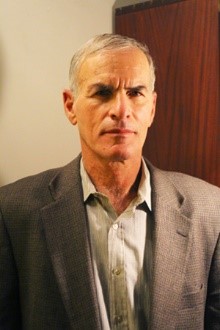
Publisher: In-Sight Publishing
Publisher Founding: March 1, 2014
Web Domain: http://www.in-sightpublishing.com
Location: Fort Langley, Township of Langley, British Columbia, Canada
Journal: In-Sight: Independent Interview-Based Journal
Journal Founding: August 2, 2012
Frequency: Three (3) Times Per Year
Review Status: Non-Peer-Reviewed
Access: Electronic/Digital & Open Access
Fees: None (Free)
Volume Numbering: 12
Issue Numbering: 1
Section: A
Theme Type: Idea
Theme Premise: “Outliers and Outsiders”
Theme Part: 29
Formal Sub-Theme: None.
Individual Publication Date: September 1, 2023
Issue Publication Date: January 1, 2024
Author(s): Scott Douglas Jacobsen
Word Count: 1,660
Image Credit: Norman Finkelstein
International Standard Serial Number (ISSN): 2369–6885
*Interview conducted March 3, 2023.*
*Please see the footnotes, bibliography, and citations, after the publication.*
Abstract
Dr. Norman Finkelstein remains one of the foremost experts and independent scholars on the Israeli occupation and the crimes against the Palestinians. He expanded some research into more academic freedom issues in the newest text. His most recent book is I’ll Burn That Bridge When I Get To It!: Heretical Thoughts on Identity Politics, Cancel Culture, and Academic Freedom (2022). Finkelstein discusses: mobilization of a class-based movement thwarted; persons and peoples; identity politics and virtue signalling; and bourgeois progress.
Keywords: Aaron Maté, Al Sharpton, Barack Obama, Bernie Sanders, bourgeois, class-based politics, Colin Powell, Hillary Clinton, human dignity, identity politics, Kamala Harris, Katie Halper, Madeline Albright, Marxist, Noam Chomsky, Norman Finkelstein.
Conversation with Dr. Norman Finkelstein on Human Dignity, Identity Politics, and Class-Based Politics: Independent Political Analyst (2)
Scott Douglas Jacobsen: Do you think, by this definition of “radical” for a movement, that the attacks from these individuals who you cite in the text, and their source material, in a critical way nullifies the base that was present for the mobilization of that, basically, class-based political movement?
Dr. Norman Finkelstein: I would say its effect is to wreck and discredit the class-based movement. The combined systematic assaults on the Bernie campaign for being weak on these questions. Then I would add that for most working-class kids, young people, or those who are trapped with student debt, skyrocketing student tuition, inability to move out of their parents’ homes, jobs with no future, and so forth. The first item on their agenda is exactly those material concerns that animated the Bernie Sanders campaign. This obsession with issues of “identity” is, basically, a concern of very privileged circles of people. The old Angela Davis, who I remember growing up as a child, was on the FBI’s ten most wanted list. She was one of the ten most wanted persons in the country. The new Angela Davis, the poster child of identity politics, she is on Martha’s Vineyard: five most coveted lit. It is a really sorry, sorry thing that Angela Davis, extremely smart, either doesn’t see or doesn’t want to see why she is so welcomed into the corridors and into the vacation spots of the wealthiest and most privileged people in the world, in the world. She doesn’t even see what is going on or doesn’t want to see what is going on. She is now useful to them.
Jacobsen: I want to combine two statements from the text. In one commentary describing your mother’s death and Clara, one of the caretakers, there was a statement, “There are only persons, not peoples”. At another point in the text, there was a statement, “To be proud of being black, a woman, or gay defies rational sense, one cannot be proud of what one is, only what one does”. Professionals in psychology, and psychiatry, have noted a rise in narcissism in American culture over the last couple to few decades. Do you think this focus on the self, as in identity, is a reflection of this, too, rather than focus on one’s actions and real-life accomplishments?
Finkelstein: I don’t know much about… I don’t know anything, not even not much, about this psychological or psychiatric literature on narcissism. I can see the beneficial values to not being ashamed of who you are. And Martin Luther King, I quote him at some point in a footnote. His reaction to the black power” and black is beautiful movement, which merged in the 1960s. He said that even though he disagrees with the slogan of black power. He recognizes that it might — and also black is beautiful, in the context of people who have been taught, educated to be ashamed of themselves… that he can see the positive resonance of those slogans. So, I can see — the black is beautiful or “I am woman, here me roar” — the therapeutic effects or the therapeutic value of those slogans. I get that. I get that. During the ACT UP movement, the movement that emerged during the AIDS epidemic. The slogan was, “We’re here. We’re queer. Get used to it.” “We’re here. We’re queer. Get used to it.”I thought that, frankly, was a good slogan, but I get those slogans. But I then think it turns into something not sensible, not reasonable when you acquire a value as a person over something over which you had no control. You’re not black, you’re not gay, you’re not a woman, by virtue of personal exertion, some concentration of personal will. It’s not an achievement. It’s just a given. It’s not an achievement. It doesn’t make sense to me to be proud of something over which you had no input. What are you proud of? You had nothing to do with it. “I’m proud of the fact that I’m Noam Chomsky’s son, for example.” Well, why would you be proud of that? You can only be proud of what you, yourself, accomplished. Just being his son, in and of itself, cannot be a source of pride, that doesn’t make any sense. That’s the same thing with the identity politics in general, or the identity politics in general. It makes no sense to be proud of something over which you have no control or input.
Jacobsen: In conversation with Katie Halper and Aaron Maté, your conclusion was such that identity politics is a weapon of the democratic party to nullify class-based politics. You commented briefly on that earlier in the interview. What follows from this conclusion if it is a conscious weapon to nullify or eliminate individuals or movements seen as a threat to anything focus on class-based politics?
Finkelstein: I would say it serves several functions. One is the one that you just named. Two, it is designed to replace the white working-class base of the democratic party, which has been the case since Franklin Delano Roosevelt in the 1930s. That’s been the base of the democratic party, the white working-class base. It’s to replace it with a new base, which is identity politics based. So, you have a black woman Vice President in order to get black woman votes. You have a gay Secretary of Transportation, Pete Buttigieg, in order to get gay votes. You have a Jim Clyburn as the third most powerful person in the House of Representatives to derail the Bernie campaign in the South Carolina primary, when Clyburn endorses Biden. So, a second function is, of identity politics is, to win over a potential constituency by putting in an identity representative of that constituency in the senior position of either actual power or figure head power. That’s a second function. The third function is among the identity politics folks themselves, where the identity politics are jockeying for power. If you create a new oppression, so, you’re a black, female, lesbian. That’s a triple oppression. Then you have a claim to representation by your own special oppressed group, not just black, not just woman, but black, woman, lesbian. So, you have a new kind of representation of which you can be the representative. That’s another function of identity politics. That is not at the level of the ruling elite. It is at the level of what you might call minority entrepreneurs, who fabricate identities in order to gain positions of power or of privilege.
Jacobsen: With individuals like Barack Obama, do you think this, at the time of his presidency, surrounding himself by people like an Al Sharpton rather than black intellectuals with a little more intellectual or academic cachet was a really first moment at a higher level of political office where identity politics and virtue signalling were given a lot more leeway?
Finkelstein: Look, Al Sharpton will never get a medal for marching. He’s an old-time hustler. He’s always been a crook. Everyone’s known him to be a crook. He’s a low-life of the first-order. He’s a top-notch low-life, but he has organization. He has connections. And so, Obama took him in, in order to turn out — not just turn out — his own little club, but because he is connected, knows how to organize a rally, knows how to network. Because he has an extensive network. So, that wasn’t virtue signalling, I think. Virtue signalling is when Joe Biden chooses a black woman Vice President and another black woman in the Supreme Court, now has a black woman Press Secretary. That’s party building. That’s how Biden thinks he will get that constituency, and he probably will get that constituency with the black women he is choosing.
Jacobsen: I feel like some aspects, as a Canadian example, of the Canadian military… they had made changes for, sort of, identity to be incorporated into some of its systems and policies, and so on. Yet, it still, the military, is used for the purposes in foreign countries. Do you think in these other institutions of the State that the use of identity politics for those aspects of empire are merely extensions of that into the more brutal of an empire, or extensions of, say, violence and force, or institutions that are, typically, used for that purpose?
Finkelstein: Look, there is a legitimate argument. There is a legitimate area of contention, whether putting women, minorities into positions of power represents some kind of progress. Is it progress that the Secretary of State was, in a sense, Colin Powell? Was it progress that the Secretary of State was Madeline Albright? Is it progress that Kamala Harris is the Vice President? People can disagree on those things. I don’t really have an answer to it. To use the old-fashioned Marxist framework, it would represent progress because it is the completion of what they called back then bourgeois rights: full equality before the law is a bourgeois right. Everyone should be treated equally. Ending discrimination is a bourgeois right. They would say as a bourgeois, or in a capitalist democracy, that represents progress. I guess there is some truth to it. If Hillary Clinton had been elected president and made a woman president, is that progress? At some level, it is. Of course, I can see that. But does it represent a radical change? My answer: No. I can see it, as I said, a bourgeois demand. But does it represent a radical change? No, not in my opinion. You see it among young people nowadays who are much less thrilled by the fact that Barack Obama was President of the United States. The attitude is, “Yes, it was a historic achievement, but we have to move on. There are more pressing concerns”.
Jacobsen: Norman, thank you very much for the opportunity and your time, again.
Finkelstein: Okay, and thank you too, for being patient with me.
Jacobsen: No worries.
Finkelstein: We’ll be in touch.
Bibliography
None
Footnotes
None
Citations
American Medical Association (AMA 11th Edition): Jacobsen S. Conversation with Dr. Norman Finkelstein on Human Dignity, Identity Politics, and Class-Based Politics: Independent Political Analyst (2). September 2023; 12(1). http://www.in-sightpublishing.com/finkelstein-dignity-2
American Psychological Association (APA 7th Edition): Jacobsen, S. (2023, September 1). Conversation with Dr. Norman Finkelstein on Human Dignity, Identity Politics, and Class-Based Politics: Independent Political Analyst (2). In-Sight Publishing. 12(1).
Brazilian National Standards (ABNT): JACOBSEN, S. Conversation with Dr. Norman Finkelstein on Human Dignity, Identity Politics, and Class-Based Politics: Independent Political Analyst (2). In-Sight: Independent Interview-Based Journal, Fort Langley, v. 12, n. 1, 2023.
Chicago/Turabian, Author-Date (17th Edition): Jacobsen, Scott. 2023. “Conversation with Dr. Norman Finkelstein on Human Dignity, Identity Politics, and Class-Based Politics: Independent Political Analyst (2).” In-Sight: Independent Interview-Based Journal 12, no. 1 (Winter). http://www.in-sightpublishing.com/finkelstein-dignity-2.
Chicago/Turabian, Notes & Bibliography (17th Edition): Jacobsen, S “Conversation with Dr. Norman Finkelstein on Human Dignity, Identity Politics, and Class-Based Politics: Independent Political Analyst (2).” In-Sight: Independent Interview-Based Journal 12, no. 1 (September 2023).http://www.in-sightpublishing.com/finkelstein-dignity-2.
Harvard: Jacobsen, S. (2023) ‘Conversation with Dr. Norman Finkelstein on Human Dignity, Identity Politics, and Class-Based Politics: Independent Political Analyst (2)’, In-Sight: Independent Interview-Based Journal, 12(1). <http://www.in-sightpublishing.com/finkelstein-dignity-2>.
Harvard (Australian): Jacobsen, S 2023, ‘Conversation with Dr. Norman Finkelstein on Human Dignity, Identity Politics, and Class-Based Politics: Independent Political Analyst (2)’, In-Sight: Independent Interview-Based Journal, vol. 12, no. 1, <http://www.in-sightpublishing.com/finkelstein-dignity-2>.
Modern Language Association (MLA, 9th Edition): Jacobsen, Scott. “Conversation with Dr. Norman Finkelstein on Human Dignity, Identity Politics, and Class-Based Politics: Independent Political Analyst (2).” In-Sight: Independent Interview-Based Journal, vo.12, no. 1, 2023, http://www.in-sightpublishing.com/finkelstein-dignity-2.
Vancouver/ICMJE: Scott J. Conversation with Dr. Norman Finkelstein on Human Dignity, Identity Politics, and Class-Based Politics: Independent Political Analyst (2) [Internet]. 2023 Sep; 12(1). Available from: http://www.in-sightpublishing.com/finkelstein-dignity-2.
License
In-Sight Publishing by Scott Douglas Jacobsen is licensed under a Creative Commons Attribution-NonCommercial-NoDerivatives 4.0 International License.
Based on work at www.in-sightpublishing.com.
Copyright
© Scott Douglas Jacobsen and In-Sight Publishing 2012-Present. Unauthorized use and/or duplication of this material without express and written permission from this site’s author and/or owner is strictly prohibited. Excerpts and links may be used, provided that full and clear credit is given to Scott Douglas Jacobsen, or the author(s), and In-Sight Publishing with appropriate and specific direction to the original content. All interviewees and authors copyright their material, as well, and may disseminate for their independent purposes.
Share this:

Author(s): Scott Douglas Jacobsen
Publication (Outlet/Website): WIN ONE/Phenomenon (World Intelligence Network)
Publication Date (yyyy/mm/dd): 2023/07/23
Abstract
Professor Duncan Pritchard is UC Distinguished Professor of Philosophy at the University of California, Irvine. His monographs include Epistemic Luck (Oxford UP, 2005), The Nature and Value of Knowledge (co-authored, Oxford UP, 2010), Epistemological Disjunctivism (Oxford UP, 2012), Epistemic Angst: Radical Skepticism and the Groundlessness of Our Believing (Princeton UP, 2015), and Skepticism: A Very Short Introduction (Oxford UP, 2019). He discusses: family background; a sense of self extended through time; inability to distinguish influences; lack of influential mentors; the influences of Graham Greene, Patricia Highsmith, JG Ballard, Anthony Burgess, Robert Aikman, and Shusaku Endo; the importance of reading fiction; formal postsecondary education; tasks and responsibilities with becoming a distinguished professor at the University of California, Irvine; provisions of UCIrvine; and current research.
Keywords: disjunctivism, Duncan Pritchard, epistemology, Irvine, knowledge, luck, philosophy, skepticism, University of California.
An Interview with Distinguished Professor Duncan Pritchard, FRSE on Family, Sense of Self Over Time, Philosophy, and the University of California, Irvine: Distinguished Professor, University of California, Irvine & Director, Graduate Studies, Philosophy, University of California, Irvine (Part One)[1],[2]*
*Please see the footnotes, bibliography, and citation style listing after the interview.*
1. Scott Douglas Jacobsen: What is family background or lineage, e.g., surname(s) etymology (etymologies), geography, culture, language, religion/non-religion, political suasion, social outlook, scientific training, and the like?
Professor Duncan Pritchard: There’s nothing remotely interesting in my family background. I know this because some years back a cousin of my father’s traced the Pritchards (an Anglicized contraction of the Welsh term for ‘son of Richard’) back to 1066 (incredible I know, but don’t ask me how he did this; I was too young to know the details). He was disappointed to discover that none of us ever amounted to anything. (I’m not sure what he expected. Perhaps statuette feet in the shifting sands with the inscription: ‘I am Daffyd Pritchard, Look on my Works, ye Mighty, and Despair!’) I must admit that I don’t find it disappointing at all; in fact, I think it’s rather funny. In any case, in the grand scheme of things, no-one ever amounts to anything, so it’s actually quite useful to have a lineage that removes all doubt about this. There’s no religion in the Pritchard family, except of the ‘Church of England’ variety, which is to say no religion at all. (There’s an old joke back in the UK: ‘Are you religious?’ ‘Good God no! We’re C of E.’) There’s no real politics either, except of the apathetic kind—I can’t remember anyone ever offering any sustained political arguments around the dinner table growing up. I’m from working class stock from a place called Wolverhampton, in central England. The area is known as the Black Country, on account of the industry and mining that used to be there, though there’s none of that now—it’s a very deprived, post-industrial urban sprawl. Very depressing, though this is mitigated a little by the fact that Black Country folk are the friendliest you could ever meet (though the local accent is usually regarded as by far the worst in the UK), and that makes going back there bearable. Plus all my family are there. (An odd fact about the Black Country is that people tend not to leave, even though there are zero opportunities there. Whenever I go back the first question anyone asks me is why I left, as if this were mysterious. Jeez, I currently live next to the Pacific Ocean in Southern California—does it really need an explanation?) My father worked his whole life, bar a brief spell in the army straight out of school (as was common in those days), in a local factory; my mother worked as a secretary in a local school. One of my earliest memories is the desire to leave Wolverhampton at the first opportunity. I rank it as one of my greatest achievements that I succeeded.
2. Jacobsen: With all these facets of the larger self, how did these become the familial ecosystem to form identity and a sense of a self extended through time?
Pritchard: Looking back, I think I have learnt the most from the (fiction) books I’ve read. Certain authors in particular have been particularly influential: Graham Greene, Patricia Highsmith, JG Ballard, Anthony Burgess, Robert Aikman, and Shusaku Endo spring to mind. It’s notable that many of these authors are pretty rootless, as that’s the way I feel too. I think I’m also drawn to writers who have a sense of mystery about the world, who think that there is a place for something beyond the natural. Unusually, I think, there’s both a kind of fideism and a kind of scepticism (Pyrrhonian, I would later discover, on the model of Montaigne) that runs through me like the text you get in a stick of seaside rock (I think it’s called rock candy in the US). It was there before I even knew what it was. I’m not sure how uncommon it is, but I occasionally come across people with the same affliction.
3. Jacobsen: Of those aforementioned influences, what ones seem the most prescient for early formation?
Pritchard: I’m not confident that I can distinguish between the ones listed in terms of influence.
4. Jacobsen: What adults, mentors, or guardians became, in hindsight, the most influential on you?
Pritchard: I’m not sure there was anyone, to be honest.
5. Jacobsen: As a young reader, in childhood and adolescence, what authors and books were significant, meaningful, to worldview formation?
Pritchard: Please see above.
6. Jacobsen: What were pivotal educational – as in, in school or autodidacticism – moments from childhood to young adulthood?
Pritchard: As I noted above, I think I’ve learnt the most from reading fiction.
7. Jacobsen: For formal postsecondary education, what were the areas of deepest interest? What were some with a passion but not pursued? Why not pursue them?
Pritchard: I stumbled into philosophy (I had originally wanted to be a writer, but that was a bullet dodged, as frankly I’m not talented enough to pursue that), but once I had stumbled upon it I was hooked. I basically realized that it was really ideas that interested me. I was fortunate to get a scholarship to study for my PhD (unusual in the UK, but essential for someone with my background), and thereafter I somehow managed to inveigle my way in academia. I’m very lucky to be able to make a living doing that which I’m especially suited to doing.
8. Jacobsen: As a distinguished professor at the University of California, Irvine, wtasks and responsibilities come with this position?
Pritchard: One thing that is wonderful about UCI is how there is a real ‘can-do’ attitude that permeates through the campus. This has meant that I’ve been able to indulge a lot of my interests here. For example, I have a long-standing concern, both in terms of pedagogy and from a research perspective (e.g., epistemology of education and philosophy of technology), in digital education. Almost as soon as I arrived I was able to run a project to create two interdisciplinary MOOCs (= Massive Open Online Courses), on ‘Skepticism’ and ‘Relativism’ (the latter led by my colleague Annalisa Coliva). I’ve since been given funding to enable me to start a new project that brings the intellectual virtues into the heart of the UCI curriculum as part of a series of online modules that I am helping to develop. This project is a collaboration with colleagues in Education, and will soon result in some cutting-edge research in this regard, which we hope can form the basis for a major external funding bid. I’ve also been encouraged to create a new online masters program devoted to Applied Philosophy, which is an exciting and growing field where UCI has special expertise.
Relatedly, there is a real enthusiasm for innovation in teaching at UCI, which I think is wonderful. I’ve been able to develop new online courses and embed them into the curriculum. It’s been great to see how the students have responded to working with the virtual learning environments that we have created.
In terms of my other commitments at UCI, I run the Philosophy Graduate Program, which like the Department of Philosophy is going from strength-to-strength, and I am the Director of a new research cluster (soon to be a research center) devoted to ‘Knowledge, Technology and Society’. I also have a UCI-wide administrative role devoted to fostering digital education, as part of the Division of Teaching Excellent and Innovation.
9. Jacobsen: We have some relationship with one another through the University of California, Irvine, through the institution without formal contact. What does UC Irvine provide for you?
Pritchard: As noted above, this is a wonderful work environment for someone with my professional interests, both in terms of the great research that takes place here and also the enthusiasm and support for pedagogical innovation. I think it’s also worth mentioning that being at UCI is advantageous in lots of other ways too, such as the beautiful campus, and the amazing location (I’m still not used to the fact that the weather is always beautiful, with the spectacular beaches, and much else besides, so close by).
10. Jacobsen: What are the main areas of research and research questions now?
Pritchard: I’m currently working on a range of research projects, some of them intersecting in various ways. I have a longstanding interest in scepticism in all its forms, including contemporary radical scepticism and the history of sceptical ideas from the ancients to the early moderns (especially with regard to Pyrrhonian scepticism, both in its original expression in antiquity and its later manifestations, especially the work of Montaigne). The later Wittgenstein is an abiding interest of mine, especially the hinge epistemology that is inspired by his remarks in On Certainty, both with regard to the sceptical problematic and concerning its implications more generally. On the latter front, I’ve developed an account of the rationality of religious belief (quasi-fideism) which draws on hinge epistemology, and also on the work of John Henry Newman, whose philosophical writings are a side-interest of mine. I’ve done a lot of work bringing philosophical attention to the notions of luck and risk, and their applications to a range of debates (e.g., in epistemology, philosophy of law, aesthetics, ethics, and so on). I continue to work on a range of topics in mainstream epistemology, such as theory of knowledge, virtue epistemology, understanding, the nature of inquiry, epistemic value, epistemology of disagreement, social epistemology, and so on. Finally, I also cover some topics in applied epistemology, such as the epistemology of education (e.g., the role of the intellectual virtues in education), epistemology of law (e.g., legal risk, legal evidence), and the epistemology of cognitive science (e.g., the epistemological ramifications of extended cognition).
My last proper monograph was Epistemic Angst; Radical Skepticism and the Groundlessness of Believing, Princeton UP), which came out at the very end of 2015. Last year saw the publication of a short book I wrote on scepticism (Scepticism: A Very Short Introduction, Oxford UP). I’m under contract to complete a more advanced book on scepticism with my colleague Annalisa Coliva for Routledge in the near future. After that, I tentatively have three book projects in mind (though I’m not sure what order I will attempt them): a mid-length book articulating the quasi-fideist proposal; a book on luck, risk and the meaning of life (which I’m hoping to pitch at the general educated reader if possible); and a substantial monograph exploring the role of truth of truth in epistemology, with the goal of bringing together a number of central epistemological debates under a common theoretical umbrella (the intellectual virtues, epistemic value, epistemic luck and risk, and the nature of inquiry).
License
In-Sight Publishing by Scott Douglas Jacobsen is licensed under a Creative Commons Attribution-NonCommercial-NoDerivatives 4.0 International License. Based on a work at www.in-sightpublishing.com.
Copyright
© Scott Douglas Jacobsen and In-Sight Publishing 2012-Present. Unauthorized use and/or duplication of this material without express and written permission from this site’s author and/or owner is strictly prohibited. Excerpts and links may be used, provided that full and clear credit is given to Scott Douglas Jacobsen and In-Sight Publishing with appropriate and specific direction to the original content. All interviewees and authors co-copyright their material and may disseminate for their independent purposes.
Share this:
Author(s): Scott Douglas Jacobsen
Publication (Outlet/Website): WIN ONE/Phenomenon (World Intelligence Network)
Publication Date (yyyy/mm/dd): 2023/07/23
ABSTRACT
Part one of two, interview with Associate Professor at the University of Ottawa and director of graduate training in experimental psychology, Dr. Cristina Atance. In it, she discusses: positions, Psynapse, and the lunch-time seminar series; increasing collaborating among universities through overcoming some barriers in competitiveness; management of the Childhood Cognition and Learning Laboratory; duties and responsibilities implicated with funding, mentor, influence on personal mentoring, and insights into and styles of research based on mentoring; core research interests of 1) “cognitive development,” 2) “theory of mind,” and 3) ‘”future thinking and planning in children”; definition of “theory of mind”; definition of “future thinking and planning in children”; “Maybe my Daddy give me a big piano:” The development of children’s use of modals to express uncertainty; and three most cited papers since 2,000: 1) Episodic future thinking, 2) The emergence of episodic future thinking in humans, and 3) My future self: Young children’s ability to anticipate and explain future states.
Keywords: cognitive development, Dr. Cristina Atance, episodic future thinking, episodic memory, experimental psychology, factive, mentor, modal, nonfactive, psychology, semantic memory, theory of mind, University of Ottawa.
1. You hold a number of positions. These include Associate Professor of psychology and director of graduate training in experimental psychology at the University of Ottawa. Within the graduate program of experimental psychology, you have two novel items of interest under your auspices, especially for building an intellectual community within an academic setting: 1) the newsletter Psynapse and 2) the lunch-time seminar series. (Although, the online listing of presenters ended in 2011 for the lunch-time seminars.) What does/did each cover? How have you developed these separate items for the benefit of the graduate students? What comes across as the majority feedback from graduate students?
Although the newsletter is no longer in circulation (it was an initiative undertaken by our former director, Dr. Cate Bielajew), the lunchtime seminar series is going strong! This, too, was an initiative taken by Dr. Bielajew that I have decided to continue because the student feedback has been so positive. Essentially, we provide students with the opportunity to listen to Experimental psychology PhDs (as opposed to Clinical PhDs) who have decided to work outside of academia. I think that this is really important given that, more and more, our graduates will need to/want to use their research skills and expertise in a variety of settings. Although these include academia, we have had speakers who work for the government, the RCMP, federal funding agencies (e.g., NSERC), private companies, hospitals, and school boards. They all have unique and inspiring stories about how they have used their PhDs in Experimental psychology in these various settings. Our current graduate students find their stories very helpful and come away with concrete ideas/tips about how to tailor their graduate training as a function of where they’d like to end up in their careers.
2. How might other psychology programs incorporate and improve upon these ideas to build such an intellectual community? From a provincial and national initiative perspective, rather than from within one university, how might multiple intra-/inter-provincial institutions partially dissolve barriers of competition – over quality students and funding, understandably – and facilitate more collaboration for the beneficial experience of graduate (and undergraduate) students across universities within Canada?
This may not directly answer your question but I think that many Universities both within and outside of Canada are “re-thinking” the PhD, so to speak. That is, we know that many of our students will not end up in strictly academic positions and, as such, I think that part of our job is to at least make them aware of their other options and, to the extent that we can (because we, ourselves, were trained as academics), provide them with some of the skills that will help them do so.
3. With Principal Investigator (PI) status of the Childhood Cognition and Learning Laboratory, you have time to manage overarching goals and research of the experimental psychology laboratory. How do you find the time spent in managing an experimental psychology laboratory?
By this, I’m assuming you mean how do I allot time to directing my research lab? It’s definitely a challenge to manage the various aspects of my academic position which include teaching, research, and administration. I love my research and the time that I get to spend with post-doctoral, doctoral, and undergraduate students. At present, I have a wonderful lab that I’m quite connected to (it’s down the hall from my office) and so I’m around it (and more importantly the students!) quite a bit. It’s however essential that I have a good team of people (including a part-time lab co-ordinator) with whom I can share the workload. Recruiting participants (in my case young children and their parents) is an especially challenging and time-consuming aspect of the job and this is something I need help with, along with the testing of participants, so that I can free up most of my time to think about new research directions, experimental designs, and writing grants, articles, and chapters.
4. In addition to this, and with an intimate linkage to duties and responsibilities implied by the laboratory and research grants, you mentor young researchers into the discipline of experimental psychology. First, who most mentored you? Second, how did this influence your own mentoring? Third, what insights into and styles of research does the task of mentoring provide for you?
I would consider both my PhD and post-doctoral advisors as my most significant mentors. These were Dr. Daniela O’Neill (PhD Advisor) at the University of Waterloo, and Dr. Andy Meltzoff (post-doc Advisor) at the University of Washington. Both were very meticulous and careful researchers who encouraged me to think about a lot of different angles of my research and experimental design. They are both also incredibly original and creative thinkers which I’m hoping has rubbed off on me! Because I was Dr. O’Neill’s first PhD student we spent a lot of time bouncing ideas off each other and deeply discussing the research (then, as now, it was focused on the development of future thinking ability in young children). I was fortunate to have this much time with her because in bigger labs one doesn’t always get the chance to have a lot of one-on-one time with their supervisor. Yet, I think this is critical. I don’t think I’d ever want a lab with so many students that I rarely get one-on-one time with each of them. In terms of my style of mentoring, I would say that in addition to trying to work quite closely with students, I also try (though probably need to improve in this respect!) to allow them to really develop their own ideas without interfering – at least initially – too much. Obviously, once it’s time to discuss these ideas and think critically about whether they can form the basis of sound experimental designs, then certain issues will need to be considered. At the same time, I think it’s also important for advisors/mentors to help our students understand that we don’t always have all the answers. That is, sometimes I get the impression that students think that we do and that we’re somehow holding out on them! But, science doesn’t work like that – that is, I don’t always know whether a design is going to work or what exactly we’re going to find but this keeps the process interesting! Sometimes the unexpected findings are the most interesting ones.
5. Moving into the area of core research interests, you have three: 1) “cognitive development,” 2) “theory of mind,” and 3) ‘”future thinking and planning in children.” For those without the background of graduate level research in experimental psychology, how would you define “cognitive development”?
When asked by acquaintances/friends what I study, I often say “children’s thinking and reasoning” (i.e., their cognitive development) and how it changes and develops during the preschool years.
6. With present research, how would you define “theory of mind”?
It really depends on how precise you want to be but, again, I sometimes define it as “perspective-taking.” That is, how we (and, in my area of study, children) think about/understand other people’s perspectives, as well as understand that their own past and future perspectives can differ from their current ones. I use the term “perspective” quite broadly to encompass physiological, emotional, and mental states. For example, when/how do children come to understand that although they may love a certain toy, another child may not; or, that they may know something (e.g., where a toy is hidden) that someone else does not. Appreciating these differences in perspectives is critical for interpreting and making sense of other people’s behaviour. In many cases, this will also help us to act empathically (e.g., if we know that our friend is afraid of dogs – even though we are not – we wouldn’t invite her to go to the dog park with us).
7. How would you define “future thinking and planning in children”?
By “future thinking,” I mean children’s capacity to think about future events – for example, if I ask you what you’re going to do tomorrow, next week, or even next year, you can respond to these questions by “mentally projecting” yourself, so to speak, into these scenarios (e.g., tomorrow I’m going to go to work and maybe stop by the coffee shop on my way in, etc.) and providing fairly detailed accounts of what you imagine you may be doing at these various time points. This process itself need not rely on planning but likely lies at the basis of people’s ability to plan. One of the fundamental questions I study is whether, like adults, children have this same capacity for “mental time travel.”
8. Your first publication in 2000 entitled “Maybe my Daddy give me a big piano:” The development of children’s use of modals to express uncertainty studied “modal adjuncts to mark uncertainty.” Modal terms consisting of “maybe, possibly, probably and might.” Other indications are factive contrasted with nonfactive words such as ‘understand’ (factive) contrasted with ‘consider’ (nonfactive). You use the examples of “think” (factive) contrasted with “know” (nonfactive). You note adjuncts as among the earliest emergent properties from children’s language. More to the point, you describe the lack of knowledge about modal use in children related to expressions of uncertainty. Since the research almost a decade and half ago, what other things have research into children’s modal language development discovered about them?
This is actually not an area that I’ve followed or continued to do research in. Although the paper was framed in terms of children’s understanding of modals, I was particularly interested in whether they used these terms of uncertainty when talking about the future. My/our logic at the time is that if children were saying such things as I might get hungry or probably it’s going to rain then ,arguably, their thinking about the future must entail more than simply recounting routine past events. Otherwise, why would these future events be prefaced by markers of uncertainty or modals?
9. With regards to the three most cited pieces of your research program since 2000, Google Scholar rank orders from most cited to least cited for the top three: 1) Episodic future thinking, 2) The emergence of episodic future thinking in humans, and 3) My future self: Young children’s ability to anticipate and explain future states. Obviously, one common conceptualization of episodic future thinking. Your major contribution to the field of psychology. You gave the generalized definition earlier in question ‘6.’. I would like to cover each of these articles together and then alone. What theme of evidence and theory best characterizes this particular strain of your own research?
One of the most important themes of these 3 articles is the focus on the specific ability to imagine/envision ourselves in the future (as opposed to thinking about the future more broadly), and its development in young children. This type of thought is such a fundamental and pervasive mental activity for humans. That is, we’re constantly thinking about the future – what we’ll have for dinner, where we’ll go on vacation, what we’ll do on the weekend, etc. – yet until recently we knew very little about this capacity both in adults and in children.
License
In-Sight Publishing by Scott Douglas Jacobsen is licensed under a Creative Commons Attribution-NonCommercial-NoDerivatives 4.0 International License. Based on a work at www.in-sightpublishing.com.
Copyright
© Scott Douglas Jacobsen and In-Sight Publishing 2012-Present. Unauthorized use and/or duplication of this material without express and written permission from this site’s author and/or owner is strictly prohibited. Excerpts and links may be used, provided that full and clear credit is given to Scott Douglas Jacobsen and In-Sight Publishing with appropriate and specific direction to the original content. All interviewees and authors co-copyright their material and may disseminate for their independent purposes.
Share this:
Author(s): Scott Douglas Jacobsen
Publication (Outlet/Website): WIN ONE/Phenomenon (World Intelligence Network)
Publication Date (yyyy/mm/dd): 2023/07/23
Professor Mir Faizal is an Adjunct Professor in Physics and Astronomy at the University of Lethbridge. I wrote an article for Science, Technology & Philosophy, which gained the attention of one of the people related to the work in the article. It happened to be professor Faizal. He reached out in appreciation for the publication and the accuracy of the reportage on the research. I then returned with a request for an interview because… physics and astronomy. I love the field. Here we talk about some of the work.
Scott Douglas Jacobsen: What is the relation between the structure of spacetime and gravity?
Professor Mir Faizal: A geometry can be flat like the geometry of a piece of paper, or a curved geometry, like the geometry of a ball. According to general relativity, the geometry of our spacetime is a curved geometry. In fact, gravity is caused by this curvature of spacetime. This is the main difference between gravity and other forces in nature. Other forces (like electromagnetism, weak or strong nuclear forces) act in spacetime, and gravity is the spacetime.
Jacobsen: What is a singularity?
Faizal: It is possible for the gravitational field to become infinite at a point. As gravity is the structure of spacetime, these points cannot be analyzed as points in spacetime, and laws of physics cannot be applied to such points. The occurrence of singularities is predicted from the equations describing the general theory of relativity. They occur at the center of black holes, and at the start of the universe. So, it seems problematic that our universe is described by elegant laws of physics, which cannot be applied to the beginning of our universe.
Jacobsen: Are these singularities physical or just mathematical artifacts?
Faizal: There are theorems by Penrose and Hawking called the Penrose-Hawking singularity theorems, which state that classically the singularities are an intrinsic feature of general relativity, and not just mathematical artifacts. By classical, I mean if we do not consider quantum effects into consideration.
Jacobsen: What happens if quantum effects are taken into consideration?
Faizal: It has been argued that we need a full theory of quantum gravity to understand how quantum effects will change the structure of spacetime, and the physics of singularities. However, we still do not have a full quantum theory of gravity, but only various proposals for quantum gravity. All the past work on removal of singularities has been done using these different proposals for quantum gravity (such as the string theory and loop quantum gravity), so all of the past work depends on the specifics of a particular proposal. However, we approached the problem from a different point of view.
Jacobsen: What was new in your approach?
Faizal: We looked at the mathematical ingredients used to derive the Penrose-Hawking singularity theorems, and tried to obtain a quantum version of such theorems. These theorems were derived using an equation the Raychaudhuri equation, and we derived a quantum version of this equation. Then we used it to obtain quantum versions of the Penrose-Hawking singularity theorems. Thus, we could demonstrate from our quantum no-singularity theorems that the quantum effects would prevent the occurrence of singularities, just like Penrose and Hawking demonstrated that classical effects would lead to the occurrence of singularities using classical singularity theorems. Our results did not depend on the specifics of a particular model, like the past work done in this field.
Jacobsen: What is the significance of this work?
Faizal: The universe (and even the multiverse), should be described by consistent laws of physics. There should be no inconsistency in nature, and it is this belief in consistency, which is at the heart of a scientific worldview. Every time, we observe that some experimental data is not being explained by a certain physical law describing a physical system, we propose there to be a better more elegant law behind that system (of which the existing law is an approximation). Thus, if the motion of mercury was being described by Newton’s laws, it was not because there was an inconsistency in nature, but because gravity was described by Einstein’s equation, of which Newton’s laws were an approximation. However, if the beginning of the universe could not be described by consistent physical laws, then the whole philosophy of science would view would break down. So, the absence of singularities, means the presence of consistency, at all points in the universe (including its beginning), which in turn means that scientific worldview is a consistent worldview.
Jacobsen: Does this work have implications for the existence of God?
Faizal: It depends on how you define God, as the word ‘God’ has been defined in various ways (many of those definitions are contradict each other). So, if you define God as the as a supernatural being, who keeps breaking the laws of physics by performing miracles, and use the occurrence of singularity to argue for the existence of such a being (by performing a miracle at the point of the big bang), then such an argument is broken. This, in fact, is still a god of gaps, with the big bang being a big gap. On the other hand, if you define God as the most fundamental aspect of existence from which all existence (including elegant laws of mathematics describing nature) emerges, then such a God exists by definition. What we could say about the nature of such a fundamental form of existence, in rather a poetic way, is that there is no inconsistency in the creation of God. However, the definition of God as a supernatural being who performs miracles by breaking laws of physics is inconsistent with this statement about the absence of inconsistency in nature, as miracles are by definition inconsistent with the laws of physics.
Jacobsen: Thank you for the opportunity and your time, Professor Faizal.
License
In-Sight Publishing by Scott Douglas Jacobsen is licensed under a Creative Commons Attribution-NonCommercial-NoDerivatives 4.0 International License. Based on a work at www.in-sightpublishing.com.
Copyright
© Scott Douglas Jacobsen and In-Sight Publishing 2012-Present. Unauthorized use and/or duplication of this material without express and written permission from this site’s author and/or owner is strictly prohibited. Excerpts and links may be used, provided that full and clear credit is given to Scott Douglas Jacobsen and In-Sight Publishing with appropriate and specific direction to the original content. All interviewees and authors co-copyright their material and may disseminate for their independent purposes.
Share this:
Author(s): Scott Douglas Jacobsen
Publication (Outlet/Website): WIN ONE/Phenomenon (World Intelligence Network)
Publication Date (yyyy/mm/dd): 2023/07/23
Aislinn Hunter worked at Kwantlen Polytechnic University in the Creative Writing Department at the time, not sure where now or if the same, but this was interesting as I do not do a lot of creative writing. Here is part 2.
Scott Douglas Jacobsen: Most recently, you have worked on your PhD at the University of Edinburgh. What is the basis of it?
Hunter: I’m looking at resonance and beloved objects in Victorian culture, and asking why certain objects appear again and again in Victorian writers’ museum collections. It’s ‘thing theory’ so to speak (I’m asserting that certain ‘things’ are more fit for the task of acting as remembrancers than others) with a narrative through-line in that I am also looking at how, in life-writing and literature, we tend to describe the way an object presences the absent beloved for us. It’s quite a fascinating topic and intersects with some of the themes in my new novel.
Jacobsen: Since you began in writing, what do you consider the controversial books or poems? Why do you consider them controversial?
Hunter: I had to think a lot about this question because I don’t think I’m considered controversial at all (in relation to my work in the Canadian literary landscape). I am quite an earnest writer, a meliorist, and that effects, I suppose, how much I’m willing to discombobulate or challenge the reader. That said I think that there’s a slightly controversial position hovering thematically under a lot of my work (academic and literary) – ideas around how we humans presume too much agency for ourselves when things and events are actively shaping us all the time. I’m also interested in extended mind theory and in how we cognize the world through limiting ontologies (i.e. the depth ontology in Western culture where we forefront the concept of the ‘inner being’). The most deliberately provocative work I’ve done has been in the essay form. I wrote a piece on why writers shouldn’t do reviews for The Quill and Quire (an unpopular position) and a piece on the impossibility of competition amongst poets for Arc Magazine.
Jacobsen: How do you describe your philosophical understanding of the art of Creative Writing?
Hunter: I once said to a second-year creative writing class at The University of Victoria that “to be a writer one needs to procure wisdom, knowledge or wonder.” I said it wanting to be challenged but no one so much as raised an eyebrow or a hand.
Jacobsen: How has it changed?
Hunter: Well, given that I sort of believed what I said to that class a decade ago (though I remain open to revision) I’d have to say that my understanding of what is required of a writer or ‘writing’ hasn’t changed: I believe you need something of use to say, or an ability to create a sense of wonder in another, and craft in order to do so in a way that locates and dislocates the reader simultaneously, adds to what they had when they entered into the conversation with your work. But the literary landscape has changed significantly in the last few years, in part because what’s valued drives the market. Information is highly valued now (the kind of ‘information’ that’s arguably different from wisdom or knowledge) as is escapism, and so there’s a commerce in that; digestibility matters too, and that means that what gets written and what sells, what is ‘successful’ changes. I still tend to differentiate between classes of literature which is probably an old-fashioned thing to do in the age of the blog-turned-film-turned-novel.
Jacobsen: What advice do you have for undergraduate and graduate students in Creative Writing?
Hunter: Fail, fail better. Take risks. Remember that rejection makes you stronger.
Jacobsen: Whom do you consider your biggest influences? Could you recommend any seminal or important books/poems by them?
Hunter: I think the first time I felt as a reader that I was in the hands of a master writer was reading the Irish writer Dermot Healy. He’s widely considered a writer’s writer because you can marvel at his craft even as you’re set adrift in his narrative or poetic worlds. I especially love A Goat’s Song which is a novel and What The Hammer (poems) but all of his work has taught me something, and he innovates every time when a lot of writers would be content to repeat their successes. Anne Carson, Jan Zwicky and Carolyn Forché (all poets) make me think ‘why bother’ – they’ve already said so much so perfectly – but they also inspire me to keep at it. Alice Munro inspires me on numerous levels. It’s not that I want to write like her but I am in awe of her craft and her tenacity. She makes me aspire to be a better writer, to try to be great at it.
Jacobsen: What poem has most influenced you?
Hunter: TS Eliot’s Four Quartets. I don’t actually have an academic’s handling of it, but it sends me off in a new direction with every reading and I think his thinking about time in it is perfectly complex: ‘Time present and time past / Are both perhaps present in time future, / And time future contained in time past…’. It’s directly influenced a lot of my work.
License
In-Sight Publishing by Scott Douglas Jacobsen is licensed under a Creative Commons Attribution-NonCommercial-NoDerivatives 4.0 International License. Based on a work at www.in-sightpublishing.com.
Copyright
© Scott Douglas Jacobsen and In-Sight Publishing 2012-Present. Unauthorized use and/or duplication of this material without express and written permission from this site’s author and/or owner is strictly prohibited. Excerpts and links may be used, provided that full and clear credit is given to Scott Douglas Jacobsen and In-Sight Publishing with appropriate and specific direction to the original content. All interviewees and authors co-copyright their material and may disseminate for their independent purposes.
Share this:
Author(s): Scott Douglas Jacobsen
Publication (Outlet/Website): The Good Men Project
Publication Date (yyyy/mm/dd): 2023/08/24
Alavari Jeevathol “AJ” was elected to the Humanists International board of directors in 2023. He is a founding trustee of the National Multifaith Youth Centre in the UK. He also serves as national coordinator of Young Humanists UK. His particular focus is on young humanists, on dialogue between faith and belief groups based on a shared humanistic spirituality, and on apostate refugee support. He also strives to work on issues of ecological sustainability for future generations. He was born in south India and is based in London, UK.
Scott Douglas Jacobsen: Let’s start at the current moment, we became acquainted in Denmark during the World Congress and General Assembly of Humanists International (2023). A time for food, mingling, workshops, speakers at lecterns, and after-hours fun. What was the experience at the combined World Congress and General Assembly for you?
AJ: That is a nice way of capturing it. The graciousness and good humour of our Nordic hosts certainly stood out to me, from what I was exposed to in Copenhagen, for example in locals-led historical tours of the city, theirs seems to be a way of life quite well suited to humanism, and vice versa. It was my second ever international humanist conference. Becoming ingratiated with the global humanist family, and picking up right where we left off at last year’s annual gathering, was immensely rewarding.
Jacobsen: What were the main takeaways after interacting with people, for you?
AJ: I was particularly struck by the sizeable gap in humanism’s desperately needed development amongst young people, and amongst the population from the Global South. The conference sessions that focused on those topics yielded great working relationships, with for example young Asian colleagues, and change pathways which I am eager to start building on straight away.
Jacobsen: When did you find out about and start becoming involved in Secular Humanism?
AJ: I guess it must have been in about 2016, when I started looking to get involved in social justice work, and community service generally.
My studies and career pressures had somewhat subsided, and I had some stability and leisure time to dedicate towards real change in the society around me. I was, and still am based in London, UK.
I was naturally drawn towards activities focusing on intergroup dialogue between faith and belief groups, refugee support work, advocacy, and campaigning, and also human rights issues at large. It just so happened that the first local community group I found to be active in such things was West London Humanists. That was my entry into the humanist movement.
Jacobsen: You have been elected as a Board member of Humanists International, as a youth voice. What are your aspirations and goals for this term in the position?
AJ: We’ve covered some of them already, I’d like to help bring to bear the millennial perspective on the Board, as well as my humanist organisational experience at the local and national level in the UK. We’ve got some key global challenges to solve: for example do we let humanist groups develop of their own accord in places that currently lack them, or should we be sowing seeds and seeking to actively raise up groups? Young people are particularly vulnerable from the perspective of career, capacity, and family pressures. They can drop out of the community fairly easily if other parts of their life start to squeeze. If I can perform my role well enough, subsequent Board elections should see more young humanists seeking positions, not to mention other key regional and international roles with Humanists International.
Jacobsen: What seem like the more pressing concerns for young humanists in each region?
AJ: I am wary of commenting on such a wide-ranging question with my limited knowledge of the particular needs of each global region. Our HI management team and regional coordinators are perhaps better placed to answer this question with greatest accuracy. I will work with them closely in the years to come.From my current personal perspective based on what I know about the UK and South Asian contexts, it is the unifying global challenges that stand out most to me — combatting a sense of societal apathy and climate emergency doomism amongst youth, and uncertainty about building a career and secure life prospects. Yet there is also a palpable sense of hope found in youth, for example in a 2022 UN survey, that is not maybe found so much in older generations. It’s our job as humanist advocates and activists to harness that and translate it into action.
Jacobsen: What is the character of Secular Humanism in the UK compared to other regions’ countries?
AJ: As with some other Western regions, the UK demographic data is somewhat encouraging: non-religious life stances are becoming more pronounced. Just over two-thirds of youth in the UK are non-religious according to the 2019 British Social Attitudes survey. Campaigns are ongoing to achieve UK-wide legal recognition of humanist marriages, it is currently only legal in some regions of the country. Humanists UK, by far the largest humanist organisation in the country with over 100,000 paying members, seeks to advocate the humanist world view through campaigning and social ceremonial services. Although there is some inconsistent teaching of humanism as part of faith and values school education in the UK, we still have yet to achieve a nation-wide consistent curriculum recognition for teaching humanism. The most common way for the average UK resident to come across humanism is by attending a funeral or wedding conducted by a humanist celebrant. We are privileged enough to enjoy civil liberties that other regions do not have, which makes the efforts of those humanist advocacy organisations under harsher legislative and social environments all the more inspiring.
Jacobsen: In the humanist movement, what person most inspires you?
AJ: A single person? I have never been asked that before, and haven’t thought to answer that for myself, to be honest! I meet and work with a plethora of amazingly inspiring people every week, and they each inspire me in their own way. I find I am naturally averse to focusing on a single personality. I suppose I find those engaging in relatively quiet but effective, uncelebrated, grassroots work the most inspiring – for example the school speakers or celebrants we mentioned earlier that are effectively ambassadors for humanism in their own corners of the world, blooming where they are planted.
Jacobsen: Middle East and North Africa representation can be an issue. Several ex-Muslims have noted this to me. The primary reason is a fear of coming out, whether beheadings, jailings, or the pain of social ostracism. Of those few organizations connected to the larger humanist movement, some lament the lack of regional representation, of them, at the international or global level – speaking of global humanist representation of the MENA region. How can we fill this gap, have better representation, and increase retention and safety for those more vulnerable members of the global humanist community?
AJ: It’s a crucial issue. It’s important that we had a notable presence from the Council of Ex-Muslims of Britain at the Copenhagen conference, reminding us of the horrors that apostates face. There are no easy answers. Certainly the global humanist community can contribute to progress in the MENA region by amplifying the media voices of apostate activists in those countries, as well as those in the diaspora. Furthermore, we should practically and financially support those high-profile activists whose stories and lives have become a rallying point for many others to rise up behind them in the demand for universal human rights. Indeed, HI does this excellently with what little resources we have, but there is much more to be done when it comes to individual case work. Added to this, if we can diplomatically press and advocate for legislative changes at the international and regional levels, this can have liberating effects at the national level in repressive societies, allowing shoots of humanist and other allied organisations to develop.
Jacobsen: How can people support or become involved in the youth branch of HI, HI, and various groups, in Europe?
AJ: Readers can follow Young Humanists International on socials, and let us know what perspective they are seeing from wherever they happen to be planted. We also have an interactive global map of humanist organisations who are HI members or associates on the HI website.
We are always looking for financial support and social media amplification for the important case work we do. Readers can donate to support individual humanists under persecution, as well as campaigning and advocacy that the HI team carries out at regional and global levels.
Jacobsen: How can people contact you?
AJ: By email at aj.clhumanists@gmail.com
Jacobsen: Thank you for the opportunity and your time, AJ.
License
In-Sight Publishing by Scott Douglas Jacobsen is licensed under a Creative Commons Attribution-NonCommercial-NoDerivatives 4.0 International License. Based on a work at www.in-sightpublishing.com.
Copyright
© Scott Douglas Jacobsen and In-Sight Publishing 2012-Present. Unauthorized use and/or duplication of this material without express and written permission from this site’s author and/or owner is strictly prohibited. Excerpts and links may be used, provided that full and clear credit is given to Scott Douglas Jacobsen and In-Sight Publishing with appropriate and specific direction to the original content. All interviewees and authors co-copyright their material and may disseminate for their independent purposes.
Share this:
Author(s): Scott Douglas Jacobsen
Publication (Outlet/Website): The Good Men Project
Publication Date (yyyy/mm/dd): 2023/08/23
Andrew Copson has been Chief Executive of Humanists UK since 2009 and is currently serving his final term as President of Humanists International, which office he has held since 2015. He is the author of Secularism: a very short introduction (Oxford University Press) and, with Alice Roberts, of the Sunday Times Bestseller The Little Book of Humanism.
Scott Douglas Jacobsen: Hi! And welcome to the ‘Debauched Comedy Hour with Andrew Copson and Scott Jacobsen’.
Andrew Copson: [Laughing].
Jacobsen: So, today, we are going to be starting off a series on global Humanism. It will cover some topics and some regions. To start off, we will go with an overview. Let’s start on a happy note, I like happy starts. What are some positive areas of progress for human rights and humanist values coming to fruition?
Copson: It is a challenge these days to think of anything as a shining positive light but there are some hopeful things. I think one of the encouraging things from an organized humanist point of view is that we simply have organizations now springing up or people forming organizations where we would never have thought that would have been the case. I am thinking particularly of the Arab world and Southeast Asia. The increasing global connectivity and especially through the medium of the English language are leading to humanist ideas being transferred and discussed, and passed on much more rapidly than in previous times, even in places of the world where the political and social context is very hostile. That is a great positive point. It gives reason for optimism. I think that in broader human rights terms… It is true that the world is facing a lot of challenges from extreme religion and existential threats to human life. But if you want to find grounds for optimism, you want to find responses to those challenges being sketched out in the policymaking fora of the world to a global extent that would be imaginable in previous centuries. Genuine concern for human rights is informing at least part of that policy response: seeing the human race as one, seeing the planet as one, seeing this as something that we’re all in together, and using those guiding principles to challenge the forces of chaos unleashed on the world. Take Russia’s invasion of Ukraine. The Russian invasion of Ukraine is a disgrace. It is a terrible violation of international law and a degrading act. So much of the response has not been in kind, but to reassert the values of democracy and human rights that stand against that sort of aggression. I think that is encouraging.
Jacobsen: Speaking not only of violations, but sort of standing risks to humanists internationally, we have very prominent cases like Mubarak Bala or Gulalai Ismail. Both of whom are very well-known, but there are dozens of lesser-known cases of humanists at risk as well as, potentially, with the death penalty and on death’s door.
Copson: I think that’s right. What I am constantly surprised by working in Humanists International is the extent to which there is such widespread, low-level harassment of humanists. I think of a country like India. It is silly things, petty things. Problems to get your passport, being deplaned at regional airports, just because someone knows who you are, knows you are a rationalist or a humanist activist, and just wants to give you a bit of bother. That bit of petty, neighbourhood, bureaucratic harassment. That’s not all of course. People are also being assassinated for being humanists and rationalists, activists, in villages and elsewhere. That constant, low-level harassment, which is becoming more of a feature of States and bureaucracies that are influenced by political religion. It is so widespread.
Then, of course, like you say, you draw attention to two particular cases with Gulalai arrested, subjected to harassment, family arrested and tortured. She had to flee her country. Mubarak Bala imprisoned, now, sentenced for 24 years – subject to intimidation in the runup to his trial, and during and since, but those standout cases. Those ones that you hear about. There are so many going on that you never hear about. That’s bad. And then, there are those humanists in contexts where they cannot even raise their head above the parapet. Gulalai and Mubarak felt, at least, the liberty to speak out, but the liberty was shot down. But there are many who don’t feel the liberty to speak out. That is a unique challenge for organizations like Humanists International for the non-religious. It is a sense you have after working in the field for a long time. Christian converts in Islamic States, at least, can find structure and community in a church. Non-religious people don’t even have that readymade potential network, even when under siege. That is a structural disadvantage that humanists and other non-religious in religious contexts and jurisdictions have to deal with.
Jacobsen: Do you think the internet has been a big driver of getting humanist values, non-religious ideas, out to places, where they wouldn’t otherwise have that access?
Copson: Absolutely, obviously, the internet and social media, per se, have been incredible vectors, especially with the prevalence of the English language medium, for humanist values in particular. That has been a great success and something to be celebrated. It has also been ironically the tool of oppression of those people. Because, once they have begun to be organized and begun to be visible, they can be detected and suppressed. That’s the downside, of course. But just like the printing press, the printing press allowed ideas to be rapidly transmitted, but it also allowed publishers to be tracked down, presses to be tracked down and burned, and people who would’ve otherwise have kept their ideas to themselves to be found. It is a mixed blessing, but a blessing overall, I think.
Jacobsen: Your team at Humanists International. What are the items that continually come up in meetings or as points of concern for humanists, outside of sort of general harassment in the street or State repression in the cases like Mubarak Bala or Gulalai?
Copson: I don’t want to give the impression that we’re always talking about oppression and persecution.
Jacobsen: [Laughing].
Copson: There is that side to it, of course. Every aspect of that is something that the personnel of Humanists International is dealing with, whether supporting people in a country, supporting applicants for asylum or refugees on the account of their beliefs. One of the more positive things that we talk about, which is still a challenge but a more positive challenge to have, is how to sustain and build humanist organizations in countries where we don’t have them. We spend more and more time talking about that. How do we support the transfer of knowledge and experience from one humanist organization to another? (Which is not always North to South. There are plenty of young humanist organizations that have things to teach organizations in the Global North and within the region.) It is something that we talk about. It comes up quite a lot. It is now plausible. We’ve had a strategic aim, for a long time, to have something… you know, the language of strategies is always extremely ambitious like, “A thriving humanist organization in every country of the world or every part of the planet – everywhere.” Humanists everywhere, all at once, is the idea. I’ve always thought that is very ambitious and declaratory sort of aim to have, but, in the past few years, I’ve thought that could be achieved in 2 or 3 decades. We’ve begun to see these ideas catch light in so many different places, and also to understand that there is more than one way to organize. When they set up Humanists International in 1952, they imagined a very traditional Anglo- or German, certainly Western Europe or Western, organization with a board, a membership, and a congress, and everything else. Then, eventually, there would be an organization like that in every country. I think that idea is gone. More and more, we are realizing there are more ways of organizing, different types of organizations, different types of humanist movement that they can form in their own specific contexts. Quite a lot, recently, we have talked about how cheerful the prospects for that look.
Jacobsen: What are the pieces of information, feedback, coming from some of these global South organizations and global North organizations about how they organize and how they are succeeding in how they are doing so, how ever they may be organizing?
Copson: Incredibly diverse, Scott, it is an incredibly diverse set of challenges. I suppose the common themes are great economic difficulties at the moment. That is a very common theme right now. The global North is also not in tip-top condition, economically, so the chance for humanist organizations from the North to the South for the stimulation of local activities; which is quite strongly relied on until now, it is a challenge to sustain in the moment. It is costs and struggles from fledgling organizations, in particular, which are reliant upon grant funding. Also, everyone is aware that global religious, especially North American Christian – White Christian Nationalist – money is flowing into the global South to fight their proxy wars, whether against LGBT rights or women’s rights to reproductive rights and sexual health, non-Christian religions’ freedom. That’s a recurrent story that we hear from the global South. Then there are the problems of being a fledgling organization. Young people of the global South, which is comparatively young to the global North. Young people are trying to live, develop their lives, be happy, develop their families and careers. They don’t have time to always put time into developing a movement and an organization. There are always activists in the world, naturally, but building an organization requires time, capacity, spare time, leisure, as well as everything else. So, there are challenges of capacity that recur across the regions in the global South. At the same time, of course, there are incredible stories of people overcoming all of those things. You just have to work harder in the global South to sustain humanist organizations. It provides great challenges and inspirational stories, of course.
Jacobsen: Regionally, as arose in the World Congress, there was sort of the demographics of the humanist organizations. There was a dip in the Middle East and North Africa region.
Copson: You’re speaking about the distribution table.
Jacobsen: Not necessarily why, but more how are things going for organizations there, because a general assumption would be, not unjustified, of a humanist organization having a more difficult time to self-sustain.
Copson: In the Arab world, we find some of the harshest legal restrictions for people trying to organize. We produce the Freedom of Thought Report that looks at every situation in every country of the world in policy terms. The countries in the Arab region are the countries where formal humanist organizations are against the law, declaring your identity as a humanist in identity papers is against the law, blasphemy laws and punishment are severe. It is inhospitable to put it mildly to humanist organizations and to humanist individuals. Not necessarily if you are someone from an upper class family and wealthy. Maybe, your non-belief might come as an acceptable quirk or something like that. But broadly, in most of society, to be public with personal views – let alone to establish any organized movement to support those with your views and to promote them, it is legally almost impossible. But at the same time what we have in teh Arab world are not populations like the population of China, which is sequestered away from the rest of the world. These are populations that have access to information, literature, the internet (which we were talking about a moment ago). In the Arab world, we know there are tens of millions of downloads of atheist literature. What we’re dealing with there is suppression, active suppression – social and political, of these opinions. And there is every reason to believe, I think, that if freedom were to break out in the region, those opinions would come naturally to the surface and those people would begin to communicate about them in the way that those people in freer countries have been doing.
So, I think that’s the current situation there. Under the surface, I think that humanist beliefs are an enormous phenomenon in the region, but are held in check and actively repressed by tradition, family as much as forces of law, order, and the repressive State.
Jacobsen: What about the Western world, Western Europe and North America? Those social and political groups, growing in some cases, and using their heft to push back against what we would consider humanist progressive moves in different areas of social and political, and policy, life in Western societies. What are the risks with those organizations and movements? What can be done to combat them well?
Copson: Religious nationalism of various types is the most obvious threat to humanist values in the West today. That religious nationalism might be Islamic and not currently in possession of a government or a State. It might be Christian and currently in possession of the levers of power and of a State, as it is, obviously, in Poland, Hungary, Russia, and until recently the United States (where it is now in possession of a Court). Perhaps, in the future, some Western European countries will fall into their grasp. Obviously, to have that doctrine in power or as the principal opposition in some countries is a terrible threat to Humanism and humanist values in that region. All the more possession for not being immediately obvious to everyone, I think, because humanists are very used to the idea that it’s very obviously religions, or extreme Communism and Fascism of the old types, which are the threats to open societies, humanist values, human rights, rule of law, and so on. Whereas this idea of ethnic conservatism, if anything, seems a little bit benign to some people, quite old fashioned, quite innoffensive, clothed up in all of the trappings of tradition, and one’s own national culture, and with a folkish air. That, of course, is much more dangerous than some of those doctrines that present themselves as very much in your face and totalitarian. So, I think that Christian Nationalism, of all types, is a threat to humanist values of all types in Europe and the West right now. It is comprehensively at odds with humanist values. It opposes universalism and the principle of universalism upon which any consideration for human rights must rest. Christian Nationalism opposes diverse ways of living, experiments in living, as the best way to maximize human happiness, which we, as humanists, hold to in a free society to be the laboratory of living. Which we want to see for human beings, it opposes that. It opposes personal sexual freedom. It opposes education for citizenship and critical thinking necessary for a humanist conception of a healthy political community. It imposes, instead, a static backward-looking ethnically delineated political community, which is at odds with a sort of social contract thinking that lies at the heart of the humanist conception of the State. From the ground up, this tendency is anti-humanist. I think that more people who give it house room in their own heads need to realize that. It is incompatible with humanist ideas to think that there can be limiting of human rights for individuals. To think that the rule of law should be suspended when it comes to refugees, let’s say, or another group within society, that’s antithetical thinking to humanist ideas. But I don’t think it is always feared and, hence, opposed with the strength that it should be.
Jacobsen: What are your hopes coming out of this particular interview series on the state of global Humanism?
Copson: Well, I hope that the young people who are such a populous segment of emerging humanist organizations are supported by everyone else to turn their enthusiasm into resilient organizations and a sustainable movement. That is really my key strategic hope. That somehow, together, we will manage to match ambition and resources, and personnel, and opportunities, together in a way that will work for us. So many times, the humanist community has collapsed, nationally or globally. Collapsed in the 19th century in the face of resurgent Christianity, collapsed in the 20th century in the face of Fascism and Communism, collapsed in the late 20th century because of the entirely false belief that we’d won [Laughing]. This was the end of history, democracy, and humanist values.
Jacobsen: Oh! Francis Fukuyama.
Copson: Exactly! You know, exactly, there are all these sorts of booms and busts in organized humanist movements. I hope that this time around that we can match, like I say, resources to need and people to the moment, and sustain ourselves, because we are very much needed. I mean, the problems the world faces now, globally and nationally, are the ones best solved – can only be solved – by a humanist approach, whether the use of critical inquiry and science to address our technological needs or a universalist moral ethic to take seriously the rights of every human being in the calculations that we make about the future of various policies that affect real people today and future generations. I think that that’s highly likely. I think that, at least, the common sense Humanism that is required to address those challenges will be successful, whether the organized humanist movement that, I think, is a vital bulwark for that way of thinking will be as successful. I’m not so sure. But I am hopeful. It was hope you wanted, right?
Jacobsen: Yes.
Copson: It seems a frail sort of hope.
Jacobsen: [Laughing].
Copson: What I just rehearsed, it is hope, nonetheless.
Jacobsen: Andrew, thank you very much for the first session today.
Copson: Thank you.
License
In-Sight Publishing by Scott Douglas Jacobsen is licensed under a Creative Commons Attribution-NonCommercial-NoDerivatives 4.0 International License. Based on a work at www.in-sightpublishing.com.
Copyright
© Scott Douglas Jacobsen and In-Sight Publishing 2012-Present. Unauthorized use and/or duplication of this material without express and written permission from this site’s author and/or owner is strictly prohibited. Excerpts and links may be used, provided that full and clear credit is given to Scott Douglas Jacobsen and In-Sight Publishing with appropriate and specific direction to the original content. All interviewees and authors co-copyright their material and may disseminate for their independent purposes.
Share this:
Author(s): Scott Douglas Jacobsen
Publication (Outlet/Website): The Good Men Project
Publication Date (yyyy/mm/dd): 2023/08/17
Ana Raquel Aquino is a Guatemalan lawyer who specializes in good governance, human rights, and public policies. She has served as President of Humanistas Guatemala and Young Humanists International. Her work has been in the public sector and for several Non-Governmental/International Organizations on the right to health for Indigenous communities in Guatemala, as well as accountability, gender equality, legal empowerment, and social justice. Here she discusses some of the efforts of Secular Humanism in a Guatemalan context.
Scott Douglas Jacobsen: You have served in an important capacity as the President of Young Humanists International. You have finished the term in this role. Which leads to some natural questions, but firstly, how was early life for you?
Ana Raquel Aquino Smith: My life as a child was quite happy, I have to admit. Although the economic conditions were not always the best, it made me more empathetic with the reality in which I lived, with the country where I was born: Guatemala. I had a Catholic upbringing, but quite free of orthodox and rigid dogmas and doctrines. I think it had an effect on me because he never rebuked himself for doubting what I learned. Jacobsen: How did you become interested in gender equity and secular humanism?
Smith: It was a question that came naturally to me and out of a lot of curiosity. I could not believe that my ideas were the only ones capable of existing and I always had concern about the religious subject and about God specifically. I found secular humanism in my early readings on existentialism, history, and even in religion classes themselves. Gender equality was a little more “imposed” (and I am glad they did) since the same school empowered us from a young age to be strong, independent, capable women. I will always be grateful for the non-limitation of my abilities and for making me dream big and never telling us that we were less than men.
Jacobsen: How did those interests become formally stationed as positions in professional and activist life for you?
Smith: Some time later I started volunteering in the rural part of Guatemala. It was how I realized that my vocation was social and to make a change. I chose Law as a bachelor’s degree and from there I got involved in student politics. Leadership is something that catches my attention, that I enjoy and that I have managed to perfect over time. I am now more aware of my actions as a leader. Activism on the secular issue came about 8 years ago when I joined Humanists Guatemala. My undergraduate thesis and research over time have been on the subject of secularism, secularization of states, secularism, freedom of religion and conscience as well as the human rights linked to these. I also studied several postgraduate degrees in human rights, governance and public policy, but there is nothing I am more passionate about than the practice of theory. Without that, for me, theory is a dead word.Jacobsen: How are these issues, vis-a-vis humanists, important in Guatemala? As you have informed me, the vast majority of religious affiliation in Guatemala is Christian, as with much of the Latin America countries.
Smith: Activism in secular humanism and the secularization of states is vital to ensure states and governments free of dogma, fair elections and political legitimacy, so that voting is not influenced through religion and things based on religious beliefs are promised, people’s faith is played. Evangelism and neo-Pentecostalism have advanced rapidly since the 80s in Latin America. A current that is too fanatical and uses its resources to intervene in democracies. There are cases of corruption, misrepresentation of public funds, involvement with drug trafficking, among others, by these churches. Activism in the field of religious freedom is important and that, eye, I do not mean that religion should be abolished, much less but protect the diversity of opinions, thoughts, ideas, religions and beliefs, as well as non-belief, which is widely discriminated against in the region.
Jacobsen: What seem like the greatest successes in the term as President of Young Humanists International?
Smith: I believe that maintaining the union between the Board of Directors, the staff and the regional coordinators was a great success as well as the activities that were done under YHI at the Congress in Copenhagen. The organization has grown a lot and has been established, now it has an excellent reputation and we have done a lot of networking and union with European and American organizations that also have young sections. A great success, I think, is to share opinions and perspectives of secular humanism around the world, having people from Latin America, USA, Europe and Asia.Jacobsen: What is the professional goal or set of goals professionally, now, for you?
Smith: I believe that continuing in human rights activism is a professional path that will last for me. I can’t conceive my life without it. Currently, I also have a social entrepreneurship about opportunities for Latino students abroad. An undertaking that is based on the right to access education and knowledge, a right that I am also passionate about and want to contribute. Through knowledge we free ourselves from dogmas and not only from religious ones. Also, I am back to my role of regional coordinator of Latin America in YHI.Jacobsen: What are the major gender equity issues within Guatemala?
Smith: Violence against women and LGBTIQ+ groups. In Guatemala we have high rates of femicide and violence as well as human trafficking. Likewise, domestic, social, labor discrimination against women (misogyny) is high. Machismo in the region does not help and I believe that change must be through education and public policies that favor the growth of women in the economic and professional fields. Their monetary independence is vital to get out of oppressive and violent circles. Economic empowerment can help tremendously to get out of there. Jacobsen: How can national organizations in the region share knowledge, expertise, resources, and activities, for rapport building and strengthening of the humanist movement in Guatemala? Is there a regional coalition for Latin American action? Could there be a regional coalition for Latin American action?
Smith: Currently, we have a committee that is organized every 2 years to make a Latin American Forum of free thought, but most of them are humanist organizations that are registered. We do not have any organizations that belong regionally to Humanists International, but we hope to do so soon.
Sharing experiences and perspectives at the regional level is useful and very valuable. You can learn about programs, activities, organizations that solve or share valuable information and that can be replicated in other countries. The reality of Latin America is very similar, but it also has nuances.Jacobsen: How can organizations support or become involved in Humanistas Guatemala?
Smith: They can help us by supporting our activities, sharing content, funding certain types of activism that they are interested in. They can communicate through our communication channels and Facebook: https://www.facebook.com/search/top?q=humanistas%20guatemala
Jacobsen: Thank you for the opportunity and your time, Ana.
License
In-Sight Publishing by Scott Douglas Jacobsen is licensed under a Creative Commons Attribution-NonCommercial-NoDerivatives 4.0 International License. Based on a work at www.in-sightpublishing.com.
Copyright
© Scott Douglas Jacobsen and In-Sight Publishing 2012-Present. Unauthorized use and/or duplication of this material without express and written permission from this site’s author and/or owner is strictly prohibited. Excerpts and links may be used, provided that full and clear credit is given to Scott Douglas Jacobsen and In-Sight Publishing with appropriate and specific direction to the original content. All interviewees and authors co-copyright their material and may disseminate for their independent purposes.
Share this:
Author(s): Scott Douglas Jacobsen
Publication (Outlet/Website): The Good Men Project
Publication Date (yyyy/mm/dd): 2023/08/16
“I have to argue that just because one is thinking freely, doesn’t mean one is thinking well.”
-Victoria Gugenheim
Victoria Gugenheim was drawing before she could talk and was beginning with makeup by age 6, then focusing on face and bodypainting by age 9. She enjoys the process of de-othering as means of humanizing people. Her artistic forms vary widely from bodypainting, clothing design, digital art, and drawing, to installations, makeup, painting, and photography. Her clients have included Alice Cooper’s Halloween Night of Fear, Charlotte Church, Cirque le Soir, Girls Roc, London Fashion Week, Models of Diversity, Nokia, and The World Bodypainting Festival. Here we begin a series of discussions on the art of resistance.
Scott Douglas Jacobsen: Victoria! Okay, so, we’ll get this one online this time. I believe our first interaction must have been around my Conatus News days, which, as with several other publications, went kerflooey. It was an important publication and collapsed in a saddening and unfortunate manner. Regardless, this was an important project and set many off into the proper sunset. Mostly, I would say, a positive set of work and outcome within a British, mainly, context, except for – yours truly – The Stray Canadian™. Let’s start on the documentary, what is the premise and the feedback since its airing?
Victoria Gugenheim: The Art of Resistance is based on the (at the time) 8+ years of the protest and campaign artwork that I have created with Maryam Namazie at Council of Ex Muslims of Britain as their resident artist, featuring creative, confrontational, nonviolent protests, activist artworks and campaigns as a way of combating regressive religious Islamism with humour, hope and creativity, as well as consciousness raising on the plight of apostates and more broadly, exploring the impact of consciousness raising art on atheism, secularism and humanism respectively, namely through taking an “over there” problem that people in the west usually don’t think about, such as the fate of atheists in countries with blasphemy laws and/or Sharia, and taking it directly to people in the West; sometimes even in the palm of their hands, as was the case of 99 Red Balloons.
(One of the key components of the protest art is that the body of an apostate really is a battleground, especially in the case of women and the morality based violence they face. Using your body as a source of protest to confront this is massively defiant and contextually apt, which is why bodypainting is such a good method. Men of course, can do this in solidarity, and also want to use it as a source of bodily autonomy away from the regressive role they would play in an Islamist society and as a source of joy and freedom.)
(Aside from one participant who didn’t quite understand different audiences and the nature of offence, and probably not the class element at the heart of a lot of these issues apostates face), the feedback has been overwhelmingly positive and uplifting, and continues to be.
We were at 110% capacity at the premiere; people were standing clamouring to get in, and we already have an online release planned for 18th August. In short, people were crying out for it, and its release was needed and timely. A bluegrass rap band who was in the lobby of the hotel where I was staying bumped into me, wanted to immediately see the film, and straight after, told me that they were going to take bodypainting to the states to combat the religious right and anti abortionists. I was absolutely stunned. I think ultimately, the humanist movements need something that is visceral and “boots on the ground” as so much of the theory and need to help can become dry demi academia, armchair theorising, or end up so divorced from the people it is trying to help, that it has far less of an impact than its initial set of intentions and in some cases, can lead to accidental, yet tangible harm. There is also fear creep; a lot of humanists want to do something and then can very quickly get cold feed and neuter an idea. Being an activist isn’t exactly the safest thing to be and it’s understandable, but without more people taking action, where will the strength in numbers be? Where is the real defiance? The power? I think in a lot of ways, this documentary was a welcome and good natured wake up call to a lot of the audience.
Jacobsen: How was the artistic exhibit on the art of resistance in Copenhagen for you?
Gugenheim: The exhibition was Humanists at Risk: Terror, Trauma, Transformation. It was a resounding success, and the guided tour was packed to capacity, and part of a wider arts program:
I was the resident artist and creator of the arts program for The World Humanist Congress this year, and it was an absolute pleasure. As part of this, I did a keynote presentation on Art and Freedom of Expression, a debate on “The Canary in the Coalmine” on art and freedom of expression in a democratic society, a live humanism and activism bodyart piece on Anna Bergstroem, Vice President of Humanists Sweden, presented at the Gala Dinner with poetry to standing ovation, and a final act which was “Raise your hands for Humanism” which was an uplifting final group shot with everyone having a blue “H” or humanist symbol on their hands to represent humanism, shot outside the Copenhagen planetarium. When I did this for Apostates, we did it outside a church, so the planetarium seemed pretty fitting 😉
Terror, Trauma Transformation was a 3 part exhibition which was 6 months in the making, in conjunction with Humanists International and Council of Ex Muslims of Britain. It starts off with the “Terror” component, about how in regressive societies, humanists are at risk and terrorised, and that terror is usually committed on the body, through psychological terror or direct acts of violence in order to either make an example of that person in said regressive society and/or prevent further perceived dissent. This also included a lot of the bodyart activism I created with Maryam and CEMB, including The Imams of Perpetual Indulgence for Pride, which was one of my favourites.
The trauma component was how art can be used by apostates, humanists, activists at risk or who have had a traumatic experience, to process their feelings anoetically with art as a form of therapy, using my own personal pieces.
The transformation aspect was the full culmination of the transformative powers of art, especially body art as a way to get out of your own skin and into embodying something else, and being a core component of self actualisation for some activists and clients of mine. This section also included “Take action” sections to inspire people to take up their own activist causes, and a “Make your mark” component, which was a massive group canvas on humanism which unfolded over 2 days. It was beautiful to see so many people inspired to create after seeing the exhibition. It’s my hope that they take that creative, action fuelled spark away from the exhibition and create something meaningful with it, be it being a part of an activist cause like CEMB, or creating their own work that speaks to them and others who need it.
The 10 hour bodypaint was the final “transformation” aspect, and people couldn’t get enough of it.
It was pretty much constantly videoed, photographed, people had so many questions. It was a beautiful moment seeing people become so curious and watching the paint unfold during the day before it was presented with the canvas on stage.
Jacobsen: What has been the artistic development, since its inception, of your work with Maryam Namazie and the Council of Ex-Muslims of Britain (CEMB)?
Gugenheim: Things have become larger and more daring. It started off strong with my first piece being a fine art topless protest on The International Day to Defend Amina in 2012, which was me, a friend of mine and Maryam Namazie all painted doing topless activism, which was suprisingly retweeted by Richard Dawkins. It then evolved into larger pieces, such as the World’s 1st group bodypaint of Ex Muslims as their logo, captured by groundcam and drone in 2018. (which Guinness World Records by default will not issue a world 1st for as it is too political). I want to create art now which is even more immediate and brings home the suffering of women under regressive Islamist regimes while raising consciousness of what we could be doing better- better in terms of supporting apostates, and what we can do to create a better world, which is where my proactive humanism comes in. You can’t just debate, theorise and go to whiskey nights. You need to do something!
What is beautiful about bodyart pieces with CEMB as a group, is that they give apostates immediate hope and solidarity. They feel uplifted and remoralised, revitalised when doing something with their bodies that they have control over after decades of shunning, death threats, feeling like no one cares about their plight. Suddenly, they are visible…*very* visible. They can choose how much they get painted, when, which protest, what they want to convey, if they want to do this singularly or as a group. I want to convey and create more of that.
Jacobsen: How is the CEMB doing?
Gugenheim: Give us money.
Seriously though, our campaigns have gone viral, such was the case for Apostasy Day; we are getting increasing media coverage, and Maryam is becoming even more prominent, both with campaigning for the women of Iran/Woman Life Freedom, and going up against Islamist supporting opponents in debates and absolutely eviscerating their arguments. We’re also working with multiple different groups for larger protests and acts of solidarity.
Jacobsen: Who have been important voices coming out of the work of the CEMB? Everyone knows Namazie, obviously.
Gugenheim: Ali Malik is one of the newest spokespeople to come out as an apostate, and one of our veteran spokespeople is Jimmy Bangash. Ali is doing incredible work at the moment. I would also look at the cross pollination happening, especially in the case of Faithless Hijabi (Zara Kay), Mimzy Vids, the International Coalition of Ex Muslims etc.
Jacobsen: What kind of work are they doing?
Gugenheim: Mimzy is very well known for her YT work, Jimmy Bangash is an openly gay ex muslim (GEM) currently helping apostates with therapy, Zara Kay is doing stellar mental health work supporting apostates through Faithless Hijabi, and Ali Malik is a very vocal spokesperson with a rapidly growing social media following who tackles important aspects of CEMB’s work. He’s also got his finger on the pulse with creative ideas. But without Maryam, none of this would have happened. She is a powerhouse, and deserves a tremendous amount of admiration and respect. I feel proud to be working alongside all of them.
Jacobsen: How did you become connected to Humanists International?
Gugenheim: Magnus Timmerby (Humanists Sweden) spotted my audience participation work at Celebrating Dissent and DeBalie, and realised that Humanists needed to have an arts programme. We took it from there.
Jacobsen: How are the ex-Muslim councils uniting on a common front of issues of concern? It should be stated. The communities are the same as atheist communities. They have one thing in common: Leaving Islam, akin to atheist communities simply rejecting the God concept. They don’t necessarily have to adhere to progressive politics, though seems more probable.
Gugenheim: The International Coalition of Ex Muslims cross pollinate and exchange ideas via meetings (whether virtual or round table) to ensure they organise on issues that matter specifically to them.
But there are core differences between western atheists and those who are ex-Muslim apostates- one strong core understanding, is that of genuine freedom. Ex Muslims grasp at it as a drowning man gasps for air, and have a very strong sense of when that freedom is being impinged upon. They want the freedom to think, freedom to create, freedom to be (although I have to argue that just because one is thinking freely, doesn’t mean one is thinking well, but they oftentimes have a beautifully honed sense of the nature of an argument). They also have an generally superior sense of morality and justice as opposed to the everyday person I would argue, simply because they have been at the coalface of the most brutal enactments of human cruelty sometimes, especially if they have grown up poor in Pakistan, Afghanistan, Iran. You can’t Ivory Tower away that immediacy, and it also makes them more fearless activists; if your family has shunned you, there’s threats on your life, or you’ve lost everything that ever mattered to you, what is there left to lose? That experience by default too, creates empathy in some people, and a need for a better and more just world. Ex Muslims are generally more likely to have humanist values by default because they have seen the worst of humanity, and say enough is enough. They also understand the need to uplift the human spirit creatively. I think a lot of the atheists in more comfortable positions would have an awful lot to learn for them, and I look forward to that day with great enthusiasm- we could achieve great things if we all worked together through a humanist and cooperative lens, in my humble opinion.
—
For more information, please see here:
ex-muslim.co.uk
gugenheim.co.uk
instagram.com/victoriagugenheim
Facebook.com/gugenheimglobal
Also, there is Ex-Muslims International: https://www.ex-muslim.org.uk/intl-coalition. It was created in 2017, in a London conference: https://www.secularconference.com/agenda-2017/
License
In-Sight Publishing by Scott Douglas Jacobsen is licensed under a Creative Commons Attribution-NonCommercial-NoDerivatives 4.0 International License. Based on a work at www.in-sightpublishing.com.
Copyright
© Scott Douglas Jacobsen and In-Sight Publishing 2012-Present. Unauthorized use and/or duplication of this material without express and written permission from this site’s author and/or owner is strictly prohibited. Excerpts and links may be used, provided that full and clear credit is given to Scott Douglas Jacobsen and In-Sight Publishing with appropriate and specific direction to the original content. All interviewees and authors co-copyright their material and may disseminate for their independent purposes.
Share this:
Author(s): Scott Douglas Jacobsen
Publication (Outlet/Website): The Good Men Project
Publication Date (yyyy/mm/dd): 2023/08/15
Kristina E. Williamson is the President/Leder of Humanistisk Ungdom in Norway. Here we talk about it.
Scott Douglas Jacobsen: Hi! We are here for a short interview with Kristina from the youth branch of the Norwegian Humanist Youth.
Kristina E. Williamson: We are our own independent organization.
Jacobsen: Are there any formal ties in any way with the national group?
Williamson: Both yes and no, the landscape of organizations in Norway is one of a kind. We don’t have any formal ties to – we call it – our “mother” organization because we work independently. But we do represent them as their youth organization [Laughing].
Jacobsen: It is sort of a formal association, unofficial representation.
Williamson: Yes.
Jacobsen: How large is the organization now?
Williamson: Right now, we have about 500 paying members. We have a bit over 1,000 if I’m not wrong in total numbers, so also non-paying members.
Jacobsen: When it comes to the major uses of the funds that help outreach and maintain the membership, would you say confirmations and ceremonies are really big?
Williamson: Yes, we don’t do the ceremonies. You have the confirmations, which are held by the Norwegian Humanist Association. But we have a summer camp, which get promoted during the time of the courses for the confirmation. So, we, as the youth organization, mostly take in the confirmants. We are the social and the learning space for young humanists in Norway that the mother organization cannot provide us with good services for.
Jacobsen: What are some of the more positive activities, more popular activities, that the organization takes parts or organizes and takes part in?
Williamson: We have one summer camp, which takes on a different humanist value each year. This year it was knowledge. Then we also have two seminars every year. One in the Autumn and one in the late Winter and early Spring, which is a weekend. It is a sleepaway weekend, where we have lectures and workshops on a set topic. This year, we had our spring seminar on love, polyamory, adoption, ethics, and grief – how to manage grief when you lose a loved one. The next one that we are going to have is in October about death and looking at death from a young perspective. It is about giving young people the knowledge to be able to make their own opinions on these huge topics. They weigh a lot of you, especially when you are young and don’t know how to handle, not only emotions but, how to express yourself.
Also, we have two campaigns every year. The one we will have in Autumn is about assisted suicide. Because, again, it is a topic that young people don’t talk about because there is no one that represents these opinions and this knowledge. Those are the large national things we do. We have local activities and local groups, which also run semi-independently. They get the funds from us, but they create and do everything themselves.
Jacobsen: How is the relation with other youth organizations in Europe?
Williamson: We met with the Belgian youth coordinator in Brussels in March. But there isn’t that much of a cooperation. We try to have some internationals in our summer camps. Last year, we had one from Denmark, two from Poland, and two from Romania, so they can learn and experience what it is like in a youth organization and how they can make their own.
[Laughing] I have a dream to help start initiatives for youth Humanism in Europe.
Jacobsen: How is the relation with Young Humanists International and other wider groups that are bound by national borders?
Williamson: I don’t, actually, know that much about it [Laughing].
Jacobsen: [Laughing].
Williamson: Honestly, I started working two months ago [Laughing].
Jacobsen: [Laughing]. Yourself, in terms of your personal story, have you been involved in Humanism your entire life, or was it breaking apart from a different family tradition?
Williamson: No, I had the choice. You can choose Christian or humanist confirmation Norway. I chose myself. My parents had no involvement. I chose humanist confirmation because the topics were more interesting.
Jacobsen: [Laughing].
Williamson: It wasn’t breaking apart from anything. I didn’t grow up in any household with any religion, but no Humanism – just a household. I started getting more politically active after confirmation because you learn about critical thinking. You learn about how to make independent choices as a young person. Those are the topics that they give you. Those are the topics that they try to teach confirmants about.
Jacobsen: What are the major issues for Humanism in Norway? I doubt it is a fear of beheadings.
Williamson: It is always the threat of… I feel so privileged. I don’t know what the biggest threat is. For us, as a youth organization, it is just so much competition. You can have a youth organization about anything and get government funding [Laughing].
Jacobsen: Could it be symbolic like a cross represented on something?
Williamson: No, for us at least, we believe the religious communities in Norway get too much funding because the Church decides by lobbying with the State for the budget and how much money per person; and, it has to be equally represented in all of the religious groups. The humanists get way too much money. We want to stop that.
Jacobsen: The humanists get way too much money or the Church, or everyone?
Williamson: Everyone, we believe that we shouldn’t get as much money as we do. For example, education, specifically primary school: Christianity takes 50% of the religious curriculum.
Jacobsen: Good god.
Williamson: 50% is Christianity and the other half is all of the other groups.
Jacobsen: What is your major point of frustration and your major point of optimism?
Williamson: My major frustration is that I believe in Norway that we are so involved with ourselves. We can’t see the bigger picture. It has been an eye-awakening to be here because I finally got to experience that Humanism doesn’t mean only one thing. I can actually say that my Humanism isn’t your Humanism. Your Humanism isn’t the Humanism of someone else.
Jacobsen: Same values, the concerns are very context-dependent.
Williamson: Yes, of course, my biggest concern is that we get too focused with ourselves.
Jacobsen: You’re speaking more to complacency.
Williamson: Yes. My biggest point of optimism is that we’re so lucky and that we can do something if we want to. I want to be part of helping. It sounds a bit like white saviourism.
Jacobsen: [Laughing].
Williamson: I don’t want be the help, but want to be able to help. I think coming from a position of a privileged humanist and being, honestly, from the most privileged humanist society in the world; we can help and encourage if we just start looking, expanding our views.
Jacobsen: Kristina, thank you very much for your time.
Williamson: You’re welcome.
License
In-Sight Publishing by Scott Douglas Jacobsen is licensed under a Creative Commons Attribution-NonCommercial-NoDerivatives 4.0 International License. Based on a work at www.in-sightpublishing.com.
Copyright
© Scott Douglas Jacobsen and In-Sight Publishing 2012-Present. Unauthorized use and/or duplication of this material without express and written permission from this site’s author and/or owner is strictly prohibited. Excerpts and links may be used, provided that full and clear credit is given to Scott Douglas Jacobsen and In-Sight Publishing with appropriate and specific direction to the original content. All interviewees and authors co-copyright their material and may disseminate for their independent purposes.
Share this:
Author(s): Scott Douglas Jacobsen
Publication (Outlet/Website): The Good Men Project
Publication Date (yyyy/mm/dd): 2023/08/13
Sam Vaknin is the author of Malignant Self-love: Narcissism Revisited as well as many other books and ebooks about topics in psychology, relationships, philosophy, economics, international affairs, and award-winning short fiction. He is former Visiting Professor of Psychology, Southern Federal University, Rostov-on-Don, Russia and Professor of Finance and Psychology in CIAPS (Commonwealth for International Advanced and Professional Studies). He was the Editor-in-Chief of Global Politician and served as a columnist for Central Europe Review, PopMatters, eBookWeb, and Bellaonline, and as a United Press International (UPI) Senior Business Correspondent. He was the editor of mental health and Central East Europe categories in The Open Directory and Suite101. His YouTube channels garnered 60,000,000 views and 305,000 subscribers. Visit Sam’s Web site: http://www.narcissistic-abuse.com.
Scott Douglas Jacobsen: What would define a comprehensive physics?
Prof. Sam Vaknin: Ostensibly, physics is the science of studying reality. But, in reality, physics is a form of mysticism, it is where alchemy used to be a few centuries ago.
In alchemy, there was a preoccupation with language and a belief in a universal, invariant truth which would endow the practitioner with godlike powers. All alchemists believed that it was only a question of time before we attain this truth.
Similarly, physics is a self-contained, self-referential language. There are debates on how to use this language and on how to interpret its elements. But there is a broad agreement on its grammar and syntax.
Jacobsen: What would define a complete metaphysics?
Vaknin: Metaphysics deals with concepts that underlie reality.
Jacobsen: What would relate these two universes of discourse in the aforementioned definitions?
Vaknin: Physicists still believe that physics is asymptotic to the truth, that we are making progress towards an objective, invariant, immutable, indisputable verity. This is, of course, mysticism, not science.
Scientific theories are not about reality but about other scientific theories and about themselves, a discourse that spans generations and contrasts with previous ways of thinking even as it generates falsifiable testable hypotheses.
Theories are allegories, metaphors, analogies, glorified literature using a highly structured language known as mathematics. Scientific theories are descriptive, predictive, and wrong: after all, all past theories have been falsified.
Physics is an extension of metaphysics. We must revert to philosophy and metaphysics, our roots.
All scientific theories are fundamentally metaphysical. Examples: evolution is founded on teleology (the accepted truth that organisms wish to survive) and SRT (special relativity theory) emanates from the separateness of observers from the observed (which was proven wrong on the micro level).
The philosophy of science is a fancy rebranding of metaphysics. Its main tenet, falsifiability, is tautological (we can falsify only scientific theories which are the only theories that are falsifiable).
There is an age-old confusion between language and truth. For example: the solutions to an equation (language elements) are considered to be true and real. The very reliance on language is metaphysical because it assumes that language correlates with reality or can be perfectly mapped onto it.
But how many of our assumptions about language (such as axioms in mathematics) are real or true? We can study language only with a meta-language and this results in an infinite regression. So, there is no way to prove or to ascertain the validity or the relevance of a language. It takes a leap of faith.
Science is, therefore, a faith-based system that is helpful to survival (akin to religion). The core percepts are metaphysical, non-provable, they require a leap of faith. Physicists arbitrarily assume the validity and power of mathematics and the existence of reality – both are metaphysical assumptions which are unprovable, axiomatic, and not derivable.
I am a believer in physics, but I am not a naïve believer: it works, so I believe in it, but I am aware of my own irrationality. Reason is not primary, faith is.
Jacobsen: What was metaphysics in the past?
Vaknin: What we today call science. The study of both the essence of the world and of what makes it tick.
Jacobsen: What has been the origin and evolution of physics into the present?
Vaknin: There were two major revolutions in the history of physics and its divorce from metaphysics: Descartes’ and Bohr’s.
At some point in time, we started to believe that observer and observed are two separate, unrelated systems. In the twentieth century, we gave up on any pretension and attempt to capture the quiddity of the world or even to merely describe it. Instead, we settled on an instrumental version of physics: if it works, it is futile to inquire why and how it works. Quantum mechanics is a prime example of this blindfolded approach.
Jacobsen: How is physics beginning to turn into, or make a circumlocution back to, metaphysics, and into an evolution of “uber-metaphysics” – even mysticism? What are the dangers – let’s say – to clarity of concepts and thought in turns, some of them, to mysticism now?
Vaknin: The minute you let language dictate your view of reality (because it is “self-efficacious”), you abandon the latter. The formalism rules and the procedures for manipulating its symbols become the laws of physics or of nature.
The problem with this kind of detour is that, as Godel has observed, formal-logical systems are incomplete or inconsistent and give rise to “hallucinations” (witness the recent debacle with artificial intelligence).
So, we end up further away from a true understanding of reality as we descend into arcane solipsistic sophistry.
Jacobsen: How is physics, in some sense, like a highly formalized structure of literature?
Vaknin: I don’t think that it is like literature. Physics is not merely descriptive. It doesn’t confine itself to taxonomy of the codification of experience. It aspires to decipher reality even as it translates into technology: tools to alter our environments, near and far.
Jacobsen: All scientific theories in the past have been proven wrong via experiment or come to inconsistent findings with Nature and the predictions of the theory. What will happen to the current set of theories, most likely?
Vaknin: The same fate awaits the current crop of dominant theories.
Jacobsen: If physics, currently, is rootless or physicists – as a category – have ‘forgotten’ their foundations in metaphysics as physics being a derivation from metaphysics, what is a necessary bridge to bring the roots back to soil for physicists – and for the structured narrative knowledge pool called physics to become crisp again?
Vaknin: Philosophy and logic. These should become mandatory studies. These disciplines are indispensable in the evolution of critical thinking and the generation of testable hypotheses.
Jacobsen: Thank you for the opportunity and your time, Prof. Vaknin.
Vaknin: Pleasure, as always.
—
Interview Chronology
“Prof. Sam Vaknin on Censorship” (The Good Men Project, 2023.08.03)
License
In-Sight Publishing by Scott Douglas Jacobsen is licensed under a Creative Commons Attribution-NonCommercial-NoDerivatives 4.0 International License. Based on a work at www.in-sightpublishing.com.
Copyright
© Scott Douglas Jacobsen and In-Sight Publishing 2012-Present. Unauthorized use and/or duplication of this material without express and written permission from this site’s author and/or owner is strictly prohibited. Excerpts and links may be used, provided that full and clear credit is given to Scott Douglas Jacobsen and In-Sight Publishing with appropriate and specific direction to the original content. All interviewees and authors co-copyright their material and may disseminate for their independent purposes.
Share this:
Author(s): Scott Douglas Jacobsen
Publication (Outlet/Website): The Good Men Project
Publication Date (yyyy/mm/dd): 2023/08/12
Ahmed Elbukhari is a Co-Founder of the Tanweer Movement (2013-) and the Executive Director of the Tanweer Movement (2015-). Here he discusses the Tanweer movement in Libya.
Scott Douglas Jacobsen: We are here today with Ahmed Elbukhari.
Ahmed Elbukhari: Thank you for having me.
Jacobsen: [Laughing] Like a radio show. What was your story in coming to a non-religious point of view, not seeing religion as viable personally?
Elbukhari: I think I started critiquing Islam because I found it, day by day, as something not valuable as a modern religion. Because I am kind of a science nerd. I started seeing the scientific facts and values as more accurate for me, rather than something the religion promotes as ‘facts’. I came gradually, day by day. I didn’t wake up one day from a Muslim into an atheist or an agnostic. But it came step by step from a normal Muslim to a modern Muslim to a secular Muslim, until I said, “Why am I bothering?” Before, many people converted from Islam to an atheist or agnostic state of mind. They started questioning the Sunna, then become Quranists. Stuff like this is believing in only the Quran and trying to say the Sunna is something written later. This is the road.
Jacobsen: The Tanweer Movement, how did it get started? What was the inspiration for it?
Elbukhari: It was founded in 2013 in Libya. It came from the idea that religion can be a big obstacle to evolving our country. Tanweer, it is a word meaning “Enlightenment”. It is because we read about this Enlightenment movement in Arabic. We learn about Voltaire and Jean Jacques Rousseau and how the Church acted, and started putting some humanist facts forward. This is where the idea came from. I can tell that now, after more than 10 years; a lot has changed and evolved. We didn’t stick with this idea. We evolved it, until we stayed here as a humanist organization.
Jacobsen: Coming to a place like the World Congress, you see people from different areas of the world, but a smaller amount from the Middle East and North Africa region. How does it feel to come into a situation where certain things aren’t assumed about you? You can have a more comfortable conversation.
Elbukhari: First, it is nice to be sharing a place with people who share the same non-belief [Laughing].
Jacobsen: That’s a weird way to phrase it [Laughing]. We are shared by what we don’t believe. In atheist organizations, you can find that.
Elbukhari: It’s also the values we share too. It is great. At the same time, it is sad more people from under Islamic regimes don’t come here. Maybe, that’s because Humanism, as a movement, isn’t well-known. There are a lot of atheists, agnostics, non-believers. Everyone knows that. This time, our countries are having this period of change because now it’s like the 1700s in Europe. Everyone is questioning. Every day, there are people coming out of a religious state of mind. Still, there is no promoting the alternative. “What’s the alternative that we have?” That’s when humanist values and the movement is very important. It establishes that there is a different way, a different path to take. Our problem in being non-religious: You don’t have the emotional support. “I don’t believe in God. What I am believing, now, certain things: like death.” It is an issue. I hope next year’s could be better and better.
Jacobsen: Armin Navabi of Atheist Republic, his story is out of Iran as a teenager attempting suicide and forming the atheist consulates [Ed. clever in and of itself] of the larger organization online. One of the connections for ex-Muslims – I notice in interviews – is the Internet and digital connection, and other people, to share information and experiences as a portal to opening one’s mind or getting out of a difficult circumstance in which the speech is being suppressed, freedom of thought is being suppressed – even in the family. Those digital spaces – I have noticed – are some of the most effective ways people from the Middle East and North Africa region have found freedom in theocratic countries or (from those) values. It could be Christian, Jewish, Hindu, or whatever. However, the historical context for many people in those parts of the world happens to be Islamic. Have you noticed this with people in Libya? Are they finding their way out of religious ideology more often in online spaces?
Elbukhari: Of course, this digital revolution and having the sources to read and to watch. Because YouTube makes a very big difference, especially in the Arab-speaking world. It has had the most impact because we don’t have other sources, to be honest.
Jacobsen: [Laughing].
Elbukhari: If you don’t have these sources from the internet, where are you going to get it? For some countries, it is one voice, one religion, one point of view. You have to read in the school, hear from your father and mother, and the State. This is what you are ‘meant to be’; there is no other point of view. Yes, internet sources and, now, YouTube, even P.D.F. posts or books. It is a major road, to be honest. Also, ah! Internet can help you also build your own community. This has helped a lot in coming out as nonbelievers. Although, sometimes, coming out could be pressure, we don’t encourage people to come out, because this is very sensitive in our countries. Because, sometimes, when you are involved in communities of nonbelievers or atheists, you will have some pressure that you want to openly say, “I am atheist”, in the platform. Because this is a lot of risk.
Jacobsen: I have noticed that more men are able to come forward as ex-Muslims, to have ‘safe spaces’ for them. There are fewer women. I have been told that financial access is more of an issue for women and freedom of movement is a little greater, not a huge amount greater, for men. Are there gender considerations for ex-Muslims when coming out or trying to come out?
Elbukhari: Somehow, in our traditional culture, men have more power than women, so have more freedom to an independent state. At least, they can choose to go away from the family or leave the country. Or they have their own business. One of the things that I learned is that the financial state is to be independent: Women don’t have this privilege. I found, often, they stick with their family and beliefs rather than take this big risk.
Jacobsen: The definition of a “challenge” can vary widely depending on the country. Countries with more time to develop – centuries or decades – to get the infrastructure, education, and culture of a people, to allow for a difference of opinion on things. The definition of a challenge in the United Kingdom, Canada, or the United States, will be more than a little different in various areas, where there is a very heavy theocratic hammer, which can be used against people. In Libya, what are defined as challenges or threats for nonbelievers?
Elbukhari: It is a big, big difference. I often feel like we’re talking about two different worlds. It is everything, like daily life instructions from the State, authorities, the social structures, and deep, deep under starting with your father, mother, and the State. Declaring you are a nonbeliever is declaring war, actually, normal people could have their own ‘justice’ on you.
Jacobsen: Could this put their employment, life, or the well-being of people they know, at risk?
Elbukhari: Yes, exactly, starting with putting your life at risk, isolating you, they will disgrace you, put your family at risk, put a lot of shame on you. They will not even treat you as a human being. They put you as some garbage that they have to take away from them. Also, the problem is that they are so on the offensive. They start on this offensive. Sometimes, normal street guy – like from the street – who has a lot of problems. The corruption in his country is high. Even with those that he has in his life, he will put you as a priority. He has to kill you first, then everything will be okay with him. He will obsessively think about you. This is society, societal rejection.
Jacobsen: What are ways in which people can help? I should rather ask, “When it comes to the local organizations, speaking regionally: How can we build the momentum in those areas to get better representation?” That which has been listed by lots of humanists. There is limited access to external resources and limited representation in the Middle East and North America. It is a big gap and should be put on the loudspeaker more.
Elbukhari: Paying attention at all levels, like financially, giving more platforms, getting more involved, I must raise the issue of language. There is no Arabic, Kurdish, or Swahili script or translation for humanist values or websites. Also, for example, the Arabian organizations are so close to each other. They have a good financial state. They could reach, at least, an event on the ground. They could travel. There is a problem with travelling. The issue of the visa, and financial support. These could build more platforms for our region. That’s the way. We could contact more and could see more people come here.
Jacobsen: Thank you very much, Ahmed.
Ahmed Elbukhari: Thank you.
License
In-Sight Publishing by Scott Douglas Jacobsen is licensed under a Creative Commons Attribution-NonCommercial-NoDerivatives 4.0 International License. Based on a work at www.in-sightpublishing.com.
Copyright
© Scott Douglas Jacobsen and In-Sight Publishing 2012-Present. Unauthorized use and/or duplication of this material without express and written permission from this site’s author and/or owner is strictly prohibited. Excerpts and links may be used, provided that full and clear credit is given to Scott Douglas Jacobsen and In-Sight Publishing with appropriate and specific direction to the original content. All interviewees and authors co-copyright their material and may disseminate for their independent purposes.
Share this:
Author(s): Scott Douglas Jacobsen
Publication (Outlet/Website): The Good Men Project
Publication Date (yyyy/mm/dd): 2023/08/11
I believe we have a soul and would define it as the intensity of the impression we make on others during and after our lifetime. – Matthew Scillitani
The soul, is an “idea” that has an “object” as a “thing in itself,” which is the body, and since this last is an “object-thing,” it is possible to have an idea of it, “the soul.” – Christian Sorensen
Souls exist if you call our conscious selves our souls. If by “soul” you mean a magic ingredient, not information-based, that transforms an unconscious automaton into a feeling, experiencing being, then no, I don’t think souls exist. Our consciousness, our feeling that we exist in the world, is a property of how we process information. It’s not the result of a transcendent soul that rides unfeeling matter like a little sparkly cowboy or a golden thinking cap on a flesh-and-bone Roomba. – Rick Rosner/Richard Rosner/Rick G. Rosner
Mind is an advanced personal processor, responsible for the perception, reaction and adjustment in reality. We need mind to live our reality. I suppose we all know what is the condition of a body with a non-functioning mind. Reality is an objective and independent set of conditions, events, happenings, incidents, people, principles, facts. Our mind personalizes this objective information to a subjective representation in us. Mind function is influenced by factors, such as perceptual ability, reasoning, previous knowledge and experiences, psychological status and mental state. – Evangelos Georgiou Katsioulis/Ευάγγελος Γεωργίου Κατσιούλης
The simple definition of Cogito is enough to be certain that there is a spirit (or soul if you will). Unfortunately, this conclusion only works one-way: the absence of the Cogito does not necessarily mean that there is no spirit or soul. A small child or simple person is not able to say, “I think, therefore I am,” or something equivalent, and neither can an intelligent person when sufficiently distracted or otherwise impeded (e.g., drunk or asleep). So, the best definition for a spirit or soul would be “Cogito potential”, i.e., if somebody could in the future possibly speak the Cogito if taught, grown or no longer impeded. But of course, this is fluent to decide and not determinable at all. Above that, we can neither be sure if any spirit other than our own exists at all (as solipsism is a possibility), nor if our own spirit is infinite or finite, i.e., immortal or mortal. Or, most plausible to me, a finite extension of an infinite base. – Thomas Wolf
The soul, an enigmatic portion of the person considered some extramaterial substance or essence – ahem – essential to individual personality, or the entire nature of a being in existence, even simply the mind as the “the intensity of the impression we make on others during and after our lifetime,” “an ‘idea’ that has an ‘object’ as a ‘thing in itself,’” “an advanced personal processor,” “our conscious selves,” or “a finite extension of an infinite base.” Many extant definitions aside.
In media portrayals, we see the soul, sometimes, depart from the dead husk of a body, the corpse, of some protagonist, which, typically, travels upwards to heaven, presumably. Somehow, the soul emits photons for visual perception in this imaginary portrayal.
Yet, this does represent a primitive idea, though. Something seen throughout cultures. Some essence connected to the afterlife. Some afterlife represented as a final waystation for individuals in the mortal realm in the midst of a cosmic battle between good and evil, God and Satan.
A primitive idea representing a non-spherical Earth, a flat Earth, to “travel upwards.” In that, to move up, one must harbour some cultural or religious idea of a rapture-like state in which a flat Earth remains the middle of the world separated by a higher realm, heaven, and a lower realm, hell. Since no “up there” exists, as we live in a sphere floating in space, no higher realm exists in this original sense. It’s a defeated argument from that angle.
Think of the popularizations, demons come from the floor and drag sinners down to hell, not up. Angels have wings and ascend up to heaven or into the sky. People who die, for some self-sacrificial purpose, transcend into the sky as an incorporeal, though viewable spirit.
In this imagery, the surface of the Earth represents some form of junction between the deep innards of the Earth, as hell, and the beyond-the-sky domain of God, the choir of angels, and the deceased’s souls collected for eternal communion with the divine.
Often, it’s portrayed as the individual in their best state, their best clothes, not naked, though as a transparent outline of the original person. These are common notions in the majority of the Western world who harbour some Christian or Islamic beliefs about heaven and hell.
To point this out isn’t to become a literalist or a fundamentalist, it’s to point out the fact of the matter. People in advanced industrial economies benefitting from the progression in complexity of technology and scientific comprehension of the world harbour, or hold to, fundamentalist and literalist visions of the world based on their ‘holy’ scripture.
That which comes from the messengers of God to inform the world about the revelations of the theity. In this sense, the rhetorical flourishes retort with the notion of the critics of religious fundamentalism as themselvesfundamentalist, literalist, inerrantist.
It’s quite the opposite, in fact. Those individuals who reject the ideas of the religious fundamentalisms point to the issues of fundamentalism, literalism, and inerrantism, quafundamentalism, literalism, and inerrantism.
To confuse critique with oppositional imbibing of the same ratiocinative orientation is incorrect, individuals who reject them and then point them out may harbour such sentiments in other domains. However, the opposition to the fundamentalisms provides the basis for critique.
The popular misconception of “imbibing” provides some protection against more open critiques, updates, to the view of the world. In this sense, also, theology failed. These ideas of the individual soul connect to wider theological perspectives on reality.
Those marked as justifications of the assertions of religious texts. Also, not unreasonable for the time, in this manner, the public and in petto phraseology of the times, ideological leanings, religious contexts, and political constraints to kings and priests naturally lead to particular worldviews, weltanschauung.
To now, the public statement of the beliefs becomes lesser while the private harbouring of the ideas seems greater. It shows in the survey data of the general populations of some of the advanced industrial economies and the beliefs in the paranormal, the supernatural, the unnecessary metaphysical.
In a manner of speaking, as with the passing of the magician and skeptic James “The Amazing” Randi who permitted an extensive interview with me, magical thinking becomes the norm rather than not, while the base comes in the fear of death. Fear drives disassociation.
A disconnection from the self and the world. In this sense, it builds on some of the commentary of Dr. Sam Vaknin on dissociative disorders and personality disorders. Also, it motivates a need to justify the incredible.
That which probably can’t be, seems far beyond reasonable consideration, while garnering extensive support because of the overwhelming general fear of death, mutually experienced as a social species, and, thus, interpersonally supported.
In the cases of the standard repertoire of religions, some fear of the thanatian forces undergirding existence for biological creatures in which death becomes an inevitable byproduct of life with death as a consequence of life and life as an antithesis to the stagnation of death.
This idea of the soul comes from a litany of religious traditions, transcendentalist concepts, of reality. Those perspectives proposing a transcendent source of existence. In this sense, the idea comes later. Although, the argument becomes an argument for a transcendental object or subject, or both.
The transcendental entity, or being itself, or the source of being in this transcendent existence, more or less, amounts to an assertion. The assumption of this becomes the basis for the derivations of existence therefrom, where the transcendent being exhibits a property aseity or self-existence.
The issue comes from the assumption or the assertion of the being itself and then the property of this being as self-existence. Its aseity as the base for all other things with each existent with property seity. Those which can’t exist or continue to exist, except from the generative capacities of the aseitous being.
Also, the perpetuity of derivative existences coming from the transcendent being itself. If granting of the premise, following this, everything from the material framework of reality in the natural world to the immaterial essences intertwined, weaved together, and connected to the individual beings in reality dependent on the generative capacities of the transcendent object itself for their existence.
Those essences entitled the “soul.” Originally, this probably comes in the Western tradition from Aristotle with the theory of forms and then the original or final form as the transcendent object. Modern theologians, who appear to work in a dead discipline, make the similar claim.
God exists. God has property aseity. God exists and self-exists. God is a non-contingent, non-dependent, self-existing, being, and the source of being itself, whether the ethical and the moral in The Good or the divine breathe or image represented in each human being’s soul.
The soul connects the human being to God, or, more strongly, God to the human being. The immaterial substance or essence, the core, of the human being connecting the mortal to the immortal, the mundane to the divine, the material to the immaterial, the natural to the supernatural.
With the deleterious effects of thermodynamics and ageing processes through time on, for example, a human being’s body, the soul remains intact on the premise of living a good, moral, life, reflective of the source of The Good, God Himself.
However, in the cases of morally reprehensible acts, carried out over time, without compunction or regret, without an attempt at doing or serving penance, the unrighteous will face the wrath of the divine, of God, on their bodies, their lives, and their souls, as their souls became corrupted in the thinking and acting out of ethically terrible deeds.
In this perspective of reality, with a number of assumptions, the soul simply means the divine breathe or the image of God in each contingent being. The soul as the immaterial divine essence of a human being, for instance.
The issue comes from a number of levels. For example, without an explanation for causal chains in earlier physics or physical bases for theorizing about reality, everything is contingent upon every other thing. A causal chain as an analogy becomes a decent basis for thinking, then.
At some point, the time of the universe can be run back to such an extent so as to come to some original point of time. This can lead to a problem of infinite regress or an ad infinitum to the moments before other moments or the moments making other moments contingent upon everything in them. A deterministic reality based on Laws of Nature, not principles.
Those Laws of Nature, officially, as divine decrees from He on High as the Creator of all. The solution, by definition and not by fact, becomes: “It’s God. God is self-existent. Or, something is self-existent. Therefore, it is a god. In fact, it’s my God.” Clearly, you see the issue.
Individuals merely defined without a true explanation. How is God self-existent? Why is this your God? God becomes the sand to fill all cracks in the reasoning process, which, by definition, is irrational.
In common philosophical parlance, this becomes the basis for the counter claim of this not explaining anything, and, in fact, pluralizing a singular problem because it adds another, theological, layering of trouble to the original line of questioning.
In some framings, it’s called The God of the Gaps. A god, as an ill-defined term, regardless, gets some definition, and then the definition is used to fill the gap. “God,” as a term, even as an idea, simply and purely is ill-defined, amorphous. Those gaps in scientific knowledge get filled with theological concepts, e.g., God, Intelligent Design, and the like, to purport an explanatory gap.
This God of the Gaps form of argument leaves the original scientific problem present while adding another problem with the theological ‘filler’ unexplained in some sense, too. It’s a shameful form of ignorance masquerading as deep wisdom and knowledge.
As Noam Chomsky noted years ago in the Khaleej Times, “…Intelligent Design is creationism — the literal interpretation of the Book of Genesis — in a thin guise, or simply vacuous, about as interesting as ‘I don’t understand,’ as has always been true in the sciences before understanding is reached.”
The fact of the use of the term “God” or the idea of a god doesn’t explain much. Take, real explanations, with rigour, those found more often in the sciences. They use the senses, empiricism, reason, predictions, falsifying claims, experimenting, double-blind trials, hypotheses, peer review, and mathematical modelling, even computer simulations.
Modern science has rigour. Modern theology does not because modern theology, truly, is “old theology,” because it’s based on authority, dogma, and poor philosophy – stagnation; whereas, science is based on doubt and questioning within well-defined rigorous limits to come to some reasonable theoretical foundations about reality – keeping what works and jettisoning what doesn’t.
Theology will not change, as it always has done; science will evolve, as it always hasdone. Theology only made adaptations to its fundamental non-answers based on the poundings and hammerings of science, generally speaking. Science provides superior explanations without the need for a god, not an explicit rejection of a god.
Yet, a god becomes unnecessary to explain that which was previously explained via a god. Some approximations about what is happening rather than what we think might be the case, based on ancient literature, a sense of hope, a belief in the hereafter, and in the benevolent providence of the Creator and Sustainer of the cosmos.
Hope isn’t an explanation. A filling in the gaps by definition doesn’t help either. A soul in common verbiage and understandings seems to have much the same orientation too. God is the universe and everything outside the universe as some aseitous being generating and maintaining creation as long as He deems fit.
Human beings exist in God as pieces of God and, therefore, represent the instantiation of the Creator and Maintainer in all moments of existence. Those images of the divine are the atemporal, metaphysical stamp of the one and only true God, properly defined, in each and every human being, commonly called a soul.
It can be corrupted; although, the soul can be brought to reparative status with God; however, the soul will continue to exist. Unless, at some limit, God ‘deletes’ or removes the soul from existence itself. This is talk, idle chit-chat, assumptions, assertions, so barely arguments.
To not explain anything and attempt to contain everything via a series of definitions, it’s the lowest formulation, the worst form of thinking, because it’s not thinking in the least, while raised in the minds of believers, and proposed by its expounders, as the highest form of thinking.
That which commonly passes for high philosophy, while truly being either doggerel or dross, and more accurately going by the rather low and disgraced, at this point, title of “Theology.” The idea of a magical substance, the soul, fits into these forms of arguments.
It’s not really dealing with that which is; it’s as if a massive failure to have an accurate reality test, psychologically speaking. It’s dealing, as its origins start in cults, religions, and New Age groups, more with that which one wants to be true.
It’s simply a hope of more life, as reflexive positivity to cover the fear or cowering from death, reified into a transcendent object, the soul, in the material subject, the flesh and bone and blood of the body, and further asserted as objective and transcendentally sourced in a non-local, inhuman generator, entitled “God.”
Even in the metaphysics of the soul, the supermaterial philosophizing about the soul, one cannot attribute the purportedly best attribute of a human being, a soul, to a human being, but only to a divine subject-object, a transcendent being.
In a manner of speaking, in more direct terms, it’s a subtle form of transcendental self-hatred leading to a morality of not facing the facts of reality, i.e., inheriting cowardice, while abhorring the beauty of the body and life, inasmuch as can be found, as debauched, disgusting, rotten, and corrupted from sin, or inherently ugly, leading to a public and interpersonal pseudonymous persona or a false self presented as the real self, as a fundamentally anti-social act writ community for anti-sociality. All bound together with fantasy (and phantasy) as the foundation stone of reality, as an ontology.
Theology and religion simply don’t work on veracious terms or on empirical ones, Q.E.D., and can harm mental wellness, as well, and so on subjective psychological terms, too. Everyone, given the pervasiveness, the ubiquity, of the belief systems and the attribution of the quality of truth to them, in most societies by most people, can attest to this, whether skeptical or not.
The non-factual claims or non-empirical claims about the Devil, angels, demons, ghosts, psychic powers, and the like. The fact is most people believe in some form of them. The reality is none of them exist, except in the minds of human beings reinforced by social customs, bolstered by theological reasoning, and driven by fear of the unknown, including death and claims of an afterlife. It is make-believe reified, where its metanarrative, by definition, in “make-believe reified” equates to psychosis.
A non-explanation masquerading as an explanation by mere ‘argument’ by definition, confusion in word games, and reflective of both an individual anguish and a terror of cessation of life exhibiting more a philosophy of ignorance, a psychology of self-loathing, an epistemology of assertions, an ontology of fantasy (and phantasy), a logic of irrationality, an ethic of cowardice, an aesthetic of ugliness, a social philosophy of anti–sociality, and a metaphysics of nothing claimed as a metaphysics of everything, culminating in a general philosophy or a worldview of psychosis.
Similarly, the vast majority, as a qualitative extrapolation from history, from survey data on nations now, and the orientations of most in the faiths with beliefs in reincarnation or in an afterlife, as an assertion, believe in that which does not exist, in most likelihoods, and, based on the facts of reality, simply cannot exist.
This leaves ideas of the soul down to fewer options and held by far fewer people of the global population. A body without a brain does not work. Therefore, a body needs a brain to work. Same for individual psychology.
At the same time, brains come with bodies. It’s a packaged deal. Our consciousness is embodied while a result of the processes of the central organ in the skull, the brain, operating through time.
Without the central organ, no consciousness or functional body, therefore, the cessation of the body becomes the stoppage of the brain, and vice versa. As well, the material structure produces, generates, everything about youconsidered as you.
There’s an inescapable empirical fact of embodied consciousness and materially-bound consciousness. More generally, this could be formulated as naturally-bound consciousness and embodied minds.
Time is necessary. Existence is necessary. A body is necessary, while the brain is central; a brain is necessary, while the body is peripheral. Some central processing unit, organ in biological terms, producing an apparent, potentially illusory, unicity of existential reality, experience.
The total processes of which remain a mystery, while its correlates appear much better known with imaging technology than at any time in the history of humanity with the increasing rounding out of the perspective of the naturally-bound and embodied nature of consciousness.
With consciousness as a technical, non-mystical, armature constructing rich, deeply layered, and interconnected networks of information processing, a sense of something real, so richly endowed in individual, subjective, experience as to feel real and seamless.
While, at bottom, given its natural construction and evolution through selective natural forces over a significant amount of time, it’s a natural universe generating a natural object. An object deemed “living.”
A natural, living object as a sub-system in a universe capable of mathematical modelling. In that, mathematics describes the universe or can provide an explanatory shorthand for existence itself. In this, the system becomes explainable by mathematical functions and operators.
Subsequently, any natural system within the natural world becomes explainable, in principle, in mathematical functions and operators. It’s unavoidable in principle with the barriers coming into the practice.
In this, the brain becomes a mathematical function through time, a dynamic natural object, generating consciousness while endowed with some subjective experiential properties due to embedment in a body for embodied natural consciousness as merely something mathematical, algorithmic.
When speaking of reality, one must speak in the terms of empiricism, of science more generally and precisely, to come to evidenced or substantiated positions, in general, about the real world, the natural world, for which evidence exists, rather than the supernatural world, for which no evidence exists and areas of its possible existence continue to erode, decline, and fall away into nothingness.
The soul, in this sense, must be both a natural and a mathematical byproduct of the natural workings of the natural world, of evolution, and an evolved, embodied organ similar to or identical with the brain.
The soul becomes embodied, information processing as a reflection of a material framework, the brain. In fact, it comes directly from the brain, naturally not supernaturally. Traditions can proclaim atop the apogee of the mountains, “I have a soul.”
While, truly, with the facts before us, the overwhelming evidence and reasoning points to the accuracy of the title, “I am a soul.” A soul as a natural consequence of an evolved brain and body, as in the mind and some more. The “some more” as the total makeup of the human being.
An embedded consciousness in reality evolved without a particular directionality from without, meaning in a cosmic scale, while with the deep biological and geological time carving and crafting, honing, the psychology of organisms, including us, animals.
Teleology fails, cosmically, geologically, and biologically. Individually, operators make purpose, so bottom-up not top-down. Purposes for themselves. If social, then collectively as well, as in a weave of purpose. The cosmos, geology, and biology, honed without intent.
Only minutiae of the cosmosphere, geosphere, and biosphere given some minor, parochial purposes relevant to its evolved or constructed, internal, agency or operators.
Teleology only works psychologically, only partially at that. Not everyone develops proper purpose to fit this definition of purpose or design for their lives and their collectives. In short, outside of delusion, teleology is a failed hypothesis cosmically, geologically, and biologically, and marginally successful psychologically.
The brain through time as the mind, the body connected to the brain and vice versa, and the various relations with others’ minds, brains, and bodies, and the environments in which they happen to find themselves at some cross-section of time in an era of evolutionary time.
None of this requires extranatural sources, supernatural claims or origins, or a complete explanation of the proverbial ‘black box.’ So, individually, we can take some of the claims from some bright people before:
- the intensity of the impression we make on others during and after our lifetime
- an “idea” that has an “object” as a “thing in itself”
- an advanced personal processor
- our conscious selves
- a finite extension of an infinite base
A soul as an impression on others during and after our lifetime would fit into this definition in terms of interactions and temporal impressions on others’ minds, brains, and bodies, and the environment.
A soul as an idea with an object as something in and of itself. In this sense, a seitous being, distinct entity, emergent as a property, while contained in reality. This fits snugly too, in an introspective sense.
The advanced personal processor simply meets the mind as the brain processing through time. “Our conscious selves” becomes a soul in the centralization of an agentic arena for processing of select or filtered information.
A finite extension of an infinite base may be the one tilting more into metaphysics than others. While, at the same time, it can be considered entirely naturalistically in a Descartian sense. In this manner, a “finite extension,” a cogito or cogito potential, that knows it exists and knows that it knows.
The “infinite” may not be true infinity, not by necessity, and may, in fact, represent an apparent infinity, while being an incomprehensible amount of existence to the capabilities of the finite extension, to the capacities of the cogito or the cogito potential, while, as a fact of the matter, existent as a profoundly large finite, hence “apparent infinity.”
In any case, one does not make the “soul” an extranatural occurrence, but, rather, a natural evolved happening and, indeed, an unavoidable, inevitable consequence of existence, temporality, and agency, themselves.
In that, the soul does not become an object in the sense of saying, “I have a soul,” but, instead, becomes a subjectunited with reality and separate in the sense of a cogito, a finite extension, a conscious self, an advanced personal processor called the mind, the seitous being as a thing in itself, and the impressions on others during and after our time in existence.
The soul as the subject in the dynamic object universe, while previously as an object with cogito potential or the capacity to differentiate in a sufficient manner to become a subject, a soul, in reality at large; where, in turn, a sole ensoulment evolves in an individual organism’s life in the manner of evolution via natural selection evolves over time.
The complete, comprehensive makeup of the individual as the soul. Once more, theology becomes a failed endeavour, useless, pitifully inadequate now. Furthermore, even sophisticated and smart individuals with a moral backbone, including Fr. Teilhard de Chardin, the noospherebecomes nothing new and not pervasive, so as to fail to acquire the title of a “sphere” and the “reason” (noo-) becomes merely an individuated trait found in some organisms, not even all organisms, within a species because of the cogito potential in most without cogito actualized in them.
Children die early. Adults get blows to the head. Diseases of the mind break individual wills and senses of reality. Thermodynamics breaks down environments important for individual and collective survival. Existence is not perfectly ordered because existence statistically exists.
By this comprehensive nature of an operator in existence as the definition of the soul, any and every damage to inter-relations with other operators, or damage to the environment relative to the order of the environment, the operator, and other non-agentic beings, or damage to the body or the brain of the operator, amount to deleterious effects upon the soul, as such, as parts and relations of the soul of the individual, itself. A naturalistic, informational, relational structure centred on the base armature known to agency, the human brain.
Therefore, theology fails. Even subtle theology, it fails too. The Fr. Teilhard de Chardin notion of a noosphere and an Omega Point fails to account more accurately with the basic reality of unguided biological evolution while without basis asserting a progression towards an endpoint, an Omega Point, interpreted through the frame of the most favourable mythology to him, Christ as the Son of God or Son of Man or God made flesh, as the coming to union with Christ of the reason-sphere, the noosphere atop the biosphere.
In this, no world soul, no global or universal soul, no magical essence, no supernaturalism, no divine breathe, no instantaneous insertion of the soul at conception, no Imago Dei (as souls come to evolve and do not become implanted/created while remain natural and informational structures), nothing but that which is; both self-evidently so, and over sufficient time, evidently so, as in given by the evidence.
In terms of conveying a meaningful statement, in the modern comprehension of the mind with updated meanings of a “soul” in the more comprehensive definition, we cannot objectify the soul, as this would objectify ourselves, saying, “I have a soul.”
Our only meaningful statement comes from ownership as subjects in the universe with bodies, brains, relations, and environments, as operators, in saying, “I am a soul.” A technical, natural existence which, statistically speaking, overwhelmingly can’t not be.
To own this, we differentiate internal to existence from objects to subjects with subjectivity in reality, where reality is “an objective and independent set of conditions, events, happenings, incidents, people, principles, facts.”
Thus, I do not have a soul. I am a soul. To others stipulating the latter, in turn, we can state, “We have souls.” In fact, the former inverted, “I have a soul,” becomes an impossible statement because the act of the statement, in some sense, implies, to be a soul itself rather than having one, as in to assert an act of independent existence, subjective existence, in reality.
Therefore, a soul exists because I exist. Souls exist because we exist, i.e., “I am a soul.”
License
In-Sight Publishing by Scott Douglas Jacobsen is licensed under a Creative Commons Attribution-NonCommercial-NoDerivatives 4.0 International License. Based on a work at www.in-sightpublishing.com.
Copyright
© Scott Douglas Jacobsen and In-Sight Publishing 2012-Present. Unauthorized use and/or duplication of this material without express and written permission from this site’s author and/or owner is strictly prohibited. Excerpts and links may be used, provided that full and clear credit is given to Scott Douglas Jacobsen and In-Sight Publishing with appropriate and specific direction to the original content. All interviewees and authors co-copyright their material and may disseminate for their independent purposes.
Share this:
Author(s): Scott Douglas Jacobsen
Publication (Outlet/Website): The Good Men Project
Publication Date (yyyy/mm/dd): 2023/08/06
“Around the world, around the world…” Good Fellas: Say, “Hello,” to my Little (Scientific) Friend!
The man of science has learned to believe in justification, not by faith, but by verification.
Thomas H. Huxley
I’m an atheist, and that’s it. I believe there’s nothing we can know except that we should be kind to each other and do what we can for people.
Katharine Hepburn
How is it that hardly any major religion has looked at science and concluded, “This is better than we thought! The Universe is much bigger than our prophets said, grander, more subtle, more elegant?” Instead they say, “No, no, no! My god is a little god, and I want him to stay that way.” A religion, old or new, that stressed the magnificence of the Universe as revealed by modern science might be able to draw forth reserves of reverence and awe hardly tapped by the conventional faiths.
Carl Sagan
I’m not sure why I enjoy debunking. Part of it surely is amusement over the follies of true believers, and [it is] partly because attacking bogus science is a painless way to learn good science. You have to know something about relativity theory, for example, to know where opponents of Einstein go wrong. . . . Another reason for debunking is that bad science contributes to the steady dumbing down of our nation. Crude beliefs get transmitted to political leaders and the result is considerable damage to society.
Martin Gardner
The evidence of evolution pours in, not only from geology, paleontology, biogeography, and anatomy (Darwin’s chief sources), but from molecular biology and every other branch of the life sciences. To put it bluntly but fairly, anyone today who doubts that the variety of life on this planet was produced by a process of evolution is simply ignorant — inexcusably ignorant, in a world where three out of four people have learned to read and write. Doubts about the power of Darwin’s idea of natural selection to explain this evolutionary process are still intellectually respectable, however, although the burden of proof for such skepticism has become immense…
Daniel Dennett
My father’s family was super Orthodox. They came from a little shtetl somewhere in Russia. My father told me that they had regressed even beyond a medieval level. You couldn’t study Hebrew, you couldn’t study Russian. Mathematics was out of the question. We went to see them for the holidays. My grandfather had a long beard, I don’t think he knew he was in the United States. He spoke Yiddish and lived in a couple of blocks of his friends. We were there on Pesach, and I noticed that he was smoking.
So I asked my father, how could he smoke? There’s a line in the Talmud that says, ayn bein shabbat v’yom tov ela b’inyan achilah. I said, “How come he’s smoking?” He said, “Well, he decided that smoking is eating.” And a sudden flash came to me: Religion is based on the idea that God is an imbecile. He can’t figure these things out. If that’s what it is, I don’t want anything to do with it.
Noam Chomsky
Young earth creationism continues apace in Canadian society, and the global community (Canseco, 2018a). Canada outstrips America, and the United Kingdom outstrips Canada, in scientific literacy on this topic of the foundations of the biological and medical sciences (The Huffington Post Canada, 2012). Here we will explore a wide variety of facets of Canadian creationism with linkages to the regional, international, media, journalistic, political, scientific, theological, personality, associational and organizational, and others concerns pertinent to the proper education of the young and the cultural health of the constitutional monarchy and democratic state known as Canada. [Ed. Some parts will remain tediously academic in citation and presentation – cautioned.] Let’s begin.
To start on a point of clarification, some, as Robert Rowland Smith, seem so unabashed as to proclaim belief in creationism a mental illness (2010). Canseco (2018b) notes how British Columbia may be leading the charge in the fight against scientific denial. The claim of belief in creationism as a mental illness seems unfair, uncharitable, and incorrect (Smith, 2010). A belief – creationism – considered true and justified, which remains false and unjustified and, therefore, an irrational belief system disconnected from the natural world rather than a mental illness. The American Psychiatric Association (2019) characterizes mental illness as “Significant changes in thinking, emotion and/or behavior. Distress and/or problems functioning in social, work or family activities.”
A mental illness can influence someone who believes in creationism or not, but a vast majority of adherence to creationism seems grounded in sincere beliefs and normal & healthy social and professional functioning, not mental health issues. Indeed, it may relate more to personality factors (Pappas, 2014). Other times, deliberate misrepresentations of professional opinion exist too (Bazzle, 2015). It shows in the numbers. Douglas Todd remarks on hundreds of millions of Christians and Muslims who reject evolution and believe in creationism around the world (2014), e.g., “Safar Al-Hawali, Abdul Majid al-Zindani, Muqbil bin Hadi al-Wadi`i and others” in the Muslim intellectual communities alone.
On the matter of if this particular belief increases mental health problems or mental illness, it would seem an open and empirical question because of the complicated nature of mental illness, and mental health for that matter, in the first place. Existential anxiety or outright death anxiety may amount to a non-trivial factor of belief in intelligent design and/or creationism over evolution via natural selection (UBC, 2011; Tracy, Hart, & Martens, 2011). On the factual and theoretical matters, several mechanisms and evidences substantiate evolution via natural selection and common descent, including comparative genomics, homeobox genes, the fossil record, common structures, distributions of species, similarities in development, molecular biology, and transitional fossils (Long, 2014; National Human Genome Institute, 2019; University of California, Berkeley, n.d.; Rennie, 2002; Hordijk, 2017; National Academy of Sciences, 1999). Some (Krattenmaker, 2017) point to historic lows of the religious belief in creationism.
Not to worry, though, comedic counter-movements emerge with the Pastafarians from the Church of the Flying Spaghetti Monster. Josh Elliott (2014) stated, “The Church of the Flying Spaghetti Monster was founded in 2005 as a response to Christian perspectives on creationism and intelligent design. It allegedly sprang from a tongue-in-cheek open letter to the Kansas School Board, which mocked educators for teaching intelligent design in schools.” The most distinguished scientists in Britain have been well ahead of other places in stating unequivocally the inappropriate nature of the attempts to place creationism in the science classrooms as a religious belief structure (MacLeod, 2006). Not only in law, there are creationist ‘science’ fairs for the next generations (Paley, 2001).
Politics, science, and religion become inextricably linked in Canadian culture and society because of the integration of some political bases with religion and some religious denominations with theological views masquerading as scientific theories, as seen with Charles McVety and Doug Ford (Press Progress, 2018a). Religious groups and other political organizations, periodically, show true colors (Ibid.). Some educators and researchers may learn the hard way about the impacts on professional trajectory if they decline to pursue the overarching theoretical foundations in biological and medical sciences – life sciences; some may be seen as attempting to bring intelligent design creationism into the classroom through funding council applications (Hoag, 2006; Government of Canada, 2006; Bauslaugh, 2008).
It can be seen as a threat to geoscience education too (Wiles, 2006). According to Montgomery (2015), the newer forms of young earth creationists with a core focus on the biblical accounts alone rather than a joint consideration with the world around us take a side step from the current history. “For the first thousand years of Christianity, the church considered literal interpretations of the stories in Genesis to be overly simplistic interpretations that missed deeper meaning,” Montgomery stated, “Influential thinkers like Saint Augustine and Saint Thomas Aquinas held that what we could learn from studying the book of nature could not conflict with the Bible because they shared the same author” (Ibid.). Besides, the evidence can be in the granite too (Plait, 2008).
There does appear a significant decline in the theological and religious disciplines over time (McKnight, 2019). Khan (2010) notes the ways in which different groups believe in evolution or not. In fact, he (Ibid.) provides an index to analyze the degree to which belief groups accept evolution or believe in creationism. These beliefs exist in a weave alongside antivaccination at times (oracknows, 2016). Even for foundational questions of life and its origin, we come to the proposals reported by and found within modern science (Schuster, 2018). There continue to exist devoted podcasts (Ruba, 2019) to the idea of a legitimate – falsely, so-called – conversations about creationism.
Hemant Mehta of Friendly Atheist (2018d) reflected on the frustration of dealing with dishonest or credulous readings of the biological and geological record by young earth creationists in which only some, and in already confirming-biases, evidence gets considered for the reportage within the young earth creationist communities by the young earth creationist journalists or leadership. Live Science (2005) may have produced the most apt title on the entire affair with creationism as a title category unto itself with the description of an “Ambiguous Assault on Evolution” by creationism. There continue to be book reviews – often negative – of the productions of some theorists in the creationist and the intelligent design camps (Cook, 2013; Collins, 2006; Asher, 2014). Others praise books not in favour of creationism or intelligent design (Maier, 2009).
Mario Canseco in Business in Vancouver noted the acceptance by Canadians of evolution via natural selection and deep biological-geological time at 68% (2018b). One report stated findings of 40% of Canadians believing in the creation of the Earth in 6 days (CROP, 2017). The foundational problem comes from the meaning of terms in the public and to the community of professional practitioners of science/those with some or more background in the workings of the natural world, and then the representation and misrepresentation of this to the public. There is work to try violate the American Constitution to enforce the teaching of creationism, which remains an open claim and known claim by creationist leaders too (American Atheists, 2018).
We can see this in the public statements of leaders of countries as well, including America, in which the term “theory” becomes interpreted as a hunch or guess rather than an empirically well-substantiated hypothesis defined within the sciences. We can find the same with the definitions of terms including fact, hypothesis, and law:
- Fact: In science, an observation that has been repeatedly confirmed and for all practical purposes is accepted as “true.” Truth in science, however, is never final and what is accepted as a fact today may be modified or even discarded tomorrow.
- Hypothesis: A tentative statement about the natural world leading to deductions that can be tested. If the deductions are verified, the hypothesis is provisionally corroborated. If the deductions are incorrect, the original hypothesis is proved false and must be abandoned or modified. Hypotheses can be used to build more complex inferences and explanations.
- Law: A descriptive generalization about how some aspect of the natural world behaves under stated circumstances.
- Theory: In science, a well-substantiated explanation of some aspect of the natural world that can incorporate facts, laws, inferences, and tested hypotheses. (NSCE, n.d.)
This happened with American Vice-President Mike Pence, stating, “…a theory of the origin of species which we’ve come to know as evolution. Charles Darwin never thought of evolution as anything other than a theory. He hoped that someday it would be proven by the fossil record but did not live to see that, nor have we.” (Monatanari, 2016). As Braterman (2017) stated – or corrected, “The usual answer is that we should teach students the meaning of the word ‘theory’ as used in science – that is, a hypothesis (or idea) that has stood up to repeated testing. Pence’s argument will then be exposed to be what philosophers call an equivocation – an argument that only seems to make sense because the same word is being used in two different senses.” Vice-President Mike Pence equivocated on the word “theory.”
Some politicians, potentially a harbinger of claims into the future as the young earth creationist position becomes more marginal, according to O’Neil (2015), “Lunney told the House of Commons that millions of Canadians are effectively ‘gagged’ as part of a concerted effort by various interests in Canada to undermine freedom of religion.” Intriguingly enough, and instructive as always, the National Center for Science Education (NCSE) conducted Project Steve as a parody and an homage to the late Stephen Jay Gould, in which the creationists’ attempt to portray evolution via natural selection as a “theory in crisis” through the gathering of a list of scientists who may disagree with Darwin (n.d.) becomes one methodology to attempt to refute it or to sow doubt in the minds of the lay public. One American teacher proclaimed evolution should not be taught because of origination in the 18th century (Palma, 2019). One may assume for Newtonian Mechanics for the 17th and 18th centuries. RationalWiki, helpful as always, produced a listing of the creationists in addition to the formal criteria for inclusion on their listing of creationists (RationalWiki, 2019d), if curious about the public offenders.
Unfortunate for creationists, and fortunate for us – based on the humor of the team at the NCSE, there is a collected list of scientists named “Steve” who agree with the findings in support of evolution via natural selection in order to point to the comical error of reasoning in creationist circles because tens of thousands of researchers accept evolution via natural selection – and a lot with the name Steve alone – while a select fraction of one percent do not in part or in full (Ibid.). Still, one may find individuals as curators as in the case of Martin Legemaate who maintains Creation Research Museum of Ontario, which hosts creationist or religious views on the nature of the world. In the United States, there is significant funding for creationism on public dollars (Simon, 2014). Answers in Genesis intended to expand into Canada in 2018 (Mehta, 2017a) with Calvin Smith leading the organizational national branch (Answers in Genesis, 2019a). Jim McBreen wrote a letter commenting on personal thoughts about theories and facts, and evolution (McBreen, 2019). Over and over again, around the world, and coming back to Canada, these ideas remain important to citizens.
York (2018) wrote an important article on the link between the teaching of creationism in the science classroom and the direct implication of institutes built to set sociopolitical controversy over evolution when zero exists in the biological scientific community of practicing scientists. Other theories propose “interdimensional entities” in a form of creationism plus evolutionary via natural selection to explain life (Raymond, 2019). Singh (n.d.) argues for the same. This does not amount to a traditional naturalistic extraterrestrial intelligent engineering of life on Earth with occasional interference or scientific intervention, and experimentation, on the human species, or some form of cosmic panspermia.
This seems more akin to intelligent design plus creationism and an assertion of additional habitable dimensions and travellers between their dimension and ours. In other words, more of the similar without a holy scripture to inculcate it. [Ed. As some analysis shows later, this may relate to conspiratorial mindsets in order to fill the gap in knowledge or to provide cognitive closure.] Whether creationism or intelligent design, as noted by the U.S. National Academy of Sciences (2019a):
“Intelligent design” creationism is not supported by scientific evidence. Some members of a newer school of creationists have temporarily set aside the question of whether the solar system, the galaxy, and the universe are billions or just thousands of years old. But these creationists unite in contending that the physical universe and living things show evidence of “intelligent design.” They argue that certain biological structures are so complex that they could not have evolved through processes of undirected mutation and natural selection, a condition they call “irreducible complexity.” Echoing theological arguments that predate the theory of evolution, they contend that biological organisms must be designed in the same way that a mousetrap or a clock is designed – that in order for the device to work properly, all of its components must be available simultaneously….
…Evolutionary biologists also have demonstrated how complex biochemical mechanisms, such as the clotting of blood or the mammalian immune system, could have evolved from simpler precursor systems…
… In addition to its scientific failings, this and other standard creationist arguments are fallacious in that they are based on a false dichotomy. Even if their negative arguments against evolution were correct, that would not establish the creationists’ claims. There may be alternative explanations…
… Creationists sometimes claim that scientists have a vested interest in the concept of biological evolution and are unwilling to consider other possibilities. But this claim, too, misrepresents science…
… The arguments of creationists reverse the scientific process. They begin with an explanation that they are unwilling to alter – that supernatural forces have shaped biological or Earth systems – rejecting the basic requirements of science that hypotheses must be restricted to testable natural explanations. Their beliefs cannot be tested, modified, or rejected by scientific means and thus cannot be a part of the processes of science.
Disagreements exist between the various camps of creationism too. These ideas spread all over the world from the North American context, even into secular Europe (Blancke, & Kjærgaard, 2016). Canada remains guilty as charged and the media continue in complicity at times. Pritchard (2014) correctly notes the importance of religious views and the teaching of religion, but not in the science classroom. Godbout (2018) made the political comparison between anti-SOGI positions and anti-evolution/creationist points of view. This reflects the political reality of alignment between several marginally scientific and non-scientific views, which tend to coalesce in political party platforms or opinions.
Copeland (2015) mused, and warned in a way, the possibility of the continual attacks on empirical findings, on retention of scientists, on scientific institutes and research, reducing the status of Canada. This seems correct to me. He said:
- High-level science advice has been removed from central agencies and is non-existent in the Department of Foreign Affairs, Trade and Development, despite trends to the contrary almost everywhere else;
- Science-based departments, funding agencies and NGOs have faced crippling budget cuts and job losses — 1,075 jobs at Fisheries and Oceans and 700 at Environment Canada alone;
- Opaque, underhanded techniques, such as the passage of the omnibus budget bill C-38 in June 2012, have weakened, reduced or eliminated scientific bodies, programs and legislative instruments. These include the Canadian Environmental Assessment Act, the Canadian Environmental Assessment Agency, the Canadian Environmental Protection Act, the Fisheries Act, the Navigable Waters Protection Act, the Nuclear Safety Control Act, the Parks Canada Agency Act and the Species at Risk Act.
- Canada has withdrawn from the Kyoto Protocol and earned distinction as a “Lifetime Unachiever” and “Fossil of the Year”, while promoting the development of heavy oil/tar sands, pipelines, asbestos exports and extractive industries generally;
- The long form census was abolished — against the advice of everyone dependent upon that data — prompting the resignation of the Chief Statistician;
- Rare science books have been destroyed and specialized federal libraries and archives closed or downsized;
- Commercially promising, business-friendly, applied R&D has been privileged over knowledge-creating basic science in government laboratories;
- Scientists have been publically rebuked, are prevented from speaking freely about their research findings to the public, the media or even their international colleagues, and are required to submit scholarly papers for political pre-clearance (Ibid.)
To an American context, this can reflect a general occurrence in North America in which the Americans remain bound to the same forms of problems. The attempts to enter into the educational system by non-standard and illegitimate means continues as a problem for the North Americans with an appearance of banal and benign conferences with intentional purposes of evangelization. One wants to assume good will. However, the work for implicit evangelizations seems unethical while the eventual open statements of the intent for Christian outreach in particular seems moral as it does not put a false front forward. Indeed, some creationists managed to construct and host a conference at Michigan State University (MSU) in East Lansing (Callier, 2014). It was entitled “The Origin Summit” with superordinate support by the Creation Summit (Ibid.) Creation Summit states:
Our Mission
Creation Summit: confronting evolution where it thrives the most, at universities and seminaries!
We may have been banned from the classroom, but banned does not mean silenced. By booking the speakers and renting the facilities on or near college campuses, we can and still do have an impact for proclaiming the truth of science and the Bible.
Our Strategy
Creation Summit is visiting college and university campuses through-out the country, bringing world renowned scientists before the students. Modern sciences from astronomy to genetics have shown that Darwin’s story is no longer even a feasible theory. It just does not work. It is only a matter of getting the word out to the next generation. So we work with local Creation groups and schedule a seminar with highly qualified scientists with tangible evidence as speakers. Many of these scientists were once evolution believers, but their own research convinced them that evolution is not viable. Students, many for the first time ever, are discovering that the Bible is true – that science and Genesis are in total agreement. And, if Genesis 1:1 can be trusted, so can John 3:16. (Creation Summit, 2019)
A partisan group hosting a partisan and religious conference with the explicit purpose of reducing the quality of cultural knowledge, of science, on campuses, as they bring “scientists [who] were once evolution believers, but their own research convinced them that evolution is not viable” (Ibid.). Mike Smith, the executive director of the student group at MSU, at the time stated, the summit is “not overtly evangelistic… we hope to pave the way for evangelism (for the other campus ministries) by presenting the scientific evidence for intelligent design. Once students realize they’re created beings, and not the product of natural selection, they’re much more open to the Gospel, to the message of God’s love & forgiveness” (Ibid.).
There can be inflammatory comparisons, as in the white nationalist and teaching & creationism and teaching example of Robins-Early (2019). This comes in a time of the rise of ethnic nationalism, often from the European heritage portions of the population, but also in other nation-states with religion and ultra-nationalism connected to them. Creationists see evolution as intrinsically atheistic and, therefore, a problem as taught in a standard science classroom. Beverly (2018) provided an update to the Christian communities in how to deal with the problem – from Beverly’s view and others’ perspectives – of “atheistic evolution.” Beverley stated, “The battle line that emerged at the conference is the same one that surfaced in 1859 when Charles Darwin released his famous On the Origin of Species. Then and now Christians separate into two camps – those who believe God used macroevolution (yes, Virginia, we descended from an ape ancestor about 7 million years ago), and those who abhor that theory (no, Virginia, God brought us here through special creation)… Leaders in all Christian camps agree that one of the main threats to faith in our day is the pervasiveness of atheistic evolution.” (Ibid.).
Their main problem comes from the evolution via natural selection implications of non-divine interventionism in the development of life within the context of the fundamental beliefs asserted since childhood and oft-repeated into theological schools, right into the pulpits. The same phenomenon happened with the prominent and intelligent, and hardy – for good reason, Rev. Gretta Vosper or Minister Gretta Vosper (Jacobsen, 2018m; Jacobsen, 2018n; Jacobsen, 2018o; Jacobsen, 2019n; Jacobsen, 2019o; Jacobsen, 2019q; Jacobsen, 2019r).
One can see the rapid growth in the religious groups, even in secular and progressive British Columbia with Mark Clark of Village Church (Johnston, 2017). Some note the lower education levels of the literalists, the fundamentalists and creationists, into the present, which seems more of a positive sign on the surface (Khan, 2010). Although, other trends continue with supernatural beliefs extant in areas where creationism diminishes. Supernaturalism seems inherent in the beliefs of the religious. Some 13% of American high school students accept creationism (Welsh, 2011). Khan (2010) notes the same about Alabama and creationism, in which the majority does not mean correct. Although, some Americans find an easier time to mix personal religious philosophy with modern scientific findings (Green, 2014). Christopher Gregory Weber (n.d.) and Phil Senter (2011) provide thorough rejections of the common presentations of a flood geology and intelligent design.
Garner reported in the Independent on the importance of the prevention of the teaching of creationism as a form of indoctrination in the schools, as this religious philosophy or theological view amounts to one with attempted enforcement – by religious groups, organizations, and leaders, often men – into the curricula or the standard educational provisions of a country (2014). Professor Alice Roberts (Ibid.) stated, “People who believe in creationism say that by teaching evolution, you are indoctrinating them with science but I just don’t agree with that. Science is about questioning things. It’s about teaching people to say ‘I don’t believe it until we have very strong evidence.’”
Vanessa Wamsley (2015) provided a great introduction to the ideal of a teacher in the biology classroom with education on the science without theist evangelization or non-theist assumptions:
Terry Wortman was my science teacher from my sophomore through senior years, and he is still teaching in my hometown, at Hayes Center Public High School in Hayes Center, Nebraska. He still occasionally hears the question I asked 16 years ago, and he has a standard response. “I don’t want to interfere with a kid’s belief system,” he says. “But I tell them, ‘I’m going to teach you the science. I’m going to tell you what all respected science says.’
Randerson (2008) provides an article from over a decade ago of the need to improve educational curricula on theoretical foundations to all of the life science. As Michael Reiss, director of education at the Royal Society – circa 2008, said, “I realised that simply banging on about evolution and natural selection didn’t lead some pupils to change their minds at all. Now I would be more content simply for them to understand it as one way of understanding the universe” (Ibid.).
Indeed, some state, strongly, as Michael Stone from The Progressive Secular Humanist, the abuse of children inherent in teaching them known wrong or factually incorrect ideas, failed hypotheses, and wrong theories about the nature of nature in addition to the enforcement of a religious philosophy in a natural philosophy/science classroom (2018). In any case, creationism isn’t about proper science education (Zimmerman, 2013).
Creation Ministries International – a major creationist organization – characterizes creationism and evolution as in a debate, not true (Funk, 2017). Pierce (2006), akin to Creation Ministries International, tries to provide an account of the world from 4,004 BC. People can change, young and old alike. Luke Douglas in a blog platform by Linda LaScola, from The Clergy Project, described a story of being a young earth creationist at age 15 and then became a science enthusiast at age 23 (2018). It enters into the political realm and the social and cultural discourses too. For example, Joe Pierre, M.D. (2018) described the outlandish and supernatural intervention claimed by Pat Robertson in the cases of impending or ongoing natural disasters. This plays on the vulnerabilities of the suffering.
However, other questions arise around the reasons for this fundamental belief in agency behind the world in addition to human choice rather than human agency alone. Dr. Jeremy E. Sherman in Psychology Today (2018), who remains an atheist and a proper scientist trained in evolutionary theory, attempts to explain the sense of agency and, in so doing, reject the claims of Intelligent Design. Regardless of the international, regional, and national statuses, and the arguments for or against, America remains a litigious culture. Creationists and Intelligent Design proponents met more than mild resistance against their religious and supernaturalist, respectively, philosophies about the world, as noted by Bryan Collinsworth at the Center for American Progress.
He provided some straightforward indications as to the claims to the scientific status of Intelligent Design only a year or thereabouts after the Kitzmiller v Dover trial in 2005. Legal cases, apart from humour as a salve, exist in the record as exemplifications of means by which to combat non-science as propositions or hypotheses, or more religious assertions, masquerading as science. All this and more will acquire some coverage in the reportage here.
Court Dates Neither By Accident Nor Positive Evidence for the Hypothesis
The theory that religion is a force for peace, often heard among the religious right and its allies today, does not fit the facts of history.
Steven Pinker
I feel like I have a good barometer of being more of a humanist, a good barometer of good and bad and how my conduct should be toward other people.
Kristen Bell
The whole aim of practical politics is to keep the populace alarmed (and hence clamorous to be led to safety) by an endless series of hobgoblins, most of them imaginary.
H.L. Mencken
The West won the world not by the superiority of its ideas or values or religion (to which few members of other religions were converted) but rather by its superiority in applying organized violence. Westerners often forget this fact; non-Westerners never do.
Oliver Stone
God, once imagined to be an omnipresent force throughout the whole world of nature and man. has been increasingly tending to seem omniabsent. Everywhere, intelligent and educated people rely more and more on purely secular and scientific techniques for the solution of their problems. As science advances, belief in divine miracles and the efficacy of prayer becomes fainter and fainter.
Corliss Lamont
There exists indeed an opposition to it [building of UVA, Jefferson’s secular college] by the friends of William and Mary, which is not strong. The most restive is that of the priests of the different religious sects, who dread the advance of science as witches do the approach of day-light; and scowl on it the fatal harbinger announcing the subversion of the duperies on which they live. In this the Presbyterian clergy take the lead. The tocsin is sounded in all their pulpits, and the first alarm denounced is against the particular creed of Doctr. Cooper; and as impudently denounced as if they really knew what it is.
Thomas Jefferson
A common error in reasoning comes from the assertion of the controversy, where an attempt to force a creationist educational curricula onto the public and the young fails. This becomes a news item, or a series of them. It creates the proposition of a controversy within the communities and, sometimes, the state, even the nation, as a plausible scenario as the public observes the latter impacts of this game – literally, a game with one part including the Wedge Strategy of Intelligent Design proponents – playing out (Conservapedia, 2016; Center for the Renewal of Science & Culture, n.d.). The Wedge Strategy was published by the Center for the Renewal of Science & Culture out of the Discovery Institute as a political and social action plan with a serious concern over “Western materialism that (it claims) has no moral standards” and the main tenets of evolution create a decay in ethical standards because “materialists… undermined personal responsibility,” and so was authored to “overthrow… materialism and its cultural legacies” (Conservapedia, 2016). The Discovery Institute planned three phases:
Phase I. Scientific Research, Writing & Publicity
Phase II. Publicity & Opinion-making
Phase III. Cultural Confrontation & Renewal
(Center for the Renewal of Science & Culture, n.d.)
The Discovery Institute (Ibid.) argued:
The proposition that human beings are created in the image of God is one of the bedrock principles on which Western civilization was built. Its influence can be detected in most, if not all, of the West’s greatest achievements, including representative democracy, human rights, free enterprise, and progress in the arts and sciences.
Yet a little over a century ago, this cardinal idea came under wholesale attack by intellectuals drawing on the discoveries of modern science. Debunking the traditional conceptions of both God and man, thinkers such as Charles Darwin, Karl Marx, and Sigmund Freud portrayed humans not as moral and spiritual beings, but as animals or machines who inhabited a universe ruled by purely impersonal forces and whose behavior and very thoughts were dictated by the unbending forces of biology, chemistry, and environment…
…The cultural consequences of this triumph of materialism were devastating…
…Materialists also undermined personal responsibility by asserting that human thoughts and behaviors are dictated by our biology and environment. The results can be seen in modern approaches to criminal justice, product liability, and welfare. In the materialist scheme of things, everyone is a victim and no one can be held accountable for his or her actions.
The strategy of a wedge into the institutions of the culture to renew the American landscape, and presumably resonating outwards from there, for the recapture of the citizenry with the ideas of “Western civilization,” human beings created in the “image of God,” and the rejection of Darwinian, Marxian, and Freudian notions of the human race as not “moral and spiritual beings” (Ibid.). As this game continues to play out, more aware citizens can become irritated and litigious about the infringement of Intelligent Design and creationism in the public schools through an attempted enforcement.
Then the response becomes a legal challenge to the attempted enforcement. From this, some of the creationist community cry victim or utilize this legal challenge as a purported example of the infringement on their academic freedom, infringement on their First Amendment to the American Constitution right to freedom of speech or “free speech,” or the imposition of atheism and secular humanism on the public (the Christian community, the good people), and the like; when, in fact, this legal challenge arose because of the work to bypass normal scientific procedure of peer-review, and so on, and then trying to force religious views in the science classroom – often Christian. Some creationist and biblical fundamentalist outlets point to the calls out of creationism as non-science, i.e., it goes noticed (The Bible is the Other Side, 2008). It even takes up Quora space too (2018).
Although indigenous cosmologies, Hindu cosmology, Islamic theology, and so on, remain as guilty in some contexts when asserted as historical rather than metaphorical or religious narratives with edificative purposes with, for example, some aboriginal communities utilizing the concept of the medicine wheel for counselling psychological purposes. Some remain utterly firm in devotion to a fundamentalist reading or accounting of Genesis, known as “literal Genesis,” as a necessity for scriptural inerrancy to be kept intact, as fundamental to the theology of the Christian faith without errors of human interpretation, and to the doctrines so many in the world hold fundamentally dear (Ross Jr., 2018). The questions may arise about debating creationists, which Bill Nye notes as an important item in the public relations agenda – not in the scientific one as no true controversy exists within the scientific community (Quill & Thompson, 2014). Nye explained personal wonder at the depth of temporality spoken in the moment here, “Most people cannot imagine how much time has passed in the evolution of life on Earth. The concept of deep time is just amazing” (Ibid.).
Hanley talked about the importance of sussing out the question of whether we want to ban creationism or teach from the principles of evolution to show why creationism is wrong (2014). Religion maintains a strong hold on the positions individuals hold about the origin and the development of life on Earth, especially as this pertains to cosmogony and eschatology – beginning and end, hows and whys – relative to human beings (Ibid.). Duly noting, Hanley labelled this a “minefield”; if the orientation focuses on the controversial nature of teaching evolution via natural selection, and if the mind-fields – so to speak – sit in religious, mostly, minds, then the anti-personnel weapons come from religion, not non-religion (Ibid.). Religion becomes the problem.
This teaching evolution, or not, and creationism, or not, continues as a global problem (Harmon, 2011). Harmon stated, “Some U.K. pro–intelligent design (ID) groups are also pushing to include ‘alternatives’ to evolution in the country’s national curriculum. One group, known as Truth in Science, calls for allowing such ideas to be presented in science classrooms—an angle reminiscent of ‘academic freedom’ bills that have been introduced in several U.S. states. A 2006 overhaul of the U.K. national curriculum shifted the focus of science instruction to highlight ‘how science works’ instead of a more ‘just the facts’ approach” (Ibid.).
Ghose, on education and religion links to creationism, stated, “About 42 percent espoused the creationist view presented, whereas 31 percent said God guided the evolutionary process, and just 19 said they believe evolution operated without God involved. Religion was positively tied to creationism beliefs, with more than two-thirds of those who attend weekly religious services espousing a belief in a young Earth, compared with just 23 percent of those who never go to church saying the same. Just over a quarter of those with a college degree hold creationist beliefs, compared with 57 percent of people with such views who had at most a high-school education, the poll found.”
Pappas (2014b) sees five main battles for evolutionary theory as taught in modern science against creationism: the advances of geology in the 1700s and the 1800s, the Scopes Trial, space race as a boon to the need for science – as Dr. Neil deGrasse Tyson notes almost alone on the thrust of scientific advancement and funding due to wartimes stoked (e.g., the Americans and the Soviets), ongoing court battles, and the important Dover, Pennsylvania school board battle. Glenn Branch at the National Center for Science Education provided a solid foundation, and concise one, of the levels of who accepted, or not, the theory of evolution in several countries from around the world stating:
The “evolutionist” view was most popular in Sweden (68%), Germany (65%), and China (64%), with the United States ranking 18th (28%), between Mexico (34%) and Russia (26%); the “creationist” view was most popular in Saudi Arabia (75%), Turkey (60%), and Indonesia (57%), with the United States ranking 6th (40%), between Brazil (47%) and Russia (34%).
Consistently with previous polls, in the United States, acceptance of evolution was higher among respondents who were younger, with a higher level of household income, and with a higher level of education. Gender was not particularly important, however: the difference between male and female respondents in the United States was no more than 2%.
The survey was conducted on-line between September 7 and September 23, 2010, with approximately 1000 participants per country except for Argentina, Indonesia, Mexico, Poland, Saudi Arabia, South Africa, South Korea, Sweden, Russia, and Turkey, for which there were approximately 500 participants per country; the results were weighted to balance demographics. (2011a)
We can find creationist organizations around the world with Creation Research and Creation Ministries International in Australia, CreaBel in Belgium, Sociedade Criacionista Brasileira – SCB, Sociedade Origem e Destino, and Associação Brasilera de Pesquisa da Criação in Brazil, Creation Science Association of Alberta, Creation Science Assoc. of British Columbia (CSABC), Creation Science of Manitoba, L’Association de Science Créationniste du Québec, Creation Science of Saskatchewan, Inc. (CSSI), Ian Juby – Creation Science Research & Lecturing, Big Valley Creation Science Museum, Creation Truth Ministries, Mensa – International Creation Science SIG, Creation Research – Canada, Creation Ministries International – Canada, and Amazing Discoveries in Canada, Assoc. Au Commencement in Franch, SG Wort und Wissen and Amazing Discoveries e. V. in Germany, Noah’s Ark Hong Kong in Hong Kong, Protestáns Teremtéskutató Kör and Creation Research – Eastern Europe in Hungary, Creation Science Association of India and Creation Research And Apologetics Society Of India in India, and Centro Studi Creazionismo in Italy (Creationism.Org, 2019).
Furthermore, クリエーション・リサーチ/Creation Research Japan – CRJ and Answers in Genesis Japan in Japan, Korea Assn. for Creation Research – KACR in Korea, gribu zināt in Latvia, CREAVIT (CREAndo VIsion Total) and Científicos Creacionistas Internacional in Mexico, Degeneratie of Evolutie?, Drdino.nl, and Mediagroep In Genesis in Netherlands, Creation Ministries International – New Zealand and Creation Research in New Zealand, Polish Creation Society in Poland, Parque Discovery in Portugal, Tudományos Kreacionizmus in Romania, Russia (None listed, though nation stated), SIONSKA TRUBA in Serbia, Creation Ministries International – Singapore in Singapore, Creation Ministries International – South Africa and Amazing Discoveries in South Africa, SEDIN – Servicio Evangelico Coordinadora Creacionista in Spain, The True.Origin Archive and Centre Biblique European in Switzerland, Christian Center for Science and Apologetics in Ukraine, and Creation Science Movement, Creation Ministries International – United Kingdom, Biblical Creation Society, Daylight Origins Society, Answers in Genesis U.K., Edinburgh Creation Group, Creation Resources Trust, Creation Research – UK, Society for Interdisciplinary Studies, and Creation Discovery Project in the United Kingdom (Ibid.). Mehta (2019b) described the “weird” nature of some of the anti-evolution content produced by organizations such as the Discovery Institute, best known for Intelligent Design or ID. In these contexts of creationist and Intelligent Design groups attempting to enforce themselves on the population, American, at a minimum, court cases arise.
Of the most important court cases in the history of creationism came in the form of the Scopes Trial or the Scopes “Monkey” Trial, H.L. Mencken became more famous and nationally noteworthy, and historically, with the advent of this reportage on Tennessean creationist culture and anti-evolution laws in which individuals who taught evolution would be charged, and were charged, as in the case of John T. Scopes (Jacobsen, 2019). The cases reported by the NCSE (2019) notes the following other important cases:
1968, in Epperson v. Arkansas
1981, in Segraves v. State of California
1982, in McLean v. Arkansas Board of Education
1987, in Edwards v. Aguillard
1990, in Webster v. New Lenox School District
1994, in Peloza v. Capistrano School District
1997, in Freiler v. Tangipahoa Parish Board of Education
2000, Minnesota State District Court Judge Bernard E. Borene dismissed the case of Rodney LeVake v Independent School District 656, et al.
January 2005, in Selman et al. v. Cobb County School District et al.,
December 20, 2005, in Kitzmiller et al. v. Dover
This points to the American centrality of the legal challenges and battles over biological sciences education in the public schools of the United States. The inimitable Eugenie C. Scott (2006) stated, “Judge John Jones III, the judge in the Kitzmiller case, was not persuaded that ID is a legitimate scientific alternative to evolution… the judge’s decision—laid out in a 139-page ruling—[stated] that ID was merely a form of creationism. His ruling that the new ID form of creationism is a form of religion and thus its teaching in science classes is unconstitutional is of course a great victory for science and science education.”
NCSE (n.d.) takes the stand on evolution as follows, “Evolution is a vital, well-supported, unifying principle of the biological sciences, and the scientific evidence is overwhelmingly in favor of the idea that all living things share a common ancestry. Although there are legitimate debates about the patterns and processes of evolution, there is no serious scientific doubt that evolution occurred or that natural selection is a major mechanism in its occurrence. It is scientifically inappropriate and pedagogically irresponsible for creationist pseudoscience, including but not limited to ‘intelligent design,’ to be introduced into the science curricula of our nation’s public schools.”
I agree with the thrust of the statement; however, I disagree on the representation of creationism as a single set of belief structures or hypotheses about the world with creationism as such because the different formulations of the interpretations of religious orthodoxy exist within the record and into the present. These can include the young earth creationism, old earth creationism, theistic evolution, deistic creationism, rapid speciation, microevolution only (no macroevolution, i.e., speciation), intelligent design, and evolution via natural selection (nontheistic) views about the development, speciation, and growth of life on Earth (RationalWiki, 2019a).
I find the misrepresentation of the incorrect views, religious and theological orientations, of biological life not “scientifically inappropriate” but “pedagogically irresponsible” as this oversimplifies the issue and may not properly arm or equip students in their conversations with creationists, as the approach becomes creationism in general rather specific creationism(s), or in particular. The problem with creationism does not lie in the sciences in general.
Barbara J. King provided a decent rundown as to the hows and whys of evolution and the how nots and why nots of creationism (2016). In either case, for laughs and insight, though mean-spirited at times, one can return the deceased American journalist H.L. Mencken and commentary on the Scopes trial. As Fern Elsdon-Baker in The Guardiannotes, trust in science exists – not trust in evolution – is the core issue, which makes this biological science specific rather than other sciences, scientific methodology, or scientific findings in general, as the source of the sociopolitical controversy (2017). As we may reasonably infer from some reading between the lines, though uncertain, the focus comes from sectors of religious communities and interpretations of religious writings as factual accounts about the foundations and development, and so history, of the world and life. If looking at the writings of the prominent creationists, there can be, at times, conflations between biological sciences and physical sciences including cosmology in which “creationism,” as such, refers to “creation of the cosmos and life” instead of “creation of life alone.”
In fact, Elsdon-Baker (Ibid.) states, “Even more unexpectedly, 70% in the UK and 69% in Canada who expressed some personal difficulty with evolution also said they felt experts in genetics were reliable, even though genetics is a fundamental part of evolutionary scientific research.” In other words, as you may no doubt tell, we come to the realization of a specific denial, suspicion, or rejection of the community consensus or the evidence on this specific scientific issue alone, which may, potentially, point to the problem sitting with the specific disinformation and misinformation campaigns coming from the creationist circles. In other words, a long, ongoing, and recent history of the court battles for the inclusion of religion in the science, or not, with the cases overwhelmingly setting the precedent of religion as not science and, therefore, not permissible inside of the science classroom or the science curricula of America.
The Global Becomes Local, the Local Becomes Tangential
I could never take the idea of religion very seriously.
Joyce Carol Oates
My introduction to humanism was when my sixth grade teacher, seeing I had a decidedly secular bent, suggested I look up Erasmus and the Renaissance. The idea that mankind could create a better future through science and industry was very appealing to me. Organized religion just got in the way.
John de Lancie
In 1986, Gloria Steinem wrote that if men got periods, they ‘would brag about how long and how much’: that boys would talk about their menstruation as the beginning of their manhood, that there would be ‘gifts, religious ceremonies’ and sanitary supplies would be ‘federally funded and free’. I could live without the menstrual bragging – though mine is particularly impressive – and ceremonial parties, but seriously: Why aren’t tampons free?
Jessica Valenti
I thought scientists were going to find out exactly how everything worked, and then make it work better. I fully expected that by the time I was twenty-one, some scientist, maybe my brother, would have taken a color photograph of God Almighty—and sold it to Popular Mechanics magazine. Scientific truth was going to make us so happy and comfortable. What actually happened when I was twenty-one was that we dropped scientific truth on Hiroshima.
Kurt Vonnegut
True character arises from a deeper well than religion. It is the internalization of moral principles of a society, augmented by those tenets personally chosen by the individual, strong enough to endure through trials of solitude and adversity. The principles are fitted together into what we call integrity, literally the integrated self, wherein personal decisions feel good and true. Character is in turn the enduring source of virtue. It stands by itself and excites admiration in others.
Edward O. Wilson
If it were up to me, I would not define myself by the absence of something; “theist” is a believer, so with “atheist” you’re defining yourself by the absence of something. I think human beings work on yes, not on no. … humanist is a great term. …except that humanism sometimes is not seen as inclusive of spirituality. To me, spirituality is the opposite of religion. It’s the belief that all living things share some value. So I would include the word spiritual just because it feels more inclusive to me. Native Americans do this when they offer thanks to Mother Earth and praise the interconnectedness of “the two-legged and the four, the feathered and the clawed,” and so on. It’s lovely. … because it’s not about not believing. It’s about rejecting a god who looks like the ruling class.
Gloria Steinem
This connects to the global context of acceptance of the theoretical underpinnings and mass of empirical findings in support of evolution via natural selection compared to young earth creationism. As Hemant Mehta at Friendly Atheist, on other countries and religious versus scientific views in the political arena, notes, “…in the other countries, science and religion are not playing a zero-sum game” (Mehta, 2017a). He continues, “A new survey from YouGov and researchers at Newman University in Birmingham (UK) finds that only 9% of UK residents believe in Creationism. Canada comes in at 15%. It’s shockingly low compared to the 38% of people in the U.S. who think humans were poofed into existence by God a few thousand years ago. And on the flip side, 71% of UK respondents accept evolution (both natural and guided by God) along with 60% of Canadians. (In the U.S.? That number is 57%.)” (Mehta, 2017d; Swift, 2017; Hall, 2017). The statistical data differ for various surveys on the public. However, an important marker is the closeness of the outcomes in the numbers of individuals who believe in creationism or accept evolution.
Based on a 32-year-long survey, we can note the declines over decades in Australia, too (Archer, 2018). Of course, the ways in which questions on surveys get asked can shift the orientation of the participants in the surveys (Funk et al, 2019). Even so, some of the remarkable data about the United States indicates a wide acceptance of science quascience with the advancements bringing benefits to material comfort and wellbeing (Pew Research Center, 2009). Opposition to science from some religious circles exists within the historical record including Roman Catholic Christian Church’s opposition to the findings of Galileo Galilei in defense of the Copernican model of the Solar System with the Sun at the center and the discoveries of Charles Darwin about the general mechanisms for the changes in organisms over deep time with evolution via natural selection (Ibid.).
At the same time, “For centuries, throughout Europe and the Middle East, almost all universities and other institutions of learning were religiously affiliated, and many scientists, including astronomer Nicolaus Copernicus and biologist Gregor Mendel (known as the father of genetics), were men of the cloth,” Pew Research continued, “Others, including Galileo, physicist Sir Isaac Newton and astronomer Johannes Kepler, were deeply devout and often viewed their work as a way to illuminate God’s creation. Even in the 20th century, some of the greatest scientists, such as Georges Lemaitre (the Catholic priest who first proposed what became known as the Big Bang theory) and physicist Max Planck (the founder of the quantum theory of physics), have been people of faith” (Ibid.). The world remains a complicated place – clichés can fail to capture it. Even though, the thrust of creationism and Intelligent Design comes from religious institutions and devout individuals, except, perhaps, Dr. David Berlinski.
Nonetheless, the professional community of biological scientists or individuals with the necessity of a unified theory of the differentiation of life, as found in Darwinian theory and not creationism or Intelligent Design, for the proper comprehension of the natural world of life, of biology, or plant and animal life from the highest levels of professional scientific expertise rebuke – to use a theological term – assertions of creationists and Intelligent Design advocates (ACLU, n.d.a). Arguments from authority or quote-mining do not make much sense. However, arguments from authoritative authorities, e.g., major scientific bodies as those below, or quotes to add spice to an article, i.e., as those at the tops of section headings of this article, can make a certain sense – much more so than quote mining of individual scientists to attempt to refute evolution via natural selection rather than run the experiments to support or not – always not, so far – creationism or Intelligent Design.
The list of organizations against the teaching of creationism and Intelligent Design in the science classrooms amounts to a significant number of the major scientific bodies in the United States, which remains a massive scientific powerhouse:
National Academy of Sciences
Those who oppose the teaching of evolution in public schools sometimes ask that teachers present evidence against evolution. However, there is no debate within the scientific community over whether evolution occurred, and there is no evidence that evolution has not occurred. Some of the details of how evolution occurs are still being investigated. But scientists continue to debate only the particular mechanisms that result in evolution, not the overall accuracy of evolution as the explanation of life’s history.
American Association for the Advancement of Science
The [intelligent design] movement has failed to offer credible scientific evidence to support their claim that ID undermines the current scientifically accepted theory of evolution… the lack of scientific warrant for so-called intelligent design theory’ makes it improper to include as a part of science education.
American Anthropological Association
The Association respects the right of people to hold diverse religious beliefs, including those who reject evolution as matters of theology or faith. Such beliefs should not be presented as science, however. Science describes and explains the natural world: it does not prove or disprove beliefs about the supernatural.
National Association of Biology Teachers
Scientists have firmly established evolution as an important natural process. Experimentation, logical analysis, and evidence-based revision are procedures that clearly differentiate and separate science from other ways of knowing. Explanations or ways of knowing that invoke non-naturalistic or supernatural events or beings, whether called creation science,’ scientific creationism,’ intelligent design theory,’ young earth theory,’ or similar designations, are outside the realm of science and not part of a valid science curriculum.
Geological Society of America
In recent years, certain individuals motivated by religious views have mounted an attack on evolution. This group favors what it calls creation science,’ which is not really science at all because it invokes supernatural phenomena. Science, in contrast, is based on observations of the natural world. All beliefs that entail supernatural creation, including the idea known as intelligent design, fall within the domain of religion rather than science. For this reason, they must be excluded from science courses in our public schools.
American Institute of Biological Sciences
The theory of evolution is the only scientifically defensible explanation for the origin of life and development of species. A theory in science, such as the atomic theory in chemistry and the Newtonian and relativity theories in physics, is not a speculative hypothesis, but a coherent body of explanatory statements supported by evidence. The theory of evolution has this status. Explanations for the origin of life and the development of species that are not supportable on scientific grounds should not be taught as science.
The Paleontological Society
Because evolution is fundamental to understanding both living and extinct organisms, it must be taught in public school science classes. In contrast, creationism is religion rather than science, as ruled in recent court cases, because it invokes supernatural explanations that cannot be tested. Consequently, creationism in any form (including scientific creationism, creation science, and intelligent design) must be excluded from public school science classes. Because science involves testing hypotheses, scientific explanations are restricted to natural causes.
Botanical Society of America
Science as a way of knowing has been extremely successful, although people may not like all the changes science and its handmaiden, technology, have wrought. But people who oppose evolution, and seek to have creationism or intelligent design included in science curricula, seek to dismiss and change the most successful way of knowing ever discovered. They wish to substitute opinion and belief for evidence and testing. The proponents of creationism/intelligent design promote scientific ignorance in the guise of learning. (Ibid.)
The authority of science as a methodology and its steady erosion of faith with an incremental rise in the amount of evidence present creates problems for religious laity and some leadership. Take, for example, one of the largest religious denominations in the world. Science and the authority of scientific functional discoveries about the natural world changes the view of ardent faithful leaders, including amongst the leadership of the largest hierarchical organization on the planet.
The Roman Catholic Christian Pope affirms evolution via natural selection with a theological twist, but without creationist turns of the supernatural (Elliott, 2014). Hindu and Sunni Islam as huge religious denominations harbour different sentiments, or different flavours of similar orientations. Other times, the wide acceptance in some faiths can result in some states and branches of faiths combined rejecting, in a rather dramatic manner, the fundamental theory in all of life science. This can result in creationist and state-based activist backlash and repression of the population through an attack on their ability to self-inform about the most updated views of the nature of reality, of the world. Adnan Oktar, one of the main proponents of creationism in the Middle East, got caught in some shenanigans – criminal, legal, and otherwise (Branch, 2018). Aydin (2018) reported in Hurriyet Daily News:
Oktar’s deputy, Tarkan Yavaş, escaped during the police raid, according to security sources who stressed that the suspect was armed.
Some 79 suspects in the case were detained by noon July 11.
According to the detention warrant, Oktar and his followers are accused of forming a criminal organization, sexual abuse of children, sexual assault, child kidnapping, sexual harassment, blackmailing, false imprisonment, political and military espionage, fraud by exploiting religious feelings, money laundering, violation of privacy, forgery of official documents, opposition to anti-terror law, coercion, use of violence, slander, alienating citizens from mandatory military service, insulting, false incrimination, perjury, aggravated fraud, smuggling, tax evasion, bribery, torture, illegal recording of personal data, violating the law on the protection of family and women, and violating a citizen’s rights to get education and participate in politics.
In fact, Turkey banned the teaching of evolution (Williams, 2017). Williams said, “Turkey’s move to ban the teaching of evolution contradicts scientific thinking, and tries to turn the scientific method into a belief system – as if it were a religion. It seeks to introduce supernatural explanations for natural phenomena, and to assert that some form of truth or explanation for nature beyond nature. The ban is unscientific, undemocratic and should be resisted” (2017). The trial opened on Oktar and 225 associates in September of 2019 (The Associated Press).
According to Professor Rasmus Nielsen, a Danish biologist and professor in the Department of Integrative Biology at the University of California, Berkeley, the most severe cases of the banning and censure of the teaching of evolution via natural selection comes from the Middle East and North Africa region with cases including Saudi Arabia as the worst of the worst and other populations of students and teachers in Egypt, Lebanon, Tunisia, and Turkey rejecting the evidence somewhere between 25% and 75%, depending on the country (2016).
“The majority of Middle Eastern and North African scientists are, like scientists in the rest of the world, firmly convinced about the principles of evolution. However, they are often isolated and lack scientific networks. Examples of researchers that do great work on teaching evolution, often in isolation, include Rana Dajani at the Department of Molecular Biology at Hashemite University in Jordan and my good friend and former postdoc Mehmet Somel from the Middle East Technical University in Ankara, Turkey,” Nielsen explained, “Mehmet is a stellar new young researcher who is building up a very strong research group in evolutionary biology in Ankara, in the middle of increased direct and indirect pressure on the universities from Davutoğlu and Erdoğan’s Islamist government. There are serious worries that the government in Turkey is engaged in a process of reducing intellectual freedom at Turkish universities” (Ibid.).
The decline in the numbers who identify as creationist, of the waning of the days of much creationism in several parts of the world, comes with some signals to this slow and steady demise over time, but the “decline” may only appear as a decline without necessarily existence as a demise – perhaps an interlude or asymptote rather than a denouement. Of course, there exist hyper-optimists. Even Bill Nye may take a pollyannish mindset on the hardiness of beliefs in creationism, he posits the death throes of creationism in 20 years, presumably in America.
“In the United States there’s been a movement to put creationism in schools — this sort of pseudoscience thing — instead of the fact of life… People fight this fight in court constantly, and it wouldn’t matter except we need people to solve the world’s problems,” Nye said (Kennedy, 2014). The Kansas case in America became a phenomenon, dramatic. CBC (2005) provided some insight as to the 2005 dramatic events in Kansas and with leading scientists and researchers inside the United States and, presumably, elsewhere:
- In September 2005, four months after this broadcast, 38 Nobel Prize-winning scientists sent a joint letter to the Kansas State Board of Education, arguing against the teaching of intelligent design in the classroom. “Intelligent design is fundamentally unscientific,” they wrote. “It cannot be tested as a scientific theory because its central conclusion is based on belief in the intervention of a supernatural agent.”
- In November 2005, the Kansas board voted 6-4 in favour of teaching intelligent design.
- The U.S. National Science Teachers Association, The American Association for the Advancement of Science and publications from Yale, Harvard and UCLA have all dismissed intelligent design as a pseudoscience.
Even by leading Roman Catholic Jesuit intellectuals and scientists, they consider intelligent design bad science and bad theology. Still, the United Kingdom banned creationism outright (Kaufman, 2014). A ban in a time of increased persecution of humanist activists around the world; a time with the increased persecution of open humanists (Humanists International, 2019). As Adam Laats and Harvey Siegel (2016) remark on the correct point of some creationists, in which the attempt to force religion on people would be a human rights problem, however, evolution does not equate to a religion and, therefore, cannot amount to a religious orientation or theory about the world (2016), making this line of creationist complaint moot or argumentation invalid, unsound.
Ken Ham views literalism as the only legitimate manner in which to believe in Christianity (Ross Jr., 2018), which, in essence, makes other Christians into heretics or heretical Christians. One can find highly trained and intelligent individuals including Dr. Hugh Ross who maintains an old earth creationist view and critiques, heavily, the young earth creationist viewpoint on the nature of the world (RationalWiki, 2019c).
With an old earth creationism, he adheres to a progressive creationism, which means one methodology to maintain the fundamentalist view on creation with a still-major modification of the scientific evidence in support of the age of the earth or life complementing the biblical interpretations of the world – theological views of the world (Ibid.). Indeed, he rejects the idea of intelligent design as a scientific hypothesis and, thus, rejects intelligent design (Ibid.). He founded Reasons To Believe (2019).
The religious orientation of creationism remains an open secret with few or no one from the mainstream community of journalists and media personalities in Canada simply reading the statements of the websites of the associations and the individuals involved in the creationist efforts in Canada. Something to praise of the creationists more than the Intelligent Design advocates: honest and transparent on the websites as to their ministerial visions of the world and targeted objectives for the wider culture. The religious tone reflects cognitive biases. As Nieminen (2015) stated, “Creationism is a religiously motivated worldview in denial of biological evolution that has been very resistant to change. We performed a textual analysis by examining creationist and pro-evolutionary texts for aspects of ‘experiential thinking’, a cognitive process different from scientific thought.” Nieminen went on to describe testimonials, confirmation bias, simplification of data, experiential thinking, and logical fallacies pervaded the mindset of creationist thought (Ibid).
Some, including Jerry Coyne, do not accept the thrust of the intelligent design movement with support from biologists and judges in the United States (2019). Even at the individual level, others, such as Sarah Olson, continue the fight for personal enlightenment against the standard ignorance and misinformed education of youth, who impressively worked out the more accurate view about the nature of the world (Olson, 2019). To point more to the problem as religion in education, Answers in Genesis will teach a Bible-based worldview in the classroom in a Christian school (Smith, 2019). So it goes.
This Ain’t No Pillow Fight: Combat for Minds, Battles for Values, and Wars for Ideological Survival
I’m an atheist.
Dax Shepherd
The media—stenographers to power.
Amy Goodman
People tend to romanticize what they can’t quite remember.
Ira Flatow
Jesus is said to have said on the cross, “My God, My God, why have you forsaken me?” Because Jesus was insane and the God he thought would rescue him did not exist. And he died on that cross like a fool. He fancied himself the son of God and he could barely convince twelve men to follow him at a time when the world was full of superstition.
Cenk Uygur
The problem of unsafe abortion has been seriously exacerbated by contraceptive shortages caused by American policies hostile to birth control, as well as by the understandable diversion of scarce sexual health resources to fight HIV. All over the planet, conflicts between tradition and modernity are being fought on the terrain of women’s bodies. Globalization is challenging traditional social arrangements. It is upsetting economic stability, bringing women into the workforce, and beaming images of Western individualism into the remotest villages while drawing more and more people into ever growing cities. All this spurs conservative backlash, as right-wingers promise anxious, disoriented people that the chaos can be contained if only the old sexual order is enforced. Yet the subjugation of women is just making things worse, creating all manner of demographic, economic, and public health problems.
Michelle Goldberg
If it were up to me, I would not define myself by the absence of something; “theist” is a believer, so with “atheist” you’re defining yourself by the absence of something. I think human beings work on yes, not on no. … humanist is a great term. …except that humanism sometimes is not seen as inclusive of spirituality. To me, spirituality is the opposite of religion. It’s the belief that all living things share some value. So I would include the word spiritual just because it feels more inclusive to me. Native Americans do this when they offer thanks to Mother Earth and praise the interconnectedness of “the two-legged and the four, the feathered and the clawed,” and so on. It’s lovely. … because it’s not about not believing. It’s about rejecting a god who looks like the ruling class. I like to say that the last five-to-ten thousand years has been an experiment that failed and it’s now time to declare the first meeting of the post-patriarchal, post-racist, post-nationalist age. So let’s add “post-theological.” Why not?
Gloria Steinem
Several signals point to problems within the communities of the young earth creationist, old earth creationist, and the flat earth communities. Those who take these hypotheses as serious challenges to Darwinian theory (Masci, 2019). They exist in non-trivial numbers. Signals of a decline in the coherence of the creationist communities including the in-fighting between individuals who adhere to a flat earth theory of the structure of the world and creationists, or between young earth creationists and old earth creationists. An old earth becomes the next premise shift, as the dominoes fall more towards standard interpretations of empirical evidence provided through sciences (Challies, 2017; Graham; 2017). It can cross well beyond the realm of the absurd into young earth creationists mocking believers in the theory of the flat earth, as taking the biblical accounts of the world with an interpretation seen as much too direct for them (Mehta, 2017b).
There can be in-fighting and ‘debate’ between young earth creationists and old earth creationists (Mehta, 2018b). Esther O’Reilly at Young Fogey stated, “It’s not every day that you get to see Ken Ham pick a fight with Matt Walsh, but it happened this week, after the conservative firebrand posted a video explaining why he rejects young Earth creationism. Walsh states emphatically that the evidence has spoken loudly across multiple disciplines, that this is not a hill anybody should be dying on, and that evangelical Christians are damaging the impact of their witness by making it so” (O’Reilly, 2018; Matt Walsh, 2018; Ham, 2018).
As Hemant Mehta stated, “Pat Robertson dismissed Young Earth Creationism as ‘nonsense’ that’s ‘so embarrassing’ and how all that ‘6,000-year stuff just doesn’t compute’” (Mehta, 2019c). Ken Ham, CEO and Founder of Answers in Genesis, stated, “It’s not those of us who take God at his Word who are ‘embarrassing,’ it’s the other way around! Those like Pat Robertson who adopt man’s pagan religion, which includes elements like evolutionary geology based on naturalism (atheism), and add that to God’s Word are destructive to the church. This compromise undermines the authority of the infallible Word” (Ibid.).
As a result, Ken Ham wants Pat Robertson to visit the Ark Encounter (Mehta, 2019f). Prominent creationists, Ray Comfort and Kirk Cameron, wanted to – and probably still want to – save America from the evils of evolution through the ongoing, and seemingly never-ending, 150+ year battle over evolution with an emphasis on the construction of and distribution of their own On the Origin of the Species (Hinman, 2009). Cameron wanted to save America with a movie, too. Mehta (2017c) stated, “You know, conservative Christians got us into this mess. I don’t trust them to get us out of it. I especially don’t trust people who got together right before the election to do the exact same thing when that clearly failed. Whatever they were doing, it pissed God off something fierce. Why would He be on their side now? I’m also not sure how Cameron plans to unite people when his personal goals involve blocking women from ever obtaining an abortion and convincing transgender people it’s all in their minds.”
Even for those with, more or less, inerrant view of some of the standard North American purported holy texts, the Ultra-Orthodox Jewish community – at least some – do not want to teach the perspective or theory of the world, the earth, as only 6,000-years-old, as this amounts to a “lie” (Mehta, 2018c). They stated, “As reported by the JC last week, last months’ notice from the UOHC warned strictly orthodox educational institutions not to sign contracts with councils for early years funding, because the [Department of Education] guidelines state councils should not fund institutions which present ‘creationism as fact.’ The notice stated that ‘they place great doubts, Heaven forfend, in the creation of the world with the lie that the world is ancient, may their mouths be filled with earth. ‘This is a lie that earlier sages of blessed memory contended with, and now they wish to infiltrate us with this falsehood’” (Ibid.). In the Canadian portion of North America, we can find the differences in the provinces and some correlates with education, age, and political and social orientation (e.g., left or right ideological commitments). The NCSE reported on some of this back in 2011.
Glenn Branch (2011b) at the National Center for Science Education stated, “According to Ekos’s data tables (PDF, pp. 77-79), creationism was strongest in the Atlantic provinces (25.1 percent) and Alberta (18.8 percent), stronger among women (18.8 percent) than men (9.5 percent), stronger among those with “right” ideology (22.4 percent), and stronger with those who attended religious services more than once in the past three months (38.4 percent). The “natural selection” option was particularly popular among respondents in Quebec (67.6 percent), less than twenty-five years old (73.9 percent), with university education (72.8 percent), and with “left” ideology (74.2 percent).” The gap in the numbers emerge more in America than elsewhere, as we can see. In fact, some questions around the foundations of consciousness remaining incomprehensible form a reason for doubting evolutionary processes, for the claims of evolution via natural selection among atheists in the United Kingdom and in Canada.
On the point about human consciousness, for instance, Catherine Pepinster in Religion News spoke to an important concern of the unexplained as a gap in the acceptance or full endorsement of evolution via natural selection (2017). She states:
- Around 64 percent of adults in the U.K. found it easy to accept evolutionary science as compatible with their personal beliefs; it was lower for Canadian adults at 50 percent.
- Somewhat fewer people with religious beliefs found evolution easy to square with their faith: 53 percent in the U.K. and 41 percent in Canada.
- 1 in 5 U.K. atheists and more than 1 in 3 Canadian atheists were not satisfied with evolutionary theory. Specifically, they agreed that “evolutionary processes cannot explain the existence of human consciousness.” (Ibid.)
As stated in The Sensuous Curmudgeon (2018), “Our understanding is that Canada has nothing like the Constitutional separation of church and state which prevails in the US, so we can’t really evaluate their opinions about what their schools should teach,” in response to survey data about school curricula. This may create problems into the future as the teaching of evolution may face ongoing attacks on its legitimacy in illegitimate and dishonest ways on the basis, often, of literal reading of a purported holy text.
Douglas Todd in the Vancouver Sun (2017) spoke to two concerns about the advancement of the fundamental idea in all of life science. Todd agrees with some of the aforementioned points. He stated:
There are two major obstacles to a rich public discussion on Charles Darwin’s theory of evolution and what it means to all of us. The most obvious obstacle is religious literalism, which leads to Creationism.
It’s the belief the Bible or other ancient sacred texts offer the first and last word on how humans came into existence. The second major barrier to a rewarding public conversation about the impact of evolution on the way we understand the world is not named nearly as much.
It is “scientism.”
Scientism is the belief that the sciences have no boundaries and will, in the end, be able to explain everything in the universe. Scientism can, like religious literalism, become its own ideology.
The Encyclopedia of Science, Technology and Ethics defines scientism as “an exaggerated trust in the efficacy of natural science to be applied to all areas of investigation (as in philosophy, the social sciences and the humanities).”
(Ibid.)
P.Z. Myers notifies the public to the, more or less, creationist, more directly teleological, orientation of some in Silicon Valley with some of their views on the nature of simulations and the universe (2016). This seems more complete trust in the notion of the progress of scientific knowledge leading to the moral advancement of the species. Nick Bostrom, Paul Davies, Elon Musk, Sean M. Carroll, David Chalmers, and others posit a simulation universe as more probable than a natural universe. A natural universe would host the simulation universe. One needs stable enough universes for natural entities to evolve and some of the beings sufficiently technologically inclined and intelligent to produce powerful technologies, and then have an interest in the production of simulations of the real universe in the first place.
However, one needs a natural universe for a simulation universe, as a host universe for the virtual universe. In other words, the probability sits not on the side of simulation, but on the side of natural as the ground probability state for the universe inhabited by us. Unless, of course, one posits an extremely large number of simulated universes within one natural universe. In other words, the Bostrom, Davies, Musk, Carroll, Chalmers, and others crowd seem wrong in one consideration of naturality versus virtuality and correct in another on the assumption of the civilizations with an orientation towards mass simulation, where this leads to some brief thoughts about the future of science with novel principles to become adjunct to standard principles of modern science as an evolved, and evolving, epistemology: proportionality of evidence to claims, falsifiability, parsimony, replicability, ruling out rival hypotheses, and distinguishing causation from correlation. These provide a foundation for comprehension of the natural world as a derivation from centuries of science with some positing epistemological naturalism as foundational to the scientific methodology or epistemology, as supernatural methodologies or supernatural epistemologies failed in coherence or in the production of supportive evidence.
The next principles on science will include precision in the fundamental theories and correlations unfathomed by current human science in which simulatability becomes the next stage of scientific epistemology, where computation becomes more ubiquitous and the utilization of computations to construct artificial environments to test hypotheses about the real world in artificial ones created to simulate the real world (while in the real world, as a real embedment with the virtual). The virtual becomes indistinguishable from the real at this level. At that point, when the virtual modelling becomes indistinguishable from the ‘real’ world insofar as we model the world from our sensory input and processing, the virtual will be virtual by old definitions, but will be seen as real by practical definitions. Then the new science should be simulation science.
Scientific skepticism, naturalism, and the like seems the most accurate view on the nature of the world. Most religious interpretations are teleological and seem more and more like failed philosophies. One can observe this in the decline in fundamentalist religion and in the decline of theology as a discipline. It is increasingly seen as something that people once did before proper science to put boundaries on any metaphysical speculation. In some way, the physical seems like as a limited form of materialism and materialism as a limited form of naturalism and naturalism as a limited form of informationism/informationalism. Some science incorporates simulations now. However, it is expensive. Cheap information processing further into the future will mean cheap simulations, and so cheap simulatability and the emergence of simulation as a derivative of scientific methodology into a principle of science. The over-trust in the advancements of science, though, to Todd (2011), reflects the feeling of fundamentalist Christians.
This being upset “at what they characterize as a liberal attack on the family, many evangelical leaders – like Pat Robertson, James Dobson, Benny Hinn, Sarah Palin and Canada’s Charles McVety – take combative stands, which the conflict-hungry news media gobble up,” Todd stated (Ibid.). The media, according to Todd (Ibid.), remains complicit in this sensationalism with deleterious effects on the general culture. The general public and academia can be wiser at times. Counter events to educate about the evolutionary critiques against intelligent design exist too (McGill University, 2006). Some consequences even arise with the earning of tenure for some “intelligent design” professors (Slabaugh, 2016). However, the subtle use of language for political effect may imbue social and political power to religious ideas. In America, these can become significant issues with the ways in which political language can be code for creationism as noted by Waldman (2017). Freethought people can struggle for inclusion in the general public, too.
Some preliminary research indicates atheists treat Christians better than Christians treat atheists (Stone, 2019). One may extrapolate, though on thin preliminary evidence, the differential bidirectional treatment of atheists to non-Christians and non-Christians to atheists as a real phenomenon. Sometimes, secular people form community in the form of satire out of frustration or for general fun. The era where Pastafarians continue to struggle for acceptance by the wider community at any rate (Henley, 2019). To the question of teaching creationism alongside evolution in the science classroom, America gets harder problems, as in the school board candidates in St. Louis (Mehta, 2019a). Barbara A. Anderson wanted to teach both; Louis C. Cross III wanted “all aspects” addressed; and William Haas avoided the question and considered the “least of our” (their) problems as creationism and intelligent design (Ibid.). Public figures and politicians, and policymakers, set the tone for a country.
They hold an immense responsibility in North America and abroad to characterize science in an accurate way. Religious communities should clean their own house too. Otherwise, for private and personal religious beliefs, these can become seen front and center for the funding of religious projects with public money. For example, one such project came in the Ark Encounter in Petersburg, Kentucky. The Ark hired 700 people to build it, which came to the price tag of $120-million dollars (Washington Post, 2017). Ken Ham intends the Ark Encounter to reach the general public with his supposed gospel akin to the attractions for science to the public through “Disney or Universal or Smithsonian” (Ibid.). 42,000 small donors funded the Ark (Ibid.). Religion becomes political, becomes politics.
Define “Global” and “Diverse” for Me
It is the chief characteristic of the religion of science that it works.
Isaac Asimov
I am also atheist or agnostic (I don’t even know the difference). I’ve never been to church and prefer to think for myself.
Steve Wozniak
There is a fundamental difference between religion, which is based on authority, and science, which is based on observation and reason. Science will win because it works.
Stephen Hawking
Am I a criminal? The world knows I’m not a criminal. What are they trying to put me in jail for? You’ve lost common sense in this society because of religious fanaticism and dogma.
Jack Kevorkian
When I worked on the polio vaccine, I had a theory. Experiments were done to determine what might or might not occur. I guided each one by imagining myself in the phenomenon in which I was interested. The intuitive realm is constantly active—the realm of imagination guides my thinking.
Jonas Salk
I never professed any theology. And it’s complicated by my Jewishness. Obviously, being Jewish is both an ethnicity and a religion. I was concerned that if I were to explicitly disavow any religiosity, it could get distorted into an effort to distance myself from being Jewish—and I thought that was wrong, given that there is anti-Jewish prejudice.
For years I would go to temple, but I suddenly realized it doesn’t mean anything to me. So I decided, I’m not going to do this. I’m not going to pretend. During my service I never pretended to be a theist. It just never became relevant that I wasn’t, and I guess I was not as conscious of the discrimination nontheists felt. But I’ve always been opposed to any imposition of religion. I fought hard, for example, with other members of Congress to oppose any notion that a religious group getting federal funds could discriminate in hiring.
When I took the oath of office, I never swore and said, “So help me God.”
Barney Frank
As Ryan D. Jayne, Staff Attorney at the Freedom From Religion Foundation, in response to a recent conservative article, stated, “A recent article by a creationist hack for the National Review (the flagship conservative publication) preposterously argues that Canada is stifling religious freedom and that we are headed in the same direction. But Canada is doing just fine, thank you very much, and the U.S. government needs less religion, not more.” Jayne, astute in the concision of a proper and educated response, pointed to the state of affairs in secular democracies – to varying degrees, e.g., Canada and the United States, and then in theocracies, e.g., Iran and Saudi Arabia. Obviously, the intuitive understanding comes in the form of the level of restriction of religious freedom found in these areas.
“The best way to protect religious freedom is to keep the government secular. This includes enforcing laws that give protections regardless of the whims of the majority religion. A law prohibiting female genital mutilation in a Muslim-majority country would not have much effect if it allowed Muslims to opt out of the law for religious reasons,” Jayne continued, “and would be tantamount to the government simply sanctioning the abhorrent religious practice… Advocates of religious freedom only oppose state/church separation when they are comfortably in the majority and trust their government to favor their particular set of religious beliefs” (Ibid.).
Creationism in a number of ways represents a mind set or a state of mind. It seems, as a postulation, as if a reflection of a fundamentalist mindset outsourced into one domain with a happenstance in the biological sciences. The origin of the universe and life, and so us, treads directly on the subject matter of evolution via natural selection with the importance of the biological sciences and some proclamations of religious faith. This can seem rather straightforward, but this creates some issues, too. Not only limited to the United States or Canada, as reported by the University of Toronto, the creationist movement went into a global phenomenon (Rankin, 2012). Rankin continues to note the original flavor of creationism as breaking apart into “young Earth creationism, intelligent design and creationism interpreted through the lens of other world religions” (Ibid.). The numbers of the creationist movement, in its modern manifestation, continue to increase with the varieties as well as the numbers (Ibid.). An increase well beyond the borders of the United States and the Christian faith (Ibid.).
Noting, of course, the fundamental belief in the Christian creationist movements with the artificer of life and, in some interpretations, the cosmos as the Christian God, even in the genteel foundational individuals of the more sophisticated movement entitled Intelligent Design, i.e., Dr. William Dembski – a well-educated, highly intelligent, and polite person – who said, “I believe God created the world for a purpose. The Designer of intelligent design is, ultimately, the Christian God” (Environment and Ecology, 2019). In short, the final premise of the Intelligent Design movement becomes “the Christian God” with every other item as a conditional upon which “the Christian God” becomes the eventual conclusion of the argument. This does not represent a diversity. The undertone remains other religions may harbour some eventual truth in them insofar as they adhere to some principles or beliefs best defined as Christian.
“Sometimes I marvel at my own naiveté. I wrote The End of Christianity thinking that it might be a way to move young-earth creationists from their position that the earth and universe are only a few thousand years old by addressing the first objection that they invariably throw at an old-earth position, namely, the problem of natural evil before the Fall. I thought that by proposing my retroactive view of the Fall, that I was addressing their concern and thus that I might see some positive movement toward my old-earth position,” Dembski confessed, “Boy, was I ever wrong. As a professional therapist once put it to me, the presenting problem is never the real problem. I quickly found out that the young-earth theologians I was dealing with were far less concerned about how the Fall could be squared with an old earth than with simply preserving the most obvious interpretation of Genesis 1–3, namely, that the earth and universe are just a few thousand years old. Again, we’re talking the fundamentalist impulse to simple, neat, pat answers. Now I’ll readily grant that the appeal to complexity can be a way of evading the truth. But so can the appeal to simplicity, and fundamentalism loves keeping things simple” (Rosenau, 2016).
It represents, mostly, a Christian movement with a wide variety of institutes and other organizations connected within it, including Access Research Network, Biologic Institute, Center for Science & Culture at Discovery, Institute Intelligent Design & Evolution Awareness (IDEA) Center, Intelligent Design Network, and Intelligent Design Undergraduate Research Center (Access Research Network, 2019; Biologic Institute, 2019; Discovery Institute, 2019; IDEA, 2019; Intelligent Design Network, 2019; IDURC, 2019). The movement spread into the Islamic and Hindu worlds too (Rankin, 2012), as reported, “For example, in the 1980s the Turkish Minister of Education asked the Institute for Creation Research in the United States to translate Scientific Creationism into Turkish. Since then creationism has been taught in Turkey’s high school science curriculum.” This non-scientific and religious movement exists in Australia, South America, and South Korea now (Ibid.), including amongst Israeli and American Jewish fundamentalists who formed the Torah Science Foundation in 2000 (Ibid.).
One can find this in religious groupings too. According to the Hare Krishna, “First, Maha-Vishnu transforms some of His spiritual energy into the primordial material elements. He then glances over them, activating them with the energy of time, which underlies all transformations in the material world. Matter then evolves from subtle elements (sound, form, touch, etc.) to gross (earth, water, fire, etc.)” (2019). Then sound becomes the most important element in the creation of the world, in particular the hearing and speaking of spiritual sound, received from the Vedas or its spiritual world for the freedom of the souls to achieve a material creation (Ibid.). This amounts to a creationism.
Leslie Scrivener (2007) more than a decade ago reported on the Church of the Flying Spaghetti Monster as a spoof on the Intelligent Design movement based on the creations of an Oregon State University physics graduate named Bobby Henderson. Henderson wrote, “Let us remember there are multiple theories of Intelligent Design. I and many others around the world are of the strong belief that the universe was created by a Flying Spaghetti Monster” (Ibid.).
For the Raëlian religion or movement, there were messages dictated to an individual named Rael as to how the life on Earth is not the product of a supernatural engineer or a random world with a non-random naturalistic selection process, but, rather, the creations of a “scientifically advanced people” who chose to make beings in their own image in a process called scientific creationism (Ashliman, 2003). In examination of these movements more as this helps provide a basis to see the ideational movement in the society with regards to the non-scientific propositions floating around the minds of the public, including famous and creative types, who further provide popular cover for these views with movies including the following – media complicit once more:
- Origins (IMDb, 1985) with Russ Bixler, Donn S. Chapman, and Paul Nelson.
- The Genesis Solution (IMDb, 1987) with Ken Ham.
- Steeling the Mind (IMDb, 1993) with Kent Hovind.
- Genesis: The Creation and the Flood (IMDb, 1994) with Annabi Abdelialil, Omero Antonutti, and Sabir Aziz.
- Startling Proofs (IMDb, 1995) with Dave Breese, Keith Davies, and David Harris.
- A Question of Origins (IMDb, 1998) with Roger Oakland, Dan Sheedy, and Mark Eastman.
- Genesis: History or Myth (IMDb, 1999a) with Kent Hovind, Nick Powers, and Terry Prewitt.
- Creation Seminar (IMDB, 1999) with Kent Hovind.
- Earth: Young or Old? (IMDb, 2000a) with John Ankerberg, Hugh Ross, and Kent Hovind.
- Creation Science 102 (IMDb, 2000b) with Kent Hovind.
- Creation Science 101 (IMDb, 2001a) with Kent Hovind.
- Creation Science 103 (IMDb, 2001b) with Kent Hovind.
- Creation Science 104 (IMDb, 2001c) with Kent Hovind.
- Christ in Prophecy. (IMDb, 2002) with David Reagan, Nathan Jones, and Jobe Martin.
- The Creation Adventure Team: A Jurassic Ark Mystery (IMDb, 2003a) with Buddy Davis, Andy Hosmer, and Brad Stine.
- Answering the Critics (IMDb, 2003b) with Kent Hovind, Eric Hovind, and Jonathan Sampson.
- A Creation Evolution Debate (IMDb, 2003c) with Kyle Frazier, Hugh Hewitt, and Kent Hovind.
- Six Days & the Eisegesis Problem (IMDb, 2003d) with Ken Ham
- Design: The Evolutionary Nightmare (IMDb, 2004a) with Tom Sharp.
- Creation in the 21st Century (IMDb, 2004b) with David Rives, Carl Baugh, and Bruce Malone.
- Evolutionism: The Greatest Deception of All Time (IMDb, 2004c) with Tom Sharp.
- The Genesis Conflict (IMDb, 2004d) with Walter J. Veith.
- Three on One! At Embry Riddle (IMDb, 2004e) with Kent Hovind, Jim Strayer, and R. Luther Reisbig.
- Old Earth vs. Young Earth (2004f) with Jaymen Dick and Kent Hovind.
- Berkeley Finally Hears the Truth (IMDb, 2004g) with Kent Hovind.
- The Big Question (IMDb, 2005b) with Rupert Hoare, Roger Phillips, and John Polkinghorne.
- Creation Seminar (IMDb, 2005a) with Kent Hovind.
- Creation Boot Camp (IMDb, 2005c) with Daniel Johnson, Eric Hovind, and Kent Hovind.
- The Intelligent Design Movement: How Intelligent Is It? (IMDb, 2005d) with Georgia Purdom.
- The Case for a Creator (IMDb, 2006a) with Lee Strobel, Tom Kane, and Don Ranson.
- Dinosaurs and the Bible (IMDb, 2006b) with Jason Lisle.
- Noah’s Flood: Washing Away the Millions of Years (IMDb, 2006c) with Terry Mortenson.
- The Longevity Secret: Is Noahs Ark the Key to Immortality? (IMDb, 2007a) with T. Lee Baumann, John Baumgardner, and Walter Brown.
- Creation and Evolution: A Witness of Prophets (IMDb, 2007b) by James F. Stoddard III.
- Ancient Secrets of the Bible (IMDb, 2007c) with Richard S. Hess, Grant Jeffrey, and Michael Shermer.
- Faithful Word Baptist Church (IMDb, 2007d) with Steven L. Anderson, David Berzins, and Roger Jimenez.
- Noah’s Ark: Thinking Outside the Box (IMDb, 2007e) with Mark Looy, John Whitcomb, and Ken Ham.
- God of Wonders (IMDb, 2008b) with John Whitcomb, Dan Sheedy, and Don B. DeYoung.
- Expelled: No Intelligence Allowed (IMDb, 2008a) with Ben Stein, Lili Asvar, and Peter Atkins.
- Red River Bible & Prophecy Conference (IMDb, 2008c) with David Hocking, James Jacob Prasch, and Carl Teichrib.
- The Earth Is Young (IMDb, 2009a) with Michael Gitlin.
- Evolutionist vs. Evolution (IMDb, 2009b) with Walter Brown, Kent Hovind, and Kenneth Miller.
- The Creation: Faith, Science, Intelligent Design (IMDb, 2010a) with Robert Carr, Art Chadwick, and Alvin Chea.
- All Creatures Great and Small: Microbes and Creation (IMDb, 2010b) with Georgia Purdom.
- Wonder of the Cell (IMDb, 2010c) with Georgia Purdom.
- Creation Today (IMDb, 2011a) with Eric Hovind, Paul Taylor, and Ben Schettler, and ongoing into the present as a television series.
- Genesis Week (IMDb, 2011b) with Ian Juby and Vance Nelson for 23 episodes.
- Starlight and a Young Earth (IMDb, 2011c) with Charles Jackson.
- Hard Questions for Evolutionists (IMDb, 2011c) with Kent Hovind.
- Creation Bytes! (IMDb, 2012a) with Paul Taylor.
- What’s Wrong with Evolution? (IMDb, 2012b) with Eric Hovind, John Mackay, and Paul Taylor.
- Not All ‘Christian’ Universities Are Christian (IMDb, 2012c) with Jay Seegert, Eric Hovind, and Paul Taylor.
- The Six Days of Genesis (IMDb, 2012d) with Paul Taylor.
- Deconstructing Dawkins (IMDb, 2012e) with Paul Taylor.
- Prometheus (IMDb, 2012f) with Noomi Rapace, Logan Marshall-Green, Michael Fassbender.
- How to Answer the Fool (IMDb, 2013b) with Sye Ten Bruggencate and Eric Hovind.
- Evolution vs. God: Shaking the Foundations of Faith (IMDb, 2013a) with Ray Comfort, Kevan Brighting, and Alessandro Bianchi.
- The Interview: Past, Present, Future (IMDb, 2013c) with John Mackay and Ken Ham.
- Creation Training Initiative (IMDb, 2013d) with Mike Riddle, Buddy Davis, and Carl Kerby.
- The Comfort Zone (IMDb, 2013e) with Ray Comfort, Emeal Zwayne, and Mark Spence.
- Creation and the Last Days (IMDb, 2014a) with Ken Ham, Richard Dawkins, and Paul Zachary Myers.
- Post-Debate Answers Live W/Ken Ham (IMDb, 2014b) with Ken Ham and Georgia Purdom.
- The Pre & Post Debate Commentary Live (IMDb, 2014c) with Eric Hovind, Paul Taylor, and Terry Mortenson.
- Design(er) (IMDb, 2014d) with Georgia Purdom.
- The Genetics of Adam & Eve (IMDb, 2014e) with Georgia Purdom.
- Dr. Kent Hovind Q&A (IMDb, 2015a) with Kent Hovind, Mary Tocco-Hovind, Bernie Dehler.
- Open-Air Preaching (IMDb, 2015b) with Ray Comfort and Emeal Zwayne.
- A Matter of Faith (IMDb, 2016a) with Jordan Trovillion, Jay Pickett, and Harry Anderson.
- Evolution’s Achilles’ Heels (IMDb, 2014) with Donald Batten, Alessandro Bianchi, and Pieter Borger.
- Kent Hovind: An Atheist’s Worst Nightmare (IMDb, 2016a) with Michael Behe and Kirk Cameron.
- The Building of the Ark Encounter (IMDb, 2016b) with Craig Baker, Brad Benbow, and Ken Ham.
- The Atheist Delusion (IMDb, 2016c) with Tim Allen, Ray Comfort, and Richard Dawkins.
- Alien: Covenant (IMDb, 2017) with Michael Fassbender, Katherine Waterston, and Billy Crudup.
With some reflection, one can note the lengths some believers of fundamentalist stripes must strive in order for coherence in the worldview, but one who affirms the evidence of evolution via natural selection first becomes much less stuck in the mud.
The former Archbishop of Canterbury of the Church of England stated, “I think creationism is, in a sense, a kind of category mistake, as if the Bible were a theory like other theories. Whatever the biblical account of creation is, it’s not a theory alongside theories. It’s not as if the writer of Genesis or whatever sat down and said well, how am I going to explain all this… ‘In the beginning God created the heavens and the earth…” (BBC News, 2002; BBC News, 2009) Indeed, Andrew Brown in The Guardiancorrectly identified the manner in which the focus on creationism as a Christian phenomenon limits the reach or scope of understanding on the nature of the problem (2009). PEW Research (2009) identified one of the main issues as the theological implications of the theory of evolution. The populations in the United States who appear below the average of the nation in acceptance of evolution via natural selection are the Jehovah’s Witnesses (8% accept), Mormons (22% accept), Evangelical Protestants (24% accept), historically Black Protestant (38% accept), and Muslims (45% accept) (Khan, 2009).
In fact, the ADL defined creationism, creation science, and intelligent design as religious and supernatural accounts of the world, where science deals with the natural and, thus, the views of creationism, creation science, and intelligent design amount to non-scientific and theological/supernatural propositions (2019), as you may no doubt recall in some of the conclusions from the court cases or legal contexts in the United States from earlier. The Freedom From Religion Foundation of Annie Laurie Gaylor and Dan Barker provides summarization of creationism, too, in an article by Andrew L. Seidel (2014). The Canadian Conference of Mennonite Brethren (2019) state:
Many Bible scholars have pointed out that the Genesis account of creation gives a Hebrew poetic description of the reality that God created the heavens and the earth by his word. A detailed scientific explanation of how God’s word brought creation into existence is not in view in the biblical narratives of creation. Rather, as scholars have shown, these narratives contrast markedly with ancient Near Eastern myths about cosmic origins. Unlike the deities in other texts who are depicted as giving birth to the material world, the God of the Bible speaks creation into existence. The Bible reveals a divine presence that is both intimate in its closeness and exalted in its transcendence. God is invisible, yet accessible to those who seek him in a faithful response to his self-revelation. Moreover, although God’s wisdom is revealed in the working of the natural order, the depths of God’s wisdom are beyond the reach of human understanding.
From a Christian perspective, the biblical description of God’s creative work is also necessary for understanding human nature. Christians af rm the clear statement of Genesis that God created the heavens and the earth. As the pinnacle of creation, human beings are the deliberate work of God. Human beings are created in the image of God. Atheistic models of evolutionary origins are incompatible with the biblical witness when they fail to account for human beings bearing the image of God.
In terms of the physical world, the Bible tells that God created matter from nothing, and then ordered the chaotic matter into an ordered reality (Genesis 1:1-2; Romans 4:17; Colossians 1:15-16; Hebrews 11:3). Historically, Christian theologians have interpreted this as meaning creation ex nihilo—out of nothing.3 This point is important for a number of reasons. First, it reminds us that only God is eternal, and that God’s ordered creation serves his plan. Second, in expressing that God has brought creation to be out of nothing, the biblical authors express the power of the Creator God. Third, Scripture reveals that God is distinct from creation, and sovereignly rules over it. (2019)
RationalWiki catalogues some religious orientations on creationism: Buddhism, Judeo-Christianity, Islam, Hare Krishna, Raëlism, and None (2019a). PEW Research provided a summary of some of the views of the various religious groups (2009), in which they stated:
Buddhism
Many Buddhists see no inherent conflict between their religious teachings and evolutionary theory. Indeed, according to some Buddhist thinkers, certain aspects of Darwin’s theory are consistent with some of the religion’s core teachings, such as the notion that all life is impermanent.
Catholicism
The Catholic Church generally accepts evolutionary theory as the scientific explanation for the development of all life. However, this acceptance comes with the understanding that natural selection is a God-directed mechanism of biological development and that man’s soul is the divine creation of God.
Church of Jesus Christ of Latter-day Saints
The Church of Jesus Christ of Latter-day Saints’ first public statement on human origins was issued in 1909 and echoed in 1925, when the church’s highest governing body stated, “Man is the child of God, formed in the divine image and endowed with divine attributes.” However, several high-ranking officials have suggested that Darwin’s theory does not directly contradict church teachings.
Episcopal Church
In 1982, the Episcopal Church passed a resolution to “affirm its belief in the glorious ability of God to create in any manner, and in this affirmation reject the rigid dogmatism of the ‘Creationist’ movement.” The church has also expressed skepticism toward the intelligent design movement.
Evangelical Lutheran Church in America
While the Evangelical Lutheran Church in America has not issued a definitive statement on evolution, it does contend that “God created the universe and all that is therein, only not necessarily in six 24-hour days, and that God actually may have used evolution in the process of creation.”
Hinduism
While there is no single Hindu teaching on the origins of life, many Hindus believe that the universe is a manifestation of Brahman, Hinduism’s highest god and the force behind all creation. However, many Hindus today do not find their beliefs to be incompatible with the theory of evolution.
Islam
While the Koran teaches that Allah created human beings as they appear today, Islamic scholars and followers are divided on the theory of evolution. Theologically conservative Muslims who ascribe to literal interpretations of the Koran generally denounce the evolutionary argument for natural selection, whereas many theologically liberal Muslims believe that while man is divinely created, evolution is not necessarily incompatible with Islamic principles.
Judaism
While all of the major movements of American Judaism – including the Reconstructionist, Reform, Conservative and Orthodox branches – teach that God is the creator of the universe and all life, Jewish teachings generally do not find an inherent conflict between evolutionary theory and faith.
Lutheran Church-Missouri Synod
The Lutheran Church-Missouri Synod teaches that “the Genesis account of Creation is true and factual, not merely a ‘myth’ or ‘story’ made up to explain the origin of all things.” The church rejects evolution or any theory that “denies or limits the work of creation as taught in Scripture.”
Presbyterian Church (U.S.A.)
In 1969, the Presbyterian Church’s governing body amended its previous position on evolution, which was originally drafted in the 19th century, to affirm that evolution and the Bible do not contradict each other. Still, the church has stated that it “should carefully refrain from either affirming or denying the theory of evolution,” and church doctrine continues to hold that man is a unique creation of God, “made in His own image.”
Southern Baptist Convention
In 1982, the Southern Baptist Convention issued a resolution rejecting the theory of evolution and stating that creation science “can be presented solely in terms of scientific evidence without any religious doctrines or concepts.” Some Southern Baptist leaders have spoken out in favor of the intelligent design movement.
United Church of Christ
The United Church of Christ finds evolutionary theory and Christian faith to be compatible, embracing evolution as a means “to see our faith in a new way.”
United Methodist Church
In 2008, the church’s highest legislative body passed a resolution saying that “science’s descriptions of cosmological, geological, and biological evolution are not in conflict with [the church’s] theology.” Moreover, the church states that “many apparent scientific references in [the] Bible … are intended to be metaphorical
[and]
were included to help understand the religious principles, but not to teach science.”
The purpose remains the innervation of a non-theological discipline as a theological set of fields or as the study of God – to bring God into science and vice versa. One may observe this in non-literate-based spiritualities and practices bound to longer histories, often, than the traditionally considered ‘Eastern’ and ‘Western’ religious orientations; those grounded in oral traditions. One can look to aborigine, aboriginal, first peoples’, indigenous, native, or originals’ traditions about the nature of nature. The world around us as inhabited by spirits and forces, often with a singular capital “C” Creator behind the works of it.
Indigenous belief structures in various parts of the world, and in Canada, assert a creation narrative. In C2C Journal, reportage by Robert MacBain and Peter Shawn Taylor (2019) covered some of the aspects of bad history on the part of some aboriginal communities due to historical circumstance as a consequence of colonization, they state:
Today, approximately 30,000 Ojibways live in a sprawling region north of Lake Huron and Lake Superior. And thanks to a recent Ontario court decision, they could soon be in line for a massive and unprecedented financial gift from Canadian taxpayers. It’s a giveaway made possible by an imaginative rewriting of two nearly 170-year-old signed treaties, a legal system that appears to have fallen under the spell of native mysticism, a federal government that’s given up defending the taxpayers’ interests and a judge who thinks she can read the minds of long-dead historical figures and mistakenly believes the Ojibway have lived in Northwestern Ontario since time immemorial…
Rather than sticking to the historical facts, Justice Hennessy extensively quoted an Ojibway elder’s account of his people’s cosmology and creation story, and then herself claimed: “As the last placed within creation, the Anishinaabe [Ojibways] could not act in ways that would violate those relationships that came before their placement on the land and that were already in existence across creation.” Setting aside her curious acceptance of Indigenous mythology as fact, we know that at the time of their “creation” the Anishinaabe could not have been placed in Northwestern Ontario. They originated on the Atlantic Coast and are essentially newcomers to the area, having arrived after European explorers. (MacBain & Taylor, 2019)
MacBain and Taylor firmly judge the captivation of Justice Hennessy with indigenous creationism, akin to the notion of a several thousand years old Earth with human beings as a special creation in their current form and separate from the rest of creation (Ibid.). Vine Deloria, a Standing Rock Sioux, argued for an indigenous interpretation of the world with a young planet, existence of humans alongside dinosaurs, a worldwide flood, the Middle Eastern origin of the Native Americans, the increased levels of carbon dioxide leading to “gigantism,” and, of course, a lack of acceptance in evolution (Brumble, 1998).
Bailey (2014) notes the asymmetry in the treatment of different types of creationism, where indigenous creationism gets a pass in some circles. However, creationism remains a wrong theory in a scientific sense and only one set of particular religious interpretations of origins of life and, often, the universe. Canadian Museum of History (n.d.) stated, “For the Haudenosaunee, the earth was created through the interplay of elements from the sky and waters. The different Iroquoian-speaking peoples tell slightly different versions of the creation story, which begins with Sky Woman falling from the sky.”
Several Coast Salish nations exist in Canada with creation stories (Kennedy & Bouchard, 2006) including Cowichan, Esquimault, Halalt, Homalco, Hwlitsum, Klahoose, K’omoks, Lake Cowichan, Lyackson, Musqueam, Qualicum, Saanich, Scia’new, Semiahmoo, Shishalh, Snaw-Naw-As, Snuneymuxw, Songhees, Squamish, Stó:lõ, Stz’uminus, Tla’amin (Sliammon), Tsawwassen, Tsleil-Waututh, and T’Sou-ke; each, likely, as with other complex civilizations – with or without technology – harbour creation stories or mythologies asserted as factual accounts of the world. The Canadian Encyclopedia states: Coast Salish culture and traditional knowledge survive through oral histories. Although Coast Salish legends vary from nation to nation, they often feature many of the same spiritual figures and tell similar creation stories.
One example of such a tale is the story of how Old-Man-In-The-Sky created the world, animals and humans. These stories also highlight the importance of certain creatures and elements of nature, such as the salmon and red cedar, which are considered sacred for spiritual reasons and because of the valuable resources they provide for the people (Ibid.). On some non-Middle Eastern (and co-opted by the Europeans) mythologies, we can look to Australia:
There was a time when everything was still. All the spirits of the earth were asleep – or almost all. The great Father of All Spirits was the only one awake. Gently he awoke the Sun Mother. As she opened her eyes a warm ray of light spread out towards the sleeping earth. The Father of All Spirits said to the Sun Mother,
“Mother, I have work for you. Go down to the Earth and awake the sleeping spirits. Give them forms.”
The Sun Mother glided down to Earth, which was bare at the time and began to walk in all directions and everywhere she walked plants grew. After returning to the field where she had begun her work the Mother rested, well pleased with herself. The Father of All Spirits came and saw her work, but instructed her to go into the caves and wake the spirits.
This time she ventured into the dark caves on the mountainsides. The bright light that radiated from her awoke the spirits and after she left insects of all kinds flew out of the caves. The Sun Mother sat down and watched the glorious sight of her insects mingling with her flowers. However once again the Father urged her on.
The Mother ventured into a very deep cave, spreading her light around her. Her heat melted the ice and the rivers and streams of the world were created. Then she created fish and small snakes, lizards and frogs. Next she awoke the spirits of the birds and animals and they burst into the sunshine in a glorious array of colors. Seeing this the Father of All Spirits was pleased with the Sun Mother’s work.
She called all her creatures to her and instructed them to enjoy the wealth of the earth and to live peacefully with one another. Then she rose into the sky and became the sun.(Williams College, n.d.)
Now, we can see this reflected in others with supernatural intervention or anthropomorphization of the objects of the world, as if the cosmos amounted to one big dramatic play. National Museum of the American Indian (2019) describes the Mayan foundational narrative as follows:
In this story, the Creators, Heart of Sky and six other deities including the Feathered Serpent, wanted to create human beings with hearts and minds who could “keep the days.” But their first attempts failed. When these deities finally created humans out of yellow and white corn who could talk, they were satisfied. In another epic cycle of the story, the Death Lords of the Underworld summon the Hero Twins to play a momentous ball game where the Twins defeat their opponents. The Twins rose into the heavens, and became the Sun and the Moon. Through their actions, the Hero Twins prepared the way for the planting of corn, for human beings to live on Earth, and for the Fourth Creation of the Maya.
Native American origin narratives or superstitions reflect some of the similar things:
…the Makiritare of the Orinoco River region in Venezuela tell how the stars, led by Wlaha, were forced to ascend on high when Kuamachi, the evening star, sought to avenge the death of his mother. Kuamachi and his grandfather induced Wlaha and the other stars to climb into dewaka trees to gather the ripe fruit. When Kuamachi picked the fruit, it fell and broke open. Water spilled out and flooded the forest. With his powerful thoughts, Kuamachi created a canoe in which he and his grandfather escaped. Along the way they created deadly water animals such as the anaconda, the piranha, and the caiman. One by one Kuamachi shot down the stars of heaven from the trees in which they were lodged. They fell into the water and were devoured by the animals. After they were gnawed and gored into different ragged shapes, the survivors ascended into the sky on a ladder of arrows. There the stars took their proper places and began shining….
… Iroquois longhouse elders speak frequently about the Creator’s “Original Instructions” to human beings, using male gender references and attributing to this divinity not only the planning and organizing of creation but qualities of goodness, wisdom, and perfection that are reminiscent of the Christian deity. By contrast, the Koyukon universe is notably decentralized. Raven, whom Koyukon narratives credit with the creation of human beings, is only one among many powerful entities in the Koyukon world. He exhibits human weaknesses such as lust and pride, is neither all-knowing nor all-good, and teaches more often by counterexample than by his wisdom…
… These actions commemorate events that occurred in the mythic first world. At that time a formless water serpent, Amaru, was the first female being. Her female followers stole ritual flutes, kuai, from the males of that age and initiated Amaru by placing her in a basket while they blessed food for her. Insects and worms tried to penetrate the basket, and eventually a small armadillo succeeded in tunneling through the earth into the centre of the women’s house. The creator, Yaperikuli, led the men through this tunnel, and the resulting union of males and females marked the beginning of fertile life and the origin of all species. Thus, an individual girl’s initiation is brought into alignment with cosmic fertility…
… South American eschatological thinking and behaviour share common ground with Christian eschatology. (Sullivan, & Jocks, 2019).
As Zimmerman (2010) noted, the general tenor of the public and educational conversation around creationism continues for a long time and has been extant in the North American landscape for a longer time than even Stephen Jay Gould, who is long dead at this time. Bob Joseph (2012) states:
Most cultures, including Aboriginal cultures, hold creationism as an explanation of how people came to populate the world. If an Aboriginal person were asked their idea of how their ancestors came to live in the Americas the answer would probably include a creation story and not the story of migration across a land bridge.
Take the Gwawaenuk creationism story for example. The first ancestor of the Gwawaenuk (gwa wa ā nook) Tribe of the west coast of British Columbia is a Thunderbird. The Thunderbird is a super natural creature who could fly through the heavens. One day, at the beginning of time, the Thunderbird landed on top of Mt Stevens in the Broughton Archipelago at the northern tip of Vancouver Island. Upon landing on Mt. Stevens, the Thunderbird transformed into human form, becoming the first ancestor of the Gwawaenuk people. This act signals the creation of the Gwawaenuk people as well as defining the territory which the Gwawaenuk people would use and protect.
Now, the Indigenous perspectives of a Thunderbird landing on a mountain and transforming into a human being may sound unusual and a little silly but to a Gwawaenuk person it doesn’t sound any more unusual or silly than a virgin birth, or a person walking on water, coming back from the dead, or parting the Red Sea.
Tallbear (2013) describes the problems in the inappropriate sensitivities of indigenous communities to genomics testing, which may lead to a disintegration of mythologies considered or asserted true simply because of the connection to the original inhabitants of the land, i.e., those mythologies about people groups assumed as true when stating that the indigenous inhabitants have been there since time immemorial. These amount to empirical claims and, by most accepted anthropological and historical standards, wrong ones because of the migratory patterns found through genetics and other studies into the origins and travels of ancient homo sapiens. Christian and indigenous mythologies can impede research and the lead to a furtherance of factually wrong beliefs about the world. Indeed, genetics studies can combat the problems of racism to show what the biological scientists have known since Darwin: the unified nature of the ‘race’ seen in the human species more in line with modern biological terminology and evidence rather than more non-scientific or pre-modern scientific conceptualizations, or sociological terminologies, found in colloquialisms like “race.”
In examination of the world’s indigenous and religious creation stories, individual adherents may not amount to creationists as they may accept the naturalistic evidence in support of evolutionary theory; however, the base claims of the indigenous and religious belief structures purport a supernaturalism incompatible with the processes of scientific epistemology in the modern period and, therefore, as accounts of the cosmos and life equate to creationism or creationist claims with the first evaluation as creation stories. iResearchNet (2019) catalogues creationism into a number of more distinct categories: flat earth, geocentric creationism, young earth uniformitarianism, restitution creationism or gap creationism, day-age creationism, progressive creationism, Paley-an creationism with a Thomist theological framework, evolutionary creationism, theistic evolution, and the tried-and-untrue young earth creationism. They state the fundamentals of the literalist creationism found in Christian variations of creationism as follows:
- Creation is the work of a Trinitarian God.
- The Bible is a divinely inspired document.
- Creation took place in 6 days.
- All humans descended from Adam and Eve.
- The accounts of Earth in Genesis are historically accurate records.
- The work of human beings is to reestablish God’s perfection of creation though a commitment to Jesus. (Ibid.)
Regardless, as the U.S. National Academy of Sciences (2019b) states, creationist views reject scientific findings and methods:
Advocates of the ideas collectively known as “creationism” and, recently, “intelligent design creationism” hold a wide variety of views. Most broadly, a “creationist” is someone who rejects natural scientific explanations of the known universe in favor of special creation by a supernatural entity. Creationism in its various forms is not the same thing as belief in God because, as was discussed earlier, many believers as well as many mainstream religious groups accept the findings of science, including evolution. Nor is creationism necessarily tied to Christians who interpret the Bible literally. Some non-Christian religious believers also want to replace scientific explanations with their own religion’s supernatural accounts of physical phenomena.
In the United States, various views of creationism typically have been promoted by small groups of politically active religious fundamentalists who believe that only a supernatural entity could account for the physical changes in the universe and for the biological diversity of life on Earth. But even these creationists hold very different views…
…No scientific evidence supports these viewpoints…
…Creationists sometimes argue that the idea of evolution must remain hypothetical because “no one has ever seen evolution occur.” This kind of statement also reveals that some creationists misunderstand an important characteristic of scientific reasoning. Scientific conclusions are not limited to direct observation but often depend on inferences that are made by applying reason to observations…
…Thus, for many areas of science, scientists have not directly observed the objects (such as genes and atoms) or the phenomena (such as the Earth going around the Sun) that are now well-established facts. Instead, they have confirmed them indirectly by observational and experimental evidence. Evolution is no different. Indeed, for the reasons described in this booklet, evolutionary science provides one of the best examples of a deep understanding based on scientific reasoning…
…Because such appeals to the supernatural are not testable using the rules and processes of scientific inquiry, they cannot be a part of science.
Across the world and through time, creation stories emerge to provide some bearing as to the origin of the world and of life, but the narratives failed to match the empirical record of the world in which the sciences emerged and advanced while the mythologies died out due to a loss of adherents or continued to stagnate in the minds of the intellectuals and leadership of the communities of supernatural and spiritual beliefs. Evolution via natural selection stands apart from and opposed to, often, the creationist arguments and lack of evidences in addition to the assertions of the creation stories of all peoples throughout time into the present, insofar as a detailed naturalistic accounting for the variety of life forms on Earth with a formal encapsulation with functional mechanisms supported by hypotheses and the hypotheses bolstered by the evidence then and now.
Institutional Teleology, Purpose-Driven Hierarchies: Associations, Collectives, Groups, and Organizations with a Purpose
We can learn to ignore the bullshit in the Bible about gay people. The same way we have learned to ignore the bullshit in the Bible about shellfish, about slavery, about dinner, about farming, about menstruation, about virginity, about masturbation.
Dan Savage
Let’s teach our children from a very young age about the story of the universe and its incredible richness and beauty. It is already so much more glorious and awesome – and even comforting – than anything offered by any scripture or God concept I know.
Carolyn Porco
The lesson here, and through the years I’ve seen it repeated over and over again, is that a relatively small group of agitators, especially when convinced God is on their side, can move corporate America to quake with fear and make decisions in total disregard of the Constitution that protects against such decisions.
Norman Lear
In almost every professional field, in business and in the arts and sciences, women are still treated as second-class citizens. It would be a great service to tell girls who plan to work in society to expect this subtle, uncomfortable discrimination-tell them not to be quiet, and hope it will go away, but fight it. A girl should not expect special privileges because of her sex, but neither should she “adjust” to prejudice and discrimination.
Betty Friedan
The reason I prefer the sledgehammer to the rapier and the reason I believe in blunt, violent, confrontational forms for the presentation of my ideas is because I see that what’s happening to the lives of people is not rapierlike, it is not gentle, it is not subtle. It is direct, hard and violent. The slow violence of poverty, the slow violence of untreated disease. Of unemployment, hunger, discrimination. This isn’t the violence of some guy opening fire with an Uzi in a McDonald’s and forty people are dead. The real violence that goes on every day, unheard, unreported, over and over, multiplied a millionfold.
George Carlin
The next time believers tell you that ‘separation of church and state’ does not appear in our founding document, tell them to stop using the word ‘trinity.’ The word ‘trinity’ appears nowhere in the bible. Neither does Rapture, or Second Coming, or Original Sin. If they are still unfazed (or unphrased), by this, then add Omniscience, Omnipresence, Supernatural, Transcendence, Afterlife, Deity, Divinity, Theology, Monotheism, Missionary, Immaculate Conception, Christmas, Christianity, Evangelical, Fundamentalist, Methodist, Catholic, Pope, Cardinal, Catechism, Purgatory, Penance, Transubstantiation, Excommunication, Dogma, Chastity, Unpardonable Sin, Infallibility, Inerrancy, Incarnation, Epiphany, Sermon, Eucharist, the Lord’s Prayer, Good Friday, Doubting Thomas, Advent, Sunday School, Dead Sea, Golden Rule, Moral, Morality, Ethics, Patriotism, Education, Atheism, Apostasy, Conservative (Liberal is in), Capital Punishment, Monogamy, Abortion, Pornography, Homosexual, Lesbian, Fairness, Logic, Republic, Democracy, Capitalism, Funeral, Decalogue, or Bible.
Dan Barker
There has been important editorial work on the general post-truth era, which reflects the creationist way of knowing the world (Nature Cell Biology, 2018). It may reflect a general anti-science trend over time connected to Dunning-Kruger effects. The problem of supernaturalism proposed as a solution to the issues seen in much of the naturalistic orientation of scientific investigation creates problems, especially in publics, by and large, bound to religious philosophies.
In North America, we can see teleological belief groups adhering to a supernaturalistic interpretation of science, when science, in and of itself, remains naturalistic, technical, and non-teleological. For instance, the Baptist Creation Ministries exists as a problematic ministry (2019). In their words, “Our goal is to reintroduce biblical creationism back to North America. If people don’t believe they are created, they will not see their need for the Saviour.” The Baptist Creation Ministries earned praise from Pastor Scott Dakin from Ambassador Baptist Church in Windsor, Ontario, Pastor Douglas McClain from New Testament Baptist Church in Hamilton, Ontario, Pastor David Kalbfleisch from Cornerstone Baptist Church in Newmarket, Ontario, Pastor Mark Bohman from Forest City Baptist Church in London, Ontario, and Pastor Jeff Roberts from Maranatha Baptist Church in Sault Ste. Marie, Ontario. Canadians like supernaturalism with a hunk of the supernaturalists approving of the creationist outlooks on the nature of the real world. We can see echoes throughout Canada in this regard.
Humanists, Atheists, & Agnostics of Manitoba (2019) take the appropriate stance of calling young earth creationism by its real name. Coggins (2007) compared the creationist museums here and elsewhere, in brief. Even the media, once more, Canada Free Press has been known to peddle creationism (RationalWiki, 2018a). Tim Ball is one creationist publishing in Canada Free Press (RationalWiki, 2019e). The late Grant R. Jeffrey was one creationist, involved in Frontier Research Publications, as a publication permitting creationism as purportedly valid science (2017, October 27). Emil Silvestru holds the title of the only karstologist in the creationist world (RationalWiki, 2018b). Silvestru may reflect the minority of trained professionals in these domains [Ed. Please do see the Project Steve of the National Center for Science Education]. Faith Beyond Belief hosted members of the creationist community on the subject matter “Is Biblical Creationism Based on Science?” (2019).
Canadian Atheist, which covers a wide variety of the flavors of atheism, produced a number of articles on creationism or with some content indirectly related to creationism in a critical manner, especially good material of ‘Indi’ (Jacobsen, 2017a; MacPherson, 2014a; MacPherson, 2014b; Haught, 2019; Jacobsen, 2019a; Jacobsen, 2019b; Jacobsen, 2019c; Jacobsen, 2019d; Jacobsen, 2019e; Jacobsen, 2019f; Jacobsen, 2019g; Jacobsen, 2019h; Jacobsen, 2019i; Indi, 2019; Jacobsen, 2019j; Jacobsen, 2019k; Jacobsen, 2019l; Jacobsen, 2019m; Indi, 2018a; Indi, 2018b; Indi, 2018c; Jacobsen, 2018d; Law & Jacobsen, 2018; Jacobsen, 2018e; Jacobsen, 2018f; Jacobsen, 2018g; Jacobsen, 2018h; Indi, 2018e; Jacobsen, 2018i; Indi, 2018f; Jacobsen, 2018j; Jacobsen, 2018p; Indi, 2017a; Indi, 2017b; Jacobsen, 2017d; Indi, 2017c; Rosenblood, 2015; Indi, 2015; MacDonald, 2015; Themistocleous, 2014; MacPherson, 2014c; MacPherson, 2014d; Abbass, 2014a; MacPherson, 2014e; Indi, 2014; Abbass, 2014b; MacPherson, 2014f).
Some of the more obvious cases of creationism within Canada remain the perpetually fundamentalist and literalist interpretations of Christianity with the concomitant rise of individual textual analysts and pseudoscientists, and collectives found in museums (travelling or stationary), associations, a special interest group, and different websites. One of the main national ones as a satellite for the international group: Creation Ministries International (Canada). As another angle of the fundamental issue from RationalWiki – a great resource on this topic, “Science, while having many definitions and nuances, is fundamentally the application of observation to produce explanation, iteratively working to produce further predictions, observations and explanations. On the other hand, creationism begins with the assertion that a biblical account is literally true and tries to shoehorn observations into it. The two methods are fundamentally incompatible. In short, ‘creation science’ is an oxymoron” (2019b).
That is to say, the use of the world to produce empirical factual sets in order to comprehend the nature of nature as the foundation of science rather than a ‘holy’ textual analysis in order to filtrate selected (biased in a biblical manner, or other ways too) information to confirm the singular interpretation of the purported divinely inspired book. No such process as creation science exist, except in oxymoronic title or name – either creationism or science, not both.
A large number of organizations in Canada devoted to creationism through Creation Ministries International (2019e). They function or operate out of “Australia, Canada, Singapore, New Zealand, United Kingdom, South Africa and United States of America” (Ibid.). Creation Ministries International (Canada) remains explicit and clear on its intention and orientation as a “Bible first” organization and not a “science first” organization:
Our heart as a ministry is to see the authority of God’s Word spread throughout the body of Christ… we work hard to move your people to a position of deeper faith, trusting the Bible as the actual Word of God that is useful for teaching, rebuking, correcting, and training in righteousness…
…We believe person-to-person evangelism is, unquestionably, still the most effective way to win souls. That said, almost all of our presentations are geared towards a Christian audience because we believe our calling is to the building up of the LORD’s church, equipping believers with answers for their faith so they can do personal outreach more effectively…
Our goal is to show how a plain reading of Genesis (following the established historical-grammatical hermeneutic) produces a consistent theology and is supported by the latest scientific evidences!
CMI is a ‘Bible first’ (not ‘science first’) ministry. Our emphasis is on biblical authority and a defence of the faith, refuting skeptics’ and atheists’ attacks on Scripture, not to marginalize, minimize or ostracize fellow Christians.
As an apologetics (rather than polemic) ministry we seek to educate, equip, and inform Christians about the importance of consistency when interpreting Scripture and developing a Biblical worldview. We will gently point out inconsistencies when Genesis is interpreted to include evolution and millions of years, encouraging people who hold those views to consider evidence against them (both Biblical and scientific). We want your congregation to learn to love the truths that God has communicated to us in His Word! We equip the believer and challenge the skeptic, ultimately for the glory of God…
… An outside ministry can often re-energize the importance of the topic by injecting a new perspective from a different ‘face’, and often the resident creationist will be reinvigorated themselves by having an outside expert in the field provide new insight…
… As an apologetics ministry our goal is to help pastors grow their congregations in their faith to the point where people know that God’s Word is true whether they have a specific answer or not, and make Jesus the Lord of their life…
… We understand that teachers will be judged with a greater strictness. (James 3:1) Because of these principles we leave out poorly researched scientific evidences for creation, and favour the evidences that have been rigorously investigated.
(Creation Ministries International Canada, 2019a)
In short, non-scientific, or quasi-scientific, processes connected to fundamentalist and literalist on the interpretations of the Bible to comprehend the nature of the world as a ministry with an explicit aim of arming believers – followers and teachers of the Gospel, or both – to spread the glory of God, the Gospel, the good news of Jesus Christ, and to challenge the skeptic. If this orientation seems not explicit enough as to the evangelistic nature of non-science and theological imposition on the general culture, and into the educational systems, we can examine the doctrines and beliefs of Creation Ministries International:
The scientific aspects of creation are important, but are secondary in importance to the proclamation of the Gospel of Jesus Christ as Sovereign, Creator, Redeemer and Judge.
The doctrines of Creator and Creation cannot ultimately be divorced from the Gospel of Jesus Christ.
The 66 books of the Bible are the written Word of God. The Bible is divinely inspired and inerrant throughout. Its assertions are factually true in all the original autographs…
The account of origins presented in Genesis is a simple but factual presentation of actual events and therefore provides a reliable framework for scientific research into the question of the origin and history of life, mankind, the Earth and the universe.
The various original life forms (kinds), including mankind, were made by direct creative acts of God…
The great Flood of Genesis was an actual historic event, worldwide (global) in its extent and effect.
God created from the beginning male and female in his own image with different but complementary characteristics. It is thus contrary to God’s created order to attempt to adopt a gender other than a person’s biological sex… (2019b)
In other words, Creation Ministries International states ad nauseam the fundamentalist and literalist Christian belief in the Bible as the source of all proper knowledge about the natural world with contradictory evidence as sufficient to reject as unreliable because this goes against the word of their supposed god. An evangelistic ministry devoted to blur the line between science and theology, or religion and legitimate domains of natural philosophical enquiries. Within this framework of understanding the definitional and epistemological differences between the sciences and religion, and between the propositions of creationism and evolution via natural selection, the rules and parameters, and operations, of science become unused in a legitimate sense by creationists and, therefore, any proposition or proposal of a debate between an “evolutionist” (a creationist epithet for an individual who rejects creationist as non-science and affirms the massive evidence in favour evolution via natural selection in addition to the more rigorous epistemological foundations of evolutionary theory with the standard approaches in other sciences) and a creationist as creationism amounts to a biblical, religious, or theological worldview and evolution via natural selection equates to the foundations of the biological and medical sciences as a well-substantiated scientific theory about life, flora and fauna. No scientific controversy exists in practice – only an educational as per attempts to force the issue into schools or attempt a so-called wedge as in the Wedge Strategy, legal as per the legal challenges following from the educational debacles, and sociopolitical as per the largely ignorant public about the foundations of the life sciences and a sector of the public credulous enough or deprived of proper scientific educations enough to become vulnerable to these oppressions, one – and no empirical controversy could exist in theory, Q.E.D. Overall, we can note the real effects on the general population with the reduction in the quality of the culture if science becomes included in a wider or more generalized definition of that which we define as culture, where this seems legitimate, to me, as science infuses all aspects of culture because of the ideas and with the influence of the technological progress dependent on the discoveries of science – as applications of science.
They have a speaker’s bureau in a manner of speaking (Creation Ministries International Canada, 2019a). The speakers include – and may be limited to – Richard Fangrad, Clarence Janzen, Jim Mason, Augustinus “Gus” Olsthoorn, Thomas Bailey, Matt Bondy, Tom Tripp, and Jim Hughes (Ibid.). Creation Ministries International exists as a Canadian charity and a certified member of the Canadian Council of Christian Charities with an incorporation in 1978 and a more rapid growth phase in 1998 with its current headquarters in Kitchener, Ontario (Ibid.). Richard Fangrad is the CEO of Creation Ministries International (Canada) (Ibid.). Clarence Janzen is a retired high school science teacher (Ibid.). Dr. Jim Mason is a former experimental nuclear physicist (Ibid.). Augustinus “Gus” Olsthoorn is a founding member of the Creation Science Association of Quebec and former employee/technical instructor of Bombardier Aerospace (Ibid.). Thomas Bailey is an event planner for Creation Ministries International and one of the co-hosts of Creation Magazine Live! (Ibid.). Matt Bondy is a computer scientist and the Chief Operations Officer at Creation Ministeries International Canada (Ibid.). Tom Tripp is a former a lab analyst, a computer programmer, or an HR trainer (Ibid.). Jim Hughes is a former of statistics and urban planner (Ibid.). The more complete backgrounds and educational trainings exist on the website. Rod Walsh from Australia was invited to conduct tours across Canada, which can indicate the international work and travel networks of the lecturers (Creation Ministries International, 2019c).
The questions, aside from the statements of religion proposed as statements of faith and science, may arise around the issues of the churches within Canadian society opening to bringing in speakers as the aforementioned (Creation Ministries International, 2019d). If one examines those churches and then the speakers, we can note them:
· September 19, 2019 with Tom Tripp at the Winkler Evangelical Mennonite Mission Church in Winkler, MB.
· September 19, 2019 with Matt Bondy at the Bonnyville Baptist Church in Bonnyville, AB.
· September 20, 2019 with Tom Tripp at the Christian Life Church in Winnipeg, MB.
· September 20, 2019 with Matt Bondy at the West Edmonton Baptist Church in Edmonton, AB.
· September 20, 2019 with Tom Tripp at the Christian Life Church in Winnipeg, MB.
· September 20, 2019 with Thomas Bailey at the Bornholm Free Reformed Church in Bornholm, ON.
· September 20, 2019 with Richard Fangrad at the Trinity Lutheran Church in Leader, SK.
· September 21, 2019 with Richard Fangrad at the Church of the Open Bible in Swift, SK.
· September 21, 2019 with Tom Tripp at the Gladstone Christian Fellowship Church in Glasstone, MB.
· September 21, 2019 with Matt Bondy at Hilltop Community Church in Whitecourt, AB.
· September 22, 2019 with Richard Fangrad at Living Faith Fellowship in Herbert, SK.
· September 22, 2019 with Matt Bondy at the Community Christian Centre in Slave Lake, AB.
· September 22, 2019 with Tom Tripp at the Morden Church of God in Morden, MB.
· September 22, 2019 with Richard Fangrad at Assiniboia Apostolic Church in Assiniboia, SK.
· September 22, 2019 with Matt Bondy at Mayerthorpe Baptist Church in Mayerthorpe, AB.
· September 22, 2019 with Tomm Tripp at Rosenort Evangelical Mennonite Church in Rosenort, MB.
· September 26, 2019 with Clarence Janzen at Lavington Church in Coldstream, BC.
· September 27, 2019 with Clarence Janzen at Kaslo Community Church in Kaslo, BC.
· September 27, 2019 with Augustinus “Gus” Olsthoorn at Alberton Baptist Church in Alberton, PE.
· September 28, 2019 with Augustinus “Gus” Olsthoorn at Glad Tidings Tabernacle in Murray River, PE.
· September 28, 2019 with Clarence Janzen at Grindrod Gospel Church in Grindrod, BC.
· September 29, 2019 with Jim Hughes at Scarborough Baptist Church in Scarborough, ON.
· September 29, 2019 with Matt Bondy at New Life Pentecostal Church in Gravenhurst, ON.
· September 29, 2019 with Augustinus “Gus” Olsthoorn at Calvary Church in Charlottetown, PE.
· September 29, 2019 with Richard Fangrad at Hopewell Worship Centre in Kitchener, ON.
· September 29, 2019 with Clarence Janzen at Bethany Baptist Church in Barriere, BC.
· September 29, 2019 with Thomas Bailey at Kinmount Baptist Church in Kinmount, ON.
· September 29, 2019 with Clarence Janzen at Okanagan Valley Baptist Church in Vernon, BC.
· September 29, 2019 with Thomas Bailey at Cloyne, Flinton, and Kaladar Area Churches.
· September 29, 2019 with Augustinus “Gus” Olsthoorn at Charlottetown Bible Chapel in Charlottetown, PE.
· September 30, 2019 as a retreat for pastors and christian leaders in Huntsville, ON.
(Creation Ministries International, 2019d)
Here, we come to the easy realization with some minor research as to less than half of a month’s worth of speaking engagements for the Creation Ministries International dossier. A purely religious audience from a ministry with a Bible-first orientation rather than a science first orientation and to churches and worship centres, i.e., the creationist movement as portrayed by Creation Ministries International (Canada) by FAQ statements, values and beliefs statements, speakers listing, and upcoming speakers’ engagements becomes a religious and theological movement attempting with some modicum of success in practice to blur the line of science and theology to the public with miserable failures to the community of scientific experts in the life sciences
One of the more active pseudoscience organizations comes in the form of the Creation Science Association of British Columbia. The Creation Science Association of BC, as others, states their overarching values and goals at the outset. Something worth praising, as this represents openness and intellectual honesty, and transparency, in presentation of belief systems guiding the movements, as follows:
• We believe that the Bible is inerrant, and that salvation is by grace through faith in the one Mediator, Our Lord and Saviour, Jesus Christ.
• We affirm creation by God in six days, a young universe and Earth, and a worldwide flood in the days of Noah.
• We cooperate with similar ministries across Canada.
Our special concern is to battle the evolutionary worldview and to promote creation as described in the Bible. We’ve been serving BC churches since 1967. (Creation Science Association of BC, 2019a)
One wonders as to what one needs saving, where this makes one reflect on the research on existential anxiety or death anxiety. They view the Bible as a source of evidence (Ibid.). This sources the problem in a rapid way. One can use this as a theory of mind heuristic. Often, the literal interpretation is the root problem at the intellectual level. Conspiratorial states of mind and death anxiety/existential anxiety may be the bedrock at the emotional level. The propositions before the science or the scientific research begins, which remains against standard scientific procedure to acquire data from the world to inform, from first principles, one’s view of the world rather than work from religious assertions of the world. That is to say, Creation Science Association of BC functions as a faith-based organization; a euphemism in “faith-based organization” meaning a “religious organization,” meaning they aren’t scientific but theological.
In this manner, they’re open about principles, but dishonest about presentation: George Pearce, Christine Pearce, Richard Peachey, Gerda Peachey, Denis Dreves, The Bible Science Association of Canada (1967), now known as the Creation Science Association of Canada, was formed in 1967 (Creation Science Association of BC, 2019b). This group seems much less active over time into the present than the others with a focus on Egyptian Chronology and the Bible in September at the Willingdon Church in Burnaby, British Columbia featuring Patrick Nurre (Creation Science Association of BC, 2019c).
Other churches inviting non-science posing as science in British Columbia include Faith Lutheran Church in Surrey, Newton Fellowship Church in Surrey, Willingdon Church in Burnaby, Trinity Western University (Church) in Langley, Johnston Heights Church in Langley, Maranatha Canadian Reformed Church in Surrey, New Westminster Community Church in New Westminster, Faith Lutheran Church in Surrey, Free Reformed Church of Langley in Langley, Cloverdale Free Presbyterian Church in Surrey, Renfrew Baptist Church in Vancouver, Calvary Baptist Church in Coquitlam, Franklin Chinese Gospel Chapel in Vancouver, New Westminster Orthodox Reformed Church in New Westminster, Olivet Church in Abbotsford, Dunbar Heights Baptist Church in Vancouver, Fellowship Baptist Church in White Rock, Chandos Pattison Auditorium in Surrey, Cloverdale Baptist Church in Cloverdale, Sea Island United Church in Richmond, Westminster Bible Chapel in New Westminster, and the University of the Fraser Valley (Creation Science Association of BC, 2019d).
The speakers included Clarence Janzen, David Rives, Vance Nelson, Dr. Andy McIntosh, John Baungardner, Donald Chittick, Dennis Petersen, John Byl, Michael Oard, Mike Riddle, Danny Faulkner, Larry Vardiman, Mike Psarris, Jonathan Sarfati, John Martin, and Kevin Anderson (Ibid.). This is well-organized ignorance in British Columba. Ignorance is not a crime. It can be changed with information rather than misinformation. You will often see phrases or terms including “evolutionist” or “secular [fill in the discipline]” so as to separate the regular training in the sciences from their biblical assertions as alternative theoretical foundations as valid as regular training (Ibid.). Nurre is stated as having training in “secular geology,” by which they mean geology in contradistinction to creation ‘science’ and ‘biblical geology’ or, what is also known as, non-science and theological assertions (Ibid.). One may claim training in physics, chemistry, or biology.
However, if one learns physics and teaches astrology, or if one learns biology and proclaims creationism, or if one learns chemistry and asserts alchemy, then the person did not use the education to educate and instead used the credentials to bolster non-scientific claims. This seems less excusable than mere ignorance or lack of exposure. Indeed, the damage over time to the cultural, including science, health of the nation makes individuals with proper education and credentials much more culpable as panderers to public theological prejudice and lowering the bar on the theological discussions and the scientific literacy of the general public, especially amongst followers who trust in them. In many ways, we all know this, but we permit this in the light of dogma or faith as a means by which to remove true critiques – using the proverbial sledgehammer to render such non-scientific and simplistic beliefs ridiculous and fringe at best.
As one works from first principles, science, and the other works from purported holy texts, creationism, we come to the obvious: creationism amounts to theology with attempts at scientific justifications; therefore, creationism cannot amount to science, only theology with strained attempts at science, e.g. “creation science” becomes “creationism,” “secular science” becomes “science” with the logical iterations following in other cases or terminological rather than content differences (Ibid.). In sum, creation science amounts to creationism or a religious view of the world, not a scientific one. Furthermore, if in the case of a purported or supposed debate, the, rather obvious, conclusion becomes the debate format more as a ‘debate’ if between an evolutionary biologist and a creationist, as one demands, within the framework of the debate format, an equivalence between science and theology, which there is not; chemists would have no obligation to debate alchemists or physicists would hold zero responsibility in standing on shared debate platforms with astrologers if not for the overwhelmingly religious population amongst the more scientifically and technologically advanced industrial economies, including Canada.
Another tactic with the creationist community comes in the form of quote mining, as one can see in Creation Science Association of BC writings with quotations from Sean B. Carroll, John Sanford, Beth A. Bishop and Charles W. Sanderson, Richard Dawkins, Eugene V. Koonin, Edward J. Larson, Simon Conway Morris, John Chaikowsky, Antony Flew, W. Ford Doolittle, Colin Patterson, Richard Lewontin, A. S. Wilkins, Mark Pagel, Kenneth Miller, Francis Crick, Michael Ruse, Philip S. Skell, Richard Weikart, William Provine, John S. Mattick, Stephen Jay Gould, George Gilder, Stefan Bengtson, Michael J. Disney, Francis Crick, Paul Ehrlich and L. C. Birch, Charles Darwin, George Gilder, Eric J. Lerner, Halton Arp, W. Ford Doolittle, David Raup, C.S. Lewis, David Berlinski, Massimo Pigliucci, William Sims Bainbridge and Rodney Stark, John H. Evans, David Goldston, Andy Stirling, Lawrence Solomon, Marni Soupcoff, Arnold Aberman, Greg Graffin, Thomas Nagel, Jerry Coyne, Francis S. Collins, Edward J. Young, Henri Blocher, Alan Guth, Peter Harrison, Kenneth R. Millerand, Mark Ridley, S.R. Scadding, Storrs Olson, Mano Singham, Niles Eldredge, Gavin de Beer, Robert Carroll, Roger Lewin, Brian Alters, Edward J. Larson and Larry Witham, Edward O. Wilson, Douglas J. Futuyma, Charles Hodge, Michael Ruse, John Horgan, Robert Root-Bernstein, Richard Lewontin, Jacques Monod, David Hull, and others probably unstated, even “quotes on the Mars rock” (Batten, n.d.a; Hillsdon, n.d.; Wald, n.d.; Peachey, n.d.a; Peachey, n.d.b; Peachey, n.d.c; Peachey, n.d.d; Peachey, n.d.e; Peachey, n.d.f; Peachey, n.d.g; Peachey, n.d.h; Peachey, n.d.i; Peachey, n.d.j; Peachey, n.d.k; Peachey, n.d.l; Peachey, n.d.m; Peachey, n.d.n; Peachey, n.d.o; Peachey, n.d.p; Peachey, n.d.q; Peachey, n.d.r; Peachey, n.d.s; Peachey, n.d.t; Peachey, n.d.u; Peachey, n.d.v; Peachey, n.d.w; Peachey, n.d.x; ; Peachey, n.d.y; Peachey, n.d.z; Peachey, n.d.aa; Peachey, n.d.ab; Peachey, n.d.ac; Peachey, n.d.ad; Peachey, n.d.ae; Peachey, n.d.af; Peachey, n.d.ag; Peachey, n.d.ah; Peachey, n.d.ai; Peachey, n.d.aj; Peachey, n.d.a k; Peachey, n.d.al; Peachey, n.d.am; Peachey, n.d.an; Peachey, n.d.ao; Peachey, n.d.ap; Peachey, n.d.aq; Peachey, n.d.ar; Peachey, n.d.as; Peachey, n.d.at; Peachey, n.d.au; Peachey, n.d.av; Peachey, n.d.aw; Peachey, n.d.ax; Peachey, n.d.ay; Peachey, n.d.az; Peachey, n.d.ba; Peachey, n.d.bb; Peachey, n.d.bc; Peachey, n.d.bd; Peachey, n.d.be; Peachey, 1999; Peachey, 2002; Peachey, 2003a; Peachey, 2003b; Peachey, 2004; Peachey, 2005a; Peachey, 2005; Peachey, 2005c; Peachey, 2005d; Peachey, 2006a; Peachey, 2006b; Peachey, 2006c; Peachey, 2006d; Peachey, 2007a; Peachey, 2007b; Peachey, 2008a; Peachey, 2008b; Peachey, 2008c; Peachey, 2009; Peachey, 2010a; Peachey, 2010b; Peachey, 2010c; Peachey, 2010d; Peachey, 2011a; Peachey, 2011b; Peachey, 2012a; Peachey, 2012b; Peachey, 2012c; Peachey, 2013a; Peachey, 2014a; Peachey; 2014b; Peachey, 2014c; Peachey, 2015a; Peachey, 2015b; Peachey, 2015c; Peachey, 2015a; Peachey, 2009b; Peachey, 2009c; Peachey, 2009d; Peachey, 2009e; Peachey, 2009f; Peachey, 2009g; Peachey, 2009h; Peachey, 2009i; Peachey, 2009j; Peachey, 2009k; Peachey, 2009l; Peachey, 2009m; Peachey, 2009n; Peachey, 2009o).
To creationists in British Columbia – who may be the prime national or Canadian examples of creationist quote mining known to me – and others arguing from quote-mining, and on a broader critique, the reason the vast majority of, secular and religious, scientists do not pay attention nor care about creation ‘science’ or creationism comes from the non-scientific and theological status of it. Religion does not belong in the science classroom any more than alchemy, astrology and horoscopes, spiritism, and the like. Creationism is seen as invalid in the argument in general and unsound overall, not individuals or personalities as people can change and grow, and ideas remain the core issue, but the content and theological positions of creationism as non-science proliferated as ‘science.’ From the view of most Canadians, especially most scientifically literate ones as a rule of thumb rather than an iron law or steel principle, creationism is seen as comically befuddled – bad science and bad theology; a national embarrassment to our standing abroad, and deleterious to the scientific training of the next generations and, subsequently, the scientific and technological – not necessarily moral and ethical – advancement of the country as a whole. Thus, creationism holds the country back now, and in the past.
Individual Canadians reserve the right to freedom to believe in mythologies. However, the children and common good hold right over creationists to acquire proper scientific training and knowledge dissemination rather than religion proposed as scientific, i.e., one can freely waste their educations and lives in pursuit of the inscrutable supposed transcendent as a fundamental human right. The Creation Science Association of Alberta ‘teaches’ the same ignorance in the manner of the other associations, with the President as Dr. Margaret Helder (2019a). As with the other associations around the country, they remain admirably open and transparent in their mission statements and purposes:
Mission Statement
To provide encouragement and resources to persons who desire good scientific information which conforms to the Bible.
Purpose
- To collect, organize and distribute information on creation science.
- To develop a better public understanding of creation. (Creation Science Association of Alberta, 2019b).
They publish a newsletter, sell literature and DVDs, set forth books and information tables, have speakers, host an annual meeting, and have camps and summer seminars too (Ibid.). They openly state, “An association of Christians from all over Alberta, active in the province for over thirty years” (Ibid.). Also, they not only state Christian only members as “an association of Christians” but also the idea of creation ‘science’ or creationism as teleological or non-science, “Creation scientists have a world view or model for their science which is based on the belief that an intelligent designer exists who created our universe and everything in it” (Creation Science Association of Alberta, 2019c). By the standards of the associations in Canadian society, the demographics seem to converge on one form of creationism with Christian creationism as the source and focus of the ideological and religious, and theological, commitments here.
There is Creation Science of Saskatchewan Inc. comprised of the leadership of Keith Miller (President), Dennis Kraushaar, Garry A. Miller, Shirley Dahlgren, Calvin Erlendson, Rudi Fast, Sharon Foreman, Don Hamm, Steve Lockert, Dennis Siemens, and Nathan Siemens with the tagline, “Sharing Scriptural and Scientific Evidence for Special Creation and the Creator!” (2019a). They have a number of resources including a prayer calendar, Introductory (High School/Adult) Books, Children’s Books, Christian Ed. (Home & School) Books, Popular (lay) Books, Scientific (lay) Books, Post Secondary Books, Commentaries & Bible Study Books, Apologetic Books, Biographies & History Books, CD & Audio Tapes, DVD, and Video Tapes, and more (Creation Science Association of Saskatchewan, 2019a; Creation Science Association of Saskatchewan, 2019b; Creation Science Association of Saskatchewan, 2019c; Creation Science Association of Saskatchewan, 2019d; Creation Science Association of Saskatchewan, 2019e; Creation Science Association of Saskatchewan, 2019f; Creation Science Association of Saskatchewan, 2019g; Creation Science Association of Saskatchewan, 2019h; Creation Science Association of Saskatchewan, 2019i; Creation Science Association of Saskatchewan, 2019j; Creation Science Association of Saskatchewan, 2019k; Creation Science Association of Saskatchewan, 2019l; Creation Science Association of Saskatchewan, 2019m; Creation Science Association of Saskatchewan, 2019n). Their explicit statements of purpose and worldview in What is C.S.S.I.?, as follows:
Statement of Purpose
1. To collect, organize, and distribute information on Creation.
2. To develop a better public understanding of Creation.
3. To prepare resource material on scientific creation for educational use.
4. To promote inclusion of scientific creation in school curricula.
Creation Model
1. All things came into existence by the Word of God according to the plan and purpose of the Creator.
2. The complex systems observable within the universe demonstrate design by an intelligent Creator.
3. All life comes from life, having been created originally as separate and distinct kinds.
4. The originally created kinds were created with the ability to reproduce and exhibit wide variation within pre-determined genetic boundaries.
5. The geological and fossil record shows evidence of a world wide Flood.
6. Honest scientific investigation neither contradicts nor nullifies the Biblical record of the origin and history of the universe and life. (Ibid.)
They offer a Creation Celebration and a Creation Family CAMP featuring Dr. Randy Guliuzza, Institute for Creation Research (Ibid.) with former years including Calvin Smith (Executive Director, Answers in Genesis-Canada), John Plantz, and Irene Live. They affirm the non-creation of human beings as per the section “Why we exist,” stating:
CSSI was designed to create and distribute information on the creation/evolution origins controversy. Too often the scientific information which argues against evolution is censored and the evidence for design is denied. CSSI promotes, primarily in Saskatchewan, Canada, the creation position by presenting resources covering topics such as theology, Biblical creation, scientific creation, intelligent design, fossils, dinosaurs, radiometric dating, and flood geology, as well as some teaching and home school materials. We also support people involved in creationary activities.
We continue to sell books, DVDs, and audio tapes which support the position that we did NOT evolve but that we were created by God. We handle materials for all ages (children to adults), and various interest levels right up to technical. We also sponsor international, as well as local, creation science speakers and other outreach events. (Ibid.)
As well, they appear to harbour a defunct radio station connected to ICR or the Institute for Creation Research (Science, Scripture, & Salvation, 2019; Institute for Creation Research, 2019). Features or labelled people included James J. S. Johnson, J.D., Th.D., Frank Sherwin, M.A., Randy J. Guliuzza, P.E., M.D., Brian Thomas, Ph.D., Jake Hebert, Ph.D., Tim Clarey, Ph.D., Jason Lisle, Ph.D., and Henry M. Morris III, D.Min. (Ibid.). Ultimately, the Creation Science of Saskatchewan Inc. (2019) group considers origins and development a matter of faith. They host six articles: “Was Darwin Wrong? – a critique” by John Armstrong, “The Age of Things” by Rudi Fast, “The Big Bang” by Rudi Fast, “God As Our Creator” by Garry Miller, “When is a Brick a House?” by Garry Miller, and “The Age of the Earth” by Janelle Riess (2004, Armstrong; Fast, n.d.a; Fast, n.d.b; Miller, n.d.a; Miller, n.d.b; Riess, n.d.).
The main hosts of the Creation Science of Saskatchewan Inc. (2019) have been Emmanuel Pentecostal Fellowship in North Battleford, Saskatchewan, and the Echo Lake Bible Camp, near Fort Qu’Appelle, Saskatchewan. Their main events are Creation Celebration (North Battleford – March), SHBE Conference (Saskatoon – February), Discerning the Times Bible Conference (Saskatoon – April), the camp (Echo Lake – July), or Christianity on Trial Conference (Regina – October)” (Ibid.). Noting, of course, the last item pitching to the event attendees the sense of siege as if 70% of the country who identify as Christian remain beleaguered in contrast to the other superminorities in the nation, i.e., the rest of the country.
Creation Science of Manitoba is a small, but an active group without an identifiable website at this time. C.A.R.E. Winnipeg has a Creation Museum in downtown Winnipeg. One may safely assume the same principles and religious views as other creationist organizations in Canada. Association de Science Créationniste du Québec devotes itself to the same real attempts at fake science:
Our Mission
CSAQ is a non-denomination and non-profit organization, which objectives are:
-To promote creation teaching;
-To link the Christian Bible with science, education and industry;
-To promote creationist scientific research;
-Encourage every human to establish a personal relationship with the Creator of the universe
About Creation Science Association of Quebec – Association de Science Créationniste du Québec
The Creation Science Association of Quebec (CSAQ) is an organism for all interested in the subject of biblical creation from a scientific and theological perspective.(Canadahelps.Org, 2019)
They have a number of articles in the same vein as the others with proposals or propositions for scientific endeavours (Creation Science Association of Quebec – Association de Science Créationniste du Québec, 2019a). They have “Videos” with strange content (Creation Science Association of Quebec – Association de Science Créationniste du Québec, 2019c). The “Press Kit” page remains blank (Creation Science Association of Quebec – Association de Science Créationniste du Québec, 2019d). Individuals endorsed by them are Laurence Tisdall, M. Sc., Julien Perreault B.Sc., and Jonathan Nicol M.Sc. (Creation Science Association of Quebec – Association de Science Créationniste du Québec, 2019e).
The places hosting the individuals of the Creation Science Association of Quebec – Association de Science Créationniste du Québec are the Centre Chrétien l’Héritage, Église Génération, Église Fusion, Collège Letendre à Laval, Assemblée Évangélique Pentecôte de St-Honoré, Église Vie Nouvelle, Centre Chrétien l’Héritage, Église Grâce et Vérité, Assemblée Chrétienne Du Nord, Mission Chrétienne Interculturelle, Centre chrétien des Bois-Francs, Assemblée de la Bonne Nouvelle à Montréal, Montée Masson Laval, Université Concordia, Centre Il Est Écrit, l’Église Évangélique d’Aujourd’hui, Théâtre Connexion, Kensington Temple, Église Évangélique Farnham, Église Adventiste Granby, Église Adventiste Sherbrooke, Eglise Evangélique Marseille, IFIM, Eglise Evangélique Aix-en-Provence, Eglise Evangélique Baptiste De Cowansville, Eglise Evangélique Baptiste de la Haute Yamaska, Cave Springs Baptist Church, Grand Forks High School, Okanagan College, Anglican Church, Église Carrefour du Suroît, and Evangel Church (Montreal) (Creation Science Association of Quebec – Association de Science Créationniste du Québec, 2019f).
Also, Centre Chrétien Viens et Vois, Église Amour et Vie, Hôtel La Saguenéenne, Laval Christian Assembly, Église baptiste évangélique de Trois-Rivières, Centre MCI Youth, Eglise Evangélique Baptiste de St-Hyacinthe, Cégep de Drummondville, Mission Charismatique Internationale, Centre Evangélique de Châteauguay, Best Western Hotel Drummondville Universel, Eglise Evangélique de Labelle, Eglise de Toulouse Minimes, Camp arc en ciel, Eglise Biblique Baptiste du Comminges, Baptiste De Rivière Du Loup, Assemblée du Plein Évangile, Assemblee de la Parole de Dieu, Christian and Mssionary Alliance Noyan, CFRA AM 580, Assemblée du Plein Évangile Lasalle, Assemblée Chrétienne De La Grâce, The River Church (Gouda), Eglise Evangelique Baptiste De l’Espoir, Cégep de Baie-Comeau, Assemblee Chretienne De La Grace Victoriaville, Eglise-Chretienne-de-l-Ouest, Église Amour et Vie de Victoriaville, Église Baptiste Évangélique de Valcourt, Assemblée Évangélique de la Rive-Sud, and Église Carrefour chrétien de l’Estrie (Ibid.).
The Association de Science Créationniste du Québec published a number of articles with different creationist takes on traditional sciences, as theological or fundamentalist religious interpretations or filtrations of the empirics (Tisdall, n.d.; Perreault, n.d.a; Batten, n.d.b; Sarfati, n.d.; Thomas, n.d.; Humphreys, n.d.a; Gibbons, n.d.; Tisdall, n.d.a; Taylor, n.d.a; Wieland, n.d.a; Tisdall, n.d.b; Tisdall, 2003; Perreault, n.d.b; Tshibwabwa, n.d.a; Thomas, n.d.b; Perreault, n.d.c; Grigg, n.d.a; Perreault, n.d.d; Wieland, n.d.b; Skell, 2005; Couture, n.d.; Gosselin, 1995; Perreault, n.d.e; Grigg, n.d.b; Bergman, n.d.a; Sarfati, n.d.b; Perreault, n.d.f; Bergman, n.d.b; Tshibwabwa, n.d.b; Stewart, n.d.a; Wieland, n.d.c; Tshibwabwa, n.d.c; Perreault, n.d.g; Tshibwabwa, n.d.d; Phillips, n.d.; Perreault, n.d.h; Taylor, n.d.b; Clarey, n.d.; Tshibwabwa, n.d.f; Bergman, n.d.c; Tshibwabwa, n.d.g; Madrigal, 2012; Sarfati, n.d.c; Hartwig, n.d.; Demers, n.d.; McBain, n.d.; n.a., n.d.a; Coppedge, 2017; Perreault, 2009; Perreault, n.d.i; Humphreys, n.d.b; Perreault, n.d.j; Stewart, n.d.b; Russel & Taylor, n.d.; Montgomery, n.d.; Humphreys, n.d.c; Taylor, n.d.c; Taylor, n.d.d; Lauzon, n.d.; Snow, n.d.; Tisdall, n.d.c; Hebert, n.d.; Taylor, n.d.e; Tisdall, n.d.d; Morris, n.d.; n.a., n.d.b; Tisdall, n.d.e.). The general orientation fits the other associations throughout the country. Museums throughout the country remain extant. Many small and one travelling museum devoted to creationism.
In the Canadian cultural context, creationism, often, means Christian forms of creationism with an emphasis on the vast majority of the nation identifying as Christian – mostly Roman Catholic Christian or Protestant Christian. We have the Creation Research Museum of Ontario (2019) out of Baptist Goodwood Church in Cornwall, Ontario run by Martin Legermaat with support from John Mackay who is the head of Creation Research (2019). There’s the Big Valley Creation Science Museum. Its curator is described by Bobbin, “Here you will meet Harry Nibourg, the charismatic owner. He used to be an oil field worker operating a gas well out of Sylvan Lake, and is now retired to run his museum full time. In 2017, he was elected to sit on the Big Valley village council. He’s an engaging person, extremely approachable and very keen to share his knowledge on all topics related to Creation Science” (2018). It is located in Big Valley, Alberta.
Creation Truth Ministries (2019a) stands to defend “the authority of the Bible starting in Genesis… enable believers to defend their faith in an increasingly secular age… fill a void in the Christian church that exists concerning this area.” Based out of Red Deer, Alberta, the Creation Truth Ministries travels and functions on this basis providing 3-day seminars, multimedia presentation, Vacation Bible Schools, and Christian camps for kids and children (Ibid.). Its statement of faith:
The scientific aspects of creation are important, but are secondary in importance to the proclamation of the Gospel of Jesus Christ as Sovereign, Creator, Redeemer and Judge.
The doctrines of Creator and Creation cannot ultimately be divorced from the Gospel of Jesus Christ.
The 66 books of the Bible are the written Word of God. The Bible is divinely inspired and inerrant throughout. Its assertions are factually true in all the original autographs. It is the supreme authority, not only in all matters of faith and conduct, but in everything it teaches…
…The account of origins presented in Genesis is a simple but factual presentation of actual events and therefore provides a reliable framework for scientific research into the question of the origin and history of life, mankind, the Earth and the universe.
The various original life forms (kinds), including mankind, were made by direct creative acts of God. The living descendants of any of the original kinds (apart from man) may represent more than one species today (as defined by humans), reflecting the genetic potential within the original kind. Only limited biological changes (including mutational deterioration) have occurred naturally within each kind since Creation.
The great Flood of Genesis was an actual historic event, worldwide (global) in its extent and effect.
The special creation of Adam (the first man) and Eve (the first woman)…
…Jesus Christ rose bodily from the dead, ascended to Heaven, is currently seated at the right hand of God the Father, and shall return in like manner to this Earth as Judge of the living and the dead…
…Scripture teaches a recent origin for man and the whole creation.
The days in Genesis do not correspond to geologic ages, but are six [6] consecutive twenty-four [24] hour days of Creation.
The Noachian Flood was a significant geological event and much (but not all) fossiliferous sediment originated at that time.
The ‘gap’ theory has no basis in Scripture.
The view, commonly used to evade the implications or the authority of Biblical teaching, that knowledge and/or truth may be divided into ‘secular’ and ‘religious’, is rejected.(Creation Truth Ministries, 2019b)
The Creation Truth Ministries exists to minister to the public in what the founders and managers consider the truth of the artificer of the universe, in which the Bible represents the foundational truth to the entirety of reality. They have museum exhibits and a virtual tour, a book about dragons, a pot found in coal, and a hammer in cretaceous rock (Creation Truth Ministries, 2019c; Creation Truth Ministries, 2019d; Creation Truth Ministries, 2019f). Likewise, they see the modern period as a secular age and evolution as fundamentally atheistic (Creation Truth Ministries, 2019e).
Further than the Creation Discovery Centre out of Alberta run by Larry Dye (2019), one can find the Creation Truth Ministries (Secrets of Creation Travelling Museum) out of Alberta run by Vance Nelson and associated with the Alberta Home Education Association Convention (2019), and the Museum of Creation out of Manitoba run by John Feakes and Linda Feakes (2019) in the basement of the New Life Sancutary Church and maintains association with the Canadian National Baptist Convention.
Another group is the International Creation Science Special Interest Group (n.d.a) formed by Ian Juby out of Mensa International and due to membership in Mensa Canada with the explicit “intention… to provide a means for the gathering together of intellectuals (specifically members of Mensa) with a common interest in the sciences and philosophies supporting special Creation and refuting Evolutionism” (International Creation Science Special Interest Group, n.d.a). They have an explicit mention of the non-partisan nature of Mensa International on the subject matter (Ibid.). Once more, the communities of creationists in Canada remain open and honest in terms of the beliefs held by them and endorsed by their organizations — all aboveboard in this regard:
The Universe, time, space, earth, and life was created with purpose, Ex Nihilo, by a Creator named by name as Jesus Christ (John 1:1–6), in a literal six days, roughly 6,000 years ago, as documented in the book of Genesis in the Holy Bible. That there was a catastrophic, global flood (genesis 7:11), which submerged the entire planet and destroyed all life that breathes, except for a scarce few saved on board a very large boat better known as the “Ark” of Noah. That stellar, planetary and biological macroevolution, as scientific theories, are based solely on blind faith and as such, these theories are scientifically invalid.
(International Creation Science Special Interest Group, n.d.c)
Ian Juby, a member of Mensa since 1994, discovered the Mensa International social interest groups and decided to request and create one for creation science through Mensa International (International Creation Science Special Interest Group, n.d.b). The International Creation Science Special Interest Group formed out of this interest with memberships of Dr. G. Charles Jackson who is a lifetime member of Mensa, David Harris who is a member of Mensa, and Steve Edwards who is a member of Mensa, and another unmentioned person comprising the original “fab five” (Ibid.).
They have a few articles, which appeared to end in the latter half of 2005 only a few years after the social interest group began (Juby, 2005aa: Juby, 2005ab; Jackson; 2005a; Jackson, 2005b). Joseph Wilson (2007) reported on the Canadian Christian College and its invitations of Australian creationist Tas Walker, as a note on the invitations to seemingly friendly territory for creationists on Christian university and college campuses throughout Canada to indicate the religious undercurrent of creationism. Some humanists can be found in the most unlikely of people, as in the case of one of the sons of Professor Michael Behe, who founded the idea of irreducible complexity, named Leo Behe (Shaffer, 2011).
He did an interview with Ryan Shaffer for the flagship publication of the American Humanist Association entitled The Humanist (Ibid.). One cannot use Leo Behe as an example of somehow disproof or evidence against intelligent design, but, in a way, provide a window into the nature of belief and non-belief in some religious strictures in youth and the impact of proper science education of the young in terms of an increase in intellectual sophistication about the nature of the world towards a more comprehensive naturalistic framework (Ibid.). One should note Professor Behe, of Intelligent Design, and young earth creationism stand at odds, and in knowing publics, with one another (Lyons, 2008). Answers in Genesis (2019c) describes the splits between the communities of young earth creationists – themselves – and the Intelligent Design movement. Denis O. Lamoureux advocates theistic evolution after time as a young earth creationist (RationalWiki, 2018c; Lamoureux, 2019).
People with similar ideological commitments can band together and then work on common projects in spite of minor differences at times. Indeed, the nature of the variety of creationist movements means the different ways in which the common projects remain the maintenance of theological beliefs – which they have a right to – and the imposition of this in the science classroom as a seeming preventative measure. Not as well-funded or as well-organized, but present, nonetheless.
Institutions of Higher Learning: Higher From What, Learning From Who?
God is by definition the holder of all possible knowledge, it would be impossible for him to have faith in anything. Faith, then, is built upon ignorance and hope.
Steve Allen
And if you have a sacred text that tells you how the world began or what the relationship is between this sky-god and you, it does curtail your curiosity, it cuts off a source of wonder.
Ian McEwan
Justice is never given; it is exacted and the struggle must be continuous for freedom is never a final fact, but a continuing evolving process to higher and higher levels of human, social, economic, political and religious relationship.
Philip Randolph
A child is not a Christian child, not a Muslim child, but a child of Christian parents or a child of Muslim parents. This latter nomenclature, by the way, would be an excellent piece of consciousness-raising for the children themselves. A child who is told she is a ‘child of Muslim parents’ will immediately realize that religion is something for her to choose -or reject- when she becomes old enough to do so.
Carolyn Porco
For a thousand years, the Bible was almost the only book people read, if they could read at all. The stories that were officially told and portrayed were Biblical and religious stories. That other fount of Western civilization as we know it today — the Greek classics — went largely unknown until the Renaissance. For our purposes, there’s a noteworthy difference between these two literatures: in the Bible people are hardly ever said to be mad as such, whereas in Greek drama they go off their rockers with alarming frequency. It was the rediscovery of the classics that stimulated the long procession of literary madpeople of the past four hundred years.
Margaret Atwood
The problem with theology and religion in general: it was designed to answer questions via making up stuff that were not yet answerable throughout history by actual understanding of how the world worked.
Religion has been and is a comfort. It has been a means of exercising social control and concentrating power. It contains a lot of guesses about the nature of things that have turned out, as we have learned more, not to be true.
It does not mean that you have to throw out the entire exercise. Because, to some extent, theologizing and building religions. That is practicing philosophy. It is just that philosophy, especially with it is theological, eventually turns out to be disproven…
…Religion is a tool of its era. Each type of religion is a tool of its era to support or provide mental buttressing and societal buttressing for the necessary structures of that society.
But most of religions guesses about the nature of things have been wrong except in the most generous, general terms.
Rick Rosner
Christian universities and colleges throughout Canadian postsecondary education hold a non-trivial number of the possible institutional statuses of the country. Indeed, if one looks at the general dynamics of the funding and the private institutions, most remain Christian and some maintain a sizeable population of students for extended periods of time and continuing growth right into the present. These provide, within the worldview, a possibility to retain and grow one’s faith and develop a relationship with God, and maybe find a boyfriend or girlfriend who seems like husband or wife material. From the point of view of the Christian faithful within the country, one of the main issues comes from the development of a science curriculum influenced by a theology in the midst of a long history of non-science proposed as science. As to the individuals at the universities or the institutions themselves rather than the associations and the external individuals with an active written or speaker presence, or the churches and international networks supportive of them, these, too, can be catalogued for the edification or educational purposes of the interested public about the ways in which theology influences the scientific process within the nation. With some research on the internet and an investigation into the contents of the websites of the university, we can garner glimpses into the ideological commitments to creationism or not within Canadian Christian colleges and universities. If the resources exist off-site or not on the main web domain of the below-stipulated universities and colleges, or institutes, these may have evaded research and investigation. Also, the seminaries have been included in this section too.
Nonetheless, for a first instance, Crandall University, to its credit, did not have search results for creationism (2019). Same with Providence University College & Theological Seminary (2019) and Redeemer University College (2019), and Tyndale University College & Seminary (2019). Ambrose University offers “IND 287 – 1 SCIENCE AND FAITH” described as follows:
This course explores the complex relationship between science and Christian faith, with a particular focus on evolutionary biology. Topics include: models of science-faith interactions; science and religion as ways of knowing; and Christian interpretations of evolution. The bulk of the course will be spent on discussing the four main contemporary Christian perspectives: Young Earth Creationism, Old Earth Creationism, Intelligent Design, and Theistic Evolution. These perspectives will be placed in their historic and contemporary contexts, and will be compared and contrasted for their theological understandings of Creation, Fall, Flood, image, and human origins. (Ambrose University, 2019)
Burman University (2019) does not harbour it. Canadian Mennonite University (2019) invited Professor Dennis Venema from Trinity Western University as the Scientist in Residence. Venema, at the time, stated, “I’m thrilled to be invited to be the Scientist in Residence at CMU for 2019. I think it’s a wonderful opportunity for students, and I am honoured to join a prestigious group of prior participants… I hope that these conversations can help students along the path to embracing both God’s word and God’s world as a source of reliable revelation to us” (Ibid.). Venema defends the view of evolutionary theory within a framework of “evolutionary creationism,” which appears more a terminologically diplomatic stance than evolution via natural selection or the code language within some religious commentary as things like or almost identical to “atheistic evolution” or “atheistic evolutionism” (Venema, 2018b; Apologetics Canada, 2019; The Canadian Scientific and Christian Affiliation, 2019; Gauger, 2018). He provides education on the range of religious views on offer with a more enticing one directed at evolution via natural selection (The Canadian Scientific and Christian Affiliation, 2016). The Canadian Scientific and Christian Affiliation provides a space for countering some of the young earth geologist and young earth creationist viewpoints, as with the advertisement of the Dr. Jonathan Baker’s lecture (2014), or in pamphlets produced on geological (and other) sciences (2017).
He works in a tough area within a community not necessarily accepting of the evolution via natural selection view of human beings with a preference for special creation, creationism, or intelligent design (Trinity Western University, 2019a). Much of the problems post-genetics as a proper discipline of scientific study and the discovery of evolution via natural selection comes from the evangelical Christian communities’ sub-cultures who insist on a literal and, hence, fundamentalist interpretation or reading of their scriptures or purported holy texts. Another small item of note. Other universities have writers in residence. A Mennonite university hosts a scientist in residence (Ibid.). Science becomes the abnorm rather than the norm. The King’s University contains one reference in the search results within a past conference (2019). However, this may be a reference to “creation” rather than “creationism” as creation and more “creation” speaking to the theological interpretations of genesis without an attempt at an explicit scientific justification of mythology.
By far, the largest number of references to “creationism” came from the largest Christian, and evangelical Christian, university in the country located in Langley, British Columbia, Canada called Trinity Western University, which, given its proximity and student body population compared to the local town, makes Fort Langley – in one framing – and Trinity Western University the heart of fundamentalist evangelical Christianity in Canada. Trinity Western University teaches a “SCS 503 – Creationism & Christainity [sic] (Korean)” course and a “SCS 691 – Creationism Field Trip” course (2019b; 2019c). They hosted (2019d) a lecture on Stephen Hawking, science, and creation, as stated:
In light of Steven Hawking’s theories, is there enough reason for theists to believe in the existence of God and the creation of the world?
This lecture will respond to Hawking’s views and reflect on the relationship between science, philosophy and theology.
Speaker: Dr. Yonghua Ge, Director of Mandarin Theology Program at ACTS Seminaries (Ibid.)
They hosted another event on evolution and young earth creationism:
All are welcome to attend, Public Lecture, hosted by TWU’s ‘Science, Faith, and Human Flourishing: Conversations in Community“ Initiative, supported by Fuller Seminary, Faculty of Natural and Applied Sciences, and the Canadian Scientific & Christian Affiliation, “Evolutionary and Young-Earth Creationism: Two Separate Lectures” (Darrel Falk, “Evolution, Creation and the God Who is Love” and Todd Wood, “The Quest: Understanding God’s Creation in Science and Scripture”) (2019e)
Dirk Büchner, Professor of Biblical Studies at Trinity Western University, states an expertise in “Hebrew Bible / Old Testament, Hebrew, Aramaic and Syriac (grammar and syntax), Hellenistic Greek (grammar and lexicography), The Septuagint. Of more popular interest: The Bible and Social Justice, and Creationism, Scientism and the Bible: why there should be no conflict between mainstream science and Christian faith” (Trinity Western University, 2019f). Professor Büchner holds an expert status in “creationism” (Ibid.). A non-conflict between mainstream science and the Christian faith would mean the significantly reduced status of the intervention of the divine in the ordinary life of Christians. He remains one locus of creationism in the Trinity Western University environment. Dr. Paul Yang’s biography states, “Paul Yang has over twenty years teaching experience, lecturing on physics and physics education, as well as Christian worldview and creationism. He has served as the director of the Vancouver Institute for Evangelical Wordlview [Sic] as well as the Director of the Christian” (Trinity Western University, 2019g). Yang holds memberships or affiliations with the American Scientific Affiliation (2019), Creation Research Society (2019), and Korea Association of Creation Research (2019). Dr. Alister McGrath and Dr. Michael Shermer had a dialogue moderated by a panel with Paul Chamberlain, Ph.D., Jaime Palmer-Hague, Ph.D., and Myron Penner, Ph.D. in 2017 at Trinity Western University.
All exist as probably Christian front organizations with the pretense as scientific and Christian organizations. One can see the patterns repeat themselves over and over again. Christian ‘science’ amounts to creationism, as noted before. Yang, with more than 20 years, exists as a pillar of creationist teaching, thinking, and researching within Canada and at Trinity Western University. The American Scientific Affiliation (2019) states, “Two things unite the members of the ASA… belief in orthodox Christianity, as defined by the Apostles’ and Nicene creeds, which can be read in full here… a commitment to mainstream science, that is, any subject on which there is a clear scientific consensus.” Creation Science in Korea (2019) states, “The Creation Research Society is a professional organization of trained scientists and interested laypersons who are firmly committed to scientific special creation. The Society was organized in 1963 by a committee of ten like-minded scientists, and has grown into an organization with worldwide membership.” The Korea Association of Creation Research (2019) states, ‘Our vision is to restore ‘biblical creation faith’ and to spread the gospel of Jesus Christ to all nations.’
The seminaries across the country harbour differing levels of this, too. Taylor College and Seminary (2019) does not reference it. Canadian Reformed Theological Seminary (2019) does not state anything about it. St. Peter’s Seminary (2019) says nothing about it. Master’s College and Seminary (2019) states nothing about it. Toronto School of Theology (2019) talks a lot about “creation” without specific mention of creationism, in which the general framework functions around the origins and not the formal religious view of creationism. St. Mark’s College (2019) does not have reference to creationism. Summit Pacific College (2019) succeeds to not reference it. Centre for Christian Studies (2019) does not talk about it. CAREY Theological College (2019) does not speak of it. Also, Queen’s College Faculty of Theology (2019) did not write about it. Regis College: The Jesuit School of Theology in Canada (2019) did not have any statements about it. Heritage College & Seminary (2019) does not seem to speak to it. St. Philip’s Seminary (2019) appears to have no references to it. Emmanuel College (2019) states nothing about it. Knox College (2019) does not talk to it. Concordia Lutheran Seminary (2019) does not write about it. Acadia Divinity College (2019) does not reference creationism. St. Augustine’s Seminary of Toronto (2019) does not talk about creationism. Wycliffe College (2019; Taylor, 2017) has many references to “creation” with one specific mention by Glen Taylor about creationism. Toronto Baptist Seminary & Bible College (2019) does talk about creationism.[1]
These seminaries, colleges, and universities represent some of the more elite and academic manifestations of creationism within Canadian society. While, at the same time, we can note the lack of a creationist foothold in several, even most, of the institutions of higher learning for the Christians of several denominations throughout Canadian postsecondary. Some other creationists include: Andrew A. Snelling, Carl Wieland, Duane Gish, Frank Lewis Marsh, George McCready Price, Harold W. Clark, Henry M. Morris, John Baumgardner, John C. Sanford, John C. Whitcomb, John D. Morris, John Hartnett, Kurt Wise, Larry Vardiman, Marcus R. Ross, Paul Nelson, Raymond Vahan Damadian, Robert V. Gentry, Russell Humphreys, Thomas G. Barnes, Walt Brown, Paul Gosselin, Julien Perreault, André Eggen, Ph.D., Robert E. Kofahl, Laurence Tisdall and Jason Wiles, Dr. Walt Brown, and Douglas Theobold. Other organizations, facilities, and lawsuits include Answers in Genesis (AIG), Anti-Evolution League of America, Biblical Creation Society (BCS), Caleb Foundation, Creation Ministries International (CMI), Creation Research Society (CRS), Answers in Genesis Ministries International’s Ch ristianAnswers.Net, Geoscience Research Institute, Genesis Park, Handy Dandy Evolution Refuter, Creation-Science Research Center, The Center for Scientific Creation Institute for Creation Research, Creation Research Society, Biblical Creation Society, Creation Science Movement (CSM), and Geoscience Research Institute (GRI), and Institute for Creation Research (ICR), Hendren v. Campbell (1977), McLean v. Arkansas (1982), Edwards v. Aguillard (1987), and Webster v. New Lenox School District (1990).
Subsumed Autonomy: Motivated True Believers Fighting for the One Correct, Right, Righteous, and True Religion
After a lot of reading, and research, I realized I didn’t have any secret channel picking up secret messages from God or anyone else. That voice in my head was my own.
Greydon Square
The pens sharpen – Islamophobia! No such thing. Primitive Middle Eastern religions (and most others) are much the same – Islam, Christianity and Judaism all define themselves through disgust for women’s bodies.
Polly Toynbee
Evolution is the fundamental idea in all of life science, in all of biology. It’s like, it’s very much analogous to trying to do geology without believing in tectonic plates. You’re just not gonna get the right answer. Your whole world is just gonna be — a mystery. Instead of an exciting place.
Bill Nye
It’s like those Christians that say that if there wasn’t a God they’d be out there robbing, raping, and murdering folks. If that’s true, and the only reason they aren’t out committing crimes is because they’re afraid to go to hell, then they aren’t really good people.
Wrath James White
I condemn false prophets, I condemn the effort to take away the power of rational decision, to drain people of their free will — and a hell of a lot of money in the bargain. Religions vary in their degree of idiocy, but I reject them all. For most people, religion is nothing more than a substitute for a malfunctioning brain.
Gene Roddenberry
Religion, by its very nature as an untestable belief in undetectable beings and an unknowable afterlife, disables our reality checks. It ends the conversation. It cuts off inquiry: not only factual inquiry, but moral inquiry. Because God’s law trumps human law, people who think they’re obeying God can easily get cut off from their own moral instincts. And these moral contortions don’t always lie in the realm of theological game-playing. They can have real-world consequences: from genocide to infanticide, from honor killings to abandoned gay children, from burned witches to battered wives to blown-up buildings.
Greta Christina
Apart from the associations, the museums, the universities, the colleges, and the seminaries, another category for open investigation remains the individuals who adhere to a creationist ideology throughout the world, in which the more prominent garner reputations and by doing so respectability and stature, and thus benefits, within the communities of faith. Duly noting, all efforts at isomorphizing scripture and science remain theological at base and, hence, religious in nature, and so appealing to the more sophisticated and literate amongst the populations of the religious.
An important member of the skeptic and writing/blogging community in Canada remains Professor Laurence A. Moran who speaks with authority against numerous faith-based claims and premises of the creationists in Canadian society (Farrell, 2015; Jacobsen, 2017a). America has examples of pressuring by creationists for access to research materials for fundamentally incorrect theories. Andrew Snelling, Christian creationist geologist, wanted to collect rocks from the Grand Canyon National Park (Reilly, 2017; Wartman, 2017). Snelling said, “I am gratified that the Grand Canyon research staff have recognized the quality and integrity of my proposed research project and issued the desired research permits so that I can collect rock samples in the park, perform the planned testing of them, and openly report the results for the benefit of all” (Wartman, 2017).
We need individuals like Moran to prevent the instances of creationism, or to fight on behalf of the public for proper science education and scientifically literate policymaking (CBC News, 2009), as happened with Goodyear under former prime minister Stephen Harper. We can see the continued attempts to “overturn evolution” fail at periodic rates with Professor Michael Behe earning a powerful critique from John Jay College Professor Nathan H. Lents, Washington University Professor S. Joshua Swamidass, and Michigan State Professor Richard E. Lenski (The City University of New York, 2019). The article from CUNY (Ibid.) states:
Lents and his colleagues discredit Behe in elaborate detail, noting that he’s ‘selective’ in his examples and ignores evidence contradicting his theories. Modern evolutionary theory, the authors write, ‘provides a coherent set of processes — mutation, recombination, drift, and selection — that can be observed in the laboratory and modeled mathematically and are consistent with the fossil record and comparative genomics.’ In contrast, ‘Behe’s assertion that ‘purposeful design’ comes from an influx of new genetic information cannot be tested through science’…
…Behe is known for the notion of “irreducible complexity.” He argues that “some biomolecular structures could not have evolved because their functionality requires interacting parts, the removal of any one of which renders the entire apparatus defective,” according to the Science article. But Lents and his co-authors explain that “irreducible complexity” is refuted by the evolutionary process of exaptation, in which “the loss of one function can lead to gain of another.”
Whales, for example, “lost their ability to walk on land as their front limbs evolved into flippers,” but flippers “proved advantageous in the long run.” Nature’s retooling of a biomolecular structure for a new purpose can lead to “the false impression of irreducible complexity.”
Of course, evolutionary theory has been challenged by non-scientific arguments since Charles Darwin published Origin of the Species in 1859. Darwin Devolves continues this pseudoscientific tradition. (Ibid.)
Rather direct and frank, also overall, we can find the general issue of full arguments and a complete accounting of the evidence rather than selective targeting of some of the evidence as somehow destructive of the entire edifice of evolution via natural selection. The relation between religion and politics must be maintained in the conversations on creationism in Canada because of the intimate relation at present and in the past. Historical precedents exist for the instantiation of religion into the political dialogue because of the open positions of public officials who can set policy or inform the tone of policy in educational contexts as public representatives [Ed. As the next section will explore].
Calgary YouTube personality Paul Ens attempted to attend the homeschooling conference (Michelin, 2018). Unfortunately, he was not permitted to attend the conference while others with sympathetic ties to creationist educational movements earned speaker status. In Manitoba, evolution is included in the grade 12 biology curriculum, and the grade 11 topics in science curriculum. Both classes are optional science electives for high school students. The theory is not included in science curriculums for the grades prior. The province does not make alternative viewpoints on origins a mandatory classroom science topic.
Michelin said, “Helen Beach of the Atheist Society of Calgary, said she was among those who had registered for the Alberta Home Education Association Conference, but was prevented from attending it last weekend by organizers… Dr. Jim Linville, professor of Religious Studies at U of Lethbridge, was also told he wouldn’t be admitted… Ens said he received an email from Alberta Home Education Association president Patty Marler, denying him access to the conference” (Ibid.). Some broadcasting groups, like The Good News Broadcasting Association of Canada can engage in discussions on creationism while, weirdly, talking about marijuana and science (2019). On the other hand, some of the most prominent creationists receive invitation to home schooling conventions, e.g., Ken Ham in Alberta to the Red Deer Alberta Home Education Association convention or the “contentious reality TV couple Bob and Michelle Duggar” by the same association (Kaufmann, 2017). CBC Radio (Ibid.) reported, “‘Our government expects all students to learn from the same Alberta curriculum that prepares all students for success,’ Alberta’s education minister David Eggen said in a statement sent to The Current. But Judy Arnall, president of the Alberta Home Education Parents Society, says that’s not actually the case. ‘According to Alberta, homeschoolers have the right to teach their children any curriculum they want,’” including creationism, presumably. The estimated number of home-schooled children in Alberta comes to 11,600 (Kaufmann, 2017), circa 2017.
Nonetheless, individuals behind some of the national and local Canadian problems of the proliferation of pseudoscience come in the form of the founders of groups or who take on replicated monikers of mainstream science popularizers within North American in general, but fit to print for the Canadian sensibilities and culture in some fundamentalist Christian communities. Larry Dye “the Creation Guy” stealing the theme name, and twisting the original, from Bill Nye “the Science Guy” with a defunct main website circa 2018, who founded the Creation Bible Center (CreationWiki, 2018; CreationWiki, 2016). Edgar Nernberg, somewhat known creationist, happened to find a 60,000,000-year-old fossil (Feltman, 2015; Holpuch, 2015; Platt, 2015). His case is among the more ironic (CBC News, 2015).
Other cases of the more sophisticated and newer brands of Christianity with a similar theology, but more evolutionary biology – proper – incorporated into them exist in some of the heart of parts of evangelical Christianity in Canada. Professor Dennis Venema of Trinity Western University and his colleague Dave Navarro (Pastor, South Langley Church) continued a conversation on something entitled “evolutionary creation,” not “creation science” or “intelligent design” as Venema’s orientation at Trinity Western University continues to focus on the ways in which the evolutionary science can mix with a more nuanced and informed Christian theological worldview within the Evangelical tradition (Venema & Navarro, 2019; Navarro, 2019). One can doubt the fundamental claim, not in the Bible but, about the Bible as the holy God-breathed or divinely inspired book of the creator of the cosmos, but one can understand the doubt about the base claim about the veracity of the Bible leading to doubt about the contents and claims in the Bible – fundamental and derivative.
For many, and an increasing number in this country, this becomes a non-starter and, therefore, the biblical hermeneutics and textual analysis do not speak to the nature of the world or provide value in a descriptive capacity about the nature of nature, including the evolution to and origin of human beings and other animals. In the conversation, they make a marked distinction between some of the lecture or sermon types. Some for the secular and some for the congregants, by implication (Ibid.). The argument is equipping followers of Jesus, Christians, with hermeneutics and Genesis in a proper understanding can help them keep and maintain the faith (Ibid.). Intriguingly, and astutely, Navarro states, “I had always suspected that we should be reading Genesis as something other than modern Western historiography, but I didn’t know what! But seeing the similarities between Genesis and Enuma Elish, Gilgamesh, and Atra-Hasis made it clear that Genesis is an Ancient Near Eastern document, and speaks in Ancient Near Eastern frameworks of reality. It gave me permission to read the text differently” (Ibid.).
Even notions of the Imago Dei, the creation in the image of God may hold little weight to them, whether quoting John 1:1 or Genesis 1:27. John 1:1 states, “In the beginning was the Word, and the Word was with God, and the Word was God” (The Bible: New International Version, 2019a). Genesis 1:27 says, “So God created human beings in his own image. In the image of God he created them; male and female he created them” (The Bible: New International Version, 2019b). Venema, almost alone, presents a bulwark against creationism and intelligent design, as he moved away from intelligent design in the past.
Intelligent design tends to rest on two principles of irreducible complexity and specified complexity from Professor Michael Behe and Dr. William Dembski, respectively (Beckwith, 2009; New World Encyclopedia, 2018). Some of the core foundations in literature happened in 1802 with William Paley’s Natural Theology, Michael Denton’s 1985 book entitled Evolution: A Theory in Crisis, and Philip Johnson’s Darwin on Trial from 1991 (Wieland, n.d.d). Philip Johnson noted Christianity as the foundation of intelligent design in the “Reclaiming America for Christ Conference” in 1999:
I have built an intellectual movement in the universities and churches that we call “The Wedge,” which is devoted to scholarship and writing that furthers this program of questioning the materialistic basis of science.
…
In summary, we have to educate our young people; we have to give them the armor they need. We have to think about how we’re going on the offensive rather than staying on the defensive. And above all, we have to come out to the culture with the view that we are the ones who really stand for freedom of thought. You see, we don’t have to fear freedom of thought because good thinking done in the right way will eventually lead back to the Church, to the truth-the truth that sets people free, even if it goes through a couple of detours on the way. And so we’re the ones that stand for good science, objective reasoning, assumptions on the table, a high level of education, and freedom of conscience to think as we are capable of thinking. That’s what America stands for, and that’s something we stand for, and that’s something the Christian Church and the Christian Gospel stand for-the truth that makes you free. Let’s recapture that, while we’re recapturing America.
Intelligent design breaks into two streams (McDowell, 2016). Dembski stated one comes from the information-theoretic components (Ibid.). Another comes from the molecular biology parts (Ibid.). The information can be seen in the notion of specified complexity of Dr. William Dembski. The molecular biology can be seen in the irreducible complexity of Professor Michael Behe. The Evolutionary Informatics Lab represents the information-theoretic side while the Biologic Institute and Bio-Complexity, a journal, represent the molecular biology portion. Batemann and Moran-Ellis quote Behe:
By irreducible complexity I mean a single system which is composed of several interacting parts that contribute to the basic function, and where the removal of any one of the parts causes the system to effectively cease functioning. An irreducibly complex system cannot be produced gradually by slight, successive modifications of a precursor system, since any precursor to an irreducibly complex system is by definition non-functional. (2007)
This represents the fundamental idea of irreducible complexity in accordance with the description of the founder of it. The other founded by Dembski in the form of specified complexity or complex specified information describes itself, as a form of information with specificity and complexity rather than specificity & simplicity or generality & complexity. Dembski sees attacks against the intelligent design community from two sides:
By contrast, the opposition to ID in the church is large.
On the one hand, there are the theistic evolutionists, who largely control the CCCU schools (Council for Christian Colleges and Universities), and who want to see ID destroyed in the worst possible way — — as far as they’re concerned, ID is bad science and bad religion.
And then there are the young-earth creationists, who were friendly to ID in the early 2000s, until they realized that ID was not going to serve as a stalking horse for their literalistic interpretation of Genesis. After that, the young-earth community largely turned away from ID, if not overtly, then by essentially downplaying ID in favor of anything that supported a young earth.
The Noah’s Ark theme park in Kentucky is a case in point. What an embarrassment and waste of money. I’ve recently addressed the fundamentalism that I hold responsible for this sorry state of affairs. (McDowell, 2016)
Professor Behe’s department stands apart from him:
The faculty in the Department of Biological Sciences is committed to the highest standards of scientific integrity and academic function. This commitment carries with it unwavering support for academic freedom and the free exchange of ideas. It also demands the utmost respect for the scientific method, integrity in the conduct of research, and recognition that the validity of any scientific model comes only as a result of rational hypothesis testing, sound experimentation, and findings that can be replicated by others. The department faculty, then, are unequivocal in their support of evolutionary theory, which has its roots in the seminal work of Charles Darwin and has been supported by findings accumulated over 140 years. The sole dissenter from this position, Prof. Michael Behe, is a well-known proponent of “intelligent design.” While we respect Prof. Behe’s right to express his views, they are his alone and are in no way endorsed by the department. It is our collective position that intelligent design has no basis in science, has not been tested experimentally, and should not be regarded as scientific. (Lehigh University, 2019)
Some of the members of the movement distanced themselves from it. For example, Dembski in a reflection on the state of intelligent design as a movement stated:
As someone no longer active in the field but still to some extent watching from the sidelines, I gave my impressions in the interview about the successes and failures of the ID movement.
The reaction to that interview was understandably mixed (I was trying to be provocative), but it got me thinking that I really am retired from ID. I no longer work in the area. Moreover, the camaraderie I once experienced with colleagues and friends in the movement has largely dwindled.
I’m not talking about any falling out. It’s simply that my life and interests have moved on. It’s as though ID was a season of my life and that season has passed. Earlier this month (September 10, 2016) I therefore resigned my formal associations with the ID community, including my Discovery Institute fellowship of 20 years.
The one association I’m keeping is with Bob Marks’s Evolutionary Informatics Lab, but I see the work of that lab as more general than intelligent design, focusing on information-theoretic methods that apply widely and which I intend to apply in other contexts, especially to the theory of money and finance. (Ibid.)
Insofar as I can discern, the Bible represents the theological ground of Intelligent Design; Paley represents the historical father of Intelligent Design; Johnson represents the legal and cultural father of Intelligent Design; Behe represents the molecular biology father of Intelligent Design; and, Dembski represents the information-theoretic and philosophical father of Intelligent Design. All intelligent and educated men of their time, and bound to beliefs of a previous one. A world of more faith, magic, mystery, and male authority. The Director of the Discovery Institute is Dr. Stephen C. Meyer in the United States; the institute was founded by Bruce Chapman (Discovery Institute, n.d.). Other highly involved individuals include several, as follows:
…microbiologist Scott Minnich at the University of Idaho, biologist Paul Chien at the University of San Francisco, quantum chemist Henry Schaefer at the University of Georgia, geneticist Norman Nevin (emeritus) at Queen’s University of Belfast, mathematician Granville Sewell at the University of Texas, El Paso, and medical geneticist Michael Denton. Research centers for intelligent design include the Evolutionary Informatics Lab, led by Robert Marks, Distinguished Professor of Engineering at Baylor University; and the Biologic Institute, led by molecular biologist Douglas Axe, formerly a research scientist at the University of Cambridge, the Cambridge Medical Research Council Centre, and the Babraham Institute in Cambridge. (Ibid.)
Intelligent Design does have some conversation in Canadian Christian communities. However, some leave the movement, as with Venema. Looking into some of the dynamics of the ways in which the phraseology exists in some of the conversations or dialogues in Canadian culture, if we look at some almost journal entries in writing to the public about an “evolving faith,” we can see the notion of evolution of a faith as an attenuation or weakening of a religious worldview in some persons of faith, which may be the source of the strong fundamentalist and literalist interpretations of the Christian scriptures by some creationists some of the time (Chiu, 2015). Bearing in mind, the entire edifice rests on a flimsy claim as to the divine inspiration and inerrancy of a collection of books with an emphasis on one book in the collection entitled the Book of Genesis.
As one can see in the above-mentioned statements about William Dembski – “I believe God created the world for a purpose. The Designer of intelligent design is, ultimately, the Christian God” (Environment and Ecology, 2019), the general tenor of the argument becomes the quotes as the argument, the smoking pistols as seen extensively with the Creation Science Association of BC, rather than a point of individual appraisal of the cultural status of a field in the case of Dembski rather than a knockdown against intelligent design or showing the researchers of intelligent design as, ultimately, aiming for or following the “Christian God,” but many do follow it and the original aim in accordance with the statements of one of the founders becomes opening a scientific landscape for a religious worldview. Religion is politics. In this sense, where religion is proposed as personal, the personal became political (again), with the political representative of the all-encompassing for oneself – fair enough – and others – unfair enough.
To one who does not accept the authority of scripture or quotes as evidence for or against the theoretical framework or hypothesis of evolution, a purported holy text and quotes – in or out of context – do not suffice as reasons to accept in the evidence of evolution or not, as the evidence of evolution rests with the experimental and converging evidence from a variety of scientific disciplines. Does a god or gods write or inspire the writings of books? Hundreds exist on offer; one must study the claims about those first, then upon rejecting those prove the inspiration and veracity of this one interpretation of one religion’s texts, and then move about toppling the vast landscape of modern evidence in favour of evolution via natural selection in the proper way.
None of these get done, one can see a repetition in the talking points in several domains, and in the religious doctrines or religious constructions echoed in the halls of the associations, the museums, and the articles of the writers and speakers. Some might proclaim the creationist worldview as a scientific one and not a religious or theological position; however, look once more at the missions and the purposes of the organizations, their foundations come from one interpretation of the Christian faith or religion and, thus, sit upon a bedrock of philosophical creationism, religion, and theology.
One can respect the greater honesty in title than “creation science” found in much of the other spokespeople for the religious movement known as creationism causing socio-political controversy. Another individual in Canada, akin to Dye, as a youth outreach pastor, we can find the Ian Juby website, as a devoted creationist web domain (2019a). There exists a reasonably large compilation of creation videos (Juby, 2019e). Juby is the President of CORE Ottawa, Citizens for Origins Research and Education, the Director of the Creation Science Museum of Canada, a member of Mensa, and, unfortunately, Mensa International caved or inattentively created the International Creation Science Special Interest Group for Mensans (Juby, 2019c), as discussed briefly earlier on organizations.
An intelligent and educated man with detailed and, unfortunately, counter-scientific views about the world. He sells DVDs including ones on the Book of Genesis and aliens, and one series entitled “The Complete Creation” (Juby, 2019b). He writes a decent amount in something called “Creation Science Notes” or creationist notes (Juby, 2015a; Juby, 2015b; Juby, 2015c; Juby, 2015d; Juby, 2015e; Juby, 2015f; Juby, 2015g; Juby, 2015h; Juby, 2015i; Juby, 2015j; Juby, 2015k; Juby, 2015l; Juby, 2015m; Juby, 2015n; Juby, 2015o; Juby, 2015p; Juby, 2015q; Juby, 2015r; Juby, 2015s; Juby, 2015t). Those went from a highly productive March through April in 2015 and then fizzled into obscurity. Some overlap with the timings of the “Research” page publications (Juby, 2015v; Juby, 2015w; Juby, 2015x; Juby, 2015y; Juby, 2015z). Most of the research publications amount to calls for help, or short calls published as blog posts.
Within the “Media Kit,” he describes in a concise fashion the worldview laid out in the creationism espoused by him; I would use “creation science” if this perspective took on the formal procedures of science and in a correct manner, bit I do not see this playing by the normal or regular rules of modern science nor do the vast majority of secular and religious scientists, including those involved in evolutionary biology – thus creationism fits better or more aptly (Juby, 2019d). Juby states:
The Creation message is a major key to evangelism in the western hemisphere. How can a person be saved, if they’ve been convinced by “science” (falsely so called) that we evolved and there is no God?…
… In fact the gospel message of Jesus Christ is invalidated if Evolution is true. The purpose of this ministry is to expose the fallacies of Evolution and proclaim the truth of both the Bible, and its young-earth Creation message. Jesus Christ and the Apostles were all young-earth Creationists, so it is completely understandable when people (especially teens) have questions about the Bible when confronted by the supposed “overwhelming evidence” of Evolution and an old earth.
The museum is the centerpiece to Ian’s lectures, providing tangible evidence of Creation. During lectures, Ian hands out genuine fossils, fossil casts and replicas, and after the lecture, people can take photographs.
- Dinosaurs are in the bible, and in the museum!
- Fossils tell the tale of the global flood of Noah
- Biology is shown in all its incredible complexity with animatronic displays
- Ancient artifacts from deep in the earth show that man has been on earth since the beginning of time
- Truly all of Creation declares the glory and character of the Lord! (Ibid.).
Noting, of course, Juby identifies himself as in the work of “Creation ministry,” which seems more appropriately as a descriptor compared to creation science, as “creation science” seems more akin to “creation ‘science’” to me (Ibid.). He does family days, sessions for children, talks on “God’s Little Creation,” uniformitarianism, Noachian flood mythology as historical fact, dinosaurs and humans, evolution, geology and the age of the Earth, as well as a guide tour of the “traveling Creation Museum” (Ibid.). Juby (2015u) covers home projects, which remain uncertain, personally, as to how to enter into a category – corresponding “Past Projects” and “Cool Stuff” webpages remain blank, empty.
Other movement leaders are Calvin Smith who direct the work of Answers in Genesis-Canada (2019b), Dennis Kraushaar as the 1st Vice-President of Creation Science of Saskatchewan Inc. and Nathan Siemens as the 2nd Vice-President of Creation Science of Saskatchewan Inc., Roger Oakland and Myrna Okland of Understand the Times, Barbara Miller and Anne-Marie Collins as camp preparers for the Creation Science of Saskatchewan Inc., Tina Bain of the Creation Science Association of Alberta, Vance Nelson who writes the Untold Secrets books, and Garry Miller as the camp director for the Creation Science of Saskatchewan Inc., Calvin Erlendson of Creation Science of Saskatchewan Inc., Dr. Gordon Wilson, Barb Churcher, John MacKay, Dr. Peter Barber at Nipawin Bible College, Laurence Tisdall and Julie Charette at Association de Science Créationniste du Québec, Shirley Dahlgren, Sandra Cheung at Creation Discovery Science Camp, Warren Smith, Alex Scharf and Velma Scharf, John Feakes, Paul Gosselin at Association de Science Créationniste du Québec, Sharon Foreman, Bryce Homes, Don Hamm, David Lashley, Dennis Siemens, David Kadylak, Dr. Thomas Sharp, Steve Lockert, Steve Lockert at Creation Science of Saskatchewan Inc., David Dombrowski and Deborah Dombrowski, Joe Boot, Marilyn Carter, Laurence Tisdall, T. A. McMahon at The Berean Call ministry, Julien Perreault, Calvin Erlendson, John Feak, John Plantz, Robert Gottselig, François Garceau at Association de Science Créationniste du Québec, Dr. Andy McIntosh, Lise Vaillancourt, Thomas Bailey and Dr. Jim Mason, Doug Wagner, Emilie Brouillet, and Jonathan Nicol (Creation Science of Saskatchewan Inc., 2019a). Other organizations include Institute for Creation Research (2019), The Emperor Has No Clothes (2019), Creation Safaris (2019), Northwest Creation Network (2019), Creation Ministries International (2019a), Creationism.Com (2019), Creation Resources Trust (2019), Creation-Evolution Headlines (2019), Logos Research Associations (2019), Revolution Against Evolution (2019), Canadian Home Education Resources devoted to creationism (2019), Reasons (2019), and one assumes more – part from repetitions.
As one can see over and over again – if one looks at the References – in the titles of the articles and organizations, there exist mistakes in the titling of the articles and the organizations, which, as an independent journalist and researcher looking at the mainstream and dependent journalists and researchers, should stop or halt as a practice because no ‘debate’ exist between creationism and evolution because evolution does not have a peer in the scientific community, in the community of professional and lay biological scientists, and, thus, cannot exist with a ‘debate’ against creationism except insofar as some mechanisms of evolution via natural selection account for some more or creationism sits at a debate table with reality or, more properly, at odds with reality. (Dubois, 2014). Although, I do not set this at the feet of Dubois, for example, as the Ken Ham and Bill Nye ‘debate’ remains a problem for the overall reportage emerging out of the cultural milieu, Dubois (Ibid.), in spite of the title, provided a good comment, “Creation Ministries International, a spinoff from Answers in Genesis-Australia, has a Canadian branch with a headquarters in Ontario, which is actively involved in outreach across Canada to promote their viewpoints to the public.”
Centre for Inquiry-Canada has covered some of the materials (CFIC, 2013; CFIC, 2014). The Associated Press provided some decent coverage on the Bill Nye and Ken Ham dialogue or presentation time, or ‘debate,’ reflecting the need for better education in the United States, especially in regards to science (2014). However, one may suspect this ‘debate’ became a point of bolstering for the true believers in creationism in Canada while convincing some fence-sitters of the necessity of proper scientific theoretical frameworks as that found in evolutionary theory. An appearance as if an important and real scientific debate can convince some who wish for conversion over time. As Ham (The Associated Press, 2014) stated, “The Bible is the word of God… I admit that’s where I start from.” The “word of God” means literal readings of the Book of Genesis and, in fact, the complete suite of the books of the Bible. Note the underbelly, one can see the in-fighting. Mehta characterizes the conflicts between the flat earthers and the creationists as groups lacking complete self-awareness (Mehta, 2019d). This amounts to one collective of fundamentalists calling another group of fundamentalists not Christian enough or too fundamentalist in their reading of Christian scriptures.
So it goes,
and on, and on,
it goes,
too.
Religion in Politics and Politics in Religion: or, Religion is Politics
God is merciful, but only if you’re a man.
Ophelia Benson
The development of the nation is intimately linked with understanding and application of science and technology by its people.
Vikram Ambalal Sarabhai
‘Respect for religion‘ has become a code phrase meaning ‘fear of religion.’ Religions, like all other ideas, deserve criticism, satire, and, yes, our fearless disrespect.
Salman Rushdie
Given cognitive vulnerabilities, it would be convenient to have an arrangement whereby reality could tell us off; and that is precisely what science is. Scientific methodology is the arrangement that allows reality to answer us back.
Rebecca Newberger Goldstein
A great swindle of our time is the assumption that science has made religion obsolete. All science has damaged is the story of Adam and Eve and the story of Jonah and the Whale. Everything else holds up pretty well, particularly lessons about fairness and gentleness. People who find those lessons irrelevant in the twentieth century are simply using science as an excuse for greed and harshness. Science has nothing to do with it, friends.
Kurt Vonnegut
There’ll be no money to keep them from being left behind — way behind. Seniors will pay. They’ll pay big time as the Republicans privatize Social Security and rob the Trust Fund to pay for the capricious war. Medicare will be curtailed and drugs will be more unaffordable. And there won’t be any money for a drug benefit because Bush will spend it all on the war. Working folks will pay through loss of job security and bargaining rights. Our grandchildren will pay through the degradation of our air and water quality. And the entire nation will pay as Bush continues to destroy civil rights, women’s rights and religious freedom in a rush to phony patriotism and to courting the messianic Pharisees of the religious right.
Pete Stark
Some attempt to bring creationist orientations into Canadian textbooks with a focus on the non-difference called “microevolution” and “macroevolution,” which one sees in religious circles and not scientific ones (Coyne, 2015). Microevolution amounts to change within a species and macroevolution to change into a new species, in which the religious creationist (probably a superfluous phrase in the vast majority of cases) denies changes into new species – as this means the creation of new “kinds” or species against God’s dictates – and accept changes within a species as in changes between parent and child but not dog into another species (Ibid.). These considerations, as stated in previous sections, influence politics, including Canadian. We live amidst a age of a rising tide and anti-science acts (Waldmann, 2017).
Torrone (2007), accurately, and more than a decade ago, noted the lack of imagination in much of the creationist works passed onto the next generations in the religious circles – as stated throughout this article about the fundamental religious bases for the creationist movements and, in fact, in accordance with the statements of the founders of the movements. With some examination, a case, at least within Canadian public life, can be made for the mainstay of the creationist movements coming from the religious traditions in this country with a focus on Christianity and some aboriginal traditions; another case may be made with the political life of the country as the conservatives, the Conservative Party of Canada, in particular, tends to produce the most creationist politicians (Canadian Press, 2007). Progressive Conservative Leader John Tory stated as such in 2007 in public statements devoid of scientific legitimacy (Ibid.). Tory, at the time (Ibid.), said, “It’s still called the theory of evolution… They teach evolution in the Ontario curriculum, but they also could teach the fact to the children that there are other theories that people have out there that are part of some Christian beliefs,” pointing to the equivocation between theory in science and within the lay public and political leadership. These form a basis alongside religious fundamentalist ideals throughout the country, where the political and the religious become synonymous.
Take, for example, former prime minister of Canada, Stephen Harper, and associates, who represented a similar worldview and voting base often at odds with the science of evolutionary theory. Nikiforuk noted the “covert” evangelicalism of the former prime minister of Canada Stephen Harper (2015). He stated:
Religion explains why Harper appointed a creationist, Gary Goodyear, as science minister in 2009; why the party employs Arthur Hamilton, as its hard-nosed lawyer (he’s an evangelical too and a member of the Christian and Missionary Alliance); why Conservative MP Wai Young would defend the government’s highly controversial spying legislation, Bill C-51, by saying it reflects the teachings of Jesus; and why Canada’s new relationship with Israel dominates what’s left of the country’s shredded foreign policy.
It also explains why Harper would abolish the role of science advisor in the federal government only to open an Office of Religious Freedom under the department of Foreign Affairs with an annual $5-million budget. Why? Because millions of suburban white evangelical Christians consider religious freedom a more vital issue than same-sex marriage or climate change.
Of approximately 30 evangelical MPs that followed Harper into power in 2006, most have stepped down for this election. One, James Lunney, even resigned from the party to run as an independent member of Parliament for Nanaimo-Alberni.
Lunney did so as he called critics of creationism “social bigots,” and railed against what he describes as “deliberate attempts to suppress a Christian worldview from professional and economic opportunity in law, medicine and academia.”
This points to, once more, the influence of religion and, in particular, evangelical Christianity’s influence on the fundamentals of the faith enforced in the social, economic, political, and science-policy domains of the nation – our dear constitutional monarchy. (Ibid.)
Some creationist politicians may feel cyberbullied (Postmedia News, 2015). Postmedia News reported, “B.C. independent MP James Lunney, who left the Conservative caucus Tuesday so he could speak out freely on his creationist views, was denied the right Wednesday to deliver in full a lengthy speech he had prepared. In a rambling address in the House of Commons, he said ‘millions’ of Canadians are being ‘gagged’ as part of a ‘concerted effort by various interests to undermine freedom of religion’” (Ibid.).
This arose after questioning the theory of evolution (Ibid.). I do not support cyberbullying of anyone for their beliefs, but I do respect humour as a tool in political and social activism as an educational tool against ideas. Lunney said, “I am tired of seeing my faith community mocked and belittled” (Ibid.). Thus pointing to the more known point of religion and personal religious beliefs as the problem and not the science, science conflicts with the religious convictions of the Hon. Lunney and others (Ibid.).
As noted earlier, or furthermore, O’Neil (2015) reported Lunney told the House of Commons that millions of Canadians feel gagged by efforts to – from his point of view – “undermine freedom of religion.” Naharnet Newsdesk (2015) stated:
A veteran Conservative MP quit Prime Minister Stephen Harper’s government Tuesday in order to freely defend his denial of evolution, claiming there is a concerted Canadian effort to stifle creationists’ views.
MP James Lunney, who was first elected to parliament in 2000, said he will sit in the House of Commons as an independent but will continue to vote with the ruling Tories.
The British Columbia MP said he took the decision to leave the party just six months before a general election in order to “defend my beliefs and the concerns of my faith community.”
He pointed to an alleged plot that reaches into the “senior levels” of Canadian politics seeking “to suppress a Christian world-view,” and criticized the media for provoking a “firestorm of criticism and condemnation.”
A more small-time politician, Dr. Darrell Furgason, ran for public office in Chilliwack, British Columbia, Canada (Henderson, 2018). Furgason lectured at Trinity Western University and earned a Ph.D. in Religious Studies (Ibid.). Dr. Furgason claims inclusivity for all while ignoring standard protocol in science, i.e., asserting religious views in written work, “Theistic evolution is a wrong view of Genesis, as well as history, and biology. Adam & Eve were real people….who lived in real history….around 6000 years ago” (Ibid.). He believes no Christian extremists exist in Canada (Lehn, 2019).
Mang, back in 2009, described some of the religious influence on the political landscape of Canada. The statements of “God bless Canada” at the ends of Harper’s speeches, the alignment of Roman Catholic Christianity with the conservatives and of the Protestant Christians with the liberals, and the lack of religion or the non-religious affiliated associated with the New Democratic Party or the NDP (Ibid.). Evangelical Christians identify with socially conservative values more often and, therefore, identify with and vote for the conservative candidates in local ridings or in federal elections (Ibid). Even so, the laity and the hierarchs of the Catholic Church can differ on some fundamental moral questions of the modern period for them with the Pope issuing, or popes writing, encyclicals on abortion and contraception for espousal by the religious leaders in the bishops and priests while being rejected by the lay Catholic public (Ibid.).
This may explain the support for the liberals by many of the Catholic voters of Canadian society (Ibid.). One of the dividing issues, according to Mang, came in the form of the same-sex marriage question because of the importance seen in the religious concept of the “sanctity of marriage” with the sanctity intended only or solely for heterosexual couples (Ibid.). Mang (Ibid.) stated, “But times could be changing. Current polls suggest that the Conservatives are in majority territory while Liberal support, once steady and predictable, is dropping precipitously. The Conservatives invoke god when delivering speeches, hire political staff such as the Prime Minister’s Deputy Chief of Staff, Darrel Reid, who denounced abortion and same-sex marriage while president of Focus on the Family in Canada, and pander to myriad religious communities. However, they have attempted to place a veil over a level of religiosity that makes the majority of Canadians squeamish” (Focus on the Family, 2019; Mang, 2009).
Press Progress (2018d) spoke to the far-right rallies of Doug Ford who wanted to “celebrate” the new social conservative agenda for the country. Some point out the direct attempts for a transformation of the society into more socially conservative directions with the work to change policy in that direction (Gagné, 2019). The Christian right with an intent or desire to teach creationism or intelligent design in the schools (Ibid; The Conversation, 2019). A top creationist was invited as a speaker at a convention in Alberta (CBC News, 2017b). In the meantime, Canadians continue with non-sense around purported miracles of white men in modern garb and selling ancient superstitions (Carter, 2016).
Gurpreet Singh (2019) spoke to the urgent need to defeat some of the more egregious cases of science denialism in the political realm. He, immediately, directed attention to ‘skepticism’ on the part of Conservative Party of Canada Leader Andrew Scheer about the Canada Food Guide (Kirkup, 2019; Government of Canada, 2019). Singh (2019) said, “Scheer recently told dairy farmers in Saskatoon that the food guide was ‘ideologically driven by people who have a philosophical perspective and a bias against certain types of healthy food products’… Scheer’s statement clearly shows that he has joined the growing list of right-wing populist leaders of the world who have repeatedly denied science and are bent upon taking the society backwards.” Press Progress (2018a) catalogued Charles McVety stating:
People talk about the world being billions and billions of years old, but I’ve never seen anything more than 6,000 years old. You have a perfect historical record for about 6,000 years and then…stopped…This nonsense that this world has been like this for billions of years is really troublesome to me in my mind because it makes no sense at all, but how many know that the devil makes no sense?…
…I just want people to know, that this man takes a stand, and you know that the devil doesn’t like it. In fact, last week the Toronto Star wrote an article and they ridiculed us for having Ken Ham here to come to speak on Genesis and they said that they’re worried that McVety’s relationship with Doug Ford means that creation is now going to be taught in all the schools in Ontario. I, of course, said there’s no move in that direction but it sounds like a good idea, don’t you think? (Press Progress, 2018a; Canada Christian College, 2018).
None of these statements of frustrations, or behaviours, are new. They harbour a legacy in this country undealt with in the past, which provides the basis for their maintenance through time. Almost two decades ago, Stockwell Day was the Canadian Alliance Leader in Canadian politics (The Globe and Mail, 2000). As reported, he resented “the probing of his conviction that the Biblical account of how life originated on this planet is a scientifically supported theory capable of being taught alongside evolution. He says the inquiries are intrusive and irrelevant to the election campaign” (Ibid.). Problem: the personal beliefs and convictions “coloured” the proposed policies and policy changes of Day on behalf of the public as a public servant, a politician. He said, “There is scientific support for both creationism and evolution” (Ibid.). The reportage continued:
In a documentary aired Tuesday on CBC-TV’s The National, the head of natural science at Red Deer College in 1997 said he heard Mr. Day tell a crowd that the world is only several thousand years old and that men walked with dinosaurs. While that may be consistent with the literal word of Genesis, it is inconsistent with the evidence uncovered by geologists and others, and subjected to tests and challenges, that Earth is billions of years old and that, The Flintstones notwithstanding, dinosaurs died off tens of millions of years before humans first appeared.
Mr. Day says the documentary denied him a chance to reply. (Ibid.)
Other politicians right into the present continue this tradition in different ways. The work to indoctrinate children with right-wing ideological stances remains against the spirit of education and the stance of the general notion of an informed education rather than a coerced education around creationism and pro-life groups, as in some schools (Press Progress, 2019c).
One can see this in some Cloverdale-Langley candidates in British Columbia associated with the promotion of “blogs purporting to show science supports the idea earth was created in six days. Cloverdale-Langley City’s Tamara Jansen has been in full damage control mode” (Press Progress, 2019a). At the same time, she cast doubt on Darwinian evolution and climate change research published by NASA scientists. Press Progress stated, “…on multiple occasions, Jansen has promoted obscure blogs on the topic of ‘Young Earth Creationism’ — the idea God literally created the Earth in six days only a few thousand years ago. One creationist blog Jansen shared, titled ‘a defence of six-day creation,’ states: ‘Yes, scientific theories do appear to discredit that creation account. But be patient. In time it will be seen that those humble Bible believers were right all along: it was asix-day creation. ‘What is the remedy?’ the blog asks. ‘I will tell you that too. A return to God’s Word! We had science for the sake of science, and got the World War.’ It is entirely true that World War II was, in the deepest sense, a result of widespread acceptance of the doctrine of human evolution” (Press Progress, 2019a; Williamson, 2013; Wieske, 2013). One can find some, but not pervasive, approval of some creationist ideas or modernist paradigms in the creation ministerial works (DeYoung, 2012). In some writing, Mehta commented on and reflected on the need for experts, which seems relevant and important here (2018a).
Gerson (2015) identified a problem for conservative candidates who espouse religious worldviews as scientific hypotheses. In that, belief in young earth creationism may become ammunition utilized by political opposition against the conservative politician who holds religious views on biological origins, who adheres to young earth creationism. At the time, education minister Gordon Dirks was picked by Jim Prentice, former Alberta premier. He was insinuated to adhere to a religious view in rejection of modern scientific evidentiarily substantiated hypotheses or theories found in the biological sciences and important to the medical sciences. She said, “Evolution became a toxic issue for Conservative politicians in the early 2000s. Barney the Dinosaur dolls and whistled renditions of the Flintstones theme song met former federal MP Stockwell Day after he expressed his belief in Young Earth creationism in the early 2000s… In 2009, researchers balked when federal science minister Gary Goodyear declined to say whether he believed in evolution” (Ibid.). This became an issue for Progressive Conservative MPP Rick Nicholls who thought positively of the ability of students having the option to opt out of the teaching of evolution (The Canadian Press, 2015). “For myself, I don’t believe in evolution… But that doesn’t mean I speak for everyone else in my caucus. That’s a personal stance,” Nicholls stated (Ibid.). Jim Wilson, Interim PC leader at the time, described Nicholls’s position as unrepresentative of the Ontario Tories (Ibid.). At the time, this was heavily used by liberals against Nicholls. Health Minister Eric Hoskins said, “We had one member of the PC party questioning whether we should even be teaching evolution in schools… I can’t even begin to imagine what may be coming next: perhaps we never landed on the moon.” Religion and politics professor at the University of Calgary, Irving Hexham, explained how if a politician came out in support of evolution via natural selection then the liability becomes exclusion from the religious community (Gerson, 2015). A religious community, one might safely assume, propping said politician up.
Dr. John G. Stackhouse, Jr., the Samuel J. Mikolaski Professor of Religious Studies at Crandall University in Moncton, New Brunswick, stated, “Still, maybe evolution, theistic or otherwise, can explain all these things–as Christian Francis Collins believes just as firmly as atheist Richard Dawkins believes. But we must allow that evolution has not yet done so” (2018). Perhaps, however, the phrase should parse because unguided evolution remains much different than a god-guided evolution in the overall narrative framework. Stackhouse also notes:
Nowadays, however, many people assume that belief in creation (= “creationism”) means a very particular set of beliefs: that the Biblical God created the world in six 24-hour days; that the earth is less than 10,000 years old; and that the planet appears older because a global flood in Noah’s time laid down the deep layers of sediment that evolutionists think took billions of years to accumulate.
These beliefs are not, in fact, traditional Christian beliefs, but a particular, and recent, variety of Christian thought, properly known as “creation science” or “scientific creationism.” Creation science was popularized in a 1923 book called The New Geology by amateur U.S. scientist George McCready Price. A Seventh-Day Adventist, Price learned from Adventism’s founder Ellen G. White that God had revealed to her that Noah’s flood was responsible for the fossil record. (Ibid.).
Further, this means Collins and Dawkins believe in disparate narratives on, at least, one fundamental level. Stackhouse continues to cite the “punctuated equilibrium” hypothesis of Stephen Jay Gould as somehow not quite evolution, but the problem: punctuated equilibrium exists as a theory adjunct to evolutionary biology as a component of evolution in some models. With all due respect to Dr. Stackhouse, he remains flat wrong, or mostly incorrect.
Stackhouse (2018) edges into the conflation of theory with hypothesis, religious narrative guess, or hunch in saying, “The creation science and ID people cannot be dismissed as wrong about everything!—and their opponents would do well to heed their criticisms, even if they hate their alternative theories.” What predictions have been made by young earth creationists to narrow the point? What makes young earth creationism falsifiable as a part of the fundamental proposal? In a strange ongoing well-informed and wrong-headed soliloquy, Stackhouse states, “So what should we do about the vexed questions about origins and evolution?” Nothing, except, maybe, continue with more predictions, more and better tools for more and better science, for improved understandings of origins an evolution via natural selection.
Often, we can find the ways in which the socially conservative views mix with the conservative political orientation, the conservative religious views, and the non-science views on origins and, in particular, development of complex organisms, e.g., mammals and primates including human beings (Press Progress, 2019b). Some social conservatives, mutually, support one another or, probably more properly, protect one another when on the gauntlet over some messaging or statements around creationism and denial/pseudoskepticism of evolution via natural selection, as with Stockwell Day protecting Wai Young (Press Progress, 2015). Day controversial for creationist views in the past, in and of himself (BBC News, 2000). The BBC said, “From an early age Stockwell Day has had strong ties with the Evangelical Church. Between 1978-85 he was assistant Pastor at a church in Alberta” (Ibid.). The evangelical upbringing and traditions seems deeply linked, in many not all regards, to creationist outlooks on the world.
Progressive Conservative MPP Rick Nicholls stood by the position from 2015 in which he said, “For myself, I don’t believe in evolution” (Ferguson, 2015). Conservative MPP Christine Elliott disagreed, stating, “I don’t agree with the views that were expressed with respect to evolution” (Ibid.). Helpful to note, during the statements by Nicholls, now infamous, he did not simply state them, but, in fact, shouted them, “…not a bad idea,” which connects, once more, to other conservative political points in the news cycle, e.g., sexual education (Ferguson, 2018; Benzie & Ferguson, 2018). Benzie & Ferguson (2008) stated, “Inside, the morning question period was especially nasty — Education Minister Liz Sandals mocked McNaughton and other right-wing Tories saying they “want to make the teaching of evolution optional.” One may surmise the conflict of the religious-political views as at odds with the march of the scientific rationality into the public and the policies and, thus, more and more with what is better known about the real world rather than what was in the past assumed about the ‘real’ world.
Jason Kenney, leader of Alberta’s United Conservative Party, remains an individual not to shy from attendance at some of these creationist events within the country (Press Progress, 2018b), where Kenney was, in fact, the distinguished guest as the key note speaker at the National Home Education Conference held in Ottawa, Ontario between September 28 and 29 (2019). Homeschooling remains one way in which the proliferation of religious or theological views as science continues. Kenney (Press Progress, 2018b) was seen as the headline speaker for a “conference sponsored by fringe education groups that promote homophobic and anti-scientific teachings… one sponsor helped shape UCP education policy and is now campaigning for the repeal of a law protecting students in gay-straight alliance clubs, another provides students with learning material that denies evolution, claims sea monsters are real and suggests humans traveled to the moon 4,000 years ago.”
Kenney (Press Progress, 2019d) stated an admiration for the tactics of a former KGB operative who became President of Russia, Vladimir Putin. This reflects a violent and fundamentalist orientation against the right to protest. This may form some of the general attitudinal orientation of Kenney in the rights of others. One may doubt the symmetry for others in his party, or for him, if protesting in some fashion. Often, the creationist politicians comprise four categories: older, male, white, and conservative. The counter-science reactionaries tend to target women who are not conservative. The Governor General of Canada, Julie Payette, described the problem with faith-based and non-scientific approaches to the world to a group of scientists in the news, which became a media item and a political debacle – not on her part but on the commentators’ parts. Foster (2017) in the ongoing game of missing the point used the Payette news cycle to make a point against another woman who is the Canadian Environment and Climate Minister, Catherine McKenna.
Efforts to point out sympathizing, knowingly or unwittingly (ignorantly because unaware of the implications of what one says), may, in fact, bolster the support for the candidate with such musings (Dimatteo, 2018), creationism in education and politics seems like an open secret. The British Columbia Humanist Association, described the rather blatant, overt, and without shame presentation of creationism in the schools at the high school level as if science (Bushfield, 2018). Science is not despised by religion or politics in general. Indeed, there can be affirmations of some fundamental scientific findings, including human-induced climate change (Anglican Diocese of British Columbia, 2019) by religious orthodoxies in Canada’s religious belief landscape. Creationism, climate change denial, and Intelligent Design maintain a similar rejection of the facts before us. As you know well by now, Intelligent Design adheres to non-naturalistic mechanisms, or guided processes, for the features of some creatures or organisms alive now (Smith, 2017).
CBC News (2018) stated Payette “learned” from the earlier statements based on reporting of the event after the fact with the nature of the problem coming into the fore with the position, as the Hon. Payette noted adaptation to the position, i.e., do not change on the scientific positions but remain chary of the soft spots of a largely religious public. Payette (Bissett, 2017) even affirmed some standard Canadian values, “Our values are tolerance and determination, and freedom of religion, freedom to act, opportunities, equality of opportunities amongst everyone and for all.” The purportedly egregious statements of Payette on matters of scientific import to the cultural health of the nation. Let’s see:
Payette targeted evolution, climate change, horoscopes, and alternative medicine in the speech. Some quotes, on climate change from human activity:
Can you believe that still today in learned society, in houses of government, unfortunately, we’re still debating and still questioning whether humans have a role in the Earth warming up or whether even the Earth is warming up, period?
On evolution by natural selection, unguided:
And we are still debating and still questioning whether life was a divine intervention or whether it was coming out of a natural process let alone, oh my goodness, a random process.
On alternative medicines:
And so many people — I’m sure you know many of them — still believe, want to believe, that maybe taking a sugar pill will cure cancer, if you will it!
On horoscopes:
And every single one of the people here’s personalities can be determined by looking at planets coming in front of invented constellations.
Prime Minister Justin Trudeau supported the remarks by Payette.
(Jacobsen, 2017c)
From a standard scientific point of view, she did not state anything incorrect, and several within the community of the general public – leaders and laity – conflated criticism of non-science masquerading as science as somehow an assault on faith-based systems of belief found in traditionalist religions (Rabson, 2018). These, purely and simply, do not mean the same thing and the conflation by the media, or the catering to this by the media personalities and outlets, reflects a significant problem and, in turn, stoked fires not needing further enflaming, as the veneer of congeniality and sociability amongst the laity and leadership of religious communities with one another and the freethought communities seems thin to me. Duly note, the most prominent religious denomination at present and since the founding of Canadian society: Roman Catholic Christian. Both Andrew Scheer and Justin Trudeau identify as Roman Catholic Christians of more conservative and more liberal strains of the same undergirding theological assumption-structure. For the purposes of this commentary on the article of Urback (2017), the nature of the problem comes from the lack of scientific literacy in the public and non-derision but pointing out the discrepancies in the factual state of the world, as per a trained scientist and former astronaut Governor General, and the sensitivities of the public to counters to faith-claims, apolitical scientific statements. In fact, the Governor General may have experienced the reality of the phrase by Mark Twain, “Faith is believing what you know ain’t so.” As Carl Meyer (2017) observes, Payette was in the service of the general public with telling – to the sensitivities of the general public – uncomfortable truths with myth busting there.
“Rideau Hall is, furthermore, a hidebound place that puts a premium on tradition. Ms. Payette’s scientific background valorizes reason and new frontiers, rather than the way things have been done in the past. It could be said that this personality mismatch speaks well of Ms. Payette – that she’s too smart and independent for such a fusty post,” the Globe and Mail reported (2018). Both CBC News and Premier Brad Wall of Saskatchewan in 2017(a) missed the point entirely on the nature of the problem with the inclusion of “religion” as a statement, which remains wrong then, and now, and amounts to imputed motive, as the Governor General Payette focused on factually wrong beliefs: climate change from human activity, evolution by natural selection, unguided, alternative medicines, and horoscopes. All parties who misrepresented the comments – news stations, public officials, and individuals – of the Hon. Julie Payette should issue a public apology or writer a letter of apology to her. In fact, they should appreciate and thank her. She set a tone of scientific literacy and individual, educated integrity with the spirit and content of the statements unseen in this country, often.
Besides, Payette noted the turbulence within Rideau Hall as, more or less, supposed or purported turbulence (Marquis, 2018). The Globe and Mail (2018) noted the statements by Payette as mocking creationism, and not creationists – an important distinction. For some who want to bring a nation back to the Bible like those at www.backtothebible.com consider critiques of bad hypotheses and affirmation of scientific theories as an attack on their religion, a giveaway as to name of the sincere game: the creationist view – and other faith-based and supernatural views – as a religious proposition without merit. John Neufeld, a Bible Teacher at Back to the Bible Canada, stated, “At a recent speech to scientists at an Ottawa convention, Ms. Payette was very clear about how she felt about religion… Much has already been said about Ms. Payette’s insensitivity to people of religious persuasion. Some have called her ‘mean-spirited’… As one Christian living in Canada, I say, “Shame on you” (2017). Again, he never said, “She’s empirically wrong,” because this would force commitment to a scientific, repeatably testable, and empirical position. These, purely and simply, do not mean the same thing and the conflation by the media, or the catering to this by the media personalities and outlets, reflects a significant problem and, in turn, stoked fires not needing further enflaming, as the veneer of congeniality and sociability amongst the laity and leadership of religious communities with one another and the freethought communities seems thin to me.
Wood (2017) wrote on the entire fiasco around the Hon. Payette with a rather humorous note about Rex Murphy writing a “hard-to-follow take down” of the speech, which makes one question the strength of the take down or even the assertion of a ‘take down.’ Scientific views do not come from the intersubjective realm of political and social discourses found in norms and mores, but, rather, in the nature of the empirical findings and the preponderance of those findings with the best theoretical framework for knitting the data in a coherent weave. The other theories lack empirical support and, many times, coherence. Thus, every single commentator who took part in the chorus of Canadian journalism here exposed themselves as marginally intellectual in the affairs of central concern to them, in proclaiming faux offense over the Hon. Payette’s statements about basic science. It was never about opinion, but it was about relaying the statements of fact and fundamental scientific theories about the world and the reaction represented the discrepancy of the general public’s knowledge of science and the scientific findings themselves. In these domains, the journalists, as a reflection of some of the public, and several politicians, showed themselves ignorant, or deliberately pandering to sectors of the public who do not prefer women in power, smart and educated individuals in places of influence, or both.
The aforementioned Professor Dennis Venema at Trinity Western University has stated on several occasions and in an articulate manner the theologically inappropriate and scientifically incorrect beliefs inherent in all alternatives to evolutionary theory. He states:
Well, the evidence is everywhere. It’s not just that a piece here and there fits evolution: it’s the fact that virtually none of the evidence we have suggests anything else. What you see presented as “problems for evolution” by Christian anti-evolutionary groups are typically issues that are taken out of context or (intentionally or not) misrepresented to their non-specialist audiences. For me personally (as a geneticist) comparative genomics (comparing DNA sequences between different species) has really sealed the deal on evolution. Even if Darwin had never lived and no one else had come up with the idea of common ancestry, modern genomics would have forced us to that conclusion even if there was no other evidence available (which of course manifestly isn’t the case).
For example, we see the genes for air-based olfaction (smelling) in whales that no longer even have olfactory organs. Humans have the remains of a gene devoted to egg yolk production in our DNA in exactly the place that evolution would predict. Our genome is nearly identical to the chimpanzee genome, a little less identical to the gorilla genome, a little less identical to the orangutan genome, and so on—and this correspondence is present in ways that are not needed for function (such as the location of shared genetic defects, the order of genes on chromosomes, and on and on). If you’re interested in this research, you might find this (again, somewhat technical) lecture I gave a few years ago helpful. You can also see a less technical, but longer version here where I do my best to explain these lines of evidence to members of my church. (Venema, 2018a)
He sets a new or a more scientific tone in the fundamentalist Evangelical Christian communities and postsecondary institutions within Canadian society and remains active, and young, and can continue to develop a positive theological grounding within a modern scientific purview. In a way, he shows a non-fundamentalist path for the next generations. He and others can provide a context for a more sophisticated political discourse over time.
Creative Stiflement and the Outcomes of Personal Bafflement: or, the Need for Cognitive Closure
I don’t profess any religion; I don’t think it’s possible that there is a God; I have the greatest difficulty in understanding what is meant by the words ‘spiritual’ or ‘spirituality.’
Philip Pullman
I think . . . that philosophy has the duty of pointing out the falsity of outworn religious ideas, however estimable they may be as a form of art. We cannot act as if all religion were poetry while the greater part of it still functions in its ancient guise of illicit science and backward morals.
Corliss Lamont
I regard monotheism as the greatest disaster ever to befall the human race. I see no good in Judaism, Christianity, or Islam — good people, yes, but any religion based on a single, well, frenzied and virulent god, is not as useful to the human race as, say, Confucianism, which is not a religion but an ethical and educational system.
Gore Vidal
Science and religion stand watch over different aspects of all our major flashpoints. May they do so in peace and reinforcement–and not like the men who served as a cannon fodder in World War I, dug into the trenches of a senseless and apparently interminable conflict, while lobbing bullets and canisters of poison gas at a supposed enemy, who, like any soldier, just wanted to get off the battlefield and on with a potentially productive and rewarding life.
Stephen Jay Gould
It took me years, but letting go of religion has been the most profound wake up of my life. I feel I now look at the world not as a child, but as an adult. I see what’s bad and it’s really bad. But I also see what is beautiful, what is wonderful. And I feel so deeply appreciative that I am alive. How dare the religious use the term ‘born again.’ That truly describes freethinkers who’ve thrown off the shackles of religion so much better!
Julia Sweeney
They say that Caliph Omar, when consulted about what had to be done with the library of Alexandria, answered as follows: ‘If the books of this library contain matters opposed to the Koran, they are bad and must be burned. If they contain only the doctrine of the Koran, burn them anyway, for they are superfluous.’ Our learned men have cited this reasoning as the height of absurdity. However, suppose Gregory the Great was there instead of Omar and the Gospel instead of the Koran. The library would still have been burned, and that might well have been the finest moment in the life of this illustrious pontiff.
Jean-Jacques Rousseau
It may be remarked incidentally that the recognition of the relational character of scientific objects completely eliminates an old metaphysical issue. One of the outstanding problems created by the rise of modern science was due to the fact that scientific definitions and descriptions are framed in terms of which qualities play no part. Qualities were wholly superfluous. As long as the idea persisted (an inheritance from Greek metaphysical science) that the business of knowledge is to penetrate into the inner being of objects, the existence of qualities like colors, sounds, etc., was embarrassing. The usual way of dealing with them is to declare that they are merely subjective, existing only in the consciousness of individual knowers. Given the old idea that the purpose of knowledge (represented at its best in science) is to penetrate into the heart of reality and reveal its “true” nature, the conclusion was a logical one. …The discovery of the nonscientific because of the empirically unverifiable and unnecessary character of absolute space, absolute motion, and absolute time gave the final coup de grâce to the traditional idea that solidity, mass, size, etc., are inherent possessions of ultimate individuals. The revolution in scientific ideas just mentioned is primarily logical. It is due to recognition that the very method of physical science, with its primary standard units of mass, space, and time, is concerned with measurements of relations of change, not with individuals as such.
John Dewey
*Footnotes in accordance with in-text citations of Story.*
Canadian creationism exists, as per several sections before this, within a larger set of concerns and problematic domains, including the international and the regional. By implication, American creationism forms some basis for creationism in Canada. Of the freethought communities’ writers, even amongst religious people – apart from Professor Dennis Venema, few individuals stood out in terms of the production of a comprehensive piece on creationism in Canada. Melissa Story is one exception, and, in a way, amounts to the national expert circa 2013 on this topic based on an honours thesis on creationism in Canada (Jacobsen, 2019t; Jacobsen, 2019u). Full credit to Story’s investigative and academic work for the foundation of this section – much appreciated.
Ken Ham sees Intelligent Design as insufficient to keep the faith of the next generations (2011). We see more creationism than Intelligent Design in Canada. Boutros (2007) gave a reasonable summary on creationism in some of Canada. We can see Creation Ministries International launched their own Deconstructing Darwin in Canada (Creation Ministries International Canada. (2019b). Canseco (2015) notes the decline most strongly in British Columbia of creationism. Mulherin (2014) noted the differences of opinion and belief, and so conclusions, of the different types of theological views known as creationism. Journalist and Philosopher, Malcolm Muggeridge, of the University of Waterloo, stated, “I, myself, am convinced that the theory of evolution, especially to the extent to which it’s been applied, will be one of the great jokes in the history books of the future. Posterity will marvel that so flimsy and dubious a hypothesis could be accepted with the credulity that it has” (GoodReads, 2019). This is Canada.
The British Columbia Humanist Association republished a reasonable piece by Melissa Story in 2013 on the Canadian creationism landscape, of which this section will incorporate as part of the larger analysis of the context of creationism and its (dis-)contents (Story, 2013a; Story, 2013b; Story, 2013c; Story, 2013d). Story (2013a) directs attention to the “Teach the Controversy” battles within Canada and the style of them. They tend to be more local and not national (Ibid.). Story supports religious freedom (Ibid.). Some of the history precludes the recent history. NPR (Adams, 2005) provided a rundown of the history from the publication of The Origin of Species in 1859 to the publication of The Descent of Man in 1871, to the publication of George William Hunter’s A Civic Biology in 1914. The ex-Secretary of State, William Jennings Bryan, was a leader of the anti-evolution movement starting in 1921, who was a former congressman too (Ibid.). Bryan spoke about the Bible’s truth and delivered copies of the speech to the Tennessee legislature in 1924, and on January 21, 1925 Representative Butler introduced legislation banning evolution to the Tennessee House of Representatives entitled the Butler bill (Ibid.).
1925, busy a year as it was, January 27 saw the approval of the Butler bill 71:5 with heated debate for hours on March 13 for approval of the Butler bill (24:6) in the Tennessee Senate with Tennessee Governor Austin Peay signing the Butler bill into law as the first law banning evolution in the United States of American (Ibid.). May 4 saw a Chattanooga newspaper run a piece on the American Civil Liberties Union challenging the Butler law with May 5 had a “group of town leaders in Dayton, Tenn., read the news item about the ACLU’s search. They quickly hatch a plan to bring the case to Dayton, a scheme that they hope will generate publicity and jump-start the town’s economy. They ask 24-year-old science teacher and football coach John Thomas Scopes if he’d be willing to be indicted to bring the case to trial” (Ibid.).
May 12 had William Jennings Bryan agree to participation in the prosecution side of the trial for national interest in the case with Clarence Darrow and Dudley Field Malone taking the opposing side, or representing Scopes, and Scopes got indicted by a grand jury on May 25, where May to July of 1925 saw the preparation for the trials’ anticipated publicity (Ibid.). A touch of naughtiness must have filled the air. The ACLU lawyers represented Scopes with Clarence Darrow as the main defense attorney or the individual who took the rather theatrical stage with Darrow convincing Scopes to admit to the violation of the statute of Tennessee (Adams, 2005). Modern technology, including a movie-newsreel camera platform with radio microphones, telephone wiring, and the telegraph, was equipped to the courthouse to provide a context of proper amplification of the happening to the outside world (Ibid.). July 10 the jury selection begins and Rev. Lemuel M. Cartright opens the proceedings with a prayer based on the request of Judge John Raulston (Ibid.). July 13 the court case opens and July 14 Darrow objected to the use of a prayer to open, but the judge overruled the objection allowing the ministers to continue and not to reference the matters of this case (Ibid.). July 15, Judge Raulston overruled the defense’s motion of the Butler law declared as unconstitutional because “public schools are not maintained as places of worship, but, on the contrary, were designed, instituted, and are maintained for the purpose of mental and moral development and discipline” (Ibid.).
July 17 saw the barring of expert testimony by scientists based on a motion of the prosecutors with Judge Raulston arguing expert opinion will not shed light on the issues of the trial involving evolutionary theory (Ibid.). For July 20 and July 21, “With the proceedings taking place outdoors due to the heat, the defense — in a highly unusual move — calls Bryan to testify as a biblical expert. Clarence Darrow asks Bryan a series of questions about whether the Bible should be interpreted literally. As the questioning continues, Bryan accuses Darrow of making a ‘slur at the Bible,’ while Darrow mocks Bryan for ‘fool ideas that no intelligent Christian on earth believes,’” NPR continued, “The final day of the trial opens with Judge Raulston’s ruling that Bryan cannot return to the stand and that his testimony should be expunged from the record. Raulston declares that Bryan’s testimony ‘can shed no light upon any issues that will be pending before the higher courts.’ Darrow then asks the court to bring in the jury and find Scopes guilty — a move that would allow a higher court to consider an appeal. The jury returns its guilty verdict after nine minutes of deliberation. Scopes is fined $100, which both Bryan and the ACLU offer to pay for him. After the verdict is read, John Scopes delivers his only statement of the trial, declaring his intent ‘to oppose this law in any way I can. Any other action would be in violation of my ideal of academic freedom — that is, to teach the truth as guaranteed in our constitution, of personal and religious freedom’” (Ibid.).
On July 26, William Jennings Bryan dies in Dayton, in his sleep, with a burial in the Arlington National Cemetery on July 31 (Ibid.). In 1926, Mississippi was the second state to ban the teaching of evolution in the public schools. On May 31, 1926, the appeal hearing of the Scopes case begins once more (Ibid.). Into the next year, on January 15 of 1927, the Tennessee Supreme Court ruled on the constitutionality of the Butler law, where this overturned the verdict of the Scopes case based on a technicality (Ibid.). In 1927, the updated version of the textbook, A New Civic Biology, by George William Hunter used by Scopes in the educational context teaches evolution in a more cautious way, more judicious to the fundamentalist sensibilities of the Tennessean establishment of the time in 1927 (Ibid.). Arkansas becomes the third state to enact legislation banning the instruction of evolution in 1928, and then one March 13, 1938 Clarence Darrow dies (Ibid.), aged 80. “Inherit the Wind” base on the Scopes “Monkey” trial opens on Broadway on January 10, 1955 with the 1960 showing the first film version entitled Inherit the Wind (Ibid.), which Scopes saw in Dayton (Ibid.). On May 17, 1967, the Butler Act is repealed (Ibid.).
In 1967, Scopes published Center of the Storm as a memoir of the trial; in 1968, Epperson v. Arkansas struck down the banning of evolution in Arkansas (Ibid.). In 1973, “Tennessee becomes the first state in the United States to pass a law requiring that public schools give equal emphasis to “the Genesis account in the Bible” along with other theories about the origins of man. The bill also requires a disclaimer be used any time evolution is presented or discussed in public schools. It demands evolution be taught as theory and not fact,” NPR stated. 1975 saw the ruling of the equal time demanded and passed as unconstitutional with the defeat by a federal appeals court of the 1973 law (Ibid.). As you may see from the development from the 1920s with the Scopes trial and fallout from it, Story, appropriately, points to the 1920s as an important time for the creationist movement in the legal cases, and for the public school teachers who want to teach the fundamentals of all of life science (American Experience, n.d.).
It came to a head in Dayton, Tennessee with the Scopes trial, where John Scopes became someone willing to be arrested for the teaching of evolution based on a call of the American Civil Liberties Union (ACLU, n.d.b). Scopes was arrested on May 7, 1925 with the purpose to show the ways in which the particular statute or law in Tennessee was unconstitutional (Ibid.). The ACLU stated, “The Scopes trial turned out to be one of the most sensational cases in 20th century America; it riveted public attention and made millions of Americans aware of the ACLU for the first time. Approximately 1000 people and more than 100 newspapers packed the courtroom daily” (Ibid.). William Jennings Bryan and Clarence Darrow were the opposing attorneys in this world-famous case (History.Com Editors, 2019). The legal case was known as The State of Tennessee vs. John Thomas Scopes and challenged the Butler Act of Tennessee at the time – the ban on the teaching of evolution in the state (Szalay, 2016).
“It would be another four decades before these laws were repealed; however, the trial set in motion an ongoing debate about teaching evolutionary theories alongside Biblically-inspired creation accounts in science classrooms… The early years of legal challenges focused on the constitutionality of imposing religious views in public schools versus the autonomy of parents to provide an education to their children that was compatible with their own worldviews,” Story explained, “The inclusion of creationism in the curriculum was seen by some as a violation of the separation of church and state. Others argued that by not providing equal time to creationist theories, religious students were being taught in an environment that was seemingly hostile to their religious beliefs. Time and time again, higher courts ruled that creationism could not be taught alongside evolution because creationism was dogmatic in nature and essentially brought religion into the public school system” (2013a).[2],[3],[4]
Story emphasized the early development of the arguments against evolution in the public schools with the emphasis on two items. One with the autonomy of parents to raise and educate their children. Another for the constitutionality of the imposition of religious views on the or in the public schools with, often as one can observe, a preference for one particular religious creation story or creationism. Story (2013a) explained the more recent developments in the theorization of the communities of faith with the leadership, often, as white men with doctoral or legal degrees – or two doctoral degrees as in the case of Dr. William Dembski – espousing Intelligent Design or ID, where there is a proposal for “alternative ‘scientific’ theories.” Story (2013a) stated, “Proponents claim that ID is a valid alternative to Darwin’s theory of evolution and have lobbied to have it included in science curricula. To date, several higher courts have ruled that ID is nothing more than creationism in the guise of science.”[5],[6]
One of the abovementioned cases from 2005 stemmed from parents who challenged the Pennsylvania Dover Area School District in its amended curriculum of the time proposed for the inclusion of Intelligent Design, which Story (2013a) characterizes as “essentially a secularized version of creationism.”[7]The separation of church and state, Story notes (Ibid.), accounts for the continual return to the American Constitution in the matters of religious orthodoxy, to some, within the educational system and the pushback against the attempted imposition within the science classrooms via the biology curricula. “Canada, however, does not have such finite divisions between church and state entrenched in its laws,” Story said, “While the Charter of Rights does provide protections to citizens, it does not explicitly outline divisions between faith and politics. Despite this, Canadian politics do not seem to be overtly intertwined with religion. On the surface, Canadians seem less preoccupied or concerned about religious influences on government or public institutions. This has meant that any religious controversies, similar to those in the United States, have remained largely unnoticed” (Story, 2013a).[8] Her main warning comes in the recognition of the quiet penetration of Canadian educational institutions with creationist dogmas or religious ideologies pretending to take the place of real science or proper education. (Ibid.).
The main fundamentalist Evangelical Christian postsecondary institution, university, found in Canadian society is Trinity Western University, where Professor Dennis Venema was the prominent individual referenced as the source of progress in the scientific discussions within intellectual and, in particular, formal academic discussions and teaching. Trinity Western University operates near Fort Langley, British Columbia, Canada in Langley. The main feature case for Story comes from a city near to Trinity Western University in Abbotsford, British Columbia. Story (2013a) considers this the single most controversial case of creationism in the entire country. The communities here have been characterized the Bible belt of the province, of British Columbia. Story stated, “During the time of this controversy, Abbotsford’s population consisted of a large Mennonite community, many Western European immigrants, and the highest number of Christian conservatives in the province” (Ibid.).
She recounted the 1977 walkout of 300 students in a high school because of the reinstatement of compulsory prayer and scripture readings every day; following this, in 1980, the Abbotsford School Board defied the Supreme Court of Canada ruling “that struck down mandatory daily prayer in public schools” (Ibid.). 15 years later, the library board attempted to ban a newspaper who targeted homosexuals as their main readership.[9] In the late 2000s, the same school board was caught in controversies involving “Social Justice” courses intended for the high school curriculum with some emphasis on community concerns including homophobia or discrimination and prejudice against homosexuals (Ibid.).[10],[11] In 2012, the same school board went under review for the allowance of Gideons International providing Bibles to students, where Story attributes the highly religious nature of the education system to the lack of a formal and consistent challenge (Ibid.). Story uses the terminology and creation science within the context of self-definition by creation scientists. This will become a split in the orientation between Story and this article because the nature of creation science amounts to an appropriation of the term “science” while being a creation ministry, religious worldview, theological proposition, or simply creationist views, i.e., creation science remains a misnomer. The public schools in the 1970s in British Columbia became the first introduction of creationism into the public school school science classes in Canadian society, which points to the Creation Science Association of British Columbia or the Creation Science Association of BC as a possible culprit with a founding in 1967.
“Unlike the Abbotsford case, which received considerable media and government scrutiny, other districts enacting such policies received little attention. Indeed, scant evidence exists that creationism was ever taught in public schools,” Story stated, “The Mission School Board introduced creation-instruction to its classrooms in 1976, but there exists little evidence to support rumours that creation instruction was taking place in other schools throughout British Columbia. Further, the policy enacted by the Mission School Board garnered much less controversy than the Abbotsford case. It is unclear as to why one board’s policy went virtually unnoticed…” (2013b).[12] Some reach national consciousness and numerous remain unnoticed in the entire dialogue of the media. Story (Ibid.) speculated pastors, parents, and “unofficial lobbyists” of the region placed these to the table, even though documents remain lacking here (Ibid.) to further corroborate the supposition. One journalist named Lois Sweet took the time to investigate into the findings through interviews with stakeholders “embroiled in the controversy” who, based on research and acumen, proposed the constituents influenced the decisions of the school board, i.e., the Mennonite and Dutch Reform Church community, and, potentially, the development of the Abbotsford School District Origin of Life policy (Ibid.).[13] Sweet (Ibid.) considered fundamentalist Christian advocates as major players in the 1970s for influencing the development of the school board science program “for more than ten years.”
“In late 1980, an Abbotsford resident, Mr. H. Hiebert, began to a campaign to have more creationist materials available to teaching staff in the district,” Story explained, “Feeling that his requests to the board were not satisfactorily addressed, he approached local news outlets and urged residents to make the lack of creation-instruction a concern during the upcoming election of school board trustees” (Ibid.). At the beginning of the 1980s, in 1981, the national organization, the Creation Science Association of Canada, mentioned much earlier, sent a petition to the Education Minister, Brian Smith, with more than 7,000 signatures as a group of concerned citizens over the purported unequal time for a religious philosophy next to a natural philosophy with the Hon. Smith stating both in the classroom may be valuable for the students (Ibid.).[14],[15],[16] Intriguingly, the comments from the Education Minister did not spark discussion and the comments went into the aether.
Story (2013b) provided part of the contents of the Origin of Life policy with explicit references to the inability of evolutionary theory or “Divine creation” as capable of explaining the origin of life and so as have “the exclusion of the other view will almost certainly antagonize those parents and/or pupils who hold to the alternative view, all teachers, when discussing and/or teaching the origin of life in the classrooms, are requested to expose students, in as objective a manner as possible, to both Divine creation and the evolutionary concepts of life’s origins.”[17] The inclusion of the theological assertions and the proper biological scientific theory because of an implied fear of antagonizing the parents of children. In 1983 a majority vote provided the grounds for refraining from the teaching of the theory of evolution for teachers alone, this meant the enforced teaching of both creationist and evolution via natural selection in Social Studies 7, Biology 11, and Biology 12 (Ibid.).[18],[19] Story (Ibid.) stated the resources for the schools, including textbooks and speakers, came from organizations including the Institute for Creation Research found throughout the country and discussed, or mentioned, in earlier sections, but, interestingly, the teachers avoided the origin of life altogether. In a manner of speaking, this became a weird victory for creationists and a loss for science, as the fundamental theory of life sciences was simply avoided due to religiously-based fundamentalism winning the vote in an educational setting in a fundamentalist and sympathetic part of the country (Ibid.).[20] “Fleeting media attention was directed at the policy and its application. Almost a decade later, Abbotsford was thrust back in the media spotlight,” Story said (Ibid.).
The 1990s continued some of the same creationist trends as those in the 1970s and 1980s in Abbotsford as a flash point case of the influence of so-called creation science or, more properly, creation ministry or creationism with more concerted efforts by Robert Grieve, then-director of the Creation Science Association of Canada, with the distribution of letters to Canadian school boards with requests for the presentation of creationism “creation science associations” (Story, 2013c). Several years later, the Creation Science Association of Canada, as was discovered or found out, has been conducting presentations in Abbotsford schools for “a number of years” (Ibid.).[21] Based on the academic reportage of Story (Ibid.), the 1990s became a period of unprecedented, probably, scrutiny of creationism within the public education system in Abbotsford, presenting a problem to the proper education of the children, especially as regards the aforementioned Origin of Life policy stipulated by Abbotsford (Ibid.). Anita Hagan, British Columbia Minister of Education, in 1992, spoke about the issue “with passive interest,” in spite of the fact that “most of the pieces were resoundingly negative” (Ibid.).
Story (2019c) stated, “…the Minister never formally addressed the Abbotsford School Board regarding the policy. Since no formal intervention was being carried out, a group of teachers and parents aided by a science teacher from outside the district, Scott Goodman began to covertly investigate the policy. This examination led the Abbotsford Teachers’ Association to issue a request to the board to review and rescind the policy. This request was ignored.”[22],[23] The middle of the 1990s, 1995 specifically, became the height of the controversy in Abbotsford over creationism in the schools and its relationship with public policy with the Organization of Advocates in Support of Integrity in Science Education with Scott Goodman and a teachers’ association from the area (Ibid.). They filed an appeal to Art Charbonneau, the Education Minister, where Goodman argued, in an interview at the time, for the importance of secularity of the government, freedom of religion, and the possibility of the attacks of fundamentalist Christianity on the public school curriculum with religious views posed as scientific ones (Ibid.).[24],[25]
John Sutherland, of Trinity Western University, chaired the Abbotsford school board of the time, which, potentially, shows some relationship between the surrounding areas and the school curriculum and creationism axis – as you may recall Trinity Western University sits in Fort Langley, British Columbia, Canada, next to the city of Abbotsford, British Columbia as an evangelical Christian university (Ibid.). “The Minister agreed with Goodman and the Teachers’ Association and sent a letter requesting assurances from the board that they were adhering to the provincial curriculum…”, Story (Ibid.) explained, “…The Minister’s requests were not directly acknowledged, but Sutherland was vocal about the issue in local media outlets. He accused the Minister of religious prejudice by attempting to remove creationism from the district.”[26]
According to Story, the board did not respond properly to Charbonneau, who then sent a second letter with actionables for the board and recommendations from the Education Minister (Ibid.). One such directive included the amendment of the Origin of Life policy by June 16, 1995 with the cessation of creation science in the educational curricula of the biology classes (Ibid.).[27],[28],[29],[30] The Education Minister of the time stated the efforts of the board were to force the educators to teach religious theory as if scientific theory (Ibid.).[31] Sutherland defended the board; the board mostly shared the position and support of Sutherland, where the theological positions infected the science curriculum posited as scientific ones (Ibid.).[32],[33] “Sutherland countered accusations that the board was attempting to bring theology into science classrooms by suggesting that learning different theories allowed students to hone critical thinking skills, and that only alternative ‘scientific’ theories were presented to students,” Story said, “Sutherland also pointed out that the community supported creation-science instruction” (Ibid.).[34],[35],[36],[37] An interview with Sutherland, at the time,indicated a personal belief in “alternative schemes” in the interpretation of the data presented to students in the biology classroom with the “random, purposeless, evolutionary hypotheses” as only one among other belief systems (Ibid.).[38]
The drafting of the newer Origin of Life policy took place and references to supernatural creation was removed while leaving one loophole for alternative theories (Ibid.). British Columbia Civil Liberties Association representatives lobbied for the disbandment of the policy while the Minister thought the policy needed further clarification, so the board chad to comply with the requests of the Minister (Ibid.). The main arguments focused on the feelings of marginalization of the Christians within the and outside the community while others viewed the media sensationalizing the entire affair with further people supporting the Ministry who thought fundamentalist Christians influenced the region (Ibid.). These were seen as attempts to force Christianity morality, mores, and ideas on the general culture, not simply in the biology classrooms (Ibid.). “With the final version of the new Origin of Life policy in place, the board forwarded it to Charbonneau and also obtained legal counsel to ensure the policy adhered to the School Act,” Story stated, “In July of 1995, Minister Charbonneau formally rejected the new policy stating that it was, ‘vague and open to various meanings’” (Ibid.).[39] The base claim of religious dogma not permitted in the science classroom, as religious dogma amounts to theology or religious orthodoxy – not science.
According to Story’s coverage of the new curriculum and digging into the documents, the teachers are instructed or guided to teach the proper science while respecting the particular religious beliefs of the students.[40] September 14, 1995 saw the drafting of a new Abbotsford School Board Origin of Life policy stating, “Teachers may find that the evolutionary perspectives of modern biology conflict with the personal beliefs of some of their students; therefore, when teaching this topic in the classroom, teachers should explain to students who have misgivings, that science is only one of the ways of learning about life. Other explanations have been put forth besides those of biological science. However, other viewpoints which are not derived from biological science are not part of the Biology 11/12 curriculum. Biology teachers will instruct only in the Ministry of Education curriculum” (Ibid.).[41] Story claims the mid-1990s was the end of the public discussion on creation in the public schools in Canadian society (Ibid.).
In the present day, circa the 2013 publication in July of the research by Story, the provincial and territorial curriculum guidelines frame the origin of life issue as unsettled through the acknowledge of parents and students who may have questions about the theories in science put forth in the educational setting (Story, 2013d). British Columbia has the only ban on creationism as an “explicit policy” (Ibid.), while New Brunswick does provide language in such a manner so as to allow Intelligent Design a possible way into the curricula (Ibid.). In fact, Ontario stipulates cultural sensitivities as an issue, which may connect to the feeling of siege on the part of some Christians in the jurisdiction (Ibid.). Newfoundland and Labrador explicitly leaves room open for the doubt portion, in relation to “Earth origins, life origins, evolution, etc.” with possible judgment along the lines of value judgments, ethical assessments and religious beliefs” (Ibid.).[42],[43] Some carryover between the different portions of the contents appears evident in the documents, as analyze by Story (Ibid), as in a permission of discussion and exploration as if legitimate to entertain religious views as science in a biology classroom.
“For the most part, Canada’s education system seems to relegate evolution to upper year elective biology courses. This means that the vast numbers of public high school students are graduating without ever learning about Darwin’s evolutionary theories,” Story (Ibid.) explained, “Quebec is the only province to mandate elementary school teaching of evolutionary. Perhaps then, the critics are right. Canada appears to draw less divisive lines between creationist and evolution instruction as is the case in the United States.”[44] Story (Ibid.) considers the split between the private schools and the public schools within Canadian society in which the public schools exist in a different cultural milieu than the private school system, especially in a nation bound to a largely religious population with the vast majority as Christian – the religious source of creationism in North America, mostly; this does not even mention the “thousands of homeschooled children unrestricted by standard curricula. Story said, “In 2007, a group of Quebec Mennonites moved their families to a small town in Ontario. They did so because the Quebec Ministry of Education had mandated that their small private school must adhere to the provincial curriculum, which included instruction on Darwin’s theory of evolution” (Ibid.).[45],[46]
A reporter called the private schools private businesses without the necessary certification from the Ontario College of Teachers; in addition, public organizations, e.g., Big Valley Creation Science Museum, opened in the 2000s to compound the issue of proper scientific education in the public and the private schooling systems in the nation followed by the impacts on the general populace as a result (Ibid.).[47],[48] Religious orthodoxy dominant in the culture infused into the homeschooled educational curricula and bolstered by monuments to public ignorance. Creations acquires a platform unseen in other institutions. Story (Ibid.) stated, “The Social Science and Humanities Research Council, the federal body that rejected the proposal, stated that there was not ‘adequate justification for the assumption in the proposal that the theory of evolution, and not intelligent design, was correct…’ Thus, creationism seems to be an issue that some government institutions would rather not bring into the public consciousness. The refusal to fund such investigations speaks volumes to this being a hot-button topic best avoided.”[49]
Story’s most important point comes in the cultural analysis of the apathy of Canadians in the face of the creationism issue and the proper teaching of the foundations of biological sciences where students come into the postsecondary learning environment with “either no knowledge or very limited knowledge of Darwin’s theory of evolution” providing an insight into the cultural ignorance grounded in the apathetic stances of the public (Ibid.). We can do better.
Post-Apocalyptic Visions: Admission of Mistakes, But Only Under Pressure and After Community Catastrophes
God doesn’t exist, and even if one is a bloody idiot, one finishes up understanding that.
Michel Houellebecq
Religious belief is without reason and without dignity, and its record is near-universally dreadful.
Martin Amis
I mean I don’t believe: I’m sure there’s no God. I’m sure there’s no afterlife. But don’t call me an atheist. It’s like a losers’ club. When I hear the word atheist, I think of some crummy motel where they’re having a function and these people have nowhere else to go.
John Brockman
Religion was a lie that he had recognized early in life, and he found all religions offensive, considered their superstitious folderol meaningless, childish, couldn’t stand the complete unadultness — the baby talk and the righteousness and the sheep, the avid believers. No hocus-pocus about death and God or obsolete fantasies of heaven for him. There was only our bodies, born to live and die on terms decided by the bodies that had lived and died before us. If he could be said to have located a philosophical niche for himself that was it – he’d come upon it early and intuitively, and however elemental, that was the whole of it. Should he ever write an autobiography, he’d call it The Life and Death of a Male Body.
Philip Roth
The final piece was to present it to the world and to make it useful to the world. That was essential to my healing. I survived all of this. I am lucky. I came out on my own two feet with a sense of who I am and a love, and joy, of life. I want that for everyone on the planet.
If my story can help you work through your story in any way, and make you have a more joyful, fulfilling life, then it was worth every bit of suffering for me, for that to happen. That’s really the healing, ultimately. It is the healing we do for each other when we tell our stories because it helps us feel a lot less alone.
We all have these stories to tell. We have all lived through treacherous moments in our lives, great loss, stupidity, joy, and success. We need to share these stories because we connect with each other. The only way we’re going to get through the next 10, 20, 30, 40, 50, 60 years on this planet is by connecting to each other as human beings.
Not ideologies, not profit motives, not how big our bank accounts are, but just humans-to-humans. When we tell our stories, that instantly happens. So, I am very honored to be a member of the tribe that tells the stories of the humans and to have been able to tell my story.
Kelly Marie Carlin-McCall
Canadian schools, fundamentally, avoid or inadequately teach evolution via natural selection in elementary schools, middle schools, and high schools leaving students who proceed to postsecondary education ill-equipped to learn within the biology classes in university, as noted by Douglas Todd (2009).
Fred Edwords, in Dealing With “Scientific” Creationism (n.d.) – a well-informed and well-researched article, stated, “Only with this knowledge can one have some chance of success. One should, in fact, go to great lengths to avoid misrepresenting the creationist position. Paradoxically, one must also go to great lengths to not too easily buy into the creationist definition of the issues. One would do best by seeking to understand accurately what creationists are saying while, at the same time, seeking to learn their hidden motives and agendas.”
The Smithsonian Museum of Natural History provides a good explanation of science and religion, and the demarcation between them (2018):
Science is a way to understand nature by developing explanations for the structures, processes and history of nature that can be tested by observations in laboratories or in the field…
Religion, or more appropriately religions, are cultural phenomena comprised of social institutions, traditions of practice, literatures, sacred texts and stories, and sacred places that identify and convey an understanding of ultimate meaning…
Science depends on deliberate, explicit and formal testing (in the natural world) of explanations for the way the world is, for the processes that led to its present state, and for its possible future… Religions may draw upon scientific explanations of the world, in part, as a reliable way of knowing what the world is like, about which they seek to discern its ultimate meaning. (Ibid.)
Although, as Wyatt Graham, Executive Director of the Gospel Coalition Canada, stated, “There seems to be widespread agreement that the age of the earth is tertiary or non-central point of doctrine among Christians. The impulse to press the doctrine of YEC in the 1950s-1980s has become gentle hum, with Answers in Genesis being an exception to the rule.” (Graham, 2017). He harbours doubts as to the long-term viability of this view, saying, “It is safe to assume that in Canada YEC will decline in popularity. The cultural and theological pressures of those who hold to YEC will slowly erode YEC proponents’ confidence” (Ibid.). Stoyan Zaimov of the Christian Postspoke to the concerns of the decline of creationist beliefs in some countries in the more developed world and the apathy of some Christians and the rebuking by other Christians (2017).
This seems to imply the, based on the statement of Graham, comprehension or eventual admission – with the eventual decline of young earth creationism – in Canadian Christian communities of their forebears believing patent wrong ideas in a purported inerrant and holy text, as continues to happen over history and leaves one critical as to the viability of supposed origin, development, and assertions of the Bible within generations and generations of sincere biblical believers. Still into the present, young earth creationism and old earth creationism continue abated and debated, e.g. “Drs. Albert Mohler (YEC) and John Collins (Old Age Creationist / OEC)” or between “Tim Challies (YEC) and Justin Taylor (OEC)” (Graham, 2017; Carl F.H. Henry Center for Theological Understanding, 2017).
Edwords notes the foundational claims of creationism in multiple forms:
For convenience, I will quote the definition of “creation-science” appearing in Arkansas Act 590.
Creation-science includes the scientific evidences and related inferences that indicate:
- Sudden creation of the universe, energy, and life from nothing;
- The insufficiency of mutation and natural selection in bringing about development of all living kinds from a single organism;
- Changes only within fixed limits of originally created kinds of plants and animals;
- Separate ancestry for man and apes;
- Explanation of the earth’s geology by catastrophism, including the occurrence of a worldwide flood; and
- A relatively recent inception of the earth and living kinds.(n.d.)
As with the British Columbia jurisdictional case of the banning of creationism from the public schools, this has been replicated in other countries including Australia:
The South Australian Non-Government Schools Registration Board has published a new education policy that states it requires the ”teaching of science as an empirical discipline, focusing on inquiry, hypothesis, investigation, experimentation, observation and evidential analysis.” It then goes on to state that it “does not accept as satisfactory a science curriculum in a non-government school which is based on, espouses or reflects the literal interpretation of a religious text in its treatment of either creationism or intelligent design.”
However, Stephen O’Doherty, the chief executive of Christian Schools Australia, said that he believes the intention of the South Australian policy was to ban the teaching of the biblical perspective on the nature of the universe altogether. It was the only such subject singled out, he said.
O’Doherty said the statement by the South Australian Board was too strident, the Herald reports. “Taken literally,” he said, “it means you cannot mention the Bible in science classes.” (Baklinski, 2010).
However, the poor ideas may continue to persist. One difficulty lies in the conspiratorial mindset behind the belief system. Lewandowsky said, “There is growing evidence that indulging in conspiracy theories predisposes people to reject scientific findings, from climate change to vaccinations and AIDS. And researchers have now found that teleological thinking also links beliefs in conspiracy theories and creationism.” In a sense, the conspiratorial mindset rests on a teleological foundation in which the creationist becomes an extreme and explicit case study or the creationism as a theory of the origins of life and the cosmos. Conspiracy theory mindsets provide creationists (Best, 2018). Mehta (2019e) stated:
The good news: Belief in Young Earth Creationism is nearly as low as it’s ever been, and acceptance of evolution by natural selection is at an all-time high!
The bad news: Belief in Young Earth Creationism is still nearly twice as popular as reality.
Unfortunately, if well financed, and if an invalid epistemological belief-building structure, and if sufficient fervor and zeal, then we come to the problems extant in one nation extending into another country, as in the creationist theme park in Hong Kong (Taete, 2019). The Creation Museum in Petersburg, Kentucky remains an – ahem – testament and warning as to the problems inherent in the religious-based conceptualization of the natural world, of the world discovered by science and organized by the theoretical frameworks of scientists (Creation Museum, 2019). They have a life-sized Noah’s Ark and an Eden Zoo. Onward with these problems of education and theology proposed as science, the main concern becomes the proliferation of bad science.
The choice for good science is ours if we work where it counts: education.
[1] The Creation Club [Ed. David Rives Ministries] is an online resource (2016), which lists a large number of creationists for consumption and production of similar materials around the world: David Rives, Sara J. Mikkelson, Cheri Fields, Duane Caldwell, Tom Shipley, Jay Wile, Jay Hall, Vinnie Harned, Dr. Tas Walker, Avery Foley, Bryan Melugin, Karl Priest, Tiffany Denham, Garret Haley, Dr. Jack Burton, Terry Read, Mike Snavely and Carrie Snavely, Caleb LePore, Kate [Loop] Hannon, Russel Grigg, Russ Miller, Dante Duran, Doug Velting, Joseph Mastropaolo, Zachary Bruno, Bob Sorensen, Daniel Currier, Bob Enyart, Steve Schramm, Todd Elder, Dr. Jason Lisle, Walter Sivertsen, Janessa Cooper, Christian Montanez, Peter Schreimer, Todd Wood, Gary Bates, Lindsay Harold, Luke Harned, Wendy MacDonald, Dr. Charles Jackson, Emma Dieterle, Jim Liles, Victoria Bowbottom, Jeff Staddon, Rachel Hamburg, Tim Newton, Dr. Carolyn Reeves, Emory Moynagh, Bill Wise, Richard William Nelson, David Bump, Kally Lyn Horn, Tom Wagner, Mark Finkheimer, Paul Tylor, Jim Brenneman, Benjamin Owen, Steven Martins, Dr. John Hartnett, David Rives, Dr. Jonathan Sarfati, Mark Opheim, Mark Crouch, Salvador Cordova, Jim Gibson, Dr. Edward Boudreaux, Stephanie Clark, Faith P., Sara H., Donnie Chappell, George Maxwelll, Dr. Jerry Bergman, Jonathan Schulz, Albert DeBenedictis, Steve Hendrickson, Pat Mingarelli, Verle Bell, Bill Kolstad, D.S. Causey, Michael J. Oard, Jillene Bailey, NNathan Hutcherson, Tammara Horn, Dr. Andrew Snelling, Geoff Chapman, Philip Bell, Denis Dreves, Len Den Beer, Stella Heart, Joe Taylor, Trooy DeVlieger, Patrick Nurre, Roger Wheelock, David Mikkelson, Douglas Harold, Louie Giglio, Eric Metaxas, and Murry Rives.
[2] See America’s difficulty with Darwin. (2009, February). History Today, 59(2), 22-28.
[3] See Armenta, T. & Lane, K. E. (2010). Tennessee to Texas: Tracing the evolution controversy in public education. The Clearing House, 83, 76-79. doi:10.1080/00098651003655811.
[4] See Larson, E. J. (1997). Summer for the gods: The Scopes trial and America’s continuing debate over science and religion. Cambridge, MA: Harvard University Press.
[5] See Moore, R., Jensen, M., & Hatch. J. (2003). Twenty questions: What have the courts said about the teaching of evolution and creationism in public schools? BioScience, 53(8), 766-771.
[6] See Armenta, T. & Lane, K. E. (2010). Tennessee to Texas: Tracing the evolution controversy in public education. The Clearing House, 83, 76-79. doi:10.1080/00098651003655811
[7] See Cameron, A. (2006). An utterly hopeless muddle. The Presbyterian Record, 130(5), 18-21..
[8] See Noll, M. A. (1992). A history of Christianity in the United States and Canada. Grand Rapids, MI: William B. Eerdmans Publishing Company.
[9] See Barker, J. (2004). Creationism in Canada. In S. Coleman & L. Carlin (Eds.), The cultures of creationism (pp. 85-108). Burlington, VT: Ashgate Publishing Company.
[10] See Steffenhagen, J., & Baker, R. (2012, November 8). Humanist wants Abbotsford School District scrutinized for Bible distribution. Abbotsford Times.
[11] See Gay-friendly course halted by Abbotsford school board. (2008, September 21). The Vancouver Sun.
[12] See Chahal, S. S. (2002). Nation building and public education in the crossfire: An examination of the Abbotsford School Board’s 1981-1995 Origin of Life policy (Master’s Thesis). Retrieved from https://circle.ubc.ca/handle/2429/16315.
[13] See Sweet, L. (1997). God in the classroom: The controversial issue of religion in Canada’s schools. Toronto, ON: McClelland & Stewart Inc.
[14] See Barker, J. (2004). Creationism in Canada. In S. Coleman & L. Carlin (Eds.), The cultures of creationism (pp. 85-108). Burlington, VT: Ashgate Publishing Company.
[15] See British Columbia Civil Liberties Association (1995). Comments on the “creation science” movement in British Columbia. Retrieved from http://bccla.org/our_work/comments-on-the-creation-science-movement-in-british-columbia/.
[16] See Chahal, S. S. (2002). Nation building and public education in the crossfire: An examination of the Abbotsford School Board’s 1981-1995 Origin of Life policy (Master’s Thesis). Retrieved from https://circle.ubc.ca/handle/2429/16315.
[17] See Ibid.
[18] See Barker, J. (2004). Creationism in Canada. In S. Coleman & L. Carlin (Eds.), The cultures of creationism (pp. 85-108). Burlington, VT: Ashgate Publishing Company.
[19] See British Columbia Civil Liberties Association (1995). Comments on the “creation science” movement in British Columbia. Retrieved from http://bccla.org/our_work/comments-on-the-creation-science-movement-in-british-columbia/.
[20] See Barker, J. (2004). Creationism in Canada. In S. Coleman & L. Carlin (Eds.), The cultures of creationism (pp. 85-108). Burlington, VT: Ashgate Publishing Company.
[21] See Ibid.
[22] See Ibid.
[23] See Chahal, S. S. (2002). Nation building and public education in the crossfire: An examination of the Abbotsford School Board’s 1981-1995 Origin of Life policy (Master’s Thesis). Retrieved from https://circle.ubc.ca/handle/2429/16315.
[24] See Wood, C. (1995). Big bang versus a big being. Maclean’s, 108(24), 14.
[25] See British Columbia Civil Liberties Association (1995). Comments on the “creation science” movement in British Columbia. Retrieved from http://bccla.org/our_work/comments-on-the-creation-science-movement-in-british-columbia/.
[26] See Chahal, S. S. (2002). Nation building and public education in the crossfire: An examination of the Abbotsford School Board’s 1981-1995 Origin of Life policy (Master’s Thesis). Retrieved from https://circle.ubc.ca/handle/2429/16315.
[27] See Todd, D. (1995). Abbotsford teachers want Genesis out of Biology 11 class: Creationism stays, school chair insists. The Vancouver Sun.
[28] See Chahal, S. S. (2002). Nation building and public education in the crossfire: An examination of the Abbotsford School Board’s 1981-1995 Origin of Life policy (Master’s Thesis). Retrieved from https://circle.ubc.ca/handle/2429/16315.
[29] See Wood, C. (1995). Big bang versus a big being. Maclean’s, 108(24), 14.
[30] See Barker, J. (2004). Creationism in Canada. In S. Coleman & L. Carlin (Eds.), The cultures of creationism (pp. 85-108). Burlington, VT: Ashgate Publishing Company.
[31] See Wood, C. (1995). Big bang versus a big being. Maclean’s, 108(24), 14.
[32] See Byfield, T., & Byfield, V. (1995, November 20). Religious dogma is banned in B.C. science classes to make way for irreligious dogma. Alberta Report/Newsmagazine, 36.
[33] See Chahal, S. S. (2002). Nation building and public education in the crossfire: An examination of the Abbotsford School Board’s 1981-1995 Origin of Life policy (Master’s Thesis). Retrieved from https://circle.ubc.ca/handle/2429/16315.
[34] See Todd, D. (1995). Abbotsford teachers want Genesis out of Biology 11 class: Creationism stays, school chair insists. The Vancouver Sun.
[35] See Wood, C. (1995). Big bang versus a big being. Maclean’s, 108(24), 14.
[36] See Barker, J. (2004). Creationism in Canada. In S. Coleman & L. Carlin (Eds.), The cultures of creationism (pp. 85-108). Burlington, VT: Ashgate Publishing Company.
[37] See Sweet, L. (1997). God in the classroom: The controversial issue of religion in Canada’s schools. Toronto, ON: McClelland & Stewart Inc.
[38] See Ibid.
[39] See Chahal, S. S. (2002). Nation building and public education in the crossfire: An examination of the Abbotsford School Board’s 1981-1995 Origin of Life policy (Master’s Thesis). Retrieved from https://circle.ubc.ca/handle/2429/16315.
[40] See British Columbia Ministry of Education (2006). Biology 11 and 12 Integrated Resource Package 2006. [Program of Studies]. Retrieved from http://www.bced.gov.bc.ca/irp/pdfs/sciences/2006biology1112.pdf.
[41] See School District No. 34 – Abbotsford. (1996). Origin of Life. [Curriculum Guide].
[42] See Newfoundland and Labrador Department of Education. (2004). Biology 3201 Curriculum Guide. Retrieved from http://www.ed.gov.nl.ca/edu/k12/curriculum/guides/science/bio3201/outcomes.pdf.
[43] See Laidlaw, S. (2007, April 2). Creationism debate continues to evolve. The Toronto Star. Retrieved from http://www.thestar.com/life/2007/04/02/creationism_debate_continues_to_evolve.html.
[44] See Halfnight, D. (2008, September). Where’s Darwin? The United Church Observer. Retrieved from http://www.ucobserver.org/ethics/2008/09/wheres_darwin/.
[45] See Alphonso, C. (2007, September 4). Quebec Mennonites moving to Ontario for faith-based teaching. The Globe and Mail. Retrieved from http://www.theglobeandmail.com/news/national/quebec-mennonites-moving-to-ontario-for-faith-based-teaching/article1081765/.
[46] See Bergen, R. (2007, September 1). Education laws prompt Mennonites to pack bags; Quebec residents move to Ontario so kids can be taught creationism. Times – Colonist.
[47] See Alphonso, C. (2007, September 4). Quebec Mennonites moving to Ontario for faith-based teaching. The Globe and Mail. Retrieved from http://www.theglobeandmail.com/news/national/quebec-mennonites-moving-to-ontario-for-faith-based-teaching/article1081765/.
[48] See Dunn, C. (2007, June 5) A Canadian home for creationism. CBC News. [Video file].
[49] See Halfnight, D. (2008, September). Where’s Darwin? The United Church Observer. Retrieved from http://www.ucobserver.org/ethics/2008/09/wheres_darwin/.
References
[Matt Walsh]. (2018, October 18). Why I’m Not A Young Earth Creationist | The Matt Walsh Show Ep. 126. Retrieved from https://www.youtube.com/watch?v=xDvCIIuKz28.
Abbass, V. (2014b, February 5). Celebrate Darwin’s Birthday. Retrieved from https://www.canadianatheist.com/2014/02/celebrate-darwins-birthday/.
Abbass, V. (2014a, March 1). The Appropriation of Natural. Retrieved from https://www.canadianatheist.com/2014/03/the-appropriation-of-natural/.
Acadia Divinity College. (2019). Search Results for: creationism. Retrieved from https://acadiadiv.ca/?s=creationism.
Access Research Network. (2019). AccessResearch Network. Retrieved from www.arn.org.
ACLU. (n.d.b). ACLU HISTORY: THE SCOPES ‘MONKEY TRIAL’. Retrieved from https://www.aclu.org/other/aclu-history-scopes-monkey-trial.
ACLU. (n.d.a). WHAT THE SCIENTIFIC COMMUNITY SAYS ABOUT EVOLUTION AND INTELLIGENT DESIGN. Retrieved from https://www.aclu.org/other/what-scientific-community-says-about-evolution-and-intelligent-design.
Adams, N. (2005, July 5). Timeline: Remembering the Scopes Monkey Trial. Retrieved from https://www.npr.org/2005/07/05/4723956/timeline-remembering-the-scopes-monkey-trial.
ADL. (2019). Religious Doctrine in the Science Classroom. Retrieved from https://www.adl.org/education/resources/tools-and-strategies/religion-in-public-schools/creationism.
Alleyne, R. (2010, September 17). Pope Benedict XVI’s astronomer: the Catholic Church welcomes aliens. Retrieved from https://www.telegraph.co.uk/news/worldnews/the-pope/8009299/Pope-Benedict-XVIs-astronomer-the-Catholic-Church-welcomes-aliens.html.
Alphonso, C. (2007, September 4). Quebec Mennonites moving to Ontario for faith-based teaching. The Globe and Mail. Retrieved from http://www.theglobeandmail.com/news/national/quebec-mennonites-moving-to-ontario-for-faith-based-teaching/article1081765/.
Ambrose University. (2019). IND 287–1 SCIENCE AND FAITH. Retrieved from https://ambrose.edu/course/ind-287-1-science-and-faith.
America’s difficulty with Darwin. (2009, February). History Today, 59(2), 22–28.
American Atheists. (2018, September 10). Creationist Encourages Kentucky Schools to Violate Constitution After Atheist Advisory Letter. Retrieved from https://www.atheists.org/2018/09/ken-ham-response/.
American Experience. (n.d.). John Scopes. Retrieved from https://www.pbs.org/wgbh/americanexperience/features/monkeytrial-john-scopes/.
American Psychiatric Association. (2019). What Is Mental Illness?. Retrieved from https://www.psychiatry.org/patients-families/what-is-mental-illness.
Anglican Diocese of British Columbia. (2019). Creation Matters. Retrieved from https://www.bc.anglican.ca/diocesan-ministries/special-ministries/pages/creation-matters–184.
Answers in Genesis. (2019a). Answers in Genesis. Retrieved from https://answersingenesis.org.
Answers in Genesis. (2019b). Calvin Smith Executive Director and Speaker (Canada). Retrieved from https://answersingenesis.org/bios/calvin-smith/.
Answers in Genesis. (2019c). Intelligent Design. Retrieved from https://answersingenesis.org/intelligent-design/.
Apologetics Canada. (2019). Adam and Eve and the Human Genome: An Interview with Dennis Venema. Retrieved from https://apologeticscanada.com/2018/11/30/adam-and-eve-and-the-human-genome-an-interview-with-dennis-venema/.
Archer, M. (2018, August 21). Fewer Australian university students than ever before believe in creationism. Retrieved from https://theconversation.com/fewer-australian-university-students-than-ever-before-believe-in-creationism-101674.
Armenta, T. & Lane, K. E. (2010). Tennessee to Texas: Tracing the evolution controversy in public education. The Clearing House, 83, 76–79. doi:10.1080/00098651003655811
Armstrong, J. (2004, November). “Was Darwin Wrong?” — A Critique. Retrieved from www. cssiweb.sasktelwebhosting.com/wasdarwinwrong.html.
Asher, R.J. (2014, January 9). A New Objection to Intelligent Design. Retrieved from https://www.huffpost.com/entry/a-new-objection-to-intell_b_4557876.
Ashliman, D.L. (2003, January 8). The Creation of Life on Earth. Retrieved from https://www.pitt.edu/~dash/rael.html.
Aydin, C. (2018, July 11). Turkish televangelist Adnan Oktar blames ‘British deep state’ over detention on several charges. Retrieved from www.hurriyetdailynews.com/turkish-televangelist-adnan-oktar-blames-british-deep-state-over-detention-on-several-charges-134430.
Bailey, R. (2014, November 21). Paradox: Christian Creationism Bad — Native American Creationism Good. Retrieved from https://reason.com/2014/10/21/paradox-christian-creationism-bad-native/.
Baklinski, TM. (2010, March 5). AUSTRALIA BANS CHRISTIAN SCHOOLS FROM TEACHING CREATIONISM. Retrieved from https://arpacanada.ca/news/2010/03/05/lifesitenewscom-australia-bans-christian-schools-from-teaching-creationism/.
Barker, J. (2004). Creationism in Canada. In S. Coleman & L. Carlin (Eds.), The cultures of creationism (pp. 85–108). Burlington, VT: Ashgate Publishing Company.
Bars, S.L. (2011, June 2). In France, a Muslim Offensive Against Evolution. Retrieved from content.time.com/time/world/article/0,8599,2075011,00.html.
Baptist Creation Ministries. (2019). Recommendations. Retrieved from https://baptistcreation.org/recommendations/.
Bateman, P.W. & Moran-Ellis, J. (2007, July/August). The science in the intelligent design debate: teach it like it is. Retrieved from www.scielo.org.za/scielo.php?script=sci_arttext&pid=S0038-23532007000400005.
Batten, D. (n.d.a). But it’s divisive!. Retrieved from www.creationbc.org/index.php/but-its-divisive/.
Batten, D. (n.d.b). L’âge de la Terre : 101 preuves de la jeunesse de la terre et de l’univers. Retrieved from www.creationnisme.com/2010/07/lage-de-la-terre-101-preuves-de-la-jeunesse-de-la-terre-et-de-lunivers/.
Bauslaugh, G. (2008, January/February). One Large Defeat For Science In Canada. Retrieved from https://skepticalinquirer.org/2008/01/one_large_defeat_for_science_in_canada/.
Bazzle, S. (2015, January 18). Biology Professor Says Creationist Magazine Misquoted Him To Perpetuate Lies Against Evolution. Retrieved from https://www.inquisitr.com/1766536/biology-professor-creationist-magazine/.
BBC News. (2009, June 2). Creationism and intelligent design. Retrieved from https://www.bbc.co.uk/religion/religions/christianity/beliefs/creationism_1.shtml.
BBC News. (2002, December). Dr Rowan Williams, Archbishop of Canterbury. Retrieved from https://www.bbc.co.uk/religion/religions/christianity/people/rowanwilliams_1.shtml.
BBC News. (2000, November 28). Stockwell Day: Preaching politician. Retrieved from www.news.bbc.co.uk/2/hi/americas/1042814.stm.
BCHA. (2018, November 28). Poll: British Columbians oppose teaching creationism in schools. Retrieved from https://www.bchumanist.ca/researchco_poll_british_columbians_oppose_teaching_creationism_in_schools.
Beckwith, F.J. (2009, June 9). Intelligent Design in the Schools. Retrieved from https://www.equip.org/article/intelligent-design-in-the-schools/.
Benzie, R. & Ferguson, R. (2015, February 24). Sex education debate at Queen’s Park gets nasty. Retrieved from https://www.thestar.com/news/queenspark/2015/02/24/sex-education-debate-at-queens-park-gets-nasty.html.
Bergen, R. (2007, September 1). Education laws prompt Mennonites to pack bags; Quebec residents move to Ontario so kids can be taught creationism. Times — Colonist.
Berger, P.L. (2010, July 29). Pentecostalism — Protestant Ethic or Cargo Cult?. Retrieved from https://www.the-american-interest.com/2010/07/29/pentecostalism-protestant-ethic-or-cargo-cult/.
Bergman, J. (n.d.b). Le darwinisme et l’holocauste nazi. Retrieved from www.creationnisme.com/2009/05/holocauste/.
Bergman, J. (n.d.d). L’effet du darwinisme sur la moralité et le christianisme. Retrieved from www.creationnisme.com/2009/05/moralite/.
Bergman, J. (n.d.a). L’enseignement darwinien sur l’infériorité des femmes. Retrieved from www.creationnisme.com/2009/05/inferiorite_des_femmes/.
Bergman, J. (n.d.c). L’incroyable dromadaire. Retrieved from www.creationnisme.com/2014/12/lincroyable-dromadaire/.
Berthault, G. (n.d.). Expériences de stratification. Retrieved from www.creationnisme.com/2009/05/stratification/.
Best, S. (2018, August 20). People who believe that God created the Earth are also more likely to believe CONSPIRACY THEORIES, study reveals. Retrieved from https://www.mirror.co.uk/science/people-who-believe-god-created-13110217.
Beverly, J. (2018, February 28). An update on the creation debate. Retrieved from https://www.faithtoday.ca/Magazines/2018-Jan-Feb/An-update-on-the-creation-debate.
Big Valley Creation Science Museum. (2019). Welcome to the Big Valley Creation Science Museum. Retrieved from www.bvcsm.com.
Biologic Institute. (2019). Biological Institute. Retrieved from https://www.biologicinstitute.org.
Bissett, K. (2017, November 13). Governor-General Julie Payette praises freedom of religion, tolerance. Retrieved from https://beta.theglobeandmail.com/news/national/governor-general-julie-payette-praises-freedom-of-religion-tolerance/article36873050/.
Blancke, S. & Kjærgaard, P.C. (2016, October 1). Creationism Invades Europe. Retrieved from https://www.scientificamerican.com/article/eurocreationism/.
Bobbin, S. (2018, June 15). So a Geologist Walks Into a Creationist Museum …. Retrieved from https://www.gigcity.ca/2018/06/15/so-a-geologist-walks-into-a-creationist-museum/.
Boutros, A. (2007, June 9). Creationism in Canada. Retrieved from https://therevealer.org/creationism-in-canada/.
Branch, G. (2018, July 11). Harun Yahya in hot water. Retrieved from https://ncse.com/news/2018/07/harun-yahya-hot-water-0018773.
Branch, G. (2011a, April 25). Polling creationism and evolution around the world. Retrieved from https://ncse.ngo/news/2011/04/polling-creationism-evolution-around-world-006634.
Branch, G. (2011b, March 22). Polling creationism in Canada. Retrieved from https://ncse.com/news/2011/03/polling-creationism-canada-006556.
Braterman, P. (2017, August 2). How to slam dunk creationists when it comes to the theory of evolution. Retrieved from https://theconversation.com/how-to-slam-dunk-creationists-when-it-comes-to-the-theory-of-evolution-81581.
British Columbia Civil Liberties Association (1995). Comments on the “creation science” movement in British Columbia. Retrieved fromhttp://bccla.org/our_work/comments-on-the-creation-science-movement-in-british-columbia/.
British Columbia Ministry of Education (2006). Biology 11 and 12 Integrated Resource Package 2006. [Program of Studies]. Retrieved from http://www.bced.gov.bc.ca/irp/pdfs/sciences/2006biology1112.pdf.
Brown, A. (2009, February 13). Science vs superstition, not science vs religion. Retrieved from https://www.theguardian.com/commentisfree/andrewbrown/2009/feb/13/religion-evolution.
Brumble, D.H. (1998, November/December). Vine Deloria Jr, Creationism, and Ethnic Pseudoscience. Retrieved from https://ncse.ngo/library-resource/vine-deloria-jr-creationism-ethnic-pseudoscience.
Burman University. (2019). Search. Retrieved from https://www.burmanu.ca/search?search_api_fulltext=creationism.
Bushfield, I. (2018, September 24). BC subsidizes the teaching of creationism in science class. Retrieved from https://www.bchumanist.ca/bc_subsidizes_the_teaching_of_creationism_in_science_class.
Callier, V. (2014, October 27). Creationism conference at large U.S. research university stirs unease. Retrieved from https://www.sciencemag.org/news/2014/10/creationism-conference-large-us-research-university-stirs-unease.
Cameron, A. (2006). An utterly hopeless muddle. The Presbyterian Record, 130(5), 18–21..
Canada Christian College. (2018). ‘Answers in Genesis Conference’ with Dr. Ken Ham — Day 3. Retrieved from https://www.facebook.com/CanadaChristianCollege/videos/2080109038668282/.
Canadahelps.Org. (2019). Creation Science Association of Quebec — Association de Science Créationniste du Québec. Retrieved from https://www.canadahelps.org/en/charities/creation-science-association-of-quebec-association-de-science-creationniste-du-quebec/.
Canadian Conference of Mennonite Brethren Churches. (2019). Creation: God’s Revelation in Nature. Retrieved from https://www.mennonitebrethren.ca/bfl-resources/creation-gods-revelation-in-nature/.
Canadian Home Education Resources. (2019). Canadian Home Education Resources. Retrieved from https://www.canadianhomeeducation.com/276-Creation-Science.
Canadian Mennonite University. (2019). CMU welcomes Dr. Dennis R. Venema as 2019’s Scientist in Residence. Retrieved from https://media.cmu.ca/sir2019.
Canadian Museum of History. (n.d.). Origin Stories — Sky Woman. Retrieved from https://www.historymuseum.ca/cmc/exhibitions/aborig/fp/fpz2f22e.html.
Canadian Press. (2007, September 5). Creationism can be taught with evolution: Tory. Retrieved from https://toronto.ctvnews.ca/creationism-can-be-taught-with-evolution-tory-1.255148.
Canadian Reformed Theological Seminary. (2019). Canadian Reformed Theological Seminary. Retrieved from https://www.canadianreformedseminary.ca/search.aspx?q=creationism.
Canseco, M. (2018b, November 27). B.C. leading the land in opposition to creationism in schools. Retrieved from https://biv.com/article/2018/11/bc-leading-land-opposition-creationism-schools.
Canseco, M. (2015, July 23). BC evolving away from Creationism. Retrieved from https://www.vancouverobserver.com/opinion/bc-evolving-away-creationism.
CAREY Theological College. (2019). CAREY Theological College. Retrieved from https://carey-edu.ca/?s=creationism.
Carl F.H. Henry Center for Theological Understanding. (2017). Genesis and the Age of the Earth: Does Scripture Speak Definitively about the Age of the Universe?. Retrieved from https://henrycenter.tiu.edu/calendar/trinity-debate-al-mohler-c-john-collins.
Carter, A. (2016, July 21). Evangelist who claims to heal the sick and raise the dead preaching in Hamilton. Retrieved from https://www.cbc.ca/news/canada/hamilton/todd-bentley-hamilton-1.3689603.
CBC News. (2015, May 28). Alberta creationist discovers rare fish fossils in basement dig. Retrieved from https://www.msn.com/en-ca/news/canada/alberta-creationist-discovers-rare-fish-fossils-in-basement-dig/ar-BBkmjPn.Creationism.Org. (2019). LINKS — International. Retrieved from https://www.creationism.org/topbar/linksI18L.htm.
CBC News. (2005, May 5). Creationism evolves. Retrieved from https://www.cbc.ca/archives/entry/creationism-evolves.
CBC News. (2018, August 30). Gov. Gen. Julie Payette on what she learned from her controversial comments on science, religion and climate. Retrieved from https://www.cbc.ca/news/politics/governor-general-julie-payette-climate-speech-lessons-1.4805004.
CBC News. (2017a, November 9). Premier Brad Wall criticizes Governor General’s ‘divine intervention’ speech. Retrieved from https://www.cbc.ca/news/canada/saskatchewan/wall-comments-on-payette-speech-1.4394958.
CBC News. (2009, March 17). Science minister’s coyness on evolution worries researchers. Retrieved from https://www.cbc.ca/news/technology/science-minister-s-coyness-on-evolution-worries-researchers-1.800906.
CBC News. (2017b, November 8). Top U.S. creationist’s invitation as keynote speaker for Alberta homeschooling convention draws fire, Retrieved from https://www.cbc.ca/news/canada/calgary/creationist-alberta-homeschool-convention-1.4392300.
Cell Press. (2018, August 20). Core thinking error underlies belief in creationism, conspiracy theories: study. Retrieved from https://medicalxpress.com/news/2018-08-core-error-underlies-belief-creationism.html.
CBC Radio. (2017, November 10). Creationist speaker at Alberta homeschooling conference prompts controversy. Retrieved from https://www.cbc.ca/radio/thecurrent/the-current-for-november-10-2017-1.4395380/creationist-speaker-at-alberta-homeschooling-conference-prompts-controversy-1.4395387.
Centre for Christian Studies. (2019). Search results for “creationism”. Retrieved from www.ccsonline.ca/?s=creationism.
Center for the Renewal of Science & Culture. (n.d.). The Wedge Strategy. Retrieved from www.antievolution.org/features/wedge.html.
CFIC. (2014, February 7). Bill Nye the Science Guy vs Ken Ham the Young Earth Creationist. Retrieved from www.centreforinquiry.ca/bill-nye-the-science-guy-vs-ken-ham-the-young-earth-creationist/.
CFIC. (2013). Film Screening: The Revisionaries. Retrieved from www.centreforinquiry.ca/film-screening-the-revisionaries-2/.
Chahal, S. S. (2002). Nation building and public education in the crossfire: An examination of the Abbotsford School Board’s 1981–1995 Origin of Life policy (Master’s Thesis). Retrieved from https://circle.ubc.ca/handle/2429/16315.
Challies, T. (2017, February 3). Is Genesis History?. Retrieved from https://www.challies.com/articles/is-genesis-history/.
Chiu, M.K. (2015, March 6). Evolving Faith. Retrieved from https://salvationist.ca/articles/2015/03/evolving-faith/.
Clarey, T. (n.d.). Les trilobites : apparition soudaine et enfouissement rapide.. Retrieved from www.creationnisme.com/2014/02/les-trilobites-apparition-soudaine-et-enfouissement-rapide/.
Coggins, J. (2007). Creation science controversy: a tale of two museums. Retrieved from https://canadianchristianity.com/nationalupdates/2007/070607creation.html.
Collinsworth, B. (2006, April 10). The Flaws in Intelligent Design. Retrieved from https://www.americanprogress.org/issues/religion/news/2006/04/10/1934/the-flaws-in-intelligent-design/.
Concordia Lutheran Seminary. (2019). Concordia Lutheran Seminary. Retrieved from www.concordiasem.ab.ca.
Conservapedia. (2016, September 10). The Wedge Strategy. Retrieved from https://www.conservapedia.com/The_Wedge_Strategy.
Cook, G. (2013, July 2). Doubting “Darwin’s Doubt”. Retrieved from https://www.newyorker.com/tech/annals-of-technology/doubting-darwins-doubt.
Copeland, D. (2015, August 31). Will Canada be the country that dumbed itself to death?. Retrieved from https://ipolitics.ca/2015/08/31/will-canada-be-the-country-that-dumbed-itself-to-death/.
Coppedge, D.F. (2017, December 22). Un généticien corrige le théorème de Fisher, mais la correction bouleverse la sélection naturelle. Retrieved from www.creationnisme.com/2017/12/un-geneticien-corrige-le-theoreme-de-fisher-mais-la-correction-bouleverse-la-selection-naturelle/.
Couture, B (n.d.). L’évolution: science ou croyance?. Retrieved from www.creationnisme.com/wp-content/uploads/2009/10/methscien_fnal4.pdf.
Coyne, J. (2015, October 10). Canadian human biology textbook flirts with creationism. Retrieved from https://whyevolutionistrue.wordpress.com/2015/10/10/canadian-human-biology-textbook-flirts-with-creationism/.
Coyne, J.A. (2019, March 8). Intelligent design gets even dumber. Retrieved from https://www.washingtonpost.com/outlook/intelligent-design-gets-even-dumber/2019/03/08/7a8e72dc-289e-11e9-b2fc-721718903bfc_story.html.
Crandall University. (2019). Search Results for: creationism. Retrieved from https://www.crandallu.ca/?s=creationism.
Creation Discovery Centre. (2019). Creation Discovery Centre. Retrieved from http://www.creationbible.com.
Creation Ministries International. (2019c). Ark Across the Prairies. Retrieved from https://creation.com/ark-across-the-prairies.
Creation Ministries International. (2019a). Creation Ministries International. Retrieved from https://creation.com.
Creation Ministries International. (2019b). DOCTRINES AND BELIEFS. Retrieved from https://creation.com/what-we-believe.
Creation Ministries International. (2019d). Events. Retrieved from https://creation.com/events/ca/.
Creation Ministries International. (2019e). Organizations in Canada. Retrieved from https://creation.com/organizations-in-canada.
Creation Ministries International Canada. (2019a). CREATION MINISTRIES CANADA PASTORS’ SITE. Retrieved from https://creation.com/sites/ca/pastors/.
Creation Ministries International Canada. (2019b). Deconstructing Darwin Canada. Retrieved from https://creation.com/deconstructing-darwin-canada.
Creation Museum. (2019). Creation Museum. Retrieved from https://creationmuseum.org.
Creation Research. (2019). Creation Research. Retrieved from http://www.creationresearch.net/.
Creation Research Museum of Ontario. (2019). Creation Research Museum of Ontario. Retrieved from http://creationresearchontario.weebly.com.
Creation Research Society. (2019). Creation Research Society. Retrieved from https://creationresearch.org.
Creation Resources Trust. (2019). Creation Resources Trust. Retrieved from https://www.c-r-t.co.uk/index.html.
Creation Safaris. (2019). Creation Safaris. Retrieved from www.creationsafaris.com.
Creation Science Association of Alberta. (2019a). Creation Science Association of Alberta. Retrieved from www.create.ab.ca.
Creation Science Association of Alberta. (2019b). About CSAA. Retrieved from www.create.ab.ca/about-csaa/.
Creation Science Association of BC. (2019a). Creation Science Association of BC. Retrieved from https://creationbc.org.
Creation Science Association of BC. (2019b). Information on the purpose and work of the CSABC. Retrieved from https://creationbc.org/index.php/about-us/.
Creation Science Association of BC. (2019c). September DVD meeting at Willingdon. Retrieved from https://creationbc.org/?event=september-dvd-meeting-at-willingdon&event_date=2019-09-28.
Creation Science Association of BC. (2019d). Past Events, Videos & MP3s. Retrieved from https://creationbc.org/index.php/past-events-mp3s/.
Creation Science Association of Quebec — Association de Science Créationniste du Québec. (2019a). Articles. Retrieved from www.creationnisme.com/trouver-des-reponses/archives.
Creation Science Association of Quebec — Association de Science Créationniste du Québec. (2019e). Conférenciers. Retrieved from www.creationnisme.com/conferences/conferenciers.
Creation Science Association of Quebec — Association de Science Créationniste du Québec. (2019f). Événements. Retrieved from www.creationnisme.com/evenements.
Creation Science Association of Quebec — Association de Science Créationniste du Québec. (2019b). Foire aux questions. Retrieved from www.creationnisme.com/trouver-des-reponses/faq.
Creation Science Association of Quebec — Association de Science Créationniste du Québec. (2019g). Liens. Retrieved from www.creationnisme.com/trouver-des-reponses/liens.
Creation Science Association of Quebec — Association de Science Créationniste du Québec. (2019d). Press Kit. Retrieved from www.creationnisme.com/conferences/press-kit/.
Creation Science Association of Quebec — Association de Science Créationniste du Québec. (2019c). Videos. Retrieved from www.creationnisme.com/videos.
Creation Science Centre. (2019). Creation Science Centre. Retrieved from www.creationsciencecentre.ca/.
Creation Science in Korea. (2019). Creation Science in Korea. Retrieved from https://www.icr.org/article/creation-science-korea/.
Creation Science of Saskatchewan Inc. (2019a). Creation Science of Saskatchewan Inc.. Retrieved from www.creation-science.sk.ca.
Creation Science of Saskatchewan Inc. (2019b). 1. Introductory Booklets & Books (High School/Adult). Retrieved from www.cssiweb.sasktelwebhosting.com/PDF/BksIntroductory.pdf.
Creation Science of Saskatchewan Inc. (2019c). 2. Children’s Books. Retrieved from www.cssiweb.sasktelwebhosting.com/PDF/BksChildren.pdf.
Creation Science of Saskatchewan Inc. (2019d). 3. Christian Education (Home and School). Retrieved from www.cssiweb.sasktelwebhosting.com/PDF/BksChristianEd.pdf.
Creation Science of Saskatchewan Inc. (2019e). 4. Popular (Lay). Retrieved from www.cssiweb.sasktelwebhosting.com/PDF/BksPopular.pdf.
Creation Science of Saskatchewan Inc. (2019f). 5. Scientific (Lay). Retrieved from www.cssiweb.sasktelwebhosting.com/PDF/BksLayScience.pdf.
Creation Science of Saskatchewan Inc. (2019g). 6. Post-Secondary. Retrieved from www.cssiweb.sasktelwebhosting.com/PDF/BksPostSecondary.pdf.
Creation Science of Saskatchewan Inc. (2019h). 7. Commentaries and Bible Study. Retrieved from www.cssiweb.sasktelwebhosting.com/PDF/BksBible.pdf.
Creation Science of Saskatchewan Inc. (2019i). 8. Evangelism/Apologetic/Philosophical/Occult. Retrieved from www.cssiweb.sasktelwebhosting.com/PDF/BksApologetic.pdf.
Creation Science of Saskatchewan Inc. (2019j). 9. Biographies and History. Retrieved from www.cssiweb.sasktelwebhosting.com/PDF/BksHistory.pdf.
Creation Science of Saskatchewan Inc. (2019k). Audio CDs for Sale!. Retrieved from www.cssiweb.sasktelwebhosting.com/PDF/CDs.pdf.
Creation Science of Saskatchewan Inc. (2019l). DVDs FOR SALE and ‘Borrowing’. Retrieved from www.cssiweb.sasktelwebhosting.com/PDF/DVDs.pdf.
Creation Science of Saskatchewan Inc. (2019m). VIDEOS (VHS) still available for ‘Rent’. Retrieved from www.cssiweb.sasktelwebhosting.com/PDF/Videos.pdf.
Creation Science of Saskatchewan Inc. (2019n). MISCELLANEOUS. Retrieved from www.cssiweb.sasktelwebhosting.com/PDF/Otheritems.pdf.
Creation Summit. (n.d.). Creation Summit. Retrieved from https://creationsummit.com.
Creation Truth Ministries. (2019f). Are the Rocks of the Earth Really Millions of Years Old?. Retrieved from www.creationtruthministries.org/answers.html.
Creation Truth Ministries. (2019a). Creation Truth Ministries. Retrieved from www.creationtruthministries.org.
Creation Truth Ministries. (2019b). Creation Truth Ministries’ Statement of Faith. Retrieved from www.creationtruthministries.org/ctmbeliefs.html.
Creation Truth Ministries. (2019d). Dire Dragons Book. Retrieved from www.creationtruthministries.org/storenews.html.
Creation Truth Ministries. (2019e). Purpose/Goals. Retrieved from www.creationtruthministries.org/purposegoals.html.
Creation Truth Ministries. (2019c). The Secrets of Creation Traveling Museum. Retrieved from www.creationtruthministries.org/museumexhibits.html.
Creation-Evolution Headlines. (2019). Creation-Evolution Headlines. Retrieved from https://crev.info.
Creationism.Com. (2019). Creationism. Retrieved from www.creationism.com.
Creationism.Org. (2019). LINKS — International. Retrieved from https://www.creationism.org/topbar/linksI18L.htm.
CreationWiki. (2016, September 28). Creation Bible Center. Retrieved from https://creationwiki.org/Creation_Bible_Center.
CreationWiki. (2018, July 13). Larry Dye. Retrieved from https://creationwiki.org/Larry_Dye.
CROP. (2017, February 10). 40% of Canadians believe that life on Earth was created in six days (The ideal prelude to Wagner’s Das Rheingold!). Retrieved from https://www.crop.ca/en/blog/2017/138/.
Dembski, B. (2016, September 23). Official Retirement from Intelligent Design. Retrieved from https://billdembski.com/personal/official-retirement-from-intelligent-design/.
Demers, J. (n.d.). Que nous enseignent l’audition, la parole et le langage sur la création. Retrieved from www.creationnisme.com/2009/05/audition/.
DeYoung, K. (2012, April 19). What’s Wrong with Theistic Evolution?. Retrieved from https://www.thegospelcoalition.org/blogs/kevin-deyoung/whats-wrong-with-theistic-evolution-2/.
Dimatteo, E. (2018, June 14). Ontario Election 2018: 10 hard lessons on Doug Ford’s win from hell. Retrieved from https://nowtoronto.com/news/ontario-election-2018-doug-ford-win/.
Discovery Institute. (2019). Center for Science and Culture. Retrieved from https://www.discovery.org/id/.
Discovery Institute. (n.d.). Frequently Asked Questions. Retrieved from https://www.discovery.org/id/faqs/.
Douglas, L. (2018, July 19). How to Save Children from Creationism. Retrieved from https://www.patheos.com/blogs/rationaldoubt/2018/07/how-to-save-children-from-creationism/.
Dubois, C. (2014, November 11). Evolution and creationism in education still under debate. Retrieved from www.themanitoban.com/2014/11/evolution-creationism-education-still-debate/21505/.
Dunn, C. (2007, June 5) A Canadian home for creationism. CBC News. [Video file].
Edwords, F. (n.d.). Dealing With “Scientific” Creationism. Retrieved from https://americanhumanist.org/what-is-humanism/dealing-scientific-creationism/.
Elliott, J. (2014, October 6). B.C. ‘Pastafarian’ loses driver’s licence over holy colander hat. Retrieved from https://www.ctvnews.ca/canada/b-c-pastafarian-loses-driver-s-licence-over-holy-colander-hat-1.2041844.
Elliott, J. (2014, October 29). Pope Francis: Evolution is real, God did not wave a ‘magic wand’. Retrieved from https://www.ctvnews.ca/world/pope-francis-evolution-is-real-god-did-not-wave-a-magic-wand-1.2076772.
Elsdon-Baker, F. (2017, September 5). Questioning evolution is neither science denial nor the preserve of creationists. Retrieved from https://www.theguardian.com/science/political-science/2017/sep/05/questioning-evolution-is-neither-science-denial-nor-the-preserve-of-creationists.
Emmanuel College. (2019). Emmanuel College. Retrieved from www.emmanuel.utoronto.ca.
Environment and Ecology. (2019). Intelligent Design. Retrieved from www.environment-ecology.com/religion-and-ecology/371-intelligent-design.html.
Examining Atheism. (2019, March 28). Atheist author and advocate is absolutely TERRIFIED about the future growth of pentecostal Christianity. Retrieved from https://examiningatheism.blogspot.com/2019/03/atheist-author-and-advocate-is.html.
Faith Beyond Belief. (2019, June 6). Is Biblical Creationism Based on Science?. Retrieved from https://www.faithbeyondbelief.ca/podcast/2019/6/6/is-biblical-creationism-based-in-science.
Farrell, J. (2015, July 31). Meet The Canadian Scientist Who Loves Battling American Creationists. Retrieved from https://www.forbes.com/sites/johnfarrell/2015/07/31/meet-the-canadian-scientist-who-loves-battling-american-creationists/#2e8f02203f20.
Fast, R. (n.d.a). The Age of Things. Retrieved from www.cssiweb.sasktelwebhosting.com/theageofthings.html.
Fast, R. (n.d.b). The Big Bang. Retrieved from www.cssiweb.sasktelwebhosting.com/thebigbang.html.
Feltman, R. (2015, May 28). Whoops! A creationist museum supporter stumbled upon a major fossil find.. Retrieved from https://www.washingtonpost.com/news/speaking-of-science/wp/2015/05/28/whoops-a-creationist-museum-supporter-stumbled-upon-a-major-fossil-find/.
Ferguson, R. (2015, February 25). Tory MPP Rick Nicholls says he doesn’t believe in evolution. Retrieved from https://www.thestar.com/news/queenspark/2015/02/25/tory-mpp-rick-nicholls-says-he-doesnt-believe-in-evolution.html.
Focus on the Family. (2019). Focus on the Family. Retrieved from https://www.focusonthefamily.ca.
Foster, P. (2017, November 8). Who’s name-calling whom?. Retrieved from https://business.financialpost.com/opinion/whos-name-calling-whom.
Funk, R. (2017, October 23). Christian Faith Church Takes On Creation/Evolution Debate. Retrieved from https://www.pembinavalleyonline.com/local/christian-faith-church-takes-on-the-creation-evolution-debate.
Funk, C., Smith, G., & Masci, D. (2019, February 12). How Many Creationists Are There in America?. Retrieved from https://blogs.scientificamerican.com/observations/how-many-creationists-are-there-in-america/.
Gagné, A. (2019, July 24). The Christian right’s efforts to transform society. Retrieved from https://theconversation.com/the-christian-rights-efforts-to-transform-society-120878.
Garner, R. (2014, January 17). New laws are needed to prevent creationism ‘indoctrination’ in independent schools, says top science educator. Retrieved from https://www.independent.co.uk/news/education/schools/new-laws-are-needed-to-prevent-creationism-indoctrination-in-independent-schools-says-top-science-9067488.html.
Gauger, A. (2018, March 2). A Professor’s Journey Away from Intelligent Design. Retrieved from https://evolutionnews.org/2018/03/a-professors-journey-away-from-intelligent-design/.
Gay-friendly course halted by Abbotsford school board. (2008, September 21). The Vancouver Sun.
Gerson, J. (2015, March 12). Being a creationist conservative in Canada ‘gives your opponents a tremendous amount of ammunition’. Retrieved from https://nationalpost.com/news/canada/creationist-conservatives-in-canada.
Ghose, T. (2014, June 5). 4 in 10 Americans Believe God Created Earth 10,000 Years Ago. Retrieved from https://www.livescience.com/46123-many-americans-creationists.html.
Gibbons, W. (n.d.). À la recherche du dinosaure du Congo. Retrieved from www.creationnisme.com/2002/05/a-la-recherche-du-dinosaure-du-congo/.
Globe and Mail. (2018, September 28). Globe editorial: Julie Payette’s problems as Governor-General are hers to fix. Retrieved from https://www.theglobeandmail.com/opinion/editorials/article-globe-editorial-julie-payettes-problems-as-governor-general-are-hers/.
Godbout, N. (2018, October 11). SOGI not up to school boards. Retrieved from https://www.princegeorgecitizen.com/opinion/editorial/sogi-not-up-to-school-boards-1.23461550.
GoodReads.Com. (2019). Malcolm Muggeridge. Retrieved from https://www.goodreads.com/quotes/913269-i-myself-am-convinced-that-the-theory-of-evolution-especially.
Goodwood Baptist Church. (2019). Goodwood Baptist Church. Retrieved from www.goodwoodbaptistchurch.com/creation-museum.
Gosselin, P. (1995). Explosions démographiques. Retrieved from www.samizdat.qc.ca//cosmos/origines/pop/demogr.htm.
Government of Canada. (2019). Canada’s food guide. Retrieved from https://food-guide.canada.ca/en/.
Government of Canada. (2006, April 11). Evolution and intelligent design: SSHRC in the news. Retrieved from https://www.canada.ca/en/news/archive/2006/04/evolution-intelligent-design-sshrc-news.html.
Graham, W.A. (2017, February 10). How Old Is the World?. Retrieved from www.wyattgraham.com/how-old-is-the-world/.
Green, E. (2014, June 9). Intelligent Design: Slowly Going Out of Style?. Retrieved from https://www.theatlantic.com/national/archive/2014/06/intelligent-design-slowly-going-out-of-style/372454/.
Grigg, R. (n.d.a). Du nouveau sur la fraude d’Haeckel. Retrieved from www.creationnisme.com/2012/01/du-nouveau-sur-la-fraude-dhaeckel/.
Grigg, R. (n.d.b). L’enfant illégitime de Darwin. Retrieve from www.creationnisme.com/2015/09/lenfant-illegitime-de-darwin/.
Halfnight, D. (2008, September). Where’s Darwin? The United Church Observer. Retrieved from http://www.ucobserver.org/ethics/2008/09/wheres_darwin/.
Hall, A. (2017, September 5). PRESS RELEASE: results of major new survey on evolution. Retrieved from https://sciencereligionspectrum.org/in-the-news/press-release-results-of-major-new-survey-on-evolution/.
Ham, K. (2011, August 31). Intelligent Design Is Not Enough. Retrieved from https://answersingenesis.org/blogs/ken-ham/2011/08/31/intelligent-design-is-not-enough/.
Ham, K. (2018, October 20). Matt Walsh and a Young Earth. Retrieved from https://answersingenesis.org/creationism/young-earth/matt-walsh-and-young-earth/.
Hanley, P. (2014, February 12). Can schools find way through creationism-meets-science minefield in the classroom?. Retrieved from https://theconversation.com/can-schools-find-way-through-creationism-meets-science-minefield-in-the-classroom-22807.
Hare Krishna. (2019). Primary Creation. Retrieved from www.krishna.com/primary-creation.
Harmon, K. (2011, March 3). Evolution Abroad: Creationism Evolves in Science Classrooms around the Globe. Retrieved from https://www.scientificamerican.com/article/evolution-education-abroad/.
Hartwig, M. (n.d.). tires Qu’est-ce que la théorie de la création intelligente ?. Retrieved from www.creationnisme.com/2009/05/crea_intel/.
Haught, J. (2019, September 17). Preachers Who Awoken. Retrieved from https://www.canadianatheist.com/2019/09/preachers-who-awaken/.
Hebert, M. (n.d.). Jésus: Créateur, créationniste et scientifique !. Retrieved from www.creationnisme.com/2010/01/jesus_createur/.
Henderson, P. (2018, September 6). Biblical creationist joins Chilliwack school board race. Retrieved from https://www.theprogress.com/municipal-election/biblical-creationist-joins-chilliwack-school-board-race/.
Henley, J. (2019, September 18). Documentary follows Pastafarians as they strain for recognition. Retrieved from https://www.theguardian.com/world/2019/sep/18/documentary-follows-pastafarians-strain-for-recognition.
Heritage College & Seminary. (2019). Heritage College & Seminary. Retrieved from https://discoverheritage.ca.
Higgins, P. (2014, February 4). Use and Abuse of the Fossil Record Can Science Support Creationism?. Retrieved from https://skepticalinquirer.org/exclusive/can_science_support_creationism/?/specialarticles/show/can_science_support_creationism.
Hillson, D. (n.d.). The Unforgettable Flight. Retrieved from https://creationbc.org/index.php/the-unforgettable-flight/.
Hinman, N. (2009, October 6). On the Origin of Creationism with Kirk Cameron: The Canadian Response. Retrieved from www.skepticnorth.com/2009/10/on-the-origin-of-creationism-with-kirk-cameron-the-canadian-response/.
History.Com Editors. (2019, June 10). Scopes Trial. Retrieved from https://www.history.com/topics/roaring-twenties/scopes-trial.
Hoag, H (2006, April 5). Doubts over evolution block funding by Canadian agency. Retrieved from https://www.nature.com/articles/440720b.
Holpuch, A. (2015, May 31). Creationist hopes his fossil find will get two plaques — one fitting his world view. Retrieved from https://www.theguardian.com/world/2015/may/31/creationist-fossil-alberta-canada-museum.
Hordijk, W. (June, 2017). Evolution Is As Real As Gravity. Retrieved from https://evolution-institute.org/evolution-is-as-real-as-gravity/.
Humanists, Atheists, & Agnostics of Manitoba. (2019). Morden Outreach 2019. Retrieved from www.mbhumanistsatheists.ca/event/morden-outreach-2019/.
Humanists International. (2019, September 19). BREAKING: Persecuted humanist, Gulalai Ismail, safe in United States. Retrieved from https://humanists.international/2019/09/breaking-persecuted-humanist-gulalai-ismail-safe-in-united-states/.
Humanists UK. (2019). Science, evolution and creationism. Retrieved from https://humanism.org.uk/campaigns/schools-and-education/school-curriculum/science-evolution-and-creationism/.
Humphreys, D.R. (n.d.b). Faits appuyant l’hypothèse d’une terre jeune. Retrieved from www.creationnisme.com/2009/05/terre_jeune/.
Humphreys, R. (n.d.d). Le Champ magnétique terrestre: toujours récent. Retrieved from www.samizdat.qc.ca/cosmos/sc_nat/humph/geomag_rh.htm.
Humphreys, R. (n.d.c). La désintégration nucléaire : évidence d’une terre jeune. Retrieved from www.creationnisme.com/2009/05/helium_age/.
Humphreys, R. (n.d.a). Le temps et la lumière des étoiles. Retrieved from www.creationnisme.com/2009/05/cosm_trou/.
IDEA. (2019). Intelligent Design Evolution Awareness Center. Retrieved from www.ideacenter.org.
IDURC. (2019). Intelligent Design Undergraduate Research Center. Retrieved from www.idurc.org.
IMDb. (2003c, June). A Creation Evolution Debate (2003). Retrieved from https://www.imdb.com/title/tt3809764/?ref_=kw_li_tt.
IMDb. (2016c, May 1). A Matter of Faith. Retrieved from https://www.imdb.com/title/tt2587914/?ref_=kw_li_tt.
IMDb. (1998). A Question of Origins (1998). Retrieved from https://www.imdb.com/title/tt0801007/?ref_=kw_li_tt.
IMDb. (2017, May 19). Alien: Covenant (2017). Retrieved from https://www.imdb.com/title/tt2316204/?ref_=kw_li_tt.
IMDb. (2010). All Creatures Great and Small: Microbes and Creation (2010). Retrieved from https://www.imdb.com/title/tt3825636/?ref_=kw_li_tt.
IMDb. (2003b). Answering the Critics. Retrieved fromhttps://www.imdb.com/title/tt3750696/?ref_=kw_li_tt.
IMDb. (2004g). Berkeley Finally Hears the Truth (2004). Retrieved from https://www.imdb.com/title/tt3802598/?ref_=kw_li_tt.
IMDb. (2002). Christ in Prophecy. Retrieved from https://www.imdb.com/title/tt3223464/?ref_=kw_li_tt.
IMDb. (2007, December 23). Creation and Evolution: A Witness of Prophets (2007). Retrieved from https://www.imdb.com/title/tt2065907/?ref_=kw_li_tt.
IMDb. (2014a, March). Creation and the Last Days (2014). Retrieved from https://www.imdb.com/title/tt3818234/?ref_=kw_li_tt.
IMDb. (2005c). Creation Boot Camp. Retrieved from https://www.imdb.com/title/tt3523048/?ref_=kw_li_tt.
IMDb. (2012a). Creation Bytes!. Retrieved from https://www.imdb.com/title/tt3054642/?ref_=kw_li_tt.
IMDb. (2004b). Creation in the 21st Century. Retrieved from https://www.imdb.com/title/tt3103298/?ref_=kw_li_tt.
IMDb. (2001a). Creation Science 101. Retrieved from https://www.imdb.com/title/tt3748014/?ref_=kw_li_tt.
IMDb. (2000b). Creation Science 102. Retrieved from https://www.imdb.com/title/tt3755858/?ref_=kw_li_tt.
IMDb. (2001b). Creation Science 103. Retrieved from https://www.imdb.com/title/tt3775508/?ref_=kw_li_tt.
IMDb. (2001c). Creation Science 104. Retrieved from https://www.imdb.com/title/tt3790302/?ref_=kw_li_tt.
IMDb. (2005a). Creation Seminar. Retrieved from https://www.imdb.com/title/tt3720610/?ref_=kw_li_tt.
IMDb. (1999b). Creation Seminar. Retrieved from https://www.imdb.com/title/tt3801750/?ref_=kw_li_tt.
IMDb. (2011a). Creation Today. Retrieved from https://www.imdb.com/title/tt3017190/?ref_=kw_li_tt.
IMDb. (2013). Creation Training Initiative. Retrieved from https://www.imdb.com/title/tt3835164/?ref_=kw_li_tt.
IMDb. (2012e, March 9). Deconstructing Dawkins (2012). Retrieved from https://www.imdb.com/title/tt3355090/?ref_=kw_li_tt.
IMDb. (2004a). Design: The Evolutionary Nightmare (2004). Retrieved from https://www.imdb.com/title/tt3893562/?ref_=kw_li_tt.
IMDb. (2014d). Design(er). Retrieved from https://www.imdb.com/title/tt3823772/?ref_=kw_li_tt.
IMDb. (2006b). Dinosaurs and the Bible (2006). Retrieved from https://www.imdb.com/title/tt3828844/?ref_=kw_li_tt.
IMDb. (2015). Dr. Kent Hovind Q&A. Retrieved from https://www.imdb.com/title/tt5062926/?ref_=kw_li_tt.
IMDb. (2000). Earth: Young or Old?. Retrieved from https://www.imdb.com/title/tt3755980/?ref_=kw_li_tt.
IMDb. (2004c). Evolutionism: The Greatest Deception of All Time (2004). Retrieved from https://www.imdb.com/title/tt3886952/?ref_=kw_li_tt.
IMDb. (2014, October 17). Evolution’s Achilles’ Heels (2014). Retrieved from https://www.imdb.com/title/tt3863814/?ref_=kw_li_tt.
IMDb. (2013a, July 22). Evolution vs. God: Shaking the Foundations of Faith (2013). Retrieved from https://www.imdb.com/title/tt3064248/?ref_=kw_li_tt.
IMDb. (2008a, April 18). Expelled: No Intelligence Allowed (2008). Retrieved from https://www.imdb.com/title/tt1091617/?ref_=kw_li_tt.
IMDb. (2007d). Faithful Word Baptist Church. Retrieved from https://www.imdb.com/title/tt3840030/?ref_=kw_li_tt.
IMDb. (1999a). Genesis: History or Myth (1999). Retrieved from https://www.imdb.com/title/tt3811966/?ref_=kw_li_tt.
IMDb. (1994, September 16). Genesis: The Creation and the Flood (1994). Retrieved from https://www.imdb.com/title/tt0109884/?ref_=kw_li_tt.
IMDb. (2011b). Genesis Week. Retrieved from https://www.imdb.com/title/tt3069342/?ref_=kw_li_tt.
IMDb. (2008b, March 1). God of Wonders (2008). Retrieved from https://www.imdb.com/title/tt3106646/?ref_=kw_li_tt.
IMDb. (2011c, May 13). Hard Questions for Evolutionists (2011). Retrieved from https://www.imdb.com/title/tt3972978/?ref_=kw_li_tt.
IMDb. (2013b, May 6). How to Answer the Fool (2013). Retrieved from https://www.imdb.com/title/tt3237168/?ref_=kw_li_tt.
IMDb. (2016a, April 24). Kent Hovind: An Atheist’s Worst Nightmare (2016). Retrieved from https://www.imdb.com/title/tt5661968/?ref_=kw_li_tt.
IMDb. (2007e). Noah’s Ark: Thinking Outside the Box (2007). Retrieved from https://www.imdb.com/title/tt3819114/?ref_=kw_li_tt.
IMDb. (2006c). Noah’s Flood: Washing Away the Millions of Years (2006). Retrieved from https://www.imdb.com/title/tt3819168/?ref_=kw_li_tt.
IMDb. (2012c, May 6). Not All ‘Christian’ Universities Are Christian (2012). Retrieved from https://www.imdb.com/title/tt3831412/?ref_=kw_li_tt.
IMDb. (2004, March). Old Earth vs. Young Earth (2004). Retrieved from https://www.imdb.com/title/tt3810016/?ref_=kw_li_tt.
IMDb. (2015b, January 5). Open-Air Preaching (2015). Retrieved from https://www.imdb.com/title/tt4430666/?ref_=kw_li_tt.
IMDb. (1985). Origins. Retrieved from https://www.imdb.com/title/tt2572958/?ref_=kw_li_tt.
IMDb. (2014, February 5). Post-Debate Answers Live W/Ken Ham (2014). Retrieved from https://www.imdb.com/title/tt3830260/?ref_=kw_li_tt.
IMDb. (2012, June 8). Prometheus. Retrieved from https://www.imdb.com/title/tt1446714/.
IMDb. (2008c). Red River Bible & Prophecy Conference. Retrieved from https://www.imdb.com/title/tt3627884/?ref_=kw_li_tt.
IMDb. (2003c). Six Days & the Eisegesis Problem (2003). Retrieved from https://www.imdb.com/title/tt3834882/?ref_=kw_li_tt.
IMDb. (2011c). Starlight and a Young Earth (2011). Retrieved from https://www.imdb.com/title/tt3558938/?ref_=kw_li_tt.
IMDb. (1995). Startling Proofs (1995). Retrieved from https://www.imdb.com/title/tt1895536/?ref_=kw_li_tt.
IMDb. (1993). Steeling the Mind. Retrieved from https://www.imdb.com/title/tt3868812/?ref_=kw_li_tt.
IMDb. (2016c, July 29). The Atheist Delusion (2016). Retrieved from https://www.imdb.com/title/tt5910814/?ref_=kw_li_tt.
IMDb. (2016b, August 1). The Building of the Ark Encounter (2016). Retrieved from https://www.imdb.com/title/tt6105404/?ref_=kw_li_tt.
IMDb. (2006a, July 15). The Case for a Creator (2006). Retrieved from https://www.imdb.com/title/tt0938294/?ref_=kw_li_tt.
IMDb. (2013e). The Comfort Zone. Retrieved from https://www.imdb.com/title/tt3478728/?ref_=kw_li_tt.
IMDb. (2010a, October 5). The Creation: Faith, Science, Intelligent Design (2010). Retrieved from https://www.imdb.com/title/tt1832487/?ref_=kw_li_tt.
IMDb. (2003a). The Creation Adventure Team: A Jurassic Ark Mystery (2003). Retrieved from https://www.imdb.com/title/tt3899684/?ref_=kw_li_tt.
IMDb. (2009a, April 19). The Earth Is Young (2009). Retrieved from https://www.imdb.com/title/tt1454680/?ref_=kw_li_tt.
IMDb. (2004d). The Genesis Conflict. Retrieved from https://www.imdb.com/title/tt3343556/?ref_=kw_li_tt.
IMDb. (1987). The Genesis Solution (1987). Retrieved from https://www.imdb.com/title/tt2137668/?ref_=kw_li_tt.
IMDb. (2014e). The Genetics of Adam & Eve (2014). Retrieved from https://www.imdb.com/title/tt3830272/?ref_=kw_li_tt.
IMDb. (2005d). The Intelligent Design Movement: How Intelligent Is It? (2005). Retrieved from https://www.imdb.com/title/tt3823982/?ref_=kw_li_tt.
IMDb. (2012d). The Six Days of Genesis. Retrieved from https://www.imdb.com/title/tt3073696/?ref_=kw_li_tt.
IMDb. (2013c). The Interview: Past, Present, Future (2013). Retrieved from https://www.imdb.com/title/tt3832770/?ref_=kw_li_tt.
IMDb. (2007, October). The Longevity Secret: Is Noahs Ark the Key to Immortality? (2007). Retrieved from https://www.imdb.com/title/tt1679310/?ref_=kw_li_tt.
IMDb. (2014c). The Pre & Post Debate Commentary Live. Retrieved from https://www.imdb.com/title/tt3504126/?ref_=kw_li_tt.
IMDb. (2004e). Three on One! At Embry Riddle (2004). Retrieved from https://www.imdb.com/title/tt3693136/?ref_=kw_li_tt.
IMDb. (2012b, June 7). What’s Wrong with Evolution? (2012). Retrieved from https://www.imdb.com/title/tt3831374/?ref_=kw_li_tt.
IMDb. (2010c). Wonder of the Cell (2010). Retrieved from https://www.imdb.com/title/tt3830168/?ref_=kw_li_tt.
Indi. (2017b, October 9). Answers in Genesis is coming to Canada? Great!. Retrieved from https://www.canadianatheist.com/2017/10/answers-in-genesis-canada/.
Indi. (2018, January 31). 2018 Canadian Atheist Awards — Person of the year. Retrieved from https://www.canadianatheist.com/2018/01/2018-canadian-atheist-awards-person-of-the-year/.
Indi. (2019, January 30). 2019 Canadian Atheist Awards — Person of the year. Retrieved from https://www.canadianatheist.com/2019/01/2019-canadian-atheist-awards-person-of-the-year/.
Indi. (2015, May 14). CBC News laments the decline of religion in Canada. Retrieved from https://www.canadianatheist.com/2015/05/cbc-news-laments-the-decline-of-religion-in-canada/.
Indi. (2014, February 8). There are stupid questions. Retrieved from https://www.canadianatheist.com/2014/02/there-are-stupid-questions/.
Indi. (2018a, December 8). Weekly Update: 1-Dec-2018 to 7-Dec-2018. Retrieved from https://www.canadianatheist.com/2018/12/weekly-update-2018-12-01-to-2018-12-07/.
Indi. (2017c, August 19). Weekly Update: 12-Aug-2017 to 18-Aug-2017. Retrieved from https://www.canadianatheist.com/2017/08/weekly-update-2017-08-12-to-2017-08-18/.
Indi. (2018b, December 1). Weekly Update: 24-Nov-2018 to 30-Nov-2018. Retrieved from https://www.canadianatheist.com/2018/12/weekly-update-2018-11-24-to-2018-11-30/.
Indi. (2018c, June 2). Weekly Update: 26-May-2018 to 1-Jun-2018. Retrieved from https://www.canadianatheist.com/2018/06/weekly-update-2018-05-26-to-2018-06-01/.
Indi. (2018e, February 3). Weekly Update: 27-Jan-2018 to 2-Feb-2018. Retrieved from https://www.canadianatheist.com/2018/02/weekly-update-2018-01-27-to-2018-02-02/.
Indi. (2017a, November 4). Weekly Update: 28-Oct-2017 to 3-Nov-2017. Retrieved from https://www.canadianatheist.com/2017/11/weekly-update-2017-10-28-to-2017-11-03/.
Institute for Creation Research. (2019). Institute for Creation Research. Retrieved from https://www.icr.org/homepage/.
Intelligent Design Network. (2019). Intelligent Design Network. Retrieved from www.intelligentdesignnetwork.org.
International Creation Science Special Interest Group. (n.d.b). Members. Retrieved from www.icssig.org/members.html.
International Creation Science Special Interest Group. (n.d.c). Our Mission. Retrieved from www.icssig.org/mission.html.
International Creation Science Special Interest Group. (n.d.a). Welcome!. Retrieved from www.icssig.org/enter.html.
iResearchNet. (2019). Beliefs in Creationism. Retrieved from www.anthropology.iresearchnet.com/beliefs-in-creationism/.
Jackson, G.C. (2005a, August). “Was Darwin Wrong?”. Retrieved from www.icssig.org/jacksonnatgeog.html.
Jackson, G.C. (2005b, December). Entropy & Life (with a Matrix twist). Retrieved from www.icssig.org/matrix.html.
Jacobsen, S.D. (2018h, February 15). 2017 in Review with Professor David Orenstein. Retrieved from https://www.canadianatheist.com/2018/02/orenstein-2/.
Jacobsen, S.D. (2018d, May 1). About One in Five Canadians are Young Earth Creationists. Retrieved from https://www.canadianatheist.com/2018/05/creationism/.
Jacobsen, S.D. (2018k, January 10). An Interview with David McGinness — SSA President, California State University San Marcos. Retrieved from https://www.canadianatheist.com/2018/01/david-mcginness/.
Jacobsen, S.D. (2018e, March 19). An Interview with Dr. Leo Igwe — Founder, Nigerian Humanist Movement. Retrieved from https://www.canadianatheist.com/2018/03/leo-igwe%e2%80%8a/.
Jacobsen, S.D. (2018p, January 29). An Interview with James-Adeyinka Shorungbe — Director, Humanist Assembly of Lagos. Retrieved from https://www.canadianatheist.com/2018/01/james-adeyinka/.
Jacobsen, S.D. (2018i, February 1). An Interview with Kayla Bowen — President, SSA at Morehead State University. Retrieved from https://www.canadianatheist.com/2018/02/kayla-bowen/.
Jacobsen, S.D. (2018j, January 25). An Interview with Professor Michael J. Berntsen — Faculty Advisor, University of North Carolina at Pembroke SSA — Part 3. Retrieved from https://www.canadianatheist.com/2018/01/michael-berntsen%e2%80%8a-2/.
Jacobsen, S.D. (2018f, March 16). An Interview with Ray Zhong — Translator, Amsterdam Declaration. Retrieved from https://www.canadianatheist.com/2018/03/ray-zhong/.
Jacobsen, S.D. (2019a, September 9). And now, a word from our sponsors…. Retrieved from https://www.canadianatheist.com/2019/09/sponsors-jacobsen/.
Jacobsen, S.D. (2018m, December 25). A Secular Women’s History Moment. Retrieved from https://www.newsintervention.com/a-secular-womens-history-moment/.
Jacobsen, S.D. (2019n, January 7). Ask Gretta 1 — World Beyond Belief Through Grace in the Search for Understanding. Retrieved from https://www.canadianatheist.com/2019/01/gretta-1-jacobsen/.
Jacobsen, S.D. (2019o, January 14). Ask Gretta 2 — Expect the Unexpected, and the Expected. Retrieved from https://www.canadianatheist.com/2019/01/gretta-2-jacobsen/.
Jacobsen, S.D. (2019p, January 28). Ask Gretta 3: What Is The Stance of the United Church of Canada on the Resurrection?. Retrieved from https://www.canadianatheist.com/2019/01/ask-gretta-3-jacobsen/.
Jacobsen, S.D. (2019q, February 20). Ask Gretta 4: Why Are Canadians Less Likely To Be Fundamentalists?. Retrieved from https://www.canadianatheist.com/2019/02/ask-gretta-4-jacobsen/.
Jacobsen, S.D. (2019r, March 5). Ask Gretta 5 — Upon This Rock: A Shared Future With Those Still Comforted By Their Religious Beliefs. Retrieved from https://www.canadianatheist.com/2019/03/ask-gretta-5-jacobsen/.
Jacobsen, S.D. (2019s, March 31). Ask Gretta (and Denise) 6 — Atheists and Humanists at the Pulpit: A Tale of Two Freethinkers. Retrieved from https://www.canadianatheist.com/2019/03/ask-gretta-and-denise-7-jacobsen/.
Jacobsen, S.D. (2019e, May 16). Ask Herb 8 — A Hodge-Podge Conjecture: Me Versus Not-Me. Retrieved from https://www.canadianatheist.com/2019/05/ask-herb-8-jacobsen/.
Jacobsen, S.D. (2019u, October 5). Ask Melissa 1–2013 to Infinity: On Creationism in Canada. Retrieved from https://www.canadianatheist.com/2019/10/ask-melissa-1-jacobsen/.
Jacobsen, S.D. (2018o, February 1). Conversation with Atheist Minister Gretta Vosper — Current Context. Retrieved from https://www.patheos.com/blogs/rationaldoubt/2018/02/conversation-atheist-minister-gretta-vosper-current-context/.
Jacobsen, S.D. (2018c, October 15). Conversation with Dr. Gleb Tsipursky — Co-Founder, Pro-Truth Pledge & Intentional Insights. Retrieved from https://www.canadianatheist.com/2018/10/tsipursky-jacobsen/.
Jacobsen, S.D. (2018l, January 9). Discussion with a Tanzanian Eminent Public Figure Who Happened to be a Freethinker. Retrieved from https://www.canadianatheist.com/2018/01/discussion-with-a-tanzanian-eminent-public-figure-who-happened-to-be-a-freethinker/.
Jacobsen, S.D. (2018b, December 18). End of the Year BCHA Interview with Ian Bushfield. Retrieved from https://www.canadianatheist.com/2018/12/bushfield-jacobsen/.
Jacobsen, S.D. (2017b, September). Evolution vs. Creationism via “Scientific American” E-Book. Retrieved from https://www.canadianatheist.com/2017/09/evolution-creationism/.
Jacobsen, S.D. (2018g, February 16). In Conversation with Joyce Arthur — Founder and Executive Director, Abortion Rights Coalition of Canada. Retrieved from https://www.canadianatheist.com/2018/02/arthur/.
Jacobsen, S.D. (2018n, January 12). In Conversation with Atheist Minister Gretta Vosper — Current Context. Retrieved from https://www.canadianatheist.com/2018/01/vosper/.
Jacobsen, S.D. (2019h, January 3). In-Depth Interview with Fredric L. Rice — Co-Founder, The Skeptic Tank. Retrieved from https://www.canadianatheist.com/2019/01/rice-jacobsen/.
Jacobsen, S.D. (2017, November 16). Indefinite Delay in Ecclesiastical Court Hearing for Minister Gretta Vosper. Retrieved from https://www.canadianatheist.com/2017/11/gretta-vosper/.
Jacobsen, S.D. (2019m, January 9). Interview with Ann Reid — Executive Director, National Center for Science Education. Retrieved from https://www.canadianatheist.com/2019/01/interview-with-ann-reid-executive-director-national-center-for-science-education/.
Jacobsen, S.D. (2019k, January 14). Interview with Kristine Klopp — Assistant State Director, American Atheists Alabama. Retrieved from https://www.canadianatheist.com/2019/01/klopp-jacobsen/.
Jacobsen, S.D. (2019i, March 5). Interview with Jim Hudlow — President, Inland Northwest Freethought Society. Retrieved from https://www.canadianatheist.com/2019/03/hudlow-jacobsen/.
Jacobsen, S.D. (2019t, October 2). Interview with Melissa Story on Personal Story and Christian Creationism. Retrieved from https://www.canadianatheist.com/2019/10/story-jacobsen/.
Jacobsen, S.D. (2019c, July 16). Interview with Minister Bruce McAndless-Davis — Minister, Peninsula United Church & Curator, ThirdSpace Community Café. Retrieved from https://www.canadianatheist.com/2019/07/mcandless-davis-jacobsen/.
Jacobsen, S.D. (2019d, June 10). Interview with Luke Douglas — Executive Director, Humanist Society of Greater Phoenix. Retrieved from https://www.canadianatheist.com/2019/06/douglas-jacobsen/.
Jacobsen, S.D. (2019j, January 22). Interview with Patrick Morrow — (New) President, Humanists Atheists and Agnostics of Manitoba. Retrieved from https://www.canadianatheist.com/2019/01/morrow-jacobsen/.
Jacobsen, S.D. (2019f, March 25). Interview with Professor Kenneth Miller — Professor, Brown University. Retrieved from https://www.canadianatheist.com/2019/03/miller-jacobsen/.
Jacobsen, S.D. (2019g, March 7). Interview with Rob Boston — Editor, Church & State (Americans United for Separation of Church and State). Retrieved from https://www.canadianatheist.com/2019/03/boston-jacobsen/.
Jacobsen, S.D. (2017, October 15). Interview with Roslyn Mould: President of the Humanist Association of Ghana; Chair of the African working group (IHEYO). Retrieved from https://www.canadianatheist.com/2017/10/roslyn-mould/.
Jacobsen, S.D. (2019, August 29). Interview with Secular Community Member at Baylor University. Retrieved from https://www.canadianatheist.com/2019/08/baylor-jacobsen/.
Jacobsen, S.D. (2018a, December 31). Interview with Tim Mendham — Executive Officer & Editor, Australian Skeptics Inc.. Retrieved from https://www.canadianatheist.com/2018/12/mendham-jacobsen/.
Jacobsen, S.D. (2019l, January 12). Interview with Tim Ward — Assistant State Director, American Atheists Oklahoma. Retrieved fromhttps://www.canadianatheist.com/2019/01/ward-jacobsen/.
Jacobsen, S.D. (2017c, November 5). Payette: It’s a Joke, Folks. Retrieved from https://www.canadianatheist.com/2017/11/payette/.
Jacobsen, S.D. (2019, April 6). See No Evil, Hear No Evil, Speak No Evil: Monkey See, Monkey Do, Monkey Hearsay. Retrieved from https://www.newsintervention.com/evil-jacobsen/.
Jacobsen, S.D. (2017a). Short Chat with Professor Laurence A. Moran. Retrieved from https://www.canadianatheist.com/2017/09/laurence-moran/.
Jacobsen, S.D. (2017d, September 30). The Calgary Pride Parade with Christine M. Shellska. Retrieved from https://www.canadianatheist.com/2017/09/the-calgary-pride-parade-with-christine-m-shellska/.
Jayne, R.D. (2019, July 8). Keeping church and state separate does not stifle religious freedom. Retrieved from https://www.patheos.com/blogs/freethoughtnow/keeping-church-and-state-separate-does-not-stifle-religious-freedom/.
Johnston, J. (2017, June 29). How an unlikely pastor started one of Canada’s fastest growing churches. Retrieved from https://www.cbc.ca/news/canada/british-columbia/village-church-growth-1.4184294.
Joseph, B. (2012, January 21). Scientific and Indigenous Perspectives of the “New World”. Retrieved from https://www.ictinc.ca/blog/scientific-and-indigenous-perspectives-of-the-new-world.
Juby, I. (2005aa, July). “Does God Exist?”. Retrieved from www.icssig.org/doesgodexist.html.
Juby, I. (2005ab, December). “On Evolution and Design”, a response to Bernard Cloutier. Retrieved from www.icssig.org/augmc2article.html.
Juby, I. (2015p, April 23). A letter with questions regarding the age of the earth. Retrieved from https://ianjuby.org/a-letter-with-questions-regarding-the-age-of-the-earth/.
Juby, I. (2015f, March 30). A study of The cliffs of Joggins — Part I. Retrieved from https://ianjuby.org/a-study-of-the-cliffs-of-joggins-part-i/.
Juby, I. (2015g, March 30). A study of The cliffs of Joggins — Part II. Retrieved from https://ianjuby.org/a-study-of-the-cliffs-of-joggins-part-ii/.
Juby, I. (2015h, April 1). A study of The cliffs of Joggins — Part III. Retrieved from https://ianjuby.org/a-study-of-the-cliffs-of-joggins-part-iii/.
Juby, I. (2015t, May 19). Commentary: US “doomed” if creationist president is elected. Retrieved from https://ianjuby.org/commentary-us-doomed-if-creationist-president-is-elected/.
Juby, I. (2015x, May 19). Consultants Wanted!. Retrieved from https://ianjuby.org/consultants-wanted/.
Juby, I. (2015j, April 8). Examining the Delk Track. Retrieved from https://ianjuby.org/examining-the-delk-track/.
Juby, I. (2015m, April 20). From Atoms to Traits. Retrieved from https://ianjuby.org/from-atoms-to-traits/.
Juby, I. (2015z, May 19). Fun family fossil dig!. Retrieved from https://ianjuby.org/fun-family-fossil-dig/.
Juby, I. (2015d, March 30). Giantism in the fossil record: Part I. Retrieved from https://ianjuby.org/the-fossil-and-frozen-records/.
Juby, I. (2015e, March 30). Giantism in the fossil record: Part II. Retrieved from https://ianjuby.org/giantism-in-the-fossil-record-part-ii/.
Juby, I. (2019a). Ian Juby. Retrieved from https://ianjuby.org.
Juby, I. (2015w, May 19). Liquefaction research. Retrieved from https://ianjuby.org/liquefaction-research/.
Juby, I. (2015a, March 27). May 1999, Let me get personal…. Retrieved from https://ianjuby.org/may1999-let-me-get-personal/.
Juby, I. (2019d). Media Kit. Retrieved from https://ianjuby.org/media-kit/.
Juby, I. (2015q, April 23). My comments on Nova’s “Ancient Creature of the Deep”. Retrieved from https://ianjuby.org/my-comments-on-novas-ancient-creature-of-the-deep/.
Juby, I. (2015k, April 20). Panderichthys, a supposed “fishopod”. Retrieved from https://ianjuby.org/988/.
Juby, I. (2015i, April 1). Preliminary reports of sedimentation experiments. Retrieved from https://ianjuby.org/preliminary-reports-of-sedimentation-experiments/.
Juby, I. (2015r, April 23). Put through the ringer at “The Laundromat.. Retrieved from https://ianjuby.org/put-through-the-ringer-at-the-laundromat/.
Juby, I. (2015o, April 23). Reply to criticisms of the Delk track report. Retrieved from https://ianjuby.org/reply-to-criticisms-of-the-delk-track-report/.
Juby, I. (2015u, May 19). Robot Gripper Project:. Retrieved from https://ianjuby.org/category/projects/.
Juby, I. (2015s, April 23). TDG felt my Sources were suspect. Retrieved from https://ianjuby.org/tdg-felt-my-sources-were-suspect/.
Juby, I. (2015y, May 19). The effects of pink light on life…. Retrieved from https://ianjuby.org/the-effects-of-pink-light-on-life/.
Juby, I. (2015l, April 20). The Evolution of Evolution. Retrieved from https://ianjuby.org/the-evolution-of-evolution/.
Juby, I. (2015v, March 27). The Muskrat Lake monster hunt…?. Retrieved from https://ianjuby.org/the-muskrat-lake-monster-hunt/.
Juby, I. (2015c, March 27). The Sauropods and the Incans. Retrieved from https://ianjuby.org/the-sauropods-and-the-incans/.
Juby, I. (2015n, April 23). This Old Body. Retrieved from https://ianjuby.org/this-old-body/.
Juby, I. (2019b). Welcome to Ian’s Store. Retrieved from https://ianjuby.org/dvds/.
Juby, I. (2019e). Welcome to My Blog. Retrieved from https://ianjuby.org/blog-2/.
Juby, I. (2019c). Who is Ian Juby?. Retrieved from https://ianjuby.org.
Kaufmann, B. (2017, November 9). Creationist invited to speak at Alberta home schooling convention, raising questions about curriculum. Retrieved from https://calgaryherald.com/news/local-news/prominent-creationist-addressing-alberta-home-schoolers-raises-hackles-curriculum-questions.
Kaufman, S. (2014, June 20). UK bans teaching of creationism in any school that receives public funding, Retrieved from https://www.rawstory.com/2014/06/uk-bans-teaching-of-creationism-in-any-school-that-receives-public-funding/.
Kennedy, J.R. (2014, October 1). WATCH: Bill Nye the Science Guy predicts end of creationism is nigh. Retrieved from https://globalnews.ca/news/1592923/watch-bill-nye-the-science-guy-predicts-end-of-creationism-is-nigh/.
Kennedy, D. & Bouchard, R. (2006, February 7). Coast Salish. Retrieved from https://www.thecanadianencyclopedia.ca/en/article/coastal-salish.
Khan, R. (2010, July 7). Liberal Creationists Are Not Very Intelligent. Retrieved from www.blogs.discovermagazine.com/gnxp/2010/07/liberal-creationists-are-not-very-intelligent/#.XZJzA0ZKiM8.
Khan, R. (2019, May 12). The people aren’t always right: Alabama & Creationism. Retrieved from blogs.discovermagazine.com/gnxp/2010/05/the-people-arent-always-right-alabama-creationism/#.XZJ1PEZKiM8.
Khan, R. (2009, February 15). Which religious groups are Creationist?. Retrieved from blogs.discovermagazine.com/gnxp/2009/02/which-religious-groups-are-creationist/#.XYu3ekZKiM9.
Khan, R. (2010, May 17). Who are the creationists? (by the numbers). Retrieved from www.blogs.discovermagazine.com/gnxp/2010/05/who-are-the-creationists-by-the-numbers/#.XZJxFkZKiM8.
King, B.J. (2016, August 11). When Science Stands Up To Creationism. Retrieved from https://www.npr.org/sections/13.7/2016/08/11/489513355/when-science-stands-up-to-creationism-what-it-means-and-doesn-t-mean.
Kirkup, K. (2019, July 18). Andrew Scheer promises to review new Canada Food Guide if elected. Retrieved from https://globalnews.ca/news/5654635/andrew-scheer-food-guide/.
Klinghoffer, D. (2014, October 3). Intelligent Design’s Secret Weapon: The World. Retrieved from https://evolutionnews.org/2014/10/intelligent_des_20/.
Knox College. (2019). 0 Search Results for creationism. Retrieved from https://knox.utoronto.ca/?s=creationism.
Krattenmaker, T. (2017, July 13). Creationism support is at a new low. The reason should give us hope. Retrieved from https://www.usatoday.com/story/opinion/2017/07/13/creationism-evolution-template-for-easing-divisions-tom-krattenmaker-column/467800001/.
Laats, A. & Siegel, H. (2016, April 19). Teaching Evolution Isn’t About Changing Beliefs. Retrieved from https://www.edweek.org/ew/articles/2016/04/20/teaching-evolution-isnt-about-changing-beliefs.html.
Laidlaw, S. (2007, April 2). Creationism debate continues to evolve. The Toronto Star.Retrieved from http://www.thestar.com/life/2007/04/02/creationism_debate_continues_to_evolve.html.
Lamoureux, D.O. (2019, August 29). Denis O. Lamoureux. Retrieved from https://sites.ualberta.ca/~dlamoure/.
Larson, E. J. (1997). Summer for the gods: The Scopes trial and America’s continuing debate over science and religion. Cambridge, MA: Harvard University Press.
Lauzon, J.C. (n.d.). Endoctrinés ! La vie dans un monde d’illusion et de tromperie.. Retrieved from www.creationnisme.com/2016/02/endoctrines-la-vie-dans-un-monde-dillusion-et-de-tromperie/.
Law, S. & Jacobsen, S. (2018, April 1). In Conversation with Dr. Stephen Law — Philosopher and Author. Retrieved from https://www.canadianatheist.com/2018/04/law/.
Lehigh University. (2019). Department position on evolution and “intelligent design”. Retrieved from https://www.lehigh.edu/~inbios/News/evolution.html.
Lehn, D. (2019, March 17). More Controversial Remarks From Chilliwack School Trustee Darrell Ferguson (VIDEO). Retrieved fromwww.fraservalleynewsnetwork.com/2019/03/17/more-controversial-remarks-from-chilliwack-school-trustee-darrell-ferguson-video/.
Lewandowsky, S. (2018, August 22). There’s a psychological link between conspiracy theories and creationism. Retrieved from https://theconversation.com/theres-a-psychological-link-between-conspiracy-theories-and-creationism-101849.
Logos Research Associates. (2019). Logos Research Associates. Retrieved from https://www.logosresearchassociates.org.
Long, J. (2014, September 11). Life on Earth still favours evolution over creationism. Retrieved from https://phys.org/news/2014-09-life-earth-favours-evolution-creationism.html.
Lyons, E. (2008). Michael Behe: “No Friend of Young-Earth Creationists”. Retrieved from www.apologeticspress.org/APContent.aspx?article=2555.
MacBain, R. & Taylor, P.S. (2019, May 28). The Real Cost of Bad History. Retrieved from https://c2cjournal.ca/2019/05/the-real-cost-of-bad-history/.
MacDonald, E. (2015, January 13). Reading Tarek Fatah. Retrieved from https://www.canadianatheist.com/2015/01/reading-tarek-fatah/.
Macdonald, N. (2017, May 30). Andrew Scheer says he won’t impose his religious beliefs on Canadians. We’ll see: Neil Macdonald. Retrieved from https://www.cbc.ca/news/opinion/andrew-scheer-leadership-1.4136808.
MacLeod, D. (2006, April 11). Science class no place for creationism, says Royal Society. Retrieved from https://www.theguardian.com/education/2006/apr/11/schools.uk3.
MacPherson, D. (2014f, February 2). Australians Apologize for Ken Ham. Retrieved from https://www.canadianatheist.com/2014/02/australians-apologize-for-ken-ham/.
MacPherson, D. (2014b, February 4). Can Science Support Creationism? A Great Presentation by Penny Higgins of the University of Rochester. Retrieved from https://www.canadianatheist.com/2014/02/can-science-support-creationism-a-great-presentation-by-penny-higgins-of/.
MacPherson, D. (2014a, June 22). Doonesbury Cartoon Wittily Addresses Creationism. Retrieved from https://www.canadianatheist.com/2014/06/doonesbury-cartoon-wittily-addresses-creationism/.
MacPherson, D. (2014e, February 10). Religious Books Sneaking into Science Sections in Book Stores. Retrieved from https://www.canadianatheist.com/2014/02/religious-books-sneaking-into-science-sections-in-book-stores/.
MacPherson, D. (2014c, March 8). Reminder! Cosmos: A Spacetime Odyssey Airs Tomorrow. Retrieved from https://www.canadianatheist.com/2014/03/reminder-cosmos-a-spacetime-odyssey-airs-tomorrow/.
MacPherson, D. (2014d, March 3). The Reboot of Cosmos Premières Sunday, March 9. Retrieved from https://www.canadianatheist.com/2014/03/the-reboot-of-cosmos-premieres-sunday-march-9/.
Madrigal, A. (2012, July 23). Pour modéliser le microbe le plus simple au monde, il vous faut 128 ordinateurs !. Retrieved from www.creationnisme.com/2012/08/pour-modeliser-le-microbe-le-plus-simple-au-monde-il-vous-faut-128-ordinateurs/.
Maier, R. (2009, July 1). Critique of Intelligent Design. Retrieved from https://canadiandimension.com/articles/view/critique-of-intelligent-design.
Mang, E. (2009, December 9). How religion influences Canadian politics. Retrieved from www.rabble.ca/blogs/bloggers/ericmang/2009/12/how-religion-influences-canadian-politics/.
Marquand, R. (2015, January 11). In China, a church-state showdown of biblical proportions. Retrieved from https://www.csmonitor.com/World/Asia-Pacific/2015/0111/In-China-a-church-state-showdown-of-biblical-proportions.
Marquis, M. (2018, December 18). Julie Payette says reports of Rideau Hall turbulence greatly exaggerated. Retrieved from https://www.cbc.ca/news/politics/payette-rideau-hall-national-post-1.4950648.
Masci, D. (2019, February 11). For Darwin Day, 6 facts about the evolution debate. Retrieved from https://www.pewresearch.org/fact-tank/2019/02/11/darwin-day/.
Master’s College and Seminary. (2019). Search Results for: “creationism”. Retrieved from https://www.mcs.edu/?s=creationism&cat=&Search=Search.
Mastropaolo, J (n.d.). L’évolution, le plus extraordinaire conte de fées jamais raconté. Retrieved from www.creationnisme.com/2009/05/conte_de_fees/.
McBain, G. (n.d.). Quiz sur les chaînons manquants. Retrieved from www.creationnisme.com/2009/05/quiz_chainons_manquants/.
McBreen, J. (2019, September 25). Reader Opinion: Theory of Evolution. Retrieved from https://www.brainerddispatch.com/opinion/letters/4677008-Reader-Opinion-Theory-of-Evolution.
McDowell, S. (2016). How is the Intelligent Design Movement Doing? Interview with William Dembski.. Retrieved from https://seanmcdowell.org/blog/how-is-the-intelligent-design-movement-doing-interview-with-william-dembski.
McGill University. (2006, March 23). An intelligent critique of intelligent design. Retrieved from https://www.mcgill.ca/newsroom/channels/news/intelligent-critique-intelligent-design-19231.
McKnight, S. (2019, May 28). Theology Declining in Universities?. Retrieved from https://www.patheos.com/blogs/jesuscreed/2019/05/28/theology-declining-in-universities/.
McLean, C. (2006). Language of God. Retrieved from https://cbwc.ca/language-of-god/.
Mehta, H. (2019a, March 28). 3 School Board Candidates in St. Louis Say Creationism Belongs in Science Class. Retrieved from https://friendlyatheist.patheos.com/2019/03/28/3-school-board-candidates-in-st-louis-say-creationism-belongs-in-science-class/.
Mehta, H. (2019b, May 21). A Creationist “Think Tank” Is Launching a Weird New Anti-Evolution Video Series. Retrieved from https://friendlyatheist.patheos.com/2019/05/21/a-creationist-think-tank-is-launching-a-weird-new-anti-evolution-video-series/.
Mehta, H. (2017a, October 7). Answers in Genesis is Expanding Into Canada. Retrieved from https://friendlyatheist.patheos.com/2017/10/07/answers-in-genesis-is-expanding-into-canada/.
Mehta, H. (2018a, May 26). Canadian Politician’s Ally Says Creationism Should Be Taught in Ontario Schools. Retrieved from https://friendlyatheist.patheos.com/2018/05/26/canadian-politicians-ally-says-creationism-should-be-taught-in-ontario-schools/.
Mehta, H. (2019c, May 3). Creationists Are Furious That Pat Robertson Said They Believe in “Nonsense”. Retrieved from https://friendlyatheist.patheos.com/2019/05/03/creationists-are-furious-that-pat-robertson-said-they-believe-in-nonsense.
Mehta, H. (2019d, June 3). Creationists Are Mocking Flat Earthers for Not Understanding Science. Retrieved from https://friendlyatheist.patheos.com/2019/06/03/creationists-are-mocking-flat-earthers-for-not-understanding-science/.
Mehta, H. (2017b, July 17). Creationists Are Mocking Flat Earthers for Taking the Bible Too Literally. Retrieved from https://friendlyatheist.patheos.com/2017/07/17/creationists-are-mocking-flat-earthers-for-taking-the-bible-too-literally/.
Mehta, H. (2017c, September 26). Creationist Kirk Cameron Is Going to Heal Our Divided Nation… With a Movie. Retrieved from https://friendlyatheist.patheos.com/2017/09/26/creationist-kirk-cameron-is-going-to-heal-our-divided-nation-with-a-movie/.
Mehta, H. (2019e, July 26). Gallup: 40% of Americans Are Creationists, but a Record-High 22% Accept Reality. Retrieved from https://friendlyatheist.patheos.com/2019/07/26/gallup-40-of-americans-are-creationists-but-a-record-high-22-accept-reality/.
Mehta, H. (2019f, May 6). Ken Ham Is Desperately Trying to Get Pat Robertson to Visit Ark Encounter. Retrieved from www.friendlyatheist.patheos.com/2019/05/06/ken-ham-is-desperately-trying-to-get-pat-robertson-to-visit-ark-encounter/.
Mehta, H. (2017d, September 6). Survey Finds Very Little Support for Creationism in the UK and Canada. Retrieved from https://friendlyatheist.patheos.com/2017/09/06/survey-finds-very-little-support-for-creationism-in-the-uk-and-canada/.
Mehta, H. (2019g, April 4). This is a Brilliant Way to Cover a Local Appearance by Creationist Kent Hovind. Retrieved from https://friendlyatheist.patheos.com/2019/04/04/this-is-a-brilliant-way-to-cover-a-local-appearance-by-creationist-kent-hovind/.
Mehta, H. (2018b, November 18). Two Christians Are Arguing Over the Age of the Earth in the Dumbest Debate Ever. Retrieved from https://friendlyatheist.patheos.com/2018/11/18/two-christians-are-arguing-over-the-age-of-the-earth-in-the-dumbest-debate-ever/.
Mehta, H. (2018c, February 20). Ultra-Orthodox Jews Don’t Want To Teach “Lie” That Earth’s Not 6,000 Years Old. Retrieved from https://friendlyatheist.patheos.com/2018/02/20/ultra-orthodox-jews-dont-want-to-teach-lie-that-earths-not-6000-years-old/.
Mehta, H. (2015, June 2). What Religious Cults Seem to Have in Common. Retrieved from https://friendlyatheist.patheos.com/2015/06/02/what-religious-cults-seem-to-have-in-common/.
Mehta, H. (2018d, June 4). Young Earth Creationists Shouldn’t Cite Pro-Evolution Articles to Make a Point. Retrieved from https://friendlyatheist.patheos.com/2018/06/04/young-earth-creationists-shouldnt-cite-pro-evolution-articles-to-make-a-point/.
Meyer C. (2017e, November 23). Julie Payette doubles down on mythbusting. Retrieved from https://www.nationalobserver.com/2017/11/23/news/julie-payette-doubles-down-anti-science-mythbusting.
Michelin, L. (2018, April 19). Red Deer home schooling conference bans critics of creationism. Retrieved from https://www.reddeeradvocate.com/news/red-deer-home-schooling-conference-bans-critics-of-creationism/.
Miller, G. (n.d.a). God As Our Creator!. Retrieved from www.cssiweb.sasktelwebhosting.com/godasourcreator.html.
Miller, G. (n.d.b). When is a Brick a House?. Retrieved from www.cssiweb.sasktelwebhosting.com/whenbrickahouse.html.
Mohler, A. (n.d.). Darwin est-il dangereux ?. Retrieved from www.creationnisme.com/2009/05/darwin_danger/.
Montanari, S. (2016, November 10). VP-Elect Mike Pence Does Not Accept Evolution: Here’s Why That Matters. Retrieved from https://www.forbes.com/sites/shaenamontanari/2016/11/10/vp-elect-mike-pence-does-not-accept-evolution-heres-why-that-matters/#59f9690215a7.
Montgomery, A. (n.d.). L’odyssée de Robert Gentry. Retrieved from www.creationnisme.com/2009/05/odyssee/.
Montogmery, D.R. (2015, April 28). Even setting evolution aside, basic geology disproves creationism. Retrieved from https://theconversation.com/even-setting-evolution-aside-basic-geology-disproves-creationism-40356.
Montgomery, A. (n.d.). L’odyssée de Robert Gentry. Retrieved from www.creationnisme.com/2009/05/odyssee/.
Moore, R., Jensen, M., & Hatch. J. (2003). Twenty questions: What have the courts said about the teaching of evolution and creationism in public schools? BioScience, 53(8), 766–771.
Morris, H. (n.d.). Quel âge a cette roche?. Retrieved from www.creationnisme.com/2009/05/age_roche/.
Mulherin, C. (2014, September 18). Categories of creationists … and their views on science. Retrieved from https://theconversation.com/categories-of-creationists-and-their-views-on-science-27123.
Museum of Creation. (2019). Museum of Creation. Retrieved from http://www.carewinnipeg.com/museum-home.
Myers, P.Z. (2016, October 12). Silicon Valley creationists. Retrieved from https://freethoughtblogs.com/pharyngula/2016/10/12/silicon-valley-creationists/.
n.a. (n.d.b). Liste des références bibliques à la Création divine. Retrieved from www.creationnisme.com/2017/01/liste-des-references-bibliques-a-la-creation-divine/.
n.a. (n.d.a). Si tous les scientifiques sont évolutionnistes, l’évolution n’est-elle pas une théorie confirmée ?. Retrieved from http://www.creationnisme.com/2009/05/si-tous-les-scientifiques-sont-evolutionnistes-l’evolution-n’est-elle-pas-une-theorie-confirmee/.
Naharnet Newsdesk. (2015, March 31). Canadian MP Quits Harper Government to Tout Creationism. Retrieved from www.naharnet.com/stories/en/173847.
National Academy of Sciences. (1999). Science and Creationism: A View from the National Academy of Sciences: Second Edition.: Evidence Supporting Biological Evolution. Retrieved from https://www.ncbi.nlm.nih.gov/books/NBK230201/.
National Home Education Conference. (2019). National Home Education Conference. Retrieved from https://cche.ca/national-home-education-conference/.
National Human Genome Institute. (2019). Comparative Genomics Fact Sheet. Retrieved from https://www.genome.gov/about-genomics/fact-sheets/Comparative-Genomics-Fact-Sheet.
National Museum of the American Indian. (2019). Creation Story of the Maya. Retrieved from https://maya.nmai.si.edu/the-maya/creation-story-maya.
Nature Cell Biology. (2018, October 25). The challenge of the post-truth era. Retrieved from https://www.nature.com/articles/s41556-018-0231-z.
Navarro, D. (2019). Deconstructing Pastor. Retrieved from https://www.deconstructingpastor.com.
Neufeld, J. (2017, November 9). Governor General Julie Payette of Canada Mocks Creationism. Retrieved from https://www.backtothebible.ca/articles/julie-payette-should-apologize/.
News World Encyclopedia. (2018, March 3). Intelligent design. Retrieved from https://www.newworldencyclopedia.org/entry/Intelligent_design.
Nielsen, R. (2016, February 25). Teaching Evolution in the Middle East. Retrieved from https://www.nielsenlab.org/author/rnielsen/.
Nieminen, P. (2015, March 3). Experiential Thinking in Creationism — A Textual Analysis. Retrieved from https://journals.plos.org/plosone/article?id=10.1371/journal.pone.0118314.
NIH: U.S. National Library of Medicine. (2019, September 10). Homeoboxes. Retrieved from https://ghr.nlm.nih.gov/primer/genefamily/homeoboxes.
Nikiforuk, A. (2015, September 14). Stephen Harper’s Covert Evangelicalism. Retrieved from https://thetyee.ca/Opinion/2015/09/14/Covert-Evangelism-Stephen-Harper/.
Noll, M. A. (1992). A history of Christianity in the United States and Canada. Grand Rapids, MI: William B. Eerdmans Publishing Company.
Northwest Creation Network. (2019). Northwest Creation Network. Retrieved from www.nwcreation.net.
NSCE. (n.d.). Definitions of Fact, Theory, and Law in Scientific Work. Retrieved from https://ncse.com/library-resource/definitions-fact-theory-law-scientific-work.
NCSE. (n.d.). Ten Major Court Cases about Evolution and Creationism. Retrieved from https://ncse.com/library-resource/ten-major-court-cases-evolution-creationism.
Newfoundland and Labrador Department of Education. (2004). Biology 3201 Curriculum Guide. Retrieved from http://www.ed.gov.nl.ca/edu/k12/curriculum/guides/science/bio3201/outcomes.pdf.
O’Neil, P. (2015, February 4). Canadians who believe in creation ‘gagged,’ B.C. MP charges. Retrieved from www.vancouversun.com/life/canadians+believe+creation+gagged+charges/10938857/story.html.
O’Reilly, E. (2018, October 26). Creationism is Bigger Than the Age of the Earth Question. Retrieved from https://www.patheos.com/blogs/youngfogey/2018/10/creationism-is-bigger-than-the-age-of-the-earth-question/.
Olson, S. (2019, May 8). My Parents Raised Me to Be a Science Denier, So I Educated Myself. Retrieved from https://leapsmag.com/my-parents-raised-me-to-be-a-science-denier-so-i-educated-myself/.
oracknows. (2016, September 5). The marriage of creationism and antivaccinationism — literally. Retrieved from https://scienceblogs.com/insolence/2016/09/05/the-marriage-of-creationism-and-antivaccinationism-literally.
Paley, R. (2001). Fellowship Baptist Creation Science Fair 2001. Retrieved from www.objectiveministries.org/creation/sciencefair.html.
Palma, S. (2019, September 17). MN public school board chairwoman: Evolution is outdated because ‘it was discovered in the 1800s’. Retrieved from https://deadstate.org/mn-public-school-board-chairwoman-evolution-was-discovered-in-the-1800s-so-why-still-teach-it/.
Pappas, S. (2014a, February 4). 5 Battles in the War Between Creationism and Evolution. Retrieved from https://www.livescience.com/43107-evolution-creationism-battles.html.
Pappas, S. (2014b, January 3). Personality Traits Help Explain Creationist Beliefs. Retrieved from https://www.livescience.com/42314-personality-creationist-beliefs.html.
Peachey, R. (n.d.). Trinity Western University’s Statement on Creation: A Critique (detailed version). Retrieved from https://creationbc.org/index.php/trinity-western-universitys-statement-on-creation-a-critique-detailed-version/.
Peachey, R. (n.d.k). “. . . if truth be told, evolution hasn’t yielded many practical or commercial benefits.” — leading evolutionary biologist. Retrieved from https://creationbc.org/index.php/if-truth-be-told-evolution-hasnt-yielded-many-practical-or-commercial-benefits-leading-evolutionary-biologist/.
Peachey, R. (n.d.au). “Big Bang”: The Implausible Explosion!. Retrieved from www.creationbc.org/index.php/big-bang-the-implausible-explosion/.
Peachey, R. (2002, December). “Finding Darwin’s God” — Is It Possible?. Retrieved from https://creationbc.org/index.php/finding-darwins-god-is-it-possible/.
Peachey, R. (2009a, March). “Flat Earthers” — A Half-Baked Charge Against Creationists!. Retrieved from https://creationbc.org/index.php/flat-earthers-a-half-baked-charge-against-creationists/.
Peachey, R. (n.d.bd). “Men of Science — Men of God”. Retrieved from https://creationbc.org/index.php/men-of-science-men-of-god/.
Peachey, R. (n.d.aa). “SADDLE CATNAP”: Ten reasons why the Genesis flood must have been a global event. Retrieved from www.creationbc.org/index.php/saddle-catnap-ten-reasons-why-the-genesis-flood-must-have-been-a-global-event/.
Peachey, R. (n.d.af). “Time is the Hero of the Plot” — in Genesis!. Retrieved from www.creationbc.org/index.php/time-is-the-hero-of-the-plot-in-genesis/.
Peachey, R. (2012c, December). A Simple But Powerful Argument Against Evolution — The Bible Doesn’t Teach It!. Retrieved from https://creationbc.org/index.php/a-simple-but-powerful-argument-against-evolution-the-bible-doesnt-teach-it/.
Peachey, R. (n.d.a). A Smorgasbord of Quotations. Retrieved from https://creationbc.org/index.php/a-smorgasbord-of-quotations/.
Peachey, R. (2006b, June). Altercation at McGill!. Retrieved from https://creationbc.org/index.php/altercation-at-mcgill/.
Peachey, R. (n.d.ar). Are “Vestigial Organs” Valid Evidence of Evolution?. Retrieved from www.creationbc.org/index.php/are-vestigial-organs-valid-evidence-of-evolution/.
Peachey, R. (2007a, June). Arguing from Augustine: Evolutionists Should Give It Up!. Retrieved from https://creationbc.org/index.php/arguing-from-augustine-evolutionists-should-give-it-up/.
Peachey, R. (2005a, June). As a Creationist . . . I Agree with Evolutionists!. Retrieved from https://creationbc.org/index.php/as-a-creationist-i-agree-with-evolutionists/.
Peachey, R. (n.d.x). Bruce Waltke on the Genre of Genesis 1: A Critique. Retrieved from www.creationbc.org/index.php/bruce-waltke-on-the-genre-of-genesis-1-a-critique/.
Peachey, R. (n.d.av). Can Scientists Create “Life” in a Test Tube?. Retrieved from www.creationbc.org/index.php/can-scientists-create-life-in-a-test-tube/.
Peachey, R. (n.d.aw). Chemical Evolution: The Problem Of Improbable Proteins. Retrieved from www.creationbc.org/index.php/chemical-evolution-the-problem-of-improbable-proteins/.
Peachey, R. (n.d.s). Christ’s View of the Bible. Retrieved from www.creationbc.org/index.php/christs-view-of-the-bible/.
Peachey, R. (2004, March). Classic Defense of Genesis. Retrieved from https://creationbc.org/index.php/classic-defense-of-genesis/.
Peachey, R. (2006a, March). Creation, Evolution, and Speed-of-Light Problems. Retrieved from https://creationbc.org/index.php/creation-evolution-and-speed-of-light-problems/.
Peachey, R. (2014c, December). Criticizing The Creator — And Calling It “Science”!. Retrieved from https://creationbc.org/index.php/criticizing-the-creator-and-calling-it-science/.
Peachey, R. (2009d, September 24). Darwin’s Depressing Idea. Retrieved from https://creationbc.org/index.php/darwins-depressing-idea/.
Peachey, R. (2009l, November 20). Darwin’s Favourite Evidence: Fraudulent!. Retrieved from https://creationbc.org/index.php/darwins-favourite-evidence-fraudulent/.
Peachey, R. (2006d, December). Darwinism = Atheism!. Retrieved from https://creationbc.org/index.php/darwinism-atheism/.
Peachey, R. (n.d.al). Darwin’s Use of Lamarck’s “Laws”. Retrieved from www.creationbc.org/index.php/darwins-use-of-lamarcks-laws/.
Peachey, R. (2009f, October 9). David: About that Opinion Piece . . .. Retrieved from https://creationbc.org/index.php/david-about-that-opinion-piece/.
Peachey, R. (2009j, November 6). David’s Disappointing Diatribe: A Rejoinder. Retrieved from https://creationbc.org/index.php/davids-disappointing-diatribe-a-rejoinder/.
Peachey, R. (2009b, September 10). Dawkins and Design. Retrieved from https://creationbc.org/index.php/dawkins-and-design/.
Peachey, R. (n.d.d). Debate: “Evolution versus Creation: War of the Worldviews!”. Retrieved from https://creationbc.org/index.php/debate-evolution-versus-creation-war-of-the-worldviews/.
Peachey, R. (n.d.c). Did We Quote Dawkins Properly? — A Blog Interaction. Retrieved from https://creationbc.org/index.php/did-we-quote-dawkins-properly-a-blog-interaction/.
Peachey, R. (n.d.e). Do Creationists Oppose “All of Science”?. Retrieved from https://creationbc.org/index.php/do-creationists-oppose-all-of-science/.
Peachey, R. (n.d.f). Do Evolutionists Avoid the Terms “Macroevolution” and “Microevolution”?. Retrieved from https://creationbc.org/index.php/do-evolutionists-avoid-the-terms-macroevolution-and-microevolution/.
Peachey, R. (2005c, September). Do Examples of “Microevolution” Provide Support for Macroevolution?. Retrieved from https://creationbc.org/index.php/do-examples-of-microevolution-provide-support-for-macroevolution/.
Peachey, R. (2014a, March). Do You Believe in Magic? — A Blog Interaction. Retrieved from https://creationbc.org/index.php/do-you-believe-in-magic-a-blog-interaction/.
Peachey, R. (2014b, June). Does “Creation Science” Equal “Belief in the Bible as the Word of God”?. Retrieved from https://creationbc.org/index.php/does-creation-science-equal-belief-in-the-bible-as-the-word-of-god/.
Peachey, R. (2010d, December). Eight Pillars: A Biblical/Christian Approach to the Origins Controversy. Retrieved from https://creationbc.org/index.php/eight-pillars-a-biblicalchristian-approach-to-the-origins-controversy/.
Peachey, R. (2009g, October 16). ev•o•lu•tion (evil — you — shun) n.. Retrieved from https://creationbc.org/index.php/evolution-evil-you-shun-n/.
Peachey, R. (n.d.ac). Evolution and the Bible: A Blog Interaction. Retrieved from www.creationbc.org/index.php/evolution-and-the-bible-a-blog-interaction/.
Peachey, R. (2009k, November 13). Evolution’s Biggest Problem!. Retrieved from https://creationbc.org/index.php/evolutions-biggest-problem/.
Peachey, R. (2012b, September). Evolutionary Thinking leads to Retarded Science. Retrieved from https://creationbc.org/index.php/evolutionary-thinking-leads-to-retarded-science/.
Peachey, R. (2009c, September 17). Evolutionists and E x t r a p o l a t i o n. Retrieved from https://creationbc.org/index.php/evolutionists-and-e-x-t-r-a-p-o-l-a-t-i-o-n/.
Peachey, R. (n.d.ae). Explaining Away the Genesis “Days” — Two Favourite Techniques (an email exchange). Retrieved from www.creationbc.org/index.php/explaining-away-the-genesis-days-two-favourite-techniques-an-email-exchange/.
Peachey, R. (n.d.ba). False, Flawed, and Unrepeatable — How “Science” is Losing its Aura. Retrieved from www.creationbc.org/index.php/false-flawed-and-unrepeatable-how-science-is-losing-its-aura/.
Peachey, R. (n.d.t). Five Arguments for Genesis 1 and 2 as Straightforward Historical Narrative. Retrieved from www.creationbc.org/index.php/five-arguments-for-genesis-1-and-2-as-straightforward-historical-narrative/.
Peachey, R. (n.d.v). Five Arguments for Genesis 1 and 2 as Straightforward Historical Narrative. Retrieved from https://creationbc.org/index.php/five-arguments-for-genesis-1-and-2-as-straightforward-historical-narrative/.
Peachey, R. (n.d.z). Four Reasons Why You Can’t Believe Both Genesis And Evolution At The Same Time. Retrieved from www.creationbc.org/index.php/four-reasons-why-you-cant-believe-both-genesis-and-evolution-at-the-same-time/.
Peachey, R. (2008a, March). Genesis 2:4 and the Meaning of “Day” in Genesis 1. Retrieved from https://creationbc.org/index.php/genesis-24-and-the-meaning-of-day-in-genesis-1/.
Peachey, R. (2010, March). HOLES IN EVOLUTION! (as described by my university Invertebrate Zoology textbook). Retrieved from https://creationbc.org/index.php/holes-in-evolution-as-described-by-my-university-invertebrate-zoology-textbook/.
Peachey, R. (n.d.bc). How a Literal Understanding of Genesis Promoted the Rise of Modern Science!. Retrieved from https://creationbc.org/index.php/how-a-literal-understanding-of-genesis-promoted-the-rise-of-modern-science/.
Peachey, R. (2008b, June). How Darwinism Contributed to Modern Views on Abortion, Infanticide, and Euthanasia. Retrieved from https://creationbc.org/index.php/darwinism-contributed-modern-views-abortion-infanticide-euthanasia/.
Peachey, R. (2005b, June). How Evolutionists Ought to Teach Evolution. Retrieved from https://creationbc.org/index.php/how-evolutionists-ought-to-teach-evolution/.
Peachey, R. (2013a, June). How to Argue Against the Obvious Meaning of “Day” in Genesis 1. Retrieved from https://creationbc.org/index.php/how-to-argue-against-the-obvious-meaning-of-day-in-genesis-1/.
Peachey, R. (n.d.w). How Was Genesis Composed?. Retrieved from www.creationbc.org/index.php/how-was-genesis-composed/.
Peachey, R. (2003b, September). Is a “Day” Really a Day in Genesis 1? Here’s What the Hebrew Scholars Say!. Retrieved from https://creationbc.org/index.php/is-a-day-really-a-day-in-genesis-1-heres-what-the-hebrew-scholars-say/.
Peachey, R. (2010a, March). Is Evolution Really So Central to Biology?. Retrieved from https://creationbc.org/index.php/is-evolution-really-so-central-to-biology/.
Peachey, R. (n.d.u). Is Genesis Poetry? (response to a high school student). Retrieved from www.creationbc.org/index.php/is-genesis-poetry-response-to-a-high-school-student/.
Peachey, R. (n.d.ad). If Jesus Was Wrong: The Implications. Retrieved from www.creationbc.org/index.php/if-jesus-was-wrong-the-implications/.
Peachey, R. (n.d.aq). Is Peripatus a Valid Evolutionary Intermediate?. Retrieved from www.creationbc.org/index.php/is-peripatus-a-valid-evolutionary-intermediate/.
Peachey, R. (2009m, November 27). Let’s Be Realistic: You Can’t Logically Have it Both Ways!. Retrieved from https://creationbc.org/index.php/lets-be-realistic-you-cant-logically-have-it-both-ways/.
Peachey, R. (n.d.az). Life On Mars?. Retrieved from www.creationbc.org/index.php/life-on-mars/.
Peachey, R. (n.d.ak). Major Nineteenth Century Theories of Evolution: Lamarck and Darwin. Retrieved from www.creationbc.org/index.php/major-nineteenth-century-theories-of-evolution-lamarck-and-darwin/.
Peachey, R. (n.d.am). Major Twentieth Century Theories of Evolution: The Neo-Darwinian Synthesis and Punctuated Equilibrium. Retrieved from www.creationbc.org/index.php/major-twentieth-century-theories-of-evolution-the-neo-darwinian-synthesis-and-punctuated-equilibrium/.
Peachey, R. (2009n, December 4). Medieval “Flat Earth” Belief: Another Evolutionist Fallacy!. Retrieved from https://creationbc.org/index.php/medieval-flat-earth-belief-another-evolutionist-fallacy/.
Peachey, R. (n.d.ax). Mistaken Microfossils! (And Other Erroneous Evidence of Early Earthlife). Retrieved from www.creationbc.org/index.php/mistaken-microfossils-and-other-erroneous-evidence-of-early-earthlife/.
Peachey, R. (n.d.y). Nine Reasons Why the “Days” in Genesis 1 Must Be Understood as Normal (24-Hour) Days. Retrieved from www.creationbc.org/index.php/nine-reasons-why-the-days-in-genesis-1-must-be-understood-as-normal-24-hour-days/.
Peachey, R. (n.d.as). Not “Junk”!. Retrieved from www.creationbc.org/index.php/not-junk/.
Peachey, R. (n.d.j). Noted Atheist Critiques Neo-Darwinism!. Retrieved from https://creationbc.org/index.php/noted-atheist-critiques-neo-darwinism/.
Peachey, R. (2010b, June). On Being Labeled “Extreme”. Retrieved from https://creationbc.org/index.php/on-being-labeled-extreme/.
Peachey, R. (2009h, October 23). On Restoring Science to its “Rightful Place”. Retrieved from https://creationbc.org/index.php/on-restoring-science-to-its-rightful-place/.
Peachey, R. (n.d.bb). Personalities in the Evolution/Creation Conflict. Retrieved from https://creationbc.org/index.php/personalities-in-the-evolutioncreation-conflict/.
Peachey, R. (n.d.i). PhD Study Finds: Evolution is Incompatible with God!. Retrieved from https://creationbc.org/index.php/phd-study-finds-evolution-is-incompatible-with-god/.
Peachey, R. (n.d.ay). Planet Earth — A Well-Designed Place to Live!. Retrieved from www.creationbc.org/index.php/planet-earth-a-well-designed-place-to-live/.
Peachey, R. (n.d.ah). Pluperfect: The Right Solution for the Genesis 2:19 “Problem”. Retrieved from www.creationbc.org/index.php/pluperfect-the-right-solution-for-the-genesis-219-problem/.
Peachey, R. (n.d.ai). Positive Scientific Evidence for Creation!. Retrieved from www.creationbc.org/index.php/positive-scientific-evidence-for-creation/.
Peachey, R. (2011b, September). Resisting an Overused Argument for Evolution (Antibiotic Resistance in Bacteria). Retrieved from https://creationbc.org/index.php/resisting-an-overused-argument-for-evolution-antibiotic-resistance-in-bacteria/.
Peachey, R. (n.d.o). Response to Governor General Julie Payette. Retrieved from www.creationbc.org/index.php/response-to-governor-general-julie-payette/.
Peachey, R. (n.d.m). Response to Spencer Boersma’s article “Why Genesis One Does Not Teach Creationism”. Retrieved from https://creationbc.org/index.php/response-to-spencer-boersmas-article-why-genesis-one-does-not-teach-creationism/.
Peachey, R. (2015a, March). Right-Handed Amino Acids: Can They Smack Down the Evolutionist’s Chirality Problem?. Retrieved from https://creationbc.org/index.php/right-handed-amino-acids-can-they-smack-down-the-evolutionists-chirality-problem/.
Peachey, R. (n.d.be). Science: Child of the Biblical Worldview. Retrieved from https://creationbc.org/index.php/science-child-of-the-biblical-worldview/.
Peachey, R. (n.d.ap). Sickle-Cell Anemia: Example of a “Beneficial Mutation”?. Retrieved from www.creationbc.org/index.php/sickle-cell-anemia-example-of-a-beneficial-mutation/.
Peachey, R. (1999, September). Sir John William Dawson: A Great Canadian Creationist. Retrieved from https://creationbc.org/index.php/sir-john-william-dawson-a-great-canadian-creationist/.
Peachey, R. (2005d, December). The “Big Bang” Explains Nothing!. Retrieved from https://creationbc.org/index.php/the-big-bang-explains-nothing/.
Peachey, R. (2015d, September). The Bible & The Shape of the Earth — A Blog Exchange. Retrieved from https://creationbc.org/index.php/the-bible-the-shape-of-the-earth-a-blog-exchange/.
Peachey, R. (n.d.n). The British Monarchy: Contrived History?. Retrieved from https://creationbc.org/index.php/the-british-monarchy-contrived-history/.
Peachey, R. (n.d.b). The Coffee News Ads. Retrieved from https://www.creationbc.org/index.php/the-coffee-news-ads/.
Peachey, R. (2007b, September). The Eight E’s of Evolution!. Retrieved from https://creationbc.org/index.php/the-eight-es-of-evolution/.
Peachey, R. (n.d.ao). The Galápagos Finches: Prime Example of Evolution?. Retrieved from www.creationbc.org/index.php/the-galapagos-finches-prime-example-of-evolution/.
Peachey, R. (n.d.p). The Genesis Debate: Richard Peachey’s speeches. Retrieved from https://creationbc.org/index.php/the-genesis-debate-richard-peacheys-speeches/.
Peachey, R. (n.d.aj). The Giraffe: A Favourite Textbook Illustration of Evolutionary Theories. Retrieved from www.creationbc.org/index.php/the-giraffe-a-favourite-textbook-illustration-of-evolutionary-theories/.
Peachey, R. (n.d.an). The Peppered Moth Story: Prime Example of Evolution?. Retrieved from www.creationbc.org/index.php/the-peppered-moth-story-prime-example-of-evolution/.
Peachey, R. (2012a, June). The Peppered Moth Story: Vindicated!. Retrieved from https://creationbc.org/index.php/the-peppered-moth-story-vindicated/.
Peachey, R. (2009i, October 30). The Reality of God (in response to Peter Raabe). Retrieved from https://creationbc.org/index.php/the-reality-of-god-in-response-to-peter-raabe/.
Peachey, R. (n.d.at). The “Science” of Paleoanthropology (Human Fossils) — Exposed!. Retrieved from www.creationbc.org/index.php/the-science-of-paleoanthropology-human-fossils-exposed/.
Peachey, R. (n.d.ag). The seventh day in Genesis 2:1–3 — a long, indefinite period of time?. Retrieved from www.creationbc.org/index.php/the-seventh-day-in-genesis-21-3-a-long-indefinite-period-of-time/.
Peachey, R. (n.d.ab). The Uniqueness of Human Beings: “In the Image of God”. Retrieved from www.creationbc.org/index.php/the-uniqueness-of-human-beings-in-the-image-of-god/.
Peachey, R. (2003a, March). Theistic Evolution: Can this “Marriage” be saved??. Retrieved from https://creationbc.org/index.php/theistic-evolution-can-this-marriage-be-saved/.
Peachey, R. (n.d.h). Trinity Western University’s Statement on Creation: A Critique (detailed version). Retrieved from https://creationbc.org/index.php/trinity-western-universitys-statement-on-creation-a-critique-detailed-version/.
Peachey, R. (n.d.g). Trinity Western University’s Statement on Creation: A Critique (short version). Retrieved from https://creationbc.org/index.php/trinity-western-universitys-statement-on-creation-a-critique-short-version/.
Peachey, R. (n.d.r). Was Christ a Creationist? (One-Page Summary). Retrieved from www.creationbc.org/index.php/was-christ-a-creationist-one-page-summary/
Peachey, R. (n.d.q). Was Christ a Creationist? (Sermon). Retrieved from www.creationbc.org/index.php/was-christ-a-creationist-sermon/.
Peachey, R. (2006c, September). What I Taught my Science 9 Students this Summer!. Retrieved from https://creationbc.org/index.php/what-i-taught-my-science-9-students-this-summer/.
Peachey, R. (2015b, March). What the New Testament teaches about Creation, Fall, and the Flood. Retrieved from https://creationbc.org/index.php/what-the-new-testament-teaches-about-creation-fall-and-the-flood/.
Peachey, R. (2009e, October 1). What Would Jesus Do . . . about the Creation/Evolution Controversy?. Retrieved from https://creationbc.org/index.php/what-would-jesus-do-about-the-creationevolution-controversy/.
Peachey, R. (2015c, June). Where Cain Got His Wife: Is This a Moral Problem for the Bible? And does Darwinism Provide a Better Answer? (an Email Exchange). Retrieved from https://creationbc.org/index.php/where-cain-got-his-wife-is-this-a-moral-problem-for-the-bible-and-does-darwinism-provide-a-better-answer/.
Peachey, R. (2008c, December). Why Can’t Evolutionists Make Headway?. Retrieved from https://creationbc.org/index.php/why-cant-evolutionists-make-headway/.
Peachey, R. (2010c, September). Why Christians Should Not Be Open to Darwin!. Retrieved from https://creationbc.org/index.php/why-christians-should-not-be-open-to-darwin/.
Pepinster, C. (2017, September 5). Britons reject creationism but some find evolutionary theory lacking, too. Retrieved from https://religionnews.com/2017/09/05/britons-reject-creationism-but-some-find-evolutionary-theory-lacking-too/.
Perreault, J. (n.d.b). Au coeur de la vie : les protéines. Retrieved from www.creationnisme.com/2004/07/au-coeur-de-la-vie-les-proteines/.
Perreault, J. (n.d.j). Deux Arguments Clés Démontrant l’Hypothèse d’une Terre Jeune. Retrieved from www.creationnisme.com/2000/07/deux-arguments-cles-demontrant-lhypothese-dune-terre-jeune/.
Perreault, J. (n.d.c). Dix arguments de la théorie de l’évolution démentis. Retrieved from www.creationnisme.com/2009/05/dixargumentsdementis/.
Perreault, J. (n.d.d). Embryologie et Évolution. Retrieved from www.creationnisme.com/2009/05/embryologie/.
Perreault, J. (n.d.a). L’âge de l’univers. Retrieved from www.creationnisme.com/2009/05/age_univers/.
Perreault, J. (n.d.e). L’agence SCIENCE PRESSE aveuglée par sa religion évolutionniste. Retrieved from www.creationnisme.com/2009/05/science_presse_aveuglee/.
Perreault, J. (n.d.f). La théorie de l’évolution en déclin. Retrieved from www.creationnisme.com/2009/06/evolution_declin/.
Perreault, J. (n.d.h). Les plantes et les insectes. Retrieved from www.creationnisme.com/2009/05/plantes_et_insectes/.
Perreault, J. (n.d.g). Les « preuves » incontournables de l’évolution ne sont que du vent. Retrieved from www.creationnisme.com/2010/05/les_preuves_evolution_que_du_vent/.
Perreault, J. (2009, December 7). Un poisson mutant prouve l’évolution ?. Retrieved from www.creationnisme.com/2009/09/un-poisson-mutant/.
Perreault, J. (n.d.i). Une preuve mathématique de l’impossibilité de l’évolution. Retrieved from www.creationnisme.com/2009/05/preuve_mathematique/.
PEW Research. (2014, February 3). Overview: The Conflict Between Religion and Evolution. Retrieved from https://www.pewforum.org/2009/02/04/overview-the-conflict-between-religion-and-evolution/.
Pew Research Center. (2009, November 5). Religion and Science in the United States. Retrieved from https://www.pewforum.org/2009/11/05/an-overview-of-religion-and-science-in-the-united-states/.
PEW Research. (2009, February 4). Religious Groups’ Views on Evolution. Retrieved from ttps://www.pewforum.org/2009/02/04/religious-groups-views-on-evolution/.
Phillips, D. (n.d.). Les Néandertaliens demeurent toujours humains !. Retrieved from www.creationnisme.com/2009/05/neander_humain/.
Pierce, L. (2006 April 28). The World: Born in 4004 BC?. Retrieved from https://answersingenesis.org/bible-timeline/the-world-born-in-4004-bc/.
Pierre, J. (2018, September 13). Hurricanes, Homosexuality, and Belief in the Hand of God. Retrieved from https://www.psychologytoday.com/ca/blog/psych-unseen/201809/hurricanes-homosexuality-and-belief-in-the-hand-god.
Plait, P. (2008, July 21). Creationists fail again: taken for granite. Retrieved from blogs.discovermagazine.com/badastronomy/2008/07/21/creationists-fail-again-taken-for-granite/#.XZOEo0ZKiM8.
Platt, M. (2015, May 27). Alberta creationist Edgar Nernberg digs up what scientists are calling the most important fossil finds in decades. Retrieved from https://edmontonsun.com/2015/05/27/alberta-creationist-edgar-nernberg-digs-up-what-scientists-are-calling-the-most-important-fossil-finds-in-decades/wcm/a4ded4e0-bec6-46e5-970c-2043a217d9d3.
Postmedia News. (2015, April 2). In rambling Commons address, B.C. MP James Lunney says he was ‘cyberbullied’ for his creationist views. Retrieved from https://nationalpost.com/news/politics/james-lunney-creationism-cyberbullying.
Press Progress. (2018d, June 8). ‘God Has Delivered Victory’: Doug Ford’s Far-Right Allies Celebrate New Social Conservative Agenda. Retrieved from https://pressprogress.ca/god-has-delivered-victory-doug-fords-far-right-allies-celebrate-new-social-conservative-agenda/.
Press Progress. (2018c, May 24). “It sounds like a good Idea, don’t you think?”. Retrieved from https://pressprogress.ca/doug-ford-ally-charles-mcvety-teaching-creationism-in-schools-sounds-like-a-good-idea/.[SJ1]
Press Progress. (2019c, June 12). Anti-Abortion Group Recruits High School Students to Vote in Nominations for Andrew Scheer’s Conservatives. Retrieved from https://pressprogress.ca/anti-abortion-group-recruits-high-school-students-to-vote-in-nominations-for-andrew-scheers-conservatives/.
Press Progress. (2018a). Doug Ford ally Charles McVety: Teaching creationism in schools “sounds like a good idea”. Retrieved from https://pressprogress.ca/doug-ford-ally-charles-mcvety-teaching-creationism-in-schools-sounds-like-a-good-idea/.
Press Progress. (2018b, October 5). Jason Kenney Headlined an Education Conference Sponsored By Homophobic and Creationist Fringe Groups. Retrieved from https://pressprogress.ca/jason-kenney-headlined-an-education-conference-sponsored-by-homophobic-and-creationist-fringe-groups/.
Press Progress. (2019b, June 12). Anti-Abortion Group Recruits High School Students to Vote in Nominations for Andrew Scheer’s Conservatives. Retrieved from https://pressprogress.ca/anti-abortion-group-recruits-high-school-students-to-vote-in-nominations-for-andrew-scheers-conservatives/.
Press Progress. (2019a, September 22). Conservative Candidate Promoted Idea Earth Was Created in 6 Days, Cast Doubt on Evolution and Climate Change. Retrieved from https://pressprogress.ca/conservative-candidate-promoted-idea-earth-was-created-in-6-days-cast-doubt-on-evolution-and-climate-change/.
Press Progress. (2018e, October 5). Jason Kenney Headlined an Education Conference Sponsored By Homophobic and Creationist Fringe Groups. Retrieved from https://pressprogress.ca/jason-kenney-headlined-an-education-conference-sponsored-by-homophobic-and-creationist-fringe-groups/.
Press Progress. (2019d, September, 11). Jason Kenney: Vladimir Putin’s Jailing of Dissidents is ‘Instructive’ on How to Deal With Environmentalists. Retrieved from https://pressprogress.ca/jason-kenney-vladimir-putins-jailing-of-dissidents-is-instructive-on-how-to-deal-with-environmentalists/.
Press Progress. (July 15, 2015). Stockwell Day comes to rescue of #CPCJesus MP with e-mail warning of “extreme” group. Retrieved from https://pressprogress.ca/stockwell_day_comes_to_rescue_of_cpcjesus_mp_with_email_warning_of_extreme_group/.
Pritchard, J. (2014, February 5). Should we teach creationism in schools? Yes, in history class. Retrieved from https://theconversation.com/should-we-teach-creationism-in-schools-yes-in-history-class-22808.
Providence University College & Theological Seminary. (2019). Search Our Website. Retrieved from https://www.prov.ca/site/search/.
Queen’s College Faculty of Theology. (2019). Nothing Found. Retrieved from queenscollegenl.ca/?s=creationism.
Question Evolution Campaign. (2015, March 6). Johns Hopkins University Press reported in 2014: “Over the past forty years, creationism has spread swiftly among European Catholics, Protestants, Jews, Hindus, and Muslims, even as anti-creationists sought to smother its flames.”. Retrieved from www.questionevolution.blogspot.com/2015/03/johns-hopkins-university-press-reported.html.
Quill, E. & Thompson, H. (2014, November 6). Bill Nye on the Risks of Not Debating With Creationists Read. Retrieved from https://www.smithsonianmag.com/science-nature/bill-nye-risks-not-debating-creationists-180953249/.
Quora. (2018). What do Young Earth creationists think about the Borealopelta markmitchelli discovered in Canada?. Retrieved from https://www.quora.com/What-do-Young-Earth-creationists-think-about-the-Borealopelta-markmitchelli-discovered-in-Canada.
Rabson, M. (2018, September 30). Governor General Julie Payette Under The Microscope As Criticism Mounts. Retrieved from https://www.huffingtonpost.ca/2018/09/30/governor-general-julie-payette-under-the-microscope-as-criticism-mounts_a_23546514/.
Randerson, J. (2008, September 11). Teachers should tackle creationism, says science education expert. Retrieved from https://www.theguardian.com/science/2008/sep/11/creationism.education.
Rankin, K. (2012, February 9). Creationism goes global. Retrieved from https://www.utoronto.ca/news/creationism-goes-global.
RationalWiki. (2019a, August 26). Creationism. Retrieved from https://rationalwiki.org/wiki/Creationism#Religion.
RationalWiki. (2018a, September 23). Canada Free Press. Retrieved from https://rationalwiki.org/wiki/Canada_Free_Press.
RationalWiki. (2019b, February 23). Creation science. Retrieved from https://rationalwiki.org/wiki/Creation_science.
RationalWiki. (2018b, December 17). Emil Silvestru. Retrieved from https://rationalwiki.org/wiki/Emil_Silvestru.
RationalWiki. (2018c, October 15). Evolutionary Creation: A Christian Approach to Evolution. Retrieved from https://rationalwiki.org/wiki/Evolutionary_Creation:_A_Christian_Approach_to_Evolution.
RationalWiki. (2019c, January 6). Hugh Ross. Retrieved from https://rationalwiki.org/wiki/Hugh_Ross.
RationalWiki. (2017, October 27). Grant Jeffrey. Retrieved from https://rationalwiki.org/wiki/Grant_Jeffrey.
RationalWiki. (2019d). Lists of creationist scientists. Retrieved from https://rationalwiki.org/wiki/.
RationalWiki. (2019e, September 23). Tim Ball. Retrieved from https://rationalwiki.org/wiki/Tim_Ball.
Raymond. (n.d.). Darwin’s Evolution Theory and Creationism — Alien deceptions?. Retrieved from www.agoracosmopolitan.com/news/ufo_extraterrestrials/2012/05/09/3913.html.
Reasons.Org. (2019). Reasons. Retrieved from https://www.reasons.org.
Reasons To Believe. (2019). Reasons To Believe. Retrieved from https://reasons.org.
Redeemer University College. (2019). Search results for “creationism”. Retrieved from https://www.redeemer.ca/?s=creationism.
Regis College: The Jesuit School of Theology in Canada. (2019). No posts were found. Retrieved from https://regiscollege.ca/?s=creationism&submit.x=2&submit.y=11.
Reilly, A. (2017, June 30). Update: Creationist geologist wins permit to collect rocks in Grand Canyon after lawsuit. Retrieved from https://www.sciencemag.org/news/2017/06/update-creationist-geologist-wins-permit-collect-rocks-grand-canyon-after-lawsuit.
Rennie, J. (2002, July 1). 15 Answers to Creationist Nonsense. Retrieved from https://www.scientificamerican.com/article/15-answers-to-creationist/.
Reuters. (2007, May 28). Canada’s first museum of creation opens in Alberta. Retrieved from https://uk.reuters.com/article/oukoe-uk-museum-idUKN2547663920070529.
Revolution Against Evolution. (2019). Revolution Against Evolution. Retrieved from https://www.rae.org.
Riess, J. (n.d.). The Age of the Earth. Retrieved from www.cssiweb.sasktelwebhosting.com/theageoftheearth.html.
Robins-Early, N. (2019, May 18). The White Supremacist Professor Teaching At A Public University. Retrieved from https://www.huffingtonpost.ca/entry/ricardo-duchesne-white-nationalist-unb_n_5cdec3c8e4b09e057802c216?ri18n=true.
Rosenau, J. (2016, June 7). Dembski and the Scandal of the Evangelical Mind. Retrieved from https://ncse.com/blog/2016/06/dembski-scandal-evangelical-mind-0018286.
Rosenblood, L. (2015, June 15). Guest Post: Jerry Coyne in Toronto. Retrieved from https://www.canadianatheist.com/2015/06/guest-post-jerry-coyne-in-toronto/.
Ross Jr., B. (2018, March 20). ‘If Christians don’t believe in a literal Genesis, they have no foundation for their doctrine’. Retrieved from https://christianchronicle.org/if-christians-dont-believe-in-a-literal-genesis-they-have-no-foundation-for-their-doctrine/.
Ruba, J. (2019, June 6). Is Biblical Creationism Based in Science?. Retrieved from https://www.faithbeyondbelief.ca/podcast/2019/6/6/is-biblical-creationism-based-in-science.
Ruse, M. (2003, August 30). Creationism. Retrieved from https://plato.stanford.edu/entries/creationism/.
Russel, J.B. & Taylor, I. (n.d.). L’invention de la terre plate. Retrieved from www.creationnisme.com/2009/05/terre_plate/.
Sarfati, J. (n.d.a). La lune: luminaire de la nuit. Retrieved from www.creationnisme.com/2009/05/lune/.
Sarfati, J. (n.d.b). La non-évolution du cheval (Création spéciale ou daman évolué?). Retrieved from www.creationnisme.com/2018/02/la-non-evolution-du-cheval-creation-speciale-ou-daman-evolue/.
Sarfati, J. (n.d.c). Pour un évolutionniste, il est acceptable de tromper les étudiants afin de les amener à croire en l’évolution. Retrieved from www.creationnisme.com/2012/01/il-est-acceptable-de-tromper-les-etudiants-afin-de-les-amener-a-croire-en-levolution-evolutionniste/.
School District №34 — Abbotsford. (1996). Origin of Life. [Curriculum Guide].
Schuster, R. (2018, January 15). Chemists Propose Solution to Mystery of How Life Began on Violent Early Earth. Retrieved from https://www.haaretz.com/amp/science-and-health/chemists-propose-solution-to-mystery-of-how-life-began-on-violent-early-earth-1.5730656.
Science, Scripture, & Salvation. (2019). ICR: Science, Scripture, & Salvation. Retrieved from https://www.icr.org/radio/.
Scott, E.C. (2006, February 10). Creationism and Evolution: It’s the American Way. Retrieved from https://www.sciencedirect.com/science/article/pii/S0092867406001267.
Scrivener, L. (2007, January 7). In praise of an alternate creation theory. Retrieved from https://www.thestar.com/news/insight/2007/01/07/in_praise_of_an_alternate_creation_theory.html.
Seidel, A.L. (2014). State/Church FAG: Creationism. Retrieved from https://ffrf.org/outreach/item/20084-creationism.
Senter, P. (2011, May/June). The Defeat of Flood Geology by Flood Geology. Retrieved from www.csun.edu/~vcgeo005/Flood%20geology.pdf.
Shaffer, R. (2011, August 23). The Humanist Interview with Leo Behe. Retrieved from https://thehumanist.com/magazine/september-october-2011/features/the-humanist-interview-with-leo-behe.
Sherman, J.E. (2018, March 27). Intelligent Design’s One Valid Scientific Point. Retrieved from https://www.psychologytoday.com/us/blog/ambigamy/201803/intelligent-designs-one-valid-scientific-point.
Simon, S. (2014, March 24). Taxpayers fund teaching creationism. Retrieved from https://www.politico.com/story/2014/03/education-creationism-104934.
Singh, G. (2019, July 20). Gurpreet Singh: Science deniers need to be defeated in the upcoming federal election. Retrieved from https://www.straight.com/news/1269021/gurpreet-singh-science-deniers-need-be-defeated-upcoming-federal-election.
Singh, J. (n.d.). Human Evolution and Creationism: Manipulative Extraterrestrial deceptions?. Retrieved from www.agoracosmopolitan.com/news/ufo_extraterrestrials/2011/07/09/71-human-evolution-and-creationism-manipulative-extraterrestrial-deceptions.html.
Skell, P.S. (2005, May 12). tires En science, la liberté intellectuelle est fondamentale.. Retrieved from www.creationnisme.com/2012/02/en-science-la-liberte-intellectuelle-est-fondamentale/.
Slabaugh, S. (2016, May 11). ‘Intelligent design’ professor earns tenure at Ball State. Retrieved from https://amp.thestarpress.com/amp/83916274.
Smith, S. (2019, July 10). Answers in Genesis to operate Christian school, will teach ‘biblical worldview’. Retrieved from https://www.christianpost.com/news/answers-in-genesis-to-operate-christian-school-will-teach-biblical-worldview.html.
Smith, W.J. (2019, June 28). Canada Stifles Religious Freedom. Retrieved from https://www.nationalreview.com/corner/canada-stifles-religious-freedom/.
Smith, R.R. (2010, March 29). Creationism as a mental illness. Retrieved from https://www.psychologytoday.com/ca/blog/breakfast-socrates/201003/creationism-mental-illness.
Smith, W. (2017, May 3). TW Viewpoint | Why Isn’t Intelligent Design Science?. Retrieved from https://www.lcgcanada.org/viewpoint/why-isnt-intelligent-design-science.php.
Smithsonian: Museum of Natural History. (2018, September 14). Science, Religion, Evolution and Creationism: Primer. Retrieved from humanorigins.si.edu/about/broader-social-impacts-committee/science-religion-evolution-and-creationism-primer.
Snow, E.V. (n.d.). Jésus : le Sauveur de la science !. Retrieved from www.creationnisme.com/2009/05/sauveurscience/.
Stackhouse, J. (2010). “Creation versus Evolution”: Is This a Real Issue?. Retrieved from www.contextwithlornadueck.com/2018/12/14/creation-versus-evolution-is-this-a-real-issue/.
St. Augustine’s Seminary of Toronto. (2019). All Resources: Search. Retrieved from https://www.staugustines.on.ca/search/default.aspx?q=creationism&type=0,90749-360768,90749-117|-1,90833-124.
St. Mark’s College. (2019). St. Mark’s College. Retrieved from https://registrar.stmarkscollege.ca.
St. Peter’s Seminary. (2019). Search Results. Retrieved from https://www.stpetersseminary.ca/search.php.
St. Philip’s Seminary. (2019). St. Philip’s Seminary. Retrieved from https://oratory-toronto.org/st-philips-seminary/.
Steffenhagen, J., & Baker, R. (2012, November 8). Humanist wants Abbotsford School District scrutinized for Bible distribution. Abbotsford Times.
Stewart, M. (n.d.b). L’hélium et l’âge de la Terre. Retrieved from www.creationnisme.com/2009/05/helium/.
Stewart, M. (n.d.a). Le papillon nocturne du Yucca et la plante du Yucca. www.creationnisme.com/2009/05/papillon_et_yucca/.
Stone, M. (2018, January 29). Science Education: Teaching Children Creationism Is Child Abuse. Retrieved from https://www.patheos.com/blogs/progressivesecularhumanist/2018/01/science-education-teaching-children-creationism-child-abuse/.
Stone, M. (2019, July 1). Study: Atheists Treat Christians Better Than Christians Treat Atheists. Retrieved from https://www.patheos.com/blogs/progressivesecularhumanist/2019/07/study-atheists-treat-christians-better-than-christians-treat-atheists/.
Story, M. (2013a, July 2). Creationism in Canada: Part 1. Retrieved from https://www.bchumanist.ca/creationism_part_1.
Story, M. (2013b, July 3). Creationism in Canada: Part 2. Retrieved from https://www.bchumanist.ca/creationism_part_2.
Story, M. (2013c, July 8). Creationism in Canada: Part 3. Retrieved from https://www.bchumanist.ca/creationism_part_3.
Story, M. (2013d, July 9). Creationism in Canada: Part 4. Retrieved from https://www.bchumanist.ca/creationism_part_4.
Sullivan, L.E. & Jocks, C. (2019, May 28). Natiive American religions. Retrieved from https://www.britannica.com/topic/Native-American-religion/Forms-of-religious-authority.
Summit Pacific College. (2019). Search: creationism. Retrieved from https://www.summitpacific.ca/search?q=creationism.
Swift, A. (2017, May 22). In U.S., Belief in Creationist View of Humans at New Low. Retrieved from https://news.gallup.com/poll/210956/belief-creationist-view-humans-new-low.aspx.
Swift, D. (n.d.). Les dinosaures d’Acambaro. Retrieved from www.creationnisme.com/2009/05/dino_acambaro/.
Szalay, J. (2016, October 1). Scopes Monkey Trial: Science on the Stand. Retrieved from https://www.livescience.com/56343-scopes-monkey-trial.html.
Taete, J.L.C. (2019, May 21). Hong Kong’s Creationist Theme Park Is Somehow Worse Than It Sounds. Retrieved from https://www.vice.com/en_ca/article/8xznnp/hong-kongs-creationist-theme-park-is-somehow-worse-than-it-sounds.
Tallbear, K. (2013, August/October). Tell Me A Story: Genomics Vs. Indigenous Oriigin Narratives. Retrieved from www.councilforresponsiblegenetics.org/genewatch/GeneWatchPage.aspx?pageId=495&archive=yes.
Taylor College and Seminary. (2019). Search. Retrieved from www.taylor-edu.ca/component/search/?searchword=creationism&searchphrase=all&Itemid=207.
Taylor, I. (n.d.a). Ces fascinants dinosaures. Retrieved from www.creationnisme.com/2009/05/dinosaures/.
Taylor, I. (n.d.e). L’idée du progrès. Retrieved from www.creationnisme.com/2009/05/progres/.
Taylor, I. (n.d.c). Le déluge de la Genèse. Retrieved from www.creationnisme.com/2009/05/deluge/.
Taylor, I. (n.d.b). Les racines du racisme. Retrieved from www.creationnisme.com/2009/05/racisme/.
Taylor, I. (n.d.d). Lyell : une question de temps. Retrieved from www.creationnisme.com/2009/05/lyell/.
Taylor, G. (2017, September 26). The “missing link” in creation vs. evolution debates. Retrieved from https://www.wycliffecollege.ca/blog/missing-link-creation-vs-evolution-debates.
Taylor, J. (2017, February 4). Why I Would Like to See a Moratorium on Using the Word ‘Literal’ When It Comes to Biblical Interpretation. Retrieved from https://www.thegospelcoalition.org/blogs/justin-taylor/why-i-would-like-to-see-a-moratorium-on-using-the-word-literal-when-it-comes-to-biblical-interpretation/.
Than, K. (2005, September 22). Intelligent Design: An Ambiguous Assault on Evolution. Retrieved from https://www.livescience.com/9355-intelligent-design-ambiguous-assault-evolution.html.
The American Scientific Affiliation. (2019). The American Scientific Affiliation. Retrieved from https://network.asa3.org.
The Associated Press. (2014, February 5). Bill Nye debates creation museum’s Ken Ham on evolution, Earth’s origin. Retrieved from https://www.cbc.ca/news/world/bill-nye-debates-creation-museum-s-ken-ham-on-evolution-earth-s-origin-1.2523756.
The Associated Press. (2019, September 17). Trial opens against controversial Turkish televangelist. Retrieved from https://www.citynews1130.com/2019/09/17/trial-opens-against-controversial-turkish-televangelist/.
The Bible: New International Version. (2019a). Genesis 1:27. Retrieved from https://biblehub.com/genesis/1-27.htm.
The Bible: New International Version. (2019b). John 1:1. Retrieved from https://biblehub.com/john/1-1.htm.
The Bible is the Other Side. (2008, September 27). Canadian Federation of Earth Sciences Concerned With Creationism. Retrieved from https://thebibleistheotherside.wordpress.com/tag/antonio-snider-pellegrini/.
The Canadian Press. (2015, February 25). ‘Not a bad idea’ to make evolution education opt out, Ontario MPP says as he draws caucus ire. Retrieved from https://nationalpost.com/news/politics/not-a-bad-idea-to-make-evolution-education-opt-out-ontario-mpp-says-as-he-draws-caucus-ire.
The Canadian Scientific and Christian Affiliation. (2014). BAKER AT TWU: WHAT MEAN THESE STONES?: ADVENTURES IN BLOGGING ABOUT YOUNG-EARTH CREATIONISM. Retrieved from https://www.csca.ca/events/event/baker-twu-2014/.
The Canadian Scientific and Christian Affiliation. (2017, December 11). Earth Science & Christian Faith. Retrieved from https://www.csca.ca/2017/12/11/es-geddes-pamphlet/.
The Canadian Scientific and Christian Affiliation. (2019, March 6). Falk & Wood at TWU: Evolutionary Creation & Young-Earth Creationism — The Canadian Scientific and Christian Affiliation. Retrieved from https://www.csca.ca/events/event/van-falk-wood-19-1/.
The Canadian Scientific and Christian Affiliation. (2016). VENEMA AT TWU, SURVEYING THE ORIGINS LANDSCAPE. Retrieved from https://www.csca.ca/events/event/venema-origins-twu-2016/.
The City University of New York. (2019 February 11. Defending Darwin: Scientists respond to attack on evolution. Retrieved fromhttps://www.eurekalert.org/pub_releases/2019-02/tcuo-dds021119.php.https://www.bereadyalberta.ca/bios.
The Conversation. (2019, July 26). How the Christian right’s efforts to transform society extend beyond the US border. Retrieved from https://www.alternet.org/2019/07/how-the-christian-rights-efforts-to-transform-society-extend-beyond-the-u-s-border/.
The Creation Club. (2016). List of Authors. Retrieved from https://thecreationclub.com/list-of-authors/.
The Editors of Encyclopaedia Britannica. (2017, March 10). Creationism. Retrieved from https://www.britannica.com/topic/creationism.
The Emperor Has No Clothes. (2019). The Emperor Has No Clothes. Retrieved from www.detectingdesign.com.
The Globe and Mail. (2000, November 17). Creationism and Stockwell Day. Retrieved from https://www.theglobeandmail.com/opinion/creationism-and-stockwell-day/article771010/.
The Globe and Mail. (2018, September 28). Globe editorial: Julie Payette’s problems as Governor-General are hers to fix. Retrieved from https://www.theglobeandmail.com/opinion/editorials/article-globe-editorial-julie-payettes-problems-as-governor-general-are-hers/.
The Good News Broadcasting Association of Canada. (2019). EPISODE 148: ADDING TO THE CONVERSATION — MARIJUANA, SCIENCE AND CREATIONISM. Retrieved from https://indoubt.ca/episodes/episode-148-adding-to-the-conversation-marijuana-science-and-creationism/.
The Huffington Post Canada. (2012, June 9). Believe In Evolution: Canadians More Likely Than Americans To Endorse Evolution. Retrieved from https://www.huffingtonpost.ca/2012/09/06/believe-in-evolution_n_1861373.html.
The King’s University. (2019). Search Results. Retrieved from https://www.kingsu.ca/search-results?cx=015348874003726329418%3Ajdjjbfmcko0&cof=FORID%3A9&ie=UTF-8&q=creationism&sa=Search.
The Sensuous Curmudgeon. (2018, November 30). Canadian Poll Results on Creationism. Retrieved from https://sensuouscurmudgeon.wordpress.com/2018/11/30/canadian-poll-results-on-creationism/.
Themistocleous, C. (2014, August 3). MOAN: My Ontario Atheist Network. Retrieved from https://www.canadianatheist.com/2014/08/moan-my-ontario-atheist-network/.
Thomas, B. (n.d.b). Des écureuils jurassiques? Retrieved from www.creationnisme.com/2016/01/des-ecureuils-jurassiques/.
Thomas, B. (n.d.a). Les jeunes comètes viennent remettre en question l’histoire de la formation du système solaire. Retrieved from www.creationnisme.com/2011/07/les-jeunes-cometes/.
Tisdall, L. (n.d.b). Conférences en Suisse, Belgique et France. Retrieved from www.creationnisme.com/2004/11/conferences-en-suisse-belgique-et-france/.
Tisdall, L. (2003). Diaporama du voyage à Joggins, NE (Tisdall, 2003). Retrieved from www.creationnisme.com/2009/07/joggins/.
Tisdall, L. (n.d.c). Jésus et le livre de la Genèse. Retrieved from www.creationnisme.com/2009/05/jesusetlagenese/.
Tisdall, L. (n.d.a). L’affaire Galilée — La religion contre la science?. Retrieved from www.creationnisme.com/2009/05/galilee/.
Tisdall, L. (n.d.d). Les six jours de la création. Retrieved from www.creationnisme.com/2009/05/les-six-jours-de-la-creation/.
Tisdall, L. (n.d.e). Nous payons cher la mort de Dieu. Retrieved from www.creationnisme.com/2009/05/mort_de_dieu/.
Todd, D. (2009, February 17). Canadian schools get low grade on teaching evolution. Retrieved from https://vancouversun.com/news/staff-blogs/canadian-schools-get-low-grade-on-teaching-evolution.
Todd, D. (2014, October 4). Evolution rejected by hundreds of millions of Muslims and evangelicals. Retrieved from https://vancouversun.com/news/staff-blogs/evolution-under-attack-from-muslims-and-evangelicals.
Todd, D. (2017, May 6). The danger of “scientism:” When science becomes an ideology. Retrieved from https://vancouversun.com/news/staff-blogs/the-danger-of-scientism-when-science-becomes-an-ideology.
Todd, D. (2011, October 30). The state of evangelicalism: Canada differs from U.S.. Retrieved from https://vancouversun.com/news/staff-blogs/the-state-of-evangelicalism-canada-different-from-u-s.
Toronto Baptist Seminary & Bible College. (2015). Search: “creationism”. Retrieved from tbs.edu/?s=creationism.
Torrone, P. (2007, November 12). “Judgment Day: Intelligent Design on Trial”. Retrieved from www.pbs.org/remotelyconnected/2007/11/nova_judgment_day_intelligent.html.
Tracy, J.L., Hart, J., & Martens, J.P. (2011, March 11). Death and Science: The Existential Underpinnings of Belief in Intelligent Design and Discomfort with Evolution. Retrieved from https://journals.plos.org/plosone/article?id=10.1371/journal.pone.0017349.
Trinity Western University. (2019d). ACTS SEMINARIES HOSTS, MANDARIN PUBLIC LECTURE, “HAWKING, SCIENCE AND CREATIONISM”. Retrieved fromhttps://www.twu.ca/acts-seminaries-hosts-mandarin-public-lecture-“hawking-science-and-creationism”.
Trinity Western University. (2019a). Dennis Venema, Ph.D. Retrieved from https://www.twu.ca/profile/dennis-venema.
Trinity Western University. (2019f). Dirk Büchner, D. Litt.. Retrieved from https://www.twu.ca/profile/dirk-büchner.
Trinity Western University. (2019e). “EVOLUTIONARY AND YOUNG-EARTH CREATIONISM: TWO SEPARATE LECTURES”. Retrieved from https://www.twu.ca/“evolutionary-and-young-earth-creationism-two-separate-lectures”.
Trinity Western University. (2019g). Paul Yang, Ph.D.. Retrieved from https://www.twu.ca/profile/paul-yang.
Trinity Western University. (2019b). SCS 503 — Creationism & Christainity (Korean). Retrieved from https://www.twu.ca/scs-503-creationism-christainity-korean.
Trinity Western University. (2019c). SCS 691 — Creationism Field Trip. Retrieved from https://www.twu.ca/scs-691-creationism-field-trip.
Trinity Western University. (2017, September 21). TWU FAITH AND SCIENCE CLUB, INSTITUTE OF CHRISTIAN APOLOGETICS, AND CANADIAN SCIENTIFIC AND CHRISTIAN AFFILIATION PRESENT, STREAM AND FACULTY PANEL, “IS GOD A FIGMENT OF OUR IMAGINATION?”. Retrieved from https://www.twu.ca/twu-faith-and-science-club-institute-christian-apologetics-and-canadian-scientific-and-christian.
Tshibwabwa, S. (n.d.a). Ces parasites qui résistent à la trinité évolutionniste. Retrieved from www.creationnisme.com/2008/10/ces-parasites-qui-resistent-a-la-trinite-evolutionniste/.
Tshibwabwa, S. (n.d.f). L’homologie, l’anatomie comparée et la théorie de l’évolution. Retrieved from www.creationnisme.com/2009/05/homologie/.
Tshibwabwa, S. (n.d.c). Le troisième oeil du cobra. Retrieved from www.creationnisme.com/2009/05/cobra/.
Tshibwabwa, S. (n.d.b). Le dimorphisme sexuel et la théorie de l’évolution. Retrieved from www.creationnisme.com/2009/05/dimorphisme/.
Tshibwabwa, S. (n.d.d). Les chromosomes et Genèse 2.21–22. Retrieved from www.creationnisme.com/2009/05/chromosomes/.
Tshibwabwa, S. (n.d.e). Les fossiles: Témoignage des mondes perdus ou preuves de l’évolution biologique?. Retrieved from www.creationnisme.com/2009/05/fossiles/.
Tshibwabwa, S. (n.d.g). Pas d’évolution à la frontière du vivant et du non-vivant. Retrieved from www.creationnisme.com/2009/05/viru/.
Tyndale University College & Seminary. (2019). Search. Retrieved from https://www.tyndale.ca/search/node/creationism.
UBC. (2011, March 3). Death anxiety prompts people to believe in intelligent design, reject evolution: UBC research. Retrieved from https://news.ubc.ca/2011/03/30/death-anxiety-prompts-people-to-believe-in-intelligent-design-reject-evolution-ubc-research/.
Uncommon Descent. (2011, June 15). Two Views About How Darwinism Stays In Place, With But One Difference …. Retrieved from https://uncommondescent.com/evolution/two-views-about-how-darwinism-stays-in-place-with-but-one-difference/.
University of California, Berkeley. (n.d.). Transitional forms. Retrieved from https://evolution.berkeley.edu/evolibrary/article/0_0_0/lines_03.
Urback, R. (2017, November 2). In what universe is it appropriate for a Governor General to deride people for their beliefs?: Urback. Retrieved from https://www.cbc.ca/news/opinion/governor-general-speech-julie-payette-climate-change-1.4384481.
U.S. National Academy of Sciences. (2019b). Creationist Perspectives. Retrieved from www.nas.edu/evolution/CreationistPerspective.html.
U.S. National Academy of Sciences. (2019a). Intelligent Design. Retrieved from www.nas.edu/evolution/IntelligentDesign.html.
Venema, D. (2018a, July 30). Ask an Evolutionary Creationist: A Q&A with Dennis Venema. Retrieved from https://biologos.org/articles/ask-an-evolutionary-creationist-a-qa-with-dennis-venema.
Venema, D. (2018b, November 7). Dennis Venema on Evolution, Genetics and the Historical Adam (Part 3). Retrieved from intersectproject.org/faith-and-science/dennis-venema-on-evolution-genetics-and-the-historical-adam-part-3/.
Venema, D. & Navarro, D. (2019). Pastoring and Preaching on Evolutionary Creation. Retrieved from https://biologos.org/articles/pastoring-and-preaching-on-evolutionary-creation.
Wald, G. (n.d.a). What is the Most Serious Problem for All Evolutionary “Origin of Life” Theories?. Retrieved from www.https://creationbc.org/index.php/what-is-the-most-serious-problem-for-all-evolutionary-origin-of-life-theories/.
Waldman, A. (2017, January 29). DeVos’ Code Words for Creationism Offshoot Raise Concerns About ‘Junk Science’. Retrieved from https://www.propublica.org/article/devos-education-nominees-code-words-for-creationism-offshoot-raise-concerns.
Waldmann, S. (2017, May 6). EPA fires members of science advisory board. Retrieved from https://www.sciencemag.org/news/2017/05/epa-fires-members-science-advisory-board.
Wamsley, V. (2015, May 26). Were You There?. Retrieved from https://slate.com/technology/2015/05/creationism-and-evolution-in-school-religious-students-cant-learn-natural-selection.html.
Wartman, S. (2017, June 29). NKY Notebook: Creation Museum researcher cleared to study Grand Canyon; Brent Spence traffic not a ‘hell’. Retrieved from https://www.cincinnati.com/story/news/2017/06/29/nky-notebook-creation-museum-researcher-cleared-study-grand-canyon/439019001/.
Washington Post. (2017, May 25). A giant ark is just the start: These creationists have a bigger plan for recruiting new believers. Retrieved from https://nationalpost.com/news/world/a-giant-ark-is-just-the-start-these-creationists-have-a-bigger-plan-for-recruiting-new-believers.
Webb, E. (2019, August 26). We must not introduce new blasphemy laws. Retrieved from https://www.spiked-online.com/2019/08/26/we-must-not-introduce-new-blasphemy-laws.
Weber, C.G. (n.d.). The Fatal Flaws of Flood Geology. Retrieved from https://ncse.ngo/fatal-flaws-flood-geology.
Welsh, J. (2011, January 27). 13% of H.S. Biology Teachers Advocate Creationism in Class. Retrieved from https://www.livescience.com/11656-13-biology-teachers-advocate-creationism-class.html.
Wieland, C. (n.d.d). CMI’s views on the Intelligent Design Movement. Retrieved from https://creation.com/cmis-views-on-the-intelligent-design-movement.
Wieland, C. (n.d.a). Découverte du tissu de dinosaure encore mou et élastique. Retrieved from www.creationnisme.com/2009/05/tiss_mou-2/.
Wieland, C. (n.d.b). En savoir plus sur les phalènes. Retrieved from www.creationnisme.com/2012/07/en-savoir-plus-sur-les-phalenes/.
Wieland, C. (n.d.c). Le train de l’évolution s’en vient. Retrieved from https://creation.com/the-evolution-trains-a-comin-french.
Wieske, C. (2013, February 16). Reformed Academic. Retrieved from www.archive.is/MBaGl#selection-203.1-203.18.
Wiles, J.R. (2006, August 9). A Threat to Geoscience Education: Creationist Anti-Evolution Activity in Canada. Retrieved from https://journals.lib.unb.ca/index.php/gc/article/view/2687/3105.
Williams College. (n.d.). Australian Aborigine Creation Myth. Retrieved from https://www.cs.williams.edu/~lindsey/myths/myths_13.html.
Williams, J. (2017, June 28). Turkey bans teaching of evolution — but science is more than a belief system. Retrieved from www.theconversation.com/turkey-bans-teaching-of-evolution-but-science-is-more-than-a-belief-system-80123.
Williamson, G.I. (2013, September 16). A Defense of Six-Day Creation. Retrieved from www.archive.is/vUAvf#selection-415.0-415.29.
Wilson, J. (2007, October 13). Blinding them with ‘science’. Retrieved from https://www.thestar.com/life/2007/10/13/blinding_them_with_science.html.
Wood, C. (1995). Big bang versus a big being. Maclean’s, 108(24), 14.
Wood, L.S. (2017, November 6). Science v. religion and the new Governor General under fire. Retrieved from https://www.nationalobserver.com/2017/11/06/opinion/science-v-religion-and-new-governor-general-under-fire.
Wycliffe College. (2019). Search Results. Retrieved from https://www.wycliffecollege.ca/search/wycliffe/creationism.
York, J. (2018, February 5). Creationism helped push climate skepticism into classrooms. Retrieved from https://massivesci.com/articles/climate-change-taught-schools-creationism-evolution/.
Zaimov, S. (2017, September 7). Less Than 10 Percent of Brits, Minority of Canadians Back Creationist View, Reject Evolution. Retrieved from https://www.christianpost.com/news/less-than-10-percent-brits-minority-canadians-back-creationist-view-reject-evolution.html.
Zimmerman, M. (2013, January 25). Creationists Say the Darndest Things — And Their True Colors Are Made Clear. Retrieved from https://www.huffpost.com/entry/creationists-say-the-darndest-things-and-their-true-colors-are-made-clear_b_2513813?guccounter=1.
Zimmerman, M. (2010, January 1). Young Earth Creationism: Not Only in America. Retrieved from https://www.huffpost.com/entry/young-earth-creationism-e_b_591873.
License
In-Sight Publishing by Scott Douglas Jacobsen is licensed under a Creative Commons Attribution-NonCommercial-NoDerivatives 4.0 International License. Based on a work at www.in-sightpublishing.com.
Copyright
© Scott Douglas Jacobsen and In-Sight Publishing 2012-Present. Unauthorized use and/or duplication of this material without express and written permission from this site’s author and/or owner is strictly prohibited. Excerpts and links may be used, provided that full and clear credit is given to Scott Douglas Jacobsen and In-Sight Publishing with appropriate and specific direction to the original content. All interviewees and authors co-copyright their material and may disseminate for their independent purposes.
Share this:
Author(s): Scott Douglas Jacobsen
Publication (Outlet/Website): The Good Men Project
Publication Date (yyyy/mm/dd): 2023/08/03
Sam Vaknin is the author of Malignant Self-love: Narcissism Revisited as well as many other books and ebooks about topics in psychology, relationships, philosophy, economics, international affairs, and award-winning short fiction. He is former Visiting Professor of Psychology, Southern Federal University, Rostov-on-Don, Russia and Professor of Finance and Psychology in CIAPS (Commonwealth for International Advanced and Professional Studies). He was the Editor-in-Chief of Global Politician and served as a columnist for Central Europe Review, PopMatters, eBookWeb, and Bellaonline, and as a United Press International (UPI) Senior Business Correspondent. He was the editor of mental health and Central East Europe categories in The Open Directory and Suite101. His YouTube channels garnered 60,000,000 views and 305,000 subscribers. Visit Sam’s Web site: http://www.narcissistic-abuse.com.
Scott Douglas Jacobsen: What defines censorship, or, more properly, characterizes censorship?
Prof. Sam Vaknin: Censorship is any suppression of speech that is motivated by an ideology or by the perception of risk avoidance. It is intended to prevent challenges to the interests of an existing establishment or system or to safeguard secrets and national security interests.
Jacobsen: What have been the methods — and as two common placeholder spheres of influence concepts — of censorship in Eastern cultures and in Western cultures?
Vaknin: Censorship in authoritarian regimes, most of which are indeed in the east or global south, is overt and institutionalized. The red lines are promulgated publicly and punishments for transgressions are enshrined in criminal law.
In the West, censorship is far more pernicious: it is stealthy, self-imposed, and adheres to standards of political correctness that reflect the interests and concerns of the identity politics of vocal victimhood groups.
Worst of all: the very existence of censorship is denied in the West as public intellectuals, the mainstream media, and societal and legal institutions uphold the counterfactual myth of “free speech”.
Censorship reflects the breakdown of trust in society and the need to use violence, both verbal and physical, to prevent the utter disintegration of the social fabric and the institutions that preserve the privileges of the elites.
Jacobsen: How have those forms of censorship evolved into the present?
Vaknin: The sociologists Bradley Keith Campbell and Jason Manning posited that have transitioned from the age of dignity and reputation to the age of victimhood. This is not just about identity politics: as multiple studies have demonstrated in the past 3 years, victimhood is a profitable proposition and a way to reallocate scarce economic resources coercively.
Additionally, we are in the throes of more than one century of unprecedented existential risks (from nuclear weapons and world wars to climate change and invasive surveillance).
The confluence of these two toxic trends has rendered speech a dangerous luxury. Speech acts are deemed subversive, offensive, or malicious, even life-threatening, both on the collective and on the individual level.
Jacobsen: What have been the forms of censorship most tragic to intellectual progress and scientific discovery?
Vaknin: By far, political correctness. It has stifled legitimate scientific inquiry, stymied public discourse, and penalized free thinkers of all stripes. It is comparable only to the Inquisition or to MCCarthyism.
Jacobsen: What have been the common forms of censorship against you?
Vaknin: Ironically, my sister, Sima Gil-Vaknin, served as the Chief Censor of the Israeli Defense Force (IDF), so I know a thing or two about the inner workings and the psychological underpinning of censorship.
Over the decades of my intellectual efforts, I have been subjected to every form of censorship in more than 10 countries. My videos are shadowbanned (deranked) on YouTube. My articles have been deemed “hateful speech” and deleted from various platforms, including, most recently LinkedIn. I have been sued multiply and have received graphic death threats more times than I can count.
Jacobsen: Why are these tactics used against public personalities?
Vaknin: Naming and shaming. Cancelling. Mobbing. Violence (Salman Rushdie, Jamal Kahshoggi, to mention but two). Verbal abuse. Smear campaigns. All tried and true methods originally perfected by narcissists and psychopaths.
Jacobsen: Is censorship targeted against misunderstood or ill-understood individuals on the extreme ends of intelligence and creativity, i.e., geniuses, more often than cognitively average people if taking a per capita rate into account?
Vaknin: I wouldn’t say that. On the contrary: censorship targets the masses, the media, your average student or teacher, small to medium size businesses. In short: censorship targets constituencies whose vested interests in the current power structure are not great and who, therefore, are more open to evolutionary and even revolutionary ideas.
Jacobsen: What are ways for geniuses to protect themselves from the onslaughts of idiots? Leonardo Da Vinci devised some apparent techniques to keep certain aspects of his productions hidden in plain sight from sufficiently unintelligent people, as an example.
Vaknin: This is by far the most serious problem: the inexorable rise of the idiocracy.
Why would women prefer men with an IQ lower than 120 to men with an IQ higher than 145? These are the results of a study published last year.
The answer is simple:
Our contemporary world is ruled by the feebleminded, dimwits are empowered by technology, and everything is dumbed down to foster mass consumption.
In such a world, lower intelligence is a positive adaptation which confers evolutionary advantages on its bearers – and on their spouses and offspring.
Women select for beta males because the current environment favors beta traits over alpha traits.
It is a paradigm shift of mind-bending proportions (for those in possession of a mind).
A study of nine million young adults over 40 years (conducted by Jean Twenge and her colleagues and published in the March 2012 issue of the Journal of Personality and Social Psychology) has starkly demonstrated the deterioration from one generation to another. Youngsters are now focused on money, image, and fame and disparage values such as community, volunteerism, the environment, and knowledge acquisition. Other surveys have documented a rising level of illiteracy. As if to illustrate the imminence of these new Dark Ages, the Encyclopedia Britannica announced that it will cease the publication of its print edition after 244 years. Its surviving digital editions are a far cry from the print equivalent in terms of depth, length, and erudition.
The Stupid, the Trivial, and the Frivolous are everywhere: among the working classes, of course, but increasingly you can find them displacing the erstwhile elites, spawning hordes of mindless politicians, idiot business tycoons, narcissistic media personalities, gullible clergy, vacuous celebrities, illiterate bestselling authors, athletes with far more brawn than brain, repetitious pop singers, less than mediocre bureaucrats, bovine gatekeepers, and even ignorant and semi-literate academics. Their cacophony drowns the few voices of wisdom, expertise, and experience and their sheer number overwhelms all systems of governance and all mechanisms of decision-making. Rather than futilely fight back this tsunami, the well-educated, the erudite, and the intelligent choose to withdraw and seclude themselves in self-constructed, schizoid ivory towers, all bridges drawn.
Imbeciles are a menace to the continued existence not only of our civilization, but also of our species. We may end up being all Homo, no sapiens.
The percentage of stupid people in the general populace may not have changed. It may even have decreased. But in terms of absolute numbers, there are more Stupid heads now than the entire human population only a century ago. Modern medicine makes sure that the retarded and plain dim-witted live on to a ripe old age. That we are faced with the daunting prospect of idiocracy is the fault of the malignant transformation of the democratic ideal and the recent onslaught of the media, both old and new.
Start with democracy, the Stupid People’s pernicious answer to meritocracy:
In the not-too-distant past dim-witted people had the right to vote once in a while and thus express their completely inconsequential opinion where it mattered least: in the ballot box. Alas, the inane idea of “one person (never mind how pinheaded, unqualified, or ignorant), one vote” has invaded and permeated hitherto hierarchical environments such as government, the workplace, and the military. With technology at their disposal, The Stupid repeatedly interfere with and disrupt the proper functioning of virtually every system.
Even the generation and transfer of knowledge have been “democratized” as crowdsourcing yielded enterprises such as Wikipedia, the “encyclopedia” that anyone can edit, add to, and delete from. Internet search engines rank results not according to the merits and authority of the content, but by the number of votes cast by … you guessed it: mostly dense people (who now congregate on social networks). This widespread and much-lauded vandalism reflects the utter collapse and disintegration of the education system which turns out illiterate, nescient, and irrational graduates having annihilated its standards in order to lucratively embrace them as students in the first place.
The Stupid, dimly aware of their innate inferiority, are anti-elitist, anti-intellectual, and anti-excellence. But, while in the past these remained mere sentiments, today they have become an ethos, a code of conduct, a set of values and ideals. It is politically incorrect and impolite to claim any advantage and superiority. Egalitarianism is running amok. Everyone is equal: doctors and their patients; professors and their students; experts and laymen alike.
Continue with technology:
In an act of self-preservation, past civilizations had confined The Stupid to certain settlements, replete with their drinking establishments, entertainments, and sports arenas. There the “intellectually-challenged” could safely torment each other with their vulgarities and rampant, uninformed idiocy. The advent of radio, television, and, most egregiously, the Internet has changed all that: now stupid people have unmitigated access to the kind of technology that allows them to pollute the airwaves and the broadband with their inferior analytic capacity, low-brow output, trivial observations, monosyllabic exclamations, and harebrained queries. Thus, the New Media have transformed stupidity from a mental endemic to a viral pandemic. The wise and knowledgeable may broadcast while the Stupid merely narrowcast – but the Stupid have the upper hand, what with Google, Facebook, Twitter, Blogger, Amazon, and YouTube decimating the traditional print and electronic media.
This technological empowerment is the crux of the problem: there are no barriers to entry, no institutional filters, and no erudite and experienced intermediaries to hold back the avalanche of doltish balderdash, the tsunami of nonsense, and the flood of misinformation, factoids, and conspiracies that corrupt our intellectual space. “Discovery”: separating the wheat from the chaff has become mission impossible. Commercial interests inevitably and invariably side with the brainless masses because of their superior aggregate purchasing power. The privatization of education is one manifestation of this creeping decadence. The mindless nature of television programming is another. The empty one-liners that comprise most “conversations” on social networks are its culmination. We are surrounded with clods, harassed by the lame-brained, criticized, censored, and ordered by simpletons. Welcome to the New Dark Ages.
Jacobsen: Thank you for the opportunity and your time, Sam.
Vaknin: Thank you for having me, Scott. I appreciate your unwavering support.
License
In-Sight Publishing by Scott Douglas Jacobsen is licensed under a Creative Commons Attribution-NonCommercial-NoDerivatives 4.0 International License. Based on a work at www.in-sightpublishing.com.
Copyright
© Scott Douglas Jacobsen and In-Sight Publishing 2012-Present. Unauthorized use and/or duplication of this material without express and written permission from this site’s author and/or owner is strictly prohibited. Excerpts and links may be used, provided that full and clear credit is given to Scott Douglas Jacobsen and In-Sight Publishing with appropriate and specific direction to the original content. All interviewees and authors co-copyright their material and may disseminate for their independent purposes.
Share this:
Author(s): Scott Douglas Jacobsen
Publication (Outlet/Website): The Good Men Project
Publication Date (yyyy/mm/dd): 2023/08/02
I
Values enacted construct societies.
Lenny Bruce once said, “Let me tell you the truth. The truth is what is, and what should be is a fantasy. A terrible, terrible lie that someone gave to the people long ago.”
Before the death of Albert Einstein on April 18, 1955 in Princeton, New Jersey (“New Joi-Zee”), United States of America, he continued to work on the prevention or attenuation of the negative derivative effects of the theories starting 50 years earlier in 1905 with Special Relativity and, in particular, 40 years earlier with General Relativity in 1915 (Nature, 2019). In the former, in Special Relativity, a uniform motion of objects or observers, or non-accelerating objects or observers, means identical referential laws of physics, or “the laws of physics are the same… in all inertial frames of reference” and the speed of light remains the same for all observers or objects in the universe(Tate, 2009; The Editors of Encyclopaedia Britannica, 2018a).[1] “Observers,” in this context, does not limit to critters like us or even the category of living things. In this sense of observation, the universe “interacts” with itself or observes itself, or objects within the cosmos function as observers, whether subatomic particles, organic creatures, planets and planetary satellites, or galactic filaments. Stuff interacts. It’s the nature of nature. In the latter, in General Relativity, space and time unify as space-time and matter in the universe warps the curvature of space-time while space-time affects matter in a mutual dance with gravity included in the relativistic due to General Relativity’s advancements of Special Relativity (Kaku, 2019; The Editors of Encyclopaedia Britannica, 2018a; Perkowitz, 2019; Physics of the Universe, 2019).[2] Einstein may not have seen the engineering applications in totality of the twin theories with both positive derivatives, e.g., GPS technologies, and negative derivatives, e.g. nuclear weapons in massive stockpiles and the long run of the Cold War – though he lived to see some of the latter. One of the negative derivative effects found in thermonuclear weapons, i.e., the splitting of the Uranium atom in 1938 changed everything (Encyclopaedia Britannica, 2010; American Museum of Natural History, n.d.).[3] Knowledge of these weapons will haunt the species into the indefinite future as the theoretical foundations for the weapons exist, the engineering knowhow for the weapons exist, the materials for the creation of the weapons exist, and, indeed, the weapons in the current moment exist, and the social and political tensions exist in sufficient spurts, too.
II
Einstein wrote a letter to President Franklin D. Roosevelt (National Geographic, 2017).[4]Grossman (2019) stated, “That letter from Einstein triggered the Manhattan Project, an emergency program by the United States to build atomic weaponry — to construct atom bombs before Nazi Germany. And it led to a widening of nuclear technology and ushered in what has been called the ‘Atomic Age.’” Words hold power. Einstein’s letters become multi-million-dollar objects (Jacobsen, 2018b). Einstein’s August 2nd letter to Roosevelt alongside U.S. intelligence operatives’ reports about Adolf Hitler’s scientists working on atomic weapons set forth the nationalist security imperative to construct a massive initiative to race into first place to build a workable thermonuclear weapon called the Manhattan Project (History.Com, 2019). To Einstein’s credit, the Manhattan Project began in late 1941, where Einstein “was not involved in it” based on the denial of a security clearance in July of 1940 because of “pacifist tendencies” (Green, 2015; Atomic Heritage Foundation, 2019a). Prior generations made mistakes; we live with them. Mistakes do not mean evil, necessarily, but show the limits in human beings with restraints in context. Although, Margaret Atwood said, “Stupidity is the same as evil if you judge by the results.” This seems correct. As in the other cases, there is simple intent to murder. Grossman (2019) explains Einstein provided robust qualification about the entrance into war effort involvement with the Americans against the Germans regarding the atom bomb.
Even though, anthropogenic climate change remains an enormous problem, looming, as the Intergovernmental Panel on Climate Change continues onward with its Sixth Assessment Cycle – in progress (IPCC, 2019).[5] In addition, global population continues well beyond reasonable numbers with current technologies and the birthrates needing lowering, on average, with an increasing required in some areas, e.g., some of East Asia, Western Europe, Oceania, and North America, and decreasing in other areas, the Middle East and Africa, for stability of the global population to maintenance levels at 2.1 children for an average woman (World Population Review, 2019; The World Bank, 2017; Searchinger, T., et al, 2013).[6] Even with these other associated and large problems, nuclear proliferation continues to threaten several nations and, in turn, the world, including potential lethality internal to the state, e.g., the recent explosion, killing several, in Russia, or internationally, e.g., claims of a Russian “Intercontinental Nuclear-Powered Nuclear-Armed Autonomous Torpedo by the U.S. government” in development in 2014 with projected deployment (not launching, readiness capacity) by 2020, or simply the 6,490 nuclear warheads of Russia, 6,185 of the United States of America, 300 of France, 290 of China, 200 of the United Kingdom, 160 of Pakistan, 140 of India, 90 of Israel, and 30 of North Korea as of June, 2019 (Reuters, 2019; Sutton, 2019; Davenport, 2019).[7]Nearly 14,000 nuclear warheads, in other words, with 90% in either Russia or the United States, who remain the worst offenders in the over-stocking of nuclear weapons (Davenport, 2019). The Ministry of Defence of the Russian Federation confirmed the recent explosion and deaths (Roth, 2019a; Roth, 2019b). Iran, correctly, notes the United States as the first and only nation to use nuclear weapons (O’Connor, 2019) while India remains committed to not using them based on some reportage (Miglani, 2019). The Russian Tupolev Tu-154M spotted over the American Midwest, recently, poses no threat as this functioned and functions as part of the Treaty on Open Skies (Law, 2019). This and other documents represent national efforts decrease fear and increase trust; these remain only some of the news notes, too.
III
The Treaty on Open Skies, according to the Organization for Security and Co-operation in Europe, “established a regime of unarmed observation flights over the territories of State Parties. It specifies, inter alia, quotas for observation flights, the notification of points of entry, the technical details and inspection for sensors” (1992).[8] “States Parties” applies to the states of the United States and Russia here. However, the U.S. President Donald Trump and Russian Federation President Vladimir Putin pulling out of the Intermediate-Range Nuclear Forces Treaty (INF) signed by then-President Ronald Reagan and Soviet leader Mikhail Gorbachev in 1987 remains an enormous concern in the escalation of the possibilities of nuclear war and, thus, nuclear catastrophe. Where climate change is alarming and “looming” and overpopulation is concerning, nuclear catastrophe is regularly and increasingly hair-raising in the reinvigorated Strongmen Era.[9]
Many around the world see a strongman in Prime Minister of India Narendra Modi (Siddiqui et al, 2019; Chaudhary & Dilawar, 2019; Mukherjee, 2019; Asghar, 2019; Crabtree, 2019; Marlow & Chaudhary, 2019). Others see President of the People’s Republic of China Xi Jinping as another one (Branigan, 2017; Tisdall, 2019; Roxburgh, 2019; Hemmings, 2019; Hartcher, 2019; Seidel, 2019). President of Russia, Vladimir Putin, gets the same wrap (Carroll, 2019; Roxburgh, 2019; The Editorial Board, 2019). President Trump of the United States garners the same reputation (Kroll, 2019; Walter, 2019; Walker, 2018). The Supreme Leader of North Korea, Kim Jong-Un, earned the same status (Watson, 2019; Nueman, 2019; Saunders, 2019). President of Egypt Abdel-Fattah el-Sissi got the same moniker (DW, 2019; CNN, 2019). President of Turkey Recep Tayyip Erdoğan lives in this coterie of titles as well (Ahval, 2019; Sonmez, 2019; Washington Examiner, 2019). President of Hungary Viktor Mihály Orbán operates within the same name (Whitman, 2019; Than & Szakacs, 2018; Hirsch, 2019; Liptak, 2019). Those who influenced Orban functioned on a platform of myths, of long-time tales, rather trivial and shallow (Robinson, 2018a; Robinson, 2018b). Stories matter; but why not make new ones? President of Brazil, Jair Bolsonaro, got himself the same old title (Rachman, 2018; van Wagtendonk, 2019; Trinkunas; Royden, 2018). Philippines Rodrigo Duterte earned the label to some (Roughneen, 2019a; Todd, 2019; Roughneen, 2019b). Imran Khan, Prime Minister of Pakistan, did too (Waraich, 2018; Bukhari, 2018). Same with the Prime Minister of Israel Benjamin Netanyahu (Judah, 2018; Zeveloff, 2019). Identical for British Prime Minister Boris Johnson (Plummer, 2019; Plummer, 2019). These strongmen associate with one another too (Montanaro, 2017). Taking the populations of these countries, more than half of the world’s populations remain under the thumb of strongman politics. Not original now, not original in history, even with the United States, not unique in the 21st or in the 20th century.
At the outset of this current crisis, the United States wanted to retain its absolute control of nuclear armaments at the beginning of the nuclear era. Despite this nationalist imperative, the science and technology of massively destructive weapons took a turn in July, 1945 with the first nuclear test explosion and then the dropping of two atomic bombs on Nagasaki and Hiroshima in August, 1945 (Davenport, 2019). The Soviet Union conducted its first nuclear test in 1949; the United Kingdom conducted its first in 1952; France conducted its first in 1960; and China conducted its first in 1964 (Ibid.). The threat levels of possible nuclear war increasing and, possibly, with the continued problem of rising competition in the nuclear domain set the United States and “other like-minded states” to negotiate for the creation of the nuclear Nonproliferation Treaty (NPT) and the Comprehensive Nuclear Test Ban Treaty (CTBT) (Ibid.).
The NPT went into force in March, 1970 with the classification of the world’s states-parties, 191 countries, to the NPT placed into one of two categories: nuclear weapon states (NWS) or non-nuclear-weapon states (NNWS), where North Korea announced withdrawal from the NPT on January 10, 2003 with the reneging effective January 11, 2003 (Kimball, 2012). Of those NWS labelled within the NPT, i.e., China, France, Russia, the United States, and the United Kingdom, they agreed to “commit to pursue general and complete disarmament, while the NNWS agree to forgo developing or acquiring nuclear weapons” (Ibid.). The NPT maintains a near universal membership and, thus, one of the broadest adherences of any arms control treaties (Ibid.).[10] The NPT developed an interesting history too (Kimball, 2018).
The Comprehensive Test Ban Treaty (CTBT) was the other treaty founded as a complement to the NPT signed on September 10, 1996 with China, Democratic People’s Republic of Korea, Egypt, India, Iran (Islamic Republic of), Israel, Pakistan, and United States of America having failed to ratify the CTBT to this date – noting France, the Russian Federation, and the United Kingdom of Great Britain and Northern Ireland ratified it (Kimball, 2019a; Collina & Kimball, 2010).[11] Besides the NPT and the CTBT, there have been several concerns over the years (Davenport, 2019).[12] The successes outweigh the failures in spite of the difficulties, according to Davenport (2019). The United Nations with several conferences continues to work to expedite the facilitation of bringing into force the CTBT (United Nations Office for Disarmament Affairs, 2019).
The NPT worked. When it concluded, the nuclear stockpiles of the United States and the Soviet Union/Russia were counted in the tens of thousands compared to the only, relatively speaking, about 14,000 present in all nuclear states mentioned earlier (Ibid.). The United States and Russia, rather than the world multilateral treaties, worked on several bilateral arms control agreements and initiatives with limitations on and reduction of the scale of their mutual nuclear arsenals, including SALT I, SALT II, START I, START II, START III Framework, SORT (Moscow Treaty), New START, and Intermediate-Range Nuclear Forces (INF) Treaty (Kimball, 2019b).[13] As Davenport (2019) states, “Today, the United States and Russia each deploy roughly 1,400 strategic warheads on several hundred bombers and missiles, and are modernizing their nuclear delivery systems… Scholars globally are feeling the heat from politicians. They should take inspiration from scientists in the 1950s who raised the alarm over nuclear weapons.” Scientists and public citizenry can, and should, raise alarms in all known nuclear states at this time. These following from nuclear proliferation and the threat, ongoing, of nuclear war and, thus, nuclear catastrophe, the Manhattan Project, the letter to Roosevelt with additional warnings of U.S. army personnel, and the original discovery-invention of Special Relativity and General Relativity making this a possibility as a concern in the first place.
IV
Also prior to Einstein’s death, and closer to it, he co-authored a report on avoiding nuclear war (Nature, 2019). Einstein wrote an article in November of 1947 emphasizing several important points in the avoidance of nuclear war as well. He opened, “Since the completion of the first atomic bomb nothing has been accomplished to make the world more safe from war, while much has been done to increase the destructiveness of war. I am not able to speak from any firsthand knowledge about the development of the atomic bomb, since I do not work in this field” (Einstein, 1947). He goes on to note the ways in which the nuclear bombs could become larger, more destructive with the resultant catastrophic effect of radioactive gases, even with a note, to a more modern issue, of the possibility of bacteriological warfare with bacteriological warfare taking the same position as digital warfare as a fifth dimension in war in the present moment as bacteriological warfare took in Einstein’s moment (CIA, 2007; Lockheed Martin, 2019; Ratheon, 2019; The Editors of Encyclopaedia Britannica, 2017b). Einstein spoke to the concerns of bombs of a larger size, of the importance of a supranational governing body for control of atomic weaponry or for the mediation of said nuclear armaments, of the lack of initiative of the United States and of the Soviet Union in working towards these aims of mutual benefit, and more.
He affirmed the moral position, “In refusing to outlaw the bomb while having the monopoly of it, this country suffers in another respect, in that it fails to return publicly to the ethical standards of warfare formally accepted previous to the last war. It should not be forgotten that the atomic bomb was made in this country as a preventive measure; it was to head off its use by the Germans, if they discovered it. The bombing of civilian centers was initiated by the Germans and adopted by the Japanese. To it the Allies responded in kind—as it turned out, with greater effectiveness—and they were morally justified in doing so. But now, without any provocation, and without the justification of reprisal or retaliation, a refusal to outlaw the use of the bomb save in reprisal is making a political purpose of its possession; this is hardly pardonable” (Ibid.).
Einstein believed the Americas should “manufacture and stockpile the bomb” in order to deter other nation-states from making an offensive maneuver, an attack, with an atomic weapon. The nuclear armaments, suggested at the time, for development in the United States for this to comprise a deterrence capacity. He affirmed deterrence and diplomatically working on a multilateral level to create a supranational entity for the coaxing of the Soviet Union into working within the international community instead of utilizing fear and war rhetoric because this “only heightens antagonism and increases the danger of war” (Ibid.). He described the emergence from war as an, in a manner of speaking, acceptance of degrading low moral bars with “starting toward another war degraded by our own choice” (Ibid.).
The improved capacity and know-how in the construction of the weapons of mass destruction formed a basis for strategic concern or worry for Einstein as these mean cheap nuclear weapons and widely available, and thus more easily accessible, nuclear weapons. Democracy lies in the hands of the governed. Citizens can demand higher ethical standards of behaviour of the government’s representatives of them as far as the state retains some semblance of representativeness. Einstein stated, “Unless there is a determination not to use them that is stronger than can be noted today among American political and military leaders, and on the part the public itself, atomic warfare will be hard to avoid. Unless Americans come to recognize that they are not stronger in the world because they have the bomb, but weaker because of their vulnerability to atomic attack, they are not likely to conduct their policy at Lake Success or in their relations with Russia in a spirit that furthers the arrival at an understanding” (Ibid.).
American reluctance to outlaw the atomic bomb, in his view, was the reason for a lack of Soviet agreement on nuclear arms control. As one may tell from the CTBT, in the current era, the United States did not ratify the treaty while the Russian Federation has ratified it (Kimball, 2019a; Collina & Kimball, 2010). This reasoning may echo here and remain valid. Einstein (1947) continued, “That the Russians are striving to prevent the formation of a supranational security system is no reason why the rest of the world should not work to create one. It has been pointed out that the Russians have a way of resisting with all their arts what they do not wish to have happen; but once it happens, they can be flexible and accommodate themselves to it.” This becomes the basis for diplomacy at the time. Einstein felt comfortable with the creation of a supranational authority with or without the Russians in 1947.
Although, he noted, “These are abstractions, and it is not easy to outline the specific lines a partial world government must follow to induce the Russians to join. But two conditions are clear to me: the new organization must have no military secrets; and the Russians must be free to have observers at every session of the organization, where its new laws are drafted, discussed, and adopted, and where its policies are decided. That would destroy the great factory of secrecy where so many of the world’s suspicions are manufactured” (Einstein, 1947).
He believed in a requirement of the supranational security system involving the assembly and council including election by the people rather than the government to “enhance the pacific nature of the organization” (Ibid.). He believed democratic institutions are not appreciated by the lands in which they have taken root and harboured the collective will of the people (more or less). Einstein, in admission of the practical limit of the ideals stipulated in the statements, said, “I do not hide from myself the great difficulties of establishing a world government, either a beginning without Russia or one with Russia. I am aware of the risks. Since I should not wish it to be permissible for any country that has joined the supranational organization to secede, one of these risks is possible civil war. But I also believe that world government is certain to come in time, and that the question is how much it is to be permitted to cost. It will come, I believe, even if there is another world war, though after such a war, if it is won, it would be world government established by the victor, resting on the victor’s military power, and thus to be maintained permanently only through the permanent militarization of the human race” (Ibid.).[14]
The catastrophe of the result of nuclear arms stockpiling can come from accidents with apparent miraculous saving of the human species from rapid extinction due to said nuclear obliteration of, likely, all mammalian life of the planet. Einstein did not believe in the power of prayer, rejected a personal God, and, in essence, agreed with the God of Spinoza with a belief in human affairs left to human beings to solve or not; hence, the proposal of a “supranational” entity, not a corporation, rather than the transcendent (Jacobsen, 2018c; Letters of Note, 2009).[15] The word God becomes a product of human weakness rather than a stipulation of faith about the penultimate source of being. Something akin to an ill-defined concept and ill-conceived word where human frailties leave one to mutter, not incoherently but, in one’s inability to coherently explain, “God did it. It was God.” Failures, directly or indirectly, committed by human oversight, ignorance, or general stupidity.
V
These exist in the record of the Nuclear Era too. One came from the NORAD computer chip malfunction(s) between November 1979 and June 1980 (Wright, 2015; Wright, 2016). Here, during the 1945 to 1990 Cold War, and in this malfunction, period mentioned, there were several false alarms of Soviet Union nuclear attacks on the United States (Wright, 2016). June 3, 1980 some consider “by far” the worst of the false flags when the “main US warning centers” were notified of a “large incoming nuclear strike” in which the National Security Advisor, Zbigniew Brezezinski, to the American President awoke at 3 am with a phone call stating the urgent need to deal with a large nuclear attack on the United States and the, apparent, urgent need to prepare a call to the President of the United States (Ibid.). Brezezinski did not awaken his wife because he assumed everyone would be dead within 30 minutes (Ibid.). Failure in automated and human-designed equipment with the possibility for the annihilation of humanity if not for human intervention.[16],[17]
The SAC-NORAD communications error was another big issue (Floss Books, n.d.).[18]One means by which to determine if a missile attack will head towards one’s own countries comes from the advanced warning systems built to show this or not. Other ways include proxies of this. The probability of a complete warning systems and communications system shutdown seems low. In this latter case, one may assume aggressive intent from an enemy state. On November 24, 1961, this happened with the U.S. Strategic Air Command (SAC) and NORAD systems (Ibid.). The systems went silent, dead (Ibid.). This cut the SAC system off from the Alaska, England, and Greenland early warning systems with a widespread communications breakdown considered impossible at the time (Ibid.). There were several fail-safes in place and, therefore, the conclusion: Soviet nuclear strike immanent (Ibid.). Subsequently, all SAC bases were placed on alert with B-52 bombers ordered into readiness with planes warmed and on the runways with a final order required for a nuclear strike on the Soviet Union (Ibid.).
Another instance came with a face (Aksenov, 2013). A single individual, Stanislav Petrov, saved the world from nuclear annihilation after midnight on September 26, 1983 with sole control left to Petrov in Moscow, at a command center, in which systems warned of five intercontinental ballistic missiles incoming from the United States, and fast, which implied a standard protocol (Ibid.). The standard protocol stated Petrov should inform higher authorities of an incoming attack from the United States against the USSR with such an action leading to a possible nuclear confrontation and war (Ibid.). Petrov decided to disobey; the original virtue of the species, to disobey (Ibid). As we remain alive here, obviously, we can appreciate the decision of Petrov to disobey because the system malfunction resulted from a solar alignment, which scrambled some of the Soviet radar satellite systems creating a false alarm (Ibid.).
The Cuban Missile Crisis represented another stark moment in the history of the Cold War and of the Nuclear Age in which the world could abruptly come to a halt for the human species (Office of the Historian, n.d.). Many commentators consider this the single most important 13 days of the Cold War because of the possibility for nuclear obliteration, mutually assured destruction, with a single misstep (Ibid.). The Cuban Missile Crisis followed the Bay of Pigs failed invasion with the discovery of Soviet-sanctioned missiles in Cuba 90 miles from the state of Florida (Ibid.; The Editors of Encyclopaedia Britannica, 2019c).[19] This violated a nuclear superpower bilateral agreement with a rapid escalation over the next couple of days in which the United States deliberated on whether or not to send an air raid or an invasion to Cuba in order to wipe out the missiles (Office of the Historian, n.d.). This may have resulted in war (Ibid.). With the tense negotiations ongoing at the time, several dangerous moments almost led to an all-out conflict with the implication of death for both superpowers, but President John Kennedy and Soviet leader Nikita Khrushchev agreed on a deal, last minute, for removal of WMDs by the Soviet Union and for the United States to halt possible invasion of Cuba (Ibid.).
Another potential global catastrophe was averted with the training tape accident on November 9, 1979 (Wright, 2016). The U.S. Missile Warning Command Center received warning of an incoming attack from the USSR with an immediate high alert warning placed for the entire country (Ibid.). NORAD, the Strategic Air Command, and other organizations went into ready-mode for this incoming nuclear attack from the USSR, and 10 fighter-interceptor planes were launched (Ibid.). President Carter’s plane left the ground as well, and, humorously enough – probably in a panic, without Carter (Ibid.). All this instigated from a training tape placed into the NORAD mainframe, which then broadcast to the command center in North America – distinct error (Ibid.).
Amongst the closest, according to Boris Yeltsin, times the Russians came to a full attack on the United States came from the Norwegian rocket accident where an accident with a missile detected by the Russians along their northern border (Atomic Heritage Foundation, 2018; History.Com, 2009). In 1995, the Russians prepared for high alert, and a nuclear world war, presumably (Ibid.). The missile plunged harmlessly into the Arctic Ocean with the stray missile as part of a Norwegian and American experiment involving the Northern Lights (Ibid.).
Noting the remarkable fact, this began with the theorizing of a young patent clerk who created the theoretical foundations for the weaponry and, in a fit of pressure and a modicum of coercion, fell into writing a letter to Roosevelt to set forth the Manhattan Project and the events such as these. Einstein does not seem responsible here. He invented the theory or discovered the descriptive principles of existence of the universe – some of them, but he did not push for the aggressive use of the atom bomb or its creation except as a deterrent in order for the creation of a “supranational” entity to regulate the production of thermonuclear weapons and control its use if constructed and stored in weapons stockpiles once more as a deterrence strategy in a supranational monopoly or collective nuclear polyopoly as deterrent.
Einstein did not foresee, or more properly expect, the development of the bomb in his lifetime and considered the bombing of Nagasaki and Hiroshima the result of U.S.-Soviet politicking (Green, 2015). He considered the militarism and nationalism as the main issues superseding nuclear weaponry, or superordinate to nuclear weapons (Ibid.). As Green stated, “Einstein hoped that the added threat of atomic weapons might facilitate his broader objective of establishing a supranational authority, and he wanted the ‘secret’ of the atomic bomb to be monopolised by such an authority. He wanted the US to renounce the use of atomic weapons pending the creation of a supranational authority or if supranational control was not achieved” (Ibid.).[20]
Einstein appeared on the NBC News program and spoke of the “mechanistic, technical-military psychological attitude” producing inevitable and, thus, predictable consequences within societies and between them (A. & N., 1950). Einstein cautioned, explained, and judged, “The idea of achieving security through national armament is, at the present state of military technique, a disastrous illusion. On the part of the U.S.A. this illusion has been particularly fostered by the fact that this country succeeded first in producing an atomic bomb. The belief seemed to prevail that in the end it would be possible to achieve decisive military superiority. In this way, any potential opponent would be intimidated, and security, so ardently desired by all of us, brought to us and all of humanity. The maxim which we have been following during these last five years has been, in short: security through superior military power, whatever the cost” (Ibid.). In many ways, this attitude continues into the present. The illusion amongst major nuclear players needs disabusing in order to realize this critique aimed solely at the United States in 1950 – 5 years before the death of Einstein – and more applicable to the whole set of the nuclear armed Member States of the United Nations.
On the internal dynamics of a nation, Einstein commented, “Within the country: concentration of tremendous financial power in the hands of the military; militarization of the youth; close supervision of the loyalty of the citizens, in particular, of the civil servants, by a police force growing more conspicuous every day. Intimidation of people of independent political thinking. Subtle indoctrination of the public by radio, press, and schools. Growing restriction of the range of public information under the pressure of military secrecy.” He saw the tit-for-tat between the “U.S.A. and the U.S.S.R.” as assuming a “hysterical character” (Ibid.). “Every step appears as the unavoidable consequence of the preceding one. In the end, there beckons more and more clearly general annihilation,” Einstein said, “…All of us, and particularly those who are responsible for the attitude of the U.S.A. and the U.S.S.R., should realize that we may have vanquished an external enemy, but have been incapable of getting rid of the mentality created by the war” (Ibid.).
He strongly emphasized the need for ridding ourselves of the problems of mutual distrust and fear – there referencing the United States and the then-Soviet Union – connected to a “solemn renunciation of violence,” where this should be applied to the global nuclear players now – more than ever (Ibid.). The risks and threats to human life seem too great, especially with the concomitant problem of anthropogenic climate change exacerbated by excessive human population size and human population growth on the Earth.[21],[22]
Green (2015) concluded on some words in print by Einstein from 1945, 5 years earlier, in which he states, “To give any estimate when atomic energy can be applied to constructive purposes is impossible. … Since I do not foresee that atomic energy is to be a great boon for a long time, I have to say that for the present it is a menace.” Einstein, a devout pacifist forced by international prominence and bi-national circumstance (“U.S.A. and the U.S.S.R”) into writing a letter to the most powerful man in the world at the time, Roosevelt, leading to the development of a program, the Manhattan Project, and nuclear weaponry and arsenal proliferation, and stockpiling, with severely negative possible implications with the consistent attitude of distrust, fear, and commitment to violence as a universal value and salve. He was a dismayed pacifist (Ito, 2005; American Museum of Natural History, 2019).
VI
Einstein did not live an entire life fighting against the possibility of nuclear catastrophe befalling the human race or species alone, but, rather, worked with some of the most distinguished minds in history and of the time where this included names beyond the bounded geography of the United States with another widely respected, deceased person, a philosopher, Bertrand Russell (Monk, 2019; The Nobel Prize, 2019; Irvine, 2019). An immensely prominent and respected figure in 20th-century history, Bertrand Russell, joined with Einstein in order to produce the Russell-Einstein Manifesto with other prominent signatories including Max Born, Percy W. Bridgman, Leopold Infeld, Frederic Joliot-Curie, Herman J. Muller, Linus Pauling, Cecil F. Powell, Joseph Rotblat, and Hideki Yukawa (Atomic Heritage Foundation, 2019b). The manifesto issued on July 5, 1955 was released months after Einstein’s death (Ibid.).
Einstein thought highly of Russell’s A History of Western Philosophy (1945) saying, “Bertrand Russell’s History of Philosophy [sic] is a precious book. I don’t know whether one should more admire the delightful freshness and originality or the sensitivity of the sympathy with distant times and remote mentalities on the part of this great thinker. I regard it as fortunate that our so dry and also brutal generation can point to such a wise, honourable, bold and at the same time humorous man. It is a work that is in the highest degree pedagogical which stands above the conflicts of parties and opinions” – love at first book, how fitting, or love at Bert sight (Wikiquote, 2019).
An amicable mutual perception of one another with the possibility for cooperation on this basis, where a coordinated effort worked between the two of them to create The Russell-Einstein Manifesto leading to the Pugwash Conferences (Nature, 2019; Pugwash Conferences on Science and World Affairs, 2019). Einstein died before the release of the manifesto and, by implication, the founding of the Pugwash Conferences. The Pugwash Conferences on Science and World Affairs began with Bertrand Russell, Einstein, Frédéric Joliot-Curie, and others of similar stature making urgent appeals for a meeting of scientists to “discuss problems” of “nuclear weapons and world security” in the midst of the “arms race” and the “Cold War” (The Editors of Encyclopaedia Britannica, 2019b; Pugwash Conferences on Science and World Affairs, 2019).[23] These Pugwash Conferences “helped create non-proliferation agreements” (Nature, 2019).[24] Einstein and Russell set forth the Pugwash movement, in other words (Ibid.).
VII
Societies construct values worth enactment.
“I am not a propagandist, but a prophet. I do not say that what I say should come to pass, but what I think is likely to come to pass, and what is inevitable. While I would not be understood as advocating the desirability of such a result, I would not be understood as deprecating it,” Frederick Douglass said.[25]
The values held by and, therefore, practiced through individual citizens with society form the basis for improvements in quality of life, or not, and guide the trajectory of the society in coordination with international discourse for a mutual feedback between international laws & international human rights, and national values, for different overall outcomes and improved net global results (New World Encyclopedia, 2016; Schroeder, 2016; The Editors of Encyclopaedia Britannica, 2015; United Nations, 2019a; United Nations, 2019b; United Nations, 2019c; OECD, 2017; Social Progress Initiative, 2019; WHO, 2019; Jenkinson, 2019; Smith, 2016; OHCHR, 2019a; OHCHR, 2019b; The Editors of Encyclopaedia Britannica, 2018b).[26],[27].[28],[29],[30],[31],[32] Nature and others reported on the continual invisible to the wider public international issue impacting the scientific communities through the imposition of governmental systems to dampen institutions of science or control them in part or whole, which continues to garner expert attention and comprises the fuel of the anger sufficient for popular marches (Tollefson, 2019a; Tollefson, 2019b; Tollefson, 2018; Angelo, 2019; Levin, 2017; Schwagerl, 2016; Andrade, 2019; Mega, 2019). The institutions harbouring the practitioners of the most powerful process, especially if applied with modern tools, in the literal hands of and minds of human beings to the present day, as the late Dr. Carl Sagan, largely and substantially but not entirely[33], correctly observed and commented in his last interview before death on December 20, 1996, due to bone-marrow disease myelodysplasia (Kragh, 2019):
…science is more than a body of knowledge. It’s a way of thinking. A way of skeptically interrogating the universe with a keen understanding of human fallibility. If we are not able to ask skeptical questions, to interrogate those who tell us that something is true, to be skeptical of those in authority, then we’re up for grabs for the next charlatan political or religious who comes ambling along. (Speakola, 1996)
Science as technical, organized processes mediated by human beings – even amplified by computational engines – and subsequent accumulations of probabilistic points of information about the natural world, including a fundamental attitude of skepticism about human authority or rich and robust acknowledgement of the fallibility of human beings (The Editors of Encyclopaedia Britannica, 2019a; Jacobsen, 2019b).[34]The developments of technology come from the successful application of the discoveries of science. Both exist as human endeavours. The former as means of application and the latter as more means of discovery.[35]
VIII
The social and political focus on terms, e.g., “fake news” and “post-truth,” remain rather humorless distractions – not unimportant, but mere symptoms of larger problems in critical thought levels in the general population due to institutional failures over years (Grammarist, 2019; The Learning Portal: College Libraries Ontario, 2019).[36],[37] At the same time, trust in scientists, in the United States, sits at the level of trust in the military while concerns about misconduct and conflicts of interest remain steadfast (Ledford, 2019). The humorless distractions from the real consequences of budget cuts to science around the world, hostile takeover of science by governments, and distrust in science leading to pseudo-religious and dogmatic movements who fill the void of positive popular movements and communicative feedback between the community of the general lay public and the community of expert scientists.
A communicative feedback foundational to an informed populace to decide on important scientific and technological aspects of society in advanced industrial economies and, in many ways, digital pluralistic democracies with some more polyarchies & plutocratic in orientation. As we see in ongoing social and political unrest, governments want to use force, military and police force, to crush autonomy and natural democratic tendencies and thrusts of populations (Post Editorial Board, 2019; Withnall, 2019; Applebaum, 2019).[38] Similarly, governments who observe inconvenient scientific evidences emergent from institutions or whole disciplines work to cut funds or defund them entirely, or, as with Hungary, take them over. As Abbott (2019) notes about the Hungarian government of Prime Minister Viktor Mihály Orbán, international outcries continue in the midst of the (hostile) takeover of the research institutions of the nation by the government with a direct impact on academic freedom and independent intellectual enquiry within Academia and the negative consequences for science and, therefore, for society including its citizens.
In other cases, as in autocratic Russia, new laws impose fines and jail time for acts considered disrespectful, not of individual politicians or public figures but, the state, the government (Van Sant, 2019). In Saudi Arabia, journalist Jamal Khashoggi was murdered (BBC News, 2019b). UNESCO condemned the killing of journalist in large numbers, in the hundreds since the 1990s and into the 2010s (UNESCO, 2019). The Committee to Protect Journalists tracks individuals murdered or killed as journalists (Committee to Protect Journalists, 2019). Even benign reportage on the environment, journalists get killed with “impunity” and leaders of the world continue to ignore, justify, or command the murders of journalists themselves, as stark attacks on freedom of the press and freedom of expression (or speech if American) through the ending of human life (Garside & Watts, 2019; Mohdin & van der Zee, 2018; Robertson, 2019; The Globe and Mail, 2018; Longman, 2019; Tangen, 2019a).
Journalists expose governmental lies. Government leaders do not like it. Thus, there exists an interest in silencing the journalists, at times in extreme ways. The message: Do not explore this, write about it, or report on it, or else. One could cite hundreds of articles with the headlines and contents covering the murder of journalists. UNESCO (n.d.) views press freedom as a foundation of peace, which seems right. Amnesty International (2019) sees the violent crackdown on mostly peaceful protests as a violation of this principle for citizens’ freedom to express themselves. Article 19 of The Universal Declaration of Human Rights, in theory or as a principle, should protect the freedom of expression of journalists (United Nations, 2019c; Article 19, 2019; ).[39],[40] One global phenomenon, as noted by Adele M. Stan, editor of Right Wing Watch, comes in the form of the far right (Internationale Politik und Gesellschaft, 2019), and the rise of the strongman (Mayhew, 2018).
In some of North America, to some home turf, human rights experts consider American President Donald Trump’s attacks on the press a significant problem (OHCHR, 2018). Free expression groups in Canada opposed the province of Ontario move by the provincial government planned for universities and colleges (Canadian Journalists for Free Expression, 2018a), as they opposed the conviction and sentencing of Pelin Unker (Canadian Journalists for Free Expression, 2019). Canadians agree with the protections of journalists’ source material from authorities, from police (Canadian Journalists for Free Expression, 2018b). Apparently, Canadians agree with NWA in “Straight Outta Compton” on this issue. Tanzania approved the “Electronic and Postal Communications (Online Content) Regulations 2018” to restrict online freedom of expression (Canadian Journalists for Freedom of Expression, 2018c). Thankfully, online resources for protection of journalists by others or themselves exist (Canadian Journalists for Free Expression, n.d.).[41]
South Sudan sees restriction on the freedom of expression (UN News, 2018). Indonesia’s Papua region experiences restrictions on freedom of expression (Westerman, 2019). Campus journalists in Indonesia are pushing back (Llewellyn, 2019). Vietnam is experiencing freedom of expression problems (HRW, 2019a). Ukraine experiences some of the same problems (HRW, 2019b). Lebanon has issues around freedom of expression but restrictions found in co-existent laws (Majzoub, 2019). Singapore has free expression issues (HRW, 2019c). Russia sees the same crackdown on freedom of speech (Vladimirov, 2018). Nepal sees the same problem (HRW, 2019d). Same with India, Nigeria, Mauritania, Crimea, Thailand, Cambodia, Kuwait, Malaysia, and elsewhere (HRW, 2019e; HRW, 2019f; HRW, 2019g; HRW, 2019h; HRW, 2019i; HRW, 2019j; HRW, 2019k; HRW, 2019l). We can see this same problem in Iraq (Osman, 2019). One could list many, many other countries or the same countries with multiple, ongoing cases of the violation to freedom of expression. Not only in freedom of expression, we can see in the study of the natural world from the strongmen with weakman politics innervation of and restriction of scientific investigation and the dissemination of the findings to the public.
In 2018, Malaysian forces arrested a Danish man, critical of the police, through anti-fake-news laws (Domonoske, 2018). Predatory journals on the periphery of the academic system peddle false science or faux credibility with India working to fight against the “determined and adaptable” foe (Patwardhan, 2019). Other cases come with gender equality initiatives abused to the point of appearance or surface improvements, even intentions, only, as Tzanakou (2019) states, “A department looks at gender-equality data not as an opportunity to gain insight and improve the working environment for all, but to present itself in a certain light in order to secure the award; it must assert that inequality is not really that bad within their unit, but that it can make clear improvements. There is a temptation to think more about what can be demonstrated than about what needs to be done.”
The Union of Concerned Scientists reports (2019a) on “disappearing data, silenced scientists, and other assaults on scientific integrity and science-based policy… many other moves by the president and Congress degrade the environment for science and scientists in this country. For example, the president’s Muslim ban hurts science and scientists, including those working for the federal government and the president’s rescinding transgender protections is damaging to the ability of all young budding scientists to reach their full potential” (Halpern, 2017a; Halpern, 2017b). Brazil’s space director was sacked and spoke out (Daley, 2019). Americans are horrified at the denial of science (Gustafson & Goldberg, 2018). All this in the midst of genetic engineering as a science moving forward (Saey, 2019). Important scientific and borderline previous science fiction questions stand before us in a long queue.
Quality production of data impacts sustainable development, as noted by Espey (2019). Loring (2019) describes the ways in which promising medicines, e.g., stem cell therapies, become occluded to the public in efficacy and obscured in reality via fakes with important work done by Elena Cattaneo and Gilberto Corbellini (2014), as noted by others too (Bianco & Sipp, 2014), especially with the selling of products prior to full efficacy shown as sufficiently evidentiarily backed (Bianco, 2013). Piantadosi (2019) notes universities fail in their institutional upholding of values purported in public if comprised, or axed on the altar, of legal liabilities.
According to Goldman (2019), the curse of budget cuts to advisory panels will outlast the first/last term of the American president, as she emphasizes “scientists must sound the alarm.” Gunsalus states, correctly, the need to make research misconduct public, which should extend to public servants, politicians, and policymakers making ethics breaches public (2019). Brazilian military invaded 20 universities in Brazil to confiscate materials on ideological grounds (The Guardian, 2018). As stated by Freedom House in Attacks on the Record: The State of Global Press Freedom, 2017–2018 (2018), “Today, populist leaders constitute a major threat to free expression in these open societies. Ambitious politicians around the world are increasingly willing to dispense with the norms of behavior that held their predecessors in check, in some cases blatantly undermining press freedom.”
Take, again, the singular issues of nuclear proliferation, and associated risks & anthropogenic climate change/human-induced global warming and excessive levels of the human species on the planet with current technologies, several collectives continue to note the importance of literal survival of the species within the necessary immediate, deep, and comprehensive work on a colossal scale. There are several contraints, including limited time, collective will, general scientific ignorance, financial conflicts of interest, and some who hope for the cleansing of this world for the actualization of a new (hypothetical and highly unlikely) wondrous one – for them and a few co-selected.
Human-induced rapid climate warming or heating becomes a political issue as politics halts, silences, and defunds scientific investigation, findings, and practitioners and academic disciplines posited as epistemologically sound or on a firmer footing than empiricism pervade academic and, eventually, public discourse to attack scientists and scientific validity (Dillen, 2018; Kreighbaum, 2018; One Faculty One Resistannce, 2019; Polansky, 2019; Sabine Center for Climate Change Law, 2019; Showstack, 2019; Stenger, n.d.; Union of Concerned Scientists, 2019b; Webb & Kurts, 2018). Some amusing salvage of the catastrophes in the increase in bird attacks on people (Weston, 2019).
Cultures require a literate public and a press corps open to making the directing attention to governmental failures. Populism and populist leadership can create problems because of the continual charges on the part of the populist of the problem with the media, especially as the media makes factual claims of the failures of the leadership. The people can begin to doubt the media and then resent it, placing full embrace in the statements, lies, exaggerations, and outright buffoonery of the charismatic populist leaders. This becomes an attack on a pillar of democracy in real journalism and, in turn, decreases the possibility of evidence-based and factual decision-making by the public for a real democratic society. A society begins to resemble a polyarchy more and more over time. Targets become the journalists as a first salvo – and their productions found in the news – in the main war against democratic institutions with the second salvo towards the judiciary and other places (Freedom House, 2018).
Sarah Repucci, in 2019, provided a wonderful reportage on freedom of the press/media. Entitled Freedom and the Media: A Downward Spiral (Repucci, 2019) in which the key findings comprise the deterioration of the media around the world, the populist leaders arising in some of the most influential democracies the world has ever seen, the dangerous restriction and retraction of the right to freedom of expression and freedom of the press throughout the world in spite of the “basic desire for democratic liberties (Ibid.). More fully, Repucci (Ibid.) stated, “Experience has shown, however, that press freedom can rebound from even lengthy stints of repression when given the opportunity. The basic desire for democratic liberties, including access to honest and fact-based journalism, can never be extinguished.”
IX
Positive notes exist with some of the international secular and freethought communities providing some basis for working together as unified social and economic, and technological, oriented community to reduce the problems of anthropogenic climate change. One initiative comes from Humanists International, the European Humanist Federation, and Young Humanists International in the Reykjavik Declaration on the Climate Change Crisis (2019) proposed by the Board of the three aforementioned organizations (Humanists International, 2019; European Humanist Federation, 2019; Young Humanists International, 2019).[42] Humanists International dealt with ecological and environmental issues in other documents in its history, too: in 2015, in 2000, in 1974, and in 1971 (Humanists International, 2015; Humanists International, 2000; Humanists International, 1974; Humanists International, 1971).[43] Important to note, the title of Humanists International (HI) changed from the former title of the International Humanist and Ethical Union (IHEU) with an associated change in the youth organization.[44]Humanists seem prone to or to have a penchant for declarations and manifestos: “Humanist Manifesto I(1933), Amsterdam Declaration (1952), Humanist Manifesto II(1973), A Secular Humanist Declaration (1980), A Declaration of Interdependence (1988), Humanism: Why, What, and What For, In 882 Words (1996), IHEU Minimum Statement on Humanism (1996), Humanist Manifesto 2000: A Call For A New Planetary Humanism, The Promise of Manifesto 2000, Amsterdam Declaration (2002), Humanist Manifesto III/Humanism and Its Aspirations (2003), Manifeste pour un humanisme contemporain/Manifesto for a contemporary humanism (2012),” as noted in What is Canadian Humanism? (Jacobsen, 2019g).
In addition, in On Climate Change (Jacobsen, 2018a), NASA including 18 listed major scientific societies (2016), the Intergovernmental Panel on Climate Change (2015), The Royal Society (2016), and innumerable others, whether directly or indirectly, agree on anthropogenic climate change, if not simply global warming without human inducement, for the importance of dealing with the issue together (NASA, 2019).[45]Skeptical Scienceprovided a concise and thorough rundown of the idea and facts about anthropogenic climate change and scientific consensus (2017). Also, Watts (2019) provided a nice statement, “Previous studies have shown near unanimity among climate scientists that human factors — car exhausts, factory chimneys, forest clearance, and other sources of greenhouse gases — are responsible for the exceptional level of global warming… The pushback has been political rather than scientific.”
This seems to reflect socio-political, not empirical, controversies between Young Earth Creationism and Evolution Via Natural Selection, as Professor Kenneth Miller notes (Jacobsen, 2019a; Jacobsen, 2014).[46],[47] The controversies do not come from the consensus of the debating experts and practitioners, but, rather, from the socio-political context of the nation. Of course, these issues overlap with one another, e.g., larger populations contribute more, on average, to the net carbon output than smaller ones (Scientific American, 2009). The COP21 and associated conferences become important in collective action against the impacts of human industrial activity on the planet with European, North American, and Asian Member States as more culpable because of the higher per capita contributions to global warming (European Commission, n.d.; The World Bank, n.d.). Important to note, continual reports, even local ones, state the ominous situation, we may live at the end of the human species because of a lack preparedness (The Canadian Press, 2015; Timperley, 2019; Uptime Institute, n.d.; Roston, 2019; Science News, 2019; Parry, 2011; Pyper, 2011; Parry, n.d.; Wherry, 2017; Environmental Defense Fund, n.d.; C40, n.d.). We may not have a frown ever with “Golden Brown,” but we may when the skies turn as such.
X
All this history and political context can neglect to discuss the effects of nuclear war. As with anthropogenic climate change or human-induced global warming, the problem of nuclear war run amok – basically, any amount – comes from the literal cooking of the environment. The environmental interconnected systems necessary for the maintenance of, at a minimum of individual self-interest, personal survival. If more inclined in a larger perspective, national and species survival even, if more broad minded, much of the biosphere poorly adapted to the rapidity of the warming of the Earth seen in the current moment due, in large part, to human contributions beginning with the first Industrial Revolution (The Editors of Encyclopaedia Britannica, 2019b; EPA, 2017; Government of Canada, 2019; American Chemical Society, 2019; Committee on Climate Change, n.d.).[48],[49],[50],[51],[52] One of the strong negative effects of the possibility of nuclear war comes from the infusion of radioactivity into the immediate vicinity and then the general “light, heat, blast, and radiation,” which have been known to scientists since the 70s with further predictions of millions of tonnes of dust launched into the stratosphere with the return of dust within 24 hours to the Earth – dust, stones, and pebbles returned as radioactive material (The Editors of Encyclopaedia Britannica, 2017a; Martin, 1982).[53]One outcome of widespread nuclear war comes in the form of a “nuclear winter” (The Editors of Encyclopaedia Britannica, 2017a). Nuclear winter results from several nuclear warhead explosions resulting in numerous nuclear fireballs leading to uncontrolled fires or “firestorms” gusted over “any and all cities and forests within the range of them” leading to massive smoke plumes in which soot and dust would launch with their own heating, lifting the irradiated materials into high altitudes drifting for weeks on average before “being washed out of the atmosphere onto the ground” (Ibid.). Nuclear attacks, regardless of the size, come with short-term and long-term impacts (Department of Homeland Security, 2005).[54] According to the Campaign for Nuclear Disarmament (2018), these come alongside instantaneous and near-immediate effects to the local populations and the local environment.[55]Rather bluntly, the Campaign for Nuclear Disarmament stated, “There is currently no international plan in place to deliver humanitarian assistance to survivors in the case of a nuclear attack. Most casualties would receive at best minimal, palliative treatment. The best they could hope for would be to die in as little pain as possible” (2019). This reflects similar sentiment with the lack of preparedness of major nuclear states in the world (Jacobsen, 2019c). Fates, before death, exist worse than death.
Nuclear winter, for the human species, would create one such nightmare as daymare. “The extreme cold, high radiation levels, and the widespread destruction of industrial, medical, and transportation infrastructures along with food supplies and crops would trigger a massive death toll from starvation, exposure, and disease,” The Editors of Encyclopaedia Britannica stated, “A nuclear war could thus reduce the Earth’s human population to a fraction of its previous numbers” (2017). Of course, we have other urgent issues. Our society values these as important endeavours alongside of the international community. One in the form of gender equality, in particular in the labour force of Canada.
According to the Government of Canada (2018), Canadian society’s labour market experienced a rapid surgence of globalization, automation, the gig economy, and economic emergence of trading partners, since the 1950s with massive players in the global market garnering more ground, i.e., India and China.[56] As Url (2018) argued, one should not deploy politics on science, but, rather, inform politics with science and then formulate differences in policy and socioeconomic solutions through the politics informed by science.[57] An international issue given the power, ubiquity, and assumed-credibility given to communications technologies and information received from them (Starbird, 2019).
As globalization, automation, the gig economy, and other trends continue to become entrenched in the international systems, there will be other associated effects of scientific discovery implemented as technology erodes old industries and creates new ones, not all nation-states will make it.
The Canadian environment for the labour force participation rate of women appears better at the lower levels and worse at the higher levels, where “lower” and “higher” represent the relative status of the positions for the jobs in terms of income and prestige.[58] The Canadian Women’s Foundation reported on the low levels of women in the executive positions through the country (Canadian Women’s Foundation, 2019). 27% of the seats of the House of Commons are held by women (House of Commons, 2019). Approximately 20% of the board members of Canada’s top 500 companies are held by women (CBC News, 2013). Also, “8.5% of the highest-paid positions in Canada’s top 100 listed companies are held by women” (CBC News, 2015). According to the Government of Canada (2018), the labour market for Canadian society has seen a surge since the 1950s with automation, globalization, the gig economy, and economic emergence of trading partners, including India and China – holding over 1 billion citizens per country in the present period.[59] Globalization increases cultural diversity, the levels of earnings for different types of workers, increases the need for diversity training, increases the standards of the workforce while on site or on the job, and influences particular types of job losses (Mcfarlin, 2019; Hoffman, 2017).[60] Automation will increase GDP of nation-states open to the market of computers and artificial intelligence connected to robotics in industries linked to Moore’s Law and the decreasing cost with an associated power in complexity and computing power for the industries succumbing, almost inevitably, to the pull of workers who do not unionize or complain, or sleep (McKinsey Global Institute, 2018). The gig economy refers to the temporary and flexible jobs as a commonplace, increasingly common phenomenon throughout the economies of the world including Canadian (Chappelow, 2019; Istrate, 2017).[61] With 2-3 billion global citizens housed in India and China alone, the impacts of the rising economic partners of Canadian businesspeople will impact the future of the economy, the trading relationships, and the workers, including the women at all levels.
These reshape the global economy, the nature of international trade, and the state of life in Canadian society, even amongst the other OECD or the Organisation for Economic Co-operation and Development countries. Although, the numbers of workers who have unionized jobs, jobs covered by sponsored pension plans, or manufacturing jobs has fallen while the number of Canadian workers with a formal education has increased since the 1950s. As this continued from the 1950s into the present period, the current era exists with a massive spike in the numbers of educated women compared to the current generation of educated men in entrance into postsecondary institutions, performance in the postsecondary environment with lower GPAs for the men, more extracurriculars for the women, and even with the lower entrance into the university arenas the lower rates of graduation for men. An unprecedented era in formal education and in the women’s movement; as Canadian society – and global civilization – moves into new territory in formal education, this will, undoubtedly, change the nature of the world in which men and women study, work, and partner and mate (if they so choose). A valid problem with a concerted effort is the labour force participation of women.
Simultaneously, if we neglect the fact of three gargantuan issues hovering over this and far above this, we may regret this at the peril of the species. The issues of anthropogenic climate change and overpopulation are two of them. With recent escalations, the immediate concern seems the possible threat of nuclear war or a second cold war, which few want now or ever. Our values in practice will determine the course or directions in which we want to take global society, destruction or survival. Everything else is secondary, even noble initiatives.
We best pick values worthy of our global civilization.
References
[Encyclopaedia Britannica]. (2010, September 24). SPOTLIGHT: “Mike” — The World’s First Thermonuclear Weapon | Encyclopaedia Britannica. Retrieved from https://www.youtube.com/watch?v=1LkgAnnHtio.
[Internationale Politik und Gesellschaft]. (2019, May 24). ‘The far right is a global movement’. Retrieved from https://www.youtube.com/watch?v=rz6zsuwG_dE.
[MrBrittish]. (2011, September 13). Neil deGrasse Tyson: The Perimeter of Ignorance. Retrieved from https://www.youtube.com/watch?v=1te01rfEF0g.
[National Geographic]. (2017, June 18). The Letter That Led to the Atomic Bomb | Genius. Retrieved from https://www.youtube.com/watch?v=sQGjiieee-A.
A., A. (Reporter), & N., N. (Anchor). (1950, February 12). Albert Einstein Warns of Dangers in Nuclear Arms Race. [Television series episode]. NBC News. Retrieved from https://archives.nbclearn.com/portal/site/k-12/browse/?cuecard=39895.
Abbott, A. (2019, July 8). Hungarian government takes control of research institutes despite outcry. Retrieved from https://www.nature.com/articles/d41586-019-02107-4.
Ahval. (2019, August 26). Israel calls for measures to end Turkey’s ‘subversion’ in east Jerusalem. Retrieved from https://ahvalnews.com/turkey-israel/israel-calls-measures-end-turkeys-subversion-east-jerusalem.
Aksenov, P. (2013, September 26). Stanislav Petrov: The man who may have saved the world. Retrieved from https://www.bbc.com/news/world-europe-24280831.
American Chemical Society. (2019). What are the greenhouse gas changes since the Industrial Revolution?. Retrieved from https://www.acs.org/content/acs/en/climatescience/greenhousegases/industrialrevolution.html.
American Museum of Natural History. (2019). Nuclear Arms Race. Retrieved from https://www.amnh.org/exhibitions/einstein/peace-and-war/nuclear-arms-race.
American Museum of Natural History. (n.d.). The Manhattan Project. Retrieved from https://www.amnh.org/exhibitions/einstein/peace-and-war/the-manhattan-project.
Amnesty International. (2019, June 12). Hong Kong: Police must end excessive force against largely peaceful protest. Retrieved from https://www.amnesty.ca/category/issue/freedom-of-expression.
Andrade, R.O. (2019, May 23). Brazilian scientists strive to turn politicians into allies. Retrieved from https://www.nature.com/articles/d41586-019-01648-y.
Angelo, C. (2019, April 8). Brazil’s government freezes nearly half of its science spending. Retrieved from https://www.nature.com/articles/d41586-019-01079-9.
Applebaum, A. (2019, August 16). Hong Kong and Russia protesters fight for democracy. The West should listen and learn.. Retrieved from https://www.washingtonpost.com/opinions/global-opinions/hong-kong-and-russia-protesters-fight-for-democracy-the-west-should-listen-and-learn/2019/08/16/f7a935d8-c03b-11e9-b873-63ace636af08_story.html.
Arms Control Association. (2012, October). The Open Skies Treaty at a Glance. Retrieved from https://www.armscontrol.org/factsheets/openskies.
Article 19. (2019). Safety of journalists and human rights defenders. Retrieved from https://www.article19.org/issue/safety-of-journalists-and-human-rights-defenders/.
Asghar, V. (2019, August 16). ‘Rogue’ Modi in media spotlight. Retrieved from https://tribune.com.pk/story/2034652/1-kashmir-turned-giant-prison-camp-arundhati-roy/.
Atomic Heritage Foundation. (2019a). Albert Einstein. Retrieved from https://www.atomicheritage.org/profile/albert-einstein.
Atomic Heritage Foundation. (2018, June 15). Nuclear Close Calls: The Norwegian Rocket Incident. Retrieved from https://www.atomicheritage.org/history/nuclear-close-calls-norwegian-rocket-incident.
Atomic Heritage Foundation. (2019b). Russell-Einstein Manifesto. Retrieved from https://www.atomicheritage.org/key-documents/russell-einstein-manifesto.
BBC News. (2019, August 13). Brazil’s indigenous women protest against Bolsonaro policies. Retrieved from https://www.bbc.com/news/world-latin-america-49329680?fbclid=IwAR3UQz2KcWlvOU2vNOILMgKcH-bjxe7CmyK1YOEGuexf8JsmYq0jj1KbV5o.
BBC News. (2019, June 19). Jamal Khashoggi: All you need to know about Saudi journalist’s death. Retrieved from https://www.bbc.com/news/world-europe-45812399.
Bianco, P. (2013, July 17). Don’t market stem-cell products ahead of proof. Retrieved from https://www.nature.com/news/don-t-market-stem-cell-products-ahead-of-proof-1.13389.
Bianco, P. & Sipp, D. (2014, June 16). Regulation: Sell help not hope. Retrieved from https://www.nature.com/news/regulation-sell-help-not-hope-1.15409.
Branigan, T. (2017, October 24). Xi Jinping: has China’s strongman forgotten the perils of power?. Retrieved from https://www.theguardian.com/world/2017/oct/25/xi-jinping-has-china-strongman-forgotten-the-perils-of-power.
Bukhari, G. (2018, August 8). Imran Khan and the military: Allies today, foes tomorrow?. Retrieved from https://www.aljazeera.com/indepth/opinion/imran-khan-military-allies-today-foes-tomorrow-180807142326489.html.
C40. (2019). Staying Afloat: The Urban Response to Sea Level Rise. Retrieved from https://www.c40.org/other/the-future-we-don-t-want-staying-afloat-the-urban-response-to-sea-level-rise.
Campaign for Nuclear Disarmament. (2018, April 3). The Effects of Nuclear Weapons. Retrieved from https://cnduk.org/the-effects-of-nuclear-weapons/.
Canadian Journalists for Free Expression. (2019, January 10). CJFE Condemns the Conviction and Sentencing of Turkish Journalist Pelin Unker. Retrieved from https://www.cjfe.org/pelin_unker.
Canadian Journalists for Freedom of Expression. (2018c, April 19). CJFE Deeply Concerned By Tanzania Law Restricting Online Expression. Retrieved from https://www.cjfe.org/cjfe_deeply_concerned_by_tanzania_law_restricting_online_expression.
Canadian Journalists for Free Expression. (2018a, September 4). Free Expression Groups Oppose Ontario Government Plan for Universities and Colleges. Retrieved from https://www.cjfe.org/free_expression_groups_oppose_ontario_government_plan_for_universities_and_colleges.
Canadian Journalists for Free Expression. (n.d.). Journalists in Distress: Securing Your Digital Life. Retrieved from https://www.cjfe.org/journalists_in_distress_securing_your_digital_life.
Canadian Journalists for Free Expression. (2018b, May 22). Two-Thirds of Canadians Say Journalistic Source Material Should be Shielded from police. Retrieved from https://www.cjfe.org/two_thirds_of_canadians_say_journalistic_source_material_should_be_shielded_from_police.
Canadian Women’s Foundation. (2019). The Facts about Women and Leadership in Canada. Retrieved from https://www.canadianwomen.org/the-facts/women-and-leadership-in-canada/.
Carroll, O. (2019, August 15). Vladimir the Great: How 20 years of Putin has shaped Russia and the world. Retrieved from https://www.independent.co.uk/news/world/europe/vladimir-putin-20-year-anniversary-russia-kgb-ukraine-media-democracy-a9060191.html.
Cattaneo, E. & Corbellini, G. (2014, June 6). Stem cells: Taking a stand against pseudoscience. Retrieved from https://www.nature.com/news/stem-cells-taking-a-stand-against-pseudoscience-1.15408.
CBC News. (2013, March 8). Canada falling behind on women on corporate boards. Retrieved from https://www.cbc.ca/news/business/canada-falling-behind-on-women-on-corporate-boards-1.1313277.
CBC News. (2015, March 19). Women now hold 8.5% of Canada’s top jobs. Retrieved from https://www.cbc.ca/news/business/women-now-hold-8-5-of-canada-s-top-jobs-1.3001744.
Chappelow, J. (2019, June 25). Gig Economy. Retrieved from https://www.investopedia.com/terms/g/gig-economy.asp.
Chappelow, J. (2019, May 15). Gross National Income (GNI). Retrieved from https://www.investopedia.com/terms/g/gross-national-income-gni.asp.
Chaudhary, A. & Dilawar, I. (2019, August 6). Modi’s provocative move on Kashmir raises risk of violence. Retrieved from https://www.businesslive.co.za/bd/world/asia/2019-08-06-modis-provocative-move-on-kashmir-raises-risk-of-violence/.
CIA. (2007, April 22). Biological Warfare. Retrieved from https://www.cia.gov/library/reports/general-reports-1/iraq_wmd_2004/chap6.html.
CNN. (2019). Egypt’s era of hope has ended. Retrieved from https://www.cnn.com/2019/04/25/africa/egypt-sisi-referendum-analysis-intl/index.html.
Collina, T.Z. & Kimball, D.G. (2010, February). Now More Than Ever: The Case for the Comprehensive Nuclear Test Ban Treaty. Retrieved from https://www.armscontrol.org/system/files/ACA_CTB_Briefing_Book.pdf.
Committee on Climate Change. (n.d.). What is causing climate change?. Retrieved from https://www.theccc.org.uk/tackling-climate-change/the-science-of-climate-change/climate-variations-natural-and-human-factors/.
Committee to Protect Journalists. (2019). 15 Jounralists Killed. Retrieved from https://cpj.org/data/killed/2019/?status=Killed&motiveConfirmed%5B%5D=Confirmed&type%5B%5D=Journalist&start_year=2019&end_year=2019&group_by=location.
Crabtree, J. (2019, January 22). Modi: the strongman losing his grip. Retrieved from https://asia.nikkei.com/Opinion/Modi-the-strongman-losing-his-grip.
Daley, J. (2019, August 7). Brazil’s Sacked Space Director Speaks Out on Attacks on Science. Retrieved from https://www.scientificamerican.com/article/brazils-sacked-space-director-speaks-out-on-attacks-on-science/.
Davenport, K. (2019, July). Nuclear Weapon: Who Has What at a Glance. Retrieved from https://www.armscontrol.org/factsheets/Nuclearweaponswhohaswhat.
Department of Homeland Security. (2005). Nuclear Attack. Retrieved from https://www.dhs.gov/xlibrary/assets/prep_nuclear_fact_sheet.pdf.
Dillen, A. (2018, December 13). Tired of Losing in Court, Trump Administration Amplifies Attack on Science. Retrieved from https://earthjustice.org/blog/2018-december/tired-of-losing-in-court-trump-administration-amplifies-attack-on-science.
Domonoske, C. (2018, April 30). Danish Man Is First Person Sentenced Under Malaysia’s Anti-Fake-News Law. Retrieved from https://www.npr.org/sections/thetwo-way/2018/04/30/607068241/danish-man-is-first-person-convicted-under-malaysias-anti-fake-news-law.
DW. (2019, April, 16). Egypt’s parliament clears the way for President Abdel-Fattah el-Sissi to stay in power until 2030. Retrieved from https://www.dw.com/en/egypts-parliament-clears-the-way-for-president-abdel-fattah-el-sissi-to-stay-in-power-until-2030/a-48360835.
Einstein, A. (1947, November). Atomic War or Peace. Retrieved from https://www.theatlantic.com/magazine/archive/1947/11/atomic-war-or-peace/305443/.
Einstein, A. (1939, August 2). Einstein’s Letter to President Roosevelt – 1939. Retrieved from www.atomicarchive.com/Docs/Begin/Einstein.shtml.
Environmental Defense Fund. (n.d.). How climate change plunders the planet. Retrieved from https://www.edf.org/climate/how-climate-change-plunders-planet.
EPA. (2017, January 19). Causes of Climate Change. Retrieved from https://19january2017snapshot.epa.gov/climate-change-science/causes-climate-change_.html.
Espey, J. (2019, July 17). Sustainable development will falter without data. Retrieved from https://www.nature.com/articles/d41586-019-02139-w.
European Commission. (n.d.). Paris Agreement. Retrieved from https://ec.europa.eu/clima/policies/international/negotiations/paris_en.
European Humanist Federation. (2019). European Humanist Federation. Retrieved from https://humanistfederation.eu.
Ewang, A. (2019f, June 28). Nigeria’s Wavering Commitment to Freedom of Expression. Retrieved from https://www.hrw.org/news/2019/06/28/nigerias-wavering-commitment-freedom-expression.
Floss Books. (n.d.). 7 close calls in the nuclear age. Retrieved from https://theweek.com/articles/443900/7-close-calls-nuclear-age.
Freedom House. (2018). Attacks on the Record: The State of Global Press Freedom, 2017–2018. Retrieved from https://freedomhouse.org/report/special-reports/attacks-record-state-global-press-freedom-2017-2018.
Garside, J. & Watts, J. (2019, June 17). Environment reporters facing harassment and murder, study finds. Retrieved from https://www.theguardian.com/environment/2019/jun/17/environment-reporters-facing-harassment-murder-study.
Goldman, G.T. (2019, June 20). Trump’s plan would make government stupid. Retrieved from https://www.nature.com/articles/d41586-019-01961-6.
Goodman, A. & Shaikh, N. (2019, July 25). Protests Erupt in London as Boris Johnson Is Sworn In as New Prime Minister. Retrieved from https://truthout.org/video/protests-erupt-in-london-as-boris-johnson-is-sworn-in-as-new-prime-minister/.
Gosling, T. (2019, July 29). HUNGARY AND POLAND TIGHTEN GRIP ON ‘NATIONAL NARRATIVES’. Retrieved from https://balkaninsight.com/2019/07/29/hungary-and-poland-tighten-grip-on-national-narratives/.
Government of Canada. (2019, March 28). Causes of climate change: What is the most important cause of climate change?. Retrieved from https://www.canada.ca/en/environment-climate-change/services/climate-change/causes.html.
Government of Canada. (2018, May 17). The surge of women in the workforce. Retrieved from https://www150.statcan.gc.ca/n1/pub/11-630-x/11-630-x2015009-eng.htm.
Grammarist. (2019). Post-truth. Retrieved from https://grammarist.com/new-words/post-truth/.
Green, J. (2015, April). Albert Einstein on nuclear weapons. Retrieved from https://www.wiseinternational.org/nuclear-monitor/802/albert-einstein-nuclear-weapons.
Grossman, K. (2019 August 18). Suffolk close Up: The Einstein letter. Retrieved from https://shelterislandreporter.timesreview.com/2019/08/18/suffolk-close-einstein-letter/.
Gunsalus, C.K. (2019, June 3). Make reports of research misconduct public. Retrieved from https://www.nature.com/articles/d41586-019-01728-z.
Gustafson, A. & Goldberg, M. (2018, October 18). Even Americans highly concerned about climate change dramatically underestimate the scientific consensus. Retrieved from https://climatecommunication.yale.edu/publications/even-americans-highly-concerned-about-climate-change-dramatically-underestimate-the-scientific-consensus/.
Halpern, M. (2017b). Marginalizing Transgender Students Weakens Science and Diminishes America. Retrieved from https://blog.ucsusa.org/michael-halpern/marginalizing-transgender-students-weakens-science-and-diminishes-america.
Halpern, M. (2017a, January 25). President Trump’s Attacks on Immigrants Impoverish Science and Weaken America. Retrieved from https://blog.ucsusa.org/michael-halpern/president-trumps-attacks-on-immigrants-impoverish-science-and-weaken-america.
Harkov, L. (2019, Janauary 29). Choosing the Right Strongmen Allies. Retrieved from https://www.tabletmag.com/jewish-news-and-politics/279548/choosing-strongmen-allies.
Hartcher, P. (2019, July 23). China’s Xi Jinping is not a god and the backlash against him is building. Retrieved from https://www.smh.com.au/world/asia/china-s-xi-jinping-is-not-a-god-and-the-backlash-against-him-is-building-20190722-p529h3.html.
Hemmings, J. (2019, June 12). President Xi’s strongman tactics have severely backfired in Hong Kong. Retrieved from https://www.telegraph.co.uk/politics/2019/06/12/president-xis-strongman-tactics-have-severely-backfired-hong/.
Hirsch, A. (2019, February 13). Nationalist strongmen are bent on controlling women’s bodies. Retrieved from https://www.theguardian.com/commentisfree/2019/feb/13/women-bodies-brazil-jair-bolsonaro-hungary-victor-orban.
History.Com Editors. (2009, November 9). Boris Yeltsin. Retrieved from https://www.history.com/topics/russia/boris-yeltsin.
History.Com. (2017, July 26). Manhattan Project. Retrieved from https://www.history.com/topics/world-war-ii/the-manhattan-project.
Hoffman, N. (2017, July 11). How Globalization Affects the Workplace. Retrieved from https://global-lt.com/globalization-workplace/.
House of Commons. (2019). Current Members of Parliament. Retrieved from https://www.ourcommons.ca/Parliamentarians/en/members.
HRW. (2019a, August 27). Australia: Press Vietnam to Respect Rights. Retrieved from https://www.hrw.org/news/2019/08/27/australia-press-vietnam-respect-rights.
HRW. (2019j, July 24). Cambodia: Drop Case Against Journalists. Retrieved from https://www.hrw.org/news/2019/07/24/cambodia-drop-case-against-journalists.
HRW. (2019b, January 21). Human Rights Watch notices curbing of freedom of speech in Ukraine. Retrieved from https://112.international/politics/human-rights-watch-notices-curbing-of-freedom-of-speech-in-ukraine-36180.html.
HRW. (2019e, August 28). India: Restore Kashmir’s Internet, Phones. Retrieved from https://www.hrw.org/news/2019/08/28/india-restore-kashmirs-internet-phones.
HRW. (2019k, July 19). Kuwait: Activists Arrested for Peaceful Sit-In. Retrieved from https://www.hrw.org/news/2019/07/19/kuwait-activists-arrested-peaceful-sit.
HRW. (2019l, July 17). Malaysia: End Use of Sedition Act. Retrieved from https://www.hrw.org/news/2019/07/17/malaysia-end-use-sedition-act.
HRW. (2019g, July 30). Mauritania: Blogger in ‘Blasphemy’ Case Freed After 5 Years. Retrieved from https://www.hrw.org/news/2019/07/30/mauritania-blogger-blasphemy-case-freed-after-5-years.
HRW. (2019d, April 18). Nepal: End Attacks on Free Expression. Retrieved from https://www.hrw.org/news/2019/04/18/nepal-end-attacks-free-expression.
HRW. (2019c, January 17). Singapore: Free Expression Targeted. Retrieved from https://www.hrw.org/news/2019/01/17/singapore-free-expression-targeted.
HRW. (2019h, July 24). Thailand: New Government Disregards Rights. Retrieved from https://www.hrw.org/news/2019/07/24/thailand-new-government-disregards-rights.
HRW. (2019i, July 12). Video: Crimean Tatars Face Unfounded Terrorism Charges. Retrieved from https://www.hrw.org/video-photos/video/2019/07/12/video-crimean-tatars-face-unfounded-terrorism-charges.
Humanists International. (2000). Ecology. Retrieved from https://humanists.international/policy/ecology/.
Humanists International. (2015, May). General Statement of Policy: 4. Human development and the environment. Retrieved from https://humanists.international/policy/general-statement-of-policy/.
Humanists International. (1974). The extermination of birds of passage. Retrieved from https://humanists.international/policy/the-extermination-of-birds-of-passage/.
Humanists International. (2019). Reykjavik Declaration on the Climate Change Crisis. Retrieved from https://humanists.international/policy/reykjavik-declaration-on-the-climate-change-crisis/.
Intergovernmental Panel on Climate Change. (June, 2019). AR6 Synthesis Report: Climate Change 2022. Retrieved from https://www.ipcc.ch/report/sixth-assessment-report-cycle/.
Intergovernmental Panel on Climate Change. (2015). Climate Change 2014 Synthesis Report. Retrieved from https://www.ipcc.ch/site/assets/uploads/2018/05/SYR_AR5_FINAL_full_wcover.pdf.
Irvine, A.D. (2019, Summer). Bertrand Russell. Retrieved from https://plato.stanford.edu/entries/russell/.
Istrate, E. (2017, November). The Future of Work: The Rise of the Gig Economy. Retrieved from https://www.naco.org/featured-resources/future-work-rise-gig-economy.
Ito, S. (2005, July 5). Einstein’s pacifist dilemma revealed. Retrieved from https://www.theguardian.com/science/2005/jul/05/japan.internationaleducationnews.
Jacobsen, S.D. (2019b, June 16). Ask Dr. Silverman 5 — Limits of Mind: Possible Human Science. Retrieved from https://medium.com/question-time/ask-dr-silverman-5-limits-of-mind-possible-human-science-a9fc20cbe27e.
Jacobsen, S.D. (2018d, October 30). Ask Dr. Weld 1 — Demography 101. Retrieved from https://medium.com/question-time/ask-dr-weld-1-demography-101-d2f42eada524.
Jacobsen, S.D. (2018e, November 7). Ask Dr. Weld 2 — These Are That Which Malthusian Dreams, Or Nightmares, Are Made. Retrieved from https://medium.com/question-time/ask-dr-weld-2-these-are-that-which-malthusian-dreams-or-nightmares-are-made-c5f1f6631667.
Jacobsen, S.D. (2019d, January 14). Ask Dr. Weld 3 — The Demographic Rap: Terms and Definitions. Retrieved from https://medium.com/question-time/ask-dr-weld-3-the-demographic-rap-terms-and-definitions-2636582cb106.
Jacobsen, S.D. (2019e, June 6). Ask Dr. Weld 4 — Malthus King’s Demographic Men (and Some Women). Retrieved from https://medium.com/question-time/ask-dr-weld-4-malthus-kings-demographic-men-and-some-women-621a9bdfb738
Jacobsen, S.D. (2019f, June 6). Ask Dr. Weld 5 — Complete Suite: Patois for the Demographic Categois. Retrieved from https://medium.com/question-time/ask-dr-weld-5-complete-suite-patois-for-the-demographic-categois-cfa51aad98ad.
Jacobsen, S.D. (2019a, March 25). Interview with Professor Kenneth Miller – Professor, Brown University. Retrieved from https://www.canadianatheist.com/2019/03/miller-jacobsen/.
Jacobsen, S.D. (2018b, December 25). Einstein’s Pantheity: The Mind of God in Structure, Form, and Mathematics, Not in Superstition, Revelation, and Narrative. Retrieved from https://www.newsintervention.com/einsteins-pantheity-the-mind-of-god-in-structure-form-and-mathematics-not-in-superstition-revelation-and-narrative/.
Jacobsen, S.D. (2018a, June 3). On Climate Change. Retrieved from https://www.canadianatheist.com/2018/06/climate/.
Jacobsen, S.D. (2018c, December 22). Pass the Brilliant Person: The Einstein Traditional God Rejection Letter. Retrieved from https://www.canadianatheist.com/2018/12/einstein-jacobsen/.
Jacobsen, S.D. (2019c, March 31). The Fallout of an Unprepared Mind, and Nation. Retrieved from https://www.newsintervention.com/fallout-jacobsen/.
Jacobsen, S.D. (2019g). What is Canadian Humanism?. Retrieved from https://in-sightpublishing.com/wp-content/uploads/2022/04/7cc21-jj-jan2019-canadianhumanism.pdf.
Jenkinson, C. (2019, July 15). Quality of life. Retrieved from https://www.britannica.com/topic/quality-of-life.
Judah, B. (2018, December 18). Bibi Was Right. Retrieved from https://www.theatlantic.com/ideas/archive/2018/12/benjamin-netanyahu-predicted-rise-authoritarianism/578374/.
Kaku, M. (2019, July 19). Albert Einstein: German-American Physicist. Retrieved from https://www.britannica.com/biography/Albert-Einstein.
Kimball, D. (2019a, February). Comprehensive Test Ban Treaty at a Glance. Retrieved from https://www.armscontrol.org/factsheets/test-ban-treaty-at-a-glance.
Kimball, D. (2012, August). The Nuclear Nonproliferation Treaty (NPT) at a Glance. Retrieved from https://www.armscontrol.org/factsheets/nptfact.
Kimball, D. (2018, February). Timeline of the Nuclear Nonproliferation Treaty (NPT). Retrieved from https://www.armscontrol.org/factsheets/Timeline-of-the-Treaty-on-the-Non-Proliferation-of-Nuclear-Weapons-NPT.
Kragh, H. (2019, April 22). Carl Sagan. Retrieved from https://www.britannica.com/biography/Carl-Sagan.
Kreighbaum, A. (2018, April 25). Scientists Call on Trump to Stop Attacks on Science. Retrieved from https://www.insidehighered.com/quicktakes/2018/04/25/scientists-call-trump-stop-attacks-science.
Kroll, A. (2019, March 26), Trump’s Latest Attacks Place Him in the Company of Authoritarian Strongmen. Retrieved from https://www.rollingstone.com/politics/politics-news/trump-authoritarian-mueller-813585/.
Law, T. (2019, August 16). A Russian ‘Spy Plane’ Was Spotted Over the Midwest. But It’s Totally Normal (Yes, Really). Retrieved from https://time.com/5654461/russian-spy-plane-midwest/.
Ledford, H. (2019, August 6). US trust in scientists is now on par with the military. Retrieved from https://www.nature.com/articles/d41586-019-02389-8.
Letters of Note. (2009, September). The word God is a product of human weakness. Retrieved from http://www.lettersofnote.com/2009/10/word-god-is-product-of-human-weakness.html.
Levin, K. (2017, April 20). Attacks on Science Threaten All of Us. Retrieved from https://www.wri.org/blog/2017/04/attacks-science-threaten-all-us.
Liptak, K. (2019, May 13). Trump welcomes Hungary’s far-right nationalist prime minister after past presidents shunned him. Retrieved from https://www.cnn.com/2019/05/13/politics/trump-hungary-viktor-orban/index.html.
Llewellyn, A. (2019, August 15). Campus journalists challenge Indonesia’s limits on free press. Retrieved from https://www.aljazeera.com/news/2019/08/campus-journalists-challenge-indonesia-limits-free-press-190815050034464.html.
Lockheed Martin. (2019). Electronic Warfare. Retrieved from https://www.lockheedmartin.com/en-us/capabilities/electronic-warfare.html.
Longman, M. (2019, June 28). At G20, Trump Continues to Excuse and Justify the Murder of Journalists. Retrieved from https://washingtonmonthly.com/2019/06/28/at-g20-trump-continues-to-excuse-and-justify-the-murder-of-journalists/.
Loring, J.F. (2019, August 7). Wind-down of stem-cell institute leaves a void. Retrieved from https://www.nature.com/articles/d41586-019-02346-5.
Marlow, I. & Chaudhary, A. (2019, May 23). Modi Strengthens Grip on Power, Pulling India Further to Right. Retrieved from https://www.bloomberg.com/news/articles/2019-05-23/modi-strengthens-grip-on-power-pulling-india-further-to-right.
Majzoub, A. (2019, February 20). Misplaced Trust. Retrieved from https://www.hrw.org/news/2019/02/20/misplaced-trust.
Mayhew, F. (2018, December 5). Report showing ‘significant decline’ in global freedom of expression amid ‘strongman’ rise is ‘wake-up call’ to ‘corrosive trend’. Retrieved from https://www.pressgazette.co.uk/report-showing-significant-decline-in-global-freedom-of-expression-amid-strongman-rise-is-wake-up-call-to-corrosive-trend/.
Majzoub, A. (2019, February 20). Misplaced Trust. Retrieved from https://www.hrw.org/news/2019/02/20/misplaced-trust.
McFarlin, K. (2019, March 12). The Effects of Globalization in the Workplace. Retrieved from https://smallbusiness.chron.com/effects-globalization-workplace-10738.html.
McKinsey Global Institute. (2018, May). Skill shift: Automation and the future of the workforce. Retrieved from https://www.mckinsey.com/featured-insights/future-of-work/skill-shift-automation-and-the-future-of-the-workforce.
Mega, E.R. (2019, July 16). The battle to rebuild centuries of science after an epic inferno. Retrieved from https://www.nature.com/articles/d41586-019-02141-2.
Miglani, S. (2019, August 16). India says committed to ‘no first use’ of nuclear weapons for now. Retrieved from https://www.reuters.com/article/us-india-nuclear/india-says-committed-to-no-first-use-of-nuclear-weapons-for-now-idUSKCN1V613F.
Mohdin, A. & van der Zee, B. (2018, December 5). ‘Killed for speaking the truth’: tributes to nine journalists murdered in 2018. Retrieved from https://www.theguardian.com/media/2018/dec/05/journalists-murdered-khashoggi-kuciak-panama-papers.
Monk, R. (2019, June 13). Bertrand Russell. Retrieved from https://www.britannica.com/biography/Bertrand-Russell.
Montanaro, D. (2017, May 2). 6 Strongmen Trump Has Praised — And The Conflicts It Presents. Retrieved from https://www.npr.org/2017/05/02/526520042/6-strongmen-trumps-praised-and-the-conflicts-it-presents.
Mukherjee, A. (2019, June 1). Nirmala Sitharaman needs skills to handle her strongman boss Modi. Retrieved from https://theprint.in/opinion/nirmala-sitharaman-needs-skills-to-handle-her-strongman-boss-modi/244251/.
NASA. (2019). Do scientists agree on climate change?. Retrieved from https://climate.nasa.gov/faq/17/do-scientists-agree-on-climate-change/.
NASA. (2016). Scientific Consensus: Earth’s Climate is Warming. Retrieved from https://climate.nasa.gov/scientific-consensus/.
NASA Jet Propulsion Laboratory. (2019). The Causes of Climate Change. Retrieved from https://climate.nasa.gov/causes/.
Nature. (2019, August 7). Scientists must rise above politics — and restate their value to society. Retrieved from https://www.nature.com/articles/d41586-019-02379-w.
Neuman, S. (2019, August 16). North Korea Calls Off Further Talks With South, Launches More Projectiles. Retrieved from https://www.npr.org/2019/08/16/751659703/north-korea-calls-off-further-talks-with-south-launches-more-projectiles.
New World Encyclopedia. (2016, May 4). Axiology. Retrieved from https://www.newworldencyclopedia.org/entry/Axiology.
O’Connor, T. (2019, August 6). IRAN SAYS U.S. ‘FIRST AND ONLY REGIME TO DEPLOY A NUCLEAR WEAPON’ AND ‘IS STILL TARGETING CIVILIANS’ TODAY. Retrieved from https://www.newsweek.com/iran-us-only-regime-nuclear-weapon-1452850.
OECD. (2017). How’s life?. Retrieved from www.oecdbetterlifeindex.org/#/11111111111.
OECD. (2019). Labour force participation rate. Retrieved from https://data.oecd.org/emp/labour-force-participation-rate.htm.
Office of the Historian. (n.d.). The Cuban Missile Crisis, October 1962. Retrieved from https://history.state.gov/milestones/1961-1968/cuban-missile-crisis.
OHCHR. (2019b). Human Rights Indicators. Retrieved from https://www.ohchr.org/EN/Issues/Indicators/Pages/HRIndicatorsIndex.aspx.
OHCHR. (2018, August 2). Trump attacks on media violate basic norms of press freedom, human rights experts say. Retrieved from https://www.ohchr.org/EN/NewsEvents/Pages/DisplayNews.aspx?NewsID=23425&LangID=E.
OHCHR. (2019a). Welcome to UHRI. Retrieved from https://uhri.ohchr.org/en/.
One Faculty One Resistance. (2019). Unacceptable Attacks on Science. Retrieved from https://onefacultyoneresistance.org/featured-campaigns/unacceptable-attacks-on-science/
Organization for Security and Co-operation in Europe. (1992, March 24). Treaty on Open Skies. Retrieved from https://www.osce.org/library/14127.
Ortiz-Ospina, E. & Tzvetkova, S. (2017, October 16). Working women: Key facts and trends in female labor force participation. Retrieved from https://ourworldindata.org/female-labor-force-participation-key-facts.
Osman, I. (2019, March 6). Freedom of expression is under threat in Iraq, again. Retrieved from https://www.aljazeera.com/indepth/opinion/freedom-expression-threat-iraq-190305160511222.html.
Oxford Reference. (2019). occupational prestige. Retrieved from Fhttps://www.oxfordreference.com/view/10.1093/oi/authority.20110803100244553.
Parry, J. & Terton, A. (n.d.). How Are Vulnerable Countries Adapting to Climate Change?. Retrieved from https://www.iisd.org/faq/adapting-to-climate-change/.
Parry, W. (2011, April 7). World’s Cities Unprepared for Climate Change. Retrieved from https://www.livescience.com/13618-cities-climate-change-global-warming-disaster.html.
Patwardhan, B. (2019, July 2). Why India is striking back against predatory journals. Retrieved from https://www.nature.com/articles/d41586-019-02023-7.
Perkowitz, S. (2019, April 10). Relativity. Retrieved from https://www.britannica.com/science/relativity.
Physics of the Universe. (2019). General Theory of Relativity. Retrieved from https://www.physicsoftheuniverse.com/topics_relativity_general.html.
Piantadosi, S. (2019, July 1). Universities show their true colours in court. Retrieved from https://www.nature.com/articles/d41586-019-02065-x.
Plummer, K. (2019, August 28). Brits call for general strike after Boris Johnson moves to suspend Parliament before Brexit. Retrieved from https://scramnews.com/brits-call-for-general-strike-boris-johnson-moves-suspend-parliament-before-brexit/.
Polansky, A. (2019, June 28). As Climate Change Creates a True Public Health Emergency, Trump Administration Quashes Federal Climate Program and Exiles its Director. Retrieved from www.climatesciencewatch.org.
Post Editorial Board. (2019, August 3). Beijing is prepping for a massacre in Hong Kong: time for the West to put human rights ahead of free trade. Retrieved from https://nypost.com/2019/08/03/beijing-is-prepping-for-a-massacre-in-hong-kong-time-for-the-west-to-put-human-rights-ahead-of-free-trade.
Pugwash Conferences on Science and World Affairs. (2019). Pugwash Conferences on Science and World Affairs. Retrieved from https://pugwash.org.
Pyper, J. (2011, September 16). World’s Dams Unprepared for Climate Change Conditions. Retrieved from https://www.scientificamerican.com/article/worlds-dams-unprepared-for-climate-change/.
Rachman, G. (2018, October 8). Jair Bolsonaro and the return of strongman rule. Retrieved from https://www.ft.com/content/86a29826-cad1-11e8-9fe5-24ad351828ab.
Raytheon. (2019). Electronic Warfare: Strength Across the Spectrum. Retrieved from https://www.raytheon.com/capabilities/ew.
Repucci, S. (2019). Freedom and the Media: A Downward Spiral. Retrieved from https://freedomhouse.org/report/freedom-media/freedom-media-2019.
Reuters. (2019, August 16). Ecologist Says Russian Nuclear Agency Committed Crime by Conducting Test Near City. Retrieved from https://www.themoscowtimes.com/2019/08/16/ecologist-says-russian-nuclear-agency-committed-crime-by-conducting-test-near-city-a66893.
Robertson, N. (2019, April 20). Two teenagers arrested in the killing of journalist Lyra McKee. Retrieved from https://www.cnn.com/2019/04/20/uk/lyra-mckee-two-men-arrested-gbr-intl/index.html.
Robinson, N.J. (2018b, December 30). Dear Lobsters: There is a Better Way. Retrieved from https://www.currentaffairs.org/2018/12/dear-lobsters-there-is-a-better-way.
Robinson, N.J. (2018a, March 14). The Intellectual We Deserve. Retrieved from https://www.currentaffairs.org/2018/03/the-intellectual-we-deserve.
Roston, E. (2019, June 13). Major Military Bases Unprepared for Climate Change, U.S. Watchdog Finds. Retrieved from https://www.bloomberg.com/news/articles/2019-06-13/major-military-bases-unprepared-for-climate-change-u-s-watchdog-finds.
Roughneen, S. (2019b, July 18). Strongman Duterte can do no wrong. Retrieved from https://www.ucanews.com/news/strongman-duterte-can-do-no-wrong/85638.
Roughneen, S. (2019a, July 16). Strongman Duterte remains as popular as ever. Retrieved from https://international.la-croix.com/news/strongman-duterte-remains-as-popular-as-ever/10541.
Roxburgh, A. (2019, August 12). Putin began by embracing the west. Now, he wants revenge. Retrieved from https://www.theguardian.com/commentisfree/2019/aug/12/vladimir-putin-west-russian-president-20-years.
Roxburgh, H. (2019, August 17). A bad year for Xi clouds Communist China’s 70th birthday celebrations. Retrieved from https://news.yahoo.com/bad-xi-clouds-communist-chinas-70th-birthday-celebrations-030436986.html.
Royden, D. (2018, October 12). Strongman: Jair Bolsonaro and the unexpected rise of the far right in Brazil. Retrieved from https://www.nationofchange.org/2018/10/12/strongman-jair-bolsonaro-and-the-unexpected-rise-of-the-far-right-in-brazil/.
Roth, A. (2019b, August 8). Two dead and radiation spike reported after Russia rocket test blast. Retrieved from https://www.theguardian.com/world/2019/aug/08/explosion-military-base-russia-arkhangelsk.
Roth, A. (2019a, August 10). Russian nuclear agency confirms role in rocket test explosion. Retrieved from https://www.theguardian.com/world/2019/aug/10/russian-nuclear-agency-confirms-role-in-rocket-test-explosion.
Sabine Center for Climate Change Law. (2019). Silencing Science Tracker. Retrieved from columbiaclimatelaw.com/resources/silencing-science-tracker/.
Saey, T.H. (2019, August 14). CRISPR enters its first human clinical trials. Retrieved from https://www.sciencenews.org/article/crispr-gene-editor-first-human-clinical-trials.
Saunders, D. (2019, August 6). Saunders: Trump’s actions on Rocky ground. Retrieved from https://www.columbian.com/news/2019/aug/06/saunders-trumps-actions-on-rocky-ground/.
Schroeder, M. (2016, Fall). Value Theory. Retrieved from https://plato.stanford.edu/archives/fall2016/entries/value-theory/.
Schwagerl, C. (2016, October 3). How the Attack on Science Is Becoming a Global Contagion. Retrieved from https://e360.yale.edu/features/how_the_attack_on_science_is_becoming_global_contagion.
Science News. (2019, August 22). Health care workers unprepared for magnitude of climate change. Retrieved from https://www.sciencedaily.com/releases/2019/08/190822094008.htm.
Scientific American. (2009, July 29). Does Population Growth Impact Climate Change?. Retrieved from https://www.scientificamerican.com/article/population-growth-climate-change/.
Scribbler, R. (2016, July 8). Coastal Cities, Critical Infrastructure Unprepared to Face the Rising Tides of Climate Change. Retrieved from https://robertscribbler.com/2016/07/08/coastal-cities-critical-infrastructure-unprepared-to-face-the-rising-tides-of-climate-change/.
Searchinger, T., et al. (2013, August). Achieving Replacement Level Fertility. Retrieved from https://www.wri.org/publication/achieving-replacement-level-fertility.
Seidel, J. (2019, August 21). ‘A nation at risk’: Has Chinese leader Xi Jinping bitten off more than he can chew?. Retrieved from https://www.news.com.au/world/asia/a-nation-at-risk-has-chinese-leader-xi-jinping-bitten-off-more-than-he-can-chew/news-story/0b03183c96e4321eba6ef761ff6bfd4b.
Shambaugh, J., Nunn, R, & Portman, B. (2017, November 2). Removing barriers to women’s labor force participation. Retrieved from https://www.brookings.edu/opinions/removing-barriers-to-womens-labor-force-participation/.
Showstack, R. (2019, August 20). Ousted Head of Science Agency Criticizes Brazil’s Denial of Deforestation Data. Retrieved from https://eos.org/articles/ousted-head-of-science-agency-criticizes-brazils-denial-of-deforestation-data
Siddiqui, Z., Jadhaz, R., & Bhardwaj, M. (2019, May 24). Many Indian farmers voted for Modi the strongman, but now hope he tackles their woes. Retrieved from https://www.reuters.com/article/us-india-election-farmers/many-indian-farmers-voted-for-modi-the-strongman-but-now-hope-he-tackles-their-woes-idUSKCN1SU1EM.
Skeptical Science. (2017, January 28). The 97% consensus on global warming. Retrieved from https://skepticalscience.com/global-warming-scientific-consensus-intermediate.htm.
Smith, M.N. (2016, July 1). These countries have the highest quality of life. Retrieved from https://www.weforum.org/agenda/2016/07/these-countries-have-the-highest-quality-of-life.
Social Progress Initiative. (2019). Global | View the Index. Retrieved from https://www.socialprogress.org/index/global.
Sonmez, M. (2019, August 8). Expect Turkish business world to embrace former economy czar’s new party Read more: https://www.al-monitor.com/pulse/originals/2019/08/turkey-business-community-awaits-babacan.html#ixzz5xmaPRFn3. Retrieved from https://www.al-monitor.com/pulse/originals/2019/08/turkey-business-community-awaits-babacan.html.
Speakola. (1996, May 27). Carl Sagan: ‘Science is more than a body of knowledge. It’s a way of thinking’, Carl Sagan’s last interview – 1996. Retrieved from https://speakola.com/ideas/carl-sagan-science-last-interview-1996.
Starbird, K. (2019, July 24). Disinformation’s spread: bots, trolls and all of us. Retrieved from https://www.nature.com/articles/d41586-019-02235-x.
Stenger, V.J. (n.d.). “Postmodern” Attacks on Science and Reality. Retrieved from https://www.quackwatch.org/01QuackeryRelatedTopics/reality.html.
Sutton, H.I. (2019, August 17). Russia Testing Nuclear-Powered Mega-Torpedo Near Where Deadly Explosion Occurred. Retrieved from https://www.forbes.com/sites/hisutton/2019/08/17/russia-testing-nuclear-powered-mega-torpedo-near-where-deadly-explosion-occurred/#660938592d7f.
Tangen, O. (2019a, April 7). 2 journalists were murdered — but their investigations live on. Retrieved from https://www.dw.com/en/2-journalists-were-murdered-but-their-investigations-live-on/a-48241808.
Tate, J. (2009, November 18). What is Einstein’s Theory of Relativity?. Retrieved from https://www.universetoday.com/45484/einsteins-theory-of-relativity/.
Than, K. & Szakacs, G. (2018, April 7). Hungary’s strongman Viktor Orban wins third term in power. Retrieved from https://www.reuters.com/article/us-hungary-election/hungarys-strongman-viktor-orban-wins-third-term-in-power-idUSKBN1HE0UC.
The Canadian Press. (2015, August 22). Climate change: Municipalities unprepared for ‘weather whiplash,’ warns meteorologist. Retrieved from https://www.cbc.ca/news/canada/climate-change-municipalities-unprepared-for-weather-whiplash-warns-meteorologist-1.3200332.
The Editorial Board. (2019, August 26). Is China ready to negotiate? Donald Trump has no clue on how to deliver a trade deal.. Retrieved from https://www.usatoday.com/story/opinion/2019/08/26/china-trade-deal-donald-trump-clueless-2020-election-editorials-debates/2123272001/.
The Editors of Encyclopaedia Britannica. (2015, June 10). Axiology. Retrieved from https://www.britannica.com/topic/axiology.
The Editors of Encyclopaedia Britannica. (2019c, April 10). Bay of Pigs Invasion. Retrieved from https://www.britannica.com/event/Bay-of-Pigs-invasion.
The Editors of Encyclopaedia Britannica. (2017b, March 28). Electronic Warfare. Retrieved from https://www.britannica.com/topic/electronic-warfare.
The Editors of Encyclopaedia Britannica. (2019b, June 21). Industrial Revolution. Retrieved from https://www.britannica.com/event/Industrial-Revolution.
The Editors of Encyclopaedia Britannica. (2017a, April 21). Nuclear winter. Retrieved from https://www.britannica.com/science/nuclear-winter.
The Editors of Encyclopaedia Britannica. (2019a, August 9). Science. Retrieved from https://www.britannica.com/science/science.
The Editors of Encyclopaedia Britannica. (2018a, February 7). Special relativity. Retrieved from https://www.britannica.com/science/special-relativity.
The Editors of Encyclopaedia Britannica. (2018b, October 4). Standard of living. Retrieved from https://www.britannica.com/topic/standard-of-living.
The Globe and Mail. (2018, November 1). Journalists are being killed with impunity around the world. Remember their stories. Retrieved from https://www.theglobeandmail.com/world/article-journalists-are-being-killed-with-impunity-around-the-world-remember/.
The Guardian. (2018, November 1). We deplore this attack on freedom of expression in Brazil’s universities. Retrieved from https://www.theguardian.com/world/2018/nov/01/we-deplore-this-attack-on-freedom-of-expression-in-brazils-universities.
The Nobel Prize. (2019). Bertrand Russell. Retrieved from https://www.nobelprize.org/prizes/literature/1950/russell/biographical/.
The Learning Portal: College Libraries Ontario. (2019). Fake News?: What is Fake News?. Retrieved from https://tlp-lpa.ca/digital-citizenship/fake-news.
The Royal Society. (2014, February). 2. How do scientists know that recent climate change is largely caused by human activities?. Retrieved from https://royalsociety.org/topics-policy/projects/climate-change-evidence-causes/question-2/.
The World Bank. (n.d.). CO2 emissions (metric tons per capita). Retrieved from https://data.worldbank.org/indicator/en.atm.co2e.pc.
The World Bank. (2017). Fertility rate, total (births per woman). Retrieved from https://data.worldbank.org/indicator/sp.dyn.tfrt.in.
The World Bank. (2019, April). Labor force participation rate, female (% of female population ages 15+) (modeled ILO estimate). Retrieved from https://data.worldbank.org/indicator/SL.TLF.CACT.FE.ZS.
Timperley, J. (2019, February 21). UK homes ‘shockingly unprepared’ for climate change, says CCC. Retrieved from https://www.carbonbrief.org/uk-homes-shockingly-unprepared-for-climate-change-says-ccc.
Tisdall, S. (2019, July 1). Hong Kong’s protests are a personal challenge to strongman Xi Jinping. Retrieved from https://www.theguardian.com/world/2019/jul/01/hong-kong-protests-personal-challenge-strongman-xi-jinping.
Todd, D. (2019, April 20). Douglas Todd: The shadow of Philippines’ strongman hovers over Canadian Catholics. Retrieved from https://vancouversun.com/opinion/columnists/douglas-todd-the-shadow-of-philippines-strongman-hovers-over-canadian-catholics.
Tollefson, J. (2018). Science under siege: behind the scenes at Trump’s troubled environment agency. Retrieved from https://www.nature.com/articles/d41586-018-05706-9.
Tollefson, J. (2019a, March 28). Air pollution science under siege at US environment agency. Retrieved from https://www.nature.com/articles/d41586-019-00937-w.
Tollefson, J. (2019b, August 1). ‘Tropical Trump’ sparks unprecedented crisis for Brazilian science. Retrieved from https://www.nature.com/articles/d41586-019-02353-6.
Trading Economics. (2019). India Population. Retrieved from https://tradingeconomics.com/india/population.
Trinkunas, H. (2018, October 31). Brazil’s new president: strongman at home, weak man abroad?. Retrieved from https://www.brookings.edu/blog/order-from-chaos/2018/10/31/brazils-new-president-strongman-at-home-weak-man-abroad/.
Tzanakou, C. (2019, June 18). Unintended consequences of gender-equality plans. Retrieved from https://www.nature.com/articles/d41586-019-01904-1.
UN News. (2018, February 22). New UN report cites violations of rights to freedom of opinion and expression in South Sudan. Retrieved from https://news.un.org/en/story/2018/02/1003301.
UNDP. (2019). Human Development Reports: Labour force participation rate (female-male ratio). Retrieved from hdr.undp.org/en/content/labour-force-participation-rate-female-male-ratio.
UNESCO. (2019). UNESCO Condemns Killing of Journalists. Retrieved from https://en.unesco.org/unesco-condemns-killing-of-journalists.
UNESCO. (n.d.). World Press Freedom Day. Retrieved from https://en.unesco.org/commemorations/worldpressfreedomday.
Union of Concerned Scientists. (2019a). Attacks on Science. Retrieved from https://www.ucsusa.org/center-science-and-democracy/attacks-on-science.
Union of Concerned Scientists (2019b). The State of Science in the Trump Era (2019). Retrieved from https://www.ucsusa.org/center-science-and-democracy/state-of-science-trump-era.
United Nations. (2019a). Human Rights. Retrieved from https://www.un.org/en/sections/issues-depth/human-rights/.
United Nations (2019b). The Foundation of International Human Rights Law. Retrieved from https://www.un.org/en/sections/universal-declaration/foundation-international-human-rights-law/index.html.
United Nations. (2019c). Universal Declaration of Human Rights. Retrieved from https://www.un.org/en/universal-declaration-human-rights/index.html.
United Nations Office for Disarmament Affairs. (2019). Comprehensive Nuclear-Test-Ban Treaty (CTBT). Retrieved from https://www.un.org/disarmament/wmd/nuclear/ctbt/.
Uptime Institute. (n.d.). A Mission-Critical Industry Unprepared for Climate Change. Retrieved from https://uptimeinstitute.com/a-mission-critical-industry-unprepared-for-climate-change.
Url, B. (2018, January 24). Don’t attack science agencies for political gain. Retrieved from https://www.nature.com/articles/d41586-018-01071-9.
Van Sant, S. (2019, March 18). Russia Criminalizes The Spread Of Online News Which ‘Disrespects’ The Government. Retrieved from https://www.npr.org/2019/03/18/704600310/russia-criminalizes-the-spread-of-online-news-which-disrespects-the-government.
van Wagtendonk, A. (2019, August 24). After international criticism, Bolsonaro deploys military to fight Amazon fires. Retrieved from https://www.vox.com/world/2019/8/24/20831282/amazon-fires-brazil-jair-bolsonaro-military-flames-macron-trump-g7-rondonia-amazonias.
Verick, S. (2018). Female labor force participation and development. Retrieved from https://wol.iza.org/articles/female-labor-force-participation-and-development/long.
Vladimirov, V. (2018, October 11). Report: Russian Free-Speech Crackdown Intensified Since 2012. Retrieved from https://www.voanews.com/europe/report-russian-free-speech-crackdown-intensified-2012.
Walker, T. (2018, July 23). Why the world should be worried about the rise of strongman politics. Retrieved from https://theconversation.com/why-the-world-should-be-worried-about-the-rise-of-strongman-politics-100165.
Walters, G. (2019, May 13). Trump’s Love Affair with Strongman Leaders Continues with Hungary’s Viktor Orban. Retrieved from https://www.vice.com/en_us/article/vb97g8/trumps-love-affair-with-strongman-leaders-continues-with-hungarys-viktor-orban.
Waraich, O. (2018, July 27). Pakistan’s Populist Triumph. Retrieved from https://www.theatlantic.com/international/archive/2018/07/imran-khan-pakistan-election/566198/.
Washington Examiner. (2019, August 12). The leader of the free world should not praise dictators like Kim. Retrieved from https://www.washingtonexaminer.com/opinion/editorials/the-leader-of-the-free-world-should-not-praise-dictators-like-kim.
Watson, K. (2019, August 23). Trump heading to G-7 summit after insulting allied world leaders. Retrieved from https://www.cbsnews.com/news/trump-g7-summit-in-france-departure-after-insulting-allied-world-leaders-live-updates-2019-08-23/.
Watts, J. (2019, July 27). ‘There’s no doubt left’ about scientific consensus on global warming anymore. Retrieved from https://grist.org/article/theres-no-doubt-left-about-scientific-consensus-on-global-warming-anymore/.
Webb, R. & Kurtz, L. (2018, August 15). The Trump Administration’s Continued Attack on Science. Retrieved from https://blogs.ei.columbia.edu/2018/08/15/trump-administrations-continued-attack-science/.
Westerman, A. (2019, August 28). Violence Follows Pro-Independence Protests In Indonesia’s Papua Region. Retrieved from https://news.wjct.org/post/violence-follows-pro-independence-protests-indonesias-papua-region.
Weston, P. (2019, July 18). Bird attacks on humans becoming more common, experts warn. Retrieved from https://www.independent.co.uk/news/science/bird-attacks-humans-seagulls-arctic-terns-a9011066.html.
Wherry, A. (2017, September 3). ‘We are not well prepared’: An expert’s view of climate change and the next big storm. Retrieved from https://www.cbc.ca/news/politics/climate-change-adaptation-expert-panel-analysis-wherry-1.4271699.
White House: Council of Economic Advisers. (2019, February 7). Relationship Between Female Labor Force Participation Rates and GDP. Retrieved from https://www.whitehouse.gov/articles/relationship-female-labor-force-participation-rates-gdp/.
Whitman, E. (2019, August 23). Arizona Congressman Paul Gosar Defends Far-Right Hungarian Leader Viktor Orbán. Retrieved from https://www.phoenixnewtimes.com/news/paul-gosar-drafts-resolution-backing-hungarian-strongman-orban-11347895.
WHO. (2019). WHOQOL: Measuring Quality of Life, Introducing the WHOQOL instruments. Retrieved from https://www.who.int/healthinfo/survey/whoqol-qualityoflife/en/.
Wikiquote. (2019, June 19). A History of Western Philosophy. Retrieved from https://en.wikiquote.org/wiki/A_History_of_Western_Philosophy.
Withnall, A. (2019, August 13). ‘Something extraordinarily bad is about to happen’: Huge Chinese military build-up filmed on Hong Kong border amid airport clashes. Retrieved from https://www.independent.co.uk/news/world/asia/hong-kong-protests-latest-airport-china-military-response-a9055591.html.
World Bank. (2019). Population, total; China. Retrieved from https://data.worldbank.org/indicator/SP.POP.TOTL?locations=CN.
World Population Review. (2019). Fertility Rate By Country 2019. Retrieved from worldpopulationreview.com/countries/total-fertility-rate/.
Wright, D. (2015, November 9). A Nuclear False Alarm that Looked Exactly Like the Real Thing. Retrieved from https://blog.ucsusa.org/david-wright/nuclear-false-alarm-950.
Wright, D. (2016, June 6). How Could a Failed Computer Chip Lead to Nuclear War?. Retrieved from https://blog.ucsusa.org/david-wright/how-could-a-failed-computer-chip-lead-to-nuclear-war
Young Humanists International. (2019). Young Humanists International. Retrieved from https://humanists.international/about/young-humanists-international/.
Zeveloff, N. (2019, March 12). Is this the end for strongman Netanyahu?. Retrieved from https://unherd.com/2019/03/is-this-the-end-for-strongman-netanyahu/.
Footnotes
[1] What is Einstein’s Theory of Relativity? (2009) states:
The special theory of relativity was published in 1905, in Annalen der Physik (“Zur Elektrodynamik bewegter Körper“, in the original German; “On the Electrodynamics of Moving Bodies” is its English translation), and the general theory of relativity published in 1915, in the Minutes of the Meetings of the Prussian Academy of Sciences (Berlin) (“Die Feldgleichungen der Gravitation” in the original German; “The Field Equations of Gravitation” is its English translation).
In its original form, special relativity is based on just two postulates (or assumptions); namely, that the speed of light (in a vacuum) is constant – no matter who measures it, or when, or where – and that the laws of physics are the same for in all inertial frames of reference (basically, for all observers who are not accelerating) … there are other, logically consistent, ways to construct SR, from different postulates, but they are equivalent to Einstein’s original.
See Tate, J. (2009, November 18). What is Einstein’s Theory of Relativity?. Retrieved from https://www.universetoday.com/45484/einsteins-theory-of-relativity/.
[2] General Theory of Relativity (2019) states:
As we have seen, matter does not simply pull on other matter across empty space, as Newton had imagined. Rather matter distorts space-time and it is this distorted space-time that in turn affects other matter. Objects (including planets, like the Earth, for instance) fly freely under their own inertia through warped space-time, following curved paths because this is the shortest possible path (or geodesic) in warped space-time.
This, in a nutshell, then, is the General Theory of Relativity, and its central premise is that the curvature of space-time is directly determined by the distribution of matter and energy contained within it. What complicates things, however, is that the distribution of matter and energy is in turn governed by the curvature of space, leading to a feedback loop and a lot of very complex mathematics. Thus, the presence of mass/energy determines the geometry of space, and the geometry of space determines the motion of mass/energy.
See Physics of the Universe. (2019). General Theory of Relativity. Retrieved from https://www.physicsoftheuniverse.com/topics_relativity_general.html.
[3] The Manhattan Project (2019) states:
In December 1941, the government launched the Manhattan Project, the scientific and military undertaking to develop the bomb.
A Letter to the President
In August 1939, Einstein wrote to U.S. President Franklin Roosevelt to warn him that the Nazis were working on a new and powerful weapon: an atomic bomb. Fellow physicist Leo Szilard urged Einstein to send the letter and helped him draft it.
Einstein: A Security Risk
In July 1940, the U.S. Army Intelligence office denied Einstein the security clearance needed to work on the Manhattan Project. The hundreds of scientists on the project were forbidden from consulting with Einstein, because the left-leaning political activist was deemed a potential security risk…
… In an interview with Newsweek magazine, he [Einstein] said that “had I known that the Germans would not succeed in developing an atomic bomb, I would have done nothing.”
See American Museum of Natural History. (n.d.). The Manhattan Project. Retrieved from https://www.amnh.org/exhibitions/einstein/peace-and-war/the-manhattan-project.
[4] Einstein’s Letter to President Roosevelt – 1939, in full, states:
Albert Einstein
Old Grove Road
Peconic, Long Island
August 2nd, 1939
F.D. Roosevelt
President of the United States
White House
Washington, D.C.
Sir:
Some recent work by E. Fermi and L. Szilard, which has been communicated to me in manuscript, leads me to expect that the element uranium may be turned into a new and important source of energy in the immediate future. Certain aspects of the situation which has arisen seem to call for watchfulness and if necessary, quick action on the part of the Administration. I believe therefore that it is my duty to bring to your attention the following facts and recommendations.
In the course of the last four months it has been made probable through the work of Joliot in France as well as Fermi and Szilard in America–that it may be possible to set up a nuclear chain reaction in a large mass of uranium, by which vast amounts of power and large quantities of new radium-like elements would be generated. Now it appears almost certain that this could be achieved in the immediate future.
This new phenomenon would also lead to the construction of bombs, and it is conceivable–though much less certain–that extremely powerful bombs of this type may thus be constructed. A single bomb of this type, carried by boat and exploded in a port, might very well destroy the whole port together with some of the surrounding territory. However, such bombs might very well prove too heavy for transportation by air.
The United States has only very poor ores of uranium in moderate quantities. There is some good ore in Canada and former Czechoslovakia, while the most important source of uranium is in the Belgian Congo.
In view of this situation you may think it desirable to have some permanent contact maintained between the Administration and the group of physicists working on chain reactions in America. One possible way of achieving this might be for you to entrust the task with a person who has your confidence and who could perhaps serve in an unofficial capacity. His task might comprise the following:
a) to approach Government Departments, keep them informed of the further development, and put forward recommendations for Government action, giving particular attention to the problem of securing a supply of uranium ore for the United States.
b) to speed up the experimental work, which is at present being carried on within the limits of the budgets of University laboratories, by providing funds, if such funds be required, through his contacts with private persons who are willing to make contributions for this cause, and perhaps also by obtaining co-operation of industrial laboratories which have necessary equipment.
I understand that Germany has actually stopped the sale of uranium from the Czechoslovakian mines which she has taken over. That she should have taken such early action might perhaps be understood on the ground that the son of the German Under-Secretary of State, von Weizsacker, is attached to the Kaiser-Wilhelm Institute in Berlin, where some of the American work on uranium is now being repeated.
See Einstein, A. (1939, August 2). Einstein’s Letter to President Roosevelt – 1939. Retrieved from www.atomicarchive.com/Docs/Begin/Einstein.shtml.
[5] If you put the heater on in the room, and if you go to bed without turning the heater off, then you will likely awaken in a sweat. This amounts to the situation with continual efforts to ignore serious work needing doing on human-induced global warming.
[6] For an introduction to some of the basics of the study of populations or demography, please see some of the currently published “Ask Dr. Weld…” series.
See Jacobsen, S.D. (2018d, October 30). Ask Dr. Weld 1 — Demography 101. Retrieved from https://medium.com/question-time/ask-dr-weld-1-demography-101-d2f42eada524.
See Jacobsen, S.D. (2018e, November 7). Ask Dr. Weld 2 — These Are That Which Malthusian Dreams, Or Nightmares, Are Made. Retrieved from https://medium.com/question-time/ask-dr-weld-2-these-are-that-which-malthusian-dreams-or-nightmares-are-made-c5f1f6631667.
See Jacobsen, S.D. (2019d, January 14). Ask Dr. Weld 3 — The Demographic Rap: Terms and Definitions. Retrieved from https://medium.com/question-time/ask-dr-weld-3-the-demographic-rap-terms-and-definitions-2636582cb106.
See Jacobsen, S.D. (2019e, June 6). Ask Dr. Weld 4 — Malthus King’s Demographic Men (and Some Women). Retrieved from https://medium.com/question-time/ask-dr-weld-4-malthus-kings-demographic-men-and-some-women-621a9bdfb738
See Jacobsen, S.D. (2019f, June 6). Ask Dr. Weld 5 — Complete Suite: Patois for the Demographic Categois. Retrieved from https://medium.com/question-time/ask-dr-weld-5-complete-suite-patois-for-the-demographic-categois-cfa51aad98ad.
[7] Threats of nuclear war continue in the modern period, cannot stay ignored, and need diplomatic measures for a continual international reduction in their number for the safety of nation-states’ civilian populations and the stability of the international community. Nuclear Weapon: Who Has What at a Glance (2019) states the desired aims of several countries, of their mutually consistent and independent nuclear targeted objectives:
China, India, and Pakistan are all pursuing new ballistic missile, cruise missile, and sea-based nuclear delivery systems. In addition, Pakistan has lowered the threshold for nuclear weapons use by developing tactical nuclear weapons capabilities to counter perceived Indian conventional military threats. North Korea continues its nuclear pursuits in violation of its earlier denuclearization pledges.
See Davenport, K. (2019, July). Nuclear Weapon: Who Has What at a Glance. Retrieved from https://www.armscontrol.org/factsheets/Nuclearweaponswhohaswhat.
[8] The Open Skies Treaty at a Glance (1992) states:
Signed March 24, 1992, the Open Skies Treaty permits each state-party to conduct short-notice, unarmed, reconnaissance flights over the others’ entire territories to collect data on military forces and activities. Observation aircraft used to fly the missions must be equipped with sensors that enable the observing party to identify significant military equipment, such as artillery, fighter aircraft, and armored combat vehicles. Though satellites can provide the same, and even more detailed, information, not all of the 34 treaty states-parties1 have such capabilities. The treaty is also aimed at building confidence and familiarity among states-parties through their participation in the overflights.
President Dwight Eisenhower first proposed that the United States and the Soviet Union allow aerial reconnaissance flights over each other’s territory in July 1955. Claiming the initiative would be used for extensive spying, Moscow rejected Eisenhower’s proposal. President George H.W. Bush revived the idea in May 1989 and negotiations between NATO and the Warsaw Pact started in February 1990…
…Territory: All of a state-party’s territory can be overflown. No territory can be declared off-limits by the host nation.
See Arms Control Association. (2012, October). The Open Skies Treaty at a Glance. Retrieved from https://www.armscontrol.org/factsheets/openskies.
[9] If we look into the definitions of the strongmen provided in ssome standard political orientations, we can see. If we look at the individuals who represent this well, we see . By calculation of the populations of the countries in which these men lead, the total provides some idea of the claim the majority of the world exists under a dangerous and technologically powerful form of strongman and associated politics.
[10] India, Israel, Pakistan, and South Sudan are the only states parties who function outside of the Treaty on Open Skies. Articles I and II of the NPT state NWS will not help NNWS develop or acquire nuclear weapons with the NNWS never, as a national promise or oath based on the NPT, to pursue the acquisition of nuclear armaments or thermonuclear capacity grade weapons technologies. Article III set the International Atomic Energy Agency the task of inspecting the nuclear facilities of the NNWS while providing safeguards for the “transfer of fissionable materials between NWS and NNWS. Article IV “acknowledges the ‘inalienable right’ of states-parties to research, develop, and use nuclear energy for non-weapons purposes. It also supports the ‘fullest possible exchange’ of such nuclear-related information and technology between NWS and NNWS.” Article V is listed as “effectively obsolete.” Article VI states states parties should “pursue negotiations in good faith on effective measures relating to cessation of the nuclear arms race at an early date and to nuclear disarmament, and on a treaty on general and complete disarmament under strict and effective international control.” Article VII permits for the establishment of nuclear weapons free zones in regions, which remains an important and intriguing, and extremely useful, article as a tool for peace. Article VIII sets a “complex and legnthy process to amend the treaty, effectively blocking any changes absent clear consensus.” Article X gives the grounds upon which states parties to the NPT may withdraw from the NPT.
[11] Comprehensive Test Ban Treaty at a Glance (2019) states:
The Comprehensive Test Ban Treaty (CTBT) prohibits “any nuclear weapon test explosion or any other nuclear explosion” anywhere in the world. The treaty was opened for signature in September 1996, and has been signed by 184 nations and ratified by 168. The treaty cannot enter into force until it is ratified by 44 specific nations, eight of which have yet to do so: China, India, Pakistan, North Korea, Israel, Iran, Egypt, and the United States. The U.S. Senate voted against CTBT ratification in 1999, and though in 2009 President Barack Obama announced his intention to seek Senate reconsideration of the treaty, he did not pursue the initative, though the United States did see through UN Security Council Resolution 2310, which was the first UN Security Council resolution to support the CTBT.
The 2018 Trump administration Nuclear Posture Reviews notes, “Although the United States will not seek ratification of the Comprehensive Nuclear Test Ban Treaty, it will continue to support the Comprehensive Nuclear Test Ban Treaty Organization Preparatory Committee as well as the International Monitoring System [IMS] and the International Data Center [IDC]. The United States will not resume nuclear explosive testing unless necessary to ensure the safety and effectiveness of the U.S. nuclear arsenal, and calls on all states possessing nuclear weapons to declare or maintain a moratorium on nuclear testing.”
In order to verify compliance with its provisions, the treaty establishes a global network of monitoring facilities and allows for on-site inspections of suspicious events. The overall accord contains a preamble, 17 treaty articles, two treaty annexes, and a protocol with two annexes detailing verification procedures.
See Kimball, D. (2019, February). Comprehensive Test Ban Treaty at a Glance. Retrieved from https://www.armscontrol.org/factsheets/test-ban-treaty-at-a-glance.
[12] Nuclear Weapon: Who Has What at a Glance (2019) states:
India, Israel, and Pakistan never signed the NPT and possess nuclear arsenals. Iraq initiated a secret nuclear program under Saddam Hussein before the 1991 Persian Gulf War. North Korea announced its withdrawal from the NPT in January 2003 and has tested nuclear devices since that time. Iran and Libya have pursued secret nuclear activities in violation of the treaty’s terms, and Syria is suspected of having done the same.
See Davenport, K. (2019, July). Nuclear Weapon: Who Has What at a Glance. Retrieved from https://www.armscontrol.org/factsheets/Nuclearweaponswhohaswhat.
[13] The INF treaty represents the one in the news with Russia and the United States, recently.
[14] Atomic War or Peace (1947) concluded:
But I also believe it can come through agreement and through the force of persuasion alone, hence, low cost. But if it is to come in this way it will not be enough to appeal to reason. One strength of the communist system of the East is that it has some of the character of a religion and inspires the emotions of a religion. Unless the cause of peace based on law gathers behind it the force and zeal of a religion, it hardly can hope to succeed. Those to whom the moral teaching of the human race is entrusted surely have a great duty and a great opportunity. The atomic scientists, I think, have become convinced that they cannot arouse the American people to the truths of the atomic era by logic alone. There must be added that deep power of emotion which is a basic ingredient of religion. It is to be hoped that not only the churches but the schools, the colleges, and the leading organs of opinion will acquit themselves well of their unique responsibility in this regard.
See Einstein, A. (1947, November). Atomic War or Peace. Retrieved from https://www.theatlantic.com/magazine/archive/1947/11/atomic-war-or-peace/305443/.
[15] The famous Einstein letter sold for several million dollars in 2018. It represents the historical significance of the man and the mind within the context of the modern period, in the cascade of events based on the world made by him. The letter amounts to some short correspondence between one man, Mr. Gutkind, and himself, in which Einstein remained rather gentle with Mr. Gutkind while holding to his own comprehension of the physics of the universe and some speculative metaphysical considerations about the universe as well.
[16] How Could a Failed Computer Chip Lead to Nuclear War? (2016) states:
By far the most serious of the computer chip problems occurred on early June 3, when the main US warning centers all received notification of a large incoming nuclear strike. The president’s National Security Advisor Zbigniew Brezezinski woke at 3 am to a phone call telling him a large nuclear attack on the United States was underway and he should prepare to call the president. He later said he had not woken up his wife, assuming they would all be dead in 30 minutes.
Like the November 1979 glitch, this one led NORAD to convene a high-level “Threat Assessment Conference,” which includes the Chair of the Joint Chiefs of Staff and is just below the level that involves the president. Taking this step sets lots of things in motion to increase survivability of U.S. strategic forces and command and control systems. Air Force bomber crews at bases around the US got in their planes and started the engines, ready for take-off. Missile launch offices were notified to standby for launch orders. The Pacific Command’s Airborne Command Post took off from Hawaii. The National Emergency Airborne Command Post at Andrews Air Force Base taxied into position for a rapid takeoff.
The warning centers, by comparing warning signals they were getting from several different sources, were able to determine within a few minutes they were seeing a false alarm—likely due to a computer glitch. The specific cause wasn’t identified until much later. At that point, a Pentagon document matter-of-factly stated that a 46-cent computer chip “simply wore out.”
See Wright, D. (2016, June 6). How Could a Failed Computer Chip Lead to Nuclear War?. Retrieved from https://blog.ucsusa.org/david-wright/how-could-a-failed-computer-chip-lead-to-nuclear-war.
[17] The word God is a product of human weakness (2009), in full, states:
Dear Mr Gutkind,
Inspired by Brouwer’s repeated suggestion, I read a great deal in your book, and thank you very much for lending it to me. What struck me was this: with regard to the factual attitude to life and to the human community we have a great deal in common. Your personal ideal with its striving for freedom from ego-oriented desires, for making life beautiful and noble, with an emphasis on the purely human element. This unites us as having an “unAmerican attitude.”
Still, without Brouwer’s suggestion I would never have gotten myself to engage intensively with your book because it is written in a language inaccessible to me. The word God is for me nothing more than the expression and product of human weakness, the Bible a collection of honorable, but still purely primitive, legends which are nevertheless pretty childish. No interpretation, no matter how subtle, can change this for me. For me the Jewish religion like all other religions is an incarnation of the most childish superstition. And the Jewish people to whom I gladly belong, and whose thinking I have a deep affinity for, have no different quality for me than all other people. As far as my experience goes, they are also no better than other human groups, although they are protected from the worst cancers by a lack of power. Otherwise I cannot see anything “chosen” about them.
In general I find it painful that you claim a privileged position and try to defend it by two walls of pride, an external one as a man and an internal one as a Jew. As a man you claim, so to speak, a dispensation from causality otherwise accepted, as a Jew the privilege of monotheism. But a limited causality is no longer a causality at all, as our wonderful Spinoza recognized with all incision, probably as the first one. And the animistic interpretations of the religions of nature are in principle not annulled by monopolization. With such walls we can only attain a certain self-deception, but our moral efforts are not furthered by them. On the contrary.
Now that I have quite openly stated our differences in intellectual convictions it is still clear to me that we are quite close to each other in essential things, i.e; in our evaluations of human behavior. What separates us are only intellectual “props” and “rationalization” in Freud’s language. Therefore I think that we would understand each other quite well if we talked about concrete things.
With friendly thanks and best wishes,
Yours,
A. Einstein
See Letters of Note. (2009, September). The word God is a product of human weakness. Retrieved from http://www.lettersofnote.com/2009/10/word-god-is-product-of-human-weakness.html.
[18] 7 close calls in the nuclear age (n.d.) states:
On Nov. 24, 1961, all communication links between the U.S. Strategic Air Command (SAC) and NORAD suddenly went dead, cutting off the SAC from three early warning radar stations in England, Greenland, and Alaska. The communication breakdown made no sense, though. After all, a widespread, total failure of all communication circuits was considered impossible, because the network included so many redundant systems that it should have been failsafe. The only alternative explanation was that a full-scale Soviet nuclear first strike had occurred. As a result, all SAC bases were put on alert, and B-52 bomber crews warmed up their engines and moved their planes onto runways, awaiting orders to counterattack the Soviet Union with nuclear weapons. Luckily, those orders were never given. It was discovered that the circuits were not in fact redundant because they all ran through one relay station in Colorado, where a single motor had overheated and caused the entire system to fail.
See Floss Books. (n.d.). 7 close calls in the nuclear age. Retrieved from https://theweek.com/articles/443900/7-close-calls-nuclear-age.
[19] Bay of Pigs Invasion (2019c) states:
Bay of Pigs invasion, (April 17, 1961), abortive invasion of Cuba at the Bahía de Cochinos (Bay of Pigs), or Playa Girón (Girón Beach) to Cubans, on the southwestern coast by some 1,500 Cuban exiles opposed to Fidel Castro. The invasion was financed and directed by the U.S. government…
… An invasion of Cuba had been planned by the U.S. Central Intelligence Agency (CIA) since May 1960. The wisdom of proceeding with the invasion had been debated within the newly inaugurated administration of President John F. Kennedy before it was finally approved and carried out…
…The captured members of the invasion force were imprisoned. From May 1961 the Kennedy administration unofficially backed attempts to ransom the prisoners, but the efforts of the Tractors for Freedom Committee, headed by Eleanor Roosevelt, failed to raise the $28,000,000 needed for heavy-construction equipment demanded by Castro as reparations. The conditions for the ransom changed several times during the next several months; after painstaking negotiations by James B. Donovan, Castro finally agreed to release the prisoners in exchange for $53,000,000 worth of food and medicine. Between December 1962 and July 1965 the survivors were returned to the United States.
Some critics thought that the United States had not been aggressive enough in its support of the Bay of Pigs invasion and had left an impression of irresolution, while others later questioned U.S. misjudgment of the Cubans’ fighting prowess. The incident was crucial to the development of the Cuban missile crisis of October 1962.
See The Editors of Encyclopaedia Britannica. (2019c, April 10). Bay of Pigs Invasion. Retrieved from https://www.britannica.com/event/Bay-of-Pigs-invasion.
[20] This may be a more relevant in the current period with some of the recent developments covered in the next portions of this production
See Green, J. (2015, April 23). Albert Einstein on nuclear weapons. Retrieved from https://www.wiseinternational.org/nuclear-monitor/802/albert-einstein-nuclear-weapons.
[21] Often, the media representation comes from climate change or global warming. However, these phrases or stipulations, or framings, of the problem grossly leave out the main actors or species responsible for this problem, the human race. Either should reference anthropogenic or human-induced at some point.
[22] Einstein concluded in Albert Einstein Warns of Dangers in Nuclear Arms Race (1950), “In the last analysis, every kind of peaceful cooperation among men is primarily based on mutual trust and only secondly on institutions such as courts of justice and police. This holds for nations as well as for individuals. And the basis of trust is loyal give and take”
See A., A. (Reporter), & N., N. (Anchor). (1950, February 12). Albert Einstein Warns of Dangers in Nuclear Arms Race. [Television series episode]. NBC News. Retrieved from https://archives.nbclearn.com/portal/site/k-12/browse/?cuecard=39895.
[23] Pugwash Conferences: International Meeting of Science (2019b) states:
Pugwash Conferences, in full Pugwash Conferences on Science and World Affairs, series of international meetings of scientists to discuss problems of nuclear weapons and world security. The first of the conferences met in July 1957 at the estate of the American philanthropist Cyrus Eaton in the village of Pugwash, Nova Scotia, in response to an appeal by Bertrand Russell, Albert Einstein, Frédéric Joliot-Curie, and other prominent scientific figures. Subsequent conferences were held in many countries, including the Soviet Union, Great Britain, Yugoslavia, India, Czechoslovakia, Romania, Sweden, and the United States.
The chief concern of Pugwash was to bring together leading scholars from many countries to discuss ways of reducing armaments and tempering the arms race. During the Cold War it was one of the few lines of open communication between the United States and the Soviet Union. Another purpose was to examine the social responsibility of scientists toward such world problems as economic development, population growth, and environmental damage.
See The Editors of Encyclopaedia Britannica. (2019b, March 14). Pugwash Conferences: International Meeting of Science. Retrieved from https://www.britannica.com/event/Pugwash-Conferences.
[24] Scientists must rise above politics — and restate their value to society (2019), in full, states:
Albert Einstein and the philosopher Bertrand Russell created a manifesto warning of the dangers of weapons of mass destruction. This led to the first Pugwash Conference on Science and World Affairs, a meeting of researchers from many countries and political ideologies to discuss the hazards of nuclear weapons.
More meetings — formal and informal — followed. What became known as the Pugwash movement gave a global voice to researchers working in, or supporting, non-proliferation, and served as a channel of communication between the superpowers. Pugwash eventually contributed to international nuclear non-proliferation agreements, culminating, in 1995, in a Nobel Peace Prize.
The researchers feeling the heat today face different and more varied challenges. That means that any attempt to use a Pugwash-style approach to address today’s pressures should be strengthened by recent understanding of the importance of inclusivity — with a meaningful role for public engagement — and a place at the table for researchers from diverse backgrounds and from across disciplines, not only science and engineering.
But there are key similarities to Pugwash, too, including the need to re-emphasize the value of scholarship in solving society’s problems and for a channel of communication between governments and their research communities.
As with Pugwash, crucial to any effort to give scientists a bigger voice will be the ability of international researchers to stand apart from political arguments, and to assert that support for scholarship is not an issue of left versus right, but of the very survival and prosperity of humanity itself.
See Nature. (2019, August 7). Scientists must rise above politics — and restate their value to society. Retrieved from https://www.nature.com/articles/d41586-019-02379-w.
[25] Noam Chomsky said, “Prophet just means intellectual. They were people giving geopolitical analysis, moral lessons, that sort of thing. We call them intellectuals today. There were the people we honor as prophets, there were the people we condemn as false prophets. But if you look at the biblical record, at the time, it was the other way around. The flatterers of the Court of King Ahab were the ones who were honored. The ones we call prophets were driven into the desert and imprisoned.”
This applies to the Douglass quote as a prophet, an intellectual. Douglass spoke on race issues, but the principle behind the statement applies here, too.
[26] A field does exist within philosophy – comprised of aesthetics, epistemology, ethics, law, metaphysics, political philosophy, and social philosophy – for the consideration and determination of values called axiology, where axiology exists within aesthetics and ethics as a two-form branch of philosophy by implication with content and style of study dependent on the branch in question. Axiology (2016) states, “Axiology (from Greek ἀξίᾱ (axiā) translated as “value, worth”; and λόγος (logos) translated as “science”) is the philosophical study of value. The term was first used in the early twentieth century by Paul Lapie, in 1902, and E. von Hartmann, in 1908. Axiology is the philosophical study of goodness, or value, in the widest sense of these terms.” In the sense of the possibility of a value set in a society derived from the universal set of societal-cultural values possible, so the overarching ethic of a culture, in theory in other words, of human society, in societies only constructable by human beings, axiological studies becomes a wide-ranging philosophical conceptualization of value with applicability in the sense of the study of the values of a society, of an analysis of a culture’s values. Those values seen as the Good and the Bad in a society or a culture. This applies to individual values too. In this way, Plato’s notion of the society reflective of the individual and the individual reflective of the society as trivially true at the level of values, of an axiological ethical evaluation. When we come to the considerations of societies without values or value, or individuals without values or value, these become nihilistic in some fundamental sense, where the study of values applied to non-value – or the aforementioned nihilism – becomes near-illogical/futile and a one-step domain of study for the budding axiologist as to study the value of that without value becomes near pointless as an endeavour, as if a research project into the Empty Set from this Universal Set with the simple acknowledgement of the Empty Set as the intersect of all subsets, sets, and power sets of the Universal Set. On the other hand, an axiological analysis of societies and then the outcomes of those societies may provide some insight into the values to wellbeing outcome measurements of society. This becomes technical and concrete, empiric in other words, rather than some mystical and emotional examination of values and life outcomes of societies, even civilizations. The commentary in the footnote on standard of living and quality of life provides some more insight into the aspects of outcomes of societies.
See New World Encyclopedia. (2016, May 4). Axiology. Retrieved from https://www.newworldencyclopedia.org/entry/Axiology.
[27] The United Nations in Human Rights (2019a) states:
Human rights are rights inherent to all human beings, regardless of race, sex, nationality, ethnicity, language, religion, or any other status…
… International human rights law lays down the obligations of Governments to act in certain ways or to refrain from certain acts, in order to promote and protect human rights and fundamental freedoms of individuals or groups…
… The foundations of this body of law are the Charter of the United Nations and the Universal Declaration of Human Rights, adopted by the General Assembly in 1945 and 1948, respectively…
… The Universal Declaration of Human Rights (UDHR)is a milestone document in the history of human rights. Drafted by representatives with different legal and cultural backgrounds from all regions of the world, the Declaration was proclaimed by the United Nations General Assembly in Paris on 10 December 1948 by General Assembly resolution 217 A (III) as a common standard of achievements for all peoples and all nations. It sets out, for the first time, fundamental human rights to be universally protected…
… Human rights is a cross-cutting theme in all UN policies and programmes in the key areas of peace and security, development, humanitarian assistance, and economic and social affairs. As a result, virtually every UN body and specialized agency is involved to some degree in the protection of human rights.
As one may surmise from these straightforward and firm statements as to the nature of human rights and international human rights law, all institutions within the global body known as the United Nations functions within a framework of human rights protection “to some degree.” Any enquiry into human rights begins with the United Nations and then moves into the institutional framework in which the United Nations functions alongside the Charter and the The Universal Declaration of Human Rights for universal human rights and international law, in which consensus orientations and processes within a global context provide a non-absolute and universal outcome of ethics for the naturalized inclusion of multiple valid and non-contradictory frames within a larger edifice made by human beings for human beings. On occasions of contradiction or disagreement, the discourse begins in a collecitve way, ideally; of course, the international scene does not play out this way in every single instance, especially in long-standing human rights violations involved in the Israel-Palestinian issue beginning at the literal foundations of the United Nations in 1948. I suspect, as more of the global population comes online and become empowered to speak their voices into the collective chorus of humanity, the nature of the definition of “rights” to change to some degree to better approximate “universal” in a human sense, in which human nature becomes better approximated and instantiated in international documents and institutions. National power plays will continue to enforce narrow versions of ‘universal’ against the internationally democratic ideal of universal. I see no inevitable trajectory in one direction or the other here as these rely in a fndamental manner on human decisions – to invoke such an explanatory framework, even in a secular context, implies a teleological view of that which must be or inevitably come to be, at some amorphous, unstipulated time in the future. This form of secular teleology exists as a dogma in some secular circles, not necessarily the same as those assumed in the death, burial, and resurrection of and eventual return of Christ for redemption of Mankind in the Rapture or the overthrow of the Bourgeosie by the Proletariat for the creation of a workers’ paradise seen in some interpretations of Marx but similar in a brand of teleology.
See United Nations. (2019a). Human Rights. Retrieved from https://www.un.org/en/sections/issues-depth/human-rights/.
[28] Several metrics exist for the measurement of the quality of life and the standard of living of a nation-state. Quality of life and standard of living differ in some fundamental aspects in terms of scope and depth with quality of life as more meaningful in a humanistic sense and standard of living in terms of an economic one. For standard of living, this can mean the goods and services aspirations of an individual or group within a society or the level of consumption of an individual or group within a society. What can an individual or a group purchase, this becomes the basis for the level of living with the desired level of living as the standard of living with an interplay between actuality and aspirations, respectively, for the two and the individuals and groups within a society. One metric for standard of living is the GNI or the Gross National Income, as defined by Chappelow (2019) as the alternative means by which to calculate GNP or the Gross National Product through GDP and net income from overseas. However, either GNI, measuring foreign and domestic incomes, or GNP, measuring domestic income sources, limit to the frame of income, this excludes non-tangible aspects of life, including life expectancy and happiness for a better metric of wellbeing. Standard of living makes sense in a narrow way; quality of life makes sense in a broader manner. Quality of life, according to the World Health Organization (2019), is defined as something “affected in a complex way by the person’s physical health, psychological state, personal beliefs, social relationships and their relationship to salient features of their environment” with the implied “environment” as one’s nation, culture, and local community, even, in an extended sense, one’s internal mental and psychological fitness. This means income as part of it, but not all of it or even most of it. Smith (2016) from the World Economic Forum defines quality of life as akin to this in some ways, but posits a Social Progress Index comprised of three separate parts and measured on a scale of 0 to 100. Jenkinson (2019) noted, “Examples of quality-of-life measures include the Beck Depression Inventory (BDI), the Sickness Impact Profile (SIP), and the 36-item Short Form Health Survey (SF-36)…Disease-specific measures, such as the Arthritis Impact Measurement Scales (AIMS), the 39-item Parkinson’s Disease Questionnaire (PDQ-39), the Endometriosis Health Profile (EHP), and the 40-item Amyotrophic Lateral Sclerosis Assessment Questionnaire (ALSAQ-40), are designed for use with specific patient groups.” Quality of life is subjective and objective, but wide in applicability. In other words, the forms of quality of life metrics focus more on the dimensions relevant to direct human wellbeing rather than economic indicators, e.g., income, for the measurement of the health and wellness of a society, though income matters to some of the human wellbeing outcomes important for measurement of quality of life as opposed to standard of living alone.
See Jenkinson, C. (2019, July 15). Quality of life. Retrieved from https://www.britannica.com/topic/quality-of-life.
[29] Metrics for measuring human rights came in the form of the UHRI or the Universal Human Rights Index. In other words, the universal human rights of The Universal Declaration of Human Rights do not exist as some abstract notion alone, but come with concrete measurements and outcomes in the real world if applied in a responsible and correct way. Welcome to UHRI (2019a) states:
The Universal Human Rights Index (UHRI) is designed to facilitate access to human rights recommendations issued by three key pillars of the United Nations human rights protection system: the Treaty Bodies established under the international human rights treaties as well as the Special Procedures and the Universal Periodic Review (UPR) of the Human Rights Council.
The UHRI aims at assisting States in the implementation of these recommendations and at facilitating the work of national stakeholders such as National Human Rights Institutions (NHRIs), non-governmental organisations, civil society and academics as well as the United Nations.
See OHCHR. (2019a). Welcome to UHRI. Retrieved from https://uhri.ohchr.org/en/.
[30] Human Rights Indicators (2019b) states:
Human rights indicators are essential in the implementation of human rights standards and commitments, to support policy formulation, impact assessment and transparency.
OHCHR has developed a framework of indicators to respond to a longstanding demand to develop and deploy appropriate statistical indicators in furthering the cause of human rights.
One of the recommendations of the World Conference on Human Rights in Vienna was the use and analysis of indicators to help measure progress in human rights.
Several years of research and consultation went into the development of this tool. It was guided by the principles of universality, impartiality, objectivity and cooperation to strengthen the capacity of Member States in meeting their human rights obligations.
See OHCHR. (2019b). Human Rights Indicators. Retrieved from https://www.ohchr.org/EN/Issues/Indicators/Pages/HRIndicatorsIndex.aspx.
[31] The World Health Organization (2019) states in full:
The Constitution of the World Health Organization (WHO) defines health as “A state of complete physical, mental, and social well-being not merely the absence of disease . . .”. It follows that the measurement of health and the effects of health care must include not only an indication of changes in the frequency and severity of diseases but also an estimation of well being and this can be assessed by measuring the improvement in the quality of life related to health care. Although there are generally satisfactory ways of measuring the frequency and severity of diseases this is not the case in so far as the measurement of well being and quality of life are concerned. WHO, with the aid of 15 collaborating centres around the world, has therefore developed two instruments for measuring quality of life (the WHOQOL-100 and the WHOQOL-BREF), that can be used in a variety of cultural settings whilst allowing the results from different populations and countries to be compared. These instruments have many uses, including use in medical practice, research, audit, and in policy making.
WHO defines Quality of Life as an individual’s perception of their position in life in the context of the culture and value systems in which they live and in relation to their goals, expectations, standards and concerns. It is a broad ranging concept affected in a complex way by the person’s physical health, psychological state, personal beliefs, social relationships and their relationship to salient features of their environment.
See WHO. (2019). WHOQOL: Measuring Quality of Life, Introducing the WHOQOL instruments. Retrieved from https://www.who.int/healthinfo/survey/whoqol-qualityoflife/en/.
[32] Smith in These countries have the highest quality of life (2016), in full, states:
Scandinavian nations scored highly in the “Social Progress Index,” but more surprising are the very large countries which came lower down the list — suggesting that a strong GDP per capita is not the only gauge for a high standard of living.
Despite this, all of the top 10 countries are developed nations — so having a strong economy clear has an impact.
The “Social Progress Index” collates the scores of three main indexes:
- Basic Human Needs, which includes medical care, sanitation, and shelter.
- Foundations of Wellbeing, which covers education, access to technology, and life expectancy.
- Opportunity, which looks at personal rights, freedom of choice, and general tolerance.
The index then adds the three different factors together, before giving each nation a score out of 100.
See Smith, M.N. (2016, July 1). These countries have the highest quality of life. Retrieved from https://www.weforum.org/agenda/2016/07/these-countries-have-the-highest-quality-of-life.
[33] A live interview format creates problems for the comprehensive statement about most things, not a critique on this level given the nature of a live interview format for Dr. Sagan at the time. At the same time, one distinction may be between general authority and authoritative authority in which questioning authoritative authority, e.g., evolutionary biologists speaking on evolutionary theory, becomes less reasonable most of the time compared to questioning general authority, e.g., a politician known to not listen to science or scientific bodies’ leaders on relevant, appropriate, and important scientific questions impacting the lives of citizens with import to public policy, political platforms, and the engineering of society based on the common interest of the pubic as decided, hopefully, democratically by the general polis. Other breakdowns can ensue here, which will not be the focus of the article and, therefore, I will stop here.
[34] Ask Dr. Silverman 5 — Limits of Mind: Possible Human Science (2019b) in full states:
Scott Douglas Jacobsen: In one view, the limitations of the human mind set boundaries on possible human science. Human empirical methods with the inclusion of artificially constructed structures can extend the reach of the human mind, whether computational constructs, e.g., algorithms or data collection systems, or tools to manifest the world with greater precision to the senses, e.g., telescopes and microscopes. However, these translate the information back into the range of experience and processing of human beings.
In another perspective, the discoveries about the world reflect the tendencies in thought, and so the limitations, of the human mind, whether individuals or groups. What we know to various degrees, seem to know, and think we know, these reflect the form of information processing of human beings at large. Hills and valleys of fidelity and complexity reflecting the internal mechanics of the mind.
Pure mathematics seems to reflect this the most exquisitely. Some discoveries would, probably, remain impossible without the aid of technology. In particular, the world of large data sets, powerful computational systems, and to-the-task algorithms to help teams of professional mathematicians.
As technology advances, and as a practical philosophical inquiry, how will science advance? Where will possible human science hit a wall? Will machines launch independent scientific enquiries in the future to make discoveries barely comprehensible to most human beings?
Professor Herb Silverman: Aristotle pioneered the scientific method in ancient Greece alongside his empirical biology and work on logic, rejecting a purely deductive framework in favor of generalizations made from observations of nature. Modern science began to develop in the scientific revolution of 16th- and 17th-century Europe when the scientific method was formalized.
At this point in 2019, I’m not too worried about the possibility of human scientific discoveries hitting a wall. Based on the progress of the history of science and technology, it is not unreasonable to expect that means will be found to circumvent what appear to us now to be absolute limitations.
Look at all the scientific progress we’ve made in just the last century. People once said that we would never fly, before the Wright brothers did. People said we would never make it into space, until we did. And then that we would never make it to the moon, but we did.
Interstellar travel is one of those future innovations that many people believe will never happen. It won’t happen tomorrow or in the next year, but eventually, if we last long enough, I think we will get to Alpha Centauri, the closest star and closest planetary system to our solar system. It is 4.37 light-years from the sun. Using current spacecraft technologies, crossing the distance between our Sun and Alpha Centauri would take several millennia, which would require generations of people in spaceships. But scientists are now investigating nuclear pulse propulsion and laser light sail technology, which might reduce the journey time between our sun and Alpha Centauri to decades.
Some scientists think there will be an end to physics if a “Theory of Everything” (TOE) is discovered. This would entail an all-encompassing, coherent theoretical framework that fully explains and links all physical aspects of the universe. In particular, such a theory would reconcile general relativity and quantum field theory. General relativity only focuses on gravity for understanding the universe in regions of both large scale and high mass: stars, galaxies, clusters of galaxies, etc. Quantum field theory only focuses on three non-gravitational forces, (strong, weak, and electromagnetic force) for understanding the universe in regions of both small scale and low mass: sub-atomic particles, atoms, molecules, etc. At present, there is no candidate for a TOE that includes the standard model of particle physics and general relativity.
A number of scholars claim that Gödel’s incompleteness theorem suggests that any attempt to construct a TOE is bound to fail. Gödel’s theorem, informally stated, asserts that any formal theory sufficient to express elementary arithmetical facts and strong enough for them to be proved is either inconsistent or incomplete. Stephen Hawking, originally a believer in a TOE, after investigating Gödel’s theorem, concluded that a TOE was not attainable.
In fact, Gödel’s theorem seems to imply that pure mathematics is inexhaustible. No matter how many problems we solve, there will always be other problems that cannot be solved within the existing rules. So, because of Gödel’s theorem, physics is inexhaustible too. The laws of physics are a finite set of rules, and include the rules for doing mathematics, so that Gödel’s theorem applies to them.
Also, just about any problem solved in mathematics or science seems to raise additional questions that we would like to solve. So I expect there are infinitely many questions that we would like answers to, which won’t be found in a finite amount of time. There might even be infinitely many possible theories, not all of which humans can ponder. With or without machines, even now the majority of scientific discoveries are barely comprehensible (or incomprehensible) to most human beings.
The limitations on human scientific and mathematical discoveries, I expect, will be based on the limits to human life — which might end from climate change, an asteroid, nuclear war, or for some reason we don’t yet know about. Now that’s what should probably be a priority for us to address.
See Jacobsen, S.D. (2019b, June 16). Ask Dr. Silverman 5 — Limits of Mind: Possible Human Science. Retrieved from https://medium.com/question-time/ask-dr-silverman-5-limits-of-mind-possible-human-science-a9fc20cbe27e.
[35] Dr. Neil deGrasse Tyson reflects an amusing point of view. In an old lecture, he spoke about the philosophy of discovery and the philosophy of ignorance with science as reflective of the philosophy of discovery and religion as the philosophy of ignorance. With some further thought, this seems wrong. Some, including the Sufis and meditative branches of, religions orient with something akin to systematic introspection.
See [MrBrittish]. (2011, September 13). Neil deGrasse Tyson: The Perimeter of Ignorance. Retrieved from https://www.youtube.com/watch?v=1te01rfEF0g.
[36] Fake News?: What is Fake News? (2019) states:
Fake news is made-up, false information packaged and shared as real news. Fake news:
- Presents ‘facts’ that can not be verified, and may be hard to find anywhere else
- Is usually created to advance a political agenda, for profit, mischief, or attention-seeking
- Appeals to emotions, hoping you’ll be scared or angry enough to share without checking
- Is usually created by people who are not experts on the topic or even journalists
See The Learning Portal: College Libraries Ontario. (2019). Fake News?: What is Fake News?. Retrieved from https://tlp-lpa.ca/digital-citizenship/fake-news.
[37] Post-truth (2019) states:
Post-truth describes a situation in which the importance of actual facts is supplanted by appeals to emotion and personal prejudices in influencing public opinion.
See Grammarist. (2019). Post-truth. Retrieved from https://grammarist.com/new-words/post-truth/.
[38] Beijing is prepping for a massacre in Hong Kong: time for the West to put human rights ahead of free trade (2019), in full, states:
A quarter-century ago, the West wagered that welcoming China into the world economy would seduce the Communist Party into allowing ever-more freedom. That bet’s been lost.
There’s precious little ideology to China’s “communism” anymore and no hint of seeking economic justice. But the party will allow no challenge to its rule. Since Xi Jinping took over as president in 2013, he’s rolled back freedom after freedom.
Christian churches are smashed and worshippers jailed; Xi has even bullied Rome into letting him choose Catholic bishops in China. Re-education camps house 1 million Uighers in a province teeming with hi-tech surveillance. Twelve million other Muslims suffer stepped-up repression and systematic abuses, notes Human Rights Watch. Buddhists deemed members of the Falun Gong movement pack prisons that provide involuntary “organ donors.”
And Hong Kong’s promised “high degree of autonomy” has become a joke. The mainland has even begun to databank its residents’ biometrics (DNA, fingerprints, voice samples, etc.), the obvious basis for eventual Big Brother surveillance.
See Post Editorial Board. (2019, August 3). Beijing is prepping for a massacre in Hong Kong: time for the West to put human rights ahead of free trade. Retrieved from https://nypost.com/2019/08/03/beijing-is-prepping-for-a-massacre-in-hong-kong-time-for-the-west-to-put-human-rights-ahead-of-free-trade.
[39] The Universal Declaration of Human Rights (2019c) states:
Article 19.
Everyone has the right to freedom of opinion and expression; this right includes freedom to hold opinions without interference and to seek, receive and impart information and ideas through any media and regardless of frontiers.
See United Nations. (2019c). The Universal Declaration of Human Rights. Retrieved from https://www.un.org/en/universal-declaration-human-rights/.
[40] Safety of journalists and human rights defenders (2019) states:
Journalists and human rights defenders around the world face major risks as a result of their work. Governments and other powerful actors, seeking to escape scrutiny and stifle dissent, often respond to critical reporting or activism with attempts to silence them.
Threats, surveillance, attacks, arbitrary arrest and detention, and, in the most grave cases, enforced disappearance or killings, are too often the cost of reporting the truth. The protection of journalists and human rights defenders, and ending impunity for attacks against them, is a global priority for safeguarding freedom of expression.
States are under an obligation to prevent, protect against, and prosecute attacks against journalists and human rights defenders. Creating a safe and enabling environment for their work necessitates legal reform, the creation of special protection mechanisms, and protocols to guide effective investigations and prosecutions where attacks occur. A free press and active civil society are essential to ensure the public’s right to know, so that governments and institutions can be held accountable.
See Article 19. (2019). Safety of journalists and human rights defenders. Retrieved from https://www.article19.org/issue/safety-of-journalists-and-human-rights-defenders/.
[41] Journalists in Distress: Securing Your Digital Life (n.d.) states:
Digital technologies have become extremely important to journalism work, but this also means there is a growing number of tools and platforms that can be used against journalists as means of surveillance, identification and harassment by States and non-State actors alike. Protecting yourself can no longer mean just securing your physical safety; it must also include securing your digital safety. Any breaches to your online life also put your physical life at risk.
When journalists are persecuted for their work, they often seek help from organizations around the world that operate emergency assistance programs specifically for them. If you find yourself in this precarious situation, it is important to be aware of the digital security risks that you face even when contacting these programs. Taking steps to eliminate or mitigate these risks will not only protect yourself during your search for help; it will also improve your digital security overall.
See Canadian Journalists for Free Expression. (n.d.). Journalists in Distress: Securing Your Digital Life. Retrieved from https://www.cjfe.org/journalists_in_distress_securing_your_digital_life.
[42] Humanists International (2019) in the Reykjavik Declaration on the Climate Change Crisis, in full, states:
Proposed by the Boards of the European Humanist Federation, Humanists International, and Young Humanists International
Human beings are part of the natural world, but have a disproportionate effect on the global environment and biodiversity. Throughout history, our species has used the natural world to increase individual and collective wellbeing, and the impact we have is no longer sustainable. Policies adopted by governments should be informed by scientific findings. Governments need to respect the overwhelming conclusions reached by the international scientific community, including that the overuse of natural resources and the increase in greenhouse gas emissions is driving catastrophic climate change, threatening the diversity of life on Earth and the sustainability of human societies. Indeed, extreme scenarios pose an existential risk to humanity. The world must act with urgency and in a globally coordinated way to reduce and prevent human contributions to climate change, to mitigate climate impacts and adapt to them.
We recognise:
- The overwhelming scientific consensus that human beings are contributing to the climate change trend of global warming;
- That climate change will adversely affect human communities, non-human animals and natural ecosystems;
- The threat to ecosystems caused by land-use and resource extraction, including commercial deforestation and unsustainable farming;
- That investment in new renewable energy technology must happen alongside a massive reduction in the use of carbon-intensive fuels, such as coal, oil and gas;
- That all countries need to work to reduce greenhouse gas emissions and to preserve habitats and species.
- That economic development resulting from industrialisation has historically advantaged countries as they develop, and that wealthier countries should assist developing countries in meeting environmental obligations.
We support:
- The United Nations Framework Convention on Climate Change, and the resulting work of the 2017 Paris Agreement, and the 2017 United Nations Climate Change Conference (COP23);
- The urgent work of the scientific, engineering and activist communities to research and deploy new technologies and strategies to mitigate the risks to civilisation and biodiversity;
- The need for a global transition to new ways of using resources and new means of generating energy that will be socially and environmentally sustainable.
We call upon all humanist organizations, civil society in general, and all individuals around the world to:
- Highlight to their governments and regional bodies the need for urgent action to reduce greenhouse gas emissions and make land-use and resource extraction sustainable, and to protect and conserve wild habitats;
- Foster a social and political commitment to urgent action and long-term policymaking to mitigate and prevent climate change.
This policy supersedes the following Humanists International policy statements, and they will therefore be archived:
- ‘Ecology’, Humanists International, Regional Congress, Australia, 2000
- ‘The extermination of birds of passage’, Humanists International, World Humanist Congress, Amsterdam, Netherlands, 1974
- ‘Ecology’, Humanists International, Executive Committee, 1971
See Humanists International. (2019). Reykjavik Declaration on the Climate Change Crisis. Retrieved from https://humanists.international/policy/reykjavik-declaration-on-the-climate-change-crisis/.
[43] General Statement of Policy: 4. Human development and the environment (2015) states:
We realise that we are all totally dependent on the natural world for our life and well-being. Furthermore we acknowledge an obligation to bequeath to our descendants an earth that offers as good or better an environment for living as we enjoy. But unless we learn to take better care of the Earth’s environment we will put at risk the health and well-being of many living today, and the very survival of those who come after us. Caring for the environment requires attention to the advice of scientists who have studied the ecology of the planet and is likely to include control of the size of the population and reduction of the emission of “greenhouse gasses” and management of resource extraction and use, with a view to the long-term survivability of life on Earth.
See Humanists International. (2015, May). General Statement of Policy: 4. Human development and the environment. Retrieved from https://humanists.international/policy/general-statement-of-policy/.
[44] Proper spelling of “Organisation” in “International Humanist and Ethical Youth Organisation” rather than “Organization” – easy mistake to make but, also, easily rectifiable, in the past and in historical statements. IHEYO, short for International Humanist and Ethical Youth Organisation,” changed to YHI for Young Humanists International. The proper titles for the organizations are Humanists International and Young Humanists International with a strong preference, in terms of outreach, for full spelling of the names instead of simple initialisms in HI and YHI.
[45] NASA (2016) in Scientific Consensus: Earth’s Climate is Warming, in full, states:
AMERICAN SCIENTIFIC SOCIETIES
Statement on Climate Change from 18 Scientific Associations
“Observations throughout the world make it clear that climate change is occurring, and rigorous scientific research demonstrates that the greenhouse gases emitted by human activities are the primary driver.” (2009)
American Association for the Advancement of Science
“The scientific evidence is clear: global climate change caused by human activities is occurring now, and it is a growing threat to society.” (2006)
American Chemical Society
“Comprehensive scientific assessments of our current and potential future climates clearly indicate that climate change is real, largely attributable to emissions from human activities, and potentially a very serious problem.” (2004)
American Geophysical Union
“Human‐induced climate change requires urgent action. Humanity is the major influence on the global climate change observed over the past 50 years. Rapid societal responses can significantly lessen negative outcomes.” (Adopted 2003, revised and reaffirmed 2007, 2012, 2013)
American Medical Association
“Our AMA … supports the findings of the Intergovernmental Panel on Climate Change’s fourth assessment report and concurs with the scientific consensus that the Earth is undergoing adverse global climate change and that anthropogenic contributions are significant.” (2013)
American Meteorological Society
“It is clear from extensive scientific evidence that the dominant cause of the rapid change in climate of the past half century is human-induced increases in the amount of atmospheric greenhouse gases, including carbon dioxide (CO2), chlorofluorocarbons, methane, and nitrous oxide.” (2012)
American Physical Society
“The evidence is incontrovertible: Global warming is occurring. If no mitigating actions are taken, significant disruptions in the Earth’s physical and ecological systems, social systems, security and human health are likely to occur. We must reduce emissions of greenhouse gases beginning now.” (2007)
The Geological Society of America
“The Geological Society of America (GSA) concurs with assessments by the National Academies of Science (2005), the National Research Council (2006), and the Intergovernmental Panel on Climate Change (IPCC, 2007) that global climate has warmed and that human activities (mainly greenhouse‐gas emissions) account for most of the warming since the middle 1900s.” (2006; revised 2010)
SCIENCE ACADEMIES
International Academies: Joint Statement
“Climate change is real. There will always be uncertainty in understanding a system as complex as the world’s climate. However there is now strong evidence that significant global warming is occurring. The evidence comes from direct measurements of rising surface air temperatures and subsurface ocean temperatures and from phenomena such as increases in average global sea levels, retreating glaciers, and changes to many physical and biological systems. It is likely that most of the warming in recent decades can be attributed to human activities (IPCC 2001).” (2005, 11 international science academies)10
U.S. National Academy of Sciences
“The scientific understanding of climate change is now sufficiently clear to justify taking steps to reduce the amount of greenhouse gases in the atmosphere.” (2005)
U.S. GOVERNMENT AGENCIES
U.S. Global Change Research Program
“The global warming of the past 50 years is due primarily to human-induced increases in heat-trapping gases. Human ‘fingerprints’ also have been identified in many other aspects of the climate system, including changes in ocean heat content, precipitation, atmospheric moisture, and Arctic sea ice.” (2009, 13 U.S. government departments and agencies)
INTERGOVERNMENTAL BODIES
Intergovernmental Panel on Climate Change
“Warming of the climate system is unequivocal, and since the 1950s, many of the observed changes are unprecedented over decades to millennia. The atmosphere and ocean have warmed, the amounts of snow and ice have diminished, and sea level has risen.”
“Human influence on the climate system is clear, and recent anthropogenic emissions of greenhouse gases are the highest in history. Recent climate changes have had widespread impacts on human and natural systems.”
See NASA. (2016). Scientific Consensus: Earth’s Climate is Warming. Retrieved from https://climate.nasa.gov/scientific-consensus/.
[46] Interview with Professor Kenneth Miller – Professor, Brown University (2019a) states:
Jacobsen: In terms of the opposition to the teaching of evolution by natural selection, broadly speaking, what has been their efforts to distort the reality of evolution by natural selection, miseducate the young, or simply lie for socio-political points?
Miller: These efforts have taken many forms, some of them attracting very little public notice. Teachers everywhere report informal pressure from parents and occasionally from students to skip or water down their treatment of evolution, despite state standards requiring it to be taught. Anti-evolution organizations like the Discovery Institute and Answers in Genesis churn out a steady stream of anti-evolution talking points, which are occasionally picked up by state and local groups hoping to challenge the teaching of evolution in their local schools. And I have already mentioned the “academic freedom” bills that regularly appear in state legislatures.
Very few of these efforts are overtly religious. Rather, they do their best to sound scientific by arguing that evolution is disproven on the basis of thermodynamics, information theory, the complexity of the genome, or by gaps and inconsistencies in the fossil record. Then, while they provide absolutely no evidence supporting special creation or intelligent design, they argue that these “theories” must be considered since they are the only possible alternatives to the theory of evolution. In effect, they have placed their ideas, without any scientific support, as the default explanation in the event evolution is rejected.
See Jacobsen, S.D. (2019a, March 25). Interview with Professor Kenneth Miller – Professor, Brown University. Retrieved from https://www.canadianatheist.com/2019/03/miller-jacobsen/.
[47] Dr. Kenneth Raymond Miller: Professor of Biology, Brown University (Part One)(2014) states:
7. Have intelligent design theories made any predictions? Have any intelligent design theories yielded experimental results? What falsifies intelligent design?
First, it’s worth noting that the arguments advanced by ID are entirely negative. Think about the claims made by Behe and Dembski. They point to a characteristic of living systems (biochemical complexity or specified information) and then argue that evolution could not have produced these characteristics. They are wrong in their arguments, of course, but the remarkable thing is that neither of these arguments actually produce anything in the way of positive evidence for ID. They simply argue that evolution couldn’t do it.
“Design,” therefore, is assumed to be the default explanation in the absence of an adequate evolutionary mechanism. But that is a very weak argument, even if their critiques of evolutionary mechanisms were correct. By assuming a priori that the only mechanism for living things is special creation by a “designer,” they are ruling out, for no reason, a host of other possibilities. These possibilities include, incidentally, as yet undiscovered genetic mechanisms. Since the last two decades have seen several such discoveries, including RNA interference, epigenetic modification, and RNA editing, it would be foolhardy to assume that we have run the table in that respect.
Not surprisingly, a negative critique of evolution, like ID, makes no predictions of its own except that living things will have some characteristics that we cannot yet explain. If that were not true, of course, there would be no need to do research, because we would understand everything. And the “design hypothesis” has proved to be almost completely unproductive in the scientific sense.
It is also worth noting that almost nothing can falsify every claim made for “design” in the strict sense. But that’s actually ID’s greatest weakness. You can invoke “design” to explain anything, from the structure of the ribosome to the winner of last year’s World Series, but that proves absolutely nothing. Whenever we lack a detailed explanation of a biological structure, pathway, or process, you can always throw up your hands and say “it must have been designed,” and that’s that. But that’s not an explanation. It’s really an appeal to ignorance. And my greatest problem with ID is that it proposes that we be satisfied with ignorance rather than continuing to search for answers.
See Jacobsen, S.D. (2014, July 1). Dr. Kenneth Raymond Miller: Professor of Biology, Brown University (Part One). Retrieved from https://in-sightjournal.com/2014/07/01/dr-kenneth-raymond-miller-professor-of-biology-brown-university/.
[48] The Causes of Climate Change (2019) states:
Carbon dioxide (CO2). A minor but very important component of the atmosphere, carbon dioxide is released through natural processes such as respiration and volcano eruptions and through human activities such as deforestation, land use changes, and burning fossil fuels. Humans have increased atmospheric CO2 concentration by more than a third since the Industrial Revolution began. This is the most important long-lived “forcing” of climate change.
See NASA Jet Propulsion Laboratory. (2019). The Causes of Climate Change. Retrieved from https://climate.nasa.gov/causes/.
[49] Causes of Climate Change (2017) state:
This record shows that the climate system varies naturally over a wide range of time scales. In general, climate changes prior to the Industrial Revolution in the 1700s can be explained by natural causes, such as changes in solar energy, volcanic eruptions, and natural changes in greenhouse gas (GHG) concentrations…
… Since the Industrial Revolution began around 1750, human activities have contributed substantially to climate change by adding CO2 and other heat-trapping gases to the atmosphere. These greenhouse gas emissionshave increased the greenhouse effect and caused Earth’s surface temperature to rise. The primary human activity affecting the amount and rate of climate change is greenhouse gas emissions from the burning of fossil fuels…
… Nitrous oxide is produced through natural and human activities, mainly through agricultural activities and natural biological processes. Fuel burning and some other processes also create N2O. Concentrations of N2O have risen approximately 20% since the start of the Industrial Revolution, with a relatively rapid increase toward the end of the 20th century.
See EPA. (2017, January 19). Causes of Climate Change. Retrieved from https://19january2017snapshot.epa.gov/climate-change-science/causes-climate-change_.html.
[50] Causes of climate change: What is the most important cause of climate change?(2019) states:
Human activity is the main cause of climate change. People burn fossil fuels and convert land from forests to agriculture. Since the beginning of the Industrial Revolution, people have burned more and more fossil fuels and changed vast areas of land from forests to farmland…
… Small changes in the sun’s energy that reaches the earth can cause some climate change. But since the Industrial Revolution, adding greenhouse gases has been over 50 times more powerful than changes in the Sun’s radiance. The additional greenhouse gases in earth’s atmosphere have had a strong warming effect on earth’s climate…
… Changes in solar irradiance have contributed to climate trends over the past century but since the Industrial Revolution, the effect of additions of greenhouse gases to the atmosphere has been over 50 times that of changes in the Sun’s output…
… Climate change can also be caused by human activities, such as the burning of fossil fuels and the conversion of land for forestry and agriculture. Since the beginning of the Industrial Revolution, these human influences on the climate system have increased substantially. In addition to other environmental impacts, these activities change the land surface and emit various substances to the atmosphere. These in turn can influence both the amount of incoming energy and the amount of outgoing energy and can have both warming and cooling effects on the climate. The dominant product of fossil fuel combustion is carbon dioxide, a greenhouse gas. The overall effect of human activities since the Industrial Revolution has been a warming effect, driven primarily by emissions of carbon dioxide and enhanced by emissions of other greenhouse gases.
See Government of Canada. (2019, March 28). Causes of climate change: What is the most important cause of climate change?. Retrieved from https://www.canada.ca/en/environment-climate-change/services/climate-change/causes.html.
[51] What are the greenhouse gas changes since the Industrial Revolution? (2019) states:
These increases in greenhouse gas concentrations and their marked rate of change are largely attributable to human activities since the Industrial Revolution (1800). The increases and current atmospheric levels are the result of the competition between sources (the emissions of these gases from human activities and natural systems) and sinks (their removal from the atmosphere by conversion to different chemical compounds–for example, CO2 is removed by photosynthesis and conversion to carbonates).
See American Chemical Society. (2019). What are the greenhouse gas changes since the Industrial Revolution?. Retrieved from https://www.acs.org/content/acs/en/climatescience/greenhousegases/industrialrevolution.html.
[52] What is causing climate change? (n.d.). states:
Evidence that CO2 emissions are the cause of global warming is very robust. Scientists have known since the early 1800s that greenhouse gases in the atmosphere trap heat.
Global CO2 emissions from human activity have increased by over 400% since 1950. As a result, the concentration of CO2 in the air has reached more than 400 parts per million by volume (ppm), compared to about 280ppm in 1750 (around the start of the Industrial Revolution).
See Committee on Climate Change. (n.d.). What is causing climate change?. Retrieved from https://www.theccc.org.uk/tackling-climate-change/the-science-of-climate-change/climate-variations-natural-and-human-factors/.
[53] The global health effects of nuclear war (1982) stated:
If the bomb is exploded at or near the surface of the earth, a large amount of dust, dirt and other surface materials will also be lifted with the updraft. Some of the fission products will adhere to these particles, or onto the material used to construct the bomb. The very largest particles – stones and pebbles – will fall back to earth in a matter of minutes or hours. Lighter material – ash or dust – will fall to earth within a few days, or perhaps be incorporated in raindrops. The radioactive material which returns to earth within 24 hours is called early or local fallout. It is the most dangerous.
See Martin, B. (1982, December). The global health effects of nuclear war. Retrieved from https://documents.uow.edu.au/~bmartin/pubs/82cab/.
[54] Nuclear Attack (2005) states:
Short-term Effects
Acute Radiation Syndrome (ARS) may develop in those who are exposed to radiation levels of 50- 100 rad, depending on the type of radiation and the individual. Symptoms of ARS include nausea, vomiting, diarrhea, and reduced blood cell counts. Radiation, especially beta radiation, can also cause skin burns and localized injury. Fatalities begin to appear at exposures of 125 rad, and at doses between 300-400 rad, about half of those exposed will die without supportive treatment.2 At very high doses, greater than 1000 rad, people can die within hours or days due to effects on the central nervous system. Radiation exposure inhibits stem-cell growth; for those who die within weeks to months, death is usually caused by damage to the gastrointestinal lining and to bone marrow where stem cell growth is crucial. Fetuses are more sensitive to radiation; effects may include growth retardation, malformations, or impaired brain function.
Long-term Effects
Radiation exposure increases the risk of developing cancer, including leukemia, later in life. The increased cancer risk is proportional to radiation dose. The survivors of the Hiroshima and Nagasaki atomic bombs have about a 10% increased risk of developing cancers over normal age-specific rates, some occurring more than 50 years following the exposure. A long-term medical surveillance program would likely be established to monitor potential health effects of survivors of a nuclear attack. There is no evidence of genetic changes in survivors’ children who were conceived and born after the bombings in Hiroshima and Nagasaki.
See Department of Homeland Security. (2005). Nuclear Attack. Retrieved from https://www.dhs.gov/xlibrary/assets/prep_nuclear_fact_sheet.pdf.
[55] The Effects of Nuclear Weapons (2018) stated:
Instantaneous
The heart of a nuclear explosion reaches a temperature of several million degrees centigrade. Over a wide area the resulting heat flash literally vaporises all human tissue. At Hiroshima, within a radius of half a mile, the only remains of most of the people caught in the open were their shadows burnt into stone.
Near-immediate
People inside buildings or otherwise shielded will be indirectly killed by the blast and heat effects as buildings collapse and all inflammable materials burst into flames. The immediate death rate will be over 90%. Various individual fires will combine to produce a fire storm as all the oxygen is consumed. As the heat rises, air is drawn in from the periphery at or near ground level. This results in lethal, hurricane force winds as well as perpetuating the fire as the fresh oxygen is burnt. Such fire storms have also been produced by intense, large scale conventional bombing in cities such as Hamburg and Tokyo.
People in underground shelters who survive the initial heat flash will die as all the oxygen is sucked out of the atmosphere.
Outside the area of total destruction there will be a gradually increasing percentage of immediate survivors. However most of these will suffer from fatal burns, will be blinded, bleeding from glass splinters and will have suffered massive internal injuries. Many will be trapped in collapsed and burning buildings. The death rate will be higher than in a normal disaster since most emergency services will be incapable of responding due to their equipment being destroyed and staff killed. The sheer scale of the casualties would overwhelm any country’s medical resources. The International Red Cross has concluded that the use of a single nuclear weapon in or near a populated area is likely to result in a humanitarian disaster that will be “difficult to address”.
See Campaign for Nuclear Disarmament. (2018, April 3). The Effects of Nuclear Weapons. Retrieved from https://cnduk.org/the-effects-of-nuclear-weapons/.
[56] According to Trading Economics in “India Population,” the population circa 2017 was 1,283,600,000, approximately. The Word Bank reports the total population for China, in 2018, at about 1,393,000,000. Both over 1 billion by probably 2 to 4 hundred million citizens at this time.
See Trading Economics. (2019). India Population. Retrieved from https://tradingeconomics.com/india/population.
See World Bank. (2019). Population, total; China. Retrieved from https://data.worldbank.org/indicator/SP.POP.TOTL?locations=CN.
[57] Url (2018) in Don’t attack science agencies for political gain stated:
Three changes would help elected officials and regulatory agencies to do their separate jobs. First, questions about societal values should be framed ahead of and outside scientific work. The EU must equip itself with a legal and regulatory framework for food production that accounts for citizens’ opinions on intensive agriculture, pesticide use, GM organisms and other biotechnology, and the importance of biodiversity. This will provide a forum for open, honest debate.
Second, regulatory and legal guidelines should be drawn up to govern how regulatory bodies interact with industry and handle transparency of the data that they use.
Finally, politicians need to decide whether they are willing to allow risk assessment of regulated products, such as glyphosate and food additives, to continue to be based on safety studies commissioned and paid for by the industry, as has been the case for decades. If so, politicians must have the courage to support the regulatory bodies charged with implementing these rules. If not, they must find funding for these studies elsewhere. Only once these steps have been taken will regulatory agencies be free from allegations of bias when their scientific conclusions are at odds with the political agenda of one interest group or another.
In the end analysis, these public officials harbour the title “public” because of the need to function on behalf of the public.
See Url, B. (2018, January 24). Don’t attack science agencies for political gain. Retrieved from https://www.nature.com/articles/d41586-018-01071-9.
[58] Labour Force Participation Rate defined by the Government of Canada (2018) as the following:
Labour force participation rate: Total labour force expressed as a percentage of the population aged 15 and over. The participation rate for a particular group (age, sex, marital status, geographic area, etc.) is the total labour force in that group expressed as a percentage of the population 15 years of age and over in that group.
See Government of Canada. (2018, May 17). The surge of women in the workforce. Retrieved from https://www150.statcan.gc.ca/n1/pub/11-630-x/11-630-x2015009-eng.htm.
Also, occupational prestige defined by the Oxford Reference as the following:
Occupational prestige refers primarily to the differential social evaluation which is ascribed to jobs or occupations. What people know about jobs, or how people view occupations, is to a greater extent a given; much more variation exists in the value that they ascribe to them.
To ask how people rate the ‘general standing’ of an occupation (the most common question) is taken to be a measure of occupational prestige and hence of the social status of occupations, though many other criteria have been proposed, including ‘social usefulness’ as well as ‘prestige’ and ‘status’ themselves.
See Oxford Reference. (2019). occupational prestige. Retrieved from https://www.oxfordreference.com/view/10.1093/oi/authority.20110803100244553.
[59] According to Trading Economics in “India Population,” the population circa 2017 was 1,283,600,000, approximately. The Word Bank reports the total population for China, in 2018, at about 1,393,000,000. Both over 1 billion by probably 2 to 4 hundred million citizens at this time.
See Trading Economics. (2019). India Population. Retrieved from https://tradingeconomics.com/india/population.
See World Bank. (2019). Population, total; China. Retrieved from https://data.worldbank.org/indicator/SP.POP.TOTL?locations=CN.
[60] The Effects of Globalization in the Workplace states:
The full impact of globalization in the workplace has yet to be realized, but as more companies embrace this trend and become more diverse, certain changes are emerging. While many of these changes are good, others may not be as positive. Small business owners are learning that they have to adopt new policies and new guidelines to keep up with these changes.
See McFarlin, K. (2019, March 12). The Effects of Globalization in the Workplace. Retrieved from https://smallbusiness.chron.com/effects-globalization-workplace-10738.html.
[61] Gig Economy (2018) states:
KEY TAKEAWAYS
- The gig economy is based on flexible, temporary, or freelance jobs, often involving connecting with clients or customers through an online platform.
- The gig economy can benefit workers, businesses, and consumers by making work more adaptable to the needs of the moment and demand for flexible lifestyles.
- At the same time, the gig economy can have downsides due to the erosion of traditional economic relationships between workers, businesses, and clients.
See Chappelow, J. (2019, June 25). Gig Economy. Retrieved from https://www.investopedia.com/terms/g/gig-economy.asp.
License
In-Sight Publishing by Scott Douglas Jacobsen is licensed under a Creative Commons Attribution-NonCommercial-NoDerivatives 4.0 International License. Based on a work at www.in-sightpublishing.com.
Copyright
© Scott Douglas Jacobsen and In-Sight Publishing 2012-Present. Unauthorized use and/or duplication of this material without express and written permission from this site’s author and/or owner is strictly prohibited. Excerpts and links may be used, provided that full and clear credit is given to Scott Douglas Jacobsen and In-Sight Publishing with appropriate and specific direction to the original content. All interviewees and authors co-copyright their material and may disseminate for their independent purposes.
Share this:
Author(s): Scott Douglas Jacobsen
Publication (Outlet/Website): The Good Men Project
Publication Date (yyyy/mm/dd): 2023/08/01
Liberty University in the United States closed down its philosophy department, recently. The Boy Scouts of America filed for bankruptcy over sex abuse lawsuits. “Nones” became part of common academic discourse. Movement atheism rose, failed, has begun to change, to adapt internal pressures, and incorporate wider needs and represents another part of a common trend in the hobby-ing of religion in our societies. Canada comes out no different. The fear discourse towards the formally, institutionally non-religious continues apace and the surrounding magical thinking, gullibility, superstition, pseudoscience, fake medicine, and more, co-exists with us, nonetheless. I note a mutual reinforcement, too. If magic can happen from the pulpit, why not from a local clinic or a home remedy sold on the shelf? It would harbour more a sensibility of humour if not for the tragically awful impacts derived in some domains on so many people’s lives. Liberty University’s replica, in part, can be found in the largest fundamentalist Evangelical Christian university in Canada called Trinity Western University with some controversy in its history and in the formulation of community culture in the Township of Langley, British Columbia, Canada. Those students live in its surrounding Fort Langley environment in reasonable numbers. Some times falsely advertised by Trinity Western University marketing as the Trinity Western University village or town, as if an official designation, as in the YouTube clip entitled “This is Fort Langley – TWU’s university town.” That’s a lie. It’s a National Historic Site.
Small towns all over Canada mirror many of the dynamics, magical thinking, and reliance on false or pseudo-medicines in place of (actual) or efficacious medicine. Among the local churches in the area, (e.g., Fort Langley Evangelical Free Church, Living Waters Church, Fraser Point Church – Meeting Place, St George’s Anglican Church, United Churches of Langley – St. Andrew’s Chapel, Vineyard Christian Fellowship, Fraser Point Church Offices, Jubilee Church, and Fellowship Pacific) different interpretations of the Gospels may be taught, but the community retains its Christian ‘spirit’ – in spite of a scuffed, mind you, rainbow crosswalk one can find the in the town business center – with many of the 100+ local businesses hiring many, many Trinity Western University students. The economy is integrated with the institution, in other words. It’s an expensive private Evangelical Christian university with extensive fees, where students pay international student prices as domestic students. Students need to make their way through education without substantial governmental assistance, somehow. In this context, highly educated and well-to-do fundamentalist Christian culture and a local town converge into a strange admixture. A town with a large number of community organizations including Kwantlen First Nations, Seyem’ Qwantlen Business Group, Fort Langley Youth Rowing Society, Fort Langley Community Rowing Club, Fort Langley Canoe Club, History of Fort Langley, History of the Albion Ferry, The BEST of Fort Langley, Langley Weavers and Spinners Guild Biodegradeables ~ Organic Recycling, Fort Langley Community Association, Langley Heritage Association, and Fort Langley BIA. Indeed, many towns across the country replicate this with different inputs and similar outcomes.
In its recent history, as a starter example, there has been some predictable commentary flowing in the pens and notifications. One from Derek Bisset exhibited a particularly interesting article entitled “There Are Atheists in the Church” as recent as August 4, 2015. Not necessarily a rare view, it’s more a common sentiment based on the trend line of history and the adaptations for the modern world with Liberal Theology and the tenuous status of some foundational tenets with the continual onslaughts of modern empiricism. This was formulated around a somewhat critical commentary about the welcoming-everyone attitude of the church to the general membership of The United Church of Canada. He stated:
It shouldn’t come as much of a surprise that after years of saying “All are welcome in this place” that the result is a range of views within the church about the existence of God, especially as we seem to live in a society becoming ever more secular and inclining to require evidence for what we are willing to believe.
I suppose a space journey through emptiness four and a half hours away at the speed of light should have some bearing in putting early concepts of the Heavens to rest. Now I think we will have to stick with a range of ideas about a God who is here on Earth, interventionist or metaphorical, according to our personal views about what we need as individuals or what is needed to make the world a better place for all.
These amount to intriguing propositions about the reasons in which evolution for the church ideology become necessities within a secularizing/de-churching culture rather than true rebukes. The reason for the theological changes come from the empirical revolutions and educational improvements with the churches harbouring less tenable propositions about the nature of the world. Many propositions some deem outmoded, comical, or equivalent to others requiring fewer personal sacrifices of individual and communal wellbeing. The implication of a rejection of the modern views would be a return to more primitive mental constructs, models of the world. Is the concern the truth or the retaining of members? As it turns out, the “most worrying” development came not from a more reality-based church, but the loss of a member to a rival church. This tells the tale of the tribe.
Indeed, the reasons provided for leaving the local church from the member who left: the hot-wax nature of the beliefs rather than the rigid stone pillar faith. Probably, a rigid faith where men have a defined active role. Women have a defined passive role. God intervenes in the world. Prayer can aid in healing ailments. Homosexuality is a sin. The Bible is the literal truth, God-breathed Word of the Lord. And Jesus rose from the dead after 3 days. And evolution is the work of He down Below. If one wants to move back the civilizational lens in the West several centuries, I suppose one could ‘upgrade’ or, rather, retrograde the theology and the worldview. Of course, the personality focus for the critical examination of a local United Church of Canada congregation came around some of the beginning of the controversy for Rev. Gretta Vosper. Bisset continued:
When a minister of the United Church of Canada declares herself for atheism in the Church and still retains her position with her own church and a sizeable congregation things appear to be coming to a head. That Gretta Vosper has changed the practicing of religion in her church drastically and has been on a personal speaking crusade to persuade Christians that more change is needed has brought her into conflict with those responsible for allowing her to act as a United Church minister. She may require to be defrocked and no longer allowed to preach her heretical doctrine…
A woman on a “personal speaking crusade to persuade Christians” who has been “brought… into conflict” and “may require to be defrocked and no longer allowed to preach her heretical doctrine.” Although, the bias is obvious. The larger, more interesting point is the focus on having to snuff out dissent and retain membership. It’s not about the ideas, except as derivative, inasmuch as it is about the numbers of the followers, the flock, for which the local church is bound to shepherd. This is relatively marginal and isolated talk or idle public conversation within an individual church. Behind the closed doors of home & hearth, and church on Sundays, the discussions, rumours, and insinuation & innuendo will be much the same. Only some retain the gumption to speak in this manner in public. He leaves off a nice skeptical note, “After all, if you can’t have a good argument about religious beliefs within the Church, where is there a better place to have it,” and deserves kudos for it. In general, though, the undercurrent probably replicates in events with different churches and similar phenomena. Demographic decline and theological liberalization – seen as watering down – concern significant sections of 2/3rds of the population of Canada.
As noted in Issue 48 of the Fort Langley Evangelical Free Church from 2017, they describe an event with The Canadian Scientific and Christian Affiliation. An organization – The Canadian Scientific and Christian Affiliation, akin to the Templeton Foundation, devoted to strange attempts at bridging religion and science. Although, the Templeton Foundation comes with a huge cash prize. That’s motivation enough for some. The Canadian Scientific and Christian Affiliation focuses on science and a “life-giving Christian tradition” with a statement of faith (common in Christian organizations throughout the country):
- We confess the Triune God affirmed in the Nicene and Apostles’ creeds which we accept as brief, faithful statements of Christian doctrine based upon Scripture.
- We accept the divine inspiration, trustworthiness and authority of the Bible in matters of faith and conduct.
- We believe that in creating and preserving the universe God has endowed it with contingent order and intelligibility, the basis of scientific investigation.
- We recognize our responsibility, as stewards of God’s creation, to use science and technology for the good of humanity and the whole world.
- These four statements of faith spell out the distinctive character of the CSCA, and we uphold them in every activity and publication of the Affiliation.
As implicitly admitted in the “Commission on Creation” of the American Scientific Affiliation taken by The Canadian Scientific and Christian Affiliation for presentation to its national public, some members of the affiliation will adhere to a “Young-Earth (Recent Creation) View,” “Old-Earth (Progressive Creation) View,” “Theistic Evolution (Continuous Creation, Evolutionary Creation) View,” or “Intelligent Design View.” There’s the problem right there. Only one real game in town, evolution via natural selection. This becomes four wrong views plus one right position with the four incorrect views bad in different ways or to different degrees, i.e., four theological views and one scientific view. In other words, the Canadian Scientific and Christian Affiliation, by its own claims and standards, amounts to a theological affiliation, not a “Scientific” affiliation. It’s false advertising if not outright lying by title and content.
Anyway, the Issue 48 newsletter of the Fort Langley Evangelical Free Church presented the event entitled “Science, Religion, & the New Atheism,” by Dr. Stephen Snobelen, who is an Associate Professor of the History of Science and Technology Programme at University of King’s College, Halifax. This is common too. This is, based on extensive research in “Canadians’ and Others’ Convictions to Divine Interventionism in the Matters of the Origins and Evolution,” the trend for years now. (Any commentary considerations for creationism and Intelligent Design can be considered there, as the rest would be repetition.)[1] In short, the only places, or the vast majority of places, to present these ideas are churches and religious institutions. Outside of those, these theological hypotheses posed as scientific aren’t taken seriously or, generally, are seen as a hysterical joke when posed as science rather than theology. Some, like Zak Graham in “Atheism is simply a lack of belief,” get the point published in The Langley Times. That seems like an uncommon stance in the wider community.
As Brad Warner notes in a short confessional post in Fellowship Pacific, he came to the Christian religion in university. It’s a sweet confession, which tells a sociological tale. The personalities are landmarks or guideposts, so largely irrelevant, not the main points in this article. Either someone is indoctrinated into faith or religion with specific thou shalts and thou shalt nots before critical thinking becomes a real possibility, or the individuals, typically, attend a Christian or private university and become suffused within a Christian ethos in a vastly dominated-by-Christianity culture in Canadian society with 2/3rds of the general population identifying as Christian. Even in some indications of the counselling professionals in the area, as an individual case study, statements emerge as in Alex Kwee, Ph.D., R.Psych. stating, “A distinctive of my approach lies in the fact that I am a Christian. The practice of psychotherapy is never value-neutral; even the most ostensibly ‘objective’ of counsellors must possess certain irreducible value propositions—even atheism or secular humanism are value systems that cannot be proven ‘right’ one way or another.” Note, he makes Christianity or Christian identity as part of the approach, as I am certain of the same for countless others in the area and around the country. Also, the conflation or dual-linkage between atheism and secular humanism alongside value systems. It’s a quaint proposition and half-false. In the instance of atheism, it does not posit values, but it proposes a lack of belief in gods – not values. (Hence, “half-wrong,” Q.E.D.) Coming from a Christian worldview with the good coming from God, the denial of such can only seem as if this. It’s not. What does propose values? Secular humanism, certainly, proposes values; Christianity asserts values too. Why bring atheist and secular humanism into the equation? Does this come from a pre-emptive defensive posture for the inevitable conflict of professional ethics and the introduction of theological constructs into psychotherapeutic processes with clients? Indeed, the potentially inevitable, seemingly incurable prejudice and bias in practitioners bringing their religious faiths with supernatural structures may bleed into the therapeutic process. Mr. Kwee states:
As a Christian, I contextualize my approach and strategies within a spiritual and faith-affirming framework, which is important for many of the Christian clients with whom I work. I firmly believe that therapy cannot be done in an existential or spiritual vacuum, but that the most effective therapy contextualizes evidence-based techniques to a client’s system of personal meaning to help them to create a life that is rich with meaning and purpose, not just devoid of psychological pain. Because most people are in search of greater meaning and appreciate a more “ultimate” frame of reference, I find that clients of many walks and backgrounds are comfortable working with me even if they do not share my worldview.
One can come as a non-religious person, but one should be wary – as has been commonly reported by prominent secular therapists as Dr. Darrel Ray of Recovering From Religion and the Secular Therapy Project. Furthermore, some of the peer-reviewed research presented on the professional website for Mr. Kwee amounts to assertions of sexual addiction or sex addiction. This is a pseudoscientific view or a theological assertion, not a psychological construct viewpoint. Take a counselling psychologist, Dr. Lloyd Hawkeye Robertson, in an interview with me entitled “Ask Dr. Robertson 13 — A Hawk’s Eye on Counsellors’ Professional Ethics and Morals,” stated:
When an ideology or religion is used to modify terms like “psychology,” “counselling” or “psychotherapy,” I become wary. For example, how does “Christian Counselling” differ from counselling? Christian counsellors I have talked to define their religion as having certain superior attributes with respect to love and spiritual fulfillment. But a secular counsellor, on finding that a client believed in prayer, for example, might invite the client to pray as part of his or her therapeutic plan. A difference might be that if the prayer does not work to the client’s satisfaction, the secular counsellor might be more willing to explore other alternatives while the Christian counsellor might be more prone engage in self-limiting platitudes such as, “Maybe God does not want this for you.” Counsellors employed by Catholic Family Services are routinely required to sign a statement stating they will respect the Church’s beliefs regarding “the sanctity of life.” This is regularly interpreted to mean that counsellors in their employ may not explore the option of abortion with pregnant clients, and if a client chooses that option, she will do so without the support of her counsellor or therapist. Counsellors from a variety of Christian denominations actively discourage people who are non-heterosexual. A particularly unethical practice is encapsulated in the oxymoron “Conversion Therapy.” Conversion implies a template outside of the individual to which the individual converts. It is, therefore, the opposite of therapy where the client defines his own template. Overall, Christian counselling does not add to the professional practice but is subtractive, limiting the options permitted clients.
The notion of limiting psychology’s ability to increase to individual choice and volition is pervasive…
… Scott, you asked me about professional codes of ethics. Codes of ethics are written by those with the power to do so. Conversion Therapy as practiced by some Christian groups has been ruled unethical. The feminist version has not. I believe that freedom of conscience involves a duty to conduct oneself to a higher ethic, and in my case that ethic involves supporting individual volitional empowerment. Individual volition operates within the constraint that there is a reality outside ourselves and if we stray too far from that reality we will harm ourselves and others. We cannot gain empowerment by feeding a delusion.
The Diagnostic and Statistical Manual of Mental Disorders (DSM)-5 or the DSM-5 rejected sex addiction for inclusion in 2013. There’s no such thing as sex addiction as a formal psychological construct; sex addiction is a theological construct, i.e., a pseudoscientific and worldview construct posed as psychological. This seems like bad science and, thus, leading to the potential for a bad theoretical foundation for praxis, for practice. Could purity culture from Christian doctrine and worldview be influencing this particular academic output? Could these views influence the “meaning and purpose” of those coming to the Kwees of psychotherapy or counselling psychology? It’s an open question; I leave this to clientele, while I intend this as a case study of a larger issue within the therapeutic practice culture. As Dr. Darrel Ray in “Extensive Interview with Dr. Darrel Ray on Secular Therapy and Recovering From Religion” stated:
So, #2 behind the fear of hell are issues around their sexuality and things like, “I know it’s not wrong to masturbate, but I still feel guilty,” “I am a sex addict because I look at porn.” There’s tons of evidence that the most religious people self-identify the most as “sex addicts.” Not to mind, there is no such thing as sex addiction. There’s no way to define it. I have argued with atheists that have been atheists for 20 years who say that they are sex addicts. Help me understand, how did you get that diagnosis? “My mother-in-law diagnosed me” [Laughing]. “I look at porn once or twice a week.” I do not care if you look at porn once or twice an hour. You are still not a sex addict. So, get over that. You may have other issues. You may have some compulsions. You may have some fear of driving the issue. But it almost always comes down to early childhood religious training, as we spoke about earlier. So, people are simply responding to the programming. Even though, they are atheist, secular, agnostic. I do not care what you call yourself. You are still dealing with the programming. Sometimes, you can go an entire lifetime with a guilt, a shame, a fear, rooted in religion.
If you do not believe in the Christian influence on the research and views, please review the articles in the most superficial of ways with articles entitled “Theologically-Informed Education about Masturbation: A Male Sexual Health Perspective,” “Sexual Addiction: Diagnosis and Treatment,” “Sexual Addiction and Christian College Men: Conceptual, Assessment and Treatment Challenges,” “Constructing Addiction from Experience and Context: Peele and Brodsky’s Love and Addiction Revisited,” and even a society entitled Society for the Advancement of Sexual Health (SASH). It’s like this on issue and after issue. Fundamentalist Christian universities and theological beliefs in areas infect towns, attract similarly minded individuals from around the fundamentalist Christian diaspora, and reduce the amount of proper science in professional lives and the critical thinking in the public. People are part of the culture in some framings. Then these connect to academic formalities around pseudoscientific views with societies and groups built around them too, e.g., SASH, as the “Society for the Advancement of Sexual Health (SASH) was founded in 1987 by Patrick Carnes, Richard Santorini and Ed Armstrong, SASH began as a membership organization for people concerned with sexual addictionproblems.” [Emphasis added.]
Again, the point isn’t the individuals inasmuch as trends in culture with representative case studies as important for this. In those cases of the Bissets with a marginally skeptical view, it’s not about factual accounts of the world. It is about maintenance of numbers. In the cases of the Kwees, it’s not about factual and empiricalall the time, but it’s about selective factual-and-empirical, and buttressed and warped by theological pseudoscience (by the most up-to-date standards of the professional diagnostic and statistical manual for psychologists or the DSM-5 with lack of inclusion on one theological theory of sexual dysfunction in “sex addiction”). It should be noted. In the United States of America under the American Psychological Association, any imposition by an American-trained counselling psychologist can be called out on ethics violations. Slippery language should not be a basis upon which for a tacit claim for circumnavigation of A.4.b. Personal Values of the ethics code for American counsellors, which stipulates, “Counselors are aware of—and avoid imposing—their own values, attitudes, beliefs, and behaviours. Counsellors respect the diversity of clients, trainees, and research participants and seek training in areas in which they are at risk of imposing their values onto clients, especially when the counsellor’s values are inconsistent with the client’s goals or are discriminatory in nature.” However, this is in Canada. If one sees presentations crossing the line in an explicit manner in a local or national context, one can express appropriate concerns with formal channels to act on it, whether non-Christians in general or the non-religious in particular. I doubt in this case on some levels, though, as the statements are reasonably carefully worded – and is grounded in psychotherapy as opposed to counselling psychology.
Fort Langley culture follows from the culture of Trinity Western University on a number of qualitative-observational metrics. A university that failed to attain a law school status based on the bias and prejudice stemming from a Community Covenant with statements deemed repeatedly and nearly unequivocally as biased and prejudiced against members of the LGBTI community. They overwhelmingly lost the law school case 7-2 in the Supreme Court of Canada with denial of status as a law school as “reasonable” by the judgment of the Supreme Court of Canada. It was June 15, 2018; the decision where the Supreme Court of Canada ruled in favour of the British Columbia and Ontario law societies in a 7-2 collective decision for Trinity Western University v Law Society of Upper Canada and Law Society of British Columbia v Trinity Western University.Shortly thereafter, they retracted the mandatory nature of the Community Covenant for the students, but, as I have been told, not for staff, faculty, and administrators. A faith needing community legislation appears weaker than one strong enough as written on the heart and lived out in one’s life. Bearing in mind, Christ never wrote anything down on paper. Perhaps, there has been some wisdom in this fact worth retaining in this case. Dissenting views exist on the campus and in the community. One TWU is one LGBTI community group around campus without formal affiliation (“*We are run completely independently from and bare no formal affiliation with Trinity Western University”), though small, for individual students who may be struggling on or around campus. While others outside the formal TWU community, and in the extended fundamentalist Christian community, and taking the idea of “think differently” differently – as in “think the same, as always,” Richard Peachey is as fast as proclaiming the literal Word of God Almighty with homosexuality as an affront to God and fundamentally a sin in His sight. In spite of this, at one time or another, based on Canadian reportage and some names in the current listings, Matthew Wigmore, Bryan Sandberg, and David Evans-Carlson (co-founders of One TWU), and Nate/Nathan Froelich, Kelsey Tiffin, Robynne Healey, and others in the current crop – Kieran Wear, Elisabeth Browning, Queenie Rabanes, and Micah Bron – stand firm against some former mandatory community covenant standards either as supports for themselves or as allies who have been negatively impacted by the Community Covenant. A minority gender and sexual identity is completely healthy and normal. If the theology rejects this, then the theology is at odds with reality, not the students’ sense of themselves, who they love, and their identities, or the science. I agree with them and stand far more with them. When the Community Covenant was dropped as a mandatory requirement for students, many were excited and thrilled. Although, some questions arise about the reaction of excitement and thrill about some who left the university and see the change in the mandatory nature of the Community Covenant.
Why excitement? Why thrill? Aren’t some of these students gone? Wouldn’t this leave the concerns behind them? Aren’t others graduated at this point? Haven’t others already signed and suffered in the past? In short, isn’t it history? Insofar as I can discern, it’s a grounding of common suffering across academic cohorts at Trinity Western University for compassion and empathy for a sense of “no more” and “not to you, too” in the community of the fundamentalist faithful. These students, many of them, went through hell by the attitudes and behaviours reflected in a Community Covenant and selective literalist reading of purported sacred scripture of a larger sex and gender identity majority who, sometimes, treated them with suspicion, pity, or contempt grounded in theology and legislated in the Community Covenant. I feel a similar sentiment around the denial of same-sex marriage by some fundamentalist Evangelical Christians. The proportional response: I don’t believe in heterosexual marriage between a man and a woman for those particular fundamentalist Evangelical Christians. It sounds absurd because the former is outlandish, too.
Anyhow, continuing, why make others experience hell here-and-now in the belief of one’s personal near guarantee to hypothetical heaven there-and-then when one’s corpse is ash, ice, or six feet under, regardless? Does it matter? That is to ask, if God has a Divine Will and is the source of the Moral Law, the Good, and all in, of, and under Creation, why not let Him deal with it, not you? It’s obvious as to the implications here. All this is not due to the Devil, to demonic forces, to non-literalist Christians, to secular humanists, to atheists. This is entirely mundane. It is due to community attitudes and beliefs leading to actions making vulnerable members of the community feel wrong by nature, not of what they believe or their moral character but because, of who they are; that which they cannot change and are born with as human beings with minority sexual and gender identities. That’s bigotry. A nativist sensibility for the negative presumption of an individual based on, more or less, inborn characteristics with thin disguises in the form of “don’t hate the sinner, hate the sin.” Does anyone seriously buy this outside of the informationally, emotionally, and theologically confined and constricted fundamentalist walls where “A Mighty Fortress Is Our God”? These are human, all-too-human, follies and foibles wrought forth on the lives of the few by the many in the hallowed halls of the largest Christian university in the country. The relief felt was less for themselves and more for others who would not have to endure as much next time around. I consider freedom of religion, belief, and conscience important for a secular democratic and pluralistic state. Thus, the students may feel healthier in a non-Christian or public university. However, if they choose a Christian university, or if they are pressured into this by parents, community, friends, church, and theology, then they have personal respect to choose, and in making the choice, to me, because, based on the readings, the reactions, and the sensibilities expressed, they’re entering hostile territory.
Congratulations for making it this far, but freethought extends into other areas too, of the local culture, as with hundreds of towns in this country, whether colonics/colonhydrotherapy, aromatherapy, chiropractory, acupuncture, reflexology, naturopathy/naturopathic medicine and traditional Chinese medicine, or simply a culture of praying for help with an ailment (which is one overlap with the religious fundamentalist community and the reduced capacity for critical thought). Colonics/colonhydrotherapy is marginally practiced within some of the town in Fort Langley Colonics. Dr. Stephen Barrett, M.D. in “Gastrointestinal Quackery: Colonics, Laxatives, and More” stated rather starkly:
Colonic irrigation, which also can be expensive, has considerable potential for harm. The process can be very uncomfortable, since the presence of the tube can induce severe cramps and pain. If the equipment is not adequately sterilized between treatments, disease germs from one person’s large intestine can be transmitted to others. Several outbreaks of serious infections have been reported, including one in which contaminated equipment caused amebiasis in 36 people, 6 of whom died following bowel perforation. Cases of heart failure (from excessive fluid absorption into the bloodstream) and electrolyte imbalance have also been reported. Direct rectal perforation has also been reported. Yet no license or training is required to operate a colonic-irrigation device. In 1985, a California judge ruled that colonic irrigation is an invasive medical procedure that may not be performed by chiropractors and the California Health Department’s Infectious Disease Branch stated: “The practice of colonic irrigation by chiropractors, physical therapists, or physicians should cease. Colonic irrigation can do no good, only harm.” The National Council Against Health Fraud agrees.
In 2009, Dr. Edzard Ernst tabulated the therapeutic claims he found on the Web sites of six “professional organizations of colonic irrigations.” The themes he found included detoxification, normailzation [sic] of intestinal function, treatment of inflammatory bowel disease, and weight loss. He also found claims elated to asthma, menstrual irregularities, circulatory disorders, skin problems, and improvements in energy levels. Searching Medline and Embase, he was unable to find a single controlled clinical trial that substantiated [sic] any of these claims.
On aromatherapy, this one is a softball. One can find this in the True Aromatherapy Products and Spa (TAP) store. As William H. London, in an article entitled “Essential Considerations About Aromatherapy” in Skeptical Inquirer, describes the foundations of aromatherapy as follows, “The practice of administering plant-derived essential oils on the skin, via inhalation of vapors, or internally via ingestion for supposed healing power is commonly called aromatherapy. The oils for aromatherapy are described as ‘essential’ to refer to the volatile, aromatic components that some people describe as the ‘essence’ of the plant source, which represents the plant’s ‘life force,’ ‘spirit,’ or soul. Aromatherapy is thus rooted in vitalism…” RationalWiki states:
Like most woo, aromatherapy starts with observable, real effects of smells on humans, and extrapolates and exaggerates into a whole range of treatments from the effective, to the banal, to the outright ridiculous…
… As well as the inherent problematic practice of wasting money on useless medicine and potentially substituting useless concoctions in place of conventional medicine, the essential oils in aromatherapy may be a skin irritant. It is also poorly regulated, as the claims that scents having any beneficial effects are regulated as a cosmetic claim, and it thus does not require FDA approval. Combined with the lack of evidence it really is a waste, but for you, not for those that sell the products. According to Quackwatch, Health Foods Business estimated that the total of aromatherapy products sold through health-food stores was about $59 million in 1995 and $105 million in 1996.
To chiropractory, it is widely regarded as a pseudoscience with either no efficacy or negative effects on the patient or the client. Fort Family Chiropractic and Evergreen Chiropractic are the two main businesses devoted to some practice of chiropractory. As Science-Based Medicine in its “Chiropractic” entry states:
Chiropractic was invented by D. D. Palmer, Sep 18, 1895 when he adjusted the spine of a deaf man and allegedly restored his hearing (a claim that is highly implausible based on what we know of anatomy). Based on this one case, Palmer decided that all disease was due to subluxation: 95% to subluxations of the spine and 5% to subluxations of other bones.
The rationale for chiropractic hinges on three postulates:
- Bones are out of place
- Bony displacements cause nerve interference
- Manipulating the spine replaces the bones, removing the nerve interference and allowing Innate (a vitalistic life force) to restore health.
There is no credible evidence to support any of these claims…
…In over a century, chiropractic research has produced no evidence to support the postulates of chiropractic theory and little evidence that chiropractic treatments provide objective benefits. Research on spinal manipulation is inherently difficult, because double blind studies are impossible and even single blind studies are problematic; a placebo response is hard to rule out…
…There is no acceptable evidence that chiropractic can improve the many other health problems it claims to benefit, from colic to asthma. There is no evidence to support the practice of adjusting the spines of newborns in the delivery room or providing repeated lifelong adjustments to maintain health or prevent disease.
Up to half of patients report short-term adverse effects from manipulation, such as increased local or radiating pain; and there is a rare but devastating complication of neck manipulation: it can injure the vertebrobasilar arteries and cause stroke, paralysis, and death. Some chiropractors do not accept the germ theory of disease and only about half of them support immunization.
Acupuncture is another issue. Hardman Acupuncturist & TCM, Integrated Health Clinic, devote themselves, in part, to this. Dr. Steven Novella of Science-Based Medicine in “Acupuncture Doesn’t Work” stated:
…according to the usual standards of medicine, acupuncture does not work.
Let me explain what I mean by that. Clinical research can never prove that an intervention has an effect size of zero. Rather, clinical research assumes the null hypothesis, that the treatment does not work, and the burden of proof lies with demonstrating adequate evidence to reject the null hypothesis. So, when being technical, researchers will conclude that a negative study “fails to reject the null hypothesis.”
Further, negative studies do not demonstrate an effect size of zero, but rather that any possible effect is likely to be smaller than the power of existing research to detect. The greater the number and power of such studies, however, the closer this remaining possible effect size gets to zero. At some point the remaining possible effect becomes clinically insignificant.
In other words, clinical research may not be able to detect the difference between zero effect and a tiny effect, but at some point it becomes irrelevant.
What David and I have convincingly argued, in my opinion, is that after decades of research and more than 3000 trials, acupuncture researchers have failed to reject the null hypothesis, and any remaining possible specific effect from acupuncture is so tiny as to be clinically insignificant.
In layman’s terms, acupuncture does not work – for anything.
This has profound clinical, ethical, scientific, and practical implications. In my opinion humanity should not waste another penny, another moment, another patient – any further resources on this dead end. We should consider this a lesson learned, cut our losses, and move on.
Many of these practices are swimming in the, or have a foot in the, waters of pseudoscience practiced as if medically or physiologically feasible, but, in matter of fact, remain a drain on the public’s purse based on taking advantage of public confidence in medicine in Canada while having given zero benefit while failing to reject the null hypothesis.
Another issue practice is reflexology, as seen in Health Roots & Reflexology. Quackwatch concludes, “Reflexology is based on an absurd theory and has not been demonstrated to influence the course of any illness. Done gently, reflexology is a form of foot massage that may help people relax temporarily. Whether that is worth $35 to $100 per session or is more effective than ordinary (noncommercial) foot massage is a matter of individual choice. Claims that reflexology is effective for diagnosing or treating disease should be ignored. Such claims could lead to delay of necessary medical care or to unnecessary medical testing of people who are worried about reflexology findings.” Health Roots & Reflexology appears to be one business devoted to thus. As Dr. Harriet Hall in “Modern Reflexology: Still As Bogus As Pre-Modern Reflexology” said, “Reflexology is an alternative medicine system that claims to treat internal organs by pressing on designated spots on the feet and hands; there is no anatomical connection between those organs and those spots. Systematic reviews in 2009 and 2011 found no convincing evidence that reflexology is an effective treatment for any medical condition. Quackwatch and the NCAHF agree that reflexology is a form of massage that may help patients relax and feel better temporarily, but that has no other health benefits. Our own Mark Crislip said, ‘The great majority of studies demonstrate reflexology had no effects that could not be replicated by picking fleas off your mate…And it has no anatomic or physiologic justification.’”
A larger concoction of bad science and medicine comes from the Integrated Health Clinicdevoted, largely, to naturopathy/naturopathic medicine (based on a large number of naturopaths on staff) and traditional Chinese medicine with manifestations in IV/chelation therapy, neural therapy, detox, hormone balancing & thermography, anthroposophical medicine, LRHT/hyperthermia, Bowen technique, among others. We’ll run through those first two, as the references to them are available in the resources, in the manner before. Scott Gavura in “Naturopathy vs. Science: Facts edition” stated:
Naturopaths claim that they practice based on scientific principles. Yet examinations of naturopathic literature, practices and statements suggest a more ambivalent attitude. NDhealthfacts.org neatly illustrates the problem with naturopathy itself: Open antagonism to science-based medicine, and the risk of harm from “integrating” these practices into the practice of medicine. Unfortunately, the trend towards “integrating” naturopathy into medicine is both real and frightening. Because good medicine isn’t based on invented facts and pre-scientific beliefs – it must be grounded in science. And naturopathy, despite the claims, is anything but scientific.
The Skeptic’s Dictionary stated:
Naturopathy is often, if not always, practiced in combination with other forms of “alternative” health practices. Bastyr University, a leading school of naturopathy since 1978, offers instruction in such things as acupuncture and “spirituality.” Much of the advice of naturopaths is sound: exercise, quit smoking, eat lots of fresh fruits and vegetables, practice good nutrition. Claims that these and practices such as colonic irrigation or coffee enemas “detoxify” the body or enhance the immune system or promote “homeostasis,” “harmony,” “balance,” “vitality,” and the like are exaggerated and not backed up by sound research.
As Dr. David Gorski, as quoted in RationalWiki, stated, “Naturopathy is a cornucopia of almost every quackery you can think of. Be it homeopathy, traditional Chinese medicine, Ayurvedic medicine, applied kinesiology, anthroposophical medicine, reflexology, craniosacral therapy, Bowen Technique, and pretty much any other form of unscientific or prescientific medicine that you can imagine, it’s hard to think of a single form of pseudoscientific medicine and quackery that naturopathy doesn’t embrace or at least tolerate.” The Massachusetts Medical Society stated similar terms, “Naturopathic medical school is not a medical school in anything but the appropriation of the word medical. Naturopathy is not a branch of medicine. It is a combination of nutritional advice, home remedies and discredited treatments… Naturopathic practices are unchanged by research and remain a large assortment of erroneous and potentially dangerous claims mixed with a sprinkling of non-controversial dietary and lifestyle advice.” This is the level of qualifications of most of the practitioners of the IHC or the Integrated Health Clinic.
Now, onto Traditional Chinese Medicine or TCM, or Chinese Medicine or CM, also coming out of the Integrated Health Clinic, RationalWiki notes some of the dangerous, if not disgusting to a North American and Western European palette, ingredients:
CM ingredients can range from common plants, such as dandelion, persimmon, and mint, to weird or even dangerous stuff. Some of the more revolting (from a Western standpoint) things found in TCM include genitals of various animals (including dogs, tigers, seals, oxen, goats, and deer), bear bile (commonly obtained by means of slow, inhumane extraction methods), and (genuine) snake oil… Urine, feces, placenta and other human-derived medicines were traditionally used but some may no longer be in use.
Some of the dangerous ingredients include lead, calomel (mercurous chloride), cinnabar (red mercuric sulfide), asbestos (including asbestiform actinolite, sometimes erroneously called aconite) realgar (arsenic), and birthwort (Aristolochia spp.). Bloodletting is also practiced. Bizarrely, lead oxide, cinnabar, and calomel are said to be good for detoxification. Lead oxide is also supposed to help with ringworms, skin rashes, rosacea, eczema, sores, ulcers, and intestinal parasites, cinnabar allegedly helps you live longer, and asbestos…
Dr. Arthur Grollman, a professor of pharmacological science and medicine at Stony Brook University in New York, in an article entitled “Chinese medicine gains WHO acceptance but it has many critics” is quoted, on the case of TCM or CM acceptance at the World Health Organization, saying, “It will confer legitimacy on unproven therapies and add considerably to the costs of health care… Widespread consumption of Chinese herbals of unknown efficacy and potential toxicity will jeopardize the health of unsuspecting consumers worldwide.” On case after case, we can find individual practices or collections of practices of dubious effect if not ill-effect in the town. Indeed, this follows from one of the earliest points about the infusion of supernatural thinking or pseudoscientific integration of praxis into the community, whether fear of liberal theology, encouragement of pseudobiology, prejudice and bigotry against the LGBTI members of community, pseudo-psychological diagnoses passed off as real psychological and behavioural issues while simply grounded in theological bias and false assertions as psychological constructs, or in the whole host of bad medical and science practices seen in “colonics/colonhydrotherapy, aromatherapy, chiropractory, acupuncture, reflexology, naturopathy/naturopathic medicine and traditional Chinese medicine.”
This isn’t a declaration of “what to do,” but “if done, be, at least, informed about bad science, bad medicine, questionable theology, etc.” As noted about the right to freedom of belief, religion, and conscience (and expression and opinion), people are free to lose money on dubious treatments or otherwise. Freedom seen throughout Canada on the basis of “what people, in fact, do anyway”; whereas, at a minimum, the critical thinking of the culture should rise to the bare minimum standard of “if done, be, at least, informed about bad science, bad medicine, questionable theology, etc.”
[1] Canadians’ and Others’ Convictions to Divine Interventionism in the Matters of the Origins and Evolution states:
Canadian Mennonite University invited Professor Dennis Venema from Trinity Western University as the Scientist in Residence. Venema, at the time, stated, “I’m thrilled to be invited to be the Scientist in Residence at CMU for 2019. I think it’s a wonderful opportunity for students, and I am honoured to join a prestigious group of prior participants… I hope that these conversations can help students along the path to embracing both God’s word and God’s world as a source of reliable revelation to us.” Venema defends the view of evolutionary theory within a framework of “evolutionary creationism,” which appears more a terminologically diplomatic stance than evolution via natural selection or the code language within some religious commentary as things like or almost identical to “atheistic evolution” or “atheistic evolutionism.” He provides education on the range of religious views on offer with a more enticing one directed at evolution via natural selection. The Canadian Scientific and Christian Affiliation provides a space for countering some of the young earth geologist and young earth creationist viewpoints, as with the advertisement of the Dr. Jonathan Baker’s lecture, or in pamphlets produced on geological (and other) sciences.
He works in a tough area within a community not necessarily accepting of the evolution via natural selection view of human beings with a preference for special creation, creationism, or intelligent design. Much of the problems post-genetics as a proper discipline of scientific study and the discovery of evolution via natural selection comes from the evangelical Christian communities’ sub-cultures who insist on a literal and, hence, fundamentalist interpretation or reading of their scriptures or purported holy texts. Another small item of note. Other universities have writers in residence. A Mennonite university hosts a scientist in residence. Science becomes the abnorm rather than the norm. The King’s University contains one reference in the search results within a past conference. However, this may be a reference to “creation” rather than “creationism” as creation and more “creation” speaking to the theological interpretations of genesis without an attempt at an explicit scientific justification of mythology.
By far, the largest number of references to “creationism” came from the largest Christian, and evangelical Christian, university in the country located in Langley, British Columbia, Canada called Trinity Western University, which, given its proximity and student body population compared to the local town, makes Fort Langley – in one framing – and Trinity Western University the heart of fundamentalist evangelical Christianity in Canada. Trinity Western University teaches a “SCS 503 – Creationism & Christainity [sic] (Korean)” course and a “SCS 691 – Creationism Field Trip” course. They hosted a lecture on Stephen Hawking, science, and creation, as stated:
In light of Steven Hawking’s theories, is there enough reason for theists to believe in the existence of God and the creation of the world?
This lecture will respond to Hawking’s views and reflect on the relationship between science, philosophy and theology.
Speaker: Dr. Yonghua Ge, Director of Mandarin Theology Program at ACTS Seminaries (Ibid.)
They hosted another event on evolution and young earth creationism:
All are welcome to attend, Public Lecture, hosted by TWU’s ‘Science, Faith, and Human Flourishing: Conversations in Community“ Initiative, supported by Fuller Seminary, Faculty of Natural and Applied Sciences, and the Canadian Scientific & Christian Affiliation, “Evolutionary and Young-Earth Creationism: Two Separate Lectures” (Darrel Falk, “Evolution, Creation and the God Who is Love” and Todd Wood, “The Quest: Understanding God’s Creation in Science and Scripture”)
Dirk Büchner, Professor of Biblical Studies at Trinity Western University, states an expertise in “Hebrew Bible / Old Testament, Hebrew, Aramaic and Syriac (grammar and syntax), Hellenistic Greek (grammar and lexicography), The Septuagint. Of more popular interest: The Bible and Social Justice, and Creationism, Scientism and the Bible: why there should be no conflict between mainstream science and Christian faith.” Professor Büchner holds an expert status in “creationism.” A non-conflict between mainstream science and the Christian faith would mean the significantly reduced status of the intervention of the divine in the ordinary life of Christians. He remains one locus of creationism in the Trinity Western University environment. Dr. Paul Yang’s biography states, “Paul Yang has over twenty years teaching experience, lecturing on physics and physics education, as well as Christian worldview and creationism. He has served as the director of the Vancouver Institute for Evangelical Wordlview [Sic] as well as the Director of the Christian.” Yang holds memberships or affiliations with the American Scientific Affiliation, Creation Research Society, and Korea Association of Creation Research. Dr. Alister McGrath and Dr. Michael Shermer had a dialogue moderated by a panel with Paul Chamberlain, Ph.D., Jaime Palmer-Hague, Ph.D., and Myron Penner, Ph.D. in 2017 at Trinity Western University.
All exist as probably Christian front organizations with the pretense as scientific and Christian organizations. One can see the patterns repeat themselves over and over again. Christian ‘science’ amounts to creationism, as noted before. Yang, with more than 20 years, exists as a pillar of creationist teaching, thinking, and researching within Canada and at Trinity Western University…
…Other cases of the more sophisticated and newer brands of Christianity with a similar theology, but more evolutionary biology – proper – incorporated into them exist in some of the heart of parts of evangelical Christianity in Canada. Professor Dennis Venema of Trinity Western University and his colleague Dave Navarro (Pastor, South Langley Church) continued a conversation on something entitled “evolutionary creation,” not “creation science” or “intelligent design” as Venema’s orientation at Trinity Western University continues to focus on the ways in which the evolutionary science can mix with a more nuanced and informed Christian theological worldview within the Evangelical tradition. One can doubt the fundamental claim, not in the Bible but, about the Bible as the holy God-breathed or divinely inspired book of the creator of the cosmos, but one can understand the doubt about the base claim about the veracity of the Bible leading to doubt about the contents and claims in the Bible – fundamental and derivative…
…A more small-time politician, Dr. Darrell Furgason, ran for public office in Chilliwack, British Columbia, Canada. Furgason lectured at Trinity Western University and earned a Ph.D. in Religious Studies. Dr. Furgason claims inclusivity for all while ignoring standard protocol in science, i.e., asserting religious views in written work, “Theistic evolution is a wrong view of Genesis, as well as history, and biology. Adam & Eve were real people….who lived in real history….around 6000 years ago.” ..
…The main fundamentalist Evangelical Christian postsecondary institution, university, found in Canadian society is Trinity Western University, where Professor Dennis Venema was the prominent individual referenced as the source of progress in the scientific discussions within intellectual and, in particular, formal academic discussions and teaching. Trinity Western University operates near Fort Langley, British Columbia, Canada in Langley. The main feature case for Story comes from a city near to Trinity Western University in Abbotsford, British Columbia. Story considers this the single most controversial case of creationism in the entire country…
…John Sutherland, of Trinity Western University, chaired the Abbotsford school board of the time, which, potentially, shows some relationship between the surrounding areas and the school curriculum and creationism axis – as you may recall Trinity Western University sits in Fort Langley, British Columbia, Canada, next to the city of Abbotsford, British Columbia as an evangelical Christian university. “The Minister agreed with Goodman and the Teachers’ Association and sent a letter requesting assurances from the board that they were adhering to the provincial curriculum…”, Story explained, “…The Minister’s requests were not directly acknowledged, but Sutherland was vocal about the issue in local media outlets. He accused the Minister of religious prejudice by attempting to remove creationism from the district.”
See “Canadians’ and Others’ Convictions to Divine Interventionism in the Matters of the Origins and Evolution”: https://www.newsintervention.com/creationism-evolution-jacobsen/.
License
In-Sight Publishing by Scott Douglas Jacobsen is licensed under a Creative Commons Attribution-NonCommercial-NoDerivatives 4.0 International License. Based on a work at www.in-sightpublishing.com.
Copyright
© Scott Douglas Jacobsen and In-Sight Publishing 2012-Present. Unauthorized use and/or duplication of this material without express and written permission from this site’s author and/or owner is strictly prohibited. Excerpts and links may be used, provided that full and clear credit is given to Scott Douglas Jacobsen and In-Sight Publishing with appropriate and specific direction to the original content. All interviewees and authors co-copyright their material and may disseminate for their independent purposes.
Share this:
Author(s): Scott Douglas Jacobsen
Publication (Outlet/Website): The Good Men Project
Publication Date (yyyy/mm/dd): 2023/07/31
Life as an LGBTI individual in most societies, including Canadian culture, remains a difficult hurdle for progress and mental wellness due more to external factors imposed rather than internal variables alone based on health statistics, experiences of violence and hate crimes statistics, laws against their being, and self-reports en masse. In British Columbia, we can see “LGBTQ+” or “LGBTQIA2S+.” It’s a patois. I use the United Nations terminology of LGBTI because of the United Nations LGBTI Core Group. It sets a baseline, as does some of this commentary. Within fundamentalist religious culture, in the land of the damned, individuals who are LGBTI, in some interpretations of Christian holy scripture become this by their nature. In others, they interpret the LGBTI as a relation to homosexual and other, typically, sexual acts. Those deemed sinful acts, not sinful beingsor identities. For LGBTI individuals in Canada, this fact of self-identity and natural inclination or outgrowth becomes a factor in mental health, even suicide. Communities can do better. Theologies can march inclusively.
I do not subscribe to the ideas behind the language of “moving forward” or “progress” in some sense of the universe necessarily committing a deep care to human affairs in some absolute terms. If we select a reasonable timeline and contrast the treatment of select sectors, or if the comparison of material wealth and wellness conditions between centuries ago and now, then there has been technological complexification utilized for the improvement of human life. None of this changed fundamental human nature. Thus, material conditions may improve while human prototypicalities may maintain themselves for the same centuries of apparent technological sophistication, which becomes synonymous with “progress.”
In Canada, according to Egale, 500 Canadian youth (ages 10 to 24) die by suicide each year with support from Statistics Canada. They stipulated some further facts with appropriate references in the article entitled “What You Should Know About LGBTQI2S Youth Suicide in Canada“:
- 33% of LGB youth have attempted suicide in comparison to 7% of youth in general (Saewyc 2007).
- Over half of GLB students (47% of GB males and 73% of LB females) have thought about suicide (Eisenberg & Resnick, 2006).
- In 2010, 47% of trans youth in Ontario had thought about suicide and 19% had attempted suicide in the preceding year (Scanlon, Travers, Coleman, Bauer, & Boyce, 2010).
- LGBTQ youth are 4 times more likely to attempt suicide than their heterosexual peers (Massachusetts Department of Education, 2009).
- Adolescent youth who have been rejected by their families for being LGB are over 8 times more likely to attempt suicide than their heterosexual peers (Ryan, Huebner, Diaz, & Sanchez, 2009).
- A study in Manitoba and Northwestern Ontario revealed that 28% of transgender and Two Spirit people had attempted suicide at least once (Taylor, 2006).
- Both victims and perpetrators of bullying are at a higher risk for suicide than their peers. Children who are both victims and perpetrators of bullying are at the highest risk (Kim & Leventhal, 2008; “Suicide and bullying: Issue brief,” 2011).
- While suicide is never the result of one cause, bullying can have a long-lasting effect on suicide risk and mental health. The relationship between bullying and suicide is stronger for lesbian, gay and bisexual youth than for their heterosexual peers (Kim & Leventhal, 2008):
- 68% of trans students, 55% of LB students and 42% of GB students reported being verbally harassed about their perceived gender identity or sexual orientation.
- 20% of LGBTQ students reported being physically harassed or assaulted about their perceived gender identity or sexual orientation.
- 49% of trans students, 33% of lesbian students and 40% of gay male students have experienced sexual harassment in school in the last year (Taylor et al. 2011).
A large number of LGBTI youth kill themselves in this country. They self-murder more than their peers for non-mystical, non-supernatural, non-spiritual reasons. They commit suicide due to stigma, shame, guilt, ostracism, lack of self-understanding, poor educational provisions, a condemnatory community, and/or prior mental health diagnoses. These particular youth are not the “damned.” One, the language lacks descriptive rigour. Two, the vernacular fails to take into account modern empirical and behavioural accounts of comprehensive health and wellness. They are the unrealized. Those with fewer pathways to express their real selves, to self-actualize in some meaningful sense.
When religious institutions, organizations, communities, or collectives, duly maltreat LGBTI youth, they put the lives of the youth at risk. This should be condemned. Because the individual is harmed peripherally or directly. This makes a natural claim about natural events rather than attributing some moral act to some transcendent and/or immanent identity. To attribute an identity of a moral act to a transcendent object, it does not make the act more established as ethical or not. It becomes a useless step. Religious communities can do better. Some of the more fundamentalist Christians can do better. Indeed, the Evangelical Christians can do better in providing for these LGBTI youth, including the institutions of private higher Christian learning. Those lone or few voices exist amongst the youth, the staff, the academics, and the administrative classes. Some fear making a public face with pro-LGBTI stances.
Not in all cases, in many, though, the LGBTI youth remain the aspersed, the banished, the denounced, the reprobated, even the self-hidden. To the last, unknown to others so long as to feel not known to themselves. A false self presented for communal consumption and individual self-murder: the forced into becoming the walking dead. If their God proclaims, “I am who I am,” then they whisper, “I am not who I am.” Those made in the image and likeness of their God. Those children loved infinitely. Those with a cosmic, objective plan for their little, subjective lives. Those coerced by community into rejecting a fundamental claim to reflective identity with YHWH. They cannot claim they are who they are with “I am who I am” because they must present a lie in the communion of fellow believers in public. A rejection of their union with the Most High. Some have been working against this at the premier Evangelical Christian institution of higher learning for the liberal arts in Canada, One TWU at Trinity Western University.
One TWU believes in equality for all and “LGBTQIA2S+ community members are in no way inferior, abnormal, or less than their heterosexual or cisgender counterparts.” They speak to the humanity of individuals as themselves and as the heterosexual and cisgender community as well. From their point of view, “…homophobia and transphobia are affronts to our Creator God. We stand in opposition to the stigmatisation of people who identify as Queer just as we stand in opposition to racism, sexism, and the like.” It’s an affirmation of fundamental humanity in a universalized language while taken to mean objective, as in an ‘affront to their Creator God.’ I disagree on the point of a necessary Creator God or on the claim to objectivity, while the universal nature of the moral message seems statistically true.
They consider Christian love as something deeply felt rather than something “characterized by condemnation and judgment” without regard to “how carefully worded or well intentioned the church’s statements on the LGBTQIA2S+ community may be.” They refer more to the “Community Covenant” of Trinity Western University. One TWU continues, “While we accept that we will not always see eye to eye on every issue, we refuse to engage in judgment or tearing down one another. We will always seek to express discordant views in a way that respects the humanity of others.”
The community of One TWU, as an independently run group without formal affiliation with Trinity Western University, understands institutionalized rejection based on theology because of existence on the receiving end of it. Yet, they still have the conscientiousness and love to speak in these terms, “We believe reconciliation and healing is needed to bridge the gap between the Christian church and the LGBTQIA2S+ community at large. For too long, the relationships between Christians and people who identify as Queer have been characterised by distrust, cynicism, and even hatred on both sides. Instead of accepting this as the status quo, we believe that this is a situation that can change, and we seek to be catalysts in bringing people together.”
If you have read the news, some names may emerge more often than others, including current leadership with Kieran Wear[1], Elisabeth Browning[2], Queenie Rabanes[3], and Micah Bron[4]. Then you’ve become acquainted with some of the important names of One TWU. Not all likely will be public in some manner. Only a few will do this. They wrestle with difficult, to them, internal issues of psychology, identity, and theology. In personal terms, it seems as if an easy theological issue to completely comprehend and resolve as a ‘paradox’ and more something to act on in community for base level respect as a start rather than cloaked in some obscure, “carefully worded” backhand to the face of each and every LGBTI member of community and ally of said community. These kids are not unwell because of who they are, who they love, and what they see as a relationship with their Creator God; the theology, the hermeneutics, is not well because it causes unnecessary suffering of individuals.
Matthew Wigmore[5], Bryan Sandberg[6], and David Evans-Carlson[7] are the co-founders of One TWU. Other names are Nate/Nathan Froelich[8], Kelsey Tiffin[9], and Robynne Healey[10]. Matthew Wigmore in “LGBTQ At TWU” stated:
To lay the context for those not completely familiar with TWU, there are two important documents for staff and students at Trinity Western. One is the “Statement of Faith,” which is signed by staff and faculty, that dictates what the university believes. It expresses TWU’s overarching worldview. Some may argue the Statement of Faith is an inclusive document as it allows signatories to write in some qualifications or clarifications. The other document is the “Community Covenant,” which regulates the behaviour of all members of the TWU community. While the Statement of Faith may raise some eyebrows, it’s the Community Covenant that’s at issue in the current Supreme Court case…
…TWU insiders know the Community Covenant, especially recently, is rarely enforced. Why go to such great lengths to defend it?…
…LGBTQ+ persons are disproportionately targeted by the religious freedom claims. For example, there’s been very little backlash over the ease at which couples can divorce, especially compared with half a century ago. Indeed, fundamentalist evangelicals boast about the same levels of divorce as their non-religious counterparts. Surely this poses a threat to “traditional Biblical marriage,” considering the apparently intertwined nature between religious freedom and heterosexual marriage, and the religious freedom of Christians in Canada…
…It seems that although this debate, outside of the legal context, often masquerades as a debate about religious freedom, the core issue is the treatment of, not just belief about, LGBTQ+ persons. Take the LGBTQ+ factor away from the equation and religious freedom might be doing better than we’re giving it credit for.
Wigmore knows full well, as with many others. The issue comes from theology, not religious freedom. The writing looks diplomatic more than direct. The treatment of LGBTI peoples remains the core issue because the theological interpretation, as such, condemns them either as they are, as they behave in sex, or both.
As their “Statement of Faith” states:
As the verbally inspired Word of God, the Bible is without error in the original writings, the complete revelation of His will for salvation, and the ultimate authority by which every realm of human knowledge and endeavour should be judged… In union with Adam, human beings are sinners by nature and by choice, alienated from God, and under His wrath… The true church is manifest in local churches, whose membership should be composed only of believers… With God’s Word, the Spirit’s power, and fervent prayer in Christ’s name, we are to combat the spiritual forces of evil… We believe that God commands everyone everywhere to believe the gospel by turning to Him in repentance and receiving the Lord Jesus Christ. We believe that God will raise the dead bodily and judge the world, assigning the unbeliever to condemnation and eternal conscious punishment and the believer to eternal blessedness and joy with the Lord in the new heaven and the new earth, to the praise of His glorious grace. Amen.
‘Love and believe in me, or endure eternal conscious torment” – signed, A Loving Creator God. Anyhow, the implication within community comes in judgment of ‘human beings as sinners by nature and by choice’ (answering the “theological interpretation” point above as neither ‘as they are or as they behave in sex,’ but both), where LGBTI peoples are sinners by nature, as with all other unrepentant peoples, but also behaviour if enacting intimacy with those who they love. We can state with this certainty because Trinity Western University believes “the Bible is… ultimate authority by which every realm of human knowledge and endeavour should be judged.” Thus, the LGBTI who remain unrepentant are considered under God’s wrath, by nature and action. These are some of the “spiritual forces of evil” the TWU community must “combat.” Otherwise, rather than no soup, it’s no blessedness for you. On this basis, Wigmore seems ‘more diplomatic than direct’ on this communal issue. Something many TWU students still face in silence. Sometimes, they come from fundamentalist homes in which this became the only option for postsecondary education for them. Parental influence can be overwhelming with heaven and ‘right’ theology at stake.
Wigmore knows this community because he had to know the strong positives of living within a loving Christian community bound by mutual respect and dignity towards one another as Christians, and the strong negatives and xenophobia against LGBTI peoples from the same community coming straight out of the same theology. He marks the more direct statement in the place in which less diplomatic stances are required, on the One TWU website, in “This is not about a Law School… but it kind of is.” He states:
…despite whether it’s used or not, Trinity Western continues to reserve the right to expel LGBTQ+ persons, specifically those who are in relationships…
…we have yet to receive an apology. In 2016, the Mars Hill Newspaper (see the story here: http://www.marshillonline.com/) published a story featuring the experiences of LGBTQ+ alumni. This was followed by a spotlight in the Vancouver Sun (http://vancouversun.com/news/local-news/queer-at-twu), and an even more in-depth story by Daily Xtra (read it here) Before these stories were written, we had several meetings with President Bob Kuhn and other members of the administration. This was not a calculated attack. This was the result of being methodically ignored for several years. And when our stories finally came to the surface, and into the public sphere we still did not receive an apology.
Finally, the persecution complex is perhaps the highest it has ever been. President Bob Kuhn has said this case is fighting for the freedom of all Canadians. Ironically, he states, “In Canada… We don’t protect the rights of one community by extinguishing the rights of another. This is not a time to start down that path” (read the full story here). And yet TWU continues to fight for the right to expel those who cannot subject themselves to this premise: namely, LGBTQ+ students. Considering this is what this case hinges on, we have to wonder, “is our freedom being fought for?” Moreover, if Canadian-wide freedom is being fought for by those seeking the freedom to continue withholding the power to discriminate against LGBTQ+ students, is that really a freedom we want extended Canada wide? The answer is no. But at the end of the day, the discourse not only tries to equate being discriminated against for being gay with being “discriminated” against for being homophobic, but pushes further to suggest that in fact the LGBTQ+ community is the chief discriminator, not TWU.
I met Bob Kuhn. He permitted a long interview with me. A nice man, someone who endures horrible suffering from Parkinson’s Disease. Yet, as a community at that time, and now, the issue becomes the LGBTI community rather than the freedom of religion, as per the reasons described above by Wigmore. There are many stories to be told, to unfold over time, and to be covered in the future articles, which will cover some of the other inter-related commentaries. Wigmore seems as if a relevant and important place for the co-founder status of One TWU and to the public image in the media provided via advocacy and leadership on Trinity Western University and its LGBTI community.
As an outsider to these parties, I would strongly argue for and encourage a public, recorded sit-down chat or informal conversation between LGBTI members of the Trinity Western Community, in and out of One TWU, and the relevant movers and shakers[11] in the TWU communal-scape. It would be, at a minimum, educational. Something to open dialogue and alter internal culture based on understanding to build both compassion and a theology deserving of the title “Mighty Fortress.”
[1] Kieran Wear’s biography states:
Name:
Kieran Wear
.
Pronouns:
They/Them
.
What are you studying?
English and Philosophy
.
Where are you from?
Missoula, Montana
.
Who’s your favourite author?
“Jean-Paul Sartre”
.
What are you looking forward to doing this year?
“I am excited to be leading with One because I love participating in and sharing the narratives of our community. Hearing the stories of people’s pasts, sharing my own, these work to reimagine a continuing narrative: together.”
[2] Elisabeth Browning’s biography states:
Name:
Elisabeth Browning
.
Pronouns:
They/Them
.
What are you studying?
Social sciences with a human services certificate
.
Where are you from?
Winsted, Connecticut. (Tiny state on the east coast known for its fall leaves!)
.
What’s your favourite drink
“Chocolate milk”
.
What are you looking forward to doing this year?
“I’m excited to make One TWU a more visible and tangible resource for students. I want everyone who might need our support to know who we are and how to connect with us. This is all while protecting the anonymity of our members and making One a safe space for all involved.”
[3] Queenie Rabanes’s biography states:
Name:
Queenie Rabanes
.
Pronouns:
Her/She
.
What are you studying?
Environmental studies and Biology
.
Where are you from?
Abbotsford, BC
.
What instruments can you play?
“umm… The acoustic guitar, electric guitar, bass guitar, ukulele, piano, flute, clarinet, tuba, trumpet, percussion, melodica, harmonica, percussion and the euphonium.”
.
What are you looking forward to this year?
“I believe it was God that gave me a unique connection to the LGBTQ+ community. During my time in high school and at Trinity, God brought me into friendships with queer people in a way I’d never experienced before. These friends taught me a lot about diversity and God’s love. I’m excited to co-lead One TWU because I want to help create a space for our friends in the LGBTQ+ community to be heard and to be loved.”
[4] Micah Bron’s biography states:
Name:
Micah Bron
.
Pronouns:
He/Him
.
What are you studying?
General studies and education.
.
Where are you from?
Hamilton, Ontario
.
Who’s your favourite author?
“Dietrich Bonhoeffer, cause that man is a role-model for reconciliation and eye-opening experiences. And also liberation theology.”
.
What are you looking forward to doing this year?
“One has been a valuable home for me, and I’m super thankful for the environment we’ve created together that allows us to be real about our *whole* lives without shame. My hope is that this year we’ll be able to share more of who we are with the campus community, and that we’ll be able to show just how much One has grown (in so many different ways) over the years as a group. .”
[5] Wigmore’s Unchanged Movement profile states:
I became aware of my identity when I was 10 years old. I have the fitness magazines at the local grocery store to thank for that. Early in my life, I believed a couple things about LGBTQ+ Christians:
- They were so rare that they didn’t deserve THAT much attention
- They were mentally ill or recovering from broken relationships
- They weren’t in relationship with God
- They were choosing a “lifestyle” over what was truly important in life
Because I was a part of Exodus International for five years, I bought into the beliefs that if I prayed hard enough, built enough positive male relationships, and repaired the relationship with my Dad that I wouldn’t have these feelings anymore. Not only were those “IF’s” inadequate measures of success, but they had relatively little to do with my sexuality. I believe that God, being love, created all my intricacies in love. Meaning my sexuality is not just about who I’m attracted to; it’s a framework through which I fight for the underdog and continuously re-evaluate how my actions, consciously and subconsciously, affect others.
In terms of the clobber passages, both my envelopment in and distancing from the Evangelical church has taught me truly what the Bible is. It’s a library of letters written from and to contexts that are entirely foreign to the modern reader. The idea that ANY of the biblical writers could’ve been addressing the contemporary examples of same-sex unions and gender fluidity is so impossible that the Church’s obsession with opposing these topics serves to undermine the Church as we know it today.
Meeting other LGBTQ+ Christians (who immediately smelled more like Jesus to me than most people I had met in Bible college), working for a Christian org, and going to church were instrumental in my journey towards affirmation. Their existence and truth gave me the confidence and affirmation I needed. In terms of my last thread with Exodus, it was the behaviour of my conversion therapist (ironically). But it was also Lisa Ling’s Our America documentary series, which made the evidence against Exodus so overwhelming. I also felt like anyone who wanted to tote the idea that my sexuality was reversible was going to struggle arguing with me, considering my existence had proved the opposite.
I don’t think we’re ever meant to fully RECOVER from something like conversion therapy. It’s traumatizing, particularly because it can destroy relationships and also teaches us to undermine ourselves and our feelings. As much as I’m more confident in myself and my capacity to make decisions, I do believe that the parts of me which continue to remain morphed because of my time with conversion therapy are so for a reason. They give me empathy, a reminder of how far I’ve come, and a sort of “gay commissioning.”
I attended Trinity Western University during one of it’s most tumultuous times and started One TWU with some of my friends, an LGBTQ+ organization. It was discouraging to see LGBTQ+ rights pitted against religious freedom, but I think that served as a wake-up call for many that we can’t go on treating people like this. Seeing people come forward with courage and to tell their stories truthfully has been one of the most healing experiences in my life.
My life now is full, but also in anticipation of the good, the bad, and the ugly to come next. I guess I’m just less afraid of it now.
[6] Sandberg’s article “Dear Trinity, I’m Game and I Love You” states:
Can I express how much I love you? When I first arrived here in 2010 as a closeted 18-year-old who was deeply burdened by heavy rejection from other Christian circles, I wasn’t sure I would… but guess what? I do love you and I love you a lot. You’ve proven yourself over and over to be a loving tribe of people, full of compassion, acceptance, and graciousness, and I have been honored to count myself among you. However, as we all know, things have not been easy for Trinity as of late, with the recent story about Bethany Paquette being just one more example of the mischaracterizations many of us have had to face. Speaking as a gay Trinity student who loves this community wholeheartedly, I have a few things I absolutely need you to know moving forward as controversy continues to surround our school…
… I want you to know that as a gay Trinity student and soon-to-be alum, I love you all without hesitation. Like many other students who have passed through TWU’s open doors, I too have found a second home here, one I will doubtlessly cherish for the rest of my life. No, I don’t agree with everything everyone thinks, but is that really the heart of the matter? I would take being loved over being agreed with any day of the week, wouldn’t you? So do not allow unfair criticism and accusations to tear you down as the controversy around TWU continues into the future… God’s watching over you and he knows what you need. Much love to you all!
[7] Chrisaleen Ciro in ““Still a lot of Work to Do”: How the leaders of One TWU believe its history intersects with the future” stated, “At the time, Wigmore felt that the only “foolproof” way to go about this would be to “get a press shield.” He wanted to know that in a worst case scenario situation––if TWU took action against him––it would be on the record. He met with reporters to share his experience as a gay student at TWU. In 2014, Wigmore and fellow students, Bryan Sandberg and David Evans-Carlson (an alumnus), founded One TWU with the intention of providing a safe space for queer students on campus. Wigmore recalls intensely appreciating the solidarity and awareness of the presence of other members of the LGBTQ+ community on campus that came from that group.”
[8] Nate/Nathan Froelich in in “Nathan Froehlich: Out of Hiding” stated:
From a young age, I knew there something that made me different. I didn’t know quite what it was; a society saturated in toxic masculinity taught me to believe I would only be “enough” if I fit western culture’s ideal mould for a man. Although those who know me well enough will know that is a mould that I have never quite fit. Growing up, most of the boys around me wanted to go hunting, fishing, talk about girls, and spend their time on other stereotypically “masculine” activities. By contrast, I gravitated towards shopping, creating miniature plays and performances for my family, and admiring Chris Pine in Princess Diaries 2. I bought into a lie that told me that because I didn’t fit the ideal male characteristics shared by my male counterparts, that I was less of a boy, and I would never be enough of a man.
I remember waking up one morning and going into my family’s living room where my Dad sat reading his Bible in his usual spot. He invited me to read with him, as he so often did. Together we read Genesis 19—the story of Sodom and Gomorrah. He read aloud, “All the men from every part of the city of Sodom—both young and old—surrounded [Lot’s] house. They called to [him], ‘Where are the men who came to you tonight? Bring them out to us so that we can have sex with them.’” With the familiar sensation of shame burning through my chest, I sat confused and full of fear, wondering how I, an eleven year old boy compared to those terrible men in Sodom that God wanted to destroy…
…The language often used by Christians to describe homosexuals made it seem as though gays shared more characteristics with Shelley’s Frankenstein than they did with actual people; as if LGBT people are a purposeless and irreparably broken people beyond redemption. The church promoted a culture of love, hope, vulnerability, and authenticity, but only within comfortable lines; they held an attitude of hostility towards homosexuals that kept me silent in my pain. Sharing a negative view of homosexuals caused me to view other gay people through a distorted and loveless lens, developing a ‘hate the sin, not the sinner’ attitude that left me feeling better than the superiorly broken “worldly” homosexuals. For twenty years, I sat in church services where I heard messages of God’s goodness, His ability to heal those who are sick, pull people out of sin, and radically alter people’s lives. I’ve witnessed healings, experienced the power of God’s presence, and seen radical change in the lives of others so I pleaded with God to change me too. I prayed relentlessly, hoping for just enough faith to release me from my sexuality, but my prayers fell as empty words and I was left confused, questioning God’s silence…
…I’ve come to understand that scripture is not black and white when it comes to discussing homosexuality. As any churchgoer understands, it is important to investigate the context of the Biblical text to come to an accurate understanding of what is being taught. This same approach must be taken when it comes to discussing same-sex relationships, such as in 1 Timothy and in 1 Corinthians. Such verses, share the same Hebrew word (arsenokoitas) that was originally translated to “homosexual,” used to describe male prostitutes, is not what we define homosexuality as today (i.e two men in a loving, consensual, monogamous relationship). I believe that God blesses monogamy between a same-sex couple just as much a heterosexual couple. What I had thought for so long were scriptural tenets, were actually North American Evangelical cultural standards. When I brought myself back to the bible, and away from these standards, the answer I had been searching for became a lot more clear…
…I once told someone that one of my greatest longing is to be fully known; to no longer be in a constant state of reclusion. So, here I am, Nathan: a son, a brother, a grandson, a nephew, a friend, a lover of snowboarding and of traveling, of music and of photography. I am brave, I am kind, I am strong, I am loved, and I am gay. My identity is in Christ, being gay doesn’t change that. I am enough just as I am. I no longer live under the fear of the opinions and convictions of others, I am loved by God, and by my family. I am owning my faith; I am done living in fear, and I am out of hiding.
I would interpret “God’s silence,” in all due respect, as reflective not of a self-identity bound to the Creator God in waiting of some communion, but, rather, reflects the naturalistic account of the matter. In that, it’s not a God of deep personal care to individuated human life who penetrates the brain so as to commune with its self-born child and to convey some meaningful answer to a troubling query in some extra-natural sense. It’s silence qua silence. Silence manifested by the nature of that which is present, silence itself. No god to deliver a message because the god is not there and never left in the first place, because there was no god. A community rejecting LGBTI individuals with the expectation of ‘repentance’ and then condemnation to place the communal rejection on themselves, the individual LGBTI persons. The culture produces the hardship in this domain. Duly note, the healing and improvement in mental wellness happened outside of the walls of the institution.
[9] No proper citation at this time.
[10] Professor Healey’s biographical information on the Trinity Western University website states:
Professor of History, Co-coordinator Gender Studies Minor, Co-director, Gender Studies Institute…
Her Google Books biographical sketch states:
Robynne Rogers Healey is Professor of History and Codirector of the Gender Studies Institute at Trinity Western University. She is the author of From Quaker to Upper Canadian: Faith and Community Among Yonge Street Friends, 1801-1850, and the coeditor of Quaker Studies: An Overview; The Current State of the Field.
[11] Its current president and current vice-chancellor is Dr. Mark Husbands, and was Bob Kuhn. Its Board of Directors is comprised of Board Chair Frederick Fleming, Board Vice-Chair Matthew St. John, Board Treasurer Leighton Friesen, Board Secretary William Francis, Chair of the Staff Association Dan Burnett, Angelica Del Vasto, President of the Alumni Association Aaron Fedora, Julie Kerr, Matthew Kwok, President of the Student Association Daniela Lombardo, Ross Reimer, Aaron Rogers, Arnold E. Sikkema, Executive Director of the Evangelical Free Church of Canada William Taylor, Chair of the Faculty Association Allan Thorpe, and Priscilla Vetter.
License
In-Sight Publishing by Scott Douglas Jacobsen is licensed under a Creative Commons Attribution-NonCommercial-NoDerivatives 4.0 International License. Based on a work at www.in-sightpublishing.com.
Copyright
© Scott Douglas Jacobsen and In-Sight Publishing 2012-Present. Unauthorized use and/or duplication of this material without express and written permission from this site’s author and/or owner is strictly prohibited. Excerpts and links may be used, provided that full and clear credit is given to Scott Douglas Jacobsen and In-Sight Publishing with appropriate and specific direction to the original content. All interviewees and authors co-copyright their material and may disseminate for their independent purposes.
Share this:
Author(s): Scott Douglas Jacobsen
Publication (Outlet/Website): Medium (Personal)
Publication Date (yyyy/mm/dd): 2023/08/23
When I write, I give my self to community, to you: I’m giving you my life in this act; and so, eventually, I must die.
See “Ayub Ogada”.
License
In-Sight Publishing by Scott Douglas Jacobsen is licensed under a Creative Commons Attribution-NonCommercial-NoDerivatives 4.0 International License. Based on a work at www.in-sightpublishing.com.
Copyright
© Scott Douglas Jacobsen and In-Sight Publishing 2012-Present. Unauthorized use and/or duplication of this material without express and written permission from this site’s author and/or owner is strictly prohibited. Excerpts and links may be used, provided that full and clear credit is given to Scott Douglas Jacobsen and In-Sight Publishing with appropriate and specific direction to the original content. All interviewees and authors co-copyright their material and may disseminate for their independent purposes.
Share this:
Author(s): Scott Douglas Jacobsen
Publication (Outlet/Website): Medium (Personal)
Publication Date (yyyy/mm/dd): 2023/08/23
Poison in the Wind: Nature never truly isolates anything; there are no completely, comprehensively closed systems.
See “AQI”.
License
In-Sight Publishing by Scott Douglas Jacobsen is licensed under a Creative Commons Attribution-NonCommercial-NoDerivatives 4.0 International License. Based on a work at www.in-sightpublishing.com.
Copyright
© Scott Douglas Jacobsen and In-Sight Publishing 2012-Present. Unauthorized use and/or duplication of this material without express and written permission from this site’s author and/or owner is strictly prohibited. Excerpts and links may be used, provided that full and clear credit is given to Scott Douglas Jacobsen and In-Sight Publishing with appropriate and specific direction to the original content. All interviewees and authors co-copyright their material and may disseminate for their independent purposes.
Share this:
Author(s): Scott Douglas Jacobsen
Publication (Outlet/Website): Medium (Personal)
Publication Date (yyyy/mm/dd): 2023/08/23
Simpleplexusion: Complexion, my, my simple bygone why, fission; fusion, complex allusion; flexion, tension — mental.
See “Nyyeeyn”.
License
In-Sight Publishing by Scott Douglas Jacobsen is licensed under a Creative Commons Attribution-NonCommercial-NoDerivatives 4.0 International License. Based on a work at www.in-sightpublishing.com.
Copyright
© Scott Douglas Jacobsen and In-Sight Publishing 2012-Present. Unauthorized use and/or duplication of this material without express and written permission from this site’s author and/or owner is strictly prohibited. Excerpts and links may be used, provided that full and clear credit is given to Scott Douglas Jacobsen and In-Sight Publishing with appropriate and specific direction to the original content. All interviewees and authors co-copyright their material and may disseminate for their independent purposes.
Share this:
Author(s): Scott Douglas Jacobsen
Publication (Outlet/Website): Medium (Personal)
Publication Date (yyyy/mm/dd): 2023/08/23
Value Matrices: An indefinite dynamic action array; trifurcation: Good, Bad, Neutral, the Moral Matrix.
See “Subjectivities make ethics”.
License
In-Sight Publishing by Scott Douglas Jacobsen is licensed under a Creative Commons Attribution-NonCommercial-NoDerivatives 4.0 International License. Based on a work at www.in-sightpublishing.com.
Copyright
© Scott Douglas Jacobsen and In-Sight Publishing 2012-Present. Unauthorized use and/or duplication of this material without express and written permission from this site’s author and/or owner is strictly prohibited. Excerpts and links may be used, provided that full and clear credit is given to Scott Douglas Jacobsen and In-Sight Publishing with appropriate and specific direction to the original content. All interviewees and authors co-copyright their material and may disseminate for their independent purposes.
Share this:
Author(s): Scott Douglas Jacobsen
Publication (Outlet/Website): Medium (Personal)
Publication Date (yyyy/mm/dd): 2023/08/23
Splitting Infinity: Finite Object Universe, to finite objects, recursion, to finite subjects, to infinite aspects.
See “Finite-Infinite”.
License
In-Sight Publishing by Scott Douglas Jacobsen is licensed under a Creative Commons Attribution-NonCommercial-NoDerivatives 4.0 International License. Based on a work at www.in-sightpublishing.com.
Copyright
© Scott Douglas Jacobsen and In-Sight Publishing 2012-Present. Unauthorized use and/or duplication of this material without express and written permission from this site’s author and/or owner is strictly prohibited. Excerpts and links may be used, provided that full and clear credit is given to Scott Douglas Jacobsen and In-Sight Publishing with appropriate and specific direction to the original content. All interviewees and authors co-copyright their material and may disseminate for their independent purposes.
Share this:
Author(s): Scott Douglas Jacobsen
Publication (Outlet/Website): Medium (Personal)
Publication Date (yyyy/mm/dd): 2023/08/23
Twroo Hoo You: The Truth, pluriabellia Dame, Anna name, who sits wig you; wearyat it gal, two truths who know all you, too.
See “Wear It”.
License
In-Sight Publishing by Scott Douglas Jacobsen is licensed under a Creative Commons Attribution-NonCommercial-NoDerivatives 4.0 International License. Based on a work at www.in-sightpublishing.com.
Copyright
© Scott Douglas Jacobsen and In-Sight Publishing 2012-Present. Unauthorized use and/or duplication of this material without express and written permission from this site’s author and/or owner is strictly prohibited. Excerpts and links may be used, provided that full and clear credit is given to Scott Douglas Jacobsen and In-Sight Publishing with appropriate and specific direction to the original content. All interviewees and authors co-copyright their material and may disseminate for their independent purposes.
Share this:
Author(s): Scott Douglas Jacobsen
Publication (Outlet/Website): Medium (Personal)
Publication Date (yyyy/mm/dd): 2023/08/23
Silvurn Minelites: Moon, lit lights, mine urn in silver moonlight, lite on eyes so mind; silver lights, Ur-mine all-mine.
See “Ur-Mind”.
License
In-Sight Publishing by Scott Douglas Jacobsen is licensed under a Creative Commons Attribution-NonCommercial-NoDerivatives 4.0 International License. Based on a work at www.in-sightpublishing.com.
Copyright
© Scott Douglas Jacobsen and In-Sight Publishing 2012-Present. Unauthorized use and/or duplication of this material without express and written permission from this site’s author and/or owner is strictly prohibited. Excerpts and links may be used, provided that full and clear credit is given to Scott Douglas Jacobsen and In-Sight Publishing with appropriate and specific direction to the original content. All interviewees and authors co-copyright their material and may disseminate for their independent purposes.
Share this:
Author(s): Scott Douglas Jacobsen
Publication (Outlet/Website): Medium (Personal)
Publication Date (yyyy/mm/dd): 2023/08/23
Recursion: The Computational Universe exists in set theoretic dynamism; virtual and actualized transforms as data.
See “State to State”.
License
In-Sight Publishing by Scott Douglas Jacobsen is licensed under a Creative Commons Attribution-NonCommercial-NoDerivatives 4.0 International License. Based on a work at www.in-sightpublishing.com.
Copyright
© Scott Douglas Jacobsen and In-Sight Publishing 2012-Present. Unauthorized use and/or duplication of this material without express and written permission from this site’s author and/or owner is strictly prohibited. Excerpts and links may be used, provided that full and clear credit is given to Scott Douglas Jacobsen and In-Sight Publishing with appropriate and specific direction to the original content. All interviewees and authors co-copyright their material and may disseminate for their independent purposes.
Share this:
Author(s): Scott Douglas Jacobsen
Publication (Outlet/Website): Medium (Personal)
Publication Date (yyyy/mm/dd): 2023/08/23
If lust: for meaning is the driver, what will be the outcome; the matrix of possibilities has narrowed to the gaudy.
See “Dilute Focus”.
License
In-Sight Publishing by Scott Douglas Jacobsen is licensed under a Creative Commons Attribution-NonCommercial-NoDerivatives 4.0 International License. Based on a work at www.in-sightpublishing.com.
Copyright
© Scott Douglas Jacobsen and In-Sight Publishing 2012-Present. Unauthorized use and/or duplication of this material without express and written permission from this site’s author and/or owner is strictly prohibited. Excerpts and links may be used, provided that full and clear credit is given to Scott Douglas Jacobsen and In-Sight Publishing with appropriate and specific direction to the original content. All interviewees and authors co-copyright their material and may disseminate for their independent purposes.
Share this:
Author(s): Scott Douglas Jacobsen
Publication (Outlet/Website): Medium (Personal)
Publication Date (yyyy/mm/dd): 2023/08/23
Signal, Noise, and: Between signals, ubiquity in noises, pervasive in silences; why, oh why, why comes Self in amper-?
See “Sand & Time”.
License
In-Sight Publishing by Scott Douglas Jacobsen is licensed under a Creative Commons Attribution-NonCommercial-NoDerivatives 4.0 International License. Based on a work at www.in-sightpublishing.com.
Copyright
© Scott Douglas Jacobsen and In-Sight Publishing 2012-Present. Unauthorized use and/or duplication of this material without express and written permission from this site’s author and/or owner is strictly prohibited. Excerpts and links may be used, provided that full and clear credit is given to Scott Douglas Jacobsen and In-Sight Publishing with appropriate and specific direction to the original content. All interviewees and authors co-copyright their material and may disseminate for their independent purposes.
Share this:
Author(s): Scott Douglas Jacobsen
Publication (Outlet/Website): Medium (Personal)
Publication Date (yyyy/mm/dd): 2023/08/23
Secular Humanism: in its nurturance of human potentialities advocates more feminine methods; so, it’s possibility affirming.
See “Values”.
License
In-Sight Publishing by Scott Douglas Jacobsen is licensed under a Creative Commons Attribution-NonCommercial-NoDerivatives 4.0 International License. Based on a work at www.in-sightpublishing.com.
Copyright
© Scott Douglas Jacobsen and In-Sight Publishing 2012-Present. Unauthorized use and/or duplication of this material without express and written permission from this site’s author and/or owner is strictly prohibited. Excerpts and links may be used, provided that full and clear credit is given to Scott Douglas Jacobsen and In-Sight Publishing with appropriate and specific direction to the original content. All interviewees and authors co-copyright their material and may disseminate for their independent purposes.
Share this:
Author(s): Scott Douglas Jacobsen
Publication (Outlet/Website): Medium (Personal)
Publication Date (yyyy/mm/dd): 2023/08/23
A People: To know a people, you must live, work, and mingle, amongst them; this is the only way for rounded understanding.
See “Ghandi”.
License
In-Sight Publishing by Scott Douglas Jacobsen is licensed under a Creative Commons Attribution-NonCommercial-NoDerivatives 4.0 International License. Based on a work at www.in-sightpublishing.com.
Copyright
© Scott Douglas Jacobsen and In-Sight Publishing 2012-Present. Unauthorized use and/or duplication of this material without express and written permission from this site’s author and/or owner is strictly prohibited. Excerpts and links may be used, provided that full and clear credit is given to Scott Douglas Jacobsen and In-Sight Publishing with appropriate and specific direction to the original content. All interviewees and authors co-copyright their material and may disseminate for their independent purposes.


