Rick Rosner On, 9: Trump, Theology, Ukraine Drones, and America’s Future
Author(s): Scott Douglas Jacobsen
Publication (Outlet/Website): Personal SubStack
Publication Date (yyyy/mm/dd): 2026/07/05
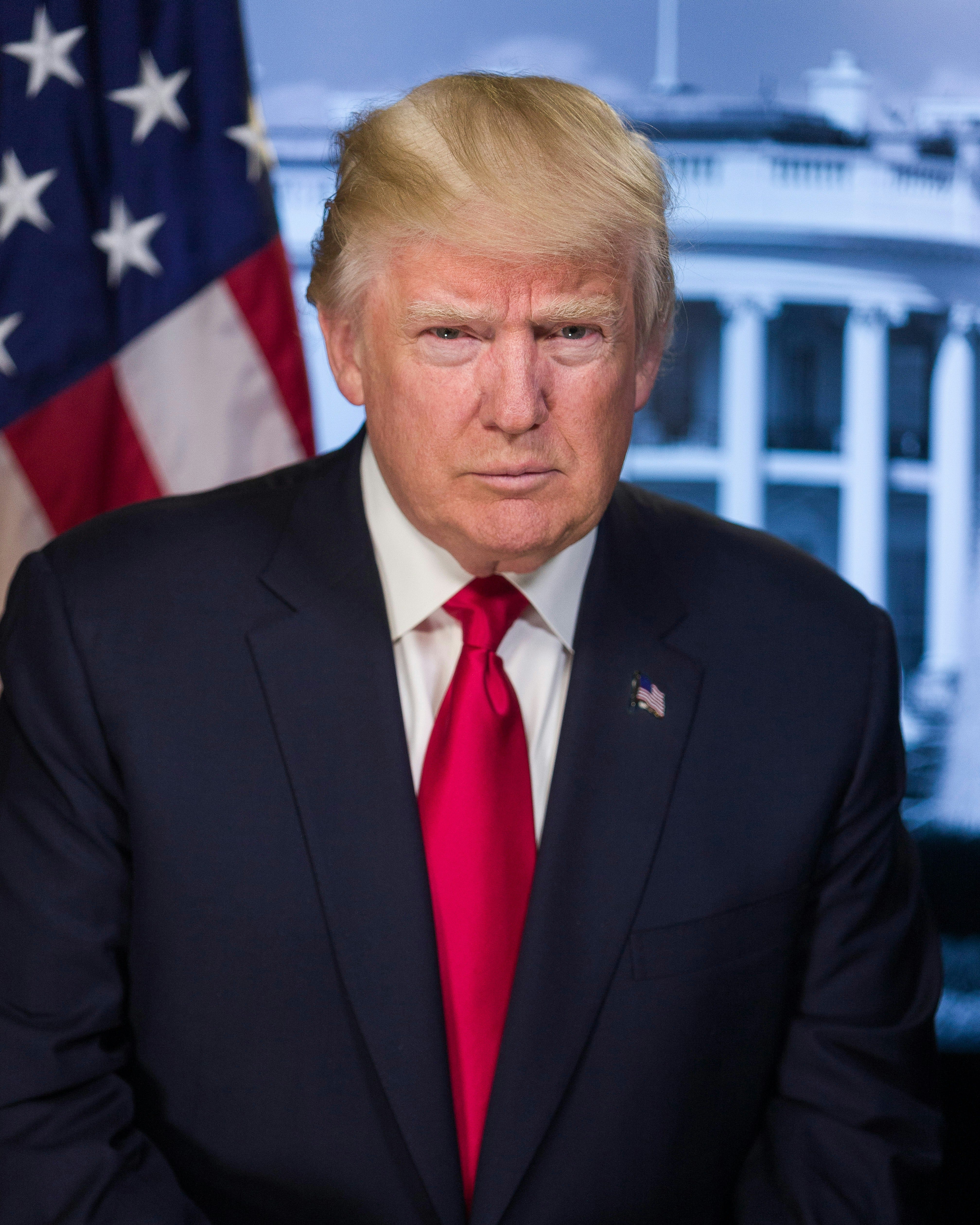
Scott Douglas Jacobsen interviews Rick Rosner on America’s uncertain status, Trump’s stubborn approval floor, Vance’s opportunism, Rubio’s relative moral seriousness, Biden’s Afghanistan damage, and Republican messaging insulation. Rosner argues Trump’s Iran conflict and tariffs expose a damaging asymmetry: severe decisions do not break his base because partisan media shields supporters. The discussion frames America as culturally powerful yet politically self-sabotaging, with Democrats vulnerable to socialist scare tactics and poor messaging before the coming midterms season. Interview conducted July 4, 2026.
Scott Douglas Jacobsen: What is new in your world?
Rick Rosner: Nothing. Fourth of July.
Jacobsen: Happy America Day?
Rosner: Yeah.
Jacobsen: What is your favourite thing about America?
Rosner: The wildness, the obnoxiousness—but not the unpleasant belligerence. Being the cultural leader of the world and, to some extent, the economic leader of the world. It is a nice position to be in.
Jacobsen: Do you think it will end up like somewhere like near the Aegean Sea, like Rome, Istanbul, or somewhere else?
Rosner: Yeah, and we are doing a lot of work right now to make sure that we become an also-ran country, like London. London is great. London is no longer the leading power in the world. Same as when you mentioned Rome. Rome is awesome, but it is not a leading power. And the people in charge right now—
Jacobsen: You think the United States is run by jackasses, right?
Rosner: Without a doubt.
Jacobsen: How would you compare Trump versus Vance in terms of their capabilities? And versus Rubio, actually, and Witkoff? I am curious about your honest take.
Rosner: Of the three, Rubio is the one you would prefer to be in charge. He has moral qualms. Of the three, Rubio is probably the one who has actual Christian values.
Jacobsen: What do you mean by that?
Rosner: Rubio, to the extent that he can, probably tries to follow the Bible. He was always throwing up Bible quotes, and they seemed hollow before he became Secretary of State. However, now, compared to those other two guys, his beliefs seem sincere.
Vance is an opportunist. It reads as creepy. For him to become president, he would probably have to be propped up even harder than Trump is.
However, the issue I want to talk about is that Trump’s approval has been volatile. Some polls showed a recent bump, but averages still put him underwater, around the high 30s in approval. Even with public dissatisfaction over Iran, inflation, gas prices, slower job growth, and corruption concerns, his approval has not collapsed.
His family has reportedly made more than $2 billion from crypto-related ventures, while investors in those ventures have reportedly lost roughly the same amount. He has obvious age-related political liabilities, and none of this has reduced his approval as much as you might expect.
Jacobsen: What typically reduces someone this entrenched in terms of their approval rating, both within their constituency and outside it?
Rosner: Anyway, what really hurt Biden politically was the withdrawal from Afghanistan. It caused roughly a 10- to 12-point drop in his approval, and he never fully recovered. His numbers continued to decline afterward.
It allowed the right-wing press to cement an image of him as trying to wreck America and as doddering and old. Then the mainstream press covered the controversies and, to some extent, amplified those narratives. Meanwhile, Biden stayed in the White House, trying to minimize the damage, when he probably should have been out there making his case more aggressively.
Moreover, you have an asymmetry: Trump has done a bunch of pretty bad things. You could argue about which is worse: withdrawing from Afghanistan or getting into a conflict with Iran that, in my view, ended badly. I would say the Iran thing is worse.
Jacobsen: Did it feel like Afghanistan on speed?
Rosner: No, because we were in Afghanistan for 20 years. During much of that time, we provided enough security around Kabul that many people could live relatively normal lives without being under constant Taliban rule. Women could go to school.
We gave Afghanistan 20 years, and then we left. The Afghan military collapsed within days. That is not the same thing as confronting Iran, a country of roughly 90 million people with a large standing military and substantial reserve capacity. We did not even attempt a ground invasion.
It is not symmetrical. It is not the same thing at all. However, both situations ultimately rest on presidential decisions, and, to me, both appear to have been disastrous calls.
Though Biden inherited the withdrawal agreement negotiated by Trump, which committed the United States to leave Afghanistan, Biden decided to carry out that withdrawal. Had he delayed or reversed it, he likely would have faced renewed Taliban attacks and might have had to send additional troops to secure Kabul. That was the dilemma.
However, the bottom line is that Trump got us into a conflict with Iran, made what I think was a worse strategic decision than Afghanistan, and then did a bunch of other things that I think were undeniably bad.
The tariffs disrupted parts of the American economy and affected American consumers and businesses in several ways. However, his supporters are often shielded from critical coverage of his actions. That allows them to believe he is doing a good job.
That is a bad asymmetry.
We have had several candidates who identify as democratic socialists win primaries. Zohran Mamdani, the Democratic nominee for mayor of New York City, calls himself a democratic socialist. However, really, he is a charismatic politician. Is he proposing genuinely socialist policies? Not to any significant extent, in my opinion.
Meanwhile, Republicans keep using the threat of creeping socialism to scare their voters. So I think Democrats are being set up to perform worse than they otherwise should in the midterms, considering how controversial Trump’s presidency has been, because Democrats are terrible at messaging.
Republicans have built a powerful messaging system—not just one that communicates effectively, but one that also shields many of their supporters from information that conflicts with its narratives. Go ahead.
Jacobsen: No, I was going to say, shielding them from the facts, essentially, is what you are saying.
Rosner: I guess that is all I have to say.
Jacobsen: Thank you very much for the opportunity and your time, Rick.
Last updated May 3, 2025. These terms govern all In-Sight Publishing content—past, present, and future—and supersede any prior notices. In-Sight Publishing by Scott Douglas Jacobsen is licensed under a Creative Commons BY‑NC‑ND 4.0; © In-Sight Publishing by Scott Douglas Jacobsen 2012–Present. All trademarks, performances, databases & branding are owned by their rights holders; no use without permission. Unauthorized copying, modification, framing or public communication is prohibited. External links are not endorsed. Cookies & tracking require consent, and data processing complies with PIPEDA & GDPR; no data from children < 13 (COPPA). Content meets WCAG 2.1 AA under the Accessible Canada Act & is preserved in open archival formats with backups. Excerpts & links require full credit & hyperlink; limited quoting under fair-dealing & fair-use. All content is informational; no liability for errors or omissions: Feedback welcome, and verified errors corrected promptly. For permissions or DMCA notices, email: scott.jacobsen2025@gmail.com. Site use is governed by BC laws; content is “as‑is,” liability limited, users indemnify us; moral, performers’ & database sui generis rights reserved.


