Kostiantyn Davidenko on Ukrainian Civilian Captivity, Reintegration, and Russian Detention Abuses
Author(s): Scott Douglas Jacobsen
Publication (Outlet/Website): Vocal.Media
Publication Date (yyyy/mm/dd): 2026/04
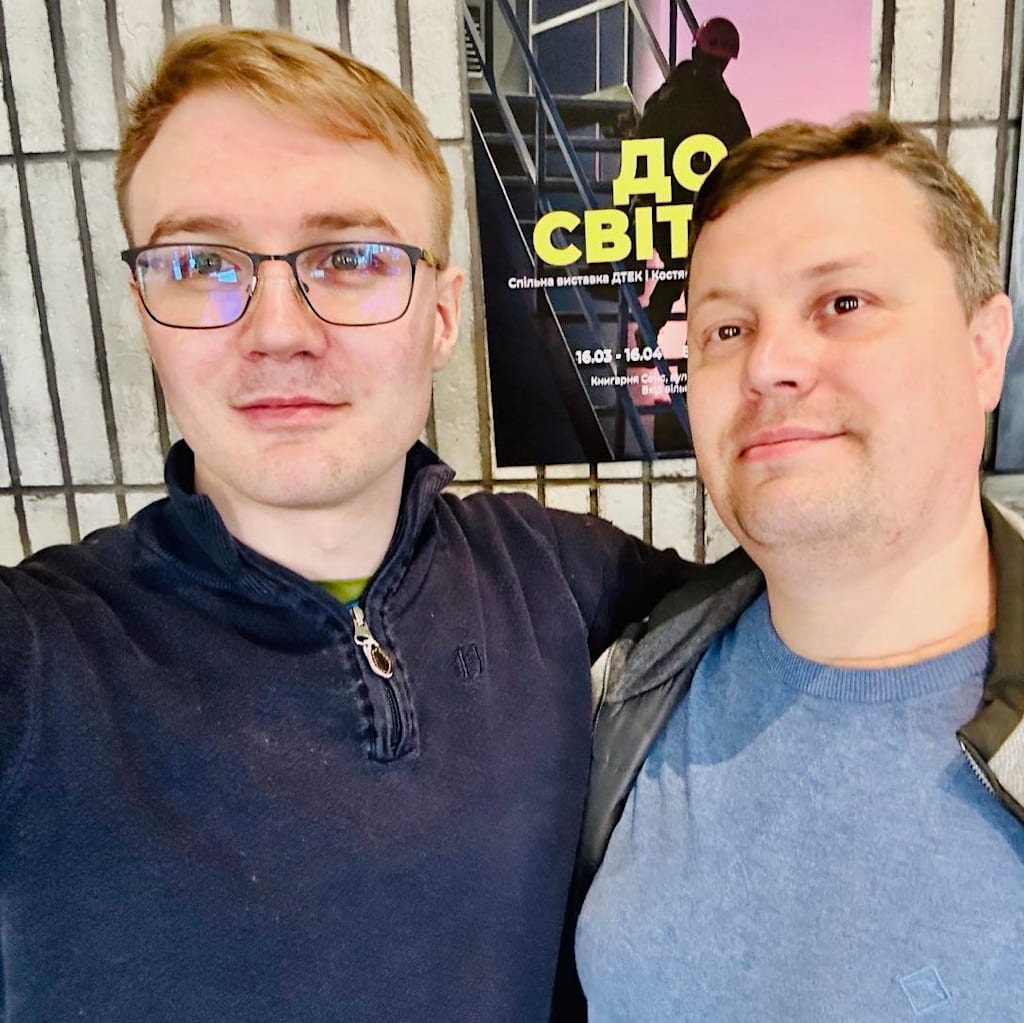
Kostiantyn Davidenko is a Ukrainian public advocate working on support for civilians and others affected by Russian captivity. He speaks about post-liberation needs, detention conditions, family trauma, reintegration, legal documentation, and international accountability. His work emphasizes psychological care, housing, rehabilitation, and practical assistance for former detainees and their relatives. He also highlights the importance of documenting abuses, supporting families still waiting for loved ones, and strengthening international awareness and cooperation on these issues today globally.
In this interview, Scott Douglas Jacobsen speaks with Kostiantyn Davidenko about Ukrainian civilians held by Russia, the documented abuse faced in captivity, and the immense challenges of release and reintegration. Davidenko outlines estimates of detainee numbers, gaps in post-captivity state support, family trauma, propaganda, dehumanization, rehabilitation, housing, legal advocacy, and the work of his organization in assisting former detainees, families of the missing, and civilians still trapped in Russian detention across occupied territories and prisons.
Scott Douglas Jacobsen: How old is the organization? Who founded it? Who created it?
Kostiantyn Davidenko: Our point is post-liberation support. For Ukrainian military personnel, institutions such as the Ministry of Veterans Affairs and the Ministry of Defense play an important role in care and reintegration. For civilians returning from captivity, there is not yet a fully developed equivalent structure, although there have been efforts and discussions about creating one.
As for the difference between Ukrainian and Russian civilians in detention, I can speak more confidently about Ukrainians held by Russia than about Russians held by Ukraine. According to UN human rights monitoring, Ukrainian civilian detainees held by Russian authorities have been subjected to torture, ill-treatment, sexual violence, and harsh detention conditions. Former detainees have also reported inadequate medical care, restricted communication with relatives, and little or no regular access to independent humanitarian monitoring.
In cases involving Russian civilians from the Kursk region who were taken into Ukrainian-controlled territory, it is more accurate to describe the situation cautiously and case by case. Recent reporting shows that some were later returned to Russia in exchanges.
So the essential distinction is this: the abuse of detained Ukrainians by Russian authorities has been extensively documented by international monitors, whereas statements about Russian civilians in Ukrainian custody should be made carefully and with attention to the specific facts of each case.
Jacobsen: Run through how many civilians are in detention, how many have been released, and what they need after release.
Davidenko: There are estimates that approximately 16,000 Ukrainian civilians are being held in detention by Russian authorities, often in facilities that are not fully transparent or accessible to international monitors. So far, roughly around 1,000 civilians have been returned, possibly slightly more if earlier releases since 2014 are included.
This means that the number of people who still need to be returned remains very large. One of the main difficulties is that Russia does not consistently return civilian detainees in accordance with international humanitarian law, which would require their release without conditions. Instead, there have been reports that Russia seeks exchanges, even though civilians should not be treated as exchangeable detainees under the Geneva Conventions.
Ukraine, however, does not hold a comparable number of Russian civilian detainees. As a result, there is no clear mechanism for reciprocal exchanges of civilians, which makes the process of securing their return extremely difficult.
As for the problems faced after release, the first is medical and psychological treatment. Many detainees have spent years in isolation or under harsh conditions. Reports from former detainees and international observers indicate exposure to severe psychological pressure, ill-treatment, and, in some cases, torture. These conditions can result in long-term physical and mental health consequences.
There have also been confirmed deaths in detention. While some figures have been reported publicly, it is likely that the true number is higher, although exact data remain difficult to verify.
A second major issue is housing. Many of those released come from territories that remain under Russian occupation, meaning they cannot safely return to their homes. They require housing and support in government-controlled areas of Ukraine, and existing systems have struggled to meet these needs consistently.
The third issue is reintegration. Former detainees often require social, psychological, and economic support to return to normal life. In many cases, volunteer organizations have played a significant role in providing this assistance, sometimes more effectively than state structures.
There is also a broader need for compensation and accountability. Mechanisms such as the international Register of Damage for Ukraine have been established, but there is a strong desire for these systems to operate more quickly and provide timely reparations, as many returnees have urgent medical and financial needs.
Many released detainees suffer from serious health conditions, including chronic illnesses such as diabetes or tuberculosis, dental damage, and trauma-related psychological disorders. These conditions often require immediate and costly treatment.
Jacobsen: What are the differences, and what are the similarities, in treatment?
Davidenko: Ukrainian children have, in documented cases, been forcibly transferred or deported from occupied territories to Russia or Russian-controlled areas. Even when they have living parents or guardians, some have been separated and placed in institutions or foster systems, where they are exposed to sustained ideological influence. Reports from international organizations indicate efforts to integrate these children into Russian society, including exposure to pro-Russian narratives and identity reformation. When children are returned, this prolonged influence can create psychological and cultural challenges.
Women in captivity frequently report sexual violence, including rape and coercion, as documented by international human rights monitors. Men have also reported instances of sexual violence, although these cases are less frequently discussed publicly. In addition to physical torture, sexual violence has been identified as part of a broader pattern of abuse in detention.
Propaganda plays a significant role in justifying these actions. Russian state narratives have often portrayed Ukrainians as hostile or illegitimate—sometimes framing them as extremists or as manipulated by external forces such as NATO. This framing contributes to a process of dehumanization, in which Ukrainians are depicted not as civilians with rights, but as enemies or traitors.
Dehumanization is a well-documented mechanism in conflict settings. When individuals are no longer perceived as fully human, it becomes easier for perpetrators to justify abuse, including torture and killing, without moral restraint. Some former detainees report that their treatment was justified by captors on the grounds that they had resisted, refused cooperation, or declined to accept Russian citizenship or political authority. In this framing, the victims themselves are blamed for the violence inflicted upon them.
Jacobsen: Thank you very much for the opportunity and your time, Kostiantyn.
Last updated May 3, 2025. These terms govern all In Sight Publishing content—past, present, and future—and supersede any prior notices. In Sight Publishing by Scott Douglas Jacobsen is licensed under a Creative Commons BY‑NC‑ND 4.0; © In Sight Publishing by Scott Douglas Jacobsen 2012–Present. All trademarks, performances, databases & branding are owned by their rights holders; no use without permission. Unauthorized copying, modification, framing or public communication is prohibited. External links are not endorsed. Cookies & tracking require consent, and data processing complies with PIPEDA & GDPR; no data from children < 13 (COPPA). Content meets WCAG 2.1 AA under the Accessible Canada Act & is preserved in open archival formats with backups. Excerpts & links require full credit & hyperlink; limited quoting under fair-dealing & fair-use. All content is informational; no liability for errors or omissions: Feedback welcome, and verified errors corrected promptly. For permissions or DMCA notices, email: scott.jacobsen2025@gmail.com. Site use is governed by BC laws; content is “as‑is,” liability limited, users indemnify us; moral, performers’ & database sui generis rights reserved.

 In-Sight Publishing