Maksym Sytnikov on PEN Ukraine, Writer Fellowships, and Cultural Resistance During War
Author(s): Scott Douglas Jacobsen
Publication (Outlet/Website): Vocal.Media
Publication Date (yyyy/mm/dd): 2026/04
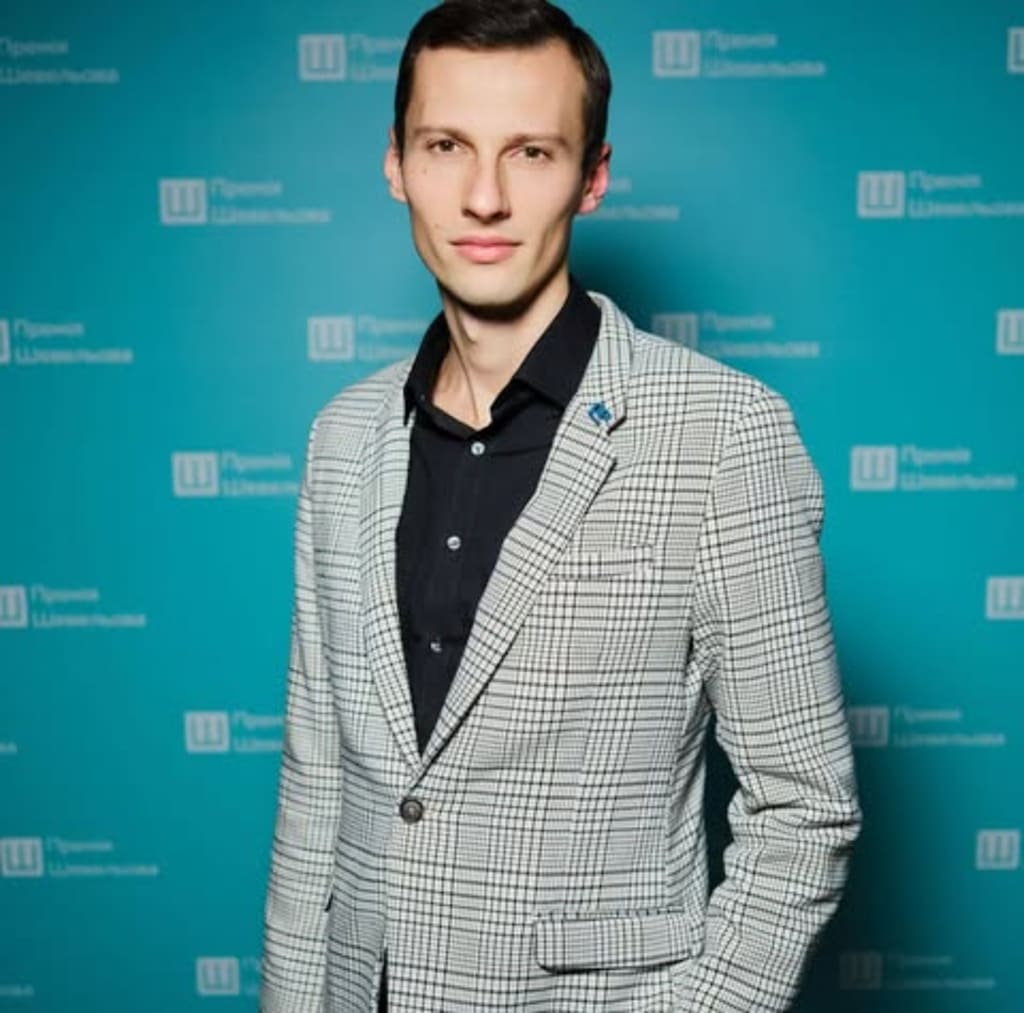
Maksym Sytnikov is the executive director of PEN Ukraine and previously served as its human rights manager after joining the organization in 2021. He helps lead a cultural and human rights institution reshaped by Russia’s full-scale invasion of Ukraine. His work includes literary volunteering trips, support for damaged libraries, fellowship programs for writers, and partnerships across the PEN network. He has also overseen efforts to document wartime losses among Ukraine’s cultural figures.
In this interview, Scott Douglas Jacobsen speaks with Maksym Sytnikov about PEN Ukraine’s literary volunteering trips, writer fellowships, library support, and wartime cultural advocacy. Sytnikov explains how PEN Ukraine began travelling to liberated and frontline regions in 2022, delivering humanitarian aid and books while organizing events with writers. He also discusses support for displaced and struggling authors, partnerships with PEN centers and other organizations, and the ongoing documentation of cultural figures killed in the war.
Scott Douglas Jacobsen: So I was privileged enough and grateful for the opportunity to go on a multi-day, multi-city road trip with some leadership and some membership of PEN Ukraine. This is in part due to you and Anna Volchenko. So thank you very much to both of you. I’m glad we made contact. So, for today’s interview, I want to cover the purpose of trips like these and other activities PEN Ukraine conducts. So when did those trips start? Why are they important for the cultural ambassadorship of PEN Ukraine?
Maksym Sytnikov: So we have organized such trips since June 2022, after Russian forces were pushed back from northern Ukraine and Ukraine started to liberate some of its occupied territories. We started travelling to the Kyiv, Chernihiv, and Kharkiv regions. And during these first trips, we just understood, we saw how important it is for local people, how they need our support, our attention, how they really need humanitarians. PEN Ukraine describes these as literary volunteering trips to liberated and frontline territories.
So, the first trips were mostly humanitarian, so we took a lot of different stuff, medical stuff, food, food for animals, very, very different things. Then we also visited libraries during our trips, and we understood that libraries are in really bad condition in war for many reasons. Those libraries under occupation were often destroyed or damaged, and their collections were destroyed. The state cannot support these libraries, of course, because there are not enough resources.
So PEN began collecting books for these libraries. We started with a public announcement that we are willing to support the library. The first library we supported was the regional library for youth in Chernihiv, a very beautiful old building that Russia targeted in March 2022. We collected several thousand books for this library from people. People were sending us books, and we delivered them to this library.
Then we started to work with different book donors, publishers, writers, ordinary people who are sending books to us every week, and also our big partner Book Aid International, a London-based organization which supports countries in crisis with books, and with Book Aid International, we have already delivered tens of thousands of books. Most of them are in English or bilingual books.
So during our trips, we include a part where we visit libraries and organize public events with writers. Our writers enjoy our trips very much. For them, it is important to learn more about their country and to see what life is like in different regions during the war. They write a lot about this, and they present their experience in international media as well. For local people, of course, it is a great honour to see a famous Ukrainian writer in their village or small town, which has never received such attention. Local audiences are really happy about these visits, and we also try to organize events for children when we can, when we have children’s writers with us on these trips, because children really stay in these communities and need this possibility to see Ukrainian culture and Ukrainian writers.
Jacobsen: What about the fellowship?
Sytnikov: Fellowship for writers, yeah, it is another part of our work. After 2022, PEN Ukraine also began supporting Ukrainian writers. Ukrainian writers are in different situations after 2022. Some of them lost their jobs, some lost their homes, and some were relocated for the second time, first in 2014 and then in 2022. Some were moved abroad, some joined the army, and some started volunteering. People really need support to keep working and writing.
So we established a fellowship program with various partners and work in this field. So we are supporting writers to help them write and publish books.
Jacobsen: How many cultural creators have been killed in the war so far, since 2022 at least?
Sytnikov: Yes, we are conducting monitoring of losses of people of culture since the first days of the full-scale war. We know about 271 killed cultural makers. Unfortunately, this number will increase because we do not have access to the occupied territories. We do not know about Mariupol, for example, where thousands of people were killed. We do not know the number of other occupied cities and villages, but this is the confirmed number as of today, the 20th of April: 271.
Jacobsen: Who are PEN Ukraine’s partners?
Sytnikov: Yes, we work a lot inside the PEN community. PEN International is our biggest and most important partner and friend worldwide. Also, other PEN centers, I would mention here, PEN Sweden. We hosted them here in Kyiv just last week, and they are very supportive, and we very much appreciate our cooperation.
Also, in Ukraine, we work with many organizations, including cultural and human rights organizations and the media. I will not mention them here, because it is a huge number. We have a lot of partners, really. Almost all our projects we do in cooperation with someone, with a partner, because this is more effective. On our webpage, you can find a list of partners.
Jacobsen: When did you get involved in this work? Why?
Sytnikov: I joined the PEN Ukraine team in 2021 as a human rights manager. I was responsible for the human rights work at our organization.
So we are a cultural and human rights organization. And after the full-scale war started, almost all our projects were changed, because we started to work in a new world, in new circumstances. And many new projects were established. I became a deputy executive director, and since last year, I have been the executive director of PEN Ukraine.
Jacobsen: What projects do you have coming up this year?
Sytnikov: We are expecting, I cannot announce this, but I hope that we will launch a new project for soldiers who are writing, also those who are not writers yet, but who are writing and who have talent.
And these people need our support to be integrated into the Ukrainian cultural community. Another thing is a writer’s residency in Ukraine. We will manage to do it.
And the last thing is youth, work with youth. We are trying to work more with this category of people because we cannot lose them.
Jacobsen: What is your favourite Ukrainian aphorism, piece of wisdom, about culture and human rights, or that would be relevant to it?
Sytnikov: In Ukrainian, we sometimes say ‘ta y take’ — it means, ‘it is what it is.’ It’s structurally minimal but pragmatically rich: the speaker is not just describing reality, but positioning themselves in relation to it—usually with a mix of fatigue, irony, or restraint. It can reflect both resilience (the ability to endure) and problematic normalization (tolerating what should be challenged).
Jacobsen: Thank you very much for your time and the opportunity, Maksym.
Last updated May 3, 2025. These terms govern all In Sight Publishing content—past, present, and future—and supersede any prior notices. In Sight Publishing by Scott Douglas Jacobsen is licensed under a Creative Commons BY‑NC‑ND 4.0; © In Sight Publishing by Scott Douglas Jacobsen 2012–Present. All trademarks, performances, databases & branding are owned by their rights holders; no use without permission. Unauthorized copying, modification, framing or public communication is prohibited. External links are not endorsed. Cookies & tracking require consent, and data processing complies with PIPEDA & GDPR; no data from children < 13 (COPPA). Content meets WCAG 2.1 AA under the Accessible Canada Act & is preserved in open archival formats with backups. Excerpts & links require full credit & hyperlink; limited quoting under fair-dealing & fair-use. All content is informational; no liability for errors or omissions: Feedback welcome, and verified errors corrected promptly. For permissions or DMCA notices, email: scott.jacobsen2025@gmail.com. Site use is governed by BC laws; content is “as‑is,” liability limited, users indemnify us; moral, performers’ & database sui generis rights reserved.


