Anna Dorosh, Supporting War-Affected Children in Ukraine: Grassroots Impact and Public Service
Author(s): Scott Douglas Jacobsen
Publication (Outlet/Website): Vocal.Media
Publication Date (yyyy/mm/dd): 2026/04
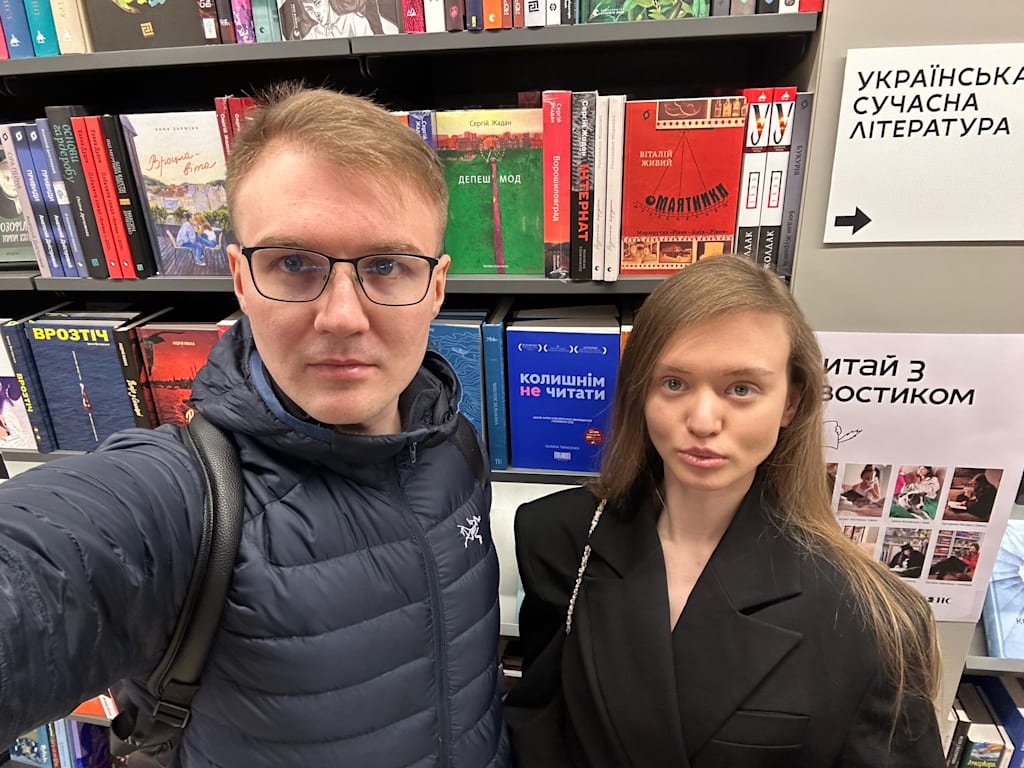
Anna Dorosh is a Ukrainian public-sector professional working in the Cabinet Secretariat of Ukraine, with expertise in European integration and strategic communications. She is a former assistant to the Deputy Minister of Justice of Ukraine. She is the initiator of an independent charitable project supporting children in difficult life circumstances, especially families affected by war and disability, SvyatKYOU. Dorosh has drawn on earlier experience in project management, stakeholder engagement, communications, and fundraising, including work connected to the Chernivtsi City Council, to build partnerships and expand practical support for vulnerable children in Ukraine.
In this interview, Scott Douglas Jacobsen speaks with Dorosh about her dual role in Ukraine’s Cabinet Secretariat and as founder of the SvyatKYOU charitable initiative. She explains how the project connects donors with children’s personal requests, delivering gifts and organizing events that restore dignity and hope for families affected by war. Dorosh reflects on building partnerships, managing volunteer teams, and leveraging communications skills to expand impact. She emphasizes practical compassion, stakeholder engagement, and sustained commitment. The discussion highlights Ukraine’s culture of civic support, the challenges of scaling initiatives, and plans to formalize the project into a national NGO.
Scott Douglas Jacobsen: What is your current role?
Anna Dorosh: I work in the Cabinet Secretariat of Ukraine. I am also the initiator of a project for children in difficult life circumstances.
Jacobsen: In the communications sphere of government, are funds generally limited or substantial for the kinds of projects you would like to carry out?
Dorosh: That is an interesting question. I do not usually divide projects into low-funded or well-funded categories. Some initiatives receive support from the European Union through the Ukraine2EU project, which has helped with various initiatives.
Jacobsen: Does that funding support your project in Kyiv?
Dorosh: No, they are not connected. This is my own project and it is not connected to the Cabinet of Ministers. The EU-related work is separate from this project.
I started it two years ago because I felt I needed to do something more for Ukraine. At that moment, I felt I was not doing enough. I was one of the initiators, and I created it with friends shortly before Christmas.
We wanted to provide gifts for children whose parents were killed in the war or who live in very difficult circumstances, including families affected by disability. It is a harsh reality for them. We thought it would be important to create something inspiring for these children, so they could believe that life does not end with hardship and that good things are still possible.
We started with ten gifts at the beginning, and then the initiative grew much larger through fundraising and public support.
Jacobsen: So, separate from the EU and the Cabinet of Ministers, this became a significant fundraising effort.
Dorosh: Yes, it was a fundraising project. I began it while I was working with the Chernivtsi City Council. At that time, I also had the opportunity to involve different stakeholders through my work there, particularly through the Department of Business. We brought in more than 15 partners, especially in Chernivtsi, and helped more than 100 children.
Jacobsen: What were the ways in which you helped?
Dorosh: First, parents wrote letters together with their children, which we published on our website. People could choose a specific letter and fulfill a child’s wish for Christmas.
One notable situation involved a mother who had lost her husband in the war and had six children. She requested items such as a multicooker and a freezer. I asked her to revise the letters, as the project was focused on gifts for children.
We received a wide range of requests, from basic clothing such as trousers and T-shirts to more expensive items like smartphones.
Jacobsen: What were some of the other gifts the children wanted, besides T-shirts, pants, and smartphones?
Dorosh: There were many. I could look them up to be more precise, as I cannot recall all of them now.
Jacobsen: That is an interesting nuance.
Dorosh: Yes, I would prefer to be precise, but I cannot recall the more unusual requests at the moment.
Jacobsen: What were the most common types of gifts?
Dorosh: I would say teddy bears were among the most common, because children want something comforting to hold. Dolls were also common, especially for girls.
Jacobsen: Where are you looking to expand the project—within Chernivtsi or beyond?
Dorosh: That is an interesting question. This was our second year running the project, and we decided to continue because we could not stop.
We also received support from one of our partners, “Na Protsenti,” and from Zhenya Kosov, a Ukrainian music producer and artist. He encouraged us to continue, emphasizing that the project was important and should not end.
As a result, we continued the initiative this year and provided more than 100 gifts again. Looking ahead, we plan to continue and expand the project further.
Jacobsen: What was the feedback from the parents and the children?
Dorosh: The response was very positive. No one complained that the gifts were too small or insufficient. Everyone expressed appreciation for the effort we made through both the presents and the events we organized.
In addition to the gifts, we created special events so the children could experience a sense of celebration. During the first year, we held three events, each led by a different facilitator. One featured a national karate champion, Andrii Zablitnyi, who conducted a training session with the children. We invited those who were interested to participate.
The second event was a dance class, and the third was a celebration event that also included a leadership-focused talk.
In the second year, the project was more limited because of time constraints and my responsibilities in government work. We organized one event but still provided gifts to all the children who had submitted requests.
Jacobsen: How have you applied your skills from your communications work in the Cabinet of Ministers to this project? From what you describe, you appear to be the central organizer, with others contributing on a temporary or voluntary basis.
Dorosh: My background is in project management. In my earlier work with the Chernivtsi City Council, I collaborated with various partners and stakeholders and also developed my own initiatives.
Now, it is not difficult for me to assemble a team, even on a volunteer basis. Everyone involved in this project contributes without payment. The core idea is to create something meaningful for the children rather than to earn money.
From a communications perspective, I understand how to engage partners, build visibility, and promote initiatives. These skills have been very useful for the project.
Jacobsen: Thank you very much for the opportunity and your time, Anna.
Last updated May 3, 2025. These terms govern all In Sight Publishing content—past, present, and future—and supersede any prior notices. In Sight Publishing by Scott Douglas Jacobsen is licensed under a Creative Commons BY‑NC‑ND 4.0; © In Sight Publishing by Scott Douglas Jacobsen 2012–Present. All trademarks, performances, databases & branding are owned by their rights holders; no use without permission. Unauthorized copying, modification, framing or public communication is prohibited. External links are not endorsed. Cookies & tracking require consent, and data processing complies with PIPEDA & GDPR; no data from children < 13 (COPPA). Content meets WCAG 2.1 AA under the Accessible Canada Act & is preserved in open archival formats with backups. Excerpts & links require full credit & hyperlink; limited quoting under fair-dealing & fair-use. All content is informational; no liability for errors or omissions: Feedback welcome, and verified errors corrected promptly. For permissions or DMCA notices, email: scott.jacobsen2025@gmail.com. Site use is governed by BC laws; content is “as‑is,” liability limited, users indemnify us; moral, performers’ & database sui generis rights reserved.


