Many Ukrainians found that tax advisers did not want to work with them : Oleksandra Yamshchikova
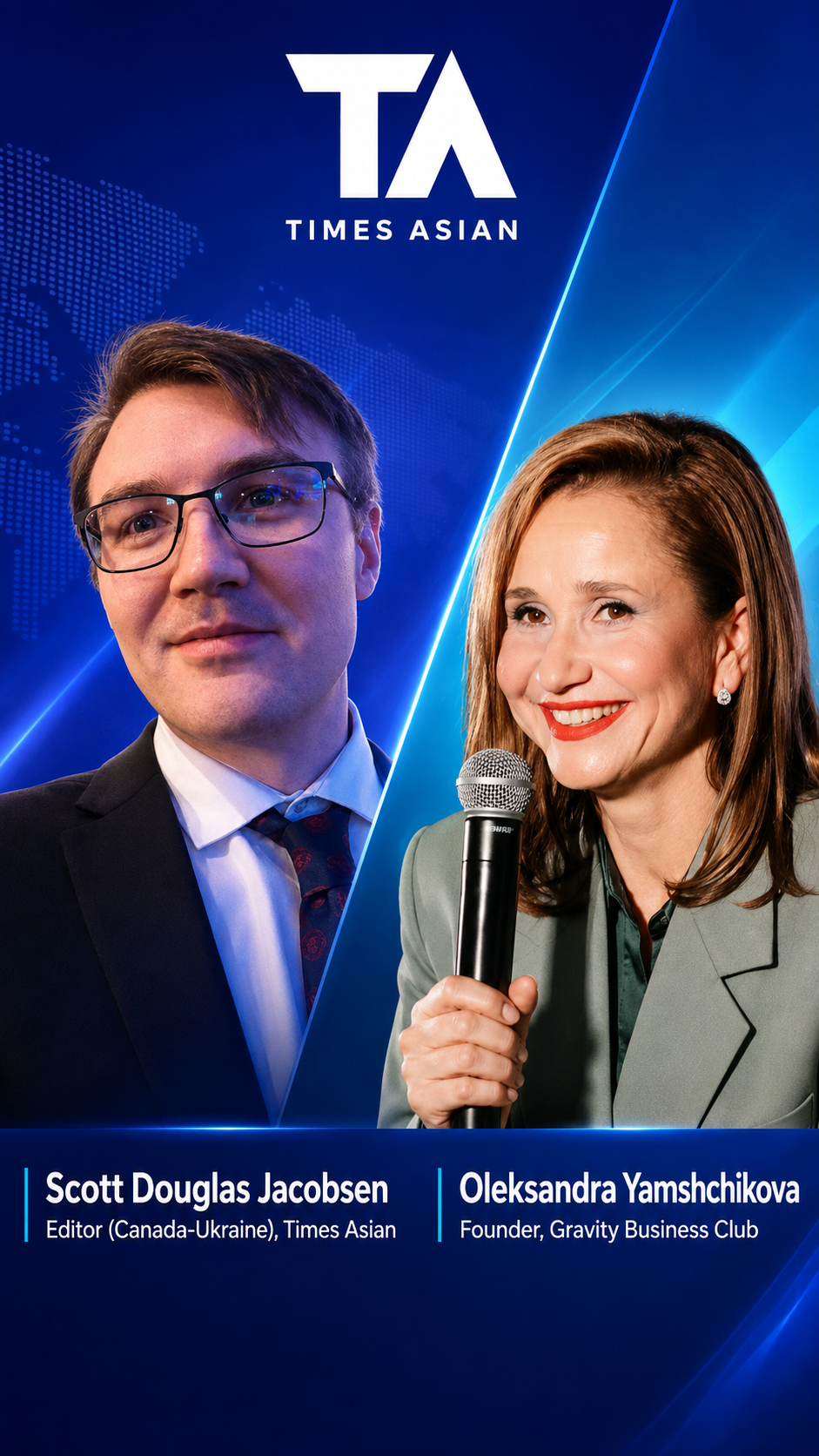
Author(s): Scott Douglas Jacobsen
Publication (Outlet/Website): Times Asian
Publication Date (yyyy/mm/dd): 2026/08/18
Oleksandra Yamshchikova on Ukrainian Entrepreneurs Facing German Business Barriers
What challenges do Ukrainian entrepreneurs face when starting businesses in Germany?
Oleksandra Yamshchikova is a Ukrainian entrepreneur based in Germany who previously built businesses in Ukraine and Estonia before the war disrupted her European labour-placement company. After relocating, she created communities, a nonprofit, and a business club helping Ukrainian founders integrate into Germany, find first clients, understand taxes, banking, bureaucracy, and scale. Her work spans mentoring, acceleration, youth entrepreneurship, market entry, diaspora networking, and practical support for resilient Ukrainian businesses abroad today amid difficult wartime conditions.
In this interview, Scott Douglas Jacobsen asks Oleksandra Yamshchikova about trust, bureaucracy, taxes, banking, and market entry for Ukrainian entrepreneurs in Germany. Yamshchikova explains that Germany offers strong trust once business relationships are established, but first clients, tax advisers, bank access, language barriers, and labour regulations make starting difficult. She argues professionalexpertise matters more than sector choice, with opportunities across digital, construction, IT, production, and services for determined Ukrainian founders building reputations inside structured German markets carefully.
Scott Douglas Jacobsen: Would you say Germany is a high-trust society?
Oleksandra Yamshchikova: Yes.
Jacobsen: Once you get your first few clients, does the high trust of the society make doing business easier?
Yamshchikova: So, it is easier in the sense that, if you are already 10 years on the market, you do not need marketing. You do not need to play with the price. You do not need anything like that. You just work. You can organize your processes and organize your budget. You do not need to chase clients anymore. But when you start, it is a problem at every level.
What I noticed as a very interesting difference in trust is that, in Ukraine, you should earn trust after a few years of working together. In Germany, they give you trust immediately when they know you. You automatically receive trust.
But if you spoil it one time, you never get it back. Ukrainians sometimes start to play with this or misuse it. In Germany, reputation is one of the most important things.Jacobsen: What are the major complaints or areas of feedback that Ukrainians who come to Germany bring to you, or others in your network, when they ask for advice? For example: “I have a big problem. How do I overcome it?” In other words, what are the frequently asked questions?
Yamshchikova: First, they realize that not every business they created in Ukraine is needed in Germany. The business model can be different. Ukrainians often make very good services with very nice landing pages and everything looking beautiful and polished.
In Germany, they do not always understand or value this in the same way. Germans prefer a simple design mindset. Understanding that mindset is a real challenge.
Another major problem is taxes and finding a good tax adviser because the systems are different. In Ukraine, we have a very simple tax system. It is very easy to work with because one accountant can do everything: work with people, taxes, and organizing finances in your company. It is simple.
Then you come to Germany, and the system is completely different. These German tax specialists are very busy and very popular. Many Ukrainians found that tax advisers did not want to work with them or were simply not interested because they did not see them as important clients.
In Ukraine, accountants are more like advocates for the person. In small companies, the accountant basically does everything for you. They write the bills, send them to clients, and manage the paperwork. I never did those things myself in Ukraine.
I learned this in Germany, and honestly, it started to make me crazy because I suddenly had to do everything myself. The German accountant would not do it. After one year of suffering with this system, I hired a Ukrainian accountant again. They may make mistakes sometimes, but I can delegate the work to them becauseit is almost impossible to find a free German accountant.
Opening a company is also a big problem. In Ukraine, you can open a company in a few days. In Germany, getting everything operational can take much longer. Then you still have to open accounting systems and bank accounts.
At this moment, I called my bank. I have already been an entrepreneur for years and have worked with this bank for about two years. I asked them to open a credit card for me, and until now they still say, “Okay, you do not qualify for this.” Even though hundreds of thousands go through this bank account. So you ask yourself: what else needs to happen?
It is a very difficult system. In Ukraine, when I went to the bank, I was considered a good client. I had personal assistants. They welcomed me, gave me coffee, and I could call them directly.
In Germany, I struggled just to open an account at a German bank. Finally, I opened one. I had personal email contacts there, and then two weeks later they sent me a termination notice.
Administrative work is one of the hardest parts. Finding the first client and making the first sale is a huge challenge for many businesses.
Selling in the German market without the language is extremely difficult. You often need to hire a German-speaking employee, but that is very expensive and legally complicated because there are many regulations and labor protections. It is difficult to dismiss someone. In Ukraine, in my experience, it can be much simpler. So overall, it is a very difficult system.
Jacobsen: What businesses should entrepreneurs of Ukrainian descent hoping to do business in Germany simply not pursue? In other words, which businesses almost never work well within Germany’s current economic ecosystem?
Yamshchikova: For me, it is difficult to say what people should not do because everybody succeeds in different things. Somebody opens a restaurant and then sells it because it is impossible to manage. Somebody else opens a restaurant, succeeds, and then opens another one.
It depends on whether you are truly professional and experienced in your field. If you already built a business in Ukraine and you understand your industry, there is enough market opportunity in almost everything: digital business, development, construction, and IT.
Of course, I think businesses like car sharing are difficult to open because there are many different complications, but that is not common for everybody. It is a difficult business in any country.
I also know people who opened production businesses. It is difficult, but it works.
I do not really remember cases where people completely failed or where people only cried and complained. Everybody tries to do something in some direction. Right now, there are opportunities in many directions. There is enough work.
Jacobsen: Thank you very much for the opportunity and your time, Oleksandra.
Last updated May 3, 2025. These terms govern all In Sight Publishing content—past, present, and future—and supersede any prior notices. In Sight Publishing by Scott Douglas Jacobsen is licensed under a Creative Commons BY‑NC‑ND 4.0; © In Sight Publishing by Scott Douglas Jacobsen 2012–Present. All trademarks, performances, databases & branding are owned by their rights holders; no use without permission. Unauthorized copying, modification, framing or public communication is prohibited. External links are not endorsed. Cookies & tracking require consent, and data processing complies with PIPEDA & GDPR; no data from children < 13 (COPPA). Content meets WCAG 2.1 AA under the Accessible Canada Act & is preserved in open archival formats with backups. Excerpts & links require full credit & hyperlink; limited quoting under fair-dealing & fair-use. All content is informational; no liability for errors or omissions: Feedback welcome, and verified errors corrected promptly. For permissions or DMCA notices, email: scott.jacobsen2025@gmail.com. Site use is governed by BC laws; content is “as‑is,” liability limited, users indemnify us; moral, performers’ & database sui generis rights reserved.


