Sudan’s Economic Struggles & Conflict Dynamics
Author(s): Scott Douglas Jacobsen
Publication (Outlet/Website): A Further Inquiry
Publication Date (yyyy/mm/dd): 2025/08/23
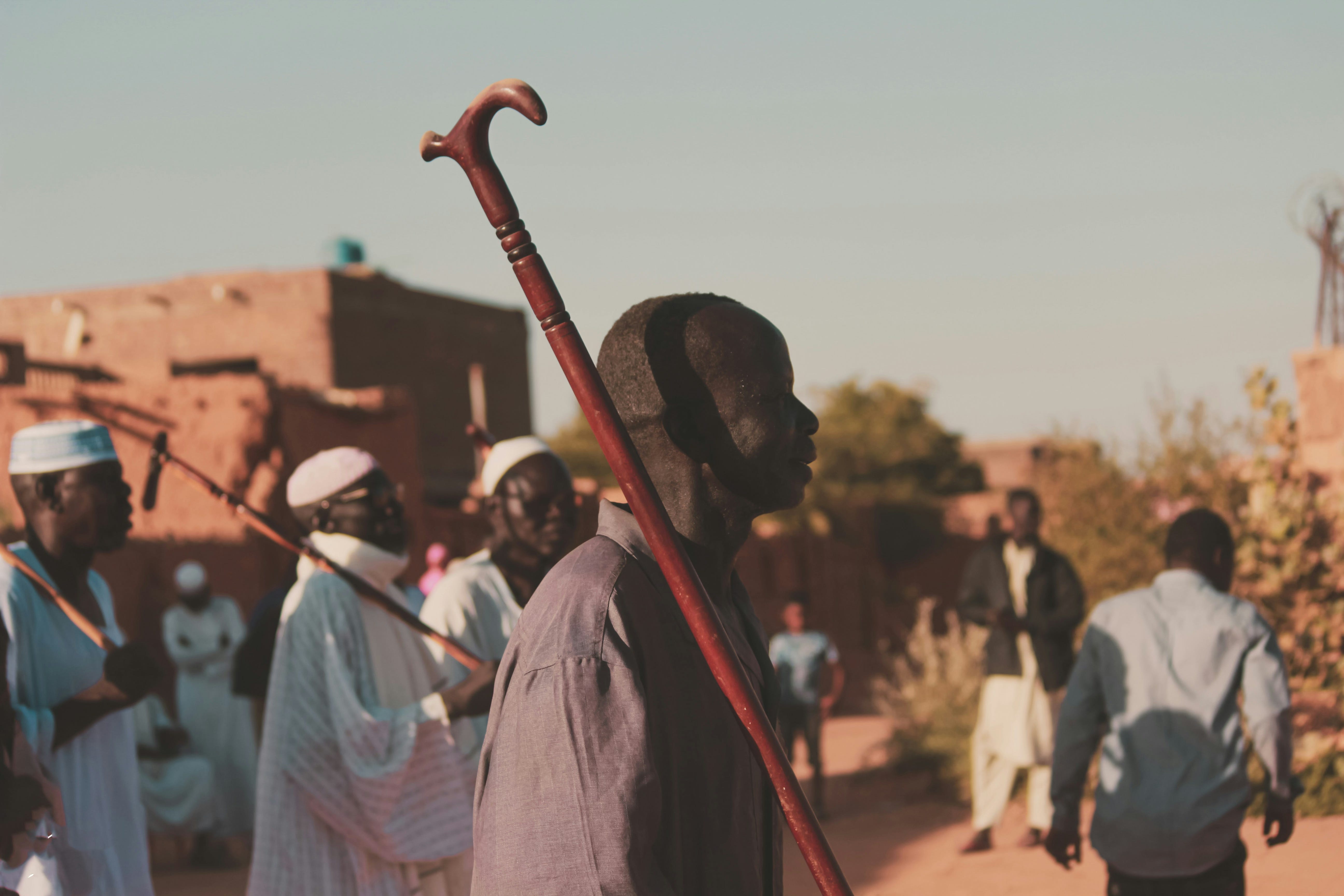
Part 1 of 2
Eddie Thomas, a researcher specializing in Sudan and South Sudan, discusses the transition from subsistence farming to market economies, the impact of conflict, and healthcare inequalities. In this 2-part interview, he examines how wars have disrupted traditional kinship networks, pushing people into market dependency. South Sudan’s caloric intake has dropped, leading to malnutrition. Sudan’s healthcare disparities stem from colonial-era spatial inequalities and privatization. Border conflicts like Kafia-Kingi influence economic dynamics, and kinship networks are under pressure. Thomas advocates for universal healthcare and decommodification as solutions to economic instability and conflict. He acknowledges Sudanese revolutionaries striving for systemic change.
Scott Douglas Jacobsen: Today, we are here with Eddie Thomas. He is a researcher specializing in Sudan and South Sudan. He has previously been affiliated with the Rift Valley Institute and XCEPT. Currently, he works with the ATAR Network. He has two decades of experience as a teacher, human rights worker, and researcher. He examines border conflicts, healthcare inequalities, and economic transformation. He has authored South Sudan: A Slow Liberation and reports such as Moving Towards Markets and The Future of Sudan’s Shattered Health System. His research, previously supported by the XCEPT program and the Rift Valley Institute, explored the consequences of market dependence, conflict-driven social shifts, and healthcare privatization in Sudan’s shifting and evolving political landscape.
Thank you for joining me today. My first question is: How has the transition from subsistence farming to market dependence in South Sudan affected local economies and social structures?
Eddie Thomas: Subsistence is a term many people still use to describe agriculture in South Sudan. It is a peculiar term that arose during the Enlightenment and was the opposite of a new concept: improved agriculture, capitalist agriculture, agriculture for profit and high yield. Subsistence was used to describe forms of agriculture that were not oriented toward maximizing yield but rather toward managing consumption.
The subsistence systems in South Sudan were long-lived. They have only started to decline over the past 20 or 30 years. Even now, they are not defunct but are deteriorating. Before this shift, people primarily produced food for consumption or exchange within their social networks. They organized production around social relationships rather than markets.
This meant that people did not necessarily seek to maximize surplus or yield but considered other factors now recognized as equally important—such as sustainability, climate and ecological adaptation, and flavour and nutrition. These factors influenced agricultural production decisions.
However, South Sudan has experienced near-continuous conflict since the 19th century, particularly during the Turco-Egyptian rule and later under British colonial administration. It has had only brief periods of peace. War is a significant reorganizer of society and production. It is also an effective means of instilling a profit motive in people, as it introduces intense coercion to reshape society.
That is what happened in South Sudan. Wars gradually detached people from the land where they produced food, grew grain, kept livestock, or fished in rivers. These conflicts transformed them into something different. Initially, they might have become enslaved persons or military recruits—who were not much different from enslaved persons—or what are now referred to as displaced people, those forced off their land and compelled to live in unsuitable and uncomfortable conditions.
And all of these factors limited the ability of kinship networks and other social structures to survive and organize production. At the same time, people’s ability to manage their production was being undermined.
Other factors were coming into play. New groups of people were not interested in market commodities a hundred years ago. People didn’t seek to save money to buy available goods. Basic commodities such as soap or fishhooks were available but not central to people’s lives. However, the allure of commodities has grown significantly. Now, people desire handbags, stylish shoes, fashionable clothing, and smartphones.
People are increasingly drawn into market economies and commodities while facing new threats to their ability to remain on the land. Climate change has severely affected South Sudan, which is ecologically sensitive. The levels of flooding along major rivers and waterways are alarming. Some individuals are forced to reconsider their home locations due to the risk of flooding. Others must reconsider their livelihoods, as they can no longer sustain farming or herding. As a result, many are switching to fishing as a means of survival, adapting to the climate-induced displacement they are experiencing.
What has happened is that an older system—one not designed for maximizing profit or yield but rather focused on maintaining social and kinship networks—has been disrupted. This traditional system provided multiple layers of meaning to life through production. Work was once deeply tied to one’s sense of family, home, and even cultural traditions, such as the songs people sang while working.
I’m not trying to sentimentalize the past or suggest it was the only way of life. There were negative aspects to the “good old days.” However, the kinship-based and socially networked production systems helped hold society together. Today, many pressures on South Sudanese people are forcing them apart, breaking down social cohesion, and pushing them into fragmented, often antagonistic, enclaves.
One of the things I examined was how conflict is as much tied to these ongoing agrarian changes as it is to ethnicity or other cultural explanations sometimes given for violence. The countryside is undergoing a massive transformation, and this upheaval has become entangled with the conflict, potentially fueling its continuation.
Let me explain why. The first scientific nutrition studies in South Sudan were conducted in the 1950s by Gertrude Culwick, an English researcher employed by the colonial government. She conducted multiple studies in different parts of Sudan. Her work in the floodplains—vast, flat, muddy lands on the east and west of the Jebel, where the White Nile flows through South Sudan on its way north—revealed interesting findings. She found that people consumed between 2,000 and 3,500 calories per day, a substantial intake. However, the measures she used then differed from the ones we use today.
Because today, caloric intake would be averaged out, considering age differences and other factors. Gertrude Culwick may have used specific measurement criteria. However, adults in her studies still consumed a substantial amount of food.
Some studies suggest that people in South Sudan consume an average of 1,500 to 1,800 calories per day in the 21st century. This marks a dramatic reduction in caloric intake over the past 60 to 70 years. One key aspect of this transition is that it is a hungry transition. It may eventually lead to obesity, as market-based food systems have in many other countries, but at present, it is leading to undernourishment and malnutrition.
There is no direct link between marketization and better food systems. On the contrary, marketization—alongside war, displacement, and other disruptions—is not resulting in better nutrition. Instead, it is driving an increased demand for cash. In the past, many South Sudanese lived with minimal reliance on money, and it wasn’t easy during the colonial period to get people to work for wages because they simply did not need cash. Additionally, they did not wear clothes with pockets, making it impractical to carry money.
The colonial administration introduced money taxes to compel people to work for wages. As a result, people would perform a few days of labour annually to pay their taxes. Over time, market dependence increased, and people needed money not just for taxes but also for new necessities such as modern education and healthcare, both of which required cash. Additionally, they began to need money for food as they transitioned from solely producing food to selling portions and later repurchasing food from merchants once their stocks ran low. Essentially, their food supplies were becoming commodities.
I found an interesting trend in household surveys—though they are infrequent in South Sudan and must be interpreted cautiously. Surveys conducted during the peace years from 2006 to 2013 suggested that while many areas shifted toward market-based economies, many people reported that they had not used cash in the past seven days. This indicates a growing reliance on cash without consistent access to it.
In the areas where hunger was most prevalent, people needed money to buy food but often did not have it. These were the same areas where militia groups were gaining strength, and young men increasingly turned to alternative forms of work that provided access to cash or coercive means of obtaining resources they could no longer produce themselves. The militia system played a crucial role in dismantling traditional production methods and was instrumental in sustaining this economic transition. As workers defected from productive labour to military employment, money circulated more through soldiers than through conventional economic activity.
As hunger intensified, the need for money grew, pushing people into new methods of obtaining it, including selling labour and sending their sons to fight. This transformation perpetuated economic instability and reinforced the cycle of displacement and market dependence.
People also invested heavily in educating their children because they believed education was essential for navigating the emerging economy. Even families with very little money would sell their labour to afford school fees, hoping that education, even in under-resourced schools, could provide their children with a better future.
South Sudan’s progression toward a market economy is an important study area because it sheds light on how the rural crisis underpins many ongoing challenges. This rural crisis is sometimes misrepresented as a conflict between antagonistic ethnic groups, as that provides a simplistic explanation. However, the reality is more complex. The government, unable to adequately serve its people, often exacerbates divisions by taking resources away in a discriminatory manner rather than providing for its citizens. This creates friction among communities and pushes individuals into armed groups.
Focusing less on the military and more on the agricultural sector would help me better understand South Sudan’s challenges.
Last updated May 3, 2025. These terms govern all In-Sight Publishing content—past, present, and future—and supersede any prior notices. In-Sight Publishing by Scott Douglas Jacobsen is licensed under a Creative Commons BY‑NC‑ND 4.0; © In-Sight Publishing by Scott Douglas Jacobsen 2012–Present. All trademarks, performances, databases & branding are owned by their rights holders; no use without permission. Unauthorized copying, modification, framing or public communication is prohibited. External links are not endorsed. Cookies & tracking require consent, and data processing complies with PIPEDA & GDPR; no data from children < 13 (COPPA). Content meets WCAG 2.1 AA under the Accessible Canada Act & is preserved in open archival formats with backups. Excerpts & links require full credit & hyperlink; limited quoting under fair-dealing & fair-use. All content is informational; no liability for errors or omissions: Feedback welcome, and verified errors corrected promptly. For permissions or DMCA notices, email: scott.jacobsen2025@gmail.com. Site use is governed by BC laws; content is “as‑is,” liability limited, users indemnify us; moral, performers’ & database sui generis rights reserved.

 In-Sight Publishing