Author(s): Scott Douglas Jacobsen
Publication (Outlet/Website): The Good Men Project
Publication Date (yyyy/mm/dd): 2017/07/22
Kevin and Benedict are colleagues. We have written and worked together. They have a podcast called This Week in News with Kevin and Benedict. I like them. Here’s their story. Kevin grew up in Sacramento California, where he conquered his enemies and saved the city from annihilation multiple times. He currently attends UC Berkeley as a Political Science major. He also worked as a heavy equipment mechanic for 5 years before college. He enjoys cigars, hockey (Go Sharks), politics, and saltwater fish tanks. Benedict is a Brit living in the US. Just for you, part 1.
Scott Douglas Jacobsen: I wanted to interview each of you together because you’re friends and do some decent work through a podcast. I wanted to explore some of that. You both agreed. What is your brief background?
Kevin: I first want talk about the statement where you said we are friends. We are acquaintances at best. How dare you put my name in with his, interview over!
Jacobsen: [Laughing]
Benedict: Now, we’re going to answer your question. I am originally from the UK. I studied at Oxford University, Spanish and Portuguese. I decided I didn’t want to do anything with that. I wanted to be a journalist or pundit, whatever I am now.
I have done a lot of writing for people for free to get my name out there. I stumbled upon Kevin. Now, we have a podcast. That’s how we got there today.
Kevin: I am from Sacramento, California. I took two semesters of Spanish [Laughing]. I worked as a heavy equipment mechanic a few years after high school. I radically changed my life from being a Right-wing dirt bag to leaning heavily to the Left.
It was a dual change of coming to atheism and realizing everything I ever believed was basically wrong. I was re-examining things and searching for the truth. This brought me there. I was a mechanic for 5 years.
I went back to community college, then got into UC Berkeley, where I am now. Then all three of us were working for an outlet, writing online. We met through there. Benedict was doing a podcast there at the time. It was terrible, I must say. Your form was off.
For a quick moment, can I critique your old podcast?
Benedict: You can if you want.
Kevin: I always wanted to do a podcast, but it was a matter of finding a partner. It is a matter of British accents. I thought, “This is a perfect podcast partner, who can make me sound better.”
Benedict: [Laughing].
Jacobsen: Kevin, you noted the transition from a Right-wing social and political, and so cultural, perspective. Was it all-at-once or slow transition? What was the feeling?
Kevin: It wasn’t all-at-once. It was a gradual thing. It started with some things I believed being chipped away at, starting with climate change. I was a climate change denier. People would introduce me to the facts.
It became more and more apparent that I am wrong here. That something else was going on here. In my mind, and the way I was raised, I had to look for myself and examine things. Once you can do that with one issue, it becomes easier with other things. It was looking at the bottom of it rather than what the Right-wing commentators had been saying all of my life such as the guy who ran The Blaze, Glenn Beck.
I had more Glenn Beck books that anyone should ever have. I had two.
Jacobsen: [Laughing].
Kevin: Five years ago, if Donald Trump ran for president, I would have voted for him. That’s how far gone I was.
Jacobsen: What about you, Benedict?
Benedict: I have left-wing tendencies growing up. I go through occasional center leaning wobbles, especially in high school. That kind of time because of the people I was surrounded by at the time. When I went to university, I solidified in left-wing and liberal thinking. At the same time, I came across atheism and being skeptical of stuff and trying to question everything.
I do not think I have changed much. I haven’t had a radical right-to-left swing like Kevin, but I have become more left-wing as I study politics more. Europeans tend to be more left-wing anyway, so definitely in the American sense – maybe for a European perspective too. If anything, I have become more left-wing with time, but probably more centrist than leftist.
Kevin: Was high school your Tory years?
Benedict: Yes, when I write my autobiography, I will become famous and those will be the “Tory Years.”
Jacobsen: [Laughing].
Kevin: You had a picture of Margaret Thatcher up on your wall.
Jacobsen: [Laughing].
Benedict: Yes, it was when we went through the recession and had a left-wing government, so we felt there must have been some reason for this to be wrong and a change must be necessary away from the established way of thinking. But you could more left-wing than the Labour government had been to that point, I assumed the natural change was to be Right-wing.
It wasn’t necessarily the “Tory Years,” but more like the “We need change” years – from the status quo. An obvious change at the time was to lean more Tory, though I don’t think I’d agree with myself now.
Jacobsen: You founded TWIN or This Week in News with Kevin and Benedict. What was the inspiration for it?
Benedict: I am a very grumpy person. I like to complain the news. I spend too much time thinking other people are dumb [Laughing].
Jacobsen: [Laughing].
Benedict: We spend a lot of time critiquing the Trump administration because that’s who is in power. I like to think we’d be critiquing whoever else might be in power. We simply have a lot more to talk about with the Trump administration because they are in power. Do you agree with that Kevin? We are both democrats, but we wouldn’t not critique Democrats simply because they are of our party.
Kevin: I asked, “What will we do when Donald Trump is out of office?” Well, then is the time to start looking at more of the mundane issues, I feel like right now we are in crisis mode. I feel there are many bad and dangerous things. It is important to focus on them. I believe other things are worth focusing on our side when our people do wrong, but there is a limited amount time. It is more important with constraints to focus on Donald Trump and the administration.
It is important to critique people on our side when it is appropriate. We do try to get those smaller stories and criticize people on our side when it is appropriate to do so. We made a point of critiquing Kathy Griffin, people on our side, and say stupid things. In the show recorded today, we talked about how the new Democratic Party slogan is stupid [Laughing]. It is not just news. We try to keep things light and entertaining too.
As a news consumer myself, I like nice and dense news, but I want it to be entertaining as well.
License
In-Sight Publishing by Scott Douglas Jacobsen is licensed under a Creative Commons Attribution-NonCommercial-NoDerivatives 4.0 International License. Based on a work at www.in-sightpublishing.com.
Copyright
© Scott Douglas Jacobsen and In-Sight Publishing 2012-Present. Unauthorized use and/or duplication of this material without express and written permission from this site’s author and/or owner is strictly prohibited. Excerpts and links may be used, provided that full and clear credit is given to Scott Douglas Jacobsen and In-Sight Publishing with appropriate and specific direction to the original content. All interviewees and authors co-copyright their material and may disseminate for their independent purposes.
Share this:

Author(s): Scott Douglas Jacobsen
Publication (Outlet/Website): The Good Men Project
Publication Date (yyyy/mm/dd): 2017/07/21
Rick Rosner is a personal and professional friend. I interviewed Rick in an extensive interview on In-Sight: Independent Interview-Based Journal, which came to about 100,000 words. Rick claims to have the world’s second highest IQ. He is a member of the Mega Society and was the journal editor, as well Errol Morris interviewed him for the TV series First Person. Here we talk about his background as an exceptionally gifted kid, this is part 2.
Scott Douglas Jacobsen: You have a long history with forging identities beginning with entering high school another time, and many more. What motivated this behavior? How long did you pursue this ‘calling’ of entering high school? In particular, how did each experience turn out? How many times did you do this?
Rick Rosner: Though I had started trying to de-nerdify myself as early as ninth grade, it wasn’t effective. In my small town, my classmates were well aware of my nerdiness – there was no erasing that. After years of trying to be cool and failing, I was very frustrated and had something like a freak-out. I decided that I would not leave high school a virgin. So after graduating high school with the class of 1978, using forged transcripts, I went back to high school for a second senior year (class of ’79) with my other family in Albuquerque. I only lasted ten weeks and didn’t come close to even making out with a girl.
A note on inappropriateness: I think standards have changed since I did this. The creepiness factor has increased. But since I was just 18 – still roughly high school age – and barely talked to any girls much less date them when I returned to high school, it was pretty harmless.
1980: Went on a double-date to a high school prom because my girlfriend (who, like me, was in college) had a best friend who was still in high school and thought we should all go to her prom.
Also 1980: I went to L.A. to try to sell my back-to-high-school story to a Hollywood producer. Thought it would help sell the story if I were back in high school at the time. Tried to talk my way into a couple of L.A. schools without any transcripts, just a class of ’81 letterman’s jacket.
I eventually spent several more semesters in high school, but rather than tell about them here, I’ll just tease my forthcoming book, Dumbass Genius, which will detail my more than ten years as a sometime high school student.
Jacobsen: In terms of your ideas related to cosmology and physics, at 10, you began thinking about the universe. The reason for existence.
At 21, you came to a realization. You note, “All the big theories are built around big equivalences.” Namely, your realization of an equivalence between the operation of information in an individual consciousness and the operation of space & matter in the universe. Both have self-consistency.
In addition to this, and later in response to a similar topic in Noesis 58, you state, “I believe in matter and space as information held in some vast awareness…” What do you mean by these? In particular, the idea of a great equivalence. How have you developed the idea from the original equivalence to the present day?
Rosner: I’ve continued to think about this stuff and think I have a pretty good theoretical framework, though it needs more math.
I believe that it’s almost impossible to have a large, self-consistent system of information without that system has some degree of consciousness – probably a high degree. Consciousness can be characterized as every part of a system knowing what’s going on, more or less, with every other part of the system, within a framework that assigns (emotional) values to events perceived by the system.
(Of course, there are processes which are peripheral to consciousness – most of the time, we’re not aware of the finer points of breathing or walking or why we like looking at cat videos and butts.)
Plenty of people think that the universe is a massive processor of information. Quantum mechanics mathematicizes the limitations of the universe’s information-processing ability. Being finite, the universe cannot observe itself with infinite precision.
Jacobsen: Provided the nature of these particular equivalences, especially related to the universe, do you have a mathematical model to represent this equivalence? Furthermore, do you have a layman analogy for this equivalence?
Rosner: I think the most efficient model of the information contained in a complex, self-contained and self-consistent system of information looks like the universe – locally three-dimensional (spatially) with linear time and particles and forces that transact business more or less the way they do in the universe itself.
I don’t believe in the big bang – instead, I believe that what looks like a big bang is kind of a trick of perspective, based on the universe being made of information. Parts of the universe which have less information in common with us are more distant and red-shifted. The apparent age of the universe is a measure of the amount of information it contains (or has in play). Somewhat similarly, train tracks don’t really touch at the horizon.
Kind of picture the universe as being at a slow boil. Some parts are energy-rich and expanding, while other parts are burned out and pushed to the outskirts by the expanding regions, waiting for their chance to expand again.
License
In-Sight Publishing by Scott Douglas Jacobsen is licensed under a Creative Commons Attribution-NonCommercial-NoDerivatives 4.0 International License. Based on a work at www.in-sightpublishing.com.
Copyright
© Scott Douglas Jacobsen and In-Sight Publishing 2012-Present. Unauthorized use and/or duplication of this material without express and written permission from this site’s author and/or owner is strictly prohibited. Excerpts and links may be used, provided that full and clear credit is given to Scott Douglas Jacobsen and In-Sight Publishing with appropriate and specific direction to the original content. All interviewees and authors co-copyright their material and may disseminate for their independent purposes.
Share this:
Author(s): Scott Douglas Jacobsen
Publication (Outlet/Website): The Good Men Project
Publication Date (yyyy/mm/dd): 2017/07/22
Scott Douglas Jacobsen: Your mom didn’t bring home stray dogs but brought home stray people.
Kelly Marie Carlin-McCall: [Laughing] She was a rescuer.
Jacobsen: Later, she got breast cancer. As she was healing, you became her nurse. To me, it seems like you took on the role that she had performed for others throughout her life.
Carlin-McCall: Oh, yes! When I brought Andrew into my life, that was my first rescue. I figured if I married Andrew that he would get his life together. That was the co-dependence in me. Nursing my mother was different, this rescuing thing is a pathology.
It is a way of not having healthy boundaries around creating these situations. Being my mom’s nurse, what’re you going to do? It was difficult, but you can’t say, “No.” It’s your mother. No matter how terrifying it is.
Jacobsen: What is the motivation there – to care for strangers that are going through any myriad circumstances that you may or may not know at the time?
Carlin-McCall: It is a deep need to alleviate other people’s suffering. That motivates it, ultimately. At times, it is wanting to heal our own suffering. Maybe, it is easier to do it outside of ourselves with other people. Sometimes, if you get motivated by feeling wanted and needed, that’s part of the co-dependent relationship.
The rescuer role is the one that feels high and mighty because they’re doing the rescuing. However, if that’s unconsciously motivating it, over time, it will become oppressive – the helping. There’s a way to be of service. There’s a way of encroaching your own pathology when you’re helping them.
When I went Andrew went into rehabilitation, the first family therapy group session I attended, I told my story. The therapist said, “You’re sicker than he is.” I took great offense to that because A) I was the victim to his insanity and B) I had taken the high road by being there for him and caretaking for him.
She pointed out the victim and the caretaker role were just as pathological. When it is unconscious, all of that behavior is not healthy because you’re being run by your unconscious scripts. It is only when you can own up and take care of yourself first, and be healthy around that, then you can take care of others in a way that is healthy and real.
Jacobsen: To go back to school, you were clinging to Miss Morgan in school. You were a very good student. Also, you had validation from Mrs. Dresser. She would bring you around and introduce you as one of the smartest kids. You deduced the smartest because she would bring the smart kids out, but you were the only kid brought out.
Carlin-McCall: [Laughing] Yes.
Jacobsen: Another footnote to that is you only ever received one C. Based on the acknowledgments in the interview, and the narrative within the book, I see patterns and themes. We have a highly gifted and talented kid in a troubled surrounding.
So, likely more sensitive to surroundings, emotionally and experientially, and enduring Carlin craziness, but you ruined your SAT scores. Even knowing you were bright, even knowing you had good grades, the SATs were insufficient for Ivy schools. What were the feelings at that time?
Carlin-McCall: Also, the year I was taking the SATs, my junior and senior year in high school, I was in a difficult emotional place. I had depression. I had anxiety. I had an abortion. I was in this abusive relationship with this boy. Taking those tests were hard, I am not good at taking those tests.
It was a blow. Also, I don’t think I could’ve handled going 3,000 miles away from my parents at the time. I wasn’t capable of it. So, it saved me from having to make the choice. Thank God, I got into UCLA. Even though, after two weeks at UCLA, I couldn’t handle it. I was emotionally unfit to handle it.
I didn’t know I was having anxiety and depression at that level. I didn’t know what those feelings were at the time. I felt crazy inside. I felt as though I couldn’t handle anything. I felt something was wrong with me. I had no idea how to ask for help because, on the outside, I wanted everyone to think I was fine and okay.
It was another big theme in my life, by saying, “I am fine. I am fine,” when they asked how I was doing. It was devastating. It made me feel behind all of my peers. I stayed behind because I didn’t go to college until I was 25. That set me up for the next 20 years thinking, “I am behind. I am behind.”
So, any sense of being smart, bright, and creative, and is the daughter of this very smart and creative man, and mom too, was non-existent. I felt as though I fucked it all up.
License
In-Sight Publishing by Scott Douglas Jacobsen is licensed under a Creative Commons Attribution-NonCommercial-NoDerivatives 4.0 International License. Based on a work at www.in-sightpublishing.com.
Copyright
© Scott Douglas Jacobsen and In-Sight Publishing 2012-Present. Unauthorized use and/or duplication of this material without express and written permission from this site’s author and/or owner is strictly prohibited. Excerpts and links may be used, provided that full and clear credit is given to Scott Douglas Jacobsen and In-Sight Publishing with appropriate and specific direction to the original content. All interviewees and authors co-copyright their material and may disseminate for their independent purposes.
Share this:
Author(s): Scott Douglas Jacobsen
Publication (Outlet/Website): The Good Men Project
Publication Date (yyyy/mm/dd): 2017/07/21
Rick Rosner is a personal and professional friend. I interviewed Rick in an extensive interview on In-Sight: Independent Interview-Based Journal, which came to about 100,000 words. Rick claims to have the world’s second highest IQ. He is a member of the Mega Society and was the journal editor, as well Errol Morris interviewed him for the TV series First Person. Here we talk about his background as an exceptionally gifted kid, this is part 3.
Scott Douglas Jacobsen: You have coined the phrase “lazy voodoo physics”. How do you define “lazy voodoo physics”?
Why resort to this form of considering major interests such as the structure and fate our universe, or existence of other universes, and other concepts arising from 20th and 21st-century cosmology and physics?
Rick Rosner: Lazy voodoo physics is my term for crappy metaphysical theorizing (which I’ve done some of, particularly as a little kid). I prefer to think that my current metaphysical theorizing is less crappy.
It is possible to think about the universe without a full mathematical arsenal. George Gamow, who came up with the big bang, was notoriously unschooled in math.
Immanuel Kant was among the first people to endorse the idea of galaxies, and Edgar Allen Poe offered a reasonable solution to Olbers’ Paradox.
Einstein himself had to be pointed towards the mathematical framework for general relativity by his friends. Trying to imagine the processes of the universe with the math to come later is not voodoo physics. Metaphysics doesn’t have to be voodoo physics, either.
Jacobsen: When did you enter into the world of the ultra-high IQ community? In particular, the Mega Society. In it, once more, you forged an identity. What motivated this resurgence of forging an identity?
For instance, the use of the pseudonym Richard Sterman within the publications of the Mega Society journal, Noesis. To make amends, and needing stating, you did apologize to members and readers of the journal for the false identity portrayal.
Rosner: When I first qualified for the Mega Society in late 1985, I was depressed from a bad breakup and would try to make myself less depressed by doing stupid stuff.
After receiving a score on the Mega Test that qualified me for the Mega Society, I wrote to Marilyn Savant (who must’ve been in charge of membership at the time) and asked, “Hey, can I join your club…and want to go on a date? I’m a stripper.”
Marilyn wrote back and said my score didn’t qualify me for Mega. She had no response to the personal invitation. (Later, my score did turn out qualify me for Mega. My score’s IQ equivalent jumped around as more scores came in and the test was repeatedly recalibrated.)
On the Mega Test, I had tied for the second-highest score in the country. The CBS Morning News called to invite me to be on the show. I asked the producer if I should wear my tux or my loincloth.
She immediately cancelled me for being a crazy person. In my defense, I worked in bars until two in the morning and didn’t wake up in time to see what morning news shows were like. I thought, stupidly, that the CBS Morning News would want somebody really fun. (Fun = loincloth.)
The other people with high scores were two Los Angeles math professors, Solomon Golomb and Herbert Taylor, and the Governor of New Hampshire. People seemed really annoyed that I, a roller skating waiter, stripper, bar bouncer, and amateur undercover high school student, was in their company.
In 1990, when the Titan Test came out, I remembered how appalled at me people were after the Mega.
So I decided to take the test using my girlfriend’s last name instead of my own, figuring that if I did well on the Titan, I could get a fresh start at talking to reporters without being tainted by being the person who shocked people the first time around. If this sounds dumb, it’s because it was.
My Twitter handle is @dumbassgenius because I tend to do a mix of smart and dumb stuff (not usually on purpose). I wasn’t trying to fool anyone for test purposes, I was just trying to sidestep my stupid past.
I did really well on the Titan, finally joining the Mega Society and becoming editor of the Mega Society journal. After a few months, I told everyone, “Hey, I’m the same guy who did well on the Mega Test.”
I don’t think anyone was outraged. (I also took the Mega Test for the second time as Richard Sterman. But I soon came clean.)
License
In-Sight Publishing by Scott Douglas Jacobsen is licensed under a Creative Commons Attribution-NonCommercial-NoDerivatives 4.0 International License. Based on a work at www.in-sightpublishing.com.
Copyright
© Scott Douglas Jacobsen and In-Sight Publishing 2012-Present. Unauthorized use and/or duplication of this material without express and written permission from this site’s author and/or owner is strictly prohibited. Excerpts and links may be used, provided that full and clear credit is given to Scott Douglas Jacobsen and In-Sight Publishing with appropriate and specific direction to the original content. All interviewees and authors co-copyright their material and may disseminate for their independent purposes.
Share this:
Author(s): Scott Douglas Jacobsen
Publication (Outlet/Website): The Good Men Project
Publication Date (yyyy/mm/dd): 2017/07/21
Scott Douglas Jacobsen: Then you met Andrew Sutton, who was a 29-year-old cocaine-snorting mechanic. More or less, as far as I got from reading that part of the book, you bared your souls to one another. What was like to you to be able to be open with someone who was older? When a lot of the time, you were trying to be the good kid.
Kelly Marie Carlin-McCall:Yes, it was very heady stuff. Andrew was 10 or 11 years older than me. There was looking up to him with a father-figure part of it. The fact of him being a peer. The sexual relationship, the bonding over the drugs, and the illicit part of that.
Then there were the complications that went along with it, which was ridiculous, crazy, and insane. It showed my very poor choice-making skills at that time. I was not prepared for adulthood and those relationships. My lack of self-worth and the inability to have any healthy boundaries in a relationship with a man. I was so vulnerable in that moment.
Being able to finally bare my soul to someone of the opposite sex was very powerful because all of the other boys in my life, even though they were friends or boyfriends, when you’re in high school you’re trying to pretend that you’re a great person and desperately be liked and loved, it was tough to bear who I really was, and my pain around my childhood and upbringing.
Being able to have someone to relate that to who someone had their own pain in adolescence was a profound bonding for me, it created a safe space. That was our connection initially, Andrew and I. It was the sense of safety and intimacy around that stuff. Unfortunately, it was a ridiculously insane, chaotic situation for me to get into. I didn’t have any ways to separate from it.
All I saw was someone who saw me, adored me, and loved me unconditionally. That was more important than all of the things I was saying, “Yes,” to. I was in way over my head.
Jacobsen: With that relationship, the sex and cocaine and orgasms were sufficient reason to keep him around too, but you did quit, eventually. Up to the present, is there any substance use or misuse, if I may ask?
Carlin-McCall: I drink alcohol. I smoke weed. I don’t smoke a lot of weed. I don’t drink a lot of alcohol. I haven’t used cocaine since 1988. I know it’s around at parties, but I don’t use it. It is not part of my scene. I walked away from it. I am very, very cognizant of alcohol in my life because of my mother.
Alcohol was never really my thing. I don’t really like it that much. I do smoke one hit of pot once per week if a friend is around or there is a party. I am lucky. I am one of those people that don’t have a substance abuse problem.
I have a way of being in a relationship with it, in a conscious way. I can quit for a year or two at times because I find it distracts me. However, everyone has their relationship with it. Others need to completely abstain. Others can have a beer with dinner. I am lucky to be one of those people.
I am lucky to be alive too. The cocaine, it is a dangerous drug. Any form of it. Any offspring of it: meth, crystal, and others. It is a scary drug. It completely hijacks your brain, the dopamine loop. It makes you a slave to it.
It is meaningless to me today. It doesn’t define me. I see other people, who have the genetics for it. It is scary to watch people teetering and playing with that dangerous stuff. I am blessed. It has been 30 years next year since I have seen cocaine. [Laughing] That’s crazy.
License
In-Sight Publishing by Scott Douglas Jacobsen is licensed under a Creative Commons Attribution-NonCommercial-NoDerivatives 4.0 International License. Based on a work at www.in-sightpublishing.com.
Copyright
© Scott Douglas Jacobsen and In-Sight Publishing 2012-Present. Unauthorized use and/or duplication of this material without express and written permission from this site’s author and/or owner is strictly prohibited. Excerpts and links may be used, provided that full and clear credit is given to Scott Douglas Jacobsen and In-Sight Publishing with appropriate and specific direction to the original content. All interviewees and authors co-copyright their material and may disseminate for their independent purposes.
Share this:
Author(s): Anya Overmann and Scott Douglas Jacobsen
Publication (Outlet/Website): The Good Men Project
Publication Date (yyyy/mm/dd): 2017/07/21
Anya Overmann and I came across this report on the Freedom From Religion Foundation and its efforts to protect reproductive rights and proper education. Just for you.
The Freedom From Religion Foundation announced the aim to combat another bill designed to attack women’s reproductive rights (FFRF, 2017). It deals with abortion, which, to be fair, is a split issue among women, and the general populace, in the United States.
Based on research into the general public’s views on abortion from 1995-2017, the Pew Research Center reports (circa 2017) that “57% say abortion should be legal in all or most cases, while 40% say it should be illegal in all or most cases” (Pew Research Center, 2017).
However, more than half of American adults do not take an “absolutist” view on abortion. They will be somewhere between most or some of the time in their views, whether pro-life or pro-choice. Note, the terms “pro-choice” and “pro-life” are not formal terms used in the Pew Research Center report, but seem implied to us.
This bill would essentially prevent OBGYN students at the University of Wisconsin School of Medicine and Public Health from training to perform abortions. It’s not just discouraging women from getting abortions — it’s cutting off access to abortions at the source.
The FFRF opposes this bill due to its perpetuation of the age-old attack on women’s rights, as well as restricting the education of medical students at UW. There’s absolutely no secular reasoning for passing a bill like this. All it does is simply reinforce the fact that in 2017 women’s rights are in continued need of strong advocacy and implementation., and protection.
If this bill were to pass, it would set a legal precedent for the rest of the United States, which would open the doors for more significant regressive initiatives. Ultimately reversing not only women’s rights, but scientific and medical progress as well, the FFRF is one of many organizations taking a stand – as they should.
References
Freedom From Religion Foundation. (2017). Freedom From Religion Foundation. Retrieved from https://ffrf.org/.
Grover, S. (2017, July 19). FFRF fights for education and women’s rights. Retrieved from http://www.patheos.com/blogs/freethoughtnow/ffrf-fights-for-education-and-womens-rights/.
Pew Research Center. (2017, July 7). Public Opinion on Abortion: Views on abortion, 1995-2017. Retrieved from http://www.pewforum.org/fact-sheet/public-opinion-on-abortion/.
License
In-Sight Publishing by Scott Douglas Jacobsen is licensed under a Creative Commons Attribution-NonCommercial-NoDerivatives 4.0 International License. Based on a work at www.in-sightpublishing.com.
Copyright
© Scott Douglas Jacobsen and In-Sight Publishing 2012-Present. Unauthorized use and/or duplication of this material without express and written permission from this site’s author and/or owner is strictly prohibited. Excerpts and links may be used, provided that full and clear credit is given to Scott Douglas Jacobsen and In-Sight Publishing with appropriate and specific direction to the original content. All interviewees and authors co-copyright their material and may disseminate for their independent purposes.
Share this:
Author(s): Scott Douglas Jacobsen
Publication (Outlet/Website): The Good Men Project
Publication Date (yyyy/mm/dd): 2017/07/21
Scott Douglas Jacobsen: That makes me think of Terry. If I can be indulged, it was one paragraph (and a sentence):
A few days later Terry showed up at our house. I’m not sure why he came – to apologize, to charm me again, to tell me I was a whore? My dad saw him outside the gate at the end of our long driveway. He went into his office and grabbed his baseball bat. As my dad marched down the driveway toward Terry, he said, “You come near my daughter again, I’ll bash your fucking skull in.”
It was the proudest day of my life – my father had finally fathered me.
Kelly Marie Carlin-McCall: Yup, says it all. [Laughing]
Jacobsen: [Laughing] Was that your first experience of feeling truly fathered, or were there other minor events that you did actually feel fathered?
Carlin-McCall: Obviously, my dad would get things for me, or protect me, or stand up for me with my mother at times. He was always teaching me things about the world – politics and the cultural stuff, the ethical/moral compass things. But as far as being a dad who is like “Who are you going out with? Where are you going? Are you going to be safe?”
He would check in with me about stuff like that, but there was never any sense of fear that they would take anything away, like driving privileges, or search my room for drugs. There wasn’t that type of fathering going on, which is what I mean in that comment. The protective father who wants to create boundaries, teach me boundaries, and show me what is safe and what is not safe. That hadn’t shown up in my life up to the point. It had become a type of crisis point.
Jacobsen: There was not only drug abuse and misuse, depending on the term of preference, within the household. In a way, there was an involving you in it. From a young age, you were able to roll and clean cannabis/marijuana.
Carlin-McCall: I couldn’t really roll joints very well, but I definitely cleaned the weed. By watching people, I learned how to roll a joint. When it came to adolescence and knowing how to roll a joint, I was way, way, way ahead of my peers! [Laughing]
Jacobsen: [Laughing]
Carlin-McCall: Because I had been studying it for quite a long time.
Jacobsen: [Laughing]
Carlin-McCall: [Laughing]
Jacobsen: You started smoking marijuana/cannabis at age 14.
Carlin-McCall: That’s when I started self-medicating. I started smoking cigarettes, then started stealing roaches from my dad’s stash. That’s when I started altering my consciousness in order to feel something I didn’t want to feel anymore.
License
In-Sight Publishing by Scott Douglas Jacobsen is licensed under a Creative Commons Attribution-NonCommercial-NoDerivatives 4.0 International License. Based on a work at www.in-sightpublishing.com.
Copyright
© Scott Douglas Jacobsen and In-Sight Publishing 2012-Present. Unauthorized use and/or duplication of this material without express and written permission from this site’s author and/or owner is strictly prohibited. Excerpts and links may be used, provided that full and clear credit is given to Scott Douglas Jacobsen and In-Sight Publishing with appropriate and specific direction to the original content. All interviewees and authors co-copyright their material and may disseminate for their independent purposes.
Share this:
Author(s): Scott Douglas Jacobsen
Publication (Outlet/Website): The Good Men Project
Publication Date (yyyy/mm/dd): 2017/07/20
Kelly Marie Carlin-McCall, B.A., M.A. is known for her work in comedy and writing. Here we discuss a wide range of issues in an extensive talk on comedy and life. Here is session 4.
Scott Douglas Jacobsen: You mentioned this as feeling, with respect to wanting to master school, “the charge of having power over something”. Between the transitional object of clinging to Brenda, to then clinging to Miss Morgan, and then wanting to master school to have power over something, both of those speak volumes to a lack of control you felt in your own life up to 4 years old as well as not knowing what to attach to – other than another caring object or person, in this case, Miss Morgan.
Kelly Marie Carlin-McCall: Yes! Yes, we moved to LA. My mom was falling apart. You need a safe place for the storm. School became that for me. Having a good mind, and being able to master school, and soak it all up, it was a sense of control and power. Thank God! Thank God I had that, who knows where I’d be without that? All of us have to find some sense of stability internally in order to develop into adults. Without that, there can be some serious mental health issues. Attachment disorders and all sorts of things.
I had this true foundation. I knew my mother deeply loved me. I knew my father deeply loved me. I didn’t have a sense of being thrown out on the curb and not loved, but things felt very unstable at home because dad was on the road so much and mom was having intense anxiety and panic attacks. She was self-medicating with alcohol. Thank God, I had 6 hours or so a day with a stable adult to connect to, and an environment that fed me.
Jacobsen: Your father, in an interview with Jon Stewart, described his mother as wanting to control his life. You describe your father controlling whether your mom worked or not, and heavily leaning towards the latter option.
Yet, what I am getting from you a little bit is there was almost the opposite, a lack of control, but that might be because he was on the road and gone so much. I want to get your perspective on if you felt as if there was a lack of oversight and control of you from your parents.
Carlin-McCall: My mother had to be both mother and father because he wasn’t home. She resented that. My dad really didn’t know how to be an adult, let alone a parent. He didn’t have a father himself. He was raised by a single mom and rebelled against her authority. He didn’t want to impose her controlling nature on anybody.
The only thing he asked my mother not to do was work because his mother worked and he had no one around, so he wanted to make sure one parent was around the home with me. My parents were busy getting screwed up on drugs and alcohol. My father was busy with his career. Because I was very precocious and a good girl, there didn’t have to be a lot of parenting.
I didn’t create a lot of a challenge around that. I was great at school. I was a great student. I did what I was told. When there is a lot of chaos in your environment, at least as a kid, my reaction was needing to be in charge of myself. I needed to figure out the rules by myself and live by them. I could discern the rules pretty easily. I was pretty smart. I knew what it was to be a good kid, so I was. My mother used to say, “Thank God, we didn’t have a boy.” She didn’t know what might’ve happened if I’d been a boy.
Jacobsen: [Laughing]
Carlin-McCall: Because in some ways my dad didn’t know how to father, but he did. He did the best he could. He did it his way. He didn’t know how to father like the regular run-of-the-mill guy. He might’ve been great at it if I’d been a boy. But who knows? But that laissez-faire parenting became more dramatic and more of an issue around my adolescence when I really did need parenting and guidance.
My parents were pretty hands-off with me. That was the circumstance of it. They were always there in the end. They were there for lots of things. They protected me, in some ways. They paid for everything. They put me in good schools. They made sure I had what I wanted, but they weren’t good at setting limits with me. That would have been helpful in adolescence, but it didn’t happen with me.
License
In-Sight Publishing by Scott Douglas Jacobsen is licensed under a Creative Commons Attribution-NonCommercial-NoDerivatives 4.0 International License. Based on a work at www.in-sightpublishing.com.
Copyright
© Scott Douglas Jacobsen and In-Sight Publishing 2012-Present. Unauthorized use and/or duplication of this material without express and written permission from this site’s author and/or owner is strictly prohibited. Excerpts and links may be used, provided that full and clear credit is given to Scott Douglas Jacobsen and In-Sight Publishing with appropriate and specific direction to the original content. All interviewees and authors co-copyright their material and may disseminate for their independent purposes.
Share this:
Author(s): Scott Douglas Jacobsen
Publication (Outlet/Website): The Good Men Project
Publication Date (yyyy/mm/dd): 2017/07/20
Rick Rosner is a personal and professional friend. I interviewed Rick in an extensive interview on In-Sight: Independent Interview-Based Journal, which came to about 100,000 words. Rick claims to have the world’s second highest IQ. He is a member of the Mega Society and was the journal editor, as well Errol Morris interviewed him for the TV series First Person. Here we talk about his background as an exceptionally gifted kid, this is part 1.
Scott Douglas Jacobsen: In terms of geography, culture, and language, where does your family background reside? How do you find this influencing your development?
Rick Rosner: I grew up in Boulder, Colorado, with my mom, stepdad, and brother, and spent a month each summer with my dad and stepmom and their kids in Albuquerque, New Mexico. My ancestors came from Eastern Europe and the Baltics by way of Cincinnati and Shreveport. I’m Jewish, but out west, Jewish cultural influence is somewhat attenuated.
Jacobsen: In Noesis issue 57’s article When Good IQs Happen to Bad People, you describe some of your experience as a kid. Could you elaborate on some of the histories before entering grade school?
Rosner: I showed some signs of being a child prodigy – by the age of about 18 months, I’d learned the alphabet, and by age 3 ¾, I’d taught myself to read at a near-adult level, which was unusual for the era. I was good with puzzles and math – but this wasn’t encouraged. My parents thought I’d do better growing up as a normal kid, which did not go smoothly.
Some non-prodigy stuff – the theme music to Perry Mason scared me – I’d have to go hide behind the couch. My first crush was on Patty Duke on The Patty Duke Show, who I somehow conflated with my dad’s sister, Aunt Janice, whom I saw during summer visitation with my dad in Los Angeles. My first memory is of the Raggedy Ann & Andy curtains and bedspread in my room.
We had a very nice cocker spaniel named Tinkerbell, who died when I was four. (This is before cockers became overbred and high-strung.)
I was terrified of swimming, which was part of my generally being a wuss – had to be peeled off the side of the pool by the swim teacher.
Jacobsen: What about your time in grade school, junior high, high school, and college? In particular, what do you consider pivotal moments in each of these cross-sections of latter portions of your early life?
Rosner: I grew up nerdy and interested in science, deciding at a young age to make it my job to figure out the universe. At age six, I was left with a scary babysitter, which led me to start spinning clockwise, chanting to God and to be sent to my first shrink.
I was uncoordinated. Each year, I’d enter the 50-yard-dash on track & field day, and each year would come in last. (Maybe the other not-so-fast kids knew not to enter the race and avoid the embarrassment.) Even as a kid, I had gross caveman feet with weirdly long second toes. I used to take off my shoe to make girls scream and run away – I liked the attention.
In the 1970s, there was no such thing as nerd chic. If you were nerdy, you were probably lonely. But, like many misguided nerds, I thought my intelligence and niceness would inspire a girl to look past my nerdiness. I spent the second semester of ninth grade building a Three-Dimensional Gaussian Distribution Generator to demonstrate to my honors math class.
The machine dropped a thousand BBs through a pyramidal tower of overlapping half-inch grids into a 24-by-12 array of columns. It was a supercharged Plinko machine with an added spatial dimension, forming a half-bell of BBs, thanks to the laws of probability.
During its construction, I thought, “A girl will see this elegant experimental apparatus, think I’m brilliant, and become my girlfriend.” I completed the BB Machine in time to demonstrate it to the class on the last day of school. No one cared. Of course, they didn’t – it was the last day of junior high, and a dweeb was pouring BBs into a plastic pyramid.
Realizing that my nerdiness was standing in the way of ever having a girlfriend, I began changing myself – lifting weights and wearing contact lenses.
Towards the end of high school, I saw my IQ test scores, which maxed out at about 150. I decided that a 150 IQ wasn’t high enough for me to become the world-changing physicist I wanted to be, so I decided to become kind of a meathead – a stripper and a bar bouncer. At about the same time I was beginning my meathead career, I started to take high-end IQ tests, scoring in the 170s, 180s, and eventually 190s.
I also found out that among the reasons I’d never scored much above 150 on school-administered IQ tests is that the tests themselves don’t go much above 150. (This makes sense – if you’re a teacher or administrator trying to figure out whether a kid needs educational enrichment, it doesn’t matter much whether a kid’s IQ is 150 or 165. With either IQ, that kid will go stir-crazy in a regular classroom.)
I’d never quit thinking about physics, but my new, high scores gave me more confidence that I might eventually be able to theorize productively. Of course, a few points should probably be subtracted from my IQ for basing my life on IQ scores.
License
In-Sight Publishing by Scott Douglas Jacobsen is licensed under a Creative Commons Attribution-NonCommercial-NoDerivatives 4.0 International License. Based on a work at www.in-sightpublishing.com.
Copyright
© Scott Douglas Jacobsen and In-Sight Publishing 2012-Present. Unauthorized use and/or duplication of this material without express and written permission from this site’s author and/or owner is strictly prohibited. Excerpts and links may be used, provided that full and clear credit is given to Scott Douglas Jacobsen and In-Sight Publishing with appropriate and specific direction to the original content. All interviewees and authors co-copyright their material and may disseminate for their independent purposes.
Share this:
Author(s): Scott Douglas Jacobsen
Publication (Outlet/Website): The Good Men Project
Publication Date (yyyy/mm/dd): 2017/07/20
I was struck by a phrase from Phumzile Mlambo-Ngcuka some time ago. It was a phrase around and associated with feminism and women’s rights. I liked it. It sparked a short article, which I am splitting into two for the convenience of reading in paces. Here you go, part 1.
International Women’s Day is done and gone for the year. But Women’s History Month marches forward into its twilight days until the 2018 version comes around, one of further change, but the issues, concerns, and obligations arise year-round. Also, here’s a bad segue:
‘What a Wonderful World’ was a great song by Louis Armstrong – 26,000,000+ views, wow. Anyway, this song – lyrics and tune – were running through my mind when I came across a phrase recently by the executive director of United Nations Women (UN Women). I thought, “What a wonderful saying.”
Phumzile Mlambo-Ngcuka is the UN Women under-secretary-general and the executive director of UN Women. She made a statement at the 61st Commission on the Status of Women (CSW61). I loved it. Mlambo-Ngcuka called this “constructive impatience.” I’ll explain in a bit. But I loved it because I hadn’t thought about that before. Maybe not “thought about that before,” but ‘thought about in that waybefore.’
It was about a week ago on March 13. Mlambo-Ngcuka spoke in front of group of distinguished internationals. She noted that the Commission included a series of reviews on the progress made for women and girls.
These are ‘barometers’ “of the change – of the progress – we are making on achieving a world that is free of gender discrimination and inequality,” she said,”…a world that leaves no-one behind. It will help us measure achievement of the implementation of the 2030 Agenda for Sustainable Development.”
2030, as far as I know it, is the date set for the 50-50 world agenda set by the United Nations (UN). It seems ambitious, and doable, but, gosh, that’s a lot of work. Just take the World Economic Forum (WEF), with its Gender Gap Report, these are annual reports on the equality of women.
I suggest even a skim of them. It is rather remarkable. It’s not a total equality metric, though. Why’s that? Because if women surpass men by more than 50% in a given domain, this is taken as equality, even if the domain is dominated by women at 95%, say.
But given the massively tipped scales against women on numerous metrics, then the analysis from the WEF in the Gender Gap Reports can provide comprehensive, relatively fair, representation of the situation for women, and by implication men.
And by the WEF estimation, the gender gap will not close until 2186. Not much for to do then, so two options: pick up the pace, or make this a legacy project (or both). I like the third tacit option. We need to hand the torch at some point, but can do much, much better than now.
According to the Secretary-General report on the CSW61 session, the “priority theme” was “Women’s Economic Empowerment in the Changing World of Work”. That means economies inclusive of women in ways that can break the cycles of poverty. Women appear to be a linchpin in the inclusive, and I would add sustainable, economies.
In the statement, she continued, “Currently, in the gender equality agenda, we see progress in some areas, but we also see an erosion of gains. The much-needed positive developments are not happening fast enough. We also need to work together to make sure we reach a tipping point in the numbers of lives changed.” How many, and how quickly? That’s her emphasis.
I am paying attention, and in a Canadian context – work with what you know, and try to set an example here-ish and now-ish to give legitimate grounds for changing the world the better outside of my maple syrup wonderland.
Mlambo-Ngcuka talked about the Sustainable Development Goals for a wider vision and renewal of that image for those, especially at the bottom of the global strata. And as you know from a second’s reflection are mostly women and girls.
Young women affected by violence around gender, even sexual harassment in the workplace. And with the recent “Global Gag Rule,” we can be sure the restriction of what Human Rights Watch calls “first and foremost a human right.” So there are examples of the restricted equitable access, which isn’t equitable at all, to abortion and reproductive health services.
“Intersection” is an overused term, almost stripped of meaning and left bereft of substance. But it seems popular, so why change? I’ll use it for sake of ease. The intersection of the sexual harassment, workplace discrimination, varying degrees of inequality seen in the provision of abortion and reproductive health services, and the extrapolation of 2186 as the year for equality by the WEF Gender Gap Report lead to the consistent, if not conclusions then, themes.
She spoke to the additional, specified concerns of other minorities within minorities based on “sexual orientation, disability, older age, race, or being part of an indigenous community.”
These various intersections, even intersections of these intersections – see, fancy and academic – as statistical tendencies might be grounds for more often real rather than perceived mild to major discrimination in these arenas of professional and public life.
Now, what was the phrase in context? Here:
We need swift and decisive action that can be brought about by the world of work so that we do not leave women even further behind.
Excellencies, let us agree toconstructive impatience.
The Sustainable Development Goals give us a framework to work for far-reaching changes. In this session of the Commission we will be able to bring renewed focus to the needs of those who are currently being left behind and those who are currently furthest behind.[Emphasis added.]
The Commission was organised around the needs of women. CSW61 was a high-level international event through the UN with specific emphasis on UN Women. Mlambo-Ngcuka said, “Constructive impatience,” because of the continual denial of human rights to women.
Of course, these rights are newer than, say, the divine right of kings. But how long is reasonable to wait? Millions of women’s lives are adversely affected, so girls and children and families, each day. Change needs to happen. And outside moral, and health and wellbeing, arguments, we can reflect on the economic benefits, which Mlambo-Ngcuka covered in her statement.
License
In-Sight Publishing by Scott Douglas Jacobsen is licensed under a Creative Commons Attribution-NonCommercial-NoDerivatives 4.0 International License. Based on a work at www.in-sightpublishing.com.
Copyright
© Scott Douglas Jacobsen and In-Sight Publishing 2012-Present. Unauthorized use and/or duplication of this material without express and written permission from this site’s author and/or owner is strictly prohibited. Excerpts and links may be used, provided that full and clear credit is given to Scott Douglas Jacobsen and In-Sight Publishing with appropriate and specific direction to the original content. All interviewees and authors co-copyright their material and may disseminate for their independent purposes.
Share this:
Author(s): Sarah Mills and Scott Douglas Jacobsen
Publication (Outlet/Website): The Good Men Project
Publication Date (yyyy/mm/dd): 2017/07/19
There are interesting questions on the margins of sensitive topics such as the consideration and reflection of the progress of women’s rights and in the contexts of the Middle East, doubly so when together. Sarah Mills, a friend, and colleague, and I write and reflect on this. Please find part 2 here.
By Sarah Mills and Scott Douglas Jacobsen
What about moderate countries like Lebanon?
When discussing Arab countries and their treatment of women, we look to moderate nations as examples of what can be achieved within the framework of societies influenced by religion in a negative way. Lebanon comes to mind, a country often the object of international contention and internecine strife but that has nevertheless been able to achieve relative stability between its numerous factions.
While the Lebanese constitution formally recognizes equality between all its citizens, the power is distributed among diverse religious groups, the values of which differ widely and influence the rights women to have in their respective communities. An article from Human Rights Watch (HRW) states the following:
“Lebanon has 15 different codes – for Sunni, Shia, Druze, Catholic, Orthodox, Evangelical groups and others – governing divorce, child custody, and the financial rights of spouses during and after marriage”
Lebanon is comparatively progressive to other Arab League countries. Women earned the right to vote in 1952, five years after men. Married women have the right to independently own and manage the property. And yet, neither the woman’s spouse nor her children can inherit her citizenship. While problematic in and of itself, it is not comparable to the injustices women endure in the legal realms of divorce and rape.
Article 503 of the Lebanese Penal Code defines rape in the following terms: “forced sexual intercourse [against someone] who is not his wife by violence or threat.” In other words, Lebanon does not recognize spousal rape. While laws against domestic abuse do recognize violence and threats thereof, whether the penalty of jail time is enforced or not depends on the state of the victim, and whether she has required a minimum of ten days to recover. The fine itself is paltry, equivalent to anywhere between $6 and $33 USD. Civil marriage is not recognized in Lebanon; religious law dictates how divorce is handled.
Sunni, Shia, and Druze men can divorce their wives simply by uttering the words, “I divorce you.” If the women, however, wish to divorce their husbands, the process is arduous and the grounds are limited. The burden of proof is on the women to supply evidence pointing to “hardship and discord.” Progress on some of the more egregious violations is a recent phenomenon. As of February 2017, Lebanon has abolished Article 522, which allowed men convicted of rape to avoid a penalty if they supplied a valid marriage contract.
In August 2011, Article 562, which had been previously allowed perpetrators of honor killings to commute their sentence, was repealed. Adultery and abortion still remain illegal and women are significantly underrepresented in politics. If Lebanon, a country that boasts a reputation for being progressive, still contends with these issues, where does that leave other nations in the Arab League?
Sethrida Geagea, a member of parliament and wife to the leader of Lebanese Forces, says that to effect change, women also have a responsibility to ‘stop giving priorities to the son over the daughter in terms of education.’ She references other instances in which men and women both might combat stereotypical roles that have their origins in the notion that women are inferior, such as the portrayal of doctors or business persons as men and women as their secretaries.
While working to change collective mentality is essential to overcome harmful views of women, it is idealistic if not accompanied by international pressure and cooperation on the part of those who influence public opinion. We must above all fight at the legislative level to provide a legal framework in which women may assert their right to the same education, work, opportunities, and protection as men.
The way a country chooses to view and treat its women often means the difference between a developed country and a developing one. Investing in women is investing in the country’s economy, in untapped potential. As women have increased access to education, proper nutrition, and reproductive healthcare, they have more time, energy, and resources to invest in children. With the individual children better provided for, and with equitable and safe access to reproductive health services, including abortion, women tend to have fewer children, as is the case in the most developed nations.
Women who are educated and independent have control over their health and their finances. They have a lesser chance of being exploited. They do not settle for low standards and unsafe working conditions. Denying women fundamental rights directly impacts other vulnerable groups, including workers and children. Economies and societies lose potential growth by denying women their rights. Human rights, and therefore women’s rights, go hand in hand with development.
Those who can, who are either in positions of power or privilege, must not stay silent on the abuses endured by women in developing countries. We must be especially critical of any beliefs or cultural norms that only serve to legitimize the mistreatment of women. We must fight against the blatant permissiveness in the face of these continuing offenses. They are an affront to human dignity. What is more, no country can benefit, or has been shown to benefit, from the mistreatment of half its population.
License
In-Sight Publishing by Scott Douglas Jacobsen is licensed under a Creative Commons Attribution-NonCommercial-NoDerivatives 4.0 International License. Based on a work at www.in-sightpublishing.com.
Copyright
© Scott Douglas Jacobsen and In-Sight Publishing 2012-Present. Unauthorized use and/or duplication of this material without express and written permission from this site’s author and/or owner is strictly prohibited. Excerpts and links may be used, provided that full and clear credit is given to Scott Douglas Jacobsen and In-Sight Publishing with appropriate and specific direction to the original content. All interviewees and authors co-copyright their material and may disseminate for their independent purposes.
Share this:
Author(s): Sarah Mills and Scott Douglas Jacobsen
Publication (Outlet/Website): The Good Men Project
Publication Date (yyyy/mm/dd): 2017/07/20
There are interesting questions on the margins of sensitive topics such as the consideration and reflection of the progress of women’s rights and in the contexts of the Middle East, doubly so when together. Sarah Mills, a friend, and colleague, and I write and reflect on this. Please find part 1 here.
By Sarah Mills and Scott Douglas Jacobsen
“Human rights are rights inherent to all human beings, whatever our nationality, place of residence, sex, national or ethnic origin, colour, religion, language, or any other status. We are all equally entitled to our human rights without discrimination. These rights are all interrelated, interdependent and indivisible.” – United Nations Human Rights Office of the High Commissioner
Article 25.
(2) Motherhood and childhood are entitled to special care and assistance. All children, whether born in or out of wedlock, shall enjoy the same social protection. – Universal Declaration of Human Rights
To make the case for the disproportionate implementation of women’s rights in the Arab League compared to other regions of the world, we need to define our terms. Our discussion implies some questions: What defines a right? What defines women’s rights? Which countries are the worst, and by what metric(s)?
The United Nations General Assembly adopted the Universal Declaration of Human Rights in 1948. It sets the common standard for all Member States to abide by in the treatment of their citizenry.
It’s thirty articles define human rights and freedoms in straightforward terms: freedom from oppression, including slavery; freedom of thought, speech, and religion; freedom from discrimination based on race, color, sex, and political opinion; equality of all before the law; the right to education and to work. Among the different stipulations, there are rights specific to particular groups. Mothers and children, for example, are entitled to “special care and assistance,” as stipulated in Article 25. Workers have the right to safe conditions and equal pay for equal work.
The overlap between countries in which there is a high risk of violations of both human rights and women’s rights is neither coincidental nor inexplicable. Sub-Saharan countries, for example, consistently hold their position as high risk due precisely to their high levels of sexual violence, among other factors.
The worst offenders are those that deny women their fundamental rights as humans. Those countries violate the inalienable right to enter marriage consensually, fail to ensure favorable work conditions, and legislate guardianship laws so extreme that women cannot vote freely.
These de jure violations are unspeakable, in and of themselves. What about the de facto restrictions imposed on women and girls? For example, the innumerable societal pressures and the constraints imposed by religion or custom? Or those that negate the freedoms women have under the law? What of the economic disadvantages do women face? What about the pressure to marry and start a family at a young age?
These can impede access to other fundamental human rights, such as the right to education, making attendance or completion impossible. News stories emerge at a consistent rate about Arab League nations and their violations of women’s rights. With the image of a women’s conference in Saudi Arabia making its rounds on the internet – women conspicuously lacking- we can reflect closer on the countries ranking the worst in their treatment of women.
The Universal Declaration of Human Rights (1948) in article 25(2) – and throughout it.
Convention Against Discrimination in Education (1960) in Article 1 and Article 2.
The International Covenant on Economic, Social and Cultural Rights (1966) in Article 3 and Article 13.
The Istanbul Convention in Article 38 and Article 39.
Convention on the Elimination of all Forms of Discrimination Against Women(CEDAW).
The Declaration on the Elimination of Discrimination Against Women (1993).
Beijing Declaration (1995), United Nations Security Council Resolution 1325(2000).
Protocol to Prevent, Suppress and Punish Trafficking in Persons, especially Women and Children (2000).
The Protocol to the African Charter on Human and Peoples’ Rights on the Rights of Women in Africa or the “Maputo Protocol” (2003).
There is an international tradition devoted to women’s rights. Since 1948, at least, these documents have represented efforts to establish parameters for the equal treatment of women.
One general assertion is that the Arab League disproportionately violates women’s rights compared to other regions of the world. Before this can be argued for, or against, we must consider the facts through the analysis of metrics including the World Economic Forum’s (WEF) Gender Gap Report and the Human Development Index.
The WEF’s Gender Gap Report “quantifies the magnitude of gender disparities and tracks their progress over time, with a specific focus on the relative gaps between women and men across four key areas: health, education, economy and politics.” In a total ranking of 144 countries, of the bottom 4 on the listing, 3 are in the Arab League: Saudi Arabia, Syria, and Yemen, numbers 141, 142, and 144, respectively. The gender gap becomes even more pronounced when considered in the context of a country’s total development. The Human Development Index is a significant metric in this case as it can be used alongside the Gender Gap Report.
On page 3 of the 2016 Human Development Report, the Human Development Index is described as the integration of “three basic dimensions of human development. Life expectancy at birth reflects the ability to lead a long and healthy life. Mean years of schooling and expected years of schooling reflect the ability to acquire knowledge. And gross national income per capita reflects the ability to achieve a decent standard of living.”
When we take both metrics into consideration, the gap between the genders and the development of the citizens of the country as a whole are shown to be significant. Women’s rights fall behind. Take, for example, the case of Saudi Arabia. Although the Human Development Index for Saudi Arabia is improving, the GGR places it among the lowest on the ranking for its treatment of women. While Saudi Arabia ranks 38thout of 187 countries on the HDI, which is rather high on the rankings of human development, it is among the lowest in terms of gender equality.
Syria ranks 142nd out of 144 on the GGR, but only 149th out of 187 on the HDI. Life quality is poor for Syrians in general but is worse for women even in those circumstances. Yemen has the worst ranking in the Gender Gap Report. The Human Development Index ranks it 168th out of 187. While life quality may be poor in Yemen, it is, like the other countries we considered, predictably worse for its women.
These are extreme cases – the worst in the Arab League.
License
In-Sight Publishing by Scott Douglas Jacobsen is licensed under a Creative Commons Attribution-NonCommercial-NoDerivatives 4.0 International License. Based on a work at www.in-sightpublishing.com.
Copyright
© Scott Douglas Jacobsen and In-Sight Publishing 2012-Present. Unauthorized use and/or duplication of this material without express and written permission from this site’s author and/or owner is strictly prohibited. Excerpts and links may be used, provided that full and clear credit is given to Scott Douglas Jacobsen and In-Sight Publishing with appropriate and specific direction to the original content. All interviewees and authors co-copyright their material and may disseminate for their independent purposes.
Share this:
Author(s): Scott Douglas Jacobsen
Publication (Outlet/Website): The Good Men Project
Publication Date (yyyy/mm/dd): 2017/07/20
Kelly Marie Carlin-McCall, B.A., M.A. is known for her work in comedy and writing. Here we discuss a wide range of issues in an extensive talk on comedy and life. Here is session 3.
Scott Douglas Jacobsen: Looking back, would you have preferred it to have been a different way in terms of how the bonding happened rather than in a survival mode?
Kelly Marie Carlin-McCall: Of course! [Laughing].
Jacobsen: [Laughing].
Carlin-McCall: Who wouldn’t? There’s a time in healing your personal story. Yes, you want it to be different. You wish it had been different. You’re mad that it wasn’t different.
You’d do anything to have it be different. You cross your arms and don’t get on with life because you’re almost demanding it to be different, but it can’t be.
That’s not the way life works. Things are what they are. The past is the past. People did the best they could in that moment. So, you can’t live in regret. Otherwise, you’re not living your life. You’re stuck in the past. That’ll never change. You are kind of a zombie if you’re living in the past.
That’s why in writing my book I knew telling one’s personal story, whether to a therapist over a certain amount of years, through art, through memoir, or whatever it is, is really healing. It is important to tell your stories to be able to put them down and walk away from them at some point.
Jacobsen: Did your graduate training allow you put that narrative into an actual structure and then be able to put it down?
Carlin-McCall: Yes, it was a couple of things. I had been doing deep work. I was in therapy for some time. I had perspective on it before I went to grad school.
I began to get my hands around the narrative of my life with that. Grad school was a place to help me start from the beginning and walk through all of the developmental stages of my life as a psychologist, but then apply them to my own life – which is the thing you do in your first year of grad school.
You go through all of your baggage, work through the theories, and do the work around them. So, when you enter a room with a client, you are not bringing your baggage with you. If you do bring your baggage with you, you can see it. You can see how to separate from it. There was a deep healing for me in grad school around all of this stuff. A lot of my confusion and pain around the chaos part of my life was validated.
It was held up as, “Yes, this is what happens to little kids when their parents aren’t present emotionally or physically.” These are the ways in which that can manifest in your adulthood, the choices you can make, in your worldview, and how you see yourself. Your sense of power. Your sense of autonomy. Your sense of self-responsibility. It was very illuminating for me. I highly recommend it! [Laughing].
Jacobsen: [Laughing].
Carlin-McCall: I think everyone should spend a year of their life learning this stuff, going through their life story. It would be incredibly healing for the world. There would probably be a lot less crazy people running things if we all did this. [Laughing]
License
In-Sight Publishing by Scott Douglas Jacobsen is licensed under a Creative Commons Attribution-NonCommercial-NoDerivatives 4.0 International License. Based on a work at www.in-sightpublishing.com.
Copyright
© Scott Douglas Jacobsen and In-Sight Publishing 2012-Present. Unauthorized use and/or duplication of this material without express and written permission from this site’s author and/or owner is strictly prohibited. Excerpts and links may be used, provided that full and clear credit is given to Scott Douglas Jacobsen and In-Sight Publishing with appropriate and specific direction to the original content. All interviewees and authors co-copyright their material and may disseminate for their independent purposes.
Share this:
Author(s): Scott Douglas Jacobsen
Publication (Outlet/Website): The Good Men Project
Publication Date (yyyy/mm/dd): 2017/07/19
Angelos Sofocleous is a friend and colleague. We write together a decent amount. I asked about an interview for an ebook, where we would discuss his background. I wanted to diversify the content of the e-book, free one, with not only the articles written with friends and colleagues but also interviews with the writers themselves. Here is Angelos.
Scott Douglas Jacobsen: To begin, we have been writing partners. In fact, you’ve been one of my more prolific writing buddies, activist work, for about a year – coming into a year-and-a-half. It is cool because we’re on almost opposite sides of the globe, but we work on common initiatives relatively consistently. I wanted to diversify some of the content of this volume with some more diverse interviews with people beginning their active careers. Their lives in other words, so here we are after you agreed to be a willing interviewee (victim). What was early childhood to college life like for you? Was there an activist background? How do you find the developments within the EU throughout your lifetime?
Angelos Sofocleous: Thank you for the opportunity, Scott. You are one of the most active, intelligent, and knowledgeable people I know. It is a joy to be able to work with you on a number of projects.
To begin, I have been through many phases of “metamorphoses” from early childhood to college life. I can think of periods in my life with which I have very little in common with the person I am now. From a very young age though, I always remember myself going through the encyclopedias in my grandma’s house, trying to figure out what interests me; from biology to politics, from astronomy to philosophy. Soon, I found out that I was interested in one thing: Knowledge.
Luckily, I was a very introverted and shy child. This gave me the opportunity to be able to spend my time wisely on what regards social interactions while I very carefully allocated my (limited) energy on things that could benefit me. Hence, I spent a lot of time with myself. And I felt totally fine with it. I never get why people consider it weird for someone to stay at home on a Saturday night, or go to the movies by themselves, or pick a book and sit on a park’s bench. I was thus involved in activities through which I would spend time having discussions with myself, exploring my mind, and writing down my ideas and thoughts.
Writing, o writing. I started my anonymous personal blog when I was 14, in which I still write 9 years later, although the person who started the blog is different from the one who still writes on it. Words in my mind have no voice, no physical expressions; they can only be expressed through writing, and this is what I did for most of my life. Had it not been for writing, my mind would be a chaotic mess of unstructured and unorganized thoughts, probably expressed in non-conventional ways. And I wouldn’t like that. Writing, thus, saved my mind from going crazy. A mind that cannot be expressed, either stops thinking or stops expressing itself. Both can lead to insanity.
The year when I started writing signified a turning point in my life. Growing up in a right-wing religious family, the opportunity arose through my teenage years, to revolt against what I had grown up with, and explore new ideas, while questioning my own, deeply held at that time, beliefs. I no more consider ‘belief’ to provide an appropriate basis on which to base arguments – What is needed is knowledge, and in case of knowledge is not possible (yet), one must suspend belief until there is appropriate and satisfactory evidence for knowledge. This is science.
Apart from some close friends, I was never able to discuss my atheistic and agnostic beliefs, as well as my opposition to religion and my endorsement of science, with my family or even at school. This is how it is growing up on a small island, with less than 1 million population, which claims to have one of the biggest percentages of religious followers in the European Union. My ‘teenage revolution’, then, was not verbal and not physical, it was mental.
That being said, my ‘activist’ background was limited to sharing my ideas, trying to encourage people through my writings and influence them, while I was doing the same with other people’s writings. No action out in the streets, no discussions outside social media, limited involvement in groups. I would not say, then, that I had any activist background when it comes to my teenage life unless you want to call writing a form of activism.
In any case, I drew myself more and more into skepticism, freethinking, and humanism, and tried to educate myself on these issues, waiting for the time when I would apply this knowledge into the world.
This could not be done after high school though, as I had to spend two years doing mandatory military service. I will not waste much space here to talk about it, as it’s not worth it. I am ashamed of my country that treats its 18-year-olds in such a way, still having remnants of ‘hegemonic masculinity’. There is great potential for encouraging young people to develop themselves, and military service is definitely not a way to do this, at least in my country.
Things had changed, however, when I entered university. Having spent two years of physical and mental inactivity, I decided that it was time for me to become active. At the moment, I’m the president of two student societies, Durham Humanists, and Cypriot Society of Durham, while I’m a Sub-Editor at my university’s newspaper (Palatinate UK), a writer at ConatusNews.com, and a co-editor at Secular Nation magazine.
I have also just published my second poetry collection. I am therefore active in writing again, this time having the opportunity to meet like-minded people and be active in groups, promoting campaigns and influencing students and the general public to a greater extent. I feel that most of the chains that held me back to my teenage years have broken, and I am now able to take action on the issues that concern me.
Now, moving onto your last question regarding the developments within the EU within my lifetime, I witnessed a major shift in Europe, from conservatism to liberalism and progressivism. Mutual respect and recognition of human rights across Europe, of course, need to take place at a personal level, within societies, but also at a national, and even pan-continental level.
This is what I feel the EU has achieved, bringing European countries closer to each other without erasing any aspect of their unique identities but, in contrast, managing to protect, secure, and enrich each nation’s identity through mutual recognition and respect for each other nation’s identity.
License
In-Sight Publishing by Scott Douglas Jacobsen is licensed under a Creative Commons Attribution-NonCommercial-NoDerivatives 4.0 International License. Based on a work at www.in-sightpublishing.com.
Copyright
© Scott Douglas Jacobsen and In-Sight Publishing 2012-Present. Unauthorized use and/or duplication of this material without express and written permission from this site’s author and/or owner is strictly prohibited. Excerpts and links may be used, provided that full and clear credit is given to Scott Douglas Jacobsen and In-Sight Publishing with appropriate and specific direction to the original content. All interviewees and authors co-copyright their material and may disseminate for their independent purposes.
Share this:
Author(s): Scott Douglas Jacobsen
Publication (Outlet/Website): The Good Men Project
Publication Date (yyyy/mm/dd): 2017/07/19
Imam Shaikh Mohammad Tawhidi is an Australian Shi’i Muslim. He is an author, creationist, educator, preacher, researcher, and thinker. He has Iraqi origin and was born in Qum, Iran. Here we discuss Islam and atheism, and media representation and being silenced.
Scott Douglas Jacobsen: The first question: Why do you think you’re being targeted?
Imam Shaikh Mohammad Tawhidi: I’m being silenced because my following grew 45,000 in 3 months and the radical Islamists are complaining. I was receiving an average of 20k views for my videos and over 7k comments. Facebook didn’t even explain what’s going on.
Jacobsen: What is the main message of peace? What are the some of the more prominent reasons youth become radicalized?
Tawhidi: My message on Facebook was exposing extremism in Islamic books. And youth are being radicalized because of the lack of condemnation of terrorism by Mosque preachers
Jacobsen: What does Facebook need to do to be welcoming to you? There are anti-Israel and Anti-Jew pages. They are not shut down. Atheist Republic was shut down. The Council of Ex-Muslims of North America was shut down. Now, you are shut down. What does this mean for atheists, and those that left the faith and are ordinary reformers within the faith?
Tawhidi: I was not made by Facebook. Therefore, my Facebook page being shut down doesn’t slow me down, but it’s affecting my audience who were on my page daily and it’s hurting their feelings
Jacobsen: Why do you think atheist pages are taken down? Do you think atheists and peaceful Muslim s can unite against those trying to silence them and take them down?
Tawhidi: Yes, I have been calling for all Peaceful Muslims to unite with the West against Islamic radicals from their own faith.
Jacobsen: What have been effective tactics and communication channels – outside of Facebook – to get the message of unification against Islamic radicals out to the public?
Tawhidi: Gab, minds.com, Twitter, and national media
Jacobsen: What do you think of those trying to silence you?
Tawhidi: They’re giving aid to radicals and slowing down the message of peace
Jacobsen: Even with their feelings hurt, and while the Facebook is down now – while you were a paying customer for promotions, where can people get in touch with you?
Tawhidi: Twitter: @imamofpeace.
Jacobsen: You have become big in the media, lately. Why do you think your message is resonating?
Tawhidi: Because people are attracted to the truth.
Jacobsen: Who are other, secular and religious, exemplars who are telling the truth?
Tawhidi: And they’re realizing much of the attacks against me are not true. Many people are doing what they can but none of them are being censored like me
Jacobsen: What about the issue of fake reformers? What can be done about them? How can the West best help?
Tawhidi: Fake reformers are everywhere I have written an entire article about it on the Huffington Post.
Jacobsen: Why can’t people who disagree come and argue with you, rather than simply silence you?
Tawhidi: I have invited the Australian National Imams Council for a debate, however, there has been deafening silence from their behalf.
Jacobsen: Atheist Republic and Council of Ex-Muslims of North America were shut down too. You are a Muslim page. Why were you shut down now? What does this portend since this extends from the ex-Muslim and atheist community to the ordinary, peaceful Muslim community – through at least one of its leaders: you?
Tawhidi: It seems to me that Facebook does not want any voices opposing their agenda.
Jacobsen: What are the common tactics of the Islamic radicals?
Tawhidi: Mass reporting of pages they disagree with, and in return, Facebook’s Automated system shuts down the page and blocks the administrative accounts from posting.
Jacobsen: Who are personal heroes or heroines for you?
Tawhidi: Imam Hussain.
Jacobsen: What are your favourite verses in the Quran?
Tawhidi: “And we created you as nations and tribes so that you may get to know one another. Verily the most honorable amongst you is the most pious”.
Jacobsen: What do the Islamic radicals most often use to justify their ideology and actions?
Tawhidi: The corrupt teachings of Sahih Bukhari
Jacobsen: Why can’t people who disagree come and argue with you, rather than simply silence you?
Tawhidi: Because I know their arguments and how to invalidate them.
Jacobsen: Any feelings or thoughts in conclusion?
Tawhidi: The dawn of freedom is near.
Jacobsen: Thank you for your time, Imam Tawhidi.
License
In-Sight Publishing by Scott Douglas Jacobsen is licensed under a Creative Commons Attribution-NonCommercial-NoDerivatives 4.0 International License. Based on a work at www.in-sightpublishing.com.
Copyright
© Scott Douglas Jacobsen and In-Sight Publishing 2012-Present. Unauthorized use and/or duplication of this material without express and written permission from this site’s author and/or owner is strictly prohibited. Excerpts and links may be used, provided that full and clear credit is given to Scott Douglas Jacobsen and In-Sight Publishing with appropriate and specific direction to the original content. All interviewees and authors co-copyright their material and may disseminate for their independent purposes.
Share this:
Author(s): Scott Douglas Jacobsen
Publication (Outlet/Website): The Good Men Project
Publication Date (yyyy/mm/dd): 2017/07/19
Based on work by Fuuse called sister-hood, I recently came across someone whom I did not know about before, and will never know in person or in correspondence – to my detriment – named Sediqeh Dowlatabadi, who was born in 1882 in Estafan.
She is described as the founding mother of Iranian feminism and one of the pioneering figures in the Persian women’s movement.
But this does not limit taking in the data with a critical eye and sympathetic heart. And hey, it’s the way to go. Her heritage was an “old and respected family” in the area. While studying in Tehran, she married at age 15, while divorcing shortly after.
Age 35, she created the “first girl’s schools and women’s organization.” However, the school was attacked – by Conservative clerics – in addition to Sediqeh being beaten by them. 2 years later, so age 37, she founded “The Woman’s Voice” – or Zaban-e Zanan – in Esfahan.
The publication was banned by the authorities in Iran. It only accepted submissions from women and girls. With the closing of the magazine, she worked to fight the British influence on Iranian politics as well as continued the campaign for women’s rights.
Come 1926, she went to Paris’s Sorbonne University and earned a degree in education. In sister-hood it reads, “1926, she served as the representative for Iran at the tenth congress of the International Alliance for Women’s Suffrage.”
She became the supervisor of Women’s Education in 1928, when she returned to it – as well as the director of the Inspectorate of Women’s Schools.
Also, she was crucial to women’s suffrage, according to the profile. That is, Dowlatabadi “persuaded Mohammad Mossadeq to grant women the vote; but due to the British/American sponsored coup, this never came to pass. In 1962, Sediqeh died, at 80 years of age.”
In her will, it said: “I will never forgive women who visit my grave veiled.”
However, you have the possibility to change yourself in a good direction.
License
In-Sight Publishing by Scott Douglas Jacobsen is licensed under a Creative Commons Attribution-NonCommercial-NoDerivatives 4.0 International License. Based on a work at www.in-sightpublishing.com.
Copyright
© Scott Douglas Jacobsen and In-Sight Publishing 2012-Present. Unauthorized use and/or duplication of this material without express and written permission from this site’s author and/or owner is strictly prohibited. Excerpts and links may be used, provided that full and clear credit is given to Scott Douglas Jacobsen and In-Sight Publishing with appropriate and specific direction to the original content. All interviewees and authors co-copyright their material and may disseminate for their independent purposes.
Share this:
Author(s): Scott Douglas Jacobsen
Publication (Outlet/Website): The Good Men Project
Publication Date (yyyy/mm/dd): 2017/07/19
Humanists, as noted by the American Humanist Association (AHA), believe in the principle of “Good without God” (AHA, 2012). In this, we can derive the philosophy of secularism, as in secular humanism, which strives for a secular government with the separation of church and state. The United States has violated this separation on occasion and so has violated principles inherent in humanism.
This is important because millions of American citizens do not adhere to a faith or a religion (Pew Research Center, 2016; Newport, 2016). They remain unaffiliated with religion. Faiths with preference in the legal system make the law unequal for Americans in general.
Take, for examples, the uses of the phrases “Under God” and “In God we Trust” (IHEU, 2016). Of course, these are explicit theistic terms, of which millions of American citizens will disagree (Alper & Sandstrom, 2016).
It has a history too. Since the Cold War, there was paranoia about atheism because of association with communism (Ibid.). The phrase “Under God” was interpolated to the Pledge of Allegiance by “The Knights of Columbus.” What is the issue here?
The implication is those without belief in a God, or gods, cannot take the Pledge of Allegiance with total legitimacy. “In God we Trust” was established in 1956 as the motto of the US. It is a recent addition to the public discourse around religion in the American canon.
As the Freedom of Thought Report notes, the secular and minority religious groups have worked to establish the separation of church and state. This is for the betterment of all, including the attempts to make the Pledge of Allegiance and the motto secular. The most recent attempts, among many prior, to the supreme court and appeals court cases being in April of 2014.
For another example, there was an AHA campaign in 2015 to remove the mandatory statement of the Pledge of Allegiance with the encroached religious phraseology and language by students, in academic settings. This is an ongoing issue of concern and needed deliberation and subsequent activism. Many American citizens don’t want theological verbiage in public statements — including mandatory ones — such as the pledge, especially the irreligious members of society.
References
Alper, B.A. & Sandstrom, A. (2016, November 14). If the U.S. had 100 people: Charting Americans’ religious affiliations. Retrieved from http://www.pewresearch.org/fact-tank/2016/11/14/if-the-u-s-had-100-people-charting-americans-religious-affiliations/.
American Humanist Association. (2012). American Humanist Association’s Key Issues. Retrieved from https://americanhumanist.org/key-issues/statements-and-resolutions/issuessummary/.
IHEU. (2016). Freedom of Thought Report: United States of America. Retrieved from http://freethoughtreport.com/countries/americas-northern-america/united-states-of-america.
Newport, F. (2016, December 23). Five Key Findings on Religion in the US. Retrieved from http://www.gallup.com/poll/200186/five-key-findings-religion.aspx.
License
In-Sight Publishing by Scott Douglas Jacobsen is licensed under a Creative Commons Attribution-NonCommercial-NoDerivatives 4.0 International License. Based on a work at www.in-sightpublishing.com.
Copyright
© Scott Douglas Jacobsen and In-Sight Publishing 2012-Present. Unauthorized use and/or duplication of this material without express and written permission from this site’s author and/or owner is strictly prohibited. Excerpts and links may be used, provided that full and clear credit is given to Scott Douglas Jacobsen and In-Sight Publishing with appropriate and specific direction to the original content. All interviewees and authors co-copyright their material and may disseminate for their independent purposes.
Share this:
Author(s): Scott Douglas Jacobsen
Publication (Outlet/Website): The Good Men Project
Publication Date (yyyy/mm/dd): 2017/07/19
Kelly Marie Carlin-McCall, B.A., M.A. is known for her work in comedy and writing. Here we discuss a wide range of issues in an extensive talk on comedy and life. Here is session 2.
Scott Douglas Jacobsen: In the United States, women got the right to vote in 1920. 1918 in the UK. 1919 in Canada, depending on the area. In the early part of the book, Alice, your mother’s mother, said, “Women don’t go to college,” to your mother, Brenda after she earned a full scholarship to go to Ohio Wesleyan to study piano.
Kelly Marie Carlin-McCall: Yes, yes.
Jacobsen: I don’t know if that is the perpetuation of limitations for people in society. Do you think that statement by Alice to Brenda was reflective of that?
Carlin-McCall: Yes, this was in Dayton, Ohio. In Alice’s family, no one went to college, especially a woman. Maybe, a few men went to college, but it was a working class family. Women could only be teachers, nurses, or wives. You were only a teacher or nurse until you got married, basically, and then you were an old maid. [Laughing]
Jacobsen: [Laughing]
Carlin-McCall: Those were your only choices, in the Midwest, certainly. When you’re not given a lot of choices, and people around you are not given a lot of choices, you can’t visibly see those choices, even with my mother earning this scholarship. It is limited thinking. My mother was someone hoping to break free from her small, Midwest life – very shackled and imprisoned by that.
Jacobsen: Ken, the good boy next door, impregnated her. They got married. She had a miscarriage of twins. They divorced. All by the age of 20. For those growing up in more recent generations, that is a drastic story.
Carlin-McCall: Yes, yes.
Jacobsen: Later on, your father asked Art, your grandfather, to marry your mom in the Spencer’s Steak House urinal in Dayton, Ohio. (Carlin, 2015, p. 9)
Carlin-McCall: Yes. [Laughing]
Jacobsen: [Laughing] These are dramatic experiences for families, especially because, in a way, family narratives can become their own mythology, where these are the stories families tell each other.
Carlin-McCall: Absolutely, 100%, 100%. Yes.
Jacobsen: Were these percolating in your mind when you were coming up?
Carlin-McCall: The reason I wrote the book was that I knew I had such great stories to tell. Everything we learn about our parents when we’re children we use to try to figure out how the world works. I only knew my mother’s experience of her childhood through her eyes.
I didn’t know it through her mother’s eyes, or her father’s eyes for that matter. Those apocryphal tales that your parents tell you when you’re first meeting them. It shapes your identity as a child, as a family member, and how you see the world, and what are the rules and who breaks them.
We’re trying to figure it all out. I know that my mom’s story about how her mom was so controlling of her did affect me. I didn’t understand the connection between that and my mother’s pain and alcoholism growing up. I was a kid, but I did feel the oppression.
The same oppression from her mother. Not necessarily from my mother, but through my mother because she hadn’t worked through it herself enough. She carried so much bitterness and rage about it all. The oppression acted through me too and affected how I comported myself in the world as a powerful woman. Or, at first, not a powerful woman.
Jacobsen: There are numerous little heartwarming stories from when you were young throughout the text. The ‘stink pot or baby doll’ game. Of course, you were never stinking pot.
I think about the time your parents got Hobo Kelly to send you Colorforms. You cherished watching your father pack, with OCD qualities, before leaving town, for 2-3 weeks.
But at the same time, my feeling that I get from that is a desperate sense of wanting to connect in any way possible. With respect to those moments, where there were genuine family time and connection, and then the other times when there wasn’t, but you made up your own connection through simple observation of your father packing and paying attention to the minute details such as the OCD nature of it, there was – I hate the cliché – a hole needing to be filled.
You were, as children are more creative, finding more ways to fill that.
Carlin-McCall: Yes, I think it’s always difficult to connect with fathers. Fathers may be different nowadays, but, certainly back then, fathers were the ones who left the house, didn’t do the parenting, and brought home the pay cheque. There are that natural hole and void that was around for kids to that time, besides my own personal history.
But having my dad on the road for so long, all of the time. He was gone 1/2 to 2/3 of the year. That is a long time without a dad. Add to this the complication of my mother’s alcoholism and mental health issues (anxiety and depression), it created times without true connection. We were in survival mode. Luckily, the first couple years of my life had deep bonding, which is essential for deep connection.
So, the deep connection was there on some deep level, but from age 3 onward, until my mom’s sobriety in some ways, into my adulthood there was a need for deep connection. There was a melancholy around it. From there, my dad’s ambition and creative genius, and the creative drive were focused on the work, not on the family. There was a deep longing for connection, for all three of us.
When those moments of coming together and ordinary family moments, or even the extraordinary ones too, those bonded us. Even with the bonding of the chaos, I think created this sense of this mythology around my life. Here we are bonding over the stories like Summerfest in Milwaukee and dad getting arrested, things like that. They became funny cocktail party stories later, but there’s a deep bonding when you survive with people through harrowing moments. So, we did have a deep connection in that way. A profound connection, also.
License
In-Sight Publishing by Scott Douglas Jacobsen is licensed under a Creative Commons Attribution-NonCommercial-NoDerivatives 4.0 International License. Based on a work at www.in-sightpublishing.com.
Copyright
© Scott Douglas Jacobsen and In-Sight Publishing 2012-Present. Unauthorized use and/or duplication of this material without express and written permission from this site’s author and/or owner is strictly prohibited. Excerpts and links may be used, provided that full and clear credit is given to Scott Douglas Jacobsen and In-Sight Publishing with appropriate and specific direction to the original content. All interviewees and authors co-copyright their material and may disseminate for their independent purposes.
Share this:
Author(s): Scott Douglas Jacobsen and Anya Overmann
Publication (Outlet/Website): The Good Men Project
Publication Date (yyyy/mm/dd): 2017/07/18
This question is one of the most controversial within the humanist and feminist community:
Can you be a humanist without being a feminist?
Our short answer: No. If you are a humanist, then you are [likely] a feminist.
Humanism, broadly or expansively construed, is an ethical and philosophical worldview including religious and irreligious perspectives. Some definitions will exclude the religious because of the assertion of the religious as only focused on the theistic and the supernatural.
For example, it could be seen, like in IHEU’s official definition, as a democratic and ethical life stance that affirms the worth of every human being and advocates for building a more humane society without a need for religious systems, and instead based on ethics and reasoning through human capabilities.
We disagree. Religion is practices and values, and so is culture and heritage, too. Humanism in a general definitional context incorporates these considerations such as, say, humanistic Judaism. As well, humanism remains theoretical; that is, humanism remains ethical and philosophical in nature. Its practice implies other terminology too.
For example, the development of a more humane society based on reason and free inquiry — and equality in fundamental human rights among and between human beings — posits a tacit egalitarianism.
What is egalitarianism, exactly?
Egalitarianism is a socio-political philosophy that advocates for the equality of all humans and equal entitlement to resources. Humanism, as a theory incorporative of equality for all, implies egalitarianism — as it advocates for and works towards full equality for all. In this, humanism implies egalitarianism. But there are different forms of equality, e.g. ethnic, educational, gender, and so on.
Equal access to quality education. Equal treatment regardless of ethnicity. As well, of course, the equal treatment in legal and social life regardless of gender. Mainstream feminism accounts for gender equality. For instance, the right to vote incorporates the legal equality of women and the advocacy for social equality between women and men.
Feminism is the advocacy for gender equality based on the belief that women do not have equal rights to men.
Thus, if you are a feminist, then you are egalitarian, and if you are egalitarian, then you are for gender equality, and if you are for gender equality, then you are a feminist. Therefore, if you are a humanist, then you are a feminist, but not vice versa.
One can be a believer in God and be a supernaturalist, but also engage in feminist activities and believe in gender equality. Hence, you can be a feminist and gender equalist without being a humanist, by some definitions. As well, you can be for equal rights in all relevant respects or egalitarian — so education, gender, ethnicity, and so on, and a believer in God and supernaturalism.
Hence, you can be an egalitarian — which implicates gender equality and feminism — and not a humanist, by some definitions.
So, can you be a humanist without being a feminist?
We say [likely] no. If you are a humanist, then you mustbe a feminist. However, by our definitions, you can be a feminist without being a humanist.
License
In-Sight Publishing by Scott Douglas Jacobsen is licensed under a Creative Commons Attribution-NonCommercial-NoDerivatives 4.0 International License. Based on a work at www.in-sightpublishing.com.
Copyright
© Scott Douglas Jacobsen and In-Sight Publishing 2012-Present. Unauthorized use and/or duplication of this material without express and written permission from this site’s author and/or owner is strictly prohibited. Excerpts and links may be used, provided that full and clear credit is given to Scott Douglas Jacobsen and In-Sight Publishing with appropriate and specific direction to the original content. All interviewees and authors co-copyright their material and may disseminate for their independent purposes.
Share this:
Author(s): Scott Douglas Jacobsen
Publication (Outlet/Website): The Good Men Project
Publication Date (yyyy/mm/dd): 2017/07/18
Kelly Marie Carlin-McCall, B.A., M.A. is known for her work in comedy and writing. Here we discuss a wide range of issues in an extensive talk on comedy and life. Here is session 1.
Scott Douglas Jacobsen: Let’s start with a little bit of your background, you mother, Brenda Hosbrook, felt “like a stranger in her own life” (Carlin, 2015, p. 6). She was like her father, Art Hosbrook, who was a jazz musician in the 1930s. Alice Hosbrook sensed the wild nature in Brenda.
So, she kept her on a “tight leash,” except for the childhood boy, Ken. The approved of the boy next neighbor. I find that amusing. You can’t necessarily make that stereotype up for a real situation: good boy next door. Did you feel, as with your mother as a stranger in her own life, as not quite in place?
Kelly Marie Carlin-McCall:Yes, absolutely, I am guessing most people feel that way, and it takes a lifetime to feel as though you’re living life in an authentic way. I think we are all trying to figure out what the rules are as a kid, in general, and then there’s the family rules and the parts of ourselves that have to hide from the world because they are deemed “unacceptable,” whether it’s your chaotic self, or your anger, mischief, or sexuality. All of that stuff.
Robert Bly has this great essay called The Long Bag We Drag Behind Us (Bly, n.d.). It is about how, from day 1, we take parts of or aspects of ourselves to hide them in a bag behind us. By the time we get to adulthood, we are dragging this bag behind us, which are now shadow parts because we are not allowed to have them. So, yes, I think so. I did feel like a stranger a lot of the time in my own life.
Jacobsen: The terminology you used there was the “shadow self.” Does that come from your graduate training?
Carlin-McCall: The shadow is an aspect of the personality that Carl Jung talks about. In the end, it is the part that we don’t like. It is the part we don’t approve of, which means it is the part society does not approve of. We tend to push that behind us. What we put out front is our persona, the good version of our self.
The upstanding citizen version of our self. Our true nature and a lot of us have the same stuff in our shadow, which is a lot of stuff society rejects and tends to be the same list over, and over, again. It is something that keeps leaking its way out. We like to pretend it’s not there. It is the ‘emperor with no clothes’ thing.
Jacobsen: Is this a Joseph Campbell thing?
Carlin-McCall: Joseph Campbell was someone who stood on the shoulders of people like Carl Jung and Sigmund Freud. Carl Jung is the one that talked about archetypes and mythology, where the archetypes are forms of thinking, forms and ways of being, e.g. the father and mother archetype. We are hardwired for them. We know how to be a father, instinctively. We know how to be a mother, instinctively.
We know how to be these things. There’s the child. There’s the Devil. There are all of these forces inside of us. Campbell studied this, and the various philosophies and put them together. He showed the same archetypes and forms across every civilization and every culture. He began to connect the dots, specifically around those things. He was a great thinker.
License
In-Sight Publishing by Scott Douglas Jacobsen is licensed under a Creative Commons Attribution-NonCommercial-NoDerivatives 4.0 International License. Based on a work at www.in-sightpublishing.com.
Copyright
© Scott Douglas Jacobsen and In-Sight Publishing 2012-Present. Unauthorized use and/or duplication of this material without express and written permission from this site’s author and/or owner is strictly prohibited. Excerpts and links may be used, provided that full and clear credit is given to Scott Douglas Jacobsen and In-Sight Publishing with appropriate and specific direction to the original content. All interviewees and authors co-copyright their material and may disseminate for their independent purposes.
Share this:
Author(s): Scott Douglas Jacobsen
Publication (Outlet/Website): The Good Men Project
Publication Date (yyyy/mm/dd): 2017/07/18
Dr. Janet Metcalfe is the principal investigator in the Metacognition & Memory Lab. Her research is focused on metacognitive abilities, which is how people know what they know. It is evolutionarily advantageous for us, and for self-control. Here we discuss her background and research, session 3.
Scott Douglas Jacobsen: If any, what responsibility do academics and researchers have for contributing to society and culture?
Dr. Janet Metcalfe: Oh, enormous responsibility! In terms of keeping everything really honest, the pure sciences, the quest for truth is what it is all about. It is not the quest for money. It is not the quest for fame. It is not the quest for personal anything. It is the quest for truth. That is an extremely valuable contribution.
I love being at Columbia and many of the Canadian universities, the liberal arts, and the value of culture. It is treasured in the universities. It’s so important that we treasure that. I mean, I go to a lecture and an hour and a half on just on the meaning of a leaf in one painting made by Leonardo.
The fact that we have gotten people that were supporting the intense investigation and thinking of details about how things work and the meaning of being a human being. That is what the university is about. Of course, we need money and food. But that core mission is so important for what it means to be a human being. We have huge responsibilities! (Laughs)
Jacobsen: If you have a take-home message about your research, especially related to recent research on metacognitive abilities in relation to learning, what would you have for people to understand?
Metcalfe: Oh my goodness, I don’t know. Metacognition is kind of the highest level of thinking that you have got. And the ability to think about your thinking gives you the possibility to control your thinking and to take responsibility – for you to be free.
For you to be responsible for shaping your own mind, it gives you that little prod. In that, you can take control of your own mind and future. It is a little bit, but you have this possibility to change yourself. I think that is a fascinating possibility and people can because we have got this possibility – and maybe the other primates have it or so it looks, but most animals do not have that capability.
However, you have the possibility to change yourself in a good direction.
License
In-Sight Publishing by Scott Douglas Jacobsen is licensed under a Creative Commons Attribution-NonCommercial-NoDerivatives 4.0 International License. Based on a work at www.in-sightpublishing.com.
Copyright
© Scott Douglas Jacobsen and In-Sight Publishing 2012-Present. Unauthorized use and/or duplication of this material without express and written permission from this site’s author and/or owner is strictly prohibited. Excerpts and links may be used, provided that full and clear credit is given to Scott Douglas Jacobsen and In-Sight Publishing with appropriate and specific direction to the original content. All interviewees and authors co-copyright their material and may disseminate for their independent purposes.
Share this:
Author(s): Scott Douglas Jacobsen
Publication (Outlet/Website): The Good Men Project
Publication Date (yyyy/mm/dd): 2017/07/18
Dr. Janet Metcalfe is the principal investigator in the Metacognition & Memory Lab. Her research is focused on metacognitive abilities, which is how people know what they know. It is evolutionarily advantageous for us, and for self-control. Here we discuss her background and research, session 2.
Scott Douglas Jacobsen: What do you consider your greatest emotional struggle? How did you overcome it?
Dr. Janet Metcalfe: Well, it is pretty hard having a baby, getting a thesis done, and having my whole salary going into my baby. It was a conflict between career and family life. It is hard being an academic with a family life fighting for tenure.
I think women more than men have more assumed responsibility for children than men. There is a biological clock. This usually becomes an issue when you are coming up for having a child and going to compete for jobs and tenure.
That is when your children need you the most too. It is very, very hard. I think we should do a lot more. People helped me! When I was a post doc at UCLA, Elizabeth Bjork was on the board of directors of the Wesley Presbyterian Nursery School, which is a couple of blocks from the lab. It was a great nursery school.
She negotiated on my behalf so I could get free childcare there. I got to see my kid all the time. I got to know the other kids. And I got free tuition. She totally ran interference for me. It happened again and again in my career. People helped me a lot. We need to help people a lot. We need to help women a lot. It makes their life possible.
Jacobsen: Your current research focuses on peoples’ metacognitive abilities. In particular, the use of metacognition for self-control. How do you define meta-cognitive abilities?
What have you found with your research on metacognitive abilities since around 2010 onward?
Metcalfe: I have been focusing on the agency. On people’s sense of doing what they’re doing. I have been really focusing on metacognition and agency. I think this is an absolutely fascinating problem. How do I know that I am me, right? So we created a little computer game lovingly called space pilot.
There are Xs and Os all over the screen. You move the cursor to catch the Xs. We can intervene in things such as noise into the system and time delay into the system. We can ask people what the performances were like – what is called straight metacognition, “How in control did you feel?”
We are finding that there are very dramatic differences and similarities in this judgment of control, knowing when you are in control. For example, people who have schizophrenia do not have control. They can judge the performance. So there’s straight metacognition is okay.
There is judgment is okay. But they do not know if we have intervened. There are a whole lot of consequences, I think, in their real life, if they cannot judge real life – if they cannot judge what is coming from the external real world. It is very central for their ability to get around in the real world.
People with Asperger’s have some problems too. For example, they have problems with self-boundaries. We have found some interesting glitches. They will take credit for magic. Other undergraduates will not take credit for magic. If it is good and it is kids, it is because of them. There are these very interesting differences.
We have put participants in brain scanners. There are several components that we are able to isolate. It looks like there are a variety of cues that people use to make this very central judgment that your grandmother sings is just obvious, I know I have done it. It is direct knowledge.”
Well, it is not direct knowledge. It is inferential knowledge, but the inferential knowledge that we mostly get right and it is a good thing that we do. We are starting to know that right temporal-parietal junction in the brain has something to do with detecting when things are not going the way they should when you feel that things are not in your control.
We know the frontal-polar area, behind your forehead more or less, has to do with making the judgment itself. It has to do with all kinds of self-relevant judgments. It seems to have to do with all kinds of attributions of the kind of person that you are, but you have to know at some level that this is you doing it.
Also, we know striatum, in the old brain, is the reward system of the brain is connected so that you feel the reward for your feeling in control – for you being an agent. So we are starting to get an idea of the neural components and psychological cues that people use.
So we are starting to understand it, which is kind of fascinating. That is the stuff since 2010.
License
In-Sight Publishing by Scott Douglas Jacobsen is licensed under a Creative Commons Attribution-NonCommercial-NoDerivatives 4.0 International License. Based on a work at www.in-sightpublishing.com.
Copyright
© Scott Douglas Jacobsen and In-Sight Publishing 2012-Present. Unauthorized use and/or duplication of this material without express and written permission from this site’s author and/or owner is strictly prohibited. Excerpts and links may be used, provided that full and clear credit is given to Scott Douglas Jacobsen and In-Sight Publishing with appropriate and specific direction to the original content. All interviewees and authors co-copyright their material and may disseminate for their independent purposes.
Share this:
Author(s): Scott Douglas Jacobsen
Publication (Outlet/Website): The Good Men Project
Publication Date (yyyy/mm/dd): 2017/07/18
Rick Rosner is a friend. We discuss a broad range of topics. One of interest is evolutionary theory and the implications for mating behavior. We aren’t experts but are having a fun conversation between friends, and so decided to conduct some recorded sessions about this in a series on mating strategies. Here is session four, just for you.
Scott Douglas Jacobsen: In the past, we talked about the differentiation between different partnership options, or not, in developing countries as technology causes a massive change in social and cultural life, and in political orientation.
What we’re talking about now is sub-cultures that come somewhat out of 70s and 80s, and some new ones with regards to technology, that amounts to fringy outcroppings of what might come in different forms.
I mean, an alteration in the way people partner or don’t, so I mean a greater variety in partnership expression.
So, guy culture, anti-social culture, or, the one that you were describing, the not quite anti-social but non-social bro culture – which may include little contact with women or society and not getting higher education and just dropping out, in addition to variations on that theme via becoming hooked on some form of electronic stimulation rather than engaging in moderate use.
What does this mean with regards to some of our older conversations about the broadening of the landscape? For example, we see much more acceptance of LGBTQ+, which opens the landscape for people to feel more comfortable in their own skin, and to partner-up in the ways that they would have otherwise if not for oppression or repression from society: covert and direct.
Rick Rosner: There are several things going on. Maybe we can find the main themes. For me, the main theme is that I grew up in the 1970s, which was a particularly sexual time. It was also a time that thought—the sexual attitudes of the 60s and 70s, during that time, were thought of being essential and more natural than the attitudes of any other time that came before.
License
In-Sight Publishing by Scott Douglas Jacobsen is licensed under a Creative Commons Attribution-NonCommercial-NoDerivatives 4.0 International License. Based on a work at www.in-sightpublishing.com.
Copyright
© Scott Douglas Jacobsen and In-Sight Publishing 2012-Present. Unauthorized use and/or duplication of this material without express and written permission from this site’s author and/or owner is strictly prohibited. Excerpts and links may be used, provided that full and clear credit is given to Scott Douglas Jacobsen and In-Sight Publishing with appropriate and specific direction to the original content. All interviewees and authors co-copyright their material and may disseminate for their independent purposes.
Share this:
Author(s): Scott Douglas Jacobsen
Publication (Outlet/Website): The Good Men Project
Publication Date (yyyy/mm/dd): 2017/07/18
Dr. Janet Metcalfe is the principal investigator in the Metacognition & Memory Lab. Her research is focused on metacognitive abilities, which is how people know what they know. It is evolutionarily advantageous for us, and for self-control. Here we discuss her background and research, session 1.
Scott Douglas Jacobsen: In terms of geography, culture, and language, where does your family background reside? How do you find this influencing your development?
Dr. Janet Metcalfe: I grew up in Toronto. And I think being a Canadian and having a good educational system is a very good thing for everyone, which is not as accessible here in the US as it is there.
Jacobsen: What motivated an interest in science and the mind?
Metcalfe: I have always been interested. In high school, I was one of those nerdy kids in the library reading Aristotle and Plato. But I was very naïve. I did not realize that there were actually people studying those kinds of issues in the universities.
It was not until much later that I realized I could actually do that with my life and not become a sales clerk, Lawyer, or some other field.
Jacobsen: How did you find your early study and investigation into the human mind?
Metcalfe: The first couple years, I was doing theater design at the nationale in Montreal as a designer. Theater design is pretty wonderful from the outside. From the inside, you have to be extraordinarily talented.
It is also very political. You have to be so amazing. I am in awe of people who can do it. You also have to starve for a long time to do it. The odds are very, very against you. I ended up doing a B.A. in costume design in Ottawa.
And doing the odd show in Ottawa, working in my spare time with a children’s program, and I loved being with children. It was so great. They were kids from Lower Town, Ottawa. There aren’t many slums in Ottawa, but I would not say this is a slum.
However, I would not say these kids were privileged. I would take them around to all of the various cultural events to try and give them an opportunity. Then I realized that I really loved doing that. I decided to go back to school and do things in learning.
I had to do my learning course at Ottawa. It was Behaviorism, but it was with rats and stuff. So that was out to sleep. I wanted to work with kids and know how they learn. Because we did not know; we still do not know. (Laughs)
We know a bit more. We did not know how to teach them. I was pretty convinced that the kids in Lower Town, if they could just get their grades up in school, then they would be on track. That would be their ticket. I went back to the University of Toronto. I started school again.
I sat myself in, although I did not know it, the University of Toronto and Stanford were the centers of memory research. I took a class and the professor–Bennet Murdock– asked, “I need a research assistant. Just come to my office if you want to be a research assistant.”
I went with ten other people. He decided simply on grades. That was me. So I got the position because I had the highest grades. So I was his research assistant. It was amazing! Because he was studying memory and the minds, how we think, and mathematical models of memory, I was put in, as an undergraduate, put in with his postdocs and Ph.D. students.
It was fantastic! He’s been my mentor ever since. He’s still in Toronto. He’s 92. I still see him from time to time. It was such luck. At the University of Toronto, there were so many great people at the time doing such wonderful, great research.
So I lucked into it. It was fun.
I applied to two schools for graduate school: York and Toronto. I really wanted to go to Toronto. I didn’t know, but people later told me that I’d get into Harvard. But I was a Canadian! (Laughs) It didn’t occur to me to go anywhere else.
It didn’t matter to me because I got into Toronto and it was a great place. It was very lucky for me.
Jacobsen: In terms of working in the academy as a woman, how did you find your early studies, research, and work? Have things changed?
Metcalfe: Yes, it is interesting. I was in Canada during my early time and I think there was a lot less discrimination in Canada than in the US at the time. I later taught both at Dartmouth and currently teaching at Columbia.
I could not have been a student at either of those places. In Canada, there was a tradition and some wonderful women in the department already. Well, there was one time. I had a baby in graduate school while I was doing my Master’s thesis. My Master thesis was published.
Jacobsen: Usually they were not published, at least at the University of Toronto. Mine was published. It was a very good thesis. They had a prize for the best thesis, but they gave it to a guy. They said that they gave it to the guy because his wife had a baby.
Metcalfe: That was the only time I thought, “My thesis was better than his was. And it was because his wife had a baby! (Laughs) I was writing this while in the hospital.” There were times when it was very rarefied. I was in the Society for Mathematical Psychology, where there were very few women, okay. I did not feel discriminated against.
There was simply a lack of women in it. I think it is pretty transparent. I think some of the women now helping women to have self-confidence, and not take personally rejection letters, are doing a great service. I do not think it has gone away.
But Canada was not so dead. Because there were some women in the department already, they had some pretty strong women there. I remember one woman there in her 60s. She had been in the field for a long time.
License
In-Sight Publishing by Scott Douglas Jacobsen is licensed under a Creative Commons Attribution-NonCommercial-NoDerivatives 4.0 International License. Based on a work at www.in-sightpublishing.com.
Copyright
© Scott Douglas Jacobsen and In-Sight Publishing 2012-Present. Unauthorized use and/or duplication of this material without express and written permission from this site’s author and/or owner is strictly prohibited. Excerpts and links may be used, provided that full and clear credit is given to Scott Douglas Jacobsen and In-Sight Publishing with appropriate and specific direction to the original content. All interviewees and authors co-copyright their material and may disseminate for their independent purposes.
Share this:
Author(s): Scott Douglas Jacobsen
Publication (Outlet/Website): The Good Men Project
Publication Date (yyyy/mm/dd): 2017/07/17
Scott Douglas Jacobsen: “Queer,” as a term, means “someone with a non-normative sexual orientation or gender identity.” Within this umbrella term, according to the general mandate ofQmunity, what sub-populations become implicated in it?
Dara Parker: We welcome everyone under the rainbow umbrella that identifies, queer or trans, so anyone with a non-normative sexual orientation or gender identity, as you noted. Some of those identities within those communities would include gay, lesbian, bisexual, trans, two-spirited, intersex, asexual, pansexual, gender, queer, and lots of words that we get to use to name ourselves.
And then, we’re also looking at the intersection of our gender identity and sexual orientation that we carry. For instance, being a person of color, or having a disability, or being a newcomer, et cetera.
Jacobsen: Approximately, how much of the British Columbian and Canadian general population might fit into this categorization of “queer”?
Parker: Well, that is a challenging question. A lot of people ask. A lot of people have various theories of response. The short answer is we do not count it in census data. We do not ask about sexual orientation. We ask about gender identity, but only in a binary concept, which is very limited in our perspective. You are still not capturing folks who are transgender versus cisgender.
We just don’t know. So there isn’t any countrywide survey data that accurately represents, and so you’re drawing conclusions from other indicators. You might look at how many people self-identify on a smaller-scale survey. And you get varying ranges of answers from that. I would suggest that it is an underreported population because there is still fear of discrimination, a fear of being out.
And so when you are asking folks to report, they might not be fully answering. And the studies that do exist, if you compare self-reporting versus behaviors, so for example, a man who has sex with a man who does not identify as gay. That is my long answer that does not give a number
Jacobsen: Qmunity provides a number of support services including Bute Street clinic, counseling, naturopathic clinic, older adult services, referrals, support groups, and youth services. What remains the greatest importance of these services in unison through Qmunity?
Parker: Ultimately, we exist to improve queer and trans lives. And I think there are multiple pathways to doing that. And so we like to think we do our work in four pillars. We believe in meeting individual needs and empowering people where they’re at by providing direct support.
So, for example, that would be something like the counselling program, the naturopathic clinic, or our peer-facilitated support group, but we also believe that sometimes just having physical space is critically important to building healthier lives, and so we provide meeting rooms, and volunteer opportunities in our centre, as well as coming out special events like our queer prom and our honoring our elders tea in order to create spaces for people to connect and engage, and feel safe.
We also do a lot of education and training. So we go out into community, businesses, government, other service providers to provide workshops on how to create more inclusive spaces, and we develop our own resources. For example, our LGTBQ glossary, which you were perhaps quoting earlier, which provides tools for people on language, which is a tricky thing to navigate.
And then lastly, the media work that we do. We might be called on to share expertise around queer and trans lives. We consider that some of our advocacy work around raising visibility and providing queer expertise in the community.
Jacobsen: Of these provisions, what one gives the most services to the queer community?
Parker: It depends on how you’re measuring it. I would suggest that our youth program is our most active programs if you’re just looking at a number of participants. We have two weekly drop-ins that regularly serve between 40 and 60 youth that come from across Metro Vancouver, and sometimes beyond. So that’s one of the core programs that our organization offers.
Jacobsen:Qmunity hosts a number of events including Spring Fling (Adults 55+), International Day Against Homophobia and Transphobia Breakfast (Fundraising event), Honouring our Elders High Tea (Adults 55+), Queer Prom (Youth 14-25), Pride Parade (All ages), Gab Youth Summer and Winter Cabarets (Youth 14-25), Volunteer Appreciation Party (Active Volunteers), Stack the Rack (Fundraising event), and Holidays Celebration (Adults 55+).
How does bringing in every sector (age, gender, orientation, and so on) of the queer community provide the necessary environment of inclusion through Qmunity?
Parker: As an umbrella organization, we do serve a very diverse population. We try to provide opportunities for everyone in the community to come together. We also recognize there is a need to serve individuals of communities within the much larger community.
And so, we do a combination of both. Some of our programs are restricted by identity. We have women-specific programming, trans-specific programming, youth-specific programming, et cetera, cutting along various identity lines. And some of our programmings are open to everyone and encourages bringing various identities together to connect, share, engage, learn.
Jacobsen: In your speech entitled Reconciling Injustices in a Pluralistic Canada at Simon Fraser University’s Centre for Dialogue, you said, “Canadians are fortunate to live in one of the most progressive countries in the world when it comes to queer rights. This is especially important in a world where being queer is a criminal act in 76 countries and punishable by death in 5 countries.”[16]With some of these statements from last year in mind, what near, and far, future seems most likely for the queer community internationally, nationally, and provincially?
Parker: Those contexts are very different when looking at both a policy and cultural perspective, and those two things intersect. So I think the differences will be extreme. The good news, I think, is we’re all headed in the right direction. I think, as evidenced by the SCOTUS decision. You know, there are many of my colleagues in the states who never thought they’d see marriage equality in their lifetime. And now, the US has declared marriage equality across all 50 states.
So that’s pretty exciting. I think we’re moving in the right direction, progress is being made toward more inclusion, more equity for queer and trans folks, and simultaneously, yes, there are many countries where it’s illegal to be gay and in 5 of those countries you can be punished by death. While I see the conversation shifting, even internationally, I think it’s happening much more slowly in some of those contexts.
And I also see that sometimes when progress happens in certain regions, for instance, the US recognizing that, there are places that are more regressive. There can be a backlash against that progression because people are afraid. In Turkey, the Pride Parade was canceled in Istanbul. I do not know why they did that, but it is interesting that as one region gains rights another used tear gas and rubber bullets to restrain a previously-approved Pride Parade in Istanbul.
I think we have to be conscious that there are communities that might suffer disproportionately when rights are gained in other areas. And then fundamentally, in contexts like Vancouver, BC, Canada, where the majority of our legal rights have been enshrined for over a decade, it doesn’t necessarily mean they translate into lived equalities. That is where our work is centered in taking those legislative changes and shifting the culture to raise the visibility, create more inclusion, safety, acceptance, et cetera.
Jacobsen: For those with an interest now or in the future, how can individuals donate, volunteer, become a member, or take action through Qmunity, or for the queer community in general?
Parker: A good place to start is the website. If you are new to the organization, you can find all of the details on some of the options you just listed: volunteering, donating, or getting involved in other ways. And I think a more general starting point is to learn and embrace [allies]. And that’s both for folks in our community and external too.
I think we all have the potential to be allies. As a white, cisgender, queer, able-body, Canadian, woman, I am an ally to almost everyone I work with. I am an ally to gay men, queer people of color, trans folk, et cetera. I think there’s an opportunity for all of us to do learning around our own communities and people we can be allies too, within, and outside our own communities.
We can do that by using the internet. (Laughs) There are an incredible number of resources out there in terms of articles, and films, and books. You know, to get to know culture outside your own, and learn how to be a good ally.
License
In-Sight Publishing by Scott Douglas Jacobsen is licensed under a Creative Commons Attribution-NonCommercial-NoDerivatives 4.0 International License. Based on a work at www.in-sightpublishing.com.
Copyright
© Scott Douglas Jacobsen and In-Sight Publishing 2012-Present. Unauthorized use and/or duplication of this material without express and written permission from this site’s author and/or owner is strictly prohibited. Excerpts and links may be used, provided that full and clear credit is given to Scott Douglas Jacobsen and In-Sight Publishing with appropriate and specific direction to the original content. All interviewees and authors co-copyright their material and may disseminate for their independent purposes.
Share this:
Author(s): Scott Douglas Jacobsen
Publication (Outlet/Website): The Good Men Project
Publication Date (yyyy/mm/dd): 2017/07/17
United Nations (UN) secretary-general, António Guterres, made an open statement about the declineof global women’s rights. There was a 2-week conference on the fight for gender equality at the UN headquarters in New York City, New York.
In reaction to the recent “global gag rule” from the Trump Administration of the US, women’s rights and empowerment became an important international issue. The global gag rule cut US funding to groups that offered abortion services.
Around the same time, Putin’s Russia, known for its flouting of women’s rights, removed the punishment for domestic violence. These ‘cast a long shadow on the annul gathering of the Commission on the Status of Women’. Guterres considered this a generalized attack on the rights of women—their equality and empowerment.
“Globally, women are suffering new assaults on their safety and dignity,” Guterres said, “Some governments are enacting laws that curtail women’s freedoms. Others are rolling back legal protections against domestic violence.”
Guterres reaffirmed the aphorism that women’s rights remain human rights. In the important speech, he made note of the ongoing difficulties for women around the world, but without specific mention of a particular place.
Some have speculated that the direction of the commentary was towards the Islamic State, according to Conservative Review. Nicole Russell, in the Conservative Review article, said, “Guterres couldn’t be more right in saying women around the world face incredible discrimination, violence, and other atrocities just for their gender.”
While Trump himself, and the administration by decision and political maneuvers—and economic ones too, have openly made their anti-abortion views known, the curtailment of the funding for abortion and reproductive health services will likely have more women, and so girls and children in general, suffering because of the known benefits for women and children that have access to these vital services.
There are nuances to the discrimination. For example, in the other prominent nation case of Russian, the Russian President Vladimir Putin, in signing the Bill, reduces the penalties for the jail term, “if the assault is a first offense and does not cause serious injury,” Daily Nation reports.
Phumzile Mlambo-Ngcuka, the UN Women executive director, said the need to come together around the sexual and reproductive health rights of women was more important than ever. If protections are waning, then they need to be more protected.
By 2030, the UN made the ambitious goal of have gender parity or equality.
Will this happen? Is it reasonable?
Will this happen? I do not know. Is it reasonable? Yes, and no. Just from a mildly informed level, not an internal-to-UN perspective, yes, for the most part, it seems as if doable.
At another level, no, because too many nations violate them, some states with the power to change the international situation for women act irresponsibly based on ignorant, non-scientific positions. I don’t despair here, but there will be hardships.
And make no mistake, many women who would otherwise not die in childbirth or in getting an unsafe abortion, where previously a safe one was available, will either be seriously injured or even die based on the “global gag rule.” It is an ominous rule title to me.
But these are the main, current concerns for women – the domestic abuse Bill and the global gag rule. The ILO, the International Labour Organisation, said, at the current pace, it will take about 70 years to close the gender wage gap.
So there’s the perennial issues of work – “perennial” relative to the Millennial generation – and economic empowerment. Mlambo-Ngcuka, relatively accurately with a hint of hyperbole, describes this as “daylight robbery,” or a loss of security and income into the future.
Guterres continued that men need to become involved in women’s advocacy, empowerment, and rights. I agree with him.
As a man, and (obviously) so not a woman, and taking part in advanced industrial society and its fruits, I am given a life, likely in the top 1/10th of 1% in the world. Some questions arise. Do privileges emerge? I think so. Do responsibilities arise? Possibly. That raises more questions.
Do responsibilities, or obligations, that are necessarily attached to it come about in a free society? Yes, and no. Yes, the responsibilities or obligation necessarily attach to them; no, individual citizens should not, or can not, be coerced or forced into enacting them in a free society, because it’s a free society. That means the freedom to do wrong by doing nothing; that also means the freedom to do right by doing something, and even sometimes nothing.
If someone lives a good life – with good health and well being, then responsibilities or obligations exist with it, to some degree, to one’s fellow human beings within reason, one is surely responsible to one’s fellow human beings?
Put another way, if a free society provides for an individual—and if an individual in a free society should not or can not be coerced, or forced, to think or act in specific ways, then the living of a good life – with good health and well-being, it implies responsibilities or obligations, to some degree, to one’s fellow human beings within reason without coercion or force to think or act in specific ways.
So the obligations are there, but the freedom to act rightly or wrongly is there too. These are perilous times for women’s advocacy, empowerment, and rights. And men have a role, as per Guterres; that is, necessary obligations, but still have the freedom to choose wrong over right, as some leaders and administrations have apparently done.
License
In-Sight Publishing by Scott Douglas Jacobsen is licensed under a Creative Commons Attribution-NonCommercial-NoDerivatives 4.0 International License. Based on a work at www.in-sightpublishing.com.
Copyright
© Scott Douglas Jacobsen and In-Sight Publishing 2012-Present. Unauthorized use and/or duplication of this material without express and written permission from this site’s author and/or owner is strictly prohibited. Excerpts and links may be used, provided that full and clear credit is given to Scott Douglas Jacobsen and In-Sight Publishing with appropriate and specific direction to the original content. All interviewees and authors co-copyright their material and may disseminate for their independent purposes.
Share this:
Author(s): Scott Douglas Jacobsen
Publication (Outlet/Website): The Good Men Project
Publication Date (yyyy/mm/dd): 2017/07/17
Rick Rosner is a friend. We discuss a broad range of topics. One of interest is evolutionary theory and the implications for mating behavior. We aren’t experts but are having a fun conversation between friends, and so decided to conduct some recorded sessions about this in a series on mating strategies. Here is session 3, just for you.
Scott Douglas Jacobsen: There is a psychology of failure to adapt to these rapid changes with older men followed by younger men. It is the psychologizing it, or providing new diagnoses of it, with things like “Arousal Addictions.” Have you heard of this?
Rick Rosner: No, but go ahead.
Jacobsen: It is not developing a tolerance and need more of the same substance, as with cocaine, for example, but need more of different varieties of a thing, and so arousal addictions. It would be something like “Pornography: Variations on a Theme, of Addiction.”
What happens is you get a shot of dopamine in the reward system in the brain, in particular, the nucleus accumbens, it feels good.
Typically, what happens as you grow up is the prefrontal cortex, which is the house of executive function, allows you to plan, be conscientious, be moral, delay gratification, and so on, from which then once you accomplish these plans and delay this gratification, and succeed for the thing that was a later gratification, and so on, you get that shot of dopamine from the nucleus accumbens.
So, you have a system: planning ahead, delaying gratification from the prefrontal cortex for executive function, getting a reward – the nucleus accumbens activates and you feel good, so you value real-world context. You get the context. But with pornography and video games, you get the reward and no context.
Rosner: All of this stuff spreads across other parts of life. Trolls feel as though they won’t get laid, but also a lot of them also feel as if there’s no path to good employment. They feel as if there is no achievement path for sex, for work, and so that increases the alienation and the hostility.
Also, there are more paths to pretty high levels of easy gratification than there were 40 years ago. Entertainment is more entertaining, food tastes better now, I’ve said this before. In the 70s, many more things sucked and sex was definitely one of the best things to aspire to.
Now, there were so many other awesome things, more entertaining stuff in the world compared to the 70s. Sex doesn’t have to be the main thing you aspire to – so that is, even more, the reason for trolls not to aspire.
Video game culture is about achieving gratification via entertainment rather than building a path to the future. I don’t know whether gamers, if you survey them, view what they do as temporary, followed by grudgingly attempting to fit into the traditional adult world.
I mean, if you survey Guidos, I assume they’ll say Guidoing is a temporary thing they’re doing while they can and eventually they’ll settle down and get married. The people on Jersey Shorehave settled down, have married and had kids. Snooki has written three books so far, maybe more, including one on parenting. Fucking Snooki, who used to pass out while pissing next to dumpsters, has written a bunch of books. So has her friend J-Woww, also a dumpster pisser.
Jacobsen: I do not have experience with dumpster pissing.
Rosner: When I wrote for late-night TV, I had to watch a lot of Jersey Shore. There’s a lot of pissing by dumpsters because you’re drunk and can’t be bothered to go back inside the club.
I don’t know whether trolls or what percent of them, consider trolling a temporary phase and then they’ll take on some kind of adult role – will try to grow up.
License
In-Sight Publishing by Scott Douglas Jacobsen is licensed under a Creative Commons Attribution-NonCommercial-NoDerivatives 4.0 International License. Based on a work at www.in-sightpublishing.com.
Copyright
© Scott Douglas Jacobsen and In-Sight Publishing 2012-Present. Unauthorized use and/or duplication of this material without express and written permission from this site’s author and/or owner is strictly prohibited. Excerpts and links may be used, provided that full and clear credit is given to Scott Douglas Jacobsen and In-Sight Publishing with appropriate and specific direction to the original content. All interviewees and authors co-copyright their material and may disseminate for their independent purposes.
Share this:
Author(s): Scott Douglas Jacobsen
Publication (Outlet/Website): The Good Men Project
Publication Date (yyyy/mm/dd): 2017/07/17
Steve Martin produced one of the first hymns for the atheist crowd in, well, probably ever, which he termed the “the entire atheist hymnal” (Martin, 2017; V1de0Lovr, 2011).
And it’s actually very good, not only because he’s a talented musician and an extremely gifted comedian — among the best ever by a reasonable IMDb peer review measurement, but because a) there’s nothing to compare it to so the hymn remains both the best and the worst of its kind by definition internally and b) I have sung in a university choir and find the song ‘pleasing to the ear’ (IMDb, 2013).
Martin sings the hymn with a quartet of male singers in the performance, which has, likely, become the first staple of the atheist hymnal genre — hopefully, more to come — and goes against the expected stereotype from two angles.
Angle one, those looking for the rather thin, tawdry, and rather small set of texts — simply Hume and Voltaire for starters — devoted to atheism as compared to those — such as Augustine, Anselm, and Aquinas — oozing with praise to the Heavens, and God the Almighty Father, and with tacit, nay explicit, statement of how “so absolutely huge” or simply big is the Theity reflect the musical world (247adam, 2008).
Religion, or worship and communal rituals, dominates the historical, and so the present, landscape.
Take, for example, Herz Und Mund Und Tat Und Leben, or “Heart and Mouth and Deed and Life,” a beautiful piece of work by Johann Sebastian Bach and one of the more memorable pieces of music in the older Western canon, which brings mist to my eyes, sometimes (Umut Sağesen, 2007; Marshall & Emery, 2016).
Or one closer to home, by Bach once more, played with a dead, reasonably famous, Canadian pianist named Glenn Gould and accompanied by another artist, a singer, named Russell Oberlin, it was entitled Bach Cantata 54 (Xiaolei Chen, 2011). It is another moving piece with a sentiment for the transcendent; something outside and other, even infinitely mysterious — lovely piece.
So angle one is the communal and social, and well-established, music is seen as religious. Many people coming to think of the ways in which the religious music is in congregations as, in some way, akin to these pieces of music.
Angle two, the music typically associated with irreligious individuals does not tend to associate with the communal or the social, but, rather, with the a-social, antisocial, or the deviant. There seems to me a negative valuation of some music, which then becomes associated with irreligiosity, even Satanism, including the rock n’ roll and head bangin’ band movements.
Those two angles, of many, seem to influence the perception, and so the motivation, for the development of an irreligious genre of music, even hymns — until now.
License
In-Sight Publishing by Scott Douglas Jacobsen is licensed under a Creative Commons Attribution-NonCommercial-NoDerivatives 4.0 International License. Based on a work at www.in-sightpublishing.com.
Copyright
© Scott Douglas Jacobsen and In-Sight Publishing 2012-Present. Unauthorized use and/or duplication of this material without express and written permission from this site’s author and/or owner is strictly prohibited. Excerpts and links may be used, provided that full and clear credit is given to Scott Douglas Jacobsen and In-Sight Publishing with appropriate and specific direction to the original content. All interviewees and authors co-copyright their material and may disseminate for their independent purposes.
Share this:
Author(s): Scott Douglas Jacobsen
Publication (Outlet/Website): The Good Men Project
Publication Date (yyyy/mm/dd): 2017/07/17
Rick Rosner is a friend. We discuss a broad range of topics. One of interest is evolutionary theory and the implications for mating behavior. We aren’t experts but are having a fun conversation between friends, and so decided to conduct some recorded sessions about this in a series on mating strategies. Here is session two, just for you.
Scott Douglas Jacobsen: Do you think there is an aspect of time perspective in this culture or cultures? Where if you look at the perspective of time that someone emphasizes – the past, present, and future do you think they’re focusing on the present?
Rick Rosner: I’m not understanding entirely.
Jacobsen: If you look at rave culture, these are people experiencing the present in a hedonistic frame. There is a whole psychology of time perspective. If you look at the Guidos, the bros, the guys…
Rosner: …I see what you’re saying. As a successful species, one of the things we have to burn is time. There’s an aspect of time consciousness – that we have time to burn on foolish, youthful lifestyles. No one plans on being a raver or a Guido forever, but, right now, it’s fine.
The cost of time is fairly low. Colleges, to some extent, are holding pens of parties, (depending on which college and what people’s goals are) – to some extent, you can see college as a way to reduce excess productivity.
For hundreds of years, we’ve experienced increasing productivity through industrialization and automation, To the extent that millions of people graduating high school don’t join the workforce to personally survive or to help the nation survive.
Instead, they can spend four years or more learning further skills and/or partying in college, which is an indication that we have excess productivity and that colleges can be seen in some lights as sponges to soak up and squander excess productivity.
College gives many people a place to waste time. (It worked that way for me.) There are plenty of other activities in society that are time sucks that we get to engage in because we have time to spare. You can have entire lifestyles that are time sucks and time-wasters.
You can be a Guido and sow wild oats. And then get your shit together in your late 20s. It’s the same with rave culture. Rave culture is outwardly about everybody being loose and free and at least temporarily not addressing the constraints and responsibilities of everyday life.
But behind that, it is still a demonstration of dominance and fitness. Ravers wear not much clothing. People who are in—
Rave culture is among other things, a competition to look sexually attractive. Take Coachella, which is southern California’s biggest rave-type event. It’s hot. It’s in the desert. People wear super-skimpy outfits. Despite being packaged as a place of freedom, Coachella is a place to display of sexual fitness.
If you ask most people attending a rave, hooking up will not be their number-one stated objective. Nevertheless, hooking up is a huge underlying theme.
Jacobsen: You see these play out in preferences of expression. [Laughing] That is a really abstract way of putting it. Men and their titles; women and their makeup. Typically, women will emphasize their looks; men will emphasize their status.
Also, there’s denigration of competitors. Then there is denigration by men against other men’s status, or women denigrating other women’s beauty.
Rosner: You have straightforward strategies, then you get into ironic, less-straightforward hipster culture, where the criterion is authenticity, about living authentically. People riding antique bicycles, having old-timey facial hair, using old, artisanal technologies.
In hipness culture, you try to arrive at a state of hipness authentically, through having honest interests in throwback handcrafted culture as opposed to being a poser who’s only interested in it because everyone else is interested.
Jacobsen: What about people on the fence who just want to fit in and so adapt to the culture or sub-culture?
Rosner: You can try to choose a culture. You can turn out to not be well-adapted to any niche. You can choose to opt out, and just be adversarial. The 2016 election included all sorts of adversarial groups, like the 4Chan groups, or Pepe the Frog people – people sharing intolerant messages, and a lot of the pro-Trump people – or the more visibly offensive pro-Trump people, or the alt-Right people. A lot of those people belong to cultures of opting out.
Guys who have given up on being popular and getting girlfriends. Lonely basement guys, trolls basically. Troll culture is an opting-out strategy.
Jacobsen: The trolls, the MGTOW, much of the men’s movement…
Rosner: …there are a lot of guys in those cultures who have decided it’s not worth it for them to find a niche to compete to hook up with girls, and so they are going to stay on the sidelines and amuse themselves by trolling.
That points at masturbation culture.
Jacobsen: Which overlaps with porn culture.
Rosner: They’re close to being the same thing, I think. Most everybody in the 21st century is still horny, as humans have always been. But it’s easier than ever to relieve one’s horniness without social contact. It’s easier to get off without social contact.
So, you have people opting out and giving up on social contact, and giving up on productive, positive social contact altogether, and living lives that are pretty solitary except for online interactions. They can be hostile because they don’t have to meet any societal standards to have orgasms.
A paradise of porn.
License
In-Sight Publishing by Scott Douglas Jacobsen is licensed under a Creative Commons Attribution-NonCommercial-NoDerivatives 4.0 International License. Based on a work at www.in-sightpublishing.com.
Copyright
© Scott Douglas Jacobsen and In-Sight Publishing 2012-Present. Unauthorized use and/or duplication of this material without express and written permission from this site’s author and/or owner is strictly prohibited. Excerpts and links may be used, provided that full and clear credit is given to Scott Douglas Jacobsen and In-Sight Publishing with appropriate and specific direction to the original content. All interviewees and authors co-copyright their material and may disseminate for their independent purposes.
Share this:
Author(s): Scott Douglas Jacobsen
Publication (Outlet/Website): The Good Men Project
Publication Date (yyyy/mm/dd): 2017/07/16
Pamela Machado is a contributor to Conatus News, and a journalist based in London, UK. She took some time to sit down and talk feminism and Brazil. Here is her thoughts, the second session of them. Session 1 can be found here.
Scott Douglas Jacobsen: Also, there’s the impact of the stereotyping, as a defense mechanism against feminism, where we need to clarify terms before a discussion can be had with an opposing viewpoint. Again, as you know as well, it is more or less conscious and done to impart the image of a cranky woman feminist and an obsequious male feminist. I heard one stereotype from a Canadian academic of the “sneaky male feminist.” The landscape of stereotyping is diversifying, but the purpose is consistent.
Pamela Machado: The woman feminist stereotype is a big problem in Brazil – they are popularly called ‘’feminazis’, and I see it as a perfect example of how careful we need to be when we attempt to teach ideologies to others. It seems a simple concept for us, educated and non-religious people, but the reality for the majority of people in developing economies is pretty different. Once again, I think we need empathy and understanding the story of communities.
Jacobsen: Let’s simply clarify here, what does feminism mean here to you? Outside of the generic definition of social and legal equality of the sexes, something seen in John Stuart Mill with Classical Liberalism.
Machado: It is in essence social and legal equality of the sexes, but we need to understand that men and women do not function the same way. There are biological, neurological differences between them – just to name a few, which must not be ignored. Feminism is ultimately about freedom. Women deserve to be free to live their lives as they please – whether as a single professional, a housewife, married with no kids, and so on… A woman’s life concerns no one but herself.
Jacobsen: Once in awhile, and sometimes often, the landscape of the experience of an activist becomes rather unpleasant and even possibly unbearable with the continual barbs at work, with colleagues, even outright in the public sphere, which can make adherence to the unpopular ideological stance for change to a more secular future in line with human and women’s rights more likely to feel something that that activist wants to give up. It’s tough, especially with most of the world adhering to the magical-mystical ideologies where women are not equal to men – and feminists are seen as threat number one. How do you push through these tough times, as a minority view and so as a minority activist?
Machado: That’s an answer I don’t think I have. We brace ourselves, right? If we look back in History, we see swings to the left, to the right, populism, fascism… So far, no ideology stays in power forever. I would say that keep strong on your principles and hold on to the ones who share your values.
Jacobsen: Catholicism, as you described earlier in some detail, has cultural hegemony over Brazil, and so over the people of the country – even the irreligious conceptualizations that may not even have to be verbalized; things that are taken as first-person truths, but are not anything akin to that, where the truths about the ‘world’ are not in any way related to the real world, the natural world.
Christianity and Islam hold cultural hegemony over half of the world’s population, which is a staggering statistic and truth. That leaves me stunned in reflection on it, but it is true, well-documented, and important to know when considering the future of feminism in the international scene.
So going from the particular to the general here, from London and Brazil and Canada to the globe, the state for women in the developed world, which tends to be an admixture of Christian and secular, and the undeveloped or developing world, which tends to be an admixture of dictatorships and Islamically-run countries. These faith-based initiatives, as the Bush Jr. administration would call them, seem almost as if implacable barriers to the implementation of the secular ethic, international human and women’s rights.
Machado: I am not an academic or expert in the subject at all, but it seems to me that fighting for feminism goes beyond religion and secularism. There are plenty of awesome feminist Muslim women – and not only women, as well as there are Christian ones. The fight for gender equality should not impose that one gives up their faith – even if a more literal interpretation of their doctrine could imply that women and men do not enjoy the same privileges as individuals.
Jacobsen: What might the next wave of feminism or women’s rights campaigning and activism look like in the future?
Machado: One particular feminist issue in Brazil is the fight against the ‘culture of rape’ we live in. Almost every woman in the country knows has been through some kind of verbal sexual harassment. Men justify saying they intended to compliment when it truly is intimidating and grotesque. It almost became one of the slogans of a feminist campaign the statistic that there a one rape case in Brazil every eleven minutes, 47,000 cases in one year.
Therefore, I see the fight for women’s right closely tied in with cases of sexual violence and repression to media and public services that are not punishing aggressors.
License
In-Sight Publishing by Scott Douglas Jacobsen is licensed under a Creative Commons Attribution-NonCommercial-NoDerivatives 4.0 International License. Based on a work at www.in-sightpublishing.com.
Copyright
© Scott Douglas Jacobsen and In-Sight Publishing 2012-Present. Unauthorized use and/or duplication of this material without express and written permission from this site’s author and/or owner is strictly prohibited. Excerpts and links may be used, provided that full and clear credit is given to Scott Douglas Jacobsen and In-Sight Publishing with appropriate and specific direction to the original content. All interviewees and authors co-copyright their material and may disseminate for their independent purposes.
Share this:
Author(s): Scott Douglas Jacobsen
Publication (Outlet/Website): The Good Men Project
Publication Date (yyyy/mm/dd): 2017/07/13
Marie Alena Castle is the communications director for Atheists for Human Rights. Raised Roman Catholic she became an atheist later in life. She has since been an important figure in the atheist movement through her involvement with Minnesota Atheists, The Moral Atheist, National Organization for Women, and wrote Culture Wars: The Threat to Your Family and Your Freedom (2013). She has a lifetime of knowledge and activist experience, explored and crystallized in an educational series. The first part of this series can be found here – Session 1 and Session 2.
Scott Douglas Jacobsen: Even with groups such as NARAL, NOW, and Planned Parenthood, the onslaught against women’s rights, reproductive rights and so on, continue to take place. The most vulnerable – poor and minority women – tend to be the main victims, and so their children and the associated families – and so communities. In a sequence, I see attacks on women’s reproductive rights as attacks on women, children, so families, and so communities, and therefore ordinary American citizens. What can be some buffers, or defenses, against these direct attacks on the new media and communications technologies, e.g. to educate and inoculate new generations?
Marie Alena Castle:
- No one cares about any social effects so this has to be made personally self-serving. Start with sex/contraceptive education in schools. Impress the girls that they are NOT a public utility and whether or not to terminate a pregnancy is entirely their business, not the church’s, not the state’s, not their sexual partner’s and not the Roe v. Wade regulations. Impress the boys with the fact that if they get a girl pregnant they are liable for 18 years of child support. Use social media to pass this around so it gets to the students at religious schools.
- Try for some social effects by calling to account the “pro-life” propagandists as misogynistic, ignorant liars. (They make outrageously stupid claims about embryos and fetuses.) Put up billboards next to their 6-month-old-white-baby ads showing women (various ethnicities) asking why it is anyone’s business but hers and declaring she is not a public utility and asking what the “pro-lifers” have done for real babies lately other than only opposing welfare/child care/educational aid.
- Run anti-terrorist ads everywhere pointing out the group that has done and is doing the most damage – the anti-abortion violence prone clinic vandals, death-threateners, bombers, murderers (give the numbers since 1973). Note the clinics’ need for excessive security, bullet proof vests, randomized doctor routes to get to clinics, etc.
- OK to note the desperate situation women find themselves in and needing an abortion (rape, abusive relationship, health issues, fetal deformity, poverty, etc.) but don’t do much of this because the general public doesn’t care.
Jacobsen: Who are the unknown women’s rights heroes, men and women, that people should more into – to self-educate?
Castle: They are the people who work at abortion clinics. They all have stories to tell. One of my friends managed a clinic and she was constantly threatened with violence and pickets at her house. I went there a few times to help in case the picketers got violent. One August I suggested she hook up her garden hose to a bottle of sugar water and set it to spray on the picketers and attract hordes of hornets. She wouldn’t do it but I would have. The leader of the picketers was the local fire department chief (with expert knowledge of how to set her house on fire). She wanted to move but dared not for fear the fire chief would send a “potential buyer” to case the house for fire-setting purposes. She needed some carpentry done but feared getting someone she didn’t know who would have a violent anti-abortion agenda. I got an atheist carpenter friend for her who was reliably safe.
Jacobsen: Once the shoe bites, people then become active, politically and socially, typically. These people can rise and protest in an organized and constructive way. Do you think this era of – yes, alternative facts, but at the same time – mass accessibility of information can hasten people realizing their shoe is being bitten, even when they weren’t aware before?
Castle: Lotsa luck on this. Most people really do assume that, as child bearers, women really are something of a public utility and in need of regulation. Why else would there be any discussion about how Roe v. Wade should be interpreted? What we need are new court challenges to Roe v. Wade that say it should be repealed and replaced with a ruling that says abortion is a medical matter to be handled by a woman and her doctor and is not the government’s business. Let’s have a major public discussion about women’s bodily autonomy and why their bodies need government oversight.
(While I’m at it, let me note that I am also opposed to men being drafted into the military. The government does not own their bodies any more than it owns women’s bodies. You get men to voluntarily agree to kill people and you get women to voluntarily agree to give birth or you do without.)
Jacobsen: For centuries, and now with mild pushback over decades, the religiously-based, often, bigotry and chauvinism against women, and ethnic and sexual minorities is more in the open, and so more possible to change. Because people know about it, and can’t deny it. And when and if they do, the reasons seem paper thin and comical, at times. What expedites this process of everyone, finally, earning that coveted equality?
Castle: The mild pushback has come because more people are losing interest in religion, and religion has always been the driver of bigotry and prejudice. The loss of interest has come from Internet sources that expose the absurdities and failings of religion.
To expedite the process you change the laws. You change the laws by organizing for and electing legislators who support civil rights. Then you elect a President who will appoint judges who support those rights. Nothing changes if the laws don’t change. The laws helped bring civil rights to the South because it gave pro-civil rights citizens the protection they needed to treat people with respect. We started getting civil rights by public agitation that led to legislation that led to court review and rulings that did or did not affirm those rights. One exception: We got women covered by the Civil Rights Act when “sex” was introduced into the language in the expectation that it would be seen as such a joke that the Act would be voted down, but it passed.
To get women out of the “public utility” category, we need to get the Equal Rights Amendment passed. That failed the first time precisely because opponents said it would give women the right to have abortions. What is about abortion that sets some people off so violently? None of them show any real practical interest in born babies. Why this obsession with controlling women? Something about species survival? So many men with so many zillions of sperm and frustrated by women’s limited ability to accommodate all that paternal potential? Who knows?
The only thing holding up equal rights for all is the Catholic and Protestant fundamentalist religions (and maybe also misogynistic Islam but we have to see how that immigrant population votes after being exposed to the relatively civilizing effect of living here). It’s always those religions that protest against women’s rights, gay rights, and that so ferociously supported slavery.
Jacobsen: Thank you for your time, Marie.
License
In-Sight Publishing by Scott Douglas Jacobsen is licensed under a Creative Commons Attribution-NonCommercial-NoDerivatives 4.0 International License. Based on a work at www.in-sightpublishing.com.
Copyright
© Scott Douglas Jacobsen and In-Sight Publishing 2012-Present. Unauthorized use and/or duplication of this material without express and written permission from this site’s author and/or owner is strictly prohibited. Excerpts and links may be used, provided that full and clear credit is given to Scott Douglas Jacobsen and In-Sight Publishing with appropriate and specific direction to the original content. All interviewees and authors co-copyright their material and may disseminate for their independent purposes.
Share this:
Author(s): Scott Douglas Jacobsen
Publication (Outlet/Website): The Good Men Project
Publication Date (yyyy/mm/dd): 2017/07/16
Rick Rosner is a friend. We discuss a broad range of topics. One of interest is evolutionary theory and the implications for mating behavior. We aren’t experts but are having a fun conversation between friends, and so decided to conduct some recorded sessions about this in a series on mating strategies. Here is session one, just for you.
Rick Rosner: In earlier sessions, we were talking about dominance behavior in species. It started when I saw a finch or a sparrow in a park in New York. I decided that that bird’s consciousness was less focused on that individual bird’s position in bird society than humans are on their positions in human society.
I did a little reading and found out that my offhand theory is not true to the degree that I thought it was. There are dominance hierarchies and pecking orders in many, many species. The potential for dominance hierarchies to form may be present in most species.
Dominance hierarchies provide efficiencies that limit animals from spending too much energy fighting amongst themselves by giving them social structure. Some fighting takes place initially, and eventually, everyone decides they’re cool with where they are in the pecking order.
You don’t have members of the species constantly battling with each other. This saves energy for other aspects of survival.
Scott Douglas Jacobsen: You don’t need much extra to put more towards cognitive and behavioral flexibility. Also, estrus is year-round for our species.
Rosner: Things get weird when you look at a hyper-fit species, as humans are. The natural world is not much of a threat to the survival of individual members of a very well-adapted species, such as humans, as it is for most other species.
Most humans survive to reproductive age, and many of our displays of dominance aren’t directly related to reproductive fitness. Things with humans are more complicated, more baroque. Displays of fitness and dominance hierarchies in humans are weirder and less straightforward than they are for many other species.
Within my lifetime, I have seen displays of fitness and dominance change from what can be seen as direct and basic demonstrations of physical vitality to what can be seen as demonstrations of hipness. When I was growing up, things felt more straightforwardly like jocks vs, nerds with jocks being cool and nerds being uncool.
Muscularity and fitness became more explicit in 1976, when Pumping Iron came out, making Arnold Schwarzenegger a star and weight training no longer a niche activity, but a widely accepted activity in America. People strived for trim and muscular V-shaped torsos. Clothing was tight with shirts tucked in.
That was 40 years ago. Now, physical fitness is de-emphasized compared to that era. People have the bodies they have. Clothes aren’t tight. For demonstrations of dominance, I think more in terms of Brooklyn hipsters.
The comforting stereotype that I was told growing up was “You’re a nerd in high school and junior high, but when you grow up you’ll be in charge. Everyone who was cool and a jock will be working in gas stations.”
Jacobsen: That sounds fantastically optimistic.
Rosner: It’s among the things you tell the unpopular kid who plays tuba in the band. You say, “Other kids are jealous and don’t like you,” to make an unpopular kid feel better. I think that tuba thing came from a 1980 movie called The Hollywood Nights. It was about nerds trying to get laid. The tuba player’s mom was trying to comfort him.
But our entire culture has gone nerdy, though you still have bro-types striving for physical perfection as a sexual dominance strategy. You’ve got Guido culture, which can involve hair mousse and lifting and hitting clubs at night, and aggressively be trying to hook up with women who also emphasize displays of sexual attractiveness.
Jacobsen: There are two aspects to that. One is traditional masculine with men as the head of the household. The other is bro culture which is drinking, smoking, not wearing sunscreen, riding dirt bikes and motorcycles, and focusing on hitting on women.
But beyond bros, there are strategies to appear dominant in ways that appear more awkward, less Rambo-ish and less cool than before.
Rosner: There is fragmentation – not everyone follows the same strategy. I never read John Nash, but I saw his movie biography, A Beautiful Mind. He says that if you’re trying to find a mate, then one strategy is to eliminate the most desirable females from consideration and then choose from among the best remaining females.
You look for the best deal with reduced competition. You find the females that have the most competition for them, and then you ignore them and look for the best options based on relatively ignored females.
In A Beautiful Mind. there’s a scene in a bar in which many guys are hitting on a blonde. Nash says to ignore the blonde and consider a nearby brunette. A stereotypically less attractive female becomes more attractive because there is less competition for her.
So, in a super-successful species where you’re not struggling directly with nature or physically confronting rivals for mates, in that species there is going to be the potential for niche forming – for a number of different strategies for finding and attracting mates.
People will aggregate themselves to maximize reproductive potential by forming groups where their individual attributes can be manifest to best advantage; biggish guys who like to bench press will form bro culture, which gives an advantage to people who are best at being bros and broettes.
License
In-Sight Publishing by Scott Douglas Jacobsen is licensed under a Creative Commons Attribution-NonCommercial-NoDerivatives 4.0 International License. Based on a work at www.in-sightpublishing.com.
Copyright
© Scott Douglas Jacobsen and In-Sight Publishing 2012-Present. Unauthorized use and/or duplication of this material without express and written permission from this site’s author and/or owner is strictly prohibited. Excerpts and links may be used, provided that full and clear credit is given to Scott Douglas Jacobsen and In-Sight Publishing with appropriate and specific direction to the original content. All interviewees and authors co-copyright their material and may disseminate for their independent purposes.
Share this:
Author(s): Scott Douglas Jacobsen and Pamela Machado
Publication (Outlet/Website): The Good Men Project
Publication Date (yyyy/mm/dd): 2017/07/15
Pamela Machado is a contributor to Conatus News, and a journalist based in London, UK. She took some time to sit down and talk feminism and Brazil. Here is her thoughts, the first session of them.
Scott Douglas Jacobsen: You and I have written together, especially on the subjects of women’s rights. Something of note since, at least, the Suffragettes. The development of women as legal persons in First Wave feminism, as deserving of equal access to work in Second Wave feminism, and, at present, deserving of the right to reproductive health services in Third Wave feminism.
Third Wave feminism is the current battleground. Associated with each of these changes is the increased inclusion of women into society on multiple levels, whether cultural, economic, political, even religious, and social. You lived in Brazil. You moved to London. You work and study there. So we have researched these things. You have seen the modern situation for men and women.
What is the current state of affairs for the relations between men and women in London?
Pamela Machado: As a Brazilian, the reality for women in London surprised me greatly. Despite being the capital and a busy city, I feel very safe at any time during the day or night – a ‘luxury’ I do not enjoy in many cities in Brazil. There are plenty of women acting as CEOs, Directors and it seems to me, in general, we as a gender as well represented in the job market. That said, this might not be the view of British and European women, as you can see in papers like the Guardian.
Brazil and Latin America as a whole is a very sexist place. I am not able to give a scientific reason behind that. It probably is a result of a lot of things but mostly religion and lack of education. Feminism is a much more needed fight where I come from – I am not saying that the UK and Europe enjoy perfect gender equality. It is just a matter of perspective.
Numbers of rape and ‘femicide’ in Latin America speak for themselves.
Jacobsen: If we responded directly, frankly, does religion seem like the main impediment to women’s equality, especially patriarchal religions?
Machado: It does play a role but, in my opinion, is not the main one. I would particularly blame a ‘coward’ political representation, an inefficient judiciary system and, unfortunately, poor education.
Jacobsen: But doesn’t religious faith, in general, enshrine male values, superiority, divinity – as in being the main image-bearers of the creator of the universe – and as the owners and protectors of women?
Machado: Yes, that is true and it is definitely a challenge to be faced. Brazil is one of the most Catholic countries in the world and the vast majority of the population is Christian. Some local churches and religious leaders seem to be more… let’s say, modern, recognizing things such as divorce and contraception but they are still rare cases. And we have more reasons worry: religious political parties are becoming stronger – and they are very conservatives in their beliefs. If all goes well, next year Brazil will have presidential elections and Jair Bolsonaro, a religious far right congressman seem to be getting increasingly popular support.
Jacobsen: Also, if you take the more explicit examples in the United States, the conscious, cynical misrepresentation of women’s rights and feminism, and the historical and pervasive denigration and distrust of women in general, and disgust reactions to women’s bodies and especially the strange enshrinement of virginity (and so the control of women’s sexuality). In a Catholic culture, and so country and society, how can women overcome this, or at a minimum liberalize the non-reality-based belief systems found in this ubiquitous faith?
Machado: I think the best way to fight this regressive system is to educate. We need to spread the word about what feminism is really about – there still people in Latin America who don’t know. It is true though that some women do condone such behavior, simply because they are strong believers. We need to have empathy, we cannot blame them. In a country where the government does not look after its people and education are very poor, people hold on to what they have.
I would say that above all, we need empathy, understanding, and patience. Implementing feminism in Brazil will be a long process, it might take generations, but it is possible and is already happening. Despite still low female representativity in Congress, we do have laws to protect women and abortion is a recurrent topic in discussion. We just need to hope and act to minimize the growing influence of far right and church-affiliated parties, otherwise, our achievements so far are at risk of being useless.
Jacobsen: What policies underly the cowardly aspects of the political system in the appropriate recognition and the implementation of women’s rights? Of course, and bearing in mind, the young nature of the women’s rights movement and women’s rights in general, as well as human rights, and so their general fragility. Something of concern to me.
Machado: As I noted above, the main threat to progress in women’s rights is the rise of far right and conservative views. Leaving aside economic aspects, the left government left a good legacy for women and human rights in general.
However, with the impeachment brought to office former vice president Michel Temer, from the right front. On this year women’s day speech, he went so far as in praising women for the housekeeping skills, saying that ‘we are vital to the economy because we note the changes in price at the supermarket.’ After having a woman in the highest position in the country, hearing such thing is insulting and infuriating.
License
In-Sight Publishing by Scott Douglas Jacobsen is licensed under a Creative Commons Attribution-NonCommercial-NoDerivatives 4.0 International License. Based on a work at www.in-sightpublishing.com.
Copyright
© Scott Douglas Jacobsen and In-Sight Publishing 2012-Present. Unauthorized use and/or duplication of this material without express and written permission from this site’s author and/or owner is strictly prohibited. Excerpts and links may be used, provided that full and clear credit is given to Scott Douglas Jacobsen and In-Sight Publishing with appropriate and specific direction to the original content. All interviewees and authors co-copyright their material and may disseminate for their independent purposes.
Share this:
Author(s): Scott Douglas Jacobsen
Publication (Outlet/Website): The Good Men Project
Publication Date (yyyy/mm/dd): 2017/07/15
By Scott Douglas Jacobsen and Anya Overmann
March is Women’s History Month and International Women’s Day is March 8, 2017. It is a day where every “person — women, men and non-binary people — can play a part in helping drive better outcomes for women.” The other is a month devoted to the catalog, display, and public representation of women’s accomplishments in history. Why is this an important day for reflection? It is important because, according to the World Economic Forum(WEF), the overall gender gap based on the index called theGender Gap Reportpublished each year will not close until 2186.
That’s a super long time. Even with that dire report, United Nations Women (UN Women) has themed this International Women’s Day, which is less than a week away. The theme is “Women in the Changing World of Work: Planet 50–50 by 2030.” Maybe, not the political, educational, or health outcome areas, but, rather, the world of work, which continues to be an area of major concern. Even if 2186 is the fate of eventual total equality, then the piece-by-piece fitting of the equality puzzle can start with the world of work. But there are difficulties for women here too. Hardships related to the ongoing revolutions before us.
Globalization and the digital revolution are changing the way we work, bringing big opportunities for all, but continue to present issues within the context of women’s economic empowerment. According to the UN, the gender pay gap stands at 24 cents globally, with many of these gaps appearing in leadership and entrepreneurship roles. Not to mention, the glaring gender deficit in care and domestic work.
The UN is calling for all economic policies to be gender-responsive and address job creation, poverty reduction, and growth in a sustainable and inclusive manner. It’s also pertinent, with the way human work is changing due to technology, for women to have better access to innovative technologies and practices that are good for mother nature and protect women against violence in the workplace.
International Women’s Day and Women’s History Month are important moments — a singular highlight day and an entire month — to reflect, celebrate, and declare the inherent equality of women based on human rights and women’s rights. We’ve got a long road ahead. And if you do not feel like waiting for the year 2186 to come around in your lifetime, you can always travel to Iceland. It’ll be just like time travel!
License
In-Sight Publishing by Scott Douglas Jacobsen is licensed under a Creative Commons Attribution-NonCommercial-NoDerivatives 4.0 International License. Based on a work at www.in-sightpublishing.com.
Copyright
© Scott Douglas Jacobsen and In-Sight Publishing 2012-Present. Unauthorized use and/or duplication of this material without express and written permission from this site’s author and/or owner is strictly prohibited. Excerpts and links may be used, provided that full and clear credit is given to Scott Douglas Jacobsen and In-Sight Publishing with appropriate and specific direction to the original content. All interviewees and authors co-copyright their material and may disseminate for their independent purposes.
Share this:
Author(s): Scott Douglas Jacobsen
Publication (Outlet/Website): The Good Men Project
Publication Date (yyyy/mm/dd): 2017/07/15
By Scott Douglas Jacobsen and Phoebe Davies-Owen
Times are changing, and fast, especially regarding reproductive technology, rights, and, in some dominant areas of the world, the repeal of women’s reproductive rights and technology. It’s rather extraordinary on both sides of the proverbial moral coin.
Extraordinary to see the implementation of women’s rights in areas of the world with women and girls in exceptional circumstances, e.g. war ravaged countries or cultures with female genital mutilation practices. Extraordinary to see the repeal of those same rights, hard won and fought for, in countries with the wealth, freedom, and citizen leisure to implement them. The global situation is all over the map.
Same with the United States. But there is a definite direction. This trend in the United States (US) is a reflection of the erratic and fecund hand of President Trump to issue executive orders. Recently, in a series of swift executive orders by the American President, the landscape of American political and socio-cultural life has begun to shift.
One huge detriment is the immediate decline in available money for women’s reproductive health services in the form of funding for NGOs providing abortion services in the world, which were previously provided resources by the US. America is a nation of zeal. It wants to export its values, whether directly or indirectly.
Whoever holds the levers of power and influence, they will set the tone for the values to be sent out into the world. Any funding for reproductive health services is an internationalist value because, as stated unequivocally by Amnesty International (AI), “…equitable access to safe abortion services is first and foremost a human right.” My Body My Rights was a campaign devoted to awareness of this, by AI.
The Trump Administration defunding has been termed the “global gag.” That is, global reduction or elimination of funding for NGOs and other organizations providing abortion services, whether directly, e.g. safe abortions, or indirectly, information about abortions.
When abortions are made illegal, women will resort to unsafe abortions, which is a common phenomenon because of the taboos against abortion as a super-minority procedure within women’s reproductive health services. The World Health Organization (WHO) says, “Women, including adolescents, with unwanted pregnancies often resort to unsafe abortion when they cannot access safe abortion.”
An estimated 22 million abortions occur each year with 47,000 women dying in complications associated with unsafe abortions. Not only outrageous in the number of deaths, some 5 million women suffer from disabilities associated with the unsafe abortion. This is, frankly, outrageous. It’s at once unfair and unjust.
Progressive actions in the advancement of contraceptive use have made “impressive gains” in the reduction of unintended pregnancies and, by implication and therefore, have resulted in the reduction of complications with unsafe abortions because women will not resort to them.
Therefore, there has been more contraceptive use with unintended pregnancies prevented, which is a good thing for the mother and the child. Simultaneously, there are still unsafe abortions with tens of thousands of deaths and millions of disabling conditions as a result of these risky procedures.
“To the full extent of the law, safe abortion services should be readily available and affordable to all women. This means services should be available at primary-care level, with referral systems in place for all required higher-level care.” WHO recommended, “Actions to strengthen policies and services related to abortion should be based on the health needs and human rights of women and a thorough understanding of the service-delivery system and the broader social, cultural, political and economic context.”
John Ikenberry in Foreign Affairs, described how Joseph S Nye, Jr. created the term ‘soft power’ in the 1980s. That’s the core of the conversation here. The ways in which American hard power, military and economic dominance since the end of the Second World War, and its flourishing exporting of its culture, its soft power, have consequences.
“U.S. culture, ideals, and values have been extraordinarily important in helping Washington attract partners and supporters.” Ikenberry said. That is, American society arguably sets some, but not all, international standards. If something happens there, then other international actors will justify their actions within the framework of
That is, American society arguably sets some, but not all, international standards. If something happens there, then other international actors will justify their actions within the framework of
That is, American society arguably sets some, but not all, international standards. If something happens there, then other international actors will justify their actions within the framework of behaviour set by the United States.
Abortion remains the same. Yet, even with Northern Ireland and the Republic residing within the sphere of soft power influence that the US dominates, it still has the most restrictive abortion laws in Europe, more so than even Poland, which has traditionally taken a hard line on abortion.
Terminations within the jurisdictions of the island of Ireland are only permissible on the grounds that the foetus threatens the life of the mother, in contrast to equally as strict Polish laws where abortion is banned with the exceptions of: there being a severe and irreversible damage to the foetus, a serious threat to the mother’s health, or when pregnancy is the result of rape or incest.
Most abortion news has been distressing if not depressing, especially for women and girls, since even the ongoing 2010s. Chile has moved closer to decriminalization of abortion. El Salvador has a total ban on abortion, which is harmful to women and girls.
The Dominican Republic Senate postponed the vote for decriminalization of abortion while women’s rights activists have been receiving increasing pressure from conservative and religious groups. Even in the general Latin American region, the “draconian abortion laws and policies” continue to, punish millions of women. On the other side of the world, in East Asia, South Korea penalizes doctors for performing illegal abortions.
There remain issues in Spain and Portugal too. Abortion is still a contentious issue. Portuguese women are required to pay for a termination and undergo rigorous testing. There were plans in Spain to further tighten abortion accessibility – making abortion illegal except in the case of rape,
There remain issues in Spain and Portugal too. Abortion is still a contentious issue. Portuguese women are required to pay for a termination and undergo rigorous testing. There were plans in Spain to further tighten abortion accessibility – making abortion illegal except in the case of rape, risk to the health of the mother, and having two doctors verify the conditions – but were scrapped after numerous demonstrations in 2014.
The US may set an example, but it is rare that it is kept to, even in its own states. Neil Gorsuch, Donald Trump’s nominee for Supreme court justice, has not made any current declarations as yet on his position on reproductive rights, but previous statements would suggest that he would take a stand against Roe vs. Wade. His positions on abortion are opaque, but possibly inferable from other views.
On assisted suicide, he views “intentional taking of human life …is always wrong,” according to reportage, on a book on the subject by him, by Forbes. And considering the views on abortion rights coming from Trump’s administration, it doesn’t hold out much hope for the women of America.
License
In-Sight Publishing by Scott Douglas Jacobsen is licensed under a Creative Commons Attribution-NonCommercial-NoDerivatives 4.0 International License. Based on a work at www.in-sightpublishing.com.
Copyright
© Scott Douglas Jacobsen and In-Sight Publishing 2012-Present. Unauthorized use and/or duplication of this material without express and written permission from this site’s author and/or owner is strictly prohibited. Excerpts and links may be used, provided that full and clear credit is given to Scott Douglas Jacobsen and In-Sight Publishing with appropriate and specific direction to the original content. All interviewees and authors co-copyright their material and may disseminate for their independent purposes.
Share this:
Author(s): Scott Douglas Jacobsen
Publication (Outlet/Website): The Good Men Project
Publication Date (yyyy/mm/dd): 2017/07/14
Human rights are a new invention. Same with women’s rights. Have you heard the phrase? ‘Women’s rights are human rights,’ it’s a darn good phrase, I feel—wish I’d thought of it.
There are more details, but those come from more knowledgeable, experienced people than me —like ‘women’s rights are a subset of, and partially distinct from,human rights.’ Anyway, that’s a tiresome, boring, and over-precise slogan, right? I agree.
The UN Charter was signed on June 26, 1945, so was instantiated only 71 years ago. It’s young. So both modern human rights and women’s rights are young. Many citizens of the world come from times without the charter, the imagined landscape of, by simply being human, deservedness—of rights, for humanity, and its women and children.
Imagine that: a world without rights. Well, we live in one naturally, but socially, culturally, even societally. Heck, they’re pretty darn important. Human’s, children’s, and women’s rights help enforce decency.
Those times without the charter and similar documentation do have a response, I suppose. With validity and bumpy consistency, which can be applied to some sectors of some nations and some whole countries today, places without them, knowledge or implementation. Scary.
Women earned the right to vote in the US in 1920. Pretty good. In Canada, 1919, depending on the province, little better; in the UK, 1918, even better, and so on, Saudi Arabia only in 2015. Technically, our democracies are young.
Lots of societies deny children and women rights. Children and women, even some men, in sections of a society without rights, or other citizens as second-class citizens, non-persons, simply persona non grata—an unwelcome person.
“Why are you here? And while you’re here, you will not have the rights and privileges of us. Got it, buster!” Not fun. But there are other cases. Societies as exemplars with some outstanding standards and people. Bars are set by them. Precedents are made by them. Iceland is one of them. It’s a land of firsts, I feel.
As described by Kirstie Brewer from Reykjavik, in 2015, about 40 years ago—as delineated at the time—women in Iceland went on strike. That wasn’t the first strike ever; however, it was a preliminary salvo.
When November 1980, swung around the corner, Vigdis Finnbogadottir (“dottir” as in daughter, of “Finnboga” back in the day, I assume) won the presidency in Iceland. To boot, and to break taboos, Finnbogadottir, or more properly Vigdis, was a single mother. Not bad; so that was a first, and an unlikely first because single mothers tend to be near the bottom of the social strata.
Not only for the region but for the world, Vigdis was a first for democratic elections. She was the first female or woman democratically elected as a head of state.
There’s a common sense saying about a woman leader then influencing girls with the assumption of all girls. I doubt that, but think some, even most, girls saw President Vigdis as a representation of possibilities. It’s a good thing, but not an all-encompassing inspirational deal.
Many women and girls do succeed without the need for prior representatives, but, for others, helps give a beacon. Different strategies for different women and girls for women’s and girls’ empowerment.
And Iceland, not only is a place of firsts, it is #1. The World Economic Forum (WEF) Global Gender Gap Index 2016states the nation is first in the world for the gender gap as well.
The Guardian has reported on it, too. They say, “The Icelandic government has pledged to close the gender pay gap by 2022.” Also, a first, as far as I know, and the short list here likely extrapolates to other unlisted aspects of Iceland, the place of firsts.
License
In-Sight Publishing by Scott Douglas Jacobsen is licensed under a Creative Commons Attribution-NonCommercial-NoDerivatives 4.0 International License. Based on a work at www.in-sightpublishing.com.
Copyright
© Scott Douglas Jacobsen and In-Sight Publishing 2012-Present. Unauthorized use and/or duplication of this material without express and written permission from this site’s author and/or owner is strictly prohibited. Excerpts and links may be used, provided that full and clear credit is given to Scott Douglas Jacobsen and In-Sight Publishing with appropriate and specific direction to the original content. All interviewees and authors co-copyright their material and may disseminate for their independent purposes.
Share this:
Author(s): Scott Douglas Jacobsen
Publication (Outlet/Website): The Good Men Project
Publication Date (yyyy/mm/dd): 2017/07/14
Joana Aziz is a student in Spain. She is a friend with experience growing up in Syria followed by Lebanon. Now, as a student, she is in graduate school. I wanted to get her perspective on gender roles in the Middle East based on real experience. This is part of an initiative, from me (possibly others), to expand the flavor of narratives for and in The Good Men Project. Here is the first session in this educational series.
*Audio interview edited for clarity and readability.*
Scott Douglas Jacobsen: I wanted to talk about gender roles in the Middle East. I ask you this because we are friends and colleagues and have discussed these issues casually over Skype. I wanted to make a short educational series from an educated person – and gather their thoughts on the Middle East or the Middle East-North Africa region, generally, and those roles. What is the range of restriction on gender roles?
Joana Aziz: From my knowledge, I would say three countries in particular. One is Saudi Arabia, where gender roles are followed rather strictly. Lebanon is more liberal in that sense and Syria comes somewhere in between.
Jacobsen: When it comes to the first example, Saudi Arabia, what are some of the restrictions on, for example, women to start?
Aziz: When it comes to Saudi Arabia, you need to consider the religion. Any restriction comes from a religious background. For example, there is a strict code for what to wear and there is a punishment for not wearing it. Driver’s licenses are not issued for women.
Jacobsen: What about the men, for the mix of religion, law, and custom, if they’re not following the particular attire?
Aziz: Men have a traditional attire, but they are not forced to wear it. Usually, men do the enforcement roles.
Jacobsen: What about Syria? I know it ranks low for gender equality and for women’s status generally. However, there are tragic cases such as war and refugees at the moment.
Aziz: When you focus on gender roles in an area, you want to focus: religion and culture. How much is this religion influencing things? Is it a collectivist or an individualist society? In Syria, for example, religion is not as pervasive, but there is still the adherence to a stereotypical man and a stereotypical woman. From this, the gender roles follow.
Jacobsen: What are the stereotypical man and stereotypical woman in this context?
Aziz: It is the macho-infused archetype. The man here is defined by wealth, status, domination, and the power he exercises; the woman, in this case, is seen as an extension of the man. This is something that you can see by the language that is used. When we are in Syria, we say, “The man took this woman. He took Fatima.”
The man makes the decision. He chooses; the woman gets chosen. That’s how such roles play out.
Jacobsen: Does this reflect terms such as “Mr.” and “Mrs.”, where the terminology reflects the historical trend of ownership or property status of women.
Aziz: Definitely: yes.
Jacobsen: Where is the separation between religion and culture there?
Aziz: They have become so infused that it is hard to separate them. What happens is the woman internalizes this notion, that she becomes this property. For example, marriage is really focused on. It becomes a right of passage or an achievement.
I don’t want to generalize, but some women in Syria I assume would feel lacking if they don’t get married. It is not emphasized on the men.
Jacobsen: If a man sleeps around, what are the consequences culturally? If a woman sleeps around, what are the consequences culturally? If we take the two examples discussed, Saudi Arabia and Syria in these instances.
Aziz: It is the same thinking. If it is a man, it is a man fulfilling his needs. It is similar in religion. The Quran has an agreement that lets you sleep around. Of course, for women, you can’t sleep around.
Jacobsen: That begs the question. From a secular perspective, who are these men sleeping with? [Laughing]
Aziz: [Laughing] Special women.
Jacobsen: Let’s turn to Lebanon, what is the status of the gender roles there? What is some specifics from experiential or personal background insight?
Aziz: I think Lebanon is really trying to move forward with activism there. There are some organizations such as KAFA and ABAAD campaigning for women’s rights and fighting against violence against women and their effort is recognized as they are producing actual change on the ground by repealing laws and attempting to introduce new ones that guarantee equal rights. There is this tug-of-war between those who want to progress and those who want to resist.
This tug of war can be seen by those who want to progress and those are afraid of change.
Jacobsen: It is the context of saying, “She was asking for it. She was wearing little clothing or revealing clothing.”
Aziz: “Were you alone? Was it late?” and so on.
I saw an interesting note the other day. High Schools boys in Michigan, US left a note in the girls’ bathroom asking them to reconsider their outfit as it is affecting their concentration.
The same logic, found in religions like Islam, is present here. It shifts the blame for actions committed on to women or girls moreover attempts to resolve it through control.
Jacobsen: I believe the term is “victim blaming.” It seems like another instance in a different culture, with a different history, a different people, a different context, and a different majority religion still having the same outgrowth of perspective – of an expectation of purity of women.
Those that do not meet that – even in the cases against their will such as rape or sexual assault – then still get blamed.
Aziz: Exactly.
Jacobsen: You live in Spain, which is a different context. I don’t know the culture, though. I know it is different, but don’t know how different. Reflecting on your sense of Saudi Arabia, and personal experience with Syria and Lebanon, how does Spain differ? How is it the same?
Aziz: It is the same because I still get cat-called the same level that I used to back in Lebanon or Syria. Here I feel women can answer back, they can put those boundaries. Where in Syria or Lebanon, I would feel more taken back, not protected, and not as supported. Perhaps, it’s just me as I know many brave women who do answer back.
Such were the brave women who, as of late October, last year were campaigning in Douma, Syria. Women wanted to increase female representation in the council. This happening during war time signifies strong will and determination.
Jacobsen: That is remarkable. Thank you for your time, Joana.
License
In-Sight Publishing by Scott Douglas Jacobsen is licensed under a Creative Commons Attribution-NonCommercial-NoDerivatives 4.0 International License. Based on a work at www.in-sightpublishing.com.
Copyright
© Scott Douglas Jacobsen and In-Sight Publishing 2012-Present. Unauthorized use and/or duplication of this material without express and written permission from this site’s author and/or owner is strictly prohibited. Excerpts and links may be used, provided that full and clear credit is given to Scott Douglas Jacobsen and In-Sight Publishing with appropriate and specific direction to the original content. All interviewees and authors co-copyright their material and may disseminate for their independent purposes.
Share this:
Author(s): Scott Douglas Jacobsen
Publication (Outlet/Website): The Good Men Project
Publication Date (yyyy/mm/dd): 2017/07/14
Sikivu Hutchinson is an American feminist, atheist and author/novelist. She is the author of ‘White Nights, Black Paradise‘ (2015), ‘Godless Americana: Race and Religious Rebels‘ (2013), ‘Moral Combat: Black Atheists, Gender Politics, and the Values Wars‘ (2011), and ‘Imagining Transit: Race, Gender, and Transportation Politics in Los Angeles‘ (Travel Writing Across the Disciplines) (2003). Moral Combat is the first book on atheism to be published by an African-American woman. In 2013, she was named Secular Woman of the Year.
Scott Douglas Jacobsen: What is your family and personal story – culture, education, and geography?
Sikivu Hutchinson: I grew up in a secular household in a predominantly African American community in South Los Angeles. My parents were educators and writers involved in social justice activism in the local community.
Jacobsen: What informs personal atheist and humanist beliefs, as a worldview and ethic, respectively? What are effective ways to advocate for atheism and humanism?
Hutchinson: Through public education and dialogue about the role secular humanism and atheism can play in dismantling structures of oppression based on sexism, misogyny, heterosexism, homophobia and transphobia.
Jacobsen: What makes atheism, secular humanism, and progressivism seem more right or true than other worldviews to you – arguments and evidence?
Hutchinson: For me, they are a means of redressing the inherent inequities and dogmas of religious belief and practice, particularly vis-à-vis the cultural and historical construction of women’s subjectivity, sexuality and social position in patriarchal cultures based on the belief that there is a divine basis for male domination and the subordination of women.
Progressive atheism and humanism are especially valuable for women of colour due to the racist, white supremacist construction of black and brown femininity and sexuality.
Notions of black women as hypersexual amoral Jezebels (antithetical to the ideal of the virginal, pure Christian white woman) deeply informed slave era treatment of black women as chattel/breeders. These paradigms continue to inform the intersection of sexism/racism/misogyny vis-à-vis black women’s access to jobs, education, media representation and health care.
Jacobsen: What is the importance of atheism, feminism, and humanism in America at the moment?
Hutchinson: Over the past decade, we’ve seen the erosion of women’s rights, reproductive health and access to abortion, contraception, STI/STD screening and health education. We’ve also seen virulent opposition to LGBTQI enfranchisement, same sex marriage, employment and educational opportunities for queer, trans and gender non-conforming folk.
These developments are entirely due to the massive Religious Right backlash against gender equity and gender justice that’s occurred both in State Legislatures across the country and in the political propaganda of reactionary conservative politicians and fundamentalist evangelical Christian interest groups.
Feminism/atheism/humanism are important counterweights to these forces because they underscore the degree to which these political ideologies are rooted in Christian dominionist (the movement to embed Christian religious principles public policy and government) dogma and biases.
Jacobsen: What social forces might regress the atheist, feminist, and secular humanist movements in the US?
Hutchinson: I have no doubt when I say that the election of Donald Trump and the continued neoliberal emphasis of American educational and social welfare policy will surely undermine these movements.
Jacobsen: You wrote Moral Combat: Black Atheists, Gender Politics & Values Wars, White Nights, Black Paradise & Rock n’ Roll Heretic. It will come out in 2018. What inspired writing it?
Hutchinson: Rock n’ Roll Heretic is loosely based on the life of forerunning black female guitar player Rosetta Tharpe, who was a queer gospel/rock/blues musician who influenced pivotal white rock icons like Elvis Presley and Jerry Lee Lewis but is largely unsung. The book explores racism, sexism and heterosexism in the music industry in addition to the fictional Tharpe’s rejection of faith.
Jacobsen: What is the content and purpose of the book?
Hutchinson: The book is designed to shed light on the travails and under-representation of women of colour musicians in a highly polarised, politically charged industry that still devalues their contributions.
It’s also designed to highlight the nexus of humanist thought and artistic/creative discovery in the life of a woman who had to navigate cultural appropriation, male-domination, the devaluation of white media and musical trends that were antithetical to supporting or even validating the existence of black women rockers.
Jacobsen: Thank you for your time, Sikivu.
License
In-Sight Publishing by Scott Douglas Jacobsen is licensed under a Creative Commons Attribution-NonCommercial-NoDerivatives 4.0 International License. Based on a work at www.in-sightpublishing.com.
Copyright
© Scott Douglas Jacobsen and In-Sight Publishing 2012-Present. Unauthorized use and/or duplication of this material without express and written permission from this site’s author and/or owner is strictly prohibited. Excerpts and links may be used, provided that full and clear credit is given to Scott Douglas Jacobsen and In-Sight Publishing with appropriate and specific direction to the original content. All interviewees and authors co-copyright their material and may disseminate for their independent purposes.
Share this:
Interviewer: Scott Douglas Jacobsen
Numbering: Issue 29.A, Idea: Outliers & Outsiders (24)
Place of Publication: Langley, British Columbia, Canada
Title: In-Sight: Independent Interview-Based Journal
Web Domain: http://www.in-sightpublishing.com
Individual Publication Date: March 22, 2022
Issue Publication Date: May 1, 2022
Name of Publisher: In-Sight Publishing
Frequency: Three Times Per Year
Words: 2,137
ISSN 2369-6885
Abstract
David Miller is a Member of the Glia Society. He discusses: growing up; a sense of an extended self; the family background; the experience with peers and schoolmates; some professional certifications; the purpose of intelligence tests; high intelligence discovered; the extreme reactions to and treatment of geniuses; the greatest geniuses in history; a genius from a profoundly intelligent person; profound intelligence necessary for genius; work experiences and jobs; particular job path; the gifted and geniuses; God; science; the tests taken and scores earned (with standard deviations); the range of the scores; ethical philosophy; social philosophy; economic philosophy; political philosophy; metaphysics; philosophical system; meaning in life; meaning externally derived, or internally generated; an afterlife; the mystery and transience of life; and love.
Keywords: Catholicism, David Miller, German, God, Italian, Glia Society, I.Q., intelligence, mathematics, Newton, non-religion, United States.
Conversation with David Miller on the Background, Life, and Views: Member, Glia Society (1)
*Please see the references, footnotes, and citations, after the interview, respectively.*
Scott Douglas Jacobsen: When you were growing up, what were some of the prominent family stories being told over time?
David Miller[1],[2]*: Both of my parents are immigrants so there were some stories about their lives before immigration. No story was very prominent though; just memories from childhood regarding different foods they would eat and playing in the woods and such.
Jacobsen: Have these stories helped provide a sense of an extended self or a sense of the family legacy?
Miller: No; that has never been important in my family.
Jacobsen: What was the family background, e.g., geography, culture, language, and religion or lack thereof?
Miller: My mother is German and Italian and my father is Scottish but we are all Americanized and grew up without our parents bringing their home cultures into our childhood. My two brothers and I all grew up on the East coast of the United States and learned only English. As for religion, we were all raised Catholic but only one brother remained Catholic into adulthood.
Jacobsen: How was the experience with peers and schoolmates as a child and an adolescent?
Miller: The overall experience was good I would say. In grade school, ages 6 through 11, there was some bullying but nothing too serious. I mostly stuck to my books and had one good friend who I spent much of my time with. We would play almost every day after school and talk about different books we were reading. In junior high and high school, ages 12 through 18, I had a small group of friends whom I could trust entirely. We would talk about normal teenage boy things such as school, girls, our families, and hobbies.Outside of my friends group I was mostly invisible to the other students at school, which I preferred.
Jacobsen: What have been some professional certifications, qualifications, and trainings earned by you?
Miller: I have a Bachelor of Science degree in civil engineering as well as a Microsoft Excel certification. Excel is fantastic, by the way. Too few people see all the potential it has. I have it open at this very moment!
Jacobsen: What is the purpose of intelligence tests to you?
Miller: I think intelligence tests are hugely important and that intelligence is an interesting field of study. The purpose for serious psychometricians is of course to accurately measure intelligence in whatever range is interesting to them. Most mainstream psychologists apparently design I.Q. tests with the low-mid range in mind to detect mental retardation and assist in diagnosing various psychiatric disorders. There are many non-mainstream high-range I.Q. test constructors too but almost none of them should be taken seriously. It’s obvious many of them don’t know the first thing about statistics, they are lacking in what they are attempting to measure, and they are too emotional and subjective when grading test answers.
That is not to say that all high-range I.Q. tests shouldn’t be taken seriously though. Paul Cooijmans, the world leader in high-range I.Q. testing, has the most accurate I.Q. tests ever designed for the range he is attempting to measure. To be clear, that is not an opinion but an objective fact based on his test’s statistics. As for my personal motivation in taking these tests — it is just for the satisfaction of solving very hard problems. If that helps with studying intelligence then that is a great bonus.
Jacobsen: When was high intelligence discovered for you?
Miller: There were hints at that starting from when I was a toddler but it wasn’t until I was 7 that my teacher sat my parents down and told them I was “gifted”. Earlier that week in class the teacher was showing us basic arithmetic and I was doing it in my head faster than the teacher could do it with her calculator. To clarify, these were easy problems such as 14*5 or 28:4. When we learned fractions and percentages I would do those in my head too and my teacher and classmates thought it was amazing, not realizing that it was no harder than any other kind of basic multiplication.
So that you can amaze your friends and colleagues too: If you’re ever asked a problem like “what is 15% of 74?” just move the decimal point, get the product, then move the decimal point back afterward to get your answer. In this case 0.15 * 74 becomes 15 * 74 which can be done in your head to get 1110. After moving the decimal point back two places we get the answer: 11.10.
As for discovering very high intelligence, I took an I.Q. test in high school and got a “beyond ceiling” score but did not know what that meant at the time. Later for work an employer had every applicant take an I.Q. test and again I had every answer right. Decades later in late 2021 my son discovered Paul Cooijmans’ website on a forum called Reddit which resulted in me trying my first high-range I.Q. test the following month.
Jacobsen: When you think of the ways in which the geniuses of the past have either been mocked, vilified, and condemned if not killed, or praised, flattered, platformed, and revered, what seems like the reason for the extreme reactions to and treatment of geniuses? Many alive today seem camera shy – many, not all.
Miller: Ha, the reason for this is actually so sad it’s almost funny. The average person has no ability to grasp, understand, appreciate the work of a genius. Even in art or music they cannot possibly see the meaning behind any of it. The reason a few geniuses are praised is because some “experts” who are barely able to understand their work praise them, and the masses believe whatever experts say. If consensus among experts was that Albert Einstein was retarded then most people would believe that too.
Unfortunately, experts often don’t understand the genius and when that happens the genius is mocked or ignored until someone with authority finally does understand them. This usually happens decades or centuries after their death so they are basically screwed and at the mercy of people who are too stupid to understand them.
Jacobsen: Who seems like the greatest geniuses in history to you?
Miller: Newton, Tesla, Imhotep, and Archimedes come to mind. There is also someone I recently learned about that is very well-known for his work in psychometrics but my crystal ball says his contributions to music theory will be what make him a household name initially.
Jacobsen: What differentiates a genius from a profoundly intelligent person?
Miller: A genius must be intelligent /and/ have a high degree of persistence and obsessiveness combined with resistance to mainstream thinking. More on that last point; when someone accepts everything they are told by authority figures they are doomed to always have many false beliefs and are unable to produce original work.
Jacobsen: Is profound intelligence necessary for genius?
Miller: Yes, if by profound you mean about three standard deviations above the mean. Actually, most geniuses probably aren’t much smarter than that either. I’d guess the average genius, even Newton, had an I.Q. between three and four standard deviations above the mean.
Jacobsen: What have been some work experiences and jobs held by you?
Miller: I worked briefly as a civil engineer but thought it was very unrewarding so found work as a data analyst and have done that ever since.
Jacobsen: Why pursue this particular job path?
Miller: I’m good at math and prefer to do things which I’m good at. = )
Jacobsen: What are some of the more important aspects of the idea of the gifted and geniuses? Those myths that pervade the cultures of the world. What are those myths? What truths dispel them?
Miller: Something very important regarding gifted people and geniuses is that we need more resources put into discovering them and finding ways to help them achieve their potential. It makes no sense for the very brilliant children to study in the same classroom as the normal children. We put a lot of resources into helping intellectually disabled children and I think those efforts are catastrophically misplaced. Maybe that seems unempathetic but imagine how much worse it is for the brilliant child to be left behind compared to the retarded child? It makes me shudder.
Also, almost every mainstream belief about intelligence and genius seems wrong. Some truths are that intelligence is about 80-90% genetic, cannot be trained (but can be lowered), and is highly correlated with success and happiness.
Jacobsen: Any thoughts on the God concept or gods idea and philosophy, theology, and religion?
Miller: Yes; I do not believe in God and am not religious.
Jacobsen: How much does science play into the worldview for you?
Miller: Science is very important to me. When it’s good science; that is, not warped for political or personal reasons by the researcher, I will incorporate that information into my worldview.
Jacobsen: What have been some of the tests taken and scores earned (with standard deviations) for you?
Miller: In high school I took an I.Q. test and scored 150+ (16 S.D.) but do not know which one. Later, for a job application I took what I think was a shortened form of Raven’s Matrices and got everything right. From January 2022 onward I’ve been taking high-range I.Q. tests by Paul Cooijmans and have most of my scores around 167 +/- 10 (15 S.D.). My highest scores are on Narcissus’ Last Stand with I.Q. 180 (44 raw) and Divine Psychometry with I.Q. 177 (30 raw). My first high-range test was The Sargasso Test where I scored 161 (42 raw).
Jacobsen: What ethical philosophy makes some sense, even the most workable sense to you?
Miller: I think ethics are absolute, universal, objective, and black-and-white. When someone says that ethics are relative, subjective, or that “everybody is right in their own way” please slap them (legal disclaimer: I’m kidding).
As for philosophers, I like Kant.
Jacobsen: What social philosophy makes some sense, even the most workable sense to you?
Miller: The golden rule: “do unto others what you’d have them do unto you.” Many people misunderstand the golden rule and don’t realize it is most applicable when talking about social behavior in general. If you want others to help you when you are unwell then you should help them when possible. That is outside of ethics, by the way. There’s nothing unethical about not helping others; it’s only unethical to be the one intentionally hurting them.
Also, a general remark on socializing is that people should strive to be more introverted. I find people who have many friends and talk a lot tend to have nothing of substance to say and that those with few friends who rarely talk tend to have the most interesting things on their mind.
Jacobsen: What political philosophy makes some sense, even the most workable sense to you?
Miller: My advice for people who want to know the answer to this question is to study world history and pay very careful attention to Greece, China, Egypt, and Rome. I can say no more than that.
Jacobsen: What metaphysics makes some sense to you, even the most workable sense to you?
Miller: I cannot say for reasons I cannot say.
Jacobsen: What worldview-encompassing philosophical system makes some sense, even the most workable sense to you?
Miller: To achieve mastery in whatever one is naturally good at and to not waste time with things like hedonism. One only has this life, why waste it never reaching one’s potential? If one is not talented at anything then they would probably make a good school teacher I think.
Jacobsen: What provides meaning in life for you?
Miller: My wife and son; they are the most meaningful things in my life.
Jacobsen: Is meaning externally derived, internally generated, both, or something else?
Miller: Everything has a function and in nearly all cases they have no control over it. For humans we can derive some personal meaning in our lives but there is also an inescapable function we each serve in addition to that.
Jacobsen: Do you believe in an afterlife? If so, why, and what form? If not, why not?
Miller: Nope; nothing after death. It’s sad that everybody around me will eventually die and then no longer exist. I cannot die myself though.
Jacobsen: What do you make of the mystery and transience of life?
Miller: The ultimate function of all life is to achieve the highest level of awareness possible.
Jacobsen: What is love to you?
Miller: My feeling is that romantic love is when one cares for another so deeply that they put their own happiness second to their lover’s and their lover does the same. Platonic love is less intense and doesn’t require reciprocity.
Footnotes
[1] Member, Glia Society.
[2] Individual Publication Date: March 22, 2022: http://www.in-sightjournal.com/miller-1; Full Issue Publication Date: May 1, 2022: https://in-sightjournal.com/insight-issues/.
*High range testing (HRT) should be taken with honest skepticism grounded in the limited empirical development of the field at present, even in spite of honest and sincere efforts. If a higher general intelligence score, then the greater the variability in, and margin of error in, the general intelligence scores because of the greater rarity in the population.
Citations
American Medical Association (AMA): Jacobsen S. Conversation with David Miller on the Background, Life, and Views: Member, Glia Society (1)[Online]. March 2022; 29(A). Available from: http://www.in-sightjournal.com/miller-1.
American Psychological Association (APA, 6th Edition, 2010): Jacobsen, S.D. (2022, March 22). Conversation with David Miller on the Background, Life, and Views: Member, Glia Society (1). Retrieved from http://www.in-sightjournal.com/miller-1.
Brazilian National Standards (ABNT): JACOBSEN, S. Conversation with David Miller on the Background, Life, and Views: Member, Glia Society (1). In-Sight: Independent Interview-Based Journal. 29.A, March. 2022. <http://www.in-sightjournal.com/miller-1 >.
Chicago/Turabian, Author-Date (16th Edition): Jacobsen, Scott. 2022. “Conversation with David Miller on the Background, Life, and Views: Member, Glia Society (1).” In-Sight: Independent Interview-Based Journal. 29.A. http://www.in-sightjournal.com/miller-1.
Chicago/Turabian, Humanities (16th Edition): Jacobsen, Scott “Conversation with David Miller on the Background, Life, and Views: Member, Glia Society (1).” In-Sight: Independent Interview-Based Journal. 29.A (March 2022). http://www.in-sightjournal.com/miller-1.
Harvard: Jacobsen, S. 2022, ‘Conversation with David Miller on the Background, Life, and Views: Member, Glia Society (1)’, In-Sight: Independent Interview-Based Journal, vol. 29.A. Available from: <http://www.in-sightjournal.com/miller-1 >.
Harvard, Australian: Jacobsen, S. 2022, ‘Conversation with David Miller on the Background, Life, and Views: Member, Glia Society (1)’, In-Sight: Independent Interview-Based Journal, vol. 29.A., http://www.in-sightjournal.com/miller-1.
Modern Language Association (MLA, 7th Edition, 2009): Scott D. Jacobsen. “Conversation with David Miller on the Background, Life, and Views: Member, Glia Society (1).” In-Sight: Independent Interview-Based Journal 29.A (2022): March. 2022. Web. <http://www.in-sightjournal.com/miller-1 >.
Vancouver/ICMJE: Jacobsen S. Conversation with David Miller on the Background, Life, and Views: Member, Glia Society (1)[Internet]. (2022, March 29(A). Available from: http://www.in-sightjournal.com/miller-1.
License
In-Sight Publishing by Scott Douglas Jacobsen is licensed under a Creative Commons Attribution-NonCommercial-NoDerivatives 4.0 International License.
Based on a work at www.in-sightpublishing.com.
Copyright
© Scott Douglas Jacobsen and In-Sight Publishing 2012–2022. Unauthorized use and/or duplication of this material without express and written permission from this site’s author and/or owner is strictly prohibited. Excerpts and links March be used, provided that full and clear credit is given to Scott Douglas Jacobsen, and In-Sight Publishing and In-Sight: Independent Interview-Based Journal with appropriate and specific direction to the original content. All interviewees and authors co-copyright their material and can disseminate for their independent purposes.
Share this:
Author(s): Scott Douglas Jacobsen
Publication (Outlet/Website): The Good Men Project
Publication Date (yyyy/mm/dd): 2017/07/13
Armin Navabi is the Founder of the Atheist Republic. One of the most popular pages on Facebook for atheists that faced repeated censorship and shutdown from Facebook authorities. He was born in Tehran, Iran, and raised as a Muslim. Now, he is a former Muslim and an atheist living in Vancouver, British Columbia. Here we explore, in an educational series, the figures in the Abrahamic faiths from the view of a leading former Muslim, this is session 1.
*Audio interview edited for clarity and readability.*
Scott Douglas Jacobsen: So, I asked about doing a series. We did an interview for Conatus News. I wanted to focus on The Good Men Project. In particular, masculinity within Islam and outside of it, and progressive developments that come from leaving it – and some that are inside of it. But you mentioned something about scripture and female and male figures, that you wanted to explore within Abrahamic faiths.
Armin Navabi:Yes, I think most ancient religions before the Abrahamic religions, if you look at their pantheon of gods, you can see female and male gods. People look at gods as parental figures, sometimes. If they look at the male gods as father figures, then the female gods as mother figures.
People they pray to when they need help. One thing I think was missing inside of the different versions of the Abrahamic faiths were the female figures. They were missing the female or mother deity. They miss something emotionally.
If you look at Catholics, they dealt with this through Mother Mary. Even though, the Bible has no reference to Mother Mary as holy or divine. This has been known scholars and Catholics. You can see Catholic doctrine introducing her assumption to heaven; it was a popular story at the time for them.
Based on popular demand, they made this canon. They added it to the doctrine. If you compare Catholics and Protestants, the Protestants focus on Jesus and God and pray to them. The Catholics pray to saints.
They ask for favors from saints. They do something Protestants don’t do, which is praying to figures other than God. One of the figures is Mother Mary. Protestants do not see Mother Mary as holy, but Catholics do.
When I was in the Philippines and Mexico, I felt as if Mother Mary is even more popular than Jesus. Some people prefer a father figure. It comes with someone who has power or control or wants to bring about wrath or punishment.
The mother figure is often someone we would want to appeal to for her compassion or sympathy. That is where Mother Mary comes in for a lot of Christians because the Christian doctrine didn’t have such as a female role or a mother role.
The Catholic’s added that role for Mother Mary based on popular demand, even though there is no mention of her rising to heaven in the Bible. In Islam, we see something similar in Shia Islam. As with Protestant’s focus on Jesus and God, you see something similar with Sunnis, as they only pray to Allah.
Even though they revere Muhammad so much, sometimes, it can be considered worship they themselves claim that Muhammad is never worshiped, and worship only belongs to God. Sunni Islam’s four Khalifas are not revered remotely close to how Muhammad is. They are not holy by any means.
In fact, there is a famous quote by Abu Bakr, the first Khalifa, right after Muhammad’s death: “He who worships Muhammad (peace be upon him) Muhammad is dead now, but he who worships Allah he is ever living and never dies.”
Their reason Sunnis revered Muhammad is that he is the role model of Allah and the perfect way to live, but not divine in any means.
The Shia have 12 Imams rather than 4 Khalifas. One of the Imams is the same as the fourth Khalifas of the Sunnis. The way the Shia look at the Imams is different than the way the Sunnis look at their Khalifas. These are holy infallible figures.
Shias pray and appeal to the Imams. They make requests, what is called dua. For Sunnis, this is Shirk. Shirk is one of the greatest sins in Islam. Shirk is the act of partnering others with God in worship.
Shias don’t consider this worship, but many Sunnis do, and because it is worship it is shirk. For example, when Shias put the shrine between them and Kabba while praying towards the Kabba, they are in effect also praying to the shrine of the Imams. This is highly offensive to many Sunnis.
If you look at Shia shrines, in Shia dominated countries, like Iraq or Iran, they are glamorously designed and in beautiful temple-like shrines. Shias consider these holy ground. But in Sunni dominated countries, like Saudi Arabia, where imams are buried, their burial is much more simple.
Even Sunnis look down on praying on Muhammad’s burial ground, the kings of Saudi Arabia are buried with very little ceremony because the dead should not be worshiped, even somebody as high as Muhammad.
For example, when Shias go to Sunni dominated countries to the burial grounds of their Imams, they are not allowed to pray to them. There are many reports of the religious police beating them because they found them praying to imams, which is an act of idolatry, dead worship, or shirk in their mind.
License
In-Sight Publishing by Scott Douglas Jacobsen is licensed under a Creative Commons Attribution-NonCommercial-NoDerivatives 4.0 International License. Based on a work at www.in-sightpublishing.com.
Copyright
© Scott Douglas Jacobsen and In-Sight Publishing 2012-Present. Unauthorized use and/or duplication of this material without express and written permission from this site’s author and/or owner is strictly prohibited. Excerpts and links may be used, provided that full and clear credit is given to Scott Douglas Jacobsen and In-Sight Publishing with appropriate and specific direction to the original content. All interviewees and authors co-copyright their material and may disseminate for their independent purposes.
Share this:
Author(s): Scott Douglas Jacobsen
Publication (Outlet/Website): The Good Men Project
Publication Date (yyyy/mm/dd): 2017/07/12
I feel happy at the advancement of women in the important areas of life: arts and culture, education, politics, science, and religion. In order of presentation: women in the arts and culture, from the Canadian perspective – that I know best and not even that well – which is, frankly, individual arts and culture incubators – both of which herald in new eras in Canadian society such as Alice Munro, Joy Kogawa, Lee Maracle, Margaret Atwood, Nellie McClung, and some others.
For specific sectors of Canadian society, women and girls have earned (e.g., Lee Maracle, whose narratives focus on Indigenous women and feminists), through hard work and hardship, the broad praise of the arts and culture community in Canada, especially the longstanding, prominent, and productive hands of Alice Munro and Margaret Atwood, both of whom appear to garner respect and dignified approval outside of the borders of Canada. A mark of truly outstanding lives.
Some women, recently, up-and-coming such as Madeleine Thien, who won the prestigious Giller Prize, recently, come to the fore. As well, the intimate work written by Tracey Lindberg entitled Birdie, which tells another important Indigenous story. Arts and culture remains integral to the Canadian identity, which seems plural—dominated by some based on time and quantity of people with the history—and more, and more, diversified in voices.
Education remains another important domain of female, or women’s (a more personal and preferable term), achievement in this sweet country o’ mine. In the world, women tend to have fewer opportunities for education; and if chances for education, then fewer odds of advanced education without discrimination in it. Women and Educationby Statistics Canada states:
Women have progressed considerably in terms of education and schooling over the past few decades. Just 20 years ago, a smaller percentage of women than men aged 25 to 54 had a postsecondary education…Education indicators show that women generally do better than men. This gap in favour of women is even noticeable at a young age, since girls often get better marks than boys in elementary and secondary school.
As well, more girls than boys earn their high school diploma within the expected timeframe and girls are less likely to drop out. More women than men enrol in college and university programs after completing their high school education. A greater percentage of women leave these programs with a diploma or degree.
Most Canadian praise this, and share concern for boys and young men in education—which seems like a valid, important concern in developed nations, but, in an international analysis of the issue—on International Women’s Day, Canada does well in the education of girls and women in contrast to other nations.
In politics, ‘because it was 2015,’ the Canadian Prime Minister instantiated both the tactical political and equality maneuver for the first 50-50 sex-split Cabinet in Canadian history.
And, as far as I can discern, the first legacy Prime Minister–following in the cut brush of Pierre Trudeau, or his father—in Canadian history is the second Trudeau, the historic, and politically savvy motion, presented Canada to the world as a place of political equality.
When I think of science, some women exist in the history books, who seem less known—and I had to look some up, such as, in 1938, Elsie MacGill became the Chief Aeronautical Engineer at Canadian Car and Foundry where she was selected to assist in the construction of the Hurricane aircraft for the British Royal Air Force and Roberta Bondar with extensive training in neuroscience and medicine and selection for NASA based on the numerous academic credentials earned by her.
Lastly, religion, or irreligion for those so tended, Marie Morin was an exemplar. One women who was the first Canadian-born women that became a religious sister. In fact, she became a bursar and superior at Hospitalièrs of Montreal.
Lois Miriam Wilson was the first president, who was a woman, of the Canadian Council of Churches. And to the famous Canadian atheists, many exist: Kathryn Borel, Patricia Smith Churchland, Wendy McElroy, Hannah Moscovitch, and, of course, the wonderful Reverend Gretta Vosper.
Whether arts and culture, education, politics, science, and religion, International Women’s day as one peak to Women’s History Month is an important reflection, and, from one obscure Canadian’s view, this appears praiseworthy to me.
License
In-Sight Publishing by Scott Douglas Jacobsen is licensed under a Creative Commons Attribution-NonCommercial-NoDerivatives 4.0 International License. Based on a work at www.in-sightpublishing.com.
Copyright
© Scott Douglas Jacobsen and In-Sight Publishing 2012-Present. Unauthorized use and/or duplication of this material without express and written permission from this site’s author and/or owner is strictly prohibited. Excerpts and links may be used, provided that full and clear credit is given to Scott Douglas Jacobsen and In-Sight Publishing with appropriate and specific direction to the original content. All interviewees and authors co-copyright their material and may disseminate for their independent purposes.
Share this:
Author(s): Scott Douglas Jacobsen
Publication (Outlet/Website): The Good Men Project
Publication Date (yyyy/mm/dd): 2017/07/11
Scott Douglas Jacobsen: In some recent research, you note the unfortunate global occurrence of bullying. In particular, the existence of cyberbullying. For readers, can you define cyberbullying? What negative psychological, emotional, and physical consequences arise from cyberbullying for the victims and the perpetrators?
Professor Wanda Cassidy: ‘Cyberbullying’ is bullying through online sources such as smart phones, Facebook, e-mail, blogs or chat rooms, or any of the various technological tools at our disposal. It involves sending harmful, derogatory, harassing, negative, sometimes repulsive – even sexual, messages or images to somebody with the intent to harm or hurt them. The impact is often quite devastating. It can cause sleeplessness, anxiety, depression, fear, inability to concentrate, and sometimes leads to suicidal thoughts. Cyberbullying is different from face-to-face bullying in that it can be anonymous: “Where is this coming? A friend, an acquaintance, a stranger, someone I sit next to in class, why are they doing this to me?” People are so connected online. They open their social networking sites and see a derogatory message from someone. How do they deal with it? Oftentimes, they cannot get rid of the message, which results in them being bullied over and over again.
Research shows that cyberbullying can start as early as age 9 or 10, extending into adolescence and dying down somewhat by age 15 or 16. In our current study we are looking at the extent of cyberbullying at the post-secondary level, among undergraduates and towards faculty members. We were surprised to learn that approximately 1/5 of undergraduate students at the 4 universities we studied had experiencing cyberbullying from another student, and approximately the same number of faculty members had been cyberbullied either by students and/or by colleagues. These messages can be hurtful—indeed devastating– at any age.
Jacobsen: Your conceptualization of ‘cyberkindness’ seems to me, in essence, digital civility, bringing civil discourse in the real world into the electronic media.
Cassidy: Yes, I call the internet and other outlets for communication a ‘flat medium’, in that, they cannot convey facial expressions, body language, or tone of voice, and therefore the intent of a message may be misinterpreted. Further the sender does not see the impact a message might have on the recipient, such as they might see in face-to-face bullying. We have yet to learn more effective ways to communicate through technology.
Also, we have cyberbullying because bullying is present in the wider society, and too many are rewarded for their bullying behaviour. Politicians bully each other and sometimes seem to relish in the experience. Countries bully each other, employers bully employees, corporations bully each other to get an edge in the market, and so on.
We need to look at what is being modelled by adults, since modelling is one of the most powerful teachers. Young people learn not only from what they are told, but what they experience and see being modeled around them.
Jacobsen: What strategies can students employ individually and collectively to reduce the occurrence and harms of cyberbullying and bullying in general? In addition, within your recent work, you discuss the development of “cyber-kindness” and an “ethic of care”. For readers, what is the abridged definition of this terminology, and the practical application and outcome of them?
Cassidy: I began researching cyberbullying because I had done research on the ethic of care and the positive impact this philosophy had on students, teachers and the school culture. When I began to investigate cyberbullying, I did not want to deal with the negative alone. I wanted to look at the notion of “cyber-kindness” and the ways in which technology could be used to communicate positive, respectful and kind messages. This notion of care is situated within the broader philosophical worldview of Nel Nodding’s and Carol Gilligan’s work – caring being a relational ethic. Here caring is not a ‘fuzzy’ feeling, by rather showing empathy towards the other, understanding the needs of the other, and working in the other’s best interests.
Schools that embrace the ethic of care have less bullying and cyberbullying, because they focus on relationships, empathy and the understanding of others. For example, a couple of years ago, we worked with a school where five grade 7 girls were actively cyberbullying each other with really nasty comments on a social networking site. The principal, rather than suspending them, saw their leadership potential and re-directed the negative energy they had towards each other into working on productive projects at the school. She met with them once a week and, as the discussions unfolded, they apologized to each other about the hurtful messages they had been sending. They stopped these negative interchanges, but more importantly, ended up contributing to the school, and influencing the culture of the whole school. Their enthusiasm for doing positive things was infectious and spilled over to the other grades as well.
What this principal demonstrated is that it is important to address the root causes of cyberbullying, not just the symptoms (i.e. the behaviour).
Jacobsen: In a hypothetical perfect world with plenty of funding and time, and if guaranteed an answer, what single topic would you research?
Cassidy: Ways to create a kinder world, how do we change the ‘human being’ to become more respectful and kinder to one another? I am somewhat of a utopian in this regard.
Perhaps we can start by getting to know our neighbour, and by this, I mean getting to know others outside of our circle or enclave. Entering into a dialogue, listening to others and learning from others. A kinder world would be a more peaceful world and a happier world.
License
In-Sight Publishing by Scott Douglas Jacobsen is licensed under a Creative Commons Attribution-NonCommercial-NoDerivatives 4.0 International License. Based on a work at www.in-sightpublishing.com.
Copyright
© Scott Douglas Jacobsen and In-Sight Publishing 2012-Present. Unauthorized use and/or duplication of this material without express and written permission from this site’s author and/or owner is strictly prohibited. Excerpts and links may be used, provided that full and clear credit is given to Scott Douglas Jacobsen and In-Sight Publishing with appropriate and specific direction to the original content. All interviewees and authors co-copyright their material and may disseminate for their independent purposes.
Share this:
Author(s): Scott Douglas Jacobsen
Publication (Outlet/Website): The Good Men Project
Publication Date (yyyy/mm/dd): 2017/07/10
Paul Krassner published The Realist (1958-2001), but when People magazine labeled him “father of the underground press,” he immediately demanded a paternity test. And when Life magazine published a favorable article about him, the FBI sent a poison-pen letter to the editor calling Krassner “a raving, unconfined nut.” “The FBI was right,” George Carlin responded. “This man is dangerous — and funny, and necessary.” While abortion was illegal, Krassner ran an underground referral service, and as an antiwar activist, he became a co-founder of the Yippies (Youth International Party).
Krassner’s one-person show won an award from the L.A. Weekly. He received an ACLU (Upton Sinclair) Award for dedication to freedom expression. At the Cannabis Cup in Amsterdam, he was inducted into the Counterculture Hall of Fame — “my ambition,” he claims, “since I was three years old.” He won a Playboy Award for satire and a Feminist Party and in 2010 the Oakland branch of the writers’ organization PEN honored him with their Lifetime Achievement Award. “I’m very happy to receive this award,” he concluded in his acceptance speech, “and even happier that it wasn’t posthumous.”
Paul is a friend, and colleague through the Advisory Board for In-Sight: Independent Interview-Based Journal. He asked to do an interview with me. I agreed.
Paul Krassner: Do you think that Donald Trump will face an impeachment and a criminal case or will he get away with it? Same with Mike Pence? If they are both kicked out of the White House, would Paul Ryan become the next president which he wanted when he ran as Mitt Romney’s vice president?
Scott Douglas Jacobsen: To preface, I will note: personally, neither an expert nor an authority – good rule of thumb, do not believe me. I’m simply Scott trying to reason through things. I may veer off the tracks of the question.
As a necessary statement at the outset, often, prediction seems best left to historians. Also, prediction seems harder than ever because the world became more complicated. Synoptic judgments about anything seems hard, let alone near future extrapolations from the synopses.
Even so, many of these thoughts will not seem novel or necessarily profound, at least not to those railroaded through life on propaganda. As per Paul Mooney’s statements about the US, it has a propaganda system that is unreal, in its influence and ubiquity.
Although, if I can reason to a possible outcome, I should note Bob Wilson’s observation: the political Left’s view of big business and the Right’s view of government are both probably correct.
In America, there are over 320 million citizens looking at the spectacle, even the circus act or “freak show” – as someone dead mentioned on many occasions. Most things go noticed now. Social media makes everyone a commentator too.
Also, I say this, apparently, as a Canadian, and in other ways not so much. Not only the United States of America, the world as well, with the velocity and power of modern high technology, sits in the front row seat to the freak show. Some things became obvious to more American citizens, and the world, than before, especially the fence-sitters.
A friend of mine in California is an independent mathematician. He has been keeping intermittent track of Trump compared to previous presidents. By his estimations, Trump has done worse than any other president this early in their administration.
Most of the others ‘had the courtesy to die’ before potential impeachment. For these first questions, I looked at various sources. They did not help me. Some say high odds for impeachment. Others tell of low chances. It depends, but seems like a possibility.
With the antics on the campaign trail, whether word or deed, some thought Trump, as a Republican presidential candidate, would fail. Once elected, and past the shock, the open attacks on women’s rights, science and, therefore, medicine, shook some of the country.
Especially women, which seems to have the silver lining, citizens continue the venerable American tradition: community and societal mobilization for the good. I suspect with the ugly behaviour and talk around, and about, women tied to attack’s on women’s rights.
Women in the US will continue to protest and fight for their rights more, probably than ever. It seems instructive to note. The current generations of women represent the most formally educated and free women, globally speaking, likely in human history.
As long as things do not become too acrimonious, though things will likely become worse before better, American citizens may gather together from the ground up. To an extent, I agree with the official Pryor torchbearer, Dave Chappelle. It is important to show “local politics reigns supreme.”
In the North American countries, as appears known in tacit sub-cultures, we live in technologically advanced and ideologically primitive societies with majoritarian or democratic rule. In that, in the democratic system, the majority rules the state, the nation, or the country.
Most Americans adhere to the eldest ideological stances, relative to recorded human history, in the canon. Through the majoritarian vote, the same dominant sector’s adherence to the archaic ideologies with emotional appeal linked to high technology yield enormous power.
We need constructive alternative programs for civil society outside of the mainstream of politics. We need Americans to revive, and Americans – in Christian terms – need the ‘resurrection’ of, the ‘spirit’ of the 1960s.
That means the time of flux, change, and expansive vision, and so the possibility for the constructive future rather than destructive one based on anger, desperation, and contractive conceptions of human possibility.
Take, for example, the American protest of the Vietnam War. The protests happened during the fighting. US citizens protested the current, ongoing, wars prior to the main fighting. Now, citizens continue to protest with proportioned critical thought about institutions with power too, in the world’s most powerful democracy – though much evidence to the contrary, simultaneously.
Now, to the Wilson point, in a strange, or maybe not so bizarre, coming together, big business and government became one. It is flaunted too, especially cruelly as the majority of ordinary people see stagnant or declining wages for decades – and the need to be competitive with sweatshop workers, often in slave labour conditions, halfway around the world.
American citizens, with good reason, distrust institutions – and, unfortunately, each other – and have the indignation and anger to make change, but directed in messy, destructive, and even counterproductive, ways. I see a big signal of this being true.
Both the political Left and, some of the, Right, speaking loosely and simply, became enraged over Trump’s election, and the administration’s decisions. Even so, the hammer is pounded on the Left and laid to rest on the Right, as a partial observation.
Hammer blows to the Left’s goals, principles, and values. Mild, consistent pressure on some of the Right’s ones. It’s not equal opportunity punishment. Two big targets seem attacked, with one common victim set.
The least among us, as the victims. Women’s rights and science, in general, as the targets. To the former, women won the right to vote, in 1920 – not simply propertied or land-owning women. Women won the right and privilege to equal access to jobs and careers, to a significant extent.
Now, take the “Global Gag” rule, the targeted defunding of, by Human Rights Watch’s analysis, a human right: “equitable access to safe abortion services is first and foremost a human right.” Women will die throughout the world as a direct result of the recent Global Gag rule.
As you know, when decades prior running an underground referral service, abortion, and reproductive health technologies in general, continue to remain new, and the frontier of the modern attacks on women’s rights.
By the way, based on Human Rights Watch, any, even most or all, pro-life positions become anti-human right by implication. Denial of abortion equates to denial of a human right – take your pick, for or against.
To the latter, to the assault on science and scientists, the placement of non-scientists or non-science fact respecting people into positions of both tremendous power and influence, and relevance for science, and the further defunding of scientific programs.
The United States will damage its scientific and cultural reputation. Also, the reduction in the quality of science education, and provisions at the highest level, will reduce the depth and precision of the scientific decisions made by America. Decisions that speed global warming.
If not impeached, with Trump, we seem lucky, even in another colder country – though warming. We know the president’s ideology: me. We understand Trump’s motivation: to be liked. He can, by accident, benefit the general population, if benefits exist for his ego through feeling liked by people.
If Pence becomes president, we have a whole other set of issues with a sincere Christian fundamentalist: “I’m a Christian, a conservative, and a Republican, in that order.” If Ryan, the federal government may outlaw carbohydrates.
License
In-Sight Publishing by Scott Douglas Jacobsen is licensed under a Creative Commons Attribution-NonCommercial-NoDerivatives 4.0 International License. Based on a work at www.in-sightpublishing.com.
Copyright
© Scott Douglas Jacobsen and In-Sight Publishing 2012-Present. Unauthorized use and/or duplication of this material without express and written permission from this site’s author and/or owner is strictly prohibited. Excerpts and links may be used, provided that full and clear credit is given to Scott Douglas Jacobsen and In-Sight Publishing with appropriate and specific direction to the original content. All interviewees and authors co-copyright their material and may disseminate for their independent purposes.
Share this:
Author(s): Scott Douglas Jacobsen
Publication (Outlet/Website): The Good Men Project
Publication Date (yyyy/mm/dd): 2017/07/09
International rights stipulations provide the basis for fundamental human rights. As Ban Ki-Moon has said, “We are all different from one another, but we all have the same human rights. I am proud to stand for the equality of all people – including those whose are lesbian, gay, bisexual or transgender.”
Numerous resolutions, from both the Human Rights Council and the General Assembly, make human rights inclusive of LGBT peoples, and LGBT rights distinct and important too. These are not some distant considerations, but immediate, impacting people’s lives, and violated on a consistent basis – hour-by-hour. One recent national event, from Chad, came from a distressing ratio of votes – 111 to 1 – and reiterated this perennial truism.
Last month, Chad’s National Assembly voted for a new penal code which criminalises homosexuality with 111 MPs voting for it, 1 against and 4 abstaining. This made Chad the 77th country internationally, and was the 37th country in Africa to criminalise homosexuality. Under the new law, people engaging in homosexual acts can be heavily fined (£60-£600) or serve a 20-year prison sentence.
In fact, according to a legal report by the US Library of Congress all African states, with the exception of South Africa, recognises and permits same-sex marriage. More specifically, in Nigeria, Sudan and Mauritania, homosexuality is punishable by death. This action of Chad’s National Assembly comes after Gambia passed a bill imposing life imprisonment for homosexual acts.
The fact that the vast majority – only 1 exception and 4 abstentions – of Chad’s National Assembly supported the new penal code is worrying. This bill was also supported by the country’s former Prime Minister, Delwa Kassiré Coumakoye, who mentioned that “homosexuality is condemned by all religions. We do not have to forgive something that God himself rejects because Westerners have said this or that”.
There are two issues we need to discuss here: First, the fact that religion plays a role in determining what is legal and what is not. Second, the fact that the former Prime Minister considers that it is a strong point of the new penal code that it does not conform to “Western” styles and principles.
In an era that nations fight for secularism, supporting the complete separation of church and state, some African nations, including Chad, make decisions solely on religious grounds.
What is more, Chad’s cabinet mentioned that the new penal code intends to “protect the family and to comply with Chadian society”. It is indeed a worrying fact how nations, like Chad, commit the argumentum ad antiquitatem (appeal to tradition) fallacy and base a whole penal code on tradition, family values and religion.
There is no reason or logic involved in supporting the new penal code apart from subjective statements of this nature. And it is scary to think that because of subjective statements people are going to end up in prison or get heavily fined. The former PM even called the bill a “fair balance”. This leaves us wondering, however, what may ever be “fair” about the bill when it criminalises basic human rights.
Furthermore, there is every reason to argue that anti-Westernisation is not considered a valid reason for supporting the country’s new penal code. In fact, it shows quite the opposite – its weaknesses.
First of all, the issue is not even about what Western countries do. It’s what humans do. As the great journalist and religious critic Christopher Hitchens has said: “I say that homosexuality is not just a form of sex, it’s a form of love — and it commands our respect for that reason”.
Granting homosexuals the right to engage in relationships, sexual acts or marry is itself the same right we are talking about when talking about heterosexuals.
No difference is or should be made. In fact, criminalising homosexuality is itself an act that does not serve to protect people of any society or tradition as it on its very basis does not take into consideration that a respected part of the population is attracted to people of the same sex, or even to people of both sexes. Any appeal to religion or tradition fails to provide us with a logical basis on which to support the claims that supporters of Chad’s new penal code which punishes homosexuality make.
Indeed, this “form of love” can be outlawed, and made extraordinarily risky and even lethal in its practice because of cultural and legal factors. Take, for example, the case of Tanzania suspending the outreach programmes for HIV. Why would there be a suspension for outreach programmes for HIV? The reason: homosexuality is outlawed within Tanzania and, therefore, within the logic of the system, seen as not worth considering for appropriate, and needed, outreach for HIV.
And it is not like there aren’t campaigns devoted to the implementation of the international rights via international movements – the UN Free & Equal is one such campaign, and “is an unprecedented United Nations global public education campaign for lesbian, gay, bisexual and transgender (LGBT) equality” (OHCHR, 2016b). These are old prejudices, and they keep cropping up. Again, why? It is easier to hate than to love, at least in the short-term.
Which leads back to the international Moral-Educator-in-Chief, Ban Ki-Moon, who said, “It is an outrage that in our modern world so many countries continue to criminalise people simply for loving another human being of the same sex…Laws rooted in 19th century prejudices are fuelling 21st century hate.”
License
In-Sight Publishing by Scott Douglas Jacobsen is licensed under a Creative Commons Attribution-NonCommercial-NoDerivatives 4.0 International License. Based on a work at www.in-sightpublishing.com.
Copyright
© Scott Douglas Jacobsen and In-Sight Publishing 2012-Present. Unauthorized use and/or duplication of this material without express and written permission from this site’s author and/or owner is strictly prohibited. Excerpts and links may be used, provided that full and clear credit is given to Scott Douglas Jacobsen and In-Sight Publishing with appropriate and specific direction to the original content. All interviewees and authors co-copyright their material and may disseminate for their independent purposes.
Share this:
Author(s): Scott Douglas Jacobsen and Rick Rosner
Publication (Outlet/Website): Cognitive Thrift
Publication Date (yyyy/mm/dd): 2018/06/08
[Beginning of recorded material]
Scott Douglas Jacobsen: It’s like Aida: “Fortune favors the brave.”
Rick Rosner: It’s this one frickin’ gambler and it seems like a rare chain of events, but you’ve got hundreds of millions of years to work with and so rare events are what evolution is built out of anyway, and it is one more way for variation and innovation to sneak into evolution.
It’s kind of like a little ramp to let species jump to other species or to incorporate new behaviors, which eventually, if they persist long enough may be reflected in physical changes to the species.
Throughout evolutionary history, you probably have a bunch of losery animals that turn out t be heroes just like somebody in a John Hughes movie.
Jacobsen: Could there have been moderate to major steps throughout these low probability events in the species to drive cognitive systems to favor compactification of information?
Rosner: Yes, but let’s talk about – the deal is that old school evolutionary theory, just a few years past Darwin thought it was all gradualistic. Darwin was a gradualist, like water flowing through the canyons for tens of millions of years as opposed to the catastrophists who thought that huge single events happened that made these huge mountains shoot up.
New school evolutionary theory or semi-new evolutionary theory thanks to guys like Stephen Jay Gould includes Punctuated Equilibrium, which more accurately reflects the fossil record, which shows animals existing in a steady state for generation after generation until something disturbs them and then in a fairly short time you have new species.
Maybe, it is like one of those things like a bunch of those animals end up isolated because a path gets washed away, what is a peninsula is now an island.
They’re on warthog island afraid to make their own set of new warthog principles based on the genetics of the 18 warthogs who were isolated there from the pack of several hundred, or Darwin’s finches – whatever finch island gives you a new set of whatever.
People who are anti-evolution love to say show me the gradual things. Evolutionists say that nothing changes gradually. Dog changes gradually as all of history would let them change.
Things are the same…things stay the same for hundreds of thousands of years in a species, and then there’s some chance set of occurrences, genetic changes, changes in the niche, and all of the sudden you’ve got speciation over a period of probably a couple of thousand years, and even as quickly as a few hundred years, but fast and the anti-evolutionists are like “Oh no! Show us the missing link” and the evolutionists say, ‘What change comes happens relatively fast…” and so it’s easy to find steady-state examples of trilobites, and where they change into something else is a little more difficult, and this is jump one more ramp to make the jump from species to species, which is periodic stress induced fluidity of thought.
A low probability behavior, but one that is necessary because species face stress, and sometimes it pays off big time.
[End of recorded material]
License
In-Sight Publishing by Scott Douglas Jacobsen is licensed under a Creative Commons Attribution-NonCommercial-NoDerivatives 4.0 International License. Based on a work at www.in-sightpublishing.com.
Copyright
© Scott Douglas Jacobsen and In-Sight Publishing 2012-Present. Unauthorized use and/or duplication of this material without express and written permission from this site’s author and/or owner is strictly prohibited. Excerpts and links may be used, provided that full and clear credit is given to Scott Douglas Jacobsen and In-Sight Publishing with appropriate and specific direction to the original content. All interviewees and authors co-copyright their material and may disseminate for their independent purposes.
Share this:
Author(s): Scott Douglas Jacobsen and Rick Rosner
Publication (Outlet/Website): Cognitive Thrift
Publication Date (yyyy/mm/dd): 2018/06/01
[Beginning of recorded material]
Scott Douglas Jacobsen: Evolution tends to have its presentation in the public sphere as species and their stories. However, there is another aspect to do with individual members, members of the species. Their survival is related to the species survival in low probability, extreme events.
Rick Rosner: The way people think about evolution is competing members of species with the – as competition among members of species with the most physically able members prevailing and sending their genes down the line, their lineage, and survival of the fittest to be a group of fairly interchangeable hyenas or gazelles and the best one’s survive to send their gazelle or hyena gens down the line, and the environment changes and still the gazelles still change with environment.
But there’s still another story that is just as important to evolution, little offshoots of species on the one hand or a set of a few members of the species find them geographically isolated or find a new geographic area and reproduce among themselves and become different from the parent species, and this is something you don’t get unless you’re doing cognitive thrift.
Evolution is also the story of the animal under stress. That the losery animal that takes a gamble that is forced to take on non-standard behavior and non-standard thought, and gets lucky that this pays off and that this, maybe, becomes part of the species’ repertoire long enough to put evolutionary pressure on the species the members that good at this particular behavior and it eventually becomes hardwired into the species.
[End of recorded material]
License
In-Sight Publishing by Scott Douglas Jacobsen is licensed under a Creative Commons Attribution-NonCommercial-NoDerivatives 4.0 International License. Based on a work at www.in-sightpublishing.com.
Copyright
© Scott Douglas Jacobsen and In-Sight Publishing 2012-Present. Unauthorized use and/or duplication of this material without express and written permission from this site’s author and/or owner is strictly prohibited. Excerpts and links may be used, provided that full and clear credit is given to Scott Douglas Jacobsen and In-Sight Publishing with appropriate and specific direction to the original content. All interviewees and authors co-copyright their material and may disseminate for their independent purposes.
Share this:
Author(s): Scott Douglas Jacobsen and Rick Rosner
Publication (Outlet/Website): Cognitive Thrift
Publication Date (yyyy/mm/dd): 2018/05/22
[Beginning of recorded material]
Scott Douglas Jacobsen: It’s the same with Google Glass.
Rick Rosner: It’s the same, but that cell phone technology is so delicious and convenient to everybody that there was no stopping everyone from being drawn to it eventually, when they became cool enough, easy enough, to use. It will be the same thing with a lot of future technology that seems creepy to us now or seems like the same to humanity now.
Some of it will be so delicious, so intriguing, exciting, convenient that at adaption will become the norm. You’ll have a technical cultural evolution. We’re already in the middle or beginning of that. We’re already in that process.
We’re at the beginning because you don’t see a big division between colonies of tech rejecters and tech super adaptors, but as with natural evolution where over time you end up with a range organisms of varying complexity and varying life strategies.
You’ll see a spreading out of humanity into various groups based on how much and what tech they embrace, and increasingly the embracing of some tech will reflect life strategies. It will reflect a life strategy, which will often reflect a thought strategy.
In the arising of humanity, there is the rise of fairly consistent and competent thought, where we reached a level where we’re god at thinking about stuff. If you look at a dog, a dog is just confused by everything.
A dog knows what a dog knows, and is decent as dog stuff, but beyond that is hopeless. But with humanity, we reached the point where we can pretty much decode whatever part of the world we focus our attention on.
So, the payoff matrix to go back to that thing for divergent thought. The value in that box is changed now because we’re good at thinking. The payoff for divergence is such that it becomes a stable strategy, disruption becomes its own thing.
And we can look for that to continue into the future in ways that are both qualitatively and quantitatively different.
[End of recorded material]
License
In-Sight Publishing by Scott Douglas Jacobsen is licensed under a Creative Commons Attribution-NonCommercial-NoDerivatives 4.0 International License. Based on a work at www.in-sightpublishing.com.
Copyright
© Scott Douglas Jacobsen and In-Sight Publishing 2012-Present. Unauthorized use and/or duplication of this material without express and written permission from this site’s author and/or owner is strictly prohibited. Excerpts and links may be used, provided that full and clear credit is given to Scott Douglas Jacobsen and In-Sight Publishing with appropriate and specific direction to the original content. All interviewees and authors co-copyright their material and may disseminate for their independent purposes.
Share this:
Author(s): Scott Douglas Jacobsen and Rick Rosner
Publication (Outlet/Website): Cognitive Thrift
Publication Date (yyyy/mm/dd): 2018/05/08
[Beginning of recorded material]
Scott Douglas Jacobsen: Some people might feel confused because you were talking about the creepiness of eugenics, genetic manipulation for some deal. We can bar crazy ideas like the purity of German blood and all of those nasty things, but that technological adaptation and reconfiguring of people is in a way a silicon eugenics.
How do you bring those two together and reconcile the rejection of the eugenic view and accept the technological adaptationist view?
Rick Rosner: You can call it eugenics, but that just makes it kind of creepy. It is a going beyond or a no longer being subject to evolutionary genetics and using genetics and other tools to willfully engineer yourself or other entities instead of playing the genetic lottery.
And a general theme of science fiction of turning into reality is science fiction predicts all sorts of weird things, and you can even leave science fiction out of it.
Advances, science fictioney advances how up first often in weird or creepy ways or used by weird or creepy people and then it’s only later when they get adapted by just about everybody.
There was a time when people had car phones and most people thought that the first people with car phones were dicks. And most people thought the first people with cell phones were dicks walking around with cell phones talking in public.
[End of recorded material]
License
In-Sight Publishing by Scott Douglas Jacobsen is licensed under a Creative Commons Attribution-NonCommercial-NoDerivatives 4.0 International License. Based on a work at www.in-sightpublishing.com.
Copyright
© Scott Douglas Jacobsen and In-Sight Publishing 2012-Present. Unauthorized use and/or duplication of this material without express and written permission from this site’s author and/or owner is strictly prohibited. Excerpts and links may be used, provided that full and clear credit is given to Scott Douglas Jacobsen and In-Sight Publishing with appropriate and specific direction to the original content. All interviewees and authors co-copyright their material and may disseminate for their independent purposes.
Share this:
Author(s): Scott Douglas Jacobsen and Rick Rosner
Publication (Outlet/Website): Cognitive Thrift
Publication Date (yyyy/mm/dd): 2018/05/08
[Beginning of recorded material]
Scott Douglas Jacobsen: There’s something that comes to the head with all of the things that we’ve been talking about in this conversation. These have to do with the two major themes of evolutionary theory.
One, species survival; two, individual survival. With an individual’s drive for reproduction, an expression of species survival. Therefore, they are not as easily demarcated, but to simplify let’s look at strategies for the future when artificial intelligence becomes a lot more prevalent.
Rick Rosner: There are two main evolutionary forces in people. Due to evolution, we have two main drives. One is for individual survival. The other is for species survival or reproduction.
In the near future, the one that will be the most changed is the drive for reproduction as technology means that we can live longer and longer, then the drive to reproduce in our 20s, 30s will be lessened.
If people are living healthy and attractive lives to 100, they won’t necessarily want to have kids at the ages that people want to do now.
Eventually, as lifespans become even longer, many people may not want to have kids at all. The main divide where the spectrum of strategies among people will be how technically advanced or how technically Amish you want to be.
At the Amish end, people will decide that it is important to preserve humanity as humanity in using traditional forms and lifestyles and bodies, and knowledge, and we’ll very – depending on your level of technical Amishness, you’ll avoid more or less of the available technology.
Then there will be the technologically satisfied masses, who are like mid-adapters, mid-adopters. They go along with everybody else and take the path of least resistance to technological change.
And then on the other end there are the people who want to completely reshape themselves and their communities using all available technology and this will involve re-examining all of our evolved drives.
[End of recorded material]
License
In-Sight Publishing by Scott Douglas Jacobsen is licensed under a Creative Commons Attribution-NonCommercial-NoDerivatives 4.0 International License. Based on a work at www.in-sightpublishing.com.
Copyright
© Scott Douglas Jacobsen and In-Sight Publishing 2012-Present. Unauthorized use and/or duplication of this material without express and written permission from this site’s author and/or owner is strictly prohibited. Excerpts and links may be used, provided that full and clear credit is given to Scott Douglas Jacobsen and In-Sight Publishing with appropriate and specific direction to the original content. All interviewees and authors co-copyright their material and may disseminate for their independent purposes.
Share this:
Author(s): Scott Douglas Jacobsen and Rick Rosner
Publication (Outlet/Website): Cognitive Thrift
Publication Date (yyyy/mm/dd): 2018/04/22
[Beginning of recorded material]
Scott Douglas Jacobsen: We’re talking about meta-game theory as applied to cognitive thrift. If we want to define this in more formal terms, we can define this as sets and elements with the elements as individual organisms and meta-game theory including sets with greater than one element and the payoff matrices between 2 or more sets – where sets can be groups or species.
Rick Rosner: What you’re calling meta-game theory is game theory applied to multiple groups or more complicated situations with, I guess, averaging across groups, what groups do rather than large numbers of individuals do in some instances. Anyway, it’s more complicated game theory.
One thing that evolution has revealed is that there is more than one successful general strategy as far as thought goes and half of the organisms on the planet have no brains and do no thinking, and they’re very successful.
People misunderstand evolution. Among the misunderstandings that people have about evolution is that evolution proceeds in the direction of increasing complexity, which is not exactly what happens.
Evolution having no agenda wanders randomly from a base of zero, no life. Life originates. It’s going to be pretty simple because it’s the first kind of life. In terms of complexity, over the next 4 billion years, species wander all over the place. Some becoming more complex.
Some becoming less complex. Some becoming stable. As new species arise, they can go in any possible direction and one of the directions is towards increasing complexity, and so over billions of years the niches that require increasing complexity get occupied.
Other niches that don’t require that kind of complexity mostly stay occupied. We still have relatively simple forms of life. It is not a march towards complexity. It is a random march in all sorts of directions, which continues to order proof that there are various strategies that lead to successful species because there are all these niches that require anything from zero thought on the part of viruses -there’s so much stuff that viruses don’t have including neurons.
Things like starfish, which are fairly large organisms that I don’t think have brains, but which are a successful species.
So, if you want to move onto groups of humans, I live in LA. So I get jealous when I see somebody in traffic who is obviously succeeding because they are obviously cute or super studly and they are driving a range rover, and they are obviously kind of an idiot.
You can tell sometimes. But they have followed a different life strategy which involves being attractive, but not necessarily smart. Occasionally, somebody like that will surprise and be really smart. There are plenty of examples – anyway.
As we move into the future with an increasing, there’s a coming proliferation of artificially engineered thought coming. People will have to decide what their strategy is going to be in terms of embracing technology that aids thought.
[End of recorded material]
License
In-Sight Publishing by Scott Douglas Jacobsen is licensed under a Creative Commons Attribution-NonCommercial-NoDerivatives 4.0 International License. Based on a work at www.in-sightpublishing.com.
Copyright
© Scott Douglas Jacobsen and In-Sight Publishing 2012-Present. Unauthorized use and/or duplication of this material without express and written permission from this site’s author and/or owner is strictly prohibited. Excerpts and links may be used, provided that full and clear credit is given to Scott Douglas Jacobsen and In-Sight Publishing with appropriate and specific direction to the original content. All interviewees and authors co-copyright their material and may disseminate for their independent purposes.
Share this:
Author(s): Scott Douglas Jacobsen and Rick Rosner
Publication (Outlet/Website): Cognitive Thrift
Publication Date (yyyy/mm/dd): 2018/04/15
[Beginning of recorded material]
Scott Douglas Jacobsen: You mentioned comedy. One prominent example: Richard Pryor His circumstances seem to indicate what you’re saying. He had terrible circumstances, but had tons of original thoughts.
Rick Rosner: Yea – it helps to have – sometimes it helps to have an unusual background. I think he grew up in his aunt’s whorehouse.
Jacobsen: His grandmother’s whorehouse. He was born with a prostitute mother and a pimp father. His mother abandoned him. His father beat him. His grandmother beat him.
Rosner: Some kind of dictatorial do-gooder could have shut down that whole lineage at some point for being or having anti-social and criminal tendencies or something, and then we wouldn’t have a Richard Pryor.
In a more pastoral sense, nobody was going to sterilize Charles Darwin’s family for any reason, but just in terms of having a different background leading to great thoughts. The guy goes on a five-year sea voyage and sees a selection of animal life and geologic formation that pretty much no one had – it’s not that anybody had seen that stuff before, but nobody was ready to see the stuff they saw in the way that Darwin was – without the constant goading for five years of novelty. Who knows if he would’ve come up with his theories?
[End of recorded material]
License
In-Sight Publishing by Scott Douglas Jacobsen is licensed under a Creative Commons Attribution-NonCommercial-NoDerivatives 4.0 International License. Based on a work at www.in-sightpublishing.com.
Copyright
© Scott Douglas Jacobsen and In-Sight Publishing 2012-Present. Unauthorized use and/or duplication of this material without express and written permission from this site’s author and/or owner is strictly prohibited. Excerpts and links may be used, provided that full and clear credit is given to Scott Douglas Jacobsen and In-Sight Publishing with appropriate and specific direction to the original content. All interviewees and authors co-copyright their material and may disseminate for their independent purposes.
Share this:
Author(s): Scott Douglas Jacobsen and Rick Rosner
Publication (Outlet/Website): Cognitive Thrift
Publication Date (yyyy/mm/dd): 2018/04/08
[Beginning of recorded material]
Scott Douglas Jacobsen: Or what seems like everything.
Rick Rosner: Yea – one more thing. There’s a guy in the 19th century, early 20th century, Francis Galton. He was pre-genetics, but looked at the heritability of giftedness, and was one of the first people to come out in favor of eugenics.
Darwinism and genetics got all mixed into a stew of half-understood science in the 1920s and 30s. You had people coming out in favor of eugenics. The genetically inferior should be prevented from reproducing. It is super creepy, especially when you look at the Nazi involvement in it, and if different behavior and different thought is triggered by stress and tough circumstances, then eugenics has things completely backwards.
That if you only go with the fittest and best, you’re going with the most well-adjusted, and if you’re going for originality of thought, that may not be the place to look. You may have to look at the inferior, the broken, the under stress because those people may be the ones to come up with new ways of doing things and looking at things.
We can probably look at history and find dozens of examples of the supposedly genetically inferior overcoming inadequate circumstances. Both in themselves and in their environments to come up with new thought.
[End of recorded material]
License
In-Sight Publishing by Scott Douglas Jacobsen is licensed under a Creative Commons Attribution-NonCommercial-NoDerivatives 4.0 International License. Based on a work at www.in-sightpublishing.com.
Copyright
© Scott Douglas Jacobsen and In-Sight Publishing 2012-Present. Unauthorized use and/or duplication of this material without express and written permission from this site’s author and/or owner is strictly prohibited. Excerpts and links may be used, provided that full and clear credit is given to Scott Douglas Jacobsen and In-Sight Publishing with appropriate and specific direction to the original content. All interviewees and authors co-copyright their material and may disseminate for their independent purposes.
Share this:
Author(s): Scott Douglas Jacobsen and Rick Rosner
Publication (Outlet/Website): Cognitive Thrift
Publication Date (yyyy/mm/dd): 2018/04/01
[Beginning of recorded material]
Scott Douglas Jacobsen: We’ve talked a lot in this particular interview. We’ve talked about a new field or discipline called cognitive economics or cognitive thrift. One of the themes you have brought to the fore with evolutionary history and human history is ‘jocks vs. nerds,’ which seems to reflect high school experiences. Can you elaborate?
Rick Rosner: I was born in the 60s. I was going to high school in the 70s, back then it is junior high and high school in the 70s. Back then, nerds were seriously socially handicapped by being nerds. Jocks were super cool. I wanted to be super cool and I did a lot of thinking about how to be, and failing at trying to be, and resenting that people couldn’t see my inner qualities.
Basically, I was every kid in every freakin’ John Hughes movie and high school movie in the 70s about the sensitive kids that wins the girl because of his inner qualities, which is not the way it works at least in the 70s.
Anyway, the dynamic seems to be one that is reflected in and rooted in game theory seems to be a running theme throughout the history of life. Where stable behavior, the fit organisms in stable niches are rewarded for standard behavior, and organisms less fit, less fit organisms, or organisms less fit at changing niches in order to go for any kind of payout have to go for the gamble of aberrant behavior or divergent behavior, different behavior.
And standard behavior is cognitively compact. Everything’s been worked out or most things have been worked out, and it doesn’t take as much thinking as effective divergent behavior and thinking. Divergent different behavior is a risk, which means that it’s only for the desperate. For less fit organisms, gambling on a new way to get what they need or organisms under pressure, niche pressure.
But over all of evolutionary history, organisms will develop some capacity for flexibility of thought and behavior. That kind of pressure shows up too much. The pressure to change for organisms not to have or not to develop the ability to change. Eventually, you get to primates and us, who have embraced cognition and change as a niche of its own.
Where we’re free to look for regularity, exploitable regularity wherever we can find it. In early evolutionary history, divergent thinking is on a very small, almost non-existent scale, and it may not or probably does not work that well most of the time, but now we are creatures who niche is based on constantly changing our minds.
I want to note that the writer George Saunders had the same idea at the expression of joy at information gained at little expense. Same as I, not that I’m stealing from him. It’s just that we came up with the same idea. He should be cited for that.
Another point is the idea that appropriate stress. One possible reaction of stress in an organism, especially a higher organism is higher thought. Things, if you’re under pressure and standard behaviour hasn’t worked, it may make or we may have or evolved creatures may have tendencies to think more fluidly, where standard behavior is the default mode, but the default mode under stress is not working is fluid behavior and thought.
One very iffy clue is life supposedly passes in front of your eyes when you’re in mortal danger. I don’t know how well substantiated that is, but perhaps if true that that is some kind of desperate last ditch information dump that you might be able to pull anything or something out of that to save yourself when nothing seems to be working, or it can be seen as the extreme expression of – if normal stress unlocks locked up thought then maybe extreme stress unlocks everything.
[End of recorded material]
License
In-Sight Publishing by Scott Douglas Jacobsen is licensed under a Creative Commons Attribution-NonCommercial-NoDerivatives 4.0 International License. Based on a work at www.in-sightpublishing.com.
Copyright
© Scott Douglas Jacobsen and In-Sight Publishing 2012-Present. Unauthorized use and/or duplication of this material without express and written permission from this site’s author and/or owner is strictly prohibited. Excerpts and links may be used, provided that full and clear credit is given to Scott Douglas Jacobsen and In-Sight Publishing with appropriate and specific direction to the original content. All interviewees and authors co-copyright their material and may disseminate for their independent purposes.
Share this:
Author(s): Scott Douglas Jacobsen and Rick Rosner
Publication (Outlet/Website): Cognitive Thrift
Publication Date (yyyy/mm/dd): 2018/03/22
[Beginning of recorded material]
Scott Douglas Jacobsen: Now, that we’ve define thought, somewhat. We can describe a little more about compactification because things seem to be coming to a head here.
Rick Rosner: The brain wants to think about stuff so it doesn’t have to think about it anymore. You brain wants to sort stuff out, make stuff rule bound, and make relationships as concrete as they can possibly be, it is expensive to throw information into consciousness and when information enters consciousness, and it becomes available to your entire conscious brain.
All of the different modules that together constitute your conscious awareness. It is a big heavy-duty arena for dealing with novelty. You hope that your brain can find relationships, produce confusion, sort stuff out so you don’t have to think about stuff anymore, and so you can learn with learning being hardwiring information.
So, it’s associations. It’s relationships and new information, and new information’s relationship to old information is compactified. You figure out what the relationships are and it’s locked in so it’s used, easily retrievable and not confusing.
It’s clean. It takes up less room in your brain. You can think about stuff as it shows up so you don’t have to think about it later, and later you can, if your brain is working right, when the information is relevant you can retrieve it and the landscape of associations pull it back up when it seems to be relevant to new situation and new information.
So, one major function of consciousness is to take big blobs of information, boil them down into small and clear associations, among the things that are already in your memory or consciousness.
And, for instance, I am a joke writer for TV or have been one, and I have been looking at jokes as an example of something that used this process, though probably to no good purpose, but they illustrate how it works.
A joke has a setup, which is often fairly complicated with a lot of moving parts. A priest, a nun, two penguins, and a rabbi walk into an airplane that they are about to jump out of, and then the punch line takes that whole situation and resolves into one or two supposedly amusing truths.
The rabbi, it may be something about how depending on – this is racist or whatever – maybe, it is about how Jews are good with money. The nuns are sexually repressed, and there’s nobody flying the plane. Who knows what?
It takes a complicated situation and resolves it into one simple truth and you’re happy that you’ve got a complicated piece of information resolved into simplicity and you laugh because you’re happy that you learned something cheaply, even though it’s fake learning.
It might not be fake learning. If it is a joke that reminds you that Kim Kardashian owes her entire career started with her making a sex tape, then maybe that is something valuable to know because maybe it reflects something about celebrity at this point in history, but the brain is interested in compact information. And also, we’ll have to figure out how this fits into everything, how information is gained cheaply.
I guess that means pre-digested information in the context of cognitive economics, when I was a kid and wanted to get big and muscly so I could get a girlfriend.
I used to drink this stuff called pre-digested protein and they would take all the junk parts of cows like hooves and render it into amino acids, hence it was pre-digested protein, and supposedly it was already broken down, and your body didn’t have to work as hard to turn it into muscle. It was nasty and it tasted like vomit, but cherry flavored.
I think jokes are an expression of glee for getting a piece of predigested information, where you didn’t have to work it out. It’s been worked out for you, and it is as somebody else’s expense and you got a piece of knowledge and you’re happy, and reflects the brain’s natural tendency to want information and want it cheaply.
[End of recorded material]
License
In-Sight Publishing by Scott Douglas Jacobsen is licensed under a Creative Commons Attribution-NonCommercial-NoDerivatives 4.0 International License. Based on a work at www.in-sightpublishing.com.
Copyright
© Scott Douglas Jacobsen and In-Sight Publishing 2012-Present. Unauthorized use and/or duplication of this material without express and written permission from this site’s author and/or owner is strictly prohibited. Excerpts and links may be used, provided that full and clear credit is given to Scott Douglas Jacobsen and In-Sight Publishing with appropriate and specific direction to the original content. All interviewees and authors co-copyright their material and may disseminate for their independent purposes.
Share this:
Author(s): Scott Douglas Jacobsen and Rick Rosner
Publication (Outlet/Website): Cognitive Thrift
Publication Date (yyyy/mm/dd): 2018/03/15
[Beginning of recorded material]
Scott Douglas Jacobsen: Maybe, we should define thought. What is thought? What defines thought?
Rick Rosner: Okay, so, there – off the top of my head, there are a couple different kinds of thought: thought and pre- or sub-conscious. Thought that you are aware of because it is part of your consciousness to the extent that you are paying attention at all, and thought that is still kind of taking place in your nervous system, in your brain, and down your spinal column, but is still pretty automatic. Reflexes, walking, breathing, wincing when somebody you hate, your hated political candidate comes on the TV.
So, and in a more general sense, thinking is information processing done by your nervous system above a certain level of complexity, and you’re free to – if you play your hand back from a hot … that reflex action is generally, it is nervous action that is more complicated than that. Although, I’m sure nervous reactions are more complicated than that.
If you want to get really tautological, it’s what your brain does with information.
[End of recorded material]
License
In-Sight Publishing by Scott Douglas Jacobsen is licensed under a Creative Commons Attribution-NonCommercial-NoDerivatives 4.0 International License. Based on a work at www.in-sightpublishing.com.
Copyright
© Scott Douglas Jacobsen and In-Sight Publishing 2012-Present. Unauthorized use and/or duplication of this material without express and written permission from this site’s author and/or owner is strictly prohibited. Excerpts and links may be used, provided that full and clear credit is given to Scott Douglas Jacobsen and In-Sight Publishing with appropriate and specific direction to the original content. All interviewees and authors co-copyright their material and may disseminate for their independent purposes.
Share this:
Author(s): Scott Douglas Jacobsen
Publication (Outlet/Website): Canadian Atheist
Publication Date (yyyy/mm/dd): 2017/09/19
Scott Douglas Jacobsen: How does IHEU fight for the rights of the religious and the non-religious?
Gary McLelland: The IHEU is the only global democratic membership body for the range of non-religious organisations in the world. We are a network of atheist, humanist, laique, skeptic, ethical cultural and other groups.
IHEU does a range of activity to promote the rights of non-religious people. We primarily do this through the lense of ‘freedom of religion or belief’ or “FoRB” as it’s known to many. This is the idea that people should be treated equally regardless of their religious or other beliefs, such as humanism, atheism and so on.
The power of this approach is that it’s grounded in international human rights laws (Article 9 of the European Convention on Human Rights, Article 18 of the International Covenant on Civil and Political Rights). This means that we can use global and regional institutions to highlight and challenge states who violate, or fail to protect, atheists and other non-religious people.
We do this by speaking out at the United Nations on the danger of so-called ‘blasphemy laws’, calling for the protection of dissenters and apostates within Islam, but because the ‘FoRB’ agenda also calls for the protection of religious groups – it means that we can work with religious leaders to call for secularism and freedom of expression.
This doesn’t mean that we don’t also criticize religion and religious organisations. Recently we published a video interview with Armin Navabi, who founded the world’s most popular online platform for atheists – Atheist Republic.
Jacobsen: If a state has any position on faith that isn’t neutral, it favours one faith over others as well no faith. What countries are leading the way for fairness and justice at the level of the law and public institutions?
McLelland: I’ll refer here to the IHEU Freedom of Thought Report. This looks at discrimination against the non-religious in every country, and therefore looks at public institutions and the attitude of the state to religion. States that fare best in our rating system in the report are countries like Belgium, Netherlands, also Taiwan. Iceland and Japan also do pretty well. France, which of course is renowned for its laïcité secularism, believe it or not only has a nearly clean sweep: some local exceptions and exemptions for overseas territories are problematic.
Interestingly, both Netherlands and Belgium, which get clean-sweep ratings in our report, both use a kind of “pillar model” of secular neutrality, as opposed to a strict separation model. It means for example that they might fund certain religious groups in some way, but would also do the same for comparable secular groups. Now that’s not to every secularist’s tastes, but it does exhibit neutrality and non-discrimination.
Jacobsen: What countries simply aren’t doing the aforementioned?
McLelland: Most countries have some degree of religious privilege in how the state treats some religious groups. It can take the form of subsidies that are open only to religious groups, or probably more often in fact these subsidies just exist solely for the purpose of propping up some particular denominational church with historic significance to the state. That’s common in Europe and Latin America for example. There’s state funding for religious schools in many countries. A lot of predominantly or historically Catholic countries have very problematic arrangement with the Catholic Church. And in so many countries there’s a kind of deference or official recognition to certain religious groups that sets them apart and elevates their beliefs above those of their neighbours. There’s really too much to mention here: all countries except those I mentioned above are going to be contravening secularism in some way. And of course across much of the Islamic world the word ‘privilege’ doesn’t even begin to cover it anymore: in states like Iran, Saudi, Pakistan, and increasingly even in places like Indonesia, Maldives and so on with resurgent Islamist influence, you see the massive repression of freedom of thought, and the unapologetic alignment of the state with a particular set of really fundamentalist religious values, imprisoning people for blasphemy, even threatening ‘apostates’ with death in some cases.
Jacobsen: Who seems to be the most reasonable and reasoned irreligious person you’ve ever met? Why this person? How do they penetrate to the core of the issues around faith and secularism, and society?
McLelland: That’s a tough question! Different writers and thinkers place emphasis on different things depending on their experiences and interests.
I think one of the most interesting and stimulating thinkers for me is AC Graying. I find his sober, engaging and optimistic analysis very interesting. He is able to analyse situations and formulate ideas which are, in my view, of great value to those of us working in campaigning or advocacy.
I would recommend any of his books, and there are lots of videos available on Youtube.
Jacobsen: What book is a good primer on humanism? Where can folks get it?
McLelland: I think a good overview of humanism is Peter Cave’s book “Humanism: A Beginner’s Guide”, you can get it very easily online. There’s also a very good book on the history of the IHEU called “International Humanist and Ethical Union 1952-2002” by Bert Gasenbeek and Babu Gogineni.
I also think it’s important that we recognise that while for many humanism is an intellectual position, there is a growing number of people around the world for whom it is a lived experience. I think we need to be more open to that, and avoid intimidating people who might not be as interested in the intellectual side.
For instance another great way to get involved in humanism can be through attending event and conferences, b getting to meet and speak to like minded people. I often find these kind of personal engagements some of the most rewarding.
Jacobsen: Does humanism align closely with internationalist principles and values enshrined in various documents such as the UN Charter?
McLelland: Yes, very much so. The post-war developments in human rights law and internationalism were heavily influenced by humanist thinkers. As an example, Julian Huxley who presided over the opening Congress of the IHEU was also responsible for setting-up UNESCO.
It’s not a huge surprise that humanist thinking was a leading inspiration for the development of human rights. When we think about it, human rights are based on the self-evident goal that we all share for the enjoyment of the greatest amount of happiness and well-being which is possible. There is no divine motive, or reference to authority – it’s quite simply humanist thinking in practice.
This is way even today one of the most important parts of IHEU’s work is to maintain delegations at the major international institutions, such as the United Nations, Council of Europe, African Commission on Human and People’s Rights and many others.
However, there is a risk to these hard-fought battles. As we see the reemergence of nationalism and populism across much of the world, we see a tendency from radicals of different political perspectives to want to break the principle of universality which has guided our work for decades. Instead they want to insert narrow differences, divide and seek to foster disagreements for their own cynical means.
Our challenge is to be able to communicate the success of international cooperation and universal human rights in a way which makes sense in people’s lives.
Jacobsen: Thank you for your time, Gary.
License
In-Sight Publishing by Scott Douglas Jacobsen is licensed under a Creative Commons Attribution-NonCommercial-NoDerivatives 4.0 International License. Based on a work at www.in-sightpublishing.com.
Copyright
© Scott Douglas Jacobsen and In-Sight Publishing 2012-Present. Unauthorized use and/or duplication of this material without express and written permission from this site’s author and/or owner is strictly prohibited. Excerpts and links may be used, provided that full and clear credit is given to Scott Douglas Jacobsen and In-Sight Publishing with appropriate and specific direction to the original content. All interviewees and authors co-copyright their material and may disseminate for their independent purposes.
Share this:
Author(s): Scott Douglas Jacobsen
Publication (Outlet/Website): Canadian Atheist
Publication Date (yyyy/mm/dd): 2017/09/18
SJ: What is the general perspective of the Christian population of the sexual minority population in the United Kingdom?
TM: I’m an ex-Christian so I can’t speak as a member of that group. My answer will be my impression as an outsider. For sexual minorities of faith, there is always a dilemma between reformation or apostasy. The problem for those who wish to reform from within, which is a worthy aspiration, is that their efforts may be repeatedly thwarted for decades, with little more than nominal “changes” occurring.
We saw a good example of that last February when The House of Bishops report was received with widespread disappointment by lesbian and gay members of the Church of England. While the report said the church needed to repent of homophobic attitudes and called for a “fresh tone and culture of welcome and support” towards lesbian and gay Christians, it also said that it did not propose to change its “one man – one woman” definition of marriage. The Lesbian and Gay Christian Movement’s chief executive Tracey Byrne said: “The Church of England has spent almost three years and £350,000 in a careful process of ‘Shared Conversations’ about sexuality” and that “LGBTI+ people who have participated in this process in good faith, at considerable personal cost, will feel angry and disappointed that there appears so little real change.”
In July 2017, however, The General Synod of the Church of England passed a motion on welcoming transgender people. Members of Synod, meeting in York, supported a call for the House of Bishops to consider preparing nationally commended liturgical materials to mark a person’s gender transition. The vote comes after bishops overwhelmingly backed a motion calling for a ban on “unethical” conversion therapy for gay Christians. I think most LGBTI Christians will be naïve in viewing the embrace of ‘transgender’ blessing ceremonies as a progressive move by the Church, but I have argued that the ‘transgender’ identity itself functions as a diagnostic label, and is itself just a highly persuasive (and apparently ‘liberal’) re-branding of gay conversion therapy. This would explain the Church’s inconsistency in maintaining its homophobic ban on same sex marriage while showing encouragement towards re-naming ceremonies for people who claim they are transgender.
Now, instead of being subjected to conversion treatment by parents or doctors, self-described ‘patients’ have voluntarily consented in using gender reassignment surgery as a cure for their ‘condition’ (gender dysphoria). The problem is that this whole conceptual model is deeply conservative in its premises about gender, as well as in its methods and tactics (basically stigmatizing and then censoring anyone who disagrees with those premises as some kind of bigot, which actually reverses the real situation).
SJ: Is religion one of the major sources of bigotry against sexual minorities?
TM: Without doubt. However, religion is not univocal. In the ‘big three’ monotheistic religions there are humanitarian, modernising liberal strains and more traditional conservative doctrines. But conservative religious figures can always monopolise the religion, as is happening in Islam with Salafi-Wahhabists defining how Islam is actually practiced in Muslim immigrant communities. Meanwhile, well-meaning fully integrated Muslims who do not live in conservative sub-communities sanitise the image of Islam, unaware that they are helping Salafists to maintain good PR. In each of the big three monotheistic religions, the authorities tend to be conservative. In general, they also have an inordinate fixation on sex – and particularly on female sexuality. This might explain why pornography is most popular in religiously conservative countries like Pakistan where sexual relations are strictly policed. According to data released by Google, six of the top eight porn-searching countries are Muslim states, with Pakistan toppings the list at number one. Repression breeds perversion and leads to a distorted fetishization of human sexuality, not as a natural part of human life like anything else, but as a ‘problematic’ area that must be obsessively policed and controlled.
Conservative religious views of ‘creation’ cling to the view that all healthy humans possess innate heterosexuality – a belief based on the compatibility of male and female genitals for procreation (reproduction). Accordingly, homosexuals are defective or disordered heterosexuals. Even when the Vatican finally acknowledged that homosexual orientation is innate (not a choice) in its 1975 Encyclical Persona Humana, they pathologized it in the same stroke, calling it “intrinsically disordered” and “incurable”. Effectively they regarded the homosexually orientated person as born with an innate predisposition to ‘sin’, which made the person’s homosexuality a kind of moral illness or defect.
What makes this diagnosis interesting is that ‘illness’ is religiously defined. The ‘patient’ actually feels better than ever when he expresses his inner (“disordered”) nature; he finds a sense of well-being that repressing his “incurable disorder” had rendered impossible. But natural theology would nevertheless say that he is sick.
SJ: Are sexual minorities more or less likely to be religious?
TM: A PEW survey of Americans (I can’t find stats for the UK) found that LGBT adults are less religious than the general public. Roughly half (48%) said they have no religious affiliation, compared with 20% of the public at large. Of those LGBT adults who are religiously affiliated, one-third said there is a conflict between their religious beliefs and their sexual orientation or gender identity. And among all LGBT adults, about three-in-ten (29%) said they have been made to feel unwelcome in a place of worship.
Many sexual minorities have no safe choice but to live as though they were heterosexuals, and in many cases they also choose prudently to live as though they were believers. More than seventy countries continue to outlaw homosexual behavior, with penalties ranging from one year to life imprisonment. Six Islamist states impose the death penalty, and in provinces of other countries gay and lesbian acts are punished under Sharia law by stoning. Even in states where it is perfectly legal to ‘come out’ many homosexuals risk rejection and disinheritance from their families if they do so. This might explain the higher rates of depression and suicide among homosexual teens. Recent North American and New Zealand studies of large populations (especially the US Youth Risk Behavior Surveys from several States) indicate that gay, lesbian and bisexual adolescents (and males in particular) can have rates of serious suicide attempts which are least four times those in apparently heterosexual youth. It also explains the higher rates of homelessness among LGBT youth. The UCLA Williams Institute, found that 40% of the homeless youth served by agencies identify as LGBT. This is especially alarming given that LGBT youth represent a relatively low percentage of the general population.
Then too, many religious sceptics are forced to live as though they were believers. A recent Pew Research Center analysis found that, as of 2014, about a quarter of the world’s countries and territories (26%) had anti-blasphemy laws or policies, and that more than one-in-ten (13%) nations had laws or policies penalizing apostasy. The legal punishments for such transgressions vary from fines to death. The Study found laws restricting apostasy and blasphemy are most common in the Middle East and North Africa, but blasphemy laws can be found in all regions, including Europe (in 16% of countries) and the Americas (29%).
Many sexual minorities have been brought up within a religious culture. Religion may form an important part of their belief system or ‘identity’. But a person’s religious identity can come into conflict with other aspects of the person’s identity, such as his or her sexual orientation or his or her intellectual curiosity. I like how Amartya Sen thinks of identity not just as something we discover, or find ourselves inhabiting, but as something we acquire and earn. It is not that we can just chose any identity we wish to, as though we had no background conditions, but that we have some freedom of choice (within cultural constraints) in the priority we give to the identities we may have. Despite the tyrannical implications of putting persons into the rigid boxes of their given “communities”, says Sen, “that [communitarian] view is frequently interpreted, rather bafflingly, as … individual freedom.” Sen asks, I think rightly, whether a person’s relation to [his nation] must be mediated through the “culture” of the family in which he or she has been born.
SJ: Does the irreligious community provide protections for sexual minorities in the United Kingdom from the dominant faiths that tend to explicitly (in religious texts and in social life) express open bigotry and even contempt for sexual minorities?
TM: There is a genuine will to do so among secular organisations and in the UK there are also ex-Jehovah’s Witness organisations and Ex-Muslims groups. However, the latter face constant accusations of bigotry – the new trope used by real bigots (religious bigots) to shut down freedom of speech and criticism of their intolerance. Sexual minorities within the practicing religious communities face real dangers and threats of violence from family members and others in the community. They can always leave the community if they have sufficient financial means and language ability, but some do not…. especially women.
Then too there must be a frame of reference from which an individual can recognise his own possibilities. One cannot recognise oneself as “gay” or “lesbian” if one cannot fathom this possibility. Homosexuality is frequently the love that has no name. I know this myself from my own past experience. I had internalised my community’s Christian homophobia to such an extent that I was homophobic, and it takes a long hard struggle to shake that off and to recognise one’s own longings for what they are. One needs opportunities to meet homosexuals or at least to see them represented in some form.
SJ: What is the main confusion about sexual minorities that people simply don’t get?
Heterosexuals just know, and do not need to be taught, what turns them on (sexually). It is the same for homosexuals. All of the available empirical evidence suggests that being homosexual is not defective heterosexuality, but another natural variant of human sexual nature. Now one could wonder how homosexuality could conceivably be natural, since it seems to contradict the reproductive function of the human genitals. Apparently, homosexuality could only be a malfunction or ‘mis-match’ between the brain and the genitals. But this is to read the body too literally, and not down to the genes and chromosomes, where most evidence for a ‘naturalistic’ homosexuality is to be found. Darwin himself understood that survival of the species is not only about competition but also about cooperation. Only Herbert Spencer’s followers and Social Darwinists over-emphasised the competitive ‘survival of the fittest’ competitive struggle. Where resources are scarce, and the population is growing at a rapid rate, homosexuality provides a benefit to the population by lowering the birth rate and thereby the population. This means that there are more resources available for the population as a whole. Not all humans have to reproduce. It is actually better for everyone if some do not. Aesthetically, heterosexuals may not like people who do not conform to stereotypical ideals of masculinity or femininity, but biodiversity is not only about human constructions and tastes…. it is about us as a diverse species with beneficial variations. We eliminate biodiversity at our peril.
SJ: What will it take to broaden the landscape of perception about sexuality and gender identity?
TM: I will sound biased for saying this, but less religion and myth. Fewer cultural fantasies that are propagated by religion, the mass media and porn industries, and more empiricism. This is unlikely, however, since all of our experience, our empirical observations, are today ‘mediated’ through the lenses of a culture that powerful capitalist hegemonic forces have implanted in our minds from a very early age, and projected onto our experiences. So it is hard to see the world stripped of mythical prejudice or bias. Taking off those lenses is almost impossible but I think a return to Plato’s cave analogy is appropriate here – we need to see the light of day.
SJ: In a way, the mainstream faiths have been around longer and have forced through even threat of death the idea of a sexual binary, or the idea that men and women were created in God’s image in the Garden of Eden.
They have been around longer and have used harsh and brutal methods to inculcate this in societies, whether through the Russian Orthodox Church in the Putin Regime, in Constantinian Christianity with Constantinople, as well as America with evangelical Christianity, and so on, to take one faith.
Then when fields such as gender studies conceptualize a broader landscape, granted in over-complicated terminology, about human sexuality and gender identity, the dominant faith representatives, who are often heterosexual men, grumble, moan, and hurl epithets such about “radical gender ideologues.” How do we bridge the gap, broaden the landscape, and not get bloodied in the process?
TM: Well, as I said above, the dominant faith representatives will embrace new conceptualizations and new semantics about sexuality so long as doing so confirms their idea of a sexual binary. One thing most people don’t know is how insidious religion is. For example, despite the traditional wisdom that “Hollywood is run by Jews”, the Catholic Church have a very longstanding ‘relationship’ with the Hollywood film industry, which now has global reach.
Religious authorities today continue to spread the gender ‘binary’ faith – ironically – through the Trans movement, which they support. This is because the Trans concept maintains the gender binary and its conservative stereotypes about men and women, as I have argued elsewhere.
The epithets go both ways. Gender-critical feminists like myself are liable to be branded and stigmatized as “femiNazis”, ‘TERFs’ or “Transphobes” before anyone actually listens to our arguments. A better term for us would be ‘Trans-sceptics’. ! I come to this topic as someone who personally (before giving it much reflection) self-diagnosed as “gender dysphoric”. As my understanding of the role of gender in patriarchal culture deepened, and as I came to understand that the disciplinary technologies and institutions like medicine work in a less than objective way, I came to realise that I had been duped.
As soon as Trans Activists see that we have some reservations about the “Trans rights” movement, they dismiss us, assuming that we could only be motivated by bigotry. This is dangerous not only for us but equally for them – because Trans sceptics are trying to explain how the category of “Transgender” has been incorporated into a medical framework that will be used eugenically in the future, and not for the progressive ends of fostering diversity.
License
In-Sight Publishing by Scott Douglas Jacobsen is licensed under a Creative Commons Attribution-NonCommercial-NoDerivatives 4.0 International License. Based on a work at www.in-sightpublishing.com.
Copyright
© Scott Douglas Jacobsen and In-Sight Publishing 2012-Present. Unauthorized use and/or duplication of this material without express and written permission from this site’s author and/or owner is strictly prohibited. Excerpts and links may be used, provided that full and clear credit is given to Scott Douglas Jacobsen and In-Sight Publishing with appropriate and specific direction to the original content. All interviewees and authors co-copyright their material and may disseminate for their independent purposes.
Share this:
Author(s): Scott Douglas Jacobsen
Publication (Outlet/Website): Canadian Atheist
Publication Date (yyyy/mm/dd): 2017/09/17
“Late in the NDP leadership race, fault lines are emerging in the NDP caucus over what Quebecers are looking for in their federal leader.
Heading into a caucus meeting Sunday morning in Hamilton, NDP MPs were quick to distance themselves from comments made by Quebec MP Pierre Nantel Saturday about perceived frontrunner Jagmeet Singh. Nantel told a Radio-Canada reporter that Singh’s leadership bid doesn’t align with what Quebecers want to see in their political leaders, and that “ostentatious religious symbols” are “not compatible with power, with authority.” Singh, who is Sikh, wears a turban and a kirpan.
“I feel that Mr. Nantel’s expressing something I don’t believe New Democrats agree with, whether they’re from Quebec or elsewhere,” Quebec MP Matthew Dubé told reporters Sunday. “I would qualify (his support) as tepid. It seemed kind of out of the blue.””
“Much has been written over the last week or so about the interview with Jacob Rees-Mogg on Good Morning Britain, in which he defended his position on same sex marriage and abortion. The coverage and subsequent media backlash have certainly brought pro-life issues to the fore and allowed debate to take place. For this we should be extremely grateful. However, one concern that I have is that the interview and all the associated coverage has implied that opposition to abortion is only a matter of faith.
There is a sense that there are those who wish to portray pro-life views as purely religious because such views become much easier to disregard and dismiss. This is something which we need to be keenly aware of when debating in public or sharing our views with others.
Appealing to the Church’s teaching on the sanctity of life can actually be counterproductive when trying to make a pro-life case to someone who doesn’t believe in God. In such situations, we can inadvertently weaken our pro-life arguments by giving discussions a religious framework. This is something that Phyllis Bowman, the great pro-life pioneer, was aware of during her many years of tireless campaigning within the anti-abortion movement in Britain. Her love for the unborn child and for her Catholic beliefs reinforced one another and she was a person of great faith. Despite this, she was well aware of the importance of a secular evidence based approach to pro-life campaigning.”
“in 1966, just over 50 years ago, the distinguished Canadian-born anthropologist Anthony Wallace confidently predicted the global demise of religion at the hands of an advancing science: “Belief in supernatural powers is doomed to die out, all over the world, as a result of the increasing adequacy and diffusion of scientific knowledge.” Wallace’s vision was not exceptional. On the contrary, the modern social sciences, which took shape in 19th-century western Europe, took their own recent historical experience of secularization as a universal model. An assumption lay at the core of the social sciences, either presuming or sometimes predicting that all cultures would eventually converge on something roughly approximating secular, Western, liberal democracy. Then something closer to the opposite happened.
Not only has secularism failed to continue its steady global march but countries as varied as Iran, India, Israel, Algeria, and Turkey have either had their secular governments replaced by religious ones, or have seen the rise of influential religious nationalist movements. Secularization, as predicted by the social sciences, has failed.”
Source: http://theweek.com/articles/723456/sorry-scientists-religion-here-stay.
“The number of Scots who say they are not religious has risen to almost three quarters, according to new research.
Just under a quarter (23.6%) said they were religious, while 72.4% said they were not, figures released by Humanist Society Scotland showed.
This was up from a similar poll in 2011 when 56% said they were not religious while 35% said they were.
The Humanist Society said the findings raised concerns about official statistics on religion in Scotland.
It suggested that the way in which census data and other studies of religion were being carried out gave higher figures of religiosity due to the way the question was framed.”
Source: http://www.bbc.com/news/uk-scotland-41294688.
“More than a quarter of England’s secondary schools do not offer religious education, despite the law saying they must, suggests research given to BBC local radio.
The National Association for RE teachers obtained unpublished official data under Freedom of Information law.
It says that missing the subject leaves pupils unprepared for modern life.
But the main union for secondary head teachers said many schools covered religious issues in other lessons.
“They might be teaching through conferences, they might be using citizenship lessons, they might be using assemblies,” said Geoff Barton, general secretary of the Association of School and College Leaders.”
Source: http://www.bbc.com/news/education-41282330.
“Last Friday, friends and admirers of Michael Cromartie gathered in Virginia for his memorial service. Cromartie was a devout Christian, a vice president of the Ethics and Public Policy Center, and in one of his many gregarious exploits, a one-time mascot for the Philadelphia 76ers. Reporters knew him as the founder and organizer of the Faith Angle Forum, which brought together journalists and scholars twice a year to talk about religion, politics, and society.
Will Saletan writes about politics, science, technology, and other stuff for Slate. He’s the author of Bearing Right.
Cromartie was an ambassador from religion to journalism. Those of us who attended the Forum were supposed to communicate, in turn, with the wider world. I could have taken the opportunity, as a representative from Slate, to build a dialogue between faith communities and the secular left. I didn’t. But as believers say, there’s always time to repent, and the truest repentance is action. So here’s what I learned from my years with Michael Cromartie: In a world full of religious hatred, religious violence, religious oppression, and religious stupidity, there’s a better kind of faith. It’s rich, sane, and healthy. It can teach us to think critically, not just about society at large, but about religion itself.”
“Any exemptions for ministers of religion and religious bodies in a same-sex marriage law will not be sufficient to protect freedom of religious belief and practice unless they extend to all members of religious bodies and organisations — not just to ministers of religion but to all adherents of those religions.
It is inconsistent and illogical to create exemptions for ministers of religion but not extend them to individual religious adherents.
In respect of beliefs about who can contract marriage, there is no distinction between ministers and those to whom they minister; the beliefs of a religious body normally define members of that body or organisation, not simply the ministers.”
“(Beirut) – Saudi Arabia’s school religious studies curriculum contains hateful and incendiary language toward religions and Islamic traditions that do not adhere to its interpretation of Sunni Islam, Human Rights Watch said today. The texts disparage Sufi and Shia religious practices and label Jews and Christians “unbelievers” with whom Muslims should not associate.
A comprehensive Human Rights Watch review of the Education Ministry-produced school religion books for the 2016-17 school year found that some of the content that first provoked widespread controversy for violent and intolerant teachings in the aftermath of the September 11, 2001 attacks remains in the texts today, despite Saudi officials’ promises to eliminate the intolerant language.
“As early as first grade, students in Saudi schools are being taught hatred toward all those perceived to be of a different faith or school of thought,” said Sarah Leah Whitson, Middle East director at Human Rights Watch. “The lessons in hate are reinforced with each following year.””
Source: https://www.hrw.org/news/2017/09/13/saudi-arabia-religion-textbooks-promote-intolerance.
“PARIS — Religion and ethnicity have been the major focus in local and international news coverage of the persecution of the Rohingya in Myanmar. Such persecution is part of a long and cruel history suffered by the Rohingya people.
But there are limitations to this explanation for the current phase of that long-standing violence. Two recent developments make me question whether religion gives us the full picture of what is happening now.
The first is the Myanmar government’s 2016 decision to include a relatively significant 3 million acres of Rakhine rural land in the national list of land allocations for “economic development.” Before this, according to government documents, Rakhine was only in the list for a mere 17,000 acres allocated in 2012. In Myanmar, the government’s language of “economic development” describes allocations of land that the military has de facto control over and have been selling to Burmese and foreign firms for the past 20 years. But Rakhine, a forgotten poor area at the margins of the country, had not really been part of such allocations. To some extent, the international, almost exclusive focus on religion has overshadowed the vast land grabs that have affected millions of people in Myanmar over the years, and now also the Rohingya.”
Source: http://www.huffingtonpost.com/entry/rohingya-land-grab-military_us_59b96400e4b02da0e13e79f4.
“Party for Freedom leader Geert Wilders is deeply concerned about Muslim integration. In our series Islam in the Netherlands he is warning about the “perishing”of our culture. “It is not five to twelve or two to twelve, it is almost morning!” The leader of the second party in the country is pondering about very far-reaching measures.
Geert Wilders (54) is not surprised at the shocking poll results released by daily newspaper De Telegraaf. The fact that only thirteen percent of the Dutch population feel that the problem of integration will solve itself is a writing on the wall, according to him. And that only eleven percent of the Dutch see Islam as an enrichment proves in his opinion that what he has been calling for years. “If I had said that three years ago, I would have had tens of thousands of police reports thrown at me. But people are completely fed up with it.””
Source: https://www.gatestoneinstitute.org/11009/geert-wilders-in-my-opinion-islam-is-not.
“The religious community has told government to back off from trying to regulate the sector.
Parliament is expected to debate a report by the CRL Rights Commission looking at the commercialisation of religion in South Africa.
Professor Pieter Coertzen, of the Faculty of Theology at the University of Stellenbosch says government has no jurisdiction over the religious sector.
“The regulation that we are asking for must come from inside the religions themselves. Our big problem with this report is that it’s bringing in regulation, but it’s regulation coming from the side of the State.””
Source: http://www.sabc.co.za/news/a/ed655280429e8b83a3adbbde535d67b8/Religion-must-self-regulate:-Academic.
License
In-Sight Publishing by Scott Douglas Jacobsen is licensed under a Creative Commons Attribution-NonCommercial-NoDerivatives 4.0 International License. Based on a work at www.in-sightpublishing.com.
Copyright
© Scott Douglas Jacobsen and In-Sight Publishing 2012-Present. Unauthorized use and/or duplication of this material without express and written permission from this site’s author and/or owner is strictly prohibited. Excerpts and links may be used, provided that full and clear credit is given to Scott Douglas Jacobsen and In-Sight Publishing with appropriate and specific direction to the original content. All interviewees and authors co-copyright their material and may disseminate for their independent purposes.
Share this:
Author(s): Scott Douglas Jacobsen
Publication (Outlet/Website): Canadian Atheist
Publication Date (yyyy/mm/dd): 2017/09/15
Scott Douglas Jacobsen: How can religion change to adapt to a modern world in which women are increasingly educated?
Sarah Mills: As people become more educated, they are more likely to identify as atheists. It’s a product of scepticism and reason-based thinking. This is not to say educated people cannot also- for cultural, familial, or personal reasons- hold spiritual/religious convictions that run parallel to their evidence-based ones, but organized religion generally demands a level of dependency while education liberates and encourages independent thinking. Having said that, I’ve always believed that people make of religion what they choose. Religion, in order to survive in a world of scientific hegemony in which there is no basis for the belief that females are inferior, must loosen its grip on the public sphere and shift to the personal realm. Religious authorities must favour teachings that exalted women and reinterpret those that legitimized misogyny- or dismiss them as fallible altogether. They must either do the gymnastics (and many scholars have) to come out and say misogynistic teachings are metaphoric or explain them in a historical context while clearly conveying that they are no longer, in any way, appropriate. For us atheists, it may seem like apologetics and wouldn’t be as ideal as eschewing the whole thing as the mythology we see it as, but it’s the next best thing.
Read more…Share this:
Author(s): Scott Douglas Jacobsen
Publication (Outlet/Website): Canadian Atheist
Publication Date (yyyy/mm/dd): 2017/09/15
As our correspondence has unfolded, I have discovered that, not only you but, your family is steeped in ethical humanism, and ethical societies. So what is the deal? Where did your family first come into contact with ethical humanism?
My parents were married at the Brooklyn Society for Ethical Culture by an Ethical Culture Leader (our form of clergy) and became active members after having children. My father had been raised Jewish and my mother had been raised Catholic but both identified more as humanists/non-theists and had heard of Ethical Culture. They wanted their children to be part of a caring, multi-generational community in the neighborhood. My brother and I both graduated from the Sunday school and became teacher assistants as teens. It was reassuring as a kid to learn about the other Societies and the national organization, American Ethical Union, to know that I was not alone.
Ethical Culture started with Felix Adler. When was your first encounter with his ideas? What definition really stood out for you?
I learned about Felix Adler, the founder of Ethical Culture, and his colleagues as well as various freethinkers and social justice advocates. We use Ethical Culture and Ethical Humanism interchangeably so I was not aware of how “Ethical Humanism” began. I define Ethical Humanism as a philosophy that uses reason and ethics to shape our relationships with each other and the world.
We’re on the Americas Working Group for IHEYO together, along with other people. Personally, what does IHEYO mean to you?
IHEYO is a way to expand my knowledge of humanism and its impact on the world. As individuals we are always developing and as local communities we are always sharing, now we can learn and do more by connecting with each other internationally. I worry that we too often stay in our bubbles because they are safe and familiar, but by participating with IHEYO we become aware of the many ways humanists are similar and different across the globe and how we can inspire each other.
How does ethical humanism better deal with the profound moments of life — birth, rites of passage, death — than other ethical and philosophical worldviews?
From my experience, Ethical Humanist ceremonies are more personal than religious ceremonies. There aren’t traditional passages or rituals you must follow. The event is developed by the teenager, couple, or family to best represent what is needed and wanted for the people celebrating. That makes each celebration unique and special. We add our talents, we add our quirks, and we add our creativity to make it about that moment with those people.
Who seems most drawn to ethical humanism? What are the main demographics?
We draw people who strive for equality and human rights. Politically we have mostly liberals and progressives. I think ethical humanism is attractive to all ages, ethnicities, genders, races, abilities, and socioeconomic statuses but that is not always reflected in our organizations’ membership due to restraints on transportation, time, and money.
Who/what remain the main threats to the free practice and advocacy of ethical humanism to you?
I think we need more strong humanist leaders, spokespeople, advocates to broadcast the message and organize the communities. If we don’t join together to strengthen our voice we will be drowned out by the voices of others who disagree with us, misrepresent us, or push their own agendas. I’m proud to work with The Humanist Institute to train such advocates and promote the humanist life stance.
What are your hopes for ethical humanism within your lifetime?
I hope that Ethical Humanism becomes more widely accepted and promoted across the world. I’d love to not have to explain humanism to people because it is being taught and discussed openly in schools, government, communities, etc.
Thank you for your time, Emily.
License
In-Sight Publishing by Scott Douglas Jacobsen is licensed under a Creative Commons Attribution-NonCommercial-NoDerivatives 4.0 International License. Based on a work at www.in-sightpublishing.com.
Copyright
© Scott Douglas Jacobsen and In-Sight Publishing 2012-Present. Unauthorized use and/or duplication of this material without express and written permission from this site’s author and/or owner is strictly prohibited. Excerpts and links may be used, provided that full and clear credit is given to Scott Douglas Jacobsen and In-Sight Publishing with appropriate and specific direction to the original content. All interviewees and authors co-copyright their material and may disseminate for their independent purposes.
Share this:
Author(s): Scott Douglas Jacobsen and Rick Rosner
Publication (Outlet/Website): Cognitive Thrift
Publication Date (yyyy/mm/dd): 2018/01/08
[Beginning of recorded material]
Scott Douglas Jacobsen: It’s not like – a lot of these things are basically another small group. They aren’t doing yoga, or meditation, psychotherapy, or some psychedelic treatment to alter their consciousness or anything like that.
They are doing their rituals and enjoying their time. A lot of the time it is a place to meet, and why not?
Anything, there’s more about the capacities of the brain there, too.
Rick Rosner: Well, the brain is the only organ where there’s a saying that we say there’s 20% of it. We don’t go around saying we only use 10% of our heart or 70% of our kidneys, but wow if we could harness the whole power of our kidneys, then that would really be doing something. The 10% is BS.
Things are designed to work the way they work within our bodies. You can sometimes do more, sometimes organs are asked to do more, but generally organs are generally working the way they’re supposed to work, and they aren’t leaving all of this untapped capacity. It doesn’t mean that we can’t do more with our brains, but that doesn’t mean that we’re not doing enough.
There’s something kind of Calvinistic in that you’re lazy that you’re not getting a PhD. That your brain is lying fallow. Our brain has a full-time job, which is helping our surroundings and making decisions about what to do with our circumstance, and because the brain is finite.
And because the brain is the only just about as good as it needs to be within a margin of error, error lurks around the corner all the time.
Error is not getting ready to kill us every day. We don’t make potentially or come close to potentially fatal errors every time, but I live in LA. Every driving decision, or any city, can lead to jeopardy.
We have our principle of evolutionary sufficiency, where organs aren’t going to be much, much, much better than they need to be because there’s been no evolutionary push for organs to be that way, especially crazily complicated organs. So, some of the areas where the brain can be challenged; it’s going to have limited ability.
That sufficiency most of the time. Limited speed, the brain can only calculate at a certain speed. Limited accuracy, which is that in combination with our perceptual system, knowing what it’s sensing – knowing what’s being sensed and correctly characterizing it.
[End of recorded material]
License
In-Sight Publishing by Scott Douglas Jacobsen is licensed under a Creative Commons Attribution-NonCommercial-NoDerivatives 4.0 International License. Based on a work at www.in-sightpublishing.com.
Copyright
© Scott Douglas Jacobsen and In-Sight Publishing 2012-Present. Unauthorized use and/or duplication of this material without express and written permission from this site’s author and/or owner is strictly prohibited. Excerpts and links may be used, provided that full and clear credit is given to Scott Douglas Jacobsen and In-Sight Publishing with appropriate and specific direction to the original content. All interviewees and authors co-copyright their material and may disseminate for their independent purposes.
Share this:
Author(s): Scott Douglas Jacobsen and Rick Rosner
Publication (Outlet/Website): Cognitive Thrift
Publication Date (yyyy/mm/dd): 2018/03/01
[Beginning of recorded material]
Scott Douglas Jacobsen: In a lot of these things, we find a community, in the Freemasons, for instance.
Rick Rosner: They just remodeled the masonic lodge next to one of the gyms that I go to, and it looks like a really good time. It is very tempting to go check out being a mason. There are guys at the lodge all the time.
My dad was a Shriner, a mason. He went to the Elks club. He had a weekly poker group. He got a lot of satisfaction out of masculine community.
Jacobsen: You can find this in religious communities as well, even in fraternities. Things get morphed according to the time. For instance, the current masonic traditions in addition to the Rosicrucian tradition seems to come out of a man burned in 1600 named Giordano Bruno.
Rosner: People who belong to the masons don’t give a crap about Giordano Bruno. Jacobsen: No, they don’t, nor Galileo Galilei.
Rosner: It goes back to Hermes, whatever his name was –
Jacobsen: Trismegistus.
Rosner: Yea, that guy. And all of these arcane mystical traditions – I mean that if the masons. I mean some people distrust the masons, but stuff that is alternative to Christianity, say.
Jacobsen: Or Islam.
Rosner: Yea, but because that stuff is just kind of part of a ritual at this point for most masons. You learn and you go through to join. It doesn’t. I would guess that the groups of Christians are higher in the masons than in the non-masons.
[End of recorded material]
License
In-Sight Publishing by Scott Douglas Jacobsen is licensed under a Creative Commons Attribution-NonCommercial-NoDerivatives 4.0 International License. Based on a work at www.in-sightpublishing.com.
Copyright
© Scott Douglas Jacobsen and In-Sight Publishing 2012-Present. Unauthorized use and/or duplication of this material without express and written permission from this site’s author and/or owner is strictly prohibited. Excerpts and links may be used, provided that full and clear credit is given to Scott Douglas Jacobsen and In-Sight Publishing with appropriate and specific direction to the original content. All interviewees and authors co-copyright their material and may disseminate for their independent purposes.
Share this:
Author(s): Scott Douglas Jacobsen and Rick Rosner
Publication (Outlet/Website): Cognitive Thrift
Publication Date (yyyy/mm/dd): 2018/02/22
[Beginning of recorded material]
Scott Douglas Jacobsen: Thought is hard. It costs a lot. Our ancestors had less resources to spend on those things in terms of coming to correct beliefs about the world.
Rosner: You can see gods as hypotheses. People didn’t talk like that back then. But if you’re going to invent explanations for stuff, invisible helpers is going to be a durable explanation because it is hard to disprove because they are invisible.
Sometimes, they are invisible because people have mistaken perceptions and come to mistaken conclusions.
Jacobsen: This reflects the mystics’ views now. For instance, their communion with the Holy Guardian Angel. It has by no means disappeared, by and large.
Rosner: People are going to invent things you can’t see or put things into a morally satisfying framework.
Jacobsen: There might be overriding things to do with community because any reason to have a community in any case is better than none.
Rosner: Yea.
[End of recorded material]
License
In-Sight Publishing by Scott Douglas Jacobsen is licensed under a Creative Commons Attribution-NonCommercial-NoDerivatives 4.0 International License. Based on a work at www.in-sightpublishing.com.
Copyright
© Scott Douglas Jacobsen and In-Sight Publishing 2012-Present. Unauthorized use and/or duplication of this material without express and written permission from this site’s author and/or owner is strictly prohibited. Excerpts and links may be used, provided that full and clear credit is given to Scott Douglas Jacobsen and In-Sight Publishing with appropriate and specific direction to the original content. All interviewees and authors co-copyright their material and may disseminate for their independent purposes.
Share this:
Author(s): Scott Douglas Jacobsen and Rick Rosner
Publication (Outlet/Website): Cognitive Thrift
Publication Date (yyyy/mm/dd): 2018/02/15
[Beginning of recorded material]
Scott Douglas Jacobsen: I think in a lot of ways – basically, trial and error –
Rick Rosner: Let me mention another thing, in addition to evolutionary sufficiency, part of evolutionary sufficiency is a buffer against error. If you – your heart is designed to go for 80 or 100 years in most cases without screwing up over that period of time because an error for your heart can be fatal, and if people suffer enough fatal errors, then that’s going to screw up the species because everybody is going to be dying of heart attacks.
Jacobsen: I think there’s an aspect of the beliefs before: ghosts, UFOs, angels, devils, heaven, hell, and the way they relate to individuals and to groups. They can be taken as trial and error heuristics.
If you do one thing, then x, y, or z good thing will tend to happen to you. These can get codified into belief systems. That might play into what we’ve talked about in other discourses about the compactification of information in the brain.
Rosner: I think what you’re arguing is that gods, ghosts, angels. Anything whose existence is hard to substantiate are a consequence of the brain wanting to find patterns. You said not to use – but the brain finds patterns or looks for explanations.
We want to understand the world. We want explanation. If it is 5,000 or 8,000 years ago and we understand very little about the world, then a primitive joke to make is to invent gods for a lot of stuff.
[End of recorded material]
License
In-Sight Publishing by Scott Douglas Jacobsen is licensed under a Creative Commons Attribution-NonCommercial-NoDerivatives 4.0 International License. Based on a work at www.in-sightpublishing.com.
Copyright
© Scott Douglas Jacobsen and In-Sight Publishing 2012-Present. Unauthorized use and/or duplication of this material without express and written permission from this site’s author and/or owner is strictly prohibited. Excerpts and links may be used, provided that full and clear credit is given to Scott Douglas Jacobsen and In-Sight Publishing with appropriate and specific direction to the original content. All interviewees and authors co-copyright their material and may disseminate for their independent purposes.
Share this:
Author(s): Scott Douglas Jacobsen and Rick Rosner
Publication (Outlet/Website): Cognitive Thrift
Publication Date (yyyy/mm/dd): 2018/02/08
[Beginning of recorded material]
Scott Douglas Jacobsen: It depends on the belief. For instance, people pray believe they truly believe prayer works. Many people pray for many things.
Rick Rosner: Some beliefs provide spiritual solace. There might be a little evolutionary pressure for people to feel good about being human in the world because the realistic view that we’re evolution’s bitches.
Our behaviors are driven evolution, and then we get old and then we die might be depressing to a lot of people without beliefs systems and/or without the ability to ignore what might be considered the sadness of every human’s situation.
Jacobsen: It goes against part of what you said before. That prayer and other things are associated with larger belief systems and those can take a large amount of cognitive capacity.
Rosner: I don’t think they take a large amount unless you’re a religious – you can live your life according to religious principles, but we have enough slack as a successful species that you can have this belief system that might have you acting counter to your best interest numerous times a day.
Maybe behaving less ruthlessly than you would, in sticking to religious principles when those aren’t helpful, we’ve got enough slack that people can afford doing that.
Plus, if you’re part of a religion and that religion is the dominant culture in your society, that religion can be helpful, but I find nothing about religion or non-sense beliefs to have much bearing on our brains.
That we use our brains to pretty much near their capacity if you can even define the capacity of a brain and that we’re always reasonably close to screwing up.
[End of recorded material]
License
In-Sight Publishing by Scott Douglas Jacobsen is licensed under a Creative Commons Attribution-NonCommercial-NoDerivatives 4.0 International License. Based on a work at www.in-sightpublishing.com.
Copyright
© Scott Douglas Jacobsen and In-Sight Publishing 2012-Present. Unauthorized use and/or duplication of this material without express and written permission from this site’s author and/or owner is strictly prohibited. Excerpts and links may be used, provided that full and clear credit is given to Scott Douglas Jacobsen and In-Sight Publishing with appropriate and specific direction to the original content. All interviewees and authors co-copyright their material and may disseminate for their independent purposes.
Share this:
Author(s): Scott Douglas Jacobsen and Rick Rosner
Publication (Outlet/Website): Cognitive Thrift
Publication Date (yyyy/mm/dd): 2018/02/01
[Beginning of recorded material]
Scott Douglas Jacobsen: There’s some other relevant things to the human organism. We have such – I think one of the markers of our tremendous cognitive capacity with respect to acting in the world are statistics on beliefs that are housed in the brain, brought forth by the brain of course, that are completely detached from the world. By which I mean, they are detached from –
Rick Rosner: You mean like ghosts.
Jacobsen: Not just ghosts.
Rosner: Angels.
Jacobsen: Angels, heaven and hell, a bearded man in the sky; sensory information to confirm these is pretty important thing. Yet, most people most of the time tend to believe them.
Rosner: What that tells me is that such beliefs don’t have much daily relevance, they’re compact beliefs. You don’t need much brain power relative to the human brain to not believe some non sense, but that kind of non-sense does not take much cognition, doesn’t hurt your cognition, and it doesn’t affect your daily activities. And also because of our success as a species, we do have a little slack to believe non-sense, but beliefs are often and usually separate from actions.
Dogs don’t have any beliefs, and animals as far as we know don’t have any spiritual beliefs, except maybe vague feelings of rightness and wrongness of their place in the world. That might be a stretch, but they are able to function competently without any beliefs about their place in the world.
Non-sense is non-sense. There are junk genes that are just floating around.
[End of recorded material]
License
In-Sight Publishing by Scott Douglas Jacobsen is licensed under a Creative Commons Attribution-NonCommercial-NoDerivatives 4.0 International License. Based on a work at www.in-sightpublishing.com.
Copyright
© Scott Douglas Jacobsen and In-Sight Publishing 2012-Present. Unauthorized use and/or duplication of this material without express and written permission from this site’s author and/or owner is strictly prohibited. Excerpts and links may be used, provided that full and clear credit is given to Scott Douglas Jacobsen and In-Sight Publishing with appropriate and specific direction to the original content. All interviewees and authors co-copyright their material and may disseminate for their independent purposes.
Share this:
Author(s): Scott Douglas Jacobsen and Rick Rosner
Publication (Outlet/Website): Cognitive Thrift
Publication Date (yyyy/mm/dd): 2018/01/22
[Beginning of recorded material]
Scott Douglas Jacobsen: One of the principles is evolutionary sufficiency. We can talk about the limitations on thought and perception.
Rick Rosner: For every part of the body, there’s evolutionary sufficiency, which is that everything works as well as it needs to and just a little bit better.
Just because if things didn’t work than they needed to work due to random variation then you’d have things breaking down and you’d have things not working, you’d have things falling below – with an error rate that would work against the species.
So, evolution provides a push that things should have a sufficiently low error rate that it doesn’t kill off members of the species to the point where it then hurts the species, which means that organisms don’t generally fall apart until after reproductive age and things tend to work as well as they need to work and a little bit better to allow for variation in function and all that.
So when it comes to perception and thought, we have limits. There’s a mythology that the thinking doesn’t have limits. There’s that saying that we use only 10% of our brains, which is probably 100 years old and stems from some misunderstanding that is generations old and it is generally not true, and if we can get by with using only 10% of our brains, then why do so many people go crazy.
We need all of our brains to deal with the demands of life. Also, 10% of our brains. That kind of idea contradicts the idea of evolutionary sufficiency. Our brains function as well as need them to plus maybe a little bit more, which is not to say that we have 90% unused capacity.
[End of recorded material]
License
In-Sight Publishing by Scott Douglas Jacobsen is licensed under a Creative Commons Attribution-NonCommercial-NoDerivatives 4.0 International License. Based on a work at www.in-sightpublishing.com.
Copyright
© Scott Douglas Jacobsen and In-Sight Publishing 2012-Present. Unauthorized use and/or duplication of this material without express and written permission from this site’s author and/or owner is strictly prohibited. Excerpts and links may be used, provided that full and clear credit is given to Scott Douglas Jacobsen and In-Sight Publishing with appropriate and specific direction to the original content. All interviewees and authors co-copyright their material and may disseminate for their independent purposes.
Share this:
Author(s): Scott Douglas Jacobsen and Rick Rosner
Publication (Outlet/Website): Cognitive Thrift
Publication Date (yyyy/mm/dd): 2018/01/15
[Beginning of recorded material]
Scott Douglas Jacobsen: How?
Rosner: To keep it simple, you’re looking for calories. If you’re going off and looking for things that are not in your regular niche or things that not your usual prey, you may fail.
Jacobsen: We evolved to like simple sugars, and fats, because they are calorie dense as opposed to fibers, protein, and slow-burning carbohydrates (complex carbohydrates).
Rosner: Yea, and we evolved to like sugars and fats because they are calorie packed foods, where for most of human history and pre-history calories were relatively scarce, and so we developed a preference for high calorie foods.
Prehistoric people were not running around looking for more and more celery because I think you burn more calories eating celery than you take in, and so we didn’t love celery, but we might love a tree full of apricots where there are a lot of easy calories available.
If you’re doing divergent behavior, it may not pay off. You’re engaging in novel behavior that is untested in the world and the world was not designed for your benefit, and so whatever you are doing might be wrong.
Another cost is misperception, which you’re taking a kind of a step before you even get to thought and strategies you do have to do some preprocessing based on and you have to understand kind of what you’re going to be thinking about.
So if you – there are different levels of understanding the world. You can understand it super analytically, but if you don’t even understand it in terms of sensory perception, then your chances of being correct in what you’re trying to do are even more limited.
You have to be able to think accurately, and think effectively, and odds are lower because standard behavior has been proven to work across hundreds of generations and thousands of years and you’re trying to come up with new stuff and you’re less likely to succeed.
[End of recorded material]
License
In-Sight Publishing by Scott Douglas Jacobsen is licensed under a Creative Commons Attribution-NonCommercial-NoDerivatives 4.0 International License. Based on a work at www.in-sightpublishing.com.
Copyright
© Scott Douglas Jacobsen and In-Sight Publishing 2012-Present. Unauthorized use and/or duplication of this material without express and written permission from this site’s author and/or owner is strictly prohibited. Excerpts and links may be used, provided that full and clear credit is given to Scott Douglas Jacobsen and In-Sight Publishing with appropriate and specific direction to the original content. All interviewees and authors co-copyright their material and may disseminate for their independent purposes.
Share this:
Author(s): Scott Douglas Jacobsen and Rick Rosner
Publication (Outlet/Website): Cognitive Thrift
Publication Date (yyyy/mm/dd): 2018/01/08
[Beginning of recorded material]
Scott Douglas Jacobsen: That’s C. elegans, 302 neurons. It is a roundworm that we have mapped the neurons and interconnections of the neurons as well. It is the only model we have complete understanding of, but we don’t know why they turn left instead of right or right instead of left.
Rick Rosner: So it’s got 302 neurons, not much of a brain, but still a brain. I would argue that even C. elegans with its brain that can fit about 10 of its brains on the head of a pin is capable of some kind of thought and flexibility in behaviour.
And argument number one in this is that sometimes it helps to have flexible behaviour or helping to have alterable behaviour that there is steady, not steady evolutionary pressure, in that sometimes you’re in a good niche and everything is good and you don’t need to have flexibility generation after generation, but I call it steady evolutionary pressure because from time to time across hundreds of millions of years, billions of years, species run into trouble.
Niches change, there’s competition with the species where somebody is always kind of under the gun whether it is the species as the whole or individual members of the species and I’ll probably need to substantiate this at some point, but it’s helpful to have flexible behavior when you’re precluded from using standard behavior or when standard behavior isn’t going to pay off well for you.
Is mental flexibility or is behavioral flexibility linked to mental flexibility a possibility across the spectrum of beings that have neurons, basically? All the way down to C. elegans with its 302 neurons to people. One of the biggest things is that mental flexibility is something that can evolve or has the potential to be there at all levels of cognition and without knowing the math of it.
I would argue that increasing level of mental sophistication, the increasing size of brains and increasing information processing across hundreds of millions of years for the most complex beings mentally at each point in history or pre-history argues that the potential exists at every level.
The potential is not great for C. elegans. It is not going to write any part of a Shakespeare play – no matter how many if it’s a million roundworms at a million typewriters you don’t get Hamlet. Given that you’ve got neurons that are linked and sharing information, C. elegans is probably nowhere near conscious.
It is just a little blip of neurons. I would guess that there is still the possibility that C. elegans if you put it in a number of different situations relevant to a roundworm you will get different behaviors.
Behaviors that look kind of novel if you represent it with a situation that is not a familiar situation. It is not that C. elegans is doing a lot of deep thinking, but it does have the connections between neurons that are processing inputs.
You might surprisingly flexible behavior. It might not be relevant behavior. It might curl up or freak out to the extent that aa 302 neuron thing can freak out, but you will get some kind of flexibility.
I’d argue that that flexibility is a pressure to have some measure of mental flexibility, behavioral flexibility, should consistently throughout evolutionary history – not necessarily every day or every organism, but across history, shows up a zillion times and that it’s an unavoidable part of linked neural inputs that eventually at sufficient levels of complexity function like consciousness.
Mental and behavioral flexibility is available in some kind of proportionality of the size of the brain and maybe the way it’s wired, but we can kind of guess that brains of varying sizes have some commonalities of wiring.
Brains are wired like brains and not like computers. Brains are interconnected among all parts. Computers are linear, at least the computers we have now. Flexibility is possibility, but flexibility. Divergent thought and behavior has costs.
Cost one could be foregone benefits of standard behavior. If you’re not doing weird stuff, you’re doing standard stuff that has a track record of paying off over generations and generations and maybe you’re diverging because you’ve been closed out of standard behavior niche by superior animals or more fit animals, or by a change in the environment.
Cost two is that divergent behavior might not pay off.
[End of recorded material]
License
In-Sight Publishing by Scott Douglas Jacobsen is licensed under a Creative Commons Attribution-NonCommercial-NoDerivatives 4.0 International License. Based on a work at www.in-sightpublishing.com.
Copyright
© Scott Douglas Jacobsen and In-Sight Publishing 2012-Present. Unauthorized use and/or duplication of this material without express and written permission from this site’s author and/or owner is strictly prohibited. Excerpts and links may be used, provided that full and clear credit is given to Scott Douglas Jacobsen and In-Sight Publishing with appropriate and specific direction to the original content. All interviewees and authors co-copyright their material and may disseminate for their independent purposes.
Share this:
Author(s): Scott Douglas Jacobsen and Rick Rosner
Publication (Outlet/Website): Cognitive Thrift
Publication Date (yyyy/mm/dd): 2018/01/01
[Beginning of recorded material]
Scott Douglas Jacobsen: You gave some examples about dogs in Russia and unexpected cognitive flexibility.
Rick Rosner: That dogs have taught themselves to ride the subway to get to places where it’s easier to beg for stuff, which is kind of crazy sounding at first. But apparently, they do that. People historically and consistently underestimate animals’ abilities.
Animals can’t write bestsellers, but they can figure out how to use door knobs and latches. Animals have behavioral flexibility. Some of them. So let’s talk about whether behavioral flexibility is even possible.
I’ve just said it is, but only for dogs and people, and I assume for higher mammals like elephants. Given the game theoretic setup that we’ve been talking about where under certain conditions, it would pay to have flexibility in behaviour, which means not just flexibility in thought but thought itself. Can animals think?
We’ve pretty much decided that subway riding dogs can think. But 80 years ago, people gave up on asking whether animals could think because it was too complicated a subject, which went with behaviorism, which is the idea that animals are packets of behavior.
Let’s not look at if they can think, but how do they behave. Setting aside the problem of whether animals could think because at the time it was too difficult of a problem.
Here we are going to argue that animals are capable of flexible behavior and that animals can think in proportion to the extent that animals have brains, and you can go all the way down to aphids and even smaller than that. What’s the little freaking thing that has 352 neurons or something?
[End of recorded material]
License
In-Sight Publishing by Scott Douglas Jacobsen is licensed under a Creative Commons Attribution-NonCommercial-NoDerivatives 4.0 International License. Based on a work at www.in-sightpublishing.com.
Copyright
© Scott Douglas Jacobsen and In-Sight Publishing 2012-Present. Unauthorized use and/or duplication of this material without express and written permission from this site’s author and/or owner is strictly prohibited. Excerpts and links may be used, provided that full and clear credit is given to Scott Douglas Jacobsen and In-Sight Publishing with appropriate and specific direction to the original content. All interviewees and authors co-copyright their material and may disseminate for their independent purposes.
Share this:
Author(s): Scott Douglas Jacobsen and Rick Rosner
Publication (Outlet/Website): Cognitive Thrift
Publication Date (yyyy/mm/dd): 2017/12/22
[Beginning of recorded material]
Scott Douglas Jacobsen: That was a two-box matrix for game theory payoffs for an organism. What about more than a two-box matrix? What’s next?
Rick Rosner: We’re talking about well-adapted species, stable niche – do the standard thing and get a steady payout, diverge from that and get less of a payout. Can things diverge? Well, yea, we know that at least some animals, ourselves included, can engage in all sorts of divergent behaviors.
I love watching stuff on Buzzfeed and other trash news feed time wasting websites about animals who diverge in various ways with, I don’t know, a pretty good example being dogs that have learned to ride the subway in Moscow.
They get on the subway in Russia and then they go to the station and they ride in the morning in the station where they get on the bus to where they get rewarded, and then at night it in addition – according to the article they have used to put the cuter dog up front to have better begging rewards. That seems like a liiiiitle bit of BS, but the article is about dogs getting on the subway as if they’re going for a job.
At least in higher mammals, we are used to flexible behavior. Let’s go to an expanded payoff matrix, imagine that instead a stable niche, there’s a niche that can vary from year to year, say, where some years the nut trees are all in bloom and other years they are all blighted and the nuts only pay off at 5% of their normal rate.
So, and let’s say every other year – in good years, standard behavior pays of huge. In bad years, standard behavior barely pays off, which means that weird behavior at least relative to standard behavior may pay off relatively better if it leads to finding other ways to get calories.
So, you got a 4 box matrix now: good years where doing the standard thing is the right thing, do the non-standard thing doesn’t pay off, and bad years where doing to the standard thing doesn’t pay off very well, and doing the weird thing might lead to a higher payoff.
Now, instead of looking at a messed up niche, look at messed up members of a species, not all members of a species are ideally fit.
So, say there’s only in the standard kind of feels like that standard survival of the fittest thing, that the niche, say, can only support 80% or some arbitrary percent of the members of the species and the more fit members of the species crowd out the less fit members.
So, if you’re a sucky, geeky, nerdy, or just incompetent, or just something is wrong – you got a bad beak for nut harvesting, so your payoff for standard behaviour instead of being 1.0 might be 1.2.
You might only get 20% of the calories from standard behaviour in the niche that a jock bird might get. He was a geek and gets shunted to the side, and so your payoff is .2 compared to 1.0 for the jock bird.
So, maybe you’re forced into weird behavior or not standard behavior and if for a jock bird who’s really good at harvesting nuts, the nut payoff is 1.0 and the weird behaviour is .15, not good a figuring out.
Maybe, the geek bird with a standard behaviour of .2, which may not be enough to survive engages in weird foraging behaviour and through practice in that behaviour it manages through that behaviors manages to raise the weird behaviour to .3 It is still a miserable living, but it is better than standard behavior.
.2 for standard behaviour, possibly .3 for divergent behaviour, though the divergent behaviour doesn’t give you a uniform payout of .3. It gives you an 80% payout of .1 and a 20% payout of like .9. Maybe, you get lucky.
I don’t know if the math works out exactly right, but it averages out to be maybe a .3, but in most instances it doesn’t pay off very well, but in some instances it pays off great.
So, that’s a matrix that you are kind of growing an extra box to the right rather than to the bottom, where you’ve got divergent-bird (80% crappy payout/20% super great payout). Divergent-bird finds a new food source or a new way of harvesting food that delivers a lot of calories.
So, that bird has a choice to make. Barely surviving through standard behaviour or going divergent and maybe not surviving at all, and maybe winning and surviving really well. And what the right thing to do is depends on the various probabilities and payouts within the bird’s choice as with anything in game theory.
If things get sucky enough for a geek bird under standard behaviour, geek bird is faced with either dying or taking a risk. Maybe, dying any way or getting really lucky in a low probability event, and for the healthy and well-adapted bird, the jock bird, things have to get really bad for the jock bird.
The math is the same, but the standard behaviour is high for the jock bird. So if things have to get really bad, then the niche has to start changing like crazy or the jock has to be forced to make the gamble.
[End of recorded material]
License
In-Sight Publishing by Scott Douglas Jacobsen is licensed under a Creative Commons Attribution-NonCommercial-NoDerivatives 4.0 International License. Based on a work at www.in-sightpublishing.com.
Copyright
© Scott Douglas Jacobsen and In-Sight Publishing 2012-Present. Unauthorized use and/or duplication of this material without express and written permission from this site’s author and/or owner is strictly prohibited. Excerpts and links may be used, provided that full and clear credit is given to Scott Douglas Jacobsen and In-Sight Publishing with appropriate and specific direction to the original content. All interviewees and authors co-copyright their material and may disseminate for their independent purposes.
Share this:
Author(s): Scott Douglas Jacobsen and Rick Rosner
Publication (Outlet/Website): Cognitive Thrift
Publication Date (yyyy/mm/dd): 2017/12/15
[Beginning of recorded material]
Scott Douglas Jacobsen: Game theory can be applied to the individual. Game theory can be applied to the species. We have talked more about game theory as applied to the species within the context of deep evolutionary time as well. How does game theory apply to an individual?
Rick Rosner: Well, in a couple of different ways, one is different life strategies among individuals, where due to our evolutionary history, or due to having evolved, most of animals want to reproduce, but in many species it’s only the fittest animals according to some criteria that get to reproduce. Generally, greater fitness leads to greater reproductive fitness.
I guess particularly among males, but I’m not sure.
Jacobsen: What does fitness in evolution mean to you?
Rosner: It is being well-adapted to survival in the world. The part of the world that the organism finds itself in. So, it looks like jocks versus nerds situation, where the jocks, the fittest individuals, monopolize reproduction and the nerds are shut out.
It is not just reproduction. It is in competition for anything within or among members of a species.
The fitter individuals may monopolize resources. And the less fit individuals can’t compete for resources straight-on in many instances.
So, the less fit individuals can either be content with a lower quality of life or they can die because they do not have access to as many resources and more fit individuals or they can try lower probability strategies with potential for a high payoff.
[End of recorded material]
License
In-Sight Publishing by Scott Douglas Jacobsen is licensed under a Creative Commons Attribution-NonCommercial-NoDerivatives 4.0 International License. Based on a work at www.in-sightpublishing.com.
Copyright
© Scott Douglas Jacobsen and In-Sight Publishing 2012-Present. Unauthorized use and/or duplication of this material without express and written permission from this site’s author and/or owner is strictly prohibited. Excerpts and links may be used, provided that full and clear credit is given to Scott Douglas Jacobsen and In-Sight Publishing with appropriate and specific direction to the original content. All interviewees and authors co-copyright their material and may disseminate for their independent purposes.
Share this:
Author(s): Scott Douglas Jacobsen and Rick Rosner
Publication (Outlet/Website): Cognitive Thrift
Publication Date (yyyy/mm/dd): 2017/12/08
[Beginning of recorded material]
Scott Douglas Jacobsen: That leads into something. You noted in off-recording talks about something called cognitive evolutionary game theory. It might tie in these ideas.
Rick Rosner: Cognitive evolutionary game theory is – there is game theory over time, which is the game evolution is involved in helping us develop our brains. Then there is game theory when applied within the lives of individual organisms.
So, two different applications of game theory. One is we are the successful outcome of random bets made by evolution, which doesn’t care about the outcome that provides pressure to fill niches that increase cognitive ability. Cognitive ability would lead to a successful organism.
And then, for individual organisms, it’s the gambles we make when we think or choose not to think to extent that we can just go off of rules that are well-established. We’ll come up with a better definition for that.
Evolutionary game and then we can narrow in on how it applies to cognition, where at some point in our history. Some point in – at some point in the history of primates it became possible for big brains to exist.
I have no idea how easy that was evolutionarily, was it just a couple of genes that shifted around and brains got bigger and bigger, probably not because it was a gradual thing or millions of year – 4 or 5 million years or more if you want to go from lemur-like tree dwelling things or proto chimpanzees or whatever, but the push for bigger brains.
Bigger brains look as though it was a successful enough niche-occupying aid or benefit that there was steady pressure for bigger brains for millions of years and that we had whatever is in our genetic makeup was able to provide mutations and changes and support of that pressure.
There’s probably stuff in evolution that there is a push to occupy niches, but just that our genetics and mechanical makeups don’t make it easy for those things to evolve.
Brains can evolve, but you never – you hardly ever seen wheels evolve, people say. There’s no large animal that gets around by naturally evolved wheels.
But we were able to evolve bigger and bigger brains, which indicates that bigger brains are helpful in exploiting niches. Commonsensically, we understand how that might work. Smart animals are better at understanding and exploiting their environments.
In order to understand the world, you need to perceive the world. So along with bigger brains, we have at least held onto much of our perceptual abilities. People say that when humans and dogs got together dogs became domesticated.
Humans lost much of their ability to think and deferring to humans’ ability to think and humans lost their ability to differentiate odors, deferring to dogs’ sense of smell. I don’t know how accurate that is. We’re talking about only 10-15,000 years ago.
But if you lot at the diversification of dog breeds, a lot can happen in thousands of years. We have highly – some of our senses are highly developed. We have big eyes, decent ears, and we have a lot of mental hardware to differentiate the sensory information that we are taking in.
[End of recorded material]
License
In-Sight Publishing by Scott Douglas Jacobsen is licensed under a Creative Commons Attribution-NonCommercial-NoDerivatives 4.0 International License. Based on a work at www.in-sightpublishing.com.
Copyright
© Scott Douglas Jacobsen and In-Sight Publishing 2012-Present. Unauthorized use and/or duplication of this material without express and written permission from this site’s author and/or owner is strictly prohibited. Excerpts and links may be used, provided that full and clear credit is given to Scott Douglas Jacobsen and In-Sight Publishing with appropriate and specific direction to the original content. All interviewees and authors co-copyright their material and may disseminate for their independent purposes.
Share this:
Author(s): Scott Douglas Jacobsen and Rick Rosner
Publication (Outlet/Website): Cognitive Thrift
Publication Date (yyyy/mm/dd): 2017/12/01
[Beginning of recorded material]
Scott Douglas Jacobsen: Bodies, meat, and brains.
Rick Rosner: Any organic costs something. The function of running or not running, climbing, breathing. Bodily functions consume calories. So, a tiger’s body is expensive because it is big and has got a lot of muscles that use a lot of energy and so it has to find a lot of calories in the wild.
I suppose a hummingbirds body is expensive because it’s wings beat about 300 times a minute and proportioned to its body size that is a huge expenditure.
If you run short of calories, you starve and might die. Generally, whatever animals have that costs calories also helps in finding calories in their environment, but everything is expensive. Lost time is expensive.
If a tiger stalks an animal for an hour and a half and the animal gets away, the tiger has spent 90 minutes of calorie consumption and also missed the opportunity. Maybe, it could have found, maybe if it was stalking a couple of ibex, I don’t know what else tigers capture – maybe in zoos or somethin’.
A lot of animals exist on a thin edge of being able to come up with their daily requirement of calories. So, stuff that isn’t necessary; we tend to have stuff that works for us.
Sometimes, you get animals that successful enough in their niches that they can start spending developmental energy on things like the peacock’s tail, which is just an arms race for mating displays that kind of got out of hand.
But generally, we only have stuff that is worth it, and worth it in terms of survival. That kind of analysis can be applied to the brain.
[End of recorded material]
License
In-Sight Publishing by Scott Douglas Jacobsen is licensed under a Creative Commons Attribution-NonCommercial-NoDerivatives 4.0 International License. Based on a work at www.in-sightpublishing.com.
Copyright
© Scott Douglas Jacobsen and In-Sight Publishing 2012-Present. Unauthorized use and/or duplication of this material without express and written permission from this site’s author and/or owner is strictly prohibited. Excerpts and links may be used, provided that full and clear credit is given to Scott Douglas Jacobsen and In-Sight Publishing with appropriate and specific direction to the original content. All interviewees and authors co-copyright their material and may disseminate for their independent purposes.
Share this:
Author(s): Scott Douglas Jacobsen and Rick Rosner
Publication (Outlet/Website): Cognitive Thrift
Publication Date (yyyy/mm/dd): 2017/11/22
[Beginning of recorded material]
Scott Douglas Jacobsen: We talked about evolution with regards to cognition. Let’s talk a bit more about it, we seem to be coming to a realization here.
Rick Rosner: Cognition is important for several reasons. one of the reasons is that the offspring takes a long time to be raised because once you get into big brained things. Well, we in particular have childhoods that last 10 or more years.
Partly because it takes a long time to teach humans everything that we know, and partly because we are only semi-formed because our brains are as big as they can be without killing the mother during childbirth. So, they have to develop outside the womb.
Brains are expensive. Let’s go back to general thinking about what’s expensive.
[End of recorded material]
License
In-Sight Publishing by Scott Douglas Jacobsen is licensed under a Creative Commons Attribution-NonCommercial-NoDerivatives 4.0 International License. Based on a work at www.in-sightpublishing.com.
Copyright
© Scott Douglas Jacobsen and In-Sight Publishing 2012-Present. Unauthorized use and/or duplication of this material without express and written permission from this site’s author and/or owner is strictly prohibited. Excerpts and links may be used, provided that full and clear credit is given to Scott Douglas Jacobsen and In-Sight Publishing with appropriate and specific direction to the original content. All interviewees and authors co-copyright their material and may disseminate for their independent purposes.
Share this:
Author(s): Scott Douglas Jacobsen and Rick Rosner
Publication (Outlet/Website): Cognitive Thrift
Publication Date (yyyy/mm/dd): 2017/11/15
[Beginning of recorded material]
Scott Douglas Jacobsen: We have evolved objectives. What objectives?
Rick Rosner: After messing around, we are finally ready to talk about the motivations and objectives and, to use game theoretic terms, the payoffs of our evolutionary history. Much of it is simply to survive.
Some of it is to reproduce. Sometimes those things conflict with each other, but regardless we want things. But wanting and getting those things amounts to a payoff or a payout or a – a payoff.
There’s evolutionary sufficiency, which is we’re pretty much only as good at the things we want to do as we need to be under the – to conform with – to do what we need to do in nature and in society as long as our ability to do things in society are the result evolution.
Or our capacities to do things in society are the result of evolution. We mostly evolved to survive in nature and we got so good in nature that we were able to build a complex society and society also it is arguable about whether society has been around long enough to make much of a difference in our evolved capabilities so for the most part our abilities to survive in the city are just kind of a byproduct of our ability to survive in nature.
Any abilities above and beyond that are kind of accidental due to the persistence of characteristics. If you design a car for the last ten years, it is likely that it will last for eleven years or twelve years or 14 years, but not a 150 years. There’s some available capacity that – but all of it is the result of evolutionary pressure.
And which means that we have limited resources to do what we want to do. We can’t run a mile in two minutes, even though some animals could run that fast for short distances. There’s wasn’t sufficient pressure on us to develop that ability.
We can’t calculate three-digit numbers in our heads because there wasn’t evolutionary pressure to do that, nor is it an easy enough ability to have by accident as a result of evolutionary pressure.
Excess capacity does not give us too much excess capacity. We are limited in our abilities because we’ve evolved to only have limited abilities that are only as good as they need to be plus a little more by accident.
[End of recorded material]
License
In-Sight Publishing by Scott Douglas Jacobsen is licensed under a Creative Commons Attribution-NonCommercial-NoDerivatives 4.0 International License. Based on a work at www.in-sightpublishing.com.
Copyright
© Scott Douglas Jacobsen and In-Sight Publishing 2012-Present. Unauthorized use and/or duplication of this material without express and written permission from this site’s author and/or owner is strictly prohibited. Excerpts and links may be used, provided that full and clear credit is given to Scott Douglas Jacobsen and In-Sight Publishing with appropriate and specific direction to the original content. All interviewees and authors co-copyright their material and may disseminate for their independent purposes.
Share this:
Author(s): Scott Douglas Jacobsen and Rick Rosner
Publication (Outlet/Website): Cognitive Thrift
Publication Date (yyyy/mm/dd): 2017/11/08
[Beginning of recorded material]
Scott Douglas Jacobsen: That comprehension is based on us as dynamic non-mechanistic machines rather than some spiritual thing.
Rick Rosner: Generally, yea! The spiritual understanding has its place, but in terms of living longer it helps to have medical understanding of expertise.
As we living longer, our tolerance for risk goes down, and it’s probably better for a low-risk and tolerant society that you have fewer assholes in charge, but if you go back to WWII where you need a bunch of risk takers. A bunch of bold – you have existential threats in the form of Nazis that want to kill or enslave everyone who doesn’t fit a certain genetic profile or racial profile.
You need people who are going to blow up bridges where Nazi trains are going to cross, and you need people to join the resistance, and to contain Hitler for WWII. You reach the point where you need 1,000s of guys to storm the beach and the hell blown out of them.
And you get more guys. I’m sure more women could have done it too, but things were set up that way then to drive 100s of miles to work their way across Europe, and getting blown up along the way to eventually reach Hitler’s bunker.
So, I’m sure a lot of the guys…
I imagine an evolutionary sheriff that is kind of lazy and people come in to complain about there are gay people and trans people and it goes against nature, and if you look at the history of humanity and other animals.
Humanity seems to be doing fine reproductively. People have different sexual orientations. Historically, the Romans had boyfriends and girlfriends until the 19th century there really much of an idea of homosexuality.
People, and so I think things are fine the way they are, and he goes back to looking at a magazine. We were also talking about boldness and intrepidness and assholery. Historically versus now with lower risk tolerance.
People talk about going back in time to kill Hitler and you got to wonder. Is it better to kill Hitler or put a bomb in his neck and say that he’s a good way – he’s got a good handle on the German people in the 30s and he’s a terrible guy. Maybe, you cure his syphilis so he doesn’t go as crazy as he eventually goes.
You say that as long as you don’t go about the genocide of the Jews, or if you do and about anyone that you don’t like we will blow the bomb up in your neck. We’ll make good on some of the oppressive conditions of the Treaty of Versailles and you can lead the German people, but just not towards genocide and oblivion.
People tried to appease Hitler. Chamberlain, they believe him when he said he wouldn’t take over Europe. He lied and did it. That doesn’t mean that – the takeover of Europe required bold action that killed tens of millions of people, except if you look at superheroes and the culture is built around superheroes now.
People are just starting to notice that superheroes are by their bold action causing a lot of collateral damage. Much of what – it’s not that super, much of the time superheroes are not saving the world they are stopping other superheroes or other supervillains from messing up the world.
Heroes was a very frustrating American TV show where the heroes didn’t do any saving of the world. They only fought other heroes and stopped them from wrecking the world or killing other heroes – so bold and intrepid action has kind of a history both in reality and in pop culture of causing a lot of damage. And we may end up moving increasingly away from it as our lifespans go up and we learn more about how to work around our – some of our – evolved aggression.
[End of recorded material]
License
In-Sight Publishing by Scott Douglas Jacobsen is licensed under a Creative Commons Attribution-NonCommercial-NoDerivatives 4.0 International License. Based on a work at www.in-sightpublishing.com.
Copyright
© Scott Douglas Jacobsen and In-Sight Publishing 2012-Present. Unauthorized use and/or duplication of this material without express and written permission from this site’s author and/or owner is strictly prohibited. Excerpts and links may be used, provided that full and clear credit is given to Scott Douglas Jacobsen and In-Sight Publishing with appropriate and specific direction to the original content. All interviewees and authors co-copyright their material and may disseminate for their independent purposes.
Share this:
Author(s): Scott Douglas Jacobsen and Rick Rosner
Publication (Outlet/Website): Cognitive Thrift
Publication Date (yyyy/mm/dd): 2017/11/01
[Beginning of recorded material]
Scott Douglas Jacobsen: I want to take this a little bit back into cognitive thrift, game theory, and evolutionary theory.
This brings a couple things to mind for me. One, the way in which an asshole model of cognition can lead to analysis of society and that societies relationships with other ones, and how individual psychology can be reflective of group psychology.
Rosner: We’re talking about assholes versus non-assholes. There are some times in history when it pays to have assholes running around.
Jacobsen: I’m not arguing plus or minus for either model, but I am saying this can give insights and add to the field of cognitive thrift.
Rosner: The general principles as we move forward is that lifespans are lengthening because we understand more about medicine and we have better medicine. Lifespans are extending because we have better understanding and better medicine and better technology.
[End of recorded material]
License
In-Sight Publishing by Scott Douglas Jacobsen is licensed under a Creative Commons Attribution-NonCommercial-NoDerivatives 4.0 International License. Based on a work at www.in-sightpublishing.com.
Copyright
© Scott Douglas Jacobsen and In-Sight Publishing 2012-Present. Unauthorized use and/or duplication of this material without express and written permission from this site’s author and/or owner is strictly prohibited. Excerpts and links may be used, provided that full and clear credit is given to Scott Douglas Jacobsen and In-Sight Publishing with appropriate and specific direction to the original content. All interviewees and authors co-copyright their material and may disseminate for their independent purposes.
Share this:
Author(s): Scott Douglas Jacobsen and Rick Rosner
Publication (Outlet/Website): Cognitive Thrift
Publication Date (yyyy/mm/dd): 2017/10/22
[Beginning of recorded material]
Scott Douglas Jacobsen: Does this reflect the Spartan civilization?
Rick Rosner: I don’t anything about them other than that their name stood for self-sufficiency. I don’t think – the Spartans were pretty isolated. I think the various Greek city-states emphasized, probably, self-sufficiency.
They were less interested in economic partnership. The Romans were people who loved war. They loved a lot of stuff that wasn’t really warlike. They liked putting supposedly conquered people in charge of their own affairs. It’s kind of like the US model of imperialism versus – I kind of want to say the Society model of imperialism, but that’s not exactly it.
The US likes to come into countries and set them up the way we function and make them our friends to the extent that we can, and then hope or expect that they will run an election in American-type way.
And then we’ll sneakily go into the past. In the past, we have a history of killing the foreign leaders that don’t act in a friendly way to us. We kind of want to bring or say we want to bring democracy to the world.
We don’t want to rule the world. We want the world to be our pals because the world works the way we work, which is a bit like the way the Roman model works.
[End of recorded material]
License
In-Sight Publishing by Scott Douglas Jacobsen is licensed under a Creative Commons Attribution-NonCommercial-NoDerivatives 4.0 International License. Based on a work at www.in-sightpublishing.com.
Copyright
© Scott Douglas Jacobsen and In-Sight Publishing 2012-Present. Unauthorized use and/or duplication of this material without express and written permission from this site’s author and/or owner is strictly prohibited. Excerpts and links may be used, provided that full and clear credit is given to Scott Douglas Jacobsen and In-Sight Publishing with appropriate and specific direction to the original content. All interviewees and authors co-copyright their material and may disseminate for their independent purposes.
Share this:
Author(s): Scott Douglas Jacobsen and Rick Rosner
Publication (Outlet/Website): Cognitive Thrift
Publication Date (yyyy/mm/dd): 2017/10/15
[Beginning of recorded material]
Scott Douglas Jacobsen: Caligula, Hannibal?
Rick Rosner: Those guys. Their whole culture. I only read one book on this. They built a whole culture that was built on – war was not a sport, but they were highly invested in conquest. There whole society was built on conquest, and it was after a while it became.
To some extent, it was always fake conquest. Rome functioned via economic partnerships that sucked wealth out of the states that they had dominion over, and that brought wealth to Rome, and at the same time the benefits flowed out from Rome to the states that they owned.
The relationship between these places was a bit warlike, but it was not war all the time, even though they saw themselves as a conquering civilization.
[End of recorded material]
License
In-Sight Publishing by Scott Douglas Jacobsen is licensed under a Creative Commons Attribution-NonCommercial-NoDerivatives 4.0 International License. Based on a work at www.in-sightpublishing.com.
Copyright
© Scott Douglas Jacobsen and In-Sight Publishing 2012-Present. Unauthorized use and/or duplication of this material without express and written permission from this site’s author and/or owner is strictly prohibited. Excerpts and links may be used, provided that full and clear credit is given to Scott Douglas Jacobsen and In-Sight Publishing with appropriate and specific direction to the original content. All interviewees and authors co-copyright their material and may disseminate for their independent purposes.
Share this:
Author(s): Scott Douglas Jacobsen and Rick Rosner
Publication (Outlet/Website): Cognitive Thrift
Publication Date (yyyy/mm/dd): 2017/10/08
[Beginning of recorded material]
Scott Douglas Jacobsen: Is this an argument of a matriarchy in the 21st century?
Rick Rosner: It could mean that as we move forward there’s an argument for government that contains fewer assholes, if fewer assholes are women, then there’s an argument for that.
Jacobsen: What defines an asshole to you?
Rosner: Somebody who wants to burn it all down to make a point, out of fanaticism. Ted Cruz seems to be an asshole. He shut down the government with crazy filibustering BS.
He’s super-staunch conservative, and he and a bunch of the Tea Party guys are willing to do a lot of damage to what has been a political process that functioned better before there was a Tea Party in order to have everything crashing down and tom have everything reformed in a new better way. Though good luck with the Tea Party form of government being better.
An asshole can be a fanatic. An asshole can be dogmatic. Somebody who ignores human welfare in favor of points of dogma who goes to war over points of philosophy.
[End of recorded material]
License
In-Sight Publishing by Scott Douglas Jacobsen is licensed under a Creative Commons Attribution-NonCommercial-NoDerivatives 4.0 International License. Based on a work at www.in-sightpublishing.com.
Copyright
© Scott Douglas Jacobsen and In-Sight Publishing 2012-Present. Unauthorized use and/or duplication of this material without express and written permission from this site’s author and/or owner is strictly prohibited. Excerpts and links may be used, provided that full and clear credit is given to Scott Douglas Jacobsen and In-Sight Publishing with appropriate and specific direction to the original content. All interviewees and authors co-copyright their material and may disseminate for their independent purposes.
Share this:
Author(s): Scott Douglas Jacobsen and Rick Rosner
Publication (Outlet/Website): Cognitive Thrift
Publication Date (yyyy/mm/dd): 2017/10/01
[Beginning of recorded material]
Scott Douglas Jacobsen: The difference between the high lived societies and low lived societies is about a 2x.
Rick Rosner: When you have a terrible failed state, where people are struggling to get food and there’s civil war and stuff like that, of course, there’s going to be – in a general sense, I live in LA. My car is going to last longer than if I lived in Minnesota given that I take care of the car in the same way in each place because in Minnesota the car is going to be eaten up by road salt and bad weather.
But, and then, women, for one thing, menstruate – bleeding every month means that they have lower levels of iron. Iron binds to cholesterol, which lead to a buildup of plaque in the arteries. So, that’s one factors.
Women have that whole extra chromosome. The Y chromosome is kind of crappy. It doesn’t have as much instructions. It’s all stubby. If you have two X chromosomes, you have extra genetic instructions. Women carry the offsprings. They are more necessary. Men are more disposable culturally, evolutionarily. There could be a zillion reasons.
[End of recorded material]
License
In-Sight Publishing by Scott Douglas Jacobsen is licensed under a Creative Commons Attribution-NonCommercial-NoDerivatives 4.0 International License. Based on a work at www.in-sightpublishing.com.
Copyright
© Scott Douglas Jacobsen and In-Sight Publishing 2012-Present. Unauthorized use and/or duplication of this material without express and written permission from this site’s author and/or owner is strictly prohibited. Excerpts and links may be used, provided that full and clear credit is given to Scott Douglas Jacobsen and In-Sight Publishing with appropriate and specific direction to the original content. All interviewees and authors co-copyright their material and may disseminate for their independent purposes.
Share this:
Author(s): Scott Douglas Jacobsen and Rick Rosner
Publication (Outlet/Website): Cognitive Thrift
Publication Date (yyyy/mm/dd): 2017/09/22
[Beginning of recorded material]
Scott Douglas Jacobsen: If you look at the UN data, the highest lifespan and health span nations are the typical players in terms of well-being, which comes out to Eastern Asia, North America. In particular, places like Japan, Finland, the Netherlands, and Canada as well with the numbers running up into the 80s – and even in the high age ranges of societies in terms of lifespan women live longer than the men.
Rick Rosner: You can make an evolutionary argument about that. On the one hand, the countries where people live longer are the countries where people take better care of themselves whether due to diet or lifestyle.
Jacobsen: Cultural restrictions, social restriction, or even religious dietary restrictions.
Rosner: Could be, could even be circumstances of life, maybe we even survive better in colder countries, although that’s unlikely. It’s a combination of accidental things and intentional things.
[End of recorded material]
License
In-Sight Publishing by Scott Douglas Jacobsen is licensed under a Creative Commons Attribution-NonCommercial-NoDerivatives 4.0 International License. Based on a work at www.in-sightpublishing.com.
Copyright
© Scott Douglas Jacobsen and In-Sight Publishing 2012-Present. Unauthorized use and/or duplication of this material without express and written permission from this site’s author and/or owner is strictly prohibited. Excerpts and links may be used, provided that full and clear credit is given to Scott Douglas Jacobsen and In-Sight Publishing with appropriate and specific direction to the original content. All interviewees and authors co-copyright their material and may disseminate for their independent purposes.
Share this:
Author(s): Scott Douglas Jacobsen and Rick Rosner
Publication (Outlet/Website): Cognitive Thrift
Publication Date (yyyy/mm/dd): 2017/09/15
[Beginning of recorded material]
Scott Douglas Jacobsen: Well, people are not binary. People are on a spectrum, but that’s a polysyllabic statement for a trivial truth. What is the deep truth there?
Rick Rosner: The deep truth there is that under evolutionary sufficiency. Things are only as good or as ordered or as whatever as they need to be for the species to function.
And, it – apparently, our species functions fine with everybody having a mix of gender-related characteristics and with some people have more of a mix across gender than other people.
Nature is only a sheriff of characteristics and only a caretaker of characteristics to the extent that it is necessary for the species to thrive, and that leads to helpful flexibility in species, where there is no sheriff in nature that says you need to die after reproducing – so we get extra years.
There’s no sheriff saying you need to live until 120 because that doesn’t help the species, and it is whatever helps the species, doesn’t hurt the species, and whatever persists because – to some extent, we live until 70, 80, 90 because it is helpful to the species.
But we also live that long because once you build a car or something, the pieces have some excess durability just due to the nature of those things.
If you design something with evolutionary sufficiency, the sufficiency generally has some slop over that allows for extended survival and it’s increasingly debilitated survival because there is no sheriff saying – the situation is there is no sheriff saying you have to die after you are done with reproduction, and there is no sheriff saying you have keep going after you’re done reproduction, and we keep going in an increasingly debilitated form. We’re good at 40, pretty good at 50.
A little falling apart between 50 and 60. 60, 70, to 80, things get dire, and then we’re kind of a mess into our 70s and 80s, and more so – we fall apart because there’s no sheriff that says we shouldn’t. The sheriff of nature or evolution.
I drive a 16-year-old car. And I don’t maintain it that well. I get an oil change about every 7,000 miles. I don’t switch out fluids. The car will eventually fall apart, but it has been going this long.
If I was super scrupulous and it were a collector car, and I replaced everything that could/should be replaced, I could keep the car going for 100 years, but because the car was designed to last for a 10 years say, I can get more out of it because designing for 10 years generally allows for continued functioning for years beyond that.
It is that way with our bodies. It’s nit like we live for 50 years after we’re done reproducing. We live for 30, 40 years. It’s not like dog’s live to 35, even though they’ve quite having puppies at age 10. Dogs get a few extra years.
Everything gets a reasonable proportion of their lifespan extra because things don’t fall apart immediately.
[End of recorded material]
License
In-Sight Publishing by Scott Douglas Jacobsen is licensed under a Creative Commons Attribution-NonCommercial-NoDerivatives 4.0 International License. Based on a work at www.in-sightpublishing.com.
Copyright
© Scott Douglas Jacobsen and In-Sight Publishing 2012-Present. Unauthorized use and/or duplication of this material without express and written permission from this site’s author and/or owner is strictly prohibited. Excerpts and links may be used, provided that full and clear credit is given to Scott Douglas Jacobsen and In-Sight Publishing with appropriate and specific direction to the original content. All interviewees and authors co-copyright their material and may disseminate for their independent purposes.
Share this:
Author(s): Scott Douglas Jacobsen and Rick Rosner
Publication (Outlet/Website): Cognitive Thrift
Publication Date (yyyy/mm/dd): 2017/09/08
[Beginning of recorded material]
Scott Douglas Jacobsen: What about grandparents, great grandparents? Those aspects of evolved creatures that live extraordinarily long periods of time compared to other creatures that can have evolutionary benefit.
Rick Rosner: People speculate that any characteristic that we have someone will speculate that it is due to evolutionary pressure. That we live 30 years beyond reproductive age because it is helpful to the species that there are grandparents and elders that have accumulated knowledge. That up to 10% of the population is gay because gay people often function in societies as nurturers.
And to some extent, these are legitimate arguments to be made. There’s a separate set of arguments to be made that extended life, gayness, are just things that arise as part of the process because there’s no evolutionary pressure for this not to happen.
That we have evolved characteristics, gender-related characteristics, and these are generally helpful to the species. For every human, there’s a mix of gender-related characteristics with – we all have characteristics.
Some of them are strongly associated with one gender than the other, but none of us has – research shows that none of has – uniformly characteristics that is associated with one gender or another. We are kind of a mix. Some people are more of a mix than others.
[End of recorded material]
License
In-Sight Publishing by Scott Douglas Jacobsen is licensed under a Creative Commons Attribution-NonCommercial-NoDerivatives 4.0 International License. Based on a work at www.in-sightpublishing.com.
Copyright
© Scott Douglas Jacobsen and In-Sight Publishing 2012-Present. Unauthorized use and/or duplication of this material without express and written permission from this site’s author and/or owner is strictly prohibited. Excerpts and links may be used, provided that full and clear credit is given to Scott Douglas Jacobsen and In-Sight Publishing with appropriate and specific direction to the original content. All interviewees and authors co-copyright their material and may disseminate for their independent purposes.
Share this:
Author(s): Scott Douglas Jacobsen and Rick Rosner
Publication (Outlet/Website): Cognitive Thrift
Publication Date (yyyy/mm/dd): 2017/09/01
[Beginning of recorded material]
Scott Douglas Jacobsen: We talked about cognitive economics. We talked about game theory. We talked a little bit about meta-game theory, which builds on that – via mention. More importantly, we talked about evolution and cognitive economics. What ties these together?
Rick Rosner: Hold on, due to the way we evolved, there are sometimes – we evolved to want things. Nature doesn’t car what happens to us once we’re done reproducing, as long as what happens to us doesn’t disrupt the species.
For species such as ourselves, where it takes 20 years to raise the offspring, there’s, there’s – we have some further use after reproducing. So, there is some – evolution wouldn’t favor our welfare – it would favor the welfare of our species.
The welfare of our species would be threatened by members of our species not actively participating or actively disrupting the activity or raising offspring, and so to that extent there might be some evolved conformity to the business of raising kids and providing a stable culture, say.
That’ll need to be revised, but beyond the business of raising kids and not disrupting that business. Nature doesn’t care about what happens to us. Or there’s no pressure for there to be positive outcomes or any kind of – we have kids, we raise kids, and we enjoy a few more decades of aging and then we’re gone.
There’s – because there’s no – we can talk about a thing. There’s probably an official name for it.
I’m calling it evolutionary sufficiency, which is that the pressures of evolution create individuals and individual characteristics that are only good enough to do the job they do plus a little more, just as a margin of error. And that evolution sufficiency takes various.
Evolutionary sufficiency creates beings and characteristics of varying durability depending on the life cycles of the various species. Our bodies wear out in 70-110 years because we have to live until 40 or 50 just to do the business of raising kids.
And then we have some excess durability because things keep – the evolved. Our evolved durability allows for a few extra decades of life beyond the decades necessary to get the next generation going. And that probably holds across most species depending on how long it takes those species to get the next generation going.
Dogs can live up to 20 years, possums up to 4 or 5 year, rats and mice – 3, 4, 5 years if they’re lucky, enough time to spit out another couple generations and then they’re done. There is little
evolutionary pressure to have longevity beyond reproduction except accidental longevity due to systems that need to go a certain or need us to go a certain amount of time that need us to go a little extra time.
[End of recorded material]
License
In-Sight Publishing by Scott Douglas Jacobsen is licensed under a Creative Commons Attribution-NonCommercial-NoDerivatives 4.0 International License. Based on a work at www.in-sightpublishing.com.
Copyright
© Scott Douglas Jacobsen and In-Sight Publishing 2012-Present. Unauthorized use and/or duplication of this material without express and written permission from this site’s author and/or owner is strictly prohibited. Excerpts and links may be used, provided that full and clear credit is given to Scott Douglas Jacobsen and In-Sight Publishing with appropriate and specific direction to the original content. All interviewees and authors co-copyright their material and may disseminate for their independent purposes.
Share this:
Author(s): Scott Douglas Jacobsen and Rick Rosner
Publication (Outlet/Website): Cognitive Thrift
Publication Date (yyyy/mm/dd): 2017/08/22
[Beginning of recorded material]
Scott Douglas Jacobsen: I don’t mean that. I’m talking about genuine individuals with those perspectives.
Rick Rosner: We all ride the arrow of time towards increasing order in lots of settings. For instance, the setting of a planet in a temperate zone orbiting a star. That’s a place that’s ripe for increasing order, and under the arrow of time increasing order is a thing we all benefit from.
And its part of what somebody like Einstein or Hawking might consider that divine beauty or divine order of the universe. That it’s a cool thing, a beautiful thing. One could almost say a godly thing without specifying an actual, like, beardy guy up in the sky that indicates order.
That feeling of evolving towards increasing order. But that being somehow at home in the world in a beautiful way isn’t a bad feeling, it’s good. You just have to – when you think about evolution and stuff, which is tough to think about because of issues like this.
You have to keep your forces kind of well-defined and avoid purpose sneaking in there. That we’re an evolving form of purpose.
[End of recorded material]
License
In-Sight Publishing by Scott Douglas Jacobsen is licensed under a Creative Commons Attribution-NonCommercial-NoDerivatives 4.0 International License. Based on a work at www.in-sightpublishing.com.
Copyright
© Scott Douglas Jacobsen and In-Sight Publishing 2012-Present. Unauthorized use and/or duplication of this material without express and written permission from this site’s author and/or owner is strictly prohibited. Excerpts and links may be used, provided that full and clear credit is given to Scott Douglas Jacobsen and In-Sight Publishing with appropriate and specific direction to the original content. All interviewees and authors co-copyright their material and may disseminate for their independent purposes.
Share this:
Author(s): Scott Douglas Jacobsen and Rick Rosner
Publication (Outlet/Website): Cognitive Thrift
Publication Date (yyyy/mm/dd): 2017/08/15
[Beginning of recorded material]
Scott Douglas Jacobsen: Cognitive game theory will imply some things to do with both an individual member and species survival with respect to cognitive evolutionary game theory.
Rick Rosner: Before we talk about game theory, we have to talk about the struggle between individual survival and species survival. We’re evolved beings. Evolution doesn’t care about anything. It’s not a willed force. There’s a thing called teleology. An idea, a bad idea, that evolution wants us to go in particular directions.
Evolution can’t want anything. It is not an entity with will.
Jacobsen: It’s a process. What are some examples of a teleological view in ancient and modern times?
Rosner: Teleological process – eyes are used by people that advocate creationism and intelligent design as something that couldn’t have evolved all by themselves. That the hand of some divine entity must’ve gotten in there because they are too complicate to just show up on their own.
Mixed in that is the idea that evolution pushed towards eyes. that evolution wants us to have eyes, but evolution can’t want anything. It’s a process, and it can exert adaptive forces, but those forces aren’t willed.
Those forces – and forces isn’t a good term, but I don’t better because I am ignorant – are helpful in surviving, eyes are helpful in surviving. Eyes get better and better where any extra betterness was being extra helpful for the organism. Economically, plus there’s the whole landscape of what
dammit (phone)
Evolution doesn’t want us to have eyes, but evolution has evolved at various times throughout evolutionary history because eyes are helpful, but there’s no divine push towards it.
In a sympathetic view, what would seem like a more generous statement to those – the majority of people with that teleological view in the world, which tends to tie into it?
There’s no generosity to be given to people that cynically exploit anti-science views to push their political agenda. It is people with their own agenda trying to sound scientific with a pseudo scientific theory, and it is just trying to sneak creationism in.
So there’s no generosity with them.
[End of recorded material]
License
In-Sight Publishing by Scott Douglas Jacobsen is licensed under a Creative Commons Attribution-NonCommercial-NoDerivatives 4.0 International License. Based on a work at www.in-sightpublishing.com.
Copyright
© Scott Douglas Jacobsen and In-Sight Publishing 2012-Present. Unauthorized use and/or duplication of this material without express and written permission from this site’s author and/or owner is strictly prohibited. Excerpts and links may be used, provided that full and clear credit is given to Scott Douglas Jacobsen and In-Sight Publishing with appropriate and specific direction to the original content. All interviewees and authors co-copyright their material and may disseminate for their independent purposes.
Share this:
Author(s): Scott Douglas Jacobsen and Rick Rosner
Publication (Outlet/Website): Cognitive Thrift
Publication Date (yyyy/mm/dd): 2017/08/01
[Beginning of recorded material]
Scott Douglas Jacobsen: We observe this with varying levels of functionality with individuals.
Rick Rosner: Once we suss this out, there will be mechanism, or clear mechanisms, by which people will think in familiar patterns or are jostled into thinking in unfamiliar ways.
Jacobsen: We can put these in common terms. Organisms evolved in particular habitats. Therefore, the organism to do or try to do is to attain a particular habitat suited for itself. For a simplified example, an artist should not be in a Symplectic geometry class. An mathematician should not be in the sculpting class.
Rosner: Yea – but there is a generalist class with a species that it’s a generalist class. There should be a species – a generalist species should be successful.
[End of recorded material]
License
In-Sight Publishing by Scott Douglas Jacobsen is licensed under a Creative Commons Attribution-NonCommercial-NoDerivatives 4.0 International License. Based on a work at www.in-sightpublishing.com.
Copyright
© Scott Douglas Jacobsen and In-Sight Publishing 2012-Present. Unauthorized use and/or duplication of this material without express and written permission from this site’s author and/or owner is strictly prohibited. Excerpts and links may be used, provided that full and clear credit is given to Scott Douglas Jacobsen and In-Sight Publishing with appropriate and specific direction to the original content. All interviewees and authors co-copyright their material and may disseminate for their independent purposes.
Share this:
Author(s): Scott Douglas Jacobsen and Rick Rosner
Publication (Outlet/Website): Cognitive Thrift
Publication Date (yyyy/mm/dd): 2017/07/22
[Beginning of recorded material]
Scott Douglas Jacobsen: We’re going to be using this to lead into cognitive evolutionary game theory. We cannot say that these particular cognitive game theoretic aspects come from evolution because everything comes from evolution. It is a trivial truth in that sense, but we can carve out things.
Rick Rosner: I’m not saying a lot specifically about the brain, but I am making the assertion that brains and species. The one main assertion that I am making – well, I’m making many, but the one that I am making with respect to game theory is that brans can work with varying levels of functionality.
[End of recorded material]
License
In-Sight Publishing by Scott Douglas Jacobsen is licensed under a Creative Commons Attribution-NonCommercial-NoDerivatives 4.0 International License. Based on a work at www.in-sightpublishing.com.
Copyright
© Scott Douglas Jacobsen and In-Sight Publishing 2012-Present. Unauthorized use and/or duplication of this material without express and written permission from this site’s author and/or owner is strictly prohibited. Excerpts and links may be used, provided that full and clear credit is given to Scott Douglas Jacobsen and In-Sight Publishing with appropriate and specific direction to the original content. All interviewees and authors co-copyright their material and may disseminate for their independent purposes.
Share this:
Author(s): Scott Douglas Jacobsen and Rick Rosner
Publication (Outlet/Website): Cognitive Thrift
Publication Date (yyyy/mm/dd): 2017/07/15
[Beginning of recorded material]
Scott Douglas Jacobsen: Game theory is the theory about the mathematical models of conflict and cooperation between intelligent and rational decision-makers. It does deal with a payoff matrix between two players. We talked about cognitive game theory, which implies something different.
Rick Rosner: Let’s clarify how game theory works a little, generally, in game theory, you lay a payoff matrix. Where you have a set of different decisions that you can make, and you have a set of different outcomes of things that can happen for each of those decisions, and then each of those outcomes is weighted probabilistically, and a value is assigned to each of those outcomes, and by calculating the entire matrix you hope to come to the optimum decision.
For a simple situation, we’ll do a simple situation: cross the street. Game theory of crossing the street, you have two possible decisions, cross the street or don’t cross the street. You have two possible. you have two possible decisions and two possible situations: red light or green light. And then for red light or green light, you have two possible outcomes.
Make it across safely, get killed, so – or get badly injured, whatever you want. So, the payoff matrix or the payoff for crossing the street successfully. The payoff is say 1.
Say that’s worth 1 abstract dollar, crossing the street unsuccessfully, not getting injured, the payoff is -5,000. it is much, much worse to not make it across the street than it is to make it across the street.
And then the probabilities for making it across the street, for red light, 1% successful/99% unsuccessful and, for green light, 99.0% successful/.1% unsuccessful. And you don’t need to plug in the math because it is a commonsensical thing.
You best strategy is to not cross the street on red and to cross the street on green because the negative payoffs for unsuccessfully crossing are really, really huge.
And you can use game theory to make decisions that aren’t so clear cut like you could do a John Nash decision. Do you hit on the blond girl that everybody is hitting on or do you hit on the brunette girl that is being ignored, or do you completely blow off that situation because that’s leftover from when John Nash was thinking about hitting on girls in the 1950s?
The best strategy there is to probably to post on a blog that you don’t hit on girls and hope you get to meet on girls by appearing to be enlightened.
[End of recorded material]
License
In-Sight Publishing by Scott Douglas Jacobsen is licensed under a Creative Commons Attribution-NonCommercial-NoDerivatives 4.0 International License. Based on a work at www.in-sightpublishing.com.
Copyright
© Scott Douglas Jacobsen and In-Sight Publishing 2012-Present. Unauthorized use and/or duplication of this material without express and written permission from this site’s author and/or owner is strictly prohibited. Excerpts and links may be used, provided that full and clear credit is given to Scott Douglas Jacobsen and In-Sight Publishing with appropriate and specific direction to the original content. All interviewees and authors co-copyright their material and may disseminate for their independent purposes.
Share this:
Author(s): Scott Douglas Jacobsen and Rick Rosner
Publication (Outlet/Website): Cognitive Thrift
Publication Date (yyyy/mm/dd): 2017/07/08
[Beginning of recorded material]
Scott Douglas Jacobsen: What about meta-game theory or cognitive meta-game theory? Theories about not only individuals, but many individuals, groups, and societies in interaction – or information processors or agents in interaction.
Rick Rosner: Game theory is traditionally involving people playing against each other, and trying to come up with optimal strategies that are resistant to other people’s decisions which you would expect themselves to be informed by game theory with the classic game theoretic problem being the prisoner’s dilemma, which is whether or not you rat out your partner in crime.
So, cognitive game theory to the extent that you’re thinking about your place in society and your place among other people. It includes assumptions about other people’s mental and decision making landscapes.
So, I guess you would expect over time brains to evolve to decisions that maximize mutual benefit, at least to the extent that this allows people to raise children that themselves will be able to raise children because the prize with evolution is always the succeeding generations.
But to go back to cognitive game theory for the individual, your brain is trying to follow heuristics or come up with rules that maximize its available abilities to minimize risk and maximize benefits, which to some extent means that the less conscious consideration you have to give decisions.
The better because conscious decisions use up less resources than pre- or sub-conscious decisions, so to go back to the usual example of the traffic light.
If you know hundred percent of the time that a red light means danger and a green light mans safety, you don’t have to think about your position or your decisions to do with lights. It becomes increasingly unconscious that you drive through green lights and stop at red lights.
However, real world experience shows that it is not 100% and the prudent drivers pay a certain amount of attention to the state of the light because everybody increasingly an idiot when it comes to driving.
Which itself is a consequence of cognitive economics, where due to the evolutionary nature of the brain, the brain has built-in biases, which means that we have a hard time resisting these biases and the kind of information that we get from our devices seems pertinent on a personal level – which makes it delicious, very attractive, in the same way that salt and sugar are delicious and attractive based on our evolutionary history.
So, the deliciousness of personal information received from our phones puts us in danger because at some point the brain – evolution biased us towards finding this kind of information super important by making it tasty.
[End of recorded material]
License
In-Sight Publishing by Scott Douglas Jacobsen is licensed under a Creative Commons Attribution-NonCommercial-NoDerivatives 4.0 International License. Based on a work at www.in-sightpublishing.com.
Copyright
© Scott Douglas Jacobsen and In-Sight Publishing 2012-Present. Unauthorized use and/or duplication of this material without express and written permission from this site’s author and/or owner is strictly prohibited. Excerpts and links may be used, provided that full and clear credit is given to Scott Douglas Jacobsen and In-Sight Publishing with appropriate and specific direction to the original content. All interviewees and authors co-copyright their material and may disseminate for their independent purposes.
Share this:
Author(s): Scott Douglas Jacobsen and Rick Rosner
Publication (Outlet/Website): Cognitive Thrift
Publication Date (yyyy/mm/dd): 2017/07/01
[Beginning of recorded material]
Scott Douglas Jacobsen: We have defined some aspects of Cognitive Economics and some of aspects of its negation, its surrounding void. We talked about information theory communication theory, cybernetic theory, and American life, politics, and cultural changes. Let’s talk some more about it.
Rick Rosner: Alright, so – I dib, my preferred term for all of this stuff is cognitive economics. I don’t know if that’s a useable term because other people have used the term for things that we are not talking about because they use the term for economics and decision-making, but some areas we are going into that are related to cognitive efficiency, which your brain definitely engages in, in some ways that are obvious and other ways that are not obvious.
And cognitive game theory because thought to some extent is a game, where perceptions and decisions have a range of paths – both positive and negative – and the game you’re playing, your brain is playing, is to come to the conclusions that maximize the expected payout, maximize the benefits.
[End of recorded material]
License
In-Sight Publishing by Scott Douglas Jacobsen is licensed under a Creative Commons Attribution-NonCommercial-NoDerivatives 4.0 International License. Based on a work at www.in-sightpublishing.com.
Copyright
© Scott Douglas Jacobsen and In-Sight Publishing 2012-Present. Unauthorized use and/or duplication of this material without express and written permission from this site’s author and/or owner is strictly prohibited. Excerpts and links may be used, provided that full and clear credit is given to Scott Douglas Jacobsen and In-Sight Publishing with appropriate and specific direction to the original content. All interviewees and authors co-copyright their material and may disseminate for their independent purposes.
Share this:
Author(s): Scott Douglas Jacobsen and Rick Rosner
Publication (Outlet/Website): Cognitive Thrift
Publication Date (yyyy/mm/dd): 2017/06/22
[Beginning of recorded material]
Scott Douglas Jacobsen: We defined some things about the principles around cognitive thrift. What isn’t cognitive thrift?
Rick Rosner: Thinking about economics, it is not the science of how your bran makes decisions about finances and money. It’s not about the costs, the financials, neither is it about the financial costs of decisions that make or the financial costs of cognitive bias.
It is kind of deeper than that. It is about the costs and benefits to the organism of thought itself. And in in its most extreme, what are the costs and benefits? Meaning, the person who can think and react to the environment compared to a tree that can’t think.
You can make a case for being a tree and for being a human. Trees live for hundreds of years. They reproduce. At the same time, trees can’t change their situation. They can be cut down for Christmas trees.
They can be attacked by beetles. They can’t run away from a fire. People can react to their situations, but if their percipient thoughts are erroneous then they can become victims of their own thoughts.
[End of recorded material]
License
In-Sight Publishing by Scott Douglas Jacobsen is licensed under a Creative Commons Attribution-NonCommercial-NoDerivatives 4.0 International License. Based on a work at www.in-sightpublishing.com.
Copyright
© Scott Douglas Jacobsen and In-Sight Publishing 2012-Present. Unauthorized use and/or duplication of this material without express and written permission from this site’s author and/or owner is strictly prohibited. Excerpts and links may be used, provided that full and clear credit is given to Scott Douglas Jacobsen and In-Sight Publishing with appropriate and specific direction to the original content. All interviewees and authors co-copyright their material and may disseminate for their independent purposes.
Share this:
Author(s): Scott Douglas Jacobsen and Rick Rosner
Publication (Outlet/Website): Cognitive Thrift
Publication Date (yyyy/mm/dd): 2017/06/15
[Beginning of recorded material]
Scott Douglas Jacobsen: What might be the benefits in light of this speculation about information theory, communication theory, cybernetic theory, and more open information processors with more feedback? What are the benefits to highly networked thought?
Rick Rosner: We kind of know that there are cognitive economic benefits to highly networked thought within individual brains with the highly networked thought being consciousness.
In a practical sense, where you have all of these sub-processors in the brain that are sharing information on an ongoing broadband basis, which we can kind of guess that consciousness is beneficial. It’s not always beneficial in every single situation, where, you know, situations where you need to make a split second move are going to tend to be sub- or pre-conscious.
But where you need to process a bunch of information and make a decision or have an understanding, there’s benefit to having every part of your brain sharing information with every other part of your brain, and we can guess that networked information sharing amongst groups of brains or groups of information processors probably has benefits, and we’re in the middle of being much more networked.
Where you can imagine a bunch of people in the 1930s and the 1910s, and most communication is face to face, verbal, you’ve got newspapers and some people have telephones, but most information carrying interaction is one person to another person right there on the spot.
And I don’t know what the proportions are now, but the proportions have changed dramatically where we are gathering information from our devices every waking hour depending on how addicted you are to your devices.
And much of our communication is via texting or via talking on the phone, less and les on the phone and more and more texting, but there’s just much more or a greater flow of information, and across greater distances and I guess of a greater factuality, perhaps.
In that, much of the information that’s carried by our devices reflects some kind of news or factual content. But given all of that, it is hard to immediately hard to say that it makes us smarter.
In America, in the middle 2016 elections, we look really stupid. People look very committed to their information bubbles. Trump voters are generally stupid. Bernie voters are a different kind of stupid, but the appeal of both of those candidates are not.
They appeal for dumb reasons. Bernie wants to give people a lot of free stuff. He wants to level out the economic playing field with no easy way to do that. So, we’re in the middle of a stupid
time in America. So, it’s hard to see how all of our information has made us smarter. So, we kind of have to look where we might be smarter, and where we might be smarter is entertainment.
Where I’ve worked for 25 years, we are supposedly going through a Golden Age of television.
TV is much, much better than it used to be, and it is, and one way that it is better is that it includes more information and it is targeted for a sophisticated audience, not a more sophisticated segment of the population, but a viewing audience that in 2016 is more sophisticated and has seen more stuff than viewers in the 1960s or 70s.
So, entertainment moves faster. Plots are more intricate. More is left unsaid; people are encouraged to draw more of their own conclusions. There’s more realism than there was in earlier TV, and that’s largely because everybody has seen everything now.
Everybody has seen 10,000 different stories and heard 50,000 different jokes over their lifetime compared to a farmer in 1908 who has heard 19 jokes and knows the plot to 30 stories.
So, increasing sophistication is one benefit, I guess the pace with which redundancy and error might be knocked out might be another possible benefit, where everybody knows. Before the telegraph, it took days for people to find out days or weeks to find out news from different parts of the world. Now, people find out within seconds.
But, again, I’m not sure what the benefit is to the overall level or functioning of society for people knowing things instantaneously.
[End of recorded material]
License
In-Sight Publishing by Scott Douglas Jacobsen is licensed under a Creative Commons Attribution-NonCommercial-NoDerivatives 4.0 International License. Based on a work at www.in-sightpublishing.com.
Copyright
© Scott Douglas Jacobsen and In-Sight Publishing 2012-Present. Unauthorized use and/or duplication of this material without express and written permission from this site’s author and/or owner is strictly prohibited. Excerpts and links may be used, provided that full and clear credit is given to Scott Douglas Jacobsen and In-Sight Publishing with appropriate and specific direction to the original content. All interviewees and authors co-copyright their material and may disseminate for their independent purposes.
Share this:
Author(s): Scott Douglas Jacobsen and Rick Rosner
Publication (Outlet/Website): Cognitive Thrift
Publication Date (yyyy/mm/dd): 2017/06/08
[Beginning of recorded material]
Scott Douglas Jacobsen: Do you see things becoming more utilitarian?
Rick Rosner: Yea – as people live longer, people’s tolerance for risk goes down. People drive crappier than ever with our devices and everything, but our automobile fatalities are lower than they’ve been 50/60 years because we have cars with ten air bags and other safety devices, and so, yea, tolerance for risk will decrease in the future.
That includes becoming the victim of violent action. People will try to engineer some of our uncontrolled violent tendencies out of our behaviour.
[End of recorded material]
License
In-Sight Publishing by Scott Douglas Jacobsen is licensed under a Creative Commons Attribution-NonCommercial-NoDerivatives 4.0 International License. Based on a work at www.in-sightpublishing.com.
Copyright
© Scott Douglas Jacobsen and In-Sight Publishing 2012-Present. Unauthorized use and/or duplication of this material without express and written permission from this site’s author and/or owner is strictly prohibited. Excerpts and links may be used, provided that full and clear credit is given to Scott Douglas Jacobsen and In-Sight Publishing with appropriate and specific direction to the original content. All interviewees and authors co-copyright their material and may disseminate for their independent purposes.
Share this:
Author(s): Scott Douglas Jacobsen and Rick Rosner
Publication (Outlet/Website): Cognitive Thrift
Publication Date (yyyy/mm/dd): 2017/06/02
[Beginning of recorded material]
Scott Douglas Jacobsen: Some innate aspects of human hardware and wetware, as it’s sometimes called, has to do with what you pointed out before such as boobs, butts, and even rich lips.
Other aspects are more positive such as greater intelligence, which seems like a driver.
Something that I want to go into is violence. Something that has been very consistent throughout our history, whether as individuals, as groups, or as societies, and now as we’re seeing in the international community, at least in the 20th century.
Basically, war and violence towards one another in various way seem like rationalizations for hate. This seems very dysfunctional at this point in history. What are your thoughts on it?
Rick Rosner: I got to defend violence to some extent because in some instances it works.
Sometimes taking stuff by force works to the advantage of the person if they can get away with it, but in a more general sense. We’re still the primates we were 100,000 years ago with the brains from 100,000 years ago.
We are able to do more sophisticated things than 100,000 years ago because we developed a culture and we’re surrounded by technology and we have ways of communicating and we have theories and understandings of things that work well with our brain’s ability to process symbolic information.
Our ability to process symbolic information has served us well and will continue to serve us well as we begin to climb, rapidly now, climb rapidly to higher and higher levels of sophistication because if anything can be broken down into symbols we can generally understand those symbols, and so our brains are adequate.
But we still have the, as you said, hardwiring of primates, and as we understand more and more about our brains we will be able to rejigger the wiring, which is something that we’ve been able to do up to now in history.
We’ll have the increasing ability to decide that our drives are as opposed to our evolutionary heritage to some extent deciding what our drives are.
We will be able to turn down sex drive if that’s convenient for us, or re-direct drives in directions that individuals find more productive. We’ll be able to tone down violent impulses if that makes or serves a utilitarian purpose, if it makes things better for everyone in general.
[End of recorded material]
License
In-Sight Publishing by Scott Douglas Jacobsen is licensed under a Creative Commons Attribution-NonCommercial-NoDerivatives 4.0 International License. Based on a work at www.in-sightpublishing.com.
Copyright
© Scott Douglas Jacobsen and In-Sight Publishing 2012-Present. Unauthorized use and/or duplication of this material without express and written permission from this site’s author and/or owner is strictly prohibited. Excerpts and links may be used, provided that full and clear credit is given to Scott Douglas Jacobsen and In-Sight Publishing with appropriate and specific direction to the original content. All interviewees and authors co-copyright their material and may disseminate for their independent purposes.
Share this:
Author(s): Scott Douglas Jacobsen and Rick Rosner
Publication (Outlet/Website): Cognitive Thrift
Publication Date (yyyy/mm/dd): 2017/06/01
[Beginning of recorded material]
Scott Douglas Jacobsen: We have discussed a little bit of Dogma, not necessarily in beliefs systems alone. For instance, as after that great Kevin Smith movie, we can look at the Catholic Church and the way that it’s standard dogmatic positions of a lot of things have been in many, many ways been liberalized in many, many parts of the world. It’s a softening of the belief system.
In an analogous manner, the way people interact with the world will have to become less rigid with respect to their heuristics in terms of interacting with the world, and that seems in line with the erosion of dogmatic or static thought in general. Can you expand on that a bit?
Rick Rosner: We’re lucky to have the current Pope who seems to be less dogmatic than a lot of previous popes, but he’s still strict about some stuff, but Catholic Church has gone through periods of greater and lesser rigidity.
The doctrine of Papal infallibility is only about a 150-year-old, but what we’re looking at in our future is as we gain control over our thought processes.
As we learn more and more how our brains work and thought works mathematically, we will be able to re-direct our priorities and we will as we design artificial intelligence or adjunct intelligence must decide what our priorities and those thinking entities’ priorities are, which means will have to decide what is important about being human.
Science fiction generally comes to glib conclusions about what being human ultimately is, at the end of a lot of lazily written movies and TV show humanity is love, but that doesn’t tell you with how we will change over the next few centuries.
Many of the things that defines use: being driven by reproduction, to some extent by the amassing of wealth, preserving the physical integrity of our bodies. All those things are going to be under attack via the marketplace, via theoretical considerations.
I suspect that once we understand consciousness more thoroughly we’ll find out that our version of consciousness is a bit overrated because it’s an evolved consciousness that is a bit threadbare and is weighted in ways that we might not it to be weighted.
My example is the fascination with butts and to some extent with boobs and facial features because all those things biology wants us to be interested in because they represent reproductive fitness.
[End of recorded material]
License
In-Sight Publishing by Scott Douglas Jacobsen is licensed under a Creative Commons Attribution-NonCommercial-NoDerivatives 4.0 International License. Based on a work at www.in-sightpublishing.com.
Copyright
© Scott Douglas Jacobsen and In-Sight Publishing 2012-Present. Unauthorized use and/or duplication of this material without express and written permission from this site’s author and/or owner is strictly prohibited. Excerpts and links may be used, provided that full and clear credit is given to Scott Douglas Jacobsen and In-Sight Publishing with appropriate and specific direction to the original content. All interviewees and authors co-copyright their material and may disseminate for their independent purposes.
Share this:
Author(s): Scott Douglas Jacobsen and Rick Rosner
Publication (Outlet/Website): Cognitive Thrift
Publication Date (yyyy/mm/dd): 2017/05/31
[Beginning of recorded material]
Scott Douglas Jacobsen: We talked about high level theory – communication theory, information theory, cybernetic theory, and so on. You gave examples from American life and politics, and social situations now.
Both have relationships with respect to the empirical and the theoretical. Theoretical coming from me. Pragmatic coming from you. I think some healthy middle ground can be had here. About examples, what can be said here?
Rick Rosner: In my mind, it’s always jocks vs. nerds. As a species, we’re nerdy. We’re physically weak. And with built-in mental fluidity, when a species is successful in surviving in nature in surviving in its niche, it uses its excess abilities to create extra complications to maintain reproductive hierarchy.
I’m not saying everything is because of sex, but humans triumphed over the natural world and now because we have mental fluidity. We’re constantly reshaping the human world.
When we get better and more powerful because we have more powerful tools and because we have the mental capacity once things are reduced to symbols to be able to understand those systems, and it’s not like we’re going to run out of mental power to understand symbols.
And so, we have an endless ability to reshape human society and the reshaping accelerates, which means that there’s less and less room for established rules.
Jacobsen: When I think about that, that seems like the foundation for dynamic thought, non-dogmatic thought.
Rosner: People call it a hockey stick curve or an exponential curve. It’s where things happen slowly for a long time and the various forces amplify each other and the rate of change goes nuts.
And if you look at history, if you look at the curve of human population, probably the curve of productivity, the curve of information, these curves are hockey stick curves speaking to human mastery of change. We’re nerds!
We thrive on flexibility now.
[End of recorded material]
License
In-Sight Publishing by Scott Douglas Jacobsen is licensed under a Creative Commons Attribution-NonCommercial-NoDerivatives 4.0 International License. Based on a work at www.in-sightpublishing.com.
Copyright
© Scott Douglas Jacobsen and In-Sight Publishing 2012-Present. Unauthorized use and/or duplication of this material without express and written permission from this site’s author and/or owner is strictly prohibited. Excerpts and links may be used, provided that full and clear credit is given to Scott Douglas Jacobsen and In-Sight Publishing with appropriate and specific direction to the original content. All interviewees and authors co-copyright their material and may disseminate for their independent purposes.
Share this:
Author(s): Scott Douglas Jacobsen and Rick Rosner
Publication (Outlet/Website): Cognitive Thrift
Publication Date (yyyy/mm/dd): 2017/05/30
[Beginning of recorded material]
Scott Douglas Jacobsen: In terms of a general principle through cognitive thrift or cognitive economics, and bearing in mind the feedback systems and information theory and community theory basis of a lot of this, we can derive a principle about nested systems and levels of feedback within the system and in the embedded systems within that larger one.
Rick Rosner: The erosion of American stuff, which is proportional to the amount of news coverage that is available. I grew in the 60s. There was a half hour a day of national news on TV, on each of the three networks. Under – there was less pressure to crank out a lot of journalism. There was – though…
Jacobsen: I could clarify what I meant. What you’re providing are very specific societal examples from a standard American perspective, which makes sense based on the information that you do take in a lot of now, my perspective went abstract.
In terms of how these interrelated, and so I think they’re very much tied together, here’s the theoretical foundation of it in these disciplines and your provision of examples are very good and lay out a trendline of these in the, now, most powerful nation now, in history. It is a practical and theoretical overlap between the too.
Rosner: We’re right in the middle of media and politics wrecking themselves and each other. Right now, people are not resistant, sufficiently resistant, to manipulation via targeted information, where everybody has their chosen bubble.
And often these bubbles are cynically manipulated, lie the conservative bubble is partly stuff that. Both the conservative-liberal – whatever bubble you’re in is party actual events, stories about those events, and partly spin about those events, and partly manufactured events.
And the information that wins probably in each of the major political bubbles right now in America is stuff that’s been spun.
[End of recorded material]
License
In-Sight Publishing by Scott Douglas Jacobsen is licensed under a Creative Commons Attribution-NonCommercial-NoDerivatives 4.0 International License. Based on a work at www.in-sightpublishing.com.
Copyright
© Scott Douglas Jacobsen and In-Sight Publishing 2012-Present. Unauthorized use and/or duplication of this material without express and written permission from this site’s author and/or owner is strictly prohibited. Excerpts and links may be used, provided that full and clear credit is given to Scott Douglas Jacobsen and In-Sight Publishing with appropriate and specific direction to the original content. All interviewees and authors co-copyright their material and may disseminate for their independent purposes.
Share this:
Author(s): Scott Douglas Jacobsen and Rick Rosner
Publication (Outlet/Website): Cognitive Thrift
Publication Date (yyyy/mm/dd): 2017/05/29
[Beginning of recorded material]
Scott Douglas Jacobsen: These things – all of them – can derive to degree of feedback and basic principles of information and communication theory with respect to how much a system is recursive in terms of its own improvement and ones that cannot keep up with the general change that happens – whether societies or aspects of the international community, they tend to erode or outright disappear.
Rick Rosner: Yea – I agree with that. And what we’ve seen over the past century or more. People love information. People will be draw to increasingly rich information source. People love secret or taboo information.
So, there’s the – many of the traditional, American, institutions that had flourished through the first half of the 20th century were undermined by people learning to much about them or by people learning about their internal contradictions or them being at odds with rapid changes in society during the second half of the 20th century.
[End of recorded material]
License
In-Sight Publishing by Scott Douglas Jacobsen is licensed under a Creative Commons Attribution-NonCommercial-NoDerivatives 4.0 International License. Based on a work at www.in-sightpublishing.com.
Copyright
© Scott Douglas Jacobsen and In-Sight Publishing 2012-Present. Unauthorized use and/or duplication of this material without express and written permission from this site’s author and/or owner is strictly prohibited. Excerpts and links may be used, provided that full and clear credit is given to Scott Douglas Jacobsen and In-Sight Publishing with appropriate and specific direction to the original content. All interviewees and authors co-copyright their material and may disseminate for their independent purposes.
Share this:
Author(s): Scott Douglas Jacobsen and Rick Rosner
Publication (Outlet/Website): Cognitive Thrift
Publication Date (yyyy/mm/dd): 2017/05/28
[Beginning of recorded material]
Scott Douglas Jacobsen: We talked about static, dynamic, or simply dogmatic thought or patterns of people.
This is less functional in a highly dynamic, often-changing, and increasingly changing society based on technology, science, and other things. Can you give us some examples of dysfunctional dogma? And how might we change that? How might it change?
Rick Rosner: We can look at the 20th century, which saw the erosion of faith in many traditional belief systems. Even science, which got bigger and greater in terms of its successes in the 20th century also got scarier and weirder and more dysfunctional.
You had the Titanic go down in 1912, which signalled the beginning of distrust in big engineering. You had relativity and quantum mechanics dethrone classical mechanics, classical physics, and made everybody feel weird.
You had the erosion of patriotism in the second half of the 20th century, the erosion patriarchy, the erosion of things like the Boy Scouts became super unhip – where no kid or few kids were ashamed to be a Boy Scout in 1940, but there would have been a lot of kids who would have been embarrassed to have been a Boy Scout in 1980.
So, some of the erosion of traditional belief systems or traditional belief systems or things that are traditionally valued were probably due to over-reaching or too many uncomfortable revelations on the part of the institutions themselves. You could probably trace a lot of the erosion back to information. When there’s too much information that undermines an institution, it becomes harder and harder to believe in it wholeheartedly, and the second half of the 20th century saw fewer and fewer institutions being able to shield themselves from information about themselves being revealed.
JFK could screw around with a zillion woman while feeling that he wasn’t in much at risk of having any of this revealed. Gary Hart was the first, 1986, was the first huge presidential candidate brought down by an affair, and Clinton had all his dirty laundry aired.
Information probably drives the erosion of faith in traditional structures. The more you know abut sports, especially recently, the less you can wholeheartedly believe in it.
The Tour de France, apparently pro bicycling is entirely based on avoiding being caught doping and the NFL, our entertainment revolves around players whose average lifespan is something like 60. They are engaging in something that is going to cost them their rest of their lives and will cost them 20 years of their lives on average.
[End of recorded material]
License
In-Sight Publishing by Scott Douglas Jacobsen is licensed under a Creative Commons Attribution-NonCommercial-NoDerivatives 4.0 International License. Based on a work at www.in-sightpublishing.com.
Copyright
© Scott Douglas Jacobsen and In-Sight Publishing 2012-Present. Unauthorized use and/or duplication of this material without express and written permission from this site’s author and/or owner is strictly prohibited. Excerpts and links may be used, provided that full and clear credit is given to Scott Douglas Jacobsen and In-Sight Publishing with appropriate and specific direction to the original content. All interviewees and authors co-copyright their material and may disseminate for their independent purposes.
Share this:
Author(s): Scott Douglas Jacobsen and Rick Rosner
Publication (Outlet/Website): Cognitive Thrift
Publication Date (yyyy/mm/dd): 2017/05/27
[Beginning of recorded material]
Scott Douglas Jacobsen: We have talked about dynamic, static, ways of thought. You have characterized as ‘jocks’ in a larger theme of jocks vs. nerds in larger evolutionary theory.
Rick Rosner: Well-adapted organisms in stable environments: jocks.
Jacobsen: This could be tied into cybernetics with systems that have elevated levels of feedback, where systems that are static have less feedback.
Rosner: Sure – we’re talking about dogma in society.
Jacobsen: Yes, as a larger theme, yes.
Rosner: So, if you’re looking at the Middle Ages, where – and I know there are nuanced and revisionist pictures of the Middle Ages that have changes happening all the time if you happen to know a lot a history and I don’t – a lot of things stayed the same generation after generation.
The cathedral might take 120 years to put up, so when after your kid looks at a cathedral that’s 30 feet higher than you did when you were his age.
And that kid looks at a cathedral that’s another 3 stories higher. Meanwhile, you are farmer, bakers, and barrel makers and living kind of the same types of lives under the same political, religious systems in a lot of cases.
I mean, yea political boundaries change and there were doctrinary changes, but there was a lot of stability. Certainly, more stability more than there is now, and stability is amenable to stable rules.
I may have mentioned this before, but my kid and I for her 21st birthday. We went to Italy and we were looking at a bunch art from the Romans and then from the Christians, and between the Romans and the Christians. There seemed to have been a major loss in ability to realistically render the human body.
The Romans had good-looking statues, and whatever survives of their frescoes or whatever. They obviously understood the human body.
All its muscles and bones and how they worked, and then you get to the Christians and you have cartoonish figures robes, and it seems like a giving up of that area of knowledge and giving it back to God.
We worry about our spiritual fitness, and we worry about our bodies and how they work. hat kind of suggests a certain at-homeness with stability in a lot of places over the next 1,000 years, and when politics is table, when religions are stable, when societal patterns are stable, and people aren’t really trying to rock the boat. That permits or encourages stable rules.
And in a lot of instances a lack of curiosity or at least a lack of encouragement of curiosity. [End of recorded material]
License
In-Sight Publishing by Scott Douglas Jacobsen is licensed under a Creative Commons Attribution-NonCommercial-NoDerivatives 4.0 International License. Based on a work at www.in-sightpublishing.com.
Copyright
© Scott Douglas Jacobsen and In-Sight Publishing 2012-Present. Unauthorized use and/or duplication of this material without express and written permission from this site’s author and/or owner is strictly prohibited. Excerpts and links may be used, provided that full and clear credit is given to Scott Douglas Jacobsen and In-Sight Publishing with appropriate and specific direction to the original content. All interviewees and authors co-copyright their material and may disseminate for their independent purposes.
Share this:
Author(s): Scott Douglas Jacobsen and Rick Rosner
Publication (Outlet/Website): Cognitive Thrift
Publication Date (yyyy/mm/dd): 2017/05/26
[Beginning of recorded material]
Scott Douglas Jacobsen: There’s also the fundamental right of choice. If you look at international declarations such as the United Nations Declaration on the Rights of Indigenous Peoples, they have the right to not only pick their heritage and culture from which they come from; they also have the right to live as they see fit within that context and some people don’t wan that, and there’s no reason that it should be force upon them.
Rick Rosner: I think in the novel Brave New World people are divided into five classes. I think it’s a society that at least on the surface works efficiently, and when you start poking at it it is all scary and horrible, which is the point of the book, and there are people that decide to opt out and live on reservations without modern amenities, and we can figure as tech goes crazy across the
next couple centuries.
There will be the technical Amish.
People who to various extents shield themselves from technical improvements. People who decide to age and die across a natural span of 80, 100, 120 years as opposed to everybody else who prefers living indefinitely.
You can imagine family struggles where you have a pair of 300-year-old parents and a rebellious kid who is getting old at 85, and refuses to take rejuvenation treatments or other forms of technical resurrection.
And how much strife there is going to be in that kind of family.
[End of recorded material]
License
In-Sight Publishing by Scott Douglas Jacobsen is licensed under a Creative Commons Attribution-NonCommercial-NoDerivatives 4.0 International License. Based on a work at www.in-sightpublishing.com.
Copyright
© Scott Douglas Jacobsen and In-Sight Publishing 2012-Present. Unauthorized use and/or duplication of this material without express and written permission from this site’s author and/or owner is strictly prohibited. Excerpts and links may be used, provided that full and clear credit is given to Scott Douglas Jacobsen and In-Sight Publishing with appropriate and specific direction to the original content. All interviewees and authors co-copyright their material and may disseminate for their independent purposes.
Share this:
Author(s): Scott Douglas Jacobsen and Rick Rosner
Publication (Outlet/Website): Cognitive Thrift
Publication Date (yyyy/mm/dd): 2017/05/25
[Beginning of recorded material]
Scott Douglas Jacobsen: There’s one extension there into the life support systems. The direct Golden Rule goes to individuals with an increasing moral sphere of concern. Following from that, every entity exists in a context and requires some form of support system.
Computers require materials and electricity. Human beings require food, and air, and water, and a clean living, for instance. So, life support systems are also important in terms of proper treatment as an indirect form of that as well.
Rick Rosner: Yea – the context of existence also is a consideration – like, you cannot do a lot for salmon at the end of their life cycles. You might be able to do something for the salmon swimming upstream to do whatever they do when they get upstream to deposit then die. They evolved to be that way.
It is to some extent a bummer, and to some extent you must balance against it being – eventually we’re going to have to look at nature and see how much we want to meddle.
If – I imagine a science fiction-ey world, not one that is going to pass, 50, 80, 100 years from now with all animal being mentally actualized, everything is smarter – deers are smarter, bears are smarter, raccoons, dogs.
Everybody’s been smartened via some weird genetic plus some biotechnical tweaking, and in this world if a bear eats a deer. The bear is responsible for absorbing the deer’s life experience, and so now the deer is kind of riding piggyback inside the bear’s head as just one of the –
You can imagine a vampire story that’s like that. Vampires designed by some alien civilization to when they suck blood they are also sucking the life experience of the person whose blood they are sucking, and it is just an alien civilization’s way of gathering data on humans, which is all crazy ridiculous science fiction.
However, in a smartened-up world, there are going to be all sorts of things that are thinking and feeling that we don’t have right now. We are going to have to make decisions about how much consideration those things deserve.
[End of recorded material]
License
In-Sight Publishing by Scott Douglas Jacobsen is licensed under a Creative Commons Attribution-NonCommercial-NoDerivatives 4.0 International License. Based on a work at www.in-sightpublishing.com.
Copyright
© Scott Douglas Jacobsen and In-Sight Publishing 2012-Present. Unauthorized use and/or duplication of this material without express and written permission from this site’s author and/or owner is strictly prohibited. Excerpts and links may be used, provided that full and clear credit is given to Scott Douglas Jacobsen and In-Sight Publishing with appropriate and specific direction to the original content. All interviewees and authors co-copyright their material and may disseminate for their independent purposes.
Share this:
Author(s): Scott Douglas Jacobsen and Rick Rosner
Publication (Outlet/Website): Cognitive Thrift
Publication Date (yyyy/mm/dd): 2017/05/24
[Beginning of recorded material]
Scott Douglas Jacobsen: That does seem overly optimistic. Some of the best projections look at 9-10 billion, and even 12 billion at the extreme, by the end of the century.
Rick Rosner: Anything that slows it might not necessarily the worst thing. To circle back to what evolution might want from us in terms of spiritual thought, we might be better of psychologically with a certain amount of faith.
Jacobsen: That’s true. That does match some evidence. People within a faith community tend to be have more psychological health. The ‘jocks’ win in that sense.
Rosner: Yea – faith does not cost anything. It’s one of those things where it doesn’t hurt and it might help, unless faith is cynically exploited by jerks to fight some positive social change.
Jacobsen: What social change? What examples – two, please?
Rosner: You have a bunch of Southern states calling prejudice against trans- and gays religious liberty, which is A) bullshit and B) on the losing side of history.
The Golden Rule tends to be – history tends to be on the side of the Golden Rule, extending respect and empathy to more and more entities, deserving entities. Nobody is arguing that the Golden Rule applies to cars, though they may in 50 years when cars turn out to be with computer brains that are as smart and feeling as a kitten, but really, it’s –
The Golden Rule extends empathy to thinking, feeling entities.
[End of recorded material]
License
In-Sight Publishing by Scott Douglas Jacobsen is licensed under a Creative Commons Attribution-NonCommercial-NoDerivatives 4.0 International License. Based on a work at www.in-sightpublishing.com.
Copyright
© Scott Douglas Jacobsen and In-Sight Publishing 2012-Present. Unauthorized use and/or duplication of this material without express and written permission from this site’s author and/or owner is strictly prohibited. Excerpts and links may be used, provided that full and clear credit is given to Scott Douglas Jacobsen and In-Sight Publishing with appropriate and specific direction to the original content. All interviewees and authors co-copyright their material and may disseminate for their independent purposes.
Share this:
Author(s): Scott Douglas Jacobsen and Rick Rosner
Publication (Outlet/Website): Cognitive Thrift
Publication Date (yyyy/mm/dd): 2017/05/23
[Beginning of recorded material]
Scott Douglas Jacobsen: That leads to a population implosion, which seems like the major concern in Japan and Singapore, for instance.
Rick Rosner: A population implosion is not the worst thing in the world if it’s uniform. What people worry about is being overwhelmed by – this whole area gets tricky, you want to avoid racist characterizations, you start getting in the Herrnstein and the other guy, those arguments are icky and fallacious, and they tend to blame victim for unfortunate economic situations.
Jacobsen: Our arguments apply across or within the species. It does not matter the nation or ‘group.’
If you are wealthier, if you are less religious, if women have more rights, and if you are more content in general, then your birth rate will be lower and this could lead to issues around population being below replacement rate.
Rosner: Yea. Though, being slightly under replacement rate wouldn’t be the worst thing if it applied to the entire world, the population gradually dropping from 7.3 billion to 7 to 6.5, or even lower, over a couple generations would buy us some leeway to deal with some of the problems we’re having with having so many people.
[End of recorded material]
License
In-Sight Publishing by Scott Douglas Jacobsen is licensed under a Creative Commons Attribution-NonCommercial-NoDerivatives 4.0 International License. Based on a work at www.in-sightpublishing.com.
Copyright
© Scott Douglas Jacobsen and In-Sight Publishing 2012-Present. Unauthorized use and/or duplication of this material without express and written permission from this site’s author and/or owner is strictly prohibited. Excerpts and links may be used, provided that full and clear credit is given to Scott Douglas Jacobsen and In-Sight Publishing with appropriate and specific direction to the original content. All interviewees and authors co-copyright their material and may disseminate for their independent purposes.
Share this:
Author(s): Scott Douglas Jacobsen and Rick Rosner
Publication (Outlet/Website): Cognitive Thrift
Publication Date (yyyy/mm/dd): 2017/05/22
[Beginning of recorded material]
Scott Douglas Jacobsen: I see some room for additional extension of that argument into more practical realms: statistical geographical, global perspectives.
If you look at the most prosperous nations, the least religious nations, the most well-off nations in terms of health and well-being nations, and in terms of international women’s rights nations – for instance, North America and Europe, they tend to have the lowest birth rate as an inverse correlation.
If you have high on those things – irreligiosity, education, socio-economic status, you tend to have a lower birth rate. With that in mind, that might argue for that. People are more content and, therefore, that might argue against too much contentment for the persistence of a species in normal evolutionary circumstances. Of course, we have technologies that override this.
Rick Rosner: There are at least two trends fighting each other in that. You’ve got the crappy living conditions and spit out a lot of kids in the hopes that some survive versus good living conditions with a high expectation of each offspring surviving, and then you have what you’re talking about, which is people being satisfied enough in some ways that they don’t feel compelled to steadily reproduce.
Which is probably going to be an increasing trend across the next century as people’s lifespans increase, people will feel increasingly lackadaisical about the business of spitting out the net generation because the current generation doesn’t feel the clock clicking as loudly as older generations did.
[End of recorded material]
License
In-Sight Publishing by Scott Douglas Jacobsen is licensed under a Creative Commons Attribution-NonCommercial-NoDerivatives 4.0 International License. Based on a work at www.in-sightpublishing.com.
Copyright
© Scott Douglas Jacobsen and In-Sight Publishing 2012-Present. Unauthorized use and/or duplication of this material without express and written permission from this site’s author and/or owner is strictly prohibited. Excerpts and links may be used, provided that full and clear credit is given to Scott Douglas Jacobsen and In-Sight Publishing with appropriate and specific direction to the original content. All interviewees and authors co-copyright their material and may disseminate for their independent purposes.
Share this:
Author(s): Scott Douglas Jacobsen and Rick Rosner
Publication (Outlet/Website): Cognitive Thrift
Publication Date (yyyy/mm/dd): 2017/05/21
[Beginning of recorded material]
Scott Douglas Jacobsen: It is differentiated from neuroeconomics, which looks at decision making in general with regards to economics in addition to the brain basis of that behaviour.
For instance, one researcher, Paul Zak, isolated oxytocin as the bonding hormone and applies this to various areas, but that’s far apart from this. It does not get that technical, but does provide some thought experiments with respect to having a brain and how that might turn out with the standard perspective of an evolutionary perspective.
Rick Rosner: Yea – now, also, there’s a different set of considerations or costs, where because we evolved organisms. Our brains don’t always tell us the pure unadulterated truth. There are the issues with Plato’s Cave, just the limitations of perception and there are some built-in biases.
And when you look at matters of faith, there are a complete set of possible faith based cognitive biases, where evolution wants – we are most effective as reproducing organisms when we’re in certain emotional states.
Evolution, as evolved beings we are most effective when attentive, because inattentive beings in a dangerous, complicated world get killed due to error.
By shorthand, we can talk about what evolution wants us to be, but keeping in mind that that’s a teleological statement and evolution is not teleological.
Evolution does not really want anything, but just for shorthand we are most evolutionarily effective when we have certain attitudes and those attitudes might be optimistic and happy but not so happy.
If an entire species were just happy regardless of situation, that species would be too complacent to be effective at continuing itself. You can see that in people’s lives in the stories that we follow.
The story ends at happily ever after, which is fine but nobody is happy throughout the story. People go through periods of being miserable, and being happy for a second, and there’s just turn arounds in the plot.
You can’t be happy all the time because then you’re not motivated to take on the tasks that evolution wants us to take on.
[End of recorded material]
License
In-Sight Publishing by Scott Douglas Jacobsen is licensed under a Creative Commons Attribution-NonCommercial-NoDerivatives 4.0 International License. Based on a work at www.in-sightpublishing.com.
Copyright
© Scott Douglas Jacobsen and In-Sight Publishing 2012-Present. Unauthorized use and/or duplication of this material without express and written permission from this site’s author and/or owner is strictly prohibited. Excerpts and links may be used, provided that full and clear credit is given to Scott Douglas Jacobsen and In-Sight Publishing with appropriate and specific direction to the original content. All interviewees and authors co-copyright their material and may disseminate for their independent purposes.
Share this:
Author(s): Scott Douglas Jacobsen and Rick Rosner
Publication (Outlet/Website): Cognitive Thrift
Publication Date (yyyy/mm/dd): 2017/05/20
[Beginning of recorded material]
Scott Douglas Jacobsen: How does this apply to you outside of diagnoses of OCD?
Rick Rosner: Through our talks I’ve developed of what I believe, I believe that simple forms of order are more likely to be self-consistent and are thus more likely to pop up in the world and in abstract systems of logic and abstract systems of analyzing the world.
The self-consistency is kind of the key to existence. Things that are contradictory can’t exist for long.
And to me this feels as if this belief system is sufficiently pinned down that it will be durable and hard-edged once it’s fully developed. At the same time, my feelings about self-consistency being the key to everything or non-contradiction being the key reflect faith in order, and it doesn’t feel mystical to me.
But if you push it far enough to the area of what I know and don’t know, and if you push it far enough into what I don’t know, there’s faith that these stabs are the nature of things will eventually become logically and scientifically substantiatable, but right now there is a lot of faith there.
I have an increasing belief that there are powerful forces favoring the arrow of time at work in the universe. Specifically, energy lost by particles travelling long distances across the universe and losing energy to space, but there’s a lot of faith in that in that my mathematical training is not sufficient to let me easily translate that into quantum mechanical equations or relativistic equations.
But I have faith that what I believe about that is translatable into sharper mathematical language and that it will be substantiated, but there’s a lot of mystical faith in science and what I think. In that, I’ve studied a lot of science.
I’ve read a lot of science of various degrees of sophistication. I’ve had a couple semesters of quantum physics. At one time, I used to know how to use eigen values, but I have since forgotten all of that, and I’ve read kind of physics that is made easier for less mathematically trained people.
Via this big mass of scientific knowledge and semi-knowledge, I have faith that what I think will comport with hardcore science. Even though I am more ignorant scientifically than people who do science, there’s faith in science that everybody does, even super highly trained scientists.
Hawking has thoughts about what’s beautiful in physics. I’m sure it informs him in his judgment in how the world works.
There’s one caveat about the costs and benefits of non-empirical, spiritual and superstitious thought, which is the costs and benefits.
We’ve been talking about cognitive thrift, which is the costs and benefits of thought itself for an organism, where the costs and benefits for religious or faith-based thought are not relating to the costs and benefits of thought itself. They are to the costs and benefits to the organism and society. It is a different kind of cost-benefit thing than the cost-benefit of thinking.
It is a different economy. A more – cognitive thrift is a little bit more at the expense of having a brain; whereas, it’s a more straightforward, the costs and benefits, of faith, say, rather than lack of faith, which is more easily understood under a more well-established economic framework. It’s not as new a framework as the costs of cognition.
We’re talking about two different topics, even though we’re throwing them in the same little book.
[End of recorded material]
License
In-Sight Publishing by Scott Douglas Jacobsen is licensed under a Creative Commons Attribution-NonCommercial-NoDerivatives 4.0 International License. Based on a work at www.in-sightpublishing.com.
Copyright
© Scott Douglas Jacobsen and In-Sight Publishing 2012-Present. Unauthorized use and/or duplication of this material without express and written permission from this site’s author and/or owner is strictly prohibited. Excerpts and links may be used, provided that full and clear credit is given to Scott Douglas Jacobsen and In-Sight Publishing with appropriate and specific direction to the original content. All interviewees and authors co-copyright their material and may disseminate for their independent purposes.
Share this:
Author(s): Scott Douglas Jacobsen and Rick Rosner
Publication (Outlet/Website): Cognitive Thrift
Publication Date (yyyy/mm/dd): 2017/05/14
[Beginning of recorded material]
Scott Douglas Jacobsen: Our discussion went from scientific process in general to discussions about spiritism and the afterlife in addition to specifics about ghosts, the devil, angels, and so on, and then it went into historical aspects to do with early indications of science, if not outright science but with an anthropomorphism and a teleological view, then it went into major figures in this.
Take, for instance, Isaac Newton and most of his work being on alchemy. You did not mention his heavy work on Church Fathers, which was probably a religious duty from his own perspective in addition to the very deep religious feelings of Einstein who, I guess, developed his views from Spinoza, I believe, then you went into American politics as well with the cynical exploitation of people, but also looking at some of the more mild, general social benefits that over a society can do very great good.
For instance, the self-sacrifice that can be encouraged by belief systems that require faith. This then leads to a personal perspective. What is your own stance on this in terms of religious feelings and science, and so on, rather than observing the historical record, American, other historical figures, and so on?
Rick Rosner: Well, with me, I have a pretty healthy dose of OCD. Every day, you can catch me acting superstitiously many times without easily believing that the stupid superstitions have any validity.
Even though I don’t believe in them, I still try to step in a room with my right foot, and certain numbers make me nervous, and it’s all ridiculous, but I still find it easier to yield to the superstitions than to actively resist them and feel uneasy – which is a characteristic of OCD.
At the same time, nobody is free of unsubstantiated suspicions or beliefs about the world. You don’t get people taking forward steps in figuring out the world without those people exploring unsubstantiated beliefs.
When you hear – you could probably dig up hundreds of quotes from mathematicians and scientists talking about how they pursue the most beautiful lines of enquiry. The godliest lines, the things that – Einstein often said that God had to do things certain ways because they were too beautiful to not be done that way.
Spiritualism or science can’t be separated by certain kinds of mystical feelings. Now, you can – a lot of scientists would call themselves hardcore realists and say that they don’t believe in anything, but natural processes, but often as they explore the world they must at least partially rely on suppositions about the world that could be considered non-scientific and somewhat mystical, hoping that this would lead to further hard science.
We don’t know everything, and when trying to know more we are going to go out on a limb. Some of which are a little mystical. In talks we’ve had earlier, we’ve talked about some of the reasons why math, the beauty of mathematical regularity is reflected in the greater world.
Somebody talked about the super-weird effectiveness of math in describing the world. How that is just a crazy – why should math and number and equations of motion and all that describe the world?
Why should the world have to at all conform to mathematics that a lot of mathematicians and other people consider beautiful? It seems for a lot of math people that seems mystical and wonderful. It can reflect a faith in the beauty of creation.
Even if you’re so hardcore that you don’t believe in a creator, at the fringes of what people know is belief, and belief often can’t be entirely rational.
[End of recorded material]
License
In-Sight Publishing by Scott Douglas Jacobsen is licensed under a Creative Commons Attribution-NonCommercial-NoDerivatives 4.0 International License. Based on a work at www.in-sightpublishing.com.
Copyright
© Scott Douglas Jacobsen and In-Sight Publishing 2012-Present. Unauthorized use and/or duplication of this material without express and written permission from this site’s author and/or owner is strictly prohibited. Excerpts and links may be used, provided that full and clear credit is given to Scott Douglas Jacobsen and In-Sight Publishing with appropriate and specific direction to the original content. All interviewees and authors co-copyright their material and may disseminate for their independent purposes.
Share this:
Author(s): Scott Douglas Jacobsen and Rick Rosner
Publication (Outlet/Website): Cognitive Thrift
Publication Date (yyyy/mm/dd): 2017/05/12 & 2017/05/13
[Beginning of recorded material]
Scott Douglas Jacobsen: That sounds like an anthropomorphism and a teleological view tied together that then becomes the lens through which the taxonomical classifications are had or made and the process itself is done.
Rick Rosner: You might be able to argue that all science begins with faith and religion and mystical beliefs. Chemistry comes out of alchemy. Periodic table, you could probably draw its lineage back to alchemy.
Newton, arguably our greatest physicist, spent more time on analyzing the Bible than he did on math and physics. Einstein, deep spiritual feelings. It’s only lately and – I mean -it’s not just lately.
Religion and science and unsubstantiated beliefs don’t have to be at cross-purposes. They can inform each other.
In current times in America, when people put religion at cross-purposes to science, a lot of that is shysters exploiting faith for creepy self-serving purposes. Conservative think-tanks, corporatist think-tanks, over the last 35-40 years have spent many hundreds of millions of dollars learning how, learning which voters can be easily moved and learning how to move them.
One of the techniques they’ve learned is to exploit religious faith, which means you have – you know- religious people being used for non-religious purposes. And after decades of this, it seems to natural that fundamentalist people should be anti-science and at least some of that anti-science has been cynically drummed into them by people who are trying to exploit them.
And in an earlier time, 1950s, say, science and religion could more peaceably co-exist with each other, which isn’t a bad way for things to be. Faith offers benefits to people without necessarily impeding change.
It is only when faith is cynically exploited that – it’s not only – but it’s often when faith is cynically exploited that faith is used for obstructive and cynical, and non-humanistic purposes. Anyway, that’s what I got.
[End of recorded material]
License
In-Sight Publishing by Scott Douglas Jacobsen is licensed under a Creative Commons Attribution-NonCommercial-NoDerivatives 4.0 International License. Based on a work at www.in-sightpublishing.com.
Copyright
© Scott Douglas Jacobsen and In-Sight Publishing 2012-Present. Unauthorized use and/or duplication of this material without express and written permission from this site’s author and/or owner is strictly prohibited. Excerpts and links may be used, provided that full and clear credit is given to Scott Douglas Jacobsen and In-Sight Publishing with appropriate and specific direction to the original content. All interviewees and authors co-copyright their material and may disseminate for their independent purposes.
Share this:
Author(s): Scott Douglas Jacobsen and Rick Rosner
Publication (Outlet/Website): Cognitive Thrift
Publication Date (yyyy/mm/dd): 2017/05/11
[Beginning of recorded material]
Scott Douglas Jacobsen: Some subtleties can be added to this. For instance, a generalized spirit world or any manner of afterlife seem different than any of ghosts, devil or Satan, spirits inhabiting animals, and so on.
Rick Rosner: If you go all the way back to the beginning of religious beliefs, they are in a way scientific. By coming up with several gods that are responsible for aspects of the world, you are dividing it into a variety of phenomena or characteristics and assigning causes to it. Even though you are doing it religiously, you are taking a stab at establishing a system of the world.
Jacobsen: That sounds different than system as a process and more akin to science as a taxonomy.
Rosner: Yea – but taxonomy is one of the first steps of science. You can’t do science without taxonomy.
Jacobsen: Yes.
Rosner: And back when people 3, 4, 5 thousand years ago were coming with up a zillion god. There wasn’t much in the way of science and you could probably argue that the coming up with gods and investigating the world in a proto-scientific way were not too different things.
[End of recorded material]
License
In-Sight Publishing by Scott Douglas Jacobsen is licensed under a Creative Commons Attribution-NonCommercial-NoDerivatives 4.0 International License. Based on a work at www.in-sightpublishing.com.
Copyright
© Scott Douglas Jacobsen and In-Sight Publishing 2012-Present. Unauthorized use and/or duplication of this material without express and written permission from this site’s author and/or owner is strictly prohibited. Excerpts and links may be used, provided that full and clear credit is given to Scott Douglas Jacobsen and In-Sight Publishing with appropriate and specific direction to the original content. All interviewees and authors co-copyright their material and may disseminate for their independent purposes.
Share this:
Author(s): Scott Douglas Jacobsen and Rick Rosner
Publication (Outlet/Website): Cognitive Thrift
Publication Date (yyyy/mm/dd): 2017/05/10
[Beginning of recorded material]
Scott Douglas Jacobsen: Rick, you have mentioned some parts, in other discussions, about low-cost, beneficial, non-empirical belief systems. For instance, about things that are non provable, some might deem them non-meaningful by that definition, or matters of faith or superstition. What would a cognitive economics state about this?
Rick Rosner: Faith-based beliefs do not have a huge influence on moment-to-moment evaluation of sensory input. A faithful person is going to jump out of that way of a recklessly driven car the same way an atheist is.
You can say that in many, if not most, instances people who have various faiths are going to react in the same way as people who are non-believers, and cost of – say you’re a non-believer that faiths are superstitious and just don’t reflect the scientific reality of the world.
You can say that, but the cost of having faith or having superstitions – believing in ghosts or other things that are hard to prove through evidence or are hard infer through any kind of scientific process. People with those beliefs don’t pay much of a price in day-to-day activity for having beliefs that some people might consider irrational, and they get a lot of benefits.
Faith gives people systems that provide eventual justice when the everyday world doesn’t. God makes things right, eventually or in the afterlife. God rewards the virtuous and punishes the evil, eventually.
And there’s a thing called Pascal’s Wager, where Pascal said at least on your deathbed you might as well go ahead and become faithful to God because even though it is a low probability thing that God exists. The benefits are great, and not becoming faithful offers zero reward in any possible afterlife.
Faith can also help bring people together in shared altruistic effort. Faith is kind of a spiritual patriotism that lets you, or might make it easier to be brave or be self-sacrificing, for the benefit of others under your belief system. The same way a soldier in a war may sacrifice him or her self for people who share his nationality.
Faith can help people do or make smaller sacrifices in their own lives and just engage in people understand shared humanity and be altruistic in smaller ways – be charitable, be tolerant. Unfortunately, in America right now, under political polarization, we see religion being used for somewhat non-Christian purposes in a lot of instances.
Or in a more general sense, we see faith being resistant to societal change, even when the society is coming down on the side increased tolerance. But – anyway, that’s what I got.
[Break in recording]
In a general sense, non-evidence-based beliefs offer benefits – emotional, sometimes societal benefits without people paying immediate and obvious costs for beliefs that are not substantiated. Few people are compelled to stand in front of a moving car by their spiritual beliefs, or if they are it’s in an altruistic way. That by letting a car crashing into them they are saving other people.
So, in a general sense, matters of faith and superstition and faith have greater benefits than costs.
[End of recorded material]
License
In-Sight Publishing by Scott Douglas Jacobsen is licensed under a Creative Commons Attribution-NonCommercial-NoDerivatives 4.0 International License. Based on a work at www.in-sightpublishing.com.
Copyright
© Scott Douglas Jacobsen and In-Sight Publishing 2012-Present. Unauthorized use and/or duplication of this material without express and written permission from this site’s author and/or owner is strictly prohibited. Excerpts and links may be used, provided that full and clear credit is given to Scott Douglas Jacobsen and In-Sight Publishing with appropriate and specific direction to the original content. All interviewees and authors co-copyright their material and may disseminate for their independent purposes.
Share this:
Author(s): Scott Douglas Jacobsen and Rick Rosner
Publication (Outlet/Website): Cognitive Thrift
Publication Date (yyyy/mm/dd): 2017/05/09
[Beginning of recorded material]
Scott Douglas Jacobsen: There’s an aspect to do with motor ability. The degree to which an organism travels. How regular and localized is its general itinerary in addition its kin?
And human beings having a very large brain in proportion to their body size and in general, in addition to a deep interconnectivity amongst its parts, more than any other animal travel the farthest, I think, on average as a general principle.
You can, for instance, make a counterargument via birds migrating, but, as a rule, I think the bigger the brain the farther the travel.
Rick Rosner: Yea, but birds go from on type of environment to another type of environment. Their environments are nearly as varied as humans, and expanded to cover, or at least can survive in, 70-80% of the world’s land areas.
When you look at the pressures on humans or the things that allowed humans to develop big brains, you have size. Animals the size of a lemur cannot support a human size brain, but larger primates can support larger brains.
Standing upright, which frees the hands, which means you need more brain power to work your fingers to manipulate things with any kind of dexterity, you need expanded powers of visualization to go along with that ability to manipulate things with your fingers.
None of that explains genetically why you’re able to develop big brains, but it gives bonus drives and pressures to develop big brains, and along with dextrous hands you’ve got the ability to develop tools, which allow you to survive a greater variety of environments.
Also, we need resources. As predatory mammals, we’re physically untalented. We’re not fast. We’re not particularly strong. So, when you hunt as a hunter-gatherer, we need to communicate to hunt effectively.
[End of recorded material]
License
In-Sight Publishing by Scott Douglas Jacobsen is licensed under a Creative Commons Attribution-NonCommercial-NoDerivatives 4.0 International License. Based on a work at www.in-sightpublishing.com.
Copyright
© Scott Douglas Jacobsen and In-Sight Publishing 2012-Present. Unauthorized use and/or duplication of this material without express and written permission from this site’s author and/or owner is strictly prohibited. Excerpts and links may be used, provided that full and clear credit is given to Scott Douglas Jacobsen and In-Sight Publishing with appropriate and specific direction to the original content. All interviewees and authors co-copyright their material and may disseminate for their independent purposes.
Share this:
Author(s): Scott Douglas Jacobsen and Rick Rosner
Publication (Outlet/Website): Cognitive Thrift
Publication Date (yyyy/mm/dd): 2017/05/08
[Beginning of recorded material]
Scott Douglas Jacobsen: What are some of your ideas about cognitive thrift with respect to size?
Rick Rosner: One, it requires a lot of resources to run a thinking organism. It costs a lot in terms of energy. Two, independent thought as opposed to following long-established rules can be risky. Thought involves error. Three, thought can add instability.
Both to the species by being disruptive and to the individual by making it more likely to go crazy. I guess that an organism with a complex brain is more likely to suffer disorders of thought than an organism with a less complex brain.
Four, big brains are dangerous during childbirth. Five, they require more time to pass on cultural knowledge. And they require that babies be born less mature than animals with smaller brains.
When you look at the human childbirth model, the head is as big as it can be. It is just big enough to get out of the pelvis, but it is not big enough for an adult brain. So, you’ve got this 10 or 12 years of learning and continuous brain growth, and requires humans to have longer lifespans. It is a whole different model of survival. Say possums, which are dumber, and have an average lifespan of two years.
Jacobsen: What would be some of the consequences in terms of cognitive biases with an expanded cortex – which comes with expanded cognitive capacities and can be put things on the ‘radar’ of the organism’s conceptual landscape but leaves an area for cracks?
Rosner: It’s like when you’re buying the car. Is it worth the spray coat to protect from salts? Is it worth the Sirius XM radio? The thought expanding capacities can be at the expense of other capacities.
They can help the thinking organism find ore exploitable regularities to improve their situation or to avoid risk. You might be able to argue that our brains are at the optimum size for risk that we face.
In fact, you can make an overall argument that brains which are expensive are only the size that they need to be for the organism to survive long enough to raise that next generation of organism, and depending on the environment and other factors.
So, it’s jocks vs. nerds throughout evolution and amongst species, where species that are well adapted to stable environments may not need to think as much as much as species in changing environment.
Once they are set in an environment, like some kinds of molluscs or clams, their brains are there when they’re looking for a place to spend the rest of their lives, but when it’s done their brain goes away. I don’t know. I’ll have to Google it.
[End of recorded material]
License
In-Sight Publishing by Scott Douglas Jacobsen is licensed under a Creative Commons Attribution-NonCommercial-NoDerivatives 4.0 International License. Based on a work at www.in-sightpublishing.com.
Copyright
© Scott Douglas Jacobsen and In-Sight Publishing 2012-Present. Unauthorized use and/or duplication of this material without express and written permission from this site’s author and/or owner is strictly prohibited. Excerpts and links may be used, provided that full and clear credit is given to Scott Douglas Jacobsen and In-Sight Publishing with appropriate and specific direction to the original content. All interviewees and authors co-copyright their material and may disseminate for their independent purposes.
Share this:
Author(s): Scott Douglas Jacobsen and Rick Rosner
Publication (Outlet/Website): Cognitive Thrift
Publication Date (yyyy/mm/dd): 2017/05/07
[Beginning of recorded material]
Scott Douglas Jacobsen: That recalls two things for me. On the one hand, the strength of the cognitive system. On the other hand, its weaknesses too.
What would cognitive economic state about the strengths and weaknesses of an evolved organism such as the balance between energy consumption and efficiency, and computational capacity and error reduction?
Rick Rosner: In an evolved organism such as ourselves, evolved organisms such as ourselves. We must be right in our perceptions about and our actions in the world enough to live long enough to reproduce and raise offspring to continue the species.
For humans, the standard lifetime according to the Bible is 70-80 years, more recently in developed countries it’s in the low 90s and according to the UN we’ll eventually shortly hit 100, and that’s a long time to be making the right decisions about the world so as not to be killed by accident or not to fall victim to other consequences of bad judgment.
So, an average brain needs to last a century. And as brain science finds out more and more about the brain, we find out just how physically complicated it is, not just in its physical structure, but in the processes, that then maintain it.
The processes that allow you to learn and remember. It’s much more complicated in terms of all the moving parts than any computer, though computers will before too long have the computational capacity that we do, but since the brain is an evolved system.
Everything – since the brain is an evolved system, it is messy and organic and all these overlapping and interacting chemicals and electrical signals and constantly rewiring its dendrites and extending new ones and forming new synapses, and changing the – retuning synapses, constantly rejiggering the inputs that the strengths of the various inputs reach neurons and rejiggering how a neuron decides when to fire.
All this growth and change and maintenance is expensive in terms of the bodies resources and important in terms of our individual survival.
[End of recorded material]
License
In-Sight Publishing by Scott Douglas Jacobsen is licensed under a Creative Commons Attribution-NonCommercial-NoDerivatives 4.0 International License. Based on a work at www.in-sightpublishing.com.
Copyright
© Scott Douglas Jacobsen and In-Sight Publishing 2012-Present. Unauthorized use and/or duplication of this material without express and written permission from this site’s author and/or owner is strictly prohibited. Excerpts and links may be used, provided that full and clear credit is given to Scott Douglas Jacobsen and In-Sight Publishing with appropriate and specific direction to the original content. All interviewees and authors co-copyright their material and may disseminate for their independent purposes.
Share this:
Author(s): Scott Douglas Jacobsen and Rick Rosner
Publication (Outlet/Website): Cognitive Thrift
Publication Date (yyyy/mm/dd): 2017/05/06
[Beginning of recorded material]
Scott Douglas Jacobsen: When we talk about aspects of efficiency in thought as an implication of optimal informational arrangements such as mass and gravitational forces to make aggregations of matters as representative of information efficiency, this then reflects a certain architecture, and this then reflects a certain style of thinking that is going to be generally used.
You had an idea abut cognitive economics or thrift or thought thrift. Could you please expand on that to start this little e-book off?
Rick Rosner: Sure, but first let me say you’re talking about gravitational aggregation, you’re talking about our idea of informational cosmology. That the information within consciousness can be physically represented by an information space, which is kind of a map or a kind of a world of information, but for cognitive thrift or cognitive economics.
You don’t – cognitive thrift doesn’t rest on that set of assumptions, though those assumptions are certainly relevant to it, but you can establish the idea of cognitive economics with some ideas that are fundamental to cognitive economics itself.
One is that the brain is a finite information processing structure. Two is that the brain consumes a huge proportion of the body’s resources. Three might be that it’s in the interest of a thinking organism to have accurate perceptions and come to accurate conclusions about the world it’s perceiving.
And with those three assumptions, you’d get the idea that it might be a priority for the brain to function ultra-efficiently and that there are important limits on the functional ability of the brain.
[End of recorded material]
License
In-Sight Publishing by Scott Douglas Jacobsen is licensed under a Creative Commons Attribution-NonCommercial-NoDerivatives 4.0 International License. Based on a work at www.in-sightpublishing.com.
Copyright
© Scott Douglas Jacobsen and In-Sight Publishing 2012-Present. Unauthorized use and/or duplication of this material without express and written permission from this site’s author and/or owner is strictly prohibited. Excerpts and links may be used, provided that full and clear credit is given to Scott Douglas Jacobsen and In-Sight Publishing with appropriate and specific direction to the original content. All interviewees and authors co-copyright their material and may disseminate for their independent purposes.
Share this:
Author(s): Scott Douglas Jacobsen
Publication (Outlet/Website): TeenFinance (A Mentee’s Publication)
Publication Date (yyyy/mm/dd): 2015
I went to high school in Canada, straight north of the US, on soil near various First Nations reserves. Marked, living remnants of enormous missteps in the Canadian historical record. I research in some psychology labs, and work and study in a university with stints here and there, among other work. The talk about finance always seems to come up.
I remember times in high school. When I look back, it’s interesting to think of the unknowing value of experiences thought of as trivial at the time, along with the experiences that turned out trivial even when originally thought about direly. That’s learning and growing. It’s a time of exploration. Which means, a time of reasonable possibilities – good and bad. That’s life. It ebbs and flows in happiness and satisfaction. As my friend Rick Rosner said, “High school’s an abridged version of real life, and its abridgement adds clarity, and that clarity is comforting.”
I now recognize some financial lessons probably best learned at an earlier time. And they’re nothing obscure, complex, or even difficult to comprehend. But then again, I simply didn’t know at the time that these were the lessons I most needed in the future. It’s easy to mistake simply not knowing something for wilful ignorance. A simple matter of lack gave sufficient grounds for not developing some life skills. I did not have much knowledge in knowing my personal funds inside and out.
My lack of funds even arose during some part-time work in construction, where I was given decent pay. Which brings to mind a truism; money helps with life’s happiness, but to a point.[1],[2] Especially in high school, I knew some friends who depleted a vast quantity of available resources to pursue some lavish event or purchase some extravagant “in” accessory. I don’t know.
It’s an odd phenomena. None of this appealed to me, but in reflection on high school finances, a place of better balance could have been struck between friends and myself. But as hinted, I was an odd teenager. At any rate, this brings me to the real question besides reflections. What seems like a decent approach to finances in high school – simple, everyday stuff? Or delving beneath what I can see on the surface and thinking about money in a whole new way?
When I look back at mistakes made and lessons learned from them, the core idea of money management doesn’t mean simply having a lot of money, and then if you don’t have enough then touch luck. Rather an attempt at looking realistically at the things of need, others of want, and the balance between use of personal time and earning of coin. One can earn lots of money, but lose time. You can spend your time pursuing non-monetary endeavours, but not have money to do the things you want at the end of the day.
Some basic skills – financial literacy skills, in other words, are needed. If I had at least one scintilla of advice for those with an open ear about finances in high school, it’d be to look at the opportunity costs between something of immediate want and another thing of distant need and proportioning those out dependent upon the money available to them at the time. And then tying this into one’s job, expected income from it, and the best uses of the money from that job. A rational consideration of the needs, wants, and everything in between.
[1] [PresidentialConf] (2013, June 23). Prof. Dan Gilbert — The Science of Happiness: What Your Mother Didn’t Tell You. Retrieved from https://www.youtube.com/watch?v=BwQFSc9mHyA.
[2] See Quoidbach1, J., Dunn, E.W., Petrides, K.V., & Mikolajczak, M. (2009, November 17). Money Giveth, Money Taketh Away: The Dual Effect of Wealth on Happiness. Retrieved from http://dunn.psych.ubc.ca/files/2010/12/Money_giveth_money_taketh_away_-_Sept25.pdf.
License
In-Sight Publishing by Scott Douglas Jacobsen is licensed under a Creative Commons Attribution-NonCommercial-NoDerivatives 4.0 International License. Based on a work at www.in-sightpublishing.com.
Copyright
© Scott Douglas Jacobsen and In-Sight Publishing 2012-Present. Unauthorized use and/or duplication of this material without express and written permission from this site’s author and/or owner is strictly prohibited. Excerpts and links may be used, provided that full and clear credit is given to Scott Douglas Jacobsen and In-Sight Publishing with appropriate and specific direction to the original content. All interviewees and authors co-copyright their material and may disseminate for their independent purposes.
Share this:
Author(s): Scott Douglas Jacobsen
Publication (Outlet/Website): Survivors Unleashed International (Unpublished)
Publication Date (yyyy/mm/dd): 2019
According to the United Nations, through its Office on Drugs and Crime (UNODC), it has been noted that the vast majority of victims of human trafficking are women and girls at 72% of the total number of ongoing victims. However, one more disenchanting trend has been the increase in the number of victims being children.
Between 2004 and 2016, the number of child victims, so mostly girls, has more than doubled.
Secretary-General of the United Nations, Antonio Guterres, stated, “Most detected victims are trafficked for sexual exploitation; victims are also trafficked for forced labour, recruitment as child soldiers and other forms of exploitation and abuse.”
The problems of the world continue to be interlinked. For example, when encountering problems of anthropogenic climate change of human induced global warming, the destruction of the infrastructure and capacities of nation-states to provide for the safety and security of its citizens becomes an issue for refugees, displaced peoples, and migrants.
In other words, and by the way the majority of refugees are women and children, the problems identified by one area of the international community impact another part of the problems facing the world’s citizens, especially those most vulnerable who have been displaced due to climactic megastorms, flooding, and other natural disasters destroying local infrastructure. Nature forces a move from their hometown, even their homeland.
Vulnerable populations can then become subject to being taken advantage of by the traffickers. These are desperate people. Similarly, we can see the same in a Canadian context.
If the individuals in the populations become vulnerable in some manner, then they can be taken into human trafficking networks and trapped. One major mechanism is financial or economic entrapment. In order to continue to live, women and girls, mostly, have to sell themselves as objects of pleasure to the buyers of what the human traffickers are selling.
Everyday news items of the United Nations have immediate applicability here.
The UN concluded, “Globally, countries are identifying and reporting more victims and convicting more traffickers, according to the latest UN Global Report on Trafficking in Persons. Despite some progress, however, ‘victims continue to face significant obstacles in accessing assistance, protection, redress and justice.’”
License
In-Sight Publishing by Scott Douglas Jacobsen is licensed under a Creative Commons Attribution-NonCommercial-NoDerivatives 4.0 International License. Based on a work at www.in-sightpublishing.com.
Copyright
© Scott Douglas Jacobsen and In-Sight Publishing 2012-Present. Unauthorized use and/or duplication of this material without express and written permission from this site’s author and/or owner is strictly prohibited. Excerpts and links may be used, provided that full and clear credit is given to Scott Douglas Jacobsen and In-Sight Publishing with appropriate and specific direction to the original content. All interviewees and authors co-copyright their material and may disseminate for their independent purposes.
Share this:
Author(s): Scott Douglas Jacobsen
Publication (Outlet/Website): Rockmount Financial Corporation
Publication Date (yyyy/mm/dd): 2019/08
VANCOUVER, British Columbia – August 7, 2019 – PRLog – The University of California, Berkeley and The University of British Columbia hosted a panel discussion on July 28th, 2019 at the Arbutus Club in Vancouver, British Columbia for the discussion of the housing crisis in the City of Vancouver.
Participants in the panel discussion with presentations included: Dr. Thomas Davidoff, Stanley Hamilton Professorship in Real Estate Finance & is the Director of the UBC Centre for Urban Economics and Real Estate; Patrick Wood, Director of Canadian Self Storage Valuation Services (CSSVS); and Jeanne Huangli, J.D., Executive Director of the International & Strategic Initiatives at the UC Berkeley Haas School of Business.
The discussion’s theme was “Vancouver and The Business of Housing” with emphasis on the future of real estate in Vancouver, the financial framework of large projects, and housing in a university community. Professor Davidoff, Mr. Wood, and Huangli dealt with differ facets of the subject matter within relevant expertise the education of the participants of the event. Professor Davidoff focused on the issues of property taxes and the influence on the housing market and prices. Mr. Wood provided top-of-the-nation class expert on self storage across country as Canada’s leading expert on self-storage. Huangli spoke about the student body of the UCBerkeley community and the need for student housing with UCBerkeley having its own crisis.
Urban environments all have challenges in common with respect to housing. Yet, Vancouver, Toronto, San Francisco, and Calgary have remarkable differences. The panel will compare and contrast these cities. Vancouver is uniquely impacted by foreign investment. Toronto benefits (and suffers) from its being the financial center of Canada. San Francisco’s housing supply is inhibited by the balkanization of municipal government. Calgary is in the position of a buying opportunity in housing as a result of the economic cycle.
The event was scheduled from 2 to 5pm PDT with people coming as early as 1:15 and staying as late as 6:00pm.
CONTACT INFORMATION
Scott Douglas Jacobsen
Press Manager
Rockmount Corp
+1(403)303-2770
Info@RockmountCorp.Com
http://www.rockmountcorp.com/
Antonia Kalmacoff Jennings
Executive Vice President
Rockmount Corp
+1(647)244-3789
Antonia@RockmountCorp.Com
http://www.rockmountcorp.com/
License
In-Sight Publishing by Scott Douglas Jacobsen is licensed under a Creative Commons Attribution-NonCommercial-NoDerivatives 4.0 International License. Based on a work at www.in-sightpublishing.com.
Copyright
© Scott Douglas Jacobsen and In-Sight Publishing 2012-Present. Unauthorized use and/or duplication of this material without express and written permission from this site’s author and/or owner is strictly prohibited. Excerpts and links may be used, provided that full and clear credit is given to Scott Douglas Jacobsen and In-Sight Publishing with appropriate and specific direction to the original content. All interviewees and authors co-copyright their material and may disseminate for their independent purposes.
Share this:
Author(s): Scott Douglas Jacobsen
Publication (Outlet/Website): RND4Impact (Unpublished)
Publication Date (yyyy/mm/dd): 2020
Any technological advance can be dangerous. Fire was dangerous from the start, and so (even more so) was speech – and both are still dangerous to this day – but human beings would not be human without them.
-Isaac Asimov
Science has made our lives enormously more comfortable with the applications in technology. Technology feeds off the discoveries of science. Our world of cell phones, supercomputers, cars, even common household appliances, come from them. Our modern world is scientific.
Science can be considered discovery. Technology can be considered application. Science is the way to know the world. Technology is the application from this knowing of the world. One gives operational truths about reality. The other applies those in the world.
Fundamentally, as Carl Sagan noted, science is more than a method. It’s an attitude. It’s a way of thinking. Its method is the empirical method. Its attitude is skeptical. In this sense, the way of thinking can be considered scientific skepticism.
Scientific skepticism amounts to a pragmatic position on the questions of epistemology. It’s about functionality, operations. Do these things work? Do these explain things in the terms of functions and operations? Do these make predictions? Do these make testable predictions?
Are these falsifiable claims? Are these claims verifiable? Are the verified claims repeatedly verified by independence observers in similar conditions? Are these accounting for human fallibility? And so on, these are some of the hallmarks of epistemological rigour.
Scientific skepticism enforces standards of evidence and a proportioning of evidence to the claims. If the conditions are met, and if the mass of evidence or the preponderance of the evidence stacks to the claims, then the claims seem worth considering within the category: “True,” or factual.
Science can be seen, in this manner, as a process. It’s engaged intelligent operators enacting particular principles of applied reasoning to comprehend and probe phenomena in the world. These become a basis for discovering trends over time.
Sometimes, these can be encapsulated into precise mathematical equations or principles. These, sometimes, seem so rock solid as to be consider laws rather than principles, Laws of Nature. These mathematical equations, principles, and laws, set the boundaries of technology.
Technology, in my opinion, looks as if applied science. In that, science can incorporate technology, but technology is downstream, at first, from science, while used to improve scientific investigation.
It’s a mutually honing process. Both become basic in advanced, modern industrial economies. Look around at the technology in most people’s homes, it is a representation of the power and ubiquity of technology and scientific thinking.
However, with technology as applied science, the operationalism of science leads to the application for functions in the world. If the functions of the universe are known, then these can become domains of mastery.
The mastery of science applied on the world to manipulate it. At base, that’s technology. Technology represents applied scientific mastery of the natural world. Scientific skepticism is a process to attain it. Technology is a manner in which to manifest it.
In this simple presentation, science seems like the basic operation of epistemology to some account of the natural world while technology becomes the technical application of the discoveries of science.
From this, science becomes a philosophy of discovery. Technology becomes a philosophy of application. Where the furtherance of applications can enhance the discoveries in science as a cycle, to me, science and technology seem inextricably linked as a fundamental engine for the modern world.
Reality is a natural system. Discoveries about its operations provides the fundamental structure answers to the “how” questions. How does this work? Many times, “why” questions boil down to “how” or function questions. Why is biological life here? It is asking, “How is biological life here?”, in some sense.
It provides a framework for comprehension of the principles of evolution leading to the world. Now, we use these principles to work on technologies to combat threats to human health with technological solutions. And so forth, this is a modern world.
It is a techno-scientific modern world. We’re better for it. Indeed, we gather real answers to the pressing operational questions around us. In turn, we can begin to ask legitimate “why” queries while sipping a delicious cup of coffee.
License
In-Sight Publishing by Scott Douglas Jacobsen is licensed under a Creative Commons Attribution-NonCommercial-NoDerivatives 4.0 International License. Based on a work at www.in-sightpublishing.com.
Copyright
© Scott Douglas Jacobsen and In-Sight Publishing 2012-Present. Unauthorized use and/or duplication of this material without express and written permission from this site’s author and/or owner is strictly prohibited. Excerpts and links may be used, provided that full and clear credit is given to Scott Douglas Jacobsen and In-Sight Publishing with appropriate and specific direction to the original content. All interviewees and authors co-copyright their material and may disseminate for their independent purposes.
Share this:
Author(s): Scott Douglas Jacobsen
Publication (Outlet/Website): MyMichiganBeach
Publication Date (yyyy/mm/dd): 2020
The western part of the Western Upper Peninsula is an outdoors marvel.
It’s a paradise for outdoors people. There are national forests, waterfalls, lakes for fishing, trails for biking, and rivers for kayaking, and more.
Tracing the path of Lake Superior, there’s plenty of lake front to go around. To the east, you can find the Hiawatha National Forest. To the west, you can find the Chequamegon-Nicolet National Forest.
Explore the Western Upper Peninsula
Each of these areas in the Western Upper Peninsula is a unique landmark to be claimed for the outdoors person. Something to be explored in all its glory.
It’s one reason many vacationers are drawn to Michigan’s Upper Peninsula annually: outdoors activities of every type. Houghton, Keweenaw, Ontonagon, Gogebic, Baraga, and Iron Counties, are places to visit here.
Visit Houghton
Houghton has been named of the best 100 small towns in America. It’s the largest city in the state of Michigan. A home in the copper country region, where Native Americans used to mine copper.
Located along the Keweenaw Peninsula, it is the site of the A.E. Seaman Mineral Museum. Tourism is a large industry here. As well, Houghton connects with the Isle Royale National Park.
Walk down the main strip of central Houghton, you can find the Pewabic Street Community Garden open to the public. It’s packed with parks and recreational spaces and activities.
There’s the famous amphibrome, Dee Stadium, which is a famous community facility in Houghton. Nara Nature Park is available as a public space too.
Things to Do in Houghton
- A.E. Seaman Mineral Museum
Don’t miss the chance to visit the A.E. Seaman Mineral Museum, which was founded in 1902. It is the official Mineral Museum of Michigan. Inside, you will find the main museum, the Phyllis and John Seaman Garden, the Copper Pavilion, and the Mineral Preparation Annex. Its host to mineral collections from all over the world.
- Carnegie Museum
Carnegie Museum of the Keweenaw is a cultural and natural history musuem. It is open all-year-round for culture and history buffs. For more information, you can visit the website.
- Dee Stadium
An amphidrome located in downtown Houghton and a community center. It consists of a ballroom and an ice-skating/hockey rink. It’s a center of history and culture in Houghton.
- Pewabic Street Community Garden
Pewabic Street Community Garden is a volunteer community project for people to come and grow together. It is a member of the American Community Gardening Association. You can rent plots for each season.
Beaches and Parks
- Carnegie Museum – Carnegie Museum of the Keweenaw is a cultural and natural history musuem. It is open all-year-round for culture and history buffs.
- Isle Royale National Park – Its headquarters is in the downtown of Houghton with a ferry service provided for transportation. It’s a wonderful park comprised of wolves, moose. It has plenty of space for boaters, canoeists, hikers, scuba divers, and more.
Eat in Houghton
There’s plenty of places to eat in Houghton with a broad menu. They serve each palette. Here are some great spots in Houghton for great food:
Where to Stay in Houghton
If you’re looking to stay overnight in Houghton, try these spots:
Visit Keweenaw (Peninsula & County)
Keweenaw comes from the Ojibway word meaning “land crossing between two bodies of water.” This is a reference to Portage Lake requiring crossing to gain access to the Keweenaw Peninsula.
Keweenaw, as a Peninsula, is known as Copper Cuntry, which is a formation of land before the existence of known life on Earth. The Western U.P. is known for its rich geophysical history.
It is Michigan’s least populated county. There’s plenty of outdoors activities here: Snowmobiling, Downhill Skiing, Sea Kayaking, Snowshoeing, Dog Sledding, Mountain Biking, Waterfalls, Fishing, and more.
It is home to the famous Mount Bohemia. Check it out!
Things to Do in Keweenaw
- Snowmobiling
Keweenaw gets more than 270 inches of snow each and every year. it is a great place to rip across the snow or on the shoreline of Lake Superior. There’s 230-miles of snowmobile trails.
- Downhill Skiing
Mount Bohemia is one of the premier ski resorts. It has the highest vertical at 900 feet and the largest backcountry glade. It’s the only triple black to run in the Midwest. It is one of the best downhill ski destinations.
- Sea Kayaking
You can go out and grab a paddle for the Keweenaw Water Trail. It has been established since 1995 for canoeists and kayakers.
- Dog Sledding
It is home to one of the top dog sledding races. Because it is an abundant source of snow annually for CopperDog 150.
- Mountain Biking
There are a large number of trails available for mountain bikers, including the Copper Harbor IMBA Silver-Level Ride Center offering 37 miles of a singletrack.
Mountains
- Mount Bohemia
It gets over 270 inches of fresh powder annually. It has some of the longest runs with the highest vertical. By USA Today, it was claimed as the 3rd Best Ski Resort in North America.
Eat in Keweenaw
You can get lots to eat in Keweenaw. Here are some great spots in Keweenaw for food:
Where to Stay in Houghton
If you’re looking to stay overnight in Houghton, try these spots:
- Keweenaw Mountain Lodge
- Eagle River Inn
- Keweenaw Castle
Visit Ontonagon
Ontonagon is a county with a population of over 6,700 people as of the 2010 census. It is the third least populated county in Michigan. The word Nondon-organ from the Ojibwe meant “hunting river” and likely means the origin of the name for the country.
It is likely this way of naming for many counties in Michigan. It is Michigan’s least populated county. There’s plenty of outdoors activities here.
It is notable for its skiing and snowmobiling. It incorporates the Porcupine Mountains area of the Western U.P. too.
Ontonogan and Porcupine Mountains Area has plenty of vistas, rivers, lakes, old growth forests, and connects to Lake Superior to satisfy outdoors people.
Things to Do in Ontonagon
For the history buffs, a visit to a new location isn’t much without a museum. The historical museum contains a number of artifacts and exhibits from the early history of Ontonagon.
- Skiing
If you come out to the Porkies (Porcupine Mountain Area), you will find the second highest vertical drop in Wisconsin or Michigan. You can catch great views of Lake Superior, too.
- Snowmobiling
Out in the landscape of Ontonagon and Porcupine Mountain Area, you can find plenty of areas for snowmobiling. Lots of lodges and resorts can cater to housing you.
Mountains and Parks
- Porcupine Mountain Area – A mountainous expanse connected to Ontonagon with plenty of areas to explore while on a stay here.
- Porcupine Mountains Wilderness State Park – A state park in the Western U.P. spanning 60,000 acres. It is one of the few large areas of wilderness left in the Midwest. 15 miles west of Ontonagon in Michigan’s Upper Peninsula.
Eat in Ontonagon
Ontonagon has a number of restaurants fit for the skiiers and the snowmobilers. Here are some great spots:
Where to Stay in Ontonagon
If you’re looking to stay overnight in Ontonagon, try these spots:
Visit Gogebic
Gogebic is the westernmost county in the U.P. of Michigan. Its got a population of 16,427. The Lac Vieux Desert Indian Reservation is here.
Its name likely comes from the Ojibwe word for “body of water hanging on high.” Its population has been steadily declining since the 1920s.
It connects to Lake Superior and contains Lake Gogebic, Lake Gogebic State Park, and part of Ottawa National Forest.
Things to Do in Gogebic
- Biking
The Michigan U.P. in general has plenty of trails, back roads, and logging roads available for biking. You could check out the Pines and Mines trail system or the Copper Peak Mountain Bike Park.
- Camping
There’s great camping grounds at the Lake Gogebic State Park or the Union Bay Campground, or Curry Park. Some more can be found in the Bergland Township Park, Ontonagon County Park, and the Ontonagon County Park.
- Fishing
If you like fish on a platter, you could try catching some live ones. Lake Gogebic is truly a centrepiece to explore for some great fishing, whether weed bed mid-summer fishing or winter ice fishing.
Lakes and Parks
- Lake Gogebic – Lake Gogebic sits between Ontonagon County and Gogebic County in theU.P. of Michigan. There are more than 300 inland lakes because Gogebic County is the western gateway of Michigan.
- Lake Gogebic State Park – Lake Gogebic State Park is 360 acres on the west short of Lake Gogebic with 127 campsites. Its only a 30-minute drive from the Porcupine Mountain Wilderness State Park.
Eat in Gogebic
There’s lots to eat in Gogebic. Here are some spots in Gogebic for food:
Where to Stay in Gogebic
If you’re looking to stay overnight in Gogebic, try these spots:
Visit Baraga
Baraga is on the Lake Superior’s L’Anse Bay. It was established by Rev. Frederic Baraga in 1843. It used to be known as Bristol.
It’s got plenty of places to sightsee, including Baraga State Park, Lake Superior, and the Bara County Historical Museum. The village contains approximately 2,000+ people as of the 2010 census.
Despite another small size, its own place as a village and the surrounding areas are marvels to behold.
Things to Do in Baraga
- Bara County Historical Museum
A museum on the shore of Keweenaw Bay. It is operated by the Baraga County Historical Society. It preserves and presents the cultural and geological heritage of Baraga. For history buffs, this is the place for you.
Parks
- Bara State Park – Baraga State Park has a great view of the Keweenaw Bay of Lake Superior. There are 116 grassy sites in the park for all sorts of outdoors activities.
Eat in Baraga
Baraga has food for everyone. Some great places to eat in Baraga here:
Where to Stay in Baraga
If you’re looking to stay overnight in Baraga, try these spots:
Visit Iron Counties
Iron County (Iron Counties) is in the Western U.P. of Michigan. Its population was almost 12,000 as of the 2010 census, which is larger than many of the others.
It was named the Iron County due to the value of the Iron ore found there.
Things to Do in Iron Counties
It is open in the summer, and then in the winter by appointment. Admission is free if this is a barrier at all. It is, in fact, the former township hall. It has a collected presentation of mining industries and logging industries, and logging and rail transportation.
- Iron County Historical Museum
The museum is a historical and cultural museum founded in October of 1962. It has a European style of development in its history. Michigan is the place for history buffs!
Parks
Pentoga Park – Pentoga Park is nice, quaint park tied to the Brule River Trail. It’s another lovely short stop to get some sightseeing.
Larson Park – Established in 1919, it was founded by road engineer Herbert Larson. It is a quick stop for visitors for rest and relaxation.
Eat in Iron Counties
They’ve many delicious places to eat food. Iron Counties has som of the best spots in Houghton here:
· Amasa Sawblade
· Alice’s
Where to Stay in Iron Counties
If you’re looking to stay overnight in Iron Counties, try these spots:
License
In-Sight Publishing by Scott Douglas Jacobsen is licensed under a Creative Commons Attribution-NonCommercial-NoDerivatives 4.0 International License. Based on a work at www.in-sightpublishing.com.
Copyright
© Scott Douglas Jacobsen and In-Sight Publishing 2012-Present. Unauthorized use and/or duplication of this material without express and written permission from this site’s author and/or owner is strictly prohibited. Excerpts and links may be used, provided that full and clear credit is given to Scott Douglas Jacobsen and In-Sight Publishing with appropriate and specific direction to the original content. All interviewees and authors co-copyright their material and may disseminate for their independent purposes.
Share this:
Author(s): Scott Douglas Jacobsen
Publication (Outlet/Website): MyMichiganBeach
Publication Date (yyyy/mm/dd): 2020
The central part of the Upper Peninsula is a place for outdoors and fun. You can explore the region’s hiking and biking, or kayaking and snowmobiling, depending on the season.
As with much of the Upper Peninsula, it’s a place for people who love the outdoors. Those times of fresh air, cold chills of Winter, cool Spring water, and the warmth of the Summer Sun.
Whether gathering ‘round the fireplace in the Winter, exploring the tributaries in the Spring, or tracing the back paths of the woods for exploration in the Summer, the Central Upper Peninsula has everything travellers need – so let’s explore!
Every trip-minded person needs a roadmap, an itinerary. That’s where we come to help you.
Explore the Central Upper Peninsula
The areas to check out in the Central Upper Peninsula are Alger, Delta, Dickinson, Marquette, Menominee, and Schoolcraft.
Each of these areas is a place with a specific history and a particular palette of provisions for the excited, or even the weary tourist.
Visit Alger
Alger is a county with a population of about 10,000 people circa 2010. It broke off the Schoolcraft County (at the bottom of the guide) in 1885 and named after a lumber baron, Russell Alexander Alger.
It is home to the Sault Tribe of Chippewa Indians. It has three national protected areas including Grand Island National Recreation Area, part of Hiawatha National Forest, and Picture Rocks National Lakeshore.
Things to Do in Alger
- Camping
Some of the most enjoyable activities throughout the Upper Peninsula are camping. It’s a time to go out with family and/or friends and experience the great outdoors.
- Hiking
Keeping in one place all the time in the forest wouldn’t be the same without some time to move around a bit, luckily, there’s plenty of places to hike including the Grand Island National Recreation Area and Hiawatha National Forest, or along the Picture Rocks National Lakeshore.
- Mountain Biking
Pictured Rocks National Lakeshore is on the shore of Lake Superior. It has views of the shorelines of Munising and Grand Marais. There’s 47 miles to explore of waterfalls, sand dunes, and rock formations. In 2005 alone, it received nearly 500,000 visitors.
Forest and Lakeshore
- Grand Island National Recreation Area – Grand Island National Recreation Area is a part of the Hiawatha National Forest, in fact. Lots of tourists come through here. Some of their biggest or more fun things to do: camping, hiking, mountain biking, even trapping. Let us know if you see any black bears!
- Hiawatha National Forest – Hiawatha National Forest is named after a Mohawk chief of the same name who brought confederation to Five Iroquian nations. It is a popular place for camping tourism. As well, it has a number of lighthouses along its shores, certainly, worth checking out.
- Picture Rocks National Lakeshore – Pictured Rocks National Lakeshore is on the shore of Lake Superior. It has views of the shorelines of Munising and Grand Marais. There’s 47 miles to explore of waterfalls, sand dunes, and rock formations. In 2005 alone, it received nearly 500,000 visitors.
Eat in Alger
Alger’s got food for everyone. Whether for the healthy in spirit or for those with a partying self who likes spirits, it’s all there for the eating, and drinking:
Where to Stay in Alger
If you’re looking to stay overnight in Alger, check out some of the inns:
Visit Delta
Delta comes from the Greek letter meaning “delta” to indicate a triangular shape of the original count. A former county incorporative of parts of Dickinson, Iron, Marquette, and Menominee.
As of the 2020 census, there were more than 37,000 people, which is more than many of others, a bit more hustle and bustle.
It contains Hiawatha National Forest, as well as the Hannahville Indian Community and the Sault Tribe of Chippewa Indians.
There’s so much hidden in Michigan to explore. Delta is no different.
Things to Do in Delta
- Camping
Delta has some of the best golf courses in the world with four of them ranking in the top fifted best in the Upper Peninsula. trails.
- Car Show
It has a great car show called the Cruisin’ Klassics Classic Car Show. At the show, you can explore some of the areas best classic cars.
- Golfing
Delta has some of the best golf courses in the world with four of them ranking in the top 15 best in the Upper Peninsula. trails.
Forest
- Hiawatha National Forest – The Hiawatha National forest contains a number of distinct wilderness areas: Big Island Lake Wilderness, Delirium Wilderness, Horseshoe Bay Wilderness, Mackinac Wilderness, Rock River Canyon Wilderness, and Round Island Wilderness. In each of these areas, you may have the wonderful opportunity to discover timber wolves, golden eagles, moose, hawks, even wild turkeys! It’s a wonderful place for the experience and the novice outdoorsmen in its richness of presence and colorful sense of life.
Eat in Delta
Delta as some great places, including a grill and pantry to delight any palette:
Where to Stay in Delta
If you’re looking to stay overnight in Delta, try these inns and plaza:
- Hilton Garden Inn Lansing West
- Wild Goose Inn
- Crowne Plaza Lansing West
Visit Dickinson
Dickinson Dickinson was named for U.S. Postaster General Donald M. Dickinson in 1891. It was made from some parts ofIon counties, Marquette, and Menominee.
As of 2010, its population was 26,168. One of the bigger populations of people shown compared to many of the other areas in Michigan.
It can seem as if there aren’t many parks here, because there aren’t; however, one of the charms of Dickinson is its variety of other places.
Including, for example, the WWII Glider & Military Museum. Something any history buff would enjoy. Even if you absolutely must enjoy the outdoors, there’s still plenty of rivers, inland lakes, Piers Gorge, or the Pine Mountain Ski Jump to keep those oudoors appetites satisfied.
Things to Do in Dickinson
- Ski
One of the fun activities while in Michigan, of course, is the use of the immense landscape, forests, rivers, gorges, and more, to be part of the outdoors. With its mountainous regions, including the Pine Mountain Ski Jump, Dickinson has great spots for skiers.
- White Water Rafting
Piers Gorge is a destination spot. As part of its attraction, many people go to hike and then white water raft. Check it out!
Gorge, Mountain, and Museum
- Piers Gorge – An immaculate gorge with a drop called the Mishicot Falls about 8′ high. It has a lovely hiking trail with ledges, so be careful. At the end, you can see the Sand Portage Falls. If you’re into white water rafting, this may be a place for you.
- Pine Mountain Ski Jump – Pine Mountain Ski Jump has some of the best artificial ski jumps in the world, which attracts some of the top jumpers, internationally. If you come at the right time, you can come to see the Pine Mountain Ski Jumping Tournament.
- WWII Glider & Military Museum – You can see a Model A Ford Tudor, a restored WWII CG 4A Glider, a Heiserman Plane, 1930 J3 Piper Cub, footage from WWII, and much more. It’s a sort of 20th century history buffs dream come true.
Eat in Dickinson
Dickinson as a great number of places. Here are some of them:
Where to Stay in Dickinson
If you’re looking to stay overnight or a few in Dickinson, you might want to check out these places.
- Americas Best Value Inn & Suites Norway
- Holiday Inn Express & Suites Iron Mountain
- Pine Mountain Ski and Golf Resort
Visit Marquette
Marquette is Marquette started, interestingly enough, with French missionaries from the 17th century. Its development, formally, began in 1844 with the discovery of iron deposits by William Burt and Jacob Houghton.
Its population was on the larger side in the 2010 census at more than 21,000 residents. It sits on the shore of – you guessed it! – Lake Superior.
Its a hub for the shipping of Iron ore. As well, Marquette is a gallery and museum haven.
Things to Do in Marquette
- Gallery Viewing
The artistic and history community of Marquette must be fabulous and richly diverse and integrated into the community, as can be seen with the Oasis Gallery for Contemporary Art. Something any arts and culture person would love.
- Museum Tours
Outside or, maybe, integral to the arts in Marquette, there’s the Marquette Maritime Museum, the Upper Peninsula Children’s Museum, the DeVos Art Museum, the Marquette County History Museum. All of these provide a sense of a rich, respected history – great for tourists – in Marquette.
Gallery and Museums
- DeVos Arts Museum – The DeVos Arts Museum is part of Northern Michigan University with various exhibitions and programs. It is intended as a place for interdisciplinary thinking and a wide range of perspectives.
- The Upper Peninsula Children’s Museum – The Upper Peninsula Children’s Museum is a hands-on museum for kids. It’s a great educational resource open to children and families, even presenting as a museum by and for children.
Eat in Marquette
Marquette has a great inn, pizzeria, and more, for a tourist to try out:
- Portside Inn
- Aubrey’s Pizzeria and Grill
- Donckers
Where to Stay in Marquette
Its inns and suites are a delight too:
- Hampton Inn Marquette/Waterfront
- Staybridge Suites Marquette
- Landmark Inn
Visit Menominee
Menominee has more than 8,000 people as of the 2010 census. It was the traditional area of the Menominee Indian Tribe.
It was given the English name meaning “wild rice,” which came from a nickname given by Ojibwe neighbours. In short, it was named after the stable of the area.
Despite another small size, its own place as a village and the surrounding areas are marvels to behold.
Things to Do in Menominee
- Walking
If you’re into walking, they have a – literal – walking tour through some of its history in the Historic District Walking Tour.
Some exploration in the downtown of Menominee. There are a number of things to explore, including with an emphasis on the waterfront: a marine, fine dining, a museum, sail-boating, a landmark library, beaches, concerts, an antique car show, and more.
Museums
Menominee Heritage Museum – The Menominee Heritage Museum was formerly the St. John the Baptist Catholic Church, which was acquired by the Menominee County Historical Society in 1976. Now, you can learn about immigrants, fur traders, Menominee Indians, and loggers in a former Catholic Church.
Menominee Indian Tribe Cultural Museum – The Menominee Indian Tribe Cultural Museum covers the history of the Menominee, which covered more than 10,000,000 acres of land in the currently named “Wisconson” and “Upper Michigan.” You can learn of the Indigenous peoples of the area with more than 10,000 years of history.
Eat in Menominee
Menominee has some of the more interesting names for restaurants available Delicious food below(!):
Where to Stay in Menominee
Lots of lodges and inns for any weary traveller to sit back, kick off their shoes, and gather some energy from the travails of the day:
- AmericInn by Wyndham Menominee
- Econo Lodge On The Bay
- Best Western Riverfront Inn
Visit Schoolcraft
Schoolcraft has only about 8,214 people or so as of the 2010 census, so counts as a village. It was named after ethnologist Henry Schoolcraft.
It is used for a lot of farm devoted to corn and soybeans. Schoolcraft conduced a number of early surveys in the area. It’s home to many quaint places with its small size, including the Bishop’s Bog Preserve Trail.
Things to Do in Schoolcraft
As with some of the other lovely destinations in Central Upper Peninsula of Michigan, there’s some real neat places to walk around and explore in Schoolcraft.
Two of those, at least, include the Bishop’s Bog Preserve Trail and the Reach Flowerfield Creek Nature Sanctuary. Either can provide a quick exploratory trip with great scenery!
Sanctuary and Trail
Bishop’s Bog Preserve Trail – The Bishop’s Bog Preserve Trail is a beautiful place harboring the orange fringed orchid, the pink ladyslipper, northern pitcher plant, and more. It’s one of those trails you have to see to believe, quaint and majestic.
Reach Flowerfield Creek Nature Sanctuary – The Reach Flowerfield Creek Nature Sanctuary is a component of the Michigan Nature Association to protect Flowerfield Creek. It’s a lovely abundance of Beech trees, and other flora and fauna, including Purple Fringed Orchids, Rosinweed, and Cardinal Flowers. Its acces is by foot, so hope you like walking here too!
Eat in Schoolcraft
Schoolcraft has some great food. Make sure to seek them out:
· Marjo’s West
· Yogi’s
Where to Stay in Schoolcraft
If you’re looking to stay overnight in Schoolcraft, there’s a lot of places, here are a few:
- Courtyard by Marriott Kalamazoo Portage
- The Oaklands
- Hilton Garden Inn Kalamazoo Downtown
License
In-Sight Publishing by Scott Douglas Jacobsen is licensed under a Creative Commons Attribution-NonCommercial-NoDerivatives 4.0 International License. Based on a work at www.in-sightpublishing.com.
Copyright
© Scott Douglas Jacobsen and In-Sight Publishing 2012-Present. Unauthorized use and/or duplication of this material without express and written permission from this site’s author and/or owner is strictly prohibited. Excerpts and links may be used, provided that full and clear credit is given to Scott Douglas Jacobsen and In-Sight Publishing with appropriate and specific direction to the original content. All interviewees and authors co-copyright their material and may disseminate for their independent purposes.
Share this:
Author(s): Scott Douglas Jacobsen
Publication (Outlet/Website): Low Entropy (Unpublished)
Publication Date (yyyy/mm/dd): 2020
Mental health sits at the foundation of general human wellbeing. Human rights stand as a universalist vision of the international community of nations and citizens. If we want an equitable world, we need health global citizens with equal opportunity and stature.
Human rights and mental health are a united front for the equal treatment of all. Human rights mean every human being is provided the same privileges and responsibilities. Mental health is something for everyone to strive to attain and maintain for a better life.
On December 10, 1948, the Universal Declaration of Human Rights created the foundation for an international human rights and rules based global order. Everyone, in theory, acquires the same rights, becomes subject to the same laws, and operates within the same boundaries.
Low Entropy Foundation defines as follows, “Low Entropy is a registered charity that is making personal development accessible to all, and in doing so, providing people with tools to change themselves and the world.”
Personal development deals with individual people who each have a mental status: healthy or unhealthy. For proper functioning in a society, in relationship, in professional life, in individual self-management and self-care, mental health reigns supreme.
In a sense, without mental health, we can’t have professional life health, relationship health, or societal health. It’s bottom up. It starts with an apparent irreducible component of the field of psychology, individual human personalities.
Therefore, ill societies are comprised of ill individuals; healthy societies are composed of healthy individuals. To make incremental change or piecemeal reform to the health status of societies, we should focus on individuals, individual needs, and personal development as these over time.
A fundamental basis of the international rights and rules based order is the idea of the rights as principles. In general, these principles, human rights as such, mean broad ethical principles with legal and social import for freedoms and entitlements.
The tacit implication behind human rights freedoms and entitlements is the consequent need for obligations and duties. If you want a right, then you purchase a responsibility as a consequence of it. It’s a two-part deal. By having rights from others, you have obligations to them.
Individual human rights follow from the ideas of the Universal Declaration of Human Rights. In that, the rights inhere, tie to, individual human beings. You have rights and obligations. I have rights and obligations. Same with our neighbours. We have right to exercise them, too.
One obscure idea in the United Nations is the idea of autonymity. I do not see the term used much, but I see the concept used all the time. It’s foundational to rights. If you have ethical principles, what is the point without the ability to exercise them?
Take, for example, the right to freedom of expression; it’s a fundamental human right. By writing this article in this forum with this particular formulation of ideas, I am exercising the right to freedom of expression.
Even with rare formalization with the explicit use of the term, it’s a hugely consequential idea. The concept of guarding, keeping, the right to exercise all other rights. The idea, typically, is applied to use of names, as in autonymity to names.
It means “inalienable personal rights which may be exercised in any situation.” In the domain of mental health and the cross-sect of individual fundamental human rights, the question arises, “What is the relevance of human rights and mental health?” It’s a good question.
With some more thought, it is a profound question with deep, lasting consequences for our lives and, as argued above, societies’ health. One would need to connect human rights to mental health in a direct way.
Where, a basic international human rights argument is made for the right to mental health. Following this, the “inalienable personal rights which may be exercised in any situation” become relevant to psychological wellness.
In fact, this has been argued, directly, by The United Nations Office of the High Commissioner of Human Rights, Ontario Human Rights Commission, the World Health Organization, the American Psychological Association, and others.
It’s a significant number of local, national, regional, and international actors. The emphasis is clear. There is a deep interconnectedness of international, national, and provincial efforts to improve both the status of human rights and the mental health of citizens.
Similarly, direct efforts at improving the conditions of human rights through increased mental health are ongoing, the question, at this point, shouldn’t be, “What is the relation of human rights and mental health?”
Rather, it should be, “What is the best way in which to implement human rights to improve international mental health at an individual level?” Fundamentally, this is the question. It is not a singular solution, too. Because it’s a plural problem.
This hydra will require targeted solutions and community-based interventions to work on specific, individualized issues. There’s anxiety, depression, narcissism, psychopathy/sociopathy (antisocial personality disorder), bipolar disorder, schizophrenia, and so on.
Each one has a differentiated formal solution. Every one with multiple ways to combat them in better and worse ways. The Low Entropy Foundation in its work is one such effort at improving the mental health of communities, of youth, and men and women.
Those conscious efforts at working together on personal development in community, in close-knit groups. It’s not everything, but it’s a start.
Come check us out!
License
In-Sight Publishing by Scott Douglas Jacobsen is licensed under a Creative Commons Attribution-NonCommercial-NoDerivatives 4.0 International License. Based on a work at www.in-sightpublishing.com.
Copyright
© Scott Douglas Jacobsen and In-Sight Publishing 2012-Present. Unauthorized use and/or duplication of this material without express and written permission from this site’s author and/or owner is strictly prohibited. Excerpts and links may be used, provided that full and clear credit is given to Scott Douglas Jacobsen and In-Sight Publishing with appropriate and specific direction to the original content. All interviewees and authors co-copyright their material and may disseminate for their independent purposes.
Share this:
Author(s): Scott Douglas Jacobsen
Publication (Outlet/Website): Werner Price (Unpublished)
Publication Date (yyyy/mm/dd): 2016/07/19
This is a reflective piece on learning about other cultures through immersion. I have not done this in depth myself. However, I do know others that have done this quite in-depth. So, I write this from a point of semi-ignorance.
If you look or if I look at the other cultures in the world, I can notice some commonalities with my own Canadian culture, which is limited in perspective. Those commonalities are part of the shared human experience with, for instance, rights of birth, adolescence, adulthood, partnership, parenting, old-age, and death.
There are various rituals around us. There are even differences in clothing that people wear for those distinct moments in life. In fact, those distinct periods in life are culturally associated to the extent that people expect other citizens of America to wear those clothes.
It’s a sense of the scare ‘common sense’ nature of the social cultural immersion. The one that you have to been born into. That includes me. Think about a business dress for an adult professional woman. Think about a suit and tie and black dress shoes for an adult professional manner.
These are expectations. These also reflect commonsense cultural messages about what equates to adulthood and what does not in terms of dress code. So there’s a sense of cultural decorum. Cultural immersion can come in other aspects to.
People cannot we just look at the clothing through photos and reading articles. Appeal Commerse himself entirely into the culture. One other trusted clothes writer of the blog is Sara Corry. She does a tremendous job writing a lot about her work in Ghana.
She lives and works with Ghanaians. She might even consider herself one, default citizen at this point with the immersion. I find her story fascinating. I find the people that are around her that she describes fascinating too because it’s an entirely different way of life in a lot of ways, but somewhere in others, and shows a window into a different perspective on life.
I appreciate that that message that she brings to the foreignness.
License
In-Sight Publishing by Scott Douglas Jacobsen is licensed under a Creative Commons Attribution-NonCommercial-NoDerivatives 4.0 International License. Based on a work at www.in-sightpublishing.com.
Copyright
© Scott Douglas Jacobsen and In-Sight Publishing 2012-Present. Unauthorized use and/or duplication of this material without express and written permission from this site’s author and/or owner is strictly prohibited. Excerpts and links may be used, provided that full and clear credit is given to Scott Douglas Jacobsen and In-Sight Publishing with appropriate and specific direction to the original content. All interviewees and authors co-copyright their material and may disseminate for their independent purposes.
Share this:
Author(s): Scott Douglas Jacobsen
Publication (Outlet/Website): Werner Price (Unpublished)
Publication Date (yyyy/mm/dd): 2016/07/20
Let’s say you have kids of your own, nieces, nephews, or even an entire classroom to teach sustainability to. You’re probably pretty lucky. You get to pass on the knowledge and wisdom to the next generation. Sustainability in this respect is about mindfulness about the natural world. And our waste in it.
Wrappers, containers, food waste, bottles, unused perishables, lots of stuff. Adults know better. Kids don’t. This is where sustainable lifestyle education can be a useful thing. We teach the next generation. One good way is through lessons. Lessons on sustainability. Kids are not yet at the point of learning from being told, typically.
But children might learn better by the example of guardians in their lives. So, that means we can set examples, in a fun and entertaining way. One activity that we can do with kids is going on a hike. If you go into nature, you can bring along a camera, sketchbook, and encyclopedia of plants. You can even study some of the plant life beforehand.
Knowledgeable guides are always appreciated! And when kids come across something that they have interest or find of interest, they can look it up, or you can look it up for them, even open up a conversation about the plant, its history in the area, and its possible uses. It’s building a knowledge of and respect for nature. Always a good thing!
Sustainability starts with the consideration of the natural world. Maybe, in the future, the child can develop an appreciation for the natural world in a concrete way. You can throw on some of the Jolly Dragon Collection for the kids and hit the trails. (Some suggested sizes based on age.)
You can even prepare some of the reading time as material for the hike before the trip too. You can build an imaginative aspect for the kids. Age appropriate children’s stories about wildlife can help because there’s lots of lively characters in them.
But keep in mind, they’re kids. So, make it interesting, lively, and fun, and do some prep work, but think about time limits for focus and interest on their part. Too long, they might dislike it at that point. So, it might be good to gauge their typical energy level and focus, bring some snacks, and keep checking on their interest and energy.
Other than that, look up the local trails, and head out in the wilderness (with trails)!
License
In-Sight Publishing by Scott Douglas Jacobsen is licensed under a Creative Commons Attribution-NonCommercial-NoDerivatives 4.0 International License. Based on a work at www.in-sightpublishing.com.
Copyright
© Scott Douglas Jacobsen and In-Sight Publishing 2012-Present. Unauthorized use and/or duplication of this material without express and written permission from this site’s author and/or owner is strictly prohibited. Excerpts and links may be used, provided that full and clear credit is given to Scott Douglas Jacobsen and In-Sight Publishing with appropriate and specific direction to the original content. All interviewees and authors co-copyright their material and may disseminate for their independent purposes.
Share this:
Author(s): Scott Douglas Jacobsen
Publication (Outlet/Website): Purple Impressions (Unpublished)
Publication Date (yyyy/mm/dd): 2017/02/10
The Mystic Collection for Purple Impression is based on three creative types from different backgrounds – a local designer, a Persian calligrapher, and women artisans (hand-embroiders) in Pakistan – coming together to benefit artisans and unify people. We’re about diverse groups coming together in an inclusive environment. A place for everyone to meditate on a message of peace.
Purple Impression’s main philosophy is inclusion. The Mystic Collection follows this philosophical tradition, especially in this recent rises in divisive words and deeds. Art and fashion can bridge the divisions and bring people together through love, peace, and unity, which is a thing of beauty as art and fashion can be as well. Globally, there remain urgent crises from the political sphere, such as extreme nationalism, to socio-cultural life, such as the open and influential xenophobia based on ethnicity and religion.
Fast fashion is another issue. It influences the rights of women and children, e.g. with the labor rights violations and inequality in pay, the environment, e.g. degradation to the fragile balance of the ecosystem, the oceans, and the atmosphere ‘purity’ relative to the needs of human beings, and unsustainable consumption, e.g. the advertising, marketing, and public relations industry connected to business promoting the lifestyles of the worst consumers and polluters. The Mystic Collection aims to speak to these concerns in a slow fashion agenda.
Moroccan architecture inspired the structural elements of the embroidery seen in the design for the Mystic Collection. The influences remain in the geometry and embellishments for the calligraphic inscriptions intended to create the sense of harmony. Messages can be seen on the pieces in the collection Hubb or “Love,” Wahdah or “Unity,” and Sallam or “Peace.” The links to the original philosophy of inclusion with messages of love and unity for the attainment of peace through the Mystic Collection.
For more information on the Mystic Collection and Purple Impression, please contact us:
License
In-Sight Publishing by Scott Douglas Jacobsen is licensed under a Creative Commons Attribution-NonCommercial-NoDerivatives 4.0 International License. Based on a work at www.in-sightpublishing.com.
Copyright
© Scott Douglas Jacobsen and In-Sight Publishing 2012-Present. Unauthorized use and/or duplication of this material without express and written permission from this site’s author and/or owner is strictly prohibited. Excerpts and links may be used, provided that full and clear credit is given to Scott Douglas Jacobsen and In-Sight Publishing with appropriate and specific direction to the original content. All interviewees and authors co-copyright their material and may disseminate for their independent purposes.
Share this:
Author(s): Scott Douglas Jacobsen
Publication (Outlet/Website): Purple Impressions (Unpublished)
Publication Date (yyyy/mm/dd): 2016/12/10
Stella McCartney speaks out on the fashion industry
Bazaar reported that the designer Stella McCartney is an outspoken critic of the fashion industry on the topics of “animal rights, animal cruelty and sustainable fashion.” Of the luxury brands, McCartney is the only one to not use animal skin, fur, or leather in the collections.
“Fashion really is getting away with murder. There needs to be more systems in place, more vigorous testing,” McCartney said, “and as a customer you can do that, you can challenge the people who are making your fashion.”
She noted the importance of being mindful of personal decisions in purchases. Furthermore, she emphasized the reduction in animal product through the use of faux as opposed to real fur because customers “really can’t tell the difference.”
Eileen Fisher acknowledges negative environmental impact of the fashion industry.
According to Triple Pundit, the public wants to make more sustainable fashion decisions in their personal purchases. Customers are more aware of their negative impact on the environment.
The Savers State of Reuse Report described that “more than half of North Americans report they are more likely to practice reuse after learning about the clothing industry’s environmental footprint.”
However, if the sustainable and ethical products are not on the shelves of the stores, then the general public as consumers cannot purchases those products. It becomes a problem. People know more, want to make the choices, but the options are not available.
Sustainable fashion: the whats, the hows, and the getting started
As well, HuffPost Style, states that 13 garment workers “died from a fire or the waste and pollution fast fashion is causing” and the rapid breakdown of fast fashion products for those even recently bought.
They quote the Green Strategy in definition of sustainable fashion as “clothing, shoes and accessories that are manufactured, marketed and used in the most sustainable manner possible…”
The sustainable fashion movement can include being made locally, “green & clean,” in a fair and ethical manner, being remade, reused, and even upcycled. Also, people can rent, loan, or swap clothes, even buy second hand ones to reduce overall waste. All important in sustainable consumption and fashion.
License
In-Sight Publishing by Scott Douglas Jacobsen is licensed under a Creative Commons Attribution-NonCommercial-NoDerivatives 4.0 International License. Based on a work at www.in-sightpublishing.com.
Copyright
© Scott Douglas Jacobsen and In-Sight Publishing 2012-Present. Unauthorized use and/or duplication of this material without express and written permission from this site’s author and/or owner is strictly prohibited. Excerpts and links may be used, provided that full and clear credit is given to Scott Douglas Jacobsen and In-Sight Publishing with appropriate and specific direction to the original content. All interviewees and authors co-copyright their material and may disseminate for their independent purposes.
Share this:
Author(s): Scott Douglas Jacobsen
Publication (Outlet/Website): Purple Impressions (Unpublished)
Publication Date (yyyy/mm/dd): 2016/12/09
Future Sustainability Students
Ecouterre reports of a batch of new students seen as the future of sustainable fashion. The students were “Irene-Marie Seelig, Iciar Bravo Tomboly, Ana Pasalic, Agraj Jain, and Elise Comrie” and attend the London College of Fashion.
Thee five earned the Kering Award for Sustainable Fashion (2016). It is an award based on “a five-year partnership between the lifestyle and luxury conglomerate and the university’s Centre for Sustainable Fashion.”
Originally, there were 400 applicants with 10 finalists selected from them. Those 10 finalists’ briefs were then selected based on fit to Kering’s subsidiary brands: Stella McCartney and Brioni.
World Ethical Apparel Roundtable
According to the NOW Magazine, the Report Toxic Threads Putting Pollution on Parade will coincide with “a series of arresting images” to some truths around the “glamour of the fashion industry.”
The images were produced on site “in the heart of China’s textile industry,” which is Xiaoshin district of Hangzhou. It highlights the toxic water pollution happening as a consequence of the global market demand for international clothing labels.
The World Ethical Apparel Roundtable (WEAR)in the Metro Toronto Convention Centre will be a gathering place for both small and large fashion brands to host four panels to discuss solutions to the problem of textile waste.
Emma Watson and Sustainable Fashion’s Power
Vogue states that Emma Watson attended the MoMA Film Benefit in honor Tom Hanks, who was a co-star with Hanks in The Circle.
She came in a “crushed velvet dress from Kitx by Kit Willow, the Australian sustainable luxury brand,” which put some more of the sustainable fashion world in the global platforms. It is breaking in.
Watson remains committed to ethical fashion. Kitx itself uses materials from organic cotton, marine little, even hemp and recycled bottles to produce it signature pieces. Those caught the ethical eye of Watson, and the MoMA Film Benefit too.
License
In-Sight Publishing by Scott Douglas Jacobsen is licensed under a Creative Commons Attribution-NonCommercial-NoDerivatives 4.0 International License. Based on a work at www.in-sightpublishing.com.
Copyright
© Scott Douglas Jacobsen and In-Sight Publishing 2012-Present. Unauthorized use and/or duplication of this material without express and written permission from this site’s author and/or owner is strictly prohibited. Excerpts and links may be used, provided that full and clear credit is given to Scott Douglas Jacobsen and In-Sight Publishing with appropriate and specific direction to the original content. All interviewees and authors co-copyright their material and may disseminate for their independent purposes.
Share this:
Author(s): Scott Douglas Jacobsen
Publication (Outlet/Website): Organic Bed Threads (Unpublished)
Publication Date (yyyy/mm/dd): 2016/11/30
We all know that boyfriend, that partner, that live-in, that husband or spouse. He forgets, constantly. Why? No one knows why, it’s a mystery of the universe. And is this you? Well, my friend, we have all been there. All of us. But what about the especially important times of the year where 12 months pretty much come to a close? I don’t know either. The days just roll by, and important ones fly by for me too. And don’t think of saying they’re making something out of nothing because that nothing is something…to them.
We can be more mindful, more conscientious this time around. Besides, our lives may depend on it, right? Just kidding, but it is important to be conscientious and thoughtful. To do that, you might want to consider ethical and sustainable materials, such as those from Organic Bed Threads. They have been made to the Global Organic Textile Standard (GOTS) and International Labour Organisation Standards ethical standards. Does this matter? Of course!
It might not necessarily influence the particular stylistic decision for your spouse, but you add that as part of the sell. It is the thought that counts. Never forget that! Organic Bed Threads come with some gift vouchers as well. Also, all of the products designed by Tarsha Burns are organic bed linen. The professional designer and owner of Organic Bed Threads.
The business is built around fair trade and sustainable business practices, which means healthy products, a healthier environment because the products can biodegrade, hand-made for you (or your spouse!), and so does the planet, and your boudoir, some good. So, what can you buy your spouse with less than a month until Christmas?
First thing, you should look at our organic doona/duvet covers. Personally, I like the ‘Turkish Tulips’ queen and king size duvet set. So, I will focus on that one for this post. To me, it is especially important if your spouse is knowledgeable about and involved in the ethical and sustainable fashion world because of the treatment of workers, animals, and the impact on the environment are all involved in this.
Turkish Tulips comes with 2 pillow cases, 1 queen doona cover, and 1 king doona cover. Pillow cases don’t need description. The doona covers are washable, removable covers for the bed, which are convenient! You can even think of getting more involved for bonus points and do the laundry every once in a while. I know, I know, not you! But, statistically, women do more of the housework. Be more conscientious!
As described, these are “Turkish trailing tulips” that are “balanced with a fresh palette of green and turquoise, backdropped on a light taupe certified organic chambray cotton.” You might not know the details, but, obviously, thought was put into these products. You can reverse the cover for maximum utility from the duvet cover. It looks good. It’s ethical. It’s sustainable. It’s good for the environment. And it’s better for a good night sleep, especially your own since it is so late into the Christmas present buying season.
License
In-Sight Publishing by Scott Douglas Jacobsen is licensed under a Creative Commons Attribution-NonCommercial-NoDerivatives 4.0 International License. Based on a work at www.in-sightpublishing.com.
Copyright
© Scott Douglas Jacobsen and In-Sight Publishing 2012-Present. Unauthorized use and/or duplication of this material without express and written permission from this site’s author and/or owner is strictly prohibited. Excerpts and links may be used, provided that full and clear credit is given to Scott Douglas Jacobsen and In-Sight Publishing with appropriate and specific direction to the original content. All interviewees and authors co-copyright their material and may disseminate for their independent purposes.
Share this:
Author(s): Scott Douglas Jacobsen and Rick Rosner
Publication (Outlet/Website): Born To Do Math
Publication Date (yyyy/mm/dd): 2017/04/01
[Beginning of recorded material]
Rick Rosner: You’re scrambling to keep your shit together. One time, I took LSD. I took it 4 times. One time was because I was dating a girl who wanted to take it. Remember, at this point, I was 20. So I was really stupid at this point. I was into speed reading. I thought, “If I took LSD and hid in the library overnight”— I’m not saying this isn’t the stupidest thing in the world.
Scott Douglas Jacobsen: Can I add a preface for you, for anyone reading this now or into the far future?
RR: Okay.
SDJ: There’s recent research to show young women’s brains are ready to go, fully developed, at age 22 on average. For men, it takes until age 30. That can be delayed – or never even reached – with substance use or other things. In general, age 30 is when you can expect or predict fully intelligent – socially, emotionally – integrated thoughts and behaviour from men. I am taking that into account when you’re saying, “I was 20.”
RR: Plus, I’m dumber than a lot of 20-year-olds because I was nerdy. It helps if you’re a cool guy in junior high and high school. It helps your emotional development. Say you are part of a sports team, which seems to be a way people are socially acclimated, but I was too geeky for sports. I didn’t get any of that stuff. So I was probably extra immature for 20. Anyway, I thought that if I took LSD, hid in the library overnight.
Somehow, I would blow open my ability to absorb information and be able to absorb a large chunk of the information in the library.
[End of recorded material]
License
In-Sight Publishing by Scott Douglas Jacobsen is licensed under a Creative Commons Attribution-NonCommercial-NoDerivatives 4.0 International License. Based on a work at www.in-sightpublishing.com.
Copyright
© Scott Douglas Jacobsen and In-Sight Publishing 2012-Present. Unauthorized use and/or duplication of this material without express and written permission from this site’s author and/or owner is strictly prohibited. Excerpts and links may be used, provided that full and clear credit is given to Scott Douglas Jacobsen and In-Sight Publishing with appropriate and specific direction to the original content. All interviewees and authors co-copyright their material and may disseminate for their independent purposes.
Share this:
Author(s): Scott Douglas Jacobsen
Publication (Outlet/Website): MomMandy (Unpublished)
Publication Date (yyyy/mm/dd): 2016/08/23
The big R, what is it? Reuse, remember that song as a kid? “Reduce, reuse, recycle…” that’s what I’m talkin’ about. It’s the idea of a green economy and a green infrastructure, which involves a difference in lifestyle, a green lifestyle.
We need to reuse everyday items to keep the environment and to have less pollution through our junk. Numerous items throughout the day can be reused within the household alone rather than thrown away because of their ‘junk’ status.
I think about water bottles, lids, packages, and so on. There are many things to reuse. For instance, think about when you go out to groceries, I think about it. I reuse the plastic carrier bags when I do go out for garbage bags later on. What? Yup!
That’s one way to make your lifestyle more green and efficient, and less polluting. You can lightly twist tie the plastic bags, then untie them later after groceries and use them for the garbage. You can think about envelopes. Envelopes can be used again and again for cards, kid crafts, and so on. It just takes a little creativity.
You can cut them up. You can make hanging stars. You can use them for the practice of math. Tons of little things add up. Jars and pots are part of this as well. They can be used for canning – if cleaned. What about for indoor gardening? They can be used for makeshift plant containers in household. Lots of things.
We can be more green as we make a healthier environment in the long run. And why not?
License
In-Sight Publishing by Scott Douglas Jacobsen is licensed under a Creative Commons Attribution-NonCommercial-NoDerivatives 4.0 International License. Based on a work at www.in-sightpublishing.com.
Copyright
© Scott Douglas Jacobsen and In-Sight Publishing 2012-Present. Unauthorized use and/or duplication of this material without express and written permission from this site’s author and/or owner is strictly prohibited. Excerpts and links may be used, provided that full and clear credit is given to Scott Douglas Jacobsen and In-Sight Publishing with appropriate and specific direction to the original content. All interviewees and authors co-copyright their material and may disseminate for their independent purposes.
Share this:
Author(s): Scott Douglas Jacobsen
Publication (Outlet/Website): American Enterprise Institute
Publication Date (yyyy/mm/dd): 2013/09/04
1. What is your current position?
I am a Resident Scholar at American Enterprise Institute (AEI) and the Staff Psychiatrist in a Methadone Clinic in Washington, D.C. I am also a lecturer at Yale University School of Medicine.
2. What positions have you held in your academic career?
I was an assistant professor of psychiatry at Yale University from 1988 to 1993. From 1993 to 1994, I was a Robert Wood Johnson Policy Fellow with the Senate Labor and Human Resources Committee.
3. What have been your major areas of research?
I have written in academic journals on topics in psychiatry and medicine, and have published articles on cultural aspects of medicine and science in numerous magazines and journals. I am author of Drug Treatment: The Case for Coercion (AEI Press, 1999) and P.C., M.D.: How Political Correctness Is Corrupting Medicine (Basic Books, 2001). I am co-author of One Nation under Therapy (St. Martin’s Press, 2005), co-author of The Health Disparity Myth (AEI Press, 2006), editor of When Altruism Isn’t Enough – The Case for Compensating Kidney Donors (AEI Press, 2009) and, most recently, co-author of Brainwashed – The Seductive Appeal of Mindless Neuroscience (Basic Books, 2013)
4. What is your most recent research?
My new book has focused on the extent to which brain science, and brain imaging in particular, can explain human behavior. For example, what can a “lit” brain region tell us about an individual’s thoughts and feelings?
There is enormous practical importance for the use of fMRIs and brain science. However, non-experts are at risk of being seduced into believing that brain science, and brain imaging in particular, can unlock the secrets of human nature. Media outlets tend to purvey information about studies of the brain in uncritical ways, which foster misimpressions of brain science’s capabilities to reveal the working of the mind.
5. You published a new book called Brainwashed: The Seductive Appeal of Mindless Neuroscience with Dr. Scott O. Lilienfield. What is the core argument of your new co-authored book?
My co-author, psychologist Dr. Scott Lilienfeld, and I talk about “losing the mind in the age of brain science.” We mean that brain-based levels of explanation are regarded as the most authentic and valued way of explaining human behavior. Sometimes this is the proper way to go (when we want to uncover the workings of the brain for clinical purposes or to achieve new insight about the mechanisms of memory, learning, emotion, and so on). Understanding people in the context of their lives — their desires, intentions, attitudes, feelings, and so on — requires that we ask them, not their brains.
To clarify, all subjective experience, from a frisson of excitement to the ache of longing, corresponds to physical events in the brain. Scientists have made great strides in reducing the organizational complexity of the brain from the intact organ to its constituent neurons, the proteins they contain, genes, and so on. Just as one obtains differing perspectives on the layout of a sprawling city while ascending in a skyscraper’s glass elevator, we can gather different insights into human behavior at different levels of analysis.
With this template, we can see how human thought and action unfold at a number of explanatory levels, working upward from the most basic elements. A major point we make in Brainwashed is that problems arise when we ascribe too much importance to the brain-based explanations and not enough to psychological or social ones.
6. You have argued against politically correct medicine. How do you define this form of medicine? How is it detrimental to the discipline? In turn, how does it corrupt Public Policy decision-making?
I refer you to my book P.C., M.D.: How Political Correctness is Corrupting Medicine.
In short, the book exposes ways in which the teaching of medicine and public health, and also its practice, is distorted by political agendas surrounding the issue of victimization – in particular, the notion that poor health of minority populations (e.g., ethnic minorities, severely mentally ill people, women) is due to social oppression. In P.C., M.D. and The Health Disparities Myth (Click for full text), for example, I show that despite insistent claims that racially biased doctors are a cause of poor minority health, there are no data to support this.
Politicized medicine (which is different than PC medicine) can come from both directions: left and the right. For example, pro-life advocates exaggerate the extent to which abortion leads to depression and misrepresent aspects of the stem cell debate.
7. Whom do you consider your biggest influences? Could you recommend any seminal or important books/articles by them?
I greatly admire James Q. Wilson and had the honor to know him through AEI, where he was the Chairman of the Academic Advisory Council. In his 1993 book, The Moral Sense, Wilson was impatient with moral relativism, especially the idea that man was primarily a product of his culture. He argued that a moral sense was part of our basic nature, rooted in evolutionary biology. However, he took issue with the over-correction to cultural determinism borne by rigid biological explanations of human behavior.
I am a fan of psychologists Steven Pinker (Blank Slate) and Timothy D. Wilson (Strangers to Ourselves).
8. What do you consider the most important point(s) in the cross-section(s) between Health Science and Public Policy?
Disability Reform and Mental Health Treatment are among the most important to me. In the case of Disability Reform, constructive ways exist to use incentives for guiding people back to the workforce or some kind of productivity. Unfortunately the system of disability entitlements, Social Security and veteran’s benefits, do not make good use of incentives to counteract the kind of learned invalidism that comes with chronic dependence upon disability payments. As for Mental Health Treatments, there are enlightened programs in use (though not widespread enough) to ensure that the most ill patients follow treatment recommendations and stay safe while living in the community. These programs entail a kind of civil commitment called ‘Assisted Outpatient Treatment’ and they require some strength of will on the part of policymakers to both enact and then enforce. For an effective example from the New York Times, click title: Program Compelling Outpatient Treatment for Mental Illness is Working
Additionally, organ shortage interests me. Today, 118,000 people await a kidney, liver, lung, or heart. Eighteen of them will die tomorrow because they could not survive the wait for a donated organ. Current law (1984 National Organ Transplant Act) demands that organs are given as “gifts,” an act of selfless generosity. A beautiful sentiment, yes; but for those without a willing loved one to donate or years to wait on an ever-growing list, altruism can be a lethal prescription. (Full disclosure: in 2006, I got a kidney from a friend. If not for her, I would have spent many miserable years on dialysis.)
The only solution is more organs. We need a regulated system in which compensation is provided by a third party (government, a charity, or insurance) to well-informed, healthy donors. Rewards such as contributions to retirement funds, tax breaks, loan repayments, tuition vouchers for children, and so on, would not attract people who might otherwise rush to donate on the promise of a large sum of instant cash in their pockets.
With private buying kept unlawful, available organs would be distributed not to the highest bidder, but to the next needy person according to a transparent algorithm. For organs that come only from deceased donors, such as hearts, or those that are less often given by loved ones, like livers and lungs, a pilot trial of government-paid or charity-financed funerals makes sense.
I went into detail here because I feel passionate about changing the law that makes it a felony for anyone to give something of value to a potential donor.
License
In-Sight Publishing by Scott Douglas Jacobsen is licensed under a Creative Commons Attribution-NonCommercial-NoDerivatives 4.0 International License. Based on a work at www.in-sightpublishing.com.
Copyright
© Scott Douglas Jacobsen and In-Sight Publishing 2012-Present. Unauthorized use and/or duplication of this material without express and written permission from this site’s author and/or owner is strictly prohibited. Excerpts and links may be used, provided that full and clear credit is given to Scott Douglas Jacobsen and In-Sight Publishing with appropriate and specific direction to the original content. All interviewees and authors co-copyright their material and may disseminate for their independent purposes.
Share this:
Author(s): Scott Douglas Jacobsen
Publication (Outlet/Website): Earth, Skin & Eden (Unpublished)
Publication Date (yyyy/mm/dd): 2016/08/21
Human sustainability is the targeted goals and strategies to improve and preserve human life and its quality. I like the 21st-century. I like the quality of life. Quality of life will continue to rise as a matter of a trend line over decades and decades.
Human sustainability is about the interaction of human beings with the environment. It is integration with human infrastructure and the environment. Environmental sustainable development is the ability to keep present standards of living without the compromise of that standard of living for future generations.
There are other concepts of “needs” and “wants.” “Needs” are the essentials, according to the standards of the world’s poor. I think of some: food, water, shelter, familial stability, and societal stability with law. In addition, the population and other things such as technology and social organization can present limitations to the ability to achieve sustainable development for cooperatives, towns, cities, regions, and countries of the world.
One of the major drivers for international, national, regional, and local movements toward sustainability is the fact of climate change/global warming. Climate change is one of the most pressing immediate and long term issue at present. We have destroyed the natural beauty of the environment. This includes pollution and introduction of high levels of CO2 in the atmosphere, which is a delicate admixture of various gases.
The earth is heating. It is warming at a speed faster than any other in human history since the beginning of the First Industrial Revolution. In short, this presents a concern for human survival. A species-wide possible catastrophe with concomitant extinction events throughout the world.
Some experts claim this is an new epoch. It is the Anthropocene Epoch because of the mass extinction events happening. The positive note to this is the possible catastrophe as a driver for unification of human endeavors regardless of nation, race, language, or age.
It is a peril that can unite or extinct us. It is a pivotal moment in human history and unprecedented for us. We’ve been around for 100,000 to 200,000 years, which makes this unique in a long period compared to recorded human history. Sustainability is a pressing issue, which can be addressed at multiple levels.
However, that should suffice for instruction to the reason for concern about climate change and sustainability in addition to the possible positive impacts for the future based on human decisions and consequences.
License
In-Sight Publishing by Scott Douglas Jacobsen is licensed under a Creative Commons Attribution-NonCommercial-NoDerivatives 4.0 International License. Based on a work at www.in-sightpublishing.com.
Copyright
© Scott Douglas Jacobsen and In-Sight Publishing 2012-Present. Unauthorized use and/or duplication of this material without express and written permission from this site’s author and/or owner is strictly prohibited. Excerpts and links may be used, provided that full and clear credit is given to Scott Douglas Jacobsen and In-Sight Publishing with appropriate and specific direction to the original content. All interviewees and authors co-copyright their material and may disseminate for their independent purposes.
Share this:
Author(s): Scott Douglas Jacobsen
Publication (Outlet/Website): Earth, Skin & Eden (Unpublished)
Publication Date (yyyy/mm/dd): 2016/08/25
Technology really is a wonderful thing. The use of more modern technology can make the use of electricity and water more efficient. That greater efficiency can permit the use in other areas of life for simply having that lower usage of natural resources.
We live in a finite planet. It has a finite surface area. It has finite resources. Some resources are more finite than others. These are truisms. That truism about these finite factors leads to individual people, per capita, needing to use less resources. We can’t overconsume.
Many of the new washers and dryers of clothing are much more efficient than ones that are decades old. That could be one form of increased efficiency within the household at large. One can buy more efficient dishwashers. It uses less water and less electricity.
One can purchase a new microwave. On average, they will use less energy to cook food. You can buy more efficient light fixtures. Some lights are more efficient and last for more years than some other ones, especially some of the older ones that might possibly last as long but with far less efficiency.
You can update your car. You can purchase a newer car, which means a more efficient vehicle. What about everyone’s favorite time of year, Christmas? All of the lights that people put up on their house can be made into LED lights, for instance. These are extremely efficient lights compared to some others. Those are some minor examples of having a greener lifestyle.
Want to make the switch?
License
In-Sight Publishing by Scott Douglas Jacobsen is licensed under a Creative Commons Attribution-NonCommercial-NoDerivatives 4.0 International License. Based on a work at www.in-sightpublishing.com.
Copyright
© Scott Douglas Jacobsen and In-Sight Publishing 2012-Present. Unauthorized use and/or duplication of this material without express and written permission from this site’s author and/or owner is strictly prohibited. Excerpts and links may be used, provided that full and clear credit is given to Scott Douglas Jacobsen and In-Sight Publishing with appropriate and specific direction to the original content. All interviewees and authors co-copyright their material and may disseminate for their independent purposes.
Share this:
Author(s): Scott Douglas Jacobsen
Publication (Outlet/Website): Jennifer Arrington (Unpublished)
Publication Date (yyyy/mm/dd): 2016/07/01
Art is a broad topic with respect to the nature of human expression. It brings something out of human beings that does not seem to emerge in the more analytic modes of operation, the breakdown of barriers and dissolving of doors. Insofar as nature seems concerned with these components of human expressiveness, it doesn’t seem to care, but people care as if it represents some particulate of nature. There’s a wonderful saying, “The aim of art is to represent not the outward appearance of things, but their inward significance.” I think that Aristotle with that quotation was onto something because the nature of art is about the nature of nature in a manner of speaking (sorry for that one). It deals with the internal representation into the external, somewhat; but, rather, and more comprehensively, it represents the significant aspect of things through the removal of the excess, the extraneous. The transition from building to artistic expression seems like the addition for tincturing, or the reduction into the tincture itself. The former in the addition of flowery ornaments onto something; the latter expressed in the carving of the proverbial large stone or rock into the great statues and figurines of ancient and modern artistic forms such as the Statue of David. Of course, there are the earthy types of artists without regard for fancy abstractions or floating creativity devoid of the world. The world detached from the work. This might be functional, as with most modern corporate structures such as skyscrapers seen in the stereotype of New York or in the accoutrements of the Yorkers seen in styrofoam cups. A sense of the concrete, the practical, and the pragmatic as opposed to the airy, the fantastical, and the theoretic. The nature of art requires evaluation. That means some creator for the piece, and the appreciator (or derogator) for the piece of art. That means three basic referents and only a few modes of evaluation. There’s room for the indifferent, too. Functional cultures produce more of those don’t-give-a-damn types. Fashion culture is bound by this tacit set of norms, principles. In a simple set of possibilities, the general structure and the operations can come out of the apparent undulating whirlwind of difference, process, and representation of nature. That apparent diversity and motion in its variety over time is undergirded by the foundation, the human being. The nature of art, back to the point from Aristotle over 2,000 years ago, means the nature of nature, which implies the steady demarcation over time between art and nature. But that belies the truth of the matter, art imitate nature AND nature imitates art.
License
In-Sight Publishing by Scott Douglas Jacobsen is licensed under a Creative Commons Attribution-NonCommercial-NoDerivatives 4.0 International License. Based on a work at www.in-sightpublishing.com.
Copyright
© Scott Douglas Jacobsen and In-Sight Publishing 2012-Present. Unauthorized use and/or duplication of this material without express and written permission from this site’s author and/or owner is strictly prohibited. Excerpts and links may be used, provided that full and clear credit is given to Scott Douglas Jacobsen and In-Sight Publishing with appropriate and specific direction to the original content. All interviewees and authors co-copyright their material and may disseminate for their independent purposes.
Share this:
Author(s): Scott Douglas Jacobsen and Rick Rosner
Publication (Outlet/Website): Born To Do Math
Publication Date (yyyy/mm/dd): 2017/03/31
[Beginning of recorded material]
Scott Douglas Jacobsen: Did you go into the implications of the equivalence between what happens in heads and the universe at large? [Laughing]
Rick Rosner: I thought. That’s a good stupid idea. I will actually take the SAT on LSD because it is a stupid damn thing to do. I was just starting my career as being a specialist at doing stupid shit. That was one time that I took LSD.
SDJ: LSD messes with your head, your brain, with the information processing in it. So the “red” doesn’t necessarily mean red by standard experience.
RR: It does, but LSD doesn’t mess with—it doesn’t entirely mess with your associative structure. It just makes it crappy. There’s a lot of information processing that goes into translating what you see when you see somebody’s face. Your face has a bunch of subtle curves. Every facial feature has its own curves. You’re trying to translate emotions and what somebody’s emotional state is.
At some point, you’re add the auditory information by watching their lips. It is easier to understand what somebody is saying if you watch somebody talking at you. To some extent, you’re adding to the auditory information by watching their lips. It is easier to understand what somebody is saying if you’re watching them talk rather than just listening to them because you’re getting a lot of additional information.
On LSD, all of these little processors, little specialist subsystems in your brain, have their functioning knocked down by something in your brain, so you don’t get gentle curves when you look at somebody’s face. You get their face broken up into stupid polygons because that’s the best your brain can do at that point. You’re not getting smooth skin effects of light, shading, and glow of blood circulating beneath the skin and people can look like lizards.
They can be talking to you, but it is garbled mush. You know they’re saying words, but it is echoed, choppy – and so on.
[Attempted impersonation by Rick Rosner of LSD auditory alterations.]
SDJ: [Laughing]
RR: It’s been a long time.
[End of recorded material]
License
In-Sight Publishing by Scott Douglas Jacobsen is licensed under a Creative Commons Attribution-NonCommercial-NoDerivatives 4.0 International License. Based on a work at www.in-sightpublishing.com.
Copyright
© Scott Douglas Jacobsen and In-Sight Publishing 2012-Present. Unauthorized use and/or duplication of this material without express and written permission from this site’s author and/or owner is strictly prohibited. Excerpts and links may be used, provided that full and clear credit is given to Scott Douglas Jacobsen and In-Sight Publishing with appropriate and specific direction to the original content. All interviewees and authors co-copyright their material and may disseminate for their independent purposes.
Share this:
Author(s): Scott Douglas Jacobsen and Rick Rosner
Publication (Outlet/Website): Born To Do Math
Publication Date (yyyy/mm/dd): 2017/03/30
[Beginning of recorded material]
Scott Douglas Jacobsen: [Laughing] You were taking the SAT while on it (LSD), the old harder SAT.
Rick Rosner: That was just a joke. I was 20. I read a book called Texas Celebrity Turkey Trot, which was one of the first books ever about the coming celebrity culture. It is about a semi-successful—well, it is about a professional football player who is injured in a game and has to spend the year recovering and doing like things that a minor celebrity does, like going on radio shows and making public appearances.
This thing was in ’78 or ’79. Celebrity culture was just coming online. The message that I took away from it—the message that you’re not supposed to take away from it is that everyone is horrible. The message that I got away from it was that the people who are most horrible got most of what they wanted. People who had moral qualms did worse than people that blatantly did anything that they wanted. The message that I took away was that I need to be more of an asshole.
I need to be unafraid to go out into the world and just behave like a schmuck and do stupid things for the sake of doing stupid things. Next semester, in college, I had to take the mandatory expository writing course that every freshman has to take. I was in my third semester as a freshman. We had to do spontaneous writing things in class. One thing that came to me was to write stream of consciousness of a dumb kid who finds himself on a Saturday morning trying to take the SAT while he is still tripping from acid that he took from the night before.
It was a fun writing exercise. But I thought, “Alright, I’m doing new stuff.”
[End of recorded material]
License
In-Sight Publishing by Scott Douglas Jacobsen is licensed under a Creative Commons Attribution-NonCommercial-NoDerivatives 4.0 International License. Based on a work at www.in-sightpublishing.com.
Copyright
© Scott Douglas Jacobsen and In-Sight Publishing 2012-Present. Unauthorized use and/or duplication of this material without express and written permission from this site’s author and/or owner is strictly prohibited. Excerpts and links may be used, provided that full and clear credit is given to Scott Douglas Jacobsen and In-Sight Publishing with appropriate and specific direction to the original content. All interviewees and authors co-copyright their material and may disseminate for their independent purposes.
Share this:
Author(s): Scott Douglas Jacobsen and Rick Rosner
Publication (Outlet/Website): Born To Do Math
Publication Date (yyyy/mm/dd): 2017/03/29
[Beginning of recorded material]
Rick Rosner: It is something that is as close to codelessness as you can get or is codeless. By associative, I mean, in philosophy, the thing that people are always asked to picture is “red.” And how do you know that your red is the same as anybody else’s red? But the deal with red or any other thing in your mind is that what you know of it is based purely on association. There’s no base index to go to. God doesn’t have an index of things.
Where you can go and look up what “red” is, everything is bootstrapped and built via association. You think red. You think strawberries. You think apples. In the room I’m in, I’m looking at bricks and boxes that have parts. I am thinking of wavelengths and the inner ring of a rainbow. Then I am thinking of the words that come up with red. It is a giant net of associations that form the idea of red.
You can kind of get the idea that our thinking is purely associative if you break down the structure by doing something stupid like taking LSD. You haven’t done that. But I have, when I was young and stupid. LSD kind of breaks down or hampers the really grainy, the really small-scale, processing ability of your brain in real-time. And it makes it harder for your brain to process information.
So you lose some of the associative information. So if you look at a square grid of floor tiles, say, you might see this occasionally when you’re not getting enough information about the spatial relationships. The tiles get swimmy and wavy. And to some extent don’t maintain the rectangular grid that you’re used to because you’re not processing information well-enough to have all of the spatial associations that into forming that grid. LSD takes 19 hours, is a pain-in-the-ass [Laughing] and is one of the least recreational drugs.
[End of recorded material]
License
In-Sight Publishing by Scott Douglas Jacobsen is licensed under a Creative Commons Attribution-NonCommercial-NoDerivatives 4.0 International License. Based on a work at www.in-sightpublishing.com.
Copyright
© Scott Douglas Jacobsen and In-Sight Publishing 2012-Present. Unauthorized use and/or duplication of this material without express and written permission from this site’s author and/or owner is strictly prohibited. Excerpts and links may be used, provided that full and clear credit is given to Scott Douglas Jacobsen and In-Sight Publishing with appropriate and specific direction to the original content. All interviewees and authors co-copyright their material and may disseminate for their independent purposes.
Share this:
Author(s): Scott Douglas Jacobsen
Publication (Outlet/Website): Jennifer Arrington (Unpublished)
Publication Date (yyyy/mm/dd): 2017/03/28
[Beginning of recorded material]
Rick Rosner: Then I was thinking, “What if there could be something like codeless information that is purely associative?” Maybe, that’s more efficient.
Scott Douglas Jacobsen: That’s different than minimized information as well, or minimized code. So in general, the previous models of artificial intelligence, or simply computer code, were super long in trying to code for every single possible problem. So that you could have an appropriate solution to it. At the same time, the more modern ones minimize that, and allow the computer to learn for itself based on its much simpler set of algorithms.
So instead of hundreds of thousands, even millions, of lines of codes., you have a couple hundred. Google DeepMind with this minimized model has great success. What you’re talking about something even further, it is codeless code.
RR: I don’t know because I don’t know much about the Google deal. I don’t know much about anything. But when you allow a system to build its own set of equivalences, which seems to be what Google translate is about. There may be no zero code way to do stuff, but this “minimized code” that you’re talking about.
SDJ: I made the term. I invented term [Laughing]. I did not use it from a professional.
RR: There may be—instead of having explicitly codified code, computers don’t comprehend anything they’re processing. They work according to rules. But if there are systems that work on more global grasping of stuff. That may incorporate a more efficient, more explicit, less code heavy form of associative coding or information, or something that approaches codelessness.
[End of recorded material]
License
In-Sight Publishing by Scott Douglas Jacobsen is licensed under a Creative Commons Attribution-NonCommercial-NoDerivatives 4.0 International License. Based on a work at www.in-sightpublishing.com.
Copyright
© Scott Douglas Jacobsen and In-Sight Publishing 2012-Present. Unauthorized use and/or duplication of this material without express and written permission from this site’s author and/or owner is strictly prohibited. Excerpts and links may be used, provided that full and clear credit is given to Scott Douglas Jacobsen and In-Sight Publishing with appropriate and specific direction to the original content. All interviewees and authors co-copyright their material and may disseminate for their independent purposes.
Share this:
Author(s): Scott Douglas Jacobsen
Publication (Outlet/Website): Sarah Zentz Jewelry
Publication Date (yyyy/mm/dd): 2017/02/06
Sarah earned a BFA in New media and Metalsmithing from Millersville University. She studied under Christina Miller, who is the co-founder of Ethical Metalsmiths. Sarah founded Sarah Zentz Jewelry. Here is her story.
How did you get interested in ethical and sustainable fashion?
In 2008, I received a BFA in New Media and Metalsmithing from Millersville University in Pennsylvania. I studied Metalsmithing under Christina Miller, Co-Founder of Ethical Metalsmiths, a non profit organization leading jewelers and consumers in becoming informed activists for responsible mining, sustainable economic development and verified, ethical sources of materials used in making jewelry. Therefore, I have chosen to only work with ethically sourced materials. All of my jewelry is made with recycled metals, reclaimed wood, and ethically sourced diamonds.
What seems like the importance of ethical and sustainable fashion designers and companies?
The commitment from jewelers to become activists for responsible mining, sustainable and ethical sources for gold, silver, and diamonds could lead to responsible mining and supply chain transparency. It is of upmost importance for jewelry designers and companies to transform the mining and jewelry industries for the protection of the earth, its peoples, and cultures.
How can ethical and sustainable fashion contribute to the long-term sustainable future for the atmosphere, the biosphere, and the environment?
The mining industry has a devastating impact on ecosystems from poised waters to solid toxic waste. According to No Dirty Gold, “producing gold for one wedding ring alone generates 20 tons of waste.” Most people probably don’t know this but metal mining was the number one toxic polluter in the United States in 2010 releasing arsenic, mercury, and lead into the environment. According to Ethical Metalsmtihs, “Large open-pit mines operated by multi-national corporations consume wilderness areas, destroy ecosystems and violate human rights. Artisanal mining in impoverished nations exploit labor, poison communities and ravage environments.” Ethical jewelers can help reduce the ecological and human footprint of mining by using sustainable materials and recycled metals.
What is Sarah Zentz Jewelry?
Sarah Zentz Jewelry is an ethical jewelry production company. I design contemporary pieces of adornment that are minimal, geometric, and ethically made where the ocean meets the redwood forest in Big Sur, California. My handmade ethical jewelry is inspired by and created for the nature loving adventurer and traveler.
What are some of its feature products?
My newest ethical jewelry line is made from reclaimed redwood and Argentium silver. The redwood species contains the largest and tallest trees in the world. These majestic trees can live thousands of years. Redwood forests once covered large parts of Europe, Asia, and North America, but changing climates spared only three small areas of these majestic trees – the Coast of California is one of these three places. Due to habitat losses from fire, logging, drought, and air pollution they are endangered. In my jewelry production, I only use fallen old growth redwood from California. The redwood is not treated, and remains fully biodegradable. My hope is that my jewelry will be a part of the conservation efforts to preserve the remaining redwood forests by bringing awareness to the threats the largest and tallest trees in the world are facing. Additionally, Argentium Silver is considered an “environmentally responsible” metal. All Argentium is made from 100% recycled silver and fully traceable, ethically sourced, raw silver.
What is the customer base – the demographics?
Although, I consider many of my wood jewelry designs unisex, my main customer base is 25-34-year-old women.
What personal fulfillment comes from this work for you?
Since the first time I saw the Pacific Ocean and magnanimous redwood trees, I was inspired to live and create work in the beautiful place I now call home in Big Sur, California. I love creating pieces of adornment that have a story and connect people to a space. To be able to create jewelry using fully traceable, sustainable, and ethical materials gives me the most incredible fulfillment and purpose. I am so blessed to be a part of the movement of ethical jewelry and ethical fashion.
Any recommended means of contacting, even becoming involved with, you?
The best way to get in touch with me is through my website:
https://www.sarahzentzjewelry.com
You can also keep up to date with me on the following social media platforms:
Instagram: https://www.instagram.com/sarahzentzjewelry
Facebook: https://www.facebook.com/SarahZentzJewelry/
Twitter: https://www.twitter.com/sarah_zentz
Thank you for your time, Sarah Zentz.
License
In-Sight Publishing by Scott Douglas Jacobsen is licensed under a Creative Commons Attribution-NonCommercial-NoDerivatives 4.0 International License. Based on a work at www.in-sightpublishing.com.
Copyright
© Scott Douglas Jacobsen and In-Sight Publishing 2012-Present. Unauthorized use and/or duplication of this material without express and written permission from this site’s author and/or owner is strictly prohibited. Excerpts and links may be used, provided that full and clear credit is given to Scott Douglas Jacobsen and In-Sight Publishing with appropriate and specific direction to the original content. All interviewees and authors co-copyright their material and may disseminate for their independent purposes.
Share this:
Author(s): Scott Douglas Jacobsen
Publication (Outlet/Website): Jennifer Arrington (Unpublished)
Publication Date (yyyy/mm/dd): 2016/06/08
When I reflect on the kinds of sustainable fashion, there’s plenty of differentiation and styles related to the fibre used, the designer, the design, the origin of it, the growth and harvest of the fibre, and so on. I haven’t come across the clear categorizations about the types of the types of sustainability in fashion. What do I mean here? I mean the ways to stay within sustainability. One of the ways to keep sustainable in terms of one’s own fashion eyes to reduce our purchases. Another is to do with the types of fibers that are used to make clothes that one buys. Another is to wear clothes for different things. Karma tweak focuses on the latter. When I think about it, I had not thought about this idea. It is unique and of notes within personal memory. By which I mean, it shows a distinct creativity towards fashion, sustainability, ethical clothing, and the versatility in fashion for oneself. The idea that individual users can find new ways to wear one piece of clothing, or use the multiple ways that have Artie been discovered, seems like a worthwhile endeavor and something of sheer novelty in the fashion world. I might be wrong. But this is a cool thing to me. The other distinction for this kind of fashion compared to the other ways to make fashion sustainable and ethical relates to the individual nature of it. Not Jenny involves individuals in this pursuit in unique ways. I’m in that, she involves the purchasers of the clothing from the company in self-styling. That’s neat. That’s new. On a collective scale, we can change the kind of fibers that are purchased by the million tons per year in the globe. In addition to this, we can recycle our clothing better, if it is of the synthetic format. Nonetheless, one can also reduce the amount of purchases that one makes through the fashion style that is brought to the floor via Jenny. It makes it fun. Makes it interesting. It makes fashion versatile. And if you have additional ideas about the ways that the piece of fabric can be used in different contexts, please send in your suggestions because we would love to hear about this or read about these ways and they might be something worth featuring in a blog post in the future, you can email me at: scott.d.jacobsen@gmail.com.
License
In-Sight Publishing by Scott Douglas Jacobsen is licensed under a Creative Commons Attribution-NonCommercial-NoDerivatives 4.0 International License. Based on a work at www.in-sightpublishing.com.
Copyright
© Scott Douglas Jacobsen and In-Sight Publishing 2012-Present. Unauthorized use and/or duplication of this material without express and written permission from this site’s author and/or owner is strictly prohibited. Excerpts and links may be used, provided that full and clear credit is given to Scott Douglas Jacobsen and In-Sight Publishing with appropriate and specific direction to the original content. All interviewees and authors co-copyright their material and may disseminate for their independent purposes.
Share this:
Author(s): Scott Douglas Jacobsen
Publication (Outlet/Website): Jennifer Arrington (Unpublished)
Publication Date (yyyy/mm/dd): 2016/06/22
I want to bring to your attention the idea of airbrushing. Airbrushing is something that is done in the midst of a lot of mainstream photography for fashion models, especially the more prominent ones including the ones that you can see on common magazines, or in gas stations, or even tabloid magazines at the grocery store. Airbrushing is in essence of the manipulation of the photograph to provide a more appealing photo to norms and standards in society – which may have some basis in biology and evolutionary theory – that is different than the original photograph. It’s a sort of visual lie. For instance, this can include making a model look skinnier, more fit, younger, and so on and so forth. It can include making a woman model have an hourglass figure. It can include the removal of aging marks or moles, or the smoothing over of cellulite, and so on. It can include the removal of excess weight in “unpleasant” places. And on and on. I like the fact that Karma Trik uses real models and do not give that visual lie that comes from the visual manipulation seen in an airbrushed photograph. The more important fact relates to the fact that these models lack the manipulation of the photo and, therefore, I would argue, they do not lie about their appearance or their looks on the page, whether a webpage or a magazine page. That’s a good thing, I think. It may not appeal to cultural norms and sensibilities for citizens, but this is something that might feed into, in a small way and modest way at the start, more reasonable expectations about what people really look like rather than these strange airbrushed creatures. People look like a lot of different things. People come in all shapes and sizes. The fact that there’s one ideal is likely based in biology – but changes according to context as well and, I think, that does not necessarily mean that that then, therefore, limits the entire landscape of modeling to one form or a set of people that best approximate that form who then get paid millions of dollars. There are other issues to do with expectations of women’s bodies, but they’re also modern gender equality wishes to do with simply broadening the landscape of expectations by the broadening of the landscape of modeling of women, and this would equally apply to the men, by the way, but with different considerations.
License
In-Sight Publishing by Scott Douglas Jacobsen is licensed under a Creative Commons Attribution-NonCommercial-NoDerivatives 4.0 International License. Based on a work at www.in-sightpublishing.com.
Copyright
© Scott Douglas Jacobsen and In-Sight Publishing 2012-Present. Unauthorized use and/or duplication of this material without express and written permission from this site’s author and/or owner is strictly prohibited. Excerpts and links may be used, provided that full and clear credit is given to Scott Douglas Jacobsen and In-Sight Publishing with appropriate and specific direction to the original content. All interviewees and authors co-copyright their material and may disseminate for their independent purposes.
Share this:
Author(s): Scott Douglas Jacobsen
Publication (Outlet/Website): Jennifer Arrington (Unpublished)
Publication Date (yyyy/mm/dd): 2016/06/15
I like the idea of simplicity. The concept relates to sustainability and ethical fashion, and the versatility of the kind of clothing we wear. Versatility in terms of the number of ways that a piece of clothing can be worn on the right context that can be worn in for the wearer. Ethical in terms of the simple principles needed to understand for ethical fashion. Finally, simplicity in terms of the sustainability of the fashion means as few pieces of clothing or garment as possible. Simplicity is a, ironically, simple idea. It is no more mysterious than the idea that eating well tends to improve general health. Exercise helps too. It’s something like 2+2 = 4. When one decreases the amount of clutter in one’s life, the things that one has to worry about or organize is reduced by a dramatic degree. So, I was reading a little bit through the company products, descriptions, models’ histories, and the founder’s history. Some of the things that came to mind as I was reviewing some of these the fact that there is a great amount of tacit principles in the way that the company is laid out. In terms of the sustainability, versatility, and the morality of the design and fashion of the company, the use of a single garment that can then be warped and maneuvered for various contexts, wearers, professions, and occasions can provide a simple means to reduce the number of garments that one uses in daily life. This can make life much more simple. This can leave cognitive resources and economic resources for other things. But something important to keep in mind, especially with respect to the current culture around the accumulation of things including clothing.
License
In-Sight Publishing by Scott Douglas Jacobsen is licensed under a Creative Commons Attribution-NonCommercial-NoDerivatives 4.0 International License. Based on a work at www.in-sightpublishing.com.
Copyright
© Scott Douglas Jacobsen and In-Sight Publishing 2012-Present. Unauthorized use and/or duplication of this material without express and written permission from this site’s author and/or owner is strictly prohibited. Excerpts and links may be used, provided that full and clear credit is given to Scott Douglas Jacobsen and In-Sight Publishing with appropriate and specific direction to the original content. All interviewees and authors co-copyright their material and may disseminate for their independent purposes.
Share this:
Author(s): Scott Douglas Jacobsen
Publication (Outlet/Website): Jennifer Arrington (Unpublished)
Publication Date (yyyy/mm/dd): 2016/05/31
Something that inspired me in recent times has been reading some articles from around 2013 to 2016. These articles were in relation to one of the major problems in the world the moment known as climate change or global waring. It ranks in the list of concerns in the short and long-term alongside nuclear war and terrorism, and has numerous initiatives working towards its solution. Of course, nuclear war and terrorism amount to the more immediate concerns tied to terrorist groups such as ISIS or ISIL, or Boko Haram, and nuclear war with respect to the massive nuclear armaments of the United States of America and Russia in addition to others such as United Kingdom, France, China, India, Pakistan, Israel and North Korea with a total of about 16,300 nuclear warheads. For instance, Vivienne Westwood collaborated with the Environmental Justice Foundation (EJF) to campaign to raise awareness about the plight of people who have been forced from their homes in light of climate change. She was approached by three women from the organization (EJF) and the individuals talked with the climate refugees that they had met in their work. And so, she wanted to produce free and objective information about climate change or global warming. That’s just one example. Of course, there are many, many other examples that can probably be found in lists of individuals. The inspiration for me came out of the fact that some of the fashion moguls in the world put forth their own weight with respect to status in the fashion world towards raising awareness about climate change or global warming. Now, I know some might question global warming or climate change with particular dips within narrowed aspects of the trend line, but this might miss the important aspect of proportioned and appropriate interpretation of statistical data over time represented in charts. However, the major issue needs emphasis around the fact that it is a long-term trend line of increased warming and increased parts per million of CO2 in the atmosphere since the Industrial Revolution faster than at any other point in human history. That’s the key. It’s speed. I have been concerned about this because I have nieces and nephews who I love very much, very dearly. I want them to have a decent life, and that extends to them having some decent future. That future will involve numerous unknown aspects, but the fact that fashion power houses are willing to put their force behind increasing knowledge about this from which solutions can then be planned because of mass knowledge about it in the general population is a net good to me. This seems like a hopeful thing. It seems like an optimistic thing for me. In fact, it is something of inspiration for me. I’m thrilled and inspired by the fact that fashion moguls are on top of climate change, in other words.
License
In-Sight Publishing by Scott Douglas Jacobsen is licensed under a Creative Commons Attribution-NonCommercial-NoDerivatives 4.0 International License. Based on a work at www.in-sightpublishing.com.
Copyright
© Scott Douglas Jacobsen and In-Sight Publishing 2012-Present. Unauthorized use and/or duplication of this material without express and written permission from this site’s author and/or owner is strictly prohibited. Excerpts and links may be used, provided that full and clear credit is given to Scott Douglas Jacobsen and In-Sight Publishing with appropriate and specific direction to the original content. All interviewees and authors co-copyright their material and may disseminate for their independent purposes.
Share this:
Author(s): Scott Douglas Jacobsen
Publication (Outlet/Website): Jennifer Arrington (Unpublished)
Publication Date (yyyy/mm/dd): 2016/07/22
You have noted that you have a certain fearlessness. That is, you feel fear, but overcome it. You do have two children. Are these two a motivation for you?
They are. I have a six and nine-year-old. Both girls. They have been a part of this process. I share all of the ups and downs with them in the steps. They were even a part of the process of coming up with some of the ties for Karma Trik.
I love that they get a chance taking someone from nothing, from a piece of fabric on the floor, and turning it into something bigger. I want them to know that they can do that too. I didn’t know that. I never really knew that I could do that. I hope that they will grow up always knowing, knowing inherently, that they can create whatever they want. I am hoping to model that behavior.
I, also, love that it gives me a vehicle to discuss some bigger issues, whether it is about fair trade, how people live in other places and countries, how people are treated, about the environment, and ever since they were little we’ve had really big discussions – scary stuff: slavery, the Holocaust, the environment, the big topics. We have these really long, long talks. I love that this affords us the opportunity to dig deeper when we talk about the world.
You’re at a difficult point in life. Individuals and families have their own difficult periods. How have the children been a force for good in terms of overcoming what were seen previously as obstacles – personal, emotional, and so on?
Kids, the grounding and at the end of the day, no matter what issues – personal or external are happening, coming back to them and being present with them. Whether it is in my conversation or in the basic care of them brings everything back to what is most important in here, they are the most important thing in the world to me.
That is grounding, which is necessary for anyone to be able to fly, do, and give, and be out in the world. Their presence and our relationship, and that grounding nature gives me strength to go out and do what I do.
License
In-Sight Publishing by Scott Douglas Jacobsen is licensed under a Creative Commons Attribution-NonCommercial-NoDerivatives 4.0 International License. Based on a work at www.in-sightpublishing.com.
Copyright
© Scott Douglas Jacobsen and In-Sight Publishing 2012-Present. Unauthorized use and/or duplication of this material without express and written permission from this site’s author and/or owner is strictly prohibited. Excerpts and links may be used, provided that full and clear credit is given to Scott Douglas Jacobsen and In-Sight Publishing with appropriate and specific direction to the original content. All interviewees and authors co-copyright their material and may disseminate for their independent purposes.
Share this:
Author(s): Scott Douglas Jacobsen
Publication (Outlet/Website): Jennifer Arrington (Unpublished)
Publication Date (yyyy/mm/dd): 2016/07/15
Now, we’ve covered a little about your background about what motivates you and inspires you, and we’ve covered some of the background of Karma Trik. This comes into your own perspective sustainable fashion and ethical fashion. What are your perspectives on them?
Sustainable fashion seems inevitable. It seems like it is a necessity. I’m glad that we are starting now when it is not an absolute dire emergency, necessity. I hope – I am hopeful – that we can get to a point where everything is sustainable and circular. So that we’re not in a crisis situation, ever.
There’s definitely a part of me that can see the doomsday situation. I don’t operate or live that way. It’s not on my mind a lot of the time. While we have resources and we’re not in dire straits, let’s take care of what we have, it’s not environmental alone. It is a necessity when it comes to the treatment of humans and who is making the clothing.
The working conditions that are humane. I think the sustainable fashion movement needs to happen now. I am glad that I am here at a time where I feel like it is starting to become a part of the mainstream conversation, but then there’s people when I use the phrase “sustainable fashion” that give me th blank stare.
Because I am in the space and constantly reading about it, and everyone I follow on Twitter is on that space, it is easy to tell that everyone knows about this – not everyone knows that H&M has a sustainable line, but some people believe that it’s green washing. They think that there’s no way that they can use all of the fabric that they say they’re taking back.
That conversation, not everyone is thinking. Not everyone knows what it is, it is hard for people to find, in a mainstream store, sustainable fashion. I think we’re at that tipping point. I’m glad to be a part of that point. I feel like within ten years that it will be a given. It isn’t a household word, yet. I am glad to be part of the conversation at this point.
License
In-Sight Publishing by Scott Douglas Jacobsen is licensed under a Creative Commons Attribution-NonCommercial-NoDerivatives 4.0 International License. Based on a work at www.in-sightpublishing.com.
Copyright
© Scott Douglas Jacobsen and In-Sight Publishing 2012-Present. Unauthorized use and/or duplication of this material without express and written permission from this site’s author and/or owner is strictly prohibited. Excerpts and links may be used, provided that full and clear credit is given to Scott Douglas Jacobsen and In-Sight Publishing with appropriate and specific direction to the original content. All interviewees and authors co-copyright their material and may disseminate for their independent purposes.
Share this:
Author(s): Scott Douglas Jacobsen
Publication (Outlet/Website): Jennifer Arrington (Unpublished)
Publication Date (yyyy/mm/dd): 2016/07/08
You described a little bit about what inspires you and motivates you. From this motivation and inspiration, what led into the creation of Karma Trik?
I think the continued openness, fearlessness, and saying yes to everything is what led me to this. Because it was an accident. It was one thing that led into another starting with the yoga mat clip roller idea. That pivoted into the fabric idea. It was being open and rolling with it. I saw this thing change. I was open to putting this out there.
I had to be fearless to put it out there. I never identified with the person who I thought would go to something like that. Then I had to be really fearless and show up at the leading scientific institution (MIT) with a piece of fabric. When I look back at it, it is still kind of crazy. It is crazy to be in a room with a bunch of geniuses. Although, I know they won’t say it. Here’s a piece of cloth with a couple of holes, I had to be fearless, stick my neck out, and get out there.
Every day, I have to face. A little bit of fear every day and then keep pushing. That quality and mindset is what got me to where I am today to this place.
What are some of the products and things offered through Karma Trik?
I have one garment that can be worn in 15 ways. Upwards of 15 ways, it is a certain thing that I want people to explore for themselves. I landed on that number because it is something that I want women to explore for themselves because I keep coming up with new ways. I think other women will too.
I think it is an exploration that is joyful as well. I am playing with a fringe version of that. I am playing with a mini-version of that. So, a Karma Trik mini; once I get that going, and do a bigger production run and sell it, the sky is the limit when it comes to comfort and sustainable fabrics.
The one I am working with now is from plastic bottles collected from Haiti in a blend with recycled cotton, but the company that I am partnering with is working on another blend incorporating hemp. That can continue to go, it would be extraordinarily expensive to have recycled cashmere.
A laborious task, they unravel old cashmere sweaters. It would be $900. I want to be able to continue to come up with new versatile designs. So, I’ll offer products that can be worn in more than 3 ways.
The other design in the works is a skirt-purse combo. That’s what I got right now. I want to stick with thread and then the next experiment is with hemp. I don’t want to get into animal at all. I am vegan. Unless I have my own goat farm, or sheep farm, it is hard to plan sustainable wool.
I know there must be some places, but it is hard to find them.
License
In-Sight Publishing by Scott Douglas Jacobsen is licensed under a Creative Commons Attribution-NonCommercial-NoDerivatives 4.0 International License. Based on a work at www.in-sightpublishing.com.
Copyright
© Scott Douglas Jacobsen and In-Sight Publishing 2012-Present. Unauthorized use and/or duplication of this material without express and written permission from this site’s author and/or owner is strictly prohibited. Excerpts and links may be used, provided that full and clear credit is given to Scott Douglas Jacobsen and In-Sight Publishing with appropriate and specific direction to the original content. All interviewees and authors co-copyright their material and may disseminate for their independent purposes.
Share this:
Author(s): Scott Douglas Jacobsen
Publication (Outlet/Website): Jennifer Arrington (Unpublished)
Publication Date (yyyy/mm/dd): 2016/07/01
Let’s talk a little bit about your personal background, what motivates you? What inspires you?
I am inspired by new experiences. That could be anything from skinny dipping in a new body of water to climbing on rooves to doing aerial circus tricks to getting in front of a bunch of people (never met before) and speaking publicly. I love a challenge. I used to identify myself as an excitement junky. As I grew older and wiser, I was able to pinpoint. I want to experience everything life has to offer.
I have a natural fearlessness. That doesn’t mean that I don’t experience fear or that I’m comfortable in the fear, but, of late, I am – with starting Karma Trik and stuff happening in personal life like divorce and having two kids, a lot of volunteer commitments – feeling pushed to limit and facing newer, deeper fears than ever before.
My natural fearlessness is being tests, which I only see as good because I am learning more about myself. I can draw on the lessons from mindfulness and yoga, and therapists. I really had to work to get through.
The fearlessness, excitement motivates me. It is probably why I am where I am today with starting this business, but, at the same time, it is making me face stuff about myself. I had never faced it before – deep stuff about worthiness and blocks on things. Sometimes, you have to wait until 40 to deal with it. I am turning 40 this July.
The volunteer stuff inspires me. Pushing boundaries, innovation, I think I see that with sustainable clothing in general. It is a new thing. It is thinking in a new way. It is pushing boundaries. It is asking people. it is asking other people to think in a new way. My motivation and inspiration are all tied together.
When it comes to work as a board member and a fundraiser for the Actor’s Gymnasium, the lessons that kids and adults learn in that because of taking risks and working hard. It is this grit. The teamwork and the trust is heightened because you’re above ground. It can be scary.
You’re doing all sorts of flips. You have to rely on your team and your muscles. You have to know when you’ve had enough. It is so graceful. It is so fucking hard. That’s pushing. I am working to bring that to everybody in our town – trying to make it accessible to everyone.
My latest thing is tiny homes, bringing tiny homes in our town for the homeless. What is different about that? It is new thing. There are people that will push against it. This NIMBY-ism, the not-in-my-backyard-ism is something that we’ll have to face. I find the things that I’m drawn to – whether volunteering, or Karma Trik – help.
License
In-Sight Publishing by Scott Douglas Jacobsen is licensed under a Creative Commons Attribution-NonCommercial-NoDerivatives 4.0 International License. Based on a work at www.in-sightpublishing.com.
Copyright
© Scott Douglas Jacobsen and In-Sight Publishing 2012-Present. Unauthorized use and/or duplication of this material without express and written permission from this site’s author and/or owner is strictly prohibited. Excerpts and links may be used, provided that full and clear credit is given to Scott Douglas Jacobsen and In-Sight Publishing with appropriate and specific direction to the original content. All interviewees and authors co-copyright their material and may disseminate for their independent purposes.
Share this:
Author(s): Scott Douglas Jacobsen
Publication (Outlet/Website): Jennifer Arrington (Unpublished)
Publication Date (yyyy/mm/dd): 2016/05/20
Let’s talk a little bit about your background – familial, personal, educational. Tell us a little bit about yourself.
I like to scare myself everyday. I didn’t realize that about myself, until very recently. When I look back as a child, it’s always been there. When I was 8 years old, I was at a lake and decided to jump off the boat, and swim back to the shore. I am someone who went scuba diving when I was 13. I gave birth on television.
Me as a person, I am constantly wanting to live as much of life as possible. I want as much of every experience as I can possibly get. I say yes to everything. If someone asks me to do something, I see it as an opportunity. I think that’s the best way to describe me.
In terms of the boring stuff, how did I grow up? I have two parents and a brother. They divorced when I was 13, 14, or 15. I lived in a suburb of Chicago. I am a third generation here. Northwestern University is the prominent university here.
I am a water person. I grew up by a lake. I live by a lake. For education, I was a mediocre student in high school because I got too side-tracked by the importance of the bombardment of images and media sexualizing women. I got sucked into caring too much about my image, and got into all sorts of negativity and depression. My grades went by the wayside. I had really good friends.
When I got to college, that was my time to blossom. I fixed myself up, and boycotted all of those magazines. I learned a lot about myself and became a very good student in college. I went to the University Iowa. It wasn’t until then that I knew that I was smart. I never knew. My dad never told me. He said, “You’re pretty. You’re pretty.” I never knew until college because I worked really hard.
I can write. I can do this. It has been a slow progression. I blossomed. I continue to learn more about myself. I am going through the most challenging part of my life. I am going through a divorce. I have two small children. I am starting a company.
I have to sell the house, move out. Everything is happening. It is another transformation. Another form of growth. I am the happiest I have ever been, even though I have had moments of suffering deeper than I have ever had in life. I am a work in progress – as we all are, but because I am a yoga teacher – thank God! Thank God I am a yoga teacher, I am beginning to notice and see what is happening as I am going through this rather than stuffing away and drinking away, shopping away. (Laughs)
I hope I gave you a deeper answer than “I went to school here.” (Laughs)
How did this transition into starting the company? As you noted, you are starting the company in the midst of a difficult time in life. And why this particular kind of company?
I know, it’s hard! It’s really, really hard! (Laughs) Oh my God! It was a total accident. I am in yoga. I had this idea. This flash of an idea. I had this idea for a yoga mat roller that would make the whole idea faster and easier. It was a clip thing and a rolling situation. It was a mechanical thing that would make it faster and easier.
I worked with an award winning mechanical engineer. We could not make it cheaply enough. It was clunkier. This wasn’t making things easier. I don’t want to make crap that makes people’s lives harder. I am trying to make it easier. In the meantime, I got into this MIT program. I had taken their online free course. I applied for their boot camp, which is at Cambridge.
I thought, “Screw it, I’ll try!” Because there was still that part of me that was thinking, “You’re not that smart.” I was their diversity. I was the yoga mom. There was a tech phenomenon from India who was 18. These crazy smart people who are already starting companies. I was the glue in the group. They were smart people that can’t talk. (Laughs) I was that glue.
I showed up to the program with the prototype. The idea wasn’t working in the program (“Fuck!”). I cut a couple holes, got a piece of cloth, and some local fabric from the fabric store. I tied up the yoga mat. I don’t know if it made it any easier, but it worked. I wondered if I could put it on in practice too. I wondered if I could do a Shavasana. It went on like this. It was a total brainstorm.
I wondered if I put it this way, or do it this way. I kept coming up with all of these outlets. I was like, “It is going to be a yoga mat that you could wear to practice.” I brought that to MIT. It was a week-long camp. I did a pitch. We pitched it at the end of the week. That was in August.
Ever since then, there has been momentum. People were in the street saying, “I love your dress. I love your dress.” I figured out from the user interviews that no one cared about the yoga mat. It wasn’t necessarily easier. The yoga mat and the dress, I pivoted and was thinking, “It’s a garment.” I am not a fashionista at all. I am not a shopper. I wear the same outfit four days in a row and clothes that are 25 years old.
I hate the whole magazine thing. It was strange to me at first. That this was thrown onto my lap. That this was what it ended up being because I never would have chosen fashion, but because I had to do it. I felt like people are asking me to do this. I felt like the universe is asking me to do this. I have to go with the moment here.
I started learning more about clothes because I live in a mindful way. I am vegan. Of course, it would be sustainable. Of course, everything it would touch would help someone in some way. Why both? I am not here to become a millionaire. I am here to get people to think in a new way.
I realized that this was given to me because I can do it differently. I will be able to take my boys. It will be a vehicle for my boys to say, “Do we need a lot of stuff? Do we need so much stuff? How about we take one thing and do a lot with it?” Maybe, it would inspire us to think that way about a lot of this. I had this jelly jar. I got so excited about my jelly jar.
I took all of my jelly jars. Now, I have this glass collection. Also, I am excited about how I can use my models. My first two models that I’ve used that are on my website. One is my best friend. One is a new acquaintance. Both are amazing women. They have done cool things in the world already, and powerful. They are beautiful in a real way, in an imperfect way. The photographer that I have does not use Photoshop at all. I was able to tell their story as well.
I thought this back when I was a teenager as I boycotted the magazines. I don’t know if it is the same in Canada, but those magazines in the checkout store. Your little girl is forced to look at that shit. I thought, “God, wouldn’t it be great if a little girl looks at a model on the cover of a magazine and thinks about her story?” You share those stories so that there could be a shift in the way that we portray women. We should celebrate women. What reasons are we celebrating for too?
This cloth has given me a vehicle to hopefully make an impact in several different ways, not just in if it is made sustainably. Labor and cloth that is sustainable, but these are our messages as well.
Any thoughts or feelings in conclusion?
I mean, coming from a voice from someone who is being honest, we are in the infancy of a start-up. It is the hardest thing I’ve ever done in my life. It’s the most exciting thing at the same time. I in some of the most hopeful places I’ve been in my life, but also the most doubtful. My friend says that it is imposter syndrome.
This will be the new spanks. A staple item in every woman’s closet. It will free them of a lot of other crap. I want to share that as an experience. I always feel grateful when people who have other start-ups are talking about their experience and admit to all of the highs and lows that come with that. I wanted to share that.
I am supremely hopeful for not only the business and how we can make change through the simplest of products, but the space for sustainable energy in general and sustainable fashion.
Thank you for your time, Jenny.
License
In-Sight Publishing by Scott Douglas Jacobsen is licensed under a Creative Commons Attribution-NonCommercial-NoDerivatives 4.0 International License. Based on a work at www.in-sightpublishing.com.
Copyright
© Scott Douglas Jacobsen and In-Sight Publishing 2012-Present. Unauthorized use and/or duplication of this material without express and written permission from this site’s author and/or owner is strictly prohibited. Excerpts and links may be used, provided that full and clear credit is given to Scott Douglas Jacobsen and In-Sight Publishing with appropriate and specific direction to the original content. All interviewees and authors co-copyright their material and may disseminate for their independent purposes.
Share this:
Author(s): Scott Douglas Jacobsen
Publication (Outlet/Website): Annaborgia (Unpublished)
Publication Date (yyyy/mm/dd): 2016/08/26
World Humanitarian Day is August 19, 2016. It is an annual reminder about the need to alleviate the suffering of others. 130 million people live each day suffering from a crisis of one form or another.
“One Humanity” is the theme of World Humanitarian Day, which is scientifically accurate. We’re all one species. This highlights coming together for humanity. There was the World Humanitarian Summit in Istanbul earlier in the year.
Every day, humanitarian aid workers are on the forefront of difficulties, disasters, and war. World Humanitarian Day is a day of solidarity with those in most need based on their difficulties.
Individuals have to make these harrowing choices between medicine and food for families. This is a day founded in memory of the 2003 bombing of the United Nations headquarters in Baghdad, Iraq.
There will be many happenings in solidarity. For instance, in New York, there’ll be a ceremony that will lay a wreath at the United Nations headquarters in addition to a high-level event in the General assembly Hall.
There is a digital campaign that will be launched for awareness and consciousness raising about the choices that individuals are forced to make in crisis situations.
Humanitarian aid workers are some of the most important people in the effort towards humanitarian ideals. In a way, humanitarian ideals are humanistic principles implemented in the real world. That touches and warms my heart. Thanks, UN!
License
In-Sight Publishing by Scott Douglas Jacobsen is licensed under a Creative Commons Attribution-NonCommercial-NoDerivatives 4.0 International License. Based on a work at www.in-sightpublishing.com.
Copyright
© Scott Douglas Jacobsen and In-Sight Publishing 2012-Present. Unauthorized use and/or duplication of this material without express and written permission from this site’s author and/or owner is strictly prohibited. Excerpts and links may be used, provided that full and clear credit is given to Scott Douglas Jacobsen and In-Sight Publishing with appropriate and specific direction to the original content. All interviewees and authors co-copyright their material and may disseminate for their independent purposes.
Share this:
Author(s): Scott Douglas Jacobsen
Publication (Outlet/Website): Annaborgia (Unpublished)
Publication Date (yyyy/mm/dd): 2016/08/29
Ethical fashion, in a sense, can influence the public wellbeing because ethical fashion is part of the common good. What’s the common good?
Roads for driving. Public and well-funded schools for education. Clean governance for transparent and effective leadership. Social safety nets for the unfortunate. Charities for the community. Food drives for the hungry. Rehabilitation for the addicted and downtrodden. Housing for the houseless.
There’s a lot of things. The nature of the common good is the nature of the commons. The commons is a basic area that is the privilege of the common people and the responsibility, as caretakers, for the sake of the common good.
For a long time, people involved themselves with the general enterprise of the forests and the farmland. It goes back to Anglo-American law. It’s a common area for the common good.
Ethical fashion can be seen in the same light, if people are seen as resources (not to be extracted, but to be taken care of and cherished). In times of need, resources are used or contribute to the common good.
Adults with skills and areas in the local region as community with possible utility. You use what you need, not what you want, and leave the rest. It’s not about consumption, but about respect, concern, and wellbeing.
In that sense, people as resources in the common good form a part of that common ethic. Ethical fashion is all about. It’s about respect, concern, and wellbeing.
Respect for individual rights. Concern for the impact on the environment and about the working conditions. Wellbeing of individual workers as a whole, and the potential negative implications for their families.
We can’t not leave it. It’s part of the general systematic view in ethical fashion that does seem to have aspects seen in ideas about the commons and the common good.
License
In-Sight Publishing by Scott Douglas Jacobsen is licensed under a Creative Commons Attribution-NonCommercial-NoDerivatives 4.0 International License. Based on a work at www.in-sightpublishing.com.
Copyright
© Scott Douglas Jacobsen and In-Sight Publishing 2012-Present. Unauthorized use and/or duplication of this material without express and written permission from this site’s author and/or owner is strictly prohibited. Excerpts and links may be used, provided that full and clear credit is given to Scott Douglas Jacobsen and In-Sight Publishing with appropriate and specific direction to the original content. All interviewees and authors co-copyright their material and may disseminate for their independent purposes.
Share this:
Author(s): Scott Douglas Jacobsen
Publication (Outlet/Website): Annaborgia (Unpublished)
Publication Date (yyyy/mm/dd): 2016/08/26
The garment/fashion industry is part and parcel of the modelling industry. In the garment industry, the nature of the problem with sexism towards women that want to better represent themselves is a three-way street. Women might be doing themselves disservice through self-objectification and self-sexualization in certain industries.
Many are working towards that noble vision and future, which seems to be emerging. (It’s great!) Men have responsibilities too. Men can act better in their daily lives, purchase different things, encourage different behaviours and sub-cultures amongst men, and raise their girls with different expectations of men. Also, society is not helping with the advertising, marketing, and portrayals of women in film and print media.
In either case, it’s not doing either gender a major service in self-esteem or expectations of one another. However, it’s a reciprocal street. If that is taken into account, then the nature of sexism in the fashion industry can start with influence in the garment industry at large. With fashion as one domain for the garment industry, I think (I could be wrong here.). Anywho, I love seeing and talking with all of these fashion folks.
The socio-cultural issues relevant to most people come from the involvement in the fashion industry. It’s great because there are definite linchpins of influence there. Take, for example, the runway and small-scale fashion industry.
The runway is all about sex appeal and looking good. That can easily influence the area of fashion associated with the small businesses designing and putting together clothes. It doesn’t just magically happen!
The small-scale fashion industry can use friends and friends of friends as their models for their websites as some do, and can even hire local models (men, women, and children) for their various media outlets. It’s all part of the same deal.
Small-scale models probably haven’t gone through gruelling an experience of selection for what might be seen as beauty in one particular culture or another. So if we want to make a little bit of a change, and if we think about it a bit, maybe, we can look at hiring the local models for that change. It can change the image in society, can alter the implicit expectations of men (a bit), and lighten the load of expectations of sexuality and public/self-portrayal of women.
That means the hiring of local models can change the ‘face’ or the general cultural expectations of the industry. It’s a great way to change the industry in another way, maybe for the better.
License
In-Sight Publishing by Scott Douglas Jacobsen is licensed under a Creative Commons Attribution-NonCommercial-NoDerivatives 4.0 International License. Based on a work at www.in-sightpublishing.com.
Copyright
© Scott Douglas Jacobsen and In-Sight Publishing 2012-Present. Unauthorized use and/or duplication of this material without express and written permission from this site’s author and/or owner is strictly prohibited. Excerpts and links may be used, provided that full and clear credit is given to Scott Douglas Jacobsen and In-Sight Publishing with appropriate and specific direction to the original content. All interviewees and authors co-copyright their material and may disseminate for their independent purposes.
Share this:
Author(s): Scott Douglas Jacobsen
Publication (Outlet/Website): Annaborgia (Unpublished)
Publication Date (yyyy/mm/dd): 2016/08/29
The ways in which people are able to keep the changes in the local community continuous is because of the capability to work continuously. People communicating, organizing, collaborating, planning, executing, and documenting, are building on a single lifeblood: work.
That work does not fall from the sky, but continues through the community activities. Take, for instance, religious institutions in a community during the Civil Rights era. People, unknown and ‘dead and gone’, even forgotten, worked together.
Many people fed up with the lynching, the racism, and the ideologies driven by hatred, individually and collectively, gathered together in collectives. They fought for rights. We bear the fruit of their seeds.
Malcolm X had a righteous indignation and compared white people to literal devils. Martin Luther King preached love. Malcolm X, in his later years, began to mirror the generalized philosophy and feeling love of MLK.
They were able to attain a lot because they represented masses of people, collective of citizens, desirous of a better future.
License
In-Sight Publishing by Scott Douglas Jacobsen is licensed under a Creative Commons Attribution-NonCommercial-NoDerivatives 4.0 International License. Based on a work at www.in-sightpublishing.com.
Copyright
© Scott Douglas Jacobsen and In-Sight Publishing 2012-Present. Unauthorized use and/or duplication of this material without express and written permission from this site’s author and/or owner is strictly prohibited. Excerpts and links may be used, provided that full and clear credit is given to Scott Douglas Jacobsen and In-Sight Publishing with appropriate and specific direction to the original content. All interviewees and authors co-copyright their material and may disseminate for their independent purposes.
Share this:
Author(s): Scott Douglas Jacobsen
Publication (Outlet/Website): Annaborgia (Unpublished)
Publication Date (yyyy/mm/dd): 2016/08/22
Child marriage is a union prior to the age of 18. According to the United Nations Population Fund (UNFPA), it is a human rights violation. There are laws against its existence. However, gender inequality and persistent poverty contribute to the continued existence of child marriage.
Within developed countries, this is less of an issue or concern. Within developing countries, one in three girls is married before the age of 18 and 29 prior to the age of 15. This practice harms the health and livelihood of girls in addition to their future prospects.
If this is within the context of developing countries, as it is, then this can be a problem for economic security, educational attainment, and social status. If this continues without intervention or instantiation of the rights, then this can be repeated from generation to generation.
Many girls entering child marriage are becoming pregnant while still adolescents, which in the developing countries or as adolescents can create complications for childbirth in addition to the pregnancy. With these in mind, the contributions of poverty and premature pregnancy and childbirth create one of the leading causes of death in developing countries for some adolescents.
The UNFPA supports an evidence-based perspective in addition to the investment into girls through things such as appropriate information, skills and services, and assisting them in reaching a healthy transition into adulthood. A major part of this will include maternal health and family planning.
Child marriage needs to stop.
License
In-Sight Publishing by Scott Douglas Jacobsen is licensed under a Creative Commons Attribution-NonCommercial-NoDerivatives 4.0 International License. Based on a work at www.in-sightpublishing.com.
Copyright
© Scott Douglas Jacobsen and In-Sight Publishing 2012-Present. Unauthorized use and/or duplication of this material without express and written permission from this site’s author and/or owner is strictly prohibited. Excerpts and links may be used, provided that full and clear credit is given to Scott Douglas Jacobsen and In-Sight Publishing with appropriate and specific direction to the original content. All interviewees and authors co-copyright their material and may disseminate for their independent purposes.
Share this:
Author(s): Scott Douglas Jacobsen
Publication (Outlet/Website): Annaborgia (Unpublished)
Publication Date (yyyy/mm/dd): 2016/08/15
There’s a great deal to know about the natural world. It’s far more than any individual can know about it. It’s a capacity beyond anyone’s capability to take it in and remember it. And memories decay too.
There’s fifteen minimum major types of fibre alone accepted by the Food and Agriculture Organization of the United Nations. That’s how many were used to celebrate the International Day of the Fibre.
There’s about a half of a dozen of major energy sources: geothermal, wind, solar, oil, gas, and nuclear. And those each have sub-components that some people specialize in, at least for their career.
It’s in the nature of complex systems to have lots of information. It’s the difference between a single letter and a rap lyric from Eric B & Rakim.
Then there’s the fundamental nature of he natural world. The world is an ancient an complicated system capable of processes to create another complex phenomena and sets of systems.
Evolutionary theory as the phenomena or process and organisms like people as the systems. Nature is full of wonders.
I try to take the time to learn little things here and there, refresh old things, and tie some of information together. It’s fun.
It’s interesting. And it is part of the process of scientific literacy, which does involve effort. But with a little work, and over time, I’ve appreciated the time invested in learning about the natural world.
Oh! One thing that has made the process easier is, for the most part, takin on board some big ideas. Naturalism is one. Things have natural causes and effects for all practical intents and purposes.
Parsimony or Occam’s Razor, it’s just the idea that if you have two competing ideas then the preferable one is that with the least assumptions. And it should be concrete. Can’t go explaining things with a single invisible pink elephant for everything, I think of forces, processes, intentions of organisms, fields, particles – natural things (naturalism plus parsimony).
Those two ideas alone have limitations, but can get you pretty far – especially in the analysis and learning of scientific topics. To science!
License
In-Sight Publishing by Scott Douglas Jacobsen is licensed under a Creative Commons Attribution-NonCommercial-NoDerivatives 4.0 International License. Based on a work at www.in-sightpublishing.com.
Copyright
© Scott Douglas Jacobsen and In-Sight Publishing 2012-Present. Unauthorized use and/or duplication of this material without express and written permission from this site’s author and/or owner is strictly prohibited. Excerpts and links may be used, provided that full and clear credit is given to Scott Douglas Jacobsen and In-Sight Publishing with appropriate and specific direction to the original content. All interviewees and authors co-copyright their material and may disseminate for their independent purposes.
Share this:
Author(s): Scott Douglas Jacobsen
Publication (Outlet/Website): Alessia and Marti (Unpublished)
Publication Date (yyyy/mm/dd): 2016/07/14
What is sustainability? In biological ecosystems, it tends to mean the ability or capacity of that ecosystem to persist. It might ask, “How long has this ecosystem been around – and what’s its range of adaptability?” You can look at large-scale phenomena such as forests as one example. They’ve been around the block, and back, for a long time. In addition, it relates to nation and society building that is sustainable, which is known as sustainable development. This idea might ask, “How can we have a zero waste and renewable energy society?”
Finally, it can relate to the science of sustainability with respect to nation or society building, and the environment. It might ask, “How can we create a society sustainably integrated into the local environment?” Some of the main concerns for sustainability are green technologies, renewable energy, green building, sustainable agriculture and architecture, and the impacts of climate change on human societies and environment.
In particular, it relates to environmental degradation from overconsumption, and global warming or climate change. All of these ideas, and associated issues, are important, but I consider the most important one related to the changing climate and environmental degradation because these relate to human activity. That is, climate change global warming from human industrial activity and environmental degradation from human waste.
Sustainability might be considered a continuous movement or effort to meet the present needs of everyone. And while meeting everyone’s needs – children and the old, it’s not compromising or burdening the future generations by destruction of the environment or the climate. Some have delineated this as the intersection of economy, environment, and society.
License
In-Sight Publishing by Scott Douglas Jacobsen is licensed under a Creative Commons Attribution-NonCommercial-NoDerivatives 4.0 International License. Based on a work at www.in-sightpublishing.com.
Copyright
© Scott Douglas Jacobsen and In-Sight Publishing 2012-Present. Unauthorized use and/or duplication of this material without express and written permission from this site’s author and/or owner is strictly prohibited. Excerpts and links may be used, provided that full and clear credit is given to Scott Douglas Jacobsen and In-Sight Publishing with appropriate and specific direction to the original content. All interviewees and authors co-copyright their material and may disseminate for their independent purposes.
Share this:
Author(s): Scott Douglas Jacobsen and Rick Rosner
Publication (Outlet/Website): Born To Do Math
Publication Date (yyyy/mm/dd): 2017/03/27
[Beginning of recorded material]
Rick Rosner: It seems—because – ugh – for the universe to be an information processor you’ve got an entirely different universe overlaid over the universe we experience. We experience the universe as matter. We experience the universe as matter. We experience it as a physical world. But if the universe information being processed, then that information is itself a picture of the world, and probably not the universe that we experience.
But a whole other construct made of that information. And to have to mediate between the physical world we experience, the code that would mediate between that and whatever world is pictured by the information that we don’t experience as information, but that we experience as matter and space. That seems to be a huge burden, an impossible burden, for you to hang that much secret code.
Scott Douglas Jacobsen: It seems the same with our own minds.
RR: Yea! Where is all of that code, we don’t see the world. Our brains model the world, so we don’t see our dendrites or any kind of information map. We see the results of that map, which is a picture of the world. But we’re not seeing the world. We’re seeing a model of the world that has been constructed in our brains with thought plus sensory information. So it is a complete overlay.
You’ve got our brains, which is a whole physical environment. Then we’ve got this world that is connected to the brain, but it presents us with a whole different set of images and thoughts. That interface is—well, if that interface has to be based on code, that’s a lot, a lot of code.
[End of recorded material]
License
In-Sight Publishing by Scott Douglas Jacobsen is licensed under a Creative Commons Attribution-NonCommercial-NoDerivatives 4.0 International License. Based on a work at www.in-sightpublishing.com.
Copyright
© Scott Douglas Jacobsen and In-Sight Publishing 2012-Present. Unauthorized use and/or duplication of this material without express and written permission from this site’s author and/or owner is strictly prohibited. Excerpts and links may be used, provided that full and clear credit is given to Scott Douglas Jacobsen and In-Sight Publishing with appropriate and specific direction to the original content. All interviewees and authors co-copyright their material and may disseminate for their independent purposes.
Share this:
Author(s): Scott Douglas Jacobsen and Rick Rosner
Publication (Outlet/Website): Born To Do Math
Publication Date (yyyy/mm/dd): 2017/03/26
[Beginning of recorded material]
Scott Douglas Jacobsen: We were talking for like 20 minutes on our irregularly regular Skype calls. So you wanted to talk about math, physics, and IC. I said, “Okay.” We went from there. All sorts of interesting topic arose from it.
Rick Rosner: I am reading Welcome to the Universe, which is Neil Tysons’s, and two other guys’, book. It is a bunch of easy physics for the lay person. It is a nice way to trigger thoughts about physics. It also bums me out because it presents Big Bang physics as this perfectly established and proven bulwark against any other possible interpretation of the universe. And there was a tweet string from scientist Katie Mack.
She talked about the misery of—she’s a working scientist. Every known physicist has lunatics trying to submit their alternate theories of the universe to them. She talked about the misery of that for her, having to tell people to fuck off. For people themselves who labor in delusion for decades, that whole thing is depressing because what we’re trying to produce and present is an alternate view of the universe as an information processor with characteristics that – some of which – are inconsistent with orthodox Big Bang theory.
SDJ: It is not willy-nilly. It is based on or building on previous work don for decades in digital physics, which many mainstream have already done.
RR: Yea, but I mean, it is still enough of an alternative thing. The Welcome to the Universe book shows the theoretically predictive curve of the isotropism of the Cosmic Microwave Background – how clumpy it is. How clumpy it would be considered to be with Big bang theory, then they showed the experimental results and the degree to which the experimental results and predictive curve match is just crazily huge, and super precise.
It might be the most precisely matched curve between theoretical and experimental predictions and results in all of physics. I’ve never seen the curve before, which just speaks to my ignorance. The curve is so wiggly and kind of arbitrary looking. Yet it is a theoretical curve, and they plot the experimental points, and they match dead-on to 1 part in 10^8th or some crap. The idea that you’ve got a theory that somehow says, “Well, that’s not exactly what’s going on,” with that sort of evidence is a little demoralizing.
It makes one think, or it makes me think, that I’m one of those crazy guys with a bullshit theory. On the other hand, I don’t think all of our thinking over the past – I don’t know – is worthless. But you do have to address certain things. In about 1974, physicist John Wheel talked about “It from Bit” in his huge book Gravitation. It from Bit is the idea that the universe is an information processor and it is working through some code the way computers work through code.
When you think about how much code goes into computation, especially when he was writing in 1974, a modern video game’s computation has millions, if not tens of millions, of lines of code that mediate between players, actions, and visual experience, and circuits being flipped, microcircuits being flipped from 0 to 1, in a computer. You’ve got the tens of millions of lines of code. The people who have written the game.
Then you’ve got compiler code that writes that into a more ground-level code to talk to the individual flappable bits of a computer, and who knows how many other layers of code that have to be passed through between the players thumb on the controller, through the computer, to the TV, and back into the player’s eyes. It is so much code. If you’ve got It from Bit going on in the universe, in a digital universe and its code.
Where is it? Where is it hidden? Where is all of the code?
[End of recorded material]
License
In-Sight Publishing by Scott Douglas Jacobsen is licensed under a Creative Commons Attribution-NonCommercial-NoDerivatives 4.0 International License. Based on a work at www.in-sightpublishing.com.
Copyright
© Scott Douglas Jacobsen and In-Sight Publishing 2012-Present. Unauthorized use and/or duplication of this material without express and written permission from this site’s author and/or owner is strictly prohibited. Excerpts and links may be used, provided that full and clear credit is given to Scott Douglas Jacobsen and In-Sight Publishing with appropriate and specific direction to the original content. All interviewees and authors co-copyright their material and may disseminate for their independent purposes.
Share this:
Author(s): Scott Douglas Jacobsen and Rick Rosner
Publication (Outlet/Website): Born To Do Math
Publication Date (yyyy/mm/dd): 2017/03/25
[Beginning of recorded material]
Rick Rosner: The universe – reflects what has clustered together and how it’s clustered together reflects – if you want to look at this way choices among multiple possible worlds, which isn’t a really helpful way of looking at it. The universe could’ve clustered in any number of ways. Maybe, anomalies in density. Maybe, different parts of the universe getting hit with photons more than other parts based on light emitting bodies like stars.
Things are pushed into clusters, collapse into clusters. The cluster you have 10^80th or so atoms in the universe. You have 10^58th stars or so in the universe. You a have 10^11th galaxies. At some point, there was some choice within a galaxy, say, about how exactly its matter and its 10^11th stars will be divvied up, whether molecule A or hydrogen atom A was going to end up falling into a dust cloud that would form this star.;
Or whether that hydrogen atom falls into another cloud that will condense into another star. There’s some choice in that clustering contains information. By just saying that, it doesn’t tell you that much. It’s also a good bet that memory in the universe—that the universe is able to store information by moving large structures to the outskirts of the universe where the time moves more slowly.
Close to an apparent T=0, there’s less interaction and things are frozen in a relativistic sense because time is dilated and there may be ways to do that time dilation thing within galaxies via gravitationally collapsed object. It may be able to hold onto stuff until its needed by tossing it into a black hole. But the whole idea of the universe understanding itself, the universe containing the information it contains runs into the problem of anthropomorphization.
We see things because we receive perceptual information through our senses and then we process it through thought and brain cells that are connected in such a way that they clarify what we’re seeing, which is sub-thought. And memory and various expert subsystems that provides various interpretations and clarifications about what we see. And we’re highly evolved beings with highly evolved toolkits in our brains. And if we say the universe is made of information, the universe has to understand that information, but there are no mechanisms along the lines of what we have in our brains for the brain to understand itself in any way that might be familiar to us.
Because the universe consists of chaotically boiling stars and swirling galaxies, and it’s not an evolved brain. It doesn’t have evolved structures for thinking. |Yet we’re still claiming that it is made of information, and thanks to the physics of the universe the universe is able to share information with itself and able to maintain order. So that sets out the problem: Where is the information? How does the universe understand it? How does the universe process t?
All without evolved structures for that.
[End of recorded material]
License
In-Sight Publishing by Scott Douglas Jacobsen is licensed under a Creative Commons Attribution-NonCommercial-NoDerivatives 4.0 International License. Based on a work at www.in-sightpublishing.com.
Copyright
© Scott Douglas Jacobsen and In-Sight Publishing 2012-Present. Unauthorized use and/or duplication of this material without express and written permission from this site’s author and/or owner is strictly prohibited. Excerpts and links may be used, provided that full and clear credit is given to Scott Douglas Jacobsen and In-Sight Publishing with appropriate and specific direction to the original content. All interviewees and authors co-copyright their material and may disseminate for their independent purposes.
Share this:
Author(s): Scott Douglas Jacobsen and Rick Rosner
Publication (Outlet/Website): Born To Do Math
Publication Date (yyyy/mm/dd): 2017/03/24
[Beginning of recorded material]
Rick Rosner: We’re trying to figure out where the information in the universe is, and we know some stuff. But it is not completely helpful stuff. When people started talking in the 70s, Wheeler and other people, there is this famous book called Gravitation. It is a 10-pound book. An awesome book about gravitation. There’s this one page about “It from Bit.” That, somehow, there’s a way to look at the universe as a computer, as a codifier of information, as a processor of information.
It is like the way the computers process information. However, if the universe consists of information, it has to do certain things that when we look at how those things are done in computers they are very systematic and regimented. But when you look at how things are in the universe, stars boil for billions of years, then explode, then boil some more, then they explode again, and then they explode again.
And they bubble down until they blow off their skin again and again in novas, until you’re left with this core of stuff that might be neutronium, or might be carbon-oxygen, or it might be a ball of iron slowly cooling because it can’t do fusion anymore, but it doesn’t look like those things are really good engines of the systematic storing of information. So you have to look at two things. Where the universe might store information, and how the universe might store information that is generated through mess, non-systematic processes.
The way a fusion goes on in stars is systematic. It’s a well-understood process, but it takes place among 10^58th atoms in a typical star, just swirling in this big chaotic mess, and there’s nothing, even though the physics is well-structured. The actual process is this chaotic swirl of nearly 10^60th atoms and who knows how many photons, all ping-ponging off of each other. It really doesn’t seem to be a good way to store information.
So we know some stuff. We know there’s information in the clusters. The universe has forms at various scales. The smallest cluster being, if you don’t count quarks and protons – and you should, I think, but the smallest clusters beyond that would be nuclei. Protons and neutrons clustered in atomic nuclei. Beyond that, you have molecules bound by electromagnetic van der Waals forces that can—things that can stick together because of electromagnetic forces.
Past that scale, all you have are clusters gravitationally – asteroids, planets, stars, solar systems, and whatever groupings, sub-galactic groups there might be within galaxies. Then clusters and superclusters of galaxies, and then you get into the very largest structures like filaments, which are like strings of galaxies and some other junk across billions of light years. So there’s information there.
[End of recorded material]
License
In-Sight Publishing by Scott Douglas Jacobsen is licensed under a Creative Commons Attribution-NonCommercial-NoDerivatives 4.0 International License. Based on a work at www.in-sightpublishing.com.
Copyright
© Scott Douglas Jacobsen and In-Sight Publishing 2012-Present. Unauthorized use and/or duplication of this material without express and written permission from this site’s author and/or owner is strictly prohibited. Excerpts and links may be used, provided that full and clear credit is given to Scott Douglas Jacobsen and In-Sight Publishing with appropriate and specific direction to the original content. All interviewees and authors co-copyright their material and may disseminate for their independent purposes.
Share this:
Author(s): Scott Douglas Jacobsen and Rick Rosner
Publication (Outlet/Website): Born To Do Math
Publication Date (yyyy/mm/dd): 2017/03/23
[Beginning of recorded material]
Rick Rosner: One more thing I was thinking about with regard to information in the universe. Inside of a computer, things have definite values and things represent specific. When you think about things going on in a computer, you think about every flip from a 1 to a 0 equals a definite change in some linear and very regimented process, which results in rigid calculations in the computer. But when you look at how we perceive the world, let’s try to perceive an orange as an example.
Light bounces off the orange and hits your eye, and you get enough photons off the orange and you’re able to perceive it as an orange, but it doesn’t particularly matter which molecules in the orange’s skin and which rods or cones, or whatever, in the back of your eye absorb the photons. As long as photons come off the orange and hit enough receptor cells in your eye, you’re going to perceive an orange.
There might be 10^40th different ways to perceive that orange based on which molecules emitted the photons that you saw, and which receptor cells in your eye picked up those photons. So I wonder, “Is the universe a setup where every single interaction—
The inside of the Sun is a mess. The Sun is 100 times the diameter of Earth, and it’s this big superhot swirling hot maelstrom of gazillions of interactions with everything smushed together super tight and exchanging energy all of the time, and is pretty dense for being as hot as it is, and so rich in kinetic chaos and relatively dense that it takes a photon that has been generated at the center of the Sun, where fusion is going on, 170,000 years to bounce its way out to the surface of the Sun.
So it is a giant scramble of chaotic interactions. The question can arise, “Does every single one of those interactions super-signify something?” For every interaction, the 10 to the who knows how many, 30th, 40th, 50th interactions per second, does each one of those interactions trigger a different version of some kind of many worlds thing? Is the universe different based on every little teeny interaction based on the mass of interactions going on all of the time? Or is there a rough or is it a general accumulation of interactions that roughly contains the information that the universe contains?
For instance, to move away from the Sun, you have a flashlight, it sputters out photons at a steady rate. You can imagine individual photons being emitted one second. You don’t know exactly where they’re exactly going. They’re going somewhere in the flashlights beam. They either illuminate something in the beam locally and then move on. But does it matter to the matter in the universe and the information in the universe which specific atom shining the specific flashlight at a screen?
That’s the only thing between the flashlight’s beam and space. The photon hits an atom in the screen, is momentarily absorbed and then emitted. The atom that absorbed and emitted it goes back to the way it was. The photon goes off at a certain angle. The angle might matter, but does it matter as long as the angle is more or less the same. Does it matter that a 100 million atoms in the screen temporarily absorbed and then emitted that photon?
If you have a bunch of photons going off at once, does it matter which out of the 10^30th molecules in that screen – which particular subset of molecules are temporarily being transformed and being returned to the way they were by the stream of photons? Or is it a rough thing where the information is contained in the aggregate impression that is created, which is a beam shining on a screen as opposed to millions of specific interactions?
The same way it doesn’t matter which particular photons and atoms and receptor molecules are involved with you perceiving an orange. It is a general thing. It is a general impression and that’s something we’ll have to figure out. The end of that thing there.
[End of recorded material]
License
In-Sight Publishing by Scott Douglas Jacobsen is licensed under a Creative Commons Attribution-NonCommercial-NoDerivatives 4.0 International License. Based on a work at www.in-sightpublishing.com.
Copyright
© Scott Douglas Jacobsen and In-Sight Publishing 2012-Present. Unauthorized use and/or duplication of this material without express and written permission from this site’s author and/or owner is strictly prohibited. Excerpts and links may be used, provided that full and clear credit is given to Scott Douglas Jacobsen and In-Sight Publishing with appropriate and specific direction to the original content. All interviewees and authors co-copyright their material and may disseminate for their independent purposes.
Share this:
Author(s): Scott Douglas Jacobsen and Rick Rosner
Publication (Outlet/Website): Born To Do Math
Publication Date (yyyy/mm/dd): 2017/03/22
[Beginning of recorded material]
One more thing I was thinking about with regard to information in the universe. Inside of a computer, things have definite values and things represent specific. When you think about things going on in a computer, you think about every flip from a 1 to a 0 equals a definite change in some linear and very regimented process, which results in rigid calculations in the computer. But when you look at how we perceive the world, let’s try to perceive an orange as an example.
Light bounces off the orange and hits your eye, and you get enough photons off the orange and you’re able to perceive it as an orange, but it doesn’t particularly matter which orange in the orange’s skin.
[End of recorded material]
[Beginning of recorded material]
Rick Rosner: Photons carry the energy from electromagnetic interactions, and I think, it just takes small, not imbalances, but asymmetries. Asymmetries does not seem like the right word either—it just takes a small shift, a one part in 10^40th, in the characteristics of electromagnetic interactions. That would be enough to account for gravitation. That could be something as simple as taking self-repulsion or self-attraction of electromagnetic interactions.
But I don’t know—whatever it’s called, I’m talking out of my butt. So imagine a universe where you have 5 of each. So that should be a next attractive universe in my lame way of trying to understand stuff because each proton, because opposites attract, is attracted by 5 of the other thing, but only repelled by 4 of its own thing. It is like being in a family with 5 brothers and 4 sisters.
Each member of the family always has more of the other sexed sibling regardless of which sex you’re talking about. Each boy has 4 brothers and 5 sisters. Each girl has 4 sisters and 5 brothers. If you’re able to pull out some self-repulsion out of the next attraction versus repulsion, that might be enough to account for gravity, or some other trick that leaves gravitation in the hands of the electromagnetic interaction.
[End of recorded material]
License
In-Sight Publishing by Scott Douglas Jacobsen is licensed under a Creative Commons Attribution-NonCommercial-NoDerivatives 4.0 International License. Based on a work at www.in-sightpublishing.com.
Copyright
© Scott Douglas Jacobsen and In-Sight Publishing 2012-Present. Unauthorized use and/or duplication of this material without express and written permission from this site’s author and/or owner is strictly prohibited. Excerpts and links may be used, provided that full and clear credit is given to Scott Douglas Jacobsen and In-Sight Publishing with appropriate and specific direction to the original content. All interviewees and authors co-copyright their material and may disseminate for their independent purposes.
Share this:
Author(s): Scott Douglas Jacobsen and Rick Rosner
Publication (Outlet/Website): Born To Do Math
Publication Date (yyyy/mm/dd): 2017/03/21
[Beginning of recorded material]
Rick Rosner: But I would guess that you don’t need gravitons, though they may still arise in certain situations. In quantum mechanics,according to the rules of quantum mechanics, you can have all sorts of pseudo-particles popping up in all sorts of situations.
Scott Douglas Jacobsen: Does this imply pseudo-antiparticles as well?
RR: I don’t know. People know so little about gravitons that they are unsure whether—actually, I am definitely talking out of my butt, and I may or may not be talking correctly, but I assume among the things they don’t know about gravitons is if they are their own antiparticles. But I assume one thing they do know based on the necessary spin of the gravitons, and I don’t know what their spin is.
I know that neutrinos, which are super light particles – maybe the light particles known besides photons, which have no rest mass at all. Neutrinos are so hard to work with that it’s not known whether neutrinos are their own antiparticles. But anyhow, I don’t think there are gravitons for the most part. I think that what looks like gravitation comes from electromagnetic interactions, which themselves determine the structure of space based on information.
It’s the most efficient structure of the information space containing these information generating interactions with these interactions, for the most part, carried by photons, which are, for the most part, the result of—is it for the most part? Not necessarily—well, they are all the result of electromagnetic interactions. But you have super powerful ones that come from, super powerful X-rays that come from, protons getting or fusing into a proton and a neutron. That releases like a 4-million electron volt photon, or something like that. Some hugely powerful X-ray.
[End of recorded material]
License
In-Sight Publishing by Scott Douglas Jacobsen is licensed under a Creative Commons Attribution-NonCommercial-NoDerivatives 4.0 International License. Based on a work at www.in-sightpublishing.com.
Copyright
© Scott Douglas Jacobsen and In-Sight Publishing 2012-Present. Unauthorized use and/or duplication of this material without express and written permission from this site’s author and/or owner is strictly prohibited. Excerpts and links may be used, provided that full and clear credit is given to Scott Douglas Jacobsen and In-Sight Publishing with appropriate and specific direction to the original content. All interviewees and authors co-copyright their material and may disseminate for their independent purposes.
Share this:
Author(s): Scott Douglas Jacobsen
Publication (Outlet/Website): Conatus News/Uncommon Ground Media Inc.
Publication Date (yyyy/mm/dd): 2016/11/02
Satire tends to be used for humour, sometimes ridicule, to expose and criticise relevant issues. Sometimes, however, individuals get in trouble. When this happens, the privileges in society, global or national all comes to light and, moreover, reveals a grand irony…Louis Antoine Smith was born April 22, 1989, and is an artistic gymnast from Great Britain. He is a four-time Olympic medallist. He did this by only the age of 27. He has earned a bronze and silver metal on the pommel horse. He won the bronze medal at the Beijing Olympics as well as a silver medal at the 2016 Rio Olympics.
Recently, there was a film shown about the gymnast in which, during a night-out with his friends, he drunkenly shouted: “Allahu Akbar,” (which translates into ‘God is Great’ in English – from the Arabic). He was in the video with a gymnastic trainer named Luke Carson. The consequence of this would prove unsettling. Indeed, it resulted in Louis Smith being banned for two months in light of interpretations by some that Louis “mocked” the religion of Islam. Note, it is a religion, not the individuals or the membership at large of the religion.
Before the ban, however, under minimal pressure Louis Smith apologised, “I am deeply sorry…I am not defending myself, what I did was wrong. I want to say sorry for the deep offence I have caused and to my family who have also been affected by my thoughtless actions…I have learnt a valuable life lesson and I wholeheartedly apologise.” However, this wasn’t enough – he was banned for two months regardless.
To me, and perhaps I am crazy to spout ideas from the Enlightenment, freedom of speech extends to ridicule and satire of any religious symbolisms, ideas, and words, even its patrons, prophets, and patriarchs. The same is the case regarding irreligious heroes too, who are alive and experience ridicule and satire all of the time. However, there have been failings here in the west to extend such freedoms of speech to both religious and irreligious ‘heroes’. Indeed, it’s a one-sided affair. Religious ‘heroes’, and all the baggage that go with religion, are safe-spaced – protected under religious-sensitivity, whilst irreligious heroes are deemed inconsequential and legitimate topics of mockery.
You can see the double-standard. This cooked up controversy highlights the privilege in society that religion still has. The outrageous implication of his ban is that the coverage is over the mockery of a religion, not the members at large with individuals within the religion that adhere to the principles, doctrines, and practices thereof.
He did nothing wrong other than ruffle some feathers and mess up a new hairdo. My sense of the outrage is, rather, that superficial sensibilities have been raised to heights and praised as ‘virtue’, when, in fact, they are virulent vices blocking the secret sauce of the ongoing integration of a pluralistic, global society – freedom… of speech, to and from religion, to ridicule, of conscience, and so on.
As Lenny Bruce noted decades ago in America, a bastion of free speech in many ways, if you “Take away the right to say “fuck” and then you take away the right to say “fuck the government.” Some words and actions can be unpleasant, indeed, but you can’t force another individual to not say or do something.
It is someone’s right to pray and say their God is just super in the Olympic domain, and mean it, as it is another person’s right to pray and say their God is just super-duper in the Olympic domain, and not mean it.
Lenny Bruce’s statement, by analogical reasoning, works the same with ideas and behaviours. If you take away the capability to think or do something, you take away the possibility of ridicule, of satire, often needed, about sacred cows.
It would be the same as doing the motions of the Catholic religion, wine and bread (the whole ritual, by a priest), or prayers of Evangelical Christians, and then being banned from an organisation for having been seen as mocking the religion in general rather than religious individuals. Religions don’t have rights. People do.
What does this incident, among countless more severe examples, then show? It shows religion, by default and historical inertia, has privileges, globally. There is a distinct error in conflation between mockery of religious motions, such as behaviours, and terminology, such as ‘sacred words’, and the doctrines and ideas as abstract concepts that influence behaviour.
People that don’t think it works and then do it in satire, or in ridicule, are not harming individuals. Consider the opposite case, the fact that many pray and say ‘holy’ words in front of individuals that do not believe. It could be offensive to them.
Are football and NFL players being banned for 2 months when they score and then thank God and pray because it is offensive to the irreligious? I don’t think so. In many places, by law, the irreligious can be killed or whipped simply by self-identification as non-religious.
Consider this: should we ban those from the Olympics that are showing religious behaviours in the Olympic context where the irreligious are present because they are offending irreligion – and so, as is sometimes asserted, the irreligious as well, by analogy?
It would be proportional, but it would be absurd – because this ban is so absurd. You can’t insult abstract objects or ideas. You can insult individuals that hold certain ideas and behave in certain ways. But it’s not up to Louis or others to justify their every single move. It’s up to the offended to make the distinction between ridicule of ideas and mockery of individuals.
I can imagine a hypothetical Smith Antoine Louis in an alternate universe saying, ‘I am so, so sorry…I can’t defend what I said because it was wrong, like…super wrong. I apologise to the irreligious. I am sorry for the deep offence I have caused and especially to my dear family who have been also deeply affected by these brainless actions of mine….I learned an important lesson and with all my heart say sorry to those offended.”
This is simply a case of imposition of religion into the public and professional sphere to limit the behaviour of others. Nothing more, nothing less, it is outrageous and insulting to those of good conscience with sufficient rational capacities to make a distinction between people and ideas.
The mockery and satire of ideas and concepts and behaviours is freedom of speech, but it is not a mockery of particular individuals. This is a case of a privileging of religion within society and then being imposed on a high-tier Olympian, Louis Smith. And it is being implemented because everyone has been raised with the tacit (wrongheaded) principles of ridicule of ideas and behaviours as ridicule of particular individuals.
It is not. There is no necessary logical connection between the two. This distinction is an important part of consciousness-raising. This is a damn good time to reflect too. If that is the case, and it is, then Louis Smith should not have been banned and the ban should be repealed because he is mocking ideas and not individuals. In addition, 2-months is rather stringent if you think about it, he spent some time laughing at the repetition of a two word statement in Arabic, which took less than a minute.
Yet, he’s been banned for over 80,000, close to 90,000, minutes. Does that not seem excessive? …The grand irony is, as with numerous examples of banning or attempted suppression of behaviour and ideas in history – barring the fire at Alexandria (where the burning of books succeeded and warped knowledge of aspects of human history), the 2-month ban brought even more attention to the ridicule of religious symbols.
*No irreligious or religious individuals were harmed in the writing of this article
License
In-Sight Publishing by Scott Douglas Jacobsen is licensed under a Creative Commons Attribution-NonCommercial-NoDerivatives 4.0 International License. Based on a work at www.in-sightpublishing.com.
Copyright
© Scott Douglas Jacobsen and In-Sight Publishing 2012-Present. Unauthorized use and/or duplication of this material without express and written permission from this site’s author and/or owner is strictly prohibited. Excerpts and links may be used, provided that full and clear credit is given to Scott Douglas Jacobsen and In-Sight Publishing with appropriate and specific direction to the original content. All interviewees and authors co-copyright their material and may disseminate for their independent purposes.
Share this:
Author(s): Scott Douglas Jacobsen
Publication (Outlet/Website): Conatus News/Uncommon Ground Media Inc.
Publication Date (yyyy/mm/dd): 2016/11/02
Professor Rebecca Newberger Goldstein is a novelist, philosopher, public intellectual, and visiting Professor of Philosophy and English at New York University and Visiting Professor of Philosophy at the New College of the Humanities.
Scott Douglas Jacobsen: What is your family story?
I was brought up in an Orthodox Jewish household. My father was a refugee from Poland, and all the kids in my extended family were named after relatives who had died in the Holocaust.I’m named after my great-grandmother who died on a cattle car on her way to Auschwitz. I would say that my father never quite adjusted to the New World and carried tremendous sadness within him. He was a gentle and compassionate man, of great intellectual potential, who had no ambition beyond never again seeing the worst that humanity can do to each other. He was exquisitely sensitive to others’ pain, a great believer in performing secret acts of charity. He became a cantor in order to support his large family. We were poor. My mother, who was born in the U.S., had more worldly ambitions, but they were all directed toward her one son, my older brother, who is a rabbi. As a girl I was raised to have no ambitions beyond getting married to an Orthodox Jewish man. I was engaged to my first husband at age eighteen.
What about your personal story?
Though we couldn’t afford many books, it was a bookish family, which meant that we used the public library religiously. The Sabbath day was spent reading, and my parents’ attitude was that if a book came from the library then it couldn’t be a bad book. So, for example, when my mother saw me reading, at age thirteen, a book by the philosopher Bertrand Russell called Why I Am Not A Christian, she had no objections — especially since we were Jewish! She had no idea that the title essay went through each of the major arguments for the existence of God and systematically destroyed them. I was particularly interested in the elegant destruction Russell brought to bear on the so-called moral argument for God’s existence, which tries to argue that God is necessary to provide an objective grounding for ethics. (Only years later did I discover that Russell had cribbed his elegant counter-argument from Plato. It’s the famous Euthyphro argument.) In any case, after much intense thinking, spurred by Russell’s essay, I became an atheist — a quiet atheist, since I didn’t want to do anything to upset my parents, most especially my father, of whom I was, for obvious reasons, always protective.
What are your religious/irreligious, ethical, and political beliefs?
I’m a secular humanist and a political progressive. Although I began my career as a philosopher of science, most interested in the foundations of quantum mechanics, I’ve become increasingly interested in moral philosophy, which has — since the time of Plato and Aristotle — been going about the business of grounding morality on purely secular grounds. One of my books was on the philosopher Spinoza, with whom I feel a strong affinity. Spinoza was the first philosopher of the modern age to try to rigorously ground morality in naturalism. His concept of conatus is essential in his project of naturalising ethics, so I was pleased to see the name of your news organisation! I also sympathised with Spinoza’s personal story. He, too, had been born into a Jewish family that had been traumatised by murderous bigotry — only in his case it was the Spanish-Portuguese Inquisition. This personal involvement with his story went into my book, Betraying Spinoza: The Renegade Jew Who Gave Us Modernity. I’ve always been interested in showing how the whole person, including personal history, is involved in philosophical positions, which is one of the reasons I also write novels. Our individually variable intuitions that are expressed in our philosophical positions are embedded in our philosophical characters and temperaments, shaped both by genetic and environmental factors.
Your recent publication is Plato at the Googleplex: Why Philosophy Won’t Go Away. It won the Forkosch Award (2014). An earned award from the Council for Secular Humanism. What was the content and intended message behind the text — or set of themes covered?
I had four interrelated goals. The first was to put forward an original theory as to why the ancient Greeks were responsible for inventing the field of philosophy. Their society was saturated with religious rituals, but when it came to the question of how to live our lives, they didn’t look to their gods but rather to a secular grounding. This doesn’t mean that they were a culture of philosophers. There never has been a society of philosophers! And, of course, Athens sentenced Socrates to die. But the pre-conditions for philosophy were created in their secular approach to the big questions, and I was interested in exploring this aspect. The second goal was to explain Plato in the context of the wider Greek culture. The third goal was to demonstrate that progress has been made in philosophy, and to demonstrate this by going back to the inception of Western philosophy and uncovering presuppositions that had been instrumental in getting the whole process of critical reasoning going but which critical reasoning had, in its progress, invalidated. I was concerned to demonstrate in the book that progress in philosophy tends to be invisible because it penetrates so deeply down into our conceptual frameworks — both epistemological and ethical. We don’t see it, because we see with it. And the fourth goal was to demonstrate that the kinds of questions Plato introduced, philosophical questions, are still vitally important to us, and to demonstrate this, I interspersed the expository chapters with new Platonic dialogues, injecting Plato into contemporary settings. The first place I bring him to is the Googleplex in Mountainview CA, the headquarters of Google International, where he gets into a discussion with a software engineer on whether philosophy makes progress. I also have him on a panel of child-rearing experts, including a tiger mum. Then I bring him to a cable news set, where he’s interviewed by a rabble-rousing blowhard; they discuss the role of reason in the public square. The last dialogue has him getting a brain scan and engaging the neuroscientists on the question of whether neuroscience dissolves the notions of personal identity and moral responsibility. I’d produced these dialogues as a bit of fun to enliven my points, but it was this aspect of the book that got all of the attention from reviewers.
You earned other prizes in previous years: MacArthur fellowship (2011), Humanist of the Year, Free-thought Heroine, Richard Dawkins Award (2014), and the National Humanities Medal (2015). What do these public recognitions of professional excellence mean to you?
Since I’ve been very experimental in my writings, using forms of writing that my fellow philosophers don’t recognise as legitimate — for example, novels — these prizes have been encouraging. I got the MacArthur prize, for example, at rather a low point in my philosophical career, when many of my colleagues had written me off because I’d written some bestsellers. The MacArthur carries a great deal of weight in American academic circles, since it’s popularly known as the genius prize, so this prize did a little bit of work in rehabilitating my reputation.
What one is most dear to your heart? Why?
Without a doubt, my proudest moment was having President Obama put the National Medal of the Humanities around my neck. And when he had greeted me in private before the ceremony, he had said, “Ah, the philosopher who knows how to write great novels.” Being in the White House, in the presence of the president who knew something of my work, I couldn’t help being flooded with memories of my father and how displaced he’d always felt in his new country — how displaced he’d felt in the world at large. And here was a president, putting a medal around my neck, who hadn’t been raised to feel entitled to stride the corridors of power — quite the contrary. I felt proud for all of us who believe that reason can destroy the groundless prejudices that break the human spirit and keep our shared human potential from being realised for the greater good. I only wished that my father might have been alive to witness the moment, though it might have been too overwhelming for him — as it nearly was for me.
What responsibilities come with these recognitions?
I wasn’t raised to be a public person, to say the least. The virtue that had been most impressed on me growing up as an Orthodox girl was female modesty, meaning never to attract undue attention to oneself, especially male attention — not to one’s body, not to one’s mind. So I have to overcome a great deal of inner resistance, even shame, in speaking out in the name of things I believe in. It remains a torment to me to do anything that gets me attention, though over the years I’ve toughened up a bit. Sometimes, when the criticisms against what I’ve said or written become very personal (and they do), my upbringing kicks in, and I have to fight the sense that this is what I deserve for being so immodest as to make myself heard. But I do feel that addressing a public audience is my responsibility, as someone who has had the privilege of being able to get myself a first-class education and to use it to think about big issues. It’s a great privilege to think for one’s living — especially when that is what one most loves to do! But, as with all privilege, this one, too, begets obligations, which is why I’ve ventured beyond the confines of academia.
You are the visiting professor of philosophy and English at New York University (NYU) in addition to the visiting professor of philosophy at the New College of the Humanities (NCH) in London, England. What tasks and responsibilities come with these positions?
I try to impress on my students what a hard thing knowledge is to achieve and that they ought to take their responsibilities for being accountable for their beliefs — as well as their actions — seriously. No matter what they go on to do in their lives, they can’t leave accountability behind. That’s what I most want to impress upon them.
What are your favourite courses to teach to students?
Coming to philosophy from a background in physics, my first interest was philosophy of science, and this is still my favourite course to teach. I love it because it requires that one understand both the science and the philosophical issues to which the science gives rise, and it forces me to keep up with what’s going on in science. In general, I like to teach courses that attract an interdisciplinary mix of students, so that they can learn from the strengths of one another. I also teach philosophy courses that use novels, and these courses also attract an interdisciplinary mix of students.
Who is the smartest person you have ever met?
There are too many kinds of smartness for me to be able to answer this question. I’ve known mathematical geniuses who are dunces when it comes to the kind of imaginative intelligence that goes into interpreting works of art — or, for that matter, interpreting people. I’ve met brilliant novelists whose deductive talents aren’t sufficient to get them through an elementary course in symbolic logic. I have an appreciation for sundry forms of smartness, though there are characteristics other than smartness that I value far more in people. Too many people who are celebrated for their intellectual or artistic talents think that their gifts license them to be jerks. What I call “talentism,” the conviction that those with extraordinary abilities matter more than other people, is as faulty a normative proposition as any other that regards some people as mattering more than others — such as sexism, racism, classism, ableism, lookism, ageism, nationalism, imperialism, and hetero-normativity. Challenging all of these presumptions is part of the mandate of progressive thinking and progressive activism, at least as I conceive it. The truth to which progressive movements have always been pointing is this: to the extent that any of us is committed to our own lives mattering — which is, of course, a commitment that forms the infrastructure of our entire emotional life, something that Spinoza had tried to capture with his notion of conatus — then we must be equally committed to all lives mattering and to the exact same extent. To me, that’s the essence of what drives moral progress forward, and the greatest privilege of my privileged life is to play any role at all, no matter how small, in that progress.
License
In-Sight Publishing by Scott Douglas Jacobsen is licensed under a Creative Commons Attribution-NonCommercial-NoDerivatives 4.0 International License. Based on a work at www.in-sightpublishing.com.
Copyright
© Scott Douglas Jacobsen and In-Sight Publishing 2012-Present. Unauthorized use and/or duplication of this material without express and written permission from this site’s author and/or owner is strictly prohibited. Excerpts and links may be used, provided that full and clear credit is given to Scott Douglas Jacobsen and In-Sight Publishing with appropriate and specific direction to the original content. All interviewees and authors co-copyright their material and may disseminate for their independent purposes.
Share this:
Author(s): Scott Douglas Jacobsen
Publication (Outlet/Website): Conatus News/Uncommon Ground Media Inc.
Publication Date (yyyy/mm/dd): 2016/11/02
Scott Douglas Jacobsen: You grew up as a Catholic. You went to Holy Child School, Cape Coast as well. What is your story as a youth growing up in a religious household? What was the experience?
I attended Catholic schools, St. Theresa’s School in Accra from primary, junior high school and in Holy Child School I got my Senior high school education. They were one of the best schools at the time and provided us with the best teachers in all subjects. The major criteria for admissions was to be a Catholic and I was baptised at the St. Theresa’s Parish so it was easier for me to gain admission. In primary school, we had ‘Worship service’ on Wednesday mornings as part of our curriculum and from 1st grade, we were read the Bible and taught to understand it.
In the beginning, I did not really understand it, especially when it came to topics on the afterlife since my mother had died when I was 4 years old and I had still not come to understand the concept of death by then. I must have tried to discuss the existence of God once to my classmates, but I was told that I could go mad (mentally ill) so I stopped. I then made it a point to understand and accept Christianity because I felt that everyone believed in it and it was the right thing to do. By 6th grade, I attended catechism classes and had received my First Holy Communion.
My Senior High School was an all-girls boarding School and was built by the Catholic church in a town called Cape Coast in the Central Region of Ghana in 1946. It had been run initially by British nuns for decades and later by alumni of the school. It was strict and aimed to form students into ‘women of substance’ who would grow up to be the best in the country at home as good wives, at work, and in the Catholic church.
Obedience, discipline, and morality were the core teachings there with religion and especially Catholicism at its core. It was compulsory for all students to attend Mass at least 3 times a week and observe ‘The Angelus’ prayer’ 3 times a day. Most of the students were Catholic, but we had Anglicans and Protestants of various denominations as well. I became more exposed to Christian Charismatic teachings, joined nondenominational prayer groups and underwent a period of ‘being born-again’, which cemented my belief on God. It was there I had my ‘Confirmation of the Holy Spirit’.
Due to my mother’s death, I was brought up partly by my mother’s family and later by my dad’s. My mother’s family is mostly Catholic and conservative who encouraged and supported me to be a good Christian and was proud of me whenever I hit a milestone in my religious life. My father’s side of the family is mostly Anglican and also went to church often, but were more liberal and reformed.
I was encouraged there to think for myself and I learnt to care for myself and my sister at an early age since there was no mother-figure and my dad was not really ‘there’ either. Staying at my dad’s, my sister and I grew up with lots of books and educational programs on satellite TV, which at the time was expensive for most homes to have. As my mother’s side taught me to be obedient and subservient in their understanding of being respectful, my father’s side of the family encouraged me to ask questions and express myself freely.
You de-converted and became an atheist in 2007. What were the major reasons, arguments, evidence, and experiences for the de-conversion?
I had finished University where I acquired my BA in Linguistics and Modern Languages and I had made lots of friends in the expat community. At the time, I had come to realise that I had certain views such as feminism that a lot of Ghanaian men were not interested in due to cultural and religious reasons so I seemed to connect well with foreigners. Dating a Serbo-Croatian then, I became familiar with the Eastern European community in the Capital, Accra.
I came to realise that most of them were non-religious as most people from Europe tend to be including my partner although they were baptised in the Orthodox church. I also started to notice that whenever I made religious statements, there would be a short awkward silence and a change in topic. I felt then that I was not doing my job properly as a Christian if I could not teach them about the Word of God and pass on the teachings of Christ. It was at this juncture that I set on a personal course to do objective research on the origins and importance of religion, especially Christianity, in order to properly inform my friends about it. We had Satellite TV then as well so I gave more attention to programs on channels like the HISTORY channel, which at the time showed objective documentaries on the life and times of Jesus Christ and the origins of the Bible.
This was eye-opening because all my life, I had watched the same type of movies and documentaries which were shown every Sunday and especially on Christian Holidays, but those ones had certain relevant information left out of it and they also did not give archaeologically documented information so came my first ‘shocks’. I also watched the Discovery and National Geographic channels for scientific documentaries on evolution the possibilities of life on other planets and these baffled me further because I had been taught to believe in only Creationism and I did not know there was another way of explaining how humans exist. At that point, I had not gotten any information to preach with and I had no one to talk to about my findings.
I went through stages of grief, disappointment, sadness, anger, and finally stopped going to church. Even when I stopped going to church I felt that God would strike me with lightning for disobeying him or ‘betraying’ him, but as time went by and nothing bad seemed to happen, my fear lessened. I did not know how to explain it to my family and friends. So for years, I kept my non-belief to myself and gave excuses for not attending church and sometimes hoped that I could be proven wrong with my non-belief so I could go back to worshipping God but that time never came.
You studied French at the University of Ghana for a Bachelor’s degree in Linguistics and Modern Languages (French and Spanish). Was this education assistive in personal and professional pursuits during postsecondary education and post-graduation?
Yes, it was. Actually, at the time, the University of Ghana did not give much room for choice by students. They mostly took subjects you excelled in from High School and gave you subjects in that field to study and since I passed exceptionally in English, French and Geography, I was given the Language subjects. I grew to enjoy Linguistics which was a social science program and it interested me greatly as its history taught me a lot about who we are as humans and how far we have come in terms of communication in our development as a species.
I studied various courses in pragmatics, phonetics, syntax, linguistics in Ga (my local language) and Linguistics in English. In Spanish, history and literature formed a big part of our studies and French grammar as well. As Ghana is the only Anglophone country in Africa completely neighboured by Francophone Countries, it became integral that I learnt it as it could get me a long way in the job market although I never really used it much in my career. It came in handy in translating for visiting clients, contractors. I loved studying Spanish for the love of it and linguistics helped me in my career as an administrator in creating and reviewing company documents. I speak 3 local languages and knowing 3 more foreign languages came in handy in my social life meeting people from all over the world.
How did you become an activist?
I became active in activism after joining the Humanist Association of Ghana. I gained confidence to ‘come out’ then as atheist and I wanted to help share what I knew now just as I was as a Christian but this time, based on evidence. I also realised how religion was destroying my country and continent due to ignorance, lack of education, and human rights abuses, and I felt I had to do something to help change things for the better. I felt that if I knew of an alternative to the dogmatic teachings I was given, I might have been atheist earlier and maybe, I could give someone else the opportunity to be a freethinker, which I was never given.
Were parents or siblings an influence on this for you?
My family had no idea that I would turn out to be atheist/humanist. I used to know that my uncle (father’s brother) who moved to the USA over 40 years ago was a deist by then, but never got the opportunity to discuss it with him until now. My sister’s godmother was also a German atheist, but it was never discussed perhaps because I felt it would be rude.
My sister left the Catholic church to become an Evangelical youth prayer group member while I was turning atheist. It was not until 2 years later that she became atheist. Even though we are so close and tell each other everything, it wasn’t until 3 years after her de-conversion that I got to hear about her story during a HAG group meeting. I definitely had no influence from Family. The best they helped was by giving me a good education and logical reasoning skills.
Did you have early partnerships in this activist pursuit? If so, whom?
Not really. I did not know about humanism until after I joined the Freethought Ghana group from which HAG came. Once I was introduced to it and I was able to recognise that humanism describes my personal philosophy of life, I began to identify as a humanist. The group then organised the 1st ever West African Humanist Conference in 2012 and after learning what steps other groups across the West African region were taking, we started to realise the importance of organising and formalising our group from a social group to an activist group.
The conference also gave the group the opportunity to meet other groups and their representatives that are working on humanitarian projects on human rights activism such as now Minister for Gender, Children and Social Protection, Honourable Mrs. Nana Oye Lithur who spoke to us on the LGBT situation in Ghana at the time, Mr. Gyekye Tanoh of 3rd World Women’s rights group, Mr. Leo Igwe a renowned African humanist from Nigeria who was then doing his research in Ghana on Witchcraft accusations in the Northern region for his PhD in Germany and other humanist groups from Liberia, Sierra Leone, and Nigeria. They gave us an insight on what they had been doing and gave us ideas from which HAG was inspired to join in.
Do you consider yourself a progressive?
Yes, I do. I am of the view that as a humanist who bases her ideas and decisions on logical reasoning and human value, I have had to rethink a lot of negative dogmatic beliefs, superstitions, and culture. I believe that Ghana, and Africa as a whole, is knee deep in ignorance and social dogma, and that is why we remain undeveloped for the most part. I love my country and my people of various tribes and cultures and for that, the need to create a better future for our next generations urges me on to fight age-old systems that stagnate our progress as a people.
Does progressivism logically imply other beliefs, or tend to or even not at all?
Progressivism, in my opinion, has not got to do with any belief in the supernatural or deities. There has been no proof of that and so moving forward for me, would mean totally discarding those beliefs and critically thinking of ways people can create better systems of living as a civilised nation that takes into account the responsibility of the well-being of its people.
However, I personally believe also that people have their right to association as enshrined in our constitution and therefore, need to have their rights respected but monitored so that its members and the general public are not badly affected by negative religious practices that would infringe on their rights. Rather, the religious can also be freethinkers with progressive views using religion as their source of inspiration.
How did you come to adopt a socially progressive worldview?
Personally, I have always been progressive since I was young. I was a member of the Wildlife club and Girl Guide Association since Junior High School and in Senior High School, I became President of the Wildlife Club of my school as well as held the position of Public Relations Officer of the Student & Youth Travel Organisation (SYTO) in 2002. With these organisations, I advocated for the rights of animals and the plight of near-extinct species, the rights of girls, participated in various donations and awareness campaigns such as HIV/AIDS and Breast Cancer.
I believe that becoming atheist made me more aware of my passions and my part to play in advocacy and the promotion of human rights based on the realisation that there is no one and no god to help us other than ourselves as people.
Why do you think that adopting a social progressive outlook is important?
It is very important since our lives and our well-being depend on the environment and the kind of society we are in. Having bad cultural practices, harmful traditions, and laws could lead us backwards rather than providing us with a bright future for ourselves and the next generations around the world. I have grown to witness and live with hearing cases of child abuse at homes and in schools, seeing child trafficking on my streets, the handicapped begging, the mentally ill left naked to roam the streets, people dying of diseases that could have been prevented or cured, the loss of trust in policing and the judicial system and the effects of bad governance, bribery, and corruption on a populace.
People are growing ever so desperate that they are falling for the con of others using religion as a means of using them for their sexual perverted desires and money. Poverty is driving people to abandon their loved ones or accuse their own mothers of witchcraft in order for them to be put to death or banished from their communities for life. It is important that we do away with these in our societies as we have come to know better and rather look to our past which in the Akan language has a term called “Sankofa” which teaches us to learn from our past to build a better tomorrow.
As a progressive, what do you think is the best socio-political position to adopt in the Ghana?
A major investment into Ghana’s educational system and the review of our school curriculum. Almost all government and private schools are influenced or owned by religious institutions and they dictate what should and should not be taught to our children. It is in schools that major indoctrination starts and stifles freethinking in children. It is also there that teachers are given a right to beat up children to enforce ‘god’s will’ of the “spare the rod, spoil the child’ culture. If our educational system is revamped as our 1st President, Osagyefo Dr. Kwame Nkrumah, a humanist himself, started and envisioned it to be, Ghana could have a well-educated and empowered workforce to develop the country in all the other sectors.
I attended the first University built by Osagyefo Dr. Kwame Nkrumah, The University of Ghana.
You became a member of the Humanist Association of Ghana (HAG) in 2012. You helped organised the first ever West African Humanist Conference (2012), which was sponsored by the International Humanist and Ethical Youth Organisation (IHEYO). What tasks and responsibilities come along with volunteering and organising for the HAG?
At the time, our group was quite small but vibrant.
It was an exciting time to meet other Ghanaian atheists and agnostics and we were very pleased that IHEYO would entrust us with organising such a big event despite us being so new as a group. We did not have any formal leadership or an Executive Committee at the time so most of this was planned by volunteering members especially Graham Knight who helped to bring us together and started the Freethought Ghana group. I was then working for an Australian Mining Company out of Accra so I made myself available to attend and help with last minute preparations like picking up delegates from the airport to their hotel and vice versa after the event.
During the event, I volunteered to be at the information desk where I helped to register attendees, distribute pamphlets, notebooks, pens and provide drinking water. I also took it upon myself to film the conference since the funds were not enough for photo and video services. I also represented the group for interviews by local and international media. To be a volunteer, to me, is about helping however, wherever and whenever you can. Whether financially, using your skills or socially, any help at all goes a long way to achieve a successful event and team effort makes it even more motivating, fun and organised.
In Ghanaian culture, what are some of the more effective means to teach critical thinking within the socio-cultural milieu?
Ghana is made up of a culturally diverse population. It consists of roughly 100 linguistic and cultural groups. These groups, clans and tribes, although very different from each other, have certain similarities in various aspects of their culture. In Ghana, a child is said to be raised by the whole village rather than just the nuclear family. Traditionally, information was passed on from generation to generation mainly through song and dance. However, in modern days, education not only begins from home but in schools, mainstream media such as TV, radio and religious institutions. As humanists, our focus has been with the youth in schools and social media.
What about modern scientific ideas?
Most of the understanding of things around us are taught from home by parents and extended family members who usually pass on what they learnt from their elders. This is mostly dogmatic and superstitious rather than scientific even though the end result is meant to educate. Educational institutions are good grounds to teach modern scientific ideas. Ghana can boast of some of the best science institutions such as the Kwame Nkrumah University of Science and Technology as well as research centres such as the Noguchi Memorial institute.
We also have some of the most renowned Medical Teaching hospitals in the West
African region such as the Komfo Anokye and Korle-Bu Teaching Hospitals. Ghana
has the only Planetarium in West Africa which is 1 of only 3 on the continent,
which HAG members patronise and promote. There are also science programmes and
quiz competitions amongst schools on TV.
What are the main barriers to teaching critical thinking and modern scientific ideas?
Lack of infrastructure, dedicated science teachers who are poorly paid, medical personnel and government interest has made our science sector struggle as compared to more developed countries. The average Ghanaian sees science as more theoretical and career-specific than practical. The understanding of science is seen mostly as a ‘Western’ construct than a global one. This could have stemmed from the fact that most modern inventions known to us came from Europe and the USA.
As a Ghanaian and African, what seem like the positives and negatives of religion
and religious fervour on individuals and communities in Ghana and Africa in
general?
Using the major religions like Christianity, Islam and Traditional worship, the positives of religion are that they give a sense of community, feelings of love, boosts self-esteem and gives hope and inspiration. The negatives however, are countless. Many of which include spiritual leaders taking advantage of people financially and sexually, having delusional thoughts out of superstition and religious indoctrination, self- loathing, and guilt from unnecessary thoughts, a sense of false hope, illogical reasoning, lazy attitudes towards work and charity, a false sense of entitlement, mandates to abuse yourself and others most of which turn out to be fatal, etc.
What big obstacles (if at all) do you see social-progressive movements facing at the moment?
1. Lack of governmental/State support
2. Lack of funding or insufficient funds
3. Mismanagement of funds
4. Lack of public support
5. Inadequate and outdated rules of law
6. Insufficient legal backing and law enforcement
How important do you think social movements are?
Social movements are very important especially in 3rd world countries in being the voice of the people and putting pressure on government and the people to review and approve the living conditions of people and the state of affairs of a country and its environment in the best interest of everyone. This is because despite democracy being adapted as a system of rule in most African countries, most of the time, cultural, traditional and religious biases steer the governments in the wrong direction and also because most of the countries may not have enough funding to care for its citizens and infrastructure.
In November, 2015, you became President of the HAG and in July, 2016, the Chair of the IHEYO African Working Group. What do these elected-to positions mean to you?
In the beginning of joining the humanist movement, I honestly never really saw myself as a leader. I just wanted to contribute my quota. However, I started to realise I had it in me to do great things for my group when I wrote my first article and got the most hits online! I received over 200 comments within days of posting it.
Most of the comments were negative but I felt I had left a mark and got people thinking. It also got the group recognised. I was recommended to IHEYO for a position as Secretary of the African working group in 2014 and at the time, I did not have much on my portfolio as an activist so I was so surprised and over-the-top excited when I got the news that I had been elected by international humanists who barely knew me from a record number of nominations!!! I was grateful that they read through my nomination and entrusted me with the position, which I held for 2 years.
I took it very seriously and had a lot of guidance from the IHEYO EC whose President was Nicola Jackson. I saw how long the working group had been dormant, and so many things I could do to bring it to life and so many ideas started coming to me. I increased social media presence on our Facebook page for the African Working Group and membership increased from 12 to 183 members within 2 years (It is now over 230). I also started a new Twitter page, @IheyoAfwg, with 130 followers including local and international humanists and humanist organisations. I helped create a network of African humanists and humanist organisations that are in regular communication via email, skype and WhatsApp and I discovered several African humanists and organisations that I am in constant contact with to advise and guide.
In December 2014, I together with the Humanist Association of Ghana, hosted the 2nd West African Humanist Conference (WAHC), sponsored by HIVOS and IHEYO. Please see below for links to the videos of the 2-day event which was aired live online setting a record for my group: Day 1 — Day 2– I founded the HAGtivist podcast project and started it with other volunteering members of HAG.
I had been a contributor to the IHEYO newsletter Youthspeak personally and from various member organisations in Ghana and Nigeria, and I represented the working group at the recently held General Assembly (GA) in Malta this year. I was part of the team that helped to organise the first ever continent-wide humanist conference held in Kenya called the African Humanist Youth Days (AHYD 2016) in July. This year, I knew that if I won the election as Chair, there would be so much more I could do to lead the Working group and despite a new resolution to have only Working group MOs voting this time, I came out victorious once again.
I am grateful to my fellow African humanists for their support and belief in me. It was on the same day I also received news of our election from HAG that I had also gained the position from Interim President in November 2015 to President elect in July 2016. It was truly humbling that my work was recognised and my fellow members had given me the responsibility of representing our group of highly intelligent, creative and wonderful people. These 2 positions come with the responsibility of representing Africa positively, dedicating a lot of time and resources, being passionate, bold, charismatic, firm, principled, professional, discerning, and diplomatic.
I believe that history is to be made this time round with young African humanists, and I am really happy to have the opportunity to be one of the ones at the forefront of change at this time setting a foundation for generations to come.
Who are personal heroes within the culture?
Historically, there are many personalities that are celebrated in Ghana. Some of my personal heroes are Yaa Asantewaa, an Ashanti Queen mother who, in 1900, led the Ashanti rebellion known as the War of the Golden Stool, also known as the Yaa Asantewaa war, against British colonialism. Her courage and bravery for a woman of her time inspires me.
Our first President of Ghana, Osagyefo Dr. Kwame Nkrumah is also one of the most renowned figures in Africa. He was born in a small village in Ghana and was able to finish his education in 1 of the most prestigious institutions in the world at Oxford University, returned home a humanist and fought for Ghana’s independence from the British, making Ghana the 1st African country to be free from colonial rule in 1957. He was able to transform Ghana by providing us with our first and largest Hydroelectric dam, free basic school education, universities, science centres, Highways, our only International airport, our biggest port, etc. which we enjoy to this day.
In modern times, I have come to admire the work of our current
Minister for Gender, Children and Social Protection, Nana Oye Lithur. Although
Christian, even before her Ministerial appointment, as a Lawyer, she has helped
fight for the rights of the LGBT community despite serious opposition, worked
Pro bono to solve many domestic cases especially those against women and
children and is working tirelessly through her Ministry in assisting alleged
witches banished from their communities.
What is your favourite scientific discovery ever?
Electricity! It forms such an integral part of modern day living that I cannot imagine where we would be without it.
What philosopher(s), or philosophy/philosophies, best represent your own views about aesthetics, ethics, metaphysics, and politics?
I do not follow any philosophers in particular because I have not read about any. Instead, various documentaries have helped shape my thoughts on various aspects of life. I am a lover of nature, science and art. I am not interested much in politics and I derive my ethics from logic, constant research and debates amongst friends and members of HAG.
Who seem like the greatest anti-scientific representatives in Ghana?
Religious leaders!
What about the greatest anti-scientific and anti-humanistic movements within Ghana?
Ghana’s greatest enemy in the progress of science and technological advancement is religion. It is the only and greatest barrier because it allows for so much wrong to go on with little or no opposition. From faith healing, false prophecies, work ethics, illogical theories, women’s oppression, authoritarianism, human rights abuse, bribery and corruption, etc. Ghana is highly religious in the sense that everything that happens is attributed to a deity or superstition or both! If something good happens, it is “By His (God’s) grace”, if something bad happens, it is “God’s will” or “the devil’s work” or “a bad spirit” or “angry ancestors”. It is almost impossible to argue with people no matter how educated because of this train of thought.
Religion is not a private matter as most religious countries practice. Here, it is allowed everywhere and anyone who stands in the way of their ideology or spiritual leader is an enemy of progress to them. Most homes force relatives to pray at odd hours loudly and some go on the streets at midnight to pray or preach. In the public buses, herbal medicine traders who also double as Christian pastors are allowed to stand and preach for hours during the journey. At work, highly religious entrepreneurs and Managers force employees to sing and pray before and after work. All official meetings and occasions, private or public begin and end with a prayer. Our entire lives are circulated around prayer and worship of one deity or another. There is little space for intellectual conversations and critical thinking.
What can external associations, collectives, organisations, and even influential individuals, do to assist you in your professional endeavours in Ghana?
I implore all external associations, collectives, organisations to partner with legitimate, active organisations here especially HAG. I advise that not only should they support the work of HAG, but also keep following up on our work. You may support the activities of HAG through bringing in substantive ideas, financial aid, materials such as books, clothes, Resource persons, promoting our activities on social media and mainstream media and influential people can also visit to help promote our work and start fundraising campaigns that would be widely reached.
International women’s empowerment, equality, and rights are important to me. What is the status of women regarding empowerment, equality, and rights in Ghana?
I am very happy to be born at a time when women empowerment is starting to benefit the masses. However, there are several factors that are hampering empowerment and gender equality in Ghana, which include Cultural and religious beliefs. I wrote an extensive articleregarding this issue in March 2016.
Can humanism improve the status of women in Ghana more than traditional religious structures, doctrines, and beliefs?
Most definitely it can! This is because, humanism emphasises the value of all human beings regardless of gender and promotes wellbeing of people whereas religion and superstition creates an illusion of differences between the gender making men feel superior than women. Humanism also brings about a sense of selflessness and working to better the lives of the deprived in society which are mostly women.
Thank you for your time, Roslyn.
License
In-Sight Publishing by Scott Douglas Jacobsen is licensed under a Creative Commons Attribution-NonCommercial-NoDerivatives 4.0 International License. Based on a work at www.in-sightpublishing.com.
Copyright
© Scott Douglas Jacobsen and In-Sight Publishing 2012-Present. Unauthorized use and/or duplication of this material without express and written permission from this site’s author and/or owner is strictly prohibited. Excerpts and links may be used, provided that full and clear credit is given to Scott Douglas Jacobsen and In-Sight Publishing with appropriate and specific direction to the original content. All interviewees and authors co-copyright their material and may disseminate for their independent purposes.
Share this:
Author(s): Scott Douglas Jacobsen
Publication (Outlet/Website): TomKin Consulting LLC.
Publication Date (yyyy/mm/dd): 2020
Businesses come and go, which is natural. So it is with the ideas of a profitable organization. Most businesses, by dint of their venture, will fail. But that’s fun, the risk. A risk in possible failure, but also a chance for potential success.
Businesses should be fun because they will be hard. A hardness only capable of being overcome through the nature of a creative endeavour. You can start a blog, create a website, found an online fashion company, become a marketer, or a maker.
The Blog
A blogger is a writer. Personally, I frame this that way. Because a blogger gets framed as a poor writer, implicitly. I don’t like it. If they type, and if they write, then they are a “writer,” as in someone who puts text to paper or electronic text to screen.
To start a blog, the most important part is to frame it. What are yo going to write about here? The idea is to find something that can drive you. Something of a passion project as a business. This is the best bet.
Wherein, any use of the blogging platform should reflect this chosen frame or topic or theme. This theme reflective of an interest, if not a deep interest, for you. From there, something to produce a wide range of content within those bounds.
One of the best parts about blogging or writing is that it’s an inexhaustible resource. There is a – literal – infinite number of interpretations of the world. This infinity means a the possible to dig, and dig and dig, a theme forever.
The main part of blogging is the continual writing of relevant to the theme quality content. If you can do this, then you can become a master of a trade. A trade that is merchantable. Which is to say, something worth some finances. You can sell it.
But it has to be something relevant to an audience and in the innumerable ways the audience requires the information. You have to be convinced of the relevance of the content and be convincing in the written materials. Then, over time, you can garner an audience and make the materials monetisable.
The Website
This is one of the most straightforward ideas in the world of modern communications technology. It’s something most people in the industrial societies have more and more. Websites are a sign of a modern person, not better, but a high technology person.
Whether you’re working for the Department of Defense in South Korea watching out for suspicious activities of a nuclear State, such as North Korea, or have a fashion company, websites are a business in and of themselves. Also, they make businesses.
Here’s how: Businesses need representatives. This representation can be automated. One of its core successes is its generality. It can be used for a personal business. So, something to generate income individually as a website on whatever business comes to mind.
On another level, it can be a way to garner finances through creation for others. Those mass of “modern” people talked about before. If they have a business, personal or otherwise, they will need a platform to display their excellent products and services to others.
Your business venture can be – and even starting right now – the generation of websites for other businesses. Those businesses’ websites can come from the basic skills of web construction. With this, and over time, you can develop a mini-marketing platform to have a substantive income.
Your platform, in a sense, becomes the representation of the collection of other businesses using your skills and talents. Those talents in the generation of websites as a business model for other businesses. And make not mistake, websites are difficult for a lay person, so a highly sought after commodity is someone who can make them.
The Fashion Company
To make a fashion statement, it’s all about aesthetics. It’s about visual appeal to even a non-fashionista or fashionisto. It’s about colour, contours, and form, and suitability to event. Fashion designers are all over the world. Same with fashion companies.
A sense of the fashionable built into a company is difficult. However, as I found through Trusted Clothes interviews, there is a huge cohort of online businesses via fashion companies. It’s about the capacity, here, to present this online for them.
As I learned in talking with fashion designers, there is a large market for micro, small, and medium businesses in terms of selling aesthetic appeal online. A fashion company can run entirely online.
You will need to know about fabrics, fashion style for your industry, and then garnering a capable factory floor for production. However, in terms of sales and distribution, this could be – and can be – done entirely online.
If you have an interest in fashion and starting a business solo, you can found a website. Not in a general sense as before, it’s about a general market and sale for the company. A company devoted to fashion, or a particular fashion style rather, and then marketing this via a website.
The marketing, naturally, would be towards a target audience interested in the specific type of fashion. Then this could be presented, sold, and distributed, through an online platform built into the website for the company.
The Marketer
Any business will require a person who can sell the business either directly, a sales representative, or indirectly, a marketer. A sales representative is someone who is the literal face of the company.
Think of Steve Harvey for the Steve Harvey brand, or the referee-like outfit of a footlocker manager in D.C., this is different than the other one. A marketer is someone who designed a brand’s outreach via its very essence, how it looks and comes as an experience.
A marketer is someone who, once they know about the target audience, knows how to make a comprehensive sales package. Something to be played out over time and, so, sold to the target audience of the company.
If you want to become a marketer, it will take some effort. However, you will be able to start today because you can begin to develop the skill-set of a marketer at any time. This is something important to consider.
Because, maybe, fashion isn’t your thing, or making websites aren’t your thing. But the overall design and appeal of a company presented and sold to the target audience can be your thing. Where, you assess a target audience, have companies or businesses come to you, and the you develop a marketing strategy for them.
It’s a good gig. Because from the small store to the international corporations, all have a marketing team, so need good marketing. If you’ll find a niche and develop marketing skills, and sensibilities, as in reading a company’s target audience, you’ll always be employable.
The Maker
The last one for today is a maker. These are the general individual entrepreneurs who flourish in the chaos of individual entrepreneurship. If you have a skill, whatever it may be, even YouTubing crocheting, or livestreaming Call of Duty, you can be a maker.
You are someone making something. In this sense, your digital or physical product is what you make, so – ahem – makes you a maker. One of the only catches for this one is that you’ll need to be exceptionally good to make a mark.
Because the competition for the makers’ markets is fierce. You can monetize on YouTube, on a website, or other platforms, even Patreon. So, the key takeaway about the makers’ industry is to focus on the craft.
Are you providing the highest quality made product or service – physical or digital – for the audience? You’ll need to practice all the time to have this become a reality. Because a high quality craft, no matter the talent, requires honing and persistence.
That persistence can more likely make this become a reality. Because you will need time to both build the backdrop of successes for monetization of the made materials, and to have a sufficient audience to make a living off the made products
Questions to Consider
What makes a business a true business?
Why are you selecting this type of business in particular?
How can you monetize this endeavour to create a steady income over the long term?
License
In-Sight Publishing by Scott Douglas Jacobsen is licensed under a Creative Commons Attribution-NonCommercial-NoDerivatives 4.0 International License. Based on a work at www.in-sightpublishing.com.
Copyright
© Scott Douglas Jacobsen and In-Sight Publishing 2012-Present. Unauthorized use and/or duplication of this material without express and written permission from this site’s author and/or owner is strictly prohibited. Excerpts and links may be used, provided that full and clear credit is given to Scott Douglas Jacobsen and In-Sight Publishing with appropriate and specific direction to the original content. All interviewees and authors co-copyright their material and may disseminate for their independent purposes.
Share this:
Author(s): Scott Douglas Jacobsen
Publication (Outlet/Website): TomKin Consulting LLC.
Publication Date (yyyy/mm/dd): 2020
Web domains, or websites in particular, are the bread and butter of a successful website. If you’re attempting to impart information, then an approachable aesthetic, copy, and feel to the website is a much.
For the aesthetic, the copy, and the feel of a website, there’s plenty to keep in mind. It’s as if an infinite array of particulars. There are, however, best practices. Those practices or principles to help make a better website in terms of its online branding.
Tip 1: The Big Picture
The most important part of an online branding is knowing what you want to do. If ou have an idea of what you want to do, then you have an idea as to what picture you want to paint. A portrait of the business as it is.
Something worthy of your business and your name. The big picture is simply trying to take the overall picture in mind and then using this as a vision for the website and its online branding as a whole. It’s the skeletal black and white markings more than anything.
With the big picture, you can achieve a lot more, and faster. You will be able to know if, and when, you’re going off track. This is a tip about sensibility. If you have a frame to the picture, you’ll know when you’re in it rather than veering off to staring at the wall.
Tip 2: The Pathway
This is more a reference to having a general plan of action of anything. In that, you’ll have a sense of where you want to go. The big picture simply sets up the mental support structure. It prepares you for what you want to do.
But it doesn’t give you what you’re going to do. Where the big picture puts boundaries on the whole operation, the pathway sets you up for further success. It is stipulating to do x, y, and z on the canvas.
The canvas is merely starting. You’re deciding how you want to approach the masterpiece. It’s something like having a frame around the canvas and the thinking about the necessary elements for the website, in sequence. x follows y follows z. Each leads to the other until completion.
Tip 3: The Platform
To start blogging, or to have a website in general, in either case, you need a website. Something that is capable of hosting the brand. Platforms exist in such a multitude as to boggle the mind. Similarly discombobulating, the number of unsuccessful ones, comparatively.
It’s like the entire market was taken over by a handful of highly aggressive competitors. One of the most favoured is WordPress. For those who wish to simply jump into the market, that’s probably the one for you.
It’s startlingly effective, widespread, and simply gets the job done. It will take some getting used to. For those newbies to the online platforms, if you need something more complex, you may want to consider professional help.
Tip 4: The Gambit
Any and every business venture is a gamble. You don’t know if it will be successful or not, in the long term. In that, it’s a gambit. So, you will need to take these tips seriously while playing around.
The idea of failure as a rule rather than the exception in business is crucial. So, the early steps of having a big picture vision of what you want to do is important. Also, the idea of having a general plan or pathway to get there.
Then your getting the right platform to carry this vision to fruition too. If you fail in any of these departments, success is less likely. Failure is more probable. There’s definitely the issue of making a gambit here. But you can make success more likely than not.
Tip 5: The Aesthetic
An online brand is a sensibility in the customer. It’s an experience. Some internalized experience in true customers and potential consumers. If you want a customer to return, become brand loyal, you will be an appropriate aesthetic.
Aesthetic is the visual beauty and appeal of the website and the brand. Is it pleasing to the eye? Is it appealing, more particularly, to the brand target audience itself? Will the color pink fit better for a Harvard audience than a crimson red?
Answer: No. Harvard has a brand. It follows it, as such. So, no amount of deviation will do such a prominent brand any good. Think similarly for yourself, whether big or small, you should focus on the aesthetic to the big picture, in broad terms.
Tip 6: Color of the Big Picture
When you have the skeleton of the big picture, it’s like a black and white highlight reel. It gives the broad strokes. It provides the general ideas. This big picture will require some detailing over time.
This tip is devoted to emphasizing the aesthetic elements of the brand. Everything is a color. Even black and white only, even straight gray shades, these have been colour codings for some brands.
It is insane to some degree. But that’s just me. For some, it seems to work fabulously. You need to know what your audience feels like in its colourings. What colour schemes come to mind when thinking about the target audience for the product or service?
The answers to those kinds of questions. Those will give some sense as to what you need to do in order to be suitable. Every kind of industry has some expected colours. Tree top removal companies will incorporate greens. Construction companies will incorporate greys.
Tip 7: The Copy
What’s your message? How do you make sure the target audience not only trusts you but understands what you’re saying? Your website and online brand will have a tag line, a motto. It’ll have a common theme.
A theme repeated in the vision, mission, and values. All of those things bringing about the message of the values of the company. In order to think about the relevance big picture and the colouring, you can try to reflect this in the copy.
I do not mean making the copy not black-and-white. I mean reflecting the sensibility in the colourings within the copy or the text of the brand and website themselves. These should be crisply suited to the company as if a tailored suit.
Tip 8: The Clarity of the Copy
If you are simply unable to write clear copy, hire the right person, words are livelihood. The sense of an individual brand conveyed in text is important too. You can make the colour fit the big picture and the copy fit both of those.
But you have to speak in the language of the audience. Of course, there are functionally illiterate people and professors of the English language. But this isn’t about better and worse language. This is about suitability.
If you know your audience, then you will know the proper way to address them in the terms of theirs. You will know them. You should comprehend them to such an extent so as to embody their way of speaking. Informally, this can be called the patois of the target audience.
Tip 9: The Feel of the Website
The feel of the website is the end result of the big picture, the pathway, the colouring, the copy, and the clarity of the copy in one. You’re building on everything. It comes to a culmination in the final feel of the website.
This is, in a sense, the detailed version of the aesthetic. How things read and look becomes how they feel, it’s a general sensibility about the brand. As a tip, this is after the work is done. It is taking a step back.
You’re looking at this experientially. How is looking overall? If I were a new customer or a grizzled consumer who knows the company, would I feel refreshed by it? It is all in one bag and makes or breaks the brand.
Tip 10: The Feel of the Brand When Gone
The feel of the brand is simply the take home message. When customers leave a company, there’s always the lingering question: How did they feel? The sense of the overall experience of the customer after they have left the brand or the website with it.
The general idea is to keep the interest of the target audience as long as will need. When they leave, you have given what they needed and then have them move on. If they need the service again, then they will come back.
This is the idea. The feel of the brand is what will keep a business going. That which imbues a company, its brand, its website, with meaning to the customer.
Questions to Consider
What are the things most relevant to a website?
What, fundamentally, is a website for online brands?
How do you give customers the best brand experience possible for them, now?
License
In-Sight Publishing by Scott Douglas Jacobsen is licensed under a Creative Commons Attribution-NonCommercial-NoDerivatives 4.0 International License. Based on a work at www.in-sightpublishing.com.
Copyright
© Scott Douglas Jacobsen and In-Sight Publishing 2012-Present. Unauthorized use and/or duplication of this material without express and written permission from this site’s author and/or owner is strictly prohibited. Excerpts and links may be used, provided that full and clear credit is given to Scott Douglas Jacobsen and In-Sight Publishing with appropriate and specific direction to the original content. All interviewees and authors co-copyright their material and may disseminate for their independent purposes.
Share this:
Author(s): Scott Douglas Jacobsen
Publication (Outlet/Website): TomKin Consulting LLC.
Publication Date (yyyy/mm/dd): 2020
What’s in a word? Is it letters compacted together punctuated by spaces? Is it the meaning implied by the sender? Is it the meaning interpreted by the receiver? Is there objective or subjective truths about words to be found?
For writers, words are everything. It’s the difference between an audience and no audience. More precisely, it’s the difference between the right audience and the wrong audience, including no audience. Word selection should be fit for the intended audience of the writer.
What is a word?
Do you remember the old phrase “a word is a word is a word”? That’s probably false. Every word demarcates meaning in some sense. It draws a line in the sand. It references something. So, one word is like another word and unlike still another word.
That makes “a word is a word is a word” untrue. Words reference, ideas, people, objects, things, locations, relationships, and other words. Words encapsulate meaning. Meaning comes from unpacking the words themselves.
To pick a correct term in the right place and in a suitable ordering, this makes all the difference. Bad writing and good writing are contextual. Same with good words and bad words. It’s all about suitability.
The terms to make a difference in the long-term
If you were invited to a classroom of 7th graders at the end of elementary school or in the midst of middle school, there’s expectations. There are behavioural expectations. There are dress codes. There are rules of the culture to follow.
For an invited speaker there, they must play by the social rules. Similarly, the kids will have a particular mentality. They will have a specific skill set. Their knowledge will be limited. Their capacity for understanding will be limited too.
Their grade level is limited because they are limited. Your message should target this mentality, comprehension level. Your verbiage, patois, and word choice, can reflect this. Over time, the people attracted to this message will be the right people.
If you want the correct comprehension of the message, then you need to listen up. When you make the message unsuitable, you get poor results. Kids in 7th grade deserve a message fit for them.
Graduate students in evolutionary biology deserve another message. A more advanced language using more precision, length of sentence, and, probably, incorporating Latin terms italicized. However, most people aren’t 7th graders. Fewer are probably graduate students in evolutionary biology.
Most people are in the sweet spot, as they’re the general public. This general audience will want an average message with average complexity and average vocabulary. No more, no less, the Goldilocks of word choice. Your meaning will come across to the general audience with clarity.
What is the relevance of word selection to keeping the right audience?
This clarity of message is the intention behind the proper word choice. To your audience, this clarity is so crucial. Sometimes, they might not know what the heck you’re talking about anyhow. Your words can be right, but your content is esoteric. It’s obscure.
It is this sort of faraway orbiting stuff. No one cares about it. You can control the content discussed in a particular article. You can make a specific change to the content. You can be restricted depending on the outlet. This makes the overall things possible limited.
However, in word choice, you have complete freedom and choice. You have to make the language as engaging and lively as possible. You have to adapt the language within the content, the outlet, and the intended audience. It’s possible. Because many have done it before.
The difference between an “apple” and an “Adam’s apple”
Once you have an idea of the content, outlet, and intended audience, your word choice should be a sure fit. Your audience may, or may not, know everything. In fact, they most likely don’t. I mean in regards to their questions needing answering.
So, they’re coming to you. That’s a big responsibility. It’s not really acknowledged that much. However, it is a big chance to shine or to flop. Your word choices will make or break loyalty. The loyalty of the intended audience in you.
If you want to keep them, you have to write suitably. It’s the difference in precision between an “apple” and an “Adam’s apple.” One is a fruit. Another is a common marker of an adult male. Now, imagine this copied over every possible topic, you have room to mess up.
In fact, your areas to make mistakes, by definition, are infinite. They’re infinitely more than the room to make it. Because to “make it,” you have to write for the audience. You have to pick the suiting words.
However, if you hit the mark, your audience will begin to trust you. You become a trusted resource. Someone considered reliable, serious, and a subject matter expert. Legitimate authority on marketing, SEO, and online writing. Audiences will notice. And they’ll stay.
Any trust will take time. That’s why the long view must be in view. That’s why the specific audience members must be accounted. If you write a beautiful, information packed message, and if for the wrong people, it’ll fall flat. It’ll flop. Not a pretty sight for the writer or a pretty site for the reader.
What does this mean for a writer?
When a reader comes to an article, they’re most often scanning the page. Giving a look here, a peak there, a look-see back-and-forth, it’s a quick process. Rapid processing of relevant information. It’s picking and choosing as necessary for the purposes of the scanner.
If you’re luckier, you’ll get viewing. Audiences who view the title, some of the body text. They’re working harder. Because the material is worth it. If the material is garbage, it won’t acquire the light of the day.
A further upgrade is the tried-and-true believers, the readers. Our favourite people in the whole, wide world. Those who take the time. They search for an answer. They come to a relevant website. They like the title, the introduction, the answer paragraph, and the in-depth content.
Every. Single. Word. Counts.
When you make every single word count, it shows. When you write fluff, it shows. Words imbue meaning. They bring forward so much. They should mean a lot. Because our most profound statements from “I love you” to “I do” are simply those: words.
They weigh something without weight. They evoke emotion from the text on a screen to words whispered in the air. To a writer, every word, every sentence, should be considered, precise. It’s one of the hopes, not necessarily the every-time achievement.
However, if you take the time to pick the right word suitable for the audience, then you’ve got it. You’ll likely get it all. You’ll acquire scanners. Those could turn into viewers, even readers. Heck, they could become devoted consumers of your every word.
That’s how much people care about words. They’ll take food money to buy a book. People have died for words as they have died for love. If your words matter to you, then they will probably matter more to the reader. Because it shows that you care.
For a writer, a life of precision in words is subjective, relative. If you know the audience sufficiently over time, then you will know the proper address to them. How they speak, what things trigger them, their general way of reading a text.
This focus on precise word selection for marketing and blogs should be core. It’s the main domain of flexibility. Outside of it, you’re constricted. It’s a particular company. It’s a particular domain of audience interest.
Words are fixed characters, relative meanings, and infinite meaning in relationships. You can only build the expertise and skill to shine with practice and time. But it’ll be worth all the effort in the need. Because you’ll have created something truly worthwhile.
License
In-Sight Publishing by Scott Douglas Jacobsen is licensed under a Creative Commons Attribution-NonCommercial-NoDerivatives 4.0 International License. Based on a work at www.in-sightpublishing.com.
Copyright
© Scott Douglas Jacobsen and In-Sight Publishing 2012-Present. Unauthorized use and/or duplication of this material without express and written permission from this site’s author and/or owner is strictly prohibited. Excerpts and links may be used, provided that full and clear credit is given to Scott Douglas Jacobsen and In-Sight Publishing with appropriate and specific direction to the original content. All interviewees and authors co-copyright their material and may disseminate for their independent purposes.
Share this:
Author(s): Scott Douglas Jacobsen
Publication (Outlet/Website): TomKin Consulting LLC.
Publication Date (yyyy/mm/dd): 2020
I can’t just say the words, do a lot of one-liners. I love each person I play; I have to be that person. I have to do him true.
-Richard Pryor (1940-2005)
There’s tons of content online. Some get searched. Others don’t. Of those that do, only a few make it to the top. In that sense, it’s like an endeavour, where there’s winners and losers. How can your content make it to the top?
You should keep the post recipe, good headlines, and SEO tactics not to use, in mind. The post recipe is an introduction, an answer, and subheadings. A heading keeps interest and remains clear on the topic. SEO tactics to avoid include link building and keyword tools.
What is the blog post recipe?
When I watched the 7 videos of the two gentlemen, I did learn things. None of this negated authenticity. Pryor, quote above, was this master of the genuine. He was a comedian and a spokesperson for universal emancipation. One of the most skilled comedians ever.
I like him. The two men in the videos talks about a post recipe first. They talked about a structure. A framework for dealing with posts. This structure was built on 1,000s of examples. Out of those instances, they produced this system.
A framework, a structure, a system, a recipe
The recipe was for blogs, or writers. The recipe stated an introduction is first. Then it’s an answer paragraph, followed by subheadings. I suppose the articles with subheadings would be longer. Some articles are a few hundred words.
If a few hundred, I doubt these should deserve subheadings, as probably one point is present. By the end of this paragraph, you’ve read more than 300 words. It’s a lot. So, if I had subheadings by this point, it wouldn’t make much sense. It could make a little, though. I’d need convincing.
The introduction is the place to make the personal point. You introduce yourself, “Hi, I’m so-and-so.” But not in those words, you’re personalize the message. You inject personality into the topic. It’s a lead into the subject. It’s a way to make a connection.
This is the place to make a point. It’s a time to make it quick. The introduction is a space. Not much, it’s a small area to set boundaries for the article. Side note, I hate the words “blog” and “blogger.” People who type are writers. They make singular content. Those are articles.
Writers of articles move from the introduction to the answer paragraph. It’s the place bolded at the top. The bolded paragraph is the answer paragraph. They are the same paragraph. This is the punchline before the setup in comedy.
You are told the content and point of the article concisely. Everything in a few sentences. Then the rest a retelling of the setup before the punchline (again). The answer paragraph answers the point of the article. The likely question the reader came to the article to answer.
Subheadings are next. If the article is long enough, then it can have some more parts. Those parts can differentiate by subheadings. Do you see the bolded questions? Do you see the bolded lines? All throughout the article. I’m writing single-line, bolded paragraphs or unpunctuated sentences.
Those are the subheadings. What contains the sub-headings? That’s the thing at the top. It’s the title of the article. It’s known as the heading. It’s the worm and hook for the article. If people like it, they will fish some more.
What is a good headline?
The 7 videos of the gentlemen spoke about the heading or the headline. How do you get that attention? What is the hook for the audience? It has to catch their attention. It needs to pop while standing out.
Some titles will be pretty bland. Listicles tend to be this way. The lists of some items, e.g., “Top 10 Branding Tips,” “5 Writers to Follow,” “3 Ways to SEO in 2021,” and so on. They’re a good start. Apparently, they need something more.
That extra precision or zing to make the article. You need to identify precise things. You can add a zing for flavour. Some more research into the content to make the cut. It’s about becoming the best in some domain. Some area of expertise for the particular article.
A good headline is a good pitch
Let’s take Goldilocks, headlines as soup. I propose headlines are soup. Take length, if too long, it’s bad. There’s too much there. It’s a lot of description. It’s a headache. Unless, you have that audience. A graduate student in astrophysics deals with weird terms. Same with biologists.
It’s a lot of Latin. Yet, here, we’re dealing with accessibility and style. An accessibility to the general audience. A style based on recipes and expressive of personal temperament: the real you. Not some fake, some phony trying to be something.
Someone trying to become an idealized self. They strive. They try. They sweat. They endure. All in making themselves this ideal self. Here’s the problem, it’s not you. It’s not achievable. It’s an infantile aim. It’s not feasible.
In trying to become something unreal, they don’t realize what they’re really becoming. Headlines can reflect this. So, you don’t do it. It can keep the interest of the audience with authenticity. Something just right, it’s fit for the audience. It mirrors you, your voice.
Similarly, what are the bounds of the article? Are you aiming for the next great American novel? Or are you shooting for a particular target? Your bow should be firm, so your arrow can shoot straight. Clarity of intent is clarity of message. A message for a specific audience.
What SEO tactics to avoid?
I like these guys. Not only talking about principles, they talk about prohibitions. The things not to do. Enact these principles; don’t do these things, too, it’s brilliant. They focused on SEO don’ts. So, don’t do these things.
Some SEO focuses on links and keywords. It’s tiresome. Honestly, it always felt tiresome. It was a waste of time. The activity felt almost idiotic, “Why spend time on this?” There must be a better use of time. There is a better use of time and effort.
The question is about what it is now. How is SEO the wrong focus? How is SEO’s don’ts the better focus? Clearly, some things must be avoided. Do you remember examinations with a wrong answer losing marks? It’s like that. Sometimes, it’s the things not done.
Link building, keyword tools, and the death tolls to reader counts
These two men in the seven videos focused on safety. They wanted to protect from mark downs from Google. It’s great to have the content. It’s great to use SEO. But what about SEO considered black now? It’s a bad tactic.
Google’s algorithm changed. It means old techniques fail to deliver. This is tough. But it is important. Because these essentials became avoid at all cost. So, times change as algorithms improve. Google’s job is to get the right content to the right person.
Their bottom line is the buck. So, both will form the basis for updates to the algorithm for them. The question for writers, “How do I avoid these pitfalls?” One is link building. It is pumping as many links into an article as possible.
This is something bad. It creates unnecessary work. You’re left bereft of time and energy. The time and energy to do other activities. They focus on avoiding this. They work on attracting the audience and the links to them.
This is the basis for not link building. Another tip from the gentleman: keyword tools. Just don’t, it’s not necessary. It may down rank the article on Google. It will hurt the article’s chances of a viewing, even a reading, more.
The guys earned respect from me, for sure. They focus on search analysis. It’s more like a comprehensive, dynamic view. What’s the big picture? How is this big picture suitable to the context of the article? How can we fit this article snugly into searchable content? It’s new SEO.
It’s an SEO of not, of the things not done to make the way to the delivery of the desired message to the right audience. These drive traffic to the site. From there, people link to the articles. It does link building for you.
You save time and effort. You can use the time and effort to further efforts of building. My take-home message from these gentlemen was efficiency, optimization. Optimize through dos and don’ts while writing content worth reading and headlines worth seeing.
License
In-Sight Publishing by Scott Douglas Jacobsen is licensed under a Creative Commons Attribution-NonCommercial-NoDerivatives 4.0 International License. Based on a work at www.in-sightpublishing.com.
Copyright
© Scott Douglas Jacobsen and In-Sight Publishing 2012-Present. Unauthorized use and/or duplication of this material without express and written permission from this site’s author and/or owner is strictly prohibited. Excerpts and links may be used, provided that full and clear credit is given to Scott Douglas Jacobsen and In-Sight Publishing with appropriate and specific direction to the original content. All interviewees and authors co-copyright their material and may disseminate for their independent purposes.
Share this:
Author(s): Scott Douglas Jacobsen
Publication (Outlet/Website): TomKin Consulting LLC.
Publication Date (yyyy/mm/dd): 2020
Damn right I like the life I live because I went from negative to positive.
– Christopher Wallace (“Notorious B.I.G.”)
Kevin J. Duncan of Be a Better Blogger said, “Know your audience. Know what their expectations are for you. If you’re a humor blogger or your blog is a personal one, congratulations! You can write about whatever you like. The world is your oyster! The rest of us? We need to be careful not to go off-topic too often.”
To have an audience worth having, the primary thing is self-understanding. Stay in your lane, known the lane, it’ll serve you well. Knowing yourself, knowing your lane, you’ll attract an audience targeted properly for you.
What’s the first way to know an audience?
“When you’re just getting started with blogging, you want to make sure you’re using your time and money as wisely as possible. You have a lot on your plate, so you want every minute of your time to pay off,” Mikke of Blogging Explorer advised.
I think Mikke is right. People write for all reasons. Common ones include joy, passion, and finance. It’s enjoyable. It’s a passion. It’s a source of income. All of these are legitimate. Because writing is neutral as an act.
Its translation of meaning comes from the individual. We imbue meaning to writing. So, it’s a creative act. Also, it’s an act of meaning-making. The meaning given comes from you. So, if you reflect, this meaning is part of that self-understanding mentioned earlier.
You need to know yourself first
Look at the most prominent figureheads of industries, every single one has an audience, a following. By definition, these individuals can be defined as leaders. These audiences reflect themselves. The audience follows them because the audience is them.
The best of any profession have this special quality. They have this self-understanding. In knowing themselves, they understand the audience. Because their message resonates with the audience. For me, I don’t like hyperbolic writing. Unless, the subject demands it.
Compare the content in blogs from me to the content from Duncan above, he uses exclamation points, rhetorical flourish questions. Those are his schtick. It’s part of his technique. It’s not bad technical work. But I don’t like it. However, I respect it. Because the message is conveyed by him.
His authentic self is conveying a message. He’s not some other person. He’s not a wannabe of another person who ‘made it.’ His self-understanding comes through a true self. His target audience likes it.
In fact, it shouldn’t be called “target audience,” but “attracted audience.” Because the audience comes the individual based on unique content, an authentic voice. He’s targeting his real self in print, and then attracts an audience through it.
Self-understanding is a lifelong process, so is writing. There is no perfect writing. There’s suitable and unsuitable writing. What’s the audience? What’s the goal? What’s the purpose? What is the intended meaning?
Or if truly great writing found in classics, what plurality of meanings and truths come through the text and change the readers’ lives? If you know yourself better in an honest way, then you can have a firm foundation for knowing the attracted audience or the ‘target audience.’
What is the second way to know your audience?
Pamela Bump at HubSpot said, “Regardless of where you are in blog development, be sure to brainstorm ideas for interesting posts that keep your buyer persona in mind, optimize your web content for SEO, and follow other best-practices that have led businesses to gain ROI from their online content.”
Big data is the current, next, phase of the Computer Age. We’re stuck with it. So, take some judo principles, Daoist ideas, you can move with it. Judo uses the attackers force against them. Daoism functions on forcelessness. Nothing is forced. You use energy only as necessary or redirect it.
Use big data, to bloggers, it’s called analytics or data analytics. Once you have a website, it is a way to gather intel viewers and readers. What do they view? How do they view it? When do they view? How long to they read it?
Data analytics is knowledge analytics
Data analytics helps make ordinary decisions accurate, precise. It’s like the different between a hunch and knowing with 80% accuracy. One is a guideline based on intuition and gut. The other is an estimate based on quantities.
There’s some of a legacy idea behind big data. If you’re writing, over time, you construct a legacy. It’s a legacy that can be mined for insights. In particular, your audience can be mined. Their viewing habits help you.
I think about the two types, viewers and readers. Viewers skim along articles looking for content. Readers get into the material for understanding. Essentially, once a viewer stops to understand, they’re a reader. It depends on the background system of a website or a blog. But you can, typically, know about them.
The data in the backend can tell about a few things about the audience. For one, it can separate what articles are popular and aren’t. Your audience will focus on some material more than others. It’s rare to have everything equivalently viewed.
This legacy of articles can be viewed or read. Focus on those who read, this is on the premise of speaking through your authentic self. Because these are the readers looking for the real you. That’s not only important. It’s crucial. That’s why I would call them the attracted audience instead of the targeted audience.
Your data analytics can tell not only what they read, but when they read. Time and time of day, these can help focus on selecting a time for scheduling material. Also, the character of the posts. Those more read can tell you about the attracted audience/target audience. It can also inform you about yourself.
It can tell you who resonates with the real you. All this data becomes part of a loop of understanding the audience, understanding yourself, and so on. This makes the data analytics knowledge analytics because it provides something immeasurable and invaluable: wisdom.
What is the third way to know your audience?
Sherilynn Macale in TNW said, “…every reader who comes along should be able to feel like they “belong” to the writing. Instead of feeling left out or not ‘cool enough’ to be a part of our readership, they will instead feel included in our very niche community because we’ve taken the time to include them as well.”
I think she’s generally correct. There’s a sense in which having to deal with the self and with the organic audience are two parts of one side of a coin. Who isn’t the audience? Who is not interested in the material at all? That’s the other side of the coin.
You’re writing about UFC. This person is interested in mascara and rouge. They can go together, but not often, probably. Similarly, the people who are on the periphery, the edge. Those who might be interested.
The audience who is not the audience
In some Zen Buddhist traditions, they use paradox as a form of education. Even further, they use paradox to reach little forms of enlightenment. These Zen paradoxes are riddles. They’re called Zen Koans. So, here’s an original, “Who is the audience who is not the audience?”
An audience can’t be an audience and not be an audience. Similarly, imagine if Wallace (quote at the top), said, “Damn right I like the life I live because I went from negative to negative.” Is it “right”? Of course, no, it’s “from negative to positive.”
So, there’s somewhere a deeper truth in the paradox. Something resolving the paradox. The audience who is not the audience is the audience who is not the attracted audience. Those people on the periphery or the edge.
They might be interested in the material. But they don’t know or haven’t been shown. So, let them know or show them, that’s the path forward. How do you draw in individuals who may have an interest? In Macale’s language, how do you make them “belong”?
Give them a feeling of belonging, one way is drop the jargon. It’s not graduate school in metaphysics. It’s the public sphere, civic space. So, the way to attract the audience who is not the audience: write naturally without an awkward forcefulness.
Over time, you will draw in the peripheral readers. You will build the base of core readers, the attracted audience. As well, you will gain more self-understanding. This, in turn, can give understanding of the facets of the audience too.
It’ll make your writing life less negative. It’ll become more positive. Because you’re expressing your real thoughts and attracting genuinely interested people.
License
In-Sight Publishing by Scott Douglas Jacobsen is licensed under a Creative Commons Attribution-NonCommercial-NoDerivatives 4.0 International License. Based on a work at www.in-sightpublishing.com.
Copyright
© Scott Douglas Jacobsen and In-Sight Publishing 2012-Present. Unauthorized use and/or duplication of this material without express and written permission from this site’s author and/or owner is strictly prohibited. Excerpts and links may be used, provided that full and clear credit is given to Scott Douglas Jacobsen and In-Sight Publishing with appropriate and specific direction to the original content. All interviewees and authors co-copyright their material and may disseminate for their independent purposes.
Share this:
Author(s): Scott Douglas Jacobsen
Publication (Outlet/Website): TomKin Consulting LLC.
Publication Date (yyyy/mm/dd): 2020
Search Engine Optimization or SEO is a core part of marketing and branding in the online space. If you don’t use SEO, you’re less seen. People online want to be seen. Why be online if you don’t want to be viewed?
SEO is the overall methodology to increase search engine presence. Every form of online branding will involve some form of SEO. It’s the backbone of efficiency in digital presence. Without SEO, your presence online will be suboptimal. It’ll be less than desired.
What is SEO?
See all those excited people in the photo by Priscilla, that’s what SEO should do for you. On the one hand, it should make you excited, ecstatic. On the other hand, it should keep more eyeballs on you.
If you reject SEO principles, you should expect suboptimal results. The reason is the “Optimization” in “SEO.” Because search engines love optimized content. It means “optimized” relative to them.
SEO isn’t scary
Whatever the search engines want, that’s what the SEO means. It’s specifically optimized content for the search engines. It’s not for something random. It’s not out of the blue. The people developing the principles weren’t idiots.
These were consciously, thoughtfully designed. Not with you in mind, it’s with the search engines in mind, for example, Bing, Yahoo, Google, especially Google. In fact, Google has far more than 75%, probably a lot more, searches of all searches.
So, in a sense, when talking about search, we’re talking about Google. Google is the man in the Wizard of Oz. It’s the big scary head. It’s makes a lot noise. It grumbles. But behind it, it’s a company, employees, and one dominating search engine.
The idea is the delivering content readily accessible to Google’s algorithms. Which is to say, its operating system. Its operations are search. You type something. You press enter. It looks on the vast virtual library of content, and voila! Numerous of relevant content for you.
SEO is about making the job for the search engine as easy as possible. If you fail to do that, searchers will fail to find you, as easily or as often. There are mistakes too. Not simply negligence in not doing SEO, decisions thought to be good. But, in fact, they’re detrimental.
What is the first mistake?
I can think of three off the top of my head. So, this isn’t referencing other websites. This is out of my own black box. The first mistake – and these three in no particular order – is irregularity. Let’s say you have a web domain, a website containing every web page.
You have an About page. You have a People (or person) page. You have a Contact page with a Contact Form. So on and so forth, then, you have the motherload or fatherload. The single most important part of a website.
That which drives traffic. The traffic part of the comment is for a purpose. As with everything else, I am presenting things with an intent, a choice. Those who pay more attention get a bigger pay-off. Simple as that, a healthy downtown core of a city has lots of traffic. It’s alive, not dead.
Irregularity is the enemy
The first mistake in SEO is irregularly posted content. This isn’t psychology with intermittent reinforcement. Where, you post at unpredictable intervals. Then people chime in more. It doesn’t work that way.
In fact, it can’t be. It’s a computer. It’s built by people with psychologies, not the other way around. Google as a massively networked algorithm likes regularity. If you post content regularly, then Google will give the proverbial thumbs up.
It’s a Field of Dreams situation. “If you build it, he will come.” If you build a regular blog infrastructure around the blog of the website, people will come. Because the Google gods will have blessed you.
An irregular posting of blog content is bad for Google. It does not like that. Google prefers predictability. An irregular posting of blogs. It’s on a Thursday one week. Then it’s a post on a Tuesday at night, not the morning, the next week. Some weeks have no content.
Or the blog is dead for months on end. These will kill a website. You require regular content. Otherwise, Google will – literally – penalize the ranking of the website. It can be hard to recover from the penalty.
What is the second mistake?
See that lady above, you want to be her. Happy! Let’s say, you’re posting content at regular intervals. You set a personal target. It’s something like one article a day. Too ambitious, okay, how about an article a week? So, you’ve picked a weekly blog posting schedule and promise to stick to it.
You commit to writing an article a day. Great, you’re really rocking it out. Things are running smoothly. It’s become a fixed schedule. Something that Google can count on, and the readership can expect.
You’ve committed to the things most pleasing to Google. You’ve committed to keeping a steady stream of content incoming for Google. This content is scheduled ahead of time. It’s in line with some of the more beginner SEO principles. Stuff like paragraph and sentence size, and so on.
Timing is (almost) everything
Sweet, next step, you can still make larger-scale mistakes. The kinds of mistakes diving your operation. One catastrophic error is not using analytics. That’s the fancy bar graphs. If you go in the website, you can see them.
It’s like the crappy math problems from high school. Those comparing finances and costs. That stuff, it’s so useful now. Those analytics provide a sense of the possibilities, targeted potentials. Look for the data about most views, these should be on the website.
These are the times of high viewership. You want to know the timings. The days and the times of the days (with the time zone). These can provide crucial insight. It’s like knowing when a good show is one, in reverse.
You publish material or schedule the regular material on those times. If you miss those timings, then you lose an audience. Or the audience that you do have. You miss them. So, it looks bad. Because it shows in the website statistics.
It’s a terrible mistake. And it can cost viewers. Especially for online producers of content, it means wasting time. If you use time right, then you won’t end up sinking time. But if you mis-use timing, or ignore it, then, believe me, you’re making a mistake.
What is the third mistake?
Your blog posts are like your kids. In fact, Lawrence Hill, author of The Book of Negroes, noted this in an interview with me. He views his books as additional kids. It seems absurd. It’s like comparing a child to a dog, or a cat.
If you said this to a parent, it’d be offensive. And for good reason, they’re not the same. But the meaning to the author is high. So, it’s a good analogy more than anything else. Let’s say, for sake of argument, you’ve made content. It’s regularly produced.
It’s published or scheduled at high tide for the readership. This is one part. But there’s more to it than this. And it’s another area of potentially big errors. It’s to do with the content itself. It happens more than you think.
You should write for the right audience
Making content irrelevant to focus, it’s a big mistake. It happens, trust me. It’s as if a wire is missing during writing the content. A writer, even good ones, can know the audience. They can have the outlet for them. Something within their remit.
Then they blow it. Big time, they write content completely off the mark. It’s like watching a professional boxer punch their self in the face. Why? Why would you do that? Similarly, this is more of a sensibility mistake.
Look at the previous content, it’ll tell you something. Examine the goal of the organization, ask yourself, what is the purpose here? What is the intended message? That’ll let you know the audience.
You can begin to write for them because they’re important part. You have a voice. It matters. But it’s not everything. The most salient aspect is the right audience receiving the right content. They search for the content on Google.
They search at a particular time and day. They find your blog. They like it. Then they keep coming back at that time. On average, or averaged over readers, it’ll be peak tide readership. So, they deserve the right content for them. Something accurate and relevant to their needs.
Your blog should provide it. And those are three common, big mistakes. The irregularity of the content; the untimeliness of the content; and the irrelevance of the content.
License
In-Sight Publishing by Scott Douglas Jacobsen is licensed under a Creative Commons Attribution-NonCommercial-NoDerivatives 4.0 International License. Based on a work at www.in-sightpublishing.com.
Copyright
© Scott Douglas Jacobsen and In-Sight Publishing 2012-Present. Unauthorized use and/or duplication of this material without express and written permission from this site’s author and/or owner is strictly prohibited. Excerpts and links may be used, provided that full and clear credit is given to Scott Douglas Jacobsen and In-Sight Publishing with appropriate and specific direction to the original content. All interviewees and authors co-copyright their material and may disseminate for their independent purposes.
Share this:
Author(s): Scott Douglas Jacobsen
Publication (Outlet/Website): TomKin Consulting LLC.
Publication Date (yyyy/mm/dd): 2020
To become a pillar in an industry is to become a pillar in branding in the industry, it takes game. To quote Big Daddy Kane, “Pimpin’ ain’t easy.” Neither is online branding. No matter how you slice it, you’re going to have a hard time. Because it’s comprehensive public presentation.
It takes a certain ability to bring all the requisite skills together at once. Then it’s presenting them in an appealing way. Some people have a natural knack for it. Others don’t, but work hard at it. Still others, they lack the ability and the interest.
Presumably, you’re one of the first two. Probably, you’re the middle one. But if you’re the first type, then no trouble honing some talents. Online branding is an incredibly difficult thing to define. But I think it’s contours can be defined, to start. Today, we’ll cover online branding.
It’s going to be from the perspective of an engineer this time. So, you’ll have to bear with me. Because it’ll be technical, in parts. It’ll give insight into the nature of branding too. The ideas behind branding. The ways branding happens online.
Everything online will impact things offline. Because, for one, we’re in an international health emergency. For two, our lives online integrate so seamlessly with our lives offline. Think about it, almost everyone in advanced societies have phones. Or they have computers.
We’re extended into our digital devices, mobile and desktop. All of our entertainment. All of our news. Every bit of our lives, even shopping and personal finances, have been offloaded to the online world. Whether we like it or not, barring some catastrophe, it’s here.
It’s here to stay for good. And probably, it’s for the better. Because everything developed to make interactions of trivial things faster, more convenient, and, in turn, increased productivity. We produce more finances per person than ever before in history.
This technology made us rich. It also made us powerful. But it can create a sea of similarity. In that near-sameness, we’ve made ourselves publicly anonymous. We’re completely known. In being known so well, we’re the same as one another, almost.
So, we’ve lost the unique identity in the overwhelming amounts of information on offer. How do you, as they say, “Stand out”? How do you make an impression on the world? How do you bring your best self and leave a mark?
You can do it. But it takes more effort than before. Because the entire world is present and watching everything. It’s not something to escape because it’s part of life now. So, what is online branding in general terms? How do you brand online? How do you systematically brand online?
How does this more precisely look like from the view of an engineer? What are the skills necessary to bring this view into an integrated focus? And why even write a long article with the long title “Experience Online Branding Through the Eyes of an Engineer”?
What is online branding in general terms?
Branding online is complex. It can incorporate an infinite variety of surface level stuff. But it can probably be broken down into some components. And different organizations and outlets will look at online branding in different ways.
In the modern era, if you’re a person, you have a brand. Because brand is public presentation. This public presentation gives an image in the mind of someone else. Whoever views your online profile or identity, they know you, or of you.
They know the public face. So, they have an idea as to the nature of the person behind the pixels and the black text on white background. You’ll come across a lot of annoying platitudes about online branding. Honestly, ignore those, they’re dumb slogans.
Try to focus on the core issues facing the company or the brand, you can strategize from there. Here are some quotes from various sources defining online branding:
Madeline Jacobson at Leverage Marketing said, “Branding your business online will help you connect with your potential customers in the digital spaces where they spend time. A good branding strategy should give your audience a strong sense of what your company is all about and why they should choose you over a similar competitor.”
Chris Ducker said, “Building an online brand creates awareness of what we, as entrepreneurs and our business stand for. Building an online brand gives us instant opportunities to create likability and to foster the growth of a fan base. Building an online brand elevates our credibility, because we embrace being ‘out there’ for the world to find.”
Study.Com stated, “Do you follow businesses online? Take a moment to look at your favorite brands. What do they post about, share, and discuss? How a company represents itself online is all a part of internet branding. Internet branding is defined as a technique in brand management that uses the internet as a medium to position its brand in the marketplace. You may also see this referred to as online branding.”
Finally, Social Media Today explained, “Nowadays, people are moving towards pull marketing as opposed to push marketing. Push meaning you’re going to the consumer; pull meaning the consumer is coming to you. Naturally people see push methods as traditional ways of doing things, like using print. A lot of pull tactics are used online. More companies should now be focusing on pull branding, or online branding.”
In order, Jacobson (no relation) focuses on a strong impression. Something like a logo fits this description. Ducker emphasizes being present online. You’re the princess sitting in the tower. Study.Com makes an administrative comparison.
It’s about the “management” side of online branding, as the branding. Social Media Today truly wants a gravity well. Something to “pull” consumers into the market for the brand. I don’t any serious complaints with any of these.
In fact, they’re all valid, but they’re all invalid in their incompleteness. They don’t tell the whole story. And they don’t tell it equally well. But if you relate them, you get the broader picture. It’s a public image management to attract clientele.
How do you brand online?
This image creates an experience, a history, inside the mind of the clients. Over time, there can be brand trust. It will differ by demography, by geography, by length of association with the company. Is it a younger person or an older person? Are they in Atlanta, Tel Aviv, or Hamburg?
Have they associated with the company for 24 hours, 7 days, 4 weeks, or 12 months, or more? These all can help impact their experience with the company. All these interactions make the history of the person with the company, the brand.
Online branding is about technical, careful public image management. You do this over time. Especially refinement, it is something developed, made precise. It should embody your true self. Otherwise, it’s a lie.
Which creates false expectations for potential clientele, authenticity is your asset. You can utilize authentically presented online branding to your advantage. Because it sets a realistic expectation. It provides real information. Also, this will attract people truly interested in you.
It separates the wheat from the chaff. It will have to be done systematically, comprehensively. Without going down an inescapable rabbit hole, you have to plan it. JEMSS provides some simple steps. I will use these as guidelines.
How do you systematically brand online?
According to JEMSS, they give a list of five things to do in online branding:
- Identify your brand audiences
- Document your brand messages and values
- Develop presence on the relevant networks
- Launch capaigns [sic] to engage with your audiences on these relevant networks
- Measure your engagement and earn from results
To 1., who are you? In reverse, who is the audience? What defines the brand audience for you? If you know who you are, then you should know your audience.
Take, for example, the product or service from you. Let’s say an individual service, you’re self-employed. You work for You Inc. What does You Inc. do? What does it not do? Obviously, you do some things and not others. Of those things you do well, you do some really well. Others, not so much.
In defining the brand of You Inc., you should be honest. Frank about everything regarding the product or service. It may seem insane. But it’s not an oversharing family member or friend levels of directness. The sort of Family Feud gaffe levels of embarrassment.
I don’t mean that at all because… ugh. I mean being as objective as possible about the product or service. The what you do, and do well and not-so well. You Inc. should define this clearly for the customer. Why you? Well, who else knows better than you?
Then either think about who would be interested in You Inc. and its service or product. Alternatively, or in conjunction, you may find survey data on them. Look at comparable companies, Other Person Inc., they might give an idea.
If they’re more established, they will have a better idea. Once you’ve targeted the brand audience of You Inc., you should cater to them. Communications is a conversation with the brand audience.
2. talks about the brand messages. Your messages must come from You Inc. All companies convey a message. They represent values. Those values mean everything. Because they guide everything for the product or service.
If you do not consistently represent your values, why would a client trust you? They would have no reason. Imagine sitting down with a potential marriage partner, you find out. They have no values: None. What is the morality in amorality? Nothing, it’s a horrifying prospect in a life partner.
It’s similar for a long-term investment in a brand, in You Inc. Your messages should use the channels available. If the short and snappy ones, we’re thinking about the logo. The signifier of the company on all products.
If we’re thinking about the long game, then we’re envisioning the entire production chain and external relations. All of these short and long term messages will convey the values of You Inc. with the brand audience in mind.
Who wants this product or service? Focus on them, you can forget the rest.
3. is about making yourself known in networks. It’s taking those crafted messages containing values. Then it’s filtering them into the correct pipes to be sent off and seen by the right people. “Right people” meaning the intended audience, the brand audience.
Those networks can be Twitter, Facebook, Instagram, LinkedIn, maybe TikTok if you’re creative about it. Also, if you have particular expertise, you can show this on Quora. People need expert-level answers. Quora is a great place to show it.
People will notice, then network. If you’re good enough, typically, an audience will begin to reach out to you. There are so many options. Use them for You Inc., your brand audience deserves the best product or service possible. Over time, you garner a reputation in the networks.
4. is taking things being active about it. You’re not doing a shotgun of delivery to everyone. In fact, you’re taking the reflection on the brand audience. You’re using the survey data if any. You’re looking at competitors to You Inc. All this data is helpful for this part.
You can target the crafted values-laden messages. These can target the relevant demographics. Your reputation built over time and solidify trust in the online brand of You Inc. It’s about consistency. It’s about integrity.
Some of the previously mentioned platforms have systemic software to advertise. You can pay, for example, for ads on Facebook. Those ads target particular demographics. This can make the job far easier for You Inc.
Having an integrated plan for bringing all these together, you’ll amplify the effects on the networks even further. So, it’s about networks, targets in the networks, and having a unified plan to grow the online brand.
5. is about measurement. What is being done in 1. through 4? You’re providing outreach. You’re doing a variety of external relations. It’s, literally, providing the system for You Inc. The last stage is giving a valuation as to the success or failure of them.
Is it arbitrary success or failure? Of course not, it’s about building the online brand over time. One with substance. One with trust. One with known integrity. It lives up to its values. It provides the service or product and is completely transparent about it, objective.
Those are the ideals. The lessons follow from the last step for improving the next iterations of the first four steps. Because it says, “This doesn’t work. That worked. And those, certainly, worked better than the other three networks and messages.”
How does this more precisely look like from the view of an engineer?
Engineers, e.g. software engineers, will have particular needs. Those needs will be fewer in some areas and more in others. It depends on the specifics of the job of engineering. But, in any case, the general rules above are universal.
They are not, however, universally powerful. Does that make sense? It’s the different between “the apple” and “Applebee’s.” One is a fruit. The other is a restaurant. Yet, both contain “apple.” “Apple” here is like the universal principles. “Applebee’s” is the engineers’ needs.
In the writings, you should notice the consistent facet of writing about online branding, marketing, etc. Human dynamics are too ambiguous. They’re too complex. They’re barely understood in precise terms.
So, we’re left with principles. Or those rules of thumb. Nothing is set in stone. Nothing is divinely mandated in a chosen holy scripture. Universal does not mean equally applicable in all circumstances.
In a similar way, it doesn’t mean engineers need what business administrators need. They’re different. So, the rules of thumb will give differing results. But they’ll valid in either case. It’s about the degree.
Caissa Recruitment in “Personal Branding for Software Engineers: How to Build Your Brand“ talked about personal brands for engineers. They noted some of the specific social media tools the software engineers, as an example, might want.
They said, “Software Engineers that are interested in building their own personal brand have a wide range of social media tools in their arsenal. Tools like: LinkedIn, Github, Twitter, Blogs or Q&A sites such as StackOverflow and Quora are great places to start transforming your online identity into your own unique personal brand.”
So, from the point of view of an engineer, you’re taking these questions’ answers above: What is online branding in general terms? How do you brand online? How do you systematically brand online? Then you’re applying as an engineer needs.
What skills are relevant? What job references are relevant? What certifications and degrees are important to emphasize? What networks and channels will effectively use resources? What are the valuable things, the values, relevant for an engineer to convey in them?
Those channel the relevant messages out into the public sphere. When they’re taken ordinarily, they’ll be for a regular You Inc. person. When specified for an engineer, they’ll be for an engineer. It will come into a culmination too.
What are the skills necessary to bring this view into an integrated focus?
As Anne Shaw states, “…bring everything together by building a personal website. Obviously, this is a great way to show off your technical skills, but it also lets you own your brand messaging through your layout and features, your bio, and a portfolio of your work and results.”
In one word, engineers will need this: A website. You Inc. for an engineer ins individual. You’re one person. You’re a skilled and talented person. You work from first principles and understand something micro, but profound, about the world.
You studied. You earned credentials. You developed skills. But it has to be shown off. There’s no other way around it. LinkedIn is a great resource. So is Twitter, a professional, public-facing Facebook page doesn’t hurt.
It has to be done together, though. It can’t be done disjunct. It can’t be a mess. Make it sing! Your job is to bring your best authentic self to You Inc. A website, or a web domain rather, devoted to it will sing.
You can show the values. You can implement the network effect steps. Then you can use the website metrics to get an idea of the content more precisely. Engineers, in essence, can build online resumes.
Complex, digital, and integrated multimedia resumes in one go. It’s great. There are so many opportunities to bring out the best presentation of the engineer’s self. Their skills and attributes. Those personal aspects of online branding making them, the engineer, an asset to a company rather than not.
And why even write a long article with the long title “Experience Online Branding Through the Eyes of an Engineer”?
The purpose in such extensive articles is to get you to see what I see. The vast, though finite, possibilities for growth in all areas of life. One of those areas is marketing. I write in a vast array of subject matter.
Marketing, public relations, and so on, are important. Because they are so key in the Computer Age. Our ideas about the nature of who we are and what we do changes with the changes in computers.
The proper framing of online branding is all a part of that. If you take your real, live self, then you can quantify some aspects of it. Those can then be catalogued and used for the benefit of all. Especially you, in fact, it’s providing a window into the you.
When you’re an engineer, or any other technical discipline, this is a way to reach out to prospective employers. It is a way to show off skills. It’s a way to self-pimp. Even though, it ain’t easy.
But it is easy to make a Family Feud gaffe. The social faux pas collections that become comedy reels on the show’s retrospectives. In professional life, not so funny, it’s a job prospect killer. You do not want that. Unless, you’re a masochist or something like this.
You, ideally, have a health self-respect and want to put forward your authentic self. The best version of that. It’ll make a strong impression on prospective employers on the website. Because that’s the one thing that can’t be faked, sincerity.
If you’re building a rich professional legacy, then this is one way to do it. You leave a substantial and integrated online presence. Something worth remembering. Someone worth hiring. Because you’re made your mark. You’ve made your digital presence known.
The idea behind a long-form article narrowed down to the subject matter of an engineer in online branding. It’s to give an idea of the ways rules of thumbs can be specifically applied. Marketing is a general field.
Online branding is one skill set in it. It’s a big tool kit, though. Make no mistake, it’ll take time to hone the presentation of the authentic self online. One, it’s hard to make an accurate representation in a low-fidelity environment. Which is to say, it’s online.
Two, it’s not just learning the individual skills. It’s bringing all of them together at once. That’s the hard part. Three, once you’ve done so, you have to apply this to You Inc. For instance, you as an engineer.
You’re taking these skills, integrating them, and conveying a real self to the world. For most engineers, this may be to show off new things. It could to display new interests or writings. It could be to emphasize skills and work history to potential employees.
It’s knowing the audience who you want to connect to you. Then the rest is more straightforward. You’ll become better over time. You will know the terminology, the steps for outreach, and then the ways to evaluate success and failure.
All this requires repetition because it’s the same lesson from different angles. Memorization incorporates repetition. Learning about the various angles of relationships between the skills is key. Over time, these skills will become as automatic as writing and sending emails.
In Paleolithic times, this was a hard skill. Now, it’s common place. It’s everywhere. Because emails are entirely indispensable for the functioning of relationships, of companies. Heck, they’re completely essential for societies.
Yet, it’s relatively new. And it’s a simple process to learn, now. People, old and young alike, make no fuss about it. To think about these skills in the same way as email, that’s the idea. Similarly, when you think about signing off with “regards” or not, it’s a choice.
Using skills in some ways and not others, these will enhance online authentic self-presentation. That’s what I see.
License
In-Sight Publishing by Scott Douglas Jacobsen is licensed under a Creative Commons Attribution-NonCommercial-NoDerivatives 4.0 International License. Based on a work at www.in-sightpublishing.com.
Copyright
© Scott Douglas Jacobsen and In-Sight Publishing 2012-Present. Unauthorized use and/or duplication of this material without express and written permission from this site’s author and/or owner is strictly prohibited. Excerpts and links may be used, provided that full and clear credit is given to Scott Douglas Jacobsen and In-Sight Publishing with appropriate and specific direction to the original content. All interviewees and authors co-copyright their material and may disseminate for their independent purposes.
Share this:
Author(s): Scott Douglas Jacobsen
Publication (Outlet/Website): TomKin Consulting, LLC
Publication Date (yyyy/mm/dd): 2020
Holidays are like opinions. Everyone’s got one. As a matter of fact, funnily enough, clichés are like opinions in that sense, too. However, holidays seem more fun. They’re less jarring to the ears, or eyes, than corny jokes from a stray Canadian.
Whether statutory holidays, public holidays, national holidays, or legal holidays, they’re, basically, performing the same service for everyone. It’s time off. As with any area of writing focus, there will be the dos and don’ts. But nothing will be ironclad.
When thinking about writing, the main emphasis is the intended message and the recipients of the intended message. The purpose is to link those two points of contact, author and audience, with the intended message with as little noise as possible.
“Noise” being a diminishment of the clarity of the intended message. That’s whether framed the wrong way, written culturally inappropriately, with spelling and grammatical errors, or any number of issues. Writing is an art. So, any written work about holidays will be, similarly, based on artistic principles.
What is a holiday?
Good question, couldn’t have asked it better myself, it’s time off. It’s time away. It’s a celebration. It’s a national remembrance. It’s a triumphal sense of bringing everyone together as a cohesive group. In practical terms, you get to leave the world behind you for a little bit.
All these are part of a holiday. But there are types of holidays too. I’m thinking of public holidays, national holidays, and legal holidays. According to the Government of British Columbia, statutory holidays, or stat holidays/stats, are holidays, particularly employee paid holidays if the employee qualifies.
Public Holidays, based on Wikipedia (not the greatest resource, but a good general one), are, in fact, stats. They’re the same holiday by another name. National holidays, Merriam-Webster states, “…a holiday celebrated throughout a nation… one commemorating the first or independence of a nation.”
Legal holidays, based on the Cambridge Dictionary, are a legal holiday, so one of the days of the year in which government offices and businesses aren’t open. Okay, cool, what about some examples, sensei? Another excellent question!
Some Canadian examples are New Year’s Day on January 1, Family Day on February 17, Good Friday on April 10, Canada Day on July 1, Labour Day on September 7, Thanksgiving Day on October 12, Remembrance Day on November 11, and Christmas Day on December 25.
If Americans reading this, then it’s much the same. I believe the Thanksgiving Day for Americans is different and things like Canada Day aren’t there. The point of a holiday is less important than its general function. It means workers don’t work, or have such an option.
In free societies with labor rights, this is the deal. We’ve struck this bargain as English-speaking North American societies – Canadians and Americans – between owners/managers and workers/employees. We’re better for it, too, in my opinion.
What appeals to readers around holiday times?
Another fantastic question, gosh, you’re on a roll. It depends. Given the number of holidays, you can just look at the above list. The differences between countries’ holidays, and the types of holidays. It’s a mess. There’s a lot to celebrate. A lot to use to take time off.
So, when we’re writing content about holidays, it’s good to be timely with it. Don’t write Christmas blogs or articles before Halloween has finished, it’s a faux pas. It’s like being the neighbour who puts the lights up for Christmas on or before Halloween – ew.
Every single facet of a holiday will appeal at the time right before the holiday. If it’s Christmas, then it’s the everything every Canadian and American loves right on time. Think of the bells, the sleigh and reindeer manikins on the front lawn, the fake and real Christmas trees, the decorations, the wrapping paper, all of this is Christmas in the mind of the reader.
So, when you’re working to write about the right holiday at the right time, the timeliness of the content is relevant for the appeal to the readers. Readers, outside of outright fanatics, will ignore Christmas content during Halloween ‘season.’
Another important variable to consider regarding the appeal. It is encapsulating the holiday in the content devoted to the holiday. Spiders can be associated with Halloween, for example. But are spiders primarily linked to Halloween? Not truly, right? So, I would make an effort to include them, but secondarily.
When I think of Halloween, and I consider writing on the subject, I reflect on the history, the trips as a kid, the costumes, the parental angst, the candy gathered door-to-door, the night-time, and the dentist handing me a toothbrush and flush with a reluctant child accepting it as a ‘gift.’
The appeal of a holiday is the appropriateness of the content to the holiday and the proper timing, the timeliness, of the article.
Why the big holidays?
Once more, kudos on the great question. The big holidays in North America include two already mentioned: Halloween and Christmas. When you’re thinking about writing some content on the holidays, I would think about the big holidays.
These are the types of posts to drive more traffic to the website. The big American public holidays are numerous. Some include New Year’s Day, New Year’s Eve, Memorial Day, Independence Day, Labor Day, Thanksgiving, and Christmas Eve & Christmas.
So, you’ve got this list of holidays. This shouldn’t be the sole focus of any blog, except unusual holiday junkies. However, these can some content throughout the year, year on year. It’s as if the holiday articles can become anchors. Anchors for the other material.
The topics are pre-selected and pre-scheduled. That’s for the entirety of the year of 2020, 2021, and so on. Then you simply need to bring up the subject matter and move forward from that point. The big holidays, in particular, because everyone recognizes them. These will show on search engines more readily.
How would this look and feel in the end, dear friend?
A holiday is a time, generally, of celebration tied to time off. That’s the general, casual notion of it. There are a bunch more meanings mentioned throughout the article. But that’s peripheral. People work. They want time off. They get time off. Holidays manifest this.
So, generally speaking, holidays are positive. They’re happy times. People go to Ghana. They go to Cancun. They simply want away from the troubles. Or they want time with family, with their kids, e.g., Christmas. Or they want to celebrate their pride as national citizens of America.
These are all wonderful things. To write a blog post on it, you’ll use the same principles as any other mainstream blog post. It’ll be concise, topical, informative, appropriate, and relevant.
Similarly, it’ll keep itself timely. As in, it will be right before the holiday. It’s have catchy titles. Titles like “Christmas Time for 2020,” “Halloween is Hallow’s Eve,” “Labor Day is My Day to Not Labor,” and so on.
People find these fun. Especially if they include fun facts, it’s history, notable people, and deeper meaning. Things other people do on it. These could give ideas for them. If it’s time off, some people will incorporate these idea as suggestions.
Which is great, everyone deserves a break from the world. And that’s the core of a holiday anyway, as far as I’m concerned. It goes back to the time off. A time to take off from the world and celebrate.
If you can bring that feeling to the printed word for the reader, then you’ve hit the mark. If not, try again. And if you keep missing, no worries, there’s always a holiday around the corner to hone writings skills some more.
License
In-Sight Publishing by Scott Douglas Jacobsen is licensed under a Creative Commons Attribution-NonCommercial-NoDerivatives 4.0 International License. Based on a work at www.in-sightpublishing.com.
Copyright
© Scott Douglas Jacobsen and In-Sight Publishing 2012-Present. Unauthorized use and/or duplication of this material without express and written permission from this site’s author and/or owner is strictly prohibited. Excerpts and links may be used, provided that full and clear credit is given to Scott Douglas Jacobsen and In-Sight Publishing with appropriate and specific direction to the original content. All interviewees and authors co-copyright their material and may disseminate for their independent purposes.
Share this:
Author(s): Scott Douglas Jacobsen
Publication (Outlet/Website): TomKin Consulting, LLC
Publication Date (yyyy/mm/dd): 2020
Brands come with logos, and vice versa, but the brands are the big picture of which the logos are a part. A logo is the icing on the cake, the paint on the plane, the sugar on the surface of the frosted donut – sorry to any diabetics. How about this one? It’s not the Metformin, but the packaging label of the Metformin itself. It makes the organization more presentable, immediately recognizable, but only in superficial ways. In essence, it is the difference between substance and style for the brand and the logo, respectively.
What is a brand?
Some will use “logo,” the name, as meaning the brand or, in particular, as the brand in and of itself. This, in my opinion, is a mistake, a category error. The reality of the matter, the brand is the larger organizational principle.
It’s the big picture, the overall representative identity of a company. It’s what the organization means, not how it looks. And meaning only comes from customers who imbue it with meaning, so a brand is an extension of the company’s full self in users.
What use is a billboard without people driving by in cars? What is the point of an internet advertisement for the company without internet users? Why have a marketing ploy on The Steve Harvey Show without an intended audience who recognize and connect with it? You get the point. To make a connection, to get a meaning, and to develop a sale, you need a brand to channel to a customer.
Investopedia defines a brand in this manner, “A brand is an identifying symbol, mark, logo, name, word, and/or sentence that companies use to distinguish their product from others.” It’s something like this, but not exactly like this. I think Investopedia has it mostly right, though.
When I think of a brand, truly, I am not thinking of the “logo” of a big computer technology company’s symbol – solo. Its brandishing mark, as if cattle for sale. The thing making it stick out and stick in memory and then everything else around it. It’s the deeper content.
What does the company mean to the user? What is the experience for the customer? What colors, images, experiences, feelings, and technologies come to the front of the mind’s eye? That’s the brand, not the gimmicks.
What’s a logo?
It’s all of that stuff mentioned above encapsulated in one run. It’s partly the gimmicks, sure. Fine – but it’s also the ways memory associations of the brand can be recalled or recognized on a simple trigger.
Or, “A logo is a graphic mark, emblem, symbol or stylized name used to identify a company, organization, product, or brand,” Investopedia stated. That seems bang on, couldn’t agree more this time with Investopedia.
Think of the billboard, the internet advertisement, or the commercial in-between The Steve Harvey Show, these are specific, targeted, and concise.
A billboard jams only so much information. An internet advertisement is seconds to a couple minutes long if a video or a little pixelated image with low fidelity audio. The Steve Harvey Show only runs 22-24 minutes per episode, so the advertisements have to be to the point. You have to make the point quick.
In any case, you’re dealing with something like a “.zip” file or a movie trailer version of the brand. It’s, again, the style and not the substance. Or, maybe, look at it this way, a logo is the style that makes the client think of the substance.
You’re bringing the entire company’s history to the front of mind to the individual customer, whether driving on the interstate highway looking at billboards, searching for videos and coming across a short movie clip, or seeing some advertisement in-between commercial breaks of The Steve Harvey Show.
You’re making another person think of the company. At bottom, traditionally speaking, and more straightforwardly, a logo is an image. Every major brand has a logo. Those logos are on every product, container, and advertisement for the brand. They’re inescapable and indispensable. Use them.
Why make the distinction between brand and logo?
The deal is, a brand and a logo aren’t the same. You ever accidentally open an audio file in Microsoft Word, or a corrupted file in some audio player. It’s completely incoherent, and either jarring to the eyes or the ears. To mistake a logo for the brand, that’s what it is like. It’s just wrong.
It’s also what it is like when a customer has a bad experience with the brand and now the logo triggers that in them. Do you want that for your company? Didn’t think so, so don’t ‘act a fool,’ the brand and the logo serve different, though unified, purposes. This is so important.
That’s why they need to be mentally separated and organizationally integrated: Don’t mix them in mind, bring them together in practice. Keep them in the hands pointing in the same direction, to the heart of the matter, they’re pointing to what the company means to customers, clients, and users.
As noted at the outset, without consumers of a brand or a logo, a company means nothing. They – the brand or the logo – mean zilch, nada. Whether multibillion-dollar multinational corporations or mom-and-pop shops on the corner of the local community village of 3,400 people, all have a brand if not a logo.
You will have a brand as a base. You can have a logo, and most will have them. But they’ll both be pointing to an experience. An experience the customer can rely on repeatedly. A logo triggers it. A brand is where the bullet ends up once the trigger is pulled.
Every purchase, customer relations experience, payment, advertisement, and product point to the brand. Each logo is aimed at the brand. To make this distinction can be a distinction between, not necessarily failure and success of a company but, the flourishing and the withering companies, it’s, once again, important.
What’s the take-away, chief?
Here’s the bottom line: If there is no distinction between a logo and a brand, then there is no difference between the shallow end of the pool and the deep end of the pool. It’s to say an image of a company is the company. It’s to make the complete representation of the organization in some pixels or a title as if the full breadth of it.
It’s can’t be done. Every organization comes with a history. They exist in a moment. They represent something. So, they’re trying to get that something as a message. A message of that something delivered across to potential clients, customers, or users.
The something on offer is everything every single person who has ever interacted with the company collectively identifies with the company. That’s the brand. And the mark that bears it is the logo. It’s the insignia of a religious sect, the logo of a major corporate technology innovator, or the home state baseball or football team.
The take-away is thinking of the logo as the key to the experience of the brand, where the brand is the lock to be opened. An experience opened at the hint, whiff, and sight of the company for everyone in its history or prospectively interested in it.
So, what is truly in a name, a logo, dear reader? Answer: The trigger to everything. And what is in a brand? Answer: Everything.
License
In-Sight Publishing by Scott Douglas Jacobsen is licensed under a Creative Commons Attribution-NonCommercial-NoDerivatives 4.0 International License. Based on a work at www.in-sightpublishing.com.
Copyright
© Scott Douglas Jacobsen and In-Sight Publishing 2012-Present. Unauthorized use and/or duplication of this material without express and written permission from this site’s author and/or owner is strictly prohibited. Excerpts and links may be used, provided that full and clear credit is given to Scott Douglas Jacobsen and In-Sight Publishing with appropriate and specific direction to the original content. All interviewees and authors co-copyright their material and may disseminate for their independent purposes.
Share this:
Author(s): Scott Douglas Jacobsen
Publication (Outlet/Website): TomKin Consulting, LLC
Publication Date (yyyy/mm/dd): 2020
Successful businesses are the exception, not the rule. To become a successful business or entrepreneur requires keeping this in mind because the expectation should be failure, while the steps for success should be afforded due consideration to reduce the chances of failure, the main consideration in the foundation of a business is to ask, “What is the business?” To define the business, this sets forth a vision, mission, targeted objectives, the intended audience, and foci for the business.
1. Pick a Domain
All businesses function in a specified capacity rather than a generalized capacity. Even the largest corporate models operate on these principles, for example, Coca-Cola, Apple, and Amazon, maintain an international and ominously gargantuan financial and brand presence. One of the reasons is the selection of a specified domain of operation and then optimization within this domain or space of business. Coca-Cola picked pop; Apple picked personal computers and cellular communications technology; Amazon picked online delivery platforms.
2. Add Fidelity
Even if you’ve selected a space for the business to operate, there are numerous other factors to bear in mind about the development trajectory within the space. A business cannot do everything, all the time, in a singular space within some specifications as to what that business does better than other businesses. To define the business requires not only a space but an actual image of its purpose within the space, we can call this, “Adding fidelity.” You’re ‘enhancing the image’ – so to speak – of the business.
3. Make a Vision Statement
When you’ve carved out the space and then added fidelity, so as to create a niche product market within the space, you can begin to work on the formal trajectory – long-term – of the business. This will include a vision statement about the intended purpose of the business and its values within the space, the niche, and the identified “intended purpose.” A vision statement should be concise, powerful, and definitive, speaking to the values of the organization overall.
4. Make a Mission
Out of the embers of the vision statement, you should have the stipulated values of the organization. While this can provide an arc to the intended story of the organization and give an image of the values of the business, it will still require steps, not time-wise or linear “steps” but, within the vision. What is the individualized components within the vision of the business, within the space and the niche carved out for the business? These answers can provide a guide about the mission of the business.
5. Formulate Targeted Objectives
Goals, targeted objectives, are crucial for the creation of a viable business. It’s great to have an idea about the general domain of the business as a rough ballpark estimate, the niche in which it intends to provide services in this domain, as well as the vision of the business and its mission statements comprising the sub-components of this vision. These are theory. They have not actualized into something pragmatic, practical, or concrete. Targeted objectives would follow from 1. through 4. while providing concrete specifics, timelines, and a structure for the intended trajectory of the organization. Targeted objectives are a fulcrum of the functioning of the organization as a whole.
6. Know Your Audience
Within the targeted objectives, the mission statements, the vision, the niche, and the space, the business will have a structure and a pathway for its progression over time. However, who is the audience? Equally important, who isn’t the audience? You’re trying to make a sale, provide a service, to people. So, some things will appeal to some, but not others. You should create brainstorm on who the potential audience for the business is following from 1. through 5. In addition, knowing who the potential audience might be, you can know who the possible customers aren’t. And the business considerations don’t have to be linear, you could start brainstorming based on who the audience isn’t and then can know who is based on those reflections.
7. Delivery of Service
To make a product, whether food, an app, a video game, a Netflix movie, and the like, each will have different demographics of the population who like or prefer different things over others. In free societies with the ability for businesses to flourish, the true diversity of customer tastes come forward. These cases are no different. If you know who your audience isn’t, and have selected particularized targeted goals over time, you can work to deliver the best product or service via the business to the intended audience within the framework of the targeted objectives over time. Your business will be well on its way to becoming well-defined and knowing itself and, therefore, its place.
8. Foci of Business
1. through 7. are extremely important because of the defining of the business cycle: Its domain, niche, vision, mission, targeted objectives, audience, and services/products. All these definitions of a business make the process of streamlining a business at every stage easier, which, in the end, increases the productivity of the business. Insofar as every consideration of a business matter, we can have the little increases in productivity over time, and at each stage, because the business is known to the most integral person for its operation: presumably, you. Within these overarching factorizations of the business, you can then begin to select foci, thematic elements, of he business to make the business less robotic and more colourful and suited within the niche. The distribution of the services can then streamline into areas of thematic focus for increase productivity.
9. Hired Help
With the increased definition or fidelity of the business at all stages and over time, and some thematic colourings of the organization, it can be an incredible help when looking for hired assistance because the business is clear in terms of vision, mission, and targeted objectives. If a potential employee or volunteer is looking at businesses, then they are looking at the skills ad talents for themselves and the suitability to the work environment. This will include the boundaries of definition that the business has when putting itself out there. With these well-defined boundaries of the business, it can be straightforward because the people who come for possible hiring to work for the business will be more likely to be suitable in values and skills for it. Thus, the right people for the right job. This kind of proper fit will, undoubtedly, increase the overall productivity of the business because of an alignment with the values an skills of the individual & the values and needs of the business. With more proper hired help, the productivity of the business will be yet higher than previously expected.
10. Everyone on the Same Page
With the appropriate domain/space of the business, the niche for its marketing, the stipulated vision and values, the mission statement of the organization, the formulated targeted objectives, the self-knowledge of the business owner about the intended audience, the ways in which there will be a delivery of a service, the various foci of the business, and the right people hired as help for the right job, the meetings, the correspondence, the external image, the internal dynamics, will never be perfect, but the business will have well-defined self-understanding to create a unified work culture. Everyone will be, more or less, on the same page, which, in the end, will create a far, far more productive business.
License
In-Sight Publishing by Scott Douglas Jacobsen is licensed under a Creative Commons Attribution-NonCommercial-NoDerivatives 4.0 International License. Based on a work at www.in-sightpublishing.com.
Copyright
© Scott Douglas Jacobsen and In-Sight Publishing 2012-Present. Unauthorized use and/or duplication of this material without express and written permission from this site’s author and/or owner is strictly prohibited. Excerpts and links may be used, provided that full and clear credit is given to Scott Douglas Jacobsen and In-Sight Publishing with appropriate and specific direction to the original content. All interviewees and authors co-copyright their material and may disseminate for their independent purposes.
Share this:
Author(s): Scott Douglas Jacobsen
Publication (Outlet/Website): Conatus News/Uncommon Ground Media Inc.
Publication Date (yyyy/mm/dd): 2016/11/02
Stephanie Guttormson is the current Operations Director for the Richard Dawkins Foundation for Reason and Science – a foundation she joined in March of 2013. Stephanie was the leader of an award winning student group at the Metropolitan State University of Denver which impressively brought in notable names such as Michael Shermer and James Randi to speak on campus.
Scott Douglas Jacobsen: Where does your personal and family background reside?
Denver, Colorado, my last name, apparently, is Icelandic. Based on the name, my heritage is Icelandic, Vikings, and those kinds of people – Scandinavian.
If we look at the landscape now, especially in North America, atheism is a rapidly growing movement. From your expert position, what seem like the reasons behind this phenomenon?
In one word for you, the internet. The internet is where religion goes to die. I don’t remember who said that. It wasn’t me, but the internet is where religion goes to die. There’s too many ways to get appropriate facts now. Yes, of course, there’s tons of crap on the internet too, but being able to debate rationally with people and get them to listen to arguments that they wouldn’t otherwise.
Also, they get more exposure to more news about the same facts. They consistently don’t see atheists in the news doing violent things. I would also like to say that it has to do with the Richard Dawkins Foundation having a movement to get people to come out of the closet starting with the Out campaign. Now, there’s Openly Secular.
I also credit people like David Silverman from American Atheists being super open about it as well as Richard Dawkins, Sam Harris, Ayaan Hirsi Ali, Christopher Hitchens, and James Randi. These are people that I know opened my eyes and open the eyes of a lot of other people.
Listening to these people and working for one of the organisations of probably the most prominent at present, you’ve probably heard most of the arguments. What do you consider the best argument for atheism?
Atheism is more of a conclusion rather than something to be argued for.
(Laugh)
Atheism is what happens when you follow the evidence where it leads, where it leads right now is to the conclusion that there is likely no supernatural force watching over us or any magical force.
Everything we’ve been able to figure out. Everything we’ve been able to verify so far has not been magic. We are still waiting for magic to happen. It hasn’t, yet. All of our progress has been the result of the method known as the scientific method, for the most part.
Even social change, you look at the situation and people think, “That’s not fair. That seems to hurt people. Let’s fix that.” The thing changes and things get better. The more we learn, the more things get better because we’re responding to evidence and the changing situations.
Humans were pretty good at doing that when they the left savannah. Now, we need to get our brains to do it and change our minds with new evidence as the new landscape changes.
You hold two bachelor degrees. One in linguistics. One in theoretical mathematics. Both from Metropolitan State University in Denver. I want to focus on theoretical mathematics because it could be technically defined as a science.
So, when it comes to having a mathematical understanding and know the scientific method more than most, does this seem to provide a bulwark for you to consider these topics of critical thinking, faith healing, and other topics along the range of pseudoscience, non-science, bad science, and real science and making that demarcation?
Religion is not the only thing that benefits from wish thinking and that kind of thing. I really hate grief vampires like Adam Miller. He’s more of a straight-up conman. “Grief vampires” are psychics, mediums, and those kinds of people. I hate them so much.
Anyone promoting any non-scientific idea boils down to a couple of quotes. One is from my friend Matt Dillahunty. He said, “I want to believe as many true things and as few false things as possible.” Also, the other probably is “scientia potentia est” or “knowledge is power.”
If you look at the general public and the method of teaching critical thinking, if you could comment of the state of critical and ways to improve education of critical thinking, what is it?
It is garbage.
(Laugh)
The current state of teaching critical thinking in this country is garbage. I chose to take logic courses and things that challenge or made my ability to think better. I can’t say I wish it were mandatory, but I wish we would encourage it more, certainly. I wish it was a core class to teach critical thinking and its importance.
The fact of the matter is any false belief has potential to do harm because it is incongruent with reality. Those things that are incongruent with reality have great potential to cause harm.
Do you think the work through the Richard Dawkins Foundations assists in the development of critical thinking to a degree?
We would always want to do more, but I think the programs we have help with it. There’s one teaching evolutionary science, where we teach middle school teachers how to teach evolution. Some think, “You’re indoctrinating them with evolution.” No, evolution requires asking a lot of questions.
Kids are interested in it because you get to ask, “Why do cells do that? Why does this happen that way?” Teaching any science, especially evolution, will lead to more critical thinkers.
When you were Metropolitan State University in Denver, you managed to bring Dr. Michael Shermer and James Randi to campus. What was that like getting people that prominent in the atheist, agnostic, and critical thinking movement to come to your university?
That was pretty surreal, not going to lie. That’s the only way I could put it. I was shell-shocked at that age. James Randi put forward a ton of effort to get to Denver. One of my heroes did something for me. That was incredible. I can’t tell you how good that felt. It is hard to put into words.
For those that don’t know, that aren’t as involved in that community. Who are individuals that you would recommend to them, and what particular texts would you recommend to them?
I would recommend Ayaan Hirsi Ali. I would recommend Richard Dawkins, Obviously.
(Laugh)
I would encourage them to find a book, How to Think About Weird Things. That’s a good book. Lying by Sam Harris, that is pretty decent. God is Not Great by Christopher Hitchens. I would probably have them take any logic book, really, for those that are academically inclined.
They have them in different levels like “Logic for Dummies” all the way to a serious textbook. They all touch on the same things. Also, they should learn on how to be persuasive and how arguments work has been helpful.
What are some of the other ongoing activities and educational initiatives through the Richard Dawkins Foundation?
We have a ton of videos on our YouTube channel. Tons of videos of Richard and other people with loads of information about science and evolution, but everything is in English. There weren’t subtitles in other languages until we had the project to translate as many videos into other languages as we could.
We have many videos now in Spanish, Arabic, Chinese, Russian, and so on. We have lots of languages. This is all done by volunteers around the world. Some of them as far away as Pakistan helping us translate videos. We get a translation and have someone double-check it. It is translated and checked by at least two people.
Even the English videos, we have to do the language in English first for something to be translated back for the translators. Those are some of the most important to get right.
Is there an unexpected large following in the Middle East and North Africa region?
We get quite a bit of people from that region contacting us more to get more involved with us.
What initiatives are you hoping to host and expand into the future for the Richard Dawkins Foundation?
Currently, we are merging with the Center for Inquiry. We’re not planning on launching anything new at the moment because we’re in process of this merger.
You have appeared monthly on the Dogma Debate radio show and the Road to Reason TV show:
I stepped away from both for a bit because I had some mental health stuff to deal with first. I will be back for the Dogma Debate show soon. Same for The Road to Reason TV show. I am booking Richard’s touring now. It takes most of my time at the moment.
Apart from professional capacities, what personal things do you hope to continue for your own intellectual enjoyment?
Next, I am going to start a video. I have a new target. As you probably know, I went after a man named Adam Miller. He sued me because I said he didn’t have magic powers. I won, hilariously. There’s this other little dumb fuck who I found on the internet that I want to go after. He claims to be a medium.
I want him to stop taking advantage of people. He’s a grief vampire. He’s one of these assholes that goes around saying, “Oh, I hear the letter F… coming out of my ass.” You are a smug prick and are taking people who are vulnerable, fucking with them, and taking their money when you do it…You need to stop.
Those people are despicable and immoral. You want to talk about how pseudoscience harms people. You don’t tell vulnerable people things that they want to hear. That can fuck with their emotions, especially pretending to speak with loved ones that they have never met. It is disgusting. It is despicable.
Historically, pseudo-scientific, non-scientific, and bad scientific views had negative consequences. Sometimes very big ones. It’s around now. It has been around in the past. Those around now, by implication, have been around in the past. What are the worst ones that come to mind for you?
Psychics are really bad, but they don’t seem as bad because you see the holes in the wall. The really bad ones are those that take advantage of people, such as John Edwards. They are the worst from an immoral perspective. I think the most harmful are medical ones.
The anti-vaccine movement by far is the most harmful pseudoscience movement that we’ve ever seen. It is followed very closely by chiropractors or any kind of “healing acupuncture.” That kind of stuff. Medical pseudoscience by definition is the most harmful, no question – if you’re talking about harm.
The medical stuff scares me to death. Mostly because we have people here that are extremely desperate to get better. They are putting their money in places they shouldn’t, many times.
Thank you for your time, Stephanie.
License
In-Sight Publishing by Scott Douglas Jacobsen is licensed under a Creative Commons Attribution-NonCommercial-NoDerivatives 4.0 International License. Based on a work at www.in-sightpublishing.com.
Copyright
© Scott Douglas Jacobsen and In-Sight Publishing 2012-Present. Unauthorized use and/or duplication of this material without express and written permission from this site’s author and/or owner is strictly prohibited. Excerpts and links may be used, provided that full and clear credit is given to Scott Douglas Jacobsen and In-Sight Publishing with appropriate and specific direction to the original content. All interviewees and authors co-copyright their material and may disseminate for their independent purposes.
Share this:
Author(s): Scott Douglas Jacobsen
Publication (Outlet/Website): Conatus News/Uncommon Ground Media Inc.
Publication Date (yyyy/mm/dd): 2016/11/01
The United Nations has been critical of Morocco recently with the respect to women’s rights, and in particular violence against women. ‘The 118th session of the United Nations Human Rights Committee looked into the 6th periodic report of the Moroccan government’ with the delegation from Morocco undergoing tremendous criticism over the status of the implementation of women’s rights within the country, according to Moroccan World News. The central examination of the Moroccan status of women’s rights took place in the context of law, sexual assault or rape, housing, polygamy and child marriage, and the level of discrimination of women. The research prior to the meeting was done by the Mobilizing for Rights Associates and numerous other Moroccan nonprofits. In general, the research was on women’s rights with a particular focus on “women’s rights in the family and violence against women.” Let’s run through the list of inequalities, which can mean disempowerment for women, equality and empowerment come as a package.
In law, the absence of rights for one group of people implies a separate set of rules given everything else as equal. That is, women and men are adult Moroccan citizens and should, and deserve, equal rights. A trivial statement, even a truism. When it comes to violence against Moroccan women, women victims of violence, in law, do not have civil protection orders.
In sexual assault or rape, which means sexual violence, the World Health Organization defines it as follows:
any sexual act, attempt to obtain a sexual act, unwanted sexual comments or advances, or acts to traffic, or otherwise directed, against a person’s sexuality using coercion, by any person regardless of their relationship to the victim, in any setting, including but not limited to home and work.
Victims of sexual violence within Morocco can be, if married and raped by someone other than their partner, “prosecuted for taking part in sex outside of marriage.” That is, the Moroccan legal system, in an inverted ethic, turns the punishment for the crime onto the victim. To make this clear, the law is functionally equivalent to the conditional statement: if a married Moroccan woman is raped by somebody other than her husband, she will be prosecuted for sex outside of marriage.
In housing, and once more on the topic of violence against women, but in the domestic arena, female victims of domestic violence need safe havens to escape the abuse – physical, emotional, social, and spiritual – of some abusive intimate partners. This means the need to have housing centers, which remain one common solution to the problem. According the Centers for Disease Control, intimate partner violence comes with tremendous problems for the victim: society via the economy, physical, reproductive, psychological, social, and inadvertent negative effects on health behaviour for women. It is straightforward. The consequences are short- and long-term. Safe housing can help. Morocco was chastised for not having appropriate provision of them.
In polygamy and child marriage, which implies simple marital and intimate relations, the persistence of these activities indicates systemic socio-cultural problems for the country, which cannot be ignored, and were not, by the international community. In the examination of the nation, the exploitation of women through polygamy and girls through child marriage demarcates an unequal power relation and disempowerment of women and girls, across the age spectrum in other words (intergenerational sex discrimination).
In divorce cases, and so if the cases are considered of discrimination in marital and intimate relations because of polygamy and child marriage, in disproportionate violence against women and provisions for victims because of a lack of safe housing, in sexual assault or rape cases involving married Moroccan women because of full blame on them for ‘sex’ outside of marriage, and in law because of no civil protection orders for women, then the ‘icing’ to the discrimination pie (of which Moroccan women get a greater share) is general discrimination in divorce.
Historical context informs this, too. It is not only a current, ongoing phenomena with the discrimination against Moroccan women. Indeed, this continues right into the present because of the historical context, in part, with the past states transitioning into the present. Morocco was run by the French. Its citizens did not garner independence from the French until the late 1950s.
In 1958, soon after Morocco got its independence from the French, notable male scholars of the country wrote a Family Code Law (the Mudawana) which would be legally implemented by the state, and is still part of Morocco’s legal system. The Mudawana was based on Islamic principles regarding marriage, abortion, divorce and child custody. Despite improvements in the Mudawana in recent years, Morocco still has a lot to cover on its way to bring its legal system to standards where human rights and gender rights are respected and protected, especially when it is still based on Islamic law and principles.
The Mudawana has indeed been updated to allow abortion in case of rape, making the legal age of marriage for both men and women equal and allowing a woman to divorce her husband. However, it is very questionable how, if ever, the reformed version of Mudawana, that was so praised by Moroccan authorities, is followed. The country does not still have a law protecting women from domestic violence, something that puts the country much behind on what can be described as a modern state. In fact, a national survey by the Moroccan High Commission for Planning showed that 62.8% of women had, at least once, been victims of physical or sexual domestic violence. What should concern one the most is that only 3% of those cases were reported to the authorities. What is more, the authorities don’t seem to protect victims of domestic violence, as researchers of the Human Rights Watch mention. There is no doubt that in the absence of a strong domestic violence law, the authorities will keep ignoring those cases.
More than 10 years after the Mudawana’s greatest reform, its implementation into the Moroccan society still lacks behind. A great number of people, and most importantly women, are unaware of what the law allows them to do and as a result do not seek for taking advantage of the increasing equality that the legal system allows them to. In fact, because of conservatism especially in Morocco’s rural areas, women are not interested in implementing the new laws into their society but keep living on the same traditionalist grounds that they are used to. What is more, the Mudawana is limited mainly to urban areas and as a result women in rural and underdeveloped areas do not have access to justice. Thus, citizens of rural areas do not have the chance to be educated on the new law. As a result, a new kind of inequality has been created, that of the difference in implementing the Mudawana in urban and rural areas. Also, one would expect that the judges and legal personnel would be educated at a great, if not absolute, degree about the new rules and their application to the Moroccan society but sadly this is not the case as there are financial barriers in educating them.
In addition, where a legal system gains its credibility is on its application. The reformed Mudawana, unfortunately, makes unfair exceptions in a way that it still fails to protect human rights and achieve gender equality. It may had been the case that the reformation was praised for modernizing Morocco but statistics and facts show otherwise. A concerning fact is that underage marriage still exists in Morocco. Despite that being illegal, a loophole in the system allows the judges to allow men to marry underage girls if that is ‘proven’ to be for the girls’ benefit. According to statistics provided by UNICEF, 16% of girls in Morocco are unlawfully married by the age of 18. Proving that despite the law’s changes it’s difficult to change society’s moral values, the ‘family honour’ system is still in practice in Morocco’s rural areas where if a girl remains unmarried then this means that she breaks the family’s honour in the community. The judicial system does not seem convinced to change that as it has approved 90% of the cases presented before it which asked for allowing a man to marry an underage girl.
Even in everyday life, the law seems unable to be put into practice. Reports of personal experiences show how sexual harassment against women is part of Moroccan culture and it’s considered a norm. A form of sexual harassment of which no woman can escape from, and includes stalking, grobing and catcalling. It seems that Morocco is still a male-dominated society in which men try to be dominant even in their everyday lives, showing that misogyny runs deep in them.
The women’s rights examination of Morocco with respect to child marriage and polygamy as persistent practices in the culture to the present day, sexual assault and rape of married Moroccan women with the blame on the victim, the absence of civil protection orders in law, safe housing for domestic violence victims, and the level of discrimination of women in divorce in general. The Mudawana, or the Family Code Law, is an example of this in historical context as well. It is founded in Islamic Law. Gender rights and human rights are not exactly enshrined in it, in spite of piecemeal improvements – the Mudawana becoming more in line with gender rights and human rights. In addition, the pervasive traditionalism and conservatism in the country create additional barriers for the equality of women and the proper implementation of women’s rights. The research by the Mobilizing for Rights Associates and other non-profits indicates the level of discrimination against women in Morocco, and the UN did not hold back. They gave direct, firm criticism of the Moroccan delegation of the status of women’s rights in the country.
As presented here, we do, too.
License
In-Sight Publishing by Scott Douglas Jacobsen is licensed under a Creative Commons Attribution-NonCommercial-NoDerivatives 4.0 International License. Based on a work at www.in-sightpublishing.com.
Copyright
© Scott Douglas Jacobsen and In-Sight Publishing 2012-Present. Unauthorized use and/or duplication of this material without express and written permission from this site’s author and/or owner is strictly prohibited. Excerpts and links may be used, provided that full and clear credit is given to Scott Douglas Jacobsen and In-Sight Publishing with appropriate and specific direction to the original content. All interviewees and authors co-copyright their material and may disseminate for their independent purposes.
Share this:
Author(s): Scott Douglas Jacobsen
Publication (Outlet/Website): Conatus News/Uncommon Ground Media Inc.
Publication Date (yyyy/mm/dd): 2016/10/30
Alejandro Borgo is a journalist and paranormal researcher based in Argentina. In 1990 he co-founded CAIRP (Centro Argentino para la Investigación y Refutación de la Pseudociencia), the first Argentinian sceptical group.
Scott Douglas Jacobsen: In brief, what is your family story?
Well, my grandparents came to Argentina from Italy. My parents were born in Argentina. My father was a great man. He liked arts. He inspired my love for music and science. He used to give me books about astronomy, biology, etc. He died at 71 and I miss him
a lot. He was the man who influenced me, more than anyone.
What about your personal story?
I was born in Buenos Aires, Argentina, on August, 1958. I had a very happy childhood. When I was a teenager I began to read books on the paranormal, and I was fascinated about parapsychology, UFOs, and so on. Then, I began to study at the Argentinian Institute of Parapsychology where, paradoxically, I learned the scientific method. During 7 years of intensive research there, I could not find even one case in which parapsychological phenomena appeared. I didn’t found anything at all and I became a skeptic. At that moment, I was 25 years old.
What are your religious/irreligious, ethical, and political beliefs?
I’m an agnostic regarding religion. My ethical and political beliefs: I respect what we call “negative liberty”, I’m against coercion, I think that the State, at least in my country, regulates almost everything. It is abusive. So many laws, so many taxes. I believe in free exchange with the minimun intervention of the State. I think that we have to put individuals in the first place, not society. And of course, I think that Church and State should be separate, which does not happen in my country. I believe that populism is dangerous, and in Argentina, there were a lot of populist Presidents.
How did you become an investigator and activist-skeptic?
I carried on so many experiments and scientific research and didn’t find anything true about paranormal phenomena. I thought: “there are a lot of astrologers, seers, and clairvoyants publishing ads in the newspapers, and I can’t find just one of them able to prove their powers… there’s something wrong here”.
Then, together with Enrique Márquez (magician and researcher of paranormal phenomena) and Alejandro Agostinelli (journalist, specialized in UFOs) we founded the first skeptical organisation in Argentina: Argentinian Center for the Refutation and Investigation of Pseudoscience, in 1990. We kept in contact with CSI (at that time called CSICOP) and Carl Sagan and Mario Bunge became Honorary Members of our organisation. We published a magazine, El Ojo Escéptico (The Skeptical Eye), and I was the Editor until 1997.
In 2004, the Center for Inquiry decided to publish a magazine for Spanish-speaking people called Pensar and I was the Editor until 2009. In 2006, we started with the CFI/Argentina branch, and I was elected to be its Director. Being a journalist specialised in the paranormal, I was invited to hundreds of TV shows, radio and I was interviewed by the press, in several newspapers and magazines from Argentina and other countries. I published three books about the paranormal and critical thinking.
Were parents or siblings an influence on this for you?
Well, I’ve said that my father used to give me science books that stimulated my curiosity. My parents were not religious. They never talked to me about religion. They lived without the necessity of believe in god.
Did you have early partnerships in this activist pursuit? If so, whom?
Yes, I had. They were professionals, students or magicians that became friends of mine and share my interest in paranormal phenomena.
Do you consider yourself a progressive?
Yes. I like progress. But I think we have to differentiate people who like progress from those persons who declaim that they like social progress and do nothing to achieve it. I support scientific progress. Social progress is very difficult to define. I think our ideologies could lead us to commit mistakes. That’s why I try to divulge critical thinking. We take so many things for granted and we are not educated to ask “dangerous” questions.
How did you come to adopt a socially progressive worldview?
Well, during my whole life I’ve changed my worldview. I liked socialism ideas which I don’t like anymore. Socialism was a failure, and in some countries a disaster. It’s against freedom and is a system where the State regulates everything. I prefer a democracy with free market without regulations from the State. And of course an education system allowing and promoting free-thinking.
Why do you think that adopting a social progressive outlook is important?
Because progress is necessary to build a better and healthy individuals. And to achieve this goal scientific progress is essential.
As a progressive, what do you think is the best socio-political position to adopt in South America?
A democracy promoting freedom of speech, and encouraging critical thinking, where the individual is the main component. We should not sacrifice individuals in the name of society, because populist systems precisely promote the following point of view: the majority is more important than citizens.
What big obstacles (if at all) do you see social-progressive movements facing at the moment?
Dogmatic ideologies (including religion), secular religions and everything that is opposed to critical and free-thinking.
How important do you think social movements are?
It depends on which movement we are talking about. I would support a movement that promoted freedom, free-thinking, and fought against dogmatic ideologies of any kind.
What is the national state of irreligiosity in Argentina?
Near 90% of the population is composed of believers of different religions.
Do the irreligious experience bigotry and prejudice at all levels of Argentinian society?
Yes, it does.
Why?
First of all, Church and State are not separated. So, citizens, paying taxes are supporting the Catholic Church, even when they believe in another religion or they are agnostics/atheists. That’s unfair.
You are the representative of the Center for Inquiry-Argentina. What tasks and responsibilities come with this station?
My responsibility is to represent a world organisation which is promoting science and reason, and secular humanism. I organize lectures, debates, meetings whose main topics are critical thinking, pseudoscience and skepticism.
What are some of your more memorable investigations into the paranormal and parapsychological?
I have investigated hundreds of people who claimed to have paranormal powers, also “haunted” houses, UFOs’ episodes and so on. I also organised, with the support of CFI, the first Iberoamerican Conference on Critical Thinking, on September 2005, with speakers from different countries: Brazil, United States, Chile, Spain, Argentina, Paraguay (sorry if I have left out any other countries!).
You wrote for Skeptical Inquirer. What is the importance of this magazine, and others, to skepticism?
The importance of this magazine is that it is promoting science and reason, in a way that ordinary people could understand what they are.
What demarcates real science from pseudo-science, non-science, and bad science?
Science requires evidence. Pseudo-science does not.
Science is both knowledge and process. Knowledge about the natural world through empirical methodologies. Process to attain empirical knowledge. What is the best way to teach both of these at the same time – because science can be seen as the Periodic Table of Elements, the names of species, the names of minerals, the traits of different astronomical bodies, and so on, alone?
We need science-disseminators, with the ability to explain what is science using clear and simple language. The best example of what I mean is Carl Sagan. I have seen scientists which are invited to TV shows to talk about some subjects and most of them are boring, using complicated words, and scientific terms. They are not prepared to be disseminators. If we cannot approach to the audience in a direct and simple way, we are failing. We have to do what Bertrand Russell did. He was a great philosopher, but he also wrote to ordinary people.
What is your favorite scientific discovery ever?
Evolution.
What is your favorite debunked pseudo-science?
I think that we have to apply skepticism and critical thinking in economics and politics. There is a lot of pseudoscience on both subjects.
What is your current work?
I’m a journalist, writer and musician. Right now I am on tour with a tango orquestra called Camerata Porteña.
Where do you hope it goes into the future?
I am optimistic. But I see that magical thinking and pseudoscience are ignored by the major part of the scientific community. And, as I wrote above, it is absolutely necessary to form science-disseminators. We need to spread the word of reason. But sincerely, I don’t know if that is going to happen in the short run. For what I see, pseudoscience is invading academic institutions, and religion is still strong.
Thank you for your time, Alejandro.
You’re welcome!
License
In-Sight Publishing by Scott Douglas Jacobsen is licensed under a Creative Commons Attribution-NonCommercial-NoDerivatives 4.0 International License. Based on a work at www.in-sightpublishing.com.
Copyright
© Scott Douglas Jacobsen and In-Sight Publishing 2012-Present. Unauthorized use and/or duplication of this material without express and written permission from this site’s author and/or owner is strictly prohibited. Excerpts and links may be used, provided that full and clear credit is given to Scott Douglas Jacobsen and In-Sight Publishing with appropriate and specific direction to the original content. All interviewees and authors co-copyright their material and may disseminate for their independent purposes.
Share this:
Author(s): Scott Douglas Jacobsen
Publication (Outlet/Website): Conatus News/Uncommon Ground Media Inc.
Publication Date (yyyy/mm/dd): 2016/10/25
Kate Smurthwaite is a British stand-up comedian, a human-rights activist, political activist.and a feminist. She regularly appears on British television and radio as a pundit, offering opinion and comment on subjects ranging from politics to religion.
Scott Douglas Jacobsen: How did you become an activist, comedian, and feminist?
Well I became a comedian by doing a number of courses on writing and performing and on stand-up and then by getting up and doing it and working on it. Being a feminist and an activist is just how I’ve reacted to the things that I’ve experienced and witnessed and learnt in my life.
Who are comedic heroes for you?
John Oliver and Tina Fey are the performers working right now that make me want to do the sort of things they do. So talented. I also love Mark Steel’s columns and his wonderful “Mark Steel’s in town” radio shows. But in other ways I feel like I carve quite a new and different path. Which is probably why it’s so bloody hard all the time!
Why them?
Well Last Week Tonight is a masterpiece of political comedy and 30 Rock is the greatest sitcom ever written. And what I love about Mark Steel’s work is how he can make it so political but so personal and connected too.
What is the importance of freedom of speech for more avant garde comedians?
There are comedians in various places around the world doing political material, especially material about organised religion, that puts their life and well being and liberty at risk. Powerful leaders are rightly afraid of comedy because it connects with people and influences them in ways that no amount of angry lecturing can. That’s something we should always bear in mind and work to end. Sadly it feels like in the UK comedians banging on about freedom of speech are mostly unimaginative acts who make racist sexist and homophobic jokes and then call it “censorship” when their third series doesn’t get broadcast. I really think we should arrange some sort of cultural exchange to try to help them understand that their rights extend to not being shot at rather than not being given their own chat show. LOL.
Were parents or siblings an influence on this for you?
No. They all have sensible jobs.
Was university education an asset or a hindrance to this?
I learnt a great deal at university. I’m not sure my maths degree gets used much any more. But the experience of being around a lot of interesting people and exposed to a lot of ideas and activities was important.
Did you have early partnerships in these activist and comedic pursuits?
No. In fact rather the opposite; I’m always trying to find partners and teams to work with but I’ve more or less always found the problem is that I end up being the one doing all the work and it falls apart.
How did you come to adopt a socially progressive worldview?
That’s not a term I particularly use but I guess I could say I have a tendency to empathise with whoever is being mistreated. I never understand when people say “well we should bomb this country because they’ve done XYZ”, I just think: But the people of that country now have corrupt leadership AND western bombs to contend with. It’s like saying “stop hurting me or I’ll kill your wife”. It only works if you’re such a psychopath you don’t understand that the wife is also human.
Why do you think that adopting a socially progressive outlook is important?
I think human rights matter. I think that’s important. You can call it whatever you like, I don’t care about labels like that. In fact I actively don’t like them, ‘cos they don’t mean anything. As soon as you ascribe to one someone will just say “well John is a social progressive and he wants to eat frogs” and suddenly it’s my job to justify battery frog farms. Then we end up in a six year debate about what the term should mean and who is and who isn’t and all that time there are kids starving.
Do you consider yourself a progressive?
I’m a feminist and an atheist, I’m in favour of human rights and equality and more protection for the environment. Labels labels labels whatevs yeah?
What is feminism’s importance in the UK in the early 21st century to you?
52% of the U.K. population is women and we tend to take the radical view that we should have the same rights and face the same opportunities as the rest of the population. Right now we’re miles away from that. There’s a yawning pay gap, there’s an average of two women a week being killed by their partner or ex-partner, there’s a rape conviction rate of about 6%. Unless that seems like a fair and equal society, it seems pretty relevant to all of us.
And as for me? Well I live here and I’m a woman so I’m aware of sexism every day. Watching my less experienced male colleagues offered top well paid roles I’m not even considered for. Officials that don’t listen to me. Harassment in and out of work. And then there’s the Internet abuse. The rape and death threats, the words “bitch” and “cunt” appearing within minutes under any new piece of work I produce online. Sexism is what I live in. Of course I want it to stop.
What are your religious/irreligious beliefs?
I’m an atheist. The non-existence of God is not a belief, it’s a fact.
What were pivotal moments in becoming an atheist for you?
I stopped going to church at about 14. Prior to that I went to a very happy-clappy baptist church where Sunday School was cringe-worthily trendy. God on a skateboard, graffiti Jesus. I liked it though, they were really nice to me, it was a shame in some ways that I no longer believed it and I couldn’t keep spending time with those people. But somehow it had reached a point where the illogicality of it was too much for me.
Are there inspiring and well-known atheists that you could mention here?
Not long after becoming an atheist I went to college where I heard RIchard Dawkins speak several times. Fast forward twenty years to now and I know Richard and have had the privilege of asking him in more detail about some of the things he talks about, especially evolution, in more detail.
At the moment I’m particularly inspired by women connecting feminism and atheism. Something I think should be obvious and intuitive given the history of misogyny in every major religious tradition. Something I consider myself a part of alongside women who have become my friend like Lisa-Marie Taylor, Maryam Namazie, Rayhana Sultan, Gita Saghal, Joan Smith and probably someone else who will be offended I didn’t mention them!
Atheism is a growing movement. It seems to be a mixture of ‘coming out’ and being convinced by arguments, even disillusionment with traditional religious structures. What is the importance of atheism now?
Atheism isn’t, in a way, important, it’s just true. What is important is ending the lies of religion that are used to imprison millions of people physically, emotionally and socially. From stoning “adultresses” to forced child marriage and FGM all the way to those insidious guilty attitudes and feelings that so many people have around sex, masturbation and even eating pork!
As a progressive, what do you think is the best socio-political position to adopt in the United Kingdom?
I think we need to defend and extend the welfare state, I think the elderly, the unemployed, the sick and the disabled deserve proper support. And young people too. I think we should scrap Trident and scrap university tuition fees. I have a lot of other views on policies I think we should introduce that will make life fairer and easier for people in the UK. I also think we should let refugees and migrants into the UK and support them too.
How important do you think social movements are?
I think everyone should get up and work and campaign for a fairer society. If you want to call that a social movement, sure. I call it being a human being with a sense of compassion. I think the way the press is able to lie and distort the truth is a problem for everyone, not just those who consider themselves part of a particular movement.
What is your current work?
I’m currently doing two things. Firstly I’m touring my new solo show Smurthwaite On Masculinity. I’m really proud of it. Tour dates will be up on my website as they’re announced.
Secondly I’m building up a crowdfunded base for my video work to allow me much greater creative freedom. The details for that are here.
What are some of the main themes in the new solo show, Smurthwaite on Masculinity?
Well as the title suggests it’s about masculinity and specifically about the rise of 21st century toxic masculinity. Stag parties, pick-up artists, mob-mentality football crowds, all those things that get justified as “man behaviour” but are often very intimidating and destructive to those around them. It’s a very different show to anything I’ve ever performed in the past but you’ll have to come along and see why!
We talked about freedom of speech and the roles of comedians in society. You mentioned crowdfunding for greater creative freedom. For up-and-coming comedians, what are some important resources for them to be able to develop professionally, test cultural boundaries, and build their own skill sets to express their own creativity?
I’m not sure there are any resources. Comedy is a freelance business so if you want to pay your bills doing it some sort of compromise is going I sneak in eventually. But it’s such a diverse field I could probably give advice to someone looking for a specific sort of club or platform for their work, but the whole industry? It’s tough. Don’t do it unless you’re sure you really want to.
Where do you hope your professional work will go into the future?
I’d just like more people to see my work. I don’t really care whether that’s on TV or radio or at live shows or on the Internet I just want to continue to build my audience to share my ideas and give people a good laugh in the process.
Thank you for your time, Kate.
License
In-Sight Publishing by Scott Douglas Jacobsen is licensed under a Creative Commons Attribution-NonCommercial-NoDerivatives 4.0 International License. Based on a work at www.in-sightpublishing.com.
Copyright
© Scott Douglas Jacobsen and In-Sight Publishing 2012-Present. Unauthorized use and/or duplication of this material without express and written permission from this site’s author and/or owner is strictly prohibited. Excerpts and links may be used, provided that full and clear credit is given to Scott Douglas Jacobsen and In-Sight Publishing with appropriate and specific direction to the original content. All interviewees and authors co-copyright their material and may disseminate for their independent purposes.
Share this:
Author(s): Scott Douglas Jacobsen
Publication (Outlet/Website): Conatus News/Uncommon Ground Media Inc.
Publication Date (yyyy/mm/dd): 2016/10/24
Maryam Namazie is an Iranian-born secularist and human rights activist, commentator and broadcaster. She is spokesperson for Iran Solidarity, One Law for All and the Council of Ex-Muslims of Britain.
How did you get involved in activism?
I became an activist as a result of my own life experiences after an Islamic regime took power in Iran. We fled the country. One of the first ways in which I got politically involved was in doing refugee rights work. My family and so many we knew had become refugees and it was a way of dealing with the trauma of losing everything and starting all over again – somewhere completely new – and at times unwelcoming.
It followed too, that I would be active against theocracy and religious rules, and for people’s rights. The best way you can fight repression is to refuse and resist. I didn’t set out to be an activist; in many ways I was forced into it. I had no choice but to fight back in the best way I knew how. Also when you are faced with such inhumanity – like the Islamic regime of Iran – the best fight back has to be fundamentally human.
Was there support from parents, siblings, or others for you?
My family has always been supportive of me. That’s why it has been easy for me to be an activist. Also, my partner is an activist. I’ve really always had a lot of support.
I can’t imagine people who not only don’t have the support of their families, but are being beaten and abused because of their beliefs. I think it makes it so much more difficult. Doesn’t it? It still astonishes me people like that can still be active and speak out.
I have met a lot of very vocal women. Many of them say they’ve had supportive parents and fathers. I think that’s key when you’re an activist. Obviously, you can be vocal without family support, but it helps a great deal.
Speaking of human rights as well as women rights, which are somewhat separated but definitely overlap, do you note that more of the rights violations are women’s in general?
Obviously, I think rights are violated across the board, but because women are seen to be more vulnerable, they are seen to be the property of the community, the society, the family’s honor, the society’s national honour, it makes it easier to target them. And often the abuse is legitimised in ways that other abuses aren’t.
As a result, violence against women is more acceptable in many ways. In that sense, one of the greatest violations of human rights is in the area of women’s rights.
Some of the more tragic and dramatic examples are violations of women’s bodies through things such as tens of millions of women having female genital mutilation, infibulation, clitoridectomy, and so on, against their will, even as girls. Does that seem, along with others, more religiously motivated or not?
I think there are obviously non-religious motivations for those violations, but very often religion also justifies and legitimises it, and gives it divine sanction in ways that other justifications don’t – which makes it all the more dangerous.
You are working on a new film. What is the content and purpose of that film?
The film is on Islam’s non-believers. It’s been made by Deeyah Khan, who is an award-winning film maker. Her previous films have been about honor killing as well as Jihadis.
And this one is about Islam’s non-believers. It looks at the situation of young people, particularly in Britain, who are facing discrimination and abuse because they’ve decided to be atheists. Often, including from their families and the larger communities that they live in. The film also links to the international situation.
You see the links between Bangladeshi Islamists hacking atheists to death in Bangladesh and also threatening atheists right here in Britain. People who are respected, people who are so-called ‘community leaders’. It shows that Islamism is an international movement that targets apostates.
It also shows the ex-Muslim resistance as an international movement and how it too is an important way of pushing back the Islamists by opening up the space to question and debate, and criticise religion, even to renounce religion. The ability to do it despite the risks involved.
The American Massachusetts Institute of Technology trained and Tufts University based philosopher and cognitive scientist professor, Daniel Dennett, did something similar to that. He looked into pastors, ministers, and preachers who had lost their faith and continued to preach.There’s a decent amount who’ve lost their faith and continued to preach. I haven’t seen the precise results, but this seems like a similar case. A possibly relatively common phenomena of people putting on the ‘face’ such as the engaging in practices and wearing the clothing in public, but not holding the beliefs sincerely or simply not believing. Do you know of the numbers of non-believers in Islam, but are putting on that face – so to speak?
Yea, also, there are 13 countries that execute apostates and atheists. There’s also a huge amount of threats and intimidation. The numbers are much larger than we can imagine because of the many risks involved. Social media and the internet are doing to Islam what the printing press did to Christianity.
So, it is opening the way to challenge it in a way that hasn’t been possible because of the risks that are involved. My opinion is its a tsunami of millions. It really is the case that there are atheists in every family, in every home, in every neighbourhood, in every country.
There are many of them. We can see it now via social media. What we see, though, is still the tip of the iceberg. We have many members living in Britain, which is a relatively safe place to live. There are no apostasy rules, but people continue to wear the veil, go to mosque, and continue to say they’re Muslims when they are atheists.
I think if the pressure of the Islamist movement is removed, if that movement is pushed back in the way political Christianity was pushed back by an Enlightenment, the world will be surprised by the sheer number of non-believers. I think even we will be surprised by it.
On the fringe of that sector of people, that sub-population within the community will be those that simply had over time their fundamentalist beliefs softened and liberalised quite a bit. Do you think that would be a much larger population – that sector would then move into non-believing as well?
Definitely, I think that is the case. I mean, of course, no community or society is homogenous. There are so many differences of opinion. The problem is we live in an era where communities are homogenised.
Very often, those in power are seen to be the representatives of those communities. In the so-called Muslim community, Islamists are seen as the authentic Muslims and representatives. I think many people are forced to keep up appearances, even if they don’t believe.
Time will reveal all, but already we’re seeing the extent of it. If anyone is interested in seeing it, is interested in accepting that there’s diversity and dissent in what is considered a homogenous group, it is very easy to see.
And it is on the increase. A convert was telling me that the Islamists always talk about how many people are converting into Islam, but we never hear about many of those converts who then decide to leave Islam and to become atheists.
We hear it is the fastest growing religion. We never hear about all of those people running for their lives in the opposite direction.
(Laugh)
Things are skewed in the favour of religion because religion is privileged anyway. No matter what society you live in. But when it is imposed, very often by brute force, by the Islamist movement, the numbers can never really be revealed.
But you can get a really good sense of it. When we started #ExMuslimBecause, we were expecting to have a couple of hundred people respond. We even thought, “Let’s do it a few weeks in advance of December 10th, International Human Rights Day, so, we can build up on it and gather a few hundred statements.”
It went viral in 24 hours. There were over 120,000 tweets from 65 different countries. Again, that is still the tip of the iceberg, really.
At this point in time, how do you self-identify in terms of irreligious/religious beliefs as well as socio-political beliefs?
I have a big problem with identity politics. I think it’s regressive as it tries to pigeonhole people into groups of constructed identities. It refuses to acknowledge that people are multifaceted. They have so many different characteristics that define them or they define themselves with.
For me, even the whole ex-Muslim movement is not about identity politics, I know it is for some people, but it is about a political challenge to the Islamist movement, to discrimination and violence against apostates, and it is one way of highlighting that.
It also challenges the view that the “Muslim community” is a homogenous community. If you have ex-Muslims, millions of people who don’t want to be considered Muslim anymore, it challenges multiculturalism as a social policy. I personally have political positions and ideals, which, for me, mark who I stand with irrespective of background or belief.
I am a secularist, for example. I will stand with Muslims and ex-Muslims, and non-Muslims, in support of secularism. I might be an atheist, but I don’t necessarily agree with all atheists on all issues. I am pro-refugee rights and against profiling of Muslims, for example.
I am old-fashioned in the sense that I think we need to build solidarity around political ideals, rather than around ridiculous limiting identities, which narrow the allies we can have and put us amongst those who aren’t necessarily our allies because they fit within a narrow identity.
Unfortunately, this is old-fashioned, but that’s how political organising has always been done. It has been done irrespective of one’s background, beliefs, and identity around specific political ideals.
I think that’s why we’re in the mess we are in today because we are not able to see our allies and our enemies given the bogus identity politics.
I want to shift the conversation to some of the things you mentioned at the beginning about refugees. In the early 21st century, we have a singular tragedy with the Syrian refugee crisis. How do you think countries in Europe are managing and handling refugees as well as the crisis at large?
For me, the refugee issue is a human rights issue – in the same way that I don’t think you should stop people using a hospital because they are undocumented and an EU citizen rather than a British born citizen or exclude people based on age, sex, race, or belief, I don’t think you should stop people from gaining protection.
It doesn’t matter where you fled from and where you seek refuge, you must be granted protection. It’s a basic human right.
People who have never had to worry about getting visas or fleeing for their lives might find it hard to understand the desperation – to have to leave everything you know – the language, the society, your work, your family, your loved ones, sometimes even sending your children on their own (unaccompanied minors) because you have no other hope of saving them. You send them off on this perilous journey and don’t even know if they will make it alive.
From my perspective, we should do everything and anything we can to help people. In the same way, I think everyone who needs healthcare should have it. Everyone who needs housing should have it. I don’t understand why we should have homeless people. I don’t understand why there are children who go to bed hungry in this country. I also don’t understand why refugees shouldn’t be given protection and safety.
I know of course it is because profit is more important than human need, and differences amongst us are more deemed more important than our common humanity but I don’t see why it should be that way.
Also, rights are not contingent on whether you like or agree with those demanding it. Sometimes the refugee issue is muddled up because people want to run an inquisition before deciding whether someone is eligible for this right. My perspective is that even if a person’s views are disgusting and vile, they still have human rights. You can’t stop people from accessing a GP because you don’t like their beliefs, so why do you think you can do it when it comes to those trying to save their lives and fleeing wars and persecution? Also beliefs are not set in stone. They change all the time.
People have a right to an education. They have a right to food. They have a right to healthcare. I would also say they have a right to asylum. I know we’re living in a time when this is unfashionable to say. With Brexit, so many hate anyone who doesn’t look like them. They want everybody out. Even if they’re doctors who are saving your life, they are still not good enough, not white enough, or what have you.
I think this boils down to a very fundamental issue. Rights are for everyone not just your pals. And there is more that hold us together than separate us if only we could see beyond the propaganda.
We are seeing some concerns from many people being raised both in North America, Europe, and elsewhere with, the phrase being used is, “right wing nationalism,” which can sometimes be seen as ethnic nationalism in a way. What do you think is the state of that at this point in time? What are the possible major concerns associated with that?
I think this is what happens when identity politics rules.
Identity politics divides and separates people so that they can no longer see their commonalities across these false borders. It’s not just that minorities love to live in ghettos and be humiliated day-in and day-out. This gettoisation is part and parcel of government policies of multiculturalism and cultural relativism. It means that governments can manage their minorities on the cheap by outsourcing citizens to self-appointed community “leaders” and Sharia courts, Islamic schools and so on.
When identity politics is supreme, it makes it possible for white identity politics to be portrayed as a legitimate option.
It surprises me how many people justify and legitimise what is fundamentally white identity politics, white supremacist politics, because the fascists and bigots happen to be critical of Islam. Look, the Islamists are also critical of US militarism but that doesn’t mean I should be siding with them. You can oppose both. This is a trap, though, the so-called “Regressive Left” fall into. But so do those who use the term “Regressive Left” in every other sentence but consider it a “smear” to call out those feeding into the far-Right narrative. Like the atheists and secularists who fall into the trap of defending Tommy Robinson and Robert Spencer because they have “some legitimate views.” Well, I’m sure if you sit down and have a chat with al-Baghdadi, he will have “some legitimate views.” Assad or Khamenei might too; they might think that roads should be paved.
But that’s not a reason to ally with them or to justify their politics. I think this is a huge problem. You have people saying, “Well, the Far Right is dealing with the Islamists, therefore, let’s deal with them with kid gloves.” I think that’s a mistake. If you look at them (I always get shit for saying this but people don’t understand what I’m saying) fundamentally they are similar to the Islamists. Islamism is a far-Right movement.
Of course, I’m not saying Tommy Robinson decapitates people, but movements can be fundamentally similar yet based on the amount of power or access to power they have, they might not necessarily be able to wreck the same havoc as one that has state power and backing.
Fundamentally, though, their politics is one of hate, placing collective blame, regression. It’s unfortunate that so many people who consider themselves freethinkers would side with them.
You mentioned Sharia courts as well as Islamic schools. I know this is a bit of an issue in the United Kingdom. For instance, private religious schools for youngsters, for kids. Kids are told things that at times are outright wrong, especially even facts and fundamental theories, principles, and laws about the natural world. For instance, creationism over evolutionary theory and so on. What are your own personal concerns with some of these institutions and the way they being implemented within the United Kingdom?
I think “faith schools” is an oxymoron. Schools and faith don’t go together. Unless, you’re talking about indoctrination. I know there are some Church of England schools that are not indoctrinating the way Islamic schools are. They used to do it and still they promote ideas that are antithetical to free thinking and education. I think, in a sense, the educational system is one of the only ways in which we can protect children from their families.
It is meant to be a way in which the playing field is levelled for all kids irrespective of background. You’re rich. You’re poor. Your family beats you. Your family tries to veil you. Schools should be a place where you’re safeguarded.
You get to hear different ideas. You get the protection you might not get at home. You get to be equal to other kids. Faith schools are antithetical to this. If you question, you are punished. If you raise dissent or you don’t agree, or you ask how certain religious edicts could possibly be true, you’re penalised for it.
Education should promote and encourage questioning, inquiry, and free thought. It makes no sense to have religious schools. It’s a prescription for disaster. We’re faced with that disaster today. I can’t understand how it’s ever seen to be good idea.
Historically religion was in charge of education; faith schools are a remnant of the time when religion played a central role in the state and society. And of course even today, religion holds a privileged place in society. The British government, for example, is not a secular state by any means. This is a state in which the Church of England has real power. They’ve got bishops in the House of Lords. The Queen is the head of the church. You’ve got prayers in Parliament.
When speaking about faith schools (even the term seems innocuous, though it’s so sinister), it is not enough to address non-discrimination in admission policies or hiring practices but about why it is bad for our children. Fundamentally, there shouldn’t be any faith schools whatsoever, whether it’s stated funded or private.
What about Sharia courts existing alongside mainstream court systems?
I can’t understand that either. If you look at Sharia courts in Britain, they are dealing only in family matters, e.g. divorce, child custody, domestic violence, and so on and so forth. Family matters are not trivial matters as it’s often portrayed.
They are not matters of the community. They are human rights issues. In many countries, where Sharia rules apply, this is one of the main areas of fight back by women’s rights campaigners because of the huge amounts of discrimination against women.
For it to be sold to us here as a choice and a right is like selling FGM as a choice and right. The courts hold women’s testimony to be half that of a man’s. Women don’t have unilateral right to divorce. Men do.
The rules are discriminatory and legitimise violence against women. For example, you’ve got one Sharia judge saying that there’s no such thing as marital rape because women should expect to have sex within marriage. And that calling it rape is the act of aggression and not the actual rape. Or they have said if only we’ve had one amputation or stoning in Britain, there would be fewer thieves and less adultery, look how great Saudi Arabia is. These are the judges making rulings in these courts and making decisions on women’s lives. They’ve been recorded saying, “You’ve been beaten by your husband. Have you asked why he’s beating you? Is it because of your cooking? Is it because of you going out with your friends?”
It is outrageous. It is a scandal that they should be allowed. I think one of the things we’re seeing is not only are the rules discriminatory, but the process itself is tantamount to abuse. That is the argument women’s rights groups are making. No matter what a woman’s background, a man’s background, or a child’s background, they are citizens first and foremost. They have rights. To relegate minority women to kangaroo courts, that are violating their rights should be considered a human rights scandal.
In international studies done by UN organs, or bodies, one of the major, probably the best, ways of improving the wellbeing and livelihood of an entire society, from economics to child and maternal mortality rates (reduction) in addition to increasing access and achievements in education, is under the guise of the empowerment of women.
When individuals such as others and yourself are campaigning and fighting for women’s rights, and looking for ways, politically and otherwise, to empower women, it is actually improving the lives, on average, of everyone in the region or the society.
What do you think should be or is the best means through which to implement women’s rights in cases that are very difficult? Where women have less of a vote or no vote, they have a lot of pressure not to speak up for their own rights.
I think one of the key ways, of course, is defending secularism. One of the problems is that secularism has become a dirty word. We hear how secular extremists are compared with religious extremists. I’m sorry. No. There’s absolutely no comparison.
The French government saying there should be no conspicuous religious symbols in schools is actually a protection of school children. Why should a child be veiled because their parents are Muslims?
Don’t we agree that children have the right to decide their political leaning and positions when they reach of age, why not also their beliefs? Why is it okay for religion to be imposed?
In that sense, compare that with acid being thrown in your face for going to school, compare that with compulsory veiling from the age of puberty, compare that with gender segregation, there’s absolutely no comparison between what a secular state wants and what a theocracy wants.
We should unashamedly, unconditionally promote secularism. It is one the main preconditions for women’s empowerment and rights. I think particularly when religion has any say in the state or law it is detrimental to women’s rights.
That is one precondition. Equality before the law is key, but equality on a social and economic level are also key. That comes down to a system that puts profit before human need and human welfare. Religion is useful for that system as well.
It helps to keep women down.
Who are some personal heroes for you?
My parents are my personal heroes because the more I actually see how many young people have been abused and destroyed by their parents, it does make me realise how lucky I am to have the father that I have and my mum as well.
Also, the person who most has affected the way I think is the Iranian Marxist Mansoor Hekmat. Unfortunately, he died at 51, but his politics which centred on the human being has influenced my politics and the politics of many from Iran, the region, and Diaspora.
Do you have any recommended novels or more academic writings for people with an interest in or leaning in getting involved in these issues?
There is Mansoor Hekmat’s Collected Works of which there is one translated into English. I would recommend that to anyone who wants to know more about Iranian politics but also about how to address everything from Islam, Islamism, veiling, secularism from a fundamentally human and Left perspective. Anything written by Algerian sociologist Marieme Helie Lucas is a great read. There are two interviews with her on the veil and gender segregation, which are brilliant. I’d recommend reading Marjane Satrapi’s Persepolis for a view of the Iranian revolution (which was not Islamic) and its expropriation by the Islamist movement; Mona Eltahawy’s Headscarves and Hymens on the veil as well as Karima Bennoune’s You Fatwa Does Not Apply Here on people’s resistance against Islamism. Elham Manea’s Women and Sharia Law is also a really good book on legal pluralism in the UK.
For getting in contact with you, people can go to your Twitter and website.
I have a really good website now thanks to a really wonderful volunteer. My website was hideous before. It was embarrassing to refer people to it. It is www.maryamnamazie.com. Via the website, people can read things I’ve written, see videos, and media coverage.
Also, there’s a TV program that is broadcast in Iran, which I do weekly with a co-host of mine. It is called Bread and Roses. It is Persian and English. It uses illegal satellite dishes to get into Iran. Many people have satellite dishes in Iran.
It just deals with free thinking, taboo breaking issues. There’s always an interview. We’ve interviewed some of the greats as well as people who should be considered great by all free thinkers, but aren’t as well known, unfortunately.
One of the things the program shows is that there’s so many atheists, secularists, and free thinkers in the so-called Muslim world. I mean, it is important to see them, recognise them, because once we do it breaks this whole idea that dissent and free thought are Western concepts, which is nonsense.
That, in fact, there are lots of people fighting for the very same issues that people fight for here it home in Britain.
Also good organisations to support are the Council of Ex-Muslims of Britain and One Law for All.
Any feelings or thoughts in conclusion about the things we’ve discussed?
Sometimes, when we’re having these discussions, people only see homogenous groups; they make decisions based on group identity. But group identity is very often imposed. It fails to recognise that there are so many individuals within those groups who are individuals, courageous and are resisting in many different ways – often at great risk to themselves.
If we can start seeing each other as people and recognising that there is a lot more which brings us together than separates us, I think we would have a real chance of pushing the Islamist and far-Right back.
One of the reasons that the Islamists are so violent is because they see this immense dissent. Unfortunately, it is not recognised in the West because it is either Islamophobic to criticise or you’ve got the Far-Right trying to hijack the criticism in order to scapegoat and vilify Muslims and migrants and push forward their own white identity politics.
It is important for us to go back to basics of universal rights, citizenship, secularism, and join hands together around political ideals and not identities. It is this united solidarity as human beings that has helped us overcome inhumanity in the past and can also help us today.
License
In-Sight Publishing by Scott Douglas Jacobsen is licensed under a Creative Commons Attribution-NonCommercial-NoDerivatives 4.0 International License. Based on a work at www.in-sightpublishing.com.
Copyright
© Scott Douglas Jacobsen and In-Sight Publishing 2012-Present. Unauthorized use and/or duplication of this material without express and written permission from this site’s author and/or owner is strictly prohibited. Excerpts and links may be used, provided that full and clear credit is given to Scott Douglas Jacobsen and In-Sight Publishing with appropriate and specific direction to the original content. All interviewees and authors co-copyright their material and may disseminate for their independent purposes.
Share this:
Author(s): Scott Douglas Jacobsen
Publication (Outlet/Website): Conatus News/Uncommon Ground Media Inc.
Publication Date (yyyy/mm/dd): 2016/10/22
Argentinian women are tired of living in silence, or being silenced when they dare to speak. This is a reality not just in Argentina, but one found across Latin America. As a result, 70,000 women reunited in a march against Femicide earlier this month in Santa Fe, Argentina. It was not the first time a march centred on the ‘Ni Una Menos’ (‘Not One Less’) message has happened. In the previous year’s Buenos Aires march, the mostly women’s march gained attention and notoriety because of police repression and attacks from far-Right groups. This year, the protest ended more peacefully, albeit with reports on social media of some police violence at the end of the march. So, why are women murdered more in Latin America than in other regions of the world?
Femicide has a broad range of definitions, but it largely boils down specifically homicides against women that have something to do with their gender. Surprisingly, despite the above paragraph, Argentina’s rate of femicide does not look so bad when compared to its neighbours’ incidence of gender-based violence. Latin America is the home of 7 of the 10 most dangerous countries in the world for women in terms of femicide. For example, “El Salvador heads the list with a rate of 8.9 homicides per 100,000 women in 2012,” Insight Crime reports, “followed by Colombia with 6.3, Guatemala with 6.2, Russia with 5.3 and Brazil with 4.8.”
The sexist nature of Latin American culture is also reflected in their regulations. ‘Soft’ laws make violence against women pass by unacknowledged, unreported, and without justice. In neither Latin America, nor the Middle East, does the law sufficiently protect women against sexual violence, the BBC reports. The U.S. Department of Staterecognises that 53% of Latin American women have suffered some type of domestic violence. The rate is believed to be in fact higher because many women fear retaliation or are not even aware of places to go to report their cases and obtain the right support.
A great deal of the Latin American economy is sustained by illegal markets such as drug and human trafficking – bringing profits of up to $320 million a year in the region, according to the United Nations Office of Drugs and Crime (UNODC). These activities are controlled by powerful gangs and, unfortunately, those who are most affected by it are the young, poor, and uneducated women. In other words, some of those with the least power, influence, and privilege; the most marginalized in society. As noted by Ms. Angela Me, Chief of the Surveys and Statistics Section of the UNODC, there are more men killed than women in the global homicide statistics. “Looking at the global data…80% of victims are men and most perpetrators are also men…Why then discuss femicide?” Me asked, “The great majority of women are killed in the domestic context and this is not an issue of a specific country/region”. In short, more men are killed in pure numbers, but more women are victims of domestic murders. Femicide is global but Latin American women face a particularly terrifying reality. “The femicide rate in cases of human trafficking (in Latin America) for victims is very, very high,” said Amado Philip de Andrés from the UNODC, “Especially for the purposes of sexual exploitation, which might account for 91 or 92 percent of the cases.” That’s the why, but what about what we can do.
The first motion in the creation and implementation of a solution to a problem is acknowledgement of its existence. Second, the need to quantify, compare, catalogue, and analyze the context and the severity – and for this to happen women cannot be afraid of speaking when feeling intimidated and must feel supported. Third, the solution needs to be proposed and appropriate to the circumstances, the culture, and the region. Fourth, there needs to be an increase in awareness. Fifth, and this is where all of us – anyone – comes in ‘stage right’, we inform ourselves, become involved, and contribute in the best ways that we can with the resources and restrictions that we might at the current moment. Argentina and, indeed, Latin America are no different.
License
In-Sight Publishing by Scott Douglas Jacobsen is licensed under a Creative Commons Attribution-NonCommercial-NoDerivatives 4.0 International License. Based on a work at www.in-sightpublishing.com.
Copyright
© Scott Douglas Jacobsen and In-Sight Publishing 2012-Present. Unauthorized use and/or duplication of this material without express and written permission from this site’s author and/or owner is strictly prohibited. Excerpts and links may be used, provided that full and clear credit is given to Scott Douglas Jacobsen and In-Sight Publishing with appropriate and specific direction to the original content. All interviewees and authors co-copyright their material and may disseminate for their independent purposes.
Share this:
Author(s): Scott Douglas Jacobsen
Publication (Outlet/Website): Conatus News/Uncommon Ground Media Inc.
Publication Date (yyyy/mm/dd): 2016/10/21
James Underdown has been the executive director of The Center for Inquiry (CFI) Los Angeles since 1999. The Center for Inquiry is a non-profit educational organisation with headquarters in Amherst, NY, whose primary mission is to foster a secular society based on science, reason, freedom of inquiry, and humanist values. CFI Los Angeles is the largest branch in the organisation outside Amherst.
Underdown founded the Independent Investigations Group IIG, a volunteer-based organisation, in January 2000 at the Center for Inquiry-West (now Center for Inquiry-Los Angeles) in Hollywood, California. The IIG investigates fringe science, paranormal and extraordinary claims from a rational, scientific viewpoint, and disseminates factual information about such inquiries to the public.
Scott Douglas Jacobsen: In brief, what is your family story?
I was born in Chicago. I have a sister a year younger than I. We grew up in Wheaton, IL, with both our parents. My mother’s side of the family are 2nd generation Italian and Catholic, generally. My father (now deceased) was an atheist, but agreed to raise my sister and me Catholic.
What about your personal story?
I’ve been very lucky and have had a good life so far. Was able to attend pretty good schools all the way through college and have always been able to find employment. I’ve had over 40 jobs in my life, though I’ve never been fired. (e.g. truck driver, teacher, stand-up comic, hotel clerk, football coach, warehouse manager, roadie, limo driver, traffic school teacher, carpenter, singer, executive director at the Center for Inquiry – just to name a few.)
Married (2nd time) for 9+ years with no kids.
What are your religious/irreligious, ethical, and political beliefs?
I am a secular humanist, which is an atheist with certain ethical principles. (Atheism doesn’t address ethics, merely belief – or lack thereof.)
I consider myself Liberal and left for most issues, but don’t feel locked into what any group thinks.
How did you become an investigator and activist-sceptic?
I left Catholicism at an early age (10?) because they told stories (think miracles) that didn’t sound true and couldn’t answer simple questions about those stories.
Even though I liked science, I still held some mild beliefs about paranormal abilities, alien visitation, and weird phenomena when I was in my teens. When I discovered Skeptical Inquirer magazine and started reading the solid, science-based explanations for what people were experiencing, my paranormal beliefs dried up. The SI explanations were more interesting than the stories, I thought. Still do!
L.A. is a hotbed of wacky beliefs, so when I took the Executive Director job at CFI in 1999, I decided to create (what we eventually called) the Independent Investigations Group so more of us could get some first-hand, up-close looks at paranormal claims and claimants. Soon after, we started offering cash prizes (a ’la James “The Amazing” Randi) to anyone who could prove such ability.
There were very few people doing testing and investigations then.
Were parents or siblings an influence on this for you?
Probably not directly, but my father was never afraid to argue a minority point of view about any idea, and both parents seemed to give my sister and me a fair amount of rope when it came to doing what interested us. So the door was open to explore interests in our family.
My mother still has difficulty explained to people what I do. ☺
Did you have early partnerships in this activist pursuit? If so, whom?
There were and are like-minded people who are integral to all the work we do, but no individuals that affected my path.
Do you consider yourself a progressive?
Yes, if I understand the definition correctly as being one who favours social reform.
Does progressivism logically imply other beliefs, or tend to or even not at all?
There may be some correlation between progressivism and certain beliefs, but I think it’s more about being open to change, and that means one must be willing to look hard at both the current world and what led to that world. It also means being willing to challenge the status quo and one’s own positions. These are all signs of an active intellect.
How did you come to adopt a socially progressive worldview?
Here’s where my parents had an influence on me. My father was a social worker who understood how people’s environments and genetics steered them. My mother was not afraid to disagree with her church, friends or family. They both got along with people well, but thought for themselves.
My own life has been full of people, places, and experiences that have rounded out my worldview. I’ve been to 5 of the 7 continents and circulated among people who range from homeless to CEOs of large businesses. Being exposed to such variety helps me see the world in gray tones instead of black and white.
Why do you think that adopting a social progressive outlook is important?
Clinging to past ways is not how humans have improved their lot. Seeing other people’s perspectives, and constantly reassessing what we do to and for each other is how we make life better – for everyone.
As a progressive, what do you think is the best socio-political position to adopt in the America?
I kind of like Churchill’s quote, “No one pretends that democracy is perfect or all-wise. Indeed, it has been said that democracy is the worst form of government except all those other forms that have been tried from time to time.”
I don’t think I could put a label on my position. People should work if they can, and we should help those who can’t. Societies should have safety nets so no one suffers too badly as long as there are billionaires. People should be treated fairly and accorded as much respect, freedom, and opportunity as possible. These are generalities, I know, but maybe some sort of starting point.
What big obstacles (if at all) do you see social-progressive movements facing at the moment?
Polarisation and misinformation.
Certain news outlets (like FOX) seem hell-bent on keeping their audience angry, and afraid. They portray opposing ideas as attacks trying to destroy decent God-fearing Americans. We seem to have lost the ability to find common ground between well-meaning citizens and to work through disagreements.
There seems to be few gating mechanisms to spreading false information. Does anyone care about being accurate?
Average people seem to think they have mastered enough science, economics, and climate to jaw-flap at length about such complex fields. It’s disturbing.
How important do you think social movements are?
Very. It takes large numbers in a society to wake people up and change wrongs. Some change won’t happen quietly. Some injustice must be exposed and squeezed out in a public way.
You represent the Council for Secular Humanism. What is the national state of secular humanism as a philosophy and a movement in the United States?
The poll numbers suggest we’re making progress. More and more people every year are openly living their lives without religion, and young people are identifying as secular in extraordinary numbers.
But the country is still not ready to elect an atheist president, tax the churches, or take God off the money. We are making headway, though! I wish I could see what things look like in a century or two.
Do secular humanists experience bigotry and prejudice at all levels of American society?
People who live in urban, progressive areas probably aren’t encountering too much bigotry – at least not active bigotry. We still have to endure civic prayer, God references, and make up for the taxes churches don’t pay.
The secular folks in the bible belts (there are many) are another story. Many must maintain a low profile or risk being ostracised. One’s business success or career track might depend on some serious discretion when it comes to revealing religious beliefs.
Why?
Evangelical Christians and fundamentalists in other religions are constantly being told that secular folk are anything from God-haters to Satan-lovers. (We don’t believe in either!) The Pat Robertsons and Jerry Falwells in their world have poisoned minds about their neighbors. Most of us are likeable…I think.
Since 1999, you have been the Executive Director of Center for Inquiry-Los Angeles (CFI-LA). What tasks and responsibilities come with this station?
My responsibilities span from making sure the building and office are in working order to bringing critical thinking to my fellow human beings. We specialise in religion, philosophy, and scepticism and bring a science and evidence-based perspective to issues under those headings.
I get to represent those perspectives everywhere from network TV (Dr. Phil, Oprah, Hannity & Colmes) to a comparative religion class at Ontario Christian High School. I am a free-range evangelist for critical thinking.
You wrote for Free Inquiry and Skeptical Inquirer. What is the importance of these magazines to scepticism?
Ok, I am biased, but I think these magazines are the top of the line resources for great information in the arenas of secular humanism and scepticism. Our editors Tom Flynn (FI) and Ken Frazier (SI) get great talent to contribute to these publications. I always learn something new from reading them – even after years in the business!
You are the Founder and Chairman of the Independent Investigations Group (IIG) in Hollywood, California. What are some of its more notable investigations into the legitimacy of paranormal claims?
We found pseudo-science being taught to California nurses. We’ve tested psychics, telepaths, dowsers, fortune tellers and telekinetics. We learned how TV mediums John Edward and James Van Praagh appear to converse with the spirits of dead people. We’ve investigated ghosts, UFOs, athletic enhancement devices, perpetual motion, and dozens of other claims.
Just for the record, we’ve found zero evidence that the paranormal exists. ZERO.
What demarcates real science from pseudo-science, non-science, and bad science?
I’m not sure I’m qualified to say what good science is, but here goes: Good science is peer reviewed, checked and double checked. It is replicable, transparent, and falsifiable. Good science withstands criticism from those most knowledgeable about the claim, and often enjoys a clear consensus of experts in the field. Good science is evidence-based and is provisionally thought to be the best current explanation until – if and when – better evidence comes along.
Science is both knowledge and process. Knowledge about the natural world through empirical methodologies. Process to attain empirical knowledge. What is the best way to teach both of these at the same time – because science can be seen as the Periodic Table of Elements, the names of species, the names of minerals, the traits of different astronomical bodies, and so on, alone?
Yes, science has accumulated great gobs of knowledge over the last few centuries, but it’s the process part that carries over to other areas. Once we learn the best proven ways to get reliable information, we can point those methods at any question and know that we’ve done our best to get a good answer.
What is your favourite scientific discovery ever?
The expanding universe and all the exoplanets are pretty mind-blowing. Let’s find some life out there!
What is your favourite debunked pseudo-science?
I find the cryptids – Bigfoot, Loch Ness monster, Chupacabra, etc. – kind of funny. I hate to see people waste their money on psychics and alternative medicines or faith healers. They’re all debunked, by the way. ☺
You offer 100,000 USD prize through IIG. Has anyone ever won it?
Not even close.
Who has been the closest?
Once during a rehearsal for a test, one of our people guessed a bunch of Zener cards correctly, but it was a fluke. His final score was average, though he scored real well early in the test.
What was their failure?
Telepathy.
What is your current work?
Teaching others to test and investigate.
Where do you hope it goes into the future?
A serious reduction in the belief in things that are apparently not true. Is that too much to ask?
Thank you for your time, James.
License
In-Sight Publishing by Scott Douglas Jacobsen is licensed under a Creative Commons Attribution-NonCommercial-NoDerivatives 4.0 International License. Based on a work at www.in-sightjournal.com.
Copyright
© Scott Douglas Jacobsen and In-Sight Publishing 2012-2022. Unauthorized use and/or duplication of this material without express and written permission from this site’s author and/or owner is strictly prohibited. Excerpts and links may be used, provided that full and clear credit is given to Scott Douglas Jacobsen and In-Sight Publishing with appropriate and specific direction to the original content. All interviewees and authors co-copyright their material and may disseminate for their independent purposes.
Share this:
Author(s): Scott Douglas Jacobsen
Publication (Outlet/Website): Conatus News/Uncommon Ground Media Inc.
Publication Date (yyyy/mm/dd): 2016/10/21
Reba Boyd Wooden is Executive Director of Center for Inquiry Indiana. She started The Humanist Friendship Group of Central Indiana in 1999 which became the Center for Inquiry Community of Indiana in 2005. On April 1, 2007, Center for Inquiry Indiana opened on the Indianapolis downtown canal walk at 350 Canal – Walk, Suite A. Reba has a BA from University of Indianapolis with a major in Social Studies Education and a minor in Business Education, an MS from Butler University in History/Education, and an MS in Counselling and Counsellor Education from Indiana University.
Scott Douglas Jacobsen: In brief, what is your family story? What about your personal story?
I was born on September 21, 1940 in Daviess County Indiana to Lester and Opal (Burch) Boyd. I am the oldest of four children. I have two brothers and one sister. Norm Boyd recently retired as a senior vice president of AGO Corporation and lives in Atlanta, GA. Janet Boyd Nowling is a retired teacher from Monroe County School Corporation and lives in Bloomington. Gib Boyd farmed the family land for several years and now is semiretired and is a real estate salesperson. He lives in Martinsville, IN.
My father was a farmer and active in civic affairs. His only elected office was as a county commissioner. He was very active in soil conservation projects such as the Prairie Creek watershed and served on the Indiana state conservation board where he was named Man of the Year one year. My mother was a homemaker and teacher before and after raising her family. We lived with my grandmother, Elfa Bissey Burch, who was also a mother figure to me and had a great influence on my life.
In 1958, I graduated first in my class of 13 from Epsom High School (now consolidated with three other high schools into North Daviess High School). I was very active in 4-H club for ten years at the local and county level. I credit 4-H with developing my leadership skills. I am proud that my son, Jeffery Wooden, is now a member of the Indiana state 4-H board. It is a great organisation.
In the fall of 1958, I came to Indianapolis to attend Indiana Central College (now University of Indianapolis) where I majored in Social Studies education and minored in Business Education. I was secretary of my class my sophomore and senior years and was co-editor of the college yearbook my junior year. I graduated in 1962 and got a job at Mooresville High School because I fit exactly what they needed—a half -time social studies teacher, half- time business teacher, and yearbook sponsor. I earned my MS from Butler University in History and Education in 1968.
In December of 1962, I married Nuel Wooden who at that time was a teacher in Perry Township School Corporation and later taught at University of Indianapolis. We divorced in 1992.
In 1966, I left my teaching job to have a family. My son, Jeffrey Wooden, was born on December 8, 1966. He is now Director of IT Business Services at Eli Lilly Company and has worked at Lilly since his college graduation from University of Indianapolis with a major in Computer Information Systems in 1989. He has two children and two stepchildren. Michael Wooden is a senior at Ball State majoring in Digital Media/Video Production. Taylor Wooden graduated with the class of 2016 from Hamilton Southeastern High School and is freshman at Purdue University in the School of Agriculture. Ben Deo is a sophomore at HSE and Nick Deo is an eighth grader. Ben plays violin in the school orchestra and runs cross country and track. Nick plays percussion in the band. My daughter-in-law, Holly Deo Wooden, is an account executive for Microsoft. She was recently a presenter at the Grace Hopper Celebration of Women in Computing.
My daughter, Cindi Wooden Esquinasi, was born on January 13, 1969. She graduated with an MS in Physical Therapy from University of Indianapolis in 1992 and works as a Physical Therapist doing home health in Seattle, WA. She has three children. Sophia is a freshman in high school this year. She is a ballet dancer and has attended ballet camps in New York City and Portland, OR. Isaac is twelve years old and is on the top soccer team for his age group with Seattle United and was recently accepted into the Seattle Sounders Soccer Academy. Ella is nine years old and also plays soccer and wants to be a politician when she grows up. My son-in-law, David Esquinasi, is also a physical therapist and works in an outpatient clinic for Swedish Hospital.
In 1974, I had the good fortune to be hired as a social studies teacher at Perry Meridian High School where I worked for thirty-one years, retiring in 2005. I taught US History and Psychology for 18 years and team-taught a course in current issues for gifted seniors for five of those years. I was the coordinator of the Challenge Education program for six years which was a program to aid in the integration process with the beginning of court ordered busing of intercity students to our suburban school system. Having earned my MS in Counseling and Counselor Education from Indiana University in 1990, I worked as a guidance counselor at PMHS from 1992 until my retirement in 2005. I have credit for 37 years in public education on teacher retirement.
My children were both competitive swimmers. So, I was a “swim mom.” I was on the board of Indianapolis Swim Club during that time and served as meet director for a few years and as president of the club one year.
In 1999, I founded Humanist Friendship Group of Central Indiana which became Center for Inquiry-Indiana in 2007. CFI-Indiana is the Indiana branch of an international organisation that seeks to foster a secular society based on science, reason, freedom of inquiry and humanist values. I now serve as executive director of the Indiana branch. This branch has grown and has a centre in Indianapolis which provides many services to the people of Indiana, including English as a second language and opportunities for all ages to interact.
I developed and am the director of the Center for Inquiry Secular Celebrant program which certifies celebrants to perform marriages and memorial services. I was the lead plaintiff in a successful lawsuit for the right of secular people to solemnise marriages in Indiana
I have worked for LGBT rights and networked with those groups. Since their right to marry was upheld by the courts and I as a Secular Celebrant became legal to solemnise marriages in Indiana, I have solemnised a number of same sex marriages including the first same sex marriage solemnised by a Secular Celebrant. I am president of Health, Access and Privacy Alliance (HAPA), an alliance made up of several not-for-profit organisations, including Muncie League of Women Voters and AAUW, working to improve access to healthcare and protect reproductive choice in Indiana. I chair the meetings and do advocacy work with the legislature.
I have been a member of the ACLU of Indiana Board of Directors for ten years and have participated in bringing information to school age children on Constitution Day.
I am an avid reader. I read mostly nonfiction—biographies, history and political science related topics. I enjoy doing the advocacy work to make this a better world and the many interesting people I have met through CFI, ACLU, and other organisations. I work out with a personal trainer two mornings a week and try to stay healthy. I have hiked over 8,000 miles with Indianapolis Hiking Club in the past and try to do some walking on my own now but don’t have time to make many of the official hikes. I have been a season ticket holder at Indiana Repertory Theatre for several years and enjoy the plays there.
You earned a BA (Social Studies Education and Business Education) from the University of Indianapolis and an MS (History/Education) from Butler University, and an MS (Counselling and Counsellor Education) from Indiana University. What were the main lessons and perspectives about the world gained from those academic qualifications?
My major history professor at University of Indianapolis, Dr. St. Clair was a great influence in exposing me to an in-depth view of history which widened my world view and started me on the road to progressive thought.
After 37 years in public education, you retired in 2005. What were some of the most memorable experiences that come to mind in that time?
The weekend retreat to Bradford Woods for the Challenge Education program was designed to aid in the desegregation process initiated by court ordered busing of students from Indianapolis Public Schools to Perry Meridian High School. When I was asked to participate in the fall of 1985, I was so impressed with the program that I volunteered to be in charge of the program.
I developed a selection process by which students could apply and then I made the selections. Many more students applied each year than I could take to the retreat. I made selections to keep an equal balance of male/female, 9/10/11/12 grades, IPS students/Perry Township students. After I made the selections, I divided them into groups also keeping the same balance. Once we arrived at Bradford Woods, Indiana University students took charge of the activities. I also asked for volunteer faculty members and assigned one or two faculty members to each group.
During the weekend, participants did team building activities such as the trust fall, ropes course, the wall, the DMZ, the amoeba, a night hike, and group discussions. Through these activities, students who might not have interacted at school became acquainted and formed friendships. Each group also developed a skit to perform in front of the entire retreat.
Some memorable moments included when an IPS student remarked on a night hike that he didn’t know there were so many stars in the sky, when Isaac Booth was a small 9th grader and we used him to do the difficult moves on the DMZ activity (Isaac went on to play college football), and when Bob Dunn and Ron Bolyard sang “Baby Face” to each other in a skit.
It was sometimes a challenge to get faculty members to give up a weekend to go on this retreat but I think that once they went, they were glad that they did. My most faithful adult volunteers were Sheri Austin, Gloria Sam, Betty Kohls, Ken Knabel, and Greg Robinson.
Greg Waltz, Eric Cox, and others have told me in later years how glad they were that as students they were selected to attend and it was one of the highlights of their high school days. One student whom I would especially expect to say this today is Joe Palmer. Joe was a student in one of my classes and he wanted to go to Bradford Woods in the worst way and kept asking me if he could go. However, Joe was not the most well behaved student in school and had spent time in the dean’s office and Mr. Head always went over my final list and took students off who had behaviour problems. However, I went ahead and put Joe on my list. Sure enough Mr. Head called me into his office and said, “Mrs. Wooden, you can’t take Joe Palmer to Bradford Woods.” I told him that Joe really, really wanted to go and that if he would let me take him that I would be personally responsible for him. So, Mr. Head relented on that condition. The next time I saw Joe he asked me if Mr. Head had said he could go or not. So, I told him that yes Mr. Head had said he could go but that I was personally responsible for him and if he caused a problem that I would be in trouble. Joe said that he would be good and he was. He came up to me several times during the weekend and asked me how he was doing and of course he was doing fine. This weekend probably meant more to Joe than anything he did in high school. Don’t know where he is today. I hope he is doing fine. I would bet he would mention his Bradford Woods experience.
I would like to thank Mr. Head for being so supportive of this program, all of the faculty members who sacrificed their weekends to make this program possible, and all of the great students who made this such a rich experience.
You are the Executive Director of the Center for Inquiry Indiana. What tasks and responsibilities come with this position?
I organise social and educational events and do advocacy work on issues involving separation of church and state and promoting public policy based on the scientific outlook on life
Do you consider yourself a progressive?
Yes.
Does progressivism logically imply other beliefs, or tend to or even not at all?
See Affirmations of Humanism here:
How did you come to adopt a socially progressive worldview?
From being a history major, reading history, observing life.
Why do you think that adopting a social progressive outlook is important?
It promotes more opportunity for more people.
As a progressive, what do you think is the best socio-political position to adopt in the America?
Secular Humanism. I am not committed to one political party and grew up with a father who was active in the Republican party. However, in today’s politics, the Democrat party represents my world view in most cases.
What big obstacles (if at all) do you see social-progressive movements facing at the moment?
Lack of scientific literacy in the general population. Anti-intellectualism, biased media which spreads fear and unfounded claims.
How important do you think social movements are?
Very important. That is how change happens
What are your religious/irreligious and ethical beliefs?
Secular Humanism
Do atheists and secular humanists experience bigotry and prejudice at all levels of American society?
Yes. I think it is changing for the better at some levels as more people leave religion but it is still there.
If so, why?
Lack of understanding of Secular Humanism. Religious indoctrination.
Who is a living women’s rights activist that impresses you?
Hillary Clinton
Who are other personal heroes throughout history?
Eleanor Roosevelt. Ruth Bader Ginsburg. Madeline Albright.
What is your favourite scientific discovery ever?
The birth control pill.
Thank you for your time, Reba
License
In-Sight Publishing by Scott Douglas Jacobsen is licensed under a Creative Commons Attribution-NonCommercial-NoDerivatives 4.0 International License. Based on a work at www.in-sightjournal.com.
Copyright
© Scott Douglas Jacobsen and In-Sight Publishing 2012-2022. Unauthorized use and/or duplication of this material without express and written permission from this site’s author and/or owner is strictly prohibited. Excerpts and links may be used, provided that full and clear credit is given to Scott Douglas Jacobsen and In-Sight Publishing with appropriate and specific direction to the original content. All interviewees and authors co-copyright their material and may disseminate for their independent purposes.
Share this:
Author(s): Scott Douglas Jacobsen
Publication (Outlet/Website): Conatus News/Uncommon Ground Media Inc.
Publication Date (yyyy/mm/dd): 2016/10/14
Eric Adriaans is the former National Executive Director of the Center for Inquiry Canada (CFI Canada). Eric is also a charitable sector leader, student in Athabasca University’s post-baccalaureate diploma program in Legislative Drafting and Fanshawe College’s Logistics and Supply Chain management program, and writer.
Adriaans is extremely interested in Parliamentary e-petition 382, which is opposition to Canada’s blasphemous libel law. This might set the context for Canadian discussion on blasphemy laws. He notes the e-petition system might or might not prove useful to progressives as an innovation in democracy. It has direct links to Parliament. He remains an active CFI Canada member and continues to provide strategic consulting services to CFI Canada.
Scott Douglas Jacobsen: In terms of geography, culture, and language, where does your family background reside?
My family and I currently reside in Southwestern Ontario but we have lived just about everywhere a highway will take you in Ontario from Thunder Bay to Ottawa and from Elliot Lake to St. Thomas.
We are primarily Anglophones but like most Canadians and almost everyone who has spent significant time in Ottawa, we have a working knowledge of French. My daughter, Chloe-Lynne, and I have both attempted to pick up some German. She’s far more likely to be successful with that than I am.
Culture is an interesting question, isn’t it? My father was born in Germany but when he obtained Canadian citizenship, he proudly identified as Canadian. I don’t recall that he ever used the hyphenated language (i.e. German-Canadian) that people use today. My mother’s family has English roots but has been in Ontario for many generations. Our home was a secular home — meaning religion did not play any significant role in my upbringing. I expect that my parents would have claimed a belief in a supernatural power but there was no religion in my upbringing. Our house was a blue-collar home with a healthy counter-authoritarian independent streak. Education and intelligence was, and is, valued in my family. Literature and reading were core expectations in my family.
For most of my elementary school years, we lived in Ontario’s Durham Region and were connected through my father and sister to the labour movement and the NDP. In today’s language, we might fairly be called social democrats.
My wife, who has been one of the most important influences on me as a cultural person is from a small town north of Montreal. In a way that is very Canadian, our slightly different cultures have come together in our house to create our own family culture that I would call contemporary Canadian. We love the diversity that this country offers.
What seem like pivotal moments in personal belief, and personal life, with respect to humanism, secularism, skepticism, and the associated suite of “-isms” relevant to you?
I consider myself fortunate to have been raised outside of religion in a home that was open to and embracing of people from other cultures. My earliest childhood friends were various…. two kids from first nations families, a brother and sister whose family had immigrated to Canada from India and a couple of brothers from England. Basically, if you were different than me, I wanted to meet you and hang out. That eagerness for diversity and wanting to treat everyone as a valuable and equal person was fundamental. I observed the same trends in my older siblings, so I know it was part of how our family worked.
We were very reluctant to associate with “isms” and I continue to be uncomfortable with labels or the assumptions that come with them. That being said, there are perspectives which gain prominence. I suppose my skepticism came from a basic rule of our family. “Don’t believe them just because they say it’s so,” I heard that about everyone from employers and politicians to teachers or priests. Any authority figure was not to be accepted at face value.
Humanism is a term that I struggle with a bit; I prefer humanitarianism; that is charitable work done for the benefit of people, society, animals and the environment…that general “leave the world a better place” ethic but done without any religious framework. When I was in second-year University, I was choosing between English Literature studies and Psychology. Wanting to avoid significant student debt, I worked during the day. As chance would have it, I was out with a friend who was looking for work and learned about a job at the Canadian Diabetes Association. I was amazed that it was possible to have a career in the charitable sector (I assumed it was entirely volunteer driven) and the path for me was suddenly clear. The idea that my working life could be focussed on helping people was simply too compelling not to act on. Humanism and humanitarianism seem to me to be intimately connected as philosophy and application.
Although the organisations I’ve worked for have always been secular (i.e. not religiously affiliated and embracing modern diversity), I was not a part of the specifically secular movement until I joined CFIC in 2014. As most Canadians have been exposed to issues of faith-based bigotry and violence, so was I. From religious opposition to women’s health progress or physician assisted dying to issues of fanaticism or terrorism…the harms and dangers of religion seemed to have become more prominent to everyone’s attention. I recognised that my former status as a polite agnostic might need to shift to impolite atheist-agnostic in order to defend basic human rights.
You have done some writing and poetry through personal websites. Your writing remains new. In that, the outlets exist, to date, for only a short time. What inspires these forms of self-expression?
Creative writing and journaling has always been an extremely important part of my self-development. Writing allows me to work out my thoughts and try on new ways to communicate. In my poetry, I’ve explored what I think may be new rhyme structures while retaining a deep respect and appreciation for highly formalised structures like sonnets or haiku. I suppose it is the challenge of expressing an idea or creating an image within a pre-determined structure that appeals to me. So often people think they want to do something that is “outside the box” when they may not even know what they can do inside the box.
Whether it is writing or some other undertakings, I am something of a nomad. I am interested in some pursuits for what I can learn or explore. So my writing is sometimes retained only for a short period of time until I’m ready to move on. I don’t hold my prior accomplishments up as significant unless they are informing something that I am working on now or wish to work on in the future. What I do now is intended to help me drive forward.
Sometimes my pursuits are to help me learn something or work on a part of my character. I spent several years watching CFL football and listening to the commentary, because I wanted to understand if the many football metaphors I noticed in the language of business and day-to-day life held any validity. I did eventually become a (American) football fan but it started as an intellectual exercise rather than as a passion. Recently I took up motorcycle riding. I was amazed by the experience of learning a new basic physical skill — the interactions of balance, controlling fear, focussing awareness, coordinating movements.
Self-expression is about communicating something of yourself to others. We do it for strategic reasons whether it is through the way we dress, what we write or anything we do as an attempt to reach others. For me that is all about what I’m learning today, helping others, growing as a person and preparing for tomorrow
You earned a Bachelor of Arts, psychology and English, from 1987 to 1992 at Carleton University. In addition to this, you hold the following certifications: Volunteer Development (1994), Fundraising Management (1999), FDZ Licence (2005), Certified Automotive Fleet Manager (2010), PB Diploma (2014) — with continued education in Legislative Drafting at Athabasca University. Within each domain, the consistent pragmatic elements of charitable leadership and work, management of individuals, and clear communication seem prominent to me, how does each qualification assist in personal and professional life to the present day?
What we learn as individuals today helps to make future options either possible or out of reach. I wanted to learn how to drive large commercial vehicles at one time my life and that positioned me as a uniquely qualified candidate for a specific career opportunity at the Canadian Red Cross Society — not many people have a long charitable sector management background and the capacity to operate commercial vehicles). That career opportunity gave me the opportunity to study legislation and how to communicate the need for regulatory compliance to a variety of people, which in turn led to further studies and opportunities. It may be that my most valuable skills have been literary, an ability to recognise strategically important information and to communicate what I learn.
If you aren’t able to communicate what you know, then the information isn’t of much value to anyone. That to me has been the value of my English literature and language studies.
Leadership in the charitable sector has always been a very clear situation to me. Given the dependence of charitable organisations on volunteers, if people don’t like you or what you’re trying to do, they won’t help. Pretty simple. So I have always looked at it as a situation of creating an environment where people are not only able to do the work of the organisation but actively want to do it. You have to show that you are aspiring to be the best representative of the organisation that you can be.
I actively manage myself more than anybody else; in life and in charitable organisations we have to learn, understand, communicate and drive forward to new and better circumstances and outcomes. We’re here to make things better. The status quo is always a launching point to a better tomorrow.
You worked for the Canadian Diabetes Association (District Coordinator, 1991–1997), The Kidney Foundation of Canada ((A) Executive Director, 1997–1999), The Arthritis Society (Associate Director, Ontario North & East, 1999–2001), Ottawa Humane Society (Manager, Development and Outreach, 2001–2002), Canadian Federation of Humane Societies (Director, Development & Finance, 2002–2005), Avocado Press (Director, Business Development, 2005), The Lung Association (Fundraising Coordinator, 2006), and the Canadian Red Cross Society (Director, Regional Operations, 2006–2014). This work occurred in diverse areas including Thunder Bay, New Zealand, North Superior, Ottawa, and Western Ontario. With respect to these diverse and extensive experiences throughout professional work and leadership, what insights come to mind, and seem relevant, about the nature of the charitable sector, especially for those without religious affiliation?
The charitable sector is about making the world better — not accepting the status quo. It doesn’t matter where you live, things can be made better. No charity I have ever worked for has said “OK, our job is done.” Just as with science, any question or problem that is investigated brings up a host of new questions and problems. Charitable organisations, big or small, will always need more resources and more time.
The charitable sector is the most socially productive counter-authoritarian undertaking I can think of. Charities tell authorities, whether they are governments, media, religions, judiciaries, political parties, corporate forces or any other form of authority that they must not rest. It is the charitable sector which pushes for human rights, education, health or any priority.
Charities are the community expression and engagement of non-religious people. People get involved with issues that matter to them through charities. Charities are the modern secular replacement for churches. There’s nothing supernatural about showing up at a foodbank to help out, coaching a children’s sports team or protesting violence or bigotry.
You were the national executive director of the Center for Inquiry Canada (CFI Canada) on March, 2014 until July 1, 2016. You drafted the Statement of Values, in addition to its revision, which, in part, states:
To educate and provide training to the public in the application of skeptical, secular, rational and humanistic enquiry through conferences, symposia, lectures, published works and the maintenance of a library…I. CFI Canada values people above ideas…the leading international voice for critical thinking, secularism, skepticism, humanism, and free-thought…III. CFI Canada values Humanism…IV. CFI Canada values skepticism; we strive to ensure that information or messages we circulate do not require the audience to accept it without validation of evidence…V. CFI Canada values science, rational thought and critical thinking…VI. CFI Canada values free thought…VII.CFI Canada values human rights…VIII. CFI Canada values education…IX. CFI Canada values the wellness of people…X. CFI Canada values excellence…XI. CFI Canada values transparency…XII.CFI Canada is an open and diverse community of individuals that embraces individuals regardless of sex/gender, gender identity, sexual orientation, disability, physical appearance, body size, race, or religion. We do not tolerate harassment of participants in any form.
Of course, more information exists with thorough answers to relevant questions about humanistic values, for instance, in the CFI Canada Statement of Values and elsewhere. Regarding the representation and functions of CFI Canada, what does CFI Canada represent — in terms of direct and indirect constituents, and function as — in terms of its general activities, within the general population of Canada?
CFIC’s mission statement includes the term “secular humanist” as a key feature. It also includes keywords like freethought and skepticism. All of these words are charged with history and significance for the people who use them. There are even degrees of identity politics associated with them.
Secular humanist is a very near synonym for atheist. Recently, I have started to encourage the use of the phrase “Your Community For Science and Secularism” to feature the basic values of an evidence-based approach to matters such as education and healthcare and the separation of religion from governance of people.
Many people have assumed that CFIC is therefore an organisation specifically for anyone who self-identifies as atheist, skeptic, agnostic, secularist, secular humanist, humanist, rational, freethinker or rational. To the extent of active members and volunteers, that is mostly true.
I argue, however, that the organisation is for the majority of society, whether they view themselves as religious or not, because it is my perspective that all of society benefits when evidence-based practices are in place and when religious freedom and freedom from religion is assured. I sense that CFIC represents the view of most Canadians, they just don’t know it yet.
I very much want people to move beyond arbitrary and partial labels which will never adequately describe any whole person and get to the work that is done to make the world a better and more satisfying place for more and more people.
License
In-Sight Publishing by Scott Douglas Jacobsen is licensed under a Creative Commons Attribution-NonCommercial-NoDerivatives 4.0 International License. Based on a work at www.in-sightjournal.com.
Copyright
© Scott Douglas Jacobsen and In-Sight Publishing 2012-2022. Unauthorized use and/or duplication of this material without express and written permission from this site’s author and/or owner is strictly prohibited. Excerpts and links may be used, provided that full and clear credit is given to Scott Douglas Jacobsen and In-Sight Publishing with appropriate and specific direction to the original content. All interviewees and authors co-copyright their material and may disseminate for their independent purposes.
Share this:
Author(s): Scott Douglas Jacobsen
Publication (Outlet/Website): Conatus News/Uncommon Ground Media Inc.
Publication Date (yyyy/mm/dd): 2016/10/13
Pat O’Brien is a Canadian atheist, an activist, and ex-president of Humanist Canada and the British Columbia Humanist Association. The interview was conducted by Scott Jacobsen, of In-Sight Publishing. The interview has been edited for clarity and readability.
Scott Douglas Jacobsen: In terms of geography, culture, and language, where does your family background reside
O’Brien: Vancouver B.C.
Jacobsen: Your biographic information from the Center for Inquiry Canada (CFIC/CFI Canada) website describes brief personal information about the pivotal moment for your transformation into a skeptic mentality, as follows:
O’Brien: At the age of 8 when told “watched water never boils”, Pat put a pot of water on the stove and proved the adage wrong, thus began the life of a skeptic. Pat did not begin his official involvement in the secular/skeptical movement till 2001 when he was researching a documentary on Humanism.
Jacobsen: What other pivotal moments in early life stimulated intellectual affirmation of skepticism?
O’Brien: I was raised a Catholic but from an early age I liked to ask questions and the church never seemed to have satisfactory answers. My education from grade 1 – 5 was in a Catholic school where we were taught by nuns and they did not have any answers either so it was a gradual realisation that the teaching of the church, since they could not be backed up by facts, must be in some way wrong.
Jacobsen: What about other moments which piqued interest in humanism, secularism, and other “-isms” with relative correspondence, or reasonable conceptual overlap, with aspects of the skeptical worldview?
O’Brien: I was always a contrarian. I liked to take the “other” side of an argument because it seemed the best way to learn about the argument. I never took someone’s word for anything, I always wanted proof. This is the basis of scepticism and although I did not know it at the time, that is the first step towards atheism.
Jacobsen: In your article ‘Humanists see light at end of subway tunnel’, you defined humanism as, “Humanism is neither a religion nor a theology and the fact that a person can live a moral life, without deferring to any deity, has been recognised and accepted by religious and secular communities. Organisations such as American Humanist Association, within the Humanist Manifesto defined it similarlyWhat does humanism look like in one’s real life to you – big and small aspects?
O’Brien: This will sound arrogant and is something I criticise the religious for but I believe that we are all Humanist at our core. I don’t think people get their morality from religion, I think religion gets its morality from humans and our shared evolutionary past that imprinted morality not on our hearts but in our DNA. So, to answer the question, Humanism is the articulation of that morality that is inherent in most of us (there will always be the Clifford Olsen’s) and our shared humanity, our feeling of what is right and wrong is innate in us, in a naturalistic way. So unlike religion where one must constantly have their religious version of morality reinforced by prayer church attendance etc. we Humanists simply live a moral life without much thought to it most of the time.
Jacobsen: What unique opportunities and representations exist for the sub-population of the “unaffiliated,” “no religious affiliation,” “no religion,” “none,” and so on, in British Columbia (B.C.), Canada?
O’Brien: I think we have a lot to offer the general public, mostly in the area of science and the discovery of the natural world and how that creates a most beautiful way of looking at the world. Some, like Oprah, think atheists can’t have either awe or wonder. I think the opposite is true because we see things as they really are, not as we would like them to be. The beauty of a rainbow is not enhanced by thinking a celestial painter did it, but by the understanding of light and refraction. To paraphrase one of the brightest physicists of the 20th century, Richard Feynman; is it not more awe inspiring to have a complete understanding of the way a phenomenon like a rainbow is created that to have an answer that is almost certainly wrong?
Jacobsen: What instigated involvement with Dr. Robert Buckman for the production of Without God, The Story of Secular Humanism?
O’Brien: I was researching the documentary when I happened to come across the B.C. Humanist Association. I sent an email to the web site and got a reply from their board. I met with several of them who proved to be most helpful in the making of the film. It was one of them that suggested Rob. When I contacted him he was very excited about the project and jumped on immediately. We decided that he would be an excellent on air narrator as he had a lot of experience in front of the camera and with that one of the most influential relationships of my life began.
Jacobsen: What was the core message you wanted to deliver with the film? What was the viewership’s actual reaction?
O’Brien: We wanted to show two things, first of all, what exactly a humanist is and, more importantly, why we are not less moral than the religious. It is well known that atheists have a bad reputation and we wanted people to know that we are just like everyone else with the same basic hopes, dreams and sense of right and wrong.
Jacobsen: You earned positions including “board of the British Columbia Humanist Association (BCHA), President of BCHA and then on the board of Humanist Canada (HC), eventually taking over as President of HC.” Can you tell us a bit about Humanist Canada? Its membership involvement, activities, organisational structure and internal dynamics, theory and practice, positions and tasks, internal humanist membership sustainability and national public outreach? How does one run a large organisation from the national scale?
O’Brien: HC, founded in 1968 and with roots in the former Humanist Fellowship of Montreal as an organisation, exists within the philosophy of “education, reason, and compassion.” The fellowship was an organisation of humanists that was founded in 1954 by Drs. R. K. Mishra, Ernest Poser, and Maria Jutta Cahn. Lord Bertrand Russell and Dr. Brock Chisholm were its first patrons.
You don’t run it, you let it run itself. It has been said many times that trying to get Humanists to agree on something is like trying to herd cats. I learned early on that as a leader I could not rule from above, or make unilateral decisions. The membership is highly educated and smart they do not respond well to decrees or being told what to do or what position they should take on a matter so one learns to be inclusive, trying to reach consensus. Without going into too much detail, the reason I resigned was because I felt in a particular circumstance unilateral action was the best course to take and still believe I made the right decision, but it lead to me being forced to resign. In the end, my decision was upheld.
Jacobsen: You held the presidency of the BCHA too. How does one operate a provincial-scale organisation?
O’Brien: It is easier because you meet regularly with members, they know who you are and there tends to be more trust. Again though, the members are smart, skeptical people who will question everything so you have to not only know what you are talking about but must be willing to compromise. All Humanist groups function democratically and all decisions must be discussed and voted on at least the board level. The other thing about running a local group is that it is easier to plan and hold events. Most of the work that gets done even in a national organisation is initiated and run by local groups.
Jacobsen: What common problems emerge, and solutions require implementation, in the midst of leadership at the national and provincial magnitudes?
O’Brien: The biggest problem is fundraising. It is difficult to get Humanists to part with their money. We can’t offer eternal salvation so when we do fundraise it has to be a specific initiative. Even then, most Humanist living in Canada do not feel the need to be out there advertising and being social activists, most are happy with weekly or monthly meetings where they discuss topics of interest. This does not require much money so the donations reflect this.
Jacobsen: You have been an ambassador for Atheist Alliance International, sitting briefly on their board. You have also been involved in many grassroots initiatives in Vancouver. Personally, what social inclinations would you say it takes, to drives such involvement with grassroots initiatives and ambassadorship?
I am someone who wants to make a difference in my community. I like being part of social change and I think we need more people like that who are willing to take on leadership roles to try and make our society better. I really do believe, and the evidence is on my side, that the world would be a better place with less religion. My goal is not to stamp out religion but to show people there is an alternative to living a full rewarding life that does not include believing in the unbelievable and hopefully they will see us as a suitable alternative.
Jacobsen: You are also theBoard Vice-Chair with CFI Canada. What conduct, duties, and responsibilities remain expected with this position within CFI Canada?
O’Brien: CFI Canada is a secular organisation, a registered educational charity, devoted to “educate and provide training to the public in the application of skeptical, secular, rational and humanistic enquiry through conferences, symposia, lectures, published works and the maintenance of a library.” As the board member from BC I keep an eye on things in the west and try to engage the membership here. I also am the media representative in BC so if a story is in the news and they need the Humanist/Atheist side, I often will get the call. As Vice Chair, all that really means is that I take over the duties of the Chair if he or she is unavailable.
Jacobsen: Your various roles have meant that you have had considerable representation in the media, through CFI Canada, and Humanist Canada. What duties and responsibilities come from influencing the public mind through the media, whilst being an important personality in the educational charity sector?
O’Brien: I think it is the most important thing I do. Communication is the key to understanding and I take my responsibility as a communicator very seriously. It sometimes means I have to tone down the message I would like to give, when one is on TV talking to the masses, one must be succinct and clear, without putting people off to the point where they turn the dial. It is a fine line because to many religious types my very existence as an atheist is offensive to them. So my job is show them that I am a regular person with some (I hope) interesting things to say, and if I can educate one person or show one person a new way of looking at an issue then I call that a win.
Jacobsen: There are many publications and resources that exist for the distribution of principles and values interrelated with critical thinking, humanism, naturalism, secularism. What importance do flagship publications, such as Skeptical Inquirer, have for the “no religious affiliation” individuals and groups?
O’Brien: You’re right, there are quite a few and they are extremely important. For example, the Committee for Scientific Investigation of Claims of the Paranormal (CSICOP, the old title)/The Committee for Skeptical Inquiry (CSI, the new title) publishes Skeptical Inquirer. It is vital that our point of view is out there in the public. Magazines, TV and radio programs are essential to both creating a sense of community and as a means of education, without being pedantic.
Jacobsen: Exemplars manifest themselves under the umbrella of “no religious affiliation,” at least in standard interpretations such as a lack of formal religion. What role do exemplars perform for these movements without direct religious affiliation?
O’Brien: Unfortunately we live in a world where the “cult of personality” influences many people. By creating our own “stars” we are better able to communicate our message. But when an existing star such as Ricky Gervais or Bill Nye take up the cause, people listen. Some in our community see this as a bit of a sell out. I disagree, as long as the message is consistent and not dumbed down, using famous people and TV and Movie starts is a very good way to give your message some credibility.
Jacobsen: What relationship do religious belief systems connected to humanist proclivities have with the secular humanist movements in history?
O’Brien: Apart from non-theistic humanisms, it has been argued that some religious formulations ground themselves, in socio-cultural and ethical life, in belief systems translatable into humanism. This was an argument articulated by Dr. Susan Hughson, another past president of the British Columbia Humanist Association, in conversation with David Berner about Judaism. However, remember that for most of recorded history the concept of an atheist did not exist. It was taken for granted that there was an unseen world inhabited by goblins, ghosts, gods etc. It was not until relatively recently that the idea of a world view that carried no supernatural baggage was even possible. There were pockets of it, some Greek philosophers are a good example but mostly the world was made up of people who had some kind of supernatural belief. So it was the religious, looking for something more, who began the slow intellectual march towards Humanism, Erasmus is a good example. Today he would be considered a religious person but in his day he had many ideas that did not endear him to either the Catholic or the burgeoning Protestant church. He is considered by many to be the founder of Humanism. Today, most religious Humanists seem to come from the Jewish tradition. Jews have a history of doubt and questioning so this does not come as a surprise, in fact the Humanist Chaplaincy at Harvard University is almost exclusively the product of Jewish Humanists.
Jacobsen: With respect to their positive or negative interrelationship, the theistic and non-theistic humanisms, how might their mutual futures turn out to you?
O’Brien: If you are talking about theistic Humanism, I find that a contradiction. I don’t use the term as I think it has outlived its usefulness. Either you believe in God and are a theist or you do not and you are an atheist, many atheist adopt the Humanist worldview but Humanism and atheism do not necessarily go together. So I see a conflict between theists and Humanist and so the term Theistic Humanist is meaningless to me.
Jacobsen: Canada is not as rigid as the US in terms of the separation between Church and State. Preaching the Word of Atheism notes the forceful nature of creationism into Canadian schools and bias against atheists in the family court system too. What remains the highest importance about this separation, the absolute division between church and state?
O’Brien: Religion is a personal matter as are family and personal relationships. In a free and democratic society, the only guarantee that you can keep your personal religious beliefs or your family structure or maintain the relationships that are important to you is by keeping government and by extension, laws out of those areas. When someone tells me that their religion should inform how we are governed my first questions is, which of the thousands of versions of your religion do you want? Which interpretation of you scripture do you want to live under. Religion is something not even the religious can agree on how on earth could we form a societal structure that at its core is purely personal and introspective? The only way to design a society and laws so as to serve the most number of people is to base them on the things we have in common, not those things that divide us and religion is the great divider. The problem we secularists face is that the religious have had it their way for thousands of years. They do not want to give up any ground, this is understandable. But when someone asks for the same rights you have, it is not taking away you rights, many religious people see it this way and we need to fight this notion.
Jacobsen: One quote of Dr. Carl Sagan’s keeps coming up in discussions about a supernatural entity – “Extraordinary claims require extraordinary evidence,”. You have stated a version of it, in saying “Claiming there is an unseen transcendental being who is outside space and time and created the entire universe is a pretty extraordinary claim so the evidence had better be pretty extraordinary.” What evidences and arguments make a transcendental being seem impossible, implausible, or unreasonable to you?
O’Brien: It is not the evidence or arguments for the existence of god that are unreasonable, it is the lack of evidence and sound argument that makes gods highly improbable. I have read dozens of books both for and against, seen dozens of hours of debates with brightest and the best of both sides and after all that I have yet to hear a convincing argument in favour of a god. The arguments in favour of a god could fill an encyclopaedia and after all that human effort, no one has proved anything, every argument seems to end with “well ya gotta have faith”, that to me is an admission of defeat.
Jacobsen: What evidences and arguments might make a transcendental entity or object with some, most, or all of the traditional “divine attributes” appear possible, plausible, or reasonable to you?
O’Brien: I have given this a lot of thought over the years and every bit of evidence that I can think of that might convince me that there is a god, I can think of a naturalistic explanation. In other words, I honestly cannot think of any evidence that could convince me. But that does not mean there isn’t any, otherwise I am guilty of the argument from ignorance fallacy. No, if there really is a god who literally created my mind, then that god would know exactly what kind of evidence could convince me. So, if there is a god, the evidence is trivial for it to produce belief. The fact that this evidence is not forthcoming gives me comfort that there is none. Of course the theists would say “Ya gotta have faith”, and that, QED, is the worst kind of evidence.
License
In-Sight Publishing by Scott Douglas Jacobsen is licensed under a Creative Commons Attribution-NonCommercial-NoDerivatives 4.0 International License. Based on a work at www.in-sightjournal.com.
Copyright
© Scott Douglas Jacobsen and In-Sight Publishing 2012-2022. Unauthorized use and/or duplication of this material without express and written permission from this site’s author and/or owner is strictly prohibited. Excerpts and links may be used, provided that full and clear credit is given to Scott Douglas Jacobsen and In-Sight Publishing with appropriate and specific direction to the original content. All interviewees and authors co-copyright their material and may disseminate for their independent purposes.
Share this:
Author(s): Scott Douglas Jacobsen
Publication (Outlet/Website): Conatus News/Uncommon Ground Media Inc.
Publication Date (yyyy/mm/dd): 2018/12/23
Scott Jacobsen in conversation with Leslea Mair, Co-Director Of Losing Our Religion.
Leslea Mair is the Co-Director of the documentary film Losing Our Religion. Her work builds on the research done by Linda LaScola and Daniel Dennett through the foundation of The Clergy Project. Here we explore the documentary film. The film is scheduled for purchase in November 2018. You may order your copy from the website Losing Our Religion.
Scott Douglas Jacobsen: What was the inspiration for the title and content of the new fabulous documentary film Losing Our Religion?
Leslea Mair: Wow, that’s quite a compliment! Thank you!
I wanted to make this film after hearing about The Clergy Project. I think changing your mind about something as important to your world view as religion is such an interesting process. But for ministers to stop believing struck me as a real personal earthquake. I read the stories of the non-believing clergy in Daniel Dennett and Linda LaScola’s studies and really wanted to explore stories like that. I was so curious about how that plays out for people, not just in the short term.
Jacobsen: You co-directed the film with Leif Kaldor and based on the work of Professor Daniel Dennett and Linda LaScola. How did you come into contact with Leif Kaldor and the research of Dennett and LaScola?
Mair: Leif and I met at a film festival in central Saskatchewan, close to where we both grew up, about 20 years ago. We’ve been business partners and a couple since then. We bring complementary skill sets to directing – we’ve made quite a number of films together. It’s a partnership that works really well for us.
I was the one who tripped across the studies that Dennett and LaScola published, but we were both intrigued by it from the start. I think I first read about them on some secular/atheist blogs and started thinking about what kind of story you could tell about it, so the film was kind of my baby at the start. But we always bounce ideas off one another, so Leif very quickly became involved in the process. His take on the subject was a little different than mine – his childhood had a lot more religious influence than mine did, so it was a good counterpoint to my thinking in the early stages of developing the idea.
Jacobsen: On reflection and reading of Dennett’s and LaScola’s work, what particular findings struck you, stood out to you?
Mair: The thing that really struck me was how traumatic giving up on believing was for people. You have to understand, I’ve never been a believer, so the idea that you can still be emotionally attached to the idea of a deity even when you’ve ceased believing in it was a little foreign to me. I wanted to understand that better.
What also made an impression on me – although it didn’t completely surprise me – was how swift and unkind, sometimes even cruel, the reactions to these people were when they either confessed or were found out. I was surprised by how strong that reaction was, and that the risks people take in talking frankly about nonbelief are very real and quite severe in some places.
Jacobsen: Minister Gretta Vosper contributed to the documentary film as well. What role did she play in the film?
Mair: Gretta is one of the people who is trying to make non-belief work in a traditionally believing environment. She’s an out atheist in the pulpit. The United Church of Canada is one of the most liberal and progressive denominations out there – I grew up in the United Church myself. So when Gretta and I first started talking, it totally made sense to me that if there was any organization that could handle this, it was this one. But there was still some serious pushback. She was called up on the carpet and has been judged unfit for ministry by a panel in the UCC, but she’s still in her congregation. They’re still trying to figure out what to do with her — they don’t know how to excommunicate her because they’ve never done anything like that — there’s no process, really. It would be funny if it didn’t have such serious repercussions for her.
What role Gretta and her congregation played was to show that a church-style community could be secular in nature. They’re trying to pull a shrinking institution into the future. It’s important work, and the struggle continues.
Jacobsen: How do their narratives speak to the stories of others throughout North America?
Mair: Brendan and Jenn Murphy are our primary characters. They’re a couple in the US — Brendan is a former evangelical pastor, Jenn is his wife.
When I met them, Brendan was a “closeted” atheist and still working in ministry, but Jenn was a devout believer. So they were dealing with multiple layers of crisis. Brendan had joined The Clergy Project and Linda LaScola had put him in touch with me. When he agreed to an interview, he wanted to bring Jenn along, and I was fine with that. I didn’t think it was going to amount to anything. I was SO wrong! Jenn’s a really brave and amazing woman. She was so nervous that day, but she still sat down and gave me not just an interview, but really opened up. This was a major shake-up for her in her personal life and in her faith, and I’m still blown away at how much courage she and Brendan had in doing this.
I was able to follow their story from that point, through leaving the ministry under duress and into their current lives.
Jacobsen: What documentary films speak to telling these important narratives of loss of faith, especially in countries without the massive number of public privileges won such as our own?
Mair: There are a few out there – one of our contributors, Jerry De Witt, is featured in a film that has an excerpt out on the New York Times Op Docs called “The Outcast of Beauregard Parish” about his experience exiting the ministry. And there’s a film called “One of Us” about the struggles of three ex-Hasidic Jews who are adjusting to secular life. And Bart Campolo has just come out with a film about his relationship with his father, Tony Campolo, and how they’ve navigated Bart leaving faith behind.
I don’t know of many films coming out of non-Western countries on the subject, but it’s very dangerous to approach atheism in many places. You’d be taking a grave risk and often putting your contributors in jeopardy. I’d love to find a way to do that if some risk could be minimized.
It’s also hard to find the funding to make a full-length documentary film, or I suspect we’d see a lot more of them. The stories are certainly out there, and there are more of them all the time as people leave faith behind. As far as I know, Losing Our Religion is the only feature-length documentary on The Clergy Project so far.
Jacobsen: What targeted areas of activism seem the most relevant at this moment in time now? For example, the work to prevent the ongoing attempts at the encroachment of individual rights to reproductive health including abortion, the rights to medical care, the right to die, and so on, from groups, ironically, with open, grand, self-righteous proclamations about individualism, the “divine individual,” and individual rights as the highest values to attain within the country – ironic because their preventative and obstructive attempts stand in opposition to these individual rights of legal persons in Canada, of full adult citizens in Canada. I see a similar tragic irony in pro-life activists killing doctors.
Mair: Oh, gosh. There’s so much work to do, isn’t there?
We’re in such a rapid state of change right now. I think that the majority of people — especially here in Canada, although I know a lot of Americans who feel the same way — support reproductive rights, the right to die and universal health care. It’s the vocal minorities that get in the way of those rights. I think Dan Barker said it best in our film when he talked about the religious political right dying out, knowing they’re dying out, and lashing out at anyone and anything that threatens them. The world is changing. It’s going to continue to change. The one advantage the religious right has is that it has an organized voice. I think we have to build communities of support so that we have an organized voice as well.
The really hopeful thing is that those communities are starting to happen — the Oasis communities and Sunday Assemblies and other humanist and secular groups are starting to grow and they’re becoming more active in addressing social justice issues. So I’m optimistic. There are some really fantastic people out there.
Jacobsen: Any final thoughts or feelings in conclusion?
Mair: Not that I can think of!
Jacobsen: Thank you for the opportunity and your time, Leslea.
Mair: Thanks so much for taking the time, Scott!
License
In-Sight Publishing by Scott Douglas Jacobsen is licensed under a Creative Commons Attribution-NonCommercial-NoDerivatives 4.0 International License. Based on a work at www.in-sightjournal.com.
Copyright
© Scott Douglas Jacobsen and In-Sight Publishing 2012-2022. Unauthorized use and/or duplication of this material without express and written permission from this site’s author and/or owner is strictly prohibited. Excerpts and links may be used, provided that full and clear credit is given to Scott Douglas Jacobsen and In-Sight Publishing with appropriate and specific direction to the original content. All interviewees and authors co-copyright their material and may disseminate for their independent purposes.
Share this:
Author(s): Scott Douglas Jacobsen
Publication (Outlet/Website): USIA Research Journal (United Sigma Intelligence Association/USIA, formerly United Sigma Korea/USK, founded by HanKyung Lee, M.D. in 2007 as United Sigma Korea, published then removed without request after resignation)
Publication Date (yyyy/mm/dd): 2020/02
Dear Reader(s),
Thank you for taking the time to read this inaugural issue of the USIA Research Journal, this amounts to the clerical letter:
The United Sigma Intelligence Association (USIA), formerly United Sigma Korea (USK), exists to gather exclusively gifted people with high levels of intelligence and/or education in order to provide an intellectual space to encourage the sharing and exploring of ideas while contributing to the fields of intelligence research, artificial and human. The USIA contains the first and the oldest 3 sigma, 4 sigma, and 5 sigma high intelligence societies in South Korea, founded by HanKyung Lee, MD on January 22, 2008, July 3, 2007, and July 25, 2012, respectively. With an international scope, the USIA is an umbrella association containing the Three Sigma Associate Society (TSA), the Four Sigma Associate Society (FSA), and the Extreme Sigma Associate Society (ESA), or 3 sigma, 4 sigma, and 5 sigma intelligence societies, respectively. The USIA is forming a network of respected real-world intellectuals based on high intelligence (estimated by a psychologist PhD or Psychiatrist MD) or equivalent educational/intellectual performance. It is integrating with world-class academics, outstanding scholars, and real-world intellectuals. It is encouraging high-level intellectuals through either top-level academic performance or real-world intellectual achievement. It is interviewing members and introduces members’ works, and publishing as seen with the USIA Research Journal. Our current organizational structure exists as follows:
1) Founder
2) President/Executive Director
3) Executive Vice-President
4) Senior Vice-President
5) Senior Director/Editor-in-Chief
6) Senior Neuropsychologist/Senior Editor
7) Honorary/Advisory Board Members
8) ESA Fellows/Special Members
9) FSA Members/Special Members
10) TSA Members/Special Members.
Duly note, all USIA fellows remain in the ESA Fellow categorization, and vice versa, to avoid confusion. The USIA Research Journal results from communication, collaboration, and ongoing positive developments between Mr. Kim and I since 2019. It started from a message to me. Mr. Kim had an idea. He wanted to collaborate. Over time, this became working together on English-based letters and then reaching out to interested people, and, eventually, a working relationship as part of the USIA Executive Board as a Senior Director, a USIA Fellow, and the Editor-in-Chief of the USIA Research Journal. Things developed fast for us. I remain humbled and honored for this opportunity provided, fundamentally, by Dr. Lee and then Mr. Kim, as I exist, more or less, on the far periphery or orbit of the societies, the tests, and the larger community discussions here. The exchange between Mr. Kim and I will continue onwards, as seems typical by this time, in mutual learning, respect, and information exchange in the production of aspects of USIA and the production of the USIA Research Journal. Following these developments towards a non-peer-reviewed journal — important to note, and the inclusion of the Honorary/Advisory Board members, Mr. Kim decided to partner the USIA with the Mega Foundation and Mega International with the newest representation of the President and Executive Director of the Mega Foundation, respectively, on the Executive Board of the USIA in the middle of January, 2020. The Mega Foundation is a 501c(3) tax-exempt non-profit corporation established in 1999 to create and implement programs that aid in the development of severely gifted individuals and their ideas. USIA is the first organization devoted to high intelligence the Mega Foundation has made a partnership, since its inception in 1999. The formal partnership between USIA and the Mega Foundation and Mega International began in 2020. The submissions for the inaugural issue amount to Honorary/Advisory Board members or other fellows at this time. Some others include individuals with formal academic credentials and connections to post-secondary institutions while not operating as fellows or members of USIA, e.g., Yonsei University in South Korea as a professor.
I do not mean these as personal, associational, organizational, or societal critiques, or of those involved in the experimental and/or high range intelligence testing or communities, but as friendly, gentle, and transparent general points with varying validity on tests at these ranges — important for the general public too. As this amounts to an association (USIA), and the journal of an association (the USIA Research Journal), devoted to high ability representation and intellectual productions, on issues of intelligence testing, high range intelligence testing should be taken with honest skepticism grounded in the limited empirical development of the field at present, even in spite of honest and sincere efforts. If a higher general intelligence score, then the greater the variability in, and margin of error in, the general intelligence scores because of the greater rarity in the population. That is to say, human general intelligence amounts to an approximated human trait with greater variation in the findings with the rarer the ability one may hope to discover in a person or group of people within the human species. Whether TSA, FSA, or ESA, respectively, the same principles apply with greater variation as one moves from TSA to FSA to ESA levels of approximated general intelligence. The further principle of greater skepticism applies when one uses non-mainstream/alternative intelligence tests, especially non mainstream/alternative intelligence tests above 4-sigma, in contrast to mainstream intelligence testing up to and including 4-sigma (e.g., TSA and FSA). The USIA only accepts mainstream intelligence tests and test scores for admissions, or, at a minimum, the most valid and substantiated general intelligence tests. Intelligence tests above 4-sigma, alternative/non mainstream, have been compromised in the past, taken several times with only the higher scores claimed rather than the lower score or the average of the scores taken, taken in different circumstances under real names and pseudonyms, tend to exist with low sample sizes, may only test specific mental skills within the remit of general intelligence, may be unsupervised, may be mail-home, may be online, may mark a time of low confidence when testing, can be bound to the English language alone, may contain educational biases, may contain cultural biases, and may not correlate strongly, even sufficiently, with mainstream intelligence tests. The trust in them can exist, but should, probably, be moderated with several potential issues in different alternative tests. Even in mainstream intelligence tests, high heritability appears to exist in familial and twin studies for intelligence while comprehensive and robust genetic markers remain unseen or marginally observed at this time. Many facets of intelligence appear open questions with others as more closed questions than open now. Nonetheless, general intelligence does considerably correlate with educational achievement and success in some distinct variables of life.
Finally, I express appreciation and gratitude to the Founder of the USIA, formerly USK, Dr. HanKyung Lee, MD for founding USK in the 2000s and continuing into the 2010s, and the current President/Executive Director Mr. YoungHoon Kim for leadership of USIA in the latter portions of the 2010s and into the 2020s, the Executive Board including the Senior Editor and Executive Director of the Mega Foundation Dr. Gina Langan (and special thanks to Michal Szczęsny and the CTMU Media Workshop crew for proofreading Mr. Langan’s submission alongside Dr. Langan’s editorial work on metaphysics — full credit on Mr. Langan’s materials to Dr. Langan and them), Honorary/Advisory Board, and, most of all, the membership and the readership as none of this makes sense without you.
Through the creation of USIA Research Journal, the evolution of USK into USIA, and planned developments for USIA between Mr. Kim and I, we evolved something special, potentially unique. I hope this serves the community well and honors the trust given to us.
Your Stray Canadian,
Mr. Scott Douglas Jacobsen
Senior Director/Editor-in-Chief, USIA
License
In-Sight Publishing by Scott Douglas Jacobsen is licensed under a Creative Commons Attribution-NonCommercial-NoDerivatives 4.0 International License. Based on a work at www.in-sightjournal.com.
Copyright
© Scott Douglas Jacobsen and In-Sight Publishing 2012-2022. Unauthorized use and/or duplication of this material without express and written permission from this site’s author and/or owner is strictly prohibited. Excerpts and links may be used, provided that full and clear credit is given to Scott Douglas Jacobsen and In-Sight Publishing with appropriate and specific direction to the original content. All interviewees and authors co-copyright their material and may disseminate for their independent purposes.
Share this:
Author(s): Angelos Sofocleous and Scott Douglas Jacobsen
Publication (Outlet/Website): Conatus News/Uncommon Ground Media Inc.
Publication Date (yyyy/mm/dd): 2016/10/13
In the United Kingdom, a faith school is one that teaches a curriculum based on a particular religious denomination or sect. This means formal associations with religion in education for the young. Whilst the United Kingdom may not be governmentally secular, the UK is a secular culture, and this can be an issue, even a major problem, and continues to be a source of contention among the young, adult, and elderly sub-populations. What are the issues?
In this piece we will try and address the main issues we think are paramount to the discussion about the legitimacy of having faith schools here in the UK. Here is the first: the public at large pay for faith schools, which they do without the consent of other citizens, even citizens who may have no formal religion. Now, why should non-religious citizens pay for religious education rather than a non-discriminatory education, especially for the young and vulnerable sub-populations? In other words, those without a formal religious background, or even at-a-distance advocacy, and with kids, are having their children sometimes indoctrinated into formal religious education as per the general curriculum associated with a particular religious denomination or sect, at times against their wishes.
Indeed, these schools can actively discriminate against parents that are humanist, atheist, agnostic, apatheist, and so on, by selecting children based on religious association. What is the justification? This can limit the number and type of schools available to the non-religious in the United Kingdom. Thus, in case parents want to send their kids to a specific school, they will not be allowed to for reasons based solely on religious grounds, which is a form of religious discrimination against the non-religious in a secular society.
In addition, there are assumptions about the beliefs of children in relation to the beliefs of their parents or guardians. That is, the children without particular ideological stances, economic, political, religious, socio-cultural, and so on, are asserted in the socio-cultural milieu to have the same stances, ideologically, as their parents. This is a logical fallacy, a few in fact such as “argument to the people” with the bandwagon approach, appeal to tradition, appeal to biased authority, and, of course, the fallacy of division.
The argument to the people with the bandwagon approach takes the form of many, even most, people are doing this with their children and, therefore, it is the right thing to do. The appeal to tradition is that “everyone’s done it”, and “it is tradition”, and, thus, we should support faith schools (because it’s tradition). Appeal to biased authority comes into effect when the parents, the religious, or religion’s membership are taken into account on the decision of the faith school, who are, well, rather biased on the matter. The core of the arguments come from a fallacy of division, which is that the children are a part of a family with one or both parents that are one particular religion (or lacking them) and that means, therefore, children (being a part of the family unit) are a part of that religion (or lack thereof).
It should not be promoted. Children should be encouraged to think for themselves and not just be put into a specific ideology, either if that is promoted by the state or if it’s the ideology their parents follow.
Now, in light of the qualms we just details, we will argue for the following necessary approach which will, we believe, stave off the dangers that faith schools invariably pose, a position that will hopefully substantiate as the article develops: (good) schools without religious association should be increased in addition to the decrease of independent faith schools. Schools should be a place for secular education apart from religious denomination or sects. Schools should not advocate for a particular religion. As the Secular Charter of the National Secular Society states: “Religion should play no role in state-funded education whether through religious affiliation of schools, curriculum settings, organised worship, religious instruction, pupil selection or employment practices.”
Children do not seem old enough to have ideological stances considered and chosen – let alone have them imposed upon them at youth. In fact, some say there should be no compulsion in religion and others tell the Parable of the Hypocrite, or all speak of the Golden Rule (positive or directive form, negative or prohibitive, or empathic or responsive forms) which seem like good principles to uphold, whether religious/irreligious, and worthy of enactment at the national level down to the individual (the young and the old). In other words, school should be a safe place for children apart from, at times and to a degree, the indoctrination from authority figures, whether educational or parental.
Now, in light of our suggestion just detailed, we want to preempt possible responses. some might argue that children behave better in faith schools as they have better morals. In this manner, faith schools might try to enforce certain moral values, consequently managing to impose the idea that religion is sufficient and necessary for morality. In fact, quite the opposite takes place. According to the Social and Moral Development index, religion around the world, instead of promoting equality, respect for human rights and toleration of non-religious individuals and institutions, as some say it preaches, it greatly suppresses them and in most cases it punishes them.
Children may be seen as unable to develop their own moral code at a young age, or it’s substantially inchoate, but that’s no legitimate reason to impose a specific moral code to them. Undoubtedly, they should be taught to respect, tolerate, develop their way of thinking, be open-minded and do not discriminate. And these can not take place in an institution that discriminates on students in its own admission process.
Now, there’s another reason why we think the approach we pose should supplant the status-quo: there is little evidence that faith schools will do any good for the whole community. They will decrease, rather than increase, children’s knowledge on religious education. Rather than taking religious education through humanist manners, where all religions are equally considered and are treated wholly through a sociological perspective, faith schools will be biased towards their religion, and even if they teach about other religion, there is great doubt that they will not do this in a proper way.
Moreover, there are fears that faith schools will not take the scientific approach in science classes, but instead, teach what they believe themselves to be true. This will happen as, unfortunately, there is little control or inspection on what faith schools can teach. As a result, each faith school will be free to teach children about creationism and abstinence before marriage, and also promote their homophobic and anti-abortion ideologies as facts rather than mere beliefs.
Faith schools definitely have no place in a secular country. Not only this will create segregation between preadolescents and teenagers but they will act like a dogma, imposing to them certain ideologies, rather than teach them to think for themselves. In addition, education will be put in the hands of people who are not much regulated or controlled by the state, and this creates an unsure future for our society. Faith schools, by their very own nature, will discriminate on children, their parents and teachers, as they will not accept children who themselves or their parents are not members of a specific religion, or will prioritise over religious children or parents. The same applies to teachers.
What makes our suggestion viable? Unlike the status quo, our position is not based on illogical premises and logical fallacies. What is more, our suggestion can, through manifesting secular society in education, restrain outmoded theological immorality against children, and the abuse of educational, parental, and religious authority. Schools should be open to all, have fair admission policies and respect and promote each student’s individuality. Trying to dogmatize education will undoubtedly bring disastrous results to our society and bring it a step away from being secular. As a result, a society where faith, not reason, and discrimination, not acceptance, will prevail.
License
In-Sight Publishing by Scott Douglas Jacobsen is licensed under a Creative Commons Attribution-NonCommercial-NoDerivatives 4.0 International License. Based on a work at www.in-sightjournal.com.
Copyright
© Scott Douglas Jacobsen and In-Sight Publishing 2012-2022. Unauthorized use and/or duplication of this material without express and written permission from this site’s author and/or owner is strictly prohibited. Excerpts and links may be used, provided that full and clear credit is given to Scott Douglas Jacobsen and In-Sight Publishing with appropriate and specific direction to the original content. All interviewees and authors co-copyright their material and may disseminate for their independent purposes.
Share this:
Author(s): Scott Douglas Jacobsen
Publication (Outlet/Website): Conatus News/Uncommon Ground Media Inc.
Publication Date (yyyy/mm/dd): 2016/10/08
Scott Douglas Jacobsen: If you do define as a progressive, how do you define this? How do you implement this in your own life?
I try to think about my actions and their effects. I try not to do things just because they are the ‘done’ thing. Actions can have wider consequences that are not always apparent until you look deeper. I put my conscience before my culture.
For example, I’m Jewish. Jewish people tend to circumcise their sons. Is it right my culture expects irreversible surgery, causing trauma to a defenseless baby by those that love him the most? In my opinion not.
Not enough people think about their actions. Humanism encourages this kind of action. It is surprising how much we agree on; when we put the onus on the individual to think about ethics and make decisions. There is a correlation with being vegetarian, because we consider the impacts. Is it right? Is it right to eat meat?
Did you grow up in a Judaism and then renounce the faith, or in an ethnically Jewish home and not have religion discussed in the home?
Neither, I grew up in a small village in Yorkshire. Virtually everyone is Christian, white and British. I was different. My mum is Jewish. She stopped practicing when she married my dad. My dad is and outspoken Atheist.
Aged 4, my parents sent me to school with a letter. They asked for me not to have to pray when everybody else did. So, I was marked as the non-religious kid. The only one in a school of 200.
Did this your impact relationships with friends?
Interestingly not, in some ways, it strengthened them. My best friend’s dad was the vicar that visited my primary school. At that age, I didn’t think anybody actually believed in God. It seemed like the thing to pretend to believe in.
I never thought people believed in Santa Claus or the Tooth fairy either. Even to a child, I thought religion and Christmas were a silly game of pretend. My best friend really does believe and that was a huge shock to me. When she met me, she couldn’t believe people wouldn’t believe in God. This lead to a lot of conversations. Almost 20 years later we are still debating, with no hard feelings. She even gave me the honor of being one of her bridesmaids.
You took on the role of leading IHEYO. What is IHEYO. How did you earn that role?
IHEYO is the International Humanist and Ethical Youth Organization. It is the umbrella organization for non-religious youth organizations in the world. IHEYO is for people aged 18-35. For instance, the British Humanist Association’s youth wing is a member.
My first role was Secretary of the Atheist Society at my university. I later became involved in the AHS, which is the National Federation of Atheist, Humanist and Secularist Student Societies. I was also the Secretary for it.
Through it, I found out about IHEYO. A few years later, I was unwell. It was difficult for me to leave the house. A contact from the AHS told me, “IHEYO needs a Treasurer.” It was perfect. I had always wanted a Treasurer role and I didn’t need to leave the house to be a part of it.
When my 2-year term as Treasurer finished, I ran for President and served for another 2.
What have been the impacts of humanist organizations? What have you gained from them?
The personal and wider effect of humanist organizations is very big. For me, before university, I had never had any non-religious friends. Being involved in IHEYO was amazing. I have made friends all over the world. I loved all the human relationships with truly inspirational people.
Humanist organizations are important. They provide a space for people that do not have a belief in to be themselves. We have a specific worldview. It is difficult to go back. We are a huge force for good in the world. There are humanists in almost every country campaigning for positive change. For instance, in Ghana and Nigeria they campaign against witchcraft accusations. In Nepal and Uganda, they have a huge focus on education and have humanist schools. In the Philippines they provide free healthcare and in India they campaign against false healers.
IHEYO has changed my worldview. Many people I’ve met through IHEYO have very different background to me, yet we often have more in common that I have with friends I grew up with. I discovered common humanist views.
I have been vegetarian since I was allowed (aged 16). Finally, I met other that are vegetarian for the same rational reasons as I. I get a huge sense of belonging from connecting with people who also ethically think about every decision in their lives. Now I have people I can discuss ethical dilemmas with. That’s been big for me.
What is the importance of a socially progressive outlook?
It is important because if societies continue to do what they’ve always done, the damage continues. Social progressivism is the means to achieve utopia or true equality. I’m not saying we will reach it. I am saying it is something to aim for. There are things in this world we all don’t like; we are the people seeking to change it. You need to be progressive and challenge things.
Where I grew up, it was racist, homophobic, and sexist. The corner shop had a racist nick-name, because the family that ran it aren’t white. Being called ‘gay’ was an insult and boys were pressured to be macho and girls were expected to live for male attention. Challenging all viewpoints is important. Even things that on first examination seen innocuous, might not be after further thought. Such as the view that girls play with baby dolls and boys with lego. It sounds small, but I see that as huge. It pushes unhealthy social ideals into children. Being a parent isn’t exclusive to women. By saying babies are for girls, further down the line, are men going to take an equal share of child care?
Where do you see areas of regression through encroachment of religious institutions on state issues, individually or collectively, in the UK?
This is an interesting one. My experience of Christianity is very different than my father experience being a Christian in the 50s and 60s. He feels one in their right mind rejects evolution because, when he was growing up, Christians tended to accept it.
Whereas, for my generation, there’s a huge influx of the Pentecostals, the Evangelicals, who believe in faith healings and the anti-science. We are going backwards there. People denying evolution.
That’s a real issue.
I see a convergence of political, religious and scientific issues. For example, the politicization of science and religion, where the political discourse involves theological and scientific content.
We have a lot of faith schools here in the UK. They are schools with a specific faith. All 3 I went to were Christian. I learned the Lord’s Prayer off by heart and was taught that the bible was historical facts, backed up by science. When I went to school, schools, by law, could discriminate 50% of the schools’ students.
Now, there is a proposal for 100% discrimination. I’m worried. There are zero Jewish schools, or Humanist schools in my area. I am currently looking for a family home here, with the plan of having a family, I have to look at primary schools and am afraid because I don’t know how much schools will be put off accepting my children. Why? I am not a churchgoer.
Do you have any advice for humanists, secularists, agnostics, and so on, that might be going through similar tough considerations about their own future?
The British Humanist Association is a great organization. They do great work. It has full-time staff member that campaigns solely to end faith schools. This is such a huge thing. You should join the British Humanist Association and get in touch whenever you experience any form of discrimination due not being the ‘right’ religion.
Thank you for your time, Nicola.
License
In-Sight Publishing by Scott Douglas Jacobsen is licensed under a Creative Commons Attribution-NonCommercial-NoDerivatives 4.0 International License. Based on a work at www.in-sightjournal.com.
Copyright
© Scott Douglas Jacobsen and In-Sight Publishing 2012-2022. Unauthorized use and/or duplication of this material without express and written permission from this site’s author and/or owner is strictly prohibited. Excerpts and links may be used, provided that full and clear credit is given to Scott Douglas Jacobsen and In-Sight Publishing with appropriate and specific direction to the original content. All interviewees and authors co-copyright their material and may disseminate for their independent purposes.
Share this:
Author(s): Scott Douglas Jacobsen
Publication (Outlet/Website): Conatus News/Uncommon Ground Media Inc.
Publication Date (yyyy/mm/dd): 2016/10/06
What made hundreds of thousands of women in 60 cities across Poland protest and wear black? It was called Black Monday. The main reason was a new proposal for a blanket ban on abortions. International women’s rights are the theory of women’s empowerment. Their implementation is the practice. The positive consequences observed amount to the results.
In repeated episodes that see women’s rights increasingly repudiated, either through the refusal to implement them or a flat-out rejection of their existence (theory or practice), negative consequences tend to follow. Citizens know this, because the negative consequences impact people. Citizens will protest it, not all, but many – even most.
Poland is an active case study. Some see recent reactions to a proposed bill by the governing Law and Justice party as autocratic. The party is led by Jaroslaw Kaczynski, who has hinted that the government might compromise. That is, a suggested ban on pregnancy terminations due to foetal abnormalities, and termination permission on rape/incest pregnancies.
Within the proposed law, there are three reasons provided for it. “…(1) a severely damaged fetus, (2) danger to the mother’s health, and (3) conception after incest or rape,” Murray said, “…the government has the firm backing of the Catholic Church, which now rejects the compromise it accepted in 1993 when the current restrictive abortion regime was adopted”
This proposed law is not a halfway measure. It would outlaw every single abortion. It would be an absolute law. Women, and other citizens, in Poland have reacted to the proposed law. “Black Monday” is the term for the protest of hundreds of thousands of women against the proposed law in “60 countries”.
What does the Polish constitution state about such matters? Nations contain internal frameworks and structures, which creates the foundation for civil society. Poland’s constitution and legal system create the frameworks and structures. The term “women” has explicit statement in 3 stipulations. Two in Article 33 and one in Article 68(The Constitution of the Republic of Poland, 1997). Article 33.1-2 states:
Men and women shall have equal rights in family, political, social and economic life in the Republic of Poland.
Men and women shall have equal rights, in particular, regarding education, employment and promotion, and shall have the right to equal compensation for work of similar value, to social security, to hold offices, and to receive public honours and decorations.
Public authorities shall ensure special health care to children, pregnant women, handicapped people and persons of advanced age.
Within consideration of the recent controversy surrounding the proposed law, these should have due consideration. This law is outdated and regressive. It is the most restrictive in Europe. The proposed law would be even more so.
It is aimed at women. It treats women as vessels to carry a fetus. Women’s well-being is not of importance to these lawmakers. Whether you feel an unborn foetus is alive or has the potential to be living, the welfare of the mother is still paramount.
Preventing abortion is not giving the unborn a chance in life, it is giving them a disadvantaged start in life. Being born to a woman that either feels incapable or did not chose to have you, is unlikely to be healthy for fetus or mother. Not allowed an abortion, when it risks a woman’s life, clearly could result in both not being able to live.
Women do not chose to have abortions lightly. They each have their own reasons. An unwanted child has fewer prospects compared to other children. She might not have good reasons such as not being able to provide a comfortable and loving environment.
If a woman was raped, a woman may choose to keep the child, but she shouldn’t be forced to keep it or punished for not. The fact is when a desperate woman who for whatever reason feels she cannot bring a child into this world, she will have an abortion legally or illegally.
The official figures already estimate 150x more abortions in Poland take place illegally than legally. This law will force more abortions underground, which means unsafe and possibly fatal conditions.
In spite of the Catholic-backed law proposition, hundreds of thousands of protesters in Poland are empowered enough to be able to organise the strike. The vast majority of Poles remain Catholic. Black Monday shows that the Vatican’s views on abortion clearly do not represent those of the country.
This is a case where a country is regressing back to the Dark Ages and by doing so, actually making the voices of women stronger. It was bad enough that abortion in Poland was the most restrictive in Europe, but to make it entirely illegal has united many women in Poland. And indeed, we know that protests do work!
Now, the world is seeing the result.
License
In-Sight Publishing by Scott Douglas Jacobsen is licensed under a Creative Commons Attribution-NonCommercial-NoDerivatives 4.0 International License. Based on a work at www.in-sightjournal.com.
Copyright
© Scott Douglas Jacobsen and In-Sight Publishing 2012-2022. Unauthorized use and/or duplication of this material without express and written permission from this site’s author and/or owner is strictly prohibited. Excerpts and links may be used, provided that full and clear credit is given to Scott Douglas Jacobsen and In-Sight Publishing with appropriate and specific direction to the original content. All interviewees and authors co-copyright their material and may disseminate for their independent purposes.
Share this:
Author(s): Scott Douglas Jacobsen
Publication (Outlet/Website): Conatus News/Uncommon Ground Media Inc.
Publication Date (yyyy/mm/dd): 2016/10/05
Make no mistake, Scientology is dangerous, cruel, litigious and wacky. It preys on the vulnerable, and it’s hard to remove its manacles.
The Oxford Dictionary (Second Edition) defines a ‘cult’ as the following:
1) i) a system of religious worship esp. as expressed in ritual. ii) a religious sect considered to be unorthodox or anti-social. iii) the members of such a sect.
2) i) devotion or homage to a person or thing (the cult of aestheticism). ii) popular fashion esp. followed by a specific section of society. iii) (attributive) denoting a person or thing popularized in this way (cult film; cult figure).
A remarkable thing about cult mind control is that it’s so ordinary in the tactics and strategies of social influence employed. They are variants of well-known social psychological principles of compliance, conformity, persuasion, dissonance, reactance, framing, emotional manipulation, and others that are used on all of us daily to entice us: to buy, to try, to donate, to vote, to join, to change, to believe, to love, to hate the enemy.
–Professor Philip G. Zimbardo, Stanford University
Writing for a penny a word is ridiculous. If a man really wants to make a million dollars, the best way would be to start his own religion.
-L. Ron Hubbard
Scientology is one of the more prominent cults, a cult founded on the beliefs of its founder, a man called L. Ron Hubbard. Although receiving moderate success as a science-fiction writer, most of the interest that the cult has amassed has largely been brought about in virtue of its status as the fashionable Hollywood go-to cult – with famous members including former silent-screen star Gloria Swanson and actors Tom Cruise and John Travolta.
To say that Scientologists have offbeat beliefs would be an understatement. Let’s focus on them to provide a little bit of context. They believe that Xenu brought millions of people to Earth in a spacecraft some 75 million years ago. Xenu brought billions of people to Teegeeack (which we now know as Earth), stacked these thetans (an invisible part of a human being, similar to the concept of a soul or spirit in other religions, that exists whether or not it is currently operating a human body) around volcanoes, then annihilated them with hydrogen bombs. These immortal spirits are believed by the faithful to often cling to present-day humans and cause them spiritual harm. However, Scientologists warn that reading Xenu-related documents without taking the prerequisite courses could result in pneumonia.
Scientology pedals a rather uncouth – if not kooky and outright bat shit crazy– state of being for humans to ‘self-actualise’, some ideal and perfected state to be attained, of knowledge or character, for human beings. Through the “modern science of mental health” of Dianetics, and the processes involved with the indoctrination methodologies of Scientology, members would reach further and further towards this ideal by moving up the hierarchy in the cult. When, in fact, they lose more and more money, credibility, and contact with reality, and gain more and more gullibility, ignorance, and rationalisations.
If these two points weren’t grody enough to deserve the label ‘unorthodox’ – a key characteristic of a ‘cult’ – there is an unqualified devotion to a con man, as per the second of the opening quotes, which speaks volumes to the character of the divine leader or clever charlatan – perspectives differ. L. Ron Hubbard is the main figure of sanctification within the Church of Scientology because, of course, he’s the founder. Even deceased, as if in-corporeally mystifying the ratiocinative capacities of followers to this day, people continue to follow L. Ron Hubbard, his cult, and the ‘extra-curricular’ activities such as Dianetics and targeting of celebrities for recruitment. Celebrities have influence and money.
We think that the Church of Scientology fits the formal definitions provided at the preface to this article. That is, there is a system of religious worship as ritual, anti-social aspects, unorthodoxy (thetans, Xenu), members related to those sub-definitions, devotion to an individual, segmentation to a sufficient degree to separate from society (related to the “anti-social” terminology), and tends to denote a particular individual (L. Ron Hubbard) and thing (Dianetics, thetans, Xenu, and so on.) Need we say more? Of course, it’s needed. Truisms bear repetition.
More properly, the cult is entitled, not Scientology in full, but the Church of Scientology. It can have the misnomer of a ‘religion’. Professional investigator, skeptic, secular humanist, and atheist James Randi, of the James Randi Educational Foundation, wrote an article entitled Scientology-It’s Still Around, BUT…. The cult receives mixed legitimisation through the title of “religion” dependent on the country.
For example, in the aforementioned publication by James Randi, circa January 31, 2012, he said, “only Australia, Croatia, Hungary, Italy, Kyrgyzstan, Portugal, Slovenia, Spain, Sweden, Taiwan, and the USA, grant Scientology the privileges of a legitimate religion, while other countries, notably Belgium, Canada, France, Germany, Greece, and the UK, refuse Scientology that status,” which implies a mixed legal narrative and status. This isn’t the only discrepancy.
Scientology conducts factious methods – often unmerciful in nature and purpose, which is to defame and dismiss critics through character assassination by any means necessary – to bulwark its religion against dissenters and critics. This is probably the most deplorable aspect of the cult. Its hyper-litigious activities against critics and ex-members is a reflection of this – if someone is bold enough to cast any aspersions against the cult, efforts will be made to indict, demonise, and smear them. (We’ll see. Maybe, we can make a ‘prophesy’ here.). Moral standards are thus set arbitrarily by the dictates of the cult, as cults do. Paulette Cooper is an example. Not only critics, merely forfeiting the religion can lead to a situation in which ‘apostates’ receive (and the doctrine of Scientology permits) harassment and smear campaigns against them.
Such factious methods have cruelly fostered a fortress within the religion – trapping people inside it and thus sustaining its number of adherents. It often succeeds in burgeoning its numbers by taking advantage of uncritical thought and, not forgetting, the ‘foot-in-the-door’ phenomena. People become involved in the organisation more and more, little bit by little. This can build into the encouragement of disconnection from family and relationships – hence why it’s coined a ‘cult’.
This forms the basis of the anti-social (and, frankly, abject) aspects of the cult. It is anti-social through its sophisticated, even mundane at root, methodologies to isolate prospective members, or full members, from family and friends. Better yet, they can involve the family members in the delusions and recruitment.
Another cause célèbre, of course, is its scientific views, which means non-scientific views about nearly everything under the Sun. They reject medication and psychiatry in favour of pseudo-scientific ideas such as the E-Meter and Dianetics. No Medication. No psychology. No psychiatry. Nothing remotely scientific. Everything targeted to the gullible, or insane. Physical and mental ailments caused by Thetans attaching themselves to humans. First of all, Thetans don’t exist. So, there’s no attaching. E-Meter Sessions are solutions. E-Meters, and by implication the practitioners and sessions, are bogus science. Well-financed, legally protected, non-sense, or the technical term: bullshit. Thus, many critics claim – and rightly – that Scientology’s ‘science’ is nothing more than pseudo-science, for it has no scientific basis.
Cults do not differ much in recruitment methodologies. The main thrust, by implication, is to befuddle and use people. For humanists, the anti-science and anti-human content and purpose of this cult is an affront to fundamental values. Thusly, it is of concern to all valuing people and real science. The main targets for many cults are those going through difficult emotional times in life, which means anyone at least at one or another point in their lifespan. Anyone can be victim. In sympathy, we repeat: anyone can be a victim. Victims don’t need critique. They need our help to transition back into the real world and away from these vicious collectives. Be aware, think critically, thankfully, most are capable of it to some capacity.
License
In-Sight Publishing by Scott Douglas Jacobsen is licensed under a Creative Commons Attribution-NonCommercial-NoDerivatives 4.0 International License. Based on a work at www.in-sightjournal.com.
Copyright
© Scott Douglas Jacobsen and In-Sight Publishing 2012-2022. Unauthorized use and/or duplication of this material without express and written permission from this site’s author and/or owner is strictly prohibited. Excerpts and links may be used, provided that full and clear credit is given to Scott Douglas Jacobsen and In-Sight Publishing with appropriate and specific direction to the original content. All interviewees and authors co-copyright their material and may disseminate for their independent purposes.
Share this:
Author(s): Scott Douglas Jacobsen
Publication (Outlet/Website): Conatus News/Uncommon Ground Media Inc.
Publication Date (yyyy/mm/dd): 2016/10/01
Scott Douglas Jacobsen: How did you become an activist and a philosopher?
I have always been very interested in philosophical questions – such as: How can I know other people have minds? Why is there something rather than nothing? What makes things morally right or wrong? However, I was unaware that there was actually a discipline devoted to such questions until I was in my twenties. At the point I knew philosophy is what I wanted to study. I had no A Levels (High School qualifications) and so applied to enter University as a mature student aged 23/4. After that, I just stuck with the subject, passed through Oxford, and am now a Reader in Philosophy at the University of London.
Am I an activist? Well I engage in some activity on behalf of humanism, secularism, etc I suppose, such as debates and some polemics. I just drifted into that, I guess. However, I have always been keen to popularise philosophy and have been active on that front for almost my entire career. I began by writing a children’s’ philosophy book of the sort that I would have enjoyed when I was young: The Philosophy Files (now The Complete Philosophy Files). I have been particularly supportive of the British Humanist Association and especially Center for Inquiry in the US. CFI is a great organisation promoting humanism and the application of science and reason – I head up their activities in the UK.
Were parents or siblings an influence on this for you?
In terms of getting into philosophy, very much so. Not by directing me and saying, ‘You should do this or that’, but by engaging me in conversations about the Big Issues from a young age. That allowed me to discover my own direction and talents. In terms of activism, I guess they are very political and encouraged me to think for myself and take responsibility for my own beliefs and be prepared to discuss them, etc.
Was university education an asset or a hindrance to this?
An asset. I was lucky enough to get into University and was taught be some really excellent people who were very generous with their time. Especially Ardon Lyon.
Did you have early partnerships in this activist pursuit? If so, whom?
Not really.
How did you come to adopt a socially progressive worldview?
Not sure, other than the parental influence I outlined above. Self-reporting is not reliable when it comes to such things, I suspect. I might think I arrived at it through careful rigorous thinking (who doesn’t?) when in fact my views are largely a product of the power of suggestion and peer pressure, say. I think we often flatter ourselves on how rational we are, and so should be particularly vigilant about checking whether what we believe really is reasonable rather than a product of cognitive bias, etc. I wrote a book about that: Believing Bullshit.
Why do you think that adopting a social progressive outlook is important?
Because I think it’s important that we help humans, and other sentient creatures, to lead flourishing lives. And I think a broadly progressive, liberal approach is best able to do that, and that an authoritarian approach, and attitudes and actions that are unjustly discriminatory, is a hindrance to that project.
Do you consider yourself a progressive?
Yes. Though some would not. I am very much in favour of free speech, especially in Universities, and have been concerned by attempts to shut down criticism of religion, including Islam, for example, on the grounds that a University should be a ‘safe space’ for religious and other minorities. Universities should be free from intimidation and systematic abuse of minorities, but on the other hand they should be places where a wide variety of points of view can be expressed without fear of censorship. I defended the right of atheist Maryam Namazie to speak critically at Goldsmith’s College about Islam and its treatment of women etc. for example, when the Islamic Society, supported by Goldsmith’s LGBT Soc and Fem Soc, attempted to block her invitation. This, in the eyes of some LGBT and Feminists, probably makes me an enemy of progressivism – certainly their sort of progressivism.
I also believe that class has unfortunately been forgotten about in some ‘progressive’ circles. I recently gave a talk at a very expensive and exclusive private school where the girls were very politically active, challenging things like male privilege, racial discrimination, and so on. They had several clubs devoted to these progressive causes. But they had not the slightest interest in class. I asked them: who would face the biggest obstacle to a successful prestigious career in law, banking, etc.: a white working class male, a black upper-middle class male, a white upper-middle class female. They just looked blank. It seems pretty obvious to me that class is the biggest obstacle, and yet it has become very unfashionable to say so.
Does progressivism logically imply other beliefs, or tend to or even not at all?
Depends how you define it. I consider one key tenet of progressivism to be that the State should be politically secular/neutral on religion (it should show favour neither to religion nor to atheism, by e.g. funding schools, banning the expression of religious or antireligious views, giving certain special rights, privileges and immunities to religious. This obviously entails that the state should not exempt religious folk from equal rights legislation that binds everyone else, such as legislation requiring gay people not be discriminated against. Currently, many socially conservative religious folk are demanding such immunities and exemptions – entirely without justification in my view.
What are your religious/irreligious beliefs?
No. I am an atheist. I believe there is no God or gods.
As a progressive, what do you think is the best socio-political position to adopt in the United Kingdom?
Political secularism (where the State is neutral on religion/atheism and defends religious freedoms, including the freedom to criticise religion), equal rights (in particular, the state/law should prevent systematic discrimination against minorities such as gay people, religious faiths, etc.) and informed democracy.
What big obstacles (if at all) do you see social-progressive movements facing at the moment?
Right-wing mainstream media, which have been slowly but steadily poisoning the minds of Western electorates.
How important do you think social movements are?
Very. Especially now. In my view, Western states are, and have been for decades, drifting in a dangerous direction, with growing corporate corruption of our political systems, erosion of workers wages and rights, privatisation, and wealth and power being concentrated into the hands of a tiny elite. Unless something fairly radical is done, things like the NHS will be destroyed, and much of our working population will lead lives of insecure, poorly-paid drudgery. Supposedly left-wing political parties such as the UK Labour Party have merely succeeded in slowing this process down a little, not halting and reversing it. I believe now is a pivotal moment. Electorates are volatile. It’s hard to predict who is and isn’t electable (who would have predicted the rise of ‘socialist’ Bernie Sanders in the US from nowhere, for example). I think we need to take a risk and push to get into power politicians who are likelygenuinely to challenge the status quo, not merely tinker round the edges. We may not succeed, and you can be sure that there will be immense, well-funded and unscrupulous opposition to any such attempt, but it’s well worth the gamble. It may take a decade or more. The key will be to motivate the broad mass of people who currently think there’s no point voting because ‘they’re all the same’. In fact our political parties are not all the same, but they are similar in that none have really been offering a genuine challenge to the current general direction of travel back towards Victorian Britain.
What is your current work?
I am currently producing a fun short animation on belief in God suitable for schools, youtube, etc.. Writing an academic book on religious belief, public speaking on religion, on philosophy, and promoting philosophy in schools.
Where do you hope your professional work will go into the future?
I would like opportunities to be more active in defence of humanism, science, and reason.
Thank you for your time, Dr. Law.
License
In-Sight Publishing by Scott Douglas Jacobsen is licensed under a Creative Commons Attribution-NonCommercial-NoDerivatives 4.0 International License. Based on a work at www.in-sightjournal.com.
Copyright
© Scott Douglas Jacobsen and In-Sight Publishing 2012-2022. Unauthorized use and/or duplication of this material without express and written permission from this site’s author and/or owner is strictly prohibited. Excerpts and links may be used, provided that full and clear credit is given to Scott Douglas Jacobsen and In-Sight Publishing with appropriate and specific direction to the original content. All interviewees and authors co-copyright their material and may disseminate for their independent purposes.
Share this:
Author(s): Scott Douglas Jacobsen
Publication (Outlet/Website): Conatus News/Uncommon Ground Media Inc.
Publication Date (yyyy/mm/dd): 2016/09/29
Scott Douglas Jacobsen: How did you become an activist and a philosopher?
I became interested in philosophy at an early age, while living in central Africa, where there was much racism and oppression of the local people by the white colonials, and the conjunction of the two made me interested in ideas and in human rights.
Was university education an asset or a hindrance to this?
I found it a help because I had some interesting tutors who introduced me to interesting books: and discussions with fellow students were stimulating too.
Did you have early partnerships in this activist pursuit? If so, whom?
Although you can’t really call them partners in activism, those with whom I discussed and from I learned different points of view were very helpful to me as I advanced my own thinking about politics, human rights, and the influence of ideologies on individual lives.
How did you come to adopt a socially progressive worldview?
Early experience of witnessing injustice, racism and great inequality were an early spur.
Why do you think that adopting a social progressive outlook is important?
Because social justice matters: a fair world is likely to be a more peaceful and co-operative one, and one where more people get a chance to benefit from the goods of life and education.
On the topic of progressivism, do you think that progressivism logically implies other beliefs, or tend to or even not at all?
Yes, a progressive outlook in matters of politics and society has a set of implications which place one broadly on the left in matters of politics and economics and among those with socially liberal views on human life.
What are your religious/irreligious beliefs?
I am an atheist, a secularist, and a humanist.
As a progressive, what do you think is the best socio-political position to adopt in the United Kingdom?
Left of centre, secularist, socially liberal, pro-individual liberties.
What big obstacles (if at all) do you see social-progressive movements facing at the moment?
The political system is flawed, biased in favour of vested interests, manipulated by powerful news media owned by a few very wealthy individuals, and the recent Brexit decision is particularly harmful to progressive causes in general.
How important do you think social movements are?
They are very important and helpful when they are intelligent and well thought out. Populism of the far Right and far Left, many motivated by resentment and frustration, can be very harmful. We need a considered debate about how to make society and its structures work to everyone’s benefit.
What is your current work?
I am running a College, lecturing, writing, in particular a book about the causes of war and just war theory.
Where do you hope your professional work will go into the future?
More writing, teaching, and activism.
Thank you for your time, Professor Grayling.
License
In-Sight Publishing by Scott Douglas Jacobsen is licensed under a Creative Commons Attribution-NonCommercial-NoDerivatives 4.0 International License. Based on a work at www.in-sightjournal.com.
Copyright
© Scott Douglas Jacobsen and In-Sight Publishing 2012-2022. Unauthorized use and/or duplication of this material without express and written permission from this site’s author and/or owner is strictly prohibited. Excerpts and links may be used, provided that full and clear credit is given to Scott Douglas Jacobsen and In-Sight Publishing with appropriate and specific direction to the original content. All interviewees and authors co-copyright their material and may disseminate for their independent purposes.
Share this:
Author(s): Scott Douglas Jacobsen
Publication (Outlet/Website): Conatus News/Uncommon Ground Media Inc.
Publication Date (yyyy/mm/dd): 2016/09/29
Professor Jameel Sadik “Jim” Al-Khalili OBE is a British theoretical physicist, author and broadcaster. He is currently Professor of Theoretical Physics and Chair in the Public Engagement in Science at the University of Surrey. In this interview, he speaks with Scott Jacobsen about what has driven him to pursue this career, his socially progressive outlook, his association with the British Humanist Association and the congruences between science and humanism.
The interview has been edited for clarity and readability.
Scott Douglas Jacobsen: How did you become an activist and a scientist, and science communicator?
Prof. Al-Khalili: I think it’s fair to say that my career evolved gradually. When I began my academic life it very much followed the traditional route of PhD, postdoctoral research, at University College London then Surrey, then I secured a five-year research fellowship after which I became a full time (tenured) academic lecturer and moved up the academic ranks to professor by teaching and conducting research in my field of theoretical physics. I did all the usual stuff of publishing my research, attending conferences and applying for grants.
But around the mid-90s I also became active in outreach activities and communicating science more widely to the public. I found I enjoyed this as much as I did my other academic activities. I began to get involved as a contributor to radio and TV programmes and wrote my first popular science book, on black holes, in 1999. From then on, one thing led to another. Over the past decade I have been more involved in public life, but always speaking as a representative of the scientific world.
Jacobsen: Were parents or siblings an influence on this for you?
Prof. Al-Khalili: Not particularly. They were encouraging and supportive. But it was my wife who really enabled me to do what I do now.
Jacobsen: Did you have early partnerships in these activist and scientific pursuits? If so, whom?
Prof. Al-Khalili: Science is a collaborative endeavour, so over the years I have built up a wide range of colleagues and collaborators, whether in my research fields or in the public arena. The academics in the nuclear physics group at Surrey are scientists I have worked with over the years and published many research papers with. Several senior colleagues were also valuable mentors for me, supporting my development in my early career.
Jacobsen: How did you come to adopt a socially progressive worldview?
Prof. Al-Khalili: I don’t feel my worldview is particularly different from the vast majority of people I interact with on a daily basis. First and foremost, I am a scientist and so I try to see the world objectively and demand evidence for views, policies and beliefs. I am also liberal and secular in my politics. I served for three years as president of the British Humanist Association and I feel that my humanist values do indeed shape my worldview to a large extent. Last but not least, I come from a mixed culture and heritage background: born in Iraq to a Muslim Arab father and Christian English mother, I feel I can have a broader perspective on the world that is not shaped by just one ideology.
Jacobsen: Why do you think that adopting a social progressive outlook is important?
Prof. Al-Khalili: It depends on how one defines ‘socially progressive’, since I suspect that people from a wide cross-section of the political and social spectrum might regard themselves as forward-thinking and progressive. I also feel it is important to stress that being socially progressive is meaningless if we do not learn the lessons from the past. We cannot wipe slates clean and move forward without understanding where we have come from.
Jacobsen: Do you consider yourself a progressive?
Prof. Al-Khalili: I hope so. I can say that I am an optimist about the future, despite the many challenges that face the world today.
Jacobsen: Does progressivism logically imply other beliefs, or tend to or even not at all?
I think it is one of those terms that can easily be adopted by many ideologies. Maybe it is quite a clearly defined ideology or worldview in its own right. If so, then I need to learn more about what it implies.
Jacobsen: What are your religious/irreligious beliefs?
Prof. Al-Khalili: I am not religious. I guess I am defined as an atheist, which is a strange term since it implies there has to be a supernatural being, a god, in the first place for me not to believe in! Essentially ‘atheism’ is for me no more a belief system in itself than not collecting stamps is a hobby.
Jacobsen: As a progressive, what do you think is the best socio-political position to adopt in the United Kingdom?
Prof. Al-Khalili: Ideologically, I align myself with the liberal left and the social welfare stance of the traditional Labour movement.
Jacobsen: What big obstacles (if at all) do you see social-progressive movements facing at the moment?
Prof. Al-Khalili: In the UK, I think the biggest challenge is the disillusionment of many in society, such as those who voted Brexit, which manifests itself in a craving for elements of the past: a return to some perceived utopia when ‘things were better’. For me this is the opposite of a social-progressive movement.
Jacobsen: How important do you think social movements are?
Prof. Al-Khalili: I find this quite difficult to answer because today social movements can grow so quickly that there is often not enough time to consider carefully what they actually stand for. We live in an age of post-truth politics, disillusionment with establishment, vast inequalities in society, and social media that can pick up a meme and spread it faster than a virus. In this environment, social movements can thrive. But that does not necessarily mean that all social movements are for the good.
Jacobsen: What does your current work focus on?
Prof. Al-Khalili: I am doing many things. My academic career continues, as does my broadcasting, and I am excited about new developments in scientific research. In recent months I have stepped back from a lot of my public work to focus on writing, not least of which is my first novel, which I hope will come out next year.
Jacobsen: Where do you hope your professional work will go into the future?
Prof. Al-Khalili: Well, I hope to continue as it is today. I am very happy doing what I do.
Thank you for your time, Professor Al-Khalili.
License
In-Sight Publishing by Scott Douglas Jacobsen is licensed under a Creative Commons Attribution-NonCommercial-NoDerivatives 4.0 International License. Based on a work at www.in-sightjournal.com.
Copyright
© Scott Douglas Jacobsen and In-Sight Publishing 2012-2022. Unauthorized use and/or duplication of this material without express and written permission from this site’s author and/or owner is strictly prohibited. Excerpts and links may be used, provided that full and clear credit is given to Scott Douglas Jacobsen and In-Sight Publishing with appropriate and specific direction to the original content. All interviewees and authors co-copyright their material and may disseminate for their independent purposes.
Share this:
Author(s): Scott Douglas Jacobsen
Publication (Outlet/Website): Conatus News/Uncommon Ground Media Inc.
Publication Date (yyyy/mm/dd): 2016/09/15
Terry Sanderson, the President of the National Secular Society – a British campaigning organisation that promotes secularism and separation of Church and State.
Scott Douglas Jacobsen: How’d you become an activist?
I became an activist entirely by circumstance, by accident even. My recently published autobiography The Adventures of a Happy Homosexual is subtitled Memoirs of an Unlikely Activist tells how, in the late 1960s and early 1970s, I became involved in the burgeoning gay rights movement.
But I was not part of the Gay Liberation Front that flourished in London and provided all the ideas and ideology for the movement at the time. No, I lived in a small mining village in South Yorkshire, a centre of severe social deprivation. It still is extremely poor, even more so since the coal mines and the steel works closed. London was not just another country, but another planet.
I had a sheltered childhood, where the concept of social mobility was unheard of.
As was homosexuality.
And yet, I knew I was gay from a very early age, and became increasingly frustrated at the prospect of a life of loneliness and isolation, which is what many gay people of that period endured. I hated the contempt and cruelty that was shown to anyone ‘found out’ to be gay, and I became increasingly determined to do my bit to change things. It took a long time for me to realise that you don’t have to believe everything that you’re told, even when you’re told it by your teacher or your parent.
And so, I started a gay group in the nearby town of Rotherham, which caused a sensation there in 1972. Although most of the people who joined were simply looking for a social life, I was more interested in changing the attitudes and injustices that created their isolation in the first place.
This was my training ground in activism. I came to understand how politics work, how the media can be used to foment campaigns, how to enlist allies and wrong-foot opponents.
It was a very different time, of course, there was no internet or social media so campaigning had to be done in a long and time-consuming way – especially so when, like us, you had no resources. This period of almost frenetic activism lasted for about fifteen years and gave me the grounding that I needed.
Eventually I moved to London and pursued some of my journalistic ambitions. I wrote a series of self-help books for gay people, hoping that the next generation could learn from the mistakes of the previous one and perhaps lead a happier life. My book How to be a Happy Homosexual went through five editions and sold tens of thousands of copies. Even now, older gay people still come up to me and tell me how that book helped them to make positive changes in the way they regarded themselves. It brought many people out of the closet and helped in the raising of gay people’s self-esteem. It is one of my proudest achievements in that it gave the tools for people to think about themselves in a different, more constructive way and therefore progress in their lives.
The present generation of gay youngsters take much of this for granted, but all the reforms were the result of hard, persistent work.
My other area of activism was in trying to change media images of gay people from entirely negative to – at least occasionally – sympathetic. I wrote a column called “Mediawatch” for Gay Times magazine. It appeared through the whole period that the greatest battles in the gay struggle took place. The column ran for twenty-five years and I believe it made a difference to the way gay people were portrayed in the media.
As gay rights flourished and progress was made in just about all the areas of law that we had struggled so long to reform, I came to realise that the main barrier to complete equality was religion.
In all the reforms that have occurred over the past fifty years, it was the Church that tried hardest to derail them. It was the churches (and other religious organisations and religiously motivated individuals) that continued to portray gay people as evil and undesirable. It was their aggressive and regressive attitudes that needed to be challenged. And so I changed my focus to secularism.
I reasoned that secularism was the only way to keep religion in its proper place – and that place is not in Parliament where laws are made (and unmade) for everyone.
Were parents or siblings an influence on this for you?
Not at all. The environment in which I was raised – working class, poor, accepting of an inferior lot in life – was not conducive to challenging authority. My parents were terrified of authority, particularly the police. I don’t know why, they were the most upstanding and honest people I’ve ever known. They were loving people, but they discouraged my tendency to independent thinking. They were traditionalist in their approach and, in the words of that great champion of the North, Victoria Wood, if there were problems “you kept your gob shut and got on with the ironing.”
It took me a long time to shake off that fear of our supposed superiors and realise that authority is often not all it seems – indeed, it can often be corrupt.
But this fear of authority, imbued in me by my parents, and this discouragement of challenging the status quo, made me quite a late starter. It was only when I was in my twenties that I felt that something was severely out of kilter with our society if it thought I was a satanic creature that must be suppressed or even put in jail. It was also an overwhelming desire to experience love and companionship with another man – something religion was trying to stop, by legal means if possible.
It was this personal sense of persecution, of course, that made the gay rights movement so powerful. Everyone involved had a very personal stake in it, and much to gain from its success.
So, my parents were not my inspiration. I had to operate in an atmosphere of disapproval in order to pursue the activism that I felt was just.
Was university education an asset or a hindrance to your goal of being an activist?
I left school at the age of fifteen without a single qualification to my name – not even a measly GCE. I was expected, like my peers, to start work the day after I left school, which is what I did.
But I was always curious about the world, and anxious to know more about it. I spent most Saturdays in the library reading and exploring the things that interested me. I became an autodidact – just like the first President of the National Secular Society, Charles Bradlaugh, who came from a similarly poverty-stricken background and educated himself into the law, becoming an admired and skilled advocate.
I have felt my lack of education from time to time, and have had to accept my limits. I can always draw on the skills of others, though, and am good at delegation.
Would a university education have made a difference to what I did? No – I was not motivated by intellectual rigour but by a strong sense of injustice. The isolated place where I was born and raised meant that I had no-one to tell me how to do it, but plenty of people telling me I shouldn’t do it. Everything I knew about activism, I had gained from reading about it in books.
I was, therefore, obliged to make it up as I went along.
Did you have early partnerships in this activist pursuit? If so, whom?
The gay group I started in Rotherham was a branch of the Campaign for Homosexual Equality (CHE), which was based in Manchester. CHE was different to the Gay Liberation Front, less radical and more pragmatic in its pursuit of law change. But for those of us in the branches – and there were dozens around the country – we were left to our own devices to proceed as we saw fit. Some branches were social and some were activists. It all depended on the individuals who ran them.
But the mutual support they provided and the platform from which campaigns could be launched was essential. CHE also brought me my partner of 35 years, Keith.
How did you come to adopt a socially progressive worldview?
Although it was a Labour heartland, the mining town where I was raised was anything but socially progressive. It was conservative (small c) in its approach to social issues. Most of the campaigning I did in those early days was aimed at the Labour local authority which was utterly opposed to homosexual equality.
It was only over a long period that this changed after people like Ken Livingstone in London adopted gay rights – even in the face of relentless attacks in the media and from the Conservative government.
It was only while campaigning in this area that I came to see – through contact with other activists – that there were other areas of glaring injustice, such as women’s rights, racism and disregard for the rights of people with disabilities. I like to think of myself as a feminist and want more than anything for women to play a much bigger role in the power structures of our society.
All this activism has been carried out in my spare time – I had to support myself with full-time work and most of my working life has been spent in the area of disabilities. Working with people with disabilities changed my whole approach to life.
Gradually, through all these issues I have come to recognise that all people – no exceptions – have the same rights and should be equal before the law.
Now I’d like to spend much more time helping women in Islam improve their lot. I strongly believe that Islam will never be reformed until women are liberated within it. The ghastly machismo that dominates the religion at the moment gives greatest power to stupid, violent men.
Why do you think that adopting a social progressive outlook is important?
If people are unhappy they will eventually try to do something about it. Trying to repress human impulses – which is what religion seeks to do – eventually leads to an explosive reaction. You can see it in Iran, where the mullahs try desperately to control every waking moment of the people – telling them what to wear, what to eat, what to do, when to sleep, what to think.
But young Iranians are filled with that natural exuberance that cannot and should not be dampened. Despite the rulings from the crackpot ayatollahs, these youngsters find ways of expressing themselves as human beings, not as robots impatiently awaiting their place in paradise.
I believe that eventually the Iranians (it is an overwhelmingly youthful population) will rebel against the patriarchy and overthrow those bearded, be-turbaned relics and reclaim their lives.
And that is why I believe in social progress, in inclusion, in equality. I think the issue of women’s rights all over the world is the number one issue for this and many other generations to come. Empowering women can save the world. And again it is institutions like the Vatican that keeps women down, stifles their lives and limits their options.
But change will only come through social progress, and the challenges to religious power. That is why I think it is important.
Do you consider yourself a progressive?
I like to thinks so, if progressive means wanting to challenge injustice and move equality forward.
But like everyone else, I occasionally backslide. I look on in alarm at the refugee crisis and wonder where it is all leading. Is it racist to be worried about that?
I have changed my mind about what is the best way to ensure religion does not dominate the lives of those who don’t want it. Trying to persuade people out of their religious beliefs is a hopeless cause, except in very limited ways. Those who have religion as the centre of their lives are not going to be persuaded out of it. And why should they be?
The way forward is to ensure that state and religion are separated. That no religion can take secular power and use it in the way it is used in so many theocracies around the world, as a means of persecuting those who do not share that faith.
It is an ongoing battle – who is to define “religious freedom”? I know how I would define it, but others have different ideas.But a definition that is realistic needs to be made and accepted by all, or the battles over who is entitled to rights and who isn’t will continue.
Does progressivism logically imply other beliefs, or tend to or even not at all?
I think there have been progressive people of all beliefs and none. There are Christians who want to push their faith in a progressive direction and there are atheists who want to make the world a better place by other means – through environmentalism or poverty-reduction. Nobody has a monopoly on progressivism and it is becoming increasingly clear that unless we break down the barriers that separate us and work together, the whole of humanity could be under threat.
What are your religious/irreligious beliefs?
I’m an atheist. That’s all. I don’t think it needs any qualification. An atheist simply doesn’t believe in the existence of the supernatural in any form, and if you want to define it beyond that, it becomes something else.
In many people’s minds – particularly in the USA – atheism has become a ‘movement’ with all kinds of agendas. It wants to take religious wording off banknotes, remove religious references from the Pledge of Allegiance, remove religious paraphernalia from public buildings. But that is taking atheism into another dimension and making it into something other than just not believing in gods.
Atheism is used as an interchangeable term with secularism, but they aren’t the same thing.
Of course, some religious activists of a theocratic disposition, love to conflate atheism and secularism, because they realise that secularism is a real threat to their ambition for religious power and that atheists are supposedly widely despised in America. Ergo: secularism is worthy of dismissal because it is just the same as atheism.
My own atheism is simply a reflection of what I can’t accept to be true. Supernatural claims just seem ridiculous. I laughed when the Catholic Church made “Mother Theresa” a saint because she apparently cured someone of brain cancer from beyond the grave. It just seems so primitive.
As a progressive, what do you think is the best socio-political position to adopt in the United Kingdom?
I don’t think progressivism should be defined in those terms. Anyone from anywhere can be progressive on some issues and not on others. We can unite on what we agree on and continue to argue about the rest. I like the fact that the NSS has no political affiliation and no religious affiliation – anyone can join so long as they accept the concept of secularism and the NSS’s approach to it.
We even have a couple of vicars who have joined recently and some progressive Muslims. They know that separating religion from the state makes things safer for everyone, and we welcome their participation. But the NSS is sharply focused – it won’t be starting prayer groups or atheist churches.
What big obstacles (if at all) do you see social-progressive movements facing at the moment?
Religion first and foremost, but also the rise of what has become known as the Regressive Left. These are the people who one would usually associate with progressive movements but who have allied themselves with horrendously backward-looking Islamist groups.
They rightly think that they must support Muslims in their efforts to settle in this country. We all want people to be safe and free from discrimination. But the neologism ‘Islamophobia’ which has been so successfully promulgated by these regressive groups, does not defend Muslims, it defends the philosophies of these awful Islamist groups who shelter under its umbrella. It allows the worst elements to deflect criticism with cries of racism. This is encouraged and applauded by the Regressive Left.
Criticising Islam and the fanatics who use it for political purposes is not the same as defending the rights of individual Muslims. I always say that human rights are for humans, not ideas.
But ordinary Muslims who are doing their best to get on with life in a peaceful and orderly fashion are the ones who suffer when Islamists and theocratic elements within their communities are empowered in this way.
The regressive left really needs to rethink its approach. If anti-Muslim prejudice is what they oppose, they could help things along by saying that and disposing of the term ‘Islamophobia’.
How important do you think social movements are?
They can be extraordinarily important. The current crop of activists fighting social injustice are very effectively using social media to promote their campaigns. Democratic governments, too, recognise the value that social movements can have on policy making.
Once suspicion by politicians is allayed, social movements with their wealth of specialised knowledge, can contribute greatly to progressive law-making.
It was only through pressure from interest groups that the great social reforms of the 1960s happened. Governments will not change the status quo unless pressed to do so.
It is through social movements that we ended slavery, that women were emancipated, that gays were released from illegality, that racism came to be seen as undesirable.
What is your current work?
I am President of the National Secular Society and before I retire from that I want to see its activities expanded and intensified. With the resurgence of such a nasty strain of Islam, the NSS has a new relevance and new challenges that we intend to meet head on.
Where do you hope your professional work will go into the future?
My work is almost done. I’m seventy years old this year and I understand that maybe the time is coming for me to hand over the torch to the next generation. I will, of course, continue to contribute where I can, and I hope that my writing career can continue.
Thank you for your time, Mr. Sanderson.
License
In-Sight Publishing by Scott Douglas Jacobsen is licensed under a Creative Commons Attribution-NonCommercial-NoDerivatives 4.0 International License. Based on a work at www.in-sightjournal.com.
Copyright
© Scott Douglas Jacobsen and In-Sight Publishing 2012-2022. Unauthorized use and/or duplication of this material without express and written permission from this site’s author and/or owner is strictly prohibited. Excerpts and links may be used, provided that full and clear credit is given to Scott Douglas Jacobsen and In-Sight Publishing with appropriate and specific direction to the original content. All interviewees and authors co-copyright their material and may disseminate for their independent purposes.
Share this:
Author(s): Scott Douglas Jacobsen
Publication (Outlet/Website): Conatus News/Uncommon Ground Media Inc.
Publication Date (yyyy/mm/dd): 2016/09/02
Let’s talk about climate change, more, and with greater depth to inform public policy, and current and future national investment. I think and feel it’s a good time here and now. Climate change, or global warming, is happening (The Government of Canada, 2015a;NASA, 2016a; David Suzuki Foundation, 2014a; The Royal Society, 2016a). Who says so?
The National Aeronautics and Space Administration (NASA) says, “97 percent or more of actively publishing climate scientists agree: Climate-warming trends over the past century are very likely due to human activities” (NASA, 2016b).
The Intergovernmental Panel on Climate Change (IPCC) in the Climate Change 2014 Synthesis Report says, “Human influence on the climate system is clear, and recent anthropogenic emissions of greenhouse gases are the highest in history. Recent climate changes have had widespread impacts on human and natural systems.” (Intergovernmental Panel on Climate Change, 2015).
The British Royal Society says, “Scientists know that recent climate change is largely caused by human activities from an understanding of basic physics, comparing observations with models, and fingerprinting the detailed patterns of climate change caused by different human and natural influences.” (The Royal Society, 2016b).
And the Government of Canada says, “The science behind man-made climate change is unequivocal. Climate change is a global challenge whose impacts will be felt by all countries, particularly the poorest and most vulnerable. Indeed, impacts are already occurring across the globe. Strong action is required now and Canada intends to be a climate leader.” (The Government of Canada, 2015b). What do these mean, plainly?
In short, the vast majority of those that spend expertise, money, and time to research the climate affirm that global warming is a reality, and a looming threat to the biosphere (Upton, 2015; Intergovernmental Panel on Climate Change, 2015). So that means, in general, if you know what you’re talking about regarding the climate, you understand it’s changing. You know it’s warming globally – not necessarily locally, wherever any particular local is, which would be weather. What does this imply?
Well if it is inevitable and ongoing, then its solution or set of solutions is a necessity, which should be the center of the discussion. Not if, but when, and therefore, how do we work together to prevent and lessen its impacts? There can be legitimate disagreement about the timeline and the severity within a margin of error based on data sets, or meta-analyses, but legitimate conversation starts with an affirmative. So why is it significant?
Because most of the biosphere exists in that “extremely thin sheet of air” (Hall, 2015) with a thickness of only “60 miles” or ~96.56 kilometers called the atmosphere. It is happening to the minute sheet of the Earth, and in turn affects the biosphere. So small, globally speaking, contributions to the atmosphere can have large impacts throughout the biosphere and climate, as is extrapolated from current and historical data. What is the timeline, and why the urgency?
Because, in general, it will cause numerous changes in decades, not centuries (Gillis, 2016). That translates into our parents, our own, our (if any) children, and our (if any) current or future grandchildren. In other words, all of us, present and future. What kind of things would, or should, we expect – or even are witnessing?
For starters, we’ll experience average increases in global temperatures, impacts to ecosystems and economies, flooding and drought, and affected water sources and forests such as Canada’s (David Suzuki Foundation, 2014b; David Suzuki Foundation, 2014d;David Suzuki Foundation, 2014e).
It affects the health of children and grandchildren, and grandparents, through heat-related deaths, tropical disease increases, and heat-aggravated health problems (David Suzuki Foundation, 2014c). It is adversely affecting biodiversity (Harvard University School of Public Health, 2016) and threatening human survival (Jordan-Stanford, 2015).
Recently it was reported that the Arctic winter sea ice is at a record low (Weber, 2016). There’ll be sea-level rise and superstorms (Urry, 2016). And it affects all, not just our own, primate species, according to primatologists (Platt, 2016). So even our closest evolutionary cousins, via proximate ancestry, will be affected too. This is a global crisis. What are major factors?
Population and industrial activity are the big ones. Too many people doing lots of highly pollution-producing stuff. It’s greatly connected to the last three centuries’ human population explosion and industrialization, which was an increase from about 1 billion to over 7 billion people (Brooke, 2012). So life on Earth is changing, in part, because of human industrial activity with increasing severity as there are more, and more, human beings on the planet (Scientific American, 2009). What’s being done to prepare for it?
Nations throughout the world are preparing for the relatively predictable general, and severe, impacts of it (Union of Concern Scientists, n.d.). The international community is aware, and that explains the Paris climate conference (COP21) during late 2015 (European Commission, 2016), which Prime Minister Trudeau attended for our national representation at this important global meeting (Fitz-Morris, 2015).
Alberta is making its own preparation too (Leach, 2015). And, apparently, small municipalities in Canada are not prepared for its impacts (The Canadian Press, 2015; The University of British Columbia, 2014). But there are those in Alberta such as Power Shift Alberta, hoping to derive solutions to climate change from our youth (Bourgeois, 2016).
So there’s thoughtful consideration, and work, from the international and national to the provincial and territorial, and even municipal levels, for the incoming changing crisis. Whether something can be done about it at one magnitude or another, it is being talked about more with concomitant changes to policy and actions following from them.
All of this preparation, or at least consciousness-raising, is relevant and needing further integration. Climate change will only get more severe unless we do something about it. So, again, that means it’s all a question of when, not ‘if’.
If we want a long-term, robust solution to assist in the reduction of CO2 emissions, a carbon tax fits the bill for a start. Then there’s future energy resources including Hydro, bioenergy, wind, solar, geothermal, and ocean (Natural Resources Canada, 2016). And the flip side of the coin for an energy source is a place to put that energy via future storage technologies also (Dodge, 2015).
But there’s something needed prior to and alongside all of that, which leads back into the original point. Talk about it. Discussion and conversation is the glue that will bind all of these together. The energy sources and storage-devices of the future, the preparation for the effects of climate change that is happening and will continue to happen, and so on, need chit-chat throughout democratic societies for even more awareness of it.
So let’s do something about it, by talking about it more through a national discourse.
Here and now.
License
In-Sight Publishing by Scott Douglas Jacobsen is licensed under a Creative Commons Attribution-NonCommercial-NoDerivatives 4.0 International License. Based on a work at www.in-sightjournal.com.
Copyright
© Scott Douglas Jacobsen and In-Sight Publishing 2012-2022. Unauthorized use and/or duplication of this material without express and written permission from this site’s author and/or owner is strictly prohibited. Excerpts and links may be used, provided that full and clear credit is given to Scott Douglas Jacobsen and In-Sight Publishing with appropriate and specific direction to the original content. All interviewees and authors co-copyright their material and may disseminate for their independent purposes.
Share this:
Author(s): Scott Douglas Jacobsen and Rick Rosner
Publication (Outlet/Website): Born To Do Math
Publication Date (yyyy/mm/dd): 2017/03/20
[Beginning of recorded material]
Rick Rosner: With electrons, we think of them as particles, but it may be helpful to think of them as reflective of the tension between individual protons and the rest of information space. Often, or sometimes, this tension takes the form of point-wise or point-like electrons interacting via photons. Other times, the electrons take the form of probability clouds – as we’ve noted off tape – because electrons don’t actually orbit nuclei and protons like little planets going around the Sun.
They exist instead as probability clouds of various shapes, but not exactly spatially diffuse, but spatially undefined, clouds around the protons or nuclei that they are associated with. And that’s enough of that—but! To wrap up, it might be helpful to think of them as the form that the tension between a proton—an electron can be thought of as—and the rest of information space, whether it is point-wise particle or a probability cloud.
Electrons are reflective of the tension between individual protons and the shape of space, basically, which is determined by the distribution of matter.
Scott Douglas Jacobsen: So you’re talking about a tension between electron, proton, and space based on the distribution of matter, to summarize quick.
RR: Yea, my guess is that the electromagnetic interactions is what largely carries gravitation. That you don’t need gravitons, which are gravitation carrying particles that have never been discovered, but which are brutally hard to discover because the gravitational force is 10^40th times weaker than the other forces.
[End of recorded material]
License
In-Sight Publishing by Scott Douglas Jacobsen is licensed under a Creative Commons Attribution-NonCommercial-NoDerivatives 4.0 International License. Based on a work at www.in-sightjournal.com.
Copyright
© Scott Douglas Jacobsen and In-Sight Publishing 2012-2022. Unauthorized use and/or duplication of this material without express and written permission from this site’s author and/or owner is strictly prohibited. Excerpts and links may be used, provided that full and clear credit is given to Scott Douglas Jacobsen and In-Sight Publishing with appropriate and specific direction to the original content. All interviewees and authors co-copyright their material and may disseminate for their independent purposes.
Share this:
Author(s): Scott Douglas Jacobsen and Rick Rosner
Publication (Outlet/Website): Born To Do Math
Publication Date (yyyy/mm/dd): 2017/03/19
[Beginning of recorded material]
Rick Rosner: Then there’s one more thing, which is that protons and neutron—which are really protons with one quark flipped over. They’re pretty much two flavors of the same particle, same composite particle. They are probably the engines of agglomeration in the universe. They are probably the workhorses. It probably does the most work in generating information and having the relationships, the clusters. Most of the work is probably done by protons and neutrons.
And then I’m going to waffle and say, “And they’re associated particles.” For every proton there is, there is a tension in the information structure, the net of information in the universe, and that tension is represented or reflected or manifested in what looks like a particle that we call an electron. But it might at some point, if this theory ever gets pushed in a productive direction, it might be useful to look at electrons not as particles or just as particles.
But as manifestations of the information created in information space by protons, and for some quantum mechanical, mathematical reason, this often takes the form of particles, like electrons in a 1-to-1 ratio with protons. The at-homeness of each proton, with its position in information space may be reflected by how tightly an electron is locked onto the proton. An ionized proton; that is, an energetic proton that has so much kinetic energy relative to whatever it is surrounded by.
Maybe, all of the other stuff around it probably has some kinetic energy. If everything around this proton has a lot of kinetic energy, enough kinetic energy so that everything’s ionized and is a plasma, those protons are not very at-home with where they are in information space. They have all of this excess kinetic energy. They are bouncing around. A calmer proton, one that is more in line with local—I want to say, “Flow,” but I don’t because it’s misleading—distribution of particles within its space, a calmer proton.
It has less kinetic energy. It might have an electron locked onto it, into orbit around it – reflecting the proton is pretty well-situated or in good agreement with the matter around it. A proton, a bunch of protons, with electrons in ground states are going to do less interacting with each other, or at least less energetic interaction with each other, than the protons and electrons in a plasma. Perhaps the calmest possible proton-electron pair is one where the proton has been flipped into a neutron, which effectively removes an electron from circulation.
So the whole thing has zero charge. The neutron isn’t going to be doing any appreciable electromagnetic interacting with its surroundings. It’s as situated, as comfortably taken care of, as it can possible be.
[End of recorded material]
License
In-Sight Publishing by Scott Douglas Jacobsen is licensed under a Creative Commons Attribution-NonCommercial-NoDerivatives 4.0 International License. Based on a work at www.in-sightjournal.com.
Copyright
© Scott Douglas Jacobsen and In-Sight Publishing 2012-2022. Unauthorized use and/or duplication of this material without express and written permission from this site’s author and/or owner is strictly prohibited. Excerpts and links may be used, provided that full and clear credit is given to Scott Douglas Jacobsen and In-Sight Publishing with appropriate and specific direction to the original content. All interviewees and authors co-copyright their material and may disseminate for their independent purposes.
Share this:
Author(s): Scott Douglas Jacobsen and Rick Rosner
Publication (Outlet/Website): Born To Do Math
Publication Date (yyyy/mm/dd): 2017/03/18
[Beginning of recorded material]
Rick Rosner: Or you can look at beryllium and say, “Most likely, it became beryllium through this chain of fusion events. So it takes something like junk agglomerating, so you pick up a pebble. It is weathered and got some history to it. It also has like 10^28th or 10^30th atoms in there. It’s not a lot compared to the 10^85th or the 10^81st atoms in the universe, but it is macroscopic.
So you’d hope—you have to think that the agglomeration of the clustering of particles at various scales throughout the universe. That there’s a lot of information in that. You have to wonder if that’s sufficient information. For some discussion later on, we can take stabs at how that information is encoded because it is probably not encoded in the way information encoded in computers, where you have definite 1 or 0 values.
Things mean something in the network of other bits it is plugged into. Anyway, the clustering is where the information is. That clustering, once you get to the macro enough scales, reflects some history, which contains information. But that history is contained in the cluster. It’s not like you have history independent of the cluster. So you wonder, you look out at the universe and see clustering, but it looks redundantly clustered.
You have 10^22nd starts. But mostly one star looks like another star. There are different types of stars. But for every start like our Sun, there might be 10^18th or 10^19th stars like our Sun. You have 10^11th galaxies that take various forms, but once you’ve pinned down the forms. They all kind of look like each other. So it makes me as, “Well, is there enough information in this clustering to—is this arrangement of matter—
You have to figure it is the most efficient way to store information. But is the most efficient way with all of these redundant clusters. But then there’s the matter that is actively interacting with all of the other matter in the universe. The 10^22nd stars that are boiling down hydrogen and sometimes helium into heavier elements. We’re saying on the outskirts that you have a bunch of burned out matter that provides structure to the universe, which provides extra structure to the universe.
That more precisely defines the positions of particles in the universe. It, basically, enlarges space so that particles are more precisely defined within space. You can see this one of two ways. One, particles are shrunk down and made more precise and massive in space, and the precise localization contains information, or the space itself is larger than it otherwise would be, which, again, would make the particles more precisely located in space than they would otherwise be.
And that that precision contains more information than you would otherwise have.
Scott Douglas Jacobsen: It’s a bit like the difference between a low fidelity and a high fidelity television. Even on YouTube, things that are higher fidelity—people going to 480p or 720p—take longer to load.
RR: Exactly! Exactly, yea, that’s a good thang there. That’s a beginning stab at finding the information.
[End of recorded material]
License
In-Sight Publishing by Scott Douglas Jacobsen is licensed under a Creative Commons Attribution-NonCommercial-NoDerivatives 4.0 International License. Based on a work at www.in-sightjournal.com.
Copyright
© Scott Douglas Jacobsen and In-Sight Publishing 2012-2022. Unauthorized use and/or duplication of this material without express and written permission from this site’s author and/or owner is strictly prohibited. Excerpts and links may be used, provided that full and clear credit is given to Scott Douglas Jacobsen and In-Sight Publishing with appropriate and specific direction to the original content. All interviewees and authors co-copyright their material and may disseminate for their independent purposes.
Share this:
Author(s): Scott Douglas Jacobsen and Rick Rosner
Publication (Outlet/Website): Born To Do Math
Publication Date (yyyy/mm/dd): 2017/03/17
[Beginning of recorded material]
Rick Rosner: Alright, so, we believe—people who believe in informational cosmology, which is the idea that the universe consists of information and is information about something else; not just about the universe itself, and the universe is isomorphic to itself as a map to the information that it contains. It is a map of information. It is also the information. But if we’re going to talk about that, at some point, we need to put the money where our mouths are and need to explain where the information is.
Our ideas at this point are, not non-existent but are, pretty vague. Most of the information—the universe consists of particles. Most particles have fairly simple structures, such that those structures can’t contain much or any information on their own. For instance, electrons have no guts. They have no inner detail, no inner architecture. They are just whatever they are when they are localized to a point based on interactions or a probability cloud.
They have no parts. Ditto for photons. They are bundles of energy, not consisting of—anyway, protons consist of three quarks. Also, the very quickly emerging and vanishing particles that mediate the forces among the quarks. So protons have a lot of stuff going on. These protons bouncing and swirling off of and around each other. But still not enough inner structure to have any kind of readable history.
The only time you get history is if you get the smallest unit that contains any kind of readable history might be a nucleus that reflect or generally only arises via a series of radioactive decays. Some things start off heavy and unstable nuclei and spit out bunch helium nuclei. Is it alpha particles that are the helium nuclei? They spit out a bunch of those and you end up with some radioactive form of iodine. So you can look at that nucleus and say, “Yea, that’s its history.”
[End of recorded material]
License
In-Sight Publishing by Scott Douglas Jacobsen is licensed under a Creative Commons Attribution-NonCommercial-NoDerivatives 4.0 International License. Based on a work at www.in-sightjournal.com.
Copyright
© Scott Douglas Jacobsen and In-Sight Publishing 2012-2022. Unauthorized use and/or duplication of this material without express and written permission from this site’s author and/or owner is strictly prohibited. Excerpts and links may be used, provided that full and clear credit is given to Scott Douglas Jacobsen and In-Sight Publishing with appropriate and specific direction to the original content. All interviewees and authors co-copyright their material and may disseminate for their independent purposes.
Share this:
Author(s): Scott Douglas Jacobsen and Rick Rosner
Publication (Outlet/Website): Born To Do Math
Publication Date (yyyy/mm/dd): 2017/03/16
[Beginning of recorded material]
Rick Rosner: Here’s how to quickly dissect a number, division-wise. In elementary school, you probably learned that if the digits of a number of add up to 3, then it’s divisible by 3. You may not remember that. But that’s the deal. If the digits of a number add up to 9, then it’s divisible by 9. There are some bunch—of, of, of, not a bunch but—several other tricks. If you look at the last digit of a number, you can tell if it is divisible by 2, 5, or 10.
If you look at the last 2 digits of a number, you can tell whether it is divisible by 2 or 4, or 5 or 25, or, obviously, 100. The last three digits of a number whether it’s divisible by 2, 4, or 8, or 5, 25, or 125, or 10, 100 and a 1,000. By combining things, you can get divisibility by 6, divisibility by 12. It’s all of those little tricks, which are pretty much—if you were betting people in a bar just by applying those little tricks to a number and the number is resistant to division by all of the numbers that we went into, then it is probably prime.
There’s on more trick, which is fun if you’re a math geek like me. Which is if the odd digits of a number add up to be the same as the even digits of a number, that number is divisible by 11. By that, I mean, take 154, the first digit is 1. The second digit is 2. The third digit is 3. 1 plus 4 equals 5, which equals the second digit. 154 is divisible by 11. 1,331 is divisible by 11 because the 1 and the 3 add up to the same as the 3 and the 1.
Which also means that any number that’s a palindrome with an even number of digits is divisible by 11, and oh! If the digits in a number differ by a multiple of 11, if some of the odd digits differ from some of the even digits by a multiple of 11—0, 11, 22, 33—that number is also divisible by 11. So 4,224, divisible 11. 135,531, divisible by 11 because the 1, the 3, and 5 add up to the 3, and the 5, and the 1. If your friends are easily impressed, then do something with that.
[End of recorded material]
License
In-Sight Publishing by Scott Douglas Jacobsen is licensed under a Creative Commons Attribution-NonCommercial-NoDerivatives 4.0 International License. Based on a work at www.in-sightjournal.com.
Copyright
© Scott Douglas Jacobsen and In-Sight Publishing 2012-2022. Unauthorized use and/or duplication of this material without express and written permission from this site’s author and/or owner is strictly prohibited. Excerpts and links may be used, provided that full and clear credit is given to Scott Douglas Jacobsen and In-Sight Publishing with appropriate and specific direction to the original content. All interviewees and authors co-copyright their material and may disseminate for their independent purposes.
Share this:
Author(s): Scott Douglas Jacobsen and Rick Rosner
Publication (Outlet/Website): Born To Do Math
Publication Date (yyyy/mm/dd): 2017/03/15
[Beginning of recorded material]
Rick Rosner: Until the early 60s, when background radiation was discovered from the Big Bang, there were two big theories of the universe that were competing. One was Big Bang. The other was Steady State. Steady State hypothesized a universe that is temporally homogeneous. Yea, maybe, the universe is expanding, but in places that are more, and more, empty. Maybe, matter spontaneously arises and so the universe is looking the same because it is always filling.
I don’t know if I have characterized that correctly. But in Steady State, new matter keeps arising to make the universe look the same from moment-to-moment-tom-moment-to-moment. And I a cynically poetic way or ironic way, you could argue, “Hey, everybody who is arguing the universe is spatially and isn’t temporally homogeneous. What happens if we get our asses kicked by a theory that suggest temporal homogeneousness?” Which is what IC does to a pretty thorough extent.
That the universe looks Big Bangy due to nature of information, but the universe is actually, kind of, fairly homogeneous working off the same parts in cycling and occupying the same positions versus each other without—if there’s expansion, it is a kind of cycling expansion where the universe 40 quadrillion years from now will look pretty much like the universe today. That resemblance wouldn’t be true under a purely Big Bang universe.
So there’s a little bit of reasoning via poetic irony. And I don’t know. The guy who came up with—Gamow, Big Bang guy–a couple—Hans Bethe, I don’t know how you say his name—Gamow, party dude, big tall Russian dude comes America. Likes to drink, can’t do math for shit, he needs an equation or an equation solver. He needs to go down the hall to people who can do math. But Gamow, still the guy who comes up with the Big Bang.
[End of recorded material]
License
In-Sight Publishing by Scott Douglas Jacobsen is licensed under a Creative Commons Attribution-NonCommercial-NoDerivatives 4.0 International License. Based on a work at www.in-sightjournal.com.
Copyright
© Scott Douglas Jacobsen and In-Sight Publishing 2012-2022. Unauthorized use and/or duplication of this material without express and written permission from this site’s author and/or owner is strictly prohibited. Excerpts and links may be used, provided that full and clear credit is given to Scott Douglas Jacobsen and In-Sight Publishing with appropriate and specific direction to the original content. All interviewees and authors co-copyright their material and may disseminate for their independent purposes.
Share this:
Author(s): Scott Douglas Jacobsen and Rick Rosner
Publication (Outlet/Website): Born To Do Math
Publication Date (yyyy/mm/dd): 2017/03/14
[Beginning of recorded material]
Rick Rosner: In the 21st century, I think it will be information in charge, and we’ll find that we are close to the center of things in certain ways because we are creatures of information ad information runs the universe. Also, you can get cynical about what is—there’s a principle in physics that is ‘a good theory avoids special conditions.’ That things work because we’re at a particular point in space, and all of the most powerful physics of the past 100, 200 years sets up rules.
Starting with Newton’s Universal Gravitation, it says, “Here’s a deal that explains gravitation every place, across the whole frickin’ universe.” Everything is the same under this rule, at least gravitationally. You have these conservation of angular momentum laws that say the way things are here aren’t special. They are the ways things are across the whole frickin’ universe, and the Big Bang itself is a spatially homogenous theory, except the grain of the universe.
It says the entire universe exploded from a point, more or less, and that point doesn’t exist anymore because everything is still the point. It’s just the point keeps expanding, and everything being on a balloon, except the balloon is a 2-dimensional surface and we’re expanding on the equivalent of a 3-dimensional surface, but no galaxy in this expanding universe occupies a special place in the universe spatially.
So we’ve got this whole deal where everything is spatially democratic. Nobody is privileged. However, to do that, we had to invent a theory that has no temporal homogeneousness. In a Big Bang universe, every instant is different. No point in time is the same because the universe is constantly expanding and playing out in a Big Bang way.
[End of recorded material]
License
In-Sight Publishing by Scott Douglas Jacobsen is licensed under a Creative Commons Attribution-NonCommercial-NoDerivatives 4.0 International License. Based on a work at www.in-sightjournal.com.
Copyright
© Scott Douglas Jacobsen and In-Sight Publishing 2012-2022. Unauthorized use and/or duplication of this material without express and written permission from this site’s author and/or owner is strictly prohibited. Excerpts and links may be used, provided that full and clear credit is given to Scott Douglas Jacobsen and In-Sight Publishing with appropriate and specific direction to the original content. All interviewees and authors co-copyright their material and may disseminate for their independent purposes.
Share this:
Author(s): Scott Douglas Jacobsen and Rick Rosner
Publication (Outlet/Website): Born To Do Math
Publication Date (yyyy/mm/dd): 2017/03/13
[Beginning of recorded material]
Scott Douglas Jacobsen: Then I have a question.
Rick Rosner: Okay.
SDJ: Do the unfair versions of the arguments reflect less on the validity of attempted disproof and more on the tendencies in personal bias of the person making the critique? So someone has spiritualist beliefs or materialist beliefs.
RR: I don’t know. So many bad ideas float around consciousness. Consciousness has this long history of bad explanations or theorizing or mysticizing, or unhelpful definitions of consciousness. That everything is conscious in its own way. Trees in a tree-like way. Rocks in a rock-like way.
SDJ: [Laughing]
RR: The term itself is subject to all sorts of abuse.
SDJ: Then I’ll pose something else.
RR: Okay.
SDJ: The brain is a physical system. It is in the universe. The universe can be described by math. So the brain can be described by math. If a theory lacks math or the future prospects for math, then it seems to off-the-bat disprove that theory as a possibility.
RR: I don’t know if it disproves it, but given the highly successful record of math in explaining things. Math can—it’s not that math explains thing. It’s that if you have a theory, and if you can mathematicize it, and the math fits, then that’s a powerful thing. If you have a theory that doesn’t have te potential to be mathematicized, maybe, your theory needs more work. However, I think there’s a kind of reasoning via forecasting and poetics.
At various points in humans’ intellectual and scientific history, you could kind of guess what was coming next. It wouldn’t always be right, but using poetic irony three thousand years ago, we had supreme confidence we were at the center of existence, the universe, the Solar System. A cynically poetic person could’ve said, “Nah.” What will happen is we’ll get our asses kicked, we think we’re all so great, and we’re going to find out we’re not that special.
That is a kind of poetic prediction. I don’t know if any of the ancients actually reasoned that way, saying we had too much hubris and that we would have our asses kicked by actual conditions, but you can cynically reason or poetically reason the other way too. Which is for 300, 400, a 1,000 years, we’ve been finding ourselves. Every discovery we make tends to make us less important. More of the product of random processes.
On an ordinary planet orbiting an ordinary star in an ordinary galaxy, that’s not at the center of anything. And somebody, I’d like to say some of my reasoning goes in the opposite direction, which is you can only go so far in that direction and the future will bring partial reconciliation between what we are and what the universe is, or what lots of things in the universe are. The cold, random universe of the 20th century where nothing matters because nothing is in charge, except randomness and chance. That’s not necessarily the end of thinking about the world.
[Recorded material]
License
In-Sight Publishing by Scott Douglas Jacobsen is licensed under a Creative Commons Attribution-NonCommercial-NoDerivatives 4.0 International License. Based on a work at www.in-sightjournal.com.
Copyright
© Scott Douglas Jacobsen and In-Sight Publishing 2012-2022. Unauthorized use and/or duplication of this material without express and written permission from this site’s author and/or owner is strictly prohibited. Excerpts and links may be used, provided that full and clear credit is given to Scott Douglas Jacobsen and In-Sight Publishing with appropriate and specific direction to the original content. All interviewees and authors co-copyright their material and may disseminate for their independent purposes.
Share this:
Author(s): Scott Douglas Jacobsen and Rick Rosner
Publication (Outlet/Website): Born To Do Math
Publication Date (yyyy/mm/dd): 2017/03/12
[Beginning of recorded material]
Scott Douglas Jacobsen: When I think about the quantum tunneling mentioned before, by you, I think about when I worked with Dr. Thabet, Manahel, she worked with various people: Raymond Keene, the chess grandmaster, Tony Buzan, the Mind Maps guy, and Michael Gelb, the Leonardo da Vinci systems guy. One project that we worked on was quantum biology and the prospects for quantum computation in the brain.
In one theory brought by Anirban Bandyopadhyay, Roger Penrose – who is more respected and prominent of the triplet of these people, and an anesthesiologist named Stuart Hameroff. it had to do with microtubule calculations in synchrony. Does any of this stuff hold water to you?
Rick Rosner: I don’t buy quantum computation in the brain. One reason is—I don’t know who has said this—you need a lot of things for things to be quantum entangled. You need to set up initial conditions. There are instances of quantum entanglement all over the place. But to make the brain’s business run on quantum entanglement, you’d need less heat in the brain, much more precisely controlled conditions. I buy that argument.
I also buy the argument, which is that when you look at the grain of thought in the human brain. If we had quantum computing, thought would be much more HD, high-def, than it is. The level of computing or the graininess of our thoughts of the world seems to me consistent with a computer of a brain that 10^10th or so neurons. Somebody said 85 billion.
S: 86 billion is the standard metric now. 8.6*10^10?
R: Yea, yea, that with a bazillion dendrites with the dendrites constantly reaching out and pulling back to more efficiently wire the brain and its processing. Our thoughts seem consistent with that minus quantum computing. If we had a little quantum computer in each of our neurons, that would multiply the computational and information processing of our brains, I dunno, a million-fold or a billion-fold. Our brains are just not that powerful.
S: I have heard critics.
R: Yea.
S: I remain agnostic, remaining strongly towards the mainstream, because the full research has not come in. Although, I agree the arguments that you’re stating are fair.
R: I’ve given two fair arguments. Let me make an unfair argument.
S: I was just about to.
R: Okay, you do yours. Then I’ll do mine.
S: Okay, two. One is argument from authority. One famous researcher disagrees with the findings or disagrees with the theory. Therefore, the theory or the findings are invalid. I have heard this argument. Another, if I may, is simple ad hominem, which is to discount the person through a series of resorts to personal attack. And you?
R: Let me give my unfair argument. To me, the whole idea that there’s quantum computing happening is like “woo-hoo” one mysterious thing kinda equals another mysterious thing. And quantum computing is powerful and mysterious and has intricate math, and consciousness is complicated, non-characterizable by current means for the most part and powerful and, therefore, consciousness must equal the other mysterious powerful thing of quantum computing.
Let’s mush two things together, that are powerful and mysterious and say one is involved with the other. That’s unfair.
S: That’s unfair, and I can see good reason for it. It’s mysticism or spiritualism injected into explanation for a theory. Those labelled and dismissed as spiritualists will label and dismiss the others are fundamentalist materialists. Both aren’t helpful, and don’t really do much, except tar-and-feather.
R: I’ve got one fair argument against. So in my opinion, consciousness is distributive, it is a trans-brain phenomenon. It is like Minsky’s Society of Mind. It is chatter and gossip and information shared among the brain’s various expert subsystems in real-time.
S: Do you mean module-to-module and neuron-to-neuron?
R: Module-to-module instead of neuron-to-neuron. It’s your brain’s vision centers. The various processing centers involved in vision to give a conscious feeling to vision, and those interacting with lexical centers to apply words, and emotions. Everything is—consciousness is shipping stuff on a grand scale among the various expert systems in your brain. I don’t like the word holistic, but it is a whole brain kinda thing.
As opposed to trying to find consciousness in particular microtubules with each glowing consciousness seems to be counter to the way thinking actually works, it is not like tubules in their quantumness are somehow—now if you did have quantum computers in your brain, it could make the processing done by each of the expert subsystems much more high-def, and the high-def communication would make a much more high-def consciousness.
But you don’t need the high-defness of the microtubules being quantum computers to get consciousness. They would rev it up, but would not be these emanators with this green glow of consciousness.
[Laughing]
[End of recorded material]
License
In-Sight Publishing by Scott Douglas Jacobsen is licensed under a Creative Commons Attribution-NonCommercial-NoDerivatives 4.0 International License. Based on a work at www.in-sightjournal.com.
Copyright
© Scott Douglas Jacobsen and In-Sight Publishing 2012-2022. Unauthorized use and/or duplication of this material without express and written permission from this site’s author and/or owner is strictly prohibited. Excerpts and links may be used, provided that full and clear credit is given to Scott Douglas Jacobsen and In-Sight Publishing with appropriate and specific direction to the original content. All interviewees and authors co-copyright their material and may disseminate for their independent purposes.
Share this:
Author(s): Scott Douglas Jacobsen
Publication (Outlet/Website): Piece of Mind (British Columbia Psychological Association, Unpublished)
Publication Date (yyyy/mm/dd): 2016
The British Columbia Psychological Association hosted the Piece of Mind art exhibit in the Vancouver Public Library Moat Art Gallery, at 350 West Georgia Street, from April 30 to May 19 with one central theme based on a question: “What does good psychological health mean to you?” The gala opening night for the exhibition was on May 3 with entrance open for everyone including the general public. Food and drink were provided for the attendees.
Attendees were able to talk with or hear from psychologists, interact with artists, watch and listen to a panel discussion between artists and psychologists on meaning and inspiration, and the nature of diversity and mental health.
The event drew in a large of number of participants with lively questions for the psychologists and artists from one another, and the public that attended the event. Many conversations were ongoing during and after the event with members of the general public taking part in the major conversations on diversity and psychological health.
Piece of Mind was an opportunity for three communities to come together and bring about more understanding from the sharing of expertise and perspectives. The professional psychological community through the BCPA bringing the expertise about psychology and psychological health, and diversity. The artistic community through professional artists sharing their productions to express their individual interpretations of psychological health and diversity. The general public, and the Vancouver Public Library staff, able to participate and learn from, and even contribute to, the dialogue on psychological health and diversity – often with a piercing insight into psychological health.
When asked about psychological health, diversity, and their personal definitions of them, members of these communities expressed unique perspectives. For instance, Dr. Patrick Meyers said, “To me, psychological health is being able to have a sense of balance between the ups and downs of life, not getting too overly exuberant with the ups that happen in your life and not getting too despairing an hopeless with the downs in life. Somehow having the tools to find this middle path between the lead what might be referred to as a fulfilling life,” and described diversity in psychological health by saying, “Every single client that comes into my office. Although, they may have a diagnosis of perhaps anxiety or depression or something like this. Every person’s way into anxiety is different and every person’s way out of anxiety is different…It is our differences that make us stronger, not our similarities.”
A full-time private practice psychologist and presenter at the exhibition, Dr. Bali Sohi, said, “I think it’s very nice for people to know that every area, especially in the creative areas, that there’s so much emotion and so many other aspects of human beings. What we show each other as human beings, that it’s nice if as psychologists we can help them understand what it’s about, just sort of let them know all of these normal good coping, good artistic creative endeavours. There’s so many ways to express yourself.”
Even outside of the professional realm, the volunteers and interns for the British Columbia Psychological Association (BCPA) had some insights and commentaries on diversity and psychological health. Yuvraj, marketing intern for the BCPA, said, “Mental health is important because it helps us get through our day to day life, and mental stability promotes a healthier life. Diversity in mental health is important because different perspectives matter and even if you come from different cultures, different backgrounds, and different religions, mental health is something we should strive toward together.”
These expressed opinions show a general sense of the importance of the nuance and subtle nature of human beings in the expression of their humanity, especially with the betterment of mental and psychological health through diversity and creative endeavours. Psychological health can be achieved through creative expression, and diversity of perspectives might be an important aspect of having mental wellbeing.
These sentiments extended to the artistic community as well with a practical statement by one artist. Bob Craig, a Western Canadian artist, said, “I am bipolar. And my medication gives me enough of a screen to work with everybody else. I think it’s a matter of participation every day with what is going on, and if you get unhappy or disturbed. You don’t pay attention to what’s going on. I think the idea is to start fresh every day.”
Lori Goldberg, a profession artist, said, “It means being willing to look at stuff about you that might be limiting you, and seeking support via professionals that might support you on your journey to being self-realized.” Another artist, Dorothy Doherty, said, “I think we’re always looking for balance…It is to be in the best possible state of mind and to be able to respond to the challenges that we meet on a day to day basis with integrity. In order to do that, we need to be well-rested, have the proper amount of exercise, and even be well-fed.”
There weren’t psychologists on the one side and artists on the other, too, to discuss the minutiae of psychological health and diversity. The attendees were numerous. The demographics were mixed, and reflected this. James Kemp is an artist, art teacher, and someone with psychological training and background.
He said, “Being aware of your current state, but not being so fixated on having to be aware of your current state of mind. Importance of diversity in psychological health is, I think of it as, different approaches to helping yourself. That there’s always resilience in plant populations when there’s more diverse seed species, so that they can be more resistant to viruses that come in.”
With respect to the individuals within the periphery of the event, but performing vital roles for the smooth operations of the event were the librarians, and associated staff, of the Vancouver Public Library that had their own insights on psychological health.
Barbara, a librarian with the Vancouver Public Library, said, “Psychological health, to me – wow – it means generally healthy way and outlook of relating to the world, and in doing that getting positive relations and building positive relationships with others as well.”
Barbara’s co-worker, Deanna, a library technician, said, “Psychological health. Well, being healthy and happy, and being able to feel emotions ion the proper manner. So, being sad when things are sad, upset when things are upsetting, as opposed to mixing that up.”
In all, the tremendous breadth of personal insights coming from a broad range of experience. All of the registered psychologists, volunteers and interns for the BCPA, professional artists, and the Vancouver Public Library staff, and the general public brought a lot to the discussions at the 2016 Piece of Mind art exhibition.
Meyers concluded, “It was a fun event. It was a thought provoking event. We had a lot of different people here, who see the art in different ways. They all saw the presentation in different ways. It really started to develop a conversation about mental health, about art, about psychology, about all of these different things, which is exactly what the purpose of this was.”
License
In-Sight Publishing by Scott Douglas Jacobsen is licensed under a Creative Commons Attribution-NonCommercial-NoDerivatives 4.0 International License. Based on a work at www.in-sightjournal.com.
Copyright
© Scott Douglas Jacobsen and In-Sight Publishing 2012-2022. Unauthorized use and/or duplication of this material without express and written permission from this site’s author and/or owner is strictly prohibited. Excerpts and links may be used, provided that full and clear credit is given to Scott Douglas Jacobsen and In-Sight Publishing with appropriate and specific direction to the original content. All interviewees and authors co-copyright their material and may disseminate for their independent purposes.
Share this:
Author(s): Scott Douglas Jacobsen
Publication (Outlet/Website): Piece of Mind (British Columbia Psychological Association, Unpublished)
Publication Date (yyyy/mm/dd): 2016/03/08
- What is the importance of Psychology Month to you?
For me, it is important. I am big into the idea of bringing our field out into the general public in raising the discussion about mental health. I think that this is one of the ways. In Psychology Month, we start raising the discussion about mental health, when we start reducing the stigma that goes against mental health.
- Why did you get involved with it?
(Laughs) Because I am an executive member on the BCPA, that’s how I got involved in it. I am the chair or head of the community engagement committee of the BCPA.
- With respect to The Happiness Trap: Finding The Middle Way Through Life, what was the inspiration for it?
The inspiration for that was twofold. One is there is actually a book out there called The Happiness Trap by Russ Harris. He very much uses acceptance and commitment therapy to explain the happiness trap. That is a small inspiration for it. The bigger inspiration is that I get a lot of clients coming into my office. And when you ask them what are their goals, their goal is to be happier. And I think that denies the fact that the reality of life is that life is not always happy. And if we’re striving for a life that is continually happy, this black and white perch, if it’s not all happy, then life is the pits. People pick this black and white approach to life. It has to be all happy or it’s the pits, but the reality is there are times when we are not happy. For instance, you are working really, really hard on this document. You cannot tell me that every single moment that you are writing you are going, “Oh, boy! This is so much fun!” Some of it is plain hard work. The end result is that you will be happy, but if you have this black and white attitude towards happiness. That I should be happy all the time, which I see a lot in my clients. Then you are going to get very discouraged, and you are going to stop doing all of the wonderful stuff that you do, and you’re just going to become depressed, anxious, and all of those other things. One of the things that I very much try to convey across to people is the sense of balance. And yes, we do want to be happy. We want a good balance of happiness in our life, in our relationships. All of those kinds of things. However, the plain and simple fact is that life is hard. Sometimes life is boring. Sometimes life is…you name whatever it is. So, it’s all about balance, and that was the impetus behind The Happiness Trap. To look at life and say, “Life is not always going to be happy. This is how to get tracked into it, and this is how you get out of it.”
- You put this in a large context. We live in a ‘Benthamite’ society (Jeremy Bentham, early Utilitarianism). We want pleasure in the short term at a consistent rate. We do not take into account a broad and long term sense of happiness. That seems like the basic interpretation of your work.
That’s basically what I’m saying. People will sometimes define their life by the individual moments. I’m saying, “Wait a moment, let’s take a look at your life in general.” I had a client. She had a really rough day, yesterday. I have to admit, “Boy, that was a crappy day you had.” Then, I asked her, “How’s the week before been going?” She says, “Oh! It’s been going pretty good.” But she was extremely unhappy in our session because of yesterday, right? The luck of these clients is relatively resilient. So, she doesn’t totally measure her happiness by the barrier of one day, but it was getting her down. I had to remind her about all of the good days that she had as well. So, there are three presentations that I do. They are all wrapped in together. There is The Happiness Trap, which I presented this year. Passion, which I presented last year, and The Science of Happiness, I think all three of them go together. It describes a more balanced or realistic perspective to living.
License
In-Sight Publishing by Scott Douglas Jacobsen is licensed under a Creative Commons Attribution-NonCommercial-NoDerivatives 4.0 International License. Based on a work at www.in-sightjournal.com.
Copyright
© Scott Douglas Jacobsen and In-Sight Publishing 2012-2022. Unauthorized use and/or duplication of this material without express and written permission from this site’s author and/or owner is strictly prohibited. Excerpts and links may be used, provided that full and clear credit is given to Scott Douglas Jacobsen and In-Sight Publishing with appropriate and specific direction to the original content. All interviewees and authors co-copyright their material and may disseminate for their independent purposes.
Share this:
Author(s): Scott Douglas Jacobsen
Publication (Outlet/Website): Piece of Mind (British Columbia Psychological Association, Unpublished)
Publication Date (yyyy/mm/dd): 2015/10/13
Balance is defined as the “stability of body and mind” by the Canadian Oxford Dictionary (2nd Ed.). In a modern technological society inundated with the mental pollution of excess social media through the frivolous use of Facebook, Instagram, and Twitter, we come to waste time on less-than-beneficial activities, at least compared to other healthy activities. Body mass index/Quetelet index (BMI) percentages in the overweight to obese range for youth (age 12 to 17) in Canada have increased, according to self-reports from Statistics Canada, from 20.4% to 23.1% during 2011 to 2014 alone. However, this increased for adolescent males, not adolescent females. BMIs have increased from 23.5% to 28.5% for men, but have remained stable with a mild decrease from 17.2% to 16.9%.
As far as physical health might be concerned for the upcoming generation of adults, the health of young men should and will be of greater concern than young women. Both excess social media and insufficient physical exercise (and bad diet) presents two problems in need of solutions within the boundaries of “stability of body and mind.” I use these as two simple examples for the persistence of low balance. In addition, this will be a greater issue in upcoming generations, as noted by the statistics. A lot of the commentary and recommendations on balance in life will seem trite, banal, commonplace, and even passé. Even so, common sense is not so common, sometimes – as the saying goes, more or less. So here’s some advice to younger me about balance:
- Academic Balance: set the appropriate time aside dependent upon the course of study. Different courses require different times to complete the relevant tasks. Some come easier because of interest or talent. Few are born with the genius-level intelligence quotients. Fill the gap with hard work, study habits, and persistence in them. You’ll thank me later for it.
- Character Balance: an old-fashioned notion about the development of moral character in principled living defined in such terms as conscientiousness, courage, decency, fortitude, goodness, honesty, integrity, morality, and rectitude. You need to do this for yourself, community, and society; no one will hold your hand or do this for you. (If they do, they’re an angel, thank them.) Find the others with these, develop them in yourself, and success is more probable, more assured.
- Mental Balance: all other areas weave into this point because exercise, social life, and low-stress study habits benefit mental health to the utmost. Even further, back into the others, a balanced mental life can make one a good friend and confidante to others, or their partner, help them keep on their diet and exercise plan, and perform well under the obvious stress of essay writing or examinations.
- Physical Balance: keep an eye on your BMI, or at least weight, do not focus on overweight or underweight necessarily. Rather focus on the development of a daily exercise regimen to build a schedule in the day, same with a balanced diet, you will reach the appropriate BMI for your body type from this without the stress associated with focus on body image. Every day, seven days a week, year-round, do stretching, weight training, and cardio through biking or running at regular times, preferably in the early morning. Once routine, it becomes easier. Diet is connected to this because without the proper dietary intake exercise becomes hard and you can begin to lose balance. Physical balance benefits all other areas.
- Socio-Emotional Balance: Social health and emotional health are deeply intertwined with little non-overlap. Focus on social and emotional health through confiding in friends and building strong, deep social networks with family, extended family, friends, and colleagues. Your emotional health is connected to the health and wellbeing of others. We’re social creatures, act accordingly.
Balance is key. Ancient Greeks to the modern discipline of positive psychology point to the need of balance in each aspect of life, but this requires conscious, deliberate, and consistent implementation of thoughts to behaviours, to eventual life practices for the benefits to accrue, which take time. Good luck, McFly!
License
In-Sight Publishing by Scott Douglas Jacobsen is licensed under a Creative Commons Attribution-NonCommercial-NoDerivatives 4.0 International License. Based on a work at www.in-sightjournal.com.
Copyright
© Scott Douglas Jacobsen and In-Sight Publishing 2012-2022. Unauthorized use and/or duplication of this material without express and written permission from this site’s author and/or owner is strictly prohibited. Excerpts and links may be used, provided that full and clear credit is given to Scott Douglas Jacobsen and In-Sight Publishing with appropriate and specific direction to the original content. All interviewees and authors co-copyright their material and may disseminate for their independent purposes.
Share this:
Author(s): Scott Douglas Jacobsen
Publication (Outlet/Website): Piece of Mind (British Columbia Psychological Association, Unpublished)
Publication Date (yyyy/mm/dd): 2016/03/07
- What is the importance of Psychology Month to you?
So, it’s been a wonderful opportunity to do several things. First, help the public understand the role of psychology and mental health in their lives. Second, increase public awareness that psychologists are well-trained in evidence-based interventions for mental health disorders. Third, increase public knowledge that psychological interventions can be very effective for mental disorders. Fourth, discuss misconceptions or psychosocial barriers that may exist to accessing psychological interventions such as issues around lack of knowledge about how to access a psychologist or issues around confidentiality or perceptions that may be judged by a psychologist. Fifth, increase awareness about the process of accessing psychological intervention and that psychologists are governed by their ethical code of conduct with regard to confidentiality and exceptions. That’s it.
- Why did you get involved with it?
I saw it as an opportunity to actually give back to the community. I am one of those people who has been very involved with regard to local as well as, I guess, provincial psychological organizations. I used to be a school counsellor, in the past, and was very involved in the School Counsellor’s Association of BC, when we had the BCTF. And I was also involved with some race relations stuff with the BCTF in the past as well. And I thought it was a really good opportunity now that my children are a little bit older to start focusing on helping my profession again, and sharing some of the knowledge that I have with people in the community. I know that a lot of people can’t access psychological interventions. And when it comes to anxiety, panic, and anger, which are really basic emotions, it’s my perception that if the general population had basic understandings of those emotions that they would be better able to at least start looking within themselves to see how they can manage those, and I really believe that it would lead to a better community for all of us. Because, hopefully, it would mean that they would have better understanding and compassion for those adults that are expressing those emotions as well.
- With respect to Anxiety, Panic & Anger: A Beginner’s Guide, what was the inspiration for it?
Two things, I think, one is, again, because I think people don’t get enough opportunities to see a psychologist, whether it is because of funding or lack of funding. Or whether they just don’t know it if a psychologist is available, or if there is some misconception in their minds about psychology. So, my hope was that I could take some knowledge that I’ve developed with regard to the interventions that I do in my daily practice as a psychologist. I focus quite a bit on trauma, anxiety disorders, mood disorders, as well as pain, chronic pain, and adjustment to these issues. And so, I thought that if I could take the knowledge that I typically disseminate to my clients, usually in the first session, and just present it as a presentation for an hour and a half, and then open it up to questions that the participants may have, that, at least, it would have some knowledge as a beginning point on how to start addressing some of their issues.
The presentation that I did, I actually did it in English and Punjabi. Those are the two languages that I speak fluently. In terms of the Punjabi presentation, what I have found a lot of times is that when clients get referred to a psychologist and I get a call from them saying that their GP has referred them or they are seeking interventions, I had found that either hey didn’t have the funding because e they were working in low-paying jobs and couldn’t afford a psychologist’s rate or had some misconceptions. So, those were the two things that I tried to address in the presentation with them.
I also actually had my colleague Dr. Bali K. Shi help with the two presentations as well, and that was really helpful. I think that’s it.
- What is the importance or relevance of the topic of the presentation?
So, in terms of the topic and the presentation, people that attended the two presentations. One in English and one in Punjabi. All the ones that gave us feedback verbally – I have not see the written feedback – the verbal feedback was that they really appreciated understanding the basic concepts around those emotions, and they really appreciated the insight that they had around psychologists and what psychologists do, and how they can access a psychologist through the BCPA referral service as well.
- Any last words?
I think my colleagues in the BCPA should all consider volunteering in the future. It was a steamroller kind of opportunity. That I, initially, decided in November that I was going to volunteer, and I didn’t realize it would lead to a lot of media interviews on the radio as well as in person on TV. So, it was actually a really great learning experience about how the public does see psychology, and it was a real great opportunity to be able to disseminate information that would probably all would know really well with regard to the practice that we do in psychology, and our day-to-day practice.
License
In-Sight Publishing by Scott Douglas Jacobsen is licensed under a Creative Commons Attribution-NonCommercial-NoDerivatives 4.0 International License. Based on a work at www.in-sightjournal.com.
Copyright
© Scott Douglas Jacobsen and In-Sight Publishing 2012-2022. Unauthorized use and/or duplication of this material without express and written permission from this site’s author and/or owner is strictly prohibited. Excerpts and links may be used, provided that full and clear credit is given to Scott Douglas Jacobsen and In-Sight Publishing with appropriate and specific direction to the original content. All interviewees and authors co-copyright their material and may disseminate for their independent purposes.
Share this:
Author(s): Scott Douglas Jacobsen
Publication (Outlet/Website): Piece of Mind (British Columbia Psychological Association)
Publication Date (yyyy/mm/dd): 2015/12/15
It’s the time of year for Christmas cheer, feeling jolly under the holly, and a hearing “ring ding ding a ling doo” from the radio. Psychology, as the study of the human mind and behavior, seems like the perfect discipline to bring to bear on the subject matter of joy, happiness, cheer, celebration, community, family, and the giving of gifts, in its representation in the Spirit of Christmas experienced with family and friends, in the purchase of gifts for others and oneself based in good will, and well-wishing towards everyone. In spite of all this overt positivity, Christmas can be difficult for some people in British Columbia in a couple ways including Seasonal Affective Disorder (S.A.D.), minor or major depression, or lack of family contact. Even so, most people most of the time have a lovely time and enjoy the holiday spirit, whether “Merry Christmas!” from a religious bent or a “Happy Holidays!” from a secular curve. A time for British Columbians to bring joy into their lives and the company of loved ones “under the open fire” and with the gifts a comin’. The science of psychology can elucidate the spirit of Christmas. We are evolved primates, Great African Apes from the Great Rift Valley, which runs from Lebanon’s Beqaa Valley to Mozambique. Our nervous systems, minds, and behavior emerge from our shared evolutionary history including social norms and morays including our need for belonging and gathering as social primates. This means family connection, charity through reciprocal altruism, and in-group (family) celebrations, which means everyone’s beloved Christmas spent with loved ones. In the spirit of Christmas joy brought to light to psychology, Merry Christmas, or Happy Holidays, to you!
License
In-Sight Publishing by Scott Douglas Jacobsen is licensed under a Creative Commons Attribution-NonCommercial-NoDerivatives 4.0 International License. Based on a work at www.in-sightjournal.com.
Copyright
© Scott Douglas Jacobsen and In-Sight Publishing 2012-2022. Unauthorized use and/or duplication of this material without express and written permission from this site’s author and/or owner is strictly prohibited. Excerpts and links may be used, provided that full and clear credit is given to Scott Douglas Jacobsen and In-Sight Publishing with appropriate and specific direction to the original content. All interviewees and authors co-copyright their material and may disseminate for their independent purposes.
Share this:
Author(s): Scott Douglas Jacobsen
Publication (Outlet/Website): roberto.foa.name
Publication Date (yyyy/mm/dd): 2020/10/05
Scott Douglas Jacobsen: Let’s take some of the fundamental research of recent, what are key terms in the analysis of the quality of government?
Roberto Stefan Foa: “Quality” of government – or “good governance” as it is also termed – is fundamentally a normative concept, that gets used to describe what features of our political institutions might be considered desirable. As such, there is no single agreed definition, and it is more of an umbrella term.
That said, absence of corruption, congruity between citizen preferences and policy outcomes, quality of public services, rule of law, or political stability are typically the things authors have in mind. There are obviously differences between these, so it can be thought of as multidimensional, rather than operating along a single spectrum.
Jacobsen: The Centre for the Future of Democracy was founded in January 2020. Its inaugural Global Satisfaction with Democracy 2020 report examined some of the indices of “satisfaction” with democracy writ large. What were some of the most startling findings in the midst of the research? It’s a 60-page report.
Foa: The main finding is that there has been a sustained decline in citizen satisfaction with democracy across the world over the last generation, especially in the United States, Southern Europe, and Latin America. By using a dataset that has been compiled by my colleague Andrew Klassen, which combines over 4 million respondents from over 25 datasets across all major world regions, we were able to get the most comprehensive overview on this issue to date.
The second finding, however, is that some parts of the world have bucked this trend. In much of Asia, for example, people are fairly satisfied with their political institutions, so to some extent, the “crisis” of democratic legitimacy is also simply a crisis of the West. And in sub-Saharan Africa, though satisfaction has fallen since the 1990s, it remains comparatively high relative to other regions of the world. While the headline finding of global democratic dissatisfaction received the most press attention, the report itself sought to highlight these differences, not least of all as until now most empirical research is based on western democracies.
Jacobsen: We have been seen concerns about Brexit, about inept handling of Covid-19, about populism and national reactionaries in much of the West, and the crumbling of infrastructure in several societies. Do these factors emerge in some of the data analyses? For example, we have seen more democracies in the world at any time in the history of the world now. So, I would not necessarily expect a massive drop in the number of democracies. Rather, I would predict a slowing or a declining of the rate of the institutionalization of democratic systems in previous autocratic or theocratic societies with said realities.
Foa: The data in the January report only public examined satisfaction with democracy and not the “health” of democracy in a broader sense. For example, we are not looking at the health of liberal democratic institutions, such as freedom of the courts or of the press. It is not that those things are not important, but rather that they are already covered very well by other projects, such as Freedom House or V-Dem. And there is already a very vigorous debate about whether the world is currently undergoing a democratic recession, and if so, whether that should be seen as a temporary plateau in the adoption and spread of democracy or if it is the start of a more profound reversal. But that’s not the focus of our January report. Academic research is a collective enterprise, so you have to focus on the areas where you are able to make an original contribution.
So instead the contribution of the report was deliberately very narrow – just to examine democratic legitimacy, measured via the indicators for which truly comprehensive comparative data are available. That is less a measure of the health of democratic institutions, and more a measure of how well citizens feel they are performing in delivering the other outputs citizens care about, such as public services, rule of law, and accountability in office.
That’s an important metric, though, because if citizens do not feel that democracies are delivering then it augurs badly for the stability and consolidation of democracy going forwards. While it is possible to have a democracy in which civil liberties are generally respected, but which are losing the faith of citizens, it may not be a sustainable equilibrium in the long term. If you look at countries like Venezuela in the 1990s, there was widespread disillusionment with the political system even though the country had been a liberal democracy for four decades. Then Chávez was elected, and began to chip away at political rights and liberties. More recently we’ve seen the same thing in many western societies, and that has foreshadowed the rise of populism, so we need to see it as a warning indicator of potential instability.
Jacobsen: Following from the previous question, another facet is the decades-long view on the “satisfaction” with the level of democracy or democratic participation in societies, which leads to some questions about the international perspective or the global view on democratic participation and satisfaction. How pleased or satisfied are citizens in each region of the world with democracy as an idea?
Foa: There are huge differences by region, while as I say was one of the key messages from our January work. The “crisis of democratic legitimacy” that we see today is disproportionately concentrated in specific regions, such as Latin America, Southern Europe, and the United States. Of course, those regions contain a significant proportion of the world’s democratic citizenry, so that means there is also a “global” crisis in a very real sense.
Jacobsen: Are there countries in the world in which the citizen population do not like democracy, do not see it as an ideal?
Foa: Back in the 1990s, when global comparative survey research was still in its infancy, scholars noticed that majorities in every country agreed with the statement that “democracy” is the “best way to govern the country”. That was seen as proof that liberal democracy had emerged as the only remaining legitimate form of governance, and fit with the Zeitgeist of the times.
But the problem with that conclusion is the ambiguity inherent the term “democracy” itself. It is what Walter Bryce Gallie had called an “essentially contested concept,” in that is interpreted very differently across different regions and within different ideologies. To give a very simple example, the country which in the 1990s had the lowest public support for democracy as a system of governance was Russia, where “democracy” was associated with the country’s anarchic transition from communism. Today, by contrast, a much higher proportion of Russians say they are “satisfied with democracy”, but they have in mind the system of “managed” or illiberal democracy set in place by Vladimir Putin. So that is hardly evidence of support for liberal democracy, in the western sense of the term, even if it is more pluralistic than the system of Soviet authoritarianism that prevailed in the 1980s.
More recently scholars have become a great deal more attentive to this issue, and there have been some innovations in survey design to attempt to tease out differing understandings of democracy. There is also good research on how those vary across the world, such as the work of Doh Chull Shin at the Center for the Study of Democracy at UC Irvine using the Asian Barometer surveys. But I still think comparative survey research has a long way to go on this issue. For example, comparative survey projects are only now starting to do bring in items examining “populist” conceptions of democracy, for example based on the principle of the “will of the people” or the denigration of political elites. Scholars of populism have examined this for decades, but somehow it never permeated through to the broader comparative survey community.
Finally, though, I think there is a more fundamental problem in making inferences about citizen support for democracy, which goes to the root of the assumptions inherent in survey research as a field. While survey respondents may have well-formulated opinions about their own lives, most people don’t have deep or fixed theories about political concepts. There is a longstanding tendency among political scientists to over-estimate the degree to which citizens are literate and fluent in political ideas. But since the classic work of Philip Converse in the 1960s, we know that isn’t true: people may have intuitions about certain issues, but those can be fairly shallow and labile. Perhaps one of the reasons why political scientists failed to anticipate the rise of populism, was an overly strong inference from responses to survey items, as the example of “support for democracy” above illustrates. Often people have a vague sense of what prevailing norms or socially desirable responses are – but if those are skin deep, then they can alter rapidly when a society undergoes a dramatic change in the climate of ideas.
Jacobsen: Are there nations of the globe where the citizenry love democracy in spite of known or perceived flaws in the system, the leadership, the laws, and the institutions?
Foa: Yes, there are.This is something we generally observe in transitional democracies, where citizens are still fresh with the euphoria of democratic transition and the demise of an autocratic regime that was widely seen to be corrupt, oppressive, and illegitimate. In such cases, citizens are prepared to forgive the flaws and failures of their democratic institutions. So we see that today in Southeast Asia (e.g. Malaysia or Indonesia), as well as sub-Saharan Africa.
Secondly, it is still fundamentally true for many western democracies, insofar as many citizens who are frustrated or dissatisfied with the functioning of democratic institutions in practice still desire such institutions to function better. So for that reason, low levels of citizen satisfaction with democracy do not in and of themselves portend a systemic crisis. But the issue in my mind is how stable it is to have a society in which citizens desire a functioning democracy, but “really-existing” democratic institutions seem to be structurally incapable of reform. Something has to give – and the risk is that sooner or later that feeling turns into something more destructive, a desire to tear down the status quo and upset existing institutions, rather than implement gradualistic improvements.
Jacobsen: Is there dial relationship between populism, as in negative populism such as ethnic nationalism or some such thing, and democracy in which the increase in one, as a principle, tends to lead to declines in the other?
Foa: Actually, I don’t think that is a simple relationship. There are liberal forms of nationalism, such as that which swept across Eastern Europe following the collapse of communism. And not all forms of populism are authoritarian, though there is obviously a relationship between the two.
Just as importantly, however, it is important to remember that many forms of authoritarianism derive their legitimacy from being explicitly anti-populist. This was clearly the case for the dictatorships in Latin America in the 1960s and 1970s, which saw themselves as vanguards against democratic populism, as well as more recent military coups in countries such as Turkey, Pakistan or Thailand. The late political scientist Guillermo O’Donnell referred to these as forms of “bureaucratic” authoritarianism, as in contrast say to fascist or communist regimes which legitimated their rule by claiming to represent “the people”, they did so by claims to technocratic competence and political stability. One avenue historically by which populism leads to authoritarianism is democratic erosion when populists are afraid of losing office, and there is an extensive recent literature on this following the “populist wave” of 2016 to date. But another has been in the reaction to populist excesses by societal elites, and that probably merits greater awareness.
Jacobsen: Do post-colonial politics play a role in satisfaction with democracy, e.g., Canada, New Zealand, South Africa, the United States, and Australia?
Foa: Well, most of the countries you list there are former British colonies, which either inherited their democratic institutions directly from colonial governors, in the case of Australasia or Canada, or developed democratic institutions based on the inspiration of English radicals, in the case of the United States. These are also countries in which democratic institutions and national identity have been fairly closely intertwined, and historically that provided a baseline legitimacy to democratic institutions, so in those cases there are limits to how far a politician can go in making explicitly authoritarian appeals.
Jacobsen: Men leading countries in the rule rather than the exception. A type of male leader has been seen more and called strongman or strongmen leadership. What characterizes it? Who represent it? Why are these threats to democratic ideals?
Foa: I don’t think a “strongman” leader necessarily has to be male – there are plenty of examples of strong female leaders, from Margaret Thatcher to Indira Gandhi – though I suppose the attributes of “strength” or “decisiveness” are probably more strongly associated with a certain understanding of masculinity.
But at any rate, I think the reason why such “strongman” leadership has been appealing in many developing democracies is linked to the lack of strength – the weakness – of the state itself. It is sometimes said in politics that institutions should be strong, so that individuals do not have to be. The flipside of that, is that when institutions are weak, people look for “strong” leaders to take their place.
I think that is a very important and neglected explanation for the rise of authoritarian populism in developing democracies today, and I am working on a new article on this currently. If we look at many new democracies in Latin America, sub-Saharan Africa, or the former communist bloc, the period of democratic transition has been accompanied by a steady erosion of the state’s basic prerogative to provide rule of law, accountability, and fair access to services. In Brazil, the homicide rate has soared by six times since the 1980s, reaching a peak in the year before Bolsonaro was elected president. In Russia in the 1990s, crime and corruption became rampant, while public salaries stopped being paid. In India, the political system was mired in corruption scandals in the years before Narendra Modi was elected prime minister. So it is not surprising that when citizens see signs of dysfunction around them, they will be attracted by outsider “strongman” politicians who say they will drain the swamp, take back control, and restore order. In many developing democracies, this appeal to restore order is at least as important as appeals to identarian politics.
Jacobsen: Do you believe this is the end of the democratic century or not? This would oppose certain visions of the world of some inevitable march towards progress. What are the indicators of this?
Foa: For context, that is a reference to an article Yascha and I wrote in 2018 in Foreign Affairs; for which the final assigned title was The End of the Democratic Century. In the end I quite liked the heading, in that there’s an oblique reference there to Hobsbawn’s “short” twentieth century, from 1914–1989 – a period that saw both the “second wave” of democratisation after World War II and the “third wave” in Southern Europe, Latin America, and eventually Eastern Europe – and of course Fukuyama’s End of History thesis.
But when we talk about the “end of the democratic century” we are not saying that the world is about to descend into autocracy, as some people might misinterpret it. Rather the core idea there is about what we can know based on the past and whether it still allows us to make inferences going forward. In many ways, the twentieth century has an exceptional period, in which western democracies were economically and culturally dominant and played a key role in spreading democratic institutions throughout the world. So now as we enter a new century in which this is no longer the case, we need to re-examine the question of whether the established relationships between economic prosperity and democratisation will continue to hold. Now, it might well be that those theories will be vindicated. But already there are other signs that the relationship is changing: compare the fates of democracy movements in Venezuela, Hong Kong or Iran to those of Chile, Korea, or Turkey in the 1970s to 1990s, which could rely upon extensive international linkage and support.
So this is really an epistemological issue more than anything else. Almost all of the theories – and most of the data – we have in comparative politics about democratisation are based on this short period of time, going back to the early twentieth century. That’s an important scope condition. We simply don’t yet know how well predictions based on data from this period will hold up in a world in which western powers are no longer dominant, and liberal democracy is not the only form of governance among the most economically developed powers. Of course, they might do. The point is, we don’t really know.
On a similar note, the same holds for an earlier piece we wrote in the Journal of Democracy, in which we introduced the notion of “democratic deconsolidation”. I think there was a widespread misconception that somehow we were conjecturing that democracies across the world were about to collapse, not least of all as the piece got caught up in the wave of debate over U.S. democratic stability that followed Donald J. Trump’s election in 2016. But what we actually wrote was something far more nuanced – namely that the conditions for consolidation, or certainty about the future of democratic stability, might be eroding, such that in the future we wouldn’t be able to assert with confidence that currently democratic countries will remain so indefinitely. Ultimately, that is a claim about what we don’t know: we tended to assume that countries that have been democratic for a certain duration of time, one generation say, had almost no chance of backsliding away from democracy. So this is an argument about the end of the “consolidation paradigm” as a way of thinking about democratisation.
Jacobsen: What is secularization? How does this play a role in some of the analyses of democracy, autocracy, authoritarianism, and the like?
Foa: It depends on your definition. Secularisation in its broadest sense, as Weber’s “disenchantment” of the world, does not necessarily produce democratic outcomes – after all, there are secular authoritarian regimes, just as there are longstanding democracies in religiously devout societies. Once you take away divine legitimation as a justication to exercise authoritarian rule, there still remain secular alternatives such as the nation state, historical progress, or claims to technocratic competence.
On the other hand if we think of secularisation in a narrower sense, as the distantiation of the secular and the religious realms, with the notion that religion should be confined to the private sphere while the public sphere, then there is both a conceptual and an historical link to democratisation.
Historically that was a very important moment in the emergence of western democracy, because you had a period after the sectarian conflicts of the sixteenth and seventeenth centuries following which religiously-divided countries such as England or the Netherlands had to find new means to govern. And conceptually, once you “desacralise” political authority, you take its legitimacy out of the divine realm, and in to the realm of humanity. In England that meant parliamentary sovereignty, and in the Netherlands it meant confederation and constitutional protection of religious freedom.
Such historical comparisons might not seem relevant to understanding the position of democracy today, but arguably there are some post-colonial states, such as India, Lebanon, or even Nigeria where religious pluralism has pushed societies on the road to more democratic and decentralised models of governance. But the key point here is that it is not about secularisation in the sense of a society becoming less religious, but rather, in terms of how you manage ideological diversity. And unfortunately, it is still a lesson we are learning today in many parts of the world, where deepening political polarisation and divides between secular and non-secular ideologies continues to strain the governance of the public realm. Ironically, secularisation in the former sense can actually exacerbate that, and that is part of what we have seen since the 1990s in countries like the United States, where progressive secularism has reopened a conflict about the ideological neutrality of the state, that in a formerly more pluralistic society had been relatively more settled.
License
In-Sight Publishing by Scott Douglas Jacobsen is licensed under a Creative Commons Attribution-NonCommercial-NoDerivatives 4.0 International License. Based on a work at www.in-sightjournal.com.
Copyright
© Scott Douglas Jacobsen and In-Sight Publishing 2012-2022. Unauthorized use and/or duplication of this material without express and written permission from this site’s author and/or owner is strictly prohibited. Excerpts and links may be used, provided that full and clear credit is given to Scott Douglas Jacobsen and In-Sight Publishing with appropriate and specific direction to the original content. All interviewees and authors co-copyright their material and may disseminate for their independent purposes.
Share this:
Author(s): Scott Douglas Jacobsen
Publication (Outlet/Website): Atheist Freethinkers
Publication Date (yyyy/mm/dd): 2018/07/18
Scott Douglas Jacobsen:
David, let us start with definitions, what defines “Quebec secularism?” There was the proposed Bill 60 or, otherwise called, “Charter affirming the values of State secularism and religious neutrality and equality between women and men, and providing a framework for accommodation requests”. This encouraged some debate statements relevant to the idea of “Quebec secularism.”
David Rand:
When I say “Quebec secularism” I simply mean secularism. I refer to Quebec because it is the only jurisdiction in Canada or the USA where a serious attempt at implementing state secularism has been made. The First Amendment of the US Constitution, which established that “Congress shall make no law respecting an establishment of religion, or prohibiting the free exercise thereof” is undoubtedly better than anything in Canadian federal legislation, but it does not implement secularism. As Shadia B. Drury has pointed out (Free Inquiry, vol 32, #3), “The establishment clause is not an endorsement of secularism but of nonsectarianism.”
Secularism starts with religious neutrality and adds separation between religion and state, i.e. rejecting all religious interference in its affairs and legislation.
What Drury calls nonsectarianism, I would call religious neutrality. It means that the state does not favour one religion over others; that there is no state religion. Very good so far. But secularism is much more than that. Secularism starts with religious neutrality and adds separation between religion and state, i.e. rejecting all religious interference in its affairs and legislation. That is, religion’s influence in politics and education is nonexistent. Secularism is universalist: the secular state refuses to recognize religions and treats all citizens equally, regardless of religious affiliation. It does not give religions any privileges and it does not accommodate religious practice.
A simple example will illustrate. Recently a Montreal city councillor suggested that the Montreal police force allow police officers to wear religious symbols such as Sikh turbans and Islamic hijabs while on duty. This is an atrociously bad idea, for many reasons, and Quebec secularists in general immediately stood up and said so. In the vanguard of this opposition was the organisation AQNAL (Quebec Association of North Africans for Secularism) many of whose members lived through the dark days of the 1990s in Algeria. Our organisation, AFT, issued a press release in support of AQNAL.
There are so many reasons why allowing police to wear religious symbols is a bad idea, but the most important is that it violates religion/state separation because police officers are agents of the state and should present a neutral image. Not only would such a measure violate secularism, it would even violate the weaker principle of religious neutrality, unless a similar accommodation were provided for every religion that wants one. If Sikhs and Muslims have their special uniform, why not a special one with a huge crucifix for Christians, or a colander as hat for Pastafarians, or some other accoutrement for Hindus, Jews, Scientologists, etc., and why not accommodate Marxists, Friedmanites, and other ideologues too. There is no end to the variants that would be required. But some of these “religions” I have listed are not really religions, you say? Well then, who is to decide which are “true” religions and which are not?
The only reasonable solution is to respect religion/state separation and not to introduce such symbols to be worn by police. They can wear whatever they want when off duty.
But what happened when secularists made this very reasonable point? They were publicly accused of all sorts of sins, just as were those who supported the Charter of Secularism back in 2013-2014. Quebec secularists are regularly demonised. Justin Trudeau and other anti-secularists bring out their usual nonsense vocabulary about “diversity” and “tolerance” – by which they mean exactly the opposite of what those words signify: no diversity of opinion will be tolerated. If you disagree with them then you must be a horrible person. Slander and defamation are the norm, because the anti-secularists have no reasonable arguments to support their views.
There is no secular movement in Canada outside Quebec. […] There are some isolated secularists in Canada, and many more who would probably rally to secularism if the subject could be debated openly and fairly, but they are cowed into silence by the very vocal pseudo-secularists who join the chorus of demonisation. Secularism in Canada outside Quebec has been neutralised.
There is no secular movement in Canada outside Quebec. That probably sounds like an extreme statement, but it is a simple observation. There are some isolated secularists in Canada, and many more who would probably rally to secularism if the subject could be debated openly and fairly, but they are cowed into silence by the very vocal pseudo-secularists who join the chorus of demonisation. Secularism in Canada outside Quebec has been neutralised. The only exception I know of is the editorial board of the magazine Humanist Perspectives which dares to publish articles which criticise multiculturalism and discuss related issues. Only in Quebec is there still a truly secular movement, and proponents of cultural relativism (a.k.a. multiculturalism), in an objective alliance with political Islam, are trying to kill it in Quebec too. They have not yet succeeded. The battle is raging.
Has any so-called “secular” organisation in Canada outside Quebec recently (since Bill 60) taken a position against the wearing of religious symbols by public servants while on duty, especially those with coercive power such as police? Did any such organisation outside Quebec criticise the court decision that granted Zunera Ishaq the “right” to wear a niqab during a state ceremony? Did any such organisation criticise Quebec’s Bill 62 for not going far enough (as we at AFT did: Blog 089, Blog 078) in banning face-coverings?
Pseudo-secularists in Canada outside Quebec have chosen prejudice and conformism over principle. They have chosen to throw Quebec secularists under the bus.
This conflates religion (a personal choice) with race (an immutable attribute), meaning that criticising religion can henceforth be denounced as racist.
The final death knell for secularism in Canada federally, as well as definitive proof of the complete incompatibility between secularism and multiculturalism, was marked by the recent publication of the report “Taking Action Against Systemic Racism and Religious Discrimination Including Islamophobia” from the parliamentary committee whose mandate was to study the implications of Motion M-103. This report’s first recommendation is to update anti-racism programs, extending them to include religious discrimination. This conflates religion (a personal choice) with race (an immutable attribute), meaning that criticising religion can henceforth be denounced as racist. Wow.
Did any ostensibly secular organisation in Canada outside Quebec show any opposition to this extremely dangerous recommendation (as we at AFT did)? If they did, I am unaware of it.
Finally, a clarification about the Quebec Charter of Secularism (Bill 60) which was abandoned when the government which proposed it was defeated in 2014. We at AFT supported it, but critically, because it had one major failing: it did not address the important issue of religions’ economic privileges. Also, it did not mention the crucifix hanging in Quebec’s National Assembly. However, the Quebec Liberal Party (QLP), which ferociously opposed the Charter and won the election, took an explicit position, during the election campaign, to maintain the crucifix where it is, an obvious play for traditionalist voters. If the Charter had been adopted, the crucifix would have had to go eventually, because its continued presence is incompatible with the Charter’s secular principles.
Jacobsen:
There were responses to the form of secularism, Quebec secularism, enshrined, in part, in Bill 60. One from what you call multiculturalists. Another from what you call Islamists. What is the problem with multiculturalism and Islamism allied there, against Bill 60? How does this intrude on the many decades-long progress towards further secularisation in Quebec?
Rand:
Quebec has been secularising ever since the beginning of the so-called “Quiet Revolution” in the mid 20th century when the right-wing Duplessis government (which put the crucifix in the National Assembly) was definitively defeated. The omnipresence of Catholicism in schools and hospitals was mostly eliminated. A Charter of Human Rights and Freedoms was adopted in 1975, and sexual orientation was added to it in 1977, earlier than any other province in Canada or any state in the USA. The secularisation process is not complete, but major progress has been made.
The Charter of Secularism was a natural next step in this continuing process. The QLP betrayed its own liberal principles by opposing the Charter, and it did so with much support from a small number of very vocal proponents of political Islam. Together they have done enormous harm, and they continue to do so. Québécois in general are very sympathetic towards secularism. But the QLP has adopted multiculturalism which opposes secularism. This dovetails with the goals of Islamists whose highest priorities include defeating secularism, which is why they particularly target France, for example.
Jacobsen:
Can you give an example of how identity politics intrudes on the active work of secularists or impinges on the principle of secularism with the state via, for example, restraint and neutrality?
Rand:
There is nothing inherently wrong with having an identity. Valuing identity, like nationalism and populism, can be good or bad, left or right. But all three are currently being denounced and even demonised for a dubious reason: neoliberalism. Weakening the nation-state serves the interests of international free-market capitalism. Political Islam has latched onto this issue as a way to promote its own agenda: Islamists demonise Quebec secularists for being “identitarian.” But in reality, no-one could possibly be more obsessed with identity than Islamists themselves; they claim to speak for all Muslims, assert religious identity over all others (such as citizenship) and promote the veil in its various forms in order to impose that identity, with the goal of making it omnipresent.
[…] no-one could possibly be more obsessed with identity than Islamists […]
Furthermore, being a Québécois or being a Canadian are two competing identities, two competing nationalisms. Choosing one over the other is more a matter of personal taste than anything else. The Quebec identity is just as legitimate as the Canadian identity.
Jacobsen:
Parti Québécois (PQ) is a centre-left political party. You describe how the PQ has a sovereignty orientation policy and a secularism policy, but these policies merge. The critics of the PQ proposed Charter used the term “racist,” sometimes. How does the use of the epithet ignore the thrust of the Charter and fail in furthering the dialogue about secularism, Quebec sovereignty, and the Charter itself, as well as acknowledge the individuation of each topic in the larger discussion on secularism?
Rand:
Secularism and Quebec independence are two completely distinct issues – or at least they should be. However, they have become inextricably linked. The Quiet Revolution which began the secularisation process also saw the development of a strong independence movement, and the partisans of one are often partisans of the other.
Furthermore, criticism of and opposition to the Quebec independence movement is often highly unprincipled. Instead of using rational arguments to oppose Quebec separatism, anti-separatists often engage in slanderous discourse, accusing separatists of “racism” and similar nonsense. This habit of vilification has been recycled to oppose secularism in Quebec, thus mixing the two issues even further. Islamists have taken full advantage of this for their own purposes.
Jacobsen:
You also talk about traditionalists in the province. Have they changed at all regarding the perspectives on the PQ proposed Charter or Quebec secularism generally? Or are the main groups – the traditionalists, the purported multiculturalists and some Islamists, and secularists – mostly stuck in their paths?
Rand:
Traditionalists still exist in Quebec, but they are marginal. They suffered a major defeat with the 2015 decision of the Supreme Court of Canada prohibiting prayers at municipal council meetings. This was a major victory for Québécois secularists who had been fighting this battle in lower courts for years. However the recent successes of political Islam – which include motion M-103 and the recommendations of the subsequent parliamentary committee – tend to awaken quiescent traditionalists who, whether out of resentment or opportunism, see the successful promotion of one religion as a reason to promote their own.
Jacobsen:
You talk about conformity and the overriding of principle, and “betrayal” of the principle of secularism, for the preference of conformism to reign. Can you expand on this point, please? Also, can you provide any relevant updates to the developments of the conversations in the public sphere around Quebec secularism?
Rand:
I think I have already answered that question in large part in my previous comments.
[…] that regressive, postmodernist left, a degenerate form of left-wing politics which panders to religion, wallows in cultural relativism, discredits the left and ultimately strengthens the right and the far-right.
Those in Canada outside Quebec who claim to be secularists need to swallow their pride and admit that Québécois are way ahead of them on this one issue: secularism. But so far, many Canadians have not given up their strong attachment to Quebec bashing, a sort of virtue signalling on steroids. Ironically, smearing Québécois by accusing them of “racism” is itself racist; here I am using that word in the general sense of bigotry against an ethnic group, as explained in my article “Racism: Real and Imagined.”
Secularism is a progressive, left-wing political program, but it has been abandoned and is even opposed by the postmodernist “left.” The anti-secular voices in Canada, including some who hypocritically claim to be secular, constitute an expression of that regressive, postmodernist left, a degenerate form of left-wing politics which panders to religion, wallows in cultural relativism, discredits the left and ultimately strengthens the right and the far-right.
Jacobsen:
Any feelings or thoughts in conclusion?
Rand:
Several points that need to be stressed:
- You cannot have secularism without some restrictions in some contexts. If bans on wearing religious symbols are never acceptable, which is apparently what pseudo-secularists promote, then that means a great victory for religious privilege and a smorgasbord of religious identitarianism everywhere, in particular in public services.
- Any attempt to assign collective guilt to Québécois in general for the crimes of Alexandre Bissonnette (the massacre at the Quebec City mosque in January of 2017) is a form of hate propaganda, as odious as blaming the Jewish people for the death of Jesus.
- Slander is censorship. The vilification of Quebec secularists has one goal: to silence them by making it difficult or impossible to express their very reasonable ideas in public debates, and thus, to deny Québécois their right to choose secularism.
- The term “Islamophobia” is simply the new blasphemy for the 21st century, but concentrating on one particular religion. The word is unacceptable if used as an accusation, is unrelated to racism and should never be used in government legislation, regulations or programs.
- Islamism is indeed dangerous in Canada, although it has not yet progressed nearly as far here as it has in Europe. We have the Atlantic Ocean to thank for that. But it is just a matter of time.
- Favouring Islam by suppressing criticism of it will inevitably increase both hostility towards Muslims and the aspirations of competing religions, especially Christianity, for similar privileges. The result will be to strengthen the political right wing, on the far-right of which lies Islamofascism, a.k.a. Islamism or political Islam. The federal government continues to enable Islamism by pandering to some of its demands.
Jacobsen:
Thank you for the opportunity and your time, Mr. Rand.
David Rand is the president of Atheist Freethinkers (LPA-AFT) based in Montreal, Quebec, Canada. The organisation participates in a local coalition Rassemblement pour la laïcité (Quebec) and is affiliated with two international associations: Atheist Alliance International (AAI) and the International Association of Freethought (IAFT).
License
In-Sight Publishing by Scott Douglas Jacobsen is licensed under a Creative Commons Attribution-NonCommercial-NoDerivatives 4.0 International License. Based on a work at www.in-sightjournal.com.
Copyright
© Scott Douglas Jacobsen and In-Sight Publishing 2012-2022. Unauthorized use and/or duplication of this material without express and written permission from this site’s author and/or owner is strictly prohibited. Excerpts and links may be used, provided that full and clear credit is given to Scott Douglas Jacobsen and In-Sight Publishing with appropriate and specific direction to the original content. All interviewees and authors co-copyright their material and may disseminate for their independent purposes.
Share this:
Author(s): Scott Douglas Jacobsen
Publication (Outlet/Website): Pensive Quill
Publication Date (yyyy/mm/dd): 2018/04/29
According to the Tehran Times, the New Atheist writers and thinkers tend to “misread and misrepresent Islamic sources” based on the interpretation of their work by one Michigan Professor, Mohammad Hassan Khalil.
Khalil is the author of Jihad, Radicalism, and the New Atheism. He is the Director of the Muslim Studies Program of Michigan State University. He said, “In fact, their [the New Atheists’] portrayals of Islam are sometimes even more extreme than those of violent radicals themselves.”
In a brief interview, Khalil described the New Atheist writers including Ayaan Hirsi Ali, Sam Harris, and Richard Dawkins, as seeing Islam primarily as a violent religious ideology. That members of al-Qaeda and ISIL who engage in the acts of terrorism are acting in the name of Islamic scripture when they commit the acts of terror.
Khalil argues that the terrorists and extremists are in fact deviating from Islamic scripture. In response to a query about the main message of his book, he responded:
My central argument is twofold: (1) Violent radicals cannot be considered “literalists” who adhere carefully to Islamic scripture and tradition. I offer various examples of radicals diverging from and misreading Islamic sources. (2) Prominent New Atheist writers also tend to misread and misrepresent Islamic sources. In fact, their portrayals of Islam are sometimes even more extreme than those of violent radicals themselves.
In other words, first, Khalil argues violent radicals are not “literalists” who deviate and misread Islamic scripture; second, the New Atheists portray Islam in a more extreme way than the radicals or extremists themselves.
Further on the second point, he argues the Western world’s academics who have been influenced by the New Atheist interpretations take the same extremist interpretation approach. Khalil, as far as can be ascertained from the interview, argues against New Atheists’ and the radicals’ interpretations rather than providing a full-breadth alternative.
License
In-Sight Publishing by Scott Douglas Jacobsen is licensed under a Creative Commons Attribution-NonCommercial-NoDerivatives 4.0 International License. Based on a work at www.in-sightjournal.com.
Copyright
© Scott Douglas Jacobsen and In-Sight Publishing 2012-2022. Unauthorized use and/or duplication of this material without express and written permission from this site’s author and/or owner is strictly prohibited. Excerpts and links may be used, provided that full and clear credit is given to Scott Douglas Jacobsen and In-Sight Publishing with appropriate and specific direction to the original content. All interviewees and authors co-copyright their material and may disseminate for their independent purposes.
Share this:
Author(s): Scott Douglas Jacobsen
Publication (Outlet/Website): Doral360
Publication Date (yyyy/mm/dd): 2017
Scott Douglas Jacobsen: We both write for Conatus News. It is a progressive publication, politically and socially, which is oriented, often, towards the center to center-left. How did you find the publication?
Scott Davies: I initially discovered the publication via Twitter, after following various liberal and progressive Twitter users who tweeted out links to Conatus articles. From there, I began to follow and interact with some writers from Conatus News for a period of time. Recently, Conatus put out a request for writers and social media officers, which I responded to and have since begun to work for Conatus as a writer and social media officer.
Jacobsen: What is your personal narrative? How’d you get to this point?
Davies: My personal narrative, in terms of my political beliefs, is that I have generally been center-left and liberal for the majority of my life. I have always believed that the state can have a positive role in peoples’ lives, especially in terms of issues such as healthcare and the welfare state more broadly. I have also always believed in the fundamental right of freedom of speech. I believe speech should not be regulated in any way, and I am also increasingly wary of private and corporate pressures being placed on free speech. Although I still considered myself broadly left-wing, I am increasing with elements of the Left who seek to restrict speech, whether it be through government regulation, de-platforming or otherwise. These positions, ones which Conatus also hold, are a major reason why I decided to get involved with them.
Jacobsen: If you could summarize the progressive position, how would you do it? What is it?
Davies: The progressive position is fundamentally forward-thinking and egalitarian in nature. It seeks to continually enhance and improve the quality of life of people as a whole. It is reform-minded and emphasizes civil liberties.
Jacobsen: How accepted is progressive politics in Australia?
Davies: Progressive politics are becoming more and more accepted within Australia. In some measures, such as marriage equality, Australia is behind many Western nations. However, for the most part, Australia is becoming more socially progressive.
Jacobsen: In the context of the current controversies around the religious dress, especially the fundamental right to wear them, how are Australian politicians taking in the challenge, in a mature or immature way?
Davies: It is interesting that you ask this question, as this issue flared up recently in Australian politics. One Nation senator Pauline Hanson wore a burqa in the Senate chamber as a protest against the garment. The move was widely condemned as being an act of bigotry against Muslims and as being unnecessarily inflammatory and provocative. It did, however, spark an important conversation about religious garments in general, as well as the general separation of church and state in politics.
Jacobsen: What is the fastest growing faith or non-faith position in Australia?
Davies: According to the most recent Census results, released just a few months ago, for the first time, the ‘No Faith’ position is the most widely held position. A majority of Australians still identify to a religious faith, but the ‘No Faith’ option was held more than any one religion.
Jacobsen: What do you consider the pivot topic, the more important fulcrum point, for politics at the moment – upon which all or simply most else hinges?
Davies: I believe that one of the most important pivot points or trends in current politics is the change from the traditional left-right political spectrum to a divide between globalism on the one hand and nationalism on the other. Within this, the majority of economic and social issues are encompassed.
License
In-Sight Publishing by Scott Douglas Jacobsen is licensed under a Creative Commons Attribution-NonCommercial-NoDerivatives 4.0 International License. Based on a work at www.in-sightjournal.com.
Copyright
© Scott Douglas Jacobsen and In-Sight Publishing 2012-2022. Unauthorized use and/or duplication of this material without express and written permission from this site’s author and/or owner is strictly prohibited. Excerpts and links may be used, provided that full and clear credit is given to Scott Douglas Jacobsen and In-Sight Publishing with appropriate and specific direction to the original content. All interviewees and authors co-copyright their material and may disseminate for their independent purposes.
Share this:
Author(s): Scott Douglas Jacobsen and Rick Rosner
Publication (Outlet/Website): Born To Do Math
Publication Date (yyyy/mm/dd): 2017/03/11
[Beginning of recorded material]
Scott Douglas Jacobsen: So they 3-dimensionally or 4-dimensionally ooze out, of a box, say? [Laughing] Where the box itself is oozing, probabilistically as a cloud?
Rick Rosner: You need 4 dimensions because that’s what the world is. If you detected the electron in the box at T=0, and T=1, T=2, T=3. You’ve got a reasonable probability that the electron has been trapped in the box. Though even that’s not 100%. It is based on the information that you’ve gathered. But let’s say you’ve tested that electron 400 times, and it has been in the box every time.
There’s still a non-zero chance that the electron won’t be in the box, even though it is a closed box, the next time you test it because electrons are incompletely, particles are incompletely, located in space and that electron’s wave function may find itself mostly out of the box to the point where if you tested, it wouldn’t be in the box. It would be out of the box the next time you test it, or the 3,000th time, or the 30 quadrillionth time you test it.
So numbers, we use them as if they are infinitely precise, but in the real world there’s a certain probability that what number you think applies to the number of things you’re looking at is wrong. It is certainly wrong if you look at the number of pigeons. If there’s a bunch of pigeons sitting on a light pole with 17 pigeons. You have, maybe, a 10 or 11% chance of being right. There’s a lot of uncertainty.
You haven’t counted them one-by-one. You’ve taken at quick glance. Other things can affect your certainty when looking at a group of things and then trying to characterize that with a number. There are probably more metaphysical dimensions to whether something can be described or how using integers to describe the numbers of things out in the world are subject to other metaphysical uncertainties.
But small metaphysical uncertainties because an apple is an apple. There’s a very small probability that it is somehow 2 apples because you don’t have perfect, precise information about everything out in the world. There’s a small chance that what you saw as one apple is really a different number of apples.
S: I should change the previous statement of mine from natural and whole numbers to integers. [Laughing] Please continue.
R: Things tend towards whole numbers. Like apples tend to come in units of one, it’s convenient for apples and for the world for things to exist as discrete objects in the world. And that’s due to, at the deepest level, the things that exist having to follow the rules of self-consistency or non-contradiction.
S: Are math and logic identical in this way?
R: I don’t know. Math and logic both rest on simple forms and manipulations of things that represent—numbers represent themselves. They represent unitary objects out in the world. But it all comes from the rules of non-contradiction. Something can’t both exist and not exist, at least in a well-formed world, in a macro world.
S: If the physics of the universe rest on the Law of Contradiction founded, and the Laws of Logic, by Aristotle, and various other things, and if the physics of human computation and other conscious beings that have information processing capacity rest on a similar physics because an isomorphism exists between the universe and conscious beings’ information processing capacity and computation, then the inability of the universe to have infinite precise knowledge about itself implies that our conceptions of infinity are themselves finite because we are small, finite systems in a bigger finite system.
R: You can use logic to bootstrap. We use numbers as you said, which are infinitely precise even though we don’t an infinite amount of precision in anything, but the logic that is involved with numbers allows us to pretend numbers are infinitely precise or do operations on numbers as if they are infinitely precise, and numbers pop up in math and in the world because they rest on simple, non-contradictory forms, and simple non-contradictory forms arise all over the place.
Because they are simple, and because they are non-contradictory, and being non-contradictory they are allowed to exist, which is a little bit hand-wavey. But that’s enough for this thing.
[End of recorded material]
License
In-Sight Publishing by Scott Douglas Jacobsen is licensed under a Creative Commons Attribution-NonCommercial-NoDerivatives 4.0 International License. Based on a work at www.in-sightjournal.com.
Copyright
© Scott Douglas Jacobsen and In-Sight Publishing 2012-2022. Unauthorized use and/or duplication of this material without express and written permission from this site’s author and/or owner is strictly prohibited. Excerpts and links may be used, provided that full and clear credit is given to Scott Douglas Jacobsen and In-Sight Publishing with appropriate and specific direction to the original content. All interviewees and authors co-copyright their material and may disseminate for their independent purposes.
Share this:
Author(s): Scott Douglas Jacobsen and Rick Rosner
Publication (Outlet/Website): Born To Do Math
Publication Date (yyyy/mm/dd): 2017/03/10
[Beginning of recorded material]
Rick Rosner: The number 1,001 just seems—I don’t know—like a number off of 1,000, but what seems weird to me is 1,001 is the 4th prime times the 5th prime times the 6th prime. 7 times 11 times 13. I don’t know what you want to do with that, so there.
Scott Douglas Jacobsen: I have a deep question about numbers.
R: Okay.
S: Are numbers out there in the world, to be discovered, or are they in our heads and derived from information processing about the universe, or both?
R: We’ve talked about this. Numbers come from the rules of self-consistency being necessary for existence.
S: Also, we talked about infinite series of zeroes behind whole, or natural numbers, means, or assumes, that there is an infinite amount of precision, but in a finite system or a finite universe, or an information space, then the digits will end at some point because an infinite amount information does not exist to provide an infinite amount of precision for an infinite series of zeroes on whole or natural numbers.
R: That’s similar to quantum tunneling, in my head at least. An electron, or any particles, is never completely in a box, because due to quantum uncertainty and position, and some other stuff. The electron may find itself outside of the box, even if it is a substantial box, and the odds of it may be 1/10^200th, but the odds of the electron in the box suddenly not being in the box are never just zero because there’s no hammering that tiny thickness completely down to zero.
[End of recorded material]
License
In-Sight Publishing by Scott Douglas Jacobsen is licensed under a Creative Commons Attribution-NonCommercial-NoDerivatives 4.0 International License. Based on a work at www.in-sightjournal.com.
Copyright
© Scott Douglas Jacobsen and In-Sight Publishing 2012-2022. Unauthorized use and/or duplication of this material without express and written permission from this site’s author and/or owner is strictly prohibited. Excerpts and links may be used, provided that full and clear credit is given to Scott Douglas Jacobsen and In-Sight Publishing with appropriate and specific direction to the original content. All interviewees and authors co-copyright their material and may disseminate for their independent purposes.
Share this:
Author(s): Scott Douglas Jacobsen and Rick Rosner
Publication (Outlet/Website): Born To Do Math
Publication Date (yyyy/mm/dd): 2017/03/09
[Beginning of recorded Material]
Rick Rosner: Bayesian statistics is statistical inferences based on putting people in subsets. I use Bayesian logic when trying to catch people with fake IDs of people trying to get into bars. I worked in bars for 25 years. I caught about 6,000 people trying to use fake IDs. I caught another 6,000 people who snuck into bars through some other means. At some places, I was in the inside guy like Anthony’s Garden.
It is five acres and holds up to 10,000 people inside the Harvest Hotel in Boulder, Colorado. One way I would catch underage girls who snuck in is I would look for a cluster of lame guys who came to the bar a lot, never went home with anybody. In the cluster of guys, there would be an underage girl who hadn’t yet learned how to fend off lame-os. When checking IDs at the door, I have ways to find about 1 person in 90, which is the number of people who have fake IDs.
You can’t accuse 100% of the people coming through of having a fake ID. You have to narrow it down and concentrate. You can have to slice away everybody who doesn’t have a fake ID within 10 seconds. You should be able to deal with most customers within 10 seconds. You can do that by dividing people into subsets. If somebody comes up to you, you look at them. If they look old enough, look over 30, then they probably don’t have a fake ID.
That leaves people under 30. Say half of the people coming in are under 30, and half of the fake IDs are under 30, so you’ve brought the number down from 1 in 90 to 1 in 45. If all of the features match, not a fake ID, now you’re left with, say, 10% of the people coming through and you’ve concentrated the fake IDs by 10-fold. Instead of 1 person in 90 coming at you with a fake ID, it is 1 in 9, then you ask them questions.
What’s your Zodiac sign—Taurus, Leo, Gemini? Very few people don’t know their sign, so the concentration of fake IDs in the group of people who don’t know their sign has gone up to 2 out of 3. Then you ask them, “What year did you graduate from high school?” It is almost 100%. The criteria of having a fake ID, the various criteria, and you increase your likelihood that somebody’s bullshitting you to 100%, just by drawing Venn diagram circles and putting people in the various circles until you’ve got one intersection of they look young, don’t know their sign, don’t know the year they graduated high school, and their features don’t match.
They’re in the center of these four intersecting circles. So you’ve concentrated the subset of them that is highly likely to be lying to you. Bayesian logic is useful and dangerous. In that, it encourages you to stereotype. At the same time, some of the stereotyping and typing can be really powerful. Odds that a random person is having a kid out of wedlock. Say the odds for the general population are 10%, or giving birth to a kid of out wedlock, the odds for general population are 10%.
If you limit your population to women, you’ve double your odds because men can’t give birth, so 20%. It is something that we subconsciously, unconsciously, maybe, do for good or for ill in a lot of situations, it is helpful to know how to do it, to know the dangers of it. Stereotyping rests on this stuff. So that’s an evil it, but it can be helpful.
[End of recorded material]
License
In-Sight Publishing by Scott Douglas Jacobsen is licensed under a Creative Commons Attribution-NonCommercial-NoDerivatives 4.0 International License. Based on a work at www.in-sightjournal.com.
Copyright
© Scott Douglas Jacobsen and In-Sight Publishing 2012-2022. Unauthorized use and/or duplication of this material without express and written permission from this site’s author and/or owner is strictly prohibited. Excerpts and links may be used, provided that full and clear credit is given to Scott Douglas Jacobsen and In-Sight Publishing with appropriate and specific direction to the original content. All interviewees and authors co-copyright their material and may disseminate for their independent purposes.
Share this:
Author(s): Scott Douglas Jacobsen and Rick Rosner
Publication (Outlet/Website): Born To Do Math
Publication Date (yyyy/mm/dd): 2017/03/08
[Beginning of recorded material]
Scott Douglas Jacobsen: So you have a tattoo that says, “Born to do Math,” as far as I know.
Rick Rosner: Yea, yea, I mean, it’s old. I got it in like 1988, so it is not very legible anymore, but it’s still there.
S: You have a child prodigy history. You have an obsession of numbers. You have a fear of some numbers, apparently. So there’s a deep intimate connection in your life, personal and otherwise, with numbers, and therefore with math and physics. So I want to start a new series called “Born to do Math,” where we just pick a topic and talk about physics and math or we research something beforehand and talk about that. You had an idea. Let’s talk about that.
R: I was thinking about networks of information spaces with an information space as an arrangement of information within physics. Everyone has their own information space, just what they’re thinking about from moment to moment. The connections among these information spaces are simple and weak, very narrow-band. We can only share the information from our information spaces with each other via speech.
I guess water colors, video, but we can’t link information spaces. The links between us are very narrow-band. There’s nothing like a true marriage of minds. So you’ve got these very relatively big information spaces connected very weakly. It could look like the kids’ model of a molecule with Styrofoam balls connected by Q-tips and all of the pretty symbols. But that won’t be how it always is.
There’s a historical trend. It is not going to end for broadband transmission of information. It hasn’t hit the contents of our minds yet, but it will be looking at the way things are progressing. Eventually, that will permit complicated connections among human information spaces. Plus, we’ve got this AI future coming, where some people think there will be a billion—not a billion, a trillion—information spaces.
S: You’re talking about Chris Cole’s extrapolation and theory.
R: Yea, I assume his thinking reflects a lot of expert thinking. There’s going to be a mess of AI. Some will be trivial. Some will be connected to humans, to turbo-charge human information processing. Some of them will be massive on their own. They’ll be connected to each other in increasingly complicated ways. Where you’ll be able to have something like true marriages of minds, which will look in the geometry of information spaces, like not simple.
Then you can look at the rest of the universe with its 10^22 stars with an average of 1 planet per star. It is not unreasonable to think there are a butt load of places where consciousness originated and has been around a lot longer than we’ve been around. Those places must have at least a bunch of globby connected spaces, not to mention all of the other mathematically possible universe. You and I have talked about a ladder of information spaces.
Where each information space has an armature, a container, the hardware for each information space contained in a space beyond the space, which implies a ladder of larger and larger information spaces—but given the idea that they don’t have to be simply connected, what can be simply imagined as a ladder—or more appropriately be imagined as a crazily, bubbly, tangle of information processing entities.
S: With the active input, retrieval, and processing of information, in an information based model of not only human computation but the universe reflecting that, the physics of that, of an information space, will reflect what we see in the universe in its physics. There’s a parallelism there.
R: Yea, I imagine—You and I, I think, imagine—the active conscious center of an information space has physics looking similar to what we look at when we look out into the universe, and that nodes where you’re receiving information are likely centered on galaxies, centered on the center of galaxies—where you have these black hole like structures with masses of a million stars on up—could easily—not easily but could reasonably—be hypothesized to be the pipelines where information goes in and out to other linked sources of information, whether in the organism itself—with information processing you’re not totally consciously aware of the processing sploots out of the black holey thing and is processed by the arrangement of information that is the galaxy surrounding the pipeline.
S: So what’s the summary statement?
R: Summary statement: we live in a world of information spaces, where every man, woman is kind of an island with the island being our information space or our consciousness, but in the future we will be connected more complicatedly and intimately—and there’s a math for that. You can imagine an information space model that kind of looks like a universe with the connections being among, along, deep gravitational wells, where those wells represent pipelines for information from other sources.
[End of recorded material]
License
In-Sight Publishing by Scott Douglas Jacobsen is licensed under a Creative Commons Attribution-NonCommercial-NoDerivatives 4.0 International License. Based on a work at www.in-sightjournal.com.
Copyright
© Scott Douglas Jacobsen and In-Sight Publishing 2012-2022. Unauthorized use and/or duplication of this material without express and written permission from this site’s author and/or owner is strictly prohibited. Excerpts and links may be used, provided that full and clear credit is given to Scott Douglas Jacobsen and In-Sight Publishing with appropriate and specific direction to the original content. All interviewees and authors co-copyright their material and may disseminate for their independent purposes.
Share this:
Author(s): Scott Douglas Jacobsen
Publication (Outlet/Website): La Petite Mort
Publication Date (yyyy/mm/dd): 2016/12/10
Stella McCartney speaks out on the fashion industry
Bazaar reported that the designer Stella McCartney is an outspoken critic of the fashion industry on the topics of “animal rights, animal cruelty and sustainable fashion.” Of the luxury brands, McCartney is the only one to not use animal skin, fur, or leather in the collections.
“Fashion really is getting away with murder. There needs to be more systems in place, more vigorous testing,” McCartney said, “and as a customer you can do that, you can challenge the people who are making your fashion.”
She noted the importance of being mindful of personal decisions in purchases. Furthermore, she emphasized the reduction in animal product through the use of faux as opposed to real fur because customers “really can’t tell the difference.”
Eileen Fisher acknowledges negative environmental impact of the fashion industry.
According to Triple Pundit, the public wants to make more sustainable fashion decisions in their personal purchases. Customers are more aware of their negative impact on the environment.
The Savers State of Reuse Report described that “more than half of North Americans report they are more likely to practice reuse after learning about the clothing industry’s environmental footprint.”
However, if the sustainable and ethical products are not on the shelves of the stores, then the general public as consumers cannot purchases those products. It becomes a problem. People know more, want to make the choices, but the options are not available.
Sustainable fashion: the whats, the hows, and the getting started
As well, HuffPost Style, states that 13 garment workers “died from a fire or the waste and pollution fast fashion is causing” and the rapid breakdown of fast fashion products for those even recently bought.
They quote the Green Strategy in definition of sustainable fashion as “clothing, shoes and accessories that are manufactured, marketed and used in the most sustainable manner possible…”
The sustainable fashion movement can include being made locally, “green & clean,” in a fair and ethical manner, being remade, reused, and even upcycled. Also, people can rent, loan, or swap clothes, even buy second hand ones to reduce overall waste. All important in sustainable consumption and fashion.
License
In-Sight Publishing by Scott Douglas Jacobsen is licensed under a Creative Commons Attribution-NonCommercial-NoDerivatives 4.0 International License. Based on a work at www.in-sightjournal.com.
Copyright
© Scott Douglas Jacobsen and In-Sight Publishing 2012-2022. Unauthorized use and/or duplication of this material without express and written permission from this site’s author and/or owner is strictly prohibited. Excerpts and links may be used, provided that full and clear credit is given to Scott Douglas Jacobsen and In-Sight Publishing with appropriate and specific direction to the original content. All interviewees and authors co-copyright their material and may disseminate for their independent purposes.
Share this:
Author(s): Scott Douglas Jacobsen
Publication (Outlet/Website): La Petite Mort
Publication Date (yyyy/mm/dd): 2016/08/01
The operational side can involve things like branding. What is branding? What defines branding to you? How do you incorporate it into your business? What are some issues with it for you?
Branding is a challenge because at the end communicating that bran is ethical, organic, and that is fair trade. It is a lot of content for the brands and not really the heart of the branding. The branding to me is communicating the soul of the brand. What’s the main idea around it? It is to get people to connect with it. You can have the branding message right.
This concept of mine is already heavy when it comes to the whole liberation of the mind with La Petite Mort and the ethical side. It is a whole lot of content that I am trying to put into a simple message. Then, I work through social networking because that’s how the world is moving nowadays. I try to translate the message more visually than with words because, to be honest, people are not much into reading.
I do complement the visual side with articles that I turn to posts on Twitter or the ones that I do with Trusted Clothes. (Laughs) All based around the idea: why do we need to get into ethical fashion? But then the branding is more the transmission of the feeling. I do my best, but we’re just building it.
We want it to be coherent in the networks. It has been a few months since we started, and I am learning. I have gotten a little bit of feedback. When people respond to it, sometimes it is clear.
Sometimes, there is no response at all. I try to keep a line in my head. I have visuals in my room where I work. (Laughs)
License
In-Sight Publishing by Scott Douglas Jacobsen is licensed under a Creative Commons Attribution-NonCommercial-NoDerivatives 4.0 International License. Based on a work at www.in-sightjournal.com.
Copyright
© Scott Douglas Jacobsen and In-Sight Publishing 2012-2022. Unauthorized use and/or duplication of this material without express and written permission from this site’s author and/or owner is strictly prohibited. Excerpts and links may be used, provided that full and clear credit is given to Scott Douglas Jacobsen and In-Sight Publishing with appropriate and specific direction to the original content. All interviewees and authors co-copyright their material and may disseminate for their independent purposes.
Share this:
Author(s): Scott Douglas Jacobsen
Publication (Outlet/Website): La Petite Mort
Publication Date (yyyy/mm/dd): 2016/08/01
There’s some other aspects to do with writing such as in this blog or for Trusted Clothes. These relate to sustainable, ethical fashion. how does this relate to some of your professional work?
I haven’t had the chance to work for sustainable fashion brands. I work for luxury houses now. I am doing one now. They’re changing their ways, and how they approach people. For example, they are saying, “The fur we are using for this shoe is not killed animal by us. It was accidentally killed on the road.”
That’s the way fashion is adapting to the new consciousness. It is growing on people. I don’t think I could mention a brand that is from the beginning sustainable, not in the field that I worked because I worked in luxury. I know small brands – 5-10 years old – are born with this idea in mind. It has a chance to work for them. I learned about them in recent years.
I hope to discover more. I work mostly freelance jobs. I would not take a part-time job in H&M. (Laughs) But I hope to do it with something beyond fashion, something beyond style, even if it is not sustainability oriented.
Your general perspective might be of interest to readers. In terms of reasons to get into ethical and sustainable fashion, take, for instance, we have trillions of pieces of micro-plastics in the ocean. The synthetic fibre industry comes out to 60 million tons of output. Natural fibres come out to about 25 million tons. It’s a more than a 2-fold difference in output. We know one of the major contributors to the pollution of the earth are plastics because these materials do not decompose or biodegrade, which is an issue. In the sense that most fibres co-evolved and have enzymes that can break them down – natural fibres, synthetic fibres do not and cannot break down as far as we know about them. These link to climate change or global warming and many other issues.
I try not to be closed to the idea that everything should be made of organics or naturals. I understand plastics are one of the major things that are our waste. I think synthetic fibres will still be part of our wardrobe for sports, winter clothing. We’re always going to have to put some synthetics with them.
Not only natural, I think it’s a matter of balancing that. I believe in the idea of upcycling. I wish to eventually put upcycling into the product. We can reuse rather than minimal plastic materials. There are a few major brands like Puma and sports brands. They re-utilize the materials. I think that will be the answer because, to be honest, I don’t see a world that could be 100% organic.
License
In-Sight Publishing by Scott Douglas Jacobsen is licensed under a Creative Commons Attribution-NonCommercial-NoDerivatives 4.0 International License. Based on a work at www.in-sightjournal.com.
Copyright
© Scott Douglas Jacobsen and In-Sight Publishing 2012-2022. Unauthorized use and/or duplication of this material without express and written permission from this site’s author and/or owner is strictly prohibited. Excerpts and links may be used, provided that full and clear credit is given to Scott Douglas Jacobsen and In-Sight Publishing with appropriate and specific direction to the original content. All interviewees and authors co-copyright their material and may disseminate for their independent purposes.
Share this:
Author(s): Scott Douglas Jacobsen
Publication (Outlet/Website): La Petite Mort
Publication Date (yyyy/mm/dd): 2016/08/01
So, we’ve covered some personal and familial background, and educational background in Peru and America, and having two sets of families. What was the inspiration and motivation for founding La Petite Mort?
When I was working, and quit advertising and moved to marketing because it pays better – and advertising was harsh, I started working in marketing and seeing how things in the fashion industry in Peru were moving a little. More of a design was taking place, and I figured, “Wow, this is something that is going to be interesting to develop.” I was excited to see it. I was a part of it.
I always wanted to develop. I started taking some professional classes to get a taste of it. Then, I realized. In terms of education, we were in the basic, in diapers, compared to the world. It was expensive too. I figured if I was going to take this seriously, then I would have to take some money and study abroad to study it more seriously. My idea was to go back to Peru and sell internationally.
Once you have gone abroad, it is hard to not think of the whole world. It is hard to think of your country alone. When I arrived I figured I would do a year and a half, a year of study, and six months of internship, and then come back and do business, things blurred for me. It was overwhelming. Things switched for me. I got into sustainable fashion.
And then, my original idea of selling a little brand switched as well. It was not going to be a brand, but content too. It is going to be transmitted through fashion and have an essence. Eventually La Petite Mort was created, I cannot even tell when the idea came for me. It came little by little in the whole process.
The title itself is a casual, popular, or colloquial reference to a sexual orgasm in addition to having a translation as “a little death.” Could you go a little bit into that? What else does this mean to you – general associations as well?
To be honest, I know it’s a popular reference to sexual orgasm. It is like the obvious thing. To me, it was more appealing as total realization, total liberty, or this space, mental space, of endless possibility. To me, that’s la petite mort. I know they relate it to sexual orgasm, but to me it is more than that. I hope that eventually I can work the brand so that people can relate to endless possibilities rather than orgasm.
License
In-Sight Publishing by Scott Douglas Jacobsen is licensed under a Creative Commons Attribution-NonCommercial-NoDerivatives 4.0 International License. Based on a work at www.in-sightjournal.com.
Copyright
© Scott Douglas Jacobsen and In-Sight Publishing 2012-2022. Unauthorized use and/or duplication of this material without express and written permission from this site’s author and/or owner is strictly prohibited. Excerpts and links may be used, provided that full and clear credit is given to Scott Douglas Jacobsen and In-Sight Publishing with appropriate and specific direction to the original content. All interviewees and authors co-copyright their material and may disseminate for their independent purposes.
Share this:
Author(s): Scott Douglas Jacobsen
Publication (Outlet/Website): La Petite Mort
Publication Date (yyyy/mm/dd): 2016/07/01
What is the way forward for sustainable fashion?
That is a big challenge. That is a big question. As I was telling you before, La Petite Mort was not inspired for a particular personality or person in Peru. It was rather inspired by the lack of sustainable fashion in the country. I figured there was a need we had to cover and the industry had to cover. I remember living in Peru years ago.
Yes, we heard about it, but we talked more about sustainability in marginal ways: climate change, the weather, and contamination. We do a lot of extraction industry stuff. We would never think of fashion. Fashion was becoming an important industry. When I learned about sustainable fashion, I figured, “How are we letting this pass by, and how are we not informed about it?” We do have a high appreciation for everything that is handmade.
Handmade embroidery because worked with a lot of artisans and artists from the coast, the North, and the different regions of Peru. When we talk about ethical fashion, they would think social-wise. It is important, super important. However, they would never consider the green side of it, which should be equally important. So, this is how La Petite Mort is in Peru.
In my mind, it was to develop in Europe exporting Peruvian materials that were high quality. It is crazy in Peru that we didn’t do it. So, I started to do some research to look if anyone was doing anything, and if we could work together. Eventually, I did find out about a year and a half ago, when I started with this product. An association for sustainable fashion was created in Peru. Other than that, there was not much.
They were young girls with a great spirit and a lot of energy trying to push and tell people about sustainable, and ethical, fashion. They started. It has been a year and a half of their work, plus my work, and to me, right now, it is unclear. My objective is clear. The how we’re going to get there, or get people to care about sustainability in fashion, is a mystery.
Is it seminars? Is it movies? We don’t know how to. We know what we want. It is a big need. I certainly hope that the Ministry of Commerce will get more into this, too. They are into pushing cotton, alpaca, and social enterprises, but the ecological side of it. It is still off. Nobody is mentioning it. Most of our cotton production is regular cotton and pesticides. To change the industry, it is a lot of money invested. How long will is it going to take? I don’t know. Can the government intervene to give incentives to farmers to change their ways? I don’t know if they have the money.
There are a lot of things to change. I cannot really think about changing the industry without changing the customer first. Finally, I think the industry will change based on the demands of the customers. If the customers in Peru keep on thinking it better to have ten pairs of jeans of H&M or ten t-shirts to have a lot of options, then we’re wrong. That’s a trend to change. Not to stop buying at H&M, but that they choose to buy fewer pieces and better quality – instead of buying a zillion. This is the one idea we’re trying to settle.
However, to be honest, I don’t know how long it will take for us. (Laughs) We don’t know how we’re going to take us. (Laughs)
This makes me think about a conversation with an individual. I talked to Cory Doctorow. He talked about the separation between material culture and green culture. That is, there shouldn’t be a separation between them because material things can be cool. Some parts of green culture are about complete reduction of whatever owned materials. Don’t have ten garments, have two, but there’s also the idea that if you can have a certain production cycle, and decomposition cycle, that is essentially carbon neutral and pollution neutral, then that has no impact on the green culture, and, in fact, that would provide a reason for a convergence of green culture and material culture. Any thoughts on that?
If we choose the good materials to use for that, if we buy less, then yes; we might choose better. In a market, the market, as I see it, when we import a lot of fabrics from China, and not even because they are super new and even cheaper than the national fabrics, people with the economy worldwide has been messed up, but in Latin America it has been steady for the last few years.
Even though it has not been as good as it was a few years ago, but the middle class has grown a lot, you have to understand that in developing countries when you started making money. You wanted to show that you made money.
I’m not sure how the ethical or the green culture can get into this space of showing off all of the money they have by buying more things.
License
In-Sight Publishing by Scott Douglas Jacobsen is licensed under a Creative Commons Attribution-NonCommercial-NoDerivatives 4.0 International License. Based on a work at www.in-sightjournal.com.
Copyright
© Scott Douglas Jacobsen and In-Sight Publishing 2012-2022. Unauthorized use and/or duplication of this material without express and written permission from this site’s author and/or owner is strictly prohibited. Excerpts and links may be used, provided that full and clear credit is given to Scott Douglas Jacobsen and In-Sight Publishing with appropriate and specific direction to the original content. All interviewees and authors co-copyright their material and may disseminate for their independent purposes.
Share this:

Interviewer: Scott Douglas Jacobsen
Numbering: Issue 29.A, Idea: Outliers & Outsiders (24)
Place of Publication: Langley, British Columbia, Canada
Title: In-Sight: Independent Interview-Based Journal
Web Domain: http://www.in-sightpublishing.com
Individual Publication Date: March 15, 2022
Issue Publication Date: May 1, 2022
Name of Publisher: In-Sight Publishing
Frequency: Three Times Per Year
Words: 5,787
ISSN 2369-6885
Abstract
Paul Cooijmans is an Independent Psychometitor and Administrator of the Glia Society, and Administrator of the Giga Society. He discusses: correspondence; introduction to the constitution of the Glia Society; provision of a forum for intelligent persons; the study of high intelligence; Section III Structure of the Glia Society constitution; Section IV Offices of the constitution; tests to candidates; the archives of the Administrator of the Glia Society; members; delegated tasks; offices have been created by the Administrator; Section V Admission; the world population; unsupervised untimed tests; supervised timed group tests; unsupervised tests prohibiting reference aids, unsupervised timed, and self-scored tests; most mainstream tests; the difficulty in discernment of intelligence level; Section VI Finance; Section VII Journal; the society’s admission tests in Thoth; verbatim publication; Section IIX Members; fraudulent scores; wrongly communicating, publishing, or spreading, answers; leaking member communication to non-members; admitting non-members to members’ communication for a; extreme rudeness, harassment, insults, lies, misrepresentation of another member’s character, and similar (mis-)behaviour; the highest number of offences by a single individual; highly unethical, including criminal, behaviour; an intelligence below the level of the Glia Society; revisions; the motivation for the ongoing administration of the Glia Society; the major lessons in administration of the Glia Society; and final thoughts.
Keywords: constitution, Glia Society, I.Q., I.Q. tests, intelligence, Paul Cooijmans.
Conversation with Paul Cooijmans on the Constitution of the Glia Society: Administrator, Glia Society (9)
*Please see the references, footnotes, and citations, after the interview, respectively.*
Scott Douglas Jacobsen: You provide contact information to interested parties:
Paul Cooijmans
De Wolwever 39
5737 AD LIESHOUT
THE NETHERLANDS (Cooijmans, n.d.a)
The email is administrator@gliasociety.org. To act as a small quality control to individuals who read this part of the interview on the Glia Society, and who want to send materials to you, what should individuals who hope to send correspondence bear in mind?
Paul Cooijmans[1],[2]*: With regard to Glia Society admission, one should keep in mind that the admission criteria as published online are complete, and that not understanding those – that is, applying without qualifying scores – is not compatible with the required intelligence level and naturally disqualifies the applicant. One should also distinguish an application from an assessment procedure as described on the web location. One can not do both at once!
I would like to utilize this opportunity to express thorough frustration as to the following recurring conversation:
Correspondent: Is the X test accepted for admission to the Glia Society?
Administrator: The list of accepted tests is online and complete, as so clearly stated there.
Correspondent: Yes, but the X test is not on it, hence my question.
Administrator: ????!!!!
I trust every logical thinker will agree that such a correspondent appears not to be at the required intelligence level.
Regarding myself and correspondence, I tend not to respond to anonymous or pseudonymous messages, or to insults and threats. I also prefer to ignore mass mailings that include me without my prior consent. That reminds me of a person who contacted me regarding admission to “your society”, but, after some writing up and down, turned out to have no clue to which society she was applying and what the membership requirement was! She had sent an application to many societies at once, using the blind carbon copy field. When I referred her to the list of accepted tests online (without specifying a society name or uniform resource locator) she had no idea which web site or society it concerned and became furious, apparently for having been caught red-handed doing a mass application, and began to lecture me about kindness and compassion. But that is not how you apply to an I.Q. society, sorry.
Jacobsen: The introduction to the constitution of the Glia Society states, “This document should be seen not as a formal law imposed upon the society, but as describing the actual state of affairs as it has come to be. It is an ongoing process, an attempt to formulate how an I.Q. society is run.” (Cooijmans, n.d.b) What have been the hardest lessons in the construction of the constitution? Those items needing stipulation due to the actual state of affairs of a high-I.Q. society.
Cooijmans: The first thing that occurs to me is that the goal “Provide ways of self-improvement for intelligent individuals, for instance in fields like study, health, and work” is exceptionally hard to meet. Some members may have improved themselves thanks to their own efforts, but to actually provide to others ways of self-improvement that work is so hard that, after decades, I still dare not guarantee that the Glia Society is doing that.
If I consider my own case, the main things that have worked to improve me are (1) running, (2) joining I.Q. societies.
Items that needed stipulation due to the actual state of affairs: The “Other offices” were added because they actually occurred. The remark on children having to qualify by adult norms was added because of questions as to whether childhood age-based scores were accepted. The remark about the pass level occurring at about one in three among high-range scores was added after this had been so reliably for many years (do note that this is not how the requirement is specified; it is just how it happens to be). The remark about admission tests needing to have at least two different item types came after observing that one-sided tests did not tend to produce qualified members. The assessment procedure is mentioned because it had been conceived and useful. The varying size of the journal is a fact that occurred in reality. The stipulated tearing to pieces of failing candidates by a monster that is a mixture of a crocodile, a lion, and a hippopotamus is a not infrequent state of affairs. The grounds for expulsion have mostly occurred in reality.
Jacobsen: The Glia Society name origin has been described before and the description is provided in the constitution, too. Section II Goals of the constitution states:
II Goals
Provide a forum between intelligent individuals;
Do, encourage, and support work and study related to high intelligence;
Provide ways of self-improvement for intelligent individuals, for instance in fields like study, health, and work. (Ibid.)
Has the Glia Society succeeded in provision of a forum for intelligent persons, as the Administrator?
Cooijmans: Yes, for some of the members that seems to have succeeded. It is an ongoing process.
Jacobsen: Has the participation of individuals in the Glia Society assisted in the study of high intelligence and helped individuals self-improve?
Cooijmans: Yes, it has certainly helped the study of high intelligence. I do not know if it has helped individuals self-improve. Maybe a few. I am always hesitant to make such claims; only the person in question can tell. I tend not to trust people like gurus, therapists, or philanthropists who claim to be helping people. Such strikes me as self-gratifying and narcissist.
Jacobsen: Section III Structure of the Glia Society constitution stipulates official tasks are conducted by the Administrator. A successor would be a member of the Glia Society, appointed after the Administrator retires. Why the emphasis on optimization over democratization of the process?
Cooijmans: To protect the original goals of the Glia Society as stated before by me in this interview. Democratization can be dangerous as it opens the door to hostile takeovers.
Jacobsen: Section IV Offices of the constitution states:
IV Offices
Administrator
Selects admission tests and sets pass levels;
Informs candidates on society and requirements;
Administers tests to candidates without qualifying scores;
Admits qualifiers and registers personalia;
Keeps archives;
Produces and publishes (among members) a journal;
Maintains the society’s web sites;
Delegates any of these tasks to members of sufficient ability when possible and appropriate;
Revises the constitution when needed.
Other offices
Members may hold offices related to any tasks that need to be performed; for instance, administrator of a forum, journal editor, or forum inspector (verifying that the society’s members-only fora indeed house only members). Officers must perform their tasks with dedication, meticulousness, and persistence, which are rare qualities. Officers must be selected with care, as laxity in officers does much damage to a society. (Ibid.)
What is some other information important for society candidates outside of the frequently asked questions for the Glia Society?
Cooijmans: The membership is surprisingly diverse, also in terms of opinions. I see this as a result of a strict admission policy and freedom of speech.
Jacobsen: How do you administer tests to candidates to the Glia Society?
Cooijmans: Through electronic mail and the Internet. In the past I had a few supervised tests that could be taken by visiting me, but almost no one ever did so I ended them. If a test is taken so extremely rarely, it is problematic to maintain it and keep consistency between the far-between test administrations. You have long forgotten how to administer the test by the time the next candidate comes along.
Jacobsen: What is in the archives of the Administrator of the Glia Society now?
Cooijmans: The paper originals of the Thoth issues from the period when there was a paper version. For clarity, these are A4 sheets with two pages per sheet, such that for instance pages 32 and 1 are on one sheet, pages 2 and 31 on the next, and so on. There are a few copies left a of small number of issues. And the electronic archives contain the digital Thoth issues in editable form (so not necessarily in portable document format, which is the read-only format to which it is exported at the very end of the production process) and the member database.
Jacobsen: How many members have been delegated tasks?
Cooijmans: One does not count such things. Probably in the order of ten to twenty.
Jacobsen: How many offices have been created by the Administrator? What ones?
Cooijmans: One does not count such things, one just does them as needed. Forum moderator or administrator, forum inspector, editor of Thoth, ombudsman, prince of peace. Most of those have been fulfilled by more than one person each.
Jacobsen: Section V Admission states:
V Admission
The ideal requirement is to be at or above the level of one in a thousand of the adult population in g (at the high end, that is). This implies that both adults and children are admitted if they qualify; if they score “one in a thousand” by adult (not childhood or otherwise age-based) norms. Acceptable for admission are tests with sufficient degrees of the following:
Robustness;
Hardness — which places the other five statistics in the relevant range (that is, around the 999th millile);
Validity;
Reliability;
Resolution;
Quality of norms.
Formal criteria for these five independent statistics have not yet been composed.
In the light of the differences in average I.Q. across the nations of the world it is needed to specify the “population” meant above; to remain consistent with the actual admission levels of higher-I.Q. societies of the last several decades of the twentieth century, one must realize it is the population of the developed, Western countries that is relevant. Considering the lower average I.Q.’s in many other countries, this “one in a thousand” is probably around 1 in 30 000 of the world population.
Another way to indicate where the actual admission level lies is to give its position among high-range test candidates, which, according to the Administrator’s most recent data, is about the 667th millile; in other words, the level of one in three.
General guidelines for selecting admission tests
Suitable for admission
Unsupervised untimed tests allowing reference aids;
Supervised individual tests;
Supervised group tests.
Avoided where possible
Supervised timed group tests highly loaded on “speed”, even if administered individually.
Such tests have no validity whatsoever in the high range.
Avoided at all times
Unsupervised tests prohibiting reference aids;
Unsupervised timed tests;
Self-scored tests.
On such tests it is extremely easy to cheat.
Specific high-range tests are the principal tools for member selection. Regular tests used by mainstream psychology are avoided as they mostly lack items that discriminate at high levels and therefore have no validity — that is, no g loading — in the relevant range.
Admission tests should contain at least two different item types (out of verbal, numerical, spatial, logical). Tests containing one item type may be used in combination; the pass level must then be met on at least two different such tests.
Assessment procedure
Given the large and increasing number of tests claiming to measure in the high range, it has become impossible to determine for each test individually whether it is suitable for admission. An assessment procedure that considers the quality of a candidate’s (work, creative) output, whether or not in combination with one or more test scores, is also acceptable to determine if the candidate meets the society’s requirement. (Ibid.)
You have articles describing some of the core mentioned terms, e.g., quality of norms, robustness, reliability, resolution, and validity (Cooijmans, 2008; Cooijmans, n.d.c; Cooijmans, n.d.d; Cooijmans, n.d.e). Why haven’t formal criteria been developed “for these five independent statistics” (Cooijmans, n.d.b)?
Cooijmans: These statistics are partly experimental, and the experiment has not yet advanced to the stage that formal criteria could be based on them.
Jacobsen: How does the 1-in-a-1,000 become 1-in-30,000 when considering the world population?
Cooijmans: Because intelligence is not the same everywhere, and the 1 in 1000 is based on the situation in Western countries where the average I.Q. is around 100. Considering the national average I.Q.’s worldwide as published by Lynn and Vanhanen, the average I.Q. in the world (expressed on a scale where the British average at the time of their first study is set to 100) is about 90 (when weighted by national population sizes) or about 83 (unweighted). So the level of 1 in 1000 by Western norms will be more rare worldwide, probably closer to 4 world standard deviations above the mean than to 3 world standard deviations above the mean (this is complicated somewhat by the fact that the world standard deviation may be a bit larger than the defined 15 points of the I.Q. scale on which the British average is 100, because when you merge groups the combined standard deviation tends to be larger than those of the constituent groups).
It has repeatedly surprised me that so many people find this hard to understand. “But I thought the average I.Q. was always 100?!” is a sometimes heard remark. But of course if you want to compare I.Q.’s of different countries, you do not norm the scale separately for each country, because then the average is the same everywhere (to wit 100) and no comparison is possible. You norm the scale on one population (Britain in the case of Lynn and Vanhanen’s study) and express the other national averages on that same scale, using the same norms.
I guess it is so that many people do not understand the concept of “standard deviation” and therefore do not understand the difference between (1) mean and standard deviation of the I.Q. scale (which are defined, set, decided) and (2) means and standard deviations of actual populations (which are the result of measurement).
Perhaps it is good to relate the following anecdote for further clarification: Once I wrote an article in the Netherlandic Mensa journal in which I explained that I.Q.’s as yielded by most tests are normalized standard scores; that is, that they are really “percentiles in disguise”. The scores of the norming population are initially computed as percentiles (or whichever form of quantiles) and those are then converted to I.Q.’s via the normal distribution, mostly via table lookup. This process is known as “normalization” or “forcing the scores into a normal distribution”. In the next issue, a not-understanding member replied, “That is stupid; suppose that on another planet there live only 1000 beings; they highest I.Q. there could never be more than 147 or so, no matter how smart they are?!” Of course he made the same mistake of comparing I.Q.’s of groups that have been normed on different samples and are therefore not comparable. To compare groups, you have to express the I.Q.’s on the same scale. The highest I.Q. on the other planet, expressed by Earth norms, may as well be 200 (or 20, for that matter).
Another lesson to be learnt from the previous paragraph is that the verb “to normalize” means “to force into a normal distribution” and not “to norm”. This is an error sometimes made by incompetent dilettante test scorers, who may say posh-sounding things like “the test was normalized using scores on other tests”. They mean “normed”, not “normalized”. But that does not sound as impressive, does it?
Jacobsen: Why are unsupervised untimed tests allowing reference aids, supervised individual tests, and supervised group tests, suitable for admission?
Cooijmans: Because on those test formats it is possible to include hard problems and obtain validity in the high range, provided that ample time is allowed on the supervised tests. In practice it is often so that supervised tests lack hard problems, and some of them allow too little time.
Jacobsen: How are supervised timed group tests weighted on speed without validity at the high range?
Cooijmans: Because a speeded test has lower “g” loading, especially in the high range. This relation between speed and “g” loading has been found experimentally; if you allow more time for a test, its “g” loading rises. This is reported on by Arthur Jensen in his magnum opus “The g factor”, one of the more important books in psychometrics. Why is the “g” loading of speeded tests lower especially in the high range? Obviously, scores in the less than high range require fewer correct solutions, and the allowed time may be ample to solve such a lower number of problems. But for the high-range scores, many problems need to be solved, and the time is (purposely) too short for that. This type of test – speeded – tends to consist of easy problems that most persons of above-average intelligence could solve all when given enough time. Therefore, the ranking of candidates you get at the high end of such a test’s score distribution is determined by the speed at which one can solve easy problems. This speed has been found to be correlated with the personality trait of extraversion rather than with “g”, the common factor in mental testing. So technically, the test can give very high scores, but beyond a certain point the correlation with intelligence is lost so that the scores in that range are hollow with regard to “g”. That point is typically about the 99th centile. As an aside, I mention that this technique of test construction also prevents or hides the sex difference that is observed on true high-range tests.
After such an explanation, two things need to be stressed: (1) While test-taking speed is not loaded on “g”, reaction time is, and so are other elementary cognitive tasks. Elementary cognitive tasks are NOT test-taking speed. (2) Highly intelligent people are not necessarily “slow thinkers”; some misunderstand the explanation in the previous paragraph thus. But it is nowhere claimed that the correlation of “g” with test-taking speed is negative! Rather, test-taking speed is something else than “g”, lies outside the cognitive domain. Those high in “g” may be fast test-takers or they may not be fast test-takers. This depends on personality traits other than “g”.
Jacobsen: Why are unsupervised tests prohibiting reference aids, unsupervised timed, and self-scored tests, illegitimate for the purposes of the Glia Society?
Cooijmans: Without supervision, one could use reference aids despite the prohibition (which increases one’s score enormously on tests loaded on vocbulary and knowledge) and report the used time falsely or use more time than allowed. Self-scored tests could be scored falsely.
People have privately admitted such offences to me, but some violently deny it concerns fraud, with notorious false arguments like “everyone does it so the playing field is level”. Once in the Netherlandic Mensa journal, I wrote a satirical article in which I announced that the unmasking and punishment of test frauds was imminent. On the day of publication, one of them called me angrily over the telephone, emphasizing that it was not fraud what he had done, and begging me not to betray him. The idiot even offered to “help” me with certain tests, the answers to which he had received from other dishonest persons and was willing to share with me.
Jacobsen: As you note, most mainstream tests lack validity in the high-range because of the lack of items discriminating at the high-range. Why is mainstream psychology having little focus on the high-range given the lack of test items? They have far more resources than anybody else in the area of intelligence testing.
Cooijmans: I have come to believe that this is to avoid or hide the sex difference in performance on difficult tasks in the plane of mental ability. As an extra bonus to this answer, and, of course, entirely unrelated, I invite the reader to ask oneself why there are separate chess tournaments and championships for women.
Jacobsen: The last portion of the admission’s section describes the difficulty in discernment of intelligence level. What are some signifiers of sufficient quality of creative output in further consideration of an individual candidate to the Glia Society?
Cooijmans: I understand the word “signifiers” as objectively observable features, not as theoretical intrinsic qualities. Such signifiers are the continued production of work and availability of that work, the development of that work over time, the being capable of rational communication and the continuity of that capability, and the being a focal point of attention to others; really every creative person becomes the centre of a “school” or starting point of a trend sooner or later, albeit that in some cases this happens after the death of the creative person.
Negative signifiers are self-promotion and “marketing” of one’s work. Promotion, “marketing”, advertising and the like are only needed for low-quality individuals and low-quality work that no one is in urgent need of, that have no genuine place or niche in the market to begin with.
Jacobsen: Section VI Finance states, “The society does not own money. The Administrator kindly finances his work from private funds. This is the better system because one is more careful with one’s own possessions than with common property.” (Ibid.) This seems fairs. What can be careless use of funds in the instances of common property?
Cooijmans: Unneeded spending, spending more than needed, buying from merchants chosen nepotistically, and using common funds privately, to name a few. These things are so common that they seem almost inevitable, and they are hard to stop because the culprits involved are volunteers that will leave when criticized harshly, defending their wrongs with statements like, “How dare you criticize this volunteer’s work?! I am doing all the work while you do nothing”, and “A prestigious society needs to spend much on its promotion otherwise no one takes it seriously”.
An example of unneeded spending was observed in the 1990s in the Triple Nine Society, where members who had not paid their dues in years were kept on the member list and sent the (paper) journal nevertheless, thus giving the impression of a much larger membership than there in fact was.
Jacobsen: Section VII Journal states:
VII Journal
The journal named “Thoth” is distributed among members six times a year. It is produced at low cost and contains, verbatim, copy by members or others. There is no censorship and the Administrator or Editor makes no alterations or revisions. Copy is reproduced as accurately as possible and not shortened. Sole restriction to this anti-censor policy is that in no case correct answers to the society’s admission tests are published. This paragraph implies that, apart from the restriction, any member at any time has absolute certainty that whatever copy that member submits is published verbatim. This guarantee is exceptionally rare and valuable for a journal, and constitutes a golden opportunity for who can appreciate it. If one does not see that opportunity and grab it with both hands though, one does not deserve it to begin with.
The size of a journal issue may vary, depending on the amount of copy available at the time of production of that issue.
The journal is named after the Egyptian moon god Thoth. Thoth, represented as a scientist and magician, was seen as the inventor of writing and reckoning and creator of languages. Thoth weighed the hearts of the deceased at their judgment to decide whether they would be admitted to the hereafter or, if the test was failed, torn to pieces by a monster that was a mixture of a crocodile, a lion, and a hippopotamus. (Ibid.)
Has anyone been foolish enough to try to publish correct answers to the society’s admission tests in Thoth?
Cooijmans: I do not remember any instance of that, so I think not.
Jacobsen: Why is verbatim publication of one’s copy exceptionally rare in a journal?
Cooijmans: Because editors tend to have an irresistible urge to alter other people’s text, thinking they are improving it. There is not enough respect for the integrity of text, there is no understanding of the true meaning of “copyright”. Perhaps a lesson is in place: Copyright is (1) the right to publish a work and (2) the right to alter a work. (2) is not generally known and understood, possibly because by far most people never experience the hell of having one’s work messed up, simply because by far most people never produce any work of significance that could be messed up in the first place. Copyright has nothing to do with money, but serves only to protect the integrity of work. Altering a work without the author’s permission is copyright violation (in the case that the author is the copyright holder); it is like cutting up the author’s soul with knives. That is the part of copyright that is not sufficiently understood.
To complete the lesson I should add that copyright is a natural right that one obtains through the act of creating a work. Contrary to popular misunderstanding, it is not needed or even possible to go to some institution to “copyright” the work. One has the copyright the moment one has created the work. Exceptions are (A) when the work is created as a paid assignment, in which case the employer has the copyright, and (B) when the copyright is transferred to another person, typically by contract.
Jacobsen: Section IIX Members states:
IIX Members
When joining the society, the candidate receives an I.D. with name, member number, and secret U.R.L. of the members-only web location. Members notify the Administrator of changes of address when needed.
Following incidents involving misbehaviour by members, the following grounds for expulsion have been formulated, with in parentheses the number of offences needed for expulsion:
Fraud with one’s, or anyone’s, qualifying score (1);
Publishing, spreading, or communicating to anyone else than the scorer, answers to admission tests (1);
Leaking between-members communication to non-members without the explicit relevant permission (1);
Admitting non-members to members-only communication fora of the society and neglecting to remove those non-members after discovering or being alerted to this offence (several to 1);
Insults, lies, misrepresentation of another member’s character, extreme rudeness, harassment, and similar behaviour (several to 1);
Highly unethical (including criminal) behaviour outside the Glia Society (several to 1);
Displaying in word or deed that one’s actual intelligence level is well below the level required by the society (several to 1). (Ibid.)
Given the statement about misbehaviour, there have been explicit cases to create many parts of the members section. What was the date of the first fraudulent score for the Glia Society?
Cooijmans: This question assumes that that precise date was recorded somewhere for easy access, but that is not so. It takes searching in archives to uncover such information, and as far as I can find, the first known fraudulent score took place in or before December 1998, and was discovered between August 1999 and March 2000. This is the case mentioned in point 7 of the article “Reasons not to spread test answers” at https://iq-tests-for-the-high-range.com/reasons.html (do notice there is a spoken version hyper-referred to there).
Jacobsen: How many fraudulent scores have been uncovered and punished to date for the Glia Society?
Cooijmans: Of course, the numerical answer to a question like that does not exist in a readily available form. There is test fraud, there are fraudulent scores, both in and outside the Glia Society, and I do record the names and references to it when known to me, but with exactly those four qualifications (fraudulent scores, uncovered, punished, for the Glia Society) there is not a ready list, and hours of searching would be needed to count exactly those cases. I find two at the moment, among many that do not exactly meet all four qualifications.
Jacobsen: For wrongly communicating, publishing, or spreading, answers to admission tests, how many have been caught and punished?
Cooijmans: I assume this is meant within the Glia Society, although that specification was left out. I count four now. Of course there are also latent cases, where there is no hard proof yet.
Jacobsen: For leaking member communication to non-members without consent, how many have been caught and punished?
Cooijmans: Zero. Those cowards are hard to catch. Private communication from members to non-members leaves no traces.
Jacobsen: For admitting non-members to members’ communication fora and failing to remove a non-member knowing this fact of non-membership, how many have been caught and punished?
Cooijmans: Zero. While this has certainly taken place, it is not appropriate to punish such people as it does not concern deliberate wrongdoing but laxity. A forum moderator or administrator is supposed to consult the member list before admitting an applicant to ensure that only members are admitted. In practice, it has occurred that such officers would not take the trouble of consulting the list and just admitted anyone who applied. Within months, such a forum becomes infested with non-members, some of whom actually believe they have truly joined the Glia Society and are full members! Only when they happen to contact me – “As you know I am a Glia Society member and…” – and I tell them they have never been members, they discover, to their shock, disappointment, and anger, what happened.
Another form of unpunished laxity took place when I appointed a forum inspector well over a decade ago. He agreed to inspect the society’s fora and report any non-members every six months. He did one inspection right away. A few years later I reminded him he had missed several inspections in a row, and he did another one. Then, he did nothing any more and I eventually appointed another inspector, who did do it punctually. You can not punish such people, but this does show how easily the voluntary participation of members in running an I.Q. society can cause damage and undermine the society’s functioning. You need to keep an eye on it and correct things that go wrong.
Jacobsen: How often are extreme rudeness, harassment, insults, lies, misrepresentation of another member’s character, and similar (mis-)behaviour present?
Cooijmans: I must say this is rare now, but more frequent in the past when the only forum was the electronic mail forum. On that medium, discussion escalated often, but premeditated character attacks also certainly took place.
Jacobsen: Following from the previous question, what has been the highest number of offences by a single individual? What offences have been so egregious to only require 1 instance to qualify for expulsion?
Cooijmans: One does not count the exact number of offences by a serious repeater, but there was one member who, one the electronic mail forum, sent almost only non-messages for months on end. Virtually everything he sent was nonsense, spam, generalities, Rorschach-Barnum material, rather than true forum participation.
Offences requiring only one instance for expulsion: Fraud with one’s, or anyone’s, qualifying score; publishing, spreading, or communicating to anyone else than the scorer, answers to admission tests; leaking between-members communication to non-members without the explicit relevant permission.
Jacobsen: For highly unethical, including criminal, behaviour outside of the Glia Society, what are cases of highly unethical behaviour? What have been cases of criminal behaviour if I may ask?
Cooijmans: That is a dangerous question, as some members might object to there being criminals in the society and leave. In the history of the Glia Society, I am aware of only one case of imprisonment of a member, and I believe it had to do with drugs. Possibly there have been more who did not inform me of their crimes.
Jacobsen: What indicates, in word or deed, an intelligence below the level of the Glia Society, even well below the admission requirements of the Glia Society – enough to qualify for expulsion?
Cooijmans: That is an interesting question. I assume it is about behaviours of people who are already members. The repeated submission of extremely badly written articles, often consisting of copied-and-pasted fragments from online news articles, would be an example. Stupid remarks on a forum might be another example: “If you want to lose weight, the last thing you should do is sport, because then you gain muscle mass and muscles are heavier than fat”. Displaying a course sense of humour. Forwarding chain letters or “memes”. Using different names at different times and not understanding that the other person can not know that they are one and the same person on those different occasions. Filling in only one name (first or last name but not both) for the member list, or wanting to be listed as an anonymous member. Not learning from mistakes, not accepting being corrected but persisting in the error. Trying to order tests one has already taken, not remembering one has already taken them or denying one has already taken them, trying to trick the scorer into retests, insulting the scorer when a score is lower than one would like, trying to bribe the scorer to get a higher score. Expressing oneself ungrammatically in one’s native language (“Do you think your better then me?”) Using idioms when communicating with an international community, not realizing that people from other cultures may not know those idioms even though they are highly intelligent.
An example of displaying a course sense of humour, accompanied by an inability to understand more subtle humour, occurred ten years ago when I gave a member, who had previously sent me some incredibly course jokes and cartoons, the honour of being briefly referred to in my novel “Field of eternal integrity”; after seeing his cameo appearance (which was ever so slightly satirical I have to admit) this member told me “I don’t like this”, broke off communication with me, and wrote a few ugly things about me on a social medium.
Jacobsen: How often do revisions take place for the Glia Society constitution?
Cooijmans: Rarely, once in many years.
Jacobsen: What continues to be the motivation for the ongoing administration of the Glia Society?
Cooijmans: The curiosity as to what a group is like that is truly selected for high intelligence, and its usefulness in test development and intelligence research. Also, the mere longevity of the society adds to its value, provided that its quality is retained or improved.
Jacobsen: What have been the major lessons in administration of the Glia Society?
Cooijmans: The improvements of the admission policy (so, knowing how to truly select at the given level), and learning how to deal with misbehavers. The most important lesson is that the better you select, the fewer misbehavers you will get. I am certain that goes for society in general too.
Jacobsen: Any final thoughts based on the interview on the Glia Society, in particular or as a whole?
Cooijmans: There have been many questions, and some overlap, so I may have repeated or even contradicted myself here or there. I made no attempt to be artificially consistent with prior answers as that would be a narcissist thing to do.
Jacobsen: Thank you for the opportunity and your time, Paul.
Cooijmans: Cheers. Interviews are a great way to communicate with the world.
References
Cooijmans, P. (n.d.e). Quality of Norms. Retrieved from https://iq-tests-for-the-high-range.com/statistics/explained/quality_of_norms.html.
Cooijmans, P. (n.d.d). Resolution. Retrieved from https://iq-tests-for-the-high-range.com/statistics/explained/resolution.html.
Cooijmans, P. (n.d.c). Robustness. Retrieved from https://iq-tests-for-the-high-range.com/statistics/explained/robustness.html.
Cooijmans, P. (2008). Robustness, Validity, and Reliability. Retrieved from https://paulcooijmans.com/intelligence/validity.html.
Cooijmans, P. (n.d.b). The Glia Society: Constitution. Retrieved from https://gliasociety.org/constitution.html.
Cooijmans, P. (n.d.a). The Glia Society Contact information. Retrieved from https://gliasociety.org/contact.html.
Footnotes
[1] Administrator, Giga Society; Administrator, Glia Society.
[2] Individual Publication Date: March 15, 2022: http://www.in-sightjournal.com/cooijmans-9; Full Issue Publication Date: May 1, 2022: https://in-sightjournal.com/insight-issues/.
*High range testing (HRT) should be taken with honest skepticism grounded in the limited empirical development of the field at present, even in spite of honest and sincere efforts. If a higher general intelligence score, then the greater the variability in, and margin of error in, the general intelligence scores because of the greater rarity in the population.
Citations
American Medical Association (AMA): Jacobsen S. Conversation with Paul Cooijmans on the Tenth Anniversary of the Glia Society: Administrator, Glia Society (8)[Online]. March 2022; 29(A). Available from: http://www.in-sightjournal.com/cooijmans-9.
American Psychological Association (APA, 6th Edition, 2010): Jacobsen, S.D. (2022, March 8). Conversation with Paul Cooijmans on the Tenth Anniversary of the Glia Society: Administrator, Glia Society (8). Retrieved from http://www.in-sightjournal.com/cooijmans-9.
Brazilian National Standards (ABNT): JACOBSEN, S. Conversation with Paul Cooijmans on the Tenth Anniversary of the Glia Society: Administrator, Glia Society (8). In-Sight: Independent Interview-Based Journal. 29.A, March. 2022. <http://www.in-sightjournal.com/cooijmans-9 >.
Chicago/Turabian, Author-Date (16th Edition): Jacobsen, Scott. 2022. “Conversation with Paul Cooijmans on the Tenth Anniversary of the Glia Society: Administrator, Glia Society (8).” In-Sight: Independent Interview-Based Journal. 29.A. http://www.in-sightjournal.com/cooijmans-9.
Chicago/Turabian, Humanities (16th Edition): Jacobsen, Scott “Conversation with Paul Cooijmans on the Tenth Anniversary of the Glia Society: Administrator, Glia Society (8).” In-Sight: Independent Interview-Based Journal. 29.A (March 2022). http://www.in-sightjournal.com/cooijmans-9.
Harvard: Jacobsen, S. 2022, ‘Conversation with Paul Cooijmans on the Tenth Anniversary of the Glia Society: Administrator, Glia Society (8)’, In-Sight: Independent Interview-Based Journal, vol. 29.A. Available from: <http://www.in-sightjournal.com/cooijmans-9 >.
Harvard, Australian: Jacobsen, S. 2022, ‘Conversation with Paul Cooijmans on the Tenth Anniversary of the Glia Society: Administrator, Glia Society (8)’, In-Sight: Independent Interview-Based Journal, vol. 29.A., http://www.in-sightjournal.com/cooijmans-9.
Modern Language Association (MLA, 7th Edition, 2009): Scott D. Jacobsen. “Conversation with Paul Cooijmans on the Tenth Anniversary of the Glia Society: Administrator, Glia Society (8).” In-Sight: Independent Interview-Based Journal 29.A (2022): March. 2022. Web. <http://www.in-sightjournal.com/cooijmans-9 >.
Vancouver/ICMJE: Jacobsen S. Conversation with Paul Cooijmans on the Tenth Anniversary of the Glia Society: Administrator, Glia Society (8)[Internet]. (2022, March 29(A). Available from: http://www.in-sightjournal.com/cooijmans-9.
License
In-Sight Publishing by Scott Douglas Jacobsen is licensed under a Creative Commons Attribution-NonCommercial-NoDerivatives 4.0 International License.
Based on a work at www.in-sightpublishing.com.
Copyright
© Scott Douglas Jacobsen and In-Sight Publishing 2012–2022. Unauthorized use and/or duplication of this material without express and written permission from this site’s author and/or owner is strictly prohibited. Excerpts and links March be used, provided that full and clear credit is given to Scott Douglas Jacobsen, and In-Sight Publishing and In-Sight: Independent Interview-Based Journal with appropriate and specific direction to the original content. All interviewees and authors co-copyright their material and can disseminate for their independent purposes.
Share this:

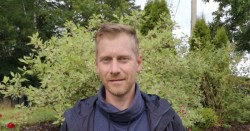
Interviewer: Scott Douglas Jacobsen
Numbering: Issue 29.A, Idea: Outliers & Outsiders (24)
Place of Publication: Langley, British Columbia, Canada
Title: In-Sight: Independent Interview-Based Journal
Web Domain: http://www.in-sightpublishing.com
Individual Publication Date: March 15, 2022
Issue Publication Date: May 1, 2022
Name of Publisher: In-Sight Publishing
Frequency: Three Times Per Year
Words: 6,487
ISSN 2369-6885
Abstract
Tor Arne Jørgensen is a member of 50+ high IQ societies, including World Genius Directory, NOUS High IQ Society, 6N High IQ Society just to name a few. He has several IQ scores above 160+ sd15 among high range tests like Gift/Gene Verbal, Gift/Gene Numerical of Iakovos Koukas and Lexiq of Soulios. Tor Arne was also in 2019, nominated for the World Genius Directory 2019 Genius of the Year – Europe. He is the only Norwegian to ever have achieved this honor. He has also been a contributor to the Genius Journal Logicon, in addition to being the creater of toriqtests.com, where he is the designer of now eleven HR-tests of both verbal/numerical variant. His further interests are related to intelligence, creativity, education developing regarding gifted students. Tor Arne has an bachelor`s degree in history and a degree in Practical education, he works as a teacher within the following subjects: History, Religion, and Social Studies. He discusses: one of the more favourite geniuses; an enigmatic and a puzzling character; the source of the myth as an artist first rather than a natural philosopher and engineer; noteworthy quirks of behaviour and personal taste; trends; heretical minds; religion; his lack of religion; gods make the most sense; gods make the least sense; religious denomination within a religion, seems the most reasonable, plausible, and balanced; a belief in God; faith justified; faith not justified; the terms “faith” and “religion” conflated; despised throughout the world; the best argument for God; the best argument against God; where one is born, for the most part, determine, largely, one’s belief in a particular religion rather than another; the obsession of religion with women’s bodies; religions make only or mostly men leaders; science and religion; the greatest genius in history; the good of religion; the nature of religious community; an interview with a pastor; long chats with religious community leaders; the different major world religions; demographic advantage for the rest of the 21st century; the Norwegian take on religion and religious community; thoughts on the future of religious evolution; evolution via natural selection such a terrible bane for religious ideology; and, Intelligence Design proponents and Creationists.
Keywords: genius, intelligence, Leonardo Da Vinci, Tor Arne Jørgensen.
Conversation with Tor Arne Jørgensen on Leonardo Da Vinci: 2019 Genius of the Year – Europe, World Genius Directory (6)
*Please see the references, footnotes, and citations, after the interview, respectively.*
Scott Douglas Jacobsen: Leonardo Da Vinci, in experience of interviewing a decent number of individuals of the high-IQ communities, is consistently ranked among the favourite geniuses of the communities. He seems to have made a deep impression on them. Which raises some questions for yourself, as you’re a growing member of these communities, as a member of more than 50 high-IQ societies, is Da Vinci one of the more favourite geniuses in history for you?
Tor Arne Jørgensen[1],[2]*: The answers present it selves with is resounding yes, by the resolute effort he made to meet his nascent and at most pure sense of curiosity about how the world around him worked. That his legacy perceived as something very distinctive and exceptional becomes for me a desire to learn more about the life of this very special man. Will also add to the fact of carrying the seal even with a promoted awe at its way of self being, whereby expressions of one’s inherent disposition are not obscured, but in fact are parade through the streets of medieval Florence with great sense of pride in a time when narrow-minded prejudices, persecutions further by several acts of terrorism due to church and their tunnel vision views of colorful diversity among men.
The Church’s normal reply in most cases in accordance with their own views as to uphold their interpretation of “high moral standard”, was to deploy its league of death dealers to deliver the lords message of righteousness to the unholiest of men. The defiance shown by Leonardo and the likes of him, the fearlessness, the resistance, and unwavering courage at a time when difference was not accepted back then and still replies today is nothing short of impressive, all credit due to Leonardo the character, the man and what he stood for and believed in, is a designation of the highest dignity even overshadowed by its inherent and shining genius, a true persona indeed. This is for me perhaps the most admirable trait and legacy of Leonardo to be honor through the ages.
Jacobsen: Famously, Da Vinci is seen as an enigmatic and a puzzling character, though recognized through inventions and artistic works. One myth to bust is the fact of having less interest in art and more intrigue in – what is now called – science and technology. The art was a series of techniques developed to study geography, anatomy, flight, and the like. What seems like the purpose of this technique for Da Vinci, personally?
Jørgensen: Leonardo’s notes are based on what is to be found in information, made in the sense of creating an accepted overview of his surroundings in the eternal search to improve his horizons of understanding presented in his paintings and more … these notes are massive and noted in many of his sketchbooks, better known as zibaldone. More than 7,200 pages have been found, but it is believed to be at least double that. The notes that Leonardo made are referred to as; ” the most astonishing testament to the powers of human observation and imagination ever set down on paper.”
Leonardo’s codex collections are varied, impressive, and diverse in its fullest sense. His accumulation of notes was further established, it was a kind of “work in progress”, whereas changing or improvement of previous thought understanding, were improved upon on or deviated from all together, this done in order of being able to fixate on a more innovative approach to be used as a more practical form of understanding. He paved the way as to pass on further the conceptual understanding of our pictorial views, this was due to his lack of mathematical understanding, as Leonardo saw pattern formations to a much greater degree than through understanding of fundamental perceptions through mathematical calculations.
The same can be said about his understanding of written language of Latin, which he also did not achieve to the extent he himself wanted. Seeing patterns in all movements, which one can add that he studied people’s approach, conversation with each other, those of normal hearing and the hearing impaired, namely the deaf, Leonardo who found it extra exciting to observe their sign language, and guidance of understanding each other’s conversational appearances. That to be surprised to such an extent to give oneself completely to the elements surrounding him to see into what I experience as the future perlatives, as we back then and still now today allow ourselves to be amazed at his innovative techniques. We must be able to study, learn, admire, seek, and explore what is facilitated by nature and her fundamentals, then and only then can one truly discover one’s own preconception believes of the wondering surroundings and precise optimal perception of the known universe.
Jacobsen: What seems like the source of the myth as an artist first rather than a natural philosopher and engineer?
Jørgensen: As for the source of his works, it probably lies in the fact that he defended with great effort on his part what it meant to create a masterpiece. Where color, shading, use of light to create contrasts, and removal of lines used to create the outline by and for the contours, also by incorporation of so many different elements from sculptural constructs, scientific discoveries in addition of the geometric figurations of mathematics to create spatial obscurities. Leonardo mentions in several texts that art moves across so many more layers than mathematical calculations will allowed for compilation with regards to geometrical movements, and or sculptural constructs. Fractural summarized by so many more considerations are needed in order of producing a masterpiece, then any scientific endeavor would ever portray, nor any calculating terms against a preconception of universal laws.
Leonardo and his obsession with experimenting to better understand the world around him was motivated by being able to express himself in a way that could last for posterity and present himself in the everlasting spotlight in his quest for world fame.
The fact that painting at that time was not seen as something that would necessarily secure you money and fame, one had to shift focus in the pursuit of easier income by weapon encroachments for a more prosperous living environment, as an eternal tangle of frills with a clear goal. Will finally point out that Leonardo was not known for signing his works, he spent a lot of time on his artworks, and most were not completed. If then the search for fame was so great, why not make yourself known for posterity by signing your art. Or was that exactly what he did, when he drew himself into most of his compositions, perhaps some of the most famous ones, but left his true identity out…
Jacobsen: He wore purple tunics, wrote left-handed, wrote backwards, and may have been either asexual or homosexual, or pansexual or queer, hung out with mostly men and had a trusted young male friend, Salai. What seems like some other noteworthy quirks of behaviour and personal taste of him to you?
Jørgensen: Firstly, some info about the boy Gian Giacomo Caprotti or as he was referred to by Leonardo as Salai or “Little Devil.” Salai in this case came to Leonardo when he was about 10 years old, Leonardo at the time was about 38 years of age, the event took place in July 22, 1490. The relationship that was then to unfold moved over from being seen as firstly of a student, or apprentice, but this is mostly wrong.
The boy started as an assistant at first then later a companion, and eventually a lover at some point in time later on. Now to Leonardo and his other quirks, or extremities if one can call it that.
He wrote down everything he experienced in notebooks, it is mentioned in several texts that he had a pocket notebook with him that was small enough not to be a nuisance, this was used to write down what he experienced of the local community around him, he could bring home with him random people in order to observe them in normal conversations, whereupon there characteristics of their distinctive features appear in a humorous way which could then later be used as sketch drawings where humor, anger, and thoughtfulness was to be expressed. The way forward to create vivid moments, which can be equated today with taking pictures, where the 3-D effect is produced, every detail is recreated and put in its proper element even in its heyday, to make the image production so accurate as possible, was for Leonardo absolutely crucial, fueled by impression of manic behavior in his search of perfection.
Furthermore, his humor was widely acclaimed through his theatrical spectacles and promiscuous inventions in good company with those around him. There are also his slightly macabre aspects of dissecting dead people and various animals to better understand the human and animal anatomy in detail, this paved the way for groundbreaking work within anatomical knowledge, that is in some way still used today. This of course done so he better could depict his artwork more vividly, to better preform through creative artwork that seemed more alive, more lifelike.
Jacobsen: Some take some quotes out of a larger context of the views of Da Vinci, as if a religious person. He may have had – and seemed to have – deep naturalistically spiritual sentiments, moral convictions, and spelled out personal opinions about God and the soul in paragraphs. He was deeply doubtful of either. Similarly with another character in the history of times before intelligence measurement, William James Sidis, he was clear about personal atheism. These aren’t the majority of the opinions but stand out because of the oppressive circumstances or general views of the laity and the societal hierarchs of their times. Even Goethe may have went through spiritual and other circumstances, he, eventually, ended, more or less, what seemed like an atheist. Einstein considered the biblical texts “pretty childish.” These are the typical views one would gather from the world of theological debate without simply looking at the words rather than what people say about the words, the interpretations. Do you see these trends, too?
Jørgensen: Will in this subtask, if one can call it that, by fortify myself further in the same track to ensure a unifying preconception of the main character (Leonardo) life and work. If one is then going to turn towards the more religious aspect, and what known statures and thereby implications this had on Leonardo’s life and the work that he did, then one must take the following considerations, which in turn can be presented in a questioning range of possibilities, whereas critical conceptualities and fortified truths may crumble if even just a bit, and will probably appear at best as; (speculative observations bordering on heresy towards Christianity’s written truths and religious belief systems).
When one then goes ahead with this task and by that presents what concernments from what one knows in the degree of information is hereby then interpreted, and furthermore is then firstly and foremost to illuminate the following scale view of Leonardo and the supreme position of the Catholic Church according to homosexuality sat era. The era decreed is traced back to the Middle Ages, just before Leonardo returned from Milan to Florence in the late 15th century, I will now refer to a text excerpt from world renowned author Walter Isaacson and his bestseller book about Leonardo Da Vinci the following quote is marked as follows: “In 1494 a radical friar named Girolamo Savonarola had led a religious rebellion against the ruling Medici and instated a fundamentalist regime that imposed strict new laws against homosexuality, sodomy, and adultery.” (Walter Isaacson, Leonardo Da Vinci, p.300).
Now it should be said that a radical fundamentalist does not define the statutes of the Catholic Church per se, but the angles towards this type of “deviate» orientation are clearly consolidated in the Bible, which apply still to this day as well. I would then like to point out that the “elephant” in the room by reference to Leonardo’s orientation, his appearance, as he does not in any way try hide his orientation in the least either in characteristics, or general clothing style, nor who he appeared with point in term to Salai. Is it conceivable that Leonardo’s personal experience of what the church’s general attitude towards homosexuality did not go completely unnoticed? We must not forget Leonardo and his Loki prominent stature, and immense brilliant mind far ahead of his own time, probably the clear dominant intellect in the Western hemisphere at that time. The ecclesiastical council did not quite see from what I can understand, what Leonardo really brought forward to the table as to various works commissioned by the church. It is possible that the interpretation missed completely or at least partial based on the actual intention ambiguity visualized by beautiful and whimsical brushstrokes by the master artist himself.
That the church fathers interpreted the works of Leonardo as an agreed tribute to the biblical characters, for the intended purpose is to me almost a bit on the ridiculous side, no offence intended. With all due respect to the religious believers back then and through the ages, one will imagine that one’s own inherent motions and emotions would at some point materialize via some form of personal confliction through their expressional art in many cases across their professional commitments. I must extract a clear case according to the following painting by Leonardo. Virgin on the Rocks. Two versions were made, the first version which hangs today in the art museum in the Louvre Paris and the second version which hangs in London. The commissioning of the work was done as many know by the Confraternity of the Immaculate Conception.
If one then looks at the picture that hangs on the Louvre, ie the first version that was not completely accepted as a commissioned work, and had to be redone and what almost imposes itself on the testimonies studied, then one sees a prominent phallus, right behind the head of a Virgin Mary. This center stone is clearly and prominently shaped like what is just mentioned. In this case, I tried a small experiment when I asked my class as I I am a teacher of religion about the following artwork: “What do you see in this painting?” The answer that came back was 90% of the 10th grade pupils unanimously agreed with, and without me pointing out the obvious, that; the picture had an erotic twist clearly presented. So, it was concluded that yes, a rock formation of a major phallus was clearly visible in the painting. The question was asked again among my personal friends and colleges, and the same answer came back again. Also, there are several more cases where the artist indulges in their humorously funny elements at the expense of the blindness of the believers.
What then is meant by this, in a clear case about John the Baptist that was one of Leonardo’s most admirable figurants, the love he was shown in Leonardo’s paintings was not equated with Jesus nor Mary Magdalene This is due to the disagreements between John the Baptist and Jesus and more… So, it does not matter. Short Review, John the Baptist is said to have been arrested and later killed by losing his head, at the behest of King Herod. I must also add that Leonardo’s ultimate wish was to become famous beyond national borders at any cost. If one then looks further at the Shroud of Turin and the time around the 13th century, whereby the world’s most likely first photograph was taken, and where the separation of the head and body emerges clearly, with reference to the fate of John the Baptist with his beheading.
This image is supposed to be Jesus’ shroud in the aftermath of the well-known crucifixion, but the height of the cloth itself is measured at over 2 meters, which would then have made Jesus the foremost giant of all time, but which mysteriously does not appear in any biblical texts. Something that would of course have been noticed had that been the factual case. No, what is the most likely being displayed is not the body of our savior, but rather that of Leonardo himself. What I take for granted from what one sees and reads inn various written works is that Leonardo has managed to fool the whole world with his absolute masterpiece to portray himself as Jesus through ways of ecclesiastical statues, paintings and so on, thus secure eternal fame.
As he liked to paint himself into his own artworks, he visualizes him selves through his sketches and paintings as form of young, old, male, and female version. Will then finally point out that the most famous painting of all time the Mona Lisa, is probable self-portrait of a female expressive Leonardo, same as in the drawing of the Vitruvian Man in full scale. The desire to secure total fame for all eternity is in my opinion clearly accomplished, and I might add brilliantly executed, all credit to you Leonardo for your achievements and your contributions to the world.
Jacobsen: We see similar heretical minds considered singular-ish in their own eras. Those who would not be found throwing rocks at a wall, as in the Great Jamara; a wall representing Satan and intended as a practice to remind believers of the Devil’s efforts and to prevent believers from being led astray. Quote-mining is often done by individuals preaching for their interpretation of a sacred scripture. However, the opposite can be done, as suggested above. Hypatia said, “ All formal dogmatic religions are fallacious and must never be accepted by self-respecting persons as final.” Also, “Fables should be taught as fables, myths as myths, and miracles as poetic fantasies. To teach superstitions as truths is a most terrible thing. The child mind accepts and believes them, and only through great pain and perhaps tragedy can he be in after years relieved of them.” During a trial, it is reported that Bill Sidis was an atheist and did not – hilariously stated – believe in the “Big Boss of the Christians.” Goethe, by 1931, seemed highly skeptical of the supernatural or faith-based claims, stating, “I have found no confession of faith to which I could ally myself without reservation.” Da Vinci stated, repeatedly, similar sentiments, “When the followers and reciters of the works of others are compared to those who are inventors and interpreters between Nature and man, it is as though they are non-existent mirror images of some original. Given that it is only by chance that we are invested with the human form, I might think of them as being a herd of animals.” Again, “Along with the scholars, they despise the mathematical sciences, which are the only true sources of information about those things which they claim to know so much about. Instead, they talk about miracles and write about things that nobody could ever know, things that cannot be proven by any evidence in nature.” Once more, “Wherever there is no true science and no certainty of knowledge, there will be conflicting speculations and quarrels. However, whenever things are proven by scientific demonstration and known for certain, then all quarreling will cease. And if controversy should ever arise again, then our first conclusions must have been questionable.” Finally, “It seems to me that all studies are vain and full of errors unless they are based on experience and can be tested by experiment, in other words, they can be demonstrated to our senses. For if we are doubtful of what our senses perceive then how much more doubtful should we be of things that our senses cannot perceive, like the nature of God and the soul and other such things over which there are endless disputes and controversies.” So, these ideas of quote-mining seem silly, in the end, to me, and more indicative of the reasoning given, at times, by profound intellects, more than a proof, evidence, or neither, of some deity. What do you make of these particular cases listed above?
Jørgensen: One can in most cases argue against prudence as to the incomprehensible notion of content presented, where adaptation of that content should be place in order to create a more meaningful utterances for the neglected notion that is being formatted. We cannot forget that the origin must be consolidated in its natural environment, where tested through scientific explanations, cannot be taken out of its legitimate context. A mixed outcome to secure their beliefs neither -nor from must be confirmed fortitude, on this I agree of what emerges from scientific approaches in favor of their religious alter egos.
Jacobsen: What is religion to you? How do you teach this to school children?
Jørgensen: How to answer something that will not be swallowed up, is also not understood for the purpose for which it is intended. I tend to find that my own experience of what religion is or means to me, can hardly be explained in the context of not being experienced as an incantation of consideration for someone other than the creation itself.
One way I experience religion is to engage by seeking something beyond oneself in one sense or another, which one can then leave to be redeemed from one’s sins in whatever fundaments of time this may or may not have arisen, thus dictated against the texts there has its origin in a somewhat sinful state. Or perhaps look inward at oneself, where one’s own strength, creation, discovery of inner spirits, whereby one works to accept what can be experienced as load-bearing foundations for creative structures beyond. I prefer the latter, as the desired qualities which are then best sought are answered by searching inwardly towards one’s exalted spiritual status, as these have a self-observed quality in being more easily fulfilled in those for accusations whereas conceivable mundane.
To the other share questions about teaching students about the true nature and thereof characteristics by fourth fundamentals through personal experienced religion. Can it be answered more pruned than that of the historical element within the religious regime, that is what triggers my intentions.
What is then created by personal enthusiasm in my religion classes is the students’ reflective abilities of and about what is met by informants through teaching situational settings. But it should be said that the principle of neutrality of pure instructive structure where one’s own experiences should not be turned against a subject one’s will, has thus become a burden that is sometimes too heavy to bear.
Jacobsen: Are you religious? If so, in what sense? Or if not, why not?
Jørgensen: If one can describe oneself as a bearing force that cannot be defined, but which in a way can be worshiped in the hope of having their prayers answered in a very different sense, then the answer is yes, more so than that an abstract spiritual unity in the state of fulfilled ideological from shekels, whereby the outcome of prayer is as always absent with its presence in its all-state. No, I would rather seek towards inherent qualitative value where one can get a reply and receive some kind of factual sign, rather this then the alternative…
Jacobsen: What gods make the most sense to you?
Jørgensen: No God creates a sensible mindset in me, as one can rather say by which inherent identity may seem most likely to lean towards an abstract reason-based unity. The search from within is for me what seems to create correction towards a greater spectrum of truth than a sorry entanglement of spiritual eventualities.
Jacobsen: What gods make the least sense to you?
Jørgensen: Every worship of these false idols is to me a fallacy by their mere absent of tangible essence.
Jacobsen: What religion, in fact religious denomination within a religion, seems the most reasonable, plausible, and balanced to you?
Jørgensen: Which denominations that to me seems like the most likely balanced or probable today is probably none. The fact that religion-based thinking should be founded, where we should all submit all of our humanly faith over to a larger autonomous being, is for me by the very definition wrong. The only thing that can be said to have a touch of balanced intelligibility is what was practiced by tribal societies before mainly, whereby the earthly distributions and their naturally established anchors, formed the fundamental basis in most cases of worshiping.
Jacobsen: Some argue for a need for a belief in God. Others argue for a psychological propensity for the creation of many gods, as in animistic gods. Do these claims seem evidenced to you, reasonable to you?
Jørgensen: Thinking that for most people, seeking beyond themselves and leaving their intentions to a type of false idol, where they can seek understanding, awe, comfort, and security becomes quite clear to me. We live in a chaotic society. The question of “are alone in the universe”, what is the true basis for our existence? Why are we, what is our purpose I life, etc. …? This loneliness or lack of understanding for us being created, can easily be applied to the fact that we are specially chosen to serve some tasks given to us by a higher benign being, as I see it, the obvious underlying intent of eternal emotional slavery in one sense or another. What is then more understandable than searching beyond what nature has assumed, where our understanding ends, and we of course seek towards the supernatural realm in the eternal search for an account of one’s own existence, a final answer to the all-consuming question of WHY?
Jacobsen: When is faith justified?
Jørgensen: Faith depends on seeking comfort when there is no comfort to be found, I choose to find comfort not to lift one’s own values before a divine figure, but for oneself. To stand to look at oneself in the mirror and find one’s values and see that this is good. That your inherently inviolable values make you proud of yourself and your actions, they are both a reflection of the inherent transcending being and are justified as such.
Jacobsen: When is faith not justified?
Jørgensen: Now a fort can seem harsh against a huge ecclesiastical movement. “Faith can move mountains”, as the saying goes. Further that faith will prevail in the end is for me in these times of war in Europe and has been displayed up through the ages across the globe, that considering all the suffering that mankind has experienced, for me the belief in an almighty good God, whereby a single intervention from the Almighty would have stopped all the evil that takes place.
The fact that God’s will happens for a reason, such as the fact that, if something good happens, it is a miracle through the will of the almighty God, but if something terrible happens, then God works in mysterious ways. To me, the term of a benign Almighty God, in which we should all praise by his mere kindness to all mankind. His goodness is portrayed regardless. In the film End of days from 1999, where it is said by the antichrist played by Gabriel Byrne to the retired policeman Jericho played by Arnold Schwarzenegger, that “God had a fantastic PR agent”, I must reveal that I agree with what was presented here in his statement. So, to conclude I will say, that for me faith is in most cases is not justified in any sense.
Jacobsen: Why are the terms “faith” and “religion” conflated?
Jørgensen: To think of faith and religion as two polarized entities in which a natural bond does not exist, falls on its own unreasonableness. This will not come as a shock to the most people, where one follows the other, or rather the one cannot exist without the other, they exist in an addictive relationship, like some similar notion of Yin and Yang.
Jacobsen: Everyone has a right to freedom of belief, expression, and religion. However, not all are treated equally. Why are Muslims and, particularly atheists, so despised throughout the world? I assume the reasons are both similar at some points and dissimilar at others.
Jørgensen: Going against generally accepted norms is probably always seen as disgraceful, if one looks back in time, when people who opposed the ecclesiastical communities, or as Leonardo Da Vinci had a different idea of the dogmatic foundations of the time, where persecutions were carried out to a great extent. Creates emotions even today, where ridicule, expulsion, inflicting shame, and intimidation propaganda such as “you will end up in hell if you do not turn towards God, even in today’s society are very real factor of retribution.
This forms much of the basis for not daring to- speak out, though it should be said that we are now experiencing a greater acceptance of the expression of different opinions, where much of the dogmatic returns are not as powerful as before, at least not executive in their practice to the same degree as now. You can actually survive after presenting your counter-perceptions towards the church, and not be burned at the stake or worse …
Jacobsen: What seems like the best argument for God?
Jørgensen: Big brother syndrome, or a fatherly figure that will take care of you in some way. This abstract being is for many an anchor point that gives the majority of people around the world a purpose in life, someone to confine in, to seek shelter in, a kind of safe haven.
Jacobsen: What seems like the best argument against God?
Jørgensen: In short, believe in your own powers, trust yourself, trust that you are born without sin, and that you are born perfect as nature intended. You are strong as a self-governing being, you do not need to seek outwardly to some kind of greater entity for acceptance, or approval, you are born with these qualities. Believe in yourself, and thus pray to yourself, only then will great things happen as you would like them to.
Jacobsen: Why does where one is born, for the most part, determine, largely, one’s belief in a particular religion rather than another?
Jørgensen: In short, the social structures determine which way the religious compass directs us.
Jacobsen: What is the obsession of religion with women’s bodies?
Jørgensen: What is described in what a woman’s body is, Jesus is portrayed as thin and muscular, but the woman here in this case is portrayed as a little fat, where gluttony has its distinct origin. Otherwise, in more general terms, the woman is seen as the driving force, where innocence and piety have clearly emerged.
Jacobsen: Why do most religions make only or mostly men leaders?
Jørgensen: Reasoned in the beginning with the distinction that was put out by Saint Peter him selves against the potential and actual heir Mary Magdalene or rather “Apostle of apostles”. The feud between her and Saint Peter is recorded and fortified in the eternal holy texts, where Jesus himself had to protect Mary from Peter’s wrath. Had the religious outcome been reversed as to gender, where Mary was selected as the natural choice to pass on the gospel of Jesus, then the male-dominated expression would probably have been completely different. High-level politics has created the religious layer that has been accepted as right and proper in everyone’s eyes, but should this be taken as a actual fact or not, that may be up for a serious debate on what gender was the rightful successor in passing on the gospel to all mankind.
Jacobsen: Are science and religion, ultimately, irreconcilable or reconcilable, e.g., via their epistemologies and derived ontologies?
Jørgensen: Leaning against the scientific justifications, where reality is clearly rooted in both the epistemological and the ontological origins, this cannot be said to the same degree for me, as my views of concern regarding the counterpart of religious and its reason for justification.
Jacobsen: Who do you regard as the greatest genius in history?
Jørgensen: A difficult choice to make, by the allusion that several candidates can easily be labeled as the world’s changing individuals, were influential qualities towards a common good are accelerated in the name of development. Since one can probably here in this round lead in the direction of what has been described here as a clear candidate, where the ability to see solution proposals not justified until five hundred years into the future in several cases, can probably and thus easily be presented here in perhaps the greatest prodigy that the world has ever seen by the amazing talents of the one and only Leonardo Da Vinci.
Jacobsen: What is the good of religion? I mean “the good” as in the Good, the positive, the upbeat, the constructive, and so on.
Jorgensen: Religious communities’ main purpose as I see it, is by gathering people from all walks of life in a shared form of communion. They get an experience of sharing something very special together. It forms the basis for affiliation, a sense of belonging without the consequences of social division, regarding the working, middle and nobility classes. Everyone has a common understanding of togetherness. This is probably as much as I can bear to muster up of positivity towards the religious community.
Jacobsen: What is the nature of religious community?
Jorgensen: As I see it, separation, from the rest, a them and us, them who are looked upon as the chosen ones that will be allowed to enter paradise through salvation by the lord all mighty, and we the rest also recognized as the enlighten ones, those who are dammed for our heretical opinions for all time where the next stop is simply put, purgatory and then hell.
Jacobsen: I recall an interview with a pastor a few years ago. He brought to mind something about the nature of a church, or any place of worship, e.g., mosque, synagogue, temple, cathedral, etc. It’s not an empty volume. It’s an idea. It’s a place in which communally recognized dogmas are renewed, reinvigorated, and brought together under a common ideological framework. Often, superstitious, illogical, anti-scientific, and nonsensical, but, in a way; a certain nobility to the entire endeavour – something with grandeur, while sweet and reassuring: a comfort. Do you find the same or different, or similar?
Jorgensen: For those concerned, and by that, I mean those who finds a need for affirmation of the self through recognition, togetherness, understanding, comfort, and assurance that their imprint in this world is affirmed and further considered by the spiritual world as a sure one-way ticket into the hinterland. Furthermore, my impression is, well, a hesitant affirmation, furthered by the proviso of common denominators.
Jacobsen: Have you ever had long chats with religious community leaders?
Jorgensen: During my time as a student of religious history, and with my didactic specialization also within religion. I did meet many Christians that had a special personified relationship towards their religious beliefs and debated whether or not their foundations within their faith could be justified beyond what is referred to in various sacred texts. Duly intended as to how they came into their strong religious beliefs, and what they saw as the most fundamental reason for their personal inclinations towards their belief system. Furthermore, what do they think about scientific truths. Their reply was as ever unified notion of; that science has only so far confirmed what the Bible has always stated and will always state with reference to its factualizing texts about the universe and all its content etc.
Jacobsen: How do the different major world religions build community?
Jorgensen: There are many variations here, but requiting is done manly through different medium, religious gatherings, among other things. Furthermore, emphasis is placed on, as mentioned earlier, a “them and us”, where a promise of eternal life is promoted, in short, a sure way to paradise. This is just some of what is being done in order to requite new members to their distinct religious beliefs.
Jacobsen: What world religions seem to have the demographic advantage for the rest of the 21st century?
Jorgensen: Geographically, based on the standards that have carried the religious imprint that we are left with today, I see no religious section that has a clear advantage. The changes that may or may not come by way of demographic bliss will thus have the intended alteration, based solely through means of assimilation, based on the pragmatic rule. This is absolutely crucial for the religious imprints of the future.
In sum, the understanding of the dominant religious dogmas of the future will be incontrovertible to which religious directions that will have the most distinctive and thus effective control over its followers.
Jacobsen: What is the Norwegian take on religion and religious community?
Jorgensen: Stable downward trend, where more and more people see the real underlying intentions that we have been taught to follow blindly through fear of eternal damnation promoted by the church’s friendly nature or now more precisely its total absence of that claimed notion of righteous friendliness.
Jacobsen: Any thoughts on the future of religious evolution?
Jorgensen: The religious layer will in the long run diminish, or change into an alternative form, it has always had, since the time when the first humans fortified themselves to the earthly elements, or through religious sacrifice in order to appease the higher powers, by human sacrifice or animal sacrifice. Or as in later times whereupon one exalted oneself to the status of God-King like the pharaohs of old. As long as there are people on earth, religion will exist, but as mentioned, it will probably be diluted in the long run.
Jacobsen: Speaking of, why is evolution via natural selection such a terrible bane for religious ideology?
Jorgensen: Reason being is relatively simple, where the genesis narrative in the beginning of the Bible, so to speak, appears as pure fabrication, against its counterpart relation to what is factualized according to Darwinist mindset. That is, what can factually be proven scientifically. The fact that our total existence does not exceed more than 6000+ years, is to me unfathomable, considering the mountain of evidence that indicates the complete opposite. In sum, the whole biblical fact notion would then be inevitably reduced to nothing more than pure nonsense, and possible resulting in a total collapse of all structural foundations on a global scale.
Jacobsen: Why are Intelligent Design proponents and Creationist so hell bent against it?
Jorgensen: As referred to above, the Bible for one loses all credibility, which in turn can lead to a total collapse regarding the ecclesiastical commonwealth. The religious conglomerates are not interested in losing their mighty and clammy hands over their blind subjects, where high politics governed through lust for power and wealth are at stake. The question is how much longer can this misleading policy be allowed to continue before the world finally wakes up?!
Footnotes
[1] Tor Arne Jørgensen is a member of 50+ high IQ societies.
[2] Individual Publication Date: March 15, 2022: http://www.in-sightpublishing.com/jorgensen-6; Full Issue Publication Date: May 1, 2022: https://in-sightpublishing.com/insight-issues/.
*High range testing (HRT) should be taken with honest skepticism grounded in the limited empirical development of the field at present, even in spite of honest and sincere efforts. If a higher general intelligence score, then the greater the variability in, and margin of error in, the general intelligence scores because of the greater rarity in the population.
Citations
American Medical Association (AMA): Jacobsen S. Conversation with Tor Arne Jørgensen on Leonardo Da Vinci: 2019 Genius of the Year – Europe, World Genius Directory (6)[Online]. March 2022; 29(A). Available from: http://www.in-sightpublishing.com/jorgensen-6.
American Psychological Association (APA, 6th Edition, 2010): Jacobsen, S.D. (2022, March 15). Conversation with Tor Arne Jørgensen on Leonardo Da Vinci: 2019 Genius of the Year – Europe, World Genius Directory (6). Retrieved from http://www.in-sightpublishing.com/jorgensen-6.
Brazilian National Standards (ABNT): JACOBSEN, S. Conversation with Tor Arne Jørgensen on Leonardo Da Vinci: 2019 Genius of the Year – Europe, World Genius Directory (6). In-Sight: Independent Interview-Based Journal. 29.A, March. 2022. <http://www.in-sightpublishing.com/jorgensen-6>.
Chicago/Turabian, Author-Date (16th Edition): Jacobsen, Scott. 2022. “Conversation with Tor Arne Jørgensen on Leonardo Da Vinci: 2019 Genius of the Year – Europe, World Genius Directory (6).” In-Sight: Independent Interview-Based Journal. 29.A. http://www.in-sightpublishing.com/jorgensen-6.
Chicago/Turabian, Humanities (16th Edition): Jacobsen, Scott “Conversation with Tor Arne Jørgensen on Leonardo Da Vinci: 2019 Genius of the Year – Europe, World Genius Directory (6).” In-Sight: Independent Interview-Based Journal. 29.A (March 2022). http://www.in-sightpublishing.com/jorgensen-6.
Harvard: Jacobsen, S. 2022, ‘Conversation with Tor Arne Jørgensen on Leonardo Da Vinci: 2019 Genius of the Year – Europe, World Genius Directory (6)’, In-Sight: Independent Interview-Based Journal, vol. 29.A. Available from: <http://www.in-sightpublishing.com/jorgensen-6>.
Harvard, Australian: Jacobsen, S. 2022, ‘Conversation with Tor Arne Jørgensen on Leonardo Da Vinci: 2019 Genius of the Year – Europe, World Genius Directory (6)’, In-Sight: Independent Interview-Based Journal, vol. 29.A., http://www.in-sightpublishing.com/jorgensen-6.
Modern Language Association (MLA, 7th Edition, 2009): Scott D. Jacobsen. “Conversation with Tor Arne Jørgensen on Leonardo Da Vinci: 2019 Genius of the Year – Europe, World Genius Directory (6).” In-Sight: Independent Interview-Based Journal 29.A (2022): March. 2022. Web. <http://www.in-sightpublishing.com/jorgensen-6>.
Vancouver/ICMJE: Jacobsen S. Conversation with Tor Arne Jørgensen on Leonardo Da Vinci: 2019 Genius of the Year – Europe, World Genius Directory (6)[Internet]. (2022, March 29(A). Available from: http://www.in-sightpublishing.com/jorgensen-6.
License
In-Sight Publishing by Scott Douglas Jacobsen is licensed under a Creative Commons Attribution-NonCommercial-NoDerivatives 4.0 International License.
Based on a work at www.in-sightpublishing.com.
Copyright
© Scott Douglas Jacobsen and In-Sight Publishing 2012–2022. Unauthorized use and/or duplication of this material without express and written permission from this site’s author and/or owner is strictly prohibited. Excerpts and links March be used, provided that full and clear credit is given to Scott Douglas Jacobsen, and In-Sight Publishing and In-Sight: Independent Interview-Based Journal with appropriate and specific direction to the original content. All interviewees and authors co-copyright their material and can disseminate for their independent purposes.
Share this:

Interviewer: Scott Douglas Jacobsen
Numbering: Issue 29.D, Idea: Outliers & Outsiders (24)
Place of Publication: Langley, British Columbia, Canada
Title: In-Sight: Independent Interview-Based Journal
Web Domain: http://www.in-sightjournal.com
Individual Publication Date: March 15, 2022
Issue Publication Date: May 1, 2022
Name of Publisher: In-Sight Publishing
Frequency: Three Times Per Year
Words: 1,077
ISSN 2369-6885
Abstract
Chris Cole is a longstanding member of the Mega Society. Richard May is a longstanding member of the Mega Society and Co-Editor of Noesis: The Journal of the Mega Society. Rick Rosner is a longstanding member of the Mega Society and a former editor of Noesis: The Journal of the Mega Society. They discuss: I.Q.; fake I.Q. and real I.Q.; more reliable and valid I.Q. ranges; robust, legitimate tests; and the status of measuring I.Q. scores above 4-sigma.
Keywords: Chris Cole, debunking, I.Q., intelligence, Mega Society, Richard May, Rick Rosner.
Debunking I.Q. Claims Discussion with Chris Cole, Richard May, and Rick Rosner: Member, Mega Society; Co-Editor, “Noesis: The Journal of the Mega Society”; Member, Mega Society (1)
*Please see the references, footnotes, and citations, after the interview, respectively.*
Scott Douglas Jacobsen: Today, as this is a group discussion with three longstanding members of the Mega Society, the focus is Intelligence Quotient or I.Q., particularly debunking claims. What is I.Q. truly a measure of, at this point?
Chris Cole[1]*: I.Q. is an attempt to measure general intelligence, which is analogous to the power of a computer. There is an enormous literature on this subject. I’m going to take it as a given. It will be embarrassing if when we understand more about how the mind works it turns out to be a chimera.
Richard May[2]*: ‘g’, the general factor of intelligence, i.e., cognitive ability.
Rick Rosner[3][4]*: IQ as measured by a high-end test is somewhat different from IQ as measured by a regular range usually group-administered test. Regular range tests measure intelligence, the ability to focus for 45 minutes, and cultural literacy.
High-end tests can measure obsessiveness and attention to detail, a love of puzzle-solving, and in some cases desperation for validation.
Intelligence has changed over the past 20 years to include skill at using tech to get answers.
Jacobsen: What differentiates a fake I.Q. score claim from a real one, e.g., signals of a fraud or claims far above the norms of a test, etc.?
Cole: Since it is difficult to define, it is difficult to measure. There is a desire to claim intelligence which creates a motivation for “vanity” tests. In science we try to overcome such tendencies using experiments to disprove theories. It is a sign of trouble if a test is not carefully normed.
May: You can perhaps find examples on Facebook and the social media generally.
Rosner: Concerted efforts to lie are fairly rare – claiming a high IQ is not very helpful in life and may even hurt – there’s Stephen Hawking’s quote that “People who brag about their IQ are losers.” There are casual claims – BSers at parties, movie stars trying to seem smart. Geena Davis’s PR team used to mention that she’s Mensa. Sharon Stone is said to have a 150 IQ. James Woods 180. And these might be legit. But that’s to address a specific issue of not being considered a bimbo.
One big tell for IQ fraud is people claiming to have completed and gotten a high score on the Mega or Titan in 10 or 12 hours. Back in 1985, I spent more than 100 hours on the Mega. Now with the internet (and coding skills which I don’t have), I could’ve cut that time by 80%. But the internet has also invalidated the Mega – not only with all of the answers floating around out there but also with instantly solving the verbal analogies just by plugging them into Google.
Jacobsen: What ranges for I.Q. scores have the highest reliability and validity, typically?
Cole: The Langdon and Hoeflin tests are on the cutting edge of reliability and validity. The Mega Test, for example, has been normed several different ways. A group of us are working on a new test that is cheat resistant.
May: Scores with the highest reliability and validity are those closest to the mean on standard IQ tests. Hoeflin and Langdon’s tests are untimed power tests more suitable for measuring above average intelligence.
Jacobsen: What tests are considered the most robust, legitimate?
Cole: We have a problem now that several of the most carefully normed, such as the Langdon Adult Intelligence Test, the Mega Test, the Titan Test, the Ultra Test, and the Power Test have been spoiled.
May: Those of Hoeflin, Langdon and Wechsler.
Rosner: Hoeflin’s tests have been the most thoroughly revised and normed. His Mega Test was normed on more than 4,000 test takers. His test items are excellent. But his tests have been voided by the internet – too many easily found answers. The Mega was published in Omni magazine in 1985, I think, a decade before most people had the internet. You had to use actual physical dictionaries.
Today, I think Paul Cooijmans’ tests are the most legit high-end tests. Paul takes pleasure in bursting the bubbles of people who claim high IQs by offering stringent scoring and norming. Doing well on his tests takes much time and what he calls “associative horizon” – being able to come up with dozens of ideas to crack a tough item.
Jacobsen: What is the status of measuring I.Q. scores above 4-sigma – experimental high-range testing, in other words?
Cole: The Adaptive Test, which is a work in progress, is the cutting edge. Contact me if you want to work on it. [Ed. chris@questrel.com.]
May: Apparently measurement at the far-right tail of intelligence has improved astronomically. I mistakenly thought that determining and measuring IQ was quite difficult even at the 4 sigma level. The Mega Society used to have a statement either at the beginning of Noesis or on our website or both, I think, indicating that we attempted to select members at the 4.75 sigma level, but selecting this rarity was experimental and quite difficult for many reasons. (Not exact wording.)
Today there is an IQ group which has apparently identified the 3 most intelligent individuals on planet Earth! This is quite an achievement in my view.
Since it is well known that the actual distribution of IQ-scores at the far-right tail does not conform to a Gaussian distribution, one has to assume that even if the ceiling of the IQ tests employed was sufficient (not exceeding that intended by the test developers) and the intercorrelation of the various tests at the highest levels was known and that the correct Kuder-Richardson (?) formulas were applied to concatenate the valid IQ scores, that the entire population of planet Earth was actually tested by or on behalf of this group. Since various planetary subgroups of different sizes could have differing means, standard deviations and distribution shapes, a weighted average would need to be taken in order to determine the statistical properties of the global IQ distribution for planet Earth.
This is an unparalleled achievement in psychometric history. I personally don’t know anyone tested for this project in order to determine the actual shape of the global distribution of IQ-scores at the far-right tail, but I assume this is just a minor sampling error. Presumably you and your friends and neighbors have all been tested. Since the three most intelligent individuals on planet Earth have now been identified in fact, the correct protocols were undoubtedly used. If only Lewis Terman were alive now! — LINK here.
Footnotes
[1] Chris Cole is a longstanding member of the Mega Society.
[2] Richard May (“May-Tzu”/“MayTzu”/“Mayzi”) is a Member of the Mega Society based on a qualifying score on the Mega Test (before 1995) prior to the compromise of the Mega Test and Co-Editor of Noesis: The Journal of the Mega Society. In self-description, May states: “Not even forgotten in the cosmic microwave background (CMB), I’m an Amish yuppie, born near the rarified regions of Laputa, then and often, above suburban Boston. I’ve done occasional consulting and frequent Sisyphean shlepping. Kafka and Munch have been my therapists and allies. Occasionally I’ve strived to descend from the mists to attain the mythic orientation known as having one’s feet upon the Earth. An ailurophile and a cerebrotonic ectomorph, I write for beings which do not, and never will, exist — writings for no one. I’ve been awarded an M.A. degree, mirabile dictu, in the humanities/philosophy, and U.S. patent for a board game of possible interest to extraterrestrials. I’m a member of the Mega Society, the Omega Society and formerly of Mensa. I’m the founder of the Exa Society, the transfinite Aleph-3 Society and of the renowned Laputans Manqué. I’m a biographee in Who’s Who in the Brane World. My interests include the realization of the idea of humans as incomplete beings with the capacity to complete their own evolution by effecting a change in their being and consciousness. In a moment of presence to myself in inner silence, when I see Richard May’s non-being, ‘I’ am. You can meet me if you go to an empty room.” Some other resources include Stains Upon the Silence: something for no one, McGinnis Genealogy of Crown Point, New York: Hiram Porter McGinnis, Swines List, Solipsist Soliloquies, Board Game, Lulu blog, Memoir of a Non-Irish Non-Jew, and May-Tzu’s posterous.
[3] According to some semi-reputable sources gathered in a listing here, Rick G. Rosner may have among America’s, North America’s, and the world’s highest measured IQs at or above 190 (S.D. 15)/196 (S.D. 16) based on several high range test performances created by Christopher Harding, Jason Betts, Paul Cooijmans, and Ronald Hoeflin. He earned 12 years of college credit in less than a year and graduated with the equivalent of 8 majors. He has received 8 Writers Guild Awards and Emmy nominations, and was titled 2013 North American Genius of the Year by The World Genius Directory with the main “Genius” listing here.
He has written for Remote Control, Crank Yankers, The Man Show, The Emmys, The Grammys, and Jimmy Kimmel Live!. He worked as a bouncer, a nude art model, a roller-skating waiter, and a stripper. In a television commercial, Domino’s Pizza named him the “World’s Smartest Man.” The commercial was taken off the air after Subway sandwiches issued a cease-and-desist. He was named “Best Bouncer” in the Denver Area, Colorado, by Westwood Magazine.
Rosner spent much of the late Disco Era as an undercover high school student. In addition, he spent 25 years as a bar bouncer and American fake ID-catcher, and 25+ years as a stripper, and nearly 30 years as a writer for more than 2,500 hours of network television. Errol Morris featured Rosner in the interview series entitled First Person, where some of this history was covered by Morris. He came in second, or lost, on Jeopardy!, sued Who Wants to Be a Millionaire? over a flawed question and lost the lawsuit. He won one game and lost one game on Are You Smarter Than a Drunk Person? (He was drunk). Finally, he spent 37+ years working on a time-invariant variation of the Big Bang Theory.
Currently, Rosner sits tweeting in a bathrobe (winter) or a towel (summer). He lives in Los Angeles, California with his wife, dog, and goldfish. He and his wife have a daughter. You can send him money or questions at LanceVersusRick@Gmail.Com, or a direct message via Twitter, or find him on LinkedIn, or see him on YouTube.
[4] Individual Publication Date: March 15, 2022: http://www.in-sightpublishing.com/debunking-1; Full Issue Publication Date: May 1, 2022: https://in-sightjournal.com/insight-issues/.
*High range testing (HRT) should be taken with honest skepticism grounded in the limited empirical development of the field at present, even in spite of honest and sincere efforts. If a higher general intelligence score, then the greater the variability in, and margin of error in, the general intelligence scores because of the greater rarity in the population.
Citations
American Medical Association (AMA): Jacobsen S. Debunking I.Q. Claims Discussion with Chris Cole, Richard May, and Rick Rosner: Member, Mega Society; Co-Editor, “Noesis: The Journal of the Mega Society”; Member, Mega Society (1)[Online]. March 2022; 29(D). Available from: http://www.in-sightpublishing.com/debunking-1.
American Psychological Association (APA, 6th Edition, 2010): Jacobsen, S.D. (2022, March 15). Debunking I.Q. Claims Discussion with Chris Cole, Richard May, and Rick Rosner: Member, Mega Society; Co-Editor, “Noesis: The Journal of the Mega Society”; Member, Mega Society (1). Retrieved from http://www.in-sightpublishing.com/debunking-1.
Brazilian National Standards (ABNT): JACOBSEN, S. Debunking I.Q. Claims Discussion with Chris Cole, Richard May, and Rick Rosner: Member, Mega Society; Co-Editor, “Noesis: The Journal of the Mega Society”; Member, Mega Society (1). In-Sight: Independent Interview-Based Journal. 29.D, March. 2022. <http://www.in-sightpublishing.com/debunking-1>.
Chicago/Turabian, Author-Date (16th Edition): Jacobsen, Scott. 2022. “Debunking I.Q. Claims Discussion with Chris Cole, Richard May, and Rick Rosner: Member, Mega Society; Co-Editor, “Noesis: The Journal of the Mega Society”; Member, Mega Society (1).” In-Sight: Independent Interview-Based Journal. 29.D. http://www.in-sightpublishing.com/debunking-1.
Chicago/Turabian, Humanities (16th Edition): Jacobsen, Scott “Debunking I.Q. Claims Discussion with Chris Cole, Richard May, and Rick Rosner: Member, Mega Society; Co-Editor, “Noesis: The Journal of the Mega Society”; Member, Mega Society (1).” In-Sight: Independent Interview-Based Journal. 29.D (March 2022). http://www.in-sightpublishing.com/debunking-1.
Harvard: Jacobsen, S. 2022, ‘Debunking I.Q. Claims Discussion with Chris Cole, Richard May, and Rick Rosner: Member, Mega Society; Co-Editor, “Noesis: The Journal of the Mega Society”; Member, Mega Society (1)’, In-Sight: Independent Interview-Based Journal, vol. 29.D. Available from: <http://www.in-sightpublishing.com/debunking-1>.
Harvard, Australian: Jacobsen, S. 2022, ‘Debunking I.Q. Claims Discussion with Chris Cole, Richard May, and Rick Rosner: Member, Mega Society; Co-Editor, “Noesis: The Journal of the Mega Society”; Member, Mega Society (1)’, In-Sight: Independent Interview-Based Journal, vol. 29.D., http://www.in-sightpublishing.com/debunking-1.
Modern Language Association (MLA, 7th Edition, 2009): Scott D. Jacobsen. “Debunking I.Q. Claims Discussion with Chris Cole, Richard May, and Rick Rosner: Member, Mega Society; Co-Editor, “Noesis: The Journal of the Mega Society”; Member, Mega Society (1).” In-Sight: Independent Interview-Based Journal 29.D (2022): March. 2022. Web. <http://www.in-sightpublishing.com/debunking-1>.
Vancouver/ICMJE: Jacobsen S. Debunking I.Q. Claims Discussion with Chris Cole, Richard May, and Rick Rosner: Member, Mega Society; Co-Editor, “Noesis: The Journal of the Mega Society”; Member, Mega Society (1)[Internet]. (2022, March 29(D). Available from: http://www.in-sightpublishing.com/debunking-1.
License
In-Sight Publishing by Scott Douglas Jacobsen is licensed under a Creative Commons Attribution-NonCommercial-NoDerivatives 4.0 International License.
Based on a work at www.in-sightjournal.com.
Copyright
© Scott Douglas Jacobsen and In-Sight Publishing 2012–2022. Unauthorized use and/or duplication of this material without express and written permission from this site’s author and/or owner is strictly prohibited. Excerpts and links March be used, provided that full and clear credit is given to Scott Douglas Jacobsen, and In-Sight Publishing and In-Sight: Independent Interview-Based Journal with appropriate and specific direction to the original content. All interviewees and authors co-copyright their material and can disseminate for their independent purposes.
Share this:
Author(s): Scott Douglas Jacobsen
Publication (Outlet/Website): La Petite Mort
Publication Date (yyyy/mm/dd): 2016/07/01
Scott Douglas Jacobsen works with various labs and groups, and part-time in landscaping
(lifting, mowing, and raking) and gardening (digging, planting, and weeding). He founded In-
Sight: Independent Interview-Based Journal and In-Sight Publishing.
Who are some people that are exemplars of this? With respect to some aspects of fashion in terms of Peru, and what makes it unique, there are also some aspects that make it unique. Who is, then, exporting Peruvian culture well? Who stands out to you?
When it comes to exporting Peruvian culture, I think Peru has a lot of ambassadors. They are not known internationally, but they do the work and get known abroad. They do it right. To mention a few, Meche Correa is a designer. One of the first designers that does the whole Peruvian from the Andes style with the colors and make it more classy and elegant and creative. She’s been working on that for 20 years. Now, she’s a well-respected designer, very well-known in Peru.
Internationally, I know her work has made it abroad and been appreciated. Her name is not internationally known. She has not made a super-breakthrough, but her work is good. For her, there are a lot of designers that with their work they are getting to be in in that position in places abroad.
For those people that have made that breakthrough in major houses and magazines that known them, they are not really designers, but photographers like Testino and Juana Burga. Testino is the main photographer for Vogue in the US. He has collaborated with a lot of major publications internationally. He was worked with Princess Diana, the royal engagement. He has made it big time internationally. He gives us this influence he has to push the image of Peru. He brought Vogue to do a special edition on Peruvian style. He did a shooting in Cusco and in Lima. He attracted international interest to the country. He even opened a museum with his work like a collection of all of his work.
For the opening, he brought Naomi Campbell. He invited his famous friends to come and see a bit of Lima. In his way, he is contributing to get the image of Peru better. On the other side, not as famous, but also way younger, there’s this model called Juana Burga. She must be 25 or 24. She is interesting.
Five year ago, ten years ago, models were the white kind of look – the beauty canon is towards white European type. The thing with Juana Burga is that she has the typical Peruvian face and style. Of course, she is tall and skinny as any model seen on the runway, but she has Peruvian features like dark skin and dark hair. The girl next door type; the girl next door in Peru type. (Laughs)
(Laughs)
She got selected and started doing runways in Spain, and then in New York, and then in France. She has participated in major runways for super-important fashion luxury houses, internationally.
Here there are other models, they have made it, of course, into some luxury runways, but she’s the one that has made it through. You will see her modelling for the major companies.
I think it is interesting because in Peru she would not have been appreciated, but, abroad, her type worked out. That also helps to better the vision people have of Peru abroad. Of course, there are a lot of ambassadors in the country. The more influence you have, or the more you’re known abroad, and if you use it to bring attention to the country, then so much the better.
License
In-Sight Publishing by Scott Douglas Jacobsen is licensed under a Creative Commons Attribution-NonCommercial-NoDerivatives 4.0 International License. Based on a work at www.in-sightjournal.com.
Copyright
© Scott Douglas Jacobsen and In-Sight Publishing 2012-2022. Unauthorized use and/or duplication of this material without express and written permission from this site’s author and/or owner is strictly prohibited. Excerpts and links may be used, provided that full and clear credit is given to Scott Douglas Jacobsen and In-Sight Publishing with appropriate and specific direction to the original content. All interviewees and authors co-copyright their material and may disseminate for their independent purposes.
Share this:
Author(s): Scott Douglas Jacobsen
Publication (Outlet/Website): La Petite Mort
Publication Date (yyyy/mm/dd): 2016/07/01
Scott Douglas Jacobsen works with various labs and groups, and part-time in landscaping
(lifting, mowing, and raking) and gardening (digging, planting, and weeding). He founded In-
Sight: Independent Interview-Based Journal and In-Sight Publishing.
Peruvian style and Peruvian fashion, every culture has a unique set of attributes that they are ‘bringing to the table’ with regards to fashion, or even with the fibre they use such as Peru using alpacas as far as I know – or at least that seems to be prominent in that fashion culture. What distinguishes Peruvian style and fashion within the culture apart from other ones?
There’s this thing when it comes to Peruvian style and that makes it apart from other styles. It is the mix of what we really have and what we really wear, and what we used to wear, historically, and the cliche that people have of us. It has all mixed together. So, it’s hard to explain. What we have as our national fibres, that we exploit a lot. I can say that industry has a real skill for cotton. It is a cotton country. We do not produce as well as Brazil, for instance. We are way smaller. In terms of quality of cotton, we are well placed internationally.
It is one of our export products. What we are most known for is the Pima cotton, that’s the softer quality. So, you’re going to see in the US more Pima cotton than others from Peru. You’re going to see a lot of production of brands like Guess, Tommy Hilfiger, and so on, using cotton. Of course, the alpaca fibre. I’m going to say alpaca is the one that is most known. They’re fibres used, historically, by the Inca, but this fibre was so soft and fine. It was limited to royalty. The peasants would never wear it.
We have kept this as a tradition through colonialization. Once we became a republic, we continued to work on it. We call it our flat products like a national product. Indeed, it is super soft and warm. The quality of the fibre will depend on if it is the first time they cut, what part of the body the wool comes from, and so on. For instance, I have decided to work only with baby alpaca, which is a name of a type of fibre. The one that comes from the back of the animal.
I am careful talking about this topic, this prototype. People might think about a real baby. It is the quality of the fibre! (Laughs) The Peruvian government and the Ministry of Commerce decided to work with these materials. So, we can be revisited and become a bit more modern.
They do contests for young designers to bring up collections entirely made out of cotton and alpaca. Why? Because when people think of Peruvians and alpacas, they think of the cliche of the Andean person with the Chullo. It is the name for the hat that covers the ears.
That, in Peru, is a chullo. I know that is something we wear in the mountains because it is cold in the winter. I am not going to deny it is part of our culture, but it is not entirely part of it. I mean, ponchos, of course, but Peruvians have been stereotyped to this style because it is strong and different. That’s why the government is trying to push designers to bring the fibres to a new life. It is to break into new markets.
Everybody likes the chullo. Everybody likes the poncho. However, the ethnic style market is going to be small. You will be limited to people that want to look ethnic. However, what I think
the ministry is trying to do is to push the boundaries is and say, “This can be fashionable today-to-day wear.” Other than that, I can say that even as Peruvians we have imperialized the whole
Inca heritage. I know that when I started my project, La Petite Mort, and I was explaining the project to other Peruvians.
They said, “You’re going to have Inca signs with Inca patterns.” I said, “Not necessarily, they might be of use at some point in one collection, but I’m not going to close the design to that.” They said, “You should know people abroad will love that.” I said, “Yes, of course, a share of the market will like it.” I try to keep open design-wise. I am super proud of the heritage contribution to us, but I do not want to close it. It would be as if Americans only designed things with stars and red and blue stripes.
License
In-Sight Publishing by Scott Douglas Jacobsen is licensed under a Creative Commons Attribution-NonCommercial-NoDerivatives 4.0 International License. Based on a work at www.in-sightjournal.com.
Copyright
© Scott Douglas Jacobsen and In-Sight Publishing 2012-2022. Unauthorized use and/or duplication of this material without express and written permission from this site’s author and/or owner is strictly prohibited. Excerpts and links may be used, provided that full and clear credit is given to Scott Douglas Jacobsen and In-Sight Publishing with appropriate and specific direction to the original content. All interviewees and authors co-copyright their material and may disseminate for their independent purposes.
Share this:
Author(s): Scott Douglas Jacobsen
Publication (Outlet/Website): La Petite Mort
Publication Date (yyyy/mm/dd): 2016/07/01
What is the minimum wage in Lima because everything is centralized? How does that relate to the fashion industry?
The minimum wage in Peru is 750 Soles. In American dollars, it would be around 122 dollars per month. The minimum wage in the country. How we receive this amount is going to change according to the city you live in? Outside of Lima can be very high quality and not expensive, you can get good education. You can transport inexpensively. In Lima, on that budget, it can be very tough. The city is gigantic. You can spend a lot of money to get around because there is not an integrated transport system. It is all particular services.
At the end, it ends up being expensive. Food and education are more expensive. That’s why there’s a lot of people that keep on living in the surrounding parts, the outskirts, of Lima. That’s where I have my workshop. They live far from the main districts of Lima. It is a long road away.
This is how Lima has been growing through the years. The main official district and the people moving for the jobs in the outskirts. That’s how the city has grown with no borders. It has spread all around.
Again, people working in these areas do not have a legal situation. They haven’t bought the area where their house is now. They come in and build around. They stay there for several years. If they stay there for 10 years, they can apply to legalize the space of their own. You don’t really pay for buying the space. So, there are ways to make your life with a small budget in Lima, but that means that you’re going to have access to education or health, or other things.
Again, how does this apply to the fashion industry? To be honest, what I know from the main industry in Lima that is concentrated in emporium. That is, it is a big cluster, where there is a lot of workshops. All of the services you can imagine. In terms of services and production, it might seem like paradise. You can find any type of fabric. You can any type of service. However, a lot of the people that work there. They’re not really legally hired.
So, the company that hired them for the day for that job that they get. They don’t have to pay the rights to the government on behalf of the employee, which allows them to get more money ‘on the low’ or ‘under the table.’ That’s why it is important to produce in mass quantities because the more that they produce, the more they get, because their profits are based on how much they make. That’s why this particular cluster – though it is super interesting to me – I couldn’t find a lot of suppliers to work with me. A lot of tine brands are going to have a hard time. When you’re starting, when you’re doing small prototypes, for good reason it’s hard, because their income depends on that.
There are some international discussions around the precarious – the global precariat – around those that live in uncertainty and do not know if they will have their livelihood, their income, their job, the next day. Does this seem to reflect it?
To be honest, I have a part of my family connected to this cluster. One of my cousins that worked for me. She worked for this industry. At the beginning, she would say that she would have to go early to produce an sewing machine pieces. They gather there. The people with jobs come there in the morning. They say, “We have this thing to do with these pieces.” You would get the job for the day. Once you’ve done it several times, they will know you. They will call you, directly. It is like a job date. When we started talking about the project, she had to participate in the sense that she would not have a fixed job.
She is one of these people that keeps the house together. Her mom and the family, she was always looking for something else like in sewing. Also, she does little repairs for the neighbours. You do what you can because you’re not legally part of any enterprise. That would be probably half of what happens because there’s another side that does work legally. They do work for a company.
They ask for a minimum level of quality. So, the companies that produce need to hire qualified people and keep them because they have a strong orders from abroad. The rest are the ones that produce for the local market that know that the local customer is not really looking for high quality, but for fashionable items at available or low prices. This production or market helps keep the situation of informality.
License
In-Sight Publishing by Scott Douglas Jacobsen is licensed under a Creative Commons Attribution-NonCommercial-NoDerivatives 4.0 International License. Based on a work at www.in-sightjournal.com.
Copyright
© Scott Douglas Jacobsen and In-Sight Publishing 2012-2022. Unauthorized use and/or duplication of this material without express and written permission from this site’s author and/or owner is strictly prohibited. Excerpts and links may be used, provided that full and clear credit is given to Scott Douglas Jacobsen and In-Sight Publishing with appropriate and specific direction to the original content. All interviewees and authors co-copyright their material and may disseminate for their independent purposes.
Share this:
Author(s): Scott Douglas Jacobsen
Publication (Outlet/Website): La Petite Mort
Publication Date (yyyy/mm/dd): 2016/07/01
The operational side can involve things like branding. What is branding? What defines branding to you? How do you incorporate it into your business? What are some issues with it for you?
Branding is a challenge because at the end communicating that bran is ethical, organic, and that is fair trade. It is a lot of content for the brands and not really the heart of the branding. The branding to me is communicating the soul of the brand. What’s the main idea around it? It is to get people to connect with it. You can have the branding message right.
This concept of mine is already heavy when it comes to the whole liberation of the mind with La Petite Mort and the ethical side. It is a whole lot of content that I am trying to put into a simple message. Then, I work through social networking because that’s how the world is moving nowadays. I try to translate the message more visually than with words because, to be honest, people are not much into reading.
I do complement the visual side with articles that I turn to posts on Twitter or the ones that I do with Trusted Clothes. (Laughs) All based around the idea: why do we need to get into ethical fashion? But then the branding is more the transmission of the feeling. I do my best, but we’re just building it.
We want it to be coherent in the networks. It has been a few months since we started, and I am learning. I have gotten a little bit of feedback. When people respond to it, sometimes it is clear. Sometimes, there is no response at all. I try to keep a line in my head. I have visuals in my room where I work. (Laughs)
License
In-Sight Publishing by Scott Douglas Jacobsen is licensed under a Creative Commons Attribution-NonCommercial-NoDerivatives 4.0 International License. Based on a work at www.in-sightjournal.com.
Copyright
© Scott Douglas Jacobsen and In-Sight Publishing 2012-2022. Unauthorized use and/or duplication of this material without express and written permission from this site’s author and/or owner is strictly prohibited. Excerpts and links may be used, provided that full and clear credit is given to Scott Douglas Jacobsen and In-Sight Publishing with appropriate and specific direction to the original content. All interviewees and authors co-copyright their material and may disseminate for their independent purposes.
Share this:
Author(s): Scott Douglas Jacobsen
Publication (Outlet/Website): La Petite Mort
Publication Date (yyyy/mm/dd): 2016/07/01
Let’s talk a little bit about processes and transparent production chains, what is a concern for you there? What should those that aren’t that area know?
I think when it comes to fair fashion, fair trade, whether it is eco-friendly or not. That is something that people care most about nowadays. People want to know what they’re buying is made in an ethical point of view in social terms. That nobody has been exploited. That people are getting paid at a decent rate. There’s no kids working on it.
There’s a perception that people are getting more into questioning it, or even not thinking about it. Most people probably don’t think about it. I think there’s a lot of excitement among people to make people ask, “Who is making my clothes?” That is where the movements started years ago.
People started to ask the brand. Who is behind all of this production? One of things we see in the advertising world is cool people, young kids, wearing very nice clothing, but then, what else? That is the last point.
When it comes to chains, and if we ask the big brands, and we have in the last three years, they cannot tell who. They might say in Europe or we’re doing it in Morocco. They don’t manage who is doing it. They are hiring and somebody they don’t know is doing it. They can’t really answer.
What I try to do with brand is try to keep on a very short chain, that’s why I went to meet all of the suppliers myself. I tried out several. I put a lot of time into it. That’s why when somebody asks me, “So, where do you do this?” I say, “Here in Lima, Peru.” I am trying to get the suppliers as my team.
When the small businesses start, you don’t have a production team. You do have different workshops. We get to establish a closer relationship. I help you; you help me. It is much more strong as a relationship. At the end, even though they are not part of the company, they are the stakeholders.
That could be extended into suppliers in Peru. How does that extend to supplier chains and your own work?
When it comes to suppliers in, for instance, raw materials, we talk a lot about support, farmer’s support. People who are basically the first contact with Earth and do the hardest work. When I talk to my suppliers, and I go to certified organic, I get to know the people working the fields. I do not get to see the people and check out their living conditions – if they’re decent.
At first, I couldn’t because I am a small buyer and have to rely on their certifications. When we are looking for suppliers, we make sure they have fair trade for cotton and all. When we worked with them more and more, they shared pictures and more of the news. It is a close relationship now.
At first, you don’t get to connect that much. I, personally, haven’t met them. I wish I could go back next year to some of the fields. That would be amazing! For the moment, I am trusting that they follow what our certification process is. That is when it comes to raw materials.
When it comes to suppliers, manufacturers, that’s another word and another world, but, in that case, I can go to see how they products are being made, how the farmers are living, and whatever they price they say I put it. I don’t bargain with them. I don’t think it’s fair, even a basic blouse. To me, to be honest, sewing is super difficult. (Laughs)
Some are not skilled, like me! I do appreciate the work on it, even if it is something basic.
License
In-Sight Publishing by Scott Douglas Jacobsen is licensed under a Creative Commons Attribution-NonCommercial-NoDerivatives 4.0 International License. Based on a work at www.in-sightjournal.com.
Copyright
© Scott Douglas Jacobsen and In-Sight Publishing 2012-2022. Unauthorized use and/or duplication of this material without express and written permission from this site’s author and/or owner is strictly prohibited. Excerpts and links may be used, provided that full and clear credit is given to Scott Douglas Jacobsen and In-Sight Publishing with appropriate and specific direction to the original content. All interviewees and authors co-copyright their material and may disseminate for their independent purposes.
Share this:
Author(s): Scott Douglas Jacobsen
Publication (Outlet/Website): La Petite Mort
Publication Date (yyyy/mm/dd): 2016/07/01
Let’s talk a little bit about your personal, familial, and educational background.
As far as education goes, I went to a bilingual school in my hometown. My hometown is this tiny, small city in Southern Peru, not far from Chile. Life is different there than in the capital, way different. Most Peruvians don’t even know where the city is located, but I do have to admit that it has its advantages growing up in small towns because you’ll get good education at lower prices. I had the chance to experience that.
My school had an agreement with an international organization. They send schools’ students abroad to finish high school. I was among them. When I was 15, I went to the US to finish high school over there. It was to experience the cultural change and improve my English. I have tried to keep it like that since, but it has been a while. Living in the US and going to a regular high school, you get to compare the movies, and entertainment, to real life.
I lived here with a host family. I learned a lot of American culture in fashion, eating, and education. I notice a lot of gaps in American education to be honest. I was happy with what they put in arts and sports, but, for the rest, I was like “meh.” I went back to Peru to finish my education because university, and otherwise, the US is expensive. I went back to Peru to study communications with a major and specialty in advertising. My initial idea was to develop a career in advertising entirely.
In terms of wanting that career in advertising with that experience, how did that lead into La Petite Mort?
It’s been a journey. In Peru, we finish high school at 16. It is hard when inquiring a 16 or 17- year-old to ask, “What do you want to do as a career?” In my head, at the time, it seemed obvious. The advertising industry seen in the US. It seemed like the world of creativity. I thought that I was going to get to be creative all day. I’m going to get to create and pitch ideas.
And then, you see the reality. It has these positions. Yes, you get to create, but it’s also very commercial. You have to learn that in the real world. I’ve been working for a few years because I’m not sure because, for example, in France it’s different. People after university do their Masters degree. In Peru, you get right to work, and then get a Masters. That led to fashion for me.
What about parental background and family life?
Nothing out of the ordinary. Mom and dad, brother and sister, I’m the youngest. I have a second set of parents. My American parents. I developed a strong relationship with the American family. I was the only child for their case. We bonded a lot. I always say that I have my Peruvian and American parents.
License
In-Sight Publishing by Scott Douglas Jacobsen is licensed under a Creative Commons Attribution-NonCommercial-NoDerivatives 4.0 International License. Based on a work at www.in-sightjournal.com.
Copyright
© Scott Douglas Jacobsen and In-Sight Publishing 2012-2022. Unauthorized use and/or duplication of this material without express and written permission from this site’s author and/or owner is strictly prohibited. Excerpts and links may be used, provided that full and clear credit is given to Scott Douglas Jacobsen and In-Sight Publishing with appropriate and specific direction to the original content. All interviewees and authors co-copyright their material and may disseminate for their independent purposes.
Share this:
Author(s): Scott Douglas Jacobsen
Publication (Outlet/Website): Sundari Creations
Publication Date (yyyy/mm/dd): 2016/07/25
If we look at a production line and supply chain, they can differ with the individual consumer, the company, or the set of companies, but your own company, Sundari Creations, might have lessons for those that are early in their business adventures. Do you have any advice for them?
I might not be the best to ask because I am continuing to learn myself. I think you should follow your heart and passion. If you enjoy doing something, it’s going to work out. Online presence is important.
But I’ve used PR to help me with that. We can’t do everything ourselves. There are people that are more skilled than us in certain areas. It is important to specialize. It depends on the individual.
People have lots of skills to ring to the table. It is important to come together and collaborate and help one another.
License
In-Sight Publishing by Scott Douglas Jacobsen is licensed under a Creative Commons Attribution-NonCommercial-NoDerivatives 4.0 International License. Based on a work at www.in-sightjournal.com.
Copyright
© Scott Douglas Jacobsen and In-Sight Publishing 2012-2022. Unauthorized use and/or duplication of this material without express and written permission from this site’s author and/or owner is strictly prohibited. Excerpts and links may be used, provided that full and clear credit is given to Scott Douglas Jacobsen and In-Sight Publishing with appropriate and specific direction to the original content. All interviewees and authors co-copyright their material and may disseminate for their independent purposes.
Share this:
Author(s): Scott Douglas Jacobsen
Publication (Outlet/Website): Sundari Creations
Publication Date (yyyy/mm/dd): 2016/07/25
You’ve touched on personal background, spiritual inclinations as it applies to art for you, in addition to some of the works and collections you have through Sundari Creations. What’s your philosophical outlook? In your own terminology, what’s your own spiritual perspective on things?
Look after the Earth, which means you need to be conscious with all of our actions, where what we’re buying and to make sure we are recycling everything, it is having the motivation necessary to preserve the Earth.
That way, we can take care of this Earth. So, my principles are to be in tune with the Earth and connected to it. It’s taking care of water and be thankful that we have fresh water. I don’t call myself a certain religion.
I practice yoga. I count blessings that we have like family, friends, and our health. For me, I believe it is all the same. It is all one spirit. It’s all God, spirit. It’s a very deep question and so much to add to it.
License
In-Sight Publishing by Scott Douglas Jacobsen is licensed under a Creative Commons Attribution-NonCommercial-NoDerivatives 4.0 International License. Based on a work at www.in-sightjournal.com.
Copyright
© Scott Douglas Jacobsen and In-Sight Publishing 2012-2022. Unauthorized use and/or duplication of this material without express and written permission from this site’s author and/or owner is strictly prohibited. Excerpts and links may be used, provided that full and clear credit is given to Scott Douglas Jacobsen and In-Sight Publishing with appropriate and specific direction to the original content. All interviewees and authors co-copyright their material and may disseminate for their independent purposes.
 In-Sight Publishing