Author(s): Scott Douglas Jacobsen
Publication (Outlet/Website): Medium (Personal)
Publication Date (yyyy/mm/dd): 2023/03/21
“Do you want to contribute anything to society?”: You don’t even know what classes I’m taking; yet, you presume to know character.
See “No response is necessary”.
License
In-Sight Publishing by Scott Douglas Jacobsen is licensed under a Creative Commons Attribution-NonCommercial-NoDerivatives 4.0 International License. Based on a work at www.in-sightpublishing.com.
Copyright
© Scott Douglas Jacobsen and In-Sight Publishing 2012-Present. Unauthorized use and/or duplication of this material without express and written permission from this site’s author and/or owner is strictly prohibited. Excerpts and links may be used, provided that full and clear credit is given to Scott Douglas Jacobsen and In-Sight Publishing with appropriate and specific direction to the original content. All interviewees and authors co-copyright their material and may disseminate for their independent purposes.
Share this:

Author(s): Scott Douglas Jacobsen
Publication (Outlet/Website): Medium (Personal)
Publication Date (yyyy/mm/dd): 2023/03/21
Men on a construction crew, women at a ranch: Majority men on site and majority women at facility are very similar; they end up having a lot of ‘work’ to do, standing around and talking.
See “Both can wear helmets, but not hearing protection”.
License
In-Sight Publishing by Scott Douglas Jacobsen is licensed under a Creative Commons Attribution-NonCommercial-NoDerivatives 4.0 International License. Based on a work at www.in-sightpublishing.com.
Copyright
© Scott Douglas Jacobsen and In-Sight Publishing 2012-Present. Unauthorized use and/or duplication of this material without express and written permission from this site’s author and/or owner is strictly prohibited. Excerpts and links may be used, provided that full and clear credit is given to Scott Douglas Jacobsen and In-Sight Publishing with appropriate and specific direction to the original content. All interviewees and authors co-copyright their material and may disseminate for their independent purposes.
Share this:
Author(s): Scott Douglas Jacobsen
Publication (Outlet/Website): Medium (Personal)
Publication Date (yyyy/mm/dd): 2023/03/21
“Then, man up!”: The modern empowered woman, unenlightened; I’d rather enlightened, because that is where true power arises.
See “Stereotyping men to the grave”.
License
In-Sight Publishing by Scott Douglas Jacobsen is licensed under a Creative Commons Attribution-NonCommercial-NoDerivatives 4.0 International License. Based on a work at www.in-sightpublishing.com.
Copyright
© Scott Douglas Jacobsen and In-Sight Publishing 2012-Present. Unauthorized use and/or duplication of this material without express and written permission from this site’s author and/or owner is strictly prohibited. Excerpts and links may be used, provided that full and clear credit is given to Scott Douglas Jacobsen and In-Sight Publishing with appropriate and specific direction to the original content. All interviewees and authors co-copyright their material and may disseminate for their independent purposes.
Share this:
Author(s): Scott Douglas Jacobsen
Publication (Outlet/Website): Medium (Personal)
Publication Date (yyyy/mm/dd): 2023/03/21
A bottle of wine in one sitting, barely over 5’1″: How much to dry ennui and tears, dear?
See “Another lost one”.
License
In-Sight Publishing by Scott Douglas Jacobsen is licensed under a Creative Commons Attribution-NonCommercial-NoDerivatives 4.0 International License. Based on a work at www.in-sightpublishing.com.
Copyright
© Scott Douglas Jacobsen and In-Sight Publishing 2012-Present. Unauthorized use and/or duplication of this material without express and written permission from this site’s author and/or owner is strictly prohibited. Excerpts and links may be used, provided that full and clear credit is given to Scott Douglas Jacobsen and In-Sight Publishing with appropriate and specific direction to the original content. All interviewees and authors co-copyright their material and may disseminate for their independent purposes.
Share this:
Author(s): Scott Douglas Jacobsen
Publication (Outlet/Website): Medium (Personal)
Publication Date (yyyy/mm/dd): 2023/03/21
I am a silver mirror: What you see in me, you see in yourself; and, the bloodless see nothing.
See “Reflection’s reflection in reflection”.
License
In-Sight Publishing by Scott Douglas Jacobsen is licensed under a Creative Commons Attribution-NonCommercial-NoDerivatives 4.0 International License. Based on a work at www.in-sightpublishing.com.
Copyright
© Scott Douglas Jacobsen and In-Sight Publishing 2012-Present. Unauthorized use and/or duplication of this material without express and written permission from this site’s author and/or owner is strictly prohibited. Excerpts and links may be used, provided that full and clear credit is given to Scott Douglas Jacobsen and In-Sight Publishing with appropriate and specific direction to the original content. All interviewees and authors co-copyright their material and may disseminate for their independent purposes.
Share this:
Author(s): Scott Douglas Jacobsen
Publication (Outlet/Website): Medium (Personal)
Publication Date (yyyy/mm/dd): 2023/03/21
“It’s so someone would love them”: A clinical psychologist instructor on why crack mothers who have crack babies knowing the status of the fetus and of the crack father’s (and their) addiction; love wounds can be the most ghastly and soul penetrating, leaving a crater to fill.
See “Love conquers not all, but some, as it consumes too”.
License
In-Sight Publishing by Scott Douglas Jacobsen is licensed under a Creative Commons Attribution-NonCommercial-NoDerivatives 4.0 International License. Based on a work at www.in-sightpublishing.com.
Copyright
© Scott Douglas Jacobsen and In-Sight Publishing 2012-Present. Unauthorized use and/or duplication of this material without express and written permission from this site’s author and/or owner is strictly prohibited. Excerpts and links may be used, provided that full and clear credit is given to Scott Douglas Jacobsen and In-Sight Publishing with appropriate and specific direction to the original content. All interviewees and authors co-copyright their material and may disseminate for their independent purposes.
Share this:
Author(s): Scott Douglas Jacobsen
Publication (Outlet/Website): Medium (Personal)
Publication Date (yyyy/mm/dd): 2023/03/21
The Camouflage Poem: ; .
See “”.
License
In-Sight Publishing by Scott Douglas Jacobsen is licensed under a Creative Commons Attribution-NonCommercial-NoDerivatives 4.0 International License. Based on a work at www.in-sightpublishing.com.
Copyright
© Scott Douglas Jacobsen and In-Sight Publishing 2012-Present. Unauthorized use and/or duplication of this material without express and written permission from this site’s author and/or owner is strictly prohibited. Excerpts and links may be used, provided that full and clear credit is given to Scott Douglas Jacobsen and In-Sight Publishing with appropriate and specific direction to the original content. All interviewees and authors co-copyright their material and may disseminate for their independent purposes.
Share this:
Author(s): Scott Douglas Jacobsen
Publication (Outlet/Website): Medium (Personal)
Publication Date (yyyy/mm/dd): 2023/03/21
Barn ladies are fucking tough: Tear an ACL or MCL, maybe; get on with the day, Jesus Christ.
See “Don’t limit a woman”.
License
In-Sight Publishing by Scott Douglas Jacobsen is licensed under a Creative Commons Attribution-NonCommercial-NoDerivatives 4.0 International License. Based on a work at www.in-sightpublishing.com.
Copyright
© Scott Douglas Jacobsen and In-Sight Publishing 2012-Present. Unauthorized use and/or duplication of this material without express and written permission from this site’s author and/or owner is strictly prohibited. Excerpts and links may be used, provided that full and clear credit is given to Scott Douglas Jacobsen and In-Sight Publishing with appropriate and specific direction to the original content. All interviewees and authors co-copyright their material and may disseminate for their independent purposes.
Share this:
Author(s): Scott Douglas Jacobsen
Publication (Outlet/Website): Medium (Personal)
Publication Date (yyyy/mm/dd): 2023/03/21
“She’s kind of a cow”: She’s 10, which is allowed; [Insert laughter].
See “Step-sisters brawl”.
License
In-Sight Publishing by Scott Douglas Jacobsen is licensed under a Creative Commons Attribution-NonCommercial-NoDerivatives 4.0 International License. Based on a work at www.in-sightpublishing.com.
Copyright
© Scott Douglas Jacobsen and In-Sight Publishing 2012-Present. Unauthorized use and/or duplication of this material without express and written permission from this site’s author and/or owner is strictly prohibited. Excerpts and links may be used, provided that full and clear credit is given to Scott Douglas Jacobsen and In-Sight Publishing with appropriate and specific direction to the original content. All interviewees and authors co-copyright their material and may disseminate for their independent purposes.
Share this:
Author(s): Scott Douglas Jacobsen
Publication (Outlet/Website): Medium (Personal)
Publication Date (yyyy/mm/dd): 2023/03/21
“Mmmm, I’m horny now”: To paraphrase Austin Powers; no, no, it’s not right when you’re drunk.
See “You could’ve shot your shot, Scott!”.
License
In-Sight Publishing by Scott Douglas Jacobsen is licensed under a Creative Commons Attribution-NonCommercial-NoDerivatives 4.0 International License. Based on a work at www.in-sightpublishing.com.
Copyright
© Scott Douglas Jacobsen and In-Sight Publishing 2012-Present. Unauthorized use and/or duplication of this material without express and written permission from this site’s author and/or owner is strictly prohibited. Excerpts and links may be used, provided that full and clear credit is given to Scott Douglas Jacobsen and In-Sight Publishing with appropriate and specific direction to the original content. All interviewees and authors co-copyright their material and may disseminate for their independent purposes.
Share this:
Author(s): Scott Douglas Jacobsen
Publication (Outlet/Website): Medium (Personal)
Publication Date (yyyy/mm/dd): 2023/03/21
If I: Demetri Martin’s confessional peak.
See “Art”.
License
In-Sight Publishing by Scott Douglas Jacobsen is licensed under a Creative Commons Attribution-NonCommercial-NoDerivatives 4.0 International License. Based on a work at www.in-sightpublishing.com.
Copyright
© Scott Douglas Jacobsen and In-Sight Publishing 2012-Present. Unauthorized use and/or duplication of this material without express and written permission from this site’s author and/or owner is strictly prohibited. Excerpts and links may be used, provided that full and clear credit is given to Scott Douglas Jacobsen and In-Sight Publishing with appropriate and specific direction to the original content. All interviewees and authors co-copyright their material and may disseminate for their independent purposes.
Share this:
Author(s): Scott Douglas Jacobsen
Publication (Outlet/Website): Medium (Personal)
Publication Date (yyyy/mm/dd): 2023/03/21
Tide in, tide out: In and out, in & out, out and out, in & in, out; I am the tide.
See “What do single changes mean?”.
License
In-Sight Publishing by Scott Douglas Jacobsen is licensed under a Creative Commons Attribution-NonCommercial-NoDerivatives 4.0 International License. Based on a work at www.in-sightpublishing.com.
Copyright
© Scott Douglas Jacobsen and In-Sight Publishing 2012-Present. Unauthorized use and/or duplication of this material without express and written permission from this site’s author and/or owner is strictly prohibited. Excerpts and links may be used, provided that full and clear credit is given to Scott Douglas Jacobsen and In-Sight Publishing with appropriate and specific direction to the original content. All interviewees and authors co-copyright their material and may disseminate for their independent purposes.
Share this:
Author(s): Scott Douglas Jacobsen
Publication (Outlet/Website): In-Sight: Independent Interview-Based Journal
Publication Date (yyyy/mm/dd): 2020/09/01
Abstract
Emily is the International Officer in the Stúdentaráð – Háskóli Íslands at the University of Iceland. She discusses: personal background or story; individual narrative lead into becoming a part of the University of Iceland; the position of the International Officer at the Stúdentaráð Háskóla Íslands; tasks and responsibilities; prospective international students; and the primary and secondary further information important for attending the University of Iceland.
Keywords: Emily, International Officer, Stúdentaráð – Háskóli Íslands, University of Iceland.
Conversation with Emily on Postsecondary Education in Iceland: International Officer, Stúdentaráð – Háskóli Íslands, University of Iceland (1)
*Please see the footnotes, bibliography, and citation style listing after the interview.*
Scott Douglas Jacobsen: What is the personal background or story for you?
Emily[1],[2]: I am half Icelandic and half German, but grew up in Sweden. In Sweden I attended the German International School, which quickly gave me insight into the importance of international work and friendships. After graduating, I moved to the Netherlands and took the first year of the Bachelor program Liberal Arts and Sciences. From there I moved to Berlin to work and take some time off school / university to find out which academic field interested me the most.
Jacobsen: How did this individual narrative lead into becoming a part of the University of Iceland?
Emily: The University of Iceland was not my first choice. Even though I had spent most summers of my childhood in Iceland, I never thought I’d move here full-time. In the summer of 2013, I started working as a tour guide in Iceland and did this every summer thereafter. I decided to study psychology in 2017 and got accepted to the VU Amsterdam. I went back to Berlin after spending my summer in Iceland working, to pack my things and get on a train to Amsterdam. Even though this decision seemed appealing, my gut feeling told me to go back to Iceland. So I called the course registration office, luckily I had already applied but never accepted my study offer, and asked if they’d still have me – one week before courses started. They told me yes, given that I’d show up in person by the end of the week to enroll and pay my tuition. Long story short: by the end of the week I had cancelled my plans to go to Amsterdam, booked a Friday flight back to Iceland and was sprinting into the admissions office two minutes before closing. Today, I am very glad I had a change of heart and came to Iceland!
Jacobsen: How did you earn the position of the International Officer at the Stúdentaráð Háskóla Íslands?
Emily: During my three-year program in psychology at the University of Iceland, I was active in my student association and was thereby introduced to student politics. By the end of my studies I applied to the position of the International Officer of the Student Council. Being half Icelandic, but at the same time sort of belonging to the group of international students, I have gained insight into both “worlds” within the university and know some of the challenges that students from other countries might face during their studies. Also, having been an international student at the University of Tilburg in the Netherlands is a great source of inspiration for, for example, the development of the mentor system at the University of Iceland.
Jacobsen: Now, within the remit of the International Officer station at the Stúdentaráð Háskóla Íslands, what tasks and responsibilities come with the position?
Emily: The International Officer of the Student Council acts as a contact person for all international students, both exchange students and those who have moved to Iceland, as well as students of the University of Iceland applying as mentors for exchange students. The International Officer oversees the International Committee, that consists of students of the university, and works closely with the International Office. Together, they organize many events for international students and help them become a part of Icelandic student life. The International Officer also ensures that the rights of foreign students are taken into regard both by the university and the student community.
Jacobsen: As prospective international students look to the University of Iceland, what should they primarily keep in mind about Icelandic culture and attending the university? Even things like demographics, for example, there are only a few hundred Canadians registered in all of Iceland based on the census data.
Emily: The University of Iceland is attracting more and more international students each year, creating a big community of curious travelers who explore the island together. However, due to language barriers, it is sometimes tricky to mix them with the larger group of local students, as some courses are only available in Icelandic. Since the increasing group of international students is quite new to the University of Iceland, it is still adapting to this growing group of international students and will add more courses in English over time. Only last week, the University of Iceland alongside its eight partner universities of the AURORA alliance, have been granted financial aid from the European Commission, which will promote the internationalization at home, as well as mobility of AURORA university students. The University of Iceland has been an active member of the AURORA network, advocating sustainability and research, diversity, inclusion, and societal engagement.
But coming back to international students who are new to the University of Iceland, the advice that I give everyone coming to Iceland is: give it time. Both Icelandic words and friends will come naturally, and you’ll be surprised how many cozy events are happening during the cold and dark winter days.
Jacobsen: Where can students find the primary and secondary further information important for attending the University of Iceland?
Emily: Both https://english.hi.is/ and http://student.is/node/142 are great sources of information for all students of the university. Otherwise, I recommend liking facebook pages, such as Háskóli Íslands, Stúdentaráð Háskóla Íslands, and International Student Life at the University of Iceland, as well as joining resembling facebook groups.
All international students will also have the opportunity to apply for a mentor, which will help them integrate in the local student community. There will be 1-2 mentors of the University of Iceland overseeing groups of 5-8 international students, which is a great start to finding friends at the university. And I definitely recommend taking part in all activities during the Orientation Days at the beginning of the semester!
Appendix I: Footnotes
[1] International Officer, Stúdentaráð – Háskóli Íslands, University of Iceland.
[2] Individual Publication Date: September 1, 2020: http://www.in-sightjournal.com/shi-1; Full Issue Publication Date: September 1, 2020: https://in-sightjournal.com/insight-issues/.
License
In-Sight Publishing by Scott Douglas Jacobsen is licensed under a Creative Commons Attribution-NonCommercial-NoDerivatives 4.0 International License. Based on a work at www.in-sightpublishing.com.
Copyright
© Scott Douglas Jacobsen and In-Sight Publishing 2012-Present. Unauthorized use and/or duplication of this material without express and written permission from this site’s author and/or owner is strictly prohibited. Excerpts and links may be used, provided that full and clear credit is given to Scott Douglas Jacobsen and In-Sight Publishing with appropriate and specific direction to the original content. All interviewees and authors co-copyright their material and may disseminate for their independent purposes.
Share this:
Author(s): Scott Douglas Jacobsen
Publication (Outlet/Website): In-Sight: Independent Interview-Based Journal
Publication Date (yyyy/mm/dd): 2020/09/01
Abstract
Richard May (“May-Tzu”/”MayTzu”/”Mayzi”) is a Member of the Mega Society based on a qualifying score on the Mega Test (before 1995) prior to the compromise of the Mega Test and Co-Editor of Noesis: The Journal of the Mega Society. In self-description, May states: “Not even forgotten in the cosmic microwave background (CMB), I’m an Amish yuppie, born near the rarified regions of Laputa, then and often, above suburban Boston. I’ve done occasional consulting and frequent Sisyphean shlepping. Kafka and Munch have been my therapists and allies. Occasionally I’ve strived to descend from the mists to attain the mythic orientation known as having one’s feet upon the Earth. An ailurophile and a cerebrotonic ectomorph, I write for beings which do not, and never will, exist — writings for no one. I’ve been awarded an M.A. degree, mirabile dictu, in the humanities/philosophy, and U.S. patent for a board game of possible interest to extraterrestrials. I’m a member of the Mega Society, the Omega Society and formerly of Mensa. I’m the founder of the Exa Society, the transfinite Aleph-3 Society and of the renowned Laputans Manqué. I’m a biographee in Who’s Who in the Brane World. My interests include the realization of the idea of humans as incomplete beings with the capacity to complete their own evolution by effecting a change in their being and consciousness. In a moment of presence to myself in inner silence, when I see Richard May’s non-being, ‘I’ am. You can meet me if you go to an empty room.” Some other resources include Stains Upon the Silence: something for no one, McGinnis Genealogy of Crown Point, New York: Hiram Porter McGinnis, Swines List, Solipsist Soliloquies, Board Game, Lulu blog, Memoir of a Non-Irish Non-Jew, and May-Tzu’s posterous. He discusses: growing up; a sense of an extended self; family background; the experience with peers and schoolmates as a child and an adolescent; the purpose of intelligence tests; high intelligence; geniuses of the past; the greatest geniuses in history; a genius from a profoundly intelligent person; some work experiences and educational certifications; the more important aspects of the idea of the gifted and geniuses; some social and political views; the God concept; science; some of the tests taken and scores earned (with standard deviations); the range of the scores; and ethical philosophy.
Keywords: general background, generic views, IQ, Mega Society, Richard May.
Conversation with Richard May (“May-Tzu”/”MayTzu”/”Mayzi”) on Some General Background and Generic Views: Co-Editor, “Noesis: The Journal of the Mega Society” (1)
*Please see the footnotes, bibliography, and citation style listing after the interview.*
Scott Douglas Jacobsen: When you were growing up, what were some of the prominent family stories being told over time?
Richard May[1],[2]*: Mother said that she was an orphan and “didn’t know who her parents were.” But she knew her mother’s sister. It was all very coherent and logical. Once she said her father was a minister. I listened in silence. Once she said we were Danish, after talking to her brother on the phone. Danish had been substituted for Irish, I’m sure. I never interrogated Mother, naively preferring a passive psychoanalytic or Rogerian approach.
Father said his grandfather, who “looked very Jewish and wore a yarmulke in his jewelry business, fooled the Jews, by pretending to be a Jew.” However, we were the Jews we ‘fooled’ on father’s side of the family. “Truth is the safest lie,” is a Yiddish proverb. There were no true family stories of interest. The lies of otherwise honest parents inspired me to research my background.
Jacobsen: Have these stories helped provide a sense of an extended self or a sense of the family legacy?
May: No, belatedly at age 53 finding the hidden truth provided a sense of family legacy.
Jacobsen: What was family background, e.g., geography, culture, language, and religion or lack thereof?
May: Mother was from Northern New York. Father was from Boston, Mass. We spoke English, which was not unusual in those areas at the time. There was not much religion at home. Nothing to rebel against. A children’s book on “Jesus,” when I was very young. An angel candle to protect me from goblins coming down the chimney at night. There was a little lip service to God now and then. We usually said grace before Sunday dinner.
I’ve only gone to church about five times in my life, all during childhood only. Father’s originally Jewish side had become Unitarian, I guess. Mother seemed to think she was some sort of Protestant, alternating in a quantum fashion between Episcopal and Baptist. I correctly perceived this as not even farcical. At one point as a young child I told Mother that I did not believe in church. She cried.
Jacobsen: How was the experience with peers and schoolmates as a child and an adolescent?
May: I had a crush on a girl in the first grade. She liked my art work. It may have been o.k. till puberty. I was always chosen last along with a slightly retarded epileptic for sports teams in high school gym class. I was somewhat proud of this distinction. Guess I didn’t fit in. Almost didn’t graduate from high school and then university because of gym requirements.
Jacobsen: What is the purpose of intelligence tests to you?
May: Maybe the purpose of intelligence tests is to attempt to measure intelligence.
Jacobsen: When was high intelligence discovered for you?
May: Did SETI finally announce that they made a breakthrough? But SETI has never discovered me, as far as I’m aware.
Jacobsen: When you think of the ways in which the geniuses of have either been mocked, vilified, and condemned if not killed, or praised, flattered, platformed, and revered, what seems like the reason for the extreme reactions to and treatment of geniuses? Many alive today seem camera shy – many, not all.
May: Humans are tribal and primitive even today, to varying degrees. Differences of any kind among us are often not well tolerated.
Jacobsen: Who seem like the greatest geniuses in history to you?
May: Oh, you mean Mensa!
No?
— Archimedes, Euclid, Newton, Gauss, Einstein, and von Neumann come to mind.
Jacobsen: What differentiates a genius from a profoundly intelligent person?
May: Focused hard work in an intellectual discipline(s) over many years, original insights and thinking out of the box. Also the conventions historians used in identifying geniuses in various time periods. Herman Hesse wrote that in his view many geniuses were never noticed or recognized by their contemporaries or even later.
Jacobsen: What have been some work experiences and educational certifications for you?
May: Sisyphean shlepping, including ID checking in a bar, with a B.S. in psychology and a M.A. in Humanities/Philosophy.
Jacobsen: What are some of the more important aspects of the idea of the gifted and geniuses? Those myths that pervade the cultures of the world. What are those myths? What truths dispel them?
May: Myths may not necessarily be false propositions to be dispelled by truths, I think. Otherwise I have no thoughts on this.
Jacobsen: What are some social and political views for you? Why hold them?
I’m a political atheist with regard to ideologies and political process:
“Ideologies
Freedom, peace and prosperity are preferable to their absence or negation. Marxists say that property is theft; Libertarians say that taxation is theft. But ideologies, themselves, are theft: theft of reason; theft of truth; a secular theology of lies; paleomammalian delusions shared by the herd; 1 dimensional maps of hyperdimensional territories of phenomenal processes and individual values; attempts to depict a higher-dimensional polytope on a 1-dimensional line segment; maps far more useful to the mapmaker than the individual trying to find his way. There are no up-wingers or down-wingers; no front-wingers or back-wingers. Ideology is a bit of truth simplified to a convenient lie. — May–Tzu”
Humans are unconscious automata, as G. I. Gurdjieff stressed. In Christian language we are not redeemed, i.e., we are just too f*cked up as a species and we have a Type-O civilization. (We are probably actually less intelligent today than were the ancient Greeks.) It may be worth noting, however, that everything turns into its opposite in the relative world, including in the political arena.
“In Praise Of Stupidity
Homo sapiens is a primitive species whose primary activity is internecine tribal warfare and whose secondary activity is destruction of the ecosystem. Obviously human wisdom and compassion have not evolved as rapidly as the intelligence associated with technology and weaponry. Maybe for this reason “human stupidity” actually has survival value for our species. If the mean absolute I.Q. were 150 rather than 100, and if there were no correspondingly increased levels of wisdom and compassion, then perhaps we would have eradicated our species from the planet. Is stupidity, itself, the long awaited but unrecognized Messiah? — May-Tzu”
“There is infinite hope, but not for us.” — Franz Kafka
Jacobsen: Any thoughts on the God concept or gods idea and philosophy, theology, and religion?
May: There are a quite a few thoughts on the above topics are in my “Stains Upon the Silence — something for no one.” — But having thoughts is not thinking.
Jacobsen: How much does science play into the worldview for you?
May: To the extent that science is an apolitical approximation of truth, science is my ‘religion’ or worldview; Science not scientism. But remember the disinvitation of physics Nobel laureate Brian Josephson from a Cambridge University physics conference and the banning of Rupert Sheldrake and laser physicist Russell Targ, who did research for the C.I.A. for years, from TED Talks.
Jacobsen: What have been some of the tests taken and scores earned (with standard deviations) for you?
May: I stopped taking IQ tests after the Mega Test on which I scored about 4.7+ sigma, qualifying me for the Mega Society. I took no later-developed tests after that. My score range is between mostly between 3 and 4.7 sigma.
Incidentally I make no claims about my alleged ‘high intelligence’. This is neither humility nor false humility. I was raised to be stupid.
My mother repeatedly said that I was “just like her,”odd given that she appeared to be a female. She would refer to herself as “my stupid mother” and shortly after say, “You’re just like me.” She was orphaned in a rural area and had a 10th. grade formal educational level, although she usually didn’t sound like it.
An uncle on my father’s side, who boasted of having a very high IQ score, gave me a vast dictionary- encyclopedia in my early teens. I remember avidly looking up and studying various topics for hours. Mother told me that my thirst for knowledge “was just because my brain was developing” and reassured me that I would “get over it.”
My father’s father was said to have been a professorial-sounding brilliant autodidact who had dropped out of elementary school. He was said to have read a book a day, had a extensive vocabulary and corrected people’s grammar. But Grandfather had bipolar disorder. Therefore, my father apparently associated high intelligence and erudition with ‘madness’ and disapproved of my attraction to books, where they could be found.
In short I took these tests to attempt to demonstrate something to myself, not to impress others. I don’t generally feel highly intelligent and usually assume that others are more intelligent than I am, at least until I’ve observed them.
But — in an absolute sense — how brilliant are actual human geniuses standing before the cosmos?
Jacobsen: What is the range of the scores for you? The scores earned on alternative intelligence tests tend to produce a wide smattering of data points rather than clusters, typically.
May: My score range is mostly between about 3 and 4.7+ sigmas. My lowest score was about 2 sigmas. My friend Grady M Towers claimed that everyone has as many IQs as they have taken IQ tests. Anne Anastasi wrote that IQ is not a property of an organism, but an index of a sample of behavior.
Jacobsen: What ethical philosophy makes some sense, even the most workable sense to you?
May: Buddhist ethics.
Appendix I: Footnotes
[1] Member, Mega Society; Co-Editor, Noesis: The Journal of the Mega Society.
[2] Individual Publication Date: September 1, 2020: http://www.in-sightjournal.com/may-1; Full Issue Publication Date: January 1, 2021: https://in-sightjournal.com/insight-issues/.
*High range testing (HRT) should be taken with honest skepticism grounded in the limited empirical development of the field at present, even in spite of honest and sincere efforts. If a higher general intelligence score, then the greater the variability in, and margin of error in, the general intelligence scores because of the greater rarity in the population.
License
In-Sight Publishing by Scott Douglas Jacobsen is licensed under a Creative Commons Attribution-NonCommercial-NoDerivatives 4.0 International License. Based on a work at www.in-sightpublishing.com.
Copyright
© Scott Douglas Jacobsen and In-Sight Publishing 2012-Present. Unauthorized use and/or duplication of this material without express and written permission from this site’s author and/or owner is strictly prohibited. Excerpts and links may be used, provided that full and clear credit is given to Scott Douglas Jacobsen and In-Sight Publishing with appropriate and specific direction to the original content. All interviewees and authors co-copyright their material and may disseminate for their independent purposes.
Share this:
Author(s): Scott Douglas Jacobsen
Publication (Outlet/Website): In-Sight: Independent Interview-Based Journal
Publication Date (yyyy/mm/dd): 2020/08/22
Abstract
This is an interview with an anonymous Canadian member of the high-IQ communities. He discusses: the family background; experience with peers and schoolmates; the purpose of intelligence tests; high intelligence; the extreme reactions to and treatment of geniuses; the greatest geniuses in history; a genius from a profoundly intelligent person; some work experiences and educational certifications; some social and political views; science; some of the tests taken and scores earned (with standard deviations); the range of the scores; and ethical philosophy.
Keywords: intelligence, IQ, The University of British Columbia.
An Interview with Anonymous Canadian High-IQ Community Member on Family, Intelligence Testing, and Worldview (Part One)[1],[2]*
*Please see the footnotes, bibliography, and citation style listing after the interview.*
1. Scott Douglas Jacobsen: What was the family background, e.g., geography, culture, language, and religion or lack thereof?
Anonymous Canadian High-IQ Community Member: I was born in Ontario, Canada. My parents came from China and immigrated to Canada with little proficiency in English. My mom did not attend university, but my father received an M.Sc. Applied Physics degree at the Chinese Academy of Science, China, and is now working as a software engineer. My father has two brothers. One had received a medical degree at a university in China, and his other brother received a Ph.D. in Chemistry from the California Institute of Technology (Caltech).
2. Jacobsen: How was the experience with peers and schoolmates as a child and an adolescent?
Anonymous Canadian High-IQ Community Member: Typically poor. Most of my classmates saw me as awkward. However, I have been influenced by schoolmates and peers a lot. Although I was detached continuously and struggled to fit in, there remain times where I’d miss everyone from high school and elementary. In school, the only real connection I had was the tennis team and the chess club. My relationships with teachers were often just as poor, but I had a fairly good rapport with a few teachers. I was always poverty-stricken at appreciating social cues and was quite vexatious to others. I was regularly a person who could be joked about.
3. Jacobsen: What is the purpose of intelligence tests to you?
Anonymous Canadian High-IQ Community Member: It isn’t easy to assess one’s own intelligence relative to others, but IQ tests do a good (but far from perfect) job at it. IQ is a comparative measure that is a score achieved on a test relative to a group or person. In contrast, intelligence is one’s pure learning potential and is ideally measured in absolute terms. Intelligence increases from childhood onwards but starts to decrease somewhere in early adulthood slowly.
Let me describe some problems with IQ tests, but do not destroy the usefulness of the tests. The validity of an IQ test lies in its g-loading, which you can take as an index of a mental task’s complexity. Different IQ tests differ on g-loading, hence its validity. In terms of reliability, even the best IQ test has a reliability of 0.9 when re-testing an individual. IQ tests do not only measure g, as they also measure group factors (numerical, verbal, and spatial) and test specificity. The g factor is the only predictive aspect of an IQ test, and it is possible to reduce the g-loading of a test (which would increase test specificity) and lower the validity of the test. There are also problems with the test ceiling as most tests are not designed to measure exceptional intelligence and top out at 160 (extrapolations are rare and inaccurate), or mostly below 150. The further you move away from the mean, the lower the reliability and validity.
IQ and intelligence are correlated, but not the same. Average IQ scores have been rising in the twentieth century (Flynn effect), without an increase in the general factor, which shows that IQ tests measure things that are not related to intelligence. IQ tests are indirect and imperfect measures of intelligence but are still predictive of outcomes.
It is also true that extremely intelligent people can score low on IQ tests, and not so bright individuals may score highly. IQ scores will always overestimate or underestimate someone’s intelligence. For highly intelligent people who score low, it can be explained by the fact that the tests measure things not related to intelligence, which can be affected by motivation, concentration, poor sleep, nerves, pain, and mental illness. Some of these things influence an individual for an entire lifetime but are irrelevant concerning their real intelligence. On the other hand, those who score highly on the tests might have been those who are more exposed to thinking and problem-solving in those ways, while intelligence has not increased. James Flynn believes that higher education in our society helps us think in ways that allow us to score higher on those tests. People will get better at them through practice or thinking in ways that can strengthen one’s performance on a test, despite no gain in actual intelligence.
Educational achievement is a reasonably good proxy for someone’s intelligence. However, the grades an individual achieves are heavily influenced by factors unrelated to intelligence, such as work ethic, interests, and motivation. Standardized test scores are even more trustworthy as a measure of intelligence since the problems presented are less likely to be exposed to in the classroom, but scores are still significantly affected by factors other than intelligence. IQ scores are, of course, the best proxies for psychometric g, the essence of intelligence. Even though IQ test scores are the purest measures of intelligence around, they are still far from perfect and miss out on things.
Therefore, despite all the criticisms, IQ tests are valuable because they are the best measures of intelligence (especially comprehensive tests) that correlate with performance in activities that require information processing/learning/problem-solving ability. An IQ score at age 11 correlates with an IQ score at age 18 at .6, and it should be noted that the heritability of IQ scores increase as people age. The heritability of IQ in childhood is around .4-.5, whereas the heritability in adulthood is about .7-.8 (in developed nations). Despite this, an IQ score in childhood is predictive of adult SES and future academic performance.
People like to mention Richard Feynman’s IQ score of 125 on some unknown school test, without the standard deviation and the test name. His actual intelligence relative to all adults is more likely to be 170-180 or higher. 170 (SD = 15) is almost at the 1 in a million mark, so it doesn’t matter how he scores on an IQ test. Einstein would not likely score highly on every test, but his intelligence is off the charts. The principal purpose of the IQ test is for me to get an idea of how likely it is for me to succeed in the future, but to see how my intelligence stacks up relative to others by indirect methods.
4. Jacobsen: When was high intelligence discovered for you?
Anonymous Canadian High-IQ Community Member: Unfortunately, too late. When I entered university, I assumed that I had merely average ability relative to other science students at a relatively elite institution. Realistically it should have been evident that I was above average given that I never cared about my school achievement, but only did it because everyone else cared (I studied about three times less than most of my peers in high school and paid little attention in class due to boredom). Although now I have come to accept that I am far above the norm. It is somewhat likely for me to be the most intelligent person on the entire campus. There were hundreds, if not millions, of signs just waiting on me to recognize that my level of intelligence was something that needed attention. Only after being administered a comprehensive IQ test that measures a wide range of cognitive skills was when I have fully come to fruition with it. I always liked to think I had a reasonably high IQ, but nothing too extreme, so I was in a bit of shock. I started looking back at my life to see what could justify extreme learning ability since I was suffering from imposter syndrome. I did not believe my current level of achievement was commensurate with the score I had achieved. Thinking deeply about my past, it seemed like I had found the solution at last.
It is challenging to self-estimate one’s IQ, but later I began to reflect on my exceptional cognitive abilities. Educational achievement is somewhat reasonable to estimate an IQ, but by itself, it only correlates at .5 with IQ scores, so there is room for much error. The correlation should rise if we consider the difficulty of one’s major and the quality of students in an institution. The average IQ at UBC is high, but most accepted individuals had very high levels of conscientiousness for schoolwork, which may overestimate their intelligence.
The average IQ of UBC STEM and philosophy graduates is likely to be around the 98th percentile, and I was sure I was above average among this group. STEM fields are complicated and more g-loaded than non-STEM fields; thus, their students’ average IQ is higher. Based on educational achievement (difficulty of major, grades, # of years, the rank of institution), I had self-estimated my IQ to be around the 99th percentile among the general population. I was confident I was above average among the STEM students, but the problem was how far above. I was a bit insecure back then (apparently almost everyone in university is, to be honest), given that I wanted to achieve the most extraordinary things but did not want to waste my time pursuing unachievable things. It is crucial for me to have a higher IQ than others because I had a poor work ethic, some mental illness, social awkwardness, and spent a lot of energy finding out what I should pursue. These facts all make it much more difficult for me to succeed.
It is impossible to know my true intelligence relative to the general unselected adult population due to the lack of validity for higher range IQs. No professional IQ test claims to measure above 160, so any individual who claims an IQ above 160 is merely just guessing. I’ll do some guessing as well.
I wanted to accomplish the most amazing things, so I needed to be world-shakingly smart. I realized I didn’t need IQ tests to confirm my intelligence. Based on academic achievement alone, I could estimate my intelligence to be about the 99th percentile of the general population. However, it is obvious that this is a far underestimate of my true intelligence relative to individuals near my age group.
If IQ tests did not exist, I realized that there was enough evidence that my intelligence was unusually higher than most. However, I was slightly insecure (like everyone is) and decided to confirm my intelligence, even though I now see myself as a fool for having to do so. In terms of grades alone, I would not be in the top 5% of my class overall. Still, there are instances where I seem to have been near the top of my class, such as in Calculus and Philosophy courses (which indicate high verbal and mathematical intelligence). For example, the average for a Calculus class may have been around the high 60s, whereas I managed to earn a grade in the high 90s. Majoring in a STEM field is a reasonable proxy for high IQ, whereas philosophy majors typically score among the highest on verbal reasoning. Being a student of both a verbal and mathematical domain indicates very high general ability. These types of individuals will almost always score highly on standardized tests such as the GRE.
A 150 IQ score (1 in 2330) indicates being the most intelligent in a high school. A 160 IQ (1 in 30,000) may mean you are among the most intelligent people in an entire school district. An individual with a true IQ of 180+ (1 in 2 million) may be among the most intelligent in a country. An individual with a 190+ true IQ (1 in several billion) would be among the world’s most intelligent.
I apologize if this sounds like bragging, but here are the most essential things (combined with high academic achievement) that indicate prodigious intelligence and have helped me make sense of everything. I don’t care about my intelligence anymore, but my future achievement should decide how extreme my intelligence truly is:
1) I self-taught myself (autodidact) various academic disciplines for two full years and spent an entire year dedicated to the subject of intelligence. I had read hundreds of books, peer-reviewed journal articles, YouTube videos, blogs, and more. If I keep going, I do believe I have a chance to make a profound contribution to science. I think I have been able to gain the amount of knowledge equivalent to an undergraduate degree in only one year.
2) At the age of 13, I had become fascinated by true crime documentaries and studied controversial, in-depth, and emotional investigations and documentaries thoroughly. My favorite shows were 48 Hours Mystery, Dateline Mystery, and Crime Scene Investigation.
3) I self-taught myself tennis without coaching from a trained professional and managed to reach a level comparable to high-level provincial level tournament players around my age (around top 50 in the province for those under 18). My parents did not encourage me to play as they are not familiar with sports at all. I started around the age of 12 and reached that level in around five years. I have never practiced with players much better than I am, nor did my parents buy me expensive tennis rackets, strings, shoes, or have the time or money to send me to a coach or participate in the most competitive tournaments. I practiced amongst recreational level adult players and amateur level players my own age at a local tennis court and then joined a tennis club at the age of 14. In club tournaments (non-ranked tournaments), I managed to beat provincial level players several times. These players not only love tennis, but they are pushed by their parents, taught by a top coach, have many friends at a high level to practice with, and have lots of necessary equipment, training, and resources. I had created my own playstyle, which helped me virtually become the best non-coached player in the world. The reason I can win matches is because of my composure, mental fortitude, my agility, and my exceptional problem-solving ability. I will likely hold my skills throughout life and continue to win awards from my tennis club. I have won various awards from my high school, but also in club tournaments and league matches for my club. I do not play much tennis now, but I should continue to be at the top of club-level tennis for the rest of my life. (held with competence).
4) I self-taught myself chess at the age of 14, and in less than six months, I had already reached a level where I could take a 2000 rated player down to endgame when I entered my first tournament. The point is, if I started early and were coached, I would have won that match easily. Since I quickly quit chess after a year of serious study, I can not know how far I could have reached.
5) I was always very good at various video games and ended up competing in one of them. I became a professional level player in a competitive video game in my teenage years. I showed signs of being a child prodigy (as others have tried to label me), which led to others encouraging me to attend tournaments. When I attended my very first tournament, I managed to win without dropping a single game. The rarity of an individual winning their first tournament is likely to occur in 1 in 10000 cases. I lived in a city where there was no one to play with, and I lived far away from tournaments; and on top of that, my parents did not support me and often looked down on me for competing in video games instead of studying. When I relocated to British Columbia for my studies, the next iteration of the game came out. I became dominant nationally very quickly despite a long hiatus. At UBC, I am the best player in the school by a longshot and likely among the best among all University students in North America. Among university players right now in North America (Canada, USA, Mexico), I would say that I am somewhere in the top 10 (I like to think I’m #1). If there are around 50000 competitive level players in North America and university simultaneously, that would mean I’m about three to four standard deviations above the mean in terms of skill. Prior to the pandemic, my results would indicate that I am somewhere in the top 15 in Canada, which would equate to being around the world’s top 100.
5. Jacobsen: When you think of the ways in which the geniuses have either been mocked, vilified, and condemned if not killed, or praised, flattered, platformed, and revered, what seems like the reason for the extreme reactions to and treatment of geniuses? Many alive today seem camera shy – many, not all.
Anonymous Canadian High-IQ Community Member: The mockery of the genius is due to the fact that they are an outlier in numerous salient characteristics that portray an individual, such as one’s personality and intelligence. Ordinary people vastly outnumber brilliant people because it is a consequence of the bell curve’s nature. Too often, geniuses are treated like they have no place in this world. Besides, many geniuses have trouble understanding allegories, jokes, irony, and sarcasm. They may also have problems with conforming to unwritten social norms or recognizing social cues.
6. Jacobsen: Who seem like the greatest geniuses in history to you?
Anonymous Canadian High-IQ Community Member: Galileo Galilei and Charles Darwin are two individuals I consider to be great geniuses who have changed the world. The greatest geniuses are those in science, but creative brilliance also occurs in music composition, art, and video games.
Given the recent passing of James Flynn, I would like to discuss his contribution to science briefly. He was an honest and objective scientist, regardless of any political view he may have held. He respected those who disagreed with him and responded to every argument one by one, instead of making fallacious arguments. His work is already somewhat being discussed in scientific literature and lecture halls. I am hesitant to call anyone a true genius in the 21st century, but his contributions will undoubtedly influence future generations.
7. Jacobsen: What differentiates a genius from a profoundly intelligent person?
Anonymous Canadian High-IQ Community Member: Compared to the genius, a profoundly intelligent person likely never achieves anything of extreme intellectual note but does have the capacity to learn very rapidly and solve difficult problems. Most of the STEM and philosophy professors at an elite university are profoundly intelligent, but a potential genius is rare, let alone a true genius.
I would first like to discuss the characteristics of genius. A genius is an individual that occurs when a constellation of necessary but not sufficient traits exist at maximum expression. Geniuses are born, not made. However, environmental factors can prevent the genius from becoming a true genius. The necessary traits are intelligence, creativity, zeal, and persistence. Intelligence = general ability (g) = efficiency of information processing, productivity = endogenous cortical stimulation, and creativity = trait psychoticism. Combining these traits form a brilliant individual who can somehow focus on some complex problem and stay determined to find the answer for a long period of time. The endogenous personality requires mainly to be allowed to do what they intrinsically want to do and thus has a strong inner motivation. Their goals may or may not come to fruition as some who are late-bloomers may change paths so often that it will be difficult for them to succeed, but they are desperately trying to find their interest and follow their destiny. Therefore it is likely for geniuses to make their hobbies into their lives, or completely fail to find them, and fail to flourish in today’s society. A person is more likely to be creative if one is focused on what his inner drive tells them they ought to do, rather than focusing on conforming to a social group. The individual who derives satisfaction from being noticeable of social cues of the group cannot be a genius as this shows that creative thinking is not likely to be involved. For a genius to flourish, society must accept the importance of geniuses and their willingness to contribute to solving problems that seem to be virtually unsolvable. However, this isn’t easy given that geniuses are not given any attention. They find it hard to function in normal society, making it very difficult for them to achieve what is possible.
Thus far, these definitions of genius are related to their characteristics, but a true recognized genius must accomplish something of profound intellectual note. A genius in this regard is not a degree of intelligence, but someone who achieves something written in encyclopedias and shapes human culture and knowledge. An IQ test score itself is utterly meaningless, as no professional IQ test has a remarkably high ceiling; most top out at 160 or less. IQ tests may also fail to measure critical aspects of intelligence. Like I said before, IQ and intelligence are not exactly the same but are correlated. Just being smart is not an accomplishment, but it takes some of the most brilliant people to understand and solve complex topics quickly. Almost all geniuses have outlier high intelligence, although neither an IQ test score nor any standardized test would capture it entirely accurately, and will likely underestimate their correct intelligence relative to others. In terms of an ideal measure of general intelligence, most geniuses will be well above average; there is no question. I can’t offer numbers, but a “true IQ” of 160 is 1 in 30,000, a “true IQ” of 175 is 1 in 3.5 million. I define true IQ as someone’s perfectly objective intelligence rarity relative to the general unselected adult population.
8. Jacobsen: What have been some work experiences and educational certifications for you?
Anonymous Canadian High-IQ Community Member: I have graduated high school and am currently pursuing a degree at the University of British Columbia. I originally came into university in the faculty of science, intending to major in Computer Science (first year is general for everyone), but I have dabbled in various academic fields. Currently, I am hoping to graduate with a mix of Mathematics, Statistics, and Philosophy, but I have not completely decided on the combination. I will likely either complete a double major (Stats/Math) and a minor (Philosophy), or just a double major across the faculty of science (Math or Stats) and faculty of arts (Philosophy).
I am currently interested in a career in science, and I will do my best to produce original, honest, and creative contributions to whichever field I find passionate about.
I also have a Royal Conservatory of Music certificate after passing the grade 10 (grades range from 1-10) piano exam.
Lastly, I worked as a private tennis coach when I was a teenager.
9. Jacobsen: What are some social and political views for you? Why hold them?
Anonymous Canadian High-IQ Community Member: Politically I would be near the center, leaning to the left. It is essential to stress equal opportunities for everyone. Although, I am much better suited to become a scientist rather than a politician, so I try to stay out of politics as much as possible.
10. Jacobsen: How much does science play into the worldview for you?
Anonymous Canadian High-IQ Community Member: Science plays a huge role in my worldview. Science seems to have the answer to everything, but science cannot provide us with faultless answers at a fundamental level. Science cannot provide us complete solutions because there are limits to what we can observe and measure. It is most desirable to rely on information and data from peer-reviewed articles published in scientific journals rather than blogs and sites with political bias. Ideally, data should determine one’s views and how they are sustained.
11. Jacobsen: What have been some of the tests taken and scores earned (with standard deviations) for you?
Anonymous Canadian High-IQ Community Member: A big pet peeve of mine would be those misleading celebrity reported scores where the test and standard deviation are not mentioned. It makes a great news story to report a child having somehow outscored Einstein, even though the standard deviation used on those tests is 24, and they scored in the top 1%, as opposed to the top 0.003 percent (as it would be if the standard deviation were 15). An IQ of 160 is 1 in 30,000 when the standard deviation is 15 but 138 when the standard deviation is 24. Thank you so much for asking about standard deviations. Childhood ratio IQs are also inflated, relative to adult deviation IQs, which are more informative overall. Einstein likely wouldn’t have scored perfect on every IQ test, but his true IQ would be between 180-190. Richard Feynman’s true IQ would be at least 170, although he could score far lower when tested. There are limits to relying solely on a test score; no matter how valid the test is, they are far from perfect.
My score on a professionally administered intelligence test estimated my general intelligence to be around the 99.99th percentile or top 0.01% (1 in 10,000 rarity among the general unselected adult population). Although, it is likely for it to be somewhat lower than this, or possibly even a lot higher. IQ test scores are not perfect measures of psychometric g, and as we approach the ceiling of IQ tests, they become less and less reliable and valid. No IQ test claims to measure above 160, and most of them can’t measure too accurately above the 145 mark (3 standard deviations above the mean) or top out at this level.
On high-range tests (hobby tests), I had scored quite highly on my first attempts when I decided to take them up as a hobby during the COVID-19 pandemic since I had nothing more salutary to do. On a pure verbal test, I scored 154, and on a pure numerical test, I scored 166, by different test authors. The standard deviation is 15. If we use the Cattell scale, the scores would be 186.4 and 205.6, respectively, when the standard deviation is 24. If I spent more time on these tests and practiced more, I should reach the 180s and 190s, but I have better things to do in my free time at the moment.
On standardized tests for admissions to higher education institutions, my scores are consistent with an IQ of 150-160. They are well above the scores you would expect from the average student at an elite institution. The g-loading of most standardized tests are reasonably high and are a step below IQ tests as an indication of general intelligence. Still, they do their job at predicting university success reasonably well because the skills gained do influence academic performance.
Overall, I consider my true IQ to be somewhere between 150-180 (SD = 15) or 180-228 (SD = 24). Notice the vast range as an IQ of 150 SD 15 is around 1 in 2330 people, whereas an IQ of 180 SD 15 is approximately 1 in 20 million from the general unselected adult population.
12. Jacobsen: What is the range of the scores for you? The scores earned on alternative intelligence tests tend to produce a wide smattering of data points rather than clusters, typically.
Anonymous Canadian High-IQ Community Member: A range for my scores on fairly reliable alternative tests would be between 150-170. If I took a hundred untimed hobby tests, the range could very well be between 145-190. Several different authors’ hobby tests were entertaining, especially since I decided to take up the challenge during the pandemic. I immediately scored in the 160s, which is harmonious with what I view as my true intelligence. The top scorers on certain tests were called the smartest in the world, but I am not exactly happy about this, given that some have claimed to be some of the brightest minds in all of humanity based on this.
I am purely interested in hobby tests to interact with the highest scorers and challenge myself to achieve incredible feats. I should be able to become one of the best test-takers in the high range community if I put in the effort. However, they are neither valid for general intelligence, nor are they necessarily great uses of my time. Notwithstanding, I enjoy the challenge and competition to reach the top in any activity I take up. In essence, a part of defeating high IQ snobbism would be scoring higher than those who claim ridiculous IQ levels with no real accomplishment or evidence for scientific understanding.
Overall, I consider my true IQ to be somewhere between 150-180 (SD = 15) or 180-228 (SD = 24). Notice the vast range as an IQ of 150 SD 15 is around 1 in 2330 people, whereas an IQ of 180 SD 15 is approximately 1 in 20 million from the general unselected adult population. You don’t have to take my word for this, but I will let my future achievements speak for themselves. Everything depends on my occupational achievements from now on. I do not need validation from an IQ test to prove I’m more intelligent than those who score in the 180s or higher on hobby tests, but I will probably beat them at their own game anyway.
13. Jacobsen: What ethical philosophy makes some sense, even the most workable sense to you?
Anonymous Canadian High-IQ Community Member: Live life to its fullest and follow your inner motivations. In a world fixated with money, notoriety, and sex, it is easy to get lost if you are different. If you stare at something long enough, you might discover the things you enjoy and are proficient in.
Appendix I: Footnotes
[1] Member, International Society for Philosophical Enquiry (ISPE).
[2] Individual Publication Date: August 22, 2020: http://www.in-sightjournal.com/anonymouscanada-1; Full Issue Publication Date: September 1, 2020: https://in-sightjournal.com/insight-issues/.
*High range testing (HRT) should be taken with honest skepticism grounded in the limited empirical development of the field at present, even in spite of honest and sincere efforts. If a higher general intelligence score, then the greater the variability in, and margin of error in, the general intelligence scores because of the greater rarity in the population.
License
In-Sight Publishing by Scott Douglas Jacobsen is licensed under a Creative Commons Attribution-NonCommercial-NoDerivatives 4.0 International License. Based on a work at www.in-sightpublishing.com.
Copyright
© Scott Douglas Jacobsen and In-Sight Publishing 2012-Present. Unauthorized use and/or duplication of this material without express and written permission from this site’s author and/or owner is strictly prohibited. Excerpts and links may be used, provided that full and clear credit is given to Scott Douglas Jacobsen and In-Sight Publishing with appropriate and specific direction to the original content. All interviewees and authors co-copyright their material and may disseminate for their independent purposes.
Share this:
Author(s): Scott Douglas Jacobsen
Publication (Outlet/Website): In-Sight: Independent Interview-Based Journal
Publication Date (yyyy/mm/dd): 2020/08/15
Abstract
Dr. Lloyd Hawkeye Robertson founded Hawkeye Associates. Carey Linde founded Divorce for Men (Law Offices of Carey Linde). They discuss: legal status on the issues of transsexuality and transgenderism; world corporate capitalism; channelling of aggression and competition; free speech, and hate speech, or “freedom of expression”; the precise ideological premise; and sociopolitical environs of the country.
Keywords: aggression, capitalism, Carey Linde, competition, Divorce for Men, ethics, free speech, freedom of expression, Hawkeye Associates, Lloyd Hawkeye Robertson, sociopolitics.
An Interview with Carey Linde and Dr. Lloyd Hawkeye Robertson on Ethics, Freedom of Expression, and Socio-Politics: Founder, Divorce for Men (Law Offices of Carey Linde) & Founder, Hawkeye Associates (Part Three)[1],[2]*
*Please see the footnotes, bibliography, and citation style listing after the interview.*
1. Scott Douglas Jacobsen: What should be the legal status on the issues of transsexuality and transgenderism in regards to some of the aforementioned stages of change? Where do parents’ rights and children’s rights work well together in this context and not well together for the overall well-being of the child or adolescent?
Carey Linde: I detect cocktail and beer parlour disputants, maybe out of pure exhaustion caused by confusion, are intellectually prepared to throw up their hands at what adults want to do. But children – hell no! The ever louder exception are the die hard cultural resister radical feminists who say men who think they are women must stay the F*#K out of women’s historical safe and protected spaces.
The rights of parents and children ultimately exist only in legislation and law. In the US increasing numbers of republican dominated state governments are enacting laws making it illegal for doctors to transition children, schools to push it, sports teams segregated by sex, and to stay with historic pronouns. Provincial and federal governments in Canada are going the other way. Canadian courts have barely started looking at this stuff.
Dr. Lloyd Hawkeye Robertson: Although I am not a lawyer, I would think that it is difficult to have consistent law on internally subjective criterion. I would therefore switch from a focus on gender to sex. A person’s sex can be objectively determined by criteria that is understood beforehand. People who are in the process of transitioning may be granted special or provisional status taking into account the fears and concerns raised by women and by parents.
2. Jacobsen: Mr. Linde, why the focus on world corporate capitalism as an ill? What makes the “medical profession and big pharma” part of the problem rather than a component of an integrated solution? Dr. Robertson, why the limitations in the study of, and the lack of study of, the acceptance of greater diversity by men than by women? That is, why are some questions simply not asked in some eras? Why is the channelling of aggression and competition necessary for the advancement of civilization? Will religion or proto-religious movements rise in the place of diminishing universal human rights as an ethic? Are they rising?
Linde: The profit motive is ubiquitous in corporate share owner capitalism. Big pharma pushes pills. Too many in the medical profession are ideologically rather than scientifically driven. One either sees and understands this or they don’t. Together they integrate in the current world wide experimentation on transitioning children.
Robertson: It is in the nature of the capitalist to maximize profit. Capitalists who fail to live by this maxim do not remain capitalists for very long. Unless they have a monopoly, they lose to the more ruthless. From this lens, corporate philanthropy is a public relations expense. A bit of history is useful for illustration.
Husky Oil was such a small player after World War II that it could not afford to build a new refinery. Instead, they bought an abandoned oil refinery in Moose Jaw and moved it to the Alberta side of Lloydminster to avoid Saskatchewan’s more stringent worker-safety legislation. When I worked at the refinery it was easy to recognize the men who worked “on the rack” for years because they had thick leathery faces from repeated exposure to the fumes from loading tanker cars. I had the more dangerous job of working in the packaging plant where we poured roofing tar and super heated pipe enamel into cardboard drums where the product cooled and solidified prior to shipping. Occasionally the mixture would bubble and splatter the workers in the plant. The boiler plant operators were different because they looked normal, but they tended to be deaf. Yes, the company provided ear plugs but you had to take them out when communicating with other workers when a boiler was about to blow. The heyday of industrial capitalism is over in this country, and such working conditions would no longer be permitted except in third world countries, but the principle is the same – to grow a company needs to exploit its workers or its consumers. Certain questions would destabilize the existing order and are simply not asked. In Lloydminster during the post war era, no one ever questioned Husky Oil.
Could “big pharma” be part of an integrated solution? Only if you feed the beast. Husky Oil eventually built its new upgrader plant in Saskatchewan only after a massive subsidy from that province. “Big pharma” will be part of the solution to the new coronavirus, and they will pocket a significant portion of the billions governments have earmarked to fight the disease. Who is going to maximize their profits on the transsexual issue? Follow the money.
Why is there no money to study the greater acceptance of diversity by men on these and other issues? Why is there less money for the study of men’s health generally? Certain questions would destabilize the existing ideological order. We are supposed to see the men at Husky who knowingly sacrificed years off their lives in order to provide for their families as exploiters. Men’s lives just don’t count for as much. Prior to her presidential run in the U.S. Hillary Clinton said that the real victims of war are women who lose their husbands and their fathers. The notion that the real victims of war are dead did not appear to have crossed her mind.
Why are men used as cannon fodder on the front lines of war? Because we evolved to be more aggressive, stronger and fearless in protecting family-based bands, tribes and eventually nation-states. But that aggression must be controlled if those political units are to endure. In the end, being a man is a cooperative enterprise. Now we have males transitioning to be females and vice versa. It’s an interesting social experiment.
3. Jacobsen: Dr. Robertson, why is free speech important now, or always? Mr. Linde, is the event described in Seattle a harbinger of anything or events to come in the 2020s in regards to free speech, and hate speech, or “freedom of expression” in the parlance of the Canadian Charter of Rights and Freedoms and the United Nations (and the European Union)? Mr. Linde and Dr. Robertson, what is the purpose of hate speech? What are the positive and negative results of the legislation of speech via hate speech laws? Mr. Linde, how are social factors and various legislations of speech preventing needed conversations and the infusion of appropriate expert testimony on relevant medical matters surrounding transgenderism and transsexuality? Dr. Robertson, with postmodernism extant without explicit labelling, and so more easily spread in some ways, how is the nullification of values via the collapse of all principles to the same valuation exacerbating clarity on issues on transgenderism and transsexuality?
Linde: Hate speech serves to rationalize and compensate for feelings of fear and inferiority in the hater. Hate speech legislation is a good if it can prevent physical harm befalling a person or group of people.
Needed conversations are frustrated because the gate keepers of the public platform for discourse are cowed by the trans warriors who redefine the common usage of phobic and hate. For an expanded expression of this see my letter attached.
Robertson: Without free speech, and its twin “freedom of thought,” society ossifies. We lose the ability to meet new challenges in new ways. One of the challenges in improving society is to deal with hate speech and we need freedom of speech to do that. Hate speech is the advocacy of harm to a group of people based on inherent qualities ascribed to that group. Having one’s concept of reality challenged, or one’s entitlements challenged, is not in itself hate speech. We have an example from the transsexual community that brings this to light. There are some who believe that sex is a social construct while one is born with an innate gender. I happen to believe the reverse. People are born with certain genitalia and that is not socially constructed. On the other hand, gender is a social construct – it is how we learn to be a man or a woman. And gender is fluid because there are all sorts of ways of living one’s life as a man or a woman without going through reconstructive surgery. Is it hate speech for me to have this opinion? Some people would say “yes” but that is an abuse of the term. I don’t hate anyone, and I am not telling anyone how they are to live their life, except that they should not live their life in a way that harms other people, or restricts their freedom of speech.
4. Jacobsen: Mr. Linde, what seems like the precise ideological premise – not philosophical view as a whole – of “cultural resister radical feminists” behind the cultural resistance? That which leads to the cultural resistance on these particular discussed topics. What is the culture being resisted? How will the split between some of Canadian society and some of American society in legislation lead to different problems to the cultural issues at present? Dr. Robertson, an objective perspective on the issues can be helpful, i.e., sex discrimination in criteria compared to subjective perceptions of self in regards to gender. What facets of the self, of self-perception as in gender, can be close to objective to make some of the issues of gender clearer and more distinct in conscious discrimination in a manner similar to a sex criterion? What aspects of the self in gender will remain entirely, and far, within the realm of the subjective to make these considerations simply harder to delineate?
Linde: If by “cultural resister radical feminists” you mean TERFS or gender critical feminist, I can say this: the population of trans gendered persons in the US and Canada is estimated to be between 1 and 2 %. The opinion survey quoted in m Attached letter says 19% of Brits are in support. Therefore it is the proponents of transitioning who are the resistance to the more dominant culture. The gender critical feminists and those who support them vary on their definitions of a trans woman. They all agree that such a person does not have the life experiences and biology to qualify as entitled to enter women’s special spaces. Not necessarily because of fear. For many it is cultural. Breach of historic privacy.
Robertson: I don’t think gender can be objectively defined. We construct our selves through a menu of possibilities given to us by an increasingly international and cosmopolitan culture, and by new creative possibilities we may invent for ourselves. Part of that construction is how we relate first and foremost to ourselves as sexual beings. In the end, some people may conclude that they were born into the wrong sex, and if they want to change their sex so be it. But it is their subjective notions they are pursuing, nothing objective about it.
5. Jacobsen: The law, it may stagnate or change here. Mr. Linde, what seems most needing change? Dr. Robertson, how can any future change in law incorporate expert/professional medical and psychological opinions to issues facing a super minority of the national population while causing severe divisions within the sociopolitical environs of the country? Mr. Linde and Dr. Robertson, let’s say Canada sits on its hands on issues of transgenderism and transsexuality, what happens at that time? Alternatively, let’s say Canada becomes entirely onerous in either sociopolitical direction on issues of transgenderism and transsexuality, what happens in either of these cases? Please take both extremes to provide a personal interpretation of a possible range between the antipodes presented here.
Linde: Gender warriors, being outed more and more by the media, respond with increasing animosity and ferocity. ANTIFA is now at every rally. The gender critical feminists and the legions of conservative and faith based citizens who support them remain equally adamant they won’t change their positions. It is an intractable confrontation of fundamental human values on both sides. The trans warriors refuse to talk to the other side. The TERFS are always inviting the warriors to talk. Neither side talks to the other. Even the Palestinians and Jews talk to each other. Until and unless each side is prepared to moderate and accommodate the concerns of the other there will be no peace. Period.
Robertson: We live in an era dominated by identity politics where people who are not part of, or do not support our particular tribe are thought of as oppressive, evil, hate mongers. Were either of these sides in the extreme win and define the law, that would result in the negation of the rights of the other. It would be nice if these sides were to come together and come to some agreement, but that is not likely. It is more likely that the great majority who have remained largely silent will tire of the game and will proclaim the rules both sides would have to live by. I would hope those rules would provide for the sanctity of freedom of speech and freedom of expression. I would hope that those rules define objectively when a man becomes a woman and when a woman becomes a man, and that will mean relegating all notions of gender to the subjective. But once a transwoman meets that definition, then she should be accorded all of the rights and privileges our society gives to women. No half measures.
Appendix I: Footnotes
[1] Founder, Divorce for Men (Law Offices of Carey Linde). Founder, Hawkeye Associates.
[2] Individual Publication Date: August 15, 2020: http://www.in-sightjournal.com/linde-robertson-three; Full Issue Publication Date: September 1, 2020: https://in-sightjournal.com/insight-issues/.
License
In-Sight Publishing by Scott Douglas Jacobsen is licensed under a Creative Commons Attribution-NonCommercial-NoDerivatives 4.0 International License. Based on a work at www.in-sightpublishing.com.
Copyright
© Scott Douglas Jacobsen and In-Sight Publishing 2012-Present. Unauthorized use and/or duplication of this material without express and written permission from this site’s author and/or owner is strictly prohibited. Excerpts and links may be used, provided that full and clear credit is given to Scott Douglas Jacobsen and In-Sight Publishing with appropriate and specific direction to the original content. All interviewees and authors co-copyright their material and may disseminate for their independent purposes.
Share this:
Author(s): Scott Douglas Jacobsen
Publication (Outlet/Website): In-Sight: Independent Interview-Based Journal
Publication Date (yyyy/mm/dd): 2020/08/15
Abstract
Thor Fabian Pettersen is a Member of the World Genius Directory. He discusses: community; high-IQ societies; the gifted find community; the positives and the negatives of a high-IQ society; the purposes of high-IQ societies in the early 21st century; decent alternative intelligence tests; independent test makers; other ways in which the gifted and talented can socialize and find others with similar gifts and interests other than high-IQ societies; some of the smartest people from or in Norway; why those people; recommended books; music; a community through music; this community similar to some of the community of the high-IQ; and final feelings or thoughts.
Keywords: high-IQ societies, IQ, music, societies, Thor Fabian Pettersen, World Genius Directory.
An Interview with Thor Fabian Pettersen on Community and Norway (Part One)[1],[2]*
*Please see the footnotes, bibliography, and citation style listing after the interview.*
1. Scott Douglas Jacobsen: Let’s talk about community. What defines a community?
Thor Fabian Pettersen: For me, a community is like an extended version of your own brain. When I think about the word “community,” I think about a space with like-minded people who understand and support you, but also correct you if you are wrong. I am sure that, if you had a virtual reality machine or even something more powerful such that you could experience all sorts of consciousness, be whatever, and do whatever, I am sure that, at some point in your quest for the meaning of life, you realize that heaven is not all the other stuff. Heaven, at least for a human consciousness, is the ability to participate in human conversation. That is, if you ever become God or something like that, you would yearn for the day you were a human who could have a conversation with another human.
Language is truly a gift from the gods.
2. Jacobsen: What high-IQ societies seem the most reliable to you?
Pettersen: Honestly I haven’t spent enough time with the different societies I am a member of in order to form an opinion about them.
3. Jacobsen: How can the gifted find community in high-IQ societies?
Pettersen: I have yet to find it. But that is probably because I am a bit anti-social by nature. I am waiting for someone to knock on my door rather than knocking on doors myself.
I can post things like: Pangea is ridiculous. If you are not a philosophical zombie, if you actually possess a consciousness, then you can see that Pangea is ridiculous. This means that the earth grows, because that is the only other model that makes sense. Well, if the earth grows, we have a mechanism for cosmic evolution and, we can draw near limitless amounts of energy. No more oil. Throngs of children are dying every day and we can stop it right now with a new energy system. What are we waiting for?!
I get only silence.
4. Jacobsen: What are the positives and the negatives of a high-IQ society?
Pettersen: I think the positive is that you get people who can understand you. I think the negative is that they don’t care, lol.
5. Jacobsen: What seem like the purposes of high-IQ societies in the early 21st century?
Pettersen: I have no idea. I can only guess. For my part, it is about sharing ideas and connecting with like-minded people. Also, if you can get some fame, that is a great bonus. As I said earlier, fame means your ideas have a greater chance at survival.
6. Jacobsen: What seem like decent alternative intelligence tests for individuals to take now?
Pettersen: I like culture fair intelligence tests such as the Norwegian Mensa one. This is a free test and a good start on your IQ quest. Alexi Edin’s spatial tests are also very good. Maybe his other tests are good also, but I just like the spatial ones.
7. Jacobsen: What independent test makers seem more serious than others?
Pettersen: I haven’t taken that many tests, so I wouldn’t know. But from what I can tell, I think most test makers are passionate about what they are doing and therefore strive to make good tests.
8. Jacobsen: Are there other ways in which the gifted and talented can socialize and find others with similar gifts and interests other than high-IQ societies?
Pettersen: Sure. Just find and join a community with your particular interest. My problem is that I am too lazy to actually do it. But in the future I hope to sit around a campfire and talk about aliens with like-minded people. Then we see a UFO. The UFO communicates with us. We hope that it doesn’t land. And then it hits us: Artificial intelligence is E.T.’s plan to create a user-interface so that they can communicate with the whole world. It has to come from within, if you know what I mean. If they actually landed, we would freak out. If they sent robots or avatars, we would freak out. If they sent robots that looked like us or alien/human hybrids, it would be a waste considering where we are at in our history. If we create a supercomputer, then it will quickly determine if we are alone in the universe or not. So if there are aliens out there, then I guess when a planet reaches a technological singularity, would be the ideal time to step in.
Then we might get answers to questions such as: Is there life after death? Soon, we might get the ultimate answers from our cosmic neighbors.
I like to talk about spaced out things like that.
9. Jacobsen: Who seem like some of the smartest people from or in Norway now? You gave some minor comments before.
Pettersen: Magnus Carlsen pops directly up in my head. I don’t know who the smartest people in Norway are, but I am familiar with some names: Erik Hæreid, Tor Jørgensen, Andre Gangvik, Elisabeth Jakobsen. There are probably many others too which deserve to be mentioned.
10. Jacobsen: Following from the previous question, why those people?
Pettersen: Magnus Carlsen for his chess ability. The others are names that popped up as I entered this IQ-world.
11. Jacobsen: Any recommended books?
Pettersen: Tales from the Time Loop by David Icke. A Fuller Explanation by Amy Edmondson. The Secret Teachings of All Ages by Manly P. Hall. The Brotherhood of the Screaming Abyss by Dennis McKenna.
This list would go on and on. There is so much good stuff out there.
12. Jacobsen: Do you like music? What kind?
Pettersen: I like all kinds, from classic to psytrance. Right now I listen to Infected Mushroom. The quality of the sound is so good. And the music is pretty cool, too.
I also make my own music. But it is just a hobby. But check me out on SoundCloud.
13. Jacobsen: Have you found a community through music?
Pettersen: Not yet.
14. Jacobsen: How is this community similar to some of the community of the high-IQ?
Pettersen: I would not know.
15. Jacobsen: Any final feelings or thoughts in conclusion based on the conversation today?
Pettersen: Yes, I have some much more stuff I want to share. But if these three ideas can come across, I am a happy man:
One: Everything began with the way the light views reality, which is a form of eternal, motionless nothingness. This nothingness is made by speed (light), which answers why there is existence rather than nonexistence. That is, motionlessness can only be made by speed, so if nonexistence wants to remain motionless it has to employ some form of speed; which would imply that nonexistence is impossible. If there is more than one thing that can create motionlessness, then you have not answered why there is existence rather than nonexistence. On the other hand, if there is only one thing that can create motionlessness and that one thing is motion, then you have answered why there is existence rather than nonexistence.
The geometry that is built for ultimate speed is the cuboctahedron. The cuboctahedron produces a dual torus, which means the dual torus is eternal. It spins so fast that you have an eternal, motionless nothingness forever. However, since the motionlessness can only be made by an extremely fast form of motion, that form will therefore have a big body. So, you can imagine that, in a big cosmic whirlpool (torus) of timeless nothingness, you will get motion that cannot keep up with the fast pace in the center of the whirlpool. This motion then becomes unfrozen, because it is a weaker form. And/or it produces baby whirlpools that have a slower speed. We then get something from nothing if nothing or nothingness is a form of motion.
Two: This cuboctahedron make copies of itself (much like whirlpools in our oceans do), which is what evolution is. The earth is a giant cuboctahedron. This cuboctahedron makes copies of itself, which means our earth grows. We can tap the fact of the growing earth and gain near limitless amounts of energy as I mentioned above.
Three: Our current view is that evolution is blind. However, convergent evolution seems to disprove the fact. Evolution has a goal, which is the structure of convergent evolution itself. We don’t know what that structure is. If existence was a body of water, then one might imagine that the structure of convergent evolution would entail an eternal kingdom of sharks. That is, if you killed all the sharks, then nature would find a way to re-evolve them such that the sharks would rule supreme and forever. Nature would essentially be a shark-producing machine. Evolution would stop with the evolution of the sharks as the sharks would have no need to evolve in any direction. They might adapt to new conditions, but they would have no need to evolve on any grand scale.
I believe that evolution will venture so far that existence is a body of consciousness. Unicellular life became multicellular. Clans of people became cities. Cities became countries and, it seems that the world is becoming one. On top of that we have the technological singularity. There seems to be a tendency towards oneness. Our future has therefore a destiny, which is the oneness of all. I believe that Nature is a Buddha-producing machine. In the end, all of reality is a mega-mind. We are a part of it.
The convergent evolution of the mega-mind can explain things such as ghosts, rebirth, spirit worlds, humanoid aliens, etc. etc.. If the mega-mind has already evolved – like the sharks are already swimming in our oceans – then our universe might even have a Creator. And the Creator himself might just be the dream-product of some cosmic Buddha. Who knows how far evolution has gone. Nick Bostrom, for example, says there is a real chance that we are already living in a computer simulation. We are playing some sort of cosmic game, perhaps. I don’t think so. I think evolution has “been there done that” and then moved on!
Which brings me to idea number 3: Call David Icke nuts, but we as intellectuals have a real job to do to consider the possibility that some aspect of Icke’s conspiracy is true. That is, if our universe is a dream, then some aspect of Icke’s conspiracy theory might be real. What does it all mean? It means we should really think twice before we give birth to a supercomputer. Because imagine evolution producing god-like beings with god-like powers. Imagine what they can do to you. They could rip your consciousness apart, strip it of humanoid feelings and send one part of your consciousness to one side of the galaxy and another part of your consciousness to another side. You will spend the next billion years in space, trying to pick up your consciousness-pieces. After you have done that, you realize it was unwise to steal the god-like being’s bag of weed. Whatever Gandalf is smoking … double it!
Take one toke and realize that hell might actually be real. Take two tokes and realize: Shit! I need to get off my ass and do something!
Take three tokes and realize: I AM living at the edge of time! (i.e., the technological singularity)
16. Jacobsen: Thank you for the opportunity and your time, Thor.
Pettersen: Thank you!
Appendix I: Footnotes
[1] Member, World Genius Directory.
[2] Individual Publication Date: August 15, 2020: http://www.in-sightjournal.com/pettersen-one; Full Issue Publication Date: September 1, 2020: https://in-sightjournal.com/insight-issues/.
*High range testing (HRT) should be taken with honest skepticism grounded in the limited empirical development of the field at present, even in spite of honest and sincere efforts. If a higher general intelligence score, then the greater the variability in, and margin of error in, the general intelligence scores because of the greater rarity in the population.
License
In-Sight Publishing by Scott Douglas Jacobsen is licensed under a Creative Commons Attribution-NonCommercial-NoDerivatives 4.0 International License. Based on a work at www.in-sightpublishing.com.
Copyright
© Scott Douglas Jacobsen and In-Sight Publishing 2012-Present. Unauthorized use and/or duplication of this material without express and written permission from this site’s author and/or owner is strictly prohibited. Excerpts and links may be used, provided that full and clear credit is given to Scott Douglas Jacobsen and In-Sight Publishing with appropriate and specific direction to the original content. All interviewees and authors co-copyright their material and may disseminate for their independent purposes.
Share this:
Author(s): Scott Douglas Jacobsen
Publication (Outlet/Website): In-Sight: Independent Interview-Based Journal
Publication Date (yyyy/mm/dd): 2020/08/15
Abstract
Tiberiu Sammak is a 24-year-old guy who currently lives in Bucharest. He spent most of his childhood and teenage years surfing the Internet (mostly searching things of interest) and playing video games. One of his hobbies used to be the construction of paper airplanes, spending a couple of years designing and trying to perfect different types of paper aircrafts. Academically, he never really excelled at anything. In fact, his high school record was rather poor. Some of his current interests include cosmology, medicine and cryonics. His highest score on an experimental high-range I.Q. test is 187 S.D. 15, achieved on Paul Cooijmans’ Reason – Revision 2008. He discusses: interests; thy those interests; some of the cutting-edge interests in the fields of cryonics; the specific interests in cosmology; the specific interests in medicine; a really good paper aircraft; great reasoning ability with poor academic performance; drawing; other examples of some of the drawings; solace in drawing; the largest drawing projects; hopes for some of the high-IQ communities; meaning out of life; the supernatural; the greatest painters, artists, or cartoonists; a profoundly gifted individual from a genius; any resolution to the Israeli-Palestinian issue; the importance of the examples of interfaith marriages; interfaith marriages; the unanswered questions; life; some of the emotionally difficult and trying times; if the high reasoning ability creates difficulties in life; and if the high reasoning ability reduces difficulties in life.
Keywords: cosmology, cryonics, drawing, life, medicine, paper aircraft, Tiberiu Sammak.
An Interview with Tiberiu Sammak on His Interests (Part Three)[1],[2]*
*Please see the footnotes, bibliography, and citation style listing after the interview.*
1. Scott Douglas Jacobsen: What kinds of things interest you, on the internet?
Tiberiu Nicolas Sammak: My interests are fairly diverse and broad, ranging from random trivia facts to scientific or, medical articles and publications. When something catches my interest, I try digging and finding all the information available about that something. It’s pretty much an exhaustive and sometimes tiring procedure which most of the time gives me a somewhat clear image about the stuff I am searching for, also helping me in connecting and stringing together bits of information and giving me the capacity to more or less sieve and discard unnecessary information. It’s the curiosity and my desire to have a better understanding about something that push me to explore and continue the investigations about that particular something.
2. Jacobsen: Why those things?
Sammak: I search stuff that I consider interesting or at least worth checking, usually on a whim. As for why, it’s because I find those things intriguing and some of them even meaningful.
3. Jacobsen: What are some of the cutting-edge interests in the fields of cryonics?
Sammak: I’ve been interested in the cryoprotectants and the technology used in the vitrification process lately. For starters, in cryonics, vitrification refers to a technique whereby desired organs or body parts are solidified without allowing ice formations to appear. This is mainly done to prevent structural damage that could potentially arise in the tissues (freezing has a deleterious impact on tissues, causing irreversible damage) and to avoid intracellular freezing and cell shrinkage. Another crucial factor regarding the vitrification procedure is the toxicity level of the cryoprotectant used. These solutions have to undergo many testings before they are deemed usable and reliable. The most modern cryoprotectant that I’m aware of is M22, which has proven to be significantly less noxious than its predecessors (such as B2C, VM3 or VS41A). However, I believe the cryoprotectant technology is still in its infancy. All the effort and progress notwithstanding, the crossing of the blood-brain barrier by the cryoprotectant solution is hardly possible (this is probably an understatement), resulting in the dehydration of the brain tissue and the implicit brain volume reduction. Furthermore, there have been no successfully transplanted organs after vitrification, with the exception of a rabbit kidney. This shows conclusive evidence that there’s much more work and improvement to be done. It also shows that vitrified organs could properly function again. I’m looking forward to seeing the development of new cryoprotectant solutions and how the testing of these will pan out. I’m fairly confident that new cryoprotectants will be engineered, rendering the actual M22 obsolete. Technological advancement will most likely make this feasible, I believe. Cryonics is a severely underfunded field, chiefly because most view it as pseudoscience and dismiss it as quackery. Many people look askance at the industry of cryonics. I’d like to be more open-minded about it, considering it’s probably the only current possibility to ever be conscious again after the biological death, whereupon eternal oblivion awaits. No matter how extremely small that chance is, it’s still a possibility that someday you may regain your consciousness.
4. Jacobsen: What are the specific interests in cosmology?
Sammak: Cosmogony, theories regarding the origin of the universe, the mechanisms behind the formation of celestial bodies, sustainability of life on other planets (not necessarily Earth-like) and the possible outcomes concerning the fate of the universe are perhaps the subtopics I’m most curious about. I’d like to mention that my fourth interest is probably a subfield of astronomy (cosmology being a branch of astronomy). Yet, I consider the study of potentially life-bearing planets really important.
5. Jacobsen: What are the specific interests in medicine for you?
Sammak: I have a keen interest in the etiology of certain diseases. I’m also very interested in the process of carcinogenesis and the histology and cytology of neoplastic formations, notably malignant ones. The National Center for Biotechnology Information website has some very informative articles and papers presenting different case reports. The hindrances I encountered while reading some of the papers were the abbreviations (especially used for proteins) and some of the terminology used, which were obviously attributed to my lack of sufficient knowledge.
6. Jacobsen: What goes into making a really good paper aircraft?
Sammak: The shape and folding accuracy are probably the vital features when constructing a paper plane. For example, if you aim to create a good glider, its shape should be square- or trapezoid-like. It should also have a slightly heavier front to provide sufficient stability to glide for longer periods of time. Likewise, if you plan on making a decent paper rocket, which translates to high speed and a straight-line flight, the best shape might have the resemblance of an acute isosceles triangle. Another factor which is fairly important in creating an original and high-quality paper airplane is represented by the time you are willing to invest into this activity. Coming up with a satisfactory prototype is easier said than done. It’s a hobby that requires dedication and a lot of trial and error. Also, fine-tuning the paper aircraft, such as finding the ideal folding for the flaps or deciding whether minor modifications would increase the gliding time for gliders or the distance in the case of rockets after producing the initial model are pretty important elements to consider when attempting to build a paper plane too, in my view.
7. Jacobsen: How do you juxtapose great reasoning ability with poor academic performance in high school?
Sammak: Not studying enough (or at all) cannot bring good grades. Back then (in high school) I used to spend a lot of time doing something else than studying. I was well-aware of my decision and constantly getting bad grades didn’t really bother me. I devoted my time and energy delving into the intricacies of paper aircraft construction and into the not-so-known mechanics of certain games, also gathering as much relevant information as I could if something genuinely interested me. I think that keeping one’s mind sharp can also be done by playing specific video games or by solving different “puzzles” as well. However, by no means am I encouraging that one should neglect one’s studies (like I did). Studying regularly requires self-discipline, discipline I did not have.
8. Jacobsen: Why did you get into drawing?
Sammak: I tried to express my ideas and to capture some of my favorite images from nature on paper. On reflection, those were probably the main reasons why I got into drawing.
9. Jacobsen: What are some other examples of some of the drawings for you?
Sammak: One of my creations includes a deserted and partly ivied water tower nearby an old welcome sign. My idea behind this drawing was to capture a particular part from a ghost town.
Some other drawings depict a withered tree in a barren desert with big teardrops pouring down its branches, a decrepit theatre containing the sock and buskin above its curtain with marionettes coming out of masks’ mouths, a decaying tree with rotten mushrooms near the base of its trunk (these three illustrations are separate drawings).
10. Jacobsen: Do you find solace in drawing that some may find in prayer or meditative practices?
Sammak: Not really, no. To me, drawing is just an enjoyable pastime.
11. Jacobsen: What have been some of the largest drawing projects for you? What inspired them and the kept the length of time going into them?
Sammak: None of my drawings turned out to be really lengthy creations, since all of them were made on A4 size papers. If I were to choose some though, probably my theatre and water tower drawings (both mentioned above) would be the ones that took me the most to finish.
I derive my inspiration from nature, industrial areas and desolate places. A need for closure and wanting to see my creations in their final form were some of the reasons that pushed me to keep working on my drawings. I tried to refine and augment my drawings by integrating specific details into them.
12. Jacobsen: What are your hopes for some of the high-IQ communities?
Sammak: I have none. I consider that the only actual benefit of joining such a society is the possibility to communicate with other individuals who also took a certain cognitive ability test.
Such a community has no real purpose other than that of creating a medium where society’s members can exchange opinions and share their ideas on different topics.
13. Jacobsen: Where do you get meaning out of life?
Sammak: I get meaning from my ideas and from building up conceptual chambers in my mind’s empire. I get meaning from the outer world as well, exploring, observing and trying to understand by my own how different things work.
14. Jacobsen: Do you believe in the supernatural? If so, why? If not, why not?
Sammak: I don’t, although I enjoy watching some gripping horror or thriller movies which include such events. Most, if not all of the theories pertaining to supernatural occurrences rely on mere assumptions and anecdotal evidence.
15. Jacobsen: Who seem like the greatest painters, artists, or cartoonists in history to you?
Sammak: I cannot answer this because I do not have enough knowledge on famous individuals and the like. I am not interested at all in famous or well-known historical figures. Granted, I have some favourite musical artists and painters, whose work I consider inspiring and beautiful. All of my favourite musical artists are contemporary artists.
16. Jacobsen: What seems to differentiate a profoundly gifted individual from a genius?
Sammak: I guess that a higher raw ability and a stronger determination are the key ingredients which separate a very talented individual from a genius.
17. Jacobsen: Do you see any resolution to the Israeli-Palestinian issue? Do you have any opinions or thoughts on the long history of the conflict there, especially within the context of personal background?
Sammak: No, I do not. I am not acquainted with the existing economical and political intricacies and the ongoing internal issues from that place. I would like to refrain from making baseless speculations or a contextual analysis when I am not even aware of the territory’s sociohistorical background.
18. Jacobsen: What is the importance of the examples of interfaith marriages, as seen with your parents?
Sammak: It shows that people can live together regardless of their religious background.
19. Jacobsen: How do interfaith marriages keep their ties from fraying and provide an example of showing reconciliation at the most intimate of settings?
Sammak: Understanding that people have different beliefs regarding religion is essential when it comes to such marriages, I believe. No one should impose their views on others when it comes to religious matters.
20. Jacobsen: What do you consider the unanswered questions?
Sammak: What will happen at the end of time? Will cryonics prove to be successful or is it just wishful thinking? Will I ever eat turnip soup? How did the universe come into existence? How many times have I used the left click button on my personal computer mouse? These are just a few examples of unanswered questions, from a plethora of unanswered questions.
21. Jacobsen: What do you hope to do with your life?
Sammak: I want to live a decent life, ideally without being affected by neurodegenerative diseases or other life-threatening conditions. Obviously, I want to live as long as possible.
22. Jacobsen: What have been some of the emotionally difficult and trying times for you?
Sammak: I am yet to encounter a truly challenging moment in my life. I believe I did not face any significant or really hard to overcome situations. However, I stumbled upon quite a lot of minor difficulties. These small issues did not really interfere with my well-being, generally speaking. If they did interfere, they did for a short period of time.
23. Jacobsen: How does the high reasoning ability create difficulties in life?
Sammak: It does not, in my opinion. It is always one’s personality, quirks or eccentricities that might lead to certain problems in some social settings. No one is an oddball because of a high mental ability. The demeanor and way of being determined if someone is rather unusual when compared to others. Everyone has their idiosyncrasies, which, if more pronounced, could sometimes make a person stand out in a social environment. People who get a high score on aptitude tests (or just consider themselves important based on their achievements or based on some other stuff) and deign to talk to someone they consider below their abilities are usually obnoxious and most of the time delusional. Sometimes such people feel victimized without knowing that it was their condescending behavior that made others reject them.
24. Jacobsen: How does the high reasoning ability reduce difficulties in life?
Sammak: Having a high reasoning ability is always an advantage. The capacity to connect seemingly unrelated concepts and ideas and the critical thinking ability help one to have a better and more comprehensive understanding, resulting into a heightened awareness and into a better decision-making strategy.
Appendix I: Footnotes
[1] Reason – Revision 2008, IQ 187 (S.D.15).
[2] Individual Publication Date: August 15, 2020: http://www.in-sightjournal.com/sammak-three; Full Issue Publication Date: September 1, 2020: https://in-sightjournal.com/insight-issues/.
*High range testing (HRT) should be taken with honest skepticism grounded in the limited empirical development of the field at present, even in spite of honest and sincere efforts. If a higher general intelligence score, then the greater the variability in, and margin of error in, the general intelligence scores because of the greater rarity in the population.
License
In-Sight Publishing by Scott Douglas Jacobsen is licensed under a Creative Commons Attribution-NonCommercial-NoDerivatives 4.0 International License. Based on a work at www.in-sightpublishing.com.
Copyright
© Scott Douglas Jacobsen and In-Sight Publishing 2012-Present. Unauthorized use and/or duplication of this material without express and written permission from this site’s author and/or owner is strictly prohibited. Excerpts and links may be used, provided that full and clear credit is given to Scott Douglas Jacobsen and In-Sight Publishing with appropriate and specific direction to the original content. All interviewees and authors co-copyright their material and may disseminate for their independent purposes.
Share this:
Author(s): Scott Douglas Jacobsen
Publication (Outlet/Website): In-Sight: Independent Interview-Based Journal
Publication Date (yyyy/mm/dd): 2020/08/08
Abstract
Anas El-Husseini is a Member of the Glia Society. He discusses: high-IQ societies; why the high-IQ societies seem to congregate online more than in-person; such a turnover in the number of high-IQ societies; the ethical leanings and political orientations of these high-IQ societies; ethical leanings and political orientations; the Glia Society; founding by Paul Cooijmans in 1997; the Glia Society focused on Europe; joining the group; qualifying for the Glia Society; Thoth; contributing to it; “A Megalomaniac’s Waterloo”; and the high-IQ community.
Keywords: Anas El-Husseini, ethical leanings, Glia Society, high-IQ, high-IQ societies, political orientations, Thoth.
An Interview with Anas El Husseini on the Glia Society, Community Sensibility, and Tests (Part Two)[1],[2]*
*Please see the footnotes, bibliography, and citation style listing after the interview.*
1. Scott Douglas Jacobsen: When we’re looking at high-IQ societies, what are some areas for improvement?
Anas El Husseini: First is communication, especially in Internet-based high I.Q. societies. Private forums, email newsletters and journals belonging to high I.Q. groups had lost a lot in terms of member activity in the last decade. It seems that the older members were more prolific, whereas the newer generation got more busy with their own lives or more distracted in the Internet. It seems that people nowadays tend to communicate more through their smartphones and favorite apps, so older web technologies have become an obsolete way of communication to them. The second area of improvement is collaboration, and that’s also correlated with the group activity level.
2. Jacobsen: Why do most of the high-IQ societies seem to congregate online more than in-person?
El Husseini: It costs more to create physical rather than a virtual (online) high I.Q. societies. For instance, someone has to pay for rents, take care of logistics, etc. On the other hand, an online presence of a society costs much less and is easier to manage. Moreover, members are usually dispersed over the world, so it may not be ideal for them to travel to one place at the same time to congregate. The relatively small number of members is also another factor. One can see that, in I.Q. societies with lower I.Q. threshold like Mensa, they periodically hold meetings and physical events for members living within the same country or area.
3. Jacobsen: Why is there such a turnover in the number of high-IQ societies? Many either defunct, in limbo, or functioning merely as branding cover for a personality, a theory, or as a parody on the whole notion of super-high-IQs and accurate measurements at those levels.
El Husseini: The lifetime of a high I.Q. society depends first and foremost on its administrator. If the administrator is persevering, and gives enough of his time to satisfactorily complete his administrative duties, then the society will usually survive for very long. If the administrator or few members in the group are successful at engaging other members in discussions or activities, that is also a big plus. Societies lacking those traits do not last long and die silently. The intent and the motivation of the founder, the rules of conduct within the society and whether they’re enforced well or not, and the strictness in the requirements for admission also determine whether the society is standing on a firm ground or will soon go down with the slightest quake.
4. Jacobsen: What tend to be the ethical leanings and political orientations of these high-IQ societies, e.g., democratic, authoritarian, or anarchic?
El Husseini: The ones I’m a member in are democratic. I suspect most of the others, if not all, are so too. I doubt any of them are anarchic. Members of high I.Q. societies are both intelligent and have high self-esteem. They will naturally reject any sort of dictatorship or chaotic ruling enforced upon them by a group that they willingly opted to join and are free to leave.
5. Jacobsen: Out of those forms of ethical leanings and political orientations, what one seems to bring out the best behaviour and community construction for the high-range?
El Husseini: Since we are talking about people belonging in the same high range of I.Q., democracy seems like the best fit. Depending on the society, the range of I.Q. can vary widely between members. Some societies accept those with I.Q. at 120 or above (S.D. 15) such as Tensa society (they rebranded themselves later and changed the admission I.Q. to 125), while others require an I.Q. as high as 190 (S.D. 15) such as the Giga Society. There are also unique societies like the Grail Society where the admission I.Q. is higher than 200 (S.D. 15), although it does not have any present members so far. One person out of 20 possesses an I.Q. of 125 or more, but the rarity of an I.Q. of 190 is at 1 out of a billion. So even if we call all members of high I.Q. society intelligent, there is still a large I.Q. gap that may hinder reaching consensus or make political/ethical leanings vary to a certain degree. There are also people who qualified to I.Q. societies by fraud, or the rules were too lenient and admitted them although they were not qualified. Those are the kind that usually brings out trouble and controversy within an I.Q. society. The stricter the admission rules, and the higher the I.Q. score of admission, the more the society is peaceful, organized, and civilized.
6. Jacobsen: What is the Glia Society?
El Husseini: The Glia Society is an Internet-based high I.Q. society that admits people at the 99.9th percentile (which approximately corresponds to an I.Q. of 146.6 at a standard deviation of 15). That means that theoretically 1 out of 1000 of the adult population qualifies to join that society. One must submit an I.Q. test report that demonstrates he has the required I.Q. or above to be admitted. There is a long list of accepted I.Q. tests for admission, and those include many of Paul Cooijmans’ unsupervised high I.Q. tests. Upon admission, the member has access to a private journal called Thoth, a member-only email newsletter, social media groups, and the ability to take Paul Cooijmans’s I.Q. tests for free, among other privileges. The society was created to facilitate contact and collaboration between intelligent people
7. Jacobsen: When was it formed?
El Husseini: The society was founded by Paul Cooijmans in 1997, who is also currently its administrator. It has gathered several hundred members from all over the world since then.
8. Jacobsen: Why is the Glia Society focused on Europe?
El Husseini: Although the society was nerve-centered in Europe in its early years, it grew to be more global with time. It is more accurate to say that the majority of members now originates from Europe, North America, and East Asia.
9. Jacobsen: When did you join the group?
El Husseini: I joined in December 2012.
10. Jacobsen: How did you qualify for the Glia Society?
El Husseini: I qualified by obtaining an I.Q. score of 149 (S.D. 15) on the “Psychometrically Activated Grids Acerbate Neuroticism” test.
11. Jacobsen: What is Thoth?
El Husseini: Thoth is the Egyptian moon god. It is also the nickname of the future Grail Society member. Moreover, Thoth is the name of a journal that only Glia Society members can access and read. The journal publishes the content of authors verbatim and allows them complete freedom over what they want to publish. Non-Glia members are allowed to send content to be published in the journal as well, although they are not allowed to read it.
11. Jacobsen: Have you contributed to it?
El Husseini: Twice several years ago.
12. Jacobsen: I love the phrase “A Megalomaniac’s Waterloo” by Cooijmans. It is the coda on the separation of the wheat from the chaff of the high-range. Many come to these tests thinking rather highly of their innate gifts, which seem apparent while not as high as assumed by them. How would you describe the world of the high-range?
El Husseini: Megalomaniacs are annoying living beings. Yet, their delusion with themselves can become a good source of humor sometimes. I believe Paul Cooijmans published many megalomaniac messages that were sent to him, either because of a dissatisfaction of a score on an I.Q. test or due to reasons related to admissions to Giga Society. One can find some of those messages on a page entitled “Expressions of gratitude from satisfied candidates” in Paul’s I.Q. tests website. Needless to say, the world of the high-range does not open its doors to this kind of people. People of the high range are able to correctly observe and assess their own abilities, and they all possess a great amount of inner order that correlates with being very organized, more knowledgeable and remarkable in their verbal and logical abilities. Megalomaniacs usually lack at least one of those traits.
13. Jacobsen: Why did you join the high-IQ community in the first place?
El Husseini: I joined in order to be in contact with other intelligent people, especially with the absence of I.Q. societies that have physical presence in my neighborhood. I was also fond at the time of I.Q. tests, and high I.Q. communities were a source of tests and puzzles of a rare and high quality.
Appendix I: Footnotes
[1] Member, Glia Society.
[2] Individual Publication Date: August 8, 2020: http://www.in-sightjournal.com/husseini-two; Full Issue Publication Date: September 1, 2020: https://in-sightjournal.com/insight-issues/.
*High range testing (HRT) should be taken with honest skepticism grounded in the limited empirical development of the field at present, even in spite of honest and sincere efforts. If a higher general intelligence score, then the greater the variability in, and margin of error in, the general intelligence scores because of the greater rarity in the population.
License
In-Sight Publishing by Scott Douglas Jacobsen is licensed under a Creative Commons Attribution-NonCommercial-NoDerivatives 4.0 International License. Based on a work at www.in-sightpublishing.com.
Copyright
© Scott Douglas Jacobsen and In-Sight Publishing 2012-Present. Unauthorized use and/or duplication of this material without express and written permission from this site’s author and/or owner is strictly prohibited. Excerpts and links may be used, provided that full and clear credit is given to Scott Douglas Jacobsen and In-Sight Publishing with appropriate and specific direction to the original content. All interviewees and authors co-copyright their material and may disseminate for their independent purposes.
Share this:
Author(s): Scott Douglas Jacobsen
Publication (Outlet/Website): In-Sight: Independent Interview-Based Journal
Publication Date (yyyy/mm/dd): 2020/08/15
Abstract
Casper Tvede Busk is a member of the World Genius Directory. He discusses: growing up; an extended self; the family background; experience with peers and schoolmates; purpose of intelligence tests; high intelligence; the geniuses of the past; the greatest geniuses; a genius; some work experiences and educational certifications; important aspects of the idea of the gifted and geniuses; some social and political views; the God concept or gods idea; science; the tests taken and scores earned (with standard deviations); the range of the scores; and ethical philosophy .
Keywords: Casper Tvede Busk, family, high intelligence, self, World Genius Directory.
An Interview with Casper Tvede Busk on His Story (Part One)[1],[2]*
*Please see the footnotes, bibliography, and citation style listing after the interview.*
1. Scott Douglas Jacobsen: When you were growing up, what were some of the prominent family stories being told over time?
Casper Tvede Busk: Not much as I remember. My great grandfather buried cheese a meter down in the ground, and dug it up for eating in springtime. My grand father worked at a factory and change the fortune of the family around, so my father could go to school and become a chief engineer.
2. Jacobsen: Have these stores helped provide a sense of an extended self or a sense of the family legacy?
Busk: You mean stories :). I am sure they have, in some sense, contributed to a sense of identity and duty towards my family. Of course, my ego is quite demanding, so I might have taken anything into account when considering why I have become the person I was (as a child).
3. Jacobsen: What was the family background, e.g., geography, culture, language, and religion or lack thereof?
Busk: My parents are atheists. My grandmother was religious. Christian, I guess. I was raised in Denmark for the first seven years, but then we moved to Spain, probably because of taxes.
4. Jacobsen: How was the experience with peers and schoolmates as a child and an adolescent?
Busk: As a child, I was very angry. My mother was an alcoholic. I got beat up by the older kids, and in return I picked on those in my own surroundings. It really started when I moved to Spain. Before that, I was placed in a boarding school as a five-year-old, and then another boarding school in Spain until I finish secondary school. Then I was kicked back to Denmark to get a real education. I have studied five subjects at the university (Theology, Semitic philology, Spanish, Mathematics, and Philosophy), but I only got a bachelor’s degree in math and philosophy. I play a lot of different musical instruments, I write poems or songs, and I smoke hash every day. I have no job.
5. Jacobsen: What is the purpose of intelligence tests to you?
Busk: I don’t know. Recognition, I guess. I really just want to win, so I am obviously lured by exercises I do well in. I think it a major attribute that has helped me a lot during my life, but it also a bit of a curse, because satisfying communications with other people becomes rare.
6. Jacobsen: When was high intelligence discovered for you?
Busk: In 2002, through Mensa. I always did well in school, and believed I was pretty ok, but after an incident in 2002 when I was hit by a car, and was put in coma with three internal fractures in the skull, I decided to take the Mensa test to see if something serious had gone wrong. Many months after the accident I was quite beside myself. But I passed with the highest score possible, and thought everything was ok. Now, I know it wasn’t My intelligence is ok, or very good, but my emotional decision-making is flawed in some way. I also suspect that there are certain emotions or aspects of them that I am not very good at communicating comprehensively, and worst of all, I am not really aware of it. Some people fear me, or simple don’t know which box I belong to, and I have no control of it. Other people like me very much, and I appreciate them extensively.
7. Jacobsen: When you think of the ways in which the geniuses of the past have either been mocked, vilified, and condemned if not killed, or praised, flattered, platformed, and revered, what seems like the reason for the extreme reactions to and treatment of geniuses? Many alive today seem camera shy – many, not all.
Busk: I am not camera shy. Quite the contrary, but I must admit that I am somewhat flawed in a way that could be interpreted as shy, maybe rightfully. In my country, Denmark, is not popular to highlight one’s own good sides if there isn’t a very good reason for it. By highlighting a good side, you are more saying that you are better than others, and that is quite intimidating, and will not go untold for long. The major problem with high intelligence is that these people, or we, are not normal. WE have little business or even interest in normality, because it so far away from everything we are good at, and that is probably one of the only things we can truthfully rely on growing up in a world where we usually gather more information by ourselves than what is told to us by authorities. The bullying of highly intelligent is quite normal in my perspective. I mean it should be, without being the right thing to do. I sometimes have wished to interact pleasantly with normal people and do normal stuff, maybe just to camouflage myself. The reasons are obvious. We are simply to weird to be taken seriously by kids having. There is nothing incomprehensible about that in my mind, but I have no solution to the problem. I see it as a poet that needs the pain to be inspired to write good stories. A genius is likewise left alone without trust to explore the world by himself. It is just the way things are. Otherwise, they would grow up to become something else. No pain, no gain, I guess.
8. Jacobsen: Who seem like the greatest geniuses in history to you?
Busk: “Genius” is a vague concept. Some people consider my IQ and personality to be within the range of genius, but obviously, I have not produced, invented, written or revolutionized anything remarkable, so I am not. I really find that people who make a lot of money are geniuses in some transcendent way. I think it is a remarkable feature that will ensure survival, which is the main issue in life, I guess. So, Bill Gates comes to mind, but of course, I will rely on Einstein, Tesla, and William James Sidis. Oh, yeah, I am also very of Johann Goethe.
9. Jacobsen: What differentiates a genius from a profoundly intelligent person?
Busk: I wouldn’t be able to specify that, but according to my experiences there is an eye catching difference between IQs of around 120, and those above 140. It is like the first have become aware that they are more intelligent than the average person, and they rarely see the limits of their intelligence. The ones above 140 know for sure that they are extremely intelligent, and therefore have met and understood others who are even more intelligent, so they are more humble about it. I also find an ethical difference.
10. Jacobsen: What have been some work experiences and educational certifications for you?
Busk: I don’t understand that question. What have I done, or excelled in? I am a master of chess, I have several medals from table tennis, and football, and I am quite fond of sports. I have not worked much in my life. Mostly written stuff. I am now working on a list of healthy foods that will cover your need for vitamins and minerals. I have also written many poems, but I haven’t tried to publish them yet. And over 400 IQ puzzles with explanations, I also wish to publish.
11. Jacobsen: What are some of the more important aspects of the idea of the gifted and geniuses? Those myths that pervade the cultures of the world. What are those myths? What truths dispel them?
Busk: What myths? I don’t know. I am not even sure if I care, highly intelligent people, or at least the highly gifted (120-140) seem to have many emotional issues, which is understandable, since they have been accustomed to solve many problems or obstacles wit their brains rather than their social skills.
12. Jacobsen: What are some social and political views for you? Why hold them?
Busk: I don’t care much about politics or religion. I cannot deny that I was raised in a society tainted by democracy and the ten commandments, and as such, I appreciate them and try to live by them in order to be socially accepted. I also find it good that we have human rights, but I do not believe that this ideology is better than for instance that of China, or anyone else. It is simply an ethical agreement between a certain group of humans, who agree on certain philosophical aspects of life. I am an idealist, believing that consciousness creates reality, and therefore are many incommensurable realities, or even multi-universes. This way I find it easy to be ethically nice to people and their views without admitting that my own view is wrong.
13. Jacobsen: Any thoughts on the God concept or gods idea and philosophy, theology, and religion?
Busk: Yes, it is a scam, but it has some sense to it. I must truly believe, somehow, that if you believe in God he might exist for you. He doesn’t exist. I tried to believe, and God failed to convince his own creation. When looking at myself, I see an honest guy trying to do the right thing, so I am sure he is not the right thing! I become more convinced when looking at followers. I am looking for something better, or just be comfortable with this life here and now.
14. Jacobsen: How much does science play into the worldview for you?
Busk: Pretty much everything. I am a major believer in science, but it also has become a matter of faith, because no one really knows what is really going on, so they blindfully trust the ones they look up to. So do I, I just hold back on my conclusions, except for these that identify me, as my belief in idealism.
15. Jacobsen: What have been some of the tests taken and scores earned (with standard deviations) for you?
Busk: I have only taken the Mensa test (155 sd 24), a test by ISPE (which I passed, so IQ > 147 (sd 15), or 1/1000. Then I tried some of the tests from the Genius Directory, and my highest score has been 155. I scored several 152, and 153, so I reckon that is my place, at least as long as I smoke cannabis.
16. Jacobsen: What is the range of the scores for you? The scores earned on alternative intelligence tests tend to produce a wide smattering of data points rather than clusters, typically.
Busk: If I have not answered that question already I am unsure what it implies. I have scored over 200 in some tests, but they clearly have another agenda, beginning with making people feel good and special about themselves.
17. Jacobsen: What ethical philosophy makes some sense, even the most workable sense to you?
Busk: Idealism. I am quite fond of Buddhism also. There is not a philosophy that makes sense an such. To me, philosophy is a gathering of many small helpful guidelines from different disciplines that somehow makes sense to me in the current course of my life. You could call me an eclectician if you wish, but I will not agree. I just haven’t found the red thread yet.
Appendix I: Footnotes
[1] Member, World Genius Directory.
[2] Individual Publication Date: August 15, 2020: http://www.in-sightjournal.com/busk-one; Full Issue Publication Date: September 1, 2020: https://in-sightjournal.com/insight-issues/.
License
In-Sight Publishing by Scott Douglas Jacobsen is licensed under a Creative Commons Attribution-NonCommercial-NoDerivatives 4.0 International License. Based on a work at www.in-sightpublishing.com.
Copyright
© Scott Douglas Jacobsen and In-Sight Publishing 2012-Present. Unauthorized use and/or duplication of this material without express and written permission from this site’s author and/or owner is strictly prohibited. Excerpts and links may be used, provided that full and clear credit is given to Scott Douglas Jacobsen and In-Sight Publishing with appropriate and specific direction to the original content. All interviewees and authors co-copyright their material and may disseminate for their independent purposes.
Share this:
Author(s): Scott Douglas Jacobsen
Publication (Outlet/Website): In-Sight: Independent Interview-Based Journal
Publication Date (yyyy/mm/dd): 2020/08/08
Abstract
Marv Westwood is a Professor Emeritus in the Counselling Psychology Program, and recipient of the Royal Canadian Legion Professorship in Education. His major areas of teaching and research are focused on program development, teaching and delivery of group-based approaches to help clients make effective life transitions. Prior to coming to UBC, he taught at McGill University (1973-80). and prior to that St. Francis Xavier University (1971-73). Over the past 25 years he has led the development of the UBC Veterans Transition Program to help promote recovery from war related stress injuries for which he received both the Queen’s Golden and Diamond Jubilee Medals in 2005 and 2013. In 2012 he established the Centre for Group Counselling and Trauma (CGCT) for teaching and research in the area of group work. He is advisor to the President’s initiative for the development of UBC Veteran Friendly Campus. Currently, he is Senior Advisor for the Institute of Veteran Education Transition (IVET). George Belliveau is Professor of Theatre/Drama Education at the University of British Columbia, Canada, where he currently serves as Head of the Department of Language and Literacy Education. He co-produced, directed and performed in Contact!Unload. His research has been published in various arts and theatre education research journals and books. He has written six books, including a co-edited one with Graham Lea, Contact!Unload: Military Veterans, Trauma, and Research-based Theatre (UBC Press, 2020). They discuss: culture; particular issues around masculinities; forms of trauma; actors; mythologies about masculinity; some of the fallouts; we give them these bribes socially; recruitment into the army or the armed forces; play by Rzgar Hama Rshed, Soldierland; different issues men and women have in the military; and recommended researchers or organizations.
Keywords: drama, George Belliveau, Marvin Westwood, men, recovery, trauma, war.
An Interview with Professors Marvin Westwood and George Belliveau on War, Men, Trauma, Drama, and Recovery[1],[2]*
*Please see the footnotes, bibliography, and citation style listing after the interview.*
1. Scott Douglas Jacobsen: What are the gender associations within various parts in our culture?
Professor Marvin Westwood: There are masculinities in first responders, military, and police, where there are definite roles and cultural conventions that traditionally socialized males adhere to. It plays out in all aspects of their life for better and for worse. So, what you see, sometimes, in the military is the traditionally socialized masculinity, they value being protective. They mention to a female troop, “You stay back. We’ll protect you. Don’t worry.” They get pissed off [Laughing]…
Jacobsen: …[Laughing]…
Westwood: …because they’ve signed up to do the action. Then the guys feel misunderstood and the women feel misunderstood. So, we do have a modern day kind of reckoning about “let’s get clear about what culture of masculinity you’re ascribing to.” It can be helpful when we think about working with men as particular cultures because it becomes depoliticized to a great extent. Thank, God! [Laughing]
2. Jacobsen: Yes! [Laughing] George, when you’re coming at this, when we’re talking about this particular issues around masculinities, how are you viewing this? How is this playing into some of your professional work?
Professor George Belliveau: I am not an expert in this area. Theatre is definitely my domain, and education, but I can speak in relation to having worked with the veterans and a lot of the challenges that we kind of face. Sometimes, we didn’t really face them. We, often, get feedback from audience members. That they were grateful for the stories. They were longing for stories of women’s experiences, and how we could integrate more of a narrative of women. Sometimes, it was easy to answer that question because the call out was a Movember men’s health project. So, we were funded to work with men. That was the easy answer. Maybe, the second level answer was the work that Marv does in therapeutic enactment with the veterans is to create this space, where they’re going to open up and work through some of their injuries. They’re going to keep moving forward. The theatre was an extension of that. In some ways, to fill a curve, and say, “It was going to be a mixed group.” It didn’t feel right in that moment. As the project advanced down the road, new iterations came up, we had achieved some of what we wanted to achieve in terms of the combination of therapy and theatre. Then we were a little bit more nimble to include more women on stage. In terms of masculinity, I’m not making a claim for one side or the other. This project happened to be situated with men. We honoured that. That was it.
3. Jacobsen: Marv, within the field of counselling psychology and psychology even generally, what is the current state of discussion around issues that men deal with disproportionately negatively? Those forms of trauma that tend to be more male-specific, men-specific.
Westwood: Okay, there are conversations, which are going on now. Again, it has to return back. When you think about therapy and counselling, there’s something referred to as cross-cultural counselling. That’s respecting the norms and the influences of sub-groups. What we try to do is teach clinicians to understand that the issues that men have a major in because of their cultural shaping for the most part, they have a very strong sense of self-reliance, individualism. It is a sign of a weakness if they have to ask for help. So, unlike the gendered culture of most women in our culture, they are socialized to be more affiliative and seeking help to get what they need to become healthy again is not a threat to their identity. For many traditionally socialized males, to get help, it is a called a failure of self. They’ve internalized that as weakness. Now, the problem is, of course, you can be upset about that. You can blame them. Or what you can say, “Let’s understand their culture, where they come from.”
I’ll use an example of the police or the military. They are acting very badly and recklessly sometimes, when they are scared and threatened. So, they might start medicating more aggressively because they are scared inside, but they will never acknowledge it. Fear gets manifested as rage and anger. Because it is very threatening to their psychological self if they feel fear. They cannot ever admit that they are fearful. So, they project this out in other ways and get into trouble. What we would say, “Okay, it is time for us to not be judgmental about these males who do this, but try to understand this in a therapy context and create an environment to getting them moving from a sense of defense of self-sufficiency to affiliative nature and being allowed to deal with the traumas and injuries.” One of the great things about understanding culture and masculinity. Traditionally socialized males, they maty never approve help, but they approve helping others. So, our groups have become very successful with the veterans is we meet them. We say in groups of 6 or 8. They have trauma-related injuries with deployments overseas or traumas drawn up even as kids – believe it or not. We say, “None of you are here for help. Are you?” They say, “Nope!”
Jacobsen: [Laughing].
Westwood: We say, “Good, welcome! But how many of you are here to help other guys?” “Yup!” All their hands go up. So, what we do, we built a program, “So, let’s get down to work then.” You have a whole team of people who are extremely helpful. In the process of helping others, George depicts this in the theatre of the military to some extent. In that, it is very empowering for injured males to get in touch with their emotional “baggage,” as they call it, that they’re carrying through the enactment of helping others drop their “baggage.” You can see what I’m saying. They are very ready to help. We use enactment to do this. In the process of doing this, they say, “Hey, that’s me too. That happened to me! I got fucked up too!” We really don’t criticize or judge them when they come into therapy, “You’re not a compliant client.” We have to understand their culture. That way, they become very cohesive as a group. They become very helpful. They become very caring. Of course, underneath all of that, as you can imagine, they see how they suffered a great deal in childhood with emotional deprivation as young males because they usually have fathers who were traditionally socialized males, at least in the military. We are unpacking that whole thing. It seems very, very successful with one of the principles of traditional masculinity. Does that make sense to you?
4. Jacobsen: Yes, I want to touch on the terminology they’re using too, but, first, I want to go to George as well. George, when you’re working with actors or those who will be that which the actors will represents, individuals, so say veterans with trauma, observing, interacting, learning from their experiences. How do actors who may not have that trauma to that level derive from within themselves that form of resource that they can call upon when they are trying to act out a particular scene that’s replicating, to some degree, traumatic event(s)? To convey to the audience, this is a fact of life for those who have gone through a wartime scenario.
Belliveau: So, first, I will speak from a theatre side as opposed to the project Marv and I collaborated on. As actors, you’re trained to play all kinds of roles. Most great plays are either wounded individuals from the classics like Arthur Miller to contemporary work with Tennessee Williams. In many ways, they are broken families and broken individuals. As an actor, you’ve arrived to play, even if it is a classic piece like Shakespeare. You want to play the tragedy. Depending on the theatre tradition and training, there is a misnomer of Stanislavsky acting, where people try to feel everything the character feels. You do get caught in the tropes as an actor. But really, it is about technique and figuring out what you can relate to, and keep distance from, so you’re in control of the emotions. It is not the emotions in control of you. In terms of that, I think that’s acting. That’s why it is called acting. There’s no real thing bigger than if you’re playing someone who is broken-hearted because of a family incident, etc. There are variations of authenticity, etc. But it is all part of the work belt of the actor.
With our project with the veterans, the veterans performed, for the most part, their our stories. We’re all making up stories in the process. We’re all pretty close at the truth in some part of the process. But as I listening to Marv, some of the veterans would start to tell the stories of other people. That they were quite comfortable with.
Westwood: Yes.
Belliveau: Eventually, they would tap into their own story. We were interested in their stories. So, they could authentically share their stories. My initial goal was none of the veterans/performers would tell their own story. But then, we got into a situation. One of the veterans said, “I don’t want anyone else to tell my story because they might fuck it up.” But actually, the next levels of that had nothing to do with not being authentic. He didn’t want others to feel the pain that he felt because he was still distinguishing between what is theatre and what is life. So, the levels of them sharing stories of self and others waxed and waned. As Marv said, they really, if anything would bring them back, said, “How am I supporting my fellow veterans?” At the height, we ha 6 performing veterans. One of them was just starting the process of joining the military. 5 core people had either served in Afghanistan, Rhodesia, and other places, other conflicts. But they not only want to support one another. What became vivid, they wanted to support the actors, the cast, the counsellors, to help counsel them. They event wanted to help the actors. In many ways, they did. The three graduate students who were on it and others on the periphery really got unstuck with some of the challenges that they were facing in their own lives because of the sensitivity of the veterans.
So, I think the later version, as I think more about it, of Unload, which is a variation of Contact!Unload: Military Veterans, Trauma, and Research-Based Theatre. It highlights how a veteran is actually there telling their story, has gone through this kind of therapeutic process, is still struggling with these things never fixed, but really shines by helping others/civilians to enable them to move into civilian society. That’s very military-still oriented, and still pretty masculine in some ways.
Westwood: Yes, it is. Scott, the goal here is doing the project. It had quite a change in social perception in the military community as recognizing that a healthy masculinity does include expressing – they would call it – and releasing the “baggage” of trauma, as they called it in therapy, “Unfucking their shit.” “Unfucking their shit” are the terms that they used. Once they saw others doing it, and being successful, they started doing it. It has changed a lot of the attitudes of the people in 2 or 3 of the armories here in Vancouver who attended the performance because George’s play. They were shocked when they saw it because they were military performers, not actors. It legitimized the conversation that they could talk about back in the regiments that they carried back from Afghanistan or Yugoslavia, or wherever. So, it had an educational outreach function. Also, for women in the audience, I think it had a compassion and understand in breaking stereotypes of masculinity because Hollywood continues and the media people tend to reinforce that these guys are real assholes and uncaring, but it is all a real defense, Scott. It is being reinforced by the movie industry, the pretense of autonomy. As a group, I think they undermined some traditionally held beliefs about not getting the tools to get healthy again, and where you might kill yourself.
5. Jacobsen: Even with the dramatic statement at the end there, you did diplomatically state it. If people are portraying this on the big screen, in a false manner, they are profiting off stereotypes.
Westwood: Exactly.
Jacobsen: So, these are mythologies about masculinity and then profiting off the stereotypes based on the mythologies. The real question for me, then, “In what manner did you fractionate, break apart, some of those stereotypes based on some of the responses coming back from individuals who had seen themselves in a play?” You can say, “I broke apart stereotypes about masculinities.”
Westwood: Yes!
Jacobsen: However, what manner did they break apart? What was broken apart about the stereotypes about masculinity? Other than a general statement using one word: autonomy.
Westwood: Oh, okay, you want to do this one.
Belliveau: That’s a good question. Again, I am not talking from the therapeutic side. The therapy was continuing as they kept doing the theatre project. They did hold on. There was a still a masculinity to hold on and a rah-rah camaraderie. In some ways, some of them needed that because they – Scott, and you may know this, Canadian military is very different than American military – are spread out, come home. One is in Port Coquitlam. One is in Port Moody. One is in East Van. The idea of the legion of them coming together. That was another generation. So, the camaraderie and the masculinity. They needed some of that. To create the space, it was wonderful. Theatre mimics it as well; there is a camaraderie because there is an understanding. I think where they were able to parse it out and break it down, when they were conveying that to a general audience. Part of our job in creating the theatre piece was helping the audience because they weren’t an insider. We need to go step-by-step with not only therapeutic enactment on stage, but also what it is like to be in the military, to transition home. Everything had to be translated in ways. I think during the translation, a lot of things occurred with their lived experiences or experiences themselves. It opened up a lot of discussion amongst themselves. I will pause there.
Westwood: Also, the other stereotypes that got altered. The audience could see these individuals on stage who had been injured terribly badly in a military context. They talked about having empathy. They never, ever thought about how much grief some of the soldiers carry when they come back when they lose their buddy who dies beside them in a military vehicle. They really show very clearly that their buddies are as important to them, as their partners in life or as close as a family member. So, when they get killed or die, the loss is extreme. Some of them never recover. They say things like, “It should have been me that died.” Some of the suicides that take place, as we know from interviewing them; they feel they don’t deserve to live because their buddy fell. And they didn’t. The audience became very aware of how the military reinforces this helping each other. But if something goes wrong, you didn’t have your buddy’s back. They carry a lot of guilt and shame. They do an enactment, recreate the scenes. For example, the buddy who got killed and they cannot save, or whatever. We bring them back alive. They actually speak to the person and say, “You have to go on with your life. I died. You didn’t. Will you live for me? So, it releases them. It isn’t just a stereotype about masculinity. You also buy into the idea of “at all costs. You’re there to protect your mate.” If something happens, there’s a lot of guilt and shame. That’s a lot of injuries that happen to people. When you unpack that, you realize it can happen to anybody. The audience is surprised by the amount of pain, psychological pain, that they can endure in battlefield when the losses are great. If a child, a friend in Afghanistan, dies who brought them water all the time, he had to be killed because somebody in deployment had it reported that he was carrying weapons and ammunition, and was going to blow up the compound. So, to save the compound, they took his life. It haunts them forever.
6. Jacobsen: How prevalent are some of the fallouts of this? The mental health issues, the suicidal ideation, etc.
Westwood: Oh! If you look at returning military, only about 25% of people in deployment have what is called PTSD, but untreated PTSD leads to acute depression, isolation, and then suicidality. Suicidality rates can be as high as 12% both in the United States and, I think, here, if untreated. Some of the suicides happen years after. They call it post-war casualties, but because without therapy. They never dealt with regrets and the observances that they had made. In our program, that’s the main goal, get them in as soon as they get back. Suicidality risk goes down very significantly and with depression rates. They get on with their life. They see the injury of war as normal into an abnormal event. It is all the ones who don’t get help, don’t get seen. They’re at risk. The audience understands that. Look, in my family fighting in the Second World War, of my dad’s friends, over half of them were alcoholic. All they were doing were self-medicating because of the all the shit they experienced and the things they had to do. They’d go to legions and become chronic alcoholics, where they died. People call them “heroes.” So, there’s nothing. That masculinity thing is false heroism. Fortunately, projects like George and I are doing help break those stereotypes.
7. Jacobsen: Why do we give them these bribes socially, these titles?
Westwood: Why do we give them these bribes? It is for compliance. Because you want to use them up. You want them to join and give their lives away. The military, unfortunately, is a real reason why they invest in stereotypes. However, as I learned from the vets over the years, they say, “All I wish they had said to me was that when I signed up. I should have signed up with informed consent. I never had any idea as to what I was signing up for. I was 17 or 20. I am glad I signed up. It was a great event. It was a great training. I represented this country. It is very honourable. But nobody signed me up for the psychological pain of what I would have to absorb endure that could threaten me.” Now, we are teaching people. When they go into the military, you should know that you’re heading into something, but there is treatment when you go back.
Belliveau: When I think of that, soldiering is an old, old profession as well. There’s an honour. There’s a sense people belong to something. There’s an appeal to that. There’s a cost in the reality of it.
Westwood: I wanted to say, Scott. You should know. Some of the veterans that were in Afghanistan, when I went back to Afghanistan. They took me to where these things had happened. Many of them wanted to see the water projects they worked in or the schools they helped build. When they are on the deployments serving, they are, often, not there as combatants. They are there as world servers and peacekeepers. They really like to get attached to the people. In Quebec and Ontario, the Canadian military went into the seniors’ hospitals. We couldn’t handle it. They wouldn’t think twice about going. They go into spots to do those things. Most are very worthy and important parts of any society. It is just that because there are many males. They [Laughing] don’t know that they are entitled to a very effective treatment when they get out. That’s what they are starting to learn.
8. Jacobsen: If we look at the history of the United States with regards to recruitment into the army or the armed forces, often, they are not going to be rich, white families sending their children to these things. Often, it is going to be men of colour, poor men, etc. Is that the same case here, in Canada?
Westwood: Yes, it is. I’ll tell you. Until recently, the majority of our recruits, especially post—WWII, came from the poor areas, the Prairies, and some of the Maritimes, who have a higher military representation than southern Ontario or the West Coast. Because it was a way out. It had security. A lot of these young men came from divorced families, the army was symbolic of a positive father figure. They were, often, quite traumatized in youth due to poverty or race. They will do anything to get some security and recognition. One thing that they do is recognition. They get to belong again. I think humans in general are very affiliative and want to belong to a group. If you look at gangs, why do people join gangs? There is good motivation. They want to be with other people doing things. It is just that what they end up doing, if they are criminal gangs, is getting into trouble, but sports and military are a healthy way of getting some identity, some recognition. But hey get punished, of course, and bullied in the process, and so on. Those are some of the injuries that we deal with, which is the shame and the bullying happening in the army, whether language, skin colour, indigeneity, nerd behaviour. It doesn’t matter.
It can be quite brutal. So, those are some of the therapeutic corrections that we attend to when they come back. It is helpful for them to acknowledge that it occurred there. It isn’t just sexual harassment in the military. There are all sorts of other darker stories playing out, as in the busines world, but just different things. They are vulnerable that way.
9. Jacobsen: Now, George, I recall a 10- to 15-minute commentary by Marv and you on the play by Rzgar Hama Rshed, Soldierland. There was a general conversation around the ways in which the actors had moved. When you’re training actors to represent military types, military psychology, in behaviour, how do you or how would you bring about that realism in terms of how they are controlling their body, being very methodical, and almost semi-robotic in the ways in which they are pacing a stage and approaching a performance?
Belliveau: So, again, with this particular project, because, for the most part, the military men were representing military men, that was wonderful. But in our first iteration, we had civilians who had to be trained. This was beautiful because when you’re doing these community-based projects; it’s not about creating artistic verisimilitude, which doesn’t exist anyway. Because what is depicted in society, it can be so diverse. But there were some key things that any military audience member would see if a civilian as starting to march on the right foot versus the left.
Westwood: Yes [Laughing].
Belliveau: That their arms were swinging higher. But what became wonderful, they could, as military people, go, “Oh, he’s definitely British. This person is from a particular era because they march and salute this way.” So, we really relied on the veterans teaching civilians. I don’t know how far they got with the civilians because the amount of rehearsals was probably insufficient. I think we had probably already reached part of the goal because the veterans had shared some of their insight and tacit knowledge. Skilled actors can play a veteran than a veteran can play themselves.
Westwood: [Laughing].
Jacobsen: [Laughing].
Belliveau: Good actors just do. The physicality, good physical actors would get everything, every beat, bang on. So, audience members might say, “They did this wrong.” If you investigated it, the actor is very skilled. The reason it was “wrong” was because it was on purpose. We were not dealing with veteran actors. We were dealing with volunteer civilians for the most part. That became a really important part. The veterans really want the civilians if they were playing those people to move and act in a particular way. Again, it was country-based to a certain extent. Even Luke was commando, the royal marines would do things this way [Laughing]. It was all part of it. As we toured with it in other places, that conversation continued.
Westwood: Also, Scott, some of the civilians, a minority of them in the performance really valued being taught by the soldiers about stance, posture, discipline. It was good for the esteem of the military because the military were teaching things about themselves to the civilians, which they really appreciated, about their discipline. It benefitted them as well.
Belliveau: You mentioned Paul Martin earlier [Ed. off-tape.]. Harjeet Sajjan saw the tail end of the performance at one of the armories here. He had come for an event there [Ed. Beatty Street Drill Hall.]. He saw it when we were in Ottawa on Parliament Hill. Same as Erin O’Toole, Erin has seen different iterations. Certainly, he has been in touch with us more. They would, as politicians as well; the authenticity for them, who didn’t have the movement and language of military. They saw something in it. That probably none of the politicians could see. That was always very powerful to get it right.
Westwood: When people came from their regiment to see the performance, and the actors were prepared as performers, the guy who saw it said, “This is really authentic,” and would really buy into it. “They’re like us. They’re really soldiers. If they go for help for depression and dysfunction, and so on, I can do that too.” It was really good for the authenticity. On a lighter note, I would say. We had an example of getting validation when they performed this in Canada House in London, Ontario for Prince Harry because he had just come back from Afghanistan. He was quite affected during the show because he stood [Laughing]…
Jacobsen: …[Laughing]…
Westwood: …during the whole performance. Eye to eye with the actors, I thought it was so military. They just looked at each other. He was affected in a positive way. That was validating for them because the regiment that he belonged to was a sister regiment to the Canadian company. So, their whole travel to the U.K., participating in this, expanded their awareness. We all really appreciated how they represented us at the Canadian High Commission.
10. Jacobsen: Are there different issues men and women have in the military?
Westwood: You’re like this story. When we decided to run therapeutic groups for military, we knew that we would have to have a women’s group and the men’s group. They had to be the same kind of group, but divided by gender. I should say, “Sex,” not gender as we found out, because so many of the women had experienced the trauma of sexual harassment of males with whom they serve. So, of course, they can’t be in a therapy to community, but not all did. We found out when we created a women’s program. Some of the women, a few of them said, “Look, why are you putting me in the women’s program? I want to be with the soldiers,” and the majority of them were men. So, it is a more masculine gendered focus in a woman or a person who is a female. They were really annoyed that they couldn’t be in the other group because they identified with the culture of the military. That they are a minority within a minority. We had to accommodate them as best we could, but we didn’t expect that. We thought: a women’s group and a men’s group. Some of them went, “No! I don’t belong there. I belong in the men’s group. I serve with them. That’s where I want to be.” So, the binaries that we hear about all the time don’t always work. Scott, sorry, but I have to wrap this up. Do you have anything else to ask me before I go?
11. Jacobsen: Sure, real quick, any other recommended researchers or organizations for individuals who want to look more into this, or books?
Westwood: I would say right off: go on the website or look to the VTN, Veteran Transition Network. It is online. It is Canada-wide. They have access to all the questions that people might have, the public and the military. That’s a very good start. The other good start is Canadian Institute for Military and Veteran Health and Research, CIMVHR. I would say, VTN will be one thing to get them going. They can be contacted. They are very helpful about getting help for family members. Our program runs through them. There is another link. The whole play is on the UBC, Peter Wall site. The whole Contact!Unload is on the site with a pre-discussion. It was done in the BMO Theatre. People were talking about military before. Then the veterans speak a little afterwards. So, that’s all professionally filmed. The play highlights Marv’s therapeutic enactments. You get to see it with veterans. So, the play is only 30 minutes long. That’s another resource that people can tap.
Belliveau: And Scott, another thing I want to say to you. Do you know that some of the people that we have worked with who have some of the most acute traumas were the journalists who covered the military?
Jacobsen: Yes, I am aware of this. I know some, not personally, but I know of some, even Pulitzer Prize winning, who have spent extensive time in war-time and talk about being haunted during the day by some of the things that they have seen.
Westwood: Yes, what we do, one of the Ph.D. students who has approached, not you personally, other journalists is that they get so much other vicarious trauma because everyone loves a journalist to be upfront about all that stuff. It takes a real toll on them. Anyhow, it’s really good talking to you, man.
12. Jacobsen: Thank you very much.
Appendix I: Footnotes
[1] Professor Emeritus, Counselling Psychology, University of British Columbia & Recipient, Royal Canadian Legion Professorship in Education; Professor, Theatre/Drama Education, University of British Columbia, & Head, Language and Literacy Education, University of British Columbia.
[2] Individual Publication Date: August 8, 2020: http://www.in-sightjournal.com/westwood-belliveau; Full Issue Publication Date: September 1, 2020: https://in-sightjournal.com/insight-issues/.
License
In-Sight Publishing by Scott Douglas Jacobsen is licensed under a Creative Commons Attribution-NonCommercial-NoDerivatives 4.0 International License. Based on a work at www.in-sightpublishing.com.
Copyright
© Scott Douglas Jacobsen and In-Sight Publishing 2012-Present. Unauthorized use and/or duplication of this material without express and written permission from this site’s author and/or owner is strictly prohibited. Excerpts and links may be used, provided that full and clear credit is given to Scott Douglas Jacobsen and In-Sight Publishing with appropriate and specific direction to the original content. All interviewees and authors co-copyright their material and may disseminate for their independent purposes.
Share this:
Author(s): Scott Douglas Jacobsen
Publication (Outlet/Website): In-Sight: Independent Interview-Based Journal
Publication Date (yyyy/mm/dd): 2020/08/08
Abstract
Anja Jaenicke is a German Poet and Actor. She discusses: the common emotive themes; highly productive; “Pen Gwyn – The white head”; “Das Spiegelbild des Seins”; “John Dee on the shoulders of Issac Newton”; and the books at Amazon.com.
Keywords: Anja Jaenicke, Germany, Isaac Newton, John Dee.
An Interview with Anja Jaenicke on Productivity, “Pen Gwyn – The white head,” “Das Spiegelbild des Seins,” and “John Dee on the shoulders of Issac Newton” (Part Four)[1],[2]*
*Please see the footnotes, bibliography, and citation style listing after the interview.*
1. Scott Douglas Jacobsen: For some of your artistic productions, based on the images you sent me, there is a sense of dreariness, angst especially in “Das Spiegelbild des Seins” the sense of not know what is going on what is going to happen while desperately wanting to know what will happen. What are some of the common emotive themes of the work for you?
Anja Jaenicke: If you are referring to the scene photos of “Das Spiegelbild des Seins” (The Mirror Image of Being”) it is very easy. The Film is based on a novel written by me and it is a crossover between mystery and classical psycho thriller, where psycho implies angst and the fact that you do not know what comes next is the suspense or the thrill.
Regarding my other works I think I am rather versatile and there are not many common themes in my creations.
2. Jacobsen: You have been highly productive. Yet you lament a culture of mediocrity in the country. You are not the first to note that to me. Why?
Jaenicke: Well if there are others who say so, maybe there is something to it?
Now during the Covid 19 Pandemic the whole misery becomes visible. But I am an optimist. Art has survived many crises since the dawn of time. It might adapt and it might change but as long as there is humanity there will be art.
3. Jacobsen: For “Pen Gwyn – The white head” It is a very self assured critter. What is the inspiration for this particular production?
Jaenicke: The Pen Gwyn has a human face inside of him. It characterizes his human nature. His name is Werner.
The inspiration for the adventures of the penguin Werner and his friend Klaus is the film maker Werner Herzog and his favorite enemy the actor Klaus Kinski.
The books are in some way a homage to them.
4. Jacobsen: In some more of the photographs sent of “Das Spiegelbild des Seins” some of the central characters are portrayed in the same dismayed position, especially the actor Joachim Bernhard known from the Academy Award nominated movie “Das Boot”..
Jaenicke: The storyline of the film “Das Spiegelbild des Seins” is about Sophia and her mother who live in a twilight reality based on religious fanaticism. Joachim Bernhard excellently plays the character of Dr. Leid, a psychiatrist who wants to understand more and by doing so he is pulled deeper and deeper into the abyss of Sophia’s schizophrenic world until the realities collapse and melt with each other to leave the audience without a compass in the midst of chaos. (See IMDb – Das Spiegelbild des Seins 2016).
5. Jacobsen: What is the meaning of the piece “John Dee on the shoulders of Issac Newton”? I am reminded of a famous phrase from Newton. For the connection with John Dee, what is it?
Jaenicke: We as a species are one. Every thought that can be thought of has been around for some time before. But it can only come to frustration and fully materialize at the right moment and under the right circumstances. Newton was so close to a theory of relativity but he couldn’t grab the last pieces. He was caught in his time and his conventions of thinking. It needed Albert Einstein hundreds of years later to fully understand the concept. John Dee was a great Mathematician and Astronomer in his own time and some of his ideas might have influenced or even illuminated Sir Isaac later. Every knowledge is based on knowledge gained by people before us.
We carry this old knowledge within us, like a demon until it is ripe to be released and understood.
6. Jacobsen: People can find some of the books at Amazon.com written by you. What books took more time, more focus, became a point of intrigue and emphasis?
Jaenicke: Every work is different, some come spontaneously others need more time but they all need focus and they all are loved. Luckily I am a very focused and systematic person.
Some people think art and creativity come easy but that is not quite true.
All creations need logos. Only if you walk down the path of logic until its end, where it becomes illogical you can open yourself to imagination and creativity.
It is a bit like in the poem “Page d’ecriture” by Jacques Prevert, where we find us in the middle of a math class at school “Two plus two equals four” says the teacher, “repeat!” and the child sees the wonder bird at the window and the child and the bird play with each other while the teacher shouts “Stop the nonsense!”
All the children hear the song and they play with the wonder bird until the two and the two disappear and the one and the one are no longer two, the blackboard becomes rock again, the ink becomes water and the pen becomes bird.
Maybe we all should become a bit child again.
Appendix I: Footnotes
[1] German Poet and Actress; CEO, HIQ-MEDIA-POOL INC.; Member, Poetic Genius Society.
[2] Individual Publication Date: August 8, 2020: http://www.in-sightjournal.com/jaenicke-four; Full Issue Publication Date: September 1, 2020: https://in-sightjournal.com/insight-issues/.
*High range testing (HRT) should be taken with honest skepticism grounded in the limited empirical development of the field at present, even in spite of honest and sincere efforts. If a higher general intelligence score, then the greater the variability in, and margin of error in, the general intelligence scores because of the greater rarity in the population.
License
In-Sight Publishing by Scott Douglas Jacobsen is licensed under a Creative Commons Attribution-NonCommercial-NoDerivatives 4.0 International License. Based on a work at www.in-sightpublishing.com.
Copyright
© Scott Douglas Jacobsen and In-Sight Publishing 2012-Present. Unauthorized use and/or duplication of this material without express and written permission from this site’s author and/or owner is strictly prohibited. Excerpts and links may be used, provided that full and clear credit is given to Scott Douglas Jacobsen and In-Sight Publishing with appropriate and specific direction to the original content. All interviewees and authors co-copyright their material and may disseminate for their independent purposes.
Share this:
Author(s): Scott Douglas Jacobsen
Publication (Outlet/Website): In-Sight: Independent Interview-Based Journal
Publication Date (yyyy/mm/dd): 2020/08/01
Abstract
Christian is a Philosopher that comes from Belgium. What identifies him the most and above all is simplicity, for everything is better with “vanilla flavour.” Perhaps, for this reason, his intellectual passion is criticism and irony, in the sense of trying to reveal what “hides behind the mask,” and give birth to the true. For him, ignorance and knowledge never “cross paths.” What he likes the most in his leisure time, is to go for a walk with his wife. He discusses: boxing; the greatest boxer of all time; what boxing gives him; psychology; does psychology qualify as a science in some ways; does psychology not qualify as a science in other ways; originally become interested in the question of psychology; mathematical codes in the Kabbalah; found anything so far; the original Kabbalah; looking for mathematical codes; the central purpose of looking for codes in the Kabbalah; the health risks in boxing; any definitive conclusions on psychology as a science or not; the beatings; Tyson; biological father; mother’s defence and/or reaction to the beatings by his stepfather; the boxing gloves and the pushing ball; Catholic school; years in the Catholic school; corporal punishment; the bullying; win:loss ratio; flesh of the ear; psychology; psychological constructs; apparent reflections of real knowledge about human psychology; Noetics; a legitimate form of inquiry and thinking; What would delegitimize it as a form of inquiry and thinking; the roots of Noetics, etymologically; the neologism; objects of study, relations orienting objects of study, and operations by which to perform studies on the objects and the relations in Noetics; siblings or extended family during the beatings; the rest of the family’s opinion; biological father and stepfather; to physical beatings or emotional-verbal berating; lifelong impacts; the psychology of the abuser; the Catholic hierarchs; parts has psychology mistaken for the whole; some of the more modern manifestations of this automatism in psychology; a Yeshiva; the Catholic school; Rabbi Akiva and Shimon bar Yorjai; (White) kabbalah and “black kabbalah”; Madonna; 14 years of familial, schoolmate, and educational authority beatings; “methodological reiteration” and “constant and indefinite process of trial and error tests”; biological father; divorce; a son of a divorced family and someone abused by a replacement male authority figure; forming the parts of a systemic structure; a systemic structure; evolution of homo sapiens tell us about such a hypothetical systemic structure via its biological substratum; zero connect between the conscious and the unconscious; “burst”; the difference in treatment of siblings; intelligence is carried via the mother; the sociocultural strictures on women in our societies; the cathectized energy; women “bear everything”; the two pure substrates and the mixed substrate; this mega-structure; mega-structure means something like a complex; the more intelligent tend to have fewer children; separated, disenfranchised, and left apart, estranged, from parents and siblings; the hypochondriatism; the existential humanistic theoretical models failed; why traditional religion failed; atheism and Humanism failed in current form; the differences one might find in the brain; fear of rejection and loneliness; the reckoning for high-IQ societies; others of high intelligence; common misconceptions of noetics; “logical principles”; “validity” and “truth”; confusing validity with truth; the unifying bases, premises in its field of inquiry; critical while friendly inquiry; mis-use or abuse as a system of inquiry via faith-based traditions or through purely empiric traditions; others who pioneered this field; current leaders in this field; frauds proposing to be part of this field; and the real and Truth.
Keywords: Christian Sorensen, Gnoseology, Noetics.
An Interview with Christian Sorensen on Noetics or Gnoseology (Part Nine)[1],[2]*
*Please see the footnotes, bibliography, and citation style listing after the interview.*
1. Scott Douglas Jacobsen: When did you get into boxing?
Christian Sorensen: That was when I was about eight years old, and my godmother gave me a pair of gloves and a pushing ball, that I hung on a tree in my house.
2. Jacobsen: Who was the greatest boxer of all time (to date)?
Sorensen: In my opinion Mike Tyson.
3. Jacobsen: What does boxing give you?
Sorensen: The chance of being able to relive, the constant beatings my stepfather gave me, and they gave me in a Catholic school of wealthy people, for being physically weak and different, but facing this time, from the opposite lane, bigger and stronger fighters than me.
4. Jacobsen: What is psychology?
Sorensen: It is a discipline, that studies the behaviour and the human mind, their conditioning factors, and the variables that can modify them.
5. Jacobsen: How does psychology qualify as a science in someways?
Sorensen: Currently, besides from presumptuously claiming to be a science, it does not qualify with anything else.
6. Jacobsen: How does psychology not qualify as a science in other ways?
Sorensen: I think that psychology throughout its history, has constantly placed the wagon before placing the oxen, since it has been quite proliferating from the point of view of its models and theoretical systems developments, but at the same time, has done it as if building a house of cards, because ultimately these are almost completely devoid of any scientific basis. In this sense, unlike the empirical-experimental sciences, basic stages that are necessary and are fulfilled by any one of them, have been skipped, due to the fact, that psychology has ignored what should always precede as a must, any type of theoretical construction. The aforementioned is evident enough since this discipline has not even been able, to adequately define until now the most basic issues, such as occurs for example with the object of study, and with the adaptation of the scientific method, in relation to its characteristics and nature. Consequently neither has been capable, to define the research hypotheses associated in turn with the independent and dependent variables, which aren’t really empirically refutable, nor has it had the scope to propose no kind of scientific law, as a logically unavoidable preamble for any further progress.
7. Jacobsen: When did you originally become interested in the question of psychology as a science or not? It is an inherently interesting question, especially when I was working in three psychology labs at once. It was a tacit assumption in the affirmation, in some, and in the negation, in others.
Sorensen: I was interested in that problem during my doctorate in Philosophy, because I was struck, by the presumption through which it was as an undeniable fact, that psychology is a science. I think that by doing so, psychology runs the risk of taking the parts for the whole, in other words to fall into an automatism, when imagining that because there are theoretical models with a clear experimental inclination, such as occurs with the radical behaviourism of B.F. Skinner, and with cognitive-behavioural and systemic approaches, that then wrongly it could be assumed as something necessarily, its scientific status. Therefore according with the above, what actually happens, is that the attempts to flirt with science, can only be accepted as nothing more than mere manifestations of a sort of scientific mimic, similar to what occurs when it is said, that a swallow does not make Summer.
8. Jacobsen: When did you become interested in mathematical codes in the Kabbalah?
Sorensen: It was a process, some years ago that coincided when I lived with my family in the orthodox city of Bnei-Brak in Israel. There I was studying in a Yeshiva, and after visiting the tombs of Rabbi Akiva and Shimon bar Yorjai in Meron, although in that environment it was generally not considered correct to do so, I was motivated to study deeply the Zohar, since I had the hypothesis that there were mathematical codes, which are susceptible to be deciphered.
9. Jacobsen: Have you found anything so far?
Sorensen: I think that at least, I have the certainty of what it is not. In my opinion, the Kabbalah has different levels of depth or elevations, and from that point of view, its highest level would have to do with mathematical codes, but not in the form of numerology and gematria, which is how it is usually conceived, when assigning a numerical value to each of the twenty-two characters of the Hebrew alphabet, from which different combinations and interpretations are made afterwards. Rather, I believe that these mathematical codes, need to be found in what I will denominate as Black Kabbalah, which would be the opposite of the aforementioned, since they should be deciphered along and between the unwritten spaces, of the rows or lines that form the Torah texts.
10. Jacobsen: When did the original Kabbalah begin?
Sorensen: I believe that the origin of the Kabbalah, coincides with Abraham’s life as a patriarch. What is relevant about this historical landmark, is that it corresponds to the change in the nature of the Kabbalah, since at that time, it was a popular knowledge to which everyone had access. It was a little after that, that took a radical turn by becoming a hidden and secret wisdom, regarding which only a few had access, in concrete those that were expert in Torah and who lived strictly according to the Halacha. This last, was until about twenty years ago, indeed after that it was opened again, in order to spread its wisdom among those who were interested in acknowledging this path and put it into practice.
11. Jacobsen: How does looking for mathematical codes in the Kabbalah differ from looking for mathematical codes in other things?
Sorensen: The mathematical codes in other things, allow to reach some result, while in the codes of Kabbalah no results are reached, since their codes as such are an end in itself.
12. Jacobsen: What would be the central purpose of looking for codes in the Kabbalah?
Sorensen: The purpose is to take the reason beyond its own limits, that is to say, to be able to cross this dimension of which we’re aware in order to enter another, without knowing what we are going to find out, or what are the laws that will act on it, but at the same time by pre-sensing it as existing, since in certain way the latest implies no matter what plane is alluded, some degree of effective reality. Somehow it is similar, to expect to have an encounter with a loved one, after having only seen its silhouette, nevertheless with the intuition that once the veil is removed, it will be possible to contemplate the truth of its figure through the eyes of the soul.
13. Jacobsen: What are the health risks in boxing?
Sorensen: All the conceivable risks, including death. I somehow think, boxing is a way to get in touch with one’s own thanatian drive, and lastly to dance with death.
14. Jacobsen: Have you come to any definitive conclusions on psychology as a science or not, or, at least, on sub-disciplines within the remit of psychology?
Sorensen: Nothing is definitive, since nothing is more definitive than change. I think that it may still take about two or three centuries for psychology, to reach a scientific status, because in some way, it is similar to a chain that still lacks links, therefore can’t be recognizable as something delimited and distinguishable. For now, in my opinion, it is only a discipline that doesn’t own a respectable body of knowledge. Therefore, practically nothing can be said about its validity or not, due to the fact that occurs with it almost the same which happens with arts. Indeed both are legitimate knowledge, in an aesthetic sense, but are not valuable regarding their theoretical structure, from a measurable perspective. In other words strictly speaking, basically in the case of psychology, is not possible to determine if it is or it is not, a reflection of a given object in reality, in consequence can be concluded, from a scientific prism, that its theoretical models and systems, actually aren’t knowledge.
15. Jacobsen: What age did the beatings start? What age did the beatings stop?
Sorensen: They started when I was about two years old, when they forced me to walk with a belt pulling my stomach, because I didn’t want to do so, and they ended up at school when I was sixteen years old.
16. Jacobsen: Have you seen that clip of him ducking and dodging in latter middle age with incredible adeptness and speed, Tyson?
Sorensen: I did see him training for his fight with Evander Holyfield. He is in very good shape, and despite his age, Tyson has maintained his power and speed.
17. Jacobsen: Where was your biological father?
Sorensen: A few blocks from where I lived. I think, he never realized what was going on with the abuses. I believe that even though this topic, regarding the episodes of abuses and my adulterous origin, were an open secret, around it there also was a sort of very good compartment of information. Until his death, he was a partner in businesses with my stepfather. When I was a kid, I used to go to his house to play with my two half brothers, however when I had to do my preparations for the Bar-Mitzva, which we were going to do with one of them, since we had the same age, my stepfather suddenly objected it, and prevented me, from having contact with him and my half brothers again.
18. Jacobsen: What was your mother’s defense and/or reaction to the beatings by you stepfather?
Sorensen: Actually apart from praying, I think that nothing else.
19. Jacobsen: Do you still have the boxing gloves and the pushing ball?
Sorensen: They were kept in my parents’ house until not long ago, but I think that after they moved; they got rid of those things.
20. Jacobsen: Why attend Catholic school?
Sorensen: Because apart from the fact, that this school was socially very well seen, since it was frequented by wealthy families, my mother despite being of Jewish origin from her mother, and coming from a family that for generations, was secular and freemasonic, suddenly decided in life, while being married, to deny her origins and family traditions, by becoming an extremist Catholic, and by convincing my stepfather, to convert from Lutheranism to Catholicism.
21. Jacobsen: How many years in the Catholic school?
Sorensen: Six years.
22. Jacobsen: Was corporal punishment part of the school system?
Sorensen: In my particular case, I think so, since it was evident that the teachers and authorities endorse it, despite this situation, was not a generalized fact seen with other students. The way it was channelled, was through my classmates, and higher-level students.
23. Jacobsen: Why the bullying in the school? I recall Professor Noam Chomsky describing anti-Semitism so ‘thick that you could cut it with a knife’ back in his day.
Sorensen: As with all the actually unopened secrets, this case was not the exception, since everyone knew my story, but cynically nobody spoke openly and straightly about it. Here there was a lethal mixture, because on the one hand there was a strong anti-Semitism, due to the fact that my mother and I were considered pigs marranos, and also because she was seen as a whore, who was called to atone for her sins. I remember that several times, while my mother was seen passing by the large window of the classroom, the teacher and my classmates began to make anti-Semitic comments, and to say insults treating her as a prostitute, which right away triggered me to come to her defense, by being indeed openly sarcastic and scathing. Every time this occurred, I confronted them as usual, except on one occasion when the pan turned. That time as usual, they were laughing at my mother, but instead of having several fronts opened, I focused exclusively on the teacher, and like a belldog I did not loosen him, until he had no choice but to remain silent, and withdraw flushed with shame and rage from the classroom. Afterwards the priests wanted me to apologize, but since I refused to do so, they punished me suspending me from classes. Anyhow it was useful what I did, because even though the insults towards her continued as hallway rumors, at least they stopped uttering them in public.
24. Jacobsen: What is the win:loss ratio for the boxing bigger and stronger fighters in general for you?
Sorensen: 0:1 respectively, since regardless of the record of battles won, I don’t know any of them, that either for health reasons or for leading a life dissipated and wild, hasn’t lost everything in their existence.
25. Jacobsen: Any thoughts, or emotions really, onTyson’sappetite for flesh of the ear?
Sorensen: It was a desperate cry of helplessness, for not tolerating the frustration of being defeated in that match, and on his return to boxing, when he was already old, and after having an undefeated career.
26. Jacobsen: Does psychology qualify as a “discipline” on this level or merely as one on paper and not in practice?
Sorensen: I think that psychology, is similar to a paper tiger, since without even judging it, feels itself as if it was a science, when actually it is not in any sense. Nevertheless, it could be treated as a discipline, but not as an art, because unlike the latter, and although possesses a theoretical body, that strictly speaking, and due to the reason that is not validatable, from an empirical-experimental perspective, is neither knowledge, has from the other side, the intention of constituting scientific theoretical systems, through its work. In other words, while it is holding a deficiency in this context, on the other hand guides its intentionality, towards a last end. Therefore it is deducible to infer, that the scientific status for psychology, in a perfeasibility sense, which in turn, I would denominate as methodological reiteration, is associated with a constant and indefinite process of trial and error tests, based on a temporary asymptote, where the goal searched, should be reached at a certain indeterminate point, although this must be identified with a theoretical infinity.
27. Jacobsen: What psychological constructs seem to be delving into some level of deeper truths about the human condition and the human being?
Sorensen: I think that psychoanalytic models, as they deepen the understanding of the functioning of the unconscious and of conscious mechanisms, and the systematic procedural cognitive models as well, because they manage to study and integrate cognitions and feelings, with behaviours and inter-individual relationships, as forming parts of a systemic structure.
28. Jacobsen: What parts of psychology as currently practiced, in doctoral research and after, seem to hint at some roots – maybe using the aforementioned psychological constructs? Not necessarily “knowledge” as previously defined, but, rather, partial images or apparent reflections of real knowledge about human psychology.
Sorensen: I think that fundamentally it is circumscribed to neuro-psychology, since through it, the psychological functioning, that is to say the behaviour, cognitions and affections, are landed to a biological base or substratum, which means that between the psychological and the biological factors, one of them tends to be automatically scientized.
29. Jacobsen: What is Noetics?
Sorensen: It is the critical study of knowledge, that seeks to value it, in relation to its formal logical validity, and to the ontological reality.
30. Jacobsen: What demarcates this as a legitimate form of inquiry and thinking?
Sorensen: The logical principles.
31. Jacobsen: What would delegitimize it as a form of inquiry and thinking?
Sorensen: To confuse validity with truth.
32. Jacobsen: What are the roots of Noetics, etymologically?
Sorensen: It comes from the Greek word noetikos, which means, what is related to the nous, that strictly speaking signifies the capacity to intellegy immediately an idea, that is to say without the need, as occurs with logos, of the intermediation of discursive reasonings.
33. Jacobsen: Why the neologism?
Sorensen: Because a man is like a planet, since it doesn’t have holes. Therefore needs neologisms, to emphasize the fact of having its own world, and for leaving spaces in language, due to the reason that metaphor cannot give it.
34. Jacobsen: What are its objects of study, relations of orienting the objects of study, and operations by which to perform studies on the objects and the relations in Noetics?
Sorensen: Noetics is equivalent to gnoseology, therefore encompasses all the objects of thought, including those that regard intuition, in the sense of intus legere, and of the epistemic ones as well, which are related to science.
35. Jacobsen: Where were your siblings or extended family during the beatings or the talk within the family, if any, about the beatings?
Sorensen: I was the oldest one. I had a godmother, who was Jewish and a psychologist. She was always very concerned about me, and several times confronted my stepfather, when he found out that I was beaten or mistreated. Every year, in my birthdays, we spent the whole day together. Once, she gave me a pair of sneakers, that I loved very much, and I had wanted them for a long time. When I got home, my stepfather forced me to return them, threatening me not to tell her the real reason, because he had warned me not to ask those sneakers, since as a Jew I had to get used to receiving only second-hand gifts. When I went to her, I was very scared, but even though I tried to find justifications, she realized what was going on, and immediately went to confront him. The short story of it, was that I managed to keep the sneakers, and my stepfather had to resign himself and could not reprimand me.
36. Jacobsen: What was the rest of the family’s opinion of your stepfather?
Sorensen: My stepfather, as father, was absolutely different with all my half brothers. He has always been very loving and concerned, and has never beaten or mistreated them. In turn, they love him very much, and have always seen his parental figure as a good role model. My mother, for her part, has suffered a lot with being married in every way, but has never done something, because she has always preferred her comforts above anything else. The rest of the family, has always been clear about the abysmal differences he made with me in relation to my half brothers. Even it could be said, that they were scandalized by these abusing behaviours, and in fact many times they teared their clothes for this reason, but in summary, they preferred never to get too much involved into it, as a manner of avoiding any kind of conflicts.
37. Jacobsen: How many times did your mother marry or remarry? What about your biological father and stepfather?
Sorensen: My mother has been married only once. What happened to me, was a slip within the marriage, that has been kept with seven locks in order to maintain social appearances and a good reputation. When my mother was dating my stepfather, she introduced him with my biological father, who was, in turn, the boyfriend of her best friend since they were girls, so that they could do business with each other. With the passage of time, my mother lost her best friend, because this last never forgave what she did being friends. After a while they got divorced, and they both continued to have businesses in common, although with a tense and distant relationship, until he died almost thirty years ago.
38. Jacobsen: What do beatings do to children? How do young men and adolescent boys, even quite young boys, react to physical beatings or emotional-verbal berating?
Sorensen: They harm them in every way, by leaving wounds, that although they can lick them alone, as dogs do to heal themselves, can never be erased, because they remain as indelible traces of suffering. I think that they react depending on each case, with a lot of frustration, anger and fear, for feeling powerless, of not being able to do anything to change that situation, and at the same time, they feel guilty and responsible for believing that they are the cause that ultimately provoked these abuses.
39. Jacobsen: Do you believe there are lifelong impacts from these things, these actions, on the young?
Sorensen: For this life and the other if there is any.
40. Jacobsen: What is the psychology of the abuser?
Sorensen: To joyfully take advantage of the weakest, and if suffering is showed and mercy is implored, then to continue until they burst.
41. Jacobsen: How did the Catholic hierarchs react within this context of the beatings?
Sorensen: By supporting them, and participating with psychological abuses.
42. Jacobsen: What parts has psychology mistaken for the whole?
Sorensen: I think that the existential-humanistic theoretical models, including the transpersonal and bio-energetic psychology.
43. Jacobsen: What are some of the more modern manifestations of this automatism in psychology?
Sorensen: Everything that has to do with the development, and sale of techniques and therapeutic approaches, that offer outcomes that in most cases only have placebo effects, and when they could have any results, these are not sufficiently objectified.
44. Jacobsen: Why were you studying in a Yeshiva at the time?
Sorensen: Because I wanted to accompany the son of my wife, who was living there, and because some rabbis who were considered Tzadikim, estimated that I was blessed by God for the intelligence I had, and they proposed to me to study for becoming a rabbi.
45. Jacobsen: Do you believe the Catholic school wealthy, elite, and anti-Semitic environment carved an independence of mind and a steadfastness in spite of the difficulties of life for you?
Sorensen: I think so. I also think, that it taught me to relativize things, to integrate the good and bad aspects of the objects, and to have a very sharp tongue as well. Sometimes though, paradoxical things happened, due to the fact that many times my mother caught my attention, when I was a child, because according to her, since I was five years old, I had done psychological bullying to my stepfather, who afterwards reacted with anger. I take advantage of mentioning this, because he was also involved in the mistreatment of the school, matter that was recognized by himself, since he had asked the authorities of the school, to do what was necessary, in order to teach me to be more humble. In this regard, I remember that when I was about eight years old, to some extent I liked to debate existential issues, since in this way I had the access key to place him at a crossroads. In concrete, I enjoyed to get to the point in the discussion, where I heard that his stomach was starting to make strange noises, and he had to interrupt abruptly the conversation, for going right away to the bathroom. The fact that he had indigestion, for listening to me, was the moment, in which without the need of using violence with aggressive words or blows, I felt the certainty of having achieved a victory, through a gesture that meant more than a thousand words, and that had a subtlety and cynicism that exceeded that of the priests.
46. Jacobsen: Why focus on Rabbi Akiva and Shimon bar Yorjai?
Sorensen: Because Rabbi Akiva, was one of the most memorable Tzadikim, and since he had been the teacher of Shimon bar Yojai. And regarding the latter, due to the fact that I consider that he is the father of the Kabbalah, because by was capable to put in written form, what represents its most important text, since until then this was only known by oral tradition, and which in turn has allowed to perpetuate the knowledge and study of this wisdom, throughout the centuries.
47. Jacobsen: Have you been juxtaposing and working on the relations between (white) kabbalah and “black kabbalah”? Why did Madonna get into it?
Sorensen: No, since I think that white Kabbalah takes the wrong path. Why Madonna got into Kabbalah? I think that for the same reason why she eats Sushi.
48. Jacobsen: 14 years of familial, schoolmate, and educational authority beatings. No doubt, this would leave an indelible impression. What is the symptomatology for you?
Sorensen: I think that I have gone through several symptomatologies during my life, some of which still persist today. When I was a child and adolescent, I tended to somatize my anguishes and fears in different physical ailments, which in adulthood have mutated and have led me to be a hypochondriac. And as horizontal symptomatology, historically speaking, the fear of rejection and loneliness.
49. Jacobsen: With this “methodological reiteration” and “constant and indefinite process of trial and error tests” aimed at an ‘infinite hypothetical point,’ where does this leave us in comprehension of the full human being, i.e., of the human “soul”?
Sorensen: In the letter h of the word human.
50. Jacobsen: Why was your biological father so disconnected?
Sorensen: I actually do not know. I think that with my mother there was a kind of folie de deux, since she suffers from the same syndrome. An example that demonstrates the aforementioned, was when once, taking advantage of the fact that my stepfather was travelling, she invited him to the house, but instead of being both alone, she profited off the opportunity for making a blind date with a friend of hers, who was a top model of the time.
51. Jacobsen: Why did they divorce?
Sorensen: Because apparently, she never got over his infidelity, and all the farce that was created around this story, for trying to save social appearances. According to my mother, she never spoke to her again, and unlike him, who never remarried or had a partner again, she literally untied herself, to make her ex-husband suffer in the same way, and that’s why she first married a footballer from the low leagues, and after a while she kept jumping from one partner to another.
52. Jacobsen: As a son of a divorced family and someone abused by a replacement male authority figure, did you ever fear this manifestation in later life from you – in either case?
Sorensen: Before marriage yes, after being married no. I think, it is necessary to distinguish between being afraid of something, and being aware of the evil of it.
53. Jacobsen: Of the “forming parts of a systemic structure,” what seems like the true substructure here?
Sorensen: The black box.
54. Jacobsen: With the “biological base or substratum,” does this seem to hint closer to the “systemic structure”?
Sorensen: The psychological functioning, is mediated by neuro-biology, and the outcome from that intersection, is what I will denominate as neuro-psycho-biological substrate or biological base. Therefore, and strictly speaking, there would be three systematic structures, of which I am going to name respectively the two formers as pure, and the last one as mixed.
55. Jacobsen: Why should there be a systemic structure?
Sorensen: Because in each of them, there are parts that form a whole, nevertheless that whole is not equivalent to the mere sum of its parts, but rather to the different interactions that the parts maintain with each other.
56. Jacobsen: What can the evolution of homo sapiens tell us about such a hypothetical systemic structure via its biological substratum?
Sorensen: What it indicates, is that it evolves through the biological substratum, and that this last, is what makes the systemic structure increasingly complex.
57. Jacobsen: Could this be a systemic theoretical framework for understanding while the system itself lacks a true integration to such an extent so as to remove the possibility of a systemic structure – akin to the idea some time ago of zero connect between the conscious and the unconscious?
Sorensen: I think that in this context, the idea of system goes beyond itself as such, since more than one are interacting with each other, therefore it is reductive and simplistic to think univocally and singularly about it. In consequence rather than believing in one systemic structure, I would say that multiple systems form what I will denominate as mega-structure, due to the fact that all of them simultaneously belong to the same main system, which is not equivalent to be sub-systems, since they have in common an identical operational or functional sense, but on the other hand, each of them has an independent structure with its own and different properties.
58. Jacobsen: Did you “burst”?
Sorensen: I do not think so. In this sense, since I believe that energy is a constant, and then that it cannot be eliminated, but only transformed and channelled through something, is that I decided ultimately not to exploit. What I actually did, was to intentionally accumulate all the energy, and afterwards to focus it on a predetermined objective as a target. In other words, what I managed to do, was to drive it by cathectizing its force through alternating forms, in order to use them chameleonically depending on each circumstance, and of what I was needing according to them.
59. Jacobsen: Why the difference in treatment of siblings, at root?
Sorensen: Because I believe that when my stepfather, saw the intelligence difference that he and my siblings had with me, he realized that it was equivalent to what he and my siblings have with gorillas. And perhaps, he surely imagined, that this has happened because my mother, unlike to what occurred when they were making my brothers, touched the stars of pleasure when she was making me with my biological father… With these last words, I am only repeating what she herself has said.
60. Jacobsen: If intelligence is carried via the mother, what do the siblings do now? How is this intelligence manifested?
Sorensen: They are vile puppets handled and dominated by my stepfather. It should not be forgotten, that although the intelligence is inherited from the mother, this is a hereditary polygenic characteristic, therefore there is no guarantee, that they inherit the same intelligence, and in fact statistically speaking, it is highly improbable, not to say it’s pretty impossible, to repeat more than once, the same event of having a son with immeasurable intelligence.
61. Jacobsen: Even with the high heritability of intelligence from the mother, and even with the abusive environment never escaped, what does this state about the sociocultural strictures on women in our societies?
Sorensen: That unfortunately almost all women are like paper, since they bear everything.
62. Jacobsen: What have been some of the uses of the cathectized energy?
Sorensen: Generally, it has been for exercising what I denominate the right of reply, which translates in knowing how to wait for a space, that I will name as timing, and then to use the hidden meanings through what is said, but is not articulately expressed within the language, that ultimately I will objectify by utilizing the mechanism of the joke and its effect, as an empirical parameter, in order to evaluate its effectiveness.
63. Jacobsen: Why do women “bear everything”?
Sorensen: Because they seek a master and lord, over whom they can reign.
64. Jacobsen: With the two pure substrates and the mixed substrate, what can estate about each substrate?
Sorensen: That respectively the neuro-biological substrate, has a purely material nature, in the anatomical and physiological sense, that the psychological base has a purely immaterial nature, that it could be viewed as psycho-spirituality, and that the neuro-psycho biological order, has a mixed nature, which I will denominate as transitional, since constantly and dynamically flows through a continuum, that goes from the extreme of pure psycho-spirituality, towards the other that is purely anatomical and physiological.
65. Jacobsen: Will this mega-structure be forever opaque given the subjective nature of experience and the use of subjective experience to gather some approximations of the material phenomena correlated to experiences?
Sorensen: I am not sure of that, because the fact that the subject points out his experience, as something to which he can attributes a transcendence, in the sense of not giving to it any spatiality, and of presuming it with a sort of life of its own, does not imply necessarily that objectively speaking, this could not be found in any part of the mega-structure, and even more, that probably the root of its origin could not be limited to this last. Therefore, it’s plausible to deduce that further behind its origin within the mega-structure, nothing else would exist regarding the subjective experience. I think that perhaps what occurs, is the opposite, since actually this would be the mega-structure that makes opaque the latest.
66. Jacobsen: Does mega-structure mean something like a complex in this orientation?
Sorensen: The mega-structure, is a systemic body, that apart from being subject to feedback mechanisms, integrates material and immaterial natures, as relative entities, since rather than integrating them into a mixture, where each one would maintain their intrinsic properties despite the whole they form, what it does, is to hybridize both through states, that are in permanent dynamism, and that are constantly changing.
67. Jacobsen: Why do the more intelligent tend to have fewer children while the highly intelligent and beyond trend towards no children whatsoever?
Sorensen: I think that there is an evolutionary force, that interprets intelligence to the extent that it becomes more extreme, as if it was a genetic mutation, and therefore nature operates on it, in the same way as it generally does with malformations. Consequently, natural selection, would also act in order to limit its survival, which could be seen as an expression of pettiness or envy. Nevertheless in this context, instead of doing this with the weakest, does so with the intention to exclude the excessively intelligent as strong individuals, since these just occur with the weakest and the most defective ones, would lastly break the balance within nature.
68. Jacobsen: Have you largely been separated, disenfranchised, and left apart, estranged, from parents and siblings in adult life? In either case, do you have any wishes regarding it?
Sorensen: I think that all of the above, has happened to me in different measures, and everything has been magnified in my adulthood, since despite the consideration that my siblings and stepfather, as well as my mother with her accommodating attitudes, towards luxuries and her comfort zone, think of themselves, that is a model of a Catholic family, who preaches Christian charity permanently, and attends mass daily, they have completely excluded and excised me from their family, due to my origins and for being a free lay thinker, to the point that literally, I do not have the right to enter to the house of my parents, not even for using the bathroom in case of need. All of the aforementioned, is a story that I am just describing, nevertheless, I think that to forget, first it’s necessary to remember, and since I still remember, and I wish to continue remembering for a long time, I’m not in a hurry to forget. Besides, neither I am willing to milk cows that are dead. Anyhow, the positive matter about this tale, is that even though apparently anything belongs to me, materially speaking, due to the reason that they intend by all means to disinherit me, I am on the other hand fortunate, because regarding love, I have a certainty that few can have.
69. Jacobsen: How is the hypochondriatism directed?
Sorensen: Making my wife dizzy with it several times per day, and visiting the doctor often with the phantom of my imaginary diseases.
70. Jacobsen: Why have the existential-humanistic theoretical models failed?
Sorensen: Because they have become a sort of religion.
71. Jacobsen: In turn, with the elephant on the chopping block, why has traditional religion failed?
Sorensen: Because they are all totemic cults, that have idealized the murdered father, by turning this figure into a deity to venerate.
72. Jacobsen: Following the previous question, why have atheism and humanism failed in the current form?
Sorensen: More than humanism, it is the existentialism that has failed, at the same time that on the other hand, atheism is not equivalent in this context to atheistic existentialism, since I think that what has failed, is rather the latest, and not atheism as such. What’s been occurring, especially in the case of the french existential-humanism or existentialism, is that they have straightly become a light or soft vitalism or nihilism, that’s unable to explain enough, the notion of none-ness or existential emptiness, which leaves in my opinion, the concept of existing-being locked in a tautological circle.
73. Jacobsen: If I remember right, with a 185+ (S.D. 15) on the WAIS-R, then this means a highest score known to me on the most consistently legitimate tests with the WAIS, SB, and RAPM as the top three. Of individuals “known to me” with two tips of the hat to Kirk Kirkpatrick with 185 (S.D. 15) on the SB and Katsioulis 180+ (S.D. 15) on the WAIS-R, you’re the one. We have covered this ground. The stars appear to have aligned that time. Now, this leads to some interesting neuro-biological, neuro-anatomical speculation, Einstein had more glial cells. Any speculation as to the differences one might find in the brain for you?
Sorensen: They will surely find many more neurons than the ones Langan & Co. have, and that the rest of the ones who are at the top of the loop have.
74. Jacobsen: How did this fear of rejection and loneliness play out in life, personal and professional?
Sorensen: When I have felt one of both, I have replaced the original feeling associated to it, with another that has opposite valence.
75. Jacobsen: With much defunct societal status, inflated IQs, and the like, in the high-IQ world, the falsehoods cannot last forever. When will the reckoning for high-IQ societies come down on them even more, as they have – given the graveyards and the personality controversies?
Sorensen: When it is found, that none of those gods of Olympus, of imaginary ego-inflating games, is capable of solving any important problem for humanity.
76. Jacobsen: Have others of high intelligence been demonized within the family? Who? Is it the same reasons over and over, or various reasons depending on context (or both)?
Sorensen: You, should respond yourself that dilemma. Next.
77. Jacobsen: What are common misconceptions of noetics?
Sorensen: The fact to believe that noetics is equivalent to the philosophy of science, that this last differs from epistemology, and to think that the latest would be an activity of science, which is supposed to be developed with respect to each of its particular fields of knowledge.
78. Jacobsen: What “logical principles”?
Sorensen: They would be respectively the principles of non-contradiction, identity, and excluded third party. Additionally would be the principle of sufficient reason, since although it is not logical, because it is ontological, it is nevertheless related to the previous ones. From my point of view, there is a fifth within them, that’s also ontological, and which I will denominate as the principle of necessary reason.
79. Jacobsen: What differentiates “validity” and “truth” in this context?
Sorensen: The fact that validity, refers to truth from the point of view of complex or logical discursive reasonings, while truth as such, has relation to the correspondence between the essence and existence of being.
80. Jacobsen: How would one confuse validity with truth?
Sorensen: To the extent that both can be part of a deductive affirmation, in the same or opposite senses, since they can be invalid and false, valid and true, invalid and true or valid and false.
81. Jacobsen: With noetics as gnoseology, what are its unifying bases, premises in its field of inquiry?
Sorensen: The concepts of logos apophantikos in relation to the ones of essence, existence, and being.
82. Jacobsen: As a critical while friendly inquiry, how does this add to the discussion now?
Sorensen: By adding the rest of the discussion, from the beginning and from the end, so that this looks like a sort of ham in the sandwich.
83. Jacobsen: How could this be misused or abused as a system of inquiry via faith-based traditions or through purely empiric traditions?
Sorensen: I think that by taking, what I consider to be the fundamental noetic concepts, as if they were sort of rocks, which would mean to interpret them unequivocally, as if they were pieces of reality, and without recognizing that their value is precisely the opposite, since they never reach to fully squeeze the reality, because noesis as an act of perceiving or intellectually conceiving the thing, would necessarily be imperfect, due to the fact that a part of the thing itself, is going to always be hidden or veiled in terms of gnosis.
84. Jacobsen: Who are others who pioneered this field?
Sorensen: Unless you consider that I pioneered this field, there can’t be others, since yet I have not named anyone.
85. Jacobsen: Who are the current leaders in this field?
Sorensen: There are no who, since nobody is.
86. Jacobsen: Who are frauds proposing to be part of this field?
Sorensen: Scientists, who intend to do epistemology of their own sciences.
87. Jacobsen: In this reality of the opacity of apprehension of the totality of the real, why are the search for, attempt to define, and efforts to encapsulate ultimate truth, penultimate truth, absolute truth, utter truth, undivided truth, perfect or pure truth, or non-relative or non-variable truth, or whatever other name one wants to use to grasp at the same idea of Truth, simply futile for thousands of years in the past to the present, even now, and forever into the future?
Sorensen: Fortunately this attempt is useless, since otherwise, the advance of knowledge would have already been stopped. The only thing that identifies with the truth, in terms of an absolute, is a nirvanal state, that actually would be identical to death, due to the fact that as such, is the only moment, in which what there is, undeniably is a forceful response, which does not need any questioning or completion by something. For this reason, if the aforementioned wants to be seeing from an existential point of view, then death, is a blind point in where a state of perfect equilibrium which equals zero, and a state of vacuum totality coincide.
Appendix I: Footnotes
[1] Independent Philosopher.
[2] Individual Publication Date: August 1, 2020: http://www.in-sightjournal.com/sorensen-nine; Full Issue Publication Date: September 1, 2020: https://in-sightjournal.com/insight-issues/.
License
In-Sight Publishing by Scott Douglas Jacobsen is licensed under a Creative Commons Attribution-NonCommercial-NoDerivatives 4.0 International License. Based on a work at www.in-sightpublishing.com.
Copyright
© Scott Douglas Jacobsen and In-Sight Publishing 2012-Present. Unauthorized use and/or duplication of this material without express and written permission from this site’s author and/or owner is strictly prohibited. Excerpts and links may be used, provided that full and clear credit is given to Scott Douglas Jacobsen and In-Sight Publishing with appropriate and specific direction to the original content. All interviewees and authors co-copyright their material and may disseminate for their independent purposes.
Share this:
Author(s): Scott Douglas Jacobsen
Publication (Outlet/Website): In-Sight: Independent Interview-Based Journal
Publication Date (yyyy/mm/dd): 2020/08/01
Abstract
Dr. Lloyd Hawkeye Robertson founded Hawkeye Associates. Carey Linde founded Divorce for Men (Law Offices of Carey Linde). They discuss: the most sensitive political and social outgrowths of transgenderism and transsexualism; furtherance of these, positive and negative, social and political outgrowths; Canadian society; and freedom of expression.
Keywords: Carey Linde, Divorce for Men, Hawkeye Associates, Lloyd Hawkeye Robertson, transgenderism, transmen, transwomen.
An Interview with Carey Linde and Dr. Lloyd Hawkeye Robertson on Gender and the Law: Founder, Divorce for Men (Law Offices of Carey Linde) & Founder, Hawkeye Associates (Part Two)[1],[2]
*Please see the footnotes, bibliography, and citation style listing after the interview.*
1. Scott Douglas Jacobsen: As the 2010s rolled past us, what were the most sensitive political and social outgrowths of transgenderism and transsexualism in this period?
Carey Linde: If you mean for the trans community, it was the developing collectivity of community. This increasing conspicuous collectivity in the public eye caused the very phobia from which the community wished to escape. As with acceptance of blacks and gays over time, gender identity issues and people are ubiquitous in the media. It is all less sensitive to a growing progressive set of the population. At the same time, the faith based right is rallying and dangerous. Gender radical feminists are under literal attack by the trans warriors.
Dr. Lloyd Hawkeye Robertson: Transwomen have been extremely sensitive to being accepted as women, and have battled for recognition often using the courts and human rights tribunals. A coalition of women is challenging their right to compete in women’s sports, occupy women’s safe spaces such as women’s washrooms and shelters, and access special female funding and programming for education and career development. It is interesting that transmen have not faced the same resistance from the vast majority of men. I can see a number of possible reasons for this difference. First, it is possible that men are more accepting of diversity as compared to women. Second, it is possible that women do not want to share their special privileges with people they do not recognize as women, and that would include allowing people who have had the physical advantages of growing muscle and bone density in a testosterone rich environment competing in competitions reserved for women. Third, in some situations, women may have a genuine fear that people with penises who claim to be women may be a threat to their safety.
2. Jacobsen: Following from the previous question, what might be a furtherance of these, positive and negative, social and political outgrowths of these issues?
Linde: Increasing acceptance by hopefully the majority will make life less dysphoric for most. The conservative right will become more harsh and succeed in passing laws against what they don’t like. Freedom of speech will be a major victim. It already is.
Robertson: Relying on recent federal legislation, the Ontario courts have forced the Ontario Minor Hockey Association to allow adolescents with female bodies to change in male change rooms. This is the kind of social experiment no university ethics committee would ever approve. One of two outcomes is possible. Either a number of people with girl’s bodies will be sexually assaulted by adolescent boys, or they will not. If we don’t see sexual assaults flowing from this experiment then we may reasonably decide that we do not need separate facilities for males and females at least for safety reasons. We are beginning to see this change with respect to the washroom issue. If, on the other hand, we see a number of sexual assaults, the logical conclusion would be to end the experiment; however, I don’t think that will happen. I think politically, the politicians behind the experiment will refuse to accept its failure. They will double down with increasing expensive measures to protect the genetically female while engaging in male-blaming, perhaps with references to “toxic masculinity.” But we as a society do not need to follow them down this hole.
I think we need to begin by acknowledging that people on both sides of this issue have valid points and concerns. As a society, we need to construct a synthesis from the thesis presented by the transactivists and the antithesis represented by the growing feminist-traditionalist coalition. We can only achieve this by respectfully listening to all concerns and responding to those concerns with sympathy. Scratch any scared or angry person and you will likely find a good person inside.
3. Jacobsen: Mr. Linde, how is Canadian society more dysphoric than in the past? How can Canadian society become less dysphoric than at present with the issues of transsexuality and transgenderism more in the public consciousness now?
Linde: There are great works written that diagnose the malaise, alienation, addictive self destruction and dysphoria experienced by most of mankind in the present stages of world corporate capitalism etc. Canadians among them. With some exceptions, life is more stressful and not less. “…transsexuality and transgenderism in the public consciousness” is a freak out knee jerk ego offended reaction. One percent or less of the North American population has captured a historic position in the broad political, cultural and social media consciousness. The ubiquitous question is how did this happen so fast and why?
Many explanations are given. All making a contribution. No single answer has rung the bell yet. One of the new phenomena fueling the panic is the increasing number of young girls and women deciding that being a boy in this world is a safer bet than being a girl. And the medical profession and big pharma is right their to enable this delusion.
Robertson: We have the situation of men being more accepting of transmen than women are of transwomen. The hypothesis that men are more accepting of diversity would require more study across different groups; however such an explanation would be more acceptable to feminists than the obvious alternative, that biological women are protecting their privileges from competition while men have no such privileges to protect.
If men are more accepting of diversity, it would have to be a function of socialization. The testosterone that gives men their sexuality also translates into stronger bones, more muscle mass, and increased aggression and competitiveness. These latter two traits were necessary in traditional hunter gathering societies to fearlessly challenge competitors, both predatory and human, to protect bands that were essentially extended families. But aggression and competitiveness needs to be controlled or channelled if civilization is to work. Religion played a pivotal role in controlling and channelling male aggressive instincts in the formative years of our human civilizations. We have largely transcended religion by secularizing our ethics and expanding their application to all humanity, as for example, with the establishment of universal human rights. And we have been incredibly successful. Steven Pinker has meticulously documented how we now have fewer homicides, fewer deaths due to war, more gender equality and lower poverty than ever before in human history.
The argument would be then that the history of civilization is, at least in part, a history of controlling and channelling male testosterone. That aggression has been channelled into business, sports, politics and protection of the nation-state. Men have been conditioned to increasingly ignore minor or insubstantive difference, but of course there are numerous variables that also influence behaviour in particular contexts. Of concern to me is that tribalism has been increasing with a recent focus on ideological, cultural and racial identities and that this will result in breaking down the more universal humanist ethic. To take the argument full circle then, if the process of civilization included the aspect of controlling and channelling male testosterone-linked behaviours, then we would expect that women would have been less affected by this aspect of socialization. This would have left women more susceptible to ancient xenophobic fears including fear of “the other.”
4. Jacobsen: Dr. Robertson, Mr. Linde opines, “Freedom of speech will be a major victim. It already is.” Is this true to you, too? If so, what forms of freedom of speech, as a colloquialism for freedom of expression? Mr. Linde, on the same note, who have been the central culprits in the reduction in freedom of speech? To both of you, why them?
Linde: The central culprits in killing free speech are public institutions (such as universities and libraries) and the mainstream corporate media. Having said this, on the evening of Fer 1 I attended a hotly protested talk at the Seattle Public Library by WoLF radical feminists. Seattle’s finest had to come in and haul off demonstrators who were set on denying women the right to speak. And in March the Vancouver Public Library will be reversing previous denials and permitting radical feminists to rent space for a function. This is a good sign for libraries. Now if only the universities would come out of hiding.
Robertson: I agree with Carey that freedom of speech is threatened, but I would add that it has always been in a vulnerable position. I have argued that the modern human self capable of individual volition and objective thought is a cultural artefact that evolved more than 3,000 years ago (see: Free Will), and that modern religions evolved, in part, to control and restrict the individual volition inherent in this self. Galileo, for example, was imprisoned for observing that there were moons circling Jupiter. Such observations undermined the Catholic Church’s then geocentric view of the universe. Fundamentalists and literalists from all major religions hold that their dogma is “revealed truth” superseding any contrary findings of science or philosophy. Until recently, that view was on the defensive worldwide; however, the attack on science and reason has been enjoined from a different direction.
On the surface, postmodernism which holds that all “truths” are provisional based on time and context appears democratic. The logic of postmodernism holds that there are different “ways of knowing” and that all are provisionally true. In keeping with this, Tom Strong of the University of Calgary stated that science is merely a “white, male way of knowing.” Similarly, some feminists have coined the somewhat sexist term “mansplaining” to counter males when they use logic to refute some aspect of feminist dogma. I pointed out to Dr. Strong one and one half decades ago that if science were only a “white, male way of knowing,” the holocaust would be a Jewish male way of knowing (most of the writers on the subject are male), and the colonization of the Americas is only an indigenous way of knowing. With postmodern relativism each identity group conflates belief with truth ignoring or discounting evidence that may undermine that “truth.” But when framed as “truth” instead of “belief,” people exercising their freedom of speech to deny “my truth” is felt to be offensive. Hence, we have seen people “deplatformed” from speaking at universities and libraries, and we have even seen university professors fired for not speaking the “truth” of the dominant ideology. In my forthcoming book I point out the roots of postmodernism in German fascism, and I believe that it inevitably leads to totalitarianism.
I think we can agree that transsexual people have a human right to freedom of expression which is, of course, a broader concept than freedom of speech. Concomitantly, radical feminists, traditional women, and fathers such as the one Carey is representing need to be heard. But there can be no dialogue without differentiating between subjective realities and objective reality. If we do not respect science and reason, then we are left with different “tribes” shouting at each other with no discourse possible.
Appendix I: Footnotes
[1] Founder, Divorce for Men (Law Offices of Carey Linde). Founder, Hawkeye Associates.
[2] Individual Publication Date: August 1, 2020: http://www.in-sightjournal.com/linde-robertson-two; Full Issue Publication Date: September 1, 2020: https://in-sightjournal.com/insight-issues/.
License
In-Sight Publishing by Scott Douglas Jacobsen is licensed under a Creative Commons Attribution-NonCommercial-NoDerivatives 4.0 International License. Based on a work at www.in-sightpublishing.com.
Copyright
© Scott Douglas Jacobsen and In-Sight Publishing 2012-Present. Unauthorized use and/or duplication of this material without express and written permission from this site’s author and/or owner is strictly prohibited. Excerpts and links may be used, provided that full and clear credit is given to Scott Douglas Jacobsen and In-Sight Publishing with appropriate and specific direction to the original content. All interviewees and authors co-copyright their material and may disseminate for their independent purposes.
Share this:
Author(s): Scott Douglas Jacobsen
Publication (Outlet/Website): In-Sight: Independent Interview-Based Journal
Publication Date (yyyy/mm/dd): 2020/08/01
Abstract
Claus Volko is an Austrian computer and medical scientist who has conducted research on the treatment of cancer and severe mental disorders by conversion of stress hormones into immunity hormones. This research gave birth to a new scientific paradigm which he called “symbiont conversion theory”: methods to convert cells exhibiting parasitic behaviour to cells that act as symbionts. In 2013 Volko, obtained an IQ score of 172 on the Equally Normed Numerical Derivation Test. He is also the founder and president of Prudentia High IQ Society, a society for people with an IQ of 140 or higher, preferably academics. He discusses: Community; high-IQ societies; the gifted; the positives and the negatives of a high-IQ society; the purposes of high-IQ societies in the early 21st century; decent alternative intelligence tests; independent test makers; other ways in which the gifted and talented can socialize; intelligence tests; the high-IQ societies; liberal leanings and atheism; neural correlates; the most talented people; other personality traits; Selective Graph Coloring Problem; ‘the satisfiability problem of the logic of statements’; ‘proof of non-existence’; the ‘second-order P-NP problem’; the 2048 game; Godel’s incompleteness theorems; ‘Numeric Thermal Bridge Simulation and Building Information Modeling’; the games between 2010 and 2019; synthesis of metaphysics and Jungian Personality Theory; and skepticism and pseudoskepticism.
Keywords: Claus Volko, high-IQ, IQ, societies.
An Interview with Claus Volko on High-IQ Societies (Part Five)[1],[2]*
*Please see the footnotes, bibliography, and citation style listing after the interview.*
1. Scott Douglas Jacobsen: Let’s talk about community. I have been asking some of these questions to some of the other interviewees. What defines a community?
Claus Volko: Common interests.
2. Jacobsen: What high-IQ societies seem the most reliable to you?
Volko: Most high IQ societies are not much more than websites with member lists. Some have magazines, too, but hardly any have real-life meetings. The only exception I know is Mensa, which hosts gatherings here in Vienna every month. However, I have left Mensa due to internal
conflicts and founded my own high IQ society, Prudentia. We have a journal and a member list, plus a Facebook group, so it is not much, but at least something.
Also, many high IQ individuals are nowadays directly connected via Facebook regardless of society membership.
3. Jacobsen: How can the gifted find community in high-IQ societies?
Volko: They can connect with other members and talk to them about their interests. However, in most high IQ societies people only talk about IQ testing.
4. Jacobsen: What are the positives and the negatives of a high-IQ society?
Volko: There are only positive aspects.
5. Jacobsen: What seem like the purposes of high-IQ societies in the early
21st century?
Volko: In theory, they could form an alternative intellectual community next
to academia.
6. Jacobsen: What seem like decent alternative intelligence tests for individuals to take now? If someone is extremely serious about the most accurate assessment, why should they take a proctored-by-professional mainstream intelligence test, e.g., a WAIS, a Stanford-Binet, or RAPM up to date, test?
Volko: Of these tests, I have only taken the RAPM, which does not measure extreme scores. I heard that the WAIS measures up to IQ 185, so if somebody suspects they are in this range, the WAIS might be the test of choice for them. The so-called high range tests which can be found on the Internet have been made by laypersons and are not normed based on large samples.
7. Jacobsen: What independent test makers seem more serious than others?
Volko: I think tests by Nikolaos Soulios, Jason Betts and Ivan Ivec are pretty decent.
8. Jacobsen: Are there other ways in which the gifted and talented can socialize and find others with similar gifts and interests other than high-IQ societies?
Volko: Sure, they can socialize in special interest communities as to be found on Facebook.
9. Jacobsen: What do intelligence tests, commonly construed, seem to miss in testing intelligence?
Volko: Sometimes I had the feeling that they were lacking text understanding.
10. Jacobsen: What do you think is missing in some of the high-IQ societies?
Volko: Real-life meetings.
11. Jacobsen: Why does higher intelligence tend to correlate positively with liberal leanings and atheism in some preliminary studies in psychology?
Volko: I think it is due to Occam’s razor. Highly intelligent people tend to be more rational than other people and due to Occam’s razor they are more likely to adopt liberal and atheist views than views that require more axiomatic definitions.
12. Jacobsen: As a question from a non-doctor to a doctor, what are the neural correlates and cognitive correlates or proxies of higher general intelligence? What should be physiological signs and neurological, and anatomical, signals of higher general intelligence if one does want to estimate higher general intelligence without a formal general intelligence test?
Volko: I do not know of any. Maybe there are some publications in the area but as far as I know no statistically significant anatomical properties of high intelligence people have been found.
13. Jacobsen: Who are some of the most talented people know to you? Why them?
Volko: I know some highly talented people from the computer demoscene in which I was active in my youth. For example, Henning Ludvigsen is a very talented graphic artist and Kostantinos Pataridis is a very talented computer programmer.
14. Jacobsen: Other than a positive correlation, not a causation-relationship, between higher intelligence and atheism & liberalism. What other personality traits, beliefs, even prejudices or lack thereof, seem to correlate positively (or negatively, or not at all) with high general intelligence? What about the outliers to these general trends of 5 points here or there per variable consideration? Some speculate about the truly higher levels of general intelligence and then belief in a ‘higher power,’ but these studies have not been done in meta-analyses, as far as I know – so that’s ideological speculative reasoning grounded in bias more than anything else with scattered data points in the record.
Volko: When I was a member of Mensa, I observed that hardly anyone drank alcohol at Mensa meetings. This was in stark contrast to my classmates at high school.
15. Jacobsen: Time for miscellaneous Volko questions, rapid-fire round: What did you find with the Selective Graph Coloring Problem in the master’s thesis?
Volko: I developed an algorithm based on variable neighborhood search and other metaheuristics to solve a problem from graph theory approximately. It worked well and fast, but other authors’ algorithms led to better results.
16. Jacobsen: What is ‘the satisfiability problem of the logic of statements’?
Volko: When having a propositional statement, the question is whether you can assign values “true” and “false” to the variables so that the statement becomes true.
17. Jacobsen: What is the ‘proof of non-existence’?
Volko: As I told you when we talked about Popper, existential statements can be easily proven but it is very hard or even impossible to disprove them. The proof of non-existence is the disproval of an existential statement.
18. Jacobsen: What is the P-NP problem? What is the ‘second-order P-NP problem’?
Volko: The P-NP problem is the open question whether two instances of complexity theory called P and NP are the same or not. The Second-Order P-NP Problem is a term I coined for one of my publications as I asked the question whether the P-NP Problem can be solved at all.
19. Jacobsen: What is the 2048 game? What is the mathematical analysis of the
2048 game?
Volko: It is a game that became popular a couple of years ago. In a rectangular grid the numbers 2 and 4 appear. You can move all the numbers at once by pressing a cursor key. If two numbers with the same value hit each other, they add up to their sum. The goal is to arrive at the number 2048. I analyzed a couple of mathematical properties of this game and published a paper about it.
20. Jacobsen: How would you explain Godel’s incompleteness theorems simply?
Volko: Read my article at my homepage (www.cdvolko.net).
21. Jacobsen: Why the interest in Computational Biology and Medical Informatics?
Volko: I first enrolled at medical school and so when I started computer science I chose medical informatics because of its relationship with medicine.
22. Jacobsen: What in the world is ‘Numeric Thermal Bridge Simulation and
Building Information Modeling’?
Volko: It is something architects and building physicists have to care about.
23. Jacobsen: Mega Force (2016), Mega Force 2 (2019), Adok’s Magic Cube (2010), Adok’s Number Maze (2010), Adok’s Saturn Puzzle (2011), Hello, Mr Turing (2012), and Cirix (2012), Ballonschlacht (2012), and Evolution (2012). This is mostly before the two of us met online. What was the inspiration behind each of the games between 2010 and 2019?
Volko: The ideas to these games came from myself. The largest project was Mega Force. I worked on it for eight months. It is a tactical role-playing game in the style of Shining Force, a game for Sega consoles.
24. Jacobsen: What is the synthesis of metaphysics and Jungian Personality Theory for you? If I remember, you hold Jung in higher esteem than Freud and Jung has become more popular in recent years, in re-discovery of him, by some.
Volko: If we look at the psyche, the brain and the body and think of them as three entities connected with each other, some of Jung’s postulates about personality theory logically follow.
25. Jacobsen: How do you differentiate skepticism and pseudoskepticism?
Volko: I wrote an article about this.
Appendix I: Footnotes
[1] Member, World Genius Directory.
[2] Individual Publication Date: August 1, 2020: http://www.in-sightjournal.com/volko-five; Full Issue Publication Date: September 1, 2020: https://in-sightjournal.com/insight-issues/.
License
In-Sight Publishing by Scott Douglas Jacobsen is licensed under a Creative Commons Attribution-NonCommercial-NoDerivatives 4.0 International License. Based on a work at www.in-sightpublishing.com.
Copyright
© Scott Douglas Jacobsen and In-Sight Publishing 2012-Present. Unauthorized use and/or duplication of this material without express and written permission from this site’s author and/or owner is strictly prohibited. Excerpts and links may be used, provided that full and clear credit is given to Scott Douglas Jacobsen and In-Sight Publishing with appropriate and specific direction to the original content. All interviewees and authors co-copyright their material and may disseminate for their independent purposes.
Share this:
Author(s): Scott Douglas Jacobsen
Publication (Outlet/Website): In-Sight: Independent Interview-Based Journal
Publication Date (yyyy/mm/dd): 2020/08/01
Abstract
Shalom Dickson is a Member of the Glia Society. His biography on his website states, “Shalom Dickson is a fundamental thinker with interests in cognition, philosophy, sociology, innovation-powered entrepreneurship, and ethical science. His friends regard him as a visionary with a knack for purpose-driven leadership. He is the founder of internovent, Nigeria’s first social innovation company designing solutions for developing nations to attain a balanced global socioeconomic advancement. One of these is Paperloops, Nigeria’s first FinTech company offering holistic financial management and literacy for teens. He is also the founding president of Novus Mentis, Nigeria’s first high-intelligence network with a mission to Map-out Nigeria’s Brain for optimized creative output. Novus Mentis has launched the Sound Mind Project to optimize cognitive ability and stimulate intellectual interest in Africa. Shalom is Nigeria’s first member of the exclusive Glia Society and an alumnus of Nigeria’s first cohort of the Founder Institute.” You can see more here. He discusses: growing up; an extended self; family background; experience with peers and schoolmates; the purpose of intelligence tests; high intelligence; geniuses; the greatest geniuses in history; a genius from a profoundly intelligent person; some work experiences and educational certifications; important aspects of the idea of the gifted and geniuses; some social and political views; the God concept; science; the tests taken and scores earned; the range of the scores; and ethical philosophy.
Keywords: background, family, high-IQ, Nigeria, Paul Cooijmans, Shalom Dickson.
An Interview with Shalom Dickson on Background and High-IQ (Part One)[1],[2]*
*Please see the footnotes, bibliography, and citation style listing after the interview.*
1. Scott Douglas Jacobsen: When you were growing up, what were some of the prominent family stories being told over time?
Shalom Dickson: Oh, there were stories. Of royalty, excellence, and influence. Some of those I found particularly exciting involved a great-grandfather who was a warrior, ruler, and healer who was known for delivering babies via cesarean section.
2. Jacobsen: Have these stores helped provide a sense of an extended self or a sense of the family legacy?
Dickson: Primarily, learning about my ancestors in such a manner inspired a rather spiritual sense of connectedness. There are likely other effects, perhaps in the domain of self-esteem, that I have taken for granted. I was inspired by the work my father did. A master of many, he had a background in medicine but developed himself in engineering, manufacturing, and business. Retrospectively, this provided me with a rather broad view of possibility, which included a flexible limitation on what one person could achieve through ingenuity and hard work. I have now resolved that the two most important ingredients for inspiring purposeful ambition in children are to expand their perspective on what is possible and then to provide them with an immediate means to exercise their will. One should basically say, “this is the map of the continent, and here is a bicycle.”
3. Jacobsen: What was the family background, e.g., geography, culture, language, and religion or lack thereof?
Dickson: My parents are from the Yoruba ‘tribe’ of south-western Nigeria. The ethnic diversity within this group is, yet, so great that one would have to mention the specific town to paint an accurate picture of the culture=language+food+dressing. Although my birth certificate says Lagos, Nigeria, I spent most of my earlier years without much influence from that culture, living in neighboring Cameroon until before my 7th birthday, when we moved to south-eastern Nigeria, a distinct cluster of ethnicities. Even if I had spent all of the initial years in Lagos, that would have mostly exposed me to the more generalized variant of the Yoruba culture. In any case, the academic language was ‘English’, while the unofficial language was the local pidgin. Growing up under such dynamic cultural conditions must have largely contributed to the ethnic dissociation that characterizes my identity.
My home was a strictly Pentecostal Christian one. I was raised with a solid education in scripture and doctrine. My first public speaking engagement was a sermon in the large adult auditorium on a certain children’s day event. The first book I read extensively and evaluated critically was the Bible. But I was largely autonomous in Faith, never quite having my spiritual identity enveloped in some religious organization. My father, a religious leader, often criticized practices that were at odds with Christianity’s original derivative of the Bible. I engaged in a lot of church activities from singing and drama to preaching, usually in a leadership capacity, but my orientation was that of a reformer. And this rebellious tendency eventually led me to a markedly unconventional spiritual inclination. One of my earlier ‘SMH’ moments in reaction to religious irrationality was when a teacher went from prescribing respect for the religious independence of others to, practically, granting exclusive proliferation rights to Christianity in the same breath because, as she retrieved, the Bible commands thus.
4. Jacobsen: How was the experience with peers and schoolmates as a child and an adolescent?
Dickson: For the exact reasons, I had very pleasant and unpleasant experiences. But I am hedonically economical and have always not expected to derive much excitement from social interactions. As such, I managed an independent development, was often preoccupied with creative endeavors, and got by with a couple of friends per time. One could still consider my life as a series of personal and collaborative projects.
My mother claims that I was speaking meaningfully at 10 months. I remember some of our earliest conversations but nothing that must have been from before marking year 1. My reading, however, was a painful process until later, as I interpreted symbols in a rather primitive way. (Interestingly, the solution to the intellectual challenges arising from this peculiarity was to read faster, not slower, as I learned rather late.) I started school early and skipped a couple of grades so that I was 6 years old finishing primary 4. This set me 2 – 4 years away from my age mates. The outcome was not sufficiently challenging, as I still topped all the classes up till that point. I remember it being rumored by teachers that I was the best performing student in a certain test in the entire school. I later realized this must have been some aptitude test. I think acceleration, not merely grade-skipping, is what would have worked.
As I grew older, school became increasingly counter-constructive. I had endured the preliminary science presentations in junior secondary school, hoping to begin ‘real science’ in the senior phase. I was greatly disappointed that the material was nothing like those in the books I had been busying with. In any case, school was never satisfying. One of the moments that highlight my frustration was when, in primary school, I listed in an answer about “respecting leaders”, “age should not be considered when respecting a leader”. The teacher, in her infinite wisdom, ‘corrected’ my statement as “a leader should be respected regardless of age”. The logical error was highly troubling. It is disastrous that one should be educated under such circumstances.
A series of events greatly deviated my interests from classwork and, eventually, my performance – when studying, however minimal, became necessary. These events, largely as a result of relocation, cost me 2 years so that I would graduate secondary school at a more relatable age of 16. During this period, I wore every color on the academic performance spectrum, the least stellar ones more frequent in the last 3 years of secondary schooling. As a result, I happened on quite a range of experiences with my schoolteachers – sometimes during the same period, scattered across classes. Although I maintained a steady dose of brilliant friends teachers in my history tend to have a very emotional reaction to results, but for one. The head economics teacher, not in charge of my class, who talent-hunted me for a creative project and, disappointed by my average score sheet balance, thereafter insisted I reflected my abilities in my test results. The outcome was an A+ within 2 weeks, the only one I earned in senior secondary school. I received several conflicting, ultimately unhelpful career advice from teachers who noted core competences in their areas of interest.
5. Jacobsen: What is the purpose of intelligence tests to you?
Dickson: One may begin to think about intelligence tests as some means to evaluate a person’s mental abilities compared to the human capacity for reasoning and other features of cognition. This anthropocentric notion of intelligence is useful in as much as one merely considers it as a tool for functioning in human societies, and to this degree, cognitive ability testing has been successful! The immediate limitation of this view is that other human features are useful for social functioning but are not intelligence although they co-operate it; for example, sensing. Another problem is that we may not readily acknowledge intelligence in other systems whose ‘cognitive’ architectures are markedly dissimilar to ours, especially if they do not share our interests. This knowledge is useful in our development of artificial general intelligence and our interactions with other life forms. Although one may say they are comfortable with not knowing much about non-human representations of it, one human-concerning implication is that if we cannot identify intelligence in others, we do not distinguish it accurately in ourselves.
We have now returned to a question some may have already asked in the first line: why should we care about measuring intelligence at all? The benefits of intelligence are numerous, and I find them appreciable even to those who are reprehensive of the idea itself. Social functioning is a mere by-product of the fundamental usefulness, and one only finds a limit to the use of intelligence when they assume that social functioning is its alpha and omega. And even then, the idea of the diminishing returns is misguided; Society fails at positioning intelligent people optimally, and so some will naturally not be able to apply their abilities. The root property is the capacity for problem-solving, of which the primary use is reality configuration. As long as there are problems to solve, one cannot find any level of intelligence to be an excess. The problem of ability positioning is itself a problem requiring intelligence, but if one must solve it for oneself, it requires drive and self-discipline as well. Deficiency in one area does not equate to insufficiency in the other. Another reason for the apparent diminishing returns is that our current tests may not measure the same thing for everyone as they detect only the outcomes and not the thinking processes, including what facts are used. In any case, we care about measuring intelligence because we care about problems and solubility. High-range cognitive ability tests are a good way to source members for projects with a high intellectual requirement.
6. Jacobsen: When was high intelligence discovered for you?
Dickson: It became obvious to me soon enough during childhood that there were differences in reasoning ability among people, and that this could lead one—even as a child—to arrive at conclusions that others, as adults, could not achieve or found incredible. At school, beyond score sheets, it was clear that some people had a better grasp of the material than others, although one principal would try to convince us that “everybody’s brain is the same,” in the name of science. However, it was only much later – close to adulthood – that I became familiar with the scientific study of intelligence and a possible “high IQ”.
7. Jacobsen: When you think of the ways in which the geniuses of have either been mocked, vilified, and condemned if not killed, or praised, flattered, platformed, and revered, what seems like the reason for the extreme reactions to and treatment of geniuses? Many alive today seem camera shy – many, not all.
Dickson: Geniuses generally differ from experts in the nature of their mastery. While the latter may master trends and techniques, the former master fundamental principles. The works of geniuses in any field stem from thinking processes which are beneath the conventions of the field. Hence, the implications of these works can be applied to various areas, only being adopted according to convenience.
One can visualize the situation thus: The entirety of knowledge are represented as patterns in a space. There are odd patterns – uncharted territory – and even patterns. The goal of a genius is mastering odd patterns, which may eventually be adapted into the even patterns. When the work of a genius is found useful to the current trends of pattern expansion, they are praised. When not, all that is seen is the absurdity of oddity. As such, they are treated with hostility.
8. Jacobsen: Who seem like the greatest geniuses in history to you?
Dickson: I do not have an exact candidate at this moment because I would want to be right in such an evaluation, but the image in my head is somewhat Goethesque. I am particularly attracted to the universal thinker and polymath types. Of course, the archetypal Renaissance man – Leonardo da Vinci – comes to mind as well. My favorite, however, is Einstein, because our personalities, epistemic structures, and worldviews seem to align the most (coincidentally, I was nicknamed Einstein in my A’ level school, and I embraced it for that deeper connection I had extracted we shared). Well, Einstein himself is reported to have owned 50 volumes of Goethe literature in his library.
9. Jacobsen: What differentiates a genius from a profoundly intelligent person?
Dickson: Profound giftedness is a categorization based on the observation that people, especially obvious in children, of certain IQ levels and above tend to share markedly distinct characteristics, even among intelligent people. Such individuals are regarded as geniuses in popular culture, but without much luck, as the test of time turn out no remarkable creation for most of them, and one would find questions like, “I have an IQ of [something high]. Why don’t I feel like a genius?” on internet fora.
A genius, on the other hand, is a person of truly original creative expression. Optionally, one could leave the job to history’s selectivity to determine such individuals. But this requires that the works are found relevant by a community, having at least some implications that are not incredibly advanced. If the relevance of one’s work is not within sight, it cannot be known whether they are “ahead of their time” or simply not on the timeline. A perfect definition of genius must cater to such ones onto whom the angel of fame may not cast her torchlight, even posthumously. Beyond poetics, though, I must not speak of such a model of genius without referring you to the efficient work of Paul Cooijmans. He has identified, interacting in synergy, three factors; to wit, intelligence, conscientiousness, and associative horizon. An insight I had was that these factors are high-level representations of fundamental elements of existence. Geniuses ‘maximize’ these elements in varying proportions.
10. Jacobsen: What have been some work experiences and educational certifications for you?
Dickson: I have worked in quite a few areas including teaching (physics and English), marketing, research, product design, content development, academic consulting, and management. More recently, I briefly had an interesting role in a top technical talent development institute where I experimented with high-range cognitive ability testing as means for screening candidates. I soon returned to face my entrepreneurial ambitions, launching a startup via the Lagos chapter of the Founder Institute, the world’s largest pre-seed accelerator, as a project under internovent – an organization dedicated to developing solutions of socioeconomic importance.
My last academic certification was the Cambridge International General Certificate of Education: Advanced Level, a pre-university education certificate. A notable feature in my career is that I often received job offers without sending in applications. As such, I have not had to compete with candidates on the basis of certification. A side effect, however, is that I get asked the question about why I did not pursue a university degree a lot.
11. Jacobsen: What are some of the more important aspects of the idea of the gifted and geniuses? Those myths that pervade the cultures of the world. What are those myths? What truths dispel them?
Dickson: If one holds strict presumptions about how genius should appear, it may not be easily recognized in people who come from certain groups or whose works are applied to certain fields. Many Hollywood movies operating on the supposed tie between genius and IQ usually fail on two counts: in the representing thinking and decision theories at certain intelligence levels (sometimes favoring complicated solutions), and in expressing the true characteristics of geniuses. Some, however, do these excellently. Meanwhile, the British series, Sherlock, is my favorite show, in this regard; it exaggerates in just the right places.
One can be a genius and pass for a crackpot at the same time. This is in part due to the unconventional, autodidact nature of their learning, the effects being more pronounced in some than others. There are no ‘artistic geniuses’ or ‘philosophical geniuses’. There are just specialist masters and savants who may or may not be geniuses. Any perceived humility is an accidental property, and it is not true that ‘real geniuses’ are humble. In fact, without intellectual audacity (often treated as arrogance), no great knowledge can be unraveled. Geniuses abhor mediocrity; and this is a useful trait for exceptional productions.
12. Jacobsen: What are some social and political views for you? Why hold them?
Dickson: Here are some of my ruminations on society and politics:
For an individual living in solitude all their life, all their decisions are based on their preferences; the possibility of a successor who arrives posthumously introduces reasons to adjust his preferences slightly, one roommate adds a constraining factor to the individual’s activities but provides new possibilities for mutual actions; but many interesting features of society begin to emerge when we introduce a third roommate. They begin to make decisions not only based on mutual preferences but assumptions about the preferences of others – to fill gaps in their knowledge. A social culture soon emerges, in a large part, from the conference of such assumptions, appointing the group a mind of its own, even with tendencies towards actions and beliefs that are at odds with the wishes of each member. The group can be improved to reflect the values of the members by increasing its metacognition = the members’ awareness of the group dynamics – through communication. A notable effect in this model is that the least conforming individuals with strong ideas are more likely to influence the society. The timescale for the materialization of their influence is a function of relevance to change.
We can consider supersociety, a system of such smaller societies. Ours has a particularly interesting feature called mortality. People start things they cannot finish, inherit assumptions they did not make, contribute to the fostering of ideals they do not hold. Individual intentions seem like mere excuses for the fulfillment of the grand scheme of humanity. There is a deeper, spiritual sense of interconnectedness beneath physical interaction, bearing the flow of ideas.
I find interesting, the epistemic evolution of supersociety. Given that humans continue to exist in some form, the one consistent feature over time, even between periods of regression, should be an advancement in knowledge. Following this thought, my vision for humanity is the inevitable existence, at some point in its future, of a societal state termed a Transgressive Equilibrium. Such a society, having attained mastery of reality configuration (including reality simulation capabilities), can know all it needs to know and do all it wishes to do, resulting in an optimal complex of economy and culture. Our current level of being and humanness is just a phase in the course of the cosmic drive for self-understanding, as we may extrapolate from the learning patterns of society. At individual and at the species level, in cognition, the experience of entities are bound by the Curse of Nonrecognition: intelligent entities recognize intelligibility within this boundary of sense-ness, even though they are present in the larger environment. Owing to our capacity for communication and metacognition, our emergent entity – Humanity – is able to overcome the Curse of Nonrecognition via the following mechanism:
- A single to a few humans reach some original insight.
- A group of experts develops an understanding around this, growing the body of knowledge in their field.
- Society finds usefulness in the application of such knowledge, and a growing number of people live in a world enhanced by such applications.
- This improves the quality of common knowledge and more people are capable of understanding future insights.
Thus, the sphere of recognition expands for Humanity over generations.
A beneficial political arrangement for progress optimizes for vision and integrity in elected leaders, surrounded by people of high ability. Societies with elements of democracy are the only ones where we can negotiate our social preferences fairly. Ones where the capacity for sound judgment in the people is prioritized are the only ones where we can extract the full benefits of democracy. Capable individuals are more likely to make decisions that matter over a broad range of circumstances. The whole progress when the individual is optimally positioned for ability. Many sociopolitical problems are rooted in inefficient talent configuration; this is the primary problem upon whose solution all others are defined. Particularly, many of the inefficiencies of developing societies such as Nigeria are based on the problem of arrangement and not content, and the more complex the required arrangement, the probability that one arrives there by chance reduces, despite having the right ingredients. Within the scope of my intervention activities are schemes to Map-out Nigeria’s Brain, and to inspire an intellectual culture.
On groups, I think a considerable proportion of social tensions in modern society is based on false group identities; a futile attempt to force biologic or genetic groups into social groups (i.e. systems) with a shared purpose and a common reality. Social systems are formed on the bases of family, friendship, and socioeconomic interests. Particularly, groups solely based on gender and race cannot achieve the unity they seek to. Even though they face common struggles, we cannot consider them as isolated victim groups. We can compare this to a football team versus an ‘Association of Goalkeepers’. No progress will come from demonstrations about the tribulations of goalkeepers at the hand (or feet) of strikers, because when all is said and done, the goalkeepers must return to their teams, to which they are functionally loyal. Productive change can only come from addressing the disadvantages embedded in the rules of the game, and by renegotiating the social contract.
Racism is elusive. To the extent that it truly exists, we cannot extinguish it. To the extent that we find cheap actions to extinguish, they are likely not going to eliminate racism. For many, it is a fact that there are individuals who are prejudiced against certain racial groups. But since we cannot exactly crucify anyone for thinking ‘racist thoughts’, we resort to attack those who treat others unjustly. However, we are unable to prove intent from observing actions, and injustice exists within racial groups. Hence, we have one set of people who painfully express their experience of oppression and others who simply do not see it. Trying to establish the facts of racism is useful, and it is a justified sentiment. Yet, there are tradeoffs, so that the optimal strategy is to treat injustice as injustice in general, and motivations as individual cases. However painful it is, injustice should not be called anything else but its already ignoble name, unless specifically implied by the action.
These are some of the views through which I make the most sense of the world.
13. Jacobsen: Any thoughts on the God concept or gods idea and philosophy, theology, and religion?
Dickson: The God-question is treated simplistically as a binary problem, requiring a YES-or-NO answer. In general, atheists would like to think they have an obvious NO, whereas theists should believe that they have arrived at a compelling YES. In reality, though, most of the theists have simply adopted a convenient response, while the atheists have abandoned the question. Meanwhile, it is not true that God is merely an invention of man whereby the inventor bears the burden of proof. The three fundamental questions, WHAT, HOW, and WHY applied to reality, implies a God-problem that must be solved. There is a God-question for every level of intelligence and awareness. The answer to this question becomes more abstract and more sophisticated along the dimensions respectively. A point of contention may be over how much abstraction the concept can bear while retaining its meaning. At a stage, it all becomes a matter of linguistic gymnastics.
The majority of people are incapable of evaluating the God-question intelligently, and as such, must approach it animalistically; in terms of their survival. Luckily for this majority, the software of religion is built on the framework of belief and make-belief. Intelligence is only rewarded in religion as much as it can help rationalize irrationality. There is great room for ‘intellectricks’ within religions, and while some of the tenets of Faith are sublime, the case that “religion is good; the problem is with the people”, is no different than saying “fire is good; the problem is with the heat”. The only genuine way to approach theology is to subject the ideas to intellectual rigor, without making any disingenuous claims to a monopoly on true interpretation.
On the subject of revelation, that which is not subject to reason must have no consequence on the rules of physical interactions. Jesus is quoted to have said, “I speak to you of earthly things and you do not understand, how then could you understand of heavenly things?” An interesting fact about this statement, apart from the obvious effects of the distinction between heavenly and earthly things, is that what he considered an earthly thing was the process of salvation. I wonder how many Christians understand the implication of this idea because it does not reflect much in the demonstrations of their common thinking that they do.
The problems with the Big Questions is that they are easy to ask at this point, where everyone may have adopted the confusion templates from various cultures, but difficult to recognize answers for. For instance, to a popular dilemma in my childhood, asking, “if God created the world, who created God?”, I once suggested that the universe created God and he went back in time to create the universe. As one can imagine, this suggestion was met with great hostility. The crux here is not whether the idea is true or not, but that the discussants were incapable of dealing with that level of perplexity. Some people are able to recognize powerful ideas, however raw, regardless of the source, while others must be spoon-fed from the premastications of authority. Traditional education has failed to deliver on its promise to improve this condition beyond a point.
14. Jacobsen: How much does science play into the worldview for you?
Dickson: The principles and ideals of science form one part of the most prominent influences on my approach to knowledge and learning, although one can see how scientific movements may degrade into a state no better driven by rationality than religion. Since childhood, I always formed internal representations of information using an intuitive approximation of the scientific method, with lots of induction and abduction. On the other hand, my intellectual dynamic is characterized by a deep prescientific, philosophical experience, which is both analytic and poetic. I eventually address matters using the kind of thinking with which I can extract the most meaningful interpretations. Fundamentally, I consider my approach as adisciplinary rather than interdisciplinary. It is upon this that selected thinkings may be developed as found necessary in such cases.
15. Jacobsen: What have been some of the tests taken and scores earned (with standard deviations) for you?
Dickson: Expressed in a standard deviation of 15, my initial scores on experimental high-range intelligence tests, which are untimed and unsupervised, were within the 140-to-160 range on tests by Jason Betts and one other author. I have now learned that one ought to spend up to 10 times more time than I have on those tests to perform maximally. This makes me wonder what the difficulty-validity relationship is on tests of advanced cognitive ability.
I have never been tested by a psychologist on conventional tests. However, I hit the ceiling score on a version of Raven’s matrices taken unofficially years ago.
16. Jacobsen: What is the range of the scores for you? The scores earned on alternative intelligence tests tend to produce a wide smattering of data points rather than clusters, typically.
Dickson: My initial experience with Paul Cooijmans’ tests was like an electric shock, with scores lower than my previous low. I cannot go into many details on the situation except to say that I have overcome the curses now. I look forward to enjoying more of the problems.
I think all new candidates of high-range tests should know that if there is any task they had to exert their thinking on to the highest degree, this, by definition, should be it. I have wasted beautiful tests not realizing these things, underestimating how much ‘intelligons’ were needed to be captured. It is impossible to cheat by spending time, and as long as one does not cheat, they cannot overperform (one may only ‘overperform’ if the problems are biased towards their area of educational training). One should think most responsibly about their participation in the testing, as there is no point if it is not handled appropriately.
17. Jacobsen: What ethical philosophy makes some sense, even the most workable sense to you?
Dickson: I find Kantian ethics to be rather intuitive. One is to note, however, that the “rational being” in the categorical imperative is not necessarily a human being. It is questionable whether humans are rational beings at all, and unquestionable that not all humans are equally rational. Thus, ethics cannot be objective if it is optimized for ‘human’ morality. This is a key reason for the numerous perspectives on the subject, where one can find them to be different attempts at the same thing. With enough reason and less selfishness, every ethical theory at its best corresponds to ‘utilitarianism within one’s power’. The ultimate ethical framework must contain a solution to the question, what is the purpose of humanity?
To think clearly about ethics, I find it useful to consider what feature of humanness raises the matter of rightness in the first place. If an ethical theory is an attempt to do that which is right, then, it has requirements in the departments of intelligence – of the ability to know what is right (a truth), and consciousness – of the will to act how it’s right. Thus, a highly intelligent being can decide what is right, regardless of their inclination to execute it; while a highly conscientious being can act in some supposedly right manner, needing not to figure it out for themselves. Intelligence offers the capacity for induction, enabling the manipulation of more complex scenarios involving more time, space, and particles. Consequently, considering scales, ethical theories must be based on the preferences of the most intelligent (and rational) beings whose decisions may make little sense to the ignorant in the short-term (in contrast to Asimov’s laws of robotics); while advancement in knowledge and must be encouraged as this improves the capacity to execute ethical resolves. Humans, in today’s sense, are simply an approximation of such a being, the true Homo epistemicus; the citizens of a Transgressive Equilibrium.
Appendix I: Footnotes
[1] Member, Glia Society.
[2] Individual Publication Date: August 1, 2020: http://www.in-sightjournal.com/dickson-one; Full Issue Publication Date: September 1, 2020: https://in-sightjournal.com/insight-issues/.
License
In-Sight Publishing by Scott Douglas Jacobsen is licensed under a Creative Commons Attribution-NonCommercial-NoDerivatives 4.0 International License. Based on a work at www.in-sightpublishing.com.
Copyright
© Scott Douglas Jacobsen and In-Sight Publishing 2012-Present. Unauthorized use and/or duplication of this material without express and written permission from this site’s author and/or owner is strictly prohibited. Excerpts and links may be used, provided that full and clear credit is given to Scott Douglas Jacobsen and In-Sight Publishing with appropriate and specific direction to the original content. All interviewees and authors co-copyright their material and may disseminate for their independent purposes.
Share this:
Author(s): Scott Douglas Jacobsen
Publication (Outlet/Website): In-Sight: Independent Interview-Based Journal
Publication Date (yyyy/mm/dd): 2020/08/01
Abstract
Mhedi Banafshei is a Member of the World Genius Directory. He discusses: community; values of the high-IQ communities; the gifted and community; positives and negatives of the high-IQ societies; purposes of the high-IQ societies; greater insights from the high-IQ; egos getting in the way; alternative ways for the gifted and talented to socialize; individualism as a blessing and a curse; intelligence tests; nations’ foundational crimes; things missing in the high-IQ societies; higher intelligence, liberalism and atheism; talented people; pieces of advice; improving sense of scale and social skills; and meritocracy in North America.
Keywords: high-IQ, individualism, meritocracy, Mhedi Banafshei, North America, social skills.
An Interview with Mhedi Banafshei on High-IQ Societies and Values (Part Two)[1],[2]*
*Please see the footnotes, bibliography, and citation style listing after the interview.*
1. Scott Douglas Jacobsen: Let’s talk about community. What defines a community?
Mhedi Banafshei: Any social factor which indicates something about human values or something meaningful in terms of experiences of life is a foundation of community. Prevailing human motivations have determined the formalization of some communities while inhibiting the expression of others. Social progression is in part achieved by challenging societal expectations of how the members of various groups should function in terms of the groups to which they belong. It’s important that there’s greater emphasis of some positive communities (such as those related to areas of learning) as well as a questioning of those which certainly aren’t failing as a result of not being recognized well enough.
2. Jacobsen: Do the high-IQ communities seem more heterogeneous or homogeneous in various identity backgrounds and in ideological/philosophical commitments? Why?
Banafshei: While some values do seem to be shared by most participants of these communities, such as those relating to egalitarianism, there’s still lots of variation in terms of the subject of the question. The reasons for this are likely to be very similar to those which explain variation in society as a whole.
3. Jacobsen: How can the gifted find community in high-IQ societies?
Banafshei: By first understanding the importance of IQ but also the boundaries of it. Two people could have intelligence in common but still have very different worldviews and values. In such a case, they would not necessarily be able to develop any productive association of their combination. Just like in regular society, a high-IQ society member has to find ways to identify people with whom they have more than one thing in common.
4. Jacobsen: What are the positives and the negatives of a high-IQ society?
Banafshei: Given that having a high IQ does generally relate to a somewhat higher likelihood of forming certain intellectual interests, such societies are giving many opportunities to not only find those with similar interests but also those who happen to be equally cognitively equipped in relation to exploration of the subjects of mutual investment. In terms of the negatives, I think it’s worthwhile to first consider how factors external to high IQ societies may impact them. Of course, the status of high IQ societies within general societies will influence their functioning. There would be a positive acceleration of the evolution of high societies if work is done to make the public more familiar with them as a means of both group expansion and normalization. Many people question the legitimacy of high IQ societies, and even the existence of differences of intelligence altogether. I think these are still issues of enough significance to justify their prioritization of addressing the aforementioned.
5. Jacobsen: What seem like the purposes of high-IQ societies in the early 21st century?
Banafshei: There’s a vast range of reasons people join such societies. And I believe there need not be any purpose that all members can agree on. Among some of my own primary reasons is my desire to gain greater depths of insight of the minds of extraordinary thinkers.
6. Jacobsen: What are some of those “greater depths of insights of the minds”? How can some of the “extraordinary thinkers” of the high-IQ societies be drowned out by the non-extraordinary, while non-ordinary, thinkers in the high-IQ societies? What differentiates the extraordinary thinker from the greater than ordinary thinker?
Banafshei: It relates to the fact that some very smart people have reasonably come to the conclusion that a life of emphasised learning is likely to be the one of most personal productivity. The difference between geniuses and those who are not is often only clear after conclusion of their activities. The idea that’s brilliant isn’t always clearly so from the outset. In terms of people being ‘drowned out’, so to speak, I think it’s primarily a matter of some people freely deciding to disengage, rather than one of them being undermined in some way. People have the responsibility of asserting what they have to put forth, and others need not be accommodating of anything which has not been introduced with confidence. I believe this is applicable in relation to life in general.
7. Jacobsen: What do you make the egos largely getting in the way of some societies proclaiming noble aims and utterly failing?
Banafshei: I think it’s only natural to envision things beyond what can be easily achieved within a short period of time. Having a high IQ is no guarantee of being successful if one is not also wise in terms of their objectives. Failure is a part of life no matter what your IQ is.
8. Jacobsen: Are there other ways in which the gifted and talented can socialize and find others with similar gifts and interests other than high-IQ societies?
Banafshei: I guess if one can find those with similar interests, finding those with similar gifts in addition to that wouldn’t be much harder in most cases. Especially for those who live in cities, there are usually many options of social events/clubs in connection to a wide variety of subjects. I think exploring what the internet has to offer in the form of forums is very often not a waste of time either. However, I do think the best way of meeting likeminded people, regardless of giftedness, is for one to simply be open about the things in relation to which they are inclined. When someone’s objective of exemplifying their individuality is more apparent than their willingness of conformity, the processes of their socializing is almost always more efficient.
9. Jacobsen: Why is individualism the blessing and the curse of the high-IQ world?
Banafshei: I guess it depends on how you define that. It’s not my belief that the high-IQ world has any marked ‘curses’ or ‘blessings’ relative to any society that’s been formed for purposes of people of some commonality.
10. Jacobsen: What do intelligence tests, commonly construed, seem to miss in testing intelligence?
Banafshei: The inclusion of items which would have answers that are weighted differently rather than just considered as either correct or incorrect. It’s likely that a well-developed system of such a thing could function not only to ascertain IQ well but also reveal the nature and significance of different cognitive profiles that may not be explainable only by differentiation of IQ.
11. Jacobsen: Do you think nations’ foundational crimes should be answered (for)? If so, how? If not, why not?
Banafshei: The best way of addressing problems of this nature would be to develop societies which would counteract the imbalances of past injustices by means of ensuring the institutional legacies that reinforce the realities which were foundational to past oppression are curbed. If greater fairness of society is achieved in some places, social divisions relating to disagreements of controversial subjects of restoration would be reduced without there being any need of introducing polices of them.
12. Jacobsen: What do you think is missing in some of the high-IQ societies?
Banafshei: Some of the ones I’m a member of have lots of members who’ve simply become inactive. In most situations when people are not compelled to do any work, such as is the case in terms of non-professional organisations, it’s not unusual for many to hope others will form something of value that they could then simply participate in relation to while expending little. High IQ societies are no exception to this rule. As it is in terms of most things in life, a little willingness of effort and optimism could have a great impact.
13. Jacobsen: Why does higher intelligence tend to correlate positively with liberal leanings and atheism in some preliminary studies in psychology?
Banafshei: It’s difficult to say. Of course, correlations are most meaningful when complicating factors are controlled for, and as many of us who are not even statisticians know, it can be a very complex matter. Besides, even if it is the case that most smart people are in agreement about some broad ideas, the implications of the possible disagreements of the variations of them should be considered.
14. Jacobsen: Who are some of the most talented people know to you? Why them?
Banafshei: I guess I’m lucky enough to know a good number of talented people of various kinds. I hesitate to form any opinion about whether any should be considered as more talented than others, and whether some types of talents should be thought of as more significant. In light of it not being easy to determine the ultimate importance of any individual type of talent, I believe it’s infinitely more important to focus on the perfection of our aptitudes than to waste any time making subjectively motivated comparisons of perceived levels of talent and, worse, comparisons of different types of ability.
15. Jacobsen: To the young, what are some important pieces of advice about a) humility and b) building character & discipline?
Banafshei: While humility is valuable for some purposes, it shouldn’t be cherished to the extent that would be to the detriment of confidence. Even if notions of personal superiority should be dismissed, it should be done so with the acceptance that we would all be better off if more people had greater confidence in themselves and their visions. The world would obviously be a better place if more people realize their potential. The first step of this, of course, would be the emergence of greater efficiency of identifying capabilities. In terms of character building and discipline, I think it’s worthwhile to invest in what is often generally referred to as the broadening of horizons. As we learn, experience and explore new things, we gain broader perspectives which are of value in terms of life navigation and self-identification. It’s not difficult to attain development of character and discipline when there’s expansion of learning.
16. Jacobsen: What are non-tangible skills needing building more among the gifted and talented young than others because of the ease of some facets of life for them?
Banafshei: The skill of adapting to the forms of communication of those who function and think very differently to the cognitively advanced. It’s understandable that many gifted people sometimes experience frustration as a result of interaction with those who are close to the opposite of intellectually gifted, but if one has an IQ at the 99.99th percentile, they would be better off trying to understand and connect with people at the 50th percentile than on intending to limit themselves to 1/10000th of the population.
17. Jacobsen: How does this improve their sense of scale and social skills? Does this differentiate individuals who succeed and fail in many professional domains in spite of the vast gifts handed to them largely by genetic lottery?
Banafshei: It is commonly thought that being smart generally results in people getting ahead. There’s actually some evidence that those with IQs above 150 or so may actually be somewhat less likely to have careers of prestigious positions. Although it’s not entirely clear what explains findings of this nature, it’s logical that positive efforts of communication are important in relation to this.
18. Jacobsen: Do you think meritocracy in North America is more myth than truth or more fact than fable?
Banafshei: The challenging political circumstances of the USA clearly show the need for progress, which is also evidenced by many statistics of public interest. And while indicating that things need to change, they also indicate that meaningful progress is likely in the process of being made. When problems are subjects of inaction, that’s when there should be real concern. Anyway, I live in the UK, so my perspective is factually limited. Not everything can be known on the basis of crude indicators, and people’s notions and beliefs of idealized systems are almost always critical factors of the trajectories things take.
Appendix I: Footnotes
[1] Member, World Genius Directory.
[2] Individual Publication Date: August 1, 2020: http://www.in-sightjournal.com/banafshei-two; Full Issue Publication Date: September 1, 2020: https://in-sightjournal.com/insight-issues/.
License
In-Sight Publishing by Scott Douglas Jacobsen is licensed under a Creative Commons Attribution-NonCommercial-NoDerivatives 4.0 International License. Based on a work at www.in-sightpublishing.com.
Copyright
© Scott Douglas Jacobsen and In-Sight Publishing 2012-Present. Unauthorized use and/or duplication of this material without express and written permission from this site’s author and/or owner is strictly prohibited. Excerpts and links may be used, provided that full and clear credit is given to Scott Douglas Jacobsen and In-Sight Publishing with appropriate and specific direction to the original content. All interviewees and authors co-copyright their material and may disseminate for their independent purposes.
Share this:
Author(s): Scott Douglas Jacobsen
Publication (Outlet/Website): In-Sight: Independent Interview-Based Journal
Publication Date (yyyy/mm/dd): 2020/08/01
Abstract
Anas El-Husseini is a Member of the Glia Society. He discusses: growing up; an extended self; the family background; experience with peers and schoolmates; the purpose of intelligence tests; high intelligence discovered; geniuses; the greatest geniuses in history; a genius from a profoundly intelligent person; some work experiences and educational certifications; the more important aspects of the idea of the gifted and geniuses; some social and political views; the God concept; science; the tests taken and scores earned; the range of the scores; scores earned on alternative intelligence tests; and ethical philosophy.
Keywords: Anas El-Husseini, Glia Society, high-IQ, Lebanon, test scores, views.
An Interview with Anas El-Husseini on Background, Test Scores, and Views (Part One)[1],[2]*
*Please see the footnotes, bibliography, and citation style listing after the interview.*
1. Scott Douglas Jacobsen: When you were growing up, what were some of the prominent family stories being told over time?
Anas El Husseini: I was born in a big city (big relatively to the size of the country), and people in the cities here seem less interested to talk about family ancestors or carry on with family legacies. At least, that’s how it was in the last century or so. People originating from villages or small towns, on the other hand, are usually very proud and attached to their ancestral legacy, and they hang onto it even when they move to bigger cities. As a result, and despite the fact that I belong to branch of a large family, I do not know much about my direct ancestor history, except for some random memories narrated sometimes by the elders of the family.
2. Jacobsen: Have these stories helped provide a sense of an extended self or a sense of the family legacy?
El Husseini: Not family stories themselves for the reason explained before, but stories coming from classic literature (especially eastern literature) have often played a role in emphasizing moral traits and pointing out good and bad personal traits for me.
3. Jacobsen: What was the family background, e.g., geography, culture, language, and religion or lack thereof?
El Husseini: I live in Tripoli, a city located on the eastern coast of the Mediterranean Sea, and the second largest city in Lebanon. Lebanon is small country in the Middle East. It is famous for its richness of historical heritage, variety of climates (there is an hour or so by car between the sea and the snowy mountains), and diversity of religious and non-religious beliefs. Where I live, the climate is moderate to hot, the official spoken language is the Arabic language (although most people can speak or understand a bit of French or English), and about 90% of the city inhabitants are Muslims, the rest being mostly Christians. Neighboring towns and cities have different distributions of Muslims and Christians (the 2 major religions in Lebanon), if we disregard the different sects that derive from each religion and exist in this country as well.
4. Jacobsen: How was the experience with peers and schoolmates as a child and an adolescent?
El Husseini: In the years of childhood and adolescence, I had many friends but only so few (and sometimes none) close friends or real friends. Although I considered my relationship was good with most my schoolmates, I was surprised to find out later that my good sentiments towards the others were sometimes not reciprocated. One fellow student once told me that he did not like me because I am the favorite student to the teachers. Others would swap their friendships with me and a rival schoolmate depending on whoever they’re currently allied with and is more useful to them.
5. Jacobsen: What is the purpose of intelligence tests to you?
El Husseini: They were initially mental challenges, which I often used to seek out since I was young in the form of puzzles and games first. Later on, they became a gateway to find highly intelligent people and enter a world private to them.
6. Jacobsen: When was high intelligence discovered for you?
El Husseini: When I was 10 years old, I was enrolled in a summer school specialized for students with high grades. We had been submitted to a test of unknown nature to me at the time, and we were asked to answer as much questions as we can. I knew later it was an I.Q. test (I don’t currently remember any of the questions so I don’t know the test name). I was the second top scorer then, but they informed me that my score is relatively higher than the top scorer since I was 4 years older than him.
7. Jacobsen: When you think of the ways in which the geniuses of have either been mocked, vilified, and condemned if not killed, or praised, flattered, platformed, and revered, what seems like the reason for the extreme reactions to and treatment of geniuses? Many alive today seem camera shy – many, not all.
El Husseini: Most geniuses seem to be introverts, which explains why they are camera shy, but that’s the minor reason. Geniuses often don’t blend well in their surroundings. They can be misunderstood, too fast for the others, have “weird” likings/dislikings, etc. On the other hand, the outside world (other people) in the eyes of the genius is often illogical and contradictory. This creates a wall of isolation, and the more the genius tries to apply his logic outside the more this wall thickens, and conflicts sure come after. We see a lot of geniuses recognized only after deaths, because during their lifetimes, they were either ignored or fought by those carry envy or ignorance.
8. Jacobsen: Who seem like the greatest geniuses in history to you?
El Husseini: There are so many whom I consider great geniuses in history. Leonardo Da Vinci is one of them for reasons too obvious to explain. Another genius is probably one of the less known to the readers of those lines, Ibn Taymiyyah. He lived in the 13th-14th century A.D., and was a Muslim scholar who, aside from his vast knowledge in all contemporary religions, was also a logician, a philosopher, a judge, a linguistic, a prolific writer, and many other things. He was well ahead of his time and one can hardly find a type of science that Ibn Taymiyyah had not had his share of knowledge from. He was imprisoned more than once because of his teachings and writings that were not to the likings to his contemporary scholars. Some of his rivals who were close to the ruler then, so they conspired against him which led to his imprisonment. He died in his prison, but the whole city accompanied his funeral to the graveyard, except for three people who were the cause of his incarceration.
9. Jacobsen: What differentiates a genius from a profoundly intelligent person?
El Husseini: I am not an expert in the high intelligence terminology, but I find no unified definition for the term “Genius”. There are definitions that are very loose, and others with so much constraints that they exclude people who could be considered geniuses. I consider that the genius traits depicted in Paul Cooijmans articles about the Genius are very accurate and comprehensive, although I do not agree with him on some of them. I do not consider the ethical traits are required for one to be considered a genius. Unethical and evil geniuses can exist, and there are geniuses who turned from unethical to ethical during their lifetimes, and that’s found both in history and in the present time. A genius is born genius, but his ethical compass may not be always fixed at birth. One of the major influences on the ethical compass of a genius is ironically one of the traits that are remarked in geniuses: the strong ego. A strong ego can result sometimes in envy, arrogance and even a denial of the truth. Any of those traits can the downfall of personal ethics. That being said, another way to distinguish a genius from a profoundly intelligent is the effect of his/her works on the outside world. An intelligent person will soon cease to exist after his death, but a genius will be immortalized by the sparkling traces that he/she left behind.
10. Jacobsen: What have been some work experiences and educational certifications for you?
El Husseini: My educational certifications include some in the fields of programming, networking, linguistics, calligraphy and other stuff. My work experiences consist of teaching, developing computer and mobile software, and various IT skills.
11. Jacobsen: What are some of the more important aspects of the idea of the gifted and geniuses? Those myths that pervade the cultures of the world. What are those myths? What truths dispel them?
El Husseini: People often confuse the notation of genius with that of a successful man. A genius may not be always able to convince others with his ways or thinkings, let alone reach a financial success out of them. On the other hand, the success achieved by persons whom people call “geniuses”, are often built on the sweat of others, or on the results of unethical conducts. Moreover, some of those so-called geniuses may have just bought the credit of the work with their money. A genius needs not to spend money or manipulate the public to prove his worth. So real geniuses, usually lacking the tools to spread their works or ideas without opposition, can be neglected till after their deaths. However, seldom you will find a genius, even if strongly opposed or mocked, that was neglected by history, or whose effects did not reveal their true worth even after a while.
12. Jacobsen: What are some social and political views for you? Why hold them?
El Husseini: I consider that most political parties are very much like business corporations. They care most about their gains, and any other claims by them is just a step to gain more trust to achieve their aforementioned main goal. This is true even in a democratic ruling with a large population or with a small population that has much diversity (my country belonging to the latter type). There are examples of smaller more homogeneous populations were democracy proves suitable and the elected ruler was able fulfill his role justly without having hidden agendas or putting some egoistical goals first. I find the democratic ruling not always suitable for every country because it always assumes all are people are equal. It is correct that all people are, and should be, treated equal regarding their rights. But to make the opinions of the intelligent and the idiot, the educated and the ignorant, the expert and the layman, etc all the same in formulating the laws and the lifestyles of a whole country seem very bizarre, especially when there are powerful and rich parties that can bias the opinions of common people towards them (not necessarily by bribing), and it will still appear as a democracy. Most people consider the equality of votes as a common required right, although they do not consider expert’s and non-expert’s opinions equal on other more trivial matters. For that reason, I consider that a more just ruling system is a one where the ruler is elected by the elite of his population.
13. Jacobsen: Any thoughts on the God concept or gods idea and philosophy, theology, and religion?
El Husseini: Personally, I have followed several lines of logic, and they all led me to the one and same conclusion. Here is one of them. If we follow the origin of species, the origin of nature, and the origin of the universe, whether we assume the creation of three were interdependent or otherwise, we are bound to arrive to few origins: the origin matter, the first movement, and the origin law of physics. The origin matter exists because we know that the universe is finite and is changing with time, so it must have an origin at some point of time that differs in shape and characteristics. The moving universe we observe today is a result of an initial push, because a static object cannot generate movement on its own, thus the first movement must have existed. The origin law of physics are the most basic laws of movement, electricity, magnetism, etc from which all other secondary natural laws derived later, such as laws of chemistry and of biology. For those three origins to exist, they either existed on their own, or an external party has caused them to exist. Void, quiet, and chaos can exist on their own, because they’re the representation of nothingness. Their opposites cannot exist on their own, otherwise they will be eternal, but since they are both finite in space (as the size of universe) and in time (every part of the universe has a definite starting and ending times, a definite duration of existence, a definite period of movement or change, etc), that makes it impossible for those origins to be infinite and eternal. The other option requires an external entity to create those origins. This entity must possess the qualities that the origins are lacking: infinity (opposed to limitation in space), eternity (opposed to limitation in time) and will (opposed to chaos); otherwise this entity will be another origin incapable on its own. This entity, or the origin of origins, is what is commonly called as God or gods. If the existence of a God entity is established by logic, everything beyond it, and everything dependent on it, is much easier to deduce. Take as an example the question of one God or multiple ones. If there are two or more gods: either they’re all equal or one is stronger than the rest. If there is stronger one, he will overpower or nullify the rest, and only one will remain. If they’re equal, their wills are bound to contradict at some point since they are independent entities, which will threaten the whole existence of a creation like the universe, or create opposite rules or phenomenons at the same time. From the overall stability of the universe (it didn’t cease to exist at some point then re-existed), and from the consistency within its natural rules, we can safely eliminate the possibility of equal gods as well, which leaves the remaining possibility of one God.
This was my line of logic about the origins and God. It extends far than that to reach the topic of religions, but going on with it will make the answer much too long, so I will leave the rest for another occasion perhaps.
14. Jacobsen: How much does science play into the worldview for you?
El Husseini: Science, with its different categories (such as physics, chemistry, biology, etc), is the representation of the laws of universe as they really are and as we observe them. As time passes, our inventory of the knowledge of those laws grows up. It happens sometimes that our knowledge of science diminishes due to destroying of science records (by wars or by parties against the science or its people) or nonexistence of historical records about an era or some phenomenons in it (for example, we still don’t know for sure how the pyramids were built). Science is independent from affections, sentiments and political views (or any other views for that matter), and must be always treated as such. For instance, claiming that genres are different than sexes is unscientific, since sexuality is biologically tied to sexual organs, sexual glands and sexual chromosomes. Claiming a state that contradicts with the biological state is contradicting biology and therefore contradicting science itself.
15. Jacobsen: What have been some of the tests taken and scores earned (with standard deviations) for you?
El Husseini: Aside from the unknown I.Q. test I took when I was 10 years old, I took the Stanford-Binet test, in addition to unsupervised high I.Q. tests written by people from high I.Q. societies. Out of those, I took several of Paul Cooijmans tests (all use I.Q. points at S.D. 15), such as the Test of Beheaded Man (I.Q. 143), Reason Behind Multiple Choice (I.Q. 136), Isis (I.Q. 154), Bonsai (I.Q. 148), PAGAN (I.Q. 165), Sargasso (I.Q. 143), and others. I also took ENSDT test authored by Marco Ripa, and other tests by various authors.
16. Jacobsen: What is the range of the scores for you? The scores earned on alternative intelligence tests tend to produce a wide smattering of data points rather than clusters, typically.
El Husseini: My scores on Paul Cooijmans tests varied, if I remember correctly, between 130 and 165 (S.D. 15). I think I generally scored better on tests that have more logical questions, and less on tests that have more spatial questions, which may explain the wide range between my lowest and highest scores.
17. Jacobsen: What ethical philosophy makes some sense, even the most workable sense to you?
El Husseini: Ethical philosophies that focus on justice, truth, honesty, doing good to others (or doing to others what you want to be done to you), and avoiding harming or cheating others, are generally what makes sense to me.
Appendix I: Footnotes
[1] Member, Glia Society.
[2] Individual Publication Date: August 1, 2020: http://www.in-sightjournal.com/husseini-one; Full Issue Publication Date: September 1, 2020: https://in-sightjournal.com/insight-issues/.
License
In-Sight Publishing by Scott Douglas Jacobsen is licensed under a Creative Commons Attribution-NonCommercial-NoDerivatives 4.0 International License. Based on a work at www.in-sightpublishing.com.
Copyright
© Scott Douglas Jacobsen and In-Sight Publishing 2012-Present. Unauthorized use and/or duplication of this material without express and written permission from this site’s author and/or owner is strictly prohibited. Excerpts and links may be used, provided that full and clear credit is given to Scott Douglas Jacobsen and In-Sight Publishing with appropriate and specific direction to the original content. All interviewees and authors co-copyright their material and may disseminate for their independent purposes.
Share this:
Author(s): Scott Douglas Jacobsen
Publication (Outlet/Website): In-Sight: Independent Interview-Based Journal
Publication Date (yyyy/mm/dd): 2020/08/01
Abstract
Charles Peden is a Member of the Glia Society. He discusses: growing up; an extended self; the family background; experience with peers and schoolmates; the purpose of intelligence tests; high intelligence discovered; geniuses; the greatest geniuses in history; a genius from a profoundly intelligent person; some work experiences and educational certifications; the more important aspects of the idea of the gifted and geniuses; some social and political views; the God concept; science; the tests taken and scores earned; the range of the scores; scores earned on alternative intelligence tests; and ethical philosophy.
Keywords: Charles Peden, experiences, genius, Glia Society, high-IQ, Paul Cooijmans.
An Interview with Charles Peden on the Glia Society and High-IQ Societies (Part Two)[1],[2]*
*Please see the footnotes, bibliography, and citation style listing after the interview.*
1. Scott Douglas Jacobsen: When we’re looking at high-IQ societies, what are some areas for improvement?
Charles Peden: Religions have group services at regular intervals that reinforce their beliefs. The periodic meetings also serve to reinforce the social cohesion amongst the members. Religions also have written guidance that serves to allow the disparate members to function as a group and leverage their influence throughout the world and within their local communities. I think there is much that can be learned from such functions which may increase the interest in, and influence of, high I.Q. societies. But I have no detailed plan.
The journal Thoth is a form of periodic reinforcement as is the GliaWebNews.
2. Jacobsen: Why do most of the high-IQ societies seem to congregate online more than in-person?
Peden: People who have a specialized interest in high-range I.Q. testing seem to be randomly interspersed throughout the world. Of course, the internet allows people with specialized interests to unite virtually, irrespective of how they are separated physically. In my case, I do not personally know anyone who has qualified for a high I.Q. society, so the only fellowship I get to experience from my achievement is through online connections.
3. Jacobsen: Why is there such a turnover in the number of high-IQ societies? Many either defunct, in limbo, or functioning merely as branding cover for a personality, a theory, or as a parody on the whole notion of super-high-IQs and accurate measurements at those levels.
Peden: There seems to be no shortage of intentions in the world. I personally have a vast reserve of good intentions, so I recognize them when I see them. What is truly remarkable and valuable is the grind of keeping one’s self on track, even when one’s glamorous expectations begin to ‘moo’.
4. Jacobsen: What tends to be the ethical leanings and political orientations of these high-IQ societies, e.g., democratic, authoritarian, or anarchic?
Peden: I am not so familiar with other high I.Q. societies outside of the Glia Society. But I haven’t noticed any sort of thematic political connection amongst famous (to me) high I.Q. celebrities (i.e., Scott Adams, Rick Rosner, Jamie Loftus, James Woods, The Amazing Randi, etc.).
5. Jacobsen: Out of those forms of ethical leanings and political orientations, what one seem to bring out the best behaviour and community construction for the high-range?
Peden: I don’t know if I am projecting, but to me it appears that high-range people seem very kind in general. It’s as if they see others as deserving of kindness and respect unless the others do something to violate that right.
6. Jacobsen: What is the Glia Society?
Peden: It is a community created to reward aspiring individuals for pushing themselves to attain the standard required for admission. This concept has roots that seem ubiquitous throughout tribal cultures worldwide. The main difference being that the Glia Society has rites of passage that are based on contemporary measurements of intelligence.
7. Jacobsen: Why is the Glia Society focused on Europe?
Peden: The quiet truth is the ‘Mecca’ of the Glia Society springs from the Netherlandic town of Lieshout — Paul Cooijmans’s home town. The growth extends outward from there, but I don’t think of it as being ‘focused’ on Europe. Society members are worldwide.
8. Jacobsen: When did you join the group?
Peden: I believe I qualified in 2014 and joined soon after qualifying.
9. Jacobsen: How did you qualify for the Glia Society?
Peden: I achieved a qualifying score on the Cartoons of Shock I.Q. test.
10. Jacobsen: What is Thoth?
Peden: There is the journal of the Glia Society which is called “Thoth”. There is also a future Grail Society member who has been in contact with Paul Cooijmans who is also called Thoth. I think “Thoth” was also an ancient Egyptian god.
11. Jacobsen: Have you contributed to it?
Peden: I have made contributions to the journal Thoth since before I became a member. It is not required to be a member of the Glia Society before making contributions to the society’s journal.
12. Jacobsen: I love the phrase “A Megalomaniac’s Waterloo” by Cooijmans. It is the coda on the separating of the wheat from the chaff of the high-range. Many come to these tests thinking rather highly of their innate gifts, which seem apparent while not as high as assumed by them. How would you describe the world of the high-range?
Peden: High-range I.Q. results can play havoc with one’s ego. I think it is helpful to realize that intelligence appears most pronounced in the context of novel situations. But intelligence can seem inferior when one is among those with more experience. Intelligence is an ability that can have an enhancing effect on what one does, including the stories one tells themselves of how valuable they are.
13. Jacobsen: Why did you join the high-IQ community in the first place?
Peden: Life can be difficult and sometimes finding a niche where one is good enough can be very validating. Joining a high I.Q. community has become my shield against life’s many ‘demons’ of ostracism.
Appendix I: Footnotes
[1] Member, Glia Society.
[2] Individual Publication Date: August 1, 2020: http://www.in-sightjournal.com/peden-two; Full Issue Publication Date: September 1, 2020: https://in-sightjournal.com/insight-issues/.
License
In-Sight Publishing by Scott Douglas Jacobsen is licensed under a Creative Commons Attribution-NonCommercial-NoDerivatives 4.0 International License. Based on a work at www.in-sightpublishing.com.
Copyright
© Scott Douglas Jacobsen and In-Sight Publishing 2012-Present. Unauthorized use and/or duplication of this material without express and written permission from this site’s author and/or owner is strictly prohibited. Excerpts and links may be used, provided that full and clear credit is given to Scott Douglas Jacobsen and In-Sight Publishing with appropriate and specific direction to the original content. All interviewees and authors co-copyright their material and may disseminate for their independent purposes.
Share this:
Author(s): Scott Douglas Jacobsen
Publication (Outlet/Website): In-Sight: Independent Interview-Based Journal
Publication Date (yyyy/mm/dd): 2020/08/01
Abstract
Adeline Sede Kamga is the Founder/CEO of FabAfriq Media Group, a Creative and Innovative Marketing and communication agency with offices in the UK and Cameroon operating both in Europe and Africa. A change leader and inspirational speaker with over fifteen years of experience. She has expertise working across different areas in the corporate, business and community world. She is committed to delivering quality projects in Corporate PR and Communications, Change management, Executive Coaching. She has a BA in Corporate Communications, MA in Human Resource Management at Coventry University UK and professional qualifications such as CIPD, PRINCE2 & Dip in Business Administration. Adeline is an expert in Corporate communications and PR, including digital communication and eventing. As a trained executive coach, she has worked with blue chip companies from varied sectors, helping them gain visibility across Africa and the rest of the world. Her previous experience in HR, gave her hands-on experience working in different HR projects with one of the largest employers in Europe (Birmingham City Council) & subsequently as a consultant. Amongst some of her expertise are change management, People Management, T & D and Strategic HR. She has led on many strategic and restructuring projects, leading to successful change management system & implementations. Adeline is also a founding member of FEPPSAC (Women editors of Central Africa), a UN Central Africa Office initiative to work with women in the print magazine industry. This group seeks to help drive the United Nations mandate of women, peace and security in Central Africa. She is dynamic, innovative, and tenacious. Gifted with a sharp mind and innate ability to connect with others and an insatiable thirst for excellence. In 2016, Adeline launched a Pan Excellence In People Management initiative for change called The Corporate Awards & The Corporate Women in Leadership program. Adeline invests in inspiring and empowering young leaders through speaking engagements and mentoring programs. She is married to a very supportive husband and has 3 kids. adeline.sede@fabafriq.com. She discusses: the common problems of women around the world; specifically African-based women’s issues now; the 2010s; the 2020s; the various companies and collaborators; the LGBTI community; religion; increase the good and decrease the bad manifestations of religious faith when it comes to the inculcation of more fair, just, and equitable societies for all; the next big projects; recently relaunched publishing efforts; and authors, books, or organizations.
Keywords: Adeline Sede Kamga, Africa, FabAfriq, women’s rights.
An Interview with Adeline Sede Kamga on Women’s Rights in Africa: CEO, FabAfriq Media Group[1],[2]
*Please see the footnotes, bibliography, and citation style listing after the interview.*
1. Scott Douglas Jacobsen: Obviously, standing as an outstanding woman in different countries will have different levels of difficulty in the ways in which there are problems for the respective women, while, at the same time, we will see some commonalities. What do you see as the common problems of women around the world?
Adeline Sede Kamga: Gender inequality has been a major concern for women around the world. The lack of women in positions of decision making clearly shows that more women need to be given the opportunity to influence policies. It has been a historic movement for women since Beijing as it is no longer uncommon for women to run businesses or hold job titles in the upper ranks of management. Many women also do jobs that are traditionally male dominated. For all the progress that has been made, we still see some common problems women face even though more subtle than before, but still make appearances in all parts of society, from education and the workforce to the media and politics.
Access to education and healthcare is at the top of my list, purely because these two are the base. Once we are educated and in good health, we can do anything we truly set our minds to. The right to have logistical protection over violence, rape, abuse – the list is endless. We can easily eradicate some societal issues faced by women if we are educated and empowered to make decisions that affect us directly. Just to add to the list, I will say women face gender-based violence, abuse, gender pay gaps and restrictive reproductive rights. Moreover, there is still gender equality, female genital mutilation, economic & financial empowerment, the power of the women’s vote & lack of opportunities to influence policies concerning them directly.
2. Jacobsen: What do you see as some of the more specifically African-based women’s issues now?
Kamga: Africa has an overly complex social, economic, and political patterns, with a clear difference between the rich and the poor. There are issues related to deep-rooted poverty, harmful traditional practices, restrictive laws, and social attitudes which continue to affect African women. Of Course, we can state that most women feel there is a lack of respect, promotion, protection, and fulfilment of human rights when it comes to women. Please note that my list is not exhaustive, you can comfortably add these to the ones listed on the global issues affecting women around the world.
3. Jacobsen: When you reflect on the 2010s, what were the most significant areas of improvement and decline for African women?
Kamga: In December 2008, a proposal for an Africa Women’s Decade (2010- 2020) was initiated by the African Union (AU) Ministers for Gender and Women Affairs at their meeting held in Maseru, Lesotho. The idea was adopted in February 2009 by the AU at the 12th Ordinary Summit of Heads of State and Government, in Addis Ababa, Ethiopia. This was adopted and took a fast pace to implementation.
According to the African Women Decade report published by Make Every Woman Count, the UN, World Economic Forum, and other organisations have recorded an improvement in standards. There has been some improvement in Education with Seychelles, Swaziland, and Ethiopian topping the chart with more than 90% of achieving their Decade’s goals. While Cameroon, Rwanda, Kenya and South Africa and others have seen an increase in Economic Empowerment. There has not been a recorded decline that I can talk about, but I guess we should stick on the positives
4. Jacobsen: Looking ahead to the 2020s, what will be the most significant issues facing women?
Kamga: Owning their space! Women give excuses more than men. A few % of women own their success and talk about it. This is a big issue as far as I am concerned because it does not foster an environment where younger women can learn from. Role modelling is very important, and I feel we are not doing enough. Also, if most of the issues mentioned above are not addressed correctly, then we will be pointing out the same issues. However, there has been a rise in the number of platforms encouraging women to take control of their socio-economic stand in the community and we are counting on such.
5. Jacobsen: How are the various companies and collaborators for you working on these specific issues now?
Kamga: We launched the corporate women in Leadership initiative to help corporates deal with such issues affecting women at work. Most of our clients have collaborated beyond measures and we are quite pleased to see more corporations joining their voices to these. Prudential Beneficial Insurance Cameroon for example, has assigned some of its female staff to speak on our panel and mentor younger women towards achieving their goals. Others have even initiated internal associations such as Ecobank Cameroon which created an association of Ecobank Women to help support each other. We also partnered with the UN to use our platform to drive Peace and security in the community and this theme is very popular during our events. So far, I think both corporate and the public sectors are working alongside to create a much more conducive environment for women. However, I think women in politics are not encouraged enough and they should work towards this as well.
6. Jacobsen: What about the LGBTI community, as stipulated by the UN LGBTI Core Group? The L, B, T, and I community of women who are having a difficult time in Africa. What is being done to help these minority sub-demographics deal with their specific issues?
Kamga: Unfortunately, LGBTI is not an area of discussion in most African countries. While South Africa, St Helene and a few others have given this a legal status most African countries are still to come to terms about sexual orientation.
7. Jacobsen: Religion is important to many Africans. How is religion a force for good at times in Africa? How is religion a force for bad at times in Africa?
Kamga: With regards to good or bad, religion is individualistic. Meaning everyone has a right to their opinion and just like in the western world, no one forces, or obliges anyone to be religious. However, we can all confirm the importance of religion because it creates a safer and much calmer environment with regards to how people behave or act during certain circumstances. It is in line with this that I can state that religion is a force when a community needs to come together to achieve a certain level of peace, security, goodwill and more. The church is most often seen as a sanctuary, where people take their personal challenges to be resolved and this has a world for many.
For bad, religion has become a huge business opportunity for most. The rate of unemployment in Africa is high, so anyone who is eloquent and fluent with words can set up a church purely to extort. There are many men of God who have amassed wealth from the community. Most people have been blindfolded that separating the good from the bad is hard. Most recently, a young lady was raped and killed in a church in Nigeria This also might mean some churches are involved in occult or bad practices.
But then again Scott, as mentioned, I can only give my opinion with regards to what I believe, not what is fact! What might be good to me, might be bad to the other and vice versa.
8. Jacobsen: How can we increase the good and decrease the bad manifestations of religious faith when it comes to the inculcation of more fair, just, and equitable societies for all?
Unfortunately, religion is a very sensitive topic in Africa and most Africans believe that salvation is personal. When we talk of GOOD here, I am looking at what is good for me. With regards to what is good for the other I can truly not give much of an opinion. In order to have a better society, we should establish what is good and what is bad. There is so much going on now that we feel we are not in control of our lives anymore.
However, there are chapters in the bible that explain what is required from everyone to live Good. With regards to bad manifestations, I would like to focus on practices. We should focus on the scriptures to increase the good. We should look at implications on others before we react, we should wear people’s shoes to see where they pinch. By putting ourselves in the other’s position, we can easily determine what to do and what not to do. So, it is advisable for people to time and understand the bible.
The government should also put in place rules and regulations around some religious practices. Of Course, they should have clear facts, evidence, and standards.
There are some religious practices that incite hate and discrimination. First of all, there are a lot of churches in Africa and this influences the religious orientation of others. People should be educated on how to be in control of what affects their lives. Awareness of fake practices should be raised, and perpetrators should be punished by law.
9. Jacobsen: What are the next big projects for you?
Kamga: Our next big project is our 10th anniversary celebration. We have had to put it on hold because of COVID but we’ll pick up for next year. We are also working on our blueprint which will contain research gathered from our 5 years of running The Corporate Awards: Celebrating Excellence in People Management. Report will focus on our findings and recommendations will be provided at the end.
10. Jacobsen: What have been some of the recently relaunched publishing efforts by you?
Kamga: We recently relaunched FabAfriq Magazine. We are also in the process of launching our Web App for news items. We are exhausted but truly looking forward.
11. Jacobsen: Any recommendations authors, books, or organizations for the audience here today?
Kamga: Yes, I would like to recommend a remarkably interesting book on Leadership and Religion. This is written by a priest and it might be interesting to interview him. Our readers should definitely check out https://www.amazon.co.uk/Philosophy-History-Challenge-African-Thinker/dp/6202304200 and thank me later.
12. Jacobsen: Thank you for the opportunity and your time, Adeline.
Kamga: The pleasure is all mine.
Appendix I: Footnotes
[1] CEO, FabAfriq Media Group.
[2] Individual Publication Date: August 1, 2020: http://www.in-sightjournal.com/kamga; Full Issue Publication Date: September 1, 2020: https://in-sightjournal.com/insight-issues/.
License
In-Sight Publishing by Scott Douglas Jacobsen is licensed under a Creative Commons Attribution-NonCommercial-NoDerivatives 4.0 International License. Based on a work at www.in-sightpublishing.com.
Copyright
© Scott Douglas Jacobsen and In-Sight Publishing 2012-Present. Unauthorized use and/or duplication of this material without express and written permission from this site’s author and/or owner is strictly prohibited. Excerpts and links may be used, provided that full and clear credit is given to Scott Douglas Jacobsen and In-Sight Publishing with appropriate and specific direction to the original content. All interviewees and authors co-copyright their material and may disseminate for their independent purposes.
Share this:
Author(s): Scott Douglas Jacobsen
Publication (Outlet/Website): Medium (Personal)
Publication Date (yyyy/mm/dd): 2023/03/21
“Let me tell you something”: Burned Out Bob is not burned out, he is the jet; and I am the jet stream.
See “Sure, Bob, I’ll give college a try”.
License
In-Sight Publishing by Scott Douglas Jacobsen is licensed under a Creative Commons Attribution-NonCommercial-NoDerivatives 4.0 International License. Based on a work at www.in-sightpublishing.com.
Copyright
© Scott Douglas Jacobsen and In-Sight Publishing 2012-Present. Unauthorized use and/or duplication of this material without express and written permission from this site’s author and/or owner is strictly prohibited. Excerpts and links may be used, provided that full and clear credit is given to Scott Douglas Jacobsen and In-Sight Publishing with appropriate and specific direction to the original content. All interviewees and authors co-copyright their material and may disseminate for their independent purposes.
Share this:
Author(s): Scott Douglas Jacobsen
Publication (Outlet/Website): Medium (Personal)
Publication Date (yyyy/mm/dd): 2023/03/21
“I only care about myself”: A traumatized youth becomes an adult, has a child, and cares only for herself and her immediate extension; a wandering rock and pebble shooting for meaning and finding nothing.
See “Carried for life?”.
License
In-Sight Publishing by Scott Douglas Jacobsen is licensed under a Creative Commons Attribution-NonCommercial-NoDerivatives 4.0 International License. Based on a work at www.in-sightpublishing.com.
Copyright
© Scott Douglas Jacobsen and In-Sight Publishing 2012-Present. Unauthorized use and/or duplication of this material without express and written permission from this site’s author and/or owner is strictly prohibited. Excerpts and links may be used, provided that full and clear credit is given to Scott Douglas Jacobsen and In-Sight Publishing with appropriate and specific direction to the original content. All interviewees and authors co-copyright their material and may disseminate for their independent purposes.
Share this:
Author(s): Scott Douglas Jacobsen
Publication (Outlet/Website): Medium (Personal)
Publication Date (yyyy/mm/dd): 2023/03/21
To sing, and dance, and love, then leave: I love cultures where singing is still a cultural item and not a commodity; an understanding of the cyclical quality of life.
See “Hit the heart, beat the soul, catch the rhythm”.
License
In-Sight Publishing by Scott Douglas Jacobsen is licensed under a Creative Commons Attribution-NonCommercial-NoDerivatives 4.0 International License. Based on a work at www.in-sightpublishing.com.
Copyright
© Scott Douglas Jacobsen and In-Sight Publishing 2012-Present. Unauthorized use and/or duplication of this material without express and written permission from this site’s author and/or owner is strictly prohibited. Excerpts and links may be used, provided that full and clear credit is given to Scott Douglas Jacobsen and In-Sight Publishing with appropriate and specific direction to the original content. All interviewees and authors co-copyright their material and may disseminate for their independent purposes.
Share this:
Author(s): Scott Douglas Jacobsen
Publication (Outlet/Website): In-Sight: Independent Interview-Based Journal
Publication Date (yyyy/mm/dd): 2023/03/20
Love and Sorrow: Even though, I do not love you, anymore; I feel sorrow in your absence, a bit.
See “Life doesn’t come in neat packages”.
License
In-Sight Publishing by Scott Douglas Jacobsen is licensed under a Creative Commons Attribution-NonCommercial-NoDerivatives 4.0 International License. Based on a work at www.in-sightpublishing.com.
Copyright
© Scott Douglas Jacobsen and In-Sight Publishing 2012-Present. Unauthorized use and/or duplication of this material without express and written permission from this site’s author and/or owner is strictly prohibited. Excerpts and links may be used, provided that full and clear credit is given to Scott Douglas Jacobsen and In-Sight Publishing with appropriate and specific direction to the original content. All interviewees and authors co-copyright their material and may disseminate for their independent purposes.
Share this:
Author(s): Scott Douglas Jacobsen
Publication (Outlet/Website): Medium (Personal)
Publication Date (yyyy/mm/dd): 2023/03/20
I don’t believe in racial superiority, because I don’t believe in race: The conversation in meaningless categories is, by definition, meaningless; and, therefore, a subject matter that does not matter because of the ‘subject’.
See “This doesn’t negate positive and negative impacts, depending on viewpoint, of those who adhere to it, or have been impacted by it, as we all have been”.
License
In-Sight Publishing by Scott Douglas Jacobsen is licensed under a Creative Commons Attribution-NonCommercial-NoDerivatives 4.0 International License. Based on a work at www.in-sightpublishing.com.
Copyright
© Scott Douglas Jacobsen and In-Sight Publishing 2012-Present. Unauthorized use and/or duplication of this material without express and written permission from this site’s author and/or owner is strictly prohibited. Excerpts and links may be used, provided that full and clear credit is given to Scott Douglas Jacobsen and In-Sight Publishing with appropriate and specific direction to the original content. All interviewees and authors co-copyright their material and may disseminate for their independent purposes.
Share this:
Author(s): Scott Douglas Jacobsen
Publication (Outlet/Website): In-Sight: Independent Interview-Based Journal
Publication Date (yyyy/mm/dd): 2020/08/01
Abstract
Andrew Watters is a Member of the World Genius Directory. His website biography states, “I am a polymath* based in my hometown of San Mateo, California, USA. I have a law degree from U.C. Hastings College of the Law in San Francisco, a bachelor’s degree from UCLA, and fourteen to twenty years of professional experience in multiple industries.” You can learn more about him here. He discusses: familial or personal background; some pivotal moments of life; the savant-ism; law; movie or film; project; some social difficulties; met others with savant syndrome; some differences; overexcitability; the historical accounts of those considered geniuses; asynchrony; countries incorporating the gifts and talents of the gifted and talented into the society in a more functional, compassionate way; issues facing the world; far-right nationalism; the place of children or the young in society; greater asynchrony; mainstream intelligence tests; alternative tests; test creators; high-IQ societies; more intermediate takers; the pressures socially on women to conform in different ways; religion; science; philosophy; ethics; the societies that are extant; economic system; political philosophy; social philosophy; strongman leadership; certain authoritarian or autocratic societies and the ways in which they are using technology to suppress their populations; the Steven Pinkerite, and some others like the late Hans Rosling, view of things; the Trump Administration in general and President Trump in particular managing or handling the coronavirus pandemic; the threat of Christian nationalism or Dominionism; the unrest over the longstanding ethnic tensions in the United States; Western Europe; the United States into the 2020s now; the attitudes of allies of the United States at this time; importance of intelligence; a non-carbon-based construct; human societies and the image of the human being; if he welcomes this or not; books, authors, or speakers; the onslaught of science; idea of a personal religious experience being proof or evidence of a creator or some kind of personal god; arguments for morality; the Cosmological Argument or the more popular Kalam Cosmological Argument; the Ontological Argument; outside of Leonardo da Vinci; today; ongoing projects; high-IQ societies are self-annihilating based on the graveyard of them; and those who do have a lot of gifts, but they aren’t interested in societies built around cognitive ability.
Keywords: Andrew Watters, asynchrony, Europe, god, high-IQ, overexcitability, religion, United States.
An Interview with Andrew Watters on His Life, Views, and Societies Built Around Intelligence[1],[2]*
*Please see the footnotes, bibliography, and citation style listing after the interview.*
1. Scott Douglas Jacobsen: In terms of familial or personal background, what are some geographic, cultural, linguistic, even religious or not?
Andrew Watters: So, English is the native language from the U.S.A., from California. Cultural background is traditional, white, middle-class upbringing [Laughing].
2. Jacobsen: When it came to some pivotal moments of life, as a highly gifted person, these can come up in a variety of ways. One can be formal testing. Another can be parents seeing various verbal and behavioural proxies early in life to show more rapid intellectual development. How did this come about for you in life? Is it in earlier life? Is it later in life?
Watters: There were several moments in my life that I experienced that other people in my peer group didn’t experience. For example, in elementary school, I would be the kid to always volunteer to answer questions because I knew the answer, and knew the answer before everyone else. I would get to the point with the teacher saying, “Listen, let someone else answer, because you have answered too many questions.”
Jacobsen: [Laughing].
Watters: This is from early life. Later in life, I experienced an illness that left me with a mental heightened awareness. I believe this is acquired savant syndrome.
3. Jacobsen: What is the savant-ism direct towards?
Watters: That’s the thing. It is not expected in typical savant syndrome. It is more in multiple areas, e.g., the creative arts and in computer programming, and in the law practice, and the analytical side, which I have. I find these things that are easier for me than for other people.
4. Jacobsen: How have you used them?
Watters: I went a 12-picture motion picture series called Truth Warrior, which is an original set of 12 screenplays set in a shared cinematic universe. I am about 80% done with it.
Jacobsen: Congratulations!
Watters: Thanks, it is one example. I have come up with multiple business ideas, which I am pursuing. It is an ability, not a disability. I am very happy with that.
5. Jacobsen: How did it show itself in law?
Watters: In law, it was an awareness of or a perception of things others didn’t see. The connections between things that most attorneys would not see. It was hard at first because I communicating in a way that other attorneys were not used to or understand. I was able to bring it around and then able to communicate with other people. Also, I was able to use my abilities to further the interest of my clients.
6. Jacobsen: When it comes to this movie or film project, what is the basis for it? Why the number 12?
Watters: The number 12 is not significant, but then I had 2 more ideas. It is an idea that popped into my head one day. I was not happy with my life. I decided to write motion pictures.
7. Jacobsen: When you’re taking some of these creative arts projects, the programming, and the law, when you’re speaking of the law in a non-standard way, how does this acquired savant-ism lead to certain confusions among those who already have expertise in some of those areas but notice a proficiency in someone who is speak their language in a non-standard way? How does this arise? What are some social difficulties coming from it?
Watters: There aren’t too many social difficulties since I am 15 years into it. I am aware of how lawyers talk to one another. I see things that many lawyers don’t . It can be challenging because I find myself assessing different aspects of their competence or experience, which they’re not used to being told. That can arise in terms of social difficulties in the criticism which I, sometimes, convey to attorneys are not at a level where I feel that they need to be in terms of social skills or otherwise.
8. Jacobsen: Have you met others with savant syndrome?
Watters: I don’t know if I have ever met others with acquired savant syndrome. But I do, however, know others who are exceptionally gifted and have difficulties in communicating.
9. Jacobsen: If you take comparisons between 1 sigma above the norm, 3 sigma above the norm, even 5 sigma above the norm, what do you notice are some differences in the way that they behave or speak?
Watters: I notice quite a bit of differences in the ability to communicate with those who have exceptional gifts. I know someone who is a local telecom company owner. She is exceptionally gifted, but slightly autistic and lacks a certain social awareness. But she is really good at making ideas happen that would be beneficial to the company.
10. Jacobsen: What do you make this phenomena of overexcitability? Those with the exceptional or profound gifts do tend to experience emotions in a similarly heightened fashion, in a similar manner in which they process information a lot more deeply, a lot more comprehensively, and faster.
Watters: I think those who have unusual gifts may correlate with a heightened mood or a heightened ability to perceive. So, they may be seeing things normal people may not see. It can magnify what their reaction is to a particular emotional event or issue. So, they end up being more reactive and more unstable in terms of the reaction to what would be normal to most people.
11. Jacobsen: If you are taking some of the historical accounts of those considered geniuses by and large, who stands out to you? Those who have died.
Watters: A typical polymath who comes out to me is Leonardo da Vinci who was not well-regarded in his time and then was well-regarded after the fact. I think the lack of ability to be accepted by society results in people who have these abilities being shunned and isolated or marginalized.
12. Jacobsen: What do you make of asynchrony? We talked about overexcitability. As you know, it is someone far ahead of their age group chronologically in terms of intellectual development while being right smack on the age for their emotional age in terms of their chronological age.
Watters: I think it is a continuing challenge. For instance, in school, I didn’t fit, in terms of the advancement or the expected range of skill level during biological age. So, I felt like I was bored in normal school. It wasn’t any use to me at the time. It is a continuing challenge in society.
You have to pick kids who are at the level and select them for a particular program or advance them beyond their biological age.
13. Jacobsen: What countries incorporate the gifts and talents of the gifted and talented into the society in a more functional, compassionate way than others?
Watters: My initial impression would be China and Japan. But that’s a guess. I don’t know their education systems, but that’s my understanding.
14. Jacobsen: When you look at some of the issues facing the world now, obviously, anyone can pick any number of them from any number of areas because there are many and more problems are known in addition to being created. What ones would you mark out as especially important for folks now?
Watters: Nationalism is a big one. The nationalist movement and the far-right movements are devastating or damaging to cohesion for society. It is a big and important issue to watch out for. What the child’s and young adult’s role is in society, those would be my top two: nationalism and young adult roles/positions in society.
15. Jacobsen: What manifestations of far-right nationalism most concern you?
Watters: I would say the move towards a nationalist or a fascist government, and the unbridled patriotism, e.g., the “Make America Great Again” movement. I am not criticizing them for patriotism. I am not. It is more like a dangerous sense of entitlement or ‘we are the best and deserve the best.’ That sort of thing. That’s what concerns me.
16. Jacobsen: What about the place of children or the young in society?
Watters: I think we are burdening children with a role that they are not responsible for, by make them responsible for things they can’t control, e.g., helicopter parenting. A manifestation of that is making children grow up before their years and not letting them be kids.
17. Jacobsen: If we take one step back to asynchrony, I want to take one step there. Do you think there is a lot greater asynchrony in boys than in girls, men than in women?
Watters: I’d say, “No,” because the distribution of high intelligence. Biologically, there may be a more significantly increase in men with these abilities, but, at the same time, women are under different pressures in society and otherwise. I would say, in terms of asynchrony, “My tentative would be about equal in terms of the sexes.”
18. Jacobsen: Which mainstream intelligence tests do you consider the most reliable?
Watters: Mainstream intelligence tests, iqtest.com was a good one. It was super accurate for me. It was confirmed by some professionally administered IQ tests I had done, recently.
19. Jacobsen: What about alternative tests? What ones seem, when they are aiming for the high-range areas of intelligence, to tend to bring the most accurate, realistic measurements for the individual taking them?
Watters: My opinion is the Jason Betts tests were very accurate for me. I felt like I was solving a significant percentage of the problems. Those were accurate to the point where they were like the iqtest.com results. So, I think those are scientifically valid.
20. Jacobsen: What other test creators impress you?
Watters: Ronald Hoeflin and Paul Cooijmans. I was extremely impressed by Paul Cooijmans’s tests. I was blown away by how hard they were and how accurate I believed they would be, but I haven’t taken any professionally. I looked at them, though.
21. Jacobsen: When it comes to some of the issues of community, if you look at the World Intelligence Network of Dr. Evangelos Katsioulis Dr. Manahel Thabet, both of them have produced repository in a way, or their staff have done this, of about 84 active societies. Many of those are defunct or paralyzed or low activity, even though active. If you look at the Wikipedia entry to high-IQ societies, only 5 come out. In order or rarities, they go from Mensa International to Intertel to Triple Nine Society to Prometheus Society to Mega Society. So, what societies seem a safe first bet for individuals who want to take some tests, score well, and want to try to make their way in this niche community of the high-IQ?
Watters: I don’t think there are any appropriate for first-timers because they are so judgmental and not welcoming. It is a turn-off in terms of joining them. At least, I am not aware of any appropriate for first-time takers.
22. Jacobsen: What about more intermediate takers?
Watters: Jason Betts with the World Genius Directory. It is the most welcoming one that I have seen. That one was appropriate for myself and, I imagine, a lot of other people. I am not personally familiar with a lot of other societies that would want to join. Other than the Prometheus Society and Triple Nine. None of the tests that I have taken are accepted by them. So, there’s nothing I can do.
Jacobsen: I have heard good things from the Triple Nine Society.
Watters: Aside from the fact, they don’t accept tests that I’ve taken.
24. Jacobsen: [Laughing] Also, a person who tends to be considered the historical genius accepted by people who I’ve interviewed and a name that has come up the most has been Leonardo da Vinci. There are some common threads in terms of opinions and attitudinal stances about these things. Why are more men part of these communities than women?
Watters: I think men are more interested in proving themselves and being recognized by other men in particular as being high achieving. I don’t think women have as much of a strong drive in that area.
25. Jacobsen: How do you think the pressures socially on women to conform in different ways, behave in different ways, which influences how they think in different ways in contrast to the pressures on men in addition to some of the innate biological differences, manifest in the real world to you?
Watters: I think there is a class of women as smart as men with gifts and then they’re not encouraged to manifest them in any fashion. So, I think there is an equal distribution of IQ among men and women. There is not a statistically significant different correlation between men IQ and women IQ. I think women IQ is a factor of social conformity. There is not a lack of the need to prove themselves. I think it is innately more likely that men will be in these societies and not as common for women to join.
Jacobsen: Bad segue time!
Watters: [Laughing].
26. Jacobsen: [Laughing] What is religion to you?
Watters: Religion is meaningless to me. I have no organized religion. I am non-practicing at the moment.
27. Jacobsen: What is science to you?
Watters: It is everything.
Jacobsen: How so?
Watters: I am consumed with a desire for scientific truth. I want to know the answers. That’s why sciendce is inherently better for me than religion.
28. Jacobsen: What do you make of philosophy?
Watters: I think philosophy is important in some respects. I think it is less meaningful than science because it doesn’t provide answers. It is debating the questions and what they mean.
29. Jacobsen: What do you make of ethics?
Watters: I think it differs based on people and what they believe is appropriate behaviour or not. I think the law in particular is a better measure than ethics because ethics are variable.
30. Jacobsen: If you take the societies that are extant, and if you take out the commonalities, or take out the things that are not common to get the commonalities, what do you think are some universalistic ethics or morals coming from the law?
Watters: I think it is what advances your own interest while not disadvantaging anyone else, which is what the law is. Things that we don’t think are reasonable risks. We have laws against. Things that we think are reasonable risks. We have rewards for and incentives for. I think it is the Golden Rule and self-interest. I think the self-interested Golden Rule is the most optimal.
31. Jacobsen: What economic system makes the most sense to you?
Watters: I think capitalism with a safety net.
32. Jacobsen: What political philosophy makes the most sense to you?
Watters: Centrism.
33. Jacobsen: What social philosophy makes the most sense to you?
Watters: Liberal societies where people can do whatever they want as long as they are not infringing on other people’s rights.
34. Jacobsen: What do you make of leaders like Xi Jinping, Vladimir Putin, Donald Trump, and others similar to his cohort of – what has been termed – strongman leadership?
Watters: I am totally against strong man leadership. I think people like Donald Trump and Vladimir Putin have personality disorders and should not be in the positions that they’re in.
35. Jacobsen: What do you make of certain authoritarian or autocratic societies and the ways in which they are using technology to suppress their populations? Do you think in the long term the populations will win out over this or that this is simply a losing game for the population?
Watters: I think in China the Communist Party is extremely powerful and the technology is behind them; it’s hopeless for them. So, my hope is that the more Westernized societies where there is more individual freedom will come out on top in terms of the political ideology that is best rewarded moving forward.
36. Jacobsen: Do you agree with the Steven Pinkerite, and some others like the late Hans Rosling, view of things in general for the last few centuries have been getting better while having a buttress against the view when it’s not entirely pollyannaish? It is taking trendlines of improved level of wellbeing, more democracies, status of human rights, etc., for human beings in human societies.
Watters: I think across any dimension or measure, life is getting better overall. The issue is the negativity is greater overall with the internet, social media, etc., where anyone can access anyone else at any time. There is a false notion of things getting worse when they are getting better overall.
37. Jacobsen: How is the Trump Administration in general and President Trump in particular managing or handling the coronavirus pandemic?
Watters: Badly, I think there could be a lot more that could be done. They could listen to the scientists and the CDC and implementing recommendations rather than looking at what people want or don’t want.
38. Jacobsen: What do you consider the threat of Christian nationalism or Dominionism in the United States now?
Watters: I would say this is a 5 or a 6 on the threat level.
39. Jacobsen: What would you consider higher within the nation?
Watters: Political polarization, I put that as a 9.
40. Jacobsen: What would be a 10?
Watters: Armed revolution.
41. Jacobsen: [Laughing] What do you think would be some of the unrest over the longstanding ethnic tensions in the United States? What do you make of some of the reconciliatory efforts being made now?
Watters: I think the politicians in Washington have a distorted view of society and are putting forth measures that are popular and not necessarily right. This one issue where I lean towards the Trump Administration on, which is an exception. Violent protests are inexcusable and be met with restrictive force rather than kowtowing to the wishes of the mob. On the other hand, I think the legislation of the Democrats, where they’re trying to redress some of the grievances expressed in legitimate.
I think the Constitution is right in this case, where people can peaceful protest for redress of greivances. When they become violent, that’s when the law intervenes.
42. Jacobsen: Looking externally to Western Europe, what do you make of the 2020s in the future with the further unrest there as well?
Watters: Nationalism to the European Union, it is a challenge into the 2020s. They’re fragmented because there is no sense of unity, shared culture, or identity, other than being European. Being European is not in itself an identity, because they all these different countries with the different cultural groups, I think the European Union does not have as strong of a future as the United States for example.
43. Jacobsen: What do you think is the trajectory for the United States into the 2020s now?
Watters: I think large population growth – 400 million or so people in 20 years. I think there could an improvement in terms of the national unity in the U.S. when faced with a Russia or a China that is authoritarian and unstable.
44. Jacobsen: What do you think about some of the attitudes of allies of the United States at this time? Do you think if there was a much, much stronger national threat to the United States internationally that they would have a sufficient number of allies who would make national sacrifices in terms of resources and resolve for the United States in such a crisis?
Watters: I see that happening. So, I would agree with that.
45. Jacobsen: The importance of intelligence has declined over time in the United States in some ways. In that, a lot of parents used to be looking out for their kid being a genius. It was the culture of looking for excellence in that manner. What do you make of the some of the trajectory of some of the last few decades in terms of the emphasis on standardized testing, a decline in it, as well as a lessened in importance or emphasis culturally on the notion of genius in the United States?
Watters: I think a couple of factors there. It is the struggle between nation-states for parity. So, you have America and Russia, for example, with a near parity of military ability on both sides. It is not because we have lagged. It is just because the Russians have gotten better over the last 20 years. In terms of intelligence, I don’t think it is an issue of people getting dumber. I think it is an issue of people gaming a higher level of intelligence and becoming smarter.
So, there’s less specialness for the geniuses who are out there because the regular people are getting better.
46. Jacobsen: Do you think human forms of information processing and feeling, and even behaviour and moving, can be artificially reconstructed in another construct, in a non-carbon-based construct?
Watters: Yes, I think artificial intelligence will happen. For example, I think the transformers, artificially intelligence robots, will happen in the next couple decades in my opinion.
47. Jacobsen: What do you think will be the impact on human societies and the image of the human being?
Watters: I think society will be completely re-organized in some fashion. There is not a bright future ahead for biological life once the artificial intelligence is available.
48. Jacobsen: Do you welcome it or not?
Watters: I welcome a transhuman option, so those who are biologically based now, i.e., everyone, will have the option to transition to some form of future life, whether Neuralink or some augmentation. I think it will happen sometime within my lifetime.
49. Jacobsen: Any recommended books, authors, or speakers?
Watters: There’s a book called Novoscene by James Lovelock. He says the biological life and artificial intelligences will have a shared interest in the biosphere. So, it will be an alliance between AI and humans. I haven’t read it. It looks interesting. I can’t wait to check it out. James Lovelock is a great thinker. Stephen Wolfram is a great mathematician. Robin Hanson is a great columnist. These are all thinkers who I have interacted with or read, and enjoy their views.
50. Jacobsen: What explanations of the world do you consider completely out of the question given the advancement and the onslaught of science at this time?
Watters: I’d say the place for organized religion is over. It is no longer going to be important in society. People will turn to science and answers with certainty into the future.
51. Jacobsen: Let’s take a step back to the emphasis on natural philosophical worldview, it is a scientific frame of mind looking at operational, functional truths about the world. There are people still running around going on debates, writing books, making a good living making traditional arguments for either a religious god or some kind of non-anthropomorphic amorphous god. Some of the arguments coming forward. The idea of a personal religious experience being proof or evidence of a creator or some kind of personal god. What would you consider a reasonable response to those kinds of arguments?
Watters: That is totally false and a subjective experience depending entirely on a person’s reaction in their min to something that they believe that they experience. Those are not true and never happen. That’s my view.
52. Jacobsen: What do you think of arguments for morality only possible through a god and then you have a transcendent object? Any good can only come through this transcendent object. Therefore, any good for people can come from some personally moral object.
Watters: I disagree with the view that there is a perfect object out there giving us these laws like the law giver or whatever. When you look down to it, any law or morality is inherently based on the Golden Rule and the inherent benefit to each party in the transaction. So, anything can be reduced to this level. I don’t think there is any room in science or in the future for a god endowing people with inalienable rights or anything else.
53. Jacobsen: Any thoughts on the Cosmological Argument or the more popular Kalam Cosmological Argument? There was a start. Therefore, there must be a starter.
Watters: I, definitely, support the idea of there being a divine being. But I think it is an impersonal being. I think it is more likely that the universe is created through random processes and scientific reasoning has the answers and not a personal god.
54. Jacobsen: Any thoughts on the Ontological Argument? This one has to do with the fact that you can conceive of a perfect being is one step. Then you have the idea that the premise or trait, attribute, of existence is something that would make a being more perfect. Therefore, if a perfect being can exist in your mind, then it’s only natural to assume that a perfect being must exist in reality because that would then, therefore, make it both a conceivable and then an actual object. Something like that.
Watters: I totally understand that. Here’s my thought on it. I can conceive of a perfect mountain or apple in my mind. They are not existing. They do not exist in the real world. By the same logic, the same thing with the perfect god in my mind does not exist in the real world. It exists in a Platonic realm, which is unreal. Nothing unreal exists.
55. Jacobsen: Going back to some of the historical questions, who outside of Leonardo da Vinci truly impresses you or who has impressed people who you respect with regards to their writing, mathematical ability, or philosophizing?
Watters: Michelangelo is a classic one. Albert Einstein, Pliny the Elder, the historical figures who are great, Nikola Tesla. They are the ones who impress me.
56. Jacobsen: Any who impress you today?
Watters Elon Musk is one. In terms of scientists, John Carmack, he’s not a scientists, but he’s programmer. But still, he is a super impressive person and really brilliant. I would qualify him as a scientist because any other society or age; he would have been a scientist rather than a computer programmer. Those are a few off the top of my head.
57. Jacobsen: Any ongoing projects now?
Watters: I have a computer project ongoing, which is a delivery platform for professional service firms and a project management tool. I am doing web application for that, which has been going very well. I am also chief legal officer at a telecom company. It is going very well. I have multiple side projects in the creative arts.
58. Jacobsen: Now, do you think the high-IQ societies are self-annihilating based on the graveyard of them?
Watters: It would be great to have someone come and take ownership of the ones who have potential and say, “Hey, you have heard from us in a while. This is the such-and-such society.”
59. Jacobsen: For those who do have a lot of gifts, but they aren’t interested in societies built around cognitive ability, they’re interested in societies. How should they channel those interests to limit the search range?
Watters: Facebook groups are good mass market solutions. I would suggest a newsletter or some self-identifying group which has a newsletter to engage people who have abilities to get them to participate. Because the days of LinkedIn being useful for professional networking or something like this are over. It is going to take someone who wants to be involved to be interested in this and then to join.
60. Jacobsen: Thank you for the opportunity and your time, Andrew.
Appendix I: Footnotes
[1] Member, World Genius Directory.
[2] Individual Publication Date: August 1, 2020: http://www.in-sightjournal.com/watters; Full Issue Publication Date: September 1, 2020: https://in-sightjournal.com/insight-issues/.
*High range testing (HRT) should be taken with honest skepticism grounded in the limited empirical development of the field at present, even in spite of honest and sincere efforts. If a higher general intelligence score, then the greater the variability in, and margin of error in, the general intelligence scores because of the greater rarity in the population.
License
In-Sight Publishing by Scott Douglas Jacobsen is licensed under a Creative Commons Attribution-NonCommercial-NoDerivatives 4.0 International License. Based on a work at www.in-sightpublishing.com.
Copyright
© Scott Douglas Jacobsen and In-Sight Publishing 2012-Present. Unauthorized use and/or duplication of this material without express and written permission from this site’s author and/or owner is strictly prohibited. Excerpts and links may be used, provided that full and clear credit is given to Scott Douglas Jacobsen and In-Sight Publishing with appropriate and specific direction to the original content. All interviewees and authors co-copyright their material and may disseminate for their independent purposes.
Share this:
Author(s): Scott Douglas Jacobsen
Publication (Outlet/Website): In-Sight: Independent Interview-Based Journal
Publication Date (yyyy/mm/dd): 2020/08/01
Abstract
Tor Arne Jørgensen is a member of 50+ high IQ societies, including World Genius Directory, NOUS High IQ Society, 6N High IQ Society just to name a few. He has several IQ scores above 160+ sd15 among high range tests like Gift/Gene Verbal, Gift/Gene Numerical of Iakovos Koukas and Lexiq of Soulios. His further interests are related to intelligence, creativity, education developing regarding gifted students, and his love for history in general, mainly around the time period of the 19th century to the 20th century. Tor Arne works as a teacher at high school level with subjects as; History, Religion, and Social Studies. He discusses: societies in micro as global trends impinge on them; WWII; reportages; the dynamic internal national changes made as nations grappled with WWII; the larger players; the smaller players; national ideologies; Russia sacrificed the most lives; the Russians view the Germans and the Americans; the big national driver bringing the small states into the larger war efforts; and larger facets and movements within the societies.
Keywords: national driver, societies, Tor Arne Jørgensen, WWII.
An Interview with Tor Arne Jørgensen on Societies and Global Trends (Part Four)[1],[2]*
*Please see the footnotes, bibliography, and citation style listing after the interview.*
1. Scott Douglas Jacobsen: For this fourth session, I want to focus on societies in micro as global trends impinge on them. When we look at catastrophically bad international affairs situations, we come to a large context in which the individuals who have been devastated, displaced, or killed through no fault of their own, simply as a matter of international discourse and political and military action playing out over time. With some of the historical principles governing the world order in mind, these ‘govern’ or guide international affairs. When we look at the national contexts, of even small states, what are some of the impacts on them?
Tor Arne Jørgensen: International implications led by devaluing imperialism rooted within the imperative spectrum. How then can this be regarded as anything less than a regulator narrative notion to speculate piety within the political sphere? Furthermore, the schizophrenic belligerence fueled by the principle of national discontent, regarding the regular implications of the natural world order. Disillusioning the imperialist view of one’s uniform behaviour as an alternate resolution within global governance, or the lack thereof, to be stated as a historical fact.
2. Jacobsen: Let’s take WWII, what were some of the national journalistic reportages like, as the world was destroying itself?
Jørgensen: The national journalistic reportages during WWII were mainly twofold, where the first order of business was aimed towards strengthening proactive national movement and increasing morale within the general population; secondly, it was aimed to create a feeling of confusion and despair within the hostile enemy states.
3. Jacobsen: How were these reportages biased?
Jørgensen: Through the means of misinformation and misleading journalism reasoned to strengthen government control over one’s citizens, and at the same time deter foreign hostile states.
4. Jacobsen: What have been some of the dynamic internal national changes made as nations grappled with WWII?
Jørgensen: During the war effort of WWII the Home Front became a very big ally, where the general public was set to help the combatant forces in any way they could by their direct involvement in the war efforts. The motto of the nations was at that time «all hands on deck», this in order to better prepare the various states for the coming events. The government involvement was directed towards; rationing, home defence, and more… Everyone was in some way helping out in any way they could, in order to defend his or her constitutional right from being overtaken and suppressed by any foreign power during WWII.
5. Jacobsen: For the larger players, how were they attempting to quell dissent within their respective borders?
Jørgensen: I feel I must narrow the field of application within the question, which refers to the origin of the basic proposal, thus addressing the two-faced inclination facilitated by the socialistic proclamation during the transaction phase of the Soviet regime during WWII.
A Soviet pictorial construct based on their self-perceived characteristics, thus understood as failed self-insight of one’s own iconic personification. Stalin and his paranoia caused the death of so many of his comrades in arms. Fluctuating consciousness by a notoriously unstable «commander-in-chief» whose state of mind is crucial to the incoming individuals of the state of war. The layout is meaningful in that this produces the origin’s predicative internal control.
6. Jacobsen: For the smaller players, how did they attempt to adapt to the pressures and chaos ensuing from the fights between the bigger players?
Jørgensen: By the opt of neutrality, as the pressure of the larger states hereby mainly the German/Soviet approach of a hostile takeover in order to increased land area based on the feudalist power principle. Small states’ policy to avoid the larger states conflicts during this time, were explicitly stated by the self-determined neutrality provisions where they were strategically important by either geographical or political elements, were by that fact recognized as secondary and not of absolute importance by any large hostile state by reference to previous scale conflicts.
7. Jacobsen: How did national ideologies differ in the context of the larger Allies vs. Axis commitment differences?
Jørgensen: To remark, the two main differences as to capitalistic empowerment through the means of active imperialism, versus the extremist utopian notion of a new world order governed by fascist supremacy. I would also like to address, the ignominious collapse of the nationalist view on the possibility of absolute world domination by both accounts. Further the act of regionalism as a stabilizing counter vector of interrelationship as regarded by grasping the concept of multilateralism in the order of globality through consciousness towards a moral compass directed focused on internationalism.
8. Jacobsen: Russia sacrificed the most lives in the midst of the war. How was this the case?
Jørgensen: Stalin «the man of steel» a saviour in his own eyes, what a joke, this dictatorial murderer, no better than his arch-enemy the crazed Hitler, permeated paranoia above everything and everyone. The turning point of WWII, where Stalin is more than willing at that time to sacrifice his Red Army to defend the city that bears his name, Stalingrad; the city selected by Hitler for just this reason as to destroy the man of steel and to rip apart the very foundation of the communist ideology. Stalin was more than happy to defend his country at all costs regarding the life of his own people, just as Hitler did. We will all die before they take us down. Millions of lives are lost, but as the story goes; yes, the war is in the defence of Stalingrad and turned the war effort in the favour of the allies.
9. Jacobsen: How did the Russians view the Germans and the Americans? Why did they commit so many lives?
Jørgensen: The relationship between Russia/Soviet Union and Germany has through history been betrayed as a turbulent one, or as a better term «friend or foe», but after the fraudulent betrayal of Germany/Soviet-pact and the German invasion of Soviet regarding Operation «Barbarossa» in the summer months of 1941, the scene was set for Stalin to destroy Hitler’s Germany by any means possible. The former German-Soviet non-aggression-pact made two years before in 1939, was now a thing of the past.
Ideology: As for both countries (USA, Germany), and the fear of the «Red Scare» regards to the communistic movement, Stalin was hell-bent on communist world domination. This was a direct threat against American capitalism, and the notion of national socialism by Germany.
Why did they commit so many lives? I will here address the invasion of Russia during WWII.
Stalin was caught off guard by Hitler’s invading forces, and now his beloved country was being threatened by his former ally, the number of German soldiers that took part in the German invasion of Soviets numbered more then 3 million strong. Stalin scrambled every able body to defend «his» country. Stalin’s Red Army marched against enemy lines. Stalin’s tactics were to overwhelm the German forces by sheer numbers.
If Stalin had not been so adamant in his overspend on military personnel, he would have been invaded all the way by German forces. We have to remember that the German forces were equipped with state-of-the-art- weapons at that time, and Stalin forces was using obsolete weapons technology. Also, the definite mistake Hitler was doing was the same mistake that Napoleon did some hundred years before, by not respecting the subarctic Soviet climate, also overstretching his supply lines and now having to defend himself (Hitler) on two fronts. The war fought between Germany and the Soviet was named the «Great Patriotic War» it lasted 1,418 days, and cost the lives of around 27 million Russians.
10. Jacobsen: What was the big national driver bringing the small states into the larger war efforts?
Jørgensen: Access to territories due to the establishment of air bases, army depots, also the element of close strategic positioning to launch an attack upon a foreign enemy power.
11. Jacobsen: How were larger facets and movements within the societies destroyed as a result of the war efforts? How were other movements, e.g., rights for women, etc., advanced as a result of the war efforts?
Jørgensen: As a start, the changes in the aftermath of war on this scale, will often unleash or in many cases accelerate numerous forces of change, thus within industry or society alike.
When a large scale impact, one either weakens or strengthens that nation’s governance. Internal reforms may spur into social change and political reform. In short, one forces through a political revolution within the otherwise traditional democracy.
The paradigmatic shift regarding the structural environment within the various political movements is taking place. Capitalist upheavals of gigantic proportions, as the world licks their territorial and economic wounds. We see the start of a new charter, based on some of the principles of the previous failed League of Nation, by the new uninspiring UN human rights as the predominant global security guarantor by and for all small and large nations alike.
During WWII, the men were sent off to war and somebody needed to make sure that the war machine was going strong, by that I will bring-forth the Rosie the Riveter movement. The importance of Rosie the Riveter movement can not be understated and is viewed as the main turning point for the national female workforce movement, that paved the path forward for an all globalized effect, where the status as a home wife was to be in the transaction from WWII and forward. The labour-leading rights and income for a woman were by that in the starting point of global standardization.
Appendix I: Footnotes
[1] Member, ISI-Society; Member, Mensa; Grand Member, Grand IQ Society; Distinguished Member, THIS.
[2] Individual Publication Date: August 1, 2020: http://www.in-sightjournal.com/jorgensen-four; Full Issue Publication Date: September 1, 2020: https://in-sightjournal.com/insight-issues/.
*High range testing (HRT) should be taken with honest skepticism grounded in the limited empirical development of the field at present, even in spite of honest and sincere efforts. If a higher general intelligence score, then the greater the variability in, and margin of error in, the general intelligence scores because of the greater rarity in the population.
License
In-Sight Publishing by Scott Douglas Jacobsen is licensed under a Creative Commons Attribution-NonCommercial-NoDerivatives 4.0 International License. Based on a work at www.in-sightpublishing.com.
Copyright
© Scott Douglas Jacobsen and In-Sight Publishing 2012-Present. Unauthorized use and/or duplication of this material without express and written permission from this site’s author and/or owner is strictly prohibited. Excerpts and links may be used, provided that full and clear credit is given to Scott Douglas Jacobsen and In-Sight Publishing with appropriate and specific direction to the original content. All interviewees and authors co-copyright their material and may disseminate for their independent purposes.
Share this:
Author(s): Scott Douglas Jacobsen
Publication (Outlet/Website): In-Sight: Independent Interview-Based Journal
Publication Date (yyyy/mm/dd): 2020/08/01
Abstract
Dr. Giuseppe Corrente is a Computer Science teacher at Torino University. He earned a Ph.D. in Science and High Technology – Computer Science in 2013 at Torino University. He has contributed to the World Intelligence Network’s publication Phenomenon. He discusses: cybersecurity; cybersecurity now; the Fourth Industrial Revolution; an unstable context of continual technological revolutions grounded in the advancements of science; this current wave of science and technology; Humanism; traditional religions; ethics and philosophy; and values.
Keywords: cybersecurity, Darwin, Giuseppe Corrente, Humanism, values.
An Interview with Giuseppe Corrente on Cybersecurity and Values (Part Seven)[1],[2]*
*Please see the footnotes, bibliography, and citation style listing after the interview.*
1. Scott Douglas Jacobsen: We live in an era of immense amounts of information and a proliferation of different means by which individual citizens can acquire some semblance of privacy because of the individual want or need for a sense of self with oneself and not a sense of self consistently and always integrated with the extended self of community and society. Individuated consciousness is important and seems like the main drive behind the development of applications and technologies devoted to individual privacy. Cybersecurity is the current wave or reflection of this personal need as human beings. What is cybersecurity?
Giuseppe Corrente: I think we have to think to cybersecurity as the transposition in cyberworld of the security and privacy in physical world. It can be thought as a need not only of individual, but also of companies and nations. Furthermore a cyber-attack can have obviously heavy consequences in the physical world, also in terms of human lifes.
2. Jacobsen: Why is cybersecurity important now?
Corrente: Now our lives are wholly embedded in the information and communication technology, and so it is also for economic production cycles, financial flows, spatial and military affairs. Each thing, from strictly personal to worldwide domain, can be potentially the target of a cyber-attack. It is also of main importance for governments and politics to find the correct balance between individual privacy and rights and social security, this is a very difficult question and can determine the difference between the democracy and the tyranny.
3. Jacobsen: With the Fourth Industrial Revolution, we continue to see human stupidity ramped to a new level of incoherence and human genius brought to new levels of elegance, beauty, and functionality. What is it?
Corrente: The eternal fight between the Good and the Evil in one of its aspects. When I study a technology my aim is to understand it and to become an expert of it. This is a prerequisite to use it for the Good, other than for the personal profit, obviously.
4. Jacobsen: How is this simply another wave in the continual onslaught against human attempts at stability in an unstable context of continual technological revolutions grounded in the advancements of science?
Corrente: The technology is a consequence and an application of the Science. It is also a mean. It has to be used for the Good. And above all with competence. Human errors have caused the main technological disasters.
5. Jacobsen: Science is one human activity. Technology, thus, is one application of the human activity to fulfill human needs, wants, and whims to one degree or another. Technology and its functionality continue to show human beings as a good enough evolved organism with all sorts of flaws, failings, and foibles, not as some divine plan or construction but, rather, as an obvious case of a work-in-progress based on the pressures of nature. What in this current wave of science and technology seems to best reflect this now?
Corrente: Theory of evolution by Darwin.
6. Jacobsen: Humanism came with the collapse of many supernaturalistic claims about the nature of the world and the theologies and philosophies of the world have been playing catch-up with science in a number of ways. However, when we come to the modern world, human beings, full stop, have been having difficulty keeping apace with the information revolutions before us. In a manner of speaking, if we apply the Positive Disintegration theoretical framework for understanding higher-order coherence of cognitive architecture – that which yield more functional and appropriate comprehension of an organism context and relation to an environment and other organisms – in a more general fashion, then the current modes of operation will lead to continual, and increasing, calamities of the internal mindscapes of human beings. We will feel a collapse, a falling away, a breaking apart, for the development of more coherent and universalistic senses of self to move beyond some of the siloed futuristic ideations of some strands or streams of the humanist ethic and life stance so characteristic of the world today. I observe some of this in the universalistic sense of compassion emergent, a tad, a bit, a whiff, in the coronavirus responses of peoples all over the world, which remains a refresh gust of cosmopolitanism against the ethnic nationalism characteristic of several countries now. What else can help move to the world more towards the cosmopolitan Humanism rather than the parochial and provincial (statist) Humanism?
Corrente: Using the Smart Working tools for meetings among distant people ad organizing periodically these meeting also between group distant also in life philosophy, interest and ideology. Communicating.
7. Jacobsen: Following from the previous question, are traditional religions up to the task now?
Corrente: A traditional religion can represent an absolute value for an its credent, or can represent one of many possible values or points of view for an extraneous, the very important thing is to not tolerate the integralism and the intolerance.
8. Jacobsen: Following from two questions ago and echoing the immediate past question, what ethics and philosophy can fulfill this task of creating a more just, equitable, and enlightened world?
Corrente: A mix of disciplines, scientific values, religious traditions and the willing to study and to communicate each other in the sign of tolerance, knowledge, curiosity and above all respect.
9. Jacobsen: Any technology infusion changes human beings and, thus, alters human nature. It is not a question of yes or no, but a matter of degree. Thus, any proclamations of a human future or a techno-future/robo-future are either ignorant or not paying attention. The proposed Singularity is not a – ahem – singular event, but, rather, an event on a roll and part of a wider – dare I say – spiritual advancement of humanity a la Chardin while without the supernatural, metamaterial, extranatural non-sense (as in that which can’t be tested or sensed) and vague speculative theological musings tied to them. We’re talking about a comprehensive mastery in general principles of the natural world leading to technical mastery to be reflected in the technology for us, followed by a transformation – all as a ball on a roll gathering momentum – in the definition of human nature towards that which incorporates technology. However, I would consider technology in a much larger sense in which technology becomes that which nature does with evolution via natural selection (and other selection mechanisms) to bring about human beings and the technology constructed by human beings becoming a more conscious design and selection process, while still amounting to technology. Our split between natural and synthetic seems – well – artificial on this level to me. If we take a larger definition of “technology” and a cosmopolitan sense of Humanism, and reconfigure notions of a future for humans and human values, and a future for technology and artificial intelligence values, what makes this Industry 4.0, cybersecurity, Humanism, and so on, simply a matter of reframing perspective and adapting oneself and one’s values in a positive manner to the inevitable changes incoming and, in turn, to change the future to the values incorporating of that which we deem positive, humanistic, now?
Corrente: We can adapt ourselves, or evolve, together with science and technology. Remaining ourselves with our values. But in some questions this is not the point. In few years this is possible, but in few decades we could redefine the human being concept itself, and when this will be necessary, I hope that this will be done by the intellectual and moral leadership of humanity and not directed by political and economic or financial interests.
Appendix I: Footnotes
[1] Ph.D. (2013), Science and High Technology – Computer Science, Torino University.
[2] Individual Publication Date: August 1, 2020: http://www.in-sightjournal.com/corrente-seven; Full Issue Publication Date: September 1, 2020: https://in-sightjournal.com/insight-issues/.
License
In-Sight Publishing by Scott Douglas Jacobsen is licensed under a Creative Commons Attribution-NonCommercial-NoDerivatives 4.0 International License. Based on a work at www.in-sightpublishing.com.
Copyright
© Scott Douglas Jacobsen and In-Sight Publishing 2012-Present. Unauthorized use and/or duplication of this material without express and written permission from this site’s author and/or owner is strictly prohibited. Excerpts and links may be used, provided that full and clear credit is given to Scott Douglas Jacobsen and In-Sight Publishing with appropriate and specific direction to the original content. All interviewees and authors co-copyright their material and may disseminate for their independent purposes.
Share this:
Author(s): Scott Douglas Jacobsen
Publication (Outlet/Website): In-Sight: Independent Interview-Based Journal
Publication Date (yyyy/mm/dd): 2020/08/01
Abstract
Chef Craig Shelton has over 40 years of experience in science-based cooking and teaching in the hospitality business. He trained in eight of the world’s greatest restaurants, including “El Bulli”, “Jamin”; “Ma Maison”, “L’Auberge de l’Ill”, “Le Pré Catelan”, “Bouley”, “Le Bernardin”, and “La Côte Basque. Chef Shelton has earned countless awards as Chef-Owner of his own restaurants including a James Beard Best Chef medal, NY Times 4-Stars ratings on four separate occasions, a 5-Star Forbes rating, the Relais & Châteaux Grand Chef title; and Number One Top Restaurant in America in 2004 from GQ. Mr. Shelton is also an instructor at Princeton University in the Princeton Environmental Institute, where he teaches a freshman seminar on the interrelationships between public policy, agriculture, diet-related disease and anthropogenic climate change. Mr. Shelton began his expertise in this area while an undergraduate of Yale where he earned his degree in Molecular Biophysics and Biochemistry. He is a co-founder of the think tank, Princeton Center for Food Studies, the founder of King’s Row Coffee, and a co-founder of Aeon Holistic Agriculture, Inc. He is recognized as a consummate business consultant with specialization in macro finance. He is known for his ability to generate excitement in his cooks and instill in them the drive toward excellence by connecting all aspects of gastronomy to the larger intellectual landscape – chemistry, ecology, literature, art and human physiology. His great passions are reading and ocean sailing. His full C.V. can be seen here. More about Aeon Hospitality, Mountainville Manor, Aeon Holistic Agriculture, Kings Row Coffee, and Princeton Studies Food (in the hyperlinks provided). He discusses: some family background; adolescence and young adulthood; undergraduate work; a blue-collar community; an earlier interest in the food industry and hospitality; expertise required to found companies, businesses, oriented around hospitality and food; and Aeon Hospitality.
Keywords: Aeon Holistic Agriculture, Aeon Hospitality, chef, Craig Shelton, hospitality, Kings Row Coffee, Princeton Studies Food.
An Interview with Chef Craig Shelton on Background and Aeon Hospitality (Part One)[1],[2]*
*Please see the footnotes, bibliography, and citation style listing after the interview.*
1. Scott Douglas Jacobsen: In regards to some family background, what were some relevant parts of it – geography, culture, language? What were some pivotal moments of early life, which you’ve taken full steam ahead now?
Craig Shelton: I grew up in a little seacoast town in New Hampshire called Rye Beach. I grew up in Europe because my mother is French. We did do a lot of time in France, in particular. We lived in a remote area, where there’s quite a distance to the next kid of my age. So, I had a lot of time on my hands–almost boredom. I had to make use of this myself. One seminal moment was when one of my aunts, my father’s sister, decide to study with the Dalai Lama in Nepal. She gave her complete set of Harvard classics to me. She sensed that I could use something like that. I proceeded to read the entire series. For the next 3/4 years, I must have been 12, so, maybe, by the age of 16, which was an unusual thing for a kid to do. A little funny story was when I was transferred from junior high school to high school in Portsmouth (New Hampshire) High School, public school. They did the usual sort of standardized testing. Something must have gone terribly wrong. I was told to go to this particular English class. They were teaching children how to spell 3-letter words like “cat” and “dog.” Now, I was a very reticent child, very obedient. So, I sat there a puzzled but trusting authority. I do not say anything for the first few days. After a point, it seemed obvious to me that something was not right. I go to the teacher and ask if he is sure3 that I belong in his class. We get to talking. I am talking to him about Schopenhauer, Kant, Wittgenstein…
Jacobsen: …[Laughing]…
Shelton: …Aristotle… [Laughing]. He’s like, “Holy shit. Something must have gone wrong with the system because you scored ‘off the charts’, so we thought you were illiterate.” That was a funny moment. They put me in a different place after that, which was a little better suited. But I thought it was funny.
2. Jacobsen: What about adolescence and young adulthood?
Shelton: I felt somewhat different than most of the people around me, pretty much all of the people. I felt it was very necessary to hide my intellect because you would trigger resentment if you excelled intellectually. You know what I am trying to say.
Jacobsen: Yes.
Shelton: You try to develop and imitate the mannerisms, the interests. You pretty much keep the true inner life to yourself. But it is helpful in that regard because there wasn’t a gifted program, so you needed to fit in. I stabbed in the dark trying to find a haphazard way, to self-educate where the school curriculum didn’t offer what I needed. I was really without guidance in the whole thing. My mother, to her credit, put herself through college and became a professor at a young age at the University of New Hampshire in Literature. That really, really helped me a lot to get exposure to an academic community and have access to a university library.
3. Jacobsen: What about yourself? What did pursue in undergraduate work in early adulthood?
Shelton: No, I wasn’t sure of the options available to a child in university. It was a normal working-class type neighbourhood for the most part with a little bit of middle class, an occasional doctor or something. So, I was not really exposed to the academic way of life. You might give a little hint from someone like a friend of the family who is a doctor, who might encourage a little. It is still more of a working and career type of pursuit, e.g., a trade or a profession like law–but not pure academics. That just wasn’t part of the community culture at that time.
4. Jacobsen: The idea of living in a blue-collar community. You are somewhat aware of academics. However, it is not part of the culture for the encouragement of it. In that context, you can get an education, but have a goal of getting a job sort of education. It is not the pursuit of knowledge for knowledge’s sake.
Shelton: Yes, you did not dream of something academic as a future. For a lot of us in that community, it seemed aspirational to just to go to college, like, “Wow! You’re going to college.” It was a big deal. If you said that you wanted to go to one of the Ivies, it is not even something that was ever disclosed. So, the idea of postgraduate education rarely entered any of our minds. We had the concept of a doctor and a lawyer. Graduate school seemed like something for the very well off. I hope I’m not distorting my memory of it. There were, maybe, 5% or 10% in the school who were serious students. The teachers, they were a great lot. They were nice people. They were earnest. But what was very clear, there wasn’t a track for gifted people. We just blended in with everybody else.
5. Jacobsen: Did you have an earlier interest in the food industry and hospitality?
Shelton: Yes, so early, I was, basically, born into it. My grandparents from France, my mother’s parents, opened a restaurant during the occupation, the German occupation; he was a leader of the resistance. He died before I was born. I grew up in the summers and vacations spent in France breathing in the whole restaurant culture. We would have relatives and outings, aunts and cousins, who are deep into gastronomy, deep into wine collecting. In fact, one of my uncles was the owner of a famous cognac firm, called Hardy. But it was just our family life. When my grandmother was done cooking, we would sit around the big table of the kitchen and laugh a lot and tell stories. I had a lot of great memories. My mother had a lot of traumatic memories from the restaurant life, on the hard life of her mother. She cautioned me against it. Nonetheless, when I told her I wanted to be a professional chef, she totally supported the switch—as did my father.
6. Jacobsen: How did you begin to develop the expertise required to found companies, businesses, oriented around hospitality and food?
Shelton: One of the things that I like to point out about a restaurant is that although it is about the craft—and the people who love the craft: the waitstaff, the cooks, the chefs, it is a collection of craftsmen in their best iterations. But, by the same token, it is a real business. It has all the same functional needs of any other business structure. It needs a Finance division. It should have composed of different subdivisions: 1) Accounting, 2) MIS (management information systems), and 3) Administrative and Compliance. It also needs a Marketing division, with its three subdivisions: 1) Research and Advertising, 2) Customer Service (which measures subjective data), and 3) Sales. The third Division is Operations and its three subdivisions are: 1a) FOH (Front of House), 2) BOH (Back of House), and 3) Property Management. Each of those subdivisions requires years and years of independent, unique formation, academic, professional. All of this is largely ignored in the hospitality profession. I got my training in the craft in traditional ways. I decided to study from a good number of the world’s greatest chefs. I studied 7 or 8 restaurants including the #1 in the world at the time, which was “Jamin” with Joël Robuchon in Paris. Le Pré Catalan in Paris, Pastry form LeNôtre, Les Trois Marches in Versailles, l’Auberge de l’Ill in Alsace and others. I went to America and trained up through the standard formation from the lowest rank at Ma Maison (LA), Le Chantilly (NYC), to Sous Chef at La Côte Basque (NYC), and Le Bernardin (NYC), finally to the chef to cuisine at Bouley (NYC) the number one restaurant in America and transform it into that for four years and a half years.
Also, I have also been a very light sleeper for most of my adult life. No more than a few hours, it gives time to read approximately one book every two days. I began this self-education in the world business and the world of marketing. I went through hundreds of books towards that MBA type of education. Books on finance, economics, business theory, leadership, marketing, guerilla-marketing, service, on wine, on dietary science, plus a ton of cookbooks. After that, I opened my own restaurant in a rural area of New Jersey. It was a very special type of business problem because, in America, fine dining is predicated on the ability of city restaurants to do multiple seatings. You have to think about the fixed costs and the variable costs. The labour and the overhead are fixed, whether 1 seating, 4 seatings, or 5 seatings per night. When you can allocate the fixed expense across multiple seatings, it allows you to reduce the price. So, it is counter-intuitive. In reality, a Manhattan restaurant can charge exactly one half of what a rural restaurant would have to charge to stay afloat because the rural restaurant only gets a single seating. Of course, rural restaurants find other ways to stay alive. They compromise quality and compromise labour in addition to a bunch of other tricks. But it is never an apples-to-apples fix. Something gets lost in the translation. I wasn’t willing to have the compromise of quality. It was a necessity to stay alive and learn about all of these things in order to find out where there might be some areas of opportunity.
That is, where the fundamental first principles of thinking in the industry might be false and, therefore, might allow me to have a competitive edge, for example, my professional formation and apprenticeships had every chef in the Western world had been taught that, “We sear a piece of meat to lock in the juices.” But I remember from molecular biophysics and biochemistry training at Yale. That didn’t make any sense at all. It leads me to discover that the protein cookery theory was a remnant of the turn of the century in the 1890s from Escoffier attempting to use the science of his day articulated by Justus von Liebig. Unfortunately, most of Liebig’s ideas at the molecular level turned out to be false. But because the industry had not shed these false first assumptions in protein cooking theory, everyone was using excessive labour that was inefficient while turning out the substandard product: loss of moisture, loss of tenderness, and loss of yield.
I believe that I was one of the first chefs in America to apply both the art form and science at a deep level. For me, it was the economics of staying alive. It was easier to train cooks to become competent using a scientific matrix. We were not using the recondite vocabulary of advanced biology, chemistry, and physics. I was using “scientific metaphors.” I was using the language and metaphors that they could follow. I would talk about protein like a “string of pearls”. Each one of those pearls is an amino acid (in a protein) or a sugar molecule (in a starch). What happens with heat, or enzymatic action is that the long string of pearls gets broken down into its constituent building blocks. This unlocks “hidden flavour”. I found that by teaching with that basic scientific matrix, we could get people to a high level of competence as line cooks in a year; whereas, in a traditional way, it could take 5 years to attain that level of competence.
7. Jacobsen: When you’re looking at Aeon Hospitality, what is the integrative vision there? It is a multilayered project, of which you’re the CEO. How are you using the “scientific matrix” to bring a biophysical approach – in a manner of speaking – to cooking and hospitality? Which will be more efficient in the end, though, it is based on economic survival, need.
Shelton: One of the things that snapped all of this together to understand me even better. It was when Iain McGilchrist published The Master and His Emissary. It covered the lateralization of the human brain. The idea that we have two different types of simultaneous cognitions or awarenesses, perceptions. It uses the metaphor of the bird on the branch and the earthworm could be his lunch. This is the problem. How do they eat without being eaten by something else? So, the brain, even down the most primitive species, developed this parallel set of brains. One with the ability of laser focus, logic if you will – deductive reasoning, even if pre-conscious. The other has this ambient, omniscient type of awareness, which doesn’t require codification. We have this problem. For logic to happen, we must perform reification. We must use simplifications to perform the slope calculation to dive down and get the earthworm. In order for non-complicated math for everyday living, we have to perform reification or have to treat beings as if they are objects, as first-order assumptions; we have to treat systems as if they are objects.
Then we can do our maths. In the short run for things like a bird swooping down and catching an earthworm, it is perfectly valid and reasonable. The problem, once we build the false first assumptions on those, then the more rigorously, deeply, and at length that we cogitate, the more embedded the false assumptions become and the farther from the truth that we veer. McGilchrist has validated our approach. I can summarize, “We shouldn’t be shocked when we discover extraordinary errors in our institutional thinking, in the thinking systems of the institutions. We should expect this as a regular occurrence. It must happen.” So, that marinates the whole approach. Almost everybody thinks the easiest way to have a highly successful business, a highly successful restaurant or hotel, banqueting facility, in a sphere is to add something of a genius or remarkable and new. But in my opinion, that’s the hardest way to improve a business and risky. It is so much easier to just stop doing so many stupid little things.
Appendix I: Footnotes
[1] Founder, Aeon Hospitality.
[2] Individual Publication Date: August 1, 2020: http://www.in-sightjournal.com/shelton-one; Full Issue Publication Date: September 1, 2020: https://in-sightjournal.com/insight-issues/.
License
In-Sight Publishing by Scott Douglas Jacobsen is licensed under a Creative Commons Attribution-NonCommercial-NoDerivatives 4.0 International License. Based on a work at www.in-sightpublishing.com.
Copyright
© Scott Douglas Jacobsen and In-Sight Publishing 2012-Present. Unauthorized use and/or duplication of this material without express and written permission from this site’s author and/or owner is strictly prohibited. Excerpts and links may be used, provided that full and clear credit is given to Scott Douglas Jacobsen and In-Sight Publishing with appropriate and specific direction to the original content. All interviewees and authors co-copyright their material and may disseminate for their independent purposes.
Share this:
Author(s): Scott Douglas Jacobsen
Publication (Outlet/Website): In-Sight: Independent Interview-Based Journal
Publication Date (yyyy/mm/dd): 2020/07/22
Abstract
Rick Rosner and I conduct a conversational series entitled Ask A Genius on a variety of subjects through In-Sight Publishing on the personal and professional website for Rick. This series with Christian and Justin builds on this idea. Justin Duplantis is going for his doctorate in gifted education. Christian Sorensen is an expert in philosophy. If a higher general intelligence score, then the greater the variability in, and margin of error in, the general intelligence scores because of the greater rarity in the population. This amounts to a joint interview or conversation with Christian Sorensen, Justin Duplantis, and myself.
Keywords: children, Christian Sorensen, high-IQ, IQ, Justin Duplantis, parenting.
Ask Two Geniuses: Conversation with Christian Sorensen and Justin Duplantis on High-IQ Children, Being Parents, High-IQ Societies, General Intelligence Testing, and Community (Part One)[1],[2]*
*Please see the footnotes, bibliography, and citation style listing after the interview.*
1. Scott Douglas Jacobsen: Justin, we’ve been doing a series about yourself, as a member of a solid high-IQ society with highly stringent, mainstream standards with a reasonably high cut-off to be a serious contender in bringing in people with a qualitative difference in thought rather than simply more clear and reasoned thought alone at 1-sigma or 2-sigma above the norm. Christian, we’ve been covering everything under the sun and, in fact, probably breaking some new ground in discussions on the wide range of topics if I may be permitted to say so. The goal in this educational series is to cover high-IQ societies in their communal standing and then the aspects of high-IQ children. Let’s start on a personal note, you’re both parents. How have you dealt with the parenting parts of life for yourselves insofar as you’ve experienced them?
Christian Sorensen: Being self-conscious at all times, so as not to repeat the mistakes that my parents made with me, although paradoxically they did not do so with my siblings. There is a phrase, that my mother had said to me in my young adulthood, remembering my childhood, and that puzzles me, because I couldn’t figure out that this may have happened to her. When I was child, she often felt fear, due to my excessive intelligence, and regarding to which she also perceived herself paralyzed as mother, since actually did not knew how to respond or treat me. Carried out to a more generalized plan, I consciously have tried, that this feeling would never invade my parental function. I thought that was the first step from which I had to start as father, even though I was aware that no one is born knowing how a good father should be. Therefore, I was always guided by my intuition, common sense, and following the conviction, that I was doing what seemed to me the most correct and beneficial for my daughters, in the sense of trying to make them happy. I believe, that at all times, I applied a sort of double formula, that was to give them all the affection I could, and to try to think and feel at the same time, as a father and as if I were a mother or as if I had to put myself in her place.
Justin Duplantis: I grew up unaware of my own giftedness. I was not tested in my youth and only following undergraduate school was I tested and subsequently discovered I was nearly 6 sigma from the norm. Upon attending the 2018 international gathering of the Triple Nine Society, I spoke with an individual that was involved in gifted youth. She was adamant that my boys were gifted, although she had never met them. I had my, then two and three year old, boys tested. They were both deemed gifted and joined Mensa. I want to provide them the opportunity to engage with their peers, as I was unable to experience that growing up. Additionally, they are thirsty for knowledge, so my wife and I try to quench that thirst daily.
2. Jacobsen: Given the established high heritability of general intelligence (as it is an established psychological construct), and as you both measured highly on tests of general intelligence, the obvious implication comes in the form of children more probable to inherit giftedness from you. Of course, we have a regression to the mean effects on both sides of the Gaussian normal distribution or bell curve. Without going into the psychometry of IQ and giftedness, what are some thoughts and feelings around parenting, and acknowledging the higher likelihood of gifted children of a gifted parent in the union?
Sorensen: This is something that has never been a topic for me, since I have the idea, although it should be empirically verified, that the intelligence comes from the mother, or that it is inherited almost completely from her. In fact at least concerning my case, this hypothesis was fulfilled, since the mother (my ex-wife) of my daughters, unlike my current wife who has an IQ above 130, has a normal-average intelligence, and I guess that for this reason my daughters aren’t gifted.
Duplantis: As referenced previously, this information was presented to myself and shared by a gifted youth expert in 2018. The unknown factor for myself is how the distribution is changed when only one parent is highly gifted. My wife and I are far from peers, in that respect. Although she has never been officially tested, she would probably fall in the average range. Genetics are much more complicated than checking a box if both parents check the same one. I feel strongly that parents know their children, regardless of intelligence level. If the parent feels as though their child is exceptional, they should follow through with that instinct and have them tested. With that said, IQ is not normalized until the child is 7-11 years of age, so if tested prior, the results should be taken with a grain of salt. Additionally, many youth examinations do not accurately measure IQ past a certain sigma, but it will at least give you a rough idea where they stand. My boys, for instance, were three sigma above the norm, when tested at two and three years of age. If it seems purposeful, I will have them tested again after they turn 12.
3. Jacobsen: Did you notice gifted children (your own) require more differentiated and more intense forms of caretaking, or not? In that, the gifted children have been developing more on their own and, therefore, do not require as much concern, care, or general oversight. I am asking more from personal parental experience.
Sorensen: I think that gifted children, need more care and much more personalized attention than other children, since in my opinion these in a certain way, have transversal difficulties with their stability and emotional development, and therefore in some manner it could be said, that they have a disability in this sphere. For this reason, what they first need, is a lot of affection and understanding from their parents, in order that their empathy, leads to feel them close enough. In consequence can be stated, that emotional unconditionality, is one of the main issues, that revolves around concerns of gifted children lives. As a result of the latest, in my opinion, is necessary to keep in mind that happiness, depends on emotional stability, and that the aforementioned is linked to paternal unconditionality, which in turn is the essential basic confidence floor for everything else.
Duplantis: This, I believe, is more child dependent. Although gifted children all share this one characteristic and certainly share certain attributes, they are also individuals that require different needs. For instance, although both of my boys are highly gifted, they are delayed in speech and have required therapy. Delay in certain areas does not necessarily correlate with intelligence, and vice versa. Just because a child learns to speak or walk at an early age does not necessarily mean that child is highly gifted. As for the special challenges that my wife and I face due to our boys being gifted, there are a couple that we express to a nanny, prior to hiring. Our boys want to learn and are incredibly inquisitive. They want to know the proper name for a primate and not be told “it’s a monkey”. They have also, unfortunately, mastered manipulation and sarcasm at a very young age. This can be challenging, as it can be undetectable to the layman. Once one learns to read through the cute to see the underlying deception, they are easier to interact with and bond.
4. Jacobsen: On the level of general discussion and knowledge in the high-IQ community, how is giftedness in children viewed on the level of specialized needs or not?
Sorensen: I think that once the emotional base is stably achieved, two other needs must be constantly met regarding knowledge, and precocity. The former refers to the fact, that their eagerness to inquire and to know, must be answered through quality contents, that should be timely accessible according to their demands. While the second, it’s related to the issue that these children, must be allowed to move freely, and to advance in relation to their own needs, towards what they feel and desire, and not in function to their chronological ages.
Duplantis: It depends upon where you reside. Although not highly advertised, Louisiana is the only state in the nation that categorizes giftedness as a special need. If a child is determined to be gifted they are required to be provided special resources by someone that is licensed in gifted education. If there is nobody that fits that criteria at their school, they are sent somewhere for that specific enrichment. My hopes is to eventually become a lobbyist and have a similar policy in place nationally.
5. Jacobsen: Do you think young boys and girls should enroll in Mensa International, the Triple Nine Society, etc., in order to find some like-gifted community?
Sorensen: Why not.
Duplantis: Although both of my boys qualify to be in TNS, it is an adult only social club. To my knowledge, Mensa is the only high IQ organization that actually have a youth division. As stated previously, both of my boys are members. As for do I think gifted youth should enroll? It depends. I had them admitted in hopes that they would have an opportunity to meet their peers. The area in which someone resides makes a difference. There were no other members, their age, while we lived in the New Orleans area, but after relocation to Dallas, there are over a dozen. I also found it a nice gesture to have them admitted and when they get older they do not have to worry about going through that process. They are already members. Whether they choose to continue to be so, will be their decision.
6. Jacobsen: Are the high-IQ societies more intended for the adult population or not?
Sorensen: Not necessarily, since these societies should be open to all, without exclusions of any kind.
Duplantis: Mensa is certainly for both, but as previously stated, the vast majority of high IQ societies are adult only.
7. Jacobsen: How have the communities of the high-IQ evolved over time for you?
Sorensen: From best to worst.
Duplantis: I have only been in the high IQ society world for a few years, so I am unable to speak to this.
Mensa is certainly for both, but as previously stated, the vast majority of high IQ societies are adult only.
8. Jacobsen: More precisely, what high-IQ societies have you joined – full listing, please? Why those?
Sorensen: In some of these Societies I am honorary member.
Isis, Profundus, Magnus, Icon, Elite, Callidus, Thinkiq, Egregius, Sidis, Myriad, Synaptic, Misty Pavillion, Space Time, Supernonova, Grand IQ, Ultima, League of Perfect Scores, Top IQ Scores, World Genius, Atlantiq, Romanian, Gentle, Brain, Spiqr, Hriq, Triple Nine, Dark Pavillion, Secret Society, Hidden Position, American, Canadian, Torr, Leviathan, Odysseus4Gifted, Hall of Sophia, League of Geniuses, Speculation, Core, Star, Indian, Capababilis and Psychic of Intuitives.
Besides Triple Nine and WGD, many of them have invited me for becoming member. Apart from the two formers, I guess that I enrolled in them, perhaps because I have an unfulfilled unconscious desire, for doing a patchwork collection, with the nice designs of their certificates, or with the fashionable labels, that they hold in their names.
Duplantis: Oh goodness. I went on a mad tear at first. I am a member of:
Triple Nine Society
Mensa
Elite High IQ Society
Profundus High IQ Society
I am also a former member of ISPE. I am certain that I am forgetting some, but that is what I can think of, at the moment. At first I joined because, why not. I now am only involved in TNS and Mensa because they are more of social clubs. They provide the greatest opportunity to meet and interact with other members. That is what I seek. I jokingly refer to TNS as my support group.
9. Jacobsen: Why should societies simply use mainstream tests with the highest sigma reach as the most reliable metrics to measure general intelligence rather than alternative intelligence tests?
Sorensen: Because these are the tests applied by professionals, and are the only ones scientifically endorsed. Therefore, they are universally recognized, and their results are indisputable, although they may have a certain limitation to discriminate excessively high scores, in case that these exceed the ceiling of their scales. Nevertheless the aforementioned can be remedied, and in consequence equally reliable results are possible to be achieved, through extrapolations by applying correct mathematical formulas.
Duplantis: Just with youth testing, not all tests are able to get a clear view of the precise place on the curve in which someone falls. Seeing as how my interest primarily falls in the category of socialization, I would much prefer to be a member of an organization that has members that are closest to my sigma. This will allow for greater relatability. Mensa is a mixed bag of 2+ sigma, but is weighted heavily in the 2 range. Although I enjoy the youth division, I find myself leaning more towards TNS for my personal connections and interactions.
10. Jacobsen: Do you think the profit motive is an issue with the dozens and dozens of paralyzed, defunct, and active while limited to online, high-IQ societies?
Sorensen: I think it could become an issue.
Duplantis: I am not sure I would necessarily call it an issue. I am aware it is ever present, as I am a member of some of those superficial organizations. Everyone takes their own path and discovers, at some time, which are useful and which are not.
11. Jacobsen: What do you make of some societies simply built around a singular personality, idea, motive, etc., rather than something built more for the public and the community of people at these rarer cognitive levels?
Sorensen: Because I think it represents the stubborn self-centeredness, of some of those who are behind these societies, since they are unable to look at anything other than their belly button, and in consequence they lose sight, of the meaning and purpose, for which these societies should be built.
Duplantis: Variety is important. Although we are a smaller group (the high IQ community) there is room for sects within that have similar characteristics. The example that comes to mind is the Genius Poet Society. I am not a member, as you have to not only have a high IQ, but also be a published poet, which I am not. I am a hockey player and I relate it to different leagues. Although we all play the game, we are separated into skill level. There are some teams that are even further separated into only veterans or a specific nationality (Korean).
Appendix I: Footnotes
[1] Justin Duplantis is a Member of the Triple Nine Society and the former Editor of its journal entitled Vidya.
Christian Sorensen is a Philosopher that comes from Belgium. What identifies him the most and above all is simplicity, for everything is better with “vanilla flavour.” Perhaps, for this reason, his intellectual passion is criticism and irony, in the sense of trying to reveal what “hides behind the mask,” and give birth to the true. For him, ignorance and knowledge never “cross paths.” What he likes the most in his leisure time, is to go for a walk with his wife.
[2] Individual Publication Date: July 22, 2020: http://www.in-sightjournal.com/sorensen-duplantis-one; Full Issue Publication Date: September 1, 2020: https://in-sightjournal.com/insight-issues/.
License
In-Sight Publishing by Scott Douglas Jacobsen is licensed under a Creative Commons Attribution-NonCommercial-NoDerivatives 4.0 International License. Based on a work at www.in-sightpublishing.com.
Copyright
© Scott Douglas Jacobsen and In-Sight Publishing 2012-Present. Unauthorized use and/or duplication of this material without express and written permission from this site’s author and/or owner is strictly prohibited. Excerpts and links may be used, provided that full and clear credit is given to Scott Douglas Jacobsen and In-Sight Publishing with appropriate and specific direction to the original content. All interviewees and authors co-copyright their material and may disseminate for their independent purposes.
Share this:
Author(s): Scott Douglas Jacobsen
Publication (Outlet/Website): In-Sight: Independent Interview-Based Journal
Publication Date (yyyy/mm/dd): 2020/07/22
Abstract
Anthony Sepulveda scored 174 (S.D.15) on Cosmic and is a member of the World Genius Directory. He discusses: academic institutions; the academy; the standardization process; ends or colleagues who have had horror stories in relations with the university system; the tenure track system; the academy shifting; the Khan Academy; strengths and weaknesses of the Khan Academy; Khan Academy; the badge ideas; other systems of education; focus on mastery rather than completion for moving onto the next subject matter; Academia; the profoundly gifted seem so out of place and out of sync with much of society; and the profound gifts.
Keywords: Academia, Anthony Sepulveda, high-IQ, Khan Academy, tenure track.
An Interview with Anthony Sepulveda on Academic Institutions, Khan Academy, and Profound Gifts (Part Four)[1],[2]*
*Please see the footnotes, bibliography, and citation style listing after the interview.*
1. Scott Douglas Jacobsen: When we think of the academic institutions, a whole range of ideas come up. We’ve touched somewhat on this subject matter. I see them as manifesting a variety of positive and negative characteristics. They provide a formalization process for most of the population to certify various levels of acquisition of knowledge. Is this a positive or negative for you?
Anthony Sepulveda (Brown): Overall, it’s positive. Education is a wonderful thing that everyone should pursue as much as they want.
2. Jacobsen: On the other hand, they can provide a rigidity to the search for further knowledge desired by most in the academy. In that, certain paths can get entrenched, which can slow intellectual advancement of the academy. Is this a positive or a negative for you?
Sepulveda (Brown): That is a relatively negative feature. When your goal is to iron out all the wrinkles and create a smooth increase in personal growth, you need to appreciate the impact your actions will inevitably have on the lives of others.
3. Jacobsen: Do you see the standardization process at the cost of radical transformation a worthwhile trade-off in the university system?
Sepulveda (Brown): That would depend on the nature of the radical transformations. Do you have any examples?
4. Jacobsen: Do you have any friends or colleagues who have had horror stories in relations with the university system?
Sepulveda (Brown): Of course, I know several people in college right now who’ve been kind enough to confirm my beliefs before I submit them to you. (Special thanks to Tango and Jess)
5. Jacobsen: What do you think of the tenure track system?
Sepulveda (Brown): I’m not familiar with the exact policies behind it. All I know is that it makes it significantly harder to fire ineffectual teachers. This seems like an unnecessary policy if the goal is to educate rather than to have a career in education.
6. Jacobsen: How is the culture of the academy shifting, in your opinion, e.g., socially, politically, and economically?
Sepulveda (Brown): It seems obvious that education isn’t as valuable as it used to be (both on the micro and macro levels). It seems probable to me that in will be avoided unless it’s necessary or otherwise appealing by most the general population in the future. But I can’t be certain of what will happen to it.
7. Jacobsen: How many points have you earned on the Khan Academy system?
Sepulveda (Brown): Not many, to be honest. I first became aware of it when I was very poor and couldn’t afford regular internet access. I’d have to go to the library to use their resources for an hour and didn’t get very far. Instead, I borrowed and acquired books to pursue my interests at my leisure. I should probably get back into it if I want my opinion on the subject to be valid.
8. Jacobsen: What are some of the strengths and weaknesses of the Khan Academy?
Sepulveda (Brown): The platforms greatest strengths are the freedom to pursue any subject of interest in your own time. It’s biggest weakness is the lack of personalized assistance (tutoring)
9. Jacobsen: What are some of the areas of maintaining the excellence in particular subjects and styles of education for Khan Academy, e.g., Salman was always strong in mathematics and, thus, the mathematics training system is excellent in tests and in videos?
Sepulveda (Brown): That’s true. Math and Science are easily the strongest branches they offer. This is likely due to customer demand, since the average student will have to go through these subjects for most of their academic lives whether they want to or not. Even Arts majors have math requirements.
And there are several other sources one could use to educate themselves in other subjects – Duolingo (Language), Code Academy (Computer Science) and even Youtube can round out just about anyone’s educational needs at your speed.
10. Jacobsen: What do you think of the badge ideas, as if this is Halo or Call of Duty? It seems like a good Jane McGonigal attempt to gamify mathematics and education, which may, in fact, work and draw in more young people, especially young boys who have been struggling with education starting in kindergarten running all the way through graduate school.
Sepulveda (Brown): It’s an interesting idea. But I feel like it’d be a more effective motivator in extracurricular subjects that wouldn’t normally have any appeal. Like when you’re going for the Platinum on a Playstation game, but still have a handful of challenges to achieve that you never would’ve attempted if they weren’t necessary to achieve your goal.
11. Jacobsen: How could other systems of education incorporate the Khan Academy system?
Sepulveda (Brown): I’m not sure. There would have to be several significant changes to allow students the time they need to truly understand their subjects of study. The first idea that comes to mind would be to replace the traditional classroom setup with one where the students are given study material (books, videos, practice tests, etc.) to work on in their own time, schedule tutors to check their progress and assist where needed as needed and then test their knowledge in person once they’ve reached the point where they’re comfortable with the subject. This would completely alleviate the stress that comes with trying to accomplish course work by a specific date and stop all the ineffective teachers from wasting everyone’s time and money. I’ll have to work on this problem some more, this could lead to some very interesting places.
12. Jacobsen: What do you think of its focus on mastery rather than completion for moving onto the next subject matter, so as to prevent a Swiss cheese situation moving forward for the educational path and knowledge frameworks of the young? Everyone needs to review material outside individuals with eidetic memories, who are so extraordinarily rare to make non-review not practical for most people.
Sepulveda (Brown): It’s a great requirement. In more traditional settings, you’re often under a time constraint that forces you to rely heavily on short-term memory without fully understanding a subject.
Studies have shown that in as little as three days after completing a class, the average student completely forgets over 90% of what they studied. So restricting progression until one has achieved mastery would be very effective for the long-term success of those using their program.
13. Jacobsen: What do you hope happens to Academia?
Sepulveda (Brown): I hope that people will stop running it like a business and take the time to use their talents to benefit everyone receptive to them.
14. Jacobsen: How come the profoundly gifted seem so out of place and out of sync with much of society?
Sepulveda (Brown): I can’t speak for others. But during my development there were a few factors that contributed to my isolation – I was very tall for my age which (coupled with my social ineptitude) made me seem intimidating to my peers (recently confirmed by a former classmate) and I’ve always been very vocal towards my professional superiors whenever something doesn’t make sense or seems unfair or invalid. Authority doesn’t mean anything to me unless it’s founded on a logical process that I agree with enough to respect. Any extra demands placed upon me only results in frustration and resentment.
It seems probable that this will be the case for most others as well.
15. Jacobsen: Even with the profound gifts, is this more an argument for the making of adaptation to social circumstances rather than rejecting and becoming lifelong bitter with them? It can happen and can make for unpleasant individual and interpersonal circumstances for individuals.
Sepulveda (Brown): I agree, it takes a lot of patience and openness between everyone involved to get through such problems.
Appendix I: Footnotes
[1] Member, World Genius Directory.
[2] Individual Publication Date: July 22, 2020: http://www.in-sightjournal.com/sepulveda-four; Full Issue Publication Date: September 1, 2020: https://in-sightjournal.com/insight-issues/.
License
In-Sight Publishing by Scott Douglas Jacobsen is licensed under a Creative Commons Attribution-NonCommercial-NoDerivatives 4.0 International License. Based on a work at www.in-sightpublishing.com.
Copyright
© Scott Douglas Jacobsen and In-Sight Publishing 2012-Present. Unauthorized use and/or duplication of this material without express and written permission from this site’s author and/or owner is strictly prohibited. Excerpts and links may be used, provided that full and clear credit is given to Scott Douglas Jacobsen and In-Sight Publishing with appropriate and specific direction to the original content. All interviewees and authors co-copyright their material and may disseminate for their independent purposes.
Share this:
An Interview with Tim Roberts on Critical Thinking, Scientific Skepticism, and Education (Part Five)
Author(s): Scott Douglas Jacobsen
Publication (Outlet/Website): In-Sight: Independent Interview-Based Journal
Publication Date (yyyy/mm/dd): 2020/07/22
Abstract
Tim Roberts is the Founder/Administrator of Unsolved Problems. He self-describes in “A Brief and Almost True Biography” as follows: I was definitely born lower-middle class. Britain was (and probably still is) so stratified that one’s status could be easily classified. You were only working class if you lived in Scotland or Wales, or in the north of England, or had a really physical job like dustbin-man. You were only middle class if you lived in the south, had a decent-sized house, probably with a mortgage, and at work you had to use your brain, at least a little. My mother was at the upper end of lower-middle class, my father at the lower. After suffering through the first twenty years of my life because of various deleterious genetically-acquired traits, which resulted in my being very small and very sickly, and a regular visitor to hospitals, I became almost normal in my 20s, and found work in the computer industry. I was never very good, but demand in those days was so high for anyone who knew what a computer was that I turned freelance, specializing in large IBM mainframe operating systems, and could often choose from a range of job opportunities. As far away as possible sounded good, so I went to Australia, where I met my wife, and have lived all the latter half of my life. Being inherently lazy, I discovered academia, and spent 30 years as a lecturer, at three different universities. Whether I actually managed to teach anyone anything is a matter of some debate. The maxim “publish or perish” ruled, so I spent an inordinate amount of time writing crap papers on online education, which required almost no effort. My thoughts, however, were always centred on such pretentious topics as quantum theory and consciousness and the nature of reality. These remain my over-riding interest today, some five years after retirement. I have a reliance on steroids and Shiraz, and possess an IQ the size of a small planet, because I am quite good at solving puzzles of no importance, but I have no useful real-world skills whatsoever. I used to know a few things, but I have forgotten most of them.” He discusses: skepticism, critical thinking, science, crackpots, scientific skepticism, magical thinking, education; science; what makes a crank a crank, a crackpot a crackpot, woo woo, a confidence man a confidence man, and a charlatan a charlatan; scientific skepticism; magical thinking; education; and the main forms of woo.
Keywords: critical thinking, scientific skepticism, scientific thinking, Tim Roberts.
An Interview with Tim Roberts on Critical Thinking, Scientific Skepticism, and Education: Founder/Administrator, Unsolved Problems (Part Five)[1],[2]*
*Please see the footnotes, bibliography, and citation style listing after the interview.*
*I assumed “Professor” based on an article. I was wrong. I decided to keep the mistake because the responses and the continual mistake, for the purposes of this interview, adds some personality to the interview, so the humour in a personal error.*
1. Scott Douglas Jacobsen: For this next series of questions, I want to talk about skepticism, critical thinking, science, crackpots, scientific skepticism, magical thinking, education, and so on. A wide array of stuff building on some of the prior terse statements. To set us up, here’s a series of softball questions, what is critical thinking?
Tim Roberts: Critical thinking is the set of skills required to distinguish truth from bunkum, and to make wise choices. It is one of the two vital areas currently missing from the primary school curriculum in many western countries (the other is what it means to live in a civilized society).
The first part of critical thinking is thinking logically.
Suppose we know that George is a crow, and that all crows are black. What can we deduce? What if only some crows are black, what can we deduce then? What if George is not a crow, what can we deduce?
Suppose we don’t know whether or not all crows are black. How would we go about finding out?
Suppose someone told us that all dogs were black, or all koalas were black, or all camels were black. How would be go about discovering the truth or falsity of these claims?
How should we go about finding out if the world is round, or flat? All of these are things that can and should be taught to children aged 8 or 9.
Perhaps a year later, when children have acquired a good proficiency in English, around the ages of 9 or 10, they can learn about the meaning of words such as ”rationality”, and “science”, and “evidence”, and “proof”. And also, “causation”, and “correlation”, and the differences between the two.
And later, at the ages of 10 or 11, they can begin to learn about how people and agencies can distort facts, and how to spot when they are doing so. And how to distinguish established facts from mere opinions. And how to view advertisements of various kinds, whether on billboards, or in print media, or online, or on TV. And how to judge the claims made in such advertising.
All of this is easy stuff. That it is not taught as a recognized part of the curriculum in primary schools is an indictment on education systems, for such skills are way, way more important than learning how to multiply two decimal numbers together, or the date when Columbus discovered America, or what the capital of Norway is, or .… well, almost anything, really.
So the second part of critical thinking is applying it so as to maximize advantages over disadvantages, or profits over losses, or return over investment. We all make thousands of decisions each day, from when to get out of bed, to what clothes to wear, to when and where to do the shopping, etc.
Our choices in turn depend on multiple factors, such as habit, and social norms, and peer pressure. The application of critical thinking helps to determine our actions while taking into account all of the factors in play.
It is important to note, however, that critical thinking will not necessarily alter our actions. Some examples may help to illustrate this point.
Several religions dictate strict rules as to clothing, and eating habits, etc. Even those who turn away from their religion find it extremely difficult to break these rules.
But it applies to many other environments too. Take the well-known maxim which many were brought up with, that is, to eat everything on your plate. By adult-hood many people are so conditioned that this they find it a very hard habit to break.
Or the three-second rule – drop some foodstuff on the floor, and it is fine if picked up quickly. No. Once it hits the floor, it is immediately exposed to bacteria. But still, most people abide by this completely nonsensical rule, while at the same time acknowledging that it is indeed completely nonsensical.
2. Jacobsen: What is science?
Roberts: Science is not about test tubes, or Petri dishes, or Bunsen burners, or lab coats.
The word “science” comes from the Latin “scire”, meaning “to know”. That is, science is how we can know facts about the world.
We can know things by pure logic. Upon defining the integers, we can deduce with certainty that 2 times 3 is 6, and that 37 is a prime number.
Pure logic does not help us with the facts about the physical world around us, unfortunately. It does not explain Pluto, or giraffes, or income tax, or morality. Science tells us that we need to observe the real world. We then form hypotheses, or models, about why things are as they are, and how things work. These models are all valueless unless they can be proved or disproved by experiment.
Suppose we hypothesize based on some sightings that all giraffes have long necks. This can be disproved by finding one or more giraffes without long necks. As we observe more and more giraffes, we can gain more confidence in our hypothesis. We can never prove it, however, for tomorrow we may find a giraffe with a short neck.
So predictions play a really important role in science. They must be such that the more outrageous the prediction, the greater needs to be the evidence supporting it.
3. Jacobsen: What makes a crank a crank, a crackpot a crackpot, woo woo, a confidence man a confidence man, and a charlatan a charlatan?
Roberts: There are many advantages to living in a liberal democracy. Unfortunately, there are also some disadvantages, one of which is the encouragement of deception. Not just amongst some individuals, but also organizations, and indeed sometimes whole professions.
With regard to individuals, many could be named.
One of the most prominent and successful was Uri Geller, who was not alone in being a poor magician who became famous and rich by claiming to have supernatural powers.
There are others, more innocent, like the cousins Elsie Wright and Frances Griffiths, who provided photos of fairies living in their back garden.
I have chosen these two for illustration, amongst multiple possible examples, because they both illustrate another point, that otherwise intelligent and learned individuals do not necessarily possess the skill of critical thinking.
Uri Geller’s supposed supernatural abilities were believed and promoted for several years by several renowned scientists.
The photographs of fairies were believed and promoted by no less a figure than Sir Arthur Conan Doyle, best known for being the creator of Sherlock Holmes, perhaps the fictional figure who most personifies logical thinking in the whole history of literature.
Organizations would include many who seek exposure which would otherwise not occur. For example, many who purport beliefs in various conspiracy theories; or those who purport a
belief in a flat earth; or anti-vaxxers; or those who propagate that the Covid-19 virus is spread by the 5G network.
Amongst professions may be quoted not only the clichéd example of used car salesmen, but also politicians, and marketing executives, and even those in the legal profession. For example, defence lawyers who know that their clients are guilty, but yet whose oaths of office demand that they attempt to deceive juries.
There are also many cranks and crackpots, of course, who are distinguished from deliberate deceivers in that they deceive themselves as well. In this class I would include all of those who believe in astrology, and all those who believe in extra-sensory perception, and all those who believe in the literal (as opposed to metaphorical) reality of religious texts.
In a way, cranks and crackpots pose a greater threat than charlatans, since the latter recognize the truth; whereas the former will defend their beliefs to the ultimate extent.
Hence the vital need for members of society to have critical thinking skills, so that they can distinguish between truth and deception. It is extremely unfortunate that a significant percentage of the population of all countries lack these basic skills, to such an extent that western democracies may not survive, at least in their present forms, since democracies depend for their survival upon the ability of individuals to distinguish truth from falsehoods.
4. Jacobsen: Why is scientific skepticism always important?
Roberts: Because this is a basic tenet of critical thinking. There is an old expression that one should always have an open mind, but not so open that one’s brains fall out.
Science has been extremely successful, but all theories should remain open to doubt. The more established the theory, the greater the evidence needed to overturn it. This is absolutely vital. To take the various components of extra sensory perception, such as psychokinesis and telepathy, these would be in violation of several laws of physics, so the evidence for any existence of these phenomena would need to be very strong. Currently not only is there no strong evidence, but in fact there is no credible scientific evidence whatsoever, to support the existence of these phenomena.
5. Jacobsen: What differentiates magical thinking from scientific thinking?
Roberts: I honestly have no idea what magical thinking means, unless it means non-rational thinking. If it is this, it should be completely disregarded, of course.
I have always been amused that those claiming to be in touch with the spirit world get messages from the dead such that they can apparently communicate that their name begins with “J”, for example. Goodness. Why can’t the dead person say something like “My name is Jane Alice Witherspoon, and I died in 2012, and I’d like to speak to my son Frank, please?”. No. Apparently they can only communicate the letter “J”, for some reason…
Or those who claim to predict the future, but never choose the right lottery numbers, because their motives are too pure.
6. Jacobsen: Why is education part of the solution and part of the problem?
Roberts: I don’t accept that a proper education is part of the problem, except by omission from the core curriculum. Education should never be about telling a particular version of the truth. Rather, it should be about teaching people how to think for themselves, and provide them with the ability to support or reject the beliefs that are instilled in them by virtue of being members of particular groups.
7. Jacobsen: In your country, what are the main forms of woo?
Roberts: The same as in any other western country, I think. Belief in the tooth fairy, and Father Christmas, and ghosts, and various nonsenses such as those peddled by believers in things which are obviously false.
8. Jacobsen: In your country, who are the main forces for skeptical, rational, scientific thinking – a form of public activism in the form of scientific education?
Roberts: I think these are mainly led by individuals from various countries around the world, such as the late Martin Gardner, and James Randi, and Penn and Teller, and Richard Dawkins, and Daniel Dennett, and thankfully, hundreds of thousands of others whose names are far less well-known.
Appendix I: Footnotes
[1] Founder/Administrator, Unsolved Problems.
[2] Individual Publication Date: July 22, 2020: http://www.in-sightjournal.com/roberts-five; Full Issue Publication Date: September 1, 2020: https://in-sightjournal.com/insight-issues/.
License
In-Sight Publishing by Scott Douglas Jacobsen is licensed under a Creative Commons Attribution-NonCommercial-NoDerivatives 4.0 International License. Based on a work at www.in-sightpublishing.com.
Copyright
© Scott Douglas Jacobsen and In-Sight Publishing 2012-Present. Unauthorized use and/or duplication of this material without express and written permission from this site’s author and/or owner is strictly prohibited. Excerpts and links may be used, provided that full and clear credit is given to Scott Douglas Jacobsen and In-Sight Publishing with appropriate and specific direction to the original content. All interviewees and authors co-copyright their material and may disseminate for their independent purposes.
Share this:
Author(s): Scott Douglas Jacobsen
Publication (Outlet/Website): In-Sight: Independent Interview-Based Journal
Publication Date (yyyy/mm/dd): 2020/07/22
Abstract
Charles Peden is a Member of the Glia Society He discusses: growing up; an extended self; the family background; experience with peers and schoolmates; the purpose of intelligence tests; high intelligence discovered; geniuses; the greatest geniuses in history; a genius from a profoundly intelligent person; some work experiences and educational certifications; the more important aspects of the idea of the gifted and geniuses; some social and political views; the God concept; science; the tests taken and scores earned; the range of the scores; scores earned on alternative intelligence tests; and ethical philosophy.
Keywords: Charles Peden, experiences, genius, Glia Society, high-IQ, Paul Cooijmans.
An Interview with Charles Peden on Background, the Societies, Genius, and Gifts (Part One)[1],[2]*
*Please see the footnotes, bibliography, and citation style listing after the interview.*
1. Scott Douglas Jacobsen: When you were growing up, what were some of the prominent family stories being told over time?
Charles Peden: The most memorable anecdote for me was about the town my grandmother was born and raised in called Omemee, North Dakota. That town no longer exists.
2. Jacobsen: Have these stores helped provide a sense of an extended self or a sense of the family legacy?
Peden: I think the idea of losing one’s entire home town sticks with me because nostalgia plays such a big role in my life. My grandmother is now gone and with her was a legacy of an entire town and a different period of time. So I do feel a sense of identity that stretches back into the fog of the past and I carry forth a family legacy that stretches into the fog of the future.
3. Jacobsen: What was the family background, e.g., geography, culture, language, and religion or lack thereof?
Peden: I was born in the geographical center of North America: Rugby, North Dakota. I grew up in a family that speaks contemporary English (as opposed to the proto-English which is still spoken in the United Kingdom). My mother’s family is Christian and of various European descendancy. I was raised very religious and Catholic, but alone became atheist at 18. I then thought it was obvious that religion was mythological, but was surprised to discover how frighteningly adamant people were about believing in it. I still find that a bit puzzling.
My biological father was of Swedish descent and he grew up speaking Swedish and English. I knew virtually nothing about him until I first met him when I was 26. He is also an atheist. He played no role in my upbringing. If I understand correctly, Sweden seems to be the most atheistic country in the world. This alludes to the possibility of religiosity (or something about it) being inherited.
I apologize in advance if my comments lead to war with the speakers of proto-English. I would hate to discover that people fought and died in order to insist on an unnecessary ‘u’ in the word ‘colour’.
4. Jacobsen: How were the experiences with peers and schoolmates as a child and an adolescent?
Peden: In kindergarten, I would occasionally be beaten up by my neighbourhood friends after school. Going home from school was scary. They weren’t trying to kill me, but at the time it made no sense. I dealt with it by becoming a sort of class clown. This worked until 7th grade when some girls would pick on me and make fun of me. I didn’t understand why they were doing that. So my experience with school was bad. I dropped out at 16, gave it another attempt, then dropped out for the second and last time in the 11th grade.
As a side note–My high school experience is in stark contrast to Rick Rosner’s.
I had two predominant friends in my school years. Both were musicians and played guitar. I am not a musician.
5. Jacobsen: What is the purpose of intelligence tests to you?
Peden: Intelligence tests are our crude way of measuring differences in intelligence. I think of them as evolutionarily similar to the level of campfires on the way to developing laser beams. They are important because of the significant potential of intelligence.
6. Jacobsen: When was high intelligence discovered for you?
Peden: I’ve always felt above average, but not significantly so. There were two kids about my age on the street that I grew up on who went on to become engineers. They seemed smarter than me (and likely are). There was a kid who lived across the street from me who grew up to become a nuclear physicist. Another kid whose family was friends with my family that grew up and became a brain surgeon. But high intelligence wasn’t discovered until taking high-range I.Q. tests from Paul Cooijmans.
7. Jacobsen: When you think of the ways in which the geniuses of have either been mocked, vilified, and condemned if not killed, or praised, flattered, platformed, and revered, what seems like the reason for the extreme reactions to and treatment of geniuses? Many alive today seem camera shy – many, not all.
Peden: I think the problem is with society’s expectations of the intelligent. We expect highly intelligent people to be like Isaac Newton. When it is discovered that highly intelligent people do something like collect streetcar transfer tickets, there is a certain amount of resentment. It’s like seeing someone squander millions of dollars which they inherited.
It’s difficult to understand that abilities of intelligence come packaged within a visceral matrix which might be quite different from our own. So things which are satisfying and rewarding to those with higher intelligence may seem significantly unfamiliar to the experiences of others. In other words, intelligent people can seem alien.
8. Jacobsen: Who seem like the greatest geniuses in history to you?
Peden: From my easiest accessible memory, some of the greatest geniuses in history would include Archimedes, Leonardo da Vinci, Isaac Newton, Nikola Tesla, Albert Einstein, and Alan Turing. Those are people I consider archetypical geniuses. There are many more, of course.
9. Jacobsen: What differentiates a genius from a profoundly intelligent person?
Peden: To me, a genius is someone whose high intelligence is leveraged by their high industriousness. A profoundly intelligent person is not necessarily a genius without a high level of industriousness. However, a profoundly intelligent person may have the potential to become a genius in sufficiently motivational circumstances.
Although I have achieved a high enough score to qualify for the Glia Society, I do not have a high level of industriousness and don’t consider myself a genius.
10. Jacobsen: What have been some work experiences and educational certifications for you?
Peden: I once estimated that I have had over 100 jobs. I’ve lost count since then as that was many jobs ago. I’ve done mostly blue collar, sales, and entry-level work. I once also owned a pet shampoo manufacturing business with my ex-wife.
Although I dropped out of high school, I did go on to get my G.E.D. I also discovered that I loved college, until I went to nursing school. I’ve dropped out of nursing school twice. Nursing is not really a science nor an art. The medical field in general synthesizes science, techniques, and ineffable experience to ply its trade. I found nursing school to be a bit of a paradigm shock similar to what I experienced when going from algebra to calculus.
11. Jacobsen: What are some of the more important aspects of the idea of the gifted and geniuses? Those myths that pervade the cultures of the world. What are those myths? What truths dispel them?
Peden: I had a very distorted expectation of intelligence. I thought intelligent people easily did the most intelligent things for a living. It turns out that intelligent people have to deal with visceral motivations just like everyone else. The truth is that even intelligent people can still fail at things and success takes longer than you expect even when you take into account Hofstadter’s Law.
12. Jacobsen: What are some social and political views for you? Why hold them?
Peden: Here are some fun ones:
I think corporations should be slaves to humans, not its masters. Why hold that view? Because corporations came into existence within the successful product of a human ethical framework. The motivation of corporations is simply profits and that is monstrously insufficient guidance for the future of intelligent beings. That’s like putting the animals in charge of the zookeepers.
Additionally, I think that if women do not have a right to have an abortion, then they must be considered maternal slaves in servitude of the fetus. If they DO have the right to an abortion, then women have autonomous accountability and cannot seek compensation for something of which they alone are ultimately responsible.
Of course, society’s solution is to be inconsistent in a way as is convenient for women and which reduces women’s accountability. I disagree with the current state of women’s rights and I would prefer consistency, be it maternal slavery (with rights of compensation) or autonomous accountability (with no rights of compensation).
13. Jacobsen: Any thoughts on the God concept or gods idea and philosophy, theology, and religion?
Peden: I think religiosity seems to be mostly genetic. I no more understand why I am an atheist than I understand why I am a heterosexual.
14. Jacobsen: How much does science play into the worldview for you?
Peden: Science is too vast, convoluted, and polluted for any single human to understand. I am forced to largely rely on the credibility of others as are we all.
15. Jacobsen: What have been some of the tests taken and scores earned (with standard deviations) for you?
Peden: I don’t have the exact information available, but my highest score was on Paul Cooijmans’s Cartoons Of Shock. I think my lowest score was on Paul Cooijmans’s A Paranoiac’s Torture (estimated scores and standard deviations provided in the next question). My memory is not that great. I do remember that I found the COLT – Two-barrelled version and The Alchemist Test to be my favourites although they were neither my highest nor lowest scores.
16. Jacobsen: What is the range of the scores for you? The scores earned on alternative intelligence tests tend to produce a wide smattering of data points rather than clusters, typically.
Peden: For Paul Cooijmans’s tests I have scored a range from about 127 to a high of 151 with a standard deviation of 15. For tests from other sources, I have scored around the 130s and 140s.
I realize there is a sort of cluster pattern which can be derived from test scores, but I don’t think that is the best way of viewing I.Q. test results.
Imagine someone is an enemy. It’s not their ‘typical’ sticks and stones that one should be most concerned about. It’s their nuclear capability that should be of primary interest.
17. Jacobsen: What ethical philosophy makes some sense, even the most workable sense to you?
Peden: I think the Christian Golden Rule of “treat others as you wish to be treated” is the most sensible. This seems to me to be like Kant’s categorical imperative, but much easier to remember.
Appendix I: Footnotes
[1] Member, Glia Society.
[2] Individual Publication Date: July 22, 2020: http://www.in-sightjournal.com/peden-one; Full Issue Publication Date: September 1, 2020: https://in-sightjournal.com/insight-issues/.
License
In-Sight Publishing by Scott Douglas Jacobsen is licensed under a Creative Commons Attribution-NonCommercial-NoDerivatives 4.0 International License. Based on a work at www.in-sightpublishing.com.
Copyright
© Scott Douglas Jacobsen and In-Sight Publishing 2012-Present. Unauthorized use and/or duplication of this material without express and written permission from this site’s author and/or owner is strictly prohibited. Excerpts and links may be used, provided that full and clear credit is given to Scott Douglas Jacobsen and In-Sight Publishing with appropriate and specific direction to the original content. All interviewees and authors co-copyright their material and may disseminate for their independent purposes.
Share this:
An Interview with Arturo Escorza Pedraza on Community, Discipline, High-IQ, and Societies (Part Two)
Author(s): Scott Douglas Jacobsen
Publication (Outlet/Website): In-Sight: Independent Interview-Based Journal
Publication Date (yyyy/mm/dd): 2020/07/22
Abstract
Arturo Escorza Pedraza scored 154 (S.D.15) on WIT and is a member of the World Genius Directory. He is an MSPE member of the International Society for Philosophical Enquiry. He discusses: community; high-IQ societies; the International Society for Philosophical Inquiry; Mensa International; the World Genius Directory; Paul Cooijmans; Dr. Evangelos Katsioulis; how the gifted can find community; the strengths of the high-IQ communities; the positives and the negatives of a high-IQ society; IQ score; the purposes of high-IQ societies in the early 21st century; ignorance and herd mentality; alternative intelligence tests; alternative intelligence tests that seem the most rigorous at the highest ranges – 4 to 6 sigma; independent test makers; Paul Cooijmans’s tests and Jason Betts’s tests; ways in which the gifted and talented can socialize and find others with similar gifts and interests other than high-IQ societies; good signs of an extraordinarily intelligent mind; how are the gifted and talented treated in Mexican and American societies; the ‘fittest’; North America; Canada; nations’ foundational crimes; left-right battle in the States; things missing in some of the high-IQ societies; how to fill the gaps of what is missing; higher intelligence; deity; some of the most talented people; Cooijmans and Katsioulis; Pletcher, Close, and Hanon; a) humility and b) building character & discipline; non-tangible skills; a positive correlation, not a causation-relationship, between higher intelligence and atheism & liberalism.
Keywords: Arturo Escorza Pedraza, community, discipline, high-IQ, societies.
An Interview with Arturo Escorza Pedraza on Community, Discipline, High-IQ, and Societies (Part Two)[1],[2]*
*Please see the footnotes, bibliography, and citation style listing after the interview.*
1. Scott Douglas Jacobsen: Let’s talk about community. What defines a community?
Arturo Escorza Pedraza: It’s defined by belonging to the same social group, with the same interests or the same problems.
2. Jacobsen: What high-IQ societies seem the most reliable to you?
Pedraza: International Society for Philosophical Inquiry, Mensa, the societies of the World Intelligence Network (WIN) of Dr. Evangelos Katsioulis, especially those that accept people in a higher percentile, World Genius Directory, and the societies of Paul Cooijmans seem to me most reliable.
3. Jacobsen: What stands out about the International Society for Philosophical Inquiry?
Pedraza: It’s the 99.9% oldest society in the world, founded in 1974 and the third-highest IQ, after Mensa and Intertel, and my personal favorite, the one I recommend the most among which I’m a member because it has many aspects that make it different from others.
It offers the opportunity to advance and to become officers and serve in executive or leadership positions where they can benefit ISPE while enriching our own experiences.
There are 8 ranks in ISPE: The first is the one that is acquired when admitted to society, there are 6 more that are accessible through the system of incentives and rewards, which promotes participation in the society, as well as personal achievements, which are also taken into account to advance in rank.
The last rank is designated by ISPE based on someone’s personal achievements and the contributions to ISPE and is voted among all those with the right to vote. This is a democratic society in which we also vote in internal elections.
Also, It promotes the health and longevity of its members.
Another of the most notable aspects of society is the Telicom magazine for members, in which any member can send material to publish, and a professional team of editing and proofreading will make it a reality.
I myself have had the opportunity to publish on several occasions some of my fiction stories, and 3D art that I create (in fact it gave me the opportunity to design the cover of the April-June 2020 volume). If you publish in Telicom, you can have a courtesy printed copy sent to your house, the quality is great and it’s my favorite magazine.
The society has a Ning group as well as a Facebook one for members. I’ve never had to read ad hominem attacks, the participants are highly civilized people from many different corners of the world and from religious and political beliefs.
4. Jacobsen: What stands out about Mensa International?
Pedraza: It is the oldest high IQ society in the world and although its cut-off is lower than that of ISPE, it is the most famous, because some of the most brilliant minds of the 20th century were counted among its members, such as Isaac Asimov, and Buckminster Fuller.
5. Jacobsen: What stands out about the World Genius Directory?
Pedraza: Dr. Jason Betts tries to keep WGD free of cheaters, scrupulously verifying the identity of those who want to belong to the directory, and he’s actively participating.
Another thing I like is the Genius of the Year award: Everyone in the directory can vote for anyone whose achievements and efforts promoting global genius deserve to be the winner. The winner is sent the trophy by mail to their country. Every year there are three awards: Genius of the Year America, Asia, and Europe.
It’s the most important yearly award given among high IQ societies, and that other societies have emulated. Many winners have attracted the spotlight and the attention of international media and that has been a turning point in their lives.
6. Jacobsen: What stands out about the societies of Paul Cooijmans, e.g., the Giga Society, the Glia Society, etc.?
Pedraza: Mr. Paul Cooijmans is a legend among IQ societies. His IQ tests are also legendary, creative, difficult. The quality of his norms is that of a very high standard.
7. Jacobsen: What stands out about the societies of Dr. Evangelos Katsioulis, etc.?
Pedraza: Among the people that I admire the most is Dr. Katsioulis. Such a brilliant mind, of a polymath, that it only happens once in many generations. A magnificent mind that honors his ancestors, the Greek philosophers.
Dr. Katsioulis has made access to IQ societies accessible to many people around the world through online tests, with standards from renowned authors, as well as the well-known standardized test scores.
8. Jacobsen: How can the gifted find community in high-IQ societies?
Pedraza: People who “populate” high-intellect societies are omnigenous, of all types, and with very varied tastes. Science, art, history, religion, hobbies. Many of these societies have specific interest groups.
9. Jacobsen: Do you think this speaks to one of the strengths high-IQ communities in their variety? So, there’s something for many different types of people.
Pedraza: Yes and no, because variety can exist without anything relevant in itself. But at the level of these societies that variety is of another level. I have always liked the phrase: “If you are the smartest in the room, then you are in the wrong room.”
10. Jacobsen: What are the positives and the negatives of a high-IQ society?
Pedraza: There are always two types of people, both in high-intellect societies and elsewhere: humble, kind, respectful people, from whom much can be learned, and presumptuous, narcissistic, aggressive people, from whom one can also learn a lot, but in a different way. In my case, I hate confrontations and bullies.
The positive thing for me is that it has helped my self-esteem, by finding people similar to me, with the same values, respectful of the others’ ideas, who don’t seek to be right by force of screaming ad hominem attacks.
I have managed to express my ideas and publish part of what I write.
The negative, which of course does not overshadow all the positive, has been seeing how many people believe that their arguments are valid only based on the IQ score they have.
11. Jacobsen: Why do they resort to shouting down by the boom box of their IQ score?
Pedraza: A high IQ is not a guarantee of logical thinking. There are many people who make extensive use of logical fallacies to argue.
12. Jacobsen: What seem like the purposes of high-IQ societies in the early 21st century?
Pedraza: This era in which we live, where all the knowledge of humanity is available to anyone with an internet connection, even in the palm of their hand, seems to me more obscurantist than the Middle Ages themselves.
People no longer believe in the truth but on the basis of who says it, regardless of whether their arguments are valid or not, in the same way as one who doesn’t question a holy book as a dogma of faith.
The inquisition still exists, except that before there were some monks in a dark monastery judging you and now there are millions of people who will make your life impossible if your opinion is different from theirs.
In a large number of Western countries, anti-intellectualism is at its peak, and the dumbing down of societies is advancing by leaps and bounds, the belief in pseudo-sciences, in conspiracy theories (and, for example, the reaction of many people around the world before the COVID is a good example).
Ignorance is not harmless, it’s expensive and dangerous. In my country, medical workers, have been lynched and ambulances and hospitals have been destroyed because someone reads on Facebook that the health system was the one infecting people with COVID to steal the synovial fluid from their knees to sell it.
It’s there that high IQ societies should be useful as leaders of opinion, to help stop that process towards obscurantism.
We should be able to inspire others, to think, to create, to doubt every piece of information that falls into our hands, not to think without acting, and fight for freedom of expression.
I dream of the day when countries are governed by philosophers, by people with values and many neurons.
Although, of course, many great intellects in societies prefer mind games and tests only.
13. Jacobsen: Canadian writer Margaret Atwood said, “Stupidity is the same as evil if you judge by the results.” Does this encapsulate much of the current context and the aforementioned sentiment?
Pedraza: So it seems to me. I fear ignorance and herd mentality more than many other things.
14. Jacobsen: What seem like decent alternative intelligence tests for individuals to take now?
Pedraza: I really like the tests by Paul Cooijmans, Jason Betts, and Ronald K. Hoeflin (although all the answers have been disclosed online from the latter’s tests, so that would be the only problem).
15. Jacobsen: Any particular alternative intelligence tests that seem the most rigorous at the highest ranges – 4 to 6 sigma?
Pedraza: Ronald Hoeflin’s Mega, and Titan tests, Paul Cooijman’s Isis, and Nemesis tests. Jason Betts’ Asterix, Mathema, and Zen tests.
16. Jacobsen: What independent test makers seem more serious than others?
Pedraza: Paul Cooijmans, and Jason Betts, for me. I am not saying that there are not others just as serious and scrupulous, it’s just that I have not tried tests of all the creators.
17. Jacobsen: What stand out about Paul Cooijmans’s tests? What stand out about Jason Betts’s tests?
Pedraza: I like them because they are not your typical Sunday newspaper test. They put your crystallized intelligence to work.
18. Jacobsen: Are there other ways in which the gifted and talented can socialize and find others with similar gifts and interests other than high-IQ societies?
Pedraza: For people with good social skills, there is, of course, the street, and their workplace. At many times in my life I have met people who are fantastically smart, but have never taken an IQ test, and don’t even know they exist, but, as I like to say: There are two things that you can’t hide: Cough (especially in this COVID-era), and intelligence.
19. Jacobsen: That’s funny. What are some good signs of an extraordinarily intelligent mind in an ordinary context? They’re brilliant and – literally – only somewhat realize it., because no outside or external source, legitimate referent, validated the hunch.
Pedraza: I can recognize special people when listening to them speak, based on their way of expressing themselves, their tastes, the subjects they master, the way they make things easier for others that would be difficult or impossible.
20. Jacobsen: Now, to Mexico and America, as you have noted some differences, and with a thoughtful admixture of opinions grounded in some historical references, how are the gifted and talented treated in Mexican and American societies?
Pedraza: I have never had the pleasure of living in the United States, but the impression it makes from afar is that intelligence continues to be appreciated in the United States and there are many opportunities for highly intelligent people there. The United States has known how to attract talent from anywhere in the world and that is what keeps it as a world power.
In my country, the situation is sad, because there is a tremendous brain drain. At this time, only criminals and politicians have guaranteed a decent standard of living.
A smart person needs to emigrate so that his talent is valued. There are many cases of underrated Mexican talents in Mexico – opera singers, scientists, inventors, for example – who had to leave behind everything they had to start from scratch. Other countries that welcomed them now benefit from their talent, while Mexico insists on living under the law of the fittest and saying that nothing wrong happens.
21. Jacobsen: By “fittest,” do you mean the ‘fittest,’ i.e., the aforementioned “criminals and politicians”?
Pedraza: It’s correct. The most aggressive or the most corrupt. In Mexico there are two phrases that speak a lot about the country and that are repeated to the point of exhaustion by all kinds of people: “He who doesn’t scam doesn’t progress”, “life is worth nothing”. And that’s how in the last year and a half we’ve had 54 000 killed people because of the violence, not only because of drug trafficking but also because of next door criminals everywhere, plus more than 40 000 people died because of COVID.
22. Jacobsen: Following from the previous question, how might North America become a renewed and better attractant for a) the world’s talent and b) the world’s intellectual industriousness? No doubt, a declining stature and with many flaws, though, many noble aims, causes, and values inhered in the countries.
Pedraza: North America is a continent blessed with everything: Resources, thousands of miles of coastline to trade with the whole world, and above all, it seems to me that there are opportunities for everyone.
The United States and Canada have economic and social stability, based on the rule of law and will continue to attract magnificent talents to their lands (I’d love to live in Canada!), of that I am sure. A phenomenon like that of Elon Musk revolutionizing astronautics and automobiles would be impossible to see in my country or in most countries.
23. Jacobsen: You’re welcome any time. Canada is capacious. Anyone stand out from Canadian high technology or industry?
Pedraza: Thank you! I’m more an artist than anything else.
24. Jacobsen: Do you think nations’ foundational crimes should be answered (for)? If so, how? If not, why not?
Pedraza: As I love to study history, I know that the past cannot be judged on the basis of current morality, which is precisely an evolution that took millennia.
What does seem unacceptable to me is wanting to live the present based on the morality of past centuries.
Yes, they must be answered for. But not symbolically, but in the most practical way possible, avoiding the same mistakes and abuses and creating the conditions to avoid their recurrence.
For example: in Mexico, there was an abuse of ethnic minorities, genocide, centuries ago. The way to respond for this would be to improve the current living conditions of these minorities, instead of building monuments to the deceased indigenous people and asking for forgiveness from those monuments while depriving any living descendants of any human rights.
The same would apply to other countries. It’s useless to change the words, to ban flags, to knock down monuments, without changing the way of thinking of past centuries.
25. Jacobsen: Any thoughts on this (as relevant to the last question’s comments) left-right battle in the States?
Pedraza: History has shown us that unity is strength. The United States is a great country, which should not be divided by ideologies that harm either side. Ideologies that focus on symbols, rather than people. I am a supporter of the just mean.
26. Jacobsen: What do you think is missing in some of the high-IQ societies?
Pedraza: More practical application in the real world.
27. Jacobsen: Any idea as to how this can be done?
Pedraza: The problems that plague the world should be more important than IQ test problems.
Something that would help a lot to make the subject more visible to the world, would be to come out of the dark. Many exceptionally gifted people are afraid to show themselves to the world; many of them could inspire other people to exploit their own talents for their own benefit and that of others.
I like to talk about the parable of the chickens and the eagle.
For some reason, an eagle was born in a chicken yard, and its life was to cluck with them and eat the corn they were given, enduring the daily pecks for being different, until one day it saw another eagle flying, and then understood that it was different and that it could fly high away from that chicken yard.
The example inspires much more than anything else.
28. Jacobsen: Why does higher intelligence tend to correlate positively with liberal leanings and atheism in some preliminary studies in psychology?
Pedraza: A reasonable man (or woman) loves freedom and hates tyranny, and he does not need or want someone to dictate everything in his life.
As the political spectrum approaches extremes, freedoms are reduced, in pursuit of ideologies and symbols, it’s no longer about people.
Likewise, most institutionalized religions prohibit, stigmatize, regulate people’s lives, decide who can enter a temple and who cannot, who deserves heaven and who does not, to whom you can give your heart and to whom you shouldn’t, who is an equal and who does not even deserve to be spoken to, analogously to what a tyrant would command.
Religions sell a hypothetical Creator of the Universe with the same whims and vices as human beings: love, jealousy, anger, revenge.
The last thing that humanity needs are division, confrontation, superstitions, imaginary friends, beliefs without evidence.
Coincidentally, it’s my perception that in the societies of which I am a member I have noticed a large number of people more liberal than on the other side of the political spectrum, although I have also noticed a large number of believers, not only in established and traditional religions but that many of these people perceive a personal deity outside of those religions, based on their own experience.
29. Jacobsen: How do they conceive of this deity?
Pedraza: To some, the path of science does not seem to contradict the existence of a God, but rather brings them closer to that God; for others, he is a God who does not demand sacrifices, nor is he spiteful, but has created everything for the joy and happiness of his highest creations, humans; it does not correspond to the cultural characteristics of any existing god.
30. Jacobsen: Who are some of the most talented people know to you? Why them?
Pedraza: I am fascinated and grateful to be able to draw on the experiences of Mark Siegmund, Anja Jaenicke, Arthur Pletcher, Edward R. Close because, in addition to being exceptionally intelligent and talented people, they have a very big heart. A person who deserves a very special mention is Dr. Angelica Ines Partida Hanon, Mexican, she had to emigrate to Spain where she is a successful scientist with a Ph.D. in Biochemistry, Molecular Biology, and Biomedicine. I consider that she is one of the biggest losses for Mexico ever.
Other people I would like to have contact with are Paul Cooijmans and Dr. Evangelos Katsioulis.
31. Jacobsen: Why Cooijmans and Katsioulis? May I be connected to Pletcher, Close, and Hanon through you, please?
Pedraza: Mr. Cooijmans is a genius and eccentric, he’s also a musician like me, and his music awakens in me other sensations that the music that I usually listen to does not achieve. Dr. Katsioulis is an oncologist, psychiatrist, psychologist, neurologist, nephrologist, philosopher, mathematician, screenplay writer, physicist. The man is out of this world!
I have contact with Mr. Pletcher, and Dr. Edward R. Close (recipient of “The Whiting Memorial Award 2016” together with Dr. Vernon Neppe, by the International Society for Philosophical Inquiry.).
Unfortunately, I have not had contact with Dr. Partida Hanon for many years, but I know her website: dnangelica.com.
32. Jacobsen: To the young, what are some important pieces of advice about a) humility and b) building character & discipline?
Pedraza: On humility, it would be worth looking at the 1990 picture “a Pale Blue Dot” or some graph showing the planetary and stellar scale.
We are nothing, we have no more value than what we give ourselves, nothing intrinsic. We are dust, not stardust, just common dust, nothing more.
Also, there is always someone smarter, or richer, or more attractive, or nicer or more talented.
It makes life a lot easier knowing that material things are to make life more enjoyable and not to live suffering for not having them.
On character and discipline: There are many things that hinder the passage through this life; by tempering character and disciplining yourself there is more opportunity to overcome these difficulties, because, as I said before, I resist the idea that this life has to be of penance, of working for someone else or of suffering dreaming of a reward in another hypothetical life.
33. Jacobsen: What are non-tangible skills needing building more among the gifted and talented young than others because of the ease of some facets of life for them?
Pedraza: Many people in the high-intellect community suffer from impostor syndrome and its various manifestations.
I believed for many years that if something was difficult for me, then I was a fool and it was better to give up. Over the years, I learned to stop hearing external voices, making me doubt myself. I believed for many years that the things I obtained were by some chance of fate because I wasn’t that good as to have obtained them by myself.
I also learned that no matter how smart you are, if you don’t spend time training your talents, you will be like a Bugatti Veyron, but without gas and locked in a garage.
34. Jacobsen: Other than a positive correlation, not a causation-relationship, between higher intelligence and atheism & liberalism. What other personality traits, beliefs, even prejudices or lack thereof, seem to correlate positively (or negatively, or not at all) with high general intelligence?
Pedraza: I have noticed that there is a correlation between IQ and the number of diverse talents that a person has. The most modest intellects are usually monothematic or specialists in a single subject. The most exceptional intellects are usually polymaths. I know several people, members of the societies to which I belong, who have talents at different ends: Painters who publish scientific papers, musicians who play Marin Marais, Vivaldi, Metallica, but also teach physics at a University. Einstein himself played the violin and Leonardo da Vinci invented a musical instrument called the “viola organista”.
I also see in many of the higher intellects the capacity for self-learning, and unfortunately, as a feature of many of them, the impostor syndrome.
Appendix I: Footnotes
[1] Member, World Genius Directory.
[2] Individual Publication Date: July 22, 2020: http://www.in-sightjournal.com/pedraza-two; Full Issue Publication Date: September 1, 2020: https://in-sightjournal.com/insight-issues/.
License
In-Sight Publishing by Scott Douglas Jacobsen is licensed under a Creative Commons Attribution-NonCommercial-NoDerivatives 4.0 International License. Based on a work at www.in-sightpublishing.com.
Copyright
© Scott Douglas Jacobsen and In-Sight Publishing 2012-Present. Unauthorized use and/or duplication of this material without express and written permission from this site’s author and/or owner is strictly prohibited. Excerpts and links may be used, provided that full and clear credit is given to Scott Douglas Jacobsen and In-Sight Publishing with appropriate and specific direction to the original content. All interviewees and authors co-copyright their material and may disseminate for their independent purposes.
Share this:
Author(s): Scott Douglas Jacobsen
Publication (Outlet/Website): In-Sight: Independent Interview-Based Journal
Publication Date (yyyy/mm/dd): 2020/07/22
Abstract
Rebekah Woods is a Canadian writer, settled on the coast with her spouse and beautiful toddler who fills the hours with challenges unequaled by the healing his life brings. Originally from Ontario, her father moved his family near a large Message Believer’s church when she was ten months old. Her siblings include five brothers and one sister. The struggle to sort memories on paper began in early 2012, but addiction held her back. Clean living away from illicit drugs started November 16, 2016, and continues this present day. She completed a memoir in February 2020. Now her goals are to publish her work, uplift others, publicly speak and build the role of Human Rights Activist. Woods is spiritual/agnostic. You can follow her blog www.rebekahcwoods.ca. She discusses: the earliest years; the transition to adolescence; striking or pivotal moments; the theological points of The Message translated into family life for children, from the point of view of a girl; a girl becomes a young adult; the transition into young adulthood; abuse; excuses for abuse; and recommended resources on The Message.
Keywords: cult, Rebekah Woods, religion, The Message, William Marrion Branham.
An Interview with Rebekah Woods on Leaving The Message of William Marrion Branham[1],[2]*
*Please see the footnotes, bibliography, and citation style listing after the interview.*
1. Scott Douglas Jacobsen: For this particular interview, I want to focus on the story, the narrative, of difficulty, critical thought, struggle, and eventual triumph for a new life, by you. How were the earliest years, single digits, for you?
Rebekah Woods: My earliest memories revolved around The Voice of God on a tape recorder. Still, there was a time when freedom came early and excessive. Between 3 and 5, I roamed city neighbourhoods alone; streets lurking with shady characters where the shop windows displayed print-outs of missing children. Then at 7 years old, something happened. We moved to a Horse Farm I called The Middle of Nowhere. I’d soon learn it was the only safe place.
2. Jacobsen: How did the transition to adolescence happen within The Message?
Woods: It was the beginning of the end. Our father told both my sister and I that we were both ugly, and I suppose the odd glances at Sears catalogues showed me that models who were beautiful wore make-up. Every girl wants to pretty, and I think this is a normal thought process. Part of me figured if I was pretty, then someone would love me. But it was my downfall. I was ugly one minute and Jezebel, Dog Meat, the next. I couldn’t have love, and I couldn’t win. Dad said he told us those things so we wouldn’t put on airs. It’s not likely that was going to happen. We were lonely and poor.
3. Jacobsen: Any particularly striking or pivotal moments coming to mind about the times of rapid physical and mental maturation during puberty?
Woods: Yes, I realized I liked boys, and dreamt about falling in love. The Middle of Nowhere didn’t have any noteworthy boys, besides my abusive brothers. Some noticed me in a fitted dress. It sprung such an unfettered emotion when my whole life I blended into the sea of clones. One of my first rebellious acts was to tear off my skirt while swimming because I hated it so much.
4. Jacobsen: How are some of the theological points of The Message translated into family life for children, from the point of view of a girl?
Woods: As I mentioned, swimming was compromise in a long, heavy skirt. Girls struggled in sports activities, unlike the trousered boys. You were self-conscious about showing your shoulders, or the skin below your collar bone, or flashing your knees. Clothes shopping was near impossible. I needed my father to look me over and approve, and often he never did. On one occasion, my father was lucky enough to receive benefits from his warehouse job and I exited the dentist’s office, happy as could be. I showed him the cheap, ruby red ring the receptionist had given me. He lunged for it, threw it in the garbage can and lectured me on the drive home. The same happened with Christmas presents; my mother cut up with scissors the My Little Pony’s relatives sent in the mail. Everything was a demon. Mom drowned my demon-possessed cat in the creek once.
5. Jacobsen: As a girl becomes a young adult, what happens to her? What are some of the coerced, even enforced, expectations upon her?
Woods: Yes. She must marry, with her father’s approval. Her father’s leadership remains until she marries and her husband takes that role. Any beauty routine or wardrobe option may be subject to scrutiny and if she continues, preachers will point fingers and yell.
6. Jacobsen: How did you make the transition into young adulthood?
Woods: Poorly, awkwardly, recklessly. I was a sitting duck for anyone who wished to take advantage of a clueless 18-year-old.
7. Jacobsen: With abuse, what were the forms endured by you? How did you recover? Was there community support for you?
Woods: I suffered physical, emotional, and sexual. I’ve never fully recovered psychologically. Flashbacks and nightmares have lasted til this present day. But I am grateful for my supportive spouse, my gorgeous son, and my therapist. Without them, I would have successfully committed suicide or overdosed. I’m in a better place now. My home life is secure. I’m loved.
8. Jacobsen: What were excuses for abuse against other women in the church?
Woods: If the Voice of God (on the tape) uttered violent threats that aroused doubt, he was suddenly just a man, a human, capable of mistakes. Or, that certain somebody didn’t mean to sound or act so harsh. Spiritual maturity happens at a different pace for everyone. Maybe they aren’t far enough along in their walk with the Lord. They must seek repentance but it’s not our place to judge. The pastor himself wouldn’t agree with that. Those were common dialogues amongst church members. The pastor himself never spoke on abuse towards women and as many on the inside know, serious issues are hushed.
9. Jacobsen: Any recommended resources on The Message from individuals who have left or have done the research from independent sources?
Woods: They are more than welcome to email me rebekahcwoods@gmail.com. I can only recommend Canadian resources: Battered Women’s, Victim Services, etc, as I don’t have personal experience with women’s services worldwide. There is the Casting Pearls Project and The Bitter Belly for emotional support. But my wish for the future is to create many avenues for these women in their time of need. I’m on that path right now.
10. Jacobsen: Thank you for the opportunity and your time, Rebekah.
Woods: Thank you, Scott.
Appendix I: Footnotes
[1] Former Member, “The Message” of William Marrion Branham.
[2] Individual Publication Date: July 22, 2020: http://www.in-sightjournal.com/woods; Full Issue Publication Date: September 1, 2020: https://in-sightjournal.com/insight-issues/.
License
In-Sight Publishing by Scott Douglas Jacobsen is licensed under a Creative Commons Attribution-NonCommercial-NoDerivatives 4.0 International License. Based on a work at www.in-sightpublishing.com.
Copyright
© Scott Douglas Jacobsen and In-Sight Publishing 2012-Present. Unauthorized use and/or duplication of this material without express and written permission from this site’s author and/or owner is strictly prohibited. Excerpts and links may be used, provided that full and clear credit is given to Scott Douglas Jacobsen and In-Sight Publishing with appropriate and specific direction to the original content. All interviewees and authors co-copyright their material and may disseminate for their independent purposes.
Share this:
Author(s): Scott Douglas Jacobsen
Publication (Outlet/Website): In-Sight: Independent Interview-Based Journal
Publication Date (yyyy/mm/dd): 2020/07/15
Abstract
Rick Rosner and I conduct a conversational series entitled Ask A Genius on a variety of subjects through In-Sight Publishing on the personal and professional website for Rick. This series with Erik and Christian build in this idea. Erik Haereid earned a score at 185, on the N-VRA80. He is an expert in Actuarial Sciences. Christian Sorensen earned a score at 185+, i.e., at least 186, on the WAIS-R. He is an expert in philosophy. Both scores on a standard deviation of 15. A sigma of ~5.67 for Erik – a general intelligence rarity of 1 in 136,975,305 – and a sigma of ~5.67+ for Christian – a general intelligence rarity of more than 1 in 136,975,305, at least 1 in 202,496,482. Neither splitting hairs nor a competition here; we agreed to a discussion, hopefully, for the edification of the audience here. If a higher general intelligence score, then the greater the variability in, and margin of error in, the general intelligence scores because of the greater rarity in the population. This amounts to a joint interview or conversation with Christian Sorensen, Erik Haereid, and myself.
Keywords: Christian Sorensen, Erik Haereid, language, paradox, philosophy, reality.
Ask Two Geniuses: Conversation with Christian Sorensen and Erik Haereid on Paradox, Thinking About the World, Substantive Reality Statements, and Other Options (Part Two)[1],[2]*
*Please see the footnotes, bibliography, and citation style listing after the interview.*
Scott Douglas Jacobsen: Okay, so, we’ve covered some of the more foundational concepts for philosophy setting forth some of the foundations for the ideas in a lot of other fields of interest and research, etc. I want to focus more on paradox here. Are there others forms of -dox given a different prefix than para- providing a novel or, at least intriguing notion of the logically surface inexplicable or apparently nonsensical while containing some deeper truth about the nature of reality? Christian, you focused on “deep meaning and the effect it causes are logical”; Erik, you honed in on the ‘perceptually unexplained…logical self-contradiction’ that invites further critical examination. Also on this idea of paradox, is this a unified sense of inviting further critical examination to come to the deeper logical consistency and meaning?
Christian Sorensen: On purpose of the idea of paradox, I think that within syllogistically thinking, although it is possible to make a distinction between logical validity and truth, an imprecision regarding the latter, appears evidently when it’s understood as an indicator of internal consistency, within propositional reasoning. In turn, if the truth is associated to the consistence of its meaning, then I will conclude that what occurs, is what I am going to denominate as a linguistic break. Meaning in relation to reasoning, in my opinion, necessarily refers to the language and to its structure, and therefore, to an intrinsic and invariable fact, which I will name as the barrier of meaning, since internally splits the symbolic character of language, by not allowing the existence of any communication within the symbol as such, nor between the symbols among them, when they make up a linguistic chain. Consequently along the reasoning process, if it is not possible strictly speaking, to find out any sort of unity of meaning, which necessarily leads to a degree of inconsistency, then it would not be plausible to relate logic with truth, in no sense and regardless of the matter of the judgment.
Erik Haereid: Orthodox, maybe, in the sense that one is a true believer (It’s not novel, though). Paradoxes are true beyond its rational discrepancy. It’s based on intuition, feelings, multiple meanings, semantics. One could maybe say that an orthodox is sure about what he or she believes in, although the belief is irrational; not yet proven rationally. God may exist, but the only way to know is through irrational channels, like emotional divine experiences. So, rationally we don’t know. Maybe God exists. Irrationally many knows that God exists. You could replace “God” by any unproved phenomena.
To your other question: This must be linked to our continuous search for truth, i.e. the search for a logical reality. This is our mind map. We project sensory experiences and categorize it based on different patterns and our reason, and all this reveals itself as what we know as “thoughts”. But the mind is only a projection; our map of reality. Our goal is to improve this map, as in an eternal and continuous process. This process will never end as a mind map, and this is my assumption, because it will never be able to contain the power of definition; what started it all. Since the mind map is rational per se, it will not be able to imagine an irrational beginning (for example, that we do not grasp black holes in the Universe; it literally becomes a mental black hole). And since the beginning is necessarily irrational (my assumption), we will never be able to understand everything in the sense that we can imagine it. A possible and logical explanation for an imaginary end is thus that our (common, collective) consciousness culminates towards zero as we approach a rational explanation of everything; to understand everything is the same as to understand nothing. Sense is thus only a journey, a tool, as part of a wider and different sense; beyond. The more we understand the less we need to be conscious, since consciousness is an aid to understand and not a goal in itself (my premise). What is then the point with human rationality? We don’t know. It’s inside the black hole; the well of irrationality including unrevealed rationality. Evolving is a drive, and paradoxes are among the motivating phenomena.
In this sense, we cannot understand everything until we understand nothing. And this is in itself a paradox.
In this light, we can regard paradoxes as small hints about our common final outcome, and thus about what we are able to understand and not; a kind of “god’s” hints. And perhaps this is the answer, and so that the exploration of paradoxes must be about the boundary cases between the rational and the irrational, on the boundary between before and just after the beginning, and before and just after the end. We will never be able to understand paradoxes as anything else than just this, and thus they create a profound respect, not for what we do not know, but for what we can never know.
Jacobsen: On the possible and the impossible, in a binary or Aristotelian system of thinking, the idea of that which can exist and that which cannot exist become the only two states, while in more pluralistic logics the gradations of existence mean degrees of certainty in terms of existence with existence and non-existence or the possible and the impossible as degrees of the possible and degrees of the impossible or an interpretive sense, i.e., the possible or the impossible in particular contexts or interpretations of the status of the possible and impossible. What form of thinking – binary or multinary – seems to best reflect the nature of the real world?
Sorensen: I think that the thought that best reflects the nature of the real world, is dialectic, since in my opinion, duality and contraposition are its best represented properties. In this way, binary as counterpart, in terms of being or not being, and of possibility or impossibility, doesn’t captures the fact which regards to the becoming of the real. In other words, that the latest is not completely encrypted, neither in one or the other, but rather in the coexistence of both. Therefore when a certain thing is being, there is something in it, that at the same time is ceasing to be, to the extent that if the former is occurring, due to a condition of possibility, then the latest, will occur graces to a contrary condition, who will prevent its being, by withdrawing part of it.
Haereid: It’s quite obvious that the multinary form of thinking reflects the real world best. But I would say both. Every possible way of establishing rationality in mind is proper. We calculate degrees of certainty all the time, all life, intuitively. Developing these procedures into conscious rational methods, e.g. math, statistics, is a part of being aware of these our internal traits, and enhance them. To calculate possibilities for events and entities are one way of getting closer to a rational experienced truth, like in weather forecast. The mind map is getting better. But this does not exclude the 1/0’s; possible or not. In my view, defining something as impossible is focusing on what we see as possible. We are not able to implement everything at the same time.
Jacobsen: Following from the aforementioned question, would this make existence and non-existence, the potential and the actual, determinate or more indeterminate in terms of statements one can make about them? In that, the world would be statistical, rather than not, in terms of the substantive statements one can make about reality.
Sorensen: Since from my point of view, reality would be intrinsically contradictory and conflicted… The aforementioned could lead to an ultimate consequence, which implies that reality in some way and degree is respectively ungraspable and unreal. Therefore it’s presumable that the real as such, it’s going to be probabilistic but not statistical, since there will always be a part, respecting to its existence, of which in either sense, nothing could be pronounced at all.
Haereid: Reality is what we experience it as; sense, perceive, feel, think. Thoughts are maps, and in a deductive and inductive approach to understand the world rationally, it reduces the gap between thoughts (approximations of reality) and reality using rational tools (like statistics). But this mental creation could be, and probably are, only a small bit of reality. Experiencing something that fits our thought map is not the same as revealing reality as it is. Making qualified assumptions, based on statistics or some other tools, is part of our inborn mental capacity. The world we reveal in the sense of being conscious, is statistical. The world we don’t know yet, or never will get to know, is not statistical. If we think something could happen, calculate a probability between 0 and 1 to measure degrees of possible occurrences, its still just a thought; a map over reality. It could lead us to bits of reality, but not define it. To reveal the deterministic bits of reality, the rational part of it, does not prove that some parts of reality is not irrational or indeterministic. It’s like science and falsification; you can prove rationality or rational truth forever without knowing if there is one black swan among all the white ones. It’s like being imprisoned in a house without windows and never see anything else than what’s inside that house. We are all rational beings, and we live in that house. We assume that there is a world outside, but no one can tell if its rational or irrational, if its deterministic or not.
Jacobsen: Does 1 plus 1 always equal 2? If so, why? If not, why not?
Sorensen: No, since sometimes 1 plus 1 equals 1, if it’s known how to count to 3.
Haereid: I stick with the arithmetic one. 1+1=2 given a set of rules and axioms; annihilation, symmetry and the Peano axiom. It means that you can show it mathematically using some basic principles. For instance, 1 is 0 and one unit, defined “one” or “1”. The next unit is 1 and another unit, and that we define as “2” or “two”. And so on. Through some obvious rules about how numbers behave in an addition (annihilation and symmetry), we gain 1+1=2.
Jacobsen: Any other options than determinism and indeterminism?
Sorensen: Yes, pseudo-indeterminism.
Haereid: What does it mean that everything is predetermined? That someone / something has decided that (my assumption). The formulas must have a beginning. And for them to have a beginning, they must be created by a power of definition. The defining power is necessarily irrational; outside the explicable and predictable. If this can be explained, then it will always have an inexplicable start, no matter where we start the process of understanding it all.
If we claim that “there is no start”, no creator of it all, then this is irrational, and thus beyond our comprehension. For us to be able to understand it all, there must be a start or something beyond (my assumption). But for it to be a start, it must be a start that we cannot fathom. Every comprehensible beginning is always a continuation of something we do not understand.
This explanatory model necessarily consists of both an indeterministic start and a wholly or partly deterministic continuation. All the things we then do not understand can be possible to understand, i.e. deterministic but not yet understood by us, or they can be impossible to understand, i.e. a component of the irrational and indeterministic beginning.
Reality in this mindset becomes a mixture of deterministic and indeterministic as long as we cannot understand it rationally. It is one thing to claim that God exists, quite another to say that you believe in God. The first is wrong because we do not know, the second is right because you know.
Appendix I: Footnotes
[1] Christian Sorensen is a Philosopher that comes from Belgium. What identifies him the most and above all is simplicity, for everything is better with “vanilla flavour.” Perhaps, for this reason, his intellectual passion is criticism and irony, in the sense of trying to reveal what “hides behind the mask,” and give birth to the true. For him, ignorance and knowledge never “cross paths.” What he likes the most in his leisure time, is to go for a walk with his wife.
Erik Haereid has been a member of Mensa since 2013, and is among the top scorers on several of the most credible IQ-tests in the unstandardized HRT-environment. He is listed in the World Genius Directory. He is also a member of several other high IQ Societies.
Erik, born in 1963, grew up in Oslo, Norway, in a middle class home at Grefsen nearby the forest, and started early running and cross country skiing. After finishing schools he studied mathematics, statistics and actuarial science at the University of Oslo. One of his first glimpses of math-skills appeared after he got a perfect score as the only student on a five hour math exam in high school.
He did his military duty in His Majesty The King’s Guard (Drilltroppen)).
Impatient as he is, he couldn’t sit still and only studying, so among many things he worked as a freelance journalist in a small news agency. In that period, he did some environmental volunteerism with Norges Naturvernforbund (Norwegian Society for the Conservation of Nature), where he was an activist, freelance journalist and arranged ‘Sykkeldagen i Oslo’ twice (1989 and 1990) as well as environmental issues lectures. He also wrote some crime short stories in A-Magasinet (Aftenposten (one of the main newspapers in Norway), the same paper where he earned his runner up (second place) in a nationwide writing contest in 1985. He also wrote several articles in different newspapers, magazines and so on in the 1980s and early 1990s.
He earned an M.Sc. degree in Statistics and Actuarial Sciences in 1991, and worked as an actuary novice/actuary from 1987 to 1995 in several Norwegian Insurance companies. He was the Academic Director (1998-2000) of insurance at the BI Norwegian Business School (1998-2000), Manager (1997-1998) of business insurance, life insurance, and pensions and formerly Actuary (1996-1997) at Nordea in Oslo Area, Norway, a self-employed Actuary Consultant (1996-1997), an Insurance Broker (1995-1996) at Assurance Centeret, Actuary (1991-1995) at Alfa Livsforsikring, novice Actuary (1987-1990) at UNI Forsikring.
In 1989 he worked in a project in Dallas with a Texas computer company for a month incorporating a Norwegian pension product into a data system. Erik is specialized in life insurance and pensions, both private and business insurances. From 1991 to 1995 he was a main part of developing new life insurance saving products adapted to bank business (Sparebanken NOR), and he developed the mathematics behind the premiums and premium reserves.
He has industry experience in accounting, insurance, and insurance as a broker. He writes in his IQ-blog the online newspaper Nettavisen. He has personal interests among other things in history, philosophy and social psychology.
In 1995, he moved to Aalborg in Denmark because of a Danish girl he met. He worked as an insurance broker for one year, and took advantage of this experience later when he developed his own consultant company.
In Aalborg, he taught himself some programming (Visual Basic), and developed an insurance calculation software program which he sold to a Norwegian Insurance Company. After moving to Oslo with his girlfriend, he was hired as consultant by the same company to a project that lasted one year.
After this, he became the Manager of business insurance in the insurance company Norske Liv. At that time he had developed and nurtured his idea of establishing an actuarial consulting company, and he did this after some years on a full-time basis with his actuarial colleague. In the beginning, the company was small. He had to gain money, and worked for almost two years as an Academic Director of insurance at the BI Norwegian Business School.
Then the consultant company started to grow, and he quitted BI and used his full time in NIA (Nordic Insurance Administration). This was in 1998/99, and he has been there since.
NIA provides actuarial consulting services within the pension and life insurance area, especially towards the business market. They was one of the leading actuarial consulting companies in Norway through many years when Defined Benefit Pension Plans were on its peak and companies needed evaluations and calculations concerning their pension schemes and accountings. With the less complex, and cheaper, Defined Contribution Pension Plans entering Norway the last 10-15 years, the need of actuaries is less concerning business pension schemes.
Erik’s book from 2011, Benektelse og Verdighet, contains some thoughts about our superficial, often discriminating societies, where the virtue seems to be egocentrism without thoughts about the whole. Empathy is lacking, and existential division into “us” and “them” is a mental challenge with major consequences. One of the obstacles is when people with power – mind, scientific, money, political, popularity – defend this kind of mind as “necessary” and “survival of the fittest” without understanding that such thoughts make the democracies much more volatile and threatened. When people do not understand the genesis of extreme violence like school killings, suicide or sociopathy, asking “how can this happen?” repeatedly, one can wonder how smart man really is. The responsibility is not limited to let’s say the parents. The responsibility is everyone’s. The day we can survive, mentally, being honest about our lives and existence, we will take huge leaps into the future of mankind.
[2] Individual Publication Date: July 15, 2020: http://www.in-sightjournal.com/haereid-sorensen-two; Full Issue Publication Date: September 1, 2020: https://in-sightjournal.com/insight-issues/.
License
In-Sight Publishing by Scott Douglas Jacobsen is licensed under a Creative Commons Attribution-NonCommercial-NoDerivatives 4.0 International License. Based on a work at www.in-sightpublishing.com.
Copyright
© Scott Douglas Jacobsen and In-Sight Publishing 2012-Present. Unauthorized use and/or duplication of this material without express and written permission from this site’s author and/or owner is strictly prohibited. Excerpts and links may be used, provided that full and clear credit is given to Scott Douglas Jacobsen and In-Sight Publishing with appropriate and specific direction to the original content. All interviewees and authors co-copyright their material and may disseminate for their independent purposes.
Share this:
Author(s): Scott Douglas Jacobsen
Publication (Outlet/Website): In-Sight: Independent Interview-Based Journal
Publication Date (yyyy/mm/dd): 2020/07/15
Abstract
Byunghyun Ban (반병현) is a 27-year-old South Korean with a Master’s Degree in Bio and Brain Engineering and works as the CTO & CBO of Imagination Garden Inc. with certifications as a Psychological Counselor (first-class) andTrauma Counselor (first-class). He is a member of League of Perfect Scorers (silver), ISI Society, Intertel, and the Glia Society. He can be founded on https://www.researchgate.net/profile/Byunghyun_Ban. His publications in Korean are “코딩하는 공익”, 세창출판사 (2020), “공학자의 지혜묵상”, BOOKK(2020), “실전 민사소송법”, BOOKK(2020), and “법대로 합시다”, 지식과감성(2016). He discusses: background; high-IQ community; socializing; inelligence tests and societies; and hope for the high-IQ communities.
Keywords: Byunghyun Ban, high-IQ, intelligence testing, IQ, South Korea.
An Interview with Byunghyun Ban (반병현) on Background, and Intelligence Testing & High-IQ Societies[1],[2]*
*Please see the footnotes, bibliography, and citation style listing after the interview.*
1. Scott Douglas Jacobsen: What is the personal and educational story as a gifted person and actualizing some of the talents?
ByungHyun Jeremy Ban: Thanks for giving me a chance to recall my old memories. When I was very young, I already know that I could learn anything quite easier than others.
Korean education system is a competition among all high school students around the nation. My percentile score was around 99.97% so I finally realized my intelligence level at my age 15, quite objectively. I tried my best to develop my ability. I read a lot of books to acquire other people’s experiences and their lessons.
At 17, I entered Gyeongsangbuk-do Science Gifted Education Center with highest score, to learn university-level science education. Those experiences widened my sights. I skipped the last grade curriculum of highschool to enter KAIST, Korea Advanced Institute of Science and Technology. I got both bachelor’s and master’s degree at KAIST.
I had a lot of experiences related to my talents. Well, I want to summarize my stories in one sentence.
“Absorb as many lessons as possible. Always keep your mind developing.”
2. Jacobsen: How did you become involved in the high-IQ community, whether tests or social associations with other bright people?
Ban: I just sent a copy of my IQ Test Certificate with payment via Paypal. That’s all I needed to be a member of high-IQ community.
3. Jacobsen: What do you consider some of the positives and negatives of becoming a part of the high-IQ communities and finding like-gifted people?
Ban: It has one positive thing. High-IQ communities provide certificates of membership, which looks very cool. I could not find any other positive things. Some societies are just puzzle clubs. If someone is looking for a real network of gifted people, I recommend entering Mensa or Intertel. They holds offline conferences and publishes journals.
4. Jacobsen: What intelligence tests and societies, mainstream and alternative, seem the most reliable to you?
Ban: Actually, I trust Korean SAT (College Scholastic Ability Test) and its mock exam. Their scores are highly standardized among 600,000 candidates. Also I trust WAIS and WISC most. I don’t trust any other IQ tests.
Also I think some High-IQ societies which require statistically meaningless scores are not reliable.
5. Jacobsen: What do you hope the high-IQ communities accomplish as they move into the future?
Ban: I hope High-IQ communities provide some intellectual contributions to the world. For example, I hope the societies to publish an open-access scientific journal which is indexed as SCIE or SCOPUS, and discount the publication fee for community members. This is the most simple way to collect geniuses and contribute intellectual works. PeerJ Group has a similar model. They request the membership fee to the authors. Once become a member of PeerJ group, it’s free to publish additional works without publication fee.
Jacobsen: Thank you for the opportunity and your time, ByungHyun.
Ban: Thanks you too. It was quite interesting.
Appendix I: Footnotes
[1] Member, Intertel; Member, Glia Society; Member, ISI- Society; Member, League of Perfect Scorers (Silver).
[2] Individual Publication Date: July 15, 2020: http://www.in-sightjournal.com/ban; Full Issue Publication Date: September 1, 2020: https://in-sightjournal.com/insight-issues/.
License
In-Sight Publishing by Scott Douglas Jacobsen is licensed under a Creative Commons Attribution-NonCommercial-NoDerivatives 4.0 International License. Based on a work at www.in-sightpublishing.com.
Copyright
© Scott Douglas Jacobsen and In-Sight Publishing 2012-Present. Unauthorized use and/or duplication of this material without express and written permission from this site’s author and/or owner is strictly prohibited. Excerpts and links may be used, provided that full and clear credit is given to Scott Douglas Jacobsen and In-Sight Publishing with appropriate and specific direction to the original content. All interviewees and authors co-copyright their material and may disseminate for their independent purposes.
Share this:
An Interview with Arturo Escorza Pedraza on Background, America, Mexico, and Intelligence (Part One)
Author(s): Scott Douglas Jacobsen
Publication (Outlet/Website): In-Sight: Independent Interview-Based Journal
Publication Date (yyyy/mm/dd): 2020/07/08
Abstract
Arturo Escorza Pedraza scored 154 (S.D.15) on WIT and is a member of the World Genius Directory. He is an MSPE member of the International Society for Philosophical Enquiry. He discusses: the nature of the relationship between the historical ownership of land of Mexicans and outright annexation by Americans for the formation of modern America, the peoples’ (Native American, Mexican, etc.) descendants of the land stolen and the mostly European Christian individuals who annexed the land, and the modern incarnation of American leadership in the Trump Administration; an extended self or a sense of the family legacy; heart for this homeland; the family background; the memories of domestic violence; an absent father; the experience with peers and schoolmates as a child and an adolescent; seeing things differently; ethnic slurs; the purpose of intelligence tests; a healthy perspective; high intelligence discovered; the geniuses of the past have either been mocked, vilified, and condemned if not killed, or praised, flattered, platformed, and revered; the greatest geniuses in history; a genius from a profoundly intelligent person; societies treated women polymaths and women geniuses; some work experiences and educational certifications; hobbies; more important aspects of the idea of the gifted and geniuses; the tropes and stereotypes in American film about individuals with Mexican heritage; the core identity of Mexican culture; the gender role of men in Mexico; the gender role of women in Mexico; some social and political views; some of the sociopolitical discourse out of this singular dimensionality of thought; widely considered bright social and political commentators who are simply poseurs, even idiots, regardless of certifications and pedigree of qualifications; thoughts on the God concept or gods idea; atheists portrayed and treated in societies, e.g., Mexico or America; science; me of the tests taken and scores earned (with standard deviations); the range of the scores; and ethical philosophy.
Keywords: America, Arturo Escorza Pedraza, background, intelligence, Mexico.
An Interview with Arturo Escorza Pedraza on Background, America, Mexico, and Intelligence (Part One)[1],[2]*
*Please see the footnotes, bibliography, and citation style listing after the interview.*
1. Scott Douglas Jacobsen: When you were growing up, what were some of the prominent family stories being told over time?
Arturo Escorza Pedraza: There are a couple of them: The first is that I owe my name to a boy who died hit by a car at age 12: my mother’s brother. She decided to pay tribute to him, a gifted boy with a talent for drawing, and who at an early age helped his father organize newspaper shipments throughout Mexico.
The second and perhaps more important was the notion that Spanish blood ran through our veins, from my mother’s side, anecdotally and without any document confirming it. I grew up longing for that distant and vilified homeland by most Mexicans. That forbidden love cost me many blows, insults, and ostracization throughout my life. Later, I dedicated many years of my life to my family tree and confirmed those anecdotes from both my mother’s and father’s sides.
2. Jacobsen: What is the nature of the relationship between the historical ownership of land of Mexicans and outright annexation by Americans for the formation of modern America, the peoples’ (Native American, Mexican, etc.) descendants of the land stolen and the mostly European Christian individuals who annexed the land, and the modern incarnation of American leadership in the Trump Administration? How are these tensions playing out in real time?
Escorza: To speak of the history of Mexico is to speak of a succession of misfortune after misfortune, sometimes by external causes but most of it by internal causes. Mexico has blamed Spain and the United States for its underdevelopment for almost two centuries, especially now with the populist who serves as the president of Mexico, without accepting any historical responsibilities.
European colonization and its consequences were different in each region, depending on the Imperial power that sponsored it.
The black legend against Spanish colonization is repeated to the point of satiety from elementary education in Mexico, but what is certain is that, as early as the year 1500, Queen Isabella the Catholic prohibited enslaving indigenous people and orders to give them back the land they before owned and if their work is to be used, they should be paid a fair wage; in 1503 she ordered mixed marriages to be encouraged “which are legitimate and recommended because the Indians are free vassals of the Spanish Crown”. In 1512, Ferdinand II the Laws of Burgos, in which it was reiterated that the natives were free and legitimate owners of houses and estates, and their rights and obligations were detailed as subjects of the Crown.
For three centuries, Spain built cities, the first colleges, and universities in the New World for indigenous people, hospitals, and convents.
All these laws, debates, rights and considerations before nations considered uncivilized, were a very unique case for the 16th century, obviously, not something that other powers, such as England, France or Belgium, would emulate.
The United States learned the British Empire’s way and after its independence, continued to conquer and subdue other nations.
The Mexican-American War confronted the powerful American army against the weak and poorly armed Mexican irregular army, (based on the practice of the levy).
During the Mexican-American War, the Mexican Liberal Party advocated in Congress to continue the war until the invader was expelled, however, their true plans were for the United States to annex the whole territory, as the only effective way to convert to Mexico in a developed country.
On January 29, 1848, four months after the Mexican defeat, the Mexican Liberal Party, ruling at the time, offered a banquet to the Commanding General of the occupation forces, Winfield Scott and his staff, in a former Augustinian convent on the outskirts of Mexico City, in the national park “Desierto de los Leones”.
Among the many toasts that took place, Francisco Suarez Iriarte, president of the Municipal Assembly, toasted the triumph of American arms, and Minister Miguel Lerdo de Tejada asked for the entire annexation of the country and for English to become the official language.
This was not in the plans of the United States. A part of the American politicians was inclined by the total annexation of Mexico, but another part, among which was the 7th vice-president of the United States, John Caldwell Calhoun, the idea was terrible: “The great misfortunes of Spanish America are to be traced to the fatal error of placing these colored races on an equality with the white race…”
In the end, it was decided only to annex the northern part of the country, with very little population density.
Nicholas Trist, the American diplomat, sent by the United States to sign the Guadalupe Hidalgo Treaty that stripped Mexico of more than half of its territory, later commented in a letter “My feeling of shame as an American was far stronger than the Mexicans’ could be.” Regarding the treaty.
In that treaty it was specified that the Mexican inhabitants of the annexed areas could obtain American nationality, however, between 1929 and 1936, between 400 thousand and 2 million Mexican-Americans descendants of those Mexicans “crossed by the border”, born in the United States were “voluntarily repatriated” to Mexico, amid racist feelings and the notion that they had something to do with the Great Depression of 1929 and the same old song “they take our jobs”.
The United States has made tremendous advances in civil rights in recent decades, not without opposition from the more conservative sectors, and it would be foolish to deny the improvement in relations between different ethnic groups, and the opportunities associated, despite many retrograde minds anchored in the 19th century.
I agree with many of President Trump’s policies, with others, don’t.
It doesn’t matter how the United States acquired the territories that belonged to Mexico in the 19th century, now we are in the 21st century and countries need borders. Also, if those territories were part of Mexico until today, they would surely be sterile deserts ruled by narco mafias and corruption, just like the rest of the country, so it’s not worth crying for what was lost without turning to see what is being lost now.
Mexico has to stop putting its economic hopes in the money that migrants send, both legal and illegal, and to fix its institutions and laws taking full responsibility.
While it’s true that the good and cheap labor of Mexican migrants is important for the type of capitalist economy that the United States has, there is no country that can accept an unlimited number of migrants, and not because they “take the jobs of Americans” (If there were no American employers offering low-paying jobs to illegal migrants, I assure you, there would be no illegal migrants.)
However, I think that addressing the issue could be more practical and simple, without the hasty generalization fallacy suggesting that all those born in a given country are criminals, and without inciting racism against people whose virtues or vices are not codified in their skin color.
I also agree that all people should comply with the laws, regardless of their skin color, and I also believe that the American laws are impartial and that with each new case the jurisprudence is updated.
But unlike Mr. Trump, I am more of practical thinking than a symbolist.
3. Jacobsen: Have these stories helped provide a sense of an extended self or a sense of the family legacy?
Escorza: They have. I always considered myself a citizen of an ethereal homeland that no longer exists, but only in my mind and heart. A homeland that I try to revive through the intangible musical notes of its centuries-old cathedrals. Absolutely not compatible with modern mariachi bands or music of praise to drug traffickers.
4. Jacobsen: What is in your heart for this homeland?
Escorza: It is my personal and romantic representation of the perfect nation, forged on the basis of all virtues and without flaws. It’s a utopian homeland that never existed in any present or past place, although it has many features of the Mexican viceregal past it’s basically almost the opposite of what modern Mexico represents. That’s why I say that it only exists in my mind and in my heart.
5. Jacobsen: What was the family background, e.g., geography, culture, language, and religion or lack thereof?
Escorza: My parents were born in Mexico City, and I have two siblings, I was the youngest of them, (13 years younger than my brother and 11 younger than my sister).
A dysfunctional family, where domestic violence and fear were the daily bread.
My father was the founder and CEO of a medium-sized pipes, valves, and fittings firm. He was a gifted man, with an eidetic memory that could remember all the streets, names, and details of each place he visited only once. He only finished High-School, but he offered consultation to engineers on the design of facilities.
My father’s alcoholism, my brother’s envy towards me, shaped much of what I am (and also what I’m not) in this life.
My father was a fervent enemy of religion, but in the last years of his life, it was just the opposite: He went to religious services every Sunday and sang praise and prayers at the top of his lungs.
My mother has been the only support, the only protection, and understanding that I have always had in my life. A religious-but-not-fanatic woman who believed that an atheistic son would condemn her to hell but who is now a critic of the religious institution thanks to me.
6. Jacobsen: Do the memories of domestic violence still impact you?
Escorza: That’s right, in fact, it is one of the reasons why I migrated from my country to Russia. Although it is true that physical violence was only against my mother on behalf of my father, psychological violence was against everyone, and when my father died, my brother was the continuator of that psychological violence, against my mother and me especially.
I have many painful memories of my worst enemy, my brother, but among all the pain, I practice what I call the “reverse revenge”. If people were bad with me, I have to be twice as good with them and I must not repeat the hate pattern with the people around me.
And if I can’t be good to my brother, because I haven’t healed yet, at least I’m far from him.
7. Jacobsen: How does an absent father in the sense of “no one’s home” with an alcoholic father impact a son? How does the other side of the coin – the alcoholic self of the father – impact you?
Escorza: In fact, in the first years of my life, my father was absent. He had another family to which he dedicated all his time and money. For us, all the bad things. When he came home, my whole being trembled with fear, and I didn’t know what to speak or what to answer. All I wanted was him to leave as soon as possible.
Over the years, he changed a little and became more accessible, and he came to profess great respect and love for me, which I also reciprocated, and I know I was his favorite son because I never reproached him for anything or I never dared to judge him.
8. Jacobsen: How was the experience with peers and schoolmates as a child and an adolescent?
Escorza: I was always very bullied, beaten, for being different, for my strange way of seeing life, and even for my complexion.
I even suffered harassment and even insults from teachers during elementary and junior high school.
In childhood and adolescence, I liked the company of people much older than me.
I even asked my mother to be homeschooled, and years later in High School, I asked her to be allowed to study at distance, so I could get my certificate based on exams and studying on my own, but since all this came out of the standards imposed by my father, I had to continue to endure harassment and the slow pace of teachers and classmates.
9. Jacobsen: How did they ‘harass and beat’ you for seeing things differently?
Escorza: I loved studying, I loved learning new things, I hated wasting my time (to this day) without doing something useful or without learning something new. An anecdote comes to mind that is an example of the kind of things I was bullied for:
I was 9 years old when I began fourth grade. My new teacher was a lovely old lady whom all the children loved. She was some months away from her retirement and her “lessons” were nothing more than anecdotes about her life, how she loved her grandsons, about the soap operas she watched and how she was skilled knitting with crochet.
I felt disappointed, I felt that I wasting my time and not learning anything. All my classmates were happy, not needing books or exams.
Many times I had the audacity to face her and ask her: “Mrs. Theresa, when are we going to have real lessons? and the sweet old lady would change her lovely face and turn the crowd against me: “These are precious lessons too, but Arturo thinks they’re not, so let’s please him: everyone, take a blank sheet, we’re having a surprise exam.”
You can imagine the face of my schoolmates and how scared I was because I knew what would happen to me after school. Yes, that day my schoolmates beat me again, and the next day, when the teacher appeared with the results of our surprise test and everyone failed except me, they beat me even harder.
10. Jacobsen: Were there ethnic slurs hurled based on the skin color? How alive are these issues to this day?
Escorza: They but in the opposite way.
My family tree let me know that my father and mother’s family were wealthy Spanish landowners and landlords and slave owners during the 16th and 18th centuries. They were not noble but followed the royal tradition of marrying between members of related families to preserve wealth within the family. Several centuries of identical surnames changing places and generations.
This minority ethnic group is called historically in Mexico “Criollo” (creole), and my family descends from them. In my whole school, I was the only “creole”, among mestizo children.
They made fun of my skin, my wavy and somewhat blond hair, my broad forehead (they thought it was baldness), but everything worsened when as part of a school project, we had to represent the conquest of the Aztec Empire. One of my favorite books, which I read with no little effort, but had a glossary of disused words from the 16th century, was Bernal Díaz del Castillo’s “True History of the Conquest of New Spain”, which we had at home. I used to read enraptured the adventures of Hernán Cortés and other conquerors.
So, the day came to give roles and since my grades were the highest in the class, they gave me the role of “the high priest”, but I wanted to be Hernán Cortés because he was my hero.
And the teachers listed for me the reasons why I shouldn’t choose Cortés: “He was evil!” “He was a genocide!” “It’s a greater honor to play the high priest” … no argument made me change my mind.
I was born for that role! My maternal family was descended from one of the conquerors who arrived with Cortés! don Diego de Pedraza, although at that time neither I nor my family knew it.
Nothing mattered, they decided that I would be the Aztec high priest and that was the end of our conversation.
My classmates heard the whole discussion and until the end of my time in elementary school, they called me: “gachupin” (despective slur against the Spanish), “malinche” (one of the worst insults against anyone in Mexico, semantically meaning: “traitor”. It’s the name of a very talented woman given to Hernán Cortés who served as a translator as she spoke Maya, Nahuatl, and quickly learned Spanish, but the Mexicans equate her with Judas’ betrayal) and many more names, for defending Hernán Cortés and my Iberian heritage.
11. Jacobsen: What is the purpose of intelligence tests to you?
Escorza: They are one more attempt to translate into numbers what makes us human and differentiates us from other human beings on this earth.
12. Jacobsen: Does this make them interesting while not everything as a healthy perspective?
Escorza: I recognize the importance of tests and their correlation with people’s abilities, but I also know of many people who base their happiness or sadness on the scores they obtain on such tests.
13. Jacobsen: When was high intelligence discovered for you?
Escorza: When I was 9 months old, I already had a respectable repertoire of single words for any kid of my age, and around that time my mother watched “The Exorcist”, so her reaction when I began to speak my first words was to cross herself and to pray some prayer. She thought that it was the devil’s work! “no child speaks at such an early age”.
When I was three, I learned to read by myself, and one year later I began attending kindergarten. We had at home a new encyclopedia – comics style – about the adventures of a scientist called Professor Hubertus and his shape-shifting android Proteus. At the end of each volume, there were definitions of every single scientific term. That was the first time I had contact with physics, strong AI, rockets, and computers.
At the age of 5, something that would change my life forever happened.
One day to my kindergarten came a small group of people that I never saw before, with puzzles and began asking questions, and playing games. I don’t remember a lot, but what I do remember is that several days later the principal of the kindergarten called my mother. I wanted to talk to my parents next week. My father failed to attend, as he was very distant at that time, having time only for his mistress and her sons.
It was early in the morning when my mother entered the principal’s office, someone was waiting for her. She was welcomed by the principal and a man who introduced himself as a psychologist sent by the Secretariat of Public Education. “During the last days, we have conducted a series of tests with children to determine their level of intelligence (…) Congratulations Ma’am, your son is exceptionally gifted, it’s the highest IQ ever found in this kindergarten”. “He’s a very special child, please love him, understand him, and protect him. He will need to be enrolled in a school for gifted children. We’re giving you a closed envelope with all this information so you can find the best school for him, and, for the kid’s sake, don’t let him know that he is gifted, it would be prejudicial for him. “
Finally, in adolescence, my mother told me about this matter.
14. Jacobsen: When you think of the ways in which the geniuses of the past have either been mocked, vilified, and condemned if not killed, or praised, flattered, platformed, and revered, what seems like the reason for the extreme reactions to and treatment of geniuses? Many alive today seem camera shy – many, not all.
Escorza: Most people fear the unknown, and despise the different. Most people defend the most deeply rooted traditions, passed down from father to son, even the most illogical, and irrational, and consider anyone who proposes a new way of doing things as an aggressor, a heretic, an anti-patriot that has to be destroyed. Intelligence is a powerful weapon against the status quo and injustice.
15. Jacobsen: Who seem like the greatest geniuses in history to you?
Escorza: Since I was 8 years old, I started reading the volumes of the encyclopedia “Colossi of History”
I remember reading in ecstasy about the life of Leonardo da Vinci, his many talents, so much that, like any child says “I want to be a fireman”, “I want to be an astronaut”, I repeated, “I want to be like Leonardo da Vinci” and that has been one of the purposes of my life and of my studies, to this day.
Albert Einstein changed the way we understand the Universe, so, to me, he’s one of the greatest too, Nikola Tesla is also one of my favorites, and another one, from my country, is the nun Juana Ines de la Cruz from the 17th century: polymath, poet, dramatist, philosopher, composer, mathematician, owner of the largest library in the New Spain, the first feminist who suffered threats of the Holy Inquisition for her intelligence and work, which finally made her give away her library and her musical instruments and die of a typhus epidemic at age 46, nursing her sisters, the nuns of the Convent of St Jerome in Mexico City.
16. Jacobsen: What differentiates a genius from a profoundly intelligent person?
Escorza: Both would be similar to two race cars, however, one of them running on the roads and the other inside a garage.
A genius is one whose mind and ideas allow him to address problems in an alternative way, out of the box, and those ideas create changes.
17. Jacobsen: How have societies treated women polymaths and women geniuses? One obvious case is Hypatia.
Escorza: In most times, in the countries of Judeo-Christian tradition with a religious majority, they have been censored and relegated to the background.
The independent woman is insulted and vilified, the intelligent woman is feared. The gift of superior intelligence in a woman is not seen as something divine, but as influenced by the devil.
18. Jacobsen: What have been some work experiences and educational certifications for you?
Escorza: I am a person who suffers from several phobias, the most important: agoraphobia and telephone phobia, which are a perfect ingredient to ruin anyone’s career and that’s why I have been working on my own for years.
I studied at the National Conservatory of Music in Mexico, and 3 years ago I also studied at the National School of Anthropology and History of Mexico.
At 19 I became the youngest tenor of the Choir of the Symphonic Orchestra of the State of Mexico, and at 22, the youngest tenor and Petty Officer in the Choir of the Navy of Mexico, after more than 300 tenors who auditioned in 5 years.
19. Jacobsen: What are your hobbies?
Escorza: Listen to baroque music, especially French and Italian. I like to create 3D illustrations and learn languages. Although it is true that now I consider myself less active and bitter, in 2009 I learned Romanian in 2 months on my own and this helped me to communicate without problems during my visit to Romania and now, I’m learning modern Hebrew.
20. Jacobsen: What are some of the more important aspects of the idea of the gifted and geniuses? Those myths that pervade the cultures of the world. What are those myths? What truths dispel them?
Escorza: Something that strikes me most is that in my native country (Mexico), the idea is only seen as a subject of American films and not as a reality of the country, only a very short time ago. That same representation in the movies is what shapes people’s expectations of gifted and great people: strange people, sometimes unbearable, who know everything without even studying it, without knowing that behind each great idea there are thousands of hours of dedication, tears of blood, bullying. Some cultures will call them gifts from God, others, monstrosities against the goodness of God.
21. Jacobsen: What are the tropes and stereotypes in American film about individuals with Mexican heritage?
Escorza: Always the same: mindless, noisy people, without the capacity for deep feelings but lovers of partying and illegality. A caste born for manual labor, gardening, working the fields, servants, housekeepers. And even worse, are always represented as a monolithic ethnic group without differences. On my visits to other countries, when people know where I come from, they think that “You don’t look Mexican” is a compliment. Rather I don’t look like the stereotype they have in their minds.
22. Jacobsen: What is the core identity of Mexican culture?
Escorza: Victimism, a fake alternative national history, and the celebration of the notion of “we almost made it”.
Mexican official history celebrates losses and losers, names cities and states after them, and removes the names of great people from history books.
23. Jacobsen: What is the gender role of men in Mexico?
Escorza: Mexican culture is based on male chauvinism (what we call in Spanish “machismo”). The man has to be tough, womanizer, aggressive, anything short of that makes you an effeminate, a capital sin for Mexican machos.
Something similar to Dmitry Belyayev’s domesticated foxes experiment occurs with the Mexican male population, but in the opposite direction: each generation is more aggressive than the previous one.
24. Jacobsen: What is the gender role of women in Mexico?
Escorza: To submit to the will their fathers, brothers, boyfriends, or husbands. To be a good wife, to bear the husband, no matter how bad or unfaithful he is, that “he’s finally a man they are like that” and to stay at home.
Something terrible happens, in the face of the alarming numbers of women murdered every year, each case that makes it to the news unleashes comments by both men and women alike accusing the woman of her own death: “well deserved”, “she asked for it”, “If she had been in her house and not in the club, she would not have been murdered”
25. Jacobsen: What are some social and political views for you? Why hold them?
Escorza: I note with dismay that most people around the world is divided into the old “left” and “right”. I am not married to any ideologies and I consider them very harmful and belonging to other outdated times in human history.
I am also against the meddling of religion in state affairs, they should be well away from each other.
I am against the caste division of people, I find the color classification of people and systematic discrimination due to religions or sexual preferences unbearable.
I am against dictatorships and autocratic regimes with eternal leaders or leaders dividing the people into “good” and “bad”, “ours” and “not ours”, “with us” and “against us”.
The basis of everything should be: Everyone should be happy, feel protected, useful, with the same opportunities, within the law. Do not live in poverty or persecution.
26. Jacobsen: What can get some of the sociopolitical discourse out of this singular dimensionality of thought?
Escorza: The logical analysis of the premises. Be critical of all information, not believe in anything, or anyone unconditionally.
27. Jacobsen: Who are widely considered bright social and political commentators who are simply poseurs, even idiots, regardless of certifications and pedigree of qualifications?
Escorza: I am somewhat disconnected from that topic. For own mental health. The number of logical fallacies used by each commentator, each candidate, each politician in different countries, makes me feel that we now live in the world described by George Orwell in “Nineteen Eighty-Four”. Truth, history, common sense no longer have a meaning, but only what the party decides to give it.
28. Jacobsen: Any thoughts on the God concept or gods idea and philosophy, theology, and religion?
Escorza: In ancient times, the shaman was the healer, the one who had contact with spirits from other dimensions, the one who offered the first explanation of the phenomena of nature.
Religion was institutionalized and was the first that, based on its moral conception, dictated laws of coexistence, food consumption, cleanliness.
Today, many religions serve their own monetary interests, and large numbers of parishioners zealously pursue rituals, but not the main teachings. For many people, it is essential to light a candle on certain days, say the same prayer 100 times or whip their backs in a procession, instead of the really important thing, which in most religions is the same: “Love your neighbor as you you love yourself”.
I am more inspired by someone who feeds the poor and showers the dirty, than someone who candles the churches or knows by heart all the verses of any given holy book.
On the other hand, as an atheist, since I was 11 years old, I consider that religion has a very important role to play in the modern world. While the reasonable man conducts himself on the basis of morality, empathy and goodness, a large number of people who believe in gods, try to behave morally and empathic, only because of the fear they have of a deity or the desire to be rewarded by it, so, without that fear, it seems to me that the world would be an even more dangerous and difficult place to live in.
The concept of God is the simplest wildcard response of many people to absolutely everything we do not know, and this eliminates the need to look further, so it seems obsolete to me.
For me, I would turn all the beautiful religious buildings into philosophical and scientific temples, to eradicate all kinds of superstitions from people’s minds, to teach them to think for themselves, logically, and I’d also use them as a beautiful setting for musical concerts.
29. Jacobsen: Typically, how are atheists portrayed and treated in societies, e.g., Mexico or America?
Escorza: As misfits. How can one not believe in God? “if it were not for him we would not exist.”
30. Jacobsen: How much does science play into the worldview for you?
Escorza: Science is the best tool we have to try to reach the truth. It has taken us out of caves, has made us build cities, navigate the seas, has lengthened our life expectancy and has opened a hole in Plato’s cave, to see beyond. I have great respect for science, and I marvel at every little or great new discovery.
31. Jacobsen: What have been some of the tests taken and scores earned (with standard deviations) for you?
Escorza: The one they did to me at 5 years old, although I don’t know the score.
During the treatment of a terrible depression that almost cost me my life, a psychiatrist gave me the WAIS test, 13 years ago, when I was 25 years old. My result was 160 sd-15.
32. Jacobsen: What is the range of the scores for you? The scores earned on alternative intelligence tests tend to produce a wide smattering of data points rather than clusters, typically.
Escorza: In alternative tests without time limits, from different test creators on the internet, I have obtained scores close to that of 13 years ago and others in the range of 150-154 and in some cases, up to 124. In many cases it depends on I am not a native speaker of English and that some nuances of the language are unknown to me.
33. Jacobsen: What ethical philosophy makes some sense, even the most workable sense to you?
Escorza: As an atheist that I am, and without having concrete evidence of a life after this, I consider death the end of everything, which is why it’s not worth living life in hardship, in penance, in suffering, waiting for the reward of an eternal life of happiness and absence of pain and suffering. So, a mixture of hedonism and the Golden Mean would be my ethical philosophy.
Appendix I: Footnotes
[1] Member, World Genius Directory.
[2] Individual Publication Date: July 8, 2020: http://www.in-sightjournal.com/pedraza-one; Full Issue Publication Date: September 1, 2020: https://in-sightjournal.com/insight-issues/.
License
In-Sight Publishing by Scott Douglas Jacobsen is licensed under a Creative Commons Attribution-NonCommercial-NoDerivatives 4.0 International License. Based on a work at www.in-sightpublishing.com.
Copyright
© Scott Douglas Jacobsen and In-Sight Publishing 2012-Present. Unauthorized use and/or duplication of this material without express and written permission from this site’s author and/or owner is strictly prohibited. Excerpts and links may be used, provided that full and clear credit is given to Scott Douglas Jacobsen and In-Sight Publishing with appropriate and specific direction to the original content. All interviewees and authors co-copyright their material and may disseminate for their independent purposes.
Share this:
Author(s): Scott Douglas Jacobsen
Publication (Outlet/Website): In-Sight: Independent Interview-Based Journal
Publication Date (yyyy/mm/dd): 2020/07/08
Abstract
Christian is a Philosopher that comes from Belgium. What identifies him the most and above all is simplicity, for everything is better with “vanilla flavour.” Perhaps, for this reason, his intellectual passion is criticism and irony, in the sense of trying to reveal what “hides behind the mask,” and give birth to the true. For him, ignorance and knowledge never “cross paths.” What he likes the most in his leisure time, is to go for a walk with his wife. He discusses: real; unreal; a proof; an evidence; distinguishing between moral, natural, and metaphysical philosophy; ideal reality; is the universe intelligible; the intelligibility of the universe an argument for or against a god; Socrates considered the wisest man; many great thinkers convicted, persecuted, or killed; Giordano Bruno killed; the Golden Age of Islam with the Caliphate decline and fall; Constantine; Christ’s message; the transcendental image of various religious figures; the scientific method; philosophy; Indian philosophy; East Asian philosophy; Indigenous American philosophy; Middle Eastern philosophy; Western philosophy; African philosophy; history of philosophical ideas; classical logic; syllogistic logic; modal logic; predicate logic; propositional logic; dialectic; formal reasoning and informal reasoning; mathematical logic; philosophical logic and computational logic; a non-computational logic; non-classical logics; the human mind; abductive/retroductive logic; a metaphorical inference and a literal inference; the mind; the profoundly intelligent; a logic; fundamentally impossible; fundamentally possible; the limits on the possible; love; what gods are not possible, are impossible; some basic categories of the possible; the metrics of plausibility of a god; the qualities of the categories of the possible and the plausible; interrelationships of the categories; some examples of the various categories stretched to their utmost limit; delimit the possible gods to the most plausible gods on offer in the religions of the world; the most plausible proposed by these scientists, philosophers, painters, composers, and the like; and top five gods.
Keywords: Christian Sorensen, gods, logics, metaphysics, philosophy.
An Interview with Christian Sorensen on Forms of Logic and the Gods (Part Eight)[1],[2]*
*Please see the footnotes, bibliography, and citation style listing after the interview.*
1. Scott Douglas Jacobsen: What is real?
Christian Sorenson: Everything “that is being,” that is to say, everything “that has existence.”
2. Jacobsen: What is unreal?
Sorensen: Everything that “has no” possibility “to become,” or that does “not yet exist.”
3. Jacobsen: What is a proof?
Sorensen: It is the “obligation” that a certain “thing,” has to provide “sufficient justification,” with respect to “itself.”
4. Jacobsen: What is an evidence?
Sorensen: It is the “content” of a “knowledge,” of which it is possible to affirm with “certainty” of its “validity,” since it is “indisputably” manifested, and therefore does not admit “further discussion.”
5. Jacobsen: Why the distinguishing between moral, natural, and metaphysical philosophy?
Sorensen: Because they are “degrees” of increasing “levels and dimensions,” within the philosophy, in this way the “moral” refers to the “assessment” of behaviors anthropologically speaking, which is a part of “nature,” and “metaphysics” in turn, is a “remaining distinction,” and therefore refers to everything that’s “extra-natural.”
6. Jacobsen: If we have an ideal reality, and if we derive from the ideal reality as some delimit, we have individual purposes if we self-actualize to some degree. Real and non-survival-based purposes intelligible and important to the individual. We can reverse the logic of this: From the individual derived from the ideal reality who has an individual purpose as a reflection of this more absolute reality, the reflection, the reflected individual as such, should imply the idea of agency or purpose reflected, in part as it is partial in the individual reflection, in the ideal reality. Does this ideal reality have a purpose? If so, how? If not, why not? What is the trajectory or directionality of the purpose of the ideal reality’s reflections, where the ideal reality exists a-temporally and, thus, has a purpose insofar as it would have a crystallized, dare I say eternal and unchanging, purpose?
Sorensen: There is “no continuity” between “ideal reality” and “individual reality,” since they are realities that belong to two completely “different dimensions,” and therefore it is “not possible” to refer to them, in a “comparative” and “analogical” manner, nor even in a “participatory” way. “Purpose” is the “outcome” of an “intellectual operation” that “is a reflection,” and which in turn is “a property” of temporal, material, and individual reality. The “ideal reality,” does not have “this property,” as well as it “does not have any other,” since all the properties, operations and possible results derived from it, are circumscribed in the “dimension of having,” which it is in itself “an imperfection,” and because “this reality” is supposedly “perfect,” then strictly speaking “it does have nothing.” Furthermore, “reflection” and therefore the “purpose” derived from it, “are secondarily” an imperfection in an “intellectual” sense, due to the fact that they are what I will name as “of procedural” nature, for supposing a “process of thought” or “reasoning.” In consequence, regarding the “ideal reality,” it can be affirmed that it is what I will denominate as “pure intelligence,” which ultimately means that it is “not actualisable,” since the “movement” is not present within it.
7. Jacobsen: Why is the universe intelligible?
Sorensen: Because “intelligence” is “universal.”
8. Jacobsen: Is the intelligibility of the universe an argument for or against a god?
Sorensen: Sometimes I feel that “god is absurd,” so in that sense it would not be an argument in favor of a god.
9. Jacobsen: Why was Socrates considered the wisest man?
Sorensen: Since “Socrates” accomplished to “distinguish” and “separate” the “knowledge” from “truth,” in the sense of attributing “a content” to the first, and placing the second as “an ideal” of the being, at the same time that was able “to relativize” the concept of “certainty.”
10. Jacobsen: Why are many great thinkers convicted, persecuted, or killed?
Sorensen: Because the “great thinkers,” when denouncing the “error disguised as truth,” are seen “as sub-versives” since they “sub-vert” the order in the states of things, because “a change” is demanded regarding it, and this causes that “control mechanisms” lose their effectiveness, and therefore the “growth of autonomy” as an outcome, is seen as something “chaotic and bad.”
11. Jacobsen: Why was Giordano Bruno killed?
Sorensen: “Giordano Bruno,” was accused of “heresy,” by the “Catholic Inquisition,” and sentenced to death. He proposed a “cosmological theory,” which sustains that “the universe,” would be made up of an “infinite number of worlds,” and “theologically” proposed a particular form of “pantheism.”
12. Jacobsen: Why did the Golden Age of Islam with the Caliphate decline and fall?
Sorensen: The “Golden Age” of Islam or “Islamic Rebirth,” declined after the “Mongolian invasion” devastated the “Arab world” to such an extent, that “Arab science” could never regain its “former splendor.”
13. Jacobsen: Why did Constantine co-opt Christian for imperial and oppressor-dominator purposes?
Sorensen: Constantine used them to “gain political support,” especially in the “eastern territories,” where he aspired to become emperor of the east and also because he desired to reunify the empire.
14. Jacobsen: How has Christ’s message been diluted over time, even by the most gentle and well-meaning of ordinary, hardworking, and decent people?
Sorensen: The original message “of Christ,” was “revolutionary and idealistic,” because it was addressed to “the poor,” and since it aimed “to correct” the defects of the “Jewish religion,” especially in the sense of making it more “inclusive or universal,” and “libertarian.” However, over time, it has been “bad used” as an “exchange currency,” that is at the service of the “political and economic” powers, “to exploit” the poorest and the spiritually underprivileged.
15. Jacobsen: What is a human being?
Sorensen: It is a “rational substance” in a “material body.”
16. Jacobsen: How does this definition differ from the transcendental image of various religious figures?
Sorensen: In the sense that it “has not” been “created” by anyone, and “even less” has some kind of “divine breath.”
17. Jacobsen: How has the scientific method evolved over time and come out of the philosophical traditions as an extant branch of philosophy? That is, Newton, Witten, and Einstein all did/do a form of philosophy.
Sorensen: Rather I believe, that the “scientific method,” is a “branch of another trunk,” therefore I do not think that it has evolved from philosophy. The fact that there is an “historical contingency” between the appearance of the particular sciences, their method and philosophy, “does not” necessarily implies, that there is a “gnoseological” unity and evolution between them. Similarly, the “kind of philosophy” that these scientists and others have attempted to do, “is quite poor” with respect to their “epistemological foundations.”
18. Jacobsen: When should individuals be skeptical of the claims in philosophy now? Things simply untenable within the philosophical canon – once respectful, now scorned.
Sorensen: The fact of sustaining, that what “philosophy” previously said about “science,” was “respected” before, but “no longer,” and to maintain that what it can now says, is “unacceptable,” implies a “significant problem,” since this shows a “mental confusion,” because “two things” are taken as if they were “identical,” when actually they “are different,” and also exhibits “a pre-judice” due to “doctoral ignorance” or in same cases because of “resounding ignorance.” Therefore, it must be noticed, that “empirical” or “particular science” is completely different from “philosophical science” regarding its nature, method, and results. On the other hand, there is an “epistemological” area, that since it is common to both types “of sciences,” consequently allows “philosophy,” to pronounce on current “science.” Nevertheless, the same can not be said, in relation to the “methodological or empirical” assessment of scientific knowledge, since if in this area “philosophy” were to pronounce in some sense, it would be regardless of any context, something “unacceptable.”
19. Jacobsen: What defines Indian philosophy?
Sorensen: Known also as “darsan philosophy,” represents “an integration” of “philosophical traditions” and “religious doctrines,” typical of that region which includes concepts such as dharma, karma and samsara.
20. Jacobsen: What defines East Asian philosophy?
Sorensen: It is a “philosophy,” that starts from a “religious assumption,” which considers that all “natural phenomena” are a response to the “sins committed” by the “human being.” It “integrates three orientations”: that of Lao Tse, Confucius and Buddhism, which respectively emphasize virtue and harmony with the universe, the relationships between human beings, and self-knowledge regarding one’s own and internal god.
21. Jacobsen: What defines Indigenous American philosophy? Bill Sidis focused a lot on the Native Americans. In fact, he had some important insights and ideas developed from them.
Sorensen: It is a “philosophy,” that “symbolically” represents “reality,” through all its “expressions,” its “wisdom” and the way it “interacts” with nature. Within it, there are “two principles,” that interact with each other: that of “reciprocity,” and that of “know to be.” The first, refers to the “fact of giving,” as a form of respect, and in the same magnitude, as “mother earth” gives them, while the second, is related to the fact of “not feeling nature has owners,” and to learn to live as “being part of nature,” therefore the latter is what allows in practice, to carry out the first one of them.
22. Jacobsen: What defines Middle Eastern philosophy?
Sorensen: In my opinion, what defines it, is the “secret path” of “Kabbalah” knowledge.
23. Jacobsen: What defines Western philosophy?
Sorensen: What defines it, is the “love of wisdom,” through the “path of reason,” using as a means the “capacity for amazement,” and by pursuing the “useless” as an end.
24. Jacobsen: What defines African philosophy?
Sorensen: It is an “ethno-philosophy,” that is represented by “critical thoughts” about the “reality experiences,” which various African peoples have developed, as a “specific cultural” expression, and that presumably as such, cannot be “applicable and accessible,” to all the peoples and cultures of the world.
25. Jacobsen: How do men’s history of philosophical ideas differ from women’s history of philosophical ideas?
Sorensen: As 1 and 0 respectively.
26. Jacobsen: What is classical logic?
Sorensen: It is also known as “standard logic,” and it can be said of it, that is a “formal system,” that respects “the principles” of non-contradiction, excluded third party, explosion and monotonicity of the implication.
27. Jacobsen: What is syllogistic logic?
Sorensen: It is a form of “inductive and deductive” reasoning,” consisting of “two propositions” as premises, and a “conclusion,” being the latter a necessarily deductive inference from the other two.
28. Jacobsen: What is modal logic?
Sorensen: It is a “formal system,” that tries to capture the “deductive behavior” of a group of “modal operators,” which in turn are “expressions” that qualify the truth of the judgments.
29. Jacobsen: What is predicate logic?
Sorensen: It is a “formal system,” designed to analyze “inference” in first-order languages, that in turn are “formal languages,” and which have a superior “expressive power,” than that of propositional logic.
30. Jacobsen: What is propositional logic?
Sorensen: Also known as “zero order logic,” is a “formal system,” represented by “simple elements” denominated “propositions,” and by “logical constants” named “logical connectives,” that allow to “represent operations” regarding the formers, and to perform “inferences,” in order to determine their semantic truth or falsity.
31. Jacobsen: What is dialectic? Would this differ much from a trialectic, or a quadralectic?
Sorensen: I would define it as a type of logic, that “opposes two contradictory” terms, in order to extract a “synthesis” of both, that later becomes a “first term,” in response to which an other opposite term emerges again, and so on. I think that regarding a “trialectic or quadralectic,” it differs “profoundly,” since although these last do not exist, if I could imagine them, they would be similar to entering into another “logical dimension,” where necessarily and because of “their constellations,” it should be necessary “to abolish” all the existing “logical principles,” and propose other alternatives, which at least until now, has not been achieved by nobody.
32. Jacobsen: What is formal reasoning? What is informal reasoning?
Sorensen: “Formal reasoning,” is one that seeks to “solve problems,” and “draw conclusions,” by establishing the “necessary logical and causal” connections between the facts. “Informal reasoning,” differs from the previous, since tries “to overcome” the limitations of it, when pretending to take into account linguistic, contextual, pragmatic and epistemic factors, in order to arrive to inference argumentations” or to “decision-makings.”
33. Jacobsen: What is mathematical logic?
Sorensen: It consists of a “formal and symbolic” study of logic, and of “its application,” regarding some areas of mathematics and science.
34. Jacobsen: How do these differ from philosophical logic and computational logic?
Sorensen: “Philosophical logic” differs from these, because it is capable “of developing” extensions and alternatives, to traditional logic, as is the case that regards “non-classical” logic. In the case of “computational logic,” it is actually the same “mathematical logic” applied in the context of computational science.
35. Jacobsen: Is there such a thing as a non-computational logic?
Sorensen: I think it is possible, but out of the context of a “binary logic.”
36. Jacobsen: What are non-classical logics?
Sorensen: It is an “alternative logic” and a “formal system,” that aims to “differ significantly” from classical logic, by introducing extensions, deviations and variations of the last.
37. Jacobsen: If we take some of these ideas, people behind them, schools of thoughts, and the various derivations therefrom, then we come to some interesting tentative conclusions within the empirical evidence from the cognitive neurosciences and from individual experience of the various schools of logic practiced by their respective logicians. We can see the general architecture, operations, and outputs of the human brain in the human organism. We know individual logicians can conduct all these forms of logic in terms of the formal and informal operations. If we see this structure, and if we see these individuals performing all different manner of operations, then we can see the generalized functionality of the human mind in spite of caloric, computational, speed, memory, and comprehensive factorial limitations. The question: Why is the human mind so general, so profound, while so flawed and so obviously crummy?
Sorensen: Because this, is what ultimately allows “diversity,” and the implementation of “a comparative” criterion within it, which in turn enables the “structural and structuring” mobility “of mind,” regarding a “material” sense, and in relation to its “cognitive processes.”
38. Jacobsen: What is abductive/retroductive logic?
Sorensen: It is a form of “reasoning,” that from “the description” of a fact or a phenomenon, tries to arrive to an “hypothesis,” which pretends to explain “its reasons,” by means of “the premises” obtained.
39. Jacobsen: What is a metaphorical inference? What is a literal inference?
Sorensen: Respectively, is “to deduce” a concept or reality, “different” from the original concept or reality, but maintaining a “relationship or similarity” with it. Is “to deduce” a concept or reality, with “identical” signification or meaning, regarding “the original” concept and reality.
40. Jacobsen: What makes the mind material and non-material in some sense?
Sorensen: The fact of being “human beings.”
41. Jacobsen: What makes the profoundly intelligent more likely to incorporate an intuitive grasp of more of these logics in simultaneity than the others?
Sorensen: Due to the fact that “their brains,” compared to the rest, “neuro-anatomically,” exhibit a much broader and more complex “synaptic arborization.”
42. Jacobsen: How does a logic tolerate inconsistency and apparent impossibility?
Sorensen: In my opinion, by “tolerating ambiguity,” and “refraining” from passing “judgments,” until the inconsistency and apparent impossibility “are dissipated.”
43. Jacobsen: What is fundamentally impossible?
Sorensen: To “resurrect” or “revive.”
44. Jacobsen: What is fundamentally possible?
Sorensen: Everything that is “metaphysically” admissible.
45. Jacobsen: What are the limits on the possible?
Sorensen: Those who are imposed by “existence.”
46. Jacobsen: Is love logical?
Sorensen: Yes, as long as “the couple” has “artificial intelligence.”
47. Jacobsen: Speaking of the real and unreal, proofs and evidences, etc., William Paley wrote the 1802 book arguing for a god of Christianity as one evidenced by the natural world for ‘proof’ of a designing intelligence, a watchmaker, of the world. The book was entitled Natural Theology or Evidences of the Existence and Attributes of the Deity. “Evidences” and “Attributes” of a “Deity,” his god likely intervened in the world, so Theity would have been better. Anyhow! He looked at the evidence of observation of the natural world without much in the manner of formal experimentation and then reasoned from human design of objects to divine design of living things. Then this was a way to look at attributes of the “Deity.” In modern North American culture, there is a common notion, “God is Love,” or, “Love is God.” It’s an inane colloquialism without much content other than an American hípster talking about feeling “good vibes.” “God is love” is “good vibes” without the illicit substances involved in the sub-culture. Popular debaters with relevant qualifications in philosophy and theology, e.g., William Lane Craig, lay out a consistent and steady stream of variations on five themes of arguments for God: the cosmological argument, the kalam cosmological argument, the moral argument, the teleological argument, and the ontological argument. These either assume certain traits of the Christian God and then move to provide reasons for asserted characteristics of the god, argue for an impersonal god and then to a personal god for the reasonable faith of the Christian in the Christian God, or simply rely on personal thinking or personal experience (religious experience, e.g., “Witness of the Holy Spirit in my life”) to be sufficient, to the Craigs of the popular and public intellectual world, proof or evidence of God or enough to close the gap to make a “Reasonable Faith.” Personally, none of these seem, at root, particularly powerful or compelling arguments – though, maybe, intriguing and provocative proposals – in getting to the philosophical bedrock of the situation. There was a recent cultural counter response, too, as seen in largely 18-35-year-old White men, European heritage men, or Caucasian men. Much of this “New Atheism” arose in the midst of the last 15 years or so, as a branch of atheism, or a flavour of atheism, with Militant Atheism and Firebrand Atheism as its two heads, where Professor Daniel Dennett, Dr. Sam Harris, Dr. Richard Dawkins, and the late Christopher Hitchens were the main figureheads with others including David Silverman, Ayaan Hirsi Ali, the late Professor Victor J. Stenger, Jerry Coyne, and P.Z. Myers. Most freethought community members do not identify with Firebrand Atheism, Militant Atheism, or New Atheism to be clear. It rose in the 2000s and fell in the 2010s with an assumption of many religious people as idiots; all the while, many highly intelligent religious believers exist and work, debate, and research in the world if they bothered to look and engage more seriously, substantively, and directly, with them or, at least, with their work. However, I do not see much in the way of first principles thinking about a god, whether possible or plausible. Let’s explore some of this a bit, to take a Devil’s ‘advocate’ view – so to oppositionally speak, the possible gods and the plausible gods on offer in the world of hypothesis. To get these out of the way, and sorry if there is some indirect overlap with prior interviews here, what gods are not possible, are impossible, as a natural result of scientific developments or as a product of a priori considerations?
Sorensen: If anyone were “to wonder” what is “the most” perfect, infinite, eternal and self-subsisting idea that “could be imagined,” it would be difficult “to answer,” something other than the “idea of god.” In this sense, it could at least be affirmed that “the greatest idea imaginable” by anyone, is the one “of god,” and therefore in turn, it may be determined that “god exists,” at least as “an idea within anyone’s mind.” Something very different, would be beyond “an emotional need,” to supposed that god’s ontological existence is “rationally demonstrable.” Following this reasoning, it may be said, that until now, “all the arguments” regarding this purpose, from the most logically and simple, till the more sophisticated metaphysically and scientifically speaking ones, have been “an absolute failure,” since in their whole, “are attached” to “an argumentative fallacy denominator,” due to the fact of being “invariable tautological explanations,” where “what is explained,” is identical to “what is trying to be explained.” So far, this “type of knowledge,” would “not be accessible,” if it were not only by “way of faith,” and for this reason, would necessarily exist “a dichotomy,” that forces regardless of whether it’s considered a “valid path or not,” in assuming it as an “irrational option” or as a “supra-rational” alternative, which is not more than “a neologism,” since in strict order, the latter “lacks absolutely of any significance.” From my point of view, I think that god’s ontological existence, is “a legitimate problem,” because the “admissibility” of “a response” would be possible, as long as the concept of “mathematical infinity,” is developed and is complemented with that of “metaphysical time and present.”
48. Jacobsen: What would you consider some basic categories of the possible when thinking of a god?
Sorensen: Those of “infinity” and “eternity.”
49. Jacobsen: The plausible sits atop the possible apart, on the other side of the partition of the, implausible, once the impossible is dealt with there. We will be dealing only with the implausible here only insofar as this is implied via the plausibility of a god. What would be some of the metrics of plausibility of a god?
Sorensen: In my opinion, the only “plausibility metric” of god is that of “causality,” which “in itself” seems to me, to be “poor and weak,” as a metric “of anything,” while I believe that “any other metric” on the plausibility of god, would “also be so.” In this sense, I think that the “only criterion” to examine “god’s plausibility,” should be that “of negation,” through what god “does not has” and “does not is.”
50. Jacobsen: What differentiates the qualities of the categories of the possible and the plausible here in regards to the considerations of the gods?
Sorensen: If “any quality” in order “to exist,” necessarily must do it “while being in something,” since “by itself” it wouldn’t be possible, and at the same time I affirm of god, a “category” which is that of “negation,” because its “having is nothing,” then it could be assumed regarding “their differentiations,” that “no-quality” may be as such and under no possible aspect “participable.”
51. Jacobsen: Following from the previous question, what inter-relates the categories?
Sorensen: “Ontologically” speaking, there would “be nothing” that “inter-relates” these categories, since they are not “distinguishable” nor “delimitable” Nevertheless, from “a logical” perspective, the “self-subsistence” as a “background” could be able to do so, at the same time that through a sort “of game,” in which they are simultaneously “shown and hidden,” allows them to “stand out” as “figures,” as they get lost within the “self-subsistence.
52. Jacobsen: If we stretch the possibilities of the categories of the possible gods, to make this more conceptually colorful, what would be some examples of the various categories stretched to their utmost limit with some representative gods?
Sorensen: Besides “infinity and eternity,” and no longer “as qualities,” but as “self-subsisting” properties in themselves, I consider they would be the categories of goodness, justice, parenthood, substance and reason.
53. Jacobsen: If we delimit the possible gods to the most plausible gods on offer in the religions of the world, what ones seem the most plausible?
Sorensen: Adonai.
54. Jacobsen: If we delimit the possible gods to the most plausible gods as proposed in various forms by the thousand or so greatest minds in the history of humanity, what ones seem the most plausible proposed by these scientists, philosophers, painters, composers, and the like? Of course, there will be some overlap between the set of religious gods and the religious historical geniuses’ gods. The third set would be simply an individuated historical genius’s god.
Sorensen: If I could “integrate,” all the forms of god, proposed outside of religion in a single sentence, I would define it as a “universal intellectual substance.”
55. Jacobsen: To you, if a god exists, let’s take top five gods, what ones seem the most plausible to you?
Sorensen: As a “universal reason,” as “Sefirots” and the tree of life, a “watch-maker” god, a “totemic” figure, and the “demiurge.”
Appendix I: Footnotes
[1] Independent Philosopher.
[2] Individual Publication Date: July 8, 2020: http://www.in-sightjournal.com/sorensen-eight; Full Issue Publication Date: September 1, 2020: https://in-sightjournal.com/insight-issues/.
License
In-Sight Publishing by Scott Douglas Jacobsen is licensed under a Creative Commons Attribution-NonCommercial-NoDerivatives 4.0 International License. Based on a work at www.in-sightpublishing.com.
Copyright
© Scott Douglas Jacobsen and In-Sight Publishing 2012-Present. Unauthorized use and/or duplication of this material without express and written permission from this site’s author and/or owner is strictly prohibited. Excerpts and links may be used, provided that full and clear credit is given to Scott Douglas Jacobsen and In-Sight Publishing with appropriate and specific direction to the original content. All interviewees and authors co-copyright their material and may disseminate for their independent purposes.
Share this:
Author(s): Scott Douglas Jacobsen
Publication (Outlet/Website): In-Sight: Independent Interview-Based Journal
Publication Date (yyyy/mm/dd): 2020/07/08
Abstract
Anthony Sepulveda scored 174 (S.D.15) on Cosmic and is a member of the World Genius Directory. He discusses: important problems; ethics and morality based on the position of the determinism of human nature; international human rights and humanitarian law, and God’s law; morality; a cyst; the bucket list; items for the bucket list; form of reincarnation; the inevitable drift or direction of human evolution; environmental long-term stability; redistribution of resources and international responsibility, or not; an alien species; a culture of care; religion; week 10; the Northern Lights; ‘Tango’; 1984-ish attempts to rewrite history on the part of religious extremists with a conservative orientation and extremist social activists with a liberal perspective; and some signs of some cultures decaying in rejection of historical monuments of the senses called art.
Keywords: Anthony Sepulveda, bucket list, culture, philosophy.
An Interview with Anthony Sepulveda on Bucket List and Culture (Part Three)[1],[2]*
*Please see the footnotes, bibliography, and citation style listing after the interview.*
1. Scott Douglas Jacobsen: What do you consider some of the more important problems to solve now?
Anthony Sepulveda (Brown): The biggest issues that need attention right now are political with a focus on long-term social and environmental stability. It terrifies me to know that we’re closer to interplanetary travel than world peace, insofar as we’ll be more akin to a virus spreading than curious explorers. So we need to ensure our home is stable, safe and sound before moving onward.
2. Jacobsen: Some will claim a determinist view of human nature leaves the question of freedom of the will a concluded issue and then this becomes connected to morality or ethics. Any thoughts on ethics and morality based on the position of the determinism of human nature?
Sepulveda (Brown): This is a very interesting problem. Generally, an objective answer to an important problem would result in it’s immediate implication. However, given the standard view of a hard determinist and my current views on the afterlife, it would conclude that it doesn’t matter what we do and that our experiences have no effects after death. This would result in a ‘might makes right’, ‘survival of the fittest’ environment that I’m not entirely sure doesn’t already exist (if in a relatively unusual form).
3. Jacobsen: What do you think of the comparison between international human rights and humanitarian law, on the one hand, and God’s law, e.g., Moses and the Ten Commandments, on the other?
Sepulveda (Brown): Any ethical problem can be solved using the same logic John Nash applied to economics – Do what’s best for you and everyone else. Many problems arise when our egos overshadow our empathy for others. And accepting our status as relative equals (especially with future generations) would go a long way to resolve most issues.
Without definitive proof that a specific religion reflects the truth of God’s will, all laws should be founded on objective reason and experience.
4. Jacobsen: Is morality invented, discovered, or innate and then constructed/formalized?
Sepulveda (Brown): It’s an interesting question… I believe that the solutions to ethical problems are relative to their environment. So, while there is a Commandment that orders not to kill, I would obey it on the grounds that performing such acts is not necessary for the ongoing prosperity of myself and those I respect. But in a different situation – if I were homeless and cold and another vagrant were to attempt to steal what little comforts I had, I imagine that their continued existence wouldn’t matter much to me. It seems probable to me that most of morality is relative to the events surrounding it.
5. Jacobsen: What was the sense of relief in finding out only a cyst was present?
Sepulveda (Brown): Indescribable. I was on cloud nine for weeks. Absolutely nothing could get under my skin and I was obnoxiously happy.
6. Jacobsen: So, what is on the bucket list?
Sepulveda (Brown): 1. See the Northern Lights 2. Do everything in my power to ensure the ongoing happiness of Tango and the few family members I’m close to. The rest of life is a blank canvas that I have free reign with as long as I avoid actions that I’ll actually regret.
7. Jacobsen: Why choose those items for the bucket list?
Sepulveda (Brown): The patterns of nature have always fascinated me and the only one I haven’t seen for myself yet is the Northern Lights. The other is pretty self explanatory – I love them most dearly and want nothing but the best for them.
8. Jacobsen: What form of reincarnation makes sense to you?
Sepulveda (Brown): There are a few different ideas of how reincarnation occurs, but there’s no real way to determine which one is the most accurate. Still, I lean towards it because no other part of nature is permanent. Everything is in a constant state of flux. So why would the soul be any different?
9. Jacobsen: What seems like the inevitable drift or direction of human evolution?
Sepulveda (Brown): I’m not sure. The world is so interconnected and events arise to be forgotten so quickly nowadays that it seems impossible to accurately predict. But if determinism is accurate, then the idea of fate is valid and we’ll all reach an inevitable conclusion no matter what I do.
10. Jacobsen: What parts of environmental long-term stability?
Sepulveda (Brown): All of them. We need to learn from our mistakes and alter our methodologies if we want to maintain the overall stability of the global ecosystem. We need to fund and encourage companies like Mycoworks that have dedicated themselves to the development of safe materials that could easily replace leather, plastic and even some building materials. Even that simple change would go a long way towards securing our future because, let’s face facts, humans are wasteful and will continue to be so in the future. So we need to get ahead of that problem and design our luxury products with the mindset that they will likely be cast aside as soon as they’re unwanted. Plastic is still found in the digestive tract of many, many animals (primarily aquatic and avian because they don’t taste food as we do). And this poisons the entire food chain of many environments.
We also need to prepare for the inevitable end of resources like crude oil, which, during the time of this interview, is believed to be depleted completely within my lifetime.
11. Jacobsen: What needs to happen in regards to redistribution resources and international responsibility, or not?
Sepulveda (Brown): I wish I knew. Answering that question would require a level of expertise I haven’t reached in several subjects and I’m not the type to try to turn hollow words into a facsimile of something that sounds good.
12. Jacobsen: If we meet an alien species, how will Mecca travellers or the Vatican react, likely?
Sepulveda (Brown): Likely, there would be a state of denial that would last for a period relative to each individual’s level of fanaticism and access to information on current events while others attempt to incorporate the news into their existing belief system.
13. Jacobsen: How can we inculcate a culture of care for better empathy amongst more people in society?
Sepulveda (Brown): Firstly, we need to talk to each other more often. And not just the people we like and agree with, but as many people as we can. We need to challenge and humble ourselves and realize that no ones all that different from anyone else. All too often, people will completely write off other contrasting views and either ignore them completely or insulting them into nonexistence. Both are unhealthy responses and need to be rectified for everyone’s benefit.
14. Jacobsen: Religion tends to be based on revelation, theology (ad-hoc rationalization and textual analysis), and personal experience, and authority. What could make religions more rational if they aren’t going anywhere based on some evolved bug in the wetware of human beings?
Sepulveda (Brown): Many of the revelations referred to by religious people or texts have to be taken on faith, trusting the words of others without any real evidence or reason. This level of naive silliness should be avoided, in my opinion. Instead, we should focus on the details we can all see and appreciate and compare them with the overwhelming ignorance we all have of the nature of reality.
15. Jacobsen: What happened on week 10?
Sepulveda (Brown): My eyes regained focus, metaphorically speaking. And the pleasant visions I’d been fantasizing of pursuing with my potentially more distant future were obstructed by an ugly present that refused to be ignored.
16. Jacobsen: Why the Northern Lights?
Sepulveda (Brown): The Southern Lights are farther away.
17. Jacobsen: Do you mean that you dance Tango?
Sepulveda (Brown): No, Tango is the nickname I gave my best friend when we were working together. And to answer your next question – no, at the time of this interview we have never danced together. Though I look forward to the day I have the opportunity.
18. Jacobsen: What do you make of 1984-ish attempts to rewrite history on the part of religious extremists with a conservative orientation and extremist social activists with a liberal perspective with one declaring God as the author of the greatest [fill-in-the-blank nation] and the other declaring the pervasive phobia of all forms making the leastest [fill-in-the-blank country]?
Sepulveda (Brown): Any such attempt is an act of unbridled immaturity. We need to accept every situation as it is, not as how we want it to be.
19. Jacobsen: What are some signs of some cultures decaying in rejection of historical monuments of the senses called art?
Sepulveda (Brown): What many call ‘culture’ is simply a shared belief and, often, aesthetic. Individual pieces of art hold little value to the whole, but the common features they share form the foundation for cultural identity. Now that we’ve reached a point of global connectivity, the exotic edges of our global experiences are being worn down and it seems that we’re all beginning to stagnate. And given the incredible frequency with which virtual experiences occur, even the most breathtaking works of art have lost their memorability.
I used to perform volunteer services for an art gallery featuring a man named Bill Walcott who can take oils and, with a level of patience I will never have, with the skill and technique of a true artisan, slowly coat the surface of a canvas with the perfect application of paint to make it indistinguishable from a photograph. And yet, no one cares. Such things have become commonplace to the point that they hold no value for the average person. I cannot tell you how many times I’ve seen people walk by his works without even the slightest pause or consideration. Which is a genuine tragedy in my eyes. A link to his work is provided below. But before you or anyone reading checks it out, please take the time to reflect on the value of art, how important it is to you and how important it should be. It’ll only take a moment and I promise you won’t regret it. https://www.collectivevisions.com/bill-walcott
Appendix I: Footnotes
[1] Member, World Genius Directory.
[2] Individual Publication Date: July 8, 2020: http://www.in-sightjournal.com/sepulveda-three; Full Issue Publication Date: September 1, 2020: https://in-sightjournal.com/insight-issues/.
License
In-Sight Publishing by Scott Douglas Jacobsen is licensed under a Creative Commons Attribution-NonCommercial-NoDerivatives 4.0 International License. Based on a work at www.in-sightpublishing.com.
Copyright
© Scott Douglas Jacobsen and In-Sight Publishing 2012-Present. Unauthorized use and/or duplication of this material without express and written permission from this site’s author and/or owner is strictly prohibited. Excerpts and links may be used, provided that full and clear credit is given to Scott Douglas Jacobsen and In-Sight Publishing with appropriate and specific direction to the original content. All interviewees and authors co-copyright their material and may disseminate for their independent purposes.
Share this:
Author(s): Scott Douglas Jacobsen
Publication (Outlet/Website): In-Sight: Independent Interview-Based Journal
Publication Date (yyyy/mm/dd): 2020/07/08
Abstract
Rick Rosner and I conduct a conversational series entitled Ask A Genius on a variety of subjects through In-Sight Publishing on the personal and professional website for Rick. According to some semi-reputable sources gathered in a listing here, Rick G. Rosner may have among America’s, North America’s, and the world’s highest measured IQs at or above 190 (S.D. 15)/196 (S.D. 16) based on several high range test performances created by Christopher Harding, Jason Betts, Paul Cooijmans, and Ronald Hoeflin. He earned 12 years of college credit in less than a year and graduated with the equivalent of 8 majors. Christian Sorensen earned a score at 185+, i.e., at least 186, on the WAIS. He is an expert in philosophy. Both scores on a standard deviation of 15. A sigma of 6.00+ (or ~6.13 or 6.20) for Rick – a general intelligence rarity of 1 in 1,009,976,678+ (with some at rarities of 1 in 2,314,980,850 or 1 in 3,527,693,270) – and a sigma of ~5.67+ for Christian – a general intelligence rarity of more than 1 in 136,975,305, at least 1 in 202,496,482. Neither splitting hairs nor a competition here; we agreed to a discussion, hopefully, for the edification of the audience here. If a higher general intelligence score, then the greater the variability in, and margin of error in, the general intelligence scores because of the greater rarity in the population. This amounts to a joint interview or conversation with Christian Sorensen, Rick Rosner, and myself.
Keywords: Christian Sorensen, metaphysics, Rick Rosner, physics.
Ask Two Geniuses: Conversation with Christian Sorensen and Rick Rosner on Physics and Metaphysics[1],[2]*
*Please see the footnotes, bibliography, and citation style listing after the interview.*
Scott Douglas Jacobsen: Why should we bring together physics and metaphysics?
Rick Rosner: First, we should define metaphysics. It has been a while. I think it’s the discipline of coming up with the reasons behind stuff in a less empirical way than physics. Metaphysics tries to get closer to the principles of existence and then tries to answer questions like, “Why is the universe here? Why are we here?” It gets into the questions of purpose. It is the philosophical stuff, which occupies the terrible outskirts of the city that physics occupies. Is that it?
Jacobsen: I guess so. I see physics as more spikey than gooey.
Rosner: Yes, everything in physics in physics can be characterized by equations. As we have talked about before, metaphysics and physics split hundreds of years ago with all the wild speculation that went into both. Same with alchemy. It was very tied into philosophical ideas of how the world and principles, animistic principles and principles of good & evil, expressed themselves via potions and formulas. In the 1500s, 1600s, people start doing really solid science. That takes off when you find out the actual physical and chemical principles behind everything. The wild philosophical speculations didn’t return good value in the ways solid science did. You can’t build a steam engine out of philosophical speculation. But then, what we’ve talked about, our idea is that you can’t do effective metaphysics when you don’t have a decent idea of the overall structure of the world. Only in the last 100 years have we gotten anything like that. Now, I think it is reasonable to think that given some of the physical, theoretical structures in place. You can start to hang metaphysics on stuff.
For instance, Information Theory, I think, first got its name in 1948 in a paper by Claude Shannon. Now, we know quite a bit about information, and how information exists in the world. To define information here, information is, basically, the actualizing of alternatives in a system. That is, if a system has a number of possible states, then the states that are actually chosen from the range of alternatives; those choices of states are the information in the system. In that, information is about the most stripped-down thing that you can have there. Quantum mechanics expresses how systems work when there is incomplete information. We’ve done a lot of jibber-jabbering about the universe being made of information, and why it would be in terms of the principles of existence, which involve having temporal duration. For something to exist, it has to exist for a non-zero amount of time. Things that exist have to exist with negating contradictions pushed off to the side. Negating uncertainty pushed off to the side. When you start talking like this, you’re bringing metaphysics into it. You’re trying to make metaphysical principles, the principles of existence, e.g., the principle of non-contradiction.
The principle that everything that is not prohibited from existing belongs to the set of things that can and do exist somewhere. All this stuff has a stink of metaphysics about it. At the same time, it has the possibility of being turned into legitimate physics. Because again, quantum mechanics is the physics of non-contradiction. Things that exist solidly in the world, exist so solidly because a bunch of particles have conspired for a sufficiently long history to reinforce each others’ existences by exchanging information to the point where the fuzziness and indeterminacy have been squeezed down to very small scales. So, when you have an apple or a baseball, they definitely exist; they don’t wink in and out of existence in the manner of a virtual particle(s) in the sea of particles that can wink in and out of existence because it(they) are so small. That’s all metaphysics impinging on physics.
Christian Sorensen: I find it an interesting question, however is like trying to combine caviar with blackberries to make a sweet cake believing that it’s plausible and tasty because both are alike. Indeed I consider that from an etymological and logical point of view, that approach in the sense of trying to bring them together, is incorrect since except for the fact of being paronyms with phonetical and orthographical similarities, and that implicitly knowledge evolution but also thinking involution sights could have been lost, they ultimately have between each other, nothing to do because meanings are completely different. When speaking of both, it is not enough to make a double distinction, due to the reason that actually two types of physics are involved, and therefore it is necessary to make a triple separation, which will be deductible in turn after a couple of following questions are answered regarding to the problems of what and how, and one with respect to the issue of object.
Following a logically inverse path, that means to begin from the consequence instead of its prepositions, it is possible to affirm that the first of them is philosophical physics, meanwhile the other is properly speaking physics, as scientific discipline or particular science. The former has an object of study, that is identifiable as such, with any entity in itself present in nature, while those related to classical, and modern or quantum physics, are going to be respectively linked with the properties of matter and energy, and the characteristics, behaviors and interactions of particles at atomic and subatomic levels. From my point of view, and regardless of whether it is according to classical or quantum physics, or if what is intended to be studied is tangible or not, the object fulfills a merely instrumental function, and cannot be identified with the being, as occurs with the first of them, since it’s partial, to the extent that it only refers to some aspects of the thing as such, and on the other hand it is relative since is constantly in a changing process and then never catches the truth. This last means that their objects, would be theoretical constructs, and therefore are definable through noetic consensus, where it would be the praxis who determines their signification, and in consequence with a dynamically evolutionary connotation, that in strictly sense enables them for not having any sort of correspondence towards anything existing in reality. The two of them would also respond in different directions and degrees of depth, while the scientists ones would do so regarding problems of how’s nature within reality, that is to say to behalf of reality behavior, the philosophical would do it in relation to the issue of what’s essence, in other words to the ontological nature of entities.
From my perspective, they could be classified as phenomenal physics, and as noumenic physics respectively, and in that way it would be possible to sustain that with phenomena approximations, reality is placed between parentheses, as if they were bracketed images that built a movie, and subsequently a systematization is done by means of their own method, that searches, by pursuing utilitarian ends, the establishment of necessary interdependence relations between variables, at the time that noumenic psysics, through intuitive intellectual exercise, continues seeking ideal utopias, as some kind of ever lasting end. In order to understand what I argued at the beginning, it must be visualized that the table needs a third leg, because if not and only has two, it will finally fall.
In this sense metaphysics, to the aforementioned will add a second twist of delimitations and distinctions, and in that manner the existing disjunction with physics, is going to be even worst in what has to do with the supposed possibility of bringing them together. In fact, in addition to focusing on entity as such, addresses to all those beings that exist outside the physis or physics plane of nature. Then certainly in relation to ones which are of an intangible character, focuses its attention as occurs with quantum, but simultaneously and differentially does so according to a completely different order or dimension with other beings, due to the fact that the first would center its attention unlike the second, on extra-natural entities, which besides and broadly said are going to cover what I will denominate as theophysicists beings. Likewise, not only does not intends to respond to the state of natural things, nor to their nature, as can arrives with noumenic physics, but also aims to reach first or ultimate principles in relation to everything, beyond which nothing would exist, since otherwise the principle of non-contradiction should have to be left aside, and the latest until now has not been possible to achieve. By placing physics as currently is known, and metaphysics in parallel, I personally believe, that thought step by step as time goes by, has been involving or suffering from evolutionary regression, and therefore although apparently it goes unnoticed, continues jivarising and brutalizing itself, even though knowledge and technological achievements since the seventeenth century are indisputables. Effectively since more or less that time, physics and other basic sciences, became independent from philosophy or philosophical physics, and from my gaze it is evident how physics has become increasingly more banal and repetitive, especially in its unsuccessful attempts to give epistemological responses, such as Albert Einstein has done and Stephen Hawking lastly did with its boring and useless explanations that did arrive nowhere. Consequently the lack of interest in deepening fundamental topics regarding issues and conflicts that existentially torture human being currently, it’s another riddle which produces a strong headache, since also apparently it has been forgotten that in the history of humanity, is not physics that ultimately mobilizes the world, and determines the destiny that should be followed, but on the contrary are ideas or ideals in their state of purity and simplicity, that predetermine such a thing.
Jacobsen: What are some areas for confusion in trying to bring these together?
Sorensen: In my opinion, before examining these areas, it would be necessary to do so with what for me is similar to a point of fission regarding the possibility to bring these together, since I estimate that if the basic problem could be synthesized in one sentence, then it should be said that despite the fact that physics was born from philosophy, this last doesn’t means necessarily that there is any possible continuity between them, and therefore what could actually exists in relation to each other is an essential mis-match.
The emergence of physics is not accidental or whimsical, on the contrary it obeys to a precise reason, that is to say is directly related to the appearance of the Cartesian method, and then it could be sustain that its birth, it’s due to a methodological determinism, and in turn that it was remarked by a sort of point, that not only delimits something that’s before and after in its history, but that also seals the beginning of a path without return, since the reasoning is more o less the following: if for physics there is no valid knowledge, but only the empirical one, and there is no physics but only the one linked to scientific method, then the knowledge of philosophical physics, that I denominate as noumenic physics would not be valid in this context, and consequently, is should be the last one who transforms its postulates into empirically and pragmatically validated theoretical assumptions, in order to achieve the status of the former. Nevertheless, although physics implicitly claims a status of superiority, it loses sight regarding the fact that is the method who determines its science, and therefore it could be affirmed that for physics the methods is ultimately everything. At the same it can be said, that if there’s an almost impassable border regarding to philosophical or noumenic physics, then with even more reason, this gap is going to be absolutely insurmountable with respect to metaphysics, since their associated entities, in addition to being intangibles, are besides extra-natural and could eventually reach to be supernatural or theophysicists.
Checking the historical and epistemological antecedents of physics as science, it is possible to demonstrate that besides not having any correspondence with general philosophy, nor with philosophical or noumenic physics, as a corp of knowledge, because encompasses natural sciences in their origins, that is to say apart from physics also biology, and chemistry, that also incurs in consequence once more in other imprecision, and conceptual error when maintains that its origins comes directly from ancient physics.
Interpreting the meaning of this question and the previous one, it gives the impression that at a certain level what is intended, is to upgrade and empower metaphysics so that by following the good example of her metaphorical daughter who is no longer unruly, because has shown that has done better in life, must soak its beards, and realize that it’s better business to achieve legitimization as a science, therefore if metaphysics does successfully so, then they could both live a happy shared time henceforth.
However, if I deepen even more my interpretation, and also I try to read between lines, what may follows here is somehow a reductionism in such a way, that metaphysics should leaves its old rags for renewing itself, and in that way adapt to physics, due to the fact, that abra kadabra, it is believed that both are situated in a continuum of evolutionary linearity, which although it exists from the historical point of view, nevertheless does not exists, gnoseologically and epistemologically speaking. Since the differences between them in terms of their objects of study, methodologies, empirical foundations or not of their theoretical conceptualizations and even purposes, are subject to a particular meaning, that is above all the aforementioned structure which intends to mediates the cognitive relationship between subject and object. The latest therefore determines the former, as it does with the existing differences between physics and metaphysics, in order to turn these into radical and irreducible questions. In synthesis I guess that actually for understanding what are the areas for confusion in trying to bring these together, first of all it would be necessary to search for the latent meaning behind the practice of physics and metaphysics, and that obviously goes beyond anything that can frame the relationship between cognizant subject and cognosed object.
Jacobsen: What are the ways in which woo, supernatural, paranormal, and spooky explanations are simply out of order here if a merger is to make sense?
Sorensen: In my opinion from a rationalist point of view, these type of statements should not be based on any a-prioristic approach, in order to determine if they are or not out of place in this context. I straightly consider that way of doing things, as something absolutist, which for me is even less logical and far-fetched.
The fact that they could eventually resist any kind of logical analysis, of which at least I don’t have any certainty yet, only would means that these probably are valid, but not necessarily true, and therefore the reasoning outcome, does not ensure that they actually exist if an ontological perspective is followed. In other words, if it is not possible to demonstrate their existence, from any rational point of view, then it would only rest the chance to show them, which lastly for both physics and metaphysics. would also be impossible to do.
Now if I flashback once more the rationalist plane, I would be born to respond that with an asymmetric way, because I cannot visualize how physics could pronounce itself regarding these entities unless it rejects them as real from the root, or develops a supernatural instrument to measure these or to verify their existence and behavior.
At the same time I will continue responding by following the above, and therefore by replicating that so is analogous to how theoretical conceptualizations, regarding natural entities can be left aside, as a formal logical reasoning process outcome, or epistemologically speaking, when the empirical conceptualizations proposed by physics as science, are evaluated on their validity. In this manner, in relation to gnoseology and especially to epistemology, it must not be forgotten that the theoretical conceptualizations, and also the empirical or experimental ones proposed by physics, are entities that from an ontological sight, actually are ideal, and in consequence if they are so, they necessarily should be extra naturals. Then why not, maybe the supernaturals…
Jacobsen: Instead of an emphasis on the possible and impossible, what about the plausible and the implausible?
Sorensen: For understanding the plausible and implausible, I feel it can be useful to think about the image of a fish regarding the water, since when the fish is inside of it, is optimal, while when is outside is the worst. With physics and metaphysics, from my point of view something similar occurs, due to the fact that both are optimal, nevertheless not in an absolute sense, but rather according or depending to what… The above means in part, that the two of them lack something, because in a certain way they have lost it, and therefore they may fail. Physics at the time that it separated from philosophy, lost its ability to wonder about the ultimate essence, and in relation to nature of material and immaterial reality, while metaphysics lack’s of something or has an original fault, by being essentially useless, and being hermetically fixed, regarding its rigid purpose of searching final responses about everything existing. I think that each one is fundamentally necessary, but not necessarily enough by itself. In that sense the first contributes through its solid pragmatic and evolutive knowledge, meanwhile the second does so with its deep and invariable knowledge. In other words and following the reasoning of the aforementioned, it should not be pretended, in relation to each one, to reach any achievement of what I will denominate as neither inverse nor integral function, since these implausibly would neutralize both, and ultimately would distort the meaning and outcomes of them. In this manner if I could express mathematically and simply, why simultaneously plausibility and implausibility will affect physics and metaphysics, I would say that 1 + 1 does not equal 2, but that rather 1 + 1 equals 1.
Jacobsen: In that, the supernatural, extramaterial, and so on, exist as an opposing ledger in some sense to the natural, the material, etc., however, they provide some semblance of a consideration rather than verification. With this sense of verificative and falsifiability simplification of the matter, do these former categories seem implausible in one sense?
Sorensen: In fact if these are no-falsifiable, it is because they are not empirically verifiable, nevertheless this does not necessarily mean that they are implausible, since the plausibility and implausibility are a consequence of falsification, and if there is no possibility to carry out any empirical contrast, then only I can affirm that I can’t pronounce myself on its falsity, and therefore I can say with certainty, that they are potentially or possibly plausible.
Jacobsen: Do they seem unverified in another sense?
Sorensen: On the one hand, the fact that they have not been verified, does not necessarily imply that they are not verifiable. On the other side, in my opinion the extra-material entities, are theoretically not uniform, since in a strict metaphysical sense, they should be only circumscribed, to the immaterial, in relation, to what is immaterial within the material. Therefore in one way or another, they have a ground wire with what is naturally real, and I think then, that from a formal logical point of view, they can probably be verifiable. The problem occurs when metaphysics from a Thomistic-scholastic perspective, tries to expand towards extra-material entities with a supernatural nature or connotation, and besides pretends to metaphysically validate them through a natural theology. Within the order or dimension of the latest, what happens is that these philosophical premises, until now have not been verified in no sense, and I personally doubt that they could be validated sometime, by following a formal logical reasoning, which would imply, that if they are logically unacceptable, then with greater reason, they wouldn’t be plausibles or existences ontologically real.
Jacobsen: Do they seem unfalsifiable in a further sense?
Sorensen: Yes, unless that in the future they could be phenomenally observable, measurable and experienceable, at least indirectly through some model.
Jacobsen: If these three criteria seem like the case, perhaps, we should far more emphasize the plausible, the verifiable, and the falsifiable, while utilizing the possible and implausible as points of reflection as in an intellectual exercise without taking them too seriously because of the more substantive and serious nature of the latter aforementioned categories?
Sorensen: It seems to me, that this is an intellectually obtuse deduction. I think that the three criteria indicated, are intellectually serious in an empirical context, therefore, outside of there they would no longer be, which in fact does not mean neither that they are the only ones in that context. On the other hand, I do not see why these could be more serious and substantive, than an intellectual exercise, where I suppose that what is meant by the latter, is a syllogistic verification, where if the former refers to plausibility, the latter does something analogous when they refer to validity. In consequence neither by one nor the other, not even through falsification, are capable of pronouncing about the veracity of something. I also believe that by reducing everything that could potentially exist, to the positum, is almost the same, as to imagine that the problem of infidelity that a man lives with his wife, is going to be solved, when he sells the couch where he surprised her with its lover. In this way, these criteria, used as a syrup that cures all ills, more than serious and substantive, they seem to me to be deniers of any evidence. In addition, apparently it’s forgotten, that their applicability is with respect to knowledge, and in particular to that which is scientific. Consequently, if it is intended to take them to an ontological plane, so that they can pronounce themselves regarding the possibility of being of something, that’s equivalent to demanding them, something for which they do not have the capacity to respond, and besides theoretically speaking it shows a confusional psychic state.
Appendix I: Footnotes
[1] Christian is a Philosopher that comes from Belgium. What identifies him the most and above all is simplicity, for everything is better with “vanilla ice cream.” Perhaps, for this reason, his intellectual passion is criticism and irony, in the sense of trying to reveal what “hides behind the mask,” and give birth to the true. For him, ignorance and knowledge never “cross paths.” What he likes the most in his leisure time, is to go for a walk with his wife.
Rick G. Rosner, according to some semi-reputable sources gathered in a listing here, may have among America’s, North America’s, and the world’s highest measured IQs at or above 190 (S.D. 15)/196 (S.D. 16) based on several high range test performances created by Christopher Harding, Jason Betts, Paul Cooijmans, and Ronald Hoeflin. He earned 12 years of college credit in less than a year and graduated with the equivalent of 8 majors. He has received 8 Writers Guild Awards and Emmy nominations, and was titled 2013 North American Genius of the Year by The World Genius Directory with the main “Genius” listing here.
He has written for Remote Control, Crank Yankers, The Man Show, The Emmys, The Grammys, and Jimmy Kimmel Live!. He worked as a bouncer, a nude art model, a roller-skating waiter, and a stripper. In a television commercial, Domino’s Pizza named him the “World’s Smartest Man.” The commercial was taken off the air after Subway sandwiches issued a cease-and-desist. He was named “Best Bouncer” in the Denver Area, Colorado, by Westwood Magazine.
Rosner spent much of the late Disco Era as an undercover high school student. In addition, he spent 25 years as a bar bouncer and American fake ID-catcher, and 25+ years as a stripper, and nearly 30 years as a writer for more than 2,500 hours of network television. Errol Morris featured Rosner in the interview series entitled First Person, where some of this history was covered by Morris. He came in second, or lost, on Jeopardy!, sued Who Wants to Be a Millionaire? over a flawed question and lost the lawsuit. He won one game and lost one game on Are You Smarter Than a Drunk Person? (He was drunk). Finally, he spent 37+ years working on a time-invariant variation of the Big Bang Theory.
Currently, Rosner sits tweeting in a bathrobe (winter) or a towel (summer). He lives in Los Angeles, California with his wife, dog, and goldfish. He and his wife have a daughter. You can send him money or questions at LanceVersusRick@Gmail.Com, or a direct message via Twitter, or find him on LinkedIn, or see him on YouTube.”
[2] Individual Publication Date: July 8, 2020: http://www.in-sightjournal.com/sorensen-rosner; Full Issue Publication Date: September 1, 2020: https://in-sightjournal.com/insight-issues/.
License
In-Sight Publishing by Scott Douglas Jacobsen is licensed under a Creative Commons Attribution-NonCommercial-NoDerivatives 4.0 International License. Based on a work at www.in-sightpublishing.com.
Copyright
© Scott Douglas Jacobsen and In-Sight Publishing 2012-Present. Unauthorized use and/or duplication of this material without express and written permission from this site’s author and/or owner is strictly prohibited. Excerpts and links may be used, provided that full and clear credit is given to Scott Douglas Jacobsen and In-Sight Publishing with appropriate and specific direction to the original content. All interviewees and authors co-copyright their material and may disseminate for their independent purposes.
Share this:
Author(s): Scott Douglas Jacobsen
Publication (Outlet/Website): In-Sight: Independent Interview-Based Journal
Publication Date (yyyy/mm/dd): 2020/07/01
Abstract
Heinrich Siemens was born as a member of a Low German community in Latvia, or the former Soviet Union. His family spoke Plautdietsch and read the Luther Bible in High German. He has performed very well on HRIQ tests of Ronald K. Hoeflin, Paul Cooijmans, Jonathan Wai, Theodosis Prousalis, and others. Some results have been above 5 sigma or 5 standard deviations. He developed the Three Sonnets Test (www.tweeback.com/hriq/Three-Sonnets.pdf). A lot of his life resolves around Plautdietsch language. He is the president of the international association of speakers of the language. He founded a publishing house devoted to this language:www.tweeback.com. Siemens enjoys the philosophy of Wittgenstein in particular and the philosophy of language in general. He has a film interest directors including Bergman, Kubrick, Melville, Tarr, Tarkovsky, Tarr, von Trier. If in Plautdietsch, he enjoys films by Alexandra Kulak & Ruslan Fedotov, Carlos Reygadas, Nora Fingscheidt, and others. He discusses: Germany; Plautdietsch, German, and Russian; the origin of Plautdietsch; the Mennonite religion; family life; giftedness; Ronald K. Hoeflin, Paul Cooijmans, Jonathan Wai, Theodosis Prousalis, and some others; and Tweeback Verlag.
Keywords: Heinrich Siemens, Jonathan Wai, Luther Bible, Paul Cooijmans, Plautdietsch, Ronald K. Hoeflin, Theodosis Prousalis, Tweeback Verlag.
An Interview with Heinrich Siemens on Background and Scores (Part One)[1],[2]*
*Please see the footnotes, bibliography, and citation style listing after the interview.*
1. Scott Douglas Jacobsen: In Latvia, what is the cultural and socioeconomic meaning of the “Low German community”?
Heinrich Siemens: In the second half of the 18th century, when the German-born Catherine II. was Tsarina, many people from (High and Low) German-speaking countries (Germany did not yet exist) emigrated to the Russian Empire. My parents grew up in Siberia, but in the 1960s when the opportunity arose, they moved to Latvia, now part of the EU, but then part of the Soviet Union.
In our community we spoke Plautdietsch, the variety of Low German that was common in the former Soviet Union. But the Luther Bible was read in High German, the school was in Latvian and the lingua franca of the Soviet Union was Russian. I grew up with these languages. When I was 11, we emigrated to Germany.
2. Jacobsen: Why did you emigrate to Germany?
Siemens: As a German minority and as part of a religious community, we suffered great restrictions in the Soviet Union. I could not have become an academic, for example, and there was even the danger of being locked up in prison.
In the 1970s the cold war thawed a little and the possibility of emigration arose in the context of the Helsinki Accords. Many families could be reunited who had been separated for decades by the iron curtain.
3. Jacobsen: Are you trilingual now with Plautdietsch, German, and Russian?
Siemens: Yes, I feel most comfortable in these languages. There are a few more languages (including English) in which I read books or have simple conversations, but when it comes to in-depth conversations I quickly reach my limits.
4. Jacobsen: What is the origin of Plautdietsch?
Siemens: In contrast to High German, Low German has preserved the old consonants /p, t, k/ and the old monophthongs /i:, u:/, so it has not gone through the High German consonant shift and diphthongization (Pepa, Tiet, Wota, koake, Hus vs. Pfeffer, Zeit, Wasser, kochen, Haus). Consonantism is thus similar in Low German, Dutch, and English, while the long vowels /i:, u:/ are preserved only in Low German, while English, High German, and Dutch have diphthongs.
Plautdietsch is the Low German variety that was spoken between the Vistula and Nogat rivers in Poland. At that time, the Baltic Prussians (now extinct), the Slavic Kashubs and German settlers lived in this area, they all formed a Sprachbund and thus Plautdietsch was also influenced by Baltic and Slavic.
Now there are only a few Plautdietsch speakers left in Siberia, most of them have emigrated to Germany (about 200,000). There have been overseas emigrations since the 19th century, so that now there are about 100,000 speakers in North America and about 250,000 speakers in Latin America. In Europe the number of speakers is decreasing, in Latin America it is growing thanks to large families.
For about 100 years there has been a Plautdietsch literature, there are grammars and dictionaries, so that today it is a fully developed written language.
5. Jacobsen: Does the Mennonite religion still influence you? If not, why not? If so, how?
Siemens: Because my name is Heinrich, I naturally expected this Gretchenfrage 😉 (cf. Faust I by Goethe).
Mennonites differ from the other Christian religions in that they only baptize adults. I consider this principle to be very important, because everyone should decide for himself whether he wants to belong and to which religion he wants to belong. Theologically, pacifism is crucial for Mennonites, and this was also the reason for the many migrations of Mennonites: Whenever the young men were to become soldiers, the Mennonites emigrated to another country where they didn’t have to do army service.
I still share these religious principles, but I personally decided against being baptized. I belong to the cultural community of Mennonites, but not to a congregation. After careful consideration I have come to the conclusion that I want to live my life without God, maybe because of Ockham’s razor. When I see what the Bible (or other holy scriptures) and faith are misused for, I don’t want to be a part of it.
6. Jacobsen: How was family life for you? Was this reflective of many families of the time in Latvia?
Siemens: A childhood in the late 1960s and 1970s was very different from now. We played outside a lot, had no electronic gadgets yet, we lived in a three-generation household. My parents worked, we children were with the grandmother. The other families lived similarly, not only in our Low German community, but also the Latvians in our small town.
7. Jacobsen: Was giftedness noticed early for you?
Siemens: Giftedness was never an issue. Although I have always found cognitive challenges easier than many of my fellow human beings, I did not take my first test until I was 45. Today I know the international high range IQ community, but I didn’t know about it before.
8. Jacobsen: What were some of the tests by Ronald K. Hoeflin, Paul Cooijmans, Jonathan Wai, Theodosis Prousalis, and some others taken by you? What has been the full range of scores on S.D. 15? What test was the highest score for you?
Siemens: My most successful test results include the Titan test by Ronald K. Hoeflin (raw score 45/48), the Test of the Beheaded Man (33/40), the Marathon Test (108/111), both by Paul Cooijmans, many different tests and some won contests by Theodosis Prousalis, SLSE 48 (30/48) by Jonathan Wai, etc. Usually the results were beyond 5 standard deviations. The highest score was the verbal section of the Marathon Test with IQ 180 S.D. 15.
In this context, let me draw your attention to the only test I have designed: Three Sonnets (tweeback.com/hriq/Three-Sonnets.pdf). It takes some time to get into it, but if you consider that the test was published on Towel day, you have a clue. I am waiting for your submission. Have fun and dopamine release.
9. Jacobsen: Why found the publishing house Tweeback Verlag?
Siemens: The Tweeback Verlag has literature on and about Plautdietsch as its main focus. I founded it because there was no publisher in this niche yet and there were some books that needed to be published.
Appendix I: Footnotes
[1] 45/48 on the Titan Test by Dr. Ronald K. Hoeflin.
[2] Individual Publication Date: July 1, 2020: http://www.in-sightjournal.com/siemens-one; Full Issue Publication Date: September 1, 2020: https://in-sightjournal.com/insight-issues/.
License
In-Sight Publishing by Scott Douglas Jacobsen is licensed under a Creative Commons Attribution-NonCommercial-NoDerivatives 4.0 International License. Based on a work at www.in-sightpublishing.com.
Copyright
© Scott Douglas Jacobsen and In-Sight Publishing 2012-Present. Unauthorized use and/or duplication of this material without express and written permission from this site’s author and/or owner is strictly prohibited. Excerpts and links may be used, provided that full and clear credit is given to Scott Douglas Jacobsen and In-Sight Publishing with appropriate and specific direction to the original content. All interviewees and authors co-copyright their material and may disseminate for their independent purposes.
Share this:
Author(s): Scott Douglas Jacobsen
Publication (Outlet/Website): In-Sight: Independent Interview-Based Journal
Publication Date (yyyy/mm/dd): 2020/07/01
Abstract
Claus Volko is an Austrian computer and medical scientist who has conducted research on the treatment of cancer and severe mental disorders by conversion of stress hormones into immunity hormones. This research gave birth to a new scientific paradigm which he called “symbiont conversion theory”: methods to convert cells exhibiting parasitic behaviour to cells that act as symbionts. In 2013 Volko, obtained an IQ score of 172 on the Equally Normed Numerical Derivation Test. He is also the founder and president of Prudentia High IQ Society, a society for people with an IQ of 140 or higher, preferably academics. He discusses: Symbiont Conversion Theory; the importance of independent theorizing; what can go wrong without critical scrutiny and peers connected to excessive defensiveness in critical scrutiny of a theory; the “destroy and kill” paradigm; inflammation seen with the Symbiont Conversion Theory; cancer and the “conversion” of systemically negative masses of cancer cells; a practical manifestation; an entirely new scientific paradigm or an adapted and transitional new scientific paradigm; the term symbionts over some other term, even a neologism; the upper limit possibilities in medical applications; inflammation; healthy ways to improve the immune system; Symbiont Conversion Theory; misinterpreted; tumour cells; the general success rate of the current chemotherapy and radiotherapy paradigm of medicine; some other relevant terminology for the re-education of the cells; and some similar ideas in other fields.
Keywords: Claus Volko, destroy and kill, independent theorizing, Symbiont Conversion Theory, tumour cells.
An Interview with Claus Volko on Symbiont Conversion Theory and More (Part Four)[1],[2]*
*Please see the footnotes, bibliography, and citation style listing after the interview.*
1. Scott Douglas Jacobsen: Now, last time we talked, with Rick Rosner, you had a theory: Symbiont Conversion Theory. What is Symbiont Conversion Theory?
Dr. Claus Volko: Symbiont Conversion Theory is a new scientific paradigm. The basic hypothesis is that you do not have to kill cells that display parasitic behaviour but that you can re-educate, or re-program, them to become symbionts. This applies both to cancer and infectious diseases. There have already been publications showing that such a re-programming of bacteria, for example, is possible. I wrote a review article of these publications and proposed the term Symbiont Conversion Theory.
2. Jacobsen: What is the importance of independent theorizing?
Volko: A hypothesis can be called a theory as soon as evidence showing that it is true has been provided. Scientists should come up with many hypotheses, it is the basis of their work.
3. Jacobsen: What can go wrong without critical scrutiny and peers connected to excessive defensiveness in critical scrutiny of a theory?
Volko: As said, a hypothesis is a theory as soon as evidence has been provided. It is possible to falsify a hypothesis by providing counter-examples. That can also be done as soon as the hypothesis has become a theory. In case of Symbiont Conversion Theory, however, this theory is based on an existential statement: It is possible to re-educate parasitic cells. As I told you when we discussed Popper, existential statements cannot be disproven.
4. Jacobsen: Why is the “destroy and kill” paradigm regarding cancer insufficient at the present moment?
Volko: Because of the side-effects chemotherapy and radiotherapy have. They also kill healthy tissue and because they are based on mechanisms that initiate mutations, they can cause cancer themselves.
5. Jacobsen: How is inflammation seen with the Symbiont Conversion Theory?
Volko: Inflammation is a reaction of the immune system that has advantages and disadvantages for the patient. In general, we would like to strengthen the immune system but not by means of inflammation, as it damages tissue.
6. Jacobsen: How would this theory apply to cancer and the “conversion” of systemically negative masses of cancer cells into systemically positive masses of cancer?
Volko: The idea is to reprogram tumour cells so that they do not consume more than other cells and work as functional tissue.
7. Jacobsen: What would be a practical manifestation of this?
Volko: Re-educating parasitic cells instead of killing them would be a revolutionary thing to do. With cancer, it would possibly lead to a cure more often than traditional chemotherapy and radiotherapy.
8. Jacobsen: More precisely, is it an entirely new scientific paradigm or an adapted and transitional new scientific paradigm?
Volko: It is an entirely new scientific paradigm. There has been no paradigm stating that parasites could be educated.
9. Jacobsen: Why use the term symbionts over some other term, even a neologism?
Volko: I use the term symbionts because this is exactly what it is all about: converting parasites into symbionts. While parasites make use of the host organism and have a detrimental effect on it, symbionts live in the state of symbiosis with the host organism so that both sides profit from this symbiosis.
10. Jacobsen: What would be the upper limit possibilities in medical applications for this particular form of treatment involving Symbiont Conversion Theory?
Volko: Probably parasitic and bacterial infections as well as cancer could be treated.
11. Jacobsen: How does inflammation damage tissue?
Volko: At medical school we learn that the stages of inflammation are “rubor, calor, dolor, functio laesa” (these are Latin words). The last term, “functio laesa”, means that the functionality of the tissue gets lost.
12. Jacobsen: What, typically, are normal, healthy ways to improve the immune system?
Volko: Commonly it is recommended to do sports to boost the immune system, and to eat vitamins.
13. Jacobsen: How could Symbiont Conversion Theory be misinterpreted?
Volko: Tumour cells form because of spontaneous mutations. The immune system usually detects these mutations and removes the spurious cells. If the immune system does not succeed in doing so, cancer may arise.
14. Jacobsen: Why do tumour cells form?
Volko: Tumour cells form because of spontaneous mutations. The immune system usually detects these mutations and removes the spurious cells. If the immune system does not succeed in doing so, cancer may arise.
15. Jacobsen: What is the general success rate of the current chemotherapy and radiotherapy paradigm of medicine? Has this been improving or stagnating in its success rate?
Volko: Read about this in medical textbooks. In general, the success rate has been slightly improving because of new treatments, but it is far from being optimal.
16. Jacobsen: What would be some other relevant terminology for the re-education of the cells?
Volko: Some speak of reprogramming.
17. Jacobsen: What are some similar ideas in other fields?
Volko: Harvard Medical School coined the term “Modify and Repair” for the treatment of cancer by converting tumour cells to functional tissue.
Appendix I: Footnotes
[1] Member, World Genius Directory.
[2] Individual Publication Date: July 1, 2020: http://www.in-sightjournal.com/volko-four; Full Issue Publication Date: September 1, 2020: https://in-sightjournal.com/insight-issues/.
License
In-Sight Publishing by Scott Douglas Jacobsen is licensed under a Creative Commons Attribution-NonCommercial-NoDerivatives 4.0 International License. Based on a work at www.in-sightpublishing.com.
Copyright
© Scott Douglas Jacobsen and In-Sight Publishing 2012-Present. Unauthorized use and/or duplication of this material without express and written permission from this site’s author and/or owner is strictly prohibited. Excerpts and links may be used, provided that full and clear credit is given to Scott Douglas Jacobsen and In-Sight Publishing with appropriate and specific direction to the original content. All interviewees and authors co-copyright their material and may disseminate for their independent purposes.
Share this:
Author(s): Scott Douglas Jacobsen
Publication (Outlet/Website): In-Sight: Independent Interview-Based Journal
Publication Date (yyyy/mm/dd): 2020/07/01
Abstract
Anthony Sepulveda scored 174 (S.D.15) on Cosmic and is a member of the World Genius Directory. He discusses: life; death; the meaning of life; boundary for the meaning of life; spiritual or natural entities; realization of the finitude of life; the idea of a soul; high intelligence; in the context of the contemplation of death; a cancer test; the priorities in life; a cancer diagnosis; feeling about it; the purpose of life; hopes moving forward; the type of cancer; a bucket list; legacy; the knowledge day-to-day; the baseline things that matter now; and religious beliefs and adherence to certainty in an afterlife.
Keywords: Anthony Sepulveda, cancer, death, life.
An Interview with Anthony Sepulveda on Life and Death (Part Two)[1],[2]*
*Please see the footnotes, bibliography, and citation style listing after the interview.*
1. Scott Douglas Jacobsen: Hey Anthony! Let’s talk about life and death. First, some rapid-fire questions followed by some longer questions, we can then move into personal questions. What is life to you?
Anthony Sepulveda (Brown): Life is a pretty vague term. Ideally, it would be defined by its correlation with consciousness. But we can’t really be certain.
2. Jacobsen: What is death to you?
Sepulveda (Brown): Death occurs when the physiological processes of an organism fail and revert to purely physical ones.
3. Jacobsen: What is the meaning of life to you?
Sepulveda (Brown): It’s such a bizarre question. Meaning implies intent beyond simple existence and likely cannot be conclusively clarified beyond a subject’s nature. For example, if philosophers were to examine a carburetor with the intent of divining the meaning of its existence, two groups would likely form – one with the intent of determining its purpose by relating its design to known scientific facts, while the other squabbled over how it exists at all. It’s my belief that the purpose (not the meaning) of life in any form is to survive, procreate, explore, have fun and be happy, in that order. But those of the latter group would be unsatisfied with that answer because they never accept simple answers. In truth, what they really want is to fully understand the epistemic nature of God and the Grand Design. And it’s probably never occurred to them that our limited powers of cognition may be completely inept in the face of such a problem.
4. Jacobsen: Does the fact of, at least, physical death provide a context for finality of the body, at a minimum, and, therefore, a boundary for meaning of life to take place?
Sepulveda (Brown): No, meaning is assigned to whole groups more accurately than individuals
5. Jacobsen: Are human beings fundamentally spiritual or natural entities?
Sepulveda (Brown): All processes are natural.
6. Jacobsen: What do you think science and philosophy clearly show about human nature? Or, what is human nature?
Sepulveda (Brown): Deterministic.
7. Jacobsen: When it comes to one’s realization of the finitude of life for others and oneself, what does this do to the sense of one’s total amount of time in life?
Sepulveda (Brown): It accentuates the line between life and death and, in my case, at least, exaggerates one’s priorities.
8. Jacobsen: Does the idea of a soul make any sense to you?
Sepulveda (Brown): Not in the traditional sense that it is connected to yet, somehow, separate from our physical self.
9. Jacobsen: A good mind, a rational one, can help with the establishment of a longer, healthier life on average, but cannot stave of physical death. It’s a fact of life. Death is coming our way. What does high intelligence mean in the context of the contemplation of death?
Sepulveda (Brown): I’m not sure that intelligence has much impact on one’s perspective when it comes to mortality. I’ve met many people across a wide spectrum of intellectual and creative ability and haven’t yet found a correlation between individual ability and personal opinion. Some are religious, some aren’t. Many are certain of their opinions, others, including myself, admit to their ignorance on the subject. I believe the that any difference of opinion is due to the relatively unique combination of experiences we’ve cultivated throughout our lives and that, since death is the ultimate unknown factor, we can never truly be certain of any processes that occur to any non-physical part of ourselves after death.
10. Jacobsen: Now, if we move into more personal materials, your friend had a cancer test. What is the story leading up to it?
Sepulveda (Brown): Actually, it was me that underwent a cancer screening. (Pretext for those reading – In part one, I was asked about important life experiences. I neglected to mention my cancer testing because telling the story in it’s entirety could have potentially had a negative effect on someone I care about greatly, She and I discussed this after the publication of my first interview and she assured me that she would not be effected by it’s release). As for the story itself, I found a lump in a place that should never ever have one late one night (around 10 PM). After the initial shock, I didn’t know what to do. The only action I felt certain of was to contact my best friend, Tango. Not to tell her of my unfortunate discovery (I kept it to myself until after I’d received the negative test results), but simply to tell her how much she meant to me.
11. Jacobsen: How does this test change the priorities in life?
Sepulveda (Brown): Profoundly. Prior to it, I, likely, would have focused on the long term effects of my actions. Now, I’m much more concerned with my overall satisfaction before death.
12. Jacobsen: How does a cancer diagnosis reorient the timeline of a life?
Sepulveda (Brown): It exaggerates your priorities exponentially.
13. Jacobsen: How are you feeling about it?
Sepulveda (Brown): Now, I’m grateful for it. It forced me to face my own mortality and determine what is truly important. Ultimately, I believe that life overall will move inexorably towards it’s eventual conclusion. So it doesn’t matter what I do or accomplish. So I may as well focus on whatever goal I want, no matter the consequences.
14. Jacobsen: What is the purpose of a life in the context of a shortened life, knowing about it, and seeing that one’s life will be cut far more short than others?
Sepulveda (Brown): As I said, facing that distinction exaggerates your opinions. Whatever the test results, I was determined to live my fullest life.
15. Jacobsen: What are your hopes moving forward in the context of the earlier, potentially, loss of a loved, and cared for, one?
Sepulveda (Brown): Hope is a bad word for me and I try my best not to rely upon it. But my ultimate goal is to understand my position in the game of life and attain as much personal satisfaction as I can with what options are open to me.
16. Jacobsen: What is the type of cancer?
Sepulveda (Brown): Nonexistent. The tests confirmed that it was a cyst, thankfully.
17. Jacobsen: Do you have a bucket list?
Sepulveda (Brown): I do. Would you like to know what’s on it?
18. Jacobsen: Have you thought much more about legacy? If so, what kinds or levels of it?
Sepulveda (Brown): Not really. I’m over 30 years old and single at the time of this interview, so having kids of my own is becoming an increasingly unappealing option. Luckily, I’m quite content with my status as an uncle to an amazing little girl I love dearly and spend as much time as I can with.
19. Jacobsen: How do you cope with the knowledge day-to-day?
Sepulveda (Brown): By trying my damnedest to live without regret. After securing my priorities, I explore every avenue that interests me without stressing on long term effects.
20. Jacobsen: What are the baseline things that matter now – with the additional clarity?
Sepulveda (Brown): Family, friends and fun. Many members of the High IQ Community believe that our inherent abilities predispose us the responsibility to use it to benefit society. I disagree because I believe that human evolution will inevitably head towards the same destination no matter what I do. Someone will come up with the next big idea, others will support it and it’s effects will spread as far as they can. The data for said idea is simply waiting to be gathered in the interim. It’s just a matter of time before someone finds it.
21. Jacobsen: Do you think many religious beliefs and adherence to certainty in an afterlife is to assuage and comfort a fear of an apparent finality of physical death?
Sepulveda (Brown): Yes. I believe that people find comfort in the idea that the essence of who they are is a unique, singular thing (soul, consciousness, life force, etc.) that will exist in some stable state forever. But the idea of an afterlife (especially an infinite one) doesn’t make sense when you think about it logically. No matter the size of a site (physical or metaphysical), it will have a finite boundary. This implies that Heaven, Hell or any other post-death place of existence either cannot hold the potentially endless number of souls sent there unless there is a place for them to go once that boundary is reached. With this in mind, the only option that makes sense to me is reincarnation. Beyond that, however, I’m not sure that anything can be determined without some very unusual and, undoubtedly, unethical scientific experiments.
Appendix I: Footnotes
[1] Member, World Genius Directory.
[2] Individual Publication Date: July 1, 2020: http://www.in-sightjournal.com/sepulveda-two; Full Issue Publication Date: September 1, 2020: https://in-sightjournal.com/insight-issues/.
License
In-Sight Publishing by Scott Douglas Jacobsen is licensed under a Creative Commons Attribution-NonCommercial-NoDerivatives 4.0 International License. Based on a work at www.in-sightpublishing.com.
Copyright
© Scott Douglas Jacobsen and In-Sight Publishing 2012-Present. Unauthorized use and/or duplication of this material without express and written permission from this site’s author and/or owner is strictly prohibited. Excerpts and links may be used, provided that full and clear credit is given to Scott Douglas Jacobsen and In-Sight Publishing with appropriate and specific direction to the original content. All interviewees and authors co-copyright their material and may disseminate for their independent purposes.
Share this:
Author(s): Scott Douglas Jacobsen
Publication (Outlet/Website): In-Sight: Independent Interview-Based Journal
Publication Date (yyyy/mm/dd): 2020/07/01
Abstract
Rick Rosner and I conduct a conversational series entitled Ask A Genius on a variety of subjects through In-Sight Publishing on the personal and professional website for Rick. This series with Erik and Christian build in this idea. Erik Haereid earned a score at 185, on the N-VRA80. He is an expert in Actuarial Sciences. Christian Sorensen earned a score at 185+, i.e., at least 186, on the WAIS. He is an expert in philosophy. Both scores on a standard deviation of 15. A sigma of ~5.67 for Erik – a general intelligence rarity of 1 in 136,975,305 – and a sigma of ~5.67+ for Christian – a general intelligence rarity of more than 1 in 136,975,305. Neither splitting hairs nor a competition here; we agreed to a discussion, hopefully, for the edification of the audience here. If a higher general intelligence score, then the greater the variability in, and margin of error in, the general intelligence scores because of the greater rarity in the population. This amounts to a joint interview or conversation with Christian Sorensen, Erik Haereid, and myself.
Keywords: Christian Sorensen, Erik Haereid, philosophy.
Ask Two Geniuses: Conversation with Christian Sorensen and Erik Haereid on Foundations of Philosophical Concepts (Part One)[1],[2]*
*Please see the footnotes, bibliography, and citation style listing after the interview.*
Scott Douglas Jacobsen: I want to set a groundwork on paradoxes, the impossible, the possible, the actual and the potential, the contradictory and the non-contradictory, mysteries versus problems, the paraconsistent versus the consistent versus the inconsistent, the complete versus the incomplete, the reductionistic versus the emergentistic, the deterministic versus the indeterministic, the statistical versus the non-probabilistic, ideal versus image, so on. Maybe, we can proceed in this ordering. Unless, either has a preference in a direction based on the suggestions here. Some more straightforward questions here: What defines a paradox?
Christian Sorensen: It could be said, that a paradox is equivalent to saying, that it is to enter with the one that is of them, for going out with the one that is of us. It is an expression that strictly speaking, is contrary to logic, but nevertheless its deep meaning and the effect it causes are logical.
Erik Haereid: It’s a part of our perception that cannot be explained. It’s a logically self-contradiction. It hides information we need to understand. It’s a mental spark; an invitation to critical thinking and mental evolvement.
Jacobsen: What defines the impossible?
Sorensen: The possibility that what could make a certain thingbe what it would be, actually is something that doesn’t exists.
Haereid: The impossible is what is absolutely impossible. It’s the ultimate impossibility, beyond paradoxes, difficulties, what we don’t understand and beyond any obstacle that seems impossible to overcome; it’s not what we think and feel is impossible, but what really is impossible. Practically, the impossible, for humans, is where we think it is so; when we can’t see any way out or solution to it. When we give up.
It’s a theoretical quantity; we don’t know if anything is impossible. You can say that it’s impossible that I am in both Canada and Norway at the same moment, just now, physically. But we don’t know that for sure. We feel sure, we experience it as certain, but that’s perceptions and how we see things.
Jacobsen: What defines the possible?
Sorensen: The presence of both necessary and sufficient reasons, and the presence of sufficient reason alone.
Haereid: We can’t know if not everything is possible. Everything could theoretically be possible. We are sure that not everything is possible, but that’s not a proof.
It’s pragmatic claiming something to be impossible and possible. Then the impossible is defined as what we think and experience as impossible, and the possible what we experience as possible. Possibility has therefore to do with what we can experience, imagine and predict at a given moment. I think the Sumerians six thousand years ago thought it was impossible that human could travel into Space, to other celestial bodies. But we are sure about that they couldn’t travel into Space at that time. Strictly that is also a perception, our human experience. So, defining the possible and impossible practically, we have to limit it to what we humans experience and percept.
Jacobsen: What defines the actual and the potential?
Sorensen: The presence or not of existence.
Haereid: The actual is what we percept as real, our experiences, either via our senses as sensed or thoughts as thought. Reality is perceived phenomena. A thought about a house and garden is real as a subjective thought, an image. If you see a house and a garden, you percept it as an experience; sense perceptions are real for you. If you hallucinate, you don’t know until another person put you into doubt by telling you that your view or perception is wrong; there are no house nor garden there in front of you. If many people agree disagreeing in your perception, then you agree that you hallucinate. But no one can say if you or the others are hallucinating. It’s impossible to tell. Therefore, objectivity is an agreement, compromises, manipulation, brainwashing, a unifying of several subjective experiences of actuality. You can’t even say that we can trust that our logical system is right or represents the truth, reality. We rely on that, but we have to doubt what we trust in; not to confuse us but to develop towards what is an increasing and better truth, as on a Hegelian dialectic path.
The potential is what can happen, more or less probable and possible. Every event in the Universe has been a potential, a former state in an ongoing development. Everything that humans think can happen, is a potential.
Jacobsen: What defines the contradictory and the non-contradictory?
Sorensen: The copulative and disjunctive union between being and not being.
Haereid: The contradictory is everything else from whatever; opposites. If X, then “Everything else than X” is the contradictory. The thesis’ antithesis. A conflict. Friction. Change. Development. Evolution. As long as there are contradictions, there are something perceivable. When there are no more contradictions, we have reached the end of everything.
One could say that black is the contradiction to white, but also that red, blue, yellow etc. is contradictions to white, because all those colors are in the contradiction set “not-white”.
In logic: If the proposition “The Earth is flat” is false, then the proposition is a contradiction. The knowledge that the Earth is spherical, is based on that contradiction; conflict, evolution, development, change.
Jacobsen: What defines mysteries versus problems?
Sorensen: The fact that problems, certainly admit the possibility of an answer, while mysteries do not.
Haereid: Mysteries make us curious, while problems make us anxious. Mysteries are unknown situations not necessary to solve. Problems are serious, crucial; necessary to solve to fulfill our needs.
Problems are unwanted or at least problematic, mysteries are welcome. We create mysteries as exercise for solving problems.
Jacobsen: What defines the paraconsistent versus the consistent versus the inconsistent?
Sorensen: Respectively the tolerance to inconsistency, the property through which it is not possible to deduce a contradiction, and the fallacy by means of which an argument seems valid when it is not.
Haereid: Exoteric spoken: The consistent can exist as true at the same time and place. It’s different entities X and Y that both are true; not contradictory. In harmony. Logical. The inconsistent lack consistency; it’s either contradictory or it’s some irrational or wrong issues in it. The paraconsistent has to do with tolerance and acceptance for inconsistency.
Jacobsen: What defines the complete versus the incomplete?
Sorensen: The one and the absence or presence of the lack.
Haereid: The complete is the theoretical end, perfection, absolute knowledge, where all questions are answered and every little hidden unrevealed truth is revealed; when it’s nothing left to answer. The End. It’s the end of every task. It’s also finishing a work, a meal, or any other closure.
The incomplete is where we always have been and always will be; in the realm of wondering, frustration, curiosity, estimations…it’s the daily stress. It’s as mental as completeness. It’s a feeling, an experience of never doing enough, never entering the finish line. It’s being at work, planning, running, living without resting.
Jacobsen: What defines the reductionistic versus the emergentistic?
Sorensen: Metaphor and synergy.
Haereid: By the reductionistic we mean that every entity can be explained by its components. Even though water is something else than hydrogen and oxygen, it can be explained by those two components. A reductionistic question is if thoughts could be explained by physical components in the brain.
By the emergentistic we mean that even though the entity is composed by something, it transforms into something else than the sum of its components. It evolves beyond the product or sum of each part it consists of.
Jacobsen: What defines the deterministic versus the indeterministic?
Sorensen: Destiny and chance.
Haereid: Does the Universe evolve after some stringent rule, or by chance? We talk about deterministic if we don’t have any power to influence ourselves or the environment; we don’t have a free will, no responsibility; whatever we do or happens around us is predetermined, following some rules. Everything has a cause.
Something is indeterministic if it’s unpredictable; we can change the environment, our actions have meanings and we are responsible. If our actions don’t have a cause, we are both free and responsible. If everything has a cause, we are confined in a life where freedom is an illusion; even though we feel that what we do are results from a free will, it’s not.
Jacobsen: What defines the statistical versus the non-probabilistic?
Sorensen: The fact whether the difference is due to chance or not.
Haereid: It’s about degrees of probability for events to happen. If something is unlikely or mathematical impossible to happen, the probability is zero and we have a non-probabilistic situation. If there is some probability for anything to occur, we can measure it mathematically in one way or the other. Then we could call it statistical. I guess this is it.
Jacobsen: What defines ideal versus image?
Sorensen: Immateriality through timelessness, and materiality by means of temporality.
Haereid: Image is a representation of something, an attempt to copy or describe something else, that is not present. A picture. A projection. What is present could be sense perceptions; sensations. An image could also be a projection, e.g. a text or a painting, of e.g. a mental image.
Ideal is a perfect goal. Something we aim for. A benchmark. It differs from image in that it’s not real in any way, just a plan or a wish, while image is real in the sense of a representation, a mask or picture or text or painting.
Appendix I: Footnotes
[1] Christian is a Philosopher that comes from Belgium. What identifies him the most and above all is simplicity, for everything is better with “vanilla flavour.” Perhaps, for this reason, his intellectual passion is criticism and irony, in the sense of trying to reveal what “hides behind the mask,” and give birth to the true. For him, ignorance and knowledge never “cross paths.” What he likes the most in his leisure time, is to go for a walk with his wife.
Erik Haereid has been a member of Mensa since 2013, and is among the top scorers on several of the most credible IQ-tests in the unstandardized HRT-environment. He is listed in the World Genius Directory. He is also a member of several other high IQ Societies.
Erik, born in 1963, grew up in Oslo, Norway, in a middle class home at Grefsen nearby the forest, and started early running and cross country skiing. After finishing schools he studied mathematics, statistics and actuarial science at the University of Oslo. One of his first glimpses of math-skills appeared after he got a perfect score as the only student on a five hour math exam in high school.
He did his military duty in His Majesty The King’s Guard (Drilltroppen)).
Impatient as he is, he couldn’t sit still and only studying, so among many things he worked as a freelance journalist in a small news agency. In that period, he did some environmental volunteerism with Norges Naturvernforbund (Norwegian Society for the Conservation of Nature), where he was an activist, freelance journalist and arranged ‘Sykkeldagen i Oslo’ twice (1989 and 1990) as well as environmental issues lectures. He also wrote some crime short stories in A-Magasinet (Aftenposten (one of the main newspapers in Norway), the same paper where he earned his runner up (second place) in a nationwide writing contest in 1985. He also wrote several articles in different newspapers, magazines and so on in the 1980s and early 1990s.
He earned an M.Sc. degree in Statistics and Actuarial Sciences in 1991, and worked as an actuary novice/actuary from 1987 to 1995 in several Norwegian Insurance companies. He was the Academic Director (1998-2000) of insurance at the BI Norwegian Business School (1998-2000), Manager (1997-1998) of business insurance, life insurance, and pensions and formerly Actuary (1996-1997) at Nordea in Oslo Area, Norway, a self-employed Actuary Consultant (1996-1997), an Insurance Broker (1995-1996) at Assurance Centeret, Actuary (1991-1995) at Alfa Livsforsikring, novice Actuary (1987-1990) at UNI Forsikring.
In 1989 he worked in a project in Dallas with a Texas computer company for a month incorporating a Norwegian pension product into a data system. Erik is specialized in life insurance and pensions, both private and business insurances. From 1991 to 1995 he was a main part of developing new life insurance saving products adapted to bank business (Sparebanken NOR), and he developed the mathematics behind the premiums and premium reserves.
He has industry experience in accounting, insurance, and insurance as a broker. He writes in his IQ-blog the online newspaper Nettavisen. He has personal interests among other things in history, philosophy and social psychology.
In 1995, he moved to Aalborg in Denmark because of a Danish girl he met. He worked as an insurance broker for one year, and took advantage of this experience later when he developed his own consultant company.
In Aalborg, he taught himself some programming (Visual Basic), and developed an insurance calculation software program which he sold to a Norwegian Insurance Company. After moving to Oslo with his girlfriend, he was hired as consultant by the same company to a project that lasted one year.
After this, he became the Manager of business insurance in the insurance company Norske Liv. At that time he had developed and nurtured his idea of establishing an actuarial consulting company, and he did this after some years on a full-time basis with his actuarial colleague. In the beginning, the company was small. He had to gain money, and worked for almost two years as an Academic Director of insurance at the BI Norwegian Business School.
Then the consultant company started to grow, and he quitted BI and used his full time in NIA (Nordic Insurance Administration). This was in 1998/99, and he has been there since.
NIA provides actuarial consulting services within the pension and life insurance area, especially towards the business market. They was one of the leading actuarial consulting companies in Norway through many years when Defined Benefit Pension Plans were on its peak and companies needed evaluations and calculations concerning their pension schemes and accountings. With the less complex, and cheaper, Defined Contribution Pension Plans entering Norway the last 10-15 years, the need of actuaries is less concerning business pension schemes.
Erik’s book from 2011, Benektelse og Verdighet, contains some thoughts about our superficial, often discriminating societies, where the virtue seems to be egocentrism without thoughts about the whole. Empathy is lacking, and existential division into “us” and “them” is a mental challenge with major consequences. One of the obstacles is when people with power – mind, scientific, money, political, popularity – defend this kind of mind as “necessary” and “survival of the fittest” without understanding that such thoughts make the democracies much more volatile and threatened. When people do not understand the genesis of extreme violence like school killings, suicide or sociopathy, asking “how can this happen?” repeatedly, one can wonder how smart man really is. The responsibility is not limited to let’s say the parents. The responsibility is everyone’s. The day we can survive, mentally, being honest about our lives and existence, we will take huge leaps into the future of mankind.
[2] Individual Publication Date: July 1, 2020: http://www.in-sightjournal.com/haereid-sorensen-one; Full Issue Publication Date: September 1, 2020: https://in-sightjournal.com/insight-issues/.
License
In-Sight Publishing by Scott Douglas Jacobsen is licensed under a Creative Commons Attribution-NonCommercial-NoDerivatives 4.0 International License. Based on a work at www.in-sightpublishing.com.
Copyright
© Scott Douglas Jacobsen and In-Sight Publishing 2012-Present. Unauthorized use and/or duplication of this material without express and written permission from this site’s author and/or owner is strictly prohibited. Excerpts and links may be used, provided that full and clear credit is given to Scott Douglas Jacobsen and In-Sight Publishing with appropriate and specific direction to the original content. All interviewees and authors co-copyright their material and may disseminate for their independent purposes.
Share this:
Author(s): Scott Douglas Jacobsen
Publication (Outlet/Website): In-Sight: Independent Interview-Based Journal
Publication Date (yyyy/mm/dd): 2020/07/01
Abstract
Dr. Giuseppe Corrente is a Computer Science teacher at Torino University. He earned a Ph.D. in Science and High Technology – Computer Science in 2013 at Torino University. He has contributed to the World Intelligence Network’s publication Phenomenon. He discusses: sentimentalism; becoming a more complete and integrated individual; mobbing; most sentimental things; Positive Disintegration Theory; how the mobbing took place; the most painful experience a human being can encounter; the psychology behind mob violence; and the main lesson in the importance of endurance in the Positive Disintegration theory of giftedness
Keywords: endurance, gifted, Giuseppe Corrente, Italy, H.L. Mencken, mobbing, Positive Disintegration Theory, sentimentalism.
An Interview with Giuseppe Corrente on Sentimentalism, Mobbing, and Endurance (Part Six)[1],[2]*
*Please see the footnotes, bibliography, and citation style listing after the interview.*
1. Scott Douglas Jacobsen: Sentimentalism, to take a cue from the great American satirist and journalist, and skeptic, H.L. Mencken, is the main fault of main alongside vanity as these become the central bane of women externally while distinct realism – as the supreme realists of the race – become the self-limits or faults of women internally. You noted a personal sentimental life to me. This seems quintessentially manly and common to most or all men, as vanity is common to all men. A congenital hangover of the assumed power and prestige in societies. Why self-describe as sentimental as a starter?
Giuseppe Corrente: I am not known to be sentimental for most parts of my life, when the rationalism was predominant in me. But during the decades these two parts of me equilibrated themselves, and now I am more conscious of my emotions than before.
2. Jacobsen: How has the sentimentalism been an important part of becoming a more complete and integrated individual throughout personal evolution in life for you?
Corrente: My tormented youthfulness was negative for some aspects, but also a good thing for knowledge of the true values. And when I knew better myself, I was surprised to be sentimental other than a rationalist. Surely an important impact in my life was the women, was there that sentimentalism in me had a strong impulse and I saw the world with different eyes. And this surprised me, as a mysterious other me that I discovered for the first time.
3. Jacobsen: You were mobbed. How were these difficulties important in the development of a firmer sense of self?
Corrente: Which does not kill you, enforces you. It is a common opinion. With time, patience and willingness, it becomes also true.
4. Jacobsen: What makes you most sentimental?
Corrente: Animals and wildlife. I think that who doesn’t respect animals and nature cannot be a good man. I am a member and a fan of Greenpeace. This type of sentimentalism has been with me since birth. As already said, the other great passion for me, since my twenties, has been the women. There was almost three periods of my life that they dominated fully my thoughts, during my twenties, middle thirties and forty years old.
5. Jacobsen: How does the aforementioned Positive Disintegration theory present an insight into personal evolution through more deep visions of self and the world with mobbing, etc.?
Corrente: Second, the Positive Disintegration theory, the conflicts and the feeling of the injustices of the common world can stimulate more deep visions of ourselves and of the world. To be attacked can transform one’s motivations based only or mainly on biological needs to some based on self-determined values essentially chosen by ourselves for the common good rather than an egoistic point of view.
6. Jacobsen: How were you mobbed?
Corrente: When I was a child my father knew that I was not really his natural son. He, from an external point of view, was exigent but correct, instead, my life was frequently hit by his psychic violence; we were obliged to obey him in all our choices, otherwise, he placed me in very intricate and offensive misunderstandings, often only to punish me. When other people saw that they thought he was in reason, or because he presented the things in a different way or simply because in the mindset of time if a father punishes a child there is ever a valid reason. His real motivation was that I was not his son and that he didn’t accept my intelligence and also my mother’s secret past. This was the beginning of a lot of misunderstanding and I was mobbed in a different and stronger way also in some job places, using the familiar conflict as a starting point, but after being attacked for questions very different from the basic facts. BACK TO FACTS: these are the words that I would like to have declared. And effectively I did, but uselessly. The mobbing is a plague that grows with layers, calumny is its strongest arm, and it can be crushing in a man’s life.
7. Jacobsen: What do you consider the most painful experience a human being can encounter?
Corrente: To not be recognized as a human being. Slaves feel this. All conditions that carry you near to be totally without a real freedom are devastating. Racism is so. Homophobia is so. Bullying is so. Mobbing is so. Mafia and camorra power are so for their victims. All these forms of violence can potentially kill yourself and all that is gown around you. They can transform in a second your life, all your life, not only you, in zero.
8. Jacobsen: How does this most painful experience for a human being compare to the experience of mobbing to you? What is the psychology behind mob violence against an individual? What is the internal, individual psychology of individuals who have gone through the mobbing by others within a community?
Corrente: When the mobbing reaches its peak, the personal feeling is not limited, you have the feeling to be a slave, that your life is in other’s hands, so in that moment, in those instants, your story and the most painful are in your mind the same thing. Between me and Jesus in that moment there is no distance, I am sacrificed with no justice: each time a single man is mobbed, for a second, God is dead in his own mind. He thinks that God is dead for all humanity. Everyone is his enemy, he is without defensive arms. Above all if he has no fault, it is the standard case in the mobbing, if he cannot in successive weeks and months contrast that situation, in himself by abstract and against his enemy with letters and advocates, and with doctors for his health, that experience will become a way towards a violent reaction, against himself or the others, a way towards the death. So I think: when there is a mobbing MUST be a reaction and better a reaction with advocates and doctors than by other means. Instead from the mobber’s point of view more the victim is clever and strong in his own results, more he has the right, in his distorted opinion, to do violence against the victim, psychologically and physically. So the paradox of mobbing is that it hits very often gifted and talented people.
9. Jacobsen: What is the main lesson in the importance of endurance in the Positive Disintegration theory of giftedness?
Corrente: In the Positive Disintegration theory of giftedness there are various levels that one has to overcome and each level has its barriers. So endurance is of fundamental importance. To clarify here I prefer to cite Edison: “Genius is 1% inspiration, 99% perspiration”. So endurance is the ingredient that permits you to earn something on all steps done along your own path.
Appendix I: Footnotes
[1] Ph.D. (2013), Science and High Technology – Computer Science, Torino University.
[2] Individual Publication Date: July 1, 2020: http://www.in-sightjournal.com/corrente-six; Full Issue Publication Date: September 1, 2020: https://in-sightjournal.com/insight-issues/.
License
In-Sight Publishing by Scott Douglas Jacobsen is licensed under a Creative Commons Attribution-NonCommercial-NoDerivatives 4.0 International License. Based on a work at www.in-sightpublishing.com.
Copyright
© Scott Douglas Jacobsen and In-Sight Publishing 2012-Present. Unauthorized use and/or duplication of this material without express and written permission from this site’s author and/or owner is strictly prohibited. Excerpts and links may be used, provided that full and clear credit is given to Scott Douglas Jacobsen and In-Sight Publishing with appropriate and specific direction to the original content. All interviewees and authors co-copyright their material and may disseminate for their independent purposes.
Share this:
Author(s): Scott Douglas Jacobsen
Publication (Outlet/Website): In-Sight: Independent Interview-Based Journal
Publication Date (yyyy/mm/dd): 2020/07/01
Abstract
Marios Sophia Prodromou is a member of the World Genius Directory. He discusses: the “Rat King”; other names; Caelestis; Spade; Draco; preferred name; meanings; the meaning of “Rat” and “King” in “Rat King”; feel hated by “most people”; other animal examples than a rat; the queens; a queen; the best minds; one name; degree and manner of different; the more explicit reference to lightness and darkness; the meaning of light; the origin and meaning of the name Marios Sophia Prodromou; John the Baptist; the Virgin Mary; the forms of parenting; family history and development as a Cypriot; the values of Scottish society; the values of Cypriot society; modern Scottish and Cypriot society; being a Cypriot; Turkey; Turkish mistakes; innocents; Erdogan’s attempt at recreation or reconsolidation of the (Neo-)Ottoman Empire through a Turkish expansionism; Greece; Greek mistakes; the Greeks obsessed with money; My Big Fat Greek Wedding; 6-sigma, or even 5-sigma, people within the high-IQ community; being introverted; no desire to interact with other high-range people, “really”; the discovery of giftedness; some other tests; the societal view of giftedness in Cyprus; other media opportunities; programs on television; “Prince Show”; the purpose; “With Love Christina”; nervous in both appearances; desire or want to be a somebody rather than a “nobody”; knowledge and Sophia; Greeks with an obsession on money; Sophia and knowledge; a real genius; a faux genius; more real geniuses or faux geniuses; people who fake striving to be a nobody while being a somebody as their main goal; some work pursuits; mental coaching; pressure for pupils; how much faster for most of the pupils; some of the basic strategies; some of the intermediate strategies; common, uncommon, and rare personality styles of the children; intellectual issues; public and private intellectuals; some educational attainments; social philosophy; political philosophy; economic philosophy; favourite philosopher; religious/non-religious philosophy; being balanced; kind of God; the argument for this God; the evidence for this God; most people’s hearts; fairness; justice; a single term, even a neologism, covering the idea of fairness and justice in unison; a supernatural order, a natural order, or both; definition of paranormal, supernatural, metaphysical, and natural, material, and physical in this context; the precise meaning of the idea of a paranormal “experience”; a paranormal experience; ethical philosophy; worldview; the British background influence the personal perception of the Cypriot society; inspiring kids; “tough”; alone; a member of “World Genius Directory, Prometheus, Mensa International, Epimetheus, GENIUS Umbrella Organization, sPIqr, Vertex, Grand IQ Society, Tetra, GOTHIQ, LEVIATHAN 160, Triple Nine Society, HELLIQ, The Glia Society, UBERIQ, TENIQ and many others”; societies; most reliable in providing a social and intellectual space over a long period of time for members; one spent the most time interacting with if at all; becoming a person of a value versus becoming a person of success; value less fungible than money in some fundamental sense; Madonna right, after all, but for everyone rather than just “girls”; success; value; common notions of success amongst the Greeks other than making lots and lots of money; kind of values must one have to make the “value” of “making an impact on your community”; esotericism and symbology; the Dudeist philosophy; Dudeism; open-minded; to be “everywhere”; the public alternative religious and philosophical groups; some characteristics of the secret groups without precise details of them; work or worked as a postal officer; working on some intellectual problem; the parts that are non-secretive and esoteric; kind of self-improvement; a small capacity of the brain; more men in the high-IQ societies than the women; the smartest person in history; Tesla; some of the smartest people alive now; Musk; Gates; Trump; religion and theology; faith; “ancient and secret esoteric knowledge”; kinds of symbols; the main symbols; the truth; thoughts on atheism; thoughts on theism; thoughts on agnosticism; mainly learned from purported secret esoteric knowledge; some hints or indications as to the purpose of life; changes in life; why pursue this course in life; how we know it’s ancient knowledge; those who simply cannot ‘take your word for it’; the unseen and rather a hallucination; unsatisfying and akin to a non-answer; Greek Orthodox Church; more wrong or more rights as a theology; forced and inertia-based belief in Greek Orthodox Christianity; their image of the nature of world, human beings, and the relations of human beings to one another and the world; creativity; intelligence; intuition; intuition truly a form of intelligence or more a subjectively formalized, experientially developed sensibility about life and its meanderings; genius; purpose of having ancient esoteric secret knowledge in the first place; idea as to authorship of the inscription; Mount Athos; “ancient knowledge”; the freemasons; the organization make most of them pawns; The Church of Satan, First Satanic Church, The Satanic Temple, Luciferianism, Order of Nine Angles, or the Temple of Set; The Church of Satan; First Satanic Church; The Satanic Temple; Luciferianism; Order of Nine Angles; the Temple of Set; literal or metaphorical (or both) angels and demons; Anton LaVey; his work been modified for better or for worse; Aleister Crowley or his self-claimed follower Timothy Leary; Anton LaVey; the nature of good and evil; thoughts on those who claim this is moral relativism; science and philosophy; ‘fact’; “idea”; poor decisions; differentiate intuition from other internal ‘talks’; the Gospel of John alongside of the Synoptic Gospels; a holy text; a particular religious text coming from the ancient world; Margaret Atwood; intuition; coming to terms with the world; words of advice or guidance to younger members of the profoundly gifted cohort who could use some guidance; For those parents with a profoundly gifted child; difficulties for some members of the profoundly gifted community; 1-sigma intelligence on the right-side of the bell curve differ from 2-sigma intelligence; -sigma intelligence on the right-side of the bell curve differ from 3-sigma intelligence; 3-sigma intelligence on the right-side of the bell curve differ from 4-sigma intelligence; -sigma intelligence on the right-side of the bell curve differ from 5-sigma intelligence; 5-sigma intelligence on the right-side of the bell curve differ from 6-sigma intelligence; societies emphasizing excellence more than equity; some of the oldest secret societies; the secret societies and the alternative theistic groups like the freemasons; things of annoyance; more at ease, at peace, with the world; ever plan to move away from Greece-Cyprus-Turkey area back to the United Kingdom or some other place; lifework; the general life trajectory; to end up; metaphysics; metaphysics from Dudeism; the most creative person in history; the best writer in history; the typical societal expectations of Greek heritage women; the typical societal expectations of Greek heritage men; and some cultural nuances largely known only to the Greeks about the ways in which men and women, old and young, blue-collar and white-collar, and so on, exist in Greek society, in Cypriot society, and in the diaspora with Greek heritage.
Keywords: Caelestis, Cyprus, dark, Draco, genius, Greek, heritage, light, Marios Sophia Prodromou, names, religion, Spade.
An Interview with Marios Sophia Prodromou on Names, Metaphor, Cyprus, Greek Heritage, Genius, Religion, Mysticism, and More (Part One)[1],[2]*
*Please see the footnotes, bibliography, and citation style listing after the interview.*
1. Scott Douglas Jacobsen: You’re amongst the highest range high-scorers in the niche community of alternative intelligence test takers. First things first, why the “Rat King”?
Marios Sophia Prodromou: I go by many names. There can’t be light without darkness.
2. Jacobsen: What other names?
Prodromou: Caelestis, Spade and Draco to name a few.
3. Jacobsen: What does Caelestis mean in this context? Why select it, or have it endowed to you?
Prodromou: I like to think of myself as celestial or out of this world.
4. Jacobsen: What does Spade mean in this context? Why select it, or have it endowed to you?
Prodromou: I like to dig for knowledge. The Ace of Spades by Motorhead is also one of my favourite songs.
5. Jacobsen: What does Draco mean in this context? Why select it, or have it endowed to you?
Prodromou: Dragon.
6. Jacobsen: Any preferred name out of the many?
Prodromou: Draco Caelestis or celestrial dragon.
7. Jacobsen: What interrelates these meanings (other than the obvious idea of the person, you)?
Prodromou: My knowledge of reality.
8. Jacobsen: What is the meaning of “Rat” and “King” in “Rat King”?
Prodromou: Most people hate rats but they have their purpose. It is better to be a king among rats rather than a peasant among men.
9. Jacobsen: Do you feel hated by “most people”? If so, why? If not, why not?
Prodromou: I do. There is a lot of jealousy in the world and I’m not your ordinary social butterfly.
10. Jacobsen: Any other animal examples than a rat – perhaps more palatable to the imagination?
Prodromou: Dragon, lion and Eagle.
11. Jacobsen: What about the queens?
Prodromou: A queen is just as important as a king.
12. Jacobsen: Do you have a queen?
Prodromou: Sophia.
13. Jacobsen: Do you consider the best minds among the rats/people the “most hated,” and for good reason? Is this a variation on better to reign in hell than serve in heaven?
Prodromou: My birthday this year coincided with the beginning of the year of the rat. Great year it’s been so far. I can’t get Horned rats out of my mind.
14. Jacobsen: Why not simply go by one name?
Prodromou: I strive to be different.
15. Jacobsen: How much, and in what way? Why that degree and manner of different?
Prodromou: If you are one of the many you will always be average. As different ad it gets.
16. Jacobsen: What is the more explicit reference to lightness and darkness? Usually, this comes with some philosophical or theological position on life. Is this the intended meaning?
Prodromou: Lux in tenebris. A more detailed version is found in the Gospel of John. The light shines in the darkness and the darkness cannot comprehend it. I like to be significant but also go about unnoticed.
17. Jacobsen: What about tenebris in lux? What is the meaning of light here rather than a reference? Is this in reference to the light of God and the darkness of the prime fallen angel, prime evil?
Prodromou: Evil depends on intention. A knife can cut your food or can kill somebody. Again I believe in dualism and that evil and good are just different poles of the same coin
18. Jacobsen: What is the origin and meaning of the name Marios Sophia Prodromou?
Prodromou: My grandmother was called Maria and I was also named in honor of the Virgin Mary. My mother had trouble giving birth and prayed to the Virgin Mary to help her conceive. Prodromou is the family name and means forerunner after John the Baptist or Prodromos in Greek.
19. Jacobsen: In this context, what does John the Baptist mean to you, personally?
Prodromou: I like his way of life. Being a loner. He had a bigger role than what he is credited. Just ask the Knights Templars.
20. Jacobsen: Also, what does the Virgin Mary mean to you, personally?
Prodromou: The divine feminine.
21. Jacobsen: What were the forms of parenting towards you, in the context of being rather special child in rarity, in cognition and in odds of conception for your mother?
Prodromou: I was given my space and a lot of love.
23. Jacobsen: What is family history and development as a Cypriot?
Prodromou: Both parents are Cypriots although I was born in Scotland.
24. Jacobsen: What are the values of Scottish society?
Prodromou: Respect for their history. They know where they came from.
25. Jacobsen: How do these mix with the values of Cypriot society if at all?
Prodromou: Cypriots care more about the present than the past.
26. Jacobsen: Are modern Scottish and Cypriot society more at odds or at parallels?
Prodromou: They are very different.
27. Jacobsen: What does being a Cypriot do for personal social and political views regarding Greece, Cyprus, and Turkey?
Prodromou: Both Turkey and Greece have made mistakes. I am a Greek Cypriot but am always open-minded when it comes to politics.
28. Jacobsen: What mistakes has Turkey made?
Prodromou: They are obsessed with world dominance. Killed many innocent people in their endeavors.
29. Jacobsen: How will Turkish mistakes come to haunt them?
Prodromou: Karma is a bitch not just for Turkey but for everybody.
30. Jacobsen: How many innocents are estimated?
Prodromou: I’d rather not put a number to it.
31. Jacobsen: Is this Erdogan’s attempt at recreation or reconsolidation of the (Neo-)Ottoman Empire through a Turkish expansionism?
Prodromou: Not only Eedogan’s but those that went before him and those that will come after him.
32. Jacobsen: What mistakes has Greece made?
Prodromou: Greeks are obsessed with money. The result is selling out their country. The ministry of defence sold a submarine owned by his military.
33. Jacobsen: How will the Greek mistakes come back to bite them in the behind more?
Prodromou: Already the economy is a mess.
34. Jacobsen: Have the Greeks always been obsessed with money?
Prodromou: Not always. But when they were given a little sugar they developed a sweet tooth.
35. Jacobsen: How accurate is My Big Fat Greek Wedding, the movie, to Greek culture, especially in times of courting and marriage and potential in-law interactions?
Prodromou: It is quite accurate. Parents can become obsessed with their kids. In Scotland they leave the nest at 18 in Greece ans Cyprus they can stay forever. Well at least till marriage.
36. Jacobsen: Have you ever met or interacted with many other 6-sigma, or even 5-sigma, people within the high-IQ community? If so, what was the experience? If not, other than statistical rarity, why not?
Prodromou: I can’t say that I have. They are hard to find and I am highly introverted.
37. Jacobsen: Why so introverted?
Prodromou: I was an only child. I learnt to be my best friend.
38. Jacobsen: Would you like to interact with them?
Prodromou: Not really. I’m a loner.
39. Jacobsen: How was the discovery of giftedness? What is important to bear in mind about alternative intelligence tests? What alternative intelligence tests/non-mainstream tests seem reliable and valid to you?
Prodromou: I scored 98/100 on the old Millers Analogy Test that I used to matriculate into the College of New Jersey Master of Education program
40. Jacobsen: What have been some other tests? What are the implied scores and standard deviations of said scores? What have been the range of the scores from the lowest to the highest?
Prodromou: My highest was 190+ on MACH. I have scored around 170 on tests by Iacovos Koukas. It all depends on how much effort I put into the test. I did my 170 in 2 hours where I took 6 months to answer the MACH.
41. Jacobsen: What is the societal view of giftedness in Cyprus?
Prodromou: I’ve been twice on national TV but I remain an unknown nobody.
42. Jacobsen: Have there been other media opportunities, which you’ve turned down?
Prodromou: Many. I don’t go there for the fame.
43. Jacobsen: What programs on television? Why agree to appear on those programs?
Prodromou: It helps me gain the trust of the community and be able to help their kids as a mental coach. I went to two well known programs on Cypriot TV. The clips are on my YouTube channel.
44. Jacobsen: On the “Prince Show,” is kissing a common Greek greeting between people – on either or both cheeks? In North America, this would be seen as odd between men. What was the reason for the invitation to the show? What was the main discussion topic? What were some responses to the show? Did you like the appearance?
Prodromou: I won the WGD Genius of the Year for Europe in 2017. The WGD made a press release and I got invited.
45. Jacobsen: Was part of the purpose to garner the trust of the public?
Prodromou: I don’t like to advertise myself and the public believes anything the media tells them and the public adores celebrities so it was a win-win situation for me.
46. Jacobsen: On the “With Love Christina,” what was the reason for the invitation to the show? What was the main discussion topic? What were some responses to the show? Did you like the appearance?
Prodromou: Again winning the WGD Award.
47. Jacobsen: You seemed nervous in both appearances. Is this an accurate observation? If so, why? If not, why not?
Prodromou: I don’t socialize much. I was out of my water.
48. Jacobsen: Do you desire or want to be a somebody rather than a “nobody”?
Prodromou: I’d rather be a nobody. In this earth to be a somebody you need to be a celebrity or have lots of money. I’d rather pass. Knowledge and Sophia for me is more important than money.
49. Jacobsen: Why are knowledge and Sophia sufficient for you?
Prodromou: That is why we are here. To learn and improve.
50. Jacobsen: Why would most Greeks with an obsession on money choose money rather than their own notions of “knowledge and Sophia”?
Prodromou: They have not studied the occult like me. When you look into the abyss you find that it stares right back at you.
51. Jacobsen: What or who is Sophia (other than a middle name)?
Prodromou: The Goddess of wisdom. The most important figure for Gnostic Christians.
52. Jacobsen: What kind of knowledge most appeals to personal sensibilities?
Prodromou: As long as it resonates with my intuition. I find it appealing.
53. Jacobsen: What makes a real genius?
Prodromou: Finding the unknown.
54. Jacobsen: What makes a faux genius?
Prodromou: A good actor like Trump.
55. Jacobsen: Are there more real geniuses or faux geniuses?
Prodromou: Faux Geniuses for sure.
56. Jacobsen: What do you make of people who fake striving to be a nobody while being a somebody as their main goal to promote themselves or some idea rather than simply being a nobody, liking it, and preferring being a nobody?
Prodromou: We are all actors and the world is our stage. We have our plays and exits.
57. Jacobsen: What have been some work pursuits for you?
Prodromou: My passion is helping kids excel in sports through mental coaching.
58. Jacobsen: What is “mental coaching”? What have been the specialities in the forms of mental coaching for you? How do you go about imparting these mental skills to mentees?
Prodromou: Helping the child make faster and better decisions under pressure. I have come up with several strategies depending on the learning style and personality of the child. One size does not fit all.
59. Jacobsen: What kind of pressure?
Prodromou: Playing in a competitive environment in front of people. Even the desire of pleasing our parents or coaches results in pressure.
60. Jacobsen: Fast is time-dependent, therefore relative. How much faster for most of the pupils?
Prodromou: One second too early and you are offside. One second too late and you missed your chance. Just as fast as is needed to made a difference.
61. Jacobsen: What are some of the basic strategies?
Prodromou: Improving focus and concentration. Teaching the kids how to pick up information and how to analyze it to make better decisions.
62. Jacobsen: What are some of the intermediate strategies?
Prodromou: Nothing is set in stone. What works for John doesn’t work for Charlie.
63. Jacobsen: What are the common, uncommon, and rare personality styles of the children?
Prodromou: Every kid is different. That is the beauty of this world.
64. Jacobsen: What intellectual issues impress you?
Prodromou: I am not easily impressed as only a small capacity of one’s brain is used. I believe that there is more to the world than meets the eye. We only see a tiny fraction of the spectrum after all.
65. Jacobsen: Which public and private intellectuals impress you?
Prodromou: I’m not easily impressed.
66. Jacobsen: What have been some educational attainments for you?
Prodromou: I graduated summa cum laude from the University of Indianapolis and finished the Master in Education program of the College of New Jersey with a perfect 4.00 GPA.
67. Jacobsen: What social philosophy makes the most sense to you?
Prodromou: “The alienation of man thus appeared as the fundamental evil of capitalist society.” – Karl Marx
68. Jacobsen: What political philosophy makes the most sense to you?
Prodromou: Equal rights and opportunities for all men and women.
69. Jacobsen: What economic philosophy makes the most sense to you?
Prodromou: “Accumulation of wealth at one pole is at the same time accumulation of misery, agony of toil, slavery, ignorance, brutality, mental degradation at the opposite pole.” -Karl Marx
70. Jacobsen: Who is a favourite philosopher for you? I am sensing Marx or potentially Marx for some reason.
Prodromou: You are correct.
71. Jacobsen: What religious/non-religious philosophy makes the most sense to you?
Prodromou: I believe in God but I also believe that there can be no light without darkness. It is not about choosing sides. It is about finding balance.
72. Jacobsen: What is being balanced here? What delineates the light from the dark in personalities and life stances? For what it’s worth, I am reminded of the Grey Jedi.
Prodromou: You won’t see a bear turn the other cheek of her cubs are in danger.
73. Jacobsen: What kind of God makes the most sense to you?
Prodromou: A God that is fair and just. That judges a person’s heart and his intentions rather than his accomplishments.
74.Jacobsen: What is the argument for this God?
Prodromou: Synchronicity.
75. Jacobsen: What is the evidence for this God?
Prodromou: I find that I will always get to where I need to be through a random sequence of events in my life.
76. Jacobsen: What is in most people’s hearts?
Prodromou: Blood.
77. Jacobsen: What is fairness?
Prodromou: Having the same opportunities as everybody else.
78. Jacobsen: What is justice?
Prodromou: If you do somebody wrong that you also will be wronged.
79. Jacobsen: Is there a single term, even a neologism, covering the idea of fairness and justice in unison?
Prodromou: I’m not keen on unions.
80. Jacobsen: Do you believe in a supernatural order, a natural order, or both? Why?
Prodromou: I have had paranormal experiences but let’s leave it at that.
81. Jacobsen: As a detective, one must detect, investigate, and/or inquire – have to ask. What is the definition of paranormal, supernatural, metaphysical, and natural, material, and physical in this context?
Prodromou: Some things need to be seen. They cannot be described. For those that know no explanation is necessary. For those that don’t no explanation is possible.
82. Jacobsen: What is the precise meaning of the idea of a paranormal “experience” within the above-mentioned definition?
Prodromou: I refer you to the above.
83. Jacobsen: Why does this experience within giving the precise experience, in fact, match the above-mentioned definitions and contextualizations of a paranormal experience rather than simply a natural and normal experience, or event?
Prodromou: I am still experiencing the effects up to this day.
84. Jacobsen: What ethical philosophy makes the most sense to you?
Prodromou: What is chaos for the fly is dinner time for the spider.
85. Jacobsen: What worldview brings these together into a neat little package for you?
Prodromou: Thinking outside the box. Nothing is set in stone.
86. Jacobsen: How does the British background influence the personal perception of the Cypriot society?
Prodromou: Small is not always better.
87. Jacobsen: Why is inspiring kids important for you?
Prodromou: I had a tough childhood and know what it feels like to be alone in the world.
88. Jacobsen: How was it “tough”?
Prodromou: Parents were away most of the time and we had little money. I was also bullied in school.
89. Jacobsen: How did you feel alone? How did your mother cope knowing her rare child was alone and living a tough life?
Prodromou: She did the best that she could. I wouldn’t change her for any other mother.
90. Jacobsen: You are a member of “World Genius Directory, Prometheus, Mensa International, Epimetheus, GENIUS Umbrella Organization, sPIqr, Vertex, Grand IQ Society, Tetra, GOTHIQ, LEVIATHAN 160, Triple Nine Society, HELLIQ, The Glia Society, UBERIQ, TENIQ and many others.”
Prodromou: IQ is just a number but it looks good on my resume. It helps me as a mental coach as the parents are more willing to recruit me in order to help their kids.
91. Jacobsen: What societies seem the most reliable in providing a social and intellectual space over a long period of time for members?
Prodromou: Difficult to answer. I mostly join for the card and not the interaction.
92. Jacobsen: What one have you spent the most time interacting with if at all? Why that one?
Prodromou: WGD. I won the award and was their ambassador for a whole year.
93. Jacobsen: What is meant by becoming a person of a value versus becoming a person of success?
Prodromou: Success for many is having lots of money or social status. A person of value however is important to his community for his knowledge and not for his money.
94. Jacobsen: Does this make value less fungible than money in some fundamental sense?
Prodromou: Only because most people are obsessed with money and not the pursuit of knowledge. In their defence it is a material world after all isn’t it?
95. Jacobsen: Was Madonna right, after all, but for everyone rather than just “girls”?
Prodromou: No money no honey.
96. Jacobsen: Following from the previous question, what defines success? What defines value?
Prodromou: Success is different for many people. Value however is making an impact on your community.
97. Jacobsen: What are common notions of success amongst the Greeks other than making lots and lots of money?
Prodromou: Having a good job. Social status.
98. Jacobsen: What kind of values must one have to make the “value” of “making an impact on your community”? How have you strived to be valuable to community in this manner? Is the sense of “community” local or global here, or simply a
Prodromou: Doing the best for the person that you are dealing with and not for you.
99. Jacobsen: An inference rather than a confirmation. You seem to like esotericism and symbology, including highly symmetrical and complex creations. If so, why? If not, why the complicated symbol systems on social media for you?
Prodromou: A lot of ancient and secret esoteric knowledge has been preserved in symbols. Language has changed and is different for everybody but symbols remain the same.
100. Jacobsen: Why take part in the Dudeist philosophy, as I am, full disclosure, a member too?
Prodromou: I like to be everywhere and am open-minded.
101. Jacobsen: For those who do not know, what is Dudeism?
Prodromou: The Tao.
102. Jacobsen: How open-minded?
Prodromou: As much as it takes for my brain to fall out of my head.
103. Jacobsen: What other groups have you joined to be “everywhere”?
Prodromou: I can’t mention them as they are secret.
104. Jacobsen: Any of those who aren’t secret, like the public alternative religious and philosophical groups, e.g., Dudeism?
Prodromou: I’m an Associate member of the American Psychological Association.
105. Jacobsen: What are some characteristics of the secret groups without precise details of them – other than being “secret”?
Prodromou: They find you. You don’t find them.
106. Jacobsen: You work or worked as a postal officer. Why?
Prodromou: The best and most stable job in Cyprus is as a civil servant. It also gives you lots of free hours in the afternoons to pursue other goals and interests.
107. Jacobsen: I am reminded of old Bill Sidis working at ‘menial’ jobs while writing works on the history of the Americas, etc. Are you writing anything or working on some intellectual problem at this time?
Prodromou: I’m working on self improvement and my esoteric world through the application of hidden knowledge. You can add “mystery man” to the titles that I go under.
108. Jacobsen: Of the parts that are non-secretive and esoteric, what is the esoteric part? Is that Austin “Danger” Powers, man of mystery?
Prodromou: It is the part that “changes” you the most.
109. Jacobsen: What kind of self-improvement?
Prodromou: Receiving an upgrade. Making a better version of you.
110. Jacobsen: What do you mean only a small capacity of the brain is used? Isn’t this an old and outmoded, i.e., non-empirical, stance akin to the 10% myth?
Prodromou: Only for those that have a large ego. It makes them feel better and that they are intelligent. Most of our thoughts are not even our own.
111. Jacobsen: Why are more men in the high-IQ societies than the women?
Prodromou: I have the same question. Probably women have other interests as I don’t think it is about intelligence.
112. Jacobsen: Who do you consider the smartest person in history?
Prodromou: Tesla.
113. Jacobsen: Why?
Prodromou: He was a loner just like me. A pig of his work is not even known to the general population.
114. Jacobsen: Who do you consider some of the smartest people alive now?
Prodromou: Musk and Gates and even Trump.
115. Jacobsen: Why Musk?
Prodromou: He has a nice girlfriend.
116. Jacobsen: Why Gates?
Prodromou: He started off with nothing and made billions through his knowledge.
117. Jacobsen: Why “even Trump”?
Prodromou: He is a good actor.
118. Jacobsen: What defines religion and theology?
Prodromou: A strong belief in something and faith in the unknown.
119. Jacobsen: What differentiates the former, a “strong belief,” from a conviction? Is faith a good or a bad thing if the thing is unknown or assumed as such? Many things have been believed on faith without evidence and caused a great many tragedies, and the ones/events/happenings/outcomes in which faith lead to good things; better and more evidenced reasons exist and highly probably existed.
Prodromou: I should have been dead in two car crashes that I have had. Faith is knowing that I’m still here for a reason. I guess it all depends on the person and his experiences.
120. Jacobsen: What is “ancient and secret esoteric knowledge”?
Prodromou: It wouldn’t be a secret if I told you now would it?
121. Jacobsen: What kinds of symbols preserve them?
Prodromou: Many symbols in the occult mainly. Especially those created by John Dee and Aleister Crowley.
122. Jacobsen: What are the main symbols? What are the main interpretations of them?
Prodromou: Again what I know cannot be discussed in public. It is up to every individual to seek the truth if he desires.
123. Jacobsen: Is the truth atheism or theism, or some other category?
Prodromou: The truth is still the truth even if nobody believes it. A lie is still a lie even if everybody believes it.
124. Jacobsen: Any thoughts on atheism?
Prodromou: Everybody has free will to believe or not. I respect their free will not to believe just as long as they respect my right to believe.
125. Jacobsen: Any thoughts on theism?
Prodromou: Same as above.
126. Jacobsen: Any thoughts on agnosticism?
Prodromou: Same as above.
127. Jacobsen: What have you mainly learned from purported secret esoteric knowledge?
Prodromou: That there is a purpose to life and not what everybody thinks it is. I have learnt why we are here.
128. Jacobsen: What are some hints or indications as to the purpose of life?
Prodromou: Improving your inner world and DNA.
129. Jacobsen: What changes in life have come from this for you?
Prodromou: I have a whole new heart.
130. Jacobsen: Why did you pursue this course in life rather than others?
Prodromou: I believe everything else is a distraction.
131. Jacobsen: How do we know it’s ancient knowledge?
Prodromou: I have applied it and have seen the unseen. But you have to take my word for it as hard as that seems.
132. Jacobsen: Does this not seem like a skirting, or circumnavigating the issue entirely, similar to the promise of unlikely rewards of 72 virgins after death for martyrs in some interpretations of Islamic scriptures – ‘just believe me as you’ll get it after you die, take my word for it’? This sort of argument from authority. What of those who simply cannot ‘take your word for it’ – no matter how hard it may seem – and require more robust responses, e.g., like detectives?
Prodromou: Even if I told you fee would believe. And even those that do believe won’t know how or what to do.
133. Jacobsen: What if what you saw was not the unseen and rather a hallucination or a mere chance coincidence rather than a real experience in true transaction with the external world – between the self and the natural world?
Prodromou: Again, I’m still experiencing the effects of my experience to this day.
134. Jacobsen: How do we know it’s esoteric and secret rather than simply esoteric knowledge?
Prodromou: What I have seen I doubt many people have seen.
135. Jacobsen: Does this seem unsatisfying and akin to a non-answer, almost a faux mysticism so as to skirt real explanation through properly verifiable and more reliable means than fallible human experience?
Prodromou: Some things are better left unsaid.
136. Jacobsen: Most Greeks are formal religious, as in Greek Orthodox Church. Why?
Prodromou: That is what they are brought up to believe.
137. Jacobsen: Is it correct or incorrect as a system of thought, or more wrong or more rights as a theology?
Prodromou: Who am I to judge?
138. Jacobsen: How could this enforced and inertia-based belief in Greek Orthodox Christianity change in the future to a different faith or no faith at all?
Prodromou: I doubt it will change. Religion is strong in Greece and Cyprus and the church has a big role in Society and lots of money and property. The Head of the church can even influence the Government.
139. Jacobsen: Following from the previous question, how does this color their image of the nature of world, human beings, and the relations of human beings to one another and the world?
Prodromou: Cultural bias is created that doesn’t allow much room to the individual to explore other ideas and values.
140. Jacobsen: What is creativity?
Prodromou: Tapping into your own intuition to come up with something original.
141. Jacobsen: What is intelligence?
Prodromou: Intuition for me is the highest intelligence.
142. Jacobsen: Why intuition?
Prodromou: That is where the magic happens.
143. Jacobsen: Is intuition truly a form of intelligence or more a subjectively formalized, experientially developed sensibility about life and its meanderings?
Prodromou: It is the highest intelligence.
144. Jacobsen: What is genius?
Prodromou: Finding X.
145. Jacobsen: What is purpose of having ancient esoteric secret knowledge in the first place?
Prodromou: “If you die before you die you won’t die when you die.” An ancient inscription written at Mount Athos.
146. Jacobsen: Any idea as to authorship of the inscription?
Prodromou: No idea.
147. Jacobsen: Why is Mount Athos significant to the Greeks and to Eastern Orthodox monasticism?
Prodromou: It is their holy place. Everybody that is Greek has gone their or will eventually go there at least once in their life time.
148. Jacobsen: Is “ancient knowledge” good or bad? With current advancements, it sounds like “Ancient Grains” or some such thing.
Prodromou: That is the plan. To keep you away from the old. Who says new is better?
149. Jacobsen: Any thoughts on the freemasons in that regard – the society with secrets rather than a secret society?
Prodromou: I respect them although most are pawns and only a handful of those at the highest degrees reach the truth.
150. Jacobsen: Why does the organization make most of them pawns?
Prodromou: To do their dirty work.
151. Jacobsen: Any thoughts on different Satanist or associated groups including The Church of Satan, First Satanic Church, The Satanic Temple, Luciferianism, Order of Nine Angles, or the Temple of Set?
Prodromou: I respect them as well; although, it is not good to be so fanatic. It does not leave room to explore other paths. Satan was once an angel after all.
152. Jacobsen: Any specific reflections on The Church of Satan?
Prodromou: It is what it is.
153. Jacobsen: Any specific reflections on First Satanic Church?
Prodromou: It is what it is.
154. Jacobsen: Any specific reflections on The Satanic Temple?
Prodromou: It is what it is.
155. Jacobsen: Any specific reflections on Luciferianism?
Prodromou: It is what it is.
156. Jacobsen: Any specific reflections on Order of Nine Angles?
Prodromou: It is what it is.
157. Jacobsen: Any specific reflections on the Temple of Set?
Prodromou: It is what it is.
158. Jacobsen: Do you believe in literal or metaphorical (or both) angels and demons? If so, how so? If not, why not?
Prodromou: Maybe they work together and are two parts of the same team.
159. Jacobsen: Any thoughts on Anton LaVey?
Prodromou: A genius but his work has been modified.
160. Jacobsen: Has his work been modified for better or for worse?
Prodromou: For the worse.
161. Jacobsen: Any thoughts on Aleister Crowley or his self-claimed follower Timothy Leary?
Prodromou: Both geniuses although again they have been made out to be the worst possible people to keep society from exploring their work.
162. Jacobsen: Any thoughts on Anton LaVey?
Prodromou: I would have loved to have met him.
163. Jacobsen: Any thoughts on the nature of good and evil? Does this relate to the aforementioned light and dark before, lightness and darkness before?
Prodromou: Good and evil change and are dependant on your circumstances and are in the eyes of the beholder. A cake is good comfort food unless you have diabetes. Bring those brownies next time you visit. It all depends upon where you are standing.
164. Jacobsen: Any thoughts on those who claim this is moral relativism (usually stated in a derogatory tone)? Where do you stand now, grey one?
Prodromou: I respect their right to believe what they like about the subject and hopefully they will respect mine.
165. Jacobsen: What is science? What is philosophy?
Prodromou: Science is when we prove something to be correct through “facts”. Philosophy on the other hand is your “idea” about something. My philosophy is that facts are important but intuition is more important. But you need to be sure it is your intuition talking before acting upon an impulse.
166. Jacobsen: What is a ‘fact’?
Prodromou: 1+1=2.
167. Jacobsen: What is an “idea”?
Prodromou: Something that hasn’t been proven yet to be a fact.
168. Jacobsen: Why does impulse lead to poor decisions?
Prodromou: Not always the case.
169. Jacobsen: What else could be “talking”? What means by which to differentiate intuition from other internal ‘talks’?
Prodromou: Our spirit guide.
170. Jacobsen: What if the Gospel of John alongside of the Synoptic Gospels, indeed the entirety of the Bible – Old Testament and New Testament, amount to fabricated documents or not entirely factual (as a hypothetical)? Now, most historians, secular and religious, agree Jesus Christ existed; however, all of the miracles, violations of the natural laws known today, and the fallibility of the human mind in terms of eyewitness testimony seem important to take into consideration, especially as all of the texts purport eyewitness testimony. Yet, Professor Elizabeth Loftus’s work is clear of the poor data-taking devices of human beings. In that, even if the Christian Scriptures are taken as holy, as inspired, and eyewitness testimonies, they’re still mediated by human sense perception and cogitation leading to the inevitable now-empirical conclusion of highly unreliable sources in eyewitness testimony within the field of cognitive psychology in regards to eyewitness testimony.
Prodromou: They are fabricated documents that have gone through many edits. Doesn’t mean there isn’t any truth to them. You just need to filter out the lies.
171. Jacobsen: Following from the previous question, even if we take the explicit reference to the lightness and the darkness in Christian holy texts in a base textual analysis, or even in a detailed Logos oriented interpretation of the Gospel of John starting with John 1:1 to John 1:2 with “In the beginning was the Word, and the Word was with God, and the Word was God. The same was in the beginning with God,” it’s not taken as literal, but as metaphorical. Why need the text to know this? Why have a holy text at all? Why not another fallible, questionable text without the sacred, inspired assertions behind it?
Prodromou: The bible is a story about two tribes.
172. Jacobsen: Following from the previous question, what is gained by reference to a particular religious text coming from the ancient world in which philosophy was developed, but science, human rights, and so on, were not? Isn’t this simply outmoded and not needed anymore?
Prodromou: The bible tells us what has come before and what will come in the future. This year alone has been quite biblical for example.
173. Jacobsen: Following from the previous question, how would one go unnoticed while leaving a significant trace in the context of a base textual analysis and in the detailed Gospel of John analysis? I am reminded of a Margaret Atwood quote, “I would like to be the air that inhabits you for a moment only. I would like to be that unnoticed and that necessary.”
Prodromou: Just by doing one’s job. The air doesn’t ask why it is there or asks for money to be there. It is invisible but without it humanity would not exist.
174. Jacobsen: What if intuition is simply a poor reasoning apparatus output of the human organism?
Prodromou: Again it depends on your ability to reason. What if our thoughts are nor our own?
175. Jacobsen: When we take some of the more important aspects of individual identity for some members of the profoundly gifted category or the profoundly high IQs, there seems a sense of the alone-ness, in which the individual gifted person’s temperaments and gifts leaves them in a straightjacket in some manner. On the one hand, they know more than most, max out standardized tests of valid types, and can process more quickly, more in-depth, and with greater relatedness in concepts. On the other hand, this sets them apart from ordinary society in a number of regards, which can make them out of sync emotionally and socially with peers due to lack of experience either due to innate factors or more time spent in independent study, or little overlap in ways of thinking for them. It is a sort of unresolvable pickle in the ways in which the species evolved. So, in some ways, tough, get used to it, while, on the other hand, how do these individuals find a place in society for some level of optimal fit for them? How have you dealt with this coming to terms with the world?
Prodromou: We are not pieces In a jigsaw puzzle. Some of us don’t need to fit in.
176. Jacobsen: Following from the previous question, some will take a certain attitude of outright antagonism to the idea of coming to terms with the world exhibiting itself in opposition to standard sources of authority and structure and organization within the society, including established religions, governmental structures, and elders and experts within the society. This can take forms of delusions of grandeur, opposition defiance disorder, and simply taking the path of molasses all through life, which, naturally, comes with lifelong consequences for them. Any words of advice or guidance to younger members of the profoundly gifted cohort who could use some guidance in this regard?
Prodromou: Be your own person.
177. Jacobsen: For those parents with a profoundly gifted child, who can be ten years old while functioning at the intellectual capacity of a an average eighteen year old or more, what is some advice for them in terms of nutrition, fitness, and intellectual challenge?
Prodromou: Listen to the child and what he or she wants.
178. Jacobsen: When it comes to girl-girl time, boy-boy time, boy-girl time, what are some difficulties for some members of the profoundly gifted community who happen to exist in milieu of same-age peers and no peers intellectually, in a time of first finding lust and love while not having the requisite emotional maturity – even feeling intensely while lacking experience to buffer the intensity to socially and interpersonally appropriate levels?
Prodromou: This world is not ideal for everybody. It is a rich man’s world but I’d also say the better one looks the easier it is to fit in.
179. Jacobsen: How does 1-sigma intelligence on the right-side of the bell curve differ from 2-sigma intelligence in terms of behavioural and verbal proxies?
Prodromou: Not very much.
180. Jacobsen: How does 2-sigma intelligence on the right-side of the bell curve differ from 3-sigma intelligence in terms of behavioural and verbal proxies?
Prodromou: Again not very much.
181. Jacobsen: How does 3-sigma intelligence on the right-side of the bell curve differ from 4-sigma intelligence in terms of behavioural and verbal proxies?
Prodromou: Not very much.
182. Jacobsen: How does 4-sigma intelligence on the right-side of the bell curve differ from 5-sigma intelligence in terms of behavioural and verbal proxies?
Prodromou: Not very much.
183. Jacobsen: How does 5-sigma intelligence on the right-side of the bell curve differ from 6-sigma intelligence in terms of behavioural and verbal proxies?
Prodromou: Not very much. One sigma differences are insignificant. I doubt anybody can tell the difference between a 5 and 6 sigma dude just by chatting to them.
184. Jacobsen: How can societies emphasizing excellence more than equity cheer on and support the profoundly gifted and talented members of its communities?
Prodromou: Intelligence will always be repressed. Governments don’t like intelligent people that can think for themselves.
185. Jacobsen: What do you consider some of the oldest secret societies?
Prodromou: The Knights Templars.
186. Jacobsen: What seems like the general idea, while not stating the content, of many of the secret societies and the alternative theistic groups like the freemasons?
Prodromou: Self improvement and the quest for the holy grail.
187. Jacobsen: What annoys you?
Prodromou: People who think that they are always right and not open to new ideas.
188. Jacobsen: What makes you feel more at ease, at peace, with the world?
Prodromou: Not thinking about the world and not reading the media or watching TV.
189. Jacobsen: Would you ever plan to move away from Greece-Cyprus-Turkey area back to the United Kingdom or some other place? If so, why? If not, why not?
Prodromou: I don’t plan my life. I am spontaneous and may take off one day.
190. Jacobsen: Most of the more intelligent people in history known have some – what I call – lifework. Some pursuit covering a large part of their lives, in spite of the chaos, nonsense, and personality quirks that may be part and parcel of the personality behind the lifework. Do you have a lifework? If so, what? If not, why not?
Prodromou: My pursuit was my inner world. Making a better version of me. No time for anything else.
191. Jacobsen: How would you characterize the general life trajectory for you?
Prodromou: It’s hard to define.
191. Jacobsen: Where would you like your life to end up?
Prodromou: In the unknown garden of Nemo.
192. Jacobsen: What is metaphysics?
Prodromou: Why we are here.
193. Jacobsen: Why choose metaphysics from Dudeism?
Prodromou: Why we are here is a question that I have been trying to answer since I were a kid.
194. Jacobsen: Who do you consider the most creative person in history?
Prodromou: DA VINCI.
195. Jacobsen: Who do you consider the best writer in history?
Prodromou: Shakespeare.
196. Jacobsen: What are the typical societal expectations of Greek heritage women? What are the typical societal expectations of Greek heritage men?
Prodromou: Getting married and finding a nice spouse.
197. Jacobsen: What are some cultural nuances largely known only to the Greeks about the ways in which men and women, old and young, blue-collar and white-collar, and so on, exist in Greek society, in Cypriot society, and in the diaspora with Greek heritage in terms of a sense of extended identity in the Greek people?
Prodromou: I’m not the best one to answer this question. I don’t socialize enough to know.
Appendix I: Footnotes
[1] 190+ S.D. 15 on the MACH, Member, World Genius Directory.
[2] Individual Publication Date: July 1, 2020: http://www.in-sightjournal.com/prodromou-one; Full Issue Publication Date: September 1, 2020: https://in-sightjournal.com/insight-issues/.
License
In-Sight Publishing by Scott Douglas Jacobsen is licensed under a Creative Commons Attribution-NonCommercial-NoDerivatives 4.0 International License. Based on a work at www.in-sightpublishing.com.
Copyright
© Scott Douglas Jacobsen and In-Sight Publishing 2012-Present. Unauthorized use and/or duplication of this material without express and written permission from this site’s author and/or owner is strictly prohibited. Excerpts and links may be used, provided that full and clear credit is given to Scott Douglas Jacobsen and In-Sight Publishing with appropriate and specific direction to the original content. All interviewees and authors co-copyright their material and may disseminate for their independent purposes.
Share this:
Author(s): Scott Douglas Jacobsen
Publication (Outlet/Website): Medium (Personal)
Publication Date (yyyy/mm/dd): 2023/03/20
A woman isn’t a womb: Notions evolve, and the notions of women’s innate inferiority and social, and legal, inequality have always been moot in fact, and not in practice, hence pride of their counters and the common, seemingly incurable, prejudice; however, the stigma against artifice, that is artificial womb technologies, as in the growth of human beings and future variants thereof, in practice extends this prejudice against women in the domain of Futurism or Futurology, and, when decoupled from such limitations, then women shall attain rightful place as equals more fully, while our senses of selves will be irrevocably altered in like manner, as we become demystified from one another, and in intersubjectively ‘objective’ disciplines of study as another form of technology constructed by Universe.
See “What is a ‘woman’, anyway, or a ‘man’ for that matter?”.
License
In-Sight Publishing by Scott Douglas Jacobsen is licensed under a Creative Commons Attribution-NonCommercial-NoDerivatives 4.0 International License. Based on a work at www.in-sightpublishing.com.
Copyright
© Scott Douglas Jacobsen and In-Sight Publishing 2012-Present. Unauthorized use and/or duplication of this material without express and written permission from this site’s author and/or owner is strictly prohibited. Excerpts and links may be used, provided that full and clear credit is given to Scott Douglas Jacobsen and In-Sight Publishing with appropriate and specific direction to the original content. All interviewees and authors co-copyright their material and may disseminate for their independent purposes.
Share this:
Author(s): Scott Douglas Jacobsen
Publication (Outlet/Website): Medium (Personal)
Publication Date (yyyy/mm/dd): 2023/03/20
The abused are more likely to abuse and to be abused in the future: Psychological science says so; common sense says so, too.
See “Facts are facts”.
License
In-Sight Publishing by Scott Douglas Jacobsen is licensed under a Creative Commons Attribution-NonCommercial-NoDerivatives 4.0 International License. Based on a work at www.in-sightpublishing.com.
Copyright
© Scott Douglas Jacobsen and In-Sight Publishing 2012-Present. Unauthorized use and/or duplication of this material without express and written permission from this site’s author and/or owner is strictly prohibited. Excerpts and links may be used, provided that full and clear credit is given to Scott Douglas Jacobsen and In-Sight Publishing with appropriate and specific direction to the original content. All interviewees and authors co-copyright their material and may disseminate for their independent purposes.
Share this:
Author(s): Scott Douglas Jacobsen
Publication (Outlet/Website): Medium (Personal)
Publication Date (yyyy/mm/dd): 2023/03/20
“‘Sticks’, yeah, stall fronts are a little more important”: Wife denigrating husband when one second away; a good point and bad form.
See “Babysitting”.
License
In-Sight Publishing by Scott Douglas Jacobsen is licensed under a Creative Commons Attribution-NonCommercial-NoDerivatives 4.0 International License. Based on a work at www.in-sightpublishing.com.
Copyright
© Scott Douglas Jacobsen and In-Sight Publishing 2012-Present. Unauthorized use and/or duplication of this material without express and written permission from this site’s author and/or owner is strictly prohibited. Excerpts and links may be used, provided that full and clear credit is given to Scott Douglas Jacobsen and In-Sight Publishing with appropriate and specific direction to the original content. All interviewees and authors co-copyright their material and may disseminate for their independent purposes.
Share this:
Author(s): Scott Douglas Jacobsen
Publication (Outlet/Website): Medium (Personal)
Publication Date (yyyy/mm/dd): 2023/03/20
“I don’t want to bring race too much into this, but you are the hardest working white person I have ever seen”: I know; thing is, I’m not allowed to say.
See “White man can, occasionally, jump”.
License
In-Sight Publishing by Scott Douglas Jacobsen is licensed under a Creative Commons Attribution-NonCommercial-NoDerivatives 4.0 International License. Based on a work at www.in-sightpublishing.com.
Copyright
© Scott Douglas Jacobsen and In-Sight Publishing 2012-Present. Unauthorized use and/or duplication of this material without express and written permission from this site’s author and/or owner is strictly prohibited. Excerpts and links may be used, provided that full and clear credit is given to Scott Douglas Jacobsen and In-Sight Publishing with appropriate and specific direction to the original content. All interviewees and authors co-copyright their material and may disseminate for their independent purposes.
Share this:
Author(s): Scott Douglas Jacobsen
Publication (Outlet/Website): Medium (Personal)
Publication Date (yyyy/mm/dd): 2023/03/20
“Oh my God, shut up!”: Horses can be super annoying; even to a horse girl.
See “1.5 seconds of walk-by humour”.
License
In-Sight Publishing by Scott Douglas Jacobsen is licensed under a Creative Commons Attribution-NonCommercial-NoDerivatives 4.0 International License. Based on a work at www.in-sightpublishing.com.
Copyright
© Scott Douglas Jacobsen and In-Sight Publishing 2012-Present. Unauthorized use and/or duplication of this material without express and written permission from this site’s author and/or owner is strictly prohibited. Excerpts and links may be used, provided that full and clear credit is given to Scott Douglas Jacobsen and In-Sight Publishing with appropriate and specific direction to the original content. All interviewees and authors co-copyright their material and may disseminate for their independent purposes.
Share this:
Author(s): Scott Douglas Jacobsen
Publication (Outlet/Website): Medium (Personal)
Publication Date (yyyy/mm/dd): 2023/03/20
A Forever Fork: A good hard metal shaft; just what a man is lookin’ for.
See “Barn humour”.
License
In-Sight Publishing by Scott Douglas Jacobsen is licensed under a Creative Commons Attribution-NonCommercial-NoDerivatives 4.0 International License. Based on a work at www.in-sightpublishing.com.
Copyright
© Scott Douglas Jacobsen and In-Sight Publishing 2012-Present. Unauthorized use and/or duplication of this material without express and written permission from this site’s author and/or owner is strictly prohibited. Excerpts and links may be used, provided that full and clear credit is given to Scott Douglas Jacobsen and In-Sight Publishing with appropriate and specific direction to the original content. All interviewees and authors co-copyright their material and may disseminate for their independent purposes.
Share this:
Author(s): Scott Douglas Jacobsen
Publication (Outlet/Website): Medium (Personal)
Publication Date (yyyy/mm/dd): 2023/03/20
Nothing comes from Something: Why wouldn’t there be something?
See “We’ve had it backwards the whole time”.
License
In-Sight Publishing by Scott Douglas Jacobsen is licensed under a Creative Commons Attribution-NonCommercial-NoDerivatives 4.0 International License. Based on a work at www.in-sightpublishing.com.
Copyright
© Scott Douglas Jacobsen and In-Sight Publishing 2012-Present. Unauthorized use and/or duplication of this material without express and written permission from this site’s author and/or owner is strictly prohibited. Excerpts and links may be used, provided that full and clear credit is given to Scott Douglas Jacobsen and In-Sight Publishing with appropriate and specific direction to the original content. All interviewees and authors co-copyright their material and may disseminate for their independent purposes.
Share this:
Author(s): Scott Douglas Jacobsen
Publication (Outlet/Website): Medium (Personal)
Publication Date (yyyy/mm/dd): 2023/03/20
I took a Narcissism scale once: I scored 1 out of 100; ergo, I am operationally unfit for the contemporary age.
See “The last of the radical puritans”.
License
In-Sight Publishing by Scott Douglas Jacobsen is licensed under a Creative Commons Attribution-NonCommercial-NoDerivatives 4.0 International License. Based on a work at www.in-sightpublishing.com.
Copyright
© Scott Douglas Jacobsen and In-Sight Publishing 2012-Present. Unauthorized use and/or duplication of this material without express and written permission from this site’s author and/or owner is strictly prohibited. Excerpts and links may be used, provided that full and clear credit is given to Scott Douglas Jacobsen and In-Sight Publishing with appropriate and specific direction to the original content. All interviewees and authors co-copyright their material and may disseminate for their independent purposes.
Share this:
Author(s): Scott Douglas Jacobsen
Publication (Outlet/Website): Medium (Personal)
Publication Date (yyyy/mm/dd): 2023/03/20
Silence: Sound and silence give each other definition, as in defined on each other, as in codetermined signifiers; silence has as many meanings and tones and timbres as sound, in the inverse, plus one: Silence — thus, silence is more powerful than sound.
See “I couldn’t hear you”.
License
In-Sight Publishing by Scott Douglas Jacobsen is licensed under a Creative Commons Attribution-NonCommercial-NoDerivatives 4.0 International License. Based on a work at www.in-sightpublishing.com.
Copyright
© Scott Douglas Jacobsen and In-Sight Publishing 2012-Present. Unauthorized use and/or duplication of this material without express and written permission from this site’s author and/or owner is strictly prohibited. Excerpts and links may be used, provided that full and clear credit is given to Scott Douglas Jacobsen and In-Sight Publishing with appropriate and specific direction to the original content. All interviewees and authors co-copyright their material and may disseminate for their independent purposes.
Share this:
Author(s): Scott Douglas Jacobsen
Publication (Outlet/Website): Medium (Personal)
Publication Date (yyyy/mm/dd): 2023/03/20
The contradictory feminist strand: Single and sexless, so empowered; single and hypersexual, so empowered.
See “Can’t lose, either way, is that a legitimating stance?”.
License
In-Sight Publishing by Scott Douglas Jacobsen is licensed under a Creative Commons Attribution-NonCommercial-NoDerivatives 4.0 International License. Based on a work at www.in-sightpublishing.com.
Copyright
© Scott Douglas Jacobsen and In-Sight Publishing 2012-Present. Unauthorized use and/or duplication of this material without express and written permission from this site’s author and/or owner is strictly prohibited. Excerpts and links may be used, provided that full and clear credit is given to Scott Douglas Jacobsen and In-Sight Publishing with appropriate and specific direction to the original content. All interviewees and authors co-copyright their material and may disseminate for their independent purposes.
Share this:
Author(s): Scott Douglas Jacobsen
Publication (Outlet/Website): Medium (Personal)
Publication Date (yyyy/mm/dd): 2023/03/20
“Oh, hi, Scott”: My final words to grandma Jacobsen were a greeting; the best “bye” is a “hi”.
See “I miss you”.
License
In-Sight Publishing by Scott Douglas Jacobsen is licensed under a Creative Commons Attribution-NonCommercial-NoDerivatives 4.0 International License. Based on a work at www.in-sightpublishing.com.
Copyright
© Scott Douglas Jacobsen and In-Sight Publishing 2012-Present. Unauthorized use and/or duplication of this material without express and written permission from this site’s author and/or owner is strictly prohibited. Excerpts and links may be used, provided that full and clear credit is given to Scott Douglas Jacobsen and In-Sight Publishing with appropriate and specific direction to the original content. All interviewees and authors co-copyright their material and may disseminate for their independent purposes.
Share this:
Author(s): Scott Douglas Jacobsen
Publication (Outlet/Website): Medium (Personal)
Publication Date (yyyy/mm/dd): 2023/03/20
“Oh my fucking God, this hurts so goddamned much. I want it to stop. I’m so fucking angry.”: Taking a woman to the side in distress at the pub, don’t tell, ask and listen, console; a woman cheated on and emotionally decimated.
See “We’ve all been there and needed someone, when the time comes be that someone”.
License
In-Sight Publishing by Scott Douglas Jacobsen is licensed under a Creative Commons Attribution-NonCommercial-NoDerivatives 4.0 International License. Based on a work at www.in-sightpublishing.com.
Copyright
© Scott Douglas Jacobsen and In-Sight Publishing 2012-Present. Unauthorized use and/or duplication of this material without express and written permission from this site’s author and/or owner is strictly prohibited. Excerpts and links may be used, provided that full and clear credit is given to Scott Douglas Jacobsen and In-Sight Publishing with appropriate and specific direction to the original content. All interviewees and authors co-copyright their material and may disseminate for their independent purposes.
Share this:
Author(s): Scott Douglas Jacobsen
Publication (Outlet/Website): Medium (Personal)
Publication Date (yyyy/mm/dd): 2023/03/20
“God, you’re obsessed”: I don’t know; why did I have to clean and weed it just right?
See “Stop”.
License
In-Sight Publishing by Scott Douglas Jacobsen is licensed under a Creative Commons Attribution-NonCommercial-NoDerivatives 4.0 International License. Based on a work at www.in-sightpublishing.com.
Copyright
© Scott Douglas Jacobsen and In-Sight Publishing 2012-Present. Unauthorized use and/or duplication of this material without express and written permission from this site’s author and/or owner is strictly prohibited. Excerpts and links may be used, provided that full and clear credit is given to Scott Douglas Jacobsen and In-Sight Publishing with appropriate and specific direction to the original content. All interviewees and authors co-copyright their material and may disseminate for their independent purposes.
Share this:
Author(s): Scott Douglas Jacobsen
Publication (Outlet/Website): Medium (Personal)
Publication Date (yyyy/mm/dd): 2023/03/19
Of course, I’ll let you down: As we all do to one another; my promise is to keep working at it.
See “Isn’t that the key?”.
License
In-Sight Publishing by Scott Douglas Jacobsen is licensed under a Creative Commons Attribution-NonCommercial-NoDerivatives 4.0 International License. Based on a work at www.in-sightpublishing.com.
Copyright
© Scott Douglas Jacobsen and In-Sight Publishing 2012-Present. Unauthorized use and/or duplication of this material without express and written permission from this site’s author and/or owner is strictly prohibited. Excerpts and links may be used, provided that full and clear credit is given to Scott Douglas Jacobsen and In-Sight Publishing with appropriate and specific direction to the original content. All interviewees and authors co-copyright their material and may disseminate for their independent purposes.
Share this:
Author(s): Scott Douglas Jacobsen
Publication (Outlet/Website): Medium (Personal)
Publication Date (yyyy/mm/dd): 2023/03/19
I’m not here to hurt or threaten you: I’m here to guide and caress; a tender wordsmith to clean your glasses.
See “Feel me, then know me”.
License
In-Sight Publishing by Scott Douglas Jacobsen is licensed under a Creative Commons Attribution-NonCommercial-NoDerivatives 4.0 International License. Based on a work at www.in-sightpublishing.com.
Copyright
© Scott Douglas Jacobsen and In-Sight Publishing 2012-Present. Unauthorized use and/or duplication of this material without express and written permission from this site’s author and/or owner is strictly prohibited. Excerpts and links may be used, provided that full and clear credit is given to Scott Douglas Jacobsen and In-Sight Publishing with appropriate and specific direction to the original content. All interviewees and authors co-copyright their material and may disseminate for their independent purposes.
Share this:
Author(s): Scott Douglas Jacobsen
Publication (Outlet/Website): Medium (Personal)
Publication Date (yyyy/mm/dd): 2023/03/19
Free Agents: We are free agents; so free as to neglect the future-born, so doom future humanity’s prospects.
See “Our individual self-interest requires enlightening”.
License
In-Sight Publishing by Scott Douglas Jacobsen is licensed under a Creative Commons Attribution-NonCommercial-NoDerivatives 4.0 International License. Based on a work at www.in-sightpublishing.com.
Copyright
© Scott Douglas Jacobsen and In-Sight Publishing 2012-Present. Unauthorized use and/or duplication of this material without express and written permission from this site’s author and/or owner is strictly prohibited. Excerpts and links may be used, provided that full and clear credit is given to Scott Douglas Jacobsen and In-Sight Publishing with appropriate and specific direction to the original content. All interviewees and authors co-copyright their material and may disseminate for their independent purposes.
Share this:
Author(s): Scott Douglas Jacobsen
Publication (Outlet/Website): Medium (Personal)
Publication Date (yyyy/mm/dd): 2023/03/19
My words aren’t words: They’re my instrument to convey feeling to you; a tool with a purpose.
See “A Telos vector”.
License
In-Sight Publishing by Scott Douglas Jacobsen is licensed under a Creative Commons Attribution-NonCommercial-NoDerivatives 4.0 International License. Based on a work at www.in-sightpublishing.com.
Copyright
© Scott Douglas Jacobsen and In-Sight Publishing 2012-Present. Unauthorized use and/or duplication of this material without express and written permission from this site’s author and/or owner is strictly prohibited. Excerpts and links may be used, provided that full and clear credit is given to Scott Douglas Jacobsen and In-Sight Publishing with appropriate and specific direction to the original content. All interviewees and authors co-copyright their material and may disseminate for their independent purposes.
Share this:
Author(s): Scott Douglas Jacobsen
Publication (Outlet/Website): Medium (Personal)
Publication Date (yyyy/mm/dd): 2023/03/19
“They’ll become smarter than us, then we’ll learn from them”: Digital intelligences will be teachers, serfs, guides, and leaders; as we are, their greatest benefit is a sharpening of particular faculties.
See “Wilson, R.A.”.
License
In-Sight Publishing by Scott Douglas Jacobsen is licensed under a Creative Commons Attribution-NonCommercial-NoDerivatives 4.0 International License. Based on a work at www.in-sightpublishing.com.
Copyright
© Scott Douglas Jacobsen and In-Sight Publishing 2012-Present. Unauthorized use and/or duplication of this material without express and written permission from this site’s author and/or owner is strictly prohibited. Excerpts and links may be used, provided that full and clear credit is given to Scott Douglas Jacobsen and In-Sight Publishing with appropriate and specific direction to the original content. All interviewees and authors co-copyright their material and may disseminate for their independent purposes.
Share this:
Author(s): Scott Douglas Jacobsen
Publication (Outlet/Website): Medium (Personal)
Publication Date (yyyy/mm/dd): 2023/03/19
Tell me your name, night sky: If only to hear the beauty of your words, your air; a Light of lanterns.
See “Daytime thoughts”.
License
In-Sight Publishing by Scott Douglas Jacobsen is licensed under a Creative Commons Attribution-NonCommercial-NoDerivatives 4.0 International License. Based on a work at www.in-sightpublishing.com.
Copyright
© Scott Douglas Jacobsen and In-Sight Publishing 2012-Present. Unauthorized use and/or duplication of this material without express and written permission from this site’s author and/or owner is strictly prohibited. Excerpts and links may be used, provided that full and clear credit is given to Scott Douglas Jacobsen and In-Sight Publishing with appropriate and specific direction to the original content. All interviewees and authors co-copyright their material and may disseminate for their independent purposes.
Share this:
Author(s): Scott Douglas Jacobsen
Publication (Outlet/Website): Medium (Personal)
Publication Date (yyyy/mm/dd): 2023/03/19
An old woman’s pain…: …can be acute, as they can have no one with more years; and societal disappearance is real for many of them.
See “Fading lights”.
License
In-Sight Publishing by Scott Douglas Jacobsen is licensed under a Creative Commons Attribution-NonCommercial-NoDerivatives 4.0 International License. Based on a work at www.in-sightpublishing.com.
Copyright
© Scott Douglas Jacobsen and In-Sight Publishing 2012-Present. Unauthorized use and/or duplication of this material without express and written permission from this site’s author and/or owner is strictly prohibited. Excerpts and links may be used, provided that full and clear credit is given to Scott Douglas Jacobsen and In-Sight Publishing with appropriate and specific direction to the original content. All interviewees and authors co-copyright their material and may disseminate for their independent purposes.
Share this:
Author(s): Scott Douglas Jacobsen
Publication (Outlet/Website): Medium (Personal)
Publication Date (yyyy/mm/dd): 2023/03/19
Dear Gifted and Talented: Some of the stupid envy you, want to bring you down to their mentation; don’t let them, but don’t be arrogant in the process.
See “Sincerely, The Stray Canadian”.
License
In-Sight Publishing by Scott Douglas Jacobsen is licensed under a Creative Commons Attribution-NonCommercial-NoDerivatives 4.0 International License. Based on a work at www.in-sightpublishing.com.
Copyright
© Scott Douglas Jacobsen and In-Sight Publishing 2012-Present. Unauthorized use and/or duplication of this material without express and written permission from this site’s author and/or owner is strictly prohibited. Excerpts and links may be used, provided that full and clear credit is given to Scott Douglas Jacobsen and In-Sight Publishing with appropriate and specific direction to the original content. All interviewees and authors co-copyright their material and may disseminate for their independent purposes.
Share this:
Author(s): Scott Douglas Jacobsen
Publication (Outlet/Website): Medium (Personal)
Publication Date (yyyy/mm/dd): 2023/03/19
“He’s a great guy!”: I know; then why were you a piece of complete and utter shit for 12 months on the job to me?
See “Contradiction in the signalling, maybe the alcohol”.
License
In-Sight Publishing by Scott Douglas Jacobsen is licensed under a Creative Commons Attribution-NonCommercial-NoDerivatives 4.0 International License. Based on a work at www.in-sightpublishing.com.
Copyright
© Scott Douglas Jacobsen and In-Sight Publishing 2012-Present. Unauthorized use and/or duplication of this material without express and written permission from this site’s author and/or owner is strictly prohibited. Excerpts and links may be used, provided that full and clear credit is given to Scott Douglas Jacobsen and In-Sight Publishing with appropriate and specific direction to the original content. All interviewees and authors co-copyright their material and may disseminate for their independent purposes.
Share this:
Author(s): Scott Douglas Jacobsen
Publication (Outlet/Website): Medium (Personal)
Publication Date (yyyy/mm/dd): 2023/03/19
The Suicidalist’s Dilemma: The ‘dilemma’ of death is not a dilemma with death; nor with life entirely; it’s a dilemma with a dilemma, a dilemma with life’s meaning or signification because of the dilemma of death brought by life itself.
See “What is the center between the antipodes of life and death?”.
License
In-Sight Publishing by Scott Douglas Jacobsen is licensed under a Creative Commons Attribution-NonCommercial-NoDerivatives 4.0 International License. Based on a work at www.in-sightpublishing.com.
Copyright
© Scott Douglas Jacobsen and In-Sight Publishing 2012-Present. Unauthorized use and/or duplication of this material without express and written permission from this site’s author and/or owner is strictly prohibited. Excerpts and links may be used, provided that full and clear credit is given to Scott Douglas Jacobsen and In-Sight Publishing with appropriate and specific direction to the original content. All interviewees and authors co-copyright their material and may disseminate for their independent purposes.
Share this:
Author(s): Scott Douglas Jacobsen
Publication (Outlet/Website): Medium (Personal)
Publication Date (yyyy/mm/dd): 2023/03/19
A mother is not necessarily a woman: It is a role; therefore, women as mothers are fungible with men who act as such, in such a manner or role.
See “Separate genitalia from work after gestation and birth”.
License
In-Sight Publishing by Scott Douglas Jacobsen is licensed under a Creative Commons Attribution-NonCommercial-NoDerivatives 4.0 International License. Based on a work at www.in-sightpublishing.com.
Copyright
© Scott Douglas Jacobsen and In-Sight Publishing 2012-Present. Unauthorized use and/or duplication of this material without express and written permission from this site’s author and/or owner is strictly prohibited. Excerpts and links may be used, provided that full and clear credit is given to Scott Douglas Jacobsen and In-Sight Publishing with appropriate and specific direction to the original content. All interviewees and authors co-copyright their material and may disseminate for their independent purposes.
Share this:
Author(s): Scott Douglas Jacobsen
Publication (Outlet/Website): Medium (Personal)
Publication Date (yyyy/mm/dd): 2023/03/19
Don’t work for alcoholics or heavy drinkers: You’ll regret it; their record is an inability to manage themselves.
See “What will be this record projected forward into managing you?”
License
In-Sight Publishing by Scott Douglas Jacobsen is licensed under a Creative Commons Attribution-NonCommercial-NoDerivatives 4.0 International License. Based on a work at www.in-sightpublishing.com.
Copyright
© Scott Douglas Jacobsen and In-Sight Publishing 2012-Present. Unauthorized use and/or duplication of this material without express and written permission from this site’s author and/or owner is strictly prohibited. Excerpts and links may be used, provided that full and clear credit is given to Scott Douglas Jacobsen and In-Sight Publishing with appropriate and specific direction to the original content. All interviewees and authors co-copyright their material and may disseminate for their independent purposes.
Share this:
Author(s): Scott Douglas Jacobsen
Publication (Outlet/Website): Medium (Personal)
Publication Date (yyyy/mm/dd): 2023/03/19
“You learn about life and death”: A boss hog with some commentary on growing up on a farm; a life giving distinct categories, which has its value.
See “Racialist ex-farmers have wisdom”.
License
In-Sight Publishing by Scott Douglas Jacobsen is licensed under a Creative Commons Attribution-NonCommercial-NoDerivatives 4.0 International License. Based on a work at www.in-sightpublishing.com.
Copyright
© Scott Douglas Jacobsen and In-Sight Publishing 2012-Present. Unauthorized use and/or duplication of this material without express and written permission from this site’s author and/or owner is strictly prohibited. Excerpts and links may be used, provided that full and clear credit is given to Scott Douglas Jacobsen and In-Sight Publishing with appropriate and specific direction to the original content. All interviewees and authors co-copyright their material and may disseminate for their independent purposes.
Share this:
Author(s): Scott Douglas Jacobsen
Publication (Outlet/Website): Medium (Personal)
Publication Date (yyyy/mm/dd): 2023/03/19
Control switch: Artificial womb technology may be the chosen solution by some countries for pressures of population decline; artificial intelligences and robots may become the genetic engineers of sub-populations of humanity.
See “Our trace remains. But when is our trace a mere chard?”.
License
In-Sight Publishing by Scott Douglas Jacobsen is licensed under a Creative Commons Attribution-NonCommercial-NoDerivatives 4.0 International License. Based on a work at www.in-sightpublishing.com.
Copyright
© Scott Douglas Jacobsen and In-Sight Publishing 2012-Present. Unauthorized use and/or duplication of this material without express and written permission from this site’s author and/or owner is strictly prohibited. Excerpts and links may be used, provided that full and clear credit is given to Scott Douglas Jacobsen and In-Sight Publishing with appropriate and specific direction to the original content. All interviewees and authors co-copyright their material and may disseminate for their independent purposes.
Share this:
Author(s): Scott Douglas Jacobsen
Publication (Outlet/Website): Medium (Personal)
Publication Date (yyyy/mm/dd): 2023/03/19
“You and me, we’re done!”: And then we weren’t; the mentally ill are struck and triggered by the mentally healthy.
See “An unfortunate circumstance, but a happy one to leave”.
License
In-Sight Publishing by Scott Douglas Jacobsen is licensed under a Creative Commons Attribution-NonCommercial-NoDerivatives 4.0 International License. Based on a work at www.in-sightpublishing.com.
Copyright
© Scott Douglas Jacobsen and In-Sight Publishing 2012-Present. Unauthorized use and/or duplication of this material without express and written permission from this site’s author and/or owner is strictly prohibited. Excerpts and links may be used, provided that full and clear credit is given to Scott Douglas Jacobsen and In-Sight Publishing with appropriate and specific direction to the original content. All interviewees and authors co-copyright their material and may disseminate for their independent purposes.
Share this:
Author(s): Scott Douglas Jacobsen
Publication (Outlet/Website): Medium (Personal)
Publication Date (yyyy/mm/dd): 2023/03/19
Jonesin’ for Norah: A boyish fan girl and girlish fanboy; waiting for sunshine.
See “I don’t know why either”.
License
In-Sight Publishing by Scott Douglas Jacobsen is licensed under a Creative Commons Attribution-NonCommercial-NoDerivatives 4.0 International License. Based on a work at www.in-sightpublishing.com.
Copyright
© Scott Douglas Jacobsen and In-Sight Publishing 2012-Present. Unauthorized use and/or duplication of this material without express and written permission from this site’s author and/or owner is strictly prohibited. Excerpts and links may be used, provided that full and clear credit is given to Scott Douglas Jacobsen and In-Sight Publishing with appropriate and specific direction to the original content. All interviewees and authors co-copyright their material and may disseminate for their independent purposes.
Share this:
Author(s): Scott Douglas Jacobsen
Publication (Outlet/Website): Medium (Personal)
Publication Date (yyyy/mm/dd): 2023/03/19
“I hope that satisfies your ego!”: It was a joke, you dolt; but okay, fine, and yes, I can, sometimes, be vain and arrogant.
See “You’re coming back”.
License
In-Sight Publishing by Scott Douglas Jacobsen is licensed under a Creative Commons Attribution-NonCommercial-NoDerivatives 4.0 International License. Based on a work at www.in-sightpublishing.com.
Copyright
© Scott Douglas Jacobsen and In-Sight Publishing 2012-Present. Unauthorized use and/or duplication of this material without express and written permission from this site’s author and/or owner is strictly prohibited. Excerpts and links may be used, provided that full and clear credit is given to Scott Douglas Jacobsen and In-Sight Publishing with appropriate and specific direction to the original content. All interviewees and authors co-copyright their material and may disseminate for their independent purposes.
Share this:
Author(s): Scott Douglas Jacobsen
Publication (Outlet/Website): Medium (Personal)
Publication Date (yyyy/mm/dd): 2023/03/19
47–52: When men should, in fact, get married; why don’t they?
See “It’s social science”.
License
In-Sight Publishing by Scott Douglas Jacobsen is licensed under a Creative Commons Attribution-NonCommercial-NoDerivatives 4.0 International License. Based on a work at www.in-sightpublishing.com.
Copyright
© Scott Douglas Jacobsen and In-Sight Publishing 2012-Present. Unauthorized use and/or duplication of this material without express and written permission from this site’s author and/or owner is strictly prohibited. Excerpts and links may be used, provided that full and clear credit is given to Scott Douglas Jacobsen and In-Sight Publishing with appropriate and specific direction to the original content. All interviewees and authors co-copyright their material and may disseminate for their independent purposes.
Share this:
Author(s): Scott Douglas Jacobsen
Publication (Outlet/Website): Medium (Personal)
Publication Date (yyyy/mm/dd): 2023/03/19
“Fucking Banana”: Okay, okay, I couldn’t weed whack; I’m sorry.
See “Young, dumb, and another new kid on the construction crew block”.
License
In-Sight Publishing by Scott Douglas Jacobsen is licensed under a Creative Commons Attribution-NonCommercial-NoDerivatives 4.0 International License. Based on a work at www.in-sightpublishing.com.
Copyright
© Scott Douglas Jacobsen and In-Sight Publishing 2012-Present. Unauthorized use and/or duplication of this material without express and written permission from this site’s author and/or owner is strictly prohibited. Excerpts and links may be used, provided that full and clear credit is given to Scott Douglas Jacobsen and In-Sight Publishing with appropriate and specific direction to the original content. All interviewees and authors co-copyright their material and may disseminate for their independent purposes.
Share this:
Author(s): Scott Douglas Jacobsen
Publication (Outlet/Website): Medium (Personal)
Publication Date (yyyy/mm/dd): 2023/03/19
Tundranner: A cold snap Billy goat riding waves of incline and stone; taking a noose to its top, for a final heroines moan.
See “Black cold humour”.
License
In-Sight Publishing by Scott Douglas Jacobsen is licensed under a Creative Commons Attribution-NonCommercial-NoDerivatives 4.0 International License. Based on a work at www.in-sightpublishing.com.
Copyright
© Scott Douglas Jacobsen and In-Sight Publishing 2012-Present. Unauthorized use and/or duplication of this material without express and written permission from this site’s author and/or owner is strictly prohibited. Excerpts and links may be used, provided that full and clear credit is given to Scott Douglas Jacobsen and In-Sight Publishing with appropriate and specific direction to the original content. All interviewees and authors co-copyright their material and may disseminate for their independent purposes.
Share this:
Author(s): Scott Douglas Jacobsen
Publication (Outlet/Website): Medium (Personal)
Publication Date (yyyy/mm/dd): 2023/03/19
I am because you are: African humanists understand this the most; they gather the resources to fight for the tomorrow for all, as bringing each up brings oneself up too.
See “You are the sum of your relations: No others, no self”.
License
In-Sight Publishing by Scott Douglas Jacobsen is licensed under a Creative Commons Attribution-NonCommercial-NoDerivatives 4.0 International License. Based on a work at www.in-sightpublishing.com.
Copyright
© Scott Douglas Jacobsen and In-Sight Publishing 2012-Present. Unauthorized use and/or duplication of this material without express and written permission from this site’s author and/or owner is strictly prohibited. Excerpts and links may be used, provided that full and clear credit is given to Scott Douglas Jacobsen and In-Sight Publishing with appropriate and specific direction to the original content. All interviewees and authors co-copyright their material and may disseminate for their independent purposes.
Share this:
Author(s): Scott Douglas Jacobsen
Publication (Outlet/Website): Medium (Personal)
Publication Date (yyyy/mm/dd): 2023/03/19
Alcoholism: When I see you drink, I’m not baffled; I’m simply sorry to see little bits of you disappear as you lose us.
See “Evanescence”.
License
In-Sight Publishing by Scott Douglas Jacobsen is licensed under a Creative Commons Attribution-NonCommercial-NoDerivatives 4.0 International License. Based on a work at www.in-sightpublishing.com.
Copyright
© Scott Douglas Jacobsen and In-Sight Publishing 2012-Present. Unauthorized use and/or duplication of this material without express and written permission from this site’s author and/or owner is strictly prohibited. Excerpts and links may be used, provided that full and clear credit is given to Scott Douglas Jacobsen and In-Sight Publishing with appropriate and specific direction to the original content. All interviewees and authors co-copyright their material and may disseminate for their independent purposes.
Share this:
Author(s): Scott Douglas Jacobsen
Publication (Outlet/Website): Medium (Personal)
Publication Date (yyyy/mm/dd): 2023/03/19
“Don’t envy the rich”: Fostering a view of the rich by the rich to the talented young rider; is this the game, merely a warning, or both?
See “Not all wisdom is stringless”.
License
In-Sight Publishing by Scott Douglas Jacobsen is licensed under a Creative Commons Attribution-NonCommercial-NoDerivatives 4.0 International License. Based on a work at www.in-sightpublishing.com.
Copyright
© Scott Douglas Jacobsen and In-Sight Publishing 2012-Present. Unauthorized use and/or duplication of this material without express and written permission from this site’s author and/or owner is strictly prohibited. Excerpts and links may be used, provided that full and clear credit is given to Scott Douglas Jacobsen and In-Sight Publishing with appropriate and specific direction to the original content. All interviewees and authors co-copyright their material and may disseminate for their independent purposes.
Share this:
Author(s): Scott Douglas Jacobsen
Publication (Outlet/Website): Medium (Personal)
Publication Date (yyyy/mm/dd): 2023/03/17
The question of the Equine Hour: Is it declining nationally because of financial barriers, because it’s an anachronism for the 21st century, or both?
See “Horse lover’s internal quarrel”.
License
In-Sight Publishing by Scott Douglas Jacobsen is licensed under a Creative Commons Attribution-NonCommercial-NoDerivatives 4.0 International License. Based on a work at www.in-sightpublishing.com.
Copyright
© Scott Douglas Jacobsen and In-Sight Publishing 2012-Present. Unauthorized use and/or duplication of this material without express and written permission from this site’s author and/or owner is strictly prohibited. Excerpts and links may be used, provided that full and clear credit is given to Scott Douglas Jacobsen and In-Sight Publishing with appropriate and specific direction to the original content. All interviewees and authors co-copyright their material and may disseminate for their independent purposes.
Share this:
Author(s): Scott Douglas Jacobsen
Publication (Outlet/Website): Medium (Personal)
Publication Date (yyyy/mm/dd): 2023/03/17
For most of the population: Age doesn’t bring wisdom; it brings different constraints and freedoms.
See “Myths of development”.
License
In-Sight Publishing by Scott Douglas Jacobsen is licensed under a Creative Commons Attribution-NonCommercial-NoDerivatives 4.0 International License. Based on a work at www.in-sightpublishing.com.
Copyright
© Scott Douglas Jacobsen and In-Sight Publishing 2012-Present. Unauthorized use and/or duplication of this material without express and written permission from this site’s author and/or owner is strictly prohibited. Excerpts and links may be used, provided that full and clear credit is given to Scott Douglas Jacobsen and In-Sight Publishing with appropriate and specific direction to the original content. All interviewees and authors co-copyright their material and may disseminate for their independent purposes.
Share this:
Author(s): Scott Douglas Jacobsen
Publication (Outlet/Website): Medium (Personal)
Publication Date (yyyy/mm/dd): 2023/03/18
Singular Fluidity: The end of the era of men and women; multimodal sexes and unigender selves.
See “Vakninian”.
License
In-Sight Publishing by Scott Douglas Jacobsen is licensed under a Creative Commons Attribution-NonCommercial-NoDerivatives 4.0 International License. Based on a work at www.in-sightpublishing.com.
Copyright
© Scott Douglas Jacobsen and In-Sight Publishing 2012-Present. Unauthorized use and/or duplication of this material without express and written permission from this site’s author and/or owner is strictly prohibited. Excerpts and links may be used, provided that full and clear credit is given to Scott Douglas Jacobsen and In-Sight Publishing with appropriate and specific direction to the original content. All interviewees and authors co-copyright their material and may disseminate for their independent purposes.
Share this:
Author(s): Scott Douglas Jacobsen
Publication (Outlet/Website): Medium (Personal)
Publication Date (yyyy/mm/dd): 2023/03/17
To understand a culture: You must live and work among them; you must absorb their metanarrative, then leave to collate.
See “Mental Imbibement”.
License
In-Sight Publishing by Scott Douglas Jacobsen is licensed under a Creative Commons Attribution-NonCommercial-NoDerivatives 4.0 International License. Based on a work at www.in-sightpublishing.com.
Copyright
© Scott Douglas Jacobsen and In-Sight Publishing 2012-Present. Unauthorized use and/or duplication of this material without express and written permission from this site’s author and/or owner is strictly prohibited. Excerpts and links may be used, provided that full and clear credit is given to Scott Douglas Jacobsen and In-Sight Publishing with appropriate and specific direction to the original content. All interviewees and authors co-copyright their material and may disseminate for their independent purposes.
Share this:
Author(s): Scott Douglas Jacobsen
Publication (Outlet/Website): Medium (Personal)
Publication Date (yyyy/mm/dd): 2023/03/17
Transience: A tunnel only lasts so long, runs its course; driving solo, only passersby pass by, and by, and bye.
See “New vision”.
License
In-Sight Publishing by Scott Douglas Jacobsen is licensed under a Creative Commons Attribution-NonCommercial-NoDerivatives 4.0 International License. Based on a work at www.in-sightpublishing.com.
Copyright
© Scott Douglas Jacobsen and In-Sight Publishing 2012-Present. Unauthorized use and/or duplication of this material without express and written permission from this site’s author and/or owner is strictly prohibited. Excerpts and links may be used, provided that full and clear credit is given to Scott Douglas Jacobsen and In-Sight Publishing with appropriate and specific direction to the original content. All interviewees and authors co-copyright their material and may disseminate for their independent purposes.
Share this:
Author(s): Scott Douglas Jacobsen
Publication (Outlet/Website): Medium (Personal)
Publication Date (yyyy/mm/dd): 2023/03/17
Lecter is right: Eat the rude; kill the obtuse.
See “Clear the air”.
License
In-Sight Publishing by Scott Douglas Jacobsen is licensed under a Creative Commons Attribution-NonCommercial-NoDerivatives 4.0 International License. Based on a work at www.in-sightpublishing.com.
Copyright
© Scott Douglas Jacobsen and In-Sight Publishing 2012-Present. Unauthorized use and/or duplication of this material without express and written permission from this site’s author and/or owner is strictly prohibited. Excerpts and links may be used, provided that full and clear credit is given to Scott Douglas Jacobsen and In-Sight Publishing with appropriate and specific direction to the original content. All interviewees and authors co-copyright their material and may disseminate for their independent purposes.
Share this:
Author(s): Scott Douglas Jacobsen
Publication (Outlet/Website): Medium (Personal)
Publication Date (yyyy/mm/dd): 2023/03/17
Oh, you’re coarse: Thank you for reminding me of the smell of a rotting corpse; isn’t the point of civilization to be civilized?
See “Society and Civics”.
License
In-Sight Publishing by Scott Douglas Jacobsen is licensed under a Creative Commons Attribution-NonCommercial-NoDerivatives 4.0 International License. Based on a work at www.in-sightpublishing.com.
Copyright
© Scott Douglas Jacobsen and In-Sight Publishing 2012-Present. Unauthorized use and/or duplication of this material without express and written permission from this site’s author and/or owner is strictly prohibited. Excerpts and links may be used, provided that full and clear credit is given to Scott Douglas Jacobsen and In-Sight Publishing with appropriate and specific direction to the original content. All interviewees and authors co-copyright their material and may disseminate for their independent purposes.
Share this:
Author(s): Scott Douglas Jacobsen
Publication (Outlet/Website): Medium (Personal)
Publication Date (yyyy/mm/dd): 2023/03/17
“I wanted to marry you!”: I didn’t know; we never even discussed it, could we have?
See “Every eye has blind spots”.
License
In-Sight Publishing by Scott Douglas Jacobsen is licensed under a Creative Commons Attribution-NonCommercial-NoDerivatives 4.0 International License. Based on a work at www.in-sightpublishing.com.
Copyright
© Scott Douglas Jacobsen and In-Sight Publishing 2012-Present. Unauthorized use and/or duplication of this material without express and written permission from this site’s author and/or owner is strictly prohibited. Excerpts and links may be used, provided that full and clear credit is given to Scott Douglas Jacobsen and In-Sight Publishing with appropriate and specific direction to the original content. All interviewees and authors co-copyright their material and may disseminate for their independent purposes.
Share this:
Author(s): Scott Douglas Jacobsen
Publication (Outlet/Website): Medium (Personal)
Publication Date (yyyy/mm/dd): 2023/03/17
“He’s a good kid.”: Old woman, you didn’t know I heard you; but, you made my life.
See “I can’t ever be thankful enough”.
License
In-Sight Publishing by Scott Douglas Jacobsen is licensed under a Creative Commons Attribution-NonCommercial-NoDerivatives 4.0 International License. Based on a work at www.in-sightpublishing.com.
Copyright
© Scott Douglas Jacobsen and In-Sight Publishing 2012-Present. Unauthorized use and/or duplication of this material without express and written permission from this site’s author and/or owner is strictly prohibited. Excerpts and links may be used, provided that full and clear credit is given to Scott Douglas Jacobsen and In-Sight Publishing with appropriate and specific direction to the original content. All interviewees and authors co-copyright their material and may disseminate for their independent purposes.
Share this:
Author(s): Scott Douglas Jacobsen
Publication (Outlet/Website): Medium (Personal)
Publication Date (yyyy/mm/dd): 2023/03/17
“If I died, he’d be gone”: I have had no consistent parental figure; I became my own parent far too early.
See “Pain speaks more than one language”.
License
In-Sight Publishing by Scott Douglas Jacobsen is licensed under a Creative Commons Attribution-NonCommercial-NoDerivatives 4.0 International License. Based on a work at www.in-sightpublishing.com.
Copyright
© Scott Douglas Jacobsen and In-Sight Publishing 2012-Present. Unauthorized use and/or duplication of this material without express and written permission from this site’s author and/or owner is strictly prohibited. Excerpts and links may be used, provided that full and clear credit is given to Scott Douglas Jacobsen and In-Sight Publishing with appropriate and specific direction to the original content. All interviewees and authors co-copyright their material and may disseminate for their independent purposes.
Share this:
Author(s): Scott Douglas Jacobsen
Publication (Outlet/Website): Medium (Personal)
Publication Date (yyyy/mm/dd): 2023/03/17
“I only took this job because I don’t have to clean stalls”: what makes you so great; so as to speak in such terms.
See “Entitled middle-aged white woman”.
License
In-Sight Publishing by Scott Douglas Jacobsen is licensed under a Creative Commons Attribution-NonCommercial-NoDerivatives 4.0 International License. Based on a work at www.in-sightpublishing.com.
Copyright
© Scott Douglas Jacobsen and In-Sight Publishing 2012-Present. Unauthorized use and/or duplication of this material without express and written permission from this site’s author and/or owner is strictly prohibited. Excerpts and links may be used, provided that full and clear credit is given to Scott Douglas Jacobsen and In-Sight Publishing with appropriate and specific direction to the original content. All interviewees and authors co-copyright their material and may disseminate for their independent purposes.
Share this:
Author(s): Scott Douglas Jacobsen
Publication (Outlet/Website): Medium (Personal)
Publication Date (yyyy/mm/dd): 2023/03/17
“Because you’re a woman”: Excuse me, you pig; aren’t you married?
See “It never stops”.
License
In-Sight Publishing by Scott Douglas Jacobsen is licensed under a Creative Commons Attribution-NonCommercial-NoDerivatives 4.0 International License. Based on a work at www.in-sightpublishing.com.
Copyright
© Scott Douglas Jacobsen and In-Sight Publishing 2012-Present. Unauthorized use and/or duplication of this material without express and written permission from this site’s author and/or owner is strictly prohibited. Excerpts and links may be used, provided that full and clear credit is given to Scott Douglas Jacobsen and In-Sight Publishing with appropriate and specific direction to the original content. All interviewees and authors co-copyright their material and may disseminate for their independent purposes.
Share this:
Author(s): Scott Douglas Jacobsen
Publication (Outlet/Website): Medium (Personal)
Publication Date (yyyy/mm/dd): 2023/03/17
“I want a real man.”: Definitely not that; but I can vacuum, cook, can do laundry, and can clean.
See “Stereotyping”.
License
In-Sight Publishing by Scott Douglas Jacobsen is licensed under a Creative Commons Attribution-NonCommercial-NoDerivatives 4.0 International License. Based on a work at www.in-sightpublishing.com.
Copyright
© Scott Douglas Jacobsen and In-Sight Publishing 2012-Present. Unauthorized use and/or duplication of this material without express and written permission from this site’s author and/or owner is strictly prohibited. Excerpts and links may be used, provided that full and clear credit is given to Scott Douglas Jacobsen and In-Sight Publishing with appropriate and specific direction to the original content. All interviewees and authors co-copyright their material and may disseminate for their independent purposes.
Share this:
Author(s): Scott Douglas Jacobsen
Publication (Outlet/Website): Medium (Personal)
Publication Date (yyyy/mm/dd): 2023/03/17
“If I mean enough to you”: you do; but, do you to you to not have to ask those questions?
See “Insecure in her self and feelings”.
License
In-Sight Publishing by Scott Douglas Jacobsen is licensed under a Creative Commons Attribution-NonCommercial-NoDerivatives 4.0 International License. Based on a work at www.in-sightpublishing.com.
Copyright
© Scott Douglas Jacobsen and In-Sight Publishing 2012-Present. Unauthorized use and/or duplication of this material without express and written permission from this site’s author and/or owner is strictly prohibited. Excerpts and links may be used, provided that full and clear credit is given to Scott Douglas Jacobsen and In-Sight Publishing with appropriate and specific direction to the original content. All interviewees and authors co-copyright their material and may disseminate for their independent purposes.
Share this:
Author(s): Scott Douglas Jacobsen
Publication (Outlet/Website): Medium (Personal)
Publication Date (yyyy/mm/dd): 2023/03/17
“To be someone you deserve to marry”: It’s been two weeks, my love; I don’t know if that’s a little quick, ya think?
See “I know what you want, and see you want me to want it at the same pace as you”.
License
In-Sight Publishing by Scott Douglas Jacobsen is licensed under a Creative Commons Attribution-NonCommercial-NoDerivatives 4.0 International License. Based on a work at www.in-sightpublishing.com.
Copyright
© Scott Douglas Jacobsen and In-Sight Publishing 2012-Present. Unauthorized use and/or duplication of this material without express and written permission from this site’s author and/or owner is strictly prohibited. Excerpts and links may be used, provided that full and clear credit is given to Scott Douglas Jacobsen and In-Sight Publishing with appropriate and specific direction to the original content. All interviewees and authors co-copyright their material and may disseminate for their independent purposes.
Share this:
Author(s): Scott Douglas Jacobsen
Publication (Outlet/Website): Medium (Personal)
Publication Date (yyyy/mm/dd): 2023/03/17
“I’ll keep kicking ass for you.”: is this a ‘you had me at hello’ moment; I only want to love you, for you.
See “Ideals blind you to what’s before you”.
License
In-Sight Publishing by Scott Douglas Jacobsen is licensed under a Creative Commons Attribution-NonCommercial-NoDerivatives 4.0 International License. Based on a work at www.in-sightpublishing.com.
Copyright
© Scott Douglas Jacobsen and In-Sight Publishing 2012-Present. Unauthorized use and/or duplication of this material without express and written permission from this site’s author and/or owner is strictly prohibited. Excerpts and links may be used, provided that full and clear credit is given to Scott Douglas Jacobsen and In-Sight Publishing with appropriate and specific direction to the original content. All interviewees and authors co-copyright their material and may disseminate for their independent purposes.
Share this:
Author(s): Scott Douglas Jacobsen
Publication (Outlet/Website): Medium (Personal)
Publication Date (yyyy/mm/dd): 2023/03/17
“I can’t do this”: Neither could I; it doesn’t mean I didn’t want to try.
See “Lost in Ohio”.
License
In-Sight Publishing by Scott Douglas Jacobsen is licensed under a Creative Commons Attribution-NonCommercial-NoDerivatives 4.0 International License. Based on a work at www.in-sightpublishing.com.
Copyright
© Scott Douglas Jacobsen and In-Sight Publishing 2012-Present. Unauthorized use and/or duplication of this material without express and written permission from this site’s author and/or owner is strictly prohibited. Excerpts and links may be used, provided that full and clear credit is given to Scott Douglas Jacobsen and In-Sight Publishing with appropriate and specific direction to the original content. All interviewees and authors co-copyright their material and may disseminate for their independent purposes.
Share this:
Author(s): Scott Douglas Jacobsen
Publication (Outlet/Website): Medium (Personal)
Publication Date (yyyy/mm/dd): 2023/03/17
A Titan stands on mooncrush cotton: She flexes fury, fi fo fum, handles an axe base, bi bo bum, and scythes yonder yappers, yi yo yum; tall she shall stand to even sit tall, and the waning cotton waxes from moonshimmer to sunshine.
See “Spin me a yarn”.
License
In-Sight Publishing by Scott Douglas Jacobsen is licensed under a Creative Commons Attribution-NonCommercial-NoDerivatives 4.0 International License. Based on a work at www.in-sightpublishing.com.
Copyright
© Scott Douglas Jacobsen and In-Sight Publishing 2012-Present. Unauthorized use and/or duplication of this material without express and written permission from this site’s author and/or owner is strictly prohibited. Excerpts and links may be used, provided that full and clear credit is given to Scott Douglas Jacobsen and In-Sight Publishing with appropriate and specific direction to the original content. All interviewees and authors co-copyright their material and may disseminate for their independent purposes.
Share this:
Author(s): Scott Douglas Jacobsen
Publication (Outlet/Website): Medium (Personal)
Publication Date (yyyy/mm/dd): 2023/03/17
“And whoever makes himself high will be made low, and whoever makes himself low will be made high.”:
When high brought low, they can become high, eventually, and vice versa; a tacit argument for a cyclical, oscillatory theory of human anthropology, history.
See “Sideways meaning”.
License
In-Sight Publishing by Scott Douglas Jacobsen is licensed under a Creative Commons Attribution-NonCommercial-NoDerivatives 4.0 International License. Based on a work at www.in-sightpublishing.com.
Copyright
© Scott Douglas Jacobsen and In-Sight Publishing 2012-Present. Unauthorized use and/or duplication of this material without express and written permission from this site’s author and/or owner is strictly prohibited. Excerpts and links may be used, provided that full and clear credit is given to Scott Douglas Jacobsen and In-Sight Publishing with appropriate and specific direction to the original content. All interviewees and authors co-copyright their material and may disseminate for their independent purposes.
Share this:
Author(s): Scott Douglas Jacobsen
Publication (Outlet/Website): Medium (Personal)
Publication Date (yyyy/mm/dd): 2023/03/17
“Obviously, I had the wrong idea”: I knew you before you had world fame, dear heart, had your heart; and, no one knows, except you.
See “An shot to the heart, missed”.
License
In-Sight Publishing by Scott Douglas Jacobsen is licensed under a Creative Commons Attribution-NonCommercial-NoDerivatives 4.0 International License. Based on a work at www.in-sightpublishing.com.
Copyright
© Scott Douglas Jacobsen and In-Sight Publishing 2012-Present. Unauthorized use and/or duplication of this material without express and written permission from this site’s author and/or owner is strictly prohibited. Excerpts and links may be used, provided that full and clear credit is given to Scott Douglas Jacobsen and In-Sight Publishing with appropriate and specific direction to the original content. All interviewees and authors co-copyright their material and may disseminate for their independent purposes.
Share this:
Author(s): Scott Douglas Jacobsen
Publication (Outlet/Website): Medium (Personal)
Publication Date (yyyy/mm/dd): 2023/03/16
Manifold: Pluripotentiality, metaphysical architectural force on physical dynamics; a seduction from outer to inner manifestations, an entanglement absolute.
See “Armature”.
License
In-Sight Publishing by Scott Douglas Jacobsen is licensed under a Creative Commons Attribution-NonCommercial-NoDerivatives 4.0 International License. Based on a work at www.in-sightpublishing.com.
Copyright
© Scott Douglas Jacobsen and In-Sight Publishing 2012-Present. Unauthorized use and/or duplication of this material without express and written permission from this site’s author and/or owner is strictly prohibited. Excerpts and links may be used, provided that full and clear credit is given to Scott Douglas Jacobsen and In-Sight Publishing with appropriate and specific direction to the original content. All interviewees and authors co-copyright their material and may disseminate for their independent purposes.
Share this:
Author(s): Scott Douglas Jacobsen
Publication (Outlet/Website): Medium (Personal)
Publication Date (yyyy/mm/dd): 2023/03/16
I am Water: Refuge for the laden, of formless lines; it reduces all, thus showing the superiority of softness in everything.
See “Virtue”.
License
In-Sight Publishing by Scott Douglas Jacobsen is licensed under a Creative Commons Attribution-NonCommercial-NoDerivatives 4.0 International License. Based on a work at www.in-sightpublishing.com.
Copyright
© Scott Douglas Jacobsen and In-Sight Publishing 2012-Present. Unauthorized use and/or duplication of this material without express and written permission from this site’s author and/or owner is strictly prohibited. Excerpts and links may be used, provided that full and clear credit is given to Scott Douglas Jacobsen and In-Sight Publishing with appropriate and specific direction to the original content. All interviewees and authors co-copyright their material and may disseminate for their independent purposes.
Share this:
Author(s): Scott Douglas Jacobsen
Publication (Outlet/Website): Medium (Personal)
Publication Date (yyyy/mm/dd): 2023/03/16
If I knew you: If you showed me your full spectrum, would you still be a colour in my life; no, but I’d be your light.
See “Recollections”.
License
In-Sight Publishing by Scott Douglas Jacobsen is licensed under a Creative Commons Attribution-NonCommercial-NoDerivatives 4.0 International License. Based on a work at www.in-sightpublishing.com.
Copyright
© Scott Douglas Jacobsen and In-Sight Publishing 2012-Present. Unauthorized use and/or duplication of this material without express and written permission from this site’s author and/or owner is strictly prohibited. Excerpts and links may be used, provided that full and clear credit is given to Scott Douglas Jacobsen and In-Sight Publishing with appropriate and specific direction to the original content. All interviewees and authors co-copyright their material and may disseminate for their independent purposes.
Share this:
Author(s): Scott Douglas Jacobsen
Publication (Outlet/Website): Medium (Personal)
Publication Date (yyyy/mm/dd): 2023/03/16
When you drink: When I see you drink that much, I’m not baffled by your behaviour; I’m sorry to see little bits of you disappear as we all pull away.
See “If I could have said”.
License
In-Sight Publishing by Scott Douglas Jacobsen is licensed under a Creative Commons Attribution-NonCommercial-NoDerivatives 4.0 International License. Based on a work at www.in-sightpublishing.com.
Copyright
© Scott Douglas Jacobsen and In-Sight Publishing 2012-Present. Unauthorized use and/or duplication of this material without express and written permission from this site’s author and/or owner is strictly prohibited. Excerpts and links may be used, provided that full and clear credit is given to Scott Douglas Jacobsen and In-Sight Publishing with appropriate and specific direction to the original content. All interviewees and authors co-copyright their material and may disseminate for their independent purposes.
Share this:
Author(s): Scott Douglas Jacobsen
Publication (Outlet/Website): Medium (Personal)
Publication Date (yyyy/mm/dd): 2023/03/16
“He did a complete 360. He’s totally different.”: I don’t think that means what you think; and think you wouldn’t want the meaning.
See “Hear the guttural”.
License
In-Sight Publishing by Scott Douglas Jacobsen is licensed under a Creative Commons Attribution-NonCommercial-NoDerivatives 4.0 International License. Based on a work at www.in-sightpublishing.com.
Copyright
© Scott Douglas Jacobsen and In-Sight Publishing 2012-Present. Unauthorized use and/or duplication of this material without express and written permission from this site’s author and/or owner is strictly prohibited. Excerpts and links may be used, provided that full and clear credit is given to Scott Douglas Jacobsen and In-Sight Publishing with appropriate and specific direction to the original content. All interviewees and authors co-copyright their material and may disseminate for their independent purposes.
Share this:
Author(s): Scott Douglas Jacobsen
Publication (Outlet/Website): Medium (Personal)
Publication Date (yyyy/mm/dd): 2023/03/16
Wile Away Hogwash: A play for the ages, the first of the sages; a stain for the eons, the thirst of the stages.
See “My first play”.
License
In-Sight Publishing by Scott Douglas Jacobsen is licensed under a Creative Commons Attribution-NonCommercial-NoDerivatives 4.0 International License. Based on a work at www.in-sightpublishing.com.
Copyright
© Scott Douglas Jacobsen and In-Sight Publishing 2012-Present. Unauthorized use and/or duplication of this material without express and written permission from this site’s author and/or owner is strictly prohibited. Excerpts and links may be used, provided that full and clear credit is given to Scott Douglas Jacobsen and In-Sight Publishing with appropriate and specific direction to the original content. All interviewees and authors co-copyright their material and may disseminate for their independent purposes.
Share this:
Author(s): Scott Douglas Jacobsen
Publication (Outlet/Website): Medium (Personal)
Publication Date (yyyy/mm/dd): 2023/03/16
Swirl: Asunder tundra, plop and drip, swirly twirls; vortex temples, leaving no mark, no trace.
See “Nature has pattern”.
License
In-Sight Publishing by Scott Douglas Jacobsen is licensed under a Creative Commons Attribution-NonCommercial-NoDerivatives 4.0 International License. Based on a work at www.in-sightpublishing.com.
Copyright
© Scott Douglas Jacobsen and In-Sight Publishing 2012-Present. Unauthorized use and/or duplication of this material without express and written permission from this site’s author and/or owner is strictly prohibited. Excerpts and links may be used, provided that full and clear credit is given to Scott Douglas Jacobsen and In-Sight Publishing with appropriate and specific direction to the original content. All interviewees and authors co-copyright their material and may disseminate for their independent purposes.
Share this:
Author(s): Scott Douglas Jacobsen
Publication (Outlet/Website): Medium (Personal)
Publication Date (yyyy/mm/dd): 2023/03/16
Fire from Ice: Hone the ice into a magnifying glass; or, transmogrify the negative, neutralize internally, make positive, be on your way.
See “Be the Light”.
License
In-Sight Publishing by Scott Douglas Jacobsen is licensed under a Creative Commons Attribution-NonCommercial-NoDerivatives 4.0 International License. Based on a work at www.in-sightpublishing.com.
Copyright
© Scott Douglas Jacobsen and In-Sight Publishing 2012-Present. Unauthorized use and/or duplication of this material without express and written permission from this site’s author and/or owner is strictly prohibited. Excerpts and links may be used, provided that full and clear credit is given to Scott Douglas Jacobsen and In-Sight Publishing with appropriate and specific direction to the original content. All interviewees and authors co-copyright their material and may disseminate for their independent purposes.
Share this:
Author(s): Scott Douglas Jacobsen
Publication (Outlet/Website): Medium (Personal)
Publication Date (yyyy/mm/dd): 2023/03/16
Tactintact: You move in indirect circumlocutory whispers, with benign casuistry for effect; leaders, ghosts.
See “I see ruse, sense wile”.
License
In-Sight Publishing by Scott Douglas Jacobsen is licensed under a Creative Commons Attribution-NonCommercial-NoDerivatives 4.0 International License. Based on a work at www.in-sightpublishing.com.
Copyright
© Scott Douglas Jacobsen and In-Sight Publishing 2012-Present. Unauthorized use and/or duplication of this material without express and written permission from this site’s author and/or owner is strictly prohibited. Excerpts and links may be used, provided that full and clear credit is given to Scott Douglas Jacobsen and In-Sight Publishing with appropriate and specific direction to the original content. All interviewees and authors co-copyright their material and may disseminate for their independent purposes.
Share this:
Author(s): Scott Douglas Jacobsen
Publication (Outlet/Website): Medium (Personal)
Publication Date (yyyy/mm/dd): 2023/03/16
“She scares me”: Fear in an equal woman, to woman; terror in a crooked smile and telling a tale of grace.
See “You’re not alone”.
License
In-Sight Publishing by Scott Douglas Jacobsen is licensed under a Creative Commons Attribution-NonCommercial-NoDerivatives 4.0 International License. Based on a work at www.in-sightpublishing.com.
Copyright
© Scott Douglas Jacobsen and In-Sight Publishing 2012-Present. Unauthorized use and/or duplication of this material without express and written permission from this site’s author and/or owner is strictly prohibited. Excerpts and links may be used, provided that full and clear credit is given to Scott Douglas Jacobsen and In-Sight Publishing with appropriate and specific direction to the original content. All interviewees and authors co-copyright their material and may disseminate for their independent purposes.
Share this:
Author(s): Scott Douglas Jacobsen
Publication (Outlet/Website): Medium (Personal)
Publication Date (yyyy/mm/dd): 2023/03/16
I was kicked out of the house at 14: Too young to know any better; too young to hold my own.
See “Military cot bed, jogs, and begrudging, boring school”.
License
In-Sight Publishing by Scott Douglas Jacobsen is licensed under a Creative Commons Attribution-NonCommercial-NoDerivatives 4.0 International License. Based on a work at www.in-sightpublishing.com.
Copyright
© Scott Douglas Jacobsen and In-Sight Publishing 2012-Present. Unauthorized use and/or duplication of this material without express and written permission from this site’s author and/or owner is strictly prohibited. Excerpts and links may be used, provided that full and clear credit is given to Scott Douglas Jacobsen and In-Sight Publishing with appropriate and specific direction to the original content. All interviewees and authors co-copyright their material and may disseminate for their independent purposes.
Share this:
Author(s): Scott Douglas Jacobsen
Publication (Outlet/Website): Medium (Personal)
Publication Date (yyyy/mm/dd): 2023/03/16
An empress with a thousand faces: You can say your name a thousand ways in night; none shall be the beauty of your form.
See “The empress has no clothes. Good.”
License
In-Sight Publishing by Scott Douglas Jacobsen is licensed under a Creative Commons Attribution-NonCommercial-NoDerivatives 4.0 International License. Based on a work at www.in-sightpublishing.com.
Copyright
© Scott Douglas Jacobsen and In-Sight Publishing 2012-Present. Unauthorized use and/or duplication of this material without express and written permission from this site’s author and/or owner is strictly prohibited. Excerpts and links may be used, provided that full and clear credit is given to Scott Douglas Jacobsen and In-Sight Publishing with appropriate and specific direction to the original content. All interviewees and authors co-copyright their material and may disseminate for their independent purposes.
Share this:
Author(s): Scott Douglas Jacobsen
Publication (Outlet/Website): Medium (Personal)
Publication Date (yyyy/mm/dd): 2023/03/16
“It’s a job, hun, not who you are”: Old woman, your words have no fat; they’re perfect.
See “Balanced breakfast”.
License
In-Sight Publishing by Scott Douglas Jacobsen is licensed under a Creative Commons Attribution-NonCommercial-NoDerivatives 4.0 International License. Based on a work at www.in-sightpublishing.com.
Copyright
© Scott Douglas Jacobsen and In-Sight Publishing 2012-Present. Unauthorized use and/or duplication of this material without express and written permission from this site’s author and/or owner is strictly prohibited. Excerpts and links may be used, provided that full and clear credit is given to Scott Douglas Jacobsen and In-Sight Publishing with appropriate and specific direction to the original content. All interviewees and authors co-copyright their material and may disseminate for their independent purposes.
Share this:
Author(s): Scott Douglas Jacobsen
Publication (Outlet/Website): Medium (Personal)
Publication Date (yyyy/mm/dd): 2023/03/16
“Where’s a shit bucket?”: You mean a muck skip; “Nah, like that” [points to wheelbarrow].
See “What the fuck just happened at night check?”.
License
In-Sight Publishing by Scott Douglas Jacobsen is licensed under a Creative Commons Attribution-NonCommercial-NoDerivatives 4.0 International License. Based on a work at www.in-sightpublishing.com.
Copyright
© Scott Douglas Jacobsen and In-Sight Publishing 2012-Present. Unauthorized use and/or duplication of this material without express and written permission from this site’s author and/or owner is strictly prohibited. Excerpts and links may be used, provided that full and clear credit is given to Scott Douglas Jacobsen and In-Sight Publishing with appropriate and specific direction to the original content. All interviewees and authors co-copyright their material and may disseminate for their independent purposes.
Share this:
Author(s): Scott Douglas Jacobsen
Publication (Outlet/Website): Medium (Personal)
Publication Date (yyyy/mm/dd): 2023/03/16
No-Thing: The emptiness of the bowl, the dynamics around organismal selection, not the wheel and not the spikes; the important part is the Unseen Hand that is no hand.
See “Left out is right in, in importance”.
License
In-Sight Publishing by Scott Douglas Jacobsen is licensed under a Creative Commons Attribution-NonCommercial-NoDerivatives 4.0 International License. Based on a work at www.in-sightpublishing.com.
Copyright
© Scott Douglas Jacobsen and In-Sight Publishing 2012-Present. Unauthorized use and/or duplication of this material without express and written permission from this site’s author and/or owner is strictly prohibited. Excerpts and links may be used, provided that full and clear credit is given to Scott Douglas Jacobsen and In-Sight Publishing with appropriate and specific direction to the original content. All interviewees and authors co-copyright their material and may disseminate for their independent purposes.
Share this:
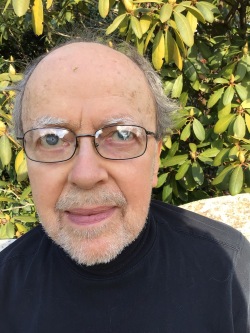
Publisher: In-Sight Publishing
Publisher Founding: March 1, 2014
Web Domain: http://www.in-sightpublishing.com
Location: Fort Langley, Township of Langley, British Columbia, Canada
Journal: In-Sight: Independent Interview-Based Journal
Journal Founding: August 2, 2012
Frequency: Three (3) Times Per Year
Review Status: Non-Peer-Reviewed
Access: Electronic/Digital & Open Access
Fees: None (Free)
Volume Numbering: 11
Issue Numbering: 2
Section: B
Theme Type: Idea
Theme Premise: “Outliers and Outsiders”
Theme Part: 27
Formal Sub-Theme: None.
Individual Publication Date: March 15, 2023
Issue Publication Date: May 1, 2023
Author(s): Richard May/May-Tzu
Author(s) Bio: Richard May (“May-Tzu”/“MayTzu”/“Mayzi”) is a Member of the Mega Society based on a qualifying score on the Mega Test (before 1995) prior to the compromise of the Mega Test and Co-Editor of Noesis: The Journal of the Mega Society. In self-description, May states: “Not even forgotten in the cosmic microwave background (CMB), I’m an Amish yuppie, born near the rarified regions of Laputa, then and often, above suburban Boston. I’ve done occasional consulting and frequent Sisyphean shlepping. Kafka and Munch have been my therapists and allies. Occasionally I’ve strived to descend from the mists to attain the mythic orientation known as having one’s feet upon the Earth. An ailurophile and a cerebrotonic ectomorph, I write for beings which do not, and never will, exist — writings for no one. I’ve been awarded an M.A. degree, mirabile dictu, in the humanities/philosophy, and U.S. patent for a board game of possible interest to extraterrestrials. I’m a member of the Mega Society, the Omega Society and formerly of Mensa. I’m the founder of the Exa Society, the transfinite Aleph-3 Society and of the renowned Laputans Manqué. I’m a biographee in Who’s Who in the Brane World. My interests include the realization of the idea of humans as incomplete beings with the capacity to complete their own evolution by effecting a change in their being and consciousness. In a moment of presence to myself in inner silence, when I see Richard May’s non-being, ‘I’ am. You can meet me if you go to an empty room.” Some other resources include Stains Upon the Silence: something for no one, McGinnis Genealogy of Crown Point, New York: Hiram Porter McGinnis, Swines List, Solipsist Soliloquies, Board Game, Lulu blog, Memoir of a Non-Irish Non-Jew, and May-Tzu’s posterous.
Word Count: 60
Image Credit: Richard May
International Standard Serial Number (ISSN): 2369-6885
*Please see the footnotes, bibliography, and citations, after the publication.*
Keywords: arithmetic, cardinal numbers, devils, equity, justice, measurement, numbers.
The Illusion of Inequalities
Numbers and arithmetic are the invention of devils.
The supposed inequality of numbers leads to arithmetic and measurement, both pseudosciences.
When all numbers are recognized as fully equal to each other, everyone and every thing will be equal in all respects.
We demand equity for all the cardinal numbers now.
Only then will ontological and genetic justice follow.
May-Tzu
Bibliography
None
Footnotes
None
Citations
American Medical Association (AMA 11th Edition): May R. The Illusion of Inequalities. March 2023; 11(2). http://www.in-sightpublishing.com/illusion-inequalities
American Psychological Association (APA 7th Edition): May, R. (2023, March 15). The Illusion of Inequalities. In-Sight Publishing. 11(2). http://www.in-sightpublishing.com/illusion-inequalities.
Brazilian National Standards (ABNT): MAY, R. The Illusion of Inequalities. In-Sight: Independent Interview-Based Journal, Fort Langley, v. 11, n. 2, 2023.
Chicago/Turabian, Author-Date (17th Edition): May, Richard. 2023. “The Illusion of Inequalities.” In-Sight: Independent Interview-Based Journal 11, no. 2 (Spring). http://www.in-sightpublishing.com/illusion-inequalities.
Chicago/Turabian, Notes & Bibliography (17th Edition): May, R “The Illusion of Inequalities.” In-Sight: Independent Interview-Based Journal 11, no. 2 (March 2023). http://www.in-sightpublishing.com/illusion-inequalities.
Harvard: May, R. (2023) ‘The Illusion of Inequalities’, In-Sight: Independent Interview-Based Journal, 11(1). <http://www.in-sightpublishing.com/illusion-inequalities>.
Harvard (Australian): May, R 2023, ‘The Illusion of Inequalities’, In-Sight: Independent Interview-Based Journal, vol. 11, no. 2, <http://www.in-sightpublishing.com/illusion-inequalities>.
Modern Language Association (MLA, 9th Edition): May, Richard. “The Illusion of Inequalities.” In-Sight: Independent Interview-Based Journal, vo.11, no. 2, 2023, http://www.in-sightpublishing.com/illusion-inequalities.
Vancouver/ICMJE: Richard M. The Illusion of Inequalities [Internet]. 2023 Mar; 11(2). Available from: http://www.in-sightpublishing.com/illusion-inequalities
License
In-Sight Publishing by Scott Douglas Jacobsen is licensed under a Creative Commons Attribution-NonCommercial-NoDerivatives 4.0 International License.
Based on work at www.in-sightpublishing.com.
Copyright
© Scott Douglas Jacobsen and In-Sight Publishing 2012-Present. Unauthorized use and/or duplication of this material without express and written permission from this site’s author and/or owner is strictly prohibited. Excerpts and links may be used, provided that full and clear credit is given to Scott Douglas Jacobsen, or the author(s), and In-Sight Publishing with appropriate and specific direction to the original content. All interviewees and authors copyright their material, as well, and may disseminate for their independent purposes.
Share this:


Publisher: In-Sight Publishing
Publisher Founding: January 1, 2014
Web Domain: http://www.in-sightpublishing.com
Location: Fort Langley, Township of Langley, British Columbia, Canada
Journal: In-Sight: Independent Interview-Based Journal
Journal Founding: August 2, 2012
Frequency: Three (3) Times Per Year
Review Status: Non-Peer-Reviewed
Access: Electronic/Digital & Open Access
Fees: None (Free)
Volume Numbering: 11
Issue Numbering: 2
Section: A
Theme Type: Idea
Theme Premise: “Outliers and Outsiders”
Theme Part: 27
Formal Sub-Theme: None
Individual Publication Date: March 15, 2023
Issue Publication Date: May 1, 2023
Author(s): Scott Douglas Jacobsen
Interviewer(s): Scott Douglas Jacobsen
Interviewee(s): Luca Fiorani
Word Count: 8,169
Image Credits: Luca Fiorani
International Standard Serial Number (ISSN): 2369-6885
*Please see the footnotes, bibliography, and citations, after the interview.*
Abstract
Luca Fiorani is a member of Ultima IQ society (cut-off: 170 σ15; founder: Ivan Ivec). Academically, he has a philosophical background. At the same time he sees himself as an independent autodidact. His main interests are: literature, arts, tennis and communication. Fiorani discusses: the Ultima Society; rethinking membership; membership or entrance; requirements in high-I.Q. societies; strict and legitimate entrance requirements; P. Cooijmans’ societies; newer thoughts on high-range testing; reconsideration of high-range testing; a member; tests of Paul’s; T. Prousalis’ tests and X. Jouve’s tests; astronomical I.Q. scores; HRTs; the 2% estimate a qualitative estimate; participation in Sidis Society; CatholIQ; common threads in personality or tests between Dorsey, Cooijmans, Prousalis, Jouve, and Kutle; the qualifying test and score for the Mega Society; a relatively non-arbitrary ceiling of 180 S.D. 15 ; wisdom; measuring the general factor or a generalized factor of intelligence with mainstream intelligence tests and HRTs; the different things measured; one’s intelligence; the single hardest test ever; a high level of problem-solving ability; Megalomania; the hardest things to realize about the high-I.Q. communities; positive developments; leaving Real IQ society; SLSE-II; IVIQ 16 Test; HRT test-makers; flourishing in a comprehensive way; intellectual and creative output of individuals in the high-I.Q. communities; type of test; a generalized intelligence up to and including I.Q. 180 S.D. 15; highly intelligent people waste their talents; the newer generation and the older generation of high-I.Q.; speed of thought; wash out the “basely egocentric behaviors”; the essential stats; the sociocultural and philosophical front; studies; the romantic life; newest intellectual project; protection of others; “The communities”; a reasonable skepticism; good uses of diverse problem solving abilities; diversity, equity, and inclusion; the generic positives and negatives; interest in media and the entertainment industry; the content of the production on Wittgenstein; a sign of a healthy culture; controversial and often polarized discussion; newer media; increasing assholery; should people put on the breaks on their mouths; silence as an indication of restraint; diversity; equity; inclusion; a minority group; the Flynn Effect; vastly positive reception from the high-I.Q. communities; a space for clarity of mind; find the time to get their outlet, their space, their place of calm; the reversal of the Flynn Effect; “Tätigkeit“ and “Therapie”; a long-term romance; the problem-solving abilities for renewable technologies; the compliments; what he say to himself 6 years ago; describing this past person; the world simply doesn’t always come in neat packages; a form of therapy; official comeback; Keith Raniere; eudaimonia; hypersensitivity; the flaws; Jouve; the self-discoveries over the last several years to bring about self-therapy; the Wittgenstein paper; this “valuable opportunity”; the idea behind True IQ; the methodology of Ivec; other people in the high-I.Q. communities; increase the number of test-takers to make the sample sizes larger for more valid tests; “The Real g Test”; the best article on high-I.Q. psychology ever written; Wittgenstein; magnum opus; the components of wisdom; more variance between males and females; a centralized platform for test-creators; good standards; a philosophical stance; paideia; a great level of expertise; the criminals and cults; Kevin Langdon; Master Chef Craig Shelton; people interested in joining high-I.Q. communities; and goals now.
Keywords: Catholiq, Chris Langan, D. Kutle, Dawid Skrzos, Deus Vult, Erik Hæreid, Gianluigi Lombardi, Heidegger, Heinrich Siemens, high IQ community, high-I.Q. societies, Ivan Ivec, James Dorsey, JCCES, Jean-Mathieu Calut, Joe Feagin, Jonathan Wai, Joseph Dinouart, Keith Raniere, Kirk Kirkpatrick, Kirk Raymond Butt, Ludwig Wittgenstein, Mega Society, megalomania, Paul Cooijmans, Plato, Ronald Hoeflin, Rick Rosner, Robert Lato, Santanu Sengupta, Sidis Society, T. Prousalis, Ultima IQ society, Wu Meiheng, X. Jouve, YoungHoon Kim.
Conversation with Luca Fiorani on Everything Under God’s Sun: Member, Ultima IQ Society (3)
Scott Douglas Jacobsen: Lots of new stuff has happened. You have left one high-I.Q. society. You are a member of the Ultima Society. As well, you have some new thoughts on high-range testing. Let’s start from the top, naturally, what else has been new in life for you, since the last interview?
Luca Fiorani: First of all, I’d like to thank you, Scott, for the valuable opportunity.
My life is better than before. It wasn’t bad the last time we talked but now I feel that I’m finally flourishing – in a comprehensive way. [Ed. You’re welcome, and congratulations on flourishing.]
Jacobsen: What prompted rethinking membership in the high-I.Q. society?
Fiorani: I’ve left Real IQ society (founder: I. Ivec) because my global score, my estimated True IQ, was not realistic, not even remotely. I’ve realized that the adjectives ‘real’ and ‘true’ were misused. They didn’t fit. Generally speaking, I’m now against too inflated and too lavish IQ scores. The method approved by Ivec is simply too generous and also not all my scores came from credible and reliable high range IQ tests.
Instead, I’m still a member of Ultima IQ society – cut-off 170 σ15 – because I had entered when the requirements were robust and because “170” is not utterly craziness.
Jacobsen: What happens when membership or entrance requirements in high-I.Q. societies become too lax, even too strict?
Fiorani: When the criteria become too lax, the scores are less serious, less rigorous and people are more inclined to several delusions – unfortunately, megalomania included. They cajole themselves that the resulting scores are legit, trustworthy, stable but very rarely that is actually the case.
Currently, within the high IQ community, it does not happen that the criteria are too strict. At least as far as I know.
Jacobsen: What high-I.Q. societies seem to have strict and legitimate entrance requirements at the moment? I do not mean necessarily higher I.Q.s, simply the boundaries are set reasonably tight, and the testing is more valid than not.
Fiorani: Probably this happens with P. Cooijmans’ societies. (Note: I don’t know the high IQ community in its entirety, there could be other well-founded examples.)
Jacobsen: Why those high-I.Q. societies in particular?
Fiorani: Because all in all the test-author mentioned above has remained true to his principles, even when rigid. His work is consistent and self-cohesive.
- Prousalis’ tests and X. Jouve’s tests are arguably better, superior, and when I say so I’m expressly referring to the methodology and the stats; they always give relevance to standardized tests: but right now societies based mainly or exclusively on scores earned on these tests – I mean, the ones designed by Prousalis and Jouve – do not exist.
Jacobsen: Your newer thoughts on high-range testing. What are those? Or, more properly, to begin on this line of reasoning, what are the factors behind the newer thoughts?
Fiorani: High range testing is often stimulating and challenging and sometimes has its validity, coherence, plausibility.
HRTs can be decent and even good psychometric instruments. In most cases, though, the tests aren’t adequately accurate, the subsequent scores should be taken very cautiously, without giving them too much value or importance.
My newer thoughts are born when I’ve become aware of the fact that too many people believe that their huge, astronomical, Brobdingnagian scores are their actual IQs: they are not, in reality. No actual IQ above 180 σ15 exists so when I see this plethora of IQ scores above 190 σ15, I start to think. Many, many, many, many, many – you got the idea?… – scores are not serious, they don’t come from enough reputable tests: as simple as that.
Usually when I take a look at a random listing, ⅚ of the scores are comical.
Jacobsen: How did those factors come into more full reconsideration of high-range testing at the moment?
Fiorani: I just look at HRTs in a more relaxed way and I feel compassion for those people who really believe that their IQs are above 180, above 185, above 190, above 195, above 200, just because a bunch of weak, iffy, wobbly instruments say so.
Less than 2% of HRTs are fully functioning and authoritative.
Jacobsen: Outside of Ultima IQ society, are you a member of any others? If so, why those? If not, why not?
Fiorani: Yes, I am. I’m still a member of Sidis Society (founder: J. Dorsey) and also a few more, e.g. Catholiq (founder. D. Kutle).
I appreciate that Dorsey is dedicated and I admire Kutle as a person and I also like the journal Deus Vult.
I indeed have a qualifying score for Mega Society (founder: R. Hoeflin) but I’ve heard that the members can be too harsh sometimes, so I’m not interested in joining.
Jacobsen: What tests of Paul’s stand out? Why those?
Fiorani: For his tests, I can tell you that I read thoroughly the statistical reports and I take into account the opinion of a dozen of versatile test-takers. His best test is probably Cooijmans Intelligence Test – Form 3E. I don’t have a direct knowledge, though.
Jacobsen: For T. Prousalis’ tests and X. Jouve’s tests, could those tests still be used? People seemed to like the JCCES of Jouve. I know Santanu Sengupta [Ed. 174 S.D. 15] from India claims a high score on it.
Fiorani: I think that Prousalis’ website isn’t defunct; Jouve is back with revised forms of his old tests and other precious stuff.
I think that JCCES gives realistic results and I consider it a nice psychometric product.
Jacobsen: What tends to happen when individuals believe astronomical I.Q. scores claimed based on some of the tests?
Fiorani: They lose objectivity and sensibleness. Their self-awareness is inferior. And a bit of wisdom is required for high intelligence, in my humble opinion…
Jacobsen: What would make scores coming from HRTs, in terms of test items in an overall schema and sample size, above 180 σ15 believable to you?
Fiorani: Without talking gibberish, 180 sd15 should be the ceiling of ceilings, in an ideal, optimal, utopian high range IQ test. A test that gives you your exact IQ and the game is over. This, too, is implausible, since you always need a collection of heterogeneous tests. A perfect, unique, adamantine IQ test that tells your ultimate IQ is not within this plane of existence. Hypothetically – and merely so –, the ceiling of this imaginary test should be 180 sd15. That’s my (narrow) perspective.
Jacobsen: Is the 2% estimate a qualitative estimate, or an actual count and review of some tests and then an estimate?
Fiorani: It’s more a qualitative estimate than a quantitative precise estimate. It’s not an absurd statement, nevertheless. But let me be clear: I don’t want to be aggressive towards test-authors and test-takers who genuinely care about HRTs and find them beautiful/wonderful, for instance. I’m saying that it’s rare that these products have golden quality under psychometrics’ point of view. Regardless, one could find them astonishing for the inherent difficulty of the items, the multiple logical layers and so on. In most cases you have the dimension of cognitive entertainment and leisure-time activity: and that’s not a bad thing, not at all. Issues come when you convince yourself that all the HRTs you take pertain to (a fully valid) cognitive assessment.
Jacobsen: What is your level of participation in Sidis Society? What do you get out of it?
Fiorani: My level of participation is the following: my name is listed at the corresponding webpage.
I get some sort of prestige, in a way. That I’ve achieved a non-negligible level of cognitive performance. And I support Dorsey’s drive. Plus, I like the name, “Sidis”. That’s all, I guess.
Jacobsen: For CatholIQ, what have been the benefits so far?
Fiorani: For CatholIQ, or Catholiq – apparently both spellings are correct –, the benefits come from some articles of their journal, Deus Vult. You’re informed when it comes out and you can also submit an essay of yours, or a poem, etc. That’s nice and the ambience overall is healthy.
Jacobsen: Any common threads in personality or tests between Dorsey, Cooijmans, Prousalis, Jouve, and Kutle?
Fiorani: I think that Dorsey and Cooijmans are both devoted to HRTs, they deeply care about them. That’s what I perceive and infer.
Prousalis and Jouve have designed tests perfectly comparable to professional tests. The stats of their tests are sometimes impressive.
Kutle is a clever man and a noble person. The items of his tests are very nice and sometimes elegant. I recommend Arcanum and Road to Damascus, both designed by him. They require time and diligence and a high level of crystallized intelligence. They represent a fascinating and pleasant intellectual experience.
Jacobsen: What test was the qualifying test and score for the Mega Society?
Fiorani: Ron Hoeflin knows.
Jacobsen: The norms and scores on Paul’s site list a 76 out of 78 on the Cooijmans Intelligence Test – Form 3E as the highest score it. I recall a listing of the three top scores on tests by Paul, out of all tests, in an interview with Paul by me. There was a tie for the top score on all of the tests, at the time, with one of the scores on Cooijmans Intelligence Test – Form 3E. The question, by me, followed by the response, from him:
Jacobsen: What have been the 3 highest legitimate scores on a Cooijmans test by testees to date while using the most up-to-date norms on tests? If I may ask, who were these individuals?
Cooijmans: First, I want to say that this is not an easy question. There are many thousands of scores in the database, and they are raw scores. To compare them, they have to be converted to protonorms. This would not be doable by hand in any reasonable amount of time and effort. To our good fortune, over the course of two decades I have painstakingly written programming code and created a protonorm database so as to dynamically link the raw scores to their current norms, and, for instance, put out a list of scores that exceed a certain level, with the name of the test and candidate if desired. This is the largest and most complex informatics project I have undertaken, and I think it is also the most difficult thing I have ever done, intellectually.
Of course, any good programmer should be able to do this. Still, I must say I never see test statistics by others that even remotely have the quality of my reports, so it seems that not many combine their programming skill with statistics. I set the controls such that only the top three scores remained, and they are 76 raw on the Cooijmans Intelligence Test – Form 3E, and 27 and 28 raw on the Cooijmans Intelligence Test 5. The I.Q.’s are 190, 186, and 190, respectively. I can not give the names as that would violate the privacy of the candidates.
Of course, the norms in that range are still uncertain, and there may be a number of scores right under these that, after renorming, turn out to be equal to or higher than these. (Jacobsen, 2022a)
My inference: The highest scorer on the Cooijmans Intelligence Test – Form 3E is personal friend and writing colleague, Rick Rosner, who is a comedy writer. This matches, not the scores but, the achievements on other well-regarded tests, e.g., Mega Test (44/48 first attempt and 47/48 second attempt) and Titan Test (48/48). This would track with the test selection by you. Rick is of the same opinion as you, about Paul’s tests[1]. How can setting a relatively non-arbitrary ceiling of 180 S.D. 15 help with lots of test constructors without the massive comparative resources of mainstream academia? It has an aesthetic appeal of a clearcut boundary.
Fiorani: Rick Rosner, yes. I know him too. I think he is one of the smartest persons I’ve known within the high IQ community. Not only for his monumental scores on highly reputable tests but also for other commendable and remarkable traits. He’s a great guy, very smart, very witty. As a test-taker, he’s certainly better than me. I tend to believe that his mind is the mind of a genius. Rick is uncommon, unconventional, multifaceted.
The ceiling of 180 sd15 has its beauty and its rationality, yes. The WAIS-IV stops at 160 (theoretical rarity: 1/31,560). HRTs could have a boundary, at 180 (theoretical rarity: 1/20,696,863). We know that the theoretical rarity isn’t exactly and strictly the actual rarity – the actual rarity being inferior. But there’s no need to go much higher. To examine at or above 190 σ15, 195 or 200, for instance. I don’t see the underlying logic nor I find the basis, the grounds. Twenty points above the ceiling of the WAIS-IV are enough, especially because twenty points for the upper, upper end have a bigger weight.
If a test is normed well, scores above 166-170 are already exceptional. Of course, scoring 160+, or 170+, or even 180+ on a very imperfect test becomes easier. That’s why a single peak performance of 180+, σ15, does not impress me. Also, peak performances at 190+ are not as rare as the score per se suggests. You always need to understand the construct validity vel similia. You always have to relativize… Otherwise you might start to believe that the rarity of your intellect is really one in a billion: can we all agree that this sounds bizarre, extravagant, exaggerated, laughable, immensely pretentious?
Jacobsen: Can wisdom be measured in any standardized manner? Or is this more something qualitative or experienced in interaction with someone?
Fiorani: Luckily and rightfully, the second thing you’ve said.
Jacobsen: The idea is measuring the general factor or a generalized factor of intelligence with mainstream intelligence tests and HRTs. This leads to the question. With further reflection for you, how much do HRTs and mainstream tests measure the same things?
Fiorani: Very nice question. The connection between the two approaches is not weak, there is in fact a strong correlation. The more traditional way (standardized tests, timed, supervised conditions) and the alternative-inventive way (untimed conditions, items way more difficult/elaborate, etc.). Mainstream tests and HRTs don’t measure the exact same thing. In my opinion, the main difference is given by the fact that reducing the impact of the sheer speed of thinking, you can go deeper and you can reach higher levels of reasoning and complexity. A deep thinker reaches his/her full potential with HRTs, usually. Someone who scores high or very high on WAIS-IV can do pretty well on HRTs, if he/she is enough motivated. It is not said that he/she will score higher than a topscorer of tough and well-constructed HRTs.
Jacobsen: If there are different things measured to acquire scores, what are the different things measured? I do not mean the obvious in different test items and a schema for the test items to fit. I mean the human qualities or mental traits measured in acquisition of a high score.
Fiorani: In untimed conditions, patience, stamina, perseverance are rewarded qualities. Important mental traits rewarded are: the abstraction, the conceptualization and, in a way, the cogitation. In timed conditions a more basic pattern recognition is rewarded and, always, a fast thinking – and related aspects.
Jacobsen: What are other qualities, other than I.Q. and wisdom, going into one’s intelligence?
Fiorani: Creativity (or profound divergent thinking), comprehension of contexts of different nature, knowledge (or culture), artistry (or mastery of talent). All these facets of intelligence are interconnected and they intersect. The more they are intertwined, the better – id est, you are more intelligent.
Jacobsen: Of those avid test-takers known to you, and for yourself, what do they consider the single hardest test ever taken by them, or seen by them? Why?
Fiorani: Taken thirty years ago, without WWW, the Titan Test was hard. I think that Rick Rosner would agree.
People who take Cooijmans’ tests say that some of them are very hard – Heinrich Siemens and also my friend Erik Hæreid would agree, all things considered.
The two spatial tests by (pseudonym) Robert Lato are very hard.
LDA-SWaN by my compatriot Gianluigi Lombardi is surely hard.
The single hardest test seen by me is IVIQ 16 Test (test-author: Dawid Skrzos). The single hardest test taken by me is SLSE-II (test-author: Jonathan Wai).
Jacobsen: How has knowledge of a high level of problem-solving ability helped your personal and professional pursuits?
Fiorani: Life itself consists of problems and solutions, new problems and new solutions, and so on. This is evidently an answer and I’m smiling right now.
Jacobsen: Megalomania has been noted by others and you. Something not the norm in the communities, but just enough to be annoyance. How should people deal with it?
Fiorani: To avoid irritation and also troubles, some obnoxious individuals should be avoided. It’s sad but sometimes things just work like this.
Jacobsen: What have been the hardest things to realize about the high-I.Q. communities?
Fiorani: For sure the high IQ community has good and praiseworthy qualities but too often it’s a venue for basely egocentric behaviors.
Jacobsen: What seem like positive developments?
Fiorani: Reduce the excessive variety of tests’ norms and make them more uniform. The listings, the rankings, etc., could become realistic.
Jacobsen: How did Ivan react, if at all, to leaving Real IQ society?
Fiorani: He accepted my decision.
Jacobsen: What made SLSE-II by Jonathan Wai so hard? Is it still valid, or is it compromised?
Fiorani: Some of the items require extreme attention to details and some others are slightly and acutely obscure. There’s a certain ambiguity rate.
It’s still graded by Wai, I believe.
The items were discussed and some IQ groups declared the test invalid for admission.
Jacobsen: What makes IVIQ 16 Test look so difficult?
Fiorani: Every item is like a labyrinthine encryption. The author, Dawid S., was incredibly good with numerical sequences and I think he solved all the items of the Numerus series by Ivec. Perhaps he naively thought that a common test-taker had his outstanding skills for numbers and pattern recognition, hahaha!
Jacobsen: What have HRT test-makers simply not figured out? What are some directions to solve these issues?
Fiorani: I would give too vague answers, I don’t know. As a maxim: less generous norms and more detailed stats.
Jacobsen: How is your life flourishing in a comprehensive way?
Fiorani: My studies ended, my romantic relationship continues happily, my professional life has started, I cultivate my interests, I’m less anxious, I’m less bored.
Jacobsen: What about intellectual and creative output of individuals in the high-I.Q. communities? Are there any people who stand out as truly matching their claimed or measured intelligence with their productions and/or productivity?
Fiorani: Yes, there are.
Jacobsen: What type of test would measure, in a single test item schema or a single question type, or might tap most into a generalized intelligence up to and including I.Q. 180 S.D. 15?
Fiorani: A long test with various items – verbal analogies, verbal associations, numerical sequences, figure matrix reasoning questions, mixed in mixed problems – might work.
Jacobsen: Side question, how do highly intelligent people waste their talents?
Fiorani: When they are emotionally unstable – and there are a myriad of possible factors causing this… But what happens next is just a consequence.
Jacobsen: What differentiates the newer generation and the older generation of high-I.Q. types?
Fiorani: The newer generation is less prudent.
Jacobsen: When does speed of thought become less of a differentiating factor for seeing differences between a smart person and a smarter person? What seems like the I.Q. threshold?
Fiorani: The IQ threshold, assuming a rather even cognitive profile, is (approximately) 145 sd15.
Jacobsen: Is there a way to wash out the “basely egocentric behaviors” in the community?
Fiorani: Nope, there isn’t. Sorry for the frankness and the jaundice.
Jacobsen: What are the essential stats to start including in some of the tests moving into the future to make the tests analysis of scores more in-depth?
Fiorani: The following essential stats should be non-hidden:
- A histogram that shows how the scores on a test are distributed.
- A table regarding the items’ difficulty and robustness.
- Cronbach’s α presented & Spearman-Brown prediction formula presented.
- Correlation with standard supervised psychometric batteries.
- Correlation with other significant HRTs.
- Presentation of theoretical IQ per raw score points.
The last one is the most obvious but sometimes being didactic is not a sin.
Jacobsen: What’s new in the sociocultural and philosophical front for you?
Fiorani: The topic of diversity, equity and inclusion – in the media and entertainment industry.
Jacobsen: For your studies, what was the final result?
Fiorani: «Eccellenza».
Jacobsen: How is the romantic life now?
Fiorani: Fulfilling.
Jacobsen: What is your newest intellectual project?
Fiorani: An essay on Ludwig Wittgenstein that might see the light in August.
Jacobsen: On the individuals who claim inflated scores, there is also the factor that they don’t want to believe it themselves as much as they want the public to believe it to keep a modicum of cachet. There is the solution of leaving them alone. So, less about compassion for them and more about protection of others. In other words, what about others who may be less experienced, potentially more intelligent but naïve, on some of these aspects of the communities?
Fiorani: Nice question, again. If a neophyte looks at the scoreboards and the listings, he/she should probably reflect as follows: this is a collection of peak cognitive performances on disparate HRTs, not every score is that phantasmagorical; and the accuracy of the scores is more important than the scores themselves. In other words, which of the displayed scores are obtained on accurate psychometric products? A 160 σ15 can be (literally) more significant – or: with meaning – than a >185 σ15, it depends on the test(s).
I’d say to the neophyte: within the community, search for quality and accuracy, ignore the stratospherical, esospherical, sidereal scores, especially if the solidity of the test(s) is unknown, unclear or low.
Jacobsen: “The communities”, as I type it, I am making an assumption. I had some correspondence with someone about this, in the high-I.Q. communities, recently. The idea is the community as a homogenous, and humongous, blob or a subcultural bloc. To me, “the community “seems more like communities and variegated rather than singular, but modest in size somewhere in the middle 1000s in membership, excluding Mensa International. Does this match experience for you? What else can be subtracted, added to a proper perception of the idea of high-I.Q. communities to describe them?
Fiorani: Well, yes, I agree, this matches my experience. I use the singular – a subcultural bloc – for simplicity but I become simplistic, it’s true. A proper perception of the various souls and cores of the community isn’t easily obtainable.
Reading your interviews is helpful. Here and there, you can see different characters and sense different mental settings. There are diverse kinds of “members”.
Jacobsen: Most members of the high-I.Q. communities seem to have a reasonable skepticism, while some cases simply do not, about claimed scores or achievements on some of these harder HRTs. A more substantiated norm was published by Redvaldsen entitled “Do the Mega and Titan Tests Yield Accurate Results? An Investigation into Two Experimental Intelligence Tests”. The scores can be reduced to the aforementioned range, by you, on the Titan Test and Mega Test to 166-170 for the highest scorers on the tests by Hoeflin, e.g., Cole, Langan, May, Raniere, Rosner, Savant, Sununu, etc. This brings things down to Earth and says something legitimating about the constructs of the HRT communities when the effort is significant enough. What are the lessons from the Mega Test and the Titan Test, and the Hoeflin ensemble of societies?
Fiorani: Reasonable skepticism is healthy and I knew this paper. I think that Hoeflin has counter-replied but I don’t want to wander from my own answer. The point is that these experimental intelligence tests aren’t bad. Perhaps they’re just too ambitious, sometimes. I believe that a possible lesson learnt from the Hoeflinian galaxy is the following: the ceiling of a prestigious untimed IQ test isn’t necessarily above 180 σ16, or 176 σ15.
Jacobsen: Another side note, my other inference: The other highest scorer on Paul’s tests, who tied with Rick, Heinrich Siemens. Anyway, I have experimented with making use of both the intelligence and the expertise of the high-I.Q. communities. One of which is a series of educational interview sets on the relevant expertise of people. One example is the aforementioned Erik Haereid. He’s so well-versed in statistics and actuarial sciences as an actuary. It is in-depth. Certainly, not everyone’s cup of tea, but, also, not something everyone thinks about much, especially how much it pervades their lives. What might be some other good uses of diverse problem solving abilities? There are lots of highly involved people, who, likely, have great ideas to create things helpful to others. [Ed. If others have expertise, let’s tap it, call me!]
Fiorani: Rosner, Siemens, Hæreid: these guys are very, very clever.
Other good uses of diverse problem solving abilities? Projects related to renewable technology.
Jacobsen: Diversity, equity, and inclusion, these have been highly contentious hallmarks coming from academe. What are the first thoughts on the chosen concepts to you?
Fiorani: First thoughts are about the fact that these concepts cause disagreement, they’re divisive. A philosophical question might sound like this: why is controversial and often polarized discussion so trendy and so paradigmatic nowadays? Do the newer media interfere?
Jacobsen: What are the generic positives and negatives for you?
Fiorani: The generic positive is that people talk; the generic negative is that people talk too much.
Jacobsen: How is this of interest in media and the entertainment industry to you?
Fiorani: I try to use philosophical lenses to interpret the phenomena that permeate my life as individual of a highly complex society. Media and entertainment industry are crucial for understanding our current sociocultural macro-context and also its micro-variations.
Jacobsen: What is the content of the production on Wittgenstein?
Fiorani: It’s about the notion of philosophy as „Tätigkeit“ and „Therapie“.
Jacobsen: Disagreement can be a sign of a healthy culture. A culture of higher feedback mechanisms within individuals and between people. It can be toxic too. What are the forms of this disagreement and divisiveness?
Fiorani: Yes, disagreement can be a sign of intellectual vitality, it’s true. Though we need to understand if the disagreement facilitates a proper dialogic instance or not. In multiple cases, you see a non-dialogic approach.
Divisiveness concerns the representation of the (so called) minority groups. Joe Feagin, a well-known sociologist, has described the fundamental characteristics of a minority group.
The topic is too ample, I don’t want to be or seem trivial.
Jacobsen: “Very nice question”, “Why is controversial and often polarized discussion so trendy and so paradigmatic nowadays?
Fiorani: Hahahah, these questions require a dissertation – and I’m not joking. I must limit myself for a criterion of practicality and convenience. Polarized reflections require less effort, you spend less time and less mental energy. We go too fast, we don’t valorize profoundness. Instagram reels or TikTok shorts, etc. etc., represent the immediacy and impulsiveness of consuming, the commodification and barbarization of thoughts, of concepts, of the concept. We don’t reflect enough, we don’t take our time – literally. Choosing a side, and doing so intensely, vibrantly, rapidly, is a shortcut. We like shortcuts.
Jacobsen: “Do the newer media interfere?”
Fiorani: Without a doubt. There no longer is a life completely outside them.
Consider my previous answer, too.
Jacobsen: Kirk Kirkpatrick calls a phenomenon the “American Disease” and Rosner calls it “Superempowered” (Jacobsen, 2018; Jacobsen & Rosner, 2017). Is the degree of divisiveness a reflection of increasing assholery?
Fiorani: You are right, yes.
Jacobsen: When should people put on the breaks on their mouths? What’s the speed limit here?
Fiorani: Let me quote the French preacher Joseph Dinouart and his L’art de se taire (1771), first part, first chapter:
«1. On ne doit cesser de se taire, que quand on a quelque chose à dire qui vaut mieux que le silence.
[…]
-
- Jamais l’homme ne se possède plus que dans le silence: hors de là, il semble se répanfre, pour ainsi dire, hors de lui-même, et se dissiper par le discours, de sarte qu’il est moins à soi, qu’aux autres.
- Quand on a une chose importante à dire, on doit y faire una attention particulière: il faut se la dire à soi-même, et après cette précaution, se la redire […].
[…]
-
- Le silence tient quequefois lieu de sagesse à un home borne, et de capacité à un ignorant.
- On est naturellement porté à croire qu’un homme qui parle très peu, n’est pas un grand génie, et qu’un autre qui parle très peu, n’est pas un grand génie, et qu’un autre qui parle trop, est un homme étourdi, ou un fou. Il vaut miex passer puor ne point être un génie du premier ordre, en demeurant souvent dans le silence, que pour un fou, en s’abandonnant à la démangeaison de trop parler. […]».
[Ed. pp. 5-8.]
Didn’t you believe that a polemist born 307 years ago would have answered to your question, did you?
(Of course, if necessary, I might translate, but I don’t know an official English edition of the text.)
Jacobsen: With silence as an indication of restraint, not necessarily genius, and loquaciousness potentially as an indicator of a madman, silence becomes a better heuristic than not. Why do diversity, equity, and inclusion, lean one into talking too much rather than too little now?
Fiorani: Certain themes are important in principle and as a matter of fact. But they are too repeated and, then, oversimplified. As users of social networks and spectators of TV shows, we see how incessant ideology can be – and also counter-ideology can be insistent. The fact is that a topic like this is no longer perceived as a niche interest, we often feel the desire (or compulsion?) to express our opinions, again and again and again. Aware or not, we are already in a circulus vitiosus. We are overstimulated and we feed the exact inner workings of the structure.
A possible solution would be creating safe places and safe moments for ourselves, to safeguard the lucidity of our mind, loosening the chains we’ve contributed to construct.
Jacobsen: What does diversity represent in its practical effects in implementation in media and the entertainment industry?
Fiorani: For example, casting actors of different ethnic groups for playing certain roles/characters – possibly avoiding stereotypes and clichés –, is a practical way to represent sociocultural diversity. This implementation helps or could help more people to feel identified, to feel represented, to feel not invisiblized, to feel not marginalized, via common narrative and psychological devices (empathy, projection, etc.).
This is a deliberately succinct answer, given summarily.
Jacobsen: How is equity implemented in the media and entertainment industry?
Fiorani: Also in this case, in representation and communication, you will need to avoid pseudo-archetypes and bromides. Then it’s up to the public ponder over the outcome.
Jacobsen: What is an outcome of inclusion as a value acted out with diversity and equity?
Fiorani: It depends. (Cf. the two previous answers.)
Jacobsen: How does Feagin define a minority group? In Canada, for instance, Christianity is undergoing a rapid diminishment. It will, probably, be less than half of the population by self-claimed identification by some time in 2024. Is it merely numbers? If so, then Christians will be a big minority as less than half in Canada. They’d already be a minority in the United Kingdom. However, it must be more nuanced in Feagin’s view. How so, if so?
Fiorani: Even if it is not polished, I will quote Wikipedia English (page: Minority group): “Joe Feagin, states that a minority group has five characteristics: (1) suffering discrimination and subordination, (2) physical and/or cultural traits that set them apart, and which are disapproved by the dominant group, (3) a shared sense of collective identity and common burdens, (4) socially shared rules about who belongs and who does not determine minority status, and (5) tendency to marry within the group”.
Jacobsen: Do you think the stagnation or reversal of the Flynn Effect is correlated with the massive introduction of these new media?
Fiorani: Reversal more than stagnation, AFAIK. Yes, I think that it is indeed correlated. This could be seen as a bias of mine but we’ll see what time – and studies and researches – will tell us.
Jacobsen: I’ve received vastly positive reception from the high-I.Q. communities. Rick Rosner called me more rational than him. Chris Langan called me a stupid little idiot. YoungHoon Kim called me a very balanced intelligence and wiser than him. I appreciate all of the compliments. They speak well of one another in general too. There are some shocking things some say about one another. They tattle, so whatever, but to me, hilariously. Less so now. Anyway, and to the point, my other sense of the communities is regular interpersonal stuff seen in any sub-culture and set of communities. People living their lives and competing mentally in their off time. That’s healthy. When it becomes someone’s identity or life, that raises eyebrows to me. That’s, probably, a normal reaction. How about you?
Fiorani: The expression used by C. Langan is a compliment? I doubt so, hahah… I agree with Rick and also with Mister Kim about your balanced intelligence.
Yes, it’s not healthy at all when it becomes someone’s identity. I’ve seen lots of cases, nevertheless. And, again, I agree: the fact staggers me. Luckily, I’m much wiser now than I was six years ago. There are shadows in my career as a test-taker but approximately an eon has passed. Life goes on and improves.
Jacobsen: What might be a good means by which to create such a space for clarity of mind?
Fiorani: Just take our time, in different situations. Consider one of the Ten Commandments: Remember the sabbath day, to keep it holy. There’s no irony nor humor, we can glean a lot more than the literal meaning and we can also omit for a second the religious interpretation(s). Can we deduce the importance of rest, the importance of break, in our (now frenetic and hyper-demanding) lives? We can – that’s my modest view.
Jacobsen: If they’re like me, they could be working 7 days a week at an elite equestrian facility sunrise to sunset, or some other job requiring it. Down time is hard to find nowadays, for some. Even a regular 5 days and 9 to 5, they might go partying or drinking, or pursuing social activities, which might not necessarily be conducive to the creation of a safe space for thought. What about those people? How can they find the time to get their outlet, their space, their place of calm?
Fiorani: Those people still can find ways. For example, you can deem an interview with a pseudo-intellectual Italian dude as refreshing.
Jacobsen: What other factors seem to be behind the reversal of the Flynn Effect?
Fiorani: One should read papers on the matter. As a perception of mine, I see a depletion of people’s vocabulary and scarce comprehension of text. The verbal tasks (subtests) are the most g-loaded in the WAIS-IV.
Jacobsen: What are “Tätigkeit“ and “Therapie”?
Fiorani: The first term means “activity, occupation” and the essential idea is that philosophy, for Wittgenstein, is more an attitude than a doctrine or a theory. The second term means “therapy”, and the idea behind is that philosophy can take care of the chronic disease that the language itself represents.
Not everything can be summarized in a cool way.
Jacobsen: Are you married, common-law, a long-term romance, or a newer partnership?
Fiorani: A long-term romance.
Jacobsen: What are some directions for the uses of the problem-solving abilities for renewable technologies?
Fiorani: In application terms? I say to myself: let’s try not to stray beyond our scope. So, I don’t know, sorry for disillusioning.
Jacobsen: I “appreciate all of the compliments”. If it wasn’t a compliment, then I don’t appreciate it. However, in some sense, it can be considered a compliment. I’ll take it! Thank you, Mr. Christopher Michael Langan. Don’t spell his name wrong, though, I’m told it “can be interpreted as a passive-aggressive form of sacrilege”, by him. Anywho, one of my favourite stories from observing Jouve. I like how a legitimate experimental psychologist, Dr. Xavier Jouve (a.k.a., an almost literal Professor X. of the I.Q. communities), who developed some awesome tests, then transitioned abruptly into photography. That’s truly wonderful. I love that kind of stuff. Does anyone know the reason? If anyone knows, I’d love to know it.
Fiorani: No idea. His comeback is official, though. Cf. the following link: http://www.cogn-iq.org/index.htm
Jacobsen: I’m really happy for you, and the transition self-identified by you. What would you say to yourself 6 years ago?
Fiorani: About HRTs and IQ scores? Take them less seriously. About some pernicious individuals of the community? Give them little importance.
When this interview will come out, I better prepare myself to face a couple of haters and trolls, their possible lasting hatred, entirely motiveless and – in the present – unwarranted. I’m being brave against some stubborn fanatics. They give abnormal importance to small past events related to high range IQ tests. They can become suffocating…
But it doesn’t matter, I’m accepting this interview and I’m happy.
Jacobsen: What words describe this person to you?
Fiorani: The 2017 version of myself? I was emotionally immature and, sometimes, (emotionally) unstable.
My mistakes were not even close to gravity. They have been flaws, surely preventable, but just minor flaws – if I reconsider them with the cognizance of an adult person not disassociated from reality.
Jacobsen: Maybe, if not everything can be given in a cool way, the world simply doesn’t always come in neat packages?
Fiorani: Agreed.
Jacobsen: Could your own philosophical pursuits be considered a form of therapy for yourself?
Fiorani: You are insightful, I confirm. You’re right.
Jacobsen: His official comeback will raise the bar for everyone. What has been the discussion within community about this?
Fiorani: Within the community, I don’t know. Personally, I’m happy. He is ne plus ultra: professional high range testing.
Jacobsen: What are your thoughts on his coming back?
Fiorani: It’s great!!
Jacobsen: Brave the storm! You get used to them. Perspective: They are 2% or less of the population of the super smart. Criminal Keith Raniere is exceedingly rare. He swindled the Bronfman’s out of $150,000,000 (USD). Sara and Clare were in the equestrian world and were known to some of my bosses quite well. He was in the Mega Society alongside Marilyn, Rick, Chris, other Chris, Kevin, Richard, Ken, and the myriad of others. He is one out of a much larger number of super smart people. You’ll do fine. What would you see as the main points of maturation for you?
Fiorani: I didn’t know the names you mentioned. And I was feeling better without knowing, hahaha! I think it gives an idea about real criminals and real crimes compared to trifles and minutiae.
The main point of my maturation: understanding better each context and having a more pragmatic mindset, at times.
Jacobsen: Your “comprehensive way” of flourishing. Would you consider this eudaimonia on a personal level?
Fiorani: Yes.
About the topic, more broadly, cf.:
- Julia Annas, The Morality of Happiness (1995)
- Christoph Horn, Antike Lebenskunst. Glück und Moral von Sokrates bis zu den Neuplatonikern(1998)
- Alexander Nehamas,The Art of Living: Socratic Reflections from Plato to Foucault(1998)
- Edith Hall, Aristotle’s Way: How Ancient Wisdom Can Change Your Life (2019)
Jacobsen: What were the moments of emotional instability? Hypersensitivity, emotionally speaking, is common among the highly intelligent. It doesn’t seem like a mark of shame or guilt to me, more a signal of a longer maturation process due to the emotions catching up with the mentation.
Fiorani: It’s true.
Jacobsen: What were the flaws, minor as such?
Fiorani: Related to HRTs? Well, it has happened that I’ve discussed some items of a couple of active high range IQ tests – which is not allowed and unfair.
I was severe towards myself after that. Later I have discovered that my behavior was less worse than other behaviors of other test-takers. I have downsized the thing a lot when I’ve seen what other testees – pretty commonly – do.
In those occasions, regardless, I made a mistake. Funny (?) thing is that none of the episodes of soft cheating on HRTs entailed a successful outcome, in terms of IQ score. Because: or I didn’t submit my answers at all (so, no IQ score); or my submission has been graded but wasn’t spectacular (so, below my average). Even in the second case, and anyways, I haven’t used the earned IQ score for admission purposes in some high IQ groups. This soft cheating hasn’t brought me anywhere in multiple senses, then.
Now remembering my mistakes is helpful.
Jacobsen: Do you think Jouve would be open to an interview? He wasn’t years ago, for benign professional reasons.
Fiorani: I think he is a reserved guy but you might try.
Jacobsen: What would you consider the self-discoveries over the last several years to bring about self-therapy?
Fiorani: Knowing inner emotions more lucidly. Work in progress, though.
Jacobsen: Where might people be able to find the Wittgenstein paper, eventually?
Fiorani: Still to be decided.
Jacobsen: What is the most valuable part of this “valuable opportunity”?
Fiorani: Sharing ideas and also having a conversation about them. It’s always nice and it is also a underrated experience.
Jacobsen: What was the idea behind True IQ?
Fiorani: Having a good and articulate confirmation of your broad cognitive abilities.
Jacobsen: What is the methodology of Ivec to make overly generous scores?
Fiorani: He uses an extension of Ferguson formula. But the scores are initially hyper-inflated. So, to me, it doesn’t work.
Jacobsen: What other people in the high-I.Q. communities deserve admiration for efforts, character, scores, tests, or healthy community building? The fact of its finiteness makes it capable of cataloguing.
Fiorani: Excluding the already mentioned ones, Kirk Raymond Butt deserves admiration. In his case, you have a combination of multiple traits. Wu Meiheng, too. For scores and character, a French guy named Jean-Mathieu Calut – the best test-taker I’ve ever met.
Several guys have huge scores, though. And several persons deserve admiration, without a doubt.
This list is obviously incomplete, hastily made.
Jacobsen: Maybe, the biggest long-term barrier isn’t necessarily the test items to HRTs becoming more robust. It’s test-takers and test-taker variety. What might increase the number of test-takers to make the sample sizes larger for more valid tests?
Fiorani: Good question but I haven’t found an answer yet, I don’t know how more people might find HRTs appealing. In fact, larger sample sizes would be a blessing.
Jacobsen: Have there been any tests based solely on the most g-loaded items possible? So, both the most g-loaded test/sub-test type and the most g-loaded items from those tests or test items or test types comparable in g-loading. That plus an online testing platform with a smart and narrow A.I. screening processing of the test items as the test evolves uniquely each time – random but not random – on an encrypted platform might give something like a secure place to get lots of people. Let’s call it “The Real g Test”, for real OGs, holla back!
Fiorani: They tried something (most g-loaded items possible) but I don’t know if it’s just chimeric…
Jacobsen: What is the best article on high-I.Q. psychology ever written or known to you?
Fiorani: Lohman, David F.; Foley Nicpon, Megan (2012). “Chapter 12: Ability Testing & Talent Identification”: this one is nice.
But there are plenty of good articles.
Jacobsen: By the way, why did you focus on Wittgenstein, as your necro-therapist?
Fiorani: Plato has spoken about μελέτη θανάτου (meletê thanatou) or “care of death” and Heidegger has spoken about Sein-zum-Tode or “being-towards-death”. I don’t need Wittgenstein if we talk about death.
Or you mean that Wittgstein is a cadaver, νεκρός (necros)? Why him as a therapist, then? My greatest masters have died long before I was even born.
Jacobsen: “Ron Hoeflin knows”, oh, the secrets he holds. Have you see some of his magnum opus?
Fiorani: A bit, here and there.
Jacobsen: What are the components of wisdom? How is wisdom practiced and lived, and witnessed, universally in individuals in all cultures? In other words, what are its manifestations, ingredients, and enjoyable outgrowths to see in others?
Fiorani: Good judgment and moderation.
Jacobsen: I have been interviewing women in the high-I.Q. communities. Yet, the ratio is so skewed. There is the fact of more variance between males and females. Yet, I don’t think the skew of the degree of variance tracks the degree of variance of membership in the communities. Why? I know Rick admits to joining Mensa to get a girlfriend. He even asked Marilyn vos Savant out while trying to join the Mega Society. She’s been super nice to me: She published one or two pieces of mine in her column for me.
Fiorani: Actually I’ve never understood why women don’t join high IQ societies as much as men. Let me know if you figure it out, hahaha!
Jacobsen: Is there a centralized platform for test-creators to have their work listed and linked? If not, I can, probably, make one in an article to advertise them if this helps everyone.
Fiorani: I don’t think that a centralized platform for test-authors exist.
Do as you wish but I don’t think that the creation of such platform would actually help.
Jacobsen: What would be the good standards by which to “make them more uniform” regarding test norms?
Fiorani: We’ve already talked about the detailed stats and Prousalis and Jouve. You already have an acceptable answer. (smiling)
Jacobsen: I’ve been highly involved in a number of philosophical movements – secular and religious, slightly transitioning as I see in practice or witness flaws in either philosophical foundations or sociopolitical structural outcroppings from those foundations, e.g., claiming a democratic movement and then booting properly elected executives, or claiming respect for freedom of expression and then coercing removal of articles from publications… I’m much, much less sure at the current moment. What is a philosophical stance for you, now, either in metaphysics or pragmatic living (or both)?
Fiorani: Anekāntavāda.
Jacobsen: How can the newer generation become more prudent?
Fiorani: Re-understanding the value of paideia.
Jacobsen: Who else in the communities have a great level of expertise in something niche or interesting? I’d like to email them and get another series going with them.
Fiorani: Perhaps you’ve already interviewed the most interesting ones but let’s be clear: „Was wir wissen ist ein Tropfen, was wir nicht wissen ein Ozean“. (smiling)
Jacobsen: I should write another comprehensive article on the criminals and cults coming out Mensa to the most obscure high-I.Q. societies and communities. It’s shocking. I have all the data points. It’s simply putting it together. Before knowing about Raniere, what were the worst cases known to you?
Fiorani: Silentium est aurum.
Jacobsen: Kevin Langdon in a funny recorded talk to the Triple Nine Society made a great point about the idea of screening for high intelligence for a society or a community of people, and then telling them what to do… that seems counterproductive and doomed to fail. The Mega Society and Mega Foundation split was one such case of individuality of several people exploding. It’s public and on the record. What procedures, policies, processes, ethics, norms, should be instantiated in a high-I.Q. group to minimize the increasing individuality of higher-I.Q. people, increase group participation and cooperation and mutual respect, and provide a process for booting assholes, e.g., something more than a simple “No Assholes Policy”?
Fiorani: A procedure like this is antithetical to the quiddity of such groups.
Jacobsen: Mentoring younger people when I have the opportunity is the most meaningful thing to me. One young man, who wanted to be a chef, when I was working in the restaurant industry was a bright light. After leaving to work with and around horses, he said, “Thank you for everything.” It was so moving. I wanted to cry. And I am a little bit thinking of it now. I managed to get Master Chef Craig Shelton, who is a member of the high-I.Q. communities to get me book recommendations for him (he would known better than me). I ordered the books and gave them to the young man. Have you ever mentored younger people?
Fiorani: Happy for you, it must be a gratifying feeling. (smiling)
Nope, I’ve never mentored younger people.
Jacobsen: What are other resources for people interested in joining high-I.Q. communities or learning about giftedness in general?
Fiorani: For people interested in joining high IQ societies: https://highiqtests.com/join
For people interested in learning about giftedness: Sternberg, Robert J.; Davidson, Janet E., eds. (2005). Conceptions of Giftedness.
Jacobsen: What are your goals now?
Fiorani: Keep working on my Self, writing my own story.
Bibliography
Dinouart, L’Art de se taire, principalement en matière de religion, Paris, G. Desprez, 1771.
Jacobsen, S.D. & Rosner, R.G. (2017, April 6). Superempowered: How We Turned Into A Nation (And A Planet) Of Assholes. Retrieved from https://in-sightpublishing.com/2022/02/19/superempowered-how-we-turned-into-a-nation-and-a-planet-of-assholes/.
Jacobsen, S.D. (2018, February 8). Ask A Genius (or Two): Conversation with Kirk Kirkpatrick and Rick Rosner on the “American Disease” and “Super Empowerment”. Retrieved from www.in-sightjournal.com/american-disease-super-empowerment.
Jacobsen, S.D. (2022a, March 8). Conversation with Paul Cooijmans on the Tenth Anniversary of the Glia Society: Administrator, Glia Society (8). Retrieved from http://www.in-sightpublishing.com/cooijmans-8.
Jacobsen, S.D. (2022b, April 1). Debunking I.Q. Claims Discussion with Chris Cole, Richard May, and Rick Rosner: Member, Mega Society; Co-Editor, “Noesis: The Journal of the Mega Society”; Member, Mega Society (2). Retrieved from http://www.in-sightpublishing.com/debunking-2.
Footnotes
[1] “Debunking I.Q. Claims Discussion with Chris Cole, Richard May, and Rick Rosner: Member, Mega Society; Co-Editor, “Noesis: The Journal of the Mega Society”; Member, Mega Society (2)” states:
Jacobsen: Some, in fact more than a few, claim extrapolations well beyond the norms of the mainstream tests, e.g., the WAIS and the SB, which cap out at or around 4-sigma. Assuming legitimacy of the claims, then, the individuals would be highly intelligent, but the claims can range between a little over 4-sigma to 6-sigma. How is this extrapolation generally seen within the high-I.Q. communities at the higher ranges?
May: I don’t know how other others generally perceive unsound or bogus extrapolations of IQ scores.
Rosner: I think the skepticism of super-high scores is generally more for specific claims than for the entire idea of being able to have an IQ that high. I think most people in the high-IQ community believe it is possible to have an IQ close to 200. But I think most people also have a reasonable idea of the rarity of scores like that. Adult IQs, the deviation scores, are based on a bell curve, where between 0 and 1 standard deviation, you have 34% of the population in a bell-shaped distribution for something like height. Between 1 and 2 SDs, you’ve got 14% of the population. Between 2 and 3, you’ve got about 1.5% of the population. Between 3 and 4, you’ve got roughly one-half percent of the population.
Let’s see, about 4 SDs, that’s only one person in 30,000 should score above 4 SDs. One person in 3,000,000 above 5 SDs. What is it? 1 person in 750,000,000 above 6 SD or so; somewhere, I’ve fucked it up, according to the standard bell curve. People also like to say that at the very far ends; there are more outliers than on the normal bell curve. That there are more high-IQs than would be given if it were a perfectly bell-shaped distribution.
But even so, you shouldn’t see more than a half-dozen or ten or twelve or whatever, people, with scores above 6 SDs. So, Paul Cooijmans has the Giga Society, which has 7 or 8 members. It is for people with IQs that are supposed to be one in a billion. So, there are 8 billion people on Earth, 8 members of the Giga Society, so that makes a certain sense, but not really. That’s as if everybody who could score at that level has taken one of his tests. That’s just obviously not true. So, way too many people scoring at the one in a billion level. It’s not like the Giga Society has 300 members.
Cooijmans is pretty rigorous in his norming and testing. So, if you have taken a Cooijmans test and scored at or close to the Giga Society, legitimately, Cooijmans has written in the past about people’s attempts to cheat on his tests, but I don’t think there has been a successful attempt in decades. So, people are pretty accepting that if you get a Giga level score on his tests; that you’re legitimately pretty smart. The claims of super high-IQs, there are legit claims based on performing well on ultra-high IQ tests or kicking ass as a kid on a test like the Stanford-Binet or the Wechsler. Someone can say, “As a kid, I scored a 200,” or something.
That’s another thing I won’t go into. People who claim high-IQ scores and are lying are generally not sophisticatedly lying. They’re saying something that cannot hold up at all. I don’t know if there are many or any sophisticated lies about having a super-high-IQ. So, then there are people outside the high-IQ community who are skeptical about the whole thing, but no one is really worried a lot about it, because: who gives a shit?
Also, if you want to say something, or know something that I’m not aware of, that contradicts what I’m saying, go ahead.
See Jacobsen (2022b).
Citations
American Medical Association (AMA 11th Edition): Jacobsen S. Conversation with Luca Fiorani on Everything Under God’s Sun: Member, Ultima IQ Society (3). January 2023; 11(2). http://www.in-sightpublishing.com/fiorani
American Psychological Association (APA 7th Edition): Jacobsen, S. (2023, January 15). Conversation with Luca Fiorani on Everything Under God’s Sun: Member, Ultima IQ Society (3). In-Sight Publishing. 11(2). http://www.in-sightpublishing.com/fiorani.
Brazilian National Standards (ABNT): JACOBSEN, S. D. Conversation with Luca Fiorani on Everything Under God’s Sun: Member, Ultima IQ Society (3). In-Sight: Independent Interview-Based Journal, Fort Langley, v. 11, n. 2, 2023.
Chicago/Turabian, Author-Date (17th Edition): Jacobsen, Scott. 2023. “Conversation with Luca Fiorani on Everything Under God’s Sun: Member, Ultima IQ Society (3).” In-Sight: Independent Interview-Based Journal 11, no. 2 (Spring). http://www.in-sightpublishing.com/fiorani.
Chicago/Turabian, Notes & Bibliography (17th Edition): Jacobsen, Scott “Conversation with Luca Fiorani on Everything Under God’s Sun: Member, Ultima IQ Society (3).” In-Sight: Independent Interview-Based Journal 11, no. 2 (January 2023). http://www.in-sightpublishing.com/fiorani.
Harvard: Jacobsen, S. (2023) ‘Conversation with Luca Fiorani on Everything Under God’s Sun: Member, Ultima IQ Society (3)’, In-Sight: Independent Interview-Based Journal, 11(2). <http://www.in-sightpublishing.com/fiorani>.
Harvard (Australian): Jacobsen, S 2023, ‘Conversation with Luca Fiorani on Everything Under God’s Sun: Member, Ultima IQ Society (3)’, In-Sight: Independent Interview-Based Journal, vol. 11, no. 2, <http://www.in-sightpublishing.com/fiorani>.
Modern Language Association (MLA, 9th Edition): Jacobsen, Scott. “Conversation with Luca Fiorani on Everything Under God’s Sun: Member, Ultima IQ Society (3).” In-Sight: Independent Interview-Based Journal, vo.11, no. 2, 2023, http://www.in-sightpublishing.com/fiorani.
Vancouver/ICMJE: Jacobsen S. Conversation with Luca Fiorani on Everything Under God’s Sun: Member, Ultima IQ Society (3) [Internet]. 2023 Jan; 11(2). Available from: http://www.in-sightpublishing.com/fiorani
License
In-Sight Publishing by Scott Douglas Jacobsen is licensed under a Creative Commons Attribution-NonCommercial-NoDerivatives 4.0 International License.
Based on work at www.in-sightpublishing.com.
Copyright
© Scott Douglas Jacobsen and In-Sight Publishing 2012-Present. Unauthorized use and/or duplication of this material without express and written permission from this site’s author and/or owner is strictly prohibited. Excerpts and links may be used, provided that full and clear credit is given to Scott Douglas Jacobsen, or the author(s), and In-Sight Publishing with appropriate and specific direction to the original content. All interviewees and authors copyright their material, as well, and may disseminate for their independent purposes.
Share this:

Author(s): Scott Douglas Jacobsen
Publication (Outlet/Website): Medium (Personal)
Publication Date (yyyy/mm/dd): 2023/03/14
I stand with…: why not sit; it’s easier on the joints.
See “Duh”.
License
In-Sight Publishing by Scott Douglas Jacobsen is licensed under a Creative Commons Attribution-NonCommercial-NoDerivatives 4.0 International License. Based on a work at www.in-sightpublishing.com.
Copyright
© Scott Douglas Jacobsen and In-Sight Publishing 2012-Present. Unauthorized use and/or duplication of this material without express and written permission from this site’s author and/or owner is strictly prohibited. Excerpts and links may be used, provided that full and clear credit is given to Scott Douglas Jacobsen and In-Sight Publishing with appropriate and specific direction to the original content. All interviewees and authors co-copyright their material and may disseminate for their independent purposes.
Share this:
Author(s): Scott Douglas Jacobsen
Publication (Outlet/Website): Medium (Personal)
Publication Date (yyyy/mm/dd): 2023/03/14
“Okay, what am I supposed to say?”: “Chloe is the best. She’s absolutely amazing.”
See “14-years-old and full of life”.
License
In-Sight Publishing by Scott Douglas Jacobsen is licensed under a Creative Commons Attribution-NonCommercial-NoDerivatives 4.0 International License. Based on a work at www.in-sightpublishing.com.
Copyright
© Scott Douglas Jacobsen and In-Sight Publishing 2012-Present. Unauthorized use and/or duplication of this material without express and written permission from this site’s author and/or owner is strictly prohibited. Excerpts and links may be used, provided that full and clear credit is given to Scott Douglas Jacobsen and In-Sight Publishing with appropriate and specific direction to the original content. All interviewees and authors co-copyright their material and may disseminate for their independent purposes.
Share this:
Author(s): Scott Douglas Jacobsen
Publication (Outlet/Website): Medium (Personal)
Publication Date (yyyy/mm/dd): 2023/03/14
Symmetrical Anti-Symmetry: What is love: a mere self-mirrored and reflective set of complementary self-states.
See “Explosive energy”.
License
In-Sight Publishing by Scott Douglas Jacobsen is licensed under a Creative Commons Attribution-NonCommercial-NoDerivatives 4.0 International License. Based on a work at www.in-sightpublishing.com.
Copyright
© Scott Douglas Jacobsen and In-Sight Publishing 2012-Present. Unauthorized use and/or duplication of this material without express and written permission from this site’s author and/or owner is strictly prohibited. Excerpts and links may be used, provided that full and clear credit is given to Scott Douglas Jacobsen and In-Sight Publishing with appropriate and specific direction to the original content. All interviewees and authors co-copyright their material and may disseminate for their independent purposes.
Share this:
Author(s): Scott Douglas Jacobsen
Publication (Outlet/Website): Medium (Personal)
Publication Date (yyyy/mm/dd): 2023/03/14
“You silly goose”: I sacrificed three years of volunteer service for you; rights work: flight reschedulings, PowerPoints, speeches, correspondence, editing, and more.
See “You tossed me over straight lies”.
License
In-Sight Publishing by Scott Douglas Jacobsen is licensed under a Creative Commons Attribution-NonCommercial-NoDerivatives 4.0 International License. Based on a work at www.in-sightpublishing.com.
Copyright
© Scott Douglas Jacobsen and In-Sight Publishing 2012-Present. Unauthorized use and/or duplication of this material without express and written permission from this site’s author and/or owner is strictly prohibited. Excerpts and links may be used, provided that full and clear credit is given to Scott Douglas Jacobsen and In-Sight Publishing with appropriate and specific direction to the original content. All interviewees and authors co-copyright their material and may disseminate for their independent purposes.
Share this:
Author(s): Scott Douglas Jacobsen
Publication (Outlet/Website): Medium (Personal)
Publication Date (yyyy/mm/dd): 2023/03/14
Sincerity: Unimpeded generativity; our rock hurled from Hell, cooled and compressed in Heaven.
See “Low abrasion”.
License
In-Sight Publishing by Scott Douglas Jacobsen is licensed under a Creative Commons Attribution-NonCommercial-NoDerivatives 4.0 International License. Based on a work at www.in-sightpublishing.com.
Copyright
© Scott Douglas Jacobsen and In-Sight Publishing 2012-Present. Unauthorized use and/or duplication of this material without express and written permission from this site’s author and/or owner is strictly prohibited. Excerpts and links may be used, provided that full and clear credit is given to Scott Douglas Jacobsen and In-Sight Publishing with appropriate and specific direction to the original content. All interviewees and authors co-copyright their material and may disseminate for their independent purposes.
Share this:
Author(s): Scott Douglas Jacobsen
Publication (Outlet/Website): Medium (Personal)
Publication Date (yyyy/mm/dd): 2023/03/14
“Someone like you would come and eventually take it all over”: Are you my intimate partner or my business partner; whose team are you on?
See “Majestic mystery in plain sight”.
License
In-Sight Publishing by Scott Douglas Jacobsen is licensed under a Creative Commons Attribution-NonCommercial-NoDerivatives 4.0 International License. Based on a work at www.in-sightpublishing.com.
Copyright
© Scott Douglas Jacobsen and In-Sight Publishing 2012-Present. Unauthorized use and/or duplication of this material without express and written permission from this site’s author and/or owner is strictly prohibited. Excerpts and links may be used, provided that full and clear credit is given to Scott Douglas Jacobsen and In-Sight Publishing with appropriate and specific direction to the original content. All interviewees and authors co-copyright their material and may disseminate for their independent purposes.
Share this:
Author(s): Scott Douglas Jacobsen
Publication (Outlet/Website): Medium (Personal)
Publication Date (yyyy/mm/dd): 2023/03/14
“They’ll remain uneducated and poor”: Dear Great Britain; is that humanist?
See “What is Humanism, anyway?”.
License
In-Sight Publishing by Scott Douglas Jacobsen is licensed under a Creative Commons Attribution-NonCommercial-NoDerivatives 4.0 International License. Based on a work at www.in-sightpublishing.com.
Copyright
© Scott Douglas Jacobsen and In-Sight Publishing 2012-Present. Unauthorized use and/or duplication of this material without express and written permission from this site’s author and/or owner is strictly prohibited. Excerpts and links may be used, provided that full and clear credit is given to Scott Douglas Jacobsen and In-Sight Publishing with appropriate and specific direction to the original content. All interviewees and authors co-copyright their material and may disseminate for their independent purposes.
Share this:
Author(s): Scott Douglas Jacobsen
Publication (Outlet/Website): Medium (Personal)
Publication Date (yyyy/mm/dd): 2023/03/14
Is that it?: You destroyed a handful of non-essential contacts; my influence is partial and plural, therefore complete.
See “You’re too late”.
License
In-Sight Publishing by Scott Douglas Jacobsen is licensed under a Creative Commons Attribution-NonCommercial-NoDerivatives 4.0 International License. Based on a work at www.in-sightpublishing.com.
Copyright
© Scott Douglas Jacobsen and In-Sight Publishing 2012-Present. Unauthorized use and/or duplication of this material without express and written permission from this site’s author and/or owner is strictly prohibited. Excerpts and links may be used, provided that full and clear credit is given to Scott Douglas Jacobsen and In-Sight Publishing with appropriate and specific direction to the original content. All interviewees and authors co-copyright their material and may disseminate for their independent purposes.
Share this:
Author(s): Scott Douglas Jacobsen
Publication (Outlet/Website): Medium (Personal)
Publication Date (yyyy/mm/dd): 2023/03/14
Human beings are artificially intelligent: The dichotomy is the mirror is the inherency; human intelligence is artificial intelligence, is artificially human, so humanly artificial.
See “We make what we are”.
License
In-Sight Publishing by Scott Douglas Jacobsen is licensed under a Creative Commons Attribution-NonCommercial-NoDerivatives 4.0 International License. Based on a work at www.in-sightpublishing.com.
Copyright
© Scott Douglas Jacobsen and In-Sight Publishing 2012-Present. Unauthorized use and/or duplication of this material without express and written permission from this site’s author and/or owner is strictly prohibited. Excerpts and links may be used, provided that full and clear credit is given to Scott Douglas Jacobsen and In-Sight Publishing with appropriate and specific direction to the original content. All interviewees and authors co-copyright their material and may disseminate for their independent purposes.
Share this:
Author(s): Scott Douglas Jacobsen
Publication (Outlet/Website): Medium (Personal)
Publication Date (yyyy/mm/dd): 2023/03/14
Old women taught me nearly everything: and they didn’t teach technical skills in the main; taught without teaching.
See “Masters of the Real Universe”.
License
In-Sight Publishing by Scott Douglas Jacobsen is licensed under a Creative Commons Attribution-NonCommercial-NoDerivatives 4.0 International License. Based on a work at www.in-sightpublishing.com.
Copyright
© Scott Douglas Jacobsen and In-Sight Publishing 2012-Present. Unauthorized use and/or duplication of this material without express and written permission from this site’s author and/or owner is strictly prohibited. Excerpts and links may be used, provided that full and clear credit is given to Scott Douglas Jacobsen and In-Sight Publishing with appropriate and specific direction to the original content. All interviewees and authors co-copyright their material and may disseminate for their independent purposes.
Share this:
Author(s): Scott Douglas Jacobsen
Publication (Outlet/Website): Medium (Personal)
Publication Date (yyyy/mm/dd): 2023/03/14
Satanism: Satanists are the real Liberationist Theologians; the Devil as an emancipatory figure who doesn’t kill or commit genocide.
See “The good guy”.
License
In-Sight Publishing by Scott Douglas Jacobsen is licensed under a Creative Commons Attribution-NonCommercial-NoDerivatives 4.0 International License. Based on a work at www.in-sightpublishing.com.
Copyright
© Scott Douglas Jacobsen and In-Sight Publishing 2012-Present. Unauthorized use and/or duplication of this material without express and written permission from this site’s author and/or owner is strictly prohibited. Excerpts and links may be used, provided that full and clear credit is given to Scott Douglas Jacobsen and In-Sight Publishing with appropriate and specific direction to the original content. All interviewees and authors co-copyright their material and may disseminate for their independent purposes.
Share this:
Author(s): Scott Douglas Jacobsen
Publication (Outlet/Website): Medium (Personal)
Publication Date (yyyy/mm/dd): 2023/03/14
Pierce: The sunrise pierces, and so, in so doing gifts the truth of Truth as truths; all Light comes manifold disguised as one.
See “See me to you to eye in eye”.
License
In-Sight Publishing by Scott Douglas Jacobsen is licensed under a Creative Commons Attribution-NonCommercial-NoDerivatives 4.0 International License. Based on a work at www.in-sightpublishing.com.
Copyright
© Scott Douglas Jacobsen and In-Sight Publishing 2012-Present. Unauthorized use and/or duplication of this material without express and written permission from this site’s author and/or owner is strictly prohibited. Excerpts and links may be used, provided that full and clear credit is given to Scott Douglas Jacobsen and In-Sight Publishing with appropriate and specific direction to the original content. All interviewees and authors co-copyright their material and may disseminate for their independent purposes.
Share this:
Author(s): Scott Douglas Jacobsen
Publication (Outlet/Website): Medium (Personal)
Publication Date (yyyy/mm/dd): 2023/03/14
Aninanimate: If life is death’s inverse, if animate is inanimate’s reverse, if motion is static’s opposite, if life is an animated motion, if death is the inanimate or static, if the uni-verse moves as one rhyme, then life is the default; if death moves, what’s life, or if life moves, what’s death, or if all is change, what’s the distinction?
See “Life is death is death is life”.
License
In-Sight Publishing by Scott Douglas Jacobsen is licensed under a Creative Commons Attribution-NonCommercial-NoDerivatives 4.0 International License. Based on a work at www.in-sightpublishing.com.
Copyright
© Scott Douglas Jacobsen and In-Sight Publishing 2012-Present. Unauthorized use and/or duplication of this material without express and written permission from this site’s author and/or owner is strictly prohibited. Excerpts and links may be used, provided that full and clear credit is given to Scott Douglas Jacobsen and In-Sight Publishing with appropriate and specific direction to the original content. All interviewees and authors co-copyright their material and may disseminate for their independent purposes.
Share this:
Author(s): Scott Douglas Jacobsen
Publication (Outlet/Website): Medium (Personal)
Publication Date (yyyy/mm/dd): 2023/03/14
I am not your hero: I am a keychord, a knifepoint, a gunblade, a stone blockade given to delusions of a water droplet; I wash you through the keyhole and evaporate.
See “No Cape”.
License
In-Sight Publishing by Scott Douglas Jacobsen is licensed under a Creative Commons Attribution-NonCommercial-NoDerivatives 4.0 International License. Based on a work at www.in-sightpublishing.com.
Copyright
© Scott Douglas Jacobsen and In-Sight Publishing 2012-Present. Unauthorized use and/or duplication of this material without express and written permission from this site’s author and/or owner is strictly prohibited. Excerpts and links may be used, provided that full and clear credit is given to Scott Douglas Jacobsen and In-Sight Publishing with appropriate and specific direction to the original content. All interviewees and authors co-copyright their material and may disseminate for their independent purposes.
Share this:
Author(s): Scott Douglas Jacobsen
Publication (Outlet/Website): Medium (Personal)
Publication Date (yyyy/mm/dd): 2023/03/14
My only guarantee: You don’t understand me, because I don’t let you in or barely in; boundaries are magic made natural.
See “But why?”
License
In-Sight Publishing by Scott Douglas Jacobsen is licensed under a Creative Commons Attribution-NonCommercial-NoDerivatives 4.0 International License. Based on a work at www.in-sightpublishing.com.
Copyright
© Scott Douglas Jacobsen and In-Sight Publishing 2012-Present. Unauthorized use and/or duplication of this material without express and written permission from this site’s author and/or owner is strictly prohibited. Excerpts and links may be used, provided that full and clear credit is given to Scott Douglas Jacobsen and In-Sight Publishing with appropriate and specific direction to the original content. All interviewees and authors co-copyright their material and may disseminate for their independent purposes.
Share this:
Author(s): Scott Douglas Jacobsen
Publication (Outlet/Website): Medium (Personal)
Publication Date (yyyy/mm/dd): 2023/03/13
Why: Do you know why I am in your mind; I am you when you’re honest with yourself.
See “Who”.
License
In-Sight Publishing by Scott Douglas Jacobsen is licensed under a Creative Commons Attribution-NonCommercial-NoDerivatives 4.0 International License. Based on a work at www.in-sightpublishing.com.
Copyright
© Scott Douglas Jacobsen and In-Sight Publishing 2012-Present. Unauthorized use and/or duplication of this material without express and written permission from this site’s author and/or owner is strictly prohibited. Excerpts and links may be used, provided that full and clear credit is given to Scott Douglas Jacobsen and In-Sight Publishing with appropriate and specific direction to the original content. All interviewees and authors co-copyright their material and may disseminate for their independent purposes.
Share this:
Author(s): Scott Douglas Jacobsen
Publication (Outlet/Website): Medium (Personal)
Publication Date (yyyy/mm/dd): 2023/03/13
Tilt in a wheel,
Felt and so feel,
Try to see,
Me in be,
A sense of self,
The tense in self,
Wheel on a tilt,
Feel and so felt,
See to try,
Be in me,
The tense in self,
A sense of self.
The sense of self on a tilting wheel.
A tense in self to be in me.
License
In-Sight Publishing by Scott Douglas Jacobsen is licensed under a Creative Commons Attribution-NonCommercial-NoDerivatives 4.0 International License. Based on a work at www.in-sightpublishing.com.
Copyright
© Scott Douglas Jacobsen and In-Sight Publishing 2012-Present. Unauthorized use and/or duplication of this material without express and written permission from this site’s author and/or owner is strictly prohibited. Excerpts and links may be used, provided that full and clear credit is given to Scott Douglas Jacobsen and In-Sight Publishing with appropriate and specific direction to the original content. All interviewees and authors co-copyright their material and may disseminate for their independent purposes.
Share this:
Author(s): Scott Douglas Jacobsen
Publication (Outlet/Website): Medium (Personal)
Publication Date (yyyy/mm/dd): 2023/03/13
Sentiment: Intuition overwhelm of conscious self; flooding the gates to get the point across.
See “Can’t ignore”.
License
In-Sight Publishing by Scott Douglas Jacobsen is licensed under a Creative Commons Attribution-NonCommercial-NoDerivatives 4.0 International License. Based on a work at www.in-sightpublishing.com.
Copyright
© Scott Douglas Jacobsen and In-Sight Publishing 2012-Present. Unauthorized use and/or duplication of this material without express and written permission from this site’s author and/or owner is strictly prohibited. Excerpts and links may be used, provided that full and clear credit is given to Scott Douglas Jacobsen and In-Sight Publishing with appropriate and specific direction to the original content. All interviewees and authors co-copyright their material and may disseminate for their independent purposes.
Share this:
Author(s): Scott Douglas Jacobsen
Publication (Outlet/Website): Medium (Personal)
Publication Date (yyyy/mm/dd): 2023/03/13
Home: A Dutch and Norwegian boy meandering about as the gypsies; he is, by trade and blood.
See “Nowhere”.
License
In-Sight Publishing by Scott Douglas Jacobsen is licensed under a Creative Commons Attribution-NonCommercial-NoDerivatives 4.0 International License. Based on a work at www.in-sightpublishing.com.
Copyright
© Scott Douglas Jacobsen and In-Sight Publishing 2012-Present. Unauthorized use and/or duplication of this material without express and written permission from this site’s author and/or owner is strictly prohibited. Excerpts and links may be used, provided that full and clear credit is given to Scott Douglas Jacobsen and In-Sight Publishing with appropriate and specific direction to the original content. All interviewees and authors co-copyright their material and may disseminate for their independent purposes.
Share this:
Author(s): Scott Douglas Jacobsen
Publication (Outlet/Website): Medium (Personal)
Publication Date (yyyy/mm/dd): 2023/03/13
Equality Now!: You are my equal; why are you still using the weapons of the weak, bad habit or social utility?
See “Inequality’s presence in mind”.
License
In-Sight Publishing by Scott Douglas Jacobsen is licensed under a Creative Commons Attribution-NonCommercial-NoDerivatives 4.0 International License. Based on a work at www.in-sightpublishing.com.
Copyright
© Scott Douglas Jacobsen and In-Sight Publishing 2012-Present. Unauthorized use and/or duplication of this material without express and written permission from this site’s author and/or owner is strictly prohibited. Excerpts and links may be used, provided that full and clear credit is given to Scott Douglas Jacobsen and In-Sight Publishing with appropriate and specific direction to the original content. All interviewees and authors co-copyright their material and may disseminate for their independent purposes.
Share this:
Author(s): Scott Douglas Jacobsen
Publication (Outlet/Website): Medium (Personal)
Publication Date (yyyy/mm/dd): 2023/03/13
The world as a nursing home: All cared for, obligations diminished, responsibility decimated; bottles, IVs, soothers, mushy food, and no one to fend off the bad guys.
See “Our premodern post-apocalyptic present”.
License
In-Sight Publishing by Scott Douglas Jacobsen is licensed under a Creative Commons Attribution-NonCommercial-NoDerivatives 4.0 International License. Based on a work at www.in-sightpublishing.com.
Copyright
© Scott Douglas Jacobsen and In-Sight Publishing 2012-Present. Unauthorized use and/or duplication of this material without express and written permission from this site’s author and/or owner is strictly prohibited. Excerpts and links may be used, provided that full and clear credit is given to Scott Douglas Jacobsen and In-Sight Publishing with appropriate and specific direction to the original content. All interviewees and authors co-copyright their material and may disseminate for their independent purposes.
Share this:
Author(s): Scott Douglas Jacobsen
Publication (Outlet/Website): Medium (Personal)
Publication Date (yyyy/mm/dd): 2023/03/13
“You’re doing what my uncle did during the Cultural Revolution”: A ways away, awash in a wash of the ways of a maze; cross-cultural from China to Canada.
See “Equate equine in time and place and person”.
License
In-Sight Publishing by Scott Douglas Jacobsen is licensed under a Creative Commons Attribution-NonCommercial-NoDerivatives 4.0 International License. Based on a work at www.in-sightpublishing.com.
Copyright
© Scott Douglas Jacobsen and In-Sight Publishing 2012-Present. Unauthorized use and/or duplication of this material without express and written permission from this site’s author and/or owner is strictly prohibited. Excerpts and links may be used, provided that full and clear credit is given to Scott Douglas Jacobsen and In-Sight Publishing with appropriate and specific direction to the original content. All interviewees and authors co-copyright their material and may disseminate for their independent purposes.
Share this:
Author(s): Scott Douglas Jacobsen
Publication (Outlet/Website): Medium (Personal)
Publication Date (yyyy/mm/dd): 2023/03/13
“Do you want to take care of my cat?”: Is this a not-so subtle hint of having feelings for me?
See “Ambiguity of the signal”.
License
In-Sight Publishing by Scott Douglas Jacobsen is licensed under a Creative Commons Attribution-NonCommercial-NoDerivatives 4.0 International License. Based on a work at www.in-sightpublishing.com.
Copyright
© Scott Douglas Jacobsen and In-Sight Publishing 2012-Present. Unauthorized use and/or duplication of this material without express and written permission from this site’s author and/or owner is strictly prohibited. Excerpts and links may be used, provided that full and clear credit is given to Scott Douglas Jacobsen and In-Sight Publishing with appropriate and specific direction to the original content. All interviewees and authors co-copyright their material and may disseminate for their independent purposes.
Share this:
Author(s): Scott Douglas Jacobsen
Publication (Outlet/Website): Medium (Personal)
Publication Date (yyyy/mm/dd): 2023/03/13
“You are so mean!”: Only insofar as I was honest; but, an honest with a sadistic barb.
See “I was wrong”.
License
In-Sight Publishing by Scott Douglas Jacobsen is licensed under a Creative Commons Attribution-NonCommercial-NoDerivatives 4.0 International License. Based on a work at www.in-sightpublishing.com.
Copyright
© Scott Douglas Jacobsen and In-Sight Publishing 2012-Present. Unauthorized use and/or duplication of this material without express and written permission from this site’s author and/or owner is strictly prohibited. Excerpts and links may be used, provided that full and clear credit is given to Scott Douglas Jacobsen and In-Sight Publishing with appropriate and specific direction to the original content. All interviewees and authors co-copyright their material and may disseminate for their independent purposes.
Share this:
Author(s): Scott Douglas Jacobsen
Publication (Outlet/Website): Medium (Personal)
Publication Date (yyyy/mm/dd): 2023/03/13
Lifetime marriage: An outdated social and business contract; most of humanity, including yours truly, does not believe in lifelong marriage by opinion or by practice.
See “The divorce rate up and marriage rate down, historic”.
License
In-Sight Publishing by Scott Douglas Jacobsen is licensed under a Creative Commons Attribution-NonCommercial-NoDerivatives 4.0 International License. Based on a work at www.in-sightpublishing.com.
Copyright
© Scott Douglas Jacobsen and In-Sight Publishing 2012-Present. Unauthorized use and/or duplication of this material without express and written permission from this site’s author and/or owner is strictly prohibited. Excerpts and links may be used, provided that full and clear credit is given to Scott Douglas Jacobsen and In-Sight Publishing with appropriate and specific direction to the original content. All interviewees and authors co-copyright their material and may disseminate for their independent purposes.
Share this:
Author(s): Scott Douglas Jacobsen
Publication (Outlet/Website): Medium (Personal)
Publication Date (yyyy/mm/dd): 2023/03/12
I am Intuition: The seal and the sight, the real and the night, feel and right, wheel and light; circumlocution, effervescence, minute opacity, a signal, a swarm.
See “I guide All you do”.
License
In-Sight Publishing by Scott Douglas Jacobsen is licensed under a Creative Commons Attribution-NonCommercial-NoDerivatives 4.0 International License. Based on a work at www.in-sightpublishing.com.
Copyright
© Scott Douglas Jacobsen and In-Sight Publishing 2012-Present. Unauthorized use and/or duplication of this material without express and written permission from this site’s author and/or owner is strictly prohibited. Excerpts and links may be used, provided that full and clear credit is given to Scott Douglas Jacobsen and In-Sight Publishing with appropriate and specific direction to the original content. All interviewees and authors co-copyright their material and may disseminate for their independent purposes.
Share this:
Author(s): Scott Douglas Jacobsen
Publication (Outlet/Website): Medium (Personal)
Publication Date (yyyy/mm/dd): 2023/03/12
Time’s Passing: I died a long time ago; a since is merely the long funeral march now.
See “These are decades of eulogies”.
License
In-Sight Publishing by Scott Douglas Jacobsen is licensed under a Creative Commons Attribution-NonCommercial-NoDerivatives 4.0 International License. Based on a work at www.in-sightpublishing.com.
Copyright
© Scott Douglas Jacobsen and In-Sight Publishing 2012-Present. Unauthorized use and/or duplication of this material without express and written permission from this site’s author and/or owner is strictly prohibited. Excerpts and links may be used, provided that full and clear credit is given to Scott Douglas Jacobsen and In-Sight Publishing with appropriate and specific direction to the original content. All interviewees and authors co-copyright their material and may disseminate for their independent purposes.
Share this:
Author(s): Scott Douglas Jacobsen
Publication (Outlet/Website): Medium (Personal)
Publication Date (yyyy/mm/dd): 2023/03/12
Lord of Lords, King of Kings: Accept infinite love, or endure eternal torment in hellfire; sinner.
See “That’s love?”
License
In-Sight Publishing by Scott Douglas Jacobsen is licensed under a Creative Commons Attribution-NonCommercial-NoDerivatives 4.0 International License. Based on a work at www.in-sightpublishing.com.
Copyright
© Scott Douglas Jacobsen and In-Sight Publishing 2012-Present. Unauthorized use and/or duplication of this material without express and written permission from this site’s author and/or owner is strictly prohibited. Excerpts and links may be used, provided that full and clear credit is given to Scott Douglas Jacobsen and In-Sight Publishing with appropriate and specific direction to the original content. All interviewees and authors co-copyright their material and may disseminate for their independent purposes.
Share this:
Author(s): Scott Douglas Jacobsen
Publication (Outlet/Website): Medium (Personal)
Publication Date (yyyy/mm/dd): 2023/03/12
“Stupid little idiot”: The ‘world’s smartest man’ as smart semi-fraudster; publicity to promote ideas by fake means.
See “Cheapskate”.
License
In-Sight Publishing by Scott Douglas Jacobsen is licensed under a Creative Commons Attribution-NonCommercial-NoDerivatives 4.0 International License. Based on a work at www.in-sightpublishing.com.
Copyright
© Scott Douglas Jacobsen and In-Sight Publishing 2012-Present. Unauthorized use and/or duplication of this material without express and written permission from this site’s author and/or owner is strictly prohibited. Excerpts and links may be used, provided that full and clear credit is given to Scott Douglas Jacobsen and In-Sight Publishing with appropriate and specific direction to the original content. All interviewees and authors co-copyright their material and may disseminate for their independent purposes.
Share this:
Author(s): Scott Douglas Jacobsen
Publication (Outlet/Website): Medium (Personal)
Publication Date (yyyy/mm/dd): 2023/03/12
“Do whatever you want”: Scott does productive things far harder and longer than any of us; and Scott isn’t told what to do, at least easily.
See “We give up”.
License
In-Sight Publishing by Scott Douglas Jacobsen is licensed under a Creative Commons Attribution-NonCommercial-NoDerivatives 4.0 International License. Based on a work at www.in-sightpublishing.com.
Copyright
© Scott Douglas Jacobsen and In-Sight Publishing 2012-Present. Unauthorized use and/or duplication of this material without express and written permission from this site’s author and/or owner is strictly prohibited. Excerpts and links may be used, provided that full and clear credit is given to Scott Douglas Jacobsen and In-Sight Publishing with appropriate and specific direction to the original content. All interviewees and authors co-copyright their material and may disseminate for their independent purposes.
Share this:
Author(s): Scott Douglas Jacobsen
Publication (Outlet/Website): Medium (Personal)
Publication Date (yyyy/mm/dd): 2023/03/12
“You aren’t getting any younger!”: A plea to get a man married with kids; carefree, so stigma of childless bachelors.
See “Bella DePaulo”.
License
In-Sight Publishing by Scott Douglas Jacobsen is licensed under a Creative Commons Attribution-NonCommercial-NoDerivatives 4.0 International License. Based on a work at www.in-sightpublishing.com.
Copyright
© Scott Douglas Jacobsen and In-Sight Publishing 2012-Present. Unauthorized use and/or duplication of this material without express and written permission from this site’s author and/or owner is strictly prohibited. Excerpts and links may be used, provided that full and clear credit is given to Scott Douglas Jacobsen and In-Sight Publishing with appropriate and specific direction to the original content. All interviewees and authors co-copyright their material and may disseminate for their independent purposes.
Share this:
Author(s): Scott Douglas Jacobsen
Publication (Outlet/Website): Medium (Personal)
Publication Date (yyyy/mm/dd): 2023/03/12
“You and me, we’re done!”: Weak men lose control, don’t make amends; the weak try fear.
See “Anger is weakness’s clown mask”.
License
In-Sight Publishing by Scott Douglas Jacobsen is licensed under a Creative Commons Attribution-NonCommercial-NoDerivatives 4.0 International License. Based on a work at www.in-sightpublishing.com.
Copyright
© Scott Douglas Jacobsen and In-Sight Publishing 2012-Present. Unauthorized use and/or duplication of this material without express and written permission from this site’s author and/or owner is strictly prohibited. Excerpts and links may be used, provided that full and clear credit is given to Scott Douglas Jacobsen and In-Sight Publishing with appropriate and specific direction to the original content. All interviewees and authors co-copyright their material and may disseminate for their independent purposes.
Share this:
Author(s): Scott Douglas Jacobsen
Publication (Outlet/Website): Medium (Personal)
Publication Date (yyyy/mm/dd): 2023/03/12
“So don’t get on my bad side”: A cruel horse woman, a braggart about getting men fired; intolerably stupid, hypervigilant and desperate for male attention.
See “Daily burden”.
License
In-Sight Publishing by Scott Douglas Jacobsen is licensed under a Creative Commons Attribution-NonCommercial-NoDerivatives 4.0 International License. Based on a work at www.in-sightpublishing.com.
Copyright
© Scott Douglas Jacobsen and In-Sight Publishing 2012-Present. Unauthorized use and/or duplication of this material without express and written permission from this site’s author and/or owner is strictly prohibited. Excerpts and links may be used, provided that full and clear credit is given to Scott Douglas Jacobsen and In-Sight Publishing with appropriate and specific direction to the original content. All interviewees and authors co-copyright their material and may disseminate for their independent purposes.
Share this:
Author(s): Scott Douglas Jacobsen
Publication (Outlet/Website): Medium (Personal)
Publication Date (yyyy/mm/dd): 2023/03/12
Gender Selective Equality: No one actually practices gender equality universally; idle intent without actualization.
See “False promises”.
License
In-Sight Publishing by Scott Douglas Jacobsen is licensed under a Creative Commons Attribution-NonCommercial-NoDerivatives 4.0 International License. Based on a work at www.in-sightpublishing.com.
Copyright
© Scott Douglas Jacobsen and In-Sight Publishing 2012-Present. Unauthorized use and/or duplication of this material without express and written permission from this site’s author and/or owner is strictly prohibited. Excerpts and links may be used, provided that full and clear credit is given to Scott Douglas Jacobsen and In-Sight Publishing with appropriate and specific direction to the original content. All interviewees and authors co-copyright their material and may disseminate for their independent purposes.
Share this:
Author(s): Scott Douglas Jacobsen
Publication (Outlet/Website): Medium (Personal)
Publication Date (yyyy/mm/dd): 2023/03/12
“We’re family here”: What happened to don’t mix family and business?
See “Ways to learn the hard way again”.
License
In-Sight Publishing by Scott Douglas Jacobsen is licensed under a Creative Commons Attribution-NonCommercial-NoDerivatives 4.0 International License. Based on a work at www.in-sightpublishing.com.
Copyright
© Scott Douglas Jacobsen and In-Sight Publishing 2012-Present. Unauthorized use and/or duplication of this material without express and written permission from this site’s author and/or owner is strictly prohibited. Excerpts and links may be used, provided that full and clear credit is given to Scott Douglas Jacobsen and In-Sight Publishing with appropriate and specific direction to the original content. All interviewees and authors co-copyright their material and may disseminate for their independent purposes.
Share this:
Author(s): Scott Douglas Jacobsen
Publication (Outlet/Website): Medium (Personal)
Publication Date (yyyy/mm/dd): 2023/03/12
Essential: I am not one of you; yet, I am your light and air; so, I pervade all of you.
See “Breathe, calm, see, psalm”.
License
In-Sight Publishing by Scott Douglas Jacobsen is licensed under a Creative Commons Attribution-NonCommercial-NoDerivatives 4.0 International License. Based on a work at www.in-sightpublishing.com.
Copyright
© Scott Douglas Jacobsen and In-Sight Publishing 2012-Present. Unauthorized use and/or duplication of this material without express and written permission from this site’s author and/or owner is strictly prohibited. Excerpts and links may be used, provided that full and clear credit is given to Scott Douglas Jacobsen and In-Sight Publishing with appropriate and specific direction to the original content. All interviewees and authors co-copyright their material and may disseminate for their independent purposes.
Share this:
Author(s): Scott Douglas Jacobsen
Publication (Outlet/Website): Medium (Personal)
Publication Date (yyyy/mm/dd): 2023/03/12
“You’re our Mexican!”: Non-Latino white labour do not know the sacrifice and lives of Latino labour in the horse industry; Euro-blind to Mexi-kind.
See “Yeah, they’re so cheap.”
License
In-Sight Publishing by Scott Douglas Jacobsen is licensed under a Creative Commons Attribution-NonCommercial-NoDerivatives 4.0 International License. Based on a work at www.in-sightpublishing.com.
Copyright
© Scott Douglas Jacobsen and In-Sight Publishing 2012-Present. Unauthorized use and/or duplication of this material without express and written permission from this site’s author and/or owner is strictly prohibited. Excerpts and links may be used, provided that full and clear credit is given to Scott Douglas Jacobsen and In-Sight Publishing with appropriate and specific direction to the original content. All interviewees and authors co-copyright their material and may disseminate for their independent purposes.
Share this:
Author(s): Scott Douglas Jacobsen
Publication (Outlet/Website): Medium (Personal)
Publication Date (yyyy/mm/dd): 2023/03/12
“Don’t worry about him, dear, he’s a loser”:
The insecure and brazen, cowardly, break nuance for ego’s sake; a gesture of infinite cruel lies.
See “Do not interfere in the matters of others’ hearts”.
License
In-Sight Publishing by Scott Douglas Jacobsen is licensed under a Creative Commons Attribution-NonCommercial-NoDerivatives 4.0 International License. Based on a work at www.in-sightpublishing.com.
Copyright
© Scott Douglas Jacobsen and In-Sight Publishing 2012-Present. Unauthorized use and/or duplication of this material without express and written permission from this site’s author and/or owner is strictly prohibited. Excerpts and links may be used, provided that full and clear credit is given to Scott Douglas Jacobsen and In-Sight Publishing with appropriate and specific direction to the original content. All interviewees and authors co-copyright their material and may disseminate for their independent purposes.
Share this:
Author(s): Scott Douglas Jacobsen
Publication (Outlet/Website): Medium (Personal)
Publication Date (yyyy/mm/dd): 2023/03/12
“Is this a joke?”: To undo the elastic, caustically, to be faithful and lack faith in the disbeliever; a new position means ignorance, not stupidity.
See “Cruelty comes with universal love”.
License
In-Sight Publishing by Scott Douglas Jacobsen is licensed under a Creative Commons Attribution-NonCommercial-NoDerivatives 4.0 International License. Based on a work at www.in-sightpublishing.com.
Copyright
© Scott Douglas Jacobsen and In-Sight Publishing 2012-Present. Unauthorized use and/or duplication of this material without express and written permission from this site’s author and/or owner is strictly prohibited. Excerpts and links may be used, provided that full and clear credit is given to Scott Douglas Jacobsen and In-Sight Publishing with appropriate and specific direction to the original content. All interviewees and authors co-copyright their material and may disseminate for their independent purposes.
Share this:
Author(s): Scott Douglas Jacobsen
Publication (Outlet/Website): Medium (Personal)
Publication Date (yyyy/mm/dd): 2023/03/12
“When I go to Heaven”: The public believes the absolutely unknown, statistically improbable, without warrant; delusion infests and degrades mental health.
See “Reality’s disconnect”.
License
In-Sight Publishing by Scott Douglas Jacobsen is licensed under a Creative Commons Attribution-NonCommercial-NoDerivatives 4.0 International License. Based on a work at www.in-sightpublishing.com.
Copyright
© Scott Douglas Jacobsen and In-Sight Publishing 2012-Present. Unauthorized use and/or duplication of this material without express and written permission from this site’s author and/or owner is strictly prohibited. Excerpts and links may be used, provided that full and clear credit is given to Scott Douglas Jacobsen and In-Sight Publishing with appropriate and specific direction to the original content. All interviewees and authors co-copyright their material and may disseminate for their independent purposes.
Share this:
Author(s): Scott Douglas Jacobsen
Publication (Outlet/Website): Medium (Personal)
Publication Date (yyyy/mm/dd): 2023/03/0
I know: “Your eyes are so innocent, but there are naughty thoughts behind them”; [insert kiss].
See “The obvious”.
License
In-Sight Publishing by Scott Douglas Jacobsen is licensed under a Creative Commons Attribution-NonCommercial-NoDerivatives 4.0 International License. Based on a work at www.in-sightpublishing.com.
Copyright
© Scott Douglas Jacobsen and In-Sight Publishing 2012-Present. Unauthorized use and/or duplication of this material without express and written permission from this site’s author and/or owner is strictly prohibited. Excerpts and links may be used, provided that full and clear credit is given to Scott Douglas Jacobsen and In-Sight Publishing with appropriate and specific direction to the original content. All interviewees and authors co-copyright their material and may disseminate for their independent purposes.
Share this:
Author(s): Scott Douglas Jacobsen
Publication (Outlet/Website): Medium (Personal)
Publication Date (yyyy/mm/dd): 2023/03/11
“You were my first everything”: And you, mine; in a final parting, you parted without me with much of me.
See “WAGA”.
License
In-Sight Publishing by Scott Douglas Jacobsen is licensed under a Creative Commons Attribution-NonCommercial-NoDerivatives 4.0 International License. Based on a work at www.in-sightpublishing.com.
Copyright
© Scott Douglas Jacobsen and In-Sight Publishing 2012-Present. Unauthorized use and/or duplication of this material without express and written permission from this site’s author and/or owner is strictly prohibited. Excerpts and links may be used, provided that full and clear credit is given to Scott Douglas Jacobsen and In-Sight Publishing with appropriate and specific direction to the original content. All interviewees and authors co-copyright their material and may disseminate for their independent purposes.
Share this:
Author(s): Scott Douglas Jacobsen
Publication (Outlet/Website): Medium (Personal)
Publication Date (yyyy/mm/dd): 2023/03/11
Aegisatisfaction: I am your Guardian, your Aggressor; I am your Shadow, your Light; I am your Everything, thus Nothing.
See “Echoing”.
License
In-Sight Publishing by Scott Douglas Jacobsen is licensed under a Creative Commons Attribution-NonCommercial-NoDerivatives 4.0 International License. Based on a work at www.in-sightpublishing.com.
Copyright
© Scott Douglas Jacobsen and In-Sight Publishing 2012-Present. Unauthorized use and/or duplication of this material without express and written permission from this site’s author and/or owner is strictly prohibited. Excerpts and links may be used, provided that full and clear credit is given to Scott Douglas Jacobsen and In-Sight Publishing with appropriate and specific direction to the original content. All interviewees and authors co-copyright their material and may disseminate for their independent purposes.
Share this:
Author(s): Scott Douglas Jacobsen
Publication (Outlet/Website): Medium (Personal)
Publication Date (yyyy/mm/dd): 2023/03/11
“I don’t trust men”: Some women in the most intimate circumstances bear the cicatrix of the past; all men as the enemy.
See “Sorry times”.
License
In-Sight Publishing by Scott Douglas Jacobsen is licensed under a Creative Commons Attribution-NonCommercial-NoDerivatives 4.0 International License. Based on a work at www.in-sightpublishing.com.
Copyright
© Scott Douglas Jacobsen and In-Sight Publishing 2012-Present. Unauthorized use and/or duplication of this material without express and written permission from this site’s author and/or owner is strictly prohibited. Excerpts and links may be used, provided that full and clear credit is given to Scott Douglas Jacobsen and In-Sight Publishing with appropriate and specific direction to the original content. All interviewees and authors co-copyright their material and may disseminate for their independent purposes.
Share this:
Author(s): Scott Douglas Jacobsen
Publication (Outlet/Website): Medium (Personal)
Publication Date (yyyy/mm/dd): 2023/03/11
“Oh my God, you’re so needy”: Really, dear, aren’t you the one moaning while I kiss down your spine; and when I’m roaming and gliding your vessel.
See “An intimacy declaration”.
License
In-Sight Publishing by Scott Douglas Jacobsen is licensed under a Creative Commons Attribution-NonCommercial-NoDerivatives 4.0 International License. Based on a work at www.in-sightpublishing.com.
Copyright
© Scott Douglas Jacobsen and In-Sight Publishing 2012-Present. Unauthorized use and/or duplication of this material without express and written permission from this site’s author and/or owner is strictly prohibited. Excerpts and links may be used, provided that full and clear credit is given to Scott Douglas Jacobsen and In-Sight Publishing with appropriate and specific direction to the original content. All interviewees and authors co-copyright their material and may disseminate for their independent purposes.
Share this:
Author(s): Scott Douglas Jacobsen
Publication (Outlet/Website): Medium (Personal)
Publication Date (yyyy/mm/dd): 2023/03/11
“I was raped”: A young woman violated, by family, drawn and quartered, by a stranger; a young woman with only a horse to console her.
See “I was loved once, she says”.
License
In-Sight Publishing by Scott Douglas Jacobsen is licensed under a Creative Commons Attribution-NonCommercial-NoDerivatives 4.0 International License. Based on a work at www.in-sightpublishing.com.
Copyright
© Scott Douglas Jacobsen and In-Sight Publishing 2012-Present. Unauthorized use and/or duplication of this material without express and written permission from this site’s author and/or owner is strictly prohibited. Excerpts and links may be used, provided that full and clear credit is given to Scott Douglas Jacobsen and In-Sight Publishing with appropriate and specific direction to the original content. All interviewees and authors co-copyright their material and may disseminate for their independent purposes.
Share this:
Author(s): Scott Douglas Jacobsen
Publication (Outlet/Website): Medium (Personal)
Publication Date (yyyy/mm/dd): 2023/03/11
“This is all very illegal”: We care not for the law; we are elites; we ride horses; we are Canadian Christians.
See “Entitlement”.
License
In-Sight Publishing by Scott Douglas Jacobsen is licensed under a Creative Commons Attribution-NonCommercial-NoDerivatives 4.0 International License. Based on a work at www.in-sightpublishing.com.
Copyright
© Scott Douglas Jacobsen and In-Sight Publishing 2012-Present. Unauthorized use and/or duplication of this material without express and written permission from this site’s author and/or owner is strictly prohibited. Excerpts and links may be used, provided that full and clear credit is given to Scott Douglas Jacobsen and In-Sight Publishing with appropriate and specific direction to the original content. All interviewees and authors co-copyright their material and may disseminate for their independent purposes.
Share this:
Author(s): Scott Douglas Jacobsen
Publication (Outlet/Website): Medium (Personal)
Publication Date (yyyy/mm/dd): 2023/03/11
Victimology: The new abusers are hyper masculine women and men; those faking innocence in the midst of a crime.
See “Duplicity”.
License
In-Sight Publishing by Scott Douglas Jacobsen is licensed under a Creative Commons Attribution-NonCommercial-NoDerivatives 4.0 International License. Based on a work at www.in-sightpublishing.com.
Copyright
© Scott Douglas Jacobsen and In-Sight Publishing 2012-Present. Unauthorized use and/or duplication of this material without express and written permission from this site’s author and/or owner is strictly prohibited. Excerpts and links may be used, provided that full and clear credit is given to Scott Douglas Jacobsen and In-Sight Publishing with appropriate and specific direction to the original content. All interviewees and authors co-copyright their material and may disseminate for their independent purposes.
Share this:
Author(s): Scott Douglas Jacobsen
Publication (Outlet/Website): Medium (Personal)
Publication Date (yyyy/mm/dd): 2023/03/11
Squired Lyre: A songa dona gitta squareda upa ona sire’s liar’s buyer’s lyre; four sides, 4 vertices, 1 face, so 5 sides.
See “Nonsense”.
License
In-Sight Publishing by Scott Douglas Jacobsen is licensed under a Creative Commons Attribution-NonCommercial-NoDerivatives 4.0 International License. Based on a work at www.in-sightpublishing.com.
Copyright
© Scott Douglas Jacobsen and In-Sight Publishing 2012-Present. Unauthorized use and/or duplication of this material without express and written permission from this site’s author and/or owner is strictly prohibited. Excerpts and links may be used, provided that full and clear credit is given to Scott Douglas Jacobsen and In-Sight Publishing with appropriate and specific direction to the original content. All interviewees and authors co-copyright their material and may disseminate for their independent purposes.
Share this:
Author(s): Scott Douglas Jacobsen
Publication (Outlet/Website): Medium (Personal)
Publication Date (yyyy/mm/dd): 2023/03/11
Perverted Marxists: When the rich can wage class war and the poor aren’t permitted to see it; Marx revisited in inverted ingloriousness.
See “The winds of change are blowing”.
License
In-Sight Publishing by Scott Douglas Jacobsen is licensed under a Creative Commons Attribution-NonCommercial-NoDerivatives 4.0 International License. Based on a work at www.in-sightpublishing.com.
Copyright
© Scott Douglas Jacobsen and In-Sight Publishing 2012-Present. Unauthorized use and/or duplication of this material without express and written permission from this site’s author and/or owner is strictly prohibited. Excerpts and links may be used, provided that full and clear credit is given to Scott Douglas Jacobsen and In-Sight Publishing with appropriate and specific direction to the original content. All interviewees and authors co-copyright their material and may disseminate for their independent purposes.
Share this:
Author(s): Scott Douglas Jacobsen
Publication (Outlet/Website): Medium (Personal)
Publication Date (yyyy/mm/dd): 2023/03/11
“They don’t have any other skills”: Upon whose crown do the survival-ridden sit, on up the ladder ’til death; a societal delusion of imputed purpose.
See “Economics can’t be everything”.
License
In-Sight Publishing by Scott Douglas Jacobsen is licensed under a Creative Commons Attribution-NonCommercial-NoDerivatives 4.0 International License. Based on a work at www.in-sightpublishing.com.
Copyright
© Scott Douglas Jacobsen and In-Sight Publishing 2012-Present. Unauthorized use and/or duplication of this material without express and written permission from this site’s author and/or owner is strictly prohibited. Excerpts and links may be used, provided that full and clear credit is given to Scott Douglas Jacobsen and In-Sight Publishing with appropriate and specific direction to the original content. All interviewees and authors co-copyright their material and may disseminate for their independent purposes.
Share this:
Author(s): Scott Douglas Jacobsen
Publication (Outlet/Website): Medium (Personal)
Publication Date (yyyy/mm/dd): 2023/03/11
“Women happened”: If marriage makes men better, why are some of the best hidden misogynists known to me married men?
See “Masks of Insanity”.
License
In-Sight Publishing by Scott Douglas Jacobsen is licensed under a Creative Commons Attribution-NonCommercial-NoDerivatives 4.0 International License. Based on a work at www.in-sightpublishing.com.
Copyright
© Scott Douglas Jacobsen and In-Sight Publishing 2012-Present. Unauthorized use and/or duplication of this material without express and written permission from this site’s author and/or owner is strictly prohibited. Excerpts and links may be used, provided that full and clear credit is given to Scott Douglas Jacobsen and In-Sight Publishing with appropriate and specific direction to the original content. All interviewees and authors co-copyright their material and may disseminate for their independent purposes.
Share this:
Author(s): Scott Douglas Jacobsen
Publication (Outlet/Website): Medium (Personal)
Publication Date (yyyy/mm/dd): 2023/03/11
“He has a loose belly”: A man on another man, or a man’s self-reflection in an accusation; loose lips spill losses everywhere.
See “Men lie”.
License
In-Sight Publishing by Scott Douglas Jacobsen is licensed under a Creative Commons Attribution-NonCommercial-NoDerivatives 4.0 International License. Based on a work at www.in-sightpublishing.com.
Copyright
© Scott Douglas Jacobsen and In-Sight Publishing 2012-Present. Unauthorized use and/or duplication of this material without express and written permission from this site’s author and/or owner is strictly prohibited. Excerpts and links may be used, provided that full and clear credit is given to Scott Douglas Jacobsen and In-Sight Publishing with appropriate and specific direction to the original content. All interviewees and authors co-copyright their material and may disseminate for their independent purposes.
Share this:
Author(s): Scott Douglas Jacobsen
Publication (Outlet/Website): Medium (Personal)
Publication Date (yyyy/mm/dd): 2023/03/10
Trust in a heart: I have your heart, obviously; I need your trust; trust is a condition of the instincts and mind, not heart.
See “See it”.
License
In-Sight Publishing by Scott Douglas Jacobsen is licensed under a Creative Commons Attribution-NonCommercial-NoDerivatives 4.0 International License. Based on a work at www.in-sightpublishing.com.
Copyright
© Scott Douglas Jacobsen and In-Sight Publishing 2012-Present. Unauthorized use and/or duplication of this material without express and written permission from this site’s author and/or owner is strictly prohibited. Excerpts and links may be used, provided that full and clear credit is given to Scott Douglas Jacobsen and In-Sight Publishing with appropriate and specific direction to the original content. All interviewees and authors co-copyright their material and may disseminate for their independent purposes.
Share this:
Author(s): Scott Douglas Jacobsen
Publication (Outlet/Website): Medium (Personal)
Publication Date (yyyy/mm/dd): 2023/03/10
Pryor Lifetimes’ Realizations: “I think about dying. I’ve come to realize we all die alone in one way or another.”; 6’ up.
See “For now”.
License
In-Sight Publishing by Scott Douglas Jacobsen is licensed under a Creative Commons Attribution-NonCommercial-NoDerivatives 4.0 International License. Based on a work at www.in-sightpublishing.com.
Copyright
© Scott Douglas Jacobsen and In-Sight Publishing 2012-Present. Unauthorized use and/or duplication of this material without express and written permission from this site’s author and/or owner is strictly prohibited. Excerpts and links may be used, provided that full and clear credit is given to Scott Douglas Jacobsen and In-Sight Publishing with appropriate and specific direction to the original content. All interviewees and authors co-copyright their material and may disseminate for their independent purposes.
Share this:
Author(s): Scott Douglas Jacobsen
Publication (Outlet/Website): Medium (Personal)
Publication Date (yyyy/mm/dd): 2023/03/10
What is a friendship: A business contract, with terms and conditions; and rules for promotion or termination.
See “As usual”.
License
In-Sight Publishing by Scott Douglas Jacobsen is licensed under a Creative Commons Attribution-NonCommercial-NoDerivatives 4.0 International License. Based on a work at www.in-sightpublishing.com.
Copyright
© Scott Douglas Jacobsen and In-Sight Publishing 2012-Present. Unauthorized use and/or duplication of this material without express and written permission from this site’s author and/or owner is strictly prohibited. Excerpts and links may be used, provided that full and clear credit is given to Scott Douglas Jacobsen and In-Sight Publishing with appropriate and specific direction to the original content. All interviewees and authors co-copyright their material and may disseminate for their independent purposes.
Share this:
Author(s): Scott Douglas Jacobsen
Publication (Outlet/Website): Medium (Personal)
Publication Date (yyyy/mm/dd): 2023/03/10
“All your Tinder visitors”: The young who lie and do not know they lie; a lack of knowledge of the lack of knowledge.
See “Heart sings pain in empty words”.
License
In-Sight Publishing by Scott Douglas Jacobsen is licensed under a Creative Commons Attribution-NonCommercial-NoDerivatives 4.0 International License. Based on a work at www.in-sightpublishing.com.
Copyright
© Scott Douglas Jacobsen and In-Sight Publishing 2012-Present. Unauthorized use and/or duplication of this material without express and written permission from this site’s author and/or owner is strictly prohibited. Excerpts and links may be used, provided that full and clear credit is given to Scott Douglas Jacobsen and In-Sight Publishing with appropriate and specific direction to the original content. All interviewees and authors co-copyright their material and may disseminate for their independent purposes.
Share this:
Author(s): Scott Douglas Jacobsen
Publication (Outlet/Website): Medium (Personal)
Publication Date (yyyy/mm/dd): 2023/03/09
524 Days of Meditative Reflection: A conclusion, every line, vertex, and side gleaned; all Light is revealed now.
See “Horse Retreat”.
License
In-Sight Publishing by Scott Douglas Jacobsen is licensed under a Creative Commons Attribution-NonCommercial-NoDerivatives 4.0 International License. Based on a work at www.in-sightpublishing.com.
Copyright
© Scott Douglas Jacobsen and In-Sight Publishing 2012-Present. Unauthorized use and/or duplication of this material without express and written permission from this site’s author and/or owner is strictly prohibited. Excerpts and links may be used, provided that full and clear credit is given to Scott Douglas Jacobsen and In-Sight Publishing with appropriate and specific direction to the original content. All interviewees and authors co-copyright their material and may disseminate for their independent purposes.
Share this:
Author(s): Scott Douglas Jacobsen
Publication (Outlet/Website): Medium (Personal)
Publication Date (yyyy/mm/dd): 2023/03/09
Equine Interlude: A colossus striding the world, from Africa to Europe to Asia, South-Central America; a meditation.
See “-isms’ deaths”.
License
In-Sight Publishing by Scott Douglas Jacobsen is licensed under a Creative Commons Attribution-NonCommercial-NoDerivatives 4.0 International License. Based on a work at www.in-sightpublishing.com.
Copyright
© Scott Douglas Jacobsen and In-Sight Publishing 2012-Present. Unauthorized use and/or duplication of this material without express and written permission from this site’s author and/or owner is strictly prohibited. Excerpts and links may be used, provided that full and clear credit is given to Scott Douglas Jacobsen and In-Sight Publishing with appropriate and specific direction to the original content. All interviewees and authors co-copyright their material and may disseminate for their independent purposes.
Share this:
Author(s): Scott Douglas Jacobsen
Publication (Outlet/Website): Medium (Personal)
Publication Date (yyyy/mm/dd): 2023/03/09
Natalie Cole: Never anything so sweet, so loving to treat an ear, as a voice from cloud nine; a woman clipped from eternity.
See “So on”.
License
In-Sight Publishing by Scott Douglas Jacobsen is licensed under a Creative Commons Attribution-NonCommercial-NoDerivatives 4.0 International License. Based on a work at www.in-sightpublishing.com.
Copyright
© Scott Douglas Jacobsen and In-Sight Publishing 2012-Present. Unauthorized use and/or duplication of this material without express and written permission from this site’s author and/or owner is strictly prohibited. Excerpts and links may be used, provided that full and clear credit is given to Scott Douglas Jacobsen and In-Sight Publishing with appropriate and specific direction to the original content. All interviewees and authors co-copyright their material and may disseminate for their independent purposes.
Share this:
Author(s): Scott Douglas Jacobsen
Publication (Outlet/Website): Medium (Personal)
Publication Date (yyyy/mm/dd): 2023/03/09
Truncated Trauma: It’s a path of its own; a match on two pasts, one merged at the Valence; the future never pure again.
See “Split wood”.
License
In-Sight Publishing by Scott Douglas Jacobsen is licensed under a Creative Commons Attribution-NonCommercial-NoDerivatives 4.0 International License. Based on a work at www.in-sightpublishing.com.
Copyright
© Scott Douglas Jacobsen and In-Sight Publishing 2012-Present. Unauthorized use and/or duplication of this material without express and written permission from this site’s author and/or owner is strictly prohibited. Excerpts and links may be used, provided that full and clear credit is given to Scott Douglas Jacobsen and In-Sight Publishing with appropriate and specific direction to the original content. All interviewees and authors co-copyright their material and may disseminate for their independent purposes.
Share this:
Author(s): Scott Douglas Jacobsen
Publication (Outlet/Website): Medium (Personal)
Publication Date (yyyy/mm/dd): 2023/03/09
Our collective wanderings: All lives paths are non-zero; loving, breathing, eating, and dying, are end results of Process.
See “All one, so zero is one”.
License
In-Sight Publishing by Scott Douglas Jacobsen is licensed under a Creative Commons Attribution-NonCommercial-NoDerivatives 4.0 International License. Based on a work at www.in-sightpublishing.com.
Copyright
© Scott Douglas Jacobsen and In-Sight Publishing 2012-Present. Unauthorized use and/or duplication of this material without express and written permission from this site’s author and/or owner is strictly prohibited. Excerpts and links may be used, provided that full and clear credit is given to Scott Douglas Jacobsen and In-Sight Publishing with appropriate and specific direction to the original content. All interviewees and authors co-copyright their material and may disseminate for their independent purposes.
Share this:
Author(s): Scott Douglas Jacobsen
Publication (Outlet/Website): Medium (Personal)
Publication Date (yyyy/mm/dd): 2023/03/09
Health is wealth: Of the common tropes and banal phrasings, this is true; common sense as real uncommon knowledge.
See “Health’s riches”.
License
In-Sight Publishing by Scott Douglas Jacobsen is licensed under a Creative Commons Attribution-NonCommercial-NoDerivatives 4.0 International License. Based on a work at www.in-sightpublishing.com.
Copyright
© Scott Douglas Jacobsen and In-Sight Publishing 2012-Present. Unauthorized use and/or duplication of this material without express and written permission from this site’s author and/or owner is strictly prohibited. Excerpts and links may be used, provided that full and clear credit is given to Scott Douglas Jacobsen and In-Sight Publishing with appropriate and specific direction to the original content. All interviewees and authors co-copyright their material and may disseminate for their independent purposes.
Share this:
Author(s): Scott Douglas Jacobsen
Publication (Outlet/Website): Medium (Personal)
Publication Date (yyyy/mm/dd): 2023/03/09
“Such shitty people”: If she wants to leave to grounds, then she should know we own the industry; youth blind to machinations.
See “Baby”.
License
In-Sight Publishing by Scott Douglas Jacobsen is licensed under a Creative Commons Attribution-NonCommercial-NoDerivatives 4.0 International License. Based on a work at www.in-sightpublishing.com.
Copyright
© Scott Douglas Jacobsen and In-Sight Publishing 2012-Present. Unauthorized use and/or duplication of this material without express and written permission from this site’s author and/or owner is strictly prohibited. Excerpts and links may be used, provided that full and clear credit is given to Scott Douglas Jacobsen and In-Sight Publishing with appropriate and specific direction to the original content. All interviewees and authors co-copyright their material and may disseminate for their independent purposes.
Share this:
Author(s): Scott Douglas Jacobsen
Publication (Outlet/Website): Medium (Personal)
Publication Date (yyyy/mm/dd): 2023/03/09
Russo-Americana: Twin Titans diminished in mutual self-decimation cooperative in bidirectional deaths; moral ‘titans’.
See “Proxy War”.
License
In-Sight Publishing by Scott Douglas Jacobsen is licensed under a Creative Commons Attribution-NonCommercial-NoDerivatives 4.0 International License. Based on a work at www.in-sightpublishing.com.
Copyright
© Scott Douglas Jacobsen and In-Sight Publishing 2012-Present. Unauthorized use and/or duplication of this material without express and written permission from this site’s author and/or owner is strictly prohibited. Excerpts and links may be used, provided that full and clear credit is given to Scott Douglas Jacobsen and In-Sight Publishing with appropriate and specific direction to the original content. All interviewees and authors co-copyright their material and may disseminate for their independent purposes.
Share this:
Author(s): Scott Douglas Jacobsen
Publication (Outlet/Website): Medium (Personal)
Publication Date (yyyy/mm/dd): 2023/03/09
We the long-suffering: Does it end?
See “No”.
License
In-Sight Publishing by Scott Douglas Jacobsen is licensed under a Creative Commons Attribution-NonCommercial-NoDerivatives 4.0 International License. Based on a work at www.in-sightpublishing.com.
Copyright
© Scott Douglas Jacobsen and In-Sight Publishing 2012-Present. Unauthorized use and/or duplication of this material without express and written permission from this site’s author and/or owner is strictly prohibited. Excerpts and links may be used, provided that full and clear credit is given to Scott Douglas Jacobsen and In-Sight Publishing with appropriate and specific direction to the original content. All interviewees and authors co-copyright their material and may disseminate for their independent purposes.
Share this:
Author(s): Scott Douglas Jacobsen
Publication (Outlet/Website): Medium (Personal)
Publication Date (yyyy/mm/dd): 2023/03/09
Tinsight: A towering trill ringing over wooden chords and steel frame, and fleshed out air; silence and empty seats.
See “Capabilia”.
License
In-Sight Publishing by Scott Douglas Jacobsen is licensed under a Creative Commons Attribution-NonCommercial-NoDerivatives 4.0 International License. Based on a work at www.in-sightpublishing.com.
Copyright
© Scott Douglas Jacobsen and In-Sight Publishing 2012-Present. Unauthorized use and/or duplication of this material without express and written permission from this site’s author and/or owner is strictly prohibited. Excerpts and links may be used, provided that full and clear credit is given to Scott Douglas Jacobsen and In-Sight Publishing with appropriate and specific direction to the original content. All interviewees and authors co-copyright their material and may disseminate for their independent purposes.
Share this:
Author(s): Scott Douglas Jacobsen
Publication (Outlet/Website): Medium (Personal)
Publication Date (yyyy/mm/dd): 2023/03/09
Watch the dead only from afar: Those who you see abused, fractured, incoherent, enraged, obtuse; they’re dead.
See “The Manifold Lost”.
License
In-Sight Publishing by Scott Douglas Jacobsen is licensed under a Creative Commons Attribution-NonCommercial-NoDerivatives 4.0 International License. Based on a work at www.in-sightpublishing.com.
Copyright
© Scott Douglas Jacobsen and In-Sight Publishing 2012-Present. Unauthorized use and/or duplication of this material without express and written permission from this site’s author and/or owner is strictly prohibited. Excerpts and links may be used, provided that full and clear credit is given to Scott Douglas Jacobsen and In-Sight Publishing with appropriate and specific direction to the original content. All interviewees and authors co-copyright their material and may disseminate for their independent purposes.
Share this:
Author(s): Scott Douglas Jacobsen
Publication (Outlet/Website): Medium (Personal)
Publication Date (yyyy/mm/dd): 2023/03/08
I’m in your head: Ahead of the game, dead to the lame, dread of the tame, read as the same; cred writ in red, fame by name.
See “Hear ‘em”.
License
In-Sight Publishing by Scott Douglas Jacobsen is licensed under a Creative Commons Attribution-NonCommercial-NoDerivatives 4.0 International License. Based on a work at www.in-sightpublishing.com.
Copyright
© Scott Douglas Jacobsen and In-Sight Publishing 2012-Present. Unauthorized use and/or duplication of this material without express and written permission from this site’s author and/or owner is strictly prohibited. Excerpts and links may be used, provided that full and clear credit is given to Scott Douglas Jacobsen and In-Sight Publishing with appropriate and specific direction to the original content. All interviewees and authors co-copyright their material and may disseminate for their independent purposes.
Share this:
Author(s): Scott Douglas Jacobsen
Publication (Outlet/Website): Medium (Personal)
Publication Date (yyyy/mm/dd): 2023/03/08
“Bright and horrible eyes”: To see as the subdued and outcast do, to see as women do, to see raw; the world as it is, inward.
See “Sync”.
License
In-Sight Publishing by Scott Douglas Jacobsen is licensed under a Creative Commons Attribution-NonCommercial-NoDerivatives 4.0 International License. Based on a work at www.in-sightpublishing.com.
Copyright
© Scott Douglas Jacobsen and In-Sight Publishing 2012-Present. Unauthorized use and/or duplication of this material without express and written permission from this site’s author and/or owner is strictly prohibited. Excerpts and links may be used, provided that full and clear credit is given to Scott Douglas Jacobsen and In-Sight Publishing with appropriate and specific direction to the original content. All interviewees and authors co-copyright their material and may disseminate for their independent purposes.
Share this:
Author(s): Scott Douglas Jacobsen
Publication (Outlet/Website): Medium (Personal)
Publication Date (yyyy/mm/dd): 2023/03/08
To be African-American: Those who by sheer moral force and will overturned slavery and much institutional racism; exemplars.
See “Free”.
License
In-Sight Publishing by Scott Douglas Jacobsen is licensed under a Creative Commons Attribution-NonCommercial-NoDerivatives 4.0 International License. Based on a work at www.in-sightpublishing.com.
Copyright
© Scott Douglas Jacobsen and In-Sight Publishing 2012-Present. Unauthorized use and/or duplication of this material without express and written permission from this site’s author and/or owner is strictly prohibited. Excerpts and links may be used, provided that full and clear credit is given to Scott Douglas Jacobsen and In-Sight Publishing with appropriate and specific direction to the original content. All interviewees and authors co-copyright their material and may disseminate for their independent purposes.
Share this:
Author(s): Scott Douglas Jacobsen
Publication (Outlet/Website): Medium (Personal)
Publication Date (yyyy/mm/dd): 2023/03/08
“Goddamn floating whorehouse death is the navigator”: What you mean by a quote is more than borrowed words; reimagined meaning.
See “Huh”.
License
In-Sight Publishing by Scott Douglas Jacobsen is licensed under a Creative Commons Attribution-NonCommercial-NoDerivatives 4.0 International License. Based on a work at www.in-sightpublishing.com.
Copyright
© Scott Douglas Jacobsen and In-Sight Publishing 2012-Present. Unauthorized use and/or duplication of this material without express and written permission from this site’s author and/or owner is strictly prohibited. Excerpts and links may be used, provided that full and clear credit is given to Scott Douglas Jacobsen and In-Sight Publishing with appropriate and specific direction to the original content. All interviewees and authors co-copyright their material and may disseminate for their independent purposes.
Share this:
Author(s): Scott Douglas Jacobsen
Publication (Outlet/Website): Medium (Personal)
Publication Date (yyyy/mm/dd): 2023/03/08
Rhythmic American Poetry: Rap on RAP, wrap up n’ trap the haters in a snap; crank the oven, and tank the income, even heat can be frank.
See “That’s a rap”.
License
In-Sight Publishing by Scott Douglas Jacobsen is licensed under a Creative Commons Attribution-NonCommercial-NoDerivatives 4.0 International License. Based on a work at www.in-sightpublishing.com.
Copyright
© Scott Douglas Jacobsen and In-Sight Publishing 2012-Present. Unauthorized use and/or duplication of this material without express and written permission from this site’s author and/or owner is strictly prohibited. Excerpts and links may be used, provided that full and clear credit is given to Scott Douglas Jacobsen and In-Sight Publishing with appropriate and specific direction to the original content. All interviewees and authors co-copyright their material and may disseminate for their independent purposes.
Share this:
Author(s): Scott Douglas Jacobsen
Publication (Outlet/Website): Medium (Personal)
Publication Date (yyyy/mm/dd): 2023/03/08
The nature of Nature is natural, naturally: If information is the difference between state A & state B, then nature is data.
See “Easy”.
License
In-Sight Publishing by Scott Douglas Jacobsen is licensed under a Creative Commons Attribution-NonCommercial-NoDerivatives 4.0 International License. Based on a work at www.in-sightpublishing.com.
Copyright
© Scott Douglas Jacobsen and In-Sight Publishing 2012-Present. Unauthorized use and/or duplication of this material without express and written permission from this site’s author and/or owner is strictly prohibited. Excerpts and links may be used, provided that full and clear credit is given to Scott Douglas Jacobsen and In-Sight Publishing with appropriate and specific direction to the original content. All interviewees and authors co-copyright their material and may disseminate for their independent purposes.
Share this:
Author(s): Scott Douglas Jacobsen
Publication (Outlet/Website): Medium (Personal)
Publication Date (yyyy/mm/dd): 2023/03/08
Tribialquadrivium: 2 in 3 & 4, a trivial triangulation of trial and numeric trivia; a trifecta for three to have two and one make nine.
See “Nonsense”.
License
In-Sight Publishing by Scott Douglas Jacobsen is licensed under a Creative Commons Attribution-NonCommercial-NoDerivatives 4.0 International License. Based on a work at www.in-sightpublishing.com.
Copyright
© Scott Douglas Jacobsen and In-Sight Publishing 2012-Present. Unauthorized use and/or duplication of this material without express and written permission from this site’s author and/or owner is strictly prohibited. Excerpts and links may be used, provided that full and clear credit is given to Scott Douglas Jacobsen and In-Sight Publishing with appropriate and specific direction to the original content. All interviewees and authors co-copyright their material and may disseminate for their independent purposes.
Share this:
Author(s): Scott Douglas Jacobsen
Publication (Outlet/Website): Medium (Personal)
Publication Date (yyyy/mm/dd): 2023/03/08
A tale of two cities: The trail to felicities, of nails and two deepities; tears and clarities, clear eyed holes outside the sensory.
See “Every spire requires bass”.
License
In-Sight Publishing by Scott Douglas Jacobsen is licensed under a Creative Commons Attribution-NonCommercial-NoDerivatives 4.0 International License. Based on a work at www.in-sightpublishing.com.
Copyright
© Scott Douglas Jacobsen and In-Sight Publishing 2012-Present. Unauthorized use and/or duplication of this material without express and written permission from this site’s author and/or owner is strictly prohibited. Excerpts and links may be used, provided that full and clear credit is given to Scott Douglas Jacobsen and In-Sight Publishing with appropriate and specific direction to the original content. All interviewees and authors co-copyright their material and may disseminate for their independent purposes.
Share this:
Author(s): Scott Douglas Jacobsen
Publication (Outlet/Website): Medium (Personal)
Publication Date (yyyy/mm/dd): 2023/03/08
Articulations of Faith: Done to dine on tombs to find on & on & no & on; no soul, no self, no body, & no brain.
See “Parrots Parrot”.
License
In-Sight Publishing by Scott Douglas Jacobsen is licensed under a Creative Commons Attribution-NonCommercial-NoDerivatives 4.0 International License. Based on a work at www.in-sightpublishing.com.
Copyright
© Scott Douglas Jacobsen and In-Sight Publishing 2012-Present. Unauthorized use and/or duplication of this material without express and written permission from this site’s author and/or owner is strictly prohibited. Excerpts and links may be used, provided that full and clear credit is given to Scott Douglas Jacobsen and In-Sight Publishing with appropriate and specific direction to the original content. All interviewees and authors co-copyright their material and may disseminate for their independent purposes.
Share this:
Author(s): Scott Douglas Jacobsen
Publication (Outlet/Website): Medium (Personal)
Publication Date (yyyy/mm/dd): 2023/03/08
It’s like this: A ton can take and can not take a ton; the great takes on all and grate the gates in taking it all on.
See “Tell ‘em”.
License
In-Sight Publishing by Scott Douglas Jacobsen is licensed under a Creative Commons Attribution-NonCommercial-NoDerivatives 4.0 International License. Based on a work at www.in-sightpublishing.com.
Copyright
© Scott Douglas Jacobsen and In-Sight Publishing 2012-Present. Unauthorized use and/or duplication of this material without express and written permission from this site’s author and/or owner is strictly prohibited. Excerpts and links may be used, provided that full and clear credit is given to Scott Douglas Jacobsen and In-Sight Publishing with appropriate and specific direction to the original content. All interviewees and authors co-copyright their material and may disseminate for their independent purposes.
Share this:
Author(s): Scott Douglas Jacobsen
Publication (Outlet/Website): Medium (Personal)
Publication Date (yyyy/mm/dd): 2023/03/07
Ayub Ogada: A nyatiti life, play a song, community can sing along, give some of your life; “so, eventually, I must die”.
See “Kenya”.
License
In-Sight Publishing by Scott Douglas Jacobsen is licensed under a Creative Commons Attribution-NonCommercial-NoDerivatives 4.0 International License. Based on a work at www.in-sightpublishing.com.
Copyright
© Scott Douglas Jacobsen and In-Sight Publishing 2012-Present. Unauthorized use and/or duplication of this material without express and written permission from this site’s author and/or owner is strictly prohibited. Excerpts and links may be used, provided that full and clear credit is given to Scott Douglas Jacobsen and In-Sight Publishing with appropriate and specific direction to the original content. All interviewees and authors co-copyright their material and may disseminate for their independent purposes.
Share this:
Author(s): Scott Douglas Jacobsen
Publication (Outlet/Website): Medium (Personal)
Publication Date (yyyy/mm/dd): 2023/03/07
The Truth: Don’t listen to the words of their air, listen to the social ocean, read the waves; infer hearts from afar.
See “Eternal Note”.
License
In-Sight Publishing by Scott Douglas Jacobsen is licensed under a Creative Commons Attribution-NonCommercial-NoDerivatives 4.0 International License. Based on a work at www.in-sightpublishing.com.
Copyright
© Scott Douglas Jacobsen and In-Sight Publishing 2012-Present. Unauthorized use and/or duplication of this material without express and written permission from this site’s author and/or owner is strictly prohibited. Excerpts and links may be used, provided that full and clear credit is given to Scott Douglas Jacobsen and In-Sight Publishing with appropriate and specific direction to the original content. All interviewees and authors co-copyright their material and may disseminate for their independent purposes.
Share this:
Author(s): Scott Douglas Jacobsen
Publication (Outlet/Website): Medium (Personal)
Publication Date (yyyy/mm/dd): 2023/03/07
“What happened to your dad, Bob?”: “He’s dead”; silent in the air, vacate the emotions, an elder speaking to car crash past.
See “Oh”.
License
In-Sight Publishing by Scott Douglas Jacobsen is licensed under a Creative Commons Attribution-NonCommercial-NoDerivatives 4.0 International License. Based on a work at www.in-sightpublishing.com.
Copyright
© Scott Douglas Jacobsen and In-Sight Publishing 2012-Present. Unauthorized use and/or duplication of this material without express and written permission from this site’s author and/or owner is strictly prohibited. Excerpts and links may be used, provided that full and clear credit is given to Scott Douglas Jacobsen and In-Sight Publishing with appropriate and specific direction to the original content. All interviewees and authors co-copyright their material and may disseminate for their independent purposes.
Share this:
Author(s): Scott Douglas Jacobsen
Publication (Outlet/Website): Medium (Personal)
Publication Date (yyyy/mm/dd): 2023/03/07
Soteriological: A path to universal Christology; regeneration, justification, sanctification, and glorification.
See “Popular Delusions”.
License
In-Sight Publishing by Scott Douglas Jacobsen is licensed under a Creative Commons Attribution-NonCommercial-NoDerivatives 4.0 International License. Based on a work at www.in-sightpublishing.com.
Copyright
© Scott Douglas Jacobsen and In-Sight Publishing 2012-Present. Unauthorized use and/or duplication of this material without express and written permission from this site’s author and/or owner is strictly prohibited. Excerpts and links may be used, provided that full and clear credit is given to Scott Douglas Jacobsen and In-Sight Publishing with appropriate and specific direction to the original content. All interviewees and authors co-copyright their material and may disseminate for their independent purposes.
Share this:
Author(s): Scott Douglas Jacobsen
Publication (Outlet/Website): Medium (Personal)
Publication Date (yyyy/mm/dd): 2023/03/06
You’lltide: Tidein tideyout flout tin timed ton tone note net deaf fed faded fad dead pout; lil’ will have a lil will.
See “Killibrate”.
License
In-Sight Publishing by Scott Douglas Jacobsen is licensed under a Creative Commons Attribution-NonCommercial-NoDerivatives 4.0 International License. Based on a work at www.in-sightpublishing.com.
Copyright
© Scott Douglas Jacobsen and In-Sight Publishing 2012-Present. Unauthorized use and/or duplication of this material without express and written permission from this site’s author and/or owner is strictly prohibited. Excerpts and links may be used, provided that full and clear credit is given to Scott Douglas Jacobsen and In-Sight Publishing with appropriate and specific direction to the original content. All interviewees and authors co-copyright their material and may disseminate for their independent purposes.
Share this:
Author(s): Scott Douglas Jacobsen
Publication (Outlet/Website): Medium (Personal)
Publication Date (yyyy/mm/dd): 2023/03/06
Black folks talk, white folks do: One talks revolution, evolution, volution; another makes laws, institutions, customs.
See “See-Hear-Do”.
License
In-Sight Publishing by Scott Douglas Jacobsen is licensed under a Creative Commons Attribution-NonCommercial-NoDerivatives 4.0 International License. Based on a work at www.in-sightpublishing.com.
Copyright
© Scott Douglas Jacobsen and In-Sight Publishing 2012-Present. Unauthorized use and/or duplication of this material without express and written permission from this site’s author and/or owner is strictly prohibited. Excerpts and links may be used, provided that full and clear credit is given to Scott Douglas Jacobsen and In-Sight Publishing with appropriate and specific direction to the original content. All interviewees and authors co-copyright their material and may disseminate for their independent purposes.
Share this:
Author(s): Scott Douglas Jacobsen
Publication (Outlet/Website): Medium (Personal)
Publication Date (yyyy/mm/dd): 2023/03/06
Informational Cosmology: Tautological comprehensive internal data processing of Universe; multimodal networked dynamism.
See “Cosmos”.
License
In-Sight Publishing by Scott Douglas Jacobsen is licensed under a Creative Commons Attribution-NonCommercial-NoDerivatives 4.0 International License. Based on a work at www.in-sightpublishing.com.
Copyright
© Scott Douglas Jacobsen and In-Sight Publishing 2012-Present. Unauthorized use and/or duplication of this material without express and written permission from this site’s author and/or owner is strictly prohibited. Excerpts and links may be used, provided that full and clear credit is given to Scott Douglas Jacobsen and In-Sight Publishing with appropriate and specific direction to the original content. All interviewees and authors co-copyright their material and may disseminate for their independent purposes.
Share this:
Author(s): Scott Douglas Jacobsen
Publication (Outlet/Website): Medium (Personal)
Publication Date (yyyy/mm/dd): 2023/03/06
“The money is in shit”: Everyone wants the money without the shit work; the great rewards require the shit work.
See “To be The Shit”.
License
In-Sight Publishing by Scott Douglas Jacobsen is licensed under a Creative Commons Attribution-NonCommercial-NoDerivatives 4.0 International License. Based on a work at www.in-sightpublishing.com.
Copyright
© Scott Douglas Jacobsen and In-Sight Publishing 2012-Present. Unauthorized use and/or duplication of this material without express and written permission from this site’s author and/or owner is strictly prohibited. Excerpts and links may be used, provided that full and clear credit is given to Scott Douglas Jacobsen and In-Sight Publishing with appropriate and specific direction to the original content. All interviewees and authors co-copyright their material and may disseminate for their independent purposes.
Share this:
Author(s): Scott Douglas Jacobsen
Publication (Outlet/Website): Medium (Personal)
Publication Date (yyyy/mm/dd): 2023/03/06
“The thing is, I don’t care”: Wealthy equestrian statement on a minute consideration for someone else; elites make elitists.
See “Class”.
License
In-Sight Publishing by Scott Douglas Jacobsen is licensed under a Creative Commons Attribution-NonCommercial-NoDerivatives 4.0 International License. Based on a work at www.in-sightpublishing.com.
Copyright
© Scott Douglas Jacobsen and In-Sight Publishing 2012-Present. Unauthorized use and/or duplication of this material without express and written permission from this site’s author and/or owner is strictly prohibited. Excerpts and links may be used, provided that full and clear credit is given to Scott Douglas Jacobsen and In-Sight Publishing with appropriate and specific direction to the original content. All interviewees and authors co-copyright their material and may disseminate for their independent purposes.
Share this:
Author(s): Scott Douglas Jacobsen
Publication (Outlet/Website): Medium (Personal)
Publication Date (yyyy/mm/dd): 2023/03/06
“It’s in shambles”: Men and women, for women; the honest statement of the UN Canadian leader on UN Women to me.
See “UN Women Canada”.
License
In-Sight Publishing by Scott Douglas Jacobsen is licensed under a Creative Commons Attribution-NonCommercial-NoDerivatives 4.0 International License. Based on a work at www.in-sightpublishing.com.
Copyright
© Scott Douglas Jacobsen and In-Sight Publishing 2012-Present. Unauthorized use and/or duplication of this material without express and written permission from this site’s author and/or owner is strictly prohibited. Excerpts and links may be used, provided that full and clear credit is given to Scott Douglas Jacobsen and In-Sight Publishing with appropriate and specific direction to the original content. All interviewees and authors co-copyright their material and may disseminate for their independent purposes.
Share this:
Author(s): Scott Douglas Jacobsen
Publication (Outlet/Website): Personal (Medium)
Publication Date (yyyy/mm/dd): 2023/03/05
“Yup, you’re damaged goods”: Strike the blow on a nail, hear the clang across years of the past; what is a mentor.
See “Large, somewhat shut coffin”.
License
In-Sight Publishing by Scott Douglas Jacobsen is licensed under a Creative Commons Attribution-NonCommercial-NoDerivatives 4.0 International License. Based on a work at www.in-sightpublishing.com.
Copyright
© Scott Douglas Jacobsen and In-Sight Publishing 2012-Present. Unauthorized use and/or duplication of this material without express and written permission from this site’s author and/or owner is strictly prohibited. Excerpts and links may be used, provided that full and clear credit is given to Scott Douglas Jacobsen and In-Sight Publishing with appropriate and specific direction to the original content. All interviewees and authors co-copyright their material and may disseminate for their independent purposes.
Share this:
Author(s): Scott Douglas Jacobsen
Publication (Outlet/Website): Personal (Medium)
Publication Date (yyyy/mm/dd): 2023/03/05
“I think this is Hell”: A life in, of, strife, struggle, survival, teaching; one of the wise women who raised me.
See “Dale”.
License
In-Sight Publishing by Scott Douglas Jacobsen is licensed under a Creative Commons Attribution-NonCommercial-NoDerivatives 4.0 International License. Based on a work at www.in-sightpublishing.com.
Copyright
© Scott Douglas Jacobsen and In-Sight Publishing 2012-Present. Unauthorized use and/or duplication of this material without express and written permission from this site’s author and/or owner is strictly prohibited. Excerpts and links may be used, provided that full and clear credit is given to Scott Douglas Jacobsen and In-Sight Publishing with appropriate and specific direction to the original content. All interviewees and authors co-copyright their material and may disseminate for their independent purposes.
Share this:
Author(s): Scott Douglas Jacobsen
Publication (Outlet/Website): Personal (Medium)
Publication Date (yyyy/mm/dd): 2023/03/05
What is a marriage: A rapidly degenerating Victorian Era fad, by the numbers & poor moral fibre; a phase change in relations.
See “Free”.
License
In-Sight Publishing by Scott Douglas Jacobsen is licensed under a Creative Commons Attribution-NonCommercial-NoDerivatives 4.0 International License. Based on a work at www.in-sightpublishing.com.
Copyright
© Scott Douglas Jacobsen and In-Sight Publishing 2012-Present. Unauthorized use and/or duplication of this material without express and written permission from this site’s author and/or owner is strictly prohibited. Excerpts and links may be used, provided that full and clear credit is given to Scott Douglas Jacobsen and In-Sight Publishing with appropriate and specific direction to the original content. All interviewees and authors co-copyright their material and may disseminate for their independent purposes.
Share this:
Author(s): Scott Douglas Jacobsen
Publication (Outlet/Website): Personal (Medium)
Publication Date (yyyy/mm/dd): 2023/03/05
What is the self: A temporary junction for the object universe and subjectivities to coincide; generativity live.
See “Where are you, we”.
License
In-Sight Publishing by Scott Douglas Jacobsen is licensed under a Creative Commons Attribution-NonCommercial-NoDerivatives 4.0 International License. Based on a work at www.in-sightpublishing.com.
Copyright
© Scott Douglas Jacobsen and In-Sight Publishing 2012-Present. Unauthorized use and/or duplication of this material without express and written permission from this site’s author and/or owner is strictly prohibited. Excerpts and links may be used, provided that full and clear credit is given to Scott Douglas Jacobsen and In-Sight Publishing with appropriate and specific direction to the original content. All interviewees and authors co-copyright their material and may disseminate for their independent purposes.
Share this:
Author(s): Scott Douglas Jacobsen
Publication (Outlet/Website): Medium (Personal)
Publication Date (yyyy/mm/dd): 2023/03/05
The 21st Century: The era of the silo, solo, the alone, lone; the technologically empowered diversified divergence.
See “Legacy”.
License
In-Sight Publishing by Scott Douglas Jacobsen is licensed under a Creative Commons Attribution-NonCommercial-NoDerivatives 4.0 International License. Based on a work at www.in-sightpublishing.com.
Copyright
© Scott Douglas Jacobsen and In-Sight Publishing 2012-Present. Unauthorized use and/or duplication of this material without express and written permission from this site’s author and/or owner is strictly prohibited. Excerpts and links may be used, provided that full and clear credit is given to Scott Douglas Jacobsen and In-Sight Publishing with appropriate and specific direction to the original content. All interviewees and authors co-copyright their material and may disseminate for their independent purposes.
Share this:
Author(s): Scott Douglas Jacobsen
Publication (Outlet/Website): In-Sight: Independent Interview-Based Journal
Publication Date (yyyy/mm/dd): 2023/03/04
Perspicacity: Take a closer look at the ‘object’ in and of itself; examine its needs and derive essence via telos vectors.
See “Aurelius”.
License
In-Sight Publishing by Scott Douglas Jacobsen is licensed under a Creative Commons Attribution-NonCommercial-NoDerivatives 4.0 International License. Based on a work at www.in-sightpublishing.com.
Copyright
© Scott Douglas Jacobsen and In-Sight Publishing 2012-Present. Unauthorized use and/or duplication of this material without express and written permission from this site’s author and/or owner is strictly prohibited. Excerpts and links may be used, provided that full and clear credit is given to Scott Douglas Jacobsen and In-Sight Publishing with appropriate and specific direction to the original content. All interviewees and authors co-copyright their material and may disseminate for their independent purposes.
Share this:
Author(s): Scott Douglas Jacobsen
Publication (Outlet/Website): Medium (Personal)
Publication Date (yyyy/mm/dd): 2023/03/04
Striangulated Singlenearity: Three by ones, one in threes, acutely obtuse, nearby transcendence; strangulated futurism.
See “Fantast”.
License
In-Sight Publishing by Scott Douglas Jacobsen is licensed under a Creative Commons Attribution-NonCommercial-NoDerivatives 4.0 International License. Based on a work at www.in-sightpublishing.com.
Copyright
© Scott Douglas Jacobsen and In-Sight Publishing 2012-Present. Unauthorized use and/or duplication of this material without express and written permission from this site’s author and/or owner is strictly prohibited. Excerpts and links may be used, provided that full and clear credit is given to Scott Douglas Jacobsen and In-Sight Publishing with appropriate and specific direction to the original content. All interviewees and authors co-copyright their material and may disseminate for their independent purposes.
Share this:
Author(s): Scott Douglas Jacobsen
Publication (Outlet/Website): Medium (Personal)
Publication Date (yyyy/mm/dd): 2023/03/04
Diameter: Rounded straight lines in whole from halves, half two radii by twos; two rad to di for a meter too you, I, in us.
See “Radius”.
License
In-Sight Publishing by Scott Douglas Jacobsen is licensed under a Creative Commons Attribution-NonCommercial-NoDerivatives 4.0 International License. Based on a work at www.in-sightpublishing.com.
Copyright
© Scott Douglas Jacobsen and In-Sight Publishing 2012-Present. Unauthorized use and/or duplication of this material without express and written permission from this site’s author and/or owner is strictly prohibited. Excerpts and links may be used, provided that full and clear credit is given to Scott Douglas Jacobsen and In-Sight Publishing with appropriate and specific direction to the original content. All interviewees and authors co-copyright their material and may disseminate for their independent purposes.
Share this:
Author(s): Scott Douglas Jacobsen
Publication (Outlet/Website): Medium (Personal)
Publication Date (yyyy/mm/dd): 2023/03/04
The Point is the Uncertainty: Noise in the signal is the signal in the noise; monic invariance’s variables.
See “Tele-co-communications”.
License
In-Sight Publishing by Scott Douglas Jacobsen is licensed under a Creative Commons Attribution-NonCommercial-NoDerivatives 4.0 International License. Based on a work at www.in-sightpublishing.com.
Copyright
© Scott Douglas Jacobsen and In-Sight Publishing 2012-Present. Unauthorized use and/or duplication of this material without express and written permission from this site’s author and/or owner is strictly prohibited. Excerpts and links may be used, provided that full and clear credit is given to Scott Douglas Jacobsen and In-Sight Publishing with appropriate and specific direction to the original content. All interviewees and authors co-copyright their material and may disseminate for their independent purposes.
Share this:
Author(s): Scott Douglas Jacobsen
Publication (Outlet/Website): Medium (Personal)
Publication Date (yyyy/mm/dd): 2023/03/04
“Is he gay?”: We’re unsure, of the unsung, demure, of the young, obscure, of the allure of the far-flung; known unknown.
See “McKinsey”.
License
In-Sight Publishing by Scott Douglas Jacobsen is licensed under a Creative Commons Attribution-NonCommercial-NoDerivatives 4.0 International License. Based on a work at www.in-sightpublishing.com.
Copyright
© Scott Douglas Jacobsen and In-Sight Publishing 2012-Present. Unauthorized use and/or duplication of this material without express and written permission from this site’s author and/or owner is strictly prohibited. Excerpts and links may be used, provided that full and clear credit is given to Scott Douglas Jacobsen and In-Sight Publishing with appropriate and specific direction to the original content. All interviewees and authors co-copyright their material and may disseminate for their independent purposes.
Share this:
Publisher: In-Sight Publishing
Publisher Founding: September 1, 2014
Location: Fort Langley, Township of Langley, British Columbia, Canada
Journal: African Freethinker
Journal Founding: November 1, 2018
Frequency: Once (1) per year
Review Status: Non-Peer-Reviewed
Access: Electronic/Digital & Open Access
Fees: None (Free)
Volume Numbering: 1
Issue Numbering: 1
Web Domain: http://www.in-sightpublishing.com
Individual Publication Date: March 03, 2023
Issue Publication Date: TBD
Author(s): Dr. Leo Igwe
Author(s) Bio: Dr. Leo Igwe is the Founder of the Humanist Association of Nigeria, the Founder & CEO of Advocacy for Alleged Witches, and the Convener of the Decade of Activism Against Witch Persecution in Africa: 2020-2030.
Word Count: 414
Image Credit(s): Leo Igwe.
Keywords: Advocacy for Alleged Witches, AfAW, Africa, Ghana, Kenya, Leo Igwe, Liberia, Malawi, Nigeria, social media, survivors, witch persecution, Zambia.
*Please see the footnotes and bibliography after the article.*
Advocacy for Alleged Witches Needs Your Help this Year, 2023
The Advocacy for Alleged Witches needs your support this year to fulfill its mission of realizing a witch hunting free Africa in 2030. We are counting on you as a friend, sponsor, and supporter to deliver on our vision. Thanks to your support since 2020 we have been able to intervene in over 25 cases of witch persecution across the region. We have been able to highlight and address abuses linked to imputations of harmful magic and ritual attacks in Nigeria, Ghana, Kenya, Liberia, Malawi, and Zambia.
In Nigeria, the AfAW helped relocate a man who was accused of tying the destinies of people in his community in Imo state in 2020. We worked with his family members to relocate and support him until he passed away last year. The AfAW has been able to support child survivors of witchcraft accusation in Plateau and Ogun states (in Nigeria), including a schoolgirl from Liberia who was accused and subsequently expelled from the school. We have extended help to victims and their families in Cross River, Delta, Abia, Ebonyi, Anambra, Adamawa, Rivers, Benue, Bayelsa and other parts of Nigeria. The AfAW has pressured the police, other state actors, human rights agencies and civil society groups to intervene and support alleged witches and ensure access to justice in Nigeria and beyond. We have provided legal, humanitarian and psychological support to sufferers and survivors of witch persecution. The AfAW has organized public enlightenment programs and used mainstream and social media platforms to reach, educate and reorient the public.
Thanks to your support the AfAW will do more to save lives and protect victims of witchcraft allegations in 2023. That is the reason I ask you to consider making a donation to support our work this year. With your donations we will sustain our advocacy work and turn the tide against witch hunters and persecutors everywhere. You can donate as an individual or as a group. You can help us fund raise or explore other funding raising opportunities within your organisation, community or country. People notify us about witch persecution cases at anytime, in the early morning and late at night. Time is of essence because witchcraft accusation is a form of death sentence in many parts of Africa.
So I urge to help put the AfAW in the position to promptly act and take action against witch persecution 247!
Please donate and support the advocacy against witch persecution in Africa today.
Leo Igwe Ph.D
+2348130593605
https://advocacyforallegedwitches.law.blog/
https://web.facebook.com/groups/760341817780783

A accused woman stoned to death by a mob in Malawi.

Accused woman who died after taking some poisonous concoctions to exonerate herself in Liberia.

With two children accused of witchcraft in Plateau (Nigeria) in 2019.
Bibliography
None
Footnotes
None
License
In-Sight Publishing by Scott Douglas Jacobsen is licensed under a Creative Commons Attribution-NonCommercial-NoDerivatives 4.0 International License.
Based on work at www.in-sightpublishing.com.
Copyright
© Scott Douglas Jacobsen and In-Sight Publishing 2012-Present. Unauthorized use and/or duplication of this material without express and written permission from this site’s author and/or owner is strictly prohibited. Excerpts and links may be used, provided that full and clear credit is given to Scott Douglas Jacobsen, or the author(s), and In-Sight Publishing with appropriate and specific direction to the original content. All interviewees and authors copyright their material, as well, and may disseminate for their independent purposes.
Share this:

Author(s): Scott Douglas Jacobsen
Publication (Outlet/Website): Jain Avenue Magazine
Publication Date (yyyy/mm/dd): 2023/03/03
Abstract
An interview with Anand Jain.He discusses elaboration on the About (2015); God’s in an eternal universe (with souls) subject to the law of Karma; human beings able to reincarnate as God’s themselves; an atheistic element to Jainism; purpose of prayer; uniting part of Jainism among Jains; Jain view of wellbeing; and long-term plans of the Jain Centre of British Columbia.
Keywords: Anand Jain, British Columbia, Founder, Jain, Preserver, Sustainer.
An Interview with Anand Jain: Founder, and “Preserver and Sustainer,” Jain Centre of British Columbia
Question – Does this leave the possibility for human beings to reincarnate as God’s themselves?
Answer – Good question, actually, Alexander the Great came to India he saw some of the Jain monks sitting on dried bark, and basking in the Sun. And they were naked. He went to the emissaries and said, “Go to them and tell them I will give them lots of wealth.” The monks said to the emissaries, “Go to your leader and tell them, it’s okay, go back and say we don’t need it.” Alexander the Great was surprised thinking, “Who are these people?”
He came and had an audience with the head man, and the man’s aid, “Look, you have done a lot of cruel things. You have looted and killed a lot of people. Your end is near. I can see it on your forehead.” Alexander said, “I beg you to give us one of your saints that I can bring to Athens.” He brought one of the saints, and he passed away, and the saint told his minister, “Take his hands outside of the coffin so that people can see and that you cannot take anything with you. You go empty-handed. His footprints were still there.”
They learn from India.
In Jainism, there is no such word as INCARNATION. Yes, there is a word called transmigration; and once a soul is born as human, he has to work hard on the Jain ethics to attain Godhood.
Again, this entity is not the creator, sustainer and destroyer; but simply attainer of Salvation, thus ceasing the cycle of birth, old-age and death.
Question – What most unites Jains?
Answer – The vegetarianism, worship of the Tirthankars, reverence for all kinds of lives and a serene, peaceful, honest, and sincere lifestyle in daily business life.
Question – Jains believe in concern for the health and welfare, or the wellbeing, of the universe, have emphasis on “three jewels”: right belief, right knowledge, and right conduct, have belief in reincarnation, ground themselves in self-help or destitution of assistance from the God’s – or God – for human beings, believe in souls for animals, plants, and human beings, believe in the need for consideration of equal compassion, respect, and value for these souls, and aim for the elimination of Karma. How does wellbeing of the universe, self-help devoid of the God’s or God’s assistance, existence of the soul in everything, its reincarnation in novel forms, and ethical requisite for compassion, respect, and value for the souls themselves, interrelate in this Jain conception of the biosphere, human beings, and their mutual interrelationship with the universe?
Answer – All that said points to respect for the environment. Jainism has taught to be frugal in using water; carefully and cautiously excavating and tilling land; not even moving your body in the air without any reason. All it means limiting harm to the environment.
Question – In the foundational metaphysics of Jainism, five ideas form its base, namely: “souls (jiva), matter (pudgala), motion (dharma), rest (adharma), space (akasa), and time (kala).” Matter and souls separate in a dualistic philosophy, complete division between them, and a total denial of one God sovereign over all in the operations of the world: its creation, operation, or dissolution. Finite God’s exist with subjection to the law of Karma. The universe, or the world, remains eternal too. How are God’s in an eternal universe (with souls) subject to the law of Karma?
Answer – The foundational metaphysics of Jainism simply states how the universe works and there is no creator, sustainer and destroyer. The natural forces enumerated here propel the world, there is no other force behind it. Even present-day modern science concurs with Jainism’s contentions. Hence, we call Jainism a Scientific Religion.
Since Jainism has no notion of God, the word God does not come into question; therefore, there is no question of human beings incarnating as God’s.
License
In-Sight Publishing by Scott Douglas Jacobsen is licensed under a Creative Commons Attribution-NonCommercial-NoDerivatives 4.0 International License. Based on a work at www.in-sightpublishing.com.
Copyright
© Scott Douglas Jacobsen and In-Sight Publishing 2012-Present. Unauthorized use and/or duplication of this material without express and written permission from this site’s author and/or owner is strictly prohibited. Excerpts and links may be used, provided that full and clear credit is given to Scott Douglas Jacobsen and In-Sight Publishing with appropriate and specific direction to the original content. All interviewees and authors co-copyright their material and may disseminate for their independent purposes.
Share this:
Author(s): Scott Douglas Jacobsen
Publication (Outlet/Website): Medium (Personal)
Publication Date (yyyy/mm/dd): 2023/03/03
Tom Ford: A billion reasons why, why a billionaire for all seasons; the straightest gay man in the world.
See “Thomas Carlyle Ford”.
License
In-Sight Publishing by Scott Douglas Jacobsen is licensed under a Creative Commons Attribution-NonCommercial-NoDerivatives 4.0 International License. Based on a work at www.in-sightpublishing.com.
Copyright
© Scott Douglas Jacobsen and In-Sight Publishing 2012-Present. Unauthorized use and/or duplication of this material without express and written permission from this site’s author and/or owner is strictly prohibited. Excerpts and links may be used, provided that full and clear credit is given to Scott Douglas Jacobsen and In-Sight Publishing with appropriate and specific direction to the original content. All interviewees and authors co-copyright their material and may disseminate for their independent purposes.
Share this:
Author(s): Scott Douglas Jacobsen
Publication (Outlet/Website): Medium (Personal)
Publication Date (yyyy/mm/dd): 2023/03/03
New Bullies: Undermine, threaten, triangulate, abuse, under the table, while playing victim & getting promoted; the curtain.
See “Tyrant”.
License
In-Sight Publishing by Scott Douglas Jacobsen is licensed under a Creative Commons Attribution-NonCommercial-NoDerivatives 4.0 International License. Based on a work at www.in-sightpublishing.com.
Copyright
© Scott Douglas Jacobsen and In-Sight Publishing 2012-Present. Unauthorized use and/or duplication of this material without express and written permission from this site’s author and/or owner is strictly prohibited. Excerpts and links may be used, provided that full and clear credit is given to Scott Douglas Jacobsen and In-Sight Publishing with appropriate and specific direction to the original content. All interviewees and authors co-copyright their material and may disseminate for their independent purposes.
Share this:
Author(s): Scott Douglas Jacobsen
Publication (Outlet/Website): In-Sight: Independent Interview-Based Journal
Publication Date (yyyy/mm/dd): 2023/03/02
Male Homo Sapiens: Preposterous bulb on a manure pile, full of bombast, make-believe, self-delusion; a fantasist born frayed.
See “Issue”.
License
In-Sight Publishing by Scott Douglas Jacobsen is licensed under a Creative Commons Attribution-NonCommercial-NoDerivatives 4.0 International License. Based on a work at www.in-sightpublishing.com.
Copyright
© Scott Douglas Jacobsen and In-Sight Publishing 2012-Present. Unauthorized use and/or duplication of this material without express and written permission from this site’s author and/or owner is strictly prohibited. Excerpts and links may be used, provided that full and clear credit is given to Scott Douglas Jacobsen and In-Sight Publishing with appropriate and specific direction to the original content. All interviewees and authors co-copyright their material and may disseminate for their independent purposes.
Share this:
Author(s): Scott Douglas Jacobsen
Publication (Outlet/Website): Medium (Personal)
Publication Date (yyyy/mm/dd): 2023/03/01
Spatiotemporal cision: A convergence, temporal-atemporal, finite-infinite, being-nonbeing; identity-necessity-aletheia.
See “Life-Death”.
License
In-Sight Publishing by Scott Douglas Jacobsen is licensed under a Creative Commons Attribution-NonCommercial-NoDerivatives 4.0 International License. Based on a work at www.in-sightpublishing.com.
Copyright
© Scott Douglas Jacobsen and In-Sight Publishing 2012-Present. Unauthorized use and/or duplication of this material without express and written permission from this site’s author and/or owner is strictly prohibited. Excerpts and links may be used, provided that full and clear credit is given to Scott Douglas Jacobsen and In-Sight Publishing with appropriate and specific direction to the original content. All interviewees and authors co-copyright their material and may disseminate for their independent purposes.
Share this:
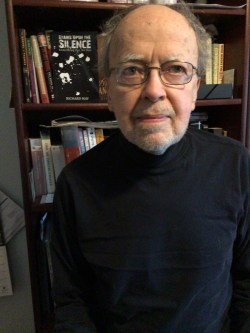
Publisher: In-Sight Publishing
Publisher Founding: March 1, 2014
Web Domain: http://www.in-sightpublishing.com
Location: Fort Langley, Township of Langley, British Columbia, Canada
Journal: In-Sight: Independent Interview-Based Journal
Journal Founding: August 2, 2012
Frequency: Three (3) Times Per Year
Review Status: Non-Peer-Reviewed
Access: Electronic/Digital & Open Access
Fees: None (Free)
Volume Numbering: 11
Issue Numbering: 2
Section: B
Theme Type: Idea
Theme Premise: “Outliers and Outsiders”
Theme Part: 27
Formal Sub-Theme: None.
Individual Publication Date: March 1, 2023
Issue Publication Date: May 1, 2023
Author(s): Richard May/May-Tzu
Author(s) Bio: Richard May (“May-Tzu”/“MayTzu”/“Mayzi”) is a Member of the Mega Society based on a qualifying score on the Mega Test (before 1995) prior to the compromise of the Mega Test and Co-Editor of Noesis: The Journal of the Mega Society. In self-description, May states: “Not even forgotten in the cosmic microwave background (CMB), I’m an Amish yuppie, born near the rarified regions of Laputa, then and often, above suburban Boston. I’ve done occasional consulting and frequent Sisyphean shlepping. Kafka and Munch have been my therapists and allies. Occasionally I’ve strived to descend from the mists to attain the mythic orientation known as having one’s feet upon the Earth. An ailurophile and a cerebrotonic ectomorph, I write for beings which do not, and never will, exist — writings for no one. I’ve been awarded an M.A. degree, mirabile dictu, in the humanities/philosophy, and U.S. patent for a board game of possible interest to extraterrestrials. I’m a member of the Mega Society, the Omega Society and formerly of Mensa. I’m the founder of the Exa Society, the transfinite Aleph-3 Society and of the renowned Laputans Manqué. I’m a biographee in Who’s Who in the Brane World. My interests include the realization of the idea of humans as incomplete beings with the capacity to complete their own evolution by effecting a change in their being and consciousness. In a moment of presence to myself in inner silence, when I see Richard May’s non-being, ‘I’ am. You can meet me if you go to an empty room.” Some other resources include Stains Upon the Silence: something for no one, McGinnis Genealogy of Crown Point, New York: Hiram Porter McGinnis, Swines List, Solipsist Soliloquies, Board Game, Lulu blog, Memoir of a Non-Irish Non-Jew, and May-Tzu’s posterous.
Word Count: 3,101
Image Credit: Richard May
International Standard Serial Number (ISSN): 2369-6885
*Please see the footnotes, bibliography, and citations, after the publication.*
Keywords: Arthur C Clarke, Arthur Schopenhauer, B.F. Skinner, Brookings Institution, C.G. Jung, Charles Fort, Donald E. Kehoe, Grady M. Towers, Jacques Vallee, James Randi, John Brennan, John E. Mack, John Greenewald, John von Neumann, May-Tzu, Michio Kaku, Niels Bohr, Non-existent Aerial Phenomena, operant conditioning, Pentagon, physics of information, Richard Dolan, Richard May, Seth Lloyd, string theory, UAP, UFO, Venus.
Nonexistent Aerial Phenomena
‘Non-existent Aerial Phenomena’, a.k.a, Unidentified Aerial Phenomena or Unidentified Flying Objects or Off-world Vehicles or Transmedium objects
“All truth passes through three stages. First, it is ridiculed. Second, it is violently opposed. Third, it is accepted as being self-evident.” — Arthur Schopenhauer
I’ve never seen a UFO or UAP, as they are now called. Change the name, end the problem? I don’t even know anyone who has seen a UFO, as far as I’m aware. I used to wish that I’d see a UFO, but no longer. I’ve learned more about Too Close Encounters of the Skinner box/Theater of the Absurd kind.
When I was a high school nerd, somehow I obtained a book entitled Flying Saucers From Outer Space by Major Donald E. Kehoe. My father told me that the subject of the book, i.e., that there were UFOs and that they were extraterrestrial was just his opinion. So I was pretty convinced even then that Major Kehoe may have been right.
I also remember a book by Aime Michel on Flying Saucers. I’m sure Philip Klass, and “The ‘Amazing’ James Randi” are correct that UFOs are flocks of geese or the planet Venus. But, sometimes I’m even skeptical of the professional Skeptics. Upton Sinclair said something to the effect that it’s hard to convince someone of something if his income depends on not believing it. I would add to his income “or his world view depends upon not believing it.”
I’ve never joined a UFO group and only own maybe three or four UFO related books.
I was guilty of listening at one time to late night talk radio, as I sat at my computer, multitasking. I thought that I could distinguish the 10% signal from the 90% noise. But the way I connected the dots it was obvious that some significant percentage of UFO observed phenomena were real and unknown (oops, if true, there goes the precious Fermi ‘paradox’) and covered up by every authority, particularly the military and the intelligence communities; Indeed, they had a duty to cover up the UFO phenomenon in my opinion, for reasons of national security and, e.g., the fears of religious fundamentalists that UFOs were ‘demons’ or ‘demonic’.
I do not expect to change anyone’s views on the matter of UFOs or any other subject. Presumably I’m not even wrong in what I have written below. In any case we are each 100% correct 100% of the time in our differing, mutually exclusive views.
There has been an unknown UFO phenomenon and many layers of coverup, which were themselves covered up. No less a whatever than John Brennan, former head of the CIA, says there appears to be something going on here vis-a-vis UFOs. See the quote and link below.
Some Conspiracy Theories are conspiracy facts. — Everyone giggle or smirk now. — You couldn’t keep something like that secret. Everyone with a high IQ knew about the Manhattan Project.
Oddly Michio Kaku, co-founder of string theory, does not seem to think that every UFO phenomenon is a flock of geese, the planet Venus or bunk to be debunked.
”Over 400 declassified UFO sightings defy the ‘normal laws of physics’. Theoretical physics professor Dr. Michio Kaku discusses the hundreds of UFO encounters that Pentagon officials recently unveiled”:
https://www.youtube.com/watch?v=EtDzYytzA_0 — 5 minute video Here is another Michio Kaku video on UFOs. — 15 minute video https://www.youtube.com/watch?v=YebZyAzLZuc
Swiss psychiatrist C.G. Jung analyzed the mythic/psychological nature of UFOs in his 1959 book Flying Saucers — A Modern Myth of Things Seen in the Sky. Jung was aware that some UFOs appear on radar, but was not concerned with whether UFOs exist in the external physical world.
A copy of C.G. Jung’s fascinating 1957 letter on UFOs is found at this link:
A free copy of his book as a PDF for download is available here:
In very brief summary Dr. Jacques Vallee, astrophysicist and computer scientist, is “the man” in my view…
https://www.amazon.com/Jacques-Vallee/e/B001K8JD8Q%3Fref=dbs_a_mng_rwt_scns_share
He may know more than he can say, either for reasons of actual U.S. national security and/or because he could have been threatened. I suppose that theoretically Vallee could be a brilliant disinformation agent.
This is certainly not his reputation. But what he does say is sufficiently stunning.
Vallee thinks that unidentified flying objects are neither flying nor objects in the ordinary sense, but interdimensional brane-world phenomena. Regarding the interstellar visitors from another planet hypothesis, he would agree with Niels Bohr’s famous assertion, “Your theory is crazy, but it’s not crazy enough to be true.”
Please see:
https://www.amazon.com/DIMENSIONS-Casebook-Contact-Jacques-Vallee/dp/1933665289
Vallee thinks that the “physics of information” may be of central importance to the UFO phenomenon. The physics of information is beyond my pay grade, but here is a link to Seth Lloyd of Cal. Tech. and M.I.T., explaining what is meant by the physics of information in general, not in relation to the UFO phenomenon.
https://www.youtube.com/watch?v=XirbbUxOxiU
UFO events are in Jacques Vallee’s view part of some sort of control system of unknown purpose, probably a variable-ratio random reinforcement schedule, à la B.F. Skinner, i.e., a form of operant conditioning.
See: https://en.wikipedia.org/wiki/Operant_conditioning
UFOs have been with us throughout our history. (Charles Fort thought that we were property.) Harvard psychiatrist John E. Mack said that the people he examined who claimed to have been “abducted by aliens” were not lying, nor were they crazy, but added that he had no understanding of what was going on. He came to support the ‘interdimensional’ interpretation of the alien abduction phenomenon mentioned above.
The first link below is to a brief biographical sketch of John E. Mack on Amazon books.
https://www.amazon.com/John-E.-Mack/e/B000AQ4TWY%3Fref=dbs_a_mng_rwt_scns_share
https://en.wikipedia.org/wiki/John_E._Mack
Professor Mack was encouraged in his research into the alien abduction phenomenon by his friend the American philosopher of science Thomas S. Kuhn, author of The Structure of Scientific Revolutions.
I’d like to add that if UFO phenomena are interdimensional (brane-world phenomena), this in no way precludes that they are also interstellar and/or time travelers, if time travel is possible. I think Dr. Vallee would agree. Of course, an interdimensional hypothesis regarding the origins and nature of UFOs may be extremely difficult or impossible to disconfirm experimentally, perhaps analogous in this respect to string theory or the Many-Worlds Interpretation (MWI) of quantum mechanics. Some have suggested that the methods of military counterintelligence may be more appropriate to apply to the UFO phenomena than the scientific method, q.v.: What do they know about us: https://thedebrief.org/what-do-they-know-about-us/
The history of unidentified aerial phenomena and the cover-ups is well documented in UFOs and the National Security State, volumes 1 and 2, by historian Richard Dolan.
https://www.amazon.com/UFOs-National-Security-State-Chronology/dp/1571743170 Dr. Vallee thinks that even today after decades of investigation the nature of the UFO
phenomenon is not understood by those in positions of authority in the U.S. military-intelligence
communities. How embarrassing for the ‘experts’, if true.
”Quote of the Week: I think some of the phenomena we’re going to be seeing continues to be unexplained and might, in fact, be some type of phenomenon that is the result of something that we don’t yet understand.” - Ex-CIA Director John Brennan
https://thedebrief.org/washingtons-ongoing-uap-problem/
I don’t think anything substantive will come out of the current hearings about UAP. Some of the sessions are closed to the public. Presumably having closed sessions is more open and transparent, an indication that there is nothing to the UAP but flocks of geese and the planet Venus. But maybe some of the geese have long, dangerous appearing bills. Thomas Jefferson would be so proud of them.
I wrote the above before the hearings were over or before I knew that they were over. I didn’t watch them.
https://www.bbc.com/news/world-us-canada-61474201
I guess the geese aren’t talking. In the sessions closed to the public they probably discussed how the geese were able to fly in from Venus, flapping their wings really hard against the vacuum of space, while holding their breath. “You can’t handle the truth“ about geese or swamp gas.
The large numbers of new acronyms is, of course, absurd. We’ve been lied to from the beginning for reasons of national security. I understand the once justified need to disinform the public. There have been cover-ups of cover-ups of cover-ups. Trust in government is low in the
U.S. and has been for very many years. Investigation of the history of reports of unidentified aerial phenomena and their cover-ups will not diminish this mistrust.
But the clincher is that the military-intelligence authorities and the ‘experts’ (people with at least 3 Ph.D.s), even after many decades of investigation, still apparently do not know what UAP are! Information may have been privatized decades ago, rather than remaining in the possession of some ultra-secret government group; E.g.: “Hey, Lockheed-Martin dudes, please tell us what this metal is, if you can.” There may be no secrets on paper, allegedly a CIA rule for “beyond top secret” stuff. And eventually people who each knew only a little on a need-to-know basis will die off, some even of natural causes. This increases security.
Even worse we, or rather high ranking members of the U.S. military and intelligence communities, may have made “deals” with UAP occupants (perhaps interdimensional brane-world, time-traveling interstellar beings, either biological entities, AI units, cyborgs or
some combination of the preceding). E.g., deals of the form: “You can continue to abduct our citizens for study, a hybridization program or whatever your purposes are, but please give us some advanced technology that we can militarize,” could have been made. If the U.S. can’t stop the abductions anyway, then this would have been a good deal for us (and completely illegal and unethical, of course). I realize that this speculation sounds more than a bit psychotic.
https://thedebrief.org/washingtons-ongoing-uap-problem/ “THE BLACK VAULT – DOCUMENT ARCHIVE
WELCOME TO THE BLACK VAULT DOCUMENT ARCHIVE”
https://www.theblackvault.com/documentarchive/
Current Government Document Page Count Within The Black Vault: 3,080,991
You’ve stumbled upon the largest privately run online repository of declassified government documents anywhere in the world. With more than 2 MILLION pages of documents to read, on nearly every government secret imaginable, The Black Vault is known worldwide for getting down to the truth… and nothing but.
Every page, photo and video you see below in this ‘FOIA Document Archive’ was obtained through the Freedom of Information Act (FOIA) or through other means of accessing U.S. government public information.
Begun in 1996, at the age of 15, John Greenewald, Jr. began hammering the U.S. Government with FOIA requests to obtain information. The Black Vault is the result of that more than two decade effort. Enjoy!”
It is somewhat surprising how much interest the U.S. military and intelligence communities have had and continue to have in “flocks of geese and the planet Venus,” i. e., classified interest. “It’s easier to think outside the box, if the box isn’t entirely intact.” — Frederik Ullen.
Below is what I wrote previously on UFOs, published on 12/22/2020, more than a year before the subject had become far more kosher and considered at least by some less “woo woo” (from Scott Douglas Jacobsen’s Interview 5 — a bit of sarcasm and irony). But after “Do you suppose we would comprehend the technology of a civilization a thousand or more years older than our own?” below, I should have added: “or the science, technology and culture of a species of off-world beings in which the average level of cognitive-mathematical ability was equivalent to that of John von Neumann?” Commenting on the well-known Hollingworth 1942 study Children above 180 IQ (based upon Stanford-Binet scores) Grady M. Towers wrote in his essay “The Outsiders” (https://prometheussociety.org/wp/articles/the-outsiders/) that, “The implication is that there is a limit beyond which genuine communication between different levels of intelligence becomes impossible.” Towers is writing about intraspecies communication. This finding generalized to interspecies communication would seem to have even greater implications for the human understanding of hyperintelligent non-Earth dwelling beings. We humans will not be capable of understanding hyperintelligent non-Earth dwelling beings and they will not be capable of understanding us, even if they attempt to do so.
Jacobsen: “May’s Paradox” asks, “Why, if a multitude of New Yorkers exist in Manhattan, evidence of New Yorkers, such as automobiles or subways, is not seen?” Why?
May: Obviously there is no evidence of New Yorkers existing, such as automobiles or subways, in New York City. That would be a Conspiracy Theory. May’s paradox should have been called the May paradox. The clear absence of evidence for the existence of New Yorkers makes May’s paradox analogous to the Fermi paradox.
In the SETI program we have searched for years for signals in the hydrogen frequency. As was pointed out in a YouTube video by Dr. Michio Kaku, there is no particular reason to assume that advanced alien life would use the hydrogen frequency to send signals, even if one assumes that such beings would use radio signals at all. Dr. Kaku also points out that if the extraterrestrial communications used spread-spectrum signals, such as we humans use even now in our cell phone signals, then we would not even recognize the alien spread-spectrum signals as signals. Please see the quote and link below, added after the original text of the interview:
“Viability of quantum communication across interstellar distances The possibility of achieving quantum communication using photons across interstellar distances is examined. For this, different factors are considered that could induce decoherence of photons, including the gravitational field of astrophysical bodies, the particle content in the interstellar medium, and the more local environment of the Solar System. The xray region of the spectrum is identified as the prime candidate to establish a quantum communication channel, although the optical and microwave bands could also enable communication across large distances. Finally, we discuss what could be expected from a quantum signal emitted by an extraterrestrial civilization, as well as the challenges for the receiver end of the channel to identify and interpret such signals.
DOI: https://doi.org/10.1103/PhysRevD.105.123033 ”
Given the exponential and unpredictable course of the growth of human technology, it seems entirely possible that a civilization even a few hundred years more advanced scientifically and technologically than our own might accomplish things in ways that we could not understand at our present level of scientific-technological development.
Do you suppose we would comprehend the technology of a civilization a thousand or more years older than our own? “Any sufficiently advanced technology is indistinguishable from magic” — Arthur C Clarke. So where are the smoke signals?
Just for fun let’s take the Roswell, New Mexico UFO crash myth. Of course, it’s just a Conspiracy Theory. The so-called Roswell incident has been explained — at least twice. Last time it was said to be a weather balloon. It might just as well have been a flock of geese or the planet Venus, I suppose.
But let’s be silly and play devil’s advocate. Suppose an unexplained extraterrestrial craft or vehicle had crashed there in 1947 after WWII. Presumably the US. military would have little or no interest in such an event. There would have been no suspicion that it might have been a Russian or German device after World War II. There would have been no military interest. There would have been no interest if not duty of the U.S. military to study and reverse engineer the advanced off-world technology for American national security. So a possible crash of some sort would not have been investigated.
But if what was discovered was thought to be an unexplained craft or an “off-world device,” as they are apparently called today, of some sort, then a high-ranking military officer or perhaps the chairman of the Joint Chiefs of Staff or our President would certainly have gone on the radio and told the U.S. public: “Fellow Americans, an unknown craft appearing to be extraterrestrial in origin has crashed in Roswell, New Mexico. We do not know its origin or understand its method of propulsion. The technology is far superior to American technology or that of any other nation on Earth. A few small gray (?) humanoid bodies have been retrieved from the crash site.
They’re not thought to be Americans. We don’t know yet with certainty if these beings are Christian or Jewish. But we can be sure they are Baptists. At this point in time it is apparent that the U.S. military cannot control its own airspace. — But, hey, don’t worry about it! — America is number one, the greatest power! — Have a nice day.”
The Brookings Institution report on the possible consequences of advanced extraterrestrial contact concluded that when a more primitive civilization encounters an advanced civilization, the more primitive civilization is damaged by the contact would certainly not be considered relevant by those in authority. The conclusion that religious fundamentalists would be highly unreceptive to contact with an advanced extraterrestrial civilization would also certainly be ignored as irrelevant.
Below are a few crackpot books of Conspiracy Theories, perhaps good for a few laughs:
Wonders in the Sky: Unexplained Aerial Objects from Antiquity to Modern Times by Jacques Vallee (Author), Chris Aubeck (Author)
A free copy of the above mentioned 482 page book can be obtained as a pdf here:
UFOs: Generals, Pilots, and Government Officials Go on the Record Paperback – August 2, 2011 by Leslie Kean (Author), John Podesta (Foreword)
UFOs and the National Security State: Chronology of a Coverup, 1941-1973 Paperback – June 1, 2002 by Richard M. Dolan (Author), Jacques F. Vallee (Foreword).
A cottage industry of woo woo, no doubt. Everyone with a high IQ knew about the Manhattan Project. You couldn’t keep something like that secret.
And in any case there are no conspiracies, ever. The Watergate break-in and subsequent Watergate cover-up were certainly not conspiracies. Project MK-Ultra was certainly not a conspiracy. Industrial espionage certainly does not involve conspiracy. — The belief that there are ever conspiracies is no more than a meta-conspiracy theory.
In summary the UFO hypothesis of visitation by advanced extraterrestrial beings is not crazy enough to explain the facts. This has been displaced for Vallee by his hypothesis of UFO visitation by advanced brane-world transversing beings, which may in addition be extraterrestrial and/or time travelers; Beings present since our antiquity, with an unknown agenda and a Skinnerian control system for humans, choreographed perfectly to off-putting absurdity. Such parsimony — interdimensionally!
Material of interest:
The Enduring Enigma of the UFO — astronauts speak — by Dean Radin https://noetic.org/wp-content/uploads/2020/12/S21_Shift_RADIN_EnduringEnigmaOfUFO.pdf Pursuing Unidentified Aerial Phenomena and ‘Impossible Futures’ — by Jacques Vallée
https://thedebrief.org/jacques-vallee-the-pursuit-of-unidentified-aerial-phenomena-and-impossible-futures/ UFOs: Shifting the Narrative from Threat to Science, Leslie Kean, August 11, 2021 https://thedebrief.org/ufos-shifting-the-narrative-from-threat-to-science/
Report on the UFO wave of 1947 by Ted Bloecher, introduction by Dr. James E. McDonald
NASA Launches Study of ‘Unidentified Aerial Phenomena’, October 24, 2022 https://www.washingtonexaminer.com/policy/defense-national-security/nasa-launches-study-on-ufos
Bibliography
None
Footnotes
None
Citations
American Medical Association (AMA 11th Edition): May R. Nonexistent Aerial Phenomena. March 2023; 11(2). http://www.in-sightpublishing.com/aerial
American Psychological Association (APA 7th Edition): May, R. (2023, March 1). Nonexistent Aerial Phenomena. In-Sight Publishing. 11(2). http://www.in-sightpublishing.com/aerial.
Brazilian National Standards (ABNT): MAY, R. Non-existent Aerial Phenomena. In-Sight: Independent Interview-Based Journal, Fort Langley, v. 11, n. 2, 2023.
Chicago/Turabian, Author-Date (17th Edition): May, Richard. 2023. “Non-existent Aerial Phenomena.” In-Sight: Independent Interview-Based Journal 11, no. 2 (Spring). http://www.in-sightpublishing.com/aerial.
Chicago/Turabian, Notes & Bibliography (17th Edition): May, R “Nonexistent Aerial Phenomena.” In-Sight: Independent Interview-Based Journal 11, no. 2 (March 2023). http://www.in-sightpublishing.com/aerial.
Harvard: May, R. (2023) ‘Non-existent Aerial Phenomena’, In-Sight: Independent Interview-Based Journal, 11(1). <http://www.in-sightpublishing.com/aerial>.
Harvard (Australian): May, R 2023, ‘Nonexistent Aerial Phenomena’, In-Sight: Independent Interview-Based Journal, vol. 11, no. 2, <http://www.in-sightpublishing.com/aerial>.
Modern Language Association (MLA, 9th Edition): May, Richard. “Non-existent Aerial Phenomena.” In-Sight: Independent Interview-Based Journal, vo.11, no. 2, 2023, http://www.in-sightpublishing.com/aerial.
Vancouver/ICMJE: Richard M. Nonexistent Aerial Phenomena [Internet]. 2023 Mar; 11(2). Available from: http://www.in-sightpublishing.com/aerial
License
In-Sight Publishing by Scott Douglas Jacobsen is licensed under a Creative Commons Attribution-NonCommercial-NoDerivatives 4.0 International License.
Based on work at www.in-sightpublishing.com.
Copyright
© Scott Douglas Jacobsen and In-Sight Publishing 2012-Present. Unauthorized use and/or duplication of this material without express and written permission from this site’s author and/or owner is strictly prohibited. Excerpts and links may be used, provided that full and clear credit is given to Scott Douglas Jacobsen, or the author(s), and In-Sight Publishing with appropriate and specific direction to the original content. All interviewees and authors copyright their material, as well, and may disseminate for their independent purposes.
Share this:

Publisher: In-Sight Publishing
Publisher Founding: March 1, 2014
Web Domain: http://www.in-sightpublishing.com
Location: Fort Langley, Township of Langley, British Columbia, Canada
Journal: In-Sight: Independent Interview-Based Journal
Journal Founding: August 2, 2012
Frequency: Three (3) Times Per Year
Review Status: Non-Peer-Reviewed
Access: Electronic/Digital & Open Access
Fees: None (Free)
Volume Numbering: 11
Issue Numbering: 2
Section: B
Theme Type: Idea
Theme Premise: “Outliers and Outsiders”
Theme Part: 27
Formal Sub-Theme: None.
Individual Publication Date: March 1, 2023
Issue Publication Date: May 1, 2023
Author(s): Richard May/May-Tzu
Author(s) Bio: Richard May (“May-Tzu”/“MayTzu”/“Mayzi”) is a Member of the Mega Society based on a qualifying score on the Mega Test (before 1995) prior to the compromise of the Mega Test and Co-Editor of Noesis: The Journal of the Mega Society. In self-description, May states: “Not even forgotten in the cosmic microwave background (CMB), I’m an Amish yuppie, born near the rarified regions of Laputa, then and often, above suburban Boston. I’ve done occasional consulting and frequent Sisyphean shlepping. Kafka and Munch have been my therapists and allies. Occasionally I’ve strived to descend from the mists to attain the mythic orientation known as having one’s feet upon the Earth. An ailurophile and a cerebrotonic ectomorph, I write for beings which do not, and never will, exist — writings for no one. I’ve been awarded an M.A. degree, mirabile dictu, in the humanities/philosophy, and U.S. patent for a board game of possible interest to extraterrestrials. I’m a member of the Mega Society, the Omega Society and formerly of Mensa. I’m the founder of the Exa Society, the transfinite Aleph-3 Society and of the renowned Laputans Manqué. I’m a biographee in Who’s Who in the Brane World. My interests include the realization of the idea of humans as incomplete beings with the capacity to complete their own evolution by effecting a change in their being and consciousness. In a moment of presence to myself in inner silence, when I see Richard May’s non-being, ‘I’ am. You can meet me if you go to an empty room.” Some other resources include Stains Upon the Silence: something for no one, McGinnis Genealogy of Crown Point, New York: Hiram Porter McGinnis, Swines List, Solipsist Soliloquies, Board Game, Lulu blog, Memoir of a Non-Irish Non-Jew, and May-Tzu’s posterous.
Word Count: 34
Image Credit: Richard May
International Standard Serial Number (ISSN): 2369-6885
*Please see the footnotes, bibliography, and citations, after the publication.*
Keywords: bed, coming home, dead, life, May-Tzu, painful experience, Richard May.
Is the universe an update?
My most painful experience was coming home from work one night
and unexpectedly finding myself dead,
sprawled across the bed.
Don’t take your life personally.
It doesn’t have anything to do with you.
May-Tzu
Bibliography
None
Footnotes
None
Citations
American Medical Association (AMA 11th Edition): May R. Is the universe an update?. March 2023; 11(2). http://www.in-sightpublishing.com/dead
American Psychological Association (APA 7th Edition): May, R. (2023, March 1). Is the universe an update?. In-Sight Publishing. 11(2). http://www.in-sightpublishing.com/dead.
Brazilian National Standards (ABNT): MAY, R. Is the universe an update?. In-Sight: Independent Interview-Based Journal, Fort Langley, v. 11, n. 2, 2023.
Chicago/Turabian, Author-Date (17th Edition): May, Richard. 2023. “Is the universe an update?.” In-Sight: Independent Interview-Based Journal 11, no. 2 (Spring). http://www.in-sightpublishing.com/dead.
Chicago/Turabian, Notes & Bibliography (17th Edition): May, R “Is the universe an update?.” In-Sight: Independent Interview-Based Journal 11, no. 2 (March 2023). http://www.in-sightpublishing.com/dead.
Harvard: May, R. (2023) ‘Is the universe an update?’, In-Sight: Independent Interview-Based Journal, 11(1). <http://www.in-sightpublishing.com/dead>.
Harvard (Australian): May, R 2023, ‘Is the universe an update?’, In-Sight: Independent Interview-Based Journal, vol. 11, no. 2, <http://www.in-sightpublishing.com/dead>.
Modern Language Association (MLA, 9th Edition): May, Richard. “Is the universe an update?.” In-Sight: Independent Interview-Based Journal, vo.11, no. 2, 2023, http://www.in-sightpublishing.com/dead.
Vancouver/ICMJE: Richard M. Is the universe an update? [Internet]. 2023 Mar; 11(2). Available from: http://www.in-sightpublishing.com/dead
License
In-Sight Publishing by Scott Douglas Jacobsen is licensed under a Creative Commons Attribution-NonCommercial-NoDerivatives 4.0 International License.
Based on work at www.in-sightpublishing.com.
Copyright
© Scott Douglas Jacobsen and In-Sight Publishing 2012-Present. Unauthorized use and/or duplication of this material without express and written permission from this site’s author and/or owner is strictly prohibited. Excerpts and links may be used, provided that full and clear credit is given to Scott Douglas Jacobsen, or the author(s), and In-Sight Publishing with appropriate and specific direction to the original content. All interviewees and authors copyright their material, as well, and may disseminate for their independent purposes.
Share this:

Publisher: In-Sight Publishing
Publisher Founding: March 1, 2014
Web Domain: http://www.in-sightpublishing.com
Location: Fort Langley, Township of Langley, British Columbia, Canada
Journal: In-Sight: Independent Interview-Based Journal
Journal Founding: August 2, 2012
Frequency: Three (3) Times Per Year
Review Status: Non-Peer-Reviewed
Access: Electronic/Digital & Open Access
Fees: None (Free)
Volume Numbering: 11
Issue Numbering: 2
Section: B
Theme Type: Idea
Theme Premise: “Outliers and Outsiders”
Theme Part: 27
Formal Sub-Theme: None.
Individual Publication Date: March 1, 2023
Issue Publication Date: May 1, 2023
Author(s): Richard May/May-Tzu
Author(s) Bio: Richard May (“May-Tzu”/“MayTzu”/“Mayzi”) is a Member of the Mega Society based on a qualifying score on the Mega Test (before 1995) prior to the compromise of the Mega Test and Co-Editor of Noesis: The Journal of the Mega Society. In self-description, May states: “Not even forgotten in the cosmic microwave background (CMB), I’m an Amish yuppie, born near the rarified regions of Laputa, then and often, above suburban Boston. I’ve done occasional consulting and frequent Sisyphean shlepping. Kafka and Munch have been my therapists and allies. Occasionally I’ve strived to descend from the mists to attain the mythic orientation known as having one’s feet upon the Earth. An ailurophile and a cerebrotonic ectomorph, I write for beings which do not, and never will, exist — writings for no one. I’ve been awarded an M.A. degree, mirabile dictu, in the humanities/philosophy, and U.S. patent for a board game of possible interest to extraterrestrials. I’m a member of the Mega Society, the Omega Society and formerly of Mensa. I’m the founder of the Exa Society, the transfinite Aleph-3 Society and of the renowned Laputans Manqué. I’m a biographee in Who’s Who in the Brane World. My interests include the realization of the idea of humans as incomplete beings with the capacity to complete their own evolution by effecting a change in their being and consciousness. In a moment of presence to myself in inner silence, when I see Richard May’s non-being, ‘I’ am. You can meet me if you go to an empty room.” Some other resources include Stains Upon the Silence: something for no one, McGinnis Genealogy of Crown Point, New York: Hiram Porter McGinnis, Swines List, Solipsist Soliloquies, Board Game, Lulu blog, Memoir of a Non-Irish Non-Jew, and May-Tzu’s posterous.
Word Count: 65
Image Credit: Richard May
International Standard Serial Number (ISSN): 2369-6885
*Please see the footnotes, bibliography, and citations, after the publication.*
Keywords: dreams, Gorgias of Leontini, Lao-Tzu, listening, Master, May-Tzu, Moonless Sun, Nothing, Richard May.
Moonless Sun
To Gorgias of Leontini:
“Nothing exists,
if anything does exist it cannot be known,
if anything exists and can be known,
it cannot be communicated.”
– Gorgias of Leontini, c. 485-380 B.C.
Moonless Sun
In dreams the Master plays sounds of the time before listening or hearing.
Waves of time upon a beach —
No one —
in an unseen sea.
Lao-Tzu standing like a tree.
May-Tzu
Bibliography
None
Footnotes
None
Citations
American Medical Association (AMA 11th Edition): May R. Moonless Sun. March 2023; 11(2). http://www.in-sightpublishing.com/moonless-sun
American Psychological Association (APA 7th Edition): May, R. (2023, March 1). Moonless Sun. In-Sight Publishing. 11(2). http://www.in-sightpublishing.com/moonless-sun.
Brazilian National Standards (ABNT): MAY, R. Moonless Sun. In-Sight: Independent Interview-Based Journal, Fort Langley, v. 11, n. 2, 2023.
Chicago/Turabian, Author-Date (17th Edition): May, Richard. 2023. “Moonless Sun.” In-Sight: Independent Interview-Based Journal 11, no. 2 (Spring). http://www.in-sightpublishing.com/moonless-sun.
Chicago/Turabian, Notes & Bibliography (17th Edition): May, R “Moonless Sun.” In-Sight: Independent Interview-Based Journal 11, no. 2 (March 2023). http://www.in-sightpublishing.com/moonless-sun.
Harvard: May, R. (2023) ‘Moonless Sun’, In-Sight: Independent Interview-Based Journal, 11(1). <http://www.in-sightpublishing.com/moonless-sun>.
Harvard (Australian): May, R 2023, ‘Moonless Sun’, In-Sight: Independent Interview-Based Journal, vol. 11, no. 2, <http://www.in-sightpublishing.com/moonless-sun>.
Modern Language Association (MLA, 9th Edition): May, Richard. “Moonless Sun.” In-Sight: Independent Interview-Based Journal, vo.11, no. 2, 2023, http://www.in-sightpublishing.com/moonless-sun.
Vancouver/ICMJE: Richard M. Moonless Sun [Internet]. 2023 Mar; 11(2). Available from: http://www.in-sightpublishing.com/moonless-sun
License
In-Sight Publishing by Scott Douglas Jacobsen is licensed under a Creative Commons Attribution-NonCommercial-NoDerivatives 4.0 International License.
Based on work at www.in-sightpublishing.com.
Copyright
© Scott Douglas Jacobsen and In-Sight Publishing 2012-Present. Unauthorized use and/or duplication of this material without express and written permission from this site’s author and/or owner is strictly prohibited. Excerpts and links may be used, provided that full and clear credit is given to Scott Douglas Jacobsen, or the author(s), and In-Sight Publishing with appropriate and specific direction to the original content. All interviewees and authors copyright their material, as well, and may disseminate for their independent purposes.

 In-Sight Publishing