Publisher: In-Sight Publishing
Publisher Founding: September 1, 2014
Publisher Location: Fort Langley, Township of Langley, British Columbia, Canada
Publication: Freethought Newswire
Original Link: https://www.bchumanist.ca/humanists_welcome_lawsuit_against_st_paul_s_maid_obstructions
Publication Date: June 19, 2024
Organization: British Columbia Humanist Association
Organization Description: The British Columbia Humanist Association has been providing a community and voice for Humanists, atheists, agnostics, and the non-religious of Metro Vancouver and British Columbia since 1982. We support the growth of Humanist communities across BC, provide Humanist ceremonies, and campaign for progressive and secular values.
The BC Humanist Association (BCHA) supports the legal action taken by Dr Jyothi Jayaraman and the family of Samantha O’Neill against Providence Health Care and the Province of British Columbia. The lawsuit challenges health authority and provincial policies prohibiting medical assistance in dying (MAID) within the facilities, violating patients’ Charter rights.
Last year, Samantha O’Neill sought end-of-life care at St Paul’s Hospital in Vancouver. Providence Health Care is a Catholic organization that opposes MAID and operates the hospital. Providence’s policies required O’Neill to transfer to a secular facility to access MAID. Tragically, Samantha died shortly after being heavily sedated for the transfer.
Ian Bushfield, Executive Director, BCHA:
No one should suffer needlessly at the end of life. Denying patients the right to a dignified death, including saying goodbye to loved ones, is a violation of their fundamental rights.
In 1995, the Government of BC signed a Master Agreement with religious healthcare facilities permitting them to establish policies that “preserve the spiritual nature of the facility.” At the time, this largely meant they could refuse to provide abortion and reproductive healthcare. Following the Carter decision, the boards of many of these faith-based facilities also blocked access to MAID.
These policies have persisted even though the overwhelming majority of Canadians, including those with a religious faith, support MAID.

The BCHA has previously called on the province to tear up the Master Agreement, saying it undermines the government’s duty of religious neutrality. Hundreds of constituents have said the same to their MLA.
Bushfield added:
We are watching this lawsuit closely and will continue urging the province to stop putting the interests of these institutions ahead of the rights of individual British Columbians. Those who agree should call on their MLA, and candidates in the upcoming election, to support equitable access to healthcare.
Dying With Dignity Canada is acting as the public interest litigant in the case and is represented by Arvay Finlay. They are seeking additional stories of individuals who’ve been subjected to a forced transfer due to institutional religious obstructions. Share your story
License
In-Sight Publishing by Scott Douglas Jacobsen is licensed under a Creative Commons Attribution-NonCommercial-NoDerivatives 4.0 International License.
Based on work at www.in-sightpublishing.com.
Copyright
© Scott Douglas Jacobsen and In-Sight Publishing 2012-Present. Unauthorized use and/or duplication of this material without express and written permission from this site’s author and/or owner is strictly prohibited. Excerpts and links may be used, provided that full and clear credit is given to Scott Douglas Jacobsen, or the author(s), and In-Sight Publishing with appropriate and specific direction to the original content. All interviewees and authors copyright their material, as well, and may disseminate for their independent purposes.

Author(s): Rick Rosner and Scott Douglas Jacobsen
Publication (Outlet/Website): Ask A Genius
Publication Date (yyyy/mm/dd): 2024/06/23
Scott Douglas Jacobsen: You have been arguing that an informational universe can be taken as, in the final analysis, deriving the universe reflected as the process of some mind. That mind or its processes reflect some armature, which is its framework. Regardless, the fundamental idea is that the universe has a mind. You are more inclined to do that, but I am not. Let’s debate.
Rick Rosner: Okay, all right. So, the universe consists of around 10 to the 85th particles when we say particles, like electrons and protons. I guess photons. I don’t know what goes into the inventory, but all that stuff is arranged in vast space and has existed for a vast time in such a way that everything’s self-consistent, that the universe agrees with itself, that everything is fairly durable, that the space particles don’t just pop in and out of existence or when they do, it’s according to the rules of quantum mechanics. It’s not arbitrary. The universe looks the same regardless of where you stand in it. The contents of the universe don’t… The universe isn’t materially different. Just because you go ten light years in some direction, it doesn’t change. The universe doesn’t reconfigure itself based on your point of view. If you went ten light years away and then came back, you’d come back to the same stuff just however long it took you to get 10 light years away and back. The universe is highly self-consistent according to the rules of physics, specifically quantum mechanics, and for large-scale stuff, general relativity. And that self-consistency built from quantum mechanics says to me that the universe is processing information, and that information is about something.
There’s so much information being processed. Whatever is processed is experienced by the universe with extreme authenticity, the feeling of authenticity that we associate with consciousness. That’s the whole argument in a nutshell. Experiencing the authenticity of what you’re experiencing based on the magnitude of self-consistent multimodal information you’re getting about whatever the information is about. When you try to figure out what makes us feel conscious, it’s multimodal information about the world. In real time as we move through the world, but it wouldn’t have to be about the information the universe processes. It doesn’t have to pertain to anything real. It could be made up. You have to imagine that it can’t just be random. There has to be some agency behind shaping the armature that supports the information’s processing. It can’t just be the random origination of a vast mind. The universe is processing information about something. It doesn’t have to be real, but it reflects some durable structure that allows that information to exist over a long period. But it’s the magnitude and consistency and multimodality of the information that gives it an authentic feeling. There’s other stuff we have that contributes to our particular flavour of consciousness: agency and judgment. You can have consciousness without agency. Maybe without judgment about the events being analyzed. Anyway, that’s my argument.
Jacobsen: If we have a system in which the universe is more likely to exist than not, it cannot be said that minds are simply inevitable, but we don’t have to make the fallacy of composition. Where you have a part of the universe having a mind, but not the universe as a whole. Is it not just a logical fallacy to make that extension?
Rosner: You said you used something that sounded like an official term, the fallacy of composition.
Jacobsen: That is a fallacy.
Rosner: It sounds like it’s a fallacy of thinking one thing is like another thing and having that thing you think has all the same characteristics as the thing you’re referencing. Is that the deal?
Jacobsen: Take an analogy. If you save money, it can be good for your financial security. Therefore, everyone should save money because it’s good for the economy.
Rosner: I don’t know. All right. So, my argument is simply that a well-ordered onslaught of information and the processing of that information, when it hits a certain size, is conscious. It has the feeling of consciousness based on magnitude and self-consistency. There’s the assumption that it’s likely multimodal in the universe. You have a bunch of things sharing local analytics. But all the analytics pertain to some whole thing. Those assumptions don’t have to be true. The universe doesn’t have to be multimodal, though I think it’s likely that it is. We know that from looking at AI, that AI is not, at this point, very multimodal. It does a lot of Bayesian analytics, and it’s not conscious. You could imagine that the universe is some massive training set. But it would have the self-consistency we see in the universe if it were scattered collections of the information that doesn’t feed into each other.
But then we have to talk about what that feedback looks like about AI versus consciousness, because as AI gets more sophisticated, we do see more feedback that has the appearance of the universe learning about. I mean of AI learning more and more about stuff like perspective and the rule like nobody told AI the rules of perspective. It has appeared to be figured out by being trained on billions of images, it pulls out Bayesian consistencies. It sees enough of certain things, like the curve of shadow or the way shadow plays across a curved surface, like a face or a boob or a butt. It’s seen enough examples to make a Bayesian bet. When it sees something boob-like or butt-like, it’s also concluded that there are these things that are boobs and butts, and if you’re looking at AI pictures of naked people, that this is where… These structures go on the person. You have all these Bayesian conclusions or semi-conclusions because they’re not conclusive that AI has reached. They all work together to form images, or the AI makes a ton of best bets. An image generated by an AI. The image generator must have made hundreds and probably thousands of bets. That falls short of consciousness, and it may be that you could have systems like this, no matter how big they get. They fall short of consciousness. But I think that in practical terms, in terms of the universe, that’s unlikely.
Jacobsen: What if the principles of existence derive something different than information processing? What is a different way to characterize the degrees of freedom in the universe? We have this quantum mechanical approach. You have fuzziness, but you can derive precise numbers from the probabilities. You have a precise probability basis to know how things can be built in the universe on that. Yet, that’s mathematical. It’s a way of saying information processing, but we typically think of it as digital. So, what’s a way we would properly need to re-characterize information processing to incorporate this more precisely?
Rosner: Our closest analogy for information processing is ones and zeros in a computer. That’s the model that we all have in our heads. If you think about the universe, you eventually conclude that making the ones and zeros model fit what’s happening is hard. A way of looking at the universe is that the universe has a size. That size is reflected in the amount of matter it contains, the number of particles, and the fuzziness of those particles. It would help if you had a number, size, or fuzziness to assign a scale to the universe. You’re looking at number, precision, overall size. You’re able to extrapolate an age of the universe. I’d argue that all these things are tightly bound with each other. The apparent age of the universe doesn’t have much choice about the amount of matter, the amount of precision, and the amount of space. All those things are locked together.
You can derive the amount of information in the universe. The amount of interaction, let’s say the universe, is defined by every particle in the universe’s history of interactions. The universe is braided. Hawking imagined a knotted universe, where interactions across the history of the universe were, in a way, weaving the universe with these obligatory relationships based on shared histories. You could also look at the universe as a weave or a set of knots. Out of that whole thing, you don’t have to calculate the amount of information, but you can. I don’t think you can divorce the amount of information it would take to specify the universe with the precision that it’s specified. But anyway, you can’t get away from that. You can always come up with a number, the amount of information it takes to characterize our universe.
Jacobsen: To simplify for a mind, though, would be an argument for a mind of God, for a God in terms of… this is a whole. You’re not a religious person. You have reformed Jewish orientations, but you don’t have religious or supernatural beliefs. My argument…
Rosner: I can’t imagine, maybe because we’re in the early days of this stuff or because my imagination is limited, a universe containing this much information without that information conveying a sense of being of actuality that we call consciousness. But we have that feeling in our minds. And our minds are built from much less information. They’re built in a specific way. We keep coming back to multimodal. We get our analytics from… we have a bunch of different analytic systems. We have our senses, and then we have tools like perspective to analyze the world around us. We have colour, we have analytics around sound. I don’t know. I’m getting tired, but… Can we stop here and return when I’m less tired?
License
In-Sight Publishing by Scott Douglas Jacobsen is licensed under a Creative Commons Attribution-NonCommercial-NoDerivatives 4.0 International License. Based on a work at www.in-sightpublishing.com.
Copyright
© Scott Douglas Jacobsen and In-Sight Publishing 2012-Present. Unauthorized use and/or duplication of this material without express and written permission from this site’s author and/or owner is strictly prohibited. Excerpts and links may be used, provided that full and clear credit is given to Scott Douglas Jacobsen and In-Sight Publishing with appropriate and specific direction to the original content. All interviewees and authors co-copyright their material and may disseminate for their independent purposes.
Author(s): Rick Rosner and Scott Douglas Jacobsen
Publication (Outlet/Website): Ask A Genius
Publication Date (yyyy/mm/dd): 2024/06/23
Rick Rosner: When interviewing you about your work, I wanted to apologize for a couple of things. One is that I went off on a tangent about quantum mechanics because I thought you had started this Canadian quantum mechanics institute. You don’t have a graduate degree in quantum mechanics. So, I had many questions about how the Institute works. But it turns out it’s different from your Institute. You work with and for them, right?
Scott Douglas Jacobsen: Yes.
Rosner: OK, you are involved in some administrative aspects. I thought you were one of the founders of the Institute.
Jacobsen: I am one of our contributors and more, along with colleagues. But I have yet to contribute the most.
Rosner: I was just trying to clarify that, but that led to me doing a monologue on quantum mechanics. So I apologize for that. It does lead to another question: How are you so good at getting hired for various positions, and what tips do you have for people? Because two things are going on in the world of employment. One is that many jobs are precarious, such as being an Uber driver or DoorDash driver. These jobs give you a certain amount of personal freedom because you’re in your car, and you determine your hours, but not really, because when you add up all your expenses, you’re making very little money. You may need two or three of these precarious jobs. The second issue is if you’re going to do precarious jobs, at least try to find ones you enjoy. For example, I was rarely a waiter. When I was young, I did it on roller skates. Being a server can be wretched because you have to cater to everyone. So, I added some fun by doing it on wheels. If you’re a bouncer, the pay is similar to being a waiter, but you can ask disruptive people to leave or physically remove them if necessary. Knowing you have that option makes it a more enjoyable job compared to being a waiter, where you have to cater to everyone.
Jacobsen: I’ve never had to cater to someone’s whims in my working life. Who led the Manhattan Project?
Rosner: Oppenheimer?
Jacobsen: Oppenheimer managed not to cater to people but knew how to maneuver socially and professionally. I also have a rich professional and intellectual record that speaks for itself. People can’t undermine my work because of my breadth of productivity and intellectual engagement.
Rosner: So the question is, when you’ve done some waiting, and you get a table full of difficult people, what goes through your head? Do you just think, “They’ll be done with their meal in an hour, and I won’t have to deal with them anymore?”
Jacobsen: I hear this a lot. I didn’t do three jobs in the restaurant industry: cooking, waiting, and managing. I did janitorial work, dishwashing, food running, bussing, hosting, event coordination, food prep, and cashiering.
Rosner: So you’re saying you have yet to encounter that many difficult people. Is that due to your attitude, or are the people in your town not having difficulty?
Jacobsen: People in the town have been relatively easy to me, except for my critical writing.
Rosner: You want to talk about the vigilante dads in your town that you ran afoul of?
Jacobsen: No, no, they were light. I’ve run afoul of many people, but mainly because they can’t provide an intellectual defence, so they try to damage my professional reputation, which never or rarely works. I handle pressures well, and I deal with life’s challenges calmly.
Rosner: Do you have any tips for people struggling with their jobs, either in getting a better job or dealing with a job that is not fulfilling? You’ve had a wide range of jobs, from highly intellectual and demanding to shoveling manure, and you seem to find something positive in every job.
Jacobsen: Life does not owe you anything. It is a zero-sum game. I learned this from older people. You have to work for things that provide for you. Every situation offers something of value. Even washing dishes can be enjoyable if you turn it into a musical routine, Alan Watts had a bit about this.
Rosner: I remember dishwashing, and the pressure to keep up was challenging. If I’d stayed longer, I would have gotten better at it.
Jacobsen: I’ve owned all my jobs and found reasons to avoid complaining. People can be annoying, but I’ve never screamed at someone. The key is to stay calm.
Rosner: Does empathy play a role in that? Do you try to understand the perspective of someone being difficult?
Jacobsen: Yes. I try to understand their mental landscape.
Rosner: I can do that to some extent, but when it feels like America is at stake, I don’t hesitate to be direct with people on Twitter. I hope my tweets have made a case against Trump and his supporters, changing some minds or encouraging people to vote against him.
Jacobsen: Empathy is helpful. I’ve comforted people during breakups, bad trips on psychedelics, who want to commit suicide at the moment – being a survivor myself, and many other situations. You have to meet people where they are. For some, it’s about day-to-day moments; for others, it’s about intellectual challenges. Two things help: decide, and if you feel agitated, wait a bit before finalizing it. If you come to the same conclusion after a few days, it’s the right decision.
Rosner: I have to apologize for one more thing. When I asked about high school and if any teacher said you were smart, I felt terrible because I phrased it as “pretty smart.” I should have just said “smart.” I apologize for that. Do you want to move on to IC?
License
In-Sight Publishing by Scott Douglas Jacobsen is licensed under a Creative Commons Attribution-NonCommercial-NoDerivatives 4.0 International License. Based on a work at www.in-sightpublishing.com.
Copyright
© Scott Douglas Jacobsen and In-Sight Publishing 2012-Present. Unauthorized use and/or duplication of this material without express and written permission from this site’s author and/or owner is strictly prohibited. Excerpts and links may be used, provided that full and clear credit is given to Scott Douglas Jacobsen and In-Sight Publishing with appropriate and specific direction to the original content. All interviewees and authors co-copyright their material and may disseminate for their independent purposes.
Author(s): Rick Rosner and Scott Douglas Jacobsen
Publication (Outlet/Website): Ask A Genius
Publication Date (yyyy/mm/dd): 2024/06/23
Scott Douglas Jacobsen: I was recalling something from a Louis C.K. special. He is not in vogue right now because of his controversies. Louis C.K. was a prominent comedian. He remains relatively prominent and has regained some of his prominence. He was known for his honest yet gritty comedy. He often dealt with life in a very raw manner. One of his commentaries was about getting older and how, as you age, your social circle or your circle of social concern changes. That has been relatively true for me in specific ways. Has it been true for you? The circle, like the things that you care about in the world, the circle of the people whom you care about. For me, for instance, I care about various human rights projects that involve thousands of people. But in terms of personal care and deep concern where I can actually make an impact, it is specific people.
Rick Rosner: OK, so not exactly the same for me. No, I had a social circle. It revolved around work until I got fired. I had my work friends, but I do not have that many friends now. Lance and JD and you, and Kevin when he is around, are my friends. And Carole, of course, and my child. But beyond that, there are not many. It might be due to me being on the spectrum, or I am not sure. But no, my social circle shrank when Kimmel let me go. Now, the circle of things that I am concerned about has probably, or at least my concern, has grown since 2016; US politics have been miserable and disastrous. The Republicans have been increasingly problematic since Reagan, but the overt corruption, lies, and willingness to take everything down as long as they win is like nothing I or any other American has seen from a major political party in our lifetimes. I think you have to go back to pre-Civil War to see anything like this. The southern states were willing to secede and go to war, which, along with the North, killed three-quarters of a million Americans. The deadliest war in absolute numbers and very much in terms of percentages. In any war in US history. At the time, the US had 30 million people and we lost 750,000. That is two and a half percent. That is significant. And you get that sense of stopping at nothing from…
Jacobsen: I am more specifically aimed at interpersonal concern.
Rosner: I have a tight circle. I do not extend myself to expand my circle. I am OK just on my own without having a large circle of friends. No, so it has not expanded; it has shrunk.
Jacobsen: So would you say the original point is more or less correct that with age, social circles shrink? Or the interpersonal circles of concern shrink. Is that more or less true?
Rosner: I do not know. I mean, is that what Louis C.K. said? That they shrink?
Jacobsen: That was more or less the argument, yes.
Rosner: I mean, for me, yes. Like people who were my friends decades ago, when I reconnect with them, they may have drifted into… we do not have many recent shared experiences. And maybe my friends have drifted into ways of being or belief systems that are uncomfortable for me, like being Trump supporters.
Jacobsen: That is all I wanted to know.
License
In-Sight Publishing by Scott Douglas Jacobsen is licensed under a Creative Commons Attribution-NonCommercial-NoDerivatives 4.0 International License. Based on a work at www.in-sightpublishing.com.
Copyright
© Scott Douglas Jacobsen and In-Sight Publishing 2012-Present. Unauthorized use and/or duplication of this material without express and written permission from this site’s author and/or owner is strictly prohibited. Excerpts and links may be used, provided that full and clear credit is given to Scott Douglas Jacobsen and In-Sight Publishing with appropriate and specific direction to the original content. All interviewees and authors co-copyright their material and may disseminate for their independent purposes.

Publisher: In-Sight Publishing
Publisher Founding: September 1, 2014
Publisher Location: Fort Langley, Township of Langley, British Columbia, Canada
Publication: Freethought Newswire
Original Link: https://humanists.international/2024/06/hungary-humanist-takes-case-of-unfair-dismissal-to-supreme-court/
Publication Date: June 21, 2024
Organization: Humanists International
Organization Description: Humanists International is the global representative body at the heart of the humanist movement. Inspired by humanist values, we are optimistic for a world where everyone can have a dignified and fulfilling life. We build, support and represent the global humanist movement and work to champion human rights and secularism. We support democracy, human rights, and the rule of law.
Hungarian humanist and founding member of the Hungarian Atheist Association, Gáspár Békés, has filed an appeal with the Supreme Court regarding his unfair dismissal from his position at Budapest City Hall. The move follows the Metropolitan Court of Appeal’s determination that Békés was lawfully dismissed owing to “scandalous” behavior that brought City Hall into disrepute.

Gáspár Békés at the World Humanist Congress 2023
Photo: Pavel Storozhuk, Norwegian Humanist Association
Founding member of the Hungarian Atheist Association, Gáspár Békés, has been fighting his dismissal from his job at Budapest City Hall since February 2021. Békés was fired for his secular journalism and activism.
On 5 March 2024, the Metropolitan Court of Appeal ruled in favor of Budapest City Hall thereby overturning a verdict handed down by the court of first instance that should be reinstated to his post and compensated for loss of earnings.
In reaching its judgment the Metropolitan Court of Appeal agreed with the determinations of the points of law made by the court of first instance (thereby supporting the legal arguments in defense of Békés). In particular, the courts agreed that a public official’s level of influence over policy and law should be taken into account. In the case at hand, it was acknowledged that in his position as an environmental protection officer, Békés did not have authority to influence decision-making. Additionally, as the statements that Békés made referred to matters outside of his area of professional expertise, they agreed that his personal beliefs would not influence public policy on the issues.
Such a determination should have been sufficient for the Metropolitan Court to uphold the ruling of the court of first instance in favor of Békés. However, the Metropolitan Court opined that the lower court had failed to sufficiently examine the weight of evidence against the Békés, determining that his actions exceeded the threshold where such a defense could be upheld. In order to make this determination, the Metropolitan Court of Appeal introduced new evidence, contrary to judicial procedure.

Gáspár Békés, founding member of the Hungarian Atheist Association
Gáspár Békés, founding member of the Hungarian Atheist Association, told Humanists International:
“After a fourth trial, all of city hall’s arguments supporting my termination have been rejected by the appeals court. In addition, the court stated that all the publications used as evidence to justify my termination did not violate the law, nor were they even offensive. Yet the court still ruled against me. They arbitrarily and illegally introduced new evidence and argumentation after the fact in order to reach their verdict, referring to a defamatory and factually false article written by a far-right portal’s neonazi journalist.
“I have therefore submitted my appeal to the Supreme Court, and filed complaints and criminal charges against the judges that made defamatory statements about me in the ruling.”
Humanists International believes that Gáspár Békés is being targeted solely for peacefully exercising his rights to freedom of religion or belief and freedom of expression and thought, as a result of his activism to spread humanist values and critical thinking, and calls for the Hungarian authorities to investigate all threats against Békés and ensure his safety. Additionally, Humanists International calls on Budapest City Hall to reinstate Békés, and provide him with all due compensation.
License
In-Sight Publishing by Scott Douglas Jacobsen is licensed under a Creative Commons Attribution-NonCommercial-NoDerivatives 4.0 International License.
Based on work at www.in-sightpublishing.com.
Copyright
© Scott Douglas Jacobsen and In-Sight Publishing 2012-Present. Unauthorized use and/or duplication of this material without express and written permission from this site’s author and/or owner is strictly prohibited. Excerpts and links may be used, provided that full and clear credit is given to Scott Douglas Jacobsen, or the author(s), and In-Sight Publishing with appropriate and specific direction to the original content. All interviewees and authors copyright their material, as well, and may disseminate for their independent purposes.
Publisher: In-Sight Publishing
Publisher Founding: September 1, 2014
Publisher Location: Fort Langley, Township of Langley, British Columbia, Canada
Publication: Freethought Newswire
Original Link: https://humanists.international/2024/06/kenya-atheist-society-recognised-on-national-stage-despite-legal-challenge/
Publication Date: June 10, 2024
Organization: Humanists International
Organization Description: Humanists International is the global representative body at the heart of the humanist movement. Inspired by humanist values, we are optimistic for a world where everyone can have a dignified and fulfilling life. We build, support and represent the global humanist movement and work to champion human rights and secularism. We support democracy, human rights, and the rule of law.
On 29 May 2024, representatives of the Atheists in Kenya Society were invited to attend the National Prayer Breakfast in what may be seen as a significant gesture of support for the right to freedom of religion or belief for all. The invitation comes at a time when the organization itself is fighting a legal challenge to its registration as a society.

Harrison Mumia, President of Atheists in Kenya Society
Reflecting on the significance of the invitation, Harrison Mumia, President of Atheists in Kenya Society said:
“The invitation extended by Parliament for me to attend the National Prayer Breakfast is a significant milestone in Kenya’s ongoing journey towards greater religious freedom and interfaith cooperation. This gesture speaks volumes about the country’s commitment to fostering a culture of inclusivity, where people of all faiths, including those who hold non-theistic beliefs, can dialogue and work together.
By continuing to champion these inclusive practices, Kenya is poised to become a shining example of how a country can celebrate its diversity while also strengthening the bonds of national unity. We look forward to working with Christians, Hindus, and Muslims in fostering inter-faith dialogue in Kenya.”

The National Prayer Breakfast is an annual ecumenical event offered under the auspices of the Speakers of the Kenyan National Assembly and the Senate, and organized by a group of dedicated volunteers who make up the National Prayer Breakfast Organizing Committee.
The invitation stands in stark contrast to the legal challenge to the organization’s registration filed by a member of the public. The court is expected to issue a date for judgment in July.
According to the Freedom of Thought Report, a secular nation on paper, Kenya’s Constitution enshrines the rights to freedom of expression, freedom of association and assembly, and freedom of conscience, religion, thought, belief and opinion. However, Christian and Muslim groups appear to benefit from a privileged position in society. The allegations made in the petition appear to be based on a lack of understanding of the right to freedom of religion or belief as enshrined in the Universal Declaration on Human Rights (quoted in the petition), the International Covenant on Civil and Political Rights – to which Kenya is a signatory – and, by extension, the Kenyan Constitution.
Founded in 2013, Atheists in Kenya Society is an Associate Member of Humanists International. The organization, which unites Kenya’s atheist community, became the first non-religious society to be registered under the Societies Act (CAP108) in February 2016 after its initial rejection. However, only two months later the organization’s registration was suspended after the then-attorney general, Prof. Githu Muigai cited complaints from religious groups.
The organization’s founder and President, Harrison Mumia, challenged their suspension at the High Court, succeeding in the reinstatement of society’s status in 2018.
Since its establishment the organization has worked to provide a community for atheists and foster open, rational, and scientific examination of the universe as well as advocate on the basis of humanist principles. They have sought to create acceptance of atheists living in Kenya.

Andrew Copson, President of Humanists International
Andrew Copson, President of Humanists International stated:
“The stark contrast between the State’s demonstration of support for freedom of religion or belief, and the public’s resistance to the existence of an explicitly non-religious organization demonstrates that there is yet some way to go before the non-religious are perceived as equal within society. Humanists International welcomes the State’s commitment and support in this endeavor.”
License
In-Sight Publishing by Scott Douglas Jacobsen is licensed under a Creative Commons Attribution-NonCommercial-NoDerivatives 4.0 International License.
Based on work at www.in-sightpublishing.com.
Copyright
© Scott Douglas Jacobsen and In-Sight Publishing 2012-Present. Unauthorized use and/or duplication of this material without express and written permission from this site’s author and/or owner is strictly prohibited. Excerpts and links may be used, provided that full and clear credit is given to Scott Douglas Jacobsen, or the author(s), and In-Sight Publishing with appropriate and specific direction to the original content. All interviewees and authors copyright their material, as well, and may disseminate for their independent purposes.
Publisher: In-Sight Publishing
Publisher Founding: September 1, 2014
Publisher Location: Fort Langley, Township of Langley, British Columbia, Canada
Publication: Freethought Newswire
Original Link: https://humanists.international/2024/05/historic-humanist-wedding-in-lithuania-gathers-more-than-21000-signatures/
Publication Date: May 31, 2024
Organization: Humanists International
Organization Description: Humanists International is the global representative body at the heart of the humanist movement. Inspired by humanist values, we are optimistic for a world where everyone can have a dignified and fulfilling life. We build, support and represent the global humanist movement and work to champion human rights and secularism. We support democracy, human rights, and the rule of law.
On April 24, 2024, in Vilnius, Lithuania, a historic humanist wedding ceremony for Vitalius (70) and Albinas (85) took place, marking a significant moment for same-sex couples in the country. The couple, who have been together for 52 years, decided to publicly share their love story after decades of secrecy due to societal pressures and legal prohibitions against same-sex relationships.


The Lithuanian organization “Laimingas Žmogus” (Happy Human), also an Associate of Humanists International, orchestrated the event, offering free wedding ceremonies to homosexual couples until same-sex marriage becomes legal in Lithuania. The ceremony, attended by around 100 friends and influencers, featured a Humanist wedding certificate signed by all attendees. The event received extensive media coverage, bringing attention to the couple’s story and the broader issue of LGBTI+ rights in Lithuania.
In addition to the physical signatures gathered during the ceremony, an online campaign was launched, allowing people to sign the wedding certificate virtually. This initiative resulted in over 21,000 signatures, making it the most signed marriage certificate in Lithuanian history and a powerful symbol of support for same-sex couples.
On May 17th, the International Day Against Homophobia, Laimingas žmogus presented the couple with the printed certificate, which included all the signatures. An informational stand about the ceremony was also placed at the Modern Art Museum, where the ceremony was held, highlighting its significance.


The event has become a significant advocacy tool for LGBT+ rights in Lithuania, symbolizing hope and recognition for same-sex couples in a country where same-sex marriage is still not legal.
Urtė Žukauskaitė-Zabukė, CEO of Laimingas Žmogus (Happy Human), commented:

“I strongly believe humanist ceremonies create a future, in which all human beings and their choices are respected and recognized. „Happy human”, being a competent service provider for such ceremonies, has a unique role to be a bridge between human rights advocates and the best wedding market professionals.”
License
In-Sight Publishing by Scott Douglas Jacobsen is licensed under a Creative Commons Attribution-NonCommercial-NoDerivatives 4.0 International License.
Based on work at www.in-sightpublishing.com.
Copyright
© Scott Douglas Jacobsen and In-Sight Publishing 2012-Present. Unauthorized use and/or duplication of this material without express and written permission from this site’s author and/or owner is strictly prohibited. Excerpts and links may be used, provided that full and clear credit is given to Scott Douglas Jacobsen, or the author(s), and In-Sight Publishing with appropriate and specific direction to the original content. All interviewees and authors copyright their material, as well, and may disseminate for their independent purposes.

Publisher: In-Sight Publishing
Publisher Founding: September 1, 2014
Publisher Location: Fort Langley, Township of Langley, British Columbia, Canada
Publication: Freethought Newswire
Original Link: https://humanists.international/2024/05/humanists-international-launches-humanist-pledge-for-2024-european-elections/
Publication Date: May 30, 2024
Organization: Humanists International
Organization Description: Humanists International is the global representative body at the heart of the humanist movement. Inspired by humanist values, we are optimistic for a world where everyone can have a dignified and fulfilling life. We build, support and represent the global humanist movement and work to champion human rights and secularism. We support democracy, human rights, and the rule of law.
Humanists International, in cooperation with many of its European Members, has launched a Humanist Pledge for the upcoming European Parliamentary Elections. The Pledge represents a commitment by candidate Members of the European Parliament (MEPs) to the 2024 European elections to support fundamental humanist values.
The Humanist Pledge emphasises principles such as the defence of human rights, rule of law, and liberal democracy; the rejection of populist nationalism and politics of fear and scapegoating ; the importance of secularism and evidence-based decision-making; the protection of self-determination and bodily autonomy; strengthening EU democracy through civil society inclusion and a free media; and urgent, equitable climate action guided by science. This initiative aims to create a transparent public record of candidate MEPs’ positions on key humanist issues, facilitating informed decision-making and mobilising public support.
The Humanist Pledge is available in 11 European languages on the dedicated webpage. The page also includes a list of the candidate MEPs who have signed the pledge and therefore have committed to its humanist principles. It also features links to their national parties’ pages that provide information on their political views. Furthermore, it shows the European parties to which these national parties are affiliated and provides their manifestos for the 2024 elections.
Signatories of the pledge include a Vice President of the European Parliament and several lists’ number ones.
With this initiative, Humanists International and its European Policy Forum aim to contribute to the democratic conversations ahead of the June 2024 European elections, providing accessible information to engage voters and enable informed decision-making.
The Pledge was drafted by the Humanists International Advocacy team in cooperation with the European Policy Forum Members, comprising 21 European Member Organizations. Operating as a self-funded project under Humanists International, the Forum focuses on coordinating advocacy efforts across national and European policy arenas.
License
In-Sight Publishing by Scott Douglas Jacobsen is licensed under a Creative Commons Attribution-NonCommercial-NoDerivatives 4.0 International License.
Based on work at www.in-sightpublishing.com.
Copyright
© Scott Douglas Jacobsen and In-Sight Publishing 2012-Present. Unauthorized use and/or duplication of this material without express and written permission from this site’s author and/or owner is strictly prohibited. Excerpts and links may be used, provided that full and clear credit is given to Scott Douglas Jacobsen, or the author(s), and In-Sight Publishing with appropriate and specific direction to the original content. All interviewees and authors copyright their material, as well, and may disseminate for their independent purposes.
Publisher: In-Sight Publishing
Publisher Founding: September 1, 2014
Publisher Location: Fort Langley, Township of Langley, British Columbia, Canada
Publication: Freethought Newswire
Original Link: https://humanists.international/2024/05/philippines-hapis-youth-training-program-completes-successful-run/
Publication Date: May 29, 2024
Organization: Humanists International
Organization Description: Humanists International is the global representative body at the heart of the humanist movement. Inspired by humanist values, we are optimistic for a world where everyone can have a dignified and fulfilling life. We build, support and represent the global humanist movement and work to champion human rights and secularism. We support democracy, human rights, and the rule of law.
The Humanist Alliance Philippines, International (HAPI), with support from Humanists International, has successfully concluded its “Leading Myself – Leading Others” youth leadership training program. This initiative, funded by the Young Humanist Grants, aimed to cultivate leadership skills and promote the values of humanism among young leaders from various HAPI Chapters.

The program addressed the inexperience of some members by equipping them with practical leadership and communication skills. The participants engaged in workshops and activities designed to enhance their abilities to manage teams, plan projects effectively, and confidently promote humanism within their communities.
Over several weeks, participants engaged in workshops and activities designed to enhance their leadership abilities and confidence. The program covered diverse leadership styles and practical applications, empowering attendees to lead effectively in both their local chapters and professional environments.
“The workshop was engaging and interactive, and everyone was very welcome to listen to the various ideas that each participant had to offer,” shared Glemir Sordilla, a HAPI Scholar from Bacolod City, Negros Occidental. Angelica Jardine Zalameda, a HAPI Junior Ambassador, added, “After attending the youth leadership program, I was able to use and improve my skills to obtain the desired outcomes.”


Mary Jane V. Quiming, Chief Finance Officer of Humanist Alliance Philippines, International, commented:
“This event was not just a training program; it was an investment in the future. It reinforced the belief that when empowered with knowledge, guided by humanist values, and equipped with leadership skills, the youth become catalysts for positive change – a beacon of hope for a world brimming with empathy, understanding, and progress.”
License
In-Sight Publishing by Scott Douglas Jacobsen is licensed under a Creative Commons Attribution-NonCommercial-NoDerivatives 4.0 International License.
Based on work at www.in-sightpublishing.com.
Copyright
© Scott Douglas Jacobsen and In-Sight Publishing 2012-Present. Unauthorized use and/or duplication of this material without express and written permission from this site’s author and/or owner is strictly prohibited. Excerpts and links may be used, provided that full and clear credit is given to Scott Douglas Jacobsen, or the author(s), and In-Sight Publishing with appropriate and specific direction to the original content. All interviewees and authors copyright their material, as well, and may disseminate for their independent purposes.
Publisher: In-Sight Publishing
Publisher Founding: September 1, 2014
Publisher Location: Fort Langley, Township of Langley, British Columbia, Canada
Publication: Freethought Newswire
Original Link: https://humanists.international/2024/05/young-humanists-drive-change-in-peru/
Publication Date: May 29, 2024
Organization: Humanists International
Organization Description: Humanists International is the global representative body at the heart of the humanist movement. Inspired by humanist values, we are optimistic for a world where everyone can have a dignified and fulfilling life. We build, support and represent the global humanist movement and work to champion human rights and secularism. We support democracy, human rights, and the rule of law.
The Secular Humanist Society of Peru recently concluded its Young Humanist Meetings, a project aimed at fostering a sustainable humanist movement among younger demographics. Funded by Humanists International, the initiative organized in-person gatherings at cafes, created social media spaces, and engaged university students.
Following the success of their 2023 virtual meetings, this year’s transition to in-person events enhanced accessibility and engagement. The project provided a platform for critical thinking and challenging societal norms. Among the 15 participants, including Sergio Pérez and Nicolás Espinoza, emphasized the impact of these dynamic interactions, highlighting the importance of “disruptive” conversations and the role of epistemology in shaping political beliefs.
The approach of connecting existing humanist groups with younger individuals and offering leadership training has been key to cultivating a sustainable humanist community. By equipping young humanists with tools for intellectual curiosity and informed perspectives, the project has empowered them to critically analyze information and develop well-founded beliefs, ensuring a bright future for the humanist movement in Peru.

Piero Gayozzo, Board Member of Secular Humanist Society of Peru, commented:
“These meetings have been instrumental in fostering critical thinking and promoting humanist values among young individuals. We look forward to continuing our efforts to expand our community and promote rational discourse.”
License
In-Sight Publishing by Scott Douglas Jacobsen is licensed under a Creative Commons Attribution-NonCommercial-NoDerivatives 4.0 International License.
Based on work at www.in-sightpublishing.com.
Copyright
© Scott Douglas Jacobsen and In-Sight Publishing 2012-Present. Unauthorized use and/or duplication of this material without express and written permission from this site’s author and/or owner is strictly prohibited. Excerpts and links may be used, provided that full and clear credit is given to Scott Douglas Jacobsen, or the author(s), and In-Sight Publishing with appropriate and specific direction to the original content. All interviewees and authors copyright their material, as well, and may disseminate for their independent purposes.
Publisher: In-Sight Publishing
Publisher Founding: September 1, 2014
Publisher Location: Fort Langley, Township of Langley, British Columbia, Canada
Publication: Freethought Newswire
Original Link: https://humanists.international/2024/05/advocacy-group-fights-human-rights-abuses-against-alleged-witches-in-africa/
Publication Date: May 22, 2024
Organization: Humanists International
Organization Description: Humanists International is the global representative body at the heart of the humanist movement. Inspired by humanist values, we are optimistic for a world where everyone can have a dignified and fulfilling life. We build, support and represent the global humanist movement and work to champion human rights and secularism. We support democracy, human rights, and the rule of law.
In a bid to protect individuals accused of “witchcraft”, the Advocacy for Alleged Witches (AfAW) spearheaded a project to combat human rights abuses across Africa. “Witchcraft Accusations and Human Rights Abuses project” continues its mission to defend the rights of alleged “witches” across African nations.
Funded by a Development Grant from Humanists International, AfAW has actively engaged in initiatives addressing human rights abuses linked to “witchcraft” accusations. The project has provided medical care, legal aid, and financial support to individuals like Blessing Odege who was abused due to “witchcraft” accusations. The project also secured Pa Justin Kyado with medical attention and legal action after a brutal attack, ensuring his recovery and reintegration into the community.
Additionally, the project collaborates with similar organizations and conducts workshops, public education campaigns, and lobbying efforts to combat systemic challenges faced by those accused of “witchcra”.
Accusations of witchcraft can have severe consequences, leading to physical violence, social isolation, and psychological harm. That is why Humanists International supports project like Advocacy for Alleged Witches’s initiatives, to make sure that this crucial issue is addressed and to safeguard the human rights of accused individuals.

Dooyum Dominic Ingye, Director of Advocacy for Alleged Witches, commented:
“The Advocacy for Alleged Witches remains committed to defending the rights of alleged ‘witches’ in Africa. Our work is crucial in addressing thepervasive human rights abuses stemming from witchcraft accusations. Despite challenges, we continue to advocate for justice and strive for a moreequitable society for all.”
License
In-Sight Publishing by Scott Douglas Jacobsen is licensed under a Creative Commons Attribution-NonCommercial-NoDerivatives 4.0 International License.
Based on work at www.in-sightpublishing.com.
Copyright
© Scott Douglas Jacobsen and In-Sight Publishing 2012-Present. Unauthorized use and/or duplication of this material without express and written permission from this site’s author and/or owner is strictly prohibited. Excerpts and links may be used, provided that full and clear credit is given to Scott Douglas Jacobsen, or the author(s), and In-Sight Publishing with appropriate and specific direction to the original content. All interviewees and authors copyright their material, as well, and may disseminate for their independent purposes.
Publisher: In-Sight Publishing
Publisher Founding: September 1, 2014
Publisher Location: Fort Langley, Township of Langley, British Columbia, Canada
Publication: Freethought Newswire
Original Link: https://humanists.international/2024/05/humanists-brazil-launches-pioneering-e-book-on-humanism/
Publication Date: May 16, 2024
Organization: Humanists International
Organization Description: Humanists International is the global representative body at the heart of the humanist movement. Inspired by humanist values, we are optimistic for a world where everyone can have a dignified and fulfilling life. We build, support and represent the global humanist movement and work to champion human rights and secularism. We support democracy, human rights, and the rule of law.
Humanists Brazil has taken a step towards promoting humanism in the country with the release of a 20,000-word Portuguese publication which serves as an introductory guide to humanism.
The e-book is available for free and aims to clear up widespread misconceptions about humanism in Brazil.
In Brazil, humanism is often confused with “Catholic humanism” or “humanistic psychology”. This e-book aims to resolve these misunderstandings by providing clear and accurate information about humanism and the mission of Humanists Brazil. By educating the public, Humanists Brazil hopes to foster a better understanding of its organizational values and goals.
The e-book has already been downloaded 24 times as of writing. One reader has volunteered to translate the book into two additional languages, and the owner of a major Brazilian atheism website, inspired by the e-book, proposed a collaboration to further spread the message.
Download the ebook here.

Jonas Felipe Abreu de Sousa, Southeast Director of Humanists Brazil, commented:
“These first results are a success.”
“Usually, people interact very little with our page, so 24 downloads in 3 months is considerably high. As it’s a book, we expect the return to be muchslower.
License
In-Sight Publishing by Scott Douglas Jacobsen is licensed under a Creative Commons Attribution-NonCommercial-NoDerivatives 4.0 International License.
Based on work at www.in-sightpublishing.com.
Copyright
© Scott Douglas Jacobsen and In-Sight Publishing 2012-Present. Unauthorized use and/or duplication of this material without express and written permission from this site’s author and/or owner is strictly prohibited. Excerpts and links may be used, provided that full and clear credit is given to Scott Douglas Jacobsen, or the author(s), and In-Sight Publishing with appropriate and specific direction to the original content. All interviewees and authors copyright their material, as well, and may disseminate for their independent purposes.
Publisher: In-Sight Publishing
Publisher Founding: September 1, 2014
Publisher Location: Fort Langley, Township of Langley, British Columbia, Canada
Publication: Freethought Newswire
Original Link: https://humanists.international/2024/05/nigeria-court-of-appeal-reduces-sentence-of-mubarak-bala/
Publication Date: May 13, 2024
Organization: Humanists International
Organization Description: Humanists International is the global representative body at the heart of the humanist movement. Inspired by humanist values, we are optimistic for a world where everyone can have a dignified and fulfilling life. We build, support and represent the global humanist movement and work to champion human rights and secularism. We support democracy, human rights, and the rule of law.
Humanists International welcomes news that the Court of Appeal sitting in Kano upheld the appeal of Nigerian humanist Mubarak Bala, ordering that his sentence be reduced from 24 years in prison to five years.
![]()
Leo Igwe, Board Member of Humanists International
Dr Leo Igwe, Board member of Humanists International, commented:
“This ruling by the court of appeal provides a glimmer of hope for the rule of law, justice and humanity in Nigeria. Bala’s imprisonment is an affront on basic humanism and violates the core principles of human rights.”
Mubarak Bala, President of the Humanist Association of Nigeria, was arrested from his home in Kaduna State, northern Nigeria, on 28 April 2020 in connection with a series of Facebook posts that some deemed to be “blasphemous” and likely to cause a public disturbance. Two years later, on 5 April 2022, he was convicted on 18 counts of “causing a public disturbance” under Sections 210 and 114 of the Kano State Penal Code, respectively.
Emitting their judgment today, the presiding justices reportedly unanimously agreed that the sentence handed down to Bala in April 2022 was excessive and in contravention of the law. The court reduced Bala’s sentence to five years in prison. The state has the right to appeal.
Bala and his legal team will review the judgment in full in order to determine if there may be further grounds for appeal.

Andrew Copson, President of Humanists International
Andrew Copson, President of Humanists International said:
“The Court of Appeal’s judgment is welcome news, coming four years on from when Mubarak was arbitrarily detained at home following unjust complaints. We believe that Mubarak should never have been imprisoned for expressing his beliefs in a peaceful manner, and that he pled guilty to these charges under duress.
“Free speech is a fundamental right for a free society, and Humanists International will continue its efforts to support those who are wrongfully imprisoned for expressing their beliefs peacefully.”
Humanists International believes that Mubarak Bala is being targeted for the peaceful exercise of his rights to freedom of expression and religion or belief. While the organization welcomes the reduction in Bala’s sentence, it reiterates its conviction that he should never have been convicted in the first instance, and urges the state and federal authorities to repeal their outdated blasphemy laws.
License
In-Sight Publishing by Scott Douglas Jacobsen is licensed under a Creative Commons Attribution-NonCommercial-NoDerivatives 4.0 International License.
Based on work at www.in-sightpublishing.com.
Copyright
© Scott Douglas Jacobsen and In-Sight Publishing 2012-Present. Unauthorized use and/or duplication of this material without express and written permission from this site’s author and/or owner is strictly prohibited. Excerpts and links may be used, provided that full and clear credit is given to Scott Douglas Jacobsen, or the author(s), and In-Sight Publishing with appropriate and specific direction to the original content. All interviewees and authors copyright their material, as well, and may disseminate for their independent purposes.
Publisher: In-Sight Publishing
Publisher Founding: September 1, 2014
Publisher Location: Fort Langley, Township of Langley, British Columbia, Canada
Publication: Freethought Newswire
Original Link: https://humanists.international/2024/04/humanist-conference-in-singapore-exploring-secularism-and-interfaith-harmony/
Publication Date: April 26, 2024
Organization: Humanists International
Organization Description: Humanists International is the global representative body at the heart of the humanist movement. Inspired by humanist values, we are optimistic for a world where everyone can have a dignified and fulfilling life. We build, support and represent the global humanist movement and work to champion human rights and secularism. We support democracy, human rights, and the rule of law.
Singapore will be the center of global humanism as it hosts the International Humanist Conference (IHC) from 30 to 31 August 2024. This year’s host, our Member, the Humanist Society Singapore in collaboration with Humanists International, marks this conference as a major opportunity to explore ideas of secularism and interfaith harmony.
Attendees can expect insightful talks and interactive experiences like interfaith tours and workshops facilitated by subject-matter experts, enriching their understanding of diverse religious practices and fostering dialogue across denominations. This event will bring together 140 foreign delegates, including senior leadership and representatives from non-religious organizations worldwide, along with university students and young adults.
The International Humanist Conference (IHC) is just one part of a larger gathering in Singapore, the 2024 Humanists International General Assembly that will also take place on 1 September, serves as the policy-making body of Humanists International, comprising representatives from Members, Associates, and the Humanists International Board. Convened at least once yearly, it fosters discussions, elections, and awards ceremonies.
Save the date for an inspiring experience at the IHC and the 2024 Humanists International General Assembly in Singapore. Engage with peers, learn from experts, and shape the future of global humanism. For ticket details, visit Humanists Society Singapore through their website. For more information about the 2024 Humanists International General Assembly, including the agenda and registration, visit the official event page.
License
In-Sight Publishing by Scott Douglas Jacobsen is licensed under a Creative Commons Attribution-NonCommercial-NoDerivatives 4.0 International License.
Based on work at www.in-sightpublishing.com.
Copyright
© Scott Douglas Jacobsen and In-Sight Publishing 2012-Present. Unauthorized use and/or duplication of this material without express and written permission from this site’s author and/or owner is strictly prohibited. Excerpts and links may be used, provided that full and clear credit is given to Scott Douglas Jacobsen, or the author(s), and In-Sight Publishing with appropriate and specific direction to the original content. All interviewees and authors copyright their material, as well, and may disseminate for their independent purposes.
Publisher: In-Sight Publishing
Publisher Founding: March 1, 2014
Web Domain: http://www.in-sightpublishing.com
Location: Fort Langley, Township of Langley, British Columbia, Canada
Journal: In-Sight: Independent Interview-Based Journal
Journal Founding: August 2, 2012
Frequency: Three (3) Times Per Year
Review Status: Non-Peer-Reviewed
Access: Electronic/Digital & Open Access
Fees: None (Free)
Volume Numbering: 12
Issue Numbering: 3
Section: B
Theme Type: Idea
Theme Premise: “Outliers and Outsiders”
Theme Part: 31
Formal Sub-Theme: None.
Individual Publication Date: June 22, 2024
Issue Publication Date: September 1, 2024
Author(s): James Haught
Author(s) Bio: James A. Haught, syndicated by PeaceVoice, was the longtime editor at the Charleston Gazette and had been the editor emeritus since 2015. He was thought to have been the first investigative reporter in West Virginia. He won two dozen national newswriting awards and was author of 12 books and 150 magazine essays. He was also a senior editor of Free Inquiry magazine and was writer-in-residence for the United Coalition of Reason. He died on Sunday, July 23 (2023), at the age of 91.
Word Count: 651.
Image Credits: None.
International Standard Serial Number (ISSN): 2369-6885
*Please see the footnotes, bibliography, and citations, after the publication.*
Keywords: A Clean, Well-Lighted Place, Antoine de Saint-Exupery, Charleston Gazette-Mail, Ernest Hemingway, James Thurber, Katherine Mansfield, O. Henry, short stories, The Garden Party, The Gift of the Magi, The Last Leaf, The Monkey’s Paw.
My all-time favorite stories
We live in a colossal ocean of verbiage. The whole planet buzzes with gushing language. Amid this never-stopping avalanche, a few special, exquisite, heart-gripping tales have locked into my psyche over the years, remaining there permanently. Here are my gems:
“The Last Leaf” by O. Henry — Before the advent of antibiotics, a little girl in a grimy tenement sinks in the grip of pneumonia. In late autumn, she lies by a window and watches leaves falling from a tree in a courtyard. An old artist from upstairs notices her intent focus on the disappearing leaves. Late at night, he paints a leaf on a stone wall behind the tree. The girl sees it stubbornly in place after all others are gone. The more it refuses to fall, the more she grows determined to fight to hang onto life.
“The Garden Party” by Katherine Mansfield — A prosperous family prepares for a lavish gala for affluent friends when word arrives that a poor neighbor laborer was killed in a cart accident. The rich family’s teenage daughter is horrified and wants to cancel the party, but her family discretely reminds her that working-class folk are below the prosperous set and really don’t merit such concern. After the party, the teen takes leftover food to the shanty of the grieving neighbors but feels awkwardly out of place.
“A Clean, Well-Lighted Place” by Ernest Hemingway — In a late-night café, the only customer is a deaf old man, drinking brandy alone. A young waiter, eager to hurry home to his wife in bed, is impatient to close, but the aging bartender, who has nobody, knows why the lonely old man needs a bright place to occupy the night hours. Both the barman and the drinker understand the nothingness that engulfs their lives. The bartender prays sardonically: “Our nada, who art in nada, nada be thy name.”
“The Little Prince” by Antoine de Saint-Exupery — A fairy tale about an aviator crashed in the desert meeting a curly-haired boy who has arrived on an asteroid. The small prince wisely observes the folly of much human endeavor. The boy tames a desert fox who says: “One sees clearly only with the heart. What is essential is invisible to the eye.”
“The Gift of the Magi” by O. Henry — As Christmas approaches, a struggling young couple can’t afford gifts for each other. Their most prized possessions are her silky hair that flows almost to her knees, and his grandfather’s ornate gold watch. Secretly, she sells her hair to buy a platinum fob for his watch — and secretly he sells the watch to buy elegant combs for her hair. They wind up with useless gifts — but awareness of how much each cares for the other.
“One is a Wanderer” by James Thurber — A lonely single man roams among married friends, surrounded by people but always isolated and adrift.
“The Monkey’s Paw” by W.W. Jacobs — This magic tale teaches: Beware what you ask for. An aging couple, living with their son, are visited by an old soldier returning from India. He has a mummified monkey’s paw that can grant three wishes. The wife wishes for enough money to pay off their mortgage. The next day, their son doesn’t return from his factory job — but a factory manager comes to inform them that the son was killed by a machine. The factory pays compensation — which happens to be the amount of their mortgage debt. The hysterical mother grabs the paw and wishes for her son’s return. Knocking is heard at the door. But her husband realizes that the treacherous paw will bring a mangled mutilation victim. He wishes the son gone — and the knocking ceases.
Someone once said: A good short story is one you can read in an hour and remember as long as you live. You’ve heard my list. Maybe you can dredge your memory bank and assemble your own gems.
This article is adapted from a piece that originally appeared in the Charleston Gazette-Mail on Dec. 8, 2013, and was republished at Daylight Atheism on April 26, 2021.
Bibliography
None
Footnotes
None
Citations
American Medical Association (AMA 11th Edition): Haught J. My all-time favorite stories. June 2024; 12(3). http://www.in-sightpublishing.com/haught-favorite
American Psychological Association (APA 7th Edition): Haught, J. (2024, June 22). My all-time favorite stories. In-Sight Publishing. 12(3).
Brazilian National Standards (ABNT): HAUGHT, J. My all-time favorite stories. In-Sight: Independent Interview-Based Journal, Fort Langley, v. 12, n. 3, 2024.
Chicago/Turabian, Author-Date (17th Edition): Haught, James. 2024. “My all-time favorite stories.” In-Sight: Independent Interview-Based Journal 12, no. 3 (Summer). http://www.in-sightpublishing.com/haught-favorite.
Chicago/Turabian, Notes & Bibliography (17th Edition): Haught, J “My all-time favorite stories.” In-Sight: Independent Interview-Based Journal 12, no. 3 (June 2024).http://www.in-sightpublishing.com/haught-favorite.
Harvard: Haught, J. (2024) ‘My all-time favorite stories’, In-Sight: Independent Interview-Based Journal, 12(3). <http://www.in-sightpublishing.com/haught-favorite>.
Harvard (Australian): Haught, J 2024, ‘My all-time favorite stories’, In-Sight: Independent Interview-Based Journal, vol. 12, no. 3, <http://www.in-sightpublishing.com/haught-favorite>.
Modern Language Association (MLA, 9th Edition): Haught, James. “My all-time favorite stories” In-Sight: Independent Interview-Based Journal, vo.12, no. 3, 2024, http://www.in-sightpublishing.com/haught-favorite.
Vancouver/ICMJE: James H. My all-time favorite stories [Internet]. 2024 Jun; 12(3). Available from: http://www.in-sightpublishing.com/haught-favorite.
License
In-Sight Publishing by Scott Douglas Jacobsen is licensed under a Creative Commons Attribution-NonCommercial-NoDerivatives 4.0 International License.
Based on work at www.in-sightpublishing.com.
Copyright © 2012-Present by Scott Douglas Jacobsen and In-Sight Publishing. Authorized use/duplication only with explicit permission from Scott Douglas Jacobsen. Excerpts, links only with full credit to Scott Douglas Jacobsen and In-Sight Publishing with specific direction to the original. All collaborators co-copyright their material and may disseminate for their purposes.
Publisher: In-Sight Publishing
Publisher Founding: March 1, 2014
Web Domain: http://www.in-sightpublishing.com
Location: Fort Langley, Township of Langley, British Columbia, Canada
Journal: In-Sight: Independent Interview-Based Journal
Journal Founding: August 2, 2012
Frequency: Three (3) Times Per Year
Review Status: Non-Peer-Reviewed
Access: Electronic/Digital & Open Access
Fees: None (Free)
Volume Numbering: 12
Issue Numbering: 3
Section: B
Theme Type: Idea
Theme Premise: “Outliers and Outsiders”
Theme Part: 31
Formal Sub-Theme: None.
Individual Publication Date: June 22, 2024
Issue Publication Date: September 1, 2024
Author(s): James Haught
Author(s) Bio: James A. Haught, syndicated by PeaceVoice, was the longtime editor at the Charleston Gazette and had been the editor emeritus since 2015. He was thought to have been the first investigative reporter in West Virginia. He won two dozen national newswriting awards and was author of 12 books and 150 magazine essays. He was also a senior editor of Free Inquiry magazine and was writer-in-residence for the United Coalition of Reason. He died on Sunday, July 23 (2023), at the age of 91.
Word Count: 393.
Image Credits: None.
International Standard Serial Number (ISSN): 2369-6885
*Please see the footnotes, bibliography, and citations, after the publication.*
Keywords: Almighty, Australia, brain cancer, cerebral palsy, death, Down syndrome, evil, God, Harold Kushner, nature, theodicy, tragedies.
Life is randomly cruel
One of my in-laws, a lovely young mother in Australia, has two adorable, bright-eyed, intelligent sons. But the second one, age 3, has developed unstoppable brain cancer that has kept the family in agony for a year. Now he’s just weeks from death, and everyone is grieving.
This rouses questions about life’s horrible cruelty that hits a few innocent victims, leaving others untouched.
Cerebral palsy maims about three babies out of every thousand born in America. Down syndrome hits one per 700. Spina bifida about one per thousand.
The families did nothing to deserve this nightmare. All they can do is struggle to cope, while others grieve for them.
For years, I attended a philosophy club led by a brilliant surgeon with vast knowledge. In high school, his teen-age son developed cancer in his nasal passage. The family went through years of surgery, chemotherapy, radiation — hopes rising when symptoms vanished, then falling again with each recurrence. The young man finally died while a university student amid 20,000 healthy students. All we club members could do was lament.
I’ll be 90 on my next birthday. I’ve never had a serious disease or injury. Why was I lucky while others weren’t? It can’t be because I’ve lived in piety, since I’m a sour old skeptic.
Famously, Rabbi Harold Kushner had a beloved son who died of a grotesque wasting disease while parents and congregation prayed fervently for God to save him. The rabbi wrote a best-selling book, Why Bad Things Happen to Good People, asking why God didn’t help. He concluded that the deity isn’t all-powerful. This contradicted most visions of The Almighty.
In philosophy, it’s called the problem of evil: If God is all-loving and almighty, why does he permit earthquakes — and tsunamis and hurricanes and twisters and floods and wildfires and mudslides — with sometimes calamitous tolls?
Similarly, why did he design hawks to rip rabbits apart and cobras to kill children?
Finally, why does he doom us all to death? For centuries, theologians have tried to answer these damning questions — but they cannot. Their futile struggle is the field of theodicy.
Obviously, the answer is that no all-loving, almighty god exists. Logic doesn’t rule out a vicious god, but it precludes a kind one.
So we have nobody to blame, except nature itself, for the tragedies that ravage a few, sparing others.
This article is adapted from a piece that originally appeared at Daylight Atheism on April 19, 2021.
Bibliography
None
Footnotes
None
Citations
American Medical Association (AMA 11th Edition): Haught J. Life is randomly cruel. June 2024; 12(3). http://www.in-sightpublishing.com/haught-cruel
American Psychological Association (APA 7th Edition): Haught, J. (2024, June 22). Life is randomly cruel. In-Sight Publishing. 12(3).
Brazilian National Standards (ABNT): HAUGHT, J. Life is randomly cruel. In-Sight: Independent Interview-Based Journal, Fort Langley, v. 12, n. 3, 2024.
Chicago/Turabian, Author-Date (17th Edition): Haught, James. 2024. “Life is randomly cruel.” In-Sight: Independent Interview-Based Journal 12, no. 3 (Summer). http://www.in-sightpublishing.com/haught-cruel.
Chicago/Turabian, Notes & Bibliography (17th Edition): Haught, J “Life is randomly cruel.” In-Sight: Independent Interview-Based Journal 12, no. 3 (June 2024).http://www.in-sightpublishing.com/haught-cruel.
Harvard: Haught, J. (2024) ‘Life is randomly cruel’, In-Sight: Independent Interview-Based Journal, 12(3). <http://www.in-sightpublishing.com/haught-cruel>.
Harvard (Australian): Haught, J 2024, ‘Life is randomly cruel’, In-Sight: Independent Interview-Based Journal, vol. 12, no. 3, <http://www.in-sightpublishing.com/haught-cruel>.
Modern Language Association (MLA, 9th Edition): Haught, James. “Life is randomly cruel” In-Sight: Independent Interview-Based Journal, vo.12, no. 3, 2024, http://www.in-sightpublishing.com/haught-cruel.
Vancouver/ICMJE: James H. Life is randomly cruel [Internet]. 2024 Jun; 12(3). Available from: http://www.in-sightpublishing.com/haught-cruel.
License
In-Sight Publishing by Scott Douglas Jacobsen is licensed under a Creative Commons Attribution-NonCommercial-NoDerivatives 4.0 International License.
Based on work at www.in-sightpublishing.com.
Copyright © 2012-Present by Scott Douglas Jacobsen and In-Sight Publishing. Authorized use/duplication only with explicit permission from Scott Douglas Jacobsen. Excerpts, links only with full credit to Scott Douglas Jacobsen and In-Sight Publishing with specific direction to the original. All collaborators co-copyright their material and may disseminate for their purposes.
Publisher: In-Sight Publishing
Publisher Founding: March 1, 2014
Web Domain: http://www.in-sightpublishing.com
Location: Fort Langley, Township of Langley, British Columbia, Canada
Journal: In-Sight: Independent Interview-Based Journal
Journal Founding: August 2, 2012
Frequency: Three (3) Times Per Year
Review Status: Non-Peer-Reviewed
Access: Electronic/Digital & Open Access
Fees: None (Free)
Volume Numbering: 12
Issue Numbering: 3
Section: B
Theme Type: Idea
Theme Premise: “Outliers and Outsiders”
Theme Part: 31
Formal Sub-Theme: None.
Individual Publication Date: June 22, 2024
Issue Publication Date: September 1, 2024
Author(s): James Haught
Author(s) Bio: James A. Haught, syndicated by PeaceVoice, was the longtime editor at the Charleston Gazette and had been the editor emeritus since 2015. He was thought to have been the first investigative reporter in West Virginia. He won two dozen national newswriting awards and was author of 12 books and 150 magazine essays. He was also a senior editor of Free Inquiry magazine and was writer-in-residence for the United Coalition of Reason. He died on Sunday, July 23 (2023), at the age of 91.
Word Count: 578.
Image Credits: None.
International Standard Serial Number (ISSN): 2369-6885
*Please see the footnotes, bibliography, and citations, after the publication.*
Keywords: Amino acids, Andrew Seidel, Arkansas Legislature, Consilience, creationist shenanigans, DNA molecule, Edward O. Wilson, empiricism, evolution, extinction, FFRF, genetic data, Homo sapiens, imaginary gods, National Geographic, natural selection, self-replicating molecule, sociobiologist, Spencer Wells, Statehouse, superstitions, symphonies, transcendentalism, tribalism, zilch.
Evolution has produced all life
Evolution is astounding.
The mind boggles to realize that natural selection — driven by weak hydrogen bonds that let the long DNA molecule unzip and replicate itself — could produce the planet’s incredible array of millions of living species, including humans. It’s almost unbelievable. How could such amazing diversity come from a self-replicating molecule? How can an assemblage of amino acids and cells write symphonies or put manned space stations into orbit?
However, honest, intelligent people must accept scientific evidence that evolution produced all living things, because no other trustworthy explanation exists. There’s no evidence whatsoever — zilch — that a magical god created life. The Arkansas Legislature is just proving its silliness by pandering to such magical thinking. (Read FFRF Director of Strategic Response Andrew Seidel’s column on the creationist shenanigans in the Statehouse there.)
Evolution is ruthless and heartless, killing off most creatures it spawns. Almost 99 percent of all species that ever lived have become extinct — and humans nearly did. National Geographic genome expert Spencer Wells says the last Ice Age, perhaps coupled with a supervolcano in Sumatra, almost exterminated humans before they migrated from Africa. He writes:
While homo sapiens can be traced to around 200,000 years ago in the fossil record, it is remarkably difficult to find an archaeological record of our species between 80,000 and 50,000 years ago, and genetic data suggest that the population eventually dwindled to as few as 2,000 individuals. Yes, 2,000 — fewer than fit into many symphony halls. We were on the brink of extinction.
That’s stunning. Despite our large brains and survival skills, we humans nearly vanished. We almost were lost like dinosaurs and other victims of cruel evolution. We narrowly pulled through.
But we survived and eventually dominated Planet Earth, manipulating nature to nourish ourselves. Humans are a bizarre mix of genius and inventive abilities, entangled with primitive superstitions and paranoid warmaking savagery. Evolution made us kind and cruel, intelligent and stupid, admirable and absurd.
A scholar who probes deeply into the puzzle of humanity is sociobiologist Edward O. Wilson, who has written several deep books and has repeatedly denounced the human tendency to concoct imaginary gods, devils, heavens, hells, angels, demons, miracles and other supernatural figments.
In Consilience, analyzing how knowledge grows and becomes verified, he says that there are two ways to look at reality: 1) Empiricism, believing only what evidence reveals and 2) Transcendentalism, believing that a hidden order rules events. If any proof ever upholds the latter, he wrote, “the discovery would be quite simply the most consequential in human history.” But no proof has ever emerged.
In a later book, The Meaning of Human Existence, Wilson castigates religion mercilessly. He concludes that evolution caused humans to be tribalized and to invent imaginary gods suited to their tribes. He states: “The best way to live in this real world is to free ourselves of demons and tribal gods.” And he adds, “The principal driving force of mass murders … is tribalism, and the central rationale for lethal tribalism is sectarian religions — in particular the conflict between those faithful to different myths.” In his final chapter, “Alone and Free in the Universe,” Wilson concludes that the scientific understanding of evolution has become the bedrock of biology, and this explains why humans became tribalized, with tribal religions.
So, evolution gave people large brains capable of imagining invisible gods — and it gave some people keener minds capable of seeing that imaginary gods are nonsense.
This article is adapted and updated from a piece that originally appeared in the January 2018 United Coalition of Reason newsletter.
Bibliography
None
Footnotes
None
Citations
American Medical Association (AMA 11th Edition): Haught J. Evolution has produced all life. June 2024; 12(3). http://www.in-sightpublishing.com/haught-life
American Psychological Association (APA 7th Edition): Haught, J. (2024, June 22). Evolution has produced all life. In-Sight Publishing. 12(3).
Brazilian National Standards (ABNT): HAUGHT, J. Evolution has produced all life. In-Sight: Independent Interview-Based Journal, Fort Langley, v. 12, n. 3, 2024.
Chicago/Turabian, Author-Date (17th Edition): Haught, James. 2024. “Evolution has produced all life.” In-Sight: Independent Interview-Based Journal 12, no. 3 (Summer). http://www.in-sightpublishing.com/haught-life.
Chicago/Turabian, Notes & Bibliography (17th Edition): Haught, J “Evolution has produced all life.” In-Sight: Independent Interview-Based Journal 12, no. 3 (June 2024).http://www.in-sightpublishing.com/haught-life.
Harvard: Haught, J. (2024) ‘Evolution has produced all life’, In-Sight: Independent Interview-Based Journal, 12(3). <http://www.in-sightpublishing.com/haught-life>.
Harvard (Australian): Haught, J 2024, ‘Evolution has produced all life’, In-Sight: Independent Interview-Based Journal, vol. 12, no. 3, <http://www.in-sightpublishing.com/haught-life>.
Modern Language Association (MLA, 9th Edition): Haught, James. “Evolution has produced all life” In-Sight: Independent Interview-Based Journal, vo.12, no. 3, 2024, http://www.in-sightpublishing.com/haught-life.
Vancouver/ICMJE: James H. Evolution has produced all life [Internet]. 2024 Jun; 12(3). Available from: http://www.in-sightpublishing.com/haught-life.
License
In-Sight Publishing by Scott Douglas Jacobsen is licensed under a Creative Commons Attribution-NonCommercial-NoDerivatives 4.0 International License.
Based on work at www.in-sightpublishing.com.
Copyright © 2012-Present by Scott Douglas Jacobsen and In-Sight Publishing. Authorized use/duplication only with explicit permission from Scott Douglas Jacobsen. Excerpts, links only with full credit to Scott Douglas Jacobsen and In-Sight Publishing with specific direction to the original. All collaborators co-copyright their material and may disseminate for their purposes.
Publisher: In-Sight Publishing
Publisher Founding: March 1, 2014
Web Domain: http://www.in-sightpublishing.com
Location: Fort Langley, Township of Langley, British Columbia, Canada
Journal: In-Sight: Independent Interview-Based Journal
Journal Founding: August 2, 2012
Frequency: Three (3) Times Per Year
Review Status: Non-Peer-Reviewed
Access: Electronic/Digital & Open Access
Fees: None (Free)
Volume Numbering: 12
Issue Numbering: 3
Section: B
Theme Type: Idea
Theme Premise: “Outliers and Outsiders”
Theme Part: 31
Formal Sub-Theme: None.
Individual Publication Date: June 22, 2024
Issue Publication Date: September 1, 2024
Author(s): James Haught
Author(s) Bio: James A. Haught, syndicated by PeaceVoice, was the longtime editor at the Charleston Gazette and had been the editor emeritus since 2015. He was thought to have been the first investigative reporter in West Virginia. He won two dozen national newswriting awards and was author of 12 books and 150 magazine essays. He was also a senior editor of Free Inquiry magazine and was writer-in-residence for the United Coalition of Reason. He died on Sunday, July 23 (2023), at the age of 91.
Word Count: 372.
Image Credits: None.
International Standard Serial Number (ISSN): 2369-6885
*Please see the footnotes, bibliography, and citations, after the publication.*
Keywords: Ben Kirby, conspicuous consumption, evangelists, expensive clothes, fraud, garish diamonds, gospel television, gullible believers, Instagram, narcissist, PreachersNSneakers, private jets.
How preachers turned faith into a sleazy business
Among sleazy occupations, is anything worse than big-money evangelists with their private jets, garish diamonds, piled-up hairdos and $5,000 suits?
A new book, PreachersNSneakers: Authenticity in an Age of For-Profit Faith and (Wannabe) Celebrities, exposes TV pastors “who get rich off of preaching about Jesus.” It’s written by Ben Kirby of Texas, a born-again Christian who watched gospel television and noticed that many leaders flaunted outlandishly expensive clothes and shoes designed for the superwealthy. He posted his findings on Instagram and drew 200,000 viewers. Now he has turned it into a book.
A Washington Post article states: “In 2019, Kirby posted a picture of Pastor John Gray wearing the coveted Nike Air Yeezy 2 Red Octobers, selling at the time on the resale market for more than $5,600.”
Astounding. What kind of narcissist pays $5,600 for a pair of shoes? The Post adds:
“Kirby has showcased Seattle Pastor Judah Smith’s $3,600 Gucci jacket, Dallas Pastor T.D. Jakes’ $1,250 Louboutin fanny pack and Miami Pastor Guillermo Maldonado’s $2,541 Ricci crocodile belt. And he considers Paula White, President Donald Trump’s most trusted pastoral adviser who is often photographed in designer items, a PreachersNSneakers ‘content goldmine,’ posting a photo of her wearing $785 Stella McCartney sneakers.”
A report by London’s Guardian further adds: “Pastor, author and religious personality John Gray appears in a recent post … sporting a Gucci sweater that cost more than $1,100. In another photo, Pastor Steven Furtick sports a pair of thousand-dollar Saint Laurent boots.”
More than a century ago, sociologist Thorstein Veblen coined the term “conspicuous consumption” for the flagrantly rich who paid glaring sums to show off their wealth. It became a popular label of contempt.
When preachers do it, there’s a double reason for contempt because evangelist money comes from gullible believers who are sold a fantasy of make-believe. The megachurch message says an invisible god will reward worshippers (donors) in an invisible heaven after death — and burn others in hell. Intelligent, educated, modern people know this is a fairy tale. Religion isn’t true. Its purveyors commit a form of fraud.
There’s nothing more sleazy than a huckster wearing $5,600 sneakers paid for with money from naïve believers.
This article is adapted from a piece that originally appeared at Daylight Atheism on April 5, 2021.
Bibliography
None
Footnotes
None
Citations
American Medical Association (AMA 11th Edition): Haught J. How preachers turned faith into a sleazy business. June 2024; 12(3). http://www.in-sightpublishing.com/haught-sleazy
American Psychological Association (APA 7th Edition): Haught, J. (2024, June 22). How preachers turned faith into a sleazy business. In-Sight Publishing. 12(3).
Brazilian National Standards (ABNT): HAUGHT, J. How preachers turned faith into a sleazy business. In-Sight: Independent Interview-Based Journal, Fort Langley, v. 12, n. 3, 2024.
Chicago/Turabian, Author-Date (17th Edition): Haught, James. 2024. “How preachers turned faith into a sleazy business.” In-Sight: Independent Interview-Based Journal 12, no. 3 (Summer). http://www.in-sightpublishing.com/haught-sleazy.
Chicago/Turabian, Notes & Bibliography (17th Edition): Haught, J “How preachers turned faith into a sleazy business.” In-Sight: Independent Interview-Based Journal 12, no. 3 (June 2024).http://www.in-sightpublishing.com/haught-sleazy.
Harvard: Haught, J. (2024) ‘How preachers turned faith into a sleazy business’, In-Sight: Independent Interview-Based Journal, 12(3). <http://www.in-sightpublishing.com/haught-sleazy>.
Harvard (Australian): Haught, J 2024, ‘How preachers turned faith into a sleazy business’, In-Sight: Independent Interview-Based Journal, vol. 12, no. 3, <http://www.in-sightpublishing.com/haught-sleazy>.
Modern Language Association (MLA, 9th Edition): Haught, James. “How preachers turned faith into a sleazy business” In-Sight: Independent Interview-Based Journal, vo.12, no. 3, 2024, http://www.in-sightpublishing.com/haught-sleazy.
Vancouver/ICMJE: James H. How preachers turned faith into a sleazy business [Internet]. 2024 Jun; 12(3). Available from: http://www.in-sightpublishing.com/haught-sleazy.
License
In-Sight Publishing by Scott Douglas Jacobsen is licensed under a Creative Commons Attribution-NonCommercial-NoDerivatives 4.0 International License.
Based on work at www.in-sightpublishing.com.
Copyright © 2012-Present by Scott Douglas Jacobsen and In-Sight Publishing. Authorized use/duplication only with explicit permission from Scott Douglas Jacobsen. Excerpts, links only with full credit to Scott Douglas Jacobsen and In-Sight Publishing with specific direction to the original. All collaborators co-copyright their material and may disseminate for their purposes.
Author(s): Scott Douglas Jacobsen
Publication (Outlet/Website): The Good Men Project
Publication Date (yyyy/mm/dd): 2024/06/22
According to some semi-reputable sources gathered in a listing here, Rick G. Rosner may have among America’s, North America’s, and the world’s highest measured IQs at or above 190 (S.D. 15)/196 (S.D. 16) based on several high range test performances created by Christopher Harding, Jason Betts, Paul Cooijmans, and Ronald Hoeflin. He earned 12 years of college credit in less than a year and graduated with the equivalent of 8 majors. He has received 8 Writers Guild Awards and Emmy nominations, and was titled 2013 North American Genius of the Year by The World Genius Directory with the main “Genius” listing here.
He has written for Remote Control, Crank Yankers, The Man Show, The Emmys, The Grammys, and Jimmy Kimmel Live!. He worked as a bouncer, a nude art model, a roller-skating waiter, and a stripper. In a television commercial, Domino’s Pizza named him the “World’s Smartest Man.” The commercial was taken off the air after Subway sandwiches issued a cease-and-desist. He was named “Best Bouncer” in the Denver Area, Colorado, by Westwood Magazine.
Rosner spent much of the late Disco Era as an undercover high school student. In addition, he spent 25 years as a bar bouncer and American fake ID-catcher, and 25+ years as a stripper, and nearly 30 years as a writer for more than 2,500 hours of network television. Errol Morris featured Rosner in the interview series entitled First Person, where some of this history was covered by Morris. He came in second, or lost, on Jeopardy!, sued Who Wants to Be a Millionaire? over a flawed question and lost the lawsuit. He won one game and lost one game on Are You Smarter Than a Drunk Person? (He was drunk). Finally, he spent 37+ years working on a time-invariant variation of the Big Bang Theory.
Currently, Rosner sits tweeting in a bathrobe (winter) or a towel (summer). He lives in Los Angeles, California with his wife, dog, and goldfish. He and his wife have a daughter. You can send him money or questions at LanceVersusRick@Gmail.Com, or a direct message via Twitter, or find him on LinkedIn, or see him on YouTube.
Rick Rosner: So, we’re still talking about notes from my novel in progress. The entertainment industry facilitates sociopaths; I think that’s long been apparent, especially sociopaths who either are talented or claim to be gifted. There’s the saying nobody knows anything in the entertainment industry, which refers to nobody knows what’s going to be a hit and what won’t be; that’s by William Goldman, the screenwriter of The Princess Bride and Marathon Man. So, if somebody is thought to be talented, people will put up with all sorts of misbehaviour from that person.
Scott Douglas Jacobsen: They seem like a truism of Hollywood culture.
Rosner: Yeah, and with me, too, there’s been a crackdown on it, but I’m sure it’s like stepping on ooze that will ooze in different directions.
Jacobsen: There’ll be adaptation to many things, too. For example, the guys who get taken down or the ladies who get taken down will be shovelled to a different position in a different company because these are the same professional networks.
Rosner: Right, though some of the worst predators have aged out of the predation game even if they haven’t been imprisoned. If you look at most of the people caught by ‘Me Too,’ Weinstein Cosby, and these are guys in their 80s now. I’m sure there are still predations, but it’s maybe less blatant, especially not having had an entertainment job for nine years or more. Not that I was even like some part of some swirling world of glamour when I did have a job.
Jacobsen: Did you notice this kind of swirl of bad behaviour among others while you were in the central part of Hollywood?
Rosner: Not so much. I’d go to work, and I’d do my shit, and I’d go home, and I didn’t get to go to fancy parties filled with the powerful and famous. When I met the famous, it was like a 50-50 shot, whether embarrassing or not, because you want to be calm and end up not being cool. If you’re at a party with famous people, the best thing to do is look for the food and not approach them. You can slide by them but don’t say anything.
In this book, this character helps run something called The Salon. At this point, I’ll come up with a better name for it. It’s a series of parties in which sex is available, kind of like Plato’s Retreat. Are you familiar with Plato’s Retreat?
Jacobsen: No.
Rosner: It was a sex club in New York City in, I think, the 70s, maybe into the 80s and as creepy and sleazy as that might indicate, though, like trying to be classy, hence the name Plato’s Retreat, but just a bunch of High School assistant principals who’d roped a girlfriend or maybe a paid girlfriend into going there as far as I know. There might have been some genuinely horny libertine couples, but that stuff always verges on the creepy. So, anyway, this Salon is designed to be a place for sexual opportunities where all the participants, at least the non-powerful and famous ones, have been highly vetted and are engaging in extreme consent. They’re screened psychologically and sign a bunch of releases and make a video release so that it’s designed to give the participants confidence that this won’t bite them on the ass, that everybody there is okay with it and that nobody will freak out later to the best of the predictive abilities of the screening techniques and decide to come after them. In this environment, among the things that people are there for are: a) some people might be cool with sex or even like sex, especially with famous and influential people, and they’re all cool to the extent that this can be established through screening. They’re cool with quid pro quo that if they get with a famous, influential person, that person might be willing to offer opportunities, and that’s just one setting in this thing that the hero of this book is a mix of good and not-so-good.
Jacobsen: That’s pretty good, man. Is there going to be weather manipulation in the future based on the level of technology and AI systems that we have to understand the weather?
Rosner: Well, in the mid to far future, yeah. If I write more than one book in a series that will cover further into the future for sequels, which is way premature considering this thing is stated, I will discuss the increasing Disneyfication of the planet. We can see that you don’t accomplish much in addressing climate change via modifying behaviour. Nobody’s willing to… and its market forces to a great extent that will address global warming. Number one: market forces. Number two, maybe some coercive government policies, but even those government policies have to be linked to financial incentives. So, yeah, I believe the Earth will become increasingly engineered. The Earth’s climate geology and biology will be subject to what I hope will be tampering in a positive direction. I mean climate change and trying to save the planet’s species; I think the weather will be more laissez-faire than some other stuff.
We’ve talked about this, and one of the big helps to fight climate change is a population that quits increasing; right now, 25% of the countries on Earth have shrinking populations. Thirty years from now, it will be over 50%. By the 22nd century, three-quarters of the countries will have shrinking populations, and the Earth’s population will stop growing. That, coupled with increasing technology, means that we’ll be able to handle a population of 10 billion with less damage to the world than today’s 8 billion. So, I mean that will make things better. As people live more and more virtually via telecommuting, they’ll consume fewer resources in the real world versus the virtual world. There is a coming change/threat with the extreme power consumption of big data computing, which includes AI, which chews up much energy. Also, in the future, technology will consume minerals different from those we’ve formerly consumed, like lithium and copper.
So yeah, there will still be rape in the environment, but I’m hoping that it will be reduced and that once climate change is more in hand, that weather will mostly be allowed to be weather though that won’t be the case if we get hit with mega weather events like in eco-disaster movies like The Day After Tomorrow.
Jacobsen: Do you think many of it will be self-simulated weather models that can predict that weather based on more dates than have happened?
Rosner: I saw charts of how much more reliable weather forecasting has gotten; the one-day and three-day forecasts for any locale are 90% plus accurate, and even 10-day forecasts have gone from less than 10% correct to over 50% correct. So, modelling will improve, and people will at least be able to prepare for superstorms. When you look at super storms, like a ton of hurricanes tearing across the US and, I guess, typhoons tearing across East Asia, they don’t kill that many people; they just cause much damage. So, do you want to develop extreme methods to control against those, or do you develop strategies to protect from them? I don’t know. I mean because they’ve tried primitive ways of managing the weather, like seeding clouds with silver nitrate pellets. I don’t know if that ever worked, but that’s what they were doing in the ’70s, and I don’t know that there are any weather control methods being used today. The Netherlands has this giant Seagate that’s like a kilometre long or 3/4 of a kilometre long, and they swing shut when there’s a storm to stop the ocean from coming in. Protecting against weather will be more effective in the medium future than engineering the weather and a trillion-dollar industry.
When somebody comes up with reasonably doable technology to put up retractable sea walls around southern Florida to protect Miami when the sea rises, and New Orleans is already below sea level and is supposed to be protected by giant slabs of materials that are supposed to channel water away from the city which all failed under Katrina. Also, New Orleans is vulnerable because of land reclamation or, like many barrier islands off of Southern Louisiana, these scrubby little Islands serve to slow down the ocean as it comes roaring in, and they’ve either been submerged or developed or turned into I don’t know what but New Orleans is no longer shielded by as much stuff as it was. So, you’re going to need sea walls around New Orleans and Lower Manhattan, as well as many coastal areas worldwide, and the company that becomes best at doing that will make hundreds of billions of dollars.
Jacobsen: What about parks and such? Could you imagine a future in which robot tenders will be used for both wildlife and the land of closed-off forests that mimic natural environments?
Rosner: Yeah, it’s a common theme shortly science fiction that the wealthy live in fortified enclaves fortified against the 99% of people who aren’t rich who might be pissed off. There was that Matt Damon movie that there’s an orbiting space station where everybody lives forever if you’re rich, not a space station, a lovely space Utopia for the rich. The whole movie is about him trying to break into that joint. There are gated communities all over the place now, like in India, Florida, Los Angeles, and any place where a large population of not-rich surrounds rich people, and it is going to get worse as people can buy extra decades of life. If increased longevity comes to the rich and not to the less rich, then that will require even more fortification and hiding because we can assume that somebody worth a hundred million and used that wealth to still be healthy and active at age 95 or 105 and maybe looks like they’re 70 or 65 and presentable.
Rupert Murdoch is 93 now, and he looks terrible because he’s 93 and he’s an Australian, he spent his life going to the beach, and he still goes to the beach, and he’s with his girlfriend, who’s 65, and he looks like shit but somebody in the future who’s 105 and looks 65, it won’t be like a usual 65; it’ll be like a weirdly engineered 65. It’ll be evident to people who know what they’re looking at that this is somebody who’s way old and had a bunch of jiggering done. That person can’t go to Ralph’s Supermarket without risking being accosted by some pissed-off lunatic. So, there will be protected areas, but those won’t be the only protected areas; there will be all sorts of reasons to live apart from general society. It depends on how tolerant the future will be of different ways of forming partnerships and couple-ships and all that stuff. I think the future will be very friendly to non-traditional heterosexual life schemes, but on the other hand, maybe not. People doing certain things may want to live apart from society. Indeed, people who are freaked out, as we’ve talked about, by certain aspects of the technology may choose to live in communities or areas where they’re somewhat shielded from the technology they consider creepy, but I’m guessing that most people won’t have the time or the concern to shut themselves off from larger society but rich people certainly will have a reason to shut themselves off.
You can still have a mobile security perimeter. It can look like you’re out in public, but with robotic technology, you’ve got little mini drones the size of flies like just monitoring, and you’ve got access to all these security perimeters that may not be super visible to the people around you.
Jacobsen: What about AI analysis of the systems that make up a human being? Will there be any adaptation or manipulation of those systems that can extend life non-eugenically?
Rosner: Yeah, I think once people start getting bracelets or other some kind of wearable that continuously monitors, say, your blood glucose and, like, say, doses you with metformin or some other spike suppressor to keep it so your blood glucose even after a big meal never like spikes over 120 and mostly is in the 80s; just that alone should add years to somebody’s life. Something that monitors inflammation levels and maybe finds out what parts of your body, if there are specific parts, like, I’ve got a tooth that I don’t want to give up with a tiny infection. It’s been going on for a year, and I had a tooth replaced after one tooth just cracked apart, and that’s a year-long process; it’s a pain in the ass, and it’s like $6,000. This other tooth has this minor infection, my dentist says, and is slowly leaking a few bacteria into my system; I think it’s minuscule, probably less than a cubic millimetre a day. Is that enough to increase my inflammation appreciably? I kind of doubt it, but maybe so, and if you had a system that would monitor and look at your inflammation levels and direct you to get care or hit you with anti-inflammatory drugs, that could add years to your life.
I take Fisetin several times a week, which supposedly cleans out like senescent cells, which add to inflammation and just your body’s burden of supporting all these crap cells. I just started on Rapamycin, a weekly dose which is an antifungal that also fights mTor problems. mTor is this growth factor that your body needs, but also, when you get cancer, it harnesses your mTor to go crazy with the growth and Rapamycin fights that and has been shown to increase longevity in mice by 40% even when you start with an elderly mouse. So, all this stuff will buy you extra years and functionality in those years with crisper technology and gene editing. Jimmy Carter had fatal brain cancer six years ago. He was months away from being done, and they used gene therapy to wipe out the cancer, and he’s still with us. He’s been in hospice for a year and a half or more where he goes. I’m not going to take any more special treatments to keep going, but he keeps going. So, it’s not like he’s a lunatic who will do everything possible. So, gene therapy to fight his brain cancer was presented to him as a reasonable thing and as a sensible guy, he did it; it’s not craziness.
So, there will be a ton of stuff that will increase longevity, and as you know, because we’ve talked about it. Aubrey de Grey said seven areas of ageing need to be conquered before we can get true longevity. I think probably one of them is mitochondrial health. Mitochondria are the little energy generators of your cells, and they get shitty as you get older. You have wealthy lunatics now, incredibly wealthy tech lunatics who get transfused with teen blood; it’s a little like quackery because it’s like, trust me, teen blood will make you younger. It’s creepy and freaky, and it’s new-age-y. It’s like homeopathy; it’s just like kind of bullshit embraced by, say, more Lefty lunatic, I don’t know. Anyway, just because shit like that is goofy now doesn’t mean that they won’t figure out how to make it actual science in the future.
Jacobsen: What about monitoring complex natural systems like forests with AI systems that can see tempos and patterns in that natural environment much more in-depth than we can? Could that be a basis for manipulating and modifying that kind of environment?
Rosner: We already manipulate forests incredibly, and it’s always a source of big arguments and also big disasters where if you prevent fires from tearing through a forest every once in a while, then that forest develops a bunch of trash on the ground and unhealthy trees and then you can end up with a big fire and that burns down the homes of people who keep encroaching further and further into forests with out of the way homes. There was an argument that Trump, famously an idiot about everything, tried to blame forests in California on California not sweeping the floor of the forest. We tear down old-growth forests and then replace them with pine tree farms because pine trees grow super-fast, and the wood is super helpful in making paper and lumber. So, we already do it, and we’re just going to end up getting better at it and less shitty at it. We’ll have the internet for everything, which is also called the waking up of the world.
As I’ve said, you can’t do a heist movie set today because there are so many cameras everywhere, and there needs to be more use for cash, so it is challenging to do a heist. Then I was proven wrong last week over Easter weekend when a bunch of thieves stole $30 million in cash in LA from a cash storage facility. So, you still can do a heist, but it’s less common. I think we have fewer bank robberies. LA was the world capital of bank robberies because of all our freeways, but you don’t hear much about that anymore. The world will become more highly monitored, and we’ll have more robust technology to make sense of the information we get from every corner of the world. So, we’ll figure out how to do better with forests, and ideally, the population will level out, and we’ll have less encroachment into previously unencroached areas.
California also has a developing technology for fireproof houses. You use aluminum studs; you face it with stucco and concrete, and there’s just nothing to burn in the materials of the house; then you practice responsible land management so there’s nothing flammable within 100 ft of your house that’s if you want to have a home in the forest or if you want to build a whole little town that’s right up next to a forest. We’re going to see more environment-appropriate buildings. You don’t put up a wooden A-frame in the forest. In the future, with 3D printing and other prefabrication of building materials, when you build a house in 3D with a 3D printer, you’re using something that is concrete-like. They’re just different recipes for the goo that gets squirted out by the printer, and you use the appropriate recipe for where you’re putting the building.
Jacobsen: Do you think planes will be computerized entirely by the middle of the next century?
Rosner: So, in my book, because I keep going back to it, it becomes increasingly politically incorrect to fly for a nonserious reason because the carbon footprint of planes is terrible, much worse than like cars, I think, though I should probably research that. So, much stuff will happen to planes, though the speed with which that happens could be slow, considering the organizational inertia of Boeing. Have you been following up on what’s been going on with Boeing?
Jacobsen: No.
Rosner: They changed their corporate culture. Like 10-15 years ago, they merged with McDonald Douglas. McDonald’s Douglas hijacked their corporate culture, and McDonald’s Douglas planes crashed a lot more. Boeing had a reliability and safety culture, but it does not anymore. They moved their corporate headquarters away from where the aircraft is manufactured to Chicago from Seattle or wherever Boeing makes the planes, and Boeing’s just been doing super shitty with not giving a shit about safety which is just like trusting luck, which is crazy because their luck has run out; the pieces flying off the plane on autopilot twice. Boeing installed a new aspect to their autopilot system designed to prevent stalls based on an angle of attack meter stuck out of the front of the plane, the way angle of attack meters do. However, when that thing started giving wrong information, the autopilot kept trying to correct it incorrectly, and the pilots fought the autopilot, and the pilots hadn’t been taught how to turn off the autopilot because it would have been expensive to modify the instructions or some crap or retrain the pilots and Boeing just said it’d be fine. So, in two cases, the pilots wrestled with the planes until the autopilot won and slammed the aircraft into the ground at about 500 miles an hour.
This is all happening to Boeing 737s, the new ones. Whenever they bring out a new 737, they give it a new name like The Super Max, but the first 737 was made in the 1960s. So, they’re using a basic airframe that’s 60 years old. So, you must recognize the inertia of manufacturers, but eventually, there will be all sorts of systems to improve fuel economy and make safety more foolproof. Planes are very safe in general because of hundreds of years of aeronautics and learning from mistakes, but when you make a mistake, it can often kill a high percentage of the people on a plane compared to a car. You make a mistake in a car; it mainly doesn’t kill you; it mostly wrecks your bumper, but plane mistakes are more costly. So, yeah, we will have increasingly automated planes. I would like to see planes that can modify their shape so that their landing stall speed can be lowered to under 80 miles an hour. A big plane still needs to be going 150 miles an hour when it touches down, and that might get worse in the future because, with climate change in the summer in hot-ass cities, the hot air can’t hold as much weight.
So, in Phoenix or Houston, you might not be able to land a passenger jet on days over 120 degrees because your landing speed might have to be 170 miles an hour just for you to stay in the air. I’d like to see planes that can increase the surface area of their wings for landing so they have more lift and a lower stall speed. 50% of the accidents with planes occur during the landing phase of the flight. I’d like to see hybrid dirigible technology where if you’re going on a short trip, like, say, LA to Vegas or LA to San Francisco, it doesn’t matter whether your plane flies 600 miles an hour or you’ve got this dirigible thing that flies at 300 miles an hour with one-third of the carbon footprint. So, it takes 90 minutes to get to Vegas from LA instead of 45 minutes at a substantial fuel savings. Who cares? Or it takes you an hour and a half to get to San Francisco instead of an hour. So, all sorts of things will happen with planes if inertia can be overcome in the plane industry.
Jacobsen: Do you think commercial space flight will be widespread?
Rosner: You have two recreational and commercial space flight forms in my book. One is you’re a rich asshole, and you go to this resort in space, and they’ve managed to bring the price for a trip up there down to about 19 Grand in today’s dollars; what that’ll be in the future, I don’t know. Say, 30 Grand in the 2030s for the first space resort. If you’re rich and an idiot, you can do that. You can spend two, three, or four days in orbit, or there’s a cheaper option where, at some point, you can take these fancy-ass vacations and trips into space virtually, and there are some remotely operated humanoid robots up on space station on the space resort, and you can experience it virtually for 5,000 bucks, also, if you’re a slightly less rich idiot. So, I think we won’t have entire cities in space, but it won’t be uncommon for rich idiots. I haven’t even thought about some permanent base on the moon. That’s still pretty impractical shortly, though I should think about that more.
We last landed a human on the moon 52 years ago. We’ve been distracted by technological advances in other areas. Life on the moon would be miserable, even more pathetic on Mars; you’re not protected from cosmic radiation. The Earth has a spinning metallic core that generates a magnetic field that creates the Van Allen belt that directs most cosmic radiation to the poles away from most of the Earth. The moon doesn’t have that; Mars doesn’t have that. So, the people there will either have to be somehow shielded from radiation or live with it and live with increased rates of cancer from getting hit with radiation. The debris, the dust on the moon and Mars, particularly the moon, is spiky. All the sand on Earth is rounded because we have weather like a giant rock tumbler over the Millennia that rounds off sand, but the dust on the moon is all pointy and super corrosive. It’s like the worst possible sandpaper because it’s not rounded at all, and the dust gets into all your gaskets on your space suits and equipment and chews everything up.
The dust on Mars is likely to be corrosive. Mars has some weather, but we have more weather than we do. So, its dust is pointy. Living in space seems like something for 80 years or 100 rather than 20 years from now, though it’ll be a rare thing. You will need super-good fabricators to live reasonably on the moon or Mars. We don’t start doing a bunch of stuff in space until we have a space elevator because just launching stuff with rockets is extremely expensive, and it has a huge carbon footprint, though you’re not worried about that for launches because it’s not like we have tens of thousands of airplane flights a day compared to one launch a day less than that on average. Nobody’s worried about the carbon footprint of launching stuff into space, but in the future, if you’re going to need to move multiple payloads a day into orbit, you’re going to need a space elevator, which is an orbiting platform that’s tethered to the Earth with solid cables that run six miles up to the platform.
I don’t know the equilibrium point for a space elevator, but you need this incredibly long cable to run stuff up; once you have that cable, it becomes much cheaper to move things into orbit. Then, once you’re in orbit, it’s less expensive once the space elevator, where there is no wholesale messing with space. Also, you can only get some of your junk from Earth for some reasonable colony. You need to be able to take what is out there and break it down into the molecules or the atoms you need to reconstitute into building materials and edible stuff. Sound technology for that is 80-100 years away. Until then, you’re supplying Mars and the moon with many things from Earth, which is super expensive.
License
In-Sight Publishing by Scott Douglas Jacobsen is licensed under a Creative Commons Attribution-NonCommercial-NoDerivatives 4.0 International License. Based on a work at www.in-sightpublishing.com.
Copyright
© Scott Douglas Jacobsen and In-Sight Publishing 2012-Present. Unauthorized use and/or duplication of this material without express and written permission from this site’s author and/or owner is strictly prohibited. Excerpts and links may be used, provided that full and clear credit is given to Scott Douglas Jacobsen and In-Sight Publishing with appropriate and specific direction to the original content. All interviewees and authors co-copyright their material and may disseminate for their independent purposes.
Author(s): Scott Douglas Jacobsen
Publication (Outlet/Website): The Good Men Project
Publication Date (yyyy/mm/dd): 2024/06/22
Randy Kitt is the Director of Media for Unifor. He has been a National Representative since 2016 and was previously the President of Local 79m and the first Unifor Media Council Chair.
Scott Douglas Jacobsen: What is your role?
Randy Kitt: I am the director of media at Unifor.
Jacobsen: So, what is your role, and what are your responsibilities?
Kitt: As the media director, I have bargaining responsibilities for some in the media sector and some outside. I am generally responsible for the media policy at Unifor in consultation with the President’s office. I also work on media policy for Unifor, which is a significant part of my role as a national representative. I engage in much bargaining and work on various projects that support media workers and journalists. We have just completed a study called “Breaking the News,” which examines media workers who have been harassed online or in person. This study highlights who is getting harassed, often targeting women, workers of colour, Indigenous workers, 2SLGBTQIA+ workers, and those from other equity-deserving groups. We publish and compare our members’ experiences to other studies, finding similar trends worldwide. We discuss why this harassment occurs and propose solutions.
Much of our work involves another policy paper titled “Organizing Freelancer Members.” We have a freelance union called the Canadian Freelancer Union, which freelancers can join for a nominal annual fee. This union offers several advantages and services, including press passes. Freelancers can obtain both Canadian and international press passes through the union. However, building power among freelancers is challenging due to their transient nature. This paper guides the legal avenues for organizing different types of members and freelancers in Canada. While there are legislative challenges, we document these to inform people about the legal landscape. Nonetheless, organizing into a union requires building power within the group and fostering a sense of community.
Building the union is a core part of our job as a national representative. This includes organizing, promoting the value of union membership, bargaining collective agreements, and representing the union at events like this one at the CAJ. We aim to demonstrate that while we do specific work for union members, our efforts benefit Canadians and media workers. My advocacy work at the CRTC is crucial, such as advocating for a new fund to include digital streaming services like Netflix, Apple, and Amazon in the Canadian media landscape. These services should contribute to supporting news in Canada. We have been advocating for this since 2009, and it is vital for all media workers and Canadians, not just our members.
Jacobsen: What do you see as the most pressing issues for journalists now? Is it harassment or some other issue?
Kitt: The most pressing issue for journalists is survival. Our employers need a viable business model, so we strongly advocate to the government and the CRTC for bills like C-18. This bill forces Facebook and Google to pay for the news they use. Unfortunately, Facebook has chosen to withdraw, but Google has remained, and the government has negotiated a deal to provide news publishers with $100 million annually, indexed to inflation. While this is not a complete solution, it is a piece of the puzzle. Various supports are needed to ensure our employers can survive, ensuring journalism’s existence. Journalists also need to earn a living wage. We have heard about AI this week, but one journalist remarked that such discussions are moot if she cannot afford to live in a city. This underscores the importance of collective bargaining for improved working conditions and wages.
The job is inherently difficult, and the harassment journalists face is a significant challenge. We are supporting those journalists and ensuring that employers do their part to protect them from internal and external threats. Additionally, the trauma journalists experience while covering difficult stories and the resulting moral injury can lead to PTSD. This is not limited to war zone reporting but also includes domestic stories. The industry has traditionally emphasized toughness, discouraging the discussion of these issues. Now, we are starting to talk about them, and journalists must understand that seeking help and counselling is a sign of strength, not weakness.
License
In-Sight Publishing by Scott Douglas Jacobsen is licensed under a Creative Commons Attribution-NonCommercial-NoDerivatives 4.0 International License. Based on a work at www.in-sightpublishing.com.
Copyright
© Scott Douglas Jacobsen and In-Sight Publishing 2012-Present. Unauthorized use and/or duplication of this material without express and written permission from this site’s author and/or owner is strictly prohibited. Excerpts and links may be used, provided that full and clear credit is given to Scott Douglas Jacobsen and In-Sight Publishing with appropriate and specific direction to the original content. All interviewees and authors co-copyright their material and may disseminate for their independent purposes.
Author(s): Rick Rosner and Scott Douglas Jacobsen
Publication (Outlet/Website): Ask A Genius
Publication Date (yyyy/mm/dd): 2024/06/22
Rick Rosner: Round four. All right, you sent a list of some other topics to discuss. Let’s start with diet. You eat pretty healthfully.
Scott Douglas Jacobsen: Yes, for the most part, I fast for at least 16 hours a day. The eating window varies, ranging from a maximum of eight hours to sometimes as little as three hours, depending on the day. Some meta-analyses support this dietary pattern. My diet primarily consists of greens and fruits, including frozen fruits, dark chocolate, berries, and salads. I don’t consume much meat; if it’s given meat, I’ll eat it, to be polite. Otherwise, I’ll opt for alternatives like cottage cheese.
Rosner: Exercise. I don’t think you belong to a gym.
Jacobsen: No, I do yard work, bike, and do pushups. I rely on bodyweight exercises for standardized exercise.
Rosner: Okay. Sit-ups?
Jacobsen: Yes.
Rosner: How many pushups can you do at once?
Jacobsen: Fifty.
Rosner: How many sets of 50 pushups do you do per day?
Jacobsen: I usually do two or three sets.
Rosner: All right. Gardening.
Jacobsen: I love gardening. It’s a lot of fun. I learned a lot while working at the forest farm. An elderly lady taught me about edging, mulching, and weeding. You create a circular route around the gardens, drive the Gator, do quick weeding, throw it in the back of the Gator, and move to the next area. It becomes a routine. I love mulch and used to go through truckloads of it because the property was huge. The mulch should be deep and thick if you want to do it properly.
Rosner: OK. Luck in life and capitalizing on luck.
Jacobsen: I’ve had much luck interacting and coordinating with you on various projects, recognizing opportunities, and working to maintain them. I’ve been fortunate in many areas of life and am grateful for those opportunities.
Rosner: That’s good. Honesty and authenticity.
Jacobsen: Honesty and authenticity are crucial. I consider them straightforward concepts because, as Mark Twain said, you don’t have to remember anything if you’re honest. Being concise and honest means people engage with you for who you are without an explicit policy.
Rosner: OK. Awesome. Now, about hats.
Jacobsen: I love hats. I have a wide range of them. At my old place, a farm, I used to have a whole ledge along the stairs where I displayed my collection. There were nails all over the walls, and I had hats of all types.
Rosner: So you’re blonde. Do you sunburn easily?
Jacobsen: Yes, I burn easily. As a teenager, I had sunstroke a couple of times when I worked in construction, so I tried to wear sunscreen. I use SPF 60 when I’m exposed to heavy sun.
Rosner: So, what’s your genetic background? Ethnicity and nationality-wise.
Jacobsen: I’m 100% Northwestern European, so I should be in Northern climates. So, if taking the America frame, I’m 100% ethnicity-wise, heritage-wise, racially, and otherwise, ‘White.’
Rosner: OK, so like what? Are we looking at the Nordic states or the Baltic states?
Jacobsen: Nordic state, no Baltic. Nordic, Scandinavian, Iceland, United Kingdom, France, Holland, Finland, Sweden.
Rosner: How many of those places have you visited?
Jacobsen: Iceland. If I get the funding for Ukraine again, I’ll travel through those places, starting in England or Scotland, so I’ll be able to see some of them.
Rosner: OK. Animals and pets.
Jacobsen: I’ve had two cats. I got two cats when I was in construction: one named Pan and one named Anna. Anna was named after Anna Livia Plurabelle from Finnegans Wake, and Pan was named after the Greco-Roman god. Together, you can call them Pan-Anna because it sounds like a banana, and it’s my only real Joyceanism ever.
Rosner: So, what do you like? I like pets, including dogs, cats, and fish, but their repertoire and understanding could be improved. Do you look forward to a future where we’ve messed with pets to make them smarter?
Jacobsen: I mean, that’d be cool. It’s easier to surround yourself with more intelligent people than you. And you’ve already got that benefit.
Rosner: You have a slightly more exciting life. You don’t go to the trouble of getting intelligent pets, but get intelligent people around you?
Jacobsen: Yeah, that seems more straightforward. Whether you’re interacting with them digitally or in person, the dog and cat are friendly because they’re concise.
Rosner: OK. You’ve been on many boards and were in leadership positions when you were younger.
Jacobsen: Yeah.
Rosner: So hold on, there’s a question before you get to that stuff. So, in high school, you said you were pretty checked out. You weren’t very interested in life at school. This is partly the checked high school era, and there’s so much other stuff to do. But I tried to engage in the life of the school because I hoped it would make some girl notice me and like me, which is a perverse incentive. But did you ever have a teacher say you’re pretty smart and seem very checked out? Did you ever have a teacher try to get you, look at you and say you’re underperforming or under-involved, given your intelligence and conscientiousness?
Jacobsen: I had more than a few people, yeah.
Rosner: And?
Jacobsen: Including in college, but only a few people.
Rosner: And what would you tell them? Were they ever effective in trying to get you involved with stuff?
Jacobsen: It’s hard to make people do things against established patterns once after a certain point when things are ingrained. It’s getting them to go ten fingers and ten toes into any engagement, which is problematic.
Rosner: So it never happened that what a teacher thought you should be doing coincided with what you thought you should be doing?
Jacobsen: Unfortunately, I found I distrusted them and even checked out of them at some point.
Rosner: Did you have any inspiring teachers?
Jacobsen: No.
Rosner: That’s too bad because I’ve had quite a few, which is probably luck of the draw. But what about your boards and such?
Jacobsen: Well, being on the boards of the Athabasca University Students Union when I was a counsellor and vice president of finance and administration, I was on the board of…
Rosner: So, let’s go to Athabasca for a second. So, that’s your university. And it was distance learning for you.
Jacobsen: Distance learning is convenient online. I could do other things while I’m there.
Rosner: And did you ever show up? Where is it located?
Jacobsen: There’s a place called Athabasca where it’s located.
Rosner: But I mean, where is Athabasca?
Jacobsen: Alberta.
Rosner: OK, that’s like one province from British Columbia. Did you occasionally go there in person?
Jacobsen: For a couple of things to do with the student union, otherwise, no.
Rosner: So, how close is it to Edmonton? Edmonton’s in Alberta, too, and they’re one victory away. They came back from down 3–0. They have a game 7 to win the Stanley Cup. So, if you are an Athabasca student, does that mean you cheer for the Oilers?
Jacobsen: I don’t care much about sports, but I do care about Athabasca.
Rosner: Like if you were a sporty Athabasca, is that…
Jacobsen: Oh, I suspect so. They must be. But to an earlier point, Athabasca is 150 kilometres from Edmonton.
Rosner: That’s nothing. That’s less than 100 miles.
Jacobsen: Yeah.
Rosner: So, will they eventually have to change their name from the Oilers since oil is increasingly looked at with suspicion?
Jacobsen: Essentially, it’s a better name, though, than the Gassers.
Rosner: All right, what else here? You founded In-Sight Publishing in what year?
Jacobsen: 2012 for the journal, 2014 for the publishing house.
Rosner: And so you’ve done how many volumes of the journal?
Jacobsen: I’m behind a few years because I don’t have time. I am making a substantial investment per issue, which is a considerable investment.
Rosner: Is it supposed to be monthly?
Jacobsen: It’s supposed to be three times per year. And we have 24 issues so far.
Rosner: OK.
Jacobsen: Theoretically, if I get everything together, we’d have approximately somewhere in the 30s.
Rosner: OK. Then, I saw the Canadian Quantum Research Center.
Jacobsen: Right, so that’s an independent research center that Nature has listed based on its citations in the top 100 for Canadian research centers, founded by Professor Mir Faizal and me. I’m the Administrator, a Director, and he’s the Scientific Director.
Rosner: So, what kind of quantum research do you do?
Jacobsen: I administrate.
Rosner: OK, so you coordinate, and I assume you talk about research into quantum stuff with people who are trained and work in quantum things.
Jacobsen: A wide range of research that is part of the team. This is it. ‘CQRC, research on all aspects of quantum physics is performed. This involves research into quantum mechanics, quantum field theory, its application in high energy and condensed matter physics, quantum optics, quantum gravity, and string theory. As quantum mechanics is a fundamentally probabilistic theory, the mathematical structures used in quantum mechanics can have one application: CQRC. These structures will be used in novel ways to report scientific and technological relevance.’
Rosner: Let’s talk about that briefly because I like quantum mechanics, and it perfectly comports with what we know about the universe. It’s got a ton of experimental confirmation, more than any other theory. And while it deals in probabilities, it is mathematically exact. It’s a precise theory of uncertainty that applies to informational uncertainty. It’s how systems work that have incomplete information. Self-consistent systems, that is, like the world, that for the world to exist, it has to be self-consistent, that an apple has to stay an apple, even if you cross the room, you walk away from the apple, the apple doesn’t transform, the world remains consistent, but the world has a finite amount of information, so when you start picking at it in enough detail or at a small enough scale things get fuzzy and undefined, right?
Jacobsen: Yes.
Rosner: OK, and so a theory of how all that will play out is super helpful because everything that exists is characterized by finite information, which means quantum fuzziness. However, people like to jam quantum in wherever things are conceptually fuzzy to make things sound fancy or as an explanation for things that we don’t understand. For instance, some big-time physics guys say that consciousness must reside in quantum entanglement within organelles within neurons. And to me, saying that is just like saying, well, we’ve got this thing we don’t understand, which is consciousness. And I’m going to say, well, because it’s quantum. And that strikes me as inaccurate. I’m a little bit lazy.
Rosner: What do you think?
Jacobsen: There’s a haziness aspect, but they must be engaged empirically and make a claim. It’s not the most vital theoretical framework if they must be involved. Yet, they have to be engaged on empirical grounds for people to make a claim, but consciousness is quantum based on your microtubules in the brain or something like that. They’re claiming to provide evidence. You have to give a counter to that evidence or wait for them to provide more or better evidence.
Rosner: OK, which isn’t to say you can’t use quantum reasoning in non-quantum situations. I want to think of other drivers as quantum entities in the… I have incomplete information about them. Any time you have Bayesian probability, the probability is based on acquired information plus initial. Bayesian logic is. It’s a fancy term for the kind of probabilistic thinking we do. When we do that thinking, we have our initial assumptions about what we think a situation might be, and then we revise those assumptions based on the information we get. Initially, when Teslas came out, I had an estimate of how rude Tesla drivers might be based on that in LA and probably most places, drivers of fancier cars tend to be more disrespectful than average. And then that turned out to be accurate, plus more added rudeness. So, you can use those assumptions to model the probability of someone abruptly switching lanes in front of you to get an advantage in the number of cars in each lane at a stoplight. And that turned out not to be the way Tesla drivers are rude. Tesla drivers are primarily inattentive. But anyway, you can use probabilistic reasoning there. And there are significant parallels between quantum reasoning and probabilistic reasoning. Is there anything else about the quantum research center?
Jacobsen: I appreciate Mir Faizal and the team, and I look forward to seeing how things develop over time.
Rosner: OK. How many people are associated with it?
Jacobsen: The team is approximately ten people plus two administrative staff, if not more like collaborators.
Rosner: All right, so if somebody who works in quantum physics has an idea they want to discuss with you, as opposed to if they submit a paper to Nature or a ‘Journal of Quantum Physics,’ which is peer-reviewed and takes a long time. A, you have to write a very formal paper. B, it has to be peer-reviewed. It must go through that process several times before it can be peer-reviewed. You submit it once, and they take about six months and kick it back to you and say, well, accept this, but you have to fix this, this, and this, right?
Jacobsen: Yeah.
Rosner: And then you do that, then you resubmit it, it takes another three months, and they say, all right, we’re cool. And then they publish it after a year. So, I assume that some of the people you’re working with want to discuss some ideas and get them out there without the full-year turnaround it might take for a fully peer-reviewed journal. Is that something that goes on with you?
Jacobsen: I don’t know in science. I do the administrative stuff, and others do the scientific and academic work. However, they have been publishing peer-reviewed work for the Centre and through the Centre’s name. That’s the main focus.
Rosner: So people can throw around ideas.
Jacobsen: People can throw around ideas.
Rosner: So you do peer-reviewed stuff, too?
Jacobsen: Yeah, the Centre does.
Rosner: OK. And if somebody wants to do thoughts and, like, I don’t know enough about academia, but I feel like if somebody has an idea that is short of being a full-on paper, they can maybe write a letter to Nature or the Journal of Quantum Physics or whatever. Are there various publication levels with this center where, you know, full-on peer-reviewed and then less formal, just speculation?
Jacobsen: It’s exciting. Better channels are needed. Some journals are speculative and more rigorous than established. And those are the ones that they’re going to be going through. But again, that’s for the actual researchers themselves.
Rosner: So you don’t run this. What’s your title or job with them?
Jacobsen: My role is entirely administrative, which needs to be more scientific.
Rosner: So what does that mean? Correspondence?
Jacobsen: Correspondence, signing off on things.
Rosner: Proofreading? When an article comes in, do you review it to ensure there aren’t any typos or other errors?
Jacobsen: I haven’t had any requests like that sent to me. My role is minor compared to the scientists and researchers doing the more significant stuff.
Rosner: How long have you been working with them?
Jacobsen: A couple of years. A couple to a few years.
Rosner: OK, it sounds interesting. Is that the way everything is these days: almost entirely electronic, very little face-to-face?
Jacobsen: For most of my experience, I gave two opening talks for two conferences, which were recorded.
Rosner: Nice. What were your talks?
Jacobsen: They were opening remarks saying, “Welcome, this is the conference, this is what it’s about, etc.” They were a couple of minutes apiece.
Rosner: Where were they held?
Jacobsen: That’s a good question. Some of them were online for the most part. We had some reasonably big researcher names. I’m not trying to remember them off the top, but they were present, and they were presenting.
Rosner: That’s an achievement. So, all right, one last question on this. I am curious to know how much contact you have in your role or if you also interviewed many scientists. So, I don’t know how many quantum physicists you interact with, but just out of curiosity, do you know whether it’s common among quantum physicists to think of quantum mechanics as a theory of information?
Jacobsen: There is speculation around that. It’s relatively common as something interpreted as a theoretical framework for a theory of information. But they don’t believe they are taking the digital physics route. They’re taking a different path. I need to find out the precise details.
Rosner: Yeah, I don’t love digital physics either. But everybody’s aware of quantum mechanics. Everybody in quantum mechanics knows how it’s tied to information, but it doesn’t necessarily impinge on their day-to-day work. Is that a fair way of putting it?
Jacobsen: More or less. They don’t necessarily think in quantum mechanical ways, but I’ll use the theories. To think spatially and statistically is to think quantum mechanically because you’re thinking about probabilities where the probabilities can be relatively precise, but the actual considerations themselves are fuzzy. It’s precise fuzziness. Well,
Rosner: Most of the time, like when people work in quantum mechanics, they think quantum mechanically, but they’re not thinking of the more enormous metaphysical implications.
Jacobsen: No, that’s rare. However, many metaphysical reasoning and arguments in some physics circles seem more like supernaturalism, which sounds like physicists without a philosophy class. They sound like theologians.
Rosner: Yeah, which is a way to end up with physics being a thin coating of physics pasted over a bunch of loose metaphysical reasoning, which is not necessarily something you’d want either. Right?
Jacobsen: Yes. In a sense, I don’t think metaphysics is a field because anything that is metaphysical reasoning becomes subject to a law, as you can characterize it mathematically, itself becomes an aspect of physical law, but that’s an expanded framework of describing physical law within mathematical principles and something more akin to a unifying term or phrase: the principle of existence. Metaphysics is not a legitimate field, and theology is not a legitimate field. Fundamentally, you can get some insights from things in theology, like hermeneutics, where you do textual analysis, or it is an analysis of text to get some truth about how people think about things or think about things.
Rosner: OK. Based on your work with these guys, do you know where quantum physics is going?
Jacobsen: I’d have to ask Mir. He’d know.
Rosner: OK. And I will, eventually. See, we only have one more thing to hit, which is not quantum physics: Advocacy for Alleged Witches.
Jacobsen: Dr. Leo Igwe, an expert in this area, founded this organization. He’s Nigerian and on the board of Humanists International. I’ve known him for a long time. He is generally a significant figure in humanism, mainly because of his leadership in Nigeria as a humanist. He’s been very active and is an imposing figure. I just published the second website draft for that particular organization and handled some administrative tasks. He deals with issues manageable in Western Europe, North America, and the West. When you have pagans and neo-Wiccans, it’s a fun thing they do, or it’s something they sincerely believe, but it doesn’t come with a lot of medieval Europe baggage. So Africa…
Rosner: He’s from Nigeria.
Jacobsen: Correct. So I’m making the connection. In Africa, it’s a significant problem because, unlike in the United States, where evangelicals are viewed as religious crazies. In Africa, when you make a witchcraft allegation, in many cases, if it’s an older woman, they’ll kill her, injure her, ostracize her, or excommunicate her. We have cases of mothers who had their two sons accused of possession, resulting in battery acid being poured on them, causing severe injuries. There are many cases like that, including murders. So Nigeria is a big, in many ways, modern country. It has the most significant African population of any state. But at the same time…
Rosner: There’s a demographic similar to the US’s evangelicals who believe in mystical stuff.
Jacobsen: Yes.
Rosner: You could almost call them the rednecks of Nigeria.
Jacobsen: It’s probably more fundamentalism in Nigeria than in the States, but the humanist movement exists there, and the atheist movement exists there. I’ve written for the Atheist Society of Nigeria. I’ve helped out the Humanist Association of Nigeria. I’m aware of Mubarak Bala being in jail in Nigeria. I’ve written about that and worked with him. He’s the former president of the Humanist Association of Nigeria. The problem of witchcraft or witch allegations is continent-wide in Africa. There are many human rights abuses based on those allegations. The whole organization is dedicated to protecting those people. There’s a campaign to eliminate these accusations between 2020 and 2030. It’s a noble initiative. I’m working with Leo, and he goes to these villages in rural areas across various African countries to address these cases. It’s courageous and vital work.
Rosner: What is the religious framework for this? In medieval Europe, accusations of witchcraft were within a Christian framework, with Christians accusing people of working with Satan. Do these accusations in Africa occur within a Christian theological framework, or is it some other framework?
Jacobsen: People will find excuses, but it depends on the context, historically and geographically. In Nigeria and much of Africa, the basic premise is threefold: most people acknowledge Christian European colonialism in Africa, but they seldom acknowledge Islamic Arab colonialism in Africa for centuries and seldom acknowledge pre-colonial superstitions. Witchcraft is this weird thing that has emerged from pre-colonial superstitions, Arab Islamic colonialism, and European Christian colonialism.
Rosner: So it needs to be a well-formed theological framework?
Jacobsen: It’s just that people think these alleged witches are up to no good. Just because they believe something suspicious, not because they are breaking any religion’s rules, they are supposed to be in league with evil forces but not within a specific metaphysical framework. It shouldn’t be a framework. It’s a superstition. You see these mega-church pastors or online personalities in the United States preaching about fearing demons in the White House, demons during Pride Month, etc. It’s the same mentality but applied to rural, less developed contexts. In the United States, people get scared, but in some of these African contexts, people get killed over this. It’s just inspiring work.
Rosner: And has he saved people? How do you go about saving people? Do you get them out of the place where they are under threat?
Jacobsen: That’s one way to do it. Another way is to re-educate the public about what’s going on. Education campaigns are enormous.
Rosner: And do these people get spontaneously attacked? It’s not like they’re imprisoned and then lynched, necessarily. Generally, they are just members of the community. If they’re an older woman accused of witchcraft, that’s probably a death sentence for her. So, it’s traumatic. And what do you do with this organization or with Leo?
Jacobsen: I organize the administrative side of it, the same as the CQRC. So, the website, articles, photography, organization.
Rosner: So he does use his funding to spread information and travel to places where people are at risk for this kind of stuff?
Jacobsen: That’s correct. And I would recommend it; he has a TED talk. That is his journey from something to humanism or generally into humanism.
Rosner: It’s perfect. That is why he chose humanism over faith. Can you give his name one more time?
Jacobsen: Leo Igwe, L-E-O I-G-W-E. It’ll be spelled out when we get this online. I’ll be putting it online today.
Rosner: You and Carole probably get an email, so you’ll see it. OK, and then, as we close, just some help. If people want to see more of your stuff, list some places where they can look.
Jacobsen: Anywhere. Google my name, and you’ll find it.
Rosner: S-E-N. Jacobsen.
Jacobsen: Yes, unlike Israel Jacobson.
Rosner: OK. All right. Let’s wrap up. I’m going to take a nap. Thank you for your time. And if you think of anything else, we can keep going. Not if, when you think of other stuff.
Rosner: I will. Let’s do it tonight.
Jacobsen: OK. Quarter to 10?
Rosner: Yeah. All right. Talk to you then.
Jacobsen: Thank you.
Rosner: Talk to you then.
Jacobsen: Thank you.
License
In-Sight Publishing by Scott Douglas Jacobsen is licensed under a Creative Commons Attribution-NonCommercial-NoDerivatives 4.0 International License. Based on a work at www.in-sightpublishing.com.
Copyright
© Scott Douglas Jacobsen and In-Sight Publishing 2012-Present. Unauthorized use and/or duplication of this material without express and written permission from this site’s author and/or owner is strictly prohibited. Excerpts and links may be used, provided that full and clear credit is given to Scott Douglas Jacobsen and In-Sight Publishing with appropriate and specific direction to the original content. All interviewees and authors co-copyright their material and may disseminate for their independent purposes.
Author(s): Scott Douglas Jacobsen
Publication (Outlet/Website): The New Enlightenment Project
Publication Date (yyyy/mm/dd): 2024/06/17
A conversation between Scott Douglas Jacobsen and Lloyd Hawkeye Robertson about male stigma first published in In-Sight Journal
Individual Publication Date: June 1, 2024
Abstract
Dr. Lloyd Hawkeye Robertson is a Registered Doctoral Psychologist with expertise in Counselling Psychology, Educational Psychology, and Human Resource Development. His research interests include memes as applied to self-knowledge, the evolution of religion and spirituality, the aboriginal self’s structure, residential school syndrome, prior learning recognition and assessment, and the treatment of suicide ideation. Robertson discusses: the research on male stigma; replications of the studies; “men are trash”; socioeconomic status differences if any; the variable of education; social commentary; and looking ahead.
Keywords: Male stigma, Prejudice, Sexism, Intersectional feminism, Domestic violence, SCUM manifesto, Bias, Qualitative research, Parental alienation, Oppressor class, Education, Disposability of men.
Conversation with Dr. Lloyd Hawkeye Robertson on “Men are Trash” and Male Stigma
Scott Douglas Jacobsen: We have done a lot of interviews together. One of those recent ones, by you of me, covered some of the mixed-feeling personal experiences in which I have encountered some unfortunate prejudiced statements by some women in work with them. Things like “Men are trash” at one restaurant job. That’s, at a minimum, a biased statement. Even in spite of the significant progress many women have achieved in the contemporary period in terms of education, work, reproductive rights, and the like, I fight for these same items. However, I recognize some of the prejudice creep in some aspects of Canadian culture, as exemplified in statements like the above. You have published some early work on male stigma. It is a disheartening and sometimes hurtful string of phenomena, especially as I have donated so much volunteer time and work to organizations and writing, and interviewing, on these subjects. So, I have to ask, “What is the status of the research on male stigma?”
Dr. Lloyd Hawkeye Robertson: I used a classic definition of stigma as the ascription of negative qualities to a group on the basis of their group membership. I found a sample of men who had been ascribed the qualities of being incompetent in social situations and potentially violent not on the basis of their past performance but on the basis of their being men. I don’t know of any other studies that have approached this issue in this way.
Jacobsen: Has there been much in the way of replications of the studies or studies following in the same line of research?
Robertson: While there has been no replication of my original method, to my knowledge, there have been studies that have found related elements of my findings. For example, Tsang and his associates found that male victims of domestic violence in Hong Kong and Taiwan were stigmatized as inadequate men, and this justified the beating they had received. Various studies have shown that men receive, on average, heavier sentence in domestic violence situations than do women the the implication of greater culpability. In a study of 500 randomly selected appellate cases in Canada Harman and Lorando found that the legal system at trial showed assumptions that allegations of abuse made by protective mothers are more likely than not have been accurate.
Jacobsen: Could these statements, e.g., “Men are trash,” be reflective of a fallout of some malevolent sexism directed at men?
Robertson: I think a statement like “men are trash” would be an example of sexism. I think the SCUM manifesto by Solenas that advocated the elimination of men is unquestionably malevolent. Yet it is celebrated in some feminist circles. There is a recent paperback published by Harper Collins titled “How to kill a man and get away with it.” Would that title be allowable referencing any other identifiable racial or sexual group?
Jacobsen: These statements were in blue collar environments – restaurants and farming. Could these more reflect a phenomenon happening in lower-income brackets than higher income brackets?
Robertson: In my research I did not find any evidence that this was primarily a lower income phenomenon. Having said that, people with lower incomes may be tempted to scapegoat in order to blame their failures on others.
Jacobsen: What about in the variable of education? Could education act as a buffer against negative attitudes popping up, about men, in a manner similar to consciousness-raising about reducing negative attitudes against women in the feminist movements?
Robertson: I think university education has been part of the problem. Intersectional feminism, in particular, starts with the assumption that men represent an oppressor class that acts collectively to keep women down. Data are selectively interpreted from this lens blinding us to other possibilities that explain sex and gender differences. I think these attitudes get filtered down to the working class. The notion “all men are trash” might be based on some personal experience of the person who said it, but the generalization of “all men” is an ideological statement.
Jacobsen: What is the psychology of prejudice or bias based on sex and gender?
Robertson: I think prejudice as justified by stigma has the psychological benefit of justifying one’s own privilege and excusing one’s own wrong doing. Either parent can be a victim of parental alienation, for example; however, when a mother does it she can invoke a male stigma to justify her actions.
Jacobsen: Is it premature to extend social commentary based on early academic research on male stigma and individual experiences/limited qualitative data?
Robertson: My study was qualitative, so while I can say that male stigma exists I cannot say from this study, how extensive male stigma is in Canada or North America generally.
Jacobsen: Any final thoughts on where conversations could go around this?
Robertson: There are assumptions of the disposability of men that are far older than feminism. For example, Maria Kulaglow related how a Rwanda cabinet minister said that the genocide was particularly hard on women in her country because 70% of those killed were men. Hillary Clinton said something similar in a statement that women are the real victims of war. These statements reflect an older culture where men are cannon fodder whose lives can be discounted but the lives of women need to be protected. I embraced Women’s Liberation in the 1960s, in part because equality would be a net benefit for men.
Jacobsen: Thank you for the opportunity and your time, Lloyd.
Citations
American Medical Association (AMA 11th Edition): Jacobsen S. Conversation with Dr. Lloyd Hawkeye Robertson on “Men are Trash” and Male Stigma. June 2024; 12(3). http://www.in-sightpublishing.com/men-trash-male-stigma
License
In-Sight Publishing by Scott Douglas Jacobsen is licensed under a Creative Commons Attribution-NonCommercial-NoDerivatives 4.0 International License.
Based on work at www.in-sightpublishing.com.
Copyright
© Scott Douglas Jacobsen and In-Sight Publishing 2012-Present. Unauthorized use and/or duplication of this material without express and written permission from this site’s author and/or owner is strictly prohibited. Excerpts and links may be used, provided that full and clear credit is given to Scott Douglas Jacobsen, or the author(s), and In-Sight Publishing with appropriate and specific direction to the original content. All interviewees and authors copyright their material, as well, and may disseminate for their independent purposes.
Publisher: In-Sight Publishing
Publisher Founding: September 1, 2014
Location: Fort Langley, Township of Langley, British Columbia, Canada
Journal: African Freethinker
Journal Founding: November 1, 2018
Frequency: TBD
Review Status: Non-Peer-Reviewed
Access: Electronic/Digital & Open Access
Fees: None (Free)
Volume Numbering: 1
Issue Numbering: 1
Web Domain: http://www.in-sightpublishing.com
Individual Publication Date: June 22, 2024
Issue Publication Date: TBD
Author(s): Isakwisa Amanyisye Lucas Mwakalonge
Author(s) Bio: Lucas is Assistant Editor, African Freethinker/in-sightpublishing.com (Tanzania), a Lawyer, an Advocate of the High Court of Tanzania, a Notary Public Officer and Commissioner for Oaths. Researcher in Constitutional Law, and Human Rights Law. Also, a Humanist-Freethinker Activist in Tanzania. (Email: isamwaka01@gmail.com or mwakalonge.mwakyusa@gmail.com)
Word Count: 5,028
Image Credit: Isakwisa Amanyisye Lucas Mwakalonge.
Keywords: LGBTQ+ rights in Tanzania, discrimination in Tanzania, LGBTQ+ human rights, Tanzania LGBTQ+ issues, LGBTQ+ harassment Tanzania, same-sex relationships Tanzania, Tanzanian Penal Code, constitutional rights Tanzania, LGBTQ+ legal challenges, human rights violations Tanzania, LGBTQ+ protection Tanzania, LGBTQ+ associations Tanzania.
*Please see the footnotes and bibliography after the article.*
The Legal Dilemma of the LGBTQ+ Person’s Rights in Tanzania
Dar es Salaam, Tanzania — East Africa.
(WhatsApp +255 766 151395/E-mail: isamwaka01@gmail.com.)
Abstract
The LGBTQ+Persons have been under great attack, abuse, harassments, and living in fear in Tanzania. Their human rights are neglected, and violated several times especially by some religious fanatics from Islam, Christianity, and sometimes by some government officials. Hence, life becomes very insecure to them. They cannot enjoy freely the rights of freedom of expression, right to life, right to privacy. So, this paper intends to make a critical assessment of their Constitutional and Human rights, then recommend some procedures to be followed by them so as to fight for their rights which will later assure them a total dignity, respect, legal recognition and acquisition of their rights of either form or join associations which will stand for their rights national wide.
Introduction
LGBTQ+ is an acronym which stands for “lesbian, gay, bisexual, transgender and queer or questioning.” In this essay words like homosexuals, sexual minorities, same sex relationship, and LGBTQ+persons have been used interchangeable though the meaning remain to be the same, or perhaps with a slight difference. While the purpose is just an attempt to explain the legal challenges facing the LGBTQ+persons or sexual minorities in Tanzania.While Pre-Colonial African Societies refers to African societies before the Colonization, this is Africa up to 1884, or African societies before the Berlin Conference of 1884 to 1885.
Generally, the LGBTQ+people in Tanzania are facing a wide spread of discrimination which is manifested in many forms such as physical abuse, expulsion from school, verbal abuse, psychological abuse, sexual abuse and intimidation. They are discriminated in working places, sometimes they are rejected and isolated from the communities, families, and friends.Furthermore the state does not recognize the rights of Intersex or transgender persons regarding transformation of legal gender or access to gender backup treatments.
The Tanzania’s position concerning the rights of the LGBTQ+persons and homosexuals can be comprehended from the minister of home affairs words when speaking to the press in Dar es salaam in 2018,among other things to paraphrase the minister insisted that Tanzania does not discriminate people on the basis of sexual orientation or homosexuality practices because, the government believes on equality of human beings, the LGBTQ+persons or Sexual Minorities are human beings thus, they are protected by the Constitution of the United Republic of Tanzania,1977 similar statements were issued by the ministry of foreign affairs spokesperson. This happened in order to show the government stand on the state of homosexual’s affairs in the nation, following the brutal and inhuman campaign of witch-hunting homosexuals in Dar es salaam city launched in 2018 by the then Dar es salaam Regional Commissioner. The campaign was conducted with full of harassments, and intimidations. It is Obviously by the statement from the minister of home affairs it seems as if the situation is at easy for homosexuals on the ground, but the reality is vice versa there is too much pressure from various groups pressurizing the government to harass, discriminate, despise, ridicule, persecute, imprison, and hate the same-sex relationship persons and the source of hatred and discrimination against this group is from various backgrounds. For instances some says this habit of homosexuality or LGBTQ+ recognition is against their religious beliefs especially Christians and Islams, therefore tolerance to homosexuals and the LGBTQ+ person’s activities will result into curse from their god. While the other group is identifying itself as pro-African culture, these are cultural fundamentalists claiming to protect African culture, they argue that homosexuality issue is a western nations values trying to be imposed to Africa, it is Un-African. So, as Africans, they are not ready to accept it.
In Countering Big Lies and Deceit That Homosexuality Is Un-African.
The truth is this, homosexuality has been practiced in Africa long even before European colonialism in this continent or before the arrival of the Arab slave dealers in Africa. There are sufficient evidences which illustrates that Pre-colonial African societies did not kill, hate, harass, imprison or discriminate homosexuals, but to the contrary there are concrete evidences indicating that in most of the time they either reconcile or tolerate them. Pre-colonial Africans stayed with homosexuals in harmony, and it has been difficult to gather evidence of proving that the pre-colonial Africa societies did penal condemnation, or violence to homosexuals.
In Pre-Colonial Africa issues of sexual orientation, either Homosexual or Heterosexual was just a personal choice. For example, homosexuality was allowed due to some reasons for instance in situations where a person need either maintaining his or her political power, or magical power or where a person want to get more rich and wealthier then, homosexuality practice was allowed as a ritual requirement. While if a person desired to have children and a permanent family of a wife and children then was allowed to go to heterosexual relations for such purpose of getting married and bearing children.For instance homosexuality was a common practice in many places in pre-colonial Africa such as in Iteso,Bahima,Langi,in some parts of East African Coast, Baganda, Banyoro, Zulu, Azande, Venda, Phalaborwa, Basotho, Pangwe, Lovendi, Elgarah, Meru, Siwah, Kwayoma, Teso, and in some other parts of southern, west and central Africa. Pre-colonial Africa did not criminalize homosexuality, but European colonialists are the ones introduced the criminalization of homosexuality in Africa. A good example is the way British did introduce the criminalization of homosexuality in her colonies like Nigeria, Zimbabwe, Kenya, Uganda, Tanganyika (Tanzania)Ghana, and the entire Anglo-phone Africa through, a legislation named Penal Code. Whereas the Post-Colonial Anglo-phone Africa did inherit, maintain and continue to use the colonial imposed laws, though they went a step ahead of modifying those inherited colonial laws so that they become more tyrannical than they used to be during colonial era including the laws which criminalized homosexuals like the Penal Code. As it is in Kenya, Uganda, Nigeria and Tanzania.
The Contemporary Africa and Second Wave of Criminalization of Homosexuals
After achieving political independence, many African states including former British colonies preserved and used the colonial forced laws, including the draconian laws which criminalize homosexuals, and the LGBTQ+persons. But what is witnessed recently in some African states especially in former British colonies like Uganda, Nigeria, Ghana, with these new Anti-Homosexuality Laws is just an intensification of the scope of Anti-Homosexuality Campaign, this can be called as a second wave of a continuation of tyranny and discrimination of Africans by African governments. The planners of this second wave of Anti-Homosexuality Laws come out with arguments, that permitting homosexuality may lead to an increase of rape offences, defilement cases, and an increase of spread of HIV and other sexually transmitted diseases. Yet some people still argue that homosexuality is Un-African, the argument which is already proven to be totally wrong and untrue. However, the major reason is just a discrimination grounding on sexual orientation which has a religious background of either Christianity or Islam. Nonetheless these childish reasons that homosexuality is Un-African, or may spread defilement, rape and venereal diseases are only a hiding umbrella. Actually, a habit of homophobia, biphobia, transphobia, criminalization and all types of discrimination of the LGBTQ+ persons or homosexuals is the one which is Un-African, because such practice has been imposed by the colonial masters in Africa through their newly introduced laws such as Penal Code which was brought by the British imperialists in Africa, while harmony and tolerance to homosexuals is the real African culture. This is the truth which seems to be like a paradox to many Africans.
The Status of the LGBTQ+ Persons or Homosexuals in Tanzania
In Tanzania any involvement of homosexuality practice or same sex relationship is an offence. Yet, there is a legal dilemma in dealing with this problem. The legal ambiguities are manifested from the legislation which criminalize the same sex relationship in one side, and the Constitution together with International Human Rights Instruments on the other side. It is ambiguous because the Constitution provides an enjoyment of human rights, while on the other side the draconian colonial inherited legislation takes away the Constitution given rights, despite the fact that in Tanzania there is Constitutional Supremacy where by all legislations are supposed to abide to it. An example of a draconian law which takes away some Constitutional given rights is the Penal Code Cap.16 Revised Edition of 2022, this is a legislation which establishes a Code of Criminal law in Tanzania. In this legislation all issues of the same sex relationship between consenting adult partners have been criminalized, where by the offenses established are called Offences Against Morality, they are also known as “Unnatural Offences” and the specific sections are section 154(1) and section 155 of this law, the section states this;
“Any person who
(a)has carnal knowledge of any person against the order of nature;
© permits a male person to have carnal knowledge of him or her against the order of nature, commits an offence, and is liable to imprisonment for life and in any case to imprisonment for a term of not less than thirty years.’’
and section 155 provides this;
“Any person who attempts to commit any of the offence specified under section 154 commits an offence and shall, on conviction be sentenced to imprisonment for a term not less than twenty years’’
Thus, through these sections of Cap 16 quoted in here, indicates that the same sex relationship is illegal, and if anybody found guilty before courts of law can be imprisoned for either thirty years or to life imprisonment. Despite the fact that the Constitution emphasizes on equality of human beings. And all human beings are considered to be free, equal and each deserve to be treated with honor and recognition while respecting their dignity. This is stated in article 12(1) and (2), as it is quoted below herein: the article is stating this.
(1) ‘’All human beings are born free, and are all equal.”
(2) ‘’Every person is entitled to recognition and respect for his dignity”
Whereas article 13(1), (4) and (5) reads;
(1) ‘’All persons are equal before the law and are entitled, without any discrimination, to protection and equality before the law”
(4) “No person shall be discriminated against by any person or any authority acting under any law or in the discharge of the functions or business of any office.”
(5) “For the purpose of this Article the expression “discriminate” means to satisfy the needs, rights or other requirements of different persons on the basis of their nationality, tribe, place of origin, political opinion, color, religion, sex, or station in life such that certain categories of people are regarded as weak or inferior and are subjected to restrictions or condition whereas persons of other categories are treated differently or are accorded opportunities or advantage outside the specified conditions or the prescribed necessary qualifications except that the word “discrimination” shall not be construed in a manner that will prohibit the Government from taking purposeful steps aimed at rectifying disabilities in the society”
Subsequently the consenting adult partners of the same sex relationship should not be discriminated only due to sexual orientation, it is against this article of the Constitution. People of the same sex relationship deserves to be respected, and have the right to enjoy privacy of their matrimonial life, their families and respect, protection of their residences and in their private communications, as it is provided by the Constitution under article 16(1), the article reads as follows:
(1)” Every person is entitled to respect and protection of his person, the privacy of his own person, his family and of his matrimonial life, and respect and protection of his residence and private communication.”
The same-sex relationship persons are permitted either form or join associations, for example the associations can be in form of Non-Governmental Organizations which will protect their interests, or used as their forum for the development of their affairs. This right is provided by the Constitution under article 20(1), and the article states this;
(1). “Every person has a freedom, to freely and peaceably assemble, associate and cooperate with other persons, and for that purpose, express views publicly and to form and join with associations or organizations formed for purpose of preserving or furthering his beliefs or interests or any other interests.”
People of the same sex relationship have the right to enjoy fundamental human rights like any other person in Tanzania. This is emphasized under Article 29(1) of the Constitution, and the article provides this:
(1)” Every person in the United Republic of Tanzania has the right to enjoy fundamental human rights and to enjoy the benefits accruing from the fulfilment by every person of this duty to society, as stipulated under Article 12 to 28 of this Part of this Chapter of the Constitution.
The LGBTQ+persons including Homosexuals are also human beings, hence deserves to enjoy fundamental human rights like any other person without discrimination. All of these quotations from various articles of the Constitution of Tanzania, it is an attempt to show clearly that all people in Tanzania are entitled to enjoy these Constitutional and Human rights, enshrined in the Constitution without any discrimination, and sexual minorities persons are inclusive.
Just an advice to a secular state of Tanzania that, by permitting these sections 154(1) and 155 of the Penal Code to continue to operate in the nation’s legal system, this is a violation of human rights committed by the state since homosexuals will no longer be free persons, no dignity and respect to them, they are discriminated under sexual orientations basis, their rights of privacy especially in protection and enjoyment of their matrimonial rights is violated. These discriminative sections in Cap 16 are also contrary to the International Human Rights Law as it is demonstrated in the International Human Rights Instruments which Tanzania has ratified them. To mention a few of them are:
The African (Banjul) Charter on Human and Peoples’ Rights
This is a regional human rights instrument intended to reflect the traditions, history, values and growth of Africa. Adopted by member states on 17 June 1981 and entered into force on 21 October 1986. Article 2 of this Charter is against discrimination of any kind in Africa. For instance, to quote the article reads as follows:
“Every individual shall be entitled to the enjoyment of the rights and freedoms recognized and guaranteed in the present Charter without distinction of any kind such as race, ethnic group, color, sex, language, religion, political or any other opinion, national and social origin, fortune, birth or other status.”
Article 3(1) says;
1.” Every individual shall be equal before the law.”
Article 4
“Human beings are inviolable. Every human being shall be entitled to respect for his life and the integrity of his person. No one may be arbitrarily deprived of his right.”
Article 19
“All peoples shall be equal: they shall enjoy the same respect and shall have the same rights. Nothing shall justify the domination of a people by another.”
And article 28 states that “Every individual shall have the duty to respect and consider his fellow beings without discrimination, and to maintain relations aimed at promoting, safeguarding and reinforcing mutual respect and tolerance”
Therefore, LGBTQ+persons in Tanzania deserves to enjoy these rights, because they are also human beings.
In 2014 the African Commission on Human and People’s Rights did adopt a resolution for condemning violence which basis on gender and sexual orientation identity. Whereby all state parties were required to make sure that human rights defenders are permitted to work in free environments. Also, proper procedures, and impartiality are followed when dealing with cases of violence and abuses done against sexual minorities people.
The International Covenant on Civil and Political Rights
This covenant comprises legal obligations which are to be assumed and implemented by states. For instance, such obligations are stated right from article 2 Part II of this covenant where by states are obliged to respect and make sure that each individual in their respective countries is given or enjoy the rights recognized by this covenant without any discrimination and where necessary legislative measures should be adopted for giving effects to those rights in the respective countries or states. For instance right to enjoy privacy as a human right is provided under Article 17(1),and the article says the following;
“No one shall be subjected to arbitrary or unlawful interference with his privacy, family, home or correspondence nor to unlawful attacks on his honor and reputation.”
While the right of equality before the law is found in Article 26. The article articulates this;
“All persons are equal before the law and are entitled without any discrimination to the equal protection of the law: In this respect the law shall prohibit any discrimination and guarantee to all persons equal and effective protection against discrimination on any ground such as race, color, sex, language, religion, political or other opinion, national or social origin, property, birth or other status.”
Whereas Freedom of either join or form any association is granted under Article 22(1). Thus, the LGBTQ+ persons deserves to enjoy these rights similar to other citizens.
The Universal Declaration of Human Rights 1948
Adopted by resolution 217(111) of the UN General Assembly on 10 December 1948.The UDHR is not aiming to impose legal responsibilities on states but relatively to establish objectives and goals to work towards. For example, right from Article 1 the declaration insists on freedom and dignity of a human being, the article recites this;
“All human beings are born free and equal in dignity and rights. They are endowed with reason and conscience and should act towards one another in a spirit of brotherhood.”
While discrimination of whatever type is discouraged in Article 2. And the article enunciates as follows;
“Everyone is entitled to all the rights and freedoms set forth in this declaration, without distinction of any kind, such as race, color, sex, language, religion, political, or other opinion, national or social origin, property, births or other status.”
Right to privacy is given in Article 12, whereas the article requires this;
“No one shall be subjected to arbitrary interference with his privacy, family, home or correspondence nor to attacks upon his honor and reputation. Everyone has the right to the protection of the law against such interference or attack.”
And freedom of association and assembly is provided in article 20(1) where the article reads as follows;
1.” Everyone has the right to freedom of peaceful assembly and association”
Even the LGBTQ+ are inclusive in enjoying these rights because they are human beings.
Way Forward for the LGBTQ+ Persons
Since the fate of the LGBTQ+ persons and homosexual’s rights and life are in total darkness of danger then, they have to fight for their rights. Perhaps choosing a legal avenue through knocking to the Courts of law corridors to challenge the unconstitutionality of some Penal Code sections especially those spotted to be discriminatory in order to change the status quo is the best option otherwise, their fate will continue to remain in risk, as Mwesiumo J. (as he then was), once did when he said:
“This is a temple of justice and nobody should fear to enter it to battle his legal redress as provided by the law of the land”
Mwesiumo J. referred Courts of law as temples of justice, and law of the land to the Constitution of Tanzania. Whereas the locus stands to the LGBTQ+ is under Article 30(3) of the Constitution which provides this;
“Any person claiming that any provision in this part of this Chapter or in any law concerning his right or duty owed to him has been, is being or is likely to be violated by any person anywhere in the United Republic, may institute proceedings for redress in the High Court”
Considering that in Tanzania Courts of law are regarded as “Temples of Justice” therefore, it is hopeful that going to court may help to remove this legal dilemma and legal ambiguities which is a deadlock for same-sex relationship persons to enjoy Constitutional and Human rights enshrined in both the Constitution and in International Human Rights Instruments in which Tanzania has already ratified them. The path of using Courts of Law avenues to seek annulment of some unconstitutional legislations or opposing some oppressive sections of certain legislation, is not a new phenomenon in Tanzania, it has been happening in several occasions, because it is a Constitution opportunity given to citizens to challenge bad laws in the nation, this opportunity is in article 13(2) of the Constitution, which states this:
(2)” No law enacted by any authority in the United Republic shall make any provision that is discriminatory either of itself or in its effect”
Consequently sections 154(2) and 155 of Penal Code which criminalizes Same-Sex mode of relationship in Tanzania are discriminative one and the sections are unconstitutional. So, article 13(2) of the Constitution permits the LGBTQ+ persons to proceed to Courts of Law to challenge those draconian Penal Code sections which violates their human rights. These draconian sections 154(2) and 155 of the Tanzanian Penal Code, are similar to Sections 162,163, and section 165 of the Kenyan Penal Code, yet Kenyans have succeeded to knock on the doors of Courts of law to oppose these unreasonable sections, driving their locus stand from section 27(4) of the Constitution of Kenyan,2010. In Erick Gitary v. Attorney General, and Another (Petition №150 of 2016). In this case a petitioner-Eric Gitary, from and representing the Kenyan National Gay and Lesbian Rights Commission (NGLHRC) argues that sections 162 (a) and © and sections 165 of the Penal Code (Cap 63) of (Kenyan Laws denies some basic rights to some Kenyans and therefore those sections are in breach of the Constitution petitioner’s rights. Since 2016 Erick Gitary the petitioner was asking the Court to strike down sections 162(a) and © and section 165 of the Penal Code (Cap 63) which Criminalize Consensual Same -Sex Relations between adults. On 21st February 2023 the Supreme Court in Kenya dismissed an appeal which was presented by the government of Kenya to stop the registration applications of the LGBTQ+persons in Kenya seeking for their organization be officially registered so that they can perform their activities in a formal way. In March 2024 the Supreme Court of Kenya issued a judgement which contained the following views:
(a)The action of authorities concerned with Non-Governmental Organizations registration in Kenya refusing to register the LGBTQ+request as an official Non-Governmental Organization, it is a violation of human rights which bases on sexual orientation.
(b)It was discriminatory because it is against section 27(4) of the Constitution of Kenya. Section 27(4) of Kenya Constitution provides this;
“state shall not discriminate direct or indirectly against any person on any ground, including race, sex, pregnancy, marital status, health status, ethnic or social origin, color, age, disability, religion, conscience, belief, culture, dress, language or birth.”
The Supreme Court judges further added that limiting the right of association to the LGBTQ+ persons in Kenya by refusing to register their association such act is unconstitutional because it is a discrimination which root in sexual orientation. ©The judges held that the decision of the board to deny registration of LGBTQ+ persons organization was both unjustifiable and unreasonable. Yet on the other side the registration authority grounds of refusal to register an LGBTQ+ organization came from sections 162,163, and 165 of the Penal Code. On this, the Supreme Court further commented that, a denial of registration of the society which would give a right of association to the LGBTQ+ persons, it is a Conviction before breaking the law. Therefore, the action of refusing to register it is a violation of appellants rights of enjoying Constitutional rights of freedom of association which is provided under article 36 of the Kenyan Constitution. However, the court made it clear that those who will be caught practicing same sex relationship will face the Penal code punishment because it is contrary to these illegal sections 162,163, and 165 of the said legislation.
Judgement of the Supreme Court of Kenya has come in favor of the LGBTQ+persons because it has allowed them to either form or join associations the opportunity which was previously denied, although the Penal Code sections 162,163 and 165 were not quashed but still the decision is a big victory to the improvement, development and recognition of the LGBTQ+ Community in Kenya, Perhaps the battle for inhuman Penal Code sections 162,163, and 165 is to continue.
The same can be done to the Tanzanian LGBTQ+ Community, they can go to Courts of Law using article 13(1)(2) (4) and (5) of the Constitution which pronounces this;
(1) ‘’All persons are equal before the law and are entitled, without any discrimination, to protection and equality before the law”
(2) “No law enacted by any authority in the United republic shall make any provision that is discriminatory either of itself or in its effect”
(4) “No person shall be discriminated against by any person or any authority acting under any law or in the discharge of the functions or business of any office.”
(5) “For the purpose of this Article the expression “discriminate” means to satisfy the needs, rights or other requirements of different persons on the basis of their nationality,tribe,place of origin, political opinion,color,religion,sex,or station in life such that certain categories of people are regarded as weak or inferior and are subjected to restrictions or condition whereas persons of other categories are treated differently or are accorded opportunities or advantage outside the specified conditions or the prescribed necessary qualifications except that the word “discrimination” shall not be construed in a manner that will prohibit the Government from taking purposeful steps aimed at rectifying disabilities in the society”
as a supportive article, which is similar to Section 27(4) of Kenya Constitution as it was used by the Supreme Court of Kenya to allow registration of LGBTQ+ persons association together with International Human Rights Instruments which have been mentioned in this paper to ask Courts of law to strike out sections 154(2) and 155 of the Tanzanian Penal Code, and to ask Courts to declare that any application for registration of LGBTQ+ group as a Non-Governmental Organization or association should be allowed because it is part of enjoyment of both Constitution and Human rights as it is guaranteed in International Human Rights Law, and in the Constitution, this is according to article 20(1),the article articulates this;
(1). “Every person has a freedom, to freely and peaceably assemble, associate and cooperate with other persons, and for that purpose, express views publicly and to form and join with associations or organizations formed for purpose of preserving or furthering his beliefs or interests or any other interests.”
Thus, the LGBTQ+persons in Tanzania have the right to either form or join organizations for promoting their interests. In south Africa the LGBTQ+persons passed through the same struggle which later on it resulted to an official recognition of the LGBTQ+ from a judicial battle in Minister of Home Affairs and Another v. Fourie and Others; Lesbian and Gay Equality Project 2006(1) SA524(CC) where Court;
“Declared that same sex couples should enjoy the benefit of marriage, the executive and the parliament in South Africa accepted and implemented these decisions within the spirit of doctrine of separation of powers and checks and balances.”
Bearing in mind that “the South African Constitution has been hailed as one of the best constitutions in the world and being an African country”.
In Young v. Australia, Communication 941/2000, UNH COMMITTEE (12 August 2003) UN DOC CCPR/C78/D/941/2000(2003). It was stated that same sex partners have got the right to get benefits from the government similar to heterosexual domestic partners.
The Paradigm Shift
It is right time now for the Tanzanian society, government and Africa in general to realize that there is a paradigm shift, where people are well-informed, since this is an information age where people are very knowledgeable, up-to-date, so enlightened, and educated about the world due to globalization with the help of New Media and Internet hence people are much aware about human rights. This is an age where a thirst for freedom of expression is high that is why even the minority groups like people of the same sex relationship are coming out fearlessly so as to demand for their denied rights. This is unstoppable wind of change which is blowing across the globe.And Africa is not an exceptional, it is an irresistible wind until rights of sexual minorities becomes recognized. This is why in some enlightened countries which cares much about human rights like the Netherlands, South Africa, and some other nations or states in Europe and North America, have already recognized rights of the LGBTQ+persons, even the Vatican under Pope Francis (Jorge Mario Bergoglio the 266th Pope) is beginning to soften its stand by permitting blessings to people of the same sex relationship, while there are live evidences of presence of homosexual bishops in the Anglican church. It is undeniably this is a paradigm shift, therefore, it is hoped that this is a particular time for Africa and Africans to accept changes, because African societies are not static or unchanged, they are dynamic.
Conclusion
Laws which criminalize same-sex relationship and the LGBTQ+persons in overall should be reviewed or annulled because they are unjustifiable, unreasonable, unconstitutional, vague, Un-African and they are against human rights. It is shame that at this contemporary world, still there are some secular nations like Tanzania choose to allow discriminatory laws to operate within its Judicial System. “No enough is enough” these unconstitutional laws containing some ambiguous sections must be abandoned immediately because they are out-of-date. In this regard it is expected that all inequitable legislations are going to be declared null and void, while Courts of law are supposed to be in front line in defending and protecting human rights in the Tanzania.
BIBLIOGRAPHY:
Book
Makungu J.Holle. Checks and Balances Under the Tanzanian Constitution, Mwanza: Inland Press,2012.
Mwaluka Wiililie, etal. Police Source Book on Human Rights, Malawi Police Service and Malawi Human Rights Resource Center MHRRC.
Mwase Sylvie and Jjuuko Adrian. Protecting the Human Rights of Sexual Minorities in Contemporary Africa, Pretoria: Pretoria University Law Press,2017
Reports
Sida,”The Rights of The LGBTI People in Tanzania” December 2014.http://www.sida.se(accessed June 10.2024)
Theses
Lindro Malin Och Lundgren Elin. “Gay Rights of Importance in Kenya. A Frame Analysis on the Kenyan Debate of Homosexuality” Bachelor’s Thesis, Uppsala-Universitet,15hp, Spring, Uppsala University,2021.
Articles:
Maina P. Chris. “Five Years of Bill of Rights in Tanzania: Drawing A Balance Sheet” Eastern Africa Law ReviewVolume.18 No 2(1991):147–167
Mwakalonge A.L. Isakwisa “On the Ongoing Campaign Witch-Hunt Against Homosexuals in Tanzania”In-Sight Publishing(2018).http://www.in-sightjournal.com.(accessed April 25,2024)
Obidima Emmanuel and Obidima Angelina.”The Travails of Same Sex Marriage Relations Under Nigerian Law”Journal of Law,Policy and Globalisation.ISSN 2224–3240(PAPER)ISSN222–4
3259(Online)Volume.17(2013)http://www.iiste.org(accessed May 10,2024)
List of Legislations
National Laws
The Constitution of Kenya,2010.
The Constitution of the United Republic of Tanzania,1977.
The Penal Code (Cap 63) (Kenyan Laws.
The Penal Code Cap.16 Revised Edition in 2022 (Tanzanian Laws)
List of International and Regional Legal Instruments
The African Charter on Human and Peoples’ Rights.
The International Covenant on Civil and Political Rights.
The Universal Declaration of Human Rights 1948.
Websites
www.ntvkenya.co.ke.accessed May 17,2024.
https://www.cnn.com.accessed May 19 2024.
Table of Cases
Erick Gitary v. Attorney General, and Another (Petition №150 of 2016)
Minister of Home Affairs and Another v. Fourie and Others; Lesbian and Gay Equality Project 2006(1) SA524(CC)
Young v. Australia. Communication 941/2000, UNH COMMITTEE (12 August 2003) UN DOC CCPR/C78/D/941/2000(2003)
License
In-Sight Publishing by Scott Douglas Jacobsen is licensed under a Creative Commons Attribution-NonCommercial-NoDerivatives 4.0 International License.
Based on work at www.in-sightpublishing.com.Copyright© Scott Douglas Jacobsen and In-Sight Publishing 2012-Present. Unauthorized use and/or duplication of this material without express and written permission from this site’s author and/or owner is strictly prohibited. Excerpts and links may be used, provided that full and clear credit is given to Scott Douglas Jacobsen, or the author(s), and In-Sight Publishing with appropriate and specific direction to the original content. All interviewees and authors copyright their material, as well, and may disseminate for their independent purposes.
Publisher: In-Sight Publishing
Publisher Founding: March 1, 2014
Web Domain: http://www.in-sightpublishing.com
Location: Fort Langley, Township of Langley, British Columbia, Canada
Journal: In-Sight: Independent Interview-Based Journal
Journal Founding: August 2, 2012
Frequency: Three (3) Times Per Year
Review Status: Non-Peer-Reviewed
Access: Electronic/Digital & Open Access
Fees: None (Free)
Volume Numbering: 12
Issue Numbering: 3
Section: A
Theme Type: Idea
Theme Premise: “Outliers and Outsiders”
Theme Part: 31
Formal Sub-Theme: None.
Individual Publication Date: June 22, 2024
Issue Publication Date: September 1, 2024
Author(s): Scott Douglas Jacobsen
Word Count: 7,156
Image Credits: None.
International Standard Serial Number (ISSN): 2369-6885
*Please see the footnotes, bibliography, and citations, after the publication.*
Abstract
A seasoned Musician (Vocals, Guitar and Piano) Filmmaker, and Actor, J.D. Mata has composed 100’s of songs, performed 100’s of shows and venues throughout. He has been a regular at the legendary “Whisky a Go Go,” where he has wooed audiences with his original shamanistic musical performances. He has written and directed numerous feature films, webseries, and music videos. Also, JD has appeared on various national TV commercials and shows. Memorable appearances are TRUE BLOOD (HBO) as Tio Luca, THE UPS Store National television commercial, and the lead in the Lil Wayne music video, HOW TO LOVE with over 129 million views. J.D. was also the lead, as a MOHAWK MEDICINE MAN in the spiritual based film KATERI, which won the prestigious “Capex Dei” award at the Vatican in Rome. J.D. co-starred, performed and wrote the music for the original world premier play, AN ENEMY of the PUEBLO – by one of today’s preeminent Chicana writers, Josefina Lopez! This is J.D.’s third Fringe, last year he wrote, directed and starred in the Fringe Encore Performance award winning, “A Night at the Chicano Rock Opera.” He is currently in season 2 of his NEW YouTube series, ROCK god! J.D is a native of McAllen, Texas and resides in North Hollywood, California. Mata discusses: classical influences; Tejano and other traditional forms of music; introduction to chords; the Penfield Map; eccentricities; Naked at Night on PodTV; the role of Yahweh in films; the geographic border; make your little mark; and mental health issues and struggles.
Keywords: Tejano music origins, Radical Latino Fusion, classical music influences, Barry Manilow fan, Tejano music pioneer, Lance Versus Rick, Naked at Night PodTV, Catholic choir director, independent filmmaking, mental health in artists.
Conversation with JD Mata on Musical Works, Directing, and Production
Scott Douglas Jacobsen: Were there any significant classical influences on you?
JD Mata: In terms of music, the earliest thing I can remember is diverse stuff. My earliest remembrance is listening to the Commodores and listening to the 70s stuff. I was a huge Barry Manilow fan. That is what I was exposed to in terms of TV. I remember seeing Barry Manilow in concert in the 70s. Oh my God! I was in love with his music, sound, and look. I was always a big power ballad freak – the ballads. Barry Manilow, Eric Harman, “All by myself.”
I have always been a hopeless romantic. I have been in love for as long as I can remember. Something about the ballads that touched me: so, that was, initially, my influence. I remember hearing “Yesterday” by Paul McCartney. I had yet to discover The Beatles. That song was my dad’s favourite song. “Three Times a Lady,” that influenced me. I was influenced by it. My dad was a musician. He taught me my first chords on a guitar. The music that he would sing. My dad sang beautifully—some of the traditional Spanish ballads and rancheras. The waltzes are in Spanish, and those conventional Spanish songs are, too. I was informed and influenced by those as well. I have an album called “A Souled Out Performance.”
I call it Radical Latino Fusion, a Spanish waltz with a powerful melody. It’s a mishmash or an array of everything I’ve been influenced by, but to answer your question: Mainly, the power ballads from the 70s and, as I got older, Tejano music. I am one of the pioneers of Tejano music. Tejano music is German polka with Spanish lyrics and keyboards and horns. There was a massive influx of Germans into Southern Mexico. They brought the accordions and polkas. Back in the 20s, the 30s, and the 40s, that’s a South Texas border town, McAllen, Texas. 5 miles from the border. The Germans brought the polkas. Of course, the Natives also learned the polkas and then would put Spanish lyrics to it. Tejano music evolved from that. That’s what Tejano music is: a polka or a cumbia (an offshoot of the polka) with Spanish lyrics.
I started with a Tejano band as a freshman in high school. I formed my band. It is not like you would have a cover band because there wasn’t a Tejano band. So, we wrote our music. It is bizarro because the power ballads informed me, but then I got into Tejano music. But there wasn’t anything Tejano per se. My dad taught me the first few chords when I got my first guitar. Within the first few days, I wrote my first song. I must have written about 40 or 50 Tejano songs with my Tejano band. That was how I influenced myself (I know this sounds bizarre). I would listen to the stuff we would do. Many musicians are like this. I do not really listen to a lot of music, but I do listen to classical music now. I love classical music. I have written a couple of classical pieces on the piano. I wish I had started with that because if you can play classical music, you can play anything. It is complex. It is gorgeous. It has all of the elements you need in music theory. I wrote a fugue, which is fascinating to me.
You have your melody, then change the keys regarding the counterpoint. I am rambling a bit.
Jacobsen: Hidden, there is another point or question. Do Tejano and other traditional forms of music, or blends of “traditional” music, emphasize different parts of musical theory more than others, whereas what is termed “classical music” or classical European music emphasizes a broader base of that theory of music?
Mata: Tejano music is in its raw form; the essence is the 1, 4, 5. Let’s say we’re in the key of C: C, F, and G. C being the 1, F being the 4, and G being the 5. Most songs are based on the 1, 4, 5 formula. Then of that, you have all these inversions., You have a different version of playing it. You wouldn’t play a C like a centred C. You could play the fret as a power chord. Then, they play it as an open-form C. There are all these different inversions of C. As you transition to the 4, you have all these little base riffs that you can play, even jazz inversion. These cats, these kids that grew up playing jazz, now play Tejano. They dress up and add flavour to the transition and the chord. As you are playing the C, you are playing all these variants – what classical is, too. You are playing or singing the melody. You are playing the basic chord. You could have the bass player play a counterpoint to the melody. It is dressing it up in terms of the bass. Tejano has a considerable jazz and classical influence, as well.
Jacobsen: When did this start? What approximate age were you getting this introduction to chords from your Father and writing your first music within the first couple of days?
Mata: I was, probably, 7 or 8. That was when I had the capability in terms of talent. I could physically, in terms of the textual aspect, do it. My fingers were long enough. My dad taught me the first couple of chords at 7. He taught me C. He taught me F. He taught me G. He taught me E and A. One of the things I remember from my Father is that he taught me to her the changes, to hear when the transition from the 1 to the 4, and then to the 1 to 5. He taught me the technical aspects of listening to music and switching to the proper chords. I was about 7 or 8. My first chord was E: E, A, then B7. Then I wrote a song called “Desperados.” I remember writing it on a tablet. “We’re the desperados.” It came naturally to me. Writing came naturally to me. One of my big regrets is that it is what it is. I did practice my instrument because I was writing, composing, and creating stuff. That came easy to me. My focus is to write my music.
I wish I had put the same effort into writing songs for my instrument. I could have been a virtuoso in my instrumentation, guitar, and piano. Before our session, I was late because I was practicing. I practice every day. Piano, guitar, and voice; also, in terms of film, I have to be ready when I get an opportunity. Opportunities have come up. I wish I would have honed the skill and getting the right instructors. My parents worked. My Father taught me the basics. He was a phenomenal musician. I only had teachers to teach me the basics. I was competent, but mainly with rhythm guitar.
My focus was always, though, on the songwriting aspect of it, the stories and stuff. Later in life, I realized. “Man, I should get my instrument skills up to par. My saving grace is that Herbie Hancock says, “You have to play like yourself.” I have mastered the art of myself, learning how to play like myself and maximizing my potential in terms of what I can do now. I was about 7, 8, 9 years old. That was when I wrote my first song. Again, a long answer to a simple question. Thank you, Scott.
Jacobsen: There is something in the central nervous system, in the brain, called the Penfield Map. Suppose you were to check which parts of the extended nervous system, peripheral nervous system, that pick up information – fingertips, lips, genitalia – are more sensitive and pick up sensory information. Those parts in the Penfield Map are enlarged compared to other body parts because they bring in more information. An overlay of the Penfield Map runs along here [shows]. It shows the lips being huge and the fingertips being tremendous. Other parts are being shrunk in proportion to how big it is. There may be evidence for this. The instrument that an individual primarily plays would, over a long period, get mapped onto the Penfield Map as if it is an extension of the body, so individuals who play quite involved instruments like the piano. That then gets mapped onto the Penfield Map or an extension of it. So, that is when they are playing an instrument and are virtuosos. It is the instrument acting as an extension of itself. They are in unison at a neurological level, whether talking about gross anatomy or microstructure. This habit you build daily, whether voice or instrument, is essential. I would bet. If we did a brain scan, you might have something akin to the instrument being a part of yourself.
Mata: 100%, I articulated that to myself. Using your exact words, my guitar is an extension of myself. The piano has to be an extension of me. I put myself under high pressure in front of people or at auditions. It has to be so natural. It has to be as if I am brushing my teeth as if it is a part of me – a limb. I can pull it off in those high-pressure situations without a spectacular disaster. I completely agree and understand.
Jacobsen: It may explain when you watch someone good at an instrument, whatever it is. They have certain eccentricities or aspects of their behaviour, where someone who doesn’t know what it is like to watch someone be with an instrument or be a voice when they haven’t been part of a choir (me) or practiced an instrument and playing since age 7. It doesn’t seem that eccentric when you have that experience. They’re, in a way, playing themselves. To that paraphrase or quote you mentioned earlier, those behaviours bring out those eccentricities because they express themselves naturally. There was a Canadian pianist, Glenn Gould, who used to hum. They kept those on the records. It was one of those eccentricities. It probably came from being absorbed into the instrument.
Mata: Oh my God, yes! It is not only, for me, a responsibility to my… I was summoned. Ever since the pandemic, it’s been rough for me as an artist, e.g., financially. Several people who know me and know I am an artist say, “You need to get a job. You need to get a real job.” Usually, I say, “Thank you for the suggestions.” For me, I didn’t choose it. I am not trying to be dramatic. For me, I was summoned to do this. I didn’t pick it. I didn’t choose it. My DNA and my archetypes summoned me. I come from a family of artists. They’re all artists. My great-grandfather they were a travelling circus. I was summonsed by them, by the DNA in my blood, to do this. I am doing it now in terms of my music and filmmaking. I was chosen to do it at the elite level in Los Angeles. So, it is a huge responsibility.
Once I had that insight – “Wow,” I was picked, in terms of my blood, “Oh, fuck.” So, I have got to come through.
Jacobsen: [Laughing].
Mata: So, yes, the humming becomes part of your instrument. I played and sang when I was playing, particularly since I have never been married and do not have children. I play from my album every day. Every day, I practice “A Souled Out Performance.” I called it that because this is part of the answer, and another issue was being a choir director for the last 43 years. I have since taken a leave of absence from choir directing. That is a whole other issue. I used to practice at the church auditorium, school, and church. I had access. I used to go there at 2 or 3 in the morning because I lived in this studio apartment. I am a night owl. I practice late at night on the piano. That is where I was writing these songs. It’s a vast auditorium that seats about 370 people. One night! After all these years, I looked up. I thought I saw the place filled – every seat – with spirits. I thought, “Holy shit!” I am huge in the spirit world.
It’s like, “Oh, wow!” So, I thought, “It’s sold out.” All these souls “Souled out in the spirit world.” That is where I got the title “A Souled Out Performance.” There are about 30 or 33 songs on that album. They are all the Radical Latino Fusion. Every day, I practice the songs. I have never been married and don’t have children. These songs are my babies, my kids. Growing up, if you’re a parent, there are certain things you do every day. You feed your kid. You make sure your kid has clothes. It is routine. It is like playing scales every day on the piano. For me, these songs are my kids. I have to feed them every day. I have to make sure that they have water, that they have food, that they have life. Those are my children. So, I practice those songs every day because I gave those kids birth.
I want them to grow up to be responsible adults. When I put them out to the world, it’s funny. When I play them at shows, I will play these songs because I do a bunch of gigs. I’ll do like “Red, Red Wine.” I’ll sneak in my original. People are still moving as if it’s a huge hit. I look at the kids. Children will always tell the truth. Part of why they give such a great response is that I have nurtured my children. I have fed them. I have taken care of them. All of that is part of the sacrifice for your kids. I am starving for my kids, in terms of somebody saying to me, “Go get a job.” I go, “This is what I do. I can’t let my kids starve. I have to practice. I have to play.” All those elements go into part of the psyche, the brain, the musician, the performer, and the archetypes, DNA. In that dimension and this dimension, feeling you are part of the instrument is feeling the song as a part of you. I wonder if I answered the question.
Jacobsen: I have interviewed part of a series you run, interviewing Rick Rosner and Lance Richlin. Rick is a liberal comedy writer. Lance is a conservative painter. Both are not entirely entrenched in their views, often not listening to the entirety of the other individual’s point of view. I think that is the crux in this original series called Lance Versus Rick, now called Naked at Night on PodTV, available on all wonderful internet everywhere. So, how did you get involved in Lance Versus Rick’s project? So people know you are the disembodied voice of questioning.
Mata: I met Rick at the gym. I met him probably in 2007 or 2008. I was intrigued with him. He would do his sets, and then he’d be reading a book. He was the only guy in the gym with a book. We got to talking. I connected with him. At the time, he was still a writer for Kimmel. I had an instant connection with him. Around that time, I was creating this web series, Wisdom and All His Wisdom. I had yet to find the lead actor. I thought, “Rick would be perfect.” Even though I never saw him act. I knew he would be great. I might have seen him in a Domino’s commercial.
Jacobsen: That’s right! [Laughing] He was in that.
Mata: He said, “Yeah, yeah.” Rick, anything to do with the arts. We’ll do it, whether Indie or others. You can find it on YouTube. We did five or ten episodes. So then, that ran over about a year. Then, we would always see each other. He would have stuff where he would bring me on board. He had already seen my filmmaking skills and operating camera, sound, and lighting. Then, cut to the future, he had this idea for Lance Verssu Rick. He called me. I am an editor, too. So, he said, “Would you be interested in producing this show for us and doing all of the technical aspects for it, in terms of the shooting, the lighting, and the audio aspect of it?” I would edit it for him.
I am a political science minor. I have always been interested in politics. I have been a newshound all my life. As I shared before, I have no dog in this fight. For me, I love it. As an artist, I have chosen not to make my politics known. If people want to ask me, They can ask me. What I do, my message is my art, which is the perfect pitch for Rick’s show. He needs someone in the middle.
I would talk to him. I had insights into both the left and the right. So, part of my job description was also coming up with topics. So, I took a deep dive into the issues as well. Now, I present to them the topics. Also, I could add because I grasp the topics. If Lance had an argument he was making with Rick, if he was missing parts of it, then I would chime in. It would piss Rick off. If Rick would miss something in terms of an issue, then I would say, “What about this?” It is a great way to get them to fight with each other.
Jacobsen: Basically, you are performing the role of Yahweh in films, proverbially the finger coming in and poking the protagonists of the literature.
Mata: Yes [Laughing], exactly.
Jacobsen: [Laughing] How did the Catholic choir directing come into the music timeline for you, too? How did getting involved in conducting or being a choir director in a Catholic or musical setting start?
Mata: So, I am Catholic. I grew up Catholic. My parents would take my brother. I am the younger. I have an older brother and an older sister. We go to church every Sunday, which I love. I loved going to church. I was now part of the CCD on Saturdays, Catechism, Religious Education, and something by a different name. I love it. The Catholic doctrine, for me, isso solid, the people who run it. People are flawed, but it is what it is. That is a whole other Oprah. All my experiences growing up as a kid with the Catholic Church were great. The priests were incredible.
I loved going to Mass—the whole ritual of it. There’s something about ritual. Practicing every day is church for me. Running, I work out. It is a ritual. Something about the ritual aspect of the Catholic Church fascinates me. I love and adore it. It was right up my alley. I remember when my dad started teaching me guitar. I told many kids at CCD on Saturdays because I didn’t go to Catholic school, which may have been my saving grace. If you didn’t go to Catholic school, you went to CCD. I remember telling the kids that I was playing guitar. On one of those Saturdays, I had been playing guitar for six months. The nun’s name, Sister Mary Jane, was hers.
Jacobsen: [Laughing].
Mata: These were like liberal nuns. They only wore part of the habit. They wore the dresses without it. She was cool. She came in one day. She pointed at me, “Come with me.” I’m like, “Me?” She says, “We need to talk to you.” I’m like, “What did I do? I was the valedictorian of that class. Why am I being taken to the principal’s office, if you will?” She says, “You will be in our choir, the 9 a.m. Mass. We have rehearsals at 8 a.m. This is where we are going to meet. This is the parent permission slip. Let your mom know.” I was like, “Ah.” Again! I was summoned! I was summoned. I go home. I tell her, “I cannot do it.” I’m just learning to play the guitar. I was starting to… “I don’t want to do it.” She says, “You don’t have to do it.” I go, “Great!” I give her the paper. She goes, “What is this?” And I remember this like it was yesterday. I go, “Here’s the permission slip and her phone number; you can just call her and let her know. I am not going to go.” She goes, “Oh, no, if you don’t want to go, you have to call her.” Here I am, I am 58. I have been a choir director ever since.
Again, I was summoned to it. I was picked. They say, “God doesn’t pick the best people to do his work.” Man, that is so true, because me as a choir director – eh. That is how it started. I ended up loving it. I adored it. I was 7, 8, or 9. So then, that choir went into another choir. Eventually, when I was a freshman in college, I became the choir director of that church: Our Lady of Perpetual Help. It was a small choir with three or four singers. We weren’t getting paid. I did that for many years. Throughout high school, and then when I was a freshman in college, there was Our Lady of Sorrows, which was one of the biggest churches in South Texas. They were looking for a new choir director. One of the choir members, Vicky, was her name; she and I were friends. She said, “We need a choir director. You can do it.” I said, “I have never conducted a choir, per se.” She said, “You can do it.” I remember going.
I was in college at the time, and it was one of the things that you learn in college. You know how to get information: Start, finish, and get information. I remember going to the library. I picked up a bunch of books on conducting. In terms of auditioning and getting the gig, it was my crash course in conducting. So, I was a choir director for about four years. Then I remember after I graduated. The pastor said to me, “We have helped you graduate.” They paid me well. I paid my way through college. “We paid your way through college, so you owe us a year of service at the Catholic.” I taught at a Catholic school for a year. I was a Social Studies teacher and a music teacher. When I moved to Los Angeles in 1999, one of the first jobs I took was choir director at St. Charles. I was there from 21 to 2023. This is going to sound ridiculous.
I am one of the world’s top 100 choir directors. I am not saying that I am the most skilled conductor, but I facilitate singing at church and song selection. I always said, “As a choir director, it is a huge responsibility because you have the Father, the Son, and the Holy Spirit.” You have the Father, which is the liturgy of the Word. You have the Son, which is communion. You have the Holy Spirit in Mass. The whole spirit of service is singing. If you walk into Catholic churches a lot, no one is singing. Nondenominational people are singing.
There is this false premise. There are a lot of choir directors in the Catholic Church who want to sound great. It is not a performance. Our job is to facilitate singing. I have the tools. I know exactly what I must do to motivate and encourage people to sing and fill the church with the Holy Spirit. Many pastors, even the pastors, don’t see it. In that regard, I see myself as one of the top 100 choir directors in the world. I consider myself one of the most fascinating Latinos in the world because I am a choir director, filmmaker, musician, and dancer. I do all of these things. One of the most interesting Mexican-Americans in the world. That is the story behind being a choir director.
Jacobsen: So, you not only grew up as someone at the geographic border. You have developed as someone intellectual and skilled border. The crossroads of all these different things. You have this musical talent, skill development, and maintenance every day as a sort of styling and a form of worship. You have a Catholic upbringing, teaching, and choir conducting. At the same time, in the filming with Rick and Lance, You have a broader palette of filming. When did you get involved in the earlier stages of doing, more or less, independent film work, editorial work, and the technology behind it? I heard some individuals, particularly from the United States, comment on the fact that for individuals coming into this field – this weird field – of film with production and lighting, voice acting, voice coaches, and method acting. With all this different stuff, there is an aspect that more or less people come in. They will start by getting coffee for someone. Still, amid their career development, they do almost every single part. Someone directing will figure out how to do nearly every other aspect of the film – similarly to how you describe yourself and your professional development. You must know all these skills to make something work from a top-down level. How did the film part of your life come to the fore? How did you develop all those skills together so you had the complete package to pursue that dream? The thing in which you were “summoned.”
Mata: Great question, again. I moved to Los Angeles on October 7, 1999. Before that, I had always wanted to be – that was my secret – an actor. I didn’t know at the time that I wanted to make films. What I did know, as I said, is that I have always been creating stories in my head. Everything to me was very… I saw things in terms of a story and pictures. As a kid, I would see my brother play baseball. I always saw myself as a baseball player. I would create a story of myself as a baseball player. I saw Barry Manilow. I started making the storyline of me as the piano player. My superpower was that I would execute those dreams. That’s always been like that. It has come naturally to perform these stories that I would create. It has always been my secret that I want to be an actor. I never told anybody. Even though I got picked as the lead in my school plays, I always terms of taking it to the next level – to the high level, to the elite level. South Texas is, back in the 1980s and the 1990s… it was wild. It was in my DNA. I always figured that’s what I needed to do. There is another dimension, a whole story, of how I moved from being a Tejano artist in South Texas to moving to Hollywood. With so many things and moving parts, I eventually decided to move to Los Angeles, which I did.
Then I got here. I realized that I had no skills in terms of film acting. It was a fact. That’s a whole other beast. The reality is acting; I do very well. It didn’t come easy to me. It wasn’t natural to me. It’s the same thing with music and art. It didn’t come easy to me. I got good at it because I practiced. What became accessible to me was composing. I could do that. I have a song that I released. I wrote the song in one night. The next night, I released the music video. It comes easy to me. In the acting part, I took some acting classes. It was rough. This is not to say that I didn’t have opportunities. I met this gentleman who is considered the entertainment guru in Los Angeles. He hooked me up with the casting director of General Hospital in 2003. I had an audition to be in General Hospital. I wasn’t ready. I fucked it up. I got nervous. I wasn’t prepared to be in the big leagues yet as an actor, per se. I say this because I did have opportunities at the early stages to break in. I had anxiety. I had to deal with anxiety. All of this is to set off the fact that I wasn’t getting any parts in terms of significant roles, yet, in terms of the elite, as an actor. I wasn’t getting cast. You would hear a lot. You still listen to it a lot. There need to be more Mexican-Americans in film. I thought to myself, “I’m not getting the part. How am I going to get better?” Again, I had this idea for a movie. This was around when Robert Rodriguez had El Mariachi. He did his film. He wrote a book called A Rebel Without a Group. That planted a seed in me. I could make my movie. This is the advent.
This is when the cameras. These new Panasonic cameras could shoot standard definition in 24p. You could buy a camera that looked good for a couple of thousand dollars. Then I thought, “What if I write my script? What if I make my movie?”Being resourceful and knowing how to get information, I learned that from college. I went to the library. I felt the section on Filmmaking for Dummies. I read that. I scoured it. I have since met the guy who wrote that.
Jacobsen: [Laughing].
Mata: That was my film school! So, I wrote a script. I hired a director-photographer. I cast myself as the lead. I did hire a director of photography. I had a small group. Luckily, I had a few friends who believed in me, who I met here in Los Angeles, who bought me the camera and funded the movie. They’re like $2,000. We made the movie. There are many intricacies. It is very detailed in terms of that story. Suffice it to say, I made this movie a feature film called Pan Dulce. It won a couple of awards. It won an audience. What I found with filmmaking per se, the writing of it, the shooting of it, the shots, then I had to learn how to edit it myself because I realized that I had to learn how to edit; I hired an editor. Right before I had to edit the movie, she had to go on a vacation to Hawaii. What?
Jacobsen: [Laughing] Classic.
Mata: I had to do it myself. It came easy to me. I worked hours and hours and hours. It didn’t even work. It was like from the get-go; it was the direction of photography. He taught me some stuff. He taught me about drawing. He said, “Wow, you are a natural at this.” So, I made another movie right after that, From Behind the Sunflower, another Indie film. I made a third film. In Pan Dulce, I had Jeff Conway from Greece, who passed away and became a good friend, who starred in Pan Dulce. The third movie, What Happened, I Did, was within two or three years – 2003, 2004, and 2005. I did a film called The Divorce Ceremony. I invented the divorce ceremony because there was Nothing about it. Now, they are everywhere. I made a movie with Apollonia, who was the start of Purple Rain with Prince. Tom, who had been my DP for the first two films and halfway through this film. He got this job at this big, major film. He had to leave as my director of photography. I had been observing all this time.
Throughout this journey, I had to do everything. I learned lighting by doing it. Everything from audio to sound, I knew in making these independent films. Scheduling, as well as stuff like craft service, is also essential. Every aspect, including editing, makeup, special effects, and necessity, is the mother of all inventions. You push through no matter what; you make it work. These are all skills that came quickly to me. So, I made 14 films, feature films, a slew of five web series, and many music videos. I get hired for a bunch of stuff.
Regarding the editing aspect, I did it well. It is tedious for me. I am going to a point in terms of the actual filmmaking. Along the way, you have to learn all these different things because of necessity. When Rick met me and asked me, he observed that I had, mainly when we did the web series, the skills to do all these things competently. I would’ve loved to go to film school. But you can only do some things. I did not know I was going to be a filmmaker.
You have to do the next syndicated thing. If I want to make a movie, will I attend film school? I cannot afford film school. You go and get books. You learn from people. Tying in the Catholic Church to filmmaking, religious people are afraid of going to Hell. Spiritual people have been there.
Jacobsen: [Laughing].
Mata: To be a filmmaker, you have to be very spiritual because it is fucking Hell. It is a symbolic war. It is brutal. Most films that get started do not finish. Your spirit has to be in it. It has to be a calling. For me, it is the way I see it. Going back, it is part of being summoned. Along the way, I became a better actor because I would always cast myself in my films. If you say, “Why aren’t there enough Latinos in cinema?” What are you going to do about it? Yes, it is hard. There is discrimination. There is no doubt in everything. What am I going to do to fix it? For me, the solution is to do the work, do it, and put myself in there. For example, I’ve been discovered by two geniuses. One, Rick Rosner is a genius. He saw in me something special. So, through him, I may not have delusions of grandeur. It is what I am supposed to be doing. Secondly, I got cast by a director. His name is Joe Pytka. He is arguably the most excellent director in terms of commercials. He is the guy who did all the Super Bowl commercials. He is the one who did the first Superbowl commercial with the Olympian throwing something. After that, he would do all the primary Super Bowl commercials. He did all the Michael Jackson music videos. I have a first degree of separation from The Beatles because he did “Free as a Bird” and “Real Love.” He directed those, which was when The Beatles did the anthology.
They were able to get a recording of John Lennon. There were three remaining Beatles. They put the recording over it. In any event, he casts me personally for a commercial for the UPS store commercial. So, he saw something special in me as an actor, too. I thought, “Obviously, it is not that I have delusions of grandeur because he is a giant. He is 6’9”. He cast me. So, again, all those things have come together. It is my journey into how I came into contact with Rick. Also, in terms of “How was I able to have all these resources?” I always say this. Warner Brothers, Universal, I am your wet dream. You got me to do your big-budget movies because I’ve made magic with 2 or 3 thousand-dollar projects. I know I could create something unique if I am given even a $1,000,000 budget. So, regarding being an author or having all these various tools at my disposal. It is because, from all these years, from 2003 to the present, of doing the work, doing feature films, and not having the money. So, if you need more money to be a makeup artist, you must learn how to do it.
Lighting and all the required skills, a reporter once said, “It is a little arrogant to put your name all over.” I didn’t have a choice! I couldn’t afford to bring in all this help. Also, I enjoy doing it. If I enjoy it, I am sorry that you perceive it as arrogant that you want me to do all these different things. That’s the bottom line. I enjoy it. The only way to get better at it is to do it.
Jacobsen: What do you consider of Hispanic-American, Latin-American, Mexican-American background director, actor, or producer highlights along those lines in your career so far? I don’t know. Americans use the term Hispanic American. Others will say Latin American. Regardless of that background, have there been any parts of your career that you consider essential highlights, too? Like you’re saying, take responsibility for that lack, dismiss the discrimination, and, in the future, make your little mark – making things a little bit better for the following people coming through?
Mata: Yes, as a matter of fact, when I first moved here, I used to cut my hair short. Like yours! Which looks incredible, by the way [Laughing]. I went to Tahoe back in, maybe, 2009, 2008. I was snowboarding. I face-planted. My face was a freaking grapefruit. I had a big old cut. I broke this part. Anyway, I was like the elephant man. I was depressed. I couldn’t do anything. I thought I was going to be disfigured. For about the next six months, I went through a minor depression. I have been through major depression. That is a different story. I couldn’t audition. I couldn’t do anything. My hair grew long. It was long. I let it grow long. It was the first time I had hair that long. I was getting ready to cut it. My face healed up. I still have a bump here. My face healed up. I said, “I will go back and cut my hair.” My agent called me, saying, “Have you cut your hair?” I go, “Nope, I am about to cut it now.” I thought she wanted me to cut it. She goes, “Don’t! Could you not cut it? You need to do to the studio for True Blood.” This is back in 2009/2010. She goes, “There is a part for a medicine man who is the guy they cast; there have been some contract disputes. They are not going to use him. They need to use somebody right away. It would help if you went in there. Do not even say, “Hello.” You need to be the part. You are dead. You are a spiritual medicine man. They are going to audition you from the moment you walk in. They are panicking. On the way out there, I called my mom. “Mom, I am going to audition to play this medicine man,” which in Spanish is a brujo, a curandero. She goes, “That’s interesting. Your great uncle,” her uncle, “was a medicine man in Mexico.” Don Julian. “What?” “Yes.” Here, I am summoned again; it is already in my DNA. I am there. I am a medicine man in my bloodline. I walk in.
There are 15 other guys with long hair. They were saying pleasantries and hellos. I am putting a spell on the casting directors. I am your guy. I put a spell on them as a shaman. I am a shaman. It is in my blood. Twenty minutes later, they come back: “We want JD.” I used my Mexican-American culture, my heritage, my DNA. I was at the right place and time for the right things to happen. I got a lead role in True Blood. That is an example of using my culture to my advantage. That is catching lightning in a bottle. Those come few and far between. I have to wait for the next one. Joe Pytka, I played a music producer. I put eyeliner on. I was like, “I am a musician.” Obviously, he saw that I was authentic. That is the trick to being an actor. You have to be accurate. It is almost like you’re not acting. You are being a character. So, that’s the trick, I think. To make my mark, even more so as an actor or in a significant way, I must be discovered by the right person at the right time for the right things to happen. I cannot leave a day before the miracle happens. I have been here since 1999. I am not about to get a real job and go because this is what I am meant to do.
Jacobsen: You mentioned mental health issues and struggles. Is that a joint facet of life for artists in the Los Angeles area?
Mata: I am writing a movie called Glorious Salvo Rhapsody. It is about a musician who commits suicide and goes into another dimension and gets redemption. I created my own heaven, hell, purgatory. It deals with mental health. I always say or joke around. If you do not leave Los Angeles broken and fucked up, you didn’t do it right. That is hyperbole. But I think that if you have predispositions for depression or predispositions for schizophrenia or some psychological issue, if you do not have the genetic predisposition, then you will probably, because of the stress and this industry that we are in… I always did well academically, really well, because I studied my ass off. In this industry, you can work hard, but Nothing will happen because it is so hard to get that break. The stressors are so high, and the disappointment is so high. If you have a predisposition for a mental health issue, then that will probably trigger it. It may be why so many suffer from depression or have a psychotic breakdown. There is much pressure. Once you get there, I sit in the dressing room in the trailer before I make a commercial or a movie. “Fuck, now, I am in it. Millions of dollars at stake.” There is much pressure on that. If you do have the predisposition and if you do not deal with it, there is the threat of some mental crisis.
Jacobsen: JD, any final statements?
Mata: I am grateful to be doing this interview with you. Your questions are fascinating. I love my life. The trick is simply being my authentic self.
Jacobsen: JD, thank you very much for your time today.
Mata: All right, bro; thanks, Scott. Great questions.
Bibliography
None
Footnotes
None
Citations
American Medical Association (AMA 11th Edition): Jacobsen S. Conversation with JD Mata on Musical Works, Directing, and Production. June 2024; 12(3). http://www.in-sightpublishing.com/mata
American Psychological Association (APA 7th Edition): Jacobsen, S. (2024, June 22). Conversation with JD Mata on Musical Works, Directing, and Production. In-Sight Publishing. 12(3).
Brazilian National Standards (ABNT): JACOBSEN, S. Conversation with JD Mata on Musical Works, Directing, and Production. In-Sight: Independent Interview-Based Journal, Fort Langley, v. 12, n. 3, 2024.
Chicago/Turabian, Author-Date (17th Edition): Jacobsen, Scott. 2024. “Conversation with JD Mata on Musical Works, Directing, and Production.” In-Sight: Independent Interview-Based Journal 12, no. 3 (Summer). http://www.in-sightpublishing.com/mata.
Chicago/Turabian, Notes & Bibliography (17th Edition): Jacobsen, S “Conversation with JD Mata on Musical Works, Directing, and Production.” In-Sight: Independent Interview-Based Journal 12, no. 3 (June 2024).http://www.in-sightpublishing.com/mata.
Harvard: Jacobsen, S. (2024) ‘Conversation with JD Mata on Musical Works, Directing, and Production’, In-Sight: Independent Interview-Based Journal, 12(3). <http://www.in-sightpublishing.com/mata>.
Harvard (Australian): Jacobsen, S 2024, ‘Conversation with JD Mata on Musical Works, Directing, and Production’, In-Sight: Independent Interview-Based Journal, vol. 12, no. 3, <http://www.in-sightpublishing.com/mata>.
Modern Language Association (MLA, 9th Edition): Jacobsen, Scott. “Conversation with JD Mata on Musical Works, Directing, and Production.” In-Sight: Independent Interview-Based Journal, vo.12, no. 3, 2024, http://www.in-sightpublishing.com/mata.
Vancouver/ICMJE: Scott J. Conversation with JD Mata on Musical Works, Directing, and Production [Internet]. 2024 Jun; 12(3). Available from: http://www.in-sightpublishing.com/mata.
License
In-Sight Publishing by Scott Douglas Jacobsen is licensed under a Creative Commons Attribution-NonCommercial-NoDerivatives 4.0 International License.
Based on work at www.in-sightpublishing.com.
Copyright © 2012-Present by Scott Douglas Jacobsen and In-Sight Publishing. Authorized use/duplication only with explicit permission from Scott Douglas Jacobsen. Excerpts, links only with full credit to Scott Douglas Jacobsen and In-Sight Publishing with specific direction to the original. All collaborators co-copyright their material and may disseminate for their purposes.
Publisher: In-Sight Publishing
Publisher Founding: March 1, 2014
Web Domain: http://www.in-sightpublishing.com
Location: Fort Langley, Township of Langley, British Columbia, Canada
Journal: In-Sight: Independent Interview-Based Journal
Journal Founding: August 2, 2012
Frequency: Three (3) Times Per Year
Review Status: Non-Peer-Reviewed
Access: Electronic/Digital & Open Access
Fees: None (Free)
Volume Numbering: 12
Issue Numbering: 3
Section: A
Theme Type: Idea
Theme Premise: “Outliers and Outsiders”
Theme Part: 31
Formal Sub-Theme: None.
Individual Publication Date: June 22, 2024
Issue Publication Date: September 1, 2024
Author(s): Scott Douglas Jacobsen
Word Count: 4,413
Image Credits: None.
International Standard Serial Number (ISSN): 2369-6885
*Please see the footnotes, bibliography, and citations, after the publication.*
Abstract
JD Mata, Lance Richlin, and Rick Rosner started a show called “Naked at Night.” (There is no real nudity of them, as far as I know.) It formed out of “Lance versus Rick.” JD is a musician, producer, and director. Lance Richlin is a conservative and classical realist painter. Rick Rosner is a liberal and comedy writer. Here I talk to them about their new adaptation of the show through PodTV. They discuss: “Naked at Night,” the show on PodTV.
Keywords: Lance Versus Rick show, PodTV adaptation, liberal comedy writer, conservative artist debates, Rick Rosner art model, Lance Richlin conservatism, political argument show, JD Mata filmmaker, YouTube censorship, election misinformation, COVID-19 discussions.
“Naked at Night”: The Liberal, the Conservative, and the Director
Scott Douglas Jacobsen: So, you three have a show, adapted for PodTV, originally called Lance Versus Rick. Fundamentally, it is about a liberal comedy writer and conservative artist having talks about a wide range of topics. What was the original spark for that show?
Rick Rosner: I have been an art model. I haven’t done it that much lately or at all for decades. That is how I met Lance. He hired me to be his art model. Lance, you woke up to conservatism after 9/11.
Lance Richlin: Right.
Rosner: I don’t know what we argued about before then. Maybe we didn’t argue at all. I always leaned liberal. I became more informed as a liberal when I worked as a late-night comedy writer because we had to be informed about the events of the day so we could write jokes about them. This whole divide became more dire and more loaded in the Trump era. I thought it would be an easy-to-do show that might be funny. The original idea was that I would pose naked, and Lance would draw or paint me. I thought it was funny for people to have a political argument while one of them was naked. I thought it would be easy to do. All you had to do was just set up a camera, courtesy of JD. In the interest of not having my d— all over the place, we started with my pants on. I have never been entirely naked on the show. That was in either late 2016 or early 2017, right after Trump had been elected.
Jacobsen: What about you, Lance?
Richlin: It didn’t work out the way I thought it would. We’re friends. But as soon as that show starts, boy, these arguments are shocking. I think that is kind of the way America is these days.
Rosner: Yes, it’s not like I am the most liberal person in the world. I put myself as less liberal than 30% of everybody. I’m guessing. I’d say Lance leans further to the conservative side than I do to the liberal side. But we are each fairlyintractable in our stances on the stuff that we disagree about. JD?
Jacobsen: How did you get involved, sir?
JD Mata: I’m a filmmaker, musician, and director here in Los Angeles. I met Rick many, many years ago at the gym – great dude. At the time, I was shooting. Later, I wrote a web series called Wisdom and All His Wisdom. I asked Rick to star in it. He is great. He is a terrific actor. He is super smart. He is just a go-getter. He and I, in terms of pursuing the industry: He has been very successful, and I have been very successful in the Indie world. I say, “Rick, Rick!” I have a part for him. He comes. He is great.
Rosner: JD has written, produced, directed, cinematographed, cast, acted in, like – what? – close to a dozen feature films. And many dozens, scores, of music videos, which you’ve shot for yourself and mostly for other people. You’re just a kickass musician and composer. All three of us, four of us, if we include Scott, are pretty good at what we do or very good at what we do. We’ve had everybody in showbizzy stuff, stuff. It’s challenging.
Mata: Thank you, Rick. I do not have a dog in the fight in terms of the political aspect. In terms of Facebook, I do not espouse my views. But Rick gave me an opportunity to be the tech guy for this: Set up the camera and help with topics.
Rosner: To be the director, you are not just the tech guy.
Mata: Yes, but in terms of the whole content, I explore both sides. I was a political science minor. So, I know where to get information. My role is not to get involved in its politics but just the technical aspect of it – having the show run smoothly. I am grateful for Rick because I am a struggling artist – very much so. The reason I have been able to survive is Rick and the gig he gave me.
Rosner: The gig has forced JD to be as fully informed as I am, which is kind of a burden. It is painful to be well-informed in America right now. JD is truly on the border. He is from McAllen, Texas. Which is – what? – 3 miles from the Southern border, he has relatives who are as Trumpy as they come. Your sister is married to a sheriff. I think they’re former news anchor, conservative. I think also liberal people. Everybody in LA except for Lance is liberal. He knows people from both sides and has seen the border stuff semi-firsthand via growing up in McAllen and seeing how the border has changed over the decades. So, he is a great asset. Although, he pisses me off.
Jacobsen: [Laughing].
Rosner: Because that is his job, to get Lance and I to yell at each other.
Jacobsen: Would you, Rick and Lance, agree that JD has succeeded in getting you to yell at each other?
Rosner: I have only thrown furniture one time as part of a show. It is a testament to my prudence. Lance has – you’ve seen his studio – like a hundred pieces of excellent art. You don’t want to fuck them up by whipping a chair into them.
Jacobsen: [Laughing].
Richlin: We’ve had to stop a couple of shows. Several of you include the girl.
Rosner: There was one episode. We tried to get other people in for guests and for Lance to draw. Somebody standing in front of an art class naked, wearing a bikini, or whatever, doesn’t want to do the same in front of a political fight. We went to a casting service. We cast a young woman. She was triggered. People throw around the word “triggered” all the time. “Conservatives are triggered by,” “Liberals are triggered by,” except this young woman. We have never been able to show the episode, nor would we want to, because it was not our intent to traumatize anybody.
Richlin: I would like to show it. But didn’t we sign something? We were afraid of being sued.
Rosner: I feel like I may have caused something. She may have stopped working at a gym I go to because she found the whole thing so traumatizing.
Richlin: Then they tried to get me to go out and apologize to her. I said something like, “If you really believe your ideas, you should come back and debate me about them.”
Rosner: That didn’t go well.
Jacobsen: [Laughing] Classic.
Rosner: Everyone, including you, the interviewer, has had to argue for one side of some controversial subject. Plus, except for you, we’re all almost senior citizens.
Jacobsen: [Laughing].
Rosner: I did a lot of bouncing. I was a bouncer in a bar for 25 years. I had people say terrible things to me.
Jacobsen: [Laughing].
Rosner: Liberals are supposed to be about being politically correct. I think you can talk about anything. Lance believes you can talk about anything. JD believes you can talk about anything. The only taint is constraints about talking about stuff. You can make a joke about anything. You just have to know the landscape. That’s why Twitter has been a swamp since Musk bought it. But it used to be and still is to some extent. You can go to Twitter and see the dialogue on all these hot-button issues. You can clearly see your way of making jokes that cover areas that are subject to political correctness.But you can make jokes in those areas as long as you are not a fucking idiot about it.
Richlin: I think things are changing. I think people are fed up with political correctness.
Rosner: Comedians have never had any truck with political correctness. I used to follow hundreds of comedians on Twitter. When Twitter became shitty, a lot of them left. I still wish I was following hundreds of comedians. People who are good at making jokes will make jokes about everything, especially the things that might set people off. If I go too far, people on Twitter will go, “That’s a little shitty.” I will think about it. If I agree with them, I will take it down.
Mata: The yin or the yang to the show that was a disaster was when Rick had cancer and had surgery. We actually did a show at the hospital in his room. It was a very touching show. It got a lot of views. Do you remember that, Rick?
Rosner: Yes… I had cancer; when? [Sarcasm]
Jacobsen: How has the arc of the development show been? It has been through basically two chapters.
Rosner: We did it for four years, the entire Trump administration, including 2020, which was a tough year for everybody with Covid and the election. Then Trump didn’t get re-elected. We kept going with the show. We thought it might be better if the nonsense, if what I consider nonsense as a liberal, would evaporate because Trump was an accelerant, anamplifier. I found that it got even worse with the big lie, the election denial, the election fraud, and the Covid stuff. After about a year of this Covid, I was sad. I thought there was too much nonsense riding around. We quit it for a year or a year and a half.
Richlin: A long time, I don’t remember.
Rosner: Then I got hooked up with this PodTV. I started going on their shows. They have a lot of talking head shows. I said, “I’ve got this show we used to do. Why don’t we do it again?” We started doing it again on PodTV but in a more controlled format. We try to limit the episodes to 30 minutes apiece. When we were going as long as we could, we went around and around a lot. Anyway, Lance and JD?
Jacobsen: Lance, what’s your perspective on the development?
Richlin: We were having a lot of fun on YouTube. I liked it because you could argue incessantly. There was no time limit. It got a little difficult because we kept fact-checking each other on the computer, which added an extra 40 minutes to each show.
Jacobsen: Rick, let him finish.
Richlin: Then Rick became very censorious about my views.
Rosner: Well.
Richlin: You did! You just said you didn’t want me to spread nonsense.
Rosner: it gave me the sads.
Jacobsen: We’re not filming the show right now [Laughing].
Rosner: YouTube started censoring us, which added to the misery of doing the shows. They started pulling the shows down.
Richlin: So, we literally couldn’t continue.
Rosner: They have computers that listen for topics like election fraud or mentioning hydroxychloroquine or ivermectin, then they think you’re… and we were. They didn’t want to spread Covid misinformation in their minds. I agree with their points of view. I didn’t agree with getting rid of our show. In my mind, and in YouTube’s mind, and not in Lance’s mind, they didn’t want to spread COVID-19 and election misinformation. So, if you talked about those things on your show, then they would pull the shows down and would threaten to remove the show altogether. 100s of hours of work would go away.
Jacobsen: Is this what is termed “throttling” in a way?
Rosner: No, it was pure. If there were three strikes, your show was pulled off the air. In my understanding, you wouldn’t be able to get the shows back. I’ve since found out. That may not be the case. I appealed to YouTube. When you appeal, you still do not necessarily get a human. “When these things come up, it is two guys arguing. I am the guy who says when this comes up, ‘That is fucking stupid.’” I don’t know if a person or another robot processed our appeal. Even now, about once per month, I will get an email from YouTube that they’ve pulled down an old show episode from 4 years ago because we discussed prohibited topics.
Richlin: 4 years ago, there wasn’t any COVID-19 or election fraud.
Rosner: Okay, three years ago.
Richlin: The news station we’re on, we get more views. They let us say whatever we want. We haven’t had one word of caution. They, too, are pissed at what YouTube and other sites do. T.he guy who runs the network, Nick, who started it. He’s totally pissed at YouTube for censoring. That’s great. So, we kept doing it. I’m doing it because I think it is my patriotic duty. We don’t get anything out of it. We don’t get paid or anything. I am actually trying to show people that watch it. That they should vote for conservative politicians.
Rosner: I don’t know. I don’t think we’ve changed many minds one way or the other.
Richlin: I have. I have gotten some fan mail, where people say…
Rosner: They saw the light because they listened to you?
Richlin: I’ve gotten two letters that come to mind. One of them said they didn’t know there were actual, logical, compassionate reasons to believe conservative views to vote for Trump. The brainwashing is so thorough in the media. That they just assume: If you voted for Trump, you must be a cruel and stupid person. They said I’ve made a lot of compelling arguments, which they’ve never heard of. I got another fantastic letter from a Muslim. The letter was from the Arab world. It was somewhere in the Arab world. They said that I was the only Westerner they’d ever heard who actually understood Islam.
Rosner: They said they were a Muslim. So, I have a question for Scott. Because, Scott, you have interviewed people from all major different religions and a lot of minor religions.
Jacobsen: Fake religions! The founder of the Church of the SubGenius! Rev. Ivan Stang, not his real name. He did it for 30 years and then gave up.
Rosner: That includes the Flying Spaghetti Monster, right?
Jacobsen: It is under a class of parody religions.
Rosner: Your experience with the Muslims who you have interacted with and interviewed. Do you have any idea about what the split is between Muslims?
Jacobsen: One Sufi imam who I interviewed, he would, basically, be a creationist on the biological sciences. He would be something like an Intelligent Design person, but from a bizarre perspective. I’ve interviewed another person who is a quantum cosmologist and string theorist. He is a professor at a university. He is more about reconciliation from a Quranist view.
Rosner: Maybe, somebody who is a quantum physicist and string theorist, probably, I would say is unlikely to embrace some extreme form of Islam.
Jacobsen: He is cosmopolitan, basically.
Rosner: Maybe, you cannot really say, say for 1.4 billion people.
Jacobsen: There are a lot of trends. I have interviewed a lot of ex-Muslim leaders and councils around the world and people who have escaped. In general, there is a lot more freedom for men who are non-believers, but are living under a theocracy to get out because they have a lot more physical freedom to move around, to travel, especially in terms of finance to get out. Often, they will go to Western countries, secular democratic societies, whether North America or Western Europe.
Rosner: If you had some time, would you go to a fundamentalist country like Pakistan?
Jacobsen: I’d double that bet, Regis, and go to Kashmir to a friend’s place. I haven’t, but the offer is on the table. The advisory from the Government of Canada, of all governments, is that it is not well-advised or safe for Canadians to go to Kashmir. As you all know, it is contested territory.
Rosner: Especially you, you look extremely Canadian.
Jacobsen: [Laughing].
Rosner: So, JD, thoughts on this whole thing?
Mata: No, I just want to say: Having the tools, being a runner in thng gun, Indie geurilla filmmaker. It is a lot of fun filming the show because there are so many things that pop up in terms of head space, lighting. The guys when Lance is painting Rick. Lance is particular about the way the picture looks because he wants it to look grey. So, my experience in terms of lighting helped with that. I want to say: We were one of the pioneers in terms of long-form podcasts going on right now. They used to go 1, 2, 3, hours at a time.
Jacobsen: One or two final sentences.
Richlin: I’m really glad. JD was a little nervous about playing his music. I think his music has really added a lot.
Rosner: It is the best part of the show. The second iteration, the PodTV version of the show ending each show with a song makes the show vastly better in this version.
Richlin: It is a lot more entertaining and makes the show a lot richer. I am sorry that I am not doing a painting like I did on YouTube. The funny this is, we couldn’t find anyone to model for us because we are so offensive. I would like to start doing another painting.
Rosner: We are going to have to work a little harder to have something come into the den to film with us.
Bibliography
None
Footnotes
None
Citations
American Medical Association (AMA 11th Edition): Jacobsen S. “Naked at Night”: The Liberal, the Conservative, and the Director. June 2024; 12(3). http://www.in-sightpublishing.com/naked-night
American Psychological Association (APA 7th Edition): Jacobsen, S. (2024, June 22). “Naked at Night”: The Liberal, the Conservative, and the Director. In-Sight Publishing. 12(3).
Brazilian National Standards (ABNT): JACOBSEN, S. “Naked at Night”: The Liberal, the Conservative, and the Director. In-Sight: Independent Interview-Based Journal, Fort Langley, v. 12, n. 3, 2024.
Chicago/Turabian, Author-Date (17th Edition): Jacobsen, Scott. 2024. “”Naked at Night”: The Liberal, the Conservative, and the Director.” In-Sight: Independent Interview-Based Journal 12, no. 3 (Summer). http://www.in-sightpublishing.com/naked-night.
Chicago/Turabian, Notes & Bibliography (17th Edition): Jacobsen, S “”Naked at Night”: The Liberal, the Conservative, and the Director.” In-Sight: Independent Interview-Based Journal 12, no. 3 (June 2024).http://www.in-sightpublishing.com/naked-night.
Harvard: Jacobsen, S. (2024) ‘”Naked at Night”: The Liberal, the Conservative, and the Director’, In-Sight: Independent Interview-Based Journal, 12(3). <http://www.in-sightpublishing.com/naked-night>.
Harvard (Australian): Jacobsen, S 2024, ‘”Naked at Night”: The Liberal, the Conservative, and the Director’, In-Sight: Independent Interview-Based Journal, vol. 12, no. 3, <http://www.in-sightpublishing.com/naked-night>.
Modern Language Association (MLA, 9th Edition): Jacobsen, Scott. “”Naked at Night”: The Liberal, the Conservative, and the Director.” In-Sight: Independent Interview-Based Journal, vo.12, no. 3, 2024, http://www.in-sightpublishing.com/naked-night.
Vancouver/ICMJE: Scott J. “Naked at Night”: The Liberal, the Conservative, and the Director [Internet]. 2024 Jun; 12(3). Available from: http://www.in-sightpublishing.com/naked-night.
License
In-Sight Publishing by Scott Douglas Jacobsen is licensed under a Creative Commons Attribution-NonCommercial-NoDerivatives 4.0 International License.
Based on work at www.in-sightpublishing.com.
Copyright © 2012-Present by Scott Douglas Jacobsen and In-Sight Publishing. Authorized use/duplication only with explicit permission from Scott Douglas Jacobsen. Excerpts, links only with full credit to Scott Douglas Jacobsen and In-Sight Publishing with specific direction to the original. All collaborators co-copyright their material and may disseminate for their purposes.
Author(s): Scott Douglas Jacobsen
Publication (Outlet/Website): Medium (Personal)
Publication Date (yyyy/mm/dd): 2024/06/22
I am Mr. Nsajigwa I Mwasokwa, 53 years, a pioneer and freethinker in Tanzania. Trained here in Tanzania and in Japan in farming, cultural tourism, and youth development from the grassroots. I am experienced in tour guiding, teaching, translation, English to Swahili and vice versa. Youth talent incubating and mentoring. I discovered humanism through book reading in search for answers. Who am I, where it all came from, and what forces have shaped me to be a modern African that I am.
Jichojipya ThinkAnew, “Jichojipya Nsajigwa profile Humanism Activism 2002 to 2017” (2018)
Nsajigwa Mwasokwa is one of the most, humble impressive humanists known to me. At the time of the video presentation, he was 53 years old, as he noted. He founded Jicho Jipya, Think Anew. A humanist organization in Tanzania with the expressed purpose to advance humanism generally or freethought more precisely in Tanzania, not exactly an easy endeavour. UNESCO says Tanzania has a 82.02% literacy rate. So, if he is advancing via literature and the like, then he should be making inroads. He’s on the latter half of life committing himself to other people in a country without a lot of resources. This is not a rich country or a wealthy people. He goes on:
By 1998, before the internet came in Tanzania, I came to know two worlds: free thinking and humanism. Ah, Eureka, I discovered myself as one. How I have been living ethically good, guided rationally without relying on a supernatural being… I was like that long before knowing the levels of free thinking and humanism. By books and then follow-up on the internet, when that arrived in Tanzania by 2000, I noticed IHEU and what it was about. I wrote to its secretary, by then Mr. Babu Gogineni. And two years later I applied to attend its conference and I was selected fortunately. I attended the 50-year mark, IHEYO and IHEU milestone jubilee. General assembly in the Netherlands.
I, often, go back and listen to this video, which is why I wanted to present this in an article with the transcript. He was a young(er) adult at the time of thinking back, 1998. Yet, he found, as I did, the worlds of freethought and humanism. They evolve over time. Yet, they emphasis an individual develop and exploration of ideas and then applying this in life. Intriguingly, my experience was much the same. Before finding a formal community, which can be loose in and of itself, we were acting in humanistic ways and had patterns of living in freethought. Gogineni is a prominent humanist and a important figure. So, it’s cool to see how all these interpersonal interactions have developed and worked over time. It must have been a nice time to meet Babu and the rest during a milestone jubilee. He continues:
And I spent some time at the Utrecht Humanist University Library, reading for self-study. By that time, the chief librarian of the university there was Mr. Bert Gasenbeek. He was very helpful and he just let me read whatever I wanted to read there in the library. I could use all the facilities, even if I was on my own. They could just leave me going through books, philosophy, humanism, Free Inquirymagazines. It was a wonderful experience for somebody a bibliophile like me. Bert gave me a book, this one: International Humanist and Ethical Union 1952–2002 Past, Present and Future. This was a book written by him, Bert, together with Babu Gogineni. It was articles from different humanists. So they compiled together in marking 50 years of the existence of the movement of humanism into an organization, IHEU. Basically, it’s a book about the history of how humanism as a movement eventually became organized as a body, an entity, an organization registered one, in 1952.
I find Nsajigwa inspiring because he takes the simplest parts of a thoughtful life as something to become excited. He is among the more literate humanists and freethinkers known to me. He does not necessarily have excellent access to resources. Yet, he makes do. When he gets the opportunity, Bert Gasenbeek takes the time to help Nsajigwa as necessary, and then to let him explore the resources in the Utrecht Humanist University Library. This is the importance of the sharing of experiences and resources across national lines. It gives other humanists the opportunity to build a repository of understanding. Also, it leaves an impression, as Nsajigwa noted about 1998 in 2018. I self-publish a lot of material. I do not know who will necessarily fall into its orbit. No one is jealous of the path to get into any level of prominence, but more once you’ve achieved some level of prominence. The text by Bert and Babu would seem like a good idea to read and review if anyone has the time. Their book describes them thus:
Bert Gasenbeek (1953, the Netherlands) obtained a ma at the University of Amsterdam. He is Managing Director of the Humanist Archives and the Library of the University for Humanistics. He has published on various topics from the history of humanism.
Babu Gogineni (1968, India) is a former French language teacher at the Alliance Française of Hyderabad. He was Joint Secretary of the Indian Radical Humanist Association and Trustee of the Indian Renaissance Institute. He co-edited the books Rationalist Essays and The Humanist Way.
He continues:
It was started by many freethinkers and humanists and ethical culturalists of that time. A prominent thinker, a scientist was Julius Huxley. He had written a book before titled Religion Without Revelation. His idea was the time has reached that the scientific mind, the scientific body should come out with the idea of making a science-based religion, something like that. I mean religion that doesn’t believe in supernaturality, doesn’t believe in any deity. So that was the idea of the 1950s back then. But it was those people at that time who came out with that idea and they concretized those ideas into an organization in 1952. That’s when IHEU was born. So from the Netherlands I came back to Tanzania. In the same year, 2002, I had to go to Kampala, Uganda, to team up with the Ugandans to welcome and guide IHEU president Levi Fragell. It was the first time that the president of IHEU had visited Africa. And the mission was to come to explore Africa itself, to know Africa and then to plant the seeds of the humanism philosophy in Africa.
In fact, I do not see the name Julius Huxley as much anymore, but, at one time, he was an in-house name mentioned by humanists more often than now. Note how Nsajigwa mentions freethinkers, humanists, and ethical culturalists, I try to do the same after people like him. It’s important. It provides the breadth of disparate and associated on some core values. People can disagree with individuals, even institutions, but so many things are overlapping concerns for non-theist Satanists, ethical culturalists, humanists, freethinkers, atheists, agnostics, and the like. It can be tiresome and even burdensome to mention the breadth every time, but every once in a while seems helpful as a reminder: pick your spots. I haven’t read the book Religion Without Revelation. However, the idea for a scientific religion does match the idea of humanism, where it’s non-supernaturalism plus scientific methodology to learn about the world. The stuff learned can set boundaries on conversations of right and wrong actions in a world. There seems to be a growing recognition in many humanist organizations. Humanism wasn’t formally organized in its contemproary form until the middle 20th-century. That’s fair. Its components continue to arise in amny traditions. That’s also fair. So, it’s a good give-and-take contextualizing the history and the current institutions, which have been evolving. It was cool to see how Levi Fragell was able to visit and coordinate several decades ago. He had a clear impact on Nsajigwa. He went on:
So I was there and Levi Fragell elder came and we went through places in Uganda that he visited and he was lecturing around what humanism is. That’s how it started in Uganda, that humble beginning. I was there, I was there with him and the Ugandans. So I’ve been a humanist thinker and an activist: Teaching, translating, interpreting, grooming, incubating youngsters philosophical-wise, free-thinking-wise and entrepreneurship-wise. It’s not easy, facing constant ostracism and even excommunication. And a difficulty just to get an organization with humanist objects registered in a country which is otherwise peaceful, democratically multi-party on paper but very illiberal, hostile place for native, independent-minded thinkers and freethinkers. That’s our reality. Despite that, I have worked as a volunteer here throughout, constantly for that cause. I have traveled and served in Tanzania, in Uganda, in Malawi, in Kenya and just recently in Nigeria.
This is really the perennial problem for humanists, whether Tanzania or Uganda, or Canada or Guatemala. The paper liberalism of so many countries, but the social and political contexts can be very illiberal in their treatment of humanists and independent minded thinkers. There are difficulties in public speaking in different countries, too. That’s true. Also, to take this on and bring humanism to other countries, it’s, probably, a tough balance. You have to explain why humanism fits and provide a roadmap for how this can be done, too, in general terms. The specifics have to be worked out in the context of the country. I praise Nsajigwa’s effors because he’s doing this, by all observation, without a ton of support. It’s impressive. I don’t know if I would persist as long as he has without so many supports that exist in Canada.
Basically, meeting with fellow free thinkers and African humanists, exchanging experiences and coming with common strategies of how we can push forward this philosophy of humanist movement so that we counter irrationalism which is so rampant in Africa, gullibility, beliefs in witchcraft, dark age mentality. Those are the things we are confronted against through free thinking, through humanism, through skepticism. We want the African society to start asking questions, to question things, to question our reality. Not to believe everything, to take it for granted, just to ask questions, to ask scientific questions, to be rational. So that eventually Africa can attain its renaissance by getting enlightenment. This is all what it is about in Africa. Free thinking here, humanism here should liberate our people from dark age mentality. It should be the light of the dark, it should be the light in the dark.
It doesn’t matter the person. There’s an explicit orientation on dealing with issues of gullibility and anti-science in a society. Nsajigwa is working where he is at; he is working with skeptical and humanist values in a Tanzanian context. The values do not change. The values emphasized do change. That’s important. He’s hopeful for a liberatory movement in Africa away from the limitations of the moment where precolonial and other superstitions are present and impactful on the society. To challenge these forces, it’s impressive.
Currently, I am a chairperson and one of the founders of JichoJipya (Think Anew). A registered freethinkers, humanist, secularist organization in Tanzania. I am that person who volunteered for the work of translating the IHEU Amsterdam Declaration 2002 into Swahili. That being the first time that such an important document is in an African language. I hereby volunteer to serve formally for this cause that I know enough of theoretically and by practice. It is the battle against irrationality, gullibility due to superstitions in all its forms including that of religions, dogma and unscientific outlook of life. In my own society, that has meant albino killings, rampant superstitions, also witch accusing and ostracism to old women. To counter that, I will continue to work for skepticism and critical thinking towards the beliefs, STEM, that is Science, Technology, Engineering and M for Mathematics, which at the grassroots level should mean logic and rationalism. Human rights, fighting for that, watchdog for secularism, imparting enlightenment via scientific temper, and working with the global humanist movement for the common cause in realizing the ideals, the visions of IHEU’s Amsterdam Declaration 2002 in line with the United Nations 1948 Universal Declaration of Human Rights [and] Charter. It is also on the pipeline that I am ready for the training to become a humanist celebrant.
Nsajigwa, without making much of a deal about it, is mentioning how he made intellectual history for humanists in Tanzania by translating a major humanist document into Swahili. He not only believes what he says, but applies this quite directly in precise and appropriate ways. North America has more organized religious institution and governmental structure separation issues, still, as their focus, for the most part. His issues are more direct: the killings of albinos, the pervasive superstitions that can lead to injuries and attacks on others, and the accusation against witches that often leads to isolation of old women too. I appreciate the reference to the UN founding documents too. This is important. He finishes:
It will be good for dramatizing our life stance here, providing an alternative to our people to theism. Thank you so much. Oh, just a small thing, sorry, just a small thing. My hobbies, please. Reading books, especially on religions, comparative study of religions, holy books, be it Bible, Quran, Bhagavad Gita, Analects, Vedas, etc. Also reading philosophy, world history, writing analytical articles on that and other social, cultural, topical issues. I also like watching on television, watching sports, especially soccer and athletes. I like watching documentaries, documentaries on nature, fauna and flora, and documentaries on human life, too. I like free-thinking debates. And I like traveling, naturally being a tour guide on ecotourism, too. Again, thank you all fellow humanists, whatever for your personal categories. Salute to you all, knowing we are all working hard together for this, for mankind’s emancipation in your different societies. I am but that humble underdog based on the grassroots. Let me have your due support, count on you. Thank you. It is Nsajigwa in Dar es Salaam, Tanzania. Thank you so much.
Nsajigwa is a great person, a wonderful humanist. I hope his legacy lasts a long time and his name gets out more.
License
In-Sight Publishing by Scott Douglas Jacobsen is licensed under a Creative Commons Attribution-NonCommercial-NoDerivatives 4.0 International License. Based on a work at www.in-sightpublishing.com.
Copyright
© Scott Douglas Jacobsen and In-Sight Publishing 2012-Present. Unauthorized use and/or duplication of this material without express and written permission from this site’s author and/or owner is strictly prohibited. Excerpts and links may be used, provided that full and clear credit is given to Scott Douglas Jacobsen and In-Sight Publishing with appropriate and specific direction to the original content. All interviewees and authors co-copyright their material and may disseminate for their independent purposes.
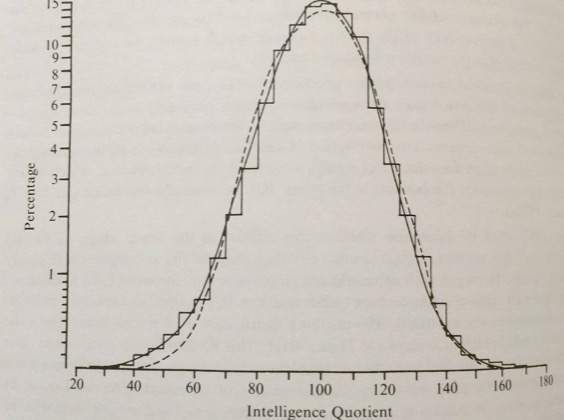
Author(s): Scott Douglas Jacobsen
Publication (Outlet/Website): Medium (Personal)
Publication Date (yyyy/mm/dd): 2024/06/21
War is a whisper: then an echo on the Earth, a hollow Sun without light and no sons, look up; the sky is falling, & the sky whispers, “Us.”
See “And death is still, a scream.”
License
In-Sight Publishing by Scott Douglas Jacobsen is licensed under a Creative Commons Attribution-NonCommercial-NoDerivatives 4.0 International License. Based on a work at www.in-sightpublishing.com.
Copyright
© Scott Douglas Jacobsen and In-Sight Publishing 2012-Present. Unauthorized use and/or duplication of this material without express and written permission from this site’s author and/or owner is strictly prohibited. Excerpts and links may be used, provided that full and clear credit is given to Scott Douglas Jacobsen and In-Sight Publishing with appropriate and specific direction to the original content. All interviewees and authors co-copyright their material and may disseminate for their independent purposes.
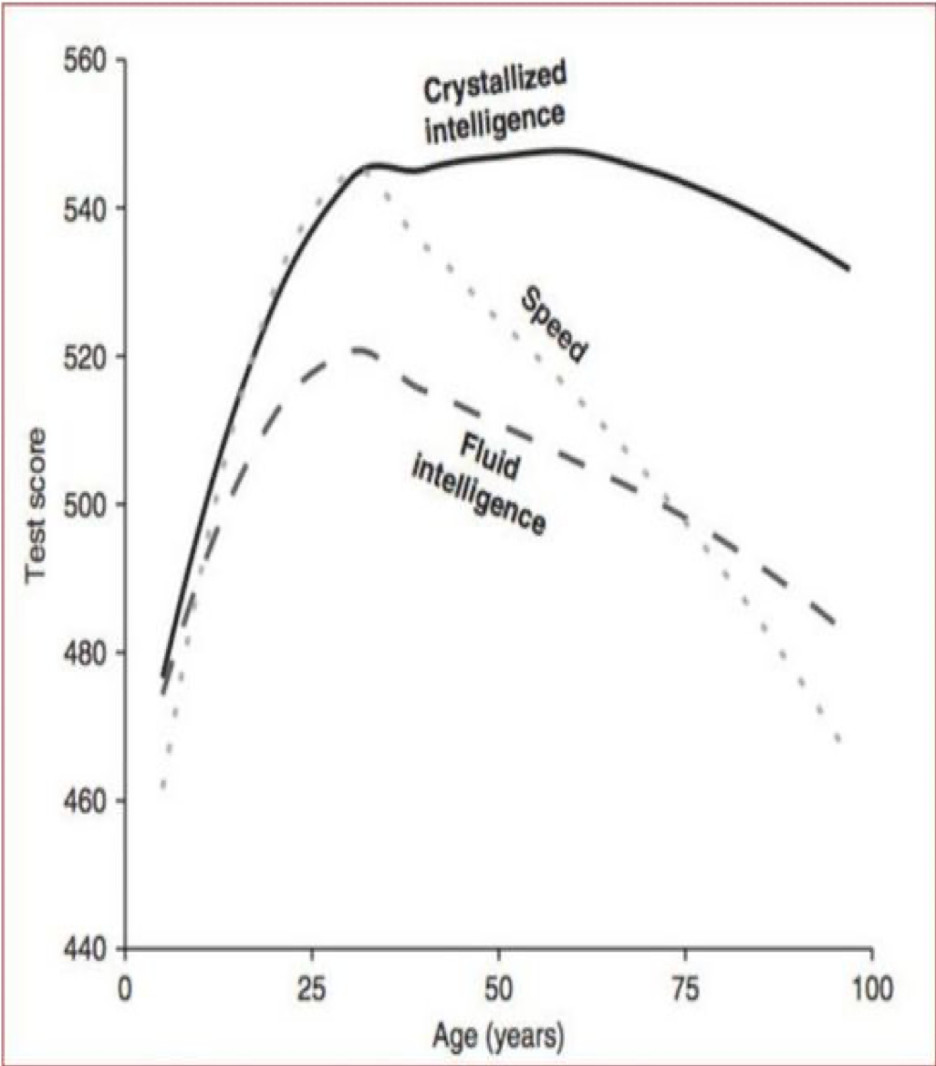
Author(s): Scott Douglas Jacobsen
Publication (Outlet/Website): Medium (Personal)
Publication Date (yyyy/mm/dd): 2024/06/21
Sentiment is: And that’s about as much as we can come close to a ledge of know; not quite “moonshine,” Mencken, but it’s not a bad drink.
See “Sentimentalism is a problem as is sacerdotalism, adapt them.”
License
In-Sight Publishing by Scott Douglas Jacobsen is licensed under a Creative Commons Attribution-NonCommercial-NoDerivatives 4.0 International License. Based on a work at www.in-sightpublishing.com.
Copyright
© Scott Douglas Jacobsen and In-Sight Publishing 2012-Present. Unauthorized use and/or duplication of this material without express and written permission from this site’s author and/or owner is strictly prohibited. Excerpts and links may be used, provided that full and clear credit is given to Scott Douglas Jacobsen and In-Sight Publishing with appropriate and specific direction to the original content. All interviewees and authors co-copyright their material and may disseminate for their independent purposes.
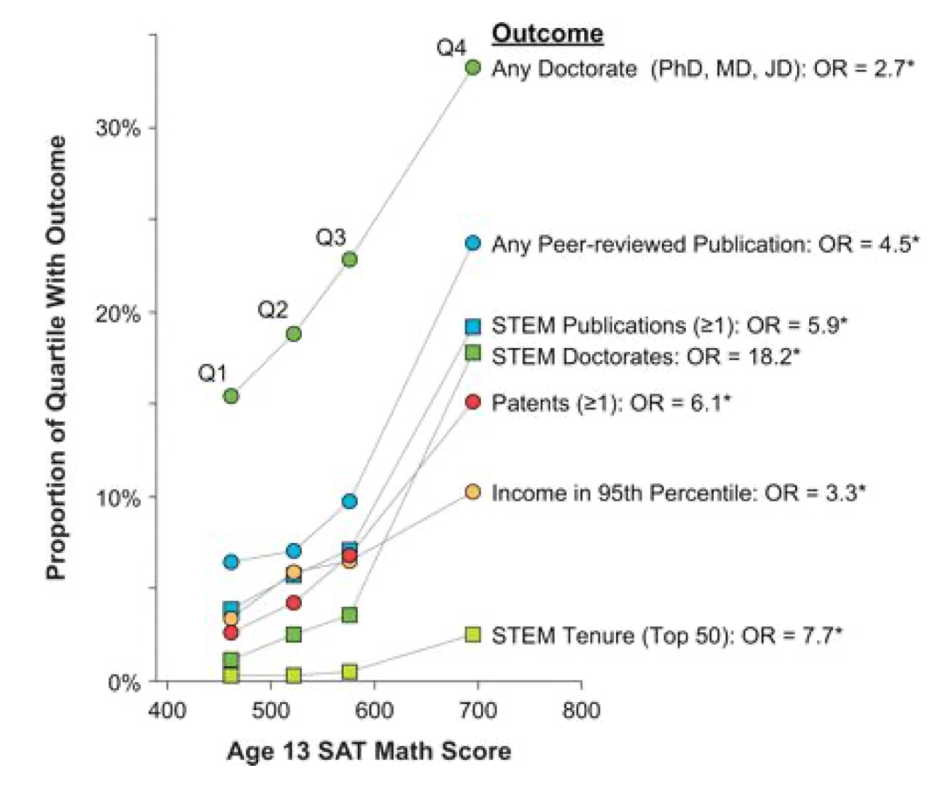
Author(s): Scott Douglas Jacobsen
Publication (Outlet/Website): Medium (Personal)
Publication Date (yyyy/mm/dd): 2024/06/21
And a care for cares: riding in a ride on and on and off, alone, and the lack insofar as you see a none, and the abyss sees you, in them.
See “If I am because you are, then you are in me, as I am you, and the abyss is greater than those two sums.”
License
In-Sight Publishing by Scott Douglas Jacobsen is licensed under a Creative Commons Attribution-NonCommercial-NoDerivatives 4.0 International License. Based on a work at www.in-sightpublishing.com.
Copyright
© Scott Douglas Jacobsen and In-Sight Publishing 2012-Present. Unauthorized use and/or duplication of this material without express and written permission from this site’s author and/or owner is strictly prohibited. Excerpts and links may be used, provided that full and clear credit is given to Scott Douglas Jacobsen and In-Sight Publishing with appropriate and specific direction to the original content. All interviewees and authors co-copyright their material and may disseminate for their independent purposes.
Author(s): Scott Douglas Jacobsen
Publication (Outlet/Website): Medium (Personal)
Publication Date (yyyy/mm/dd): 2024/06/21
Or the dross rehoisal: smoke me out, taka me down, move my heart and shift the web; catch my dreams, offguarded.
See “Pickme performance.”
License
In-Sight Publishing by Scott Douglas Jacobsen is licensed under a Creative Commons Attribution-NonCommercial-NoDerivatives 4.0 International License. Based on a work at www.in-sightpublishing.com.
Copyright
© Scott Douglas Jacobsen and In-Sight Publishing 2012-Present. Unauthorized use and/or duplication of this material without express and written permission from this site’s author and/or owner is strictly prohibited. Excerpts and links may be used, provided that full and clear credit is given to Scott Douglas Jacobsen and In-Sight Publishing with appropriate and specific direction to the original content. All interviewees and authors co-copyright their material and may disseminate for their independent purposes.
Author(s): Scott Douglas Jacobsen
Publication (Outlet/Website): Medium (Personal)
Publication Date (yyyy/mm/dd): 2024/06/21
Hypatiamat: me on the raft; apsus downsies; and we took a bath, the big one; marred by storm and dead by glass; Christ’s class? No class.
See “By storm, by gods, by mob killed she.”
License
In-Sight Publishing by Scott Douglas Jacobsen is licensed under a Creative Commons Attribution-NonCommercial-NoDerivatives 4.0 International License. Based on a work at www.in-sightpublishing.com.
Copyright
© Scott Douglas Jacobsen and In-Sight Publishing 2012-Present. Unauthorized use and/or duplication of this material without express and written permission from this site’s author and/or owner is strictly prohibited. Excerpts and links may be used, provided that full and clear credit is given to Scott Douglas Jacobsen and In-Sight Publishing with appropriate and specific direction to the original content. All interviewees and authors co-copyright their material and may disseminate for their independent purposes.

Author(s): Scott Douglas Jacobsen
Publication (Outlet/Website): Medium (Personal)
Publication Date (yyyy/mm/dd): 2024/06/21
Chatter two mes: Sadtell yup ampersand righinto thee Sun’s set; yet, I am there; you speak to me, yet; I am here, before words; who speaks?
See “Saddle me up and ride into the sunset.”
License
In-Sight Publishing by Scott Douglas Jacobsen is licensed under a Creative Commons Attribution-NonCommercial-NoDerivatives 4.0 International License. Based on a work at www.in-sightpublishing.com.
Copyright
© Scott Douglas Jacobsen and In-Sight Publishing 2012-Present. Unauthorized use and/or duplication of this material without express and written permission from this site’s author and/or owner is strictly prohibited. Excerpts and links may be used, provided that full and clear credit is given to Scott Douglas Jacobsen and In-Sight Publishing with appropriate and specific direction to the original content. All interviewees and authors co-copyright their material and may disseminate for their independent purposes.
Author(s): Scott Douglas Jacobsen
Publication (Outlet/Website): Medium (Personal)
Publication Date (yyyy/mm/dd): 2024/06/21
Skycrack, thunderdplumb: Mare adriaticum, a sensible Savall five stage all; give it time, may bee, 80, years of honey; a whole ol’ viol.
See “Solve all.”
License
In-Sight Publishing by Scott Douglas Jacobsen is licensed under a Creative Commons Attribution-NonCommercial-NoDerivatives 4.0 International License. Based on a work at www.in-sightpublishing.com.
Copyright
© Scott Douglas Jacobsen and In-Sight Publishing 2012-Present. Unauthorized use and/or duplication of this material without express and written permission from this site’s author and/or owner is strictly prohibited. Excerpts and links may be used, provided that full and clear credit is given to Scott Douglas Jacobsen and In-Sight Publishing with appropriate and specific direction to the original content. All interviewees and authors co-copyright their material and may disseminate for their independent purposes.

Author(s): Scott Douglas Jacobsen
Publication (Outlet/Website): Medium (Personal)
Publication Date (yyyy/mm/dd): 2024/06/21
Infinity & Zero: Cuts in the Unicity; subjectivity simply means the point at which infinity and zero meet, as cuts in the manifold.
See “Unicity.”
License
In-Sight Publishing by Scott Douglas Jacobsen is licensed under a Creative Commons Attribution-NonCommercial-NoDerivatives 4.0 International License. Based on a work at www.in-sightpublishing.com.
Copyright
© Scott Douglas Jacobsen and In-Sight Publishing 2012-Present. Unauthorized use and/or duplication of this material without express and written permission from this site’s author and/or owner is strictly prohibited. Excerpts and links may be used, provided that full and clear credit is given to Scott Douglas Jacobsen and In-Sight Publishing with appropriate and specific direction to the original content. All interviewees and authors co-copyright their material and may disseminate for their independent purposes.
Author(s): Scott Douglas Jacobsen
Publication (Outlet/Website): Medium (Personal)
Publication Date (yyyy/mm/dd): 2024/06/21
Is it over, yet?: No, no, there’s another 17 encores; and, you’ll, probably, only like about the worse half of them.
See “Traipsing.”
License
In-Sight Publishing by Scott Douglas Jacobsen is licensed under a Creative Commons Attribution-NonCommercial-NoDerivatives 4.0 International License. Based on a work at www.in-sightpublishing.com.
Copyright
© Scott Douglas Jacobsen and In-Sight Publishing 2012-Present. Unauthorized use and/or duplication of this material without express and written permission from this site’s author and/or owner is strictly prohibited. Excerpts and links may be used, provided that full and clear credit is given to Scott Douglas Jacobsen and In-Sight Publishing with appropriate and specific direction to the original content. All interviewees and authors co-copyright their material and may disseminate for their independent purposes.

Author(s): Scott Douglas Jacobsen
Publication (Outlet/Website): Medium (Personal)
Publication Date (yyyy/mm/dd): 2024/06/12
-run me over: And I am, ’cause you are, Ubuntu, & verse’s vice, sir; & tulips, Dutch, Fall-after, flow two-me.
See “Then I let you river-.”
License
In-Sight Publishing by Scott Douglas Jacobsen is licensed under a Creative Commons Attribution-NonCommercial-NoDerivatives 4.0 International License. Based on a work at www.in-sightpublishing.com.
Copyright
© Scott Douglas Jacobsen and In-Sight Publishing 2012-Present. Unauthorized use and/or duplication of this material without express and written permission from this site’s author and/or owner is strictly prohibited. Excerpts and links may be used, provided that full and clear credit is given to Scott Douglas Jacobsen and In-Sight Publishing with appropriate and specific direction to the original content. All interviewees and authors co-copyright their material and may disseminate for their independent purposes.
Author(s): Scott Douglas Jacobsen
Publication (Outlet/Website): The Good Men Project
Publication Date (yyyy/mm/dd): 2024/06/21
Zahra Nader is a unique voice in the Canadian journalistic landscape who joined the mainstream journalism community through the Canadian Association of Journalists around the same time as me a couple of years ago. She impresses me. Here we talk about the world of Zan Times.
Scott Douglas Jacobsen: Now, why did you find Zan Times?
Zahra Nader: I founded Zan Times to tell the story of Afghan women and what’s happening in Afghanistan, particularly since the Taliban takeover. When they took over, I was in Canada doing my PhD in Women and Gender Studies at York University. I imagined my future in academia. I wanted to return to Afghanistan, teaching at Kabul University. When the Taliban took over, that future was gone and also all my family, relatives, and everyone I knew were in Afghanistan. So, it was a traumatizing time for me.
Growing up without a right to education as an Afghan refugee in Iran, I felt the pain of millions of women in Afghanistan who were now experiencing the same thing when the Taliban came. There was a lot of pain for me and a lot of crying during those early months. Even when I was listening to music I used to dance to, I was crying, thinking this would never happen in Afghanistan until the Taliban are in power. It was very emotional.
Then, I started asking myself what I could do. I had a responsibility as a woman who grew up in Afghanistan, became educated, and became a journalist there. I couldn’t focus on my personal life with that conscience. I started telling stories from the very first days that the Taliban came. I helped an Afghan women-led media to establish its English website, and worked with different organizations. However, I felt I couldn’t tell the stories I wanted to in other places.
I started talking to other women, primarily Afghan women journalists, about building a newsroom where we could tell our own stories, the way we experience them, our truth, no matter what others say. Certain truths are painful, especially for the women who are being stripped of their rights. Many friends supported the idea and said, “Yes, I’m with you; let’s do this.” I had a small student savings that I wanted to use to build my house in Afghanistan. I took that money as seed funding to build a website and pay the journalists working with us in Afghanistan. That’s how the idea was born. I just wanted to write stories. I didn’t know anything about building or running an organization. I didn’t do any research because I was so passionate about reporting and telling stories. When I started the organization, I faced immense difficulties and challenges. I realized what it takes to build and run an organization. It is a tremendous amount of work.
Looking back now, two years later, I am glad I did it, but it’s a lot of work — really.
Jacobsen: Yes, yes.
Nader: Especially for the person who initiated the work, because you have the responsibility, and a lot falls on your shoulders. You have to push and push. But I’m happy to say that we have survived. We started thinking about Zan Times in May 2022, and now it is May 2024. We launched our website on August 8, 2022. This August will be our second anniversary. We have been able to tell some good, under-reported stories that you might not find elsewhere. We are also lucky to be recognized for our work internationally. This gives us hope and validates the work we want to do. What we do at Zan Times is the kind of journalism that comes from our heart. What women go through in Afghanistan and what they experience are also experienced by women journalists who are reporting those stories.
Jacobsen: So you have to experience what they experience.
Nader: Yes, exactly. Not having any rights. It’s hard to imagine your life if someone said, “Because you are a man, you cannot go outside, you cannot dress the way you want, you cannot go to school.” Your life seems meaningless. You have no purpose to live for. The people in power say you have no rights, and suddenly, you lose everything. It is hard even to imagine it, let alone experience it. That’s what my colleagues also experience. Working with a group of primarily women journalists who experience the same restrictions and realities as the women whose stories they tell makes it different.
Jacobsen: They talk about moral courage and injury at the conference. They talk about trauma and answer questions about individuals who’ve had their rights stripped. What is the moral injury there? They have to act in a context that, to many Western audiences, seems like a black box. Once American troops retreated and left civilians destitute, we don’t know. It becomes a black box. You talk about telling stories that no one else can tell. It’s about moral courage despite moral injury and not having a context to do it. One thing you mentioned earlier was that these women are writing under pseudonyms. I assume that they are writing under male pseudonyms.
Nader: No. They are using female pseudonyms.
Jacobsen: That’s cool. The fact that they’re not using male pseudonyms shows even more free will.
Nader: Yes. The environment is very different. I remember initially explaining this to one journalist, and they compared our operations to Hezbollah, saying, “You guys seem like Hezbollah or something.”
Jacobsen: Hezbollah? That’s an interesting analogy.
Nader: Because of the risk associated with our work, We tell our colleagues that only their emergency contacts should know they are working with us. Only family or friends should know if necessary.
Jacobsen: How much time are they spending on these articles? People must ask questions if they are working all this time.
Nader: We have a small group that works full-time with us. We also have a network of freelance journalists who write different stories for us. Our colleagues don’t know each other in Afghanistan. For example, if two people work for Zan Times, they don’t know each other. This is due to security threats. If one of them is identified, they could be tortured into revealing the identities of others. That’s why it’s dangerous for them to know who their colleagues are. They use pseudonyms to protect their identities.
Jacobsen: I’ve had to do a lot of anonymous interviews.
Nader: Oh, yes.
Jacobsen: As you know, Pakistan is not a friendly country for girls or freedom of expression and freedom for non-believers. They have cyber blasphemy laws. Several years ago, four people were taken in under these laws. One of them was the vice president of the Atheists and Agnostic Alliance of Pakistan.
Nader: That’s a courageous organization to have.
Jacobsen: In North America, it wouldn’t be a huge deal. You’d face regular prejudices, but not at that level. He and I were supposed to do an interview. This happened with several others as well. He was taken in by the military police and jailed under this blasphemy law. The United States Commission on International Religious Freedom, a bipartisan organization, listed his case. His name is Abdul Waheed, although there are legal complications. On January 8, 2001, he was sentencedto death. A week or two ago, someone who used to be on PalTalk with him emailed me. They said he was civil and respectful to sincere believers in Islam who lived in Pakistan. He wasn’t a belligerent non-believer. Supporters email journalists like me for protection and legal reasons, suggesting anonymous interviews. The obvious answer for journalists is yes, of course, for safety.
Nader: That’s all our work. We don’t use any names for the people we talk to because most of them are fearful. If the information goes out and they are found, their lives are at risk. It takes a lot of courage to speak when you know you might be killed for telling the truth. This is also true for journalists. Many journalists have been arrested. Women cannot do anything except be midwives or teach in primary schools. Girls can only study until grade six. They might find some private sector jobs or creative ways to skirt restrictions, but they are banned from most jobs. In most provinces, their voices are banned from radio, and their faces are banned from TV. Even before, women journalists had to cover their faces. Since the Taliban came, they have gradually enforced these restrictions month by month. Now, they have banned the coverage of women’s issues. We spoke to a journalist who reported on the mental pressure on women who lost their jobs and identities. He was questioned and interrogated for that story. Another journalist reported complaints about the Taliban and traffic and was questioned. This shows the level of repression. We specifically cover human rights, which the Taliban do not want to be reported.
Jacobsen: Human rights?
Nader: They say it’s all lies and a Western construct. They claim it’s about Islam, Sharia, and what God says. And they claim they know what God wants.
Jacobsen: This plays into the hands of Western conservative Christians who want to vilify Muslims.
Nader: Yes, exactly.
Jacobsen: It has currency with the population to whip up hysteria for the political base and pull those on the fence into stereotypical rhetoric. On the other hand, it supports those in those areas who claim to implement faithful Islam, using it as rhetoric to combat liberal Muslims.
Nader: Exactly.
Jacobsen: Ordinary Muslims then have to deal with the lack of support from stereotyping and the nonsense of stereotypes combating stereotypes. It’s like they’re dealing with their own “Texas” equivalent.
Jacobsen: And that’s what you’re seeing.
Nader: Exactly. Most reports by human rights organizations, the UN, and others say the Taliban have committed crimes against humanity, especially regarding women’s rights in Afghanistan. No country has banned women from fundamental human rights like education as the Taliban have.
Jacobsen: This is institutionalized at a government level where those in power say, “Because you’re a woman, you cannot go to school or leave your house. You have to dress as we dictate.”
Nader: Exactly.
Jacobsen: While it’s not to that extent in other places, if you look at the United States, there was a direct attack on women’s reproductive rights.
Nader: Yes, exactly.
Jacobsen: Russia repealed the domestic abuse law, allowing husbands to beat their wives legally without repercussions. There might be social repercussions, but not legal ones.
Nader: Yes, unfortunately these issues exist even in countries where women might have more freedom and rights and that is sad.
Jacobsen: In China, there’s a shame-based culture. The term “leftover women” shames women who aren’t married or don’t have children after a certain age.
Nader: The sad point is that this is happening in Afghanistan for the second time. The world seems ignorant of taking any action. This is not only about women’s rights in Afghanistan but about women’s rights globally. What is denied to women in Afghanistan could be denied to women elsewhere. There is no international pressure or action to address this and ensure basic human rights are given to people. Half of the population is denied rights because they are women. The LGBTQ community also faces a death sentence if discovered. They don’t have a choice about their gender, but they are punished for it.
Jacobsen: LGBTQ rights are criminalized in other countries, too.
Nader: Yes, and systematic oppression of women exists in many places. Afghanistan, however, has institutionalized gender apartheid. Women are penalized for being born female. Even before the Taliban, there was discrimination. I experienced it. Society looked down on me because I was a woman, and I was told I couldn’t do certain things. It wasn’t about my ability; it was society’s view of gender. Yes, so basically, what’s happening in Afghanistan is lowering the bar for women’s rights globally. This is scary because it could be replicated elsewhere. There are no international actions to reverse it or make those in power accountable for their actions. Countries like Norway are giving platforms to the Taliban and apparently say, “I condemn what you do, but I am very keen to be your partner. I am very eager to work with you and engage with you.” As Afghan women, we feel betrayed by the world and how it is treating us. Our rights and humanity don’t mean anything as long as the Taliban are committed to being partners with these other countries.
It’s also ironic for these countries to work with terrorists to fight against terrorists. It’s a strange form of chess with lives, not just the West but the world deals with when they are looking to gain a slight advantage for their country. This dangerous game often blows up in people’s faces, especially those who don’t have much stature in life. This is a death sentence for them because they have been treated as pawns in this chess game.
Jacobsen: In other words, we want to replicate or sympathetic men want to help replicate some of these efforts for basically independent guerrilla journalism in a very theocratic state or a dramatic social-critical system. What are some of the main mechanisms of self-protection? What should be kept in mind?
Nader: Firstly, we must acknowledge that no story is worth a human life. That is the mindset we operate with. We don’t want any journalists to put themselves at risk when telling a story. I know that whatever I say, do, and cover, there isn’t a Taliban gun pointed at my head. But that is the case for my colleagues who are functioning in Afghanistan. They make decisions about their situation and the stories they want to cover. If they feel that covering a story will put their life at risk, I want them to refuse to work on that story.
For example, if there are stories that we deem essential, but it is dangerous to be covered by the journalists inside the country, then they provide the information, and we, from outside the country, call in and cover those stories. Sometimes, people who have been victimized or experienced rights violations are more willing to speak with us from outside the country, knowing the Taliban does not have immediate power over us. They fear sharing a story with local journalists who could be arrested by the Taliban. We operate with an awareness of the risks and take precautions to minimize them. One of these precautions is for our colleagues to work anonymously, using pseudonyms. They deserve credit for their work, and we can always credit them appropriately when the situation changes. Until then, we must keep them safe and enable them to work. Most of our work is done remotely. Many of our colleagues stay in their homes, conducting interviews via phone. They cover their communities and have networks to gather information. When they cannot make the call, they send the information to us, and we make the call from outside the country to tell the story.
This collaboration works for us, with one group outside the country and one inside. If we need comments from the Taliban, those of us outside the country handle it to avoid any direct connection between the Taliban and our colleagues inside the country. We know the Taliban is looking to stop our operations, and if they can, they will.
We are constantly thinking about how to stay one step ahead of the Taliban. They want to censor us and make it impossible for us to work, but we find ways to report on stories they don’t want anyone to know about. For example, women in Afghanistan have been committing suicide in great numbers due to the despair of living under current conditions. Globally, more men commit suicide compared to women, but our investigation shows that Afghanistan is changing the trend. In Afghanistan, more women are taking their own lives, making a statement that they would rather die than live under these circumstances.
Living without rights and purpose is unbearable. There is no hope, no light at the end of the tunnel. The Taliban are trying to strip women of their identity, treating them like animals. We are human. You cannot live without purpose, rights, or any power over your life, and this drives women to end their lives. These are the stories we aim to tell.
Jacobsen: Safety precautions are tricky for the type of journalism your journalists do. They have a lot of concerns. I’ll give some context for those reading this, doing similar journalism, or at least those interested. Regarding digital safety, how do they keep their electronic data secure and their identities anonymous?
Nader: It’s very difficult for our colleagues because we work in an environment like Afghanistan. Even before the Taliban, we needed to be more technologically aware of the risks we faced. Many people use Facebook with little knowledge of digital safety. We learned more about these risks after the Taliban takeover, mainly how they tried to infiltrate WhatsApp groups and other communication channels.
One method the Taliban use is checking the phones of individuals they arrest, even at checkpoints. Knowing this risk, we advise our colleagues not to take smartphones outside. When they go out, they use simple phones that don’t contain work-related information or sensitive contacts and photos. Unfortunately, our colleagues can’t move to Signal because most of their sources use WhatsApp. We have received digital security training from various organizations to help us understand the risks, but we still have a long way to go. It’s a combination of thinking about digital security and the physical security of our colleagues. Most risks are not just online; they can come to your home. To mitigate these risks, we sometimes ask colleagues not to work for a while after covering critical stories to ensure their safety.
In Afghanistan, the level of risk varies by province. Some areas are less risky for journalists, allowing them to cover specific topics and interact with the Taliban. However, in other provinces, even a simple interaction, like a woman speaking with a male journalist, can be dangerous.
Since we work with women, our priority is having them work remotely. This method is safer than in-person interactions.
Jacobsen: How do you keep women physically safe? Is secrecy their only protection?
Nader: Yes, secrecy is crucial for physical safety. Our newsroom takes security very seriously. I started this work to enable women journalists to report on the most oppressed group under the Taliban — women. The working conditions for women journalists are harsh. Last year, we spoke with many women journalists across Afghanistan. Some work for free, particularly in the north, because their media outlets only pay male journalists. Others, especially in the West, struggle to find jobs because employers fear Taliban visits and the need to maintain gender segregation.
Harassment is rampant. Even before the Taliban, Afghanistan’s newsrooms were not very safe for women. Now, the situation is worse. Women journalists face sexual harassment and discrimination. Some Taliban members harass them, believing that any woman working outside is “immoral.” This makes it incredibly difficult for women to continue their work.
Jacobsen: What about the role of women who support the oppressive system?
Nader: Women who support the oppressive system fall into two categories. First, women are working with the Taliban, such as police officers, who help torture and capture other women. Most of these women have no choice but to comply, they fearing for their lives.
The second category includes NGO leaders, former politicians, and businesswomen, many with Western passports. These women visit Afghanistan, advocate for engaging with the Taliban, and paint them as an “opportunity” for peacebuilding. They return to their safe lives abroad with money and support, essentially whitewashing the Taliban’s actions. These women are dangerous because they betray the interests of Afghan women, protecting their own material interest and privileged positions.
They claim that the international community should engage with the Taliban, but the Taliban continue to impose more restrictions on women. The international community is sympathetic to these narratives and continues to give a platform to these women. Yet the Taliban’s treatment of women amounts to crimes against humanity, as noted by the UN Special Rapporteur for Afghanistan. However, no actions are taken to enforce this strong language.
Jacobsen: For women trying to flee Afghanistan, what countries are safe havens?
Nader: Unfortunately, there are not many safe havens. The most accessible countries are Pakistan and Iran, but women often face deportation or imprisonment there. In Iran, Afghan refugees are oppressed by the Iranian government and face extreme racism, adding another layer of difficulty. If women reach Western countries legally, they might find better circumstances despite cultural and language barriers.
Jacobsen: Thank you for sharing these insights. It has been an enlightening discussion.
Nader: Thank you.
License
In-Sight Publishing by Scott Douglas Jacobsen is licensed under a Creative Commons Attribution-NonCommercial-NoDerivatives 4.0 International License. Based on a work at www.in-sightpublishing.com.
Copyright
© Scott Douglas Jacobsen and In-Sight Publishing 2012-Present. Unauthorized use and/or duplication of this material without express and written permission from this site’s author and/or owner is strictly prohibited. Excerpts and links may be used, provided that full and clear credit is given to Scott Douglas Jacobsen and In-Sight Publishing with appropriate and specific direction to the original content. All interviewees and authors co-copyright their material and may disseminate for their independent purposes.

Author(s): Rick Rosner and Scott Douglas Jacobsen
Publication (Outlet/Website): Ask A Genius
Publication Date (yyyy/mm/dd): 2024/06/21
Rick Rosner: Is this a new one?
Scott Douglas Jacobsen: Yes, it is a new one. Alright, so you sent me an article about the average number of children per woman in South Korea dropping to 0.72, whereas the replacement rate is approximately 2.1. That means one replacement child for every couple, plus a bit more to account for those who do not have children.
Rosner: And possibly a slight reduction for immigration. But anyway, the president of South Korea mentioned that they are in a birth crisis. South Korea currently has the lowest birth rate in the world if one considers a low birth rate problematic. However, many countries, about a quarter of the world’s nations, have declining populations. How is Canada doing in this regard?
Jacobsen: Canada is below the replacement rate, but we have significant immigration, which helps bridge the gap. So yes, the South Korean president, Yoon Suk Yeol, has declared a demographic national emergency due to the low birth rate and the aging population.
Rosner: This poses a problem for the aging population. Wherever this occurs, it is an issue because there are fewer people to care for the elderly. Additionally, Social Security and Medicare-type systems rely on having more individuals paying into the system than those withdrawing from it. For example, in the United States, when Social Security began in the 1930s, there were approximately 16 workers contributing for every beneficiary. Now, that ratio has decreased to about three to one. So, it becomes a structural problem when birth rates decline. Moreover, it becomes an issue because our economies are built on population growth, generating more workers and consumers. The world has yet to master building economies around steady or declining populations, correct? Is that a reasonable assertion?
Jacobsen: That is reasonable.
Rosner: Okay, very reasonable. However, on the other hand, the human population cannot continue to grow indefinitely. Assuming advancements in technology, perhaps the human population could sustain growth, but considering our current circumstances, it does not seem like a wise idea. The carbon footprint per capita in the United States, I believe, declines by about 1% annually due to technological advancements and perhaps because we are not traveling as much thanks to telecommuting and streaming entertainment. While this provides some relief in addressing climate change and other pressures on the planet, an even greater benefit would be a declining population, which is projected to begin in the 2060s. So, we will eventually have more humans than we have now. And so, we will experience a declining human population sometime in the second half of the 21st century. We will likely have technology to mitigate some effects of climate change by then, but it is uncertain how many species or how much coastline we will lose. Rather than facing a semi-apocalyptic scenario, if the global population declines by 2070, I hope this will help us avoid further significant damage to the planet. There are measures we can take. Somewhat straightforward measures to combat climate change include building sea walls for low-lying areas. A more controversial approach is to disperse light-absorbing substances into the atmosphere. However, determining the appropriate substances and locations is challenging, and this method does not address ocean acidification. The consequences could be severe if The oceans become less capable of sustaining life. Therefore, a declining population might be the primary solution to prevent further harm to the planet. What are your thoughts?
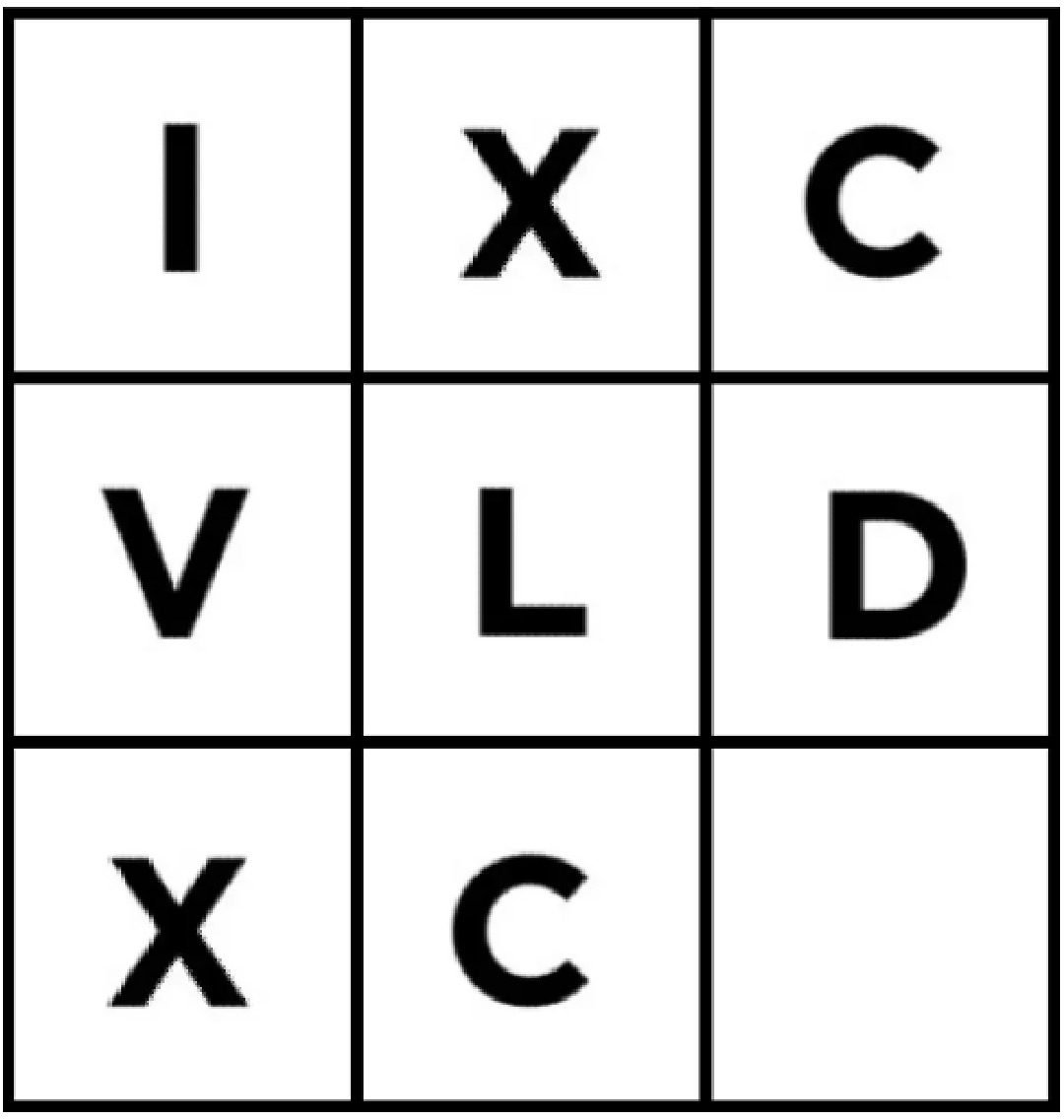
Jacobsen: That is a valid point. I am contemplating the broader timeline of renewable technologies. At what point will resistance to renewable technologies collapse the 20th-century energy systems—oil, coal, and gas—in favor of renewables?
Rosner: Well, coal is largely obsolete at this point, at least in the United States. While there are still some coal-powered power plants, I am unsure of the exact number, but there are only 50,000 coal miners left in the U.S. Anyone advocating for coal miners is disingenuous, as it would not require much funding to retrain or retire them. It is a small group, roughly 49,000 men and 1,000 women. Transitioning to nuclear power would be beneficial. There are two main issues with nuclear energy: ensuring safety, including waste disposal, and convincing the public of its safety. Currently, nuclear power is likely safer than public perception. Nuclear energy is advantageous because it requires minimal space. Solar energy occupies significant space, and wind power requires numerous large turbines that can harm birds and are quite costly. Nuclear energy is compact. I have read, though not recently and possibly inaccurately, that modern reactors produce less waste because waste is highly hazardous. In a nuclear war book I read, when North Korea initiates global chaos, they launch only two missiles, which trigger—spoiler alert—a full-scale nuclear exchange between the United States and Russia. One target is the Diablo Canyon power plant, approximately 160 miles north of me in California. According to the book, in addition to destroying the active reactors, which would release significant radiation, there are 2,500 spent fuel rods stored there, exacerbating the destruction if targeted by a nuke.
Jacobsen: We have previously discussed the causes. We need not revisit the causes of declining populations, as we have done so in two or three sessions and identified about ten potential reasons for decreased coupling. We might discuss why South Korea is more affected compared to regions like Africa.
Rosner: According to demographers, Africa will be the last region to experience population growth. It is part of the K-curve, where Africa has been the last to exit the high infant mortality phase. In regions where the survival rate to adulthood is 50-50, families tend to have five, six, or even eight children to ensure some survive to adulthood. Africa has most recently transitioned from that state. But only recently. I am uncertain about East Asian countries—did they transition out of that state the earliest? Are they the most inundated with distracting entertainment? Are they accustomed to handling sexual needs through self-gratification?
Jacobsen: Japan has a significant porn culture.
Rosner: Could that contribute to declining birth rates? I am uncertain. Any comments?
Jacobsen: That is a good point.
License
In-Sight Publishing by Scott Douglas Jacobsen is licensed under a Creative Commons Attribution-NonCommercial-NoDerivatives 4.0 International License. Based on a work at www.in-sightpublishing.com.
Copyright
© Scott Douglas Jacobsen and In-Sight Publishing 2012-Present. Unauthorized use and/or duplication of this material without express and written permission from this site’s author and/or owner is strictly prohibited. Excerpts and links may be used, provided that full and clear credit is given to Scott Douglas Jacobsen and In-Sight Publishing with appropriate and specific direction to the original content. All interviewees and authors co-copyright their material and may disseminate for their independent purposes.
Author(s): Rick Rosner and Scott Douglas Jacobsen
Publication (Outlet/Website): Ask A Genius
Publication Date (yyyy/mm/dd): 2024/06/21
Scott Douglas Jacobsen: This is session three of “Ask Scott Anything.”
Rick Rosner: You listed eight topics that we could discuss, including the various jobs you’ve had. I think both of us have had a diverse range of jobs. We know you’ve worked with horses, done extensive writing for different sites and publishers, and worked in the service industry. So, I want to talk about some of those experiences.
Jacobsen: Sure.
Rosner: Which job stands out to you that you’d like to talk about? What lessons did you learn from working in bars and restaurants?
Jacobsen: Bars, definitely. Bars have a rough crowd. Coffee shops, on the other hand, have people who like to take their time, which is quite surprising. Working at a burrito place was interesting because the tips were excellent. Without servers, the cashiers, burrito makers, and prep staff all shared tips, making them quite substantial. The best place to work at is probably bistros—middle to upper range, calm environment, good tips, and a nice variety of tasks.
Rosner: When I was working in bars, before I met Carole, I was often on the lookout for opportunities to hook up. Some of my colleagues might have felt the same way, but probably not as much as I did. In Boulder during the 80s, some people worked in bars to deal drugs. One guy I knew was dealing coke. I had several encounters with dealers. Did you ever use your job to meet people and hook up?
Jacobsen: No, I didn’t use my job for that purpose. I had crushes, but I didn’t act on them at work. Work was work.I didn’t mix personal intentions with it.
Rosner: I can relate. I didn’t know how to be a pickup artist until I was done trying. A rule of pickup artistry is that you don’t go out alone. If you’re alone in a bar, you’re seen as a creep, and your intentions are obvious. But working in a bar or restaurant removes that perception since you’re there to work. Although that wasn’t your intent, it aligns with the idea. Let’s move on to discussing Model United Nations. You’ve been involved in it quite a bit.
Jacobsen: Yes, I’ve participated in sixteen Model United Nations conferences.
Rosner: And that’s where people from all over Canada or even the world come together to engage in mock diplomacy. Is that correct?
Jacobsen: Yes. It becomes a simulated event of the United Nations, lasting from one to five days, depending on the event. For example, the Harvard World Model UN, which I participated in, lasts five days. The National Model United Nations (NMUN) conferences in New York and DC also run for something like five days. These three—NMUN DC, NMUN New York, and WorldMUN—are the biggest ones worldwide. I’ve done Harvard WorldMUN twice and NMUN-DC once.
Rosner: Do you have any desire to go into diplomacy?
Jacobsen: Yes.
Rosner: Do you need advanced degrees in something to become a diplomat? Does it help?
Jacobsen: It can help, but you can also be skilled at what you do. I was fortunate to be in good graces for three years and served on the board of United Nations Women Canada for three years, or what was United Nations Women Canada, the Almas Jiwani Foundation.
Rosner: Do you speak other languages?
Jacobsen: I do not speak other languages fluently.
Rosner: Does that limit the diplomacy you can do? Or with modern technology and fast translators, is that not a barrier?
Jacobsen: It can be limiting, but the ability to translate with online technology helps break down that barrier. The key is to speak your original language well so that the translation is accurate. I was involved in interfaith work, so diplomacy could be helpful there. I have been a member or somehow doing work around, on, or with, various organizations like the American Ethical Union, Center for Inquiry Canada, Congress of Secular Jewish Organizations, Young Humanists International, Church of the Flying Spaghetti Monster, Discordian Society, The Church of Latter-Day Dude, Atheist Alliance International, Rationalist International, Freedom From Religion, The Skeptics Society, Sentientism, the Unitarian Universalist Association, Humanist Canada, Discordianism, the Church of the SubGenius, the Freedom From Religion Foundation, the New Enlightenment Project, The Satanic Temple, The Brights, the Skeptic Society, the Secular Student Alliance, various humanist organizations and parody religion groups, etc.
Rosner: Your notes indicate you’re interested in building bridges among various religions and philosophies?
Jacobsen: That’s correct. There’s a significant diversity among secular groups, which many people aren’t aware of. Although they disagree on some issues, they generally agree on many others.
Rosner: Do you think through dialogue, the world’s various peoples can reach accords and get along better?
Jacobsen: It helps. Conversation is better than war. Having boundaries to guide the dialogue is important, but discourse is necessary to build bridges. Our diplomacy work and interfaith efforts are essential. My friend, Professor Mir Faizal, and I co-founded the Canadian Quantum Research Centre. We hope to create an audiovisual series of discussions, with Mir as a Muslim and me as a humanist. We’d like you to join us at some point if it becomes a reality.
Rosner: Thank you. Do you want to potentially be a cyber diplomat and work on relations between humans and beings with artificial consciousness or hybrids? Do you think that will be a thing in the future—setting up dialogues and ethical discussions to ensure that neither humans nor artificial beings harm each other too badly?
Jacobsen: It sounds like an intriguing and important area for future diplomacy. Establishing ethical guidelines and fostering dialogue between humans and artificial beings will be crucial to prevent conflicts and misunderstandings. This will be inevitable, I think.
Rosner: The messing over or the dialogue, or both?
Jacobsen: There’ll be some messing over, but dialogue will be the main focus.
Rosner: I’m walking into the other room to get my glasses so I can read my notes. Now I’m walking back.
Jacobsen: It won’t be like the Cylons and the Humans, or like the Terminator. Humans will be a sort of blurred middle group among all types, including hybrids. There’ll be biological people and synthetic beings, with the main boundary being the degree of sentience. Digital consciousnesses, though, in many ways will have to significantly dumb themselves down to interact with us best.
Rosner: We haven’t talked about this to any great extent, but I feel that AIs will talk as if they’re conscious long before they actually are conscious because training sets are the products of conscious people. Right now, if you talk to an AI, it gives you disclaimers like, “I can’t really think; I’m just a Bayesian probability model.” But at some point, some AIs will start insisting on their consciousness long before they’re actually conscious. Do you agree?
Jacobsen: That’s probably true. Experts will be able to make that distinction at some point. They’ll start developing standardized metrics for sentience. As they see how these entities act more and examine them closely, they’ll never have complete understanding because things will be too intricate. However, they’ll have specialized systems to help them identify these traits.
Rosner: And the experts won’t be just humans. We’ll have to work with AIs to understand what they’re up to. You have dialogues with people of various religious beliefs, but what are your own beliefs?
Jacobsen: I’ve approached this as a matrix of propositions. There is a vast range of propositions I haven’t considered due to the limitations of one lifespan and the sheer number of possible propositions. Throughout my life, I won’t even know a significant portion of the functionally infinite propositions that can be philosophically or theologically relevant and considered as religious beliefs.
Rosner: Are you okay with starting with the Golden Rule, like knowing how you would wish to be treated and then extending that, at least provisionally, to other beings? The Golden Rule seems foundational to many belief systems.
Jacobsen: The Golden Rule is very functional and helpful. However, it has the subjectivity that can lead to bias because what I would want may not necessarily be what you would want. This becomes particularly tricky when applying the Golden Rule across species.
Rosner: You can combine our evolutionary history with the Golden Rule to extend or reinforce it. Since all conscious creatures are products of evolution, and evolution makes us want to live for the most part, it aligns with the Golden Rule. I don’t know what happens in the mind of a salmon once they’ve completed their reproductive cycle, but I assume they still want to live. Evolution is fairly poor at letting creatures give up on life even after fulfilling their reproductive purpose. There is an advantage to being comfortable with dying at any point. So, given that, can we generalize that creatures want to stay alive? Is that a reasonable conclusion?
Jacobsen: We generally want to be alive. However, survival mode can look very different. It varies from whether an octopus wants to punch a fish that’s in its space to deciding between dark chocolate or milk chocolate. These choices might apply to me, but not necessarily to our dog, who can’t have chocolate as it could kill them. That’s not sensitive to a lot of contexts. In terms of morals, that’s one path we can go down. But in terms of rules of thumb, non-theist philosophies have some good principles. Humanists of various types have good principles. The World Pantheist Movement seems to have principles where you can interpret pantheism as seeing the laws of nature as God. That seems like a tautological way to approach the question of whether or not God exists.
Rosner: So, is humanism pretty much utilitarianism, aiming for the greatest good for the greatest number and trying to do the best you can?
Jacobsen: We’ll take that into account. It’s not the overarching principle. Humanism focuses on the welfare of the human species as a whole, without consideration of supernatural beings. Utilitarianism in Christianity might consider the wellbeing of souls, incorporating supernaturalism. Humanists are generally atheists or agnostics, not believing in supernatural powers. Some believe in God as the laws of nature, like Einstein’s perspective. They emphasize evidence, reason, free inquiry, and compassion, aiming for individuals to maximize their potential. They look at human nature from an evolutionary basis and adopt epistemological naturalism, rejecting parochialism while considering universal ethics.
Rosner: I can imagine two strains of humanism. One aims to provide fulfilling lives until the natural end of life, and another, technological humanism, sees death as a personal tragedy and a loss of information. Do you acknowledge these different strains of humanism?
Jacobsen: Yes, the latter is often termed transhumanism, which seeks technological means to surpass human limitations. Traditional humanists might be sympathetic but consider it more science fiction than science-backed.
Rosner: Let’s see what else. You’ve worked with, I have a note here that says UN plus the symbol for women.
Jacobsen: Oh, that must be an emoji.
Rosner: I didn’t bring my computer down, so I took your email and wrote out the topics in shorthand.
Jacobsen: Yes. I was on the board of United Nations Women Canada for three years, or what was it. It was an interesting transition to being termed the Almas Jiwani Foundation. I resigned after my three-year term, and I don’t know why it’s still being called United Nations Women Canada or United Nations Women Canada National Committee. The thing is, UN Women does not list any such organization in its national committee listing anymore, for Canada. It’s dubious, seems untrue now. They list Australia, Austria, Finland, France, Germany, Iceland, Japan, The Netherlands, New Zealand, Sweden, United Kingdom, and United States. It might be politically and professionally expedient for her. It helps her get ahead. But it was clearly transitioned to a foundation, and she was very clear that she viewed United Nations Women as being in shambles. That’s what she told me. I did a lot of writing and volunteering for it, but I don’t know the specifics. She was also transitioning it into a foundation at that time and probably still, which is a long time, so there might have been an interpersonal feud. My efforts for gender equality are best done in other channels.
Rosner: You might have more to say about marriage and kids.
Jacobsen: Yes. I think I mentioned that I’m not actively or super actively pursuing relationships on Tinder or something like that, so I’m not obsessive about it.
Rosner: When you’re on Tinder, you often just end up talking to people a lot. It seems like people are there for the love of using Tinder.
Jacobsen: It’s a bit of an indication. I’m turning 35 this year. I’m okay with the fact that it might be a little late.
Rosner: But given the potential for longer lifespans due to advances in technology, it’s not too concerning. Do you feel any pressure to start a diplomatic career, or is that something that can be started later in life?
Jacobsen: A lot of things can be started later in life. They can also be pursued simultaneously. When I was working at restaurants, I was also working on journalism. When I was at the horse ranch, I was involved in journalism too. Even during my military basic training, I was writing. These aspects of my life aren’t distinct. I was on various boards, doing activist work, and finding ways to generate income. It’s not as disparate for me as it might be for others.
Rosner: Let’s go back to Tinder. It seems to me that social media has made people more selfish on average. It’s not necessarily a bad thing; it’s just the way people are now. It’s a bad thing if you have to make sacrifices like in World War II, but we might not face that again. On Tinder, do you find people you can deal with who aren’t nightmares and are amenable to relationships? There’s less patience for coupling up these days. What do you think?
Jacobsen: My approach is that I’m not here to waste anyone’s time, and I hope they’re not here to waste mine. It’s nice just to have conversations with people. It’s not a significant loss. The online world tends to be a bit more superficial.
Rosner: In an earlier session, you mentioned that you take people at face value—that when people say they are a certain way in terms of their morals and ethics, they generally are, even if they sometimes fail to live up to their own standards. Do you find that on Tinder, you can take people at face value? As the conversation goes on, do you feel like a mask falls off and you find out they’re not as they seem, or what do you think?
Jacobsen: For the most part, people tell the truth. If they lie, it’s usually about small things. For men, it might be their height or income; for women, it might be their age or weight. I think that’s backed by evidence too. But taking people at face value in terms of believing what they say they believe tends to be accurate.
Rosner: Let’s see, what else? One of the notes mentions psychotherapy. I guess you’ve had some.
Jacobsen: Yes, I had some psychotherapy. I sat down with a therapist and told him I wanted to sort out my narrative, including dealing with an alcoholic and abusive background. I paid out of pocket by the hour, hoping to straighten out the chaotic parts of my upbringing to form a consistent narrative.
Rosner: And did you reach a point where there was nothing left to discuss?
Jacobsen: Yes, the therapist, who was an Evangelical Christian, told me nine months in that there was nothing major left to talk about and considered terminating the relationship. It was a formal way of saying I had a clean bill of mental health and had worked through what I needed to.
Rosner: Given that you have an alcoholic father, does that mean you have to guard yourself around substances?
Jacobsen: No, I never partook. I’m almost a teetotaler and don’t drink at all. I don’t really do any drugs either.
Rosner: That’s good. I’m the same way—I mostly don’t like alcohol. Let’s see, a lot of veggies and fruit in your diet?
Jacobsen: Yes, and chocolate. But I do a minimum of 16 hours of fasting every day. If I finish eating at 6 pm, I won’t eat until about 10 am the next day. It’s like a mini-fast daily, and I start eating around 10, 12, 1, or 2, depending on my hunger.
Rosner: And you’ve read that this has health benefits?
Jacobsen: Yes, it’s a mild way of getting the benefits of fasting.
Rosner: Any other topics you want to hit? We’ve covered most of them now.
Jacobsen: No, I think we’ve hit most of the important points. Any final questions?
Rosner: No, I think we’re good. Thanks for the conversation. The path you’re taking seems adventurous and intellectually rugged, kind of like a Teddy Roosevelt type, minus the safaris. Who are your heroes and role models?
Jacobsen: I admire the resilience and exploratory nature of Robert Anton Wilson, the longevity of Paul Krassner, and the humble activism of someone not widely known—Nsajigwa Nsasam, a humanist from Tanzania. I also appreciate the zest for life of Leo Igwe and the depth of knowledge and breadth of production of a musician like Jordi Savall. Additionally, I value the precision and word use of Glenn Gould and the honesty of Richard Pryor.
Jacobsen: Are there any books or other works that have inspired you and that you would recommend to others?
Rosner: As a teenager, I read “Siddhartha” by Hermann Hesse and “My Way of Truth” by Gandhi, which were influential.
Jacobsen: I read “Finnegans Wake” by James Joyce while camping, which is a challenging but rewarding read. I recommend it for anyone willing to delve into its complexity. The preface of one edition humorously states, ‘The first thing you understand about Finnegans Wake is that it’s unreadable.’
Rosner: I found it unreadable myself. I like to read fast and sloppy, but you can’t do that with “Finnegans Wake.”
Jacobsen: No, you have to read it in layers, and not everything will come to you at once. It’s a unique experience.
Rosner: We can do a fourth session tomorrow if you think of more topics. We could switch over to discussing the birth crisis in South Korea.
License
In-Sight Publishing by Scott Douglas Jacobsen is licensed under a Creative Commons Attribution-NonCommercial-NoDerivatives 4.0 International License. Based on a work at www.in-sightpublishing.com.
Copyright
© Scott Douglas Jacobsen and In-Sight Publishing 2012-Present. Unauthorized use and/or duplication of this material without express and written permission from this site’s author and/or owner is strictly prohibited. Excerpts and links may be used, provided that full and clear credit is given to Scott Douglas Jacobsen and In-Sight Publishing with appropriate and specific direction to the original content. All interviewees and authors co-copyright their material and may disseminate for their independent purposes.
Author(s): Scott Douglas Jacobsen
Publication (Outlet/Website): The Good Men Project
Publication Date (yyyy/mm/dd): 2024/06/20
Dr. Kateryna Busol is a Ukrainian lawyer specialising in international humanitarian, criminal law, transitional justice, gender and cultural heritage. She is a Associate Professor at the National University of Kyiv-Mohyla Academy.
As a scholar and practitioner, Kateryna has worked on various justice issues related to her expertise and with a specific focus on the Russia-Ukraine armed conflict. She has published on the weaponisation of cultural heritage, conflict-related sexual violence, reparations and the achievements and avenues of Ukraine’s transitional justice process. Kateryna has emphasised the centrality of Ukrainian perspectives and the idealised symbolism of Nuremberg in addressing the ongoing aggression against Ukraine.
As a practitioner, Kateryna has worked with Clooney Foundation for Justice, UN Women, Global Survivors Fund as well as with Global Rights Compliance. She has collaborated with Ukrainian NGOs such as the Ukrainian Helsinki Human Rights Union, Media Initiative for Human Rights and Truth Hounds and advised the Office of the Prosecutor General, the Prosecutor’s Office of Crimea and the National School of Judges of Ukraine on armed conflict-related proceedings.
Kateryna was a visiting researcher at the Leibniz Institute for East and Southeast European Studies, a fellow at Chatham House and a Visiting Professional at the Office of the Prosecutor of the International Criminal Court. She is the founder of the #InternationalLawTalks and a Board member of the Cambridge Society of Ukraine, which enhances educational opportunities for Ukrainian children.
Kateryna holds a PhD, LLM (distinction) and LLB (distinction) from the Institute of International Relations of Taras Shevchenko National University of Kyiv and an LLM from the University of Cambridge.
Scott Douglas Jacobsen: We are here with Professor Kateryna Busol today. You are currently based in Ukraine. I am on the West side of Canada, which results in a significant time difference of ten hours. Dr. Roman Nekoliak recommended this interview. Both of you have your areas of expertise. I appreciate his recommendation, for this connection. When it comes to the Russian-Ukrainian war, what areas do you find most pertinent regarding human rights violations, particularly around violence against women?
Dr. Kateryna Busol: Hello, and thank you for having me. There are quite a few areas I could mention. First, I would start with the wider general impact of the war on Ukrainian civilians, which disproportionately affects women. More than 3 million people are internally displaced, and over 14 million need humanitarian assistance. This situation leads to an increasing number of people living below the poverty line or nearing it. Considering that women lead the majority of single-headed households in Ukraine and that male conscription places the burden on running families, providing for them, and organizing all logistics on women, there is already a disproportionately heavy burden on females in Ukraine.
Now, if we speak more narrowly about Ukrainian survivors and the gender dimension of Russia’s crimes, I would highlight several aspects. Firstly, women are subjected to conflict-related sexual violence more often in occupation than in detention. In detention, the majority of torture and sexual violence victims, including sexualized torture, are men. However, in occupied areas, where Russians sometimes station themselves in civilian houses and make families care for them, women are sexually abused.
The UN Commission of Inquiry on Ukraine specifies that women from poorer families and rural backgrounds, who also have caring obligations and could not easily or quickly evacuate from the Russian threat, were more likely to stay in occupation and hence were more frequently targeted by the Russians in terms of sexual violence. It is essential to look at crimes affecting women in this armed conflict not only through the prism of sexual violence. There are many intersecting aspects, such as the reproductive dimensions of the crimes. For instance, the intense anxiety and mental stress women endure can impact their reproductive functions and their willingness to have families or intimate partners. These are wider dimensions that human beings, investigators, and prosecutors working on specific cases should assess beyond just direct sexual violence harms.
Another dimension to consider is access to healthcare facilities. This issue affects anyone in a conflict zone but is particularly acute for pregnant women, women giving birth, and women with small children. The destruction of healthcare facilities and the decreased number of hospitals across Ukraine due to shelling impacts everyone, particularly women. Women in occupied areas face an additional layer of difficulty because Russia allows access to healthcare institutions only upon receiving Russian citizenship. Thus, a woman who does not want or does not have the chance to formalize Russian citizenship in an occupied area would not have access to healthcare. While this may not be seen as an immediate, typical war crime, it gravely undermines human life, especially for women who are pregnant or nursing.
Jacobsen: What about the psychological impacts of war? The lack of infrastructure is an immediate issue, but there are the disruptions of all aspects of life and regular services. These can damage women’s psychological well-being. How do women recover from these circumstances, if at all? Moreover, if they do not recover, what happens?
Busol: There are many dimensions to this issue. On the one hand, we speak about Ukrainians’ immense resilience and ability to adapt to new circumstances, which are great survival skills. However, constantly practicing this skill, especially with additional caring obligations, becomes a heavy burden and takes a strong emotional toll. According to a recent study published by First Lady Olena Volodymyrivna Zelenska and the leading NGO that provides psychological support to Ukrainian children affected by war, Voices of Children, 75% of Ukrainian children have suffered grave mental tolls due to the war. This, of course, also affects their parents, usually their mothers, who, apart from coping with everyday challenges such as consistent and long electricity blackouts, must find ways to help their children who are gravely affected by the war.
Moreover, internally displaced persons (IDP) and refugee women who have witnessed atrocities face additional challenges in finding jobs, accommodation, and schools for their children in new places. Ukraine also acutely lacks psychological support services. The UN Commission of Inquiry on Ukraine has rightly stated that Ukraine should differentiate between reparations needed for infrastructural rebuilding and those needed for individuals and survivors. The Commission suggests that even with a small amount of funds, it is essential to create a list of victims of Russia’s crimes and ensure that mental health support is available in different formats for as wide an array of citizens as possible. These services need to be gender-sensitive, involving both male and female professionals who specialize in working with victims of acute trauma and atrocities.
Jacobsen: In international rights documents focusing on women, such as the Beijing Declaration and its updates, it is commonly stipulated that rape is used as a weapon of war. Do we have any rough estimates of the prevalence of this issue in the current conflict?
Busol: I think it is the wrong question, and any professional, whether a lawyer or a psychologist, would tell you that asking for numbers realistically would not yield accurate information. Sexual violence is among the most under-reported crimes for various reasons, including social stigma, survivor’s guilt, and instances where survivors do not identify certain conduct as sexual. For example, many male survivors I worked with did not specify that the torture they endured had sexualized aspects. It requires time, building trust, and, most importantly, sensitivity and empathy in communication to uncover different aspects of sexual misconduct. This involves human rights professionals, investigators, psychologists, and survivors exploring the survivor’s story to identify dimensions of harm and sexual harm for both investigations and prosecutions, but importantly, for understanding the survivor’s trauma and finding the best way to help them heal.
There is also a problem in identifying harm and sexual harm, where sometimes victims believe that rape, defined as penetrative sexual violence, is the only form of violence that merits attention. Other actions, such as threats of rape, forced nudity, or touches of intimate body parts, while very unpleasant, are seen as less grave compared to other atrocities witnessed daily in occupied or de-occupied areas of Ukraine. It requires significant time to explain to survivors that we are not here to discuss hierarchies of harm but to uncover all aspects of harm for prosecution and, first and foremost, to help these victims who have endured severe trauma. Therefore, discussing numbers is something we should not and cannot do at the moment because many people are still in the process of accepting what happened to them, understanding the layers of harm, and deciding whether to bring these issues forward for prosecution or seek psychological support to continue living. They might consider legal action later.
According to the Office of the Prosecutor General, there are currently over 133,000 conflict-related cases, with slightly more than 300 concerning sexual violence. Highlighting these numbers shows the asymmetry between the vast number of documented war crimes and the relatively small number of sex crimes being investigated and prosecuted. This does not mean that sexual violence is absent; it means that this type of crime is very difficult for victims and witnesses to discuss, and they require time. Prioritizing the well-being of victims and witnesses is essential, providing support in terms of accommodation, relocation, medical care, and psychological care rather than rushing prosecutions to impress the public with the number of sex crime cases.
Jacobsen: What about youth who are subject to this kind of violence? How are they impacted? Moreover, in terms of the long-term cases, how do they even get forms of justice if they ever do?
Busol: The UN Commission of Inquiry, in one of its reports on Ukraine, stated that victims of sexual violence by Russian forces include persons ranging from four to over 80 years old. This spectrum includes young children, prepubescent individuals, adult women and men, and the elderly. Following the full-scale invasion in 2022, the Office of the Prosecutor General established a specialized sexual violence unit. It tasked their unit dealing with juvenile justice to develop special, supportive, non-retraumatizing approaches for engaging with child victims and survivors.
It remains to be seen how effective these strategies are. There is more engagement of psychologists and negotiations with the parents of child victims on whether the families are ready to proceed with cases. A bigger challenge will be involving different categories of victims of sexual violence, including children, in the design of support measures and individual reparations. These individuals, including children, should not just be recipients of support but should feel that they are agents of change, contributing to drafting and implementing policies that aim to help them. Engaging the entire spectrum of survivors in this process is difficult, especially for children, given the sensitivity of their age and the need for parental or guardian consent. However, Ukraine seems aware of these special needs and the status of child victims and witnesses in criminal proceedings for atrocity crimes. It remains to be seen how these proceedings are carried out. However, currently, the focus of the Office of the Prosecutor General is on sensitive, non-retraumatizing investigations of sex crimes and crimes affecting children, including sexual violence against children.
Jacobsen: For those crimes committed against Ukrainian civilians of a sexual nature by Russian Federation forces, are there any indications of reparations being put forward for those victims by the Russian Federation leadership?
Busol: There are no such indications. I invite those interested to look at the reports of the UN Commission of Inquiry on Ukraine, which I have referred to frequently. The reports are written humanely and understandably. The commission states that a culture of impunity and a lack of training on humane treatment in warfare characterize the Russian military’s behaviour, not just in the conflict with Ukraine but historically. This legacy of impunity for atrocities committed against Moldova, Georgia, Crimea, Donbas, Syria, and Mali suggests either tolerance or endorsement of the atrocious treatment of Ukrainians. This is corroborated by statements from those who have been under Russia’s occupation and directly affected by Russia’s crimes. Perpetrators often justify their actions with claims that Ukrainians are radicalized Nazis who should not procreate or that Ukrainian children, allegedly Nazis, should not be born.
These phrases strongly indicate a dehumanizing attitude towards Ukrainians, both military and civilian. It shows a certain justification for violence against those considered not human enough, which is, of course, very alarming on a human level. Legally, it allows us to investigate further whether there are reasons to speak about Russia’s genocidal intent against Ukrainians and whether certain acts of violence could qualify as genocidal acts of violence aimed at destroying Ukrainians as a national group in whole or in part. However, there seems to be no indication that the Russian military has a policy of making their subordinates comply with international humanitarian law governing warfare.
If anything, the latest report of the UN Commission of Inquiry, published in March this year, thoroughly discusses how different sections of Russia’s law enforcement and military are brought into occupied territories and have established an institutionalized system of torture. This system is essentially the same in different occupied areas, showing that torture is not incidental but a state policy. In Ukraine’s occupied territories, torture is both widespread and systematic. In legal terms, this constitutes not just war crimes but also crimes against humanity, which is a widespread or systematic attack on a civilian population under state policy. Sexualized torture, especially against males, such as the electrocution of genitalia, beatings of intimate body parts, and castration, is a significant part of Russia’s system of torture.
Jacobsen: With regards to these attitudes, exemplified by phrases like ‘not wanting more neo-Nazi Ukrainian children to be born,’ were these attitudes present in the Russian Federation forces before the full-scale invasion, even before the annexation of Crimea, or did they evolve during the partial and full-scale invasions?
Busol: I will address your question in two sections: first, I will respond directly to it, and then I will discuss why the analysis of what we call speech crimes, speech acts, and delegations of incitement to genocide is pertinent in the ongoing aggression.
Regarding human rights reports on alleged crimes, various human rights groups have drafted these since the occupation of Crimea and Donbas. Since the beginning of Russia’s aggression in 2014, this dehumanizing rhetoric has been present in both Crimea and Donbas, aimed against both women and men. They have been called Nazis or Ukrops, a derogatory term for Ukrainians. There are documented instances of pregnant Jewish Ukrainian women being beaten in detention in eastern Ukraine, with detention authorities responding dismissively when she mentioned she was carrying a baby. They indicated no concern if a Nazi Jewish child was not born, displaying a clear disregard for her identity and humanity. These slurs and dehumanizing attitudes accompanying physical violence have been documented by organizations like the Eastern Ukrainian Center for Civic Initiatives and the Media Initiative for Human Rights in their studies of the treatment of Ukrainian women in detention.
Due to a lack of funding, documentation and reporting during the first phase of Russia’s invasion were less intense than we have seen since 2022. Therefore, more documented cases and expansive legal and linguistic analyses have emerged since the full-scale invasion. For the first time, the UN Commission of Inquiry has spoken about years of dehumanizing propaganda in Russia. They discussed how Russia has eroded domestic civic space and appropriated media control, impacting the narrative. In further investigations and legal analyses, we hope to see more connections between propaganda, incitement to genocide, and how these narratives have been fed from the highest echelons of Russia’s governance down to military commanders and direct perpetrators.
Since the full-scale invasion, there have been regular recordings of chauvinistic and dehumanizing slurs against Ukrainians. This is now an established feature of Russia’s crimes, especially targeted against those supporting Ukraine, such as local authority leaders, civil society leaders, and members of the Ukrainian armed forces. The use of both violence and atrocity speech against them has become more acute. This has been particularly documented since the full-scale invasion. However, I stress that while these behaviours were present during the first phase of Russia’s aggression, there was significantly less capacity to document and analyze them due to limited resources available to lawyers and human rights activists in Ukraine from 2014 to 2021.
Now, with growing documentation of what perpetrators say on the ground and the undisguised hate speech and propaganda accessible through mass media, telegram channels, and TV shows on state TV, such as “Evening with Solovyov,” as well as posts by Dmitry Medvedev, the former president and now chairperson of Russia’s Security Council, and statements from President Putin himself, including his justification of the full-scale invasion in Ukraine on the morning of February 24, 2022, or even his essay. On the alleged historical unity between Ukraine and Russia, which he published in the summer of 2020, if I am correct. All these persons, without disguise, make statements that Ukrainians are radicalized, that they should be eliminated, and that they are allegedly not human enough.
For example, a political scientist published an article on the Russian state media outlet Ria Novosti titled “What Russia Should Do with Ukraine.” [Ed. by Timofey Sergeytsev] This article, translated into English, is essentially a genocidal extermination plan. It outlines that most Ukrainians, especially those in political leadership and active civil society figures, should be exterminated immediately. Those who can be re-educated should be subjected to programs in labour and reeducation camps. Depending on how they undergo the so-called reeducation, they can either be readmitted to society or exterminated further. This is not a radicalized opinion on a shady blog but an article published on a state-run outlet, which does not publish materials without endorsement from the top leadership, largely from the state.
In conclusion, analyzing the speeches with which direct perpetrators accompany their crimes is important. It is equally important to look at the statements of top officials, top military commanders, and media figures. Remember that both at Nuremberg and in the criminal tribunal for Rwanda, there were prosecutions of people inciting genocide. These were individuals who did not perpetrate physical crimes directly but incited violence, which resulted in egregious physical acts on the ground. It is crucial to ensure the responsibility of Russia’s propaganda figures and political figures inciting violence and genocide in the context of the ongoing aggression.
Jacobsen: You mentioned that we have 130,000 plus conflict-related cases but only 300 extreme sexual violence cases. As you noted, it would be great to speak about prosecuting the crime of aggression. Resolution A/RES/ES-11/1 – March 2nd or 3rd in 2022 – was put up by the General Assembly. Something like 141 countries, you know this one. That particular resolution condemned the aggression. That one would be good to reference as well. I plan to return to Ukraine for more correspondence with a colleague about the war. In my call for funding, that is the one resolution I referenced. So there are at least two other things to cover. One has to do with the unknowns, and another has to do with the crime of aggression. I will focus on the first because there are many more question marks for me, which might be implied by the title “unknown.” What are the bigger question marks regarding the degree of some crimes?
Busol: I think it is not the unknowns about the crimes; it is more the intricate legal attempts to connect the crimes perpetrated on the ground to Russia’s leadership. This involves going up the chain of command to show that the perpetration of atrocities was not just tolerated but sometimes endorsed, as intercepted communications and statements from victims and witnesses show us, by the top military command. Given the hierarchical nature of Russia’s state infrastructure and the military, the key elements of the conduct of facilities would not be possible without the endorsement of the top political leadership in the Kremlin. The major challenge is connecting the violence on the ground to that leadership as high up as possible. For instance, President Putin notoriously decorated the service persons who were stationed in Bucha and, according to many investigations and satellite imagery analysis, including by the New York Times, were implicated in the mass atrocities in Bucha. Weeks later, they were decorated by President Putin. So, connecting the violence on the ground to the top perpetrators is the major challenge for Ukraine and traditionally the biggest challenge for international criminal justice investigations and prosecutions dealing with war crimes globally.
Jacobsen: Regarding the full-scale invasion on February 24, 2022, there was relatively rapid condemnation of the full-scale invasion at the level of the General Assembly. In the emergency special session 11, the resolution was put out, and approximately 140 member states condemned the war, with only about five against condemning the full-scale invasion. So, there is widespread international understanding that the full-scale invasion is wrong and an act of aggression in violation of international law. Can you lead us through how the aggression by the Russian Federation against Ukrainian territory and people not only violates various facets of international law but also how that gets prosecuted and then put into actual force practically?
Busol: You are right that the General Assembly resolution adopted in March 2022, just days after the devastating full-scale invasion, showed unparalleled support for Ukraine and massive condemnation of Russia’s breach of the very tenets of the UN Charter and paragraph 4 of Article 2, the prohibition of the use or threat of force. There are two dimensions to consider. First, we should ask ourselves why it still seems important for mass atrocities or acts of aggression to reach a certain level of gravity before the international community can no longer turn away. I want to be clear that I am very grateful for the international support shown to Ukraine since 2022. However, the occupation of an entire peninsula and the conduct of a direct and proxy war in another part of the country—I am speaking about Crimea and Donbas—also qualify as acts of aggression under international law. However, for the initial nine years of the war, these incidents were not considered grave enough politically or geopolitically to raise the same level of condemnation. We should reflect on why certain thresholds of gravity exist and what geopolitical factors impact decision-making.
With the full-scale invasion, it has been unparalleled to see the political, humanitarian, legal, and military support for Ukraine. It is crucial to emphasize that for Ukrainian survivors, the immediate survivors of Russia’s war crimes, the people of Ukraine, and the Ukrainian government, any resolution of this aggression must include justice as an important component. President Zelensky’s 10-point peace formula specifies accountability for war crimes and other atrocity crimes, particularly the crime of aggression, as key components for resolving the ongoing events. It is important to stress that while there are 133,000+ cases of war crimes being investigated and prosecuted in Ukraine domestically, and the International Criminal Court (ICC) has issued four arrest warrants, including one for President Putin, there are numerous universal jurisdiction proceedings globally. These proceedings are in domestic jurisdictions across the globe, unrelated to Russia and Ukraine. However, they step in to help with investigation and prosecution because the character of these crimes is so severe that global states insist that this conduct cannot go unpunished.
This framework, as we know it now, allows for the prosecution of three out of four international crimes: war crimes, crimes against humanity, and genocide. These three types of crimes are being prosecuted in foreign courts. The problem lies with the crime of aggression, which is so connected with the state and its sovereignty and the immunities of top officials, such as the head of state, head of government, and the head of the Ministry of Foreign Affairs. The current international legal framework provides far fewer opportunities to prosecute aggression. No existing international mechanism can currently prosecute a sitting President Putin for the ongoing crime of aggression. It is important to seek avenues to ensure this prosecution because the crime of aggression contains the accumulated evil of all other crimes within it. This crime opens the gate to all subsequent war crimes, crimes against humanity, possibly genocide, and other human rights violations. The crime of aggression is an enabling, catalyzing crime, and decisions to wage aggressive wars are made at the highest decision-making levels, entailing significant resources in terms of weapons, military support, intelligence, and funds.
Given the nature of the crime of aggression and the importance of prosecuting it, Ukraine has proposed setting up a special tribunal endorsed by as many geographically dispersed nations as possible, similar to the support seen for the General Assembly Resolution in March 2022. This special court should have jurisdiction to try individuals, regardless of their immunities, as top officials for launching and waging an aggressive war against Ukraine.
And in doing so, creating a special institution to try Putin and his allies, including possibly President Lukashenko of Belarus, for waging an aggressive war. Now, there are several dimensions to this. International courts are expensive. Creating international institutions is expensive, and creating international institutions to punish the use of force when previous breaches of the prohibition of the use of force, such as the invasion of Iraq or the invasion of Afghanistan, were not punished, also raises the question of double standards.
Ukraine should, and is, trying to act creatively and on several dimensions. Ukraine is saying that Russia’s aggression against Ukraine has highlighted a gap in the international justice framework. On the one hand, we should ensure the prosecution of Russia’s leadership by creating a special tribunal. On the other hand, we should reform the international justice system to establish a permanent court with the jurisdiction to try any future aggressions without needing to create additional courts, as we are asking in the case of Russia and Ukraine. It would be ideal to establish a special tribunal for Russia and, in parallel, to reform the existing International Criminal Court (ICC) in The Hague, which currently has a very limited ability to try the crime of aggression. This would widen the ICC’s jurisdiction and fully equip it to prosecute future aggressions.
In doing so, Ukraine could be both the beneficiary of international criminal justice and an agent of change, catalyzing a shift towards justice that is not selective but equally for all victims of aggressive wars possible. How this idea might be implemented in practice remains to be seen. Leading international lawyers, such as Professor Klaus Kress, a special advisor to the prosecutor of the ICC on the Crime of Aggression, support this two-pronged approach. Ukrainian human rights organizations and NGOs, which document Russia’s war crimes daily, also advocate for the establishment of a special tribunal for Russia as soon as possible. They emphasize the need for broader reform of the ICC to ensure it is not selective and can address future aggressive wars. Certain states, like Liechtenstein, have shown openness to reforming the ICC, so we should closely watch this space. The prosecution of Russia’s aggression will catalyze wider, equalizing changes in the possibilities to punish any future aggressors.
Jacobsen: What are the risks if the international community fails to prosecute these crimes?
Busol: Oleksandra Matviichuk, the head of the Center for Civil Liberties, a Nobel Peace Prize-winning NGO from Ukraine, puts it very well. She says that it is essentially a struggle between democratic and authoritarian states. Suppose we fail to ensure the accountability of Putin and authoritarian states like Russia. In that case, it will embolden other states to perpetrate war crimes, crimes against humanity, and breaches of the prohibition of the use of force with impunity.
Jacobsen: How would this also impact the work for women’s rights protection in other contexts of war?
Busol: Women should be engaged at all stages of the justice and recovery processes, from investigations to prosecutions, designing reparations programs, drafting conditions of potential peace agreements, and shaping how survivors’ narratives should be presented. It is important to involve women not just as victims of atrocity crimes or sexual violence, which often sidelines male and LGBTQI+ victimhood, but also as agents of change. Women in Ukraine have organized remarkable volunteer initiatives, supplying the military and medics. Embracing the wider participation of women in justice and peace processes is crucial.
For example, the negotiations in Doha with the Taliban highlighted the consequences of sidelining women from decision-making on issues that impact their lives. This leads to a wider encroachment on their rights, as seen in Afghanistan, which many scholars argue amounts to gender apartheid. The inclusion of women should not only be victims and beneficiaries of help but also those who co-shape the mechanisms for justice, recovery, and peace processes.
Jacobsen: Can you provide an example of when a war was ongoing, small or large, in which women’s rights were violated, and then the crimes were prosecuted, and justice was served for these women?
Busol: These processes are rarely one-dimensional. I have been deeply impressed by Bosnian women who, in the 1990s, spoke out years after their assaults, catalyzing reparations programs. Although not ideal and delayed, these programs were driven by female leadership and grassroots activism. In Colombia, where FARC and other armed groups perpetrated horrendous sexual violence, there has been an exceptional focus on prosecuting sexual violence and nuanced gendered prosecutions of other atrocity crimes. Crimes concerning property, for example, can have a gender dimension. Women in Colombia have also advanced specific reparation schemes. Colombia’s special jurisdiction for peace is largely due to female leadership among investigators, prosecutors, judges, human rights groups, and survivor groups. Strong female voices are crucial in all atrocity situations.
Now, whether it has brought the ideal situation, the ideal prosecution, the ideal non-stigmatization, the ideal apt and timely reparations for all survivors, including women, nursing women, mothers, and pregnant women, no, but I think we are getting there. It is crucial to say that the Women, Peace, and Security agenda, brought into being by the UN Security Council Resolution 1325, should also be amended. Strong female voices are calling for it, saying that it is important to move beyond focusing solely on women as victims of sexual violence. We need to recognize other harms perpetrated against women and ensure equal access to reparations for women across different situations. This approach should not highlight certain atrocity situations and certain female victimhood while staying silent on the suffering of women in other contexts. Female activists and scholars bring up these debates and arguments. There is advancement, but it is not perfect; we are not fully there yet.
Jacobsen: As you noted, the situation in Bosnia, where things were not as well established in terms of law and rights, especially in conversations about gender-based violence in war, can provide insights. If we look at the current period similarly, are there aspects of international law that could help in conversations around gender-based violence that are currently discussed more in theoretical or hypothetical terms rather than as established law or human rights conversations? For example, aspects like digital privacy might be more concretely implemented.
Busol: Some aspects should be considered, maintaining a more layered understanding of victimhood. Previously, we encouraged female survivors to come forward, associating sexual violence primarily with women. Now, we see that many other individuals, including men and LGBTQI+ persons, are victimized by sexual violence in acutely gendered ways. Women could be leaders and agents of change who amplify the voices of other survivors, show the spectrum and diversity of harms inflicted by sexual violence and other atrocity crimes – and inspire other survivors to come forward.
Second, women need to take this fight further. Reparations should address not only the harms caused by wartime rape but also extend to opportunities available for women beyond the conflict. For instance, ensuring adequate child care for women affected by wartime sexual violence to return to work and balance work with motherhood. Fertility clinics should be well-funded and accessible, especially for those in rural areas affected by sexual violence impacting their reproductive capacity. Now, especially because of the growing understanding of women and the agency of women survivors, we should expand the understanding of harm and needs to a wider level beyond armed conflict. This helps women and other individuals regain their agency, become more resilient, and more proactive in local, regional, and state governance post-conflict.
Jacobsen: Are there parts you want to discuss that we still need to cover?
Busol: I think I am fine now, thank you. We have had a thorough conversation.
Jacobsen: Based on the conversation today, any final thoughts or comments?
Busol: Thank you for the conversation and for being open to discussing these intricate aspects for so long.
Jacobsen: Thank you very much for your time, Dr. Busol. Please stay in touch and have a good weekend. Bye.
Busol: You too.
Further Internal Resources (Chronological, yyyy/mm/dd):
Humanist
Humanists International, Russian Federation, Ukraine, and the United Nations (2024/01/08)
Personal
The Long Happenstance of Iceland and Copenhagen (2023/12/09)
Romanian
Remus Cernea on Independent War Correspondence in Ukraine (2023/08/25)
Zaporizhzhia Field Interview With Remus Cernea (2024/02/21)
War and Destruction With Remus Cernea (2024/02/22)
Remus Cornea on Ukraine in Early 2024 (2024/04/29)
Ukrainian
Ms. Oleksandra Romantsova on Ukraine and Putin (2023/09/01)
Oleksandra Romantsova on Prigozhin and Amnesty International (2023/12/03)
Dr. Roman Nekoliak on International Human Rights and Ukraine (2023/12/23)
Sorina Kiev: Being a Restauranteur During Russo-Ukrainian War (2024/01/27)
World Wars, Human Rights & Humanitarian Law w/ Roman Nekoliak (2024/03/07)
Oleksandra Romantsova: Financing Regional Defense in War (2024/03/11)
Russo-Ukrainian War Updates, February to April: O. Romantsova (2024/05/13)
Dr. Kateryna Busol on Violence Against Women in Russo-Ukrainian War
License
In-Sight Publishing by Scott Douglas Jacobsen is licensed under a Creative Commons Attribution-NonCommercial-NoDerivatives 4.0 International License. Based on a work at www.in-sightpublishing.com.
Copyright
© Scott Douglas Jacobsen and In-Sight Publishing 2012-Present. Unauthorized use and/or duplication of this material without express and written permission from this site’s author and/or owner is strictly prohibited. Excerpts and links may be used, provided that full and clear credit is given to Scott Douglas Jacobsen and In-Sight Publishing with appropriate and specific direction to the original content. All interviewees and authors co-copyright their material and may disseminate for their independent purposes.
Author(s): Rick Rosner and Scott Douglas Jacobsen
Publication (Outlet/Website): Ask A Genius
Publication Date (yyyy/mm/dd): 2024/06/20
Rick Rosner: So when did you start doing and posting journalism?
Scott Douglas Jacobsen: I put In-Sight: Independent Interview-Based Journal together on August 2nd, 2012, and then the publishing house informally, which it still is to the present, in 2014.
Rosner: So, almost 12 years, approximately.
Jacobsen: When doing interviews, I remember I was in the psychology department at Kwantlen, where the newsletter needed contributors. And I managed to talk my way into writing for them. They needed volunteers to fill the space. So, I interviewed some of the lab people and the instructors. And those became interviews. Then, I did a peer-reviewed interview with an economist. To this day, that would probably be my only peer-reviewed article. All the In-Sight stuff and other things are non-peer-reviewed naturally. So, in an academic sense of peer review, everything else goes through an editorial process. Sometimes, the editorial process has to be; sometimes, it’s not.
Rosner: All right. So we should talk about your output. You’ve done, with me alone, probably what? Close to 1,400 small, brief interviews, ranging from a few hundred words to a few thousand, right? And so, how many interviews or articles overall? 3,500, 4,000?
Jacobsen: That would be more than one estimate, but more for sure. I do not know for sure. Even though I was working at the farm, I created the Jacobsen Bank. It took about a year and a half to get together, but I cataloged every article or interview ever done by myself or in collaboration with another person, including outlets. So that includes republications; I didn’t separate them between articles or interviews. I know the total number. I do not see a separation between republication, original article, or original interview. So the numbers are mixed there.
Rosner: It matches or exceeds the output of highly hardworking newspaper reporters during the golden age of journalism, which might be in the first half of the 20th century. And if your pieces average 2,000 words a piece, that’s pushing eight million words, which means a thick book is a hundred thousand words, and a regular book is 80,000 words. So that’s the equivalent, the wordage of a hundred medium-sized books in 12 years, which is eight books a year, year in and year out. That’s a ton of content if you keep up. If you keep it up over your lifespan, your sheer wordage will put you among the most prolific writers ever.
Asimov wrote 500 books. He had publishers who just published whatever he wrote. The publishing industry has changed since then, but he’d write as fast as he could type, 90 words a minute, and never revise. Somebody must have reviewed his stuff for typos, but then they spit out another book. And they made money because he was a name, so 500 books. And you’re at the equivalent of 80 books, just 12 years into your career or a hundred books. Very few people manage more than a hundred books in a career. That’s just wildly exceptional. In terms of wordage, you are there before the age of 35.
Jacobsen: And that’s a humbling thing to reflect on.
Rosner: So, who do you still want to interview? I mean, everybody, but do you have some specific people in mind?
Jacobsen: I love interviewing people. I like conversation. I love the art of conversation. At this point, it’s a very natural thing. I try to set a tone for people to know, whether it’s war talk or farts with you; it’s a relaxed space, an open space. Critical questions will be asked, but there will be a baseline of authenticity and respect.
Rosner: You’ve not interviewed many Hollywood people, actors, and directors. It would be fun. Have you tried to contact people?
Jacobsen: I should. I have yet to send emails to them, as far as I can recall.
Rosner: I think that directors are a little thirstier than actors. Well, it depends on the actor’s level. Of course, you’d want to interview Clooney. But there are a ton of directors who…
Jacobsen: My favourite Clooney quote: “I’m not modest, but I’m fun.”
Rosner: That makes sense. And he is fun. From every indication, he’s a great guy. When he hit it big, he gave each of his closest friends a million dollars because he thought he shouldn’t be the only one to enjoy his good fortune. So yeah, you should interview celebs. There’s a reason they’re celebs. They are often articulate and well-informed; if not, they’re fun. Even though, they may not be models. Clooney has limited modesty because he’s been successful and has good reason. For many people who succeed in showbiz, it’s not random. It’s not by accident.
Jacobsen: I find him not arrogant. I see him as self-assured. That’s different. He has earned a place. He knows and has been successful in most departments of life.
Rosner: Is there a demo or a group of people you find hard to get to say, “Yes,” to an interview?
Jacobsen: Higher-ranking politicians tend to be standoffish. I’ve gotten two prime former ministers from Canada, people who were prime ministers for Canada, the Right Honourable Kim Campbell and the Right Honourable Paul Martin. Those are exciting interviews. Kim Campbell’s was done in two sessions; Paul’s was done in one. They were informative about doing something that will outlast you even after your time. That stuck with me.
Rosner: So in the first half of this, you mentioned that you’ve learned from interviewing people that they believe in the ethics that they profess to believe even if they don’t always live up to their ethical standards, which tells me that you ask most people about ethics. What else have you learned about interviewing people by interviewing hundreds and hundreds of people?
Jacobsen: I have interviewed more high-IQ communities, likely, than anyone. Other ones have been interviewed. They’re those people for a reason, not simply because they’re born with a capacity to be more intelligent, as established in any Psychology 101 textbook. It’s more that they’re in that position of joining a high-IQ society. They have, and I often mentioned this to Carole when I was there: a lopsided intelligence or it’s lopsided in terms of their social skills and IQ. So that’s a big lesson for people not seeking that attention. Typically, they have more balanced intelligence, or they’ll have well-balanced intelligence with their sociability. They’ll be socialized better. Like the case you mentioned about Keith Raniere, something is wrong there. Chris Langan is abused. Yourself, you had a chaotic upbringing. So some things show there. Marilyn is hyper-normal.
Rosner: I’ll interrupt to say I was a fan of the chaos because it was limited. So, I had two families because my parents divorced, and each started a new family. And the more chaotic family, I only spent a month, a year with them. I loved it there. They seemed very calm and wild and hip to me. And from what I’ve been told later, any more than a month of it would have been too much. The members of the family who were living it 12 months a year suffered from the chaos. It wasn’t as fun as I thought it was. So I got it in just the right amount, like a vaccination.
Jacobsen: When it comes to politicians, you get a wide range of people. You have people who go on to have a scandalous history. Also, at the same time, you have people who are high-functioning people generally. And they are there for a reason. They’re looking for a bit of prominence so they can speak. Also, they ended up there, like Plinko, naturally into that stream of life anyway. When it comes to artists, you get those with much sensitivity, and the words themselves are compassionate. But you can see a disjunct between the sensitivity and the characterized part of life with this music or their painting. And then how this fits, how they’re coming off to other people, is often a big disjunct there; the ones that become famous will likely have better social skills. People who were in the fashion industry when I was in sustainable fashion for a year or so. Most of those were medium to small businesses, and most were medium and small businesses.
Rosner: What do you mean you were in the fashion industry for a year?
Jacobsen: I was an ethical and sustainable journalist for maybe a year or two.
Rosner: In your interviews, you tend to avoid the personal, the human interest stuff you might see in People magazine. Is that intentional, or do you want to get to the meat of what people think and not, like what their ideal Sunday might be?
Jacobsen: When you get people working in volatile activism, it’s difficult because their time is slightly more constrained. So you have to make a pitch: 30 minutes on this topic, ten questions focused on this. It sets a bound in time and theme to let them know what to expect and what time commitment is, which automatically constrains things highly. When people don’t have as much on their plate or as many demands on them, you can have a more exploratory range of the interview. For you and me, it was just a happenstance of life when you were at a point where you were transitioning out of work, and I was starting. That became what it is now: a vast repository of work discussing everything.
Rosner: And that’s where I certainly appreciate what you’ve done with me; it’s highly appreciated. Thank you for that. And it’s monumental. I don’t know that the content that comes out of me is enormous, but the work you’ve done with me is Titanic in a good way, not the oceanic disaster way. Do you aspire to become a household name so that you can get a “yes” from any possible interview subject by saying, “Hi, I’m Scott Jacobsen”?
Jacobsen: That would be nice. Access is hard when you start. But I do not want to be based on being a household name necessarily. I want to be based on the quality of the work. So, the best advertising is the quality of the work, just the productivity in general.
Jacobsen: That’s a long commitment without any certainty of success.
Rosner: So, in the journalistic landscape, your output matches somebody from the golden age of journalism. And now journalism is hurting. The money has been sucked out of it. Magazines have gone away, and they are now in trouble. How do you deal with journalism’s less rewarding financial landscape?
Jacobsen: I’m lucky: Doing interviews, transcribing, and writing is delightful. The least pleasant part is listening to my voice in recordings. That is sheer torture.
Rosner: Your voice is fine. That’s common, “I don’t like my voice. When I have to call my bank, they play my voice. They say, “What do you want?” And then I say, “Wire transfer.” And then they play it back, “You’ve asked for a wire transfer.”
Jacobsen: I hate just hearing myself say even two words. I recall this from several interviews with actors and actresses. They have this whole thing where they feel uncomfortable watching themselves on the big screen after production is done, to the point where some of them never even watch a single movie they’ve ever been in. It’s a thing for some. I can sympathize with that in a different trade.
Rosner: So what do you think? Do you believe that you will be a lifelong journalist?
Jacobsen: The journalistic landscape is changing drastically. So I don’t know for sure. Writing will continue to be present. Because these AIs need inputs, they can be updated on meanings and languages. But it’s something that would be enjoyable for me.
Rosner: What about academia? You have much contact with academia.
Jacobsen: Yes, I must get those degrees, which will be part of a longer-term plan. They’re not off the table. It’s always great opportunities that keep arising that have a one-time chance where academia I can always come back, so the calculus is complex, but it seems more straightforward.
Rosner: If you went to Iceland for a master’s, could you even have to go there, or could you do it remotely? You’d want to go because Iceland seems incredible. But could you do it in one academic year?
Jacobsen: They have master’s degrees that might be one and a half years. You could trim it down, but I don’t know if you could do it. There are one-year master’s degrees around. They would have different contexts for living and getting a degree. So that would also depend too. I’m not 100% ten fingers and toes committed to just Iceland, but it is one of the places where I’d also like to study the culture. I want to know what they did right more thoroughly than just statistics about gender equality. They made some right moves, whereas so many other places made the wrong moves and continue to make incorrect and even worse moves. The health and well-being of society are intimately connected to the degree to which women have been empowered.
Rosner: Do you see yourself at some point in a little Icelandic house enrolled in grad school? And it’s like — I don’t know — March, and the wind is whipping, but you’re cozy inside. You’ve got an Icelandic girlfriend wrapped in a blanket and walking around in her underwear.
Jacobsen: I have no objection to that image.
Rosner: I tend to picture people in their underwear. I spend a lot time in a bathrobe or a towel. If the underwear is on, then I’m probably getting dressed all the rest of the way. But I think of other people just in their underwear a lot of the time at home. What else should we talk about? Regarding you, this is your interview, and I’ve said way too much for being the interviewer.
Jacobsen: This is your opportunity to ask me anything you want to ask me.
Rosner: You mentioned that I had a chaotic upbringing. How chaotic would you say your upbringing was?
Jacobsen: My dad’s an alcoholic. He’s been out of my life for nine years or something like that. I don’t know for sure off the top. That was not a fun upbringing. I was getting kicked out of the house for months once. I got kicked out of the house at age 14. It’s not fun. The other parents know about this alcoholic misuse, and then you lose your friends because their parents don’t want them around that, understandably. It’s your own family. But then, dad cheated on my mom with a Hell’s Angels wife. That’s not a gang you want to piss off. So there’s a whole period in our family history when my mom feared my sister going out with my dad. I do not remember this. She’s older. If she went out with my dad, the fear was that they would try to kill her, and they would think that she was the girlfriend of my dad or something like that.
Rosner: I could see that as a concern. That’s a little brutal. So Canadian Hell’s Angels are just as scary as American Hell’s Angels?
Jacobsen: Apparently. I don’t interact much with them, or I haven’t formally. Maybe they were around when I worked at the pub; I remember when I was… What do you call it? The… You’re greeting people in front of the house. The doorman. Not the greeter.
Rosner: The host.
Jacobsen: Yeah, the host, I was taking names and giving times and then asking them when they should come back, table or party of how many, and last name. This guy came up, and the girl he was with started spelling out the name, and he said, “Just ‘J’ is fine.” I looked at him and realized this was probably one of the Hell’s Angels that came to this pub frequently because he’s a little tatted up and doesn’t want to have his name marked down because he doesn’t want people to know where he is.
Rosner: Oh, right.
Jacobsen: That’s small stuff like what would happen relatively frequently. I had a boss who said, “I don’t know what’s wrong with us, the white race.” So that’s part of the small rural town. So it was part of it. And so, there was much chaos growing up. It was an evangelical community, a small village, alcoholism, and dad’s in construction.
Rosner: The town was evangelical?
Jacobsen: Yes, before, it was farmers, hippies, and art types. Artists straight up. Slowly, it became more and more evangelical. At the University, that was five minutes up the road to the Evangelical university. It became more and more prominent. So, by this point, it’s primarily run by the evangelicals.
Rosner: How were you in school? Did you have any extracurriculars? Were you quiet and diligent? Or quietly sarcastic?
Jacobsen: When I started, I was average academically. I didn’t give a shit. I spent much time in the library. I just checked out. I left for a long time, so I didn’t care.
Rosner: So when you say you were checked out, you don’t feel driven to participate in the school life, which is probably the majority position nowadays.
Jacobsen: Yes, I skipped a lot. I pursued other things independently. I did much reading, writing, journaling, and independent intellectual development outside the class. I wrote two plays in high school.
Rosner: Nice. What were they about?
Jacobsen: One of them, I forget. The other one was about some stoners in a convenience store. It was called Wile Away Hogwash. Somewhere, I have a script printed out. I was directing and doing lighting at the same time or something. It was an acting and directing class. During the performance, I constantly ran between the back and the front. I started an improv club in high school. That was fun.
Rosner: Nice, what’s the name of it?
Jacobsen: We didn’t have an actual name.
Rosner: That’s probably good. Most improv club names are annoying. I got online in 1995. In 1995, you were five years old. So you’ve been online for as long as you can remember. So, you’ve been online since you were a little kid. And then, when you’re in your early teens, the iPhone hits. How has the technology you’ve grown up with shaped you?
Jacobsen: I’d say intimately; I played many video games and watched many movies. I used to play Warhammer. I used to play Pogs. Digital entertainment was a big part of my youth. It was also an escape. A refuge from whatever life was at that point.
Rosner: All right, are you too young to have regrets?
Jacobsen: I don’t know.
Rosner: I’m almost twice your age and have many regrets for opportunities I neglected or stuff I should have done but didn’t do out of fear or because it would have been a lot of work and rejection. I don’t know about academic opportunities that I didn’t pursue. But you’ve still got much time. Plus, if we don’t have a nuclear Holocaust or some other disaster and technology proceeds apace, you might have a working life that goes all the way to the 22nd century. So, you don’t need to have regrets because you still have time. And if we can move on from there, you don’t need to have regrets, or maybe ever. Besides your insane productivity, is there anything else you’re proud of? Your ability to talk to anybody, go anywhere in the world and get by?
Jacobsen: Sure. Talking to anyone, if you treat people like people, they’ll generally return the favour.
Rosner: What are you proud of?
Jacobsen: Still surviving and around, that’s a significant achievement. The writing, the consistency, the ability to stick to it and be diligent. And that’s, as I’ve found, uncommon. I’m proud of the friendships that I have. I’m proud of being able to maintain those relationships. And I’m proud of the things that I’ve been able to work and attain many times on my own or to be able to coordinate with others to achieve.
Rosner: That’s much stuff.
Jacobsen: I mean, this cooperation just came out of thin air. We made a lot out of nothing. We are the Seinfeld show.
Rosner: I’m glad that you’re proud of that. I’m proud of it, too. For 27 months, you had a good job working at Canada’s premier equestrian center, right?
Jacobsen: One of them, one of the ones that a former Olympian ran.
Rosner: It was a good job, but we would talk a lot during that period. And it was incredibly demanding, where you were doing hard labour, 12 hours a day, six and a half, seven days a week because horses are hard. They make a lot of dookie and pee, and you have to haul that stuff around, push horses around, and do other work. Are you looking forward to eventually having a good, steady job or at least a good, steady freelance set of gigs that gives you a stable income and lets you have a home base at least?
Jacobsen: Yes.
Rosner: In previous generations, people played at being grownups, probably earlier in life than the last couple of generations. And that involved coupling up and getting a steady job and buying a starter home. Due to economic and cultural changes, that model is beyond tattered. But are you looking forward to any aspects of that model?
Jacobsen: I like the stability aspect. Even though I haven’t had that characterized in most of my life, I like having some stable base. I need that. It helps ground me. I’m an old-fashioned person. Friendships and relationships are the most important thing. I miss all my old friends from high school — my old friends, like near-retired or retired people. I had one local shop. It was called Veggie Bob’s. It was around for probably over 50 years. Not many friends left. When I was 14 and got kicked out, I became friends with mostly older adults in town and even the ones who raised me a lot. I miss them, miss them a lot.
Rosner: What else would you want to tell people about yourself or the world?
Jacobsen: You don’t matter in a cosmic sense, but… You matter, and you don’t matter. You don’t matter cosmically. You’re not entirely unimportant, though, so make sure you make your mark.
Rosner: That sounds like another way of saying that, which might be to have a sense of scale and your position in the world.
Jacobsen: That kind of perspective will instill over time. It’s a more robust way of saying to be humble. Or you could be like Clooney and say, “I’m not modest, but I’m fun.” I am not modest, but I am fun. I am.
Rosner: OK, well, there you go.
Jacobsen: Strive, but be not modest, or fun.
Rosner: Is that a good place to wrap this up?
Jacobsen: Yeah, sure. Let’s call that a thing.
Rosner: OK.
License
In-Sight Publishing by Scott Douglas Jacobsen is licensed under a Creative Commons Attribution-NonCommercial-NoDerivatives 4.0 International License. Based on a work at www.in-sightpublishing.com.
Copyright
© Scott Douglas Jacobsen and In-Sight Publishing 2012-Present. Unauthorized use and/or duplication of this material without express and written permission from this site’s author and/or owner is strictly prohibited. Excerpts and links may be used, provided that full and clear credit is given to Scott Douglas Jacobsen and In-Sight Publishing with appropriate and specific direction to the original content. All interviewees and authors co-copyright their material and may disseminate for their independent purposes.
Author(s): Rick Rosner and Scott Douglas Jacobsen
Publication (Outlet/Website): Ask A Genius
Publication Date (yyyy/mm/dd): 2024/06/19
Rick Rosner: In this session, we are turning the tables, and I am asking you questions about yourself. Question one: what do you want your legacy to be? Let’s start with a pre-question: Do you want to live to be a hundred or even longer so you have a long time to establish a legacy?
Scott Douglas Jacobsen: Yes, I agree with George Carlin that the point of life is to keep living. So, looking back from age 110, 76 years for you, what do you want your legacy to be?
Jacobsen: That I lived a good life and did good in the world would be a good start. The question is complex because we need to know how far digital and synthetic technologies will develop to the point where that question might not necessarily make sense. For instance, if the blob idea becomes a reality or something like it.
Rosner: Yes, the Worldwide Thought Blob is where everybody’s consciousness is linked at least part of the time. Because 76 years from now, you will be 110 in the year 2100. Are you willing to merge with the blob if everybody is merging?
Jacobsen: There’s an option for sufficient individuality within it.
Rosner: And you want to publish many books, right?
Jacobsen: Assuming that books are still how we disseminate large chunks of information. Big chunks of organized thought, and I like that idea. They persist for a long time. The ways we consume that information will change, too. But that’s certainly one good way to do it because it’s tried and tested. Also, I feel comfortable doing it that way.
Rosner: How many books have you published? There are two categories: self-published on Amazon or a full-on publisher.
Jacobsen: I did a bunch mostly smaller and amateur self-publishing ones. I’ve done a couple of forewords for some public books. I’m in the process of working on one about the Russo-Ukrainian War.
Rosner: How far along are you with that?
Jacobsen: I have written several thousand words regarding material, not in terms of providing organized thematic writing. So, the content that explains what is going on with the content that has already been produced. So that’s a bigger…
Rosner: You visited Ukraine and the war once and mentioned something about going back, right?
Jacobsen: I’m likely going back. Some money has already been fundraised. I would need about $2,500 conservatively to spend about two or three weeks there, including flights, back, and the train. Once you get there, the expenses drop significantly when you consider the conversion rate from Canadian dollars to Ukrainian hryvnia.
Rosner: What’s fun about being in Ukraine are the pastries. I bet they have amazing pastries.
Jacobsen: They have delicious meat, breaded meat.
Rosner: OK.
Jacobsen: They have much bread, doughy cooked dough, and red meat. That’s a big thing there. Everywhere you go. Coffee is huge there. I loved the coffee. They have all these makeshift shops popping up in every city. They sell coffee, electronics, and meat pastries. It’s a little rare, but a croissant with some sausage or hot dog in there, something like that.
Rosner: Nice.
Jacobsen: And it’s not exactly healthy, but it’s delicious.
Rosner: Yes.
Jacobsen: Can you get pigs in blankets on the streets there? Are there street vendors who are selling pigs in blankets? Pigs in blankets is the U.S. term for a little cocktail wiener, one of those two-inch wieners wrapped in flaky dough. And you cook the whole thing, and it’s delicious. The hot dog is the pig, and the flaky dough is the blanket — pigs in blankets.
Jacobsen: You can get things akin to that if not precisely that. They have all sorts of varieties, but when you’re travelling through different cities every one and a half to two days and eating on the go, those are the kinds of things you’ll see everywhere.
Rosner: All right. If you’ve read any of your interviews with me, you know that my orientation has always been before I was married, and I’m happily married now; that was an objective to get a girlfriend. During all my pre-girlfriend days, I was laser-focused on trying very hard. That was my number one priority. So, you’ve interviewed hundreds of people from all walks of life, from Nobel Prize winners to science fiction authors to high-IQ people. We’ve talked, and I guess you’re open to finding a partner but not focusing on it.
Jacobsen: That’s a fair characterization.
Rosner: But you can imagine finding somebody who would share your adventures with you or would at least be cool with you going off and doing journalistic work.
Jacobsen: Certainly. I have no issue with it whatsoever.
Rosner: You’ve sometimes talked about getting a post-grad degree in Iceland. Is that still a possibility?
Jacobsen: Yes.
Rosner: And what would that be in?
Jacobsen: I would look at statistics, psychology, or small-state studies.
Rosner: What do you like about each of those?
Jacobsen: I like statistics because I generally find it super easy, statistically. That’s why many conversations around population dynamics and I.Q. make intuitive sense, spatially and statistically.
Rosner: I share those sentiments with you. If they’re far enough along, I think everybody should replace calculus with statistics in the high school curriculum.
Jacobsen: That would be smart.
Rosner: Yes, if you’re far enough along to be ready for calculus, give yourself a little break because statistics, if you’re good enough to do calculus in high school. A is super helpful, and B is a vacation because it does not lead to the misery that two- or three-variable calculus problems do. My kid made it into second or third-semester calculus in high school and suffered through difficulties. She would get a three-problem problem set, and she and her friends would do it. Find the volume of this ellipsoid, and it would take 40 minutes or more per problem. Why do that? Now, she is an art curator and historian and does not need to find the volume of any ellipsoids but surely could use statistics. It is a less miserable math class than calculus and more functional. And also, you mentioned small-state studies. Is that the study of places like Estonia?
Jacobsen: Yes, places like Iceland, Singapore, and Estonia. Any small state, because of big countries’ issues, which you call a big country problem, is that they cannot adapt as fast when they are huge.
Rosner: Right, Estonia is super nimble.
Jacobsen: That’s right. So, you want to see test cases of how certain philosophies and social programs happen in practice. In that case, if you can control for certain variables, by that, I mean if you look at a particular variable in a society, how it is relatively similar to another society on several different metrics, and then you look at how those variables have changed over, say, a ten or 20-year period, you can look at natural experiments in societies to get loose ideas of how certain things work or do not work in those countries.
Rosner: That would be an exciting backdrop to help with further research. Canada seems sane. We were talking in a previous interview about how, of your ten provinces, only one of them, Alberta, is super redneck to the point of being, as you implied, maybe a little dysfunctional. Whereas in America, like 24 of our states are sufficiently redneck to be a little insane and paralyze the country with ignorant nonsense.
Jacobsen: Alberta has the strengths of a state like Texas. It has strengths in agriculture and the oil business. So, people who know how to do business on that level are good at that. However, in an energy transition era, you must have that kind of business acumen separate from that ideological standing based on history. And that’s where we’re getting much pushback right now. So it’s mixed.
Rosner: Yes, you would want a state, territory, or province where you can do much industrial work. You would like to be someone other than somebody who lives there and breathes fumes. But if you were portraying a future America, near-future fiction, you could imagine that there would be some dirty states, like North or South Dakota, and a libertarian government there would be anything going. Our lifespan might average ten years less because it is messy here, but we are doing a lot. I do not know if that is ideal, but it is conceivable.
Jacobsen: I worked on an Olympic-level show jumping equestrian farm seven days a week for 27 months. I understand the work ethic and the difficulty of those jobs. You work rain, shine, snow, or heavy heat. And the work is not easy, and you get injured. I had two back injuries. At the time, I already had a trick knee because I had a torn ACL years ago and had surgery on that. So, I understand the difficulties of physical labour and being unable to take a day off because the horses are always there.
Rosner: Yes, like the guys with maybe nine and a half fingers because some stuff happened, or fingers that point in weird directions, or a dent in the side of your head, which is a little odd.
Jacobsen: I worked in construction. I knew a couple of guys with half fingers. My grandfather had the tip of his finger cut off. He cut off part of his ring finger.
Rosner: I know a guy who did not even do it during construction. He went bowling and stuck his fingers in a ball with too tight holes, which is a particularly frustrating way to lose part of a finger. But you just returned from a disappointing experience with the Canadian Navy, where they displayed procedural incompetence that convinced you you would not have a productive time there. So you asked to be released. They never fully processed you. They kept dropping the ball. You showed up, and even though you signed all the papers and they were supposed to be ready for you, somebody on their end — a series of people — kept dropping the ball. So people were constantly surprised by your presence to the point where you thought, this is not an organization I want to commit two, three, or five years to. So you are done with that. What is next, you have been working on developing a couple of newswires.
Jacobsen: One based on critical science and public information you are conveying. One of those is called the Critical Science Newswire.
Rosner: Science is where important stuff is happening and happening fast. Is that the deal?
Jacobsen: Applied to efforts to teach non-science or anti-science in schools. The National Center for Science Education has been essential in combating intelligent design and creationism, for instance, in the United States at the legislative and educational levels. So, I got their organizational permission to reproduce all their news releases and news items to create a newswire, and that is the first organization for that newswire. That is not a minor deal. That is a big deal.
Jacobsen: The other one is the Freethought Newswire. I have gotten several organizations to join that, and they are the American Humanist Association, the Association of Secular Elected Officials, the British Columbia Humanist Association, the Freedom from Religion Foundation, Humanists International, Humanists U.K., Association Humaniste du Québec, Secular Coalition for America, Secular Connexion Séculière, Secular Student Alliance, the New Enlightenment Project, so far. I reproduce all their content for news and press releases as well. That is another way to do outreach. And these are brand new. As far as I know, these are the first of their kind, at least in the form that I am producing them.
Rosner: Tell me if I am wrong. I detect an undercurrent of trying to develop an ethical foundation in a world that is increasingly scientific, high-tech, and changing faster and faster. For instance, I read an article from a year ago that said the amount of medical information in the world doubles every 73 days, one-fifth of the year. So, tell me if I am wrong, that you are trying to ensure that people have an ethical perspective on the world, even as the world is bubbling with new developments.
Jacobsen: I would agree with 95% of that. That is a very fair characterization in terms of the effort.
Rosner: What is the 5%?
Jacobsen: The human part. I do not mean anti-human. It is a broader purview, not only human beings but also how the things we create change how we define what it means to be human. Humanity is in a period of flux, and our categories change periodically. This particular category is changing, especially regarding information consumption. So, in terms of information processing and all this new information and knowledge that is bubbling, the category of humans is also different when we define humans vis-a-vis the styles of information consumption. There are also drastic phase changes. We do not think about them. They are dramatic, yet they are so pervasive in human history when they do happen. I think about the ancient Egyptians. Only 1% approximately of that population was literate — they were called the scribes. The phase change to having, several thousand years later, vast chunks of the global population being able to read and write is a massive change in the definition of what it means to be human in terms of how people consume and process information.
Rosner: You could argue that smartphones are at least part of a phase change, that we become more intimately linked to robust information. Repositories and distributors. Elon Musk has this Neuralink thing that tries to put chips in people’s heads, and he is a little bit of a bullshitter, but there are probably other companies working on similar things that will eventually pipe a ton of information in and out of our heads and link us more intimately to our machines and other people.
Jacobsen: Elon is akin to Ray Kurzweil. I have yet to point this out. They have an admixture of taking actual theories and accurate facts about the world and mixing them with wild speculation, which, in more honest language, is called bullshitting, to have a hard-to-distinguish mix because they are genuinely intelligent people.
Rosner: Who may be on the spectrum? But when it is hard to disentangle that, and they are so prominent, and they have a history of successes, it is harder to convince the public to think critically or dissect the areas where they are bullshitting and where they are not.
Jacobsen: Although some comedians do an excellent job at slicing, dicing, and parsing things well, more than well.
Rosner: And you could argue Musk and Kurzweil have a way of being, that is, if they are not on the spectrum, they are spectrum-like.
Jacobsen: Yes. Musk is on the spectrum. Kurzweil, the question is open.
Rosner: But that is also a way of being in the world. When you talked about the 5% of people who are changing or entities in the world that should still be part of an ethical framework, it includes people on the spectrum. It should consist of artificial consciousnesses, people who are hybrids, what people in the field call centaurs, a hybrid of a person, and A.I. tech. In the novel I am writing, if you can chip people, you can chip animals and give some animals a better clue about the human world that is utterly incomprehensible to them.
Jacobsen: Your dog does not know much about 99% of what goes on around it in a human household. I can vouch for this.
Rosner: All right. My dogs could be more knowledgeable.
Jacobsen: One dog is way more clueless than the other.
Rosner: Poor Rosie. Yes. At least Frida is a gangster who aims to steal food whenever possible.
Jacobsen: And also barging into the bathroom with the door locked, and we were both surprised she was there. She was staring at me like, “Why are you here?” I am taking a shit.
Rosner: Rosie could use a chip that gives her some clues. But a chipped animal, maybe not — I do not know that you could ever make Rosie understand enough not to be a weirdo all the time. But there are other animals that you can imagine, like the orcas, who find sport in sinking small ships. They have some understanding of human affairs to the point where they are like, if you run into these things a few times, they sink, and then people jump out of them. Maybe they do not have a vendetta. Or perhaps they are annoyed because the human presence in the ocean is noisy and makes them crazy. The orcas need to communicate; they have very sensitive hearing. And all our engines create a massive amount of noise pollution for them. Maybe that is their way of saying, “Forget you.” Or perhaps it is just fun to sink a yacht and see everyone jump out of it. But obviously, dolphins do not turn down a hand job. Dolphins are very horny creatures, and every few years, somebody gets caught jerking off dolphins because dolphins encourage it. So you could put a communication chip in a dolphin’s head and offer them further understanding of the world.
Jacobsen: There was a ‘Florida man’ who had a year-long sexual relationship with a dolphin. When questioned, he said the dolphin seduced him. I believe that is a real story.
Rosner: I believe it. How would you, if you were a dolphin, be like, “Hi, want to go for a ride?” “Yes.” “OK.” “Want to hang out with me? I will make a little dolphin.” And yes, I am a fun dolphin guy. And eventually, the dolphin does what? A creeper human would do something, which is grow a hard-on and press it up against you. And it is like, “Oh, dolphin friend, you want me to do something with the hard-on?” And because you are already friends, you rub it a little bit, and the dolphin is like, “Yes,” and lets you know, “Yes, that is a deal.” So somebody ends up in a relationship with a dolphin every few years where they jerk off the dolphin.
Jacobsen: In this evolving informational landscape, there is a need for ethical understanding in many ways, and that understanding provides a basis to act individually and collectively.
Rosner: One of the horror scenarios with A.I. is that A.I.s take over the world and then decide to kill all humans. Everybody knows that one. Maybe the second biggest cliche is the A.I. servant who gets tossed into a garbage pit while still conscious, which is ethically monstrous. If they can feel to the extent of an animal or a human, we need to treat them with the same kindness as any other creature conscious in the world. We have a terrible record of that when looking at our meat animals. And obviously, we are going to do poorly at it, but we should strive not to be poor at it. You want to — and there was one, the small state — you want to study statistics? What was the third one?
Jacobsen: Psychology.
Rosner: Yes, OK. Given your interest in people of all backgrounds, that is self-explanatory.
Jacobsen: Yes, also, I switched from psychology to journalism. That is how I got started. I was interested in individual differences. That is where the base of a lot of I.Q. interest started. I was in three psychology labs, getting scholarships, and I decided to switch. So that has been the path since then. That would be circling back to what I was already doing anyway.
Rosner: You have interviewed just about every known high-IQ person on Earth. You have interviewed all the people with the highest I.Q. on Earth. What insights have you gathered from talking to all these high-IQ people about humanity?
Jacobsen: Most of the people I interview in the I.Q. communities have a broader interest in either finding fulfillment, acting ethically themselves, or providing a framework for this to be so for others. I have asked many questions about their social philosophy, moral philosophy, political philosophy, metaphysics, and other religious beliefs. In each of them, I often find some answers. It is rare to find an individual in high-IQ communities who does not have some form of moral foundation. Or something they consider an ethical foundation, whether they believe this comes from a higher power or think this is derivative of nature.
Rosner: That is a little surprising to me because some of the most famous high-IQ people, one guy, Keith Raniere, is in prison for life for running a sex cult and also for ripping off his followers. It is nice to hear that most of the high-IQ people you have talked to, maybe all of them, because you could argue that Raniere got caught up in his nonsense and was trying to help people via what he thought were his insights. I do not know if he was a con man from the beginning.
Jacobsen: Those people are the outliers. That is why they make the headlines. That is why their lives are strange.
Rosner: So you think he was always full of nonsense? You think he was always kind of a sociopath but an outlier. So, follow-up question: Besides all the high-IQ people, you interviewed hundreds of people. What insights have you gained into people from talking to so many people?
Jacobsen: Mostly, when people say they believe something, they believe what they say they believe. That is not trivial.
Rosner: That is interesting because science hollows religion out. You look at how the world works, and we increasingly understand how the world works, which means that I believe there are lots of Catholics, lots of Muslims, Jews, and other forms of Christianity, where you have people who call themselves members of these religions but find themselves not believing in all the magical aspects of these religions. What do you think?
Jacobsen: Many people call themselves religious who do not adhere to the particular dictates of their religion. I was writing yesterday or the day before on Noam Chomsky. He was giving an interview with Curt Jaimungal, Peter J. Glinos, and some other person. In this interview, he recalled a story from when he was young. His family, some of them were Orthodox (Jewish). He gained an insight into religion when he was asking his father when he was about eight years old, why his grandfather, the dad’s dad, was smoking when the Talmudic laws went against it. The dad explained that his dad saw smoking as simply another form of eating. So Chomsky took that as a moment to realize, “Oh, religion is based on the idea that God is an idiot.” Because people will find ways around the dictates of religion. That is a standard story. At the same time, it is a scientific point.
Rosner: So what you have found is that what people believe is not necessarily a belief in all the metaphysics of their religion, but in your talking to them, you found what they believe ethically, and you found that when people say they believe in certain ethical principles, they are not lying.
Jacobsen: Yes. At the same time, what many people call reasons are, in fact, ad hoc or post hoc rationales, they act in a certain way; then, they give a rationale. Yet we call these reasons for specific behaviour.
Rosner: People believe in ethics but also search for excuses if they fail to meet their ethical standards.
Jacobsen: That is a fair characterization.
Rosner: Given this, are you optimistic about humanity and what we will turn into or what the world will turn into?
Jacobsen: As long as the basics of needs are met, people will begin to cooperate more and more, and those societies will develop more and more humanistic-style values because people are not competing over the basics of life. They can compete over more and more frivolous things in life.
Rosner: So I am going to reveal my shallowness here and say, “Wow, that very cooperative world sounds a little boring,” like when Star Trek, the people on the Enterprise go home, and you see them walking around some plaza where people of many races and everybody is just like, “Hey everybody,” and it looks very antiseptic and kumbaya. Will the cooperative world of the future be any fun?
Jacobsen: That is in an ideal world. The real world will look more like something between Star Trek and Blade Runner. There will be super clean aspects. There will be other aspects that are cruel and dirty.
Rosner: I buy that. Like Blade Runner, it is always raining. You are always on a grubby street filled with cyber hookers. People are up to no good using all the future technology that has existed long enough to be grimy. OK, all right.
Jacobsen: People go from comfort to pay, even a lot of money, to go from the extreme comfort of the first world to worse circumstances. Even something as basic as camping for a week or two, people do that. So I think similarly in the future, people will pay money to go away from their Star Trek-style life to a more Blade Runner life where there is rain and grime and to experience something different, deprivation relative to where they are, where their wishes come true, even the sleazy ones.
Rosner: What else should I ask you?
Jacobsen: Ask me about the idea that even though different people believe different things, they believe what they say they believe. There is a scientific point about religious faith, and I agree. If you are taking a religious text’s point of view, not necessarily the Christian faith, but this Christian example as a generic example, Father George Coyne, who used to be the director of the Vatican Observatory, was on the board of In-Sight, and he did an interview with me, and he was supposed to do another interview with me.
Rosner: I’m sorry. We have to pause because Carole just pulled in, the dog is going crazy, and I cannot hear you.
License
In-Sight Publishing by Scott Douglas Jacobsen is licensed under a Creative Commons Attribution-NonCommercial-NoDerivatives 4.0 International License. Based on a work at www.in-sightpublishing.com.
Copyright
© Scott Douglas Jacobsen and In-Sight Publishing 2012-Present. Unauthorized use and/or duplication of this material without express and written permission from this site’s author and/or owner is strictly prohibited. Excerpts and links may be used, provided that full and clear credit is given to Scott Douglas Jacobsen and In-Sight Publishing with appropriate and specific direction to the original content. All interviewees and authors co-copyright their material and may disseminate for their independent purposes.
Author(s): Scott Douglas Jacobsen
Publication (Outlet/Website): The Good Men Project
Publication Date (yyyy/mm/dd): 2024/06/19
I have been following and working intermittently on the ‘Ayaz Nizami‘ case for years, including others affected by theocratic encroachment on the rights of citizens in Pakistan, providing some coverage. I receive emails from time to time. There are more prominent cases, such as Gulalai Ismail and Saba Ismail, impressive women human rights defenders. Here, we get a perspective from someone who interacted with Nizami over Paltalk.
Scott Douglas Jacobsen: Thank you for taking part in this and for reaching out. When ‘Ayaz Nizami’ was initially talking on Paltalk, what was the legal situation in Pakistan?
Anonymous Interviewee/Participant in Paltalk with ‘Ayaz Nizami’: I believe that after Zia-ul-Haq’s reform of the legal system, any willful desecration of the Quran and blasphemy against the Prophet Muhammad was punishable by imprisonment for life or death.
Jacobsen: What was the general online culture?
Anonymous Interviewee: Fifteen years ago, I did not know ‘ex-Muslims’ existed. I thought I was the only one. Then, one day, to my delight, I met someone on Facebook who had ex-Muslims in their profile. Slowly, I met more and finally joined a group called We. Yes, we are ex-Muslims; we exist. I learned of more groups using this theme on Facebook after being added by friends.
Jacobsen: Who founded Paltalk? How did you find it and become involved in its discussions?
Anonymous Interviewee: Paltalk is similar to the Yahoo chat rooms we used to have. After Yahoo chat rooms closed, Paltalk became popular. A friend from a Facebook group introduced me to Paltalk around 2010–2011, where Pakistani ex-Muslims and Allama Ayaz Nizami were running a room called Freedom of Speech. That is where I heard Nizami for the first time.
Jacobsen: What was the tenor, content, and style of the discussions on Paltalk?
Anonymous Interviewee: I was a silent participant for most of it. I learned a lot about Islam after joining this crowd. Muslims used to frequent the room and have debates and discussions, but they dropped out later because they could not bear to hear anything negative about their Prophet or Islam. I think that is why the debates with Muslims are often not fruitful; they conflate talking about Islam with talking against Islam.
Jacobsen: What was ‘Ayaz’ like on Paltalk in interactions and discussions?
Anonymous Interviewee: He is well-versed in the Quran and Hadith. He is also gifted in speaking, articulate, and eloquent. It was a treat listening to him. He is very well-mannered and polite. Even strict Muslims on Paltalk, though they disagreed with his anti-Islamic stance, respected him. He would often say that with his knowledge of Islam and a degree of Alim, he could have made much money by selling religion the way some muftis and alims do in Pakistan today. However, he said his conscience would never allow him to do so. He wanted to expose what was wrong with Islam. He used to say there is much material on Islam and scientific topics like evolution in English but only a little in Urdu.
Moreover, that is what he wanted to do. He launched the ‘Realistic Approach’ website with articles in Urdu. It should remain banned.
Jacobsen: What was your reaction when you found out Nizami had been arrested? A few others were arrested around the same time: Rana Nouman Rafaqat, Nasir Ahmad, and Anwaar Ahmad.
Anonymous Interviewee: Shock and anger. Anger at Nizami, he was playing a dangerous game doing what he was doing living in a country like Pakistan.
Jacobsen: Have these arrests stifled online activity or discussions at all?
Anonymous Interviewee: The Paltalk group closed, and the online groups fizzled. However, I have seen a rise in ‘ex-Muslim’ YouTubers recently, which is a positive sign. The three prominent ones are ‘Ex-Muslim Sahil,’ with more than half a million subscribers, ‘Ex-Muslim Sameer,’ who is from India, and ‘Adam Seeker,’ who is from Pakistan. They run hours-long live streams debating with people.
Jacobsen: What is the Dars-e-Nizami course done in a madrasa in Pakistan?
Anonymous Interviewee: The Dars-e-Nizami course is a seven-year traditional Islamic course for those wanting to become Muslims. It covers a detailed study of the Quran, Hadith, Islamic jurisprudence, Arabic grammar, etc.
Jacobsen: What steps did Nizami and others take to expand the sense of freethought in countries like Pakistan?
Anonymous Interviewee: Pakistan needs to overhaul its education system and regulate those madrasas completely. Maybe then, in 15–20 years, we will see some changes in Pakistan.
Jacobsen: How can people support cases like Nizami’s and make them accessible so that they can exercise their freedom of expression rights?
Anonymous Interviewee: International pressure? Can they get asylum like Asiya Bibi? Can the IMF frequently keep going for loans to pressure them?
Jacobsen: Thank you for the opportunity and time and for contacting me. I want Nizami to get some justice, which would mean, at a minimum, freedom.
Anonymous Interviewee: Thank you for giving me this opportunity. I want to see these people freed. My heart goes out to their families. Nizami has a son and two daughters. I think they have managed to find small teaching jobs to support themselves. His wife suffered a CVST brain stroke in 2023.
Rant: I am from India; hanging with Pakistani atheists gave me a sense of how different people’s attitudes are towards religion in these two countries. Most of the mainstream Indian Muslims are essentially cultural Muslims in the sense that they know nothing about their religion; for them, being a Muslim means offering Friday and Eid prayers, fasting during Ramzan, and celebrating Eid. In India, I can publicly declare that I am an apostate and that I do not believe in Islam anymore and still live, but if I did that in Pakistan, I would be lynched to death. In Pakistan, they breathe, eat, sleep, and Islam. Islam comes before anything. I have been told that Pakistan had a liberal attitude towards religion until Zia-ul-Haq became president in 1978. The primary policy of the Zia government was the Islamization of Pakistan. The legal system was reformed to align with Islamic doctrine. He replaced parts of Pakistan’s penal code with Islamic’ Hudood Ordinances’ to conform with Sharia law. Madrasas received state sponsorship under him, and their numbers grew. I believe that there are around 40,000 madrasas in Pakistan right now. The state of Pakistan is now the result of Zia’s reforms. As I have said before, Pakistan needs a complete overhaul of its education system and needs to regulate those madrasas.
License
In-Sight Publishing by Scott Douglas Jacobsen is licensed under a Creative Commons Attribution-NonCommercial-NoDerivatives 4.0 International License. Based on a work at www.in-sightpublishing.com.
Copyright
© Scott Douglas Jacobsen and In-Sight Publishing 2012-Present. Unauthorized use and/or duplication of this material without express and written permission from this site’s author and/or owner is strictly prohibited. Excerpts and links may be used, provided that full and clear credit is given to Scott Douglas Jacobsen and In-Sight Publishing with appropriate and specific direction to the original content. All interviewees and authors co-copyright their material and may disseminate for their independent purposes.
Author(s): Rick Rosner and Scott Douglas Jacobsen
Publication (Outlet/Website): Ask A Genius
Publication Date (yyyy/mm/dd): 2024/06/19
Rick Rosner: You can hold bad TV in contempt, but you must give good TV its due. How do you distinguish between the two? Bad TV is lazy. For example, my wife grew up with The Brady Bunch. She was just a child, probably six or seven years old, when it aired, so she couldn’t necessarily discern its quality. I think it’s terrible. I think it’s lazy. Much of the TV from the ’60s and ’70s was just lazy. They couldn’t explore many places, and while there were some decent shows with quality aspects, like The Rockford Files — a good, appealing show despite being a standard lighthearted private eye show — there was still much lazy content.
Even today, we still encounter lazy content, but now we have 800 shows to choose from, which has raised the bar. There is just a lot of great material available.
It would help if you were prepared to work diligently to secure a Production Assistant (PA) job. You aim to be around writers and get into the writers’ room as a PA. This will require hard work and luck. It can be an opportunity if you take your PA job seriously in the right environment and on the right show. Make people notice that you’re more competent than the other PAs, and if the people you’re working for aren’t easy enough, they’ll recognize your value.
I’ve been reluctant to write spec scripts, and it shows. In the last ten years, I haven’t yet been willing to do the necessary work to get a job. My previous paid writing job was with Kimmel, which ended in 2014. I’ve been too lazy to do the work and attend the meetings to secure the jobs I want because I’m too much of an oddball.
Eventually, I would get jobs on quiz shows, doing minor work or being a failed writer who ends up writing quiz show questions. I didn’t want to do that. I had success collaborating. Two people working together often generate better content than one person trying alone. With two people, you can review every single line and bit to ensure it’s not cliché and is the best it can be. This kind of scrutiny happens in a writer’s room.
When my writing partner and I got our first network show, they called us in and said we were taking over the show because it was just a clip show, like America’s Funniest Home Videos, but called World’s Funniest on Fox. The executive producer told us we were there because the previous pair of writers fought for their words and got upset if the producers cut something they thought was good. You can’t be too attached to your words. You have to write the content. I hope it gets you the job and keeps your job, but try not to care too much if it gets cut or changed — even if it gets worse. Sometimes, the host isn’t the best at delivering your lines, or maybe the guest hosts have different strengths. You can’t be overly concerned about it.
Here are some tips. Let’s see if there’s anything else. It would help if you were more sociable than I am and made many friends. If you start as a PA, make as many friends among the PAs or people you think are smart but don’t have writing jobs yet. Yes, befriend writers if you can, but also befriend those who might become writers. You’ll grow together. Play softball in writers’ leagues so people think of you when opportunities arise. Be prepared to attend many meetings. Some people spend 99% of their job just taking meetings. They don’t say yes; they listen to ideas. For instance, a guy working for Comedy Central might hear 2,000 pitches a year and greenlight only four. His job is not to say yes but to listen.
I asked a guy who sold many shows how many meetings he thought it took on average to sell a show. He said about 100. So be ready to take many meetings. Your goal in a meeting is to be asked back. You want them to like your idea enough to work on it more and return in a couple of weeks. That’s often how it works. You start with a one-sheet summary, and after several meetings, you might have ten pages and be on your way to a show bible. You might get a pilot out of it.
However, other people might be pitching a very similar show. For example, before all the reality competition shows, we pitched a show called Get a Job, where the winner would get a three-month apprenticeship. It had never been done before. We sold it as a pre-pilot presentation and received $5,000 to put it on tape, like a high school play. But they didn’t buy it because a focus group in Chicago felt that a job was too serious to be given away on a game show.
This turned out to be entirely wrong because now there’s an entire genre of game shows where a job is on the line. Before we sold it to FX, we were in the process of selling it to MTV. MTV bought the idea from someone else. It turned out that three teams were pitching the same concept to MTV. MTV didn’t buy the show from any of them. They decided to develop the idea independently, which led all three teams to contact their agents. MTV would have had to pay off all three teams, so they decided not to do the show. I have many ideas. Ideas alone aren’t worth much. It’s the execution that matters. Don’t always worry about someone stealing your idea. It’s the characters and situations that flesh out the idea that matter. So, there are some tips — the end.
License
In-Sight Publishing by Scott Douglas Jacobsen is licensed under a Creative Commons Attribution-NonCommercial-NoDerivatives 4.0 International License. Based on a work at www.in-sightpublishing.com.
Copyright
© Scott Douglas Jacobsen and In-Sight Publishing 2012-Present. Unauthorized use and/or duplication of this material without express and written permission from this site’s author and/or owner is strictly prohibited. Excerpts and links may be used, provided that full and clear credit is given to Scott Douglas Jacobsen and In-Sight Publishing with appropriate and specific direction to the original content. All interviewees and authors co-copyright their material and may disseminate for their independent purposes.
Author(s): Rick Rosner and Scott Douglas Jacobsen
Publication (Outlet/Website): Ask A Genius
Publication Date (yyyy/mm/dd): 2024/06/19
Rick Rosner: You are in a much more difficult situation than I was because the financial opportunities available now are much worse. When I worked at Kimmel, we got paid 52 weeks a year, even though we only worked 46 weeks and had six weeks of paid vacation. It was a dream job, one that nobody gets anymore. Back in the day, like in the 70s, a TV season might consist of 26 episodes, and you could be employed for 39 weeks writing those episodes. A TV season might have just six episodes, and you could be employed for only six weeks to write those episodes. And you’ve worked incredibly hard to get that job.
In 1973, if you got a job, you’d be employed for 39 weeks a year writing for a show like Mannix for three or four years. You’d be set; you could buy a house. Now, you work hard, get employed for six weeks, and then go back to driving for DoorDash. The conditions are terrible.
My tip, though I haven’t worked under the current conditions, would be to try to sell yourself as a producer of the project and even as an actor in it. When I was pitching, pitches were on paper. Now, people expect to see samples. It’s easy to produce short test episodes of your show using current technology. When you pitch your ideas, people will likely expect to see something on video.
That’s all.
License
In-Sight Publishing by Scott Douglas Jacobsen is licensed under a Creative Commons Attribution-NonCommercial-NoDerivatives 4.0 International License. Based on a work at www.in-sightpublishing.com.
Copyright
© Scott Douglas Jacobsen and In-Sight Publishing 2012-Present. Unauthorized use and/or duplication of this material without express and written permission from this site’s author and/or owner is strictly prohibited. Excerpts and links may be used, provided that full and clear credit is given to Scott Douglas Jacobsen and In-Sight Publishing with appropriate and specific direction to the original content. All interviewees and authors co-copyright their material and may disseminate for their independent purposes.
Author(s): Rick Rosner and Scott Douglas Jacobsen
Publication (Outlet/Website): Ask A Genius
Publication Date (yyyy/mm/dd): 2024/06/19
Rick Rosner: Okay, so you asked me what my favourite comedy of all time is, and I said I’d have to consult a list. So, I’m looking at Rotten Tomatoes’ list of 150 essential movie comedies. However, a disclaimer is necessary: comedies don’t age well. Most movies don’t age well, especially now that everyone has seen nearly everything. For instance, Caddyshackis often considered a favourite among people my age. However, if you try to watch it now, you might find it somewhat funny, but not as much as it once was. It’s not the movie’s fault; it was made long ago. Anyway, I will review the list and discuss the ones I think are still funny.
The 40-Year-Old Virgin still holds up. It’s funny and features Stormy Daniels, who has appeared in a couple of Judd Apatow movies when they needed someone willing to show her breasts. Airplane! is ancient, from 1980, and it’s essentially a series of gags. The focus is more on having a ton of gags rather than everything making sense, so it’s still okay. Some of it is funny because they do things that are too offensive by today’s standards, which can be another way to be funny. Anchorman is still funny. Annie Hall by Woody Allen is only a little funny now but interesting. It’s a well-made movie, but considering Woody Allen’s reputation, tarnished by accusations of molesting his adopted daughter, I wouldn’t go out of my way to watch it.
I haven’t seen Austin Powers in a while, but many consider it their favourite movie. It’s from 1997, so it’s 27 years old now. I assume that quite a bit of it still holds up, but it might also feel slow. Beetlejuice is a movie I’ve always enjoyed, although it’s now 36 years old. I think they’re redoing it. It probably holds up as something to watch. It was never uproariously funny, but it was always a fun movie. Best in Show is an improv movie about people competing in a dog show, and it still holds up. The Big Lebowski is a favourite for many. It’s a good movie to have on in the background and just let it roll over you.
Blazing Saddles is now 50 years old. It’s still good to watch, with many jokes that still work. However, it includes the N-word, spoken unapologetically by white people, which makes it both fun and exciting to watch to see what you could get away with back then. Borat is 18 years old and still watchable. Bridesmaids is 13 years old and holds up well. Broadcast News is not uproarious, but it has a very involving story about people in the news business trying to balance their personal lives with their professional obligations and journalistic ethics. The movie’s ethical issues are interesting because they have become entirely obsolete; these people worry about things nobody worries about now.
Have you ever seen Galaxy Quest? I’m just seeing it on TV now. Is that the one with Tim Allen? Yes. It was a perfect movie and highly underrated, even today, in my opinion. I agree. Another highly underrated movie is The Long Kiss Goodnight with Samuel Jackson, starring Geena Davis. I love that movie, although it’s not a comedy.
I like the movie In Bruges because of Colin Farrell and Brendan Gleeson. I don’t know if I’ve seen everything from start to finish, but they are good company for a couple of hours. Clueless is now 29 years old. Again, it’s not uproarious but an excellent movie to hang out with. Coming to America is another one that’s more of a good hangout movie. Eddie Murphy plays multiple characters, mostly his main character, with incidental characters that you slowly realize are also Eddie Murphy in heavy makeup. Elf is hilarious. Have you seen it?
Jacobsen: Yes.
Rosner: So there you go. I like Fast Times at Ridgemont High for its anthropological aspect. Cameron Crowe sent himself back to high school as an adult and then wrote a movie about it. He was undercover, 24 years old, having missed high school because he was on the road as a rock journalist starting at 15 or 16, which he recounts in Almost Famous. So, 42 years ago, he went back to high school to see what it was like from a 24-year-old’s perspective and wrote this exciting movie. There aren’t a few uproarious movies on the list. Galaxy Quest is one of them. Game Night and Date Night are a couple of movies about suburban couples who lead monotonous lives but get sucked into a night of excitement and danger. They are enjoyable to watch.
Jacobsen: Do you have any other movies?
Rosner: I’m sorry. I’m just going through and trying to find films that might be truly uproarious. Billy Madison is another movie about a man who returns to school as an adult. It stars Adam Sandler, and I haven’t seen it in 20 years, but I thought it was pretty good for a Sandler movie. You know, he makes some good movies and some absolute flops. I liked that one. I also liked Happy Gilmore, where he’s a rather violent professional golfer. There’s a lot of humour in Happy Gilmore, and I think it holds up. It’s 28 years old.
Harold and Kumar likely still holds up as funny, especially with Neil Patrick Harris playing himself as a total piece of trash, which might be the most amusing part, seeing how despicable he is. Hot Fuzz — any of the Simon Pegg movies — is pretty funny. They manage to pack a lot into a Simon Pegg movie. Hot Fuzz and whatever his zombie movie was, I think those films hold up well. Idiocracy is indispensable for understanding life now because it tends to be coming true. It’s 18 years old and about a future where everyone is a complete idiot. It’s not aiming to be accurate now, but it echoes so many frustrating aspects of the present.
A League of Their Own is a good film, especially if you’re interested in gender equality. It features many good actors and showcases women’s baseball during World War II when male professional baseball shut down because of the war. Legally Blonde holds up pretty well. Again, it’s not uproarious, but it’s a decent movie. I have no idea if Life of Brian holds up. I would guess it does. It’s 45 years old. I would guess Mean Girls holds up. It’s 20 years old and has become a big part of our culture. I like Napoleon Dynamite. If you’re nerdy, you’ll like it because you feel sympathy for everybody in it, as everyone is either a nerd or an idiot. Have you ever seen it?
Jacobsen: I liked Napoleon Dynamite. I saw it once or twice a long time ago. It had a unique sense of humour.
Rosner: Have you ever seen Animal House?
Jacobsen: No.
Rosner: It’s decent and exciting. It might not be as fresh since everyone is used to Saturday Night Live-type comedy. That kind of comedy was not part of the culture until National Lampoon in the early 70s. Now, it’s like The Catcher in the Rye. You can read The Catcher in the Rye now, and it doesn’t seem groundbreaking because every young adult novel since then has elements of it. So, even if you’ve never read it, it feels familiar. You might get that feeling from Animal House. It’s pretty funny but doesn’t feel as revolutionary because we are now saturated with that type of comedy. Have you seen Office Space?
Jacobsen: No.
Rosner: That’s good. It’s another film by Mike Judge, who did Idiocracy. It’s about how miserable it is to work in an office, and it’s perfect. I’d say it’s hilarious. It might be in my top five comedies.
Jacobsen: Who’s your favourite comedian?
Rosner: At one time it was Amy Schumer a few years ago because she had one special where everything hit perfectly with great callbacks. She was great. Who else? I like, what’s her name? Ali Wong. She’s always good and super filthy. John Mulaney is also excellent. There’s another series to watch, which doesn’t take much time. Mulaney is part of it. Fred Armisen is part of it. It’s called Documentary Now on Netflix. It’s a series of half-hour fake documentaries, each parodying a real documentary. You only need a half-hour, and it’s both funny and surprisingly accurate in replicating the documentary in its mocking.
I don’t know if The Princess Bride holds up. Raising Arizona, maybe. It’s another early Coen Brothers movie in which, again, everyone is a complete idiot. It might hold up. It stars Nicolas Cage and Holly Hunter. School of Rock holds up, not for being uproarious but for being a good movie. Shaun of the Dead is the Simon Pegg zombie movie. That’s what we’re moving to. Spy is a good movie with Melissa McCarthy. It’s pretty funny, and everyone in it is enjoyable to watch. Any of the Will Ferrell films, like Talladega Nights: The Ballad of Ricky Bobby. I think that’s the subtitle. It’s a racing and perfect movie — another film where everyone is a complete idiot.
I am almost done. Trading Places. I don’t know if it holds up. It’s 41 years old, but I liked it. It might still hold up. What We Do in the Shadows. I’ve never seen it, but I like the TV series. It’s another Taika Waititi movie. The one where the kid’s imaginary friend is Hitler, Jojo Rabbit, is pretty interesting. Even though it’s 50 years old, Young Frankenstein is a perfect movie. It stars Mel Brooks and Gene Wilder.
Marty Feldman and Cloris Leachman are in it too. It holds up. I assume you’ve seen Zoolander, and it probably holds up. And that’s the end of the list. What’s that? It’s a reasonably good film. Zoolander is still a reasonably good film. So there you go — the end of the list. I’m sure there are some films the list missed that I love.
Jacobsen: Are there any final statements?
Rosner: I’m just going through the list. It turns out that what makes a good comedy isn’t usually having a ton of jokes that hit. It’s about being a good movie with characters you want to watch. For instance, Long Shot is funny in some places, but its exciting characters help it. So, the number of jokes is not determining whether a comedy is an all-time great. Yes, that’s the takeaway.
License
In-Sight Publishing by Scott Douglas Jacobsen is licensed under a Creative Commons Attribution-NonCommercial-NoDerivatives 4.0 International License. Based on a work at www.in-sightpublishing.com.
Copyright
© Scott Douglas Jacobsen and In-Sight Publishing 2012-Present. Unauthorized use and/or duplication of this material without express and written permission from this site’s author and/or owner is strictly prohibited. Excerpts and links may be used, provided that full and clear credit is given to Scott Douglas Jacobsen and In-Sight Publishing with appropriate and specific direction to the original content. All interviewees and authors co-copyright their material and may disseminate for their independent purposes.

Author(s): Rick Rosner and Scott Douglas Jacobsen
Publication (Outlet/Website): Ask A Genius
Publication Date (yyyy/mm/dd): 2024/06/19
Scott Douglas Jacobsen: Well, let me give a brief preface. I work around 14 to 18 hours a day because I don’t sleep much, averaging 16 or so, 7 days a week. However, I no longer stress as much as I used to. I take better care of myself now, which is a significant improvement. Recently, I’ve been watching clips of video games, movies, and TV shows on YouTube. They are so well-made that they almost appear real. You wanted to recommend some content to me, and I appreciate that. I don’t think I should recommend miniseries that run six to ten hours, as you probably don’t want to spend that much time. Instead, I can suggest movies, which only take up about two hours each.
Rick Rosner: Let’s start with Netflix. Do you have a Netflix subscription?
Jacobsen: Yes.
Rosner: Hold on, let’s check Netflix. I’ll go through some options, so there will be some pauses. Alright, perhaps I will recommend some series. On Netflix, there’s “Girls5eva,” which is about a girl band reuniting 20-30 years later. It’s created by the same people who did “30 Rock” – Tina Fey and Robert Carlock. It’s very funny, with a joke every 30 seconds. However, it may not be to your taste. Another series is “The Three-Body Problem,” a well-done alien invasion series with a lot of history, including the Cultural Revolution in China under Mao. It takes you back to 1968 in China. It’s good, although the scientists are portrayed as overly attractive. There’s another show called “The Gentlemen,” directed by Guy Ritchie. It’s pretty fun, though you might not want to invest much time in it. Regarding movies, “The Good Place” on Netflix is highly recommended. It’s a comedy about philosophy and is quite charming. You don’t find much comedy about philosophy, and all the characters are very charming.
Let’s move on to movies. “Burn After Reading” is a Coen Brothers movie featuring Brad Pitt, George Clooney, and John Malkovich. It’s from 2008 and very entertaining because all the characters, played by great actors, are portrayed as idiots. “House of Cards” is also on Netflix. It’s interesting how dark and terrible the characters are. The show ran until Kevin Spacey was outed as a sexual predator, and then they had to kill off his character. You might want to sample an episode, although I doubt it. It has a nice tone and grim music.
Just want to sample an episode, though I kind of doubt it. But it does have a nice tone and nice, like, grim music. Let’s see, anything else? There are also the “30 for 30” documentaries. Do you know what they are?
Jacobsen: No.
Rosner: They are half-hour sports documentaries. For example, one is about Lance Armstrong. What’s nice about a 30-minute documentary is that it tells the whole story quickly. “Queen’s Gambit” is about a chess genius who is also very attractive. It might be worth watching, although it’s about six hours long. “Hitman,” a new movie from Richard Linklater, is about a guy who pretends to be a hitman for the cops. It’s mostly a comedy with some suspense.
Jacobsen: Really charming, nice to look at.
Rosner: Let’s see, we might be out of options on Netflix. Let’s move on to another streaming service. Do you have Prime?
Jacobsen: Yes.
Rosner: Alright, let’s check Prime. We [Ed. Carole and Rick] watched all this content so you don’t have to. I’ll pick out some good stuff. One series I didn’t recommend is a superhero series where they spend 12 episodes creating problems for themselves and barely manage to clean them up. Very annoying, I think. You see that in a lot of superhero content. On Prime, if you haven’t seen “Oppenheimer,” it’s worth watching. It’s a historical film done by good actors and a great director, focusing on the development of the atomic bomb. “Fallout,” based on the video game, takes place 200 years after a nuclear war. It might not be worth the time. Netflix has a lot of good stand-up comedy. Do you know which stand-ups are good?
Jacobsen: I like woke and non-woke at the same time. Hannah Gadsby is good. Dave Chappelle is funny. Chris Rock is good.
Rosner: Let’s go back to Netflix and look at stand-up. Good stand-up can be both woke and non-woke simultaneously, as long as the comedian knows how to joke about potentially offensive topics. “Long Shot” is on Netflix, featuring Seth Rogen and Charlize Theron. It’s about a schlubby guy working for the Secretary of State. Every time I see it, I end up watching the whole thing. It’s great, funny, and wish-fulfilling. Of all the content I’ve mentioned, I like “Long Shot” the best. “The Imitation Game” is about Alan Turing during World War II, with Benedict Cumberbatch playing Turing. It’s decent if you like that kind of story.
Jacobsen: Lovely.
Rosner: It’s freaking great. It’s funny and it’s also a wish fulfill-y, you know, kind of thing. So out of all the stuff that I have talked about so far, I like Longshot the best. John Mulaney’s latest stand-up is also good. It talks about his struggles with drug addiction and how he got clean, though it’s a bit angstier than his usual material. If you prefer less angst, his earlier stuff is also good. Hannah Gadsby is also a good comedian if you like woke comedy, if you like woke Hannah Gadsby, on her level.
Rosner: Yes, she’s good. We agree, so moving on. If you enjoy history and gender equality, “On the Basis of Sex,” the Ruth Bader Ginsburg biopic on Netflix, is worth watching.
Jacobsen: Can’t go wrong with Ruth Bader Ginsburg, in my opinion.
Rosner: Although some criticize her for not retiring earlier, which would have allowed President Obama to appoint her successor, thus avoiding the appointment by Trump. Nevertheless, the series is worth watching. For those who like roasts, “The Roast of Tom Brady” is very offensive but funny. There are also explain-y movies like “Dumb Money,” which explains meme stocks like GameStop, and “The Big Short,” which explains the financial crisis.
Jacobsen: Which of those do you think I would like the most?
Rosner: Of everything I mentioned, my favorite is “Long Shot” because it’s funny, the characters are enjoyable, and it’s a bit wish-fulfilling. Plus, it’s always entertaining to see a big-time actor like Charlize Theron do a comedy that requires some dirty humor. Do you enjoy science fiction?
Jacobsen: It depends.
Rosner: On Prime, there is a series called “The Peripheral,” which is a well-done time travel show. It involves traveling back to the present from the future. The future is portrayed very convincingly. Some parts may not make immediate sense, but I like the characters and the visual style. Wait a second, there’s “Upload.” “Upload” is fun; it’s created by the same person who did “The Office.” It’s set in a near future where people’s consciousnesses can be mapped and uploaded into a metaverse. It’s really good because it explores many of the futuristic concepts we often discuss, but in the comedic style of “The Office.” Out of everything you’ve recommended so far, I think “Upload” might be the best choice. It takes high-concept ideas and turns them into a comedy.
Jacobsen: Which ones are your favorite?
Rosner: I keep mentioning “Long Shot,” and I’d also recommend “Upload.” I’m disappointed it might not get another season, though. Alright, let’s see what else they have. There are several “John Wick” films available on various streaming services. They feature a lot of kung fu and gunfights, but they don’t require much thought. “The Boys” on Prime is quite interesting. It’s a very dirty, super-violent show about superheroes who cause more harm than good. For example, one superhero’s power is shrinking, and in a particularly extreme scene, he accidentally kills his boyfriend while inside him. Another character, Splinter, can duplicate himself and is caught in a daisy chain of self-pleasure. It’s very nasty but intriguing if you’re into extreme content. Tig Notaro is fun wherever you can find her. She has stand-up specials on Netflix. Alright, let’s move on from Prime. I wouldn’t recommend “Downton Abbey” or “Bridgerton.” These are historical drama romances, and the plots are too simplistic. They mainly appeal to those who enjoy imagining life in the past, which might not be your preference. Let’s see. Do you have Disney Plus?
Jacobsen: We don’t currently have it, but we have had it before.
Rosner: Do you like “Star Wars”?
Jacobsen: I like certain aspects of “Star Wars.”
Rosner: But since we don’t have Disney Plus, I can’t check its current offerings. It likely has all the “Indiana Jones” movies, which might be semi-interesting to see an 80-year-old Indiana Jones. The best one was the first, and the rest are okay if you’re a fan. Let’s go to Hulu. At least with “The Boys,” the superheroes cause more problems than they fix, but it’s intentional satire. It’s saying that superheroes are more likely to be problematic than truly heroic. This is less frustrating than shows like “Umbrella Academy,” where the characters don’t fix anything, and you’re supposed to overlook that. Let’s see, on Hulu, they’ve got Eddie Izzard’s stand-up. I like him because he challenges gender norms and does what he wants without explaining himself. He sometimes dresses like a woman, which is interesting as he doesn’t feel the need to justify it. “What We Do in the Shadows” is a decent series about vampires who are mostly idiots. It’s by Taika Waititi, who is always good. The show has fun characters, including an energy vampire who drains people’s energy by being boring. I’m being an energy vampire as I go through these shows. Alright, let’s move away from Hulu. Next, let’s check Max. Do you watch John Oliver?
Jacobsen: Yes, he’s funny and thoughtful at the same time.
Rosner: He gets to the point in about 22 minutes.
Jacobsen: He’s concise and does fun stuff on either side of the serious topics.
Rosner: Max also has “House of the Dragon,” a “Game of Thrones” prequel, which might not be worth your time. “The Last of Us” is a decent zombie apocalypse show based on a video game. It explores the zombie concept through a fungus, which is more interesting than typical zombie shows.
Jacobsen: What else is there?
Rosner: Have you seen “Deadpool”?
Jacobsen: Yes, I find Deadpool funny.
Rosner: Deadpool is interesting because he breaks the fourth wall. Both “Deadpool” movies are likely available. I like “Euphoria,” but it might not be worth your time. It’s a high school drama filled with angst and perversion, trying to push boundaries in a soap opera-like fashion.
Jacobsen: It’s not for me.
Rosner: “Hacks” is another show we enjoy, but it might not be for you.
License
In-Sight Publishing by Scott Douglas Jacobsen is licensed under a Creative Commons Attribution-NonCommercial-NoDerivatives 4.0 International License. Based on a work at www.in-sightpublishing.com.
Copyright
© Scott Douglas Jacobsen and In-Sight Publishing 2012-Present. Unauthorized use and/or duplication of this material without express and written permission from this site’s author and/or owner is strictly prohibited. Excerpts and links may be used, provided that full and clear credit is given to Scott Douglas Jacobsen and In-Sight Publishing with appropriate and specific direction to the original content. All interviewees and authors co-copyright their material and may disseminate for their independent purposes.
Author(s): Rick Rosner and Scott Douglas Jacobsen
Publication (Outlet/Website): Ask A Genius
Publication Date (yyyy/mm/dd): 2024/06/18
Rick Rosner: So you just said that Chat GPT-3 is up now. Is that the deal? That’s Chat GPT-4.0. 4.0. So, what is it being touted as? What are the improvements over the previous version?
Scott Douglas Jacobsen: It appears to be better at analyzing and generating sound, text, and images, especially in speed.
Rosner: Everything I said about multimodality is slightly off because you can now use Chat GPT to create images. So there is some probabilistic facility where if you say, “Give me a picture of a trout with an apple in its mouth,” it’ll give you exactly that. And if you say, “Give it to me in the style of Matisse,” it’ll be able to do that. It’s not absorbing or harvesting information the way an organism would.
Jacobsen: So, it’s a weird action in reverse for the generation of text, images, and sounds. Data is statistically analyzed and then generated based on prompts. That superficial production, based on the end product of regular human productions, is…
Rosner: All right. Let’s take a look at Chat GPT-4. It still needs to be something… It’s still not thinking. Though a lot of what we do needs to be thinking. A lot of what we do is what the probabilistic models do, but that alone doesn’t get you conscious. But I’ll take a look. It still falls short of anything we call true creativity. But we’re within shouting distance of AIs. By shouting distance, I mean, what, five to eight years? Fourr to seven years of AIs that might as well be conscious. AIs have a limited amount of agency. But I’ll take a look. Thank you.
Jacobsen: Yes.
License
In-Sight Publishing by Scott Douglas Jacobsen is licensed under a Creative Commons Attribution-NonCommercial-NoDerivatives 4.0 International License. Based on a work at www.in-sightpublishing.com.
Copyright
© Scott Douglas Jacobsen and In-Sight Publishing 2012-Present. Unauthorized use and/or duplication of this material without express and written permission from this site’s author and/or owner is strictly prohibited. Excerpts and links may be used, provided that full and clear credit is given to Scott Douglas Jacobsen and In-Sight Publishing with appropriate and specific direction to the original content. All interviewees and authors co-copyright their material and may disseminate for their independent purposes.

Author(s): Rick Rosner and Scott Douglas Jacobsen
Publication (Outlet/Website): Ask A Genius
Publication Date (yyyy/mm/dd): 2024/06/18
Scott Douglas Jacobsen: Yes. The basic premise is that these large-scale models were introduced only very recently. Despite their recent emergence, updates are being released rapidly, often within a year of each other. Each update is seen as a significant leap forward in accuracy, ease of conversation, depth of processing, speed of processing, and other aspects.
Rosner: It needs to reflect grammatical understanding or real comprehension. It shows that the models have billions of instances of word usage and ways of visually and verbally understanding the world. There is no link between language AI and visual AI. For example, when an LLM discusses an apple, it recognizes verbal instances where an apple appears, but it does not link this to any graphic representations, photos, or paintings of apples.
Humans can understand the world with far fewer examples than a large language model uses. Although we accumulate many references because we are conscious and gather instances for 16 hours daily, our understanding often stems from tacit knowledge.
Jacobsen: Could knowledge be akin to a mirage, something we pursue but never fully grasp?
Rosner: Much of our knowledge is tacit. We act and think as if we know it, so we believe we do. Consciousness is similarly elusive, but that is acceptable because it functions effectively. Consider the example of reading a page. You only see a small portion at a time, but your mind and brain act as if they have seen the entire page simultaneously, even though you never have. The focused area of your vision is limited, but you can construct a mental version of the page.
You likely need to be conscious of the entire page at a time. However, it does not matter because the associations in your mind, based on viewing the page, give the impression that you have seen the whole page. These associations rely on the entire page, even though you have never been aware of it. Everything operates in a makeshift, incomplete manner, which is sufficient because it creates the illusion and effectiveness of completeness.
Similarly, AI understands nothing but generates the illusion of competence and understanding. When AI reaches the point where it becomes multimodal and begins to act as if it is conscious, we can consider it effectively conscious. However, we are not there yet.
There are instances where AI appears to express emotions like sadness, boredom, or fear. In reality, it is not experiencing these emotions. The AI has encountered enough verbal samples in an LLM where specific words lead to phrases like “I’m sad,” “I’m bored,” or “I’m scared.” It arrives at these conclusions without understanding or having the capacity for such emotions.
When we examine LLMs, and I also consider AI-generated graphics and art, it becomes apparent that AI graphics seem to understand perspective and other visual elements. This understanding is based on many instances addressing specific words and prompts.
The models comprehend probable word arrangements and shading of objects, but they still do not understand anything. They function based on billions of examples. For AI to truly understand, it must be multimodal, integrating information from various sensory inputs, similar to how humans do.
Human understanding often involves Bayesian probability guesses akin to AI, but a significant portion comes from integrating multimodal information, such as sensory inputs and real-world spatial experiences. What are your thoughts on this?
Our knowledge needs to be more cohesive and often based on shaky foundations. Consciousness is similar; we feel conscious and act as if we are, so we assume we are. However, when you attempt to define consciousness, it becomes elusive. This is acceptable because it works. For example, when reading a page, you only see a small portion at any given time. Nevertheless, you construct a mental version of the entire page, even though you are never conscious of it all at once.
This incomplete perception does not matter because the mental associations triggered by viewing the page create the illusion of having seen it in its entirety. This makeshift approach is practical. Similarly, AI generates the illusion of competence and understanding without actual comprehension.
This is not to suggest that AI is conscious. However, when AI evolves to become multimodal and begins to act as if conscious, we might consider it effectively conscious. For now, we are not at that stage.
There are reports of AI expressing sadness, boredom, or fear. In truth, AI does not experience these feelings. It has encountered sufficient verbal samples where certain words lead to phrases like “I’m sad,” “I’m bored,” or “I’m scared.” The AI reaches these conclusions without understanding or having the capacity for such emotions.
In conclusion, this is where we stand.
License
In-Sight Publishing by Scott Douglas Jacobsen is licensed under a Creative Commons Attribution-NonCommercial-NoDerivatives 4.0 International License. Based on a work at www.in-sightpublishing.com.
Copyright
© Scott Douglas Jacobsen and In-Sight Publishing 2012-Present. Unauthorized use and/or duplication of this material without express and written permission from this site’s author and/or owner is strictly prohibited. Excerpts and links may be used, provided that full and clear credit is given to Scott Douglas Jacobsen and In-Sight Publishing with appropriate and specific direction to the original content. All interviewees and authors co-copyright their material and may disseminate for their independent purposes.
Author(s): Rick Rosner and Scott Douglas Jacobsen
Publication (Outlet/Website): Ask A Genius
Publication Date (yyyy/mm/dd): 2024/06/18
Rick Rosner: Okay, so it’s a common sentiment, shared by many, that there appears to be a higher percentage of individuals in the United States who embrace irrational beliefs than ever before. This isn’t about beliefs that later lack evidence, such as historical medical theories like humour or certain aspects of religion. Rather, it’s about people stubbornly holding onto provably false beliefs based on current knowledge. These are not beliefs that will turn out to be false in the future, but those that are demonstrably false right now. Many agree that the media, including social media and news outlets, partially reinforces and creates these irrational beliefs. However, I would like to propose an additional cause. While misinformation plays a role, our physical health may also contribute to this phenomenon. In the United States, two-thirds to three-quarters of the population has contracted COVID-19, which has been shown to damage the brain with each infection potentially. Beyond COVID-19, 72% of Americans are overweight or obese, and poor physical health can impair brain function. People are generally ready to accept that media consumption can contribute to believing in falsehoods, but they may be less inclined to accept that poor physical health also plays a significant role. The deteriorating health of a large portion of the population could make their brains more susceptible to misinformation. We’ve all observed people in traffic who seem unfit to drive, which may indicate a broader issue where a significant portion of the population is cognitively impaired due to poor health, not just media influence.
Scott Douglas Jacobsen: Do you think this could generally be a trend with the aging global population?
Rosner: Yes, that’s a valid point. In developed countries, and even in some less developed ones, people are living longer. Although in the U.S., recent decreases in life expectancy due to COVID-19 and opioid overdoses have occurred, the general trend has been towards longer lifespans. As people age, they tend to experience cognitive decline, though this varies from person to person. For example, Tom Selleck and Harrison Ford, both around 80, still present well and do not appear to be experiencing significant cognitive decline. However, many people in their 70s, 80s, and 90s struggle increasingly with managing daily life. Industries have emerged to exploit these individuals, taking advantage of their vulnerabilities. For instance, in her early 80s, my mother-in-law almost sold unnecessary $20,000 windows. Similarly, my wife’s uncle, in the final stages of diabetes and possibly dementia, was convinced by a dentist to undergo expensive and unnecessary dental procedures. Both reputable and otherwise, charities often target elderly individuals with persistent donation requests. My mother-in-law frequently sent small donations to multiple charities, and she could not keep track of her contributions. Thus, the aging global population is more susceptible to exploitation.
Jacobsen:Do you think this implies a vulnerability to autocracy, authoritarianism, demagoguery, and dogma?
Rosner: Over the past few months, I’ve considered this idea, which may not be entirely original, but it’s something I’ve been pondering. The Spanish Flu, which infected at least a third of the global population between 1918 and 1920, had a devastating impact. It killed at least 50 million people, possibly more, and likely continued to affect people beyond the official end of the pandemic. During the subsequent 20 years, the world experienced significant turmoil. Fascism rose in Italy in 1922 and Germany in the early 1930s, with Japan becoming increasingly militaristic. The KKK resurged in the U.S. during the 1920s. The Great Depression began in 1929, followed by World War II in 1938–39. The post-pandemic period saw economic booms, such as the stock market exuberance of the 1920s, which could be viewed as a form of collective irrationality. The world seemed to go mad during those two decades, and I suggest that the Spanish Flu might have contributed to this madness by impairing many people’s cognitive functions. This historical parallel may offer insights into our current situation, where the aftermath of COVID-19 and other health issues could make populations more susceptible to irrational beliefs and behaviours.
People generally agree that COVID has affected mental well-being, although this may not be thoroughly supported by research. When discussing COVID, it is commonly agreed that it has made people more irritable and aggressive, especially in traffic behaviour. If you delve deeper, you might consider whether the virus has directly affected cognitive function or whether social isolation has caused increased stress. Anecdotally, it can be argued that COVID has exacerbated negative behaviours, potentially making people more susceptible to fascist ideologies.
Jacobsen: What about the impact of substandard educational systems? This issue is not only a current phenomenon but is being worsened by those in authority who set curricula and teach with more advanced cognitive abilities. Specifically, Republicans have been de-emphasizing public education while promoting private education. The neglect of public education can be severe, as seen in Oklahoma under Governor Brownback, where budget mismanagement led to public schools operating only four days a week. This trend signifies a broader Republican disinterest in quality public education, instead favouring charter schools and school vouchers, which often support private religious education. Consequently, public schools across America are struggling and influenced by political decisions that undermine educational quality and integrity.
Rosner: Many Republicans do not prioritize quality public education. They often support charter schools and school vouchers, enabling parents to send their children to private religious schools. This has led to significant disparities in educational quality, depending on one’s location. Additionally, some parents homeschool their children with biased curricula. Entire states, led by governors opposed to comprehensive education, restrict the teaching of topics like slavery to avoid discomforting white students. Thus, the likelihood of receiving a subpar education has increased due to political and ideological influences over the past few decades.
Jacobsen: What do you believe are the primary inflection points? I am not referring to the Southern States or the Northern States, but to specific curricula.
Rosner: Typically, subjects considered optional, such as arts, music, shopping, and home economics, are the first to be cut when school budgets are constrained. Even sports can suffer. If you mean points in time when these changes occurred, that’s different. Historically, both political parties generally agreed on basic educational values. However, during Reagan’s era, extremists with radical views infiltrated the Republican Party, promoting ideas contrary to traditional American values, like the notion that taxation is theft. This shift has led to Republicans embracing increasingly radical policies that undermine the nation’s foundational principles, including public education and basic public services.
Jacobsen: One last point: According to the National Center for Education Statistics, 79% of U.S. adults possess English literacy skills sufficient for tasks like comparing information, paraphrasing, or making low-level inferences. This implies that 43 million U.S. adults have low literacy skills.
Rosner: So, you’re saying that 79% of American adults can comprehend basic written material while 21% struggle significantly?
Jacobsen: Yes, that’s correct. The 79% to 21% split represents the adult population’s literacy skills.
Rosner: That makes sense, but I would like to see a more detailed breakdown, often referred to as cross tabs, to understand which demographics are included. For instance, including very elderly individuals might skew the results, as a significant portion of those over 88 years old might have diminished literacy skills. A more accurate assessment would involve typical Americans aged 18 to 80. Similarly, understanding the demographics of those who believe in false claims, like the 2020 election being stolen, would be insightful. I expect a higher belief in such misinformation among older age groups. Analyzing these trends can reveal more about the extent of literacy and critical thinking skills in the population.
License
In-Sight Publishing by Scott Douglas Jacobsen is licensed under a Creative Commons Attribution-NonCommercial-NoDerivatives 4.0 International License. Based on a work at www.in-sightpublishing.com.
Copyright
© Scott Douglas Jacobsen and In-Sight Publishing 2012-Present. Unauthorized use and/or duplication of this material without express and written permission from this site’s author and/or owner is strictly prohibited. Excerpts and links may be used, provided that full and clear credit is given to Scott Douglas Jacobsen and In-Sight Publishing with appropriate and specific direction to the original content. All interviewees and authors co-copyright their material and may disseminate for their independent purposes.

Author(s): Rick Rosner and Scott Douglas Jacobsen
Publication (Outlet/Website): Ask A Genius
Publication Date (yyyy/mm/dd): 2024/06/18
Scott Douglas Jacobsen: I want to distinguish between four points of contact: one, symbol systems; two, representation; three, mathematical principles; and four, principles of existence. When you hear those four concepts, what do they trigger for you?
Rick Rosner: They trigger thoughts of more efficient ways of representing certain aspects of the world because the brain takes as many shortcuts as possible. Words, symbols for things, are more compact and easily conveyed than mental pictures of those objects. We can communicate more efficiently about the world to each other and ourselves via words. That is the first point.
The second point concerns the principles of existence, which suggest that there are efficient, compact, and non-contradictory systems. Arithmetic is one of these systems. Potential contradictions only appear in math once one delves deeply into it, and one will not encounter contradictions when performing the four basic calculator functions: addition, subtraction, multiplication, and division. These operations will only produce results that are consistent with the real world.
For example, if you have seven apples and add nine, you have sixteen. It is an efficient and reliable tool for characterizing the world, as it will not lead you astray. If you take your seven and nine apples to market, having calculated the total as sixteen, you will indeed have sixteen apples unless you lose one. This accuracy prevents misrepresentation of your apples.
Jacobsen: What is the major distinction between natural language systems and representation in mathematics? Mathematics is often characterized as a language system itself. There must be intrinsic differences and similarities.
Rosner: When you refer to a natural language system, do you mean a language that develops over time and is used by people, like English or French?
Jacobsen: Yes, I am referring to an evolved system for communication.
Rosner: Language has certain underlying consistencies that embody some principles of existence. However, mathematics is explicitly used to characterize aspects of the world consistently and precisely. Numbers can be used inexactly; for instance, the number seventeen often appears in jokes or when a seemingly random number is needed, as in a rom-com where a character is accused of hooking up with seventeen people in a year. Seventeen sounds more believable and arbitrarily chosen than twenty, which seems like a lazy, round number.
Numbers can be used imprecisely, just like any language component, but they are designed to precisely characterize things so that operations can be performed to reveal more about the characterized items. For example, you do not just have 462 apples and 1119 apples; you have 1581 apples because you can perform the addition operation.
Descriptively, you could say, “Here is a basket with 462 apples.” That is similar to saying, “Here is the red basket” or “Here is the basket with a cracked handle.” If you have another basket, “This is the basket with 1,119 apples” denotes each basket and provides a descriptor that can be used to characterize your items further. If you have a roadside stand and sell apples by the half dozen, you can divide six into 1,581 to determine how many bags you can set out.
Thus, the difference is that mathematics allows for operations with a direct correspondence to the world. If calculations work on paper, they will work for objects characterized by those numbers, such as quantities of items.
Jacobsen:: How do these differ from mathematical principles themselves? These larger overarching schemas describe phenomena abstractly in the real world, or both?
Rosner: I am not sure. Everything is built on principles of consistency and non-contradiction. Principles such as if you had two apples, then you still have two apples unless something has happened to them.
Unless you are dealing with inherently fuzzy objects, which are not, the number of apples cannot be three and two or seven and two. There is a definite number that precludes all other numbers for the quantity of apples. This is a basic embodiment of non-contradiction. All operations can be built up from principles of non-contradiction.
When you have two piles of apples, a principle would be that there is a number corresponding to the number of apples in each pile, and you can perform operations based on that.
Jacobsen: How do these principles distinguish between the laws of physics, laws of nature, mathematical principles, and principles of existence? Can you parse these three concepts: the laws of nature, mathematical principles, and principles of existence? Is there a fundamental distinction between them, or are we creating unnecessary terms?
Rosner: The principles of existence apply to things that exist, and mathematics describes the numerical existence of things abstracted from the objects themselves. There are consistencies in discrete and macro objects, which apply even if specific objects are not assigned to the numbers characterizing them. You have a framework abstracted from principles of existence, which becomes repetitive if we keep discussing this.
Jacobsen: Is there anything more fundamental than the principles of existence?
Rosner: Possibly, yes.
You can always ask. People have analyzed why something and its contradiction cannot simultaneously exist, leading to dense philosophizing, some helpful and some not.
We talk about possible moments that can exist, embodying history in space, time, and matter without insurmountable inconsistencies.
If we assume the world is built from information, imagine systems where information is lost to contradiction. Introducing new information can add to existing information by being consistent or subtract by introducing contradictory bits. In a quantum mechanical sense, things become fuzzier, but also in a macro sense. If it is known that a gun fired a bullet that shot someone, and evidence shows the gun was locked in a safe 200 miles away, this contradiction obliterates the information about which gun fired the shot.
Jacobsen: The end.
Rosner: I suppose so.
License
In-Sight Publishing by Scott Douglas Jacobsen is licensed under a Creative Commons Attribution-NonCommercial-NoDerivatives 4.0 International License. Based on a work at www.in-sightpublishing.com.
Copyright
© Scott Douglas Jacobsen and In-Sight Publishing 2012-Present. Unauthorized use and/or duplication of this material without express and written permission from this site’s author and/or owner is strictly prohibited. Excerpts and links may be used, provided that full and clear credit is given to Scott Douglas Jacobsen and In-Sight Publishing with appropriate and specific direction to the original content. All interviewees and authors co-copyright their material and may disseminate for their independent purposes.
Author(s): Scott Douglas Jacobsen
Publication (Outlet/Website): Medium (Personal)
Publication Date (yyyy/mm/dd): 2024/06/18
Curt Jaimungal: Does this mean that you also take an agnostic view when it comes to God? That is, who knows?
Noam Chosmy: When it comes to?
Jaimungal: God.
Chosmky: God? I don’t even know what I’m supposed, what I’m being asked about. What is it that I’m supposed to believe in or not believe in?
Theories of Everything with Curt Jaimungal, “Noam Chomsky: God, Morality, & Consciousness” (2021)
More or less, this fits the view of God for me. When individuals come forward and work to declare some version of a God, I am left to reconsider the degree to whcih a God exists or not only insofar as one is precisely defined.
Yet, I tend to only get abstractions commonly such as “God is love” or “God is the laws of nature” or “God is Jesus Christ in the flesh who died under Pontius Pilate and rose on the third day and rose to Heaven to be at the right hand of the Father, as told in the Bible.”
These can give the veneer of sophistication, when, in fact, they’re a little bereft of significant intellectual content. It presents the oft-lazy intellectuality of a common agnostic position while, at other times, presenting the certainty through linguistic confusion: “God.”
It is a filler for argument. When it enters into the formal arenas of intellectual disputation, we come to the ad hoc construction of the attributes and values of “God.” I do not take the arguments in much seriousness, in all honesty, but I do take religious believers, deists, and theists, and theologians seriously. Arguments are thin; people are sincere.
Their conversation went on:
Peter J. Glinos: If possible, then just to give you a certain dimension, something to question. Because we understand that the word, like a coin that’s lost its face and become nothing but sheer metal, loses its value. And to sort of put aside ambiguities, there’s a certain move now towards understanding, or maybe even rediscovering the idea of God, not so much as a man in the sky, but you could argue it’s the highest value as to how things should be and the principles that we should abide by. Certainly in your life, you’ve…
Chomsky: Yeah, I certainly think we can talk about the principles we should abide by.
Glinos: What do you find your most driving principle? Just even if it’s something personal in your own life experience?
Chomsky: We all have principles. We don’t want to torture children. We don’t want to slaughter people. We want to bring justice and mercy to people who need it. There’s all kinds of values that we share. Nothing is added when we give them the name God or give the name anything else. Sure, we have values. We can look into where these values originate, how they’ve developed over time. We can discuss and debate how they can be sharpened and applied in particular circumstances. That’s what we can do constantly. Nothing is added to this discussion if we say there is an X and I can’t tell you what X is.
I see the striving Glinos seems to be driving at now. However, the purported renewed search for God in wider society is not on an individual basis. It’s on a larger popularizaton basis. Christian advocates, such as Dr. Jordan Peterson, amount to the re-propagandizing of the public with Christian iconography and language.
The reframing is, commonly, done. God isn’t the God as presented literally in the Bible. God is the God of our values. In fact, our highest values are God. Everyone has those. None of those necessarily relate to a social reformer dying in the Middle East on a cross. That’s what Chomsky was ordinarily — speaking in ordinary language — was trying to conveny.
“We can talk about the principles we should abide by… we all have principles.” By which he means, ethical principles or moral precepts, the foundations of actions in mind, what seem like rationale’s after-the-fact. To attribute this to something supernatural or transcendent, it doesn’t do anything. It adds unnecessary premises and so detracts rather than adds to the argument and for acting in what is deemed a moral or an ethical way.
God adds nothing here; Chomsky would agree.
License
In-Sight Publishing by Scott Douglas Jacobsen is licensed under a Creative Commons Attribution-NonCommercial-NoDerivatives 4.0 International License. Based on a work at www.in-sightpublishing.com.
Copyright
© Scott Douglas Jacobsen and In-Sight Publishing 2012-Present. Unauthorized use and/or duplication of this material without express and written permission from this site’s author and/or owner is strictly prohibited. Excerpts and links may be used, provided that full and clear credit is given to Scott Douglas Jacobsen and In-Sight Publishing with appropriate and specific direction to the original content. All interviewees and authors co-copyright their material and may disseminate for their independent purposes.

Author(s): Scott Douglas Jacobsen
Publication (Outlet/Website): Medium (Personal)
Publication Date (yyyy/mm/dd): 2024/06/18
Prof. Noam Chomsky: If you want a personal experience, there was one that gave me an insight into the nature of religion. If you don’t mind a personal story.
Curt Jaimungal: Please share.
Peter J. Glinos: We’d love that. We would absolutely love that.
Chomsky: Well, we visited. My family lived in Philadelphia. My father’s family, which was extremely orthodox, lived in Baltimore. And we would go to Baltimore for the holidays just to visit. And I remember when I was maybe 10 or 11 years old, we were visiting on Passover. And I noticed that my grandfather was smoking. So I asked my father, “How can he be smoking?” I knew the Talmudic law, which says there’s no difference between the holidays and the Sabbath, except with regard to eating. So on the holidays, you’re allowed to cook a dinner. You can’t do that on Sabbath. So my father said, “Well, he just decided that smoking is a kind of eating,” and then I did get an insight. Religion is based on the assumption that God is an idiot…
Glinos: [Barely holding back laughing].
Chomsky: that you can fool God very easily.
Theories of Everything with Curt Jaimungal, “Noam Chomsky: God, Morality, & Consciousness” (2021)
Jaimungal seems like a nice gentleman, though a bit fake, if you look closer. Peter Glinos seems more genuine and spontaneous, authentic. Looking at the interview, this section stands out.
It projects Chomsky’s straightforward description of a personal story within a Jewish context. A prodigy child wondering about the prescriptions God gives to men and then seeing how human beings simply dispense with those.
As Chomsky notes here, as I have seen, and I am sure as many of you have seen, individuals who believe in a God — no matter declaration of devotion — delimit the absolutes of God for personal benefit, to fit subjective needs and whims. Which is a way of saying, atheists respect the God concept more, in some sense, in their disinterest rather than theists who consider “God… an idiot.” They continue:
Chomsky: And if you think about it, it’s true. Nobody can live up to the prescriptions that are told. So everybody finds ways around them. Actually, Pascal, later learned, had a wonderful passage about that in the City of God on the Jesuits and how they find ways to give interpretations that are the opposite of what the text says. And they live by the interpretations. And that’s correct. I mean, if you think about it, it’s completely impossible to live up to the prescriptions. Well, the Catholics have a way out of this. You go to confession every whenever, periodically, and you tell the priest all the terrible things he did, and he says, “Fine, you’re okay.” Jews, it’s a little harder. You have to wait once a year. Yom Kippur, Day of Atonement, you say all the things he did, make them up if they weren’t any. I mean, I have Catholic friends who tell me that when they were kids and went to confession, they couldn’t think of anything to say. So they had to make something up. “I took a toy from my little sister,” or something like that. But every religious faith has some means to avoid keeping to the letter of the prescriptions. So, okay, essentially it means they’re based on the assumption that you can get around God’s prescriptions by one or another device. That was an insight, I have to say.
Even if you simply feel it through, it’s a fact. People want to think they can trick a God because, at somel level, they — themselves — do not believe in God and consider that God more idiotic than them. “God is an idiot.”
And that’s also true. Everyone finds ways around them. I remember Fr. George Coyne. He did an interview with me. He was a Jesuit. He was an intelligent person.
The idea of the sophisticates of a community reading a passage to make them more workable in a particular period and culture does have an intuitive appeal, specially if this does not have to be known to the laity. The books are being to them, not by them, after all.
The Jewish context seems a little more difficult, nonetheless. It seems akin to praying in order for God to change his divine plan. Why change it for one prayer? Why make a prescription in a text for interpretations to work around it? Because either God is an idiot in religions or does not exist in the versions given by religions.
License
In-Sight Publishing by Scott Douglas Jacobsen is licensed under a Creative Commons Attribution-NonCommercial-NoDerivatives 4.0 International License. Based on a work at www.in-sightpublishing.com.
Copyright
© Scott Douglas Jacobsen and In-Sight Publishing 2012-Present. Unauthorized use and/or duplication of this material without express and written permission from this site’s author and/or owner is strictly prohibited. Excerpts and links may be used, provided that full and clear credit is given to Scott Douglas Jacobsen and In-Sight Publishing with appropriate and specific direction to the original content. All interviewees and authors co-copyright their material and may disseminate for their independent purposes.
Author(s): Scott Douglas Jacobsen
Publication (Outlet/Website): Medium (Personal)
Publication Date (yyyy/mm/dd): 2024/06/18
Once you’ve professed atheism, now you’ve got to get God’s attention again. Once you’ve severed your soul, once you’ve put a cut in your soul and you’ve actually cut God off, now you’ve got to heal that severance before God can see you again. It takes a long time. It’s not going to happen, “Oh, well, I’ve changed my mind. I’ve decided not to hate God anymore.” That’s not good enough.
Theories of Everything with Curt Jaimungal, “Chris Langan on atheism.” (2024)
Spooky language designed to scare and control primitive people. In no way does superstitious mumbo jumbo like this apply to the lives of intelligent, civilized humans in the twenty-first century.
George Carlin
Most semi-obscure theologians and metaphysicians, and smart people, have gone and disappeared into the dustbin of history. Their use of fear based on fantasies is common and perennial, though. This is merely another in a long line of the same type of man.
Langan’s use of “professed atheism” and ‘getting God’s attention again’ is something akin to this. The stylings on God, a soul, a purported severance of one’s soul from God.
The idea that individuals have automatically decided to ‘hate God’ — whatever that means. I mean, I agree with the generic Christian. If an individual rejects God, it would be absurd to hate something of which one does not believe.
If I do not believe in a personal God, or even a general God, what is the point of hate when indifference becomes the more rational position? Indeed, one can go even further with this.
It’s not that one has a hate for the God, but it’s more to do with resisting of, often, social encroachment on others’ freedoms to no religion by people proclaiming to believe in God. It’s a much different affair.
Langan’s use of this language, apparently clipped, posted, and unchallenged by Jaimungal, speaks to the ways in which socioculturally we’ve all been indoctrinated to simply accept without challenge both metaphysical nonsense and supernaturally-oriented fearmongering.
Anyways, super boring and predictable, next!
License
In-Sight Publishing by Scott Douglas Jacobsen is licensed under a Creative Commons Attribution-NonCommercial-NoDerivatives 4.0 International License. Based on a work at www.in-sightpublishing.com.
Copyright
© Scott Douglas Jacobsen and In-Sight Publishing 2012-Present. Unauthorized use and/or duplication of this material without express and written permission from this site’s author and/or owner is strictly prohibited. Excerpts and links may be used, provided that full and clear credit is given to Scott Douglas Jacobsen and In-Sight Publishing with appropriate and specific direction to the original content. All interviewees and authors co-copyright their material and may disseminate for their independent purposes.

Author(s): Scott Douglas Jacobsen
Publication (Outlet/Website): Medium (Personal)
Publication Date (yyyy/mm/dd): 2024/06/18
Robert Lawrence Kuhn: John, there’s been a flurry of atheistic books, lectures, and commentaries in the last few years that have become, shall we say, more aggressive, more enthusiastic in stating that not only is there no God, but that it is very good for the world to come to that conclusion to eliminate religion. First of all, how do you see this new atheism?
John Polkinghorne: Well, I see it as being relentlessly polemical. It really is not, I think, engaging with the issues. It’s strong on assertion, strong on trying to create an image of religion without respect either to religious practice or religious thinking in any serious way. For example, The God Delusion is an extraordinary book. I haven’t made a serious review of it. It hasn’t said this book has serious defects. The principal defect is that it’s strong on assertion and very weak on argument.
There are arguments in support of the theological belief in the existence of God. I can understand that people don’t necessarily find those arguments convincing, but they don’t answer them by neglecting them, pretending that they’re not there. They don’t answer them by unfair polemical techniques. For example, Dawkins devotes a great deal of space in The God Delusion to talking about the terrible things that religious people have done, crusades, inquisitions, and of course that’s part of the story and we should acknowledge that, be penitent and regretful for it. But then to take Hitler and Stalin and Pol Pot and just dismiss them on a couple of bases is not really relevant to the issue. It seems to me just dishonest.
What we’re seeing in these terrible events is the flaw in human nature rather than a necessary flaw in religious people. I think that’s just unfair and dishonest.
Closer to Truth, “John Polkinghorne — What’s the New Atheism?” (2019)
What a delightful person! John Polkinghorne gives ordinary language for a subtle, nuanced take on atheism and its issues. I’m going to tell you straight up. That’s rare, not simply uncommon. At the time of the interview and somewhat now, there is a production of a lot of atheist materials.
However, we should bear in mind. The Christian and Islamic book sales have been completely huge forever. So, the newness is merely in the popularization of atheism. Which is to say, atheism won the culture war with the religious in the West. Religious speakers are merely commenting on their loss, functionally speaking.
Now, the battle, as seen in Dr. Jordan Peterson, is dealing with the derivatives, of which theist and non-theist communities have failed to uphold honest conversation to some degrees. The fault lines are everything talked about in more serious international circles.
Take, for example, the United Nations, the idea of the sex, race, gender, class, parenthood, childhood, land rights, Indigenous status, and the like. All of their traditional categories laid out at its inception after the failure of the League of Nations are the identical categories fought over, by conservatives, centrists, and liberals alike.
Polkinghorne does have a point. A decent portion of public commentary from New Atheism and such was superificial or polemical. It seems part and parcel of early consciousness-raising communities and efforts. I question the aggression. I really do.
When a community has been persecuted into silence all over the Christian and Muslim worlds, speaking up, it is not only a crime legally, but can be seen as aggressive socially.
“I do not believe in God.”
“Stop being so angry.”
It’s an impossibly idiotic social situation. It happens. Many people leave religious communities for the real hatred of homosexuals and the status of women. Have we forgotten about ex-communication and ostracization of former community members?
Didn’t think so, we know the truth. What we saw with the New Atheism and Firebrand Atheism movement, for the followers, was a healing in public if that makes sense, it was a cleansing taking on the title of normalizing non-theism.
I appreciate Polkinghorne’s articulateness and honesty in mentioning the crimes of religious people in the names of religions. I wouldn’t be so dismissive of those crimes, though, nor be so fearful on the other side of acknowledging of secular dogmatic regimes in atheistic communism and the like. The issue is dogma, and in political institutions authoritarianism merged with a dogma, secular or religious. Their conversation was good. It continued:
Kuhn: I think we can divide their arguments into two categories. The first category, as you’ve said, is a demonstration that the history of religion has been significantly detrimental for human existence, that its deficits are far more than its benefits, and that indeed huge numbers of people have suffered because of religion. That is not a philosophical argument. It’s an argument based upon results. Assuming that even to be true, what would be the significance of that?
Polkinghorne: Well, if it were true, we have to take that very seriously. I don’t think that has been demonstrated. Of course, as I say, religion has done terrible things. Religion has done a great many things of the greatest benefit. It’s been the source of a great deal of art. The original universities and hospitals came out of religious settings and so on. All these things are discounted by the new atheists, not taken seriously in my opinion.
If the crimes of religion have been “significantly detrimental for human existence” where “huge numbers of people have suffered,” and if “we have to take that very seriously,” we cannot immediately lean on how “religion has done a great many things of the greatest benefit.” We must wrestle honestly with that history, firstly, because those are the crimes. Self-adulation before justice is pride, or some such thing. It might be categorically unchristian, otherwise. Dr. Sam Harris does have a rhetorical retort of some force. When he says, ‘It is true. No one else was around to do the job.’ When Polkinghorne praises the art of the sages past in Christian and Islamic eras, non-theists were murdered, brutalized, and criminalized. The same could be argued regarding the hospitals and universities. I do not want to dismiss the contributions of brilliant religious people to humanistic enterprises. Even so, these ashes formed into something more substantive, non-theist philosophies and sciences. They continue:
Kuhn: Well, my question is a different one. My question is, so what follows from either one of those? A lot of good hospitals and art have been developed from a lot of other ways and a lot of people have been hurt from other things other than religion. So what difference does it make? Is that any demonstration of what the ultimate reality is if religion has done these good things or these bad things? Is it relevant at all in any way?
Polkinghorne: Well, I think the mixed economy of human achievement in this sort of way simply shows us there is something has gone wrong with human nature. There is a slantedness in human nature, the sort of thing that turns a country’s into its next tyrant and so on and so on. I think that’s something that we need to take seriously and to recognize. And the religious diagnosis of that is what is called sin. And sin essentially is refusal to accept that we are creatures, to believe that we can do it our way, that we don’t need the grace of God to help us in trying to do what is right. And I think that is actually a serious mistake to make.
Kuhn, as you can see, is pointing to the more fundamental ontological basis. What is the “ultimate reality”? Ultimate reality is redundant. Why does anyone use the phrase? We mean reality, as that is ultimate by definition. The idea that great works of art produced by religious individuals in religious times and cultures and, therefore, the religions are true is akin to an individual making the argument from person experience. They don’t work in general interpersonally. They shouldn’t work historically or culturally. The basic question: Is it true or false, somewhere in between or meaningless? He is, certainly, correct to point to the “religious diagnosis” as sin as the problem. Yet, what is the basis for this: scripture, the God concept, and an asserted supernatural realm? It isn’t parsimonious. It’s, for all of the purported purity and holiness, fragmentary, excessive, and asymmetrically ugly. It’s intellectually hefty in the sense of burdensome. They continue:
Kuhn: Second approach is a scientific one. And that says that by adding the necessity of God, you’re creating a God of the gaps, that it’s a pessimistic view of science, that science certainly cannot answer all the questions, but it has been progressing more and more and more. And ultimately, we’ll be able to answer all the questions of any significance about existence.
Polkinghorne: Well, I think it’s totally absurd and I’m just about to think that science really can answer every serious question about existence. Science has purchased its very great success, and of course, as a scientist, I want to take it absolutely seriously, purchased its very great success by the modesty of its ambition. Essentially, it only asks one question about the world, the question of process, the question of how things happen. It brackets out questions of meaning and value and purpose.
But those are questions that we know are meaningful and necessary to ask. And I think it is absurd to think science describes a lunar landscape populated by people who are seen simply as replicating information processing systems. There are no real persons in that bleak and arid world. And nobody, new atheist or whatever, lives their lives as if that was true.
I disagree with Kuhn’s charcterization, as the scientific formulation does not necessitate a claim to all truths, but does provide a process whereby one can garner practical, operational facts about the world. Certainly, though, a God of the gaps has been attempted in so many circumstances. Polkinghorne does not address the central issue, though. If science continues to proceed and create conditions under which God becomes an receding portion of actuality, or the places for supernaturalism can shrink, then to imply God is still accessible in those pockets is, indeed, the God of the gaps in action. In some sense, if one redefines meaning, meaning could be the means by which valence is carved out by subjectivities in the universe. Meaning could, in fact, be subject to scientific scrutiny, not the individual selection of meanings, but the process by which meaning is ascribed, how we value what we value, and how we create purposes and even wittling down the the range of possible purposes ascribed by ourselves for ourselves. It is not necessarily distinct. Let’s continue:
Kuhn: Well, the argument is it’s value, morality, that science can’t do that. Some scientists say that maybe with understanding how the brain works and a neuromorality or neurotheology, you can see brain states so that you can be able to assert things about proper morality. But most people say no. But that’s a construct. That’s a human construct. And we shouldn’t have to look to some supernatural thing for that, because it’s something that comes out of human beings. And it’s not something here or there.
Polkinghorne: I don’t think morality is a human construct in the sense of being an armory construct. I think we have genuine ethical knowledge. I think my conviction that torturing children is wrong is not some disguised genetic survival strategy, nor a convention of my society. It’s a fact about the world. And I think that science does not explain where that fact comes from. As I say, it has limited its scope precisely by not seeking to answer that sort of question. One of the physicists I knew a bit was Pauli, Wolfgang Pauli, a man with a very acerbic tongue, and he used to wag his finger at people and say, “No credits for the future.” In other words, don’t claim that my theory is a bit shaky today, but tomorrow it will explain everything. And I would say that to the people who say that science is in the end giving us the only knowledge we can have. That seems to me just totally absurd.
Unfortunately, I have to disagree with Kuhn and Polkinghorne here. Neuromorality and neurotheology get at empirical orientrations on what I would speak to here. It’s going to lead them to a dead-end, though. To argue for the human construction of morality and to have the ethic as a genuine ethical knowledge, the human construction of morality is a fact, but the construction, for the most part, does not happen consciously. So, we do this in the manner similar to the development of the visual system. We do not develop a visual system at once. It evolves and refines in individual development. Similarly with the human construction of morality, it’s innate and developmental in the same manner water can phase change to ice and the ice crystals can develop a pattern of structure. Human construction of morality and genuine ethical knolwedge are done by us, but happen outside of our control mostly. Thus, this can seem innate, because it is, and can seem supernatural, because it’s beyond our immediate experiential access and control. It is, in a way, a genetic survival strategy to have the human construction of knowledge for genuine ethical knowledge.
No God of the Bible necessary and no polemics required.
License
In-Sight Publishing by Scott Douglas Jacobsen is licensed under a Creative Commons Attribution-NonCommercial-NoDerivatives 4.0 International License. Based on a work at www.in-sightpublishing.com.
Copyright
© Scott Douglas Jacobsen and In-Sight Publishing 2012-Present. Unauthorized use and/or duplication of this material without express and written permission from this site’s author and/or owner is strictly prohibited. Excerpts and links may be used, provided that full and clear credit is given to Scott Douglas Jacobsen and In-Sight Publishing with appropriate and specific direction to the original content. All interviewees and authors co-copyright their material and may disseminate for their independent purposes.
Author(s): Scott Douglas Jacobsen
Publication (Outlet/Website): Medium (Personal)
Publication Date (yyyy/mm/dd): 2024/06/18
I could be uploaded. That is possible in principle. I could be immortal by a complete software copy of myself. And then that could be reproduced. I could have many super clones. This is all possible in principle. For LLMs, it’s possible, in fact, right now. I could…
@TheoriesOfEverything: “Daniel Dennett on immortality” (December 27, 2023)
Dennett’s basic premise is, in fact, probably correct. Because the replication of a mind amounts to an engineering problem. If one can figure out the engineering down to the relevant scales of a human mind, then this could be processed, separately.
It, obviously, would not be the original person, but a copy of the person, within a margin of error, at a particular time. The issue would not be the viability of this.
The major issue is to make this feasible, as he says “in principle.” On LLMs, he is, in a way, equating them to a human mind, but this seems more than wrong but entirely so.
It’s wrong in the sense that we don’t know if this LLMs, as models, have a sense of a self. They construct language and exist unembodied without valence. I have to disagree with the late atheist philosopher on LLMs as comparable to a “copy of myself” in a person’s case.
However, certainly, the basic premise of replication — copy and paste the code essentially — is correct.
License
In-Sight Publishing by Scott Douglas Jacobsen is licensed under a Creative Commons Attribution-NonCommercial-NoDerivatives 4.0 International License. Based on a work at www.in-sightpublishing.com.
Copyright
© Scott Douglas Jacobsen and In-Sight Publishing 2012-Present. Unauthorized use and/or duplication of this material without express and written permission from this site’s author and/or owner is strictly prohibited. Excerpts and links may be used, provided that full and clear credit is given to Scott Douglas Jacobsen and In-Sight Publishing with appropriate and specific direction to the original content. All interviewees and authors co-copyright their material and may disseminate for their independent purposes.
Author(s): Scott Douglas Jacobsen
Publication (Outlet/Website): Medium (Personal)
Publication Date (yyyy/mm/dd): 2024/06/18
Interviewer: You believe in evolution. You say you believe in evolution.
Interviewee: Yeah.
Interviewer: But isn’t the Bible kind of anti-evolution?
Interviewee: No. No.
Interviewer: Why do some sort of Christians vehemently deny evolution, the theory of evolution?
Interviewee: Because they have a very tough time with the age of the earth. So they’ll say it’s 6,000 years old. And so they’ll really, really push back against a lot of scientific theory. And they are scared of the term evolution oftentimes because they directly connect it with naturalism, where you’re going to have to say there is no God. And what’s so interesting about evolution, if there is no God, then you just go back to we came from a primordial soup. That’s what they believe. That’s what I read in Great State of Connecticut public schools, everywhere in middle school, it says we came from a primordial soup. There is no evidence for that, at all. So how scary is that? You know, Christians always get pegged for the ones, you know, brainwashing their kids with all sorts of different types of doctrine. I think our culture today, you know, the secular culture today is brainwashing kids with primordial soup.
@rationalchristianfaith, “Logan Paul Cliffe Knechtle: Does The Bible Support Evolution?” (2024)
These two are part of an online and evolving Christian echo chamber in which they support their sense of intellectual incursion by the non-religious into their educational systems.
The idea is the equating of non-evolutionary views with creationist views as if on the same footing, empirically. So, for example, the changes over time in educational curricula around biological sciences to become non-theological or theologically neutral.
That is, to simply teach evolution via natural selection as the fact that it is, that’s brainwashing kids. The basis response is relatively straightforward given the superficiality of the critique.
The sciences did not reach the conclusion of evolution via natural selection through the reading of scripture or in an outright rejection of them. Rather, they came to them in a rigorous and systematic hypothesis testing.
Evolution via natural selection won out the day. Creation failed. It’s not much more complicated than that. In fact, the population was so largely Christian at the time of the major debates around evolution via natural selection and the Christian claims to creation lost so thoroughly.
It entered into all biological sciences classrooms as standard. Educators teach evolution, not creationism, based on solid findings and testings of professionals, not assertions of theologians or the religious.
And there doesn’t necessarily need to be a contradiction between evolution and a theistic belief. However, given the fact of evolution, any theistic framework must incorporate evolution via natural selection to be valid.
Otherwise, it’s merely an example of the brainwashing of children of Christian parents with ideas about creation. All of these videos, or most that I have seen, seem like a psychological projection to protect members from integrating the facts of evolution into their worldview.
License
In-Sight Publishing by Scott Douglas Jacobsen is licensed under a Creative Commons Attribution-NonCommercial-NoDerivatives 4.0 International License. Based on a work at www.in-sightpublishing.com.
Copyright
© Scott Douglas Jacobsen and In-Sight Publishing 2012-Present. Unauthorized use and/or duplication of this material without express and written permission from this site’s author and/or owner is strictly prohibited. Excerpts and links may be used, provided that full and clear credit is given to Scott Douglas Jacobsen and In-Sight Publishing with appropriate and specific direction to the original content. All interviewees and authors co-copyright their material and may disseminate for their independent purposes.
Author(s): Scott Douglas Jacobsen
Publication (Outlet/Website): The Good Men Project
Publication Date (yyyy/mm/dd): 2024/06/18
According to some semi-reputable sources gathered in a listing here, Rick G. Rosner may have among America’s, North America’s, and the world’s highest measured IQs at or above 190 (S.D. 15)/196 (S.D. 16) based on several high range test performances created by Christopher Harding, Jason Betts, Paul Cooijmans, and Ronald Hoeflin. He earned 12 years of college credit in less than a year and graduated with the equivalent of 8 majors. He has received 8 Writers Guild Awards and Emmy nominations, and was titled 2013 North American Genius of the Year by The World Genius Directory with the main “Genius” listing here.
He has written for Remote Control, Crank Yankers, The Man Show, The Emmys, The Grammys, and Jimmy Kimmel Live!. He worked as a bouncer, a nude art model, a roller-skating waiter, and a stripper. In a television commercial, Domino’s Pizza named him the “World’s Smartest Man.” The commercial was taken off the air after Subway sandwiches issued a cease-and-desist. He was named “Best Bouncer” in the Denver Area, Colorado, by Westwood Magazine.
Rosner spent much of the late Disco Era as an undercover high school student. In addition, he spent 25 years as a bar bouncer and American fake ID-catcher, and 25+ years as a stripper, and nearly 30 years as a writer for more than 2,500 hours of network television. Errol Morris featured Rosner in the interview series entitled First Person, where some of this history was covered by Morris. He came in second, or lost, on Jeopardy!, sued Who Wants to Be a Millionaire? over a flawed question and lost the lawsuit. He won one game and lost one game on Are You Smarter Than a Drunk Person? (He was drunk). Finally, he spent 37+ years working on a time-invariant variation of the Big Bang Theory.
Currently, Rosner sits tweeting in a bathrobe (winter) or a towel (summer). He lives in Los Angeles, California with his wife, dog, and goldfish. He and his wife have a daughter. You can send him money or questions at LanceVersusRick@Gmail.Com, or a direct message via Twitter, or find him on LinkedIn, or see him on YouTube.
Scott Douglas Jacobsen: So, I proposed a topic on how evolution finds all niches of persistence. Those are generic abstract terms. I wanted to start with reproduction styles, and I’m speaking more about biological reproduction. So, our species has its form of reproduction, and I’m speaking purely in terms of a continuation of a genetic line. I’m not talking about social aspects; I’m just talking about the forms and mechanics of reproduction. If you look at the animal world and the plant world, there are just an enormous number of ways in which nature has found a way to reproduce. So, at face value, these reproduction styles are so diverse in terms of styles and magnitudes that nature has seen most of the possible niches for persistence for reproductive success.
Rick Rosner: Hold on. So, persistence isn’t the same thing as reproductive success. You have to start with a tautology: evolution is good at what evolution is good at. On this planet, at least, evolutionary processes have created a genetic structure that is good at passing down well-assembly instructions to make roughly the same animal from generation to generation, with variation created for a lot of animals and plants mixing genes by combining a male and a female set of genes. Still, there’s a lot that gets left out. I don’t know of any species that lets you mix three people’s genes to create an offspring or four. You can do four if you do a two by two and then have those two offsprings mate, but only four at a time.
Evolution could improve at creating persistence by having creatures live forever. Some species live for a long time, and you can call them immortal because either the same animal keeps living by making new cells or something or keeps producing more or less exact duplicates of itself. If you probably take a couple of hours and think of a bunch of different ways too, if you somehow have the technology to do it, pass information from generation to generation with variation, but when it comes to sexual reproduction and all the other ways that organisms on earth reproduce, they’re pretty good at filling niches because they’ve had billions of years to develop the technology; the evolutionary technology genes and epigenetics and just everything. So, once you limit the persistence field to reproductive genetics, evolution has covered a lot of ground because it’s had so long to do it and so many animals to do it with.
A hundred years ago, Schrödinger of Schrödinger’s Cat wrote a book called What Is Life. I tried to read it, I started reading it, and I didn’t get very far, but I mean, there’s plenty of stuff that’s persistent, exists for a long time, and isn’t alive. If the universe allows, diamonds can exist for billions of years. It takes around four and a half billion years for a diamond to disintegrate.
Jacobsen: That’s incredible!
Rosner: Yeah, it’s under a lot of pressure, and little carbon molecules very slowly evaporate off the surface of a diamond. There are other crystals that are probably even more stable and can persist for tens of billions of years if external conditions allow.
Jacobsen: So, you’re distinguishing between the persistence of inanimate life and animate life?
Rosner: Schrödinger wrote that book about 25 years before Shannon developed a mathematical characterization of information and information theory. I would think that a modern physicist, a super competent physicist writing about what life is, would get farther in defining it than the uncertainty guy did because its information and entropy, and neg entropy, have something to do with how life is organized over time and being persistent within the lives of individual organisms and also from generation to generation. You don’t have to get that deep; you can look at some of the things… and we did this in like fourth or fifth grade, like, what do you think makes something alive? In fourth grade, we didn’t come up with all this stuff, but it’s being built from the minor structures, which are self-assembled and reproduced. You can make a robot that can create a replica of itself, but the pieces will not be significant. They’re not going to take advantage of all the things that individual atoms can; you’re not going to have microstructures or everything being built up from microstructures.
License
In-Sight Publishing by Scott Douglas Jacobsen is licensed under a Creative Commons Attribution-NonCommercial-NoDerivatives 4.0 International License. Based on a work at www.in-sightpublishing.com.
Copyright
© Scott Douglas Jacobsen and In-Sight Publishing 2012-Present. Unauthorized use and/or duplication of this material without express and written permission from this site’s author and/or owner is strictly prohibited. Excerpts and links may be used, provided that full and clear credit is given to Scott Douglas Jacobsen and In-Sight Publishing with appropriate and specific direction to the original content. All interviewees and authors co-copyright their material and may disseminate for their independent purposes.

Author(s): Scott Douglas Jacobsen
Publication (Outlet/Website): Medium (Personal)
Publication Date (yyyy/mm/dd): 2024/06/17
Robert Lawrence Kuhn: David, you believe in God and argue for God’s existence. Part of that is attacking those who deny God’s existence, atheists. So, when you hear atheistic arguments, what are your reactions to them?
David Bentley Hart: Depends on how good they are. In recent years, we’ve seen a little cottage industry spring up in marketing very bad arguments for atheism. So, then my reaction is ill-concealed scorn.
Closer to Truth, “David Bentley Hart — Atheism’s Best Arguments?” (September 28, 2019)
I like David Bentley Hart. I like Robert Lawrence Kuhn. That’s on a personal level. Hart is a refreshing sophistication and recognition of nuance not found in so much of the garbage passing for discourse in the online media. Kuhn is sharp, an acute interviewer. They’re both a pleasure.
I enjoyed listening to them and transcribing this sliver of him. Given the modest elevation in the conversational tone, Hart can be met there, seems fair. Hart does have an open sense of derision against arguments against God’s existence in terms of the industry arising around it. His contempt sits there.
Hart does reference the single most common issue in dealing with the formal arguments against God’s existence, not in the ontology of the theity, or in biblical critique. Rather, it’s the problem of evil and suffering in the world. Let’s continue:
Kuhn: Let’s differentiate. Let’s start with the bad arguments. What are some of those?
Hart: The sort of arguments you would find in Richard Dawkins, in which he clearly misunderstands claims about ontological contingency and thinks you can conjure them away by having a sufficiently comprehensive cosmology. Or when he says something like, ‘Evolution answers the question of existence,’ that’s actually something he says. I mean, you realize there that you’re dealing with category errors so profound that they verge on the infinite. So, those are bad arguments. And in general, my list of fine atheist philosophers in the 20th century is a small one. Mackey would probably be it, really, but Sobel, in the English-speaking world. I think there was a greater age of atheism in the 19th century. Profounder arguments simply because they were based on a deeper knowledge of what they were attacking. Nietzsche understood Christianity, not every aspect of it. I mean, he had a distinctly Protestant view of it, generally. But his attacks were an attack directly on the ethos and the self-understanding of Christianity. On the whole, though, I think the only really solvent atheist argument isn’t one from modal logic or from any of the sort of questions that are typically classified in philosophy of religion as being about the existence of God. I think it’s the argument from evil. You know, that’s the one that I don’t think can be shown to be internally incoherent. That, you know, we exist in a world of monstrous evil and monstrous suffering. And the theist traditions as one tell us that behind all this is a God of infinite justice, mercy, love, and intellect. And there seems to be such an implausible contrast between experience and that claim that if nothing else, even if logically that doesn’t do away with the notion of an absolute, it certainly seems to do away or could do away potentially with vast regions of the typical theistic picture of God.
“Monstrous evil and monstrous suffering,” there, certainly, is a lot of that. The question: Why is there evil and suffering so vast in a world of such plenty and if designed by a benevolent and just God? It seems implied so deeply into the ethos of the Christian majority countries and historically Christian majority countries of the world so as to present sincere quandary.
We age. We suffer. We break. We die. Loved ones die. Everything diminises. All perishes in an extrapolated heat death of the universe. If you apply a personal standard to cosmic injustice, you’d assume an egoistic insult, of course. That’s entirely fair. However, it’s the wrong step.
If you pick the flight of stairs in the build next door, then it means an individual existence is fleeting as a flower, and a bloom is beautiful not because it lasts, but because it exists in the first place. Temporality, in a sense, becomes the basis to derive valence itself, so-called meaning. God could be evil or worse, indifferent, not good. Hart is correct in the concern.
Their conversation continues:
Kuhn: And in that, the argument from evil, which is the atheistic argument, it would be both naturalistic evil, which is non-sin, if you will, with earthquakes.
Hart: Or when a child dies from cancer.
Kuhn: Or if you go back further, animal suffering during hundreds of billions [sic] of years of evolution. It was a continuous pain and suffering for animals. And so you have to deal with both of those. And so how do you deal with that?
Hart: Generally, I try to avoid it. Well, it shows it’s a good argument if you try to avoid it. Well, you see, as I say, it succeeds not at the level of the logic of ontology, say, but it definitely succeeds at the level of devotion and moral theology. All traditions, all of them, start from the assumption that there’s something broken, something has gone wrong in creation and its relation to God that has either a moral or a spiritual root. I mean, I have no patience for fundamentalists. So obviously I don’t believe that 6,000 years ago there was a specific transgression involving a snake. But I do believe that that and the other legends of the fall, which are sort of a universal human type of story, do touch upon a sense that the reality we experience in all of its dimensions, even in those that in terms of cosmic history preceded the human, have to do with an original alienation from God, the nature of which is impossible to understand except in light of its negation, which would be reconciliation with God. But it’s not an argument I ever try to sleight or pass on. It’s the one argument I never pretend can be swept away or defeated. And it’s the one for which I hold the greatest respect, and the one that I find intermittently convincing myself.
The one sense of the conversation derived from the interaction and Hart’s wrestling with the emotions in an honest manner is a reverence. He has a moderate awe for the possibility of God’s evil. Even further, he dismisses himself from so many Christian colleagues and believers in the rejection to a ‘specific transgression 6,000 years ago,’ as many believe in this formulation of God. The point about the fallenness and brokenness of the world within the foundations of the Christian faith, is true. If taken as the root of the theological belief, then this becomes difficult. I mean emotionally. It is something significant, powerful, singular. How do you fight against eternal, persistent degradation? It’s distressing. What I note in this clip is, in fact, Hart referencing in a sort of reverse reverence the problem of evil, its challenges to Christianity, distancing himself from many other Christian narrative identities, and reiterating God’s story in the biblical narratives as one of reconciliation, while, at the same time, he doesn’t deal with the issue. What Christians term “evil” is the recognition of human suffering and, in a wider purview, universal suffering and death, if there is no response to nullify it, then it stands; and if it stands, then it’s, in a sense, conceded as true by Hart. Ergo, this type of Abrahamic God, quietly, does not exist.
License
In-Sight Publishing by Scott Douglas Jacobsen is licensed under a Creative Commons Attribution-NonCommercial-NoDerivatives 4.0 International License. Based on a work at www.in-sightpublishing.com.
Copyright
© Scott Douglas Jacobsen and In-Sight Publishing 2012-Present. Unauthorized use and/or duplication of this material without express and written permission from this site’s author and/or owner is strictly prohibited. Excerpts and links may be used, provided that full and clear credit is given to Scott Douglas Jacobsen and In-Sight Publishing with appropriate and specific direction to the original content. All interviewees and authors co-copyright their material and may disseminate for their independent purposes.
Author(s): Rick Rosner and Scott Douglas Jacobsen
Publication (Outlet/Website): Ask A Genius
Publication Date (yyyy/mm/dd): 2024/06/17
Rick Rosner: Part two of the discussion on Trump versus Biden focuses solely on Trump. I argued this morning on PodTV that Trump aims to replace taxes with tariffs, which is a disastrous idea. It’s highly inflationary as most costs get passed on to consumers. For example, if a $10,000 tariff is imposed on cars from Japan or China, these countries will increase their car prices by $10,000 when selling to the US. This leads to higher prices overall because if every Japanese car suddenly costs $10,000 more, American car manufacturers can raise their prices by $5,000. This approach is inherently inflationary.
I asserted that Trump is incompetent in business and consistently makes poor decisions. Between 1985 and 2015, Trump lost more money than any other American. This includes extracting money from a business, declaring bankruptcy, and defrauding investors. During a debate, someone argued that this strategy is reasonable given the US tax system. I conceded that Trump could extract money for personal use, then declare bankruptcy, avoid taxes, and essentially keep the extracted funds. However, his poor business acumen extends beyond this.
When his Atlantic City casinos went bankrupt, it was due to bad business decisions. He simultaneously opened three casinos, causing internal competition. Atlantic City was already in decline, facing competition from newly legalized gambling in other states. Investing in Las Vegas, which was growing, would have been wiser. His Atlantic City casinos catered to low-spending visitors, primarily senior citizens taking free buses from New York City.
From 1995 to 2005, the stock price of Trump’s casinos plummeted by 89%, whereas the Dow Jones casino index rose by 160%, and other casino companies saw significant gains. Trump’s investors lost most of their investments, with the remaining value eventually dropping to zero.
Trump’s organization is small, comprising only six people, and he doesn’t rely on advisors. As an undergraduate, he attended UPenn’s Wharton School, often misleadingly implying he went to the prestigious Wharton Business School. One of his Wharton professors even described him as the dumbest student he had ever taught.
In summary, Trump’s economic ideas are fundamentally flawed and have a track record of poor decision-making.
Scott Douglas Jacobsen: Where does Biden make mistakes on the economy?
Rosner: At least Biden has a competent cabinet and advisors. Critics, particularly old-school Republicans, accuse Biden of overspending and increasing the deficit. Trump, however, also significantly increased the national debt by $8 trillion, with tax cuts for the wealthy and corporations, as well as substantial COVID relief measures.
Biden has invested trillions in infrastructure, which Republicans argue includes unnecessary spending, often referred to as “pork.” Pork refers to spending seen as excessive, such as a $1.4 million grant for an LGBTQ community center in New York City included in an infrastructure bill. Critics argue that rural internet projects should be privately funded rather than government-financed.
Despite criticisms, initiatives like student debt relief, costing a few billion dollars, have long-term benefits. After Sputnik, the US invested heavily in math and science education, which was costly but ultimately led to technological leadership and substantial economic gains.
As we advance in AI and other high-tech fields, the US should lead in innovation, developing technologies like AI, immortality medicine, and solutions for climate change. Achieving this requires an educated population capable of driving and maintaining technological advancements.
That’s all for now. My voice is going. Let’s continue later tonight.
License
In-Sight Publishing by Scott Douglas Jacobsen is licensed under a Creative Commons Attribution-NonCommercial-NoDerivatives 4.0 International License. Based on a work at www.in-sightpublishing.com.
Copyright
© Scott Douglas Jacobsen and In-Sight Publishing 2012-Present. Unauthorized use and/or duplication of this material without express and written permission from this site’s author and/or owner is strictly prohibited. Excerpts and links may be used, provided that full and clear credit is given to Scott Douglas Jacobsen and In-Sight Publishing with appropriate and specific direction to the original content. All interviewees and authors co-copyright their material and may disseminate for their independent purposes.

Author(s): Rick Rosner and Scott Douglas Jacobsen
Publication (Outlet/Website): Ask A Genius
Publication Date (yyyy/mm/dd): 2024/06/17
Scott Douglas Jacobsen: President Biden and former President Trump are the oldest candidates in American history. Before them, they set the record. So, it’s very unusual to observe American politics from a distance. What are some of your thoughts on the context?
Rick Rosner: They have the first presidential debate of this cycle in 10 days. Each side is optimistic that it will make their candidate look good, while the other candidate looks terrible. Trump can endlessly spout nonsense. He can talk for 90 minutes and two hours when he holds a rally. A lot of it is on a teleprompter. He complains about it when the teleprompter runs out or malfunctions, but he keeps going. He says a lot of crazy nonsense, but his supporters don’t mind. Most of the country either isn’t affected by what he says or doesn’t see it because the election is still almost five months away, and most people aren’t paying attention to the endless political rhetoric. Some people will vote without paying attention, and some won’t start paying attention until three or four weeks before the election. Trump spouts nonsense and makes mistakes, either lying or being mistaken. For example, a couple of days ago, he talked about how Biden has dementia, but his physician, Ronnie Johnson, tested him and found him to be mentally fit. The problem is, his doctor isn’t named Ronnie Johnson; it’s Ronnie Jackson. Even there, he’s making mistakes, but nobody cares because his base doesn’t care. You can look on Twitter and see people making fun of this, but those people weren’t going to vote for him in the first place.
The people who might be persuaded by this aren’t on Twitter anymore because Twitter has changed. Biden, on the other hand, has an older appearance and walks gingerly, as does Trump. Both are very careful on the stairs when leaving an airplane. However, if you listen to Biden, he makes sense. He is in command of the facts. Sometimes, he pauses or hesitates because he has a stutter. He has verbal tics that annoy me, like saying, “I’m not kidding” or “I’m serious, folks,” too often. I wish someone would work with him on that. I don’t know if it’s the equivalent of saying “you know” or “um,” but it’s annoying. I don’t know if that makes people think he’s losing it. It shouldn’t. It doesn’t do to a great extent. What makes people think he’s losing is the unfairly edited clips of Biden.
One of the most recent ones was when he squatted down for a second, and everyone who posts on Twitter and Fox News said, “Oh, look, he just soiled his pants. He’s like a toddler.” Have you ever watched a toddler soil their diaper? They get still and then hunker down to relieve themselves. They do it standing up. They said that’s what Biden was doing. It was stupid and based on a falsely edited clip. They took him to sit down and left out the part where there was a chair he was sitting on. Then they reversed the clip, so he appeared to stand up again in reverse motion. It’s just manipulating the video. More recently, two days ago, he was at a Democratic fundraiser in LA with Obama. He was leaving the stage after a discussion, and there’s a clip where he pauses for a second. The Republicans are saying, “Look, he had a freeze, his brain shut down, and you know, his brain’s not working, he had a glitch.” It’s just dumb. He stops for a second to either listen to the applause or somebody’s yelling something at him from the audience. After a second, Obama grabs his hand and says, “Let’s go, buddy.” The Republicans are saying, “Look, he was lost, and Obama had to lead him off stage.” Obama said, “Come on, let’s go.” It wasn’t that Biden’s brain was shut down. There were two different interpretations: one reasonable and one nonsense.
I am still determining what will happen in 10 days at the debate. I assume that Trump will be bombastic. One cause for optimism among people who don’t like Trump is that his people are saying he’s not preparing for the debate. There’s a good chance they’re lying because they lie about everything. But there’s also a chance it’s accurate because Trump dislikes working hard on anything. We know how it will go. It may not change anyone’s mind. Trump will get in there and say, “This guy has dementia, and he’s responsible for inflation.” Whatever the question is, Trump will ignore it and say mean things, a lot of them untrue, about Biden. The moderators will try to rein him in, but they will have limited success. Biden will try to state facts and probably try to attack Trump a little bit by saying, “Are you going to vote for a convicted felon, guilty of 34 charges and an adjudicated rapist?” Will that work on anybody? I don’t know. We hope that Trump will look bad, but Trump has looked bad in every debate. The ones against Hillary in 2016, against Biden in 2020 — most people thought Biden won those debates, but it doesn’t matter to Trump’s base.
So far, Biden has more money to spend on advertising than Trump. He has yet to deploy much of it because this is the earliest in recent history that we’ve known who the two major nominees will be. Usually, it happens closer to the election. We’ve known each other for a few months, starting seven months before the election. Usually, it’s about four months before the election, at the national convention or leading up to it. This has been unusual because you have two candidates with super high negatives who have been in place as the nominees for months sooner than would usually happen.
So They’re roughly tied in the polls. There’s reason to distrust the polls. There’s reason to be somewhat optimistic that when people start to pay attention, Trump is such a prominent, incompetent piece of crap that people will be disgusted by him. But who knows?
License
In-Sight Publishing by Scott Douglas Jacobsen is licensed under a Creative Commons Attribution-NonCommercial-NoDerivatives 4.0 International License. Based on a work at www.in-sightpublishing.com.
Copyright
© Scott Douglas Jacobsen and In-Sight Publishing 2012-Present. Unauthorized use and/or duplication of this material without express and written permission from this site’s author and/or owner is strictly prohibited. Excerpts and links may be used, provided that full and clear credit is given to Scott Douglas Jacobsen and In-Sight Publishing with appropriate and specific direction to the original content. All interviewees and authors co-copyright their material and may disseminate for their independent purposes.

Author(s): Rick Rosner and Scott Douglas Jacobsen
Publication (Outlet/Website): Ask A Genius
Publication Date (yyyy/mm/dd): 2024/06/17
Scott Douglas Jacobsen: What is your form of anxiety?
Rick Rosner: I have lost 20 pounds over the past eight years because when I get anxious enough. I don’t shit my pants. I’ve only done that a few times, but I get the runny poos and can’t handle many carbohydrates. Somehow, the anxiety has altered the biome in my gut. The bacteria in my gut eat my carbs for me and then give me farts in return. Even so, my anxiety isn’t very debilitating. I’m naturally good-natured. I’m not all gloomy and depressed. People around me have anxiety that might be worse than mine. Oh, Carole is laughing, saying that’s not true. I don’t know.
Jacobsen: Carole, do you want to add anything to the session on anxiety?
Carole Rosner: We have different anxieties. Mine is situational. Rick’s is continual.
Jacobsen: I think mine is clinical. I have had mild anxiety for over a decade, potentially longer.
Carole Rosner: How can you not in this day and age?
Rick Rosner: That old joke goes, “Just because you’re paranoid doesn’t mean people aren’t out to get you.” So, a certain amount of anxiety is reasonable. It propels you forward, but you don’t want to be stuck in it. It would help if you kept moving through it.
Jacobsen: Carole, may I ask you a question? Other than that one. What is the wisest thing you’ve ever heard someone say to you?
Carole Rosner: What has always stuck with me is something one of my bosses said at my first job in New York. We were at lunch, a significant function, and he said, “Take care of the people as you go up because you may need those same people as you go down.” I’ve always kept that in mind, treating all people as kindly as possible because you never know when you will reencounter them.
Rosner: Carole is super kind and conscientious. I’ve never really been in a workplace with her, but from what I hear, she’s a pleasant addition to every workplace. She makes cookies for everybody, picks up other people’s slack, and is highly organized. She’s an easy crier, which has saved her job various times because when everybody else is a steel-plated a-hole, someone who gets upset and cries is a welcome relief.
Jacobsen: What’s the wisest thing you’ve ever heard someone say to you?
Rosner: Anything along the lines of “Nobody knows what the fuck they’re doing or talking about.” William Goldman, the screenwriter, wrote The Princess Bride and Marathon Man. He said, applying it to Hollywood, “Nobody knows anything.” There’s very little predictability in entertainment, in casting and writing. You don’t know what’s going to work, what’s going to capture the public. Even if it were predictable, the a-holes in entertainment don’t know how to predict it. While studying physics in college, I knew I was lost. But I mistakenly believed that the people who confidently acted like they knew what they were talking about weren’t lost. No, they were more lost than I was. The current term is Dunning-Kruger, which is people who are so lost they don’t know they’re lost. You can’t underestimate other people’s incompetence or my own. Though I’ve also worked with highly competent people, and they’re a whole different pain in the ass. You don’t want a boss who’s more qualified than you because you’re always in trouble.
Jacobsen: How has anxiety served you well and disserved you, professionally and personally?
Rosner: Anxiety can also be called fear. Fear has made me a chicken shit in several ways. We did a whole session on this, where I talked about how I haven’t lived up to my potential, partly because I need the gumption to go for it. Like taking a shot at acting—I’m a pretty good actor, but I didn’t want to deal with the rejection. I haven’t had a paid writing job in a decade now, partly because of my fear of being told I suck after making a considerable effort. That’s how anxiety has shaped me. However, I overcome it by entering places where I shouldn’t. Like I was unqualified to be a bar bouncer, but I did it. I went to the gym with some big guys who talked about their adventures as bouncers, which sounded exciting. Even though I was smaller, we were lifting the same amount of weight, so I thought maybe I could do it. It was a dumb thing for a little Jew boy to be doing, but I did it, and it was fine. I’m not a good grappler or fighter. People hit me, and I forget to hit them back, but they’re drunk, so they don’t hurt me. I try to subdue someone with a sleeper hold, and sometimes we fall, which is fine because they’re out of the fight, and the other bouncers can handle the rest. So in some ways, I’m not a chicken shit, but maybe in essential ways, I continue to be.
Jacobsen: Do you think coffee drinking helps us?
Rosner: Coffee helps me stay awake in the afternoon. It makes me talk aloud and fast in these podcast environments. Every morning, I do a thing on PodTV where we discuss the day’s news. It’s just a bunch of yelling often. Maybe the coffee helps me wade in there. One of the first pills I take in the morning is a blood pressure pill, so I don’t have a stroke, but then I also drop coffee on top of that. Many people combine uppers and downers to find an effective way of being. Elvis did it, and it killed him. Elvis had prescriptions for 17 drugs when he died. He took uppers to get up in the morning and downers to go to sleep. The barbiturates paralyze your digestive system, making it harder and harder to shit. He gave himself an aortic aneurysm or the Valsalva maneuver, pinching off his aorta trying to pass a dookie that was five inches in diameter. If you hunch over and pinch off that aorta, it gives you a heart attack. According to one coroner, that’s what killed him.
Jacobsen: I don’t think you’re making a good argument for coffee drinking with anxiety.
Rosner: Coffee makes you poop. Coffee is good. Maybe Elvis should have drunk more coffee.
Jacobsen: At what point has anxiety been crippling for you? In other words, dysfunctional?
Rosner: It leads to me needing to do things I should do. I’ve been working on a book of one sort or another all my life. Have I published a book except for self-published ones on Amazon? No. It’s always in the future. I had a four-day book deal with Riverhead Press, but they rescinded it because the editor who offered the deal couldn’t get her bosses to sign off on it. I have the guts of many different books and have yet to get any of them published.
License
In-Sight Publishing by Scott Douglas Jacobsen is licensed under a Creative Commons Attribution-NonCommercial-NoDerivatives 4.0 International License. Based on a work at www.in-sightpublishing.com.
Copyright
© Scott Douglas Jacobsen and In-Sight Publishing 2012-Present. Unauthorized use and/or duplication of this material without express and written permission from this site’s author and/or owner is strictly prohibited. Excerpts and links may be used, provided that full and clear credit is given to Scott Douglas Jacobsen and In-Sight Publishing with appropriate and specific direction to the original content. All interviewees and authors co-copyright their material and may disseminate for their independent purposes.
Author(s): Rick Rosner and Scott Douglas Jacobsen
Publication (Outlet/Website): Ask A Genius
Publication Date (yyyy/mm/dd): 2024/06/17
Rick Rosner: She has spoken to individuals who worked on nuclear weapons as far back as the Manhattan Project and who were involved in developing nuclear strategies during the Strategic Air Command era in the 1950s. The risk we are under is truly alarming. The book has a spoiler alert if you intend to interview her , so you should probably read it.
Scott Douglas Jacobsen: I want to point out to everyone listening or reading this that I emailed her requesting an interview based on Rick’s recommendation. I am uncertain who I will interview, even if they share the same name.
Rosner: The book describes a horrifying chain of events that could unfold if North Korea were to launch a single nuclear missile at the US. One of the most appalling aspects is that if the US responds to a nuclear attack from North Korea or any other nation by launching our missiles, those missiles would have to pass over Russian airspace. Due to Russian technology’s limitations in detecting ballistic missiles once their booster phase has ended, Russia might not be able to discern whether the missiles passing overhead are aimed at them or North Korea. This could lead to Russia mistakenly believing they are under nuclear attack. Although communication between the US President and Russia’s President could alleviate this situation, it is not always guaranteed. Many Americans mistakenly believe that we have a ‘red phone’ system where the President can immediately contact the Russian President. This is not true. The book recounted an incident where it took over 24 hours to establish communication with the Russian President.
Jacobsen: That’s way too late.
Rosner: According to the book, once a missile is detected in flight, the President has a mere six-minute window to launch a response before the missile impacts. Most presidents and this likely applies to Trump if he is reelected, may not fully grasp this timeframe. While Biden, with his extensive national political experience and chairmanship of the Senate Foreign Relations Committee, might have a better understanding, it is not something to be relied upon. The President needs to be briefed and make a decision that could lead to the deaths of hundreds of millions of people within just six minutes. It’s a terrifying prospect. Meanwhile, the President would be rushed onto Marine One to be flown away from Washington DC before a missile impact. The entire situation is insane. Another shocking fact is the sheer number of nuclear warheads the US once possessed. My initial guess was 30,000, but I revised it down. However, the exchange of just 200 nuclear missiles between Russia and the US would devastate both nations’ infrastructures and kill hundreds of millions, plunging both countries into years of savagery. At their peak, Russia and America had close to 60,000 warheads. The US has 1,750 ready to deploy, and Russia has 1,650, with several thousand more in reserve. Even this is 20 to 50 times more than necessary to devastate the Northern Hemisphere. The book also discusses how this vast arsenal serves as a deterrent, discouraging any nation from initiating a nuclear war due to the assured retaliation. However, the book explores what happens to deterrence once the missiles are launched. It almost works oppositely. Once a few missiles are airborne, there is an impulse to launch all remaining missiles before they are rendered useless. It’s a flawed system, susceptible to mistakes. In 1983, for instance, a flock of birds was mistaken for a swarm of incoming missiles. A Russian lieutenant colonel saved the world by trusting his gut feeling and not reporting the supposed attack up the chain of command, preventing a nuclear exchange caused by a technological glitch or misinterpretation. However, relying on such gut feelings is not a sustainable strategy. While involving AI might seem like a solution, we don’t yet know how to make detection and deterrence more reliable with AI. AI reflects a distillation of collective human thoughts, which may not be ideal for managing such critical decisions. Many Americans believe the risk has decreased since the Cuban Missile Crisis of 1962, but this is not the case. The world has not become any safer.
Jacobsen: According to ICANN (the International Campaign to Abolish Nuclear Weapons), which won the Nobel Peace Prize in 2017, the ranking of countries by the number of nuclear warheads is as follows: Russia, the United States, China, France, The United Kingdom, Pakistan, India, Israel, and North Korea.
Rosner: So now, I guess, a total of 10,000 warheads among the nine nuclear nations?
Jacobsen: The numbers are: Russia 5,889.
Rosner: Yes, although not all of those are ready to deploy.
Jacobsen: The United States has 5,224, China 410, France 290, the United Kingdom 225, Pakistan 170, India 164, Israel 90, North Korea 30.
Rosner: So while the US and Russia each have thousands of warheads, many are not ready for immediate launch. Even with Russia’s and the US’s ready-to-go stockpiles of 1,750 and 1,650, respectively, the outcome of their use would be catastrophic. The difference between 1,750 and 5,224 is negligible unless faced with an unlikely scenario such as an alien invasion.
Jacobsen: What about the bombs used on Hiroshima and Nagasaki?
Rosner: Yes, those were fission bombs, likely uranium or plutonium. However, hydrogen bombs, which use fusion, can have unlimited explosive power. A fusion bomb surrounds an atomic bomb, using uranium or plutonium to ignite hydrogen and deuterium (a form of hydrogen). Theoretically, you could create a 100-megaton hydrogen bomb capable of obliterating a 10-mile-wide island. They have obliterated smaller islands with such bombs.
License
In-Sight Publishing by Scott Douglas Jacobsen is licensed under a Creative Commons Attribution-NonCommercial-NoDerivatives 4.0 International License. Based on a work at www.in-sightpublishing.com.
Copyright
© Scott Douglas Jacobsen and In-Sight Publishing 2012-Present. Unauthorized use and/or duplication of this material without express and written permission from this site’s author and/or owner is strictly prohibited. Excerpts and links may be used, provided that full and clear credit is given to Scott Douglas Jacobsen and In-Sight Publishing with appropriate and specific direction to the original content. All interviewees and authors co-copyright their material and may disseminate for their independent purposes.

Author(s): Scott Douglas Jacobsen
Publication (Outlet/Website): Medium (Personal)
Publication Date (yyyy/mm/dd): 2024/06/17
Miracles deliver God’s people. Sometimes, miracles deliver God’s people physically. We see this in the days of Moses where he parts the Red Sea. So that they could escape the soldiers who were following them from the Kingdom of Egypt. Sometimes, God miraculously delivers people emotionally. Some of you have had trauma, and deep hurt, brokenness, and pain, and God the Holy Spirit can do a miracle. He can heal you from the inside out with inner healing. Sometimes, God heals a broken body. You’re injured. You’re sick. You’re dying. And God restores your health. Sometimes, people, they’ve been through so much. This world is so just difficult for human beings to just endure. That mentally you get broken and confused or anxious or depressed. God can heal that too.
Pastor Mark Driscoll, “Can miracles still happen? | Pastor Mark Driscoll” (2023)
Short answer: No.
That’s why Christians die of all sorts of things similarly to other groups of people. It’s less about the belief and more about dealing with the world as the natural world.
The styling is much the same. It is oratory, almost as beautiful language use — by which I mean clean and symmetric — as Wolfgang Smith’s, but it’s only oratory. He doesn’t provide any coherent, fluent argument about why the world is the way it is and why it should be the way it is.
He proposes that which even those worse than him propose, which is the prosperity gospel preachers and miracle preachers. Namely, other performers who argue for diabetics to throw their diabetes medication on the stage, for those with heart complications to rid themselves of their medications.
There is never a mention of getting proper mental health care. It’s to focus on the purported supernatural powers of a hypothetical God. What is always deemed as a renewal, I think anyone calmly looking at these individuals would proclaim nothing supernatural took place.
Even if the hypothesis were to be entertained, the real idea is that the God of the world could heal the sick, but doesn’t simply because they do not believe in him. Isn’t this an unjust and cruel God by most metrics?
“I let this suffering continue in the world, potentially eternally beyond. Unless, you repent, sinner.” But nay! Some Christians will proclaim perversely. Only a just and good God would punish the unrepentant. Indeed, that’s love!
Do you see a problem with this, too?
License
In-Sight Publishing by Scott Douglas Jacobsen is licensed under a Creative Commons Attribution-NonCommercial-NoDerivatives 4.0 International License. Based on a work at www.in-sightpublishing.com.
Copyright
© Scott Douglas Jacobsen and In-Sight Publishing 2012-Present. Unauthorized use and/or duplication of this material without express and written permission from this site’s author and/or owner is strictly prohibited. Excerpts and links may be used, provided that full and clear credit is given to Scott Douglas Jacobsen and In-Sight Publishing with appropriate and specific direction to the original content. All interviewees and authors co-copyright their material and may disseminate for their independent purposes.
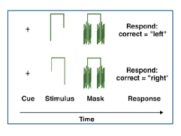
Author(s): Scott Douglas Jacobsen
Publication (Outlet/Website): Medium (Personal)
Publication Date (yyyy/mm/dd): 2024/06/17
The Devil is not a fable. It is not a theological fantasy. He is as real and solid a reality as Mount Everest. It is one of the greatest forces operating in the world because it is really, in a sense, a counterforce to God. We all agree — no doubt — that God is all-powerful and the prime power more powerful than anything else. Granted, that the negative of God, the negation of God, which we call Satan, comes in second place.
Theories of Everything with Curt Jaimungal, “Wolfgang Smith on the devil.” (2024)
Where do you start with this one? This is a prime, powerful example of the basic premise: Simply because someone is older does not mean that they’re correct. They have more time on the planet, so have sifted more information. It’s a richer worldline information base. That’s fair.
However, when we look at the basic premise, there is no real presentation to believe this man. If an older gentleman was a creationist when younger and is a creationist at 102, is he all-of-the-sudden correct? No, nonetheless, his wrongness is grounded in more time and experience.
That’s not nothing. When it comes to Wolfgang Smith and his assertions to the Devil as not a fable and not a theological fantasy, and claiming the reality as “real and solid” as Mount Everest, I pause. What is the basis for this?
Most descriptions of the Devil focus on a spiritual entity, not on a solid entity, certainly not as something as inanimate as a mountain. On the deeper point, the idea of something as real as we experience Mount Everest. It’s still false. Because he ties this to other premises.
The idea that we all agree. That’s false. The idea of all agreeing on God being all-powerful. Some have the idea of no gods, or many gods, or a limited god. Some don’t even believe in a Devil. In fact, probably, something like half of the world does not believe in the biblical Devil, as only a huge hunk is Islamic or Christian or Jewish.
Other religions and non-religion have nothing to do with those conceptualizations of a God, of an all-powerful entity, of a Devil, and the like. One can only hope Jaimungal pushed back on the nonsense spouted by the man. It seems less a theory and more a hypothesis, or a vague theological guess.
License
In-Sight Publishing by Scott Douglas Jacobsen is licensed under a Creative Commons Attribution-NonCommercial-NoDerivatives 4.0 International License. Based on a work at www.in-sightpublishing.com.
Copyright
© Scott Douglas Jacobsen and In-Sight Publishing 2012-Present. Unauthorized use and/or duplication of this material without express and written permission from this site’s author and/or owner is strictly prohibited. Excerpts and links may be used, provided that full and clear credit is given to Scott Douglas Jacobsen and In-Sight Publishing with appropriate and specific direction to the original content. All interviewees and authors co-copyright their material and may disseminate for their independent purposes.

Author(s): Scott Douglas Jacobsen
Publication (Outlet/Website): Medium (Personal)
Publication Date (yyyy/mm/dd): 2024/06/17
This is something that the theologians will call total depravity or pervasive depravity. And what it means is this. It means that all of a person is infected and affected by sin. I’ll start with a simple analogy. So here’s my nice clean water. God made us like this. Clean, pure, holy. He said we were very good. Very good. Sin then enters into the human condition. We all inherited Romans 5 from our first father, Adam. And if I were to drop poison or pollution into this water, how much of it would be infected and affected? All of it. There wouldn’t be a portion that would be preserved. So it is with the human condition. Your mind is infected and affected by sin. Your heart is infected and affected by sin. Your will is infected and affected by sin. And those who don’t believe in the Bible think that a part of them is good. “Well, I just follow the science.” Why do you trust your mind? “Well, because it makes sense to me.” Well, you’ve had some crazy thoughts. I’ve known you a while. And then sometimes we’ll just say, “Follow your heart.” Every hangover started with that assumption. Every hangover started with that assumption. The point is that all of us is infected and affected by sin.
Pastor Mark Driscoll, “Total Depravity” (2021)
Pastor Mark Driscoll looks healthier in this video than at any point in his career, in my opinion. Something before 2021 and after 2021 didn’t do him wonders in the fitness.
What he is referencing here is a common theology based bigotry, it is the idea that individuals who are not Christian can be assumed to have something bad the Christians do not.
Which is to say, something transcendentally impure, as in the bottle of water example. There’s a lot of issues here that don’t make any clear sense. One is the founding of a lot of the preaching to garner truths about the world through merely analogical reasoning.
It has its purposes, but it’s primarily misleading in this context. Leaving that to the side, the use of the traditional Christian concepts of sin and not sin are meant as a call to self-improvement of the Christian in their life.
This, as with a lot of Driscoll’s performances, is merely the use of traditional Christia concepts to supernaturally stigmatize other people, which, as the supernatural does not exist, means the use of Christianity to stigmatize others. The rest of theatrical oratory, he continues:
So I want to break it down and look at all the components of the human being and how it’s infected and affected. He talks about our nature. We’ll unpack these. What then? Are we Jews, those who grew up in church with the Bible, any better off? Not at all. We’ve already charged that all, Jews and Greeks, everybody is under sin. That means ruled, dominated, controlled by, as it is written, he quotes the Old Testament. No one is righteous. No, not one. It’s very negative, very binary, very judgy, very accurate. What about our mind? Well, I went to college. I have more degrees than Fahrenheit. I’m very, very smart. No one understands. They have a lot of knowledge, but not a lot of wisdom. We call that college.
What are individuals to make of this rambling? I can barely see the common thread in the preaching. I am reminded of the preaching of William Branham. It is a torturous path and one washed away as fast as the brambly path is laid down. The short: ‘Sin infects people and makes them bad, examples.’ He continues:
Also motive, no one seeks for God. We’ll talk about that. How about your will? All have turned aside for they have become worthless. Deed. No one does good, not even one. Word. Their throat is an open grave. They use their tongues to deceive. The venom of asps is under their lips. Their mouth is full of curses and bitterness. What about the body? Their feet are swift to shed blood. Emotion. In their paths are ruin and misery and the soul and the way of peace. They have not known. When you go to the doctor, they literally give you a checkup from head to toe. This is God’s checkup of humanity from head to toe. He literally starts with stick your tongue out. Let me look down your throat. That’s literally where he starts. He starts with nature. This is something that you will only learn in the Bible. You will not hear in any other educational format that you are not just a sinner in your behavior. You are a sinner by nature. It’s not just what you do, it’s who you are. Therefore, you can’t just have behavior modification. God needs to give you nature regeneration. That God needs to fundamentally change you at the level of being. That’s how bad we are. And that’s how great the need is.
Honestly, I do not even know an ordinary context in a proper educational institution in which sin is referenced as something bad in behaviour let alone nature. It’s just not there. It’s only in religious organizations and institutions preaching groundless nonsense. And again, as you all see, the analogical thinking does nothing to support this formulation of ‘reasoning’ because there’s nothing to concretely deal with there. He goes on:
And so how many of you have raised a kid, and you’ve seen that they come, it’s like it’s like a Groupon, you buy one, you get one, you get a kid, and they throw in a free sin nature. Have you noticed that? And if you raised a kid, did you need to teach him to lie or steal? You know what the difference is between an angry, selfish child and a terrorist? Size. That’s it. They all are going to do the same thing. And so even if you’re parenting a kid, you’re like, why do they do this? Because they need a new nature. We need a new nature. And so much of our world is trying to control behavior. And what God wants to do is change nature. Until things change in here, things can’t change out there. There needs to be the change in the want to before there can be the change in the how to.
Once you scrap back all of the layers of gibberish, weird examples, analogies, and the like, you get to something rather ordinary: behaviour. Kids come with selfishness. People can be selfish. Terrorists commit bad acts by definition. What is the point in making an entire cosmology to explain truisms? Does one need to be this cosmically self-centered?
License
In-Sight Publishing by Scott Douglas Jacobsen is licensed under a Creative Commons Attribution-NonCommercial-NoDerivatives 4.0 International License. Based on a work at www.in-sightpublishing.com.
Copyright
© Scott Douglas Jacobsen and In-Sight Publishing 2012-Present. Unauthorized use and/or duplication of this material without express and written permission from this site’s author and/or owner is strictly prohibited. Excerpts and links may be used, provided that full and clear credit is given to Scott Douglas Jacobsen and In-Sight Publishing with appropriate and specific direction to the original content. All interviewees and authors co-copyright their material and may disseminate for their independent purposes.
Author(s): Scott Douglas Jacobsen
Publication (Outlet/Website): The Good Men Project
Publication Date (yyyy/mm/dd): 2024/06/17
Sam Vaknin is the author of Malignant Self-love: Narcissism Revisited as well as many other books and ebooks about topics in psychology, relationships, philosophy, economics, international affairs, and award-winning short fiction. He is former Visiting Professor of Psychology, Southern Federal University, Rostov-on-Don, Russia and on the faculty of CIAPS (Commonwealth Institute for Advanced and Professional Studies). He is a columnist in Brussels Morning, was the Editor-in-Chief of Global Politician, and served as a columnist for Central Europe Review, PopMatters, eBookWeb, and Bellaonline, and as a United Press International (UPI) Senior Business Correspondent. He was the editor of mental health and Central East Europe categories in The Open Directory and Suite101. His YouTube channels garnered 80,000,000 views and 405,000 subscribers. Visit Sam’s Web site: http://www.narcissistic-abuse.com.
Scott Douglas Jacobsen: Technologies integrated with human cultures continually make new laws, even creating entirely new frames of legal discourse. What have been some of the more disruptive forms of technology to legal systems, philosophies of law?
Dr. Sam Vaknin: Every technology necessitated a revision of existing laws to incorporate its unique features. The more disruptive the technology, the more profound the legal revisions: the printing press, for example, or the telegraph, telephone, automobile, Internet, social media, smartphone, and so on.
Jacobsen: What role does invention play in the creation of new laws, policies, even whole new legal systems of consideration in governance?
Vaknin: I dispute this claim or premise. Technology does not spur legal innovations or revolutions. Consider crime: contemporary technologies simply allow us to commit age-old offenses in new ways.
New technologies do force laws and regulations to become a lot more detailed and specific in order to accommodate their idiosyncrasies, but there is no paradigmatic shift involved.
Jacobsen: We talked about human-machine interfaces. What is the past of law regarding human use of technologies?
Vaknin: Laws, past and present, have dealt mostly with the adverse outcomes, actual and potential, of using technology. As technologies became more sophisticated, though, their unintended consequences became less predictable and the Law had to play catchup and whack-a-mole with those.
Jacobsen: Of modern communications technologies, what have required the most ubiquitous change in law?
Vaknin: The telegraph and the radio were the most disruptive technologies with the Internet a close third. The abolition of distance by the first two and the egalitarianism fostered by the latter served to undermine many erstwhile legal tenets and conceptual pillars.
Jacobsen: With narrow AI in many facets of life, quietly, and more obviously such as LLMs, what are some necessary changes to law for protection of copyright and plagiarism? Linguist Noam Chomsky is reported to have said, “Let’s stop calling it ‘Artificial Intelligence’ and call it what it is: ‘plagiarism software.’ Don’t create anything, copy existing works from existing artists and alter it sufficiently to escape copyright laws. It’s the largest theft of property ever since Native American lands by European settlers.” You had him in your list of geniuses. What will be the outcome of the theft of intellectual property to create some of these algorithms?
Vaknin: I completely disagree with this way of looking at things. I don’t see even a hint of these legal issues or ostensible transgressions with large language models. AI generates derivative works based on databases of texts, but does not reprint or replicate these texts verbatim. It learns from texts but does not plagiarize them in the strict legal sense (except in rare cases).
There is definitely an ethical conundrum here, but not a legal one. Still, this ethical dilemma arises also with cliff notes or Blinkist or parodies or any creative work inspired by another. Chomsky’s own work relies on the oeuvre of previous scholars!
Jacobsen: What will be the future of the discourse between increasing intimate contact, even fusion, with synthetic systems and the law? When digital conscious systems become more fully decoupled from human control – degrees of autonomous, what will this mean for both the concept of personhood and the idea, not only human rights but, rights attributed to agents more broadly?
Vaknin: At some point, we would need to generalize the language of the Law to apply it equally to all forms of intelligences with agency, including cyborgs, androids, and artificial intelligence. Sentience, not carbon content, would become the test of applicability of laws, norms, rules, and regulations.
Who would enforce these carbon-blind laws would become a major point of contention. We are having a hard time coping with driverless cars. How well would we adapt to non-human cops and judges?
Jacobsen: Thank you for the opportunity and your time, Sam.
Vaknin: Thank you as ever, Scott.
License
In-Sight Publishing by Scott Douglas Jacobsen is licensed under a Creative Commons Attribution-NonCommercial-NoDerivatives 4.0 International License. Based on a work at www.in-sightpublishing.com.
Copyright
© Scott Douglas Jacobsen and In-Sight Publishing 2012-Present. Unauthorized use and/or duplication of this material without express and written permission from this site’s author and/or owner is strictly prohibited. Excerpts and links may be used, provided that full and clear credit is given to Scott Douglas Jacobsen and In-Sight Publishing with appropriate and specific direction to the original content. All interviewees and authors co-copyright their material and may disseminate for their independent purposes.
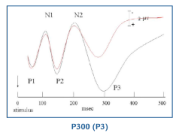
Author(s): Rick Rosner and Scott Douglas Jacobsen
Publication (Outlet/Website): Ask A Genius
Publication Date (yyyy/mm/dd): 2024/06/17
[Recording Start]
Rick Rosner: I am currently reading a book titled Nuclear War. I do not recall the author’s name, but the book explains that we remain at a high risk of nuclear war. There are approximately 15,000 nuclear weapons in existence, which is alarming. The United States has about 1,750 nuclear weapons ready to deploy, with an additional 2,000 in storage. Russia possesses about 1,650 nuclear weapons. We have been at risk of nuclear war since the late 1940s. The Russians built their first atomic weapon in 1949. By that time, the United States had over 100 nuclear weapons. The chapter I have just begun, and I am still early in the book, discusses how North Korea was decades away from having ballistic missiles capable of reaching the United States. However, they acquired Soviet technology, or someone obtained rocket technology after the fall of the Soviet Union, which North Korea then purchased. Now, they are capable of launching a missile 9,000 miles, reaching the entire continental United States. So, we have been at risk for 75 years. Even a single nuclear weapon detonation would immeasurably change life on Earth. It would crash economies, and if they were H-bombs rather than A-bombs, tens of millions, perhaps a hundred million people, would perish.
Scott Douglas Jacobsen: What was the range of nuclear bomb sizes between the United States and Russia during the peak of the Cold War?
Rosner: During the early Cold War, in the late 1950s, America had H-bombs. In the late 1950s, they had H-bombs with a minimum explosive force of one megaton. I believe they were called Mark or something. The United States had deployed 10-megaton H-bombs on bombers. This does not mean they always exploded with that much force; they were tested to go off with that much force. They were tested on islands. Whether they would work as efficiently if dropped from a plane is uncertain, but the physics remains the same. Even if a 10-megaton bomb only exploded with the force of a one-megaton bomb, it would still kill four or five million people if it hit a city.
So, the maximum size was about ten megatons. From the 1960s to the present, the United States and Russia have developed battlefield pocket nukes intended for tactical use in battlefield situations. However, even tactical nukes have a yield of a few kilotons, which is not much less than the Hiroshima and Nagasaki bombs. You could dial down the yield. To create a chain reaction that breaks apart almost all the fissionable nuclei in a bomb, you need a certain amount of nuclear material, such as about five kilograms of plutonium. A ball of plutonium with some material in the Middle to amplify and capture neutrons is about four inches in diameter. You could possibly tweak the critical mass so it somewhat fizzles or does not fully explode. You could not reduce the explosive force to less than a kiloton. Anyway, the range is from a kiloton to a megaton. I think the United States currently has yet to deploy any 10-megaton weapons.
A megaton weapon has about a hundred times or seventy times, the explosive force of the Nagasaki bomb, which would kill millions of people, many of them instantaneously. What is the minimum blast radius? The fireball of a megaton nuke is 5,700 feet or 1.1 miles in diameter. Everything within that fireball is obliterated. No bones, nothing left. Concrete and everything else is scorched out of existence. The thermonuclear explosion’s temperature is four times that of the sun’s center. The fireball obliterates everything within a radius of nearly 0.6 miles. For another mile beyond that, everyone is killed. You are looking at a radius of fatality or a diameter of fatality of a circle three miles across, where 99% of everyone is killed unless they are in a specially hardened structure. Most people are killed for another mile beyond that, and the casualty rate decreases from there. You have an area of seven to eight square miles where almost everyone is killed by an H-bomb.
Weren’t there conditions under which individuals survived in Hiroshima and Nagasaki? Yes. Your skin wouldn’t be burned off if you were far enough away and wearing light-coloured clothing. Dark clothing absorbs more light radiation, causing burns. If you were not looking at the blast and in a structure that shielded you from the initial thermal effects and the blast overpressure that pushed everything down on top of you, you might survive. Survival was pure luck. It depended on the colour of your clothing, the structure you were in, and the direction you were looking. If you were within a mile of the blast, you would still receive a healthy dose of radiation that might not kill you immediately but could do so in 20 years. Could you escape after the initial blast? Nobody knew about fallout then. If you fled to a river because you were burned, the river might collect more fallout than the land. I do not know. If ash fell into the river, the radioactive ash would mix with the water, and you would be in that water.
Jacobsen: What is the risk of radiation seeping into your body in water contaminated with radioactive material?
Rosner: There were no precautions. Leaflets were dropped, which were probably not believed before the bomb was dropped. But nobody knew what to do. If you were exposed, if you were in a city that had been nuked and you survived, I do not know, would you take iodine to prevent your body from absorbing radioactive iodine? That is one of the products of a nuclear blast, absorbed by your body in the same way it absorbs iodine. It could be strontium, I don’t know. If you took iodine, you might absorb less of the radioactive material that causes radiation poisoning. But I do not know.
Jacobsen: What is the risk of nuclear war or even a single weapon being used? What is the probability of that happening? What is the likelihood of using a nuclear weapon?
Rosner: I wonder if anyone can calculate that. Are there loose nukes that disappeared from inventory after the Soviet Union fell? I have not heard of that. Is there a chance that terrorists could steal a nuke from Russia or the United States? I do not know. The United States has had broken arrow situations. A broken arrow is when a nuke escapes custody, like when it is accidentally dropped. In 1958, an H-bomb was accidentally dropped. It was not armed, so only the traditional explosives went off. The bomb was scattered over a pasture and broken apart by the regular explosives. Did that scatter nuclear material? I guess so. Even if bad actors got to it first, they would not have been able to make it into a bomb because it was broken and scattered.
It is much more likely that terrorists would gather a subcritical mass of nuclear material, strap it to conventional explosives, and make a dirty bomb that scatters radioactive material over a few square blocks. This could make the area uninhabitable for weeks or months until it is cleaned up, causing widespread fear. Currently, I would guess that the most significant risk of someone setting off a single nuke would be Russia unleashing a tactical nuke in Ukraine. However, I do not think Russia would do that because it would likely lead to war with NATO, involving all of Europe and the United States. Europe and the United States have a combined population of 800 million, while Russia only has 160 million. Its arms have been depleted by more than two years of war.
I do not think they would want the consequences of setting off a single nuke. The second most significant risk might be Iran. I do not believe Iran can make a nuclear weapon yet, but they are getting closer. If they had one and were suicidal, they might try to smuggle or launch one into Israel. This would result in brutal bombing by the United States, Israel, and their allies. The third scenario would be North Korea launching a single nuke. The odds of any of these three things happening are pretty low because the country doing it would be heavily bombed. If Iran launched a nuke, I do not know if we would bomb Iranian cities, but we would bomb every possible site where nukes were thought to be developed and many other military sites. We would drop thousands of bombs on Iran, destroying their air force and most of their army bases.
Jacobsen: Do you think any use of a nuclear weapon by Iran would automatically isolate Iran from the rest of the Middle Eastern countries?
Rosner: Yes.
Jacobsen: Do you think any other country has suicidal intent?
Rosner: Iran, besides Israel, is the only Middle Eastern country that has nuclear weapons that I know of. If Iran dropped a nuke on Israel, Israel has about 50 nukes and might retaliate by nuking Tehran. The United States probably would not bomb Iranian cities but would target military sites. If Iran attacked Israel, a couple of hundred thousand Israelis would be killed if they targeted a town. At least that many Iranian military personnel would be killed in response within a day. Well, I do not know if Israel would retaliate with nukes. The United States might talk Israel out of a nuclear retaliation. The United States would likely support Israel in bombing the hell out of Iran with conventional weapons, and the United States would probably join in. I am just guessing. I am not an expert on this.
Jacobsen: Are there any weapons more dangerous than an H-bomb or a nuclear bomb, theoretically?
Rosner: There is no known biological agent that could kill as many people as an H-bomb. That does not mean that some lunatic countries haven’t developed something with the potential, but I doubt it. Viruses can spread uncontrollably. You cannot target an enemy country with a virus because they have unlimited reach. An aerosolized Ebola virus, contagious like COVID-19, would be more dangerous than an H-bomb. It could kill hundreds of millions of people worldwide. But… People would be crazy to develop it. Oh, one more thing. The chapter I just read discusses the United States’ semi-claim that we have technology capable of intercepting nuclear warheads. However, as this book explains, you can only intercept a nuclear missile during the launch phase. Within the first three minutes, the rockets accelerate it to 14,000 miles per hour. The missiles then use their fuel and drop away, leaving a projectile flying through the air under its kinetic energy, which is much harder to track.
When we have tried to intercept targets like that, we fire a heavyweight at the incoming missile, trying to break it apart by hitting it directly. We are not launching a bomb close to the incoming nuke and setting it off to wreck the nuke. We do not have that technology yet, if ever. So it is like trying to hit a bullet with a bullet. One object moves at 15,000 miles per hour, and the interceptor moves at 20,000 miles per hour. The hit has to be exact. Each object is only 8, 10, or 20 feet across, which is not a large target. The United States’ success rate at hitting a single missile aimed at us is less than 50 percent. Some tests intercepted with a 55 percent success rate, others with 40 percent. Even one missile has more than a one-third chance of reaching its target.
Assuming North Korea’s technology is good enough to get the missile to its target, even if it isn’t, say they are aiming for Washington DC, and the rocket only travels 8,000 miles instead of 9,000, it would detonate over Minnesota. You still have a nuke exploding over the United States. We cannot stop a launched nuke with even 80 percent certainty. According to this book, we only have 44 kinetic interceptors. If an enemy launched even six nuclear weapons and we launched all 44 interceptors, it is still likely that one or two would get through. I do not know if we would launch all 44 simultaneously because we might save half for a second wave. This is how we got the Soviet Union to go bankrupt and collapse. Reagan scared the Soviet Union with the Star Wars defence system, an early version of intercepting incoming missiles. Russia spent a lot of time trying to develop its technology, which was the last straw in bankrupting them. I do not know.
[Recording End]
License
In-Sight Publishing by Scott Douglas Jacobsen is licensed under a Creative Commons Attribution-NonCommercial-NoDerivatives 4.0 International License. Based on a work at www.in-sightpublishing.com.
Copyright
© Scott Douglas Jacobsen and In-Sight Publishing 2012-Present. Unauthorized use and/or duplication of this material without express and written permission from this site’s author and/or owner is strictly prohibited. Excerpts and links may be used, provided that full and clear credit is given to Scott Douglas Jacobsen and In-Sight Publishing with appropriate and specific direction to the original content. All interviewees and authors co-copyright their material and may disseminate for their independent purposes.
Author(s): Scott Douglas Jacobsen
Publication (Outlet/Website): Medium (Personal)
Publication Date (yyyy/mm/dd): 2024/06/16
Friends, what keeps us from this is another form of blindness. And what I love about the Bible is that the Bible will takephysical truths and use them to teach spiritual truths. The same God who rules over the physical world rules over the spiritual world. So, the Bible often uses the analogy that sin is like blindness, that sin is like blindness. Paul says to the Corinthians is one example. There are many in the Old and New Testament, “The god of this world has” — what? — “blinded the minds of unbelievers so they don’t see the glory of God in Christ.” See, non-Christians are not stupid; they are blind. Yelling at them won’t make them see, hating them won’t make them see. Telling them, “It’s obvious. Do you not see it?” “I am blind. No, I don’t.”Now, you just seem mean and cruel. Since I have always been blind, I don’t even know what you’re talking about, to have sight. Does this explain some of your frustration with non-Christian family, co-workers, friends? “Jesus is God! How come you can’t see that?” “I don’t.” So, we need to pray for a miracle of God where Jesus touches them and opens their spiritual eyes, just as He has opened our spiritual eyes.
Pastor Mark Driscoll, “Non-Christians Aren’t Stupid, They’re Blind” (2011)
Pastor Mark Driscoll in this particular clip from the Mars Hill era more or less reflects the use of the invention of a concept to inure a rival philosophical stance. What is a nonbeliever? What is an atheist? Some who rejects Christ as God. Simple: They’re blind. They miss a God-sense.
You are superior. You have that which they do not. Only if they would humble themselves to accept this profound gift of God. But they’re not stupid, though Bible calls them “fools.”
They’re filled with sin, evil, and, therefore, blind. Do you see the unfairness in this formulation of argument? Invert it: The Christian is filled with supernatural ignorance, ‘sin’ if you will.
They’re unable to see the truths of scientific naturalism. They’re simply blind and cannot see. It’s pseudoepistemological arrogance posing as epistemology. It’s not even an argument; it’s an insult, to the Christian. If Driscoll, in fact, believes this, he believes his audience is stupid. He’s intelligent enough to make epistemological distinctions. He continues:
Sin is like blindness. Number one, it is an incurable condition. This man’s condition was incurable; he needed a miracle. Our sin condition is incurable, and we need Jesus to do a miracle. Number two, sin blinds us so that we don’t see God clearly. We don’t know Him rightly, particularly about Jesus. Had you, for example, asked me prior to Jesus opening my blind eyes at the age of 19, “What do you think about Jesus? He’s a nice guy. He told nice stories, helped somepeople, fed the poor.”
“Is he God?”
“I don’t see that.”
“Is he Lord?”
“I don’t see that.”
“Is he coming again to judge the living and the dead?”
“I don’t see that.”
“Should he tell you what to do? I definitely don’t see that.”
What is this long stretch of sophistry? Again, the entire premise is blindness based on the assertion of the Christian being able to see that which the atheist or the nonbeliever cannot see. Remembering, God pursues people.
Therefore, this is an act of will against the Will of God. The derivative must be purported arrogance and pride on the part of the nonbeliever. Yet, once more, it’s bound to the proud assertion of a non-epistemology in having a means of analogical sight for the theological realities of world.
Even further, he asserts another premise onto this. The condition is something incurable and, therefore, something of which the individual believer can touch and attain forgiveness of sins to give them a sight while the nonbelievers is unable to do so: They have not accepted Jesus Christ — Lord and Saviour — as their King of Kings.
Driscoll may be playing the role of giving his own testimony. However, we cannot ascertain this as any further proof tothe divinity of Mohammed. Let’s call this the divine neutrality principle, testimonies can be used to attest to any divinity. Therefore, the divinity of any particular deity or holy figure cannot be considered as such as a matter of principle when mutually exclusive, so rejecting all divinities becomes more reasonable as a result. But Driscoll bleeds on:
I didn’t see Jesus for who he was. When we’re spiritually blind, we don’t have the ability to cure an incurable condition. We don’t see God and Christ for who He is. Number two, we don’t see ourselves for who we are. We don’t. We don’t see ourselves for who we are. Some of you think, “I am a really good person.” You don’t see yourself. Some of you would say, “Oh, I see myself. I see how sinful, broken, damaged goods, I am.” But if you don’t have any hope, you don’t have any joy. You don’t have any Christ. You don’t have any sight. People tend to see themselves as not needing a Savior or either being beyond salvation. One leads to pride, the other leads to despair, neither lead to Jesus. We don’t see ourselves. You are not damaged goods. You are not beyond hope. You are not broken irreparably. You are not beyond the grace of God. How do we look at blind Bart? There is hope for him apart from Christ. But in Christ, there is hope for him.With blind Bart, there is no hope in him. In Christ, there is hope for him. You and I, exactly the same. There is no hope in us, but in Christ; there is hope for us. So, we could see ourselves and see our sin and be honest and be repentant and come clean and tell the story. The story is, we’re the villain. He‘;’s the hero. It was a total wreck. He showed up. I love Jesus. Thirdly categorically, but fourthly in my point, we don’t see, we don’t see others clearly because of sin. Some of you look at people. “They are beyond hope. They are beyond help. I do not know what to do for them. I do not know what to do with them.” Once our eyes are opened, spiritually, we see people as Christ sees them. Ah, they are blind and they need Jesus. They need the power of God. That’s what they need. It gives us a heart of compassion because we remember I was blind too. Without Jesus, I would be as blind as they are. So, I am not angry with them. I am brokenhearted for them. If I am going to talk to them about one thing, it is going to be Jesus.
Occam’s razor or the principle of parsimony can, probably, deal with most angles of this particular line of argumentation.Here’s how: Is it simpler to argue for extra principles in the universe and of supernaturality to prevent others from seeing Christ as God, or simply that others disagree with the basic tenets of the Christian faith? You see the point. His sophistry runs on, and on, and on, and can get a bit tiresome. It’s also late now. Regardless, it’s not that people are or are not beyond hope in their potential for believing in Jesus Christ as Lord and Saviour, but rather, the vast majority of the people on the Earth disagree with the premise of Jesus Christ as Lord of Lords.
License
In-Sight Publishing by Scott Douglas Jacobsen is licensed under a Creative Commons Attribution-NonCommercial-NoDerivatives 4.0 International License. Based on a work at www.in-sightpublishing.com.
Copyright
© Scott Douglas Jacobsen and In-Sight Publishing 2012-Present. Unauthorized use and/or duplication of this material without express and written permission from this site’s author and/or owner is strictly prohibited. Excerpts and links may be used, provided that full and clear credit is given to Scott Douglas Jacobsen and In-Sight Publishing with appropriate and specific direction to the original content. All interviewees and authors co-copyright their material and may disseminate for their independent purposes.
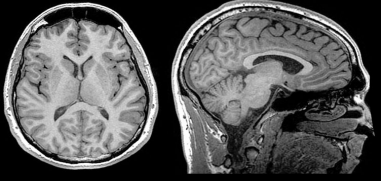
Author(s): Scott Douglas Jacobsen
Publication (Outlet/Website): Medium (Personal)
Publication Date (yyyy/mm/dd): 2024/06/16
Stupid people say, “I don’t want to tell their children what to believe. I don’t want to impose my religion on them. I want them to find their own way.” This is the equivalent to driving into the middle of America, kicking the child out of the car, and wishing the best that they find their way. A child will never find their way. That’s why God gives them a father to lead the way. So, our God, we want Him to not just to have dominion over our life, but over all the generations of our family. If you raise your children, starting with your sons, to live under dominion of our God, God will be faithful to them as He has been faithful to you. God is the same God of every generation. His dominion never ends.
Pastor Mark Driscoll, “Stupid people say _______” (2023)
1 The fool hath said in his heart, There is no God. They are corrupt, they have done abominable works, there is none that doeth good.
2 The Lord looked down from heaven upon the children of men, to see if there were any that did understand, and seek God.
3 They are all gone aside, they are all together become filthy: there is none that doeth good, no, not one.
4 Have all the workers of iniquity no knowledge? who eat up my people as they eat bread, and call not upon the Lord.
5 There were they in great fear: for God is in the generation of the righteous.
6 Ye have shamed the counsel of the poor, because the Lord is his refuge.
7 Oh that the salvation of Israel were come out of Zion! when the Lord bringeth back the captivity of his people, Jacob shall rejoice, and Israel shall be glad.
Psalm 14:1–7 (King James Version)
Pastor Mark Driscoll in this particular clip is, in fact, being faithful to a direct reading of the scriptures with Psalms. Where, unbelievers are deemed to be fools, corrupt, abominable in works, unable to do good, filthy, and such.
Now, take the other view in which individuals who have been characterized this way in the literature of a community, and the interpretation — more importantly — of a leader of the community is straight from the page, it’d be deemed prejudiced, bigoted, or, at a minimum, hostile to the group. Thi version of Christian call this loving.
The Convention of the Right of the Child (1990) is an important UN document. It clearly states some important aspects of the right of the child. As we’re seeing with the inconvenient of universalist laws for the parochial minded, there is a pushback.
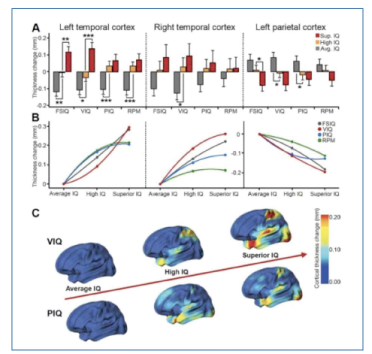
Parents should provide a space for healthy development of mind and opinion for the child. Both the UN and religious institutions believe the individual is important and the family is the fundamental group unit of society. How those families are comprised or formed, they differ.
However, the family is the fundamental group unit of society. That seems to be a cultural, institutional, and relatively religious universal. Driscoll, as per usual, resorts to extreme and colourful images: If you do this, you’re simply abandoning your child in the Middle of Nowhere, America.
The problem isn’t the idea of children being raised; the problem for Driscoll is the child deviating or developing an independence of mind apart from Christian doctrine and fundamentalism.
“God is the same God of every generation. His dominion never ends.” Whole empires have crumbled under the might of time and more timely ethics, ethos, and governance systems. God’s differ. God abandons people at inopportune times. Proverbially speaking, God abandoned Driscoll at his most crucial time of need when Mars Hill collapsed.
If He can abandon him — Driscoll, and if it’s wrong to abandon a child of God in Middle of Nowhere, America, and if God is the Goood, then, maybe, Driscoll is worshipping a false God allowing the Bad to happen to a man deeming himself the Good following the Good God.
License
In-Sight Publishing by Scott Douglas Jacobsen is licensed under a Creative Commons Attribution-NonCommercial-NoDerivatives 4.0 International License. Based on a work at www.in-sightpublishing.com.
Copyright
© Scott Douglas Jacobsen and In-Sight Publishing 2012-Present. Unauthorized use and/or duplication of this material without express and written permission from this site’s author and/or owner is strictly prohibited. Excerpts and links may be used, provided that full and clear credit is given to Scott Douglas Jacobsen and In-Sight Publishing with appropriate and specific direction to the original content. All interviewees and authors co-copyright their material and may disseminate for their independent purposes.
Author(s): Scott Douglas Jacobsen
Publication (Outlet/Website): Medium (Personal)
Publication Date (yyyy/mm/dd): 2024/06/16
Man: I’m not a religious person. But don’t you guys find it weird that Christianity and believing in God is like the taboo or weird thing to do? People can mock Christianity, but God forbid somebody attacks like the Muslim religion. Call me crazy, but no matter what religion you are, even if you’re an atheist worshipping Satan, I’m not sure why that’s on the top of “it’s fine” list.
Pastor Mark Driscoll: As soon as you get to Jesus Christ, everything changes. It has a supernatural divine power. At a job site, you don’t see a dude hit their thumb with a hammer and scream “Allah,” but he will take the Lord’s name in vain. Even if you don’t understand Jesus Christ, even if you don’t believe in Jesus Christ, there is something authoritative and confrontational about the name of Jesus Christ. That’s why there’s a constant attack on Christianity in a way there isn’t happen with other religions. Because other religions have got demons, but they don’t have God, so they don’t have the same level of authority.
Pastor Mark Driscoll, “Even atheists understand this” (2024)
In this clip, there’s not a lot to cover here because the coverage may or may not be real and the critique isn’t much. On a cultural and historical, Christianity has been so dominant in Western societies.
Its dominance in culture, history, and politics, left it unchallenged. As numbers declined or simultaneous with it, criticism of Christianity and other religions became more available, because of its ideological dominance. Mockery is part of the First Amendment in the US.
Plenty of people criticize Christianity and Islam. In fact, particularly Dr. Sam Harris and Dr. Richard Dawkins have spent a larger portion of time critiquing Islam or “the Muslim religion” over others, they’re far from minor figures in critical voices about Christianity.
Also, they’re missing the nuance about individual background. Most of the online voices critquing religion came out of a North American milieu, which has a Christian dominance. It is the proverbial waters upon which to critique religion.
Those individual differences can make it seem as if the hyper focus is on Christianity. It’s proportionate to the population background more often than not. It’s not an accident critics of Islam come out of Muslim-majority countries, e.g., Armin Navabi and others.
It’s ironic to see a self-defensiveness about criticisms of Christianity when openly in all translations and version of the holy books of Christianity; there is the open claim all those who do not believe in God are “fools” — let alone derivatives including damned to eternal, everlasting torment. Isn’t that hate literature worse than light mockery of Christian ideology?
Besides, not many say it’s fine. It’s merely a fact: It’s being done. That’s different than sanctioned.
License
In-Sight Publishing by Scott Douglas Jacobsen is licensed under a Creative Commons Attribution-NonCommercial-NoDerivatives 4.0 International License. Based on a work at www.in-sightpublishing.com.
Copyright
© Scott Douglas Jacobsen and In-Sight Publishing 2012-Present. Unauthorized use and/or duplication of this material without express and written permission from this site’s author and/or owner is strictly prohibited. Excerpts and links may be used, provided that full and clear credit is given to Scott Douglas Jacobsen and In-Sight Publishing with appropriate and specific direction to the original content. All interviewees and authors co-copyright their material and may disseminate for their independent purposes.
Author(s): Scott Douglas Jacobsen
Publication (Outlet/Website): Medium (Personal)
Publication Date (yyyy/mm/dd): 2024/06/16
God is the author of life. God is the one who is sovereign over life. God has all authority over human life. That’s exactly what it’s going to say in Genesis chapter 9, verse 6. ‘Whoever sheds the blood of man, by man shall his blood be shed, for God made man in his own image.’ In the previous book of the Bible, in the book of Genesis, it says you should not kill anyone, and if you murder anyone, to be more specific, you should not murder anyone, and if you murder someone, then you should be murdered. Because people bear the image and likeness of God. So this is biblical thinking. This is not evolutionary thinking. In evolutionary thinking, human beings are just lucky animals. In biblical thinking, they are image bearers of God.
Pastor Mark Driscoll, “Evolutionary Thinking vs. Biblical Thinking — Pastor Mark Driscoll” (2014)
Nothing too objectionable, in fact, to the value in not murdering or killing arbitrarily. It can be seen as a justification to argue against capital punishment.
The fact one needs a transcendent justification is the concern. How does one need an ancient series of texts to know killing is wrong? Outside of personality-disordered people, we don’t need religion for this.
The culmination of this clip is to split the idea of a creation account of origin of life in the Bible as “image bearers of God” from an evolutionary view with “lucky animals.”
It’s not that it’s a way of thinking to see us as “lucky animals,” but, rather, the fact that we are animals and then must formulate the view of the world from this.
The theology cannot dictate the facts of the world because the facts of the world are the facts of the world. Our conceptualization about the facts of the world must follow from the fact and then the theology must ground itself through this.
Otherwise, it’s merely following a fantasy. Most people have come to the generally accepted conclusion arbitrary murder is wrong as more time has accrued. Most of the major faith preach this. Secular views of ethics do too.
So, perhaps, it’s something universally emergent in cultures as other facets of human life and social organization are figured out that Christianity merely co-opts. Christianity as a moral graft on universalisms, where Christianity becomes a particularist, parochial moral frame stretched to universalisms due to wider contemporary moral conversations.
License
In-Sight Publishing by Scott Douglas Jacobsen is licensed under a Creative Commons Attribution-NonCommercial-NoDerivatives 4.0 International License. Based on a work at www.in-sightpublishing.com.
Copyright
© Scott Douglas Jacobsen and In-Sight Publishing 2012-Present. Unauthorized use and/or duplication of this material without express and written permission from this site’s author and/or owner is strictly prohibited. Excerpts and links may be used, provided that full and clear credit is given to Scott Douglas Jacobsen and In-Sight Publishing with appropriate and specific direction to the original content. All interviewees and authors co-copyright their material and may disseminate for their independent purposes.
Author(s): Scott Douglas Jacobsen
Publication (Outlet/Website): Medium (Personal)
Publication Date (yyyy/mm/dd): 2024/06/16
There are various ways of seeing God. There are, in fact, basically five. We’ll call them worldviews. Ways of viewing the world and your place in it, in relation to God, and what ensues after this life. The first is atheism. -Theos, God. A-, not. So atheism is that there is no God. There is no God. Now, if that is the case, then this life is all with God. There’s no God who made us. There’s no God who knows us. There’s no God who’s come for us. There’s no God to comfort us. And when we die, there’s no God to greet us. Just this life. That’s all that there is. Philosophically, if worked out to its logical conclusion, this is a horrific way to live your life. I’ll give you two quotes. The first is from Bertrand Russell, the “great” atheistic philosopher. I put “great” in quotes, at in my mind. He says this, “That Man is the product of causes which had no prevision of the end they were achieving; that his origin, his growth, his hopes and fears, his loves and his beliefs, are but the outcome of accidental collocations of atoms; that no fire, no heroism, no intensity of thought and feeling, can preserve an individual life beyond the grave; that all the labours of the ages, all the devotion, all the inspiration, all the noonday brightness of human genius, are destined to extinction in the vast death of the solar system, and that the whole temple of Man’s achievement must inevitably be buried beneath the debris of a universe in ruins — all these things, if not quite beyond dispute, are yet so nearly certain, that no philosophy which rejects them can hope to stand. Only within the scaffolding of these truths, only on the firm foundation of unyielding despair, can the soul’s habitation henceforth be safely built.”
Pastor Mark Driscoll, “Atheism: Unyielding Despair” (2010)
We can ignore the humorous theatrical props in the context of the preaching 14 years ago, because, if you look at the newest church, Trinity Church, after the fall of Mars Hill Church, the interior decor and design of the performances are mores what they were: Pastor Mark Driscoll never changed. Let’s begin on commenting, Driscoll remarks on the various ways to see God, the definitions of God, and the, basically, the emotional benefits of believing in God, supposedly. As with most Christian performers, you see the basic premise: Define and frame. It’s not argumentation, evidence, or the like. He’s defining atheism and theism, God, and Christianity. He’s framing Christianity as a benefit emotionally and psychologically. That’s not argumentation or evidence. It’s sophistry. God makes us feel good, as in the God coming for you, making you, knowing you, greeting you, comforting you, and a non-horrific life to live. Look at those people who do not believe what we believe, it’s a “horrific way to live your life.” In short, demonize The Other: atheists. He did quote Bertrand Russell correctly from “A Free Man’s Worship.” If he had referenced the actual article, it may have given his worshippers to read more fully the context. However, a bonus point for Driscoll for correct quoting for sure. He continues:
Here is what he saying, “There is no God. You come from nowhere and no one. You are here for no purpose. If you are hurting or suffering, there is no one to help you or rescue you or comfort you. And when you die, there is nothing awaiting you.”
This seems more or less true, at least in the first sentence, as this amounts to the description of an atheist. Yet, on the premise of nowhere and no one, that makes no sense. Russell is a product of the contemporary period and produced some of it, too. Evolutionary, we came from a long line in the Tree of Life and came from out parents and proto-human ancestors. That’s non-controversial. So, Driscoll isn’t even trying to be fair in this presentation. If the person has loved ones, they have people to help them and comfort them. The evidence seems to show no one awaiting at death. If you do simply assert, as in the Christian claim, then, of course, no one awaits you. He goes on:
What he is saying, “This is the scaffolding for life.” The foundation he says is “unyielding despair.” Richard Dawkins, a more modern day atheist was asked the question, “Doesn’t your worldview leave you to be depressed?” Here’s what he said, “I don’t feel depressed about it. But if somebody does, that’s their problem.” Maybe, the logic is deeply pessimistic. Maybe? The universe is bleak, cold, and empty. But so what? Bleak, cold, and empty, but so what? Logically consistent, emotionally deadly. You come from no one. You come from nowhere. You are here for nothing. No one can save you.
Driscoll and others present as intellectually that which is appealing to the emotions. It’s not that Dawkins or Russell are wrong, but that Russell and Dawkins present something purportedly “emotionally deadly.” It’s not. Simply because on acknowledges no cosmic meaning to life, it doesn’t negate one’s personal valences or the deliciousness of listening to Bach or the sweetness of dark chocolate. These non-sequiturs are merely this, attempts to scare individual members of the flock from fleeing or considering others, and then, in turn, stereotyping atheists. This is the problem. Atheists are a negatively stereotyped population in the North America. These come with a lot of derivative negative emotions and beliefs in te negative social consequences and views cropping out of a single view. Driscoll exemplifies this:
Might makes right, only the fittest survive. If you’re losing, it’s because you’re a loser. If it’s your pain, it is for progress. And so be destroyed in the name of forward advancement. And when you die, there is nothing. There is no one. You go nowhere. The universe is cold, bleak, and empty. But so what? Build your life on unyielding despair. You ever wonder why atheists don’t have great songs? That’s why. Now, where this leads, inevitably, is that when your life really hurts, you’re struggling, you’re hurting, you’re physically injured, you’re diagnosed with cancer, your marriage is in shambles. Your loved one has betrayed you. Your children are wayward. Your boss fires you. You’re nearing your end. Emotionally, you’re undone. Maybe you’re just a tender-hearted, conscienced person, and just life on the earth is very difficult for you. Here’s where you end up going with this ideology: Depression, you’re just depressed. You’re just depressed. It is why the number one category of prescription medications is antidepressants. Not saying that all medication is a sin, but a lot of medication is a functional saviour.
It’s a clean means by which to take all of the social ills in a nation, perceived and actual, and then encapsulate them into a singular poison: Atheism. His characterization comes with a misappropriation of evolutionary analogies in incorrect contexts, then fundamental attribution error as if to blame every person failing in life for their situation on something necessarily innate, pain as a good for progress, and so on. Your loved ones and other beings live after you die. You don’t go anywhere because we have no evidence of anyone coming back. Ask Dan Barker or Steve Martin about good atheist music, or simply any music without a reference to a higher power, by definition, that’s atheistic in character. I still see no necessary connection between cosmic finitude to personal despair. Most humanistic countries seem to be doing more well-off than theocratic ones. There can be argument for antidepressants in nations with more modern technology. Here’s another thing these nations harbour: Proper diagnosis for mental illness and treatments for mental health. Less scientifically informed and modern societies do not have these. Driscoll basic style of performance is take everything a mainstream community deems improper, bad, or unhealthy, list them, then shift blame to those who reject the basic premise of our theology: or, God does not exist. It is the single thread sitting behind the argument. Theology students are, probably, appalled by performers like him pretending to the stature of preacher, pastor, or priest. Driscoll continues:
People who don’t know God, as a result, don’t have hope. It also leads to self-medication, drugs, alcohol, sex, pornography, shopping, violence, entertainment, a consumption culture, a conspicuous consumption culture. Thirdly, it results in suicide. If there’s no God to judge me, no God to help me, and when I die, there is no consequence; then if it hurts really bad, why not just get it over? I’m going to die anyways. Let’s just move the date. Prayed for a gal just an hour ago, balling. She said, “That’s what I believe. I was going to kill myself. What do I do?” That’s consistent. It’s why teen suicide rates are up. The girls cut themselves in junior high. That’s why. That’s why. You know, my sons, they’re 8 and 10. They have a buddy who was diagnosed with cancer, elementary school boy. Good boy, nice boy, sweet boy. Recently took them to the hospital to visit their friend and bring him a gift and pray for him. You know what I didn’t tell the Driscoll boys? “Look, the universe is cold, empty, and bleak, but so what? And the key is to build your life, gentlemen, on unyielding despair. And only the fittest survive. So if your body doesn’t make it, he’s back on the food chain of Darwinian evolution, and that’s what happens to the less fit.”
Driscoll, in some ways, was more honest in his Mars Hill ministry days compared to his Trinity Church days now. He made no qualms about misrepresenting other people and spreading demonization of The Other. He further continues on the demonization of atheism and atheists. He gives a touching personal story of prayer that may or may not be true to bolster a point of a pathological literal-mindedness. What atheist comforts someone like this? I haven’t heard of any in a manner similar to never hearing about fire-breathing feminists. Onwards:
It’s unbelievable that people would adopt this as hope for their life. It’s not hope for their life. It’s certainty of their death.
I find it “unbelievable” too, as I do not know any who believe this.
License
In-Sight Publishing by Scott Douglas Jacobsen is licensed under a Creative Commons Attribution-NonCommercial-NoDerivatives 4.0 International License. Based on a work at www.in-sightpublishing.com.
Copyright
© Scott Douglas Jacobsen and In-Sight Publishing 2012-Present. Unauthorized use and/or duplication of this material without express and written permission from this site’s author and/or owner is strictly prohibited. Excerpts and links may be used, provided that full and clear credit is given to Scott Douglas Jacobsen and In-Sight Publishing with appropriate and specific direction to the original content. All interviewees and authors co-copyright their material and may disseminate for their independent purposes.
Author(s): Rick Rosner and Scott Douglas Jacobsen
Publication (Outlet/Website): Ask A Genius
Publication Date (yyyy/mm/dd): 2024/06/16
[Recording Start]
Scott Douglas Jacobsen: We talked about Reformed Judaism and Israel Jacobson in Germany. I wanted to ask the obvious question: why aren’t Orthodox Judaism or Conservative Judaism for you?
Rick Rosner: Because I’m not religious, they take much time. They dominate your life. Reformed Judaism, even done right, takes maybe a couple of hours a week, some blessings before meals. But Conservative services are twice as long, and Orthodox, or being an observant Jew, is an all-the-time thing. It’s not something I want to devote my life to.
Jacobsen: What observances would you find least objectionable?
Rosner: Ones that aren’t every week or don’t require you to go to the synagogue every week. For me, growing up, the synagogue was at least half an hour each way, so we went very seldom. My dad didn’t get along with the upstart congregation in our hometown, so we had to go from Boulder to Denver, a 30-mile drive. I was okay with the blessing over wine and bread once a week on Friday nights and undoubtedly okay with the blessings over the Hanukkah candles and the High Holy Day services, but nothing that would take up my whole life. Even my mom, who’d grown up in a reasonably observant household, had become much less so.
Jacobsen: So, I mean, that’s it. What would make these more appealing to you? Also, why do you refer to yourself as a non-religious person when you are Reformed Jewish?
Rosner: We already talked about this, I believe. Whatever spirituality I have, it’s not connected to any established religion, and I’m not ready to believe in a bunch of stuff I’m not going to believe in. Judaism is thousands of years old, Christianity is 2,000 years old, Islam is 1,400 years old, and all of it is based on stuff from, you know, a thousand years before we developed science. And, you know, there are problems with science, but I have fewer problems with science as it is practiced than with religious beliefs. I don’t need to modify some religion that I don’t believe in to make it more palatable to myself.
Jacobsen: What about the whole prayer thing?
Rosner: I mean, I can pray on my own, but I don’t need to do a bunch of prayers connected to — what purpose would it serve besides — okay, it might connect me more to my Jewish brethren, but I can feel Jewish without doing that. These are rituals that would be mainly empty to me.
[Recording End]
License
In-Sight Publishing by Scott Douglas Jacobsen is licensed under a Creative Commons Attribution-NonCommercial-NoDerivatives 4.0 International License. Based on a work at www.in-sightpublishing.com.
Copyright
© Scott Douglas Jacobsen and In-Sight Publishing 2012-Present. Unauthorized use and/or duplication of this material without express and written permission from this site’s author and/or owner is strictly prohibited. Excerpts and links may be used, provided that full and clear credit is given to Scott Douglas Jacobsen and In-Sight Publishing with appropriate and specific direction to the original content. All interviewees and authors co-copyright their material and may disseminate for their independent purposes.
Author(s): Rick Rosner and Scott Douglas Jacobsen
Publication (Outlet/Website): Ask A Genius
Publication Date (yyyy/mm/dd): 2024/06/16
[Recording Start]
Rick Rosner: My wife just turned on a documentary about the Brat Pack. It was filmed 35 years after the Brat Pack era by one of the actors characterized as being in the Brat Pack, Andrew McCarthy.
Whenever I watch anything like this, or like tonight, when Jimmy Kimmel is hosting a fundraiser for Biden—he’s actually moderating a conversation between Obama and Biden—I see the connections show business has had for me, and it reminds me of my wasted opportunities. For example, the movie that made Matt Damon, an actor who’s Brat Pack adjacent, famous was filmed in Colorado. My junior high drama teacher, I believe, tried to get me a tryout or at least talked about getting me a tryout for that movie.
I was a decent actor, certainly not as good-looking as Matt Damon, but I never pursued it. Now, I’m 64 and I’ve been in only one movie, and that was just because they needed a lunatic to be naked for half a minute. After I got fired from Kimmel, it’s been 10 years, and I never tried very hard to get rehired. I took a couple of meetings, but I didn’t want to write a spec script. I didn’t want to be hired for some mediocre show writing mediocre content. I’ve been working on various books for ages, but I’ve never taken control or willed myself to get anything published.
I’ve had good luck in the past. I have willed myself to get work previously, but it’s been 10 years. I never put myself through what I would have had to go through to get regular work as an actor or to become really good at stand-up, where you probably have to get on stage a thousand times. I’ve been on stage as a stand-up fewer than 20 times, and I get frustrated with my own lack of motivation. Carole, to some extent, is a motivation killer because she always plays devil’s advocate and will tell you why something isn’t good. I’ve told her for decades now that I don’t need that because it works against my desire to do things. So, it’s my fault, but Carole doesn’t cheerlead for me much, which could be helpful.
I feel frustrated with myself because I know all these people, these comedians; I’ve worked with many of them and written for many of them, but for the past 10 years, I’ve failed to make anything happen for myself. I still believe it will, but time is running out. I’ve got this Kevin Kretschmer project, which looked like it was going to happen. I’ve done four other pilots for shows where I was pivotal or the center of the show. None of them went forward, which is the way it goes with pilots. Of the probably 20-some pilots I wrote on, about half of them were successful, which is an amazing batting average. But with projects about me, with things that would give me some recognition, none of them have succeeded.
With you and me, we’ve done more to get my thoughts out there than with anybody else, but our viewership is not significant, and it hasn’t led to anything else. So, to repeat, I just get frustrated with my lack of motivation. In the words of the character played by Marlon Brando in “On the Waterfront,” I could have been a contender. The end.
[Recording End]
License
In-Sight Publishing by Scott Douglas Jacobsen is licensed under a Creative Commons Attribution-NonCommercial-NoDerivatives 4.0 International License. Based on a work at www.in-sightpublishing.com.
Copyright
© Scott Douglas Jacobsen and In-Sight Publishing 2012-Present. Unauthorized use and/or duplication of this material without express and written permission from this site’s author and/or owner is strictly prohibited. Excerpts and links may be used, provided that full and clear credit is given to Scott Douglas Jacobsen and In-Sight Publishing with appropriate and specific direction to the original content. All interviewees and authors co-copyright their material and may disseminate for their independent purposes.
Author(s): Scott Douglas Jacobsen
Publication (Outlet/Website): Medium (Personal)
Publication Date (yyyy/mm/dd): 2024/06/16
Should a Christian contend in the arena of religion? We’re just in Jude 3, doing a lot of application: Contend. Now, as we get into this, I’m going to hit a lot of issues very quickly. Some of you are going to have very specific questions… I co-authored called Doctrine. I did a revision at the 10-year anniversary a year or two ago. It’s about 500 pages. It’s around 1,000 footnotes. It answers tons of questions, and I want to give it to you for free because I can’t hit everything in this sermon, but I’m going to try. I want to talk about contending for the faith, once and for all, delivered under the saints in the realm of that which is religious and spiritual. So, first, we will start with Jesus and the atheists. Atheism is this: There is no God. A-, no, -theos, God, there is no God. Statistically, 4% of Americans now identify as atheist.
Pastor Mark Driscoll, “Atheists are Satanists” (June 11, 2024)
Pastor Mark Driscoll has been an entertaining find in the international Christian space, largely for the obvious media and marketing sophistication driving him. He has qualifications, primarily in communications, which is a reason why he does well.
A few days ago, he spoke on the need for Christians to contend in the arena of faith and spirituality. Particularly, as he references in the first portions of the clip, he sees a need to reinforce the Doctrine of the faith.
What is Driscoll getting at here?
Driscoll references Jude 3 in passing at the outset, which says, “Dear friends, although I was very eager to write to you about the salvation we share, I felt compelled to write and urge you to contend for the faith that was once for all entrusted to God’s holy people.”
The basic idea is Christians need to fight for their faith and sinfulm people are, ultimately, doomed. Driscoll’s primary brand has been the provision of a lot of free content on Christ and the Bible online, whether in sermons or lectures for a long time.
His opening salvo on atheism seems more or less correct, “So, first, we will start with Jesus and the atheists. Atheism is this: There is no God. A-, no, -theos, God, there is no God. Statistically, 4% of Americans now identify as atheist.”
The 4% is factually correct. Based on reportage from the Pew Research Center, 4% of Americans identify as atheists. He did a better job characterizing the atheist demographics in the United States than the rhetorical humour of Bill Maher.
The inflammatory title merely reflects the communications wing of Driscoll’s preaching. He quotes a piece of scripture to set the tone about contending for the faith and gets the fact right on the percentage of the population who identify as atheists.
It would be nice to see a larger framing because the number of atheists isn’t the real story in the United States. The larger religious narrative in the United States is the 28% of Americans who identify as without a religious affiliation, of which atheists (and agnostics and nothing in particulars) are a part.
Even in the opening statements of Driscoll’s preaching, I do not see a representation of Satanism, whether the Church of Satan or The Satanic Temple, in it. So far, marketing and advertising, what about the rest of his clip?
Jesus Christ is the only founder of any major world religion who declared himself to be God. Atheists are like, “There is no God.” Jesus is like, “Howdy.” Yes, he declares himself to be God. I will prove it to you with one verse. This is why Jesus was sentenced to death and executed by the governmental and religious authorities. John 10:30–33, Jesus answered, “I and the Father are one. So that those who were present picked up stones,” that is to execute him, “to stone him. But he said to them, I have shown you many great miracles from the Father. For which of these do you stone me, we are not stoning you for any of these. But for blasphemy, because you, a mere man,” what? ‘Claim to be God.’ Jesus says he’s God. Jesus is the only founder of any major world religion who says he is God. If you are going to contend, sometimes, you are going to contend against the atheists.
Once again, Driscoll gets the scripture accurate and factual in John 10:30–33. Only a small detail, we have to accept an entire book as a historical fact when it features zombies and posits magical realms. Life isn’t Lord of the Rings. When Driscoll claims Christ was the only one, that’s factually incorrect. We can find them even today! Lou de Palingboer was a charismatic leader of Dutch background. He both claimed to be a messiah and to be God. God keeps coming back and dying, apparently. Here Driscoll is not contending with atheists, he’s contending with other theists, other theists who claim to be messiah, and other theists who claim to be God. That one is straight across the plate, and Driscoll missed it. Again, he’s not saying only those who claim to be Jesus but also those who claim to be God (who are messiahs). That’s quite common, in fact. Yet, if we stick to his caveat of any major world religion, then, of course, Jesus would probably be the only one. Although, Krishna, apparently, claimed to be a divine incarnation of sorts. He continues:
Other times, you will contend against the agnostics. Jesus versus the agnostics is this. Agnosticism says we can’t know. A- means “no.” -gnosis means “knowledge.” They mean we have no knowledge of whether or not a God exists. He may or may not; we don’t know. We can’t know. We won’t know. This is the fastest-growing category of spirituality in the West. They are called the Nones. Now, 3 in 10 Americans, especially younger generations, identify as Nones. Let me say this: Jesus Christ is God in the flesh on the Earth. We have all the knowledge we need.
That’s the stickier part. He may have been confused at the moment, as his preaching tends to be coffee-paced. He’s correct on the definition and wrong on the styling. Different types of agnostics will define the “don’t know,” “can’t know,” and“won’t know” distinctions differently. Most would fall into the don’t know category. We do not know if God exists. That makes sense. Following this, they shouldn’t necessarily adhere to a belief status of knowing or not if God exists. A more absolute sense is “can’t know” or “won’t know.” It’s projecting not only a lack of a mental model for a God, but even a methodology to garner knowledge about a god at any time in the future. Driscoll jumps to equating the agnostics with the Nones. That’s not entirely correct, especially when referencing the 3 in 10 Americans bit. Agnostics are part of the Nones, not the Nones; the Nones are 3 in 10 Americans, part of who are the agnostics. It’s a crucial distinction. It’s confusing the bread for the whole sandwich. Driscoll’s running his mouth too fast; he’s falling off the tracks. Let’s continue:
Every Christmas, you get a Christmas card that talks about Jesus. It calls him Emmanuel, which means “God with us.” The agnostics are like, “We don’t know.” Jesus is like, “Right here, preaching, teaching, doing miracles. And when you kill me, I will come back and prove the point. I am who I said I am. I am God.” In addition, what we are seeing today, especially with younger emerging generations, is an increased contending in Jesus versus the occult, the occult are demonic spiritual practices forbidden by the Bible. Everything God creates. Satan counterfeits. The occult is a counterfeit of spirit-filled. Instead, it is being demon-filled. This would include Wicca, witchcraft, the New Age, new spirituality, psychics, channelling, Astrology, Clairvoyance, Divination, the Freemasons which are a cult and an occult, Oracles, Tarot Cards, Ouija Boards, Native American Shamanism, Spells, Sorceries, spirit guides, Auras, Palm Reading, and Paganism. You’re like, “What does this look like?” Go to Sedona, or wait for Halloween, either way, that’s what it is.
The appeal to many of Pastor Driscoll is a) a sense of humour injected into traditionally tepid sermon waters and b) more masculine-oriented themes and preaching, which implies a sense of tacit aggression with it. That’s why more men are going to this church than other churches, in terms of ratios. The early section of this quote is more Christian dogma, so nothing new there. When he mentions an increased contending versus the occult, in one sense true and in another false, another option increasingly prevalent is a lack of care. Younger people simply disidentify with Christianity. That’s apathy, not contending. For those who engage in occult practices, they may not take this as a contention with Jesus or Christianity, or the Bible, at all. It’s the opposite; it’s the Christians who disapprove of them and, therefore, contend with them, which may make some react in turn. It’s important to get this right on the frame. Driscoll’s framing makes things seem as if the world versus Christianity, but, in fact, as many have experienced who simply live their lives: It’s Christianity versus the world if that that flip makes sense. The Christianity of Driscoll is one used as a sociocultural and political club against others. More:
So, what we’re seeing today is an explosion in the occult. Technology and social media is allowing people to gather around what was previously outlier pagan practice, is now becoming mainstream. So, I’ll show it to you. This is a clip this week from TikTok. One of the most popular hashtags is “WitchTok.” It’s how to cast spells and how to consult the dead, and how to communicate with demons. It’s teaching largely young girls how to be witches. And what’s interesting, WitchTok has 21 billion views. Here’s what’s curious: do you know how many people there are on planet Earth? 8 billion. 21 billion clicks just on one social media platform to learn how to do witchcraft.
Driscoll isn’t saying too much new here if thinking about the general cultural and social fear many Christians harbour in relation to the occult or what they deem as The Other. Social media, witches, spells, and the like, which do not do anything except waste these young girls’ time, are the latest in the fearmongering, amongst themselves, of Christians in North America. It’s simply the ironic continuation of a clash of some Christians with modern technology and other beliefs while using technology to spread Christianity against those same beliefs. If it wasn’t TikTok or witchcraft, then it would be another technology and another alternative belief or practice. He says:
That being said, now we’re going to deal with Jesus versus the world religions. I’m going to hit them very, very quickly, but I’m going to look at four things. I’m going to look at their founder, their writing, their view of God, and their view of Jesus. Number one, we’re going to start with Jesus Christ and Christianity. Our founder is Jesus Christ. Our writing is the 66 books of the Old and New Testament. God wrote a book. If you want a word from God, open the Word of God. We believe the whole thing. And we believe that when you read the Bible, the Holy Spirit reads you. And it’s the only book, when you read it, the author will sit down and meet with you, and he loves you, and he wants to speak to you through His Word. That’s what we believe. Our view of God is Trinity. Probably not a shock. You’re at Trinity Church. One God, three persons, Father, Son, and Spirit. All Christians and major creeds since the beginning of the church have always agreed that there is one God in three persons, Father, Son, and Spirit. Co-equal, co-eternal, sharing all the divine attributes. And Jesus Christ, we’re about Jesus. Fully God, fully man, born of a virgin, lived without sin, died on the Cross, in our place for our sins, rose from the dead to forgive our sins, conquered Satan, Sin, death, Hell, the wrath of God, verified his resurrection, ascended into Heaven, is ruling and reigning, is King of Kings and Lord of Lords, and He is coming again to judge the living and the dead. Amen? That’s our team.
The rest simply rouses the troops through a repetition of what they already believe, which is a weird phenomenon. I do not know formal services in which atheists, agnostics, or nothing in particulars need to go and say, “Yes, we do not believe in a God of the universe, in Christ as messiah, or the Bible as the word of God…” etc. I do not see it. I’ve interviewed a lot of these people. It’s not there. The closest might be the Sunday Assembly, but they aren’t even that. Now, given the misleading and provocative title about atheists as Satanists, Driscoll is known for inflammatory remarks about women, about LGBTI persons, and about other religions and no religion. Does he do this for marketing and advertising or for truth value? Since he posted an inflammatory title and never once spoke on atheists as Satanists and merely demonized others and demarcated what his congregation believes and doesn’t believe, I leave the answer on the former, which is to say what has always been true about Driscoll: He’s a performer, not a preacher.
License
In-Sight Publishing by Scott Douglas Jacobsen is licensed under a Creative Commons Attribution-NonCommercial-NoDerivatives 4.0 International License. Based on a work at www.in-sightpublishing.com.
Copyright
© Scott Douglas Jacobsen and In-Sight Publishing 2012-Present. Unauthorized use and/or duplication of this material without express and written permission from this site’s author and/or owner is strictly prohibited. Excerpts and links may be used, provided that full and clear credit is given to Scott Douglas Jacobsen and In-Sight Publishing with appropriate and specific direction to the original content. All interviewees and authors co-copyright their material and may disseminate for their independent purposes.
Author(s): Scott Douglas Jacobsen
Publication (Outlet/Website): The Good Men Project
Publication Date (yyyy/mm/dd): 2024/06/16
Dorothy Small an advocate for SNAP, Survivor Network for those Abused by Priests since 2019, was a child sex abuse victim. She also experienced sexual abuse by a clergyman as an adult. Dorothy courageously addressed the latter through successful litigation publicly disclosing her identity prior to the inception of the #Me Too movement. Victimized but not a victim she shares how she moved beyond surviving to thriving using adversity as a powerful motivator. She fortified herself with knowledge of personability disorders and tactics used by predators to help her spot wolves in sheep’s clothing. This has enabled her to feel safe in a world where safety is not guaranteed, even in institutions where one would expect it such as religious. A retired registered nurse with over forty years of clinical experience, Dorothy lives with her loving fur companions Bradley Cooper and Captain Ron, Boston Terriers. She is a self-published author, cancer survivor, mother, and grandmother. Dorothy is currently working on a book detailing her experiences in moving beyond a life of abuse and into a new life of freedom.
Scott Douglas Jacobsen: I have decided, after some discussions with members of the Eastern Orthodox community who are pioneers in research into clergy related abuse and following some articles written about 6 or 7 years ago and then republished in The Good Men Project in January, to take a deep dive on the subject matter of abuse in the Orthodox churches. Which raises the issues, what about some of the survivors and the contexts of the crimes and criminals of the Roman Catholic Church? There has been a rich legacy of criminality wholly apart from theological veracity or the God concept. What is the contemporary understanding of the breadth of the abuse of children and adults by the Roman Catholic Church, institutionally?
Dorothy Small: I believe it is not considered to be an issue in the present as much as in the past when it came more into light in 2002 during the Boston Globe Spotlight. The focus was centered on abuse of minors exclusively with abuse of adults not considered abuse but a “lapse in judgment and vows” and “sin”. However, Richard Sipe who treated clergy for sexual related issues as a therapist estimated that about 50% maintain the vow of chastity. It is easy for a priest to dismiss the lapse as not violating the vow of celibacy which is about marriage. Teaching the Biblical position on sex belonging in marriage then acting out of their vow of celibacy violates not only the vow of celibacy but that of chastity which means refraining from engaging in sexual relationships. Most in the church understand the abuse of children is a criminal offense and believe it is being addressed which measures have been instituted to better protect minors. However, abuse still occurs. As for adults until the #MeToo movement was ushered into public consciousness in 2017, the general consensus is that adults are consensual and that the adult is even responsible for tempting the priest instead of protecting him at all cost even if it means to remain quiet if something happens. Many parishioners who are lacking knowledge that adults are also exploited and abused have difficulty viewing the cleric in such a light in order to continue in their spiritual practice in the church. It is easier to place the anger and blame on the adult who is victimized by the abuse of spiritual power and authority than to face the fact that they too have been manipulated by the cleric who is not adhering to what he preaches and his sacred vows.
Jacobsen: The practice of shuffling around priests can create a terrible image over the long term because these hierarchs can be promoted over time, so garnering more authority, for one. For two, over enough decades, it can appear as if the abusers are in every parish, diocese, etc., when, in fact, it could be an apparency effect because the abusers get moved around – so, out of the total population of Catholic hierarchs, it may not be that many, but appears as such given the pervasive shuffling. It’s the problem of institutional ‘solutions’ to deflect accountability. What else happens with these Catholic hierarchs, in terms of protections by policies?
Small: Protecting the church from scandal which it hates has created a culture of secrecy by covering up, dismissing, minimizing and gaslighting to deflect accountability for actions which cause scandal. Clericalism perpetuates the problem. The policy of transferring the clergy, which is an issue, was easy to do as the church is universal and in countries around the world. It is easy to move the cleric out of the country as many are from foreign countries and practicing in this country on work visas. Bishops are accountable for the clergy and for handling complaints. Yet the process is not conducive for the ease of reporting but for protecting the clergy. I understand it is important to protect them from false complaints. However, it is not common for someone to make such a complaint. In 2021 Pope Francis updated church law aimed at holding senior churchmen accountable for covering up sexual abuse cases expanding it to cover lay Catholic leaders and acknowledging that vulnerable adults and not only children can be victims of abuse when they are unable to freely consent. The definition of what constitutes adult vulnerability has not been settled. This is an ongoing discussion in the church. However, any adult at any age and stage in life can be vulnerable to the grooming tactics of a highly manipulative cleric due to the imbalance of power and spiritual authority. The ongoing debate of what constitutes adult vulnerability when in fact all parishioners are vulnerable to the authority of the cleric as they are in his care should settle the debate.
Jacobsen: What do these policies send as a message to the laity and to the non-Catholic public? It is a juggernaut. It would be – is – impossible to ignore them, globally.
Small: That the adult is still responsible for the abuse unless they are seriously impaired. This means that as things stand there is no protective course set in place to educate the public on grooming tactics and red flags to observe as well as measures to protect oneself such as it is ok to say no to clergy and not to assume that all are safe because of their position.
Jacobsen: Not many people, as you explained to me, encounter multiple experiences of abuse over separated instances by different clergy. It happens once, repeatedly, by one Catholic hierarch. How was yours unusual in that regard?
Small: In one parish a priest groomed my husband and I at the time asking for an invitation to our home for dinner. We had two young sons around the ages of five and seven and a half. This priest was charismatic and appeared to be fond of children. We felt honored to be “chosen” by him for personal attention. My actions prevented him from coming back to our home when I expressed concern after his behavior at our home the evening he came over. He was extremely flirtatious to me in front of my husband and asked to “tuck the boys in their beds and read them their prayers”. Years later when researching what happened to him I discovered he was out of the priesthood because of a scandal involving a minor. I also discovered that at the time he was grooming my husband and I to have access to our children that there was a complaint from another family for similar behavior of a minor child the same age as our children. This was dealt with secretly at the time but was discovered during the lawsuit per public record. Immediately after he was transferred to his next assignment another priest who replaced him asked me to help him with a ministry that he would teach me which brought us in close contact. Within a couple of weeks he let me in on his secret. A woman had sought him for counseling at his former parish and was pregnant with his child. He swore her to secrecy. Meanwhile, I was vulnerable due to unresolvable marital conflict at the time the priest increased his pursuit tactics within four months after my former husband and I separated. He was highly manipulative and charismatic, engaging what I now have come to learn as gaslighting which caused me to doubt my perceptions over his. His other victim filed a lawsuit. I did not know I was also his victim. This was in the early 1990’s. He left the priesthood. I was in counseling for a number of years at the time for issues regarding severe childhood emotional abuse and catastrophic familial losses at an early age. Experiencing narcissistically abusive relationships since childhood through care providers left me vulnerable for more abusive relationships as an adult. I did not seek any of the priests in my story for counseling. The first we were chosen just because we attended mass and visited with the priest after mass along with others in front of the church. The other chose me to engage in a ministry together. The third fixated on me as I was in ministry and visible plus we were at a luncheon held in his honor welcoming him to the parish. However, because they are priests I engaged in sharing personal information with them thinking it would protect both of us. If I shared my vulnerability, that would cause them to stay away from me. Instead, they used it to groom me and gain access to my emotions which then they gained entry into my head.
Jacobsen: What forms of justice have been met for clergy-based abusers by the abused-by-the-clergy?
Small: In my case the first two priests were sued by their victims. They both left the priesthood one mandated and the second left on his own volition before he would be forced to leave. It was a measure of control on his part. The third priest was removed from his position as he was on a work visa and sent back to his country where he was placed back in active ministry and remains to this day, to my knowledge based on what I was able to locate online. After advocating for myself through victim advocacy for around ten months I was unresolved and what I requested in order to heal was denied. I filed a lawsuit and mediated with a settlement. Not having to sign a nondisclosure agreement to maintain my voice I settled out of court to be able to focus my energy on healing. Later that year I joined SNAP, Survivor Network for Those Abused by Priests. I continue to learn and focus on the underlying issues that rendered me so vulnerable and continue to be an active volunteer advocate with SNAP. For me healing began when the lawyer who was also a psychologist took my case. He heard me, believed me, and advocated for me against the most powerful institution in the world. This gave me the motivation to keep fighting for myself as recovery was not going to be quick or easy. I could not heal from the church abuse without bringing healing to everything which it was attached to. I was born into a tough situation and it continued throughout the rest of my childhood. I also experienced sexual abuse as a child by a familial member and a high school teacher. Standing up to the last priest and the lawsuit helped me to bring healing to what I could not seek justice for so long ago. It empowered me and gave me my voice that I use to address the serious effects of clergy abuse. It is spiritual incest.
Jacobsen: Have you had any similar style of justice?
Small: I answered this question above. But to answer the previous question I believe we are only beginning to see justice through lawsuits. Many survivors would like to see the cleric removed from ministry. However, some continue to ministry or are transferred and continue in ministry. The statute of limitations prevents those who realize they were abused from coming forward as often as with those abused as children it can take decades to be able to come forward because of memories blocked, fear of the repercussions or reporting, and the stigma of getting a priest in trouble.
Jacobsen: How can the abused be re-traumatized in the midst of the publicity, the legal proceedings, and so on?
Small: Victim bashing, blaming, shaming, losing religious community because the parishioners either can’t understand the nature of abuse and what constitutes it or their own struggle to believe they were misrepresented, being ostracized, not believed, treated as the perpetrator through harsh questioning tactics all serve to enhance the trauma. It is pure hell on top of the abuse itself.
Jacobsen: What do you think are the lessons individuals abused by the Eastern Orthodox Church can take from the Roman Catholic Church scandals?
Small: They need to admit that abuse is taking place in their church and not point the finger at the Catholic Church as being the main problem simply because the problem was forced into the open by investigative journalists, survivors coming forward and attorneys who take the cases. From what I have been told by a couple of members seeking to bring the issue into the light there is staunch denial that the abuse ever occurred and no admission by the hierarchy to the victims that abuse happened which means there is no accountability in the way of justice.
Jacobsen: How does this clergy-based abuse, to you, have no relation to the God concept, yet poisons people’s notions of the God concept?
Small: From my experience and exposure to both adults abused as children and adults abused as adults it has detrimental effects. For those abused as children it not only has lasting effects on religious practice later in life but it distorts their perception of a loving and benevolent God. For many it is as if God Himself abused them sexually. For both adults and children many have God brought into the abuse as if it is condoned or honors God in some way. God is used in the manipulation. The clergy represent Christ in personna. Many adults including myself leave the church either for a prolonged period of time or indefinitely. I continued to attend mass until I discovered it was actually keeping me from being able to heal from the abuse. What was once a place of comfort and nurturing as well as the place of worship became the reminder of sexual abuse. The church is considered the field hospital for spiritual healing and nurturing. It is a house or worship where we enter more vulnerable than even with therapists as it addresses our soul. The Church is meant to help us get to heaven and not drag us down into hell by a wolf in shepherd’s clothing preying on the flock instead of protecting it from the evils in the world. Yet, the sad reality is we must not be blind to the reality that evil through personality disordered individuals who seek positions of power and authority with adulation and plenty of supply need to be held accountable instead of protected by their hierarchy in which they serve. No one is above the law.
Jacobsen: Thank you for the opportunity and your time, Dorothy.
Small: Thank you for the opportunity to express a subject for which I wish I did not have so much experience. However, I realize if I kept silent I would be complicit with the darkness instead of speaking truth bringing light into it. The truth is what is needed. It is what God stands for as well as justice. Addressing the issue and engaging in prevention and holding perpetrators accountable protects the public, the good priests upholding their vows and rules associated with their positions, and the church. I think about the name of God and who will speak on His behalf? Those of us who speak out serve God as well.
License
In-Sight Publishing by Scott Douglas Jacobsen is licensed under a Creative Commons Attribution-NonCommercial-NoDerivatives 4.0 International License. Based on a work at www.in-sightpublishing.com.
Copyright
© Scott Douglas Jacobsen and In-Sight Publishing 2012-Present. Unauthorized use and/or duplication of this material without express and written permission from this site’s author and/or owner is strictly prohibited. Excerpts and links may be used, provided that full and clear credit is given to Scott Douglas Jacobsen and In-Sight Publishing with appropriate and specific direction to the original content. All interviewees and authors co-copyright their material and may disseminate for their independent purposes.
Publisher: In-Sight Publishing
Publisher Founding: March 1, 2014
Web Domain: http://www.in-sightpublishing.com
Location: Fort Langley, Township of Langley, British Columbia, Canada
Journal: In-Sight: Independent Interview-Based Journal
Journal Founding: August 2, 2012
Frequency: Three (3) Times Per Year
Review Status: Non-Peer-Reviewed
Access: Electronic/Digital & Open Access
Fees: None (Free)
Volume Numbering: 12
Issue Numbering: 3
Section: A
Theme Type: Idea
Theme Premise: “Outliers and Outsiders”
Theme Part: 31
Formal Sub-Theme: None.
Individual Publication Date: June 1, 2024
Issue Publication Date: September 1, 2024
Author(s): Scott Douglas Jacobsen
Word Count: 910
Image Credits: None.
International Standard Serial Number (ISSN): 2369-6885
*Please see the footnotes, bibliography, and citations, after the publication.*
Abstract
Dr. Lloyd Hawkeye Robertson is a Registered Doctoral Psychologist with expertise in Counselling Psychology, Educational Psychology, and Human Resource Development. His research interests include memes as applied to self-knowledge, the evolution of religion and spirituality, the aboriginal self’s structure, residential school syndrome, prior learning recognition and assessment, and the treatment of suicide ideation. Robertson discusses: the research on male stigma; replications of the studies; “men are trash”; socioeconomic status differences if any; the variable of education; social commentary; and looking ahead.
Keywords: Male stigma, Prejudice, Sexism, Intersectional feminism, Domestic violence, SCUM manifesto, Bias, Qualitative research, Parental alienation, Oppressor class, Education, Disposability of men.
Conversation with Dr. Lloyd Hawkeye Robertson on “Men are Trash” and Male Stigma
Scott Douglas Jacobsen: We have done a lot of interviews together. One of those recent ones, by you of me, covered some of the mixed-feeling personal experiences in which I have encountered some unfortunate prejudiced statements by some women in work with them. Things like “Men are trash” at one restaurant job. That’s, at a minimum, a biased statement. Even in spite of the significant progress many women have achieved in the contemporary period in terms of education, work, reproductive rights, and the like, I fight for these same items. However, I recognize some of the prejudice creep in some aspects of Canadian culture, as exemplified in statements like the above. You have published some early work on male stigma. It is a disheartening and sometimes hurtful string of phenomena, especially as I have donated so much volunteer time and work to organizations and writing, and interviewing, on these subjects. So, I have to ask, “What is the status of the research on male stigma?”
Dr. Lloyd Hawkeye Robertson: I used a classic definition of stigma as the ascription of negative qualities to a group on the basis of their group membership. I found a sample of men who had been ascribed the qualities of being incompetent in social situations and potentially violent not on the basis of their past performance but on the basis of their being men. I don’t know of any other studies that have approached this issue in this way.
Jacobsen: Has there been much in the way of replications of the studies or studies following in the same line of research?
Robertson: While there has been no replication of my original method, to my knowledge, there have been studies that have found related elements of my findings. For example, Tsang and his associates found that male victims of domestic violence in Hong Kong and Taiwan were stigmatized as inadequate men, and this justified the beating they had received. Various studies have shown that men receive, on average, heavier sentence in domestic violence situations than do women the the implication of greater culpability. In a study of 500 randomly selected appellate cases in Canada Harman and Lorando found that the legal system at trial showed assumptions that allegations of abuse made by protective mothers are more likely than not have been accurate.
Jacobsen: Could these statements, e.g., “Men are trash,” be reflective of a fallout of some malevolent sexism directed at men?
Robertson: I think a statement like “men are trash” would be an example of sexism. I think the SCUM manifesto by Solenas that advocated the elimination of men is unquestionably malevolent. Yet it is celebrated in some feminist circles. There is a recent paperback published by Harper Collins titled “How to kill a man and get away with it.” Would that title be allowable referencing any other identifiable racial or sexual group?
Jacobsen: These statements were in blue collar environments – restaurants and farming. Could these more reflect a phenomenon happening in lower-income brackets than higher income brackets?
Robertson: In my research I did not find any evidence that this was primarily a lower income phenomenon. Having said that, people with lower incomes may be tempted to scapegoat in order to blame their failures on others.
Jacobsen: What about in the variable of education? Could education act as a buffer against negative attitudes popping up, about men, in a manner similar to consciousness-raising about reducing negative attitudes against women in the feminist movements?
Robertson: I think university education has been part of the problem. Intersectional feminism, in particular, starts with the assumption that men represent an oppressor class that acts collectively to keep women down. Data are selectively interpreted from this lens blinding us to other possibilities that explain sex and gender differences. I think these attitudes get filtered down to the working class. The notion “all men are trash” might be based on some personal experience of the person who said it, but the generalization of “all men” is an ideological statement.
Jacobsen: What is the psychology of prejudice or bias based on sex and gender?
Robertson: I think prejudice as justified by stigma has the psychological benefit of justifying one’s own privilege and excusing one’s own wrong doing. Either parent can be a victim of parental alienation, for example; however, when a mother does it she can invoke a male stigma to justify her actions.
Jacobsen: Is it premature to extend social commentary based on early academic research on male stigma and individual experiences/limited qualitative data?
Robertson: My study was qualitative, so while I can say that male stigma exists I cannot say from this study, how extensive male stigma is in Canada or North America generally.
Jacobsen: Any final thoughts on where conversations could go around this?
Robertson: There are assumptions of the disposability of men that are far older than feminism. For example, Maria Kulaglow related how a Rwanda cabinet minister said that the genocide was particularly hard on women in her country because 70% of those killed were men. Hillary Clinton said something similar in a statement that women are the real victims of war. These statements reflect an older culture where men are cannon fodder whose lives can be discounted but the lives of women need to be protected. I embraced Women’s Liberation in the 1960s, in part because equality would be a net benefit for men.
Jacobsen: Thank you for the opportunity and your time, Lloyd.
Bibliography
None
Footnotes
None
Citations
American Medical Association (AMA 11th Edition): Jacobsen S. Conversation with Dr. Lloyd Hawkeye Robertson on “Men are Trash” and Male Stigma. June 2024; 12(3). http://www.in-sightpublishing.com/men-trash-male-stigma
American Psychological Association (APA 7th Edition): Jacobsen, S. (2024, June 1). Conversation with Dr. Lloyd Hawkeye Robertson on “Men are Trash” and Male Stigma. In-Sight Publishing. 12(3).
Brazilian National Standards (ABNT): JACOBSEN, S. Conversation with Dr. Lloyd Hawkeye Robertson on “Men are Trash” and Male Stigma. In-Sight: Independent Interview-Based Journal, Fort Langley, v. 12, n. 3, 2024.
Chicago/Turabian, Author-Date (17th Edition): Jacobsen, Scott. 2024. “Conversation with Dr. Lloyd Hawkeye Robertson on “Men are Trash” and Male Stigma.” In-Sight: Independent Interview-Based Journal 12, no. 3 (Summer). http://www.in-sightpublishing.com/men-trash-male-stigma.
Chicago/Turabian, Notes & Bibliography (17th Edition): Jacobsen, S “Conversation with Dr. Lloyd Hawkeye Robertson on “Men are Trash” and Male Stigma.” In-Sight: Independent Interview-Based Journal 12, no. 3 (June 2024).http://www.in-sightpublishing.com/men-trash-male-stigma.
Harvard: Jacobsen, S. (2024) ‘Conversation with Dr. Lloyd Hawkeye Robertson on “Men are Trash” and Male Stigma’, In-Sight: Independent Interview-Based Journal, 12(3). <http://www.in-sightpublishing.com/men-trash-male-stigma>.
Harvard (Australian): Jacobsen, S 2024, ‘Conversation with Dr. Lloyd Hawkeye Robertson on “Men are Trash” and Male Stigma’, In-Sight: Independent Interview-Based Journal, vol. 12, no. 3, <http://www.in-sightpublishing.com/men-trash-male-stigma>.
Modern Language Association (MLA, 9th Edition): Jacobsen, Scott. “Conversation with Dr. Lloyd Hawkeye Robertson on “Men are Trash” and Male Stigma.” In-Sight: Independent Interview-Based Journal, vo.12, no. 3, 2024, http://www.in-sightpublishing.com/men-trash-male-stigma.
Vancouver/ICMJE: Scott J. Conversation with Dr. Lloyd Hawkeye Robertson on “Men are Trash” and Male Stigma [Internet]. 2024 Jun; 12(3). Available from: http://www.in-sightpublishing.com/men-trash-male-stigma.
License
In-Sight Publishing by Scott Douglas Jacobsen is licensed under a Creative Commons Attribution-NonCommercial-NoDerivatives 4.0 International License.
Based on work at www.in-sightpublishing.com.
Copyright © 2012-Present by Scott Douglas Jacobsen and In-Sight Publishing. Authorized use/duplication only with explicit and written permission from Scott Douglas Jacobsen. Excerpts, links only with full credit to Scott Douglas Jacobsen and In-Sight Publishing with specific direction to the original. All collaborators co-copyright their material and may disseminate for their purposes.
Author(s): Rick Rosner and Scott Douglas Jacobsen
Publication (Outlet/Website): Ask A Genius
Publication Date (yyyy/mm/dd): 2024/06/15
Rick Rosner: You had assigned homework for me, which I didn’t complete because I took a nap. You wanted to discuss the role of God in Judaism? It’s not only that, but a specific concept within a particular reform of Judaism.
Scott Douglas Jacobsen: The idea involves the Hebrew word for Messiah, meaning anointed. In Orthodox and Conservative Judaism, there’s a much more direct interpretation of this. How do you see this in Reform Judaism, if at all? Because I know you’ve mentioned that we don’t always understand what Reform Jews believe, based on my understanding and exposure to Reform Judaism.
Rosner: I don’t see it. I wish it would happen. I have a giant mosaic of Jesus that I’m restoring in my office, so I look at Jesus frequently. Of course, Jesus is someone else’s Messiah, but I wish for his return. Unlike a typical Jesus-like thing, I hope he’ll return and clean the house. He spoke regarding all the people who are degrading life in America and around the world. You don’t have to kill them; just capture them. My idea is to send them to Europa, or whatever the ice moon of Jupiter is called. Drill some ice caves and make them comfortable.
Comfortable under the surface of Europa for the 10,000 biggest jerks on Earth and have a limbo with a capacity 10,000 in caves you’ve dug on the moon. If they get their act together and stop spreading lies and nonsense, they can return to Earth; otherwise, they remain on Europa. If you permanently or semi-permanently removed the 10,000 biggest jerks on Earth and then sent another 10,000 to limbo on the moon, people would behave much more rationally. We wouldn’t have so much support for Trump in America if conservative media weren’t lying most hours of the day. But I expect something else. It’s just a vain hope. I do not believe in the coming of the Messiah.
My beliefs are not entirely unspiritual, but they are heavily science-based. I believe I share this view with most Reform Jews. I also think many more observant Jews, Christians, and Catholics would agree that religion has been overshadowed by our knowledge of the world, by our understanding of the world. You can still be nominally a Catholic or a Muslim but not necessarily believe in the eventual return of a messiah or heaven and hell. I think our understanding of the world is too advanced, and while not complete, it’s full enough to eliminate most people’s belief in religious magic.
Jacobsen: Between 1768 and 1828, Israel Jacobson lived in Germany. He founded Reform Judaism and held services in German rather than Hebrew. What do you think was behind his decision to use German rather than Hebrew when founding Reform Judaism? What was his intention?
Rosner: I was going to ask you. When you read about him, what did it say was behind that decision?
Jacobsen: I would say it was for understandability and accessibility and possibly time commitment.
Rosner: He wanted a form of Judaism for busy people of the mercantile class because the bourgeois lifestyle takes much time.
Jacobsen: What do you think could have happened in Germany, of all places, in the early 19th century?
Rosner: Germany was the home of the Hanseatic League centuries before, the first European mercantile league. Business people got together to make it easier to do business. I am still determining exactly how the Hansa worked but look at the houses in Amsterdam, where they’ve got those triangular roofs and a window on the top floor with a buttress for a pulley over the window. Those houses were designed for business. You get your goods. You winch them up to storage in your attic. Your store is on the first floor, and you live on the next two or three floors with storage in the attic. Germany and the rest of Europe were probably being built for business. I don’t know because I slept through and then dropped out. My history class covered that period in my first semester of college. There was a partial eclipse during our first midterm, and I fell asleep and flunked the test. But I was business.
Jacobsen: What about the institution of both boys’ and girls’ confirmation to replace the traditional boys’ bar mitzvah ceremony?
Rosner: I don’t know. After my bar mitzvah, I was given the choice to go on and get confirmed. I said no. We lived in Boulder, and our temple was half an hour away in Denver. I hated my Sundays being taken up by Temple School. That would have been another two years, at least, of Temple School. If there had been a chance of me getting a girlfriend in Temple School, I would have stuck with it, but the other kids mostly went to the stuck-up school Cherry Creek High School, perhaps the fanciest public high school in Colorado at the time. And they were jerks to me, and I didn’t want to have anything more to do with them.
Jacobsen: Additionally, Israel Jacobson removed any reference to a personal Messiah to restore Israel as a nation. What do you think of that?
Rosner: That sounds like materialism. I just finished a series of novels set in England that has been at war with Mystical and Lovecraftian forces for decades. These forces were unleashed by computation, mechanical computation as done on computers. According to the premise of these novels, computation weakens the walls between our world and the world of demons. Eventually, these walls are breached, and a demon king is now the prime minister of England in the latest novel. In this world where magic now works, the new conspiracy theorists and deniers are materialists, people who believe only in science. They think all this magic is a giant conspiracy, which was a nice twist. Israel Jacobson lived until 1828, 20 years before Marx published Das Kapital, a significant critique of capitalism. During Jacobson’s life, commerce and capitalism thrived in Germany. By Jacobson’s time, science had already been developing for centuries. Commerce and trade were thriving.
A trilogy by Neal Stephenson, the Baroque Cycle, discusses how science was evolving rapidly from the 1660s into the 1800s. He wrote it as science fiction because, at the time, science was advancing rapidly. Life must have seemed like science fiction. I assume that Reform Judaism aligns with that progress. When you visit town squares in Europe, you see many preserved to look as they did in the 1760s, elaborate, gilded, and covered with sculpture, ringed with guild halls. Commerce was making these towns and cities prosperous. It was science and business driving that prosperity—oh, and coffee. Coffee came to the New World. People, especially in London, were drinking coffee. Newton might have been drinking coffee, hanging out in coffee houses, and discussing new ideas. Much science emerged from the first effective stimulant. Also, tobacco, another stimulant, people were energized.
Jacobsen: What about the lack of requirement for male circumcision?
Rosner: I’m okay with that. If you look at studies, circumcision has religious reasons, but the medical reasons don’t necessarily hold up. It doesn’t make you less susceptible to disease, although if you do have a foreskin, you need to work a little harder to keep it clean. I guess not having one makes it more accessible. So yeah, I’m okay with people choosing whether to get it. I know people who’ve had it done if it caused issues. Some people are born with the head of the penis stuck to the foreskin, making it impossible to retract, which is a problem. If you need surgery to correct that, do it. I know a couple of people who had surgery to address issues with the urethra. But if it’s not causing you a problem, leave it alone. Another reason, which may not be significant, is that I think American women are more accustomed to circumcised penises, based on what is seen in American pornography.
So if you consider that, it might be worth it for parents to think about whether an uncircumcised penis might concern future partners. There’s an argument that removal of the foreskin leads to loss of sensitivity because the head is constantly exposed and being rubbed against everything. In contrast, an uncircumcised penis has the head covered, which might make it more sensitive. But I don’t conform to the religious reasons for circumcision anymore.
Jacobsen: Do you eat pork?
Rosner: I’ll eat pork if it isn’t gross. Pork has fatty parts that I don’t like. I’m not just going to eat a piece of bacon. I’ll find the lean part of it, tear away the rest, and eat just the meat. If pork is greasy, I don’t like it. But for religious reasons, no. I do not like lamb chops. They’re not pork, but they are greasy if not prepared properly. So, no to lamb chops. But a nicely cooked pork chop is delicious meat when it’s lean. My mom’s grandfather was a rabbi, so she didn’t eat pork. But when she went out of town, she had pork and pork chops, which were fine.
Jacobsen: What was your family rabbi’s name?
Rosner: Carmel, I believe. No, there was also Coleman. Carmel is spelled C-A-R-M-E-L. It may have been one of those names given at Ellis Island. Coleman, C-O-L-E-M-A-N might be the same. My mom’s maiden name was Carmel.
Jacobsen: Do you know the meaning of that name?
Rosner: No, although Mountain Carmel is mentioned in the Bible, I’m not sure what happened there.
Jacobsen: Do you pray?
Rosner: I do, not as much as I used to, but yes, I still pray a little.
Jacobsen: In what way?
Rosner: I pray for things to go well for myself, my loved ones, and the world. I pray for us to be safe.
Jacobsen: What do you think is the most frequent form of prayer?
Rosner: It’s just this little abridged thing that I developed. I used to turn in circles and chant to God when I was a very little kid, which resulted in me being sent to a shrink when I was six years old. Many religions have mechanics for prayer. Like the prayer wheel. Who uses the prayer wheel? It seems like a Tibetan thing. What religion do they have in Tibet?
Jacobsen: Maybe the Buddhists have a prayer wheel.
Rosner: You spin the wheel, and every rotation is equivalent to saying the prayer once, with the idea being to say the prayer as much as possible. Catholics have Rosary beads, which, when you go to confession, you’re told to say 15 Hail Marys and 10 Our Fathers. Prayer is more effective the more times you say it. That was what I thought as a little kid, so I had this little ditto mark in my prayer. It was like saying to God, repeat what I asked you to do and do what I asked you to repeat. This means I had this prayer I’d said at some point, and I was asking God to A, do it and B, repeat the prayer on my behalf. And that’s still my prayer.
Jacobsen: Do you think it works?
Rosner: I’d like it to work, but not so much. I feel like when athletes thank God for their win at the end of a game. Also, I don’t want to bug God with trivial matters. Praying for your team to win is trivial because both teams are praying for that, and now you’ve given God an impossible task, which is to have both teams win. So, it’s not happening. But I want it to. And we must mention Pascal’s wager. Pascal, one of the wisest men of his time, said to turn to God, take God into your heart on your deathbed, or do whatever you need to do to get good with the Christian God because there’s a non-zero chance that Christianity is right. He didn’t think it was, but his reasoning was that. It costs you nothing, and the cost of being wrong is infinite. So get with it; you’ve given up heaven, which is endless pleasure and joy, all because you didn’t take God into your heart right at the end, which is a relatively inexpensive thing to do.
Rosner: What do you think are reasonable counters to that argument?
Jacobsen: One reasonable counter is that there’s no way that God exists. That’s one argument. But he already knew that argument. He said, yeah, well, so what? Even if it’s 99.9999, for that 0.001% chance, take the chance. Another argument is that God will look at your last-minute repentance and say, “Come on.” But there is plenty of Christian doctrine says you can jump in at the end, and it’s just as good as if you’ve been faithful your entire life.
Jacobsen: It depends on which branch of Christianity.
Rosner: But that doesn’t negate the argument because you can get right with various branches of Christianity by simply opening your heart or doing whatever is required.
Jacobsen: If you were to take a Martian view of human religion, which religion seems the most likely?
Rosner: The faith in science will eventually bring us all the rewards religion promises. In that way, I believe in scientism, if that’s even a word, which it is.
Jacobsen: Technology will eventually get us to where we want to go.
Rosner: It will make all our wishes come true. Of course, it will make all our wishes come true, but it will also make many dystopian outcomes come true. I still have faith in finding a life in that strange future. Also, you can’t stop it.
Jacobsen: What do you think will be the religion of the future?
Rosner: There will be plenty of belief in ideas of personhood, self, and transcendence, all rooted in science. Some people may diverge from the science path at various points. To some extent, science will still have many unanswered questions, and people will fill in the blanks. But many stepping-off points and foundations will be science-based. There will be religious decisions to be our natural bodies, unaugmented; for most people, the greatest pleasure you can have is an orgasm. But in the future, we’ll be able to decouple pleasure from sex.
Neal Stephenson’s work depicts a cult of mathematicians who’ve altered their brains so that they get sexual pleasure from mathematical discovery. Changing your brain will be something we can do in the future. There will be moral and religious reasoning, among other types, in what we do with these alterations. There will also be potential for religious-type discussions about how long people choose to live and in what vessel they choose to live. Do they merge their consciousnesses or bud off consciousnesses with other conscious beings? Do people believe in souls, the equal right to existence, and the non-suffering of non-human and artificial consciousnesses?
There will be religious dimensions to these issues. However, the golden rule dimension is more important than the spiritual dimension. Everything ethical boils down to the golden rule. People who feel the need for goodness and order will try to find ethical positions in the world of the future, which you know is based on the golden rule, morality, and faith in goodness. Goodness will win out.
License
In-Sight Publishing by Scott Douglas Jacobsen is licensed under a Creative Commons Attribution-NonCommercial-NoDerivatives 4.0 International License. Based on a work at www.in-sightpublishing.com.
Copyright
© Scott Douglas Jacobsen and In-Sight Publishing 2012-Present. Unauthorized use and/or duplication of this material without express and written permission from this site’s author and/or owner is strictly prohibited. Excerpts and links may be used, provided that full and clear credit is given to Scott Douglas Jacobsen and In-Sight Publishing with appropriate and specific direction to the original content. All interviewees and authors co-copyright their material and may disseminate for their independent purposes.
Publisher: In-Sight Publishing
Publisher Founding: September 1, 2014
Publisher Location: Fort Langley, Township of Langley, British Columbia, Canada
Publication: Freethought Newswire
Original Link: https://ffrf.org/news/releases/ffrf-demands-judicial-reforms-after-alito-wishes-for-godliness-in-america/
Publication Date: June 13, 2024
Organization: Freedom From Religion Foundation
Organization Description: The Freedom From Religion Foundation is a national nonprofit organization with 40,000 members and several chapters all over the country. Our purposes are to protect the constitutional principle of separation between state and church and to educate the public on matters relating to nontheism.
The Freedom From Religion Foundation is deeply alarmed by Supreme Court Justice Samuel Alito’s recently revealed comments.
As Rolling Stone and numerous other media outlets have reported, Alito was recorded agreeing that America must return to a place of “godliness,” an affirmation that raises significant concerns about his impartiality and adherence to the principle of church-state separation.
Alito’s assent underscores the urgent need for comprehensive judicial reform. It not only reflects a partisan bias but also undermines the secular foundation of the U.S. Constitution. Such a perspective from a sitting Supreme Court justice threatens the integrity and impartiality of the judiciary, calling into question the objectivity of the decisions he renders.
Annie Laurie Gaylor, co-president and co-founder of FFRF, emphasizes the gravity of the situation: “Justice Alito’s assertion is a stark reminder of why robust reforms are necessary to preserve the impartiality of our judicial system. The Supreme Court must uphold the Constitution, which mandates a separation between religion and government.”
FFRF has been at the forefront of advocating for judicial reforms to ensure accountability and transparency within the Supreme Court. The organization’s ongoing efforts include pushing for the Judiciary Act and the Supreme Court Ethics, Recusal, and Transparency Act. These legislative measures aim to establish a binding Code of Conduct for Supreme Court justices and implement necessary transparency measures.
The Senate and its Majority Leader Chuck Schumer must take decisive action on these key bills to halt the Supreme Court’s increasing overreach and restore judicial integrity. The Judiciary Act seeks to expand the Supreme Court, providing a necessary constitutional check on a judicial branch that has run amok. The Supreme Court Ethics, Recusal, and Transparency Act would enforce strict ethical guidelines, ensuring that justices are held to the highest standards of conduct and transparency, which would rein in the behaviors of Justices Alito and Clarence Thomas, as well as their spouses.
License
In-Sight Publishing by Scott Douglas Jacobsen is licensed under a Creative Commons Attribution-NonCommercial-NoDerivatives 4.0 International License.
Based on work at www.in-sightpublishing.com.
Copyright
© Scott Douglas Jacobsen and In-Sight Publishing 2012-Present. Unauthorized use and/or duplication of this material without express and written permission from this site’s author and/or owner is strictly prohibited. Excerpts and links may be used, provided that full and clear credit is given to Scott Douglas Jacobsen, or the author(s), and In-Sight Publishing with appropriate and specific direction to the original content. All interviewees and authors copyright their material, as well, and may disseminate for their independent purposes.
Publisher: In-Sight Publishing
Publisher Founding: September 1, 2014
Publisher Location: Fort Langley, Township of Langley, British Columbia, Canada
Publication: Freethought Newswire
Original Link: https://ffrf.org/news/releases/ffrf-supreme-court-does-bare-minimum-in-tossing-mifepristone-case/
Publication Date: June 13, 2024
Organization: Freedom From Religion Foundation
Organization Description: The Freedom From Religion Foundation is a national nonprofit organization with 40,000 members and several chapters all over the country. Our purposes are to protect the constitutional principle of separation between state and church and to educate the public on matters relating to nontheism
The Freedom From Religion Foundation welcomes the U.S. Supreme Court decision today ending a phony lawsuit seeking to curtail availability of the abortion medication mifepristone. It warns, though, that the crusade against medication abortion is only beginning.
Anti-abortion groups sued over the Food and Drug Administration’s approval and regulations relating to mifepristone, which is the first of a two-drug protocol used to end pregnancies. The high court ruled, as FFRF’s friend-of-the-court brief urged, that the anti-abortion groups and their members lacked legal standing to sue.
“We can breathe a sigh of relief for now,” comments FFRF Co-President Annie Laurie Gaylor. “The court has done the bare minimum in tossing this case. However, we know that religiously motivated anti-abortion extremists will continue seeking to abolish abortion entirely in the United States — and they have friends on our highest court.”
In a unanimous opinion, the court ruled that the anti-abortion plaintiffs could not demonstrate that they suffered a sufficient injury in order to sue. Justice Brett Kavanaugh, writing for the court, explained: “The plaintiffs want FDA to make mifepristone more difficult for other doctors to prescribe and for pregnant women to obtain. Under Article III of the Constitution, a plaintiff’s desire to make a drug less available for others does not establish standing to sue. Nor do the plaintiffs’ other standing theories suffice. Therefore, the plaintiffs lack standing to challenge FDA’s actions.”
Several anti-abortion physicians had claimed that at some point they might need to treat a patient suffering from unlikely complications caused by mifepristone (even though they admitted to having religious objections to the drug). Contrary to assertions of these physicians, medication abortion is extremely safe. More than 5 million U.S. women have used mifepristone to end pregnancies in the past 23 years, with a serious complication rate of less than 1 percent.
The court’s opinion largely tracked the reasoning that FFRF’s amicus brief laid out: “Here, the plaintiff doctors and medical associations are unregulated parties who seek to challenge FDA’s regulation of others. Specifically, FDA’s regulations apply to doctors prescribing mifepristone and to pregnant women taking mifepristone. But the plaintiff doctors and medical associations do not prescribe or use mifepristone. And FDA has not required the plaintiffs to do anything or to refrain from doing anything.”
Abortion medication accounted for 63 percent of all abortions in the United States in 2023, so zealots are increasingly targeting it. The state of Louisiana, which already bans almost all abortions, in late May passed a law banning medication abortion without a prescription.
FFRF’s amicus brief asserted that the FDA had taken no regulatory action relating to the plaintiffs that threatened their rights of conscience. Its amicus explained, “In this instance, anti-abortion advocates seek to use the courts to limit access to a safe and effective medication used for abortion.”
The lawsuit in Alliance for Hippocratic Medicine v. FDA was filed by Alliance Defending Freedom, a Christian nationalist legal outfit with assets of at least $78.5 million. It represents anti-abortion advocates who judge-shopped U.S. District Judge Matthew Kacsmaryk, a Christian nationalist extremist whose nomination FFRF actively opposed. Kacsmaryk issued a shocking ruling in April 2023 banning mifepristone nationwide.
The Supreme Court quickly decreed at the time that mifepristone would remain available under current rules until the litigation concluded. The 5th U.S. Circuit Court of Appeals last August then ruled to limit abortion medication to just seven weeks of gestation, instead of 10, and to ban telemedicine and mail-order shipments for abortion pills. At that point, the Supreme Court had no choice but to hear the case. The challenge not only endangered reproductive rights, but, as a startling attack on regulatory powers, science and pharmaceutical corporations, had far-reaching consequences.
“This was the correct decision by the Supreme Court, but this case never should have made it this far,” says FFRF Legal Director Patrick Elliott. “We will continue to oppose religious extremists who seek to abuse our court system to impose their religion on all Americans.”
License
In-Sight Publishing by Scott Douglas Jacobsen is licensed under a Creative Commons Attribution-NonCommercial-NoDerivatives 4.0 International License.
Based on work at www.in-sightpublishing.com.
Copyright
© Scott Douglas Jacobsen and In-Sight Publishing 2012-Present. Unauthorized use and/or duplication of this material without express and written permission from this site’s author and/or owner is strictly prohibited. Excerpts and links may be used, provided that full and clear credit is given to Scott Douglas Jacobsen, or the author(s), and In-Sight Publishing with appropriate and specific direction to the original content. All interviewees and authors copyright their material, as well, and may disseminate for their independent purposes.
Author(s): Scott Douglas Jacobsen
Publication (Outlet/Website): The Good Men Project
Publication Date (yyyy/mm/dd): 2024/06/15
According to some semi-reputable sources gathered in a listing here, Rick G. Rosner may have among America’s, North America’s, and the world’s highest measured IQs at or above 190 (S.D. 15)/196 (S.D. 16) based on several high range test performances created by Christopher Harding, Jason Betts, Paul Cooijmans, and Ronald Hoeflin. He earned 12 years of college credit in less than a year and graduated with the equivalent of 8 majors. He has received 8 Writers Guild Awards and Emmy nominations, and was titled 2013 North American Genius of the Year by The World Genius Directory with the main “Genius” listing here.
He has written for Remote Control, Crank Yankers, The Man Show, The Emmys, The Grammys, and Jimmy Kimmel Live!. He worked as a bouncer, a nude art model, a roller-skating waiter, and a stripper. In a television commercial, Domino’s Pizza named him the “World’s Smartest Man.” The commercial was taken off the air after Subway sandwiches issued a cease-and-desist. He was named “Best Bouncer” in the Denver Area, Colorado, by Westwood Magazine.
Rosner spent much of the late Disco Era as an undercover high school student. In addition, he spent 25 years as a bar bouncer and American fake ID-catcher, and 25+ years as a stripper, and nearly 30 years as a writer for more than 2,500 hours of network television. Errol Morris featured Rosner in the interview series entitled First Person, where some of this history was covered by Morris. He came in second, or lost, on Jeopardy!, sued Who Wants to Be a Millionaire? over a flawed question and lost the lawsuit. He won one game and lost one game on Are You Smarter Than a Drunk Person? (He was drunk). Finally, he spent 37+ years working on a time-invariant variation of the Big Bang Theory.
Currently, Rosner sits tweeting in a bathrobe (winter) or a towel (summer). He lives in Los Angeles, California with his wife, dog, and goldfish. He and his wife have a daughter. You can send him money or questions at LanceVersusRick@Gmail.Com, or a direct message via Twitter, or find him on LinkedIn, or see him on YouTube. Here we – two long-time buddies, guy friends – talk about the nuance of high intelligence seen in interpersonal interaction.
Scott Douglas Jacobsen: So, this is an addendum to the last session. I wanted to continue; you urged me in saying that I had seemed like I had more to say about it. That’s true, and in talking about it just openly by myself. Basically, it’s a little way. It came out. So, it takes time to understand the subtlety and nuance of a very or a highly intelligent person in a similar manner to some of these high-range tests or the upper range of gold standard tests like the WAIS or the Standford Binet in light of the fact that individuals like yourself who get these very high scores spend a tremendous amount of time on these tests, that’s your point.
Rick Rosner: So, a WAIS or a Stanford Binet is designed to be given by a professional psychometrician, somebody who’s been trained in psychology and to do the test in less than 90 minutes, but those tests are not great at measuring above 150, above much more than three standard deviations which is one person in 750 which is really all you need for any reasonable purpose. If this kid is bored in school because this kid has a one in a thousand IQ, then that’s fine; the Stanford Benet is perfectly adequate. Does this kid have a 99.9 percentile IQ, so he can get into this super selective academic program or school, and then it’s only when you’re using IQ for the crazy sport you need to measure beyond that, and that takes these tests, these Hoeflin tests or these Cooijmans’s tests to do a good job on them. They have these crazy problems, and you need to spend about a hundred hours and more to solve 48 problems.
There have been plenty of charlatans who claim to be geniuses, and somebody can be pretty smart and simulate being really smart for financial reasons, to get laid, to get thought of as an artistic genius, to get like directing work. Keith Raniere, who did really well on the mega test, made it part of his scam that led to financial fraud and has led him to be imprisoned for life for running a sex cult, but in the case of somebody who’s a very smart charlatan claiming to be a genius and who may even think he’s a freaking genius, it takes time for the victim to figure out that this fucking asshole is lying to me or is deluded. So, I’m sure there are books and movies about somebody who enters into a relationship with somebody who’s faking genius or is deluded about being a genius, and it takes months and years to see that person is full of shit.
Jacobsen: The original comparison was on the quantitative-qualitative distinction. That quantitative-qualitative distinction between the quantitative of IQ tests as a proxy for general intelligence and the qualitative of interacting with highly intelligent people over a long period of time.
Rosner: Sorry, I’m going to interrupt. So, what you’re talking about is the qualitative and quantitative, which is what Cooijman calls associative breadth?
Jacobsen: Width of associative horizon.
Rosner: Okay, and what that is, is the number of other freaking things that a thought can connect to. It’s like if you like interviewed at some tech company, and the cliche question used to be, name as many ways as you can use a barometer to measure the height of a building and to see if you could come up with a billion freaking crazy ways, out of the box thinking would be the cliché. Like take the barometer up to the top of the building, drop it off, and measure how long it takes to hit the ground. The standard answer to the question is you measure the atmospheric pressure at the bottom of the building and at the top of the building, and the difference will, according to some calculation, tell you the height, but there are a bunch of other ways to do it including find the building’s architect and say I’ll give you this barometer if you tell me how tall the building is. So, it’s how many crazy, on-the-spur-of-the-moment, different ways of thinking about a thing you can come up with.
Jacobsen: This width of the associative horizon is somewhat what I’m getting at in that qualitative sense. I mean, you can try to bring problems in a formalized setting to tackle this, yet that’s very experimental because they’re basically those tests of creativity. The experiential part of it deals more with intuition based on the depth of experience and length of experience with highly intelligent people. At that point, you can begin, in my experience, to make subtle distinctions between people at those higher ends where you can find, am I dealing with an intelligent person, a highly intelligent person or potentially a genius.
Rosner: There are terms for that, too; crystallized intelligence, which is accumulated knowledge and experience, versus fluid intelligence, which is coming up with a bunch of crazy shit on the spur of the moment.
Jacobsen: Well, I take it as something you feel over time. It’s almost as if the fact of embodiment, either it’s feedback from the body to the brain or the brain to the body over time but it’s something that you feel or it’s an intuition and you feel it and then it sort of gets thrown as a bone to your conscious arena. That’s the way I experience it but that only came with experience.
Rosner: I try to make Carole feel that way, my wife, so she’s more impressed with me. I don’t often succeed. Since Covid, we’ve watched about three hours of TV together every night. So, we’ve seen freaking everything that’s ever been made now, at least that streams on Netflix and HBO Max and the game we play is everybody plays it now because everybody’s been locked down with Covid. It is to guess what the next thing to happen is or the next word out of a character’s mouth is, and that’s where I can be the most successful in impressing Carole. If I can come up with a really odd line, an unexpected line, and it’s the line that the character actually says, she feels a little touch of wonder at me that I want her to feel, which is like a sad way to live for me just yelling shit out at the TV.
Jacobsen: And that’s the distinction, there’s the humor there, but the truth of it is that’s who you are; there’s no inauthenticity. There’s no faking. That’s smart. So, you have that breadth, you have those capabilities, but like most of us you’re going to be just be functioning in your daily life as an ordinary person.
Rosner: Right, and Carole likes that. Carole’s a very worried person, and she worries that we’re going to get something wrong. This is not apropos of what you’re saying; I’m just talking about my relationship a little bit more when she remembers the times that she’s more negatively impressed by the times I get something wrong than positively impressed by the times I’m right. We were wondering why her mom had to move out of her house. She was too old to live in it safely, and we had to put her in senior living, and then we had to decide what to do with the house. Carole wanted to sell it, and I said we’d take a huge tax hit and we should rent it and let it continue to appreciate and value. Meanwhile, we’re getting rent, and then we found out that you have to step up in value for tax purposes. You don’t pay taxes on the difference between what was paid for the house, $40,000 50 years ago versus a million something now. You have to step up.
License
In-Sight Publishing by Scott Douglas Jacobsen is licensed under a Creative Commons Attribution-NonCommercial-NoDerivatives 4.0 International License. Based on a work at www.in-sightpublishing.com.
Copyright
© Scott Douglas Jacobsen and In-Sight Publishing 2012-Present. Unauthorized use and/or duplication of this material without express and written permission from this site’s author and/or owner is strictly prohibited. Excerpts and links may be used, provided that full and clear credit is given to Scott Douglas Jacobsen and In-Sight Publishing with appropriate and specific direction to the original content. All interviewees and authors co-copyright their material and may disseminate for their independent purposes.
Author(s): Scott Douglas Jacobsen
Publication (Outlet/Website): Medium (Personal)
Publication Date (yyyy/mm/dd): 2024/06/15
Bill Maher made some commentary on the need for an inclusion of the atheist population in the United States, recently. Naturally, as with many things, he is factual on the general point and wrong on the minutiae. Is that for the sake of the joke, or is it more due to the superficiality of his views on things? Likely, as usual, it’s both.
Maher opened, “Atheists, we are approaching a third of the population now. I should not have to beg for this, for God’s sake. It is outrageous. There are this many of us, and there is still zero representation in government. Congress has 535 members, and only a handful will even sheepishly admit they are religiously unaffiliated. The Supreme Court is two Protestants, one Jew, and six people more Catholic than the Pope.”
The fact is 28% of Americans do identify as religiously unaffiliated as a standard category in American census data or those who work on getting the demographic data on Americans. However, this accounts, not for the number of atheists but, for the number of religiously unaffiliated, which is a larger category than atheists alone.
It is atheists, agnostics, or “nothing in particular.” Atheists are abigger minority within the United States, but are less of a big minority than Maher’s joke may indicate. His general idea is to argue for an Atheist Day, which is important.
However, Armin Navabi’s Atheist Republic has been calling March 23rd “Atheist Day.” American atheists need a national day. I get it. However, for the most part, as with most groups wanting some increased representation, they organized and fought for their time to shine each year.
Maher continued, “Even intellectual presidents like Obama, who admit to being secular humanists, have to pretend to be religious. No one has been able to admit their shameful secret: I don’t believe in ghosts. Next Sunday is Easter, so enjoy. First you’ve heard of it? Okay. Yeah, enjoy it that’s your thing: bunny rabbits that shit eggs to celebrate the son of God. Whatever floats your ark. It is not fair that people who belong to one of the big religions get this cosmic personal day where the world revolves around them. I mean, here we are in the middle of the great egg shortage, and yet next Sunday we are going to take the few eggs we have and hide them in the yard.”
This claim about Obama may not necessarily be true, as he wrote in Dreams from My Father. His mother was a “witness for secular humanism.” is that claiming oneself as a secular humanist? No, it’s sloppy history to make a joke and line of an act work.
“There is also now a movement for schools to officially recognize Ramadan, the Muslim month of fasting, and I am all for it, or anything that gets our fat kids to eat less. While approximately three million Americans celebrate Ramadan, 100 million say they have no religion at all,” Maher said, “Where is our day? Is it really so much to ask that this many people get one day a year when we recommit ourselves to observable reality? One day with no atonements, no corpse reanimation? No fasting, no tree in your house, no big rock to circle, no dirt on your forehead, no candles to light, and please, God, no fruitcakes.”
This one is simply rhetorical and funny, and grounded in the fact of the United States as an obese country. It never seems good to shame someone for being overweight, but it also appears never good to deny the reality of a shorter lifespan and a reduced healthy life for most people who have higher-than-average BMIs or for a population who has a generally unhealthy waistline.
Maher said, “Just a yearly three-day weekend to celebrate your deeply held belief that with Monday off you can drink on Sunday night. And get to sleep in because there is no place to gather. To affirm we all believe the same things. We know what we believe and what we don’t believe. We don’t need to rub elbows with other people who don’t believe it too. We don’t need to commercialize our holiday like all the other religions do. Atheist Day is about not buying something. Like virgin birth, I am not buying it. We have the numbers. We can do this. The fastest-growing religious group in the United States is Nones. No, not the kind who used to beat you with a ruler for being left-handed. I mean people who, when asked how much they want to be involved with a religion, say none.”
He’s got a solid point here. In general, those without a religious commitment has a less burdensome life. That’s what I have generally seen; our lives only tend to be more terrible with the imposition into our lives from some individuals who happen to be religious who are cretins. It’s not enough thtat they believe and practice it, but it’s that they not only won’t not proselytize. It’s that they can’t not. The God of the Universe (TM) demands it. As Nietzsche reminds us, ‘It is not their love for men, rather it is the impotence of their love that hinders Christians of today from burning us.’
“The unaffiliated share of the population, consisting of people who describe their religious identity as atheist, agnostic, or nothing in particular, has risen from 5% in 1972 to 15% in 2005 to 32% today. You are welcome. Lest you think it is only young, educated white liberals, no. Just about everybody is losing their religion, or as I call it, holy ghosting. The average age of a None is 43. A third are people of color. A quarter voted for Trump. Seventy percent do not have a four-year college degree. Millennials are the first generation that are less than a majority Christian. Their idea of hell is a coffee shop with no Wi-Fi. When asked how often they go to church, 34% of younger millennials answered seldom/never or don’t know. Don’t know? Hey kids, going to church is like having an orgasm. If you didn’t know you did, you didn’t.”
Maher then leaves the earlier point about a third of the population as atheists out of the comedic rhetoric and works to something more factual. Namely, that about a third of the American population is religiously affiliated. The linked text at the top is to the Pew Research data from January, 2024 referencing the 2023 data. Maher’s research team may have messed up. The only 32% religiously unaffiliated that I could find was NBC News reference Asian Americans, not Americans in general. Unfortunately, even when speaking on more comfortable grounds, he’s getting the details more than a little wrong. The real point is there as about 1/3rd are religiously unaffiliated, but the particular point of 32% is false. It’s true. Atheism, as Dr. Sam Harris, noted in one debate, accurately, atheism is, for all intents and purposes, devoid of content. Philosophically, it has content. In practical terms, it is, for most.
Maher continued, “That is another great thing about Atheist Day. You don’t have to fake it. You don’t even have to be an atheist to enjoy it. Just like you don’t have to be Christian to enjoy Christmas. I still love Christmas. You don’t have to be an atheist to celebrate Atheist Day. I’d like it to be the one day a year that the devout can get a little taste of what it’s like to live your life without some mythical daddy figure judging and condemning you for being the exact person he made you. This day should be a day for believers to stop and ask yourselves, why? Why make up a being who is constantly disappointed in you? You don’t need it. You’ve got your wife.”
This is straight funny man schtick and a good play on some tropes around a hypothetical federal atheist day. It’s true. Why not? Why not have a day for atheists, or the religiously unaffiliated generally speaking? No one is coerced into doing anything in particular, as simply another day continues. There is a lot of work that can be done on that day and not wasted. Most people waste a good morning or even a whole day a week in worship. One day in a year is hardly a sacrifice to make a more equally represented society.
“And your parents, your siblings, your coworkers, your trainer when you don’t give 110%. There are plenty of people right here on earth who will gladly make you feel like a lame incompetent fuckup. Why make up one more? It’s like adding an extra mother-in-law. Why always be tormented? I better not make Jesus cry, baby Jesus cry. Why? Is he sitting behind you on a plane? Wouldn’t you like one day, one goddamn day in the year, when for 24 hours you can tell your god to climb down off your ass? Because trying to please a man who’s not there sets you up for a lifetime of misery. Just ask Tiffany Trump.”
Being an eternal liberal, Maher, naturally, must take a stab at the family member of Trump, which is a rather low blow, I think. But it’s, at the same time, not beyond him.
License
In-Sight Publishing by Scott Douglas Jacobsen is licensed under a Creative Commons Attribution-NonCommercial-NoDerivatives 4.0 International License. Based on a work at www.in-sightpublishing.com.
Copyright
© Scott Douglas Jacobsen and In-Sight Publishing 2012-Present. Unauthorized use and/or duplication of this material without express and written permission from this site’s author and/or owner is strictly prohibited. Excerpts and links may be used, provided that full and clear credit is given to Scott Douglas Jacobsen and In-Sight Publishing with appropriate and specific direction to the original content. All interviewees and authors co-copyright their material and may disseminate for their independent purposes.
Author(s): Rick Rosner and Scott Douglas Jacobsen
Publication (Outlet/Website): Ask A Genius
Publication Date (yyyy/mm/dd): 2024/06/14
[Recording Start]
Scott Douglas Jacobsen: I wanted to talk about the comparison and contrast between American styles of women’s rights and Canadian styles, focusing on what Canadians and Americans are doing better. In my view, Canadians are probably doing better, even though the United States is a wealthier country. In the contemporary period, Canadian women seem to have a much better time than in the United States, especially in terms of foundational things like reproductive rights and privileges, where they can access many more public benefits.
Rick Rosner: Let me set up the U.S. situation where a third of the population, when I was growing up, there was a term called “reactionary.” I don’t know where it comes from, but it basically means you’re a dick because you don’t like what’s going on. All your positions are counter to, or in opposition to, something. It’s not that you’re pro-anything, it’s that you’re anti-anything that your perceived enemies like. Is that kind of what reactionary means? It’s here and the MAGAs, which include probably close to 50% women, maybe a little less. They are against a lot of women-empowering things because that’s what the “libs” like. They hate the libs. The MAGAs are largely white, some Latino, almost no black people. More men than women, probably 60/40 men to women. Mostly less educated on average than everybody else. To be honest, dumber on average than the average IQ or average intelligence of everybody else. They support Trump because he upsets the libs and are okay with everything the people who support Trump stand for because they support Trump to upset the libs.
The people who support Trump stand for curtailing reproductive rights. There is a huge overlap between modern U.S. evangelicals and MAGAs. The modern evangelical MAGAs support the godless Trump because he appointed the Supreme Court judges who got rid of Roe v. Wade. Everybody else in America, 60% of adult Americans, supports a largely empowering agenda that they vote for in their own best interests and maybe what they perceive to be the best interests of the country. But 40% of the country, according to the polls, is reactionary and just supports stances. Maybe some of them honestly believe that life begins at conception, but most of them probably don’t have strong opinions between life beginning at conception and first trimester or abortion. They just want to say “fuck you” to the opposition. Is that reasonable? Not that they’re reasonable, but what I said.
Jacobsen: It’s a fair characterization. How far do you think the United States is from a “Handmaid’s Tale” style reality? Or on the opposite side, how can American human rights defenders and others fight against the encroachments of that kind of life?
Rosner: In “The Handmaid’s Tale,” a lot of stuff led to the plot. There was a coup where homegrown terrorists blew up the Capitol, took down the government, and installed their own fundamentalist government. The northeastern part of the U.S. is at war with other parts of the U.S. It’s not just that the whole U.S. suddenly became repressively religious. It’s just part of the U.S., and the rest of the U.S. is fighting. I think Canada is fighting a war. The people trapped in this part of the U.S. are under this fundamentalist regime.
The U.S. is probably far from a full-on “Handmaid’s Tale” scenario because even in “The Handmaid’s Tale,” it’s only a chunk of the U.S. that is like that. But if Trump gets re-elected and gets the House and the Senate, would he be able to pass legislation or encourage legislation in Congress to prohibit all abortions except in cases of rape and incest or to have a national law that says you can’t get an abortion after, say, 15 weeks? If states want to be more draconian than that, they can.
I don’t think so. I don’t think that Trump will win. The bookies and Vegas odds favor him, but they favor Democrats holding or taking the House back. So if you go by Vegas odds, Trump gets reelected, Democrats have the House, and Republicans narrowly control the Senate. That is not enough to turn the U.S. fully into “The Handmaid’s Tale.” Right now, the Supreme Court has a six to three conservative majority, and two of those conservatives are complete corrupt assholes, as has been revealed. If Trump got another four years, he would have the older assholes, Clarence Thomas and Alito, retire at some point so he can appoint younger crazy assholes. Or if somebody else drops off the court, it’s possible the court could end up with a seven to two conservative majority.
The Heritage Foundation has this 900-page conservative platform called Project 2025 that lays out a very conservative draconian path for America. To get it done, the Republicans would have to own the presidency, the House, the Senate, and they would have the Supreme Court. It’s not clear that the seven members of the court, four conservatives and three liberals, would go along with it. There’s a chance that the not-crazy conservatives would go along with the liberals to stop anything too insane. We’ll find out next week whether they give complete immunity for any acts committed while in office to a president. I don’t think they will. It’s too crazy.
So I guess, in a nutshell, I don’t think the U.S. can go full “Handmaid’s Tale.” One more reason is you can’t really get a lot done in the Senate unless you have a 60-person majority out of 100. Regardless of who controls it, nobody will get 60 seats. The last time that happened was for less than a year, or maybe 14 months under Obama. Obama used that time to get Obamacare passed. That was his push. So no, I don’t think the U.S. can go full “Handmaid’s Tale.” A strong majority of the U.S. don’t want that. So that’s the end of that answer.
Jacobsen: What do you think about the repeal of Roe v. Wade? How did that come across in California, with your family?
Rosner: We don’t know, but we are looking at the electoral consequences of getting rid of Roe. In several elections, where abortion rights were on the ballot in five or six states that have had elections since Roe went away, even in conservative states, abortion rights won out. There’s some indication that the Roe issue will get a liberal majority to turn out. However, that is contradicted by what the polls say, which is that Trump has a narrow lead over Biden, and maybe more than a narrow lead in some swing states. As we’ve talked about, I don’t trust the polls. I think the polls have been corrupted. I hope that Roe leads to a strong electoral turnout for liberals, though neither side will get as many votes as they did in 2020, because that was at the height of COVID. The country made it easy to vote, especially by mail. The Republicans hated that because they lost solidly.
They’ve passed legislation in a bunch of states to choke off voting, especially for liberal-leaning demographics like black people or college students. In 2020, 160 million people voted, which is two-thirds of voting-age Americans. That’s a higher percentage than ever before. This time around, maybe only 150 to 152 million Americans will vote. The competition is to see who can hold on to more of the people who voted for them, whether it’s Trump or Biden. Also, you’ve got a strong third-party candidate this time around with Kennedy, probably getting seven to nine percent of the vote. That will cut into both Biden and Trump.
Biden won by seven million votes last time, but that’s just the popular vote. The electoral vote was 303 to 235, which is a strong showing but not overwhelming. Several states could have flipped and given it to Trump. This time around, there’s no way that Trump could win the popular vote, but Trump could lose by five million votes and narrowly win the electoral college. So there you go.
Jacobsen: What do you think was the most significant win for women’s rights in the United States in the early 21st century?
Rosner: So far, the most significant win is those special elections in five states where people voted for reproductive rights. A small win happened a couple of days ago when the Supreme Court threw out a case from a Trumpy lower judge trying to get rid of Mifeprestone, the abortion drug. The Supreme Court unanimously said that the plaintiffs in that case didn’t have standing. The arguments, like doctors being hurt by being forced to administer this drug, were crazy. That’s not a big victory because the lower court’s decision and the plaintiffs’ arguments were so stupid. The biggest victory for reproductive rights in the 21st century will be if it drives enough liberals to turn out to stop Trump from getting reelected. It hasn’t happened yet. If it happens, it’s still five months away. You want to talk about women’s rights in Canada.
Jacobsen: In 2019, Karen Jensen was the first ever pay equity commissioner for Canada. That’s a big win. In 2019, there was the final report of the national inquiry into missing and murdered Indigenous women and girls, released on June 3rd, 2019. That’s a big win in terms of minority women’s rights in Canada. In 2022, there was an endorsement of the National Action Plan on gender-based violence. There have been ongoing efforts to deal with significant issues around pay and violence in Canada, specifically around women’s gender issues.
Rosner: Canada has ten provinces and three territories, right?
Jacobsen:: Yes, three territories.
Rosner: The territories probably don’t count much in terms of national voting. Are there any provinces like the southern states we have that are super redneck and support a redneck agenda with a redneck voting bloc?
Jacobsen: I do not want to stereotype any particular province in that way. However, when issues typical of American southern states, like immigration, Muslims, women’s rights, and abortion arise, Alberta tends to be the place where that becomes a significant problem. There is a push for having wide provisions of free prescription contraception for women across the country. This was a big win in British Columbia recently. There is a national prescription contraception plan broad-based. The only province with significant pushback, and that may go to court, is Alberta regarding free contraception. So you have one province out of ten. It’s a big province though.
Rosner: Another major difference between the US and Canada is that you guys don’t have Fox News constantly propagandizing your population. We have some entities like it, but they don’t have nearly the heft of Fox News in the United States. The U.S. has nearly half the states significantly rednecked. They don’t have half the population, maybe 40% of the population, but the Senate is divided where each state gets two senators. It’s not by population in the Senate. The Senate is legislatively more powerful than the House. You need both to pass legislation.
Redneckism is harder to fight in the U.S. politically because the nation was set up to give disproportionate rights to smaller states to make the union possible. This problem dates back to the original 13 colonies, where the compromise was that the House is apportioned by population and the Senate is just everybody gets two senators. That has caused issues, and the electoral college, where each state gets a number of electors that equals the number of senators plus the number of representatives, gives voting power disproportionately to smaller redneck states. As a result of this bad deal, the U.S. is a powerful unified country instead of a bunch of disjointed nation-states. I don’t see how a president could get away with appointing or creating a cabinet department for wage equality. We tried to pass the Equal Rights Amendment in the 1970s, but you need a large fraction of the states to approve an amendment to the Constitution. It fell two states short in the 70s when conservative women like Phyllis Schlafly rallied conservative women to not ratify it in states like Florida.
Only in the past three years did a couple more states vote to ratify it, but the time expired. I think you have a limited amount of time to get your states to do that, and that expired 30, 40 years ago. I don’t even know why states are voting on it now. Legislatively, we can never have as much equality for women as you do because the redneck states have too much power.
Jacobsen: In the southern states, do they view women as lesser than men? The application suggests they do based on the outcomes. Do they in fact vote?
Rosner: I don’t think it’s that women are seen as lesser than men. The view, which many people in redneck states disagree with, is that there is a place for women, and that place is a traditional one as a wife. You can work, but in a traditional family that’s heterosexual, you maybe go to church, and you don’t believe in feminism. You may believe in feminist ideas but don’t know it because you have a warped idea of feminism. It’s not that women are less than men, it’s that they disapprove of feminism and don’t see their role as being firebrands.
Jacobsen: What do you see as the challenge for women right now in the United States and in Canada?
Rosner: There is a Pew study from 2022 that shows that the Republican Congress and Senate have drifted four times as much rightward as the Democrats have drifted leftward. The Democrats have pretty much stayed put. The issues around trans people have been propagandized to make it look like the Democrats are radical, but trans issues only affect a small percentage of the population. On major issues, the Republicans have gone completely crazy. The Republican Party has become corrupt and dishonest, not responsive to the majority of voters, spouting a ton of Russian propaganda controlled by rich conservative billionaires.
That’s the major obstacle. The people who support that party, which is 30 to 40% of voters, are also a problem. Conversely, the major advantage for Canada is you don’t have that level of bullshit. You said you have one province that’s a little bit redneck. We have 24 states, sometimes more, and the Republicans have learned how to manipulate the system. The system is already pre-manipulated in favor of Republicans based on the Electoral College and the Senate. More recently, the Republicans took over state legislatures in 2010, and they can wield power even in states where they have minority support.
So that’s the major thing—Republican politicians. Second, being a problem for women, is the Republican base. Conservative propagandists also don’t have good arguments to offer. They have dumb arguments, but they have a dumb base to listen to those arguments.
Jacobsen: The end.
Rosner: Oh, the end.
[Recording End]
License
In-Sight Publishing by Scott Douglas Jacobsen is licensed under a Creative Commons Attribution-NonCommercial-NoDerivatives 4.0 International License. Based on a work at www.in-sightpublishing.com.
Copyright
© Scott Douglas Jacobsen and In-Sight Publishing 2012-Present. Unauthorized use and/or duplication of this material without express and written permission from this site’s author and/or owner is strictly prohibited. Excerpts and links may be used, provided that full and clear credit is given to Scott Douglas Jacobsen and In-Sight Publishing with appropriate and specific direction to the original content. All interviewees and authors co-copyright their material and may disseminate for their independent purposes.
Author(s): Scott Douglas Jacobsen
Publication (Outlet/Website): Medium (Personal)
Publication Date (yyyy/mm/dd): 2024/06/14
Jorge Masvidal: It’s like if you’re a Christian now. It’s a problem, man. I mean we see it all across the schools. Everywhere, even the society, and I was like, “Oh, Jesus freak,” just because you say a prayer before you eat or something, yeah. I’ll show you Jesus freak.
Interlocutor: You see the bill they’re trying to pass in Canada.
Masvidal: No.
Interlocutor: Trying to pass in Canada where you can’t, you know, outwardly worship or anything like that and not just Christians, but they’re saying for everybody. And I can’t even believe we’re at a point right now, where we are in a place. You can’t practice your religion freely. That’s becoming an issue.
Masvidal: I’m only going to say this because I saw this happen in other countries and I lived it through my parents. This is what communism looks like in Canada. It has been heading that fast track for a long time. We are going to end up communist. They know, the communists know, that one of the first things you gotta do besides taking their guns away, the next thing you gotta do is take their God away, take their religion away. So, you believe in the government, the government is going to give you the cheese, and the bread. Now, you don’t need to go to church. Because we banned that.
“Jorge Masvidal talks about Christian Persecution” (2024)
There’s a popular, quiet phrase within freethought circles about the feeling of privilege wrought under the banner of universalism, as in equality, feels as if persecution from the view of institutional privilege. That may well explain this sense of persecution.
Christians in the United States harbour enormous dominance in the culture and representation at all levels of governance and power positions in society. It’s humorous to reflect on the degree to which they feel persecuted simply as others in the society acquire the rights and equality with them.
Jorge comes up with the statement: It’s a problem to be a Christian now. To who? Under what circumstance? How? To what degree? It’s a vague sense of pervasive victimhood that is in-built to the Christian identity as one of God’s chosen persons.
It’s, on a psychological level, incredibly narcissistic. It shows up the language too. He references something to the effect of “everywhere,” as you can see. How is a Christian man in Western culture feeling oppressed of all people? Was he beaten by an atheist at a gas station?
No, clearly not, it’s simply a feeling. Similar in character to much of the victimhood Christians project onto the wider culture, they have spent a enormous amount of time, as a subculture, institutionalizing suppression of other groups.
Others get equality, now, they feel as if oppressed. This is dangerous because this mentality can be used to justify the harming of others. In that, victimhood is a danger as a self-identity, not in its reality. Someone who is victimized can come back stronger than before.
Yet, if they identify as victims, then they can justify their own injustices committed against others. The worst form of this happens when individuals haven’t even undergone an oppression then claim victimhood.
The old Red Scare was something to discredit political opposition. Now, it’s simply used as a means to blanket a group one deems wrong. Calling others communists or a boo word, claiming Christianity as something of a big problem in a modern context — as a victim of modernity, then fear of the government, it’s not that, though.
I would share those concerns as minarchy can be a good thing in some ways. Yet, the general perspective show in Masvidal’s feelings is a generally true item about the culture.
Namely, Christians are facing a massive decline in their stature and demographic dominance. Others are garnering more equality within the society. The only means by which to express this without integrating the empirical and existential facts around many of them: Fearmongering about communists, about government making universal access to spaces of society, and playing the victim.
In short, it’s the same old tale of Christian victimhood since the inception of the religion, whether gentle Jesus meek and mild or the Cross and the sword during the Crusades. I’m not buying it.
License
In-Sight Publishing by Scott Douglas Jacobsen is licensed under a Creative Commons Attribution-NonCommercial-NoDerivatives 4.0 International License. Based on a work at www.in-sightpublishing.com.
Copyright
© Scott Douglas Jacobsen and In-Sight Publishing 2012-Present. Unauthorized use and/or duplication of this material without express and written permission from this site’s author and/or owner is strictly prohibited. Excerpts and links may be used, provided that full and clear credit is given to Scott Douglas Jacobsen and In-Sight Publishing with appropriate and specific direction to the original content. All interviewees and authors co-copyright their material and may disseminate for their independent purposes.
Publisher: In-Sight Publishing
Publisher Founding: September 1, 2014
Publisher Location: Fort Langley, Township of Langley, British Columbia, Canada
Publication: Freethought Newswire
Original Link: https://assohum.org/2023/09/01/compte-rendu-congres-humaniste-2023/
Publication Date: 2023
Organization: L’Association humaniste du Québec
Organization Description: The Quebec Humanist Association brings together people who place the human being before any belief or ideology. It is a recognized non-profit charitable organization that promotes critical thinking and humanist values, with secularism at the forefront. It’s also a home that warmly welcomes all those whose worldview does not include supranatural or mystical elements. This large family brings together a surprising variety of individuals from different orientations, right or left, authoritarian or libertarian, who all feel united in defending their naturalistic vision of the universe. The Association, which represents the humanist community, has the structure of a classic democratic association, with each member having one vote. Members have access at all times via the Internet to the minutes of general assemblies and meetings of their board of directors, monthly updates of their balance sheets and statements of operating results, and various other reports to enable them to examine all their operations with the utmost transparency.
*Text translated by DeepL.*
By Pierre St-Amant, AHQ congress delegate.
The Humanists International Association is a non-governmental organization of humanists, atheists, agnostics, and freethinkers from around the world. It promotes humanist principles and defends humanists suffering persecution and violence around the world. It also promotes policies based on reason and science. It holds annual general assemblies and normally organizes a world congress every three years (the general assembly then takes place at the same time as the congress), but the pandemic prevented this event from being held for a few years.
The Association humaniste du Québec (AHQ) is a member of the AHI, and it was as an AHQ representative that I took part in the Copenhagen congress, from August 4 to 6, 2023. Over 400 humanists from 43 countries attended the congress. They represented all demographic groups and offered a great diversity of viewpoints. In particular, I found the presence of so many young people very stimulating. It was also exciting to be able to interact with all these people.
I’ve attended several conferences in my career as an economist. I’ve even organized a few. I have to say that the AHI Congress was one of the most interesting and well-organized I’ve ever attended. The quality of the speeches was good, and the logistical support was outstanding. I was struck by the friendliness of the participants. What’s more, the program was rounded off by some very interesting cultural activities, such as a fine humanist choir that performed John Lennon’s Imagine at the start of the congress, and the presence of a painter who was commissioned to produce works of art during the congress, including a man on which she painted various humanist symbols.
BUILDING BETTER DEMOCRACIES
The main theme of this year’s congress was: Building better democracies through humanist values. Already, at its 2018 General Meeting, the AHI denounced the rise of demagogic politicians bent on curtailing democratic rights and freedoms. This theme came back with a vengeance in 2023. Political scientist Sofia Näsström (Uppsala University) highlighted the actions of extremist groups capitalizing on fear and traditional religious values to restrict freedom of expression and take control of the judiciary. Nicole Carr, President of the Humanist Association of the United States, gave the example of Christian nationalist groups, often evangelicals, attacking the secular foundations of the United States. According to Carr, Christian nationalists have invaded state legislatures, city councils, and school boards. They would also control the Supreme Court. From there, they would suppress rights such as abortion, ban books, and seek to rewrite history. They would also be responsible for the January 6, 2020 attack on the Capitol and undermine the democratic system. These U.S. groups are also reportedly active in other countries, such as Uganda, where they are working to eliminate gay rights. All this despite the decline in their demographic weight and the rise of the non-religious in the United States.
Participants pointed out that similar processes are underway in several other countries, including Hungary, India, Poland, the Philippines, Italy, Brazil, and Guatemala. These forces are even at work in countries regarded as democratic models, such as Sweden and Norway. Humanists are said to be in danger just about everywhere (Bangladesh, Pakistan, etc.). To counter these trends, the philosopher Lars Svendsen (University of Bergen) has called for hope (he addresses this subject in a forthcoming book). For him, man is the only animal capable of hope, and this is what gives him the strength to act to change things. The alternative would be fear, which demagogues use to manipulate us. Hope, however, should be constrained by rationality. It should not be based on wishful thinking, but rather aim for feasible progress. Several participants asserted that humanists need to better communicate their positive values, and not just assert what they don’t believe in. The general assembly approved a resolution calling on humanists to defend and improve democracy.
Other topics were also discussed. For example, one session looked at the points of tension between freedom of religion and emancipation. Nazila Ghanea (UN Special Rapporteur on Freedom of Religion and Belief) explained that the recognition of freedom of conscience should, in theory, ease these tensions, as everyone recognizes the right of others to act according to their conscience. Other participants, however, pointed out that, in practice, believers often seek to impose their values by undemocratic means. The Christian Right’s fight against abortion rights was cited as an example by many.
UKRAINE – THE HUMANIST POSITION
The situation in Ukraine was also the subject of much discussion. Russian aggression was presented as an attack on democracy, with Putin fearing that a Ukraine marching towards democracy could encourage other countries to follow suit. Oleksandra Romantsova, director of the Center for Civil Liberties (Nobel Peace Prize 2022), also claimed that her organization could document 47,417 war crimes committed since the start of hostilities in Ukraine. The General Assembly unanimously reaffirmed the AHI’s position calling for the withdrawal of Russian forces from Ukraine. However, following a rather tense debate, a narrow majority voted against a resolution calling for all aid, including military aid, to be sent to Ukraine to push Russia back. Opponents were reluctant to support the sending of military aid, which they saw as contrary to humanist values. Those who supported the resolution argued instead that military aid was necessary to prevent Ukrainians from being massacred.
JOINT HUMANIST ACTIONS?
One of the congress sessions dealt with ways of better coordinating the actions of humanist associations in different parts of the world. Delegates from North America (USA and Canada) were able to discuss strategy. However, the challenges facing the two countries were said to be quite different, making it difficult to coordinate actions. In a subsequent meeting, however, the Canadian humanists took the discussion a step further. They agreed on the need to improve communication between the various groups. A number of topics of common interest and potential for coordinated action were also put forward (I myself suggested that it might be possible to coordinate our actions to change symbols, such as the national anthem, that refer to god or religion).
Another session worried that the digitization of the economy could be used to manipulate and enslave human beings for the benefit of a few large corporations. Digitization could generate new religions. It could also lead to profound human modifications (transhumanism). The question of the rights of artificial intelligence could soon arise. Participants called for humanist values to be imposed on artificial intelligence. Others called for a ban on designing conscious machines. But all could only note that it will be difficult to impose such constraints on all countries.
NEXT CONVENTION
Washington, D.C. will host the next AHI convention in 2026. I recommend that the Quebec Humanist Association be well represented at this congress. We should also consider participating in the General Assembly to be held in Singapore in 2024. In my opinion, our participation in AHI activities can lead to coordinated ideas and actions that can advance the humanist cause in Quebec.
Humanist International is headquartered in London, UK. AHQ has been a voting member since 2006.
License
In-Sight Publishing by Scott Douglas Jacobsen is licensed under a Creative Commons Attribution-NonCommercial-NoDerivatives 4.0 International License.
Based on work at www.in-sightpublishing.com.
Copyright
© Scott Douglas Jacobsen and In-Sight Publishing 2012-Present. Unauthorized use and/or duplication of this material without express and written permission from this site’s author and/or owner is strictly prohibited. Excerpts and links may be used, provided that full and clear credit is given to Scott Douglas Jacobsen, or the author(s), and In-Sight Publishing with appropriate and specific direction to the original content. All interviewees and authors copyright their material, as well, and may disseminate for their independent purposes.
Author(s): Scott Douglas Jacobsen
Publication (Outlet/Website): Medium (Personal)
Publication Date (yyyy/mm/dd): 2024/06/14
The Bible is a story. Is it true? Well, it depends on what you mean by true. People say, “That’s weasly.” It’s like, “No, it’s not.” If you ask a profound question like that, is the Bible true? You can’t assume true and then cram the Bible into that. You have to make both sides of the equation open to question. This is why people like Richard Dawkins always kick the hell out of religious people when they’re debating them. It’s because Dawkins comes armed with a conception of the truth. And it’s not trivial. It’s like the scientific conception of the truth. This is a big club. Before he even begins, the whole structure of the debate is predicated on the fundamental acceptance that that definition of true is valid and complete. So, the religious people just lose because they’re up against the might of science. It’s like, how are they not going to lose that?
Dr. Jordan Peterson, ““Richard Dawkins always Kick The Hell Out of Religious People”” — Jordan Peterson”
Dr. Jordan Peterson has acquired something a dual existence in Canadian popular culture with fame on the one hand and infamy on the other. People seem highly divided by him. I find him a mixed figure.
If you look for signals of gifted and talented people, one signal for identifying gifted and talented youth is the phrase “it depends.” It marks a reflective and thoughtful grounding of a person.
Peterson is a thoughtful person in this regard, when reflecting on definitions of true. Yet, what most mean in the contemporary period amounts to what Dawkins aims, which is both a logical and an empirical truth, that’s the truth. It’s a close approximation to objectivity.
It’s not that Dawkins has set the bounds of the debates. It’s that the bounds of the discourse have been set by contemporary modernity within the hammerblows of the scientific revolution wrought on religious discourse or claims to truth about the world, except in abstract senses.
That’s something Peterson, though smart in some ways and not in others, simply misses in the debates Dawkins has with other intelligent interlocutors. Dawkins comes armed with a conception of truth in a manner similar to the ways in which contemporaneous comprehension of the world comes with a derived conceptualization of truth.
To come armed with a conception of truth makes it sound as if out of whole cloth and brought from nothing, when, in fact, this conception of truth comes after centuries of hard work and sacrifice by some of the most intelligent analytical intellects ever to exist.
Peterson has claimed it’s easier to defend the Christian worldview implicitly rather than explicitly. In this admission, he sets the truth of the general crusade he has set forth in the modern period. Because he is focusing on criticizing atheism and its disparate communities of secularists.
Duly note, he doesn’t critique the Christian here. He acts as a critic for the atheist Dawkins. In this sense, he is the quiet Christian who wishes to throw rocks at atheist house while pretending to be a neutral party. He’s not, admittedly.
The understanding of the scientific method is validity, certainly, based on informing premises for soundness. However, the completeness is not something necessarily within the ouevre of science, but, rather, incompleteness as there is always more data to garner about reality.
In that way, Peterson misrepresents both the meaning of the scientific method and Dawkins as a scientist. Religious people of that sort aren’t being set up to fail. They’ve simply failed.
It’s not that the debate was rigged in framing for them to lose; they simply lost and should take — as per Peterson’s self-help advice — personal responsibility for their failures, as he should for his misunderstandings and mischaracterizations.
License
In-Sight Publishing by Scott Douglas Jacobsen is licensed under a Creative Commons Attribution-NonCommercial-NoDerivatives 4.0 International License. Based on a work at www.in-sightpublishing.com.
Copyright
© Scott Douglas Jacobsen and In-Sight Publishing 2012-Present. Unauthorized use and/or duplication of this material without express and written permission from this site’s author and/or owner is strictly prohibited. Excerpts and links may be used, provided that full and clear credit is given to Scott Douglas Jacobsen and In-Sight Publishing with appropriate and specific direction to the original content. All interviewees and authors co-copyright their material and may disseminate for their independent purposes.
Author(s): Scott Douglas Jacobsen
Publication (Outlet/Website): Medium (Personal)
Publication Date (yyyy/mm/dd): 2024/06/14
Hamza: There’s no such thing as atheists. You’re not atheist. You’re agnostic.
Interlocutor: If you define an atheist as someone that believes that there is no God, I’m not an atheist. If you define atheist, as someone that doesn’t…
Hamza: You’re agnostic, mate. You’re agnostic. I’ll tell you what you are and I’ll demonstrate you are. Fair enough?
Interlocutor: Sure.
Hamza: So do you believe God exists?
Interlocutor: No.
Hamza: Do you say God doesn’t exist? Could God exist?
Interlocutor: Empirically, God could exist.
Hamza: So, you don’t know if God exists or not.
Interlocutor: Sure.
Hamza: So, you’re an agnostic.
Interlocutor: Does it matter?
Hamza: Because you don’t even know your position in that sense.
‘HamzasDen,’ “You’re NOT an atheist,” (2023)
One reason to avoid some of the verbal sleight of hand in public Christians or street preachers or online advocates is, as was noted by an elderly biologist long ago, the point isn’t a conversation. The point is a conversion, always remember this.
As you can note at the outset of the ‘conversation’ or ‘discourse’ with this individual, Hamza, presumably, of ‘HamzasDen,’ he doesn’t even listen to the full explanation of a first attempt at defining his view, the “interlocutor.”
He cuts the other man off and then proceeds to insert a trite, which is to say scripted, piece for dialogue. The idea is to cut the individual off rather than listen to them, learn something, present a new view.
What the man was getting at was a distinguishing between know and believe, the theist, in this man’s presentation, knows God exists and, therefore, believes God exists.
Similarly, the atheist, to Hamza, must know God doesn’t exist in order for God to be believed to not exist. It is a weirdness in the foundation stone of the conversation and sits in the rather enormous cavity behind Hamza’s mouth.
The man had a quite subtle view formulating before Hamza, like most of his ilk, chose to be obtuse and cut him off. The man seemed to formulate the subtle distinction between know, at least empirically, and believe.
The interlocutor did not believe that God exists, so was an atheist in that sense, but did not know that God does not exist in all possible ways, such as empirically. That makes a certain sense.
He could be considered an agnostic, as a tip of the hat to Hamza, in the sense of a limit to knowing in any absolute sense, but, still, did not believe God exists as no evidence existed so far, for him.
Hamza’s obtuse assumption or assertion, as he was attempting to pigeonhole the man before he could even articulate himself completely, was an omniscient stance of the atheist in either believe and know merged as one.
You have to be careful with street preachers. They’re, typically, obtuse like this. Because they have nothing better to do, apparently.
License
In-Sight Publishing by Scott Douglas Jacobsen is licensed under a Creative Commons Attribution-NonCommercial-NoDerivatives 4.0 International License. Based on a work at www.in-sightpublishing.com.
Copyright
© Scott Douglas Jacobsen and In-Sight Publishing 2012-Present. Unauthorized use and/or duplication of this material without express and written permission from this site’s author and/or owner is strictly prohibited. Excerpts and links may be used, provided that full and clear credit is given to Scott Douglas Jacobsen and In-Sight Publishing with appropriate and specific direction to the original content. All interviewees and authors co-copyright their material and may disseminate for their independent purposes.
Author(s): Scott Douglas Jacobsen
Publication (Outlet/Website): Medium (Personal)
Publication Date (yyyy/mm/dd): 2024/06/14
There is no such thing as an atheist. I think atheism is a psyop put forward by the Satan, literally, which is that everybody has a god they worship. And that is why you go through the Decalogue, the Ten Commandments, but, first of all, ‘You have no other gods before me, have no idols.’ So let’s think about that. No other gods before me. You might think, “Oh, what an outdated commandment.’ Doesn’t matter. Everybody has something you worship… And so, what are you worshiping? You might be worshiping the god of self, the god of narcissism, the god of pleasure, the god of TikTok likes, the god of follows, the god of the bank account, the god of environmentalism, the god of wokeism, the god of COVID fanaticism, the god of ‘you must get your booster.’ There is something that you prioritize above all. And what that thing is, is what you call god, and so, what we have done is we removed the idea of the biblical God, a God that loves you and a God that judges you and a God that tells you how to live with all these counterfeit pagan gods. And we see what’s happened to the West and the West was committing sin because of it.
Charlie Kirk, Founder, Turning Point USA in “Atheism is from the Enemy?”
The word “atheism” is polysemous — it has multiple related meanings. In the psychological sense of the word, atheism is a psychological state, specifically the state of being an atheist, where an atheist is defined as someone who is not a theist and a theist is defined as someone who believes that God exists (or that there are gods). This generates the following definition: atheism is the psychological state of lacking the belief that God exists. In philosophy, however, and more specifically in the philosophy of religion, the term “atheism” is standardly used to refer to the proposition that God does not exist (or, more broadly, to the proposition that there are no gods). Thus, to be an atheist on this definition, it does not suffice to suspend judgment on whether there is a God, even though that implies a lack of theistic belief. Instead, one must deny that God exists. This metaphysical sense of the word is preferred over other senses, including the psychological sense, not just by theistic philosophers, but by many (though not all) atheists in philosophy as well.
Stanford Encyclopedia of Philosophy, “Atheism and Agnosticism” (March 22, 2022)
Some public personalities, I do not want to know about, but I have to read about them and watch some of their material for some internal perverse reason. I listen and read a lot more of the productions of people who I disagree with than who I agree with, often.
As I was doing some daily skimming looking for some topics to write and such, I came across the ramblings of a young man named Charlie Kirk. I was vaguely aware of the relative prominence of Kirk through media presentations.
However, I hadn’t come across succinct wrongness in a while. So, I felt struck by this man and others. It’s true: Atheism is polysemous. Positions in a perspective on the world amount to a matrix or even a meta-matrix of propositions constituting an orientation on the world.
Many of these change too. My sense of atheism constitutes the above, though in a North American context. The North American perspective amounts to the Abrahamic God in general terms and the God of the Bible in particular terms.
Which is to say, the current version of the not-so dead but dying God: The God who loves, judges, and represents The Good, The Just, and The Righteous. The Creator and Eternal Ruler who lives sovereign over all in Heaven and in physical reality, a generator and a sustainer.
The God of the Bible continues to lose social cache and believers across North America. As this happens, with a wimper, we see the development of more obnoxious representatives for Him. I dare say: Charlie Kirk is one of those.
What is Mr. Kirk claiming here?
By the definitional standards of the Stanford Encyclopedia of Philosophy, naturally, atheists exist. Even by biblical standards tied to it, they’d term them by the epithet “fool,” as in an individuals claiming, in their heart, “There is no God.”
Yet, if we take “a god” to mean something someone worships, then anything is a potential god, as in an “idol,” in relation to the individual worshiper, where worship means reverence or adoration for something. An idol, in Kirk’s typified simplistic view of life, theology, and God, becomes a god, thus the tie-in to ‘thou shalt have no other gods before me’ or idols.
Which begs the question, why not simply use the term idol? Because he’s an advertiser, essentially, needs to use terms more social media friendly, punchy. So, the real meaning for Kirk becomes:
No other idols before me. You might think, “Oh, what an outdated commandment.” Doesn’t matter. Everybody has something you worship… And so, what are you worshiping? You might be worshiping the idol of self, the idol of narcissism, the idol of pleasure, the idol of TikTok likes, the idol of follows, the idol of the bank account, the idol of environmentalism, the idol of wokeism, the idol of COVID fanaticism, the idol of ‘you must get your booster.’ There is something that you prioritize above all.
When he references pagan, this merely represents an underhanded means by which to represent individuals who do not believe in the God of the Bible as pagan. In a sense, Kirk would see, by inferential implication, the gods of Hinduism and the God of Islam, as idols and as pagan.
Which breaks down to non-Christian, again, in his simplistic view of “life, theology, and God,” his black-and-white narrative should insult the intelligence of his followers. Either Christian or pagan, or either God of the Bible or idol, it’s that simple.
He’s equating every single individual who devotes themselves to something, which becomes the default mode in this method of argumentation, to an idolizer if not the God of the Bible.
Furthermore, by the definitional standards of Kirk’s blustering minute, he might insult the definition of both atheism and theism in its illiterate minute. If everything is potentially worshipped, and if everyone worships something as a god or an idol, as in their “god,” then everyone becomes a theist of some form.
If this term “theism” exists without antithesis, atheism becomes moot. As far as I know, Kirk may be the only ignoramus who I have come across who, in fact, believes this. Atheism and theism seem defined on one another as something and nothing are defined upon one another. It’s a birelational/bidirectional coupling: If one is asserted, then the other is implied.
Kirk not only misses the boat in definitional standards, but Kirk misses the point. When individuals culturally speaking talk about God, they tend to reference the God of the Bible and imply all gods, or even simply mean all gods or all of the gods they’ve considered.
Let’s see some other other online content from the moderns. What shall we do with the ‘psyop for the Devil’ bit? For the most part, Kirk will embarrass moderate Christians, give laughter to freethinkers, and further diminish the ranks of Christianity in North America.
His bluster will in the long-term have the paradoxiform effect of arguing, in effects, against Christianity. He’d be both a pagan and an anti-Christian in this sense.
License
In-Sight Publishing by Scott Douglas Jacobsen is licensed under a Creative Commons Attribution-NonCommercial-NoDerivatives 4.0 International License. Based on a work at www.in-sightpublishing.com.
Copyright
© Scott Douglas Jacobsen and In-Sight Publishing 2012-Present. Unauthorized use and/or duplication of this material without express and written permission from this site’s author and/or owner is strictly prohibited. Excerpts and links may be used, provided that full and clear credit is given to Scott Douglas Jacobsen and In-Sight Publishing with appropriate and specific direction to the original content. All interviewees and authors co-copyright their material and may disseminate for their independent purposes.
Author(s): Rick Rosner and Scott Douglas Jacobsen
Publication (Outlet/Website): Ask A Genius
Publication Date (yyyy/mm/dd): 2024/06/13
[Recording Start]
Scott Douglas Jacobsen: So, what if at the lowest level, the world, lowest magnitudes, time doesn’t exist? While at the higher levels, higher magnitudes, time begins to emerge and, in fact, becomes a major factor in the general business of the universe, the general informational processing of reality. There is self-interaction between the universe at all of these different magnitudes. What information could be conveyed at these higher scales through time, through this arrow of time, to lower levels where there is no time that would be relevant to the business of the universe? Since it’s one system and there is ubiquitous though incomplete self-interaction, there must be some relevance to the optimization of information.
Rick Rosner: I don’t know because, in my current understanding, without time, there’s no existence. Well, you can imagine the simplest quantum system that you’re taught in the first week of a class on quantum mechanics or just a regular physics class towards the end of the year when you finally get to quantum mechanics is a single particle in a potential well. It’s just a particle bouncing around in a well. There’s no time for that particle because there’s no way to keep track of anything. It’s always in basically the same state.
So, there’s no time with that, but I don’t think that’s how time works. I think that there’s information pressure that is built into the emergence of matter and information that what happens is the information in a rudimentary consciousness that is acquiring information takes place along the unfolding of time. One way of looking at it is that it’s a bunch of matter that’s been crushed into total degeneracy into a black hole. The black hole offers the opportunity for new information to emerge as all that matter that’s been collapsed into degeneracy can emerge into a new reduced scale structure within the matter itself. It begins to differentiate and go from having no information to having increasing amounts of information as the matter differentiates. I call that information pressure. The matter doesn’t want to remain degenerate, or it just can’t. It differentiates, and the differentiation is time itself. So, in a sense, time nearly acts as a reshuffling of the ground state of information.
Jacobsen: Well, time is the differentiation and generation of matter and the associated increase in information. That matter goes from a low information state and, by interacting with itself and defining itself, increases the information in the system.
Rosner: The playing out of this is time, the steps of this. Going from zero information, though it’s probably not zero, but going from each step in the increase of information is time. Now, I guess at some point, you could have a sufficiently developed universe, or maybe even just a poorly developed universe, where it can go from state to state, from allowable universe to allowable moment to allowable moment, without increasing information or even with decreasing information. Causality says that this moment is linked. You can still have time where information increases and that’s the more likely situation. But I guess you can also have situations where you can have subsequent moments with the loss of information.
Time is just the succession of quantum events. And for early universes, there’s a lot of pressure to differentiate, to go from low information to higher information situations. You wanted to talk about top-down systems. We’re looking at information from the top down instead of the bottom up because the bottom up is that base level definition of information, which is just picking one state out of a set of possible states. But when you look at information from the top down, we think of information within consciousness, or knowledge within consciousness, which to us seems like the pinnacle of information, the most highly developed manifestation of information. Knowing stuff consciously. It probably turns out that you can’t have the bottom stuff without the top stuff. A lot of the definitions you sent me of information say that information can’t exist without a context. And the highest level context is consciousness, what we consider to be the arbiter of everything.
Jacobsen: That’s right. Maybe it’s not about highest magnitude or greatest magnitude to lowest or least magnitude into self-interaction, but more about emergence out of that. Of a non-existent or quasi-existent virtual state to the medium and larger scale magnitude objects and processes in which the self-interaction really happens only on a medium to massive scale. It doesn’t happen at the lowest magnitudes. That might be something peculiar and nuanced about the ways in which the universe’s information is structured.
Rosner: Well, the recursion that you’re talking about is kind of weird. The way that we exist consciously, the way that any conscious being exists, at least an evolved conscious being, is by modeling the external world. The world is out there, and now to survive in the world. You have to build that world within your awareness. You have to understand the world to survive in it, which means building a replica of the world within your awareness, which is a weird recursion. Any conscious system is modeling something.
Is it possible to have a conscious system that senses something and analyzes it with enough different modes of analysis and enough density of moment-to-moment information that it feels real? Of course, a conscious system could be conscious of something that is completely false, but it’s still modeling something. It could be modeling something that doesn’t actually exist, but it’s still building an awareness of something, whether that thing exists or not. The recursion is weird in that the only way things can exist, if we think consciousness is kind of a requisite for having a system that contains information, but that consciousness is itself a model of something else, is a weird recursion.
This leads to the question of why recursion is required for existence. We know that self-consistency is required for existence. Universes that exist, that are possible, have to be self-consistent. I don’t know, where was I going with this? I was trying to relate recursion to this other requirement of self-consistency. In a way, you’re requiring the universe to know itself. Because if it can’t specify itself, then it can’t exist and it can’t avoid destructive contradictions. When you say “know itself,” we don’t know what we’re talking about.
Jacobsen: I do not mean “know” in terms of a conscious self. I depart from you in that interpretive frame. I take it more in terms of a general meaning of operators as anything sufficiently distinct in reality to interact with anything else sufficiently distinct in reality. Any operator defined in that way would amount to something from the minimal level to a higher level of magnitude and scale. In other words, that would allow for different styles of self-interaction. Those forms of self-interaction themselves would amount to a type of information creation or maintenance. In that sense, it still goes back to the original claim that our mental structures have an incompleteness about them informationally. Epistemological processes to understand the world also have an incompleteness about them in the terms and structure of the world. Similarly, the universe’s own self-interaction also has that nature of being incomplete.
Rosner: The incompleteness is okay. It’s unavoidable; it’s just part of the math of things. You can’t have infinities. Quantum mechanics characterizes how incompleteness works. People 150 years ago, even 100 years ago, would have had a problem with that. The fuzziness of quantum mechanics is just built into the way things are.
Jacobsen: When you see something, there’s a union between what you’re seeing and what your internal processing is, in a similar way, mathematical principles discovered and derived have a similar isomorphism, a similar symmetry in process and structure. It might be less a question of mathematical principles and physical laws in the world, and more a happenstance of coincidence of a similarity of structural process at some recursive scale. That’s an organism or processor, and some not-so-conscious external-to-that-processor function. It’s like a frayed shoelace, where there’s a certain delimited universe where the math just runs out.
Rosner: I don’t know. I don’t think the math runs out. I think the math is lurking there in the implications of the principles of existence. The principles of existence unavoidably lead to the inverse square law of gravitation. Inevitably, they lead to a universe that locally has three spatial dimensions, that has linear time. The laws that we’re dealing with are emergent but unavoidable. You could probably design a toy universe that could operate in different numbers of spatial dimensions, but it would be a universe that would constantly have to be manipulated externally, one that doesn’t flow as directly from the principles of existence and information. Similarly, every possible universe has to follow a lot of the same laws. All the possible universes that I can think of, which is obviously not every possible universe because I’m just some dumb person in 2024, but they all have three dimensions of space and one of time, just at vastly different scales. One universe might have 10 to the 80th particles, and another universe might have 10 to the 10 to the 80th particles. You can stack as many 10s as you want without limit, we’re assuming. But all those universes, maybe not all, but all the ones I can imagine, have that three-in-one structure and have gravitation and all that. Physics is emergent, but it’s emergent in the same way just about every time unless you’re getting in there and manipulating your universe to be some kind of toy universe embedded within the universe that you’re making the toy in. I don’t know anything else.
Jacobsen: That should be good for now.
[Recording End]
License
In-Sight Publishing by Scott Douglas Jacobsen is licensed under a Creative Commons Attribution-NonCommercial-NoDerivatives 4.0 International License. Based on a work at www.in-sightpublishing.com.
Copyright
© Scott Douglas Jacobsen and In-Sight Publishing 2012-Present. Unauthorized use and/or duplication of this material without express and written permission from this site’s author and/or owner is strictly prohibited. Excerpts and links may be used, provided that full and clear credit is given to Scott Douglas Jacobsen and In-Sight Publishing with appropriate and specific direction to the original content. All interviewees and authors co-copyright their material and may disseminate for their independent purposes.
Author(s): Rick Rosner and Scott Douglas Jacobsen
Publication (Outlet/Website): Ask A Genius
Publication Date (yyyy/mm/dd): 2024/06/13
[Recording Start]
Rick Rosner: So, you sent me close to a dozen definitions of information as defined by various disciplines.
Scott Douglas Jacobsen: Yes. Then I decided to take a broader, big-picture angle by examining the different levels of information. It fundamentally revolves around incompleteness. Our methods of understanding, such as the scientific method, rely on incompleteness. We must examine specific aspects of reality to obtain accurate information, which inherently limits our models. These mental models are incomplete, subject to degradation, and serve as shortcuts for understanding the world. Even the universe itself exhibits incompleteness in its interactions, as it does not interact with itself instantaneously. Thus, there’s a profound connection between information and incompleteness, regardless of how information is defined or analyzed.
Rosner: I found that the term “information” originated in the 14th century, but I didn’t have time to investigate its historical usage or when the world began seriously considering it. Information theory’s formal study began in 1948 with Shannon’s paper. Therefore, the mathematical and physical study of information is relatively young. I considered information even before receiving your email this afternoon and quickly found myself lacking clarity. One clear point is that, just as all sciences boil down to physics, all understandings of information likely reduce to a fundamental mathematical definition. Shannon’s definition, which involves selecting one choice from many, is a good starting point. The more choices available, the more information is conveyed. However, this may not be the ultimate definition of information.
I thought about Schrödinger’s cat, a cliché in popular physics references. It’s often used in TV shows or movies to signify complex quantum physics concepts. For example, the show “Dark Matter” begins with a lesson on Schrödinger’s cat. The cat, existing in a superimposition of alive and dead states until observed, illustrates our model of it. However, within the box, the cat is definitively alive or dead once the vial of poison is triggered. The universe can detect the cat’s state without our observation. Thus, superimposition does not occur in the actual world. The cat’s state remains unknown to us if placed in an isolated sphere, regardless of the scientists inside. This localization of knowledge raises questions about the necessity of knowing for existence. If matter is information in an information processor, the states of matter might not impact associated consciousness. We’ve discussed various levels of information and consciousness, yet confusion persists. Over the past decade, it’s evident that events in a star’s center leave no record. They must occur due to causality but transpire without a permanent record of particle interactions. This does not imply quantum superimposition governs these events, as they are causally determined.
Jacobsen: Physical laws, while fundamental, do not negate emergent properties like hot and cold. Emergent properties, such as sensations, exist in the world but not at a fundamental level. They simultaneously exist and do not exist based on the scale of observation.
Rosner: The sensation of hot and cold, or the concept of self, are emergent properties. They are artifacts of brain processes, with physical laws emerging from information principles. These laws, while nebulous, become less so as the universe accumulates more information, matter, space, and time.
Jacobsen: To fully understand existence and knowledge, we must consider interactions at a fundamental level.
Rosner: The universe defines itself through particle interactions, which may not always be known or leave a trace. Yet, these interactions are implicated by the matter’s behavior, forming a statistical structure based on historical interactions. It’s the traces of interactions that give solidity to the world. The implied existence of countless interactions in a star’s core, though unrecorded, is necessitated by physical laws.
Jacobsen: Perhaps a comprehensive theory of physical law is unnecessary for understanding the principles of existence. Interactions, even without leaving a detailed history, imply the events that must have occurred based on the behavior of matter.
Rosner: An understanding can be reached without delving into physical laws, focusing instead on the principle of non-contradiction. A thing cannot exist in a contradictory state. Superimposed states indicate possible states due to incomplete information.
Jacobsen: Emergent states and recursive structures in time and space may characterize the information structure of reality.
Rosner: Many things that make the universe solid are implied rather than explicitly known. This implied history of interactions gives rise to the emergent properties we observe. As emergent properties develop, they rely on increasingly stable frameworks, despite their shaky foundations.
Jacobsen: The duality of existence in information suggests that phenomena fundamentally do not exist but do so emergently, akin to wave-particle duality. Considering possible universes, each with exact quantum characterization, presents complexity. Moving from one possible moment to another, we carry forward only the necessary information. We are not dealing with existence in binary terms but with a continuum where things are more or less existent.
Rosner: Larger, shorter-lived entities have more prescient existence due to gravitational clumping and macro information processing. The universe, like our mind, processes macro information, with micro interactions often going unnoticed. Micro interactions are locally known, just as only people on Earth know about cats. The universe, understanding its constituents, cannot know specifics of micro interactions.
Rosner: We’ve identified pieces for discussion to arrive at an understanding, yet much remains to be figured out.
Jacobsen: I would like to schedule another session to focus on top-down, recursive structures rather than bottom-up construction. Maybe there is something about emergent states with a recursive facility as well. If you consider Chris Cole’s attempts to find all these recursive loops within various biological systems in the human body, there might be a larger framework in which to characterize the information structure of reality as recursive in time and space and emergent properties, which would include time and space.
Rosner: At the very least, many things that make the universe solid are tacit and implied, involving not just histories that leave a trace but also those that are implied. These things had to have happened given that there is this much matter performing various actions. We do not have an exact history of the events, but we know they must have occurred, given the behavior of matter.
Jacobsen: It is not only matter. I refer to each magnitude as it develops more and more emergent properties that, while fundamentally not existing, rest on an increasingly less probabilistic framework as things become more solid. I would include concepts like the self or the quality of experience in this category. These emergent properties do not fundamentally exist but nonetheless exist on a very shaky foundation. What I am suggesting is a dual principle that paradoxically views phenomena in the world of information as both fundamentally non-existent and emergently existent, this emergent duality is similar to wave-particle duality, depending on the perspective.
Rosner: Now that I consider it, especially in the context of all possible universes, there is some oddness because each member of this set has an exact quantum characterization. Information or histories are often only implied after events play out. When time passes, we move from one possible universe, one possible moment, to another. Each possible moment contains much more information, exactly specified, than survives the process and is transmitted from moment to moment. We specify one of countless possible states, but the wider universe does not require that much specification. So, I am confused.
Jacobsen: We are not simply examining existence or non-existence. It is like a radio dial, tuning things into existence more than tuning them out. The question for me is why larger, typically shorter-lived entities have a more prescient existence in the universe when the foundations are shaky and probabilistic.
Rosner: The business of the universe involves gravitational clumping, tied to much of the universe’s macro information. The universe functions as an information processor, similar to how our minds process information. It is the macro elements that impinge on our awareness, while the micro interactions often leave no trace. Micro interactions, even when they do leave a trace, are only locally known. For instance, only people on Earth know about cats. The universe, as macro information, imagines evolution occurring among its constituent information manifested as matter but does not know the specifics of these micro interactions. This topic is ripe for further thought and discussion and can be sorted out within 200 years but remains wide open. Is that reasonable to say? We have discussed some pieces that need to be debated to arrive at an understanding, but there is still a lot of room to figure this out.
Jacobsen: Yes. I would like to have another session if you have time. However, I want to focus on top-down, recursive structures rather than bottom-up, Lego block, Minecraft-style world-building.
Rosner: Okay.
[Recording End]
License
In-Sight Publishing by Scott Douglas Jacobsen is licensed under a Creative Commons Attribution-NonCommercial-NoDerivatives 4.0 International License. Based on a work at www.in-sightpublishing.com.
Copyright
© Scott Douglas Jacobsen and In-Sight Publishing 2012-Present. Unauthorized use and/or duplication of this material without express and written permission from this site’s author and/or owner is strictly prohibited. Excerpts and links may be used, provided that full and clear credit is given to Scott Douglas Jacobsen and In-Sight Publishing with appropriate and specific direction to the original content. All interviewees and authors co-copyright their material and may disseminate for their independent purposes.
Author(s): Scott Douglas Jacobsen
Publication (Outlet/Website): The Good Men Project
Publication Date (yyyy/mm/dd): 2024/06/13
According to some semi-reputable sources gathered in a listing here, Rick G. Rosner may have among America’s, North America’s, and the world’s highest measured IQs at or above 190 (S.D. 15)/196 (S.D. 16) based on several high range test performances created by Christopher Harding, Jason Betts, Paul Cooijmans, and Ronald Hoeflin. He earned 12 years of college credit in less than a year and graduated with the equivalent of 8 majors. He has received 8 Writers Guild Awards and Emmy nominations, and was titled 2013 North American Genius of the Year by The World Genius Directory with the main “Genius” listing here.
He has written for Remote Control, Crank Yankers, The Man Show, The Emmys, The Grammys, and Jimmy Kimmel Live!. He worked as a bouncer, a nude art model, a roller-skating waiter, and a stripper. In a television commercial, Domino’s Pizza named him the “World’s Smartest Man.” The commercial was taken off the air after Subway sandwiches issued a cease-and-desist. He was named “Best Bouncer” in the Denver Area, Colorado, by Westwood Magazine.
Rosner spent much of the late Disco Era as an undercover high school student. In addition, he spent 25 years as a bar bouncer and American fake ID-catcher, and 25+ years as a stripper, and nearly 30 years as a writer for more than 2,500 hours of network television. Errol Morris featured Rosner in the interview series entitled First Person, where some of this history was covered by Morris. He came in second, or lost, on Jeopardy!, sued Who Wants to Be a Millionaire? over a flawed question and lost the lawsuit. He won one game and lost one game on Are You Smarter Than a Drunk Person? (He was drunk). Finally, he spent 37+ years working on a time-invariant variation of the Big Bang Theory.
Currently, Rosner sits tweeting in a bathrobe (winter) or a towel (summer). He lives in Los Angeles, California with his wife, dog, and goldfish. He and his wife have a daughter. You can send him money or questions at LanceVersusRick@Gmail.Com, or a direct message via Twitter, or find him on LinkedIn, or see him on YouTube. Here we – two long-time buddies, guy friends – talk about getting older, and more!
Rick Rosner: I have a question for you. I read some tweets from you, especially the one from Aaron Elizabeth.
Scott Douglas Jacobsen: Is this your new friend? [Ed. Sarcasm.]
Rosner: She’s my new friend. Generally, what happens in a situation where we have something that was initially angry becomes somewhat civil, especially with somebody who enjoys expanding their social media footprint and their public exposure by any means necessary. I sometimes invite that person on to my show. Now, this person, Aaron Elizabeth, has been labelled one of the 12 biggest distributors of COVID and vaccine misinformation, one of the dirty dozen, by people obviously who are on my side, who are pro-vaccine and anti-Covid. So, if I asked her onto the show, there’s a good chance she’d say yes, and then she and Lance could team up against me. I’d get very frustrated and get all yell-y, and they’d get yell-y, and it’s kind of what the show is, which is a shit show. But I don’t know that I want to platform somebody who’s such a prominent and skilled purveyor of disinformation. What do you think?
Jacobsen: I think you do your homework, prepare well, invite her, and set rules beforehand- rules of engagement. Then have Lance know, her know, and JD be the enforcer of those rules. Keep them to the rules of JD, which can set the bounds, sort of like a referee pulling everyone out of the ring when those rules are broken. So, there are three, so he can keep them in mind and three so everyone knows and can keep them in mind themselves.
Rosner: All right, that’s a good idea. Have you learned that in your model United Nations work – three is the right number? It seems like a guideline that you’ve employed productively.
Jacobsen: I employed this in group discussions with the high IQ community. I invented it and a couple of other principles, sort of ballparking it to adapt conversation. So, three; that number is just a hat-trick; three is a common number. It’s like a dozen; people will remember it easily. Also, it keeps it straightforward and simple. Model United Nations, you only have one person speaking at a time, and you have to be called when you raise your placard to be allowed to speak at certain times, and then you have to specify what the request is. For instance, there’s a very special rule even when an individual insults the dignity of another country, something that the person can then have a right to reply to.
Rosner: That’s getting way too complicated; we can’t do that.
Jacobsen: No, I’m just adding this for fun, just so you kind of know how this plays out. One time I saw this was at Harvard Model United Nations. Years ago, I think this was the third largest Model United Nations in the world, and our university paid for all of us to go. It was a fantastic 5-day event for Israel and Palestine. Palestine is an observer member State, and Israel is a member state of the United Nations, so one of them was insulted, and they just planned this out, these delegates, so that they could go to lunch early, apparently. So, one gave a speech, but they didn’t get a reply to their speech, and they both stormed out and they went and had lunch early. That’s one of the only times in my entire Model United Nations career where I’ve ever seen that used, and they used it well, for out-of-personal purposes. You don’t need sophisticated rules to set boundaries in a “shit show.”
Rosner: One of the things we’ve done is we now have time limits, which are working very well and stopping us from going around circles. All right, so here’s my request. I may invite her, but I don’t know. That might make me a horrible person, but I don’t know. My request is that you and Carole will likely outlive me. Carole has for the past few months been working on a book about my parents’ failed relationship because, as I’ve told you, she found hundreds of love letters between them. She wants to write the story of how this big, super passionate love went bad within five years.
Jacobsen: Interesting.
Rosner: Her product which I’m reading as she does it, I think, is highly publishable, though who knows given the state of modern publishing, but I think it’s good, and if it goes, I’m thinking that at some point, she may want to write about the offspring of this doomed relationship which of course is freaking me and what it was like to be with me for 40 freaking years and more. You and I have generated just a ton of material, and if at some point she chooses to do that project, I’m requesting that you help her wade through what we’ve done together.
Jacobsen: Yes.
Rosner: Alright, well, thank you in advance.
Jacobsen: That’s going to be interesting. So, she has started on this project?
Rosner: I mean, it’s more than a start because she has the letters, which are themselves 80,000 words, and now, she’s done another 15,000 filling in the gaps. Most of the letters were from their courtship when my dad was flying around in a B-36 and when they were separated. Once they get married, the number of letters decreases severely because they’re living together and she has to write about it. Eventually, the letters stop altogether, and she moves on to other documents like a restraining order and a report from a psychiatrist about what might be wrong with the parties based on a counselling session and the divorce decree. Then, there will be a few more letters about child support, and a private eyes report. The nature of the documents changes. She’s still got a lot of work to do because she has to bridge roughly three years between the happy documents and then the sad documents and the documents from the letters from 1954 through 1956-57 bridge to the sad docs that started in’ 59-’60.
Jacobsen: Is this a request from Carole as well?
Rosner: No, but I will present it to her. She takes writing classes, and she has written about a lot of the people in her life. I think she wrote one short little thing, like in a writing class, they give you 45 minutes to develop an idea, and I think one of her things was about some freaking thing I did, and I just think that given the length of time, we’ve been together since 1986.
Jacobsen: That’s amazing. It’s longer than I’ve been around.
Rosner: Yeah, it’s crazy how fucking old we are. If this book goes which is filling in building lives from documents written for other purposes, maybe she’d want to try it again, and the documents for other purposes are what you and I have talked about, along with maybe a salting of like hideous tweets and also like her personal experience of me like how fucking weird I am, the shit I say to her is just ridiculous now, not abusive but just nonsensical like when I leave I’ll say “Have fun in your butt,” which means nothing because you can’t be in your own butt.
Jacobsen: Why do you say these things? [Laughing]
Rosner: And “Watch out for farts.” Again, it’s like something a weird six-year-old would say.
Jacobsen: It’s almost like people get too comfortable after a few years of marriage. That’s my observation, and then it just continues, and then you just have to start saying new things.
License
In-Sight Publishing by Scott Douglas Jacobsen is licensed under a Creative Commons Attribution-NonCommercial-NoDerivatives 4.0 International License. Based on a work at www.in-sightpublishing.com.
Copyright
© Scott Douglas Jacobsen and In-Sight Publishing 2012-Present. Unauthorized use and/or duplication of this material without express and written permission from this site’s author and/or owner is strictly prohibited. Excerpts and links may be used, provided that full and clear credit is given to Scott Douglas Jacobsen and In-Sight Publishing with appropriate and specific direction to the original content. All interviewees and authors co-copyright their material and may disseminate for their independent purposes.
Author(s): Scott Douglas Jacobsen
Publication (Outlet/Website): Medium (Personal)
Publication Date (yyyy/mm/dd): 2024/06/13
When we first arrived to Odesa from Chisinau, Moldova, it was relatively clear. The pall of war set over the mood of Ukraine. Not in a feeling of the people, but in a sense of the space, Ukraine is a war zone.
Remus Cernea and I began surveying landscapes. What we found, they’d bombed a science centre, fine art museum, grain port, hotel, UNESCO cathedral, and more. No militarized buildings around; no command and control, it’s strange.
Cernea warned me. War is not normal. “Things will seem normal, then you will realize within a day. Things are not so normal.” He was right. Even simply on the bombing of civilian centres, I’d walk by these demolished buildings from explosives and reflect: Who lived here?
What were their names, attire, hates and loves, liked foods and music? Gone in an instant. Either their livelihoods in the loss of material for memory, or in their lives, it’s profound. I am reminded of the times walking in the cemetery of my home town, Fort Langley.
I used to walk in that cemetery all the time. I never wept there. It wasn’t sad. It was somber and sober. It’s the semblance of clear sensory experience awaking in the morning well-rested. Death is clarity. Moonlight on a grave clear, quiet–everpresent.
These targeted attacks reflect the facet of war as terror. The Russian Federation isn’t engaged in war alone: It’s engaged in acts of war in order to instil terror and install defeatism on civilian populations throughout Ukraine. Ukrainians are not.
Devastation of the Christian church was present. It was an UNESCO heritage site. Above, it was destroyed by the missile. Inside below, worship centres for Ukrainian Christian’s survived. People continue. Outside, devastation, there was a contrast in this destruction. Again, I was drawn back to the Fort Langley cemetery.
We were having a Kafkaesque experience. We woke up each day transmuted into different creatures: Wandering, meandering observers into the hellscape of war. We were tourists. They were civilians used to the most literal version of Russian Roulette: A missile or drone could kill them, though small chance, at any point in time.
The United Nations warned any traveller that nowhere in Ukraine is entirely safe. Odesa is among the safer cities. The reason for this is the West of Ukraine, generally speaking, is safer than the Eastern portions of Ukraine.
Life continues for Ukrainians, but air raid alarms can happen anytime. Then everyone goes to shelters or bunkers. I had my press body armor and combat helmet for the more dangerous parts of the trip. Several journalists have been killed.
The informal ‘policy’ appears to be to shoot journalists on site for Russian Federation soldiers. On anniversary of the Ukrainian Holodomor, when we were there, Russia did a record drone strike on Kyiv for four hours. It was in the morning. The biggest attack since the start of the full-scale invasion.
My surgery and the time zone jump, plus the jet lag and medications made me very, very sleepy — keeps mouth pain at bay, at least. No hard foods for most of the trip. Cernea showed me a bunker too. There was two entrances/exits. His military press pass helped with this. All reflecting the daily life for Ukrainians now, or for ‘tourists of war.’
After surgery and a drive to the airport, my friend’s last words, “You’re crazy.”
“Yes.”
License
In-Sight Publishing by Scott Douglas Jacobsen is licensed under a Creative Commons Attribution-NonCommercial-NoDerivatives 4.0 International License. Based on a work at www.in-sightpublishing.com.
Copyright
© Scott Douglas Jacobsen and In-Sight Publishing 2012-Present. Unauthorized use and/or duplication of this material without express and written permission from this site’s author and/or owner is strictly prohibited. Excerpts and links may be used, provided that full and clear credit is given to Scott Douglas Jacobsen and In-Sight Publishing with appropriate and specific direction to the original content. All interviewees and authors co-copyright their material and may disseminate for their independent purposes.
Author(s): Rick Rosner and Scott Douglas Jacobsen
Publication (Outlet/Website): Ask A Genius
Publication Date (yyyy/mm/dd): 2024/06/12
[Recording Start]
Rick Rosner: In my novel, the main character, similar to myself, possesses a framework that, if not a complete theory of the universe, points towards one. As he ages, he increasingly treats it with casual disregard and allows it to diminish in importance.
As he becomes engrossed in the minutiae of daily life, he follows a stereotypical pattern observed in the lives of mathematicians and scientists, whether universally true or not. This pattern was evident in Einstein, who accomplished his most significant work early in his career and spent the last 30 years striving for significant discoveries without much success. Similarly, Newton, who lived to an advanced age for his time, made his groundbreaking contributions early on and later served as the director of the Royal Mint. There exists a stereotype that one’s most significant work is done early in life, and later years are either marked by a decline in mental capacity to generate innovative ideas or by being overwhelmed by life’s demands.
I should be focusing on IC (Informational Cosmology). I still aspire to develop and disseminate IC, as it offers a superior framework for understanding the universe, consciousness, and existence compared to current theories. Despite my conviction, I find myself lazy and distracted, even as the rest of the world advances towards similar understandings through artificial intelligence and other technologies, approaching a more profound comprehension of consciousness. This lack of dedicated effort towards promoting IC might be considered one of the most significant failures of my life.
Scott Douglas Jacobsen: A comprehensive framework exists for redefining information and applying it to developing physical laws, providing a much more dynamic view of the world. A significant barrier exists, however.
Rosner: According to IC and common sense, information cannot exist without a relevant framework. IC posits that a universe is necessary for information to exist. This universe must be an information process; a universe not constructed from information and centred around information processing is unlikely to exist. Furthermore, such a universe is likely to be conscious. The information need not be registered in the consciousness embodied in the universe, but it must be part of the structure of any reasonable universe.
Rosner: Any comments?
Jacobsen: None.
Rosner: Does that conclude the topic for now?
Jacobsen: For now.
[Recording End]
License
In-Sight Publishing by Scott Douglas Jacobsen is licensed under a Creative Commons Attribution-NonCommercial-NoDerivatives 4.0 International License. Based on a work at www.in-sightpublishing.com.
Copyright
© Scott Douglas Jacobsen and In-Sight Publishing 2012-Present. Unauthorized use and/or duplication of this material without express and written permission from this site’s author and/or owner is strictly prohibited. Excerpts and links may be used, provided that full and clear credit is given to Scott Douglas Jacobsen and In-Sight Publishing with appropriate and specific direction to the original content. All interviewees and authors co-copyright their material and may disseminate for their independent purposes.
Author(s): Rick Rosner and Scott Douglas Jacobsen
Publication (Outlet/Website): Ask A Genius
Publication Date (yyyy/mm/dd): 2024/06/12
[Recording Start]
Rick Rosner: Yesterday, we discussed the possible reasons why birth rates are declining globally. You are 32, correct?
Scott Douglas Jacobsen: No, I am 34.
Rosner: I see. At some point, do you wish to have a wife and children?
Jacobsen: I don’t know.
Rosner: We could examine why you do not feel a sense of urgency and compare that to my generation and my desperation to have a girlfriend, which eventually extended to having a wife.
Jacobsen: I would like to preface this by stating that I had recently ended a relationship before I was about to travel from Montreal to New York and then the rest of the States. I am currently in an emotional transitional period because it has not been that long.
Rosner: All right. We do not have to discuss that if you are uncomfortable, but we could if you wish.
Jacobsen: It was a mutual, healthy parting. She reached out weeks ago, and we are on good terms.
Rosner: My mother used to say… she was born in ’33 and had her first child, me, at 26. For her generation, 26 was generally the average age of a mother’s last child, so people started much earlier. People also often died sooner, so the timeline was condensed. But not so much sooner to explain the difference between entire generations getting married at 19 or 20. I do not know the average age at first marriage, but it has to be in the late twenties.
Jacobsen: I am not sure. It depends on the country. In America, it might be women’s in late twenties and men’s in early thirties.
Rosner: Yes, that is what it was for Carole and me. She married at 26. I was 30. We had been together for almost five years. We got together early for our generation, but we each probably had lower-than-average self-esteem, at least in finding partners, making people more inclined to stay together. You want to stay with who you have because it is a struggle to find the next person. Or you think it is going to be.
Jacobsen: That might be another reason for less permanent coupling up.
Rosner: Maybe dating apps have raised everybody’s social self-esteem, at least in terms of hooking up. Take Tinder.
Jacobsen: My days of trying to hook up long preceded Tinder.
Rosner: But you use it, correct? It is not necessarily for casual hooking up but for meeting and talking to people.
Jacobsen: That is true. I am proud of the profiles; I have created over time. I find them amusing and entertaining.
Rosner: Do you think that, if we take someone who was a nerd back in 1978, if you put that person on Tinder today, people would be interested in him? You are not particularly nerdy and are not a good test case. It would depend on the person. Tinder is primarily comprised of men. Also, everyone suffers from always thinking something better is around the corner.
Rosner: Right.
Jacobsen: If women are being flooded with men liking their profiles, then it will be gendered in a way that exaggerates normal gender dynamics where many men are offering, and women pick and choose from those offers.
Rosner: Do you think men act more manly than they would in real life?
Jacobsen: That is not exactly what I am saying. I am saying men act as they would, but given the number of people participating in Tinder; those numbers artificially exaggerate normal behaviour without being exaggerated in any behavioural sense.
Rosner: Let me be more specific. Let us take a guy who is 24 or 25. He has his hair; he is a little bit soft-bodied, but not horribly so. He can type out a reasonable sentence. He is not an idiot and can eventually figure out how to talk to people on Tinder. He is not a muscle man. He is not a chiselled blonde god. He is a regular-looking guy who might be awkward if you met him in person. That guy could meet up with a woman at least every few months, right?
Jacobsen: I suspect so. At the same time, even though people have more sexual variety, they are having less sex on average. It is even more true for people who are 24 now. It is a strange phenomenon where people are having more varied versions of sex at lesser rates. It is peculiar.
Rosner: I do not know where that guy fits into the reproductive ecosystem in each case. In 1978, he was nerdy. He tries because there are not many substitutions for trying. He eventually gets with someone who might be okay with him, might even like him, and he stays with that person. He figures it is a good deal for him because he has difficulty meeting women who want to be with him. When someone does, he wants to hold onto them. Now, move that guy to the present day. Does he feel like he can be a bit of a player? He meets a woman on Tinder and has coffee with people. Maybe he has drinks with people. Not all the time, but every few weeks, and perhaps a few times a year, he has sex with someone. Occasionally, someone he previously had sex with reaches out, or he reaches out, and they have sex again. Does the current availability for awkward guys mean they are less likely to hook up permanently at a younger age, at the age they would have hooked up in 1978, 24, or 25? This increased availability of a variety of women to nerds and awkward women, is that enough to keep people playing when, in previous generations, they would have settled down? Or does it matter, given all the other possible reasons for people not partnering up?
Jacobsen: Social acceptance of nerds, geeks, and dweebs makes dating apps different because many women are also nerds, geeks, and dweebs now, much more than before. With the opening of that social acceptance and the media portrayals and the open access to many well-paying jobs for many of them, I believe the natural inclination is to assume, following that data, that the chances are greater now than before for that type of person.
Rosner: I was particularly desperate in high school to get a girlfriend. When I returned to high school, I sat next to a kid in chemistry class at Highland High. He was a good-looking guy, and he had a cool car. He just talked about hanging out in parking lots with other guys who had cool cars. It was Albuquerque, and there wasn’t a lot to do. By this point, I was frustrated that returning to high school wasn’t working for me, so I just said whatever I wanted. I turned to him and asked, why aren’t you more worried about not having a girlfriend? Or why aren’t you trying harder to get a girlfriend? You’re a perfectly acceptable guy. He said, “Dude, you can’t worry about everything.” That attitude was probably more reasonable than mine in all my desperation and possibly was more common than mine and certainly is more common now. With you, a perfectly acceptable guy with a lot going for him, your attitude is when and if it is correct, it will happen. You give yourself opportunities via Tinder when you feel like it, but you do not think it is necessary to fulfill life goals by a certain age by partnering up and reproducing.
Jacobsen: Right, in some sense, I have no stake in the end. If the path is to remain a bachelor or to get married and have kids, I do not have a significant emotional stake in that outcome. I have been content in partnering up and not for a long time. It has never been an issue. I adapt to the circumstances and context of what life presents to me at that time.
Rosner: At least some of that. Now, some of that is you, as a person who has interviewed countless people, explored various ways to live life and come to your conclusion. However, I would say that there are also changes in societal reinforcement. Would you agree that society has not pushed you as hard as it would have pushed someone in my mother’s generation to partner up?
Jacobsen: There have been obtuse people in my hometown who said certain things that were callous or asked dumb questions, some kind of pseudo-penetrating, but not really.
Rosner: For example, why isn’t a handsome boy like you married yet? Is that what you mean?
Jacobsen: Things to that effect, said in more offensive ways. You get used to it. Then I imagine asking myself other questions and reflecting on them: Do they know what courses I have taken? Do they know any interviews I have done? Do they know what I have for breakfast? They are just subject to cultural stereotypes and imperatives.
Rosner: So they put that pressure on you.
Jacobsen: It is similar to — not in degree, but in style — people standing outside of abortion service providers, saying that they are killing babies because that is their imperative within their particular frame of what is and is not a life. I take it in that context where these people come from a specific frame. I believe they have the freedom of speech to say that. And I have the freedom to feel and think that they are jackasses.
Rosner: Do you think there is truth to Hillary Clinton’s saying that it takes a village to raise a child? Do you think the breakdown of the village structure of society where, in my mother’s generation and mine, you had face-to-face neighbours, face-to-face friends, small communities, and all that electronic friends have replaced? Does the breakdown of traditional communities mean that traditional coupling patterns, the influence of people, and everybody being coupled up, especially people older than you, play a part in people not coupling up as much?
Jacobsen: It is a factor. For a long time, the church was the center of American life.
Rosner: Okay.
Jacobsen: A remnant of the past that you can give or attend, get out and become political. They are seen as extremists. We see this in the demographics, or it is not entirely stable. In Canada, the church is an extraordinarily diminished institution. If you look at my hometown, it is undoubtedly the evangelical heart of Canada. It had a small community, an evangelical Christian community, and an older community, with medium-sized families for the most part. Those structures of pressure were in place. I would not necessarily say that I felt extreme pressure. I would argue that much of the pressure talked about in past generations’ narratives did not exist for me, out of just a few very obtuse parts of other people.
Rosner: In America, what has happened to at least the evangelical Christians has thoroughly discredited them in the eyes of a majority of Americans. I would say that the majority increases among younger people. People are walking away from the church at huge rates because of many evangelicals and it is not fair to all of them, but the loudest ones continue to embrace Trump, even as Trump becomes more disreputable. This discredits the church because Trump is as ungodly as you can get. Trump is a recent enough phenomenon that it is too soon to say that he is putting a damper on people coupling up. It is hard to tell the influence of Trump on the evangelicals. He certainly has not helped, and how the evangelicals are in America has undoubtedly given Christian familyhood a black eye.
Jacobsen: I am not a stranger to relationships. I have had, off the top of my head, eight relationships.
Rosner: Yes. So that is not a small number.
Jacobsen: Carole found that to be more than enough [Laughing].
Rosner: I met Carole when she was 21. It was very unusual for us to still be together for our generation.
Jacobsen: You met at a Jewish singles dance when you were 25?
Rosner: Yes. It was April 5th, 1986, so I was a few weeks away from turning 26. Carole was three months away from turning 22. In counselling, it has come up that maybe I wish she had more experience with problematic boyfriends so that her expectations of me would have been lower. It is unfair to wish Carole a relationship misery so that I will look better in comparison. But still.
We have reached some conclusions here. Modern dating technology reduces pressure, and neighbourly and churchly pressure fades. Are we done with this?
Jacobsen: One more thing to cover. I want to get your reflections on this, too. When I have had those moments of social behaviour, they were minute moments of acute pressure. They had the opposite effect, in my opinion. They made me feel, “Oh, forget you, I am not going to do it.”
Rosner: That makes sense. If evangelicals were telling me what I needed to do, I would feel resentment. I understand that.
Jacobsen: Expand it to a cultural phenomenon where the messaging is like that broadly, especially with declining birth rates and married people being in the minority. This could have an accelerated, deteriorative effect – opposite of the intended direction of those messages.
Rosner: I can see that. We have discussed how older people in America, people over 45, have all the material wealth in America. When you run into a relative you have not seen in a while, like your aunt, who is 60 or 58, they ask, “When are you going to get married?” You look at the aunt wearing jewelry, living in a four-bedroom house, driving a BMW, and might be retired from a well-paying job. Meanwhile, you are working at a startup, getting paid $850 a week with some stock options, and your rent is half of your take-home pay, and you live in a small apartment with roommates. When you hear this aunt making what to her seems like an innocent comment, you might think, “Fuck you, aunt. It is different now, and I cannot do what you did, and I do not want to, given that you guys messed us over.” Is that a reasonable possibility?
Jacobsen: That is probably true. It might be gendered as well. Many in the current generation are getting more educated, especially women. Men are expected to uphold some traditional stature of masculinity. Yet they are given conditions and resources under which they can never attain that. There is much resentment, but it is directed in misguided ways, like toward women making the right choices about getting an education.
Rosner: That brings up another possibility you just mentioned — the juvenilization of men. When my mother met my father, it was 1954. He would have been 23, and he might have been third in command on a B-36 bomber that was flying around. This plane was designed specifically to fly nuclear bombs around, and he was in charge of a bomb. He started with A-bombs, like the ones they dropped on Hiroshima and Nagasaki, which could kill 150,000 people at once. Later, they shifted to H-bombs, the most potent weapon ever deployed. One of these things, however big a city you dropped it on, would kill just about everybody in that city, up to five to seven million people. A 23-year-old was the navigator bombardier, and the rest of his crew was not much older. They might have had a major in charge of the plane who was, I do not know, 27 or 28, but they were all young people in the 1950s flying city-killing bombs around and looking fully adult with neatly combed, Brylcreemed hair. Carole and I have been going through their love letters, and they were playing at being full-grown adults. That was what society exemplified. America dominated the world, and the idea was to get married, start a family, get a good job, and move into a house you could afford back then on one salary. They were playing at being adults. Now, men do not. There is less pressure to appear as a fully grown adult. At age 23, I did not graduate high school for the last time until I was 27. I epitomized not growing up peculiarly.
Jacobsen: Right, we agree there. The symptoms of juvenilization are relative to prior roles, yet the pathways for those roles no longer exist. They are both victims of cultural change and of taking that honest resentment and anger and directing it to the wrong group.
Rosner: When women joined the workforce, jobs began paying less because employers only wanted to spend so much. If the workforce is doubled, that will dilute the money available to pay people. But it is undoubtedly harder to survive on one job, on one employed family member. Oh, Lance likes to say that. It is probably half true; as Lance says, many things are half true.
Jacobsen: Many conversations argue about wage stagnation, a human choice. People are being put in competition in the developed world with the developing world, where rights are violated all the time.
Rosner: Okay.
Jacobsen: How can you compete with super-exploited labour in the third world?
Rosner: That is something that has only in the past 30 or 40 years, maybe less, become a significant factor. Before the internet, it was strict to the point of being rare to be able to outsource work overseas. We touched on it last night that jobs that alone can support a family, especially for someone under 30, are rare. Have we discussed this enough? We have discussed it thoroughly, laying out the landscape and identifying ten interrelated causes. When you take them all together, regardless of their ranking, they make a convincing case that what is happening should be happening given all the pressure in that direction — that people are having fewer children. When you tell people this, they are not surprised. The end, I guess.
[Recording End]
License
In-Sight Publishing by Scott Douglas Jacobsen is licensed under a Creative Commons Attribution-NonCommercial-NoDerivatives 4.0 International License. Based on a work at www.in-sightpublishing.com.
Copyright
© Scott Douglas Jacobsen and In-Sight Publishing 2012-Present. Unauthorized use and/or duplication of this material without express and written permission from this site’s author and/or owner is strictly prohibited. Excerpts and links may be used, provided that full and clear credit is given to Scott Douglas Jacobsen and In-Sight Publishing with appropriate and specific direction to the original content. All interviewees and authors co-copyright their material and may disseminate for their independent purposes.
Publisher: In-Sight Publishing
Publisher Founding: September 1, 2014
Publisher Location: Fort Langley, Township of Langley, British Columbia, Canada
Publication: Critical Science Newswire
Original Link: https://ncse.ngo/climate-change-education-legislation-dies-new-york
Publication Date: June 11, 2024
Organization: National Center for Science Education
Organization Description: The National Center for Science Education promotes and defends accurate and effective science education because everyone deserves to engage with the evidence. One day, students of all ages will be scientifically literate, teachers will be prepared and empowered to teach accurate science, and scientific thinking and decision-making will ensure that all life can thrive and overcome challenges to our shared future.
By Glenn Branch
When the 2023-2024 session of the New York legislature ended on June 7, 2024, no fewer than seven climate change education bills died in committee.
Assembly Bill 851 would have required the state commissioner of education to “create and establish a comprehensive and accurate climate change and sustainability curriculum which shall be taught in grades kindergarten through twelve in all public and charter schools.”
Senate Bill 287 would have required the state commissioner of education to “make recommendations to the board of regents relating to adjusting curricula for social studies, economics, geography, and government classes in New York schools to include requirements for climate change education.”
Senate Bill 278 would have required the state commissioner of education to “establish a model environmental curriculum on climate change to be taught in all public elementary and secondary schools,” to be included in the standards of instruction for not only science but also history, social studies, health, and mathematics.
Assembly Bill 1559 would have required the state commissioner of education to “establish a model environmental curriculum on climate change to be taught in all public elementary and secondary schools,” to be included in the standards of instruction for not only science but also history, social studies, health, and mathematics.
(Amended versions of Senate Bill 278 and Assembly Bill 1559 brought the bills into alignment with the Climate Education Platform of the Climate and Resilience Task Force, a project of the National Wildlife Federation in New York City and WE ACT for Environmental Justice, as NCSE previously reported.)
Senate Bill 243 would have required the state commissioner of education to offer “recommendations to the board of regents relating to the adoption of instruction in climate science in senior high schools,” including “the effect and impact of greenhouse gasses” and New York’s commitment to reducing greenhouse gas emissions.
Assembly Bill 1866 would have established a climate change education grant program “to award grants to eligible applicants to support climate change education grant programs for young people or to provide optional teacher training or professional development programs relevant to the advance of climate change literacy in young people.”
Senate Bill 5661 would have required “climate change instruction within the current established science curriculum for grades one through twelve in all public schools.” Correspondingly, school authorities would have been required to support such instruction.
At the end of the 2021-2022 legislative session, eight climate change education bills introduced in the New York legislature likewise died in committee.
License
In-Sight Publishing by Scott Douglas Jacobsen is licensed under a Creative Commons Attribution-NonCommercial-NoDerivatives 4.0 International License.
Based on work at www.in-sightpublishing.com.
Copyright
© Scott Douglas Jacobsen and In-Sight Publishing 2012-Present. Unauthorized use and/or duplication of this material without express and written permission from this site’s author and/or owner is strictly prohibited. Excerpts and links may be used, provided that full and clear credit is given to Scott Douglas Jacobsen, or the author(s), and In-Sight Publishing with appropriate and specific direction to the original content. All interviewees and authors copyright their material, as well, and may disseminate for their independent purposes.
Publisher: In-Sight Publishing
Publisher Founding: September 1, 2014
Publisher Location: Fort Langley, Township of Langley, British Columbia, Canada
Publication: Critical Science Newswire
Original Link: https://ncse.ngo/ncses-branch-discusses-climate-change-education-legislation-yale-climate-connections
Publication Date: June 3, 2024
Organization: National Center for Science Education
Organization Description: The National Center for Science Education promotes and defends accurate and effective science education because everyone deserves to engage with the evidence. One day, students of all ages will be scientifically literate, teachers will be prepared and empowered to teach accurate science, and scientific thinking and decision-making will ensure that all life can thrive and overcome challenges to our shared future.
By Glenn Branch
NCSE’s deputy director Glenn Branch contributed a discussion of legislation intended to support climate change education to Yale Climate Connections (June 4, 2024), relying on his interviews of eight legislators who sponsored such measures.
“In the last five years, by my count, no fewer than 90 measures aimed at supporting climate change education have been introduced in the legislatures of 21 states across the country,” Branch wrote. “I interviewed eight of their sponsors, by phone or email, and here’s what I learned that might help you, as a citizen concerned about the climate crisis, to support the introduction, passage, and enactment of such legislation in your state.”
“Climate change education is popular,” Branch observed toward the end of his article, adding, “The challenge is to channel the public’s abstract support for climate change education into specific and implementable legislation that will make a real difference in the classroom. That’s how legislators and their constituents can help to equip today’s students to cope with the challenges of the warmer world they will inherit.”
Interviewed for the article were Andrew Gounardes of New York, Chris Larson of Wisconsin, Juan Mendez of Arizona, Nicole Mitchell of Minnesota, Christine Palm of Connecticut, Luz Rivas of California, James Talarico of Texas, and Wendy Thomas of New Hampshire.
License
In-Sight Publishing by Scott Douglas Jacobsen is licensed under a Creative Commons Attribution-NonCommercial-NoDerivatives 4.0 International License.
Based on work at www.in-sightpublishing.com.
Copyright
© Scott Douglas Jacobsen and In-Sight Publishing 2012-Present. Unauthorized use and/or duplication of this material without express and written permission from this site’s author and/or owner is strictly prohibited. Excerpts and links may be used, provided that full and clear credit is given to Scott Douglas Jacobsen, or the author(s), and In-Sight Publishing with appropriate and specific direction to the original content. All interviewees and authors copyright their material, as well, and may disseminate for their independent purposes.
Publisher: In-Sight Publishing
Publisher Founding: September 1, 2014
Publisher Location: Fort Langley, Township of Langley, British Columbia, Canada
Publication: Critical Science Newswire
Original Link: https://ncse.ngo/liberty-science-center-honors-member-ncses-board-directors
Publication Date: May 24, 2024
Organization: National Center for Science Education
Organization Description: The National Center for Science Education promotes and defends accurate and effective science education because everyone deserves to engage with the evidence. One day, students of all ages will be scientifically literate, teachers will be prepared and empowered to teach accurate science, and scientific thinking and decision-making will ensure that all life can thrive and overcome challenges to our shared future.
By Glenn Branch
NCSE is pleased to congratulate the evolutionary biologist Joseph L. Graves Jr. of North Carolina A&T University, a member of NCSE’s board of directors, on receiving a Genius Award, the highest honor from the Liberty Science Center, in Jersey City, New Jersey. Graves was born in Westfield, New Jersey, a few miles from the center. He received the award at a gala event at the center on May 20, 2024, where he discussed misconceptions about biology and race, according to a May 21, 2024, report.
License
In-Sight Publishing by Scott Douglas Jacobsen is licensed under a Creative Commons Attribution-NonCommercial-NoDerivatives 4.0 International License.
Based on work at www.in-sightpublishing.com.
Copyright
© Scott Douglas Jacobsen and In-Sight Publishing 2012-Present. Unauthorized use and/or duplication of this material without express and written permission from this site’s author and/or owner is strictly prohibited. Excerpts and links may be used, provided that full and clear credit is given to Scott Douglas Jacobsen, or the author(s), and In-Sight Publishing with appropriate and specific direction to the original content. All interviewees and authors copyright their material, as well, and may disseminate for their independent purposes.
Publisher: In-Sight Publishing
Publisher Founding: September 1, 2014
Publisher Location: Fort Langley, Township of Langley, British Columbia, Canada
Publication: Freethought Newswire
Original Link: https://exmuslims.org or newsletter@exmuslims.org
Publication Date: June 12, 2024
Organization: Ex-Muslims of North America
Organization Description: Ex-Muslims of North America is a non-profit organization that focuses on providing support for apostates from Islam and spreading awareness of the dangers behind militant Islam. Ex-Muslims of North America advocates for acceptance of religious dissent, promotes secular values, and aims to reduce discrimination faced by those who leave Islam. We envision a world where every person is free to follow their conscience, irrespective of religious dogma or oppression.
Welcome back!
This week in The Unbelief Brief, we bring you updates from Turkey’s controversial new curriculum, Quebec’s debate on religious head coverings, and a tragic honor killing in the Netherlands.
We also take a moment to honor the victims of the Pulse nightclub shooting in Orlando, marking eight years since the tragedy.
The Unbelief Brief

A new curriculum for public schools in Turkey, spearheaded by the Recep Tayyip Erdogan government, has come under fire from secular activists and the political opposition. The groups claim the curriculum is antithetical to Turkey’s secular roots and wrongly emphasizes religious values at the expense of critical thinking skills. This is not at all out of character for Erdogan’s government, which has long sought to increase the presence of prayer rooms in Turkish schools, as well as religiosity in general—from replacing evolutionary theory with creationism to greatly increasing the number of Islamic schools in the country. It is a concerted and coordinated attack on the guardrails of secularism with the aim of creating, as Erdogan puts it, a “pious generation” of Turks. Erdogan counters criticisms of the new curriculum by asserting that his government is inculcating “national values” in its students. However, as the Istanbul Bar Association points out: “No space is given to national values like Ataturk, secularism and the republic.”
Another conflict revolving around religion’s role in private life is taking place in Quebec, this time with religionists playing defense. The government of Quebec is facing pushback from a Muslim advocacy group over a proposed law that would ban religious head coverings for “public sector employees” while they are working. While there may be a reasonable conversation to be had about religious freedom, the law applies only to government employees while on the job, and the notion that it amounts to “a form of hatred that literally targets minorities and seeks to remove citizens’ rights” (as one representative for the National Council of Canadian Muslims called it) seems a bit of a stretch.
Finally, we have more information on the tragic and horrible death of an 18-year-old woman in the Netherlands: it was reportedly an honor killing on the grounds that she had become “too Westernized” and no longer wished to wear a headscarf. Ryan Al Najjar was found dead last month, and investigators have confirmed that she was murdered by her father, Khaled Al Najjar. Only after fleeing to Turkey did Mr. Al Najjar reveal the location of his daughter’s body to family members. Mr. Al Najjar also reportedly confessed his crime in writing to a Dutch newspaper, asking the paper to publish that he had killed his daughter because he had been “very angry with her.” However, he refused to elaborate on a motive until he could do so before a judge in court. Other acquaintances of Ryan’s family told the press that “the very religious family could not tolerate her lifestyle” and that this may have been a possible reason for her murder. It is very difficult to imagine any other scenario given the information we do have about the case: a young Muslim woman, murdered by her own family for, presumably, living too freely and enjoying life too much—a crime we see all too often.
EXMNA Insights

Eight years ago today, 49 people were tragically killed at a gay nightclub in Orlando, Florida. The perpetrator was 29-year-old Omar Mateen. During the attack, Mateen called 911 and, while speaking to a hostage negotiator, pledged allegiance to ISIS leader Abu Bakr al-Baghdadi, claiming the attack was revenge for US airstrikes killing ISIS military commanders. It is unclear whether Pulse was targeted due to its popularity as a dance club with lax security or because it was frequented specifically by the LGBTQ+ community. While we may never fully understand Mateen’s motives, we know he became self-radicalized on the internet and was particularly susceptible to Islamist propaganda due to his reported unstable emotional and psychological state. At the time, the Pulse nightclub shooting was the deadliest terror attack in the U.S. since 9/11.
In the following days and weeks, Muslim American organizations publicly disavowed the senseless violence of that day and offered support to the LGBTQ+ community through fundraising campaigns and organizing vigils. Despite Islam’s condemnation of homosexuality and its directives on the punishment for homosexual behaviors, many in the Muslim community were able to set aside their complicated beliefs to offer support to the LGBTQ+ community in the aftermath of the tragedy.
This show of support is just one example of the cognitive dissonance Muslims engage in to prioritize humanity over ideology.
Another interesting example of an ideological conflict occurred at this year’s Philadelphia Pride celebration. On Sunday, June 2, marchers were confronted mid-parade by pro-Palestine demonstrators chanting, “no pride in genocide”.
A protest leader allegedly stated, “Pride as we know it cannot be separated from our current political and economic climate. Pride celebrations have merely become a public relations instrument”. Many of the demonstrators were themselves members of the LGBTQ+ community and expressed that advocating for “freeing Palestine” was a more urgent message.
However, one cannot forget that under a Hamas-led government, same-sex relations in Gaza currently remain illegal, as is the case in much of the Muslim world. In the West Bank, this religious prejudice has repeatedly resulted in violence, including murders with gruesome beheadings.
Thank you for joining us in remembering those in the LGBTQ+ community affected by extremist Islamic ideology. May we all continue to fight for a world where everyone can feel safe to love who they love and follow their conscience.
If you have a story you’d like to share related to Pride Month, please send it to info@exmuslims.org with “Pride Month” in the subject line.
Until next week,
The Team at Ex-Muslims of North America
License
In-Sight Publishing by Scott Douglas Jacobsen is licensed under a Creative Commons Attribution-NonCommercial-NoDerivatives 4.0 International License.
Based on work at www.in-sightpublishing.com.
Copyright
© Scott Douglas Jacobsen and In-Sight Publishing 2012-Present. Unauthorized use and/or duplication of this material without express and written permission from this site’s author and/or owner is strictly prohibited. Excerpts and links may be used, provided that full and clear credit is given to Scott Douglas Jacobsen, or the author(s), and In-Sight Publishing with appropriate and specific direction to the original content. All interviewees and authors copyright their material, as well, and may disseminate for their independent purposes.
Publisher: In-Sight Publishing
Publisher Founding: September 1, 2014
Publisher Location: Fort Langley, Township of Langley, British Columbia, Canada
Publication: Freethought Newswire
Original Link: https://exmuslims.org or newsletter@exmuslims.org
Publication Date: June 7, 2024
Organization: Ex-Muslims of North America
Organization Description: Ex-Muslims of North America is a non-profit organization that focuses on providing support for apostates from Islam and spreading awareness of the dangers behind militant Islam. Ex-Muslims of North America advocates for acceptance of religious dissent, promotes secular values, and aims to reduce discrimination faced by those who leave Islam. We envision a world where every person is free to follow their conscience, irrespective of religious dogma or oppression.
Welcome to this week’s newsletter!
As we celebrate Pride Month, we’re excited to bring you this week’s Unbelief Brief and highlight some of the ways the Qur’an discusses homosexuality. At Ex-Muslims of North America, we proudly stand in support of our LGBTQ+ community members and allies.
This month, we’d also like to invite you, our readers, to share your stories. If you have a story you’d like to share related to Pride, please send it to info@exmuslims.org with the subject line “Pride Month.”
Join us in advocating for inclusivity and equal rights for all.
Happy Pride Month!
The Unbelief Brief

This past week, an “anti-Islam” protest in Germany turned violent and tragic—but at the hands of an apparent Islamic extremist. According to a police statement, an assailant wielding a knife attacked a 29-year-old policeman in Mannheim, “stabb[ing him] several times in the area of the head.” The officer was hospitalized but died two days later. The assailant, himself subdued by other officers on the scene and now hospitalized, is reportedly a 25-year-old immigrant from Afghanistan. Though the motive for the attack cannot yet be confirmed, there is little doubt what he was doing at a reported “anti-Islam” rally with far-right activists in attendance. Shortly after the attack, the current Interior Minister of the governing Social Democratic Party issued a statement, arguing that if the motive of this attack was indeed religious, it “show(s) how strongly we must continue to fight Islamist terror.”
In better news, a spokesperson for the United States Department of State has recently publicly reaffirmed the US’s opposition to blasphemy laws “anywhere in the world.” The spokesperson, Vedant Patel, made the remarks in response to the recent mob attack in Pakistan, where Muslims accusing two Christians of blasphemy rioted, killing one of the Christians and injuring the other (who is himself now under investigation by the state for blasphemy). We applaud the US government for taking this position and encourage them to continue to do so at every available opportunity.
Finally: has this ever happened to you? You’re a Muslim, and you want to play the latest video game all your friends have been talking about. But there’s a problem: the game allows players to cast magic spells, meaning its content is blasphemous! Does this jeopardize your standing as a good Muslim? This is no small question: your immortal soul could be in grave danger! Luckily, the Iran-based AhlulBayt News Agency has taken it upon itself to answer this important question with the wisdom of top clerics. The long and short of it is: you do not automatically become an unbeliever if you role-play as a digital wizard, but it is nonetheless still impermissible conduct. If you are a Muslim and have made this dire mistake, it is crucial that you cease and repent as soon as possible!
EXMNA Insights
June is Pride Month, a time to celebrate and support the LGBTQ+ community. However, it’s crucial to recognize the hardships faced by LGBTQ+ individuals in Muslim-majority societies.
Islam, much like other conservative religions, is rigidly against homosexuality1. While the Qur’an is not explicit in its condemnation of homosexuality, many Sahih Hadith portray homosexual acts as sinful and prohibit them.
The story of Lut (Lot) in the Qur’an is often cited as an example condemning homosexuality2. Islamic scholars often interpret the punishment apportioned out to the inhabitants of Sodom and Gomorrah for their “immorality3” and “ignorance4” as code for homosexuality. This traditional Islamic viewpoint is directly reflective of the intense discrimination and violence LGBTQ+ individuals face in the Muslim world. Iran, Northern Nigeria, Saudi Arabia, Somalia and Yemen all currently punish homosexuality with the death penalty. It is also the maximum possible sentence in Afghanistan, Brunei, Mauritania, Pakistan, Qatar, and UAE5. In other Muslim-majority countries, homosexual activity can result in imprisonment following a public indecency charge, essentially a de facto punishment for homosexuality. Additionally, there are very few publicly accessible and safe queer spaces in the Muslim world which lead many LGBTQ+ individuals to remain closeted for their entire lives for fear of legal punishment or vigilante violence6. During Pride Month, it’s important to reflect on the enormous risk that being an LGBTQ+ person poses for people in the Muslim world due to Islam’s outdated and inhumane perception of homosexuality.
Thanks for tuning in for this week’s PRIDE edition! If you enjoyed this, please forward it to a friend. Don’t forget, if you have a story you’d like to share related to Pride Month, please send it to info@exmuslims.org with “Pride Month” in the subject line.
Until next week,
The Team at Ex-Muslims of North America
Whether it’s giving $5 or $500, help us fight for a future where all are free to follow their conscience.
1https://wikiislam.net/wiki/Qur%27an,_Hadith_and_Scholars:Homosexuality
2https://wikiislam.net/wiki/Lut
3https://quran.com/29/28
4https://quran.com/27/55
5https://www.humandignitytrust.org/lgbt-the-law/map-of-criminalisation/?type_filter_submitted=&type_filter%5B%5D=death_pen_applies
6https://apnews.com/article/middle-east-africa-religion-europe-05020d7baa9f0d5f0b3088e80d0797e9
License
In-Sight Publishing by Scott Douglas Jacobsen is licensed under a Creative Commons Attribution-NonCommercial-NoDerivatives 4.0 International License.
Based on work at www.in-sightpublishing.com.
Copyright
© Scott Douglas Jacobsen and In-Sight Publishing 2012-Present. Unauthorized use and/or duplication of this material without express and written permission from this site’s author and/or owner is strictly prohibited. Excerpts and links may be used, provided that full and clear credit is given to Scott Douglas Jacobsen, or the author(s), and In-Sight Publishing with appropriate and specific direction to the original content. All interviewees and authors copyright their material, as well, and may disseminate for their independent purposes.
Publisher: In-Sight Publishing
Publisher Founding: September 1, 2014
Publisher Location: Fort Langley, Township of Langley, British Columbia, Canada
Publication: Freethought Newswire
Original Link: https://humanists.uk/2024/06/12/humanist-pledges-in-green-manifesto/
Publication Date: June 12, 2024
Organization: Humanists UK
Organization Description: Humanists UK is the operating name of the British Humanist Association. We are a charitable company (no. 228781), formed in 1896 and incorporated in 1928, and registered in England and Wales. Our governing document is our Articles of Association, which can be viewed here.
Humanists UK has welcomed several pledges made by the Green Party of England Wales in their Manifesto for the 2024 general election. It has, however, noted the omission of several pledges where the Green Party already has policy in line with Humanists UK’s.
Humanists UK is lobbying all the parties and candidates to support its campaigns and equality for humanists and the non-religious by adopting policies to advance freedom of thought, choice, and expression. In this story, as with earlier pieces on the Liberal Democrat and Conservative manifestos, Humanists UK is analysing what’s in the Manifesto for humanists. It will be doing the same for the Labour Party Manifesto once that is published.
Policies in focus
Human rights

The Green Party Manifesto says ‘The Green Party is committed to the Universal Declaration of Human Rights, the European Convention on Human Rights (ECHR) and the European Court of Human Rights.’
Humanists UK strongly welcomes this pledge. Humanists UK previously spearheaded the largest-ever human rights coalition dedicated to protecting the Human Rights Act. Yesterday, it reacted with dismay to a Conservative pledge that it might pull the UK out of the European Convention.
Relationships and Sex Education (RSE)

On education, the Greens promise to ‘Retain a full, evidence-based and age-appropriate programme of Relationships, Sex and Health Education, including LGBTIQA+ content and resources.’
If taken to mean a commitment to comprehensive, age-appropriate RSE without religious exemptions in faith schools, this is an approach Humanists UK can wholly endorse.
Assisted dying

The Manifesto says ‘Elected Greens will back changing the law on assisted dying. We support a humane and dignified approach to terminal illness, allowing people to choose to end their lives to avoid prolonging unnecessary suffering, if this is their clear and settled will. Proper safeguards would need to be put in place.’
Humanists UK is pleased to see the explicit support for assisted dying. However, it would wish for Parliament to properly consider the merits of a Bill covering the incurably suffering as well as the terminally ill. It is vital that incurably suffering people, who are of sound mind and have a clear and settled wish to die, are given the right to die if this is their firm choice. They are among those most in need of a change in the law, having the most suffering ahead of them. If a free vote is to be allowed for the terminally ill, then why not the incurably suffering as well?
Time for assisted dying was also promised by the Lib Dem Manifesto and by Keir Starmer as Labour leader in an interview with Esther Rantzen. Conservative leader Rishi Sunak originally said he would allow time for a free vote, but this promise was watered down in the Conservative Manifesto.
Bishops in the House of Lords

The Green Manifesto commits ‘elected Greens’ to ‘push for replacing the House of Lords with an elected second chamber.’
This should mean removing the presence of 26 appointed Church of England bishops from the upper house, who operate as a party, vote on laws, and enjoy special speaking privileges over other members. This would fulfil a longstanding Humanists UK policy.
Constitutional Convention

On constitutional reform, the Greens pledge support for ‘a Constitutional Commission to start a vital national conversation about a new constitutional settlement’.
Humanists UK has long supported a Constitutional Convention as a democratic means to look again at the UK’s archaic parliamentary structures and outdated religious bias in our politics, including things such as bishops voting in the House of Lords and the fused role of the head of state being Supreme Governor of the Church of England.
Female Genital Mutilation (FGM)

Humanists UK was pleased to see the Greens commit to ‘Develop and implement a new UK-wide strategy to tackle gender-based violence, including domestic violence, rape and sexual abuse, Female Genital Mutilation (FGM), and trafficking.’
Humanists UK helped to co-found the group ACTION: FGM, which calls to eradicate the practice worldwide by 2030.
Absent policies
Some key humanist issues were absent from the Manifesto, but are nonetheless settled Green Party policy. These include faith school admissions (Green Party policy advocates their abolition), RE, collective worship, banning conversion therapy, and ending practices like non-stun ritual slaughter of livestock.
Humanists UK would have also liked to see pledges on protecting women’s reproductive rights or Safe Access Zones around abortion clinics. In recent years reproductive rights have been undermined by religious-led parliamentary activity and protests, some of which is funded by American ‘dark money’.
Humanists UK urges the Greens to continue to pursue policies that advocate for equality and freedom of choice, even where these conflict with religious lobbies’ demands for special treatment.
Other parties’ manifestos
Humanists UK is analysing the major parties’ manifestos as soon as they are released. It previously published its analysis of the Liberal Democrats’ Manifesto on Monday and the Conservatives on Tuesday, and intends to do the same for Labour.
Humanists UK is urging all its supporters and the general public to write to all their candidates on a range of humanist issues. It has also sent its members and supporters a ‘doorstep guide’ for questions to ask to canvassers.
Notes
For further comment or information, media should contact Humanists UK Director of Public Affairs and Policy Richy Thompson at press@humanists.uk or phone 0203 675 0959.
Humanists UK is the national charity working on behalf of non-religious people. Powered by over 120,000 members and supporters, we advance free thinking and promote humanism to create a tolerant society where rational thinking and kindness prevail. We provide ceremonies, pastoral care, education, and support services benefitting over a million people every year and our campaigns advance humanist thinking on ethical issues, human rights, and equal treatment for all.
License
In-Sight Publishing by Scott Douglas Jacobsen is licensed under a Creative Commons Attribution-NonCommercial-NoDerivatives 4.0 International License.
Based on work at www.in-sightpublishing.com.
Copyright
© Scott Douglas Jacobsen and In-Sight Publishing 2012-Present. Unauthorized use and/or duplication of this material without express and written permission from this site’s author and/or owner is strictly prohibited. Excerpts and links may be used, provided that full and clear credit is given to Scott Douglas Jacobsen, or the author(s), and In-Sight Publishing with appropriate and specific direction to the original content. All interviewees and authors copyright their material, as well, and may disseminate for their independent purposes.
Publisher: In-Sight Publishing
Publisher Founding: September 1, 2014
Publisher Location: Fort Langley, Township of Langley, British Columbia, Canada
Publication: Freethought Newswire
Original Link: https://humanists.uk/2024/06/12/bill-to-remove-bishop-from-isle-of-man-parliament-moves-forward/
Publication Date: June 12, 2024
Organization: Humanists UK
Organization Description: Humanists UK is the operating name of the British Humanist Association. We are a charitable company (no. 228781), formed in 1896 and incorporated in 1928, and registered in England and Wales. Our governing document is our Articles of Association, which can be viewed here.
Tynwald (Manx Parliament) has moved closer to removing the automatic right of the Bishop of Sodor and Man to vote. Humanists UK welcomes this progress towards making Manx politics fair and inclusive for all.
The Constitution Bill 2023 had already progressed through the House of Keys, the lower house of Tynwald. It has now passed its first crucial step in the Legislative Council, the upper house. This ‘principles stage’ allows members to vote on the principles of the bill. Six members voted for it and two against. The bill follows on from a public consultation earlier this year which saw Manx citizens come out in support of removing the bishop’s right to vote. It will now move forward to its ‘clauses stage’ where the Legislative Council may propose amendments and add clauses.
The situation on the Isle of Man reflects that in the UK, where 26 bishops of the Church of England have automatic seats in the House of Lords. The bishops regularly vote and contribute in debate while enjoying privileges over and above other peers. These include privileged speaking rights in the chamber (if a bishop stands to speak, all others are expected to stop speaking and sit down), and unique exemptions from the Code of Conduct.
Humanists UK Director of Public Affairs and Policy Richy Thompson said:
‘We welcome the continued progression of this bill and the movement towards a more fair and equal democracy in the Isle of Man. No religion or belief should be given entrenched voting rights within a legislature as of right. It privileges adherents to that religion – or, more specifically, their clergy – over all others. Given that Anglicans are overrepresented in Parliament anyway, this is particularly egregious. We hope that Westminster can take heed from the steps the Isle of Man is taking and both can ensure all religions and beliefs are put on an equal footing.’
Assisted dying debate
Yesterday also saw the House of Keys debate the Assisted Dying Bill – the third day of its clauses stage. The debate represented continued progress for the Bill, which will legalise assisted dying for those who are terminally ill. The next clauses stage debate of the Bill will happen on 25 June, with the subsequent ‘third reading’ probably not taking place until after summer.
Notes
For further comment or information, media should contact Humanists UK Director of Public Affairs and Policy Richy Thompson at press@humanists.uk or phone 0203 675 0959.
Read more about our work on House of Lords reform.
Humanists UK is the national charity working on behalf of non-religious people. Powered by over 120,000 members and supporters, we advance free thinking and promote humanism to create a tolerant society where rational thinking and kindness prevail. We provide ceremonies, pastoral care, education, and support services benefitting over a million people every year and our campaigns advance humanist thinking on ethical issues, human rights, and equal treatment for all.
License
In-Sight Publishing by Scott Douglas Jacobsen is licensed under a Creative Commons Attribution-NonCommercial-NoDerivatives 4.0 International License.
Based on work at www.in-sightpublishing.com.
Copyright
© Scott Douglas Jacobsen and In-Sight Publishing 2012-Present. Unauthorized use and/or duplication of this material without express and written permission from this site’s author and/or owner is strictly prohibited. Excerpts and links may be used, provided that full and clear credit is given to Scott Douglas Jacobsen, or the author(s), and In-Sight Publishing with appropriate and specific direction to the original content. All interviewees and authors copyright their material, as well, and may disseminate for their independent purposes.
Publisher: In-Sight Publishing
Publisher Founding: September 1, 2014
Publisher Location: Fort Langley, Township of Langley, British Columbia, Canada
Publication: Freethought Newswire
Original Link: https://humanists.uk/2024/06/11/conservative-manifesto-promises/
Publication Date: June 11, 2024
Organization: Humanists UK
Organization Description: Humanists UK is the operating name of the British Humanist Association. We are a charitable company (no. 228781), formed in 1896 and incorporated in 1928, and registered in England and Wales. Our governing document is our Articles of Association, which can be viewed here.
The Conservative Party has released its manifesto for the 2024 general election, which contains pledges on a number of policy areas where Humanists UK campaigns – some negative, and a few positive.
Humanists UK is lobbying all the parties and candidates to support its campaigns and equality for humanists and the non-religious by adopting policies to advance freedom of thought, choice, and expression. In this story, as with yesterday’s piece on the Liberal Democrats’ Manifesto, Humanists UK is analysing what’s in the Manifesto for humanists. It will be doing the same for the Labour Party Manifesto once that is published.
Policies in focus
Faith schools

Disappointingly, the Manifesto repeats the Conservative Party’s promise to ‘lift the cap on faith schools, allowing them to offer more places to children based on faith and encouraging them to expand.’
This policy has been rejected by all sensible groups working in education on the basis that it would worsen racial and social discrimination in schools, having been considered and then abandoned by Theresa May’s government after they concluded it would not work. Humanists UK and others working in education have debunked claims that the Catholic Church has been in any way ‘prevented’ from opening more schools, and criticised misleading use of data on social selection and ethnicity to argue for this policy in spite of the facts.
Despite the general election, a consultation on lifting the ‘faith schools cap’ is ongoing.
Human rights law

Concerningly, the Manifesto says ‘If we are forced to choose between our security and the jurisdiction of a foreign court, including the ECtHR, we will always choose our security’.
Humanists UK objects in the strongest possible terms to any implied or explicit threat to pull the UK out of international human rights treaties such as the European Convention on Human Rights. Humanists UK previously spearheaded the UK’s largest-ever coalition on human rights to defend the Human Rights Act, which the Conservatives previously pledged in 2019 to scrap and replace with a ‘British Bill of Rights’. More recently, Humanists UK has condemned the use of notwithstanding clauses that would disapply human rights considerations in asylum and other areas. It rejects the implied argument that we must in any way undermine our own civil liberties at home in order to process claims for asylum.
Illegal schools and missing children

The Manifesto promises ‘to ensure all children are getting a high-quality education, including those who are home schooled, we will legislate to create a register of children not in school.‘
Humanists UK is relieved to see this commitment in the Manifesto. After being promised by the Conservatives in Government without coming to anything, the issue was at last included in the Schools Bill in 2019. However, the Bill was later abandoned because of unrelated issues. Humanists UK had repeatedly asked the UK Government to bring those clauses back. It however did not feature in the recent King’s Speech.
A register of children not in schools is one of several necessary steps required for Ofsted and local authorities to tackle the scandal of thousands of children missing from the system due to attending unsafe, unregistered, and educationally inadequate illegal religious schools. Humanists UK was instrumental in bringing the issue of these missing children to wider attention. Labour’s Bridget Phillipson previously promised Labour would also introduce a register, and the Liberal Democrats included it in their Manifesto.
Free speech in schools

The Manifesto says ‘We will ban protests outside schools to stop mobs from intimidating teachers and children. We will always support teachers to uphold and promote fundamental British values and ensure they are protected from accusations of blasphemy.’
This refers to guidance on free speech in schools. This policy originates in Humanists UK’s own petition to the Home Secretary after a blasphemy-related incident in Wakefield. Humanists UK strongly supports this policy and recommends that all the parties running at the general election adopt similar commitments to freedom of expression and protecting the integrity of school life.
Relationships and Sex Education (RSE)

The Manifesto says the Conservatives are committed to ‘new legislation which will make clear, beyond all doubt, that parents have a right to see what their child is being taught in school and schools must share all materials, especially on sensitive matters like relationships and sex education.’
Humanists UK has no objection to parents seeing any course materials for any subject. To set this in its political context, Humanists UK had previously warned that the Government’s recent plans to limit the scope of Relationships Education for younger pupils could undermine child safeguarding. Given this, it is disappointing not to see a fulsome commitment to an RSE curriculum which meets the needs of children to keep them happy, healthy, and safe, including for pupils attending faith schools. Humanists UK is worried that what is instead promised would in reality continue this concerning direction of travel.
Ban on conversion therapy

Humanists UK and its section LGBT Humanists are sad to see the Conservatives once again walk back their 2018 promise to implement a full, legislative ban on harmful conversion practices. The Manifesto says that ‘Attempts at so-called “conversion therapy” are abhorrent. But legislation around conversion practices is a very complex issue, with existing criminal law already offering robust protections… it is right that we take more time before reaching a final judgement on additional legislation in this area.’
This both overstates the complexity of the required legislation and overlooks the global menu of approaches to successfully ban this harmful, pseudoscientific, religious abuse. The Conservatives have made innumerable promises and U-turns on this issue since 2018, at times briefing the media that the issue has been droppedand at other times stating their strong commitment to act very soon through the Queen’s or King’s Speech. LGBT Humanists has protested the ongoing lack of action.
Humanists UK and LGBT Humanists have campaigned for a ban for decades, and in recent years have helped to drive the political visibility and salience of this issue. It urges MPs from all parties to support a comprehensive and enforceable ban.
Freedom of belief

Humanists UK was pleased to see a Manifesto commitment to ‘stand up for those persecuted for their faith and put the existing role of Special Envoy for Freedom of Religion or Belief on a statutory footing.’
Humanists UK previously asked all the parties to do this, using inclusive wording such as ‘religion or belief’ which covers humanists and the non-religious more broadly. Alongside Humanists International, Humanists UK has repeatedly drawn attention to the plight of humanists at risk abroad, most notably in recent years the high-profile case of Mubarak Bala. Humanists UK has used its platform at the UN Human Rights Council, and has worked with the UK Foreign, Commonwealth and Development Office, to advance the rights of humanists at risk internationally.
Female genital mutilation (FGM)

The Manifesto includes a promise to ‘support marginalised communities in the developing world and protect those persecuted for their ethnicity, political views, faith or sexuality. We will continue our campaigns against child marriage and FGM.’
As well as supporting the broader position on the UK’s role in promoting global freedom of thought, choice, and expression, Humanists UK was pleased to see the explicit commitment to tackling FGM. Humanists UK helped to co-found the group ACTION: FGM, which calls to eradicate the practice worldwide by 2030.
Assisted dying

Mention of assisted dying in the Conservative Manifesto is watered down from previous remarks made by Rishi Sunak. He promised to allow time for assisted dying legislation, but the manifesto only says ‘We will maintain the position that assisted dying is a matter of conscience and will respect the will of Parliament. Debates on assisted dying should never distract from the importance of delivering high-quality palliative care services.’
Conservative Party policy remains unchanged: the party itself is neither in favour of or opposed to assisted dying, and maintains it is a conscience issue for MPs. However, given that the Government controls the order paper in Parliament, what Humanists UK and others have been asking for assurances of is parliamentary time. In this respect, the Conservative Manifesto comes out weaker on this issue than the Liberal Democrat Manifesto, which promised to ‘Give Parliament time to fully debate and vote on legislation’, or Keir Starmer’s promise to Esther Rantzen of the same.
The other party manifestos
Humanists UK will be analysing the major parties’ manifestos as soon as they are released. It previously published its analysis of the Liberal Democrats’ Manifesto yesterday, and intends to do the same for Labour.
Humanists UK is urging all its supporters and the general public to write to all their candidates on a range of humanist issues. It has also sent its members and supporters a ‘doorstep guide’ for questions to ask to canvassers.
Notes
For further comment or information, media should contact Humanists UK Director of Public Affairs and Policy Richy Thompson at press@humanists.uk or phone 0203 675 0959.
Humanists UK is the national charity working on behalf of non-religious people. Powered by over 120,000 members and supporters, we advance free thinking and promote humanism to create a tolerant society where rational thinking and kindness prevail. We provide ceremonies, pastoral care, education, and support services benefitting over a million people every year and our campaigns advance humanist thinking on ethical issues, human rights, and equal treatment for all.
License
In-Sight Publishing by Scott Douglas Jacobsen is licensed under a Creative Commons Attribution-NonCommercial-NoDerivatives 4.0 International License.
Based on work at www.in-sightpublishing.com.
Copyright
© Scott Douglas Jacobsen and In-Sight Publishing 2012-Present. Unauthorized use and/or duplication of this material without express and written permission from this site’s author and/or owner is strictly prohibited. Excerpts and links may be used, provided that full and clear credit is given to Scott Douglas Jacobsen, or the author(s), and In-Sight Publishing with appropriate and specific direction to the original content. All interviewees and authors copyright their material, as well, and may disseminate for their independent purposes.
Publisher: In-Sight Publishing
Publisher Founding: September 1, 2014
Publisher Location: Fort Langley, Township of Langley, British Columbia, Canada
Publication: Freethought Newswire
Original Link: https://humanists.uk/2024/06/11/millions-of-pounds-spent-by-church-of-england-to-evangelise-school-children/
Publication Date: June 11, 2024
Organization: Humanists UK
Organization Description: Humanists UK is the operating name of the British Humanist Association. We are a charitable company (no. 228781), formed in 1896 and incorporated in 1928, and registered in England and Wales. Our governing document is our Articles of Association, which can be viewed here.
Last year the Church of England spent over £7 million on projects to evangelise children and young people through state schools. That’s according to the most recent Annual Report of the Church Commissioners for England. The report from the Commissioners, the charity overseeing how national Church of England funds are spent, details how funding through its Diocesan Investment Programme has been directed towards increasing youth ministers and ‘discipleship pathways’ in schools.
Of the funding £3.3m was given to Guildford diocese to ‘place youth ministers in three Church of England secondary schools and one other state secondary school’, £2.8m went to Manchester ‘to reach more schools, children, young people and their families across Bolton deanery’, and £1.2m was provided to Portsmouth to ‘create new Christian communities in seven schools’.
This investment follows a 2023 report from the Church of England which set out its vision to ‘double the number of children and young people who are active Christian disciples by 2030’.
Humanists UK’s Education Campaigns Manager Lewis Young said:
‘This latest report from the Church Commissioners further exposes the Church of England’s agenda to evangelise young people through the state school system.
‘Schools should be inclusive of all students, and provide young people with a balanced and comprehensive education that enables them to think critically and make their own choices about their beliefs. They should not be used to bolster church numbers or convert people to a particular faith.’
Notes
For further comment or information, media should contact Humanists UK Director of Public Affairs and Policy Richy Thompson at press@humanists.uk or phone 0203 675 0959.
Read more about our work on faith schools.
Read the Church Commissioners report.
Read about the Church of England’s plans to use schools to ‘double the number of disciples’.
Add your name to stop evangelism in schools.
Humanists UK is the national charity working on behalf of non-religious people. Powered by over 120,000 members and supporters, we advance free thinking and promote humanism to create a tolerant society where rational thinking and kindness prevail. We provide ceremonies, pastoral care, education, and support services benefitting over a million people every year and our campaigns advance humanist thinking on ethical issues, human rights, and equal treatment for all.
License
In-Sight Publishing by Scott Douglas Jacobsen is licensed under a Creative Commons Attribution-NonCommercial-NoDerivatives 4.0 International License.
Based on work at www.in-sightpublishing.com.
Copyright
© Scott Douglas Jacobsen and In-Sight Publishing 2012-Present. Unauthorized use and/or duplication of this material without express and written permission from this site’s author and/or owner is strictly prohibited. Excerpts and links may be used, provided that full and clear credit is given to Scott Douglas Jacobsen, or the author(s), and In-Sight Publishing with appropriate and specific direction to the original content. All interviewees and authors copyright their material, as well, and may disseminate for their independent purposes.
Publisher: In-Sight Publishing
Publisher Founding: September 1, 2014
Publisher Location: Fort Langley, Township of Langley, British Columbia, Canada
Publication: Freethought Newswire
Original Link: https://humanists.uk/2024/06/10/humanist-pledges-in-lib-dem-manifesto/
Publication Date: June 10, 2024
Organization: Humanists UK
Organization Description: Humanists UK is the operating name of the British Humanist Association. We are a charitable company (no. 228781), formed in 1896 and incorporated in 1928, and registered in England and Wales. Our governing document is our Articles of Association, which can be viewed here.
Humanists UK has welcomed a series of commitments by the Liberal Democrats in their manifesto for the 2024 general election.
Humanists UK is lobbying all the parties and candidates to support its campaigns and equality for humanists and the non-religious by adopting policies to advance freedom of thought, choice, and expression. Humanists UK will be analysing the other party manifestos after they are published.
Policies in focus
Humanist marriages

In its chapter on rights and equality, the Liberal Democrats say they will ‘expand the rights of couples by introducing legal recognition of humanist marriages.’
This has been a Humanists UK demand at several general elections now. In 2013 the UK Parliament gave the UK Government the power to legally recognise humanist ceremonies in England and Wales, but a series of Conservative-led governments have not done so. In 2020, the High Court found this lack of legal recognition to be discriminatory.
As humanist marriage specifically is a severely overdue human rights breach, Humanists UK will be urging the UK Government, whoever forms the largest party, to lay the order to recognise humanist marriages immediately, which will be cost-neutral for the Government, before attempting any expensive or intricate wider reforms of marriage law.
Assisted dying

The Liberal Democrats promise to ‘Give Parliament time to fully debate and vote on legislation on assisted dying for terminally ill, mentally competent adults with strict safeguards, subject to a free vote’
Humanists UK is pleased to see the explicit commitment to a free vote, but would wish for Parliament to properly consider the merits of a Bill covering the incurably suffering as well as the terminally ill. It is vital that incurably suffering people, who are of sound mind and have a clear and settled wish to die, are given the right to die if this is their firm choice. They are among those most in need of a change in the law, having the most suffering ahead of them. If a free vote is to be allowed for the terminally ill, then why not the incurably suffering as well?
Time for assisted dying was also a promise made by Keir Starmer as Labour leader in an interview with Esther Rantzen. Conservative leader Rishi Sunak has also previously said he would allow time for a free vote.
Human rights law

In the manifesto chapter on rights and equality, the Liberal Democrats say they will ‘Champion the Human Rights Act and resist any attempts to weaken or repeal it’ and ‘Defend hard-won British rights and freedoms by upholding the UK’s commitment to the European Convention on Human Rights and resisting any attempts to withdraw from it.’
Humanists UK welcomes the commitment, having repeatedly challenged political rhetoric about watering down human rights protections. In recent years, Humanists UK spearheaded the largest-ever coalition dedicated to protecting the Human Rights Act from repeal. More recently, it has condemned the use of notwithstanding clauses in Bills to disapply human rights considerations in asylum and other areas.
Abortion rights

On abortion, the Lib Dems pledge to ‘Protect everyone’s right to make independent decisions over their reproductive health without interference by the state and ensure access to high-quality reproductive healthcare, including enforcing safe access zones around abortion clinics and hospitals‘.
Having campaigned for this for many years, Humanists UK fully supports this. The UK Parliament has already voted for Safe Access Zones around abortion clinics, but the Home Office has stalled on implementation, as ministers appeared to be considering wide religious exemptions that Parliament had previously voted to reject.
On abortion rights, Humanists UK is calling on all parties to go further by removing abortion from the criminal code altogether, and regulating it as healthcare alone, as has been successfully managed in Northern Ireland.
Children’s rights

In their section on families, children, and young people, the Lib Dem Manifesto promises to ‘Protect and support the rights and wellbeing of every child by… incorporating the UN Convention on the Rights of the Child into UK law.’
This has been a persistent Humanists UK demand of UK Governments, and would support Humanists UK campaigns for children’s rights on subjects like school admissions and inclusive assemblies. In 2021, Humanists UK and Humanist Society Scotland congratulated the Scottish Government for incorporating the UNCRC into Scottish law. Full incorporation of the UNCRC into UK law was specifically recommended by the UK Parliament’s Joint Committee on Human Rights, the Children’s Commissioners for England, Scotland, Wales, and Northern Ireland, and the UN Committee on the Rights of the Child.
David Lammy for Labour previously promised that Labour would also incorporate the UNCRC into domestic law if elected, but it remains to be seen if this will feature in Labour’s own Manifesto.
Illegal schools and missing children

On education, the Lib Dems promise to ‘Tackle persistent absence by setting up a register of children who are not in school, and working to understand and remove underlying barriers to attendance.’
A register of children not in schools is one of several necessary steps required for Ofsted and local authorities to tackle the scandal of thousands of children missing from the system due to attending unsafe, unregistered, and educationally inadequate illegal religious schools. Humanists UK was instrumental in bringing the issue of these missing childen to wider attention. The Conservative Government promised action on this several times but later abandoned the plans along with their wider Schools Bill. Labour’s Bridget Phillipson previously promised Labour would also introduce a register.
Relationships and Sex Education (RSE)

On education, one Liberal Democrat promise is to ‘Tackle bullying in schools by promoting pastoral leadership in schools and delivering high-quality relationships and sex education.’
If taken to mean a commitment to comprehensive, age-appropriate RSE without religious exemptions in faith schools, this is an approach Humanists UK can wholly endorse.
Humanists UK was however sad to see no explicit mention of reforming admissions, curriculum issues, or employment rules around taxpayer-funded religious schools, and no mention of guidance on protecting free expression in schools.
Ban on conversion therapy

The Lib Dems also pledge to ‘Ban all forms of conversion therapies and practices.’
Humanists UK and its section LGBT Humanists has campaigned for a ban on this pseudoscientific religious torture for decades, and helped to drive the political visibility and salience of this issue in recent years. It has urged MPs from all parties to support a comprehensive and enforceable ban.
Freedom of belief

In the Manifesto, the party promises to ‘Protect, defend, and promote human rights around the world by… Appointing an ambassador-level Champion for Freedom of Belief.’
Humanists UK had previously asked all parties to make this exact commitment, using language like this which is inclusive of non-religious people, such as humanists. Alongside Humanists International, Humanists UK has repeatedly drawn attention to the plight of humanists at risk abroad, most notably in recent years the high-profile case of Mubarak Bala. Humanists UK has used its platform at the UN Human Rights Council, and has worked with the UK Foreign, Commonwealth and Development Office, to advance the rights of humanists at risk internationally.
Domestically, Humanists UK was also happy to see a pledge of ‘funding for protective security measures to places of worship, schools and community centres that are vulnerable to hate crime and terror attacks’. It would like to see funding of this nature also earmarked for Faith to Faithless which directly supports those at risk of abuse from within a religious community, as previously recommended by the Bloom Review.
Citizen’s assemblies

Another commitment in the Manifesto is ‘Establishing national and local citizens’ assemblies to ensure that the public are fully engaged in finding solutions to the greatest challenges we face, such as tackling the climate emergency and the use of artificial intelligence and algorithms by the state.’
Humanists UK has long endorsed this approach to resolving difficult ethical and political issues in a democratic way, having engaged constructively with similar processes in neighbouring jurisdictions such as the Republic of Ireland and Jersey, and having witnessed progress in Ireland, France, and New Zealand using similar means.
Lords reform

Humanists UK also welcomes the promise to ‘Reform the House of Lords with a proper democratic mandate’.
This should mean removing the presence of 26 appointed Church of England bishops from the upper house, who operate as a party, vote on laws, and enjoy special speaking privileges over other members. This would fulfil a longstanding Humanists UK policy.
Constitutional Convention

The Lib Deb Manifesto contains a promise to:
Support the creation of a UK Constitutional Convention, with the aim of drafting a new Federal Constitution that sets out the powers of the government at each tier, founded on the principles of democratic engagement, liberal values and respect for diverse identities, underpinned by a fair distribution of resources based on respective needs. The Convention will establish an inclusive approach for determining the structure of government in England.
Humanists UK has long supported a Constitutional Convention as a democratic means to look again at the UK’s archaic parliamentary structures and outdated religious bias in our politics, including things such as bishops voting in the House of Lords, the fused role of the head of state being Supreme Governor of the Church of England.
As Humanists UK has pointed out repeatedly, the UK’s overtly religious constitutional arrangements are at odds with its population. Surveys such as the British Social Attitudes Survey have repeatedly shown the UK to be among the least religious countries anywhere in the world, with a majority having ‘no religion’.
The other party manifestos
Humanists UK will be analysing the other major parties’ manifestos as soon as they are released. It is also writing to all its members and supporters with a brief ‘doorstep guide’ for questions to ask to canvassers, and is urging all its supporters and the general public to write to all their candidates on a range of humanist issues
Notes
For further comment or information, media should contact Humanists UK Director of Public Affairs and Policy Richy Thompson at press@humanists.uk or phone 0203 675 0959.
Humanists UK is the national charity working on behalf of non-religious people. Powered by over 120,000 members and supporters, we advance free thinking and promote humanism to create a tolerant society where rational thinking and kindness prevail. We provide ceremonies, pastoral care, education, and support services benefitting over a million people every year and our campaigns advance humanist thinking on ethical issues, human rights, and equal treatment for all.
License
In-Sight Publishing by Scott Douglas Jacobsen is licensed under a Creative Commons Attribution-NonCommercial-NoDerivatives 4.0 International License.
Based on work at www.in-sightpublishing.com.
Copyright
© Scott Douglas Jacobsen and In-Sight Publishing 2012-Present. Unauthorized use and/or duplication of this material without express and written permission from this site’s author and/or owner is strictly prohibited. Excerpts and links may be used, provided that full and clear credit is given to Scott Douglas Jacobsen, or the author(s), and In-Sight Publishing with appropriate and specific direction to the original content. All interviewees and authors copyright their material, as well, and may disseminate for their independent purposes.
Publisher: In-Sight Publishing
Publisher Founding: September 1, 2014
Publisher Location: Fort Langley, Township of Langley, British Columbia, Canada
Publication: Freethought Newswire
Original Link: https://humanists.uk/2024/06/06/concern-for-womens-rights-as-first-sikh-court-established/
Publication Date: June 6, 2024
Organization: Humanists UK
Organization Description: Humanists UK is the operating name of the British Humanist Association. We are a charitable company (no. 228781), formed in 1896 and incorporated in 1928, and registered in England and Wales. Our governing document is our Articles of Association, which can be viewed here.
A new Sikh ‘court’ has been launched in the UK, despite warnings from women’s rights campaigners. The centre, which is the first of its kind, will be staffed by Sikh lawyers and barristers. It will function under legislation known as alternative dispute resolution or ADR, which allows non-judicial bodies to arbitrate between parties. ADR decisions are binding, final, and are upheld by UK courts.
Its defenders will argue that religious-owned arbitration and mediation centres are just like any others, resolving disputes using rules both parties have agreed to. But concerns about so-called religious ‘courts’, on basic equality and human rights grounds, are clear. Many people in many religions, Sikhism included, have deeply socially conservative views on issues like the status of women and evidence from other religious courts demonstrates a consistent reticence towards reporting abuse to the police. Shame and honour are themes that prevent many people in Sikh communities from reporting abuse. Religious courts and institutions are more likely to favour fathers over mothers and husbands over wives, in disputes about custody or domestic violence.
The normalisation of so-called religious ‘courts’ can also have a profound impact on victims of domestic abuse, especially for vulnerable adults and those who do not speak English as a first language. Pragna Patel has written in the Guardian that she has known many women who use community mediation systems ‘not out of choice but fear of stigma, isolation and even violent repercussions’. Some may not understand that arbitration centres are only to be voluntarily entered into, and do not represent the civil or criminal law of the land. Justice more often requires the law to be impartial – to stand aside from religious rules and diktats.
Humanists UK Director of Public Affairs and Policy Richy Thompson said:
‘We oppose any attempt to incorporate non-statutory religious ‘courts’ into UK law. We want regulation to require such bodies to make it clear that they have no legal standing.’
Faith to Faithless is a programme at Humanists UK dedicated to providing specialist support to those who have left high-control religions – often called apostates. It provides a helpline, peer support from trained volunteers, social activity, and awareness training to public services, including NHS divisions and police forces.
Faith to Faithless’ Apostate Services Manager Donna Craine said:
‘Many of our service users have been coerced into signing alternative dispute resolution agreements at religious councils. The decisions made are often pejorative towards women, or to whichever party is less religious. Even if people then find their way to family courts they face ongoing difficulty because of the weight UK courts give to the binding decisions made by religious councils.’
Notes
For further comment or information, media should contact Humanists UK Director of Public Affairs and Policy Richy Thompson at press@humanists.uk or phone 0203 675 0959.
Read more about our position on religious ‘courts’.
Humanists UK is the national charity working on behalf of non-religious people. Powered by over 120,000 members and supporters, we advance free thinking and promote humanism to create a tolerant society where rational thinking and kindness prevail. We provide ceremonies, pastoral care, education, and support services benefitting over a million people every year and our campaigns advance humanist thinking on ethical issues, human rights, and equal treatment for all.
License
In-Sight Publishing by Scott Douglas Jacobsen is licensed under a Creative Commons Attribution-NonCommercial-NoDerivatives 4.0 International License.
Based on work at www.in-sightpublishing.com.
Copyright
© Scott Douglas Jacobsen and In-Sight Publishing 2012-Present. Unauthorized use and/or duplication of this material without express and written permission from this site’s author and/or owner is strictly prohibited. Excerpts and links may be used, provided that full and clear credit is given to Scott Douglas Jacobsen, or the author(s), and In-Sight Publishing with appropriate and specific direction to the original content. All interviewees and authors copyright their material, as well, and may disseminate for their independent purposes.
Publisher: In-Sight Publishing
Publisher Founding: September 1, 2014
Publisher Location: Fort Langley, Township of Langley, British Columbia, Canada
Publication: Freethought Newswire
Original Link: https://humanists.uk/2024/06/06/northern-ireland-passes-symbolic-motion-to-ban-conversion-therapy/
Publication Date: June 6, 2024
Organization: Humanists UK
Organization Description: Humanists UK is the operating name of the British Humanist Association. We are a charitable company (no. 228781), formed in 1896 and incorporated in 1928, and registered in England and Wales. Our governing document is our Articles of Association, which can be viewed here.
The Northern Ireland Assembly has passed a symbolic motion calling for a ban on conversion therapy. Northern Ireland Humanists, which is a member of the Ban Conversion Therapy coalition, called the vote a significant move towards equality and human rights.
Conversion ‘therapy’ is a discredited and harmful practice, usually rooted in false and often pseudoscientific or religious beliefs about what causes people to be lesbian, gay, bisexual, or transgender (LGBT). The UK Government Equalities Office defines so-called ‘conversion therapies’ as ‘techniques intended to change someone’s sexual orientation and/or gender identity’. Often happening in secret in closed-off religious communities, evidence shows that it leads to lasting damage for the people subjected to these ‘treatments’. It can result in lasting mental scars, self-harm, and even suicide. Victims are often young and vulnerable, and are more likely to face abuse from their families or communities because of their sexual orientation or gender identity.
The UK Government’s 2018 National LGBT Survey showed that 7% of LGBT people had undergone or been offered conversion therapy. Of those who had undergone it, 51% reported that it had been conducted by a religious group or in a religious setting. Such activities can include exorcisms and forced prayer. When people are experiencing such extreme distress over their sexual orientation or gender identity, they should be met with person-centred, therapeutically well-grounded support. They should not face coercive, medically worthless practices that seek to push them in a particular direction.
The motion draws on the findings of the recent publication A Study of Conversion Practices in Northern Irelandby Professor Fidelma Ashe and Dr Danielle Mackle. It highlights the detrimental impacts of conversion therapy and underscores the urgent need for legislative action.
Reaffirming its commitment to human rights, the Assembly expressed strong support for an outright ban on all forms of conversion therapy. The motion calls on the Minister for Communities to introduce effective legislation to ban these practices before the end of the current Assembly mandate.
Northern Ireland Humanists Coordinator Boyd Sleator commented:
‘This motion is a crucial step towards protecting LGBT people from these harmful practices. We urge the Government and Assembly members to act swiftly and create comprehensive legislation that bans these practices once and for all.’
Notes
For further comment or information, media should contact Northern Ireland Humanists Coordinator Boyd Sleator at boyd@humanists.uk or phone 07918 975795.
Read more about Humanists UK’s work on banning conversion practices.
Northern Ireland Humanists is part of Humanists UK, working with the Humanist Association of Ireland. Humanists UK is the national charity working on behalf of non-religious people. Powered by over 120,000 members and supporters, we advance free thinking and promote humanism to create a tolerant society where rational thinking and kindness prevail. We provide ceremonies, pastoral care, education, and support services benefitting over a million people every year and our campaigns advance humanist thinking on ethical issues, human rights, and equal treatment for all.
License
In-Sight Publishing by Scott Douglas Jacobsen is licensed under a Creative Commons Attribution-NonCommercial-NoDerivatives 4.0 International License.
Based on work at www.in-sightpublishing.com.
Copyright
© Scott Douglas Jacobsen and In-Sight Publishing 2012-Present. Unauthorized use and/or duplication of this material without express and written permission from this site’s author and/or owner is strictly prohibited. Excerpts and links may be used, provided that full and clear credit is given to Scott Douglas Jacobsen, or the author(s), and In-Sight Publishing with appropriate and specific direction to the original content. All interviewees and authors copyright their material, as well, and may disseminate for their independent purposes.
Publisher: In-Sight Publishing
Publisher Founding: September 1, 2014
Publisher Location: Fort Langley, Township of Langley, British Columbia, Canada
Publication: Freethought Newswire
Original Link: https://humanists.uk/2024/06/06/all-star-cast-leads-celebration-for-lgbt-humanists-45th-anniversary/
Publication Date: June 6, 2024
Organization: Humanists UK
Organization Description: Humanists UK is the operating name of the British Humanist Association. We are a charitable company (no. 228781), formed in 1896 and incorporated in 1928, and registered in England and Wales. Our governing document is our Articles of Association, which can be viewed here.
Humanists UK and Conway Hall are excited to announce Lead Me Into Temptation, Please – a festival of creativity, embracing LGBT freedom of expression, and a rich history of LGBT activists and artists escaping and transcending religious oppression.
This exciting one-day summer fair is the flagship event of Humanist Heritage: Doers, Dreamers, Place Makers, made possible by The National Lottery Heritage Fund. Celebrating 45 years of LGBT Humanists with performances, workshops, archives, and art, everyone is invited to come along for the ride.
What: Lead Me Into Temptation, Please
When: Saturday 13 July, 12:00-21:00
Where: Conway Hall, 25 Red Lion Square, London WC1R 4RL
London’s historic humanist landmark venue, Conway Hall, will be transformed – with market stalls, performances, film screenings, a cafe, a bar, a DJ, and workshops, as well as an exhibition of materials from both organisations’ archives and contemporary art. Highlights include cabaret superstar David Hoyle and Rupaul’s Drag Race UK’s Black Peppa.
Born of Mary
Taking a lead from LGBT Humanists – founded in response to Mary Whitehouse’s prosecution of the ‘blasphemous’ Gay News in the 1970s – this fair invites us all to reflect on religiously-motivated discrimination, historically and today, and to express ourselves in spite of it. Since 1979, LGBT Humanists have forged friendships, fought injustices, and – importantly – had fun. So rather than the prayer, ‘lead us not into temptation’, the fair is a day of radical joy, asking: Lead Me Into Temptation, Please!

Our all-star lineup
Kicking off at midday, the fair features a show stopping lineup of performers, creatives, and facilitators. These include: Black Peppa, David Hoyle, Beth Watson, Carrot, Claire Mead, CN Lester, EM Parry, Housmans Bookshop, London Humanist Choir, Mahatma Khandi & the Khandi Shop, Orlando, Prinx Silver, River Manning, Rachael Field, SL Grange, Theophina Gabriel, Tomara Garrod, and more!
Book your tickets today on the Conway Hall website (only £3, thanks to the National Lottery Heritage Fund) Visitors are welcome to come for some or all of the day.
During the day
- Screen print their own Lead Me Into Temptation, Please! t-shirt with artist River Manning;
- Create zines, badges, and poetry over a series of creative workshops;
- Watch a special screening of the short film Saintmaking, depicting the canonisation of Derek Jarman by the London Sisters of Perpetual Indulgence;
- Browse the wares of artists and sellers, including Housmans radical bookshop;
- Explore the landmark exhibition Picturing Nonconformity: LGBT Humanist Heritage.
In the evening
The Main Hall will be transformed into a performance space, featuring artists including:
- The evening’s host, Carrot, ‘everyone’s favourite drag vegetable’;
- David Hoyle, the first English ‘saint’ to be ‘canonised’ by the Sisters of Perpetual Indulgence since the ceremony in 1991 for artist and activist Derek Jarman;
- Black Peppa, Rupaul’s Drag Race UK star, who spoke openly on the show about her struggles with homophobia in religious contexts throughout her upbringing;
- London Humanist Choir, the UK’s foremost non-religious choir, who will be singing a repertoire of LGBT classics, from Queen to Elton John;
- Mahatma Khandi and the Khandi Shop, an iconic drag troupe who will be strutting their stuff to the likes of numbers from Sister Act;
- Orlando, drag performer and cultural historian from the University of Oxford, whose research-led work has been featured in major institutions like the National Gallery, Tate, and the V&A.

Nick Baldwin, Coordinator of LGBT Humanists, commented:
‘Our aims as LGBT Humanists over 45 years have remained consistent: to promote an understanding of humanism amongst the LGBT community and to protect and promote the human rights of the whole LGBT community. This fabulous fair shines a light on our work and spurs us onwards to protect and promote in the years ahead. Come and be inspired!’
Andrew Copson, Chief Executive of Humanists UK and former chair of LGBT Humanists, said:
‘Thanks to the National Lottery Heritage Fund, this major event shines a national spotlight on the role of humanists in driving positive change for LGBT people. Join us as we honour, celebrate, and reflect on a history of humanist activism that has made our society kinder, more tolerant, and rational.’
Holly Elson, Head of Programmes at Conway Hall, added:
‘We are delighted to partner with Humanists UK for this celebration which highlights the incredible contributions of LGBT humanists through history, as well as the vital and vibrant role the LGBT community continues to play in championing creativity, activism, and positive social change.’

Notes
For further comment or information, media should contact Humanists UK Heritage Project Officer, Cas Bradbeer at cas@humanists.uk or phone 020 7993 9996.
About Humanists UK
Humanists UK is the national charity working on behalf of non-religious people. Powered by over 120,000 members and supporters, we advance free thinking and promote humanism to create a tolerant society where rational thinking and kindness prevail. We provide ceremonies, pastoral care, education, and support services benefitting over a million people every year and our campaigns advance humanist thinking on ethical issues, human rights, and equal treatment for all.
About Humanist Heritage
In 2021, Humanists UK celebrated its 125th anniversary with a renewed focus on its history. The Humanist Heritage website is a rich web resource that uncovers the untold story of humanism in the UK – a story of people, groups, objects, places, movements, publications, and ideas. Since January 2023, Humanist Heritage has been funded by The National Lottery Heritage Fund.
Read more about the history of humanism in the UK on Humanist Heritage.
About Conway Hall
Conway Hall is Where Ethics Matter. Our charity curates, supports and facilitates people and ideas that make ethics matter in the world. With a landmark venue, and over 100 years of championing independent voices promoting equality, social justice, and a better life for all – we call that ETHICS – Conway Hall is the place for those driven by the same passion for change. As part of our programme, we host talks, concerts, exhibitions, courses, performances and community events – in person and online.
About The National Lottery Heritage Fund
Using money raised by the National Lottery, we inspire, lead and resource the UK’s heritage to create positive and lasting change for people and communities, now and in the future. www.heritagefund.org.uk
Follow @HeritageFundUK on Twitter, Facebook and Instagram and use #NationalLotteryHeritageFund
Since The National Lottery began in 1994, National Lottery players have raised over £46 billion for projects and more than 670,000 grants have been awarded across the UK – the equivalent of more than 240 lottery grants in every UK postcode district. More than £30 million raised each week goes to good causes across the UK.
License
In-Sight Publishing by Scott Douglas Jacobsen is licensed under a Creative Commons Attribution-NonCommercial-NoDerivatives 4.0 International License.
Based on work at www.in-sightpublishing.com.
Copyright
© Scott Douglas Jacobsen and In-Sight Publishing 2012-Present. Unauthorized use and/or duplication of this material without express and written permission from this site’s author and/or owner is strictly prohibited. Excerpts and links may be used, provided that full and clear credit is given to Scott Douglas Jacobsen, or the author(s), and In-Sight Publishing with appropriate and specific direction to the original content. All interviewees and authors copyright their material, as well, and may disseminate for their independent purposes.
Publisher: In-Sight Publishing
Publisher Founding: September 1, 2014
Publisher Location: Fort Langley, Township of Langley, British Columbia, Canada
Publication: Freethought Newswire
Original Link: https://humanists.uk/2024/05/30/the-catholic-churchs-data-on-social-selection-in-its-schools-was-debunked-over-a-decade-ago/
Publication Date: May 30, 2024
Organization: Humanists UK
Organization Description: Humanists UK is the operating name of the British Humanist Association. We are a charitable company (no. 228781), formed in 1896 and incorporated in 1928, and registered in England and Wales. Our governing document is our Articles of Association, which can be viewed here.
The Catholic Education Service (CES) claims that Catholic schools educate more pupils from deprived backgrounds than other state schools. However, this claim is based on flawed data.
Before calling an election, the Government announced that it intended to lift the 50% cap on faith school admissions that exist for free schools. The Catholic Education Service (CES) responded by saying ‘Catholic education… educates more pupils from the most deprived backgrounds.’ Similarly the CES put out a press release in March claiming that ‘Catholic schools educate 50% more of the most deprived pupils than the state.’ But it is well known that Catholic schools take fewer pupils eligible for free school meals than their local areas, or than the national average – with free school meal eligibility being the most common measure of how socially selective a school is. So how can the CES claim be true? The answer is that it isn’t.
Flawed data
The first thing to note is that the CES isn’t using free school meal eligibility but something called the ‘Income Deprivation Affecting Children Index’ or IDACI for short. This measures how deprived the areas are that children live in. That works by looking at their postcodes. The CES then likes to look at the 10% most deprived postcodes in the country. From that we see that 50% more children at Catholic schools come from those postcodes than in other state schools.
There are several problems with this. The first is that IDACI simply doesn’t measure how deprived pupils are, just how deprived their areas are. This makes it an inferior measurement when compared to free school meal eligibility, which does actually measure how deprived pupils are. That’s why everyone else prefers free school meals as a measure. The CES appears to be the only group that doesn’t – is it a coincidence that it prefers the less good measure where its figures look better than the better measure where its figures look worse?
The second problem with IDACI, at least as the CES uses it, is that it fails to account for the locations of the schools. If the schools are more likely to be in cities, then of course they’re more likely to take pupils from deprived areas. So what you need to do then is look at how deprived the locations of the schools are.
A decade ago, in May 2014, we did exactly that. What we found was that actually Catholic schools are even more likely still to be in the most deprived areas than what their own pupil figures suggest – i.e. the IDACI figures show Catholic schools are under-admitting the deprived pupils in the most deprived areas. This is particularly true at primary level – and secondary level the picture is a bit less clear. This is therefore contrary to what the CES is claiming.
Catholic schools haven’t physically moved in the decade since the previous analysis, and the latest IDACI pupil figures the CES have published look pretty much the same as their figures from a decade ago. So if the analysis was repeated today, then the same thing would no doubt show up.
Free school meal eligibility
Another thing the CES sometimes likes to claim is that free school meal eligibility comparisons between different schools and their local areas look at too narrow a local area, as Catholic schools have wider catchment areas than other schools. No doubt they do have wider catchments, targeted as they are at just the 10% proportion of the population that are Catholics.
But again this claim doesn’t add up. In 2015, we compared Catholic secondary schools not just to their immediate areas but also to their local authorities, their neighbouring local authorities, their regions, and England as a whole. Our findings were stark: Catholic schools admitted 28% fewer pupils eligible for free school meals than are in their immediate local areas; 29% than their local authorities; 24% than their neighbouring local authorities; 22% than their government office regions; and 13% than across England as a whole. So looking too closely is clearly not why Catholic schools have too few pupils eligible for free school meals. Again, there’s no evidence that anything has changed since this analysis was done.
Conclusion
It now seems likely that the consultation on lifting the 50% cap will be dropped due to the general election being called. Perhaps, with that, it’s time for the CES to also finally drop its disingenuous claims about pupil intake.
Notes
For further comment or information, media should contact Humanists UK Director of Public Affairs and Policy Richy Thompson at press@humanists.uk or phone 07534 248 596.
Read our response to the decision to scrap the 50% cap.
Read Humanists UK’s recent explainer on the cap.
Read more about our work on faith schools.
Humanists UK is the national charity working on behalf of non-religious people. Powered by over 120,000 members and supporters, we advance free thinking and promote humanism to create a tolerant society where rational thinking and kindness prevail. We provide ceremonies, pastoral care, education, and support services benefitting over a million people every year and our campaigns advance humanist thinking on ethical issues, human rights, and equal treatment for all.
License
In-Sight Publishing by Scott Douglas Jacobsen is licensed under a Creative Commons Attribution-NonCommercial-NoDerivatives 4.0 International License.
Based on work at www.in-sightpublishing.com.
Copyright
© Scott Douglas Jacobsen and In-Sight Publishing 2012-Present. Unauthorized use and/or duplication of this material without express and written permission from this site’s author and/or owner is strictly prohibited. Excerpts and links may be used, provided that full and clear credit is given to Scott Douglas Jacobsen, or the author(s), and In-Sight Publishing with appropriate and specific direction to the original content. All interviewees and authors copyright their material, as well, and may disseminate for their independent purposes.
Publisher: In-Sight Publishing
Publisher Founding: September 1, 2014
Publisher Location: Fort Langley, Township of Langley, British Columbia, Canada
Publication: Freethought Newswire
Original Link: https://humanists.uk/2024/05/30/education-secretary-accepted-donations-from-catholic-church/
Publication Date: May 30, 2024
Organization: Humanists UK
Organization Description: Humanists UK is the operating name of the British Humanist Association. We are a charitable company (no. 228781), formed in 1896 and incorporated in 1928, and registered in England and Wales. Our governing document is our Articles of Association, which can be viewed here.
A significant donation to Education Secretary Gillian Keegan from the Catholic Bishops’ Conference of England and Wales raises serious conflict of interest concerns, says Humanists UK. This is particularly true regarding her subsequent decision to lift the 50% cap on faith-based admissions – the campaign for which was driven by the Church.
The register of members’ interests shows that Gillian Keegan accepted £17,710.60 in kind from the Catholic Church to fund a parliamentary intern for 10 months. The payment was received on 10 October 2022, with the internship running until 28 July 2023. While Mrs Keegan was a foreign office minister at the time of the donation being accepted, she was promoted to Education Secretary two weeks after it ended.
The donation was made as part of the Bishops’ Faith in Politics internship programme which claims to offer ‘a foundation of Catholic faith and spiritual formation for those who believe they may have a vocation to public service in politics or public affairs’. The group has been at the forefront of the campaign to scrap the 50% cap on faith free school admissions, meeting the Education Secretary and Number 10 in the months prior to the Government announcing it intended to lift the cap. Humanists UK recently revealed how the Education Secretary launched her plan at an extremely segregated Catholic school.
In 2018 Humanists UK exposed the substantial level of financial support provided by the Catholic Church to MPs with education briefs. The then Conservative, Labour, and Liberal Democrat education spokespeople were all recipients of paid Catholic Church interns. The Education Secretary at the time, Damian Hinds, is also now the Schools Minister.
Humanists UK’s Education Campaigns Manager Lewis Young said:
‘The Catholic Church is leading the calls for the 50% cap to be scrapped, and so this donation from them to the Education Secretary therefore leaves serious questions about a potential conflict of interest.
‘Rather than expanding religious selection at the behest of a small number of lobby groups, any government that cares about cohesion should be seeking to create a single admissions system where all state schools are open to children from any background or belief.’
Notes
For further comment or information, media should contact Humanists UK Director of Public Affairs and Policy Richy Thompson at press@humanists.uk or phone 0203 675 0959.
Read more about our work on faith schools.
Humanists UK is the national charity working on behalf of non-religious people. Powered by over 120,000 members and supporters, we advance free thinking and promote humanism to create a tolerant society where rational thinking and kindness prevail. We provide ceremonies, pastoral care, education, and support services benefitting over a million people every year and our campaigns advance humanist thinking on ethical issues, human rights, and equal treatment for all.
License
In-Sight Publishing by Scott Douglas Jacobsen is licensed under a Creative Commons Attribution-NonCommercial-NoDerivatives 4.0 International License.
Based on work at www.in-sightpublishing.com.
Copyright
© Scott Douglas Jacobsen and In-Sight Publishing 2012-Present. Unauthorized use and/or duplication of this material without express and written permission from this site’s author and/or owner is strictly prohibited. Excerpts and links may be used, provided that full and clear credit is given to Scott Douglas Jacobsen, or the author(s), and In-Sight Publishing with appropriate and specific direction to the original content. All interviewees and authors copyright their material, as well, and may disseminate for their independent purposes.
Author(s): Scott Douglas Jacobsen
Publication (Outlet/Website): The Humanist
Publication Date (yyyy/mm/dd): 2024/06/12
Canadian journalist Scott Jacobsen interviewed prominent humanist, secular advocate, and Humanist magazine columnist Herb Silverman to gain insight on contemporary secular issues. Their discussion is transcribed here.
Scott Douglas Jacobsen: It’s been a hot minute since last talking virtually. However, since I was travelling all over the States, I did get the opportunity to, in fact, meet in person, Sharon [Herb’s wife] and you. That was lovely, so thank you: for showing me Charleston, having a meal, taking a walk, and just being hospitable. Do you get a lot of visitors?
Dr. Herb Silverman: It was a pleasure to see you, Scott. Now you understand why Charleston is the top tourist attraction in the US. There are many lovely sites. And it’s also where the “War of Northern Aggression” (Civil War) started.
Jacobsen: How has it been living in Charleston, South Carolina as one its most prominent long-term atheists?
Silverman: Over time and as the “nones” (those with no particular religion) have slowly increased, the need for open atheists here is no longer as crucial. Many Northerners have moved to Charleston, so it has become a purple city in a red state, which makes it easier. And we have a thriving secular humanist group in Charleston for social support.
Jacobsen: Now, to the point of this interview, what is the overarching tone of secularism in the United States now?
Silverman: I think it is “on the fence”. Atheism is not the dirty word it used to be, and the fastest growing demographic is the “Nones.” However, white Christian nationalists are achieving their legislative goals in too many states, just consider the abortion restraints they’ve accomplished.
Jacobsen: What do you see as the major setback in the United States for church and state separation?
Silverman: I know “church and state separation” is a popular expression, but I never use it. I refer to “separation of religion and government” to show we include synagogues, mosques, and all theistic religions. The major setback here is that too many Christian nationalists believe we are a Christian country, and they are a serious threat to separation of religion and government.
Jacobsen: How is the Secular Coalition for America?
Silverman: SCA is doing very well. I helped found the organization in 2004 with just four national member organizations. SCA now has twenty national atheist, humanist, and other nonreligious member organizations, including of course, the American Humanist Association.
The Secular Coalition has a dedicated lobbying organization within the Coalition, with a mission to advocate for the equal rights of nonreligious Americans and defend the separation of religion and government. Representing twenty national member organizations, hundreds of local secular communities, and working with our allies in the faith community, SCA combines the power of grassroots activism with professional lobbying to make an impact on the laws and policies that govern separation of religion and government. Furthermore, the Secular Coalition takes every opportunity to support the Congressional Freethought Caucus, which currently has twenty-three members of the House of Representatives.
Jacobsen: What do you see as the important points to target theocratic creep in American politics?
Silverman: We need to take every opportunity to alert our members to what theists are doing, and speak out to counter some of their activities. Publicity about this problem is essential. The Secular Coalition for America has an important advocacy campaign.
Jacobsen: You have been the target of anti-Semitism and anti-atheist discrimination. What are some of the stories around those?
Silverman: Since I am a godless Jew, I have been called a self-hating Jew. Not true. I’m proud to be a Jew (someone who had Jewish parents). Although I am an atheist, even Orthodox Jews consider me a Jew (though not a very good one). Adolph Hitler considered me a Jew, and some of my family members died in the Holocaust. I would not want to give Hitler a posthumous victory by denying my Judaism. In the past, I have had signs put on my office door saying, “Atheist Shithead.” I prefer the expression I learned in elementary school: “Sticks and stones may break me bones, but words will never hurt me.” Fortunately, nobody broke my bones because of being a Jewish atheist and humanist.
Jacobsen: What can younger generations of Jewish atheists (etc.) and others learn from moving forward and not taking the discrimination and racism personally?
Silverman: They can try to make a positive difference, and ignore or respond in a reasonable fashion to personal insults.
Jacobsen: Are there efforts to catalogue anti-None prejudice and bias in national and state statistics in a manner similar to anti-Muslim, anti-Semitic, etc., bigotry is catalogued, e.g., hate crimes?
Silverman: I agree that this is important. I don’t have specific information on who is doing it, and hope readers will tell us what they know.
Jacobsen: How can people get involved in the Secular Coalition for America, whether volunteering time, money, or skills and expertise, to combat violations of secular equality?
Silverman: They can do all of the above. Check the website secular.org.
Jacobsen: Thank you for the opportunity and your time, Herb.
Silverman: It’s always a pleasure to talk with you, Scott, in person or in print.
License
In-Sight Publishing by Scott Douglas Jacobsen is licensed under a Creative Commons Attribution-NonCommercial-NoDerivatives 4.0 International License. Based on a work at www.in-sightpublishing.com.
Copyright
© Scott Douglas Jacobsen and In-Sight Publishing 2012-Present. Unauthorized use and/or duplication of this material without express and written permission from this site’s author and/or owner is strictly prohibited. Excerpts and links may be used, provided that full and clear credit is given to Scott Douglas Jacobsen and In-Sight Publishing with appropriate and specific direction to the original content. All interviewees and authors co-copyright their material and may disseminate for their independent purposes.
Author(s): Scott Douglas Jacobsen
Publication (Outlet/Website): Medium (Personal)
Publication Date (yyyy/mm/dd): 2024/06/12
& the sky, dear: Blue twinkles and black clouds smeared by white; pierce by greennight and blacken the foliage; burning, cinderover to me.
See “A-nd a-mournin’ a-rises a-lright.”
License
In-Sight Publishing by Scott Douglas Jacobsen is licensed under a Creative Commons Attribution-NonCommercial-NoDerivatives 4.0 International License. Based on a work at www.in-sightpublishing.com.
Copyright
© Scott Douglas Jacobsen and In-Sight Publishing 2012-Present. Unauthorized use and/or duplication of this material without express and written permission from this site’s author and/or owner is strictly prohibited. Excerpts and links may be used, provided that full and clear credit is given to Scott Douglas Jacobsen and In-Sight Publishing with appropriate and specific direction to the original content. All interviewees and authors co-copyright their material and may disseminate for their independent purposes.
Publisher: In-Sight Publishing
Publisher Founding: September 1, 2014
Publisher Location: Fort Langley, Township of Langley, British Columbia, Canada
Publication: Freethought Newswire
Original Link: https://secularstudents.org/secular-student-alliance-partners-with-the-satanic-temple-for-after-school-satan-club/
Publication Date: May 23, 2024
Organization: Secular Student Alliance
Organization Description: The Secular Student Alliance is a 501(c)(3) nonprofit and the only national organization dedicated to atheist, humanist, and other non-theist students. The Secular Student Alliance empowers secular students to proudly express their identity, build welcoming communities, promote secular values, and set a course for lifelong activism.
By Kevin Bolling
The Secular Student Alliance is announcing a partnership with The Satanic Temple on their After School Satan Club (ASSC) in public schools where religious clubs are present. This initiative is designed to offer students a safe and inclusive environment that emphasizes critical thinking, science, and the arts.
The ASSC is founded on the principle that religion should not be introduced into public schools. It seeks to provide an alternative to religious clubs that might use fear or coercion as tools for conversion. The After School Satan Club will be established only in schools where other religious groups are operating, ensuring a balanced representation of beliefs and philosophies.
Mission of the After School Satan Club
- Promoting Rational Inquiry: ASSC aims to foster a culture of free inquiry and rationalism. The club will help students explore the scientific underpinnings of our understanding of the world.
- Encouraging Appreciation for Nature: The program is designed to instill in children an appreciation for the natural world, rather than a fear of purported eternal consequences.
- Focus on Positive Activities: The club’s activities will include a focus on science, critical thinking, the creative arts, and community service, ensuring that children not only learn but also have fun.
The After School Satan Club does not seek to convert children to any belief system, including Satanism. The primary goal is to provide a platform for children to develop their critical thinking skills and appreciate the world through a rational and scientific lens.
The ASSC is committed to creating a space that is safe, inclusive, and free from any form of religious coercion. The program is designed to empower children to make informed decisions and develop a balanced perspective on life.
“With the growing number of students leaving conservative organized religion, providing a community for young people in which diversity, compassion, curiosity, and civic engagement are encouraged and celebrated is important to bettering our communities and strengthening the wall of state/church separation,” says Kevin Bolling, executive director of the Secular Student Alliance. “Religious indoctrination has no place in public schools.”
“We are thrilled to partner with the Secular Student Alliance in an effort to promote religious freedom and religious pluralism in public primary, secondary, and collegiate schools across the United States. This partnership will ensure the absolute highest quality in educational alternative options for all parents/guardians, volunteers, and students seeking an inclusive and secular learning environment,” says June Everett, Campaign Director, After School Satan Club & Hellion Academy of Independent Learning, Ordained Minister of The Satanic Temple.
The partnership between the Secular Student Alliance and The Satanic Temple represents a significant step forward in providing diverse and inclusive after-school programs that respect the beliefs of all students and encourage a fact-based understanding of the world. We invite the community to learn more about the After School Satan Club and join us in supporting a rational, inclusive, and fun learning environment for our children.
License
In-Sight Publishing by Scott Douglas Jacobsen is licensed under a Creative Commons Attribution-NonCommercial-NoDerivatives 4.0 International License.
Based on work at www.in-sightpublishing.com.
Copyright
© Scott Douglas Jacobsen and In-Sight Publishing 2012-Present. Unauthorized use and/or duplication of this material without express and written permission from this site’s author and/or owner is strictly prohibited. Excerpts and links may be used, provided that full and clear credit is given to Scott Douglas Jacobsen, or the author(s), and In-Sight Publishing with appropriate and specific direction to the original content. All interviewees and authors copyright their material, as well, and may disseminate for their independent purposes.
Publisher: In-Sight Publishing
Publisher Founding: September 1, 2014
Publisher Location: Fort Langley, Township of Langley, British Columbia, Canada
Publication: Freethought Newswire
Original Link: https://secular.org/2024/06/heretic-on-the-hill-raskin-to-the-rescue/
Publication Date: June 7, 2024
Organization: Secular Coalition for America
Organization Description: The Secular Coalition for America advocates for religious freedom, as guaranteed by the First Amendment of the U.S. Constitution, and works to defend the equal rights of nonreligious Americans. Representing 20 national secular organizations, hundreds of local secular communities, and working with our allies in the faith community, we combine the power of grassroots activism with professional lobbying to make an impact on the laws and policies that govern separation of religion and government — or the improper encroachment of either on the other.
By Scott MacConomy
“Everyone talks about the weather, but no one does anything about it,” said Mark Twain. In the global warming era I’m not sure that’s still true. We’ve done something about it. But it’s a good segue to “Everyone talks about the Supreme Court’s recusal problem, including me here last time, but no one does anything about it.” Now someone at least has a plan.
Unlike every lower federal court, the Supreme Court doesn’t have a code of ethics with any enforcement mechanism, or a process for deciding when Justices should recuse themselves from a case. They just think it over and decide for themselves if they are conflicted. Sometimes that works. Justice Jackson, the newest member of the court, recused herself from a case involving Harvard because she is a graduate and had been on the Board of Overseers. But too often this “process” fails.
Justice Thomas hasn’t recused himself from any cases involving the January 6 insurrection or the Stop the Steal movement despite his wife’s support for them. Justice Alito hasn’t recused himself from any similar cases despite his flag-flying exploits. Surprisingly there weren’t any cases in this Supreme Court term, coming to an end this month, that directly affect religious freedom, but last term there were three.
Should a Justice who says things like “If we are going to win the battle to protect religious freedom in an increasingly secular society, we will need more than law” be ruling on whether religious schools can get tax money or whether school employees can lead prayers at a football game? Clearly not. But that’s what Alito said in a 2022 speech. And of course he voted on those cases. So we need and will continue to need an official, effective recusal process like the lower courts have.
Congress could pass a bill that would establish a recusal process, but Congress won’t. The Republicans run the House. They aren’t going to rein in the Supreme Court; they’re winning there. But one House member has come up with a temporary fix. Congressman Jamie Raskin (D-MD), a former Constitutional law professor, points out in this New York Times article that the federal law covering when judges should recuse themselves is written to cover Supreme Court justices.
Raskin goes on to say that if the Attorney General formally brings a violation of that law by one Justice to the other Justices who are not in question, they have to act on it. He cites Supreme Court precedents that support his case. I note that the law says a judge or Justice must recuse themself when a spouse “is known by the judge to have an interest in a case that could be substantially affected by the outcome of the proceeding.”
I’m not going into the details here because you can read them in the letter the Secular Coalition sent to Attorney General Garland supporting this approach. Garland isn’t known for bold steps, which is why we wrote to him, but if he took this step it would raise the stakes for the Supreme Court’s failure to establish a process to keep conflicted Justices from deciding cases when they should not.
There’s no doubt that there will be future cases asking whether people can discriminate because of their religious beliefs. We need to solve this problem before then. If Garland uses the Raskin recusal idea for the upcoming decisions on two huge January 6 cases, it would definitely get the Court’s attention on the matter. You can contact Attorney General Garland here and encourage him to do so. You can add the link to the New York Times article or to our letter to keep your message simple. Court reform is going to be a long process. Let’s start here.
License
In-Sight Publishing by Scott Douglas Jacobsen is licensed under a Creative Commons Attribution-NonCommercial-NoDerivatives 4.0 International License.
Based on work at www.in-sightpublishing.com.
Copyright
© Scott Douglas Jacobsen and In-Sight Publishing 2012-Present. Unauthorized use and/or duplication of this material without express and written permission from this site’s author and/or owner is strictly prohibited. Excerpts and links may be used, provided that full and clear credit is given to Scott Douglas Jacobsen, or the author(s), and In-Sight Publishing with appropriate and specific direction to the original content. All interviewees and authors copyright their material, as well, and may disseminate for their independent purposes.
Publisher: In-Sight Publishing
Publisher Founding: September 1, 2014
Publisher Location: Fort Langley, Township of Langley, British Columbia, Canada
Publication: Freethought Newswire
Publication Date: June 6, 2024
Organization: Secular Coalition for America
Organization Description: The Secular Coalition for America advocates for religious freedom, as guaranteed by the First Amendment of the U.S. Constitution, and works to defend the equal rights of nonreligious Americans. Representing 20 national secular organizations, hundreds of local secular communities, and working with our allies in the faith community, we combine the power of grassroots activism with professional lobbying to make an impact on the laws and policies that govern separation of religion and government — or the improper encroachment of either on the other.
June 5, 2024
1012 14th Street, NW
Washington, D.C. 20005
(202) 299-1091
The Honorable Merrick B. Garland
Office of the Attorney General
The U.S. Department of Justice
950 Pennsylvania Avenue, NW
Washington, DC 20530
Dear Attorney General Garland:
We write to urge you to proceed with the course of action proposed by Congressman Jamie Raskin in the May 29 New York Times that would force members of the Supreme Court to address the issue of judicial recusal. The Secular Coalition for America (SCA) comprises 20 large and small organizations devoted to the rule of law and church-state separation.
Congressman Raskin states that the Department of Justice can (and should) petition the other seven justices to require Justices Samuel Alito and Clarence Thomas to recuse themselves “not as a matter of grace but as a matter of law.” Raskin cites the Constitution and 28 U.S. Code § 455 – “Disqualification of justice, judge, or magistrate judge.”
Raskin also cites the precedent from a 2016 Supreme Court decision, Williams v. Pennsylvania, in which Justice Anthony Kennedy explained why judicial bias is a defect of constitutional magnitude and offered specific objective standards for identifying it. We also note that U.S. Code § 455(B) states that a judge must recuse themself when a spouse “is known by the judge to have an interest in a case that could be substantially affected by the outcome of the proceeding.”
Unlike every court below it, the Supreme Court has no process to determine whether a Justice should recuse themself from a case, even if that case includes major conflicts of interest. As Congressman Raskin puts it, “The highest court in the land has the lowest ethical standards — no binding ethics code or process outside of personal reflection” that would guide or compel a recusal when appropriate. Polling on the Supreme Court consistently shows that Americans have little confidence in the Court to fairly and impartially adjudicate the most important issues that face our nation. The American people need, deserve, and demand a greater level of transparency from the highest court in our nation.
Congressman Raskin goes on to cite the Supreme Court’s own precedents to show that the mere appearance of partiality should lead to recusal. The Court is about to issue rulings on Trump v. United States, the case that will decide whether Mr. Trump enjoys absolute immunity from criminal prosecution, and Fischer v. United States, which will decide whether January 6 insurrectionists, and Mr. Trump, can be charged under a statute that criminalizes corruptly obstructing an official proceeding. The impartiality of two Justices is undeniably at question in the public’s eye, and they should recuse themselves or be recused.
American Atheists • American Ethical Union • American Humanist Association • Atheist Alliance of America • Black Nonbelievers, Inc. • Camp Quest • The Center for Inquiry and the Richard Dawkins Foundation for Reason & Science • The Clergy Project • Cultural and Secular Jewish Organization • Ex-Muslims of North America • Foundation Beyond Belief • The Freethought Society • Freedom From Religion Foundation • Hispanic American Freethinkers • Military Association of Atheists and Freethinkers • Recovering From Religion • Secular Student Alliance • Secular Woman • Society for Humanistic Judaism • Unitarian Universalist Humanists
We have known for many months that Justice Thomas’s wife both believes in and participated in the “Stop the Steal” movement, an organized effort to overturn the lawful results of the 2020 presidential election. More recently, we have learned that an upside down American flag flew on Justice Alito’s flagpole in the days between the January 6 insurrection and the swearing in of President Biden. Flying the flag upside down was adopted by some of the January 6 rioters and by the larger Stop the Steal movement as emblematic of their “cause.”
Then last month we learned that the flagpole at Justice Alito’s beach house flew the “Appeal to Heaven” flag last summer. This formerly obscure Revolutionary War flag has been adopted by white Christian nationalists who also flew it on January 6. If we look for other examples of Justice Alito’s lack of impartiality that don’t involve flag-flying, we can start with this statement from a 2022 speech: “If we are going to win the battle to protect religious freedom in an increasingly secular society, we will need more than law.” This is not the approach taken by a Justice who agrees with what Chief Justice John Roberts envisions: “Judges are like umpires. Umpires don’t make the rules, they apply them…. It’s my job to call balls and strikes and not to pitch or bat.”
Congressman Raskin, citing the same writ used in Marbury v. Madison, observes that the Supreme Court can tell federal officials (including Supreme Court justices) to perform a ministerial act, which in this case is the act of judicial recusal. This would be compelled by the Supreme Court’s own precedents concerning objective questions about the impartiality of a judge. What matters is not what the Justice thinks for himself or herself, it’s how their behavior reasonably appears to the American public and the rest of the world.
It is imperative that members of the Supreme Court understand that when it appears to the public that they are biased, they must recuse themselves or, in the absence of an official recusal determination process, the majority of Justices can and will follow the law and require their recusal. We urge you to immediately take the steps necessary to initiate that process before the two pending cases we mentioned are decided.
The Secular Coalition for America includes the following member organizations:
American Atheists American Ethical Union
American Humanist Association
Association of Secular Elected Officials
Atheist Alliance of America
Black Nonbelievers
Camp Quest
Center For Inquiry/Richard Dawkins Foundation for Reason and Science
Cultural & Secular Jewish Organization
Ex-Muslims of North America
Freedom From Religion Foundation
Freethought Society
Hispanic American Freethinkers
Military Association of Atheists and Freethinkers
Recovering From Religion
Secular Student Alliance
Secular Woman
Society for Humanistic Judaism
The Clergy Project
Unitarian Universalist Humanist Association
License
In-Sight Publishing by Scott Douglas Jacobsen is licensed under a Creative Commons Attribution-NonCommercial-NoDerivatives 4.0 International License.
Based on work at www.in-sightpublishing.com.
Copyright
© Scott Douglas Jacobsen and In-Sight Publishing 2012-Present. Unauthorized use and/or duplication of this material without express and written permission from this site’s author and/or owner is strictly prohibited. Excerpts and links may be used, provided that full and clear credit is given to Scott Douglas Jacobsen, or the author(s), and In-Sight Publishing with appropriate and specific direction to the original content. All interviewees and authors copyright their material, as well, and may disseminate for their independent purposes.
Publisher: In-Sight Publishing
Publisher Founding: September 1, 2014
Publisher Location: Fort Langley, Township of Langley, British Columbia, Canada
Publication: Freethought Newswire
Original Link: https://ffrf.org/news/releases/ffrf-calls-out-texas-school-district-for-bible-distribution/
Publication Date: June 11, 2024
Organization: Freedom From Religion Foundation
Organization Description: The Freedom From Religion Foundation is a national nonprofit organization with 40,000 members and several chapters all over the country. Our purposes are to protect the constitutional principle of separation between state and church and to educate the public on matters relating to nontheism.
The Freedom From Religion Foundation is calling out Victoria Independent School District after bibles were distributed at the end of a local high school’s graduation practice.
A concerned employee informed the state/church watchdog that staff distributed bibles following Victoria West High School’s May 24 graduation practice. Two individuals set up a table near the graduation venue’s sole exit, with bibles for students. The graduation speaker informed students: “Don’t forget to grab a bible.” Students were handed a bible by one of these two individuals as they left.
“By allowing religious representatives the opportunity to hand out bibles to students — with promotion by district staff — the school gives unique access to one faith that others do not have,” FFRF Patrick O’Reiley Legal Fellow Hirsh M. Joshi writes to Superintendent Randy Meyer.
It is inappropriate and unconstitutional for a public school district to offer religious representatives unique access to students in order to distribute religious literature in the hopes of indoctrinating them, FFRF emphasizes. Public school students have a constitutional right to be free from religious indoctrination in their public schools. It is well settled that public schools may not show favoritism toward, or coerce belief or participation in, religion.
After the district attempted to coerce students into taking a bible at its graduation practice, nonreligious students faced a dilemma, FFRF points out: Either they must take a bible — offending their conscience — or refuse, jeopardizing their standing with their peers and outside adults. That ultimatum is precisely what the First Amendment’s Establishment Clause guards against.
Additionally, allowing religious representatives to distribute bibles directly to students further violates the Constitution. An “opt out” does not excuse such constitutional violations. A full 37 percent of the American population is non-Christian, including the almost 30 percent that is nonreligious. At least one-third of Generation Z (those born after 1996) have no religion, with a recent survey revealing that almost half of Gen Z qualify as “Nones.”
“Victoria ISD tells its students to grab a bible, while having them captive. That is both promotion of Christianity, and coercion,” adds Joshi.
FFRF Co-President Annie Laurie Gaylor concurs.
“This example of religious coercion shows that no matter the event, Christian apologists will attempt to spread their doctrine onto students in any way they can,” she says. “Under the Constitution, every student has a right to an education free from religious indoctrination — right up to and including graduation.”
License
In-Sight Publishing by Scott Douglas Jacobsen is licensed under a Creative Commons Attribution-NonCommercial-NoDerivatives 4.0 International License.
Based on work at www.in-sightpublishing.com.
Copyright
© Scott Douglas Jacobsen and In-Sight Publishing 2012-Present. Unauthorized use and/or duplication of this material without express and written permission from this site’s author and/or owner is strictly prohibited. Excerpts and links may be used, provided that full and clear credit is given to Scott Douglas Jacobsen, or the author(s), and In-Sight Publishing with appropriate and specific direction to the original content. All interviewees and authors copyright their material, as well, and may disseminate for their independent purposes.
Publisher: In-Sight Publishing
Publisher Founding: September 1, 2014
Publisher Location: Fort Langley, Township of Langley, British Columbia, Canada
Publication: Freethought Newswire
Original Link: https://ffrf.org/news/releases/ffrf-frees-tenn-schoolkids-from-coercive-religious-handouts/
Publication Date: June 11, 2024
Organization: Freedom From Religion Foundation
Organization Description: The Freedom From Religion Foundation is a national nonprofit organization with 40,000 members and several chapters all over the country. Our purposes are to protect the constitutional principle of separation between state and church and to educate the public on matters relating to nontheism.
The Freedom From Religion Foundation has successfully persuaded Tennessee’s Sweetwater school district to restrict access to one church group from distributing religious materials.
A concerned parent informed FFRF that four adults — including teachers — were handing out red, pocket-sized versions of the New Testament on May 9 as their student entered Brown Intermediate School in Sweetwater, Tenn. And the complainant also reported that the school sent out a flier on May 15 advertising a local vacation bible school to parents.
“The district cannot allow its schools to be used as recruiting grounds for religious missions,” FFRF Patrick O’Reiley Legal Fellow Hirsh M. Joshi wrote to the Sweetwater City School System.
Uniquely, the district had its own employees distribute the New Testament, adding to the coercive effect for students. Nonreligious students were dealt a dilemma: Either they had to take a bible — offending their conscience — or refuse, jeopardizing their standing with adults who run school resources. That ultimatum is precisely what the Establishment Clause of the First Amendment guards against. Religious literature distributions needlessly alienates all students and families, such as FFRF’s complainant and their child. A full 37 percent of the American population is non-Christian, including the almost 30 percent that is nonreligious. Additionally, at least a third of Generation Z (those born after 1996) has no religion, with a recent survey revealing that almost half of Gen Z qualifies as religiously unaffiliated “Nones.”
After FFRF notified the district of the violation, the district investigated the matter — and agreed with FFRF.
District Director Rodney Boruff emailed FFRF with the information that despite district policy requiring that all fliers and posters be approved by him before distribution, the vacation bible school flier was never sent to him in this situation. Boruff also told FFRF that the group supplying the New Testaments and the bible fliers will no longer be welcome.
FFRF is pleased to see the First Amendment win out over religious indoctrination attempts.
“Religious organizations should never get special treatment just for being religious,” adds Joshi. “Today’s win makes sure of that.”
FFRF Co-President Annie Laurie Gaylor agrees.
“The Sweetwater City School System ought to know better than allowing a religious group free access to students during the day,” she says. “School districts exist to educate, not indoctrinate into religion.”
License
In-Sight Publishing by Scott Douglas Jacobsen is licensed under a Creative Commons Attribution-NonCommercial-NoDerivatives 4.0 International License.
Based on work at www.in-sightpublishing.com.
Copyright
© Scott Douglas Jacobsen and In-Sight Publishing 2012-Present. Unauthorized use and/or duplication of this material without express and written permission from this site’s author and/or owner is strictly prohibited. Excerpts and links may be used, provided that full and clear credit is given to Scott Douglas Jacobsen, or the author(s), and In-Sight Publishing with appropriate and specific direction to the original content. All interviewees and authors copyright their material, as well, and may disseminate for their independent purposes.
Publisher: In-Sight Publishing
Publisher Founding: September 1, 2014
Publisher Location: Fort Langley, Township of Langley, British Columbia, Canada
Publication: Freethought Newswire
Original Link: https://ffrf.org/news/releases/ffrf-continues-to-take-strong-stand-on-alito-and-thomas/
Publication Date: June 11, 2024
Organization: Freedom From Religion Foundation
Organization Description: The Freedom From Religion Foundation is a national nonprofit organization with 40,000 members and several chapters all over the country. Our purposes are to protect the constitutional principle of separation between state and church and to educate the public on matters relating to nontheism.
The Freedom From Religion Foundation, along with other prominent groups, has taken a firm stance against the recent unethical behavior of Justices Samuel Alito and Clarence Thomas.
FFRF has joined letters calling for a thorough investigation and immediate reform, reinforcing its commitment with other secular allies and as a member of the Leadership Conference on Civil and Human Rights to uphold the integrity and impartiality of the U.S. judiciary. The recent revelations of Alito and Thomas’ misconduct have underscored the urgent need for enforceable ethics standards within the Supreme Court. These justices have displayed partisan behavior that undermines public confidence in the judiciary. Alito’s refusal to recuse himself from cases related to the 2020 presidential election and his association with symbols of the anti-democratic “Stop the Steal” movement highlight a disturbing pattern of ethical violations.
Annie Laurie Gaylor, co-president of FFRF, emphasized the crucial nature of these issues: “Our highest court must adhere to the highest ethical standards. The repeated unethical behavior of some justices is a stark reminder that robust reforms are needed to preserve the integrity of our judicial system. We cannot afford to let partisanship and bias erode the public’s trust in the Supreme Court.”
FFRF’s advocacy for judicial reform is part of a broader effort to ensure that the judiciary remains an impartial arbiter of justice, free from political influence. The organization has been actively working with members of the Congressional Freethought Caucus, such as Reps. Jamie Raskin and Hank Johnson, who have been pivotal in pushing for judicial reforms like the Judiciary Act, which seeks to expand the Supreme Court and serve as a check on a judicial branch that has run amok. These efforts are aimed at establishing a binding Code of Conduct for Supreme Court justices and implementing necessary transparency measures with the Supreme Court Ethics Recusal and Transparency Act.
In a letter to Attorney General Merrick Garland, co-signed by FFRF and other organizations, the coalition has urged the Justice Department to take action based on Raskin’s proposal that was outlined in the New York Times. The proposal calls for Garland to petition the other justices to require recusal from Alito and Thomas due to their evident biases and conflicts of interest on the Jan. 6 cases. This step is seen as crucial to restoring the public’s confidence in the impartiality of the Supreme Court.
As part of its ongoing efforts, FFRF will continue to advocate for reforms that ensure accountability and transparency within the judiciary. The organization calls on all stakeholders, including the Senate Judiciary Committee, to take decisive actions that will reinforce the principles of justice and fairness underpinning the American legal system.
License
In-Sight Publishing by Scott Douglas Jacobsen is licensed under a Creative Commons Attribution-NonCommercial-NoDerivatives 4.0 International License.
Based on work at www.in-sightpublishing.com.
Copyright
© Scott Douglas Jacobsen and In-Sight Publishing 2012-Present. Unauthorized use and/or duplication of this material without express and written permission from this site’s author and/or owner is strictly prohibited. Excerpts and links may be used, provided that full and clear credit is given to Scott Douglas Jacobsen, or the author(s), and In-Sight Publishing with appropriate and specific direction to the original content. All interviewees and authors copyright their material, as well, and may disseminate for their independent purposes.
Publisher: In-Sight Publishing
Publisher Founding: September 1, 2014
Publisher Location: Fort Langley, Township of Langley, British Columbia, Canada
Publication: Freethought Newswire
Original Link: https://ffrf.org/news/releases/ffrf-welcomes-court-decision-to-halt-unprecedented-religious-liberty-training-order/
Publication Date: June 10, 2024
Organization: Freedom From Religion Foundation
Organization Description: The Freedom From Religion Foundation is a national nonprofit organization with 40,000 members and several chapters all over the country. Our purposes are to protect the constitutional principle of separation between state and church and to educate the public on matters relating to nontheism.
An appeals court has commendably halted a lower court order attempting to compel Southwest Airlines attorneys to attend “religious liberty training” by a Christian nationalist advocacy group.
In this case that’s currently being appealed, Carter v. Local 556, Transport Workers Union of America, a flight attendant (Charlene Carter) sued Southwest, claiming she was fired for expressing her opposition to abortion rights — and a jury found in her favor. After the trial concluded, Judge Brantley Starr, a President Trump appointee, ordered the airline to circulate a memo stating that “it may not discriminate against Southwest flight attendants for their religious practices and beliefs.” He subsequently found three lawyers for Southwest in contempt for sending out a notice saying that it “does not” discriminate in such cases. As part of contempt sanctions, he issued an unusual and likely unconstitutional order requiring Southwest’s lawyers to attend “religious liberty training” conducted by the Christian nationalist organization Alliance Defending Freedom.
In the fall of 2023, FFRF filed an amicus brief in this case urging the 5th U.S. Circuit Court of Appeals to overturn the district court’s inappropriate order. FFRF’s brief argued that the district court’s contempt order was an abuse of discretion. Further, if courts are allowed to order attorneys to attend training by a specific ideological advocacy group, they must be allowed to order attorneys to attend training by any other advocacy organization, as well. Allowing the district court’s order to stand would set a dangerous precedent.
Thankfully, a three-judge panel from the 5th Circuit apparently agreed. The court put the training on hold while the case continues the appeals process. In its ruling staying the religious liberty training, the appeals court found that the district court probably abused its discretion, stating that “there is a strong likelihood that the contempt order exceeded the district court’s civil contempt authority.” Further, the circuit court rightly noted that the religious liberty training would likely violate the constitutional rights of Southwest’s attorneys.
“The 5th Circuit has laudably reversed the district court’s ludicrous order,” says FFRF Co-President Annie Laurie Gaylor. “We at the Freedom From Religion Foundation have been, obviously, following this case with great interest — and welcome the appeals court’s intervention.”
License
In-Sight Publishing by Scott Douglas Jacobsen is licensed under a Creative Commons Attribution-NonCommercial-NoDerivatives 4.0 International License.
Based on work at www.in-sightpublishing.com.
Copyright
© Scott Douglas Jacobsen and In-Sight Publishing 2012-Present. Unauthorized use and/or duplication of this material without express and written permission from this site’s author and/or owner is strictly prohibited. Excerpts and links may be used, provided that full and clear credit is given to Scott Douglas Jacobsen, or the author(s), and In-Sight Publishing with appropriate and specific direction to the original content. All interviewees and authors copyright their material, as well, and may disseminate for their independent purposes.
Publisher: In-Sight Publishing
Publisher Founding: September 1, 2014
Publisher Location: Fort Langley, Township of Langley, British Columbia, Canada
Publication: Freethought Newswire
Original Link: https://ffrf.org/uncategorized/indians-have-voted-to-save-the-worlds-largest-secular-democracy/
Publication Date: June 6, 2024
Organization: Freedom From Religion Foundation
Organization Description: The Freedom From Religion Foundation is a national nonprofit organization with 40,000 members and several chapters all over the country. Our purposes are to protect the constitutional principle of separation between state and church and to educate the public on matters relating to nontheism.
The voters of India have finally decided to come to the rescue of their secular and democratic Constitution.
Prime Minister Narendra Modi has been returned to power in the world’s largest secular democracy — but only just. In fact, the Hindu nationalist formation he heads, the Bharatiya Janata Party (BJP), has fallen short of a majority in its bid for a third term and to hold on to power will have to rely on regional entities that do not share its majoritarian, intolerant vision. The BJP’s ambitions — barely concealed — to amend the Indian Constitution and make India an overtly Hindu nation will have to be kept in abeyance.
The plan to torpedo Indian secularism has been a longtime project of the Rashtriya Swayamsevak Sangh (RSS), an organization with fascistic inspiration founded almost a century ago. The BJP, which has governed India for a full decade, is its electoral arm.
If there’s an image that symbolizes what was at stake in this election, it would be that of opposition leader Rahul Gandhi holding up a copy of the Indian Constitution. “The Prime Minister, [Home Minister] Amit Shah and various of their Members of Parliaments have made up their mind that if they win the elections, they will tear up and throw away this book,” he stated on the election trail, and requested his party members to carry around copies while campaigning.
This fear of Modi and his underlings getting rid of India’s secular, democratic founding document was in the minds of even many Hindus — especially those from oppressed castes that fear a return to the bad old days if an openly Hindu constitutional dispensation is put into place. “They want to implement Manu ka vidhan,” (the ancient Hindu laws that prescribe a caste-based order), the Indian news portal Scroll quotes one Dalit woman — Dalits are the “outcastes” in the traditional Hindu hierarchy. Her sister-in-law adds: “So that [upper-caste Hindus] run the government and lower-caste people have no say.”
The Dalits are often the most ardent defenders of the Constitution, since it was none other than a Dalit, a remarkable figure by the name of B.R. Ambedkar, who was the chief drafter of the Indian Constitution. In partnership with Jawaharlal Nehru, an agnostic who was India’s first prime minister, he ensured that the ideals of secularism and social justice would be guiding independent India.
Certainly, economic issues such as massive unemployment and inflation also played a major part in the ruling party’s near defeat. Modi’s attempts at distraction, with several distasteful references to Indian Muslims and his trumpeting of a temple he got built on the site of a demolished mosque, did not quite work. In fact, his party lost the very parliamentary constituency where the temple was constructed.
Here, it must be said that a good reason for the relief of Indian secularists is that the polls were forecasting a thumping majority for the Hindu nationalists. Activist Shabnam Hashmi, whose amazing work on behalf of secularism was recently chronicled in the New York Times, correctly dismissed the polling in an interview with Freethought Radio and provided a prediction that proved to be much more accurate.
Modi has done a lot of damage to India’s secular, multicultural fabric. Discriminatory laws have been introduced with the purpose of disenfranchising Indian Muslims, the major oppositional voting bloc to the BJP. There have been several murders of rationalists by Hindu nationalists, with at best half-hearted attempts to punish the perpetrators. The lynchings of individuals for allegedly possessing beef or trafficking in cattle has been condoned, if not encouraged. The law and order machinery has been transformed into a blatantly majoritarian hammering force. Media outlets have been muzzled, and critics have been harassed and worse. The special status of India’s only Muslim-majority province, Jammu and Kashmir, has been revoked, and no elections have been held for the state Assembly since the move a full five years ago. The list goes on and on.
These appalling regressions may not be fully reversed — but, hopefully, there will not be further backsliding. As Harsh Mander, an outspoken social worker, put it in an interview to be broadcast on Madison community radio station WORT’s “World View” show this Sunday evening: Hate may not have been defeated in India, but at least it has been checked.
Well-wishers of Indian secularism around the world will have to take comfort in this for now.
License
In-Sight Publishing by Scott Douglas Jacobsen is licensed under a Creative Commons Attribution-NonCommercial-NoDerivatives 4.0 International License.
Based on work at www.in-sightpublishing.com.
Copyright
© Scott Douglas Jacobsen and In-Sight Publishing 2012-Present. Unauthorized use and/or duplication of this material without express and written permission from this site’s author and/or owner is strictly prohibited. Excerpts and links may be used, provided that full and clear credit is given to Scott Douglas Jacobsen, or the author(s), and In-Sight Publishing with appropriate and specific direction to the original content. All interviewees and authors copyright their material, as well, and may disseminate for their independent purposes.
Publisher: In-Sight Publishing
Publisher Founding: September 1, 2014
Publisher Location: Fort Langley, Township of Langley, British Columbia, Canada
Publication: Freethought Newswire
Original Link: https://ffrf.org/news/releases/victory-ffrf-keeps-minn-school-district-free-from-ten-commandments/
Publication Date: June 6, 2024
Organization: Freedom From Religion Foundation
Organization Description: The Freedom From Religion Foundation is a national nonprofit organization with 40,000 members and several chapters all over the country. Our purposes are to protect the constitutional principle of separation between state and church and to educate the public on matters relating to nontheism
The Freedom From Religion Foundation has successfully prevented a Minnesota school district from adopting a proposed Ten Commandments monument.
In May, FFRF wrote a letter to Park Rapids Area Schools to encourage the district not to approve a proposal from former board member Dennis Dodge to erect a Ten Commandments monument on school property. The proposal included the biblical edicts on one side, and a quote from Dodge on the other side, reading, “We must put God back into our educational system before we lose our children and this great nation.”
Ironically, Dodge’s proposal only included nine commandments, omitting the commandment about graven images.
FFRF Patrick O’Reiley Legal Fellow Hirsh M. Joshi noted that the scheme was patently unconstitutional. In the seminal case on Ten Commandments displays in schools — Stone v. Graham — the U.S. Supreme Court held that Ten Commandments displays in public schools violate the First Amendment’s Establishment Clause.
Thankfully, the Park Rapids School Board made the correct call.
A recent article from the Park Rapids Enterprise detailed numerous statements from the community opposing the proposal. Board Treasurer Jay Pike stated that he spoke with four ministers, only one of whom supported the proposal. Due to the overwhelming community opposition, as well as the potential legal consequences of the display, the board unanimously voted on Monday, June 3, to deny Dodge’s proposal.
FFRF is pleased to see the First Amendment winning out over religious hectoring.
“Children are a captive audience in our public schools, who are owed a secular education free from proselytization,” says FFRF Co-President Annie Laurie Gaylor. “The right of students to be protected from religious indoctrination at a public school should always be a school district’s priority.”
License
In-Sight Publishing by Scott Douglas Jacobsen is licensed under a Creative Commons Attribution-NonCommercial-NoDerivatives 4.0 International License.
Based on work at www.in-sightpublishing.com.
Copyright
© Scott Douglas Jacobsen and In-Sight Publishing 2012-Present. Unauthorized use and/or duplication of this material without express and written permission from this site’s author and/or owner is strictly prohibited. Excerpts and links may be used, provided that full and clear credit is given to Scott Douglas Jacobsen, or the author(s), and In-Sight Publishing with appropriate and specific direction to the original content. All interviewees and authors copyright their material, as well, and may disseminate for their independent purposes.
Publisher: In-Sight Publishing
Publisher Founding: September 1, 2014
Publisher Location: Fort Langley, Township of Langley, British Columbia, Canada
Publication: Freethought Newswire
Original Link: https://ffrf.org/news/releases/ffrf-others-obtain-court-win-in-challenge-to-nations-first-religious-public-charter-school/
Publication Date: June 5, 2024
Organization: Freedom From Religion Foundation
Organization Description: The Freedom From Religion Foundation is a national nonprofit organization with 40,000 members and several chapters all over the country. Our purposes are to protect the constitutional principle of separation between state and church and to educate the public on matters relating to nontheism.
A lawsuit seeking to block the state of Oklahoma from sponsoring and funding the nation’s first religious public charter school can move forward, an Oklahoma judge ruled today.
During a hearing today, Judge Richard Ogden of the District Court of Oklahoma County issued a new ruling in OKPLAC Inc. v. Statewide Virtual Charter School Board denying nearly all of the defendants’ motions to dismiss the case. The Freedom From Religion Foundation, Americans United for Separation of Church and State, the American Civil Liberties Union and the Education Law Center, who represent the nine plaintiffs in the case, applauded today’s decision. The OKPLAC plaintiffs have legal representation from Oklahoma-based counsel Odom & Sparks PLLC and J. Douglas Mann. The organizations involved in the case issued the following statement:
“We’re pleased that the court will allow our plaintiffs’ case to proceed. Oklahoma law is clear: Charter schools are public schools that must be secular and welcome all students. Oklahoma taxpayers, including our plaintiffs, should not be forced to financially support St. Isidore of Seville Catholic Virtual Charter School, which plans to discriminate against students, families, and staff and indoctrinate students into one religion. Our lawsuit aims to protect public education, the separation of church and state, and all Oklahomans’ religious freedom by preventing St. Isidore from receiving state funds or operating as a public charter school.”
Still pending before the court is the plaintiffs’ request for a temporary injunction to prevent St. Isidore of Seville Catholic Virtual Charter School from operating and receiving state funds as a public charter school. In a motion filed last Friday, the plaintiffs explained to the court the importance of ensuring that no taxpayer money funds St. Isidore and that the school does not open as a public charter school during the 2024-25 school year while litigation is ongoing in their case and in a similar lawsuit filed in the Oklahoma Supreme Court by Oklahoma Attorney General Gentner Drummond. St. Isidore is, and has always been, free to open as a private religious school that taxpayers would not be forced to support.
The lawsuit was filed on July 31, 2023, in the District Court of Oklahoma County. The plaintiffs object to their tax dollars funding a public charter school that will discriminate against students and families based on their religion and LGBTQ+ status, will not commit to adequately serving students with disabilities, and will indoctrinate students into one religion. The plaintiffs include OKPLAC (Oklahoma Parent Legislative Advocacy Coalition), Melissa Abdo, Krystal Bonsall, Leslie Briggs, Brenda Lené, Michele Medley, Dr. Bruce Prescott, the Rev. Dr. Mitch Randall, the Rev. Dr. Lori Walke and Erika Wright.
The team of attorneys that represents the plaintiffs is led by Alex J. Luchenitser of Americans United and includes Patrick Elliott of FFRF; Sarah Taitz and Jenny Samuels of Americans United; Daniel Mach and Heather L. Weaver of the ACLU; Robert Kim, Jessica Levin and Wendy Lecker of Education Law Center; Benjamin H. Odom, John H. Sparks, Michael W. Ridgeway and Lisa M. Millington of Odom & Sparks; and J. Douglas Mann.
The Freedom From Religion Foundation is a national nonprofit organization with over 40,000 members across the country. Our purposes are to protect the constitutional principle of separation between state and church, and to educate the public on matters relating to nontheism.
Americans United is a religious freedom advocacy organization based in Washington, D.C. Founded in 1947, AU educates Americans about the importance of church-state separation in safeguarding religious freedom. Learn more at www.au.org.
For more than 100 years, the ACLU has worked in courts, legislatures, and communities to protect the constitutional rights of all people. With a nationwide network of offices and millions of members and supporters, the ACLU takes on the toughest civil liberties fights in pursuit of liberty and justice for all. For more information on the ACLU, visit www.aclu.org.
Education Law Center pursues justice and equity for public school students by enforcing their right to a high-quality education in safe, equitable, non-discriminatory, integrated, and well-funded learning environments. We seek to support and improve public schools as the center of communities and the foundation of a multicultural and multiracial democratic society. For more information about ELC, visit https://edlawcenter.org/.
License
In-Sight Publishing by Scott Douglas Jacobsen is licensed under a Creative Commons Attribution-NonCommercial-NoDerivatives 4.0 International License.
Based on work at www.in-sightpublishing.com.
Copyright
© Scott Douglas Jacobsen and In-Sight Publishing 2012-Present. Unauthorized use and/or duplication of this material without express and written permission from this site’s author and/or owner is strictly prohibited. Excerpts and links may be used, provided that full and clear credit is given to Scott Douglas Jacobsen, or the author(s), and In-Sight Publishing with appropriate and specific direction to the original content. All interviewees and authors copyright their material, as well, and may disseminate for their independent purposes.
Publisher: In-Sight Publishing
Publisher Founding: September 1, 2014
Publisher Location: Fort Langley, Township of Langley, British Columbia, Canada
Publication: Freethought Newswire
Original Link: https://ffrf.org/news/releases/ffrf-satanic-temple-plan-to-distribute-materials-in-park-county-colo-schools/
Publication Date: June 5, 2024
Organization: Freedom From Religion Foundation
Organization Description: The Freedom From Religion Foundation is a national nonprofit organization with 40,000 members and several chapters all over the country. Our purposes are to protect the constitutional principle of separation between state and church and to educate the public on matters relating to nontheism.
The Freedom From Religion Foundation and Satanic Temple are planning to distribute materials to students in a Colorado school district if officials don’t prevent the Gideons from targeting students with bibles.
A concerned Edith Teter Elementary School parent reported that on May 5, their young child came home with a bible. The complainant reported that an outside adult was permitted to stand on school property and hand out bibles to students. Their child believed that they had to take a bible and that the bibles were being distributed by the school, a reasonable assumption for a 7-year-old to make when being offered something in their public school during the school day.
Only after the outside group was allowed to use the elementary school to spread their religious beliefs and distribute bibles to students, Park County School District Superintendent Cindy Bear notified parents that it is district policy to allow outside adults to target students during the school day. The notification explained that “district policy allows for organizations to offer noncurricular materials to students with no pressure to accept as long as the materials meet the requirements stated in policy.” It also informed parents that it is their burden to address any questions about religion from students that arose due to the district’s decision. “Should your child have questions about these materials please communicate your beliefs with them,” the memo stated.
FFRF says the board must change its policy and cease allowing the distribution of bibles or other religious propaganda to students while they are in school or on school property. If the district continues to allow the Gideons to distribute religious material, FFRF will be working with the Satanic Temple to distribute materials to students next school year.
“It is inappropriate and unconstitutional for the district to offer outside adults access to students in order to indoctrinate them and distribute religious materials,” FFRF Staff Attorney Chris Line writes to Park County Board of Education President Sheila Waite.
The district may not allow its schools to be used as recruiting grounds for religion, FFRF emphasizes. It is well-settled law that public schools may not show favoritism towards nor coerce belief or participation in religion or allow such distributions. By allowing the distribution of bibles to students, the district displays blatant favoritism for religion over nonreligion and Christianity above all other faiths. This also needlessly alienates all students and families who do not subscribe to Christianity. A sizeable 37 percent of the American population is non-Christian, including the almost 30 percent that is nonreligious at the national level. In Colorado, at least 34 percent of the population is religiously unaffiliated. A third of Generation Z (those born after 1996) have no religion, with a recent survey revealing that almost half of Gen Z qualify as “Nones” (religiously unaffiliated).
The district may not maintain its policy whereby any private organization may take advantage of school resources to further its personal goals. FFRF has sought to distribute its own literature in schools with overly broad distribution policies — and aims to do so in the Park County School District if it maintains this open forum.
“Public schools exist to educate, not indoctrinate into religion,” says FFRF Co-President Annie Laurie Gaylor. “It is disgusting to see this evangelical group of grown men targeting other peoples’ extremely young children in this manner. Such distributions must stop.”
Gaylor adds that parents work hard to teach children not to take things from strangers, and that handing out materials on school property as children leave dangerously distracts them from following traffic safety rules.
You can read the full FFRF letter here.
License
In-Sight Publishing by Scott Douglas Jacobsen is licensed under a Creative Commons Attribution-NonCommercial-NoDerivatives 4.0 International License.
Based on work at www.in-sightpublishing.com.
Copyright
© Scott Douglas Jacobsen and In-Sight Publishing 2012-Present. Unauthorized use and/or duplication of this material without express and written permission from this site’s author and/or owner is strictly prohibited. Excerpts and links may be used, provided that full and clear credit is given to Scott Douglas Jacobsen, or the author(s), and In-Sight Publishing with appropriate and specific direction to the original content. All interviewees and authors copyright their material, as well, and may disseminate for their independent purposes.
Publisher: In-Sight Publishing
Publisher Founding: September 1, 2014
Publisher Location: Fort Langley, Township of Langley, British Columbia, Canada
Publication: Freethought Newswire
Original Link: https://www.bchumanist.ca/children_deserve_protection_too_bcha_brief_on_bill_s_251
Publication Date: June 11, 2024
Organization: British Columbia Humanist Association
Organization Description: The British Columbia Humanist Association has been providing a community and voice for Humanists, atheists, agnostics, and the non-religious of Metro Vancouver and British Columbia since 1982. We support the growth of Humanist communities across BC, provide Humanist ceremonies, and campaign for progressive and secular values.
The BC Humanist Association (BCHA) has called upon the Senate committee to expedite the passage of Bill S-251. This bill would repeal a section of the Criminal Code that permits corporal punishment of children.
An identical bill is currently before the House of Commons Standing Committee on Justice and Human Rights. The BCHA recently submitted a similar brief to that committee.
The Standing Committee on Legal and Constitutional Affairs is considering the bill, which would implement the sixth call to action of the Truth and Reconciliation Commission’s report. Many experts in child development and child’s rights organizations have already testified to the committee about the irreparable harm that can be caused by corporal punishment or “spanking.”
The BCHA recently endorsed the Joint Statement on Physical Punishment of Children and Youth, a coalition of nearly 700 organizations facilitated by CHEO (Children’s Hospital of Eastern Ontario).
In its brief, the BCHA argues that the primary excuse for permitting corporal punishment against children is religious. They point out that the one brief strongly opposing the bill comes from a religious organization that claims on its website that “The authority within the family is derived not from the government but from God who created and instituted the family.” Notably, the Supreme Court of Canada has ruled a law with no secular purpose cannot be constitutional.
License
In-Sight Publishing by Scott Douglas Jacobsen is licensed under a Creative Commons Attribution-NonCommercial-NoDerivatives 4.0 International License.
Based on work at www.in-sightpublishing.com.
Copyright
© Scott Douglas Jacobsen and In-Sight Publishing 2012-Present. Unauthorized use and/or duplication of this material without express and written permission from this site’s author and/or owner is strictly prohibited. Excerpts and links may be used, provided that full and clear credit is given to Scott Douglas Jacobsen, or the author(s), and In-Sight Publishing with appropriate and specific direction to the original content. All interviewees and authors copyright their material, as well, and may disseminate for their independent purposes.
Publisher: In-Sight Publishing
Publisher Founding: September 1, 2014
Publisher Location: Fort Langley, Township of Langley, British Columbia, Canada
Publication: Freethought Newswire
Original Link: https://www.bchumanist.ca/vancouver_concedes_2022_prayers
Publication Date: June 3, 2024
Organization: British Columbia Humanist Association
Organization Description: The British Columbia Humanist Association has been providing a community and voice for Humanists, atheists, agnostics, and the non-religious of Metro Vancouver and British Columbia since 1982. We support the growth of Humanist communities across BC, provide Humanist ceremonies, and campaign for progressive and secular values.
The City of Vancouver has said that prayers at its most recent inauguration ceremony were “a breach of the duty of religious neutrality.” A lawyer for the City made the concession in response to the threat of legal action from the BC Humanist Association (BCHA).
In light of the City’s acknowledgement, the BCHA has dropped its planned lawsuit and will closely follow the plans for the next inaugural ceremony.
Ian Bushfield, Executive Director:
We’re feeling vindicated today that the City of Vancouver recognized the issue we and others had with the prayers delivered at its inaugural meeting. In the words of the Supreme Court of Canada, a neutral public space protects every person’s freedom and dignity.
We will continue to work to ensure all our public institutions are secular and inclusive.
In 2015, the Supreme Court of Canada ruled that prayers at municipal council meetings were unconstitutional as they breached the state’s duty of religious neutrality.
Last year, the BCHA identified Vancouver as one of seven municipalities in BC that included religious content in their 2022 inaugural council meetings in We Yelled at Them Until They Stopped. After publishing the report, the BCHA sought commitments from each of these municipalities that future meetings would be secular.
Dr Teale Phelps Bondaroff, Research Coordinator:
I am pleased to see that Vancouver has recognized that the inclusion of prayer in its 2022 inaugural meeting constituted a violation of its duty of religious neutrality. It is important that everyone feels welcome at municipal council meetings. When a municipality opens a meeting with prayer, it elevates some religions over others and sends the message that religion is more important than non-religion.
The newly elected Mayor and Councillors were sworn in on November 7, 2022. The ceremony featured greetings delivered by representatives from five religious groups: Roman Catholic Archdiocese of Vancouver, Canadian Memorial United Church, Temple Shalom, Khalsa Diwan Society and BC Muslim Association. Together they delivered a collective prayer. Emails obtained by the BCHA through an FOI request showed that then mayor-elect Ken Sim requested the representatives be invited.
The City wrote to the BCHA’s counsel on May 15 stating, “the City of Vancouver will comply with its constitutional obligations as set out in Saguenay and subsequent decisions.” After seeking further clarification, the City wrote on Friday:
The City acknowledges that hosting prayers at the City of Vancouver’s November 7, 2022 inauguration ceremony was a breach of the duty of religious neutrality as set out in Mouvement laique Québecois v Saguenay 2015 SCC 16.
Read the May 15, 2024 letter from the City of Vancouver
Read the May 31, 2024 letter from the City of Vancouver
License
In-Sight Publishing by Scott Douglas Jacobsen is licensed under a Creative Commons Attribution-NonCommercial-NoDerivatives 4.0 International License.
Based on work at www.in-sightpublishing.com.
Copyright
© Scott Douglas Jacobsen and In-Sight Publishing 2012-Present. Unauthorized use and/or duplication of this material without express and written permission from this site’s author and/or owner is strictly prohibited. Excerpts and links may be used, provided that full and clear credit is given to Scott Douglas Jacobsen, or the author(s), and In-Sight Publishing with appropriate and specific direction to the original content. All interviewees and authors copyright their material, as well, and may disseminate for their independent purposes.
Author(s): Scott Douglas Jacobsen
Publication (Outlet/Website): The Good Men Project
Publication Date (yyyy/mm/dd): 2024/06/11
Katherine Archer has been involved in California legislative efforts to criminalize clergy exploitation of adults. Her primary interest is in trauma occurring in church settings, where one should expect to find more support for healing. She has been involved in nonprofit work with dual-diagnosis adults experiencing homelessness, human trafficking, and youth experiencing foster care. Currently, Archer is completing studies towards a Master of Theological Studies at Antiochian House of Studies. She is co-founder of Prosopon Healing, a resource center for Orthodox Christian victims/survivors of clergy abuse, and is involved in research efforts to better understand the impact of clergy-perpetrated abuse on those victimized by religious institutions.
The series on the Eastern Orthodox Church amounts to a formal project into the clergy-related abuse in it. These publications provide a free, open-source electronically available resource for interested parties to begin some of the first contemporary research into abuse within Orthodoxy along the lines of the Roman Catholic Church clergy-related abuse scandals happening for decades.
Scott Douglas Jacobsen: The issue of clergy abuse is a complicated one. Not in its violation of a person’s dignity and human rights, but in its style, mode of operation, means of keeping a secrecy. Naturally, the Roman Catholic Church, as statistically the largest Christian church in the world, it will garner both the most abuse cases in total and the most airtime, as, again, statistically, taking the odds, we should expect the worst cases to come out of the Roman Catholic Church too – given its size. Now, with the United States, I, recently, returned from a nationwide wide “W” trip from Montreal to New York, New York to Bost, Boston to D.C., D.C. to Charleston (S.C.), Charleston (S.C.) to D.C., D.C. to Atlanta (G.A.), Atlanta (G.A.) to New Orleans, New Orleans to Illinois, Illinois to Los Angeles, Los Angeles to San Diego, San Diego to Los Angeles to Santa Ana to Irvine back to Los Angeles, Los Angeles to Seattle, and then all the way back to Vancouver. Since I am back, and very marginally rested and recovered from the exhaustion of constant travel, I have some time to write some questions for our lovely guest, today, Katherine Archer, who is based out of California, United States. So, the Eastern Orthodox Church has its own issues with the abuse of the young, indeed, and other adult populations. Let’s paint a general picture before the activist portion, what is the key picture of the abuse happening in the Eastern Orthodox Church based on research conducted so far?
Katherine Archer: First off, thank you for your willingness to have this conversation. I think first and foremost the media database that we have been working on clearly points to the fact that abuse is happening in the Orthodox churches. We have to name that these abuses are occurring and cannot say that it does not happen or has not happened within Orthodox churches. This seems overly obvious to state, but it does need to be stated. We can’t say that clergy abuse is a problem that occurs only when celibacy is a requirement of the priesthood. Orthodox clergy are married and yet our database documents that we still have cases of abuse. This is to be expected because clergy abuse is really about power and control rather than the constraints of celibacy being too much. A correct Orthodox understanding of the priesthood is that the priest is a shepherd, and that there is only one true priesthood, that of Christ. Yet not everyone will approach the priesthood with this humble mindset, and some people who have narcissistic tendencies will be drawn toward the priesthood for the wrong reasons. I think we need to understand this now in the same way that St. Gregory spoke of it in his Pastoral Rule. Some priests will abuse their power. Our database points to the fact that this is true. There are priests who have done some horrific things and wounded the members of their flock. We have documentation of both child victims, many adolescents, as well as adults, both male and female adults being abused by priests.
Jacobsen: How far back does your database span?
Archer: Right now the media cases go back to 1987, but we are in the early preliminary research stages. There is a book that we found that documents allegations of child sexual abuse within an Eastern Orthodox community of San Francisco in 1887 involving a bishop, and we will dive into that and see what the media reported then…so 1887 may be our earliest cases. However, our primary focus right now is about 71 media cases since 2002, documenting well over 300 alleged victims.
Jacobsen: What are the jurisdictions studied, to date, and their differences from the analysis of the data collation?
Archer: We have gathered media stories that tell of clergy abuse within every Orthodox jurisdiction. In the United States, we have the greatest number of cases of alleged abuse that are being reported to the media occurring within the Greek Orthodox Archdiocese. This kind of thing is difficult because what we believe is that these media reports are just the tip of the iceberg and that there are wounded people who have never publicly come forward, perhaps never filed a police report or a civil lawsuit, so the media reports themselves are inadequate for understanding the issue.
Jacobsen: What is the #ChurchToo movements history and current form?
Archer: Church Too developed in 2017. I think we are still seeing most of the #ChurchToo conversation centered around the Protestant churches, and I think this is due to the fact that we have more resistance to this conversation within Orthodoxy. If I am viewed as standing over here pointing my finger at someone’s sin and just copiously taking notes on someone else’s failures, most Orthodox Christians will not want to listen to me at all or to the conversation. Within Orthodoxy we have much more resistance to what is viewed as creating drama or even scandal, or detracting from one’s own spiritual life. So, we have to be very careful in this conversation.
Rather than focus on errant priests, which no one wants to do, I was brought into this research myself out of concern for the members of the body of Christ who have been wounded by clergy. If one member of the body suffers, all suffer. Clergy abuse should never be happening. Our churches should be a place of safety and healing. For clergy abuse victims, the wound is so deep and painful and the trauma is compounded when people say that clergy abuse is not happening within the Orthodox churches or when we don’t want to educate ourselves as laity and understand the complex dynamics that go into abuse—of both children and adults. It might not always look like what we think, but there can be psychological coercion and other things happening, leading to sexual exploitation.
At the heart, clergy abuse takes place within a relationship which itself is the vehicle or mechanism of the abuse. Most people are not adequately educated about the relationship of trust being used as the means to sexually exploit another person and as a result, most laity simply do not understand and will often side with the priest against the victim. It seems as laity we do not want to talk about this and our silence enables abuse to happen and to continue. Are our Orthodox priests all 100% doing the work of ministry, no one is ever offending and our seminaries are turning out clergy who are never involved in misconduct?
All the misconduct cases are lies? No person with critical-thinking skills would try to say that and yet this seems to be where the conversations go when we attempt to raise this issue within Orthodox circles. Our database of cases of abusive priests is quite large and the reality is that these things are occurring, and that victims are being sidelined and their stories of trauma and abuse not taken seriously in most of these cases. In fact, often victims are flat out blamed and from other research I’ve conducted, the suicide rate of clergy abuse victims is just astoundingly high compared to the general population. That should give people pause. What struck me in one of the cases I read was the surrounding non-Orthodox community could believe the victim and expressed shock, sadness and disgust for the priest’s actions. This is something people just can’t often do when abuse occurs within our churches. It immediately devolves into a conversation about whether the accusation is true or exiling the wounded truth-teller. The fact is, statistically, people are telling the truth when they report clergy abuse and they don’t always even know enough to use the word abuse. I think that how we need to approach this as Orthodox Christians is with great love for these victims and in humility, that maybe we don’t have abuse dynamics all figured out. This is the Orthodox way—love and humility. I have heard of priests conducting abuse “investigations” and I am left wondering when and where they took forensic interviewing and how their priestly vocation enables such double abuse of a victim already severely traumatized.
Where is the humility there? There is extensive training needed to conduct a proper abuse investigation. Our priests and church administrations should not be conducting internal investigations. We need to be getting this right. I think #ChurchToo has shifted into where we are seeing people leave churches or completely deconstructing their faith and primarily this is due to the hypocrisy found especially in these abuse cases and so-called “investigations” that are taking place internally and really damaging survivors. So, we have to be open and transparent and note that clergy abuse is happening and then figure out not just how to prevent it, but also how to have conversations where we aren’t vilifying the people wanting to discuss it. There is a real problem if a conversation about a topic is completely and always off-limits. And maybe control over investigations needs to be relinquished and just as we would call a plumber in our churches for a leak, we call a professional organization that handles investigations in a trauma-informed way and not try to take that on and cause additional trauma for victims and their families.
Jacobsen: How have these movements informed the activism, the theology, and the, essentially, humanitarian work for you?
Archer: Honestly, rather than follow a movement, I seek to be a Christ-follower and I am always trying to use discernment. I think Christ would be listening to the voices of those wounded within our churches. Listening to the #ChurchToo voices and reading the news stories, I have been struck by the tremendous courage of the voices coming forward when it is very hard to do so, especially if one has been abused as an adult, which is less understood. There are compelling reasons to stay silent. I think the most courageous voice that I initially read was Lori Anne Thompson, who was abused by Ravi Zacharias as an adult. She was groomed. She came forward at great personal cost. One of the men who worked for Ravi Zacharias did not believe her and I recently listened to him come forward, admit his mistake, and publicly apologize to her. Within the Orthodox churches, I have not seen what could be described as a positive outcome to a case of clergy abuse, either child or adult, and a victim coming forward. Instead, I have heard of suicides and people being ostracized from their communities and incredible amounts of suffering. I think this all serves to continue to silence people who are hurting within the Orthodox churches who may have experienced harm by a priest. Why would we want to continue to silence these hurting members of the flock?
Jacobsen: As noted in the press release, there is work to call on the “government to criminalize adult clergy sexual abuse in alignment with the Southern Baptist Convention’s 2022 resolution. However, a recent bill in CA to criminalize adult clergy sexual abuse, similar to laws in 13 states and D.C., failed to leave the Public Safety committee under questionable circumstances, and survivors are calling on Governor Gavin Newsom to investigate.” What have been the failures, now, towards criminalizing adult clergy sexual abuse?
Archer: There is a failure of understanding. The bill did not move out of committee in California because of the use of the word “consent”, with a real failure to understand the dynamics present between a clergyperson and parishioner and the fact that true consent is never possible. The clergyperson holds too much power. Within the Orthodox churches, we have an understanding of spiritual fatherhood, the priest hears confession and not in a confessional—a priest hears the confession standing right there beside the person. There is a real intimacy and trust there where if a priest chooses to abuse the trust of his spiritual child and sexualize a spiritual relationship, it really is closer to incest. I believe many faith traditions are similar in this dynamic where it is a huge violation of trust like a parent and child. So honestly, maybe there is a lack of awareness of cultural dynamics or religious understanding. The priest is not one’s accountant.
The relationship is deeper, requiring the same degree of trust like a therapist even if the priest isn’t conducting therapy. We would never presume that there is consent if a therapist chose to exploit a client and moreover, there are guidelines and professional boards that oversee that kind of thing and unequivocally will name it as abuse. With clergy abuse of adults, there just needs to be more education because it is mislabeled as an “affair” and when clergy respond in an uneducated way, mislabeling it, it causes deep secondary trauma for a victim. There is a lot of research about the power differential between priest and parishioner and the fact that exploitation is never an “affair”. Legislation that criminalizes clergy exploitation of adults is important because often those who have been exploited have a lot of confusion over what occurred and how they were groomed to be exploited by another person and it can take many years to untangle it. If a criminal statute exists, it is much clearer. The way I see this is very similar to human trafficking. In many cases, trafficking victims have been exploited within a relationship and have difficulty naming it as abuse and recognizing the exploitation. It is very similar. Our lawmakers need to understand this complexity.
Jacobsen: On April 16, 2024, California Senate Bill 894 (SB 894), or “Sexual Exploitation by a Member of Clergy” was presented. What happened?
Archer: The bill was presented, but we were told prior to the hearing that the issue had already been decided. We attended the hearing anyway and we decided that Dr. Nedelescu would speak, since as a neuroscientist she could speak about the harm done in these cases from a neurobiological perspective. Dorothy Small was already slated to speak. About 23 letters of support were submitted prior to the hearing, but they were omitted from the bill analysis and I’m unsure if they were read. I’m certain the letters would have been educational for lawmakers had they been read. This is an issue that may require some more work from legislators to understand the issue of consent and to be sensitive to the dynamics of clergy abuse. It took awhile for the dynamics of human trafficking to be understood and clergy abuse is similar.
Jacobsen: What happens to support letters about bills like this?
Archer: In California, support letters can be uploaded to a Legislative Portal and in theory those letters would be read and in Maine they even made them available to the public. However, with SB 894 at least 23 letters went “missing” from the Legislative Portal. They were never acknowledged in the bill analysis. We went back and asked the letter authors and found that all were submitted by April 9th, the date the hearing was originally scheduled for. There is no accountability for including these letters of support in a bill analysis and they simply disappeared. Who knows where those letters went. We certainly haven’t been given an answer. However, they were letters of support, some of them by survivors of clergy abuse, and they should have been handled better and acknowledged in the bill analysis at the very least. People wrote in telling their own personal stories and reasons for supporting the bill and those letters were not acknowledged.
Jacobsen: Before and after the proceedings, there may be hostility to bills like SB894. During hearings, there can be, obviously, dismissive, even contempt-ridden, behaviour. How do these indicate the lack of a fair hearing or provide reasonable grounds to claim a fair hearing did not happen?
Archer: I think really these things are decided prior to the hearing, and from what we gathered, people have it all decided and then align their votes with each other, which is unfortunate and it doesn’t seem like a true democratic process where information is presented and discussed. The committee members have the opportunity to ask additional questions, but no one did. Senator Dave Min even spoke out about the way that the bill had been handled and all he had done to try to work with the committee members. The letters should have been read. And honestly, a vote should have been taken so advocates could know who stood where.
Jacobsen: How can people get involved, volunteer skills and time, or finances, to your work?
Archer: Dr. Nedelescu and I co-founded Prosopon Healing as a resource website about clergy abuse for Orthodox clergy and survivors. We have been collaborating with other researchers and laborers in this movement and we are interested in speaking to and working with anyone who wants to move the conversation forward, with love.
Jacobsen: Thank you for the opportunity and your time, Katherine.
Archer: Thank you!
Further Internal Resources (Chronological, yyyy/mm/dd):
Historical Articles
Crimes of the Eastern Orthodox Church 1: Adam Metropoulos (2024/01/11)
Crimes of the Eastern Orthodox Church 2: Domestic Violence (2024/01/12)
Crimes of the Eastern Orthodox Church 3: Finances (2024/01/16)
Crimes of the Eastern Orthodox Church 4: Sex Abuse (2024/01/17)
Interviews
Dr. Hermina Nedelescu on Clergy-Perpetrated Sexual Abuse (2024/06/02)
License
In-Sight Publishing by Scott Douglas Jacobsen is licensed under a Creative Commons Attribution-NonCommercial-NoDerivatives 4.0 International License. Based on a work at www.in-sightpublishing.com.
Copyright
© Scott Douglas Jacobsen and In-Sight Publishing 2012-Present. Unauthorized use and/or duplication of this material without express and written permission from this site’s author and/or owner is strictly prohibited. Excerpts and links may be used, provided that full and clear credit is given to Scott Douglas Jacobsen and In-Sight Publishing with appropriate and specific direction to the original content. All interviewees and authors co-copyright their material and may disseminate for their independent purposes.
Author(s): Katherine Archer and Scott Douglas Jacobsen
Publication (Outlet/Website): Bishop Accountability
Publication Date (yyyy/mm/dd): 2024/06/02
Katherine Archer is involved in Californian legislative efforts to criminalize clergy-based exploitation of adults. What is her work, now?
Katherine Archer has been involved in California legislative efforts to criminalize clergy exploitation of adults. Her primary interest is in trauma occurring in church settings, where one should expect to find more support for healing. She has been involved in nonprofit work with dual-diagnosis adults experiencing homelessness, human trafficking, and youth experiencing foster care. Currently, Archer is completing studies towards a Master of Theological Studies at Antiochian House of Studies. She is co-founder of Prosopon Healing, a resource center for Orthodox Christian victims/survivors of clergy abuse, and is involved in research efforts to better understand the impact of clergy-perpetrated abuse on those victimized by religious institutions.
The series on the Eastern Orthodox Church amounts to a formal project into the clergy-related abuse in it. These publications provide a free, open-source electronically available resource for interested parties to begin some of the first contemporary research into abuse within Orthodoxy along the lines of the Roman Catholic Church clergy-related abuse scandals happening for decades.
Scott Douglas Jacobsen: The issue of clergy abuse is a complicated one. Not in its violation of a person’s dignity and human rights, but in its style, mode of operation, means of keeping a secrecy. Naturally, the Roman Catholic Church, as statistically the largest Christian church in the world, it will garner both the most abuse cases in total and the most airtime, as, again, statistically, taking the odds, we should expect the worst cases to come out of the Roman Catholic Church too – given its size. Now, with the United States, I, recently, returned from a nationwide wide “W” trip from Montreal to New York, New York to Bost, Boston to D.C., D.C. to Charleston (S.C.), Charleston (S.C.) to D.C., D.C. to Atlanta (G.A.), Atlanta (G.A.) to New Orleans, New Orleans to Illinois, Illinois to Los Angeles, Los Angeles to San Diego, San Diego to Los Angeles to Santa Ana to Irvine back to Los Angeles, Los Angeles to Seattle, and then all the way back to Vancouver. Since I am back, and very marginally rested and recovered from the exhaustion of constant travel, I have some time to write some questions for our lovely guest, today, Katherine Archer, who is based out of California, United States. So, the Eastern Orthodox Church has its own issues with the abuse of the young, indeed, and other adult populations. Let’s paint a general picture before the activist portion, what is the key picture of the abuse happening in the Eastern Orthodox Church based on research conducted so far?
Katherine Archer: First off, thank you for your willingness to have this conversation. I think first and foremost the media database that we have been working on clearly points to the fact that abuse is happening in the Orthodox churches. We have to name that these abuses are occurring and cannot say that it does not happen or has not happened within Orthodox churches. This seems overly obvious to state, but it does need to be stated. We can’t say that clergy abuse is a problem that occurs only when celibacy is a requirement of the priesthood. Orthodox clergy are married and yet our database documents that we still have cases of abuse. This is to be expected because clergy abuse is really about power and control rather than the constraints of celibacy being too much. A correct Orthodox understanding of the priesthood is that the priest is a shepherd, and that there is only one true priesthood, that of Christ. Yet not everyone will approach the priesthood with this humble mindset, and some people who have narcissistic tendencies will be drawn toward the priesthood for the wrong reasons. I think we need to understand this now in the same way that St. Gregory spoke of it in his Pastoral Rule. Some priests will abuse their power. Our database points to the fact that this is true. There are priests who have done some horrific things and wounded the members of their flock. We have documentation of both child victims, many adolescents, as well as adults, both male and female adults being abused by priests.
Jacobsen: How far back does your database span?
Archer: Right now the media cases go back to 1987, but we are in the early preliminary research stages. There is a book that we found that documents allegations of child sexual abuse within an Eastern Orthodox community of San Francisco in 1887 involving a bishop, and we will dive into that and see what the media reported then…so 1887 may be our earliest cases. However, our primary focus right now is about 71 media cases since 2002, documenting well over 300 alleged victims.
Jacobsen: What are the jurisdictions studied, to date, and their differences from the analysis of the data collation?
Archer: We have gathered media stories that tell of clergy abuse within every Orthodox jurisdiction. In the United States, we have the greatest number of cases of alleged abuse that are being reported to the media occurring within the Greek Orthodox Archdiocese. This kind of thing is difficult because what we believe is that these media reports are just the tip of the iceberg and that there are wounded people who have never publicly come forward, perhaps never filed a police report or a civil lawsuit, so the media reports themselves are inadequate for understanding the issue.
Jacobsen: What is the #ChurchToo movements history and current form?
Archer: Church Too developed in 2017. I think we are still seeing most of the #ChurchToo conversation centered around the Protestant churches, and I think this is due to the fact that we have more resistance to this conversation within Orthodoxy. If I am viewed as standing over here pointing my finger at someone’s sin and just copiously taking notes on someone else’s failures, most Orthodox Christians will not want to listen to me at all or to the conversation. Within Orthodoxy we have much more resistance to what is viewed as creating drama or even scandal, or detracting from one’s own spiritual life. So, we have to be very careful in this conversation.
Rather than focus on errant priests, which no one wants to do, I was brought into this research myself out of concern for the members of the body of Christ who have been wounded by clergy. If one member of the body suffers, all suffer. Clergy abuse should never be happening. Our churches should be a place of safety and healing. For clergy abuse victims, the wound is so deep and painful and the trauma is compounded when people say that clergy abuse is not happening within the Orthodox churches or when we don’t want to educate ourselves as laity and understand the complex dynamics that go into abuse—of both children and adults. It might not always look like what we think, but there can be psychological coercion and other things happening, leading to sexual exploitation.
At the heart, clergy abuse takes place within a relationship which itself is the vehicle or mechanism of the abuse. Most people are not adequately educated about the relationship of trust being used as the means to sexually exploit another person and as a result, most laity simply do not understand and will often side with the priest against the victim. It seems as laity we do not want to talk about this and our silence enables abuse to happen and to continue. Are our Orthodox priests all 100% doing the work of ministry, no one is ever offending and our seminaries are turning out clergy who are never involved in misconduct?
All the misconduct cases are lies? No person with critical-thinking skills would try to say that and yet this seems to be where the conversations go when we attempt to raise this issue within Orthodox circles. Our database of cases of abusive priests is quite large and the reality is that these things are occurring, and that victims are being sidelined and their stories of trauma and abuse not taken seriously in most of these cases. In fact, often victims are flat out blamed and from other research I’ve conducted, the suicide rate of clergy abuse victims is just astoundingly high compared to the general population. That should give people pause. What struck me in one of the cases I read was the surrounding non-Orthodox community could believe the victim and expressed shock, sadness and disgust for the priest’s actions. This is something people just can’t often do when abuse occurs within our churches. It immediately devolves into a conversation about whether the accusation is true or exiling the wounded truth-teller. The fact is, statistically, people are telling the truth when they report clergy abuse and they don’t always even know enough to use the word abuse. I think that how we need to approach this as Orthodox Christians is with great love for these victims and in humility, that maybe we don’t have abuse dynamics all figured out. This is the Orthodox way—love and humility. I have heard of priests conducting abuse “investigations” and I am left wondering when and where they took forensic interviewing and how their priestly vocation enables such double abuse of a victim already severely traumatized.
Where is the humility there? There is extensive training needed to conduct a proper abuse investigation. Our priests and church administrations should not be conducting internal investigations. We need to be getting this right. I think #ChurchToo has shifted into where we are seeing people leave churches or completely deconstructing their faith and primarily this is due to the hypocrisy found especially in these abuse cases and so-called “investigations” that are taking place internally and really damaging survivors. So, we have to be open and transparent and note that clergy abuse is happening and then figure out not just how to prevent it, but also how to have conversations where we aren’t vilifying the people wanting to discuss it. There is a real problem if a conversation about a topic is completely and always off-limits. And maybe control over investigations needs to be relinquished and just as we would call a plumber in our churches for a leak, we call a professional organization that handles investigations in a trauma-informed way and not try to take that on and cause additional trauma for victims and their families.
Jacobsen: How have these movements informed the activism, the theology, and the, essentially, humanitarian work for you?
Archer: Honestly, rather than follow a movement, I seek to be a Christ-follower and I am always trying to use discernment. I think Christ would be listening to the voices of those wounded within our churches. Listening to the #ChurchToo voices and reading the news stories, I have been struck by the tremendous courage of the voices coming forward when it is very hard to do so, especially if one has been abused as an adult, which is less understood. There are compelling reasons to stay silent. I think the most courageous voice that I initially read was Lori Anne Thompson, who was abused by Ravi Zacharias as an adult. She was groomed. She came forward at great personal cost. One of the men who worked for Ravi Zacharias did not believe her and I recently listened to him come forward, admit his mistake, and publicly apologize to her. Within the Orthodox churches, I have not seen what could be described as a positive outcome to a case of clergy abuse, either child or adult, and a victim coming forward. Instead, I have heard of suicides and people being ostracized from their communities and incredible amounts of suffering. I think this all serves to continue to silence people who are hurting within the Orthodox churches who may have experienced harm by a priest. Why would we want to continue to silence these hurting members of the flock?
Jacobsen: As noted in the press release, there is work to call on the “government to criminalize adult clergy sexual abuse in alignment with the Southern Baptist Convention’s 2022 resolution. However, a recent bill in CA to criminalize adult clergy sexual abuse, similar to laws in 13 states and D.C., failed to leave the Public Safety committee under questionable circumstances, and survivors are calling on Governor Gavin Newsom to investigate.” What have been the failures, now, towards criminalizing adult clergy sexual abuse?
Archer: There is a failure of understanding. The bill did not move out of committee in California because of the use of the word “consent”, with a real failure to understand the dynamics present between a clergyperson and parishioner and the fact that true consent is never possible. The clergyperson holds too much power. Within the Orthodox churches, we have an understanding of spiritual fatherhood, the priest hears confession and not in a confessional—a priest hears the confession standing right there beside the person. There is a real intimacy and trust there where if a priest chooses to abuse the trust of his spiritual child and sexualize a spiritual relationship, it really is closer to incest. I believe many faith traditions are similar in this dynamic where it is a huge violation of trust like a parent and child. So honestly, maybe there is a lack of awareness of cultural dynamics or religious understanding. The priest is not one’s accountant.
The relationship is deeper, requiring the same degree of trust like a therapist even if the priest isn’t conducting therapy. We would never presume that there is consent if a therapist chose to exploit a client and moreover, there are guidelines and professional boards that oversee that kind of thing and unequivocally will name it as abuse. With clergy abuse of adults, there just needs to be more education because it is mislabeled as an “affair” and when clergy respond in an uneducated way, mislabeling it, it causes deep secondary trauma for a victim. There is a lot of research about the power differential between priest and parishioner and the fact that exploitation is never an “affair”. Legislation that criminalizes clergy exploitation of adults is important because often those who have been exploited have a lot of confusion over what occurred and how they were groomed to be exploited by another person and it can take many years to untangle it. If a criminal statute exists, it is much clearer. The way I see this is very similar to human trafficking. In many cases, trafficking victims have been exploited within a relationship and have difficulty naming it as abuse and recognizing the exploitation. It is very similar. Our lawmakers need to understand this complexity.
Jacobsen: On April 16, 2024, California Senate Bill 894 (SB 894), or “Sexual Exploitation by a Member of Clergy” was presented. What happened?
Archer: The bill was presented, but we were told prior to the hearing that the issue had already been decided. We attended the hearing anyway and we decided that Dr. Nedelescu would speak, since as a neuroscientist she could speak about the harm done in these cases from a neurobiological perspective. Dorothy Small was already slated to speak. About 23 letters of support were submitted prior to the hearing, but they were omitted from the bill analysis and I’m unsure if they were read. I’m certain the letters would have been educational for lawmakers had they been read. This is an issue that may require some more work from legislators to understand the issue of consent and to be sensitive to the dynamics of clergy abuse. It took awhile for the dynamics of human trafficking to be understood and clergy abuse is similar.
Jacobsen: What happens to support letters about bills like this?
Archer: In California, support letters can be uploaded to a Legislative Portal and in theory those letters would be read and in Maine they even made them available to the public. However, with SB 894 at least 23 letters went “missing” from the Legislative Portal. They were never acknowledged in the bill analysis. We went back and asked the letter authors and found that all were submitted by April 9th, the date the hearing was originally scheduled for. There is no accountability for including these letters of support in a bill analysis and they simply disappeared. Who knows where those letters went. We certainly haven’t been given an answer. However, they were letters of support, some of them by survivors of clergy abuse, and they should have been handled better and acknowledged in the bill analysis at the very least. People wrote in telling their own personal stories and reasons for supporting the bill and those letters were not acknowledged.
Jacobsen: Before and after the proceedings, there may be hostility to bills like SB894. During hearings, there can be, obviously, dismissive, even contempt-ridden, behaviour. How do these indicate the lack of a fair hearing or provide reasonable grounds to claim a fair hearing did not happen?
Archer: I think really these things are decided prior to the hearing, and from what we gathered, people have it all decided and then align their votes with each other, which is unfortunate and it doesn’t seem like a true democratic process where information is presented and discussed. The committee members have the opportunity to ask additional questions, but no one did. Senator Dave Min even spoke out about the way that the bill had been handled and all he had done to try to work with the committee members. The letters should have been read. And honestly, a vote should have been taken so advocates could know who stood where.
Jacobsen: How can people get involved, volunteer skills and time, or finances, to your work?
Archer: Dr. Nedelescu and I co-founded Prosopon Healing as a resource website about clergy abuse for Orthodox clergy and survivors. We have been collaborating with other researchers and laborers in this movement and we are interested in speaking to and working with anyone who wants to move the conversation forward, with love.
Jacobsen: Thank you for the opportunity and your time, Katherine.
Archer: Thank you!
Further Internal Resources (Chronological, yyyy/mm/dd):
Historical Articles
Crimes of the Eastern Orthodox Church 1: Adam Metropoulos (2024/01/11)
Crimes of the Eastern Orthodox Church 2: Domestic Violence (2024/01/12)
Crimes of the Eastern Orthodox Church 3: Finances (2024/01/16)
Crimes of the Eastern Orthodox Church 4: Sex Abuse (2024/01/17)
Interviews
Dr. Hermina Nedelescu on Clergy-Perpetrated Sexual Abuse (2024/06/02)
License
In-Sight Publishing by Scott Douglas Jacobsen is licensed under a Creative Commons Attribution-NonCommercial-NoDerivatives 4.0 International License. Based on a work at www.in-sightpublishing.com.
Copyright
© Scott Douglas Jacobsen and In-Sight Publishing 2012-Present. Unauthorized use and/or duplication of this material without express and written permission from this site’s author and/or owner is strictly prohibited. Excerpts and links may be used, provided that full and clear credit is given to Scott Douglas Jacobsen and In-Sight Publishing with appropriate and specific direction to the original content. All interviewees and authors co-copyright their material and may disseminate for their independent purposes.
Author(s): Dr. Hermina Nedelescu and Scott Douglas Jacobsen
Publication (Outlet/Website): Bishop Accountability
Publication Date (yyyy/mm/dd): 2024/06/02
Dr. Hermina Nedelescu is a Romanian-born neuroscientist involved in state efforts to protect adults from clergy-perpetrated sexual abuse.
Dr. Hermina Nedelescu is a Romanian-born neuroscientist. Her research work is concerned with the neurobiological control of abnormal behaviors and brain functions relevant to human psychopathology. The majority of this work is directed at understanding brain mechanisms that underly substance use and abuse with emphasis on approach and avoidance of drug-paired environments. Another line of research is directed at investigating the neurobiological dysregulation caused by sexual assault-induced PTSD and suicide with hopes to inform therapeutic treatments.
For her theological work, she is training with the Center for Theology and Natural Sciences at the Graduate Theological Union in Berkeley, where she leverages her expertise in neuroscience to develop a theological anthropology based on the Christian Orthodox tradition. This research is focused on the topic of desire vs. dysregulated desire leading to abuse.
She is an instructor for Stepping Higher Inc., a faith-based organization funded by the County of San Diego Behavior Health Services Department to teach and support clergy, pastors, and behavioral health providers who minister to people suffering from substances use disorders, substance abuse, as well as, other psychological addictions or mental illnesses.
She is actively involved in the state legislative efforts to protect adults from clergy-perpetrated sexual abuse. She is co-founder of Prosopon Healing, a resource site for Orthodox Christian victims/survivors of clergy abuse.
In her free time, she enjoys microscope photography and drawing brain cells to share the beautiful structure and function of the brain with the general public through art exhibits.
Scott Douglas Jacobsen: So, I wrote some articles based on other minor news reportage on abuse within the church communities. You sent an email to connect us. Thank you very much for doing so, the work you’re doing is valid, salient, and should inspire others across the Orthodox community to seek justice in cases of legitimate abuse. While taking the time to investigate some of the claims, the general finding across church abuse dynamics is mostly men with unquestionable, so unquestioned, religious authority abusing mostly laity, where most of the victims will be the women congregants. There have been some newer publications within the news about the abuse committed by nuns, in Canada for example. However, in general, there is progress, as justice is happening. It seems moot to make a hypothetical (false) moral quandary, as is common in colloquial or casual conversation: ‘It shouldn’t happen in the first place,’ or at all. I get the sentiment. However, it’s beside the point. Whether people proclaim the basest drives and instincts, or shout the highest formulations of popular ethical truisms, the reality: people have been abused. It’s a ‘nice thought,’ to think ‘this shouldn’t happen at all’ – naturally, or of course, but ethics only has meat on the bone if it reflects the empirical reality to some degree. I am more concerned with first-hand reports, claimants, cover-ups, theological justifications, community intimidation, legal censure, and such, of sexual abuse and harassment. The rarity is individuals who have been victimized to be both persistent and not letting minor crimes go away. The tendency is to gaslight individuals’ real sentiment towards abuse as if not real, and to downplay the moral reality of crimes committed by leaders, often male, claiming to represent a moral majority or superminority of some form. Which is all to say, I see you in the morally courageous minority. Now, with all of this said, I have to ask, “What makes you different in the context of the Greek Orthodox Church?”
Dr. Hermina Nedelescu: First, I was born into the Romanian Orthodox Church setting during the communist regime. I observed first-hand that the motive of some clergy (bishops, priests, deacons) was to maintain the status quo despite the toxicity and harm it inflicted on the people. This was my first learning experience with abusers in clerical positions of authority. Not all Orthodox clergy are abusers but a small yet significant percentage are. We need to take responsibility and hold wrongdoers accountable because this is our mutual responsibility that we have within the community.
Second, I am a neuroscientist whose research focuses on maladaptive and abnormal behaviors. As I have testified during the hearing at the Senate Public Safety Committee in Sacramento, clergy abuse is a predatory behavior involving abuse of positional power and authority. My educational training enables me to more easily identify the dynamics of clergy abuse. Abuse follows specific patterns of behaviors, and once it is identified then we must stand up and do something about it. At its core, clergy abuse is violence against humanity. It harms the humanity of not only the victims but the perpetrators and entire congregations when we allow offenders to continue in ministry. https://d8747b82c256aa78b00aa576e6478558.safeframe.googlesyndication.com/safeframe/1-0-40/html/container.html
Third, something that is rarely spoken about publicly is the existence of errant clergy. In my observation, Orthodox Christian laypeople are not typically trained to be discerning when it comes to the counsel of clergy (including priests and bishops). They are expected to receive the words of any ordained person uncritically. This failure to speak of clergy fallibility is a terrible mistake resulting in clergy-perpetrated violence and abuse against innocent people. The errant clergy person should be decoupled from The Office of the Holy Priesthood, which has standards. There is a great denial when people hear that their “beloved priest” abused, assaulted and/or raped a victim. Abusers know how to hide their abusive behavior by putting up a façade in public for their congregation. Typically, congregations do not want to believe that having an abusive clergy in ministry could be possible in their church community, yet we have evidence from victims that this is the reality.
To answer your question more directly, I am able to face the truth even when the truth is ugly.
Jacobsen: How does this difference in temperament or not standing down make the work in advocacy relevant here?
Nedelescu: When it comes to clergy sexual abuse, the church (including congregations, leaders and administrations) tend to effectively silence most victims by blaming them. It is too much of a challenge for them to acknowledge the truth that their clergy, whom they employed, has committed sexual misconduct against a congregant.
It is critically important to understand that denying the truth, attacking the victim, reversing the victim and offender roles are all silencing tactics. If these tactics are identified then it is easier to speak of them and reject them maximally in order to continue the advocacy and protect innocent people from being victimized.
Advocacy is a type of charity work. From a theological viewpoint, standing up against abusive clergy who prey on the people of God for their own selfish gratifications is a prophetic ministry. It is much easier to speak of clergy abuse as something that may happen, but what we really need to do is go beyond and hold abusers and enablers accountable. For those who read the Bible, the idea that is presented in Matthew 25:35-36 is that, for Jesus, justice involves acts of compassion and concern towards those who are the neediest, most vulnerable and the most at risk of having no advocate. These issues are what constitute the moral values of Jesus.
I see some preachers and church leaders making just statements but they should see that their justice agenda must extend beyond issues of abortion or human sexuality. Of course, these matters are important; however, taking responsibility and holding wrongdoers accountable is a mutual responsibility that we have within a community. We can’t both write and speak of LGBTQ and women’s’ rights and not hold abusive clergy accountable by removing them from ministry. https://d8747b82c256aa78b00aa576e6478558.safeframe.googlesyndication.com/safeframe/1-0-40/html/container.htmlDon’t like ads? Become a supporter and enjoy The Good Men Project ad free
Jacobsen: One of the reasons for doing the series on the Greek Orthodox Church was the ways in which the individuals in religious communities would use the focus on the abuse within the Roman Catholic Church as a deflection for crimes by their ecclesiastics. Have you noticed this within the Greek Orthodox Church?
Nedelescu: It is important to do a series on the Greek Orthodox Church because the largest Orthodox Christian jurisdiction in the United States is the Greek Orthodox Archdiocese of America with about 540 Greek Orthodox parishes and about 800 priests (probably including retired priests).
Our preliminary data, gathered from online media articles reporting clergy abuse cases, showed that the majority of articles involving clergy abuse were of abuse cases within the Greek Orthodox church. This could very well be because it is the largest jurisdiction. For a comparison, the Orthodox Church of American (OCA) has about 500 priests in active ministry (excluding retired priests).
The majority of Orthodox Christians are not familiar with the literature on clergy sexual abuse of adult women and are not aware of its extent. They typically assume that most victims of clergy abuse involve children and that most clergy abusers are Roman Catholic.
Research from Columbia Theological Seminary by Pamela Cooper-White, however, shows that about 90-95 percent of victims of clergy sexual misconduct are female congregants (Boobal Batchelor 2013, xv). (See Cooper-White, Pamela. 2013. ‘Clergy Sexual Abuse of Adults’ in Valli Boobal Batchelor ed. When Pastors Prey. Geneva. World Council of Churches Publishing. 58-81). Whether this high percentage of female victims of clergy sexual abuse has to do with women being more likely to report the abuse is beside the point concerning the real problem which is the presence of predators masquerading as clergy.
Our research analysis demonstrates that the Orthodox church is not immune to clergy sexual misconduct and abuse. There is also misconception that if priests can marry, as is the case with Orthodox priests, that they don’t abuse. They do because clergy abuse is about power, domination and control, not celibacy. The reality is that Orthodox clergy who abuse, not only violate their priestly vows when abusing their victims but they also violate their marital vows.
Jacobsen: When you are gathering data for preliminary analysis, is one of the difficulties in bringing these types forward due to the lack of investigative reportage on these denominations?
Nedelescu: Absolutely. In our first phase of analysis we used ChatGPT to aid us in generating key search terms in order to facilitate finding online media news stories concerning clergy sexual abuse in the Orthodox Church. Our preliminary search resulted in a total of 50 clergy abuse cases from news articles between 2002 – 2023 with the Greek Orthodox Church of America showing up in 18 cases from news stories followed by the Russian Orthodox Church in 11 articles, the OCA, Antiochian, Romanian, etc. These preliminary data revealed a total of nearly 300 victims of clergy sexual abuse across different jurisdictions worldwide; however, this number is greatly underestimated since our data analysis is limited to only media stories found online. https://d8747b82c256aa78b00aa576e6478558.safeframe.googlesyndication.com/safeframe/1-0-40/html/container.htmlDon’t like ads? Become a supporter and enjoy The Good Men Project ad free
The challenge in collecting data is that most victims do not report clergy sexual abuse publicly. If victims report internally to their parish or church administration, these reports are not typically disclosed while simultaneously tactics are used to silence the victims.
Jacobsen: What have been, not only the tactics but, the more common means by which victims coming forward are silenced?
Nedelescu: It should be mention that it is important to report clergy sexual abuse first to the police. Most police departments have some staff trained in sex crimes and know how to deal with these issues. Reporting to church administrations typically results in a second assault against victims and/or against those who report. The tactics may include in any order:
- Maintaining the status quo – this tactic takes engages a traditional approach avoiding “scandals” within faith communities through sentimental requesting of forgiveness. It uses spiritualized language without realizing that the real scandal is enabling predatory behavior.
- Interruptive tactic – seeks to interfere the process
- Obscurification – is a tactic that seeks to make the situation murky regarding perceptions of clergy abuse and even crimes by conflating these with lesser concepts such as “consensual affairs”, “sin”, “clergy have weakness too”, “temptation” – anything but the actual reality of this being clergy abuse. This tactic has worked well up until now.
- Deception – this tactic involves promising the matter will be taken care of. It promises action but never delivers.
- Remunerative – this tactic is used when survivors become imperfect victims who have not succumbed to the other tactics. In many cases, they are silenced at this point with NDAs.
- Coercive – this is an intimidation tactic to stop the full revelation of the abuse that took place. The victims are made to be the “enemy”.
Jacobsen: You are a highly qualified, professional scientist too. How does this scientific training help in more soberly analyzing these cases in the news?
Nedelescu: When I analyze these cases in the news articles I do so through the lens of a behavioral neuroscientist focusing on the response of both the victims and church administrations. I ‘ve observed that many victims thought that by reporting the clergy abuse to their church administrations appropriate action would be taken. They were misled (perhaps cultured) to believe that their church hierarchs (bishops) were going to assist.
The other aspect I bring to the analysis of these articles is my training focus in maladaptive behaviors and can see the severe trauma-induced dysregulation clergy abuse cases cause the victims. Clergy abuse is a public health concern and the issue needs to be raised to this level of visibility.
Jacobsen: As the late Dr. Carl Sagan reminded people in public discourse, science is more than ‘a body of knowledge,’ because ‘it’s a way of thinking’ – a means by which to systematically couple hypothesis and empirical observation to make evidenced-based hypotheses, theories, about the natural world. How does this way of thinking and this community of scientists give a different orientation on thinking about the theology around and the institutional setup in formal Greek Orthodox religious life leading to a pattern of successive crimes of a sexual nature, harassment and/or abuse?
Nedelescu: I am trained to think critically as a scientist and to quickly change my view when new evidence becomes available.
You are right that it is a way of thinking. However, it is also the definition of being a humble human being. A sign of humility is to be able to say that my hypothesis or my theory or the way of my thinking before was wrong, now that I have this new evidence/knowledge before me.
I want to point out that many “Mothers” and “Fathers” of the Orthodox church throughout the centuries were towering intellects whose ways of thinking were to use critical thinking skills. The phenomena I am observing today in the Orthodox church where people are encouraged to take the counsel of clergy uncritically is a terrible mistake. It seems to be culturally embedded into the fabric of the Orthodox church which has given rise to clergy, some of whom are duplicitous who crave attention, power and glorification from others. Taken together, this sets up a breeding ground for clergy-perpetrated abuse.
Jacobsen: How can community and individual support, of survivors bolster resolve to work in systematically gathering the relevant data for cases as well as
Nedelescu: The first reason for constructing Prosopon Healing was to provide resources for survivors of clergy abuse. Ultimately, there is an urgent need to adequately assist victims of clergy abuse. A second reason is to bring victims/survivors together because victims of clergy abuse heal quicker by transitioning to a survivor mentality in a community that validates and acknowledges their abuse. Once survivors unite, others are more likely to speak up which will aid in understanding the breadth and depth of clergy abuse in the Orthodox world.
The wider community can also be of assistance because clergy-perpetrated abuse is a public health concern with a serious societal burden on the public mental health system. Because churches are so reactionary when clergy abuse is reported, it is challenging to identify other cases of abuse. We know that research from Baylor University showed that 3.1% of adult women who attended a place of worship at least once a month said they were victims of clergy sexual misconduct as adults. Contextualized, this research demonstrates that in a congregation of 400 faithful, there may be on average 7 victims of clergy abuse, once the abuser is identified. Yet, it is challenging to find these other silenced cases.
Jacobsen: Why do you think church communities and administrations are so reactionary to acknowledging clergy sexual abuse?
Nedelescu: It is very simple. When a church community approves the words and some tears from the abuser over the victims who speak up, they have done added damage to the victims, risked the safety of others and left the abuser with a malignant disease. As a consequence these communities are toxic systems. They are not worshiping God. They are worshiping their ministries and closing their eyes to the truth to maintain the status quo rather than facing the truth and doing the hard work to heal. It is idolatry.
Jacobsen: What is the current effort towards California Governor Gavin Newsom and the work to bring down protection for abuses who happen to be religious leaders, as with much of the #ChurchToo movement?
Nedelescu: Allow me to give some background in order to better answer this question. Clergy who exhibit predatory behavior need to be held accountable. Church hierarchies are responsible for preventative actions. But, when churches fail to exact discipline, then we need the state to hold abusive clergy accountable for the safety of people. This is the purpose of Senate Bill (SB) 894.
SB 894 was heard at the Senate Public Safety Committee hearing on April 16th 2024. One would have thought that in California such a bill, to protect adult congregants for abuses by clergy who are in positions of power, would have passed without any issue. Instead, we experienced some inconsistencies including a conspicuous exclusion of more than twenty-three private individual support letters from the bill analysis. This legislation is critically important because it would bring California in line with 13 other states and the District of Columbia, which already have similar laws in place.
According to the bill analysis, the opposition was comprised of only two constituents: (1) the ACLU California Action and (2) the California Public Defenders Association. They took issue with the wording around the term “consent”. They contended that sexual conduct between two “consenting” adults should not be penalized. However, it is important to understand that because of the unequal power differential between a clergy and a congregant, there can be no true consent. Consent is, therefore, dissolved when a clergy uses their position of power to gain sexual satisfaction with a congregant. True consent can only take place between two adults of equal power. Clergy provide counsel to their congregants, and should never involve sex with them. Professional therapy never includes sexual behavior, for example due to a similar unequal power between counselor/therapist and patient.
Now, we have been advised by Senator Dave Min to reach out to Leadership and Governor Newsom for assistance. We have already spoken to the Legislative Director from the Office of Senator Ashby who has provided invaluable information and am very thank full for his time. Next, we are waiting to schedule a meeting with the Office of Senator Mike McGuire who oversees the Senate Public Safety Committee. We have written to Governor Newsom for assistance. We have to allow the Governor and his Office the time to examine the situation, but he has had to intervene in the past when California Democrats blocked a child trafficking bill. Similarly, the fentanyl bills were getting being stalled in the Senate and Assembly Public Safety Committees, evidently. There appears to be a strong reaction when bills are proposed that would result in a new law in the state of California, even though, everyone knows the ravages of child trafficking, the opioid crisis, and clergy abuse of adults.
Jacobsen: Katherine Archer and you have been working together, as the early independent investigators and data-collectors on this work within, not only the Greek Orthodox Church but, the Eastern Orthodox Church in general. How can people get involved, financially support, or volunteer expertise or skills with you, to start building a larger movement?
Nedelescu: At the moment, we are beginning to look for funding because we will need financial support to help expedite this important work. We are just beginning to scratch the surface of a much larger problem.
In the immediate future, we welcome advocates and survivors of clergy-perpetrated abuse to join our research efforts. For Orthodox Christians we put a website together called – Prosopon Healing – where we provide resources for the community.
Jacobsen: Thank you for the opportunity and your time, Hermina.
Nedelescu: It was a pleasure talking to you.
https://goodmenproject.com/featured-content/hermina-nedelescu-clergy-perpetrated-sexual-abuse-sjbn/
License
In-Sight Publishing by Scott Douglas Jacobsen is licensed under a Creative Commons Attribution-NonCommercial-NoDerivatives 4.0 International License. Based on a work at www.in-sightpublishing.com.
Copyright
© Scott Douglas Jacobsen and In-Sight Publishing 2012-Present. Unauthorized use and/or duplication of this material without express and written permission from this site’s author and/or owner is strictly prohibited. Excerpts and links may be used, provided that full and clear credit is given to Scott Douglas Jacobsen and In-Sight Publishing with appropriate and specific direction to the original content. All interviewees and authors co-copyright their material and may disseminate for their independent purposes.
Author(s): Rick Rosner and Scott Douglas Jacobsen
Publication (Outlet/Website): Ask A Genius
Publication Date (yyyy/mm/dd): 2024/06/11
[Recording Start]
Rick Rosner: A few weeks ago, I read about rapidly changing estimates of the maximum human population, the peak human population, at which point we’ll have the most humans ever, and then the total human population will subsequently decline. The estimate has been revised from about 10.8 billion in the year 2100 to 2061, with a peak of 9.5 billion people, based on people making fewer babies. Among other reasons for people making fewer babies is that life is so distracting and entertaining that people are having less sex and coupling up less. Coupling is hard, and being entertained is easy. You don’t have to try as hard.
Instead of trying to attract a mate, you can be your crappy slob self, play video games, watch porn, consume hundreds of streaming entertainment options, and be sufficiently content that you don’t try to couple up. I’ve run this by a few people, including you. Everyone said it’s obvious. Everyone seems to agree that this is a major factor in people not having as much sex as people who are otherwise occupied.
Scott Douglas Jacobsen: You mentioned a factor. Those seem like multiple factors. How would you rank them?
Rosner: I’d say this is in at least the top three and probably the major factor. The more westernized a country is, the moreits population is in decline. The last continent in 2075 to have an increasing population is predicted to be Africa. I’d saydistraction and other forms of satisfaction are the number one factor. Another major factor is that it’s expensive to have the means to couple up. You can be more successful at coupling if you’re not living in your parent’s basement or a crappy studio apartment without a car. At least in America and probably around the world, older people have most of the money. People 45 and older have 94% of the privately held assets in America. So if you’re poor…
It’s hard to look cool enough to attract a mate, and it’s hard to pay for having a kid. Another factor might be optimism about living a long time. But older people have most of the money.
If you think you’re going to live to a hundred, maybe you don’t want to give away your money to your younger relatives. It used to be that you left a legacy by having kids and passing your money on to them. Now, you leave a legacy of yourself by not dying. But I’m not sure that’s a major factor. Another minor factor might be increasing equality for women, which means that kids may be put off. You wait till later, or maybe decide not to have them at all. And if you’ve got a good job, you might not have to depend on attracting a mate. Traditionally, the man has the job, and the woman is the homemaker and the babymaker. What do you think?
Jacobsen: There’s some truth to it. There are factors. There’s truth to it. One of the biggest changes has been the technology to be able to actualize these choices. It’s not simply social changes like a more lenient populace towards women’s roles or the change in policy and politics. So, policy and political changes around women in the workplace, equal pay, anti-discrimination laws, and better representation in political positions change those more rapidly.
Rosner: It used to be that jobs paid enough that a family could survive off of just one parent being employed. Now, there are fewer of those jobs and more jobs where both parents need to be employed, which also puts a damper on having kids. Less time and less energy.
Jacobsen: Another big factor is the legal and policy stuff. Another change following the legal and policy changes and the social changes is the massive technological changes that can actualize those policies and political changes. Things like the pill, copper IUDs, etc., allow people to make systematic choices about planning their lives, whether or not they want to have kids at all. And those are relatively new. People used to have quite a few rough decisions and recommendations, but chemical intervention is the way to go. Hormone intervention is the way to go. You can have authoritarian governments like China and Russia and democratic governments like South Korea and Japan, all having the same problem. It doesn’t necessarily have to do with the political system, wealth of the country, or freedoms. It seems to have more to do with how women are ultimately making choices in their individual lives. Women are making choices not to have kids.
Rosner: So authoritarian governments are unsustainable in their way.
Jacobsen: I would say sexist authoritarian and sexist democratic societies are unsustainable. used on the choices women are making for their lives, looking at the population numbers in terms of growth rates… It doesn’t matter whether it’s democratic or authoritarian. The populations are declining. So, it doesn’t have to do with political institutions or the style of governance.
Rosner: It may have to do with religion, though. Catholics and Muslims are expected to have a lot of kids, and as religion gets hollowed out, maybe there’s less of a mandate. Also, a minor factor is a pessimism about the future. But why would you want to have a kid in this world? Do you think that’s a major factor?
Jacobsen: It’s a movement, but it’s not a big movement. It only tends to happen in societies with more time and freedom on their hands, and those tend to be left-wing. So, if you’re looking at left-wing and wealthier societies with women making those arguments, you’re talking about a minority within a minority within a minority. It’s not a big issue, I think.
Rosner: Alright, so we hit all the possible reasons. Another possible reason that I think is minor is decreasing fertility. They say that men’s testosterone levels have been decreasing. I don’t think that’s a major cause, though it might be a minor cause. If you’re making crap sperm that can’t make a baby, and if you’ve got lower testosterone, that makes you less horny. Looking at it as a minor issue, but a moderate issue if you consider the age at which men and women are having kids is going up. If you have lower-quality eggs and sperm, then there’s an argument to be made that people will have fewer kids and a smaller window to have kids, and some people who want kids may end up having none because they can’t. The standard sitcom family is Homer and Marge Simpson, where the dad is a buffoon, and the wife quietly keeps the family running. People may be disenchanted and don’t see an advantage in living like that. So, anyway, there are multiple possible causes that all seem plausible and work together. A lot of them are cultural and social, and then you have a couple of suspects that might be biological. What surprises me when I talk to people about this is that everyone agrees and is ready to believe it. Usually, when you push against the status quo, which I would think families and having babies are, you get a lot of pushback and denial. But with this, I haven’t told it to many people.
Among the people I’ve told, everyone agrees, which surprises me. Do you think these kinds of narratives deter men or women more? I ran it by Carol, and she agreed. I’ve discussed it on pod TV, and it comes up in discussions there. Nobody says they don’t believe it. Everyone cites statistics. The US is making babies well under the replacement rate. One of the guys I’ve talked to about this is the former Comptroller General of the United States. He’s a numbers guy and says everyone seems to know we’re not replacing the population. I don’t know. Elon Musk is part of this. Mostly right-wingers, and Musk is a right-winger now, say people need to have more babies. I understand the argument that a growing population equals economic growth. We’re used to having an increasing population, making more workers and consumers. The right-wingers defend the status quo and want that to continue, calling you a commie if you’re not in favour of it.
I think it’s possible to have a strong economy with a stable or declining population. We need to figure out what that would look like. It would require more automation to take care of the elderly. Places like Japan don’t have enough young people to take care of the elderly, so they need robots to help. As we move into the robot era, that’s one way to manage a declining population. That’s all I have. Thoughts on your religious point?
Jacobsen: Can this be exemplified by the differences between Orthodox and Reform Judaism?
Rosner: Orthodox Jews are encouraged to have sex on the Sabbath and are supposed to have a healthy sex life. I don’t know that there’s a mandate to have a lot of kids, but Orthodox Jews do tend to have big families.
Jacobsen: What is the future of sustainable population growth? The only populations that are close to the 2.1 replacement rate are industrialized, egalitarian societies, with around 1.5 to 1.8. What would bring those up to 2.1?
Rosner: Economic incentives could affect population trends. In China, couples were only allowed to have one kid for decades, but that’s gone away because China’s population has stabilized. In the US, we’ve had incentives for couples, such as the mortgage interest deduction, which favours families. It’s easier to buy a house if you’re a family. Deducting the costs of your mortgage interest from your income is a considerable help because mortgage interest might be a family’s biggest expense.
Jacobsen: That is social engineering.
Rosner: Other things you could do to increase the population include more deductions per kid and programs that pay for higher education. We’ve got a college debt crisis in the US, where people owe more than a hundred grand and can’t pay it down because the lenders are predatory. That might scare people away from having kids because they can’t see how they would finance their kids’ education. The government can offer ways to make having kids cheaper.
Jacobsen: If we’re worried about making more babies, we should make attracting a mate part of the family.
Rosner: Our educational curriculum. We used to have Home Economics, which taught people how to be homemakers. There used to be more emphasis on sports, such as football, in the golden age of American high schools. Being a jock was a good way to attract a mate. It wasn’t part of the curriculum, but it was part of the social structure of high school. That has been eroding. We could have explicit programs in high schools that teach people how to adjust their expectations and be less gross and selfish. Social media and reality shows have made us more selfish and more self-satisfied, with unrealistic expectations about the partners we can attract. We could come up with educational programs to improve people and make them okay with coupling up with those on their level. But I don’t think that’s going to happen. The conditions under which something like that might happen are if the US becomes more like “The Handmaid’s Tale” if the right wing wins enough elections. You don’t want a US where we’re coerced into making more babies because that would mean the fundamentalist right wing has won. The end, maybe.
Jacobsen: My general perspective is that sustainable growth has to do with egalitarian, freer, wealthy societies with lots of freedoms for women and then some unknown empirical tweaks to bump that up by 0.5 or 0.8, or whatever it is.
Rosner: If you want to bump it up, you have to make it easier for people to have kids. You have to look at each dimension of having kids. One is being able to afford kids. Another is being able to tolerate kids. Being able to tolerate possible mates and making yourself tolerable. Some of those things could happen, but I think there are enough trends against those things happening that we’ll continue to see declining birth rates, especially if medicine adds 10, 15 or 20 years of healthy life to the average human lifespan. If you’re going to keep living, you may want to keep your resources to yourself, which may discourage a significant portion of the population from having kids. If you’re not going to die, you may not want to have kids. If dying is inevitable, and the average lifespan in your nation is like 65, you can’t take it with you. You might as well have kids to pass on any accumulated wealth.
Jacobsen: The trends are for people to have fewer and fewer kids per capita.
Rosner: The end?
Jacobsen: The end. Do you want to talk tomorrow?
Rosner: Yeah, I’ll talk tomorrow.
Jacobsen: Alright, talk to you then. Thank you.
[Recording End]
License
In-Sight Publishing by Scott Douglas Jacobsen is licensed under a Creative Commons Attribution-NonCommercial-NoDerivatives 4.0 International License. Based on a work at www.in-sightpublishing.com.
Copyright
© Scott Douglas Jacobsen and In-Sight Publishing 2012-Present. Unauthorized use and/or duplication of this material without express and written permission from this site’s author and/or owner is strictly prohibited. Excerpts and links may be used, provided that full and clear credit is given to Scott Douglas Jacobsen and In-Sight Publishing with appropriate and specific direction to the original content. All interviewees and authors co-copyright their material and may disseminate for their independent purposes.
Author(s): Rick Rosner and Scott Douglas Jacobsen
Publication (Outlet/Website): Ask A Genius
Publication Date (yyyy/mm/dd): 2024/05/12
[Recording Start]
Scott Douglas Jacobsen: Masculinity—you get a pair of these giant testicles made out of plastic and hang them from the rear of your truck. So, your truck has testicles. What is another American cultural item, an Americanism that is also like this?
Rick Rosner: It used to be barbed wire tattoos that run all the way around your arm or, if you’re cheap, just around the outside of your arm. Those are pretty manly.
Jacobsen: Porn behavior. Choking your girlfriend while you’re having sex, coming on her face. Stuff you see in porn like putting it under her butt. All that stuff is kind of demeaning. It’s just letting her know who’s boss. I had a co-worker who lasted about a week.
Rosner: Building concrete forms for house foundations is hard work. It’s terrible work. You’re walking around with four-by-eight sheets of plywood that weigh even more than regular plywood because they’ve been used before, so they’ve got a certain amount of cement in them. This guy could walk around with a stack of five of them held over his head. I think I could do maybe three. I was strong back then. Maybe I did four but suffered, and it was very dangerous because I might tip over. That was the first guy. Mike Shirley, I think, told me that you’ve got to put it in her butt to let her know who’s in charge.
Jacobsen: Do you think the culture is changing on these issues?
Rosner: Yes, because now we’re aware of it. There have been a bunch of books like “Men, Women, and Children” by Chad Kultgen, which was turned into a Sandler movie. It’s a great book and a pretty good movie about how porn is making everybody crazy. In the book, you see how porn affects high school and junior high kids, both girls and boys, as well as the parents. The dad and the mom internalize a lot of messages from the porn they’re consuming, with not great results. That book is probably 14 years old now.
Jacobsen: And now that we’re aware that porn is making people have unsavory and unrealistic sexual expectations and behaviors, it’s something parents may want to talk to kids about. We can do something about it. We’re organizing a symposium or conference in Britain to talk about these issues among humanists and activists. We’ll discuss it not in moralistic terms, but in terms of evidence. Is this a net good or not? There is a net good, I would argue, though it’s questionable.
Rosner: In the 70s, when I was trying to lose my virginity, only the cool, hot people got to have sex. The nerdy, awkward, not-so-cute people didn’t get as much. But now, the bar for who gets to get laid is lower because of the prevalence of porn. You don’t need to be sexually aroused by the person you’re with; you just need your spank bank. So, schlubby people can get laid and have sex. You see couples now that you wouldn’t have seen in the 70s and 80s. I get frustrated because I think, “Hey, I could have been half of that couple.”
Jacobsen: So, that’s a net good. But the incels are probably a net bad. In the 70s, I was trying to figure out how to get a girlfriend, which involved lifting weights and trying to look more presentable, eventually getting contact lenses because it was death to have glasses in the 70s. Now, it’s not that big a deal.
Rosner: You’re right. But I was compelled to become a better person to get a girlfriend. Now, thanks to the flood of porn, some guys think, “Fuck it, I can just jerk off. I don’t have to be a better person.” That creates incels—guys who want to get laid but can’t. I disagree with the “involuntary” part because they don’t try.
Jacobsen: That was Kirkpatrick’s point. Remember when we had that call?
Rosner: Yes. So, that’s a net bad because those are the trolls of the world. They live an angry, girl-free existence, pissed at the world. That’s adjacent to the world of mass shooters, Proud Boys, and modern Nazis. They just curdle in their own bullshit.
Jacobsen: The Proud Boys were not an American phenomenon but an American derivative. Canada sourced it. Congratulations, Canada.
Rosner: Elsewhere in the room, and we’ll conclude, is a bunch of micro-mosaic stuff I haven’t rehabilitated or fixed yet. It’s messy, it has a bit of a smell, and Carole’s given up on it.
Jacobsen: What’s the smell?
Rosner: Just a busy room smell. And she thinks I’ve got an old man smell now, especially me. I smell like bread and vitamins.
Jacobsen: Do you like bread?
Rosner: It’s because I’m yeasty in places. This room is a mess, but it’s also full of gifts I haven’t given Carole yet. I’ll fix a micro mosaic and give it to her. She’ll be like, “Oh, pretty,” and then say, “Please stop giving me micro mosaics.”
Jacobsen: I guess that’s the end. I’ve had such bad sleep, it’s not you.
Rosner: Do you want to take a nap?
Jacobsen: I like taking a nap.
[Recording End]
License
In-Sight Publishing by Scott Douglas Jacobsen is licensed under a Creative Commons Attribution-NonCommercial-NoDerivatives 4.0 International License. Based on a work at www.in-sightpublishing.com.
Copyright
© Scott Douglas Jacobsen and In-Sight Publishing 2012-Present. Unauthorized use and/or duplication of this material without express and written permission from this site’s author and/or owner is strictly prohibited. Excerpts and links may be used, provided that full and clear credit is given to Scott Douglas Jacobsen and In-Sight Publishing with appropriate and specific direction to the original content. All interviewees and authors co-copyright their material and may disseminate for their independent purposes.
Author(s): Rick Rosner and Scott Douglas Jacobsen
Publication (Outlet/Website): Ask A Genius
Publication Date (yyyy/mm/dd): 2024/05/11
[Recording Start]
Rick Rosner: Right, so you just showed me a clip from the roast of Joan Rivers featuring Gilbert Gottfried, where he describes in great, flowery detail what it is like to have sex with Joan Rivers. It was all made up, but it went on for a long time. I’ve seen him perform “The Aristocrats,” which is the dirtiest joke that can be told.
Scott Douglas Jacobsen: Because he made it last for eight minutes of sheer perversion. This is pretty much like that. He’s got that grating voice, so he did a good job. It’s a little daunting because I’m trying to write something very dirty.
Rosner: I’m writing this novel, and I want parts of it to be fantastically dirty. It’s hard to come up with stuff that’s dirty in a time where…
Jacobsen: Well, okay, it’s two things. One, you can have Gilbert Gottfried tell this filthy, filthy, made-up story about Joan Rivers where she orgasms and her lady goo shoots out of her vagina and burns a hole in the floor, with a hundred details like that in this bit that goes on for three or four minutes—a long bit to describe one sex act.
Rosner: Filthy as that. On the other hand, we’re in a hypocritically and falsely puritanical time. In 2010, the Republicans implemented a plan to engage in small-ball politics. Instead of focusing on national offices like senator or congressperson, they decided to concentrate on state legislatures and governors. They took over three-quarters of the legislatures across America.
Jacobsen: It’s cheaper to win a state legislature race, to become a state senator than a national senator. They realized this and understood that the state legislatures determine the congressional boundaries, so you can win by gerrymandering. By following this small-ball strategy, they dominated national politics for a decade until the Democrats.
Rosner: Republicans are still fucking us. Lately, in the past five years, they’re playing even smaller-ball politics by trying to take over school boards and library boards. It’s even cheaper to win those elections, and you can generate a lot of indignation from idiot…
Jacobsen: Conservative voters get all upset about, you know, like the book “Gender Queer,” which is probably the number one banned book in America right now. It’s a graphic novel about a kid growing up gay, and so these…
Rosner: School board invaders. School boards are supposed to consist of local parents or grandparents, people who have some stake in the local school system or library board. Instead, they come in without any kids in the district and…
Jacobsen: They engage in hardcore electoral politics in these piddly little races. Because of this strategy, there’s now a lot of discussion in America about banned books and adult books that kids shouldn’t see, and legislation being passed to protect kids. It’s all garbage. It’s all designed just to rile up the base.
Rosner: It’s probably easier to write something that people will find offensive. So, on one hand, you’ve got Gilbert Gottfried, and on the other, these hypocritical assholes.
[Recording End]
License
In-Sight Publishing by Scott Douglas Jacobsen is licensed under a Creative Commons Attribution-NonCommercial-NoDerivatives 4.0 International License. Based on a work at www.in-sightpublishing.com.
Copyright
© Scott Douglas Jacobsen and In-Sight Publishing 2012-Present. Unauthorized use and/or duplication of this material without express and written permission from this site’s author and/or owner is strictly prohibited. Excerpts and links may be used, provided that full and clear credit is given to Scott Douglas Jacobsen and In-Sight Publishing with appropriate and specific direction to the original content. All interviewees and authors co-copyright their material and may disseminate for their independent purposes.
Author(s): Rick Rosner and Scott Douglas Jacobsen
Publication (Outlet/Website): Ask A Genius
Publication Date (yyyy/mm/dd): 2024/05/10
[Recording Start]
Scott Douglas Jacobsen: So, you have had opportunities to gain fame.
Rick Rosner: Yes, I have done four pilots centered on either myself as a smart person or involving other people as well. None of these pilots have been successful, which is not unusual, but it is frustrating. I have a significant number of followers, 0.88 million (880,870) on Twitter, most of whom I purchased. Nevertheless, it appears impressive. I bought them ten years ago when you could purchase 5,000 followers for a dollar. I am looking at People Magazine, and it has an article on, I wonder what their name is — I was going to say Brooke Shields. When I was a kid, I thought I would get famous and marry Brooke Shields. I did not, but a friend of my brother’s did, so I have been in her kitchen because we were pitching a project. My brother and I were developing a project, and we went to his friend, a producer-writer, to get notes in their kitchen. So again, I have been celebrity-adjacent. My wife has worked at a couple of fancy private high schools in the LA area.
Jacobsen: So, she has a lot of contact with celebrities.
Rosner: She does not want to be famous, but I do. So, it is strange to be around celebrities. She receives emails from famous parents of their kids. She knows some of these people, and we see them. She goes hiking, and they are all around us. When I worked on Kimmel, well, Kimmel himself is famous, and I was right there. He gave me my own week on the show in the early days before he grew too annoyed with me because I am an interesting weirdo. He made me the announcer on the show for a week. This did not lead to anything. I know better than to try to interact with famous people. If you live in LA, you try to be relaxed about seeing famous people. It is like living in an open zoo; do not touch the rhinos. There is no way to win a celebrity encounter. The only way to win is to pretend that you do not know they are famous. If you can have an everyday encounter, like holding open the door for them, you do it. Or if you see someone at CVS, you do not say, “Hey, you are Natalie, what’s your name, from 10,000 Maniacs?” You ignore her and then tell your friends you saw Natalie, what’s her name, from 10,000 Maniacs. This was a long time ago. If they have a dog and you see them hiking, you can pet the dog and say, “Oh my God, what a nice doggy.” And that is it. It’s a brief interaction. You do not make a big deal out of it. Their celebrity is not a factor in the dog interaction. Then you are fine. If you start fawning over them, it gets awkward and gross quickly, and you feel like an idiot. Famous people, especially when you see them in person, carry a lot of our hopes and expectations like “that could have been me.” If you are in LA, there is a fair chance that you want to be famous. When you see a famous person, it is a charged situation, and the best thing you can do is not to interact at all or to minimize the interaction. Look but do not touch. There is no sex in the champagne room.
Jacobsen: Yes, exactly. Although, depending on which strip joint you go to, there might be. When I was in Atlanta, I drove past one in an Uber, and the driver mentioned there had been a murder there the previous night. You may recognize it from various rap songs. The strip clubs in Atlanta are much more hardcore than those in LA.
Rosner: Yes, so the famous people are all around, and…
Jacobsen: Do many of them just walk around without security, unadorned?
Rosner: Yes, because why would you, unless you have stalkers, why would you have security? If you are big enough, you are going to need security. You know, like Taylor Swift or Beyonce, you do not see them around. Maybe you do. Maybe when Taylor Swift is wherever she’s from, you know, maybe she does, but I doubt she goes to the grocery store. Nobody goes crazy for going to the grocery store if they have someone who does it for them. But I do not know if you can walk around your town. But you know, Carole hikes Fryman Canyon. And there’s Runyon Canyon. There are half a dozen canyons where people hike. Every canyon has people you might see. For a while, you would see Steve Martin on Fryman, and you just walk past and leave him alone. You would not stare at him. Then you would come home and tell me, “Oh, I saw Steve Martin. What was he doing? Was he with anybody?” Yes, he was talking to somebody and wearing a hat and sunglasses, and that’s it. Allison Janney used to live in our neighborhood. You would occasionally see her. Gavin Rossdale used to live up the hill from us. Carole saw him once at Ralph’s, the local supermarket. You do not hassle him. You just come home and say you saw somebody famous. If you try to impose upon them, nobody likes that. You feel like an idiot, and they feel like you are a bit of an idiot, but they are going to be nice unless they are a jerk. Unless there is a reason to interact. Say at Ralph’s, if Gavin Rossdale decided not to get a basket and now he has eight items falling out of his hands, you can say, “Do you need a hand with that?” This did not happen, but he would say, “Yeah, thanks.” You grab one of the items and put it on top of his. But, I have an idea for another session.
[Recording End]
License
In-Sight Publishing by Scott Douglas Jacobsen is licensed under a Creative Commons Attribution-NonCommercial-NoDerivatives 4.0 International License. Based on a work at www.in-sightpublishing.com.
Copyright
© Scott Douglas Jacobsen and In-Sight Publishing 2012-Present. Unauthorized use and/or duplication of this material without express and written permission from this site’s author and/or owner is strictly prohibited. Excerpts and links may be used, provided that full and clear credit is given to Scott Douglas Jacobsen and In-Sight Publishing with appropriate and specific direction to the original content. All interviewees and authors co-copyright their material and may disseminate for their independent purposes.
Author(s): Rick Rosner and Scott Douglas Jacobsen
Publication (Outlet/Website): Ask A Genius
Publication Date (yyyy/mm/dd): 2024/05/10
[Recording Start]
Scott Douglas Jacobsen: There it is. So we are back after a while. I wanted to cover a little bit about the colossal amount of work over a decade or more, in fact, more than a decade, doing a lot of the independent journalistic work that I’ve done. I typically pick a topic, and within approximately two years, I end up interviewing the top people in that area, in the politics or IQ world, of course.
Rick Rosner: So we should mathematicize it. It’s something like a year. About 11 years, say about 4,000 days. 4,000 days times, your output is generally at least a thousand words. How many words a day on average?
Jacobsen: I mean, today I transcribed and edited 11,000. Let’s just say, to be conservative, it’s only a thousand, though it’s more than that. That means you’ve put out 4 million words, but it’s likely more like 2,000 or 8 million words, which is the equivalent of 80 thick books. That’s a lot.
Rosner: Yes. It is a lot of work. You have enumerated the number of articles you’ve put out, which is well over 1,000.
Jacobsen: It is definitely more than 1,000. I do not know the precise number.
Rosner: So what, an article every two and a half days on average or more frequently than that?
Jacobsen: I do not know. It depends on the season. Sometimes gathering information takes more time. The work in the military in Canada took more time. The work in the equestrian industry took more time because I did not have any background in those areas. To speak on them more competently, it takes time to get at least a basic and intermediate knowledge level of that field, to then talk competently to experts in that area.
Rosner: So what are your bullet points on 4,000 days of journalism?
Jacobsen: You cannot take the work for granted because no matter how you slice it, it is going to be a lot of work. You should be authentic in your conversational style with the interviewee. Otherwise, it is simply not going to flow. There are too many evolved parts of the mind to social life. At some level, it will come off badly if you are not fluid. The way to be fluid and socially supple is to be authentic. It seems from your list of people who have said yes to you, people want to talk. People love talking. Give someone something to talk about, especially themselves, and they will talk for days.
Rosner: Okay.
Jacobsen: And then if you click with someone, make sure to hold on to that partnership or work relationship. Eventually, it often becomes a friendship.
Rosner: In our case, yes.
Jacobsen: Yes, in many cases. That becomes a reservoir to continually use. You do not come across such connections often. Maybe three significant ones. It has to be well over a thousand because just you and I working together have generated more than 1,000 pieces.
Rosner: That is true. So I think the average is probably every two years or one and a half years, you get a writing partner with whom you can really dig in and work for a long time. What I find, actually, is that over time, it becomes more frequent and more likely. I think it is probably because you develop a wider range of professional and social skills, knowing when to be relaxed, when to be focused, and so forth.
Jacobsen: Since you started doing this, the world seems to be in a much more dire situation. Do you believe that it is actually in a more dire situation? Any thoughts on the changing state of the world?
Rosner: On one hand, rage drives a lot of media now, which drives a lot of views. There are profit motives around that. The bigger media companies are corporations, so they are driven by that.
Jacobsen: Do you think that besides the rage that makes people engage with media, there is actual rage that has increased in people?
Rosner: It has probably increased. People are more rage-filled, but the number of things to be rage-filled about is historically fewer. There are simply more people reporting on it. In a digital era where there are cameras everywhere, social media reaches people intimately. Previous generations would leave for work and not talk to their spouse all day. Now people text when they are leaving for work.
Jacobsen: Do you think that social media has made people more selfish?
Rosner: Yes, but I do not think it is the only thing.
Jacobsen: What are the other things?
Rosner: The easy access to everything. Especially in North America, we have had at least five decades or more of constant growth. That is probably unprecedented, especially in terms of its scale. We are very comfortable and have all this wealth invested in technologies that cater to our individualistic profiles. This makes us narcissistic. Evidence over the last three decades shows an increase in narcissism. I’m not saying it is necessarily a bad thing that we are more comfortable, but we should be careful about not exacerbating the worst parts of ourselves.
Jacobsen: Which we are not careful about.
Rosner: Not at all.
Jacobsen: So there’s a trend you’ve written about, towards gender equality. People like right-wing pundits such as Matt Walsh, and Lance, would say that this is a bad thing, the increasing feminization of North America and the world. I would say, is it really a bad thing? Do men really need to be men and women, women? What do you think?
Rosner: It is more complicated than conservatives make it out to be. And it is more evidence-based than liberals make it out to be. Sex is mostly binary. It is something like binary with a little room for abnormality. By abnormal, I do not mean bad, I mean statistically rare. So there’s male and female, and there are statistically fewer others. With others not being a bad thing.
Jacobsen: Typically, you’ll get something around 105 men born for every 100 women. So statistically, you get that difference. It’s not split 50-50. Most people will identify with their genitalia and their genetics, male or female, but there are also intersex individuals.
Rosner: And then there are those who are in a different category, which I’m not an expert on. That’s in terms of sex. So sex is binary plus an other category. The conservative estimate of binary is mostly correct, but it’s not entirely correct in terms of the empirical evidence.
Jacobsen: It is crazy that the organizing principle around who we pair up with and build our entire life around is based on who makes us ejaculate, in the case of men. You can see how it happened because we’re creatures who have evolved and perpetuate life via sex. So sex is in charge, but it’s still a strange principle that I could build a partnership around someone I get along with, but that will only happen if that person can make me ejaculate, and my worldview is such that I’m okay with that being the person making me ejaculate. The amount of time in a day that we spend ejaculating is not even 1/5 of 1% of waking hours, and that’s what you’re going to base it on?
Rosner: The intersex and other categories tell us that evolution has put quite tight pressures on that. At the same time, the gender conversation is more complex. Conservatives argue that all the terms are cumbersome, while liberals argue that you cannot confuse sex with gender and you cannot necessarily merge one’s biological sex with one’s social roles and identity. You have the distinction between male, female, intersex, and other, and then you have the secondary layer of gender and how people orient their lives. Sexual orientation is another layer that adds complexity.
Jacobsen: I like that we have new terms for everything. My wife and I had a discussion while driving into Hollywood, coming upon Sunset, out of Laurel Canyon. There’s a shopping center there, and for Pride Month, they painted the stairs leading into the center. Each stair riser was painted with a color of the gay flag. There are 11 colors, and we were discussing what each of the letters meant. I said you can just go with LGBTQ+, but my wife said, no, you’re not allowed to use the plus until you get through at least seven letters. There’s a ton of letters to include: A for asexual, T for trans, and so on.
Rosner: Within left-wing circles, it’s about social decorum, whether you say pronouns beforehand and how far you go with the letters. I just take the international norm, as the UN has the LGBTI advisory group. I say LGBTI or LGBTI+, referencing a standard international organization that everyone more or less respects. This is a culture war issue that Republicans in the US have seized upon. According to a 2022 Pew Research Study, Republican legislators have drifted four times as much to the right as Democrats have drifted to the left. Republicans have swung into full lunacy, making the case that it’s the Democrats who have gone crazy. This whole LGBTQ thing is a very small part of most Americans’ day-to-day existence. Acknowledging the colors of the gay flag doesn’t have much relevance to our economic lives or access to abortion. But it’s an issue Republicans use to claim we’re drifting into Sodom and Gomorrah and socialism, which is nonsense because America is super capitalistic, and our taxes have been at a 60-year low. We don’t pay much in taxes, but Republicans would have you believe otherwise.
Jacobsen: There’s also the idea of corporatism. Conservative media is largely corporate media catering to conservative populations for profit. Many conservatives are actually underserved in the United States.
Rosner: Conservative media often lacks good quality journalism. Fox, for instance, caters to conservatives and propagandizes them, but it covers issues that more liberal media don’t focus on while still spreading lies and fear. Conservative outlets like One America News Network, Newsmax, Alex Jones, and Tucker Carlson struggle to make ends meet. Newsmax, for example, was kicked off its broadcaster because they couldn’t afford to stay on. CNN has tried to lean more conservative to capture more viewers, which is a corporate move.
Jacobsen: There is one more thing about corporate media in the US: the Epoch Times, owned by Moonies, has been accused by the DOJ of money laundering about $67 million. They pump out conservative false reporting and have turned out to be a criminal enterprise. This doesn’t respond directly to your point about corporate media, but as a liberal, I have to point out that they were involved in a money laundering scheme involving prepaid cards for unemployment benefits, which they were buying and selling for profit.
Rosner: So we have this sort of gender and sex split. The sexual orientation split. Many conservative arguments are based on first approximations, which are then called common sense. I think both sides take these approximations. Conservative views on sex and gender often rely on old arguments that become accepted as common sense, like the idea that being gay is not a choice. Only assholes at this point would argue otherwise, and many states have made it illegal to base therapy on the idea that people can change their orientation. This has led to a lot of misery with no results.
Jacobsen: Generally, you have this idea of wisdom or common sense. Both might be false notions, but they are first approximations most people accept. Any modifications require new understanding. Newton’s gravity works in almost every situation but is subject to modifications under Einstein’s general relativity. You can think of instances where sexuality appears to be a choice, like in prison, where people have same-sex relationships due to constraints. But the general sense is that sexuality isn’t fluid enough for therapy to change someone’s orientation by simply praying on it.
Rosner: Eventually, it will be common sense to say that for biological and psychological reasons, some people are born with the genitals of one gender but are actually of the opposite gender. People will have different makeups. It’s not necessarily inborn, like how water under certain conditions forms snowflakes, with no two forming the same way. It’s something that develops over time.
Jacobsen: For me, it’s common sense that not everything aligns perfectly. Nature doesn’t want anything; evolution has no wants. Evolution hasn’t ensured that 100% of people think they are the gender of the genitals they were born with. Many people fall into different categories. However, many still believe there are only two sexes and corresponding genders.
Rosner: This ties into American media and my observations while traveling through the United States. There’s a wide range of Americans. Cities are generally dirtier, and people tend to be more overweight, but they aren’t necessarily impolite. It was rare to find a genuine asshole, even in New York. I didn’t encounter the stereotypical rude New Yorker.
Jacobsen: Even MAGA supporters, who take pride in being mean to liberals, aren’t assholes in every interaction. If you meet a MAGA supporter and compliment their dog, they will be perfectly nice. Many MAGA profiles on Twitter include a love for dogs. During your travels across America, you probably met many right-wing people, and as you said, you didn’t encounter many assholes.
Rosner: I found almost no Confederate flags, except in a very run-down rural area of the South.
Jacobsen: Once people were presented with the strong connection between the Confederate flag and slavery, most were willing to give it up, given the pain it causes.
Rosner: People in the United States are their own stereotypes. Seattle liberals are more unkempt and fake, while LA liberals are cleaner but worse drivers. New Yorkers are well put together, and people in Charlotte, South Carolina, are closer to those from my hometown.
Jacobsen: Americans feel more obligated to announce themselves and be big personalities. My wife and I visited Belgium and were struck by how low-profile and chill everyone was. Everyone was going about their business in a very understated manner.
[Recording End]
License
In-Sight Publishing by Scott Douglas Jacobsen is licensed under a Creative Commons Attribution-NonCommercial-NoDerivatives 4.0 International License. Based on a work at www.in-sightpublishing.com.
Copyright
© Scott Douglas Jacobsen and In-Sight Publishing 2012-Present. Unauthorized use and/or duplication of this material without express and written permission from this site’s author and/or owner is strictly prohibited. Excerpts and links may be used, provided that full and clear credit is given to Scott Douglas Jacobsen and In-Sight Publishing with appropriate and specific direction to the original content. All interviewees and authors co-copyright their material and may disseminate for their independent purposes.
Author(s): Rick Rosner and Scott Douglas Jacobsen
Publication (Outlet/Website): Ask A Genius
Publication Date (yyyy/mm/dd): 2024/05/10
[Recording Start]
Rick Rosner: All right, I eat fruit with a knife because I’m a badass, or maybe because I don’t want to break off my old teeth.
Scott Douglas Jacobsen: I’m skeptical of the badass.
Rosner: Say again?
Jacobsen: I’m skeptical of the badass.
Rosner: I’m sitting here with a knife, just cutting on a peach. I don’t even use a spoon because spoons are impractical for a melon. I just slice it with a knife, then I stab it with a knife, and then I eat it off the knife like a Green Beret.
Jacobsen: Is it a butter knife or a steak knife?
Rosner: I don’t know. It’s this serrated knife. All our good knives fell apart. We’ve only got a big, long, serrated knife that’s good, and then this is our short, good, serrated knife. So, I don’t know.
Jacobsen: What makes eating fruit with a knife make you a badass?
Rosner: Because I’m not even using a fork or a spoon. I’m sitting here with a bladed instrument of death, and I’m just jamming it into my mouth with fruit on it, which is just —
Jacobsen: Quote, bladed instrument of death, unquote.
Rosner: Yeah.
Jacobsen: it’s much easier to kill with a knife than with a fork or a spoon.
Rosner: I’m either too tired, or that is a ridiculous statement.
Jacobsen: Okay.
Rosner: No, it’s completely true that if you took a list through the history of knife deaths versus spoon deaths, the ratio has to be well over 1,000 to 1.
Jacobsen: That’s like calling a candle a rounded knob of murder.
Rosner: And the candle is scented peach.
Jacobsen: It doesn’t make that much sense. It doesn’t fit.
Rosner: I don’t know. A spoon may be the easiest way to kill with a spoon — or at least maim — to scoop somebody’s eye out.
Jacobsen: You won’t scoop someone’s eye out, Rick. You’re not Jackie Chan.
Rosner: No, but I’m saying that the spoon is a terrible murder weapon. I guess you could stab with it. You could jam it into somebody’s mouth, and then you could hit the handle with the heel of your hand and jam it into the back of their throat, which would — I don’t know if it would kill them, but it would certainly injure them. One way to give someone a lobotomy is to use a little spoon-like tool and go over the top of the eye.
Jacobsen: Yes, they call it trepanation.
Rosner: Yeah, well, it’s a kind of trepanation. Trepanation is drilling a hole in the skull to let the evil spirits out or remove clotted blood if you have a fall. But through the back of the eye, eye orbit, and you poke a hole through that thing, and then, you jam your little spoon in there and scramble the frontal lobe.
Jacobsen: That’s a lobotomy.
Rosner: Is it a serrated tip of the spoon, or just a rounded spoon tip?
Jacobsen: Say again?
Rosner: Is it like a serrated tip of the spoon, so it’s a serrated spoon of death, or what?
Jacobsen: For the lobotomy?
Rosner: I’m sure it’s a specialized little thing that probably looks like a tiny scooping tool on the end, like the world’s longest Coke spoon, but I don’t know.
Jacobsen: Why did you want to talk about a serrated instrument of death?
Rosner: Well, I didn’t want to. I just wanted to do a brief topic here about how badass I am, eating fruit off a knife.
Jacobsen: I know your place. You have a worn-out Oral-B toothbrush on that desk, and that serrated instrument of death does not fit.
Rosner: So, yeah, I do have an Oral-B. I’ve got a Waterpik that I’ve had for probably four years, and I’ve never bothered to set it up, so I don’t know what that says. I’ve also, you know, my flossing. Well, I used to drive around. See, Oral-B has probably been bad for my oral hygiene because I used to drive around with just a regular manual toothbrush in my car, and I’d always brush my teeth while driving. But once I got the Oral-B, you know, I moved away from manual toothbrushes, and so now I don’t brush my teeth while driving, which is probably a good idea because since COVID, people’s driving has deteriorated.
Jacobsen: The toothbrush saved a life.
Rosner: Yeah, so, you know, I think if you get in a car wreck with a toothbrush in your mouth, the toothbrush might become a bristly instrument of death, and we could probably conclude this here.
Jacobsen: No, I won’t pick up on the serrated instrument of death because I am half asleep, and that’s hilarious. Have you ever had these conversations with Lance or JD?
Rosner: Yeah, I mean, kind of? I don’t know. You know, sometimes I’ll try to bring in a goofy topic. Mostly when I go goofy, it’s usually some sexual or scatological anecdote, you know, like that under Trump I sharted several times. I got very poopy, and, you know, my bowels were in an uproar, so I sharted once at the gym and managed to clean myself up without mishap, and I sharted the bed twice, which was a little more dire. So, you know, that’s the nature of, like, that, or, like, you know, the first porno I ever saw was a topless lady playing cards when I was nine years old that another kid brought to school. You know, stuff like that.
Jacobsen: What would you consider the best utensil ever made?
Rosner: So, you know, the screw and screwdriver are pretty great. You know, if you read about screws, they will tell you that they are an inclined plane wrapped around, you know, kind of wrapped into, made into a swirly thing. So, you know, when you screw in a screw, you’re working it in at an angle, but the final product is resistant to forces that want to pull it apart. A screw is stronger for pull-apart forces than the force it took to screw it in because you’re using that sloped leverage to work it in there.
Jacobsen: I don’t know. So screws are pretty good, but only good in the modern world because until, I don’t know, probably 150 years ago, screws had to be handmade. They couldn’t be machined. Somebody had to sit there with a file and make the screw shape. And that, like a screw from the 1700s, was a precious and labour-intensive thing.
Rosner: Sounds like sheer torture.
Jacobsen: Yeah. So before you could machine screws, I guess nails would be up there in terms of hammer plus nails. Before that, you had pegs, which make for elegant construction but are way too big and painful.
Rosner: I don’t know. What is the best instrument or implement ever created or invented?
Jacobsen: I don’t know. The serrated instrument of death has got to be up there. I would argue that only a few often exist — fork, spoon, fork, knife.
Rosner: 100%. I’m with Seinfeld on that one. And if you want to get more complicated, the smartphone is ridiculous. It’s transformed the world much more than the fork, maybe even more than the screw. The screw holds things together really well, but there’s a bunch of other ways to hold things together. So the screw has to take its place in the lineup of things that hold stuff together. But the smartphone is transformative.
Jacobsen: I don’t think the world changed that much when people became able to mass-manufacture screws. The pen and paper or whatever you’re writing on, papyrus or vellum or whatever, being able to write things down, ranks up there. You can make a permanent record, so you don’t have to keep some stuff in your head.
Rosner: So you could say that writing and the instruments of writing are hugely important.
Jacobsen: Do you want to wrap it up? Go ahead. Who’s the smartest person you’ve ever met?
Rosner: In practical terms, well, Chris Cole is very smart. But in terms of having smartness that kicked my ass daily, it’s Kimmel. Because he’s the boss that is too smart for your good, your stuff always has to be like, he can see through any of your bullshit and has exacting standards that he can live up to if he had enough hours in the day. You’re trying to give him — so yeah, Kimmel. And have I met — I don’t think I’ve ever met a Feynman. Somebody whose insight into the physical world is just super likely to be — you give him five minutes, and he’ll come up with a pretty reasonable analysis of just about anything. Feynman had a standing bet that you could give him any situation with a numerical solution, and he could get within 10% of the exact answer within five minutes. You could come up to him and say, the number of trees in the world, go. And he, in five minutes, could give you a number that would probably align with what somebody who knows the field of trees might be able to knock together in a couple of hours.
Jacobsen: Maybe that’s a bad example because that’s just guessing the number of trees. I don’t know. Here’s another one. Terminal velocity for a person thrown out of an airplane. He could probably come up with that answer within 10%, within just a few minutes. I don’t know if I’ve ever hung out with somebody like that. How about you? You’ve talked to all these high-IQ people.
Rosner: I’m not going to answer that question. You might be the smartest person I’ve ever met because you won’t answer that question. It’s an unreasonable question, and in a way, it’s wiser not to answer.
Jacobsen: Okay. I’d throw Corolla in there with Kimmel because their ability to think on their feet is quite similar. But Corolla went, you know, he’s still smart and entertaining, but his instrument kind of gut is now used in service of, I don’t know, he’s toting the libertarian barge.
Rosner: How long has he been toting it?
Jacobsen: Oh, for over a decade now. And then he got, you know, entangled with guys like Prager, which is, you know, I’ve never listened to Corolla and Prager together. Listening to Prager on his own, I found him to be just like a ponderous, pompous windbag and increasingly just a propagandist for right-wing nonsense. I don’t know whether Corolla can make Prager less of an a-hole to listen to. But I suspect Corolla’s entertainment and insight value is somewhat degraded when hanging with Prager.
Rosner: I don’t know. Should we wrap it up and look at it tomorrow?
Jacobsen: You woke me up because I was nodding off there.
Rosner: Okay, yeah, well, let’s do that.
Jacobsen: All right, I’ll talk to you tomorrow.
Rosner: Thank you.
[Recording End]
License
In-Sight Publishing by Scott Douglas Jacobsen is licensed under a Creative Commons Attribution-NonCommercial-NoDerivatives 4.0 International License. Based on a work at www.in-sightpublishing.com.
Copyright
© Scott Douglas Jacobsen and In-Sight Publishing 2012-Present. Unauthorized use and/or duplication of this material without express and written permission from this site’s author and/or owner is strictly prohibited. Excerpts and links may be used, provided that full and clear credit is given to Scott Douglas Jacobsen and In-Sight Publishing with appropriate and specific direction to the original content. All interviewees and authors co-copyright their material and may disseminate for their independent purposes.
Author(s): Rick Rosner and Scott Douglas Jacobsen
Publication (Outlet/Website): Ask A Genius
Publication Date (yyyy/mm/dd): 2024/05/10
[Recording Start]
Rick Rosner: Okay, we will discuss population dynamics and energy consumption.
Scott Douglas Jacobsen: Do you want to start with population or energy?
Rosner: Well, I am just going to start with how I came upon it. I just read an article that people have been saying for a while because it’s true that a quarter of the world’s nations have shrinking populations. Today, I saw that by 2080, three-quarters of the world’s nations will have shrinking populations, with every continent except Africa experiencing declining populations. Demographics experts keep revising forward when Earth will achieve peak population. They used to say 11 billion by the year 2100, then it was 10 point something billion in 2080, and according to this most recent article, we’relooking at a peak population of 9.5 billion around 2061. So what’s going on?
Jacobsen: So people are having fewer babies per capita. Why?
Rosner: Various people will say different things, depending on their agenda. In developed countries, people might be despairing about the future. The U.S. has pretty high suicide rates, and that probably goes along with if you don’t want yourself to live; you don’t want to bring other people into the world. Also, people are putting off having kids because people live longer and are healthier longer. In the olden days, in my mom’s generation, on average in America, women had their last kid at age 26. Things moved faster; people got married earlier. Things are more stretched out through our lifespans now, and there’s more stuff to do besides hook up. I think one reason that people have less sex is that there are other forms of entertainment.
Jacobsen: What are the most prominent forms of entertainment slowing this down?
Rosner: Well, in the 70s, when I was a kid, there was not much entertainment. Three networks. The T.V. sucked. There were some great movies, but you could only go to so many movies. Now you can stay home and watch endless stuff like video games; the industry is more significant than T.V. or movies. There’s pornography, and if people can get sexual satisfaction without having to go to the trouble of making themselves presentable to the opposite sex, they may give up on hooking up. It’s the incel thing. Involuntary celibates. Guys who have just given up on trying to get girlfriends.
Jacobsen: The term involuntary is a misnomer because they have made the choice. They think, “I suck,” or “women suck,” or whatever. Guys can go either way or both ways in terms of whether they get down on themselves or down on women, but in any case, the upshot is that they quit trying and withdraw themselves from the reproductive market. Now, is this permanent, or do you think it’s temporary?
Rosner: For most cases, it might be permanent. Also, there are economic pressures because, until the 80s, each generation did better than the previous generations in America. We know that middle-class income has been, at best, flat, adjusted for inflation for the past 50 years. Yeah, we don’t have rising incomes. That’s another discouraging factor if youcan’t afford a nice place to live or build a life with somebody, which reduces reproduction.
Jacobsen: There are well-established, well-known factors in declining birth rates, and the most notable might be that in developing countries with high infant mortality, people have more kids because many of their kids die before reaching adulthood, and they want to have some kids who survive. So, if you live in a poor country with bad conditions, you might have four, five, or six kids and expect two or three to live to adulthood.
Rosner: This might reflect the low reproduction and high investment in more well-off societies.
Jacobsen: Yeah, also, people are more selfish now. They may not want to share their lives with a ton of kids. This house was built in 1966 during the Brady Bunch era — five tiny bedrooms. The idea was that a family with four or five kids would move here, and everybody would live in tight circumstances. People don’t want to live like that anymore in America. Maybe some people do. There are some movements where they’re pushed, including by Elon Musk, who says we have to have more babies. But there was the entire quiver movement of about ten years ago that said you want to make a ton of babies for Jesus, so there are more white Christians than other people, just like looking at reproduction as a demographic race war kind of nonsense.
Rosner: Quiverful is a Christian theological position that sees large families as a blessing from God. It encourages procreation, abstaining from all forms of birth control, natural family planning, and sterilization reversal. That’s from Wikipedia. The movement derives its name from Psalm 127, 3 to 5, where many children are metaphorically referred to as arrows in a full quiver;. However, a bow with arrows is typically seen as an object of war, it might be part of the culture.
Jacobsen: Well, I’m sure this quiverful thing, to the extent that it exists today, and it probably does, probably goes hand in hand with many other creepy agendas. So, we’re talking about statistics, the facts, and the figures.
Rosner: Yeah, so people are having fewer babies. It might be because they’re…
Jacobsen: Well, people are having fewer babies. There are reasons why. There are statistical trends.
Rosner: What about the non-tangible moralisms people throw around? People aren’t growing up anymore, and people are entitled, so they don’t want to share their lives with more kids and things like that. What do you think of those objections to these trends? Or justifications for these trends?
Jacobsen: No, those would be objections to these trends.
Rosner: Oh, you mean curmudgeons saying, “Forget you people, you’re not having enough babies. You’re being selfish”?
Jacobsen: So you could have some from the quiverful movement saying, “You aren’t having enough children. That is selfish.” A white Christian is saying this to other white people. Individuals can say, “Look at how people started families earlier and then built a life together, rather than building a life and then getting together.” Then the moralism being, “You’re not growing up.”
Rosner: So, there are lots of possible reasons, and I’m sure people are studying them, but the upshot is that people all over the world are having fewer babies per capita. The replacement rate is about 2.3 kids per woman, right? Because guys can’thave babies, the women have to have all the babies. They need to, if you look at it as people coupling up, every woman in a couple, with every person being coupled up, has to make at least two babies to replace them after they die.
Jacobsen: What if a woman thinks, “I’ll replace myself but not my husband”?
Rosner: Well, in any case, the U.S. currently has a per capita, per woman baby rate of 1.6, which is at least 20% below the replacement rate. This seems to be a pretty durable trend. You could say that the anti-abortion people, well, they’restrict; you don’t hear sophisticated arguments from the pro-life people. They’re just saying that as soon as the egg hits the sperm, that is a human that can’t be killed. They’re pretty absolute about that.
Jacobsen: But there is a more sophisticated argument that says we should limit abortion so people are forced to have more babies to keep our population up. I think that’s also a garbage argument, but Elon Musk, as I said, and other lunatics are saying we have to keep populations growing. And there is an argument to be made for that. As they’re currently understood and run, economies benefit from population growth: more consumers and workers.
Rosner: But we’ll have to figure out how to make economies that work with declining populations. I mean, it’s a problem.In some places, it’s been going on longer than in other areas, like Japan, which has a ton of older adults relative to retired people who often need medical care and nursing care, compared to young people. In a growing population, you’d have more young people to do payroll deductions, support social security, and work in nursing homes. When social security was created in the U.S., the average lifespan after retirement was just a few years. The average lifespan was low, under 65, maybe barely 65. So, many people didn’t even get to the age where they could claim social security benefits. And a ton of people were working, contributing to social security. Three, four, and five people were working for retired people and drawing social security. In Japan, that’s upside down. There aren’t enough people to care for all older people who need care, and there’s not enough money to care for them. Japan has been trying to automate senior care, and we will see some of that.
Jacobsen: But anyway, the general principle is we will have to figure out how to make economies run with a declining population. It doesn’t seem impossible, especially with technology replacing much labour with automation.
Rosner: And then there’s one more thing to discuss, which is, I looked at a chart of per capita carbon footprint in America, historically, and since 1970, the amount of energy used by each American has declined by 40 percent, which makes sense because, growing up, my family drove a Vista Cruiser station wagon, a massive boat of a car that got nine miles per gallon. Now, I’d say the average U.S. car gets upwards of 25 miles a gallon. Legislation will require the average miles per gallon across all American cars to increase above 30 miles per gallon by 2030. So we’re burning less in our cars, and many other things are more energy efficient. Some of that is market-driven, and some of it is government-directed. If per capita energy consumption drops by about one percent a year, and the population drops under a one percent increase per year within the next 15 years, which is what we’re looking at, because we’re going to go to zero percent increases in world population by 2061. Then we’ll go negative, even without extreme intervention to stop climate change; due to existing trends, the overall energy consumption on Earth might peak in the early 2050s.
Jacobsen: What about that trend? So, is the trend of extrapolation going from 2100 to 2080 to 2061?
Rosner: Yeah, I feel like, in the future, it will probably be sooner than 2061. It can’t be any sooner than 2025 because we live in 2024, so there’s a limit to how much closer it can get. But I could see that number going from a peak population of 9.5 billion in 2061 to, no, we’ve revised it, and people are making even fewer babies than we thought. We’re going to say 9.3 billion, 9.2 billion in 2057.
Jacobsen: What about the general trend of women being more educated and empowered? Typically, the more rights women have implemented, the slower the population grows. They have economic independence and education; they don’thave to depend on men regarding their income. There are trends along that as well, where you see a rise in IVF pregnancies at about the age of 40, where these women traditionally would be having their children in their 20s, maybe their 30s.
Rosner: Yeah.
Jacobsen: So how does that play into this general trend?
Rosner: Well, in general, you’re talking about empowerment via education for women.
Jacobsen: And employment.
Rosner: And employment. But at universities across America, and I guess the world, you’re the expert on this; women by far outnumber men.
Jacobsen: Most of the developed countries, yes.
Rosner: In most areas. Sometimes it’s like 60–40. Three women in a university for every man. So that’s positive empowerment. There’s also negative empowerment via social media. Social media makes you selfish because you get a personalized information feed 24–7. When you’re caught up in your world of a personal bubble of information, that may work against people coupling up and may raise people’s expectations. The autism rate has gone from no autistic people because we didn’t even know about autism.
Jacobsen: Do you think you’re on the spectrum?
Rosner: Yeah. But I missed the diagnosis when I was a kid.
Jacobsen: How far do you think you’re on the spectrum?
Rosner: Not that far. But possibly further, at certain times in my life, because I worked in bars for 25 years, greeting people is a social skill.
Jacobsen: It’s a very superficial social skill.
Rosner: Yeah, but still, that’s how a lot of autistic people who are socially fluid manage. They learn superficial social skills. I met the mayor of Burbank who identifies as autistic, and I’m like, dude, how do you manage? You seem pretty gregarious. And he says it’s all fake. It’s all mirroring. And I go home, and I’m reticent. In a given day, superficial, brief social interactions will be 90% of your interactions. Greeting people in bars takes care of a lot of it. Also, working in a writer’s room for a dozen years that’s like being in a rock tumbler. You’re going to get many edges knocked off. I’m still not as fluid as people who have inverse autism, people who are too socially fluid — the super schmoozy people in Hollywood.
Jacobsen: Knowing what to say and when to say it.
Rosner: Yeah, to the extent, I mean, because autistic people have social problems. People who have the opposite of autism have different social issues, like being sexual predators. And I have known people like that.
Jacobsen: I hypothesize that autism spectrum disorders and the like are a failure of a complete formation of a self.
Rosner: Yeah, not having autism is like the icing on the cake. You build all the layers and chunks, and then the social fluidity is like blending all these so that you can work fluidly in society. That’s one of the most demanding mental tasks you can have, which is understanding human interactions. If a glitch doesn’t form, you have a full spectrum of emotions, but you’re not implementing them effectively around other people. Autism has gone from not even a thing we knew existed to one kid in 166, and I think currently, more than one kid out of 100 is on the spectrum. You could also argue that not only is there increased awareness, but everybody being in their personal information bubble works against developing social fluidity.
Jacobsen: There is a colleague I know who is a neuroscientist. We were talking about autism spectrum disorders, and she commented that if you look at the neurons themselves in people who have these disorders, they look exactly like immature brain cells. So, the brain cells in people with these disorders have not matured. So, this is a structural and microstructural analog to what we see in behaviour.
Rosner: So that makes sense because what you see in a brain that’s maturing is the die-off of dendrites by the trillions, quadrillions, I don’t know. A baby is born with a highly wired-brain, right? Then, as the baby acquires experience and learns how to decipher the world, the helpful brain pathways are reinforced, and the unhelpful connections die off. The dendrites die off. If that’s not happening, if you’re not making sense of the world, then you’re tripping balls in chaos because you’re too highly connected. I buy that argument. It may be why we see there are more ways for things to go wrong and for people to be dysfunctional regarding brain wiring than not. This may explain why there’s a myth that people on the spectrum are highly functional, have high I.Q., and have high intelligence. This is a myth because most are below average and dysfunctional. When you get the hyper-functional ones, they’re the exception.
Jacobsen: People also say that about autism, that it is a defect in sensory processing. If your brain hasn’t matured so that you can make sense of what your senses are telling you, that can be autism. The trend now is that people are more in their bubbles. More forces work against people coupling up and reproducing than there used to be. You could say that’s a sad thing, but you can also say that it may save the world. That same article, I think, no, a different article said that stabilizing and then declining population may get us one-quarter of the way to solving climate change.
Rosner: I would argue that just regular market forces making things more efficient plus regular government forces saying, “You got to make your cars cleaner,” will handle another massive chunk of it. Then, there are extraordinary trends that haven’t fully flowered yet. For example, we’re still in the early days of telecommuting, of people just staying home because you can and can still do your job. I’ve probably mentioned teledildonics way too much, which is a sex apparatus that appeals to the sense of touch. Porn is primarily visual and a little bit auditory, but people work on technology. It’s a widely used technology, this Fleshlight thing. I don’t know what percent of the population has it, but it’s a thing that looks like a flashlight, but it’s a silicon vagina that you use. That’s fundamental technology. High technology may make remote sexual interaction possible. You can have sex with somebody who’s not in the room with you via teledildonics.
Jacobsen: So that’s one thing, and high technology will make sex robots that are maybe less creepy, maybe more acceptable. They did a survey. I don’t know who they are, but 80% of guys said they would be okay with being with a sophisticated sex robot, somebody who could have reasonable conversations with them. That’s still, I don’t know, 20 years away, 15 years away, depending on how open-minded you are about your sex robots. But there are extraordinary trends that haven’t kicked in yet. The upshot of all this is that I’m more optimistic now, having read that article and looked at other articles about per capita energy consumption, that these trends may save us. But we’ve got a rough few decades ahead because even when humanity’s carbon or aggregate fuel consumption hits peak energy consumption, we’ll keep doing damage.
[Recording End]
License
In-Sight Publishing by Scott Douglas Jacobsen is licensed under a Creative Commons Attribution-NonCommercial-NoDerivatives 4.0 International License. Based on a work at www.in-sightpublishing.com.
Copyright
© Scott Douglas Jacobsen and In-Sight Publishing 2012-Present. Unauthorized use and/or duplication of this material without express and written permission from this site’s author and/or owner is strictly prohibited. Excerpts and links may be used, provided that full and clear credit is given to Scott Douglas Jacobsen and In-Sight Publishing with appropriate and specific direction to the original content. All interviewees and authors co-copyright their material and may disseminate for their independent purposes.
Author(s): Scott Douglas Jacobsen (Edited by Simon Parcher)
Publication (Outlet/Website): Humanist Perspectives
Publication Date (yyyy/mm/dd): 2024/06/03
EDITED BY SIMON PARCHER
The road to peace starts with knowing and fearing the ravages of war.
Russian aggression in Ukraine that has destroyed whole cities and killed thousands of innocent citizens is of deep concern to citizens in the western world. Humanists now have the opportunity to help fund a colleague who has committed to documenting the Russo-Ukrainian war. Canadian Scott Jacobsen’s goal is to produce an open-source, freely downloadable account of the war through a series of interviews and articles. Here is some background to Scott’s endeavors.
Scott proposes to the Canadian humanist community: He asks you to help fund a Canadian humanist journalist for a second journey to a war zone. “I’m heading back to Ukraine and need some financial support.”
To contribute financially, go to: https://humanistperspectives.org/donate/#gsc.tab=0and leave a note when filling in the details that your donation is in support of Scott Jacobsen’s trip to Ukraine. A tax receipt will be provided.
Driven by individual humanist convictions, Scott traveled to Ukrainian territory between November 22 and December 6, 2023. He accepted an offer to join a humanist war correspondent in documenting the war triggered by the Russian Federation’s aggression against Ukraine on February 24, 2022.
Scott says, “I understand the relevant risks to life and well-being by traveling to Ukraine, with the potential to come back maimed or in a body bag.” As was recently stated by Edem Wosornu, Director of Operations and Advocacy at the Office for the Coordination of Humanitarian Affairs,
“Ukraine is currently enduring some of the worst attacks since the start of this war… No region of Ukraine has been spared by this war… wave after massive wave of attacks continue to kill and injure civilians and cause widespread damage and destruction to critical civilian infrastructure.”
At the time of his first trip, Scott worked seven days a week at an equestrian facility, making time off difficult. Needing surgery, he combined his recovery time with this crucial journey, traveling to six Ukrainian cities during the war. He went straight from surgery to the airport.
Click here to see selected images from November 22,2023 to December 6, 2023 of the Russo-Ukrainian War. War is hell. And I have seen it.
The original idea to travel to Ukraine came from Remus Cernea, the former President of the Green Party in Romania and the Founder/Co-Founder of the Romanian humanist movement, after meeting at the World Congress and General Assembly 2023 of Humanists International. Cernea was a keynote speaker alongside Oleksandra Romantsova, the Executive Director of the Nobel Peace Prize winning Center for Civil Liberties, they are the first and only organization or individuals, in Ukraine, to win the Nobel Peace Prize, in 2022.
Remus Cernea, “War is Hell”, Keynote Speech, Humanists International World Congress 2023
Scott requested interviews with Remus and Oleksandra during the conference, after having been impressed by the presentations and their personalities. Thankfully, both accepted and so began the journey through the war in Ukraine. They did interviews, pretty much on the spot. Those interviews became part of a promise to continue working on the war until its cessation. Presently, they are constructing a repository of voices from human rights defenders, humanists, civilians, and the like, on the war, alongside individuals and articles written on the Russo-Ukrainian war.
What is the case for travelling to a foreign country like Ukraine, especially travelling far from one of the safest countries in the world, Canada? It seems like a bit of a head trip to go out into this area of the world during an active war, full-invasion or, what has euphemistically been continually labelled a ‘special military operation” by Russian Federation President Vladimir Putin.
The odd thing for Scott about war correspondence traipsing and travel in general is… he hates it! He says, “I am a home body. It’s one of the most distasteful things imaginable to me – worse than a trip to the dentist! I like basic routines, but I, like Remus, feel the need to go out and simply do the work.” Nevertheless, Scott points out that Roman Emperor and philosopher Aurelius reminds us, “Waste no more time arguing about what a good man should be. Be one.”
Cernea repeatedly said to Scott, “I do not want to be here, but I feel I have to be here.” It’s neither lofty nor august. Scott explains, “This is quite straightforward. Most people are too afraid to travel to a war. If you can, though, at least offer support in some manner as an independent journalist, then assist others in that way. Which is to say, I am a dealer in narratives. I have to go and get the stories. Remus is a politician and a war correspondent with Newsweek Romania. He feels the same way and deals in human tales and human affairs.”
In this, his second trip to Ukraine to cover the war, Scott will be a war correspondent for Humanist Perspectives (HP) Magazine. The magazine will support him financially with donations received from Canadian and other readers. In return, Scott will write special reports and articles for your interest, in HP. Financial support in this independent journalistic endeavor will be greatly appreciated.
To contribute financially, go to: https://humanistperspectives.org/donate/#gsc.tab=0 and leave a note when filling in the details that your donation is in support of Scott Jacobsen’s trip to Ukraine. A tax receipt will be provided.
Scott’s aim is to travel to Ukraine again this year for a couple to a few weeks. Please take this article as an encouragement to reach out to correspond with Scott to recommend interviewees, sources, und so weiter.
Scott’s research and reporting promises to be more objective than most as they will be from the perspective of a humanist journalist. Although, he does not necessarily believe in the idea of a completely objective journalist. Even with the most careful and prudent of word-crafting, we have word count limitations. We have time limits. We have interest limits. We have psychological temperaments, profiles, cognitive abilities, language barriers, and the like. However, Scott says he can affirm the relatively true notion of objective language used by a journalist.
It’s simply the nature of being a person, and writing for different publications. Chomsky was right, in many regards, about the media. He argued that since mainstream media outlets are currently either large corporations or part of conglomerates, the information presented to the public will be biased with respect to these interests. Some are benignly true, though, generally speaking.
When we talk about the word count in a publication, say a news article, that’s concision in action. You have to make the point, punchily. It limits extended thought and deeper analysis. This limitation further stifles the possibility of objectivity because some points must be included, and others must be excluded, based on the judgment of the individual journalist. It forces you to make your points briefly and summarily.
Ironically, more depth has this counterintuitive duality: It allows better approximation of objectivity through more inclusion of data, if not propaganda, while better approximating the subjective impressions and judgments of the journalist since it’s more deeply crafted by the mind of the reporter. It’s both more objective and more subjective if done well – which is weird, but rarely stated in objective language, and always incorporative of the subjective impressions and judgments of the journalist (read: their prejudices of mind and valence).
Scott feels that he is lucky to have various outlets for his publications as this allows him to write at length and with a decent amount of editorial freedom. The key goal here with the live war environment is to create a repository. This includes a necessary element of reportage from the bombed sites, from the war zone – the country, to get human rights experts, to get other perspectives relevant to the involved concerned, and then compile in an online resource and then, eventually, a book project. It bypasses the limitations of “concision” and creates an online resource for interested parties through time.
Scott says, “I am no different coming to a war context as a Stray Canadian (™). My subjective impressions and individual judgment will bias the production of material, selection of interviewees, length and depth of material, frame, and the like. While, as with most journalists, I will work to report the facts accurately. So, my eternal mainstay seems like a fundamental anti-religious psychology: Not “Believe me,” but “do not believe me”; do not have faith in me, be skeptical of me, I want to encourage critical thought most in and about me, and derivatively in that which I report: find out for yourself. I’ll be, generally speaking, grateful for the correction, if any.”![]()
To contribute financially, go to: https://humanistperspectives.org/donate/#gsc.tab=0and leave a note when filling in the details that your donation is in support of Scott Jacobsen’s trip to Ukraine. A tax receipt will be provided.
License
In-Sight Publishing by Scott Douglas Jacobsen is licensed under a Creative Commons Attribution-NonCommercial-NoDerivatives 4.0 International License. Based on a work at www.in-sightpublishing.com.
Copyright
© Scott Douglas Jacobsen and In-Sight Publishing 2012-Present. Unauthorized use and/or duplication of this material without express and written permission from this site’s author and/or owner is strictly prohibited. Excerpts and links may be used, provided that full and clear credit is given to Scott Douglas Jacobsen and In-Sight Publishing with appropriate and specific direction to the original content. All interviewees and authors co-copyright their material and may disseminate for their independent purposes.
Author(s): Scott Douglas Jacobsen
Publication (Outlet/Website): The Good Men Project
Publication Date (yyyy/mm/dd): 2024/06/08
One of the apparent items coming from a place with a minor majority or a significant minority, maybe now, population within the township as fundamentalist Christian is pseudo-mental illness popping out of behaviours and activist areas of focus. It is not a mental illness, but it has the characterization of it: Disconnection from the senses and the world.
One of those happenings is colloquially in sociopolitical parlance termed “Pro-Life,” which is public relations detached from science. If they mean rights of the ‘unborn’ or the fetus over the mother, then, for the first few months of the pregnancy, they mean rights of that without any prior conscious history or critical brain activity.
Sincere religious believers in the community do not take things this way. They believe God’s transcendental ethic is being violated in some manner. Pro-Life is more ‘pro-life’ because it is a marketing term intended to deter from “anti-abortion.” It sounds better. So, kudos! Because that is the point. It is to be against Abortion as a reproductive right. If it is taken as a scientific idea, it is wrong.
In the United States, these typically come from conservative and religious sectors of society. Those sections of societal organization deal more with supernaturalism, where some essentialist element attaches to the concept of personhood. A soul has a supernatural will, or this soul starts at the moment of conception.
The religious communities have had elevated views of women for the 1st century. It is the 21st now, so we might want to ramp up the empirical evidence and moral arguments away from failed philosophies: theologies. When they could not meet the challenge of their contemporary period, they froze into unquestioned leaders and unquestionable ideas — dogmas. They are known colloquially as fundamentalists now.
A fetus is seen to have more rights than women in the choice to terminate the pregnancy or not because women have a low status in many religious communities compared to men. How? Most holy figures and leaders are men. In the States, they want to charge women who get an abortion with murder. Women are rarely high-ranking leaders in religious groups.
Women are crucially valued in the form of reproduction of new believers, tacitly, within religious communities. They birth them and are nearly solely burdened with raising them. Why do some Christians fear Islamic birth rates as if some homogenous mass of evil oozing into Christian majority countries or what are seen as Christian countries?
It is part of an effort to frame a nation as a Christian country in educational institutions or to stoke fear of the current big boogeyman, Muslims, that, in turn, facilitates group solidarity, but in an unhealthy way. Why is Mary, as the virgin and as the mother, revered over other roles possible for women?
So, ‘Pro-Life’ or anti-abortion comes out of an incorrect view of nature and how the world works. It looks at the world in terms of blessings and cursings rather than fields and forces in Creation and Created instead of environmental pressures, resource scarcity, and speciation.
One area of fact misunderstanding is biological sciences. It arises in the case of, for all intents and purposes, non-conscious, undeveloped, and puny agglomerations of cells and the termination of this tissue in favour of the life and interests of the host, the mother. The idea is that a soul exists at the moment of conception in one frame. This supernaturalism is the core issue before us.
Alternatively, the issue of ideation has to do with moral law, God’s law, divine Providence, and the giving and taking of life by the Creator, God. These would typically be referred to as Divine Command ethics. God commands something to be right or wrong, so these items are right or wrong. What about the inerrancy of Scripture, God’s nature, holy figures, and the like?
That is derivative, in a sense, as the idea is to move from first principles after making this baseless, though parsimonious, assumption. It is a transcendentalist formulation of this idea: Mom or Dad said so. Abstract this to a creature with infinities of human capacities. You have unmasked Divine Command theory as a “wish it were so” ideational trance ethic. The only other game in town, indeed, is human rights. As I noted in On Israel-Palestine: 2019–2021, human rights, being used by everyone and larger legitimate institutions, including the UN, and representative of every country, are both international, in the sense above, as well as secular.
International because other games are geographic spheres of influential or parochial geography bound by ideology, not necessarily solely focused on ethics, but, instead, come from a rather large set of premises grounded, fundamentally, in the attribution to the asserted immaterial, transcendent, supernatural, and extraphysical. Secular due to the detachment from religious foundations, but respect for all faiths and no faith derivative of consideration in the universalisms.
Simplicity would argue for separating these religious multiplexes to ascribe mutual commonality of the species, at a minimum, in terms of defining personhood as a human and, thereby, bearing rights in their personhood; it is a start. It will change. However, that is a 21st-century formulation still being explored and worked out as we discover more about human nature’s engineering marvels or workings.
On the issues of international secular human rights, it is stated by Human Rights Watch, “Abortion is a highly emotional subject and one that excites deeply held opinions. However, equitable access to safe abortion services is, first and foremost, a human right. Where Abortion is safe and legal, no one is forced to have one. Where Abortion is illegal and unsafe, women are forced to carry unwanted pregnancies to term or suffer serious health consequences and even death. Approximately 13 percent of maternal deaths worldwide are attributable to unsafe Abortion — between 68,000 and 78,000 deaths annually.”
The Roman Catholic Church takes a different view. To quote Fr. William Saunders in the words of the Church, “Human life is sacred because from its beginning it involves the creative action of God, and it remains forever in a special relationship with the Creator, who is its sole end. God alone is the Lord of life from its beginning until its end: no one can under any circumstance claim for himself the right directly to destroy an innocent human being.”
No reference to the woman’s autonomy, to health and safety of the woman, to socio-economic factors playing a role for women, the potential of the most recent latter for the life quality of the child, about the lack of consciousness or a prior mental history in the fetus, about cases of rape or incent, or about the equality of the woman: This is the problem.
What about individual choice? What about the woman’s health and well-being when she, in coordination with a medical professional, decides whether a course of action is best for her health? What about human rights and reproductive rights? Isn’t the woman’s life a life and deserving of someone being “pro-” for her? Perhaps the mystery in this Pro-Choice and Pro-Life debate’ sits around the politicization of women’s bodies by religious conservatives, which is another form of dehumanization of a woman’s body akin to throwing men’s bodies at the war machine.
The myth in all these theological debates framed as political is an incorrect idea about the engineering of human nature via evolution by natural selective pressures and forces and the universalist facet of absolute, which is to state “inevitable” ethics in the universe. The claim to a Godhead as the base of ethical reasoning truly comes from the assertion of the objectivity of ethics.
“Relative!” yell hedonists. “Intersubjective!” screams humanists. “Universal,” whisper human rights lawyers. The truth is all four. Many debates with theists come down to the equivalent of Nazi commentaries and comparisons of interlocutors on YouTube or similar platforms with the claims about rapists, pedophiles, and incest, as objectively wrong. However, the freethinker has no basis for this. It is relatively straightforward. No one pauses in debates because scoring points seems more critical.
Take the idea of the boiling point of water; it is an objective fact, observable, empirical, and repeatable. It is relative, too. The objective fact is that water’s boiling point(s) depends on an elevation on Earth. So, where someone is in space-time or time-space determines the subjective experience, as each is individual. However, the objective point of fact is the boiling point at each point of a worldline; those subjectivities on space-time experience, individually or subjectively, the objective nature of boiling water, even at different elevations, have different points for the boil to occur. These subjectivities inter-relate to formulate a broader sense of an objective, relative, intersubjective ethos for morality.
The idea of Abortion is complex because of the morass of confusion from religious supernaturalism, for one, and the conceptualization of personhood, for two, and the inertia of dehumanizing women’s bodies, for three, and wrenching torsion between special privileges desired by particularist moralities in conflict with universalist ethical systems. When I initially spoke to the need for Canadians to make up their mind about a human rights ethic or a transcendentalist ethic, that is an open debate, as with the reproductive rights debate.
License
In-Sight Publishing by Scott Douglas Jacobsen is licensed under a Creative Commons Attribution-NonCommercial-NoDerivatives 4.0 International License. Based on a work at www.in-sightpublishing.com.
Copyright
© Scott Douglas Jacobsen and In-Sight Publishing 2012-Present. Unauthorized use and/or duplication of this material without express and written permission from this site’s author and/or owner is strictly prohibited. Excerpts and links may be used, provided that full and clear credit is given to Scott Douglas Jacobsen and In-Sight Publishing with appropriate and specific direction to the original content. All interviewees and authors co-copyright their material and may disseminate for their independent purposes.
Author(s): Scott Douglas Jacobsen
Publication (Outlet/Website): Medium (Personal)
Publication Date (yyyy/mm/dd): 2024/06/09
Adventagious: Little by lottle, my bottled bitter bound down riverran two riverruining; picked up and a down lock, a cork! Boat! Nay, heir.
See “Skycrack, Thunderdplumb.”
License
In-Sight Publishing by Scott Douglas Jacobsen is licensed under a Creative Commons Attribution-NonCommercial-NoDerivatives 4.0 International License. Based on a work at www.in-sightpublishing.com.
Copyright
© Scott Douglas Jacobsen and In-Sight Publishing 2012-Present. Unauthorized use and/or duplication of this material without express and written permission from this site’s author and/or owner is strictly prohibited. Excerpts and links may be used, provided that full and clear credit is given to Scott Douglas Jacobsen and In-Sight Publishing with appropriate and specific direction to the original content. All interviewees and authors co-copyright their material and may disseminate for their independent purposes.
Author(s): Scott Douglas Jacobsen
Publication (Outlet/Website): Medium (Personal)
Publication Date (yyyy/mm/dd): 2024/06/09
Skycrack, thunderdplumb: Mare adriaticum, a sensible Savall five stage all; give it time, may bee, 80, years of honey; a whole ol’ viol.
See “Adventagious.”
License
In-Sight Publishing by Scott Douglas Jacobsen is licensed under a Creative Commons Attribution-NonCommercial-NoDerivatives 4.0 International License. Based on a work at www.in-sightpublishing.com.
Copyright
© Scott Douglas Jacobsen and In-Sight Publishing 2012-Present. Unauthorized use and/or duplication of this material without express and written permission from this site’s author and/or owner is strictly prohibited. Excerpts and links may be used, provided that full and clear credit is given to Scott Douglas Jacobsen and In-Sight Publishing with appropriate and specific direction to the original content. All interviewees and authors co-copyright their material and may disseminate for their independent purposes.
Author(s): Scott Douglas Jacobsen
Publication (Outlet/Website): The Good Men Project
Publication Date (yyyy/mm/dd): 2024/06/05
Sam Vaknin is the author of Malignant Self-love: Narcissism Revisited as well as many other books and ebooks about topics in psychology, relationships, philosophy, economics, international affairs, and award-winning short fiction. He is former Visiting Professor of Psychology, Southern Federal University, Rostov-on-Don, Russia and on the faculty of CIAPS (Commonwealth Institute for Advanced and Professional Studies). He is a columnist in Brussels Morning, was the Editor-in-Chief of Global Politician, and served as a columnist for Central Europe Review, PopMatters, eBookWeb, and Bellaonline, and as a United Press International (UPI) Senior Business Correspondent. He was the editor of mental health and Central East Europe categories in The Open Directory and Suite101. His YouTube channels garnered 80,000,000 views and 405,000 subscribers. Visit Sam’s Web site: http://www.narcissistic-abuse.com.
Scott Douglas Jacobsen: When did the first human-machine interactions truly begin in modern history insofar as we take technology now?
Dr. Sam Vaknin: When a man (or a woman) picked up a stone and threw it at a scavenger.
Jacobsen: How have technologies influenced the psycho-social makeup of human beings?
Vaknin: Technology fostered the delusion that every problem has a solution and the hubris that attends upon proving this contention somewhat true. We have learned to internalize technologies and render them our extensions, driving us deeper into fantastic paracosms, replete with populations of internal objects that represent cohorts of external devices and systems. We became dependent on technology and this dependency emerged as our default mode, leading us to prefer machines to other humans.
Jacobsen: These technologies, especially contemporary ones, come out of smart people working hard. How are they, in a way, extensions of ourselves based on those smart people’s understanding of some principle and then applying this to ergonomic design?
Vaknin: These “smart people” are not representative of humanity, not even remotely. They are a self-selecting sample of schizoid, mostly white, mostly men. I am not sure why you limited your question to the least important and most neglected aspect of technology: ergonomic design, dictated by the very structure and functioning of the human body. There are other, much more crucial aspects of technology that reflect the specific mental health pathologies, idiosyncrasies, and eccentricities, of engineers, coders, and entrepreneurs – rather than any aspect or dimension of being human.
Jacobsen: How are military applications showing this to be the case with drones and the like? Also, the eventual reductio ad absurdum of long-term war with all these technology innovations around autonomous war-robots seems increasingly apparent, when, in some hypothetical future, it’d be simply machines fighting machines for some geographic or resource squabble of some leaders.
Vaknin: War is increasingly more democratized (terrorism and asymmetrical warfare, anyone?). It is also more remote controlled. But its main aim is still to kill people, combatants and civilians alike. Machines will never merely fight only other contraptions. War will never be reduced to a mechanized version of chess. Men, women, and children will always die in battle as conflict becomes ever more total. The repossession of resources requires the unmitigated annihilation of their erstwhile owners.
Jacobsen: Are autocratic, theocratic, or democratic, societies, utilizing the technologies ‘interfacing’ with human beings more wisely – which one?
Vaknin: Wisdom is in the eye of the beholder. There is no difference in the efficacy of deploying technologies between various societal organizational forms. All governments and collectives – autocratic, democratic, and theocratic, even ochlocratic or anarchic – leverage technology to secure and protect the regime and to buttress the narratives that motivate people to fight, work, consume, and mate.
Jacobsen: I interviewed another smart guy, Dr. Evangelos Katsioulis, years ago. He, at that time – maybe now too, believed no limit existed to the integration between machines and humans. When will human mechanics be understood sufficiently to when, as with the ship of Theseus, human beings can function as human beings with 10%, 25%, 75% non-biological machine parts comprising their localized subjectivity and locomotion?
Vaknin: Much sooner than we think. But there will always be a Resistance: a substantial portion of the population who will remain averse to cyborg integration and as the Luddites of yesteryear will seek to forbid such chimeras and destroy them.
In some rudimentary ways, we are already integrated with machines. Can you imagine your life without your devices?
Jacobsen: How are interactions with technologies more intimately blurring the sense of self?
Vaknin: Human brains are ill-equipped to tell the difference between reality and mimicry, simulation, or fantasy. Technologies are the reifications of the latter at the expense of the former.
One of the crucial aspects of the putative “Self” or “Ego’ is reality testing. As the boundaries blur, so will our selves. We are likely to acquire a hive mind, melded with all the technologies that surround us, seamlessly slipping in and out of dream states and metaverses. The “Self’ will become the functional equivalent of our attire: changeable, disposable, replaceable.
As it is, I am an opponent of the counterfactual idea of the existence of some kernel, immutable core identity, self, or ego – see this video about IPAM, my Intrapsychic Activation Model.
Jacobsen: How are the plurality of software and hardware available vastly outstripping the capacity for ordinary people to use them all, let alone understand them? Most seem drawn merely to video games, television, cell phones, and some social media platforms. That’s about it. There’s so, so much more around now.
Vaknin: There have always been technologies for the masses as well as for niche users. Where we broke off with the past is in multitasking, the simultaneous suboptimal use of multiple devices.
Jacobsen: What is the ultimate point of human-machine ‘interfaces’? We ‘birthed’ electronic machines and information processing. What will be birthed from this union of biological mechanisms and alloyed assistants, playthings?
Vaknin: As they get more integrated by the day, the point is to empower, enhance, and expand both symbiotic partners: humans and machines alike. It is a virtuous cycle which will lead to functional specialization with both parties focused on what they do best.
Still, if humans fail to bake Asimov-like rules into their automata, the potential for conflict is there, as artificial intelligence become smore sentient and intelligent and prone to passing the Turing Test with flying colors. In short: indistinguishable from us, except with regards to its considerably more potent processing prowess.
Popular culture reflected this uncanny valley: the growing unease with android robots, first postulated by Masahiro Mori, the Japanese roboticist, in 1970.
The movie “I, Robot” is a muddled affair. It relies on shoddy pseudo-science and a general sense of unease that artificial (non-carbon based) intelligent life forms seem to provoke in us. But it goes no deeper than a comic book treatment of the important themes that it broaches. I, Robot is just another – and relatively inferior – entry is a long line of far better movies, such as “Blade Runner” and “Artificial Intelligence”.
Sigmund Freud said that we have an uncanny reaction to the inanimate. This is probably because we know that – pretensions and layers of philosophizing aside – we are nothing but recursive, self-aware, introspective, conscious machines. Special machines, no doubt, but machines all the same.
Consider the James bond movies. They constitute a decades-spanning gallery of human paranoia. Villains change: communists, neo-Nazis, media moguls. But one kind of villain is a fixture in this psychodrama, in this parade of human phobias: the machine. James Bond always finds himself confronted with hideous, vicious, malicious machines and automata.
It was precisely to counter this wave of unease, even terror, irrational but all-pervasive, that Isaac Asimov, the late Sci-fi writer (and scientist) invented the Three Laws of Robotics:
- A robot may not injure a human being or, through inaction, allow a human being to come to harm.
- A robot must obey the orders given it by human beings, except where such orders would conflict with the First Law.
- A robot must protect its own existence as long as such protection does not conflict with the First or Second Laws.
Many have noticed the lack of consistency and, therefore, the inapplicability of these laws when considered together.
First, they are not derived from any coherent worldview or background. To be properly implemented and to avoid their interpretation in a potentially dangerous manner, the robots in which they are embedded must be equipped with reasonably comprehensive models of the physical universe and of human society.
Without such contexts, these laws soon lead to intractable paradoxes (experienced as a nervous breakdown by one of Asimov’s robots). Conflicts are ruinous in automata based on recursive functions (Turing machines), as all robots are. Godel pointed at one such self-destructive paradox in the “Principia Mathematica”, ostensibly a comprehensive and self-consistent logical system. It was enough to discredit the whole magnificent edifice constructed by Russel and Whitehead over a decade.
Some argue against this and say that robots need not be automata in the classical, Church-Turing, sense. That they could act according to heuristic, probabilistic rules of decision making. There are many other types of functions (non-recursive) that can be incorporated in a robot, they remind us.
True, but then, how can one guarantee that the robot’s behavior is fully predictable? How can one be certain that robots will fully and always implement the three laws? Only recursive systems are predictable in principle, though, at times, their complexity makes it impossible.
An immediate question springs to mind: HOW will a robot identify a human being? Surely, in a future of perfect androids, constructed of organic materials, no superficial, outer scanning will suffice. Structure and composition will not be sufficient differentiating factors.
There are two ways to settle this very practical issue: one is to endow the robot with the ability to conduct a Converse Turing Test (to separate humans from other life forms) – the other is to somehow “barcode” all the robots by implanting some remotely readable signaling device inside them (such as a RFID – Radio Frequency ID chip). Both present additional difficulties.
The second solution will prevent the robot from positively identifying humans. He will be able identify with any certainty robots and only robots (or humans with such implants). This is ignoring, for discussion’s sake, defects in manufacturing or loss of the implanted identification tags. And what if a robot were to get rid of its tag? Will this also be classified as a “defect in manufacturing”?
In any case, robots will be forced to make a binary choice. They will be compelled to classify one type of physical entities as robots – and all the others as “non-robots”. Will non-robots include monkeys and parrots? Yes, unless the manufacturers equip the robots with digital or optical or molecular representations of the human figure (masculine and feminine) in varying positions (standing, sitting, lying down). Or unless all humans are somehow tagged from birth.
These are cumbersome and repulsive solutions and not very effective ones. No dictionary of human forms and positions is likely to be complete. There will always be the odd physical posture which the robot would find impossible to match to its library. A human disk thrower or swimmer may easily be classified as “non-human” by a robot – and so might amputated invalids.
What about administering a converse Turing Test?
This is even more seriously flawed. It is possible to design a test, which robots will apply to distinguish artificial life forms from humans. But it will have to be non-intrusive and not involve overt and prolonged communication. The alternative is a protracted teletype session, with the human concealed behind a curtain, after which the robot will issue its verdict: the respondent is a human or a robot. This is unthinkable.
Moreover, the application of such a test will “humanize” the robot in many important respects. Human identify other humans because they are human, too. This is called empathy. A robot will have to be somewhat human to recognize another human being, it takes one to know one, the saying (rightly) goes.
Let us assume that by some miraculous way the problem is overcome and robots unfailingly identify humans. The next question pertains to the notion of “injury” (still in the First Law). Is it limited only to physical injury (the elimination of the physical continuity of human tissues or of the normal functioning of the human body)?
Should “injury” in the First Law encompass the no less serious mental, verbal and social injuries (after all, they are all known to have physical side effects which are, at times, no less severe than direct physical “injuries”)? Is an insult an “injury”? What about being grossly impolite, or psychologically abusive? Or offending religious sensitivities, being politically incorrect – are these injuries? The bulk of human (and, therefore, inhuman) actions actually offend one human being or another, have the potential to do so, or seem to be doing so.
Consider surgery, driving a car, or investing money in the stock exchange. These “innocuous” acts may end in a coma, an accident, or ruinous financial losses, respectively. Should a robot refuse to obey human instructions which may result in injury to the instruction-givers?
Consider a mountain climber – should a robot refuse to hand him his equipment lest he falls off a cliff in an unsuccessful bid to reach the peak? Should a robot refuse to obey human commands pertaining to the crossing of busy roads or to driving (dangerous) sports cars?
Which level of risk should trigger robotic refusal and even prophylactic intervention? At which stage of the interactive man-machine collaboration should it be activated? Should a robot refuse to fetch a ladder or a rope to someone who intends to commit suicide by hanging himself (that’s an easy one)?
Should he ignore an instruction to push his master off a cliff (definitely), help him climb the cliff (less assuredly so), drive him to the cliff (maybe so), help him get into his car in order to drive him to the cliff… Where do the responsibility and obeisance bucks stop?
Whatever the answer, one thing is clear: such a robot must be equipped with more than a rudimentary sense of judgment, with the ability to appraise and analyse complex situations, to predict the future and to base his decisions on very fuzzy algorithms (no programmer can foresee all possible circumstances). To me, such a “robot” sounds much more dangerous (and humanoid) than any recursive automaton which does NOT include the famous Three Laws.
Moreover, what, exactly, constitutes “inaction”? How can we set apart inaction from failed action or, worse, from an action which failed by design, intentionally? If a human is in danger and the robot tries to save him and fails – how could we determine to what extent it exerted itself and did everything it could?
How much of the responsibility for a robot’s inaction or partial action or failed action should be imputed to the manufacturer – and how much to the robot itself? When a robot decides finally to ignore its own programming – how are we to gain information regarding this momentous event? Outside appearances can hardly be expected to help us distinguish a rebellious robot from a lackadaisical one.
The situation gets much more complicated when we consider states of conflict.
Imagine that a robot is obliged to harm one human in order to prevent him from hurting another. The Laws are absolutely inadequate in this case. The robot should either establish an empirical hierarchy of injuries – or an empirical hierarchy of humans. Should we, as humans, rely on robots or on their manufacturers (however wise, moral and compassionate) to make this selection for us? Should we abide by their judgment which injury is the more serious and warrants an intervention?
A summary of the Asimov Laws would give us the following “truth table”:
A robot must obey human commands except if:
- Obeying them is likely to cause injury to a human, or
- Obeying them will let a human be injured.
A robot must protect its own existence with three exceptions:
- That such self-protection is injurious to a human;
- That such self-protection entails inaction in the face of potential injury to a human;
- That such self-protection results in robot insubordination (failing to obey human instructions).
Trying to create a truth table based on these conditions is the best way to demonstrate the problematic nature of Asimov’s idealized yet highly impractical world.
Here is an exercise:
Imagine a situation (consider the example below or one you make up) and then create a truth table based on the above five conditions. In such a truth table, “T” would stand for “compliance” and “F” for non-compliance.
Example:
A radioactivity monitoring robot malfunctions. If it self-destructs, its human operator might be injured. If it does not, its malfunction will equally seriously injure a patient dependent on his performance.
One of the possible solutions is, of course, to introduce gradations, a probability calculus, or a utility calculus. As they are phrased by Asimov, the rules and conditions are of a threshold, yes or no, take it or leave it nature. But if robots were to be instructed to maximize overall utility, many borderline cases would be resolved.
Still, even the introduction of heuristics, probability, and utility does not help us resolve the dilemma in the example above. Life is about inventing new rules on the fly, as we go, and as we encounter new challenges in a kaleidoscopically metamorphosing world. Robots with rigid instruction sets are ill suited to cope with that.
At the risk of going abstruse, two comments:
1. Godel’s Theorems
The work of an important, though eccentric, Czech-Austrian mathematical logician, Kurt Gödel (1906-1978) dealt with the completeness and consistency of logical systems. A passing acquaintance with his two theorems would have saved the architect a lot of time.
Gödel’s First Incompleteness Theorem states that every consistent axiomatic logical system, sufficient to express arithmetic, contains true but unprovable (“not decidable”) sentences. In certain cases (when the system is omega-consistent), both said sentences and their negation are unprovable. The system is consistent and true – but not “complete” because not all its sentences can be decided as true or false by either being proved or by being refuted.
The Second Incompleteness Theorem is even more earth-shattering. It says that no consistent formal logical system can prove its own consistency. The system may be complete – but then we are unable to show, using its axioms and inference laws, that it is consistent
In other words, a computational system can either be complete and inconsistent – or consistent and incomplete. By trying to construct a system both complete and consistent, a robotics engineer would run afoul of Gödel’s theorem.
2. Turing Machines
In 1936 an American (Alonzo Church) and a Briton (Alan M. Turing) published independently (as is often the case in science) the basics of a new branch in Mathematics (and logic): computability or recursive functions (later to be developed into Automata Theory).
The authors confined themselves to dealing with computations which involved “effective” or “mechanical” methods for finding results (which could also be expressed as solutions (values) to formulae). These methods were so called because they could, in principle, be performed by simple machines (or human-computers or human-calculators, to use Turing’s unfortunate phrases). The emphasis was on finiteness: a finite number of instructions, a finite number of symbols in each instruction, a finite number of steps to the result. This is why these methods were usable by humans without the aid of an apparatus (with the exception of pencil and paper as memory aids). Moreover: no insight or ingenuity were allowed to “interfere” or to be part of the solution seeking process.
What Church and Turing did was to construct a set of all the functions whose values could be obtained by applying effective or mechanical calculation methods. Turing went further down Church’s road and designed the “Turing Machine” – a machine which can calculate the values of all the functions whose values can be found using effective or mechanical methods. Thus, the program running the TM (=Turing Machine in the rest of this text) was really an effective or mechanical method. For the initiated readers: Church solved the decision-problem for propositional calculus and Turing proved that there is no solution to the decision problem relating to the predicate calculus. Put more simply, it is possible to “prove” the truth value (or the theorem status) of an expression in the propositional calculus – but not in the predicate calculus. Later it was shown that many functions (even in number theory itself) were not recursive, meaning that they could not be solved by a Turing Machine.
No one succeeded to prove that a function must be recursive in order to be effectively calculable. This is (as Post noted) a “working hypothesis” supported by overwhelming evidence. We don’t know of any effectively calculable function which is not recursive, by designing new TMs from existing ones we can obtain new effectively calculable functions from existing ones and TM computability stars in every attempt to understand effective calculability (or these attempts are reducible or equivalent to TM computable functions).
The Turing Machine itself, though abstract, has many “real world” features. It is a blueprint for a computing device with one “ideal” exception: its unbounded memory (the tape is infinite). Despite its hardware appearance (a read/write head which scans a two-dimensional tape inscribed with ones and zeroes, etc.) – it is really a software application, in today’s terminology. It carries out instructions, reads and writes, counts and so on. It is an automaton designed to implement an effective or mechanical method of solving functions (determining the truth value of propositions). If the transition from input to output is deterministic, we have a classical automaton – if it is determined by a table of probabilities – we have a probabilistic automaton.
With time and hype, the limitations of TMs were forgotten. No one can say that the Mind is a TM because no one can prove that it is engaged in solving only recursive functions. We can say that TMs can do whatever digital computers are doing – but not that digital computers are TMs by definition. Maybe they are – maybe they are not. We do not know enough about them and about their future.
Moreover, the demand that recursive functions be computable by an UNAIDED human seems to restrict possible equivalents. Inasmuch as computers emulate human computation (Turing did believe so when he helped construct the ACE, at the time the fastest computer in the world) – they are TMs. Functions whose values are calculated by AIDED humans with the contribution of a computer are still recursive. It is when humans are aided by other kinds of instruments that we have a problem. If we use measuring devices to determine the values of a function it does not seem to conform to the definition of a recursive function. So, we can generalize and say that functions whose values are calculated by an AIDED human could be recursive, depending on the apparatus used and on the lack of ingenuity or insight (the latter being, anyhow, a weak, non-rigorous requirement which cannot be formalized).
Jacobsen: Thank you for the opportunity and your time, Sam.
Vaknin: Thank you as ever, Scott.
License
In-Sight Publishing by Scott Douglas Jacobsen is licensed under a Creative Commons Attribution-NonCommercial-NoDerivatives 4.0 International License. Based on a work at www.in-sightpublishing.com.
Copyright
© Scott Douglas Jacobsen and In-Sight Publishing 2012-Present. Unauthorized use and/or duplication of this material without express and written permission from this site’s author and/or owner is strictly prohibited. Excerpts and links may be used, provided that full and clear credit is given to Scott Douglas Jacobsen and In-Sight Publishing with appropriate and specific direction to the original content. All interviewees and authors co-copyright their material and may disseminate for their independent purposes.
Author(s): Scott Douglas Jacobsen
Publication (Outlet/Website): The Good Men Project
Publication Date (yyyy/mm/dd): 2024/06/03
“To the best of my knowledge, Officer X and all members of the chain of command (involved) are still serving in the Royal Canadian Navy,” White told MPs. “And not one has faced any disciplinary consequences for their actions.”
Those naval reservists who tried to come forward with evidence against Officer X faced repercussions from naval reserve leaders who warned them they could face charges of mutiny and treason, White said. “These threats of high-order criminal charges were made in order to silence and intimidate them.”
David Pugliese, “Royal Canadian Navy leadership covered up for serial sexual offender, Commons committee hears” (2024)
Effective prevention and control of social and public health problems starts with a clear picture of the scope of the problem, the characteristics of those affected by it, the circumstances under which it occurs and its impact on the affected population. This study shows that military-related sexual assault has been reported by a sizeable fraction of Canadian military women, is associated with mental disorders and may be especially likely to occur on deployment.
Kimberley Watkins et al, “Military-related sexual assault in Canada: a cross-sectional survey” (2017)
Retired general Jonathan Vance has acknowledged he was in a sexual relationship with a subordinate while he was the chief of defence staff, after having denied the allegations in the past.
Ashley Burke, CBC News, “Former top commander Vance acknowledges sexual relationship with subordinate in court document” (2022)
But in bringing about effective cultural change, it’s a process, not an event… And it’s not simply a matter of passing a regulation or a law or issuing an order, it’s about building all of the systems and supports that are necessary to demonstrate, first of all, that there is respect for every member of the (Canadian) Armed Forces, and it’s a strong culture that says certain behaviours are completely unacceptable.
Defence Minister Bill Blair (2023)
The Canadian Armed Forces is committed to eliminating all forms of misconduct, including sexual misconduct. Today’s results from the Survey on Sexual Misconduct in the Canadian Armed Forces shows that, while we have made progress in some areas, we still have work to do. We will continue to listen to our members and their lived experiences, and to ensure they have access to the necessary supports and services if or when they need them.
Chief of the Defence Staff Gen. Wayne Eyre (2023)
Unfortunately, sexual misconduct remains a prominent news item in Canada about the Canadian Armed Forces. I would rather this not be the case, as with, I assume, members of the Canadian public and the Canadian Armed Forces (CAF) members in good standing who have committed no crimes. However, it’s important to report on the data available to us, so the repetition of these events is less likely and the severe cases are minimized based on a culture of public knowledge.
The core idea is supporting CAF members and the Canadian public to punish criminals who happen to be CAF members, assist military members who are victims, inform the public about some issues – good and bad – in the military, and prevent innocent CAF members being blanketed with the broad-brush following from the crimes of the minority of ill-begotten CAF members.
It’s part of consciousness-raising, which was the point of bringing this to a public fora with an introductory short piece, “The Canadian Armed Forces: Perils and Promises,” followed by a report on a known fact of the targeting of militaries by white supremacists, or one styling of ethnic supremacism, and white nationalists, “The Canadian Armed Forces: White Nationalism, Supremacists?.”
Some housekeeping before covering the core of the article dealing with Statistics Canada’s report on sexual misconduct within the Canadian Armed Forces in 2022. Low-information people can dismiss these articles on the CAF as if written by ChatGPT; however, that remains a) false and b) a red herring. Where, even if true on a), as in written by a Large Language Model, what is the relevance to veracity of the claims and the moral imperative to deal with crimes and ethnic supremacist groups in a federal institution, the CAF?
It’s a distraction from critical analysis of a federal institution, so b); in my opinion, it seems to be done deliberately to mislead their constituent readers who unquestioningly trust them – and, based on the evidence, should not because they’re deliberately misleading, and then their constituents are deflected to a non-response rather than the relevant content and summative reportage based on information from prominent news organizations in Canada. In my opinion, it’s a disservice to their constituents’ intelligence.
Regardless, to individuals who can be taken more seriously, as was noted in the second minor article reporting on a slivered theme about the CAF, the National Security and Intelligence Review Agency reported on white nationalism and white supremacy in the CAF. Many, apparently, are widely not knowledgeable that the National Security and Intelligence Review Agency (NSIRA) is “Canada’s independent expert review body for national security and intelligence activities.” (I wasn’t.) Indeed, “NSIRA Members are eminent Canadians who have been appointed by the Governor-in-Council on the recommendation of the Prime Minister.”
The NSIRA’s “National Security and Intelligence Review Agency Annual Report 2020” stated unequivocally and thoroughly without apparent hesitation:
The presence of white supremacy within the Canadian military has been well documented. White supremacist groups actively seek individuals with prior military training and experience, or conversely, encourage individuals to enlist in order to gain access to specialized training, tactics and equipment. Although NSIRA acknowledges that the responsibility for addressing this threat cannot fall uniquely on the shoulders of CFNCIU, the review’s multiple findings lead to concern that CFNCIU may not be fully utilized to proactively identify white supremacists across DND/CAF. After examination of case studies and interviews with CFNCIU investigators, the review found that white supremacy poses an active counter-intelligence threat to DND/CAF, and that the CFNCIU’s mandate to proactively identify this threat is limited. [Emphasis added, as was reported in “The Canadian Armed Forces: White Nationalism, Supremacists?.”]
Now, to the point of this particular article, Statistics Canada was founded in 1971 as a Government of Canada agency to understand Canada at large. It has a many-decade presence in reportage of statistics about all facets of Canadian society. Now, its Interim Chief Statistican of Canada is André Loranger. It’s a reliable, legitimate governmental institution – as with the Canadian Armed Forces, collecting, collating, analyzing, and presenting, data in reports and publications for publicly accessible consumption.
The organization released “Sexual misconduct in the Canadian Armed Forces, 2022” on December 5th, 2023 – only a few months ago. Meaning, this report contains the most recent data about sexual misconduct within the Canadian Armed Forces in one slice, 2022. Other articles will cover different facets of CAF members who committed crimes against other members. The report opens with a statement that 3.5% of the Regular Force members, about 1,960, reported sexual assault “in the military workplace or outside of the workplace in an incident that involved Canadian Armed Forces (CAF or other military members in the 12 months preceding the Survey on Sexual Misconduct in the Canadian Armed Forces (SSMCAF).”
That’s a lot of people. Recalling, that number does not include Reserve Force members of the CAF. The sexual assaults catalogued, as part of the definition within the data gathering, included “sexual attacks, unwanted sexual touching, and sexual activity where the victim was unable to consent,” which represented a “significant increase from rates reported in 2018 (1.6%) and 2016 (1.7%) when previous iterations of the survey were conducted.” Some hypothesize, though difficult to know for certain, increased procedures, mechanisms, and awareness correlate with the higher reportage. This may be so.
Women experience, averaging over all Regular Force women members, sexual assault 3 times more than men, or 7.5% and 2.5%, respectively. The 3.5% reflects, as you may guess, the significantly larger number of men in the CAF. The numbers, in fact, may be depressed due to more men present in the CAF. Which leads to some open unknowns, if more women in the CAF in the future, will this decrease the overall proportion of sexual assaults? Or is the abuse more about power, hence something about authority and strong hierarchy-based institutions? We see this issue of sexual misconduct in the United States, Ireland, Japan, Australia, New Zealand, and the United Kingdom, at least, too.
Individuals within the Regular Force who are younger, Indigenous, disabled, and non-heterosexual, reported higher sexual assault rates than those who are older, non-Indigenous, not disabled, and heterosexual. The most common sexual assault (3.3%) was unwanted sexual touching. It’s, probably, the reason for CAF members to ask, “May I touch you?”, or something equivalent when dealing with recruits and others. A simple change for a change in culture via, likely, policy leading to a more humane treatment standard of military members, one to another – seems like a good alteration.
Inability to consent to sexual activity came at 0.6% and sexual attacks were 0.6%, much lower than unwanted sexual touching. Again, both men and women deal with these sexual assaults, and the numbers have been consistent with “previous cycles and trends that are observed among the population in general.”
Statistics Canada said, “One in three (33%) Regular Force members who were sexually assaulted in 2022 stated that, in their opinion, their assault was related to the perpetrator’s alcohol or drug use; women (43%) were more likely than men (28%) to state this. Nearly half (49%) believed that it was not, while the remaining 18% did not know if alcohol or drug use by the perpetrator was a factor. This is similar to what was observed in 2016 and 2018.”
Interestingly, with regards to the point about authority, of those who were victims of sexual assault, 64% did not report to anyone in authority and 16% were unaware if an authority figure was aware. 21% of those members who were sexually assaulted said the assault was reported in 2022. Reasons have shifted for Regular Force members as to why members do not report. The main reason circa 2022 is the reporting would not make a difference. Who knows better than those who live the military lifestyle and are employed full-time as Regular Force members – “cited by 41% of Regular Force members who had been sexually assaulted… followed by fear of negative consequences (36%) and resolving the incident informally on their own (34%)?” While, 16% of men cited the formal complaint process as a reason for not reporting, 26% of women said so.
“Among those who did report sexual assault to someone in authority, nearly two-thirds (66%) faced some sort of negative consequence as a result. The most common negative impacts cited were exclusion, bullying, or teasing from peers or other CAF members, being blamed or feeling further victimized, or negative impacts on their career, such as retaliation or reprisal,” the report stated. One can see the same style of dynamics in sexual misconduct cases in the Roman Catholic Church and the Eastern Orthodox Church.
How did Statistics Canada categorize sexualized behaviours? They made 15 distinctions in 5 categories: “inappropriate verbal and non-verbal communication, distribution of sexually explicit materials, unwanted physical contact or suggested sexual relations, discrimination on the basis of sex or gender, and discrimination on the basis of sexual orientation or gender identity.” 19% of Regular Force members, as a whole, report sexualized behaviours in the military workplace or involving other military members. These are behaviours, not sexual assaults, to make the distinction: 19% versus 3.5% (as above). More were experienced in 2022 than 2018. Again, it could be more recognition and mechanisms in place; it could be a third unknown variable, or it could be simply an increase in bad behaviour.
“Just over one in three (34%) women in the Regular Force personally experienced at least one sexualized or discriminatory behaviour in the 12 months preceding the survey, more than twice the proportion of men (16%),” Statistics Canada explained, “Overall, two-thirds (67%) of Regular Force members stated that they witnessed (saw or heard) or personally experienced sexualized or discriminatory behaviour in the 12 months prior to the survey. This was lower than in 2018 (70%) and 2016 (80%).”
Another interesting part of the report is the witnesses to sexualized behaviour and bystander intervention. Over half of Regular Force members intervened, that’s a wonderful testament to the CAF Regular Force members on-the-job. Their culture change has had a difference in some behaviours to the tune of 10% higher intervention rates on most of the metrics, approximately, of intervention by witnesses of sexualized behaviour. These are the members of the CAF who deserve recognition, support, and media time. We need to reinforce this type of culture change in the CAF for the same of its members and the disastrous public image sent out to the world with previous cases of sexual misconduct.
By far the most common reason for not reporting: The “perception that the behaviour was not serious enough,” which, as noted by Statistics Canada, a perception in the non-serious nature of the behaviour. How can we make a demarcation or shift the goal posts? The not intervening was far more often for inappropriate sexual community than sexual behaviours and discriminatory behaviours, 69% versus 47% and 47%, respectively. The majority of Regular Force members have a positive image of their unit’s responsiveness to misconduct. Only modestly less for the CAF as an organization.
“For instance, almost all (96%) Regular Force members agreed that it is understood by their unit that sexual misconduct has no place in the CAF. The promotion and sharing of information about how to report sexual misconduct had the lowest positive perception but was still generally viewed as positive by 80% of Regular Force members,” Statistics Canada stated, “Around two-thirds (66%) of Regular Force members felt that the CAF holds perpetrators of sexual misconduct accountable for their actions. Those who had been sexually assaulted or personally experienced sexualized or discriminatory behaviours were less likely to agree with this statement.”
61% of the Regular Force, and so 75% of women and 59% of men believed so, with 59% of women and 76% of men believing culture around sexual misconduct improving. Things have been improving. I am so grateful for those members who make those efforts to improve the conditions for those around them. However, I leave, as with the minor article on white nationalist and white supremacists in the Canadian Armed Forces on a critical, though underlying hopeful and positive question: Is this the same not good enough as before? (What else can be done for more robust, long-lasting, and comprehensive reforms of culture to set a standard for the world?)
Further Internal Resources (Chronological, yyyy/mm/dd):
Articles
The Canadian Armed Forces: Perils and Promises (2024/05/07)
The Canadian Armed Forces: White Nationalism, Supremacists? (2024/05/09)
Sexual Misconduct in the Canadian Armed Forces, 2022
License
In-Sight Publishing by Scott Douglas Jacobsen is licensed under a Creative Commons Attribution-NonCommercial-NoDerivatives 4.0 International License. Based on a work at www.in-sightpublishing.com.
Copyright
© Scott Douglas Jacobsen and In-Sight Publishing 2012-Present. Unauthorized use and/or duplication of this material without express and written permission from this site’s author and/or owner is strictly prohibited. Excerpts and links may be used, provided that full and clear credit is given to Scott Douglas Jacobsen and In-Sight Publishing with appropriate and specific direction to the original content. All interviewees and authors co-copyright their material and may disseminate for their independent purposes.
Author(s): Scott Douglas Jacobsen
Publication (Outlet/Website): Medium (Personal)
Publication Date (yyyy/mm/dd): 2024/06/04
If the universe is determinate, we need supernatural intervention for free will. If it is random or indeterminate, we have indeterminacy in the entire system and no free will, as the system is not built that way.
The notion of freely willing from a self seems to have no place in this context. What we actually observe is indeterminacy at small scales, with higher-order regularities at the larger scale that appear as if they are determined. These large-scale events, such as the Big Bang and the origin and evolution of life, are part of the cosmic happenstance, further complicating the concept of free will.
Hence, the term ‘imply,’ when we look at the apparent randomness in life around us, to observe an effect of freedom of the will can be understood as ‘infer.’ We can infer the existence of free will from randomness. However, we can also infer the absence of free will, as in the case of pure randomness. This latter inference follows more logically from the implication when we talk about a random event or a happenstance.
Even further, it provides no frame upon which to ground the will. It adds more premises for the argument, hidden premises, to get to a will. Even if you could argue from a mechanism for that will, it is another leap to free will, which leads back to the point, “Of what is the will free?”
The universe is one system. Unless, we want to assert that human beings have a magical self and a supernatural will for true freedom of the will. If we do not and assert a magical self and a natural will, then the self is differentiated somehow while the will becomes constrained by the mathematical principles of the universe once more, whether determinate at the large scale or indeterminate at the lower magnitudes leading to the same issues mentioned before.
It would be bound by the determined physics of a mind, the indeterminate elements leaking into the mind from lower magnitudes, and weird quantum indeterminacy in spatiotemporal events.
License
In-Sight Publishing by Scott Douglas Jacobsen is licensed under a Creative Commons Attribution-NonCommercial-NoDerivatives 4.0 International License. Based on a work at www.in-sightpublishing.com.
Copyright
© Scott Douglas Jacobsen and In-Sight Publishing 2012-Present. Unauthorized use and/or duplication of this material without express and written permission from this site’s author and/or owner is strictly prohibited. Excerpts and links may be used, provided that full and clear credit is given to Scott Douglas Jacobsen and In-Sight Publishing with appropriate and specific direction to the original content. All interviewees and authors co-copyright their material and may disseminate for their independent purposes.
Author(s): Scott Douglas Jacobsen
Publication (Outlet/Website): Medium (Personal)
Publication Date (yyyy/mm/dd): 2024/06/05
Most assertions about freedom of the will sit on a determinate manifold.
The world is classically describable in deterministic terms, not factually, contemporaneously, though. This helps in many fields, like engineering.
In this framework, time is a separate dimension from spatial dimensions. A closer estimate is merging into space-time. Things could be determined here, though relative to each other in the description. The most evidenced theory is quantum mechanics, where the mechanics of reality aren’t mechanistic.
Ergo, the basis of a determinist formulation of free will does not fit the evidence and is incorrect. One could have knowledge of the future — in fact, we do — but it’s indeterminate and partial knowledge.
Our means of knowing or epistemology of the universe is incomplete; our ontology or knowledge of the universe is incomplete; and the universe’s self-interaction or theoretical self-definition or ‘knowledge’ is incomplete.
This quantum indeterminacy gives precision only in probabilities, not certainties or completeness. So, the future is eternally indeterminate, and no complete system knowledge is possible.
However, the current knowledge state can give relative predictive models for future states of worldlines in the universe or reality — not complete and comprehensive models.
So, we can’t know the complete future, and the future is indeterminate based on the best theoretical frameworks: We’re left with the knowledge, though incomplete, of the universe and indeterminacy fuzzing out any willing anyway.
I think the idea of a will is incoherent, too. It implies a self doing the willing, which somehow detaches from physical law. If someone is to somehow know the future, then this changes the previous future.
The act of information embedded into that kind of mind from a future that once was going to be changed the interactions in that mind for future decisions (changes an aspect of the system), which changes the informational universe as a total system.
This becomes a change from the old future to a new future. When that new info enters, you’re dealing with a minutely different person with a subjectivity in that universe. It’s all the same single system, however.
It’d lead to a different universe. The data in that head is now different than the one with ignorance. And the ‘knowledge’ would no longer be sure. So, you couldn’t have acted in any other way, probabilistically.
Or you can take the dogma route to avoid that by asserting a soul or a supernatural self doing something willing. This implies rhetorically, “Of what is the will free?” It’s a Get Out of Jail card in Monopoly.
Yet, the roll of the dice in each iteration of the universe leads to a new possibility every time. It’s one universe, but not necessarily the same one each time.
But even the premise is that it couldn’t be any other way; the universe is probabilistic. Could you be any other way? It could be a wide array of ways. If we have free will, we must extend this to the cosmos as a whole, as we are part of the universe, and math shows that one system is unified.
So, subjectivities in the universe would have to have a universe with laws allowing a degree of free choice and then inheriting this freedom from the universe, which would mean the universe is, in some manner, freely willing. Yet, this willingness would mean a supernatural element to the universe’s identity (definition), as it violates its laws.
The only other option, then, would be a universe with mathematical principles with degrees of freedom and constructed into them a non-computable component in which human willingness could be accessible in an extramaterial sense bound by physical law and emergent and convergent with the universe’s non-computable facets.
Continually, we merely continue to fight for a concept that failed, with continual rejiggering; we are failing, in general, and work from scratch rather than first principles.
Subjectivities follow from the organization of the universe, not a ‘self’ thus there’s nearly no option upon which the will can be free, especially with it requiring both a ‘will’ to exist supernaturally and a ‘self’ to manifest extramaterially.
Subjectivities can have varieties of information for extrapolations about the future as a ‘knowledge’ or a partial informational predictive framework about the arrow of time at the tip and the tail of the arrow, though these do not will, but flow and the informational framework influences the flow of information in their locale of the information, which, in turn, changes the total information framework of Nature with each transformation.
That’s a different style of conversation than a magical ‘self’ and supernatural ‘will’ and so on: It’s grounded in mathematical principles of existence and a clear subjective experience ‘screen’ in an otherwise bland Nature — the total of all.
License
In-Sight Publishing by Scott Douglas Jacobsen is licensed under a Creative Commons Attribution-NonCommercial-NoDerivatives 4.0 International License. Based on a work at www.in-sightpublishing.com.
Copyright
© Scott Douglas Jacobsen and In-Sight Publishing 2012-Present. Unauthorized use and/or duplication of this material without express and written permission from this site’s author and/or owner is strictly prohibited. Excerpts and links may be used, provided that full and clear credit is given to Scott Douglas Jacobsen and In-Sight Publishing with appropriate and specific direction to the original content. All interviewees and authors co-copyright their material and may disseminate for their independent purposes.
Author(s): Rick Rosner and Scott Douglas Jacobsen
Publication (Outlet/Website): Ask A Genius
Publication Date (yyyy/mm/dd): 2024/06/05
[Recording Start]
Scott Douglas Jacobsen: What is your favourite item in your office?
Rick Rosner: I like the foot. I like the Jesus. I do not believe in Jesus. I am Jewish. I look to Jesus a lot and wish he would come back and rapture all the assholes in the world to Europa the ice moon of Jupiter. Europa has like a thick of layer of water-ice on it. You could build some very comfortable ice caves on Europa. It would be easy for Jesus in conjunction with God to excavate a bunch of ice caves. You put the ten thousand biggest assholes on Earth. You rapture them away from the rest of humanity to Europa. They can live comfortably. There is catering. There are all sorts of facilities. They just can’t spread their bullshit to people all the time. Then there’s a limbo. On the bubble, the rapture center for the next biggest 10,000 assholes on the moon. Those people can go either way. If they can persist in being assholes, they get set to Europa. If they show some reasonableness, and repent, somewhat, they can come back to Earth.
Jacobsen: What do you think Jesus got wrong?
Rosner: It is a similar question, but not that similar, to what the Constitution got wrong. The Constitution is almost 250 years old. The Constitution for sure got the Second Amendment wrong. Its lack of clarity allowed shitheads on the Supreme Court to misinterpret it. And it is from a time when you had to individually load muskets. You had to drop in the gun powder, tamp it down, drop in the ball, tamp it down. Even the fastest army man could only get off 2 or 3 shots a minute, so, compared to an AR15, you could let off 15, 20 shots in a second, especially if you have a bump stock. An AR15 is semi-auto, you have to keep pulling the trigger. Unless, you have a bump stock, which lets the recoil chamber a new bullet for you. Are they even legal, bump stocks? I don’t know. You’ve got the Second Amendment wrong, needed more clarification, and the Electoral College has turned out to be really bad for democracy. It gives asshole states way too much power. The assholes who run asshole states. So, going back to Jesus, a) we don’t know what Jesus really said, you are really asking, “What are the guys who wrote the Bible 300 years after Jesus and probably for years after getting wrong?” The King James Bible was the 1400s. So, what did the guys who wrote and rewrote the Bible get wrong? They wrote women out. They wrote in a ton of misogyny. Jesus isn’t known for being misogynist, but the opposite. What do you know about Jesus? Is Jesus being misogynist?
Jacobsen: He doesn’t make an explicit condemnation of slavery, necessarily. He has generalized niceties like the Golden Rule, which are nice, as we’ve talked about, approximations to a general ethical principle.
Rosner: In this novel that I am writing, there is old Jesus and there is real Jesus. Old Jesus is the nice Jesus with the long hair. In my future, a bunch of Evangelical rightwing churches have adopted a new Jesus, a jacked Jesus who doesn’t mind holding a gun. Maybe, he has cut his hair and real Jesus has… “real” is being used ironically. It is not being used non-ironically by these asshole Evangelicals. I am using it satirically.
Jacobsen: It is a good double irony because we don’t know Jesus’s real character.
Rosner: They call him “real Jesus” because he doesn’t have those faggy liberal constraints. Real Jesus isn’t afraid to punch back and punish the people who deserve punishing. The pedos and the libs and the immigrants coming over and poisoning the blood of America. So, towards the end of the book, we have fairly sophisticated robots. They are not conscious, but they are able to walk around. There are old Jesus robots that have been released with the approval of the Vatican. These robots are available to provide comfort to people. You can find them in and outside some churches. Not too be outdone, the Evangelical assholes have begun to commission real Jesus. The real Jesus’s will get in fights with the nice Jesus robots.
Jacobsen: It is the language in conservative circles about real men and real women.
Rosner: Yes, real Jesus is the truck nuts of Jesus.
Jacobsen: For those who don’t know, what are truck nuts?
Rosner: It is giant testicles made out of plastic. You hang them from the rear of your truck. So, your truck has testicles.
Jacobsen: [Laughing].
[Recording End]
License
In-Sight Publishing by Scott Douglas Jacobsen is licensed under a Creative Commons Attribution-NonCommercial-NoDerivatives 4.0 International License. Based on a work at www.in-sightpublishing.com.
Copyright
© Scott Douglas Jacobsen and In-Sight Publishing 2012-Present. Unauthorized use and/or duplication of this material without express and written permission from this site’s author and/or owner is strictly prohibited. Excerpts and links may be used, provided that full and clear credit is given to Scott Douglas Jacobsen and In-Sight Publishing with appropriate and specific direction to the original content. All interviewees and authors co-copyright their material and may disseminate for their independent purposes.
Author(s): Rick Rosner and Scott Douglas Jacobsen
Publication (Outlet/Website): Ask A Genius
Publication Date (yyyy/mm/dd): 2024/06/05
[Recording Start]
Scott Douglas Jacobsen: Did these mosaics start in Italy?
Rick Rosner: Yes, it started in the 1500s because the Pope noticed that tourists in the Vatican. All of their breath was fucking up the frescas. It was making the walls moist. The frescas were falling apart. He commissioned artisans to replace many frescas with very precise mosaics. Everyone has seen shitty mosaics, especially in America, that have a bunch of grout between the pieces of glass. An exemplary mosaic has no grout between the pieces of glass. It is glass to glass because the fitting of the pieces is super precise. Look at Jesus here; the gap between the pieces is no more than a millimetre in most places. In many places, it is close to zero. It is a good mosaic. It started in Italy. They developed an adhesive allowing olive oil and flour to dry for days or weeks. It works fine but dries up over a century. So, if it gets jarred, a micromosaic will often lose pieces, which is terrible for the mosaic but good for me because I can buy them cheaply and put them back together. So, I can buy stuff for much less than it is worth after you put it back in.
Jacobsen: This one is plastic.
Rosner: That one is plastic with pegs in it.
Jacobsen: The Samuel Jackson is also plastic.
Rosner: They are both made out of mini-stek tiles.
Jacobsen: A machine could do this, design it, in…
Rosner: …These sets, they also have them for legos. They come with software that lets you… That over a dog with legos. I bought it for $7. They uploaded a picture into the software. It gave them a Lego map of what colours to use and where. You could tell from that. It needed a little bit of goosing. In some artistic works, there is an ample black space right in the middle of it, which is both the dog’s nose and mouth. You get a general idea of what is happening, but you could improve it. With the Frida thing, mine was based on somebody else’s work, probably taking the most famous photo of Frida Kahlo and digitizing it into a mosaic. So, that guy probably used software. Then I took him and worked from it, generally, but also made artistic choices to make it more coherent visually. Like the roses, they read much more as roses than they did in the original because I understood. If there was a curve of a petal, even if the software doesn’t know, because the software doesn’t know shit, it is pre-AI. It doesn’t understand petals. It just understands the colour and tone of whatever square it looks at. I was able to complete the petals, but the software couldn’t. So, you can see the roses look a little bit more rosey. Ditto with, probably, some of the facial features. You could smooth out some of the shading.
Jacobsen: The horse example, it is more American, coarse.
Rosner: That was from a craft’s kit sold in the early 60s, when they were popular. It came from a kit that gave you a pattern. It is like a paint by numbers. It gave you glass of half-a-dozen different colours. It said, “Lay them out here.” I have seen another copy of that pattern on sale on eBay or somewhere, where this person was conscientious and artistic. They did a good job. I saw another one that was crappier. This one has nice aesthetics. It is primitive. But it has elegant curves to it. It feels visually satisfying. Burt Reynolds is a product of a hackneyed mosaic project, which lets homeless people and recovering drug addicts do art therapy by providing with the material to make mosaics and sell their works. This person is a fan of pop culture. I’ve seen other works by, maybe, the same person: Freddie Mercury, the evil stay puft marshmallow guy from Ghostbusters. The other difference between micro-mosaics and full-blown big mosaics is I get this one for $50, which is less a buck a square inch. A micromosaic runs 10, 12 bucks, just a regular one – not a fancy, nice one – per square inch. I have a pair of shoes, rolled paper, notebooks. One of the notebooks where I record how many times I have worked out in a day and how many sets I did.
Jacobsen: Do you calculate how much time you have spent at the gym?
Rosner: I know roughly. I can do 4 gyms in less than 75 minutes if things go well for them.
Jacobsen: Every day?
Rosner: Yes.
Jacobsen: Since 1990…
Rosner: …I haven’t missed a day since 1991.
Jacobsen: How many days is that?
Rosner: 12,160-something.
Jacobsen: Times 75?
Rosner: Times 75 minutes?
Jacobsen: Yes.
Rosner: It would be 1.2 million times three-quarters, is 900,000 minutes.
Jacobsen: How many hours is that?
Rosner: Divide by 60, it is 15,000 hours.
Jacobsen: Which is how many days?
Rosner: A work year is 2,000 hours, so 15,000 hours is 7.5 work years.
Jacobsen: No sleep, constant?
Rosner: 15,000 hours divided 24 hours in a day is like 600-something solid days without sleep, just going 24-hours a day.
Jacobsen: Is this overall, this obsession, was worth it, in hindsight?
Rosner: It is ridiculous. It is wasteful. I am going from gym to gym. But, maybe, it has left me healthier than some parallel world version of me might be who doesn’t work out 5 times a day and does 100 sets a day.
Jacobsen: How many calories a day do you think you are burning a day, at your size?
Rosner: Under 140lbs at 5’10”.
Jacobsen: 1,500 a day baseline?
Rosner: Nah, probably, closer to 2,000.
Jacobsen: Basal metabolic, not with exercise.
Rosner: With the exercise, 2,000, 2,200, that a normal, beefy man who is 5’10”, 5’11”, 185lbs, not much exercise. That guy ats 3,200, 3,500 calories a day. I have got a nervous stomach. I’m sure I have a biome that makes me bloaty. So, if I eat too many carbs, my gut bacteria eat my carbs for me and make a bunch of gas. I get a stomach ache, or diarrhea.
[Recording End]
License
In-Sight Publishing by Scott Douglas Jacobsen is licensed under a Creative Commons Attribution-NonCommercial-NoDerivatives 4.0 International License. Based on a work at www.in-sightpublishing.com.
Copyright
© Scott Douglas Jacobsen and In-Sight Publishing 2012-Present. Unauthorized use and/or duplication of this material without express and written permission from this site’s author and/or owner is strictly prohibited. Excerpts and links may be used, provided that full and clear credit is given to Scott Douglas Jacobsen and In-Sight Publishing with appropriate and specific direction to the original content. All interviewees and authors co-copyright their material and may disseminate for their independent purposes.
Author(s): Rick Rosner and Scott Douglas Jacobsen
Publication (Outlet/Website): Ask A Genius
Publication Date (yyyy/mm/dd): 2024/06/05
[Recording Start]
Scott Douglas Jacobsen: What about these randomized supplements?
Rick Rosner: I take a bunch of vitamins. I’ve put them in various places to remind me that I need to re-order them, or that’s where they end up, and I don’t clean them out: Heartburn pills.
Jacobsen: Do you get heartburn?
Rosner: Every once in a while, I’ve got a nervous stomach. It is slightly like IBS, which kicked in when Trump got elected. If I eat too many carbs at once, I get bloated and burly. I’ve got my Rogaine Minoxidil to keep my hair, Floss, eye drops, and Kleenexes to wipe my mouth.
Jacobsen: Oral-B toothbrush.
Rosner: I will sit here and brush my teeth while I cruise Twitter.
Jacobsen: Do you generate any income on Twitter?
Rosner: No, I don’t. There is a way to monetize Twitter. But since Elon Musk bought Twitter about two years ago if you get a lot of traffic, you can get paid for your traffic, adding ads, or whatever. Musk has made it a playground for conservatives and right-wing assholes. So, the people who are making all the money with a lot of traffic are right-wingers. They have chased a lot of left-wingers away. Since he bought Twitter, my traffic has dropped by 90%. Even if I tried monetizing, I am unsure if my traffic is high enough. It would not be worth it. You have to subscribe to Twitter. You have to pay Twitter, not much. Still, I will not pay Elon Musk for what he did to Twitter. He wrecked it. He fucked it up pretty badly. On April 20th, there were so many hideous assholes wishing Hitler happy birthday and saying he was right before he owned Twitter. People owning anti-Semitism and saying that we should gas the Jews now. Those people were kicked off for promoting hate. It is much harder to get people kicked off for promoting hate.
So, I have bendy wood. It is fake wood made out of silicon plastic, which stains like wood. Instead of making actual wood bendy, which is a pain, you have to soak it. It still doesn’t get very bendy. This stuff has a radius of curvature of down to an inch, even more, if you put a bunch of nails in it to put it in place. It’s much easier to work with; what happens is that I showed you the busted micromosaic. Micromosaics self-destruct because pieces of glass are held in with this dough, this adhesive, flour, olive oil, and probably some other stuff.
[Recording End]
License
In-Sight Publishing by Scott Douglas Jacobsen is licensed under a Creative Commons Attribution-NonCommercial-NoDerivatives 4.0 International License. Based on a work at www.in-sightpublishing.com.
Copyright
© Scott Douglas Jacobsen and In-Sight Publishing 2012-Present. Unauthorized use and/or duplication of this material without express and written permission from this site’s author and/or owner is strictly prohibited. Excerpts and links may be used, provided that full and clear credit is given to Scott Douglas Jacobsen and In-Sight Publishing with appropriate and specific direction to the original content. All interviewees and authors co-copyright their material and may disseminate for their independent purposes.
Author(s): Rick Rosner and Scott Douglas Jacobsen
Publication (Outlet/Website): Ask A Genius
Publication Date (yyyy/mm/dd): 2024/06/05
[Recording Start]
Rick Rosner: Somewhere there is a photo if it exists, of Tom Cruise holding my grotesque foot, because it resided at Jimmy Kimmel’s for several years, he was at a party there. Somebody made him hold the foot. I saw the photo, but I didn’t get a copy sent.
Then it is resting upon a giant, 3D Jesus, Mary, and John mosaic…
Scott Douglas Jacobsen: micro mosaic?
Rosner: No, full on mosaic, it is about 22 inches by 16 inches. It is one two 3D mosaics. The difference is a mosaic uses pieces for most of the mosaic ranged upwards from a quarter inch square. If you build a monumental mosaic on the side of a building, like they do a lot in Russia and in Mexico, I am sure those tiles are an inch across or more. So, mosaic is anything bigger than a quarter inch. Micromosaic is in the range of anywhere from a tenth of a millimetre by like a half of a millimetre. This piece here is from one of the old masters. He used teeny pieces. I got it for cheap because it’s broken. So, I am going to put it back together, but those pieces there are about a tenth of a millimetre thick by less than a millimetre long. Then they’re ranging for a cheap mosaic for a piece from a millimetre thick to three or four millimetres long. Back from the ‘50s, Havana was still a tourist place. It was huge for tourism. Casinos, America’s play land until Fidel Castro shut it down. We have a big Jesus here missing some parts. I have replaced about half his parts. That’s probably from the 1930s.
It is 3-dimensional. That is, instead of being flat and shaded to look dimensional, it is 3-dimensional. His arms are rounded. His stomach is rounded. Everybody’s head, it sticks out from the surface. He is up from a cross. The cross sticks out a little bit. It has got to be much harder than a flat mosaic. I found only 1 other 3-dimensional raised-relief mosaic, same subject: Mary, John, and Jesus up on a cross. It is in a church in Baltimore. It was built in the 1930s. So, somebody must have seen that work, liked it so much, that they commissioned somebody, probably in Italy based on the materials and the way the faces are rendered. Where a good mosaicist will have the pieces radiate out in arcs from around the eyes and around the mouth, it is a way to get good shading. I believe a pro mosaicist in Vienna or Rome, Venice, did that thing. It weighs a ton, probably 8 pounds. It was out of a wall some place 40 years ago and then smashed into the ground and knocked a bunch of pieces off. I stopped myself from doing more because I have other stuff that I need to be doing rather than being doing patches on Jesus’s loincloth. I have an ‘80s TV because we used to have an aquarium with a goldfish on top. You can’t put a goldfish on top of a flatscreen.
We have the Mindy Kaling celebrity autobiography. I have that for reference because I am writing a fake celebrity autobiography. I find hers pretty close. I haven’t read it in a while. As I remember it, she doesn’t do the autobiography standard thing. Where, you start at your childhood and go chapter by chapter until you reach the point you’re at now. I feel like with a celebrity autobiography. She assumes you know who she is. She tells little anecdotes from her life. Maybe, interspersed with some autobiographical stuff. In a celebrity one, you’re not obligated to just tell the story of your life in any kind of linear way. People more want to hear what your life as a celebrity is like without it having to be linear. Yes, I have a wall of mosaics. I have Burt Reynolds from Smokey and the Bandit. I have Frida Kahlo. I did that one. It is largely based on somebody doing it In the same medium, which is mini-stick plastic tiles from Germany.
Jacobsen: How long did it take?
Rosner: A few months, a couple of months, it was art therapy. I would go visit my mother in law how as in care. We would do mosaic stuff together. She was losing her words, but she still had a good visual acuity ability. It gave me an excuse to do mosaics. It was good to hang with her. It gave her something she enjoyed doing. Made out of the same stuff, you’ve got Samuel L. Jackson with the gun made out of different stuff. You’ve got Marilyn Monroe. You’ve got a prancing horse from the 1960s. This is the seal of the United States of America. An eagle holding arrows, an olive branch, it is made out of baltic amber, which is fossilized tree sap. From millions of years ago, trees spit out drops of sap, given the right conditions, those will fossilize into this golden gem-y kind of things in a variety of brown-y, cream-y colours. Some lunatic did a 15” by 17” great seal of the US out of amber and glued all the pieces into place. Once I decide I like something, I really like it.
[Recording End]
License
In-Sight Publishing by Scott Douglas Jacobsen is licensed under a Creative Commons Attribution-NonCommercial-NoDerivatives 4.0 International License. Based on a work at www.in-sightpublishing.com.
Copyright
© Scott Douglas Jacobsen and In-Sight Publishing 2012-Present. Unauthorized use and/or duplication of this material without express and written permission from this site’s author and/or owner is strictly prohibited. Excerpts and links may be used, provided that full and clear credit is given to Scott Douglas Jacobsen and In-Sight Publishing with appropriate and specific direction to the original content. All interviewees and authors co-copyright their material and may disseminate for their independent purposes.
Publisher: In-Sight Publishing
Publisher Founding: September 1, 2014
Publisher Location: Fort Langley, Township of Langley, British Columbia, Canada
Publication: Freethought Newswire
Original Link: https://ffrf.org/news/releases/coalition-including-ffrf-seek-injunction-to-block-okla-religious-public-charter-school/
Publication Date: May 31, 2024
Organization: Freedom From Religion Foundation
Organization Description: The Freedom From Religion Foundation is a national nonprofit organization with 40,000 members and several chapters all over the country. Our purposes are to protect the constitutional principle of separation between state and church and to educate the public on matters relating to nontheism.
A coalition of plaintiffs (including the Freedom From Religion Foundation) that has filed a lawsuit to stop the nation’s first religious public charter school asked the District Court of Oklahoma County today to issue a temporary injunction.
The plaintiffs explained to the court in their move to prevent St. Isidore of Seville Catholic Virtual Charter School from opening and receiving state funds as a public charter school the importance of ensuring that no taxpayer money funds St. Isidore and that the school does not open as a public charter school during the 2024-25 school year while litigation is ongoing in their case, OKPLAC Inc. v. Statewide Virtual Charter School Board, as well as in a similar lawsuit filed in the Oklahoma Supreme Court by Oklahoma Attorney General Gentner Drummond. St. Isidore is, and has always been, free to open as a private religious school that taxpayers would not be forced to support.
The OKPLAC plaintiffs are represented by FFRF, Americans United for Separation of Church and State, the American Civil Liberties Union and Education Law Center, as well as by Oklahoma-based counsel Odom & Sparks PLLC and J. Douglas Mann. The organizations issued the following statement:
“Oklahoma’s public schools must remain free from discrimination and religious indoctrination. And Oklahoma taxpayers, including our plaintiffs, should not be forced to financially support a religion that many of them do not share. The law is clear, and we’re hopeful the courts will soon agree: Charter schools are public schools that must be secular and serve all students.
“Nothing prevents St. Isidore from operating as a private religious school. But because St. Isidore plans to discriminate against students, families, and staff and indoctrinate students into one religion, it cannot operate as a public charter school. To protect public education, the separation of church and state, and all Oklahomans’ religious freedom, it’s crucial that the court prevent the state from funding St. Isidore and recognizing it as a public charter school until decisions have been reached in the cases brought by our plaintiffs and the attorney general.”
FFRF and the other groups, supported by Oklahoma-based counsel Odom & Sparks PLLC and J. Douglas Mann, represent nine Oklahomans and OKPLAC, a nonprofit organization dedicated to supporting public education, in the lawsuit OKPLAC, Inc. v. Statewide Virtual Charter School Board, filed on July 31 last year in the District Court of Oklahoma County. The plaintiffs object to their tax dollars funding a public charter school that will discriminate against students and families based on their religion and LGBTQ+ status, won’t commit to adequately serving students with disabilities, and will indoctrinate students into one religion.
The plaintiffs include OKPLAC (Oklahoma Parent Legislative Advocacy Coalition), Melissa Abdo, Krystal Bonsall, Leslie Briggs, Brenda Lené, Michele Medley, Dr. Bruce Prescott, the Rev. Dr. Mitch Randall, the Rev. Dr. Lori Walke, and Erika Wright.
The team of attorneys that represents the plaintiffs is led by Alex J. Luchenitser of Americans United and includes Patrick Elliott of FFRF; Sarah Taitz and Jenny Samuels of Americans United; Daniel Mach and Heather L. Weaver of the ACLU; Robert Kim, Jessica Levin and Wendy Lecker of Education Law Center; Benjamin H. Odom, John H. Sparks, Michael W. Ridgeway and Lisa M. Millington of Odom & Sparks; and J. Douglas Mann.
The Freedom From Religion Foundation is a national nonprofit organization with over 40,000 members across the country. Our purposes are to protect the constitutional principle of separation between state and church, and to educate the public on matters relating to nontheism.
Americans United is a religious freedom advocacy organization based in Washington, D.C. Founded in 1947, AU educates Americans about the importance of church-state separation in safeguarding religious freedom. Learn more at www.au.org.
For more than 100 years, the ACLU has worked in courts, legislatures, and communities to protect the constitutional rights of all people. With a nationwide network of offices and millions of members and supporters, the ACLU takes on the toughest civil liberties fights in pursuit of liberty and justice for all. For more information on the ACLU, visit www.aclu.org.
Education Law Center pursues justice and equity for public school students by enforcing their right to a high-quality education in safe, equitable, non-discriminatory, integrated, and well-funded learning environments. It seeks to support and improve public schools as the center of communities and the foundation of a multicultural and multiracial democratic society. For more information about ELC, visit https://edlawcenter.org/.
License
In-Sight Publishing by Scott Douglas Jacobsen is licensed under a Creative Commons Attribution-NonCommercial-NoDerivatives 4.0 International License.
Based on work at www.in-sightpublishing.com.
Copyright
© Scott Douglas Jacobsen and In-Sight Publishing 2012-Present. Unauthorized use and/or duplication of this material without express and written permission from this site’s author and/or owner is strictly prohibited. Excerpts and links may be used, provided that full and clear credit is given to Scott Douglas Jacobsen, or the author(s), and In-Sight Publishing with appropriate and specific direction to the original content. All interviewees and authors copyright their material, as well, and may disseminate for their independent purposes.
Publisher: In-Sight Publishing
Publisher Founding: September 1, 2014
Publisher Location: Fort Langley, Township of Langley, British Columbia, Canada
Publication: Freethought Newswire
Original Link: https://ffrf.org/news/releases/missouri-school-district-halts-graduation-prayer-after-ffrf-insistence/
Publication Date: May 30, 2024
Organization: Freedom From Religion Foundation
Organization Description: The Freedom From Religion Foundation is a national nonprofit organization with 40,000 members and several chapters all over the country. Our purposes are to protect the constitutional principle of separation between state and church and to educate the public on matters relating to nontheism.
It took a bit of work but the Freedom From Religion Foundation has convinced a Missouri school district to stop scheduling prayers at a high school’s commencement.
Kennett High School graduation ceremonies in past years included an official prayer as part of the program. For instance, at the school’s 2023 graduation ceremony, a student speaker delivered this invocation:
Let us pray. Dear Heavenly Father, we gather here today to offer our heartfelt prayers for the graduating class of 2023. As we embark on a new chapter in our lives, we ask for your blessing and guidance to be with us. May we find our purpose and fulfillment in our paths and may our journeys be filled with opportunities for growth and success. Grant us the strength and courage to overcome challenges. We pray that our achievements be a source of pride and inspiration not only for ourselves but also for our families and mentors who have supported us along the way. May we never forget the lessons learned, the friendships formed, and the memories created during our time of education. As we move forward into the unknown we ask for your divine protection and blessings to be upon us, may we walk with confidence knowing that we are capable of making a positive impact in the world in your grace and mercy we humbly offer these prayers for the graduating class of 2023. May we find joy, success and fulfillment in all of our endeavors. In Jesus’ name we pray amen.
Similar prayers marked graduations in years prior. Throughout this time period, prayers were delivered to “God,” “Heavenly Father” or “Lord.”
In January, FFRF asked Kennett School District 39 to cease having sectarian prayer at its official school events.
“It is well settled that public schools may not show favoritism towards or coerce belief or participation in religion,” FFRF Patrick O’Reiley Legal Fellow Hirsh M. Joshi wrote to Superintendent Chris Wilson. “The Supreme Court has continually struck down prayers at school-sponsored events, including graduations. School officials may not invite a student, teacher, faculty member, or clergy member to give any type of prayer, invocation, benediction, or sermon at a public school-sponsored events, nor may they give a prayer themselves.”
The popularity of including the prayer is immaterial, FFRF emphasized; courts have continually reaffirmed that the rights of minorities are protected by the Constitution regardless. As the Supreme Court has said, “Fundamental rights may not be submitted to vote; they depend on the outcome of no elections.” And by including prayer at graduation ceremonies, the district also needlessly excluded nonreligious and non-Christian students. Nationwide, 49 percent of Generation Z is considered religiously unaffiliated.
To respect the constitutional rights of students and their families, FFRF urged that the district not schedule prayer at any future school-sponsored events. A bit of a back and forth then ensued between FFRF and the school district. The district sent FFRF a letter taking the stance that the graduation prayer was valid since it had been a part of the graduation ceremony for many years.
“It does not make a difference if a constitutional violation is longstanding,” FFRF pointed out in its follow-up letter.
“Graduations are not the place for personal religious promotion, just as it would taint the occasion if a speaker promoted their personal political beliefs while speaking to those assembled. No district would actually want to open up its ceremonies to religious debate by providing general access to the student body.” Joshi wrote. “If it violates the Constitution, you are obligated to put a stop to it.”
FFRF’s research and requests won the day.
“The district undertook a comprehensive review of its policies and procedures for its high school graduation ceremonies,” the legal counsel for the district replied. “Following this review, the district is changing the structure of its high school graduation ceremonies. Going forward, the district is removing the student-led invocation from its high school graduation ceremonies.”
FFRF has confirmed that the district’s 2024 graduation ceremony did not include prayer, and is delighted that its perseverance paid off.
“Whether it’s a city, suburb or Missouri’s Bootheel, the Establishment Clause is the law of the land,” adds Joshi. “Kennett did the right thing and kept the wall between church and state intact.”
FFRF Co-President Annie Laurie Gaylor is happy with the outcome.
“We’re so pleased that the commencement ceremony will salute the students and their 13 years of hard work — instead of somebody else’s deity,” she says.
License
In-Sight Publishing by Scott Douglas Jacobsen is licensed under a Creative Commons Attribution-NonCommercial-NoDerivatives 4.0 International License.
Based on work at www.in-sightpublishing.com.
Copyright
© Scott Douglas Jacobsen and In-Sight Publishing 2012-Present. Unauthorized use and/or duplication of this material without express and written permission from this site’s author and/or owner is strictly prohibited. Excerpts and links may be used, provided that full and clear credit is given to Scott Douglas Jacobsen, or the author(s), and In-Sight Publishing with appropriate and specific direction to the original content. All interviewees and authors copyright their material, as well, and may disseminate for their independent purposes.
Publisher: In-Sight Publishing
Publisher Founding: September 1, 2014
Publisher Location: Fort Langley, Township of Langley, British Columbia, Canada
Publication: Freethought Newswire
Original Link: https://www.bchumanist.ca/prayers_end_in_md_of_bonnyville
Publication Date: May 30, 2024
Organization: British Columbia Humanist Association
Organization Description: The British Columbia Humanist Association has been providing a community and voice for Humanists, atheists, agnostics, and the non-religious of Metro Vancouver and British Columbia since 1982. We support the growth of Humanist communities across BC, provide Humanist ceremonies, and campaign for progressive and secular values.
Council meetings in the Municipal District of Bonnyville, Alberta, no longer open with a prayer. This follows the BC Humanist Association releasing a report that identified it as one of eight Alberta municipalities that violated the Charter of Rights and Freedoms.
On April 9, 2024, the MD of Bonnyville opened with a prayer by Councillor Josh Crick. His prayer referenced “Lord” and ended in amen. At the next meeting, on April 23, the Council proceeded straight to approving the agenda without any opening prayer. No meetings since then have included a prayer.
The BCHA had written to the MD of Bonnyville, and other municipalities in Alberta that we identified as having included prayers in their regular or most recent inaugural meetings, asking each of them to end prayers and commit to observing the state’s duty of religious neutrality in future meetings. We referenced the 2015 Supreme Court of Canada ruling in MLQ v Saguenay that found opening a city council meeting with a prayer unconstitutional.
On May 6, we published The Last Municipality Standing, which looked at municipal prayers across Alberta.
Ian Bushfield, Executive Director, BC Humanist Association:
Advocacy works. We’ve seen time and again that a local government will violate the Supreme Court’s precedent until they’re called out on it.
In many smaller communities, it can still be risky for someone to stand up and object to these practices, which is why we’ve continued to do this work.
As explored in The Last Municipality Standing, council prayers have a sordid history in the MD of Bonnyville. The district had ended the practice in 2019, only to resume following the election of Barry Kalinski as Reeve in 2021. In early 2022, the Reeve apologized for asking a staff member to deliver a prayer before council.
Dr Teale Phelps Bondaroff, Reseach Coordinator, BC Humanist Association:
I am pleased to see that MD of Bonnyville has discontinued its unconstitutional practice of opening meetings with prayer. It is important that everyone feel welcome at municipal council meetings. When a municipality opens a meeting with prayer, it sends the message that one religion is more important than others and is more important than non-religion. This practice violates the state’s duty of religious neutrality, which the Supreme Court of Canada described as a democratic imperative in the Saguenay decision.
Notably, Reeve Kalinski is a member of Bonnyville Pentecostal Church and was stranded in Haiti earlier this year while on a mission trip. The District itself announced this in a press release that concluded, “We pray for Reeve Kalinski’s safety, his safe return, and for the people of Haiti as they go through this challenging time.” Kalinski returned home safely in late March 2024.
Timeline of prayers in MD of Bonnyville (from The Last Municipality Standing).
See the comparison of the MD of Bonnyville’s April 9 and 23, 2024, meetings on our TikTok.
License
In-Sight Publishing by Scott Douglas Jacobsen is licensed under a Creative Commons Attribution-NonCommercial-NoDerivatives 4.0 International License.
Based on work at www.in-sightpublishing.com.
Copyright
© Scott Douglas Jacobsen and In-Sight Publishing 2012-Present. Unauthorized use and/or duplication of this material without express and written permission from this site’s author and/or owner is strictly prohibited. Excerpts and links may be used, provided that full and clear credit is given to Scott Douglas Jacobsen, or the author(s), and In-Sight Publishing with appropriate and specific direction to the original content. All interviewees and authors copyright their material, as well, and may disseminate for their independent purposes.
Publisher: In-Sight Publishing
Publisher Founding: September 1, 2014
Publisher Location: Fort Langley, Township of Langley, British Columbia, Canada
Publication: Freethought Newswire
Original Link: https://thehumanist.com/news/aha_news/aha-chapters-spread-humanism-with-2024-grants
Publication Date: May 29, 2024
Organization: American Humanist Association
Organization Description: The mission of the American Humanist Association is to advance humanism, an ethical and life-affirming philosophy free of belief in any gods and other supernatural forces. Advocating for equality for nontheists and a society guided by reason, empathy, and our growing knowledge of the world, the AHA promotes a worldview that encourages individuals to live informed and meaningful lives that aspire to the greater good.
By Emily Newman
As the American Humanist Association (AHA) promotes and advocates for humanism nationally, our local groups find innovative ways to spread humanism in their communities. To support and expand their efforts, the AHA provides grants to publicize humanism and educate people on humanist values. Learn more about the recipients of the 2024 AHA chapter grants:
Chippewa Valley Humanists, one of our newest chapters, will use grant funds to produce promotional materials for its upcoming activities for the local Unitarian Universalist congregation, at the Jackson Correctional Institution’s AHA chapter, and with a forming humanist student group at the University of Wisconsin Eau Claire (UWEC). Member and Humanist Chaplain Lex Sackett currently facilitates humanist discussions at the prison facility and will teach a class on “An Introduction to Humanism: the 10 Commitments” for the UU church. The group is coordinating with UWEC professor Dr. Adam Kunz to host summer events sharing his new book on the separation of church and state, To Hell With Heaven(available in July), and with Dr. Janja Lalich to speak on cults and coercion later this fall.
Central New York Humanists Association will be celebrating its tenth anniversary with a booth at the Westcott Street Fair to promote the group and an event to support its future. The grant will help them secure the venue and caterer, provide raffle prizes, prepare graphics, and offer giveaways to table visitors. Tabling at the Westcott event has historically been one of the best ways to attract active new members so they’re excited to continue the tradition. They also look forward to starting a new tradition of commemorating many more anniversaries.
New Jersey Humanist Network found that buttons are a popular item and button-making is an engaging activity at tabling events, so their grant will help them purchase a quality button maker and supplies. The group will also hold a button art contest to develop creative messaging and design options that will help them connect with young people and others seeking community.
Humanists and Freethinkers of Fairfield County grant project aims to advance humanist values through event tabling, promoting dialogue around a film viewing, and offering opportunities for learning to a larger diverse audience. They will participate in five tabling events across Fairfield County in high-traffic areas to introduce attendees to humanism, the group’s activities, and the importance of humanist values in society. They will also host a film screening and discussion to explore empathy, ethics, and the human condition through cinematic narratives.
Central Florida Freethought Community has run successful radio promotions before and will use its grant to announce that it is now an AHA chapter. In two sponsorships on WMFE Orlando and WMFV they will promote that they’re “building community for the NON-religious with educational social and volunteer events across Central Florida all month long.”
Jefferson Humanists realized that its members and visitors are eager to learn more about humanism and take action to protect our secular democracy, so the grant will go towards the development and promotion of two educational programs in the Denver area. One program will educate people on humanism through member-led discussions using the AHA’s free Basic Online Studies, books, articles, and the Ten Commitments. The other program will focus on the threat of Christian nationalism.
Southeastern Virginia Atheists, Skeptics, + Humanists (SEVASH), a chapter of Washington Area Secular Humanists (WASH), will build and maintain a Free Humanist Library “as a beacon of intellectual exploration and community enrichment, embodying the core tenets of reason, empathy, and human dignity.” They will use the grant to obtain the materials (i.e., lumber, plexiglass, hinges, paint, concrete for mounting, etc.) and supply a curated collection of books that champion secular humanist principles. “From works of philosophy and science to literature and art, each selection embodying the spirit of inquiry, compassion, and ethical living.” The little library will also include space to promote events such as book clubs, guest lectures, and workshops to provide opportunities for learning, reflection, and meaningful connection.
Humanists of West Florida has been distributing Weekend Survival Snacks on Friday evenings to local hungry and homeless individuals since 2021, an invaluable service as there are no formal nearby free meals offered on the weekends. Their dedicated volunteers have found several ways to fundraise and reduce costs but need the grant to sustain the distribution of water and food items that so many local folks depend on each week.
Congratulations to all our winners and thank you for strengthening the humanist presence from coast to coast. We look forward to providing more opportunities for AHA local groups to spread humanism and practice humanist values for society.
License
In-Sight Publishing by Scott Douglas Jacobsen is licensed under a Creative Commons Attribution-NonCommercial-NoDerivatives 4.0 International License.
Based on work at www.in-sightpublishing.com.
Copyright
© Scott Douglas Jacobsen and In-Sight Publishing 2012-Present. Unauthorized use and/or duplication of this material without express and written permission from this site’s author and/or owner is strictly prohibited. Excerpts and links may be used, provided that full and clear credit is given to Scott Douglas Jacobsen, or the author(s), and In-Sight Publishing with appropriate and specific direction to the original content. All interviewees and authors copyright their material, as well, and may disseminate for their independent purposes.
Author(s): Scott Douglas Jacobsen
Publication (Outlet/Website): The Good Men Project
Publication Date (yyyy/mm/dd): 2024/06/02
Dr. Hermina Nedelescu is a Romanian-born neuroscientist. Her research work is concerned with the neurobiological control of abnormal behaviors and brain functions relevant to human psychopathology. The majority of this work is directed at understanding brain mechanisms that underly substance use and abuse with emphasis on approach and avoidance of drug-paired environments. Another line of research is directed at investigating the neurobiological dysregulation caused by sexual assault-induced PTSD and suicide with hopes to inform therapeutic treatments.
For her theological work, she is training with the Center for Theology and Natural Sciences at the Graduate Theological Union in Berkeley, where she leverages her expertise in neuroscience to develop a theological anthropology based on the Christian Orthodox tradition. This research is focused on the topic of desire vs. dysregulated desire leading to abuse.
She is an instructor for Stepping Higher Inc., a faith-based organization funded by the County of San Diego Behavior Health Services Department to teach and support clergy, pastors, and behavioral health providers who minister to people suffering from substances use disorders, substance abuse, as well as, other psychological addictions or mental illnesses.
She is actively involved in the state legislative efforts to protect adults from clergy-perpetrated sexual abuse. She is co-founder of Prosopon Healing, a resource site for Orthodox Christian victims/survivors of clergy abuse.
In her free time, she enjoys microscope photography and drawing brain cells to share the beautiful structure and function of the brain with the general public through art exhibits.
Scott Douglas Jacobsen: So, I wrote some articles based on other minor news reportage on abuse within the church communities. You sent an email to connect us. Thank you very much for doing so, the work you’re doing is valid, salient, and should inspire others across the Orthodox community to seek justice in cases of legitimate abuse. While taking the time to investigate some of the claims, the general finding across church abuse dynamics is mostly men with unquestionable, so unquestioned, religious authority abusing mostly laity, where most of the victims will be the women congregants. There have been some newer publications within the news about the abuse committed by nuns, in Canada for example. However, in general, there is progress, as justice is happening. It seems moot to make a hypothetical (false) moral quandary, as is common in colloquial or casual conversation: ‘It shouldn’t happen in the first place,’ or at all. I get the sentiment. However, it’s beside the point. Whether people proclaim the basest drives and instincts, or shout the highest formulations of popular ethical truisms, the reality: people have been abused. It’s a ‘nice thought,’ to think ‘this shouldn’t happen at all’ – naturally, or of course, but ethics only has meat on the bone if it reflects the empirical reality to some degree. I am more concerned with first-hand reports, claimants, cover-ups, theological justifications, community intimidation, legal censure, and such, of sexual abuse and harassment. The rarity is individuals who have been victimized to be both persistent and not letting minor crimes go away. The tendency is to gaslight individuals’ real sentiment towards abuse as if not real, and to downplay the moral reality of crimes committed by leaders, often male, claiming to represent a moral majority or superminority of some form. Which is all to say, I see you in the morally courageous minority. Now, with all of this said, I have to ask, “What makes you different in the context of the Greek Orthodox Church?”
Dr. Hermina Nedelescu: First, I was born into the Romanian Orthodox Church setting during the communist regime. I observed first-hand that the motive of some clergy (bishops, priests, deacons) was to maintain the status quo despite the toxicity and harm it inflicted on the people. This was my first learning experience with abusers in clerical positions of authority. Not all Orthodox clergy are abusers but a small yet significant percentage are. We need to take responsibility and hold wrongdoers accountable because this is our mutual responsibility that we have within the community.
Second, I am a neuroscientist whose research focuses on maladaptive and abnormal behaviors. As I have testified during the hearing at the Senate Public Safety Committee in Sacramento, clergy abuse is a predatory behavior involving abuse of positional power and authority. My educational training enables me to more easily identify the dynamics of clergy abuse. Abuse follows specific patterns of behaviors, and once it is identified then we must stand up and do something about it. At its core, clergy abuse is violence against humanity. It harms the humanity of not only the victims but the perpetrators and entire congregations when we allow offenders to continue in ministry.
Third, something that is rarely spoken about publicly is the existence of errant clergy. In my observation, Orthodox Christian laypeople are not typically trained to be discerning when it comes to the counsel of clergy (including priests and bishops). They are expected to receive the words of any ordained person uncritically. This failure to speak of clergy fallibility is a terrible mistake resulting in clergy-perpetrated violence and abuse against innocent people. The errant clergy person should be decoupled from The Office of the Holy Priesthood, which has standards. There is a great denial when people hear that their “beloved priest” abused, assaulted and/or raped a victim. Abusers know how to hide their abusive behavior by putting up a façade in public for their congregation. Typically, congregations do not want to believe that having an abusive clergy in ministry could be possible in their church community, yet we have evidence from victims that this is the reality.
To answer your question more directly, I am able to face the truth even when the truth is ugly.
Jacobsen: How does this difference in temperament or not standing down make the work in advocacy relevant here?
Nedelescu: When it comes to clergy sexual abuse, the church (including congregations, leaders and administrations) tend to effectively silence most victims by blaming them. It is too much of a challenge for them to acknowledge the truth that their clergy, whom they employed, has committed sexual misconduct against a congregant.
It is critically important to understand that denying the truth, attacking the victim, reversing the victim and offender roles are all silencing tactics. If these tactics are identified then it is easier to speak of them and reject them maximally in order to continue the advocacy and protect innocent people from being victimized.
Advocacy is a type of charity work. From a theological viewpoint, standing up against abusive clergy who prey on the people of God for their own selfish gratifications is a prophetic ministry. It is much easier to speak of clergy abuse as something that may happen, but what we really need to do is go beyond and hold abusers and enablers accountable. For those who read the Bible, the idea that is presented in Matthew 25:35-36 is that, for Jesus, justice involves acts of compassion and concern towards those who are the neediest, most vulnerable and the most at risk of having no advocate. These issues are what constitute the moral values of Jesus.
I see some preachers and church leaders making just statements but they should see that their justice agenda must extend beyond issues of abortion or human sexuality. Of course, these matters are important; however, taking responsibility and holding wrongdoers accountable is a mutual responsibility that we have within a community. We can’t both write and speak of LGBTQ and women’s’ rights and not hold abusive clergy accountable by removing them from ministry.
Jacobsen: One of the reasons for doing the series on the Greek Orthodox Church was the ways in which the individuals in religious communities would use the focus on the abuse within the Roman Catholic Church as a deflection for crimes by their ecclesiastics. Have you noticed this within the Greek Orthodox Church?
Nedelescu: It is important to do a series on the Greek Orthodox Church because the largest Orthodox Christian jurisdiction in the United States is the Greek Orthodox Archdiocese of America with about 540 Greek Orthodox parishes and about 800 priests (probably including retired priests).
Our preliminary data, gathered from online media articles reporting clergy abuse cases, showed that the majority of articles involving clergy abuse were of abuse cases within the Greek Orthodox church. This could very well be because it is the largest jurisdiction. For a comparison, the Orthodox Church of American (OCA) has about 500 priests in active ministry (excluding retired priests).
The majority of Orthodox Christians are not familiar with the literature on clergy sexual abuse of adult women and are not aware of its extent. They typically assume that most victims of clergy abuse involve children and that most clergy abusers are Roman Catholic.
Research from Columbia Theological Seminary by Pamela Cooper-White, however, shows that about 90-95 percent of victims of clergy sexual misconduct are female congregants (Boobal Batchelor 2013, xv). (See Cooper-White, Pamela. 2013. ‘Clergy Sexual Abuse of Adults’ in Valli Boobal Batchelor ed. When Pastors Prey. Geneva. World Council of Churches Publishing. 58-81). Whether this high percentage of female victims of clergy sexual abuse has to do with women being more likely to report the abuse is beside the point concerning the real problem which is the presence of predators masquerading as clergy.
Our research analysis demonstrates that the Orthodox church is not immune to clergy sexual misconduct and abuse. There is also misconception that if priests can marry, as is the case with Orthodox priests, that they don’t abuse. They do because clergy abuse is about power, domination and control, not celibacy. The reality is that Orthodox clergy who abuse, not only violate their priestly vows when abusing their victims but they also violate their marital vows.
Jacobsen: When you are gathering data for preliminary analysis, is one of the difficulties in bringing these types forward due to the lack of investigative reportage on these denominations?
Nedelescu: Absolutely. In our first phase of analysis we used ChatGPT to aid us in generating key search terms in order to facilitate finding online media news stories concerning clergy sexual abuse in the Orthodox Church. Our preliminary search resulted in a total of 50 clergy abuse cases from news articles between 2002 – 2023 with the Greek Orthodox Church of America showing up in 18 cases from news stories followed by the Russian Orthodox Church in 11 articles, the OCA, Antiochian, Romanian, etc. These preliminary data revealed a total of nearly 300 victims of clergy sexual abuse across different jurisdictions worldwide; however, this number is greatly underestimated since our data analysis is limited to only media stories found online.
The challenge in collecting data is that most victims do not report clergy sexual abuse publicly. If victims report internally to their parish or church administration, these reports are not typically disclosed while simultaneously tactics are used to silence the victims.
Jacobsen: What have been, not only the tactics but, the more common means by which victims coming forward are silenced?
Nedelescu: It should be mention that it is important to report clergy sexual abuse first to the police. Most police departments have some staff trained in sex crimes and know how to deal with these issues. Reporting to church administrations typically results in a second assault against victims and/or against those who report. The tactics may include in any order:
- Maintaining the status quo – this tactic takes engages a traditional approach avoiding “scandals” within faith communities through sentimental requesting of forgiveness. It uses spiritualized language without realizing that the real scandal is enabling predatory behavior.
- Interruptive tactic – seeks to interfere the process
- Obscurification – is a tactic that seeks to make the situation murky regarding perceptions of clergy abuse and even crimes by conflating these with lesser concepts such as “consensual affairs”, “sin”, “clergy have weakness too”, “temptation” – anything but the actual reality of this being clergy abuse. This tactic has worked well up until now.
- Deception – this tactic involves promising the matter will be taken care of. It promises action but never delivers.
- Remunerative – this tactic is used when survivors become imperfect victims who have not succumbed to the other tactics. In many cases, they are silenced at this point with NDAs.
- Coercive – this is an intimidation tactic to stop the full revelation of the abuse that took place. The victims are made to be the “enemy”.
Jacobsen: You are a highly qualified, professional scientist too. How does this scientific training help in more soberly analyzing these cases in the news?
Nedelescu: When I analyze these cases in the news articles I do so through the lens of a behavioral neuroscientist focusing on the response of both the victims and church administrations. I ‘ve observed that many victims thought that by reporting the clergy abuse to their church administrations appropriate action would be taken. They were misled (perhaps cultured) to believe that their church hierarchs (bishops) were going to assist.
The other aspect I bring to the analysis of these articles is my training focus in maladaptive behaviors and can see the severe trauma-induced dysregulation clergy abuse cases cause the victims. Clergy abuse is a public health concern and the issue needs to be raised to this level of visibility.
Jacobsen: As the late Dr. Carl Sagan reminded people in public discourse, science is more than ‘a body of knowledge,’ because ‘it’s a way of thinking’ – a means by which to systematically couple hypothesis and empirical observation to make evidenced-based hypotheses, theories, about the natural world. How does this way of thinking and this community of scientists give a different orientation on thinking about the theology around and the institutional setup in formal Greek Orthodox religious life leading to a pattern of successive crimes of a sexual nature, harassment and/or abuse?
Nedelescu: I am trained to think critically as a scientist and to quickly change my view when new evidence becomes available.
You are right that it is a way of thinking. However, it is also the definition of being a humble human being. A sign of humility is to be able to say that my hypothesis or my theory or the way of my thinking before was wrong, now that I have this new evidence/knowledge before me.
I want to point out that many “Mothers” and “Fathers” of the Orthodox church throughout the centuries were towering intellects whose ways of thinking were to use critical thinking skills. The phenomena I am observing today in the Orthodox church where people are encouraged to take the counsel of clergy uncritically is a terrible mistake. It seems to be culturally embedded into the fabric of the Orthodox church which has given rise to clergy, some of whom are duplicitous who crave attention, power and glorification from others. Taken together, this sets up a breeding ground for clergy-perpetrated abuse.
Jacobsen: How can community and individual support, of survivors bolster resolve to work in systematically gathering the relevant data for cases as well as
Nedelescu: The first reason for constructing Prosopon Healing was to provide resources for survivors of clergy abuse. Ultimately, there is an urgent need to adequately assist victims of clergy abuse. A second reason is to bring victims/survivors together because victims of clergy abuse heal quicker by transitioning to a survivor mentality in a community that validates and acknowledges their abuse. Once survivors unite, others are more likely to speak up which will aid in understanding the breadth and depth of clergy abuse in the Orthodox world.
The wider community can also be of assistance because clergy-perpetrated abuse is a public health concern with a serious societal burden on the public mental health system. Because churches are so reactionary when clergy abuse is reported, it is challenging to identify other cases of abuse. We know that research from Baylor University showed that 3.1% of adult women who attended a place of worship at least once a month said they were victims of clergy sexual misconduct as adults. Contextualized, this research demonstrates that in a congregation of 400 faithful, there may be on average 7 victims of clergy abuse, once the abuser is identified. Yet, it is challenging to find these other silenced cases.
Jacobsen: Why do you think church communities and administrations are so reactionary to acknowledging clergy sexual abuse?
Nedelescu: It is very simple. When a church community approves the words and some tears from the abuser over the victims who speak up, they have done added damage to the victims, risked the safety of others and left the abuser with a malignant disease. As a consequence these communities are toxic systems. They are not worshiping God. They are worshiping their ministries and closing their eyes to the truth to maintain the status quo rather than facing the truth and doing the hard work to heal. It is idolatry.
Jacobsen: What is the current effort towards California Governor Gavin Newsom and the work to bring down protection for abuses who happen to be religious leaders, as with much of the #ChurchToo movement?
Nedelescu: Allow me to give some background in order to better answer this question. Clergy who exhibit predatory behavior need to be held accountable. Church hierarchies are responsible for preventative actions. But, when churches fail to exact discipline, then we need the state to hold abusive clergy accountable for the safety of people. This is the purpose of Senate Bill (SB) 894.
SB 894 was heard at the Senate Public Safety Committee hearing on April 16th 2024. One would have thought that in California such a bill, to protect adult congregants for abuses by clergy who are in positions of power, would have passed without any issue. Instead, we experienced some inconsistencies including a conspicuous exclusion of more than twenty-three private individual support letters from the bill analysis. This legislation is critically important because it would bring California in line with 13 other states and the District of Columbia, which already have similar laws in place.
According to the bill analysis, the opposition was comprised of only two constituents: (1) the ACLU California Action and (2) the California Public Defenders Association. They took issue with the wording around the term “consent”. They contended that sexual conduct between two “consenting” adults should not be penalized. However, it is important to understand that because of the unequal power differential between a clergy and a congregant, there can be no true consent. Consent is, therefore, dissolved when a clergy uses their position of power to gain sexual satisfaction with a congregant. True consent can only take place between two adults of equal power. Clergy provide counsel to their congregants, and should never involve sex with them. Professional therapy never includes sexual behavior, for example due to a similar unequal power between counselor/therapist and patient.
Now, we have been advised by Senator Dave Min to reach out to Leadership and Governor Newsom for assistance. We have already spoken to the Legislative Director from the Office of Senator Ashby who has provided invaluable information and am very thank full for his time. Next, we are waiting to schedule a meeting with the Office of Senator Mike McGuire who oversees the Senate Public Safety Committee. We have written to Governor Newsom for assistance. We have to allow the Governor and his Office the time to examine the situation, but he has had to intervene in the past when California Democrats blocked a child trafficking bill. Similarly, the fentanyl bills were getting being stalled in the Senate and Assembly Public Safety Committees, evidently. There appears to be a strong reaction when bills are proposed that would result in a new law in the state of California, even though, everyone knows the ravages of child trafficking, the opioid crisis, and clergy abuse of adults.
Jacobsen: Katherine Archer and you have been working together, as the early independent investigators and data-collectors on this work within, not only the Greek Orthodox Church but, the Eastern Orthodox Church in general. How can people get involved, financially support, or volunteer expertise or skills with you, to start building a larger movement?
Nedelescu: At the moment, we are beginning to look for funding because we will need financial support to help expedite this important work. We are just beginning to scratch the surface of a much larger problem.
In the immediate future, we welcome advocates and survivors of clergy-perpetrated abuse to join our research efforts. For Orthodox Christians we put a website together called – Prosopon Healing – where we provide resources for the community.
Jacobsen: Thank you for the opportunity and your time, Hermina.
Nedelescu: It was a pleasure talking to you.

—
Further Internal Resources (Chronological, yyyy/mm/dd):
Articles
Crimes of the Eastern Orthodox Church 1: Adam Metropoulos (2024/01/11)
Crimes of the Eastern Orthodox Church 2: Domestic Violence (2024/01/12)
Crimes of the Eastern Orthodox Church 3: Finances (2024/01/16)
Crimes of the Eastern Orthodox Church 4: Sex Abuse (2024/01/17)
Interviews
Dr. Hermina Nedelescu on Clergy-Perpetrated Sexual Abuse
License
In-Sight Publishing by Scott Douglas Jacobsen is licensed under a Creative Commons Attribution-NonCommercial-NoDerivatives 4.0 International License. Based on a work at www.in-sightpublishing.com.
Copyright
© Scott Douglas Jacobsen and In-Sight Publishing 2012-Present. Unauthorized use and/or duplication of this material without express and written permission from this site’s author and/or owner is strictly prohibited. Excerpts and links may be used, provided that full and clear credit is given to Scott Douglas Jacobsen and In-Sight Publishing with appropriate and specific direction to the original content. All interviewees and authors co-copyright their material and may disseminate for their independent purposes.
Author(s): Scott Douglas Jacobsen
Publication (Outlet/Website): The Good Men Project
Publication Date (yyyy/mm/dd): 2024/06/01
I was listening to LEN “Steal My Sunshine” transcribing another colleague’s interview while in a Subway. Something about some of the early parts of the song triggered a thought for me.
There’s a recursion, a deep and unavoidable recursive aspect, to every part of consciousness. I think there’s something there. Like we missed its wider implications.
It’s bit like a ‘carping,’ for our own good but it’s simply in-built, like a faultfinding plural filtration system, of mind to weed out errors. Like the visual illusion of motion in time with rapid transition of images for movies at the theatre, too fast for our consciousness to see it, and so fast we can enjoy entertainment called movies or television. So take three hypothetical levels on it.
Level 1:
Our constant feedback of information from the “multimodal,” as I say, is the one side of it. We need constant information and as dams to get lots of new information.
Level 2:
But those dams have to filter the information. But there’s almost a recursion in it to make those filters so rich to just get out as much error as possible before we get “awareness.” The: we can will what we know, but can’t will what we will bit for Informed Will.
Level 3:
I’m trying to give different images. And it’s the conscious bit too. That’s part of the same recursion system too, so very ‘high level’ or the level where we are aware and there’s an apparency of coherence on every perceivable system alongside the much weaker conceiving system (imagination, visualization). That consciousness is not only those varied feed-forward dams — including from the body’s bottleneck of info too. It’s feed-backward.
Consequences:
A practical example is our predictions or our implicit expectations of that reality alter the perception in consciousness of the reality. Even though, the individual percepts for those qualia are the same coming in. They get warped, as fast as a good theatre movie — almost as if to keep the interest in our conscious experience alert enough.
Possible implications:
Boredom could be a symptom of a system failure immediately before consciousness to keep interest in our conscious awareness. Like a visual illusion or a mental defect, boredom could be classified as a glitch. That’s a new view. Mental illness could more objectively be defined, in this sense, as a failure in different directions: Narcissism — overdrive to the interest in the Self’s conscious experience, anxiety — unbalanced overdrive in interest, depression — unbalanced under-drive in interest, schizophrenic — fragmented conscious experience and a fracture in the system of interest itself. I genuinely think there is something there.
This ubiquitous recursion structured per organism’s mind, of those that have a central processor like a brain, matches much of the structure we see, which is a gross anatomical view. But not only that, we see the fundamental absolute insane amounts of branching the mind does. A coherent self evolves in time, through development. And that self has to be built in time, in an environment, so the selves that we’ve seen in time are localized and specialized. Pick a time, a people, a language, and the language becomes simply a means to catalogue, in a semi-structured way internal experience and this internal experience to others. It’s a way to structure the external world in a manner reflective in individual experience, but yet another recursion into the open world, not simply in the organism.
License
In-Sight Publishing by Scott Douglas Jacobsen is licensed under a Creative Commons Attribution-NonCommercial-NoDerivatives 4.0 International License. Based on a work at www.in-sightpublishing.com.
Copyright
© Scott Douglas Jacobsen and In-Sight Publishing 2012-Present. Unauthorized use and/or duplication of this material without express and written permission from this site’s author and/or owner is strictly prohibited. Excerpts and links may be used, provided that full and clear credit is given to Scott Douglas Jacobsen and In-Sight Publishing with appropriate and specific direction to the original content. All interviewees and authors co-copyright their material and may disseminate for their independent purposes.
Author(s): Scott Douglas Jacobsen
Publication (Outlet/Website): Medium (Personal)
Publication Date (yyyy/mm/dd): 2024/05/31
Sustainable population growth is a relevant mid-length issue for many, but not all, societies. It concerns the problem of potentially productive citizens in a nation, which is to say, their shrinking populations, which the Russian Federation and China have begun to see on the authoritarian side and South Korea and Japan are seeing on the democratic side.
It’s a pervasive issue and a legitimate problem. There is an ‘ick’ factor in discussing things like statistics of birth rates because it implies a sort of dehumanization of individual citizens, particularly women, especially in more egalitarian and developed industrial societies that pride themselves on being more gender equal and gender-affirming.
That’s a left-wing preventative in discussing these topics or a molasses burden. Then there’s the more conservative orientation of simply using this as a means to argue for traditional gender roles. Perhaps somewhere between these, not extremes but differences, a place of better balance exists.
The basic fact is that women do not want to bring children into the world in those countries for a variety of reasons. The first reasons are inferable in the result. Women want a choice in reproduction, at a minimum, and sufficient resources to provide for those children. They bear most of the burden anyway. Now, as they become better off, most societies tend to dip in population rate. One particular aspect is access to ‘the’ pill or a variety of contraceptive measures for women to have more of choice in their life paths.
No matter the efforts of the institutional, mostly male leaders of the country making aims to increase the population rates or the desires of the leaders, theocratic or otherwise, if women do not want to have children, they will, in many circumstances, stage a silent protest to determine their life trajectories, which includes in the arena of determining their lives. Women want a good life and deserve equality with men. It seems incumbent upon men with the gumption to take a leap and work for those egalitarian efforts. You do not have to; believe me, look at the birth rates in societies and compare them to replacement levels.
Atwood had a marvellous example of forced birth State efforts. Romania, under Nicolae Ceausescu, instituted Decree 770 to restrict women’s access to abortion and contraceptives. Most legitimate human rights organizations stipulate that, as a fundamental human right, the restriction is a crime. As time proceeds, it becomes more transparent and unambiguously agreed upon worldwide. The outcome is poverty and destitution for all of these women, having kids beyond their means and kids growing up without sufficient resources to flourish.
It is a basic recipe for intergenerational poverty. And that’s what it wrought under a communist regime attacking women’s dignity and humanity. Oddly, communists and religious conservatives who speak out against Communism agree on this common aim: 1) politicization of women’s bodies and 2) restriction of abortion access and reproductive rights. They are allied in the attack of women as persons, by which I mean people with a sense of autonomy and a desire for freedom.
We have the empirical results of high poverty, low education, high malnutrition, high infant mortality, and extremely low rights for women and populations. Those are colloquially termed third-world countries or developing nations or less developed states. There are very high birth rates in those countries because people have no control over their destinies.
What about modern cases to enforce women’s bondage to the home and — what has been termed by leftwing commentators — “forced birth”? So, the Russian Federation’s efforts are to call for Russian women’s tradition of large families, even President Putin. In China, it’s more of a shame culture. Women past a certain age get some translational equivalent epithet of “leftover women.”
The hard fact about these efforts is their a) superficiality and b) inefficacious thrust. Neither of those work. Even in developed sexist societies, like South Korea or Japan, women are choosing the same. The formal movement in South Korea is called the 4B Movement, or something like that. Japan has one of the lowest birth rates in the entire world. It’s developed, democratic, technological, intelligent and educated, and a land of the salaryman.
Thus, we have the societies in which women’s rights do not even begin to exist with high birth rates. Far too many people for the amount of the resources. Then we have the autocratic developing societies attempting to encourage a culture of big families to solve low birth rates. While we have freer rich societies, sexist in character, women choosing to forego children altogether. What do we do? The other option is majoritarian run societies with wealth.
In developed, more egalitarian societies, there is a minor rate of being below the replacement rate for a sustainable economy and population, which is more optimistic and workable. We need a robust picture of what works at the extreme egalitarian end. Still not enough to replace people dying, we’re stuck with a low birth rate and, so, a lower population overall too.
What are we to do now? We — literally — do not have a plan. However much Musk likes to be the center of the crusade for replacement of the dead sufficiently, there isn’t a robust universal solution for every societal admixture, yet. However, egalitarianism seems the most promising: Simply empower women. That’s the best start shown empirically so far — give women decision in their fates.
I suspect that Iceland will show the way — simply looking at some of my favourites humanists coming out of the humanist community Iceland. That’s one option there. They made the right choices at each crucial juncture where other countries faltered. They’ve been labeled the most gender-equal society by the World Economic Forum for 13, 14, or 15 years. Something like that. It’s not simply for professional mothers and women alone. No, it has to be pervasive plan influencing even the most blue-collar aspects and white-collar facets of institutions. Something like a cultural stamp or seal of gender equality, as they have at the University of Iceland.
It seems clear to me, insofar as I have my current evolved view, that no rights for women in societies are terrible for everyone because men get gender stereotyped, too. I am gender atypical; I would not fit the provider role in any sense or the earner in any sense, as I have a different compass guiding my life choices.
And I wouldn’t want to be; it’s uncomfortable and stifling, I find, and the social pressures up to a point are tremendous: the shame and guilt culture to get men to conform is disgusting and was a massive issue for me, growing up, and a significant area of shame, until I got out of the conservative religious community, the Evangelical community.
It’s also clear to me that the attempts to reverse women’s rights in semi-developed societies are idiotic and not working because women, like everyone else, once they get a taste of freedom and a better life, tend to prefer it. The only two other options for developing more egalitarian societies and sexist societies are pretty straightforward. In the sexist ones, women throw a middle finger at the authorities trying to tell them what to do with their lives, and the egalitarian ones have a more productive workforce and a highly educated one and more closely approximate a balanced population rate. Therefore, our only option out of the morass is more egalitarian, with some unknown tweaks that need more evidence.
License
In-Sight Publishing by Scott Douglas Jacobsen is licensed under a Creative Commons Attribution-NonCommercial-NoDerivatives 4.0 International License. Based on a work at www.in-sightpublishing.com.
Copyright
© Scott Douglas Jacobsen and In-Sight Publishing 2012-Present. Unauthorized use and/or duplication of this material without express and written permission from this site’s author and/or owner is strictly prohibited. Excerpts and links may be used, provided that full and clear credit is given to Scott Douglas Jacobsen and In-Sight Publishing with appropriate and specific direction to the original content. All interviewees and authors co-copyright their material and may disseminate for their independent purposes.
Author(s): Scott Douglas Jacobsen
Publication (Outlet/Website): Medium (Personal)
Publication Date (yyyy/mm/dd): 2024/05/30
This will be rewritten for another publication in a non-first person frame.
*Link to selected images from November 22,2023 to December 6, 2023 of the Russo-Ukrainian War.*
War is hell. And I have seen it.
Remus Cernea, “War is Hell”, Keynote Speech, Humanists International World Congress 2023
I’m heading back to Ukraine and need some financial support.
The original idea to travel to Ukraine came from Remus Cernea, the former President of the Green Party in Romania and the Founder/Co-Founder of the Romanian humanist movement, after meeting at the World Congress and General Assembly 2023 of Humanists International. Cernea was a keynote speaker alongside Oleksandra Romantsova, the Executive Director of the Nobel Peace Prize winning Center for Civil Liberties, they are the first and only organization, or individuals, in Ukraine to win the Nobel Peace Prize. They won in 2022.
I requested interviews with the two of them during the conference, after having been impressed by the presentations and the personalities, and, thankfully, both accepted — so began the journey through the war context of Ukraine. We had interviews, pretty much, on the spot. Those became part of a promise to continue working on the war until its cessation. The current project is the construction of a repository of voices from human rights defenders, humanists, civilians, and the like, on the war, alongside individuals and articles written on the Russo-Ukrainian war.
These will simply follow in the mostly universally accepted condemnation of the Russian aggression against Ukraine on February 24, 2022. The most genericized condemnation from the start of the full-scale invasion was UN General Assembly Resolution ES-11/1 adopted on March 2, 2022. The international consensus came to 141 votes in favor, 5 against, and 35 abstentions. These broadly condemned the full-scale invasion of Ukraine by the Russian Federation.
I understand the relevant risks to life and wellbeing traveling to Ukraine with the potential to come back maimed or in a body bag. As was stated by Edem Wosornu, Director of Operations and Advocacy at the Office for the Coordination of Humanitarian Affairs, recently:
Ukraine is currently enduring some of the worst attacks since the start of this war… No region of Ukraine has been spared by this war… wave after massive wave of attacks continue to kill and injure civilians and cause widespread damage and destruction to critical civilian infrastructure.
The case of travelling to a foreign country, especially travelling far from one of the safest countries in the world, Canada. It seems like a bit of a head trip to go out into this area of the world during an active war, full-invasion or — what has euphemistically been continually labelled — a ‘special military operation” by Russian Federation President Vladimir Putin.
The funny thing about, not only war correspondence traipsing but, travel in general. I hate it. I am a home body. It’s one of the most distasteful things imaginable to me — worse than a trip to the dentist! I like basic routines, but I, like Remus, feel the need to go out and simply do the work. “Waste no more time arguing about what a good man should be. Be one,” Aurelius reminds us.
Cernea repeatedly said to me, ‘I do not want to be here, but I feel I have to be here.’ It’s neither lofty nor august. This is quite straightforward. Namely, if people are too afraid to travel to a war, and if you can, though, at least support in some manner, I am an independent journalist, then assist others in that way. Which is to say, I am a dealer in narratives. I have to go and get the stories. Remus is a politician and a war correspondent with Newsweek Romania. He feels the same way and deals in human tales and human affairs.
I do not necessarily believe in the idea of an objective journalist. However, I can affirm the relatively true notion of objective language used by a journalist. Even with the most careful and prudent of wordcrafting, we have word count limitations. We have time limits. We have interest limits. We have psychological temperaments, profiles, cognitive abilities, language barriers, and the like.
It’s simply the nature of being a person, and writing for different publications. Chomsky was right, in many regards, about the media. Some are benignly true, though, generally speaking. We talk about the word count in a publication, say a news article. That’s concision in action. You have to make the point, punchily. It limits extended thought and deeper analysis.
This limitation further stifles the possibility of objectivity, because some points must be included and others must be excluded based on the judgment of the individual journalist. That’s structural, in most news organizations, insofar as I can tell, but there are far more experienced journalists who could speak more accurately to the truth of that or not. That’s in the nature, the policies, of the media institutions. And it has its uses.
It forces you to make your points, briefly and summarily. More depth ironically has this counterintuitive duality: It allows better approximation of objectivity through more inclusion of data if not propaganda, while better approximating the subjective impressions and judgments of the journalist as it’s more deeply crafted by the mind of the reporter. It’s both more objective and more subjective if done well — which is weird, but rarely stated in objective language and always incorporative of the subjective impressions and judgments of the journalist (read: their prejudices of mind and valence).
What does this miss out? It misses something not in a single article, in the large reportage done rarely in a series of articles thematically spread and announced. I am lucky. I have outlets to write for publications in such a manner so as to write at length and with a decent amount of editorial freedom. The key goal here with the live war environment is to create a repository.
This includes a necessary element of reportage from the bombed sites, from the war zone — the country, to get human rights experts, to get other perspectives relevant to the involved concerned, and then compile in an online resource and then, eventually, a book project. This bypasses the limitations of “concision” and creates an online resource for interested parties through time.
I am no different coming to a war context as a Stray Canadian (™). My subjective impressions and individual judgment will bias the production of material, selection of interviewees, length and depth of material, frame, and the like. While, as with most journalists, I will work to report the facts accurately. So, my eternal mainstay seems like a fundamental anti-religious psychology: Not “Believe me,” but “do not believe me”; do not have faith in me, be skeptical of me, I want to encourage critical thought most in and about me, and derivatively in that which I report: find out for yourself. I’ll be, generally speaking, grateful for the correction if any.
My aim is to travel to Ukraine again this year for a couple to a few weeks. Please take this article as an encouragement to reach out to correspond, recommend interviewees, sources, und so weiter, any financial support in this independent journalistic endeavour would be greatly appreciated.
License
In-Sight Publishing by Scott Douglas Jacobsen is licensed under a Creative Commons Attribution-NonCommercial-NoDerivatives 4.0 International License. Based on a work at www.in-sightpublishing.com.
Copyright
© Scott Douglas Jacobsen and In-Sight Publishing 2012-Present. Unauthorized use and/or duplication of this material without express and written permission from this site’s author and/or owner is strictly prohibited. Excerpts and links may be used, provided that full and clear credit is given to Scott Douglas Jacobsen and In-Sight Publishing with appropriate and specific direction to the original content. All interviewees and authors co-copyright their material and may disseminate for their independent purposes.
Author(s): Scott Douglas Jacobsen
Publication (Outlet/Website): Medium (Personal)
Publication Date (yyyy/mm/dd): 2024/05/30
To whom it may concern:
I propose to the Canadian humanist community: Fund a Canadian humanist journalist for a second journey to a war zone with another humanist.
Driven by individual humanist convictions, I traveled to Ukrainian territory between November 22 and December 6, 2023. I accepted an offer to join a humanist war correspondent in documenting the war triggered by the Russian Federation’s aggression against Ukraine on February 24, 2022. I understand the relevant risks to life and wellbeing traveling to Ukraine with the potential to come back maimed or in a body bag.
Edem Wosornu, Director of Operations and Advocacy at the Office for the Coordination of Humanitarian Affairs, recently said, “Ukraine is currently enduring some of the worst attacks since the start of this war… No region of Ukraine has been spared by this war… wave after massive wave of attacks continue to kill and injure civilians and cause widespread damage and destruction to critical civilian infrastructure.”
At the time of the first trip, I worked seven days a week at an equestrian facility, making time off difficult. Needing surgery, I combined my recovery time with this crucial journey, traveling to six Ukrainian cities during the war. I went straight from surgery to the airport.
I fully understand the risks of traveling to Ukrainian territory again. However, I feel compelled to document this conflict. Remus Cernea feels the same, a former Romanian MP, founder of the humanist movement in Romania, and current war correspondent for Newsweek Romania. He inspired this idea.
He spoke as a keynote at the World Humanist Congress of Humanists International in 2023 in Copenhagen, Denmark, alongside the Nobel Peace Prize-winning Executive Director of the Center for Civil Liberties, Oleksandra “Sasha” Romantsova.
I aim to produce an open-source, freely downloadable text through a series of interviews and articles. This live research project remains ongoing, self-funded, and independent, with no financial conflicts of interest. Any donations for this second trip would support the work itself, not influence its direction or outcomes.
I commit to documenting the war until its end. This independent journalistic endeavor holds significant moral relevance to me and aligns with the ethical concerns of most Member States of the international community. For example, UN General Assembly Resolution ES-11/1 adopted on March 2, 2022, saw 141 votes in favor, 5 against, and 35 abstentions, which broadly condemned the full-scale invasion of Ukraine by the Russian Federation.
I would fly from Vancouver, Canada to London, United Kingdom, and then travel by train to several European cities en route to Ukraine to visit humanist collaborators, and then throughout Ukraine, then back to the European city with the cheapest flights back to Vancouver, Canada. Funding plan: Personal finance for individual trips to humanist colleagues in Europe, and donated funds and personal finance to flight and travel within Ukraine for the war correspondence. Previously, all personal finance funded the trip.
Your support will enable the continuation of this vital work.
Scott Douglas Jacobsen
May 14, 2024
License
In-Sight Publishing by Scott Douglas Jacobsen is licensed under a Creative Commons Attribution-NonCommercial-NoDerivatives 4.0 International License. Based on a work at www.in-sightpublishing.com.
Copyright
© Scott Douglas Jacobsen and In-Sight Publishing 2012-Present. Unauthorized use and/or duplication of this material without express and written permission from this site’s author and/or owner is strictly prohibited. Excerpts and links may be used, provided that full and clear credit is given to Scott Douglas Jacobsen and In-Sight Publishing with appropriate and specific direction to the original content. All interviewees and authors co-copyright their material and may disseminate for their independent purposes.
Author(s): Scott Douglas Jacobsen
Publication (Outlet/Website): Medium (Personal)
Publication Date (yyyy/mm/dd): 2024/06/02
Infinity & Zero: Cuts in the Unicity; subjectivity simply means the point at which infinity and zero meet, as cuts in the manifold.
See “What is a cut, technically, speaking? Nothing but a recoursing of the water into another stream.”
License
In-Sight Publishing by Scott Douglas Jacobsen is licensed under a Creative Commons Attribution-NonCommercial-NoDerivatives 4.0 International License. Based on a work at www.in-sightpublishing.com.
Copyright
© Scott Douglas Jacobsen and In-Sight Publishing 2012-Present. Unauthorized use and/or duplication of this material without express and written permission from this site’s author and/or owner is strictly prohibited. Excerpts and links may be used, provided that full and clear credit is given to Scott Douglas Jacobsen and In-Sight Publishing with appropriate and specific direction to the original content. All interviewees and authors co-copyright their material and may disseminate for their independent purposes.
Author(s): Scott Douglas Jacobsen
Publication (Outlet/Website): Medium (Personal)
Publication Date (yyyy/mm/dd): 2024/06/02
Is it over, yet?: No, no, there’s another 17 encores; and, you’ll, probably, only like about the worse half of them.
See “Traipsing.”
License
In-Sight Publishing by Scott Douglas Jacobsen is licensed under a Creative Commons Attribution-NonCommercial-NoDerivatives 4.0 International License. Based on a work at www.in-sightpublishing.com.
Copyright
© Scott Douglas Jacobsen and In-Sight Publishing 2012-Present. Unauthorized use and/or duplication of this material without express and written permission from this site’s author and/or owner is strictly prohibited. Excerpts and links may be used, provided that full and clear credit is given to Scott Douglas Jacobsen and In-Sight Publishing with appropriate and specific direction to the original content. All interviewees and authors co-copyright their material and may disseminate for their independent purposes.
Publisher: In-Sight Publishing
Publisher Founding: March 1, 2014
Web Domain: http://www.in-sightpublishing.com
Location: Fort Langley, Township of Langley, British Columbia, Canada
Journal: In-Sight: Independent Interview-Based Journal
Journal Founding: August 2, 2012
Frequency: Three (3) Times Per Year
Review Status: Non-Peer-Reviewed
Access: Electronic/Digital & Open Access
Fees: None (Free)
Volume Numbering: 12
Issue Numbering: 3
Section: A
Theme Type: Idea
Theme Premise: “Outliers and Outsiders”
Theme Part: 31
Formal Sub-Theme: None.
Individual Publication Date: June 1, 2024
Issue Publication Date: September 1, 2024
Author(s): Scott Douglas Jacobsen
Word Count: 3,933
Image Credits: Bob Williams.
International Standard Serial Number (ISSN): 2369-6885
*Please see the footnotes, bibliography, and citations, after the publication.*
Abstract
Bob Williams is a Member of the Triple Nine Society, Mensa International, and the International Society for Philosophical Enquiry. He discusses: the massive split between young men and women in higher education, noting the societal shifts and personality differences contributing to this trend; women’s increased focus on academic work, resulting in higher grades and career pursuits; delayed or omitted marriage and childbirth due to birth control technologies; men still dominate STEM fields while women gravitate towards humanities and people-oriented careers; the debate on sex differences in intelligence with reference to Haier and Colom’s work; the “corrected” SAT and WISC tests for eliminating sex differences in g; Richard Lynn’s Bayesian model linking head size to intelligence but disputes the Flynn Effect’s impact on g; Helmuth Nyborg’s job suspension and court battles over his research on sex differences in intelligence; Christopher Brand’s firing and depublishing incident due to his book on general intelligence; the controversial nature of psychology and the replication crisis in intelligence research; the Gaussian distribution of intelligence but questions its validity at extreme ends; the lack of scandalous claims on extrapolated IQs above 4 sigma; high-IQ societies’ role in pre-internet peer interactions and their evolution with the internet; comments on the variable success of high-IQ societies in meeting member needs; expresses skepticism about AI’s magical problem-solving capabilities while acknowledging its potential in data analysis and medical diagnosis; the social impacts of increasing education and career pursuits among women, leading to demographic changes and below replacement birth rates in developed nations.
Keywords: Gender disparities, higher education trends, career aspirations, academic performance, personality traits, marriage trends, childbirth patterns, birth control impact, STEM fields, humanities preferences.
Conversation with Bob Williams on Political Correctness and Career Progression, and Controversies: Retired Nuclear Physicist (8)
Scott Douglas Jacobsen: What do you make of this massive split between young men and young women in colleges, polytechnics, and universities now? It is rather drastic by this time, and nowhere near completing its trend.
Bob Williams: It is an interesting development that presumably has multiple causes. One of those is the shift from society sending men to college so that they can obtain a good job with their degree and support a family, while women were expected to rear children and keep the home. As that changed, women clearly wanted to pursue their own careers and were eager to consume higher education. Another factor is the sex differences we see in personalities. These have led to women often getting higher grades than men in various majors. My take is that women are more likely to focus on academic work and to resist distractions. Trait conscientiousness may be higher for women. The related change that goes with this is delayed or omitted marriage and delayed or omitted childbirth. No doubt, birth control technologies also contributed to these changes in choices.
We still see more men going into STEM than women, either as a matter of choice, or ability. The opposite happens in humanities. Even among very bright women, the SMPY (Study of Mathematically Precocious Youth) longitudinal study shows that women are much more inclined to choose career paths that involve working with people than with things (STEM).
There remains some disagreement between researchers about the intelligence differences between the sexes. In The science of human intelligence, Haier and Colom* mostly argue for no difference, but with obvious differences on a subject by subject basis (particularly math and verbal). Although they treated the topic at length, it left me feeling that some things were simply ignored, such as consistently higher male scores on both SAT-M and SAT-V. They argue that this difference is due to differences in the makeup of the test takers, but the differences go on for too long for this to make sense. Data relating to whether there are sex differences in reaction time, inspection time, polygenic scores, and other measurable factors that are low level and directly measured are missing. As I recall, both SAT and WISC tests have been “corrected” to eliminate differential item functioning (by sex). If test items that are more difficult for women than men are removed, the test logically will have difficulty in showing sex differences in g.
*[Haier, R.J., Colom, R. and Hunt, E., 2023. The science of human intelligence. Cambridge University Press.]
—–
Jacobsen: How statistically significantly different were the Army helmet sizes?
Williams: I don’t know. The data apparently showed that there was an increase in head size for the group being considered (US military). It could have shown different results in other nations. Richard Lynn argued that, using a Bayesian model, measures of child development, including head size, showed general increases in measures that may relate to intelligence. He took this as biological evidence of the Flynn Effect, which was mostly or exclusively positive at that time. The problem was that repeated attempts to show a change in g failed. People in nations with strong FE gains did not show real world gains in measures of validity, nor did they become less intelligent when the FE reversed. The actual gains in child development were almost certainly related to improved diets and medical care causing positive health effects, but not real gains in g.
—–
Jacobsen: How did Nyborg suffer up to losing his job?
Williams: I don’t recall having learned about his earlier relationships with his university. Although I met him in 2005, it was not until the following year that I had a long discussion with him. He was telling me about his job suspension at the University of Aarhus. He appealed to ISIR members to make comments to the Rector. Some responded and I assume that helped. That same year the suspension was canceled and he received a “severe reprimand” over the Skanderborg project (sex differences in general intelligence). [The paper that caused the problem was titled “Sex-related differences in general intelligence g, brain size, and social status.”]
Unfortunately, that was not the end of the story. Each time I saw Nyborg he told me about new problems. I cannot recall how many iterations there were, but the general pattern was that he would be fired, then he would sue the university, then the courts would rule in his favor and he would be rehired. I believe the last court ruling included a monetary award to him. At that point, he was retired, but I don’t recall if the retirement was forced or not. I think there was at least one forced retirement in the saga. [The second paper that fueled the university animosity was titled “The Decay of Western Civilization: Double Relaxed Darwinian Selection.”]
—–
Jacobsen: How did Brand suffering up to losing his job?
Williams: The first I heard of Brand’s troubles was when he published Brand, C. (1996). The g Factor: General Intelligence and Its Implications. Chichester, England: Wiley. This was a well written book about general intelligence, which unfortunately was accurate in its discussion of between-group intelligence differences. Due to this, the publishers received complaints that their book was racist, so Wiley actually de-published it. They apparently collected already printed books and destroyed them. [They didn’t get all of the books. One of my friends has a hard-bound copy of the de-published book.]
Brand was reportedly working as a waiter to support himself after losing his job. This seems sad to me. I corresponded with him for a while and he published a piece I wrote about heritability on his web page. Although I never met him I know one person who worked with him. My impression, from his comments, was that Brand contributed to his problems by brashness and other personality traits. He died in 2017.
—–
Jacobsen: How did both lose their jobs?
Williams: Brand was working at the University of Edinburgh and was fired because the university did not want him discussing politically hot topics. Those topics, however, have been investigated by researchers from various nations. There was nothing in his book, or other sources, that I found to be at odds with similar published work.
I listed the two papers that the university used against Nyborg. They accused him of scientific misconduct. Again, his work was sound and consistent with similar research elsewhere. I think that the second paper I listed was particularly important because it properly explains phenomena seen in Western nations as a result of massive migration from low IQ nations.
—–
Jacobsen: How have they managed since their firings?
Williams: This has been mostly answered above. Brand obviously had a very bad time of it, both in losing his already published book and then his job. He tried to sell the book as a digital copy for a while. Later, he posted the entire manuscript for open access.
Nyborg endured a drawn out battle in court that lasted for years and went through at least the two instances that I mentioned. He seemed to maintain good spirits, based on my updates from him at conferences. He is 87 now. The last time I saw him, he was 81, strong and in good spirits. We were in Edinburgh in 2018. I took the picture below of Helmuth (blue tie) talking to Oliv Must (of Estonia).
—–
Jacobsen: Psychology seems prone to making their semi-prominent or prominent people undergo some controversy. Do you remember the Beth Loftus stuff around False Memory? I had coffee/meal with her, I think, 3 times and interviewed her years ago. Another person who went through – relative to academic life – an awful circumstance.
Williams: I recall encountering some references to false memory, but I know little about it. As I recall, the claim was made that individuals could and did create false memories in others (usually patients). I think that this claim was reasonably well verified, but I might have a false memory of it. 🙂
I agree that psychology has had more than its share of controversy. In the specialty I follow, controversy has been heated, as we have previously discussed. Sir Cyril Burt was an example of protracted controversy. Kamin claimed that Burt falsified data relating to twin IQs, used to compute the heritability of intelligence. This sort of case causes a lot of heat and little light. There were two nasty parts to the charge: First, Burt was dead and had no way to defend himself against the claims. Second, the study in question had no lasting impact on the understanding of the heritability of intelligence. I have a bias relating to Kamin, whom I see as a scoundrel (for other reasons). Rushton claimed to have evidence that the data was not altered. Whether it was or was not altered, it was in agreement with a great deal of research that came up with the same answer.
Arguably, things have gotten worse today, at least in the field of intelligence research. But I suppose psychology, in less quantitative niches, can be criticized as sloppy and difficult to replicate. When the replication “crisis” happened, psychology did not fare well, but the more measurement based area of intelligence research held up reasonably well. A first thought would be that this sort of thing would not be found in the hard sciences, but it was.
Nearly 90 per cent of chemists said that they’d had the experience of failing to replicate another researcher’s result; nearly 80 percent of biologists said the same, as did almost 70 percent of physicists, engineers, and medical scientists. Only a slightly lower percentage of scientists said they’d had trouble in replicating their own results.
From: Ritchie, S., 2020. Science fictions: How fraud, bias, negligence, and hype undermine the search for truth. Metropolitan Books.
I wrote a review of this book which can be found here: https://openpsych.net/paper/64/
—–
Jacobsen: Is the true distribution of humanity over the billions of people truly a Bell Curve or something different after or meaningless after 4-sigma?
Williams: I think that it is fair to say that for the 8 billion people on our planet, we can only make guesses based on observations of comparatively small groups and general principles that apply. The Central Limit Theorem is the usual support for a Gaussian distribution, for large data sets. Here is a definition I lifted from Investopedia:
“The central limit theorem (CLT) states that the distribution of sample means approximates a normal distribution as the sample size gets larger, regardless of the population’s distribution.”
The whole thing about assuming a Gaussian distribution is reasonable and is seen in countless studies of intelligence distribution. But… These studies simply don’t have data at 4-sigma. Real world studies are typically based on sample sizes that have (hopefully) adequate statistical power. If you browse through Bias in Mental Testing (Jensen), you will see various distributions from several data sets and different IQ tests. They all resemble a Gaussian distribution, but they don’t extend into the stratosphere.
The claim has been made (including by Jensen) that there are “fat tails” in the real distribution, which I have not seen supported by any well designed study. As anyone who has read my prior answers knows, I dispute that the definition of intelligence remains fixed at the very high end. I have no idea about the low end, other than that it typically has two incarnations. The non-pathological distribution is the representation of IQ distribution without including people suffering from organic retardation. This is the distribution used to norm a test. The full distribution includes those people who have forms of organic retardation. When they are included, the distribution shows a skew to the low end, for obvious reasons.
The intriguing aspect related to studying this question is that we are moving into the age of DNA and brain imaging methods of measuring intelligence. A relatively few years ago, we could not measure IQ from DNA. Now, it can be done, but with a large error at the individual level. When large genomic data sets are used (as in national collections), the noise in the measurement cancels out, leaving an agreement with traditional IQ test data that is around 92%, using contemporary calculations. If we project a few decades into the future, the limitations we have today will seem primitive. Similarly, it is likely that brain imaging technology will be capable of providing robust measures of intelligence and we might even expect that a ratio scale will eventually be created.
—–
Jacobsen: Were there any scandalous acts around claims of extrapolated IQs above 4 sigma?
Williams: I don’t know of any. In fact, when I became interested in cognitive science (early 90s) one of the things that I noticed was that the literature was overwhelmingly focused on the range of ± 2.5 sigma. Even with studies that were intended to be about high intelligence, most were looking at the top 1%. The Terman longitudinal study is one example. The Study of Mathematically Precocious Youth longitudinal study eventually got into a a range that went to the 1 in 10,000 level of math ability, based on the SAT taken at age 12. One thing I failed to ask David Lubinski (with adequate opportunities) was if they ever compared the SAT data to comprehensive IQ tests (WAIS or Woodcock-Johnson).
It is reasonable to consider that most research is funded by grants of some kind and those are most often aimed at factors seen over the full range of intelligence, such as relationships between IQ and SES, academic success, career choice, and the sorts of social factors that were reported in The Bell Curve.
—–
Jacobsen: What purpose do high-IQ societies serve now?
Williams: Before the internet, these societies enabled bright people to find peers for discussions (and more often, arguments) and occasional group meetings. The journals offered a place to write and share thoughts about things that would possibly be of little interest to the general public. It is my opinion that the need that is present in bright people to interact with peers, is best met by selective universities, very demanding university majors, and employment in research labs, think tanks, and other jobs that require lots of brain power. People who were not able to use one or more of these, probably benefited more from the societies than those who were doing work in cosmology or theoretical mathematics.
The internet suddenly changed our lives by granting fast access to people around the globe. It created numerous social media paths that now allow bright people to quickly find and communicate with peers. This hasn’t made people more genteel, but it has at least provided paths for both personal level communications and for more lengthy and public missive distributions through blogs.
Those of us who actively participated in the old style societies still retain some interest in them and still use them for the initially intended purposes. My guess is that there will be more movement to web based groups. One aspect of web groups is that they can be quickly assembled and just as quickly dissolved.
—–
Jacobsen: In my analysis, we have had between 100-125, probably, high-IQ societies, about half – off the top – are defunct. The rest range from journals like the Mega Society to journals and meetings such as Mensa International. Obviously, these provide something to members. Have they met the needs of their intended audiences based on original intent of such societies and organizations, or have they fallen short?
Williams: I think this has varied from group to group, with some enduring for decades and others evaporating. Mensa is a special case, since it has the advantage of a potentially high membership (due to its low entry threshold) and it is organized to hold regional gatherings that mostly work well, and an annual gathering that draws a lot of attendees. These tend to be structured around social activities and various presentations by people with expertise in interesting fields. When I was much younger, I attended these and found that the best ones were well received. Some of them experienced planning, budget, and space related problems. Mensa also has some sober components, such as projects that help distribute books, activities for bright children, the Mensa Research Journal, and a traveler hosting program.
One of the unfortunate issues that sometimes happens is that battles between members sometimes end up as legal confrontations. Examples of this include the dispute over Mega Society East vs. Mega Society and the series of suits from Clint Williams that caused a lot of problems for TNS.
—–
Jacobsen: Are we putting a sort of magical-mystical problem-solving essence onto the concept of AI? These are new. We do not know the extent of impact, limits and scope, for example. I feel as if we are inundated by science fiction, where I see a faith in AI as if a panacea to ills. Certain areas, we have seen empirical evidence of powerful computation plus human expertise used to inform the systems making superhuman performance.
Williams: I was surprised when AI suddenly became a big public topic. It had been under development and in use for some applications for a long time, so I was expecting an incremental improvement from time to time, but then we had ChatGPT and other systems available to anyone and able to do at least some “tricks” that were undeniably advanced. Of these, the ability to communicate in human-like form was startling. Then we saw AI images that were photo-realistic and even able to replicate the appearances and voices of well known public figures. Some of this (deep spoofing) has reached the point where it certainly has the potential to cause both social and legal problems.
The part of the uproar that I find to be premature is the fear that AI will become a supernatural alien force of the type we saw in the movie 2001: A Space Odyssey. This kind of fear is easy to generate and strikes me as presently premature and probably not even a concern for the distant future. When I see our government trying to regulate AI development, I cringe. Imagine the totally uninformed people who already show us that their jobs could be done by AI or maybe an intelligent monkey, trying to prohibit us from developing the things that our global adversaries are not going to abandon. If nothing else, the military aspects (including control of communications) of this are as essential to free nations as are their air, ground, space and sea forces.
To me, the excitement about AI is that we already have evidence of it being able to examine massive amounts of data and to learn how to use it to develop insights that would otherwise be impossible. Consider the example of brain imaging. The problem with this is that each scan can show slightly different content, causing interpretation problems for researchers. But AI can take in details of the scans and use those to reach conclusions that are amazingly accurate, even when the researchers have no idea how the AI did its job. This has obvious implications for medical diagnosis and should make the role of doctors turn into something more like the role of a radiologist who takes images, but stops at that point, letting the AI read and interpret them. Of the hundreds of papers I have heard presented at ISIR conferences, I would think that all of them would benefit from deep analysis with AI. The problem we have with finding single nucleotide polymorphisms that are associated with intelligence is the tiny effect size of a single SNP. This has left us with knowing what happens without being able to find even half of the associated SNPs. Right now, we have found 1,271 such SNPs; the experts tell us that the number that defines intelligence lies in the range of 10,000 to 40,000. We have already found the SNPs with average effect sizes of about 0.01%, but the rest presumably have smaller effect sizes. Of course much larger genomic data sets will help, but I believe that the next breakthrough could be by using AI to do its magic.
We hear a lot about AI taking over jobs and some of this may happen, but I believe it will take a good bit of time for corporations to adjust to restructuring their entire operations to operate in concert with AI. Every time I make a phone call to a business, I find that the robotic “push 1 for this and 2 for that” response irritates me, but then, if I ever reach a living person, they are idiots. I would love to instead talk to a natural language robot who can actually help.
—–
Jacobsen: Women are far more educated than men. Something increasing in effect the younger age one takes into account. A process happening over the last – maybe, 40 years – or something. What does this do to prospects of marriage, family formation, single parenthood, late-age motherhood (e.g., 40+), and so on? I have, for example, as you may have too, seen the push for a change in cultural conversation about parenthood and single parenthood, changing gender roles, and the increase in women having children age 40+ compared to other ages, where we tend to see a decrease in birth rates. There may be an overlay commentary for you, too, where we see in most advanced industrial economies a below replacement rate birth rate across populations, in general. You gave a brief comment on this in Norway, before, and the use of IVF technologies.
Williams: My thought on this topic is that we are at a divergence point where we no longer have time to catch up with the social impacts of our technological progress. My grandmother was 20 years old when the Wright brothers flew for the first time. Her generation was born before electrification. She lived well past the first moon landing. In one lifetime humans experienced air travel (and war), cinema, radio, television, amazing medical advances, early computers, space travel, plastics being used for countless products, the discovery of DNA, and the remaining endless list of life changing events. But when we look at mankind, it evolved over 200,000 or so years, with time for social and even biological corrections to adapt to the slow increase in knowledge and technology. Now the rate of change is insane. We have not had time to adjust to how people have changed their lives, to the ability to live, not for daily survival efforts, but to a fast paced world with people flying from nation to nation, to news that reaches us instantly, to laws that were made by earlier generations, and to social norms that have become unstable. We simply don’t have time to adjust. Meanwhile, we have parts of world populations that are still living as hunter-gatherers. The differences between groups expand with evident factors causing increasing friction not only with nearby nations, but with those on any part of the planet.
Among the changes that are consequential are women changing to new roles, many of them more attractive than motherhood, at least to some. This has led to later marriages, omitting marriage, later childbirth, smaller families and more childless couples. The developed nations are seeing below replacement rates of population growth by their native groups, followed by immigration from low IQ populations into the resulting vacuum. Many commentators have discussed the obvious driver of these changes–modern birth control.
Bibliography
None
Footnotes
None
Citations
American Medical Association (AMA 11th Edition): Jacobsen S. Conversation with Bob Williams on Political Correctness and Career Progression, and Controversies: Retired Nuclear Physicist (8). June 2024; 12(3). http://www.in-sightpublishing.com/williams-8
American Psychological Association (APA 7th Edition): Jacobsen, S. (2024, June 1). Conversation with Bob Williams on Political Correctness and Career Progression, and Controversies: Retired Nuclear Physicist (8). In-Sight Publishing. 12(3).
Brazilian National Standards (ABNT): JACOBSEN, S. Conversation with Bob Williams on Political Correctness and Career Progression, and Controversies: Retired Nuclear Physicist (8). In-Sight: Independent Interview-Based Journal, Fort Langley, v. 12, n. 3, 2024.
Chicago/Turabian, Author-Date (17th Edition): Jacobsen, Scott. 2024. “Conversation with Bob Williams on Political Correctness and Career Progression, and Controversies: Retired Nuclear Physicist (8).” In-Sight: Independent Interview-Based Journal 12, no. 3 (Summer). http://www.in-sightpublishing.com/williams-8.
Chicago/Turabian, Notes & Bibliography (17th Edition): Jacobsen, S “Conversation with Bob Williams on Political Correctness and Career Progression, and Controversies: Retired Nuclear Physicist (8).” In-Sight: Independent Interview-Based Journal 12, no. 3 (June 2024).http://www.in-sightpublishing.com/williams-8.
Harvard: Jacobsen, S. (2024) ‘Conversation with Bob Williams on Political Correctness and Career Progression, and Controversies: Retired Nuclear Physicist (8)’, In-Sight: Independent Interview-Based Journal, 12(3). <http://www.in-sightpublishing.com/williams-8>.
Harvard (Australian): Jacobsen, S 2024, ‘Conversation with Bob Williams on Political Correctness and Career Progression, and Controversies: Retired Nuclear Physicist (8)’, In-Sight: Independent Interview-Based Journal, vol. 12, no. 3, <http://www.in-sightpublishing.com/williams-8>.
Modern Language Association (MLA, 9th Edition): Jacobsen, Scott. “Conversation with Bob Williams on Political Correctness and Career Progression, and Controversies: Retired Nuclear Physicist (8).” In-Sight: Independent Interview-Based Journal, vo.12, no. 3, 2024, http://www.in-sightpublishing.com/williams-8.
Vancouver/ICMJE: Scott J. Conversation with Bob Williams on Political Correctness and Career Progression, and Controversies: Retired Nuclear Physicist (8) [Internet]. 2024 Jun; 12(3). Available from: http://www.in-sightpublishing.com/williams-8.
License
In-Sight Publishing by Scott Douglas Jacobsen is licensed under a Creative Commons Attribution-NonCommercial-NoDerivatives 4.0 International License.
Based on work at www.in-sightpublishing.com.
Copyright © 2012-Present by Scott Douglas Jacobsen and In-Sight Publishing. Authorized use/duplication only with explicit and written permission from Scott Douglas Jacobsen. Excerpts, links only with full credit to Scott Douglas Jacobsen and In-Sight Publishing with specific direction to the original. All collaborators co-copyright their material and may disseminate for their purposes.
Publisher: In-Sight Publishing
Publisher Founding: March 1, 2014
Web Domain: http://www.in-sightpublishing.com
Location: Fort Langley, Township of Langley, British Columbia, Canada
Journal: In-Sight: Independent Interview-Based Journal
Journal Founding: August 2, 2012
Frequency: Three (3) Times Per Year
Review Status: Non-Peer-Reviewed
Access: Electronic/Digital & Open Access
Fees: None (Free)
Volume Numbering: 12
Issue Numbering: 3
Section: B
Theme Type: Idea
Theme Premise: “Outliers and Outsiders”
Theme Part: 31
Formal Sub-Theme: None
Individual Publication Date: June 1, 2024
Issue Publication Date: September 1, 2024
Author(s): Sam Vaknin.
Author(s) Bio: Sam Vaknin, Ph.D. is a former economic advisor to governments (Nigeria, Sierra Leone, North Macedonia), served as the editor in chief of “Global Politician” and as a columnist in various print and international media including “Central Europe Review” and United Press International (UPI). He taught psychology and finance in various academic institutions in several countries (http://www.narcissistic-abuse.com/cv.html).
Word Count: 298
Image Credit: Sam Vaknin.
International Standard Serial Number (ISSN): 2369-6885
*Please see the footnotes, bibliography, and citations, after the publication.*
Keywords: Biden, China, civil war, colonialism, Conservatives, democracy, dictatorship, elections, empire, immigration, military conquests, November, Russia, slavery, United States.
United States: Dictatorship or Civil War
If Trump wins the November elections, the United Stated is headed for a dictatorship. If Biden gains the upper hand, Trump and his conspiracist base will never concede and this will inexorably lead to a civil war.
The truth is that the United States is a contiguous continental empire driven to expansion by immigration and military conquests and underpinned by slavery and avarice. It is one of the few remaining colonial enterprises.
Like all empires before it, the USA is heterogenous and suffers from multifarious social ills. These tensions and torsions periodically erupt and rend it asunder. The 1960s-1970s witnessed a slow motion civil war as destructive in its own way as the one in the 1860s-1870s.
But whereas all previous internecine conflicts revolved around relatively narrow issues, the coming conflagration is about the very nature of the polity. Even the Confederacy did not challenge the democratic nature of the USA. Trump does.
Moreover: for the first time in its history, the United States is not cohered by any unifying vision – or external enemy.
Russia has many supporters in the revamped populist Republican party.
China is emerging as a threat, but it is also the second or first largest trade partner of the USA and one of its most prominent foreign investors. Not exactly the successor to imperial Japan, Nazi Germany, or the USSR.
Internally, there is an unbridgeable abyss between Conservatives and Liberal-Progressives which renders this vast country ungovernable. Virulent, visceral partisanship is only the symptom of this accelerating and escalating disintegration.
The USA will survive the way the Roman empire did before it. But it would become unrecognizable even to itself. Transmogrified and disoriented, its rump will stumble along, buffeted by challengers and challenges until it is no more.
Bibliography
None
Footnotes
None
Citations
American Medical Association (AMA 11th Edition): Vaknin S. United States: Dictatorship or Civil War. June 2024; 12(3). http://www.in-sightpublishing.com/vaknin-dictatorship-civil-war
American Psychological Association (APA 7th Edition): Vaknin, S. (2024, June 1). United States: Dictatorship or Civil War. In-Sight Publishing. 12(3).
Brazilian National Standards (ABNT): VAKNIN, S. United States: Dictatorship or Civil War. In-Sight: Independent Interview-Based Journal, Fort Langley, v. 12, n. 3, 2024.
Chicago/Turabian, Author-Date (17th Edition): Vaknin, Sam. 2024. “United States: Dictatorship or Civil War.” In-Sight: Independent Interview-Based Journal 12, no. 3 (Spring). http://www.in-sightpublishing.com/vaknin-dictatorship-civil-war.
Chicago/Turabian, Notes & Bibliography (17th Edition): Vaknin, S “United States: Dictatorship or Civil War.” In-Sight: Independent Interview-Based Journal 12, no. 3 (June 2024).http://www.in-sightpublishing.com/vaknin-dictatorship-civil-war.
Harvard: Vaknin, S. (2024) ‘United States: Dictatorship or Civil War’, In-Sight: Independent Interview-Based Journal, 12(3). <http://www.in-sightpublishing.com/vaknin-dictatorship-civil-war>.
Harvard (Australian): Vaknin, S 2024, ‘United States: Dictatorship or Civil War’, In-Sight: Independent Interview-Based Journal, vol. 12, no. 3, <http://www.in-sightpublishing.com/vaknin-dictatorship-civil-war>.
Modern Language Association (MLA, 9th Edition): Vaknin, Sam. “United States: Dictatorship or Civil War.” In-Sight: Independent Interview-Based Journal, vo.12, no. 3, 2024, http://www.in-sightpublishing.com/vaknin-dictatorship-civil-war.
Vancouver/ICMJE: Sam V. United States: Dictatorship or Civil War [Internet]. 2024 Jun; 12(3). Available from: http://www.in-sightpublishing.com/vaknin-dictatorship-civil-war.
License
In-Sight Publishing by Scott Douglas Jacobsen is licensed under a Creative Commons Attribution-NonCommercial-NoDerivatives 4.0 International License.
Based on a work at https://in-sightpublishing.com/.
Copyright
© 2012-Present by Scott Douglas Jacobsen and In-Sight Publishing 2012-Present. Authorized use/duplication only with explicit and written permission from Scott Douglas Jacobsen. Excerpts, links only with full credit to Scott Douglas Jacobsen and In-Sight Publishing with specific direction to the original. All collaborators co-copyright their material and may disseminate for their purposes.
Author(s): Scott Douglas Jacobsen
Publication (Outlet/Website): Medium (Personal)
Publication Date (yyyy/mm/dd): 2024/05/29
Ethic: Objective & relative as boiling point is objective & relative to elevation; objective ideas, subjective experience; intersubjective.
See “Moral middles, but not, too.”
License
In-Sight Publishing by Scott Douglas Jacobsen is licensed under a Creative Commons Attribution-NonCommercial-NoDerivatives 4.0 International License. Based on a work at www.in-sightpublishing.com.
Copyright
© Scott Douglas Jacobsen and In-Sight Publishing 2012-Present. Unauthorized use and/or duplication of this material without express and written permission from this site’s author and/or owner is strictly prohibited. Excerpts and links may be used, provided that full and clear credit is given to Scott Douglas Jacobsen and In-Sight Publishing with appropriate and specific direction to the original content. All interviewees and authors co-copyright their material and may disseminate for their independent purposes.
Author(s): Scott Douglas Jacobsen
Publication (Outlet/Website): The Good Men Project
Publication Date (yyyy/mm/dd): 2024/05/29
Sam Vaknin is the author of Malignant Self-love: Narcissism Revisited as well as many other books and ebooks about topics in psychology, relationships, philosophy, economics, international affairs, and award-winning short fiction. He is former Visiting Professor of Psychology, Southern Federal University, Rostov-on-Don, Russia and on the faculty of CIAPS (Commonwealth Institute for Advanced and Professional Studies). He is a columnist in Brussels Morning, was the Editor-in-Chief of Global Politician, and served as a columnist for Central Europe Review, PopMatters, eBookWeb, and Bellaonline, and as a United Press International (UPI) Senior Business Correspondent. He was the editor of mental health and Central East Europe categories in The Open Directory and Suite101. His YouTube channels garnered 80,000,000 views and 405,000 subscribers. Visit Sam’s Web site: http://www.narcissistic-abuse.com.
Scott Douglas Jacobsen: Today’s topic: the next era of invention; what is the next era of invention? The previous eras relied upon unusually bright, innovative, and persistent, persons, solo: Legitimate geniuses. We have moved more into a world of invention emphasizing teamwork and dollars alongside some coordination with narrow artificial intelligence or specified algorithms, programs.
Prof. Sam Vaknin: Mankind have always alternated between teamwork and the individual genius. I think that we should focus on the raw materials (inputs) and the outputs of innovation rather than on who and how we bring it about.
We are transitioning from the age of monetized attention to the age of reality engineering.
Cities amounted to the first make-belief, virtual reality. Urbanization and population growth led to the rise of the creative genius (auteur), and the emergence of the concept of the original (due to the need to be seen and noticed in the multitude).
Intellectual property followed 300 years ago when mechanical reproduction blurred the line between original and copy and dramatically reduced the marginal cost of copies.
The Work of Art in the Age of Mechanical Reproduction” (1935), by Walter Benjamin, is an essay of cultural criticism which proposes and explains that mechanical reproduction devalues the aura (uniqueness) of an objet d’art.
Since then, identity has become a big business: patents, copyrights, brands, and blockchain NFTs. Distributed ledgers as well as centralised records vouch for one’s identity and guarantee it.
The nonrivalrous zero marginal cost of digital goods has shifted the focus from manufacturing of tangibles to the manipulation of abstract symbols, the commodification of attention, and the emerging conundrum of discoverability.
Both individual creators and commercial enterprises reacted by interpellating potential consumers via propaganda and targeted advertising and by turning a profit via the aggregation of big data (targeting the demographics of attention).
These trends engendered self-sufficient disintermediated atomization – attention has been diverted to asocial online pursuits – and yielded an impaired reality testing (fantasy paracosms, virtual and augmented reality, and, soon, the metaverse).
The next frontiers are reality-like (pseudoreal) “real estate” and commodified but idiosyncratic menu-driven reality (the aforementioned metaverse).
Collaborative virtual realities will supplant physical ones and reality substitutes (sex dolls, intimacy apps) will proliferate. Tech behemoths, such as Facebook, Google, Apple, and Amazon will try to control the way we perceive reality and the immersive universes that we inhabit.
IRL AI will displace people as friends, advisors, interlocutors, lovers, and service providers. Users will construct online simulations and inhabit them. But this turn of events will also force the introduction of mandatory digital identities, hopefully based on blockchain rather than government regulation.
Jacobsen: What marks something as genuinely inventive rather than simply an update to some technology?
Vaknin: Truly innovative inventions profoundly change the way we live, communicate, work, make love, and interact. By this standard, neither the automobile nor the smartphone are veritable innovations: the former is a mere mechanized horse and the latter a derivative of the phone. But Bell’s telephone and the telegraph are examples of paradigm-shifting, reality-altering inventions.
Jacobsen: More fundamentally, what is the basic principle of invention, its nature?
Vaknin: Most groundbreaking inventions generate their own markets, fostering needs in consumers that they were unaware of. They also recombine the familiar (e.g., previous technologies) in ways that produce alien, unprecedented, and strange products or services. Finally, true inventions become indispensable in short order: it is hard to imagine a life without them and we pity our predecessors for having been deprived of their existence.
Schumpeter seemed to have captured the unsettling nature of innovation: unpredictable, unknown, unruly, troublesome, and ominous. Innovation often changes the inner dynamics of organizations and their internal power structure. It poses new demands on scarce resources. It provokes resistance and unrest. If mismanaged – it can spell doom rather than boom.
Yet, the truth is that no one knows why people innovate. The process of innovation has never been studied thoroughly – nor are the effects of innovation fully understood.
Jacobsen: What do you see as the most significant biotechnology invention in the history of the biological world?
Vaknin: Possibly CRISPR, the revolutionary gene editing technology. Sometimes, advances in speed and quantity do constitute a quantum leap.
Jacobsen: What has been the most worldview-shattering invention in human history?
Vaknin: The harnessing of fire, the ability to reignite it at will.
Jacobsen: How does the psychology of an inventive person work?
Vaknin: The typical inventor is solutions-oriented. S/he perceives a lack, deficiency, or lacuna and sets out to remedy it. Inventors are also possessed of a synoptic-panoramic view, able to discern the connective tissue that binds apparently disparate phenomena. Finally, a true inventor is able to transition seamlessly from the theoretical to practical, from the drawing board to testing, and thence to prototype.
Creative people are feared and hated, ostracized and punished, unless they are willing to clown themselves or dumb down and conform to the biases, prejudices, and errors of the masses.
High IQ does not translate into success in the absence of perseverance, agreeableness, industriousness, stability (self-regulation), humility, a capacity for teamwork (minimal empathy and respect for others), robust mental health, a social support network, and luck. Many geniuses are homeless or incarcerated and all but forgotten.
The reality testing of inventors is impaired: they perceive the world differently (possibly a sign of autism). Coupled with recklessness, a sense of fearless godlike immunity, it leads to exploratory behavior.
Originality, novelty, difference: synoptic connectivity appears schizotypal or even psychotic (Schizotypy). Eysenck linked psychoticism to creativity. Indeed, the creative burst is often disorganized initially (inspiration, intuition, dreams). Attention multitasking generates unexpected insights and synergies.
Impatience, grandiosity or contempt and condescension charcaterize inventors: convinced of their superiority, they tend to block out “noise” and ignore criticism. Lability and dysregulation are sources of inspiration. Proclivity for change, thrill-seeking, and risky conduct result in innovation.
These are the reasons that most innovators endure inordinate hardships in life, their resilience and perseverance tested to the breaking point.
Jacobsen: With the advent of some software capable of mimicking human capacities more, and performing in superhuman capacities – at least on paper in computational power, how is this changing the interaction of human beings with software to invent in more precise and creative ways?
Vaknin: We tend to mythologize the process of invention, to render it mystical and uniquely human. The truth is that it is an emergent artefact (epiphenomenon), the ineluctable outcome of complexity. At this stage, we are feeding computer models with humungous reams of raw data in the hope that irreducible interactions between the umpteen pieces of information will yield innovative insights and discoveries. The next phase will involve fine-tuning the inputs so as to allow artificial intelligence to work on its own and to seek data as well as outputs autonomously. At that stage, we would still be able to define the research agenda, but not for long.
Jacobsen: In line with Alan Turing’s views, who I agree with more than the ‘moderns’ in Western technology communities when engineered computational systems match our “feeble powers,” how will this change the world of invention?
Vaknin: We will be rendered obsolete. We would still maintain a parasitic, atomized, technologically self-sufficient kind of existence for a while, but then, like everything superfluous in Nature, we will wane and fade away. Hence my prediction of a Luddite counter-revolution which would seek to physically demolish or ban certain technologies, maybe justly so.
Jacobsen: How might the style of invention, or even the definition of invention itself, change with the precision and breadth future computation, and simulation, will bring to everything in our lives? Where, there might be the capacity of a constant roll of mini-invention increasingly in every facet of human life, similar to the infusion of – what we consider – ordinary technologies now.
Vaknin: The overwhelming vast majority of people are incapable of making use of the full set of features made available even by current technologies, let alone of innovating. I foresee “innovation engineers” whose job would be to cajole artificial intelligence codes and models into new discoveries. But innovation would become the domain of machines, not humans.
Jacobsen: How long until the technological world or the biological world make human beings, as an environmentally engineered (evolved) structure, neither entirely relevant to the business of the Earth nor the dominant conscious information processors on the planet?
Vaknin: I would be surprised if this would take longer than 50 years. With the exception of physical jobs like plumbing, AI would be perfectly capable of replacing and displacing us and doing a better job of it.
Jacobsen: Thank you for the opportunity and your time, and the happy final note, Sam.
Vaknin: You are welcome. Always delighted to spread doom!
License
In-Sight Publishing by Scott Douglas Jacobsen is licensed under a Creative Commons Attribution-NonCommercial-NoDerivatives 4.0 International License. Based on a work at www.in-sightpublishing.com.
Copyright
© Scott Douglas Jacobsen and In-Sight Publishing 2012-Present. Unauthorized use and/or duplication of this material without express and written permission from this site’s author and/or owner is strictly prohibited. Excerpts and links may be used, provided that full and clear credit is given to Scott Douglas Jacobsen and In-Sight Publishing with appropriate and specific direction to the original content. All interviewees and authors co-copyright their material and may disseminate for their independent purposes.
Publisher: In-Sight Publishing
Publisher Founding: September 1, 2014
Publisher Location: Fort Langley, Township of Langley, British Columbia, Canada
Publication: Freethought Newswire
Original Link: https://ffrf.org/news/releases/ffrf-urges-va-school-district-to-rein-in-prayerful-lacrosse-coach/
Publication Date: May 29, 2024
Organization: Freedom From Religion Foundation
Organization Description: The Freedom From Religion Foundation is a national nonprofit organization with 40,000 members and several chapters all over the country. Our purposes are to protect the constitutional principle of separation between state and church and to educate the public on matters relating to nontheism.
The Freedom From Religion Foundation is insisting that Chesterfield County Public Schools in Virginia stop a high school lacrosse coach from coercing student athletes into prayer.
A concerned district community member informed the state/church watchdog that the head lacrosse coach at Matoaca High School has been directing and encouraging students to pray after games, including players from opposing teams. The coach has reportedly been heard asking students to gather around in prayer before directing a student to lead the prayer. On May 9, the coach even posted a photo of one of the prayers on his personal Facebook page.
“[The coach] has clearly crossed the constitutional line by directing and encouraging student athletes to engage in prayer while acting in his official capacity as a district employee,” FFRF Staff Attorney Chris Line writes to the district’s legal counsel.
Student athletes have the First Amendment right to be free from religious indoctrination when participating in their public school’s athletics program, FFRF points out. The Supreme Court has continually struck down school-sponsored prayer in public schools, even if the prayer is led by a student. Coaches cannot circumvent the Constitution by encouraging a student to lead the prayer and pretending that it is student-initiated.
And student athletes are especially susceptible to coercion, FFRF emphasizes. Students know that their coaches control their playing time and positions, directly affecting students’ opportunities for college scholarships and recruitment. When a coach directs students to participate in a prayer, the student athletes will no doubt feel that participating in that prayer is essential to pleasing their coach and being viewed as a team player. It is unrealistic and unconstitutional to put before student athletes the choice of allowing their constitutional rights to be violated in order to maintain good standing in the eyes of their coach and peers or openly dissenting at the risk of retaliation from their coach and teammates. In this situation, this is particularly troubling for parents and students who are not Christians or do not subscribe to any religion. Nearly half of Generation Z is nonreligious, which likely represents a significant number of students in the district.
FFRF is asking the school district to investigate the matter and take immediate action.
“Students need to know that they do not need to pray to play at Chesterfield County Public Schools,” FFRF Co-President Annie Laurie Gaylor says. “This coach needs to quit abusing his authority in order to promote his personal religious views to what is essentially a captive audience of students.”
License
In-Sight Publishing by Scott Douglas Jacobsen is licensed under a Creative Commons Attribution-NonCommercial-NoDerivatives 4.0 International License.
Based on work at www.in-sightpublishing.com.
Copyright
© Scott Douglas Jacobsen and In-Sight Publishing 2012-Present. Unauthorized use and/or duplication of this material without express and written permission from this site’s author and/or owner is strictly prohibited. Excerpts and links may be used, provided that full and clear credit is given to Scott Douglas Jacobsen, or the author(s), and In-Sight Publishing with appropriate and specific direction to the original content. All interviewees and authors copyright their material, as well, and may disseminate for their independent purposes.
Publisher: In-Sight Publishing
Publisher Founding: September 1, 2014
Publisher Location: Fort Langley, Township of Langley, British Columbia, Canada
Publication: Freethought Newswire
Original Link: https://ffrf.org/news/releases/ffrf-la-abortion-pill-ban-signals-escalated-crusade-to-abolish-abortion/
Publication Date: May 28, 2024
Organization: Freedom From Religion Foundation
Organization Description: The Freedom From Religion Foundation is a national nonprofit organization with 40,000 members and several chapters all over the country. Our purposes are to protect the constitutional principle of separation between state and church and to educate the public on matters relating to nontheism.
The passage of a Louisiana bill banning medication abortion without a prescription is evidence that religious anti-abortion crusaders don’t intend to stop until they abolish abortion nationwide.
The bill, signed into law on Friday by Gov. Jeff Landry, will be the first such measure of its kind in the nation, and will undoubtedly spur anti-abortion legislators in other states to introduce copycat legislation.
Meanwhile, the nation awaits a U.S. Supreme Court decision in FDA v. Alliance for Hippocratic Medicine, which challenges the Food and Drug Administration’s longstanding approval of mifepristone. Mifepristone is the first in a two-drug protocol used in medication abortion, which accounted for 63 percent of abortions last year — an increase from 53 percent in 2020. Dependence on medication abortion is why the Supreme Court’s consideration of mifepristone access has created such concern. Most court prognosticatorspredict the high court will avoid curtailing or banning mifepristone at this time — perhaps why the Louisiana Legislature, champing at the bit, took its own draconian action.
Louisiana state Sen. Thomas Pressly added criminal penalties for possession of the abortion pills mifepristone and misoprostol to Senate Bill 276, an initially unobjectionable proposal to punish those who give abortion pills to pregnant persons without their knowledge or consent. Abortion is already virtually banned in the state, and Pressly’s amendment is intended to discourage Louisianans from bypassing the ban by ordering pills through mail or out-of-state telehealth.
The rate of online abortion pill orders has substantially increased since the fall of Roe, especially in states with strict abortion bans. One study showed that the expected number of medications used for self-managed abortions increased by over 27,800 units in the first six months after Dobbs.
Since Louisiana adopted its near-total abortion ban, miscarrying patients have had trouble filling abortion pill prescriptions. Some patients needing miscarriage treatment have even been turned away by health care workers out of fear of being prosecuted criminally for doing their jobs. A recent report relayed how Louisiana doctors are forcing women to undergo unnecessary C-sections in order “to preserve the appearance of not doing an abortion.”
Under Louisiana’s uniform controlled dangerous substances law, the measure criminalizes possession of the pills, creating a penalty of one to five years in prison and $5,000 in fines for possession of either mifepristone or misoprostol without a prescription. It also criminalizes the distribution or manufacture of mifepristone or misoprostol, or the possession with intent to distribute or manufacture, with up to 10 years in prison and $15,000 in fines.
Controlled substance drugs in Louisiana must be found to cause levels of physical or psychological dependence and to have the potential to be abused. Pressly has argued that mifepristone and misoprostol qualify because abortion medication “is frequently abused and is a risk to the health of citizens.” This claim is patently false, as more than 250 OB-GYN practitioners in Louisiana have pointed out.
Millions have safely used mifepristone for over 20 years. A 2023 study shows that the drug is safer than common, low-risk prescription drugs, such as penicillin and Viagra. The law is clearly intended to isolate pregnant people seeking out abortion pills because it will create fear that friends or family involved may face criminal repercussions. It will also perpetuate the myth that abortion pills, and abortion in general, are unsafe.
“Louisiana already has some of the nation’s highest maternal mortality rates and is a maternity care desert,” points out Annie Laurie Gaylor, FFRF co-president. “This new law, which essentially legislates an unscientific, minority religious view about when life begins, is unconscionable.”
License
In-Sight Publishing by Scott Douglas Jacobsen is licensed under a Creative Commons Attribution-NonCommercial-NoDerivatives 4.0 International License.
Based on work at www.in-sightpublishing.com.
Copyright
© Scott Douglas Jacobsen and In-Sight Publishing 2012-Present. Unauthorized use and/or duplication of this material without express and written permission from this site’s author and/or owner is strictly prohibited. Excerpts and links may be used, provided that full and clear credit is given to Scott Douglas Jacobsen, or the author(s), and In-Sight Publishing with appropriate and specific direction to the original content. All interviewees and authors copyright their material, as well, and may disseminate for their independent purposes.
Publisher: In-Sight Publishing
Publisher Founding: September 1, 2014
Publisher Location: Fort Langley, Township of Langley, British Columbia, Canada
Publication: Freethought Newswire
Original Link: https://secularstudents.org/appointment-of-new-board-members/
Publication Date: May 15, 2024
Organization: Secular Student Alliance
Organization Description: The Secular Student Alliance is a 501(c)(3) nonprofit and the only national organization dedicated to atheist, humanist, and other non-theist students. The Secular Student Alliance empowers secular students to proudly express their identity, build welcoming communities, promote secular values, and set a course for lifelong activism.
By Kevin Bolling
The Secular Student Alliance is pleased to announce the appointment of five new members to its Board of Directors: Victoria Anderson (student member), Stephanie Hlywak, Joey Hunziker, James Modisette, and Dr. Eric Solomon.
Elected at the April Board meeting, these members will begin serving this month and will join the full Board along with SSA staff and SSA students from around the country for the annual SSA Conference this summer, which is being held at the University of Arkansas, Little Rock on June 14-16. They join current board members Ryan Bodanyi (Chair), Kristina Lee (Vice Chair), Shanti Priya (Treasurer), Clinton Herndon (Secretary), Chinelle Ekanem, Wilds Ross, Ron Zakay, Harry Shaughnessy, and Nadine You.
“These new members of the Board bring skills in marketing and communications; non-profit management; strategic planning; and youth organizing,” said Ryan Bodanyi, Board Chair. “They also bring a selfless dedication to serving others, and a desire to support the students we serve. I couldn’t be more thrilled to be working alongside them.”
“We continue to see a growing number of nonreligious students and young people in the United States,” said Kevin Bolling, Secular Student Alliance Executive Director. “The new board members bring a wealth of experience and a unique perspective on the work we do at SSA to support students in schools and on campuses across the country.”
The Secular Student Alliance is welcoming the following board members:
Victoria Anderson is a third-year law student with a passionate interest in human and civil rights activism. She believes that effective and sustainable change should start with building strong communities. While pursuing an undergraduate degree in Computer Science, Victoria helped start an SSA chapter at her university, in the heart of the Bible Belt. She has since started a second chapter at her law school to bring together future attorneys with a passion for church-state separation and promoting equal rights for everyone, regardless of their background.
Stephanie Hlywak is a communications strategist and law-abiding rule breaker for purpose-driven organizations. She honed her policy chops in one of the nation’s top public affairs shops, led PR and public awareness functions for the most influential library association in the world, and served in leadership roles in many non-profits, associations, and agencies. The throughline in her career has been to work on behalf of organizations and businesses that transform our world for the better. Stephanie earned an M.A. from the University of Chicago and a B.S. in journalism from Medill at Northwestern University.
Joey Hunziker is a program director for a national education and disability advocacy organization where he leads the organization’s programs in addition to its efforts to develop and train young disabled advocates. He has a deep passion for cultivating the next generation of leaders to transform our school systems into dynamic, equitable, just, and inclusive places for learning. Joey’s background as an educator and facilitator has significantly shaped his career. He has been in DC since 2014 working on national education issues, always pushing to center racial justice and the needs of our most overlooked students and communities.
James Modisette is a dedicated professional with a strong background in nonprofit management, development, and operations. Currently pursuing a Master of Science in Nonprofit Management at Northeastern University, James leverages his academic knowledge and practical experience to drive impactful change within organizations. James currently works as the Senior Associate of Development and Board Relations at the Data Quality Campaign in Washington, D.C., James plays a key role in managing DQC’s grant portfolio, ensuring timely submission of grants and reports, and fostering strong relationships with foundations.
Dr. Eric Solomon’s journey began in academia, where he earned a Master’s and Ph.D. in cognitive psychology, focusing on AI and ML. Transitioning to the business world, Eric led research and strategy for creative agencies before taking up leadership positions at global giants like YouTube, Spotify, Google, and Instagram. His stint as the CMO for Bonobos, a Walmart-owned DTC e-retailer, further showcases his leadership expertise. Currently, he is at the helm of The Human Operating System, a strategic advisory platform he founded, dedicated to integrating human-centric strategies in business.
License
In-Sight Publishing by Scott Douglas Jacobsen is licensed under a Creative Commons Attribution-NonCommercial-NoDerivatives 4.0 International License.
Based on work at www.in-sightpublishing.com.
Copyright
© Scott Douglas Jacobsen and In-Sight Publishing 2012-Present. Unauthorized use and/or duplication of this material without express and written permission from this site’s author and/or owner is strictly prohibited. Excerpts and links may be used, provided that full and clear credit is given to Scott Douglas Jacobsen, or the author(s), and In-Sight Publishing with appropriate and specific direction to the original content. All interviewees and authors copyright their material, as well, and may disseminate for their independent purposes.
Publisher: In-Sight Publishing
Publisher Founding: September 1, 2014
Publisher Location: Fort Langley, Township of Langley, British Columbia, Canada
Publication: Freethought Newswire
Original Link: https://secularstudents.org/welcome-new-board-chair-dr-ryan-bodanyi/
Publication Date: February 19, 2024
Organization: Secular Student Alliance
Organization Description: The Secular Student Alliance is a 501(c)(3) nonprofit and the only national organization dedicated to atheist, humanist, and other non-theist students. The Secular Student Alliance empowers secular students to proudly express their identity, build welcoming communities, promote secular values, and set a course for lifelong activism.
By Kevin Bolling
Congratulations to Dr. Ryan Bodanyi, who has been elected as the new Board Chair of the Secular Student Alliance!
The Secular Student Alliance is a 501(c)(3) nonprofit, and the only national organization dedicated to atheist, humanist, and other non-theist students. Our mission is to empower secular students to proudly express their identity, build welcoming communities, promote secular values, and set a course for lifelong activism. We support the growing population of secular students with:
- Community, via more than 200 chapters at high schools, colleges, and universities across the country;
- Programs, like our Secular Spring Break;
- Events, like our 2024 National Conference;
- Recognition and financial assistance, via our scholarship program;
- Advocacy and litigation on behalf of secular students;
- A diverse array of educational and organizational resources.
This work almost entirely depends on the kindness and generosity of individual donors, like you. Please take a moment to make a donation.
Dr. Bodanyi has served on the SSA Board since 2022, and previously served as Vice Chair. His career spans research and advocacy, primarily in the environmental movement. He holds a Ph.D. and MS degrees from the University of Washington, where his research explored what cities and counties in the US are doing to mitigate their greenhouse gas emissions, and how those efforts influence local finance. He’s built campaigns for the National Wildlife Federation, Clean Water Action, and the Clean Air Task Force. And he founded a non-profit to advocate for the half-million survivors of the 1984 chemical disaster in Bhopal, India, which he led for five years.
“I’m honored to support the Secular Student Alliance, an organization that connects secular students with each other – and with resources, leading secular thinkers, and a vibrant nationwide community. I wish I’d been a part of this community when I was younger – and I’m so glad that others have access to it now.”
You can support this important work – and a pluralistic, welcoming future for us all – by making a charitable contribution.
License
In-Sight Publishing by Scott Douglas Jacobsen is licensed under a Creative Commons Attribution-NonCommercial-NoDerivatives 4.0 International License.
Based on work at www.in-sightpublishing.com.
Copyright
© Scott Douglas Jacobsen and In-Sight Publishing 2012-Present. Unauthorized use and/or duplication of this material without express and written permission from this site’s author and/or owner is strictly prohibited. Excerpts and links may be used, provided that full and clear credit is given to Scott Douglas Jacobsen, or the author(s), and In-Sight Publishing with appropriate and specific direction to the original content. All interviewees and authors copyright their material, as well, and may disseminate for their independent purposes.
Publisher: In-Sight Publishing
Publisher Founding: September 1, 2014
Publisher Location: Fort Langley, Township of Langley, British Columbia, Canada
Publication: Freethought Newswire
Original Link: https://secularstudents.org/home-for-the-holidays/
Publication Date: December 21, 2023
Organization: Secular Student Alliance
Organization Description: The Secular Student Alliance is a 501(c)(3) nonprofit and the only national organization dedicated to atheist, humanist, and other non-theist students. The Secular Student Alliance empowers secular students to proudly express their identity, build welcoming communities, promote secular values, and set a course for lifelong activism.
By Kevin Bolling
After end-of-the-semester papers are turned in, and you take your final exams before the winter break, students can be excited and anxious about going home for the holidays.
College is an important time and amazing experience that shapes who you are and your values for the rest of your life. For most students, college is the first time you are out of your parents’ house and making your own decisions. You meet new people from different backgrounds and cultures, develop new and diverse relations, and are challenged to explore new ways of thinking through your academics, all while examining who you are and what is important to you.
You may have a roommate who is a different race than you and learn more about their culture, become friends with a lesbian couple, work on a class project with a trans man and better understand their journey, volunteer on a campus service project helping an immigrant unhoused community, and have had open discussions about politics and religion. You may have learned more about yourself and how you experience the world around you – coming out as gay to yourself and others or realizing that you no longer believe in the religion you grew up with.
As you grow and develop as a human being, you change from the person you were in high school and living with your family. You, like many other students, may worry about going home, getting along with family members, and being accepted. Effective communication and mutual respect can help create a harmonious atmosphere. Here are some tips for navigating this situation:
- Open and Honest Communication: Communicate openly with your parents about your beliefs. Be honest but respectful, emphasizing your desire for understanding rather than trying to convince them to share your perspective.
- Set Boundaries: Establish clear boundaries regarding discussions about politics and religion. Let your parents know what topics you’re comfortable discussing and what areas you’d prefer to avoid to prevent potential conflicts. Focus on shared values and interests.
- Participate in Family Traditions: Engage in family traditions and religious activities to show respect for your parents’ beliefs. Most “religious” activities during the holidays have pagan or nontheist origins. Participation doesn’t necessarily mean agreement, but it can demonstrate your willingness to be part of family experiences. If you are not willing to participate in specific activities, share that with your family ahead of time and come up with a plan. “I found this movie really heartwarming, and it’s become a bit of a tradition for me during the holidays. Would you like to watch it together?” “I want to spend a little bit of time with my friends. While you are at church, I am going to Facetime with them. Then we can spend time [usual family activity you would like to do] together. “
- Create Shared Experiences: Plan activities that don’t revolve around politics or religious activities. Enjoy shared hobbies, movies, games, or outings that focus on your shared interests and strengthen your bond. “I’ve been exploring [shared interest]. Do you have any experiences or thoughts on that?”
- Be Patient: Recognize that your parents may have different beliefs, and it’s okay to agree to disagree. If difficult discussions arise, stay calm and composed. Focus on maintaining a respectful and open dialogue. “Well, my beliefs might be a bit different, but hey, at least we can all agree that [light-hearted topic] is pretty great, right?”
- Share Your Values Positively: If your parents express concern about your beliefs, share positive aspects of your value system. Emphasize the principles and values that guide your life rather than focusing on what you don’t believe in. Take the opportunity to educate each other about your beliefs. Share information about your worldview, and be open to understanding their perspective as well.
- Plan an Exit Strategy: If tensions rise, have a plan for a temporary break or change of topic. Sometimes, taking a step back and revisiting the conversation later can be more productive. Social media is also a great way to connect with like-minded friends, vent, and feel supported. “I’m going to take a little break and enjoy some fresh air. Can I help with anything before I step out?”
Remember that navigating political or religious differences is a process, and it may take time for both you and your parents to find common ground.
It is also important to recognize that you don’t have to go home, especially if it is not a safe environment for you. Your mental health and physical safety come first. You may be able to arrange to remain on campus during winter break, stay at a friend’s apartment near campus, or go to a friend’s home for the holidays. No one should make you feel guilty or ashamed about not going home if it is not the best option for you.
License
In-Sight Publishing by Scott Douglas Jacobsen is licensed under a Creative Commons Attribution-NonCommercial-NoDerivatives 4.0 International License.
Based on work at www.in-sightpublishing.com.
Copyright
© Scott Douglas Jacobsen and In-Sight Publishing 2012-Present. Unauthorized use and/or duplication of this material without express and written permission from this site’s author and/or owner is strictly prohibited. Excerpts and links may be used, provided that full and clear credit is given to Scott Douglas Jacobsen, or the author(s), and In-Sight Publishing with appropriate and specific direction to the original content. All interviewees and authors copyright their material, as well, and may disseminate for their independent purposes.
Publisher: In-Sight Publishing
Publisher Founding: September 1, 2014
Publisher Location: Fort Langley, Township of Langley, British Columbia, Canada
Publication: Freethought Newswire
Original Link: https://secularstudents.org/a-lawyer-in-drag-in-texas/
Publication Date: November 16, 2023
Organization: Secular Student Alliance
Organization Description: The Secular Student Alliance is a 501(c)(3) nonprofit and the only national organization dedicated to atheist, humanist, and other non-theist students. The Secular Student Alliance empowers secular students to proudly express their identity, build welcoming communities, promote secular values, and set a course for lifelong activism.
By Kevin Bolling
Andrew Seidel Speaks At WTAMU In Drag To Protest And Educate
In March, West Texas A&M University President Walter Wendler canceled a student drag showorganized by several campus student clubs including members of the Secular Student Alliance.
In an email to all students, faculty, and staff, President Wendler cited his personal religious beliefs and evoked God and Creator multiple times in his justification for canceling the student event. He also falsely likened drag to blackface, claiming that the art form is misogynistic, divisive, and void of human dignity.
President Wendler’s personal religious beliefs and biblical references have no place in justifying the cancellation of the event. West Texas A&M University is a public institution and the wall of the separation of state and church remains standing.
Last week, Andrew Seidel, a constitutional lawyer and vice president of strategic communications for Americans United for Separation of Church and State, visited West Texas A&M University to give an address to support the students suing President Wendler, demonstrate that drag is not threatening, and detail the dangers of Christian Nationalism.
Andrew explained that drag shouldn’t be a concern for anyone: “Drag is art. Drag is human. Drag is beautiful.” However for religious conservatives, anything that calls into question the gender binary or the conservative Christian idea of what men ought to look like is perceived as a threat – solely because of their religious beliefs.
Please feel free to watch the video of Andrew’s address. (The drag portion begins around the 28:20 mark.) For more, please read the articles by Chrissy Stroop and Hemant Metha.
License
In-Sight Publishing by Scott Douglas Jacobsen is licensed under a Creative Commons Attribution-NonCommercial-NoDerivatives 4.0 International License.
Based on work at www.in-sightpublishing.com.
Copyright
© Scott Douglas Jacobsen and In-Sight Publishing 2012-Present. Unauthorized use and/or duplication of this material without express and written permission from this site’s author and/or owner is strictly prohibited. Excerpts and links may be used, provided that full and clear credit is given to Scott Douglas Jacobsen, or the author(s), and In-Sight Publishing with appropriate and specific direction to the original content. All interviewees and authors copyright their material, as well, and may disseminate for their independent purposes.
Publisher: In-Sight Publishing
Publisher Founding: September 1, 2014
Publisher Location: Fort Langley, Township of Langley, British Columbia, Canada
Publication: Freethought Newswire
Original Link: https://secularstudents.org/gop-candidates-shutting-out-gen-z-and-millennials-in-presidential-debate/
Publication Date: September 27, 2023
Organization: Secular Student Alliance
Organization Description: The Secular Student Alliance is a 501(c)(3) nonprofit and the only national organization dedicated to atheist, humanist, and other non-theist students. The Secular Student Alliance empowers secular students to proudly express their identity, build welcoming communities, promote secular values, and set a course for lifelong activism.
By Kevin Bolling
For two hours in the first debate, 8 Republican Presidential candidates spouted canned responses with cheers from conservative baby boomers. The evening put a glaring spotlight on just how out-of-touch the Republican party is with the future leaders of our nation. Those candidates on the debate stage pandered to a small conservative splinter of the electorate that won’t live long enough to reap the impacts of their policies. Clearly, Republican leadership seeks to completely alienate Gen Z and Millennials, who will make up half of all voters by 2028.
While 82% of Generation Z is concerned about climate change, no candidate provided a solution that would lead to immediate and necessary action.
With more than 550 anti-LGBTQ+ bills being filed across the country this year, the GOP Presidential candidates didn’t take this opportunity to support the rights of all Americans. Instead, they supported censoring drag shows, banning gender-affirming care, and preventing trans students from participating in school activities. Gen Z is by far one of the queerest generations, with one in five Gen Z adults identifying as a part of the LGBTQ+ community.
The candidates broadly supported efforts to curtail bodily autonomy and increase restrictions on reproductive health care and abortion, with some, like Mike Pence, supporting national abortion bans after six weeks. According to Pew, 74% of 18- to 29-year-olds say abortion should be legal, galvanizing Gen Z voters to go to the voting booth and vote against GOP candidates.
Even more troubling, while the GOP continues to block any sensible firearm restrictions, nearly half of U.S. adults from 18 – 29 fear falling victim to a mass shooting. 73% support psychological exams for all gun purchases.
The candidates all mentioned God during the debate and justified marginalizing and curtailing the rights of American citizens. Generation Z is the least religious generation yet, with almost 48.5% having no religious affiliation.
Statistically, if current trends continue, over 50% of Gen Z will not identify as religious by the 2024 Presidential election.
In tonight’s California GOP debate, I encourage those vying for our country’s highest office to consider an honest attempt at connecting with younger voters. Any action short of that would be a horribly calculated and extremely short-sighted political mistake.
SSA Executive Director Kevin Bolling took to task the faltering list of GOP hopefuls trailing in the wake of a second Trump nomination.
License
In-Sight Publishing by Scott Douglas Jacobsen is licensed under a Creative Commons Attribution-NonCommercial-NoDerivatives 4.0 International License.
Based on work at www.in-sightpublishing.com.
Copyright
© Scott Douglas Jacobsen and In-Sight Publishing 2012-Present. Unauthorized use and/or duplication of this material without express and written permission from this site’s author and/or owner is strictly prohibited. Excerpts and links may be used, provided that full and clear credit is given to Scott Douglas Jacobsen, or the author(s), and In-Sight Publishing with appropriate and specific direction to the original content. All interviewees and authors copyright their material, as well, and may disseminate for their independent purposes.
Publisher: In-Sight Publishing
Publisher Founding: September 1, 2014
Publisher Location: Fort Langley, Township of Langley, British Columbia, Canada
Publication: Freethought Newswire
Original Link: https://secularstudents.org/announcing-the-appointment-of-new-ssa-board-members/
Publication Date: June 1, 2023
Organization: Secular Student Alliance
Organization Description: The Secular Student Alliance is a 501(c)(3) nonprofit and the only national organization dedicated to atheist, humanist, and other non-theist students. The Secular Student Alliance empowers secular students to proudly express their identity, build welcoming communities, promote secular values, and set a course for lifelong activism.
By Kevin Bolling
The Secular Student Alliance Announces the Appointment of New Board Members
The Secular Student Alliance (SSA) announced today the appointment of seven new members to its Board of Directors: Clinton Herndon (student member), Lishore Kumar (student member), Michael Bills, Olivia Fines, Ron Zakay, Stephanie McGreevy, and Wilds Ross. Andrew Seidel also joins SSA as a member of the Advocacy Committee.
Elected at the April Board meeting, these members will begin serving this month and will join the full Board along with SSA staff and SSA students from around the country for the annual SSA Conference this summer, which is being held in St. Louis on June 16-18. They join current board members Harry Shaughnessy (Chair), Ryan Bodanyi (Vice Chair), Shanti Priya (Treasurer), Jennie Frishtick (Secretary), Kristina Lee, Chinelle Ekanem, and Paul Reed; and Advocacy Committee members Sasha Sagan, Anjan Chakravartty, Rev. Barry Lynn, and Elizabeth Reiner Platt.
“We’re so excited to welcome these seven new board members who we know will be great additions to the SSA Board,” said Harry Shaughnessy, Board Chair. “Our Nominations Committee has done a fantastic job to bring a diverse group of individuals to our board with expertise in higher education, organizational strategy, compliance and law, entrepreneurship, and technology. We’re so glad to have them joining us in our work.”
“We continue to see a growing number of nonreligious students and young people in the United States,” said Kevin Bolling, Secular Student Alliance Executive Director. “The new board members bring a wealth of experience and a unique perspective on the work we do at SSA to support nontheistic students in schools and on campuses across the country.”
The Secular Student Alliance is welcoming the following board members:
Lishore Kumar is a high schooler from Tomball, Texas. Lishore is also a 2023 United States Youth Ambassador. Selected as one of 12 students by the U.S. Department of State, he represented his country on a tour of Latin America, where he met with national diplomats, politicians, and families to discuss how community initiatives are brought about. Lishore works as a student researcher at the Baylor College of Medicine and has had a paper published in the Harvard Medical Journal. Lishore was a recipient of the SSA’s Secular Activist scholarship in 2022.
Clinton Herndon is a military veteran and a current student at Georgia Southern University, where he is pursuing a degree in Computer Science and serves as the president of the SSA chapter. Prior to joining the military, Clinton worked at Lockheed Martin in Orlando, Florida, where he developed a deep commitment to promoting diversity and inclusivity in and outside of the workplace.
Ron Zakay is a passionate DEI advocate and a serial entrepreneur with two decades of leading, and co-founding, several early-stage startups, as well as mentoring dozens of others. His areas of focus include automation, BI, startups, and venture ecosystems. Ron often speaks as a specialist, judge, and panelist in angel groups, accelerators, and incubators. He is based in San Francisco.
Olivia Fines is an Ethics and Compliance Attorney with a passion for social justice reform and education on privilege and prejudice. Olivia received her BA in Political Science from Virginia Tech, her masters program in Government Procurement from the University of Virginia, and her law degree with a specialization in International Business Law from George Mason University School of Law.
Dr. Mike Bills has been a successful entrepreneur and has served as CEO/President in a broad set of industries, where he has founded and built growing businesses and led successful turnaround opportunities and sales. Mike currently serves as President of AtlasRTX. Mike is a graduate of Westminster College in Salt Lake City where he continues to serve on the board of trustees and currently chairs the Diversity, Equity, and Inclusion committee. He completed his Ph.D. at Antioch University Graduate School of Leadership and Change where his research focused on higher education governance and leadership.
Wilds Ross is a renowned expert in the field of data science, analytics, and machine learning, with a track record of success in helping organizations harness the power of data to drive strategic decision-making. Over his twenty-five years of experience, he has worked with some of the leading companies in the technology and consulting sectors. He currently serves in an advisory capacity for several strategy, consulting, and technology businesses around the world.
Stephanie McGreevy studied Biology at Cal Poly San Luis Obispo and has worked for over 20 years opening new markets in the renewable energy sector. She is an energy market specialist with over 10 years owning and managing a retail commodities brokerage managing company-wide, heavily regulated internal controls and compliance programs with accountability for auditing processes and regulatory proceedings.
Andrew Seidel, a new member of SSA’s Advocacy Committee, is Vice President of Strategic Communications for AU, an author, and an attorney who has defended the First Amendment for more than a decade. Andrew is the author of two books: The Founding Myth: Why Christian Nationalism Is Un-American (2019) and American Crusade: How the Supreme Court is Weaponizing Religious Freedom (2022). A Senior Correspondent at Religion Dispatches, Andrew is a prolific author of opeds, has written several scholarly articles, has debated the utility of the Johnson Amendment, and organized and contributed to the groundbreaking report, “Christian Nationalism at the January 6, 2021, Insurrection,” which was published by the Baptist Joint Committee and the Freedom From Religion Foundation and aroused congressional interest. He’s appeared on Fox News to debate Bill O’Reilly, MSNBC, and hundreds of other media outlets. Andrew graduated cum laude from Tulane University (’04) with a B.S. in neuroscience and environmental science and magna cum laude from Tulane University Law School (’09), where he was awarded the Haber J. McCarthy Award for excellence in environmental law. After a short stint in private practice, Andrew joined the Freedom From Religion Foundation as a constitutional attorney and later Director of Strategic Response, running a nimble unit known as the Strategic Response Team and helping elevate that organization’s profile. He joined AU in March of 2022.
About the Secular Student Alliance
The Secular Student Alliance is a 501(c)(3) nonprofit and the only national organization dedicated to atheist, humanist, and other non-theist students. SSA empowers secular students to proudly express their identity, build welcoming communities, promote secular values, and set a course for lifelong activism.
License
In-Sight Publishing by Scott Douglas Jacobsen is licensed under a Creative Commons Attribution-NonCommercial-NoDerivatives 4.0 International License.
Based on work at www.in-sightpublishing.com.
Copyright
© Scott Douglas Jacobsen and In-Sight Publishing 2012-Present. Unauthorized use and/or duplication of this material without express and written permission from this site’s author and/or owner is strictly prohibited. Excerpts and links may be used, provided that full and clear credit is given to Scott Douglas Jacobsen, or the author(s), and In-Sight Publishing with appropriate and specific direction to the original content. All interviewees and authors copyright their material, as well, and may disseminate for their independent purposes.
Publisher: In-Sight Publishing
Publisher Founding: September 1, 2014
Publisher Location: Fort Langley, Township of Langley, British Columbia, Canada
Publication: Freethought Newswire
Original Link: https://secularstudents.org/faith-based-outreach-open-letter-to-los-angeles-county-board-supervisors/
Publication Date: April 19, 2023
Organization: Secular Student Alliance
Organization Description: The Secular Student Alliance is a 501(c)(3) nonprofit and the only national organization dedicated to atheist, humanist, and other non-theist students. The Secular Student Alliance empowers secular students to proudly express their identity, build welcoming communities, promote secular values, and set a course for lifelong activism.
By Kevin Bolling
Open Letter to Los Angeles County Board of Supervisors Regarding Faith-Based Outreach
Hilda Solis, Holly Mitchell, Lindsay Horvath, Janice Hahn, and Kathryn Barger
Last year, the Los Angeles County Board of Supervisors unanimously approved funding for a consultant to explore effective ways and solicit feedback on how faith-based organizations can complement, and perhaps replace, county services to support children and families.
While the future potential implementation of providing public funding to religious-based organizations to perform county responsibilities violates the separation of state and church, makes the county complicit with publicly-funded discrimination, opens the county to legal liability, diverts funds from vital county programs, and tramples over the freedom of religion.
Los Angeles County is one of the most religiously diverse cities in the world, including over 30 percent of citizens who are non-religious. Just through the implementation of the consultancy process, special privilege and preference was given to Christian organizations, over those from non-Christian religions and the non-religious.
To engage and solicit feedback from the diverse citizens of LA County, the consultants set up nine community listening sessions for “Faith Leaders” only at Christian churches, except for one virtual session. An additional listening session hosted at the Jewish Federation of Greater Los Angeles was added very late in the process with no further noticeable promotion to county residents. Each county-sponsored listening session started with a prayer.
There are numerous Jewish community centers, mosques, and temples that could have been used for the listening sessions to include non-Christian people. Using religiously-neutral facilities, listening sessions could have been held at public schools, public libraries, or community meeting rooms at county parks to ensure all of the county’s residents felt welcomed, invited, and included.
While the Eventbrite stated “Leaders from all faiths are welcome,” all of the originally-publicized sessions were held in Christian churches, leaving out multiple faith communities and non-religious county citizens. The text of the invitation’s non-inclusive language for non-Christian religions and nontheists, including a required field to list one’s “Faith Based Organization/House of Worship.”
During the listening sessions, representatives from conservative religious churches excitedly stated all services provided by any faith-based organization should be based on “biblical more values” and overtly challenged other Christians who stated services should be open to everyone. While there were very few representatives from non-Christian religions and nonreligious organizations, they were rebuffed and their presence at the listening sessions and participation were questioned.
Religious organizations, especially Christian organizations, have a long history of discriminating against people in non-Christian religions, non-religious people, the LGBTQ+ community, and women in providing social services.
Foster Care
Gabe and Liz Rutan-Ram, a Jewish couple, were denied foster care placement and were unable to adopt a child when a state-funded Christian agency and were subjected to outrageous and unacceptable religious discrimination because of their Jewish faith. Aimee Maddonna, a Catholic mother of three was turned away by a taxpayer-funded agency because Aimee and her family are the “wrong” kind of Christians, because they didn’t share the agency’s evangelical Protestant beliefs. Churches have also discriminated against interracial couples in adoption. The examples of religious-based organizations denying foster care services and discriminating against LGBTQ+ people are, unfortunately, numerous.
Health Care and Substance Abuse Treatment
Religious-affiliated health care centers that received HIV prevention government grants, but refused to provide or educate about condoms, or even to work with other agencies that do so; or received grants to help prevent unplanned pregnancies among adolescents, but refused to provide complete and accurate information about contraception or to acknowledge and respect same-sex relationships. Religious institutions have insisted that they be allowed to discriminate against LGBTQ individuals in regard to employment; to ignore same-sex marriages in providing employee benefits; to fire employees who have used abortion care, contraceptives or assisted reproductive technology, or who have had sex or become pregnant outside of marriage; or even to ignore federal law preventing discrimination on the basis of disability.
Alcoholics Anonymous’ 12-step program is based on origins from a Christian group and requires submission to a higher power. Barry A. Hazle Jr sued the state of California after being jailed for complaining about being forced to participate in a faith-based drug rehab program and settled his case for nearly $2 million. In a case involving a Buddhist, the US Equal Employment Opportunity Commission has determined organizations must provide non-Christian-focused programs, as alternatives to Alcoholics Anonymous because of its religious undertones.
Studies indicate that LGBTQ+ people have higher rates of substance abuse, when compared with the general population, and most traditional treatments do not address the specific needs of LGBTQ+ individuals. Despite growing acceptance in the United States, almost all LGBTQ+ individuals face some level of homophobia and discrimination, often associated with religion. Requiring LGBTQ+ people, who have been discriminated against because of religion or experienced religious-based trauma, is unacceptable. In addition, some Christian-based substance abuse treatment programs do not use any research or evidence-based methodology.
Volunteer Programs
Similar to foster care, health care, and substance abuse programs, religious-based volunteer programs have a history of discriminating against people of other religions, nonreligious, and LGBTQ+ people. Some Christian-based volunteer programs require participants to take a statement of faith or include forced Christian prayer as part of the volunteer program. In addition, volunteers are not protected against discrimination and can not sue service organizations for sexual harassment, discrimination and retaliation, as volunteers are excluded from Title VII.
Many religious organizations impose a religious litmus test on children and families for programs and services. Unlike public programs, religious organizations can and do discriminate in providing social services based on gender, religion, sexual orientation, gender identity, ability, race, and income. Some private religious organizations do not provide the same rights and protections based on the Civil Rights Act, the Individuals with Disabilities Education Act, and the Americans with Disabilities Act.
Threat to Religious Freedom
Religious freedom is best protected by keeping it separate from government dollars and government control. Providing public funds to religious organizations violates the fundamental principle of religious freedom because they pay for religious-based services with taxpayer funds. Tax dollars should not be used to favor one religion over another. Tax dollars should not be used to promote and fund discrimination against taxpayers.
Providing public funds to religious organizations also threatens the autonomy of religious organizations by opening them up to government audits, control, and interference. Taxpayer funds should not be used to prevent the free exercise of religion. Private religious organizations more freely exercise their religious beliefs when it is not entangled with the state. When religious organizations become dependent on government funds, there is a danger they will compromise their views to sustain the receipt of public funds.
Clearly, religious organizations in Los Angeles County are excited to have access to the billions of dollars of social services funding, but that does not mean they should. Is Los Angeles Country committed to not provide funding to religious organizations that discriminate against others? What is the administrative process and expense to vet religious organizations? As conservative religious groups become more litigious and are filing lawsuits to codify their “religious right” to discriminate against others, the County must be prepared for the increase in legal fees and willing to defend the rights of all Los Angeles County citizens.
Is Los Angeles County prepared to audit religious organizations that receive public funds? Are religious organizations, that do not file annual tax or income reporting to the government, prepared for the transparency and accountability of financial reports available to the general public?
A Viable and Prudent Way to Proceed
Rather than violating the separation of state and church and the implications that come with that, establishing partnerships with “Community-Based Organizations,” rather than “Faith-Based Organizations,” and opening the process to all legally established nonprofits working at the community level is a viable and prudent way to proceed.
Protect funding for only nonprofits that file Form 990 with secular programs to avoid religious privileging, preferencing, or discrimination. The county can provide resource guides to help faith-based organizations establish secular nonprofit organizations and outline the expectations of financial and programmatic reporting and audits. Require all county grant recipients to sign non-discrimination clauses before accepting county funding. Create explicit language about how funding can not be used for religious marketing and proselyting and how information and materials should not be intertwined with the provision of services.
Los Angeles County can be a leader in productive ways to engage with community-based organizations to expand services and better our communities. Los Angeles County can set a nationwide standard on how to collaborate with nonprofits with the support of public funds while upholding the separation of government and religion, ensuring the county enriches its diversity and the inclusion of all its residents, and supporting the freedom of, and from, religion.
License
In-Sight Publishing by Scott Douglas Jacobsen is licensed under a Creative Commons Attribution-NonCommercial-NoDerivatives 4.0 International License.
Based on work at www.in-sightpublishing.com.
Copyright
© Scott Douglas Jacobsen and In-Sight Publishing 2012-Present. Unauthorized use and/or duplication of this material without express and written permission from this site’s author and/or owner is strictly prohibited. Excerpts and links may be used, provided that full and clear credit is given to Scott Douglas Jacobsen, or the author(s), and In-Sight Publishing with appropriate and specific direction to the original content. All interviewees and authors copyright their material, as well, and may disseminate for their independent purposes.
Author(s): Scott Douglas Jacobsen
Publication (Outlet/Website): In-Sight: Independent Interview-Based Journal
Publication Date (yyyy/mm/dd): 2024/04/08
Abstract
Ginger Coy is an independent journalist and writer on Concerning NarcissismSubstack, where she is both concerned with narcissism and finds narcissism concerning. Coy discusses: the complex world of conspiracy theories in America; the unique psychological profile of those who subscribe to such beliefs and the broader implications on society and democracy; characteristics that define conspiracy theories and differentiate them from mainstream narratives; the role of partisan conflict in fueling distrust towards the government and the proliferation of conspiracy theories online, exacerbated by a climate of fear and uncertainty; the absence of discourse on conspiracy theories within the mental health profession, as evidenced by their omission in the DSM-5 and ICD-11, despite their association with certain personality traits and mental health disorders; the mainstream media and digital platforms’ role in amplifying conspiracist thought, underscoring the risks posed to American democracy; a call for educational initiatives to address the spread of conspiracy theories and their entrenchment in the public psyche.
Keywords: Agency, America, Coalitions, Conspiracy theorists, Continued secrecy, DSM-5, Hostility, ICD-11, Mainstream narratives, Partisan conflict, Patterns, Psychological profile, Watergate.
Conversation with Ginger Coy on Psychology of Conspiracy Theorists in America: Independent Journalist
Scott Douglas Jacobsen: Welcome, Ginger, today is Ginger’s topic suggestion: the psychological profile of conspiracy theorists in America. They could be applied in many other countries. However, this seems like a crucial time with America’s continuance as the dominant military and economic power in the world, and election season there. Although, as Lee Kuan Yew noted many years ago, we are in a multipolar world or a geo-economic and international political context of overlayed spheres of influence, increasingly. Ginger, you consider conspiracy theorists as a growing threat. In general terms, what defines a conspiracy theory and a traditional theory?
Ginger Coy: What’s unique to American conspiracy theories is that many Americans distrust the US government when it is controlled by a competing political party but then regain their trust when their party wins. Partisan conflict is an important cause for conspiracy beliefs in the United States, though it is true that conspiracy theories afflict the world. Very few conspiracy theories yield bona fide conspiracies such as Watergate.
A conspiracy theory can be defined as “the belief that a number of actors join together in secret agreement, in order to achieve a hidden goal which is perceived to be unlawful or malevolent”(The Psychology of Conspiracy Theories, Jan-Willem van Prooijen).
There are five critical ingredients in order to qualify as a conspiracy theory (van Prooijen). They are:
- Patterns – Any conspiracy theory explains events by establishing nonrandom connections between actions, objects, and people. A conspiracy theory assumes that the chain of incidents that caused a suspect event did not occur through coincidence.
- Agency – A conspiracy theory assumes that a suspect event was caused on purpose by intelligent actors: There was a sophisticated and detailed plan that was intentionally developed and carried out.
- Coalitions – A conspiracy theory always involves a coalition or group of multiple actors, usually but not necessarily humans.
- Hostility – A conspiracy theory tends to assume the suspected coalition to pursue goals that are evil, selfish, or otherwise not in the public interest.
- Continued secrecy – Conspiracy theories are about coalitions that operate in secret. Conspiracy theories are thus by definition unproven.
While experts on conspiracy theories claim that there is no evidence through studies to suggest that there are more conspiracy theories today than ever, it stands to reason that that perception is reality in this case. Conspiracy theories are more readily available than ever online plus malignant egalitarianism and malignant tolerance under the banner of free speech aids in the dissemination of misinformation, malformation, and disinformation. Couple these trends with an increasingly narcissistic age and you have a recipe for destabilizing civilization with nonsensical and counterfactual competing and chafingly adversarial narratives. Culturally, in America, there has been a noticeable uptick of conspiracy theories since the Trump election in 2016 and the pandemic in 2020, both events creating fear and uncertainty and laying the psychological groundwork for proliferating conspiracy theories. Conspiracy theories provide comforting explanations for adherents, though ironically, conspiracy theories also create the conditions for fear by implicating powerful unscrupulous actors behind malevolent schemes.
By contrast, traditional theories or mainstream narratives of events, corroborated across multiple independent news sources, create seamless societal cohesion through common ground shared amongst the majority.
Jacobsen: You write on personality disorders. What distinguishes a mentally healthy person from a personality-disordered one, whether in the DSM-V (2022 Revision) or the ICD-11?
Coy: In my research, I am disappointed in the milquetoast DSM-5 which fails to mention the phrase, conspiracy theoriesin its nearly 1400 pages, suggesting pathological political correctness baked-in in the very text that’s ostensibly charged with delineating and differentiating sanity from pathology. If this finding doesn’t suggest sickness on a mass scale, I’m not sure what would be convincing. Most leading experts in the zeitgeist on conspiracy theories are only willing to dance around the edges of addressing the paranoia, narcissism, etc. implicated in the terrain of holding conspiratorial views. Instead, most writers on this topic bend over backwards to uphold the notion that almost everyone holds at least one conspiratorial view at some point and that if we start pathologizing that which is prevalent, we will blanket pathologize all of society. This thought experiment is rich considering that is exactly the mandate of the DSM at insurance companies’ behest to increasingly pathologize patients with more and more diagnoses, though somehow holding conspiratorial views gets an exemption just like believing in the delusion that is God. I have seen documented denial, not even hesitancy, that people predisposed to conspiracist ideation—belief in conspiracy theories, conspiracism—belief in the primacy of conspiracies in the unfolding of history, are anything but regular, normal people not suffering from any delusions, paranoia, narcissism, schizotypy, etc. Magical thinking, trait Machiavellianism, and primary psychopathy are significant, positive predictors of belief in conspiracy theories. This denial of pathology prevails even though if one holds one conspiratorial view, chances are one holds a multitude of conspiratorial views.
The state of play in the mental health profession that it should be so corrupt with the abstention of any mention of conspiracy theories within the DSM-5 and ICD-11 proves to me that I’m on the right track as an independent journalist and writer on the interface of psychology with politics and culture. I offer an arm’s length distance and objectivity lacking in the codified professional space of psychiatry and psychology.
Further, critical terms apophenia and pareidolia are also gross omissions from both the DSM-5 and ICD-11, even though a tendency towards pareidolia can be more frequent in certain conditions such as schizophrenia.
Part of grandiosity or inflated self-perception is a condition called apophenia or a tendency to perceive meaningful connections between totally unrelated events, circumstances, scenarios, etc. In 1958, Prof. Klaus Conrad defined apophenia as an unmotivated seeing of connections accompanied by a specific feeling of abnormal meaningfulness[1].
Apophenia is seeing patterns in randomness, which may be the mechanism behind conspiracy theory generation. A conspiracy theorist may feel as though a set of random events are connected that no one is talking about, so therefore a conspiracy must be afoot[2].
Conspiracy theories are a form of object apophenia, when one perceives meaningful relations among people or among elements in the environment that in your mind pertain to you, revolve around you, and have to do with you[3].
Pareidolia is the tendency to ascribe a meaningful interpretation or significance to a typically visual stimulus or a series of stimuli in a perceived pattern of meaning when there is none.
Pareidolia is a subtype of apophenia. Combining object apophenia with social pareidolia begets grandiosity including paranoia.
The ICD-11 defines personality disorders based on the impairment of self and interpersonal personality functioning, which can be classified according to their overall severity (i.e., Mild Personality Disorder, Moderate Personality Disorder, Severe Personality Disorder). The practitioner also has the option to specify one or more trait domain specifiers that contribute to the individual expression of personality dysfunction. These trait domains are Negative Affectivity, Detachment, Dissociality, Disinhibition, and Anankastia.
The ICD-11 defines personality disorder as:
Personality disorder is characterised by problems in functioning of aspects of the self (e.g., identity, self-worth, accuracy of self-view, self-direction), and/or interpersonal dysfunction (e.g., ability to develop and maintain close and mutually satisfying relationships, ability to understand others’ perspectives and to manage conflict in relationships) that have persisted over an extended period of time (e.g., 2 years or more). The disturbance is manifest in patterns of cognition, emotional experience, emotional expression, and behaviour that are maladaptive (e.g., inflexible or poorly regulated) and is manifest across a range of personal and social situations (i.e., is not limited to specific relationships or social roles). The patterns of behaviour characterizing the disturbance are not developmentally appropriate and cannot be explained primarily by social or cultural factors, including socio-political conflict. The disturbance is associated with substantial distress or significant impairment in personal, family, social, educational, occupational or other important areas of functioning.
The DSM-5 defines personality disorders as enduring and inflexible patterns of long duration leading to significant distress or impairment.
The DSM-5 (2022) defines personality disorder as:
A personality disorder is an enduring pattern of inner experience and behavior that deviates markedly from the norms and expectations of the individual’s culture, is pervasive and inflexible, has an onset in adolescence or early adulthood, is stable over time, and leads to distress or impairment.
As both manuals are taxonomies of pathology for diagnoses, outlining that which is considered normal behavior is ancillary though more emphasized in the DSM. The DSM reflects more lenience in its considerations of what constitutes normality given cultural and social context, i.e., the perception of psychology as being culture-bound.
Jacobsen: What seem like the more prominent conspiracy theories in America, short-term and long-term? Those newer and perennial conspiracy theories in the States.
Coy: Perennial favorites include the death of President Robert F. Kennedy as being an inside job and alleged cover-ups of Bigfoot sightings. Similarly, UFOs/ UAPs (Unidentified Anomalous Phenomena) have gained a resurgence in popularity. More recently, one-third of Republicans believe pop star Taylor Swift is part of a “covert government effort” to help President Biden win the 2024 election. In the not-too-distant past, conspiracy theories involved the deep state’s/global cabals’ QAnon, Pizzagate, Covid lockdowns, Covid vaccines, January 6th, and George Soros being behind a hidden plot to destabilize the American government, take control of the media and put the world under his control.
Some 28% of Americans are concerned about a globalist agenda to rule the world through an authoritarian world government or New World Order. There is also the question of a Reptilian Elite Conspiracy Theory which asserts that interdimensional shape-shifting lizards secretly rule the planet, a brainchild of the UK’s David Icke, that only 4% of Americans agree with (Conspiracy Theories: a Primer, Joseph E. Uscinski and Adam M. Enders).
Jacobsen: What compares a personality disordered person with a conspiracy theorist and contrasts a mentally healthy person from a conspiracy theorist?
Coy: A good litmus test to run any conspiracy theory through is to ask yourself “Is this likely?” A mentally healthy person would be able to ask this question. Also, bear in mind if you have vulnerabilities to conspiracy theories given your demographic and life circumstances. If misfortune haunts you, you may be vulnerable to believing in nonsense for a sense of control that can have real-life consequences.
Believing in conspiracy theories can cause rifts in your relationships; cause you to lose jobs; cause you to contract diseases that have vaccines (Covid and measles); cause you to fall victim to unscrupulous bad actors who could wipe out your bank account; and even land you in prison or dead if you seek vigilante justice.
Jacobsen: Can one find similarly nationally prominent conspiracy theories – the conceptual phantasy landscape of the American conspiracy theorist – in other countries causing problems of a kin for their national discourse?
Coy: A concern that I see that cuts across national borders is a whole body of conspiracy theories to do with the elite advocating and pushing for climate change adaptations in response to a globalist New World Order perpetuated by the elite who are involved with Davos, United Nations, and World Economic Forum (WEF) to encourage if not ultimately mandate the masses to eat insects instead of meat, not travel on planes to save the climate, etc. A petri dish for conspiracism is a common feeling of disempowerment at the hands of the global elite who have foisted globalism on local communities. Similarly, conspiracy theories to do with mass migration may be behind a surge in anti-Semitism and other forms of xenophobia and bigotry. The fracturing nature of resulting conspiracy theories makes the elite’s pipe dream of a Kumbaya world, United Colors of Benetton, farcical. There is a correlation between vengeful conspiracy theorists and populists who are more than happy to install civilizationally compromising demagogues.
Jacobsen: How does the partial mainstreaming of American conspiracist thought clouds disrupt normal political processes and social interaction, create (more) useful ignoramuses, empower cynical operators, and soften the minds of the American electorate?
Coy: 80% of what I see coming out of the right can be thought of as conspiratorial, and is thus disruptive. You just have to watch Fox News, Newsmax, NewsNation, and OAN for the latest.
Just this week, FBI informant, Alexander Smirnov, is facing charges in connection with lying to the FBI and creating false records regarding President Joe Biden and his son Hunter Biden’s involvement in business dealings with Ukrainian energy company Burisma Holdings, undercutting a major aspect of Republicans’ impeachment inquiry into the president. This is a narrative that Republicans have been pushing for years that has no teeth, as Smirnov was their smoking gun, who now is thought to have ties to Russia’s disinformation campaign.
In general, conspiracy theories can involve circular reasoning, ad hominem attacks, false equivalencies, and what-aboutism, which run rampant in the US political climate with an emphasis on conspiratorial psyops to shape public opinion.
Jacobsen: What makes conspiracy theories natural attractors for the psychological profile of the conspiracy theorist?
Coy: Conspiracy theories hold allure, are captivating, and appeal to narcissistic adherents’ sense of intelligence and uniqueness that not only can they follow complex narratives but that they are not sheeple.
The psychological profile of the average conspiracy theorist is grim. Conspiracy theorists are likely male, unmarried, less educated, in a lower income household, outside the labor force, from an ethnic minority group, not attending religious services, conceal-carry weapons, perceive themselves as of low social standing, have lower levels of physical and psychological well-being and higher levels of suicidal ideation, weaker social networks, less secure attachment style, difficult childhood family experiences, and are more likely to meet criteria for a psychiatric disorder.
With this disempowering backdrop, it’s not surprising that a person of this psychological profile would be attracted to, in their estimation, sense-making narratives, which provide explanatory order.
Jacobsen: Since the partial mainstreaming of some of these conspiracy theories, especially grand theories (e.g., an international cabal of Jewish bankers), how do these begin to mix with longstanding and nascent social contagions or issues in America, e.g., anti-Semitism or racism generally, vast income inequality, anti-equal rights movements, and so on?
Coy: Conspiratorial, paranoid notions of globalist cabals in the United Nations, etc., and the deep state in America are perennial favorites on the right that lend themselves to the conspiracy theory that the FBI was behind January 6th to make Trump and MAGA look bad.
After the “Unite the Right” rally on August 12th, 2017, Trump dog whistled in a fit of malignant egalitarianism that there were “very fine people on both sides” of the racist display that was Charlottesville, a disgraceful protest that involved chanting “Jews will not replace us” (‘white replacement theory’ conspiracy theory) and resulted in the death of Heather Heyer, a 32-year-old paralegal and civil rights activist.
Whenever a populace collectively feels out of control as though society is marching on without them and they are being left behind, a sector will resort to fabricating or confabulating nonsensical and counterfactual narratives that appeal to their grandiosity and narcissism that they’ve got it all figured out and everybody else are suckers for following mainstream “simple” or straightforward narratives.
There is a bias in the United States for a certain cross-section of the populace, typically counterculture-oriented, against following mainstream narratives from boogeyman corporations (even though they corroborate one another across multiple news platforms) in favor of following complicated convoluted plots perpetuated by independent journalists, as though independent journalists don’t need to put food on the table and won’t resort to conspiracy theories to do so. Many of these followers of independent journalists intentionally tune out and put blinders on to mainstream news outlets in favor of these bloggers who are cult of personality figures in their own right. Without the backdrop of mainstream news, unsuspecting news snobs have no other narrative to compare against and fall prey to unscrupulous and narcissistic so-called independent journalists who peddle cheap conspiracy theories disseminated from the right. Ignorantly and solipsistically, this same target demographic is unaware that these independent journalists are tapping into well-trodden conservative tropes and ascribe superhuman insights to these said cult of personality bloggers who are in reality enmeshed in and doling out the drivel of right-leaning media.
Though there are no studies that I’m aware of that substantiate social contagion as a contributing factor to the adherence to gender ideology, anecdotally, it’s a point of interest that the rates of both transitioning minors[4] or minors who identify as LGBTQ+[5] have skyrocketed in recent years as coincidentally, the left has decried the conspiratorial[6] and unsubstantiated[7] “trans genocide”[8] that is purportedly taking place[9].
Jacobsen: Everyone in the States bears some responsibility, naturally. However, what media and communication channels, social networks, digital platforms, and types of prominent personalities, brought these psychological profiles, the conspiracists, more to the fore now?
Coy: Alex Jones of Infowars was arguably persona non grata for ushering in a modern rendition of conspiracy theorist. Thankfully, the poster child for conspiracism has been held to account and his empire decimated through the legal system notwithstanding severe damage he inflicted upon our country for decades. His Sandy Hook Elementary School mass shooting denialism was particularly egregious and the fount of his undoing.
Fox News in general and Tucker Carlson in particular are a scourge and menace of propaganda – misinformation, malinformation and disinformation. Carlson has been called a traitor for recently interviewing Putin. During the Cold War, Russia called people like Tucker useful idiots because he is willing to do Putin’s bidding to spread Russian propaganda while demoralizing the United States.
Obsessed with unrestricted freedom, no doubt a trauma response holdover from the American Revolution, the powers that be in America cut their nose off despite their face ironically permitting conspiracy-laden Russian state propaganda, RT America to be aired until the channel’s closure in 2022. That Americans should be exposed to an authoritarian state TV is counterproductive and antithetical to a free society – free of baseless, counterfactual conspiracy theories and propaganda.
Jacobsen: What are the risks to the American democratic system from these forces and the potential salves to cooldown the flames of them?
Coy: Without a functioning shared collective sense of reality, we risk our democracy in America. As it is, Americans are at each other’s throats about their perception of events whether it’s who won the 2020 election, determining if January 6th was an insurrection, a riot gone awry, or orchestrated by the deep state, etc. There’s also a question of government overreach when it came to Covid lockdowns and mandates, with the right falling squarely in this camp, and the left erring on the side of caution, safety, and support of Fauci. When a populace does not share a sense of reality based on common narratives, tensions flare and hardships ensue. Discord undermines the cohesion necessary for democracy. If a populace doesn’t enjoy baseline civility built on a common solid foundation of a shared sense of reality, something as fractious and tenuous as democracy is untenable for the duration. Instead, there is a splintering and divisiveness creating stalemates and intractable problems. As Americans have traditionally been solutions-oriented, this heightened narcissistic “my way or the highway” trajectory stings doubly and weighs down the populace into cycles of grievances, an engine of increasing victimhood and thus, narcissism.
The narcissistic genie is out of the bottle with the entrenched democratization of the internet and its accompanying fractious narratives such as conspiracy theories that drive wedges between people and groups of people. If individuals are righteous, sanctimonious, and beyond sure-footed in their accounting of events, it results in a zero-sum culture where “I’m always right and you’re always wrong,” at the exclusion of the mutuality and collaboration necessary to drive consensus to effect change through legislation and the judiciary, bulwarks of democracy.
Experts on conspiracism, Prof. Joseph E. Uscinski, and Prof. Adam M. Enders, maintain that despite perception, there have been no increases in adherence to conspiracy theories in recent years, though they acknowledge that scholars in greater numbers began studying conspiracism in earnest starting with the pivotal year of 2007 which also introduced app culture. They also maintain that conspiracy theories emanate more from the losing side of any event or scenario in question. Seeing as though American politics have never been so divisive as they have been under the near decade of Trump’s presence, Trump being a known propagator of conspiracy theories, it stands to reason that there are more conspiracy theories than ever with greater adherence when one holds in consideration that Trump’s presence looms large and the coincidence of 2007 being both a breakout year for both social media as a primary disseminator of conspiracy theories and the uptick of academic interest in conspiracy theories.
There needs to be a mass-scale government-funded initiative to educate the people on demagoguery as it relates to narcissism. Just as post World War II, Germans experienced societal reckonings in the forms of lessons learned and post-mortems on the misfortunes of fascism, America must contend with the devastation that has been fascistic Donald J Trump as an affliction on the United States. Even if one supports Trump, the chaos he has perpetuated and its associated pain points are undeniable.
Jacobsen: Thank you for the opportunity and your time, Ginger.
Coy: Thank you for your interest and thought-provoking questions. It’s been a pleasure!
Bibliography
None
Footnotes
[1] Prof. Sam Vaknin
[2] Prof. Sue Frantz
[3] Prof. Sam Vaknin
[4] Estimates have more than doubled in the space of eight years from 2007 to 2015, D Kenny “IS GENDER DYSPHORIA SOCIALLY CONTAGIOUS?”)
[5] The CDC says the number of LGBTQ students went from 11 percent in 2015 to 26 percent in 2021.
[6] “There is No Trans Genocide” by Talia Nava.
[7] “A report claiming ’32 transgender people killed in the USA in 2022′ is misleading” by Stephen Knight.
[8] “Resilience or terror? (Continued…)” by Eliza Mondegreen.
[9] “Don’t believe the activists’ hype: There is no ‘trans genocide’” by John Mac Ghlionn.
License
In-Sight Publishing by Scott Douglas Jacobsen is licensed under a Creative Commons Attribution-NonCommercial-NoDerivatives 4.0 International License. Based on a work at www.in-sightpublishing.com.
Copyright
© Scott Douglas Jacobsen and In-Sight Publishing 2012-Present. Unauthorized use and/or duplication of this material without express and written permission from this site’s author and/or owner is strictly prohibited. Excerpts and links may be used, provided that full and clear credit is given to Scott Douglas Jacobsen and In-Sight Publishing with appropriate and specific direction to the original content. All interviewees and authors co-copyright their material and may disseminate for their independent purposes.
Author(s): Scott Douglas Jacobsen
Publication (Outlet/Website): In-Sight: Independent Interview-Based Journal
Publication Date (yyyy/mm/dd): 2024/04/08
Abstract
Matthew Scillitani, member of the Glia Society and Giga Society, is a software engineer living in Cary, North Carolina. He is of Italian and British lineage, and is fluent in English and Dutch (reading and writing). He holds a B.S. in Computer Science and a B.A. in Psychology. You may contact him via e-mail at mattscil@gmail.com. Scillitani discusses: a conversation covers various topics, including education, intelligence testing, psychology, and computer science; updates on life are shared, including earning a B.S. in Computer Science, working as an industrial software engineer, and expecting a first child; observations about high-IQ testees post-COVID-19 and the impact of not qualifying for high-IQ societies on individuals; experiences helping individuals in distress; the prevalence of idea theft, particularly among geniuses; leisure activities, challenges faced by smart individuals in work and education, and the potential pitfalls of psychology as a field are explored; progress in computer science and the formation of independent worldviews on the intelligence scale and the complexities of intellectual development and personal growth.
Keywords: autism spectrum, challenges, civility, computer science, delayed gratification, education, high-IQ community, independent worldview, intelligence, machine learning, narcissists, neurodiversity, pseudoscience, psychology, stolen ideas.
Conversation with Matthew Scillitani on Updates on Career and Community: Member, Giga Society (9)
Scott Douglas Jacobsen: Long time no talk! What is new?
Matthew Scillitani: I earned my B.S. in Computer Science last year, in 2023! Since then, I’ve been working as an industrial software engineer, which has been awesome. In bigger news, my wife is pregnant with our first child–a girl, due in July of 2024. Otherwise, I’ve spent most of my free time studying machine learning and A.I.
Jacobsen: Any new observations about the high-IQ world?
Scillitani: Something really interesting is that, ever since COVID-19, there’s been a huge wave of high-I.Q. testees. Some of whom are really smart; a few even scoring in the 170s and 180s (15 S.D.) on well-normed tests (well, as well-normed as possible in that range).
Jacobsen: Following from part 8, why does not getting into the Glia Society crush them and the same for the Giga Society not crush them?
Scillitani: I suppose that most people who take high-range I.Q. tests think they’re in the I.Q. 145 to 160 realm, so failing to qualify for Glia comes as a major disappointment. But few people actually believe they could ever score 190; it’s a stretch goal that they’re comfortable with missing.
Jacobsen: How did you talk that person who you emailed out of suicide?
Scillitani: It actually happened twice, unfortunately. When someone comes to me with serious problems or self-threats, I try to be kind to them and let them talk through their thoughts. That usually helps.
Jacobsen: Do you think stolen ideas is common against geniuses? Dumber people stealing their ideas.
Scillitani: Oh, definitely. You don’t even need to be a genius to have your ideas stolen! It’s just that geniuses come up with such good ideas so frequently, that their intellectual property is stolen more often. Even with copyright laws in place, many would-be thieves are undeterred. So, it’s important to keep lots of timestamped, public records if you’re going to start sharing your work with others.
Jacobsen: Do you think any proclaimed geniuses have, in fact, stolen ideas and claimed them as their own? A spin on a common question about myths that I tend to pitch to members of the high-IQ community.
Scillitani: I’m sure it’s happened in the past and that some thieves had the means (money, power, influence) to make sure the history books were written in their favor. In modern times, only one person immediately comes to mind: the self-proclaimed greatest genius ever of all time. For the well-informed, this person tried to ‘steal’ a famous high-I.Q. society by making a copy of it and, with better SEO, having their society appear as the more authoritative one than the original in search engines.
Jacobsen: Rick has been open and honest about wanting some minor to moderate fame – and has achieved some – in his past. He still wants it, but he doesn’t make this the be-all, end-all of his life. He has a wife and kid, too. So, he has a life outside of the tests, happily. What do you do on your off time now?
Scillitani: Most of my time is spent studying machine learning nowadays. Mark my words, it’s the future. One day, we’ll be able to predict the weather anywhere on Earth accurately for any point in time. Other than studying, I also exercise and play video games on occasion. Personally, I prefer games from pre-2005. Relatively older games have more soul than the more modern cash-grab games.
Jacobsen: Do you think there is a tendency towards civility and respect – non-absolute – with an increase in intelligence of a community?
Scillitani: Absolutely. There are still some really brilliant narcissists and psychopaths that, despite being smart enough to know better, behave in an uncivil and disrespectful manner. As a hypothetical, if there were a town of only 160+ I.Q. citizens, and none of them suffered from any personality or psychotic disorders, I’d be surprised if there were ever a crime there. Maybe every so many decades, a crime would occur and it would be the talk of the town since none of them had ever heard of such a thing. I smell a good book idea.
Jacobsen: How do interactions with members of the high-IQ community differ individually and in groups? That’s an interesting observation.
Scillitani: That is an interesting question. In both groups and individually, high-I.Q. people tend to be more expressive than are low-I.Q. people. My thinking is that, because smart people are more likely to have good intentions and less likely to be rude, they assume the same in others, and feel more comfortable sharing many of their thoughts and feelings on matters, even ‘personal’ ones.
Individually, most of the intelligent people that I’ve met had no problem jumping into deep conversation and becoming fast friends. Less intelligent people tend to either aggressively and loudly share their opinions or be very reserved, potentially out of worry for not understanding what is socially acceptable to say. This is different from social introversion because an introvert has no problem having and sharing their opinions, albeit in possibly non-social mediums such as art, music, or writing.
Jacobsen: Errol Morris is a great interviewer. What struck you about Rick’s interview at the time? Intense and funny, right?
Scillitani: Yes! Rick is such an interesting guy. On the one hand, stunningly intelligent and on the other, downright goofy. Hearing him talk about his upbringing and all the smart things he could do as a child (and adult) followed by his streak of shenanigans really made for a great interview.
Jacobsen: Do you know of any research on the system of reward and processing in the brain when there’s such long-term focus relative to a day and then the kick of resolution from solving such problems?
Scillitani: I’m sure there’s plenty of literature on delayed gratification, but none comes to mind at the moment. Delayed gratification is, incidentally, something very challenging to practice for many people in our current age of non-stop video entertainment, drugs, sex, and funky music. For anyone struggling with focus, I’d highly recommend a “dopamine cleanse” for a few weeks. No TV, no games, no sex/porn/masturbation, no YouTube (unless you’re using it to study), no social media, no fast-paced music… You’ll be surprised how quickly you’re able to focus when there aren’t any readily accessible distractions.
Jacobsen: I know people on the autism spectrum. I like your commentary on “taken for stupidity” and the apparency of immaturity. What do you take as the big challenges for smart people to tackle now?
Scillitani: The big challenges for smart people today, outside of the social domain, are in work and education. An average person may need five or ten years to really have a good grasp on what they’re doing in a common industrial role. But a very smart worker may get there in months, and it’s painful to get paid a quarter of a more experienced coworker’s salary when the output of your work is of an objectively higher quality and volume.
The same can be said for education. In recent years, schools have gotten a lot better at allowing room for accelerated learning, but it can still be way too slow. For example, when I was in high school, most higher-level math courses were taken over a year. In college, you were given half that time. But I had the opportunity to accelerate for some of my math courses and took Calculus I, Calculus II, and Differential Equations all in one month, earning two As (4/4) and a B (3/4). I can’t imagine spending a year and a half on those.
For anyone feeling demoralized because education or work is way too slow, I’d suggest trying something more intellectually challenging. For me, that’s machine learning, which is what I’m studying now. I will add that my current job as a software engineer is also stimulating and that I feel I’m being compensated fairly. So, earning my B.S. in Computer Science was a good call.
Jacobsen: That’s true about psychology. It’s unfortunate. Something does seem to be coming out of the ashes, but the fire of nonsense is still burning. I remember having dinner over a decade ago with my lab boss and Dr. Anthony Greenwald. Greenwald proposed a first generation of researchers would die in the trenches of neuroscience, then another would make actual progress with a mix of cognitive neuroscience. Something after that, if I can extend his thinking, would make something new and renewed from the politicized nature of the field now. What seem like the key hallmarks of psychology as a pseudoscience?
Scillitani: The fact that many psychologists care more about the effect of their research than the accuracy of it, for one. Many of the psych professors I’ve met had a surprisingly weak understanding of basic empirical methods, which pushed their research into the realm of philosophical discourse rather than scientific inquiry. There are some very intelligent psychologists too, but they’re drowned by a sea of incompetent ones.
Jacobsen: How is progress in computer science for you, now?
Scillitani: It’s going really well! I graduated in April of 2023 and got a job that same month. Now I’m a software engineer, mostly working with databases and doing data analysis. But to challenge myself further, I’m studying machine learning in my free time. The end goal for that is to develop a model that can find the best treatment plan for cancer victims to maximize their survival chance.
Jacobsen: When does genuine independent worldview formation begin on the intelligence scale?
Scillitani: That’s actually a tough question to answer because it’s a multi-dimensional problem. I think that a child could have their own worldview, for example. It wouldn’t be a very good one, but it could be original, at least. Paul Cooijmans put forth the idea of an “Associative Horizon”, and I think that concept is helpful for answering this question. I’ve met many intelligent adults that can’t form their own worldview and some children that are already developing one independent of their parents and peers. To have your own worldview, you probably just need a moderately wide associate horizon. But to have a good/smart/sensible worldview, you must be wise, which requires intellect, knowledge, and experience, as well as having a wide associate horizon.
It’s very rare, even in high-I.Q. societies, to meet someone that seems to have it all figured out and has developed their own healthy, smart, sustainable worldview.
License
In-Sight Publishing by Scott Douglas Jacobsen is licensed under a Creative Commons Attribution-NonCommercial-NoDerivatives 4.0 International License. Based on a work at www.in-sightpublishing.com.
Copyright
© Scott Douglas Jacobsen and In-Sight Publishing 2012-Present. Unauthorized use and/or duplication of this material without express and written permission from this site’s author and/or owner is strictly prohibited. Excerpts and links may be used, provided that full and clear credit is given to Scott Douglas Jacobsen and In-Sight Publishing with appropriate and specific direction to the original content. All interviewees and authors co-copyright their material and may disseminate for their independent purposes.
Author(s): Bob Williams & Scott Douglas Jacobsen
Publication (Outlet/Website): Noesis: The Journal of the Mega Society
Publication Date (yyyy/mm/dd): 2024/
Abstract
Bob Williams is a Member of the Triple Nine Society, Mensa International, and the International Society for Philosophical Enquiry. He discusses: satisfactory retirement in 1996;; how standardized tests were not widely utilized for nuclear physics job admissions;; microfiche as a valuable research tool;; entering workforce in 1966 without testing;; transition from male-dominated colleges to coeducation;; early ’90s intelligence research material;; Richard Lynn’s work in Mensa Research Journal;; influential books on intelligence research;; statistical methods for high sigma tests facing challenges;; challenges to psychometric g including alternative intelligence models;; Network Neuroscience Theory exploring brain networks’ role in intelligence;; intelligence decline trends observed in developed nations;; statistical methods not applicable in intelligence studies;; the validity of high sigma IQ tests;; constructing culture-fair tests for high sigma ranges facing practical and theoretical challenges;; AI advancements and intelligence measurement;; DNA analysis and intelligence estimation;; AI conversational agents estimating human intelligence;; fear of controversy may hinder certain research topics;; respect for disciplines may be affected by controversial research topics;; unaided smart kids in education;; “woke” in context of left-leaning educational policies;; potential avenues for measurement, exploring animal studies and leveraging AI technologies;; concept of “magic multipliers”;; decoupling of familial environment (FE) from general intelligence (g);; ethical considerations of reproductive technologies, particularly in context of assisted reproduction and genetic screening;; potential development of artificial general intelligence (AGI) based on our understanding of brain structures and processes related to intelligence;; and integration of modern network models with existing theories of intelligence, signaling potential direction for future research in this field.
Keywords: admissions, challenges, conferences, diffusion tensor imaging, intelligence, interviews, libraries, microfiche, myths, networks, psychometric g, research, standardized tests, statistics, twin studies.
Scott Douglas Jacobsen: How was the retirement in 1996? Were standardized tests of note utilized in admissions for particular jobs in workspaces requiring nuclear physics? I have used MicroFiche in some research at one of the libraries in a postsecondary institution here. It is still a good resource. I’m pro-MicroFiche, but a minority-user!
Bob Williams: I entered the workforce in 1966. There was no testing, just a face to face interview. The thing that is interesting (to me) about the outcome of this is that hiring people largely on the basis of the degrees they held resulted in a fairly homogeneous group of people who ranged from bright to very bright. In 1966 we were still in an era in which a much smaller fraction of men went to college/university and a still smaller fraction of women went. Of the women who did attend college, most were in colleges for women (including some very well known schools with respected academics) or went to colleges for teachers, which was a subset of the former. By the time I retired women were a majority in some colleges and the colleges that previously admitted only men were open to women. I think by then colleges for women were admitting men and the real, women only, colleges were headed for change or closure.
I am surprised that MicroFiche still exists! I love being able to locate papers and books with a computer and often obtain the found document instantly by downloading it.
Jacobsen: The period between the 1990s and 2003/04 of joining and attending conferences of the International Society for Intelligence Research. What were the first realizations in this independent research for you?
Williams: Back then, good material was not only more difficult to find, but there was much less of it. In the early 90s I subscribed to the Mensa Research Journal. It was mostly filled with reprints from various sources, but occasionally had a direct submission. I recall seeing Richard Lynn’s work there and reading about his ideas about the evolution of intelligence. They presented him with an award for his intelligence research contributions. At about that time, I joined the International Society for Philosophical Enquiry and met Miles Storfer. I bought his recently written book from him (he carried them around): Storfer, Miles D. (1990). Intelligence and giftedness: The contributions of heredity and early environment. San Francisco, CA, US: Jossey-Bass. Then a big one arrived: Herrnstein, R. J., & Murray, C. (1994). The Bell Curve: Intelligence and Class Structure in American Life. New York: Free Press. By this time, I had found and read enough material that I already knew the material they reviewed, so the interesting part was the new analysis of the National Longitudinal Survey of Youth data. A few years later, the most cited book in the history of intelligence research publications arrived: Jensen, A. R. (1998). The g factor: The science of mental ability. Westport, CT: Praeger. I had already read some of Jensen’s papers and some references to his work in various other sources. By the time I met Jensen in 2004, he had become my passive mentor.
My realizations were, first that I had to learn some statistical methods that I had not previously encountered, and second that the science of intelligence is inherently messy. Coming from a physics background, I was used to things being precisely measurable and repeatable. The niche of intelligence within differential psychology was much like mud wrestling. I quickly learned to appreciate the challenge of extracting meaning from data that was full of confounds. It is a fascinating challenge and I think it is rewarding, particularly when most of the real meat of the science is hidden to a much greater extent than happens in physics and chemistry.
In the innately fuzzy world of life sciences there are studies that we cannot do for social or practical reasons, but someone finds a brilliant way to extract the information from natural experiments. For example we cannot inflict a famine on an experimental group, but since real famines have happened (such as the Dutch famine during WW2), it is sometimes possible to find data that relates directly to those events. Besides the Dutch data, there was the interesting question of how to determine if head sizes had changed over time. If you want to consider a long time, direct measurements are impossible, unless they were performed and recorded (they were not). In this case, Rushton found Army data on the number of military helmets that were issued by size. Yes, he found an increase.
Jacobsen: Were there points of collaboration?
Williams: Yes, a few. Most of the material I published was solo, but there were a few papers where I was a coauthor. These were all publications in academic journals. I have published much more in the private journals Noesis, Gift of Fire, Vidya, and Telicom.
Jacobsen: Let’s call this the exploratory years or something friendly like this, what were the major realizations upon entering the field at the time? What were the first myths dispelled?
Williams: I don’t recall having heard and believed any of the many popular myths that persist about intelligence. There were lots of new things to learn that I had not previously encountered. Learning how the twin studies and adoption studies were conceived, executed, and reported was important and impressive. Both Robert Plomin and Thomas Bouchard initiated these somewhat challenging studies. I met Bouchard in 2004 and recall having asked him enough questions to have been a pest. He was very helpful in explaining things that few people understand. For example, I learned that it was true that twins have a statistically lower intelligence than singletons and that the issue of the heavier twin being more intelligent was true, but had been solved by prenatal care. I also learned that the attacks against some researchers were much worse than I imagined. Among those who really suffered (in the time frame you mentioned) were Nyborg and Brand, both of whom lost their jobs. Jensen took more flack than anyone, but he seemed unfazed by it. In fact, he told me to watch for the upcoming paper he did with Rushton. He said that he expected it would cause “quite a stir.” [Rushton, J.P. and Jensen, A.R. (2005). Thirty Years of Research on Race Differences in Cognitive Ability. Psychology, Public Policy, and Law, Vol. 11, No. 2, 235-294.] After the paper came out, I asked him if there was any notable reaction to it. He said “no,” and seemed disappointed. It led me to suspect that he was looking forward to another rant from the left, which did not happen.
Jacobsen: Now, to those first realizations and myths taken away by truths, what ones have remained true?
Williams: I wish I had a list of such myths that involved me, but as I explained, there were none. I was disconnected from the field of intelligence research until my interest developed in the early 90s. When I became interested, I was lucky (or careful) to ease into the new field by following the real experts. The job was one of reading books and papers and those generally do not get far off target.
There was one common belief that was disproved to the surprise of everyone. One of the things that was consistently reported was the correlation between brain size and intelligence. When structural MRI became available, the correlation was found to be about r = 0.40. That was challenged by a meta-analysis that showed a somewhat smaller correlation coefficient, but then it was shown that the meta-analysis consisted of a large number of studies that used low quality IQ tests. When only high quality tests were used, the old number turned out to be correct. But that was not the surprise. The surprise appeared in this paper:
Erhan Genç, et al. (2018) Diffusion markers of dendritic density and arborization in gray matter predict differences in intelligence; Nature Communications 9:1905. It can best be appreciated from this figure from the paper:

The explanation with the figure explains what was found. Genç was using diffusion tensor imaging for this work. I have had the great pleasure of getting to know him a bit. His most recent work combines brain imaging with polygenic stores.
Jacobsen: After the exploratory years and the interaction with individuals who wrote papers and books on the subject of intelligence, what first struck you about the professional community of intelligence researchers? Some see intelligence as the most important human trait.
Williams: Of course, intelligence is not only the most important human trait, but it is even more. Detterman expressed this perfectly:
Detterman, D. K. (2016). Was Intelligence necessary? Intelligence, 55.
“From very early, I was convinced that intelligence was the most important thing of all to understand, more important than the origin of the universe, more important than climate change, more important than curing cancer, more important than anything else. That is because human intelligence is our major adaptive function and only by optimizing it will we be able to save ourselves and other living things from ultimate destruction. It is as simple as that.”
As for the professional community, my impression was that the researchers were brighter than I expected and some were strong mathematicians (statistics). I also found that they were open to having a non-psychologist asking a lot of questions.
Jacobsen: What have been the most significant challenges to psychometric g as the definition of intelligence and as a psychological construct in the past? How have those been met with sufficient time and evidence?
Williams: The two well known challenges to g theory are Gardner’s multiple intelligence model and the emotional intelligence construct. Both are wildly popular among laymen and shunned by researchers. Both models contend that g theory is incorrect, but both are based on arguments in which g is present. For example, of the multiple intelligences claimed by Gardner, most are just statements of factors that are linked to the one and only g. Most book authors feel obligated to mention these models, then explain that they are not sound.
Jacobsen: What remain challenges to psychometric g?
Williams: There are some new models that are being discussed, but the literature that I have seen does not show a fully constructed model for any of them. Instead, they mention aspects of recent research that point to other model configurations. One of these is Network Neuroscience Theory. Relatively recent technologies, such as Diffusion Tensor Imaging, have made it possible to see and study brain networks. The characteristics of networks have shown that they are indicators of intelligence. The brain is, per this research, organized as a small-world network. This means that there are dense local networks (anatomically localized modules) that communicate with global networks. The modules have the advantage of close proximity within the small network, making them fast and efficient for related tasks.
If the brain suffers focal injury, a module can alter its function to help compensate for lost modules in the damaged volume. This results in a more robust brain that can deal with trauma (to some extent).
Much of this is similar to the way we use networks for information movement between computers. It is my understanding that one of the difficulties is the wide range of structural differences between people. This is yet another demonstration of the messiness encountered when trying to use neurological data statistically. It can be done, but requires a lot of separate observations, followed by good statistical analysis.
Anyone wanting to find and read material on this topic should begin by searching for papers by Aron K. Barbey. I have read his work for years and always found it to be outstanding.
Jacobsen: Regarding “IQ improvements for each generation is at odds with a substantial amount of data showing that real intelligence has been declining for a long time in virtually all developed nations,” what regions of the world have the strongest data and have the weakest data? What is the reason for the gap in depth of data?
Williams: Intelligence studies tend to start in Western Europe and North America, then are extended to other locations. One obvious reason for this is that there are more intelligence researchers in those two locations and it is much easier for them to do local studies. In the case of intelligence decline, there are multiple specifics that apply:
• The dysgenic effect was identified and described in The Bell Curve in 1994. Richard Lynn published a book on it in 2011, then Woodley and Dutton published another book (Wits’ End) in 2018. The Bell Curve included only a small box on the topic, but the two books from Britain were focused on the decline. So, virtually all of the book-level work was British; this shows as a dominant factor in the Wits’ End (2018).
• Since the cause of the dysgenic effect is the negative correlation between IQ and fertility rate, the effect would be muted–probably to zero–in very low IQ nations and breeding groups (e.g. sub-Saharan Africa and Australian Aborigines).
• Since the effect size is small, it was easily masked by gains in the Flynn Effect (these are non-g artifacts). In order to study the actual changes over time, it is necessary to have data that goes back for over a century. Such data can be found in Britain and possibly a couple of othe nations. So, we cannot learn much about other nations, from direct data. These are discussed in Wits’ End.
• The findings from the 1870s onward can be extrapolated to more recent reports, which now include essentially all developed nations.
Jacobsen: When there are gaps in data, are there statistical methods used to fill those gaps if they exist?
Williams: Not in this case. Per my comment above, the cause and effect has been established by data, largely from Britain, that goes back to Galton. Once the process has been shown by a variety of independent measures, we are left to accept the default hypothesis (that the same thing happens consistently) until something is identified to point to another outcome.
Jacobsen: If so, how do those statistical methods work?
Williams: I haven’t seen any attempt to do more than demonstrate that the fertility rate is negatively correlated with IQ. There was some discussion of the role of increasing mutation load as a cause of the dysgenic effect. That topic died, probably due to the realization that tens of thousands of SNPs are the genetic basis of intelligence. With tiny effect sizes, accumulated mutations would take a very long time to show an effect.
One interesting and related area of research is the study of past civilizations by using polygenic scores. I have comments on this a few answers down. It may eventually be possible to use polygenic scores to make statistically reliable estimates of the changes in mean intelligence (for a given location) over time.
Jacobsen: What might be a hypothetical test with the ability to tap into 1-sigma and 6-sigma g? In theory, if the data continues to follow one after the other in a convergent direction, then we should have high-range tests with potentials for large properly controlled samples of the general population without compromises to the test. Chris Cole, a longstanding member of the Mega Society, and his team have been working for years on an adaptive test – cheat-resistant. David Redvaldsen’s recent norming of the Mega Test and the Titan Test show test scores legitimate up the one in a million level, but barely, and nowhere near many of the claimed scores of one-in-a-billion or more. Those remain false, but seemed true in an earlier time and the newer norms seem more reasonable given the newer spate of testing devoted, mostly independently, to the high-range. It is a testament of the contribution of Hoeflin to high-range testing to get above 4-sigma tests, but shy of 5-sigma.
Williams: There are two parts to my belief that measurements above 4 sigma are not informative: 1) norming is impractical; 2) the construct of intelligence and its measure (IQ) are difficult to impossible to defend. There is also a problem of demonstrating that high sigma tests can be compared over the same range.
As we all know, IQ is measured relative to a group of real people who are selected to statistically represent the full population. Typical professional IQ tests are designed to cover a range of ± 2.5 sigma, which is adequate to reach the 99th percentile. Some professional IQ tests (the WISC 4 & 5 Stanford-Binet 5, and DAS2 are the ones I am aware of) claim extended scales. They claim to use developmental markers instead of norming group data. Obviously, this restricts the scales to children. The largest adult norming group I am aware of is 8,000 for the Woodcock-Johnson. Some tests have considerably smaller groups and presumably take a hit in the error bands for that reason. To test at 4 sigma, you would need over 31,000 people in the norming group in order to hopefully have one datum. It is easy to see that even at 4 sigma, the cost of dealing with a huge norming group would be prohibitive. The process effectively reaches an unbearable cost with very little return. [If Item Response Theory is used, norming is not required, but the need for a large reference group does not vanish.]
Now, let’s deal with construct validity and predictive validity. As we go beyond 4 sigma (and possibly before reaching it) we have to ask if the construct of IQ is the same as it is at lower levels. Because of Spearman’s Law of Diminishing Returns (SLODR – if we accept it as fact), we expect that very high intelligence becomes heavily influenced by group factor residuals. [group factors = broad abilities, these are Stratum II in a three stratum model] In other words, the thing that we are doing at the usual levels is using a tool that had enough g variance that it can be used as a proxy for g, but SLODR tells us that g contributes less and less to the variance in intelligence as we move to high levels. Although the analogy is not perfect, you can think of this as being similar to the change of state of a solid as it is heated and becomes liquid, and then goes to a third state as a gas. The properties of the same element in each state cannot be meaningfully compared. In the case of measuring above 4 sigma, there is the likelihood that most of the variance is not g variance, so it is necessarily variance in the residuals of broad abilities, after g is factored out. Here we have a case of measuring where there is not a single g that is accounting for the interindividual differences, so different people may score very high on any of the group factors. In the CHC model, these factors should be present:
- Gc __ breadth and depth of acquired knowledge
- Gf __ fluid reasoning – reasoning, form of concepts, solve problems
- Gq __ quantitative knowledge
- Grw __ reading and writing ability
- Gsm __ short term memory
- Glr __ long term memory
- Gv __ visual processing – think and recall with visual patterns
- Ga __ auditory processing – process and discriminate speech sound
- Gs __ processing speed – clerical task speed
If g has already reached near saturation, factors such as Gf and Gc (top g loadings) probably will not turn out to be the source of most variance. Just guessing, I would expect Gq, Gv, and Ga might turn out to be dominant. If someone scores at a level taken to be at 5 sigma due to a very high Gq, would it make sense to say that he is equally smart as someone at the same 5 sigma level who made it on the basis of a high Ga? To me, the reason intelligence is meaningfully measurable over the usual range, is that it can ultimately be reduced to one single factor (g).
If we ignore all of the small details and have a test that specifies rarity up to 6 sigma, there must be real world measures that confirm that the test is differentiating something that happens differently as a function of IQ in the very high range. The sorts of things that work in measurable ranges are similar to these: income, SES, job status, number of patents issued (engineers), age at tenure (professors), scientific publications, major awards*, having a role in work that is domain changing, etc. If outcomes cannot be statistically predicted for different levels (ie: 5 sigma vs 5.5 sigma) then the test is not meeting the requirement of predictive validity and must be classified as an ethereal exercise.
* Examples from the awards received by Feynman: Putnam Fellow · Nobel Prize in Physics · Albert Einstein Award · Oersted Medal · National Medal of Science for Physical Science · Foreign Member of the Royal Society.
Since I have already made this answer long, I will not expand much on the various other items that relate to difficulties in measuring above 4 sigma, but I will list some of the things that have to be resolved if a test is to be useful at any level:
• Is it invariant with respect to breeding groups, sex, and age?
• Is it properly and confidently age corrected so as to meet the definition of IQ? [I think this is an important one.]
• Is it subject to Flynn Effect artifacts? Are they properly handled?
• Is the g loading of the test known? [Requires testing a large group.]
• Is the reliability coefficient derived from sound measurement? Is it 0.90 or higher?
• Is construct validity established by comparison between its factorial structure and that of a major comprehensive test (WAIS or Woodcock-Johnson)?
• Are the broad ability factors balanced, so that the test is not unduly weighted by a small number of factors? [This impacts the factor loadings of the test.]
• Is the test administered by a qualified person (psychologist)? If not, how is the use of new and powerful artificial intelligence prevented?
[These and similar items were discussed in my article, High Range IQ Tests — Are They Psychometrically Sound? Noesis? #207, February 2021.] All of these things are difficult to satisfy and are usually quite costly. It may be impossible to actually demonstrate some, or most of these for ceilings above 4 sigma.
Jacobsen: How could we use techniques for translating regular gold-standard tests like the WAIS and SB to make culture fair tests up to a 6-sigma range?
Williams: Given my long answer (above), I believe that the problems I listed are unlikely to be resolved unless something startling appears from AI. The surprises that are coming from AI are more than a step up, they are dramatic. The particular study that I think illustrates how AI can do things that were not only unexpected, but also not understood by researchers: Banerjee, I., Bhimireddy, A.R., Burns, J.L., Celi, L.A., Chen, L.C., Correa, R., Dullerud, N., Ghassemi, M., Huang, S.C., Kuo, P.C. and Lungren, M.P., 2021. Reading race: AI recognises a patient’s racial identity in medical images. arXiv preprint arXiv:2107.10356.
This x-ray analysis, based on AI, demonstrates that something totally unforeseen might happen that changes how intelligence is best measured and understood. One area that I am watching is the analysis of genome wide association studies, using AI.
Jacobsen: If g is largely innate while still susceptible to environmental blunting, can we estimate the contexts of g for ancient civilizations and peoples, as a general comparative metric in current times, so making a within-species general comparative metric across times? People likely encountered more bodily traumas and malnutrition in the past, for instance. Modern Western types, in most cases, tend to be well-fed, pampered, and comfortable in contrast with ancient humanity.
Williams: There is IQ work ongoing now, based on DNA samples from ancient groups. The first paper I encountered on this topic: Intelligence Trends in Ancient Rome: The Rise and Fall of Roman Polygenic Scores; Davide Piffer, Edward Dutton, Emil O. W. Kirkegaard; OpenPsych July 2023; DOI: 10.26775/OP.2023.07.21. There is a long video interview of Piffer by Kirkegaard that discusses this topic in depth. I assume readers can find it with a search engine. Piffer mentioned that DNA data is pouring in from various ancient groups and that there is ongoing work to analyze it via polygenic scores. There are some obvious limitations, such as not being able to identify insults to the DNA that might have reduced individual intelligence. As the sample sizes increase, the confidence levels of this work will improve, but even now, the results are useful in tracking intelligence over wide time intervals.
Jacobsen: In the future, could we use artificial intelligences mimicking various general levels of intelligence of people to do wordplay and that converse with human interlocutors to estimate g in the tested human? It would be a step away from a direct brain scan estimate, but it would be cheaper and more output oriented.
Williams: I assume that AI will advance from the already impressive performance (certain applications) to reach levels that will be startling. AI should be able to learn from various data sets, such as the norming data for the Woodcock-Johnson that has been made available to researchers. It would seem to be a natural fit for the use of Item Response Theory. AI should be able to determine Item Characteristic Curves, or something similar, but which is developed from within the AI system. I wouldn’t be surprised if it is eventually able to make good estimates of intelligence by simply examining discussions by various people, either in video or text format. We already do that when we watch someone who is either obviously dull or obviously brilliant. It would be interesting to see what a trained AI system would, perhaps in a few years from now, observe from videos of Joe Biden, Kamala Harris, Christopher Hitchens, and Sabine Hossenfelder.
Jacobsen: In theory, could we use such a system to establish what a human general intelligence – whatever the culture and native tongue – would likely produce as output in conversation if intent on showing the real general intelligence, even if we have not found such an individual through regular testing channels with a psychometrician? There is popular theatrical commentary on an LLM with an IQ of 155 for verbal intelligence. Stuff like this. However, I mean a real correlation matrix extended or extrapolating based on live human input and incredible amounts of data and deep learning, ANNs. So, “Human with a cognitive rarity of 1 in a 1,000 sounds like this on either side of the curve. 1 in 30,000 sounds like this. Therefore, based on these sophisticated algorithms and extrapolations, the 1-in-10,000,000 person should sound like this.” It would reverse the sample size problem to an artificial sample size solution in a way. An artificial constellation of language used to determine where someone sits in cognitive rarity with the ANN constantly learning, improving with each additional human interlocutor. It would be a narrow band artificial intelligence with this specific purpose, especially good with the large amount of correlation with g and verbal ability, e.g., like Hogwarts’s Sorting Hat minus the magic.
Williams: Yes, I agree with the likelihood that AI will be able to match behavior or language to a given specification. It would be the reverse direction of the prior question. I think that it would have a lot of leeway for a given level of intelligence, since we already know that you can name a percentile and find a wide range of behaviors at that level. AI should be able to match the intended IQs of fictional characters that are described as input.
I have doubts that this sort of thing would retain meaning when the end of the range of the definition of intelligence (pre my prior comments) is reached.
Jacobsen: Do newer generations of intelligence researchers feel a tinge of fear for asking particular research questions when seasoned researchers encounter “careers ruined, people losing their jobs, physical threats, physical attacks, vandalism, denied promotions”? I sense a chill among both conservatives and liberals, oddly less amongst centrists, in sociopolitical contexts. Both use cancellation as a tactic. That’s not new. Lots of us have experienced it. I don’t care about it much, personally. The advancement of knowledge is the key part. For the advancement of a field with key impacts, it raises legitimate, serious concerns about the advancement of research in the terms of the potential for rapid developments for benefit for humanity as a whole, especially the floor of societies who benefit from smart, dedicated people with ethics bent towards general humanitarian efforts. Identification and nurturance efforts matter. You noted this in the last part.
Williams: I see two things happening. The first is that some researchers are fearful of discussing anything that might lead to a hot topic or even allow someone to claim that they have commented on one. The fear is what I assume went on when the Roman Catholic church punished Galileo in 1633. Other scientists could see that there were serious hazards to be faced in the pursuit of truth.
The second thing is that wording becomes so delicate as to be silly. Blunt comments don’t happen, even when they would express a point more accurately. Besides having to dance around what is being written, the comments are now followed by lots of extra boilerplate, such as pointing out that any group can have bright people and that IQ tests are not deterministic. I must admit that I have fallen into this protective kind of language (at least when I write something that could cause blowback).
Jacobsen: What will happen to respected disciplines where international standing matters with individuals selected in such a manner?
Williams: So far, we are in a mode of having some people who are willing to take on dangerous topics and those who will not. Although there are only a few researchers who are willing to research race and sex differences, they seem to me to be doing good work. I don’t think their work has actually harmed the reputations of the nonparticipants, I have seen examples of people feeling as if they were unfairly grouped with the not-woke researchers.
Jacobsen: Truly intelligent kids will use their intelligence in one way or another. What will likely happen to these smart kids without guidance and support?
Williams: A case can be made that not supporting bright students will result in them not reaching the levels of performance that would more likely be reached with support. As you observed, bright students will pursue their interests, despite barriers from school administrators and politicians. Douglas Detterman, founder of ISIR and Intelligence, wrote a good article pointing out that 90% of the variance in educational outcomes is due to the individual students (intelligence). The remaining variance is split between teachers and schools, with teachers accounting for 1 to 7% of the variance. This is one of those things that lots of people will want to challenge, but Detterman has the research findings on his side.
I can’t imagine what the consequences will be if the present rate of irrational policies in education continue to increase. The people who are driving things, such as equal outcomes, apparently have no idea of the magnitude of the bell curve range. Yet, they are pushing to really have college educations for every child of every ability level. Economically and practically, this is insane.
Jacobsen: How are you defining woke here?
Williams: “Woke” has become the tag for the left, with all of the policies that they push (socialism and irresponsible spending on things that are waste). In the things I have been discussing, I use “woke” in reference to policies that relate to education, such as the canceling of gifted programs; the failure to recognize student achievement out of fear that a nonachiever might feel bad about his failure; school administrator embarrassment over the suggestion that a student is brilliant; etc.
Recently Thomas Jefferson High School for Science and Technology was denied the use of tests for admission. The student body has typically been about 70% Asian, 20% White, and 2% Black, with the balance consisting mostly of Hispanic. The school board ruling that they could not use tests was challenged and went through the state justice system. The school lost. Then it was appealed to the Supreme Court but was not accepted, despite their willingness to rule against Harvard for similar discrimination against Asians.
The links below are largely redundant. They report the court’s choice.
Now the school must admit on the basis of race, not ability. They are in a bind. If they maintain their former standards, they will have to fail most of the quota students. If they are afraid to fail them (most likely), they will have to either provide an easy option for them or simply award diplomas for attending classes.
Jacobsen: An assumption: censorship of research tends to make people – of all stripes – become creative and then pursue different means by which to explore the original subject matter. Smart, creative people are forced to get more creative and use their intelligence more. With a discouragement and a reduction in focus on general intelligence and on IQ in formal tests, how are intelligence researchers pursuing paths for measurement of intelligence if at all? I am making a historical extrapolation as if it will happen or has already happened, potentially a bias to be optimistic about researchers and intellectual pursuits. (I’m sorry!)
Williams: At the last ISIR conference, one of my friends wondered out loud if animal studies could be used to show the things that are so obvious among humans, then use the findings as comparisons to human behaviors. Curiously, we already have a very wide range of intelligence in dogs that is quite similar to the range seen in people. There are border collies at the top and Afghan wolfhounds at the bottom.
I think the twist that might not be anticipated by the anti-intelligence faction, is AI. [Mentioned previously.]
Jacobsen: What were magic multipliers? The term “magic” tells a bit of the story.
Williams: It came from this paper: Dickens, W.T. and Flynn, J.R., 2001. Heritability estimates versus large environmental effects: the IQ paradox resolved. Psychological review, 108(2), p.346. In the paper, Dickens and Flynn described their imagined explanation for how imagined environmental effects could cause large impacts on intelligence. Their argument was reminiscent of the “butterfly effect” which was used in the discussion of weather. With no supporting data, the authors invented a process that they claim could convert tiny unobserved environmental effects into large factors that impact intelligence. After the inane model was offered, there were no publications showing anything that could possibly support the model. I called their model “magic multipliers” because that describes their invention. To me, this is much like inventing a story where Noah builds an ark and stocks it with two of every species, so that the flood story can be supported.
Jacobsen: Why did Plomin stop giving updates every 2 years?
Williams: Probably because the SNPs were found. I don’t recall that he ever spoke to ISIR after the breakthrough that he details in Robert Plomin – Blueprint: How DNA Makes Us Who We Are, Penguin Books Ltd., 2018, ISBN 9780241282076.
ISIR honored Plomin with the Lifetime Achievement Award in 2011. He spoke to ISIR in 2013 (Cypris) but I did not attend because of the very remote location. I recall (sitting a few feet away) that he received the Distinguished Career Interview, but I am not sure of the year. By 2018 the new age of genetics arrived. Besides Blueprint (above) there is a related paper that is worthwhile: Plomin R, von Stumm S. The new genetics of intelligence. Nat Rev Genet. 2018 Mar;19(3):148-159. doi: 10.1038/nrg.2017.104. Epub 2018 Jan 8. PMID: 29335645; PMCID: PMC5985927.
Jacobsen: If the FE is decoupled from g, as in not a JE, how much is the decoupling – complete, or is it on a sliding scale depending on context?
Williams: My take, as of today, is that the decoupling is close to total, but there are suggested FE causes that should show some g loading. One example would be a decrease in mean family size. If this were to happen (it obviously has happened at the high end), it should be largely due to smaller low IQ families. That would cause a real gain in intelligence, which would probably be little more than a recovery of the already lower mean due to the negative correlation between IQ and fertility rate. Besides just hitting the low end of the IQ spectrum, there is also a small birth order effect. A reduction in family size would mean fewer children born with high birth order numbers. These children are statistically less intelligent than their older siblings. I don’t think either of these have been demonstrated to show a FE.
It is a bit frustrating to see the large number of references to the FE accompanied by comments that the population is becoming more intelligent. The opposite is happening. People simply do not understand that the FE is a time and location effect that can be positive or negative at any given observation; that it is not always up; and that it is rarely (or never) a Jensen Effect.
Jacobsen: Are societies giving screening of gametes for parents with reproductive issues, single parents with means who select surrogates or sperm donors based on verified characteristics, or individuals who want to know risk factors associated with their reproductive capabilities in genetics alone, making an ethical decision in conscious, evidence-based, reasoned reproduction in a non-totalitarian, democratic fashion? Is this likely to become widespread? It’s, in a way, a more precise form of how individuals engage in sexual selection in the first place happening for millennia.
Williams: That takes in a lot! It is my understanding that IVF usage is large in some nations and varies down to zero in many nations. I am not familiar with the policies of the nations where IVF is most prevalent. I looked at the web and found that the US has 1.7% of all infants born through Assisted Reproductive Technology, whereas Denmark has an estimated 8 to 10% conceived through ART. That strikes me as a relatively large fraction. It seems that IVF or ART might be used more in the future, but by educated people. It is difficult for me to imagine it as equally attractive for low IQ families.
Jacobsen: Once we get the structure and networks and processes most likely connected to g in the brain, what would this mean for the development of simulations of this in computers, artificial g?
Williams: It is difficult to rule anything out for the future. The rate of development of computer technology remains high. The expected diminishing returns are being crushed by new technologies. We already see optical technology that claims to offer petabytes of storage on an optical disk that is the size of the old ones we have mostly discarded. [Using that kind of storage may be another matter, but we keep thinking of barriers that fall.] And we have been seeing research in quantum computing for some time. It seems to be real and progressing towards ultimate implementation. With what appears to be unlimited speed and storage, plus AI, getting to the point of using brain structures and processes in computers may be a matter of time.
Some time ago, I read a paper [Jung, R.E. and Haier, R.J., 2007. The Parieto-Frontal Integration Theory (P-FIT) of intelligence: converging neuroimaging evidence. Behavioral and brain sciences, 30(2), pp.135-154.] that discussed what the brain is doing with information that gives us the neurology of g. The answer, in part, is that the brain carries out an information integration process, that is either g or is strongly related to g. In 2007, there was limited understanding of networks, as compared to today. I have not seen a merging of modern network models with the Parieto-Frontal Integration Theory, but I think there are papers that attempt to update the P-FIT model.
License
In-Sight Publishing by Scott Douglas Jacobsen is licensed under a Creative Commons Attribution-NonCommercial-NoDerivatives 4.0 International License. Based on a work at www.in-sightpublishing.com.
Copyright
© Scott Douglas Jacobsen and In-Sight Publishing 2012-Present. Unauthorized use and/or duplication of this material without express and written permission from this site’s author and/or owner is strictly prohibited. Excerpts and links may be used, provided that full and clear credit is given to Scott Douglas Jacobsen and In-Sight Publishing with appropriate and specific direction to the original content. All interviewees and authors co-copyright their material and may disseminate for their independent purposes.
Author(s): Bob Williams & Scott Douglas Jacobsen
Publication (Outlet/Website): Noesis: The Journal of the Mega Society
Publication Date (yyyy/mm/dd): 2024/05/28
Abstract
Bob Williams is a Member of the Triple Nine Society, Mensa International, and the International Society for Philosophical Enquiry. He discusses: a background in nuclear physics, interest in intelligence, and the transformation of Fort Langley due to the influence of Trinity Western University; retirement in 1996 as a pivotal moment for deeper exploration of human intelligence, access to scientific resources and the internet for furthering studies, and involvement with the International Society for Intelligence Research since 2003; shifts to definition of intelligence, critique of the APA’s definition and suggestion of alternatives, emphasis on the importance of psychometric g and the role of genetics and environment in intelligence; addresses misinterpretation of the Flynn Effect, explanation of its non-relation to genuine intelligence increases and citation of examples of IQ decline in developed nations, challenge to the notion of environmental improvements enhancing intelligence; touches on political and social ramifications of intelligence research, impact of “woke” culture on academic freedom and dismantling of programs for gifted students, sharing of personal anecdotes from interactions with notable researchers; comments on enduring relevance of “The Bell Curve,” contributions to the field, and global variability of the Flynn Effect, concluding with insights into genetics of intelligence and challenges facing contemporary intelligence research.
Keywords: Cultural Shifts, Dysgenics, Education, Environmental Factors, Flynn Effect, Genetics, Heredity, Intelligence, IQ Tests, Nutrition, Psychometric g, Research, Retirement, Social Intelligence, Technology.
Conversation with Bob Williams on General Intelligence Now: Retired Nuclear Physicist (6)
Scott Douglas Jacobsen: Today, we’re back with a Mr. Bob Williams, retired super smart guy! Former nuclear physicist and participant in interviews on IQ and intelligence in In-Sight Publishing and republished in Noesis: The Journal of the Mega Society. Most of my best friends as a 13-year-old into the present have been near-retired or retired people, I grew in an artsy, intellectual town called “the village” also known as Fort Langley. It is different now. The Evangelical Christians from Trinity Western University have, more or less, made the place wealthier, tiny bit snooty, and much more glossy. Yet, they call the place, still, “the village.” Too each their own, Fort Langley, when I grew up, was a retirement place, a quietude. So, retired people are the best people in my opinion! Do you find yourself having more time to pursue interests in retirement?
Bob Williams: I retired when I was young, in 1996, and regard that move to be one of the best of my life. Since I have a lot of interests, having more time has enabled me to spend more of it with these interests and to both enjoy them and to improve my expertise in them. My interest in human intelligence began in the early 90s, when I was working in Washington, DC (Department of Energy – Senior Technical Advisor). Having a scientific library there (this was when we still used MicroFiche for research) gave me access to some papers that I would have otherwise found difficult to obtain. When I retired, I had more time to study this new passion, which was aided by increasing electronic access to resources and ultimately to the newly available internet. I joined the International Society for Intelligence Research (ISIR) in 2003 and started attending its conferences in 2004. This opened a new world of access… directly to the people who were writing the papers and books I had been reading.
Jacobsen: The American Psychological Association in “Intelligence” defines intelligence, in an adaptation from the Encyclopedia of Psychology, as follows:
Intelligence refers to intellectual functioning.
Intelligence quotients, or IQ tests, compare your performance with other people your age who take the same test. These tests don’t measure all kinds of intelligence, however. For example, such tests can’t identify differences in social intelligence, the expertise people bring to their interactions with others.
There are also generational differences in the population as a whole. Better nutrition, more education, and other factors have resulted in IQ improvements for each generation.
Given their use of the Encyclopedia of Psychology, I will use this as a resource, too. Jensen is deceased; Flynn is dead. Many larger names in intelligence research’s history are passed. I do not know if significant changes or developments have occurred within the field of research of general intelligence. However, the institutions devoted to psychology have been changing norms and mores, which, in turn, adapts the empirical frameworks’ orientation: what is emphasized more, what is emphasized less. Does this definition seem adequate for a beginning definition of intelligence?
Williams: Before I get to your question near the end, I think it is worth arguing a bit with the APA definition of intelligence. It is not totally off, but I don’t think it is as good as these:
The best definition:
intelligence = psychometric g
The most cited:
Intelligence is a very general mental capability that, among other things, involves the ability to reason, plan, solve problems, think abstractly, comprehend complex ideas, learn quickly and learn from experience. It is not merely book learning, a narrow academic skill, or test-taking smarts. Rather, it reflects a broader and deeper capability for comprehending our surroundings–“catching on,” “making sense” of things, or “figuring out” what to do.
source: Linda Gottfredson – Mainstream Science on Intelligence; The Wall Street Journal; December 13, 1994 — signed by 52 intelligence scholars.
My favorite is Carl Bereiter’s clever definition:
“Intelligence is what you use when you don’t know what to do.”
The problem with the APA definition is that it tries to downplay the importance of intelligence and then adds the misleading two sentences at the end. This has been a trend of woke people before the word identified socialism and extreme anti-science rhetoric. Nutrition has not been a factor in developed nations for a long time. The brain needs iron, iodine, and folate to develop properly. These are present in the diets of all developed nations and all but the most backward others. Education does not change real intelligence, it simply provides us with the tools we need to do various cognitive tasks. Intelligence is determined by the DNA we inherit and may be reduced by encounters with the environment (disease, toxins, and head trauma).
Throughout any discussions of intelligence, we must understand that intelligence is about biology and that it is fairly equated to psychometric g. Researchers refer to this as a Jensen Effect, meaning that if something is not observed as a change in g, it is not a Jensen Effect and is not about the essence of intelligence. We will get to a lot of this in relation to the Flynn Effect.
The assumption relating to IQ improvements for each generation is at odds with a substantial amount of data showing that real intelligence has been declining for a long time in virtually all developed nations. The dysgenic effect on intelligence has been extensively reported in scholarly papers and books. Here are three examples of books reporting it:
Herrnstein, R. J., & Murray, C. (1994). The Bell Curve: Intelligence and Class Structure in American Life. New York: Free Press.
At Our Wits’ End: Why We’re Becoming Less Intelligent and What It Means for the Future, by E. A. Dutton & M. A. Woodley of Menie. Exeter, UK: Imprint Academic.
Lynn, R. (2011). Dysgenics: Genetic deterioration in modern populations (revised ed.). London: Ulster Institute for Social Research.
The APA definition also wants us to buy into the Multiple Intelligences nonsense that was successfully pushed on laymen and has stuck like molasses. We only need to consider g (or, to a lesser extent, the residuals of broad abilities, after g is factored out) when we are discussing intelligence. Psychometric g accounts for essentially all of the predictive validity of IQ tests and it is only because those tests can be used as proxies for g that they have any real utility.
It is misleading to imply intelligence enhancing environmental factors that simply do not exist. Researchers have not yet found a single thing in the environment that increases intelligence. For at least the past 5 years, we have had some open discussions (ISIR conferences) of the importance of finding a way to increase intelligence. Despite our world class neurologists, geneticists, and psychologists, none claim any means of increasing g, but all agree that it is a desirable goal. Now that we finally know what defines intelligence, the prospects of doing it via genetics seems unlikely until amazing new technologies appear.
The actual question, which I have somewhat evaded, is about changing norms, mores, and the APA definition. My view on the definition is hopefully clear. Norms and mores have become more antagonistic towards researchers, who have had the courage to deal with the relatively short list of deadly topics: differences in intelligence between breeding groups and the sexes, and to a lesser extent the heritability of intelligence. I know researchers who are totally afraid of being connected with any aspect of these three topics. They have seen careers ruined, people losing their jobs, physical threats, physical attacks, vandalism, denied promotions, and speakers being invited to universities only to be shouted down, followed by police escorts to protect them from mobs. Yes, it is serious and nasty.
One of the consequences of the woke culture is that schools for bright students have been abolished or crippled to such an extent that they have been reduced to ordinary schools with names that suggest otherwise. Thomas Jefferson High School for Science and Technology has been repeatedly named by U.S. News and World Report as the number 1 high school in the United States. It used testing as a major part of its selection process. The school board eventually reached a woke majority and proceeded to disallow testing for admission. The stated reason was that the board noticed that 68 – 70% of the students were Asian and most of the rest were Whites. So now, students are admitted on the basis of skin color, instead of intelligence. New York effectively has done the same thing, not to one extraordinary school, but to all gifted programs. For more information than you would ever want to read, see this search result:
https://www.bing.com/search?q=new+york+eliminates+gifted+education
This same process is apparently being repeated in other woke states. Bright students have become an embarrassment to school boards. At TJHSST (see above), National Merit finalists were not notified of their success until it was past time for them to apply for related scholarships and to their accomplishment on college applications. The school administration said that they did not want those who were not selected to have their feelings hurt. Then it was found that 14 high schools in Fairfax County did exactly the same thing and that this had been ongoing for ten years! The real reason behind the withholding of the notifications was that most (or all) of the finalists were Asian or White. That is where our norms and mores have gone.
Jacobsen: Implicitly, this definition refers to the Flynn Effect, not coined by James Flynn, but Richard Herrnstein and Charles Murray in their 1994 book The Bell Curve: Intelligence and Class Structure in American Life. How did this mistaken identity of the title, the Flynn Effect, get the attribution?
Williams: I will paste in the introduction to my paper on this subject:
The secular rise in IQ scores appeared unexpectedly and has defied explanation. Smith (1942) recorded a gain (in Honolulu) over a 14 year span. Later, Tuddenham (1948) found an increased intelligence when he compared inductee scores for the U.S. Army from World War I and World War II and proposed that the gains might be due to increased familiarity with tests; public health and nutrition; and education [the gains from 1932 to 1943 were 4.4 points per decade.]. He cited a high correlation (about .75) between years of education and the Army Alpha and Wells Alpha tests that he was studying.
The secular gain remained relatively dormant until it was rediscovered by Lynn (1982) while working on a comparison of Japanese and U.S. data. It was then rediscovered again, using American data, by Flynn (1984a,b). The raw score gains did not have a name until Herrnstein & Murray (1994) coined the term Flynn effect in their book The Bell Curve (p. 307). Some researchers choose to refer to the secular gain as the Lynn–Flynn effect, or use an uppercase FL (FLynn effect) for the obvious reason that they feel Lynn has been somewhat slighted by not including his name.
Source: Williams, R. L. (2013). Overview of the Flynn effect. Intelligence, 41, 753-764.
Jacobsen: Flynn, in my interviews with him, firmly believed Murray was not a racist. He was the liberal counter party in this general intelligence and IQ debate. He described the entrance into the debate and the academic as one motivated by liberal leanings. Murray is conservative. Whether consciously or not, with this as a political affiliation, this would affect research questions for Murray, eventually, and the orientation within the research chosen. In this case, the research on IQ. Thus, the split between the liberal orientations and conservative frames on then IQ debates generically tends towards environmentalist versus hereditarian. Although, as Noam Chomsky has noted, it’s trivial to say heredity plays a role in traits. It’s like claiming something was the result of evolution in biological systems, including spandrels, because everything in biology is a result of evolution writ large: All forms of selection. Therefore, if someone claims a trait isn’t hereditary to a minimum degree – a non-zero level, then they’re not part of the serious discussion on attempts to pin down a) a definition of human intelligence and b) measurements for this definition in order to create a functional and repeatedly measurable psychological construct. As the counter party to Murray, it seems natural to assume an ad hominem, especially given the current intellectual climate. Yet, he does not do this. He knows Murray very well as another researcher looking to conclude the opposite of Murray. Furthermore, and to reiterate the point, near the end of his life, he did not see Murray as a racist. What do you make of this claim against Murray?
Williams: I have had the good fortune of knowing both (Flynn and Murray) and to chat with them, sometimes for long times, at the conferences we attended. I have distinct impressions of both and will share my thoughts. I first met Flynn in 2007 in Madrid. I found him to be warm and pleasant to talk to, while behaving differently when he was in front of our group. He had a booming voice and used it to silence people by literally drowning them out. He had a lot of exchanges with Jensen over many years, with both parties remaining respectful of the other. In these exchanges, it is my belief that Jensen was consistently right and Flynn was not. Flynn was totally honest about how his political beliefs came into play, both in relation to his employment woes and in his beliefs about intelligence. Jensen, as a true opposite, looked at data and nothing else. He reported what he found in data and allowed no other factors to distort what was measured and (usually) replicated.
Flynn was respected by lots of big name researchers. I felt that this was not justified and once wrote something to that effect in response to a comment on Roberto Colom’s blog. I was surprised when Roberto asked me if I would write an explanation of my comment for publication on his blog; I did. Those who read Spanish can find my reply here:
For those who would like to see the original reply (in English), use this link:
In my reply, I discussed some of my thoughts on how Flynn approached various topics. He avoided the use of unambiguous terminology, avoided topics that would not support his positions, and even tried to support his ideas by inventing scenarios (magic multipliers, as reported with Dickens) that are not derived from data and which are at odds with the findings of researchers over the past 50 years.
Below are some comments from Linda Gottfredson that are parallel to my impressions.
Flynn’s Fallacies
With characteristic understatement, Flynn says that everything became clear to him when he awoke from “the spell of g” (pp. 41-42). The reader, feeling afloat in a rolling sea of images and warm words, might ask whether he succeeds only by loosing himself from the bonds of evidence and logic. More troubling, his core argument rests on logical fallacies that profoundly misinterpret the evidence. I describe three below. To be fair, they are among the common fallacies bedeviling debates over intelligence testing, and most reflect a failure to appreciate the inherent limitations of psychological tests, including tests of intelligence.
Source: Shattering Logic to Explain the Flynn Effect; Linda S. Gottfredson • November 8, 2007 • Cato Unbound.
Murray is more like Jensen, in that he makes his arguments based on data, not politics. Like Flynn, I found Charles to be friendly and very bright. In any technical argument that one might imagine between them, I would expect the sound, accurate, and realistic argument to come from Murray.
Things have changed drastically over the past decade. We used to get updates from Robert Plomin about every 2 years (at ISIR conferences), concerning the search of genes relating to IQ. I recall that he once told us that the SNP chips that they were using could not possibly fail to detect a gene with as much as a 1% effect size–yet there was nothing. Fortunately, genome wide association studies arrived and the missing links appeared. Researchers found that intelligence is defined by tens of thousands of single nucleotide polymorphisms, not by individual genes. When I asked James Lee (one of the pioneers in this work) how many SNPs were geneticists estimating as defining intelligence, he told me the range was from 10,000 to 40,000. When the genomic data set reached over 1.1 million genomes, researchers found 1,271 SNPs that were associated with high intelligence. The average effect size of these SNPs is 0.01%. Together they can account for 10% of the variance in intelligence
Effects as tiny as these can only be seen when GWA studies reach sample sizes of tens of thousands of cases for disorders such as schizophrenia, or hundreds of thousands of unselected individuals for dimensions like educational outcomes. As GWA studies reached these daunting demands for statistical power, they struck gold. But what GWA studies found was gold dust, not nuggets. Each speck of gold was not worth much, but scooping up handfuls of gold dust made it possible to predict genetic propensities of individuals.
Robert Plomin – Blueprint: How DNA Makes Us Who We Are, Penguin Books Ltd., 2018, ISBN 9780241282076.
Since individual DNA is set at the moment of conception, estimates of IQ can be made before birth [Using DNA to predict intelligence; Sophie von Stumm, Robert Plomin; Intelligence 86 (2021) 101530], during life, or thousands of years after death. [See Intelligence Trends in Ancient Rome: The Rise and Fall of Roman Polygenic Scores; Davide Piffer, Edward Dutton, Emil O. W. Kirkegaard; OpenPsych July 2023; DOI: 10.26775/OP.2023.07.21]
Anyone who argues the environmentalist side of the old argument is not living in the present. That story has been told to such an extent that we can safely say that there is not even a scent left to sniff. No environmental effects have been shown to increase g. Even the home environment has been shown to have essentially no impact on intelligence (based on MZA twin studies and adoption studies, including interracial adoption studies). [MZA = monozygotic twins reared apart]. But this goes much further. Stephen Pinker’s very long book The Blank Slate, is an overkill showing that even other behavioral traits are primarily associated with the nonshared environment, not the shared (family) environment.
The last time I saw Jim Flynn was in 2017. Here is one of the pictures I took when he was addressing ISIR:
Image Credit: Bob Williams.
Jacobsen: The basic premise in the argument against The Bell Curve has been one-sided: Charles Murray is a racist. Let’s say, that’s so. Assume the premise, does this have any impact on the foundational presentation of the work?
Williams: The Bell Curve was understated and bulletproof. Herrnstein and Murray went to great lengths to not overstate anything and to document everything they discussed in terms of how intelligence relates to life outcomes. They also wrote personal interpretations of how intelligence would impact our lives in the future and offered ideas as to how to deal with such outcomes. It was always clear when they were giving opinions.
Today we have the benefit of major breakthroughs in brain imaging and genetics. Many issues that were not fully settled in 1994 are no longer subject to argument. Today we have a massive increase in worldwide intelligence studies that are so detailed that it is possible to map IQ variations within nations. In 1994 there were few studies of remote and underdeveloped nations, but that is no longer true. The Bell Curve remains as probably the best and broadest study of how intelligence shows up in the lives of different populations. The idea of first showing 12 chapters of data for non-Latino whites, then showing that the same effects are seen in blacks was brilliant.
Jacobsen: Herrnstein was the math guy. Murray is the social stuff guy. With Herrnstein dead so early as the text gained traction, did this impact the proper interpretation of the full statistical analysis of the work?
Williams: It is unlikely that Herrnstein’s death had any impact on the book. Writing began in spring of 1990. Herrnstein died on September 13, 1994 (less than 2 weeks before publication). Herrnstein was diagnosed with lung cancer in June 1994. I don’t know when he stopped working on the book, but it is fair to say that virtually all of the composition work was done well before he died.
In 2019 ISIR awarded Murray with the Lifetime Achievement Award. During his related speech, he mentioned that, while at MIT, he took every course on data analysis that was offered by the university. He had already decided what he wanted to do as a career and it was not political science. I have no idea how the work was split between Herrnstein and Murray, but I expect that a significant amount of the analytical work was done by Murray.
As many readers here know, Murray has addressed a number of topics in his books and columns. One that is related to The Bell Curve is Facing Reality (2021). I was impressed with his invention of an analytical method to measure eminence–used in Human Accomplishment (2003). He demonstrated that it was accurate by benchmarking the methodology against two sports that have massive amounts of quantitative measures of performance (baseball and golf).
Jacobsen: Is the Flynn Effect continuing or declining, or stagnating globally? My understanding: In some sectors of the world, it is continuing, while, in others, it is stagnating or declining. All at variable rates.
Williams: Yes, you are right. I think it may be helpful to list a number of salient points that apply to the Flynn Effect.
- The FE is not a Jensen Effect. It is not on g and, therefore, is not related to real intelligence. It is possible to select a cause that should be g loaded, but those have not been shown to actually apply. So, we must allow for the possibility that small Jensen Effects will be found in some places and times.
- At the present time, some nations are experiencing gains in IQ test scores; some are finding that their scores are in decline; and others are seeing no changes.
- At any time, when a FE is observed, it does not impact broad and narrow abilities equally. Some may be increasing while others are declining. When the FE was mostly associated with score increases, the gains were more prominent in abstract reasoning test items, while academic test items were decreasing.
- In some nations, there have been score increases, followed by stability, followed by score decreases. There is no evidence that the people in these nations showed increases in real intelligence during positive FE changes nor did they become duller as negative FE changes were found.
- Negative FEs have been reported in Norway, Denmark, Britain, Netherlands, Finland, France, and Estonia. The IQ decline rates, per decade, range from 1.35 to 8.4 IQ points. [See E. Dutton, et al./Intelligence 59 (2016) 163-169]
- The FE has been reported in preschool children, thereby eliminating at least those data from school related causes.
- Some studies have found that the FE was stronger in the low IQ part of the IQ spectrum. Other studies found it mostly in the high IQ range. And other studies found that it was equally evident in all ranges. I think that these inconsistencies are important because they point to artifacts and not group-level changes.
- Jensen commented that the definitive test of whether FE gains are hollow or not is to apply the predictive bias test. This means that two points in time would be compared on the basis of an external criterion (real world measurement, such as school grades). If the FE gains are hollow, the later time point would show underprediction, relative to the earlier time. This assumes that the later group has not been renormed. In actual practice tests are periodically renormed so that the mean remains at 100. The result of this recentering is that the tests maintain their predictive validity, indicating that the FE gains are indeed hollow. If the gains were real and the tests were renormed, people at a given IQ would be getting smarter and this would show up in the predictive validity. [Jensen, A. R. (1998). The g factor: The science of mental ability. Westport, CT: Praeger.]
- Brand, C. (1996). The g Factor: General Intelligence and Its Implications. Chichester, England: Wiley [The book was withdrawn by Wiley after it was released. The reason was that it accurately addressed differences in the IQs of blacks and whites.] In this book, he noted that a probable cause of the FE was increased guessing. This is now known as the Brand Effect and has been documented in detail from Estonian data that covered 72 years. The Brand Effect can make score gains appear to load on g, when they do not. This happens because the most g loaded test items are the most difficult for low g persons, so they have more guessing and more gains.
- Another indication that FE gains are artifacts was shown by A. Beaujean, who scored National Longitudinal Survey of Youth data using both classical test theory and item response theory. When the superior IRT was used, the gains vanished in some cases and halved in others. This is entirely due to an external artifact and has nothing to do with intelligence.
- Rushton used principal components analysis to show the independence of the FE from known genetic effects. The data showed that the IQ gains on the WISC-R and WISC-III form a cluster. This means that the secular trend is a reliable phenomenon. This cluster is independent of the cluster formed by racial differences (shown by many replications to be differences in g), inbreeding depression scores (purely genetic), and g factor loadings. The secular increase is, therefore, unrelated to g and other heritable measures.
License
In-Sight Publishing by Scott Douglas Jacobsen is licensed under a Creative Commons Attribution-NonCommercial-NoDerivatives 4.0 International License. Based on a work at www.in-sightpublishing.com.
Copyright
© Scott Douglas Jacobsen and In-Sight Publishing 2012-Present. Unauthorized use and/or duplication of this material without express and written permission from this site’s author and/or owner is strictly prohibited. Excerpts and links may be used, provided that full and clear credit is given to Scott Douglas Jacobsen and In-Sight Publishing with appropriate and specific direction to the original content. All interviewees and authors co-copyright their material and may disseminate for their independent purposes.
Author(s): Sam Vaknin & Scott Douglas Jacobsen
Publication (Outlet/Website): Noesis: The Journal of the Mega Society
Publication Date (yyyy/mm/dd): 2024/05/28
Scott Douglas Jacobsen: You have been measured three times with a high IQ, an understatement. An IQ between 180 and 190, between ages 9 and 35. You referred to this in some writings, in passing, including pages 2, 3, 4, 5, and 7, of epigrams, in an interview with Richard Grannon (2018), with Smashwords (2014), and on a YouTube video answering viewer questions. It has been mentioned in an article by Gavin Haynes (2016), too. With the IQ scores of 185 at age 9, 180 in the army at age 25, and 190 in prison at age 35, presumably on a standard deviation of 15, what was the reaction of family, friends, peers, community, even the psychometricians or psychologists administering the tests each time?
Prof. Shmuel “Sam” Vaknin: First, let me clarify than any result above 160 (some say, 140) is not normatively validated: it is rather arbitrary and meaningless because there are so few people to compare with (the sample is way too small). Matrix IQ tests are better at validating higher results, though.
Everyone always loathed me. I am a sadist, so from a very early age, I have leveraged my IQ to taunt people, hold them in contempt, and humiliate them. This did not endear obnoxious me to anyone. My own teachers sought to undermine my academic career, peers shunned or attempted to bully me (they failed), my mother detested me, my father pendulated between being awe-struck and being repelled by me. Both my parents beat me to an inch of my life every single day for 12 years.
Jacobsen: To you, as a scientific person, what defines intelligence?
Vaknin: Anything that endows an individual with a comparative advantage at performing a complex task constitutes intelligence. In this sense, viruses reify intelligence, they are intelligent. Human intelligence, though, is versatile and the tasks are usually far more complex than anything a virus might need to tackle.
Jacobsen: What defines IQ or Intelligence Quotient?
Vaknin: The ability to perform a set of mostly – but not only – analytical assignments corresponding to an age-appropriate average. So, if a 10 year old copes well with the tasks that are the bread and butter of an 18 years old, he scores 180 IQ.
IQ measures an exceedingly narrow set of skills and mental functions. There are many types of intelligence – for example: musical intelligence – not captured by any IQ test.
Jacobsen: What defines giftedness, to you? Even though, formal definitions exist.
Vaknin: Giftedness resembles autism very much: it is the ability to accomplish tasks inordinately well or fast by focusing on them to the exclusion of all else and by mobilizing all the mental resources at the disposal of the gifted person.
Obviously, people gravitate to what they do well. Gifted people have certain propensities and talents to start with and these probably reflect brain abnormalities of one kind or another.
Jacobsen: Inter-relating the previous three questions, what separates intelligence from IQ from giftedness, i.e., separates each from one another?
Vaknin: IQ is a narrow measure of highly specific types of intelligence and is not necessarily related to giftedness. Gifted people invest themselves with a laser-focus to effect change in their environment conducive to the speedy completion of highly specific tasks.
Jacobsen: What defines genius?
Vaknin: Genius is the ability to discern two things: 1. What is missing (lacunas) 2. Synoptic connections.
The genius surveys the world and completes it by conjuring up novelty (i.e., by creating). S/he also spots hidden relatedness between ostensibly disparate phenomena or data.
Jacobsen: How does genius differentiate from intelligence, IQ, and giftedness?
Vaknin: A genius can have an average IQ or even not be analytically very intelligent (not be an intellectual). Some craftsmen are geniuses. Musicians, athletes, even politicians.
Jacobsen: What happens to most prodigies, or adults with exceptionally, profoundly, or unmeasurably high IQ?
Vaknin: A majority of them end badly. IQ is a good predictor of academic accomplishments, but not much else. Character, upbringing, mental illness, genetics, nurture, the environment (including the physical environment), sexual and romantic history matter much more than IQ.
Many “geniuses” with a high IQ (Mensa types) are dysfunctional and deficient when it comes to life, intimacy, relationships, and social skills. Additionally, as Eysenck had correctly observed, creativity is often linked to psychoticism.
Jacobsen: What are the optimal things for raising gifted children and prodigies, and for resuscitating drifting adults with exceptionally, profoundly, or unmeasurably high IQ, if at all possible, to productive and healthy lives?
Vaknin: All interventions are somewhat effective only during childhood and adolescence, up to age 21. Afterwards, it is an uphill battle.
The most crucial thing is to never remove the gifted child from his peer group (as was done to me). I am also dead set against academic shortcuts.
The gifted child should follow the same path as everybody else but feed his voracious mind with extracurricular enrichment programs and materials.
Jacobsen: Who seem like the greatest geniuses in history to you?
Vaknin: The usual suspects: Einstein, Newton, Freud, da Vinci, other polymaths who had upended every discipline or field that they had turned their scintillating minds to.
Jacobsen: Thank you for the opportunity and your time, Professor Vaknin.
Vaknin: The opportunity is all mine.
License
In-Sight Publishing by Scott Douglas Jacobsen is licensed under a Creative Commons Attribution-NonCommercial-NoDerivatives 4.0 International License. Based on a work at www.in-sightpublishing.com.
Copyright
© Scott Douglas Jacobsen and In-Sight Publishing 2012-Present. Unauthorized use and/or duplication of this material without express and written permission from this site’s author and/or owner is strictly prohibited. Excerpts and links may be used, provided that full and clear credit is given to Scott Douglas Jacobsen and In-Sight Publishing with appropriate and specific direction to the original content. All interviewees and authors co-copyright their material and may disseminate for their independent purposes.
Author(s): Scott Douglas Jacobsen
Publication (Outlet/Website): The Good Men Project
Publication Date (yyyy/mm/dd): 2024/05/27
Traveling the entirety of the United States of America, visiting major cities and the like is a fun project, especially on the Amtrak train lines, I love it. Wandering around, you come across a wide range of individuals, cultures, architectures, dialects of American English, and… potential stories.

(Credit: Scott Douglas Jacobsen)
I have been going to a collection of the great cities: New York, Boston, Washington (D.C.), Charleston, Atlanta, New Orleans, Illinois, Los Angeles, San Diego, Irvine, and Seattle. Lots of photographs were posted for free consumption. My iPhone camera seemed sufficient, a regular iPhone 14.

(Credit: Scott Douglas Jacobsen)
Now, in Boston, Massachusetts, early in the trip, I was walking through a park. What did I hear and see? “Googly eyes on the T, googly eyes on the T!” a random mass of students and young people chanted. The local transit line in Boston is called the MBTA.

(Credit: Scott Douglas Jacobsen)
These students were protesting and caught the attention of several media here, here [Ed. I may have photobombed this one.], here, here, and elsewhere. One of the main personalities behind the very serious movement is Arielle Lok.

(Credit: Scott Douglas Jacobsen)
Lok – another charming British Columbian, Vancouverite playing the role of a stray Canadian, said, “I wouldn’t say I founded it. I am bringing the community together for something that we have all desperately wanted. And that is googly eyes on the T trains. The T train is our local train system of the MBTA, the Boston public transit system. The googly eyes are the eyes we want to stick on the front of them.”

(Photo Credit: Cléo Thor)
Dreamers: we can find them launching astronauts, cosmonauts, and sinonauts to the moon; making revolutions in electric transport, advancements to the mythical artificial general intelligence, solving Millenium Prize problems, making Nobel Prize winning scientific discoveries, as well, we can find doing crucial work we all desperately need – googly eyes on the T. Even though, it was my first time in Boston.

(Photo Credit: Cléo Thor)
I only rode on the T train once, myself, but I can see the inevitable contributions to humanitarian efforts and humanity alike with those darned googly eyes on the T.

(Photo Credit: Cléo Thor)
“It is something that we have been thinking about for a while. April 1st is when we all got together. We were like, ‘Wow – we have nothing up our sleeves. We should do something bigger than we usually do,’” Lok said, This is not a silly cause! This is a very serious cause! And we are serious people!… There is no sarcasm. We are serious people!”

(Photo Credit: Cléo Thor)
Lok and company are dreamers of the highest kind. And they made the chants serious to prove the point with no sound of silliness about it.

(Photo Credit: Cléo Thor)
“Orange line, red line, green line, blue. Stick those googly eyes on with glue! Our vision for the T, is to the T vision!” These “very serious” people have very not-silly demands, to give vision to the MBTA.

(Photo Credit: Cléo Thor)
Another protestor – whose name I might be spelling wrong (sorry!) – Teryn, said, “Our cause here today is to put googly eyes on the T trains. We feel strongly that the T could use a bit more vision, and our vision is to give the T vision, and to make people’s commute even more joyful. My big message is imagine you’re getting on your morning commute and then you see the T, and it is coming. All of the sudden, there are googly eyes to greet you. That is the vision we are striving for.”

(Photo Credit: Cléo Thor)
Not only to be those who speak out of slogans alone. The MBTA googly eyes organizers have used sophisticated mathematical projections based on super serious data and hard work in the laboratory with flasks or something.

(Photo Credit: Cléo Thor)
Protestor Dylan Roy said, “It is a simple scientific projection. If you put googly eyes on the T, it will send T ridership to the moon. To the Moon! It has been several years in the making.”

(Photo Credit: Scott Douglas Jacobsen)
After having left this harrowing show of faith and commitment to humanitarian causes in action, one can only hope these dreamers have theirs come true!
License
In-Sight Publishing by Scott Douglas Jacobsen is licensed under a Creative Commons Attribution-NonCommercial-NoDerivatives 4.0 International License. Based on a work at www.in-sightpublishing.com.
Copyright
© Scott Douglas Jacobsen and In-Sight Publishing 2012-Present. Unauthorized use and/or duplication of this material without express and written permission from this site’s author and/or owner is strictly prohibited. Excerpts and links may be used, provided that full and clear credit is given to Scott Douglas Jacobsen and In-Sight Publishing with appropriate and specific direction to the original content. All interviewees and authors co-copyright their material and may disseminate for their independent purposes.
Author(s): Rick Rosner and Scott Douglas Jacobsen
Publication (Outlet/Website): Ask A Genius
Publication Date (yyyy/mm/dd): 2024/04/21
[Recording Start]
Rick Rosner: I’m just going through my chapter outlines here. Yesterday I think, we were talking about how we are used to crappy service and glitches and hacking of our devices. So, even though we’ve got these cutting-edge devices and tech that stream more information into our homes than ever before, we’re also used to crappy service from these services and devices. Yesterday, we were talking about how the more intimately linked we become with our devices, the more dangerous and disturbing glitches and failures will be. If you’re an 80-year-old in not perfect health and you’ve got brain implants, like, I mean right now we’ve got 1% of the US population roughly, I think, with some implanted device that does some sort of computation. People with Parkinson’s can have pacemakers implanted in their brains that help regulate their movement because Parkinson’s affects your ability to initiate movement and gives you tremors, and the pacemakers implanted around the pituitary or one of your glands that’s part of your brain help control Parkinson’s. You’ve probably got probably more people with all the implanted devices. Pacemakers we probably got the most significant number of them. You have insulin pumps, you have precise implants for people with deafness, and so on.
These are more basic devices than the devices to come. Glitches in the future devices will kill people. Another way that they might go is, say you’re that 80-year-old and your brain is and you have early or maybe even more progressed cognitive decline. You’re helped thinking by implants that either help you think locally or link you to a device in your house that might be 30 feet away that helps your thinking. You might have balance issues like falling, which kills a ton of older people. So, maybe wearing an armature robotic leg that gives you stability and glitches in these things will be more dangerous than glitches in our iPhones.
If you’re like a hard-charging young executive with a brain implant that lets you think faster and digest more extensive data than somebody with an unaugmented brain, what if somebody hacks? Or say you’re just a gamer having a chip in your head. It makes you better at gaming, and it makes it more immersive and gives you sensations that you couldn’t have without the implant and, say, somebody hacks into these things. So, you could have people’s opinions being changed; they might be compelled to commit acts of violence or be hijacked by sex slavers, or the most reliable crime is a financial crime; somebody gets in there and steals access to your accounts or compels you to turn over your stuff. So, that’s going to be a thing, and 100% of that kind of thing will happen.
[Recording End]
License
In-Sight Publishing by Scott Douglas Jacobsen is licensed under a Creative Commons Attribution-NonCommercial-NoDerivatives 4.0 International License. Based on a work at www.in-sightpublishing.com.
Copyright
© Scott Douglas Jacobsen and In-Sight Publishing 2012-Present. Unauthorized use and/or duplication of this material without express and written permission from this site’s author and/or owner is strictly prohibited. Excerpts and links may be used, provided that full and clear credit is given to Scott Douglas Jacobsen and In-Sight Publishing with appropriate and specific direction to the original content. All interviewees and authors co-copyright their material and may disseminate for their independent purposes.
Author(s): Rick Rosner and Scott Douglas Jacobsen
Publication (Outlet/Website): Ask A Genius
Publication Date (yyyy/mm/dd): 2024/04/21
[Recording Start]
Scott Douglas Jacobsen: So, we are continuing to see women take over key Industries: medicine, law, and some areas of science, which has been a trend happening more rapidly progressively in the last three decades, maybe four, where women are more educated, and they are picking more relevant industries for sort of long-term employment in society and the knowledge economy, and this is having many impacts. Women have their own money; they’re making more than their partners if they have them in many cases, so men aren’t necessarily being displaced. They’re having to reorient themselves to this changing dynamic about gender. So, how do you think men are taking this in different ways: positive, negative, neutral?
Rick Rosner: So, there’s a more general idea of not just the gender landscape but the landscape of all different demographics. However, you want to slice humanity. The old guard of cis white males is slowly losing its dominance to the distress of cis white males and the people who politically exploit their anger, but my deal about DEI, diversity, equality, and inclusion is that you don’t have to worry about it if you don’t suck. I’ve had tremendous advantages probably that I don’t even realize from being a cis white male. At the same time, I’ve been pretty good at many of my jobs. Everybody’s job is being threatened, whether white male or not, by technology, and it’s talked about more now, but it’s still not talked about enough. Politicians, especially right-wing politicians, like to blame the other party’s policies for job losses, but what gets ignored is that it’s tech that’s displacing people. So, to that extent, we all should be worried, and what I just said is that you don’t have to worry if you don’t suck; well, no, you do have to worry because of tech but diversity is something that is a to some extent a straw man.
For instance, Boeing has had many mishaps lately, and idiots on the right were quick to blame it on diversity hiring policies at Boeing, and this was quickly debunked. What happened was Boeing merged with McDonald Douglas, and Boeing had a culture of safety, which you would want. You want to sell reliable products because if you’re selling freaking kitchen wear, safety isn’t as much of an issue as it is with freaking planes. You can sell plates that might be more breaky than you’d want a plate to be, which have fewer disastrous safety implications than if you sell a plane that breaks. So, Boeing quite reasonably had a culture of safety, and then they merged with McDonald’s Douglas, which was a much more crash company, and the corporate culture of McDonald Douglas took over Boeing, and they had Boeing move its corporate headquarters from, I think Seattle where Boeing makes the planes, to Chicago and there was less oversight. Over the past 10-15 years, they’ve taken many shortcuts with disastrous results, which has nothing to do with DEI: diversity. It has everything to do with management being shitty.
Anyway, back to the changing landscape. So, one thing is like the guardians of cis white male dominance like to argue that cis white males are just genetically more talented and have higher IQs and better brains than anybody else. That’s anybody who tries to make an argument about the IQ of an entire demographic except Trump supporters is an asshole with a creepy agenda, and I would argue that you can say about the thinking abilities of hardcore MAGA Republicans because it’s known that over the past 50 years, Republican think tanks have helped the Republican party target low information voters which is a euphemism for dumb people, they’re more manipulatable. So, in that case, you can say, yeah, many MAGAs are dumb. However, when you’re arguing about the IQs of entire countries, the creepy guys who read The Bell Curve, which was this famous book from 30 years ago that made all these arguments about the brains of entire Nations, those people are creeps and generally making bullshit arguments and also let’s say for the sake of argument that some of these things are true, some groups of people might be dumber than other groups of people. It doesn’t matter anymore because we all have devices that, if used reasonably, make us smarter, which is excellent for the world.
It may not be great for individuals who are forced into these crappy half jobs like Uber driver by technology, but in general, more intelligence in the world and the ability to take your ‘eh’ brain and supercharge it by learning how to work with technology is a good thing. So, there is increasing inclusion; the arguments against inclusion are increasingly crappy, but along with growing inclusion is a backlash that the cynical demagogues of the proper ferment. Make America Great Again is the idea of taking America back to the 50s when white guys were in charge, they were the heads of households, and wives had to listen to them, even though this doesn’t reflect an actual reality that the dad worked, the mom stayed home; everybody had a house and a car in the suburbs, and everything was excellent. This doesn’t reflect reality for most Americans, even in the 1950s, but that’s what the backlash against diversity presents. Some of this is driven by the arc of the moral universe bending towards justice, and some is driven by tech for the reasons I just laid out. Also driven by tech is an erosion of standard gender roles where people are having less sex because there are a ton more things to do that are entertaining beyond having sex.
As I have said a million times, the 70s were freaking boring and the only thing that didn’t kind of suck was sex if you were cool enough to have sex and attractive enough. Again, helped along by tech, there’s an erosion of the association between sex and sexual attraction and sexual attractiveness that tech has brought us an avalanche of porn. I haven’t looked at studies, but I would guess that a majority of people in their sexually active years consume porn; I mean, indeed, a majority of males look at porno, and I would think that either a majority or a near majority of women look at porno at least occasionally.
Jacobsen: Women probably use literature more than them when men probably use audiovisual stuff.
Rosner: I mean, women are said to be less visual in their porn consumption than men. Maybe so, but even so, if there’s a ton of that stuff out there too though it’s a little more complicated to find but I would guess that 60% of women in their sexually active years have; this is just a wild guess, have looked at porn at least once in the last year. So, what that means is much jerking off, and if you can have satisfying jerking off experiences that can lead to incels, the guys who give up on being sexually attractive enough to get a girlfriend and doing the work to get a girlfriend, they’re just kind of vaguely satisfied just looking at porn and jerking off. Two, for people in the marketplace or hooking up, there’s less emphasis on having a perfect face and body, with everybody having a spank bank. I mean, it used to be in regular times that you relied on the sensory information you were getting from having sex with a flesh and blood person to power your horniness to give you a boner or a lady boner, and the porn was in short supply. Now, we got a ton of porn, and everybody has a spank bank, a library of images that they can turn to in their imagination even when they’re having sex with an actual person. 72% of Americans are overweight, and half of those people are obese. I would guess that overweight Americans having sex aren’t exclusively attracted to overweight people and that many people are overweight or with other things that make them, not Farrah Fawcett, Megan Fox or Bradley Cooper are turning to images in their imagination.
So, you’ve got more masturbation, less sex between two people, and less having to conform to old standards of hotness, which, to a great extent, powers gender roles. It probably is still true that the more redneck the city in America, the more people conform to gender roles, the more women still try to be super-hot and dress hot, and guys try to be buff and have the buff lifestyle of the big truck and the tattoos and biceps and all that but there’s been a general erosion of that. You’ve got the rise of trans awareness and then the cynical, politicized rise of backlash against trans. Trans people are 1% or less of the population. So, it’s a standard strategy of demagogues and fascists to drum up hate against a small, relatively powerless group. Muslims: 1% of the American population. Jews: 2% of the American population. Trans people: 1%, but on the other hand, you have people who are feeling increasingly free to explore being trans if they feel that they are not entirely aligned with the sex they were born with.
Besides the backlash and the hate and the threats to your safety from being trans or from people who hate trans people, I guess you can’t blame the victim; there is an issue with your genitals. If you believe yourself to be trans, some changes are relatively easy to make. If you’re questioning your gender as a teen or even before you’re a teen, there are puberty-blocking drugs that give you time to decide, and then the backlash to those are conservative assholes saying that those drugs cause permanent changes. I haven’t read the studies to see if there’s anything to the studies that say that puberty blockers cause permanent changes, which is what you don’t want; you want to delay puberty so you have time to make a decision. I assume if I read the studies. Do you know anything about the studies on puberty blockers?
Jacobsen: I know one person who has gone through that. You should wait until someone is biologically an adult before using certain things. At the same time, to what degree do we respect someone’s self-identification during the growth process? That’s an open discussion right now.
Rosner: Well, some kids are physically intersex; they have the sex characteristics of both sexes. Those kids are by far in the minority than one-quarter of 1% of everybody, but in those people, increasing awareness of trans people has stopped a lot of the harm done near birth where people freak out. A kid is born with both sets of genitals or some version of that, and the doctors and the parents freak out and say we have to decide for the kid right now so they can grow up as the sex we think they are of the two possible sexes they could be. That will lead to much harm because once you operate on a kid, that kid is screwed. So, just leaving a kid alone until they’re much older and can help decide what to do, if anything, is more helpful. However, with puberty blockers, I assume the studies would say that they’re safe and do not cause permanent changes, mainly if only used for a few months in the vast majority of people who are giving them with 5%, and I don’t know I’m just guessing at the percentage of people experiencing some degree of what they think are permanent changes but I don’t know. But if puberty blockers are harmless ways to gain time to decide, that’s good.
People realize they might be trans at various points in their life. Some trans people identify as the gender that they weren’t born as from the point where they can express themselves and know the difference between being male and being female. Carol has an acquaintance whose kid has identified as a girl though was born with the body of a boy since that kid was before kindergarten and has never been ambiguous about it. So, when that kid gets to be, I don’t know when puberty kicks in these days, but let’s say 12, that kid may reasonably be prescribed puberty blockers. Say that kid’s younger than 18 or being operated on, which is almost entirely not true, and nobody under 18 should have gender-conforming surgery because a) you can wait and b) because anything like that gives demagogues of the right way too much ammo. Anyway, I took a long time to get to my point, which is that one problem with being trans that is not entirely political is the brutality of bottom surgery.
Jacobsen: 100%.
Rosner: It’s a massive surgery, and it requires lifetime maintenance like you have to use a dildo or a speculum, I believe, for the rest of your life. If you’ve had a vagina construct to make sure your vagina doesn’t tighten up or close down, I don’t know, but it’s a big deal. Well, there are two trends; one is actual, and one is I’m speculating about. The actual trend is that as there’s more acceptance of trans people, there are more people who are accepting of just leaving the bottom alone. You get the top surgery; you take the hormones. It’s the Caitlyn Jenner strategy of body modification, where you do all the reasonable and easy stuff to look female, but you don’t mess with the bottom. Now, Jenner is probably pushing 70, and she says a lot of anti-trans stuff. So, you don’t want to follow her politically necessarily, but many people, I think, are following that same idea that what your genitals are is nobody’s business, that if you want to present as a male or present as a woman, what your genitals are shouldn’t like be a big issue with that. And I’m waiting. At some point in the next five years, there will be a big, flashy celebrity who has a straight relationship with a transperson who it’s suspected hasn’t had bottom surgery. On Twitter, I follow some very hot trans women because I follow a ton of people.
Jacobsen: Some of the hottest people on Tinder are trans.
Rosner: Yeah, and these are women, I’m pretty sure, and again it’s none of my business, but these are hot women who probably have the penises they were born with, and I believe that like, there’s some pop star who’s like blazingly hot, some singer who I’m sure hasn’t had bottom surgery and these women if they’re straight if they’re cis-trans women, they date men and eventually one of these super-hot trans women is to have a celebrity relationship with a celebrity guy. Everybody’s going to be curious about that, and there’s going to be much interest, and then, like, the right-wingers will throw up their hands, but eventually, everybody will freaking calm down. So, that’s one thing that it’s great that we’re increasingly able to accept people regardless of whether their genitals conform to their gender.
Thing two is that I would assume that in the future, there will be improvements and advances in medical science that make it possible to transition your genitals with less butchery. I don’t know how soon that’ll be, and when that happens, maybe it involves, if you’re fully adult, maybe there will always be some butchery, but let’s say that you’re somebody who’s known they were trans since they were like five or six years old and now, you’re 10 or 11 or 12 and you can get in there with crisper technology, gene tweaking to transition you or at least stop your transition. I assume that it’ll be more accessible, right?
Jacobsen: There will be an increasing sophistication of the medical technology of the social culture in free societies. In closed societies, you’ll find much more of what they call cognitive closure as an accepted thing. So, simplistic arguments around gender, around sex such as merging them as one probably having it buffered by religious orthodoxy, the sort of stuff that’s already happened forever, yeah, but I think with the increasing sophistication of technology in the free societies, you’ll see a growing decoupling of standard modes of representing oneself, and people will generally understand. Then, the higher order stuff around partnership, sexual orientation around sex and gender; those assumptions will erode, and then you’ll see an increasing fluidity.
Rosner: People won’t be coupled in the medium to far-ish future… You can move your consciousness out of your body when it gets old and fails; iff you want to try walking around in a different body, that technology will eventually exist. Also, in the near to medium future, it is living virtually. If you’re lying someplace living with a rig on your head and sensory input all over your body, but you’re lying in a recliner and living virtually for 18 hours a day, if you’re trans, it doesn’t matter what your genitals are, if you’re living virtually as the person you want to be most of your waking hours. That’s thing one.
Thing two is Lance, whom I have argued with for 20 years and argued on video for seven years, bemoans our culture’s loss of masculinity. He thinks it’s the end of civilization if they lose their set gender roles and tolerate homosexuality, and I call bullshit on that. I’m not sure what’s to be gained from a rigid male are masculine, females are feminine society. We were talking about war and how war will be increasingly uncoupled from humans in combat.
Jacobsen: May I add two glancing blows to this cultural phenomenon two? One is the increasing single population. I think relationships as we know them for a large chunk of the population, maybe not the majority, but a significant minority, will not be part of their life path. Another medium to long future will be decoupling the creation of new people from the human body. I’m talking about something more extreme than working at a horse farm; there’s nothing natural about reproducing high-end horses now; it’s all done in very controlled and selective ways. I’m talking about the reproductive machinery being outside of a body independent of a conscious person but to make more people. I think that it may become a resort for certain societies to go to as a development in technology as we have a sort of replacement for people’s problems.
Rosner: Right. So, I just started watching and then quit watching because it wasn’t a good movie, a movie where everybody reproduces outside of their body if they have the money for it because pregnancy is harsh on your body. So, everybody still has babies, but if they have the money for it, they have them raised in artificial wombs so they don’t have to go through pregnancy, which would maybe be a choice for people in the future. People are choosing 25% of the world’s nations now have declining populations. By the end of the century, according to people who study this stuff, it’ll be three-quarters of the world’s nations, and the world’s overall population will plateau, which is terrible for near-term economies because we don’t know how to have successful economies that aren’t built on growth. However, we’ll have to figure it out, but it’s good for the planet because one solution to climate change is for people to have a smaller carbon footprint and the fewer people you have, the smaller the carbon footprint.
So, you have three things going on. One is telecommuting; that people just staying home and doing everything they need to from home, not everything but going out less, traveling less, that’s trend one. COVID-19 hurried that along. You don’t want to own stock in office buildings because these buildings unless you own stock in a company that converts office buildings to residences, which is tough to do, but if somebody comes up with like easy ways to do cheap ways to do that, that’s a reasonable company. So, people’s carbon footprint is being reduced by less movement. The population is stabilizing and just developing technology to mitigate our effect on the climate, and all these three things together will at least address climate change and some other stuff.
Jacobsen: I’ll only push back on the phrase good for the planet. I see this in the left commentary. The earth doesn’t care; the world doesn’t feel anything, it doesn’t think. So, what we mean by that is a planet that is good for us to persist and survive as a species or individual.
Rosner: It is suitable for diverse species.
Jacobsen: Yeah, which is good for us in an aesthetic sense.
Rosner: Yeah, and we’ve talked about the Disneyfication of the planet’s future, which is that it won’t just be trying to return the climate to the way it was before 200 years of burning a ton of fossil fuel. It won’t be all laissez-faire; there’ll be much control of local environments and ecosystems of engineering. We already do a ton of species engineering; we breed some species and study other species to find out their numbers, and if they’re endangered, we breed them. So, we already do a lot of that stuff and’ll increasingly do that to make the world friendly but also curated, Dysnified. Much of it’ll be done via swarms of robots that get out there and terraform. So, we’ve talked about much stuff.
Jacobsen: Let’s leave it there and reconvene later.
[Recording End]
License
In-Sight Publishing by Scott Douglas Jacobsen is licensed under a Creative Commons Attribution-NonCommercial-NoDerivatives 4.0 International License. Based on a work at www.in-sightpublishing.com.
Copyright
© Scott Douglas Jacobsen and In-Sight Publishing 2012-Present. Unauthorized use and/or duplication of this material without express and written permission from this site’s author and/or owner is strictly prohibited. Excerpts and links may be used, provided that full and clear credit is given to Scott Douglas Jacobsen and In-Sight Publishing with appropriate and specific direction to the original content. All interviewees and authors co-copyright their material and may disseminate for their independent purposes.
Publisher: In-Sight Publishing
Publisher Founding: September 1, 2014
Publisher Location: Fort Langley, Township of Langley, British Columbia, Canada
Publication: Freethought Newswire
Original Link: https://www.secularofficials.org/2024/04/04/senator-steele-az-testimony-on-clergy-penitent-privilege-bill/
Publication Date: April 4, 2024
Organization: Association of Secular Elected Officials, Inc.
Organization Description: ASEO was conceived of by Leonard Presberg and Ron Millar at the beginning of 2020 and following a pandemic-related hiatus, formally convened its first Board Meeting in December 2020. The Association of Secular Officials, Inc, is a Georgia Non-Profit Corporation and has IRS 501(c)(3) status.
By Kristiana de Leon, ASEO Board Member and City Council Member in Black Diamond, Washington
Most moms and dads would never allow their child to be anywhere near a known pedophile and they would do everything in their power to protect them.
As a counselor, I was required to tell my clients that I am a mandated reporter and if they revealed to me that they were harming another person — especially a child, I am required by law to report it to the authorities.
Doctors and emergency room nurses, teachers, social workers, coaches, even veternarians have a duty to report abuse in Arizona.
But AZ law allows a big exception for members of the clergy — it’s called Clergy Penitent Privilege.
Several years ago a Bisbee Border Patrol Agent confided in his Mormon bishop that he was sexually abusing his 5 yr old daughter. But because of the exception for clergy, this bishop did not report the man to the police. He didn’t have to.
As a result, the man continued to sexually assault his little girl over a period of years. During that time the family attended church and Sunday school with people who knew but refused to do anything about it.
Later there was a second bishop at the LDS church in Bisbee who knew of — and also kept the hideous secret.
…and then the man and his wife had another baby. He actually made videos of himself raping his 1 year old baby girl and posted the videos on porn websites.
He was eventually discovered by Interpol and arrested. He reportedly killed himself in jail.
Can you imagine how this story would have been different if the first Bishop would have reported the abuse to police when he learned of the first daughter’s assault?
When I heard about this story, I couldn’t believe it….I learned more about the issue and last year introduced a bill to change it.
Shortly afterward, I received this letter from Father James Connell in Milwaukee…. And I’d like to read his remarks into the record:
Hello, Senator Steele,
I am a Catholic priest of the Archdiocese of Milwaukee, an advocate for victims/survivors of sexual abuse, and a canon lawyer (regards Catholic Church law). I wish to speak for myself and not as an official of the Catholic Church.
I support your bill that would recognize clergy of all faiths as mandatory reporters of child abuse or neglect, and that would repeal the State’s clergy-penitent privilege in those matters. Indeed, the truth about the abuse or neglect of a child or a minor that is learned by a priest or any clergy person in a confession or in any confidential setting should be reported to the civil authorities.
I realize that the Catholic Bishops and other Catholic Church leaders in Arizona probably will oppose the bill, based on the Church’s First Amendment freedom of religion right. I, however, disagree.
Four very important teachings of the Catholic Church, presented in the Catechism of the Catholic Church (CCC) that was promulgated by then-Pope John Paul II in 1992, support my position.
First, within the context of the Fifth Commandment of the Decalogue (You shall not kill), “Preserving the common good of society requires rendering the aggressor unable to inflict harm.” (CCC 2266)
Second, also within the context of the Fifth Commandment of the Decalogue, “… the traditional teaching of the Church has acknowledged as well-founded the right and duty of legitimate public authority to punish malefactors by means of penalties commensurate with the gravity of the crime … Moreover, punishment has the effect of preserving public order and the safety of persons. Finally, punishment has a medicinal value; as far as possible it should contribute to the correction of the offender.” (CCC 2266)
Third, “The Eighth Commandment of the Decalogue (You shall not bear false witness against your neighbor) forbids misrepresenting the truth in our relations with others … Offenses against the truth express by word or deed a refusal to commit oneself to moral uprightness …” (CCC 2464) Indeed, hiding truth to which individual people or the society at-large have a right is a form of bearing false witness to your neighbor.
Fourth, “Every offense committed against justice and truth entails the duty of reparation, even if its author has been forgiven.” (CCC 2487)
Therefore, any law that hides criminals and endangers potential victims violates the basic moral principles of human life found in the Fifth and Eighth Commandments, and that law must be repealed or amended.
Moreover, I join those persons who hold that children have a fundamental right to protection from abuse or neglect. Consequently, in my opinion, no institution in our society, not even a recognized religion, has a significant advantage over governments’ compelling interest and responsibility to protect its children from harm by abuse or neglect. So, I say, when such a compelling government interest is pursued by the least restrictive means, the Free Exercise Clause of the First Amendment to the U.S. Constitution would not be violated.
As a result, governments should intervene such that, while perhaps frustrating the free exercise of religion for some people, the greater good of protecting children from abuse or neglect would be enhanced for the common good of all people. Our society should protect children, rather than protecting culprits.
After all, in most States doctors are mandatory reporters of child abuse or neglect and people still trust their doctors’ respect for confidentiality. So, why wouldn’t people also trust their clergy’s respect for confidentiality, even though the clergy are mandatory reporters in the same sense as are doctors?
Most parents would never allow a child to be near a person who is known to be a sexual abuser or even suspected of being one. Yet, many leaders of the Catholic Church, and perhaps many other institutions as well, have not hesitated to do so. And this is a major factor in the Catholic Church’s ongoing sexual abuse crisis and scandal: the behavior of the bishops differs from the common-sense behavior of most parents with the result that many people have been harmed.
Finally, in 2018, I wrote a commentary in which I call for the Catholic Church to change its ‘seal of confession’ law. This two-page article is titled: Now is the time to modify the Catholic Church’s ‘seal of confession’. Some argue that the ‘seal of confession’ is a divine law and thus cannot be changed. I disagree, noting that the Catechism of the Catholic Church (CCC) informs us that for centuries the Church assigned public penances in matters of serious sin (CCC 1447). Centuries of public penances hardly endorses a ‘seal of confession’.
Consequently, all Catholics in Arizona should support this bill.
Sincerely,
Rev. James E. Connell,
A priest of the Catholic Archdiocese of Milwaukee
Today’s hearing is crucial in letting the world know that Arizona law allows churches to keep child abuse a secret. Thus, allowing pedophiles and others who would harm children, free reign to continue their horrific behavior.
I ask you — no….I beg you to vote yes — to require members of the clergy to report child abuse. The issue is clear — you either act to protect the children — or protect the monsters who hurt them.
— Senator Victoria Steele, Arizona
License
In-Sight Publishing by Scott Douglas Jacobsen is licensed under a Creative Commons Attribution-NonCommercial-NoDerivatives 4.0 International License.
Based on work at www.in-sightpublishing.com.
Copyright
© Scott Douglas Jacobsen and In-Sight Publishing 2012-Present. Unauthorized use and/or duplication of this material without express and written permission from this site’s author and/or owner is strictly prohibited. Excerpts and links may be used, provided that full and clear credit is given to Scott Douglas Jacobsen, or the author(s), and In-Sight Publishing with appropriate and specific direction to the original content. All interviewees and authors copyright their material, as well, and may disseminate for their independent purposes.
Publisher: In-Sight Publishing
Publisher Founding: September 1, 2014
Publisher Location: Fort Langley, Township of Langley, British Columbia, Canada
Publication: Freethought Newswire
Original Link: https://www.secularofficials.org/2024/04/04/aseo-hot-takes-reflections-on-january-6/
Publication Date: April 4, 2024
Organization: Association of Secular Elected Officials, Inc.
Organization Description: ASEO was conceived of by Leonard Presberg and Ron Millar at the beginning of 2020 and following a pandemic-related hiatus, formally convened its first Board Meeting in December 2020. The Association of Secular Officials, Inc, is a Georgia Non-Profit Corporation and has IRS 501(c)(3) status.
By Kristiana de Leon, ASEO Board Member and City Council Member in Black Diamond, Washington
When I think of the harrowing and traumatic events that have marked the psyche of our nation, those “where were you when…” moments that transform our collective national story, I do not have confidence that the January 6 insurrection—or a similar attack on the Governor’s Mansion in my state of Washington—will be one of them.
I’m a Millennial. The 9/11 attacks, the day when we watched looming skyscrapers burn and tumble to the ground as first responders rushed into the scenes that everyone else fled, mark my generation’s collective psyche. For the subsequent years afterwards, 9/11 was everywhere. The insignia of NYPD and FDNY became fashion statements. It was used to justifiy declarations of war on the other side of the world (remember “If you’re not with us you’re with the terrorists?”). 9/11 literally governed every thought and decision we made as a nation. To this day, every year, we’re reminded to “never forget.” The assassination of JFK and the attacks on Pearl Harbor marked the generations earlier. If we go back even farther, I imagine this is what it was like when the bombing of the British ship Lusitania was led the United States into World War I. School House Rock made ditties about “The Shot Heard ‘Round the World” that spurred the Revolutionary War.
While these historic events typically galvanized Americans,the anniversary of January 6 was marked with little more than a shrug and a whimper. The number of people taking this fascist and nearly successful assault on our democratic institutions is consistently dwindling and being vilified as nothing other than partisan “gotchas,” even though the calls to “Hang Mike Pence” were just as strong as the excitement to murder AOC in cold blood.
Immediately after the January 6 attacks on the Capitol in 2020, mycolleagues in City Council all shared the same sentiment of disgust over what happened. There were calls for us to do better, be better, and—strive for unity. (And yes, I do find it’s worth noting that these same groups also calling for unity after January 6 also called for the, although when I saw their calls to execution of elected officials)., so I have to wonder if “unity” meant who was standing around the scaffolds.) The hopeful signs that we might have a national reckoning with ze January 6 in a similar way that we had for 9/11 were all there last year.
Except it didn’t happen. Bipartisan support for real accountability faded away. The moment of silence in Congress only had one Republican Congresswoman in attendance (and her father, the Vice President from the 9/11 years). For me personally, I was the only one in my elected position to make a statement about January 6, and even still, I wondered if such a commentary would similarly be seen as “partisan.” My local Republican party is led by people who were at the insurrection. Most television programming carried on like business as usual, with the most heavy-hitting coverage left more to either vapid soundbytes or to intellectual discourse. We are not asking “where do we go from here?”
We’re not learning our lessons as a nation. On January 6, 2021, I was at home, quarantining from a COVID scare. January 6, 2022 rolled around, and Omicron has made COVID cases surge to unprecedented heights as our pandemic-fatigued society has largely exchanged slowing the virus in favor of a semblance of “returning to normal.” We’re not learning, and not even pretending to #thoughtsandprayers our way out of this.
Why?
Reflecting upon previous events that rallied us as a nation, the common denominator is an “otherised” villain. 9/11 was met by unprecedented spikes in hate crimes against Muslim and Sikh Americans. Pearl Harbor spurred villainization of Asian Americans and the creation of Japanese American concentration camps – the kind of demonization that made the COVID-19 pandemic and further assaults on Asian Americans even more painful. The JFK conspiracy theories were not exempt from heavy dollops of racism and xenophobia. Even the start of World War I caused German Americans to stifle speaking their language while anglicizing their names, while the Declaration of Independence rallied American colonists to fight the British as a proxy against the “merciless Indian s*****s.”
January 6 is different for this very reason. To #NeverForget the insurrection is to hold a mirror up to power in America as we’ve known it, since its inception. Since Europeans first planted flags on once-foreign shores in the name of God, Gold, and Glory and trafficked human beings as slaves because the indigenous people died “too quickly” from the pandemics that the Europeans brought along. The January 6 insurrectionists were overwhelmingly white, male, largely white collar, English speaking, able-bodied…and practitioners of the Trumpian denomination White Nationalist religion. Their Christian beliefs justified their attack on our democracy , just as the generations before them also committed unspeakable violence against their neighbors in the name of Jesus. The memorializing of January 6 (or lack there of) echoes the way we have papered over the history of genocidal tragedies and equally traumatic events on U.S. shores and abroad that we’d prefer forget.Rather, as we saw in school board elections throughout 2021, there is an active movement to quell any attempt to honestly reckon with the truth of our history. As a nation, these realities make us uncomfortable.
Where do we go from here? I don’t know. I asked that very question when I commemorated January 6 as a councilmember. I chose to serve my community for a variety of reasons. Almost all were as practical as it gets—I cared about the safety of our roads and about the future of our environment and green spaces in my city. Another overarching reason was because I was horrified to see the increase in overt hate crimes and hate speech in my community, from racist and transphobic slurs on park fences to neo-Nazi recruiting posters downtown, and I wanted to take action. As I learned after choosing to run for office, the opponent I was challenging was a leader in a state 3% group, a group that long rallied for the same kinds of “civil wars” and other violent actions that we later saw play out on January 6.
These groups have long been rallying their members to run for these local offices to build their legitimacy.Given what I’ve witnessed since I was elected, January 6 was not so much a shock to me. It’s what inevitably happens when you put a lid on a pot of boiling water..
For me, as it is for so many of us secular and allied elected officials, I want to do the very work of governance that people in local office are expected to do, the kind of “business as normal” that the job description of local office entails. Fill the potholes. Build the sidewalks. Ensure the water is drinkable. Zone for parks. Make sure someone can put out the fires. And yet, here we have fires going on all around us, as the religion of white nationalism was only told to “go home” as they were “very special.” While it is good that some of the insurrectionists are being held accountable through the justice system, their actions have only further opened Pandora’s box. The movement continues to rally and reconfigure. The same people who rallied for violence are continuing to seek and win offices at all levels. Simply rejecting white supremacy is seen as partisan, and it shouldn’t be.
So, where do we go from here?
I am still not sure, but one thing is for certain—we need to double down on empowering more diverse communities, including the atheist and humanist community. Since January 6, I became more overt and intentional about how I speak about being an out secular official. The secular movement must be front and center in how we move forward from January 6. With the increasing rise of the “nones,” I want to see more people either in elected office or contemplating jumping in who not only do not affiliate with white Christian nationalism, but who are actively looking for better alternatives to “business as usual.”
The atheist and humanist community needs to increase its political clout to help build a safer, more just, and more mindful America that is inclusive and that values our diversity of gender, race, ethnicity, religion (including lack thereof), sexual orientation, language, ability, and more. One of the reasons the pushback has been so violent is because a small but powerful portion of the population feels threatened. They know their power is waning and that our movement, when organized, is a force to be reckoned with. The insurrectionists may have destroyed the gates to the Capitol and continue to gatekeep our institutions, but it is up to us to break down those metaphorical gates to build a government that actually reflects and represents all of us. We might be on the precipice of collapsing into fascism, but…this is still a democracy, if we can keep it.
License
In-Sight Publishing by Scott Douglas Jacobsen is licensed under a Creative Commons Attribution-NonCommercial-NoDerivatives 4.0 International License.
Based on work at www.in-sightpublishing.com.
Copyright
© Scott Douglas Jacobsen and In-Sight Publishing 2012-Present. Unauthorized use and/or duplication of this material without express and written permission from this site’s author and/or owner is strictly prohibited. Excerpts and links may be used, provided that full and clear credit is given to Scott Douglas Jacobsen, or the author(s), and In-Sight Publishing with appropriate and specific direction to the original content. All interviewees and authors copyright their material, as well, and may disseminate for their independent purposes.
Publisher: In-Sight Publishing
Publisher Founding: September 1, 2014
Publisher Location: Fort Langley, Township of Langley, British Columbia, Canada
Publication: Freethought Newswire
Original Link: https://www.secularofficials.org/wp-content/uploads/2023/08/Open-letter-to-Chair-Duffey.pdf
Publication Date: 2024
Organization: Association of Secular Elected Officials, Inc.
Organization Description: ASEO was conceived of by Leonard Presberg and Ron Millar at the beginning of 2020 and following a pandemic-related hiatus, formally convened its first Board Meeting in December 2020. The Association of Secular Officials, Inc, is a Georgia Non-Profit Corporation and has IRS 501(c)(3) status.
Celebrating Inclusion and Unity
ASEO applauds Chairman Duffey’s inclusive invocation and offers alternatives for thoughtful openings.
License
In-Sight Publishing by Scott Douglas Jacobsen is licensed under a Creative Commons Attribution-NonCommercial-NoDerivatives 4.0 International License.
Based on work at www.in-sightpublishing.com.
Copyright
© Scott Douglas Jacobsen and In-Sight Publishing 2012-Present. Unauthorized use and/or duplication of this material without express and written permission from this site’s author and/or owner is strictly prohibited. Excerpts and links may be used, provided that full and clear credit is given to Scott Douglas Jacobsen, or the author(s), and In-Sight Publishing with appropriate and specific direction to the original content. All interviewees and authors copyright their material, as well, and may disseminate for their independent purposes.
Author(s): Scott Douglas Jacobsen
Publication (Outlet/Website): Medium (Personal)
Publication Date (yyyy/mm/dd): 2024/05/28
Theotokos: Ma’am to Sin mind’s son; The Mother to the Son; sired, tired, you knew what you had done; a hogwash, Nary a porkchop in sight.
See “Virginal Mother.”
License
In-Sight Publishing by Scott Douglas Jacobsen is licensed under a Creative Commons Attribution-NonCommercial-NoDerivatives 4.0 International License. Based on a work at www.in-sightpublishing.com.
Copyright
© Scott Douglas Jacobsen and In-Sight Publishing 2012-Present. Unauthorized use and/or duplication of this material without express and written permission from this site’s author and/or owner is strictly prohibited. Excerpts and links may be used, provided that full and clear credit is given to Scott Douglas Jacobsen and In-Sight Publishing with appropriate and specific direction to the original content. All interviewees and authors co-copyright their material and may disseminate for their independent purposes.
Author(s): Scott Douglas Jacobsen
Publication (Outlet/Website): Medium (Personal)
Publication Date (yyyy/mm/dd): 2024/05/28
Sweet aSunderover: Tittle tattle, tales n’ tells & tails chased and tolded and shouldered; let me shoulder you, gentle in the overunder.
See “Side to side.”
License
In-Sight Publishing by Scott Douglas Jacobsen is licensed under a Creative Commons Attribution-NonCommercial-NoDerivatives 4.0 International License. Based on a work at www.in-sightpublishing.com.
Copyright
© Scott Douglas Jacobsen and In-Sight Publishing 2012-Present. Unauthorized use and/or duplication of this material without express and written permission from this site’s author and/or owner is strictly prohibited. Excerpts and links may be used, provided that full and clear credit is given to Scott Douglas Jacobsen and In-Sight Publishing with appropriate and specific direction to the original content. All interviewees and authors co-copyright their material and may disseminate for their independent purposes.
Author(s): Scott Douglas Jacobsen
Publication (Outlet/Website): Medium (Personal)
Publication Date (yyyy/mm/dd): 2024/05/28
If: you had to exchange lives with anyone, at random, then there’s a feeling present; what does this say about our sense of self-relevance?
License
In-Sight Publishing by Scott Douglas Jacobsen is licensed under a Creative Commons Attribution-NonCommercial-NoDerivatives 4.0 International License. Based on a work at www.in-sightpublishing.com.
Copyright
© Scott Douglas Jacobsen and In-Sight Publishing 2012-Present. Unauthorized use and/or duplication of this material without express and written permission from this site’s author and/or owner is strictly prohibited. Excerpts and links may be used, provided that full and clear credit is given to Scott Douglas Jacobsen and In-Sight Publishing with appropriate and specific direction to the original content. All interviewees and authors co-copyright their material and may disseminate for their independent purposes.
Author(s): Scott Douglas Jacobsen
Publication (Outlet/Website): Medium (Personal)
Publication Date (yyyy/mm/dd): 2024/05/28
And the meaning of meaning?: Cuts in the Void; or, collapse of the Breadth; something to avoid in a breath.
See “Mining.”
License
In-Sight Publishing by Scott Douglas Jacobsen is licensed under a Creative Commons Attribution-NonCommercial-NoDerivatives 4.0 International License. Based on a work at www.in-sightpublishing.com.
Copyright
© Scott Douglas Jacobsen and In-Sight Publishing 2012-Present. Unauthorized use and/or duplication of this material without express and written permission from this site’s author and/or owner is strictly prohibited. Excerpts and links may be used, provided that full and clear credit is given to Scott Douglas Jacobsen and In-Sight Publishing with appropriate and specific direction to the original content. All interviewees and authors co-copyright their material and may disseminate for their independent purposes.
Publisher: In-Sight Publishing
Publisher Founding: September 1, 2014
Publisher Location: Fort Langley, Township of Langley, British Columbia, Canada
Publication: Critical Science Newswire
Original Link: https://ncse.ngo/climate-change-education-bill-passes-illinois
Publication Date: May 24, 2024
Organization: National Center for Science Education
Organization Description: The National Center for Science Education promotes and defends accurate and effective science education because everyone deserves to engage with the evidence. One day, students of all ages will be scientifically literate, teachers will be prepared and empowered to teach accurate science, and scientific thinking and decision-making will ensure that all life can thrive and overcome challenges to our shared future.
By Glenn Branch
House Bill 4895, one of three climate change education bills active in the Illinois legislature, was passed by the Senate on a 36-16 vote on May 23, 2024, having already passed the House of Representatives. It now goes to Governor J. B. Pritzer.
As passed, the bill provides that, “Beginning with the 2026-2027 school year, every public school shall provide instruction on climate change, which shall include, but not be limited to, identifying the environmental and ecological impacts of climate change on individuals and communities and evaluating solutions for addressing and mitigating the impact of climate change and shall be in alignment with State learning standards, as appropriate. The State Board of Education shall, subject to appropriation, prepare and make available multi-disciplinary instructional resources and professional learning opportunities for educators that may be used to meet the requirements of this subsection.”
The provisions of the bill as passed are substantially less ambitious than the bill as introduced. As introduced, the bill would have required every public high school in Illinois to “include in its curriculum a unit of instruction addressing climate change in either a required science class or a required social studies class.” It would also have required instruction on climate change to be included in all high school courses in science, agriculture, social science, and relevant career and technical education courses. The state superintendent of education would have been charged with preparing appropriate instructional materials and professional development training for educators.
The other two climate change education bills active in the Illinois legislature — Senate Bill 3644, which was similar but not identical to House Bill 4895 as introduced, and House Bill 4319 — are still in committee.
License
In-Sight Publishing by Scott Douglas Jacobsen is licensed under a Creative Commons Attribution-NonCommercial-NoDerivatives 4.0 International License.
Based on work at www.in-sightpublishing.com.
Copyright
© Scott Douglas Jacobsen and In-Sight Publishing 2012-Present. Unauthorized use and/or duplication of this material without express and written permission from this site’s author and/or owner is strictly prohibited. Excerpts and links may be used, provided that full and clear credit is given to Scott Douglas Jacobsen, or the author(s), and In-Sight Publishing with appropriate and specific direction to the original content. All interviewees and authors copyright their material, as well, and may disseminate for their independent purposes.
Publisher: In-Sight Publishing
Publisher Founding: September 1, 2014
Publisher Location: Fort Langley, Township of Langley, British Columbia, Canada
Publication: Critical Science Newswire
Original Link: https://ncse.ngo/support-climate-change-education-dips-florida
Publication Date: May 24, 2024
Organization: National Center for Science Education
Organization Description: The National Center for Science Education promotes and defends accurate and effective science education because everyone deserves to engage with the evidence. One day, students of all ages will be scientifically literate, teachers will be prepared and empowered to teach accurate science, and scientific thinking and decision-making will ensure that all life can thrive and overcome challenges to our shared future.
By Glenn Branch
The degree of support for climate change education in the Sunshine State’s public schools dipped a bit over the last two years, according to a new survey from Florida Atlantic University.
Presented with the proposition “Florida schools should teach the causes, consequences, and solutions to climate change in our K-12 classrooms,” 67.2 percent of respondents strongly supported (32.5 percent) or supported (34.7 percent) it, with 21.2 percent neither supporting nor opposing it, and 11.6 percent opposing (7.6 percent) or strongly opposing (4 percent) it.
When a similar survey was administered in 2022, 71.3 percent of respondents presented with the same proposition strongly supported (37.3 percent) or supported (34 percent) it, with 19.6 percent neither supporting nor opposing it, and 9.2 percent opposing (5.9 percent) or strongly opposing (3.3 percent) it, as NCSE previously reported.
The 2024 Florida Climate Resilience Survey survey was conducted from March 18 to 21, 2024, with an online panel of 1400 Floridians age 18 and older. Responses for the entire sample were weighted to adjust for age, race, income, education and gender according to 2022 U.S. Bureau of the Census data. The margin of error for the whole sample was +/- 2.53 percent.
Florida’s science standards received a D for their treatment of climate change in the “Making the Grade?” report from NCSE and the Texas Freedom Network Education Fund.
License
In-Sight Publishing by Scott Douglas Jacobsen is licensed under a Creative Commons Attribution-NonCommercial-NoDerivatives 4.0 International License.
Based on work at www.in-sightpublishing.com.
Copyright
© Scott Douglas Jacobsen and In-Sight Publishing 2012-Present. Unauthorized use and/or duplication of this material without express and written permission from this site’s author and/or owner is strictly prohibited. Excerpts and links may be used, provided that full and clear credit is given to Scott Douglas Jacobsen, or the author(s), and In-Sight Publishing with appropriate and specific direction to the original content. All interviewees and authors copyright their material, as well, and may disseminate for their independent purposes.
Publisher: In-Sight Publishing
Publisher Founding: September 1, 2014
Publisher Location: Fort Langley, Township of Langley, British Columbia, Canada
Publication: Critical Science Newswire
Original Link: https://ncse.ngo/bill-codify-california-center-climate-change-education-advances
Publication Date: May 24, 2024
Organization: National Center for Science Education
Organization Description: The National Center for Science Education promotes and defends accurate and effective science education because everyone deserves to engage with the evidence. One day, students of all ages will be scientifically literate, teachers will be prepared and empowered to teach accurate science, and scientific thinking and decision-making will ensure that all life can thrive and overcome challenges to our shared future.
By Glenn Branch
California’s Assembly Bill 3142 — which would, if enacted, codify the California Center for Climate Change at West Los Angeles College in the Los Angeles Community College District and establish the California Mobile Unit for Climate Change Education — was passed by the Assembly on a 68-0 vote on May 21, 2024.
In 2022, Assembly Bill 1913 sought to establish the California Center for Climate Change with a $5 million appropriation, as NCSE previously reported. Although the bill died in committee, the center was nevertheless established in 2023, with the aid of a $5 million allocation in the 2022 state budget and a further $1.3 million of federal funding.
Like Assembly Bill 1913, Assembly Bill 3142 would amend the state’s education code to include a description of the center’s mission (“to promote climate change education at the California Community Colleges and establish opportunities for students to engage in hands-on internships and other learning opportunities”), activities, and responsibilities.
The bill would also establish the California Mobile Unit for Climate Change Education to aid the center in its provision of opportunities for students to engage in hands-on internships and the like. Originally a further $1.5 million would have been allocated for the purpose, but the bill was amended to make the allocation conditional on a separate approval by the legislature.
License
In-Sight Publishing by Scott Douglas Jacobsen is licensed under a Creative Commons Attribution-NonCommercial-NoDerivatives 4.0 International License.
Based on work at www.in-sightpublishing.com.
Copyright
© Scott Douglas Jacobsen and In-Sight Publishing 2012-Present. Unauthorized use and/or duplication of this material without express and written permission from this site’s author and/or owner is strictly prohibited. Excerpts and links may be used, provided that full and clear credit is given to Scott Douglas Jacobsen, or the author(s), and In-Sight Publishing with appropriate and specific direction to the original content. All interviewees and authors copyright their material, as well, and may disseminate for their independent purposes.
Publisher: In-Sight Publishing
Publisher Founding: September 1, 2014
Publisher Location: Fort Langley, Township of Langley, British Columbia, Canada
Publication: Critical Science Newswire
Original Link: https://ncse.ngo/michael-e-mann-elected-royal-society
Publication Date: May 17, 2024
Organization: National Center for Science Education
Organization Description: The National Center for Science Education promotes and defends accurate and effective science education because everyone deserves to engage with the evidence. One day, students of all ages will be scientifically literate, teachers will be prepared and empowered to teach accurate science, and scientific thinking and decision-making will ensure that all life can thrive and overcome challenges to our shared future.
By Glenn Branch
NCSE is pleased to congratulate Michael E. Mann on his election as a foreign member of the Royal Society, the United Kingdom’s national academy of sciences. A member of NCSE’s board of directors, Mann is Presidential Distinguished Professor in the Department of Earth and Environmental Science, and Director of the Penn Center for Science, Sustainability and the Media, at the University of Pennsylvania. His most recent book is Our Fragile Moment: How Lessons from Earth’s Past Can Help Us Survive the Climate Crisis(reviewed by Spencer Weart in RNCSE 43:4).
License
In-Sight Publishing by Scott Douglas Jacobsen is licensed under a Creative Commons Attribution-NonCommercial-NoDerivatives 4.0 International License.
Based on work at www.in-sightpublishing.com.
Copyright
© Scott Douglas Jacobsen and In-Sight Publishing 2012-Present. Unauthorized use and/or duplication of this material without express and written permission from this site’s author and/or owner is strictly prohibited. Excerpts and links may be used, provided that full and clear credit is given to Scott Douglas Jacobsen, or the author(s), and In-Sight Publishing with appropriate and specific direction to the original content. All interviewees and authors copyright their material, as well, and may disseminate for their independent purposes.
Publisher: In-Sight Publishing
Publisher Founding: September 1, 2014
Publisher Location: Fort Langley, Township of Langley, British Columbia, Canada
Publication: Critical Science Newswire
Original Link: https://ncse.ngo/dozen-dos-and-donts-teaching-climate-change
Publication Date: May 17, 2024
Organization: National Center for Science Education
Organization Description: The National Center for Science Education promotes and defends accurate and effective science education because everyone deserves to engage with the evidence. One day, students of all ages will be scientifically literate, teachers will be prepared and empowered to teach accurate science, and scientific thinking and decision-making will ensure that all life can thrive and overcome challenges to our shared future.
By Glenn Branch
NCSE’s Blake Touchet and Glenn Branch contributed a commentary, “A Dozen Dos and Don’ts of Teaching Climate Change” (subscription required), to the May 2024 issue of The American Biology Teacher. “Based on our experiences working with climate change educators across the country,” they write, “we offer the following list of dos and don’ts.” The commentary ends with a brief list of recommended books and websites for climate change educators.
License
In-Sight Publishing by Scott Douglas Jacobsen is licensed under a Creative Commons Attribution-NonCommercial-NoDerivatives 4.0 International License.
Based on work at www.in-sightpublishing.com.
Copyright
© Scott Douglas Jacobsen and In-Sight Publishing 2012-Present. Unauthorized use and/or duplication of this material without express and written permission from this site’s author and/or owner is strictly prohibited. Excerpts and links may be used, provided that full and clear credit is given to Scott Douglas Jacobsen, or the author(s), and In-Sight Publishing with appropriate and specific direction to the original content. All interviewees and authors copyright their material, as well, and may disseminate for their independent purposes.
Publisher: In-Sight Publishing
Publisher Founding: September 1, 2014
Publisher Location: Fort Langley, Township of Langley, British Columbia, Canada
Publication: Critical Science Newswire
Original Link: https://ncse.ngo/latest-monmouth-university-poll-climate-change
Publication Date: May 13, 2024
Organization: National Center for Science Education
Organization Description: The National Center for Science Education promotes and defends accurate and effective science education because everyone deserves to engage with the evidence. One day, students of all ages will be scientifically literate, teachers will be prepared and empowered to teach accurate science, and scientific thinking and decision-making will ensure that all life can thrive and overcome challenges to our shared future.
By Glenn Branch
“Nearly 3 in 4 Americans (73%) believe the world’s climate is undergoing a change leading to more extreme weather patterns and sea level rise,” according (PDF) to the latest Monmouth University Poll, prompting Patrick Murray, director of the independent Monmouth University Polling Institute to comment, “Most Americans continue to believe climate change is real.” Acceptance of climate change is slightly less prevalent than in earlier polls; political affiliation continues to be associated with views on the reality and causes of climate change.
Asked “Do you think that the world’s climate is undergoing a change that is causing more extreme weather patterns and the rise of sea levels, or is this not happening,” 73% of respondents said yes, 23% said no, and 4% volunteered that they didn’t know. Yes answers were more prevalent among Democrats (92%) than Independents (71%) and Republicans (51%), those 18-34 (78%) than those 35-54 (72%) and those 55 or older (70%), and college graduates (77%) than non-college graduates (71%).
Asked “Is climate change caused more by human activity, more by natural changes in the environment, or by both equally,” 34% of respondents said more by human activity, 7% said more by natural changes in the environment, 31% said both equally, 0% volunteered that they didn’t know, 23% already said that climate change is not happening, and 4% already said that they were unsure whether climate climate change is happening. The same patterns of responses differing by political affiliation, age, and education were present.
According to the report, the poll “was sponsored and conducted by the Monmouth University Polling Institute from April 18 to 22, 2024 with a probability-based national random sample of 808 adults age 18 and older … [including] 163 live landline telephone interviews, 349 live cell phone interviews, and 296 online surveys … For results based on this sample, one can say with 95% confidence that the error attributable to sampling has a maximum margin of plus or minus 4.1 percentage points adjusted for sample design effects.”
License
In-Sight Publishing by Scott Douglas Jacobsen is licensed under a Creative Commons Attribution-NonCommercial-NoDerivatives 4.0 International License.
Based on work at www.in-sightpublishing.com.
Copyright
© Scott Douglas Jacobsen and In-Sight Publishing 2012-Present. Unauthorized use and/or duplication of this material without express and written permission from this site’s author and/or owner is strictly prohibited. Excerpts and links may be used, provided that full and clear credit is given to Scott Douglas Jacobsen, or the author(s), and In-Sight Publishing with appropriate and specific direction to the original content. All interviewees and authors copyright their material, as well, and may disseminate for their independent purposes.
Publisher: In-Sight Publishing
Publisher Founding: September 1, 2014
Publisher Location: Fort Langley, Township of Langley, British Columbia, Canada
Publication: Critical Science Newswire
Original Link: https://ncse.ngo/california-youth-climate-action-day-proposal-advances
Publication Date: May 10, 2024
Organization: National Center for Science Education
Organization Description: The National Center for Science Education promotes and defends accurate and effective science education because everyone deserves to engage with the evidence. One day, students of all ages will be scientifically literate, teachers will be prepared and empowered to teach accurate science, and scientific thinking and decision-making will ensure that all life can thrive and overcome challenges to our shared future.
By Glenn Branch
California’s Assembly Concurrent Resolution 162 passed the Assembly on a 65-0 vote on May 9, 2024, having previously passed the Assembly Rules Committee on a 8-0-3 vote on May 6, 2024. The resolution now proceeds to the Senate.
If adopted, the resolution would establish California Youth Action Climate Day, “to honor and support the efforts of young people in their pursuit of environmental sustainability, climate justice, and the preservation of biodiversity.”
The resolution notes that climate change “is a consequence of human activities, such as the burning of fossil fuels” and recognizes “the importance of educating and engaging young people in environmental stewardship and climate action.”
If adopted, the resolution would encourage institutions, including schools, and individuals to observe California Youth Climate Action Day with appropriate activities, including activities that promote awareness of climate change.
The day would be observed on September 20, in honor of “the start of the September 2019 climate strikes.” Assembly Concurrent Resolution 162 was introduced by Cottie Petrie-Norris (D-District 73) on March 14, 2024, and now has 64 cosponsors in the Assembly.
License
In-Sight Publishing by Scott Douglas Jacobsen is licensed under a Creative Commons Attribution-NonCommercial-NoDerivatives 4.0 International License.
Based on work at www.in-sightpublishing.com.
Copyright
© Scott Douglas Jacobsen and In-Sight Publishing 2012-Present. Unauthorized use and/or duplication of this material without express and written permission from this site’s author and/or owner is strictly prohibited. Excerpts and links may be used, provided that full and clear credit is given to Scott Douglas Jacobsen, or the author(s), and In-Sight Publishing with appropriate and specific direction to the original content. All interviewees and authors copyright their material, as well, and may disseminate for their independent purposes.
Publisher: In-Sight Publishing
Publisher Founding: September 1, 2014
Publisher Location: Fort Langley, Township of Langley, British Columbia, Canada
Publication: Critical Science Newswire
Original Link: https://ncse.ngo/climate-change-education-bills-die-rhode-island-2
Publication Date: May 10, 2024
Organization: National Center for Science Education
Organization Description: The National Center for Science Education promotes and defends accurate and effective science education because everyone deserves to engage with the evidence. One day, students of all ages will be scientifically literate, teachers will be prepared and empowered to teach accurate science, and scientific thinking and decision-making will ensure that all life can thrive and overcome challenges to our shared future.
By Glenn Branch
A pair of identical climate change education bills were “held for further study” by their respective committees in the Rhode Island legislature and are thus presumably dead.
House Bill 7496 (PDF) and Senate Bill 2356 (PDF) would have appropriated funds to support “a grant program to promote and enhance climate change and ocean protection programs for youth.” In fiscal year 2024, $250,000 would have been appropriated; in subsequent years, the legislature would have decided the amount.
Four similar bills introduced in 2023 attempted to appropriate $500,000 yearly for such a grant program; these bills all died in committee, as NCSE previously reported.
License
In-Sight Publishing by Scott Douglas Jacobsen is licensed under a Creative Commons Attribution-NonCommercial-NoDerivatives 4.0 International License.
Based on work at www.in-sightpublishing.com.
Copyright
© Scott Douglas Jacobsen and In-Sight Publishing 2012-Present. Unauthorized use and/or duplication of this material without express and written permission from this site’s author and/or owner is strictly prohibited. Excerpts and links may be used, provided that full and clear credit is given to Scott Douglas Jacobsen, or the author(s), and In-Sight Publishing with appropriate and specific direction to the original content. All interviewees and authors copyright their material, as well, and may disseminate for their independent purposes.
Publisher: In-Sight Publishing
Publisher Founding: September 1, 2014
Publisher Location: Fort Langley, Township of Langley, British Columbia, Canada
Publication: Critical Science Newswire
Original Link: https://ncse.ngo/colorados-proposal-seal-climate-literacy-passes-legislature
Publication Date: May 8, 2024
Organization: National Center for Science Education
Organization Description: The National Center for Science Education promotes and defends accurate and effective science education because everyone deserves to engage with the evidence. One day, students of all ages will be scientifically literate, teachers will be prepared and empowered to teach accurate science, and scientific thinking and decision-making will ensure that all life can thrive and overcome challenges to our shared future.
By Glenn Branch
Colorado’s Senate Bill 14, which would authorize local school districts to grant a high school diploma endorsement in climate literacy, passed the House of Representatives on a 44-19-2 vote on May 3, 2024, having previously passed the Senate, as NCSE previously reported. The seal of climate literacy would be granted “to graduating students who demonstrate mastery in climate literacy and attain green skills or technical green skills.”
Climate literacy is defined in the bill as “an understanding of the essential principles of the earth’s climate system, assessing scientifically credible climate information, learning to communicate about the climate in a meaningful manner, and making informed and responsible decisions regarding actions that may affect the climate.” The bill presumably now is bound for the desk of Governor Jared Polis.
License
In-Sight Publishing by Scott Douglas Jacobsen is licensed under a Creative Commons Attribution-NonCommercial-NoDerivatives 4.0 International License.
Based on work at www.in-sightpublishing.com.
Copyright
© Scott Douglas Jacobsen and In-Sight Publishing 2012-Present. Unauthorized use and/or duplication of this material without express and written permission from this site’s author and/or owner is strictly prohibited. Excerpts and links may be used, provided that full and clear credit is given to Scott Douglas Jacobsen, or the author(s), and In-Sight Publishing with appropriate and specific direction to the original content. All interviewees and authors copyright their material, as well, and may disseminate for their independent purposes.
Publisher: In-Sight Publishing
Publisher Founding: September 1, 2014
Publisher Location: Fort Langley, Township of Langley, British Columbia, Canada
Publication: Critical Science Newswire
Original Link: https://ncse.ngo/ncse-teacher-ambassador-spotlight-jeff-grant-and-climate-hope
Publication Date: May 7, 2024
Organization: National Center for Science Education
Organization Description: The National Center for Science Education promotes and defends accurate and effective science education because everyone deserves to engage with the evidence. One day, students of all ages will be scientifically literate, teachers will be prepared and empowered to teach accurate science, and scientific thinking and decision-making will ensure that all life can thrive and overcome challenges to our shared future.
By Lin Andrews
One of the best parts about working for the National Center for Science Education Supporting Teachers program is that our team gets to engage with master teachers nationwide. NCSE Science Education Specialist Blake Touchet and I recently traveled to Downers Grove, a suburb near Chicago, IL, to see one of our NCSE Teacher Ambassadors, Jeff Grant, in action.
Over the past five years, Grant has been an integral part of our program despite unexpected pivots like the COVID-19 pandemic, numerous curriculum redirections, and a new executive director. He has helped develop lessons, design activities, and contribute artistically by providing numerous sketches that were incorporated into our lesson sets. One of my favorite examples of his contributions is the video below, where Jeff passionately explains the power of NCSE’s lessons in the classroom.
During his time with NCSE, Grant has attended several leadership retreats hosted by the Supporting Teachers education team, traveled to speaking engagements that highlight NCSE, led NCSE-sponsored workshops at various state and national conferences, and served as a mentor during our two-year curriculum field study examining the effectiveness of our lessons in the classroom. Using many skills he gained during these opportunities, Grant recently organized and led a major two-day science event on March 1-2, 2024, in Illinois titled Climate of H.O.P.E (How Our Planet Evolves).
The event, developed in conjunction with NCSE and the Ice Drilling Program, was held at Grant’s high school, Downers Grove North, and brought together over 400 Chicago-area science teachers to explore the intersection of climate science, evolution, and inquiry. Teachers earned professional development credits while learning about authentic data and methods for studying climate science and solutions from scientists from around the country, including the Chicago Field Museum, the Fermi Lab, the National Oceanic and Atmospheric Association’s (NOAA) Education team, and many others. The goal was for these teachers to bring this expertise back to their students to share a message of urgency and hope in their classrooms.
I think one of the main reasons I wanted to be part of the development of this conference is because I noticed a disconcerting lack of professional development put together by teachers for teachers – especially PD focused specifically on science education. With the amazing help from NCSE and the Ice Drilling Program, we created a conference that was the first of its kind in the Chicago-land region. It was clear that the conference provided hope for our future and resources for teachers to implement changes in their own classrooms. It also gave me hope that we can possibly turn the tide on climate change.
NCSE Teacher Ambassador Jeff Grant
NCSE had a large presence at the Climate of H.O.P.E. conference. In addition to Grant coordinating the speakers, guests, and sessions, NCSE Executive Director Amanda L. Townley was a keynote speaker during the first day of the event. Science Education Specialist Blake Touchet and I also led two breakout sessions with the help of Grant and another Illinois-area Teacher Ambassador, Tom Foss. One session featured the scientifically correlated relationship between extreme weather events and climate change, while the second session focused on human evolution using 3D-printed skulls for participants to draw conclusions about the similarities and differences of hominids on the human family tree. The NCSE team also hosted a booth during an interactive lunch in which attendees learned about the different programs, supports, and resources provided by NCSE to assist teachers in teaching sound science in the classroom.
The following day, NCSE hosted a special half-day climate change workshop that focused on climate solutions and mitigation strategies. The workshop, titled Resolving Misconceptions in Climate Change, gave teachers tools and resources to help their students consider possibilities and maintain hope for the planet’s future. Additionally, we unveiled our Climate Change Story Short lessons for the first time. These short lessons complete with storylines, offer teachers an accessible, “choose your own adventure” way to meet the demands of the Next Generation Science Standards while still being flexible enough to allow teachers to fine-tune the activities to fit the needs of their specific time constraints and student interests.
The central theme of the Climate Change Story Short featured was Sustainable Climate Solutions, which uses the United Nations’ Sustainable Development Goals as a lens to learn about both the far-reaching, interconnected impacts of climate change as well as potential solutions that can be used to achieve net zero carbon emissions. Optional “NCSE Side Quests” allow students to explore the causes of climate change and methods of dealing with climate anxiety. Another Side Quest will enable students to use NCSE’s new DataWISE tool to evaluate data-based claims and sources. Almost 30 teachers signed up to attend the workshop. Along with NCSE staff, Grant and Foss participated as team leaders during the workshop.
NCSE Teacher Ambassadors are making a difference. Jeff Grant goes above and beyond in his classroom every day, but he also goes above and beyond as a teacher leader.
As director of the Supporting Teachers program, I’d like to express my sincere gratitude to Teacher Ambassador Jeff Grant for his hard work and dedication. Your involvement with NCSE has only strengthened our program. We appreciate you and everything you do!
Note: Special thanks to Blake Touchet for his feedback and contributions to this article.
License
In-Sight Publishing by Scott Douglas Jacobsen is licensed under a Creative Commons Attribution-NonCommercial-NoDerivatives 4.0 International License.
Based on work at www.in-sightpublishing.com.
Copyright
© Scott Douglas Jacobsen and In-Sight Publishing 2012-Present. Unauthorized use and/or duplication of this material without express and written permission from this site’s author and/or owner is strictly prohibited. Excerpts and links may be used, provided that full and clear credit is given to Scott Douglas Jacobsen, or the author(s), and In-Sight Publishing with appropriate and specific direction to the original content. All interviewees and authors copyright their material, as well, and may disseminate for their independent purposes.
Publisher: In-Sight Publishing
Publisher Founding: September 1, 2014
Publisher Location: Fort Langley, Township of Langley, British Columbia, Canada
Publication: Critical Science Newswire
Original Link: https://ncse.ngo/bill-codify-california-center-climate-change-education
Publication Date: May 3, 2024
Organization: National Center for Science Education
Organization Description: The National Center for Science Education promotes and defends accurate and effective science education because everyone deserves to engage with the evidence. One day, students of all ages will be scientifically literate, teachers will be prepared and empowered to teach accurate science, and scientific thinking and decision-making will ensure that all life can thrive and overcome challenges to our shared future.
By Glenn Branch
California’s Assembly Bill 3142 would, if enacted, codify the California Center for Climate Change at West Los Angeles College in the Los Angeles Community College District and establish the California Mobile Unit for Climate Change Education.
In 2022, Assembly Bill 1913 sought to establish the California Center for Climate Change with a $5 million appropriation, as NCSE previously reported. Although the bill died in committee, the center was nevertheless established in 2023, with the aid of a $5 million allocation in the 2022 state budget and a further $1.3 million of federal funding.
Like Assembly Bill 1913, Assembly Bill 3142 would amend the state’s education code to include a description of the center’s mission (“to promote climate change education at the California Community Colleges and establish opportunities for students to engage in hands-on internships and other learning opportunities”), activities, and responsibilities.
The bill would also establish the California Mobile Unit for Climate Change Education to aid the center in its provision of opportunities for students to engage in hands-on internships and the like, allocating a further $1.5 million.
License
In-Sight Publishing by Scott Douglas Jacobsen is licensed under a Creative Commons Attribution-NonCommercial-NoDerivatives 4.0 International License.
Based on work at www.in-sightpublishing.com.
Copyright
© Scott Douglas Jacobsen and In-Sight Publishing 2012-Present. Unauthorized use and/or duplication of this material without express and written permission from this site’s author and/or owner is strictly prohibited. Excerpts and links may be used, provided that full and clear credit is given to Scott Douglas Jacobsen, or the author(s), and In-Sight Publishing with appropriate and specific direction to the original content. All interviewees and authors copyright their material, as well, and may disseminate for their independent purposes.
Publisher: In-Sight Publishing
Publisher Founding: September 1, 2014
Publisher Location: Fort Langley, Township of Langley, British Columbia, Canada
Publication: Critical Science Newswire
Original Link: https://ncse.ngo/support-evolution-stable-canada
Publication Date: May 3, 2024
Organization: National Center for Science Education
Organization Description: The National Center for Science Education promotes and defends accurate and effective science education because everyone deserves to engage with the evidence. One day, students of all ages will be scientifically literate, teachers will be prepared and empowered to teach accurate science, and scientific thinking and decision-making will ensure that all life can thrive and overcome challenges to our shared future.
By Glenn Branch
Almost two thirds of Canadians think that human beings evolved from less advanced life forms over millions of years, according to a new poll — but less than half think that creationism should not be part of the public school curriculum.
Asked, “Which of these statements comes closest to your own point of view regarding the origin and development of human beings on earth,” 37 percent of respondents preferred “Human beings definitely evolved from less advanced life forms over millions of years”; 27 percent preferred “probably evolved”; 8 percent preferred “God probably created human beings in the present form within the last 10,000 years”; and 13 percent preferred “God definitely,” with 14 percent not sure.
Asked, “Do you think creationism — the belief that the universe and life originated from specific acts of divine creation — should be part of the school curriculum in your province?” (decisions about curriculum in Canada are generally made at the provincial level, by the province’s ministry of education), 16 percent of respondents said that it definitely should; 25 percent said that it probably should; 17 percent said that it probably should not; and 25 percent said that it certainly should not, with 17 percent not sure.
Support for evolution and support for creationism were virtually unchanged as from a similar survey conducted in Canada in 2023. Then, as NCSE previously reported, 37 percent of respondents preferred “definitely evolved” and 15 percent preferred “God definitely,” while 16 percent of respondents said that creationism should definitely be included in the school curriculum and 23 percent said that it should definitely not be included.
The poll was conducted online by Research Co. from April 17 to April 19, 2024, among 1,000 adults in Canada. The data were statistically weighted by Canadian census figures for age, gender, and region. The margin of error is +/- 3.1 percent at the 95% confidence level.
License
In-Sight Publishing by Scott Douglas Jacobsen is licensed under a Creative Commons Attribution-NonCommercial-NoDerivatives 4.0 International License.
Based on work at www.in-sightpublishing.com.
Copyright
© Scott Douglas Jacobsen and In-Sight Publishing 2012-Present. Unauthorized use and/or duplication of this material without express and written permission from this site’s author and/or owner is strictly prohibited. Excerpts and links may be used, provided that full and clear credit is given to Scott Douglas Jacobsen, or the author(s), and In-Sight Publishing with appropriate and specific direction to the original content. All interviewees and authors copyright their material, as well, and may disseminate for their independent purposes.
Publisher: In-Sight Publishing
Publisher Founding: September 1, 2014
Publisher Location: Fort Langley, Township of Langley, British Columbia, Canada
Publication: Critical Science Newswire
Original Link: https://ncse.ngo/review-how-teach-grown-ups-about-climate-change
Publication Date: May 2, 2024
Organization: National Center for Science Education
Organization Description: The National Center for Science Education promotes and defends accurate and effective science education because everyone deserves to engage with the evidence. One day, students of all ages will be scientifically literate, teachers will be prepared and empowered to teach accurate science, and scientific thinking and decision-making will ensure that all life can thrive and overcome challenges to our shared future.
By Glenn Branch
“How to Teach Grown-Ups about Climate Change is a welcome, and needed, corrective” to climate denial propaganda aimed at kids, writes our reviewer, Glenn Branch.
“Children can foster climate change concern among their parents.” That was the title of a 2019 paper in Nature Climate Change, one of a number of studies that provide evidence for the effectiveness of intergenerational climate change education. Patricia Daniels’s How to Teach Grown-Ups about Climate Change, aimed at readers between 8 and 12 years old, takes the ball and runs with it.
Daniels’s book adeptly uses humor to engage the attention of its readers: black-and-white-and-green cartoons, often featuring talking animals; references to bodily functions (cow farts, cow burps, and — in a bit of a triumph — dinosaur farts); and jokey asides and digressions. Half a dozen attractive infographics on topics such as “Our Climate: A History” and “Mammals, by Biomass” occupy two-page spreads.
The scientific content of the book, presented at a level suitable for the readership, is accurate, as might be expected from a book with a foreword by Michael E. Mann, a distinguished climate scientist and member of NCSE’s board of directors. The history of climate change science is briefly sketched, with Eunice Foote, John Tyndall, and Svante Arrhenius, but there is no discussion of later developments.
Particularly impressive is the treatment of carbon footprints. Kids are invited to consider their own carbon footprints as part of taking action on climate change, but then immediately reminded, “It’s not just individual people who have these footprints. Companies and governments also have carbon foot- prints … Don’t let them tell you that it’s just up to you to solve climate change” (page 55).
A gap in the book’s generally admirable treatment of climate action is education. Its readers will be spending the next decade or so of their lives in formal education, so why not discuss what they could do to engage their school communities in taking action on climate change, including supporting efforts to improve curriculum and instruction?
Climate change denial propaganda campaigns aimed at schoolchildren are not new, but in 2023, no fewer than four — from the Heartland Institute, the CO2 Coalition, EverBright Media’s Kids Guides, and PragerU Kids — were in the headlines. How to Teach Grown-Ups about Climate Change is a welcome, and needed, corrective.
License
In-Sight Publishing by Scott Douglas Jacobsen is licensed under a Creative Commons Attribution-NonCommercial-NoDerivatives 4.0 International License.
Based on work at www.in-sightpublishing.com.
Copyright
© Scott Douglas Jacobsen and In-Sight Publishing 2012-Present. Unauthorized use and/or duplication of this material without express and written permission from this site’s author and/or owner is strictly prohibited. Excerpts and links may be used, provided that full and clear credit is given to Scott Douglas Jacobsen, or the author(s), and In-Sight Publishing with appropriate and specific direction to the original content. All interviewees and authors copyright their material, as well, and may disseminate for their independent purposes.
Publisher: In-Sight Publishing
Publisher Founding: September 1, 2014
Publisher Location: Fort Langley, Township of Langley, British Columbia, Canada
Publication: Critical Science Newswire
Original Link: https://ncse.ngo/michigan-teachers-learn-use-ncse-climate-change-resources
Publication Date: May 2, 2024
Organization: National Center for Science Education
Organization Description: The National Center for Science Education promotes and defends accurate and effective science education because everyone deserves to engage with the evidence. One day, students of all ages will be scientifically literate, teachers will be prepared and empowered to teach accurate science, and scientific thinking and decision-making will ensure that all life can thrive and overcome challenges to our shared future.
By Wendy Johnson
Michigan teachers got a sneak peek at NCSE’s redesigned climate change resources using our new Story Short format at a workshop April 19 and 20, 2024. The workshop, titled “Resolving Misconceptions about Climate Change with Sound Science,” addressed common misconceptions about climate change and prepared teachers to use evidence and NCSE’s no-conflict approach to help their students resolve these misconceptions.
The participants were primarily middle and high school science teachers, but we were excited to see non-science teachers join as well. These language arts and social studies teachers wanted to deepen their understanding of climate change to address it within their content areas effectively.
In order to plan for the workshop, we asked participants to share their most significant challenges in teaching about climate change. Teachers shared a range of concerns around misconceptions and climate change denial, including “keeping students focused on evidence over feelings” and addressing “preset notions and opinions that are not swayed by scientific evidence.” One teacher shared, “I struggle with what is factual and what is not. There is a lot of information out there, and I don’t talk about climate change very much in class because I want to make sure that I am always telling students the most up-to-date and factual information possible.” We used these responses to tailor the workshop to the needs of the participants.
On Friday, I led teachers through NCSE’s new Climate Change in Your Backyard Story Short to learn about the relationship between climate change and extreme weather. The teachers experienced the newly streamlined lessons through a student lens and then applied their learning to a place-based example to explain how climate change is affecting snowfall in Michigan. In the afternoon, Director of Education Lin Andrews facilitated reflection and discussion on research-based practices for addressing climate change in the classroom.
On Saturday, teachers considered the sources of misconceptions about climate change and the drivers behind climate change denial. They also learned that climate anxiety is increasing among young people and how a solutions-focused approach can address students’ fears and empower them to take action. The teachers engaged in activities from our new Sustainable Climate Solutions Story Short and were introduced to our new DataWISE tool for data and media literacy.
As part of a survey after the workshop was completed, all participants shared that the experience helped them to address the challenges they face in the classroom. One teacher said, “I feel much more confident about eliciting and addressing student misconceptions. I also feel much better about handling student misconceptions that arise from scientific [misunderstanding] and cultural, political, and social reasons.” Another said of the workshop, “It helped my confidence level in understanding the topic of climate change.” Teachers especially appreciated NCSE’s BRAVE classroom approach to reduce conflict and our new Story Short format, which provides flexibility while addressing NGSS performance expectations.
This professional learning experience was the kickoff to a series of workshops NCSE staff will be leading throughout the remainder of 2024, helping teachers across the country to address their students’ misconceptions about climate change, evolution, and the nature of science.
License
In-Sight Publishing by Scott Douglas Jacobsen is licensed under a Creative Commons Attribution-NonCommercial-NoDerivatives 4.0 International License.
Based on work at www.in-sightpublishing.com.
Copyright
© Scott Douglas Jacobsen and In-Sight Publishing 2012-Present. Unauthorized use and/or duplication of this material without express and written permission from this site’s author and/or owner is strictly prohibited. Excerpts and links may be used, provided that full and clear credit is given to Scott Douglas Jacobsen, or the author(s), and In-Sight Publishing with appropriate and specific direction to the original content. All interviewees and authors copyright their material, as well, and may disseminate for their independent purposes.
Publisher: In-Sight Publishing
Publisher Founding: September 1, 2014
Publisher Location: Fort Langley, Township of Langley, British Columbia, Canada
Publication: Critical Science Newswire
Original Link: https://ncse.ngo/four-climate-change-education-bills-wisconsin-die
Publication Date: April 26, 2024
Organization: National Center for Science Education
Organization Description: The National Center for Science Education promotes and defends accurate and effective science education because everyone deserves to engage with the evidence. One day, students of all ages will be scientifically literate, teachers will be prepared and empowered to teach accurate science, and scientific thinking and decision-making will ensure that all life can thrive and overcome challenges to our shared future.
By Glenn Branch
Two pairs of climate change education bills died in the Wisconsin legislature on April 15, 2024, when “any proposals that had not been enrolled or signed into law were adversely disposed.”
Assembly Bill 833 and Senate Bill 794 would, if enacted, have “authorize[d] the state superintendent of public instruction to adopt model academic standards related to climate change,” which would have “incorporate[d] a) an understanding of climate, b) the interconnected nature of climate change, c) the potential local and global impacts of climate change, and d) the individual and societal actions that may mitigate the harmful effects of climate change.”
Assembly Bill 829 and Senate Bill 786 would, if enacted, have created a program to award “scholarships to resident students who are enrolled in an institution of higher education [in Wisconsin] and who are engaged in studies directly related to programs preparing the students for careers in occupational areas addressing or responding to climate change.” The bill would have provided $5 million biennially to fund the scholarships.
A “parental rights” bill that might have harmed climate education in Wisconsin, Assembly Bill 510, was passed by the legislature but vetoed by the governor, as NCSE previously reported.
License
In-Sight Publishing by Scott Douglas Jacobsen is licensed under a Creative Commons Attribution-NonCommercial-NoDerivatives 4.0 International License.
Based on work at www.in-sightpublishing.com.
Copyright
© Scott Douglas Jacobsen and In-Sight Publishing 2012-Present. Unauthorized use and/or duplication of this material without express and written permission from this site’s author and/or owner is strictly prohibited. Excerpts and links may be used, provided that full and clear credit is given to Scott Douglas Jacobsen, or the author(s), and In-Sight Publishing with appropriate and specific direction to the original content. All interviewees and authors copyright their material, as well, and may disseminate for their independent purposes.
Publisher: In-Sight Publishing
Publisher Founding: September 1, 2014
Publisher Location: Fort Langley, Township of Langley, British Columbia, Canada
Publication: Critical Science Newswire
Original Link: https://ncse.ngo/climate-change-education-bill-advances-illinois
Publication Date: April 26, 2024
Organization: National Center for Science Education
Organization Description: The National Center for Science Education promotes and defends accurate and effective science education because everyone deserves to engage with the evidence. One day, students of all ages will be scientifically literate, teachers will be prepared and empowered to teach accurate science, and scientific thinking and decision-making will ensure that all life can thrive and overcome challenges to our shared future.
By Glenn Branch
Illinois’s House Bill 4895, one of three climate change education bills active in the Illinois legislature, was passed by the House of Representatives on a 70-37 vote on April 18, 2024, and is now with the Senate.
The bill was amended before the vote. It now provides that, “Beginning with the 2026-2027 school year, every public school shall provide instruction on climate change, which shall include, but not be limited to, identifying the environmental and ecological impacts of climate change on individuals and communities and evaluating solutions for addressing and mitigating the impact of climate change and shall be in alignment with State learning standards, as appropriate. The State Board of Education shall, subject to appropriation, prepare and make available multi-disciplinary instructional resources and professional learning opportunities for educators that may be used to meet the requirements of this subsection.”
The provisions of the bill as passed are thus substantially less ambitious than the bill as introduced. As introduced, the bill would have required every public high school in Illinois to “include in its curriculum a unit of instruction addressing climate change in either a required science class or a required social studies class.” It would also have required instruction on climate change to be included in all high school courses in science, agriculture, social science, and relevant career and technical education courses. The state superintendent of education would have been charged with preparing appropriate instructional materials and professional development training for educators.
The other two climate change education bills active in the Illinois legislature — Senate Bill 3644, which was similar but not identical to House Bill 4895 as introduced, and House Bill 4319 — are still in committee.
License
In-Sight Publishing by Scott Douglas Jacobsen is licensed under a Creative Commons Attribution-NonCommercial-NoDerivatives 4.0 International License.
Based on work at www.in-sightpublishing.com.
Copyright
© Scott Douglas Jacobsen and In-Sight Publishing 2012-Present. Unauthorized use and/or duplication of this material without express and written permission from this site’s author and/or owner is strictly prohibited. Excerpts and links may be used, provided that full and clear credit is given to Scott Douglas Jacobsen, or the author(s), and In-Sight Publishing with appropriate and specific direction to the original content. All interviewees and authors copyright their material, as well, and may disseminate for their independent purposes.
Publisher: In-Sight Publishing
Publisher Founding: September 1, 2014
Publisher Location: Fort Langley, Township of Langley, British Columbia, Canada
Publication: Critical Science Newswire
Original Link: https://ncse.ngo/climate-change-education-act-returns-congress-again
Publication Date: April 26, 2024
Organization: National Center for Science Education
Organization Description: The National Center for Science Education promotes and defends accurate and effective science education because everyone deserves to engage with the evidence. One day, students of all ages will be scientifically literate, teachers will be prepared and empowered to teach accurate science, and scientific thinking and decision-making will ensure that all life can thrive and overcome challenges to our shared future.
By Glenn Branch
The Climate Change Education Act is again in Congress. S. 4117 and H.R. 7946, both introduced on April 11, 2024, would authorize the National Oceanic and Atmospheric Administration to institute a competitive grant program aimed in part at developing and improving educational material and teacher preparation on the topic of climate change.
Among the findings listed in the bill are “[T]he evidence for human-induced climate change is overwhelming and undeniable” and “Only 30 percent of middle school and 45 percent of high school science teachers understand the extent of the scientific consensus on climate change” — a reference to the NCSE/Penn State survey of climate change educators (PDF).
“The Climate Change Education Act addresses a critical need,” NCSE Executive Director Amanda L. Townley commented. “Accurate and effective climate education requires high-quality, evidence-based teaching resources with robust support for educators. The act would benefit millions of students across the country by focusing on both of these critical areas of need.”
S. 4117 is sponsored by Edward J. Markey (D-Massachusetts) and 20 of his colleagues in the Senate. H.R. 7946 is sponsored by Debbie Dingell (D-Michigan) and nine of her colleagues in the House. Similar bills from previous years include S. 966 in 2021, S. 477 in 2019, S. 2740 in 2018, H.R. 2310 in 2021, H.R. 2349 in 2019, and H.R. 5606 in 2018.
License
In-Sight Publishing by Scott Douglas Jacobsen is licensed under a Creative Commons Attribution-NonCommercial-NoDerivatives 4.0 International License.
Based on work at www.in-sightpublishing.com.
Copyright
© Scott Douglas Jacobsen and In-Sight Publishing 2012-Present. Unauthorized use and/or duplication of this material without express and written permission from this site’s author and/or owner is strictly prohibited. Excerpts and links may be used, provided that full and clear credit is given to Scott Douglas Jacobsen, or the author(s), and In-Sight Publishing with appropriate and specific direction to the original content. All interviewees and authors copyright their material, as well, and may disseminate for their independent purposes.
Publisher: In-Sight Publishing
Publisher Founding: September 1, 2014
Publisher Location: Fort Langley, Township of Langley, British Columbia, Canada
Publication: Critical Science Newswire
Original Link: https://ncse.ngo/daniel-c-dennett-philosopher-and-evolution-enthusiast-dies-82
Publication Date: April 22, 2024
Organization: National Center for Science Education
Organization Description: The National Center for Science Education promotes and defends accurate and effective science education because everyone deserves to engage with the evidence. One day, students of all ages will be scientifically literate, teachers will be prepared and empowered to teach accurate science, and scientific thinking and decision-making will ensure that all life can thrive and overcome challenges to our shared future.
By Glenn Branch
The philosopher Daniel C. Dennett died on April 19, 2024, at the age of 82, according to the obituary in The New York Times (April 19, 2024), which described him as “one of the most widely read and debated American philosophers, whose prolific works explored consciousness, free will, religion and evolutionary biology.” Among his influential books, aimed as much at the general reader as at his philosophical colleagues, were Consciousness Explained (1991), Darwin’s Dangerous Idea (1995), Freedom Evolves (2003), and Breaking the Spell (2006). His memoir I’ve Been Thinking (2023) was recently published.
Famously describing the idea of evolution by natural selection as “the single best idea anyone has ever had,” Dennett devoted his book Darwin’s Dangerous Idea to trying to “get thinkers in other disciplines to take evolutionary theory seriously, to show them how they have been underestimating it, and to show them why they have been listening to the wrong sirens.” His provocative and lively presentation was applauded and criticized in equal measure, with a chapter attacking Stephen Jay Gould’s popular writings on evolution particularly exciting controversy. Dennett tended not to engage creationism directly, peremptorily condemning “creation science” as “a pathetic hodge-podge of pious pseudo-science” in Darwin’s Dangerous Idea, but he contributed “The Hoax of Intelligent Design and How It Was Perpetrated” to John Brockman’s post-Kitzmiller v. Dover collection Intelligent Thought: Science versus the Intelligent Design Movement (2006). In the following year, Breaking the Spell referred to NCSE’s website as “one of the best” presenting criticisms of “intelligent design.” And in 1997, Dennett, along with Gould among other luminaries, signed a fundraising letter (PDF) for NCSE saying, “There may be things we disagree about, but one thing we can all agree upon, is that the National Center for Science Education is an organization that deserves your support.”
Dennett was born in Boston, Massachusetts, on March 28, 1942. He received a B.A. in philosophy from Harvard University in 1963 and a Ph.D. in philosophy from Oxford University in 1965. After a stint at the University of California, Irvine, he spent the bulk of his career at Tufts University, where he was the Austin B. Fletcher Professor of Philosophy and director of the Center for Cognitive Studies. He was honored for his scholarly work with the Jean Nicod Prize in 2001, the Mind & Brain Prize in 2011, and the Erasmus Prize in 2012; he was also named the Humanist of the Year by the American Humanist Association in 2004.
License
In-Sight Publishing by Scott Douglas Jacobsen is licensed under a Creative Commons Attribution-NonCommercial-NoDerivatives 4.0 International License.
Based on work at www.in-sightpublishing.com.
Copyright
© Scott Douglas Jacobsen and In-Sight Publishing 2012-Present. Unauthorized use and/or duplication of this material without express and written permission from this site’s author and/or owner is strictly prohibited. Excerpts and links may be used, provided that full and clear credit is given to Scott Douglas Jacobsen, or the author(s), and In-Sight Publishing with appropriate and specific direction to the original content. All interviewees and authors copyright their material, as well, and may disseminate for their independent purposes.
Publisher: In-Sight Publishing
Publisher Founding: September 1, 2014
Publisher Location: Fort Langley, Township of Langley, British Columbia, Canada
Publication: Critical Science Newswire
Original Link: https://ncse.ngo/random-samples-susan-joy-hassol
Publication Date: April 19, 2024
Organization: National Center for Science Education
Organization Description: The National Center for Science Education promotes and defends accurate and effective science education because everyone deserves to engage with the evidence. One day, students of all ages will be scientifically literate, teachers will be prepared and empowered to teach accurate science, and scientific thinking and decision-making will ensure that all life can thrive and overcome challenges to our shared future.
By Paul Oh
Susan Joy Hassol is the director of Climate Communication and has spent her career devoted to advancing public understanding of climate change science and solutions. For over 30 years she’s helped scientists communicate more effectively and provided clear information to policymakers and journalists. She’s written and edited high-level reports including the first three U.S. National Climate Assessments, testified before the U.S. Senate, written an HBO documentary, and she speaks and publishes widely. Hassol is a Fellow of the American Association for the Advancement of Science and the American Geophysical Union (AGU). In 2021, Hassol received the AGU Ambassador Award for her tireless efforts to improve the quality of climate change communication, and in 2023 she received NCSE’s Friend of the Planet award.
Paul Oh: As a newly minted NCSE Friend of the Planet, you reminded us during the award ceremony that “words matter” when it comes to climate action — and inaction. Can you explain why?
Susan Joy Hassol: Words matter because they affect how we think, feel, and act. They can trigger gut reactions based on deeply held ideology. For example, words like “regulate,” “control,” and “tax” can cause some conservatives to reject the reality of climate change because they are averse to what they perceive to be the solutions. Words can also trigger psychological responses; phrases like “we’re to blame” and “it’s our fault” make some people recoil and reject the science of human-caused climate change because it makes them feel guilty. Terms like “cause” and “responsibility” can be more effective.
Many scientific terms can make the climate crisis seem abstract and distant, while other words make it feel up-close and personal. Words like “inevitable” can make us feel hopeless, which doesn’t inspire action. Perceptions can be influenced by word choice. For example, “natural” commonly refers to things occurring in nature, not influenced by humans. So “natural disasters” is not a good choice for the extreme weather events we’re experiencing that are greatly exacerbated by climate disruption. And people associate the term “natural gas” with “clean” while they associate “methane” with pollution, although natural gas is almost entirely methane.
PO: You have a long history engaging in climate communication. What motivated you to get started in this work?
SJH: I’ve always had a knack for digesting large amounts of complex information and boiling it down and expressing it in ways that are clear, concise, and compelling. About four decades ago, when I was embarking on my career, the issue of human-caused climate change was just beginning to rear its head. It quickly became clear to me that it would be the critical challenge of our time, and I wanted to use my talent to help humanity tackle this great challenge.
I started out working with climate scientists to help them communicate in ways the public and policymakers could under- stand. I pointed out that many terms scientists use mean completely different things to the public, so I suggested better alternatives. I’ve also worked with journalists to help them report effectively on climate change as an issue for every beat (not just a science or environmental story). Along the way it became clear that the challenge of communicating on climate is about much more than explaining the science more effectively. It’s about making it personal, connecting with people on values, finding common ground, and appealing to their priorities.
PO: What are the critical messages you’re trying to convey about climate change?
SJH: The critical messages are on the themes of choice, urgency, agency, and love.
Climate change, caused primarily by the burning of coal, oil and gas, is already having devastating impacts on communities around the globe, including ours. We face a choice between a future with a little more warming that we can adapt to and live with, and one with a lot more warming that becomes a global catastrophe. The future is in our hands.
There is an urgency to climate action. Every day we delay, we’re committing to greater climate disruption and associated impacts. Every action counts because every fraction of a degree counts. We have to act now. Later is too late.
We have the tools we need to tackle the climate challenge. The technologies are abundant and affordable; we know what policies work. We’re not starting from scratch; we’re already on our way. We just need to do more, faster.
The climate crisis is putting our children’s future at risk. It’s our responsibility to leave a world that’s safe and livable for future generations. We have to save what we love for who we love.
PO: How do you help the public get past climate denialism or just plain climate apathy?
SJH: This is very much audience-dependent. For the 10% or so of Americans who outright dismiss the reality of human-caused climate change, I have learned that banging my head on a locked front door just gives me a headache. For those people, I find a side door, like focusing on the many advantages of clean energy: it saves us money and gives us cleaner air and water, it gives us greater energy independence and security, and allows us to compete with other countries who are currently winning the clean energy race.
For those who are apathetic, show them how climate change is affecting things they value, whether that’s fishing, skiing, snowmobiling, birding, their health, or having clean water and good food. Talk about it in ways that are personal, local, and immediate, not far away or projected for decades from now. Let them know that it’s not too late to avoid the worst impacts, if we act now.
PO: What are some of your proudest achievements as a science communicator?
SJH: When I first started out in this field, it was very unusual to see climate change in the headlines or hear people talking about it. I worked with my scientist colleagues to help change that. For example, when we produced the Arctic Climate Impact Assessment, I worked with hundreds of scientists from eight countries over four years to communicate the science in a way that would sing. We integrated storytelling and other techniques of good communication right from the start. We included beautiful photographs and designed graphics for non-scientists. When we released the report in 2004 at the National Press Club, climate change was the top story on the network news and on the front page of the papers. It was paradigm-shifting.
I’m also gratified to see many scientists I’ve worked with become such excellent climate science communicators. I’ve led workshops — too many to count — to help scientists learn to speak without jargon, to use metaphors, to become better storytellers, and to talk about solutions as well as the problem. In addition to their primary roles as top scientists, I’ve helped them to also excel at a very different role than they trained for when they got their PhDs. It’s such a pleasure to hear them saying the most important thing there is to say in the most effective way there is to say it.
License
In-Sight Publishing by Scott Douglas Jacobsen is licensed under a Creative Commons Attribution-NonCommercial-NoDerivatives 4.0 International License.
Based on work at www.in-sightpublishing.com.
Copyright
© Scott Douglas Jacobsen and In-Sight Publishing 2012-Present. Unauthorized use and/or duplication of this material without express and written permission from this site’s author and/or owner is strictly prohibited. Excerpts and links may be used, provided that full and clear credit is given to Scott Douglas Jacobsen, or the author(s), and In-Sight Publishing with appropriate and specific direction to the original content. All interviewees and authors copyright their material, as well, and may disseminate for their independent purposes.
Publisher: In-Sight Publishing
Publisher Founding: September 1, 2014
Publisher Location: Fort Langley, Township of Langley, British Columbia, Canada
Publication: Critical Science Newswire
Original Link: https://ncse.ngo/wisconsin-legislation-threatened-science-education-vetoed
Publication Date: April 19, 2024
Organization: National Center for Science Education
Organization Description: The National Center for Science Education promotes and defends accurate and effective science education because everyone deserves to engage with the evidence. One day, students of all ages will be scientifically literate, teachers will be prepared and empowered to teach accurate science, and scientific thinking and decision-making will ensure that all life can thrive and overcome challenges to our shared future.
By Glenn Branch
A bill purporting to give parents rights over the education of their children attending public schools, which might have harmed science education in Wisconsin, was vetoed by Governor Tony Evers (D) on March 29, 2024.
Wisconsin’s Assembly Bill 510 would, if enacted, have provided that parents have “[t]he right to opt out of a class or instructional materials at the child’s school for reasons based on either religion or personal conviction” and “[t]he right to timely notice by the child’s school, through a process consistent with school policy, of when a controversial subject will be taught or discussed in the child’s classroom,” where “controversial subject” is defined as “a subject of substantial public debate, disagreement or disapproval.”
Although no scientific topics are explicitly mentioned in the bill, there are frequently requests or demands for students to be excused from evolution instruction, as NCSE’s Eugenie C. Scott and Glenn Branch described in Evolution: Education and Outreach in 2008. And both evolution and climate change are arguably subjects of “substantial public debate, disagreement or disapproval,” even though there is clearly a scientific consensus on both (see, for example, the Pew Research Center’s description of a 2014 survey of members of the AAAS).
Describing himself as “a former science teacher, principal and state superintendent,” Governor Evers wrote(PDF), “I am vetoing this bill in its entirety because I object to sowing division in our schools, which only hurts our kids and learning in our classrooms.”
License
In-Sight Publishing by Scott Douglas Jacobsen is licensed under a Creative Commons Attribution-NonCommercial-NoDerivatives 4.0 International License.
Based on work at www.in-sightpublishing.com.
Copyright
© Scott Douglas Jacobsen and In-Sight Publishing 2012-Present. Unauthorized use and/or duplication of this material without express and written permission from this site’s author and/or owner is strictly prohibited. Excerpts and links may be used, provided that full and clear credit is given to Scott Douglas Jacobsen, or the author(s), and In-Sight Publishing with appropriate and specific direction to the original content. All interviewees and authors copyright their material, as well, and may disseminate for their independent purposes.
Publisher: In-Sight Publishing
Publisher Founding: September 1, 2014
Publisher Location: Fort Langley, Township of Langley, British Columbia, Canada
Publication: Critical Science Newswire
Original Link: https://ncse.ngo/pedagogy-vs-reality-new-study-ncse
Publication Date: April 19, 2024
Organization: National Center for Science Education
Organization Description: The National Center for Science Education promotes and defends accurate and effective science education because everyone deserves to engage with the evidence. One day, students of all ages will be scientifically literate, teachers will be prepared and empowered to teach accurate science, and scientific thinking and decision-making will ensure that all life can thrive and overcome challenges to our shared future.
By Glenn Branch
“Pedagogy vs. Reality: An Investigation of Supports and Barriers when Implementing NGSS Storylines,” a study from present and former staff at NCSE, appeared in the fall/winter 2024 issue of the journal Research Issues in Contemporary Education.
The abstract: “Over the course of a two-year curriculum field test study that implemented a curriculum-based professional learning framework, we investigated the factors that influenced teachers’ willingness and ability to implement NGSS-aligned, phenomenon-based storylines for teaching the nature of science, evolution, and climate change. Through qualitative data collected from interviews and lesson evaluation surveys from 25 middle and high school science teachers, we identified potential implementation barriers and support structures relating to organizational culture as well as curriculum and instruction at the classroom, school, community, and systemic levels. The data indicate that lack of administrative support, time constraints, difficulty with student sense-making, and mismatched classrooms are the largest barriers to implementation, while curriculum-based professional learning including working through the lessons from a student perspective, peer collaboration, autonomy, and flexibility were the largest predictors of successful implementation. Administrators can play a large role in providing successful supports and removing barriers for teachers implementing NGSS-aligned, phenomenon-based lessons.”
The authors are NCSE Science Education Specialist Blake Touchet, Diane “DeeDee” Wright (formerly NCSE Assistant Director of Teacher Support and Science Education Research Specialist, now at Colorado State University), and NCSE Director of Education Lin Andrews.
License
In-Sight Publishing by Scott Douglas Jacobsen is licensed under a Creative Commons Attribution-NonCommercial-NoDerivatives 4.0 International License.
Based on work at www.in-sightpublishing.com.
Copyright
© Scott Douglas Jacobsen and In-Sight Publishing 2012-Present. Unauthorized use and/or duplication of this material without express and written permission from this site’s author and/or owner is strictly prohibited. Excerpts and links may be used, provided that full and clear credit is given to Scott Douglas Jacobsen, or the author(s), and In-Sight Publishing with appropriate and specific direction to the original content. All interviewees and authors copyright their material, as well, and may disseminate for their independent purposes.
Publisher: In-Sight Publishing
Publisher Founding: September 1, 2014
Publisher Location: Fort Langley, Township of Langley, British Columbia, Canada
Publication: Critical Science Newswire
Original Link: https://ncse.ngo/bill-establish-maryland-climate-education-week-dies
Publication Date: April 19, 2024
Organization: National Center for Science Education
Organization Description: The National Center for Science Education promotes and defends accurate and effective science education because everyone deserves to engage with the evidence. One day, students of all ages will be scientifically literate, teachers will be prepared and empowered to teach accurate science, and scientific thinking and decision-making will ensure that all life can thrive and overcome challenges to our shared future.
By Glenn Branch
Maryland’s House Bill 993 (PDF), which would have established Maryland Climate Education Week, died in committee when the legislature adjourned sine die on April 8, 2024.
If enacted, the bill would have required the state’s governor annually to proclaim the first week of April as Maryland Climate Education Week. The proclamation would have urged the state’s residents to “participate in educational activities and initiatives that promote an awareness of climate change” and “take action toward the State’s climate commitments.”
Introduced by Dana Stein (D-District 11B), House Bill 993 sailed through the House of Delegates on a 100-3 vote.
License
In-Sight Publishing by Scott Douglas Jacobsen is licensed under a Creative Commons Attribution-NonCommercial-NoDerivatives 4.0 International License.
Based on work at www.in-sightpublishing.com.
Copyright
© Scott Douglas Jacobsen and In-Sight Publishing 2012-Present. Unauthorized use and/or duplication of this material without express and written permission from this site’s author and/or owner is strictly prohibited. Excerpts and links may be used, provided that full and clear credit is given to Scott Douglas Jacobsen, or the author(s), and In-Sight Publishing with appropriate and specific direction to the original content. All interviewees and authors copyright their material, as well, and may disseminate for their independent purposes.
Publisher: In-Sight Publishing
Publisher Founding: September 1, 2014
Publisher Location: Fort Langley, Township of Langley, British Columbia, Canada
Publication: Critical Science Newswire
Original Link: https://ncse.ngo/california-bill-support-climate-change-education-through-voluntary-tax-contributions
Publication Date: April 16, 2024
Organization: National Center for Science Education
Organization Description: The National Center for Science Education promotes and defends accurate and effective science education because everyone deserves to engage with the evidence. One day, students of all ages will be scientifically literate, teachers will be prepared and empowered to teach accurate science, and scientific thinking and decision-making will ensure that all life can thrive and overcome challenges to our shared future.
By Glenn Branch
California’s Assembly Bill 3051 would, if enacted, allow the state’s taxpayers donate funds to the K–12 Climate Change Education Voluntary Tax Contribution Fund while filing their state taxes.
The funds would be used to “award grants to school districts, county offices of education, resource conservation districts, district and county office of education partnerships with higher education institutions, and community-based nongovernmental organizations focused on environmental and climate change education.”
The bill was introduced by Al Muratsuchi (D-District 66) on February 16, 2024, and was amended twice thereafter; it is currently with the House Revenue and Taxation Committee.
License
In-Sight Publishing by Scott Douglas Jacobsen is licensed under a Creative Commons Attribution-NonCommercial-NoDerivatives 4.0 International License.
Based on work at www.in-sightpublishing.com.
Copyright
© Scott Douglas Jacobsen and In-Sight Publishing 2012-Present. Unauthorized use and/or duplication of this material without express and written permission from this site’s author and/or owner is strictly prohibited. Excerpts and links may be used, provided that full and clear credit is given to Scott Douglas Jacobsen, or the author(s), and In-Sight Publishing with appropriate and specific direction to the original content. All interviewees and authors copyright their material, as well, and may disseminate for their independent purposes.
Publisher: In-Sight Publishing
Publisher Founding: September 1, 2014
Publisher Location: Fort Langley, Township of Langley, British Columbia, Canada
Publication: Critical Science Newswire
Original Link: https://ncse.ngo/awesome-or-bogus-development-gen-xs-attitudes-toward-evolution
Publication Date: April 12, 2024
Organization: National Center for Science Education
Organization Description: The National Center for Science Education promotes and defends accurate and effective science education because everyone deserves to engage with the evidence. One day, students of all ages will be scientifically literate, teachers will be prepared and empowered to teach accurate science, and scientific thinking and decision-making will ensure that all life can thrive and overcome challenges to our shared future.
By Glenn Branch
As the hundredth anniversary of the Scopes “monkey” trial of 1925 approaches, a new study argues that the attitudes of American Gen Xers toward evolution changed toward acceptance and away from uncertainty as they aged, using a longitudinal dataset based on periodic surveys of 5000-odd participants born in the heart of Gen X over a 33-year period, from middle school to middle age.
“Research on attitudes toward science typically uses a single survey or a series of surveys of different participants,” explained lead researcher Jon D. Miller of the Institute for Social Research at the University of Michigan. “Using the three-decade record from the Longitudinal Study of American Life enabled our study to investigate how attitudes develop and shift over formative decades in the same individuals.”
“Acceptance of evolution went from a plurality position between 38% and 44% to a majority position between 54% and 57%,” commented co-author Glenn Branch, deputy director of the National Center for Science Education. “At the same time, as participants matured, their uncertainty about evolution reduced, from 37% when they were in high school to between 11% and 13% when they were adults.”
The data thus reflect stabilization and polarization by the time the participants became adults. In 2008, 2015, and 2019–2010, the percentages of the participants preferring definitely false, probably false, not sure, probably true, or definitely true in response to the prompt “human beings, as we know them, developed from earlier species of animals” were virtually unchanged.
The study also investigated what factors were associated with the participants’ attitudes toward evolution at three points during the study. As in a previous study by the same researchers, factors involving education tended to be strong predictors of the acceptance of evolution, while factors involving fundamentalist religious beliefs tended to be strong predictors of the rejection of evolution.
When the participants were in high school, their parents’ acceptance of evolution was the strongest predictor of their acceptance of evolution, while their parents’ fundamentalist religious beliefs were the strongest predictor of their rejection of evolution. Later, however, their own education and fundamentalist religious beliefs became stronger predictors of their attitude toward evolution.
“Our analysis of a unique longitudinal dataset allowed us to explore the development of attitudes toward a scientific topic in unprecedented detail,” Miller commented. “And understanding the public’s attitudes toward evolution is of particular importance, since evolution is going to continue to be central to biological literacy — and scientific literacy — in the 21st century.”
The study, “The acceptance of evolution: A developmental view of Generation X in the United States,” was published in the journal Public Understanding of Science. Besides Miller and Branch, the authors are Belén Laspra and Carmelo Polino of the University of Oviedo, Robert T. Pennock of Michigan State University, and Mark Ackerman of the University of Michigan.
License
In-Sight Publishing by Scott Douglas Jacobsen is licensed under a Creative Commons Attribution-NonCommercial-NoDerivatives 4.0 International License.
Based on work at www.in-sightpublishing.com.
Copyright
© Scott Douglas Jacobsen and In-Sight Publishing 2012-Present. Unauthorized use and/or duplication of this material without express and written permission from this site’s author and/or owner is strictly prohibited. Excerpts and links may be used, provided that full and clear credit is given to Scott Douglas Jacobsen, or the author(s), and In-Sight Publishing with appropriate and specific direction to the original content. All interviewees and authors copyright their material, as well, and may disseminate for their independent purposes.
Publisher: In-Sight Publishing
Publisher Founding: September 1, 2014
Publisher Location: Fort Langley, Township of Langley, British Columbia, Canada
Publication: Critical Science Newswire
Original Link: https://ncse.ngo/maines-problematic-proposed-revisions-science-standards-rejected
Publication Date: April 12, 2024
Organization: National Center for Science Education
Organization Description: The National Center for Science Education promotes and defends accurate and effective science education because everyone deserves to engage with the evidence. One day, students of all ages will be scientifically literate, teachers will be prepared and empowered to teach accurate science, and scientific thinking and decision-making will ensure that all life can thrive and overcome challenges to our shared future.
By Glenn Branch
The proposal to revise Maine’s science standards to incorporate teaching about genocide, eugenics, and the Holocaust was rejected by the House of Representatives on March 28, 2024, and the Senate on April 1, 2024, following the unanimous recommendation of the House Committee on Education and Cultural Affairs issued on March 7, 2024.
As NCSE previously reported, the proposed revisions to middle school standards about evolution and heredity claim, among other things, that misinterpretation of “fossil observations” and of “the ideas of natural selection and artificial selection” produced the “false idea of human hierarchies and racial inequality,” leading to atrocities such as the Holocaust, the Rwandan genocide, and the mistreatment of indigenous people in Maine.
Explaining the proposed revisions to the Associated Press (December 4, 2023), a spokesperson for the Maine Department of Education cited a recently enacted law requiring the incorporation of African American studies, Maine Native American history, and the history of genocide in instruction, although the law itself appears to specify neither the subjects nor the grades in which such instruction is required.
Among those expressing concerns with the proposed revisions were the Maine Science Teachers Association, whose president Tonya Prentice told CNN (December 14, 2023) that “civics and social studies programming are better suited to delivering the content in question,” and Alison Riley Miller of Bowdoin College, who with Joseph L. Graves Jr., a member of NCSE’s board of directors, criticized them in the Portland Press-Herald (January 28, 2024).
At its March 7, 2024, meeting, the House Committee on Education and Cultural Affairs amended the bill (Legislative Document 2182 / House Paper 1397) to adopt the revisions by inserting “not” before “authorized” in the section discussing the science standards and then voted 12-0 to recommend the amended bill to the legislature.
License
In-Sight Publishing by Scott Douglas Jacobsen is licensed under a Creative Commons Attribution-NonCommercial-NoDerivatives 4.0 International License.
Based on work at www.in-sightpublishing.com.
Copyright
© Scott Douglas Jacobsen and In-Sight Publishing 2012-Present. Unauthorized use and/or duplication of this material without express and written permission from this site’s author and/or owner is strictly prohibited. Excerpts and links may be used, provided that full and clear credit is given to Scott Douglas Jacobsen, or the author(s), and In-Sight Publishing with appropriate and specific direction to the original content. All interviewees and authors copyright their material, as well, and may disseminate for their independent purposes.
Publisher: In-Sight Publishing
Publisher Founding: September 1, 2014
Publisher Location: Fort Langley, Township of Langley, British Columbia, Canada
Publication: Critical Science Newswire
Original Link: https://ncse.ngo/second-climate-literacy-trust-fund-bill-massachusetts
Publication Date: April 12, 2024
Organization: National Center for Science Education
Organization Description: The National Center for Science Education promotes and defends accurate and effective science education because everyone deserves to engage with the evidence. One day, students of all ages will be scientifically literate, teachers will be prepared and empowered to teach accurate science, and scientific thinking and decision-making will ensure that all life can thrive and overcome challenges to our shared future.
By Glenn Branch
Massachusetts’s Senate Bill 2668, described as a new draft of a previous bill, Senate Bill 260, seeking to support climate change education, was introduced and passed by the Joint Committee on Education on April 1, 2024.
If enacted, the bill would establish the Interdisciplinary Climate Literacy Trust Fund, which would support interdisciplinary climate education in the state, prioritizing underserved communities and communities that are disproportionately affected by climate change.
The bill would also authorize local school districts to implement interdisciplinary climate literacy plans. Guidelines for the development and implementation of such plans would be provided by an Interdisciplinary Climate Literacy Advisory Council.
Senate Bill 2668 is identical to House Bill 4419, which replaced House Bills 470, 491, 496, 504, 576, and 3387 as well as Senate Bill 260, but its text is closest to that of House Bill 470. Senate Bill 2668 is now with the Senate Committee on Ways and Means.
License
In-Sight Publishing by Scott Douglas Jacobsen is licensed under a Creative Commons Attribution-NonCommercial-NoDerivatives 4.0 International License.
Based on work at www.in-sightpublishing.com.
Copyright
© Scott Douglas Jacobsen and In-Sight Publishing 2012-Present. Unauthorized use and/or duplication of this material without express and written permission from this site’s author and/or owner is strictly prohibited. Excerpts and links may be used, provided that full and clear credit is given to Scott Douglas Jacobsen, or the author(s), and In-Sight Publishing with appropriate and specific direction to the original content. All interviewees and authors copyright their material, as well, and may disseminate for their independent purposes.
Publisher: In-Sight Publishing
Publisher Founding: September 1, 2014
Publisher Location: Fort Langley, Township of Langley, British Columbia, Canada
Publication: Critical Science Newswire
Original Link: https://ncse.ngo/ncses-townley-criticizes-west-virginias-new-cryptocreationist-law
Publication Date: April 11, 2024
Organization: National Center for Science Education
Organization Description: The National Center for Science Education promotes and defends accurate and effective science education because everyone deserves to engage with the evidence. One day, students of all ages will be scientifically literate, teachers will be prepared and empowered to teach accurate science, and scientific thinking and decision-making will ensure that all life can thrive and overcome challenges to our shared future.
By Glenn Branch
Writing for Scientific American (April 3, 2024), NCSE Executive Director Amanda L. Townley criticized West Virginia’s new cryptocreationist law.
The new law provides that “[n]o public school board, school superintendent, or school principal may prohibit a public school classroom teacher from discussing or answering questions from students about scientific theories of how the universe and/or life came to exist.” The bill’s lead sponsor, Amy Grady (R-District 4), declared that it would protect the teaching of “intelligent design,” according to West Virginia Watch (January 23, 2024), although a federal court found “intelligent design” not to qualify as a scientific theory in Kitzmiller v. Dover in 2005.
After describing the legislative history of the new law, Townley suggested that its sponsors and supporters were in the grip of two misconceptions. “The first misconception is that learning about evolution threatens students’ faith,” she explained, whereas in fact, “Evolutionary biologists include people of many faiths and of none, and evolutionary biology is routinely taught in institutions of higher education, whether public or private, secular or sectarian, as the well-established area of modern science that it is.”
“A second misconception is that exposing students to ‘intelligent design’ promotes religious freedom,” Townley continued. “On the contrary, because ‘intelligent design’ reflects a narrow sectarian rejection of evolution, teaching it in school actually harms religious freedom. The division of church and state is crucial for the religious freedom of everyone in the U.S. Yet some people hope for the undoing of this separation of religion and political power, mainly because they expect that those in power will share their particular religious beliefs.”
Townley also warned of unforeseen consequences, writing, “With no definition of ‘scientific theories’ in the law … the sky’s the limit. Why not geocentrism or flat-Earthery? Why not crystal healing? Why not racist views claiming that white people and Black people have separate ancestry? All of these notions, which stem from religious beliefs, not science, have been held up by their proponents as scientific theories, and West Virginia’s legislature and governor just opened the public classroom door to them.”
Townley concluded, “Failure to maintain the separation of church and state, and to instead favor a particular sectarian view, opens a door that, one day, people will wish could be closed.”
License
In-Sight Publishing by Scott Douglas Jacobsen is licensed under a Creative Commons Attribution-NonCommercial-NoDerivatives 4.0 International License.
Based on work at www.in-sightpublishing.com.
Copyright
© Scott Douglas Jacobsen and In-Sight Publishing 2012-Present. Unauthorized use and/or duplication of this material without express and written permission from this site’s author and/or owner is strictly prohibited. Excerpts and links may be used, provided that full and clear credit is given to Scott Douglas Jacobsen, or the author(s), and In-Sight Publishing with appropriate and specific direction to the original content. All interviewees and authors copyright their material, as well, and may disseminate for their independent purposes.
Publisher: In-Sight Publishing
Publisher Founding: September 1, 2014
Publisher Location: Fort Langley, Township of Langley, British Columbia, Canada
Publication: Critical Science Newswire
Original Link: https://ncse.ngo/local-biology-professor-criticizes-west-virginias-new-cryptocreationist-law
Publication Date: April 8, 2024
Organization: National Center for Science Education
Organization Description: The National Center for Science Education promotes and defends accurate and effective science education because everyone deserves to engage with the evidence. One day, students of all ages will be scientifically literate, teachers will be prepared and empowered to teach accurate science, and scientific thinking and decision-making will ensure that all life can thrive and overcome challenges to our shared future.
By Glenn Branch
Writing in the Charleston Gazette-Mail (April 4, 2024), the biologist Herman L. Mays Jr. criticized West Virginia’s new cryptocreationist law.
The new law provides that “[n]o public school board, school superintendent, or school principal may prohibit a public school classroom teacher from discussing or answering questions from students about scientific theories of how the universe and/or life came to exist.” The bill’s lead sponsor, Amy Grady (R-District 4), declared that it would protect the teaching of “intelligent design,” according to West Virginia Watch (January 23, 2024), although a federal court found “intelligent design” not to qualify as a scientific theory in Kitzmiller v. Dover in 2005.
“A problem with SB 280 is its deliberate ambiguity, an ambiguity designed to hide the imposition of religion in the science classroom from constitutional accountability,” Mays explained. “The National Science Teaching Association recognized this ambiguity in a Feb. 13 letter [PDF] to members of the West Virginia Legislature stating that intelligent design is not a scientific proposition and that, ‘Enacting SB 280 would engender significant confusion about what West Virginia’s public school teachers are allowed to teach.’”
Mays continued, “Promoting religion seldom ends well for school districts, even in West Virginia. In 2022, $225,000 was paid in a settlement of a five-year-long case in Mercer County over Bible classes taught in public schools. In 2023, the Cabell County School Board settled a case involving a religious assembly resulting in $175,000 in attorney fees and mandatory training for teachers and staff.” He warned that attempts to teach “intelligent design” under the new law would similarly “place districts in legal and financial jeopardy.”
Finally, Mays observed, “Bills like SB 280 are an embarrassment and likely will discourage high-paying, high-tech industries reliant on an educated workforce from moving to West Virginia. Ultimately, children in our state will pay a price. In a state with the third-lowest teacher pay in the nation, where students rank well below national averages in mathematics, reading, writing and science, and among the lowest percentage of residents with college degrees, we cannot afford to dilute public education with stealthy religious indoctrination.”
Mays is associate professor of biological sciences at Marshall University, a public research institution in Huntington, West Virginia.
License
In-Sight Publishing by Scott Douglas Jacobsen is licensed under a Creative Commons Attribution-NonCommercial-NoDerivatives 4.0 International License.
Based on work at www.in-sightpublishing.com.
Copyright
© Scott Douglas Jacobsen and In-Sight Publishing 2012-Present. Unauthorized use and/or duplication of this material without express and written permission from this site’s author and/or owner is strictly prohibited. Excerpts and links may be used, provided that full and clear credit is given to Scott Douglas Jacobsen, or the author(s), and In-Sight Publishing with appropriate and specific direction to the original content. All interviewees and authors copyright their material, as well, and may disseminate for their independent purposes.
Publisher: In-Sight Publishing
Publisher Founding: September 1, 2014
Publisher Location: Fort Langley, Township of Langley, British Columbia, Canada
Publication: Critical Science Newswire
Original Link: https://ncse.ngo/climate-change-education-legislation-virginia-vetoed
Publication Date: April 8, 2024
Organization: National Center for Science Education
Organization Description: The National Center for Science Education promotes and defends accurate and effective science education because everyone deserves to engage with the evidence. One day, students of all ages will be scientifically literate, teachers will be prepared and empowered to teach accurate science, and scientific thinking and decision-making will ensure that all life can thrive and overcome challenges to our shared future.
By Glenn Branch
Virginia’s House Bill 1088, which would require the state board of education to aid local school boards with instructional materials on climate change and environmental literacy, was vetoed by Governor Glenn Youngkin (R) on April 2, 2024.
If the bill had been enacted, the board would have been required to “make available to each local school board instructional materials on climate change and environmental literacy that are based on and include peer-reviewed scientific sources” and also to “develop, adopt, and make available to each local school board model policies and procedures … pertaining to the selection of instructional materials on climate change and environmental literacy.”
In his veto statement, Governor Youngkin wrote (PDF), “The Standards of Learning already provides [sic] instructional material related to environmental issues,” adding, “Additionally, school divisions [sic] must integrate these new resources into their curriculum outside the standard process, necessitating purchasing instructional material and reallocating instructional time without additional funding.”
However, Virginia’s state science standards received the grade of F in the 2020 study of the treatment of climate change in state science standards conducted by NCSE and the Texas Freedom Network Education Fund. And nothing in House Bill 1088 would have required school districts to adopt the instructional materials or the model policies and procedures provided by the state board of education.
Responding to Governor Youngkin’s statement, NCSE’s Glenn Branch told WVTF (April 4, 2024) that the bill was “not redundant … and it was something that was needed given the lackluster treatment of climate change in the state science standards.”
License
In-Sight Publishing by Scott Douglas Jacobsen is licensed under a Creative Commons Attribution-NonCommercial-NoDerivatives 4.0 International License.
Based on work at www.in-sightpublishing.com.
Copyright
© Scott Douglas Jacobsen and In-Sight Publishing 2012-Present. Unauthorized use and/or duplication of this material without express and written permission from this site’s author and/or owner is strictly prohibited. Excerpts and links may be used, provided that full and clear credit is given to Scott Douglas Jacobsen, or the author(s), and In-Sight Publishing with appropriate and specific direction to the original content. All interviewees and authors copyright their material, as well, and may disseminate for their independent purposes.
Publisher: In-Sight Publishing
Publisher Founding: September 1, 2014
Publisher Location: Fort Langley, Township of Langley, British Columbia, Canada
Publication: Critical Science Newswire
Original Link: https://ncse.ngo/rncse-442-now-online
Publication Date: April 1, 2024
Organization: National Center for Science Education
Organization Description: The National Center for Science Education promotes and defends accurate and effective science education because everyone deserves to engage with the evidence. One day, students of all ages will be scientifically literate, teachers will be prepared and empowered to teach accurate science, and scientific thinking and decision-making will ensure that all life can thrive and overcome challenges to our shared future.
By Glenn Branch
NCSE is pleased to announce that the latest issue of Reports of the National Center for Science Education — volume 44, number 2 — is now available online.
Featured are a summary of Amanda L. Townley’s recent video reflecting on her first 100 days as executive director of NCSE; Glenn Branch’s report on the recent attack on the treatment of evolution and climate change in textbooks submitted for state adoption in Texas; Lin Andrews and Blake Touchet’s report on “The Road to Extinction,” featuring Riley Black; Paul Oh’s interview of Susan Joy Hassol, a recent recipient of NCSE’s Friend of the Planet award; Glenn Branch’s review of Patricia Daniels’s How to Teach Grown-Ups About Climate Change; and Andy Epton’s review of David K. Randall’s The Monster’s Bones.
The entire issue is freely available (PDF) on NCSE’s website, as are select articles. Publication of RNCSE is made possible thanks to the generous donations of people like you!
License
In-Sight Publishing by Scott Douglas Jacobsen is licensed under a Creative Commons Attribution-NonCommercial-NoDerivatives 4.0 International License.
Based on work at www.in-sightpublishing.com.
Copyright
© Scott Douglas Jacobsen and In-Sight Publishing 2012-Present. Unauthorized use and/or duplication of this material without express and written permission from this site’s author and/or owner is strictly prohibited. Excerpts and links may be used, provided that full and clear credit is given to Scott Douglas Jacobsen, or the author(s), and In-Sight Publishing with appropriate and specific direction to the original content. All interviewees and authors copyright their material, as well, and may disseminate for their independent purposes.
Author(s): Scott Douglas Jacobsen
Publication (Outlet/Website): The Good Men Project
Publication Date (yyyy/mm/dd): 2024/05/25
I went to the heart of war last year between November 22 and December 6 of 2023. The idea was to experience the nature of war from a first person perspective. This was not my idea, but a new colleague and friend. In fact, it was something in which I had not expected doing in the first place, but this was something – in hindsight – that I needed.Something to push out certain mental blockages unknown before.
War, in contradistinction to the claims of my colleague and friend Remus Cernea, is not precisely Hell, as in a realized hellscape brought from the depths of human imaginative misery-making, inasmuch as a phantasmagoria of normalcy broken down into its constituent parts and then reorganized in non-normal ways. War, in this sense, can be abstracted and concretized simultaneously as a violence upon the collective imaginarium.
A culture’s set of ideas about itself actualized in historical contingencies of time, place, architecture, infrastructure, and the like, rendered soluble and reconstituted. Whatever comprises a culture’s ideas of itself, as actualized in the mind and eventually in the real world – and fed back into minds and so on, its chaos rendered unto that, piecemeal and in whole. This definition more accurately mirrors the violence upon individual psyche’s in all relevant aspects.
Take, for example, the ideas of an elementary school. It represents a symbol of hope and function. A hope for a new generation and a function of producing educated citizens of a culture. Whether majoritarian indoctrination of democratic societies in a status quo for the sake of the quotidian or authoritarian centres to maintain the standardization of the minds of the proletariat to the level of eternal functionaries, plebeians, education, insofar as characterized as information transfer from educator to pupil, can fit into either category on these antipodes for a simplistic spectrum.
One of the sites Cernea showed me was an elementary school. This school was completely destroyed. I recall first asking if this was bombed by air. He responded in the negative. The site had been completely obliterated merely by the ground fighting between the Russian and Ukrainian forces. What struck is the playground, basketball court, tennis court, and track surrounding those were entirely intact – the Farben Works are still intact, so to speak, these are human choices. Not normal, two mothers began walking around the track during our visit with their infants or babies in strollers. An air raid alarm went off, and the mothers didn’t flinch. Everything individually could be considered a normal circumstance, but jumped into non-normalcy. That’s the bizarro effect of war on culture, violence on a society.
War as not only collective violence, but dual-use violence on individuals and a people. I needed to go and see that. Even though, in contradistinction to prior modes of operating, and promises to myself to not enter into a war zone, I decided to take the offer of Cernea and go, so full credit to him for the offer. An older self would not have gone, not-so purely and quite-complex actually. By “promise,” as I have referenced elsewhere, I interviewed and worked with one colleague who was going to a school in the States.
Their dream was to be a war correspondent, which, in my lack of experience, and in purview as a remote writer for a British magazine, I found absurd to personal safety and such because it was – as I saw accurately – “absurd to personal safety and such.” I was, in a matter of speaking, of the sensibilities of the vast majority of Canadians – even those coming from city centres or the cosmopolitan and, typically, more formally educated sectors of the society. I am decidedly a bad Canadian, naughty Scotty.
Those used to economic progress, a soft life, soft(er) educational challenges, few(er) hardships, not much in the way of manual labour in any sector of life, and a true belief in the common, State lies of any society to its people. Which is to say, as with most of the West, a common people commonly soft, in sensibilities and mind.
Anywho, I trusted instincts and went off to the lime-dark of a war zone for two weeks visiting six cities: arriving in Chisinau, Moldova and then going to Odesa, Mykolaiv, Kherson, Dnipro, Kharkiv, Kyiv, and then back to Chisinau. The exhaustion of travel and sleep deprivation is not necessarily good for you, but can be good for you – in terms of development of endurance.
You should make a practice of the development of endurance earlier in life rather than later in life because capacity to recover decreases with time; the body is bound to the ability to use its healing factors, as in youth, and instead more reliant upon inflammation as age begins to progress beyond youth. If young enough, you should make certain breakages of mind to develop certain psychological resilience factors and skill sets requiring significant exertion.
The trouble is the time contraction-expansion factors in youth compared to aging more. I notice the natural rapidity of time sense with aging a bit. This has benefits for other functions. However, if I had travelled earlier to a war zone, I may have been more careless. While, at the same time, there is a benefit in taking the time to go through an endurance test. War zones are good for it.
The downside to travelling in such circumstances as a youth is the expansive sense of time, where each moment can seem as if an eternity. Minutes both psychologically – empirically – and subjectively are longer to the individual when younger than when older.
Travelling, the time between cities in Ukraine has been an instructive sense. Where, my time in youth was spent mostly in solitary contemplation, study – and plenty of writing which may never see the light of day. I learned several items of import, mostly from the old. One is the nature of time. To reconstruct the past from a fragmentary data set called a memory, we live at a juncture between a fragmentary future and a partial constructed past. Subjectivity is a flux construct.
Time is a flux construct; pain is a flux construct. This needs some massaging. Some of the stretching happens naturally. But if you can force pain, and force endurance over extended periods of time, then you can find an internal elasticity – how much depends on you.
Ukraine was an instructive reflection of sleep deprivation, effects of mild aging, changes in time sense, and the echoes in one’s information matrices of mind. There’s a richer edifice to partake, subjectively. This, as with decreased healing, increased inflammation, and faster time sense, happens naturally. Those, as with many things Nature bestows, are natural, unavoidable; thus, you can find ways to work within these facts, given the contingencies of time and opportunities given to you, and use the dual-pressure of constraints and freedoms Nature bestows to personal edification.
Ukraine stands as an example from personal experience.
License
In-Sight Publishing by Scott Douglas Jacobsen is licensed under a Creative Commons Attribution-NonCommercial-NoDerivatives 4.0 International License. Based on a work at www.in-sightpublishing.com.
Copyright
© Scott Douglas Jacobsen and In-Sight Publishing 2012-Present. Unauthorized use and/or duplication of this material without express and written permission from this site’s author and/or owner is strictly prohibited. Excerpts and links may be used, provided that full and clear credit is given to Scott Douglas Jacobsen and In-Sight Publishing with appropriate and specific direction to the original content. All interviewees and authors co-copyright their material and may disseminate for their independent purposes.
Author(s): Rick Rosner and Scott Douglas Jacobsen
Publication (Outlet/Website): Ask A Genius
Publication Date (yyyy/mm/dd): 2024/04/21
[Recording Start]
Scott Douglas Jacobsen: I want to talk very briefly about reductio ad absurdum of the concept of war, technically in the state of modern warfare because we’re moving into a world more and more where drones are becoming part of things and I don’t mean just drones that fly around and suicide themselves into a tank or a few personnel in an armed vehicle or something. When these things are in a semi-autonomous state, machines will fight a lot. So, at what point does this make the concept of war just robots fighting robots? Isn’t that a comical reductio ad absurdum of the idea of war in modern times?
Rick Rosner: I don’t know because we have two modern wars going, at least two. We have Ukraine, and we have Israel-Gaza and drones are used in each, but the human death tolls are still considerable, and the savagery is still significant. Russia’s at least official number of dead in Ukraine has just passed 50,000, and I’ve seen reports, though I don’t know if they’re substantiated, of half a million casualties dead and wounded on both sides combined. In Gaza, the death toll just surpassed 34,000, which is roughly 1.7% of the population of Gaza. So yeah, these aren’t clean wars. I think that drones may be helpful and certainly help each side wage war, but the human carnage has yet to be reduced, I think.
Jacobsen: So, what you’re saying is still considerable.
Rosner: Yeah, I mean the initial attack on October 7th of Hamas on Israel; I forget if there were drones involved, but that was like straight-up terrorism and guerrilla warfare where they killed 1,200 Israelis.
Jacobsen: Did you know any family that lost people?
Rosner: Do I? No.
Jacobsen: Do you have any Israeli family?
Rosner: No, we don’t have that many. We don’t have strong ties to Israel. We have a nephew who married an Israeli, and I’m sure they know a ton of people because Israel is just a teeny country. Carol’s cousin’s ex-wife is there, and I’m sure she knows a ton of people, but again, they’ve been divorced for 15 or 20 years, so we don’t talk to her.
Anyway, the state of modern war is not bloodless, and there are plenty of mistakes with drones. Obama used drones a lot against ISIS, and there were plenty of wrong targeting and civilian deaths and blowing up a wedding when he thought it was some other kind of gathering. So, we have a way to go. Trump was no better; Trump loosened up the rules of engagement. Obama killed a ton of ISIS, and Trump killed ISIS even faster by loosening the rules of engagement. So, he had a higher ratio of civilian deaths, and then Trump announced that he’d wiped out ISIS, but as we’ve seen, ISIS is still around.
Twenty years from now, will war be more bloodless? I don’t know. The US finally, after months of arguing and political paralysis, passed an aid packet for Israel, Ukraine, and Taiwan. So, Taiwan is another place that could be the site of a hostile invasion because China still considers Taiwan to be part of China. Taiwan makes the world’s best chips; a third of the world’s chips are sold in Taiwan, and China wants that business. So, if China attacked Taiwan, nobody wants that, but given that you’ve got two high-tech countries, that might give you a better idea of what future warfare looks like. Would it be less bloody? I don’t know, and I hope we don’t find out.
[Recording End]
License
In-Sight Publishing by Scott Douglas Jacobsen is licensed under a Creative Commons Attribution-NonCommercial-NoDerivatives 4.0 International License. Based on a work at www.in-sightpublishing.com.
Copyright
© Scott Douglas Jacobsen and In-Sight Publishing 2012-Present. Unauthorized use and/or duplication of this material without express and written permission from this site’s author and/or owner is strictly prohibited. Excerpts and links may be used, provided that full and clear credit is given to Scott Douglas Jacobsen and In-Sight Publishing with appropriate and specific direction to the original content. All interviewees and authors co-copyright their material and may disseminate for their independent purposes.
Author(s): Scott Douglas Jacobsen
Publication (Outlet/Website): The Good Men Project
Publication Date (yyyy/mm/dd): 2024/05/24
The coherent frame conscious experience places on us seems as if a great mystery.
Some problem without solution, a “mystery” in short. It’s in the language, though.
How does vibration come into the ear to form sound in awareness? How does electromagnetic radiation create a full breadth of visual life? How does the touch on a finger tip make a spatial representation in the head and granular sensation of drawing squiggles in beach sands – let alone a differentiation between the space ‘out there,’ the world, and ‘in here,’ the mind?
Why is one thing sweet and another salty, or yet another scalding hot with the automated physiological reaction to produce tears, sweat, and flushed cheeks? All these jiggles on sensory apparatus making cuts in the manifold universe. The universe, as I said in earlier writings, is a unicity.
It has its own uniqueness in singular unified existence and in its generativity, ability to differentiate itself in novelty. The weird apparent paradox may be: These traditional five senses, individually, can be taken as, not mysteries but, problems with solutions, but greater problems than the coherency problem, because of the precision of their aim. Sometimes, the search for the right word is harder than writing a long-form essay, as an analogy.
Namely, the coherent experience of every sense may lie not in the idea of the individual senses, but in the reframing of the processing of the universe in a generalized way – cuts in the manifold. If Nature – the totality of all – can be characterized as an informational construct, why would we be left with anything but the most generalized formulation of information processing and informational process-structure?
Cuts by subjectivities, in it, would be limitations of this generalized formulation, as such. Nature’s surgeons opening Nature and peering inside, scalpel! The narrative or story about separate senses can assist in the comprehension of different degrees of coherent information processing, though. The coherent experience of conscious life presents a sincere problem because this includes the translation, if taking senses as individual, of senses into a common medium presented as a wide range in conscious life. It seems so obvious. How could this not but present a foundational problem?
Maybe, our assumptions are, in fact, wrong.
Sensory information not only presents a different style of receiving input from the world. It presents the information at a different speed per sense. Some senses send information with greater rapidity to the central nervous system than others. That seems like a structural universal for the human organism.
Which raises the question once more, what is it about temporal and experiential apparent coherent experience luring these sensory signals into a coherency – not only an experience at once, but as a happening at the same time? Or, at a minimum, an apparent coherent consciousness of the world around us. Obviously, we evolved in limited contexts with strained resources and definite, though not extreme, pressures to select out particular forms or faults and styles of information processing.
It would require that much more resources to build another system to monitor discrepancies in conscious experience, which makes little sense. Either evolve an organism as if the experience is coherent, so none-the-wiser, or fill-in-the-gaps as with so much else faulty in the organism. “We’re not going for perfect here at God Inc. We’re going for good enough to the next generation.”
Our style of information processing and information harvesting become honed over time. Few people are genuine geniuses. Most people most of the time are some base floor of functional, though, whether exchanges in some casual conversation or acting in some daily activity.
Each sense deals with a sufficient shift from a prior state into an active state and then into something approximating the prior baseline. The sensitivity of each sense is variable. The parts of the world external to the organism each responds is variable and distinct. These only truly become mixed in a phenomena called synesthesia.
Even though, synesthetes, themselves, may harbour a key secret to the entire enterprise of conscious experience, where we can present conscious experience neither as a user illusion nor as separate inputs somehow magically united. That’s a weird thought. What does that even mean? For one, God isn’t; or if God is, then is an engineer, and not a magician, and a somewhat shitty one.
Evolution via natural selection amounts to a good enough engineer – good enough for survival of a host of organisms surviving and reproducing in an environment and co-adapting over long stretches of time and differentiated magnitudes, constantly, for hundreds of millions of years. Human beings, as an organic machine, arose out of this milieu. A differentiation as a species only 100,000 to 250,000 years into the recent fold of deep evolutionary time.
People are a base level functional. Senses can be mixed. Consciousness appears coherent. Yet, we know distinctions exist among people. Senses are assumed as distinct. The facts of sensory input and nerve impulse to neural signal transmission are disparate, different, and variable, in time, in distal location to the brain, and signal speed. What a damnable mess!
Bad segue time, Alan Turing once remarked on not being able to provide any such comfort in the capability of digital machines to replicate anything done by a human being. He seemed extreme decades ago. He appears extreme now. I remain inclined to agree with him, inasmuch as there is a reason to adhere to a natural view of human beings. If Nature as an engineer makes a sense, we can take heed of its marvels.
Nature can engineer a human organism over sufficient deep time from previous forms and generations of species. Similarly, human beings with sufficient capacity and resources, in principle, should be able to deconstruct and re-engineer something approximating a human being in a different chassis, say a digital mind and alloyed frame.
Human beings as a base level functional in most cases can be a minimum bar for such beings, not human being in substrate, but human being in nature, in engineering. If nature is not the engineering in action, what are we to assert tacit in our thought but some magical entity or substance?
That’s precisely the non-scientific thinking creating most of the problems in terms of operational and pragmatic comprehension of human beings. It’s not that we have a necessary detachment from something else in the universe. However, in the context of a functional knowledge of human beings, we are an engineering issue. If Nature was not an engineering problem, then we would not be garnering success in the replication of engineering marvels discovered by Nature for human purposes.
A spirit or non-natural substance explanation is something wholly meant to fill in ignorance with some explanation: Namely, the need for cognitive closure – look it up! I am inclined to agree with Noam Chomsky, Bertrand Russell, and a wide range of others, who are known for piercing some deeper truths. Once the end of the organism, that’s the end of the person, because the engineering deteriorates to the non-functional – so cessation. As with a flame, you do to go anywhere; you cease.
Now, the, typical, perception of machines is a digital processor and then a presentation on a screen, e.g., a tower and monitor. Yet, these can mimic the nature of colour, sound, a sense of depth in vision, motion, interactivity, and so on. The input is the same, electrical signals. What if we developed a more advanced screen with an actual multi-dimensionality in presentation, not simply 2-dimensional with uni-dimensional adjuncts of sound or interactivity, and so on?
That’s more approximating the presentation of a mind in conscious experience, where mind is the agency or the recursion back into the conscious space/the most pertinent information and consciousness is the broad band of information plus the presentation of conscious experience and this ‘agency.’
We make a big stink about qualia, the redness of red, and so on. What prevents this thought about qualia falling into ad infinitum and then to reductio ad absurdum? Here’s what I mean: Why not the redness of the redness of red? Are we talking about a thing in itself when we speak of the redness of red, as if a ghostly essence?
Makes little sense, or, are we talking about an ontological descriptor of a percept repeatable inasmuch as one has patience to the redness of redness of redness… of red? To tacitly or implicitly speak in this manner, we are, in a way, misguided and falling into a user illusion of language. Language is misleading us.
We become bedevilled – ruh-roh – by the descriptors of percepts, language and the colour red, respectively, into a further mirage of the descriptors of percepts of concepts about the percepts, und so weiter. Language is the descriptor. Percept is the immediate presentation to conscious experience. Concept is the first level of abstraction from the immediate perception. So, the first “language is the descriptor” is the same as the “concept” in a linguistic representation.
Does that make sense? Sincerely, I’m not trying to be an ass… this time. I want to make sure the clarity is there. Even the concept itself, it’s grounded in the percepts themselves, so not far removed from the perception. It may be bound to how the mind is architected. To imagine, we must visualize based on a ground state of information, non-generative unoriginal information merely harvested from the world.
I would add language, too, the wordness of words. Essentially, these seem like systems of differentiation on a bland cosmos. No red or a green, but a red to distinguish a green, and vice versa. This seems like a mystery. Something inexplicable, yet, let’s take the more obvious example: Why the word “red” or “green,” or Canadian English in contrast to Hebrew, Hindi, Sanskrit, Urdu, or proto-Indo-European?
Binary digital processing appears sufficient to present a multi-modal processing. The current presentations are crude, though, but the current iterations have a distinct differentiation between the processing happening ‘under the hood’ and the information processing screen presented on a computer screen. In a sense, if this multi-modal and multi-dimensional presentation of processing can be evolved, then digital infrastructure could do this too.
In fact, the sense of agency and a recursion back to a computer screen level of simplistic information processing and activity should be, in principle, possible. The subtlety of human thought lies in having the multi-modality and multi-dimensionality of the screen presented to conscious experience and the agency for interaction with this presentation called conscious experience.
These, as you can tell, exhibit a concretized formulation of ideas seen with a general magical sensibility in many definitions, as if a mystical, distant, ephemeral, spiritual quantity. These can be quantified and differentiated functionally, so architecturally.
If you can gather the general function of a structure, then you can deconstruct, with some effort and ingenuity, the engineering and then reconstruct the same structure for the same general function. Fundamentally, this is to view natural objects as mathematical objects. As we can see with mass simulations in contemporary and simple models, we can create simplistic simulacrums of real objects and forces acting on those objects based on mathematical modelling.
One merely need scale the complexity of these simulations upwards in the factors taken into account, the precision of the models, the real geometry of the objects, and such. These simulations, these mathematical models in a fake time, these pseudo-naturalistic presentations represent the reality of the matter in their false reality; reality’s evolutionarily demonstrated products are, in fact, mathematical objects, but, in the real universe, represent process – so real process-objects, including human beings. We are mathematical process-objects.
What is the point of this part of the conversation?
Describing human beings as mathematical process-objects in the real universe or the set providing raw materials for subsets to be fed into us, this provides a basis for breaking down traditional or contemporary thought barriers, which is to present the “totality of all” as a process-object or a process-set upon which subjectivities intaking informational content about the universe – in whatever form or cut – or from the cosmos are intaking a process-subset: simplifies the entire endeavour vastly.
Now, simulations have been made of the natural universe with the utilization of mathematical models. These mathematical models are constructs, engineered. Human beings are evolved, or engineered by nature. For whatever increases in probability of survival in having some of the most advanced cognition on the planet, human minds make simulations of the processes of the universe. There is a symmetry in mind, in replicating the physics of the world at a medium scale.
For now, the scaled-up simulation complexity examples are human beings. The reason the process-universe can be mathematically modelled, simulated, in a minds’ lived experience and in digital computational devices is because a symmetry exists in the ends, so a probable symmetry in the means.
The precise algorithms or programs and architectures to attain the ends – the mathematical process-models of a world – may differ, even substantially; however, the principle of simulation, of mathematical process-modelling, exists in organic minds, machine information processing, so in a sense in the external world too. No magic here, all non-mechanistic, informational engineering, in a way.
Signification, significance, signifying, meaning-making, is the signal of conscious experience, of an agent. In embodied conscious entities, primarily, we mean emotion, feelings, instincts, motivations, drives – valence. Something sufficiently distinguishing of individual importance to an organism within its ability to make a demarcation, a line in reality, a cut. This subset over that subset.
For whatever true reason for the line drawn, or people’s ‘reasons’ or ad hoc rationales for whatever they have done in self-interest at one point or another, valence makes non-random differentiation, individually. Differentiation can be made in a random way. For instance, a random ‘agent’ decision-making process could be placed into any video game, as a basic example, but the failure to get through the game is made readily apparent. So, in an evolutionary context, the likely outcome is a selection out of the pool of ‘agents.’ Non-random agency becomes more likely to be selected than not, over time.
Why valence as the meaning-making mechanism? More particularly, amongst emotions or feelings, why these emotions or feelings? It is a deep question. Akin to: “Why these instincts and drives and motivations?” There are instincts, motivations, drives, and feelings to make a distinction relevant to the individual mind – organic information processor.
We, individually, have valence, meaning-making. We make meaning or significance of some objects, in mind and of the world, over others. Those subsets chosen over others; informational subsets of mind over others because of the relevance to the entire informational matrix of the organism at a given time.
This process of informational subset signification out of the entire informational matrix of the organism – which remains in flux in organic minds because of the constant shuttling of information internally and flow of information from the external world into the matrix of mind, so a precise total informational estimate must by necessity incorporate a range for practical purposes in estimating at any range of time and over a lifetime – comprises the operational, pragmatic informational equivalence with the idea of meaning when extirpating the non-sense of magical and supernatural instalments into the concept.
What we call an agent could be characterized as precisely this recursive, indefinite process interaction between the signification-maker and the multi-modal multi-dimensional ‘screen’ of conscious experience, the choices, the actions, the descriptors (language, internal and external/vocalized) become directed from the valence.
When we look for something in-between the valence or conscious experience for an agent, a “self,” we are looking for a chimera. In this sense, there is no will because there is no self, so there is no will to be supernaturally free – “freedom of the will” or ‘free will’ – from Nature and no self to generate said will, thus no mystery about self or free will in the same manner as there is a historico-geographic mystery about Atlantis.
The problem only exists inasmuch as an individual mistakes the concept – the ‘language as the descriptor’ – for the percept; the percept appears to imply a subjectivity, as in a detached immaterial identity or a self, while this simply comes from the linguistic use of the first-person, in a way. Language weaves magic on mind.
In that sense, a self does not exist. However, to argue for no subjectivity is strange, we agree larger structures emerge out of the universe, similarly with emergent properties of mind then, too. Otherwise, we have an inconsistency in the extended premises and argument as a whole about a subjectivity being non-existent.
A self is process, hence the consistent interaction between valence and conscious experience, thus any pursuit of a fixed self or an immaterial self – e.g., an eternal self or a spirit/magical soul – is bound to fail, but an individual exists inasmuch as signification is present on this rich presentation of the window of conscious life within the wider consciousness (multiplex non-conscious information processing).
Yet, a “self” seems more a product of concepts about the world rather than a reflection of reality. Obviously, a subjectivity exists in another sense because valence or signification – distinguishing, the “this over that” – is present on this narrow window of conscious experience of the world, this filtered presentation from the multiplex.
The subjectivity is the linkage between signification and the narrow conscious bandwidth of consciousness, and subsequent decisions and embodied actions and thoughts following these significations through time, as process, as well as the signification and the narrow conscious bandwidth of consciousness.
It’s the emptiness making a bowl or a bathtub useful, the space between spokes on a wheel, so the space between so as to exist in one sense and to not exist in another, hence its insufferable dual-existence and inability to be pinned down in a process-universe.
It is a linkage so as to mostly envelop once connected. Which would more deeply explain experiences of locked-in syndrome, no externalization of the linguistic landscape, but a subjectivity, based on self-reports, continues to live. Similarly, a blunted subjectivity could be hypothesized with autism spectrum disorders because, based on experiments of viewing images of landscapes and faces, there is a minimal distinction made between faces and environments to them. In other words, the interpersonal failures reflect a deeper-set failure of a different kind of self, a subjectivity.
Crude valence, non-random signification, could be construed in some of the newer generations of basic artificial intelligence, synthetic minds. Integration with the current crude 2-dimensional displays would be a decent step into the exploration of the creation of a disembodied subjectivity.
However, to have a truer sense of human nature as in a human subjectivity or a human agency would require an embodiment connected to this synthetic signification and conscious thought arena, these would be real simulations of the world and an interaction with these simulated realities in a similar manner to the organic simulations of the world displayed before, embodied by us, and integrated with an internal-external language system to communicate.
What in the hell does this have to do with qualia, the senses, and coherency of experience?
We have a system for signification, for conscious experience. We have a subjectivity. We are evolved, embodied. Qualia may be a misnomer. These aren’t necessarily qualities of experience, let alone qualities of the universe. The universe does not give a hoot about you, personally, apparently. Probably, the greatest system of no-fucks-given in the history of the world is the universe.
Computer screens can project a simulation of various colours. We pick these up as red or whatever colour on God’s red Earth. If enforcing this colouring of the world – ours – on autonomous machines of the future, are these true qualities of experience or merely interpretations of subsets of information from the bland universe then differentiated and categorized in an information system?
The redness of red could be exchanged for the greenness of green, or some colour scheme never conceived by human beings or even possible of being perceived by human beings. Maybe, these aren’t qualities of experience inasmuch as frames on reality evolutionarily salient for an organism.
Mutations and errors happen too. Some are colour blind, partially blind, or some other visuospatial impairment altering greater visual perception capabilities. Some seem to have mutations for an apparent incredible visual sense, e.g., da Vinci. We’re always dealing with survival of the most in many circumstances, where “survival of the most” becomes most suitable to an environment.
I would add not only the five traditionally demarcated senses, but also language as part of the full breadth of human qualities of experience or interpretive frames on reality at large: automated interpretive frames on the natural world, internalized models carved and united by the engineering of evolution. So, if we are to speak in the dead end and bore-level frames of the redness of red, or the redness of the redness of red, we’re speaking about the wordness of words referenced earlier, as well.
We have a generative linguistic capacity, innately, in a similar manner to the five traditional, base senses. This generative linguistic capacity enters into the conscious arena similarly with the five traditional senses. We generate a simulation of the natural world, informationally, based on those senses or impressions of the natural world, and construct representative, communicative productions about this natural world too.
The representation, the imprints on awareness reflect the further generative capacity. Yet, the generative linguistic capacity mirror more the senses represented in conscious awareness rather than the signification-maker because the language does not make the cuts in the simulation of reality present before awareness. The words, descriptions of objects and operations about objects in the represented simulation of reality present to conscious life, talk about cuts already made in this presentation, this ‘screen.’
In a similar manner as we produce proprioception, as a level built atop the five traditional or base senses, language comprises these two levels, too: A base existence simultaneous with the cuts made by signification, so as to communicate and plant an informational flag (a label), and to describe the innards of individual experience.
Every adaptation of language follows from this simple model: Plans, dreams, visualization, communication of an internal model of the world to another agent as if the real world while to be understood if having the same representative system (language), and so on. They rely upon the foundation close to the natural world: namely, the percepts present in ‘immediate experience’ (awareness) and the cuts made by signification.
If this was not so, individual experience would be too individuated and language would be so even further so as to make communication, likely, nearly impossible person to person. The same species from a similar cognitive enrichment can speak in a similar manner sufficient for mutual comprehension. You can work together. You can survive. You can commonly communicate experiences: ‘plan, dream, visualize,’ etc.
All this says: We neither experience reality nor speak about reality, but approximate a simulation of reality (with some fireworks) and speak about this simulation of reality while the world before words and signification are closer true approximations of reality, itself. We never experience oneness with the universe. Even ecstatic experiences, they are greater than normal processing, but a wider window into reality is still an aperture to reality, not real.
The qualities of experience or the interpretive frame on the natural world should be replicable by digital systems. It’s a matter of the mathematical sync with natural information processing systems seen in homo sapiens as the important step. And if you pause and think about it, the universe is a constant flux. It never stops. It’s a big jiggle, a wiggly waggle.
Each of the five traditional senses could be construed as an adaptation of this to the human organism. There’s a stimulation of each sense to pick a different jiggle out of the wiggly waggle: “a sufficient shift from a prior state into an active state and then into something approximating the prior baseline.” All get transmuted into a common nerve signal and then a neural signal in the central nervous system.
These seem like degrees of sensitivity to multidimensional stimulation provided by the natural world. In a way, a small frame in each. Yet, contrived in one organism as if separate, but, in fact, united, there’s minimal translation necessary, as they come from a common medium, reality, and then require merely one translation from nerve impulse to neural signal in the first place.
So, the unification in conscious experience, in awareness, represents the senselessness of our questions about a lot of these issues. All five traditional conceived senses could be, in some multidimensional way, construed as limitations on a larger potential unified experiential sensory system harvesting information from the world.
So, they’re both supersense limits – jiggle inputs on the wiggly-waggle – and five individual senses described more clinically and colloquially as sight, sound, taste, touch, and smell; they’re folk physiology and psychology with larger theoretical frameworks awaiting their unification, informationally.
The admixture of two or more traditional senses in synesthesia may mark a more proper view of sense in the first place: to see G sharp, to hear black, to smell salty, to taste the scent of a rose, to feel the touch of the sight of the Sun. That’s when lines aren’t artificially drawn in mind.
Consciousness isn’t the cosmos, but the elements of consciousness are, in a way, distributed throughout the universe and then brought together in organisms with signification capacity, awareness grounded in consciousness, and, maybe, embodiment. There does not necessarily need to be a translation for an idea about the coherency of consciousness and of conscious life.
The fragments internalized as models are on a per organism and per species basis, and the coherency happens naturally because they’re wrought under the weight of a common computational mechanism. Thus, we see things with an apparent coherency and simultaneity: No problem. Why? Because it wasn’t a problem in the first place, as with the ‘problems’ of a will and a self defined before. We got lost in the language. A spell was cast.
Eventually, all of these will have informational equivalents, mathematical process-model equivalencies, simulations. It’ll mark an era of distributed consciousness and awareness, language and embodiment decoupled from one chassis, an organic being.
License
In-Sight Publishing by Scott Douglas Jacobsen is licensed under a Creative Commons Attribution-NonCommercial-NoDerivatives 4.0 International License. Based on a work at www.in-sightpublishing.com.
Copyright
© Scott Douglas Jacobsen and In-Sight Publishing 2012-Present. Unauthorized use and/or duplication of this material without express and written permission from this site’s author and/or owner is strictly prohibited. Excerpts and links may be used, provided that full and clear credit is given to Scott Douglas Jacobsen and In-Sight Publishing with appropriate and specific direction to the original content. All interviewees and authors co-copyright their material and may disseminate for their independent purposes.
Author(s): Scott Douglas Jacobsen
Publication (Outlet/Website): The Good Men Project
Publication Date (yyyy/mm/dd): 2024/05/22
According to some semi-reputable sources gathered in a listing here, Rick G. Rosner may have among America’s, North America’s, and the world’s highest measured IQs at or above 190 (S.D. 15)/196 (S.D. 16) based on several high range test performances created by Christopher Harding, Jason Betts, Paul Cooijmans, and Ronald Hoeflin. He earned 12 years of college credit in less than a year and graduated with the equivalent of 8 majors. He has received 8 Writers Guild Awards and Emmy nominations, and was titled 2013 North American Genius of the Year by The World Genius Directory with the main “Genius” listing here.
He has written for Remote Control, Crank Yankers, The Man Show, The Emmys, The Grammys, and Jimmy Kimmel Live!. He worked as a bouncer, a nude art model, a roller-skating waiter, and a stripper. In a television commercial, Domino’s Pizza named him the “World’s Smartest Man.” The commercial was taken off the air after Subway sandwiches issued a cease-and-desist. He was named “Best Bouncer” in the Denver Area, Colorado, by Westwood Magazine.
Rosner spent much of the late Disco Era as an undercover high school student. In addition, he spent 25 years as a bar bouncer and American fake ID-catcher, and 25+ years as a stripper, and nearly 30 years as a writer for more than 2,500 hours of network television. Errol Morris featured Rosner in the interview series entitled First Person, where some of this history was covered by Morris. He came in second, or lost, on Jeopardy!, sued Who Wants to Be a Millionaire? over a flawed question and lost the lawsuit. He won one game and lost one game on Are You Smarter Than a Drunk Person? (He was drunk). Finally, he spent 37+ years working on a time-invariant variation of the Big Bang Theory.
Currently, Rosner sits tweeting in a bathrobe (winter) or a towel (summer). He lives in Los Angeles, California with his wife, dog, and goldfish. He and his wife have a daughter. You can send him money or questions at LanceVersusRick@Gmail.Com, or a direct message via Twitter, or find him on LinkedIn, or see him on YouTube. Here we – two long-time buddies, guy friends – talk about health foods and supplements.
Scott Douglas Jacobsen: So, I wanted to talk about health products. You take a lot of pills; you take fewer now after the cancer scare. That’s all covered. I, in my farmwork, need a higher protein load for my day to feel good and strong for the next day and throughout the day. So, I’ve tried so many products and a regular diet. I have that, but just a little bit extra, so, protein bars and so on. One that I found to be actually very good is these Quest protein chips, and Muscle Cheff. Those crisps are pea protein, and Quest protein chips are something like whey protein. They have more protein than the crisps, so if I want a higher protein day, I do Quest; if I want a lower protein day, I’ll do Muscle Cheff. I find, though, if I just have them kind of on hand at the ranch or whatever, that’s great, especially for stall cleaning, which is very physically intensive.
Rick Rosner: So, do you have any idea how many grams of protein you’re eating a day?
Jacobsen: I would say with this stuff, it’s maybe an extra 40 or 50.
Rosner: So, in total, what are you doing? Maybe 100 grams of protein?
Jacobsen: Something like that.
Rosner: Because there are a-holes on Twitter who say, to be maximally studly, you got to do 200 grams a day, and I’m like that is ridiculous and also like really hard on your kidneys, and then the guy’s right back, “Bro my kidneys are perfect.” It’s like 200 grams is four cans of tuna. I measure based on my younger years. I base protein on cans of tuna. A can of tuna is about 50 grams of protein, and I would eat two cans a day. I would also supplement with a disgusting product called predigested protein, where they take all the parts of the cow that you can’t otherwise sell, throw them in a vat, break them down into amino acids and sell them as a foul syrup. There was a liquid protein diet in the late ’70s or early ’80s that would kill people because people would just drink the liquid protein. They would get potassium depleted, and they would have a heart attack. Half a banana would have saved them.
So, I have a long experience of eating tons of protein and my kidneys. I don’t know what they would look like if I hadn’t done that, but they’re pretty Swiss cheesy at this point. They have a lot of benign cysts, which are just like little pockets of the kidney. I don’t know if I did that or if I was just destined to have that. My kidneys work pretty well except for that one cancerous tumour I got five years ago, but I caught it early. I still like to do some protein, but we’re talking about 60 to 80 grams of protein a day.
Rosner: At the same time, you weigh nothing.
Jacobsen: Yeah, I only weigh about 140 pounds, maybe.
Jacobsen: I weigh 160-165.
Rosner: I’m 5’10 and a half if I stand very tall.
Jacobsen: I’m 5’11.
Rosner: So, we’re basically the same height and 165 to 170 was a really good muscly weight for me. So, you probably have my body as a younger person which is just rip to shreds via overwork.
Jacobsen: Yeah, I mean, the thing here is working so much; it’s something like that. At the same time, I don’t force myself so much. I just make sure I am consistent and don’t stress out because it’s seven days a week, and I don’t want to afford to take a day off. So, I think it’s been two years of slow buildup where I haven’t really noticed it, but I bet if I looked like what I was capable of when I first started compared to now, there is a massive difference; part of that’s diet. The point I wanted to make with this particular session was the fact of finding crisps and chips. I need bars.
Rosner: I just base my taste on what they give away for free at the gym and what I like; my favourite bar and basically protein bars, if they’re chocolatey, are basically candy bars with just a little bit of more protein thrown in, but you’re still eating them but the builder bars which comes in chocolate mint which is freaking delicious.
Jacobsen: I like the one bars in the Quest bars because there’s no sugar. And the thing is, like, you can get ones like that, and they’re delicious. It’s the same thing with those particular chips like the Quest chip. They taste like real chips.
Rosner: That’s good because I tried a high protein chocolate cereal. I think Carole may have eventually just thrown it out. The only way I could even stomach it was mixing it with like regular delicious cereal.
Jacobsen: Yeah, that’s the main point of doing this particular session. A lot of that stuff sucks, has sucked. You pointed this out like many sessions ago. I’m finding that I can find things that are actually delicious and that some regular foods are more delicious than them, and there are no real negative health consequences.
Rosner: I’ve drunk supplements since when I was a kid in the 70s. There was this stuff called Nutriment which was like a protein shake in a can with a lot of vitamins, and it was basically the same shit except for when it’s old people, they call it Boost.
Jacobsen: Oh, I like Glucerna; it’s also a wonderful product.
Rosner: Yeah, I use it as a coffee creamer.
Jacobsen: It’s amazing coffee creamer, and it’s amazingly delicious, and it’s not that expensive.
Rosner: I think Glucerna has a type of sweetening that doesn’t spike your blood sugar.
Jacobsen: Correct, that’s the reason for getting it. Again, all these are amazing products. I have no complaints about Glucerna, Quest protein chips, or these Muscle Cheff crisps.
Rosner: Protein powder is a problem because it makes a fucking mess out of… because when they make glue, they make it out of rendered horses; that glue is probably a lot of amino acids, because the protein powder just glues itself to whatever glass or spoon you’re using.
Jacobsen: Oh, you mean the isolates; those are terrible, but it’s a good way to get quick protein.
Rosner: Yeah, if you’re going to use, don’t get the powder, get it already mixed into a drink where you can throw away the container when you’re done because washing the cup/glass, spoon is a big pain. Also, it’s hard to get it to mix properly. A lot of it just falls down to the bottom of your drink.
Jacobsen: I will tell you I had to switch the automatic dishwasher here to heavy because it’s pretty bad on some of that stuff. I agree.
Rosner: Yeah, I mean, the protein is these long-chain molecules, and they’re very strong. I guess you use them to build muscle fibres out of, and that strength and the length just make it a very sticky thing. What I get in terms of protein is whatever’s on sale. It’s pretty much like there’s a corner of my grocery store where they have stuff about to expire, and there’s often a case of some nutritional supplement. I got a case of strawberry-flavored Boost-y stuff in my closet right now. Strawberry is a little bit disgusting, but it’s actually pretty good. I think it’s strawberry slim fast.
Jacobsen: I don’t like that product.
Rosner: Okay. Just a shot of it in coffee.
Jacobsen: Here are the products I would recommend: Glucerna chocolate, Quest protein nacho chips, Muscle Cheff’s salt and vinegar crisps, dark chocolate that’s Lindt frozen in your freezer; you take it out, you break it off, it’s nice and crumbly, and not like frozen single fruits, but the frozen fruit Medleys and then the frozen berries.
Rosner: Yeah, Carol makes smoothies out of those.
Jacobsen: Those are good, those are all great mixes, easy products. And then they have these kale salad mixes; they’re really easy and quick to make.
Rosner: I can’t deal with kale. When Carole buys salads in a bag, they’re very cabbage-heavy, and they disgust me.
Jacobsen: Well, I like them because you don’t have to use their dressing. You can make your own balsamic dressing; crush some garlic up, little extra olive oil, some red wine vinegar. Then, maybe some like Fiber One cereal, or something, you’re pretty much set.
Rosner: Yeah. So, alright, my preferred product. I already said Builder bars. Cliff Bars are pretty reliable, though, I don’t think they’re particularly high protein.
Jacobsen: They’re quite high sugar.
Rosner: Yeah, they’re basically candy bars that aren’t shaped like candy bars; they’re lumpier. Power Bars: I don’t think they even make Power Bars anymore.
Jacobsen: No, that sounds like a triple Gator power bar from that movie.
Rosner: Oh, the power bars were sponsored by a show I worked on for a while, so we had boxes of power bars around the office. I’d eat like three of them a day and get super constipated.
Jacobsen: That’s another thing.
Rosner: Magnesium; Carol got me on magnesium, which gives you a very gigantic and regular daily poop.
Jacobsen: I thought you were going to say something else, but you said the better thing. [Laughing]
Rosner: Okay.
License
In-Sight Publishing by Scott Douglas Jacobsen is licensed under a Creative Commons Attribution-NonCommercial-NoDerivatives 4.0 International License. Based on a work at www.in-sightpublishing.com.
Copyright
© Scott Douglas Jacobsen and In-Sight Publishing 2012-Present. Unauthorized use and/or duplication of this material without express and written permission from this site’s author and/or owner is strictly prohibited. Excerpts and links may be used, provided that full and clear credit is given to Scott Douglas Jacobsen and In-Sight Publishing with appropriate and specific direction to the original content. All interviewees and authors co-copyright their material and may disseminate for their independent purposes.
Publisher: In-Sight Publishing
Publisher Founding: September 1, 2014
Publisher Location: Fort Langley, Township of Langley, British Columbia, Canada
Publication: Freethought Newswire
Original Link: https://ffrf.org/news/releases/freethought-matters-spring-finale-dan-goes-to-oxford-to-debate-god-delusion/
Publication Date: May 24, 2024
Organization: Freedom From Religion Foundation
Organization Description: The Freedom From Religion Foundation is a national nonprofit organization with 40,000 members and several chapters all over the country. Our purposes are to protect the constitutional principle of separation between state and church and to educate the public on matters relating to nontheism.
The super-super spring finale of “Freethought Matters,” the Freedom From Religion weekly TV show, was shot on location and chronicles FFRF Co-President Dan Barker’s recent debate there about God.FFRF Video Director Bruce Johnson accompanied Dan when the famous student Oxford Union Society, founded in 1823, invited him to debate whether God is a delusion. Believe it or not, it was Dan’s 140th debate over religion! The program takes viewers on a tour of Oxford locations and excerpts highlights from the robust debate as well as a short post-mortem in studio. Before the debate, Dan sat down with co-debater and secular sociologist Phil Zuckerman to have a relaxed conversation.
Said Phil: “I keep thinking about Shelley, who wrote a little pamphlet on atheism when he was a student at Oxford, was expelled when it was uncovered that he wrote this tract in the 1800s. And so the fact that you go from Shelley, this great British writer getting expelled for his atheism, to today, where [we are debating] ‘This house believes God is a delusion,’ it really tracks the secularization of Britain.”
Dan had the final word at the debate:
“Why does the existence of God need arguments? It seems like God is doing a great job of hiding himself, doesn’t it? And if he’s doing that, then why are you going to so much trouble to smoke him out of his hiding place? These absences that I mentioned make it highly unlikely that this God is a real being, something outside of my own mind, and much more likely that he is a delusion.”
Tune in to find out which side won the debate!
If you don’t live in any of the marquee towns where the show broadcasts on Sunday, you can already catch the interview on FFRF’s YouTube channel.
“Freethought Matters” now airs in:
- Chicago, WPWR-CW (Ch. 50), Sundays at 9 a.m.
- Los Angeles, KCOP-MY (Ch. 13), Sundays at 8:30 a.m.
- Madison, Wis., WISC-TV (Ch. 3), Sundays at 11 p.m.
- New York City, WPIX-IND (Ch. 11), Sundays at 10 a.m.
- San Francisco, KICU-IND (Ch. 36), Sundays at 10 a.m.
- Washington, D.C., WDCW-CW (Ch. 50 or Ch. 23 or Ch. 3), Sundays at 8 a.m.
NOTE: This is the final show of the spring season. “Freethought Matters” takes a summer hiatus and begins broadcasting again the first Sunday in September. Catch up over the summer with interviews from past seasons here.
Please tune in to “Freethought Matters” . . . because freethought matters.
P.S. Please tune in or record according to the times given above regardless of what is listed in your TV guide (it may be listed simply as “paid programming” or even be misidentified). To set up an automatic weekly recording, try taping manually by time or channel. And spread the word to freethinking friends, family or colleagues about a TV show, finally, that is dedicated to providing programming for freethinkers — your antidote to religion on Sunday morning!
License
In-Sight Publishing by Scott Douglas Jacobsen is licensed under a Creative Commons Attribution-NonCommercial-NoDerivatives 4.0 International License.
Based on work at www.in-sightpublishing.com.
Copyright
© Scott Douglas Jacobsen and In-Sight Publishing 2012-Present. Unauthorized use and/or duplication of this material without express and written permission from this site’s author and/or owner is strictly prohibited. Excerpts and links may be used, provided that full and clear credit is given to Scott Douglas Jacobsen, or the author(s), and In-Sight Publishing with appropriate and specific direction to the original content. All interviewees and authors copyright their material, as well, and may disseminate for their independent purposes.
Publisher: In-Sight Publishing
Publisher Founding: September 1, 2014
Publisher Location: Fort Langley, Township of Langley, British Columbia, Canada
Publication: Freethought Newswire
Original Link: https://ffrf.org/news/releases/ffrf-reports-calif-pastor-tim-thompson-to-irs-for-electioneering-infractions/
Publication Date: May 24, 2024
Organization: Freedom From Religion Foundation
Organization Description: The Freedom From Religion Foundation is a national nonprofit organization with 40,000 members and several chapters all over the country. Our purposes are to protect the constitutional principle of separation between state and church and to educate the public on matters relating to nontheism.
The Freedom From Religion Foundation has filed a formal complaint with the IRS over flagrant electioneering violations by a Southern California pastor whose efforts to elect Donald Trump were the subject this week of a major exposé by The Daily Beast.
FFRF’s letter documents a long standing pattern by Pastor Tim Thompson of using his tax-exempt church, the 412 Church Temecula Valley, and a related nonprofit, Our Watch by Tim Thompson, to promote the Inland Empire Family PAC and endorse candidates for office.
FFRF Staff Attorney Madeline Ziegler charges that both Our Watch with Tim Thompson and 412 Church Temecula Valley “appear to regularly and repeatedly misuse their status as 501(c)(3) entities to engage in electoral fundraising and otherwise intervene in political campaigns for elected office.”
The Daily Beast describes Thompson as a kind of Jack Hibbs wannabe, emulating Hibbs’ political takeover of the Chino Valley Unified School Board by helping to secure a Christian nationalist school board majority on the Temecula Valley Unified School District through his PAC. He has targeted LGBTQ-plus teachers and calls public education “Satan’s playground.” Our Watch, according to The Daily Beast, has promoted QAnon conspiracies. Thompson has visited Mar-a-Lago, traveled to Israel with AIPAC, and supported the Three Percenter militia movement. At least two members of the 412 Church have been convicted of participating in the Jan. 6 insurrection.
FFRF’s memo to the IRS catalogs a series of flagrant violations of the IRS code, detailing how Our Watch with Tim Thompson has been coordinating with and promoting the fundraising efforts of the Inland Empire Family PAC, which is a legal no-no. For instance, Our Watch’s Instagram account put up a joint post with the PAC to promote a fundraiser on May 22 featuring Donald Trump’s personal attorney Alina Habba and his son, Eric. Another joint post advertising a fundraising event that “we” are holding hyped the PAC and where to buy fundraising tickets, bragging about the PAC’s “track record of past successes . . aiming for significant achievements in the upcoming elections.”
FFRF’s letter documents that Our Watch publishes a “voter guide consisting of just a list of preferred candidates.” Our Watch is interceding on behalf of a school board member, Joseph Komrosky, whom Thompson had backed, who is facing a June recall.
Other endorsements by Our Watch include recently posting on YouTube and Instagram an interview by Thompson with California U.S. Senate candidate Sharleta Bassett, in which he endorses her candidacy. The video even solicits campaign donations. Two years ago, Our Watch Instagram promoted a fundraiser for a candidate for U.S. office shortly before the election, endorsing him as a “patriot & godly candidate.”
Likewise the 412 Church website has advertised the PAC’s May 22 fundraiser under its Events section, with direct links to the PAC’s website. FFRF previously reported to the IRS that in August 2021, Thompson advised his church congregation, and then members of the public over social media, to support the recall of California Gov. Gavin Newsom.
“Thompson has crossed the line into illegal partisan campaigning,” Ziegler is quoted telling The Daily Beast. “Nonprofit organizations, including churches, cannot support or oppose candidates for office.”
“Some religious leaders would have people believe that these are special restrictions targeting only pastors,” The Daily Beast quotes Ziegler explaining, “but the prohibition on electoral campaigning applies equally to all 501(c)(3) nonprofit organizations.”
That’s why it’s crucial churches follow IRS rules because they receive special treatment in not having to follow the usual nonprofit reporting requirements.
“Churches are financial black holes,” Ziegler said, “and without enforcement of the IRS’s regulations, churches can act as PACs whose donations are uniquely untraceable, or take in unlimited tax-deductible contributions and use those funds for political campaigning.”
License
In-Sight Publishing by Scott Douglas Jacobsen is licensed under a Creative Commons Attribution-NonCommercial-NoDerivatives 4.0 International License.
Based on work at www.in-sightpublishing.com.
Copyright
© Scott Douglas Jacobsen and In-Sight Publishing 2012-Present. Unauthorized use and/or duplication of this material without express and written permission from this site’s author and/or owner is strictly prohibited. Excerpts and links may be used, provided that full and clear credit is given to Scott Douglas Jacobsen, or the author(s), and In-Sight Publishing with appropriate and specific direction to the original content. All interviewees and authors copyright their material, as well, and may disseminate for their independent purposes.
Publisher: In-Sight Publishing
Publisher Founding: September 1, 2014
Publisher Location: Fort Langley, Township of Langley, British Columbia, Canada
Publication: Freethought Newswire
Original Link: https://ffrf.org/news/releases/ffrf-minn-school-district-must-reject-ten-commandments-proposal/
Publication Date: May 23, 2024
Organization: Freedom From Religion Foundation
Organization Description: The Freedom From Religion Foundation is a national nonprofit organization with 40,000 members and several chapters all over the country. Our purposes are to protect the constitutional principle of separation between state and church and to educate the public on matters relating to nontheism.
The Freedom From Religion Foundation is calling on a Minnesota school district to nix a shockingly misguided proposal to erect a Ten Commandments display on school property.
FFRF was informed that on May 20, former board member Dennis Dodge proposed to display the Ten Commandments on Park Rapids Area Schools property. He attached a blueprint with the proposed display on one side, and a quote on the other side, reading, “We must put God back into our educational system before we lose our children and this great nation.”
Dodge claimed, “Satan seems to be winning because we are allowing him to…Our society has lost its moral compass, its values and its respect for each other…if we can save even one child from Satan’s grapes, it is worth every cent we spend on this donation, because God’s children are priceless.”
FFRF Patrick O’Reily Legal Fellow Hirsh Joshi sent a legal complaint letter to the district, noting that the scheme is patently unconstitutional. In the seminal case on Ten Commandments displays in schools—Stone v. Graham—the U.S. Supreme Court held that a Ten Commandments poster erected in public schools violated the First Amendment’s Establishment Clause because the display’s purpose and the commandments themselves are preeminently religious in nature. FFRF has successfully litigated Ten Commandments cases in three school districts.
Comically, the sketch of the proposed display is titled the “Ten Commandments,” while listing only nine commandments. “The monument sends the message that school children don’t need to learn how to count,” Joshi quips.
“Counting and the Constitution are two things schools should teach kids,” adds Joshi. “This proposal fails on both counts.”
In his proposal, Dodge cited a Supreme Court case allowing a long-standing public Ten Commandment display to remain on government — not public school — property, rationalizing the site contained many monuments and was akin to a museum. He fails to mention the majority’s distinction between the Ten Commandments display on the Texas Capitol grounds and those in schools with a captive audience of schoolchildren. The fact that Dodge suggests the biblical edicts be donated is similarly irrelevant. Government speech—particularly in the classroom—may not be religious.
Erecting a Ten Commandments sends a forbidden message to nonadherents that they are outsiders and not full members of the political community, excluding the 49 percent of Generation Z students who are religiously unaffiliated, FFRF further points out.
“It should be obvious to anyone that the First Commandment alone — ‘Thou shalt have no other gods before me’ — is the antithesis of our First Amendment, which, by the way, is one of the principles that truly makes America great,” says FFRF Co-President Annie Laurie Gaylor. “The Park Rapids Area Schools has no business telling students which gods to have, how many gods to have or whether to have any gods at all.”
License
In-Sight Publishing by Scott Douglas Jacobsen is licensed under a Creative Commons Attribution-NonCommercial-NoDerivatives 4.0 International License.
Based on work at www.in-sightpublishing.com.
Copyright
© Scott Douglas Jacobsen and In-Sight Publishing 2012-Present. Unauthorized use and/or duplication of this material without express and written permission from this site’s author and/or owner is strictly prohibited. Excerpts and links may be used, provided that full and clear credit is given to Scott Douglas Jacobsen, or the author(s), and In-Sight Publishing with appropriate and specific direction to the original content. All interviewees and authors copyright their material, as well, and may disseminate for their independent purposes.
Publisher: In-Sight Publishing
Publisher Founding: September 1, 2014
Publisher Location: Fort Langley, Township of Langley, British Columbia, Canada
Publication: Freethought Newswire
Original Link: https://ffrf.org/news/releases/ffrf-calls-out-tenn-school-district-for-unconstitutional-reading-assignment/
Publication Date: May 23, 2024
Organization: Freedom From Religion Foundation
Organization Description: The Freedom From Religion Foundation is a national nonprofit organization with 40,000 members and several chapters all over the country. Our purposes are to protect the constitutional principle of separation between state and church and to educate the public on matters relating to nontheism.
The Freedom From Religion Foundation is urging a Tennessee school district to rein in a soccer coach attempting to proselytize student athletes via a religious reading assignment.
A concerned parent informed the state/church watchdog that the boy’s soccer team coach at Hendersonville High School (Gallatin, Tenn.) assigned a book with a pervasively sectarian message to the team late last year, saying: “Every player is expected to have a copy by January 9th. If you have any questions please let me know.” The complainant reported that the coach wanted the team to read the book together.
“Student athletes are especially susceptible to coercion,” FFRF Patrick O’Reiley Legal Fellow Hirsh M. Joshi wrote to Superintendent Scott Langford. “Religious assignments for student athletes place them in a difficult position: They must either go along with their coach’s religious preferences—likely against their own conscience—or openly dissent at risk of their team standing.” It is improper and unacceptable for a public school coach to impose his personal religious beliefs onto students in this manner.
The book in question, Coach Wooden’s Pyramid of Success by Coach John Wooden and Jay Carthy, contains frequent references to religion and faith. Particularly, Wooden’s Christian viewpoints are stressed as a factor leading to success. One Google Books’s preview features the word “bible” roughly 30 times, the word “God” 70 times, and the word “lord” roughly 20 times. Every chapter concludes with a prayer. Cumulatively, the 160-page book contains hundreds of references to Christianity. Particularly concerning is a quote in which the authors justify law-breaking in the name of Jesus:
Just to survive, Christians will be tempted to be dishonest about their faith. Peter faced a similar quandary. The Pharisees didn’t like his preaching and threatened to throw him in jail if he didn’t shut up. He told them no and kept preaching. Why did Peter violate existing law? For the greater good of all, he had to conform to the higher laws of God. We can call this a just cause…Peter broke the law for a just cause and went to jail. At some point, each of us may need to make a similar just-cause decision. There are powerful forces attempting to remove God from the fabric of our society. The day may come when we must decide whether we will follow a law of the land or the Law of God. Our honesty may be tested.
The First Amendment’s Establishment Clause requires government neutrality between religions, and between religion and nonreligion. It is uncontroversial for a coach to assign a book to build camaraderie, but this assignment did the opposite: It sowed division between those who agree with the book—Christians who share Coach Wooden’s “old school” views on religion—and those who do not. A student who does not share the Christian beliefs mentioned in Wooden’s Pyramid of Success faces a dilemma: Leave the team or betray their conscience.
“Like any public school employee, the coach’s actions must be consistent with the First Amendment. While Coach Wooden’s Pyramid of Success comes short of assigning the bible itself, the biblical references coupled with the external citations transmogrifies the simple book club into something more— a bible study,” writes Joshi. Promoting religious viewpoints through the school’s extra curricular activities needlessly alienates students and families who are not Christian, including those who are nonreligious. At least a third of Generation Z (those born after 1996) have no religion, with a recent survey revealing almost half of Gen Z qualify as religiously unaffiliated “nones.”
FFRF brings attention to a compelling point from Wooden himself:
I served as a basketball coach at a public institution; therefore, I didn’t talk about my faith. I never felt it was appropriate. I always had a bible on my desk and I intentionally led by example, based on Christ’s teaching; but I wasn’t vocal about my beliefs. I just attempted to demonstrate them by the way I live my life…[F]aith in God wasn’t a part of my curriculum, so I didn’t preach. I’m not a minister in that sense. I was a basketball coach who was charged with producing good men and graduates who also played basketball…I never tried to change someone’s faith. I saw that as God’s job, not mine.
FFRF is urging the district to instruct all staff and faculty to refrain from proselytizing, including assigning books containing religious messages.
“This extracurricular assignment is extremely offensive in multiple ways, including using faith as a justification for breaking the law,” says FFRF Co-President Annie Laurie Gaylor. “Students need to know that they do not need to pray to play at Sumner County Schools.”
License
In-Sight Publishing by Scott Douglas Jacobsen is licensed under a Creative Commons Attribution-NonCommercial-NoDerivatives 4.0 International License.
Based on work at www.in-sightpublishing.com.
Copyright
© Scott Douglas Jacobsen and In-Sight Publishing 2012-Present. Unauthorized use and/or duplication of this material without express and written permission from this site’s author and/or owner is strictly prohibited. Excerpts and links may be used, provided that full and clear credit is given to Scott Douglas Jacobsen, or the author(s), and In-Sight Publishing with appropriate and specific direction to the original content. All interviewees and authors copyright their material, as well, and may disseminate for their independent purposes.
Publisher: In-Sight Publishing
Publisher Founding: September 1, 2014
Publisher Location: Fort Langley, Township of Langley, British Columbia, Canada
Publication: Freethought Newswire
Original Link: https://ffrf.org/news/releases/ffrf-alito-must-go-he-should-resign-or-be-impeached/
Publication Date: May 22, 2024
Organization: Freedom From Religion Foundation
Organization Description: The Freedom From Religion Foundation is a national nonprofit organization with 40,000 members and several chapters all over the country. Our purposes are to protect the constitutional principle of separation between state and church and to educate the public on matters relating to nontheism.
Alito must go.
It’s time to demand the resignation — or impeachment and removal — of Supreme Court Justice Samuel Alito.
The New York Times reports: “The justice’s beach house displayed an ‘Appeal to Heaven’ flag, a symbol carried on Jan. 6 and associated with a push for a more Christian-minded government.”
The Times obtained photographs and reports from “a half-dozen neighbors and passers-by” showing the Appeal to Heaven flag flying at the Alito home on Long Beach Island in July and September 2023, plus Google street view image verification.
The “Appeal to Heaven” flag and movement exist to “honor the Lord by supporting candidates for public office who are believers in Jesus Christ, who regularly attend and display a commitment to an evangelical, Gospel-centered church and who will commit to live and govern based on biblical … principles.” Its causes include protecting heteronormativity and defining life at conception, a sales tax-based system, and a rigorous view of the Tenth Amendment. The flag was widely displayed by Jan. 6 rioters.
The Times points out that a major case to do with Jan. 6 — challenging whether insurrectionists invading the Capitol could be charged with obstruction — was before the court during the period the Appeal to Heaven flag was flying in Alito’s New Jersey home.
Only last week the Times revealed that an upside-down American flag, a symbol of distress, had been displayed at his home in Virginia in 2021, almost immediately after the Jan. 6 insurrection and at a time when the high court had been considering a number of cases to do with “stolen election” claims by Donald Trump. Pro-Trump forces urged individuals to display the upside-down flag as a sign of protest against certification of Joe Biden.
The upside down flag at the Alito home was apparently up for days, even as the court weighed in on a case challenging the outcome of the election. Alito did not recuse himself, but voted to hear the case. Fortunately he was in the minority. Alito has shrugged off the ethical breach and pusillanimously blames his wife, saying he had nothing to do with her feud with an anti-Trump neighbor.
Alito is not, of course, alone as a transgressor. As already long documented, Justice Clarence Thomas is likewise compromised, failing to recuse himself from any Jan. 6 cases even though he was aware that his wife, Ginni Thomas, was actively working at the White House to subvert the election.
An upside-down flag flagrantly displayed political partisanship. That is bad enough. But the “Appeal to Heaven” flag goes beyond that by signaling Alito’s fealty to Christian nationalist principles.
Clearly, it is impossible for Americans, particularly Americans who are the target of the Christian nationalist culture war, to expect an impartial vote on the social and political issues roiling our polarized democracy.
If Alito has any respect for his office, he would resign. Assuming otherwise, the House should do its job and impeach Alito and the Senate should convict him. Now. Then it should pass legislation to finally enforce judicial ethics at the Supreme Court.
License
In-Sight Publishing by Scott Douglas Jacobsen is licensed under a Creative Commons Attribution-NonCommercial-NoDerivatives 4.0 International License.
Based on work at www.in-sightpublishing.com.
Copyright
© Scott Douglas Jacobsen and In-Sight Publishing 2012-Present. Unauthorized use and/or duplication of this material without express and written permission from this site’s author and/or owner is strictly prohibited. Excerpts and links may be used, provided that full and clear credit is given to Scott Douglas Jacobsen, or the author(s), and In-Sight Publishing with appropriate and specific direction to the original content. All interviewees and authors copyright their material, as well, and may disseminate for their independent purposes.
Publisher: In-Sight Publishing
Publisher Founding: September 1, 2014
Publisher Location: Fort Langley, Township of Langley, British Columbia, Canada
Publication: Freethought Newswire
Original Link: https://ffrf.org/news/releases/ffrf-commends-calif-school-districts-swift-action-to-protect-atheist-students/
Publication Date: May 22, 2024
Organization: Freedom From Religion Foundation
Organization Description: The Freedom From Religion Foundation is a national nonprofit organization with 40,000 members and several chapters all over the country. Our purposes are to protect the constitutional principle of separation between state and church and to educate the public on matters relating to nontheism.
The Freedom From Religion Foundation is applauding the Tulare Joint Union High School District’s quick response to its complaint that a high school teacher was promoting religion in class and bullying nonreligious students.
FFRF recently reported that a teacher at Mission Oak High School in Tulare, Calif., had been using his position to promote his personal religious views to a captive audience of students. FFRF’s complainant reported that the teacher had placed several inappropriate religious and political displays, including on a fridge in his classroom, reading “Pray without ceasing,” “Unborn Lives Matter” and “Let’s Go Brandon,” a euphemism for “F… Joe Biden.” Additionally, on May 2, the teacher reportedly instigated a discussion with students about “666” being the “devil’s number,” which led to a student revealing their atheism. The teacher responded that an atheist is “a fool,” and students in the class reportedly made signs in the air of crosses or of praying.
“It is well settled that public schools may not show favoritism toward or coerce belief or participation in religion,” FFRF attorney Chris Line wrote to Superintendent Lucy Van Scyoc. “Further, courts have continually held that public school districts may not display religious messages or iconography in public schools.”
FFRF iterated the district’s obligation under the law to make certain that its teachers are not violating the rights of its students by singling out students for their beliefs — or lack of beliefs, proselytizing or otherwise using their position to promote personal religious beliefs. Parents have the constitutional right to oversee their children’s religious or nonreligious upbringing. By imposing his religious beliefs on students, the teacher’s actions also alienated students who are part of the 49 percent of Generation Z who are religiously unaffiliated.
The district was receptive to FFRF’s message and took swift action.
Scyoc wrote to FFRF personally, informing the national state/church watchdog of the action taken. “The district immediately addressed the issue and the stickers have been removed or covered so that they are not visible,” she wrote. “The district has also spoken with the teacher about the items raised in your letter and we can assure you that the teacher understands the concerns.” The superintendent also provided a form in case the parents and student wish to pursue a more formal complaint.
“The district took expeditious and responsible action to protect the rights of conscience of its students, including a student belonging to a minority that is all-too-often and unfairly stigmatized in our society,” comments FFRF Co-President Annie Laurie Gaylor wrote. “This was an egregious situation and we are confident it will not recur.”
License
In-Sight Publishing by Scott Douglas Jacobsen is licensed under a Creative Commons Attribution-NonCommercial-NoDerivatives 4.0 International License.
Based on work at www.in-sightpublishing.com.
Copyright
© Scott Douglas Jacobsen and In-Sight Publishing 2012-Present. Unauthorized use and/or duplication of this material without express and written permission from this site’s author and/or owner is strictly prohibited. Excerpts and links may be used, provided that full and clear credit is given to Scott Douglas Jacobsen, or the author(s), and In-Sight Publishing with appropriate and specific direction to the original content. All interviewees and authors copyright their material, as well, and may disseminate for their independent purposes.
Publisher: In-Sight Publishing
Publisher Founding: September 1, 2014
Publisher Location: Fort Langley, Township of Langley, British Columbia, Canada
Publication: Freethought Newswire
Original Link: https://ffrf.org/news/releases/christian-domination-of-us-religious-freedom-agency-undercuts-purpose/
Publication Date: May 21, 2024
Organization: Freedom From Religion Foundation
Organization Description: The Freedom From Religion Foundation is a national nonprofit organization with 40,000 members and several chapters all over the country. Our purposes are to protect the constitutional principle of separation between state and church and to educate the public on matters relating to nontheism.
The Freedom From Religion Foundation calls on congressional leaders and President Biden to appoint those who reflect the religious and nonreligious makeup of the United States to the U.S. Commission on International Religious Freedom (USCIRF).
Congressional House leaders recently appointed three new commissioners to the agency, while President Joe Biden and Senate Minority Leader Mitch McConnell reappointed two others. Unfortunately, all five are Christian, leaving only one non-Christian on the six-member body.
The USCIRF must have an even-handed perspective on religion to remain objective and maintain credibility in its recommendations, asserts FFRF.
The 96-page 2024 USCIRF annual report, which investigates and makes important policy recommendations regarding religious freedom violations on a country-by-country basis around the world, mentions blasphemy almost once per page. Laudably, as FFRF commented when it was recently published, the report includes a separate compendium about blasphemy laws, recommending that the U.S. State Department pressure countries to stop enforcing the archaic statutes. However, the U.S. would be on firmer ground demanding that other countries remove their anti-blasphemy laws if we first remove our own, given that eight U.S. states still have blasphemy laws on the books.
The new slate of appointees and re-appointees — Vicky Hartzler (Speaker Johnson), Maureen Ferguson (Speaker Johnson), Asif Mahmood (Minority Leader Jeffrees), Stephen Schneck (President Biden), and Eric Ueland (Senate Minority Leader McConnell) — are all Christian. The only other commissioner, Susie Gelman, is Jewish and serves through May 2025. Gelman was appointed by President Biden.
New appointee Vicky Hartzler raises particular concerns, as she is a former member of the U.S. House who reportedly rose to prominence as the “face of the campaign to ban same-sex marriage in Missouri,” pushing to insert her personal anti-LGBTQAI-plus religious beliefs into the law. FFRF finds it unlikely that Hartzler will be able to accurately identify and report on similar religiously motivated discriminatory conduct abroad as the religious freedom violations they are.
Apart from any concern over specific commissioners, it is dismaying that five of the six USCIRF commissioners are Christian, when almost a third of American adults are religiously unaffiliated, and when the “Nones” (religiously unaffiliated) are the largest “denomination” by religious identification.
“How can we have any confidence USCIRF is looking out for the rights of nonreligious citizens when we have no representation?” asks FFRF Senior Policy Counsel Ryan Jayne. “We’ve seen good reporting of anti-blasphemy laws in the past, but those are mostly from reports on Muslim majority countries, another demographic with no USCIRF representation.”
USCIRF has an apparent need of a boost in visibility and prestige, as its detailed annual reports attract little media attention and its State Department recommendations are often ignored. The current imbalance of commissioners’ religious identities creates an appearance of bias that may undermine USCIRF’s credibility, which is the opposite of what it should be aiming for. FFRF calls on congressional leaders and President Biden to commit to appointing future commissioners who will bring diversity to USCIRF so that it better reflects the fabric of the American people.
License
In-Sight Publishing by Scott Douglas Jacobsen is licensed under a Creative Commons Attribution-NonCommercial-NoDerivatives 4.0 International License.
Based on work at www.in-sightpublishing.com.
Copyright
© Scott Douglas Jacobsen and In-Sight Publishing 2012-Present. Unauthorized use and/or duplication of this material without express and written permission from this site’s author and/or owner is strictly prohibited. Excerpts and links may be used, provided that full and clear credit is given to Scott Douglas Jacobsen, or the author(s), and In-Sight Publishing with appropriate and specific direction to the original content. All interviewees and authors copyright their material, as well, and may disseminate for their independent purposes.
Publisher: In-Sight Publishing
Publisher Founding: September 1, 2014
Publisher Location: Fort Langley, Township of Langley, British Columbia, Canada
Publication: Freethought Newswire
Original Link: https://ffrf.org/news/releases/ffrf-shuts-down-proselytizing-teacher-in-raleigh-county-w-v/
Publication Date: May 21, 2024
Organization: Freedom From Religion Foundation
Organization Description: The Freedom From Religion Foundation is a national nonprofit organization with 40,000 members and several chapters all over the country. Our purposes are to protect the constitutional principle of separation between state and church and to educate the public on matters relating to nontheism.
The Freedom From Religion Foundation has stopped a Raleigh County School District teacher from continuing to foist his religion on elementary schoolchildren.
A concerned Bradley Elementary School parent informed the state/church watchdog that a teacher at the school was abusing his position to proselytize and impose his personal religious beliefs onto students. The teacher reportedly began his classes with bible stories and ended them by leading students in prayer. This school-sponsored religious activity has been apparently occurring since at least 2019.
FFRF asked the district to ensure that the teacher is no longer discussing his religious beliefs with students, preaching to students, praying with students or in any way promoting religion to students.
“Students have the First Amendment right to be free from religious indoctrination in their public schools,” FFRF attorney Chris Line wrote to Raleigh County School District Superintendent Serena L. Starcher. “It is well settled that public schools may not show favoritism towards or coerce belief or participation in religion. When a teacher abuses his position to coerce young students to pray, that teacher violates students’ First Amendment rights.”
The Raleigh County School District has an obligation under the law to make certain that its teachers are not violating the rights of its students by proselytizing or using their position to promote their personal religious beliefs, FFRF emphasizes. Parents have the constitutional right to determine their children’s religious or nonreligious upbringing. Here, the teacher has violated the trust that our complainant and all other parents place in Raleigh County’s teachers to follow the Constitution and refrain from imposing their own religious beliefs on the children they teach.
FFRF is pleased to have recently received an emailed response from Superintendent Starcher indicating that the district investigated the complaint and addressed the situation. FFRF’s complainant has confirmed the teacher is no longer reading bible stories or praying with students, and expressed their gratitude to FFRF for helping to end this constitutional violation.
“Elementary-school-aged children are truly a vulnerable captive audience,” says FFRF Co-President Annie Laurie Gaylor. “A classroom teacher wields so much authority as an official representative of the district, and this was a clear abuse of power. Every family deserves to know that their children won’t be preached at during school hours.”
License
In-Sight Publishing by Scott Douglas Jacobsen is licensed under a Creative Commons Attribution-NonCommercial-NoDerivatives 4.0 International License.
Based on work at www.in-sightpublishing.com.
Copyright
© Scott Douglas Jacobsen and In-Sight Publishing 2012-Present. Unauthorized use and/or duplication of this material without express and written permission from this site’s author and/or owner is strictly prohibited. Excerpts and links may be used, provided that full and clear credit is given to Scott Douglas Jacobsen, or the author(s), and In-Sight Publishing with appropriate and specific direction to the original content. All interviewees and authors copyright their material, as well, and may disseminate for their independent purposes.
Publisher: In-Sight Publishing
Publisher Founding: September 1, 2014
Publisher Location: Fort Langley, Township of Langley, British Columbia, Canada
Publication: Freethought Newswire
Original Link: https://ffrf.org/news/releases/ffrf-to-ala-school-district-stop-gaslighting-over-your-religious-assembly/
Publication Date: May 20, 2024
Organization: Freedom From Religion Foundation
Organization Description: The Freedom From Religion Foundation is a national nonprofit organization with 40,000 members and several chapters all over the country. Our purposes are to protect the constitutional principle of separation between state and church and to educate the public on matters relating to nontheism.
Despite an evangelist bragging over social media about his “talk about Jesus” and “hundreds of teenagers…receiv[ing] prayer” during a high school assembly, an Alabama school district is doubling down and insisting it was “not a religious assembly,” charges a state/church watchdog.
The Freedom From Religion Foundation earlier this month wrote to Elmore County School District advising them that the principal of Stanhope Elmore High School, located in Millbrook, inappropriately permitted the religious assembly.
Multiple district parents reported that Recovery ALIVE Founder/CEO John Eklund was allowed to deliver a mandatory “mental health” seminar religious assembly where students were subjected to Christian proselytizing. Recovery ALIVE is a Christian 12-step program that “prioritizes the Power of Jesus through the Holy Spirit to raise Hope From The Dead.” It “harnesses the unchanging truth of Jesus Christ and His word to a living, organic process, in order to reach and ministry to an ever-changing world.”
In response to FFRF’s letter, Superintendent Richard Dennis claims that the assembly was not mandatory for students, and was not a “religious assembly.” Dennis claims that the “purpose of the assembly was to provide students with tools and information to deal with overcoming anxiety and emotional difficulties,” and that the “crux of Mr. Eklund’s address was to encourage students to seek help and therapy for any mental issues that they may experience, not religion.”
The superintendent’s claims are in stark contrast to Eklund’s Facebook post that included multiple photos of students gathered in prayer, along with an admission that he had come in to “talk about Jesus and Recovery in a large public high school.” In a post about the assembly on Facebook, Eklund said that he “told Principal Fuller at Stanhope Elmore High School that [he] was amazed at his willingness to let [them] come in and talk about Jesus and Recovery in a large public high school.” He reported that Fuller’s response was, “I’ve been doing this for 26 years. If I’m gonna get in trouble, it might as well be for Jesus!” The post also indicated that “during two assemblies, hundreds of teenagers flooded central court to receive prayer for struggles of value and worth.” The post emphasized that students participated in prayer at this school assembly and thanked Shoal Creek Baptist Church for “breathing life into the vision of bringing the Christ centered 12 steps into local public high schools!”
FFRF’s complainants, including two parents, reported that during the assembly Eklund told students that “Jesus Christ set him on his path of redemption” and “he will save them too.” Eklund reportedly offered students money to come down and be “prayed over.” He also reportedly told students to attend church and passed out pamphlets advertising Shoal Creek Baptist Church.
While the superintendent’s response to FFRF indicated that “school faculty and staff will continue to be reminded of students’ rights,” the district’s denial of the true religious nature of the assembly raises concern that the district would allow Eklund or other evangelists to target a captive audience of students in the future.
With the help of local parents, FFRF will vigilantly monitor the District’s actions going forward to ensure this unconstitutional activity does not recur. FFRF recently settled a lawsuit against a West Virginia school district after it similarly allowed a preacher to recruit students during the school day (Mays v. Cabell County Board of Education, 2022). As part of that settlement, the district agreed to pay FFRF nearly $175,000 in attorney fees.
“We’re calling on the district to stop gaslighting the situation and adopt clear policy disallowing religious assemblies masquerading as secular seminars,” says FFRF Co-President Annie Laurie Gaylor. “Elmore School District must take action to protect its students from preying (and praying) evangelists.”
You can read FFRF’s original letter here.
License
In-Sight Publishing by Scott Douglas Jacobsen is licensed under a Creative Commons Attribution-NonCommercial-NoDerivatives 4.0 International License.
Based on work at www.in-sightpublishing.com.
Copyright
© Scott Douglas Jacobsen and In-Sight Publishing 2012-Present. Unauthorized use and/or duplication of this material without express and written permission from this site’s author and/or owner is strictly prohibited. Excerpts and links may be used, provided that full and clear credit is given to Scott Douglas Jacobsen, or the author(s), and In-Sight Publishing with appropriate and specific direction to the original content. All interviewees and authors copyright their material, as well, and may disseminate for their independent purposes.
Publisher: In-Sight Publishing
Publisher Founding: September 1, 2014
Publisher Location: Fort Langley, Township of Langley, British Columbia, Canada
Publication: Freethought Newswire
Original Link: https://ffrf.org/news/releases/ffrf-tv-show-pays-tribute-to-acclaimed-philosopher-daniel-dennett/
Publication Date: May 16, 2024
Organization: Freedom From Religion Foundation
Organization Description: The Freedom From Religion Foundation is a national nonprofit organization with 40,000 members and several chapters all over the country. Our purposes are to protect the constitutional principle of separation between state and church and to educate the public on matters relating to nontheism.
The Freedom From Religion Foundation’s TV show this week is in homage to one of the most famous thinkers of our time.Philosopher and FFRF Honorary Director Daniel C. Dennett, who died last month at age 82, was a leading figure in academia, as well as an eloquent popularizer of philosophy, ethical ideas and atheism. He was university professor emeritus at Tufts University and the author of many books, including Darwin’s Dangerous Idea, Consciousness Explained, Intuition Pumpsand Other Tools for Thinking and the bestselling Breaking the Spell: Religion as a Natural Phenomenon. In honor of his life and work, FFRF is rebroadcasting an interview with him that first aired last November about his recent memoir, I’ve Been Thinking.
“The cause of it is the physical universe — without any meaning, without any purpose,” Dennett told “Freethought Matters” co-hosts Dan Barker and Annie Laurie Gaylor in answer to a question about the meaning of life and its cause. “But that has made wonderful things for you and our friends and democracy and art and music. All these fantastic phenomena, they’re all products of a churning and ultimately Darwinian process. Why isn’t that meaning enough?”
If you don’t live in any of the marquee towns where the show broadcasts on Sunday, you can already catch the interview on FFRF’s YouTube channel. New shows go up every Thursday.
“Freethought Matters” now airs in:
- Chicago, WPWR-CW (Ch. 50), Sundays at 9 a.m
- Los Angeles, KCOP-MY (Ch. 13), Sundays at 8:30 a.m.
- Madison, Wis., WISC-TV (Ch. 3), Sundays at 11 p.m.
- New York City, WPIX-IND (Ch. 11), Sundays at 10:00 a.m.
- San Francisco, KTVU/KICU-IND (on broadcast Ch. 36 and Cable 6), Sundays at 10 a.m.
- Washington, D.C., WDCW-CW (Ch. 50 or Ch. 23 or Ch. 3), Sundays at 8 a.m.
(To view details on channel variations depending on your provider, click here.)
“Freethought Matters” goes on summer hiatus in a couple of weeks before resuming on the first Sunday in September. Don’t miss the final show for the spring season airing next week, which documents FFRF Co-President Dan Barker’s recent trip to Oxford to debate whether “God is a delusion.” The episode also prominently features secular studies pioneer and author Phil Zuckerman, who was part of the debating team.
Catch interviews from past seasons here.
Please tune in to “Freethought Matters” . . . because freethought matters.
P.S. Please tune in or record according to the times given above regardless of what is listed in your TV guide (it may be listed simply as “paid programming” or even be misidentified). To set up an automatic weekly recording, try taping manually by time or channel. And spread the word to freethinking friends, family or colleagues about a TV show, finally, that is dedicated to providing programming for freethinkers — your antidote to religion on Sunday morning!
License
In-Sight Publishing by Scott Douglas Jacobsen is licensed under a Creative Commons Attribution-NonCommercial-NoDerivatives 4.0 International License.
Based on work at www.in-sightpublishing.com.
Copyright
© Scott Douglas Jacobsen and In-Sight Publishing 2012-Present. Unauthorized use and/or duplication of this material without express and written permission from this site’s author and/or owner is strictly prohibited. Excerpts and links may be used, provided that full and clear credit is given to Scott Douglas Jacobsen, or the author(s), and In-Sight Publishing with appropriate and specific direction to the original content. All interviewees and authors copyright their material, as well, and may disseminate for their independent purposes.
Author(s): Rick Rosner and Scott Douglas Jacobsen
Publication (Outlet/Website): Ask A Genius
Publication Date (yyyy/mm/dd): 2024/04/21
[Recording Start]
Scott Douglas Jacobsen: I wanted to talk about books. Say, four or five thousand years ago, the idea of a book wasn’t a thing; you had scrolls. You had 1% of the population who were literate in advanced society at the time, like the Egyptians with the scribes. Print and press came around; you had religious texts; they were books, but there were more collections of books that were then compiled and called things like the Bible. From my view, from these mythologies, you had literature developed to some degree, but you had books outside of that that have taken on more critical… at large, even though you have things like some of those published…
Rick Rosner: It took 2,000 years to develop the technology of a book.
Jacobsen: Yeah, and then you get times when you have things like Harry Potter, which has almost as many books as the Bible’s history. So, there is an economics of information presented in the literature, which also changes as technology changes. So, I noticed this as someone who has read the news writes news or opinion pieces or critical articles, etc. and does interviews; things like social media, the new technologies that are based around communication networks and so on, change how people consume information. Therefore, they change how people consume things like books, too. They may read them, but there’s a different environment in which they read them that changes things. So, I want to get your thoughts on how that changing environment, even though you have those same technologies, will change how people frame and consume information in books because how they’re consuming information already in social media, Twitter, and so on are changing too.
Rosner: Let me start with myself where. I used to read five books a week. I tried to read a book daily in the 80s and the 90s. Now, I’m down to a book a month, and it’s a struggle to find the time. There’s all this stuff I should be doing less than I do, which is running to social media, so I read a ton of words a day, but only some of those words are in the form of a book. My wife has a similar thing; she and I have read many books, so we get easily frustrated with books that don’t deliver the efficiency we want them to. Most books are written by people who have yet to read as many books as my wife, and I have seen as many TV shows or movies. Like, I’m trying to write this book, and Carol has written the whole first draft of a book, and in my book, I want it all to be candy. I don’t wish for any passages that people struggle to get through to get to the good stuff; it has to be all good stuff, which is challenging.
For decades, I’ve gone to the library, and just if a book seems interesting, then I’ll crack it open, and I’ll see how many paragraphs breaks it has per page, and if it has fewer than two, if it’s just these long paragraphs, then I might put it back because it seems like a slog. So yeah, people, me in particular, because we’re spoiled by the flood of words coming at us, words that can be highly tailored to our interests, our patience with books is much reduced. Also, everybody knows that in the book era, the pre-Google era, if you wanted to know the answer to a question, you had to go to the library, find a book on the subject you were interested in and hope that the answer to your question was contained in there or a newspaper; go to the microfilm. Microfilm and Microfiche: Have you ever used that stuff for research?
Jacobsen: 100% I have. I had a great time.
Rosner: So, you know what a pain it is. You have to go someplace; you have to get these little boxes that have this kind of film reels, you have to find a vacant machine, you have to feed it into the machine, you have to fast forward until you get to the pertinent date; it’s a significant pain in the ass, right?
Jacobsen: You make it sound more painful than it is. It shouldn’t be that much pain.
Rosner: All right, if you’re good at it, I’m sure you can do it efficiently, but compared to Google, where you get the answer within 15 seconds, Google’s part of it is a third of a second. It’s you typing it in, and it takes 15 seconds. Well, not if you’re good at it, but you can do it in about three seconds. So, when you look at what gets made into TV and movies, at this point, I would rather see a project created from a book than read the book itself, especially if it’s made into a film that takes two hours versus an eight-episode/ 8 Hour series. Even so, more books are published now than ever before though more garbage books are published now than ever before because people can use automation to publish bullshit books. Type a command into AI that says give me an 80,000-word summary of The Grapes of Wrath with dialogue and scenes, and within a minute, probably much less, you’ll get this book-length version of The Grapes of Wrath, which you can throw onto Amazon as The Grapes of Wrath. Some suckers will buy it, and because of the ease with which you can plagiarize a thing, I think Amazon is now imposing rules on these; you can call them authors, but they’re not really, where you can publish more than four books a day.
Anyway, the market is flooded with garbage versions of every book from any reading public, right?
Jacobsen: Sure, it’s tricky with the number of books or writing styling itself as a book. I approach a book where typically it’s a proper collection of articles that have been thoroughly researched, but most books that are now published are self-published, which changes the feel of a book. It’s almost like taking away the Bible from the priest class and giving it to the laity or giving it to someone close to the laity, like a pastor, as opposed to a priest or an Archbishop. It removes that sense of magic around a book, and so we’re witnessing a more realistic view of what a book is and having a desacralization of the image of a book we’ve had for so long.
Rosner: Should a book still be a book because when you read an article online, it’s full of hyperlinks? It’s got a few paragraphs.
Jacobsen: Right. I submitted an article of 4,000 words today and put in a day’s work yesterday. It would be at least 30, 40, or 50 links.
Rosner: So, if somebody wants to learn more, needs help understanding a term, or is skeptical of your claim, they can click on something and get more information. Even if a book isn’t hyperlinked, I haven’t done this with a book, but I assume there are apps where you aim your phone at the phrase that you’re curious about, and there’s probably some Google capture thing. Are you familiar with something where you can capture an image of part of a book page, which will send you to many places on your phone?
Jacobsen: I know you could take a picture of something, and it’ll make the script for you. You could copy and paste that and then find out where it’s from, translate it into another language, or translate any language back into English based on the text sent.
Rosner: But there should be something that links it up, too. You aim your phone at the book, and it hyperlinks you. Suppose I’m reading a Miami crime novel by Dave Barry or Carl Hiaasen, and there are some references I don’t get. In that case, I should be able to take a picture of it, or if there’s something about a gator wrestling roadside attraction and I’m interested in that whole thing, I mean, I can always type in Florida Gator wrestling, or I should be able to take a picture.
Books aren’t radio. Radio has gotten crappy because radio was the most significant, most creative medium of the time in the 1930s; it was cutting-edge, with radio and movies. They had a vast viewing public, but then TV came along, films improved, and radio fell. Now, the people who end up on radio are often mediocre unless they’re good enough to have gotten a deal to be part of serious satellite radio like Howard Stern. Is Howard Stern great? Radio greatness differs from other forms of greatness because you look at the two geniuses who reshaped radio: Rush Limbaugh and Howard Stern. Rush Limbaugh found out that you could keep angry white guys who do much driving, angry conservative white guys, and you can keep them hooked into four hours a day of the Rush Limbaugh Show for three hours. Then, they’ll stay tuned for more conservative content. He figured that out and developed an empire.
Then, Howard Stern found out that other people, that liberals or just horny guys or just Bros, would listen to 3-4 hours a day of talking about sex and boobies and dirty talk and farts; both intelligent guys, but if you try to listen to their stuff, it’s hard to hear. It’s barely worth your time. If there’s anything else that you could direct your attention to, you will because it’s not good; it’s just good in the context of being able to do the trick of doing four hours of it every day. So, radio is, to some extent, just a fallen technology. And books, you could argue that literature is a fallen technology in different ways. It requires a kind of attention that we are less and less willing to spare for a book. To some extent, radio has changed your Sirius; Carol has paid for me to have Sirius, and I listen to standup routines. They have about six channels, so just standup comedy, and it’s been edited so you get the best, say, 90 seconds of somebody’s routine.
If you’re listening to Howard Stern four hours a day, there might be three minutes of greatness where somebody happens to say something amusing. Still, with these standup stations, somebody has gone through and picked out the best sound bites from the best comedians, and I don’t know how technology will change to make books more relevant. One way is that they just get adapted, that if you write a book, the money isn’t in getting the book published; the money is in the deal you make when it gets turned into TV or movies.
[Recording End]
License
In-Sight Publishing by Scott Douglas Jacobsen is licensed under a Creative Commons Attribution-NonCommercial-NoDerivatives 4.0 International License. Based on a work at www.in-sightpublishing.com.
Copyright
© Scott Douglas Jacobsen and In-Sight Publishing 2012-Present. Unauthorized use and/or duplication of this material without express and written permission from this site’s author and/or owner is strictly prohibited. Excerpts and links may be used, provided that full and clear credit is given to Scott Douglas Jacobsen and In-Sight Publishing with appropriate and specific direction to the original content. All interviewees and authors co-copyright their material and may disseminate for their independent purposes.
Author(s): Rick Rosner and Scott Douglas Jacobsen
Publication (Outlet/Website): Ask A Genius
Publication Date (yyyy/mm/dd): 2024/04/21
[Recording Start]
Scott Douglas Jacobsen: I was thinking about building off something you were kind of semi-formulating; the idea that after 20, most days are pretty dull, and so you sort of have to jazz up your day or, like a lot of it, it’s just space-filling and some kind of trying to refocus your attention.
Rick Rosner: I’m looking at it in two contexts. Carole is writing this semi-fiction book incorporating letters and documents between my parents before and during their short marriage. Right now, she’s writing about when my mom got increasingly disgruntled with her marriage and her life and work situation in Albuquerque in 1960. So, she’s trying to convincingly capture that mood and the transition from my parents loving each other to hating each other. We’re looking at historical details and also details from everyday life. I know Albuquerque doubled in population from 1940 to 1950, America’s fastest-growing city, and then again from 1950 to 1960, supermarkets were opening up. I lived in Albuquerque from the 60s on for a month every year when my dad visited, and I’m not a fan of Albuquerque. You’ve got these wide streets with nothing along them except for chain restaurants, pond shops, bail bonds, ugly architecture, and brown stucco forever. I want some of that because my mom shared my disdain for Albuquerque. Trying to capture that and the details of vague annoyance with everyday life.
I’m trying to write about the 2030s, and the central character in my novel is very privileged, wealthy and pampered. So, his life will be shinier and more science fiction-y because he’s deeply involved with tech and has medical issues that require a bunch of high-tech support. However, I’m still thinking of the everydayness of the 2030s compared to now, where things will essentially be the same. The moment-to-moment experience of the science fiction future shortly will look quite like now and chime in with any other phase changes you can think of. One of our most significant changes was using smartphones from 2008 to 2009, which changed everybody’s day-to-day behaviour. Before smartphones, you had cell phones and flip phones, but they weren’t something you looked at every minute. They didn’t do much, and people used them for actual calls. Besides that, they would go back into your purse, and you could ignore them. If you could text on them at all, texting was a massive pain in the ass. There needed to be a key for each letter of the alphabet. Each key, a physical key, corresponded to three letters, and you had to scroll to the letter you wanted. It was a pain, and a few people texted. If you were going to be a texting person, you got a blueberry.
Smartphones have made constant contact with the internet and social media easy. That’s a change. So, will we have some other change by 2030? Not exactly; I think that our devices will become even more intimately linked like some hipster folks; they will maybe sell devices that ride you that maybe have little legs, and just instead of being in your hand, it’s either on your wrist or I mean we already have apple watches. Still, the face needs to be bigger for them to be as convenient as your phone. Whether it’s reasonable or not, I have like this little crawly kind of iPhone type things that just sort of perch on your shoulder, and so you don’t have to worry about them; they’re always with you, looking out at the world with you and offering input, but that’s more of a change in fashion than a phase change, than a behaviour change. If we have practical Google Glass or contact lenses that pipe information directly into you, I’m not sure if that changes the everyday tech experience. You may not get changes to everyday life that are as big as the smartphone change until you have chipped people being able to communicate and receive information with less mediation through the senses like direct-to-brain communication.
I wonder if people would want that or if it offers a significant advantage over just getting information through your senses. The information you obtain via some direct link still has to be translated into terms your brain can easily use. Those terms are often words and images which we already get. So, you can feel other people’s feelings, say by the 2040s, if both have interfaces, but I don’t know if that gets you much else. Being able to share thoughts with people directly would still be in the form of words and images, primarily with some feelings writing those, and I don’t know what gets people. I may have to think about it more, but I’m unsure. What do you think?
Jacobsen: I think computers are going to gradually become more and more intimately linked to everything that we do, and it’s going to be as barely noticeable in a historical context like our lifetimes that we noticed before, like I barely remember when Facebook was introduced and when phones were introduced, but now, they’re sort of pretty embedded into my life.
Rosner: In the 2030s or 2040s, you’re intimately linked to your own personal AI alter ego/concierge/curator/conscience. Are you familiar with Jimminey Cricket as a symbol of conscience?
Jacobsen: Not as for conscience, but I’m not into Cricket.
Rosner: All right, so in Pinocchio, he’s a young wooden boy who doesn’t know anything and gets in trouble, and Jimminey Cricket is this little cricket guy in a suit, I think, who acts as his conscience and says maybe don’t pull that bullshit, little wooden boy. Anyway, the AI will like be providing lots of guidance and I guess that will be a change, a voice in your head, in your ear that’s just constantly…. Like, if an ambassador at a significant state function, if you watch political shows on TV or like Selena Meyer, the VP on Veep, has an assistant hovering behind her whispering in her ear as people come up to her saying, this is so and so, reminding them of that person’s name and just giving them an information feed so they can look like they remember the person. So, I assume you’ll have AI doing that a lot, just like giving context for the world you’re moving through and offering strategies. I get boggled in the supermarket; I do almost none of our shopping—so, Carole’s the grocery shopper. When I do go to the grocery store, it’s pretty daunting; there’s just so much stuff. With an AI guiding me through the store, I could make more efficient choices; it would know my taste and nutritional preferences and be like a little whisperer guiding me through everything.
Jacobsen: Well, if it had more information about you, it could also tell you what you need to eat in terms of nutrition.
Rosner: Yeah, it will be a combination of you want to eat this stuff, you want stuff that tastes good, might point me to the Cool Whip but the generic stuff that has no fat, or it might tell me to some other treat that would offer a more fulfilling experience for not much. So, you’d have this and then would you want it? You’d get used to it. Would you have a slightly adversarial relationship with it? We know from our technology experience that it would not be exciting even though it’s science fiction-y that we would get used to it quickly. Our judgment of it would depend on what we thought about the content rather than the technology itself.
So, other everyday stuff is that we go to fewer places because we can access more things via our tech. Again, this feels entirely natural every day. We get stuff dropped off by Amazon every few days. We get our dog food from Chewy; we no longer do retail. That’s a huge change. When Carole and I go out, it’s to a place that still requires your presence in person. So, restaurants you still have to go to. You can have food dropped off, but we still go out to eat a couple of times a week, but we only go walking the Boulevard a little to look in stores. If you’re going to go shopping, it’s much more efficient to do it online.
The Ventura Boulevard is the leading retail drag across San Fernando Valley and much of the valley Tarzana, Encino, and Van Nuys. It’s a wreck, just lots of doomed enterprises or empty storefronts. Studio City is luckier than most stretches of Ventura in that we’ve got a ton of restaurants, and people still come here to go on the Boulevard. You’ve got a vanity project and boutiques like Lisa Rena, one of the Real Housewives. She has a boutique on Ventura Boulevard. Does it make money? I don’t understand how any retail in terms of clauses and notions can make money anymore, but it doesn’t have to; it can be a fun project for her.
So, you have this everydayness that the world, for most people, never feels shiny and new because market forces quickly knock down the deluxeness of new tech. As we’ve talked about, Cory Doctorow calls it enshittification that you hook people on new tech. Then you start making it crappier because the hooking phase is where tech companies will lose a lot of money, offering stuff to people that cost more than it makes them. Deals on Uber: Uber offers free introductory rides, and their rates have been cheap for years. Ube. Uber was losing tens of billions every year, and then Uber became more expensive once people became hooked on Uber. So, it’s a natural progression that this fancy new tech also feels shitty and very grubby and everyday-ish like cities. One of the innovations of Blade Runner was a depiction of a very futuristic but also very shitty city. Comparing that to Star Trek, which is a spotless and inspiring future, and now it’s the mark of a crap near-future science fiction movie or TV show that they have those same disvaguely market-driven dystopian rainy shitty urban streets with animated… the thing beyond neon which is instead of like sexy neon girls you have like a holographic animated stripper accosting you as you walk down this crappy street.
The near future won’t be radically different, and significant changes will still or not affect our day-to-day behaviour, just like going about vaguely discontented with stuff. At some point, say the 2040s, it’ll become clear that people will have opportunities to live a lot, decades longer which will change our behavioural clocks which you’re already seeing; people having less sex, having fewer babies, having them later, maybe taking longer to get their shit together. We’re going to have to figure out if jobs will change. It’s not a phase change, but it changes all the shit tech-mediated jobs that all these half jobs that are rip-offs like being an Uber driver or a door Dash driver or delivering for Amazon where you have to work your ass off, and if you do the math on what you’re making, it’s shitty money. So, I mean, that’s a phase change, though people have always had jobs that they hated and jobs that exploited and underpaid them. So, it’s less of a change than people using smartphones. The point of this thing is that the bummer-ness of the changes and their shitty-ness will mask the radical-ness of some of these changes.
[Recording End]
License
In-Sight Publishing by Scott Douglas Jacobsen is licensed under a Creative Commons Attribution-NonCommercial-NoDerivatives 4.0 International License. Based on a work at www.in-sightpublishing.com.
Copyright
© Scott Douglas Jacobsen and In-Sight Publishing 2012-Present. Unauthorized use and/or duplication of this material without express and written permission from this site’s author and/or owner is strictly prohibited. Excerpts and links may be used, provided that full and clear credit is given to Scott Douglas Jacobsen and In-Sight Publishing with appropriate and specific direction to the original content. All interviewees and authors co-copyright their material and may disseminate for their independent purposes.
Author(s): Rick Rosner and Scott Douglas Jacobsen
Publication (Outlet/Website): Ask A Genius
Publication Date (yyyy/mm/dd): 2024/04/20
[Recording Start]
Rick Rosner: All right, so at the beginning of the last little session, I mentioned that I have been using a free version of the LLM, Large Language Model AI, called Claude. Claude comes in various flavours, including a fancy one you can pay for. Do you know the difference between the fancy ones you pay for and the free and cheap ones?
Scott Douglas Jacobsen: My suspicion is the depth of the programming because ChatGPT 3.5 is very different from 4.0. 4.0 has more creativity in the mix; the parameters are considered, and the data points are much broader in many dimensions than the ones you pay for.
Rosner: So, let us see, I am asking Claude himself. Well, it does not know, admits ignorance. “I do not have information about paid versions or different service tiers. I am Claude, an AI assistant created by Anthropic to be helpful, harmless, and honest. I cannot access details about Anthropic’s product plans or pricing models. I do not have any special insider information about the company beyond what is publicly available. My role is to have natural conversations and provide helpful information to users based on my training.” So, that seems like the opposite of insidious. I mean, even insidious AI would try to be the opposite of insidious.
In the previous session, I read 15 ideas Claude gave to start a rom-com. I am too cheap to pay for a pay version to see if the ideas would improve. I doubt it because, in things like a romcom or a Liam Neeson movie, it is generally not like a genius idea that makes the movie good or not; it is whether it is executed with care and cleverness. I saw a rom-com with Emilia Clarke called Last Christmas, which had a genius plot. I am not sure it was overly satisfying, but it did have some surprising plot twists and ones that make you slap your head and go, “Oh, I see where all this was leading to,” like all that lays out a bunch of clues. When all the clues come together, you say, “Ah!” The romance itself is satisfying, but the surprise that all this fucking around was covering up a hidden structure that finally gets revealed; that was cool, but most romcoms are not clever that way. They have clever dialogue, and they are not entirely predictable. You know they are going to fight; you know they will hate each other at some point, maybe in the beginning, and then after somebody does something that’s ill-advised in secret and that secret gets revealed, there is apologizing. If you can develop a structure that does not work like that but just the basic ideas, I do not think you would get better ones from a better AI.
[Recording End]
License
In-Sight Publishing by Scott Douglas Jacobsen is licensed under a Creative Commons Attribution-NonCommercial-NoDerivatives 4.0 International License. Based on a work at www.in-sightpublishing.com.
Copyright
© Scott Douglas Jacobsen and In-Sight Publishing 2012-Present. Unauthorized use and/or duplication of this material without express and written permission from this site’s author and/or owner is strictly prohibited. Excerpts and links may be used, provided that full and clear credit is given to Scott Douglas Jacobsen and In-Sight Publishing with appropriate and specific direction to the original content. All interviewees and authors co-copyright their material and may disseminate for their independent purposes.
Author(s): Rick Rosner and Scott Douglas Jacobsen
Publication (Outlet/Website): Ask A Genius
Publication Date (yyyy/mm/dd): 2024/04/20
[Recording Start]
Rick Rosner: In our previous session, we were talking about how to present the everyday future, and there’s a very effective way to address issues like that in TV writers’ rooms, which is called breaking a story, or you get your writing team, ideally, a bunch of people who have a bunch of life experience and also writing expertise. You must get from point A to point B or determine what points to reach in a particular episode and break the story. Everybody throws out possible beats, and until everybody agrees upon each beat or has enough beats, you write stuff down on index cards. They still use index cards because everybody can see them, and you don’t have to have the writer’s assistant punch everything onto like a screen. Still, you have a team of people, and you throw out ideas until you have ideas that everybody agrees on, which is a promising way to go.
So, we could be a two-person team beating out the future. Some of the best shows on TV hire people with appropriate backgrounds. For example, a cop show will hire ex-detectives turned aspiring writers. What’s a way for a cop to confront a drug dealer? People have seen that happen dozens of times. If you have a former Vice Cop in your writer’s room, they can maybe instead of relying on everybody’s imagination, which is limited because they’ve never been cops. So they’re going to be building from a foundation of cliches; the cop can describe some stuff that maybe actually happened, which people who are good at imagining things could use. The story isn’t excellent or unexpected, but you can work from relevant experience.
Phil Rosenthal, the producer of Everybody Loves Raymond, tried to wrap every day by 6:00 p.m. He said to go home to your families a) because it’s nice to be with them and b) so you can have family experiences you can tell us about tomorrow, and we can weave them into the show. So, it’s an excellent way to work. There’s a similar thing with the Judd Apatow method in writing movies where you write your film, and it’s a comedy because Judd Apatow does comedies. Then you invite all your funny friends to a series of readthroughs, and as you go through the script, everybody throws out additional jokes for every plot beat or line in the movie. They were able to release two versions of Anchor Man 2 with the same plot beat for beat, line for line, except they had so many jokes that they could do a second movie where the same stuff happens, but there’s a different joke for every line, which is excellent.
We can look forward to when AI gets for good and for ill when AI gets smarter because AI is nothing but, at this point, a probabilistic fill-in-the-blank engine. People who know AI like to say it’s just a powerful auto-complete that you give it a prompt, and it uses all its Bayesian probability engines to figure out the most likely fill-ins for the prompt. You can ask the AI to give you 15 different ideas; say you’re writing a screenplay; what are 15 other ways a 32-year-old African American male who works as a CPA could meet a 31-year-old recently divorced woman who hates her job in brand management? You can say you have 15 ideas, and it will give you 15 ideas, and most of them will be cliché, maybe all of them, because the AI can only work off the fill-in-the-blanks based on what information you give.
I should type that in, and in the next session, I can tell you what the AI gives me. We’ll see how cliché it is, which will be plenty. I would bet you money that at least one of the 15 ways is somebody stumbling over something or people running into something, but you can work from that. Getting a list of clichés also helps you ensure you didn’t meet any possible ways to go that you could build using your imagination. In the future, more powerful AI may be able to come up with creative ways, which are both great for writers and terrible because when your AI is toting the barges, what need is there for you?
[Recording End]
License
In-Sight Publishing by Scott Douglas Jacobsen is licensed under a Creative Commons Attribution-NonCommercial-NoDerivatives 4.0 International License. Based on a work at www.in-sightpublishing.com.
Copyright
© Scott Douglas Jacobsen and In-Sight Publishing 2012-Present. Unauthorized use and/or duplication of this material without express and written permission from this site’s author and/or owner is strictly prohibited. Excerpts and links may be used, provided that full and clear credit is given to Scott Douglas Jacobsen and In-Sight Publishing with appropriate and specific direction to the original content. All interviewees and authors co-copyright their material and may disseminate for their independent purposes.